Manuel Coden
-
Posts
552 -
Joined
-
Last visited
-
Days Won
13
Content Type
Profiles
Forums
Events
Store
Downloads
Gallery
Everything posted by Manuel Coden
-
Thank you again! Today NBTHK published the results, I was the only non Japanese resident and the first of foreigners in the metalworking category, Jeff Broderick was the only other one and ranked Nyusen 7th. In light of this I'm fairly satisfied with the result, especially the competition seems to have been on a pretty high level this year. Here's the results in both Japanese and English (translated with AI) 2026年度現代刀職展「研磨・刀身彫・彫金・外装の部」審査結果一覧.pdf NBTHK Contest 2026.pdf
-
Here's also a video in sunlight that shows the patina and the engraving better https://drive.google.com/file/d/1IZBWxKms-XeEPxmkI7JKiWbH4DQ0gMWp/view?usp=drivesdk
-
Thank you, it took me many years of experiments and studying good quality tsuba to figure out how to reproduce tekkotsu on my works,which is now one of my trademarks together with texture and patina, so I'd rather keep it for myself for the moment, probably in the future (when I'm famous enough 😂) I'll post an article about what is tekkotsu and how they appear according to my experience. I'm only 4th Nyusen you should wonder how the First prizes look like 😄 I will go to Japan at both the study session and the ceremony, so if you guys like I'll post the awarded works here
-
Thank you guys 🙂 Still not there yet, but getting closer 😄
-
Some more pictures


-
I'm happy to announce that my Yagyu utsushi tsuba ranked Nyusen 4th in this year's NBTHK contest. Despite being ranked lower than last year it's still a positive result.


- 13 replies
-
- 17
-

-

-
There's a seller on Yahoo selling these tsuba, they're pretty good copies and they get better year by year, he does also other iron tsuba like Higo. His patina looks off tho, many got fooled by the pics but then in hand it was clear they aren't the real deal
-
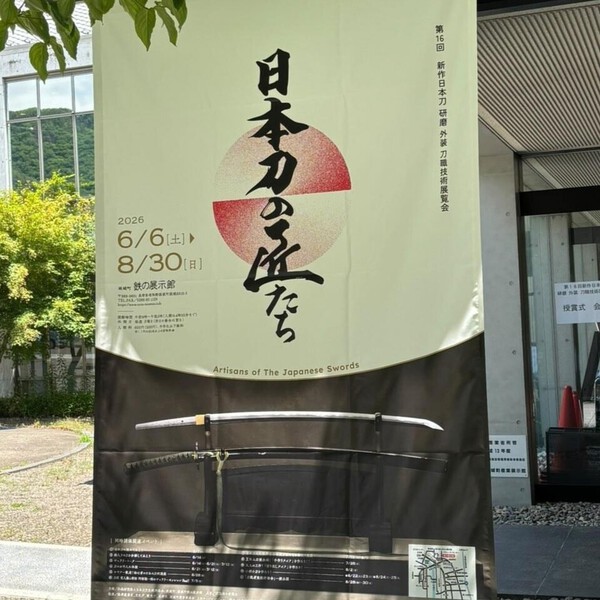
Today there was the ceremony for the NBSK contest, unfortunately I couldn't attend but a friend was so kind to send me some pictures. The exhibition will go on until August 30th.


-
What do non-Japanese tosogu artisans sign their work with?
Manuel Coden replied to NotANinja's topic in Tosogu
Traditionally the names are given by the teacher, usually taking one kanji from teacher's name and another new one that carry a specific meaning. But of course if one has no teacher can choose the one he thinks fits,of course must make sense in Japanese. If in doubt you can just use katakana. Also normally one signs with his given name,not his surname, mine is a special case cause it just made more sense to use it. -
What do non-Japanese tosogu artisans sign their work with?
Manuel Coden replied to NotANinja's topic in Tosogu
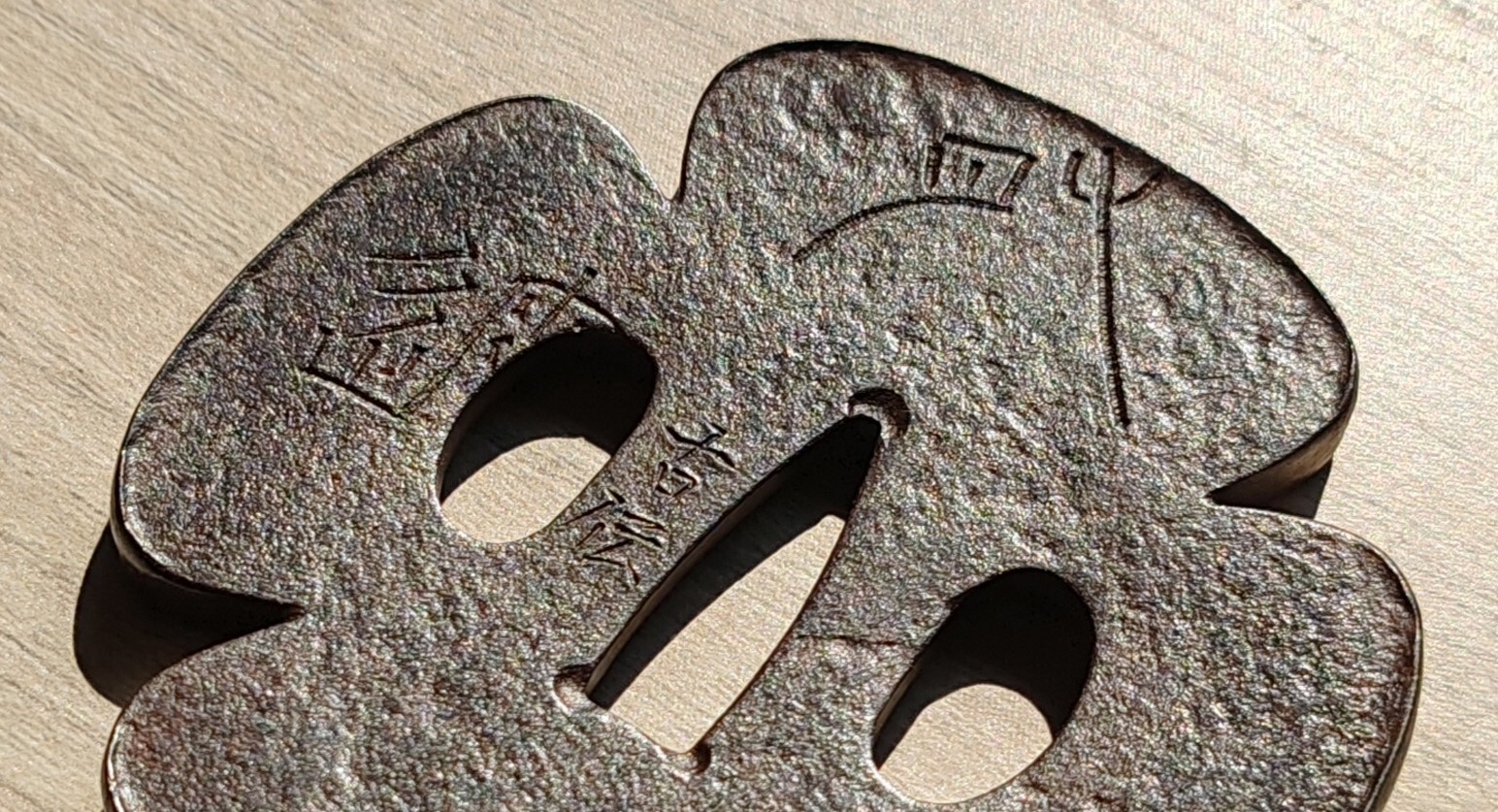
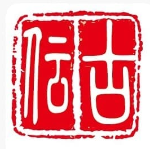
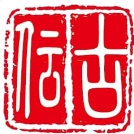
As Jean said I signed with the kanji 古伝 which reads as "Koden" that sounds like my surname and also have a meaning of "old tradition" which fits my style of Muromachi -Early Edo style. For NBTHK contest you're required to have either a signature or a kao to submit -
Here's a quick video in sunlight of the tsuba for you to better appreciate it https://drive.google.com/file/d/1xPGDzFvqnX69nEFrNMGgFwfyYPqa5tLJ/view?usp=drivesdk
-
Thank you, yes they have to be traditionally made. It took several weekends to make, I don't really count hours since it's an hobby and what matters is just the final result
-
Thank you all, I appreciate your support!
-
.thumb.jpeg.0bb957645c45f9db52da7739512b8698.jpeg)
.thumb.jpeg.7b8a91006de13e2129052b6b095a710f.jpeg)
- 19 replies
-
- 10
-
-
-
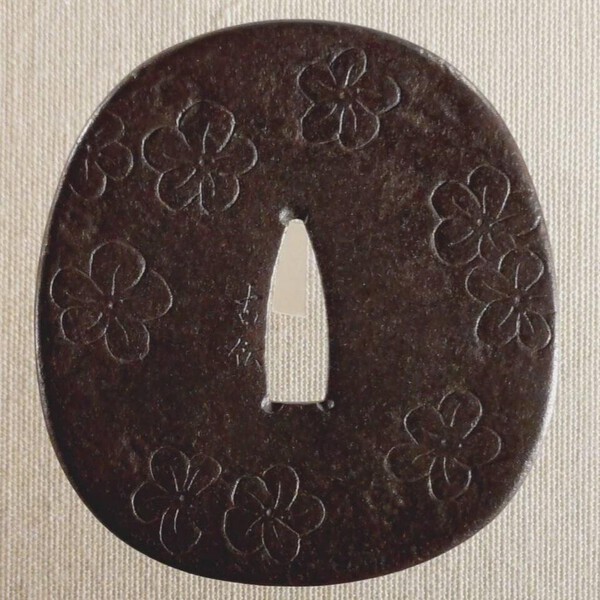
I got informed that the tsuba i submitted to the 2026 NBSK tsuba contest ranked Nyusen. It was my first time attending this competition so overall it's a positive result. Let me introduce my work: The omote depicts plum blossoms, traditional symbols of resilience and elegant beauty, as they are the first to emerge at winter’s end, often pushing through the lingering snow. On the ura, I have engraved the haiku: 見らわても 見らわなくとも 花は咲く Mirawetemo / Mirawanakutomo / Hana wa saku (Whether seen or unseen, the flowers bloom) This serves as a gentle reminder to the bearer: one should act with integrity not for the sake of recognition, but because it is one’s nature—just as a flower blooms to fulfill its purpose, regardless of an audience. The intentionally naive, almost childlike rendering of the blossoms and calligraphy creates a deliberate juxtaposition against the raw strength of the iron and the tsuba's martial function.

.thumb.jpeg.6a267b6df7c353e51d1e00dc76404d6f.jpeg)
.thumb.jpeg.154d86ce5811ce42d0b41bd8866d3b40.jpeg)
- 19 replies
-
- 14
-
-
-
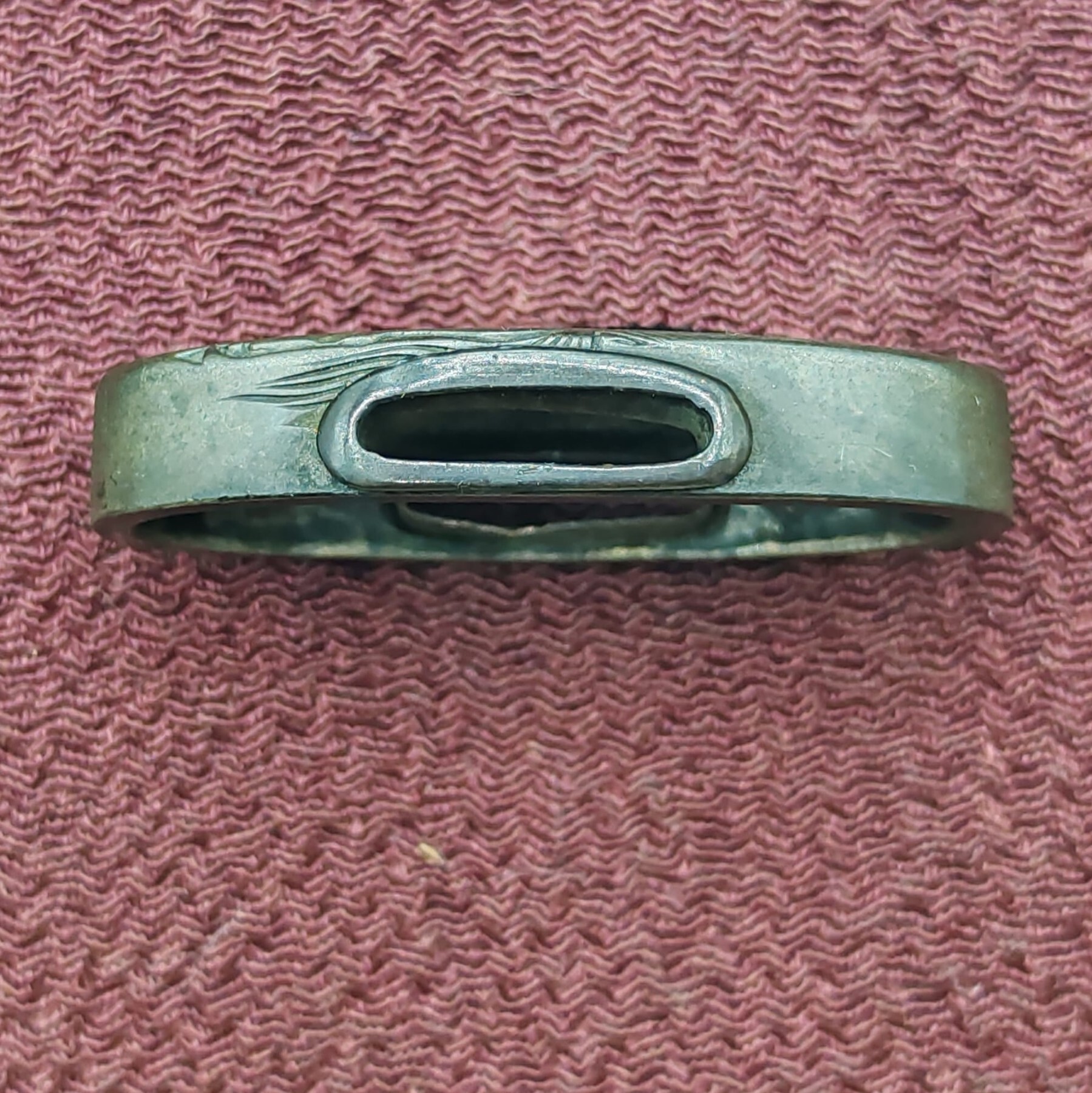
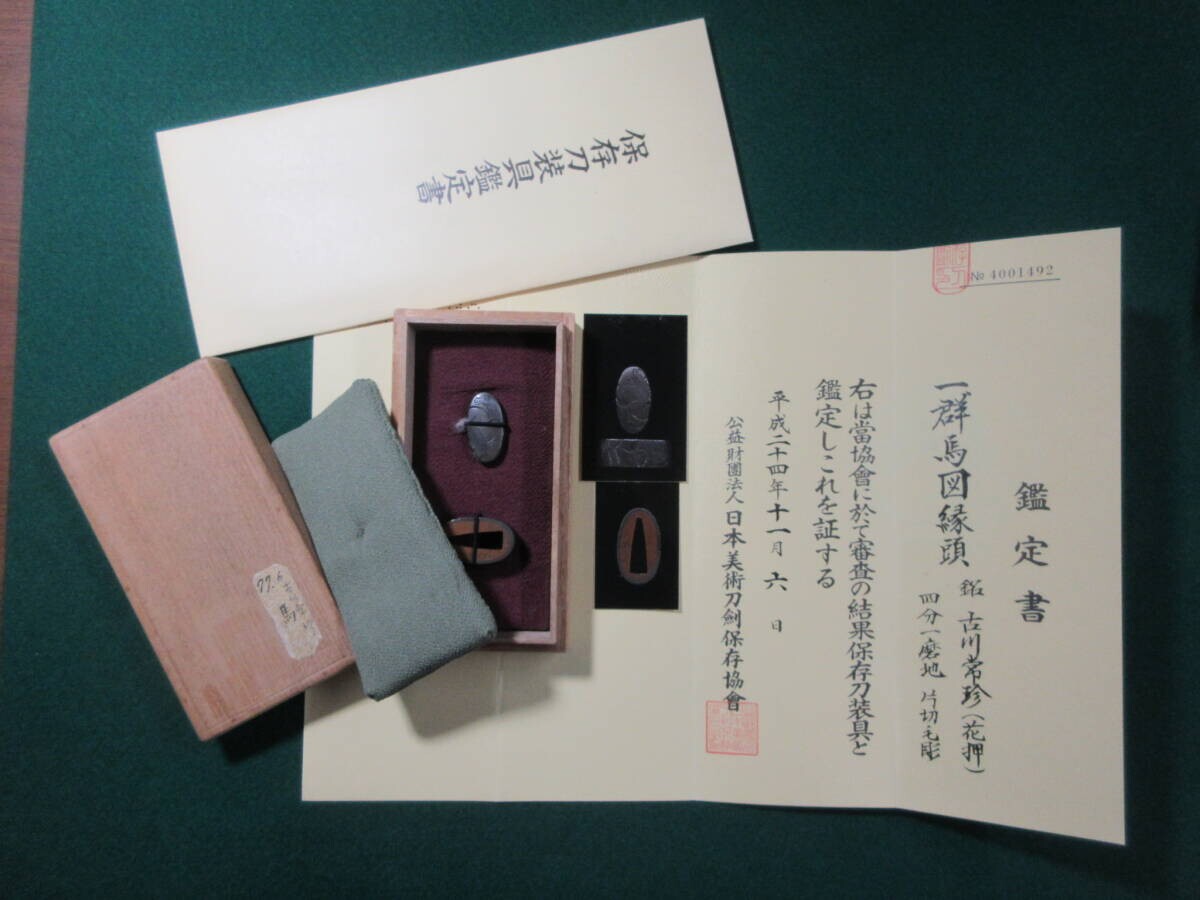
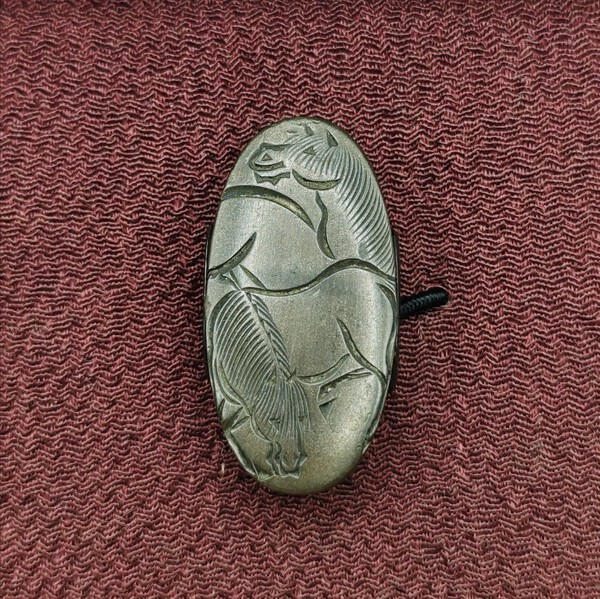
Set of fuchi-kashira in shibuichi with katakiri-bori engravins of horses, signed Furikawa Jochin + kao (古川常珍), with shakudo shitodome. It comes with Hozon certificate. Dimensions: Fuchi 36x20 mm Kashira 32.5x16.5 mm Price 600€ plus shipping From the book 刀装小道具講座: Furukawa Jochin (古川常珍) Biography and Background Jochin was the biological son of Moto-akira (元珍, also read as Moto-chin). His skill level was very similar to his predecessor, and he is considered to have been of equal talent. He resided in Bakuro-cho, Kanda, Edo (modern-day Tokyo), and was active during the An'ei to Kansei eras (roughly 1772–1801). Bakuro-cho was divided into three districts (chome); today, the name survives in Nihonbashi Bakuro-cho 1-chome through 4-chome in Chuo Ward. The name originated from the bakuro (horse dealers/handlers) who managed the horse grounds in the area. During Jochin’s time, it was a district known for having many hatagoya (travelers' inns). Inscriptions (Mei) The majority of his works are signed "Furukawa Jochin [Kao]" (古川常珍 followed by a stylized monogram). While he used a consistent style of Kao, subtle variations can be found. Placement: On most fuchi (collar), kozuka (small knife handle), and kogai (hairpin/skewer), the signature is typically located on the left side. Calligraphy: The brushwork style of the characters for "Furukawa" resembles that of Moto-akira. Materials and Techniques His style is highly reminiscent of Moto-akira. He frequently employed katakiri-bori (incised carving mimicking brushstrokes) on kozuka made of shibuichi (a copper-silver alloy). Relief Work: Compared to his father, fewer extant works feature takabori (high-relief carving). He also produced works using kin-moku (gold application/inlay). Base Metals: He primarily worked with shibuichi and shakudo (a copper-gold alloy). Works using nanako-ji (a "fish-roe" stippled background) are rare. Artistic Style: A defining characteristic of the Furukawa school is the frequent use of vertical compositions (tate-zu). Methodology: In addition to katakiri-bori and ke-bori (fine-line engraving), he utilized techniques such as: Katakiri-hira-zogan (flat inlay combined with incised lines) Takabori-iroe (high-relief carving with colored metal overlays) Usu-niku-bori (low-relief carving) School Influence: His carving style for details—such as the curly manes of shishi (lion-dogs)—shows the technical habits and influence of the Yokoya school of metalwork. Common Motifs (Designs) Jochin shared many of the same subjects as Moto-akira. The school is characterized by a fondness for figure carvings, including: Chinese Themes: Characters from The Romance of the Three Kingdoms, the Seven Sages of the Bamboo Grove, Hotei and Daikoku, Hotei with Chinese children (karako), Taoist Immortals (Sennin), and the Tiger Immortal. Japanese/Folklore Themes: Shuten-doji, monkey trainers, figures washing sweet potatoes (imo-arai), figures with rice-cake hoops (mochi-wa), Manzai dancers, scenes from the Soga Monogatari, doll makers, Ohara-me (flower sellers from Ohara), figures pasting posters, children climbing trees, the Kuya Nenbutsu (monk Kuya), ferry boats, moon-viewing scenes, and young cowherds. Animals/Mythical Creatures: Shishi lions, tigers, Kirin (qilin) and Phoenixes, and herds of horses.
.thumb.jpeg.2bed6e15e319580eb8dd8789008b55fd.jpeg)
.thumb.jpeg.3adfbbed58558a0e1278a1dbe3716599.jpeg)
.thumb.jpeg.55deb9c04f769416bd64d9fea48ea4a0.jpeg)


-
Kabuto and banner kozuka
Manuel Coden replied to Manuel Coden's topic in Fittings/Tosogu/Kodogu/Koshirae
Another reduction, 150€ plus shipping -
Another reduction, 150€ plus shipping
-
Dragon and tiger kozuka
Manuel Coden replied to Manuel Coden's topic in Fittings/Tosogu/Kodogu/Koshirae
Another small reduction, 120€ -
Solid gold horse menuki
Manuel Coden replied to Manuel Coden's topic in Fittings/Tosogu/Kodogu/Koshirae
Another reduction to 1200€ -
It starts at 2:00 PM CET
-
Solid gold horse menuki
Manuel Coden replied to Manuel Coden's topic in Fittings/Tosogu/Kodogu/Koshirae
Price reduced to 1300€ plus shipping -
Dragon and tiger kozuka
Manuel Coden replied to Manuel Coden's topic in Fittings/Tosogu/Kodogu/Koshirae
Price reduced to 130€ plus shipping -
Price reduced to 180€ plus shipping
-
Kabuto and banner kozuka
Manuel Coden replied to Manuel Coden's topic in Fittings/Tosogu/Kodogu/Koshirae
Price reduced to 180€ plus shipping



.jpeg.807b0562f52a48a238a0a5dc2f70e616.jpeg)
.jpeg.ecd6bf5ecd2a3428da5d9df6442f7116.jpeg)

.jpeg.4e16c39b6827a677e21e09738fef701c.jpeg)
.jpeg.cca0442d0354a4a734df49be7effda0b.jpeg)
.jpeg.f64bd1e4d403391177e101564faf5478.jpeg)
.jpeg.1974458ba2d4c8630317f3c863024bb0.jpeg)

.jpeg.95e902427d45cbaf6830e389ab46bbcc.jpeg)