
Leaderboard


Popular Content
Showing content with the highest reputation on 03/28/2026 in all areas
-
This boundary is non-negotiable on this forum. Take it or leave it. There is no circumstance where we will ever say it's ok to use sandpaper on your blade. You may say the whole thing was rusted and no-one would pay to have it polished. So what about the guy whose blade is mostly ok but has one spot of rust? What about the guy who is in a country where there are no polishers? Do we have to form a committee to decide when it's ok and when it isn't? The fact is that we don't advocate amateur polishing. Yes...we all know many do it, we know there are rusty blades that no-one will ever professionally polish. But without a way to determine what's ok and what isn't, the rule stands that we do not encourage this. Since we are a serious forum devoted to the preservation of genuine Japanese swords, this policy will never change.6 points
-
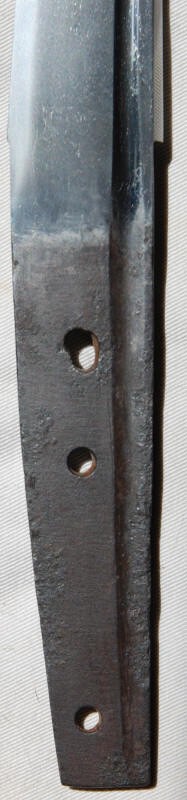
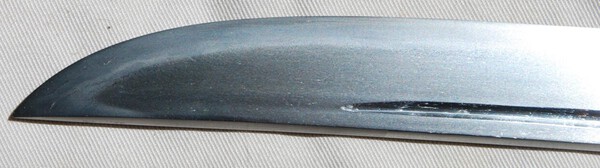
Hello all, I would like to share with you my most recent purchase from Andy Quirt over at Nihonto.us . It’s a hirazukuri O wakizashi is shirasaya in good polish and from what I was told by Andy he sent it over to Tanobe sensei for a verbal attribution and based on what Tanobe saw he gave him a verbal attribution of Uda. Andy did tell me that he was hoping for an earlier attribution so he must of thought it shared characteristics of a Ko-Uda blade but nevertheless Tanobe sensei dated it to Muromachi period. It’s undergone Osuriage and also has a bohi. It has a 46.3cm nagasa, 3.3mm motohaba, and 6mm kasane. The hamon is chu suguba in konie deki and has itame hada. Given then lenght of it now after it has undergone suriage I think it possibly coulda been a katateuchi. Best Regards, Chance


 4 points
 -
Yes, Ron you are correct. That is a police sword. The few I have seen have been late war.3 points
-
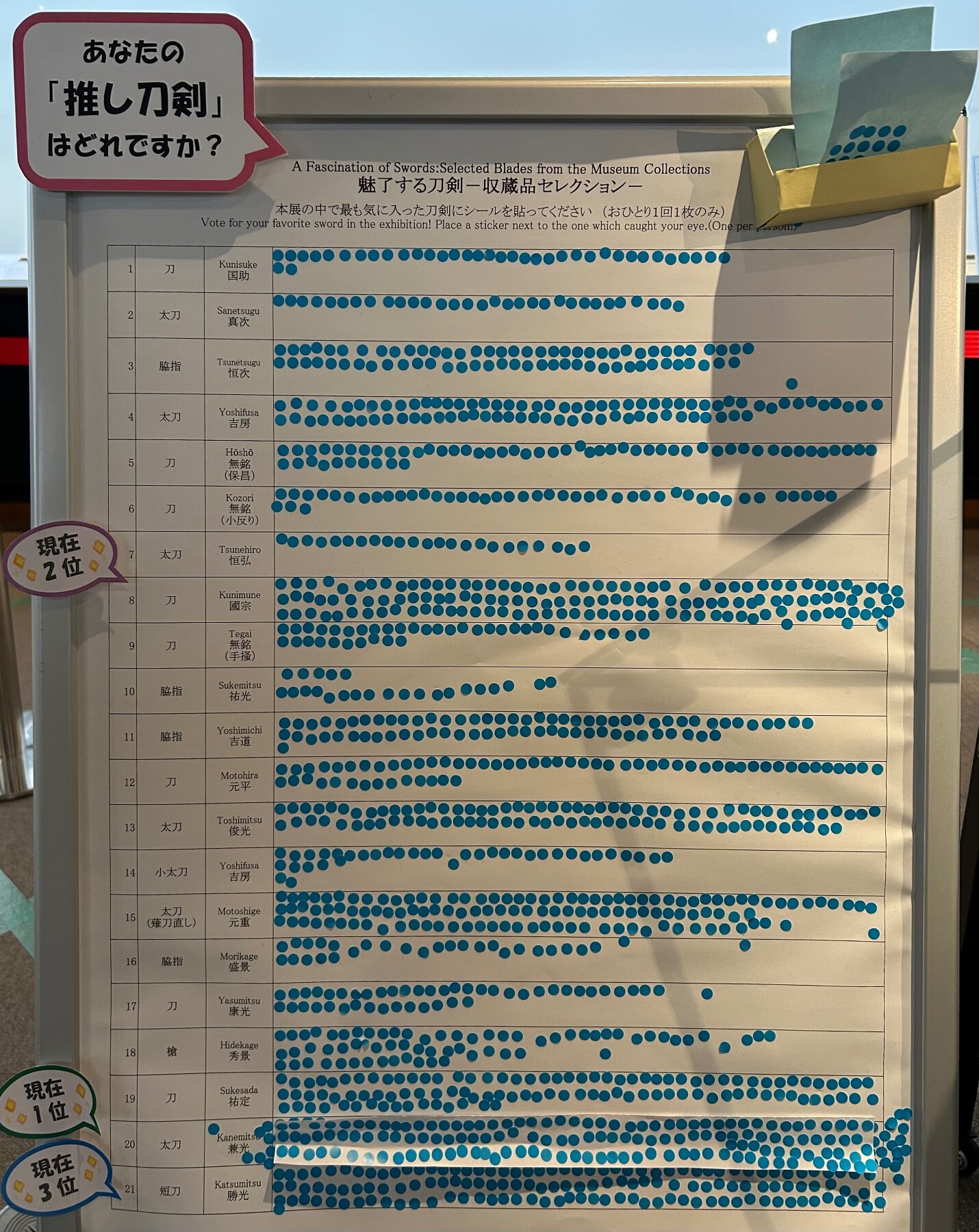
They ask you to place a sticker against which sword you liked best.
 3 points
 -
Even aside from the Japanese concept of wabi-sabi, the general consensus in *all* fields dealing with historical artworks and antiquities is that it's better to leave something in a state of decay, arrested as best you can manage, than incorrectly restore it. For your consideration, I submit the most famous example in modern times: https://en.wikipedia.org/wiki/Ecce_Homo_(García_Martínez_and_Giménez)3 points
-
There is a paper on Tokyo Masakuni and family in NMB Downloads..........3 points
-
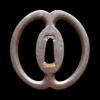
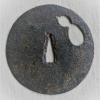
I hope I'm not bothering anyone by reviving this thread about these rather unusual tsuba. Here's mine with the wasp. The second one is one I saw online. There was one for sale in the Haynes catalog, number 54. The description said it was in the Bushu school style.


 2 points
 -
Partly because it’s in a poor state of polish and condition. Different light and angles = different reflection and illumination2 points
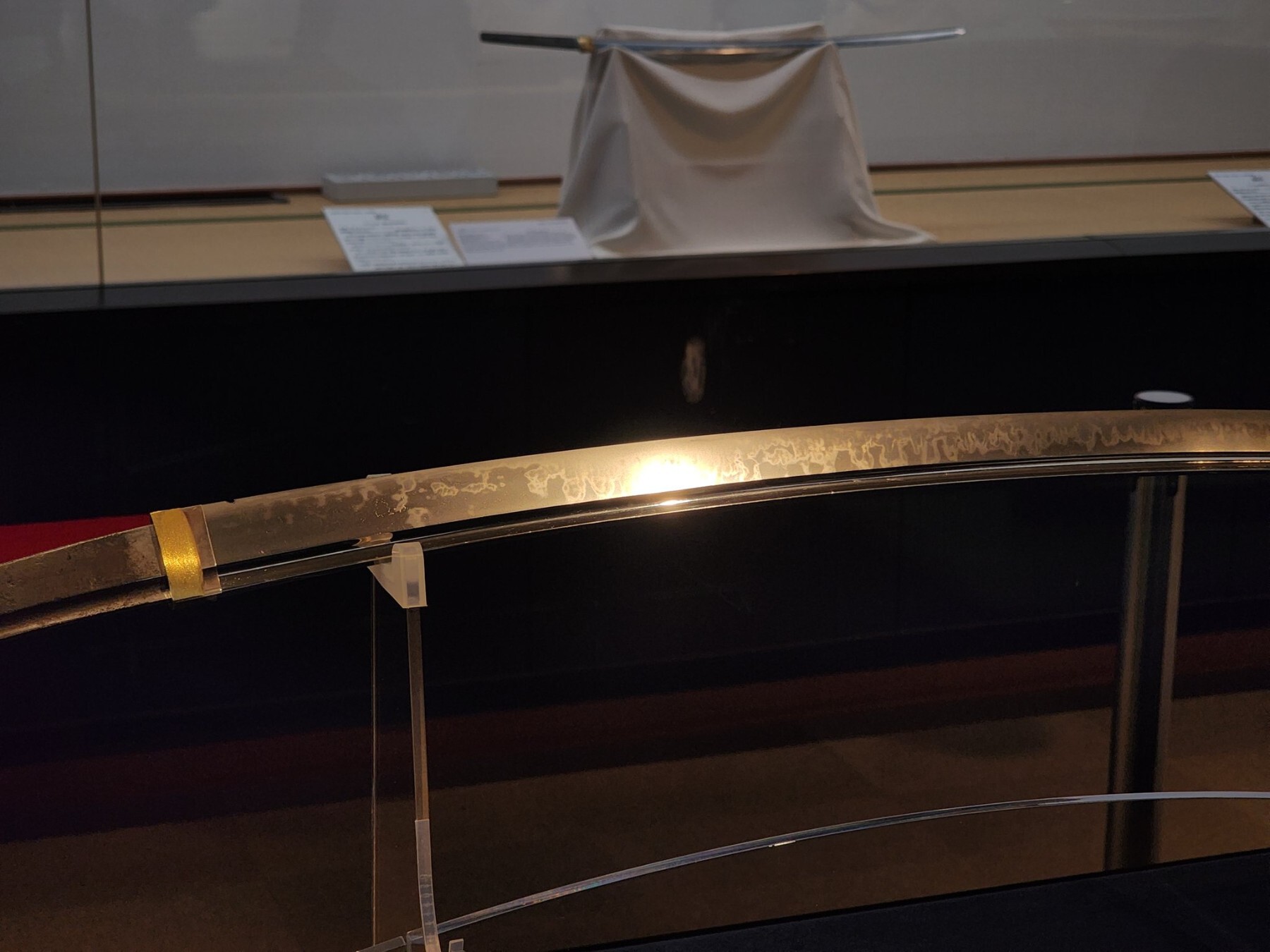
-
九泉堂 - Kusendo 光保 - Mitsuyasu2 points
-
Update: Yamanaka Newsletters Volume 4 Issue #9 available: Yamanaka V4 NL092 points
-
Hello from the UK, hope things are good for you all around the world. It’s grey and damp and chilly here. This tsuba left home a few years ago as part of a deal to acquire a nice sword but it recently had the opportunity to return home again …..and here it is……just for interest. To me it’s an appealing subject artistically rendered and decent quality workmanship. What are your opinions? The thin iron plate has a slight ishime texture and an even dark brown patina. I believe the old Japanese label says something like “old pine tree wasps”…..anyone confirm? H8.5cm W8.1cm T3.5mm at the slightly raised rim.


 2 points
 -
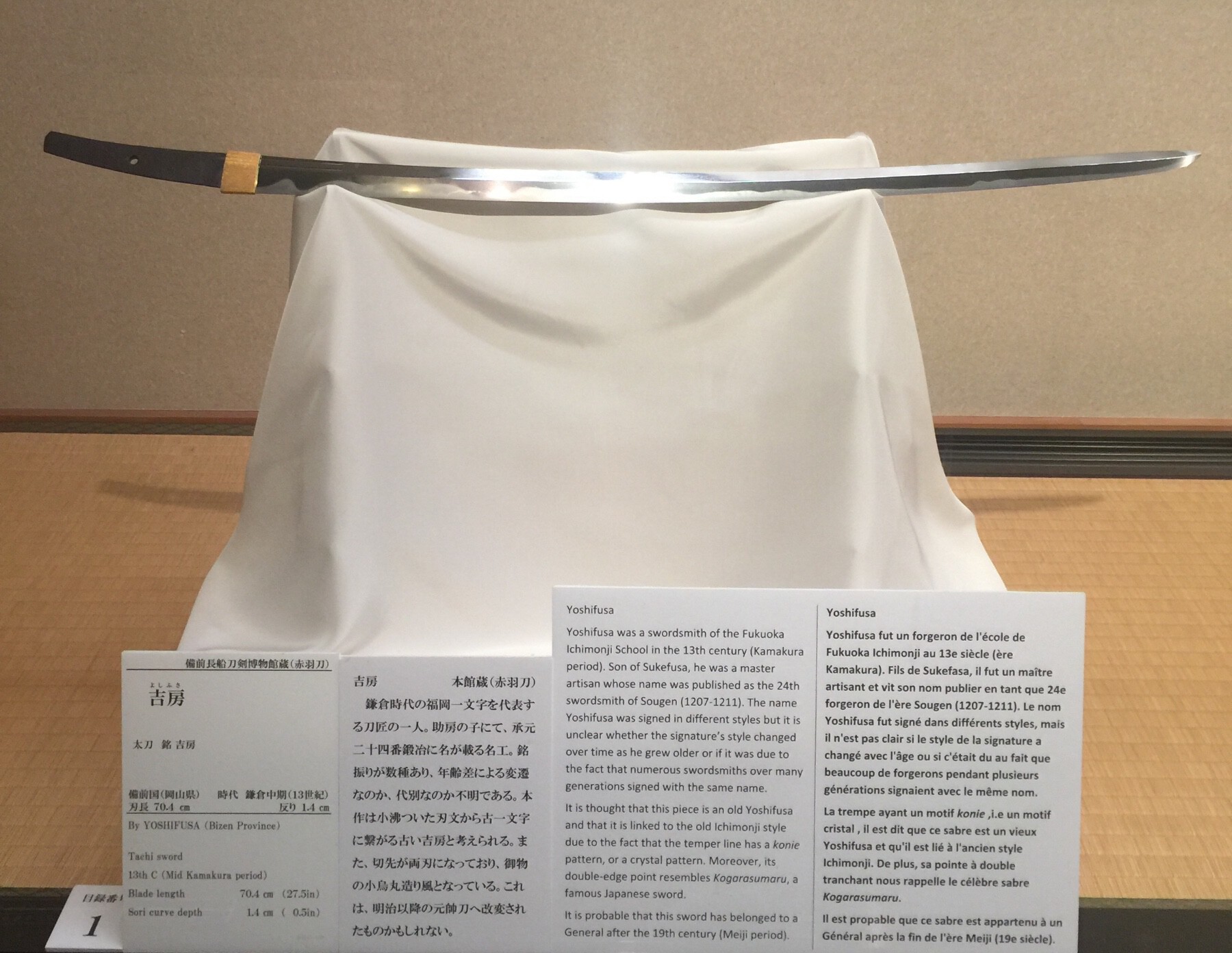
Actually I particularly like Yoshifusa too. Today sadly I was with people and did not take many photos, *although I do have some Yoshifusa pics somewhere from earlier exhibitions there.
 2 points
 -
I think Kanemitsu, like Kiyomaro, is one of those smiths whose sugata and hamon shape alone is usually so eye-catching that it even enchants people who don't know enough about swords to tell you why a Masamune is superior to a shinsakuto. Anecdotally, for partners/family being "dragged" to one of these exhibitions, Kiyomaro is the undisputed king of "okay, I have to admit that looks pretty cool"2 points
-
Check out 'This is not a Samurai', and Tetsuya Noguchi. (That should give you some background to this genius guy! Definitely weird, but intricately and uncannily accurate.) PS Re 'ages'. Different times in history.2 points
-
Not at all. The first step is to appropriately oil it to stop red rust, which is eating the blade, and convert it to black iron oxide, which can be stable As you're rubbing the oil in repeatedly over months with a soft cloth, any dirt, loose flakes and scale will likely come off, leaving you with a blade which is stable and clean, and can be preserved without further deterioration. There will still be pitting if the previous corrosion was serious, as it appears to have been in this case. That's the point where a togishi steps in, when you can afford it. The issue is both maintaining the shape, as discussed above, but also that repolishing to remove pitting is a very precise craft - it's easy to remove too much metal, or to end up with a slightly undulating surface. I have a blade in my possession which was treated with sandpaper (by someone in Japan!) - probably even a power sander. It was already a tired blade, and post sanding it's close to unrecoverable .2 points
-
I have a daisho that has papers for each by Karabu Kantei organization, a group headed by Shibata. Although printed in Japanese, Shibata was a prolific author of books on nihonto and tsuba. Also see2 points
-
I like Kaga Zogan. Your tsuba made me take action) I’ll share my new acquisition soon.2 points
-
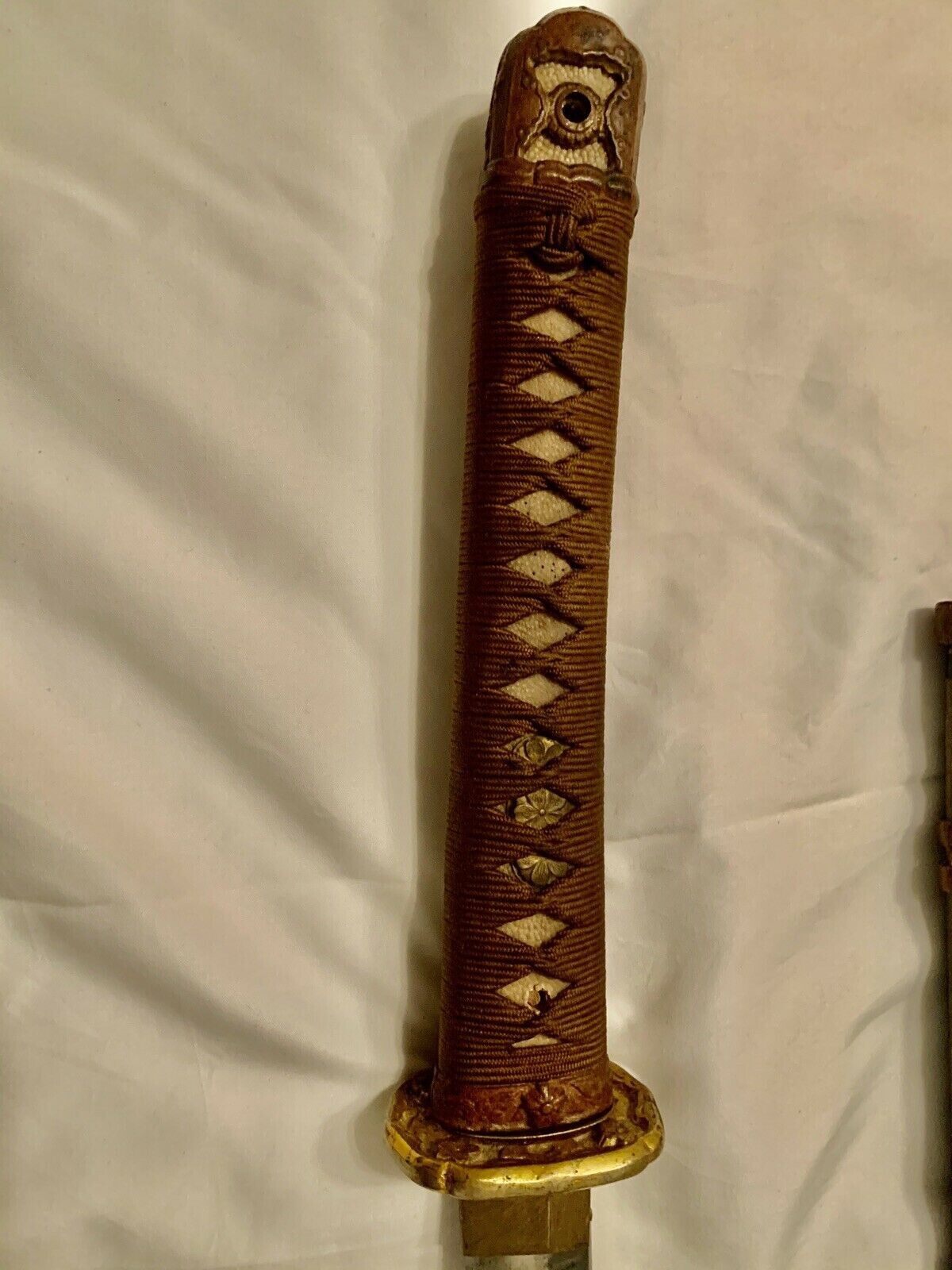
Ron Here are a few examples of police gunto for your review—this type is also documented in Dawson’s book.

2.thumb.jpg.af8883521be61d416b2a1583d002f4d9.jpg)
.thumb.jpg.3f440444352f027f612108af8d7554de.jpg)

 1 point
 -
Hi… Top→「銘」Mei Under→「前大徳誡堂(叟)←maybe」 前:former 大徳:大徳寺Ditoku-ji 誡堂:(Name)Kaidō 藤井誡堂 Fujii Kaidō(1898-1984) The 515th Chief Abbot of Rinzai school of Zen Buddhism at Daitoku-ji Temple “-Sō(叟)” is a character used in an artistic pseudonym (雅号gagō) , meaning “old man,” with a humble tone that also suggests refined taste. (The mark at the very bottom is a kaō [stylized signature].)1 point
-
Hi… 「勲七等青色桐葉章」(1875~2003) This is a seventh-class decoration established in the Meiji era. It is a silver badge awarded to military personnel and others. This badge was awarded to police officers (the Keishitai警視隊) and military personnel who distinguished themselves in the Satsuma Rebellion 西南戦争(1877), such as 斎藤一 SaitōHajime (a former member of the Shinsengumi新選組).1 point
-
Will just leave it as it is1 point
-
....and light from the side so the chiseled KANJI can be seen.1 point
-
Is this the same guard as from the Michael Tomkinson collection? Now in the Metropolitan Museum of Art1 point
-
John, a basic rule of thumb never clean the tang , sometimes it is acceptable to remove active rust on the tang , but you really need to know what you are doing first . looking at the tang again , it could be signed No-Shu Ju Kanesada saku ? which would mean it is a WW11 sword .1 point
-
No guess who is winning. 🤣1 point
-
Nakago. Not nagado.1 point
-
Hello Jose: In general, kai gunto (referring to naval mounts) can have different kinds of blades. Some are a type of rust-free steel (anchor stamp), some are known as KJT (traditionally made swords), some use old family blades. I have also seen kai gunto with seki blades. So the direct answer to your question is no - not all have the anchor stamp on them. John C.1 point
-
@Bugyotsuji thank you sir, I appreciate it. Was she referring to "ages" as in actual age, or was she speaking to different ages of time? Thought it would be more.....clever. i dont really get it either way, but then, im not an artist.1 point
-
John, not nehonto, it is NIHONTO, and again, this is the NIHONTO section which means it is for traditionally made swords. Yours would belong into the military section in case it was machine made. And in WWII, there were no SAMURAI, so it is probably a military sword, called GUNTÔ.1 point
-
Thanks John1 point
-
Hi Paul, It’s a date, Teikyou, gan’en saku kore: …made this in the first year of Teikyou - 1684. Sorry, my phone screen is playing up so I can’t assemble the kanji.1 point
-
Can't see the Seki stamp
 1 point
 -
We do not promote or encourage DIY polishing on the Nihonto Message Board under any circumstances. Our focus is the study and preservation of genuine Japanese swords and fittings, and proper restoration is a critical part of that responsibility. If a proper restoration is not financially possible, that does not justify attempting to do it yourself. Owning a damaged piece does not grant license to restore it, just as one would not attempt to repair a damaged Rembrandt without the necessary training, knowledge, and expertise. Sorry to be blunt, but it reflects the standards we uphold. DIY polishing sets a dangerous standard within the hobby and ultimately risks irreversible damage to the very objects we are trying to preserve. DIY polishing is an ALL STOP situation here. Regards, -Sam1 point
-
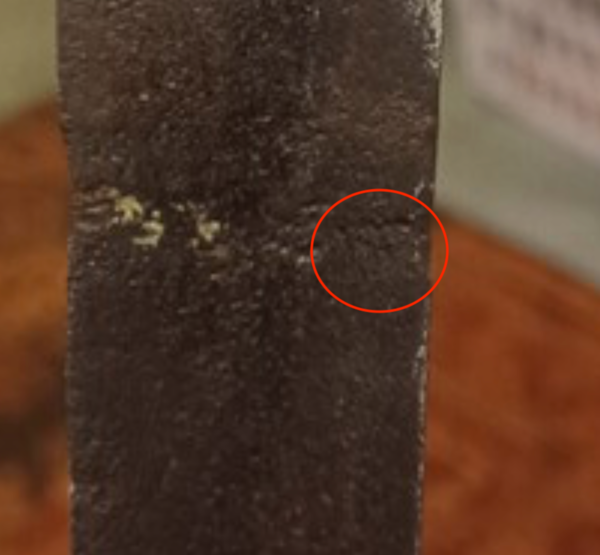
John: I think Ray is looking here. But I can't tell because it looks as if the nakago has been repaired (re-welded?) at that spot. John C.
 1 point
 -
I love the accompanying documents for such things, very interesting. Okan, could you take a photo of kashira and the signature as well?1 point
-
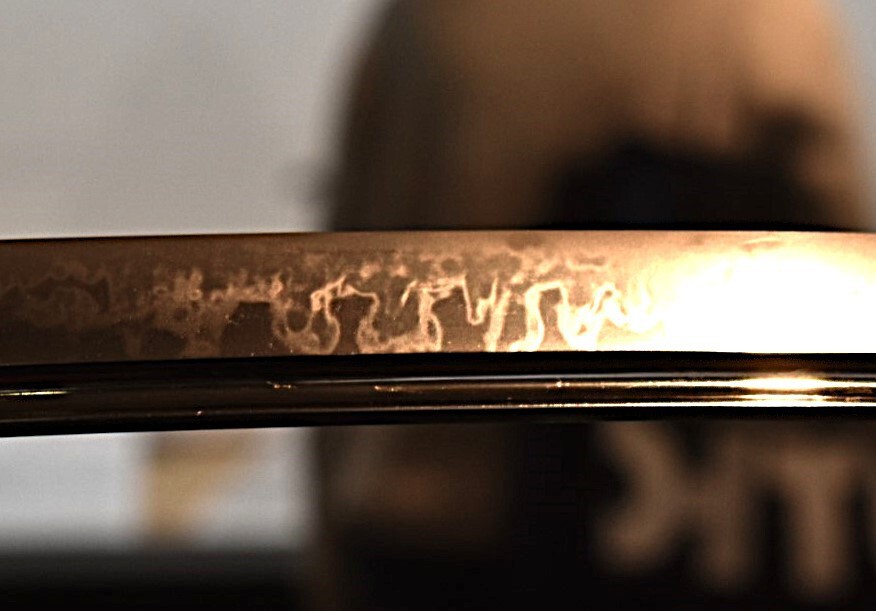
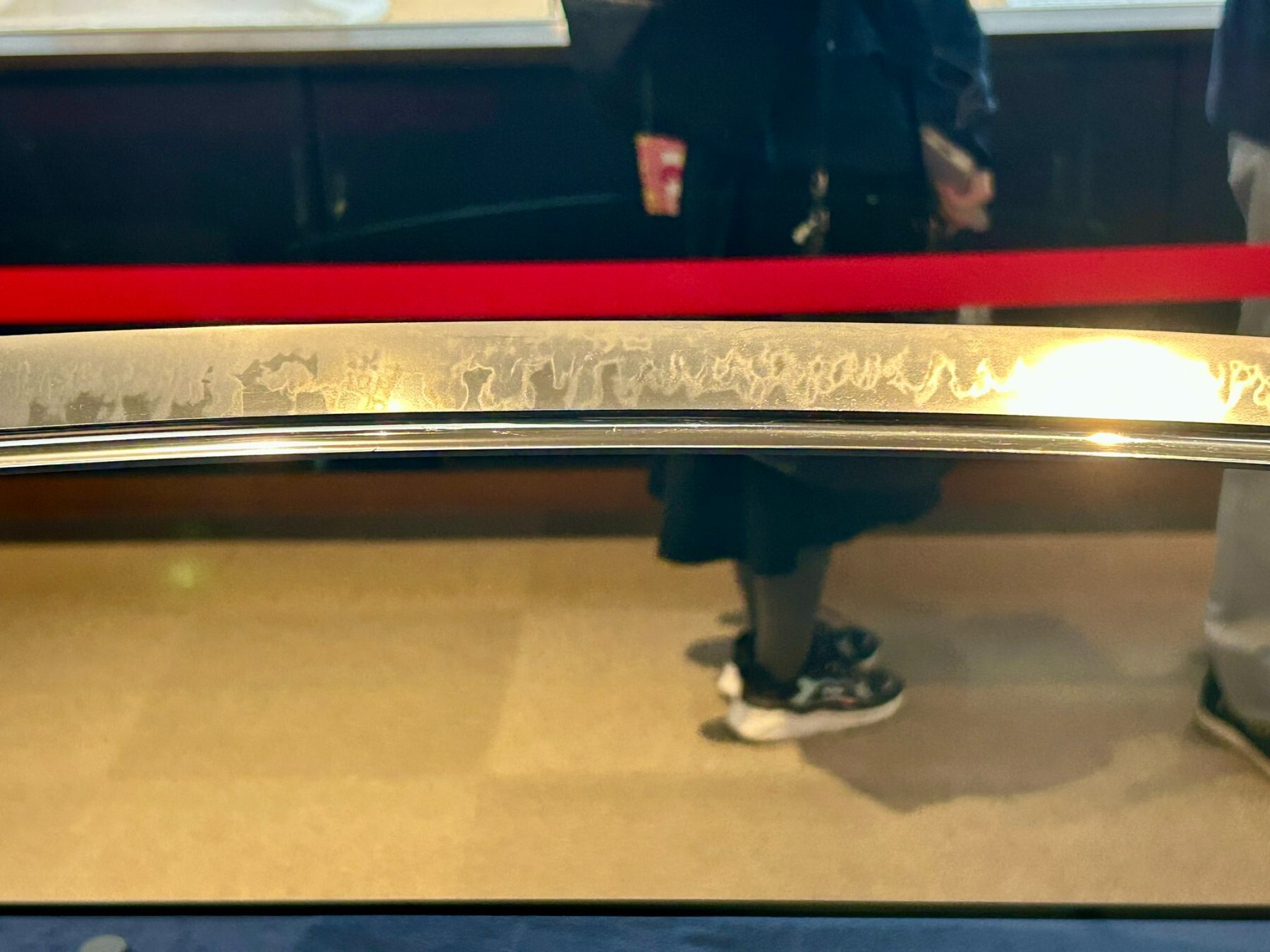
Wild blade pattern.1 point
-
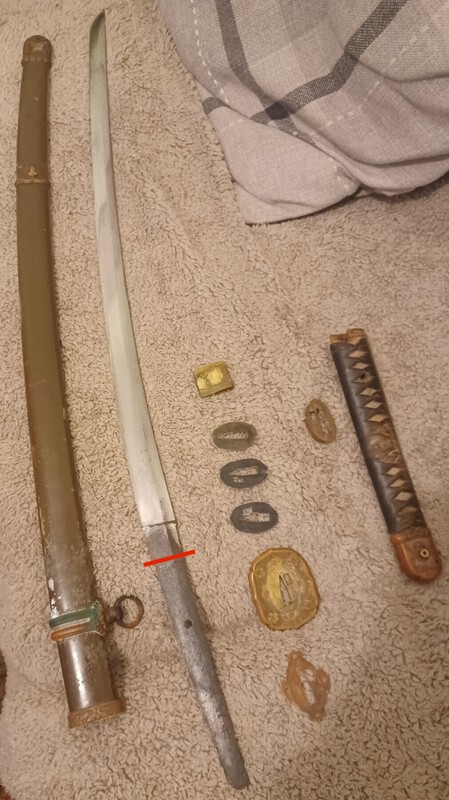
I do have concerns about the sword. In my opinion, it looks severely altered or messed with. The proportions make me wonder if it’s been machi-okuri, and the nakago looks like artificially accelerated aging rather than natural patina. That makes me question whether there might have been an effort to obscure a stamp, or make it "look" older than it is.
 1 point
 -
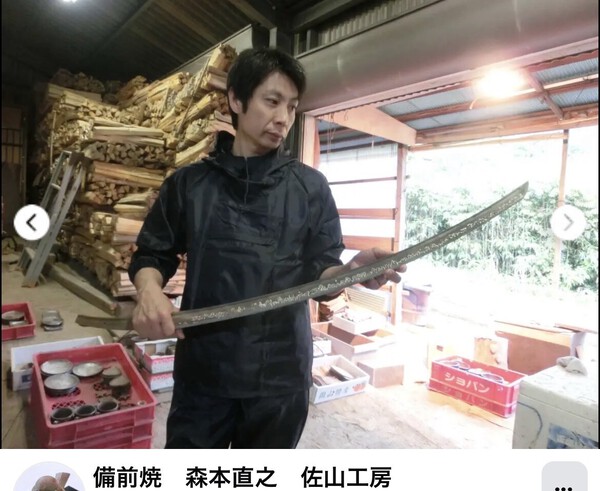
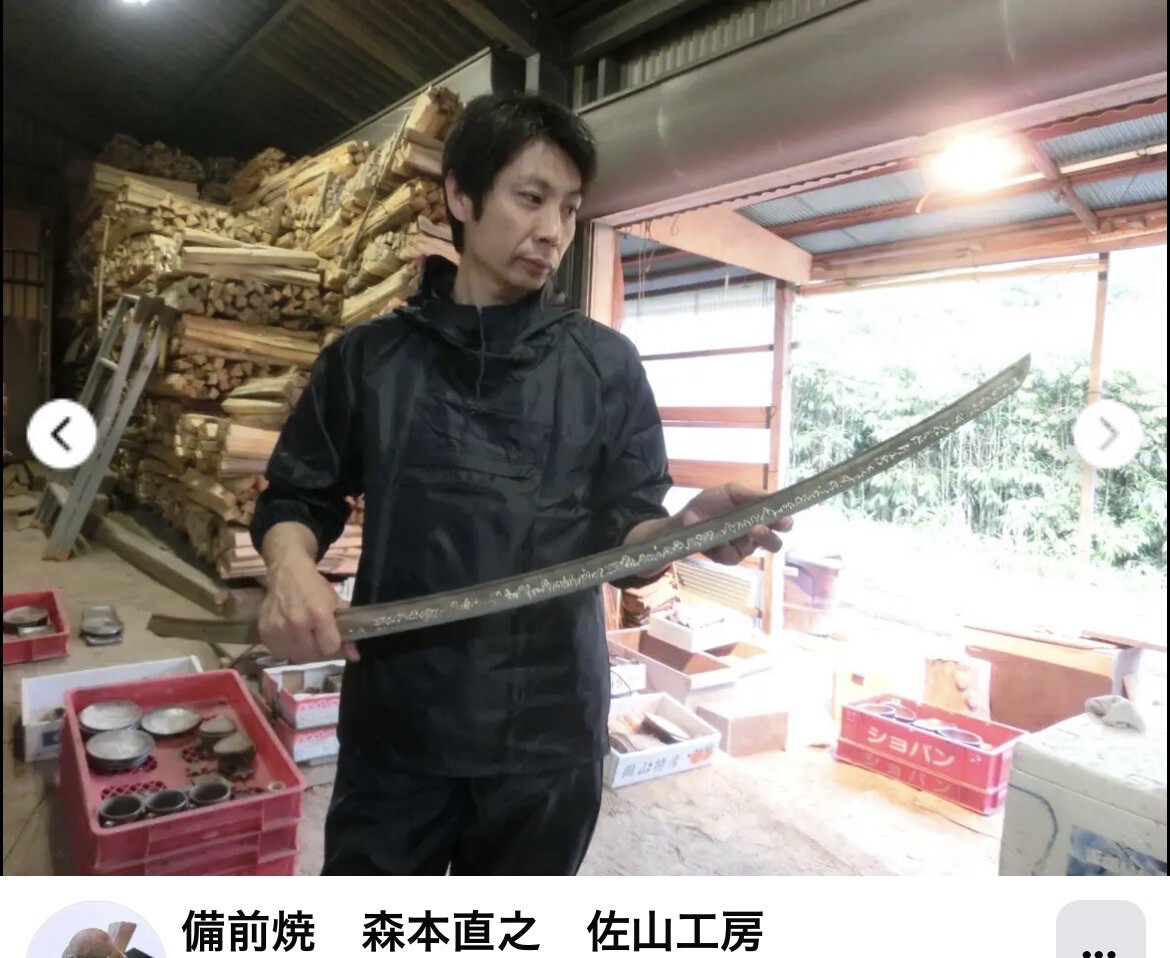
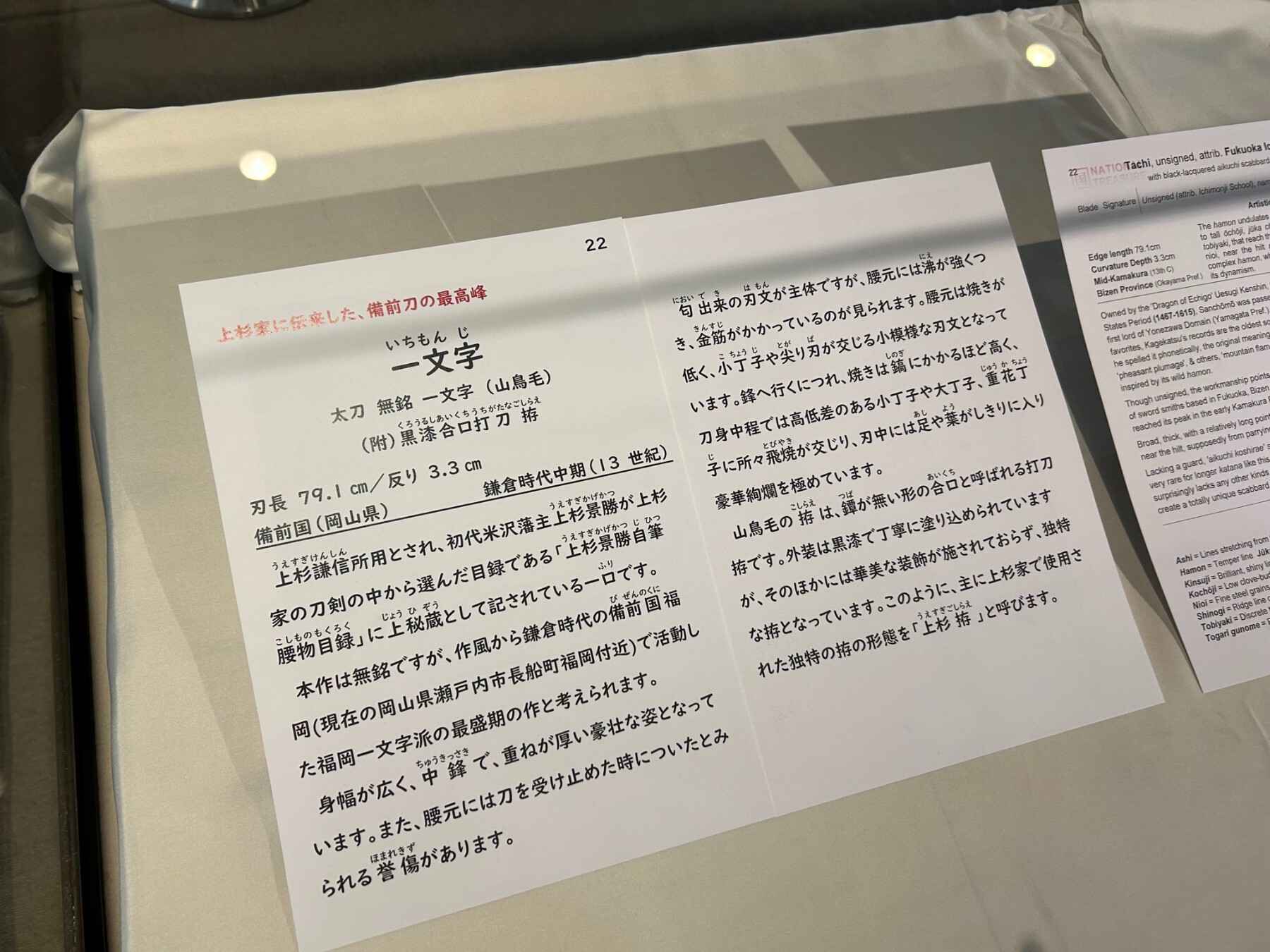
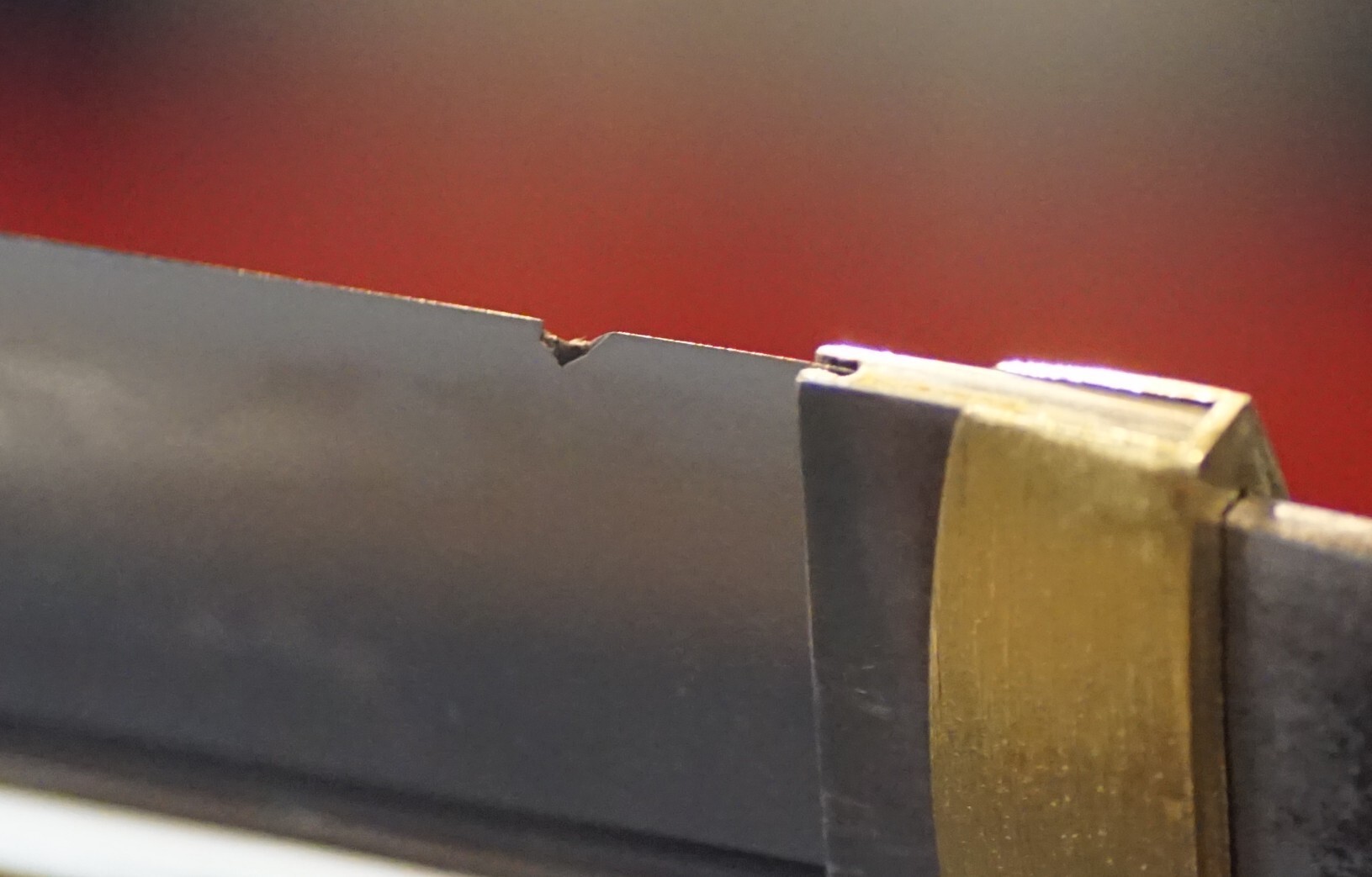
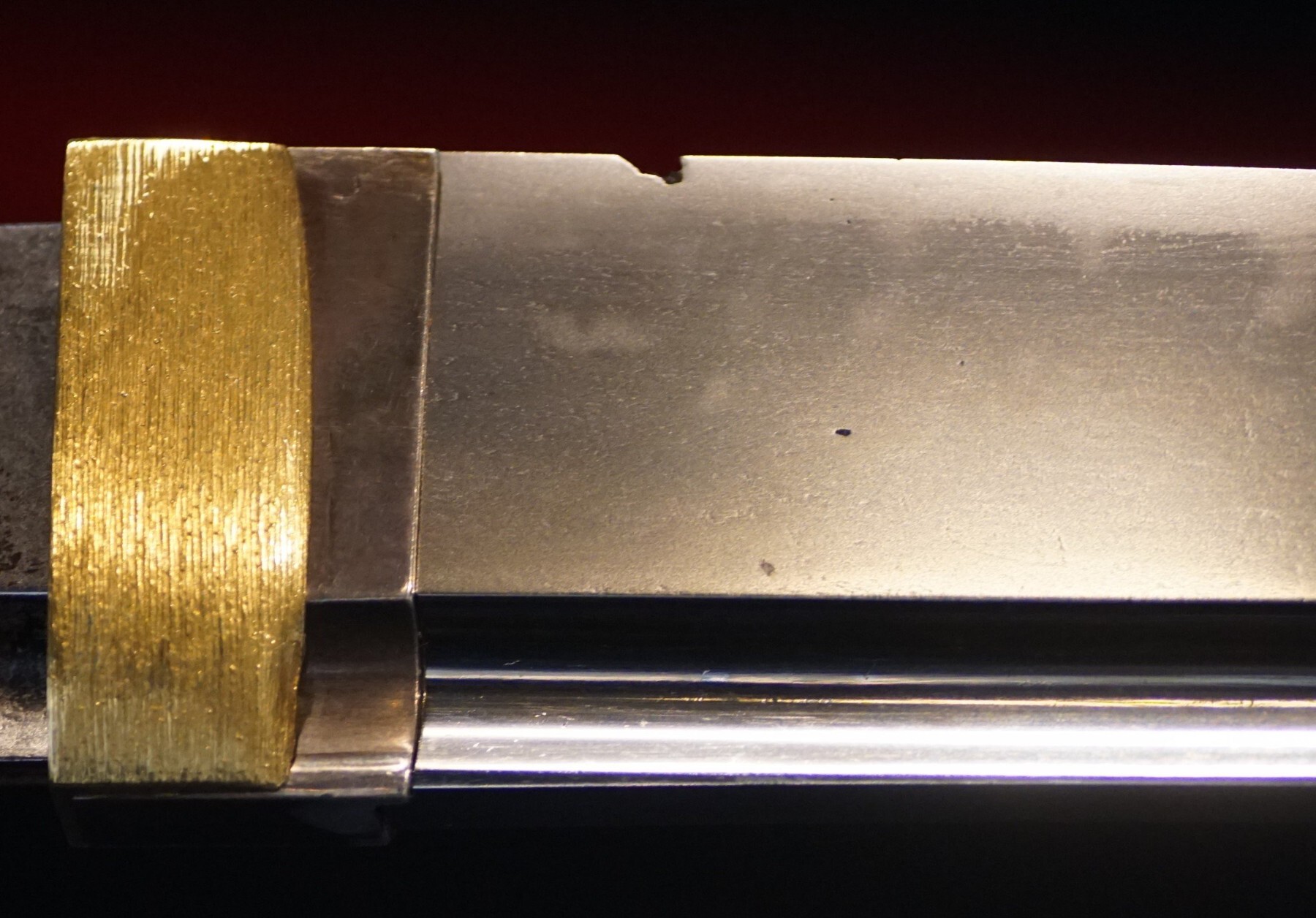
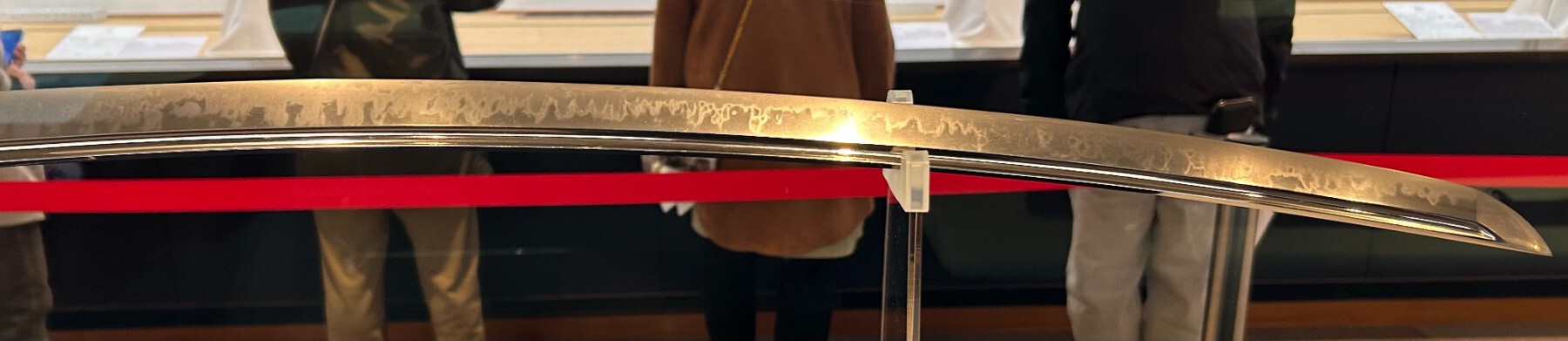
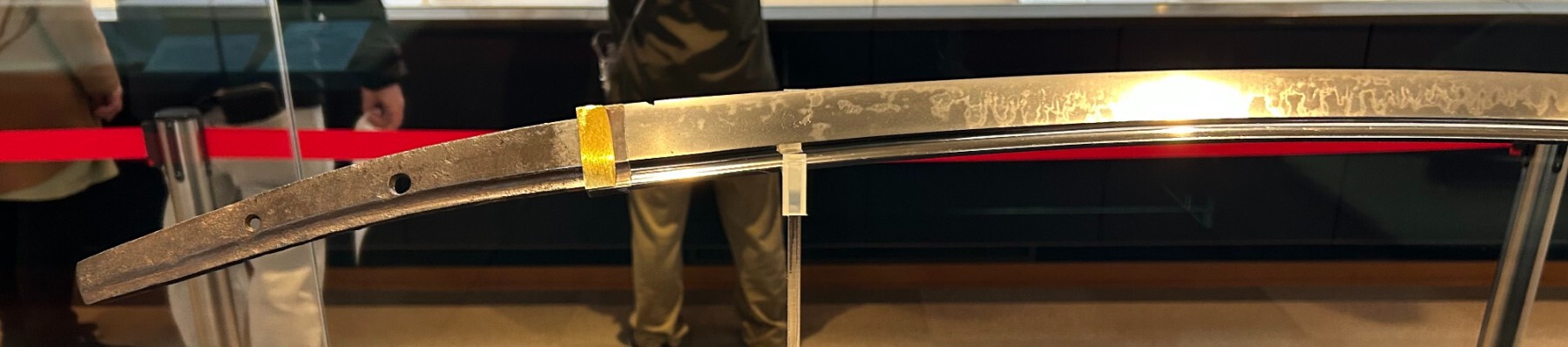
One of our NBTHK members is a Bizen potter and after much effort he eventually succeeded in making a full-sized version in fired clay. Another member creates detailed exact-scale copies in wood, down to the nick in the blade edge. These are not cheap but there is a waiting list for his work, the Sanchōmō and other famous blades. Even the Mei are faithfully chiselled in.
 1 point
 -
Suketaka is considered one of the major smiths of the early Shinshinto period. However, it is difficult to classify Suketaka as a Shinshinto smith in the strict sense of the Shinshinto period. He copied the Osaka Shinto style, particularly that of Tsuda Sukehiro. Accordingly, he also copied the Shinto Sugata, though his Saki-Haba is always slightly wider, as in the works of Osaka Kanbun. He likewise copied the Osaka Kessho and the cursive style of Tsuda Sukehiro or Sukenao. Shinto-Osaka was extremely popular in the late 18th century. In addition to Suketaka, Suishinshi Masahide, Tegarayama Masashige, Kato Tsunahide, and the young (Kato) Chounsai Tsunatoshi were the primary artists working in this style. Since Suketaka died as early as 1805, he did not fully experience the actual Shinshinto Renaissance, which Sushinshi Masahide essentially initiated, marking a shift away from the rather hard-fired Osaka style—which had been popular until then—toward the Ko-Nie and Nioi-Deki styles of the Bizen-Kamakura masters. Shortly before his death, during his Nagato-Kami phase, he abandoned the cursive signature style. He produced mainly wakizashi. Katana are quite rare and relatively short.1 point
-
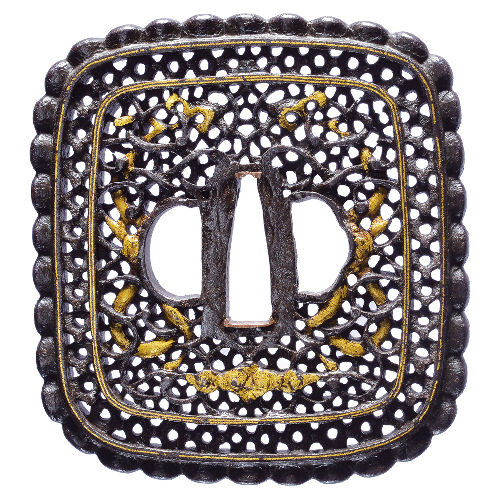
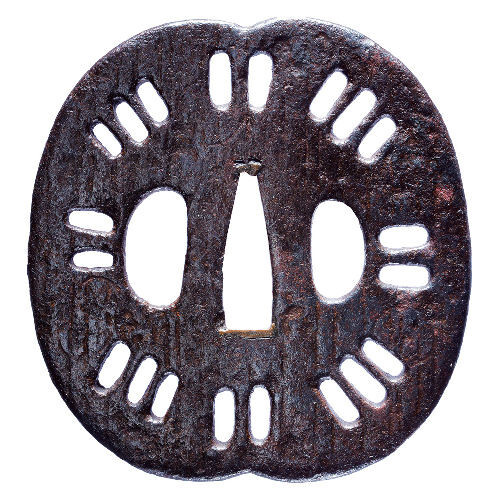
These are my tsuba from the auction. And, well, my only regret was not having a bigger wallet... Seeing all those tsuba together was like finding Santa's sledge parked in the backyard for a kid... The second tsuba has a paper, but it's a minus, not a plus... guess what's the attribution?
 1 point
 -
Hi Justin, By whom and when was the tanto made? If the tanto is special it deserves better koshirae. If it is mediocre or worse, you would be smart to move on and find something better to throw your money at. Grey1 point
-
Well… Mona Lisa has a kind of …. Shall we say… interesting smile. And the colours are a bit faded. Ah, also there are a few other images underneath the top layer. But… It is Mona Lisa.1 point
-
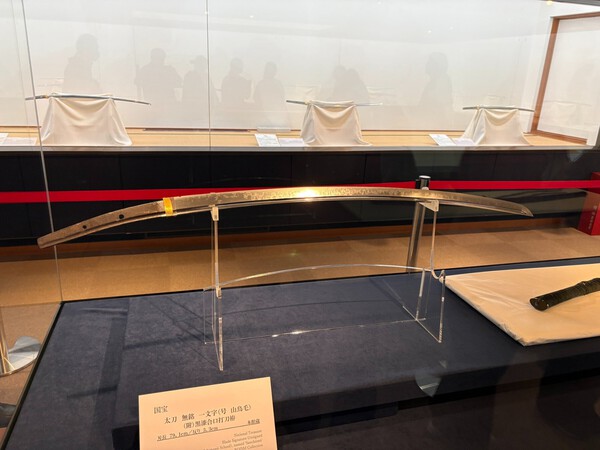
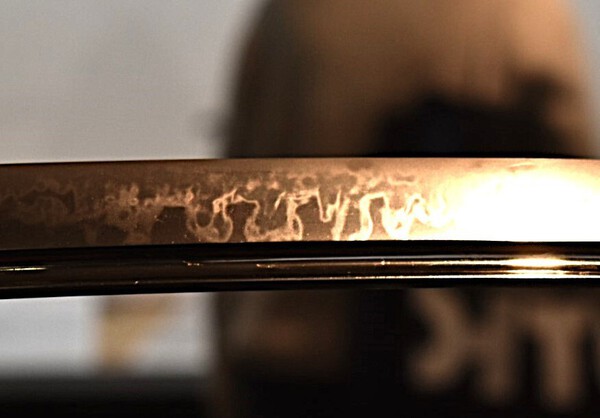
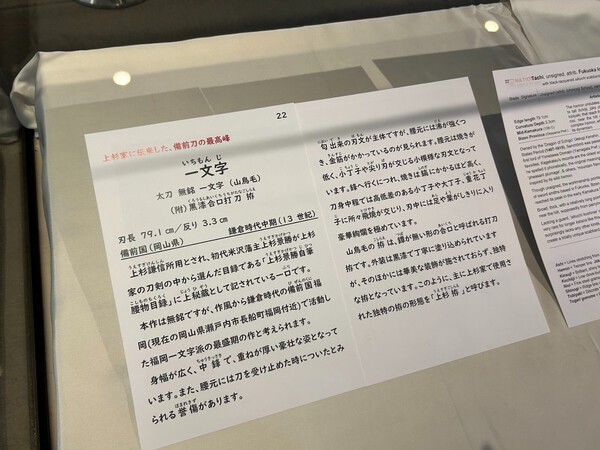
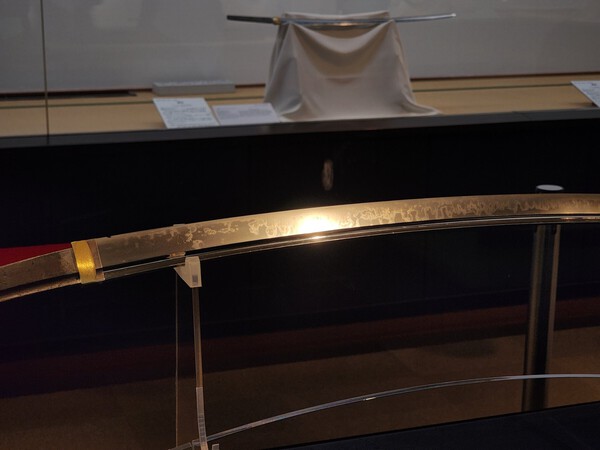
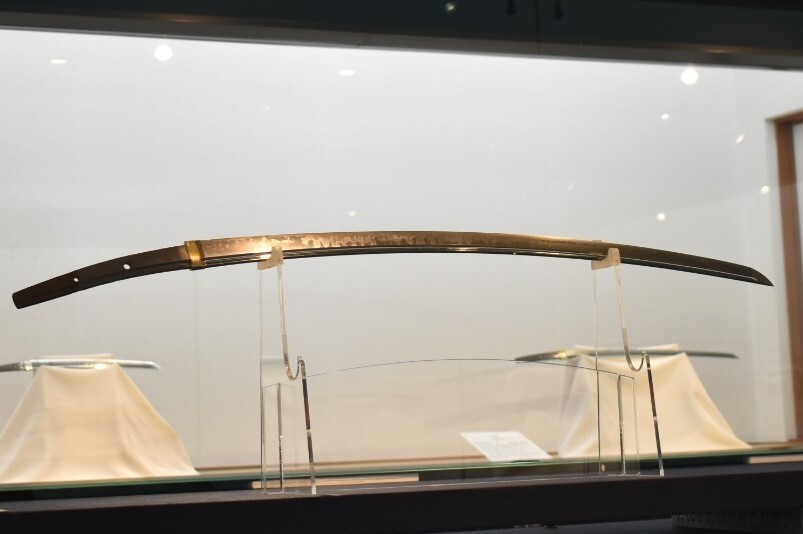
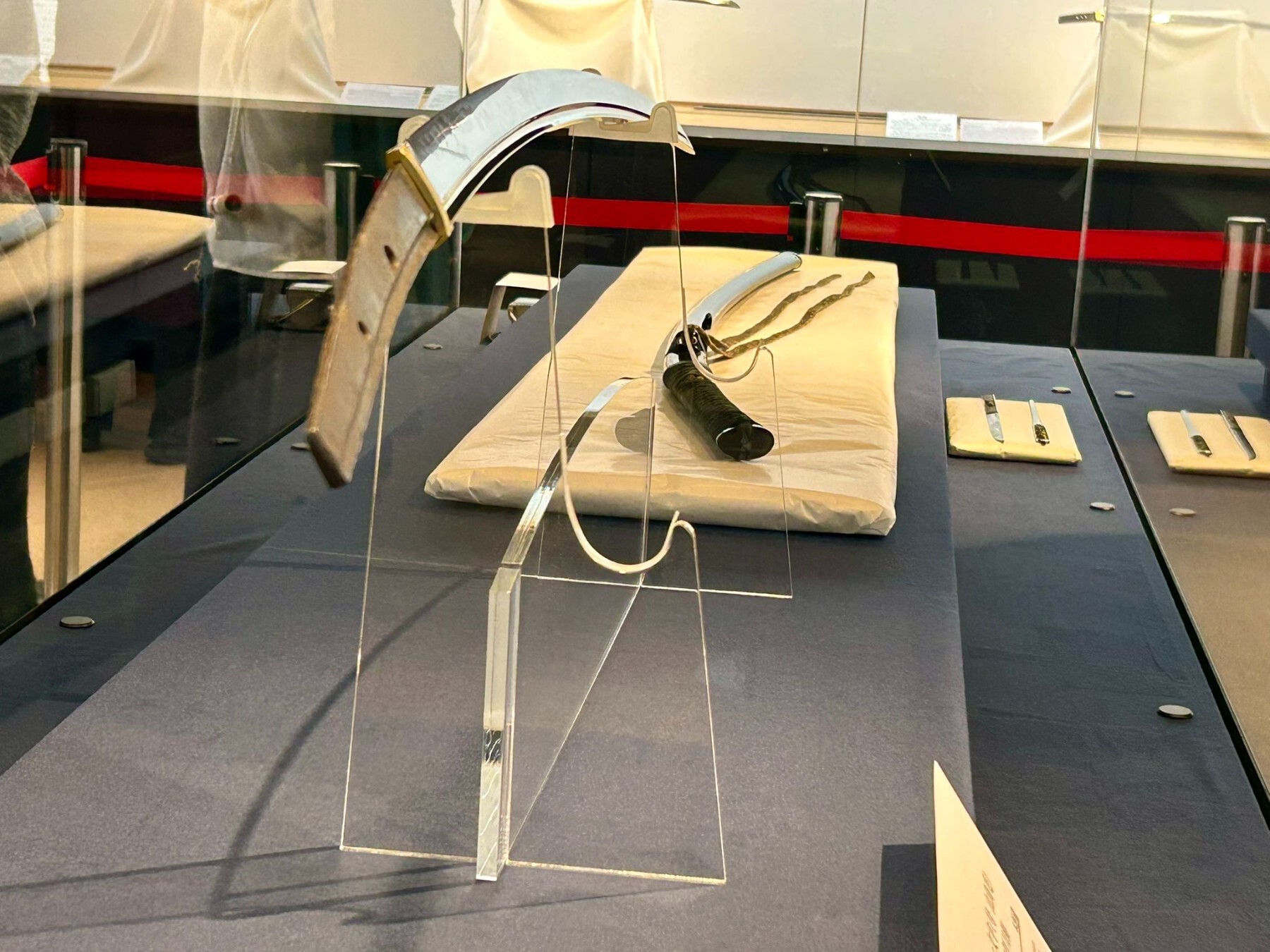
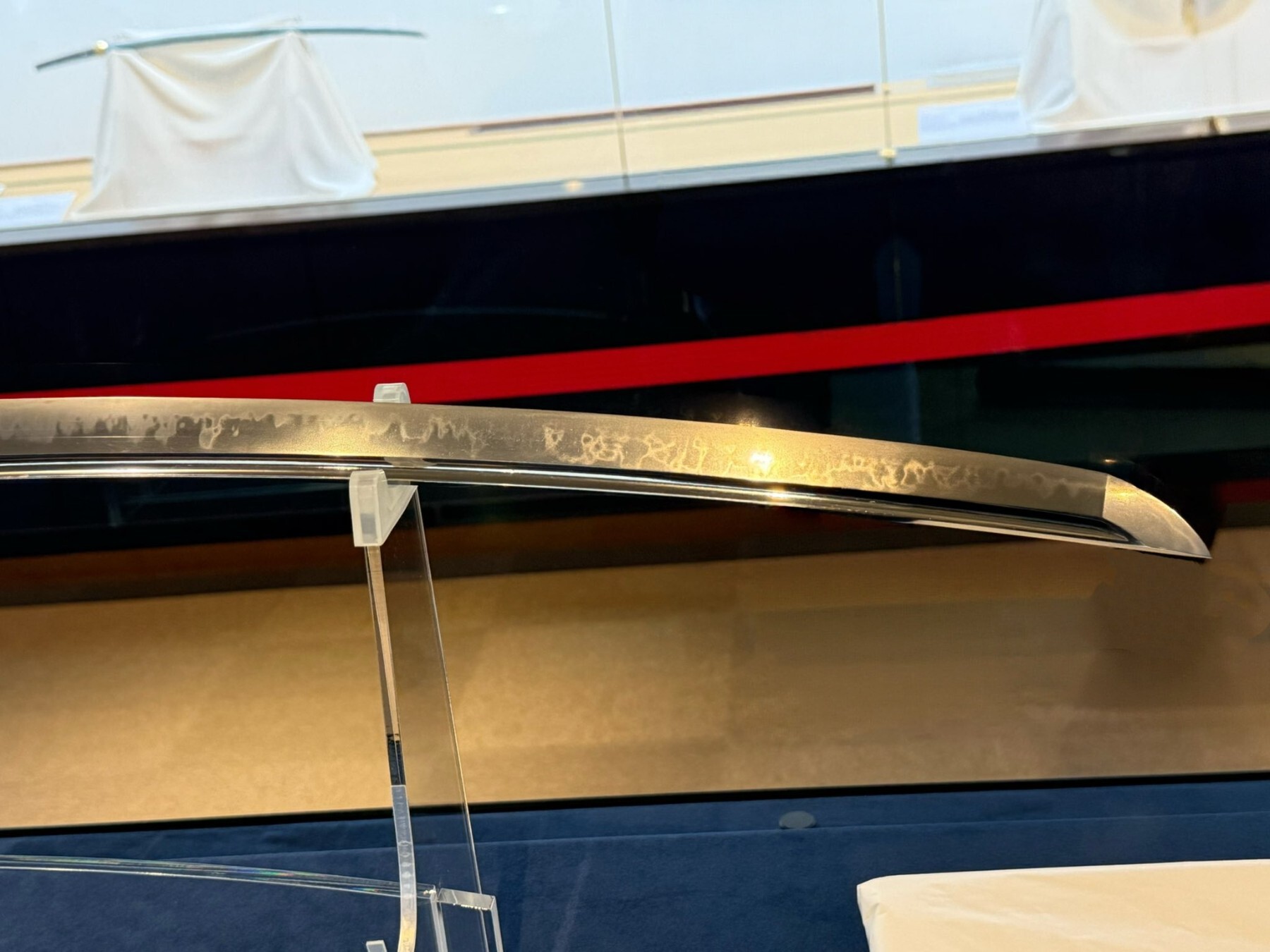
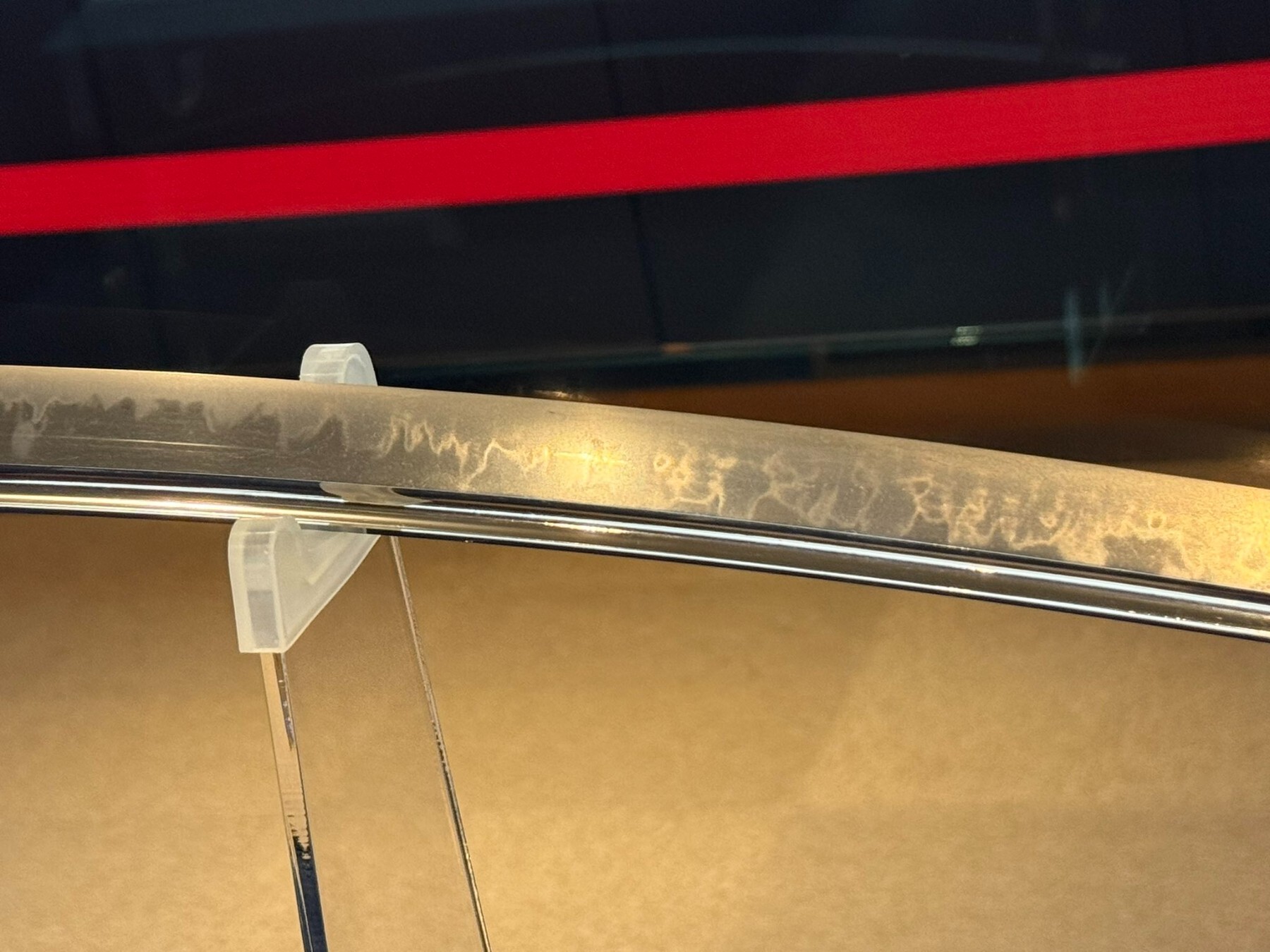
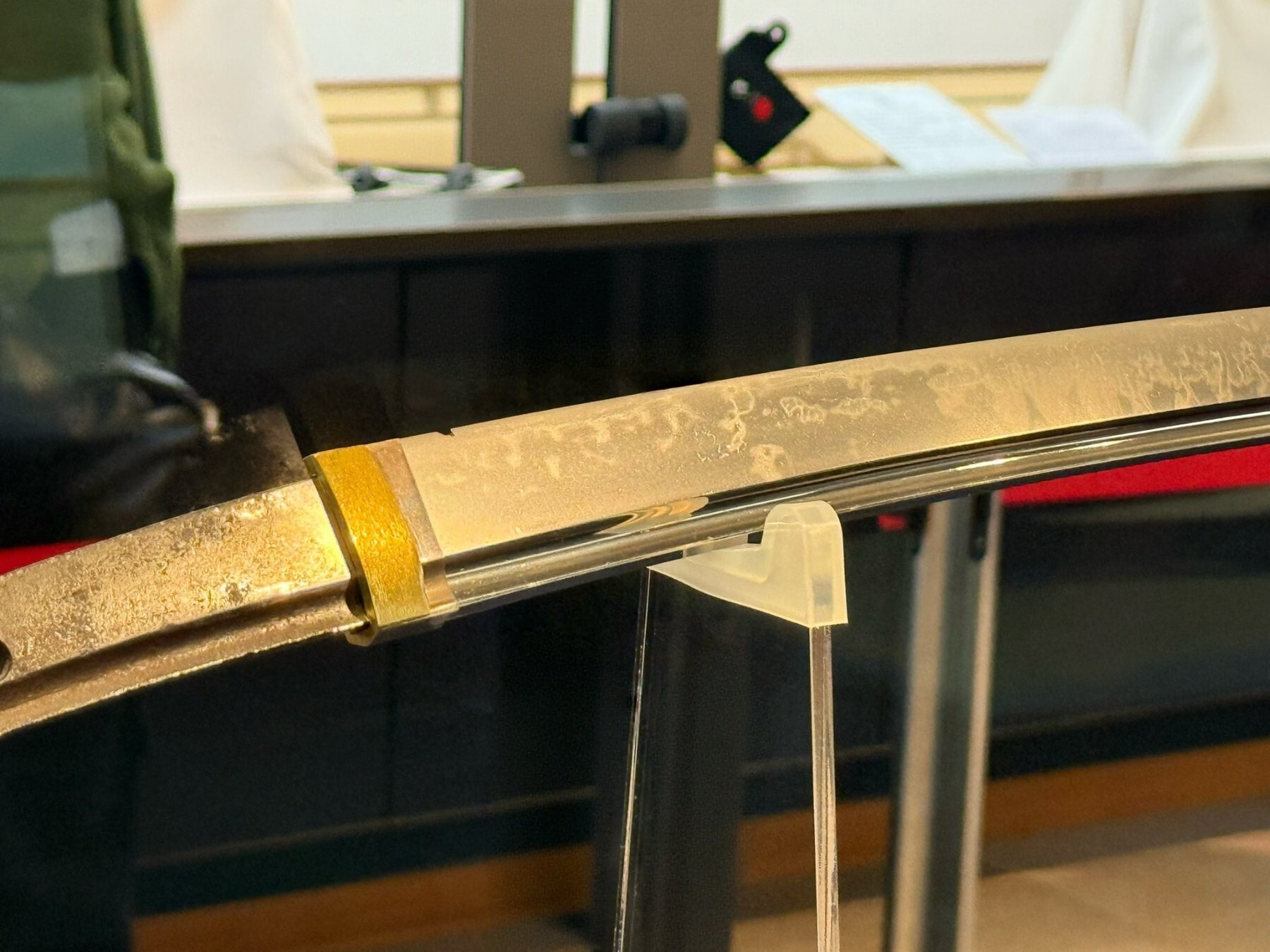
Lots and lots of photos of the Yamatorige starting to appear across the interwebs. Actually a lot of fun reading the comments and seeing the excitement in the people posting and responding to the pictures.



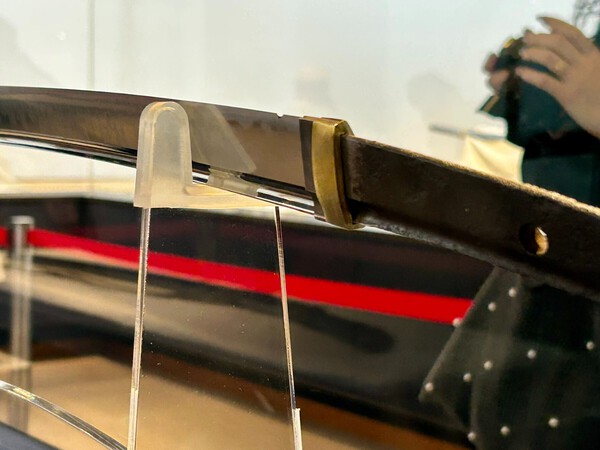

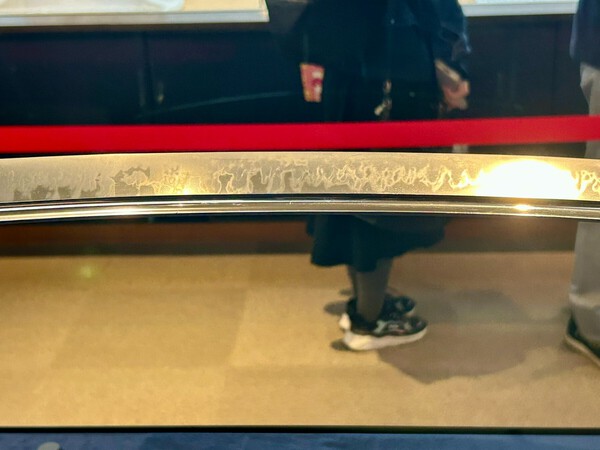

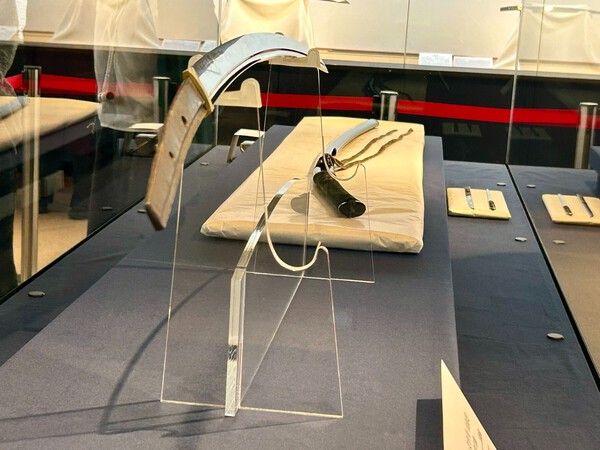
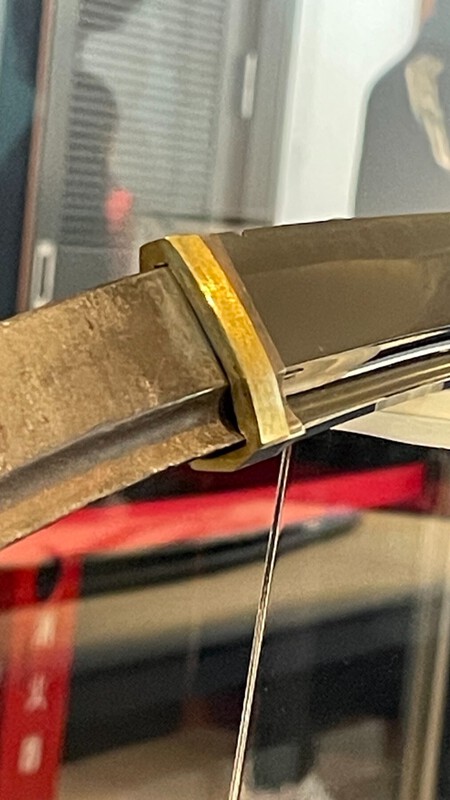
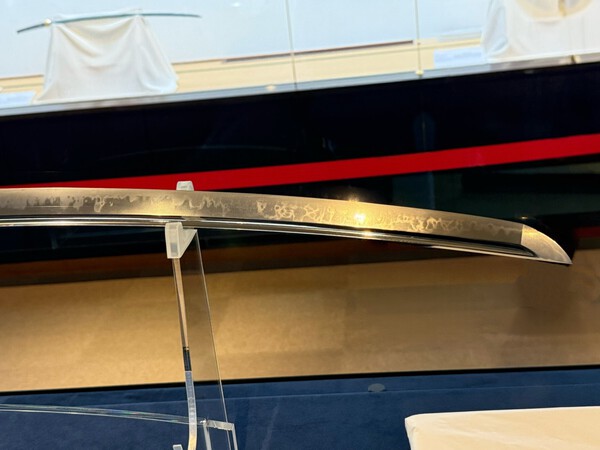

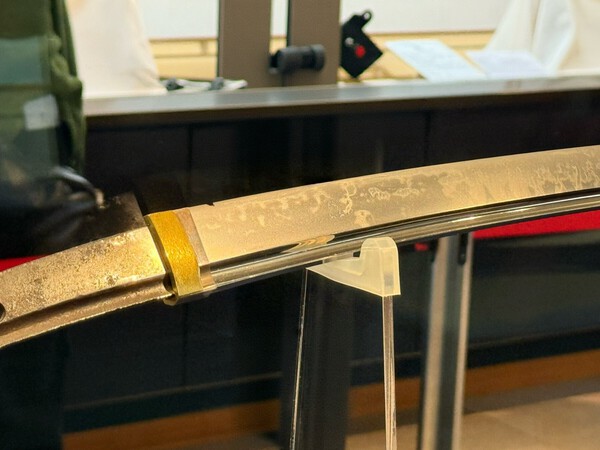
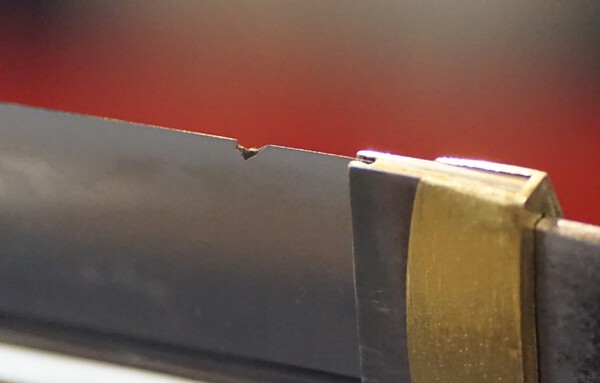
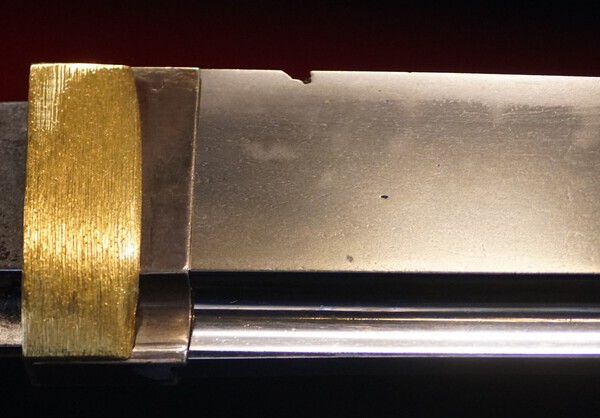
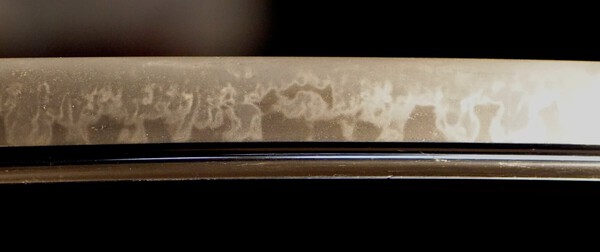
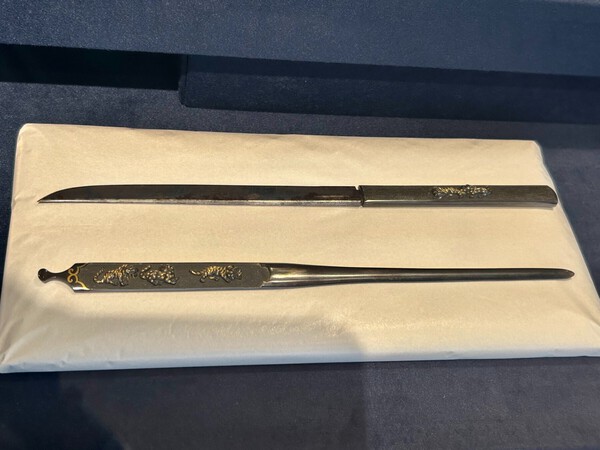

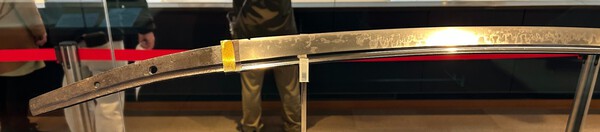
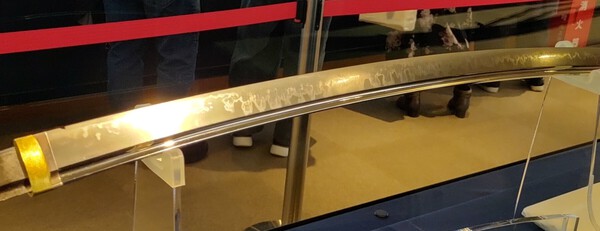
 1 point
 -
I think, as Jean has stated, the first is either Hotei's sack [sometimes also Daruma] but may also represent a "furoshiki" wrap. [but these other designs are not to the same standard of quality - - that is for sure!] I love the wave and cloud sukashi

 1 point
 -
銘 せゝ羅き - Mei, Seseragi (small stream)1 point
-
There are a number of photos of Meito on sho-shin.com that are noted as being gifted to Emperor Meiji, a few of those mentioned above show up if doing a site search. Chogi Haito Sword of Emperor Meiji Chogi Nagasa: 71cm Sori: 2.3cm Standing Itame Hada with JiNie, Chikei and standing Utsuri. Bo-Hi and Sobi run the length. Gunome-Midare ba moves inside a Notare line. There is Ashi and Yo and Kinsuji through the Mid. Yakiba widens in the Monouchi. Boshi is deeply set O-Gunome Midare mound turns to an abrupt Kaeri. Suriage Nakago has two Mekugi-ana and Bo-Hi resolves in Marudome. Signed in the Ji at the bottom: Bizen-no-Kuni Osafune Ju Nagayoshi (Chogi)1 point
-
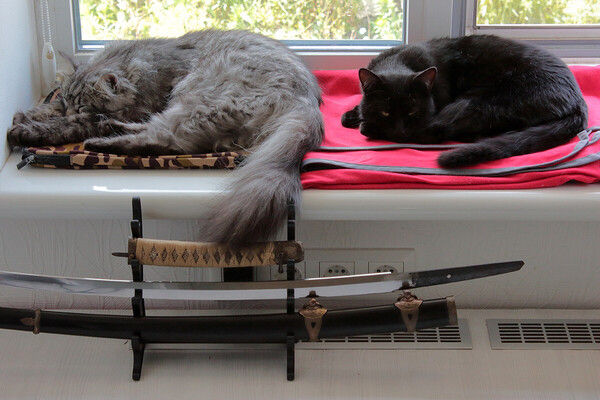
And here it is with dirks on it. Then I bought the sword and encountered the same issue as with dirks: I didn't like the idea of the blade or saya or tsuka being tossed around the table. I checked if a sword could be placed on the stand that I made for dieks and it turned out it fits pretty well. So I printed yet another stand but with a longer bar. The length of the bar was set by the length of tsuka. In this way I was able to keep my "project sword" safely on the stand assembled or disassembled.


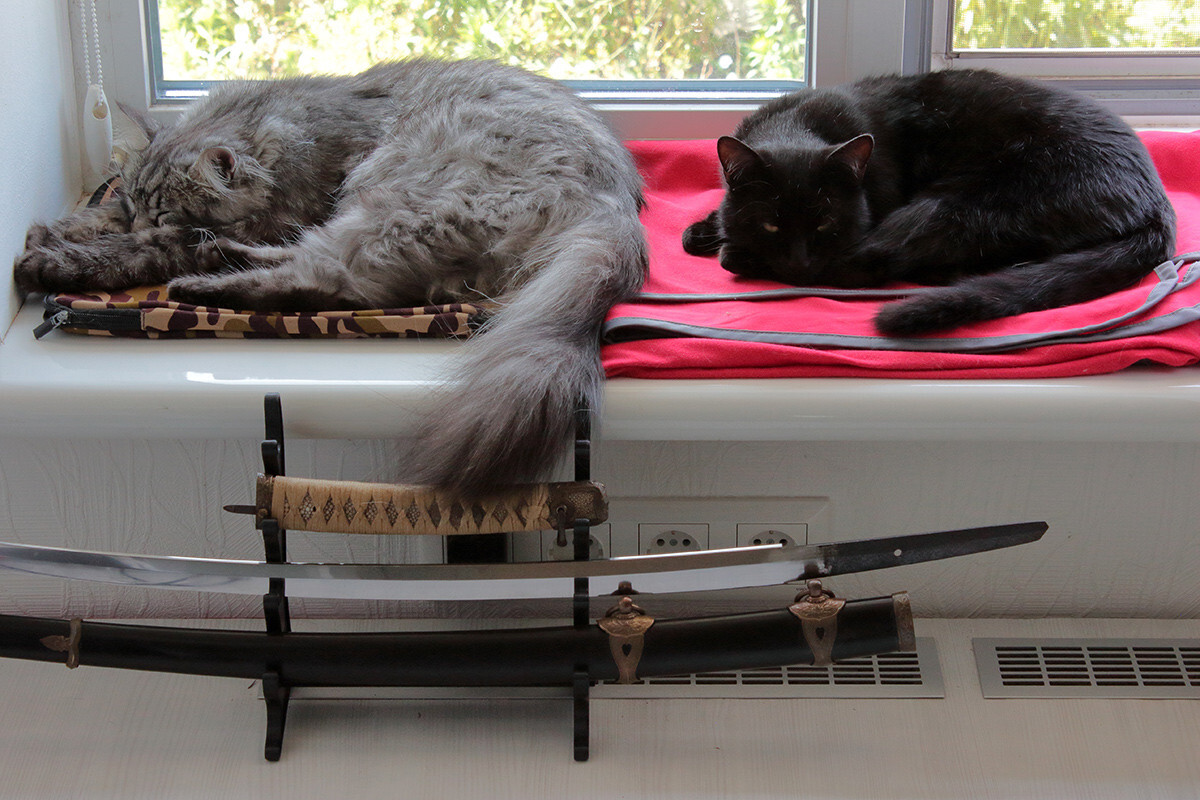
 1 point
 -
Andrew, can't express how much I admire what you do, and what you are able to do. And what a privilege to have the skill to be chosen for swords like this. Thanks for sharing your journey with us.1 point
-
1 point
-
1 point











2.jpg.8de42af7965bf94f4e4e159e2a4faf93.jpg)
.jpg.4fb852af2a160df2fa08465fedf375fd.jpg)






























This leaderboard is set to Johannesburg/GMT+02:00