
Leaderboard

Popular Content
Showing content with the highest reputation on 03/11/2026 in all areas
-
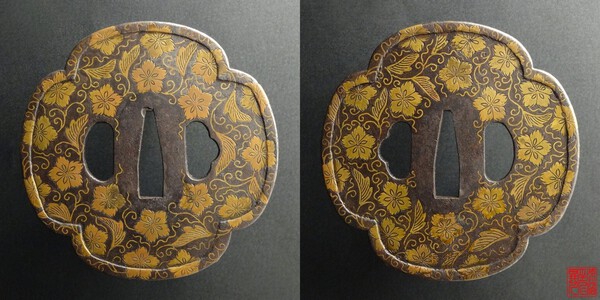
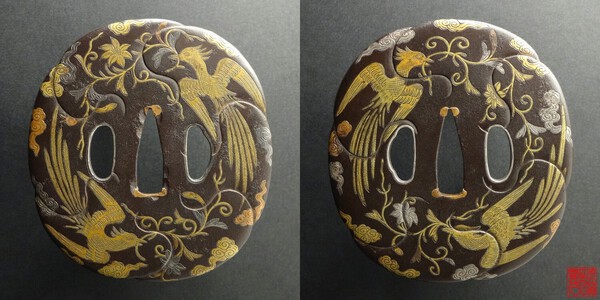
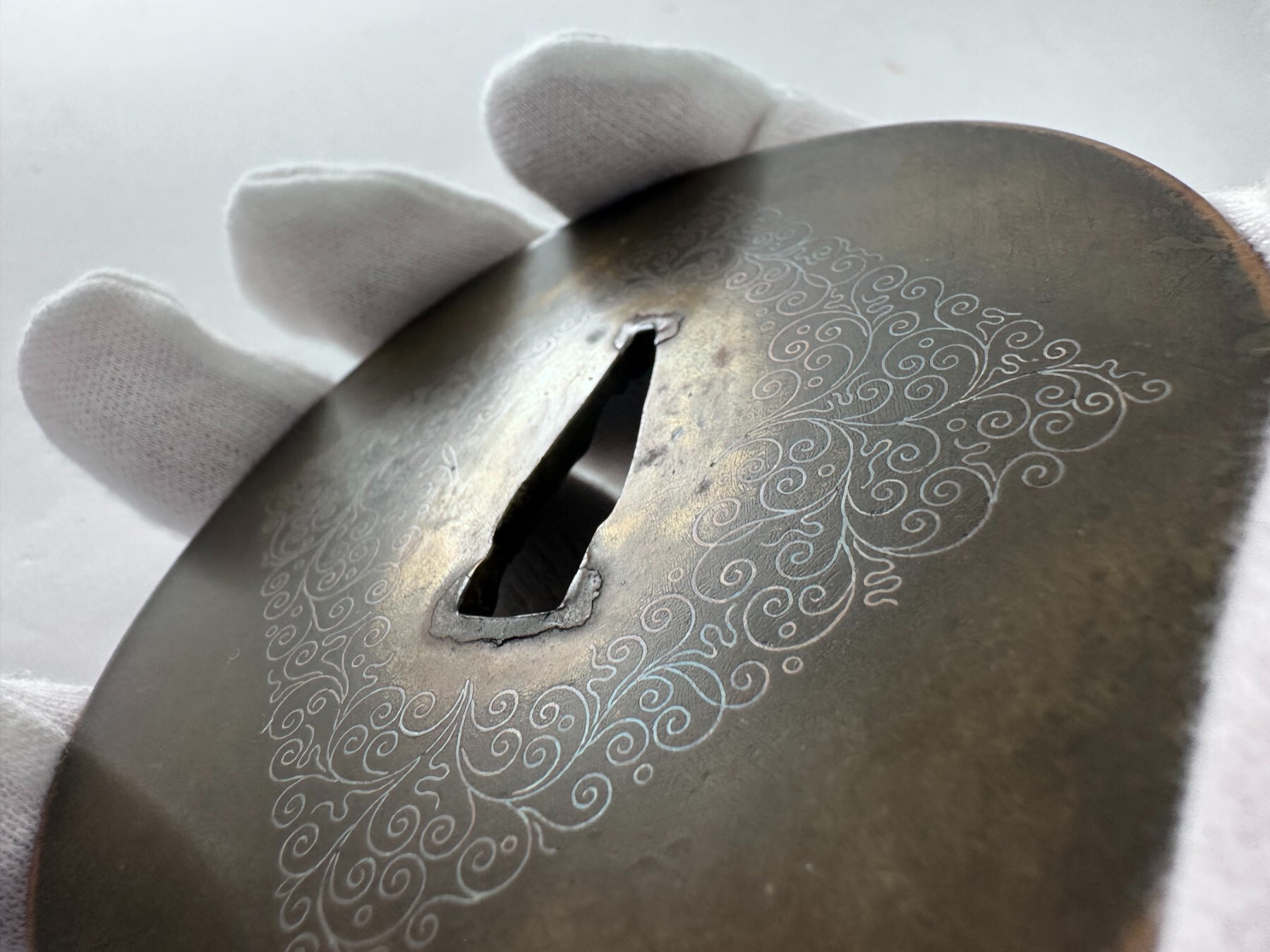
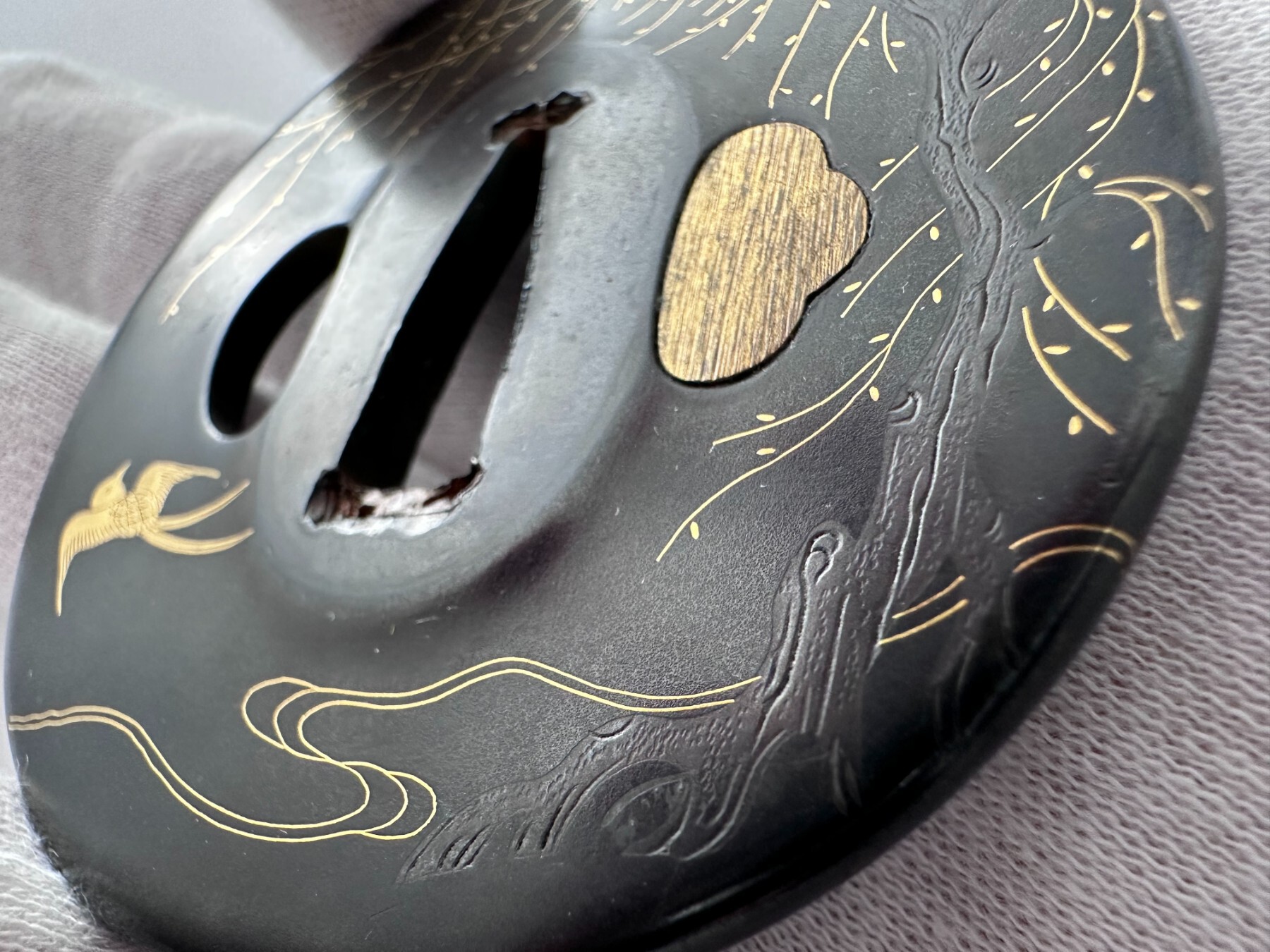
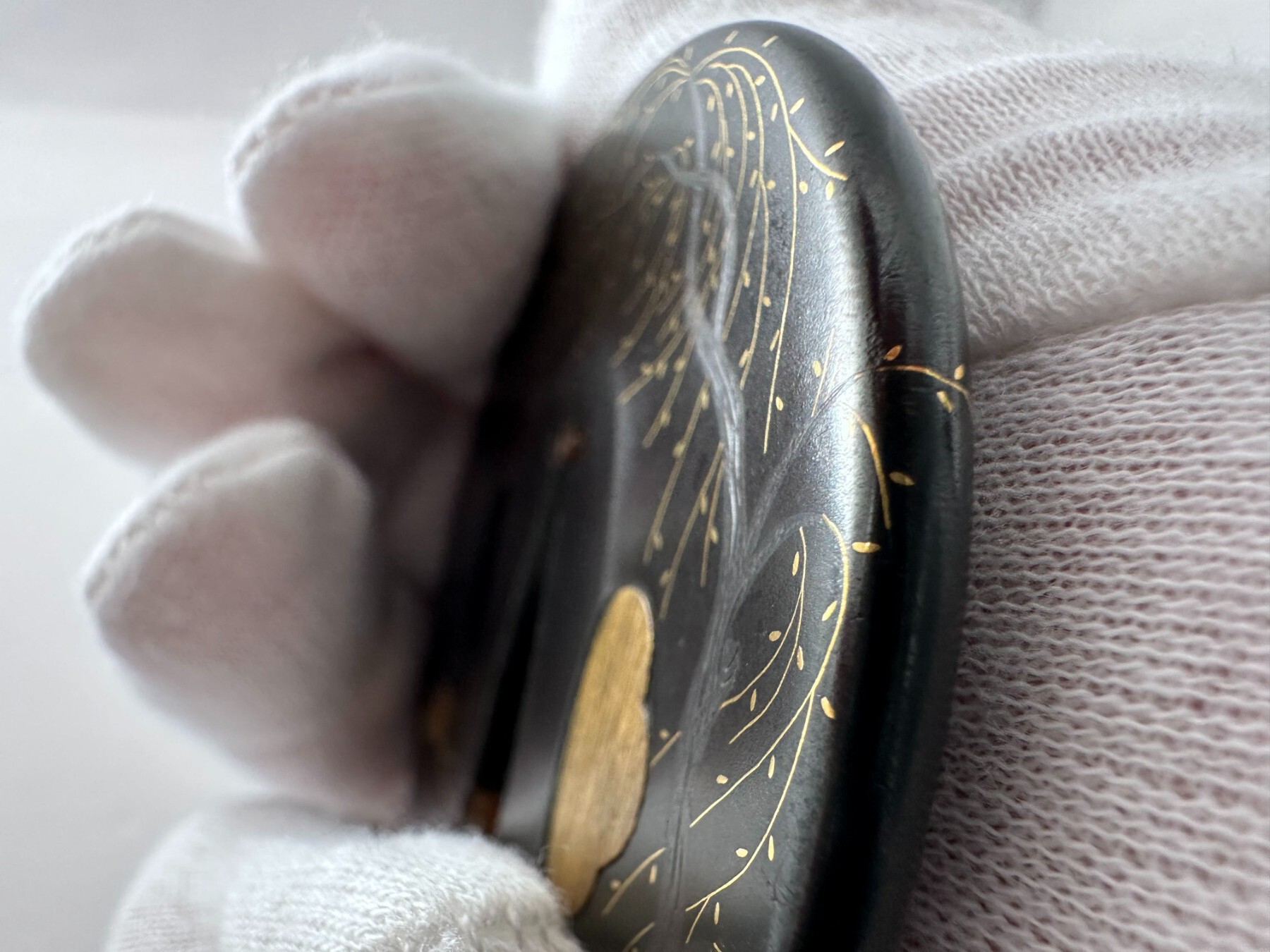
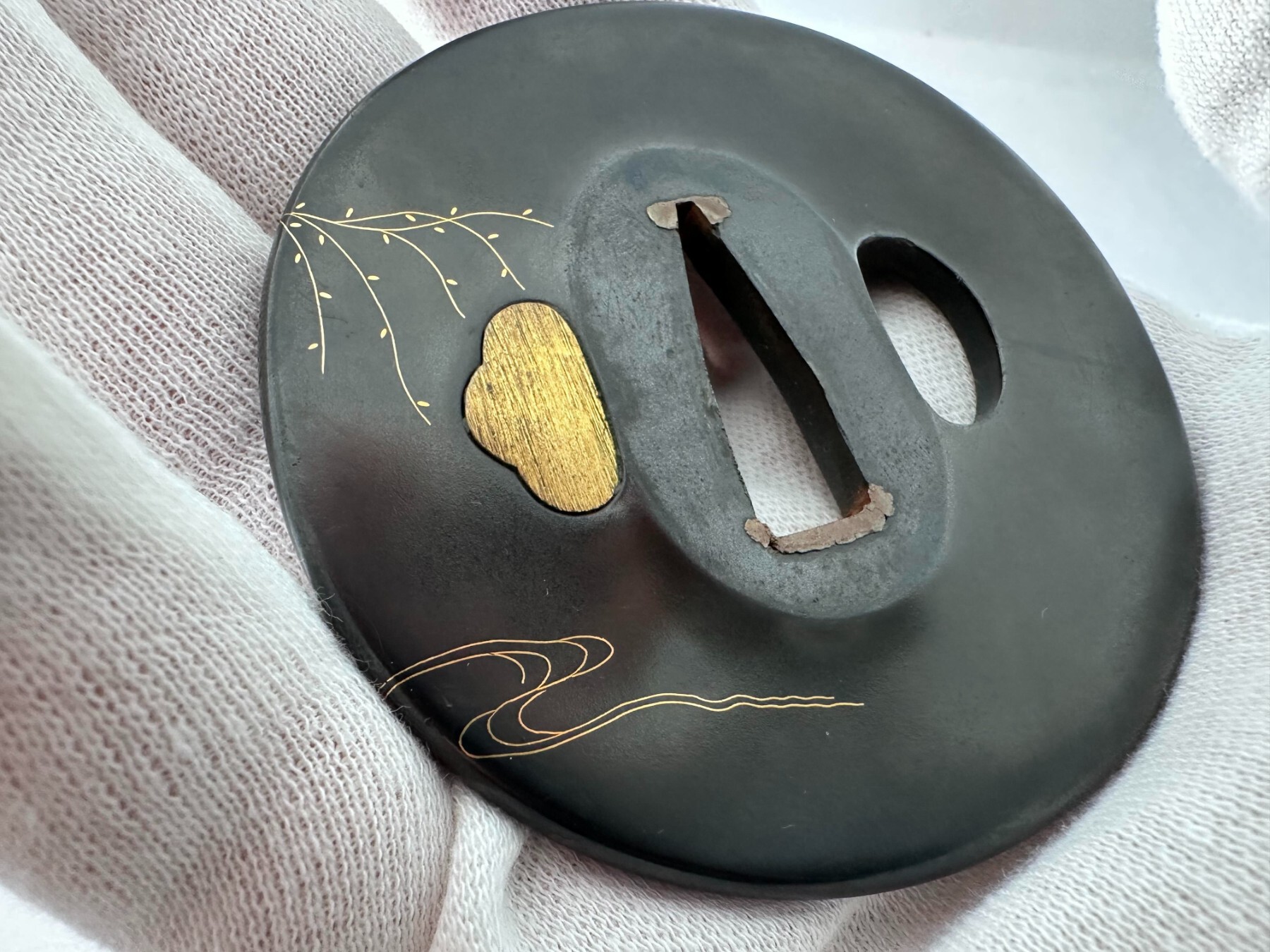
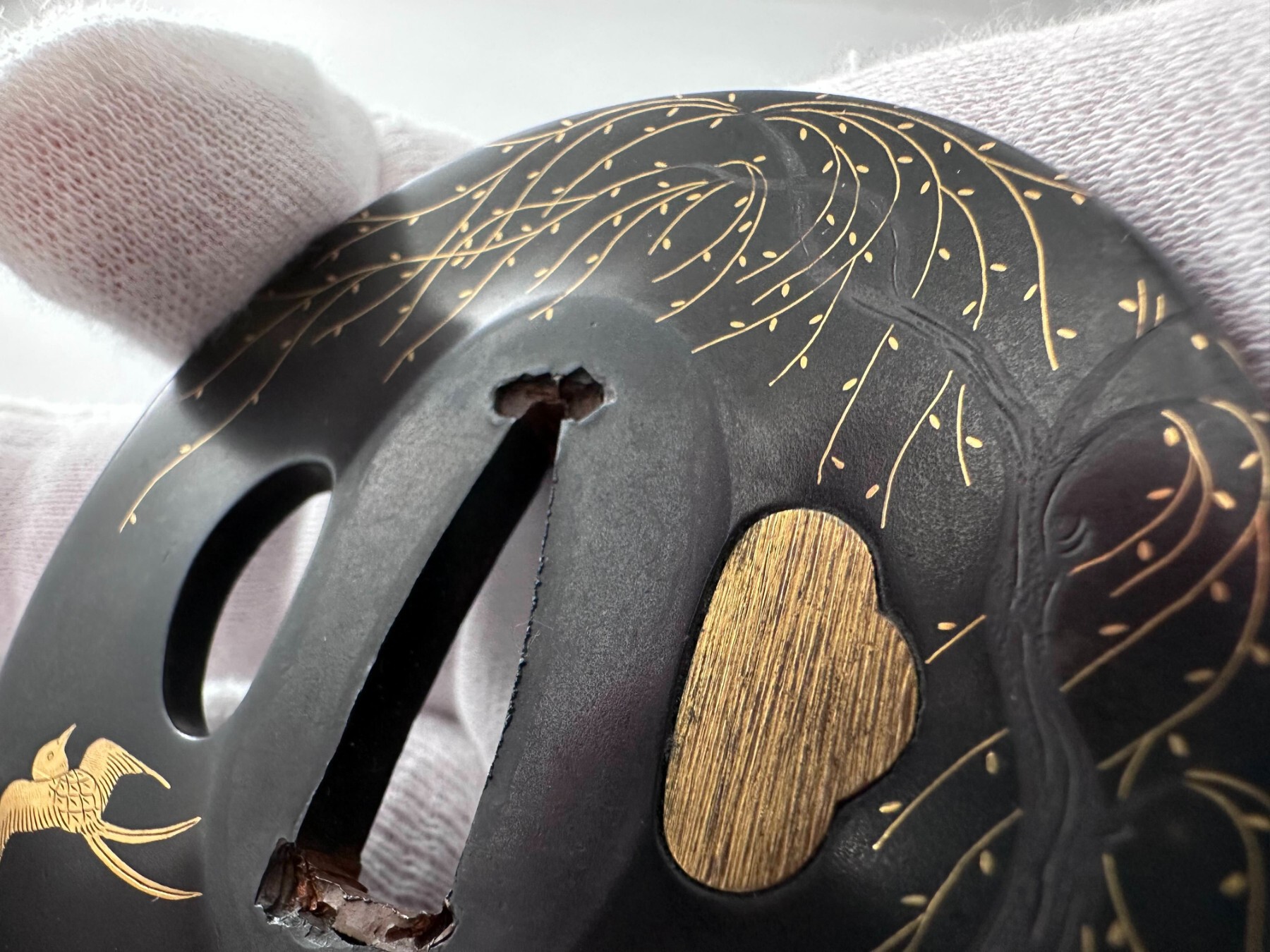
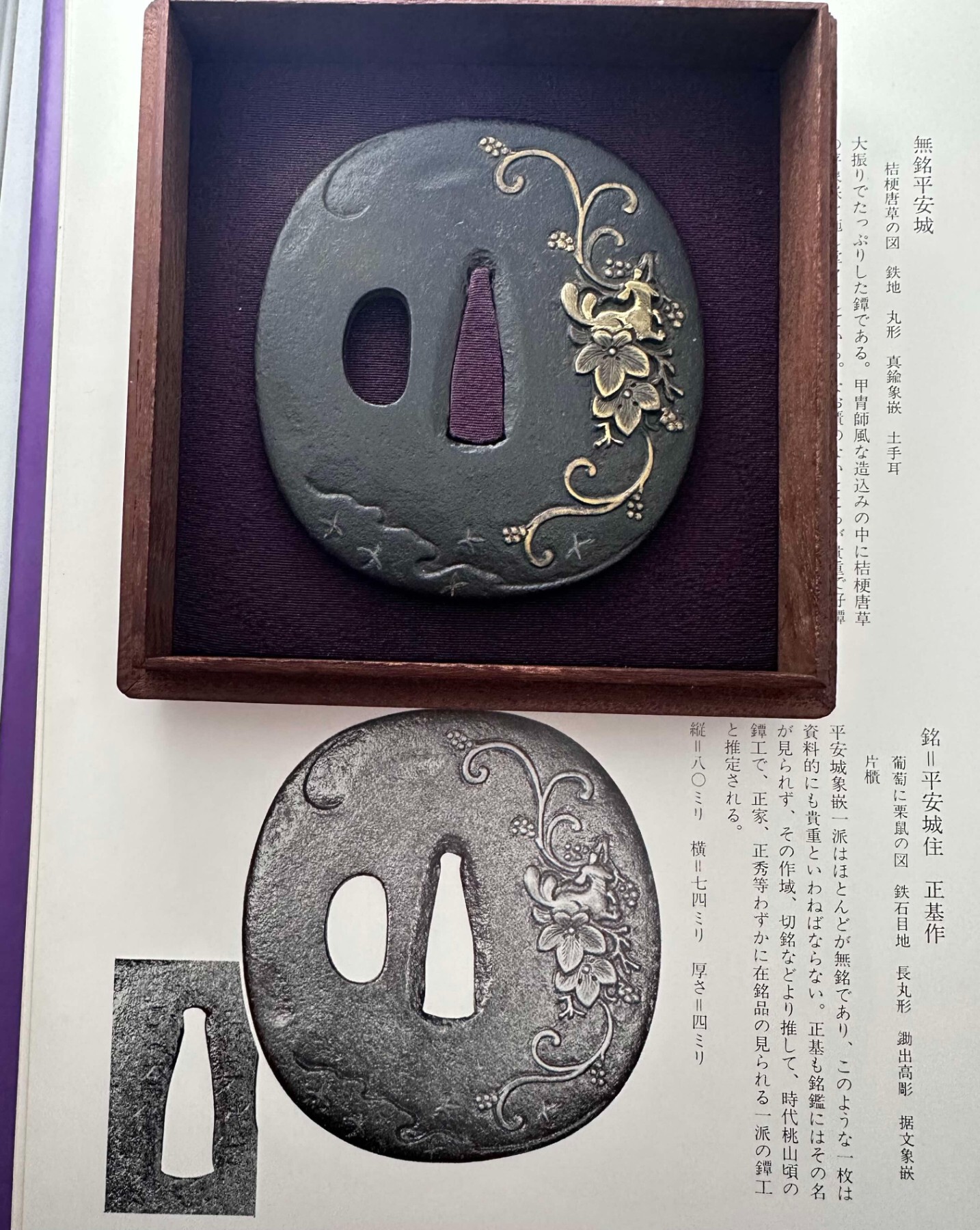
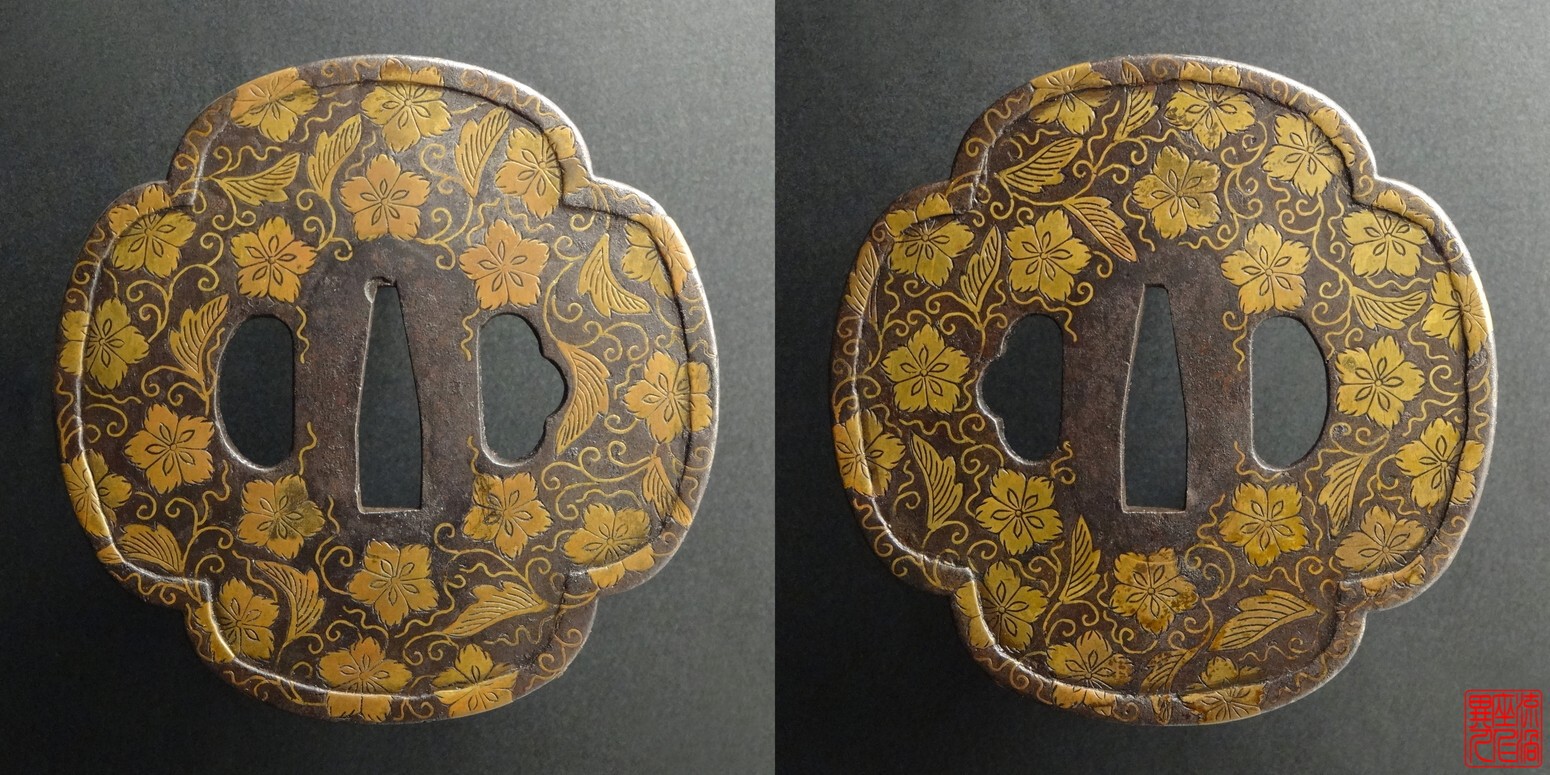
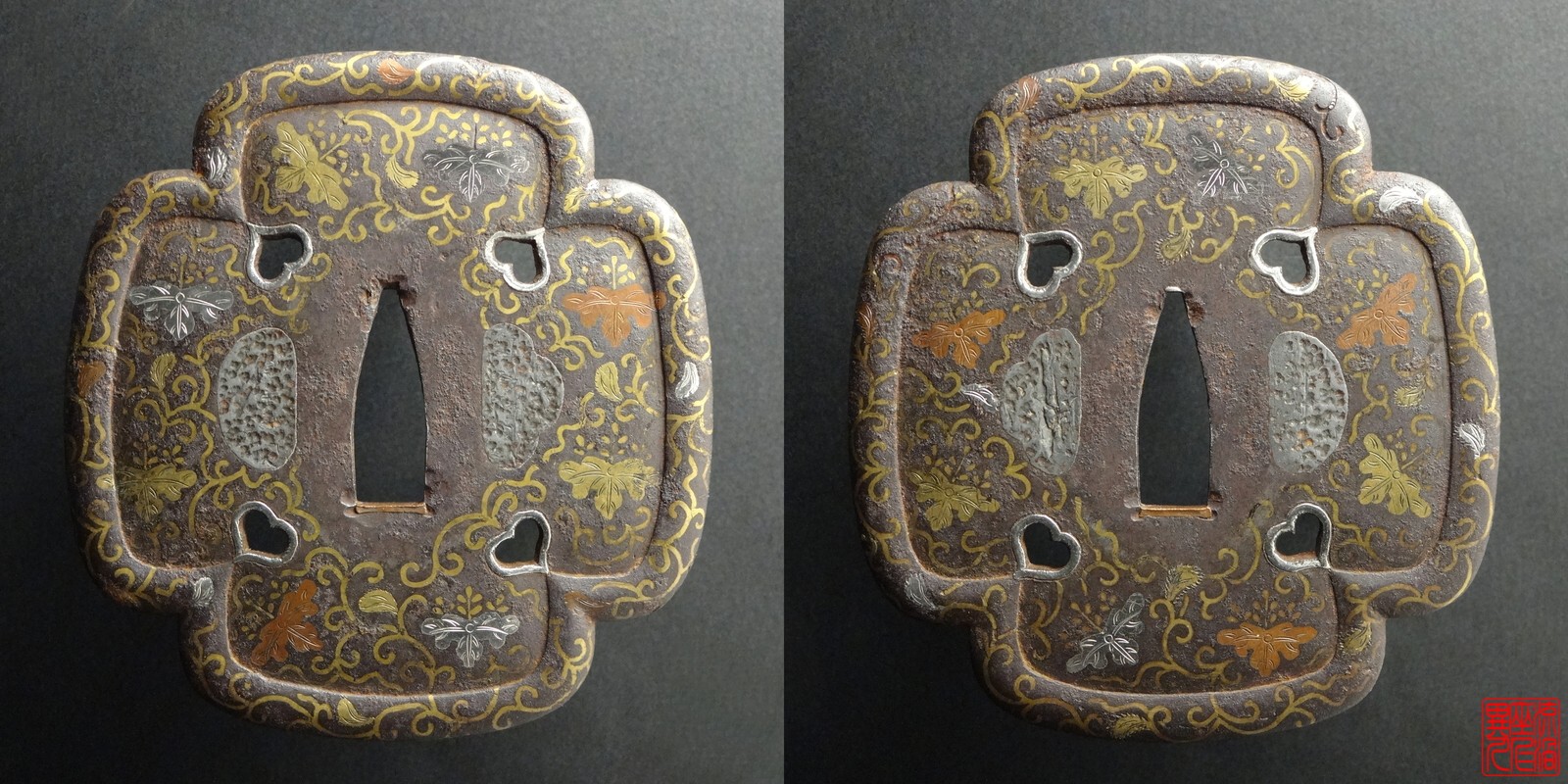
Hi all, I would like to share three tsuba that recently joined my collection: an Umetada tsuba with karakusa design (perhaps Momoyama?), a Kaga piece, and a Momoyama Heianjo. Each has a different taste and gives a slightly different feeling. Any thoughts or observations are very welcome.


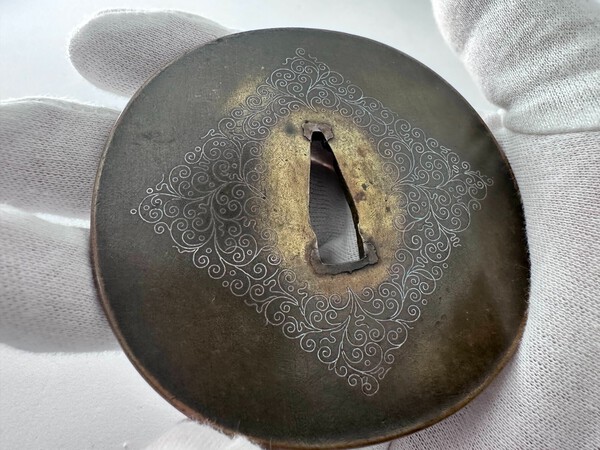
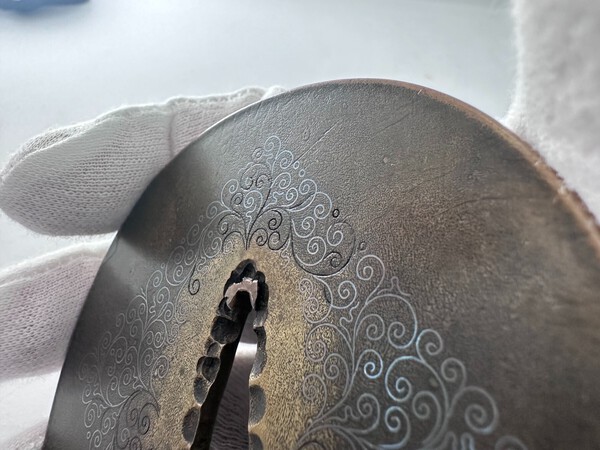
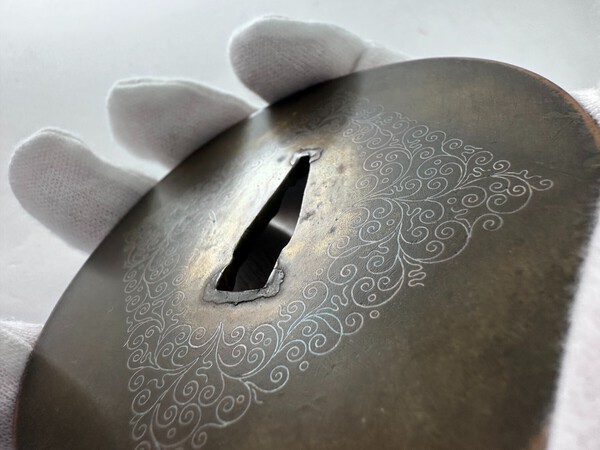


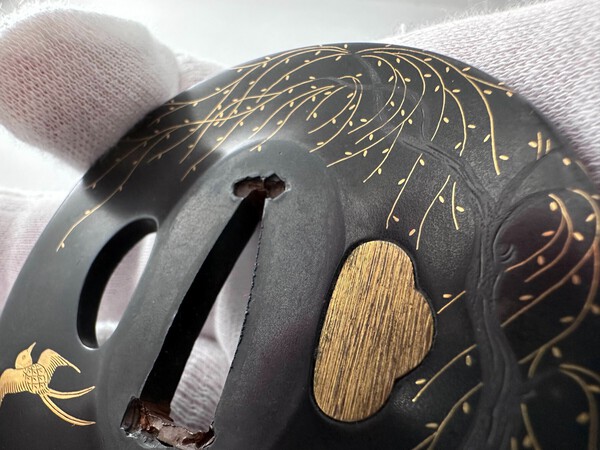
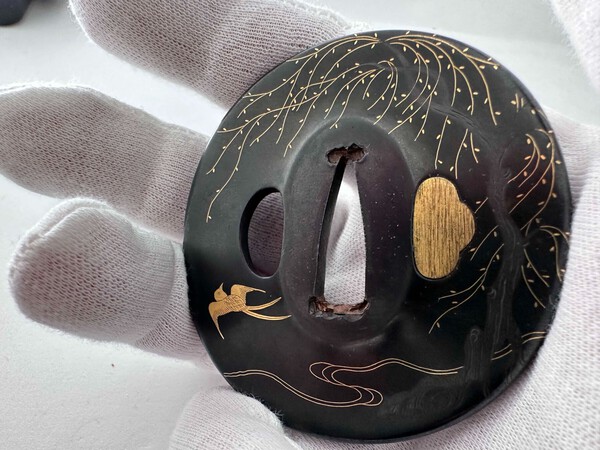

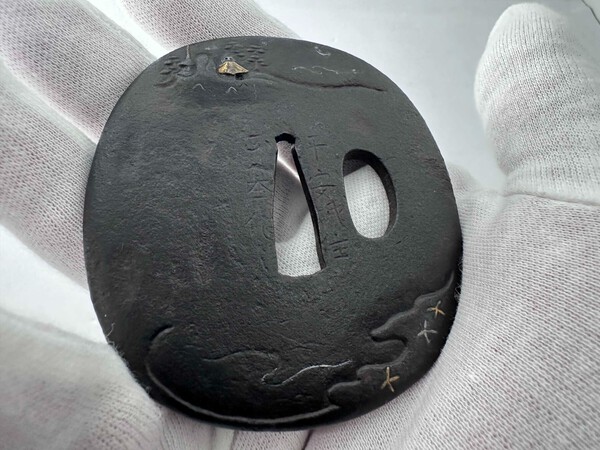
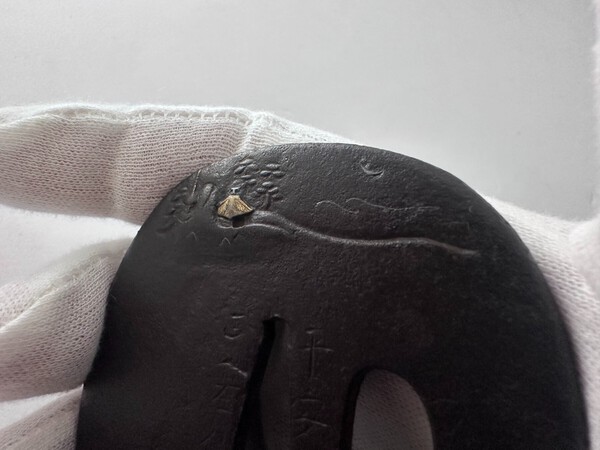
 7 points
 -
Left: 光弘作 = Mitsuhiro saku Right: 政随 = Shōzui6 points
-
鶴聲 – Kakusei He is a Noh mask craftsman.5 points
-
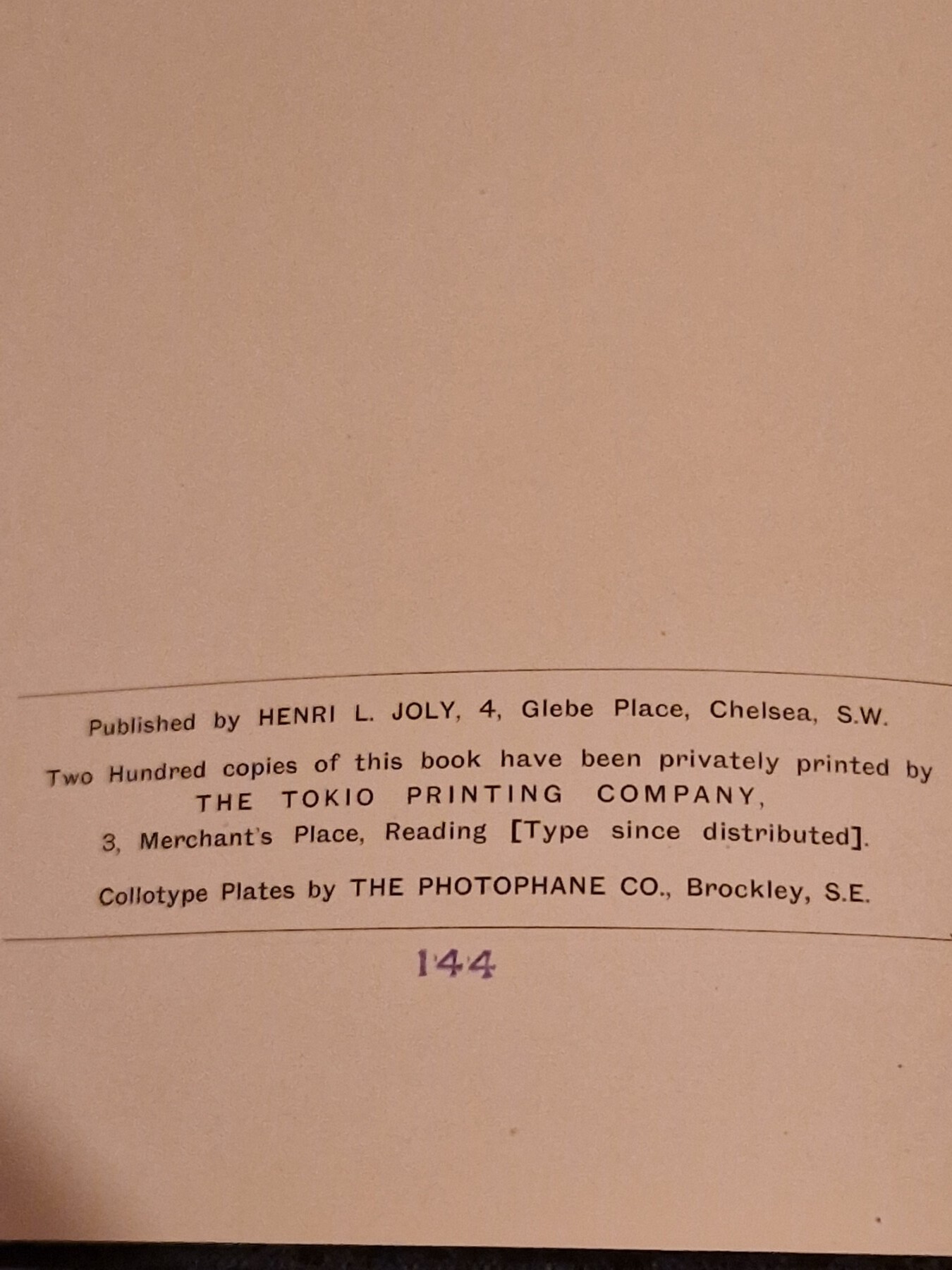
Just picked up a first edition, first print of the Sword and Samé by Henri L Joly and Inada Hogitaro published in 1913 as a private print of 200 books. This is the OG in terms of books published on the subject of Japanese Swords in any European Language. It all starts with this book... An incredibly scarce book I have been hoping to get one for some time and was fortunate to find it in a little English Bookshop near Cambridge. This is copy 146. I must admit I am rather excited.

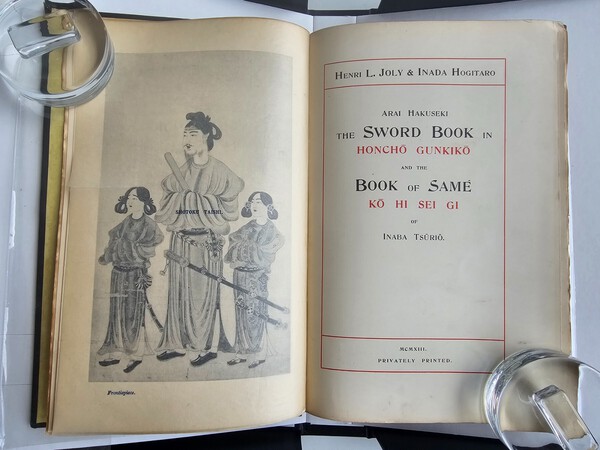
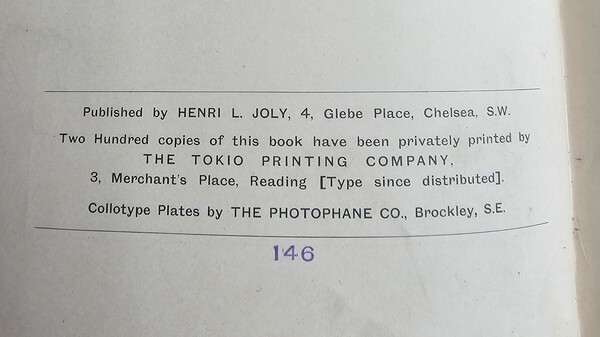 4 points
 -
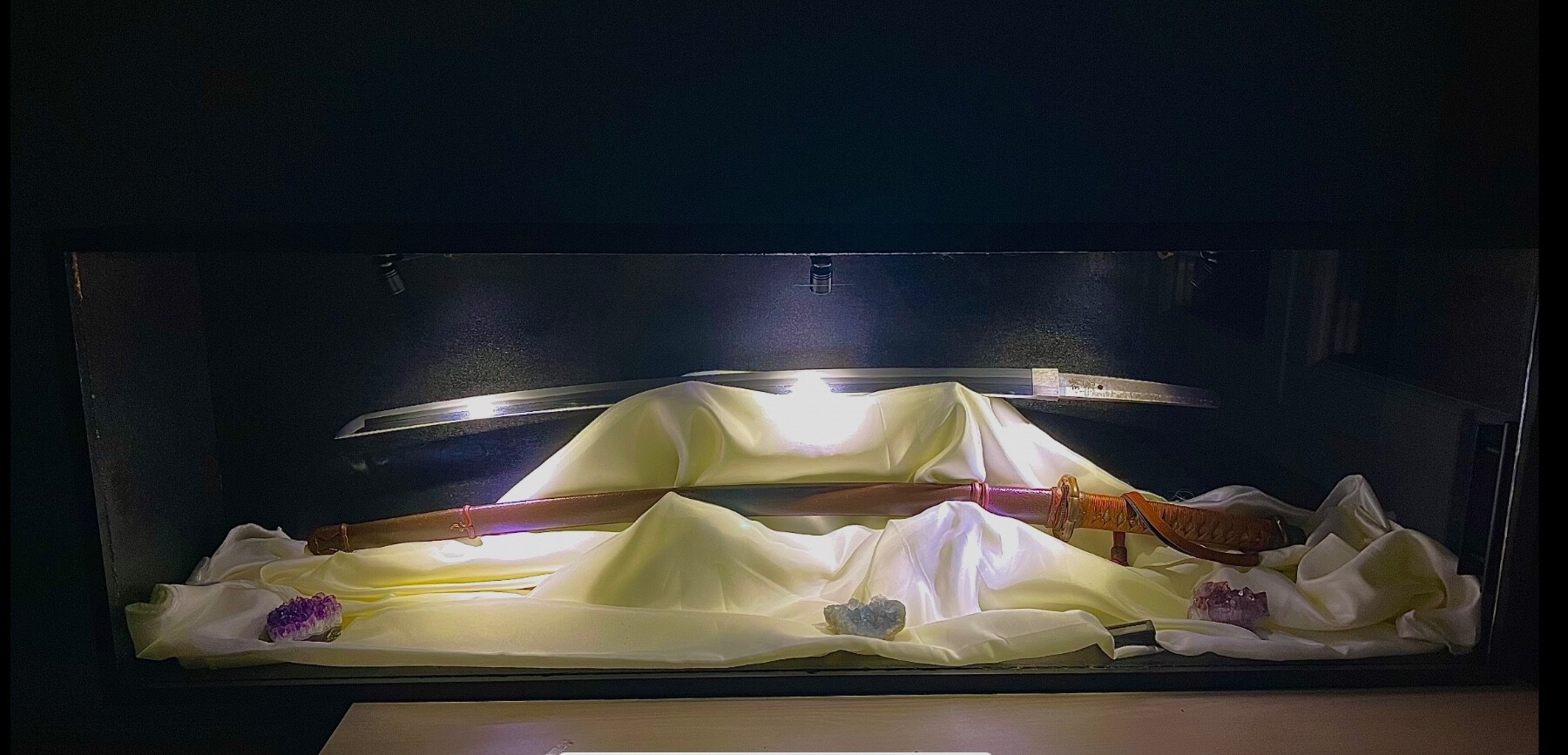
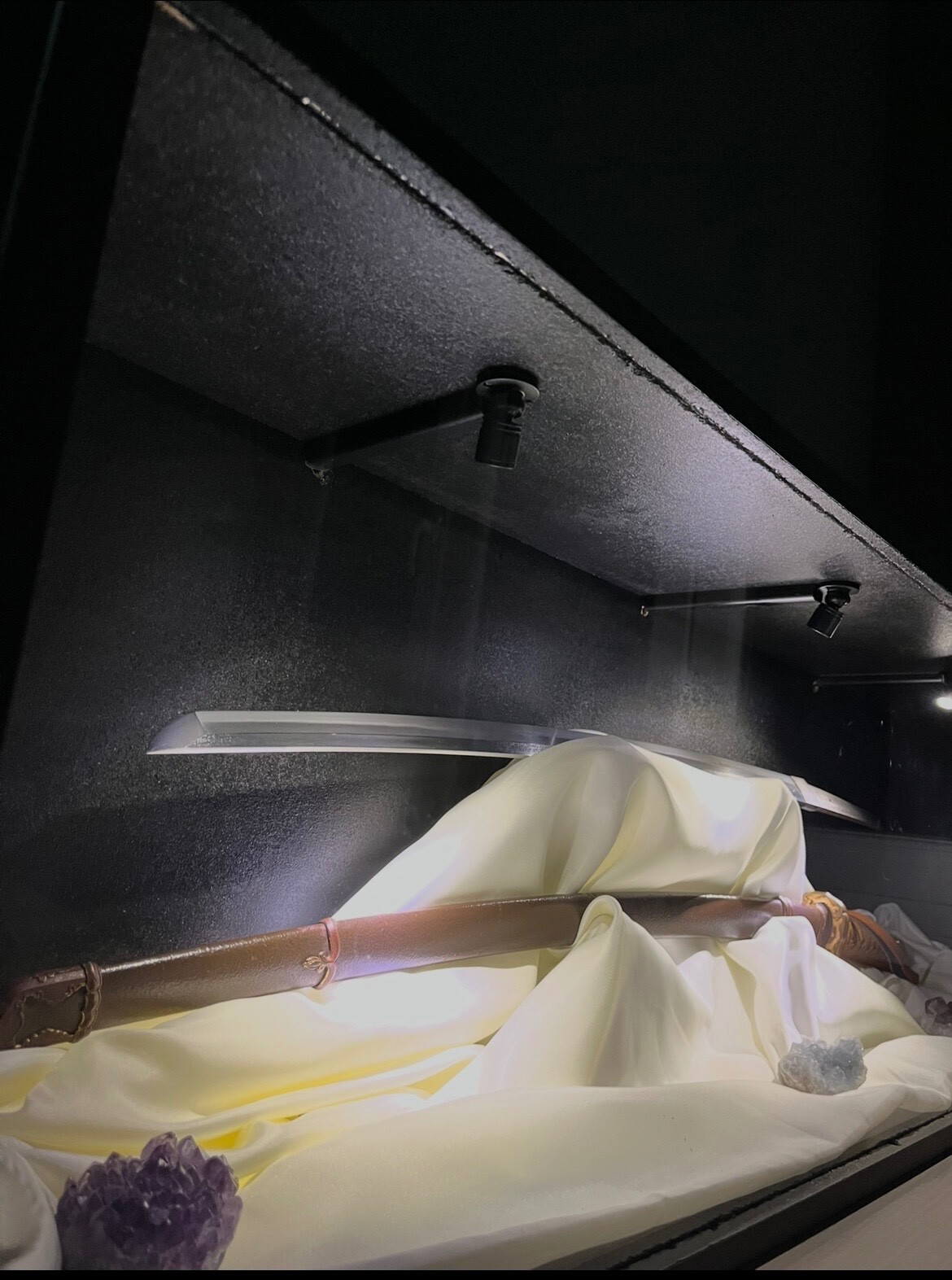
Showing my case built with a friend, then I added every other element. All from cheap chinese seller (except the stones) : the leds, the handle to open the display case, the stands, the wide white satin sheet, the hygrometer and anti humidity silk bags.
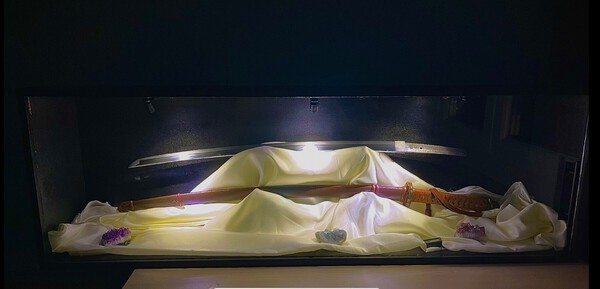
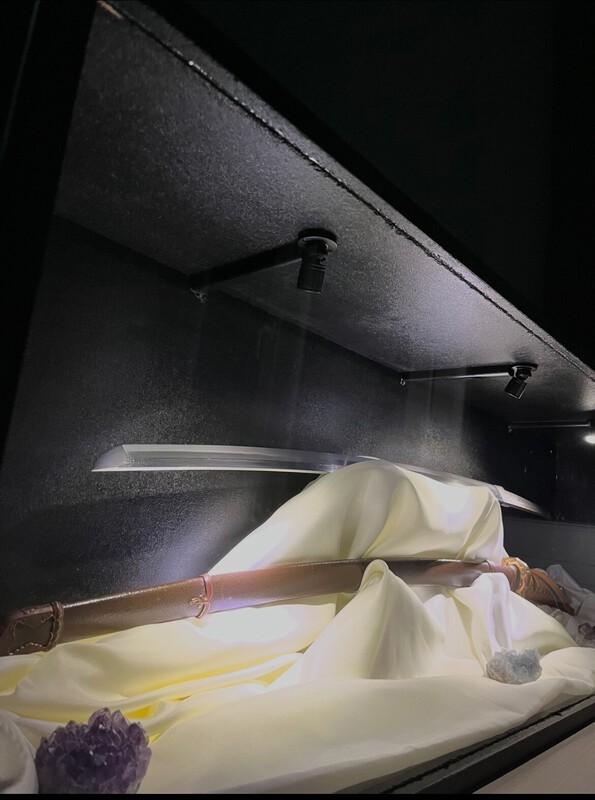 4 points
 -
I would go further and say "Sukesada" was a kind of brand, too, indicating a certain consistency of quality. I think these were also exported to China, so there would have been external demand for swords inscribed with "Sukesada". No doubt there would have been sufficient commercial incentive to add the name Sukesada to any sword. Note I am not saying the sword in this post is gimei. With so many Sukesada smiths, it would take a detailed examination to determine if this was made by one of the 60 or so Sukesada smiths. I mean, there are a few whose signature style, and swordsmithing style, was distinctive enough that you could make a quick judgment, but there are a lot of Sukesada smiths, and this could be from one of the lesser smiths.3 points
-
Multi-tone Kaga works like your #2 are getting to be very rare. When you do see them, they are often rubbed damaged due to the raised shape of the seppa dai. Please take good care of it. On my very short bucket list is a trip up to Kanazawa area for a few days to take in the spirit of the Maeda lands. A really good Kaga Kinko or Kaga Goto tsuba is on also on my tsuba wish list. That and a good Nobuiye of design that suits me.3 points
-
I came on to say the exact same thing. The observation and design elements work so beautifully together. Reminds me of the motif on the Kokuho Norishige wakizashi tsuba in Ian's possession.3 points
-
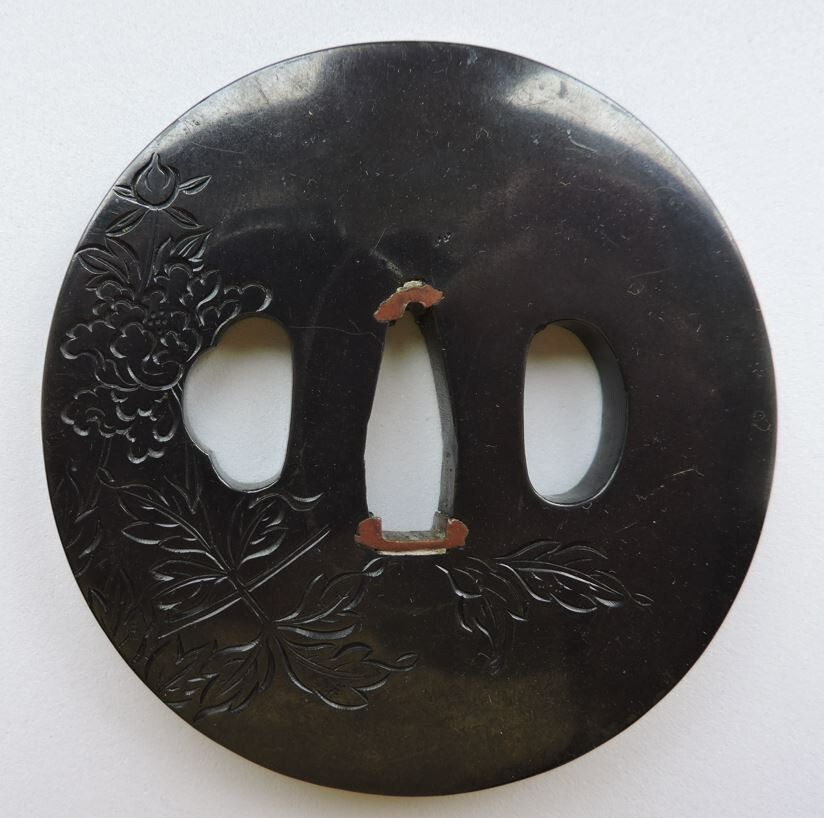
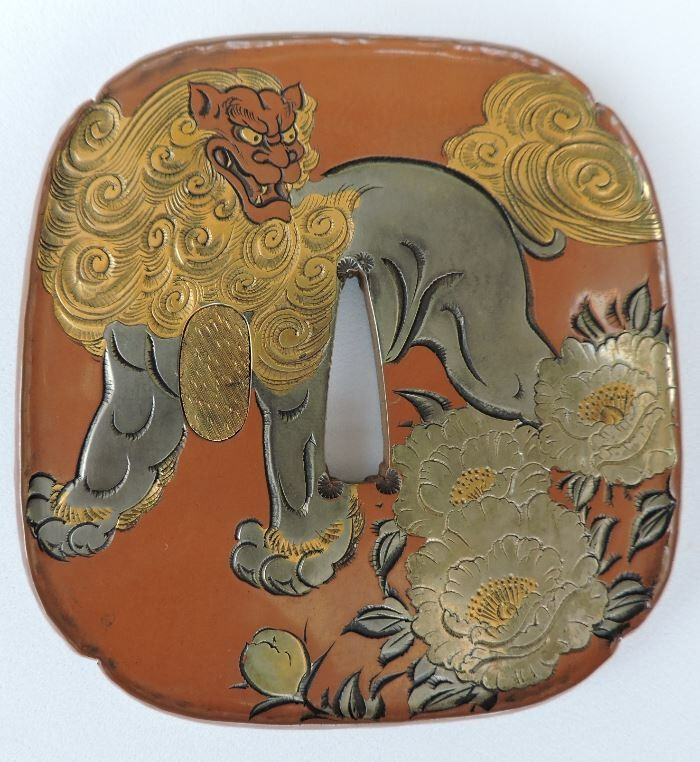
The first shishi tsuba that I have is a Shakudo one signed Masanaga. The tsuba depicts two shishi in shishiaibori and engraved in katakiri on the reverse with a windblown peony. Shishi are mythical guardian lions in both China and Japan and the peony is regarded as the king of flowers and in Japan symbolises bravery, honour and good fortune. The design of shishi and peony is often augmented by the addition of a butterfly. This is because, according to legend, the shish has a weakness in that a bug lives inside it, but if it sleeps under a peony the morning dew is absorbed by the shishi and the bug is eliminated as a larva, which metamorphoses into a butterfly. The tsuba is signed Masanaga, with a kao and was catalogued as Haynes Index no. H 04250, which identifies the artist as Chosuke Masanaga (d. ca 1700), who was a student of Nara Toshinaga (Markus Sesko) or Ito Masatsugu (Haynes). However, there were two generations of Masanaga in the Nara School and both used the same kanji for their signatures. The first generation, Seiroku, was a student of Toshinaga (either the 3rd generation master of the Nara School or a student of the same name). His (adopted?) son was Gihachi Masachika, who signed Masanaga for a while after his father’s death and was from the Kawakatsu family and a nephew of Sugiura Joi. The Nara tsuba artist Gohachi Masachika may have been an alternative name used by either of the other two Masanaga. Consequently, there is some uncertainty as to the identity of the artist who made this tsuba. Height: 7.6 cm. Width: 7.4 cm. Thickness (rim): 0.4 cm. Weight: 216 g Provenance: Edward Wrangham Collection, Part I, 9 November 2010, Lot 37, bought from the Roland Hartman Collection of Japanese Metalwork (Christies, 30 June 1976, Lot 130) The second shishi tsuba is a large copper one made in the 20th century by Yanagawa Morihira (1899-1971) and was made as a work of art, rather than as a practical object to be mounted on a sword. The shape of the tsuba may be best described as sumi-iri-kakagata (lit: notched in square). The front (omote) of the tsuba shows both a shishi and peonies, whereas the reverse (ura) only shows the shishi. Interestingly, the shishi on the omote has a silver body and a golden mane and tail, whereas the combination of silver and gold is reversed on the ura. The faces on both animals are copper. Shishi are often represented as playful creatures, but these two are muscular with a fearsome pose and the silver shishi has a head which looks rather like Hannya, the Japanese female demon. The engraved peonies on the omote are coloured with silver and gold gilding and the petals are in a darker shade of silver. The outlines are defined in katakiribori (half cut carving) and kebori (hair carving) and, particularly the silver, darkened to add extra tonality to the design. The nakago ana has four 32(?)-petalled chrysanthemum punch marks on each side, purely for decoration and the tsuba is signed on the lower right face of the ura Morihira (守平). There is also a single kozuka hitsu ana, filled with a gilt cat scratched plug. Shishi are mythical guardian lions in both China and Japan and it is also the name given to a group of political activists (Ishin Shishi 維新志士) in the late Edo period who opposed the westernisation of Japan. The peony is regarded as the king of flowers and in Japan symbolises bravery, honour and good fortune. I think that it is likely that this tsuba was made in the 1930’s when Japanese militarism was at its peak. I expect that the intention of the artist was to represent the shishi as fearsome creatures prepared to protect Japan in its time of conflict. However, in my view, the artist failed in this respect and they appear rather camp. I purchased this tsuba in memory of my nephew, who died young (52) at about the same time this came up for sale. He was a rather over the top extrovert character and I thought it would be a suitable memorial for him. Height: 8.75 cm. Width: 8.4 cm. Thickness (rim): 0.7 cm; Nakago: 0.4 cm. Weight: 254 g Provenance: Bonhams (Lot 48, 13 May 2021). Best wishes, John
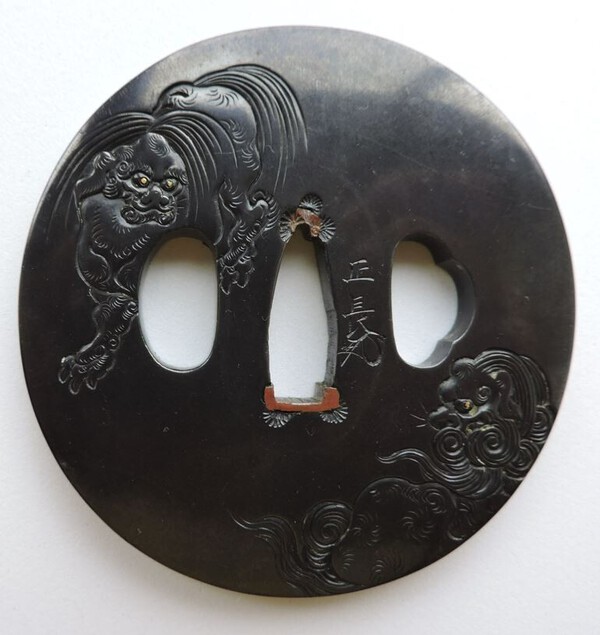

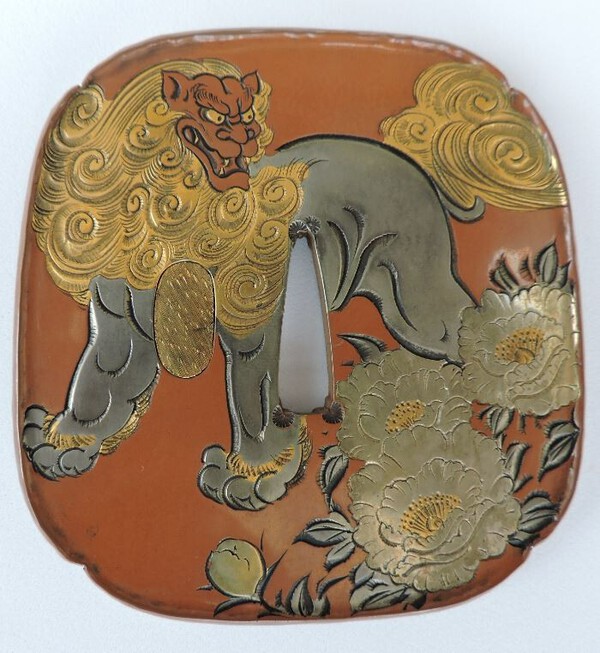
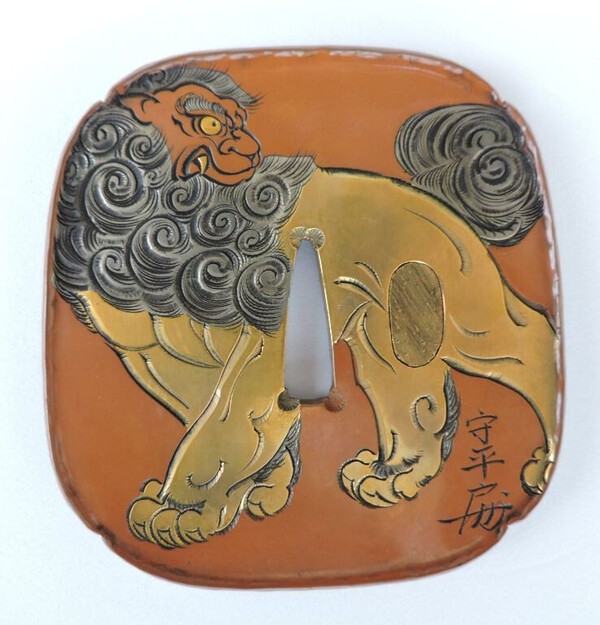 3 points
 -
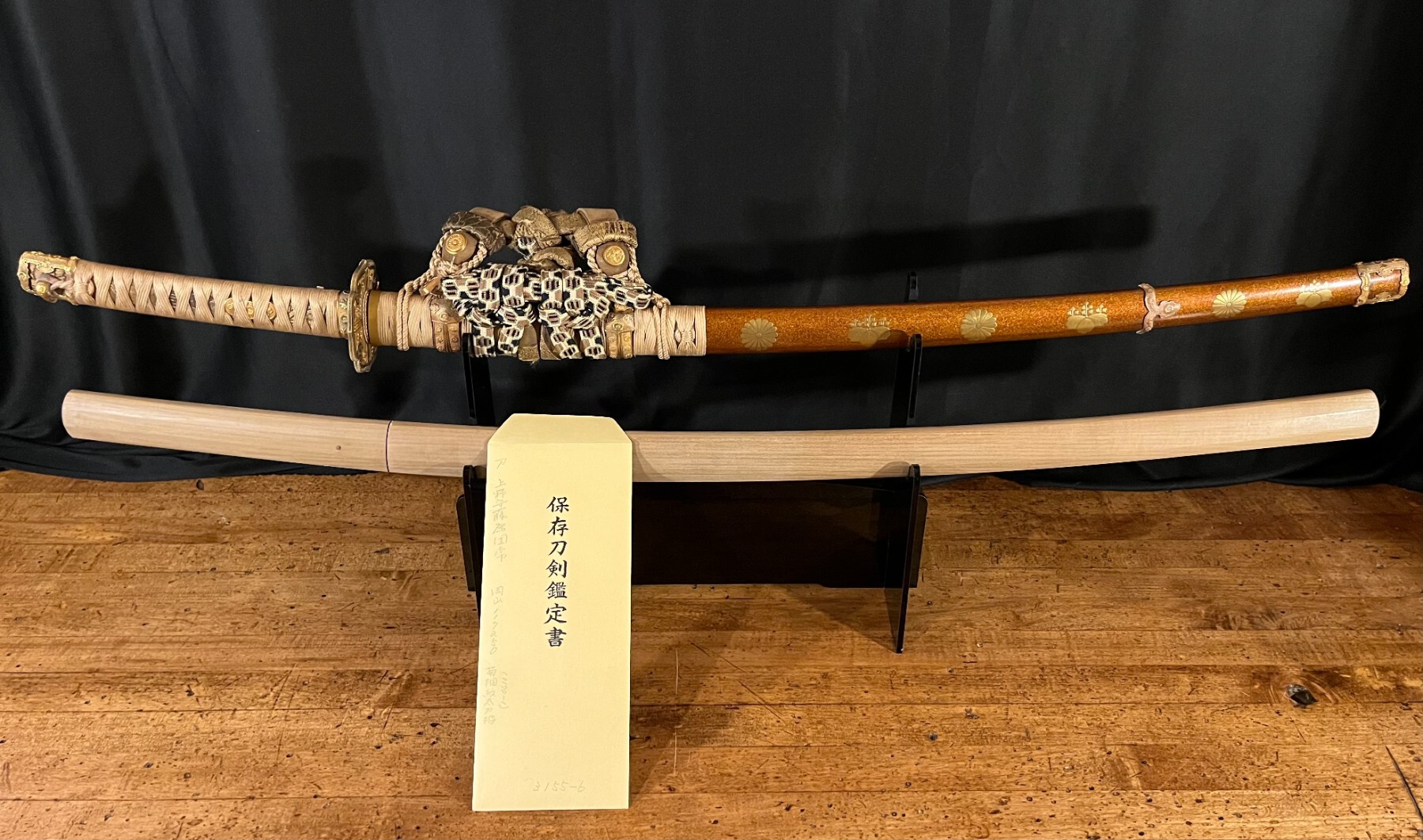
A teaser--soon to be formally listed, but available for purchase NOW. A fine IMPERIAL GIFT tachi. Blade is papered. This tachi was gifted by an Emperor to a member of the Imperial peerage for carry at Coronation. $19,000 plus postage (if paying via credit card or Paypal add their 3% fee) LAYAWAY available --Matthew Brice StCroixBlades.com
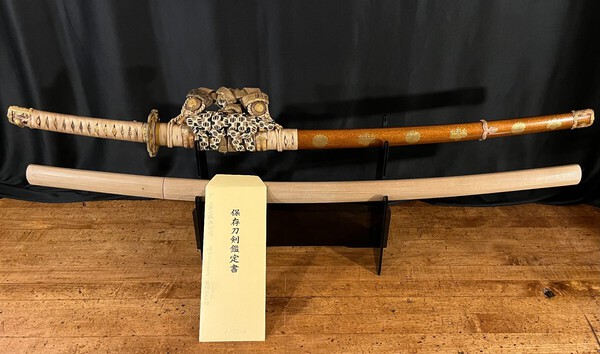
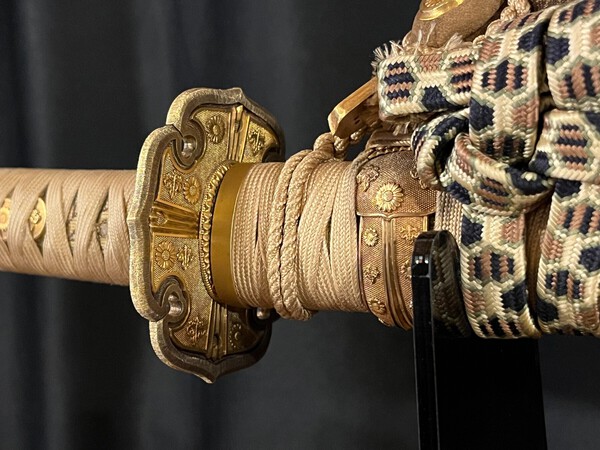
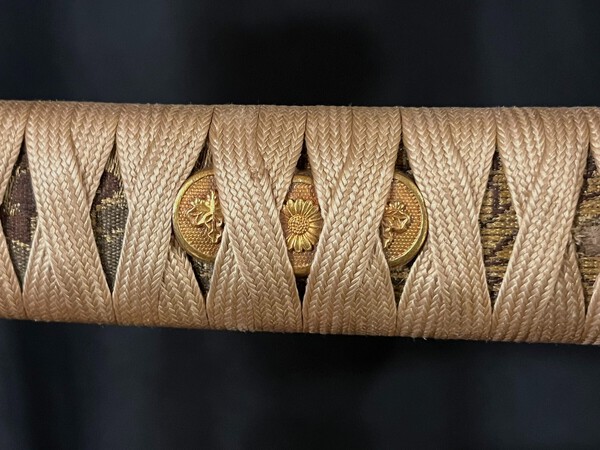


 2 points
 -
Hi Uwe, I think I like yours better than mine - other examples of Kanetada I’ve found look different, though they might not be done by the smith. @Roam any chance you could post a clearer picture?2 points
-
Hi and welcome Harvey! The pic is indeed out of focus and hard to decipher. My first intention was “両原兼正“ but couldn’t find any reference. So I think I’m wrong…2 points
-
Hi Harvey, Welcome to NMB. I’m not seeing the photos very clearly on my phone but I think 石原兼忠 - Ishihara Kanetada.2 points
-
Thanks for sharing these, Okan. Like you said, all three give me a different feeling. The Umetada especially reminds me of my tea ceremony experience—calm and elegant. It’s the kind of piece I’d enjoy holding in my hands after a long day, just to slow down and clear my head.2 points
-
Welcome to the Club! Is there anything special you are looking for?
 2 points
 -
Okay Okam - - where do you do your shopping? I love that second guard.2 points
-
Surprisingly, any Bizen and Soshu name was seen worthy of gimei.2 points
-
After posting this armor originally I ended up digging into it quite a bit deeper, so I thought I would share a short update with some of the things I have learned since then. The biggest clarification is the signature. The gold inscription on the armor chest reads: 甲冑師 光忍作 丸武 Which translates to “Armor craftsman Mitsunobu made this — Marutake.” The inscription identifies the individual armorer Mitsunobu working within the Marutake workshop founded by Shinobu Tanoue. This means Tanoue was the founder of the workshop rather than the person who made this specific suit. Looking more closely at the construction also helped narrow down the production period. The kabuto liner style, rivet geometry on the helmet plates, the vermilion lacquer interior of the menpō, and the style of the armor chest all correspond most closely with Marutake production from the late 2000s into the early 2010s. The most likely window appears to be roughly 2009–2012, with around 2010–2011 as a reasonable midpoint estimate. I also spent some time studying the construction in a bit more detail. The armor follows the classic Tosei Gusoku configuration, with what appears to be an okegawa-dō cuirass built from horizontal plates and a multi-plate suji-bachi kabuto. The kote, haidate, and suneate also use the traditional splint and chainmail style construction. Based on those details it seems to fall somewhere in the middle of Marutake’s production spectrum, more complex than entry-level display armor but below the high-end museum-level historical replicas. One detail I found interesting is the finish used on the armor. The workshop refers to this type of surface treatment as an “antique finish” (古色仕上げ, koshoku shiage) or sometimes a “period-style finish” (時代風仕上げ, jidai-fū shiage). It is a controlled patination applied during finishing to give the armor a more subdued appearance similar to historical pieces rather than the bright look of newly lacquered armor.2 points
-
The second one (willows) is spectacular!2 points
-
於江府雲州高橋信秀作 - Oite efu Unshu Takahashi Nobuhide Saku 文久三年二月吉日 - Bunkyu sannen nigatsu kichijitsu2 points
-
Here is my little display setup. Pretty simple but does the job. I got these display cases for free from my work place, which is pretty nice. I don't really like that white background though, so I need to do something about it at some point.
 2 points
 -
I am in taking a large collection of books focused on swords, fittings, kabuto and armour. I will follow up on this initial post with details on the books that I received, however if anyone sees a reference that they have been looking for here, please reach out to the email below and I will get back to you quickly with further information and pricing. Raymondsinger@gmail.com Best regards, Ray
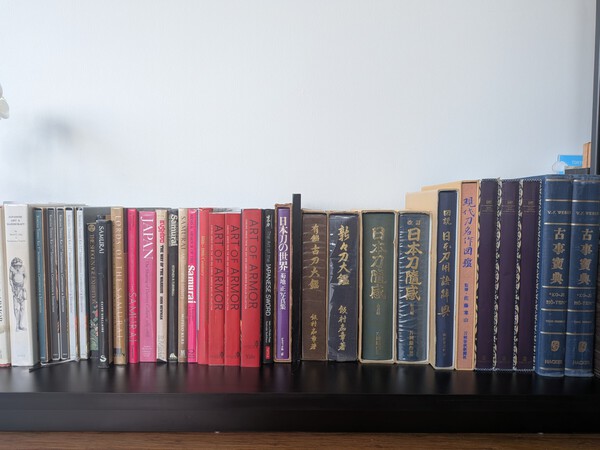
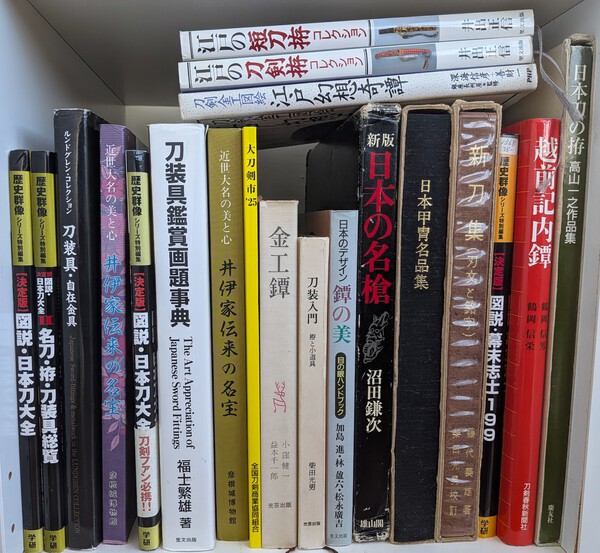


 1 point
 -
西原兼正 - Nishihara Kanemasa1 point
-
Oops, name is Harvey. First post. Thanks for help in advance.1 point
-
Well done Bruce. I feel that is all due to you guys.1 point
-
Wow, nice to see we are finally making some progress in the collecting world! ZevAntiques has a souvenir at auction HERE with a title of "US 8th Army Japan Occupation Souvenir Sword" and a full accurate description! Hurray!!! It's the first souvenir on file with an Inaba blade, third with "29"


 1 point
 -
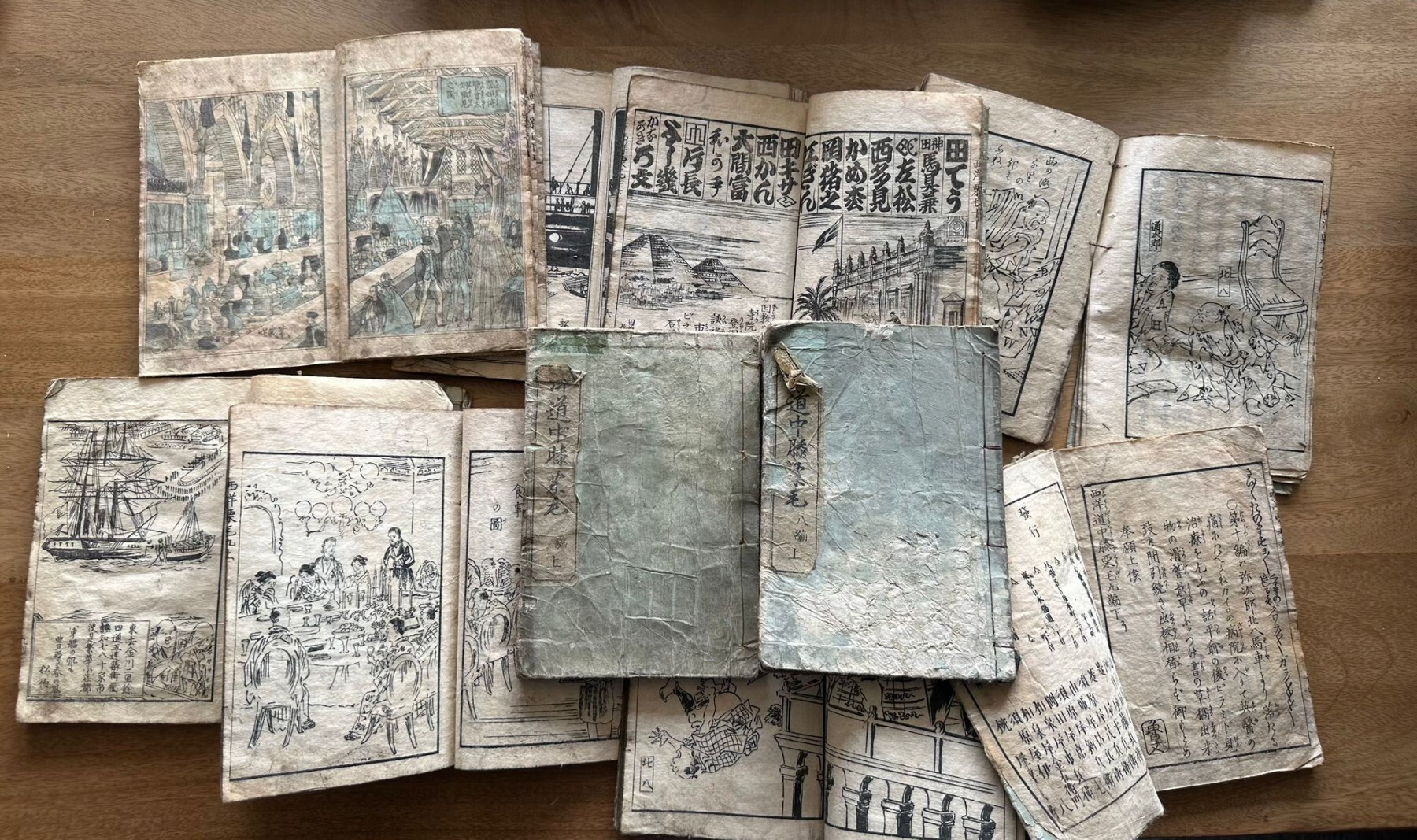
Hello NMB, I am selling a collection of 35 antique Japanese books, a fascinating mix of history, art, and literature. Around sixty percent of them contain original ukiyo-e prints, while many of the others focus on historical accounts of battles and important events. A number of the books also include examples of calligraphy and traditional Japanese art. Among the collection are ten volumes from the series 西洋道中膝栗毛 (Shank’s Mare to the West), which depict scenes such as the pyramids, steamships, the World Expo, and various Western cities, all with a witty and humorous undertone. Within the set there are some higher-quality books in very good condition with no major damage, while others show the more typical signs of age such as bookworm damage or slight water staining. The overall condition can be seen in the images provided, but please send me a message if youd like more pictures. Price: 350 Euro


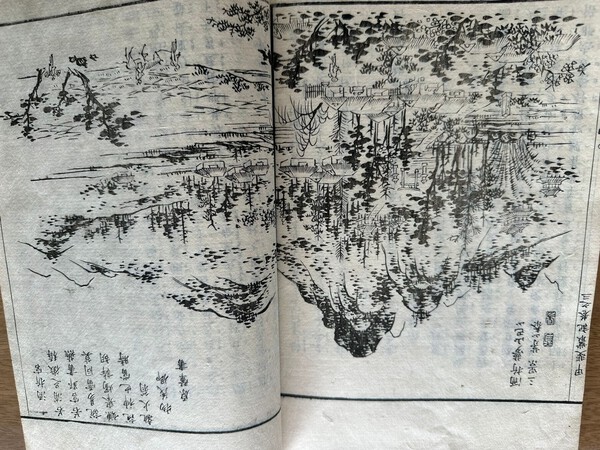
.thumb.jpeg.223f99656a07beaa6671500a0a5f8993.jpeg)

 1 point
 -
Thanks for the reply and the references, really helpful. I’m actually not fixed on Ōmiya specifically. What really caught my eye with that blade was the lively hamon and the overall feeling of it. At the same time I completely see your point about the more “stereotypical” Nanbokuchō shapes and I’m trying to look at more examples before making any decision.1 point
-
Whilst preparing to arrange some flowers in this vase, I took a picture of the ring at the back. That’s ”mono no aware” if you ask me Jan
 1 point
 -
Keep in mind that "Bizen" and "Soshu" function like brand names which are more or less a known quantity. Think of all the counterfeit Casios and Seikos at the night markets in Asia. Why not put all your effort into making fake Rolexes? Because it's easier to fake a lower-end item from a well-known brand and sell it to someone at a price that seems cheap. The seller makes a decent profit off something that's less labor intensive and has fewer material costs, and the buyer gets to show off their brand name product to folks who won't know the difference at a price far below the market value of the real thing.1 point
-
Before I was keen to just read it and learn some of the older words and their origins but now I wonder who owns 145, are they a member of NMB?1 point
-
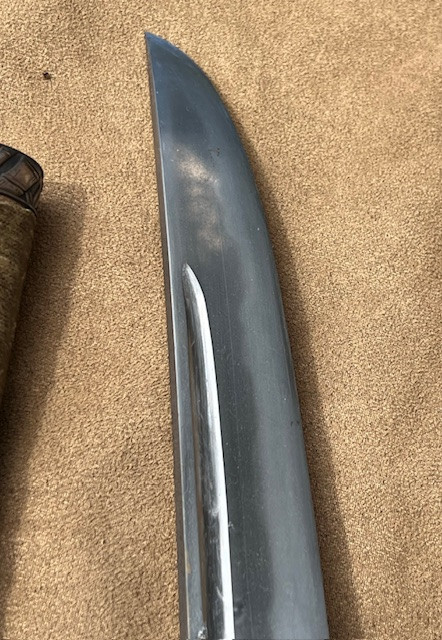
Do us all a favor and remove the screw that is holding on the handle. The underlying tang could be signed and dated.1 point
-
Etsuzan Dōshū (1629-1709) was born in China as Yueshan Daozong (悅山道宗). He came to Japan in 1657 to study with Mokuan. In 1705, six years after he produced this calligraphy, he became the seventh abbot of Manpukuji temple of the Chinese Obaku sect of Zen buddhism near Kyoto. Regarded as one of the finest of the Obaku calligraphers and respected as Sho no Etsuzan (Etsuzan of calligraphy). Here, he brushes the vertical line 體內貯乾坤 in large characters, which echoes a Zen teaching contained in the koan Case #69 in The Blue-Cliff Records called "Yunmen's Jewel." Master Yunmen Wenyan (c. 864–949) said, "Within heaven and earth, throughout the universe, there is a single jewel, hidden inside the mountain of form." To understand the Taoist influence and the Zen interpretation of this phrase, we must examine both the literal and conceptual meaning1 [Note, this is the first time I am using queries to Deep Seek AI]: 體內 (tǐ nèi): Inside the body, within the body. 貯 (zhù): To store, to hold, to contain. 乾坤 (qián kūn): This is the key term. Literally, it means "Heaven and Earth," "the cosmos," or "the universe." In the I Ching (Book of Changes), Qián is the creative, heavenly force, and Kūn is the receptive, earthly force. Together, they represent the totality of existence, all of reality, the entire dynamic interplay of yin and yang. So, a very literal translation is: "The body contains the universe." While the phrase uses Daoist terminology (乾坤), Zen Buddhism adopts and transforms such ideas to point to its own core insights. The literal meaning is just the starting point. In a Zen context, this phrase points to several profound realizations: 1. The Non-Duality of Self and World Zen teaches that the fundamental assumption that we are a separate "self" inside a body, looking out at an external world, is an illusion. The boundary we draw between "inside" and "outside" is a mental construction. "體內貯乾坤" smashes this boundary. It means that the entire cosmos is not something you are in; it is something you are. The mountains, the rivers, the stars, the sounds, the silence—all of it is your very body. There is no inside and outside, only one unified field of being. 2. The Microcosm as the Macrocosm This is a classic idea in both Eastern thought and, more recently, in Western philosophy (like in William Blake's "To see a world in a grain of sand"). The human body is not a small, isolated object. It is a perfect reflection and embodiment of the entire universe. The same laws of physics, the same elements forged in stars, the same cycles of nature (birth, growth, decay) that govern the cosmos are all happening within your own physical form. You are the universe experiencing itself in a localized way. 3. The Body as a Vessel for Awakening In Zen practice, the body is not disregarded. It is the very vehicle for enlightenment. Through meditation (zazen), we come to realize that our true nature is not limited by the skin. The sensation of the body expands to include the entire universe. The breath is not just air moving in and out of lungs, but the very interchange with the totality of the atmosphere. The body becomes a vessel that "stores" or, more accurately, is the dynamic, living cosmos. In summary, in Zen, "體內貯乾坤" is not a statement of biology or physics, but a declaration of spiritual realization. It points to the awakened experience of non-duality, where the individual body is understood to be inseparable from the totality of existence. It is an invitation to stop seeing yourself as a tiny part of the universe and to realize that the entire universe is your true body. And the true body contains the Buddha-nature. While the exact wording "體內貯乾坤" brushed on Etsuzan's scroll isn't in the existing records of Master Yunmen's teachings, its essence is not only present but is a fundamental pillar of his Zen. It is most clearly articulated through his famous principles: "函蓋乾坤" (the universe is completely enveloped by the true self) and the teaching of the jewel hidden "秘在形山" (within the mountain of the body).2 Signature: Obaku Yueshan sho 黃檗悦山書 Seals: Rinzai shoshu sanju-yon sei (34th generation heir of the transmission of the Linji/Rinzai Sect); Etsuzan; Doshu no in (Doshu's seal, 道宗之印) 1Deep Seek answer to query: "What does 體內貯乾坤 mean in Zen?" 2Deep Seek answer to query: "Does 體內貯乾坤 appear in the writings of Master Yunmen?"


 1 point
 -
Yup I guess we will never truly know on this one on one hand it kinda seems like a waste of time for someone to go and forge the signature of a Sukesada smith from that lineage because of how many of them there were in that period but then again it seems like they were willing to gimei almost anything. Thank you guys for talking a look at it I appreciate all of the feedback. Best regards, Chance1 point
-
Did you also see that while US citizens can purchase these items, they will not be shipping to the US (because of tariffs). The is a tsuba I want but I also want it shipped to me as well. lol.1 point
-
This is excellent book as was said above. It offers some "hidden" insight on things that really cannot be found anywhere. There is so much interesting information in the book and it creates an image of how things were in past, I admit I have been scratching my head a lot when trying to understand some of the information provided by the book.1 point
-
Thanks Uwe.1 point
-
Yep, “長州住友之” ( Chōshū jū Tomoyuki)…1 point
-
Here's another discussion from a while back. Some nice links and images included that show Emura hada https://www.militaria.co.za/nmb/topic/31267-emura/ Lovely sword. I have always had an interest in Emura blades. Very interesting and desireable. -Sam1 point
-
Hi Milo, Welcome to the forum. 和泉守藤原国貞作 - Izumi (no) kami Fujiwara Kunisada. It's a big name and often faked. You might get some better information if you are able to post some pictures of the blade as people will be able to see the signature in the context of the workmanship. Some more information here: https://www.nihontocraft.com/Izumi_no_Kami_Kunisada_mei.html1 point
-
The photo is not well focused, and a dark background would be better, but it looks like CHOSHU no JU TOMOYUKI
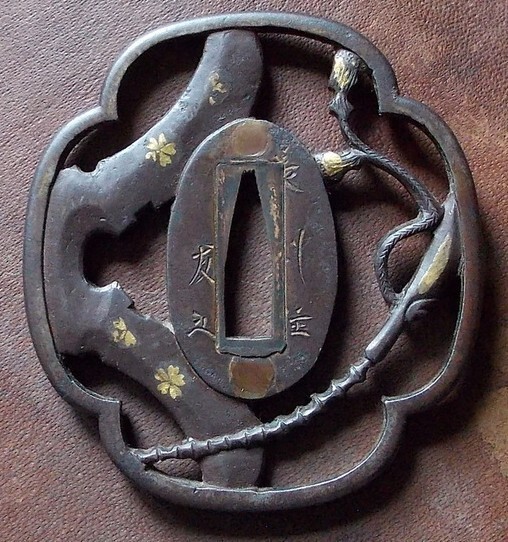 1 point
 -
Chandler, You'll find a more in depth discussion of that here, but I don't think anyone knows the answer for sure:1 point
-
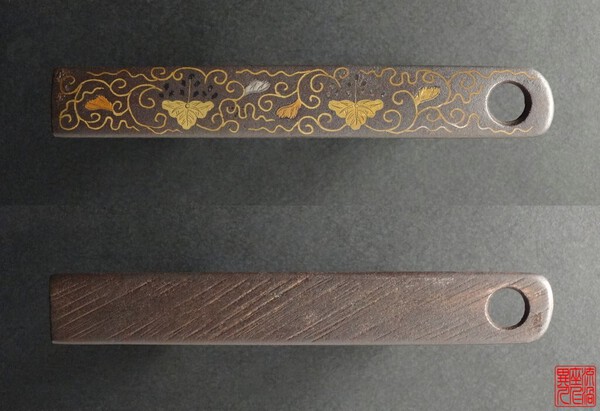
Having a particular fondness for brass-inlaid tsuba, I eventually added several pieces from the Washida school of fittings makers to my collection. This sparked my interest in learning more about the school and its production. Over time I gathered a fair amount of information and eventually decided to compile it into a single document, which you can find in the download section of the board: https://www.militaria.co.za/nmb/files/file/210-the-shōnai-washida-school/ I hope you enjoy reading it as much as I enjoyed putting it together. As I mentioned, given my particular weakness for brass inlay, the document is somewhat biased toward the work of Washida Mitsunaka! Just as an example of the Washida production here are the pieces from this school (or supposed to be from this school) in my collection: NBTHK Hozon to Washida. Dimensions 85.4 mm x 85.3 mm, thickness 3.9 at seppa dai, 4.2 at mimi. NBTHK Hozon to Washida. Dimensions 85.3mm x 79.2 mm, thickness 3.6 at seppa dai, 4.0 at mimi. Identical to tsuba attributed by NBTHK to Washida. Dimensions 87.2 mm x 82.2 mm, thickness 3.7 at seppa dai, 4.0 at mimi. Signed in kinzogan mei Kyozan Mitsunaka with Kao. Dimensions 87.2 mm x 77.6 mm, thickness 2.6 at seppa dai, 4.2 at mimi. Dimensions 83.5 mm x 78.6 mm, thickness 3.0 at seppa dai, 4.1 at mimi. Dimensions: 96.9 mm x 13.9 mm, thickness 4.7 mm. REgards Luca


 1 point
 -
Bob was my mentor, and friend. First met him when I was around 15 (before I got involved in swords, (sadly, that came later) when I was selling-off my Nazi Collection. We meet again years later, after I'd gotten hooked on Japanese Swords. He and Kiko took me under their wings, and open my eyes to the depth and beauty of Nihonto. Forever greatful for their kindness and knowledge. God rest your Soul Bob, and see you soon Brother, Buck1 point
-
GOAT book. Absolutely necessary in every library, and I do not say this lightly.1 point
-
Can confirm this is an excellent book. The conversation style is very reminiscent of today's blogs and takes you back to the room where it happened. Absolutely brilliant and worth every penny.1 point
-
last batch


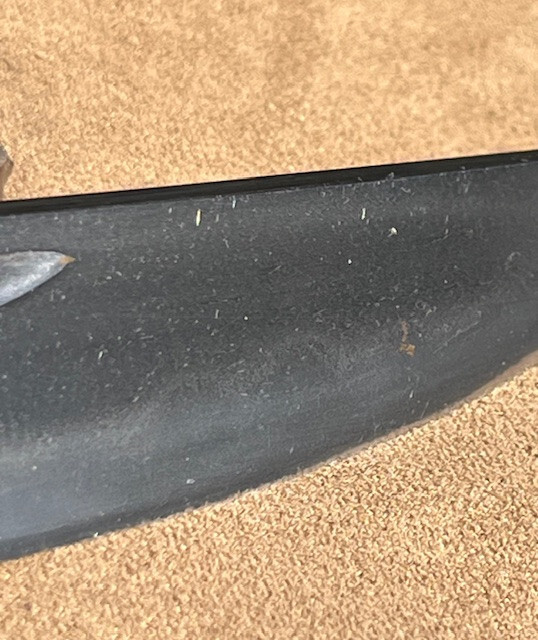 1 point
 -
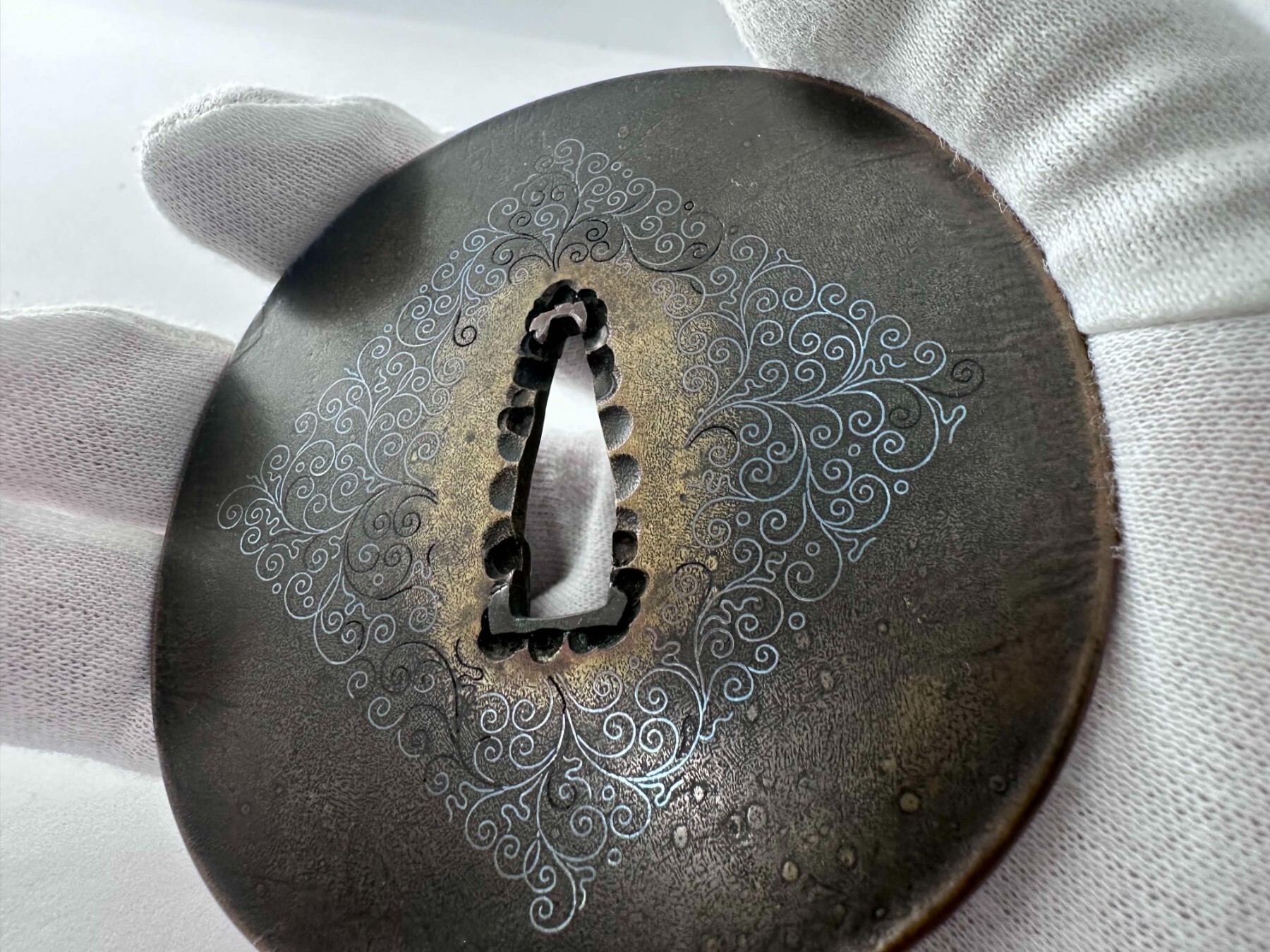
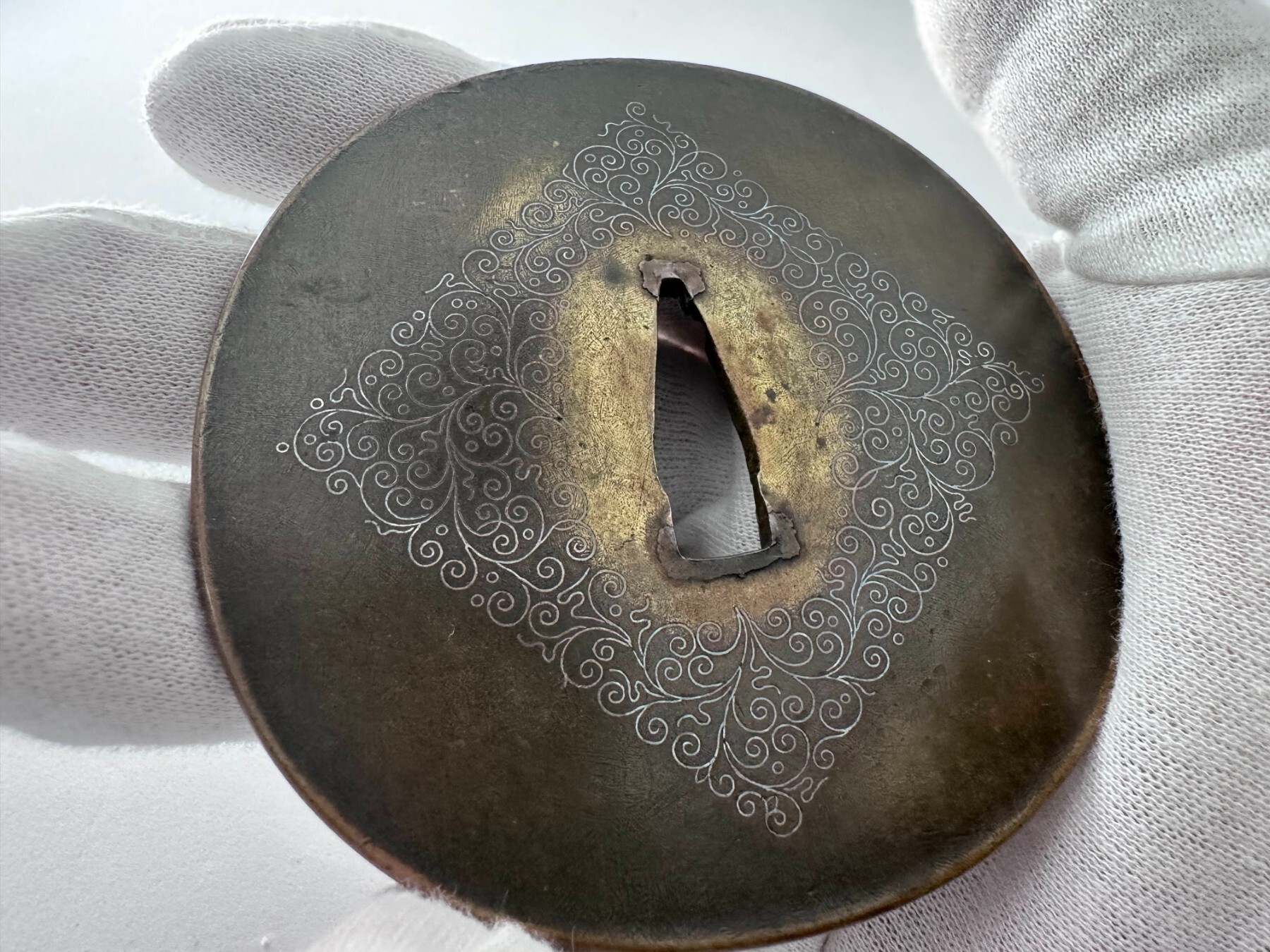
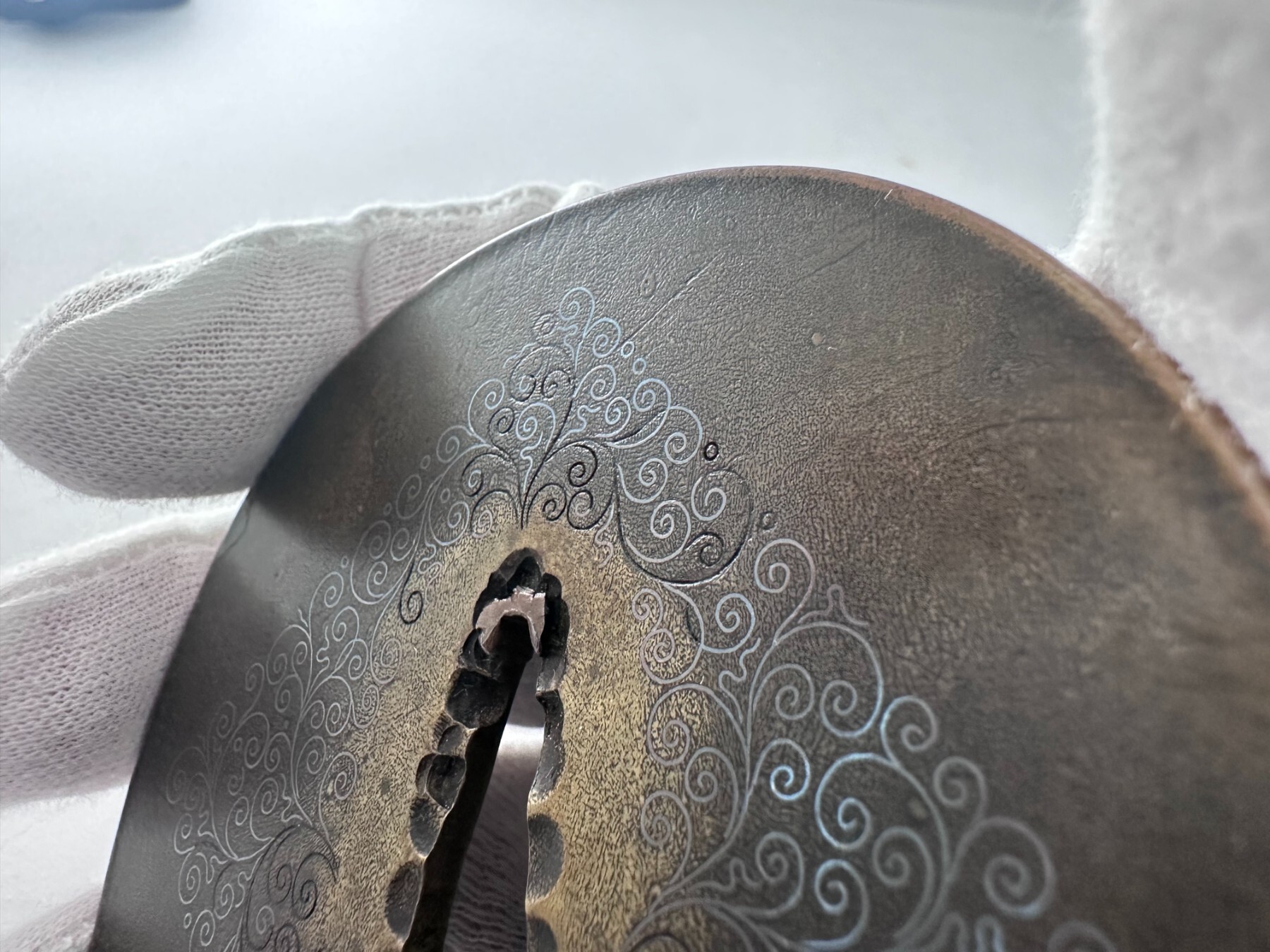
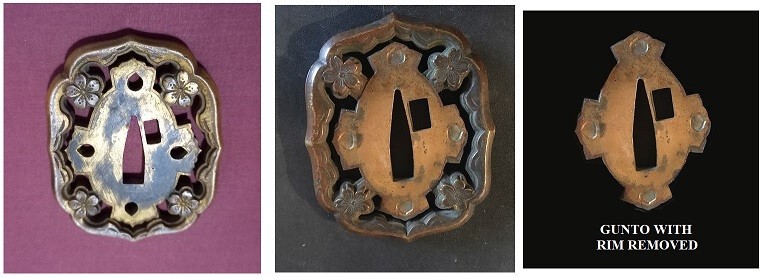
The guard looks very similar to a type of gunto guard with the rim removed - except that the majority of these have a locking hole - the guard in question may have been given a "texture" recently if it was in fact a WWII altered piece but the colour is not what you would expect either. Could you give us some dimensions for this piece?
 1 point
 -
For me personally that sword does not make a huge impact of Nanbokuchō period, as it is small and slender sword. I do of course agree that NBTHK Ōmiya call might most likely be the most plausible one. If I would seek to get one Nanbokuchō period blade I would hope it would be "stereotypical" example. The huge swords were of course only a part of what was made during that time and plenty of normal sized and small swords were made during that period. Here are some reference items of wider swords that got attributed to Ōmiya and were cheaper than the offering in the OP and got sold somewhat recently. https://www.nipponto.co.jp/swords6/NT330431.htm https://web.archive.org/web/20240201012326/https://www.aoijapan.com/katana-mumei-omiya-nbthk-tokubetsu-hozon-token/ https://web.archive.org/web/20220226151328/https://www.aoijapan.com/katanamumei-den-omiya/ I am fixated on shape and size but I understand it is probably a minority thing. However be it size, fine details in blade, complete package in koshirae etc. whatever you are looking for I would try to look into Nanbokuchō Bizen as the big picture and not just limiting the search to Ōmiya. You have a fairly large budget and will find lots of fine offerings for that budget.1 point
-
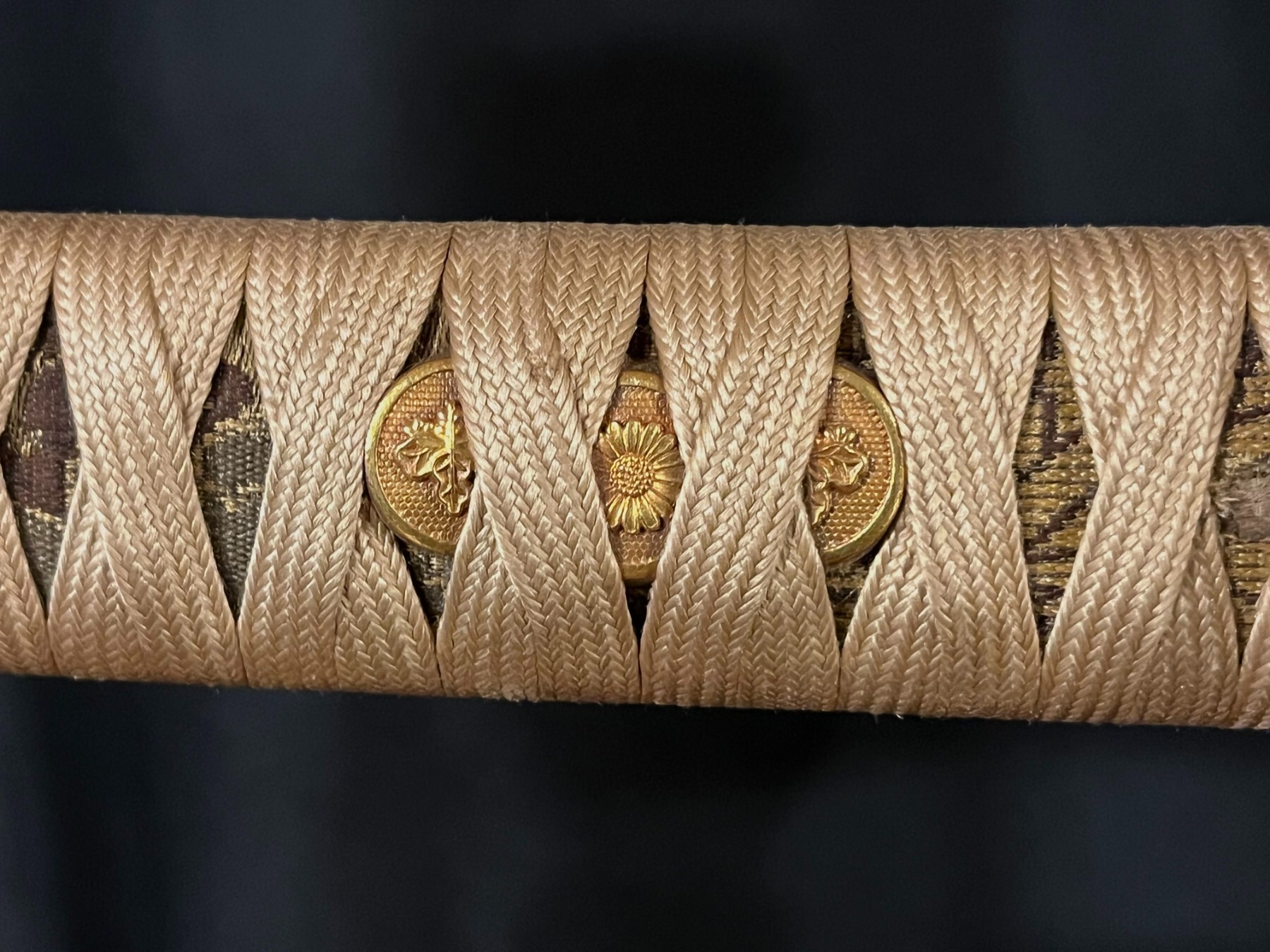
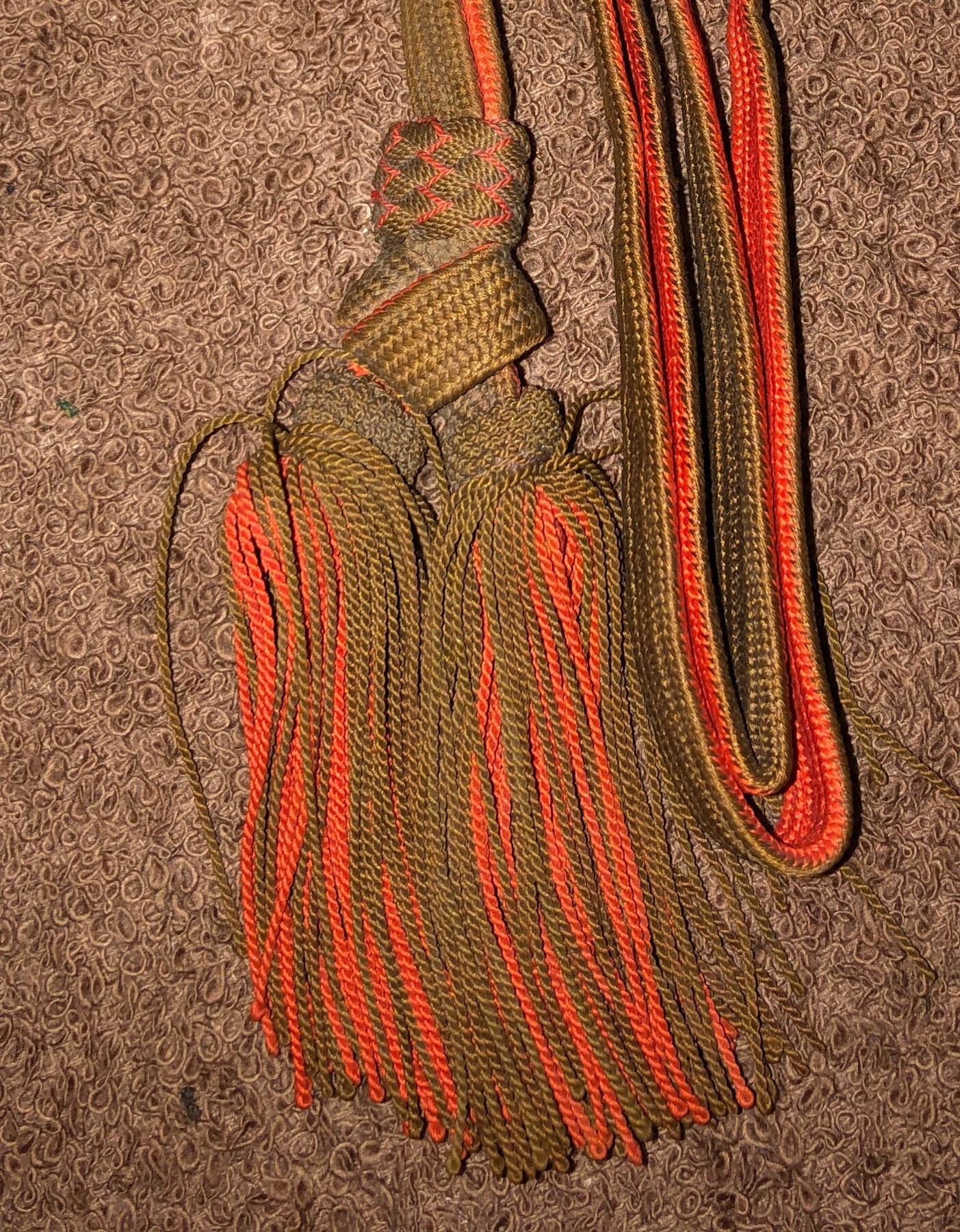
I got an unused field grade tassel from John, still in the box. Upgraded my dad's Mantetsu!


 1 point


























.jpeg.19fdbe5f99db053c1880a55d5c2dcec6.jpeg)












This leaderboard is set to Johannesburg/GMT+02:00