
Leaderboard



Popular Content
Showing content with the highest reputation on 01/18/2026 in all areas
-
Happy New Year everyone, I just wanted to share an update that I have started to post new video content after taking a long break from filming. Please do check my channels below in the coming days for updates and new videos. https://youtube.com/@swordsofjapan https://www.instagram.com/swordsofjapan Please email me with any questions, or for videos you might like to see in the future. Best regards, Ray5 points
-
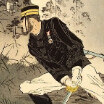
depicted Kotani Yasunori san with Medal and one of his special sword's oshigata

 5 points
 -
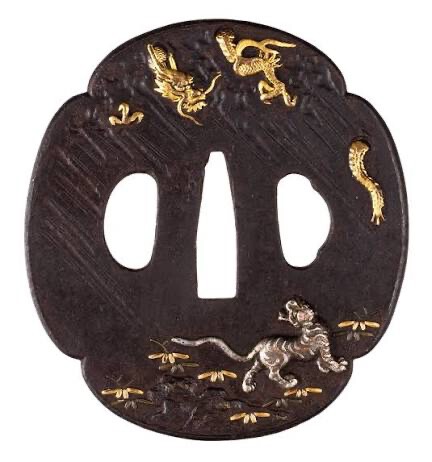
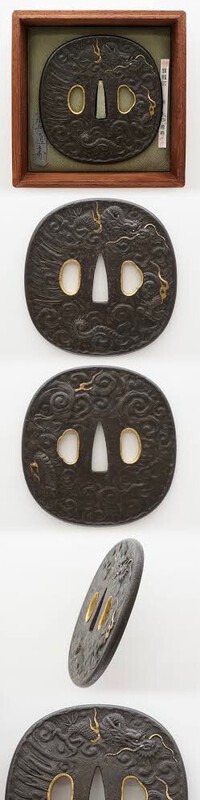
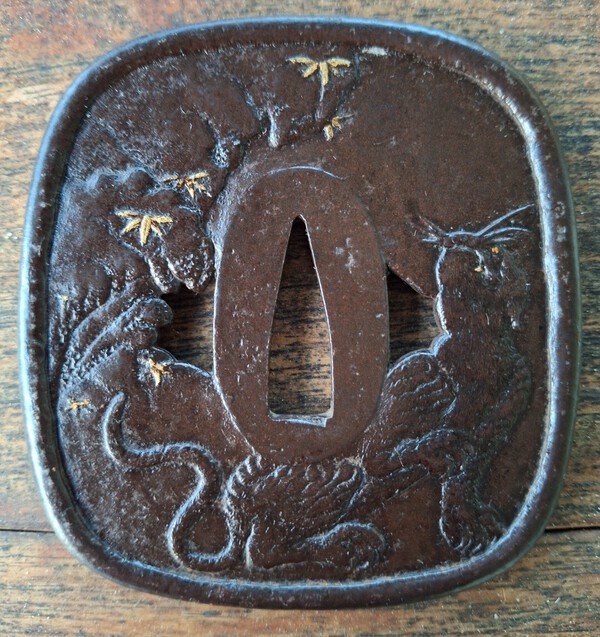
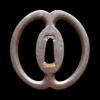
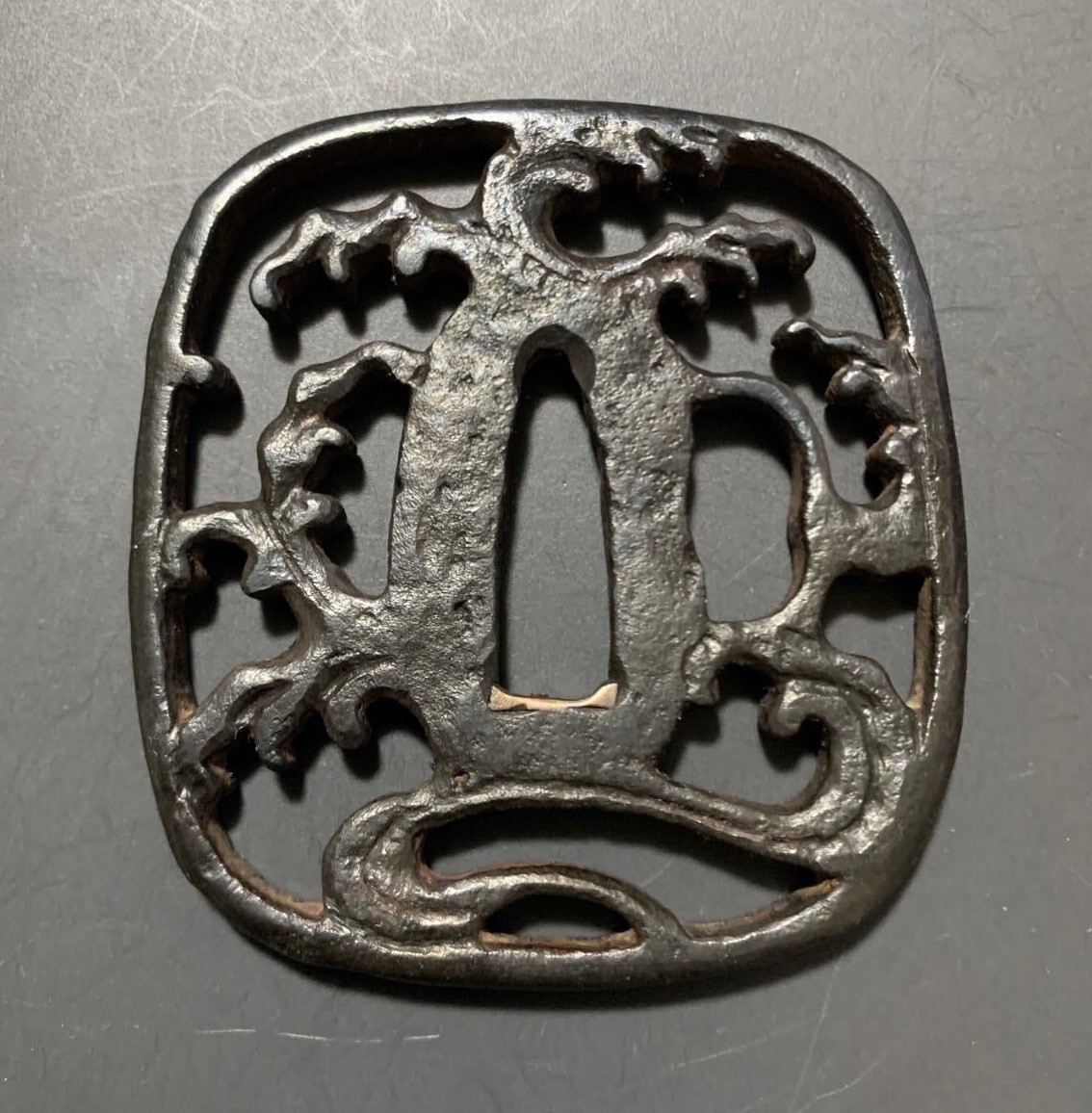
Hello! I would assume Mito school The shape, the non-standard holes of the hitsu-ana, and, of course, one of the favorite themes of the Mito school - dragons and tigers.
 4 points
 -
The British Museum is hosting a Samurai Exhibition from Feb through to May 2026 in the Sainsbury Gallery. Looks like they have done a lot of work on this one and it should be a goodie for those who can mane it. There will also be a book for sale for those interested. For more info there is a nice write up on it by Jimmy Chen: https://www.thecollector.com/samurai-british-museum-book-review/3 points
-
This is awesome news Ray! I might have said it before but you have so good voice and presentation it is a pleasure to watch the videos.3 points
-
應需 – Responding to order 一的幇 – Itteki workshop(?) I am unsure about the characters in red.3 points
-
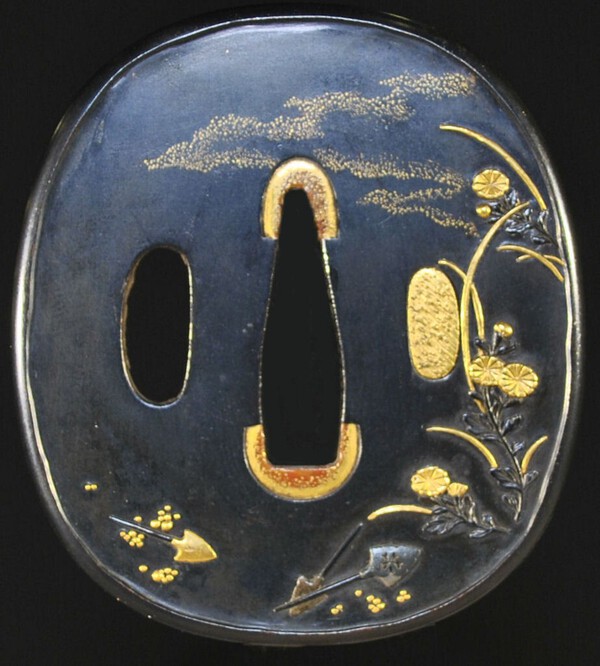
Some Tanaka tsuba My papered example but the colour is way off. Very late so nowhere near the craftmanship of the earlier examples: Museum pictures from my book and there more shown with both sides of the tsuba:
.thumb.JPG.da727743a10b1ade218e393068481b16.JPG)


 3 points
 -
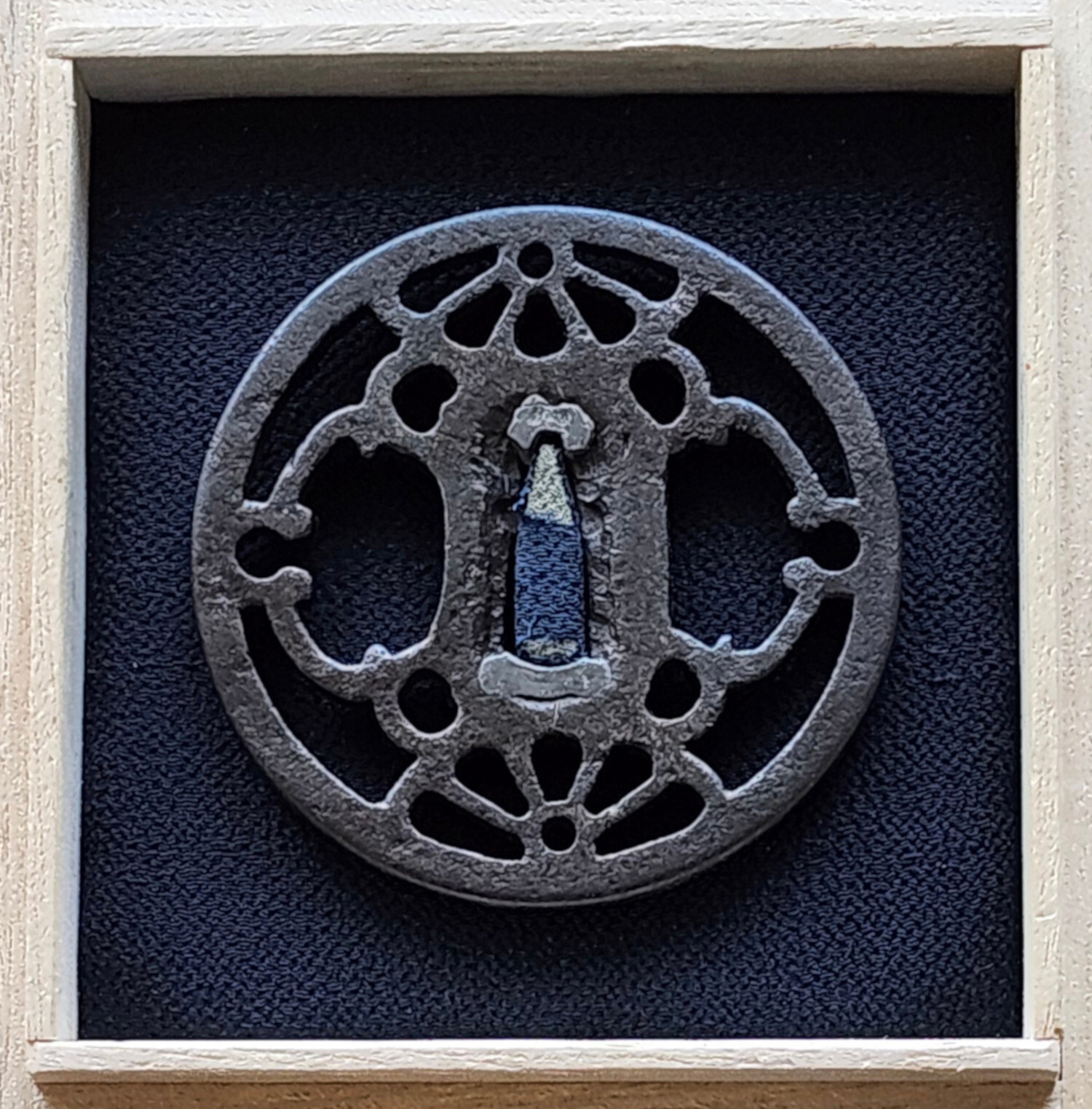
Some like this one are a lot less of the sandy variety. TH to Yagyu. Theme is the 4 Classes of Japanese (Edo) Society This one might have been a special commission. Very unusual theme, and not evident it is Yagyu at first glance. The mimi and other evidence points to Yagyu. Tsuba really need an angled view for kantei traits.
 3 points
 -
Also agree with Curran and Okan. To me, it looks mostly like a late (modern?) work "inspired" by Owari sensibilities. The workmanship and finished look of the piece, though, do not conform to Owari sukashi, Kanayama, or Yagyu, in my opinion.3 points
-
see you all next week. Stop bye and say hello to Grey and I Mark3 points
-
I agree with Victor. The Mito umbrella is huge, with a lot of spin off Mito influenced schools. This feels more in that direction. For me, the plant leaves on the Tiger side point that way. This is probably Mito+(School#2) work, so probably a Mito spinoff school. It looks like it will clean up nicely with a little TLC. Maybe some "in a museum drawer" neglect, since the rust is older and yet more prominent on one side.3 points
-
May be among this Mon: https://irohakamon.com/kamon/shikaku.html3 points
-
This is quite an unusual one. Sorry for the poor quality reproduction. Does the design hold some particular symbolism?
 3 points
 -
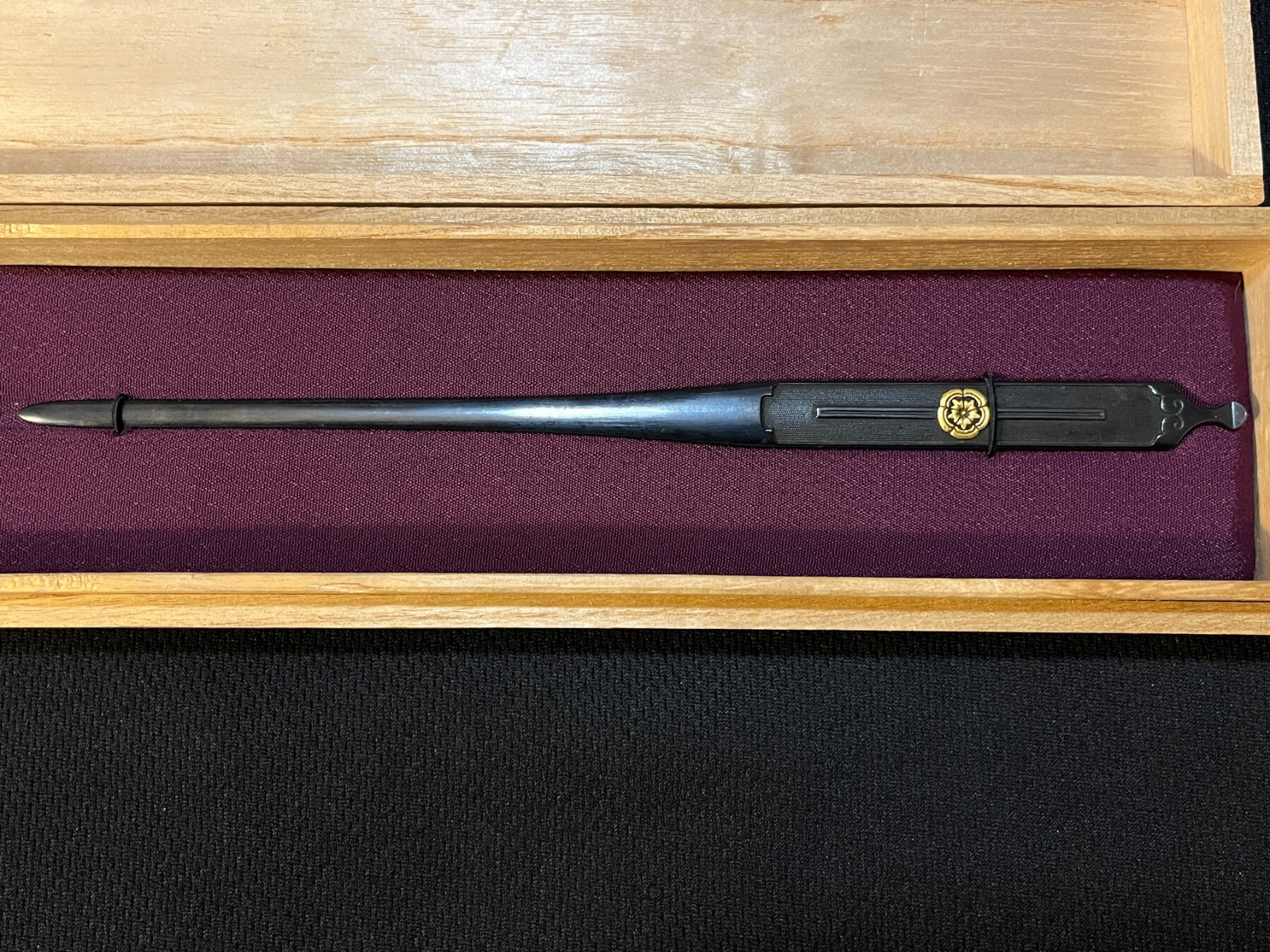
Hi all, Just like to share my recent acquisition, a unique Mitokoro-mono by the 5th generation mainline head of the Goto school, Tokujo. He was the eldest son of Kujo, born in 1549 and passed away in 1631. After serving Oda Nobunaga, he became the court chisel master for Toyotomi Hideyoshi. Exhibited at the Tokyo National Museum. Enjoy!

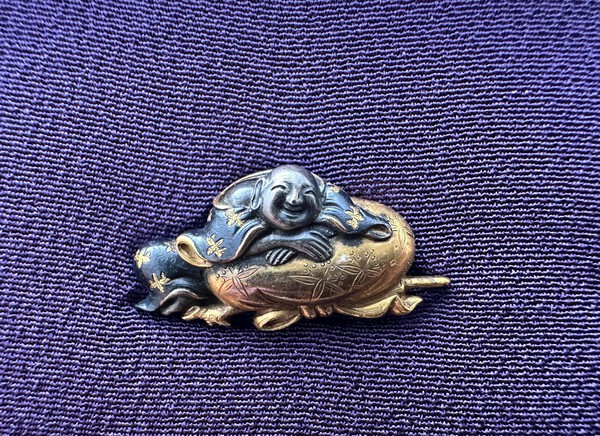
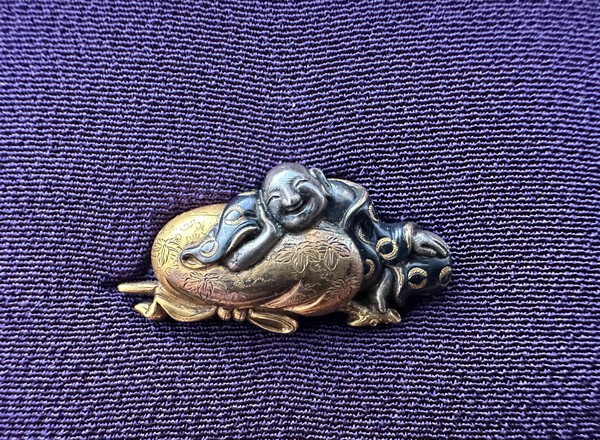

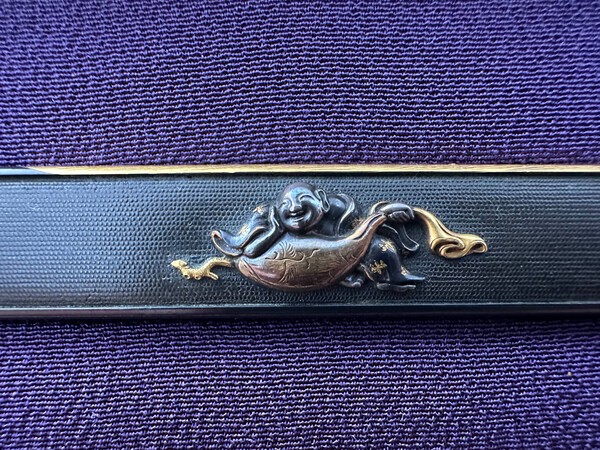
 2 points
 -
Hello: I picked up a Japanese cavalry manual from 1912 and thought I would share some pics for those interested. The first is a layout of the cavalry soldier's kit (note the type 32 on the table). The second is one of the pics on riding position. I found it interesting that the artist took some artistic license (licence in UK and Oz) with the horse's eyes. John C.

 2 points
 -
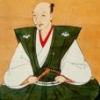
Actually, it’s very close to Oda Nobunaga’s set, made by Yūjō. If he knew, I’m sure it would annoy Hideyoshi as well. Or maybe not.
 2 points
 -
Zodiac animal group…..Japanese tourist Meiji.2 points
-
2 Men smoking…..what Piers said Kingfiser with fish on lotus leaf…..looks resin fake Toads on bamboo shoot….modern Chinese fake Dutch/Mongol archer…poor attempt at a popular Edo subject. Modern. Possibly Chinese but more likely Japanese tourist. Shishi (seal?)..low quality modern. Looks resin but apparently has cracks so not sure …..imo….from images.2 points
-
They are all from one collector. I've picked up couple of blades, and he rolled out quite a few okimono and netsuke...2 points
-
Yagyu or Kanayama or… Owari? Size is 69 X 64 X 5. Strong tekkotsu at mimi. Not papered yet.


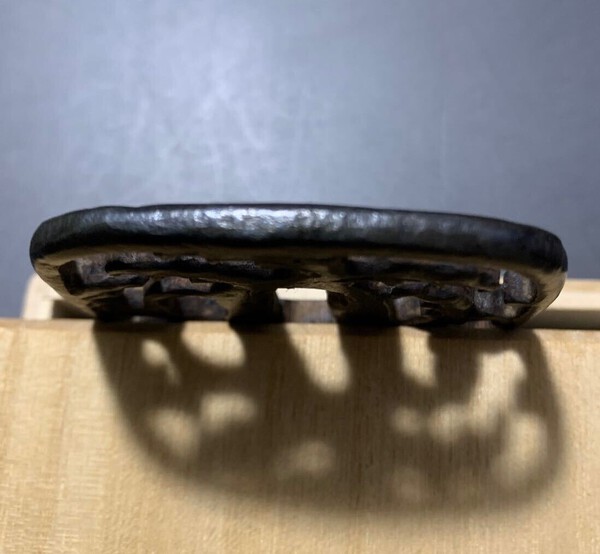
 2 points
 -
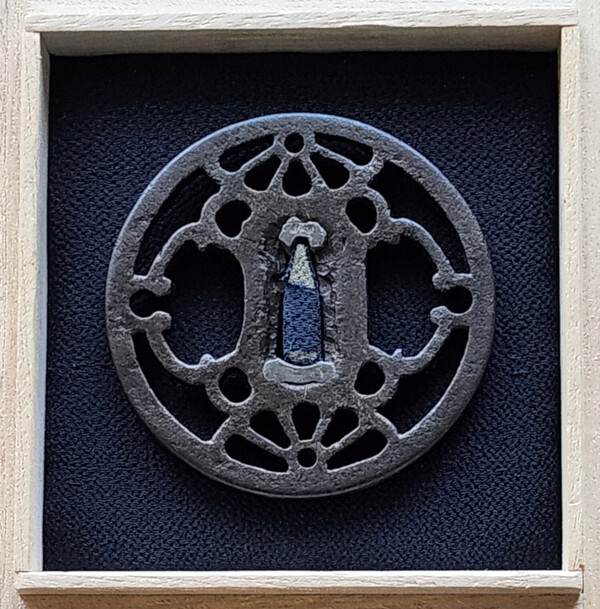
Generally they tend to be more sandy, like this one. This one passed Hozon to Yagyu last year. Chrysanthemums in a Bowl of Water, or something like that. Fluidity in life? Good mindset for fencers.
 2 points
 -
Kirill, the first one has all the marks of a late 1800s Meiji okimono, the central nerve channel being used to pay lip-service to netsuke. Good work, the artist was possibly a netsuke carver first before the end of the Bakumatsu and changes in fashions. The second one (stork?) is hard to make out; if it is not resin it could well be a legit boxwood netsuke. The third one, bamboo shoot and toads(?) gives indications of later Chinese work, the signature written typically in a ‘casual’ manner to suggest Japanese, but not.2 points
-
Hrushev: If the blade is hand forged, it's a nice Chinese made blade. It just isn't a Japanese katana. John C.2 points
-
Dear Mike. The habaki is definitely on the wrong way around. If you slip the two pieces together and try then it should fit and provide a shoulder for the tsuba. If it really wont fit then it might not be the one for the sword as these parts are made very specifically for each blade. All the best.2 points
-
It is a modern Chinese fake2 points
-
My opinion is that it is None-of-the-Above . It doesn't fit the textbook definitions of any of those schools. Quite a challenging thing.2 points
-
Ah, thank you. *The second one could start with Yoshi spelt not the standard 吉 with 士, but with known variant 土 on top. Borrowing -hisa from Ray above, Yoshihisa? 吉久?2 points
-
I find this VERY funny. The mon on my Goto Tokujo menuki are also suspiciously close to that of Toyotomi Hideyoshi. Talk about casting shade. If I can find it, I am going to link an article written by our esteemed Markus Sesko @Markus https://markussesko.com/2013/04/23/goto-chojo-the-secret-saver-of-the-goto-family/ It makes for great context. Kojo's two kids, older brother Tokujo vs younger brother Chojo = Toyotomi vs Tokugawa1 point
-
This is a set I had not long ago and actually had offered here within the group. The mitokoromono was attributed to Kaga Goto.1 point
-
Hi NMB experts, This mumei tsuba get some tanaka school features from my point of vew. Do you agree with me or do you see other influences ? Thank you

 1 point
 -
@Curran: following your kind advice. After a Light cleansing....
 1 point
 -
Peter: I can get you started with the date. Looks like an auspicious day in March, Showa 13. John C.1 point
-
See this for reference, Keio/Meiji, Yamashiro, Kyoto.
 1 point
 -
Thank you very much for all your answers and your good advices. Mito school it is, as a conclusion!1 point
-
Unfortunately, I agree with the above @Hrushev, and I’ll relocate this thread to the fake Japanese sword section. For some info on how to spot fakes in the wild, this is a good link: https://www.jssus.org/nkp/fake_japanese_swords.html Sorry for the bad news. Sincerely, -Sam1 point
-
I can see where the Yagyu vibe comes from - Yagu often have that half melted [yakite] look to them. But I don't know enough to say it is.1 point
-
Menuki might be ox herder from Ogata Korins painting.
 1 point
 -
Definitely a Chinese fake, the damascus patterned blade is the most obvious red flag among many many other issues.1 point
-
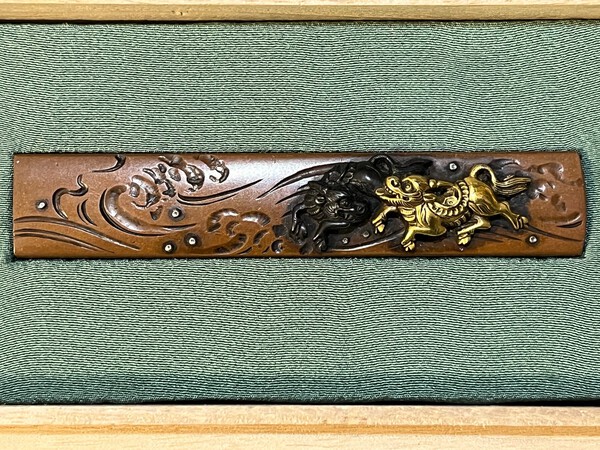
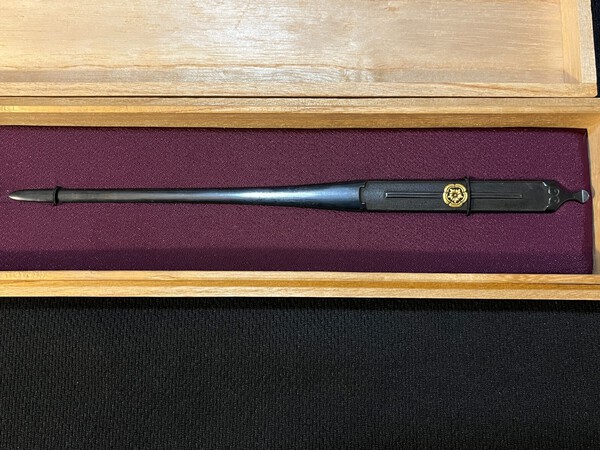
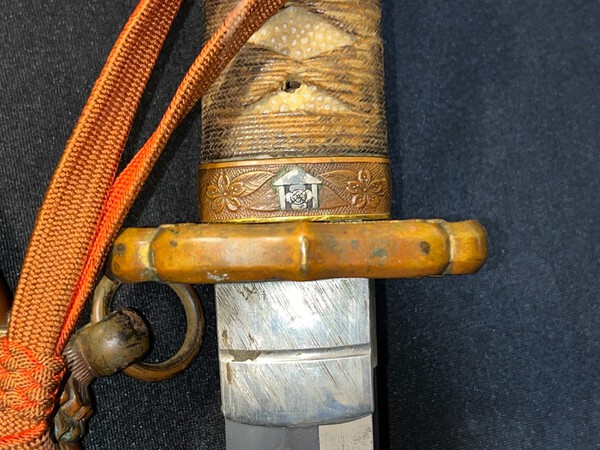
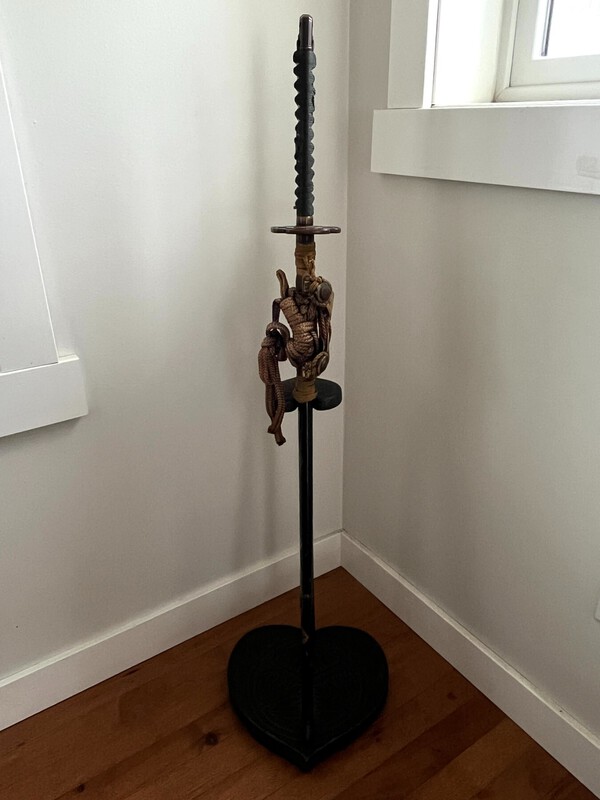
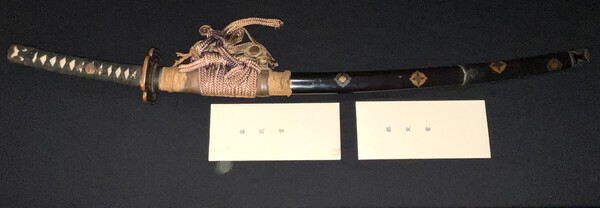
St. Croix Blades’ EBAY STORE has Swords and Tosogu ON SALE NOW —MOST ARE 20-30% OFF! Get an ADDITIONAL 5% OFF When You Buy Those Sale Items DIRECT From St. Croix Blades by emailing, texting, or calling (only if not purchasing the piece on eBay). Here's the link: https://www.ebay.com/sch/i.html?_fss=1&_saslop=1&_sasl=stcroixblades&LH_SpecificSeller=1&LH_BIN=1&_sop=16 Email info@stcroixblades.com, or call/text 715-557-1688 to purchase. (Layaway available). --Matthew Brice St. Croix Blades www.StCroixBlades.com

 1 point
 -
Did a little bit of reorganizing today and pulled these out...all from jizai okimono.1 point
-
Agree with @Curran...1 point
-
Hi Ryan, No that’s it! Make sure all the details of the registration card match the gun, and send off the change of ownership paper to the Education Board of where the gun was registered, or do it online. It also asks for the previous owner’s name and address and contact details. You will need to keep the reg card preferably with the gun or within reaching distance, and you’ll need to keep the gun well wrapped if ever you need to carry it somewhere. Also if the police find it in your car for example you’ll have to provide a good reason for its presence.1 point
-
1 point
-
Not as clear as the previous one. Perhaps Toshihisa.1 point
-
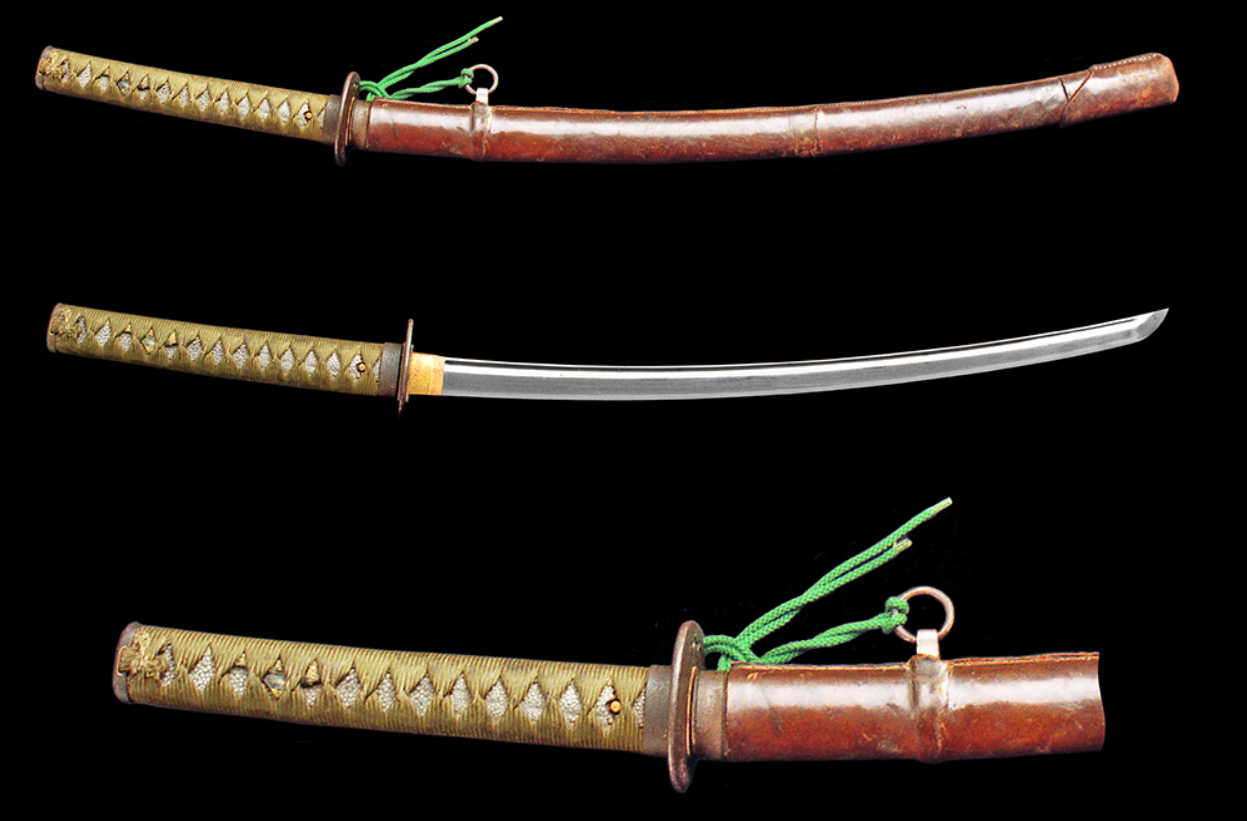
Connor, Don't be bothered by the fact that the signature is gimei. It was a well known practice as long as they were making swords. Samurai, as well as Shoguns, have been known to treasure a sword while knowing it was gimei. As for your fittings. This sword could have been brought to the war by it's owner, refitted with the wooden saya (scabbard) for the field. It would have been covered by a leather cover. They are often lost over the years. Many were donated, or bought up by the military in drives to meet demands of the war effort, then refitted in varying degrees and sold to new officers. Yours looks to have kept the civilian tsuka (handle). Cannot tell if the tsuba (hand guard) was kept or a military one put in its place. You can see an example of how it might have looked: They were also refitted fully with military hardware: There are ways to restore your sword and make it look nice, or you can keep it as is. Either way, please read up on how to take care of it: Japanese Sword Care - Japaneseswordindex.com

 1 point
 -
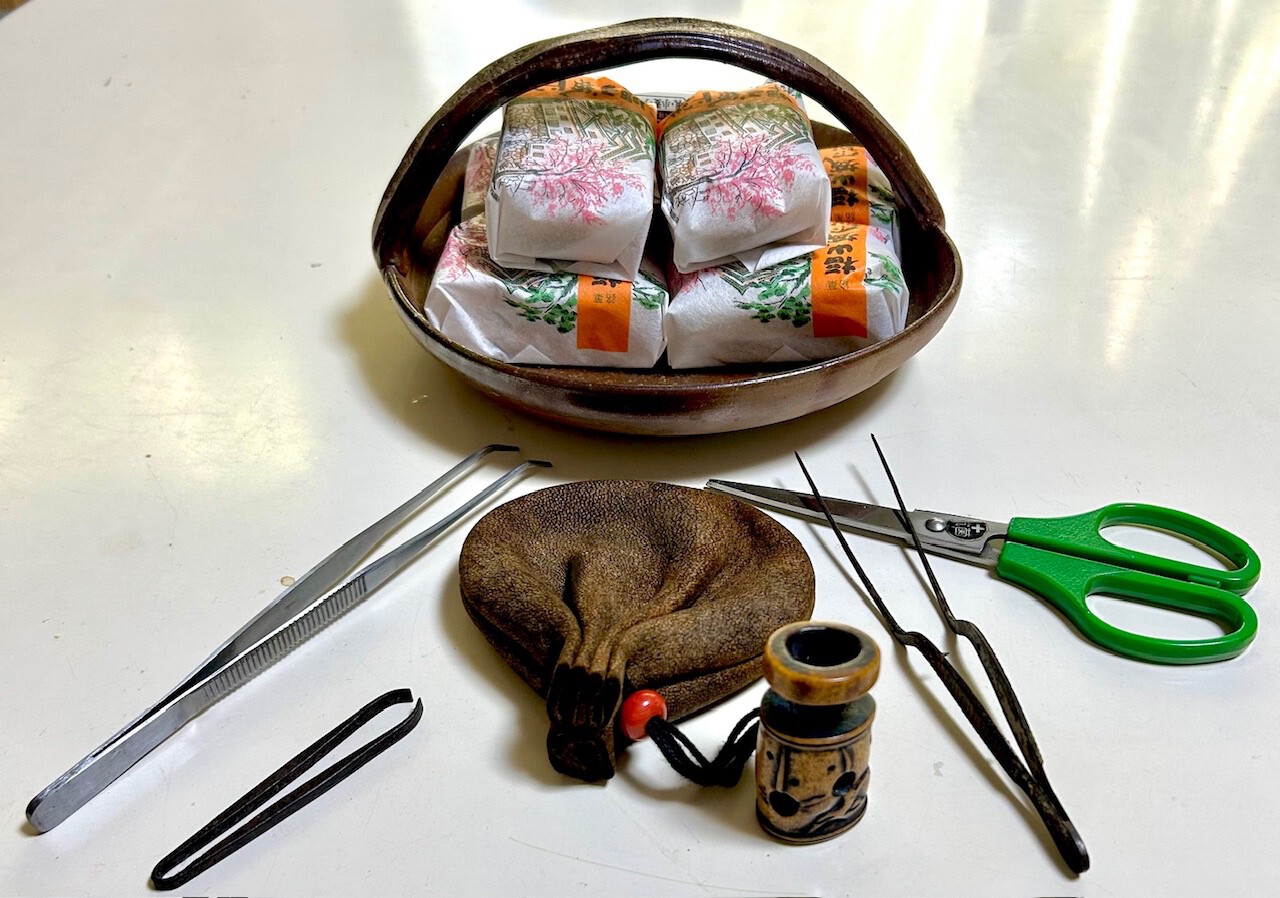
4. Thread your doubled cord through about 20 eyelets in the leather. This is a fiddly job requiring all kinds of useful tools, and plenty of free time and patience. 5. Somehow get the loop and the two loose ends to all go through the ojime. (Note that many beads will look like ojime, but the central channel of a typical ojime is usually larger than most ordinary beads.) 6. Final result with new black cord. Jabara concertina mouth pulled shut with tightly fitting ojime.

 1 point
 -
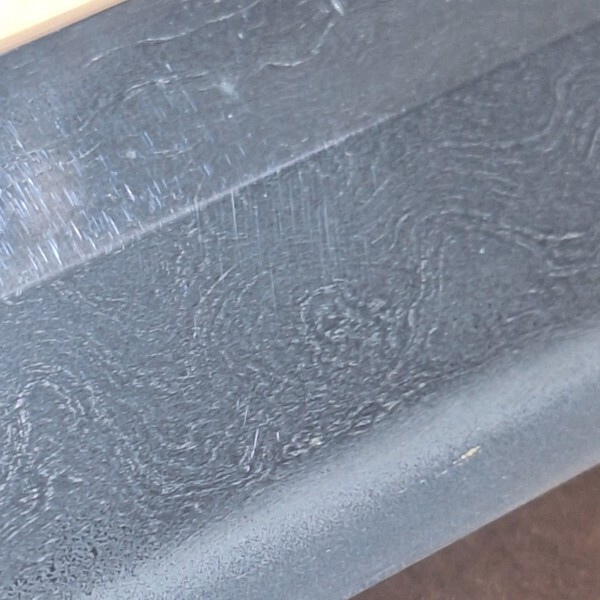
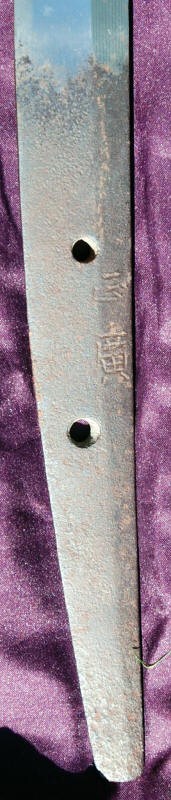
I made a purchase! I made a 3.5 hr drive and viewed multiple swords in hand at a member of this forum's home. I ended up purchasing a 26 inch Daito papered by the NTHK-NPO in 2019 to 7th generation Masahiro 1573-1590. But the blade has the potential to be much older. According to Soshu Den Museum records. Masahiro did not sign as such after 1553. When he took the name, Tsunahiro. The form, length, and grain patterns and activity do not really match later Soshu works, but earlier. The nijimei signature is, as well, non existent in Tensho Masahiro swords. It has a partially polished out Buddhist prayer horimono. A previous owner (whom sold this blade on this forum 5 years ago). Thought the horimono might have been engraved in late muromachi period. I am under the impression that the NTHK-NPO may have classified it as a 7th gen. Potentially due to having lack of reference for anything older. And chose a "safe" designation. I checked Soshu Museum's records. The mei, as well as the forging patterns they desrcribe. Do line this sword up better with 2nd generation Masahiro (1393-early 1400s). Or something made in the 1400s. I would think the Japanese NBTHK would have a far better reference collection to nail down the date better. But also, I not doubting the NTHK's expertise. Just curious why a Masahiro blade would get made in such an old style, with a Mei that hasn't been used for generations, in Tensho? Maybe special ordered that way? There are a few ware up front. Which would knock it down a peg or two. Some signs of use. And it has a few smudges that may polish out. But overall, I am very happy with it. Late 1500s or late 1300s. It's is a very nice work. And a great first blade *i may add some more photos if interested.


 1 point
 -
From M Sesko Nihonto meikan translation Aritsugu (有続), Genbun (元文, 1736-1741), Settsu – „Sesshū-jū Jinrikumaru Aritsugu“ (摂州住神力丸有続), „Jinrikimaru Aritsugu“ (神力丸有続), civilian name „Takayanagi Shōzaemon“ (高柳庄左衛門), son of Kaga no Kami Sadahiro (加賀守貞広), Settsu-Shimosaka group, he signed firstwith „Kunitsugu“ (国継), there exists a joint work under the name of „Kunitsugu“ with his father Sadahiro which is dated with the first year of Shōtoku (正徳, 1711) and gives the age of 27 years, notare-midare or an Ishidō-like midareba, wazamono1 point
-
Beautiful quality box. Meiji period lacquer can be staggering quality and imo is vastly undervalued given the degree of artistry and mind boggling skill involved.1 point
-
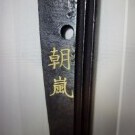
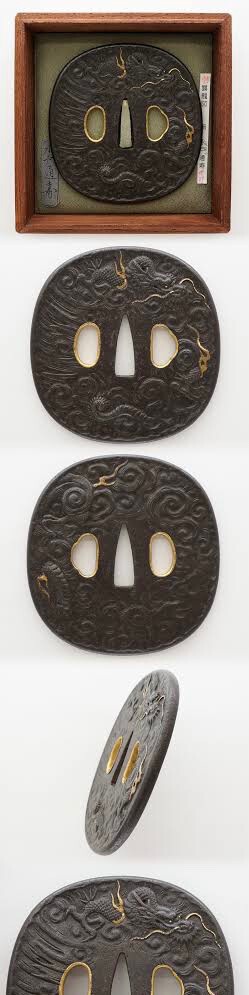
Around 10 years ago, Darcy released his excellent article on photographing Nihonto. Through trial and error, he came up with many great tricks on the subject, and this was evident in his superb photographs of the swords on his website. However, after some time, and for personal reasons (among them the number of dealers using his methods for personal gain without recognition) he withdrew the article. After his tragic passing earlier this year, I wrote to his family asking for permission to release the article for the benefit of the community. There are many great tips and tricks in it. This was granted by the family, and so here it is. After many years, and in tribute to a great member of the community, I have uploaded the article in the download section. Enjoy, and remember a guy who was truly a huge character and a legend in our community. Thanks Darcy, and RIP from all of us.1 point





.JPG.f50ae03f7dc28ea07a2ccebece469fb6.JPG)





















This leaderboard is set to Johannesburg/GMT+02:00