
Leaderboard



Popular Content
Showing content with the highest reputation on 12/13/2025 in Posts
-
Remember that "den" doesn't necessarily mean "missing", it can mean "has something extra" too. The islands of tobiyaki and the little togari-like protrusions from the ha, for example, are things more commonly associated with Hasebe Kunishige and Shizu Saburo Kaneuji respectively.4 points
-
I don't think its LED per se, its the size and relative brightness and directiness of light source. As some know, I use very long (seconds) shutter times and "paint" in real life the blade with light, sometimes with different light sources. If you want something generic I would use very wide LED lightstick and hold close to blade's surface. That sort of works for all. For some Soshu to bring up nioi-guchi and nie I use on the contrary portable LED flashlight. It brings up detail much better. What's the blade? Naminohira?4 points
-
I think this is one case where the quality of the blade (very obviously top-level Soshu if Kanzan, Tanzan, the NBTHK *and* whichever appraisers the Date family had on the case all agreed with Go/den Go) trumps any concerns about attribution and level of certificate. If it gets reattributed to Hasebe Kunishige or Shizu then it's a Hasebe Kunishige or Shizu that's good enough to stand with Go and Masamune, and was treasured by the Date clan, and with TH you've got the NBTHK's double stamp of approval for school, quality and condition. Going to Juyo (or TokuJu) would just be adding a third stamp of approval to something that already has the thumbs up from some of the headiest authorities on what makes a blade good. And really, what can any given Juyo panel tell you that you won't find on an extensive sayagaki by Kanzan and Tanzan? One other possible reason for not sending it to shinsa is to keep alive the hope - for prospective buyers - that the "Den" attribution means it might go Juyo to Masamune instead, as he is also (obviously) in the same tier of mastery as Go and does have some work with tobiyaki and togari. But this is a long shot and realistically, the best-case outcome of a Juyo shinsa will be just telling you what you already know - lovely sword, probably Go, somewhat atypical. There's much more potential downside, and you can save yourself a few hundred thousand extra yen in shinsa and handling fees (and another two years of waiting, including when - not if - it passes next year's session) by just selling it as-is.3 points
-
壽 - kotobuki / ju means celebration , festivities, congratulations, or longevity.3 points
-
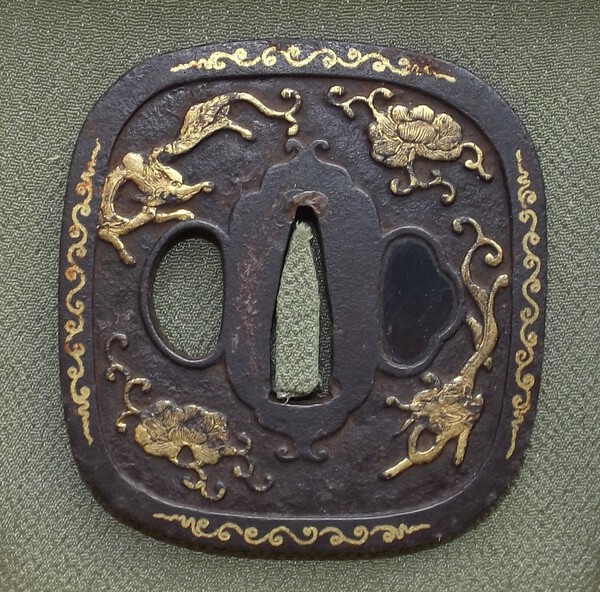
Dear All. I realise that these are not to everyone's taste but I have just picked this one up and thought some might be interested. 69mm by 72mm by 5mm. Small but heavy in the hand, shakudo fill to the kogai hitsu and signs of being mounted a time or two. 90 degree hatching under the nunome. The reverse identical to the face. Enjoy{or not of course}! All the best.
 3 points
 -
That's a great work you've done there! The kokuin appears to be his name in the stamp, which is something I've seen with a few other smiths that used hot stamps. I've added it to the next Stamps Doc update. You've given me a one more TAN stamped blade and a few Seki stamped blades to add to my charts as well, thank you.
 3 points
 -
I believe this can be read Gotō Shunjō. 後藤春乗 https://www.seiyudo.com/tu-030423.htm2 points
-
Incredible blade, incredible price .... for TH. Must be one of those instances where those who know, know.....This is one blade I would love to see in hand. But it must be capable of higher Shinsa pass, with all the plusses, such as big name Daimyo association, strong push by Kanzan and Tanzan for an attribution towards Go, excellent polish, so wouldn't this be the perfect candidate to send forward? Would the possible risk of reattribution to Hasebe Kunishige or Kaneuji or ? and a consequent desirability/financial hit be causing some hesitation?2 points
-
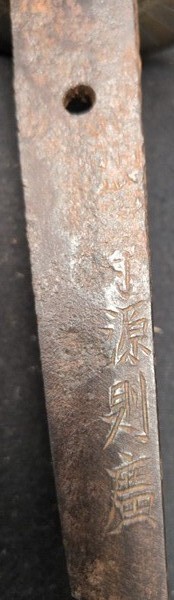
Correct. The "old-style" hiro kanji is 廣, the "new" kanji is 広. An honorary title given to a Sagami smith. For more information on how these worked, Markus Sesko has an excellent writeup: https://markussesko.com/2013/02/19/how-honorary-titles-were-conferred/2 points
-
This one looks like a "negative" version to Dan's, the raised areas have been cut away in this one. I can't help thinking of a horse shoe when I look at it.2 points
-
Khalid, no.2 katana-mei, looks to be XXX Minamoto Norihiro (with old "hiro" 廣 noted by Jussi. Possibly is Sagami no Kami (from Sesko): NORIHIRO (則広), Jōkyō (貞享, 1684-1688), Settsu – “Niwa Sagami no Kami Minamoto Norihiro” (丹羽相模守源 則広), “Sagami no Kami Minamoto Norihiro” (相模守源則広), real name Niwa Den´emon (丹羽伝右衛門), he came originally from Kii province and belonged to the Ishidō school, dense ko-itame, hiro-suguha or chōji
 2 points
 -
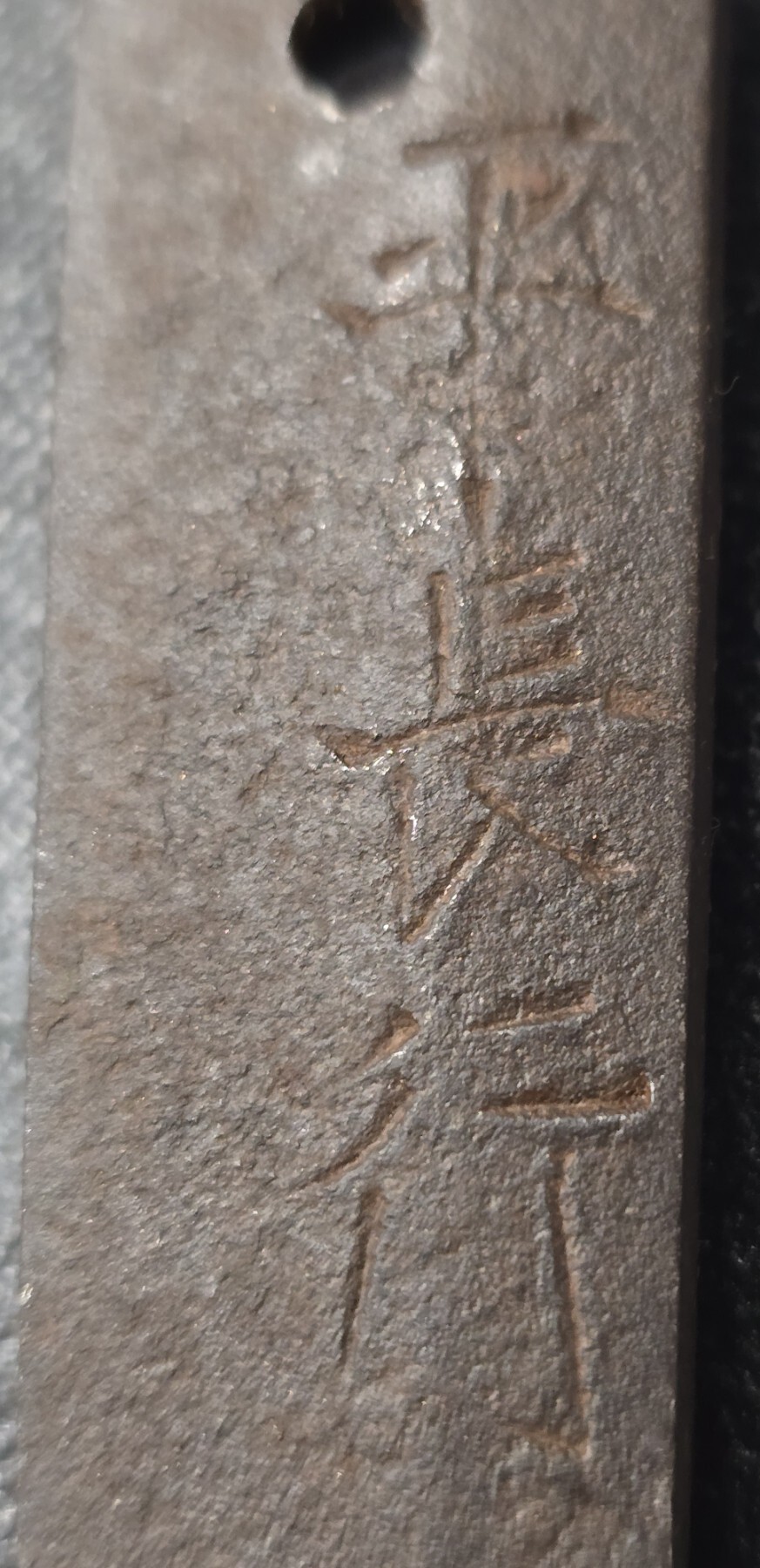
Taira Nagayuki2 points
-
Love the Rain Dragons!2 points
-
I am just on my phone so I cant help that much now but it seems to me that the smiths are 綱広 Tsunahiro & 則広 Norihiro (they use this old style Hiro 廣)2 points
-
The basis of understanding is knowledge - not listening to other people's opinions and recommendations Comparing average things is a bit of nonsense There have been and always will be plenty of average things In anything you can think of In Edo you probably won't have access to the same quality material as in early Kamakura The same problem exists today We have the most modern equipment and technology And yet we are unable to make a sword with the metallurgical quality of the Kamakura swords But first you have to have the ability to study such swords and understand what you are looking at2 points
-
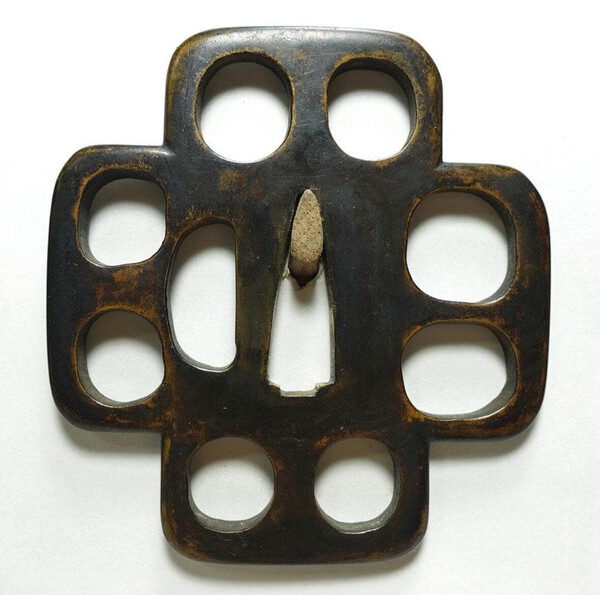
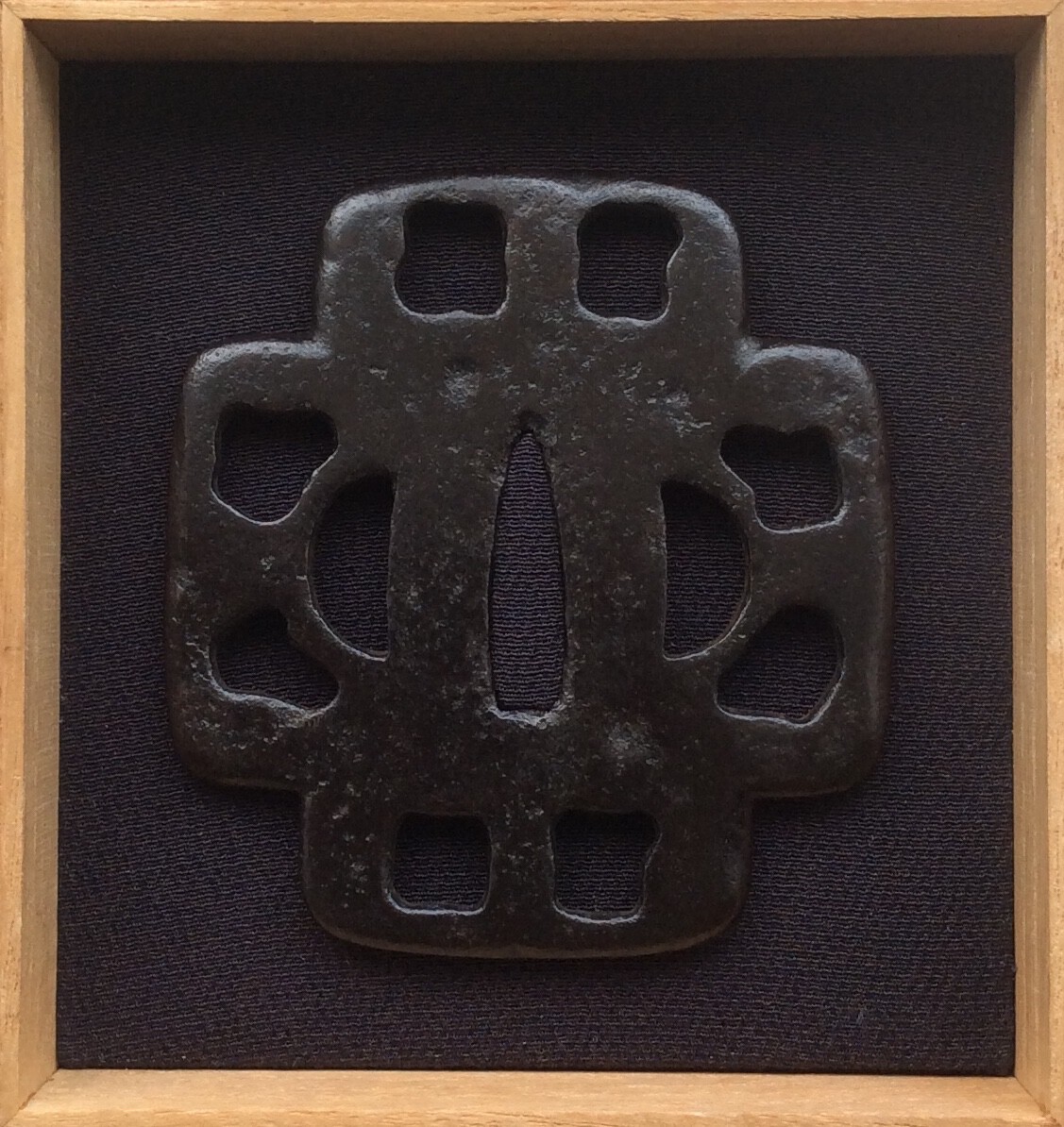
Hi again, With my poor batting average so far I dread to ask - but is this a Higo style Tsuba (as I've been led to believe)? It's katana size, mumei and described as 'copper' which I presume means shakudo as it's so dark. Thanks for any input. Hector C.
 1 point
 -
Been a photographer for 10 years and only recently tried to take pictures of Nihonto for Lloyd Flemmings book. I think this is one of if not the most extreem case of how light affects what gets captured. White LED vs plain incandescant bulb Same blade, about the the same spot, about the same light position and brightness. No enhancement or sharpening LED seems to hide much of the ko hada present. This is also very noticable on hand as well.

 1 point
 -
SOLD * Nanbokucho daito, ubu nakago, two koshirae and Tokubetsu Hozon1 point
-
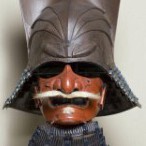
Nothing for sure, so take it with a grain of salt. But my research so far: The mon is from the Watanabe clan. They were retainers of the Mori. To note specifically is that the helmet is dated, 8th month of Daiei 3, if the inscriptions can be considered as correct. Correctly calculated it seems that the 8th month in accordance with the Japanese way of calculating, would actually mean Oct. 1523. Anyway, 1523 was the year that Mori Motonari became Daimyo. More in particular, he became daimyo after a succession crisis when the jong daimyo Mōri Kōmatsumaru died in 1523 and because he was nominated/asked by 2 of his vazals, among whom a certain Watanabe (found different first names) in July of that year. The official nomination of Motonari was signed by 15 of his vazals. Motonari seems to have entered Koriyama-Jo somewhere at the end of September/beginning of October. After that there was a period of trouble, where some of his vazals seem to have rebelled against him (among which the former Watanabe, who was executed in 1523 as a consequence of a cleansing operation undertaken by Mori Motonari because of the rebellion -https://mouri.gozaru.jp/monogatari3.html - these are recounted stories which were written down at some point so the actually amount of truth is under debate) His son Toru was allowed to leave but was later pardonned and returned to the Mori Clan. He saved his lord during a battle somewhere in 1543 by posing as him and returning in the battle to allow Motonari to escape. Subsequently most Watanabe's received important posts in the Mori Clan and were remembered during the Mori Clan's New Year's Kachu Kaiki. However, Nobuie was in Eastern Japan while the Mori and Watanabe's were in Western Japan. The mon could be a later addition, who knows for sure. Don't know if new helmets would travel all over the country. So anything is conjecture at best at this point, but the coincidence in the dates is remarkable if you ask me. Theoretically it would have taken a helmet ca. 30-35 days to get from Nobuie to the Mori domain. So it is possible. Anyway I haven't overpaid it, so in the worst case I own a nice helmet with a fake signature but at a price which is acceptable even when it is not what it is supposed to be. I have asked the Mori museum if any records would exist about an exchange of important helmets which could have been given to the Watanabe's in relation to their initial support of Mori Motonari.1 point
-
I have to admit this one is a bit of a head scratcher. Jigane seems great, but the hamon ... is it mostly nioi and ko nie with strong nie only in couple of places? nioi-guchi which is bright and wide in some places and nearly gone in others? The price... because of Date association? All top Soshu have gained considerably compared to 20 years ago, and the spread between collector to collector and high end retail also increased. But... Anyways, I seriously considered this gentleman: https://www.aoijapan.com/katana-mumei-attributed-to-sa-sadayoshinbthk-tokubetsu-hozon-token/ Personal preference, I would probably like it more than "Go".1 point
-
Marcin, I concur. At the same time in the USA, interest rates are decreasing; 25 basis points this month. RayM1 point
-
Guys dunno If I should mention it here but many sources predicts increasing interest rates on yen by another 0.25% this month. Dunno if it will end same way as in july 2024. But I expect that Usd/Jpy ratio will drop. Though usd is not my basic currency. I just want to notice this situation as many members want to make purchases in coming days.1 point
-
Hi Mark, Normally Menuki are made 'Left and Right' or 'mirrored' with (normally) the head end facing the Fuchi, even if the animal - dragon for instance - is looking backwards towards the Kashira... I have heard (unsubstantiated) that in the case of plants or flowers, the roots face the Fuchi. Noting these both face the same way, can I please see a pic of the backs? Thanks. Barrie.1 point
-
Would love to know what was missing for the NBTHK to go win " Den" instead of just Go1 point
-
I would like to ask a couple of educational questions: 1) What is "old Hiro" indicative of? (I presume the kanji character changed.) 2) What does "Sagami no Kami" mean? Also I attached an inverted photo of the first mei.
 1 point
 -
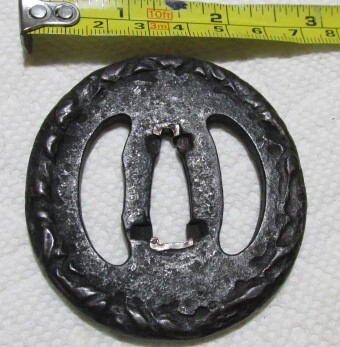
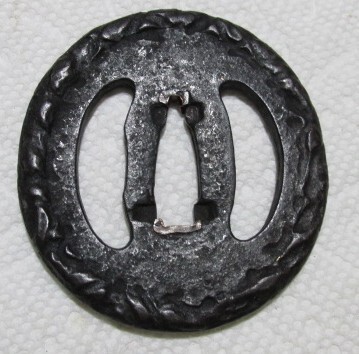
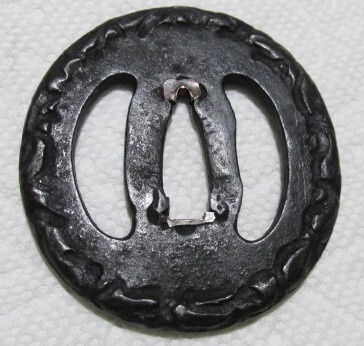
So, here is my latest acquisition from Ebay. $117 dollars with shipping within the U.S. (I don’t want to pay the tariffs from Japan!). I have always liked the sea cucumber motif. Anyway, I don’t think it was too shabby of a deal. I got to looking at the tsuba and I noticed something in the nakago-ana and the hitsu-ana. Has the metal of this tsuba been folded over? Included pictures below are of the tsuba. Then the close-up pictures (taken by my digital microscope) are views of the nakago-ana and hitsu-ana. Those close up digital pictures at the bottom of this post showing the paper clips have to be clicked on and downloaded (and I think you have to be signed into the forum to see them-I don't know why?), yes I am computer illiterate (but at 75 years old, I have an excuse!). If this tsuba has been folded, it is the first tsuba that I have that shows that. I would appreciate the opinions of other tsuba collectors, since my knowledge of tsuba is extremely limited! Thanks! 20251212145717501.tif 0002.bmp 0003.bmp
 1 point
 -
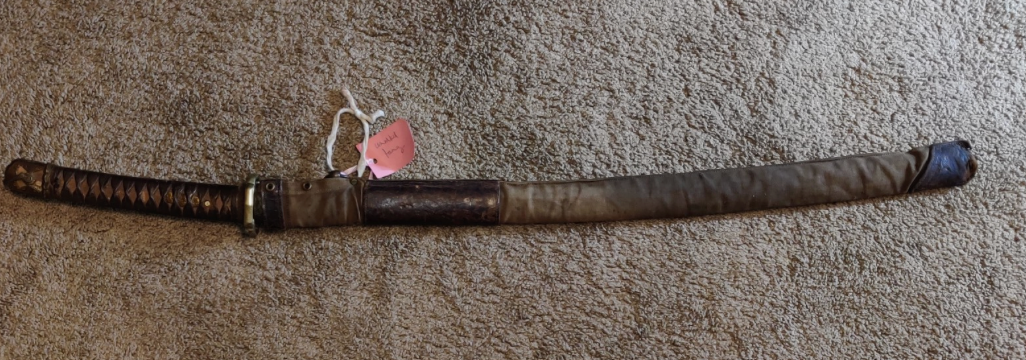
Canvas cover with ink stamp on a type 94/98. Pink curling ribbon probably not original. https://www.ebay.com/itm/187827346096? John C.
 1 point
 -
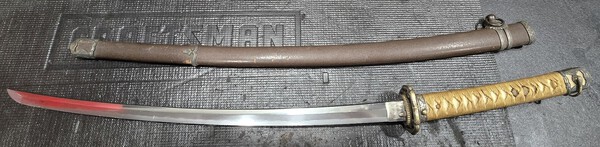
Hello Everyone, Am I translating this mei correctly - Is it Taira-Naga Saku or Hira-Naga Saku. I do not find either of these names in Hawley. Thoughts? Chris

 1 point
 -
Galo, you had already posted this a few days ago. Might be BISHU YOKOYAMA KUNIYOSHI. Even with good photos, estimating a market value is difficult or impossible. You will have to check the prices of comparable swords in comparable condition.1 point
-
Galo: The problem with valuations is that it is completely subject for anything other than the really big names. Condition, rarity, historical significance, provenance all play a part. The obvious thing to do would be to research that particular smith auction prices (Ebay MIGHT have some but you need to look at Completed auctions and not for sale items). If you can't find anything that way, look for information about the smith in reference material and see how he was rated. This would give you an idea of importance (i.e., value). Barring that, something is actually worth what someone is willing to pay for it. That's one reason website auctions carry such high prices. If the sword means something to you, keep it and enjoy it. Maybe even have it polished. If it doesn't, then list it with a high reserve and see what kind of offers you get. John C.1 point
-
In my opinion, and as there is no distortion, these are all forging flaws without external impact influence. These can easily happen at any stage of forge-welding without being noticed by the smith, and unfortunately, they appear only as late as in the TOGI process. Colour changes could possibly be caused by locally different reactions of the steel to polishing. Uneven hardness of the cutting-edgel, caused by a poor YAKIMODOSHI (= tempering), can be felt by the polisher when working with UCHIGUMORI (= finest finishing stone). Maybe this results even in a colour change, but that is just a guess.1 point
-
Well, it certainly looks layered, with some pretty significant delamination which has happened over the years. Layered doesn't necessarily mean folded, though. Could equally just be two pieces of steel not quite perfectly forge welded together.1 point
-
It is very nice sword. Sometimes it can be tricky what is seen as ubu nakago. NBTHK states also in Jūyō that nakago is ubu. In my understanding if machi is in original position the nakago end can be cut and sword is still seen as ubu. There are few extreme examples of this in naginata, where I believe the nakago is cut for 50cm and it is still seen as ubu. Also sword can still be ubu even though there is machiokuri. In these cases I would assume that nakago needs to be original form other than machiokuri. Otherwise it will just fall under suriage.1 point
-
Okay, here we have a (Soshu) Akihiro. Looks almost familiar. It is (very) late Edo period. And I think it is the same with your tanto depending on the photos.
 1 point
 -
Rest in peace, my old friend. Earlier this year, I wrote to Richard after my older brother Michael passed away from an aggressive form of liver cancer. They were close in age, and Richard’s kindness during that time meant a great deal to me. I first came to know him through his photography FAQ for the KTK, which I stumbled upon online. He generously helped me refine my photography skills, and thanks to his guidance I became a far better fine‑art photographer. I still use the techniques he taught me on my website today. Although I never had the chance to meet him in person, I did acquire several fine iron tsuba from him over the years. On the few occasions I attended the San Francisco show, he happened not to be there that year—something I regret even more now. Richard’s influence on my hobby work and his kindness in our conversations will stay with me. He will be missed.1 point
-
Yasukuni Isshinshi Kariya Naohide (靖国一心子 刈谷直秀) was an Army engineer commissioned during World War II and is widely known as the last Yasukuni swordsmith. He is a gendai swordsmith representing Tosa and Kōchi. He has been selected and awarded dozens of times at exhibitions such as the New Masterpiece Sword Exhibition (Shinsaku meitō-ten, 新作名刀展), the New Sword Exhibition (Shinsakutō tenran-kai, 新作刀展覧会) and the Kochi Prefectural Exhibition (Kōchi ken-ten, 高知県展). Naohide was born Kariya Naoharu (刈谷直治) on November 10th 1917 in Kōchi Prefecture. He joined the Japanese Sword Forging Association (Nihontō tanren-kai, 日本刀鍛錬会) in April 1937 under the swordsmith Ikeda Yasumitsu (池田靖光) who was the chief smith at Yasukini Shrine. Naoharu inherited the character "hide" (秀) from Yasumitsu's master Ikeda Kazuhide (池田一秀), becoming Yasukuni Naohide (靖国直秀). On June 17th 1939, he was drafted into the army where he made five guntō using Chinese railway steel. Naohide was discharged on December 11th 1942, and in January 1943 he was approved as an army-appointed swordsmith (Rikugun jumei tōshō, 陸軍受命刀匠) and began forging swords at the Tosa Japanese Sword Forging Association (Tosa nihontō tanren kumiai, 土佐日本刀鍛錬組合). Following the war's conclusion the GHQ banned the production of nihontō, but the ban was lifted by the San Francisco Peace Treaty and Naohide forged a sword to commemorate the occasion. He also made an appearance in the documentary Yasukuni (2007) as the last living Yasukuni swordsmith from the wartime era. Sources: Meirin Sangyo, Tsuruginoya, Tōken Hasegawa Other works by Naohide (yes, the sword is a legitimate gendaitō and consistent with his other work): https://www.touken-hasegawa.jp/item/MKI-44 (listed price unknown) https://www.tsuruginoya.com/items/a00656.html (listed for ¥550,000 in 2024) https://www.nipponto.co.jp/swords9/KT337837.htm (listed price unknown) http://sword-Japanese.seesaa.net/article/430137423.html (listed for ¥158,000 in 2015) More information on Yasukuni (2007): https://en.wikipedia.org/wiki/Yasukuni_(film)1 point
-
All I can say is a huge THANK YOU to everyone who commented! I have learnt so much from your combined comments and observations - which is exactly what I was hoping to do on the NMB. BTW, everyone can breathe a collective sigh of relief; I didn't buy this. My slowly developing sense of what looks right and what doesn't made me think this Tsuba looked 'off'. However, it was you guys who taught me why. Many thanks! Hector C.1 point
-
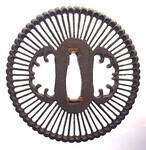
The major difference would seem to be that the piercings are squared on older Higo guards - a bit easier to drill round holes? https://www.instagram.com/p/CmODF4Dvb4E/ + https://www.instagram.com/p/DQDgniMCX62/ Kaku-nine-star Openwork Swirl Design [Nine Star? - I count either eight or with the hitsu - Ten ] Tsuba Inscription: Rakuju, Master Rakuju was a metalworker from Higo Province during the Edo period. He is the third generation of the Kamiyoshi school . His grandfather, Juhei, the first , was ordered by the Higo Domain to study the Hayashi family techniques .1 point
-
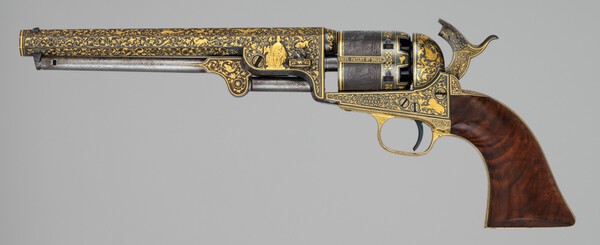
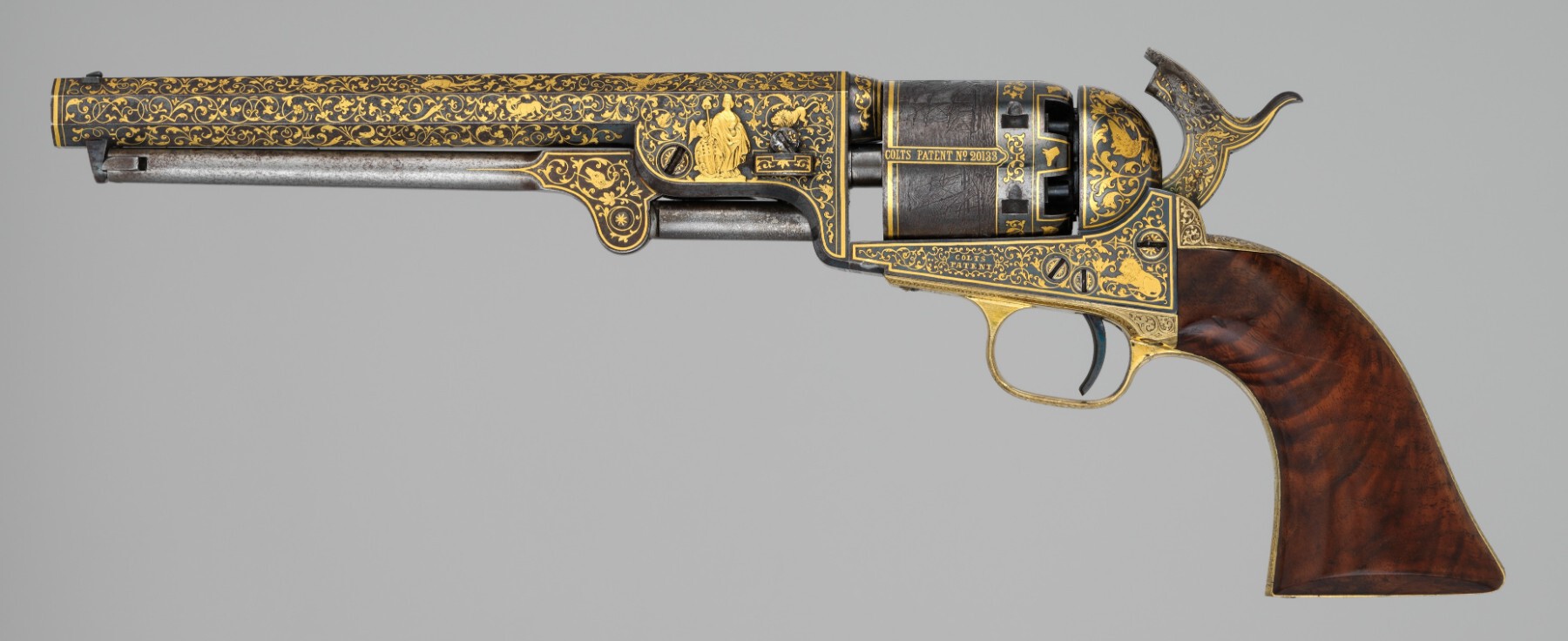
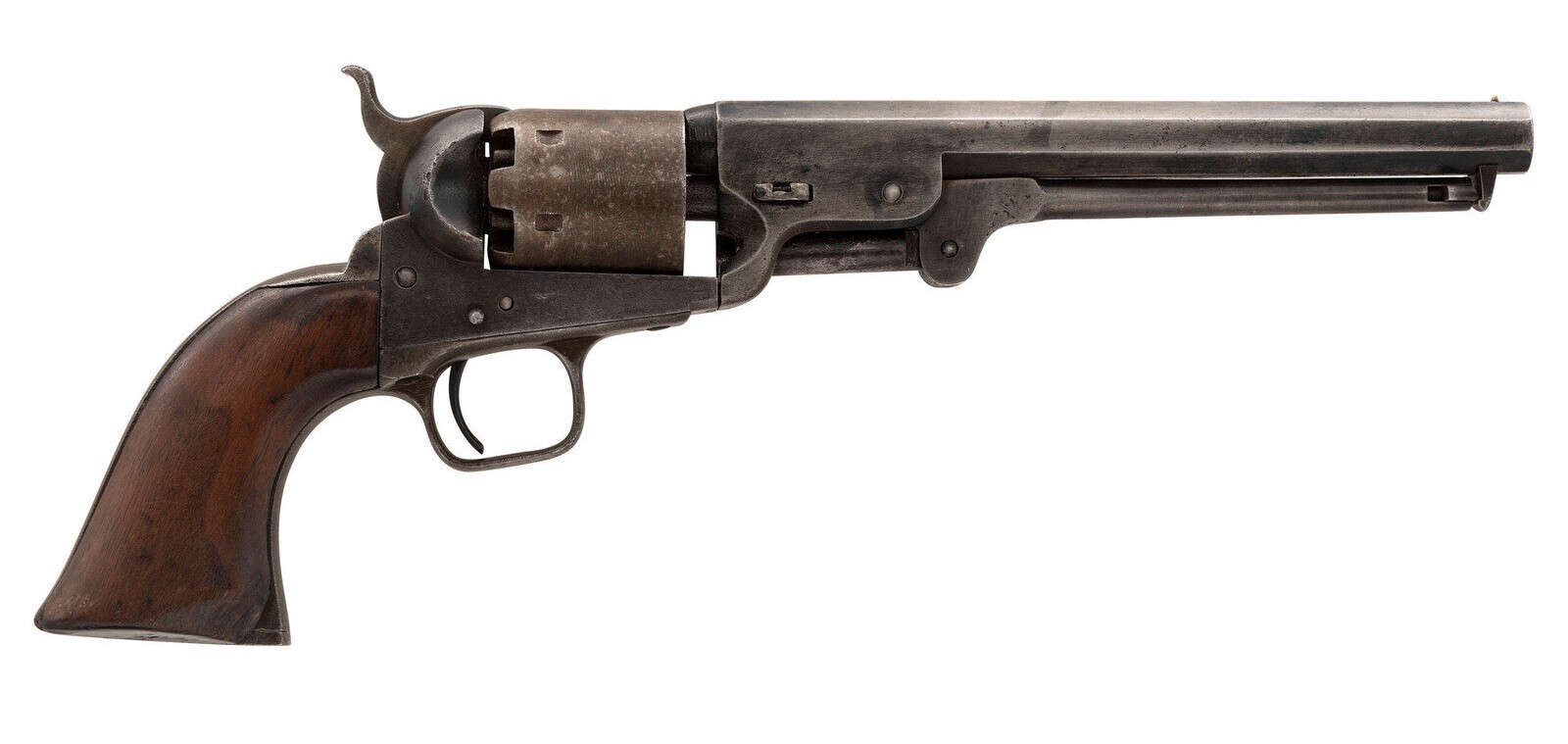
Again, comparing collectible Colt revolvers to collectible tsuba (yes, I really like Colt revolvers!). The amount of craftsmanship on some museum quality tsuba is superb and breathtaking. They are beautiful and a testament to the artistic capabilities of their makers. I love looking at pictures of them. Why? Because I could never afford them! So, I must appreciate them from afar! Just like Colt revolvers! The first picture shown below is of a superbly crafted and artistic model 1851 Colt. The next picture shown is of a model 1851 Colt that I could afford! Although both revolvers perform the same functionality. Just like highly artistic tsuba compared to more plain looking tsuba. I guess if I ever win the lottery, I will upgrade my collection of tsuba!
 1 point
 -
Yes it’s certainly Higo in style. The design represents a stylised version of the Hosakawa family star mon known as Kaku kuyo, and is most often seen within the Hayashi and Kamiyoshi schools. There are also Jingo examples known - see below 1st Jingo example. I agree with above comments, this example is quite amateur looking and I also suspect probably modern example. Sorry probably not good news. kindest regards Michael
 1 point
 -
Are you sure that the right one is a new tsuba reworked? There are much different spots in the right tsuba. Those iato tsuba are made from zinc alloy. It is not an easy task to make such a sukashi after the modling. And the sekigane is patinated on the right one. When it is reworked someone spent a lot of hours of work on it.1 point
-
I can see how you thought rain. Wood is another possibility maybe. Nice tsuba, not my type of motif but definitely my type of aesthetic as a soft metal collector.1 point
-
Lovely video, by the way. No unnecessary dramatics or music, just a trained professional absorbed in his work.1 point
-
The show is less than 2 months away. Now is the time to plan to attend the Vegas Sword show https://www.vegasswordshow.com/ There is a link on the website for room reservations. If you want a table (or 1/2 a table - they are 8') let me know at vegasswordshow@gmail.com A great opportunity to see Samurai swords in hand and learn from actual examples. There will be educational presentations organized by Mike Yamasaki https://www.facebook.com/tetsugendo Contact me directly with any questions. Thanks for looking! See you there! Here an opportunity to buy/sell/trade and see hundreds of great swords, tsuba, and fittings. Meet restoration craftsmen, educational presentations.1 point
-
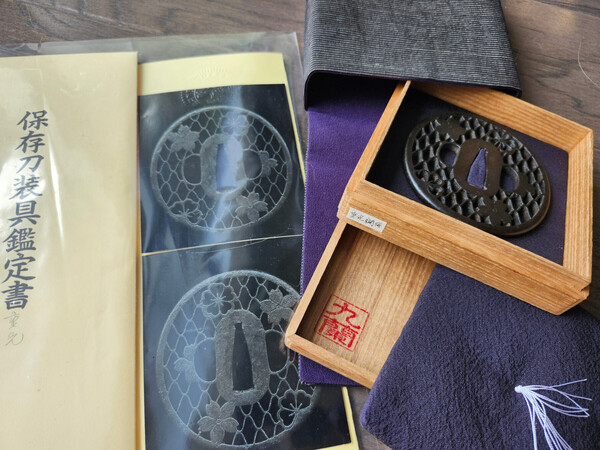
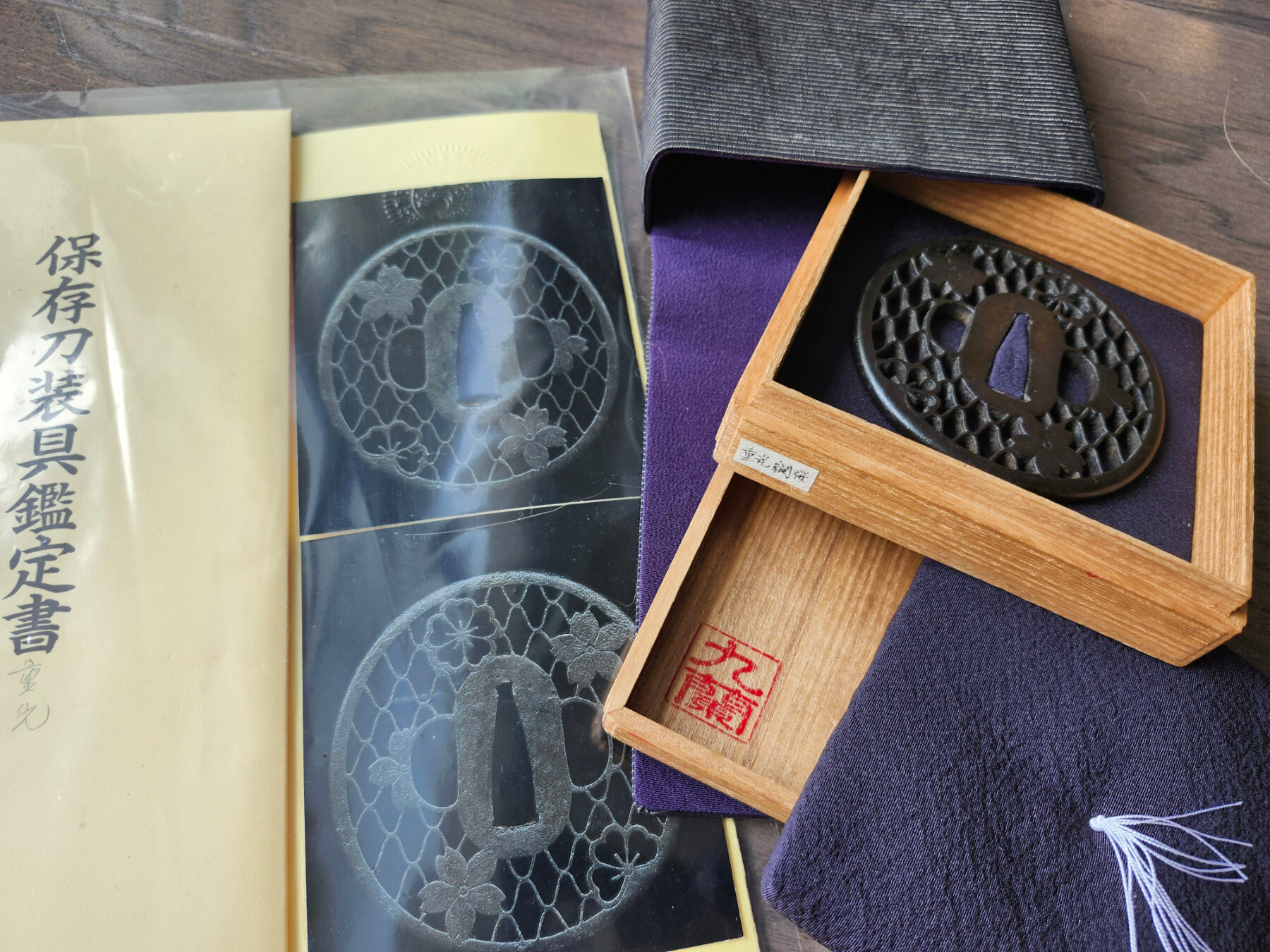
Hozon Hayashi Shigemitsu for $4750 https://irontsuba.com/shop Not Higo, not Hayashi. Direct Hozon to Hayashi Shigemitsu. Theme is Yoshinogawa [Sakura in the River Nets]. Ex-Ito-san. More pictures to follow. Please contact via email at my site. Nidai Yamakicihibei, Kanayama, Tokugawa Ono, and my favorite Kyo-Sukashi to follow later.
 1 point
 -
This was RKG : https://www.rkgphotos.com/about.htm I believe he was in his late 50s. Has there been an obit for him? @Grey Doffin how did you hear this? I'd hoped he would get through his surgeries.1 point
-
It's a promotional photo for a Japanese drama. Not a period photograph. "The Kamikaze Pilot's Wife" (or, literally, The Wife Who Flew With Her Kamikaze Husband) https://mdpr.jp/news/detail/14950171 point
-
Very hard news. More hard news on top of so many recent and major losses in the community. I knew Richard, having seen him at San Francisco sword shows several times, and visiting him at his home in Portland, Oregon, where I saw the elaborateness of his photography set-up. Good guy. He will be greatly missed. RIP, Richard.1 point
-
Hello! I have finished it and keep updating it yearly. Here is the version I uploaded to NMB: Since then I have done only separate yearly Jūyō results over the years. And I have been correcting errors to the big index on my pc as I have gone through all Jūyō items few times over the years. I think NBTHK should release the 71 shinsa results soon now in december, so I can update them in too and post a full index with all of the corrections. When you are typing thousands of kanji there have been some errors I made. I just got 5 Jūyō books from Yahoo JP that are in the mail. Then I will have all books from 1 to 56 on my bookshelf, and as I have few others too I am only missing about 10 or so books. And for Tōken Bijutsu I have pretty much completed my collection for the moment, I am only missing 21 of the very early numbers and I have 800+ magazines in total.1 point
-
Eddy I can guarantee you Nihonto world is not almost dead it's alive and well you've been here 5 years if you think someone's is being rude to you call him out you'll find out it's probably you this not understanding yeah I'm one of those old guys I've helped a lot of new guys and I thought you once or twice if not my bad pep pep cheerio stuff upper lip...say no more1 point












.thumb.png.4c5df79fec171b2dc4a23af38e280a4d.png)




This leaderboard is set to Johannesburg/GMT+02:00