
Leaderboard



Popular Content
Showing content with the highest reputation on 11/30/2025 in all areas
-
Note to newbies, feel the need. Beware of folks that don't step beyond books from the 1960s (boxed in) Its part protecting the value of the books and also a genuine misunderstanding of how new information has come to light regarding various smiths. Call it ignorance Sadly. the recluses of Nihonto. Seen way to many instances of "this is how it is" then it gets blown out of the water Too many BS rules broken. Folks calling gimei when in in fact legit (you know who you are, please shut up) Its nowhere near as exact science as people assume it may be, In fact, mostly the reason i have struggled with the hobby and come to this conclusion Absolute Bollox, but love the swords, Its like two. three, seven hundred or more years ago but muppets here think they have it covered. Its embarrassing reading their "accurate" BS Just learn about what you buy and learn to enjoy what you buy, try avoid the misfortune of Shinsa here, its nonsense. People moan about images then troll like comment, oh dear. F*** everyone else, especially online "experts" that know "f all " GNGB There are no experts, none. A fact i have accepted.6 points
-
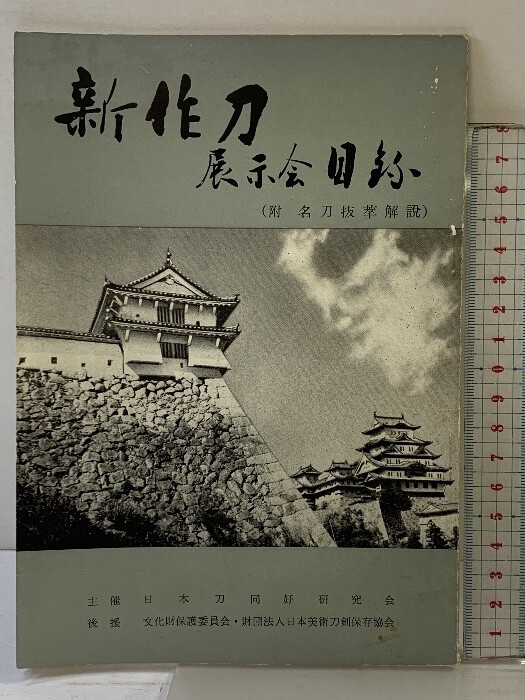
I picked this up online a day ago and I'll add more pictures when I receive it. Should be quite illuminating I hope, as it shows work by the first generation of post WWII smiths exhibiting their best blades just four years after the swordmaking ban was lifted. Described as: [Illustrated] New Sword Exhibition Catalog Japan Sword Association Cultural Property Protection Committee Japan Art Sword Preservation Association Showa 32

 4 points
 -
I believe this is referred to as Ninja is because, with a sturdy saya, the Ninja could lean the sword against a wall, point down and with the flat of the tsuba against the wall, step on the projecting opposite edge of the tsuba and get a boost in climbing over. The flat stops the tsuba from rolling. I have been told that there is little evidence ninja ever existed. Makes a good story, though. Grey4 points
-
Hi Kevin, What can one say................. Long live NMB, always a learning curve, it makes people think and learn.4 points
-
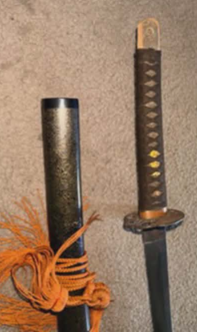
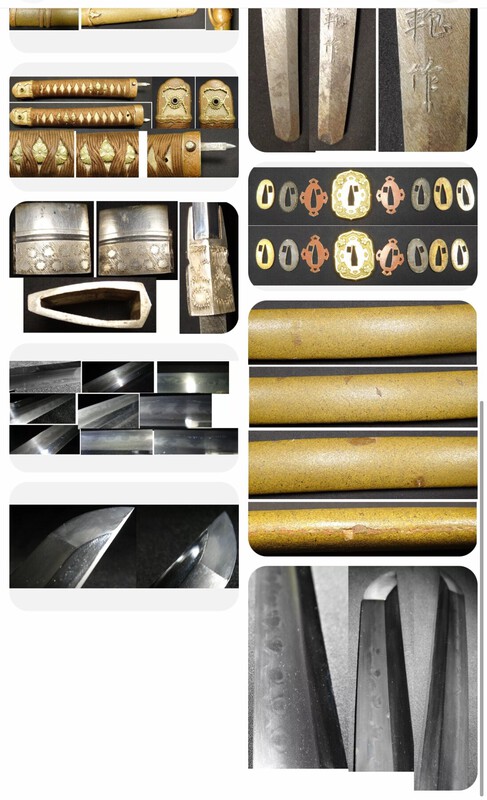
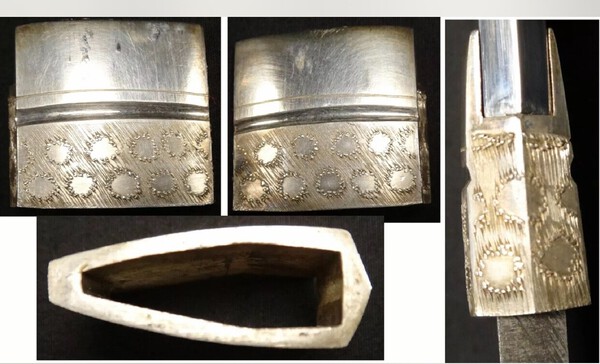
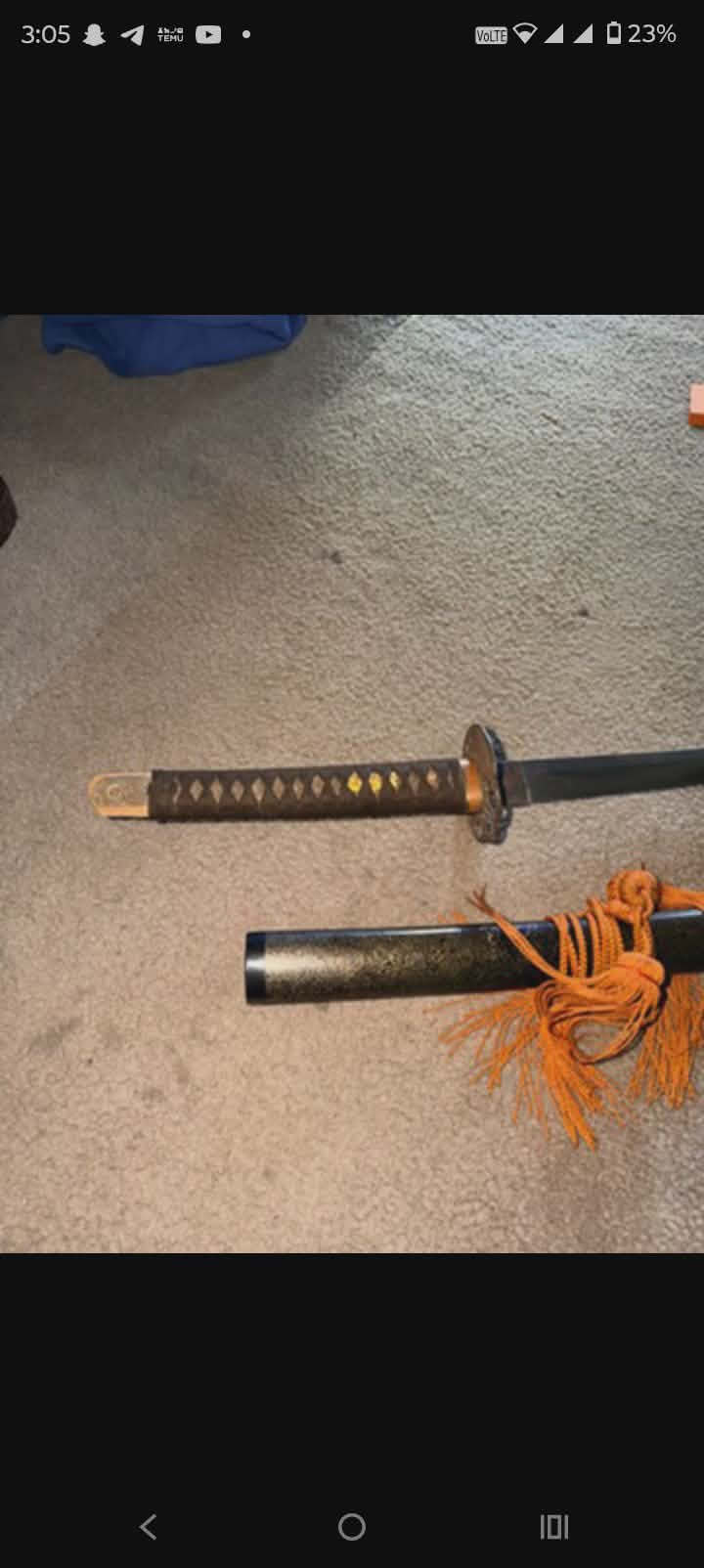
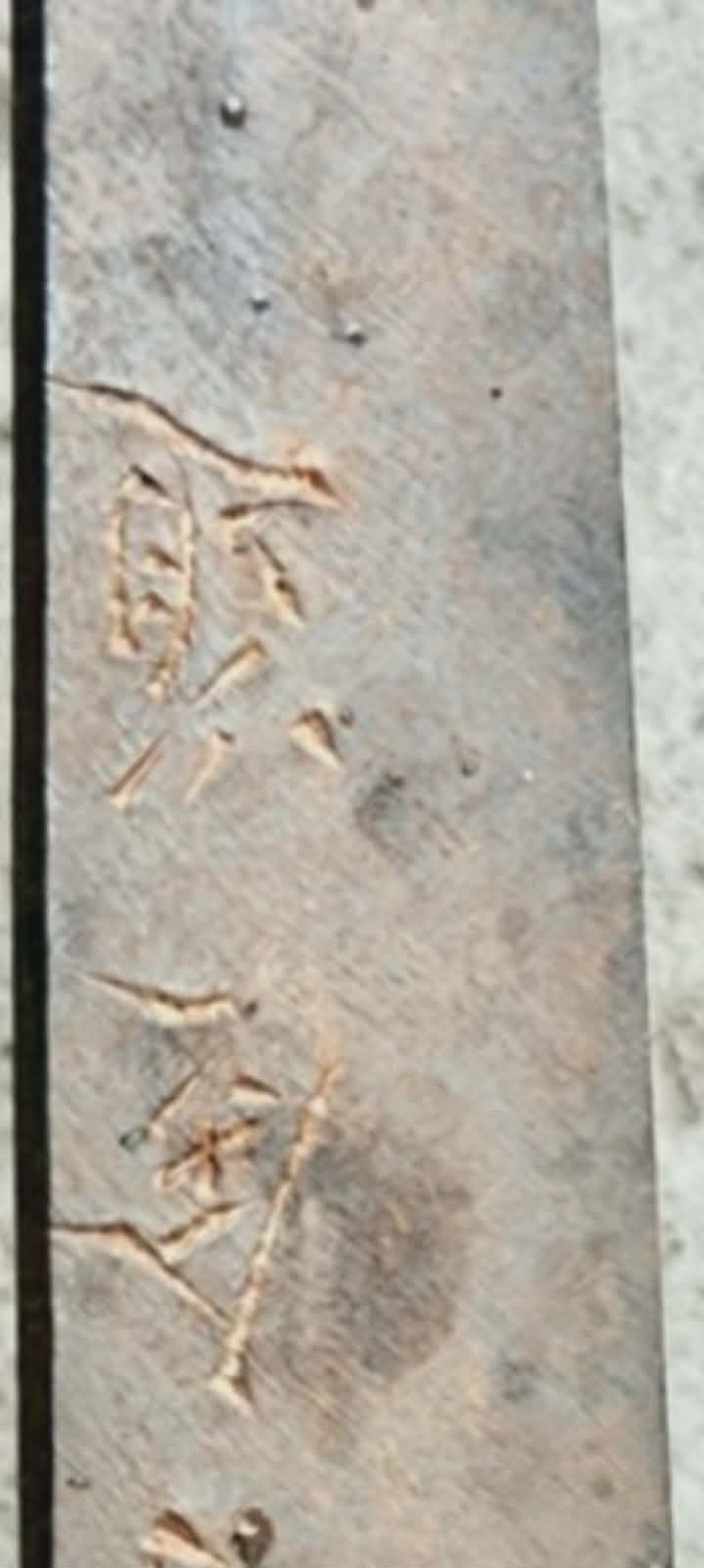
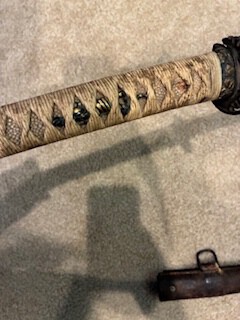
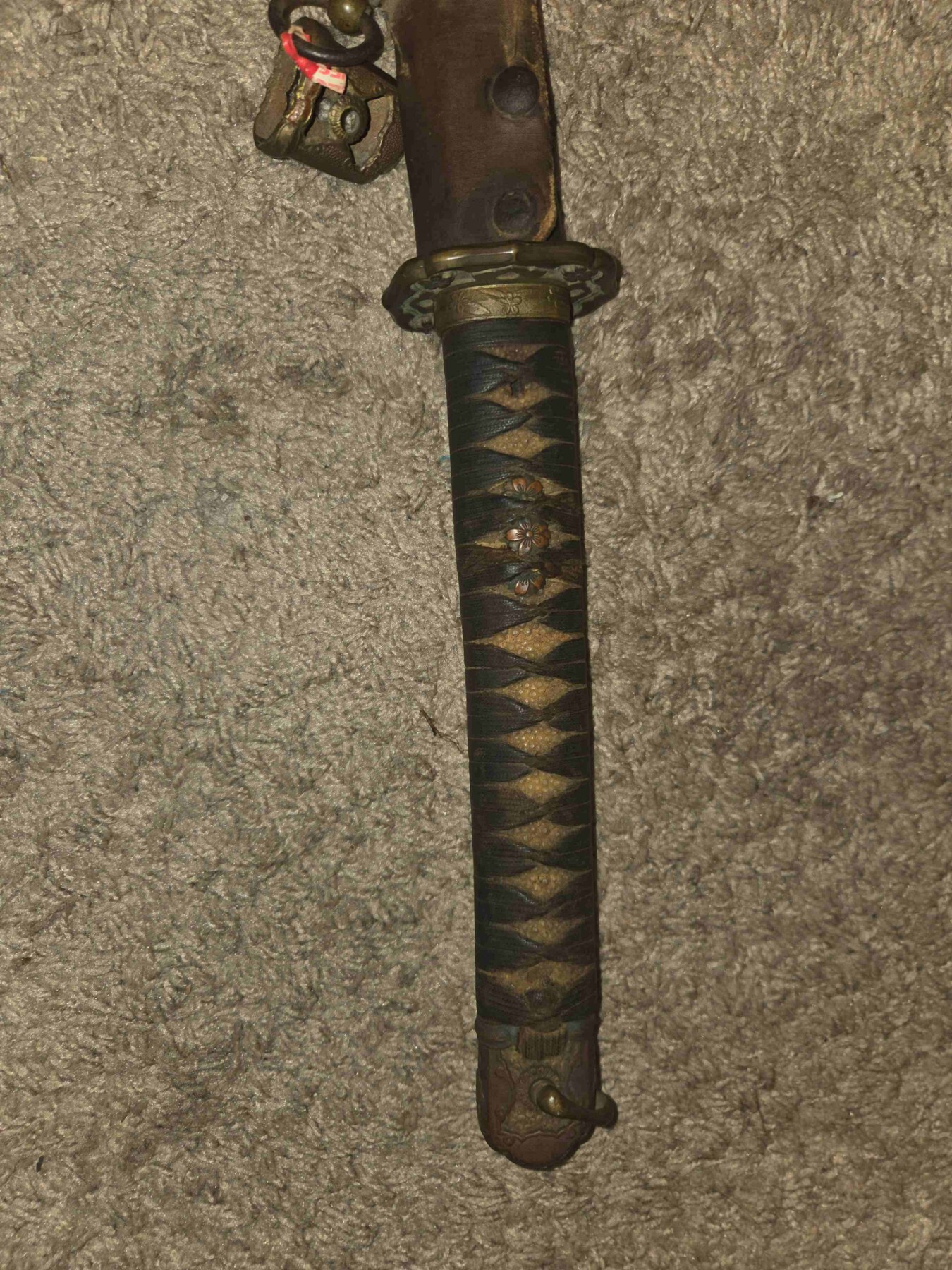
Hello Pip, looks an interesting sword. It is by Kinmichi (can also be read as Kanemichi) and he was a smith in WW2. Your signature (mei) reads his name "Hibino Kinmichi". KINMICHI (金道), real name Hibino Ichiji (日比野一二), born May 6th Taisho 6 (1917), he worked as guntō smith and died August 20th 1945 age 28. He was a swordsmith in Gifu Prefecture, and registered as a Seki swordsmith in Showa 17 (1942) September 10. He came from Kamo-gun district to the east of Seki, and Oyama in Tomida-mura (village). It is interesting when he died, as Japan officially surrendered on 15 August 1945 (in some cases there is a relationship). The mounts are not military but civilian ("samurai style") but looks like the kashira (pommel) has come off the tsuka (hilt)? a bit hard to see in photo. The mei looks quite well cut . Do you see any stamps on the hilt? Here is another example of his work. (Stein JSI) At right another example, signed "Kinmichi" and has a date when made, looks to be September, 1943 (Showa 18) (from Meirin Sangyo)



 2 points
 -
Scratch this. Found a couple of variations which work fine.

 2 points
 -
冰清玉洁 as clean as ice, as pure as jade 陳胖製陶 pottery made by 陳胖 竹趣 fun of bamboo2 points
-
100% and well said @Alex A2 points
-
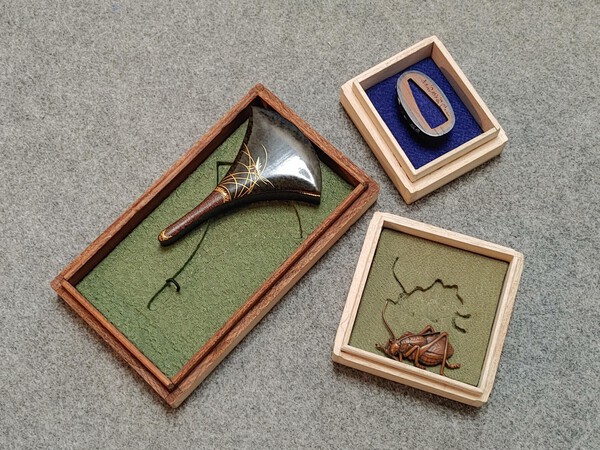
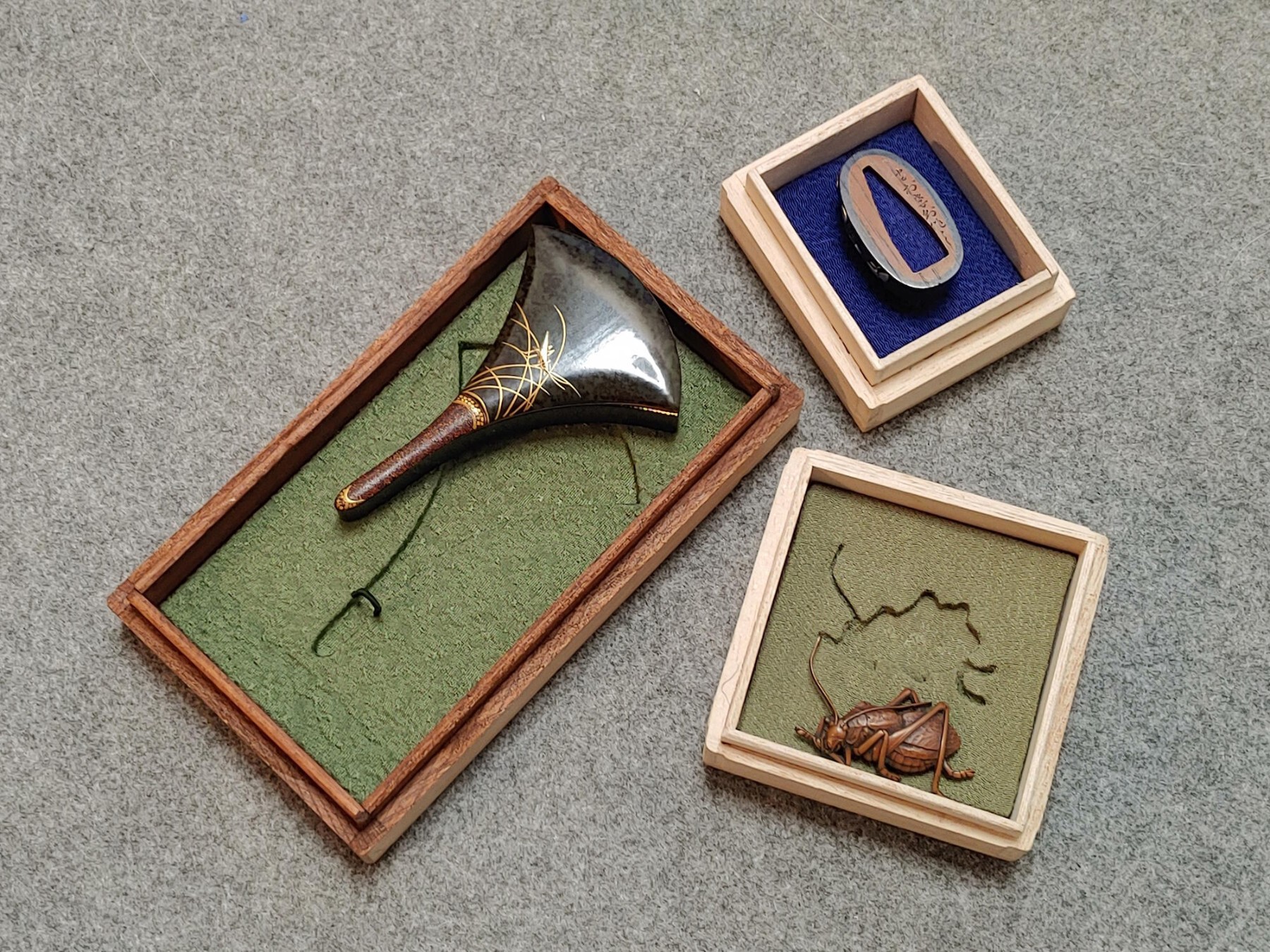
One note: On Paul Kremers' website tsuba.info for excellent tsuba and kodogu, he shows how to make a kozuka dai: https://tsuba.info/making-a-kozuka-dai/ Because it worked perfectly, his instruction inspired me to build all kinds of boxes for various items.
 2 points
 -
備後三次住田村正行作 = Bingo Miyoshi-jū Tamura Masayuki saku (made by Tamura Masayuki, resident of Miyoshi in Bingo province)2 points
-
Hi Christine, Look here for a care and handling brochure: https://nbthk-ab2.org/sword-characteristics/ I don't know where in Minnesota you are. I'm in Duluth and would be glad to help if I can. Cheers, Grey 218-340-10012 points
-
It is a type of tsuba that does not need a Katana Kake - [sword stand] as the flat base will allow the sword to lay blade up without rolling on any flat surface. It also has udenuki-ana but probably just as a form of adornment. Nice piece - beyond my pay grade! The Yahoo advert says it is "unique" but that is far from the truth. Nothing about it is "Ninja"2 points
-
This tsuba is currently for sale on the Japanese Yahoo Auction website. If my translation is correct, the seller claims it to be some kind of ninja artefact. What it actually is, I leave to the experts here. https://auctions.yahoo.co.jp/jp/auction/l1208828191


 1 point
 -
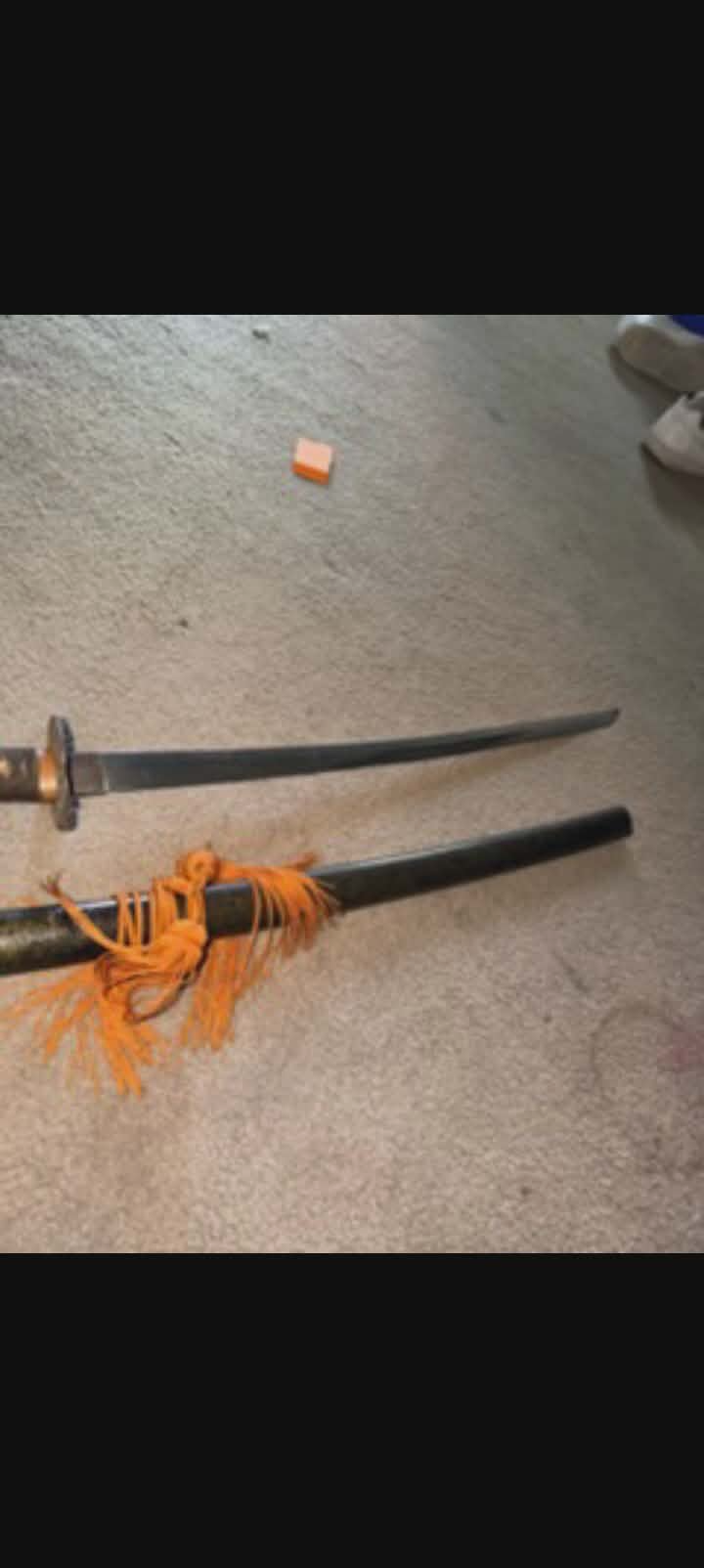
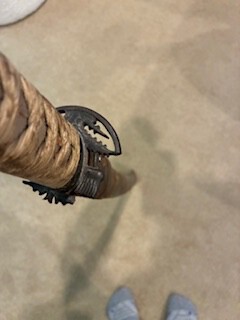
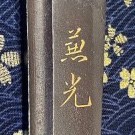
Hi all, so I've been going through my grandparents inheritance they left and I've found a sword. I didn't think much of it until someone suggested that we look for an engraving of the sword maker. This is what I found, any help would be greatly appreciated.

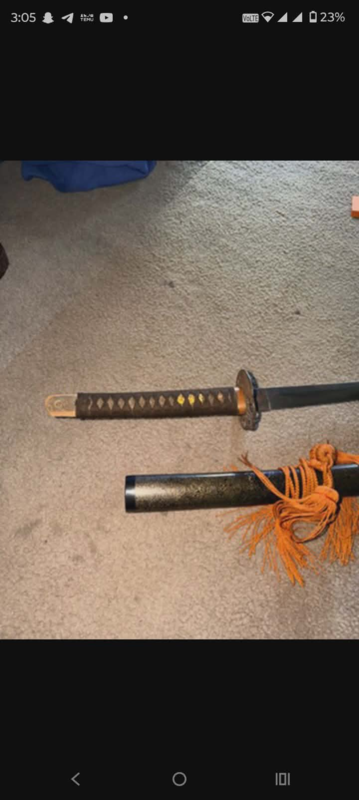
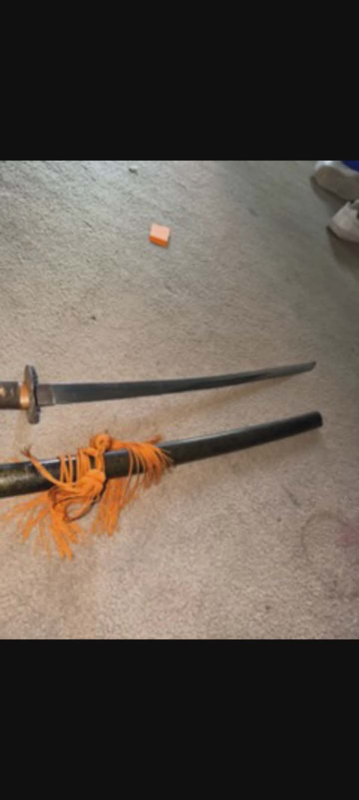
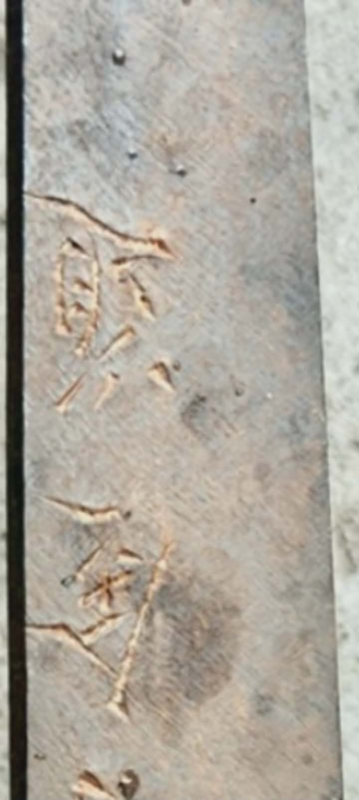 1 point
 -
Mekugi ana are made in similar spot so theory that chuso position depends on it isn’t reliable. Still boston’s murata-to is in T94 but without second hanger [if original to blade?]1 point
-
1 point
-
Piers, Thank you for the interesting information about shields. It seems that this book by Masatomi Ōmori/Utagawa Kuniyoshi was the source of illustrations for many other publications, including books by Perrin and Turnbull. I just bought an electronic publication on Amazon (for ~$3) that is apparently an excerpt from the aforementioned book. Its main themes include teppo gumi crossing water obstacles, artillery and the use of teppo from horseback. These are simple graphic scans without underlaying OCR text. The text on the illustrations is also scripted, so using an external OCR tool might not yield useful results. The text is therefore useless to me, but most of the publication are illustrations, and they are fascinating and of goof quality. I've seen some somewhere, but most are new to me. I particularly like the image of a samurai using a horse's head as a gun support. If the horse was calm, it might work well, but I doubt the horse liked it ... Numerous images show soldiers firing teppo. In most, it is clear that the hinawa is threaded through the hinawa toushi ana:


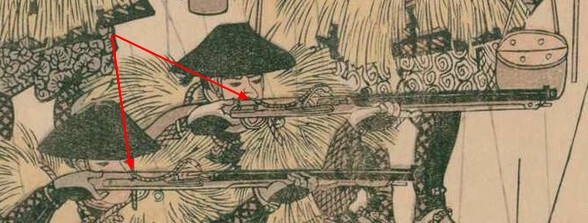
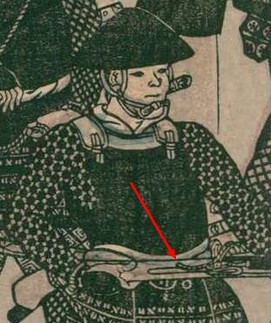
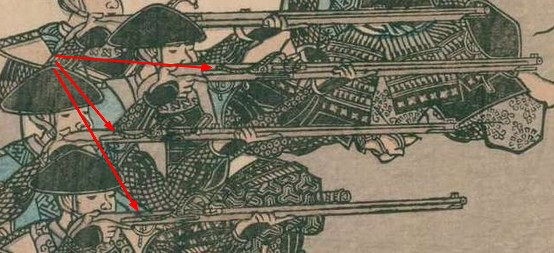
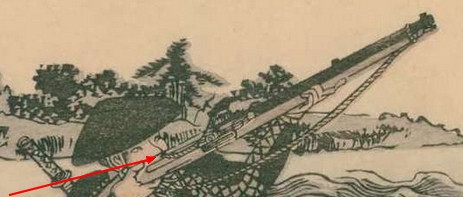 1 point
 -
Most of these articles appear to be AI generated, wouldn't put much faith in any of the details offered.1 point
-
Perfectly put and sadly true Alex. Even at the highest echelons of Nihonto expertise, the evidence in front of the observer can be misinterpreted. And what’s worse is those conclusions go unchallenged as it would be deemed 'rude' to discuss an opinion. This is not how a field of study improves and evolves. Dogma should always be challenged.1 point
-
Thanks. Really nice of you to take the time and help me.1 point
-
A bit hard to say as need to have better pics. Can you take more detail of tsuka and fittings. Also pics of the blade. Considering his age he probably worked 1940 to 1945. Maybe employed by a sword shop or an arsenal. Most likely someone ordered a sword with these fittings. But not likely it went to war. Remember that soldiers had to buy their own swords, but certain civilians working with military could wear swords. Not likely he was "prominent" as no real records of training, and he does not appear to have entered any exhibitions/contests. It is probably a good example of its type but average. Cant comment on value without more pics. Others may. I added another example (1943) to previous post. ADDITION: I forgot that there is other posts on Kinmichi. Go to "Search" at top right on page and enter "Hibino"1 point
-
The very use of the term "ninja" amongst historians is highly contentious in and of itself. What even was a "ninja" and where did the concept come from? The weird mythologised blend of ikko-ikki peasant roots, espionage and what could bluntly be referred to as "magic" prompt many scholars of the period to avoid use of the term altogether. I cannot think of any equivalent class (real or mythologised) in Western culture... Maybe a DnD Paladin?1 point
-
I think that Jan’s reading “備後三次住田村正行作 = Bingo Miyoshi-jū Tamura Masayuki saku” is correct.1 point
-
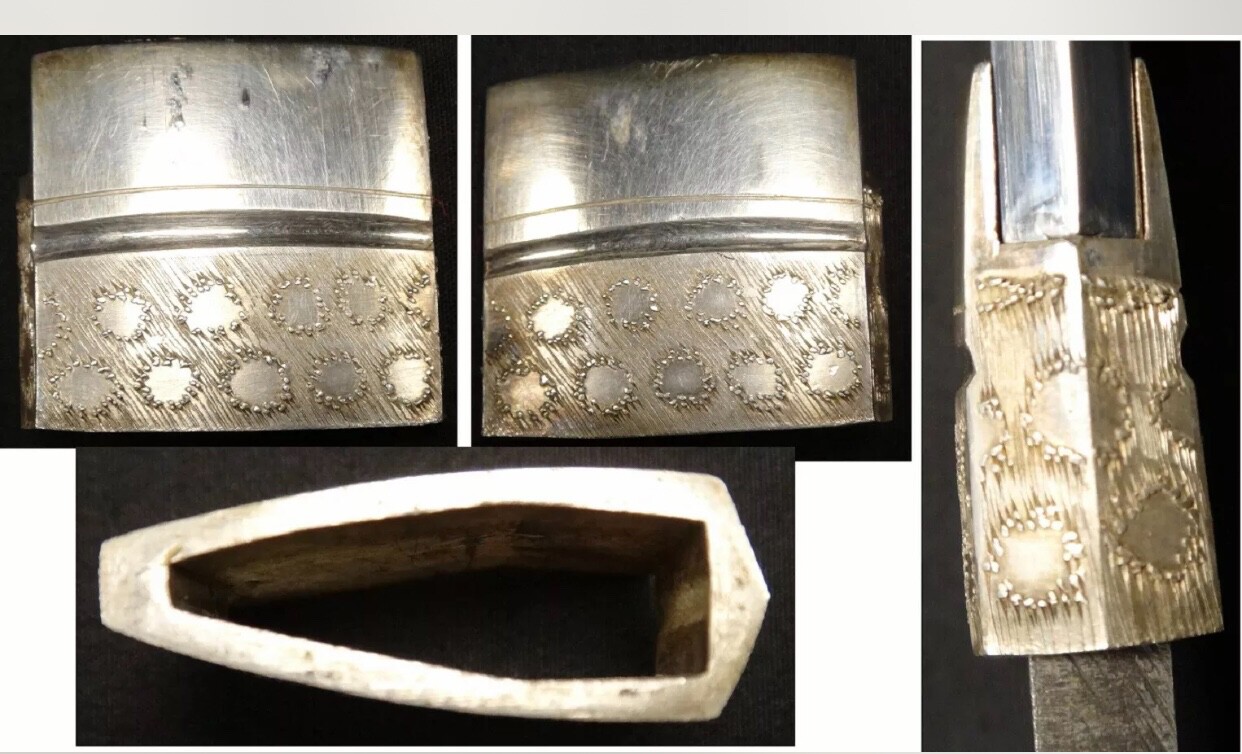
Happy holiday season folks, Have a silver buckle for sale here. All the details and descriptions are on eBay. I would like to offer this piece to a fellow member of this forum for a discounted price of $200 before the new year. https://ebay.us/m/SC6FXI Please let me know if you have any questions or concerns. Best wishes, C. C.1 point
-
Hi Nick! You have a nice sword there. It is an old family sword refitted for World War II. You might want to post this on the Nihonto forum, they will want photos of the bare, naked blade, a measurement of the cutting edge and a couple of close-up shots of the body of the blade and the blade tip. They should be able to give you a ballpark idea of how old the blade is. https://www.militaria.co.za/nmb/forum/3-nihonto/1 point
-
Thanks Bruce. Whole nakago is important for future comparison. Dunno if there is easiest mei to forge.1 point
-
Well, if you look hard enough you can find more examples without a date. Take the DTI catalogue from 2014. There are 3 different katana by Bizen Osafune Harumitsu. 2 have a date, one hasn't. Bizen Osafune Sukesada are sometimes without a date. Yes, most swords from Bizen have a date. But there are exceptions.1 point
-
First, in order to assess your sword, we (or anyone) must see the sword. The photos you have provided have the handle intact, that won't do. For identifying the sword, you must remove the tsuka (handle) and ALL fittings including the habaki. The photos should be of nothing but the naked blade. Then take full length photos and clear close ups of the Nakago (tang) and any inscriptions which may be there. *Note: Be sure the nakago is oriented correctly, tip up, tang down. The photos must be in focus and legible. Do not rub chalk in the inscriptions if there are any.1 point
-
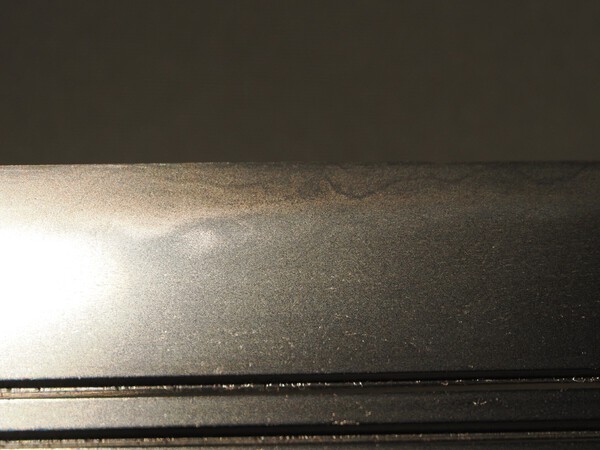
It's blades like this that keep my fascination for Nihonto. This guy takes some amazing images of these superlative blades and all from behind glass. Kudos to the museum for getting the lighting just right. https://www.facebook.com/photo/?fbid=1996901080882456&set=pcb.1996902534215644


 1 point
 -
Here in the U.S., Tom Zowada makes his own tamahagane from Lake Superior black sand. John C.1 point
-
Under normal circumstances, all nihonto in Japan had to be banned and scrapped just after WWII, because they were thought to be mere arms. To save their lives, nihonto were defined as artwork and traditional crafts to be preserved. Therefore, existing nihonto must be traditionally made from traditional material and registered as artwork. Any blades like nihonto which do not clear the criteria to be registered are thought to be only weapons and illegal in Japan. IMHO, modern nihonto are not expected or allowed to be improved as weapons beyond traditional borders.1 point
-
Well, you could make your own! It is a lot of work, but it is possible. It would be good to have a small team, though. I am willing to help with theoretical basics, if needed. Please sign all posts with a first name and an initial, so we could address you in a polite manner. It is a rule on NMB.1 point
-
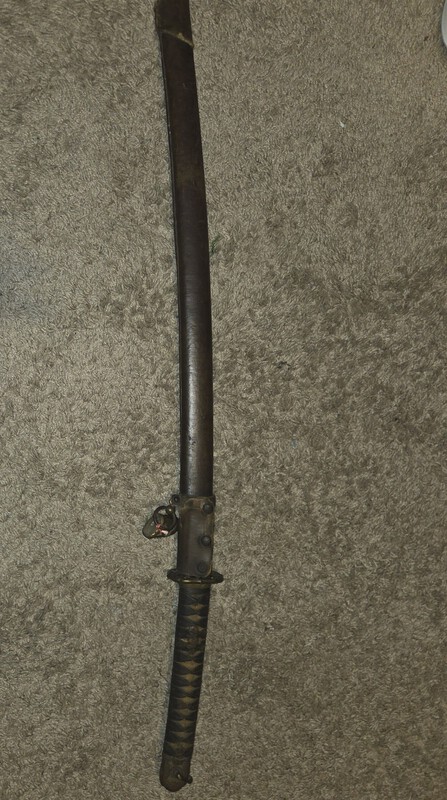
Thanks for letting me in. I was given a sword from my in laws at Thanksgiving. The note said that it was given to my wife's grandfather at the end of WWII.
.thumb.jpg.2a4093223af04ff49ca0216983f4f58d.jpg)
 1 point
 -
The quality of blades attributed to Go are on a different level. This one went Juyo and was polished by Andrew Ickeringill https://www.facebook.com/photo/?fbid=1994822754423622&set=pcb.1994826924423205

 1 point
 -
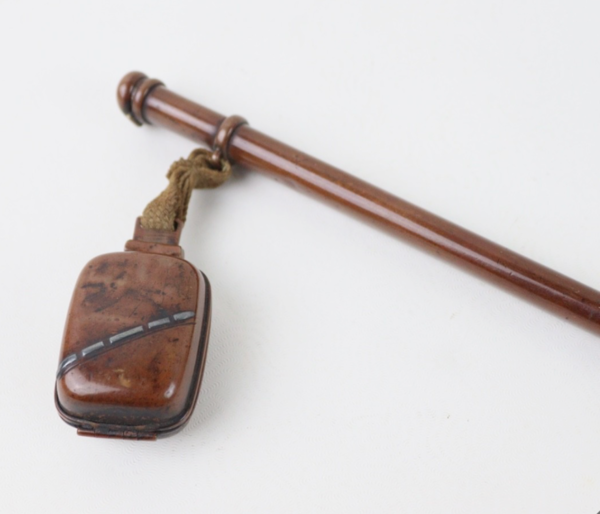
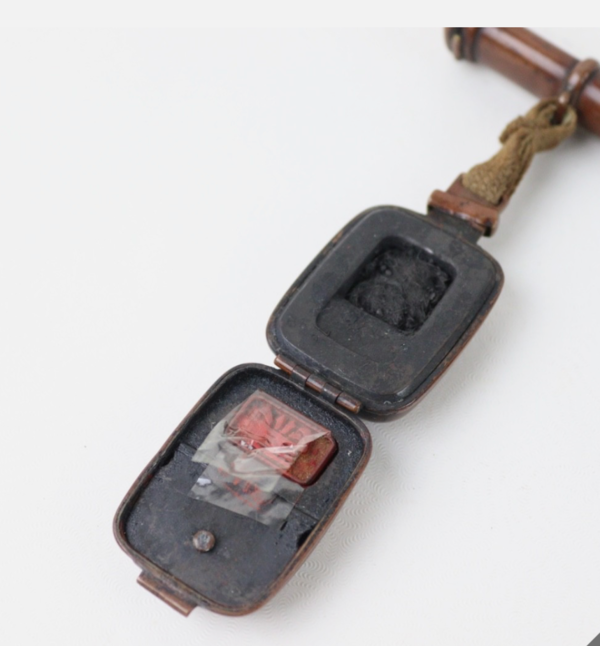
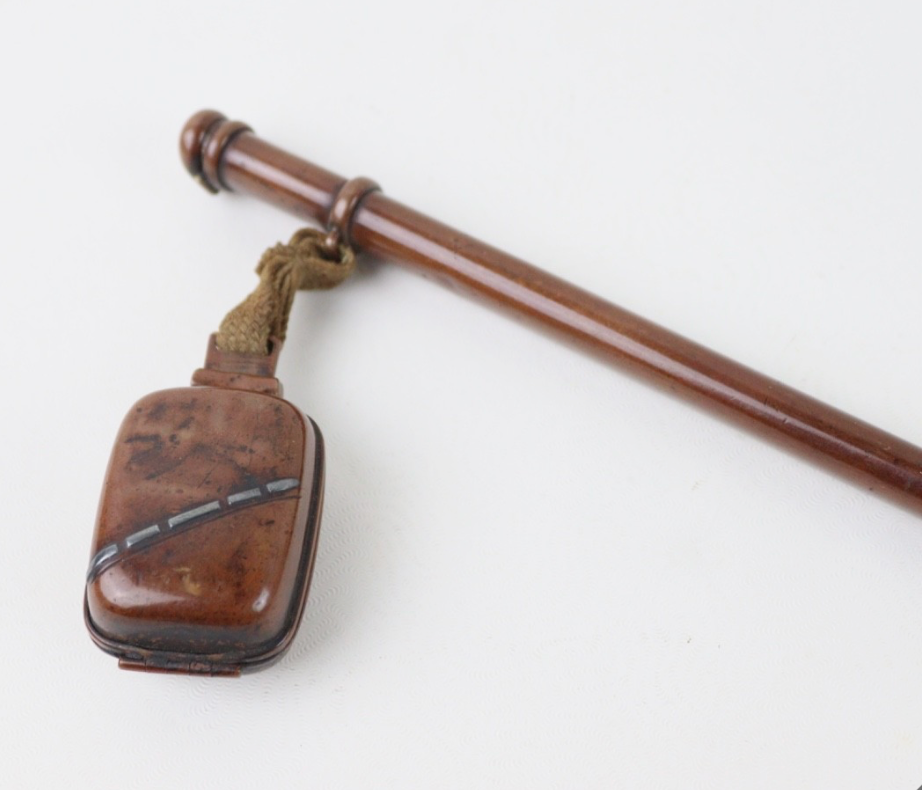
For those who have an interest in yatate, I just picked up this somewhat different one. I say different because the unusual/quality pieces are harder to find in the US. Anyway, this one is an inro type with the familiar angled silver dashed line as a decoration. But inside it has a small hanko that reads ba/ma or "horse." Unsure if it is a nickname or part of a surname or a profession, however it probably dates from the very late Edo to Meiji periods. My guess would be a mitome-in seal. The vermillion ink is under the lid next to the seal. John C.
 1 point
 -
These are all good questions, Roland. To answer in detail would take much time, but the hinawa handling secrets of each school of gunnery were slightly different, and may be found in scrolls which sometimes turn up. My training never mentioned use of hinawa-tōshi holes, (although my trusty Kumamoto gun does have such a passage through the upper stock) so it must have been an option for some, or perhaps a convenient place to put the cord while waiting for battle of even for storage or display. Not every gun has these holes. The picture you have chosen above shows the hands the wrong way round. Perhaps this was a special technique for loading when squatting low. It is possible that they are loading before battle, and before lighting their matches. Normally Japanese matchlock cord is of high quality and does not go out, so only one end is lit, the coil is kept on the left forearm, the gunner is standing, and the lit end is in the left fingers. (This changes for a matchlock pistol, and there are tricks for rainy weather.) Cord can also be cut short (Kiri hinawa), with several kept on a special group stand, disposable, handed out for each shot. There were also special metal tubes (called hinawa-ire, do-no-hi etc.) kept at the waist, which held burning cord, saving the time to light one in emergency situations. If you can find a copy of Sawada Taira’s green book, there are many illustrations, though not so many showing burning cords. PS I have been an active member of an old Japanese matchlock troop for over twenty years.
 1 point
 -
At last year's exhibition at the Shusui Museum of Art in Toyama there were 3 blades with the Yoshihiro attribution The photos are not the best, the blades follow each other in a rightward motion https://eu.zonerama.com/Nihonto/Photo/12422673/4969733941 point
-
Thank you for the info @Curranit is greatly appreciated! Luca1 point
-
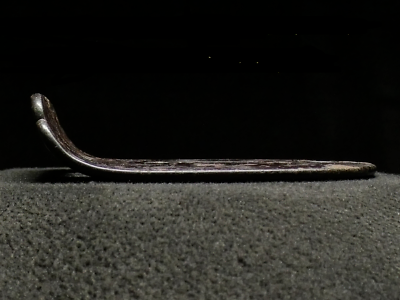
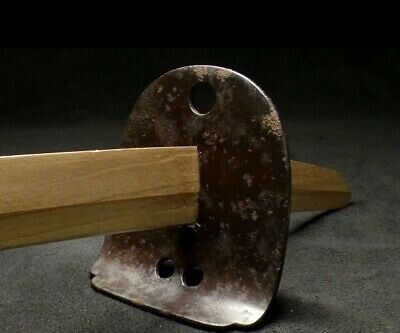
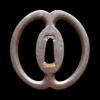
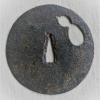
I need some help, first on the possible school and secondly the term for this guard shape? I have only ever seen one other like it in nearly forty years but would be grateful for any other examples or information. Images are from an auction site and I can't add extra views.
 1 point
 -
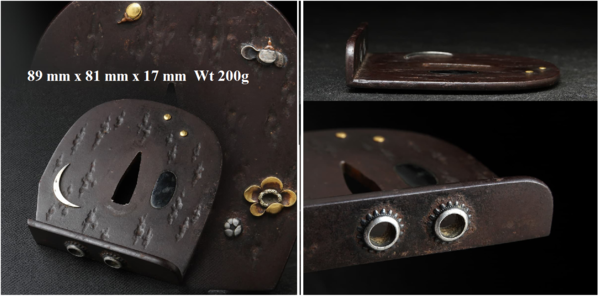
This guard has just turned up, surprisingly most of these angled guards have a thin crescent moon as part of the design. [why?]
 1 point
 -
Another "strange / hybrid" shape tsuba on Ebay at an indécent price: https://www.ebay.fr/itm/325158263488?_trkparms=amclksrc%3DITM%26aid%3D111001%26algo%3DREC.SEED%26ao%3D1%26asc%3D20160908105057%26meid%3Ddb113309c7664491afab65b3bf511cb0%26pid%3D100675%26rk%3D1%26rkt%3D15%26sd%3D325158263488%26itm%3D325158263488%26pmt%3D0%26noa%3D1%26pg%3D2380057&_trksid=p2380057.c100675.m4236&_trkparms=pageci%3A41c08e72-c2da-11ec-ab41-aa0a8766fdf8|parentrq%3A5567fdde1800aaecb52bbf30ffff9e1c|iid%3A1
 1 point
 -
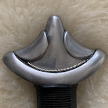
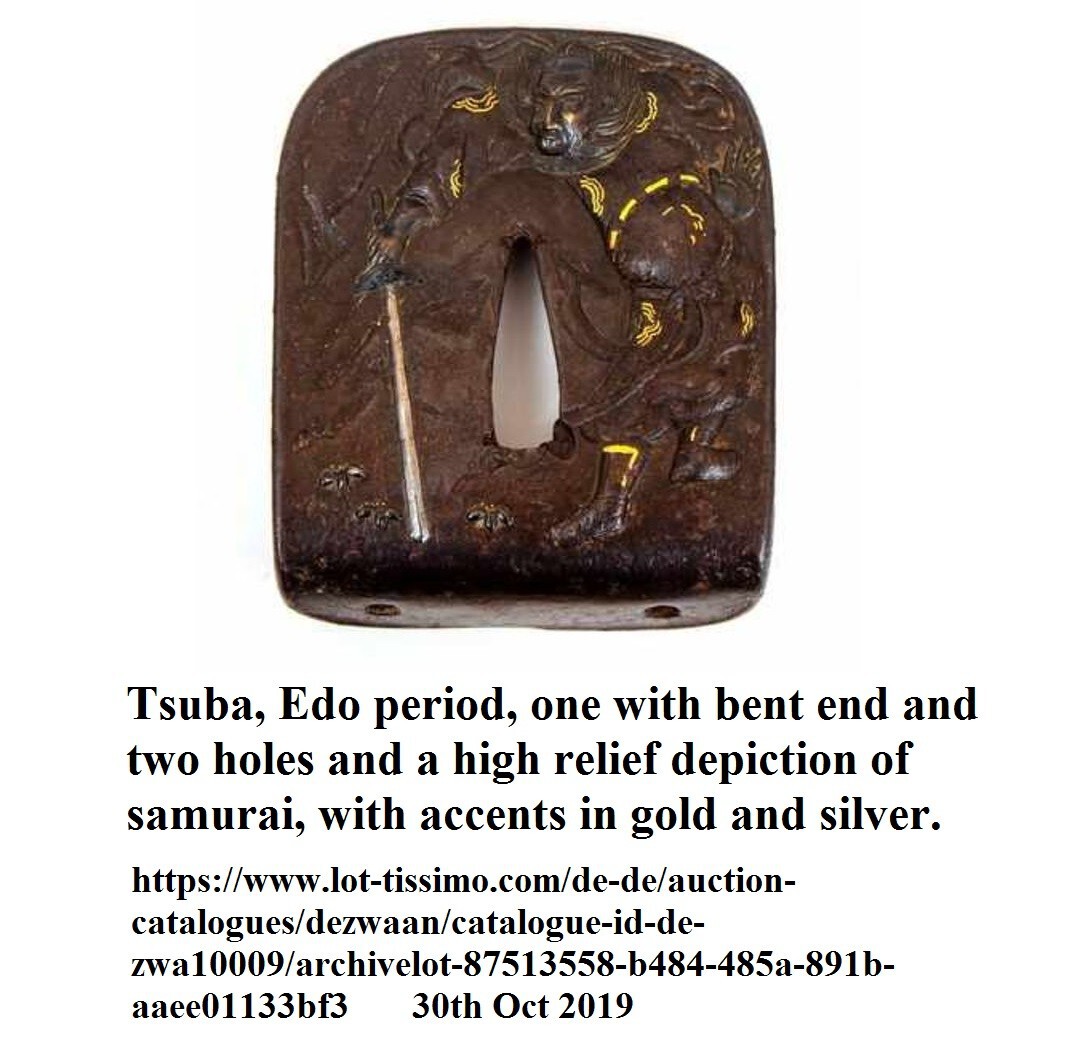
Once again if you look long enough you 'stumble' onto other examples with the hooked end. Auction site from 2019 - I do wish they would give a side view and just a hint at what the style is called - difficult to search for something without a name.




 1 point
 -
I found this very blurry image as part of a Christies auction - the caption "tsuba of Bookend form" is a little odd, but so far no one has come up with a better name. https://www.christies.com/lot/lot-1799450
 1 point
 -
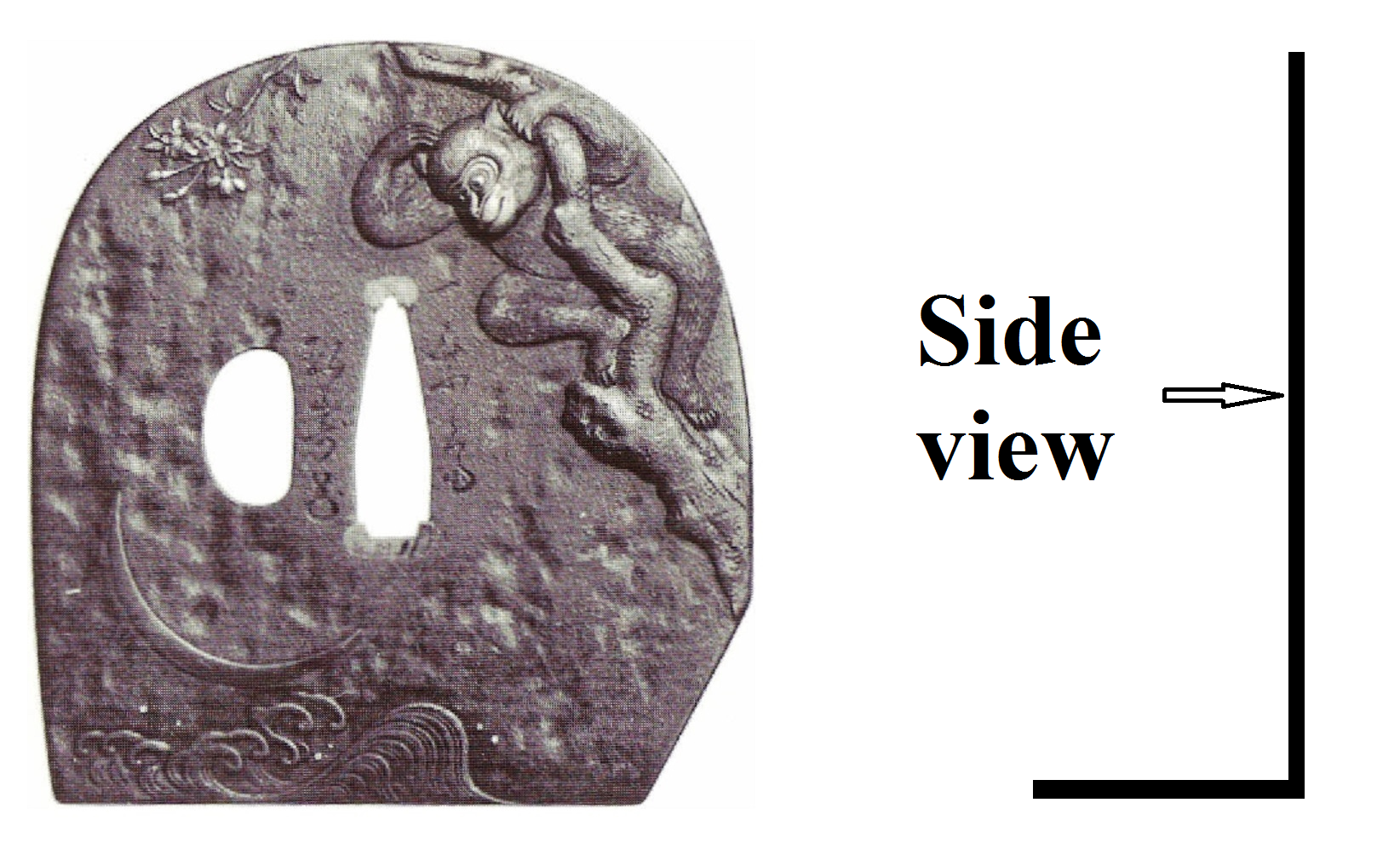
Well there has not been a lot of information on the strange shape of the guard, but I did remember a similar 'style' which does turn up if only rarely. This one is in the Vancouver Museum unfortunately it doesn't show the side view but the diagram is how it is constructed with a right angle bend over one side. I can't be sure but the bend is towards the blade, I would imagine away from the hand?
 1 point
 -
I never buy Ninja Tsuba without papers.0 points
-
It is a typical NINJA TSUBA. They could stand the TSUBA upright and hide behind it to not be seen. There is some literature about the "Invisible NINJA"! Secret lifted!0 points
-
Eight. I suspect that you won't believe me, but there's nothing I can do about that. This is indeed showing the signs of rapidly following Brandolini's law, isn't it?0 points















.thumb.png.4c5df79fec171b2dc4a23af38e280a4d.png)




.jpg.05ab4a76c706488396e048d568479331.jpg)













This leaderboard is set to Johannesburg/GMT+02:00