
Leaderboard



Popular Content
Showing content with the highest reputation on 09/08/2025 in all areas
-
Hard to pick an absolute favorite, but this is on the short list -- a low-crossbar Yamakichibei work from late-Momoyama.
 9 points
 -
These books are not related to my own online Gokaden series, they are translations of Tanobe Sensei's books on the same topic, as Brano pointed out. Bizen I (Osafune School) has been translated by me and submitted, and I think the publisher Me no Me has it scheduled for spring of 2026. I am meeting with them in Japan in two months and discuss the future volumes, based on the way Tanobe Sensei is comfortable with continuing writing them (and has made progress so far).6 points
-
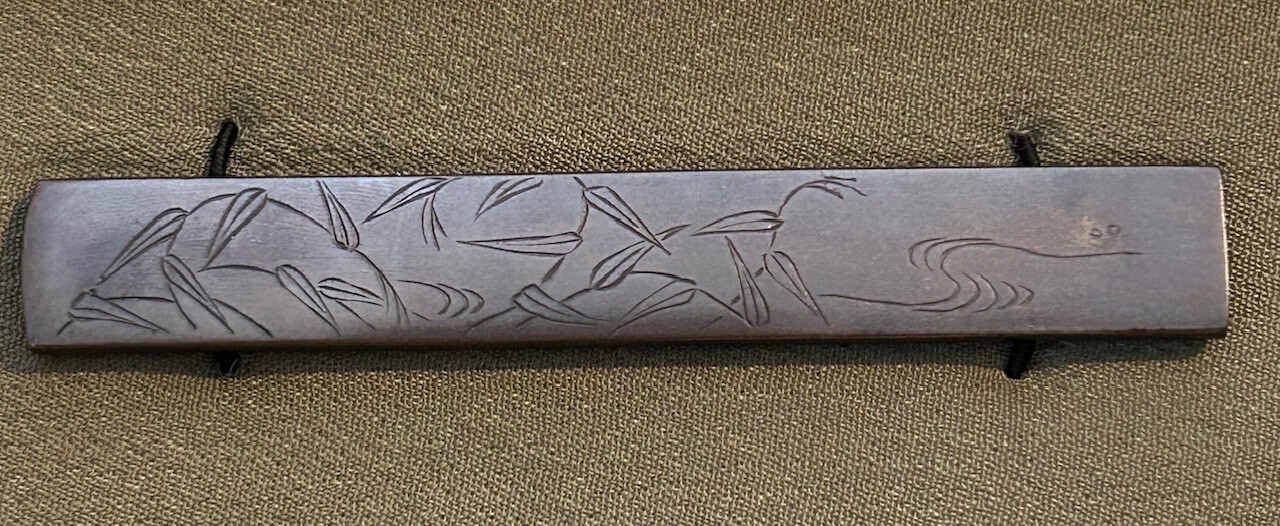
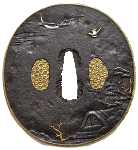
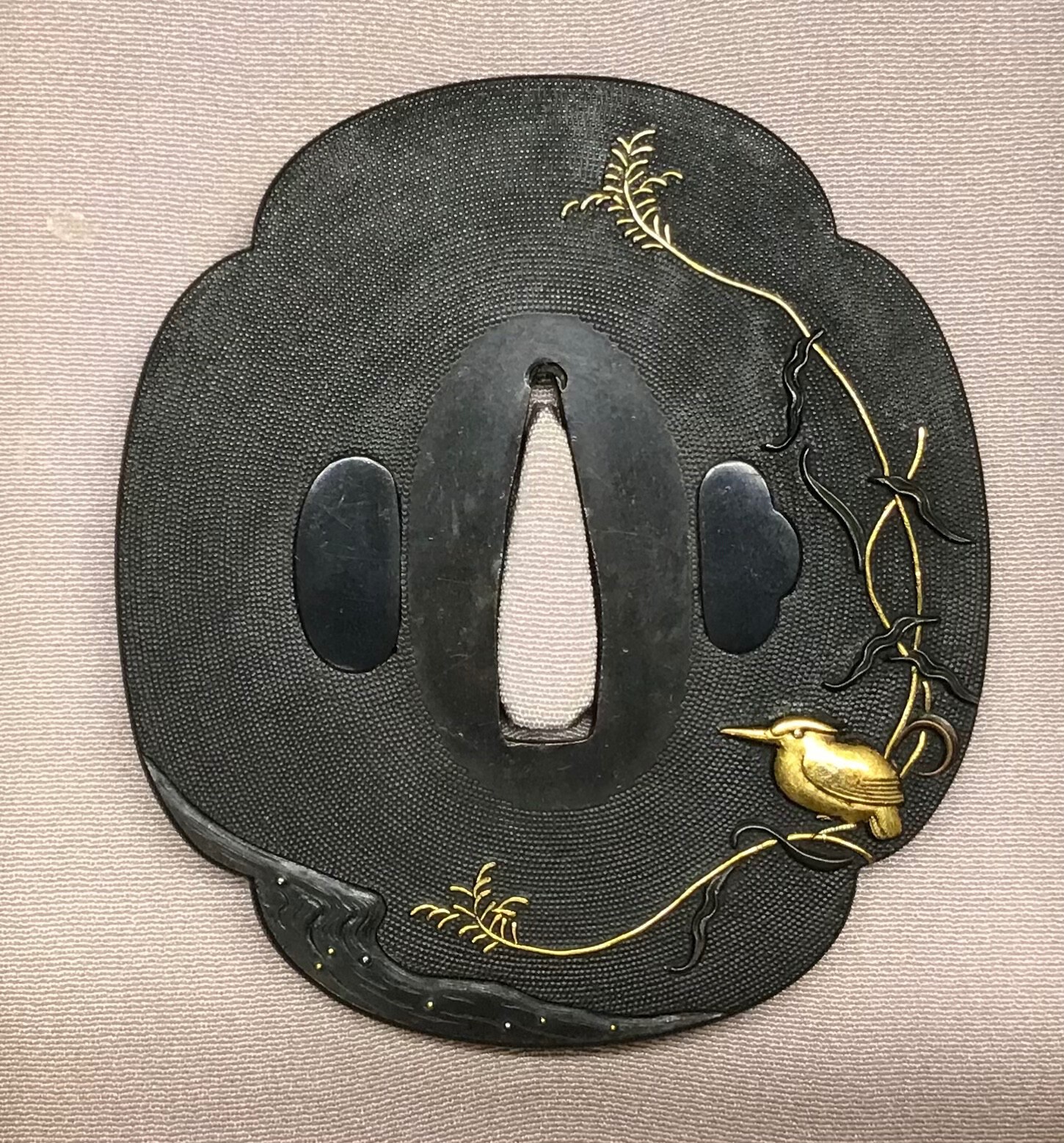
Ed Wolf, ‘sparrows and bamboo’ seem to be a recurring theme of the Date clan. Here is one of my personal favourites, with the watery marsh or river theme in shibuichi on the reverse, and five silver and gold egrets on a shakudo obverse. Kaga-zōgan inlay technique.

 6 points
 -
One of my favourites - an all time classic:
 6 points
 -
I contacted Me No Me regarding Tanobe's newest work on the Yamashiro tradition translated by Markus Sesko as part of Tanobe’s gokaden series and they sent me a live product page for international orders. I know the Yamato den book was popular and many people here were trying to get a copy of one without paying inflated prices. I just placed my order this morning after they provided me a link so we will see how de-minimus and other tariff laws apply as its shipped internationally. https://ringringdo.com/products/97849072113565 points
-
It's not my, but it's a worthy example of "live" work.

 5 points
 -
As a newcomer to nihonto and tosogu collecting I have found this forum to be invaluable in so many ways. We are in an enviable situation now with plethora of sources of information from books to societies like the NBTHK-AB and EB, as well as local organisations within our jurisdictions. These society interactions no matter how important, are, by their nature, sporadic. The NMB is always there, with members who are often very willing to share the knowledge they've acquired over many decades of diligent research. This is how a field of study grows by participating and sharing. I have found many friends on NMB in the course of the last 18 months, since starting my journey, people I might not otherwise have met. I know for a fact I wouldn't be where I am today without NMB and its participating members. I would not have had the confidence to take a chance on a forgotten blade, one that might have been lost to history in its current state, if its fate had not been secured. Just as I saw something in that blade so we must all decide how much this forum has contributed to our own growth and enjoyment. By subscribing we are doing something small to preserve the knowledge and experience for future collectors, especially those outside Japan. Losing Darcy and his Yuhindo website was a massive loss and it would be a crime if something similar happened to the NMB. By subscribing we ensure this wealth of knowledge, a lot of it only found here, is preserved. As Brian says it's a bargain in the grand scheme of things. Someone made an interesting comment recently which really struck a cord with me. Why are there no grassroots Japanese nihonto forums? You would think this would be the obvious place for such a community to grow and thrive. Is the collecting culture so different in Japan that there is a reluctance to share knowledge and ideas? That really brought home how lucky we are to have this community and one that shouldn't be taken for granted. I will be subscribing as soon as my replacement credit card arrives from the US. As for other ideas to increase revenue? I don't see any problem in charging a small fee to list items in the Classifieds and/or make this a perk for subscribers. Perhaps a third level of membership eg $5 for a month if people want to list items for sale on an occasional basis. Many forums operate such a business model, the VW California Club, Home Barista and Kitchen Knife Forum (for new members or those with low post counts), 3 forums that I also frequent on a daily basis.5 points
-
Only one item to share.

 4 points
 -
G'day Jake, I have a set with very similar theme to yours. Cheers, Bryce


 3 points
 -
When considering small but meaningful features for Gold members, I would suggest adding the ability to bump posts without having to add a new comment. I also agree with @Bruce Pennington about banner ads. I think they could be valuable to dealers and provide a practical way to support the forum. On another Forum I was active in during the 2010s, non-premium members saw banner ads placed along the right side of the homepage, rather than across the full width of the page, and it worked very well. A similar approach here could create a steady source of revenue, attract more traffic, and improve cash flow.3 points
-
There are no plans for that and there will always be free listing of items for sale, and the ability to look at the ads. However we need to look at people who list dozens of items regularly and never contribute. There is a limit. Not many of them, most here are decent people who are happy to contribute. Those that participate in the Nihonto community regularly and profusely are the ones who most likely find advantage in not having to clear out their pm folder as often, or watch their posting limits. I may have to look at those limits a bit. However the majority of features will always remain free. I do intend to look at some small Nihonto-related banner ads if I can find the time to work out the coding. These may be one way to bring in funds. I don't have to mention how convenient it is to have a forum that allows free uploading. The fact that we have several hundred thousand attachments bears that out. Most places have strict limits, and the longer we continue, the more we need to increase web space. It would be easy to set up Gold-only sections for certain discussions, but I know that would cause a riot.i Another possibility (but only if I have support for it) is that this software has the ability to set up "clubs" with private access where say an organization or area of collectors can have their own private place with their own members. This is popular with other forums. So for example a Midwest Token Kai can have their own password protected or member-added section where they can do as they please. In an ideal world, some of the Japanese dealers who do so well with the Western market would contribute. I know for a fact they get huge numbers of sales from discussions and promo here. But they are still old school and getting them on board with that isn't easy. Appreciate all the feedback, will get back to the one or 2 that messaged me as soon as I have time.3 points
-
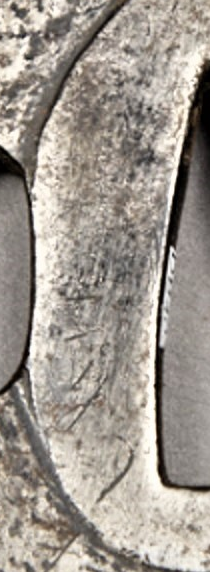
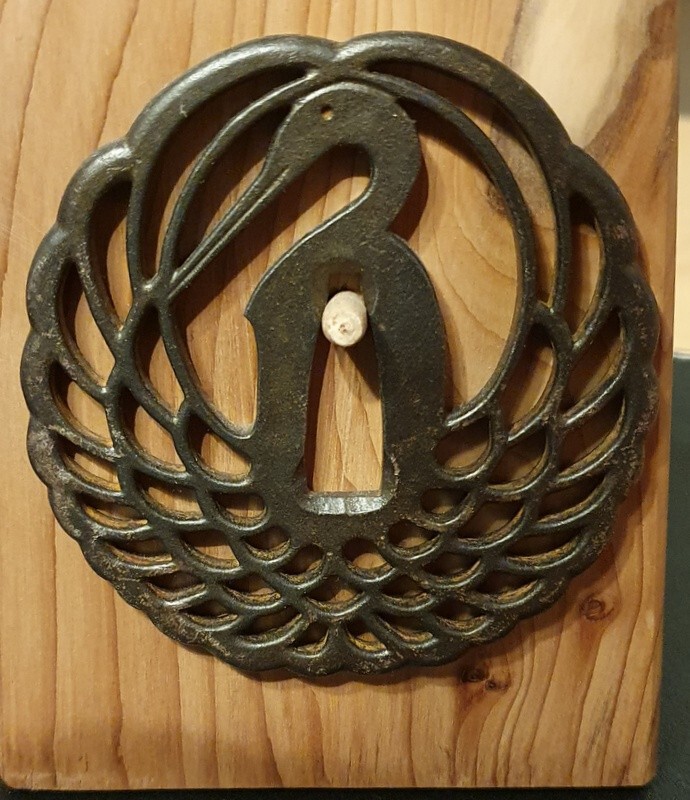
Well I found another signed one [also on the ura] - Found in the Museum of Vancouver DB 403 They state: The iron plate of this tsuba was cast not forged. No signature legible. It looks worn away or else was very superficial to start with. Well that makes two that are signed! I think unless someone can read the signature we are stuck with either the signatures are gimei or perhaps by the caster? The Museum also states: DATE OF USE 17th or 18th century So they believe it was made in the Edo period. [Let the arguments commence! ]
 3 points
 -
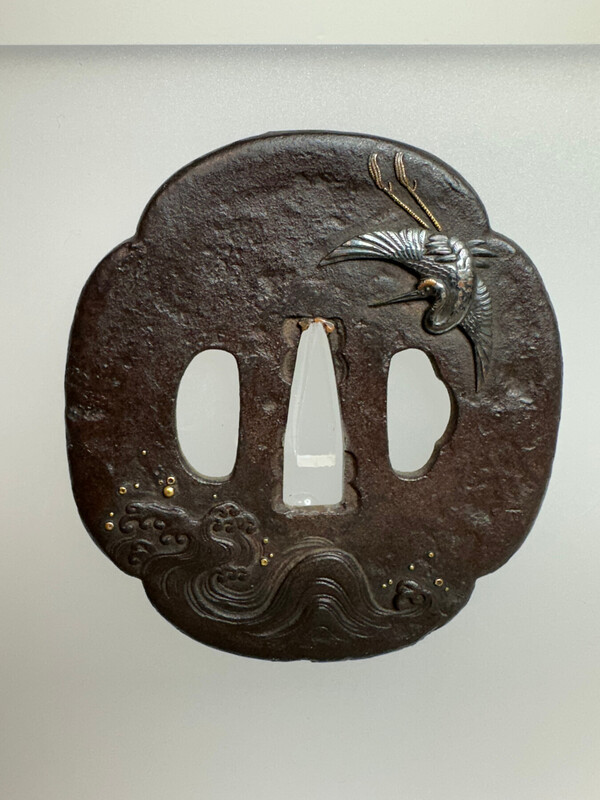
Crane over waves.
 3 points
 -
Same with me, to be honest the incentives on the membership plan i don't even think about. I only subscribe to support the forum which has been invaluable to me over the years, one of my daily websites3 points
-
Couple of my favs


 3 points
 -
One that I fell in love with early on: This one is a bit more whimsical:


 3 points
 -
Hey fellow Tosogu fanatics! I've been away from the board for a little while due to work taking up much of my attention recently but that doesn't mean I've stopped collecting these past few months! I have a couple new acquisitions I have been waiting to share with the board so this post is well overdue! As the title suggests, two of my latest acquisitions include birds in the mise-en-scene! Hoping for any knowledge the board might have about the artists Toryusai Kiyohisa or Marukawa Hiroyoshi (Mito school). Also, post your favourite birds from your own collections!

 2 points
 -
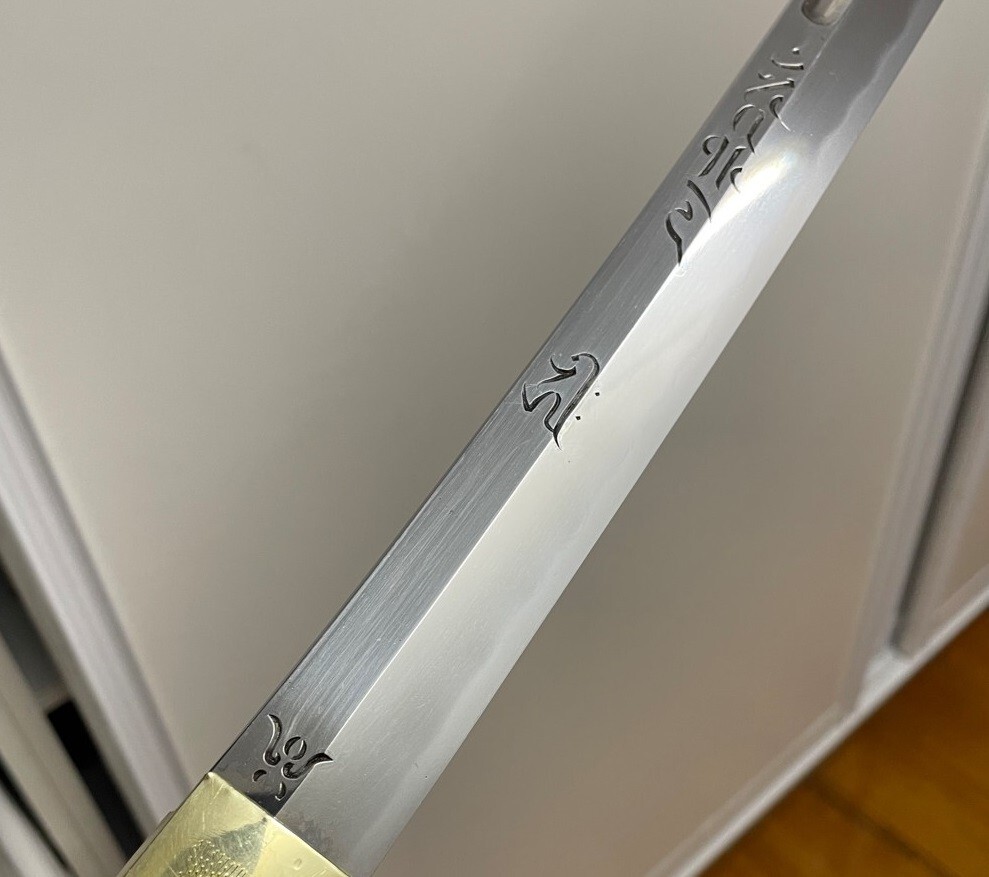
G'day Eric, The bonji on your blade represents the entity Fudo myo-o. I have a Gassan Sadakatsu blade with similar horimono. Your blade is not Gassan work though. Cheers, Bryce


 2 points
 -
Here is my Cuckoo tsuba, I absolutely love the scenery and the bird with cresent moon on top is just a cherry on top.


 2 points
 -
My lady's TSUBA - second is a copy, not "THE" original.

 2 points
 -
I have tried Chatgpt to decypher this poem and the result is really amazing: I clearly identified the Japanese characters engraved on the metal object. Here is a transcription and explanation: Transcription (romanji) Hōrai no yama no hotori no sumiregusa yoso no hanayori utsukushikeri Explanation in English It's a waka (a classic Japanese poem of 31 syllables in 5-7-5-7-7). • Hōrai (蓬莱): a legendary mountain in Chinese and Japanese mythology, associated with immortality and paradise. • yama no hotori (山のほとり): at the foot of the mountain. • sumiregusa (すみれ草): violets (flowers). • yoso no hana yori (よその花より): more than other flowers. • utsukushikeri (美しけり): they are beautiful. 👉 The overall meaning of the poem: "The violets that grow at the foot of Mount Hōrai are more beautiful than all other flowers." This type of poem combines nature and spiritual symbolism (here, the mythical Mount Hōrai → paradise, and the violet → simplicity and beauty).2 points
-
I have another thread dealing with just this issue https://www.militaria.co.za/nmb/topic/49404-museums-are-not-always-a-good-spot-to-learn/ I have to say though, that the Museum of Vancouver does its best to rectify any mistakes - if they are made aware of them. People should not be afraid to notify any museum if they notice anything wrong. [The Vancouver has a lot of typos and bad spelling in its descriptions, it also sites some "Expert opinions" that are not "EXPERT" at all.] For instance DB 504 has the RESEARCHER'S / EXPERT'S REMARKS : In Kaga this inlay pattern was commonly used on the bottom of abumi (stirrups) as a brass inlay design. It is called shippo pattern, the same as the cloisonne pattern from China. Unfortunately the pattern is actually called "Asanoha" which means Hemp pattern - https://project-Japan.jp/asanoha/ - Shippo is very different. So much for experts! The Frog/Toad tsuba DB 403 states twice that it is Iron, The iron plate of this tsuba was cast not forged. PHYSICAL DESCRIPTION Iron; roughly oval; frog carved in the round in relief; no signature legible. where they get the Copper and Silver alloy idea from is probably lazy copying or "cut and paste" at some time, the "iron" has no patina and looks silvery - They may have thought it was a silver alloy due to its appearance? Clearly they didn't read the other entries!2 points
-
I know we've tossed the banner ads idea around before, but I don't see why not, Brian. Every other forum I frequent uses them. I've clicked on several simply to see if they carried any Mantetsu or swords with stamps! They aren't a bother at all.2 points
-
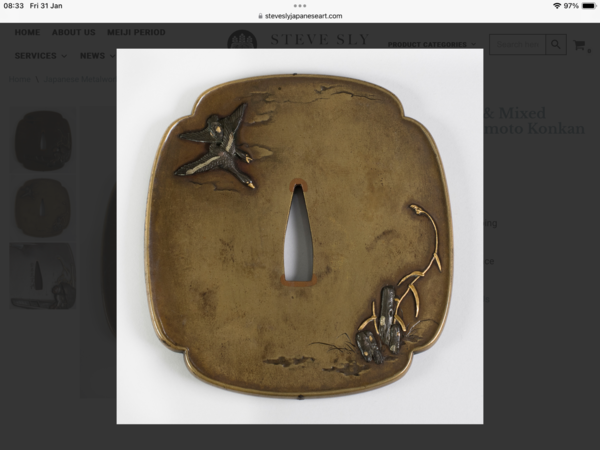
Couple more kinko pieces

 2 points
 -
Here's an unusual habaki. Is the inscription a poem or incantation?
 2 points
 -
That’s the jewel the dragons reaching for.2 points
-
I suspect that's a sacred jewel (or a soccer ball) that the dragon is chasing after.2 points
-
I am So glad the article by Guido was brought up - Some highlights from Guido's article: But what is art, and what kind of nihontō qualify as bijutsu tōken? Beauty, of course, lies in the eye of the beholder, and even "the experts" are not always in agreement. However, borderline cases are few and far between since certain standards and "laws" have been established and are universally acknowledged. The artistic features of the Japanese art sword can be recognized and studied since they can be shown and explained. This knowledge has nothing to do with spiritual studies, Zen Buddhism, iaidō training or sentiment; it is a question of mere study. The same methods applied to recognize architecture, paintings, sculptures and music according to their style can be used for swords, which can be dated and allotted in a school, province etc. The ultimate preparation available to the collector who would like to find art swords is at once the most elementary and the most sophisticated preparation of all. It is to learn the subject. No one knows instinctively what a good nihontō looks like, nor does anyone know intuitively the elements that constitutes it. The collector must absorb the basics in a gradual accretion of understanding. Likewise, good taste in nihontō is not an instantaneous revelation. It's usually a gradual development. Most collectors readily concede the improvement of their tastes over previous years. Good taste requires careful nurturing and tending for a mature blossoming. A natural good eye means a head start, an enviable beginning, but it is not enough. Just as a good voice without musical training will not enable one to sing like Pavarotti, so also a good eye will not assure a fine collection without some application and study. In order to appreciate the different types of beauty one should be equipped with as much knowledge as possible and a seeing eye regarding a good blade. Therefore it is useful to memorize the characteristics of the different "roads", schools and masters, so that when looking at a nihontō one knows where, when and by whom it might have been made. This is the only basis on which to achieve judgement about the differences in quality. The collector who boasts "I don't know anything about nihontō; I just buy what I like" makes a statement that is not very profound. Of course he buys what he likes. If he doesn't buy what he likes, what does he buy? If he doesn't buy what he likes, he had better not collect. The collector who doesn't know anything about nihontō will benefit by learning. If he should be blessed with innate good taste, he may develop expertness by listening and looking, like gifted students who earn degrees without cracking a book. For most of us, however, reading, discussing, examining, and studying are an essential though happy regimen for graduation to connoisseurship. The emotional response to a superb nihontō may be as intense for the collector who never learned any "technical" information as for the expert, just as the emotional response to music may be as great for the listener who can't hum a tune as for the trained musician. But the intellectual pleasure, if not the emotional response, of the musician is profoundly enhanced by his understanding of theme, harmony, and counterpoint. So also is the intellectual pleasure greater for the collector who understands sugata, hada, hamon, hataraki, school, smith. It also needs to be mentioned that the features found in a good blade become only obvious and recognizable when brought to light by a skillful polisher. The togishi needs to know how the blade was originally designed in order to bring out the characteristics the smith intended, since each style requires a slightly different technique. A poor polisher can change the character of a blade in a way that a good old kotō blade looks like an unimportant shinshintō, or a very good polisher might make a mediocre blade look almost like a good one. It takes a lot of knowledge and experience to judge this correctly. An unpolished sword shows none of the criteria that make a sword a good sword except the form, and even that only to a certain point. On the other hand, there are lots of swords that are polished but without deserving this costly treatment; the reason is only that the owner thought that every Japanese blade should be polished. There are people that study for hours a sword that has been polished expensively and which has its origin in a forge of the Japanese Empire during WW II, and which shows absolutely no artistic features. The same can be said about many blades from the Sengoku period which are highly esteemed by many Western collectors just because they are kotō. Many of them are mass-produced, too, and don't reveal anything which could be called worth being collected. And another big part of Western collections are blades produced by unimportant smiths, showing lots of forging faults, nondescript in form, hada and hamon, or just boring, because "weapons of Japanese origin" were collected instead of "art swords". All the swords of this lowest level are of course not to be classified accordingly, since the marks of schools, times, provinces or even masters can only be suspected. Certainly many of these blades show a kind of "quality"; it is even possible when looking at and examining the blade intensively that certain few details can be called beautiful or perfect, but nevertheless one should be advised against being occupied with blades of such a low level since bad swords spoil the eyes. Some collectors seem to have a positive propensity for choosing those types of swords that are best classed as non-nihontō. Whatever they are, they're not true nihontō. They are utterly devoid of any artistic feature. Our misguided friend exhibits his non-nihontō "treasures" with such obvious pride and pleasure that one is placed in a quandary between insipid pretense and brutal honesty. Perhaps the better course is to avoid outright condemnation and to attempt a patient explanation of the basic requirements of a good nihontō, and a gentle comparison of his selections with those preferred by recognized experts. If the explanations and demonstrations fail to register after a few efforts, and irritation and frustration begin to mount, it may be best to desist and to accept the situation. The collector loves his monstrosities faithfully despite confrontation with genuine examples and rational explanations. In such cases further insistence would appear to be a deliberate effort to undermine his pleasure. He's entitled to the protection of the maxim of the ancient hedonists: "If the pleasure is equal, pushpenny is as good as philosophy". Our collector of non-nihontō has one advantage: his swords usually cost substantially less than sophisticated choices. To summarize, if nihontō are worth the money they cost, they should be worth the time and effort they require to understand them. Learning nihontō, like learning any art form, is a gradual accumulation, a slow development of visual and critical acuity, a crystallization of standards, and finally complete rapport with the subject. There is no magic formula, and no secret shortcut: the road is tortuous The benefits of study may be perceived on three levels. At the basic level the collector learns the distinguishing characteristics of a nihontō: sugata; hamon and hada, and how to recognize them; types and classifications; origin, development, and decline. He begins to distinguish old from new, genuine from copy, crude from fine, commercial from art and other minutiae. He may make some poor choices, but he will learn to rectify his errors. Often dealers, and some collectors, too, advise neophytes in maxim form: "buy your experience". It's a variant of "learn by your mistakes". They mean by this that the toll for mistakes exacted by the purse makes the most unforgettable lesson of all. This advice is tinged with cynicism. It is true, of course, that experience is a great teacher and we must all learn from her, but there is no wisdom in buying first and discovering the mistake second. As the Chinese sages reasoned, the experience by which one learns need not be one's own. One can learn from the experiences of others and save oneself costly errors. The capsule advice of the numismatists "buy the book before the coin" is much sounder advice. The coin book distinguishes the genuine from the counterfeit and gives dates, identification marks, and values. The coin collector avoids mistakes at the small cost of the book and the time to study its pages. In the same way the cost of a good library on nihontō is in most cases much less than that of the purchase of one nihontō that was priced for fine quality, but was actually inferior. ________________________________________________________________________________________________________________________________________________________ After reading the article again (Attached the PDF here also) I think he sums it up very nicely. Collecting[1].pdf2 points
-
Probably got the timings on the search about right then if it's only a little annoying and could lead to a member upgrading. @Brian the thought of the private clubs is something I'm not super keen on. I wonder what information I would miss simply by being in the UK. It's already restricted enough here :p Over the years I learnt an awful lot just from watching conversations play out by people who have spent decades recording serial numbers or are arguing over a mei and the angle of a chisel stroke. Having this locked away by region is something I would feel sad about. So since Im Shooting this one down I'll think of some gold features. High Resolution Gallery for kantei, oshigata or Mei? With community / moderation (perhaps only papered examples). Only available to gold members and only swords owned by members. Think Hawley but with a small selection of high quality images per smith. This would also invite debate. We're not reinventing shinsa but storing for research. Gold members only. Or a new tier (platinum) I suggest this because the way I research usually requires a lot of trawling or the web or books. We're not replacing the knowledge of people like Markus or Hawley but adding to our combined knowledge with examples maybe not seen before. Obviously a lot of people don't like to share what they have as in all collections but I would very much like this resource. I've sent private messages to many people asking for images of their ko-gassan Mei for example as it is my main field of study. Gold members, 1 month sticky on for sale page to keep listing at the top? Unsure on this one as volume of sales isn't high so there isn't a big turn around. More controversial but - a limited number of posts on the translation forum for non gold members. I've seen a lot of people clearly using the translation section to get info for their sales elsewhere. Which is fine but a contribution would be welcome for something that Is enabling your business. This wouldn't restrict those few coming to seek help but would mean people who are using the forum for gain have a small contribution to the knowledge they receive. Say 20 posts (not topics) per year. Probably enough for someone to get translation on one to two swords max if they've got a hand me down or are just starting etc. A small perk - how many years of gold you've purchased since joining. Could be tiered like the current ranking system. If I think of more I'll add them.2 points
-
please note the shape of this swords nakago end ! Abe Yasushige finished /works only so called iriyamagata nakago jiri2 points
-
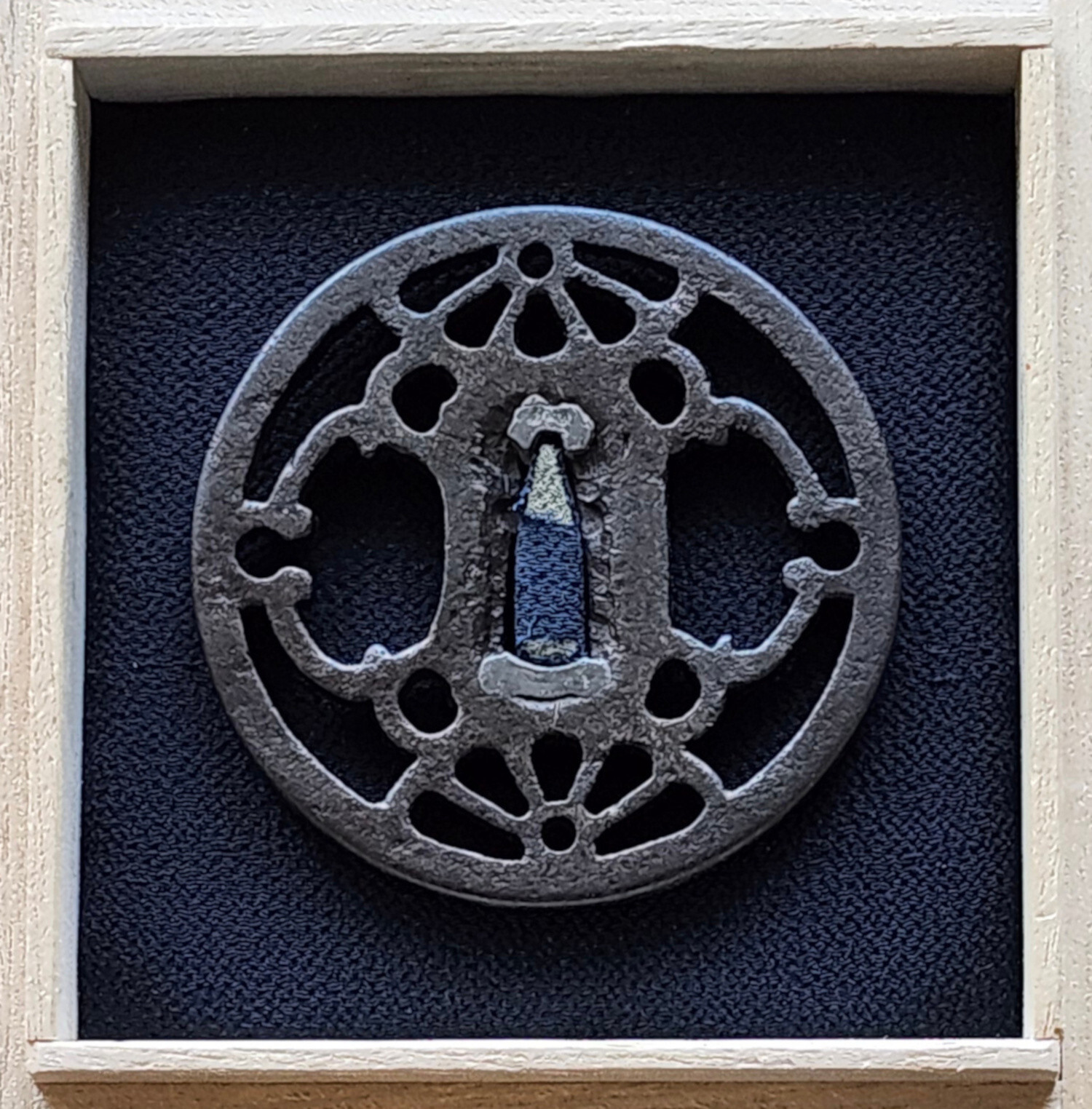
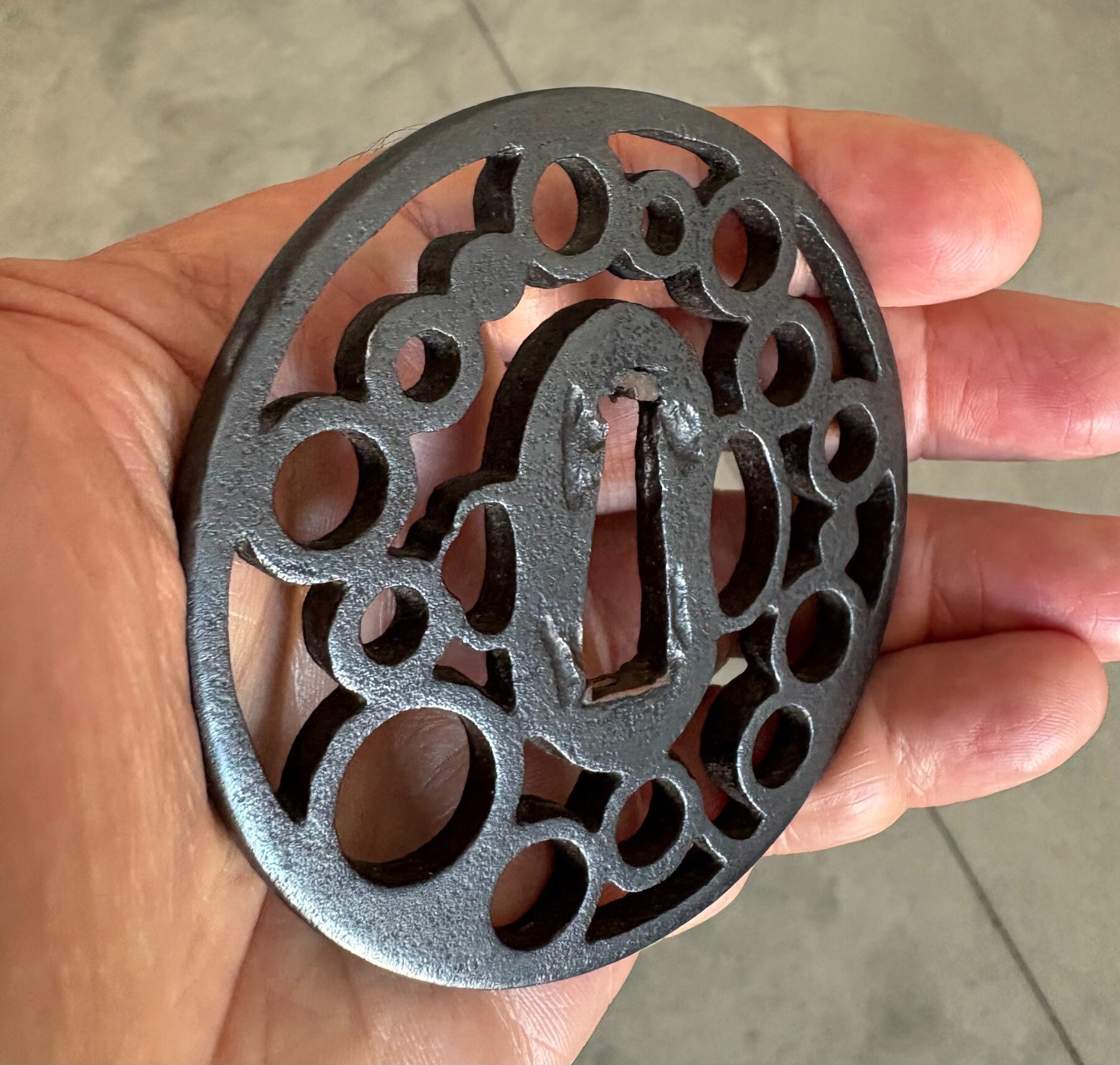
Very nice, Curran. I actually purchased the tsuba (<$50) that is the original topic for this post, to fit to one of my iaido practice katana. Perfect fit! As some of you know, I'm a sucker for kuruma motifs. I'm not beyond mounting genuine Ohno or Yagyu (if I actually had one) tsuba on katana that I use, but this is neither an Ohno or Yagyu. It does superficially resemble the Ohno that I posted previously and that was referenced in this thread, but what is it? In discussion with Steve Waszak, I have come to recognize a general tsuba category that we call "generic Edo"--a product of multiple influences. This is a homage piece or copy (not sure what the motive was for creating it) of classic design and composition that was originated by earlier provincial schools, but doesn't have the surface features and vitality, despite what appears to be tekkotsu on the mimi, that one expects of those genuine pieces. Nor does it fit easily into any one of these other categories/schools. Still, I'm very happy to see it and touch it on a regular basis.
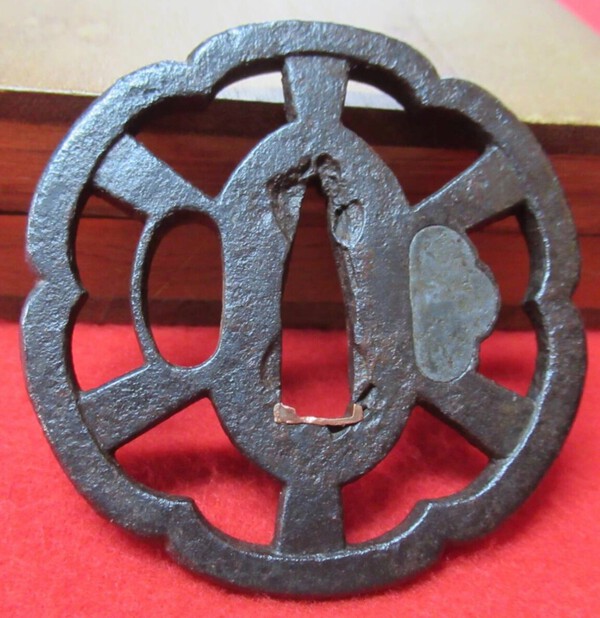

 2 points
 -
One of the Yagyu I showed didn't have modern NBTHK papers. I finally got around to sending it to shinsa, and got word that it papered to Hozon directly to Yagyu.
 2 points
 -
Oh, just want to clarify, there are no thoughts of increasing Gold membership fees. My intention is to try and increase numbers. At $5/month, I think people are getting a bargain. But based on the lack of any response, doesn't seem like there is much motivation or interest. Would have to have to limit free sales listings or consider some form of income from that beyond the current voluntary. But if no-one has any interest or suggestions I am going to have to give some thought as to how to raise some funds. We're going slightly backwards, and while it isn't uncomfortable right now, I don't want to have to stress later.2 points
-
Then it is wrong. See Handaka Sennin (aka Handaka Sonja)…. Handaka Sennin (also known as Handaka Sonja) is a rare depiction of a Buddhist Rakan in Japanese folklore, often mistaken for Taoist Sennin, who conjures a dragon from his alms bowl or a censuer. This figure is associated with wisdom and a pursuit of spiritual enlightenment and sometimes depicted on Japanese tsuba, okimono, and netsuke with a dragon.2 points
-
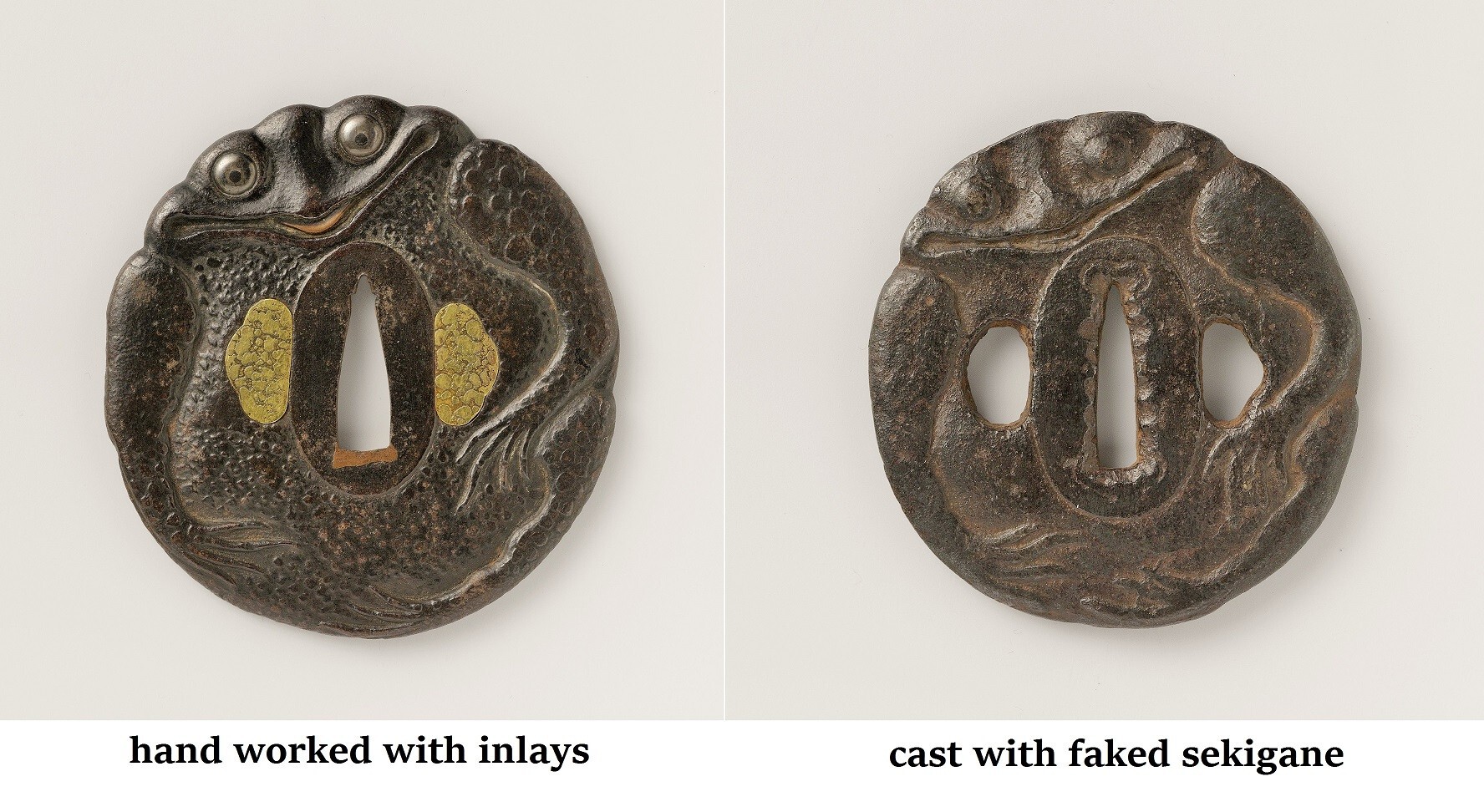
Froggy is cast - sorry there are hundreds, but don't despair some of the best museums in the world have the exact cast copies! Ashmolean Museum [Oxford], Victoria and Albert Museum and the Riijsmuseum [Amsterdam] https://nihontofrance.com/tosogu/tsuba-crapaud/ The French have the name half correct "Crapaud" = toad the first half of the word is more accurate = crap https://www.thierrydemaigret.com/lot/22009/4944606-tsuba-en-fer-representant-une-grenouille-shoami-xviiieme? 600 euro ! The Rijksmuseum has an authentic frog tsuba and one of the cast fakes. AK-MAK-1077 & AK-MAK-1063 It is all in the Sekigane - the fakes are all identical and have simulated sekigane, the tagane-ato are also cast in. From https://www.militaria.co.za/nmb/topic/49789-wild-things/page/3/#comment-527781 December 2, 2024
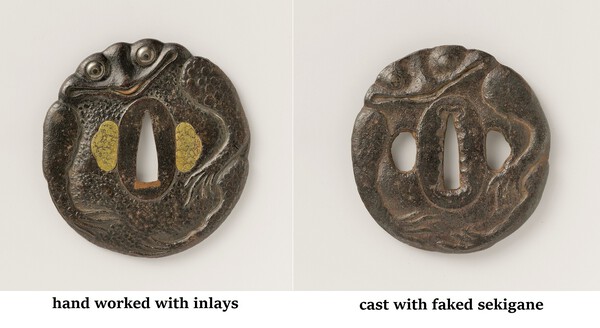 2 points
 -
Kozuka in the Ishiguro style...
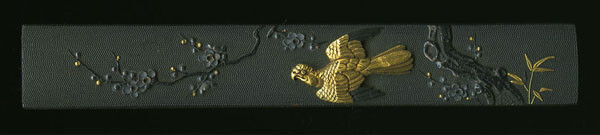 2 points
 -
Let’s add a kozuka to the mix.
 2 points
 -
I believe this is a Nara piece, my favorite part of this one is the t moon in the clouds.
 2 points
 -
1 point
-
Mantetsu Kitae Tsukuru Kore1 point
-
Please see below for other examples of Mantetsu-to mei. https://www.japaneseswordindex.com/koa.htm1 point
-
Brian, do have a way to generate numbers on those members who have ONLY posted in the translation or classified sections? I would be curious to know how many people have come exclusively for those sections without any intention of participating in the forum as a whole. Coming from a large watch community, your idea of minimum posts before being able to access certain parts of the forum, is a popular tool. As for gold member only sections or clubs, I dont know why you presume that would cause a riot. Sure people may miss things, hence, the member upgrade and for clubs, if youre not invited, thats just how to world works. Just remember there are always unintended side effects that are foreseen. With respect to the idea of "bumping" posts, thats also pretty standard on other forums, however, some forums get bogged down when there are no limits. How many times you can bump and how many items can be bumped makes a difference. I am not a fan of being able to pin a post to the top.1 point
-
I’ll take a better pic it does have a Yokote, I’ll get measurements for you after work.1 point
-
Currently as a non member the feature I find most frustrating is the search button delay, especially if I'm scrolling through multiple pages of a thread. Good to hear this is addressed for Gold subscribers. The search system is a little annoying (or maybe I'm missing something) if I'm searching a particular topic by a specific member.1 point
-
And since we do not have any menuki yet, I will add one last pic.
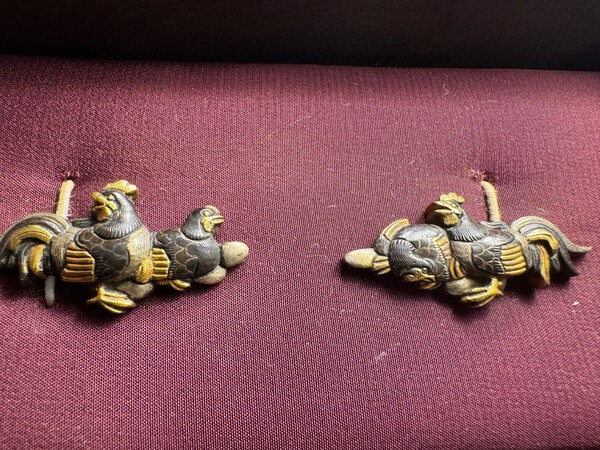 1 point
 -
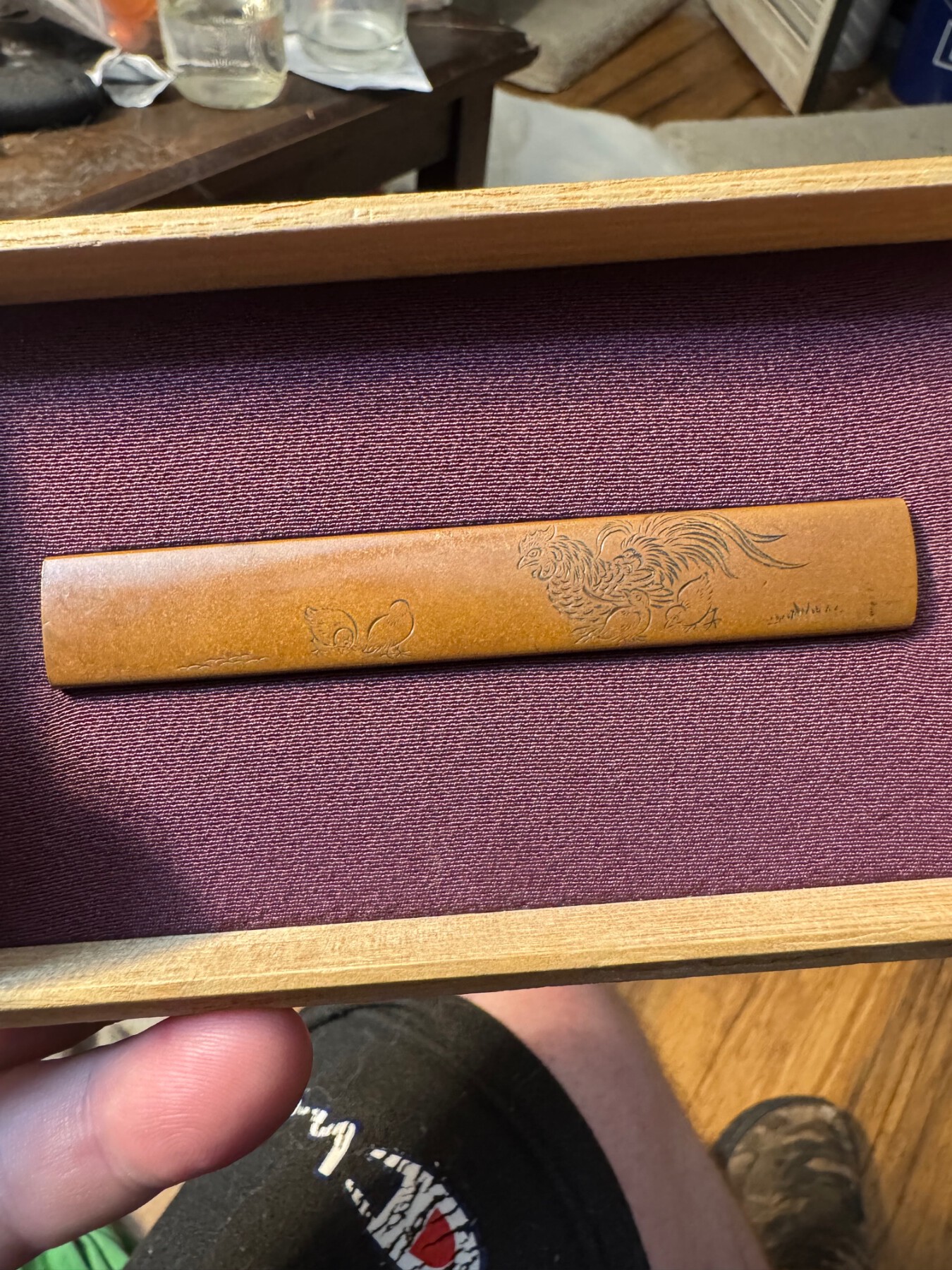
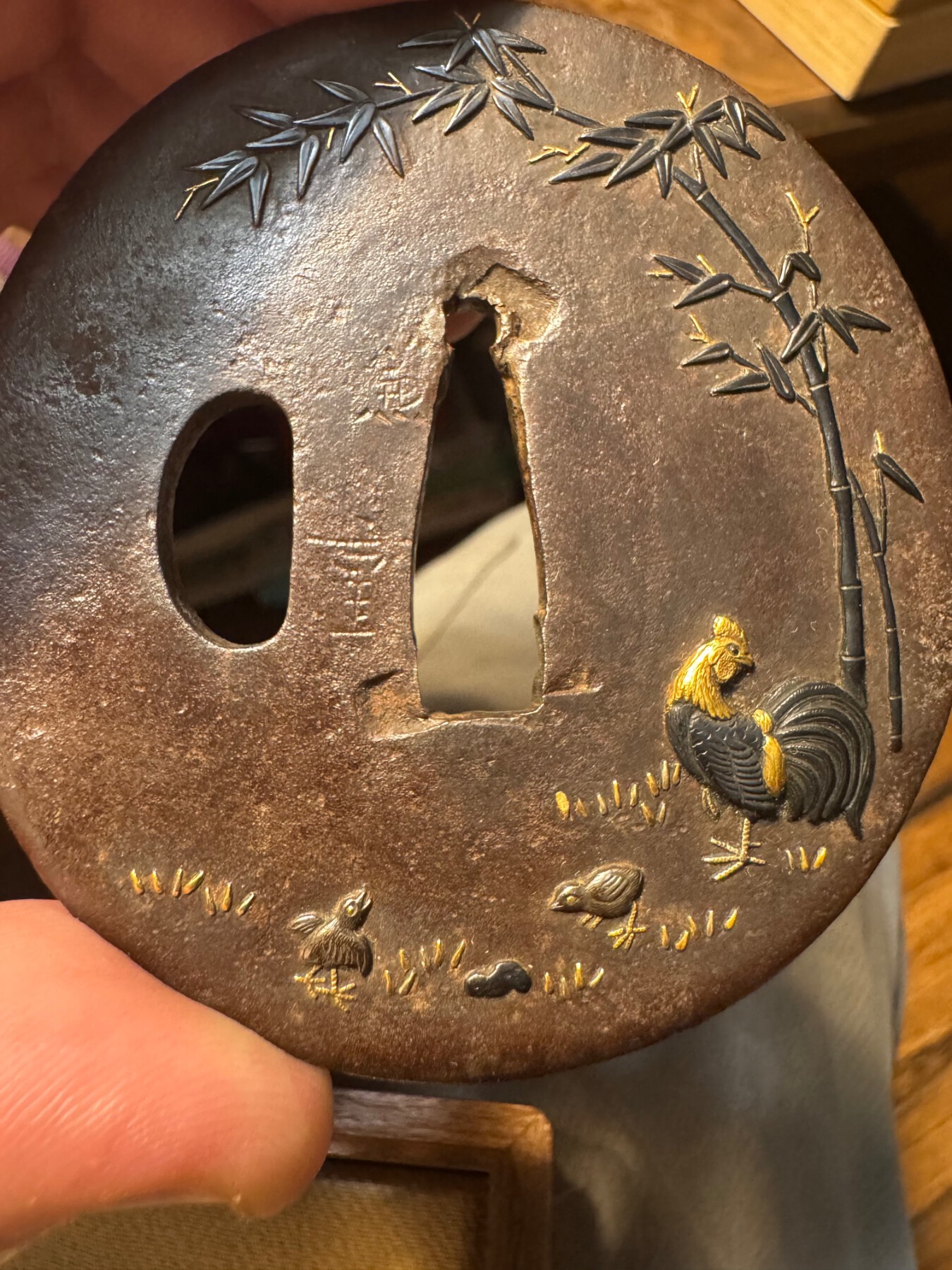
Animal and plant tosogu are my favorite themes. I will pick a couple of my favorites and share, starting with this iron base tsuba featuring a rooster, chicks, and bamboo. Jason

 1 point
 -
Marukawa Hiroyoshi was a student of Uchikoshi Hirotoshi (fl. 1810), and he worked at Mito in Hitachi Province. There are dated examples of his work for the years 1841 and 1842. Something simple from my collection - Two Roosters on one side become only one rooster on the other.
 1 point
 -
This was very cheap and I found it interesting so I have bought it. Useful learning experience?? A lot of work has gone into it but the one thing I have learned is that dating some of these can be very tricky. When it arrives I will provide all necessary info. Many thanks looking1 point
-
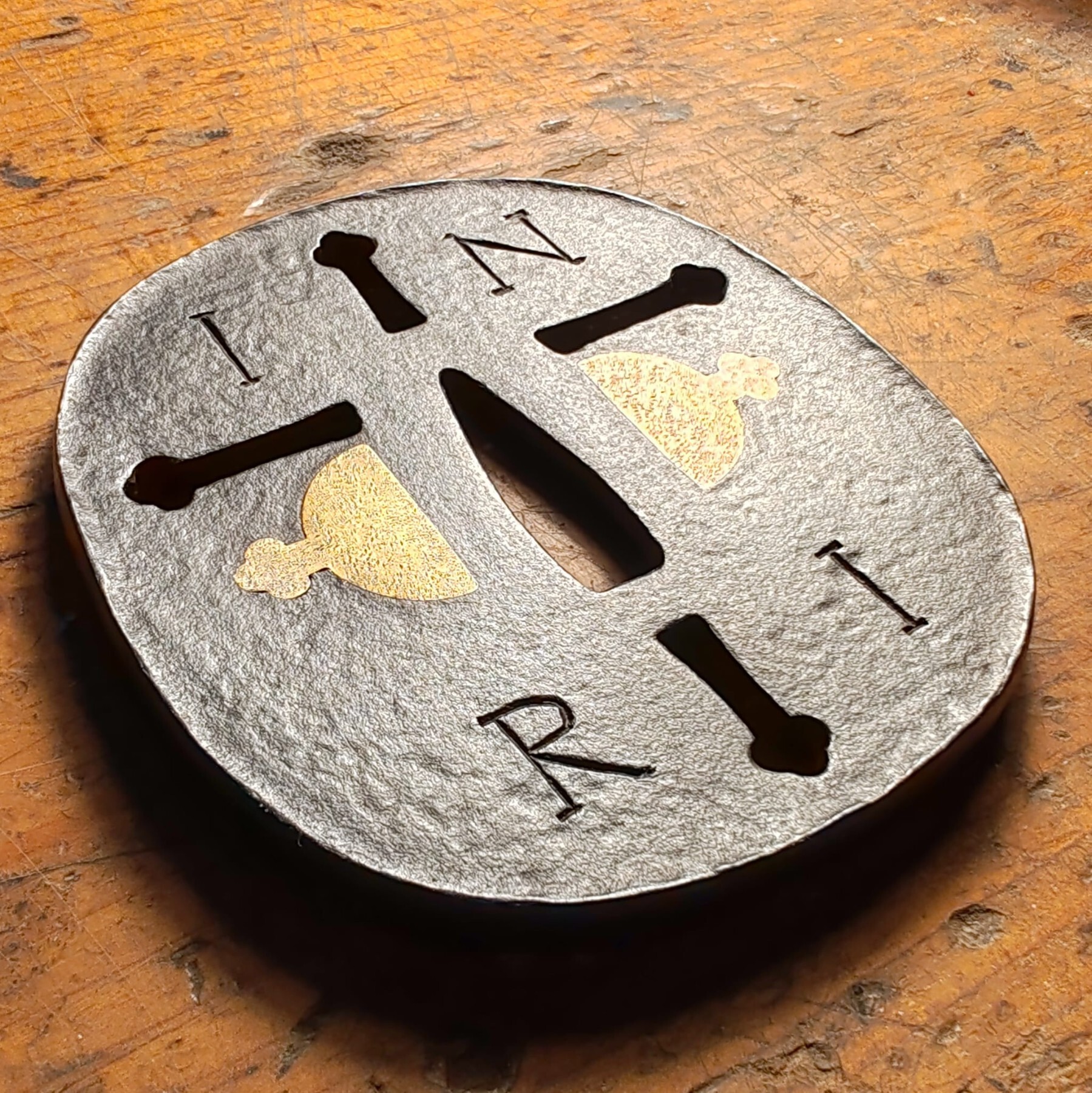
I'm proud to announce that my Kirishitan tsuba got awarded the 4th Effort Award in this year's NBTHK contest! This is an incredible reward for my hard work on improving my skills. To my knowledge i'm the only foreigner to win an award in this category for NBTHK competitions ( Ford Hallam only achieved Nyusen before moving to NBSK). My work will be featured in the catalogue and the exhibition, so please take a look if you have the chance. Following there are the pictures and a link to a video that shows the special feature of the mimi Link to the video https://drive.google.com/file/d/15HyBoEufhpyEx98n4Y9BETWOtrMtt5o6/view?usp=drive_link


 1 point
 -
some more pics

 1 point















.thumb.png.4c5df79fec171b2dc4a23af38e280a4d.png)






















This leaderboard is set to Johannesburg/GMT+02:00