george trotter
-
Posts
3,005 -
Joined
-
Last visited
-
Days Won
14
Content Type
Profiles
Forums
Events
Store
Downloads
Gallery
Everything posted by george trotter
-
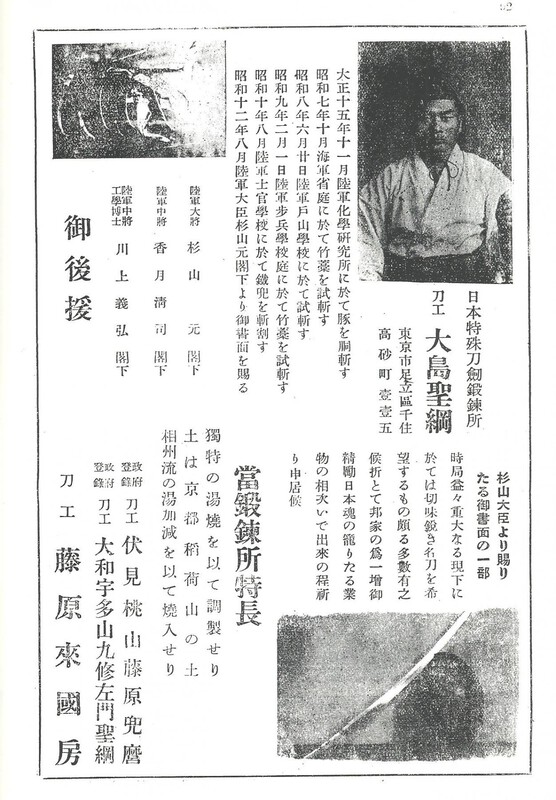
This Showa era smith seems to have always "named' his swords (I have seen pics of a few over the years)...this one seems to be named (middle line) ECHZEN TO MARU (Echizen helmet maru?...Lucky headpiece/protector of Echizen?...I could be wrong). Here is a page (92) from "Dai Nihon Token Shoko Meikan" 1942 that identifies him. regards,
-
I think now, after the finding and release of all these archive documents it is quite clear that what we have is a WWII IJA sword blade / mount variation called a RINJI SEISHIKI GUNTO (Emergency / contingency Type Military Sword). For discussion...as well as the mounts, I, from observation, also think that the blades in these mounts has shortened by c.1- 2 cm, the kissaki has also shortened, the sori slightly straightened and the tang has sometimes lengthened by 1 cm or so and invariably has 2 ana (of course there are always exceptions). These changes, with the sturdy Ikkan-maki lacquered binding etc, has produced a very good "field use" hand combat sword inspired by those used by foot soldiers in the Sengoku Jidai. While we have no documents declaring these changes to blade shape / length / tang etc., I think they must be part of a "revision" in thinking for battlefield use swords by IJA HQ. The need for these revisions undoubtedly came from battlefield experience in China 1931-1940. I hope one day we might find such evidence in the archives. While we may still use the various incorrect "Type" classifications "O", "3', Late 44", Naval Landing" because they appear so often in books, on-line etc, I think we need to concentrate on using the correct title from now on...maybe just Rinji? or Rinji Seishiki? Edit to Add meas: Munetoshi (Niigata) Type 98 dated 9/41: blade length 66.0 cm, tang length 21.4 cm. Munetoshi RJT Rinji dated 5/43 64.0 21.8 We also need to thank Nick Komiya and Bruce for all their work on this area. Well done (Brian...maybe we should recommend them for the Order of the Rising Sun for services to cultural understanding?). Just for interest (hopefully) ...here in Australia the Rniji mounts were never seen until the advent of on-line buying (at least I never saw one until the late 1980s). Others here may have seen them but I never did. I have a theory on why (call this Trotter's Doctrine #803...I have many): Australian troops fought the Japanese from 1941 (Malaya-Singapore), in this region 1942-1945 (New Guinea, Netherlands East Indies, Borneo, SW Pacific). Our troops were actually opposed to the same troops all this time...relatively speaking, few "new" troops from Japan came down here with new equipment...those who did usually were transferred from fighting areas where they had already been for several years (China, Burma etc.), and with the US entry here in mid-1942, we generally became confined to fighting / holding this area while the US began to "island hop" to Japan. The US troops met with these Rinji swords, but generally, we did not. IMO that is why they were unheard of here until ebay. I stand to be corrected of course. Of the 4 Rinji I have, and say the other 20 I have had in hand...all came from on-line after the 1980s. So, good topc, great work by Nick and Bruce...
-
AOI Art Sword Videos on Youtube
george trotter replied to Lance's topic in General Nihonto Related Discussion
Hey Guido, Peace bro!
-
AOI Art Sword Videos on Youtube
george trotter replied to Lance's topic in General Nihonto Related Discussion
I was going to let it go, but I will answer.. Yes, we all concur that all are allowed to like what we like. You don't like either one....I like the sashikomi on the left. With all respect, I think that covers it. Regards, -
AOI Art Sword Videos on Youtube
george trotter replied to Lance's topic in General Nihonto Related Discussion
That was my point in my original comment Brian. Collectors now need all sorts of special conditions/equipment/lighting to get a good look at a hamon/hada...presumably one has to fly to Japan to look at a hadori blade in hand before one can make a decision on whether one likes it?...as I said, so sad that we don't see the old easy to see/assess sashi-komi these days. Over and out... -
AOI Art Sword Videos on Youtube
george trotter replied to Lance's topic in General Nihonto Related Discussion
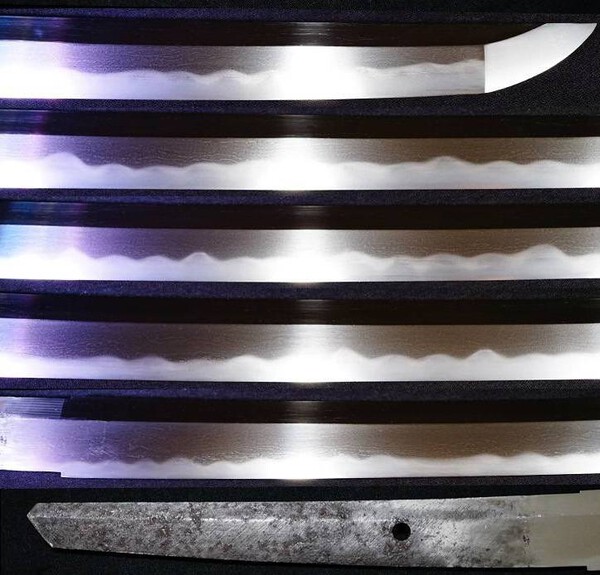
Sorry Guido/Piers (dang...wish you'd get your name right....). Ted, that is a long and very relevant discourse on the quality of polishing and the techniques used and the viewers ability to judge quality, but that is not what my comment was about...I merely said it is a shame that sashi-komi is "gone". To emphasise my point i showed pics of 2 swords by the same man in both polishes and asked members for their opinion on which polish they preferred...only one answered, why? are the members afraid to comment? Here is another observation on the quality of polishes... you only have to look at sword shop sale catalogues 1960-1980 and compare them with "current" catalogues. The old ones showed 1 or 2 clear photos of the hamon/hada etc (usually polished in sashi-komi) and a written description...now catalogues show a dozen or more pics of a (usually) hadori polished blade and nearly always include an oshigata of the blade activities because the pics are not able to do so adequately . I think this alone says a lot about the decline of polishes....why continue to polish blades in hadori which does not show the hamon clearly?...cost/profit! Just my opinion, -
AOI Art Sword Videos on Youtube
george trotter replied to Lance's topic in General Nihonto Related Discussion
Yes Piers, hadori has been around for a long time I agree, but was not often seen until the 'current trend'. In fact, 2 of my WWII RJT blades are in WWII period hadori, a bit less "intrusive" as post-war hadori has become. I think the reason for the "current trend" for it being almost the only type of polish one now sees in sword shops/on-line sales. I think this has been brought about by Japanese sword shops/polishers cutting time/costs and western collectors now thinking it is "the norm". All I was saying is that I regret the "loss" of sashi-komi in today's sword world. We are all free to like/buy whatever polish we want...I want sashi-komi over hadori and as I said, if I can't have it I prefer to leave my WWII swords dirty/scratched than have them re-polished in modern hadori...just saying. Regards,. -
AOI Art Sword Videos on Youtube
george trotter replied to Lance's topic in General Nihonto Related Discussion
Judging from the number of likes you got (and I didn't get even one), I'd say that you are genuinely reflecting the current trend. I accept that. I was just expressing my preference for sashi-komi...so much so that I would prefer to keep a sword in its WWII period sashi-komi (even if it is dirty/scratched) than have it re-polished in hadori. I don't want to start an argument, but I think it is done today mainly because it is easier/quicker/cheaper for the polishing shop, not because it is more appropriate as a polish. I know some here - whom I greatly respect - are OK with hadori...it's just that I am not OK with it. Just for fun, here are two swords by the same man...both photographed from side-on...which polish do members prefer? Regards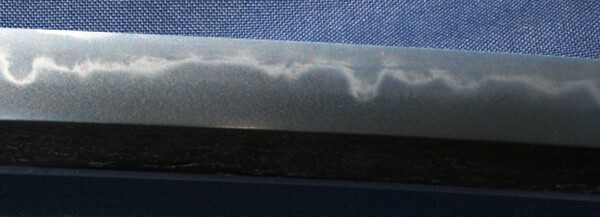
-
Tsuba cleaning - mei starting to show - ideas?
george trotter replied to Mark S.'s topic in Translation Assistance
The tsuba book TOSO KINKO JITEN by Wakayama p.584 shows info (no pics) for four makers who signed Choshu ju Tomotsugu (some with additional kanji as well). 1st ... family name Kawaji, died 16 Aug 1711 aged 44 years. 2nd ... family name Okamoto, died 29 April 1754. 3rd ... family name Nakai, just says 'late Edo'. 4th ... family name Kaneko, again 'late Edo' So you have a tsuba that ranges in makers dates from 1700-1850...I don't have pics in the book so can't check your signature style...you will have to do some research...members here probably have very good koshirae libraries, so may be able to help. Regards, -
AOI Art Sword Videos on Youtube
george trotter replied to Lance's topic in General Nihonto Related Discussion
Sorry to be a grump...but so sad that sashi-komi polish is gone... -
Ha ha - very funny Marius....I deserve that for using bad grammar. To the newbies, what I meant is, if he's not in the "bibles" he is unknown to the sword world, not that he doesn't exist. I think many of us have a sword (a real sword we can hold in our hands) and still find that the smith is unlisted in any published source. Never give up searching though...it's part of the study of swords. Regards,
-
The only Yoshiharu as you give it in Hawley is Mino 1945 YOS 64 (brown 1981 ed.). Again, the only smith of that name given in NIHONTO MEIKAN is on p.1157 and it is Showa era smith of Yamagata...name seems to be Fujizawa Yoshiharu Sorry..if he's not in the 'bibles'...then...? Regards,
-
Is Covid 19 going to kill the NMB?
george trotter replied to Peter Bleed's topic in General Nihonto Related Discussion
200 years old!!??!! ...he's already an esteemed GENRO, what would 200 hundred years of service make him FURUI GENRO? Yes we sometimes get 'lazy' questions and also queries on swords that later turn up for sale...but in most cases there is still a learning/teaching component to it...I think we're still bumbling along nicely (just my opinion mind you, I am getting a bit old and dribbly myself, so may be missing the point). Regards, -
Dang! I have collected Japanese swords for 50 years and have only ever had them with plain brown tassel or brown/blue. I never had one with a brown/red tassel.(seen them) let alone one with a general's tassel. The collecting gods must hate me...sniff!
-
Rare tanto published in 1935 was discovered in my collection
george trotter replied to Christian Chaffee's topic in Nihonto
2015!!!...didn't even notice the date...and now he's gone...well I sure look foolish. Nothing offensive intended though...just a gentle hint to all you millionaires to help NMB and Brian where you can. I'd like to donate more to his trip but now that the Aussie dollar is so devalued a $100 dollar contribution from here wouldn't even buy you a run & coke in America. Ah well, I'll try to notice little things like being 5 years out of date next time... Regards, -
Rare tanto published in 1935 was discovered in my collection
george trotter replied to Christian Chaffee's topic in Nihonto
Wow,,,well done! That's a lot of money, Maybe you haven't heard yet, but there is a guy named Brian who needs a few donations to help him get to the DTI in Japan this year...so,...maybe...? -
Looking for any infos about WW2 smith Tanabe Kuniyioshi
george trotter replied to Bruno's topic in Military Swords of Japan
-
Looking for any infos about WW2 smith Tanabe Kuniyioshi
george trotter replied to Bruno's topic in Military Swords of Japan
-
Looking for any infos about WW2 smith Tanabe Kuniyioshi
george trotter replied to Bruno's topic in Military Swords of Japan
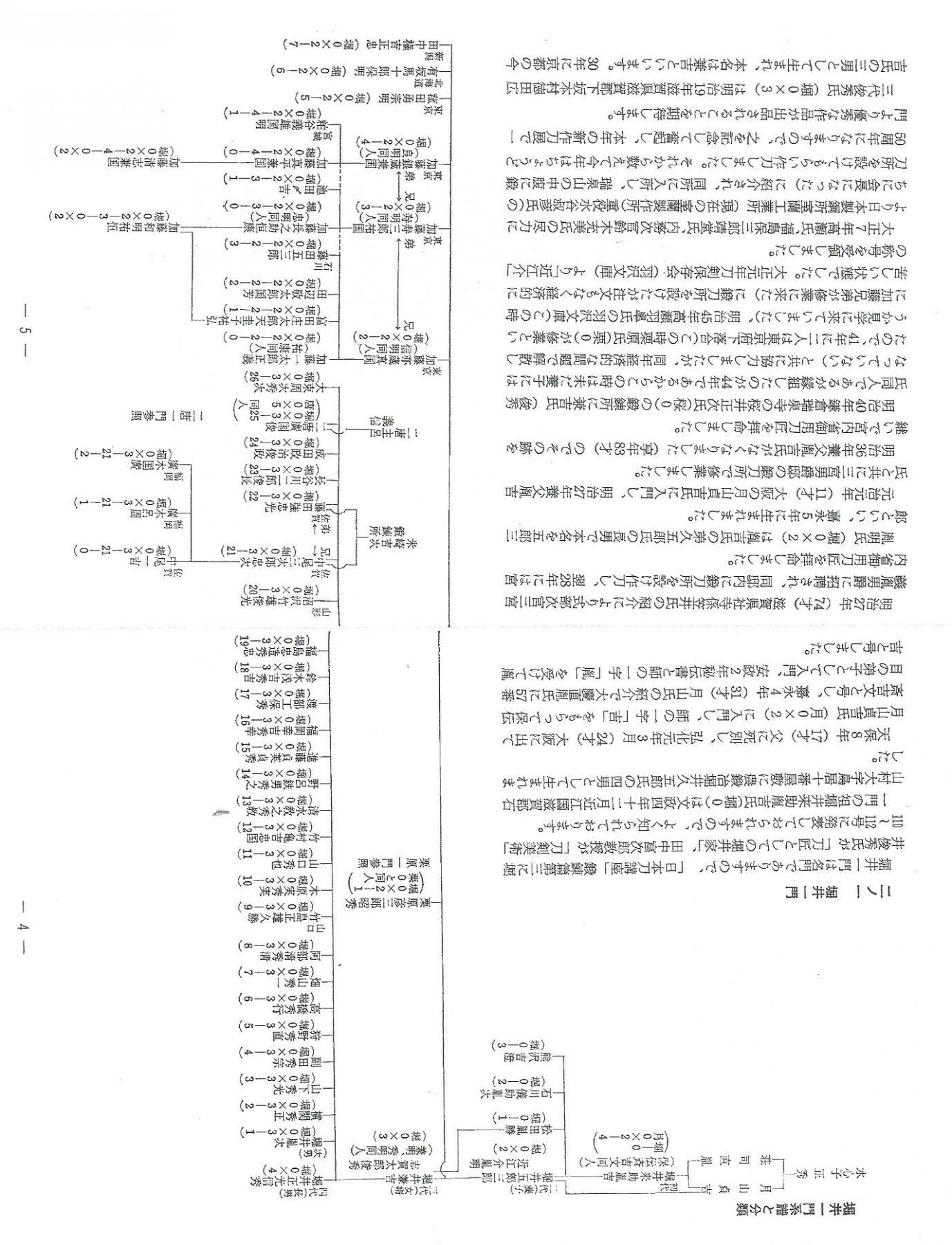
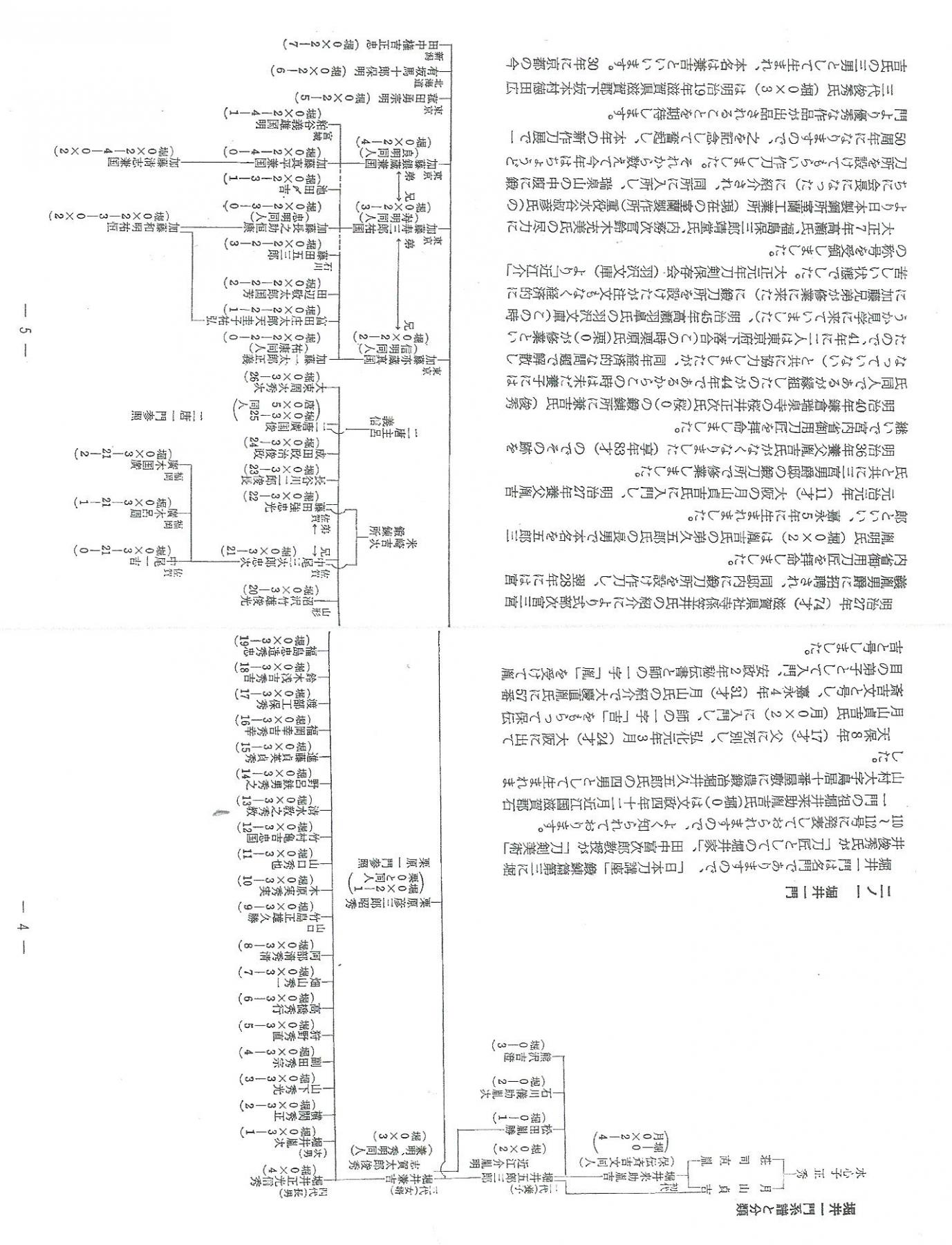
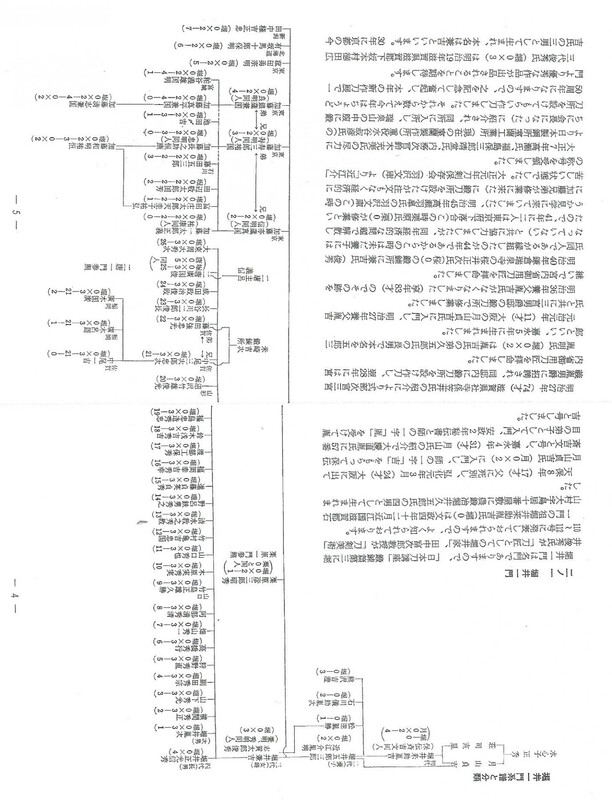
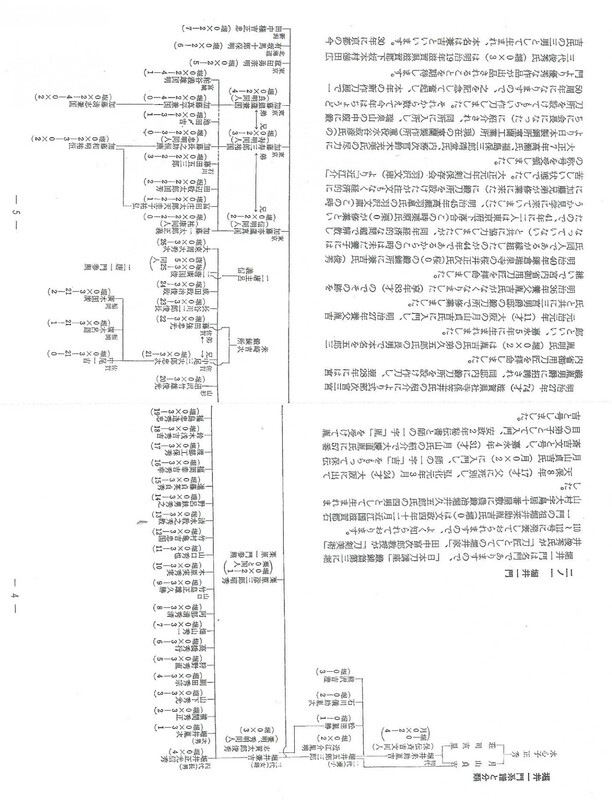
All I can find is this chart on the Kato smiths, including Tanabe Kuniyoshi. it is from the "Short History of Modern Sword of Japan" by Tanashi UCHIYAMA in Token Bijutsu Journal March 1969 #145 Chapter 2 pp.4 and 5. Regards, OOPS attachment on next post -
They must have been worn only on the parade ground? and in bars to attract the girls? I really can't see a paratrooper jumping out of a plane wearing a sword...maybe I'm wrong?
-
Wow, thanks guys...great stuff. That link from you Jussi must be the same sword. I will pass this info on to him...many thanks to all. Regards,
-
Thanks Uwe, At least I got the KA-EI nengo right, but my poor old eyes couldn't make out the year/month, so thanks for that. I just can't make out the LH column though. I had a good look with a magnifying glass and THINK I can now read the other side of tang....top 3 large kanji are I think " ? Hachi Man". (RH column below) MOTOME YAMAMOTO MORINOBU ? SAKU...or is it Yamamoto no kami Nobu ? saku. I THINK the smith's mei next to this on LH side column says SAIJOSHIN YANO TOSHIKAZU. Looking quickly in Hawley 1981 there is a smith of this name working in Musashi in 1854 TOS 169 on p.860. I am sure it is him as he signs exactly the same as on this tang, (as well as other mei variations). So, in some places, like the YAMAMOTO section and on the date side's LH column, I still am not sure what it says...that's why I need young eyes to check it for me. I will then pass it on to my friend. So, any assistance members can give will be most appreciated. Regards,
-
Hi all, a freind forwarded this pdf to me. Can anyone translate it please...I am not having much luck myself. Thanks Mei8104.pdf
-
Looking for any infos about WW2 smith Tanabe Kuniyioshi
george trotter replied to Bruno's topic in Military Swords of Japan
Hi Bruno san, Umm...bit confusing. You want to know more about Tanabe Kuniyoshi as shown in the WWII swordsmith ranking list on Jinsoo Kim site (under Chujo Saku classification).,,,I looked through my WWII period books and early post-war books and there is no mention of WWII period smith named Tanabe....maybe tell us what you already know? pic? You want to know more about your RJT swordbmith Sanemichi (if he is the same man?)...again, I don't know anything and can't even find him on the existing RJT lists...I can tell you that the kanji SANE can also be read MASA, but that is about all. Sorry, -
Hi Phil, Yes koshirae are wearing fittings...yours is in a shirasaya (storage fittings). The signature is Mutsu Kami? Yoshiyuki, which is roughly = Lord of? Mutsu Province, Yoshiyuki, (made this).. Don't know if this is your man, but there was a smith of this name/title working in Settsu Province c. 1650 (Settsu is now the Hyogo Prefecture area in central Honshu and Mutsu is his honorary title...Mutsu is today Aomori Prefecture at the top end of Honshu). Kirikomi is small sword cut marks on blade - often a sign of combat. Regards,