george trotter
-
Posts
3,004 -
Joined
-
Last visited
-
Days Won
14
Content Type
Profiles
Forums
Events
Store
Downloads
Gallery
Everything posted by george trotter
-
wow...I have been in nihonto since 1970 and have never seen such long bladed gendaito-gunto. Amazing Kanekiyo John....is it RJT and/or dated ?
-
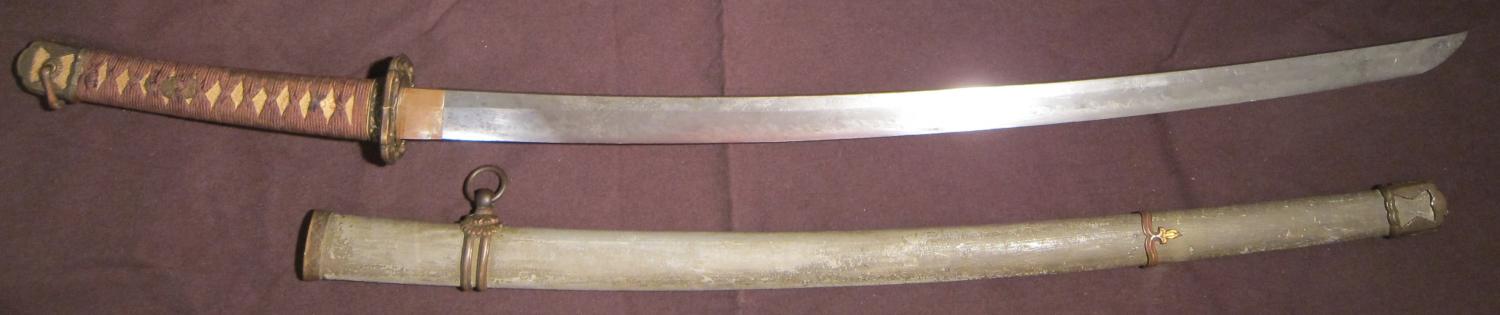
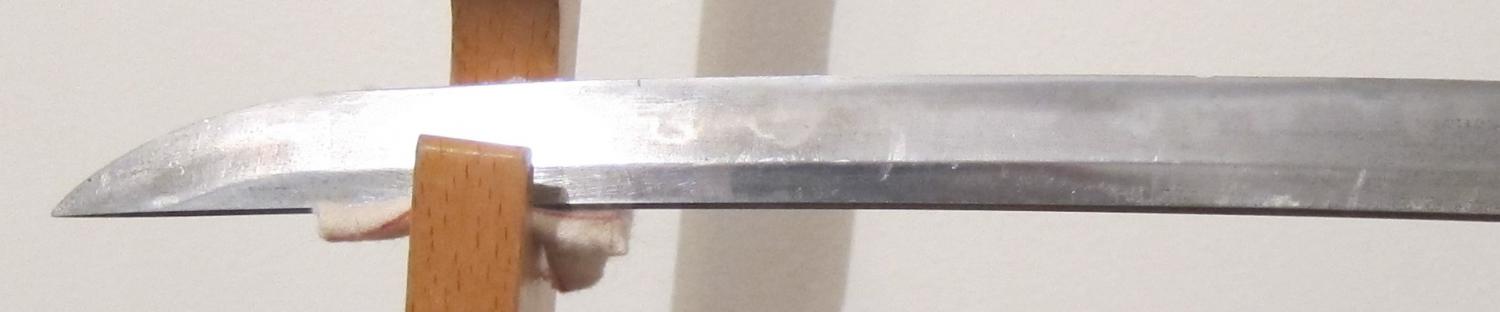
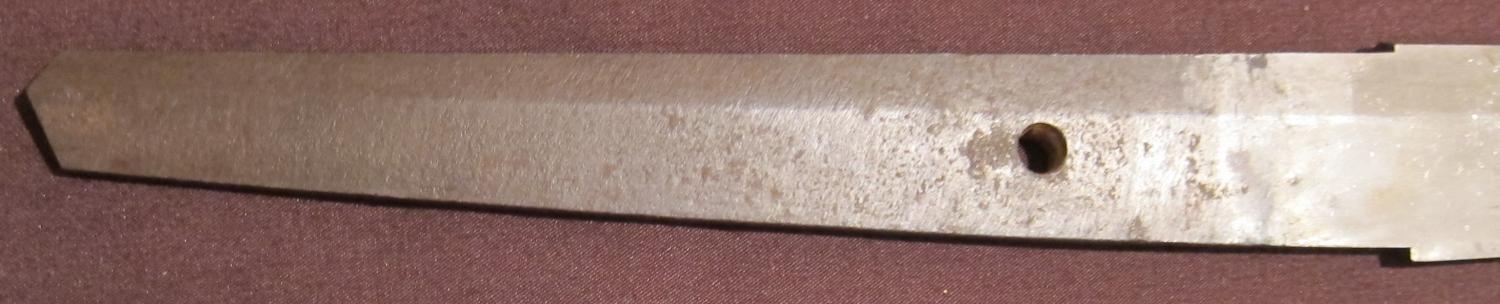
Hi John, I think it is very unusual to have a mounted sword over 40" in length. It is less unusual to have a longer blade in the 40 inch mounts. For example...under the RJT scheme the longest blade allowed was 69.7 cm (27 7/16 in). The tang had to be 21.2 cm (8 11/32 in). The length of the mountings are not stated. I have one such RJT blade by Kunishiro of Kyoto and the blade is 69.8 cm (27 1/2 in) so slightly over- max-length and the tang is 21 cm (8 8/32 in) so slightly under length. The overall length of the mountings is 99.4 cm (39 2/16 in)....so under 40 in. Not sure if this helps, but I can say I have seen long blades in normal length mounts but not in the noticeably over-length mounts you have. Regards, Later edit...not Kyoto...Aomori (sorry).

-
How About Shedding Some Light On Tampa Show
george trotter replied to Tom Darling's topic in Nihonto
I have only been to a couple of shows/shinsas...all in Sydney. Ray's pics brought it all back. I always enjoyed them, chatting with fellow collectors etc. I usually only went for the experience and to buy books, "odds & ends" etc. I never bought a sword there. Speaking of "odds & ends", I must say, the last pic of Ray's of those military tsuka with mon...would you believe it, I have one with the exact same mon as the middle tsuka (white tag is resting on it) of a circle with a square inside....I think it is a carpenter's "nail washer"? but don't know the family....what are the odds! I think it is the internet that has eroded their importance, although the attached shinsa at my last show was very well attended and some good swords were discovered....maybe the shinsa will keep them going, although less often. Regards and thanks for this post. -
Kai Gunto Signature Help - Tan Stamped
george trotter replied to zook's topic in Military Swords of Japan
Jean is correct. NOSHU SEKI JU YOSHISADA OGAWA KANEKUNI KITAU KORE Ogawa Kanekuni of the Yoshisada line of Seki in Noshu forged this. I don't know enough about the Tan stamp to comment on forging methods. I've seen it before on WWII/Showa era gunto swords..usually of 'better quality". Ogawa Ichiro Kanekuni was registered as a swordsmith in Seki on 26 Oct 1939. Slough p.45 gives his oshi and lists him as showato and gendaito maker. Regards, -
Aussie Priest Returns Swords Ca1959
george trotter replied to Bazza's topic in General Nihonto Related Discussion
Great stuff Baz, Thanks for sharing that snippet of history. I think that article may be right about "fading away"...I've been to Nara a couple of times - saw lots of deer roaming around, but not one Marist. (btw, I think we have the same decorator!!!). Regards, -
Hi Rei, no not re-mounted from temple shirasaya. I mean that when a smith makes an offering or a commissioned presentation sword he usually makes 3 swords and the "recipient" chooses the one he wants. This one is signed, but (as I understand it) the other two (there is a name for them but I forget it now) are sold off by the smith unsigned. Just thinking out loud, but maybe yours is one of these? It looks like a well made and finished sword that should be signed...just thinking of a reason it is not signed. Regards,
-
Just thinking out loud.I wonder if it is mumei because it was one of the two leftover swords usually made when a special order blade is commissioned from a swordsmith. We hear of one blade being chosen and signed and the other two are left to the swordsmith to sell off...unsigned. Maybe this is what this blade is...it does seem to be high class work...maybe one of the leftover swords after an offering to a temple. Guess we'll never know. regards,
-
Glad to help Chris. Regards,
-
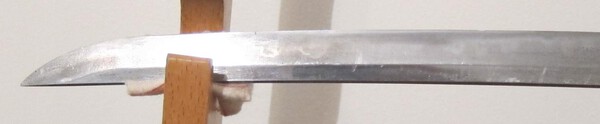
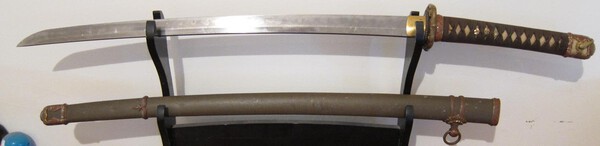
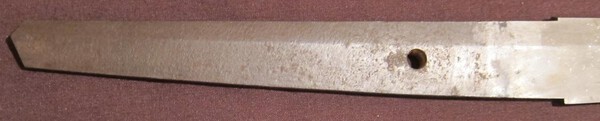
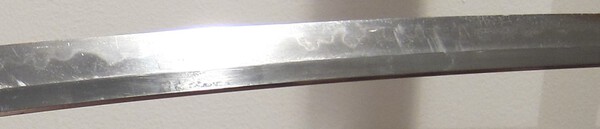
Hi Chris, Those pics you show of 10 gen Kanesada are some of those I searched out on-line to help decide on my sword being 10 - 11 gen Kanesada...VERY similar. Check its tip, hamon, nakago/jiri.yasuri etec etc against these pics I now attach of my own sword. As I said, i think mine might be an utsushi of a shortened Nanbokucho blade (if anyone has an opinion, please speak...I am not too old to still learn). As for my pics, I am the world's worst blade photographer, sorry...but I hope they help you in your search. My blade is 59 cm; machi is 3.1 cm; yokote is 2.2 cm = 0.9 taper. Kissaki nagasa is 5.0 cm. one side is ko-maru/ slightly naga kaeri with some hakikake and the other is the same but midare-komi (can't see any hakikake).. Tang 18 cm. iriyamagata jiri; yasuri are slight katte sagari - almost kiri. Regards,

-
Hi Chris, That nakago/yasuri/jiri and hamon sure look like Mino-den Kanesada style to me (but of course could be other makers also). About length in Meiji era. I have read in Markus' work on the last of the Kanesada line that 11 gen, Kanesada made copies of Nanbokucho era long blades greatly shortened in the Sengoku jidai to become uchigatana. My own example is 59.0 cm with little reduction in blade width and long tip so it appears it is a copy of a uchigatana and so does not have the characteristics of a wakizashi, but of a shortened sword. If yours was made as a wakizashi it will have those wakizashi characteristics. I can only say you should search maybe "wakizashi Kanesada" and see what comes up...it might give you more info about examples of the Kanesada styles/lengths in shinto-shinshinto-Meiji eras. Yours may simply be a bit earlier made than 10-11 gen. I hope I am not leading you astray Chris, after all my own opinion on my "Kanesada" is just that "my opinion" and has not been tested by shinsa. good hunting,
-
Pictures Of "tanker"
george trotter replied to Ontario_Archaeology's topic in Military Swords of Japan
On the OP topic about short gunto names etc.... I just looked up my old records...in 1990 I had a kaigunto mounted wakizashi by (Mino-den) Aizu Kanesada, early shinto c.1725. Blade was 54.6 cm (21.5 inches) and scabbard was 30 inches. Until you took the blade out it looked like a normal daito. So, except for those swords deliberately mounted with shorter gunto hilt and saya, the average wakizashi in gunto mounts was mounted as a daito. I have to say that in the early days of my collecting (when Stephen was still a lad), we never heard the term tanker/sub/crew etc ever used. We also never saw the shorter mounts either...but don't forget, I'm talking about Australia in the 70s-90s, We didn't know much and had far fewer soldiers bring-back swords compared with the US. I think the term used now is a "newish" invention (like Type 3, Naval Landing sword etc.)...be interesting to one day have this clarified....although Stephen took us a long way forward when he linked us to that short gunto made for Prince what's-his-name. If anyone wants to look at the Kanesada I mention it's oshi is in the Malcolm Cox book "Mino-To" (supplement p.25). Interesting discussion. Regards, -
About examples of blades with kikusui, I can say I have seen one, years ago so I cant remember the smith but it was gendai/showa. I also remember seeing a very nice "Fuji appearing through the clouds" hamon. Fuji-san was about an inch in front of the habaki...very nice also. But these types of hamon are very rare IMHO. If I may digress from the OP to comment on your nteresting comment Stephen. I am the opposite, two favourite gendai-guntos I have are short, one is 62.1 cm (Tokyo smith Seisui), 62.5 cm (Seki Nakata Kanehide) and another shin-shinto in gunto fittings is 59 cm. I really get a feeling that they are ideal for hand to hand combat in battle...actually being typical of the foot-soldier's uchigatana of that other age of warring states...short but lethal. To my mind (this is just me I am sure) it is telling that whenever the style of warfare gets back to never-ending ground assaults by infantry the Japanese sword used by the front line soldier always gets shorter again, longer tang, two ana and lacquered tsuka-ito ...in fact, the fittings/blade are typical of the Rinji Seishiki Gunto (the two gendaito have all these features, both dated 1944, the shin-shinto is one ana and normal length nakago, but with the normal gunto length tsuka, it is a very "nifty" sword). It is my opinion that it is only when things get peaceful again that blades get long again....so, short is more "natural" for ground warfare. Hope I'm not raving again Stephen. Regards,
-
Gunto Mount Eye Candy
george trotter replied to Stephen's topic in Auctions and Online Sales or Sellers
Just briefly, his name appears to be Kanin no Miya Haruhito (no) Ou (Prince) b.1902 Tokyo - d. 1988 Kanagawa. His rank is Major General. His father was a Prince and his mother a Princess. Kanin Haruhito was a branch line of the Imperial family. Now that was a sword named as being made for him by Kanazaki Hidetoshi the Yasukuni smith. That was some historical sword Steven...you should have grabbed it...!! Regards, -
I think it is possibly one of their boshi Chris...you'll have to study hard and search for info..I do seem to recall a variety of boshi (including in my case ko-maru with hakikake on one side and midare komi with ko-maru on the other) so also are there the more dynamic ones like yours, so you have a variety of possibilities...it all comes down to study. I feel sure my blade is by 10-11 gen, but will I ever know without shinsa?...not really, it might turn out to be someone else entirely...study, study, study. One thing about Mino den, many people, including myself have/had very little interest in Mino, but in fact, there are a lot of good blades by them. It was only finding a good example that "opened my mind" to them...I must say, I now feel much more respectful of Seki origin lines of Mino den smiths like the Aizu. Let us know what you find. Regards,
-
You are most welcome Jim....certainly looks like a good potential item. Hope you uncover some good info.. Maybe show us the blade...mounts? I lived in Elsternwick for a few months in 1968...(I'm an old geezer)...always liked Melbourne...I have rellies in Lancefield and Horsham. Regards,
-
Yes Chris, either-or....10th gen worked Kaei - Ansei and his son 11th gen worked Kaei-Meiji.This means the son worked with the father and even made swords for the father to sign...so, there are mumei swords around that could be either-or. To add to the question it is known that between c. 1875-1895 the 11 gen also made many mumei utsushi of Nanbokucho era long swords greatly shortened in Sengaku Jidai. All of them unsigned. I must say, I like their work, but it is hard to tell mumei 10gen from mumei 11 gen Aizu Kanesada. Have a look at Markus Sesko article online "Last of the Aizu Kanesadas". The only thing different about yours (that I can see from the pics) is that if yours was one of the utsushi, it should have an o-kissaki, otherwise it is a reasonable match. Of course, it could be simply one of their mumei blades, not necessarily an utsushi. Also type in the name Aizu Kadesada online and see what comes up. Hope this helps
-
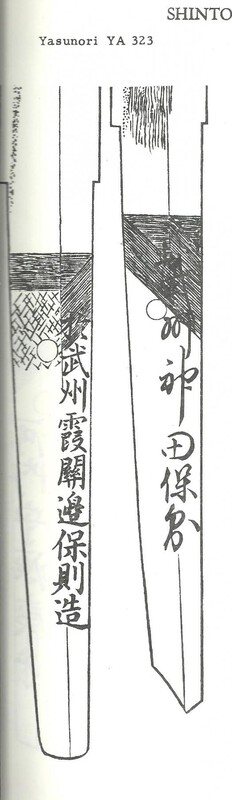
Here's the oshi from Shinto Benji Oshigata p.143. Amazing that a 250 year old book can be so helpful. BTW YA 323 is in Hawley's old blue books 1976, the 'new' number (brown book 1981) is YAS 690. Let us know what your research uncovers, Regards,
-
Very hard from pics, but maybe Aizu Kanesada line in shin-shinto. The nakago shape with iriyamagata jiri and almost kiri yasuri mei, together with what looks like gonome-midare and maybe some hakikake in the boshi (unless I am imagining it?) suggests late Aizu...which is Mino-den. I hope I'm not too far off the mark from the quality of the pics....but it rminds me of a late Aizu of my own. Hope this helps,
-
His first name kanji is certainly "Yasu" To me his name looks like Bushu Kanda Yasunori tsukuru kore 1764-1781 Hawley (1981) YAS 690. I haven't looked the lead up, just thought I'd mention it so you can have a bit of fun following it up...hope I'm not leading you astray. Regards,
-
Anchor Mon On Rinji (Type 3)
george trotter replied to Bruce Pennington's topic in Military Swords of Japan
I found the original sword pic. It is from a post called "Masakuni Gunto with reisho script" Apr. 11 2013 by Curtis A. Sure looks like the same sword?...a bit dirtier then? Mon looks OK to me, but who knows...? Regards,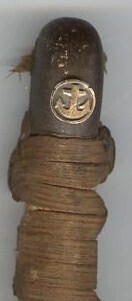
-
Anchor Mon On Rinji (Type 3)
george trotter replied to Bruce Pennington's topic in Military Swords of Japan
I found the post, but the pics won't open. They are on: "Mon on a Type 3 gunto" by me, 2nd Dec. 2012 post #1, #4. Be good if Brian could "resurrect" the pics so we can see if they are the same sword...maybe now overcleaned? Regards, -
Anchor Mon On Rinji (Type 3)
george trotter replied to Bruce Pennington's topic in Military Swords of Japan
Just saw this post. Some years ago I saw what I think is the very same Rinji sword tsuka shown in the OP.. In fact I posted a pic of that kabuto gane with mon under a heading inquiring about mon on type 3 swords. That looks like the very same tsuka, except to say it is now much 'cleaned'. I posted it as possibly the first evidence of a mon seen on a type 3. You could probably dig up my original post with 'mon' and 'type 3' and my name, and see if it is the same sword. That anchor mon is the only one I have seen ever on a type 3 and I can't really say if it is genuine. I can only say that my memory of it then and now seems to say that maybe 'over-cleaning' has made it look "newish - fakish"? Regards, -
Kissaki Mune Shapes.
george trotter replied to george trotter's topic in General Nihonto Related Discussion
I was just checking something on the RJT instructions document I translated some years ago and which Brian posted in the 'documents' section. It says in Article 1 section 6 that when polishing the blade "The ko-shinoji and the matsuba-kado interception point kasane will also be polished leaving it a little thick, the dimensions of the ha section and the mune section to be at the regulation dimensions and not less". So it seems the official RJT instructions name for this part of the kissaki-mune is matsuba-kado (meeting point (kado) of the ko-shinogi and the matsuba) and this can be left "thick" or thin. I know this is a minor matter, but worth knowing. Regards, -
Now that would be just what I'm looking for Neil. can you show us the top section also? Thanks,
-
I can only speak for gendai, but I suppose showato will also be included here...We see excellent quality gendai / mountings with 4, 6, 8 seppa. I can not remember seeing any lower class blades with 8 seppa. I have usually thought of 8 seppa as "always" good quality blade and mounts. But with nihonto we can never say never or always say always, but as John said, good sets of 4, 6, 8 seppa are seen on good quality blades and his are numbered...and sometimes so are the other parts, including saya, saya guchi, fuchi, tsuka (ink or stamped) and even habaki. Just taking my own collection of 10 swords used in WWII, I have 8 gendaito army mounts, 1 shinshinto/gendaito in army mounts and 1 koto in shinto civilian mounts with leather combat cover. Of these 10, the seppa count is as follows: Private order gendai, steel scabbard 98 with 8 seppa numbered, mon (missing) ditto wood/leather scabbard 98 6 no numbers. ditto alum. scab. 98 8 numbered, mon (missing) RJT alum scab 98 5 no numbers (post-war dealer mix?) Private order 1 but/lacq scab T3 2 (no dust cover seppa) no numbers RJT 2 but/lacq scab T3 3 numbered (even habaki) RJT 2 but/steel scab T3 3 no numbers except habaki (rare "higher class" steel scab Type 3). Pub. Purch. s/s or gen alum scab 98 8 numbered incl habaki. mon Pub Purch koto lacq/leather scab 2 old Don't know if this has helped, but seppa numbers and numbering seem "irregular" in my collection except to say that the 4, 6. 8 seppa lots are definitely on good quality blades/mounts. It would be interesting if any members have examples of 4, 6, 8 seppa on "ordinary" mounted showato. Regards,