george trotter
-
Posts
3,004 -
Joined
-
Last visited
-
Days Won
14
Content Type
Profiles
Forums
Events
Store
Downloads
Gallery
Everything posted by george trotter
-
That is the first time I have seen a 'sleeved' nakago ana for use on a slimmer nakago? Usually just see two copper 'cushions' inserted. Also,,,What are the two alloy filled holes?... why holes? Regards,
-
Show us Your Commemoration/Presentation Swords
george trotter replied to Bruce Pennington's topic in Military Swords of Japan
About swords being made elsewhere and then presented to the shrine for blessing etc...of course this is common. but always remember there is also 'not always'. As an example, Ono says an RJT smith named Kanazaki Toshimitsu (Tottori) made swords at the Fushimi Inari Shrine in Kyoto in 1944/45 (Ono 'Gendai Toko Kinko Shokukata Soran' 1977, p.106) and this is expanded by Kishida who said this of Kanazakii: "By order of the military authorities, he made 30 swords at the Fushimi Inari Shrine of Kyoto and donated the swords to the shrine in January 1945. The chief priest of the shrine Suzuki Matsutaro gave him the personal title of "Inari Kokaji" on that occasion" (Kishida 'Yasukuni Swords' 2004 pp.134-5). This smith used several names including Suketoshi. So, there were occasions where swords were made at the shrine and dedicated there. I don't know how common this was or how many shrines actually had forges. Hope this helps. -
The kanji are correct...not sure of the pronoumciation of the first two, but they can be read as a name which is YASUMASA. There was a smith of this name KUNIMITSU working in Chikuzen in Bunwa era (1352) who was of the line? of Yasumasa?goro Sadamune. The yasumasa is the same (Nihonto Meikan p.297). Obviously this mei is fairly modern, maybe as late as 1900s, so it is not this koto smith, but maybe a later smith claiming some connection with the koto Kunimitsu who was connected with Yasumasa?goro Sadamune? Hope I am not off track here. The tsuba looks interesting. Regards,
-
Yes, me too. I have a Nakada Kanehide of Seki RJT blade in the metal saya double-button mounts with the light cream paint as shown in the showato pic. Kanehide is a very good smith (post-war mukansa). So the message is...though rare to find a gendaito in a brown metal saya Rinji Seishiki mount, it DOES occur. Always check them out at swap-meets etc, you just never know. The signature seems to be SUMI to me. There was a Kanesumi working in Seki from 27 Dec 1940, name SATO Yukihachi or Kohachi or Yukiya...or...other possibilities. Regards,
-
Identification Assistance Respectfully Requested
george trotter replied to echelonff's topic in Nihonto
hi Nate, I notice you have had no responses yet...well firstly, good on you for trying before asking for help. Your translation of the date is correct except the 18th year of Showa is actually 1943, not 1944...they did not start their cycles at '0' but at '1'. Second, the two kanji in the signature are quite stylised writing of KUNIHIRO. His family name is KATAOKA (not sure of personal name pronunciation : Chikashi?). He began as a sword maker at Seki on 13 Nov. 1941. About it being in a NCO mount...that is strange. From our experience it is more likely to be in the late war type of 'Rinji' (emergency) mounts. Maybe a pic of the fittings too so we can check them out? Regards, Edit: Oh I see Brian has corrected the date year. -
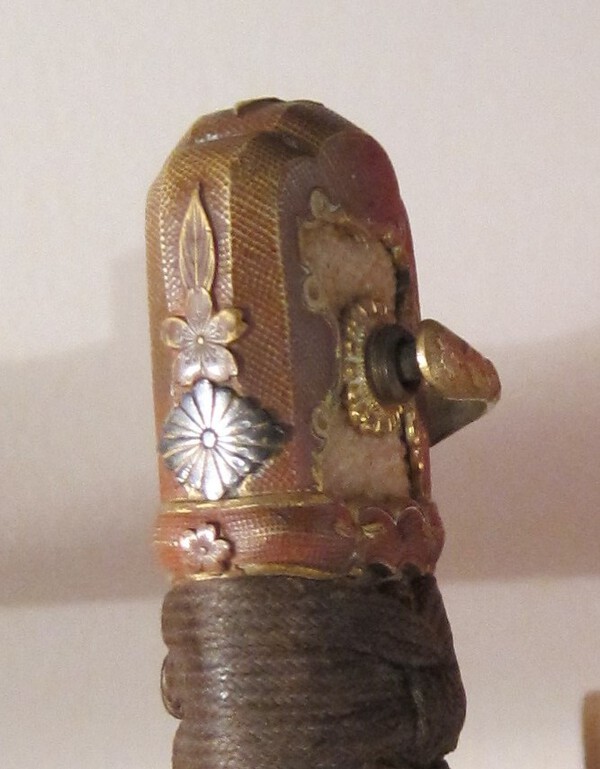
I should put in a better pic of that kikumon shown on Bruce/John's post just above. Families given in Hawley p.3 are non-royal families connected to the Imperial families. This "diamond" shape kiku is quite rare - Kimura, Nakamura, Toda families. Don't know how many used it in WWII. Regards,
-
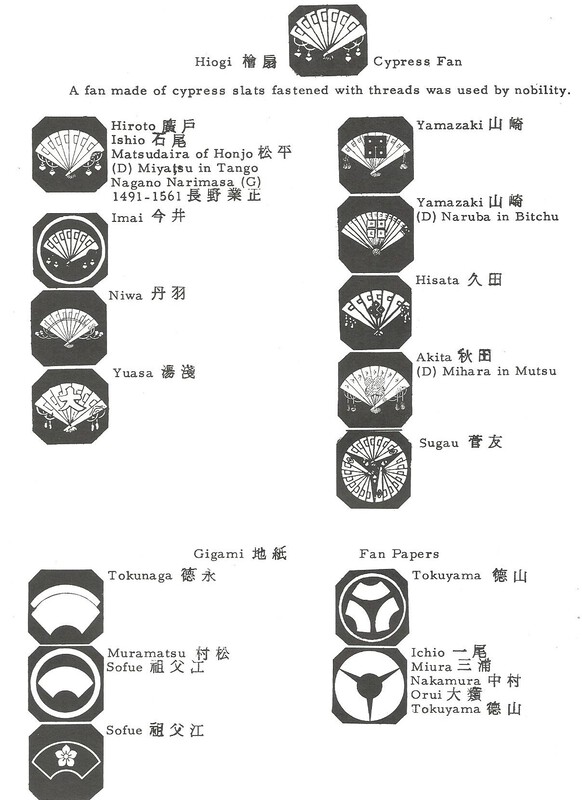
According to Hawley's book MON 1976 p.60 it seems to be a variation of the Hiogi (fan) mon. Only one family is given for it, the SUGAU...as yours is "smooth" rather than "slatted" it must be either an allied family or maybe just some family who invented it for themselves after c.1850s. You'll need to do more searching. Regards,
-
Gunto pedigree ID requested
george trotter replied to Sea King 11's topic in Military Swords of Japan
Hi Chris, Well, having no stamps and no date says this sword was most likely made privately by Kanenori, that is, not in the SEKI official sword manufacture system. You will need to show it to a knowledgeable person for an opinion on whether it is gendaito (handmade sword) or Showato (semi-machine made). Just looking at the "style" of chiselling used in his name, it reminds me of the "usual" WWII mass-produced sword "official name-cutting guys" style, but I may be wrong. The fittings look good quality (total of 8 "washers" on either side of the guard...a good sign). Also, having the good fittings with the silver mon indicates that the buyer was a "well-to-do" officer. The mon is the KIRI (paulownia plant) with blossoms called 3/5. This is the mon of the Matsudaira clan who were governors in several provinces. It is also that of the Ashikaga clan, and after the 1800s was used by many families...pretty good mon to have. Kojima Kanenori's real name was Kojima Taro. Born in 1907. During the earlier years of the war he served as a swordsmith and teacher in the SEKI "system" so made various quality swords. From around 1943 he was a Rikugun Jumei Tosho (official Army Smith) so made very good quality handmade swords. You really need to get it looked at by someone who knows stuff. I'm not sure but I think he continued after the war and won many prizes and praise for his work. Worth checking out and if a good blade, get the hilt re-bound in the correct military style to return it to "original WWII sword of historic value"...just my opinion.. Regards, -
Gunto pedigree ID requested
george trotter replied to Sea King 11's topic in Military Swords of Japan
It is a WWII Type 98 gunto (military sword). It is signed KaneNori...look about an inch above this signature...if there is a stamp (either a "square" Seki stamp or a "flower" Sho stamp), it will mean it is semi-machine made. If there is no stamp then it might be hand-made. There was a Seki (town) smith named Kojima Kanenori who started making army swords in 1939. There should be an inscription on the opposite side which will be the date. I notice it has a small silver disc on the metal "cap" on the end of the handle...this is a silver "mon" (family crest), if you take a photo of it someone here might be able to tell you which family/families used this mon. The tassel is correct and legit...just a bit faded, which is common. Regards, -
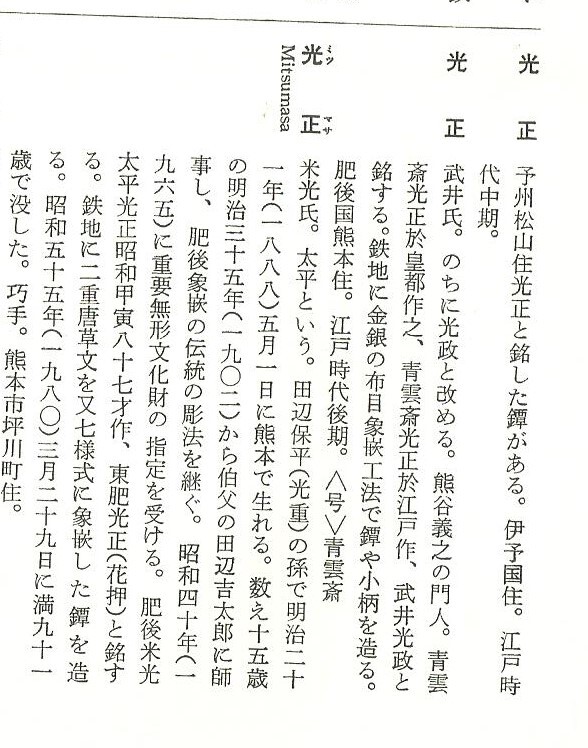
Sorry Grev, I thought you used Japanese sources etc. I am not familiar with koshirae terms etc, not being a student of them, but I can tell you roughly, starting with right column Mitsumasa: Mitsumasa: Yoshu (the 'Yo' is only the left portion of the kanji) Matsuyama ju, Mitsumasa. Lived Iyo kuni (again the yo is only the left portion), Worked mid-Edo. This is today Ehime ken. Next Mitsumasa: Name Takei?. Kumadani? Yoshiyuki? school. Gives several examples of his mei, but none given have the kanji for 'Hi' or 'I'. His true 'masa' is the more complicated masa. Lived Higo kuni in Kumamoto. Worked late Edo. Next Mitsumasa: Name Yonemitsu. Called Taihei/Tachihira? He is of the Tanabe Yasuhiro line being born in Kumamoto (Higo) in Meiji 21 (1888). Worked with his grand? father from 1902. Died in 1980. All of these artists worked in the provinces that relate to your tsuba. Whether they used the kanji you asked about will need someone from your field to answer. Hope this helps (and does not just lead you astray). Regards,
-
This might help? A couple of references to "Hi" and "I" provinces for 3 Mitsumasas, including one coming up to Showa era. From "Toso Kinko Jiten" p.170 by Wakayama. Regards,
-
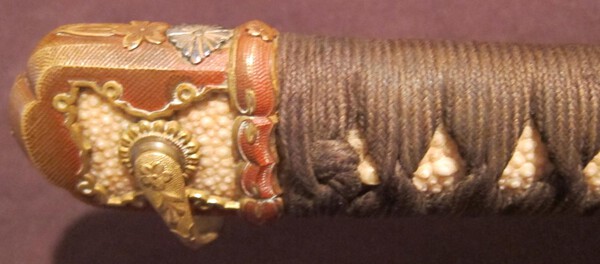
Just looking at the mon of Prince Asaka Yasuhiko and had a quick look on-line for mon under his name. Found this (1930s) on worthpoint. It is the same as the one on the sword. Interesting that his mon is 'hishi' (diamond) shape. I always thought these 'hishi' kiku-mon are the shape of 'non-royal' members/relatives of the Imperial family. Here also is one on a sword of mine (wonder who he was and if it is true about the 'hishi' non-royal mon?). Time for Bruce to look into it I think! Regards,

-
Just happened to re-read these posts and AAARRGGHH!!!! I noticed I said NIHON TOBU meant "North Area". Must have had a brain freeze as TOBU means "East Area"...that is those smiths working in the greater Tokyo area extending also to the east/north...not sure just how wide it was but it included Niigata on the coast north-east of Tokyo. I suppose if someone went through the 40+ membership list we could work out quite accurately how far it extended.. Sorry for the mistake. Regards, (edit to add) I don't want to labour the point, but a quick skim over some Japanese sources says that the Tobu system was conceived in late Sho 15 (1940) and by 1942 had 30 members in Tokyo, Kanagawa, Chiba, Saitama, Ibaraki, Gunma, Tochigi, Fukushima, Shizuoka and Nagano. By late 1942 smiths were engaging with the RJT scheme (I can't tell if they "changed" membership over) and by now numbered 46 smiths. From my own knowledge this now included smiths from Niigata ken. If the smiths were members of both systems I would assume that the collection/inspection system would stay the same...only the supply of raw materials and the payment system would be modified. This info is from "Dai Nihon Token Shoko Meikan" 1942 p.148. Hope this helps. (maybe one of our Japanese speakers could translate in more detail?) Regards,
-
Note for Markus Sesko
george trotter replied to george trotter's topic in General Nihonto Related Discussion
Hi Markus, That is great information, thank you. A very interesting line and generation. I could never have been able to determine from the photos alone that parts of the mei were added at a later time. I will definitely add that book to my library. Warm regards, -
Note for Markus Sesko
george trotter replied to george trotter's topic in General Nihonto Related Discussion
I thought Markus would have seen this by now. Maybe some member who knows him can mention it to him? I would like to read his comments...and/or...maybe a member has knowledge of this smith/group? if so please comment / finish the translation etc. Regards, -
Thanks Bruce, that is great info from Chris. While I knew that there were some arsenal smiths working within the existing army system, I think this might be the first time I have seen a first-hand account from a former RJT smith of the monthly tour type system and the on-site inspecting - stamping - collection of swords from regional RJT appointed smiths. I feel pretty sure that the army RJT system would naturally utilise existing network groups of regional swordsmiths, such as the "NIHON TOBU TANREN TOKOGYO KUMIAI" (North Area Swordmakers Association) which included about 40 smiths working in the regions north of Tokyo. There was another association in the Aizu-Wakamatsu area that included about a dozen? smiths also and this is written about in detail in a book called "GUNTO KUMIAI SHIMATSU" (Gunto Association Management).I would have looked it up for you but my copy is packed away, but from memory, members of this group were supplied material and made swords in their region and the inspectors came and took swords...just like Chris said. As for a RJT headquarters building in Tokyo I can't say, but I think it more likely there was simply an office somewhere in HQ building that simply had a sign on the door that said "RJT Office". Great stuff Vajo, Bruce, Chris.
-
"Jon B. no sloop" heh heh I like that (would the young folks get it?)
-
Hi Markus (and all), Reading your "Last of the Kanesada" I notice there is some confusion about what exact year 11 gen Kanesada changed his name from Kanemoto to Kanesada. Here is his mei as both Kanemoto and Izumi no Kami Kanesada and it is dated Keio 1st year 10 month 4 day (4th of Oct 1865). I am not certain if I read it right but it seems to say that at the time of "Kyosen" (unrest in the capital?) he, Aizu ju Kanemoto, assumes/accepts the title/name of Izumi no Kami Kanesada. On the other side he says he accepts the order of Okada Yasumitsu etc. I saw this mei in a Dai Token Ichi catalog 2004 p.23. I am not sure if it is already seen by you or is of any value, but I (and I'm sure some members) would like to hear the facts from you and maybe a full translation? Hope I am not giving you too much work. Regards,.


-
Anyone recognize this signature?
george trotter replied to sneakerd's topic in Military Swords of Japan
Just saw this again and checked Japanese Sword index link for tang oshigata pics (in the links section above). Looked up Tadakazu and there is your signature with the same file marks. Style of writing is a little more 'formal' but it says 'Mitsu Tadakazu saku'. No other ibfo, but at least yours isn't a 'one off'. It is more likely the name is Hikari Tadakazu as I have not heard of the surname Mitsu (of Hikari either for that matter but it is more likely)....but who knows. Hope this helps (sort of). http://japaneseswordindex.com/oshigata/tadakazu.jpg -
I have three 'unknowns' I would like to take to shinsa, One is a mumei utsushi which I would like confirmed to what I think (or not) and the other two are signed but unknown in any references. Even if it means a sheet saying 'Meikan More' it is at least an acknowledgement of the smith's existence. Any NTHK - NPO or NBTHK shinsa scheduled for an Australian city in the next few years? Regards,
-
Sword 2...(here goes)...tang shape, file marks and hamon look like Mino influence to me. Maybe Aizu Kanesada line who worked shinto through to Meiji (11 gens). I have seen a few of their blades over time and there seems to be a fair number unsigned just like this. The blade here looks a little 'heavier' than I would expect on their work, but who knows. Anyway it looks as if it could be anywhere between c.1700-1900. Hope I'm not too wild in my assessment here...maybe start the discussion anyway. Regards,
-
Anyone recognize this signature?
george trotter replied to sneakerd's topic in Military Swords of Japan
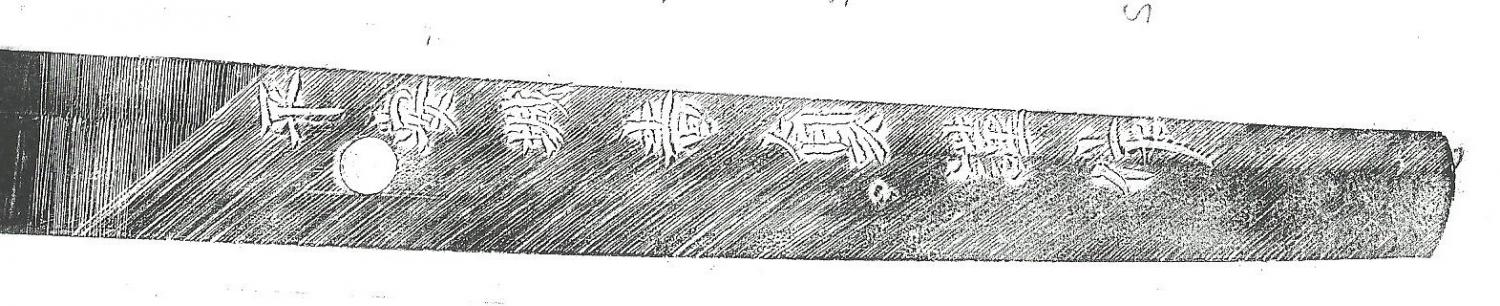
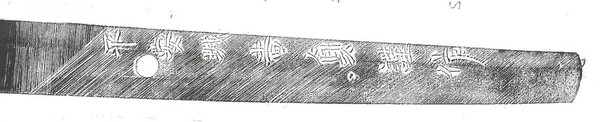
Hi Brandon, I don't think the file marks change just under the habaki, actually the first portion is just the 'rough' finish on the tang, with the kessho part of the file marks starting then with kiri (horizontal) yasuri. The kessho is the very steep sujikai (slant). This is a rare yasuri-kessho. I have it on a tang by Okishiba Yoshisada of Osaka, RJT. Maybe this will help the owner ID his sword? Regards, PS, thought I'd add me...mei is katana mei. I'm not sure of the 'rules' about kessho, but in this case the 'slant' is the same when viewed, but is opposite in fact.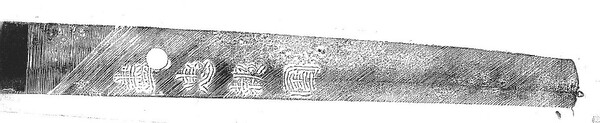
-
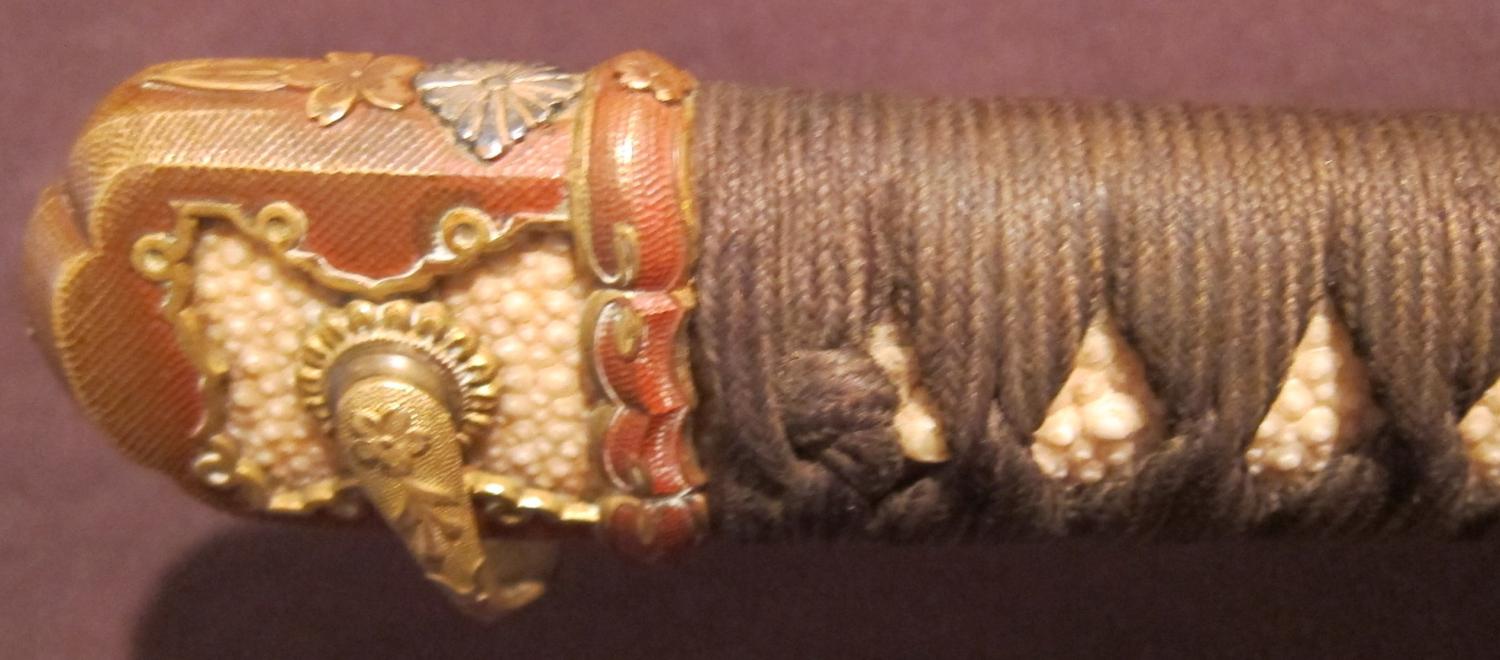
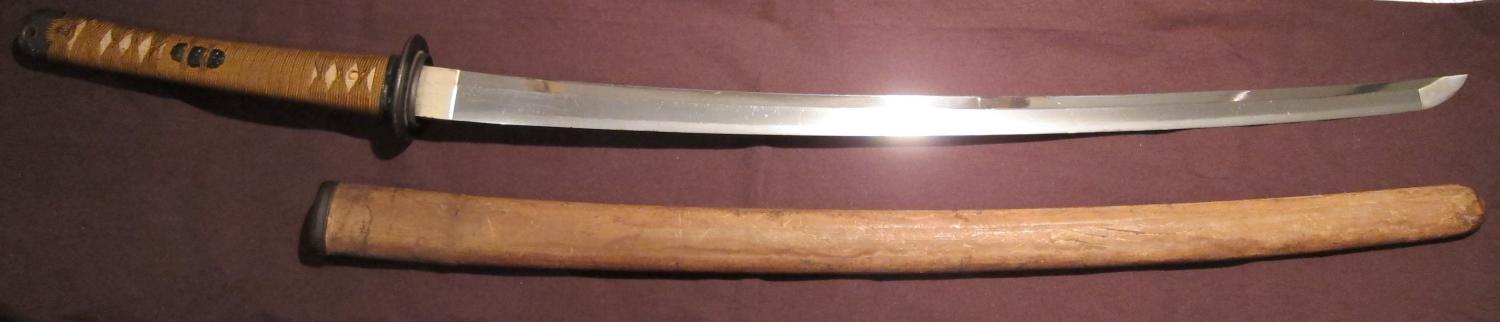
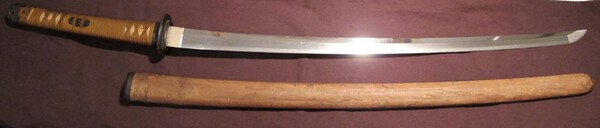
Not so sure kojiri is missing Tom. This type of Rinji Seishiki mounts come from the Osaka area and several I have seen end in the plain rounded scabbard end without kojiri. Probably intended to be in a canvas or leather cover. Here is mine...
-
Question on NBTHK or NPO-NTHK papers
george trotter replied to george trotter's topic in General Nihonto Related Discussion
Thanks for that John, but no, they don't appear on any 'papered list' here. It will probably be someone who actually owns one of them with a paper that will answer the question...if anyone has one of course. Hope to get some feedback. Thanks, -
Hi all, I have a number of WWII gendaito by smiths who have papered. I know this from searches here or on-line antique sales. Two I have are not mentioned in any source I have found, these are: Okishiba Yoshisada RJT Osaka Nagao Kunishiro RJT Aomori Has anyone any knowledge on whether their work has papered? Maybe point me to a list of gendai smiths who have papered ? Thanks.