
Leaderboard




Popular Content
Showing content with the highest reputation on 08/17/2026 in all areas
-
I've administratively worked NTHK shinsa in the '00s about [20 to 25 years ago], so I could get to see several hundred work sheets and view over their shoulders the sort of question you are asking. The Yoshikawa group definitely uses work-sheets with a list of informational choices that they circle, but I don't think those will specifically get you to the conclusions they reach. They do use books, including Haynes, and the panel of judges at any one time do discuss the fittings to reach a conclusion. The conclusion is only as strong as the judges. I have seen some very strong NTHK shinsa with Hagihara-san [I'm probably mispelling], Mr. Jim Gilbert, and Mr. G. Robinson switch hitting between the swords (75%) and the fittings (25%) in my time observing. I've also seen one Yoshikawa NTHK shinsa where I felt the fittings judges without Hagihara-san and Mr. Gilbert were not that strong. At that particular shinsa, someone I had sold a tsuba to earlier in the day had taken it to the shinsa team and had it bounced as "modern" and came back to me. I felt bad... -because I had forgotten to mention or give him the Hozon NBTHK papers. I cringed a bit at that particular shinsa, and asked him if he wanted to return the tsuba. He took the papers. --Ironically, that is one of the tsuba I've sold over the years that I wish I could buy back. To this day I scratch my head why that particular shinsa panel thought "modern"-- The same goes for the current NBTHK. Since Jan 2014, I've seen the rise of a lot of 'bad attributions'. Pre-Tariffs, I'd sometimes buy some of these crap Hozon and resubmit. Often round 2 was much better (correct?) papers. Current NBTHK shinsa seems luck of the draw. One shinsa might be crap and the next one might have a strong judge or two. What bothers me most is the rise of Horyu at shinsa. So many good tsuba get that now. You have to submit them a second time, and just hope the shinsa team is better. My best Yagyu (previously NBTHK published!) got Horyu the first time, and then correct TH to Yagyu the second time. I hate that. So, as @Hector noted, I am less and less likely to submit anything to shinsa that isn't at least at the $2000 or higher value level. Even then, those horyu still manage to make me angry.7 points
-
The attribution is Yamato Daijo Masanori The kinpun-mei was purportedly by Hon'ami Koson6 points
-
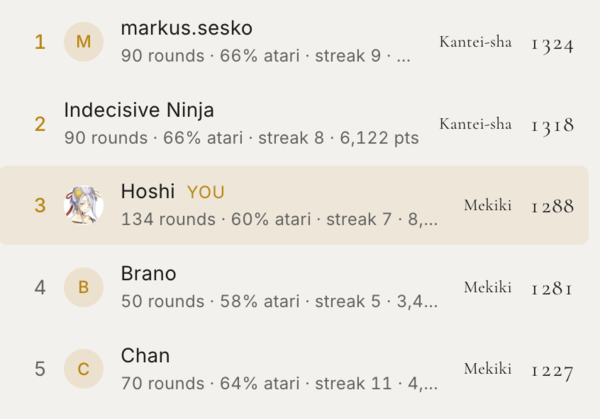
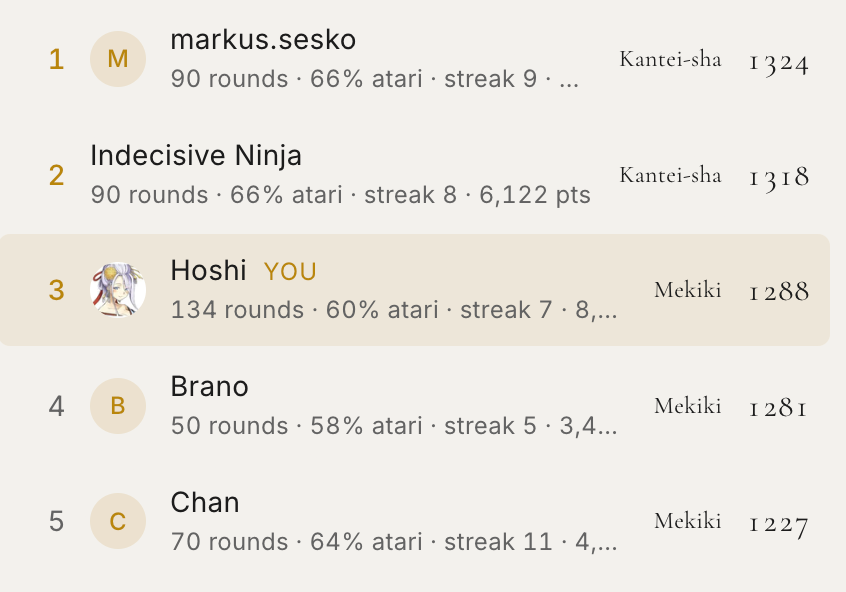
Dear NMB community, Tomorrow is the big day, NihontoWatch will be officially out of BETA. I promised a surprise, so it is time for the reveal. I have cooked. What we've been missing in the field is the ability to learn from kantei. Kantei is the practice of guessing the maker or school of a blade, either with the real sword in hand, or through oshigata and descriptive information. The later is the model that has been used in the Token Bijutsu magazine for decades, and it has been a wonderful way for people to engage with the field and learn more. Today it's a bit frozen in time, with bids sent through paper mail, and feedback being exceedingly slow as a result. NihontoWatch brings this ancient practice to the digital age. Tomorrow everyone will be able to play the Daily Kantei, where you will be presented with the same five swords with carefully selected clues, and attempt to guess the maker from a calibrated multiple choice in under 90 seconds. The daily kantei is a learning tool, where you can improve your skills at differentiating makers, study key traits of different smiths, and refine your connoisseurship. On any given day, if you reach 4 out of 5 Atari, you will unlock the Dojo Access Achievement. Once you earn the achievement as an NW member, it will unlock the doors of the the Dojo for you. There, you can train as much as you want, and the difficulty will gently adjust to your level to keep things challenging while not impossible. It will find your sweet spot for you to learn and prepare you for what comes next. Once you've muster the courage, true competition begins on the public leaderboard. You can compete in Ranked Kantei. Ranked Kantei uses the same formal rating system as chess: the ELO rating. After 50 trials, you are assigned an ELO rating based on your performance and you will be qualified on the ladder. The game's difficulty is self-adjusting, it gets harder and harder as you climb up the ladder, and your ELO rating will keep evolving as long as you keep playing. After a few months (TBD), the season will come to an end and champions will be announced, and a new season will begin with rule adjustments. Each season have a maximum number of trials (TBD, between 250 and 500). As more players play the game, the self-adjusting difficulty will become more accurate and throw less wild swings and the next season will benefit from better calibration. Until then, we all must endure the unforgiving swings of the Kantei Arena. During the course of internal testing, our current champion was revealed to be no other than... THE DISTINGUISHED, THE AWESOME, THE ERUDITE MARKUS SESKO WHO WILL RISE TO THE CHALLENGE AND CONFRONT OUR CHAMPION? WHO WILL HAVE THE GUSTO AND THE ERUDITION TO DISPLACE HIM AND EARN GREAT GLORY? GREAT PRIZES ARE TO BE WON IN THE FUTURE, IF THE ARENA MASTER'S RUMORS ARE TRUE... And will the Indecisive Ninja reveal who he truly is? will he make a secret bid for the top under his mysterious moniker? Will yours truly, Hoshi, the evident try-hard challenger with a whooping 134 trials under his belt, finally learn to differentiate the various Ukai smiths and study his Shinto? Stay tuned. All will be revealed during the course of the GREAT KANTEI GAMES, season 1. In the future, there be exclusive perks to unlock by playing and competing in the Dojo, and you can trust that they will be nothing short of awesome. First, it needs to be tested for a months or two, ensuring everything works well, that there are no gaps, and that it is resistant to shenanigans. This link will be live tomorrow: https://nihontowatch.com/kantei/ Or simply access it via the app here: If you're enjoying NihontoWatch, support the project by getting your membership here: https://nihontowatch.com/join As usual, please keep all Kantei game related feedback (bugs, issues, areas of improvements...) in this thread. Brace for the Great Kantei Games. It begins tomorrow. Hoshi
 4 points
 -
Two people who come to mind in The Netherlands are Mandarin Mansions Peter Dekker and our own @Lexvdjagt. I think Lex may be able to assist and I'm sure will reach out if that's the case.4 points
-
NihontoWatch is live! Thank you for all the feedback and support along the way. Hoshi4 points
-
A key component to all of this is recognizing a very human weakness we all (almost all?) share: our discomfort in remaining in a state of not knowing, or, as I like to call it, "living with the question." Many experience no small degree of anxiety in this state; the instability is too uncomfortable, perhaps even threatening in some way. But there is simply so much we do not know, and can never know with 100% certainty, about nihonto and tosogu, especially those made many centuries ago. Often, the best we can do is narrow down possibilities, recognize with clarity where the knowledge gaps are, and engage in the most informed speculation we can about plausible/likely answers. Not infrequently, the source of such speculation will arise not from the sword world itself, but out of related contexts (historical, cultural, political, social, economic, regional, etc...). Again, deepening our knowledge of these contexts is much less likely to concretely/objectively answer very specific questions we might have about a given blade or tsuba than it is to sharpen our speculation, so that certain probabilities are enhanced, vis-a-vis others. Living with the question is a discipline, and does take some conscious effort to reinforce, in my experience. Given the inherent esoteric and arcane nature of Nihonto and Tosogu (particularly as regards pieces made some centuries ago), even the most adept LLM will present with a multitude of information/knowledge gaps that cannot be bridged. As long as this can be recognized and accepted, LLMs could have great value, so long as they "begin at the beginning," as Glen and Curran and Thomas have emphasized.4 points
-
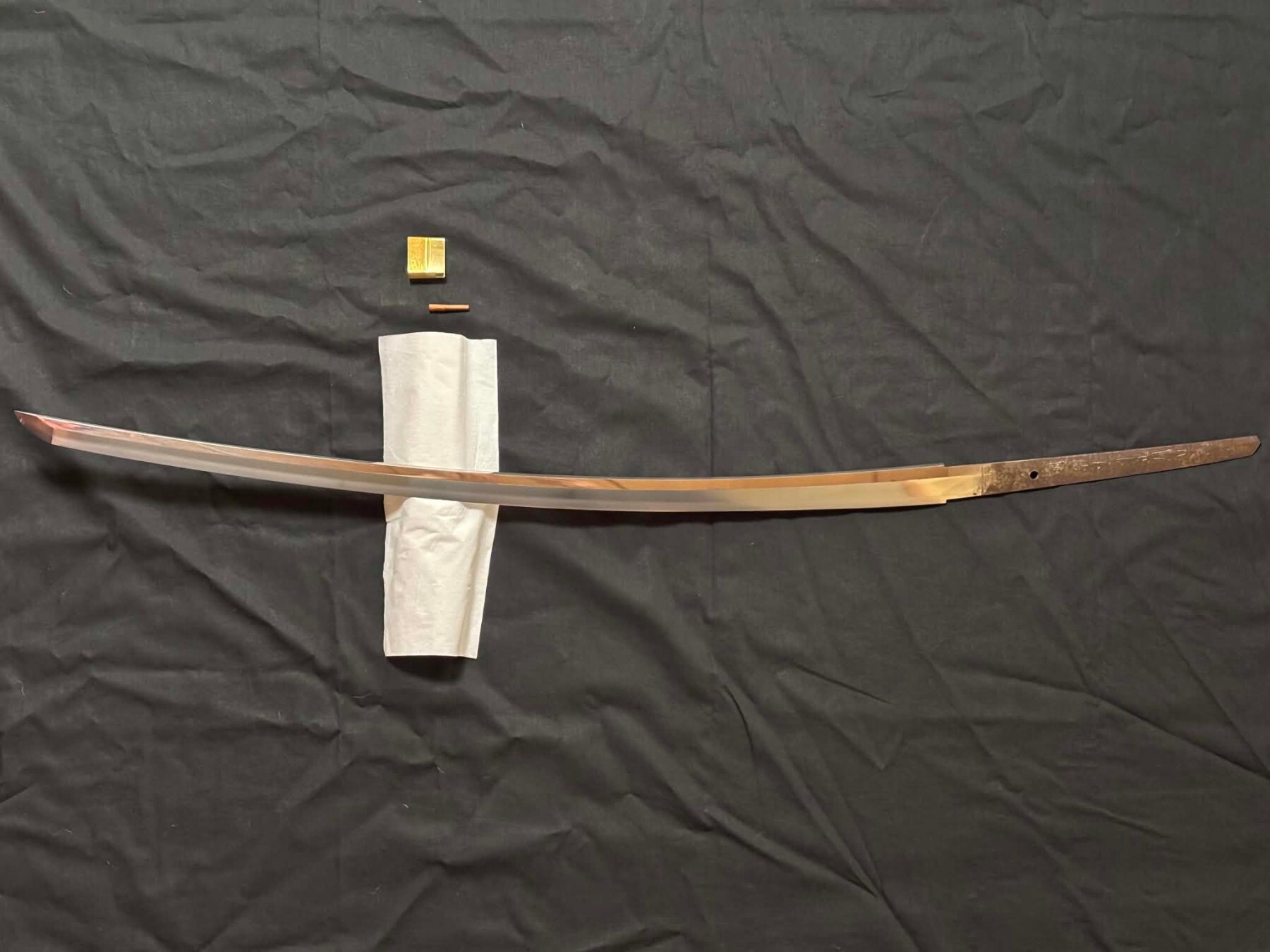
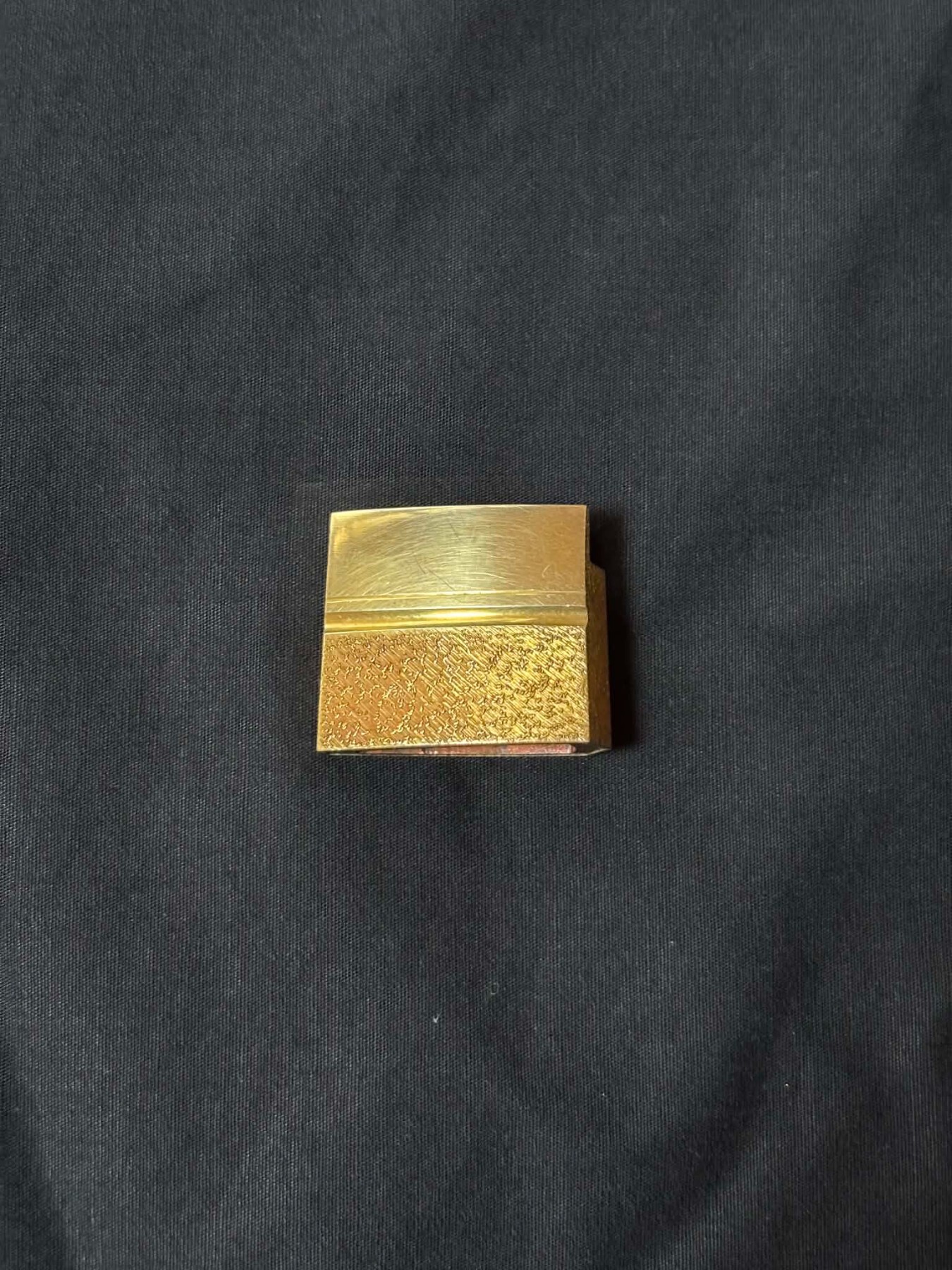
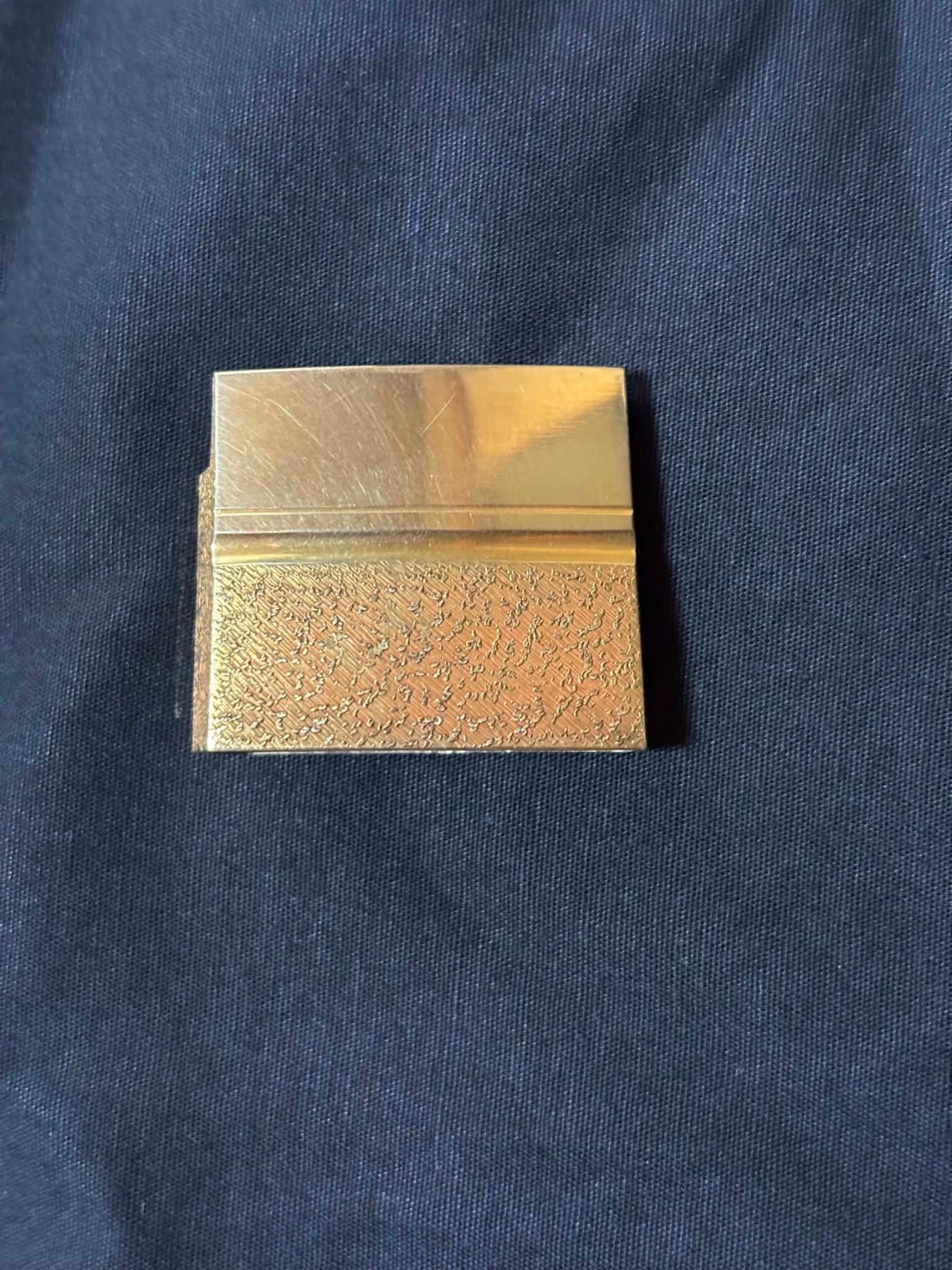
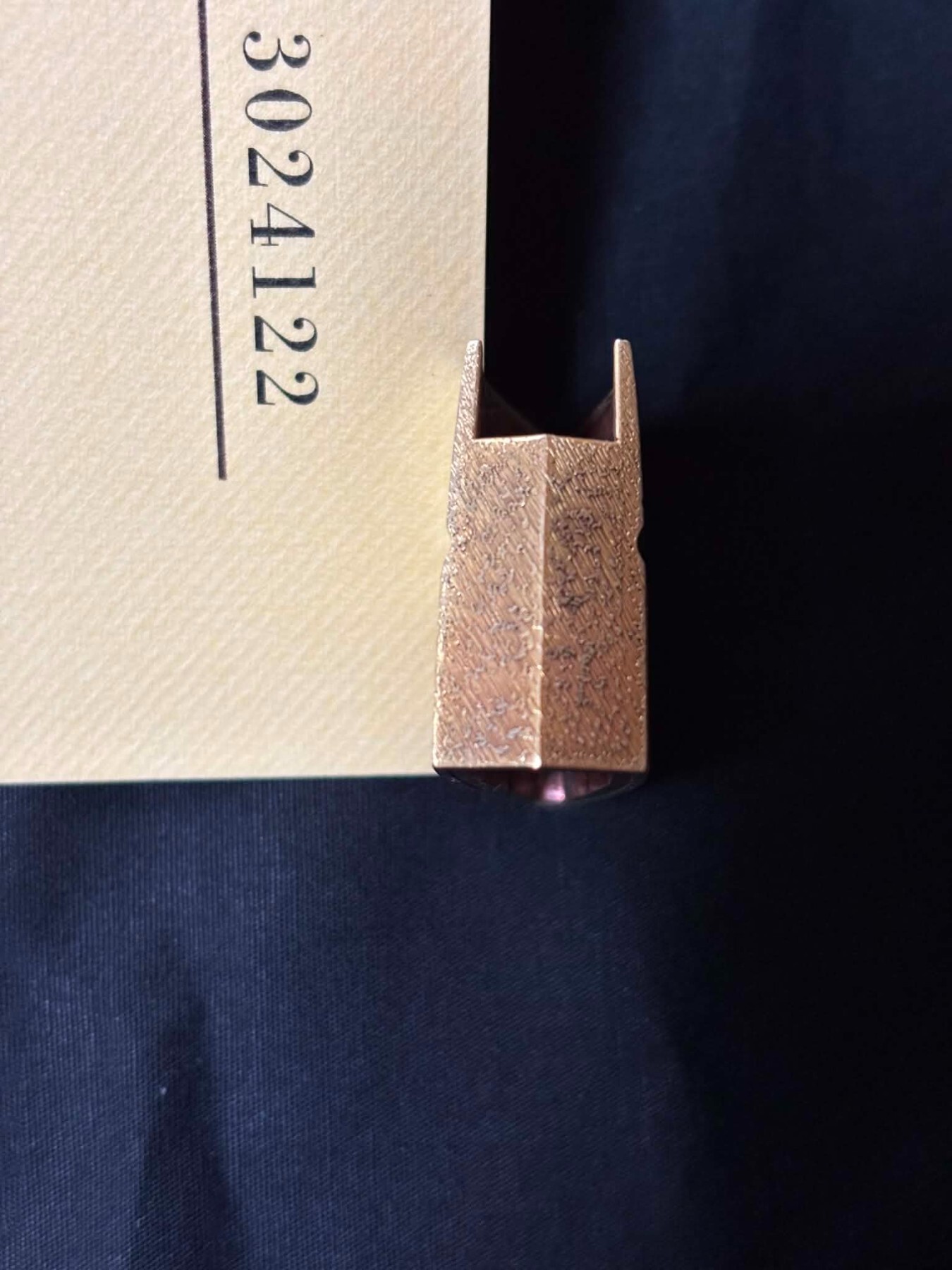
Some more info here: This might help too: https://www.bladesmithsforum.com/index.php?/topic/9578-making-a-double-habaki/3 points
-
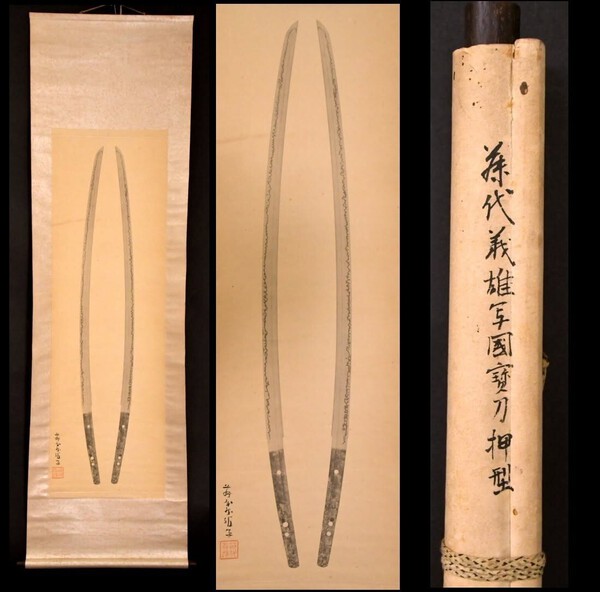
i got this, just waiting for it to arrive, apparently by Fugishiro
 3 points
 -
3 points
-
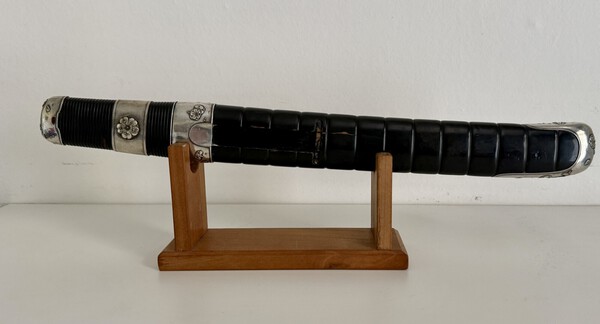
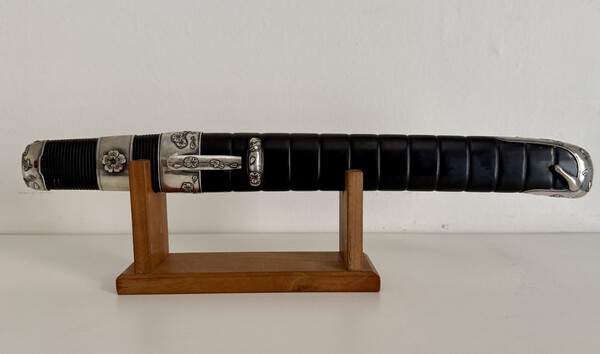
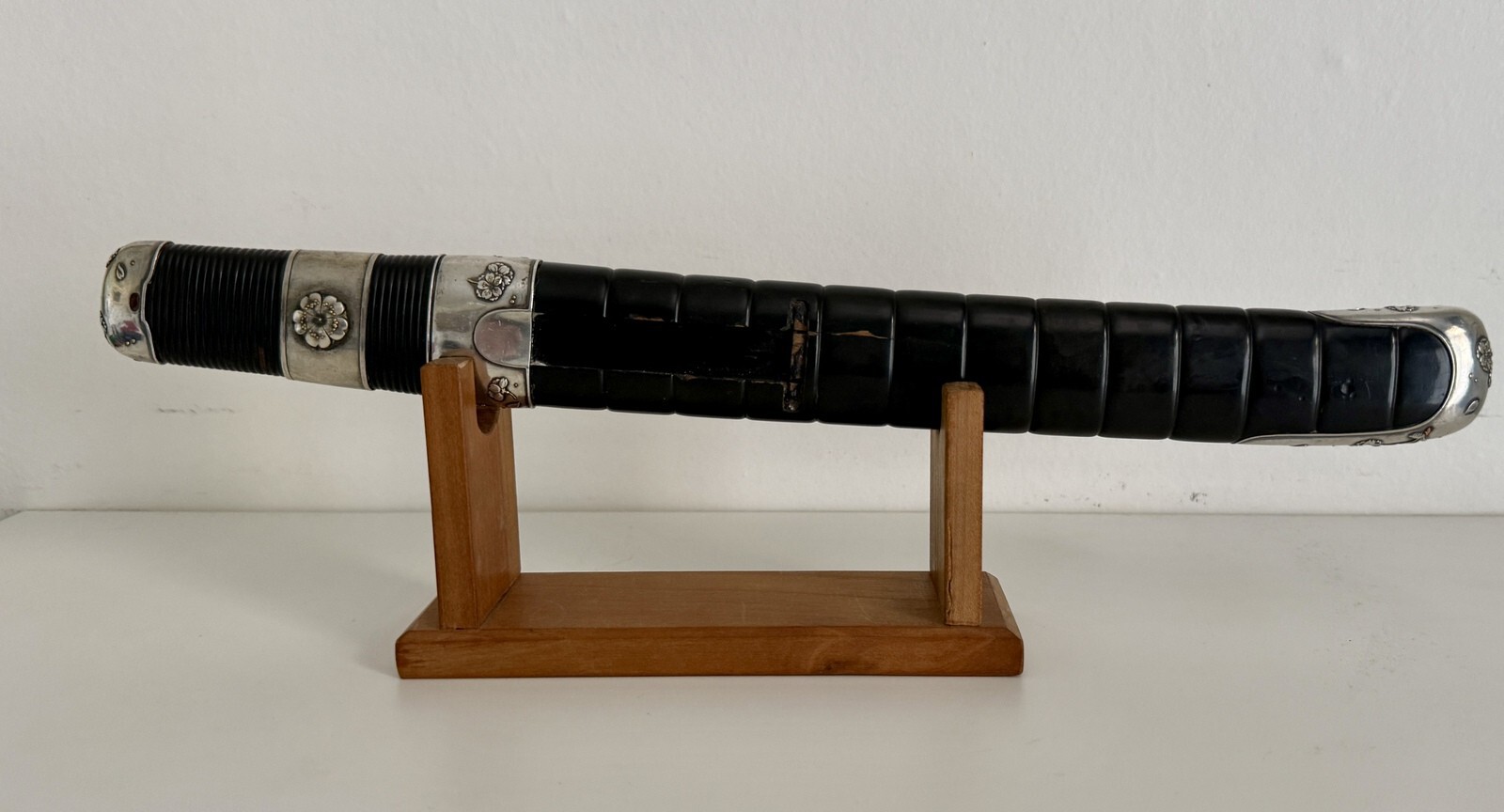
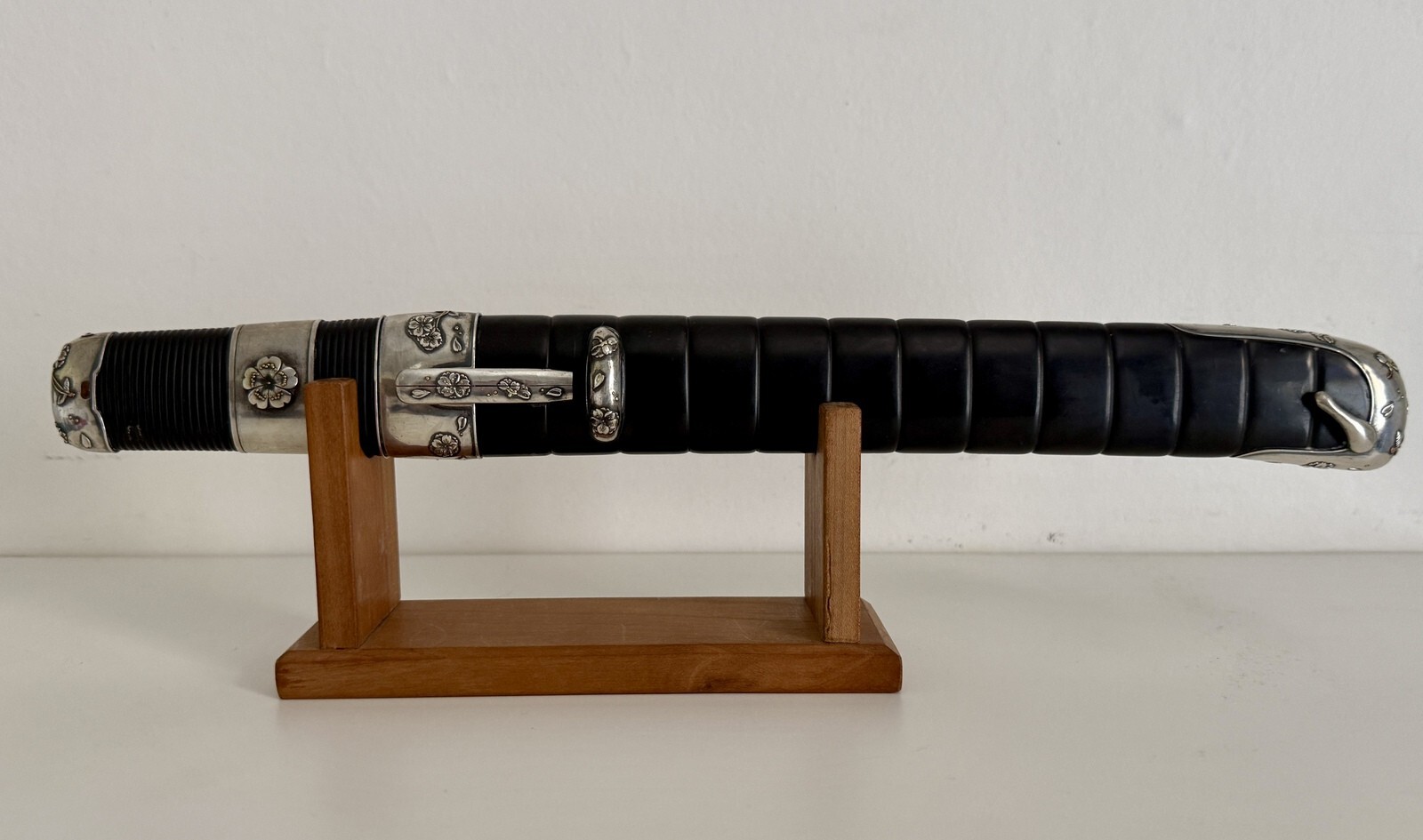
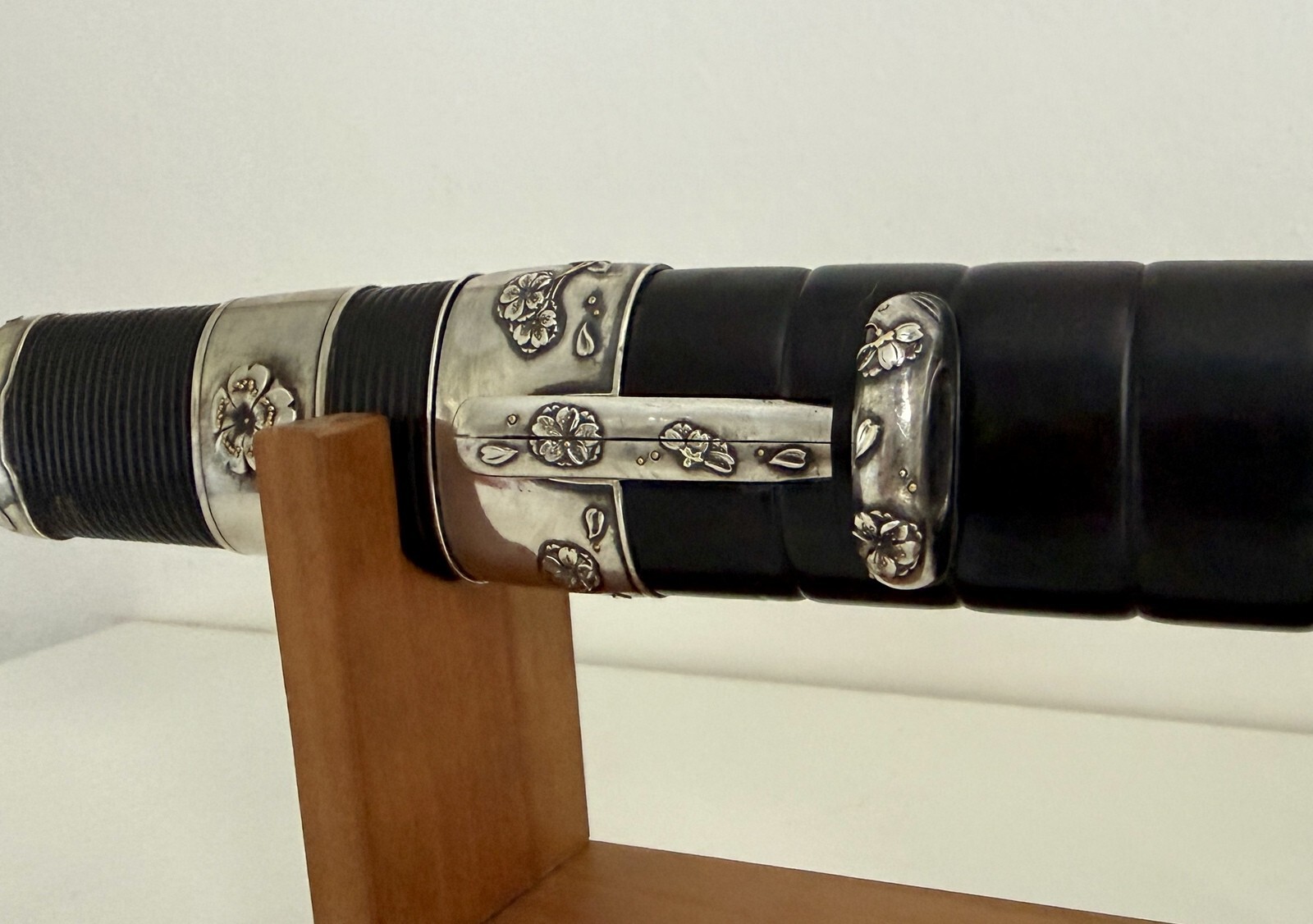
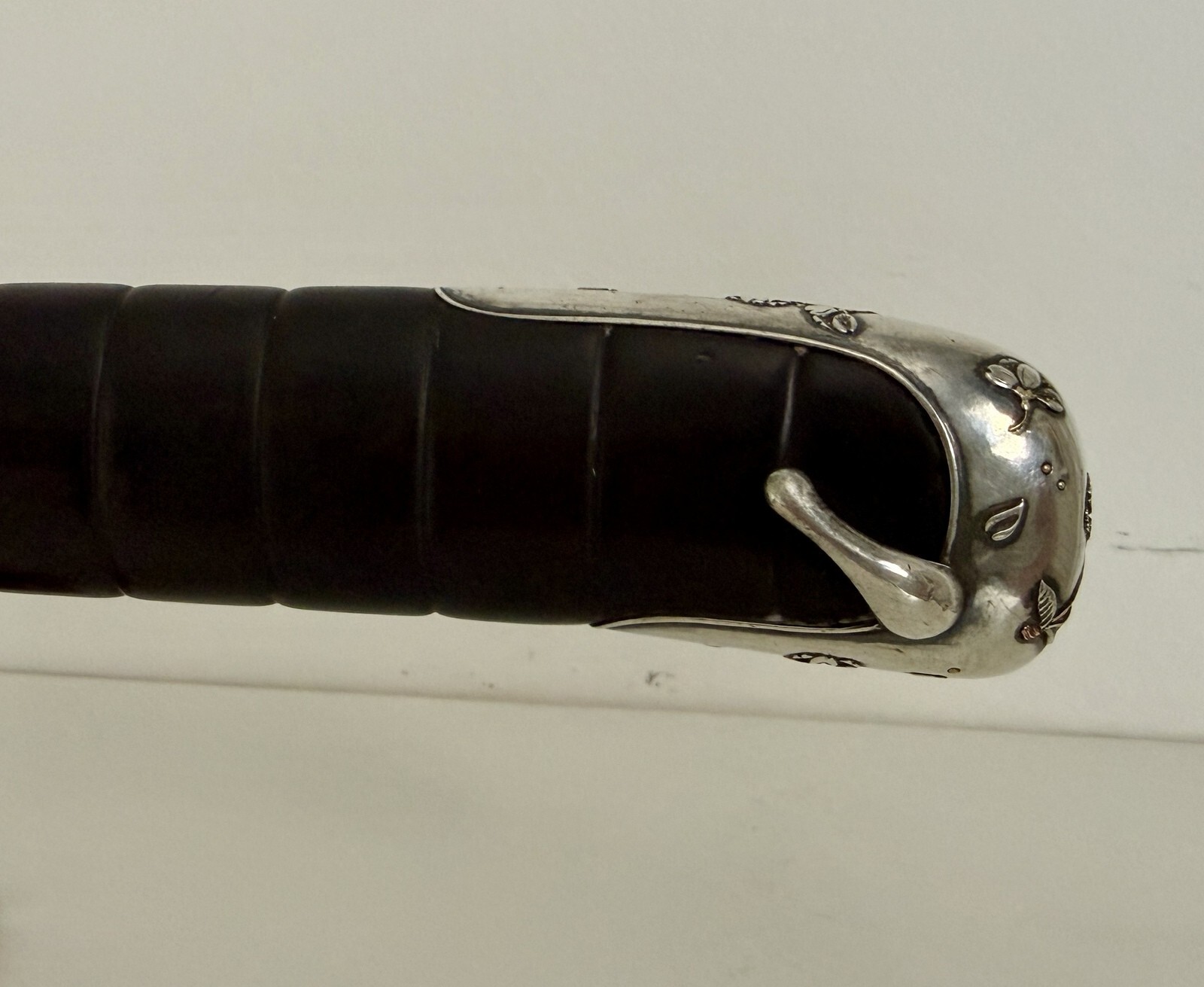
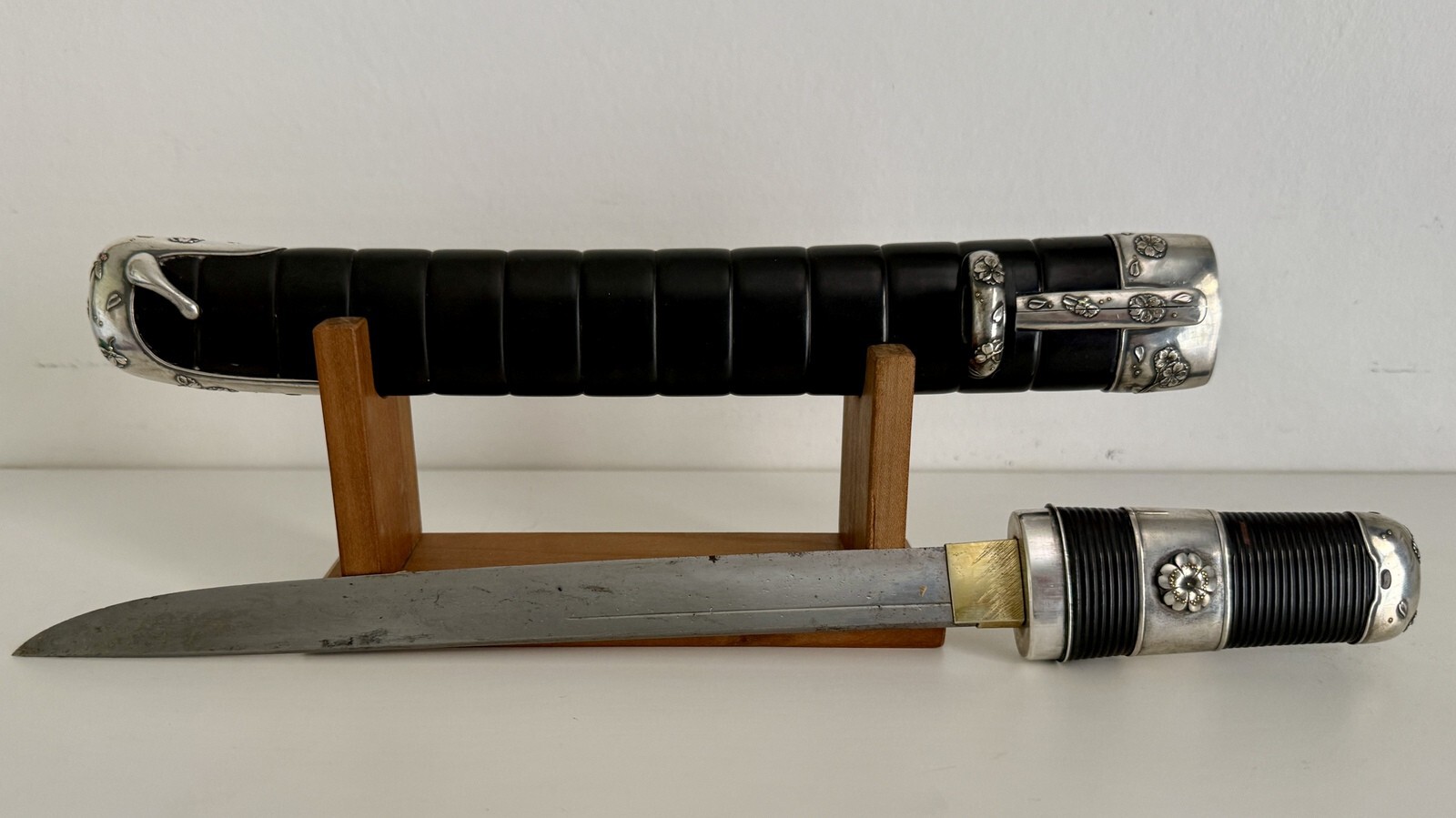
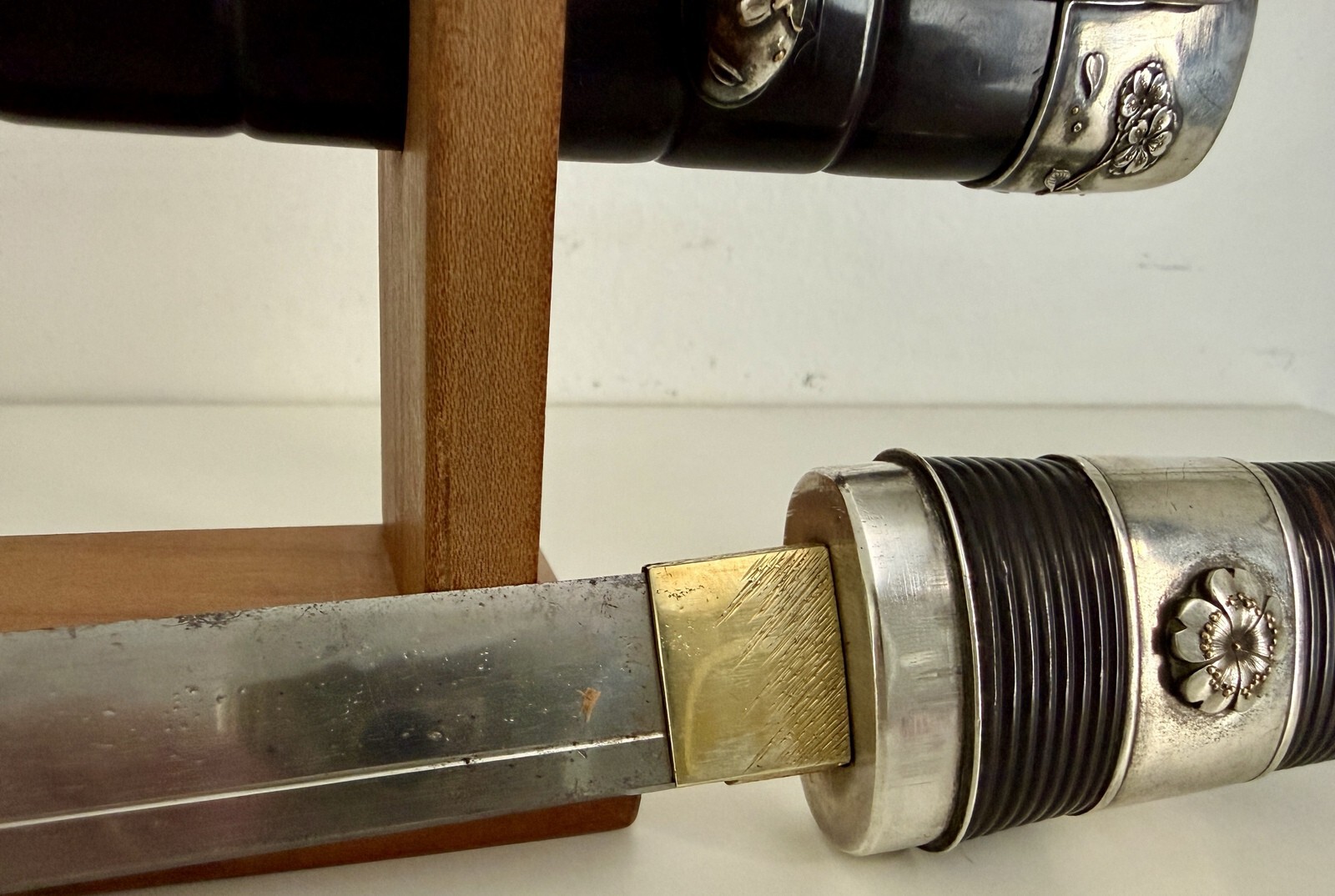
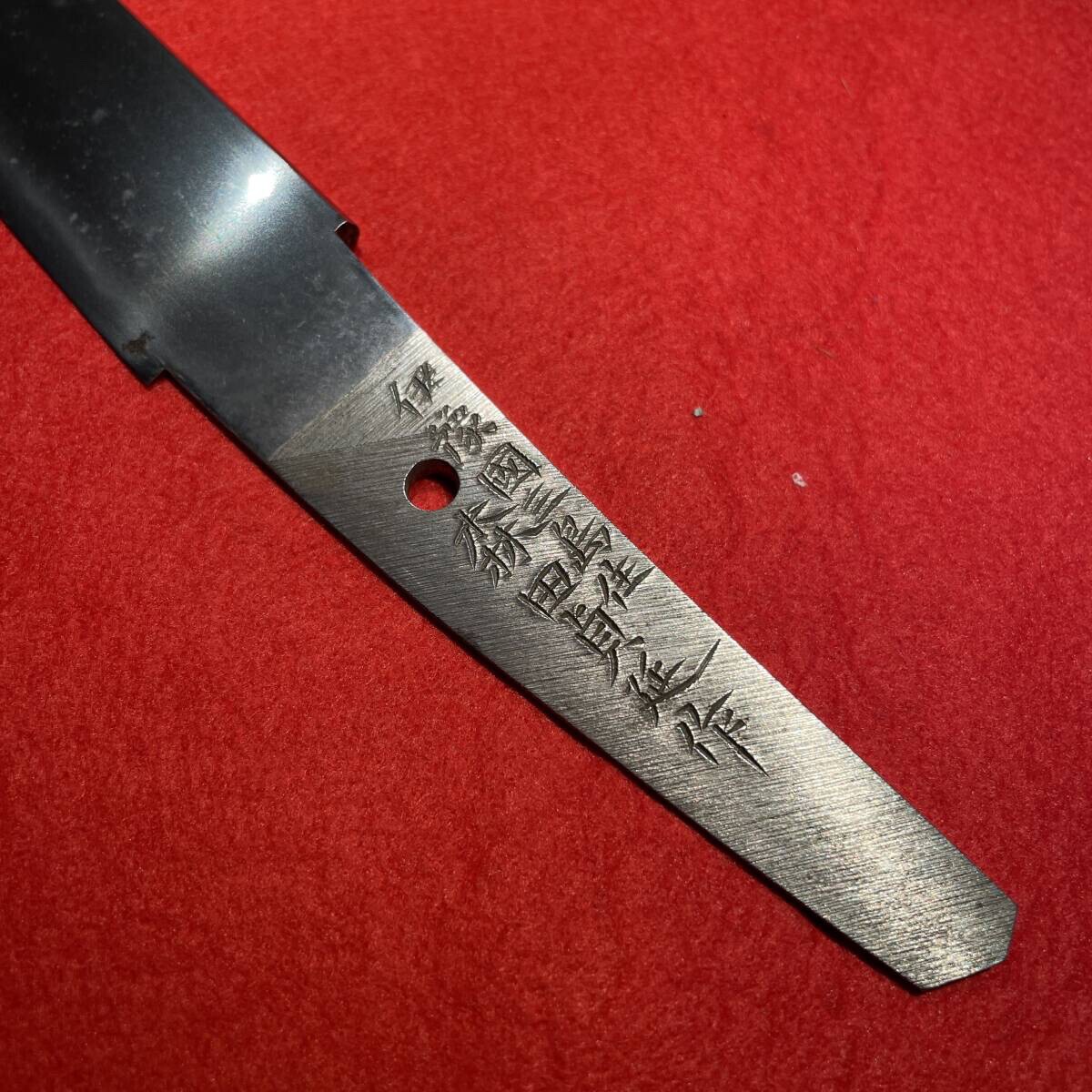
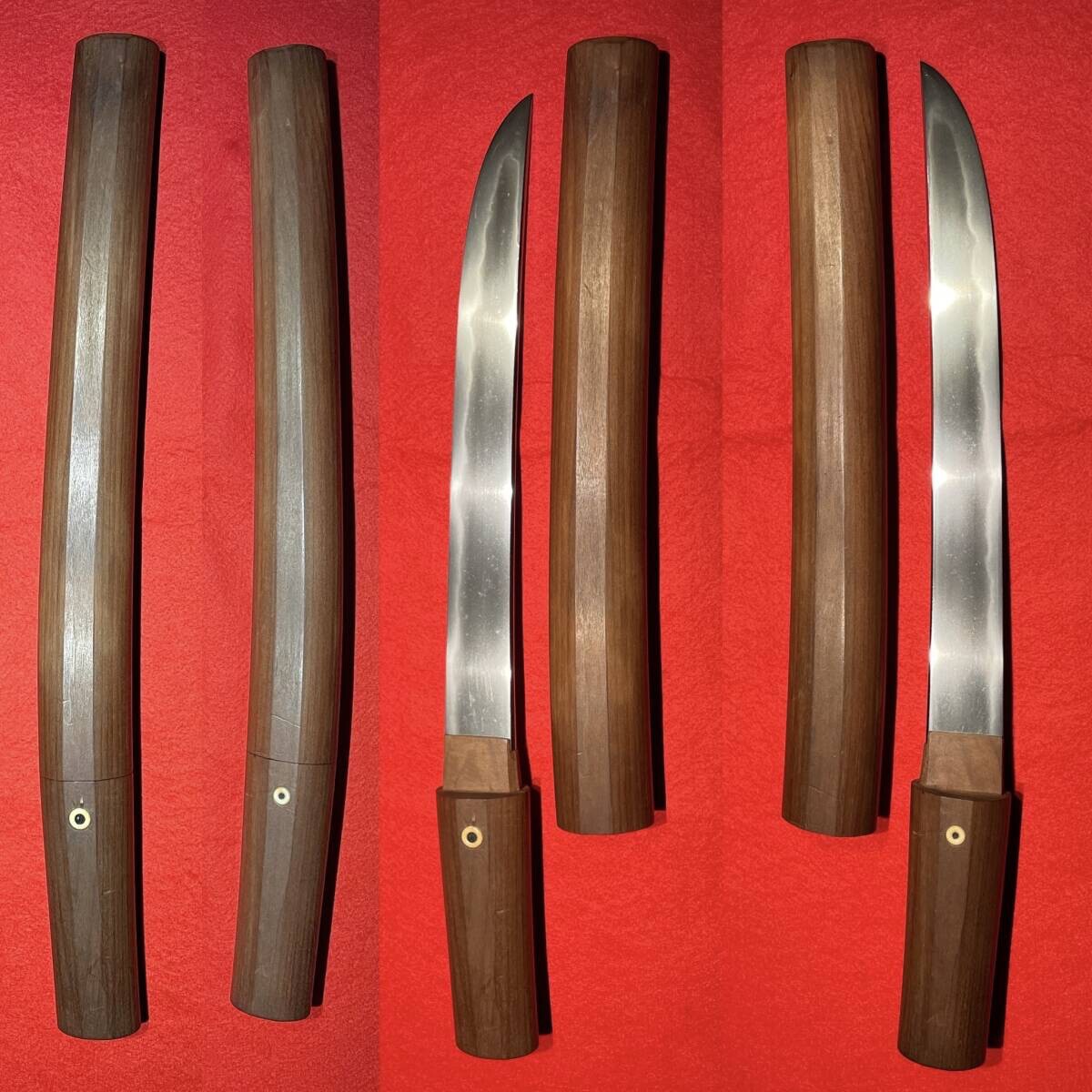
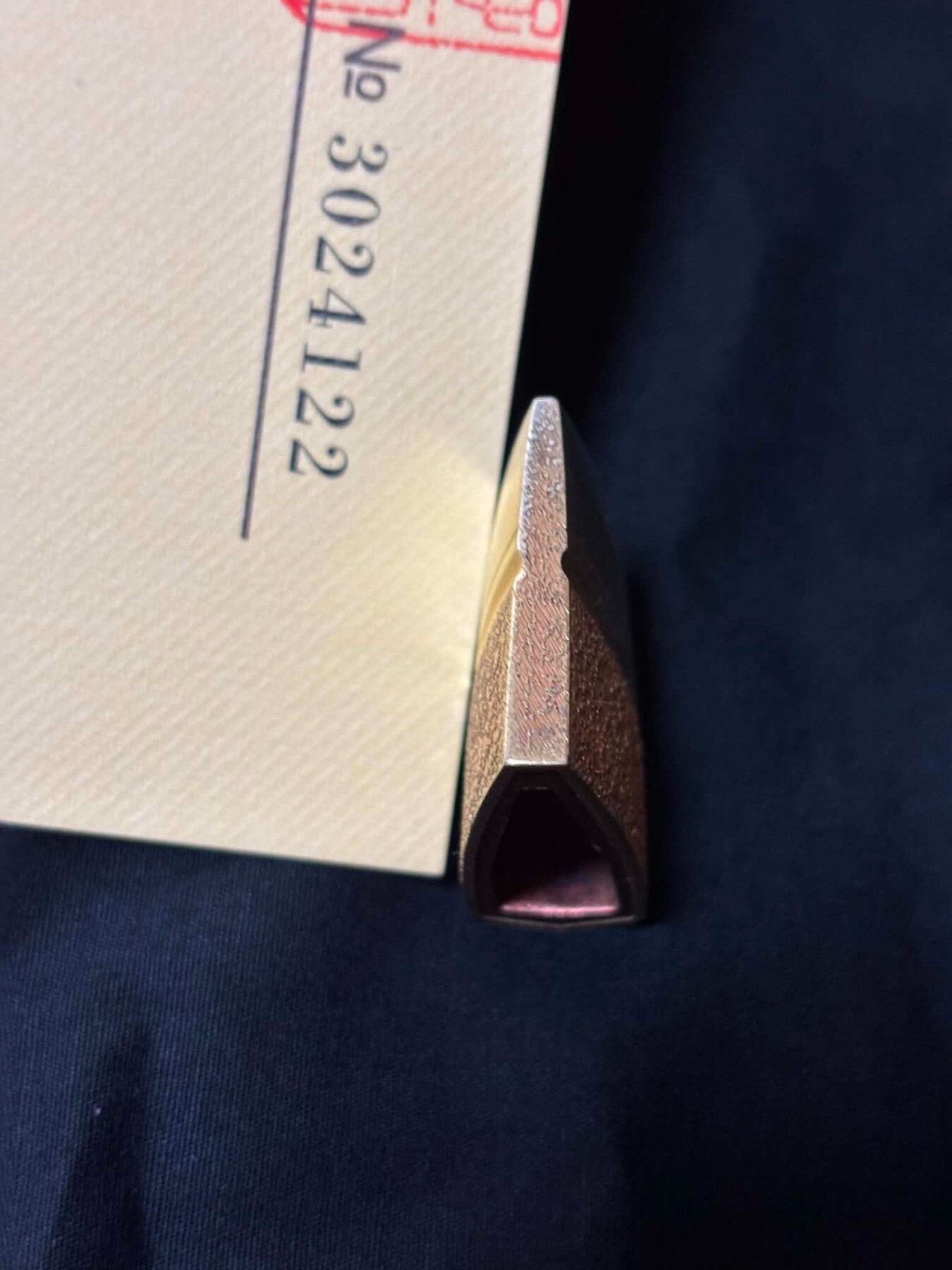
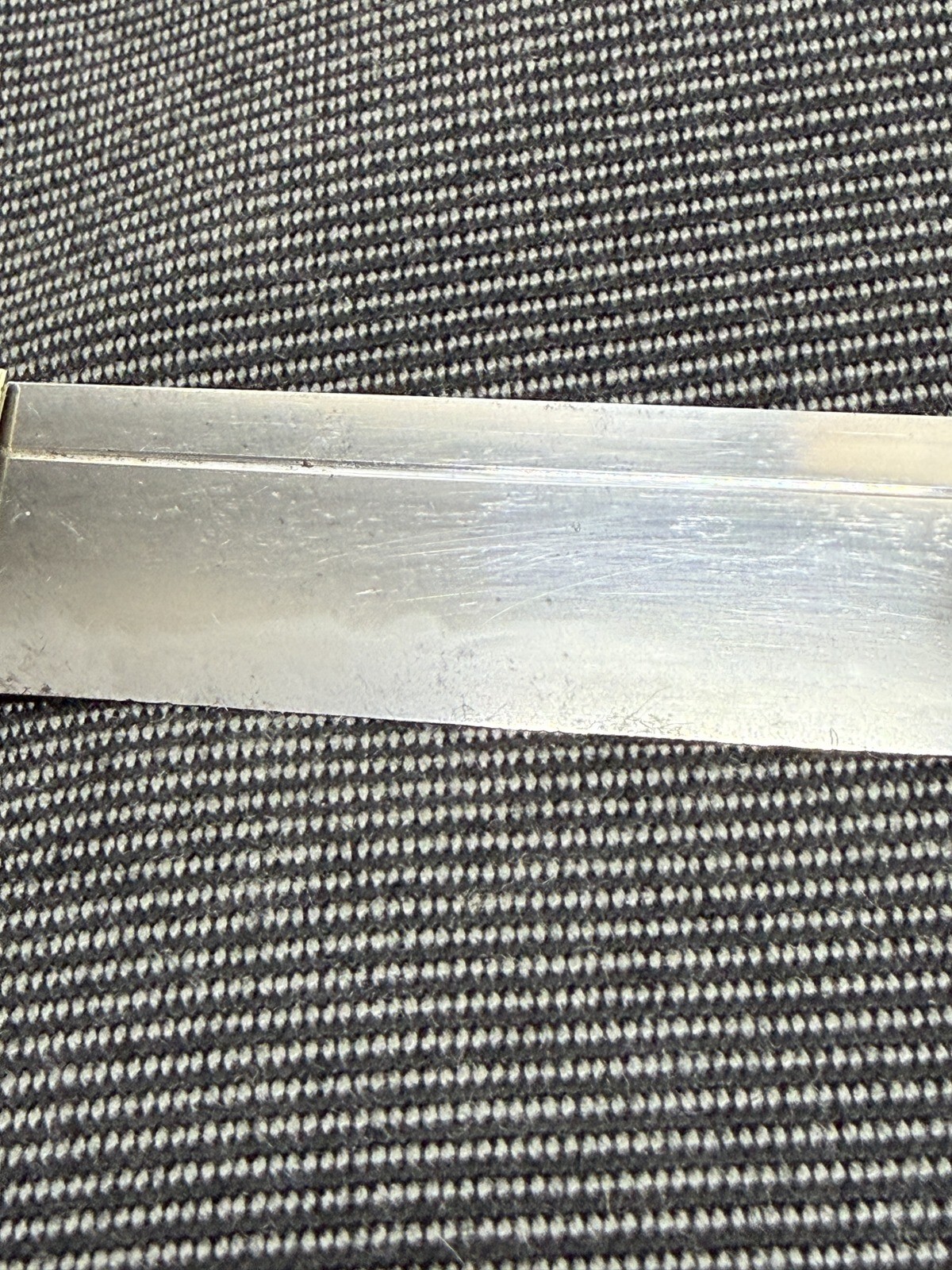
Hi, I got this Tanto at an antiques fair couple of months ago (as a lot with another one signed Senshū-jū Masakiyo saku => thanks again to Xiayang for helping with the translation) and did not have time to disassemble it until very recently. it is Mumei and the blade in worse condition than the Masakiyo one. It came with the Kozuka Kogatana pictured which is clearly not original to the set. I believe all the fittings are in solid silver and the habaki is a thick gold leaf over copper. Any thoughts on it would be appreciated, especially if thinking about a restoration of the blade would make sense...
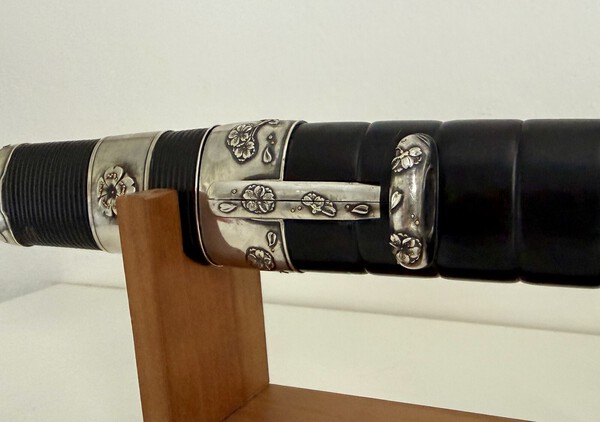
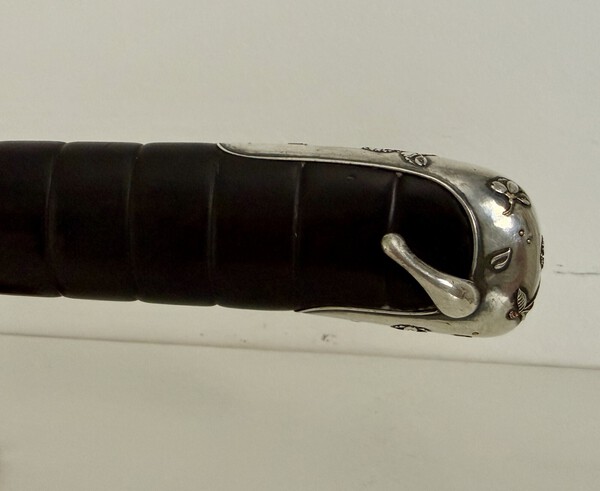
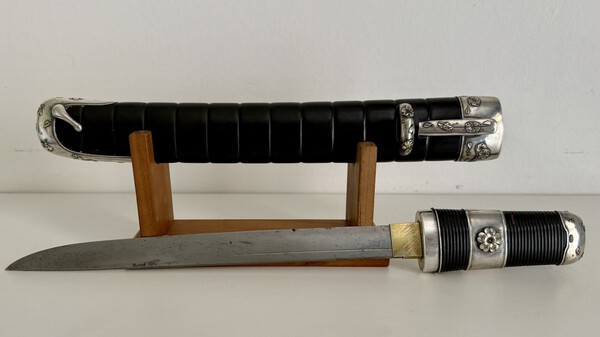

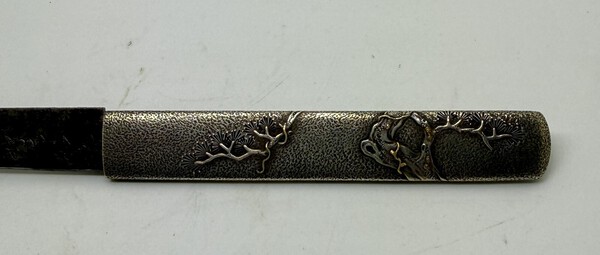
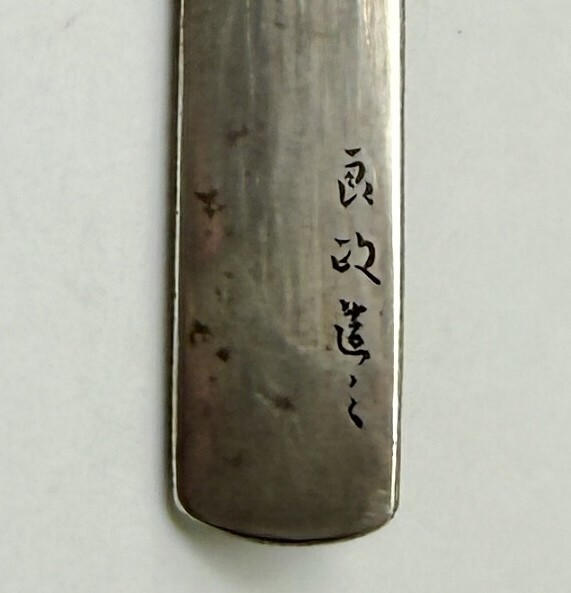 2 points
 -
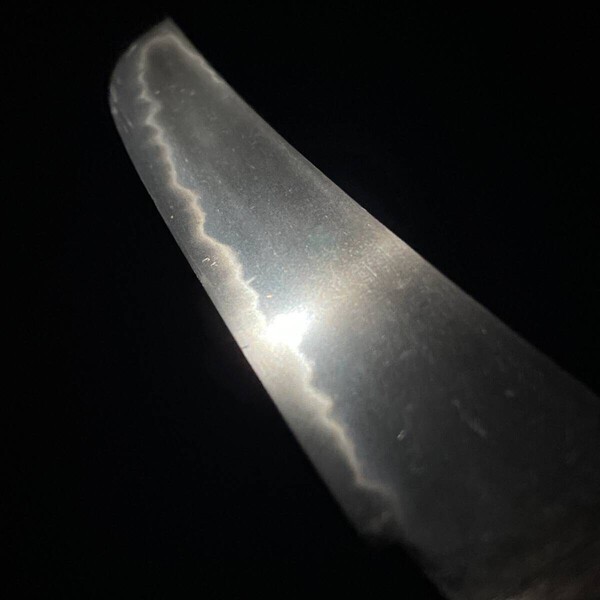
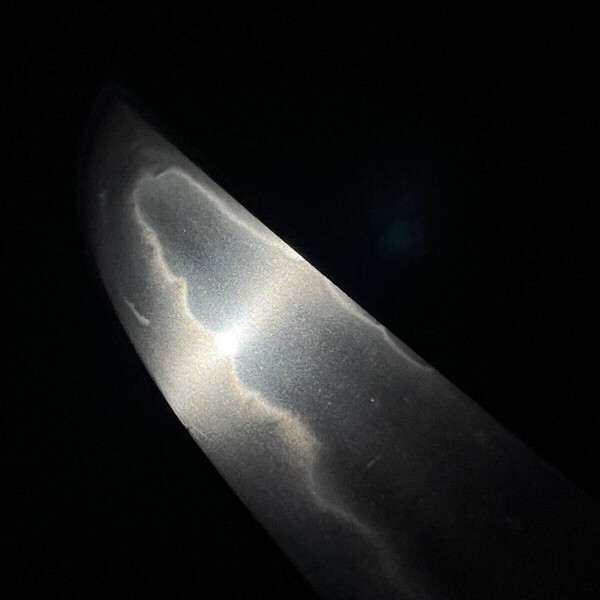
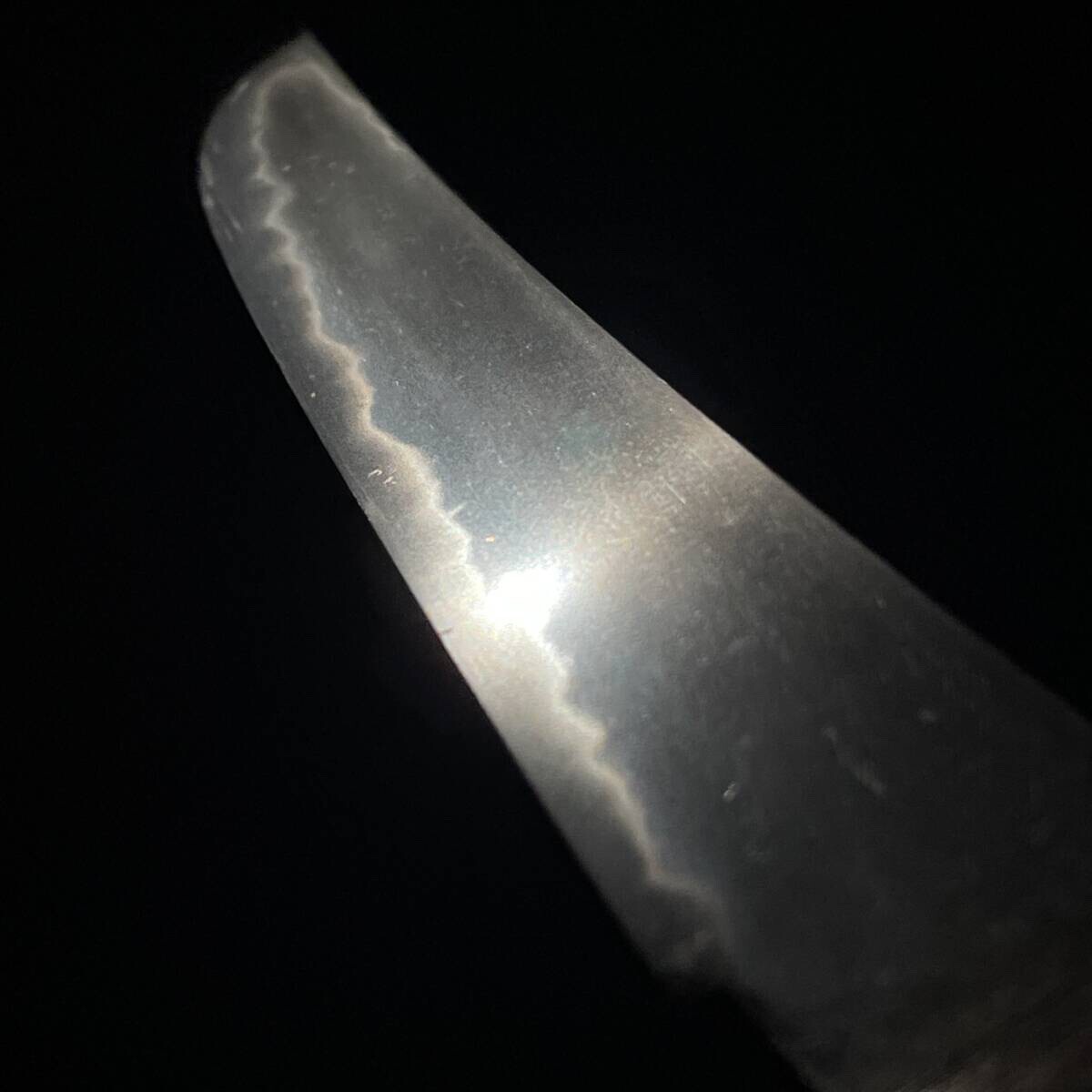
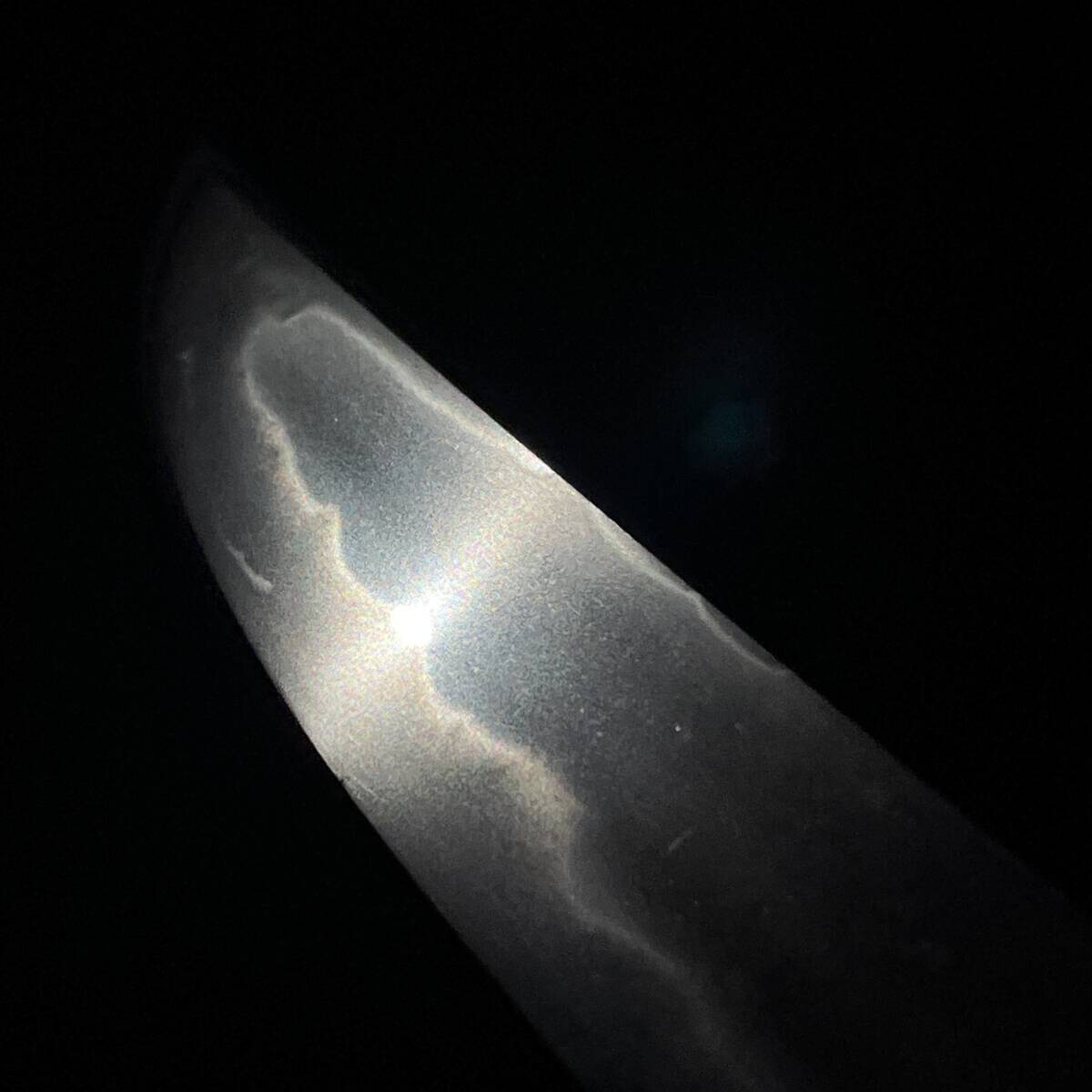
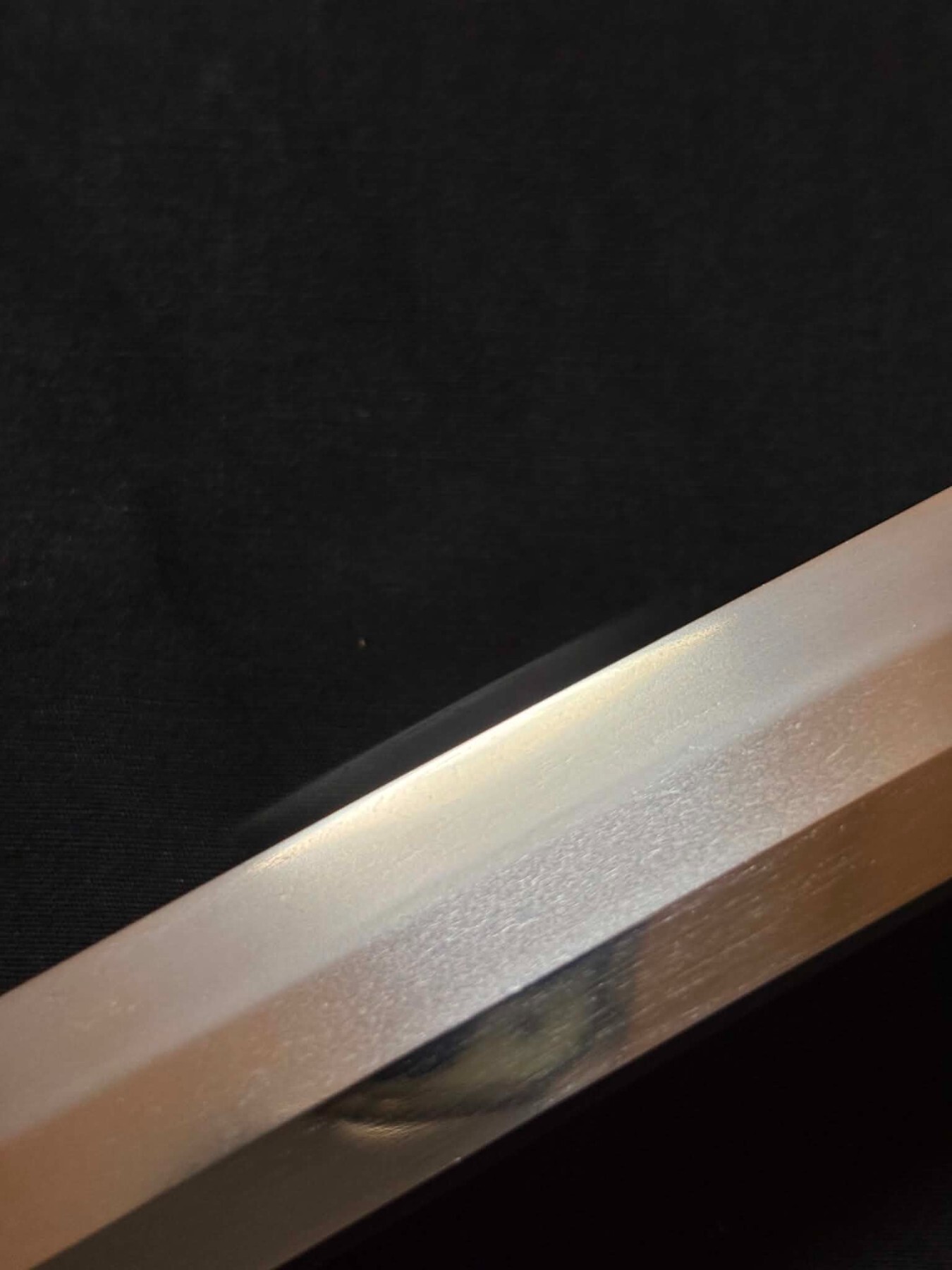
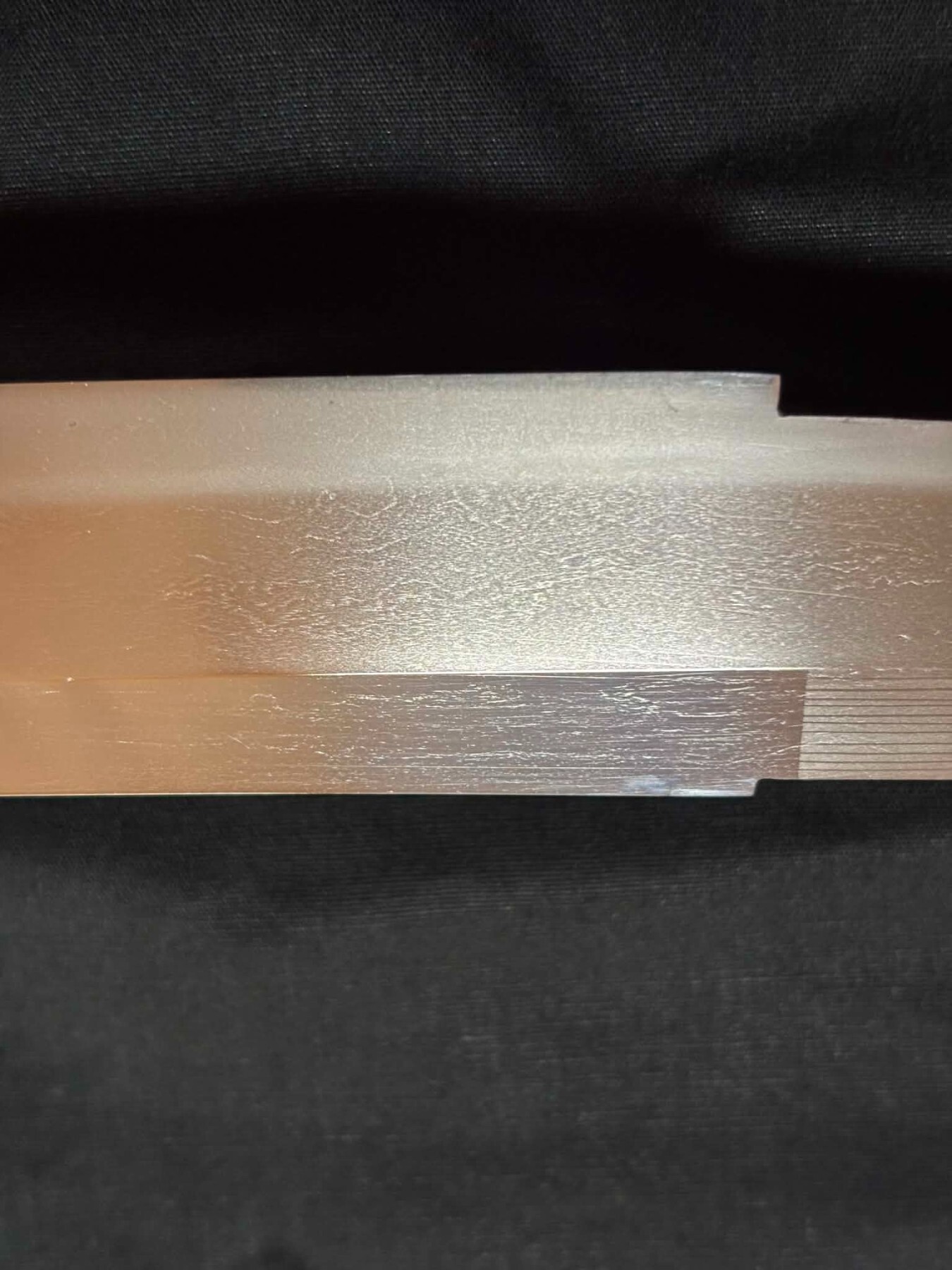
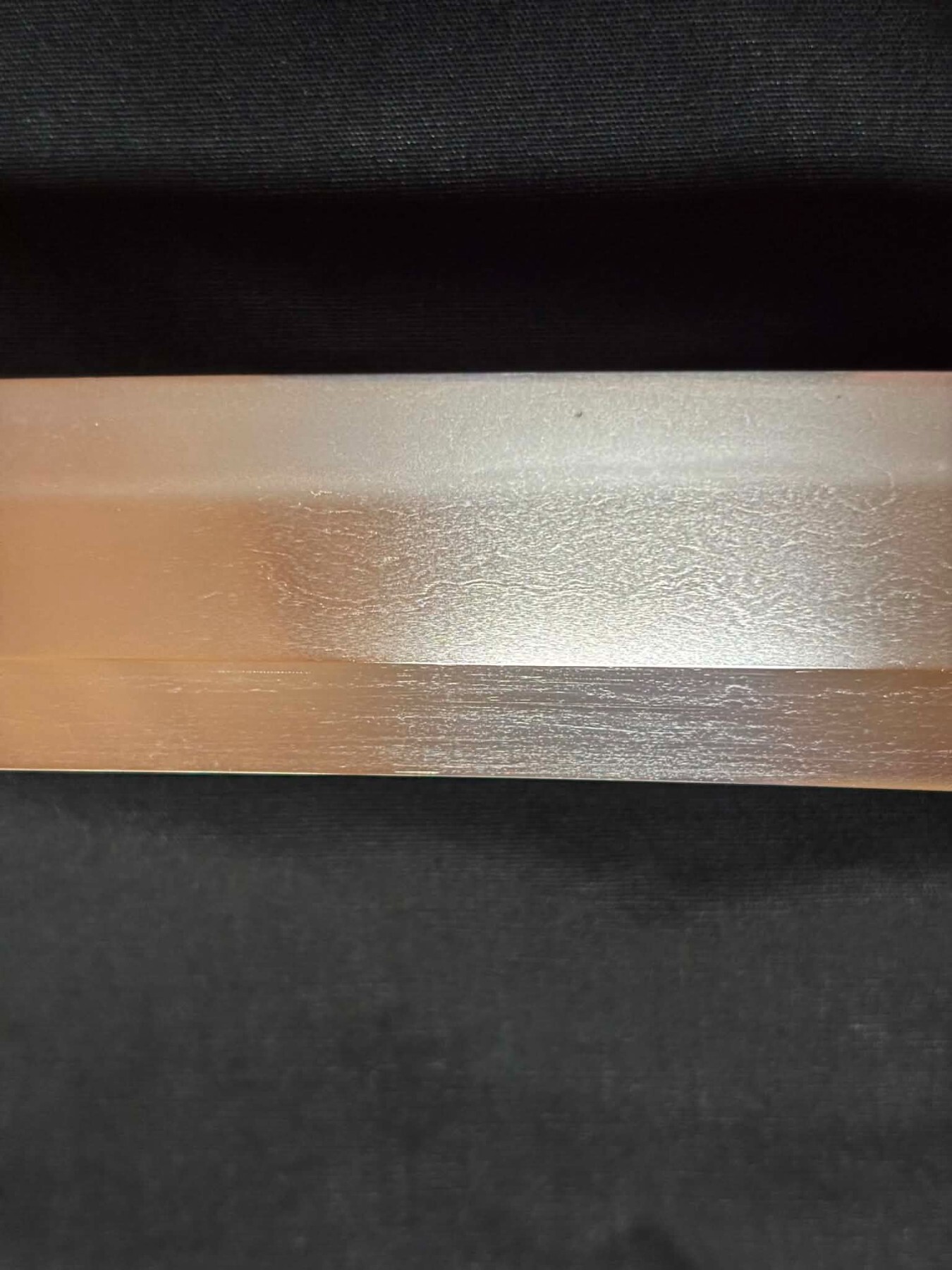
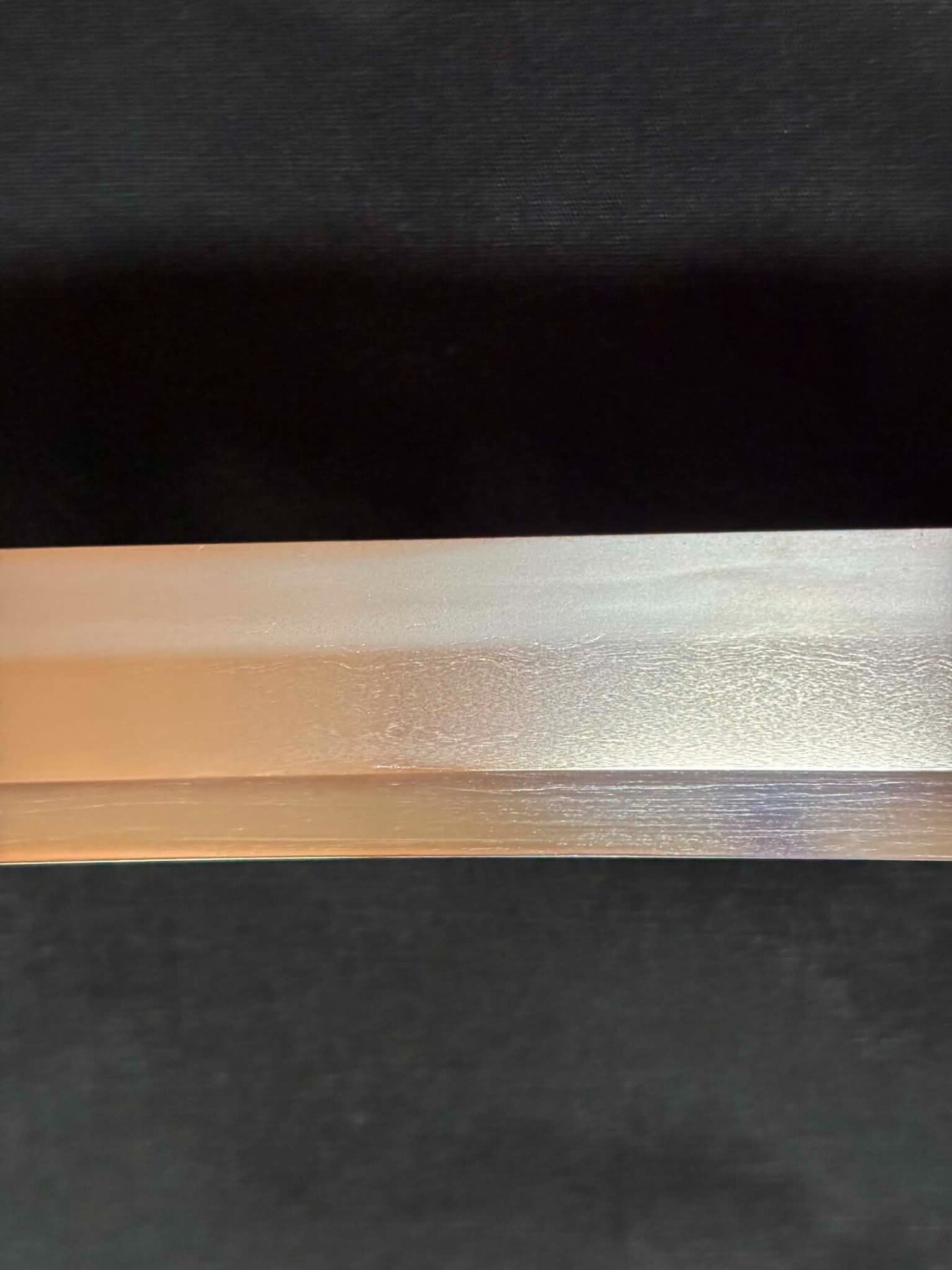
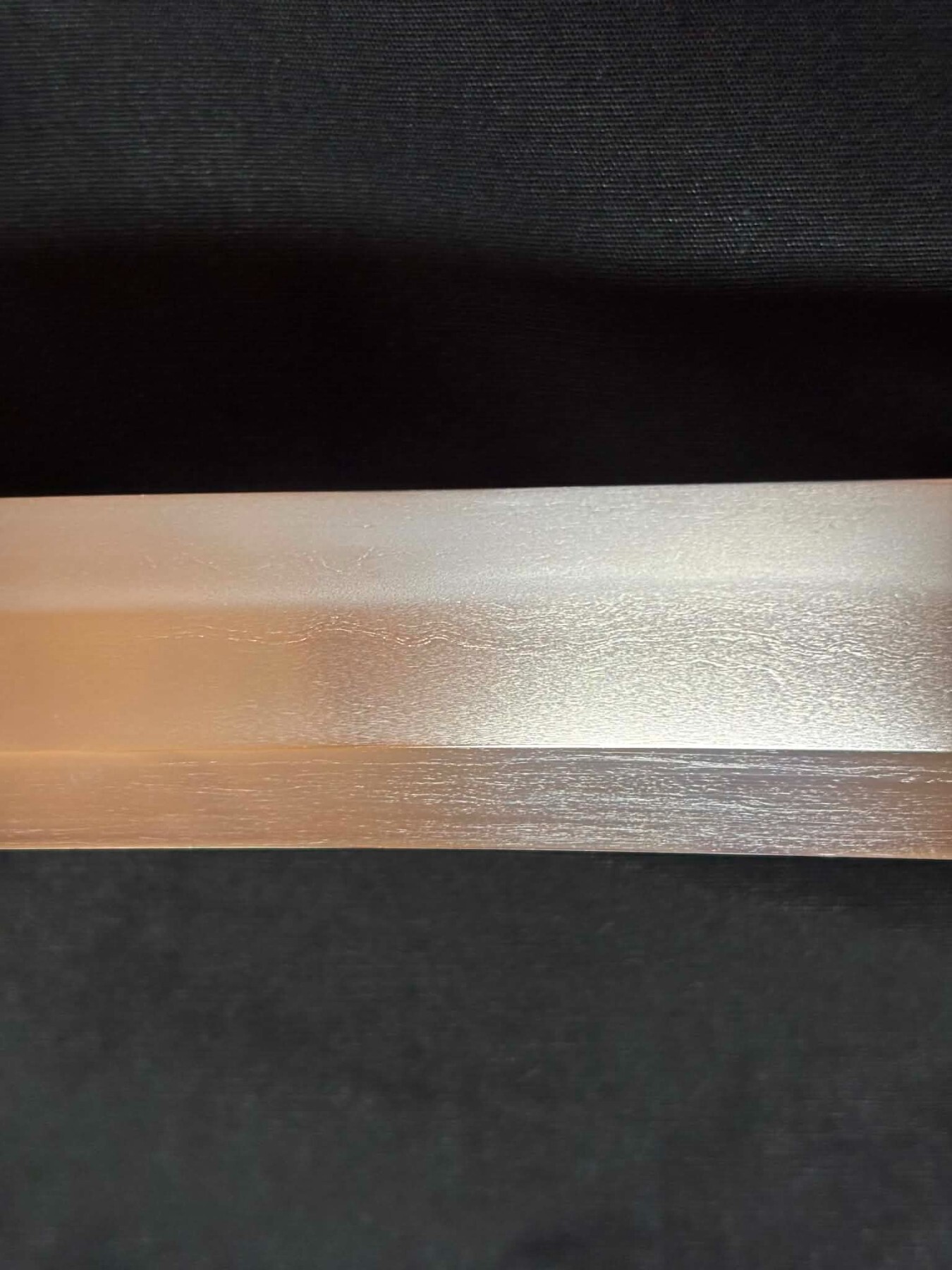
Here's an example, posted by @JakeNYC. Of course yours won't look like this, but he has a black background, small bright light at an agle, and close enough to show steel texture and hamon:2 points
-
Hello @TimthewanderingBelgian, I do not have personal experience importing straight from Japan to Belgium, but the overall process can differ from dealer to dealer. Attempting to trick customs by labeling it as just an "antique" might work, but could fail upon inspection and result in seizure. This also heavily depends on the way the package is shipped; the process can be different when the package is sent with Surface mail compared to EMS. A lot of dealers flat out refuse to ship to Belgium due to these customs restrictions. Have you asked your contact in Japan how he intends to ship the sword? And what would he be comfortable describing the sword as on the customs document? I offer a forwarding service, but this is through pick-up in person. I fly to Japan every 2 months to bring back Japanese swords; I do this mostly because of the many shipping restrictions and customs irregularities. I have a customs broker both in Japan and in the Netherlands to ensure a smooth procedure. The cost of this service depends on the type and price of the sword. You can contact me here directly on NMB or through my website if you are interested. Greetings, Lex2 points
-
These are on hold but feel free to send more messages if interested, in case it does not go through2 points
-
Hello Rob, You'll find lot of them in this thread:2 points
-
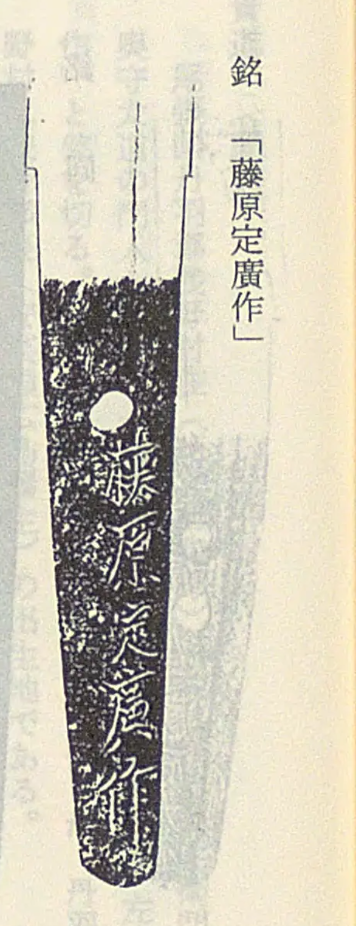
Hi! I think this is all the text about Sadahiro in Owari Tōkōfu. The quality of Oshigata is very limited.

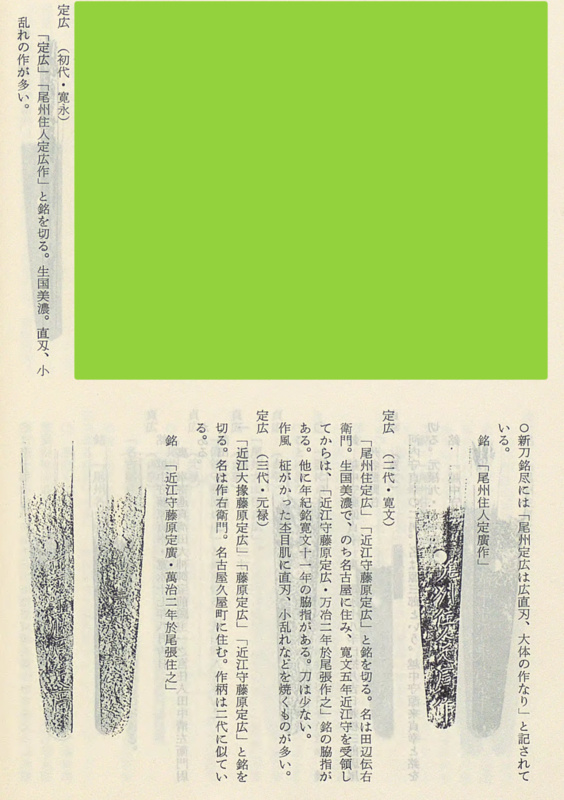
 2 points
 -
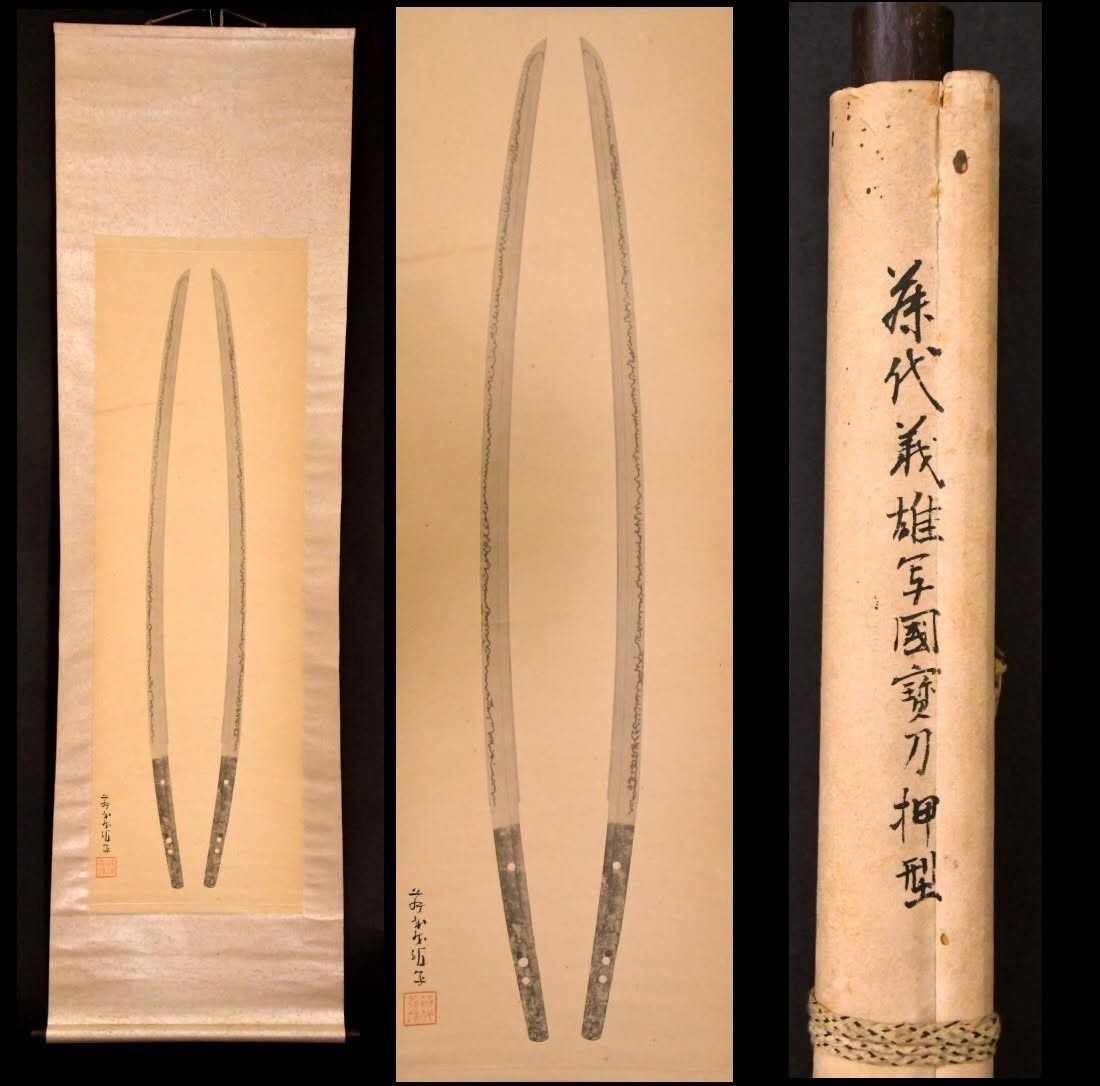
#1: https://auctions.yahoo.co.jp/jp/auction/n1240602732 If shipping for a glass framed 135cms wouldn't be such a killer, I'd probably buy this myself. This might be a good buy for one of our Japan members. #2: https://auctions.yahoo.co.jp/jp/auction/h1240772755 I don't know if this is a common painting or not, but I figured someone here would like the Miyamoto Musashi scroll.2 points
-
Hello Bruce, I found this smith in my Fukuoka paper: YOSHINORI (義則). Oita. Mei: “Kasuga Seizōjō Yoshinori saku” 春日製造所義則作. Family name Okimoto (沖本) worked as guntō smith. 1942 Banzuke: Ryōkō no Retsu (Ge Saku) (7/7). He looks to be from Fukuoka, and late war worked in the Kasuga arsenal "factory" set up at Kasuga, near Fukuoka City (western Kyushu). The blade example is dated May, 1945. But he must be working before then as is in 1942 Kurihara ranking. Records show that due to bombing, the Kasuga factory was relocated in April-May 1945 to Hita in Oita Pref in eastern Kyushu. So likely he worked there also. But I note that Sesko lists him from Osaka.2 points
-
No. The only swords that get matched up with owners are the ones that come with surrender tags, having name and address.2 points
-
Thanks for the feedback. I personally value the work the NBTHK do. I have papers for 90% of my collection and the vast majority of these attributions are accurate (in my opinion). Even when I received a surprise attribution, after doing a bit of research I can see how they made their decision. Hundreds of items are submitted to the NBTHK shinsa every month and I don’t think people would do that if they didn’t think the service was worthwhile. In the end we are paying for someone to give and opinion. It could be a positive outcome or a negative one, but in the end it is just someone’s opinion. For me it is worth the small fee and I learn something from time to time.2 points
-
I don’t have the direct experience you specified, but I will put a few thoughts forward. You are asking about kantei procedure for mumei tsuba. There are some differences if the tsuba is kinko or tsubako. Kinko is primarily soft metal and the focus of the art is on the carving. Most of the mumei kinko tsuba that would merit shinsa are from the Edo period where there is more documented about the artists and the schools, because a lot of them are signed, so unsigned work by the same artist or school can be compared. The carving technique details of the famous masters is known by certain experts, so it is possible to confidently attribute a name or workshop to a high quality but unsigned kinko fitting by looking at the unique style, the tool marks, how the tool was moved, etc. This is known as the teguse, or the “hand” of the artist. An example are the specialists who study Goto fittings. You sometimes see kanteisho stating, unsigned, but by Goto so-and-so. A shinsa team may or may not have such a specialist, but I assume in a Japan based shinsa, such a specialist could be called in to evaluate a high quality mumei candidate. This approach can also be applied to a some tsuba artists that worked in iron, such as the well known Higo groups that have distinctive sukashi and softmetal decoration. However, the majority of unsigned, average and low quality tsuba do not have characteristics that can be identified to a specific person, and so in shinsa they are assigned to broadly defined schools or categories. Particularly in the case of unsigned iron tsubako, most of these categories are of relatively recent invention, made up by tsuba scholars in the 19th-early 20th centuries in order to classify similar tsuba into groups. Because of the broadness, there can be multiple opinions about where a tsuba fits. For example, is it Koshoami or Kanayama? Is it Onin or Heianjo Zogan? This can lead to a tsuba having multiple papers with different opinions. This existing unsigned tsuba classification methodology is mostly based on comparative analysis, logical inference, and oral tradition since there are few documented facts supporting the majority of these broad tsuba classifications. We know that the NBTHK utilizes a “kantei points” checklist approach when evaluating sword blades, so there may be a similar approach with tsuba. From a science perspective, there has been a few attempts to analyze the material of sword fittings, but this is expensive and non-destructive methods are limited. A question here, is an NBTHK Hozon paper really worth much on an average quality mumei tsuba? I think in most cases no, because most collectors can classify their mumei tsubako and kinko into these broad categories themselves with some reference books and study. It may be worth submitting if you think the tsuba may make Tokubetsu Hozon, which is useful as an assessment of quality.2 points
-
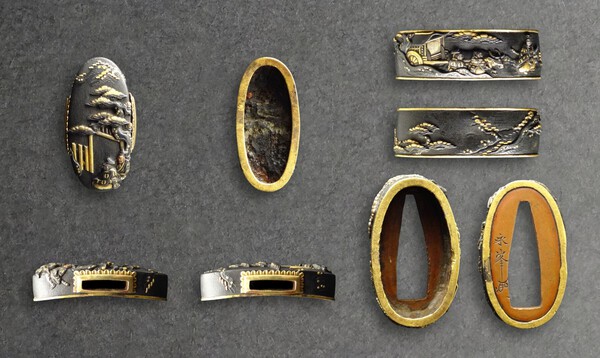
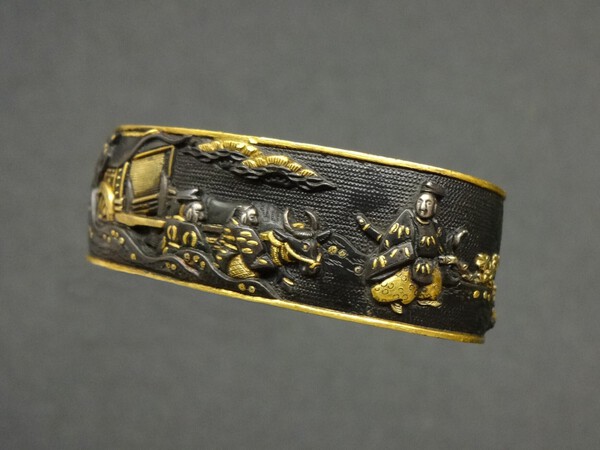
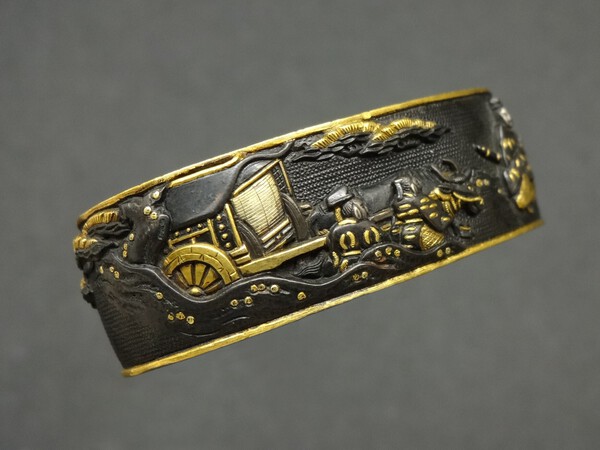
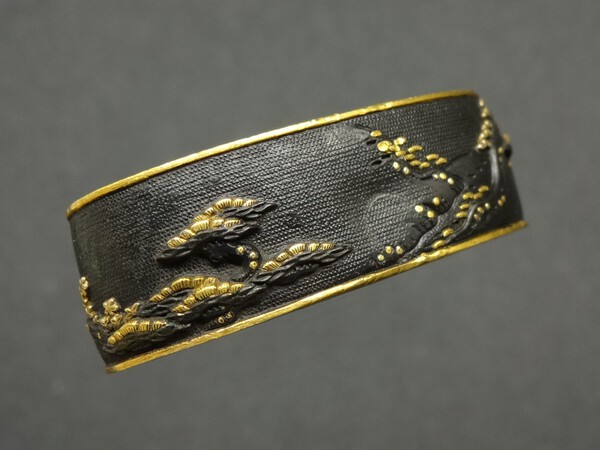
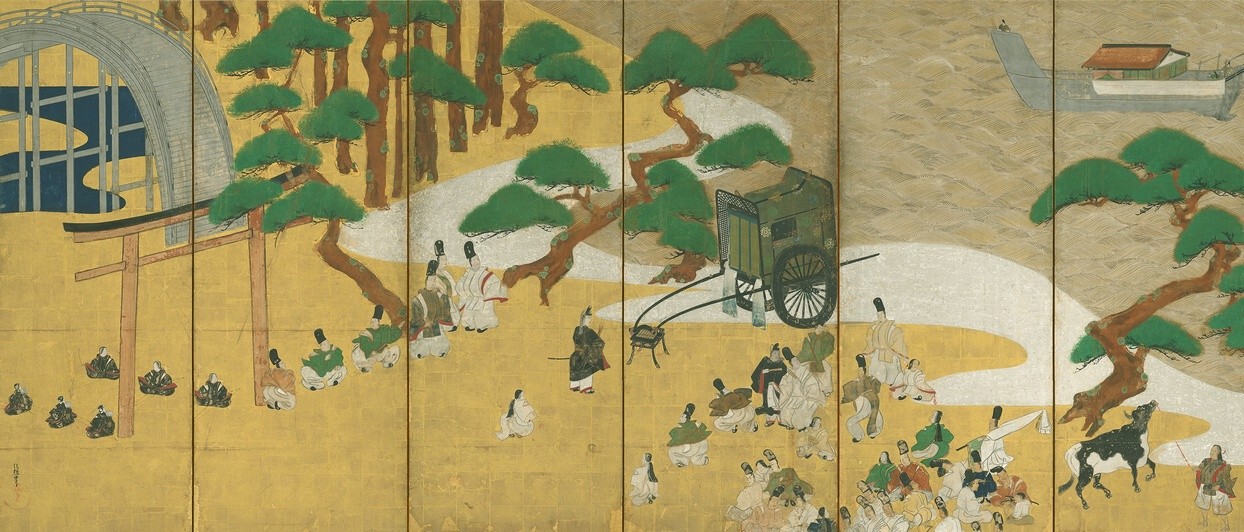
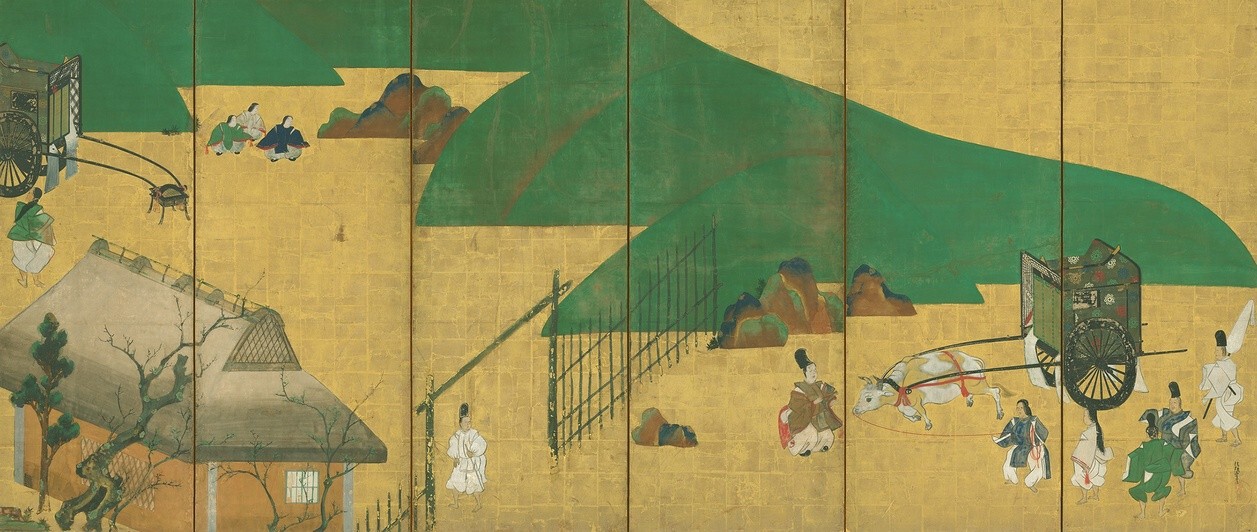
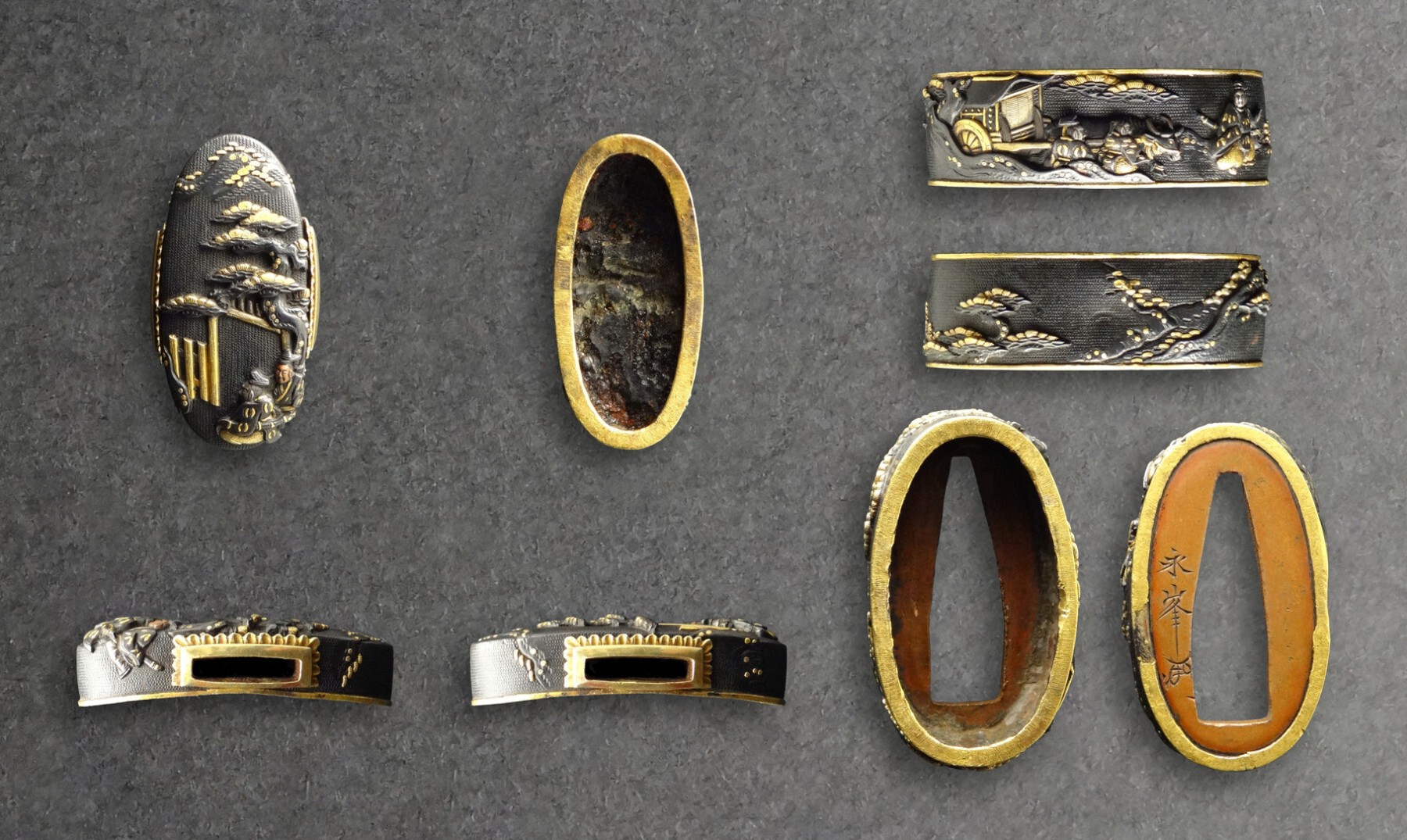
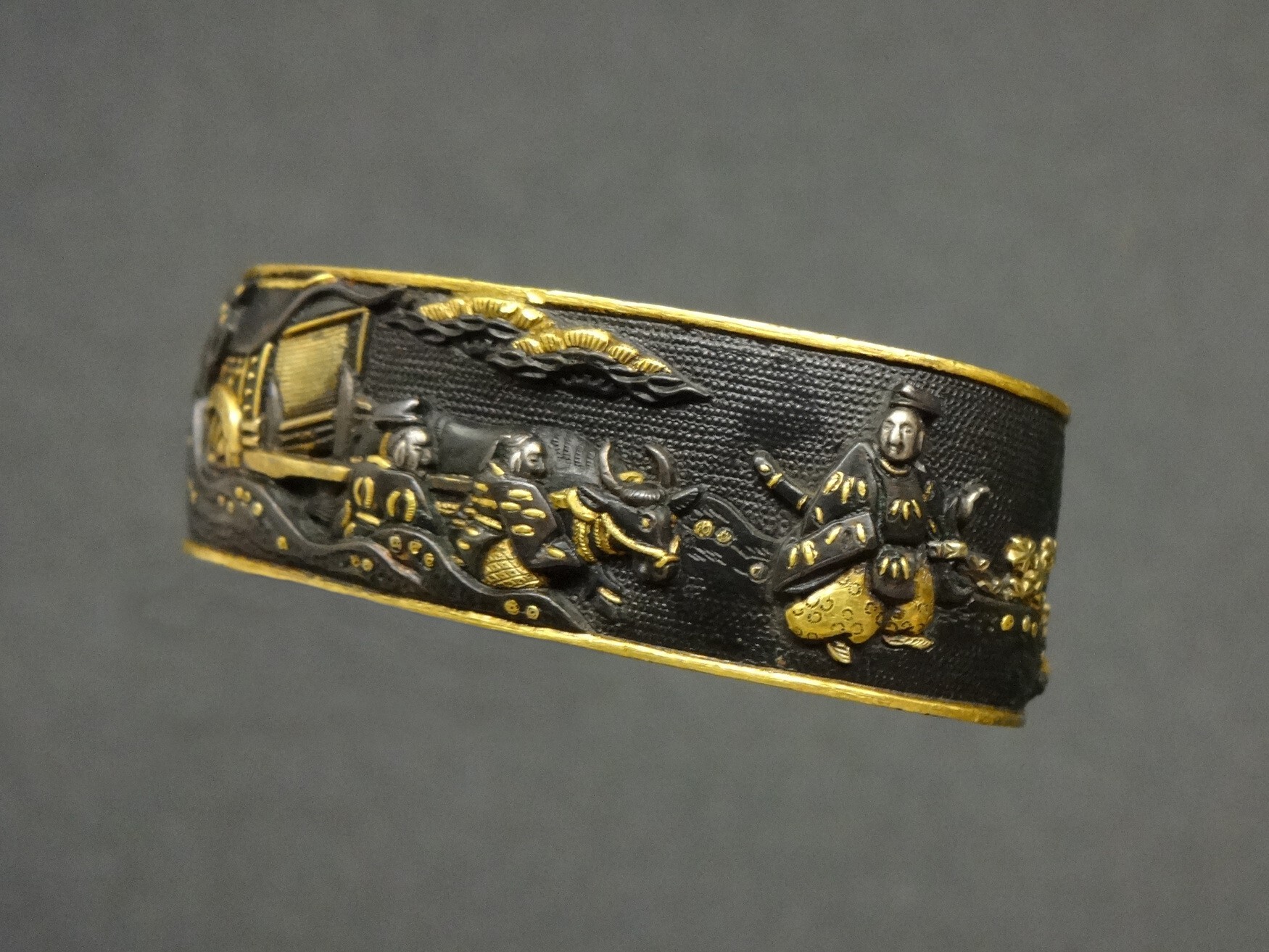
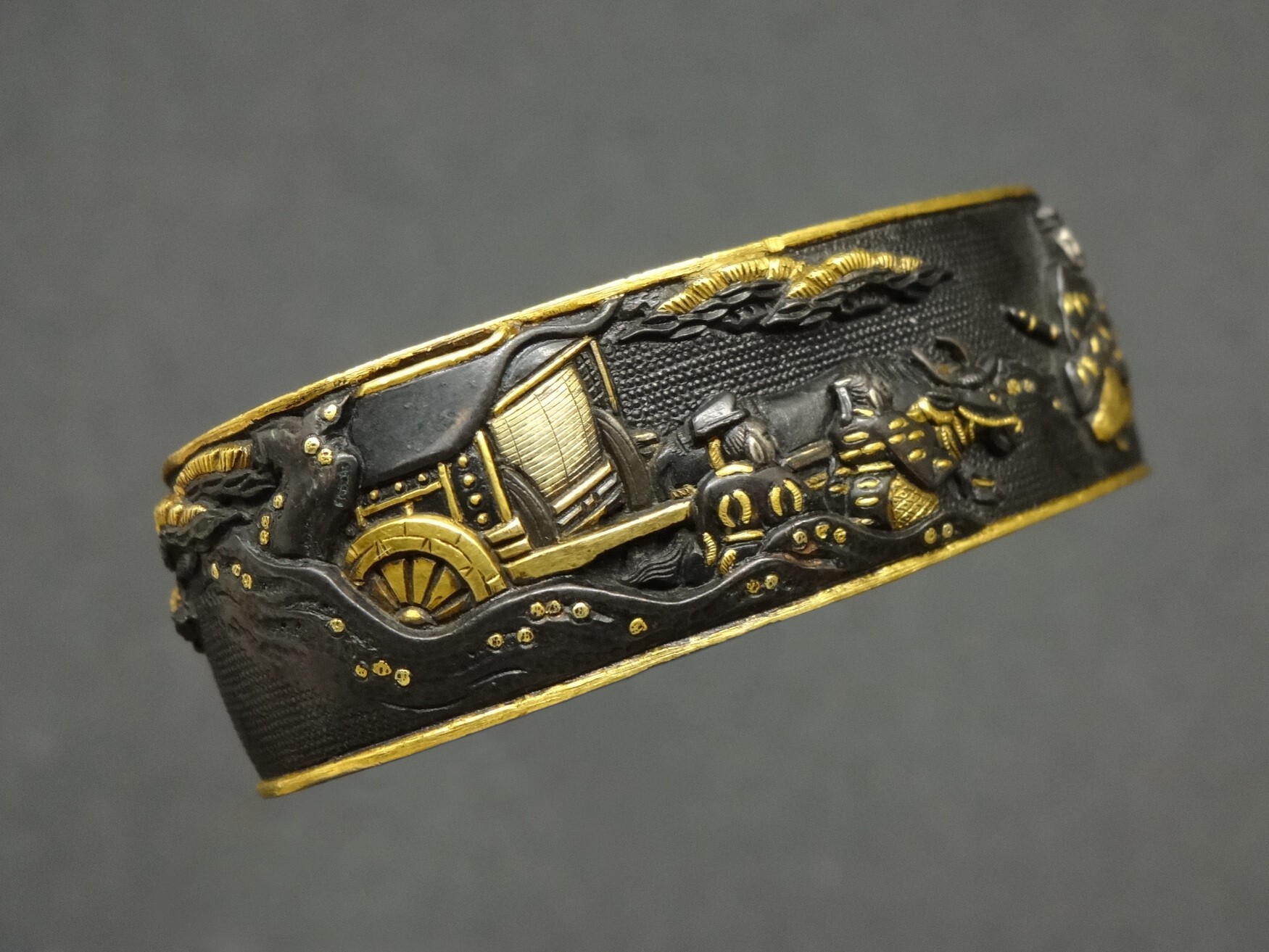
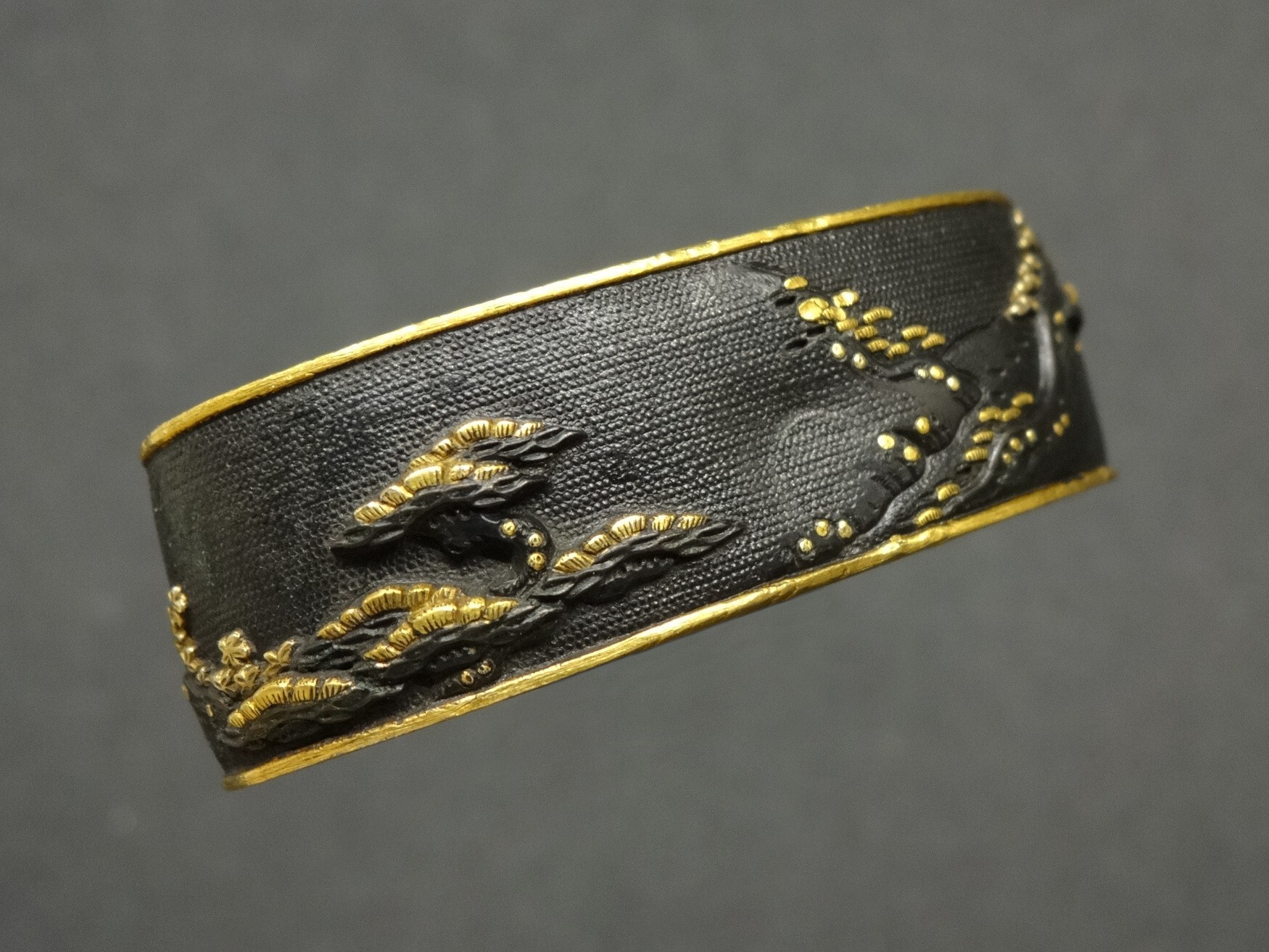
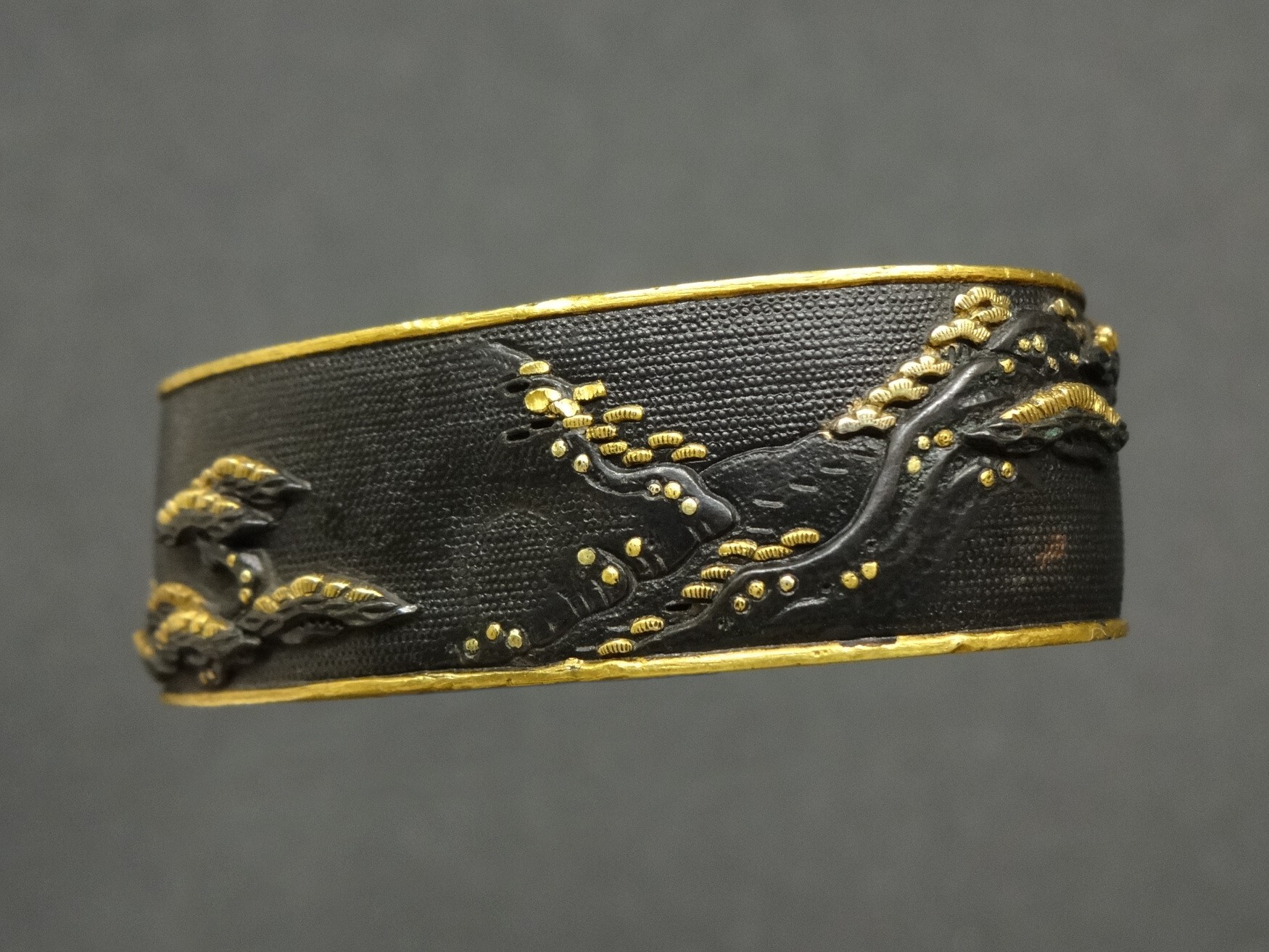
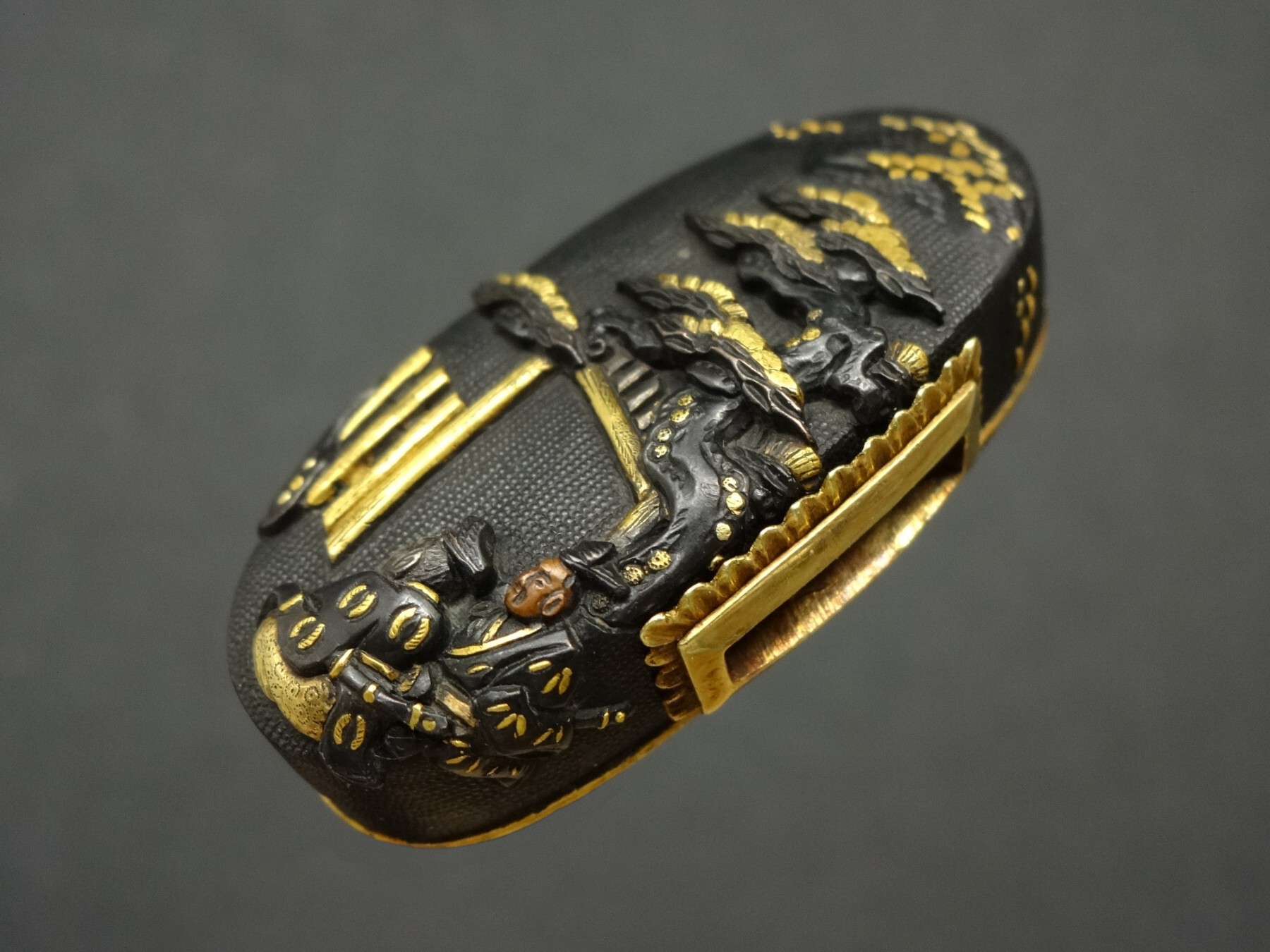
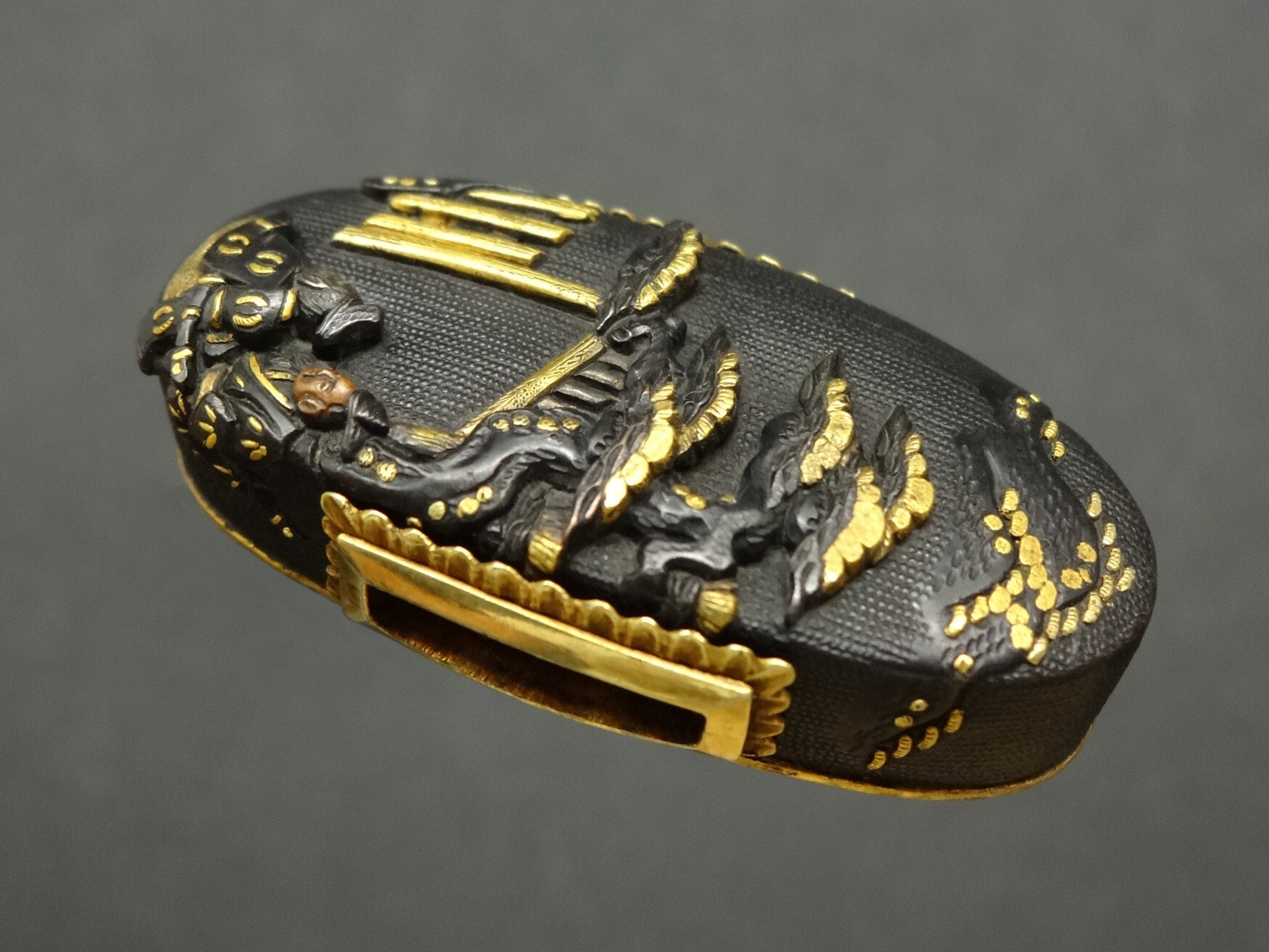
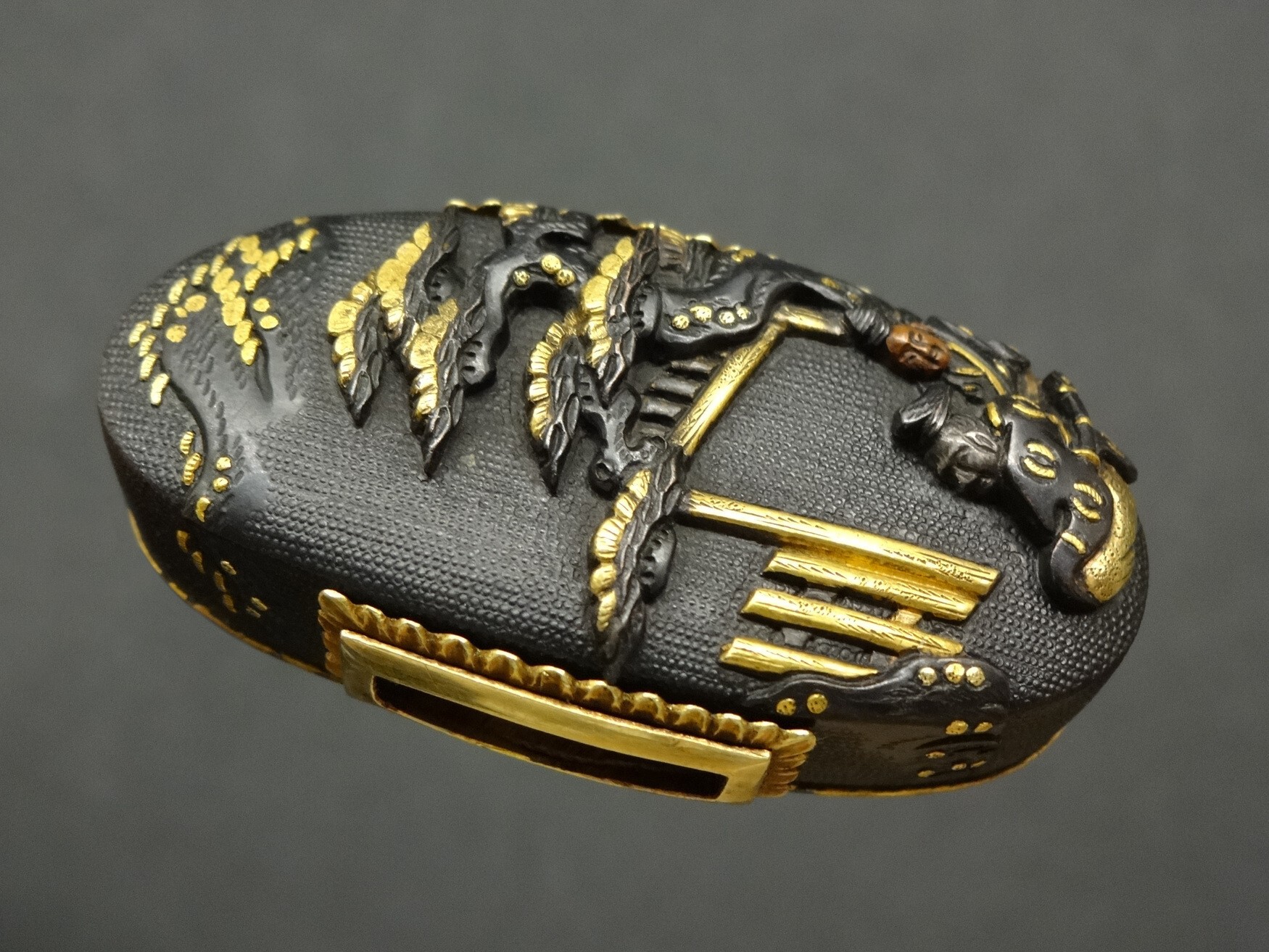
Dear all I just wanted to share one of my latest acquisitions. Dimensions: Fuchi 38.3 mm x 21.9 mm. thickness 12.5 mm. Kashira: 34.7 mm x 16.6 mm. thickness 9.8mm. It is a fuchi-kashira signed "Nagamine [Kao]" (永峯 [花押]) it is not papered but the signature, the quality of the execution and the composition of the subject fully fit into the caractersitics of the school as outlined in my summary of the Ayanokōji Nagamine school (https://www.militaria.co.za/nmb/files/file/122-the-school-of-ayanok%C5%8Dji-nagamine/). The fuchi shows some wear of the patina and the nanako ground but the conditions are farely good. On the omote (表) side of the fuchi (縁), an ox-drawn gosho-guruma (御所車) is shown against a landscape of pine trees and hills. The carriage is accompanied by attendants dressed in what looks like Heian clothing. The figure at the front is wearing a tachi (太刀). In ancient and medieval Kyoto, members of the imperial family and the aristocracy commonly travelled in ox-drawn carriages known as gosho-guruma (御所車). The presence of a gosho-guruma, particularly with its bamboo blinds lowered, conventionally suggests that a person of high rank - often an elegant lady, nobleman, or member of the imperial family - is inside the carriage. On the kashira (頭), a group of similarly dressed figures is shown standing in front of a fence or palisade with a gate. This architectural detail is particularly important for identifying the subject of the composition. There are two chapters of The Tale of Genji (源氏物語, Genji Monogatari) whose narratives could potentially correspond to the scenes depicted on this fuchi-kashira set. The first is Chapter 14, Miotsukushi (澪標, "Channel Buoys"), and the second is Chapter 16, Sekiya (関屋, "The Gatehouse"). In Miotsukushi, Genji encounters the Lady of Akashi at the entrance to Sumiyoshi Taisha (住吉大社). In Sekiya, Genji encounters Utsusemi (空蝉) at the Ōsaka Barrier (逢坂関). There is a particularly relevant pair of folding screens (byōbu, 屏風) by Tawaraya Sōtatsu (俵屋宗達), Tokyo National Museum, dating from the seventeenth century, which depicts precisely these two episodes. Miotsukushi Chapter 16 Sekiya Chapter 14 The screen representing the Sekiya episode clearly shows a gate whose form is remarkably similar to that depicted on the kashira of this fuchi-kashira set. This architectural detail provides an important clue. Although the general subject of the fuchi-kashira could initially be interpreted as either Miotsukushi or Sekiya, the presence of the distinctive gate strongly favors Sekiya as the intended theme. I hope you enjoy this fuchi-kashira set as I do. Regards Luca
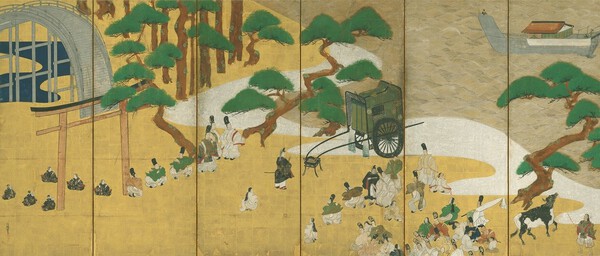
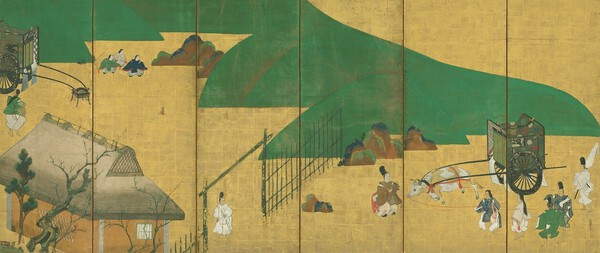
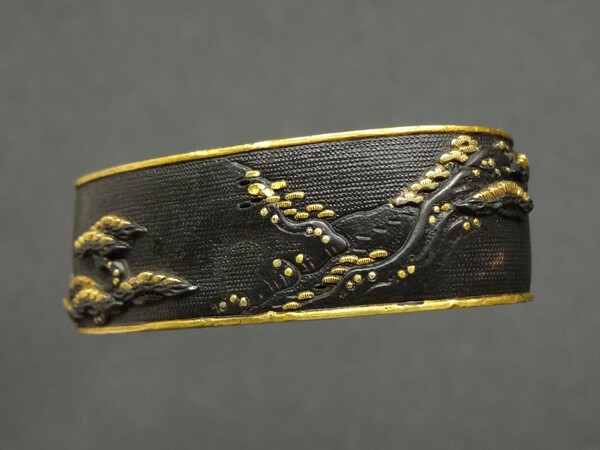
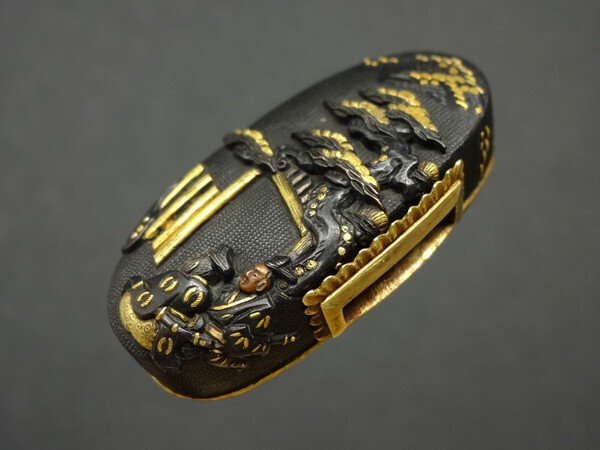
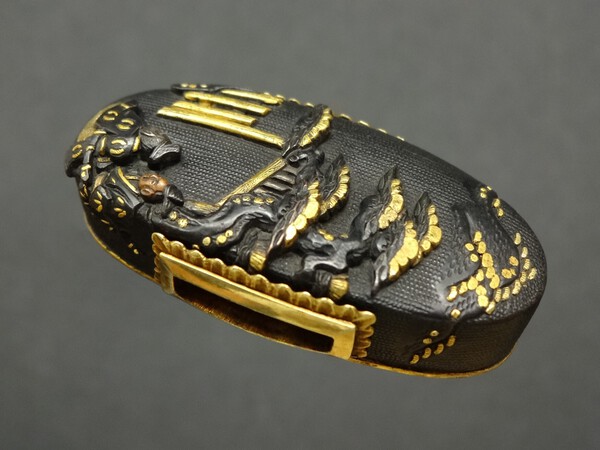
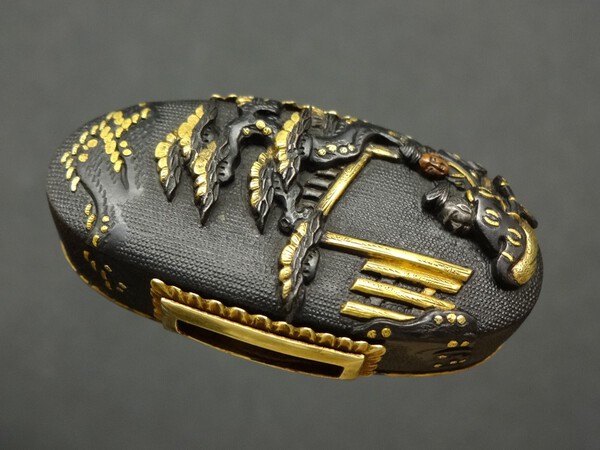 2 points
 -
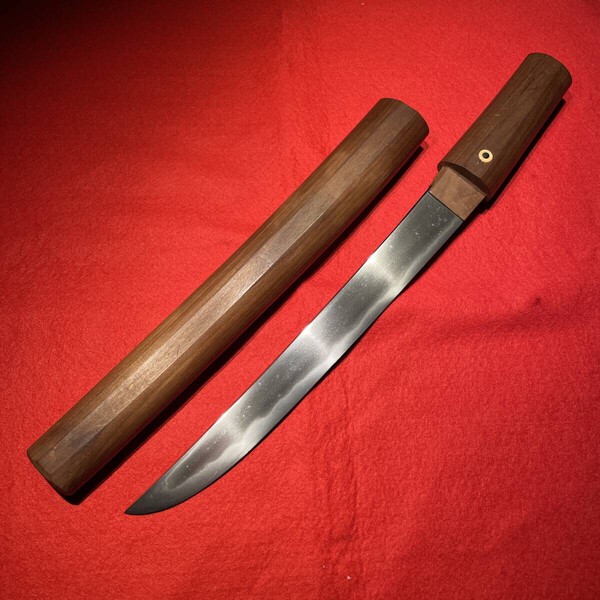
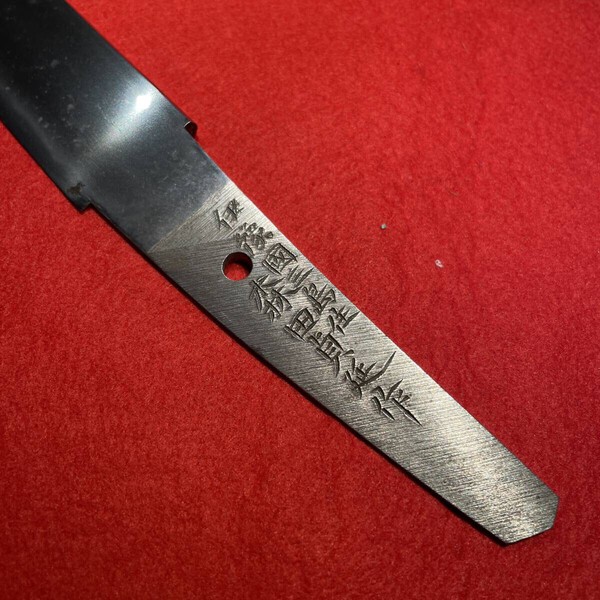
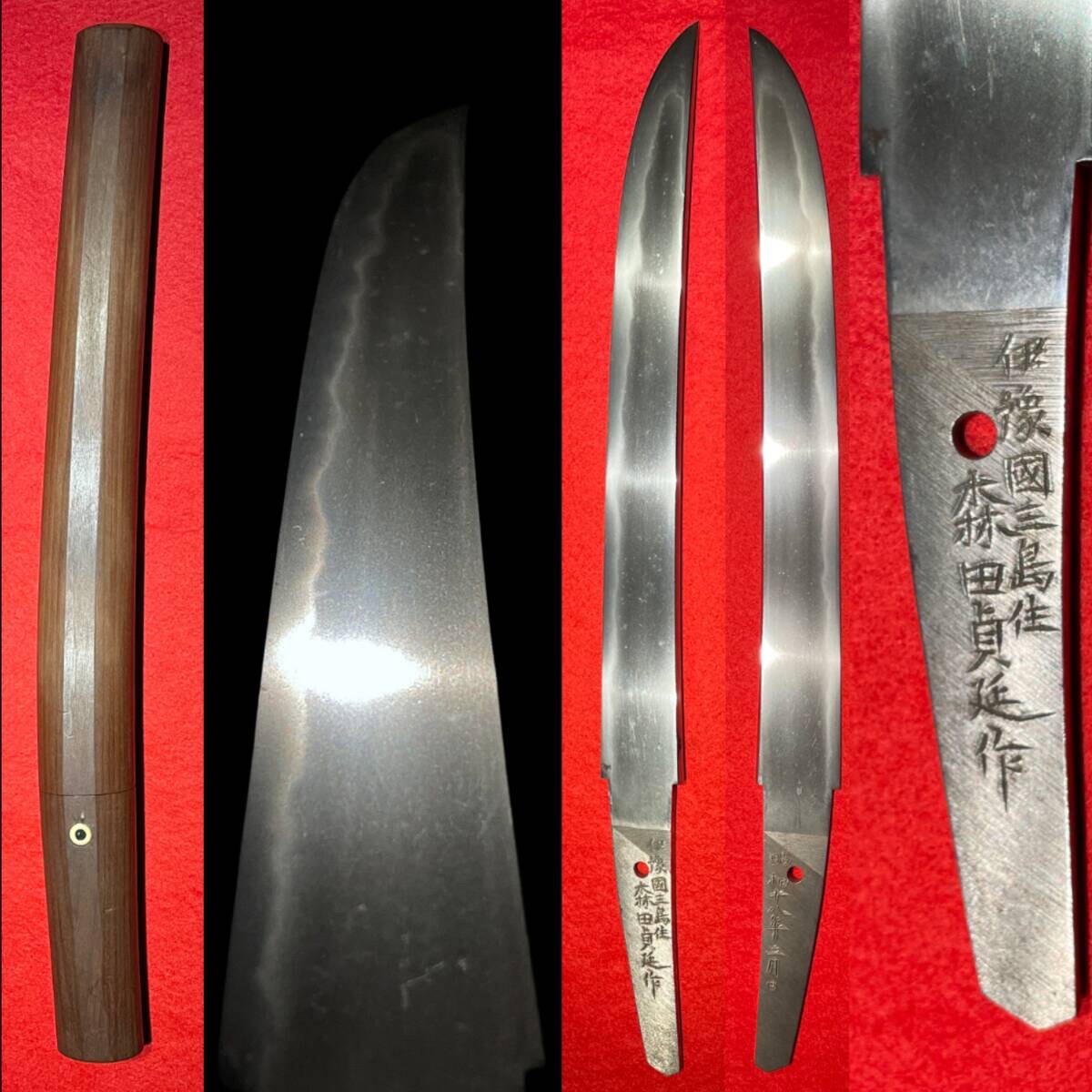
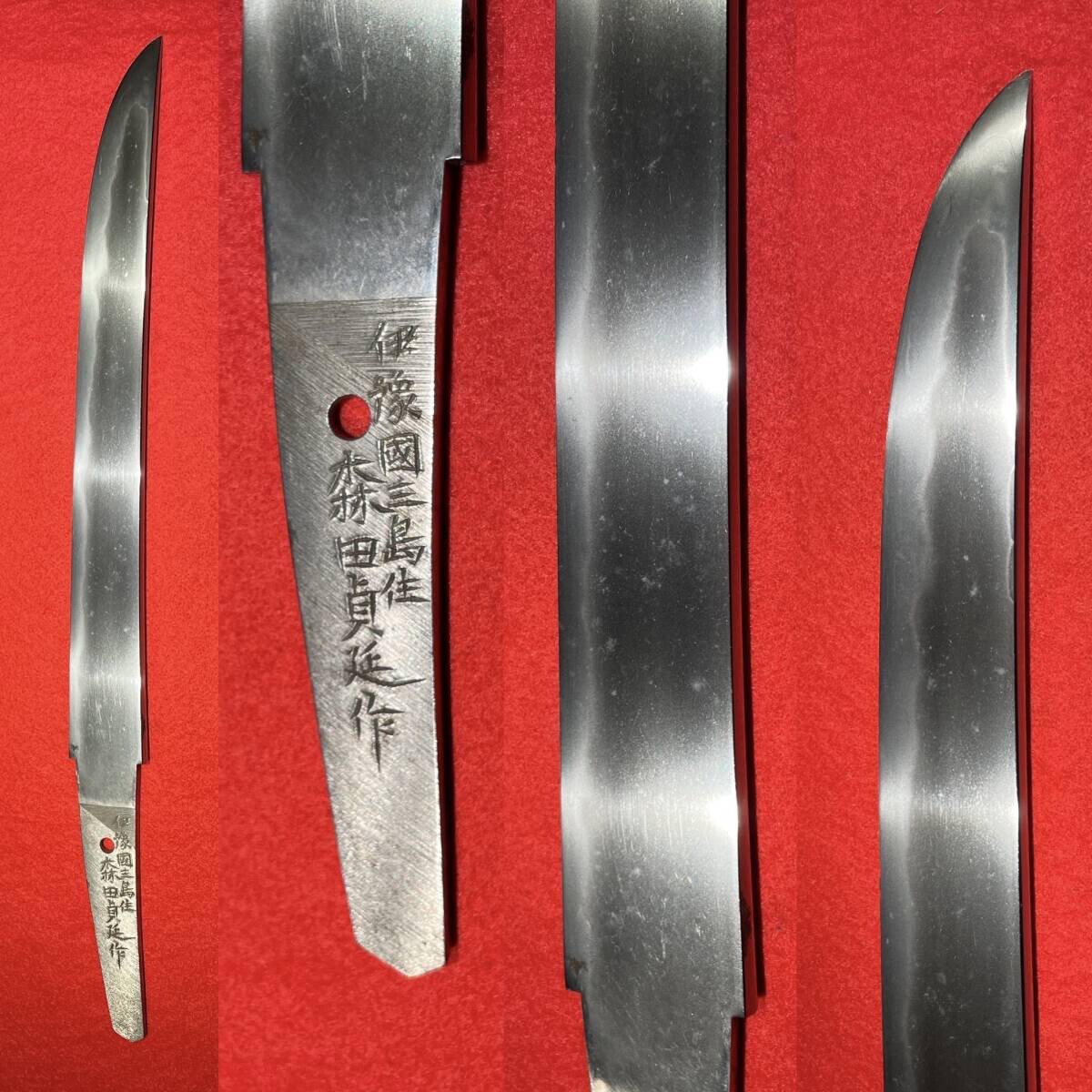
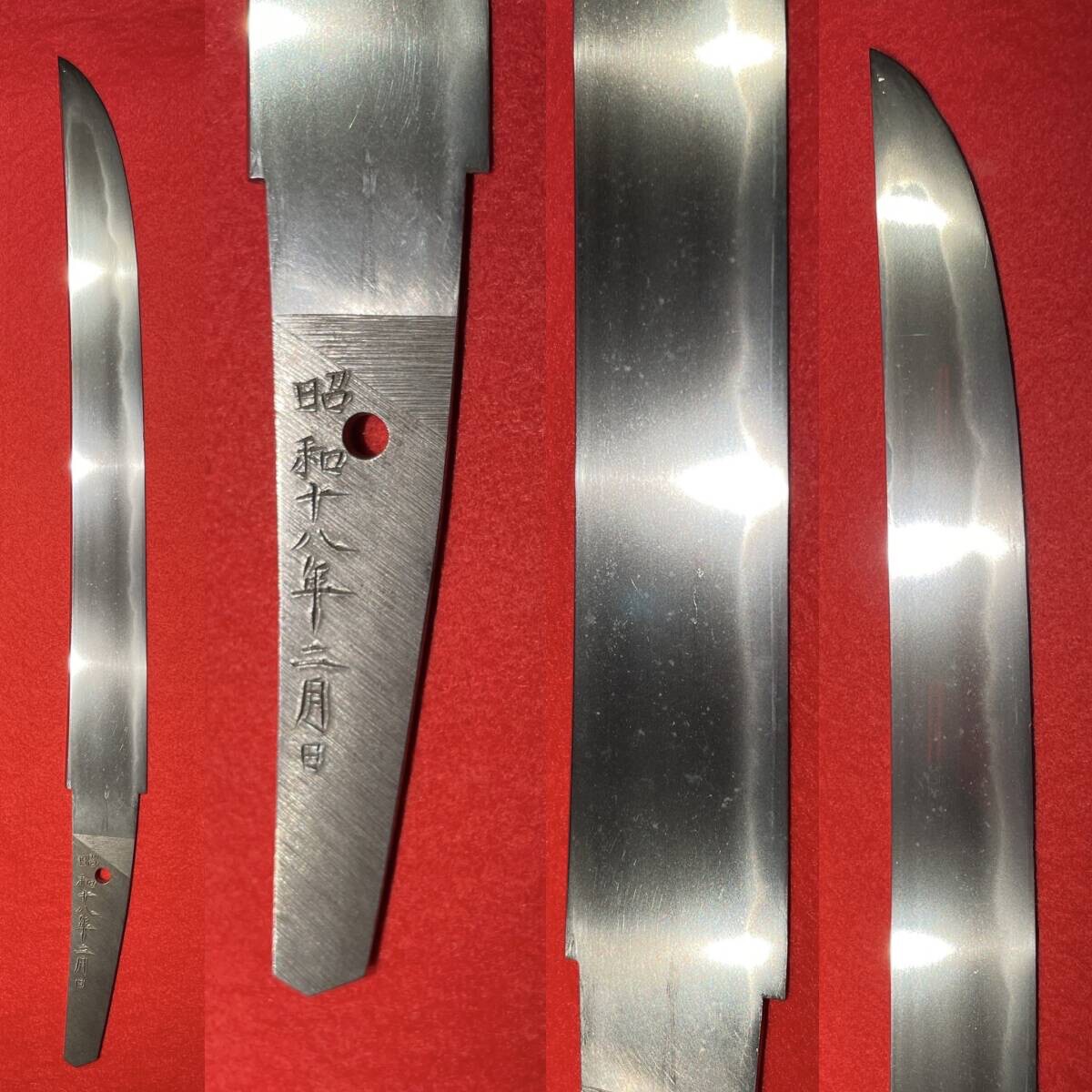
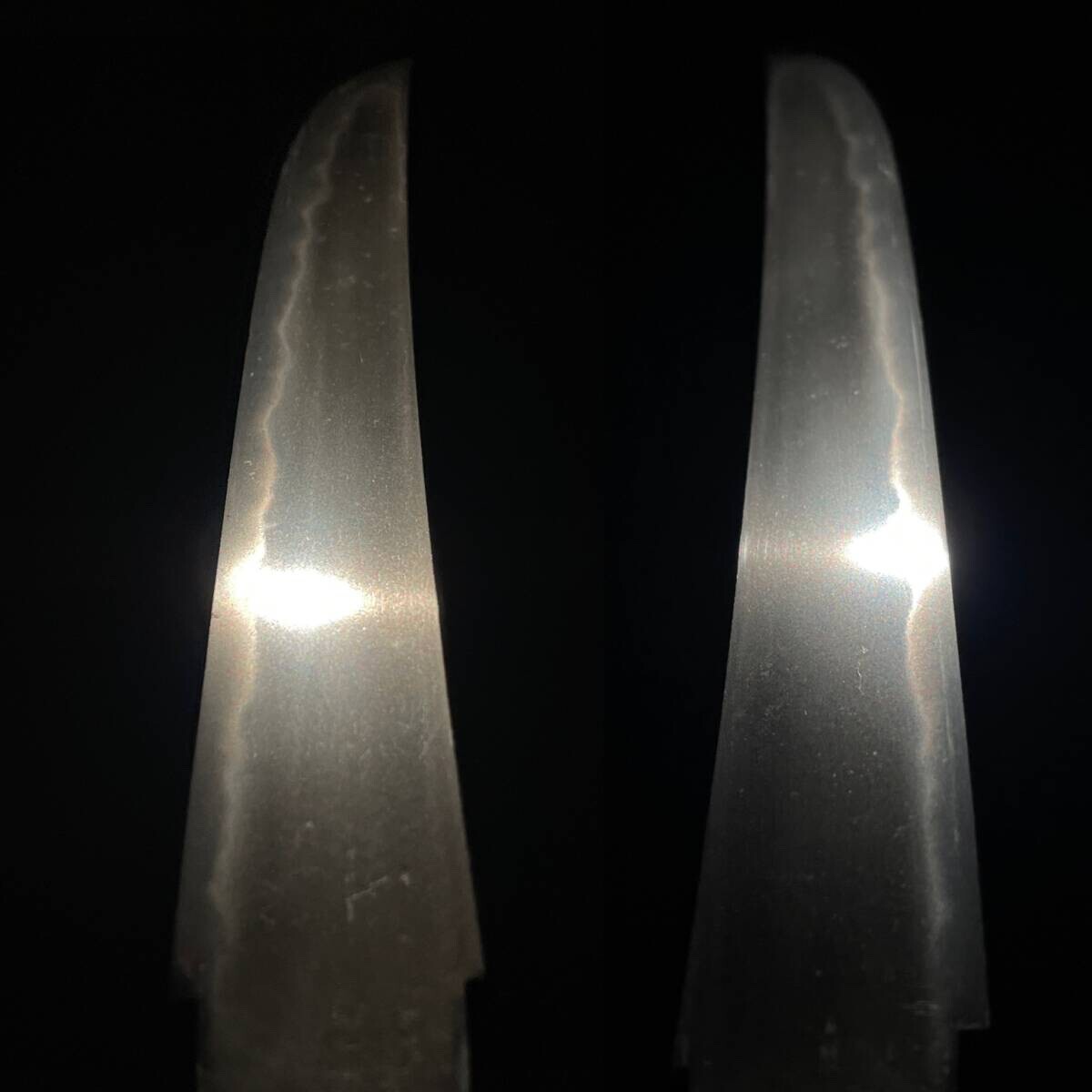
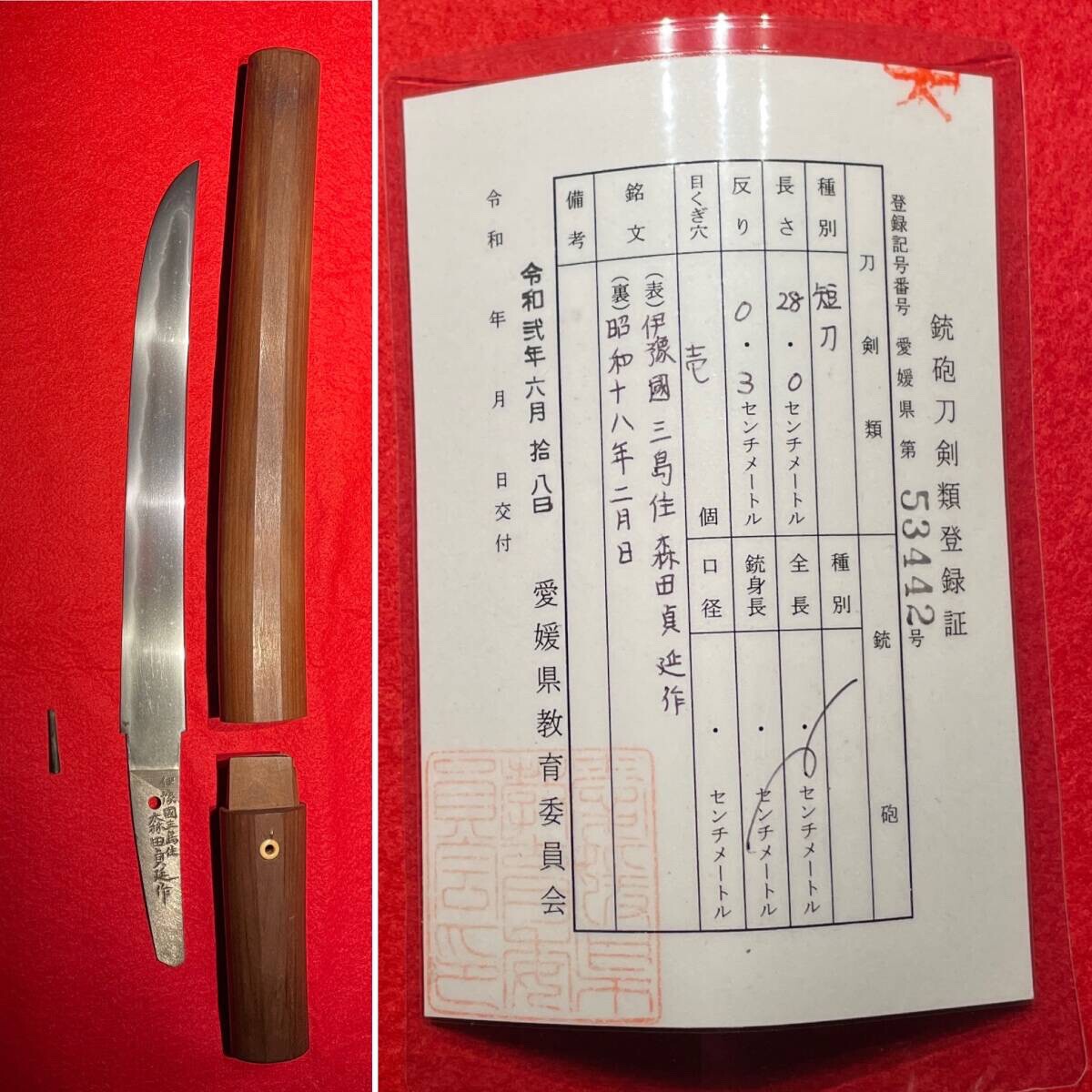
I'm not lucky in auctions. Never. However, I sometimes think 'you've got to be in it to win it' and I'll place a half hearted bid on something I like, only to see it inevitably develop into a bidding war that kicks me to the curb within seconds. Well, I've always wanted a tanto from WWII but every example I've seen has ranged from Chinese 'kamikaze' junk to beautiful Yasukuni tosho masterworks which were way past my budget. Anyhow, I spotted a very nice little piece on Yahoo a few days ago and kept an eye on it until its auction was due to end tonight. I was watching it go up in increments and waiting for the usual flurry of last minute bids when I decided to throw my hat in the ring. And then nothing else happened.😳 Long story short, mine was the last bid and I won it by going ¥500 higher than the last guy. I have no idea who the maker, Morita Sadayoshi, was but I'm a pretty happy chap at the moment!

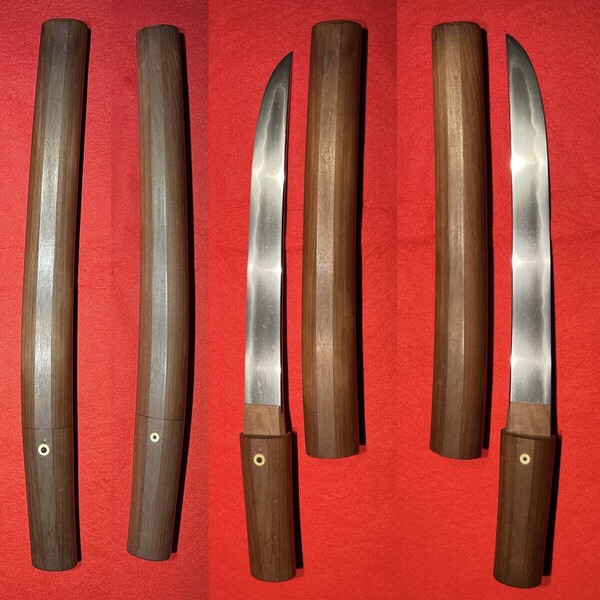
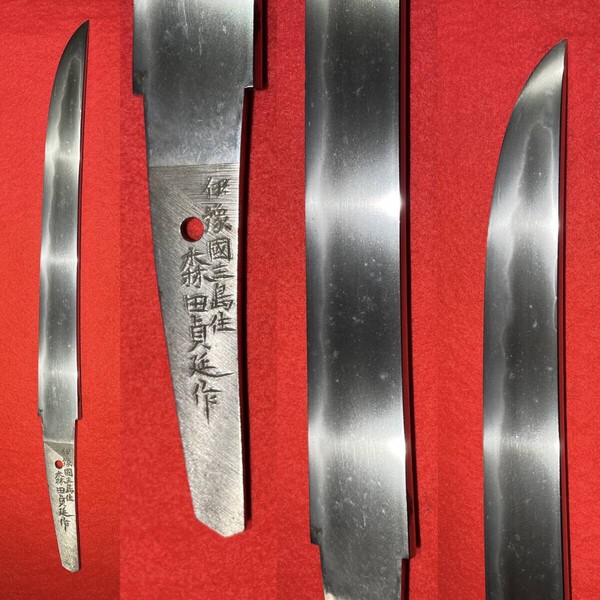
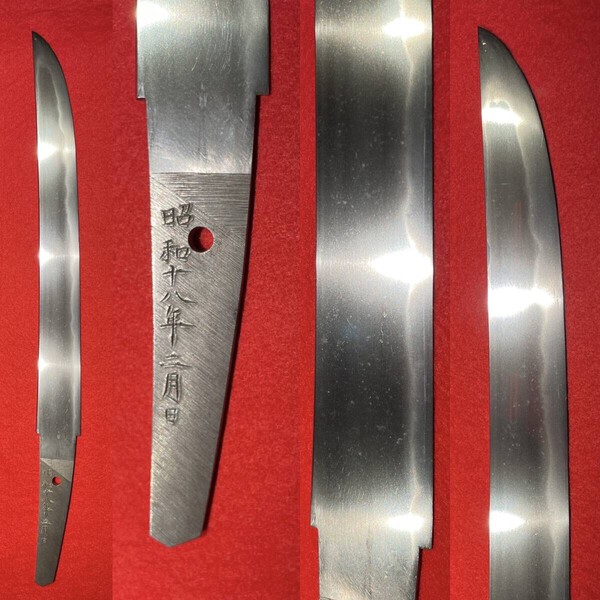
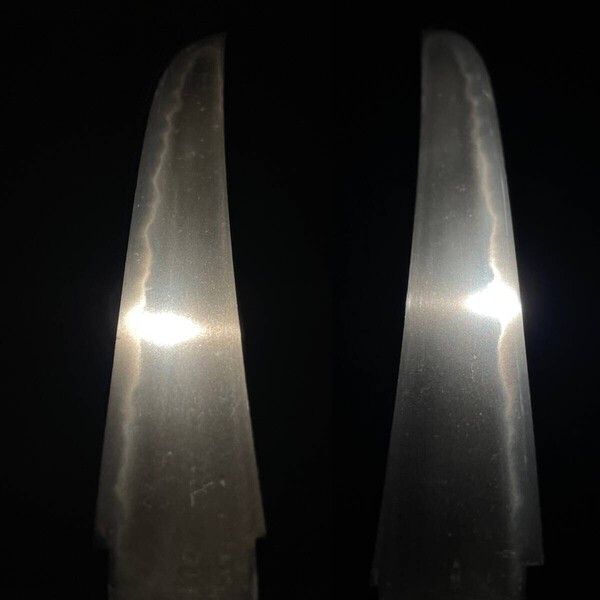
 1 point
 -
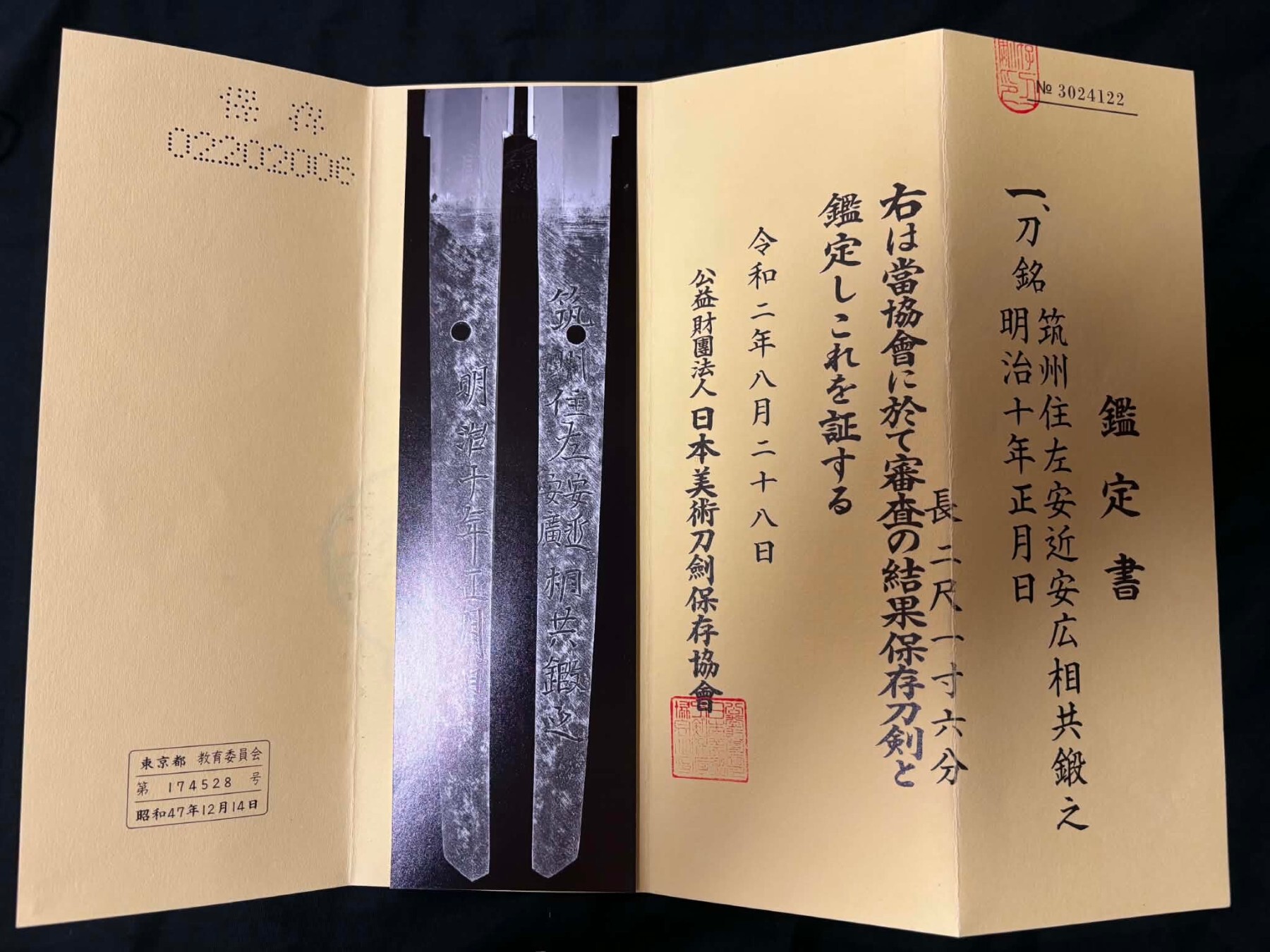
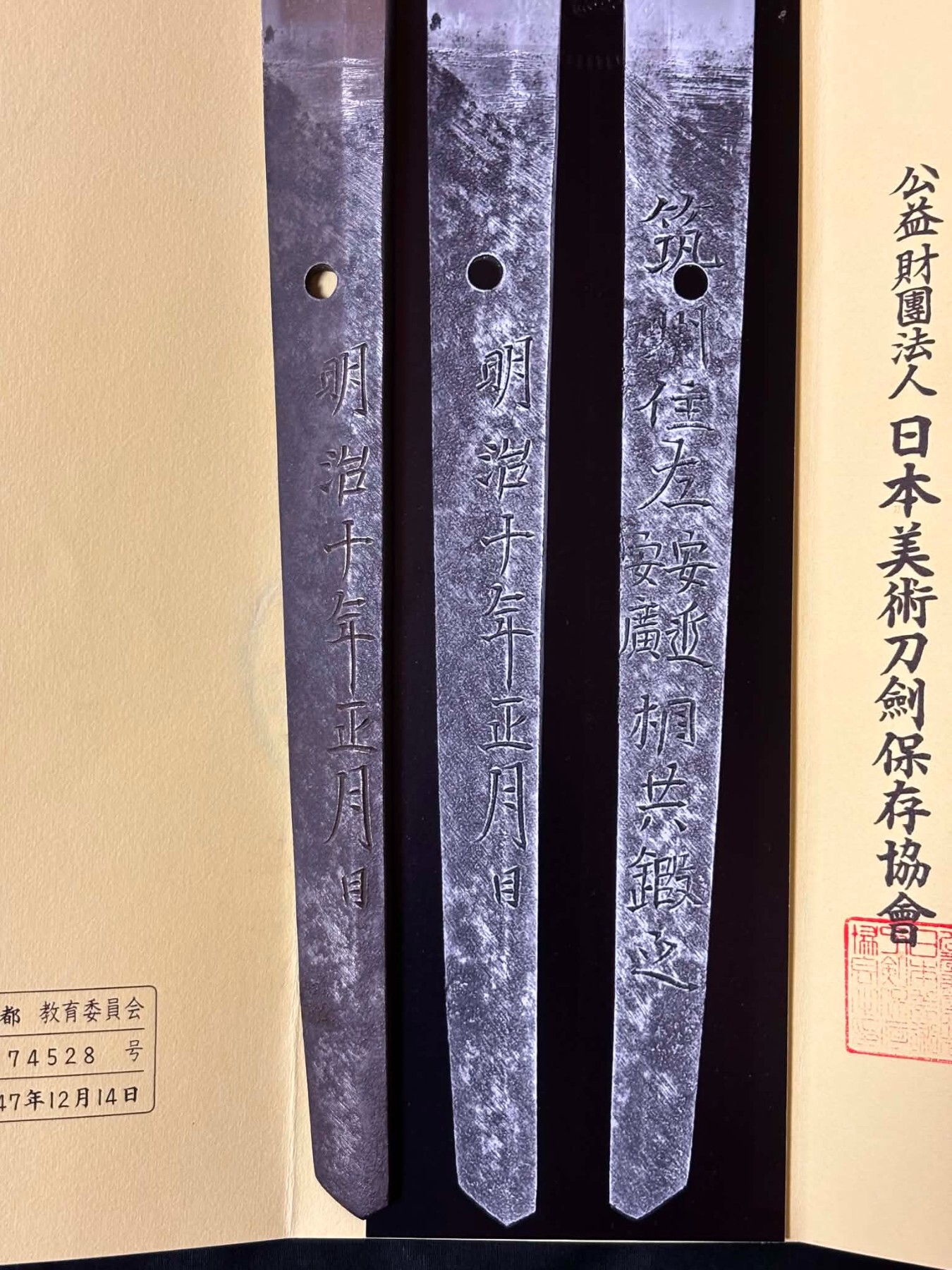
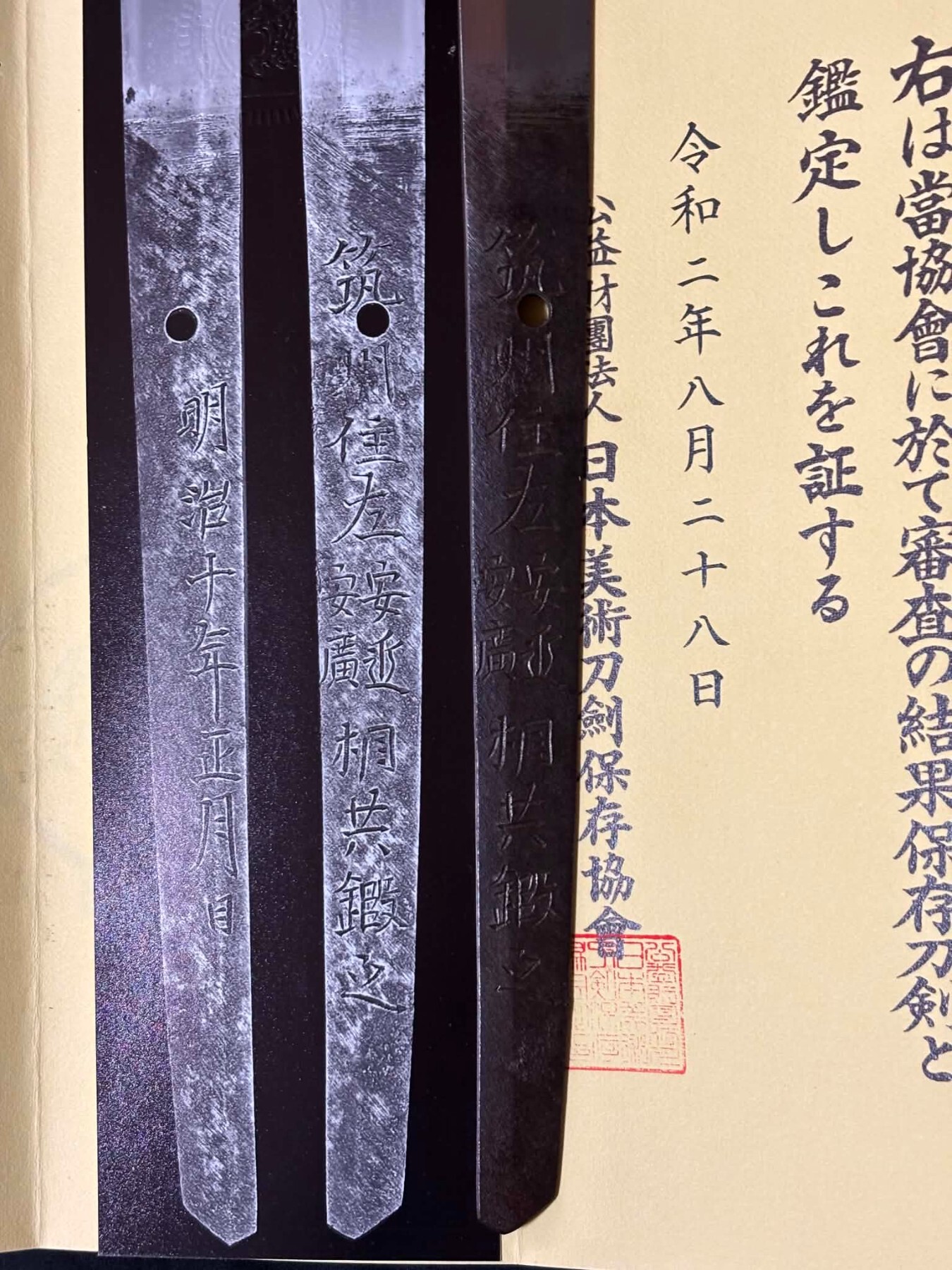
Type (Tachi, Katana, Wakizashi, Tanto, Naginata, Other) : Katana Ubu, Suriage or O-Suriage : Ubu Mei : (Mumei, Signature) : Chikushu Ju Sa Yasuchika / Yasuhiro Ai tomo kitae kore / Jointly forged by Yasuchika and Yasuhiro, in the Chikushu province ; Meiji jyu nen shogatsu hi / Made in Meiji ten (1877), a day of the first month Papered or not and by whom? : NBTHK Hozon Era/Age : Shinshinto, Meiji period Shirasaya, Koshirae or Bare Blade? : Shirasaya Nagasa/Blade Length : 65,5cm Sori : 2,5cm Hamon Type : Suguha Jihada : Itame / Masame / Nagare Other Hataraki Visible : ko-ashi Flaws : a few small black rust spot, a straight muneware (or straight scratch) and some light kitae ware Sword Location : Japan Will ship to : Anywhere, if swords are accepted by your countries Payment Methods Accepted : Bank transfer, Paypal F&F Price and Currency : 2000 euros shipping included worldwide Returns Policy: If there is a fatal flaw discovered, return are accepted Other Info and Full Description : This katana is a Shinshintō-period gassaku by the Chikuzen smiths Chikushū-jū Sa Yasuchika(安近) and Yasuhiro (安廣). They were both in the late Samonji group of smith. The sword is dated Meiji 10, first month (January 1877), placing it at a remarkable moment in Japanese history, right before the outbreak of the Seinan War (Satsuma Rebellion) in February 1877, when Japan was transitioning from the samurai era to the modern Meiji state. As a traditionally forged sword made at this late date, this gassaku represents one of the final chapters of the centuries-old Japanese swordmaking tradition.
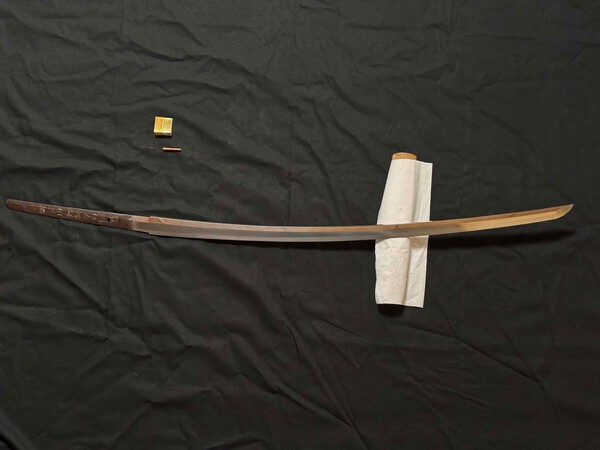
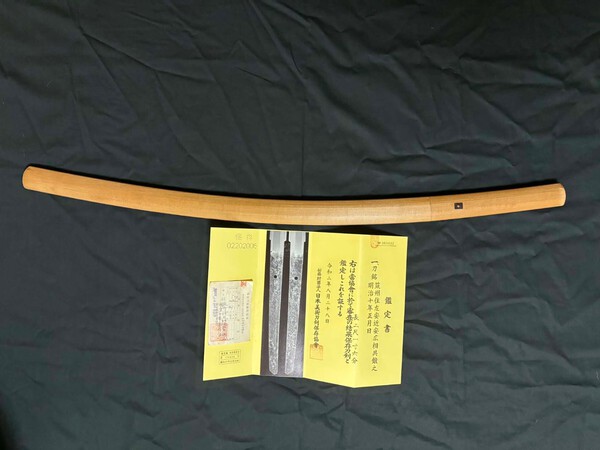
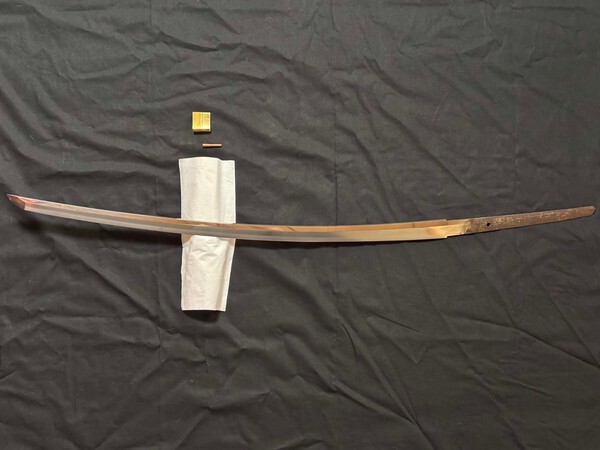
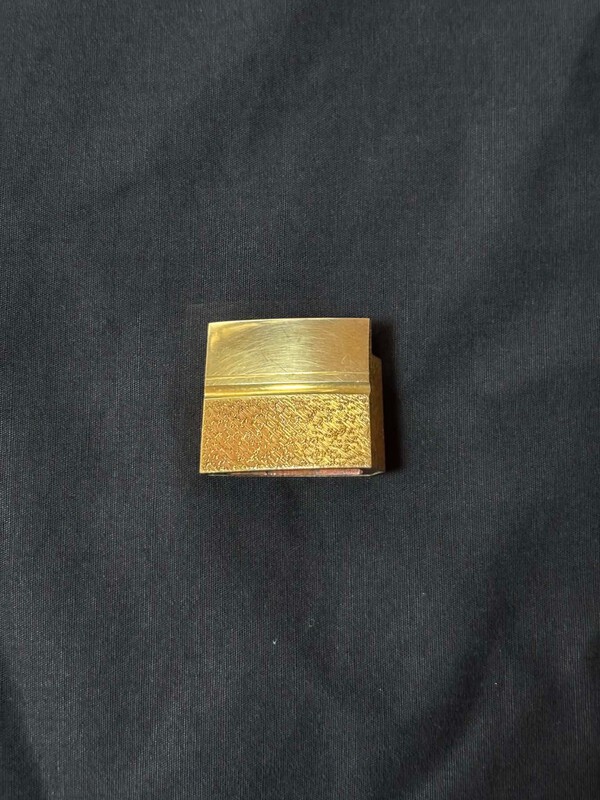
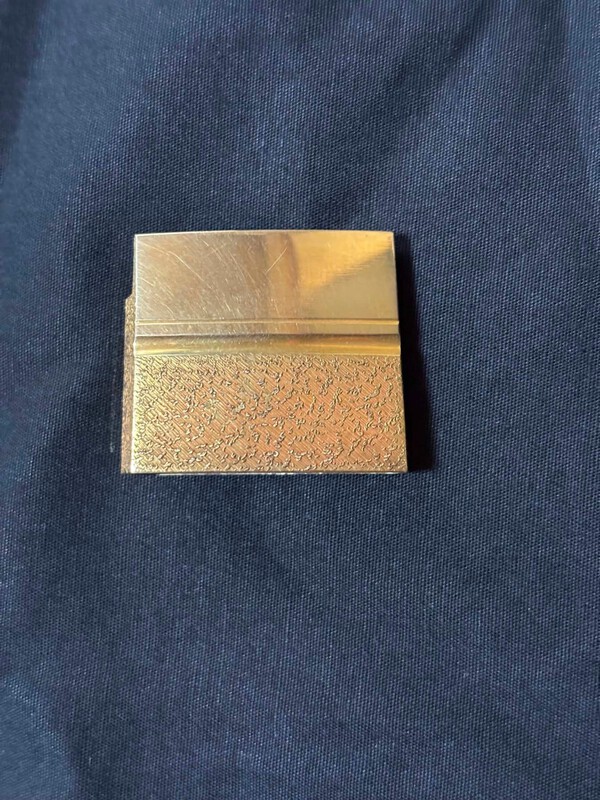
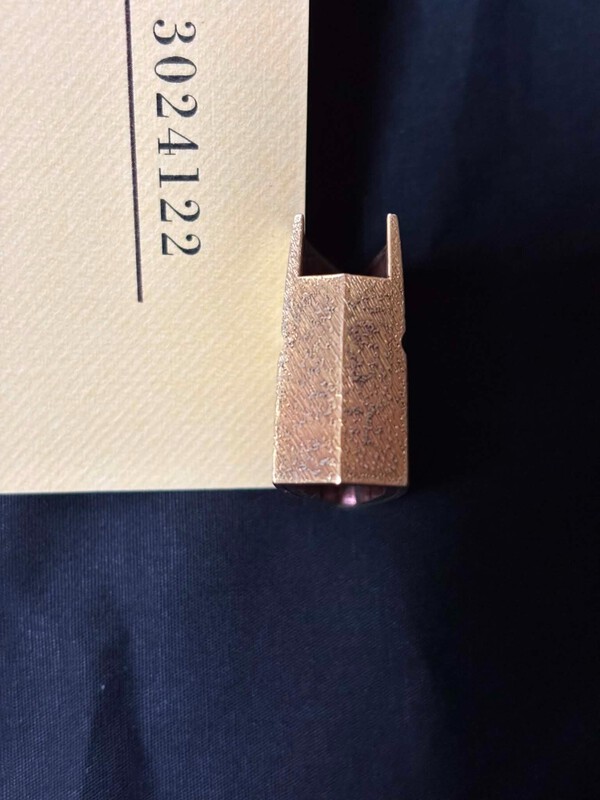
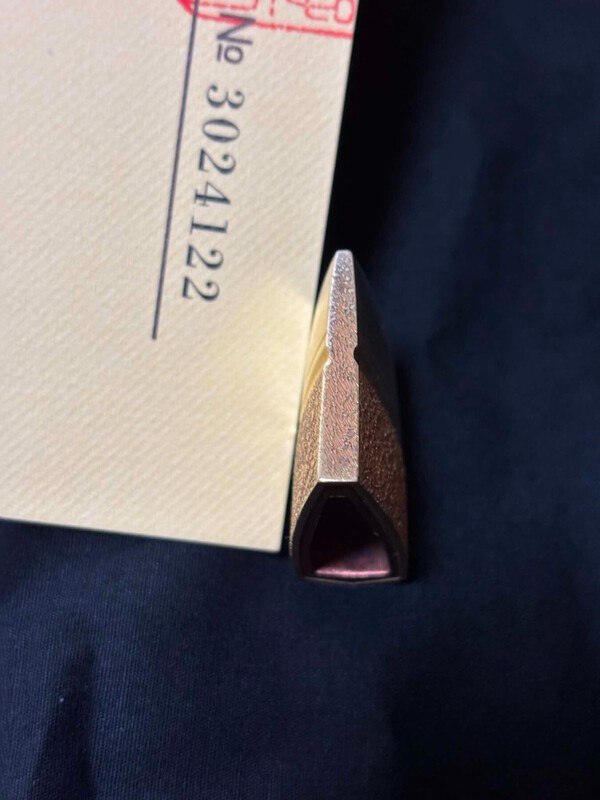
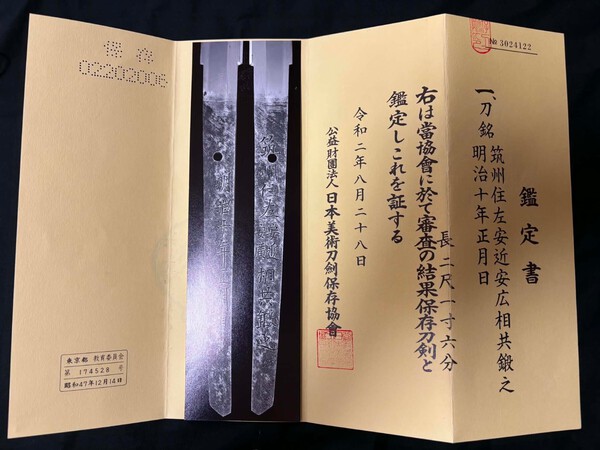
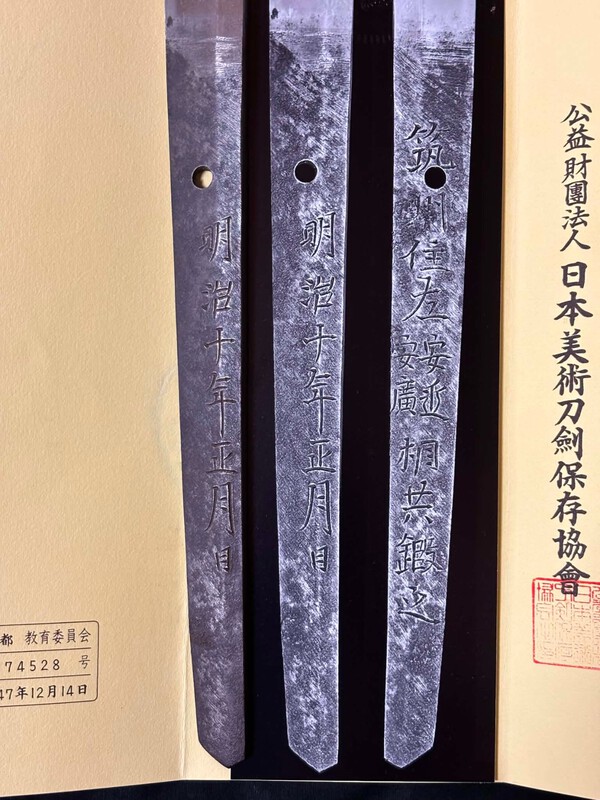

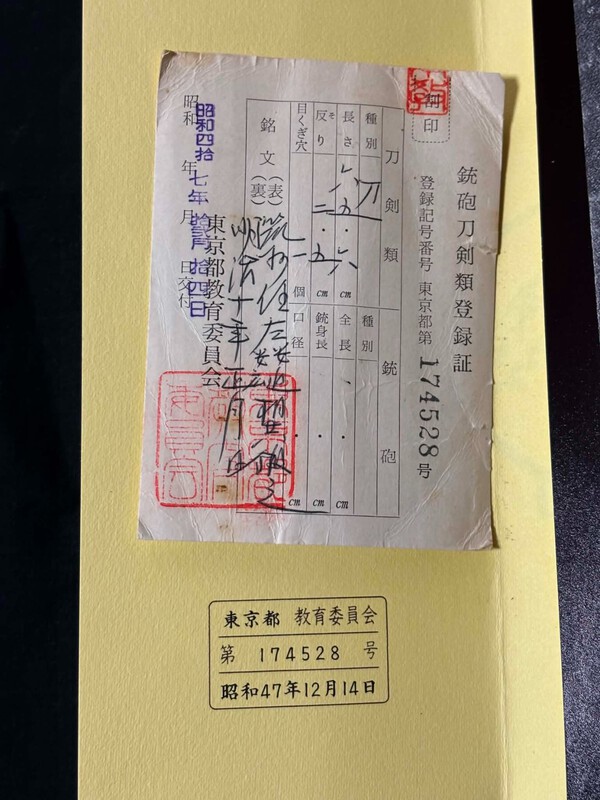
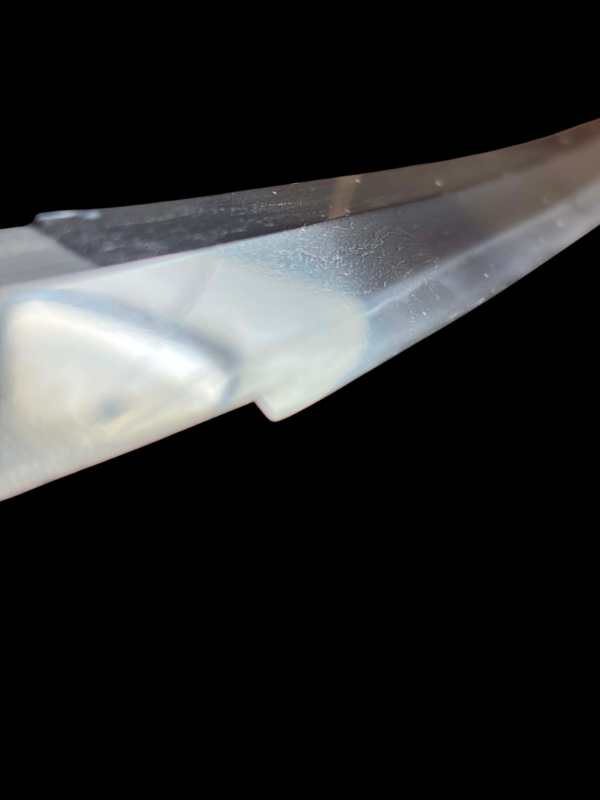
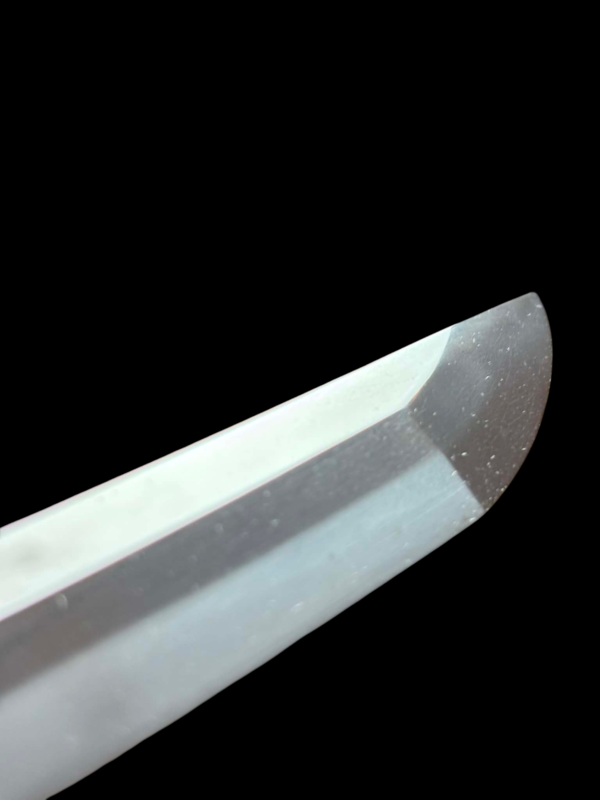
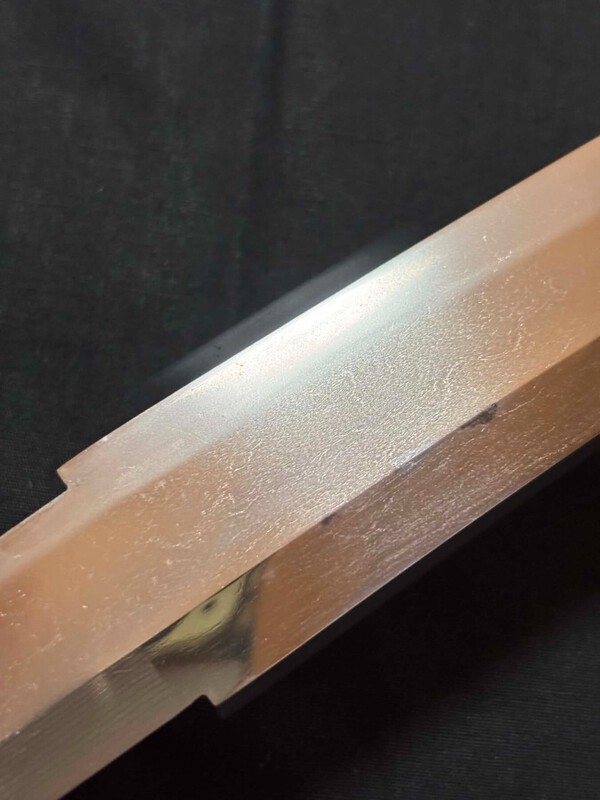
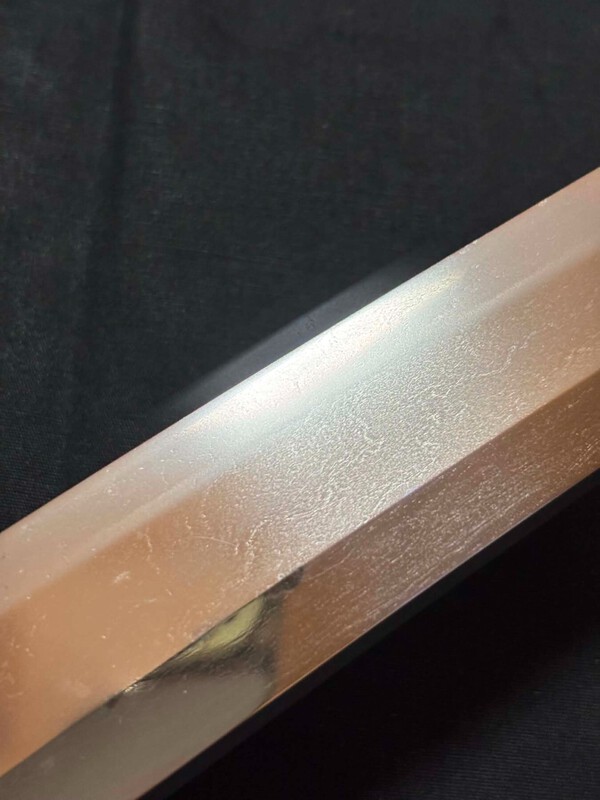
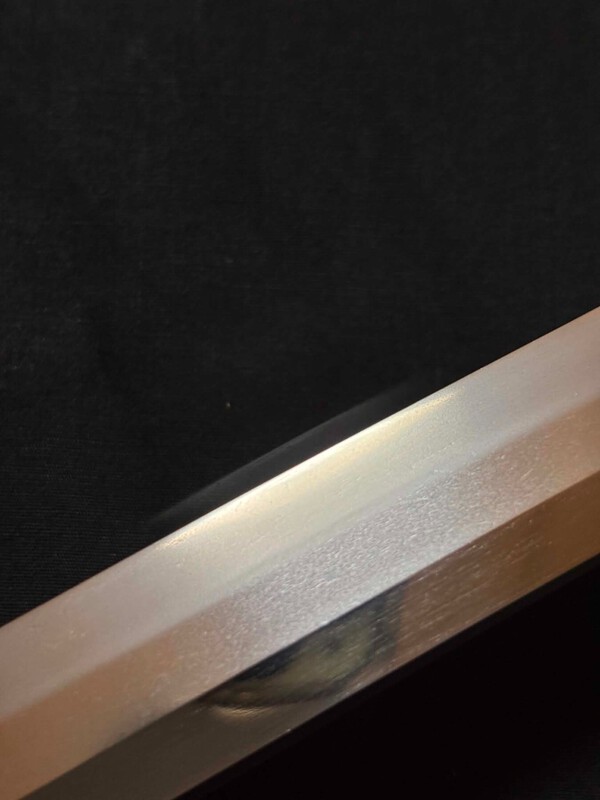
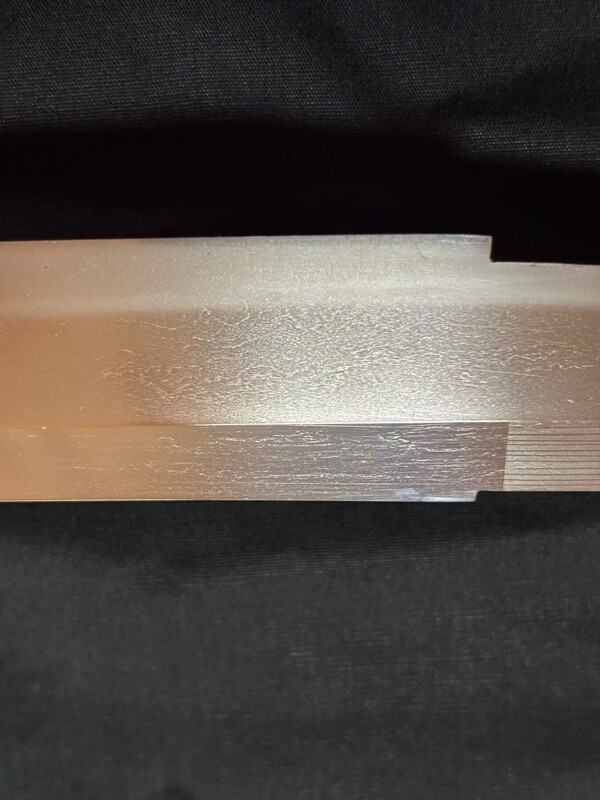
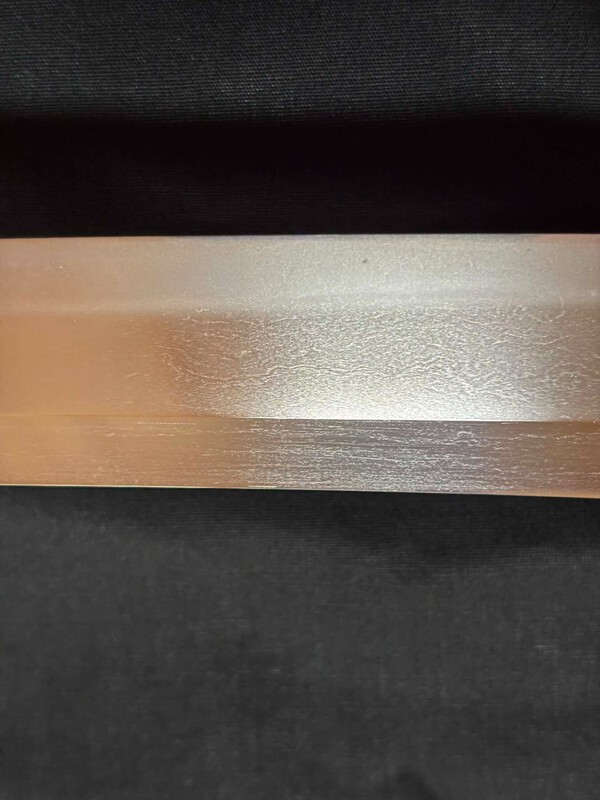

 1 point
 -
It could be 1470s, for example. Not the mainstream schools unfortunately. It has pronounced nioi-guchi which is not very well controlled, reasonably tight forging, but then again in couple of places it can open up with polish. What happens with the kaeri? Its almost like there is none on one side, which torpedoes a lot of attributions. So boshi-kaeri on both sides would be of interest.1 point
-
I see my problem! I just switched over to a dark screen format, and the type on those pages are in black, while the others are white!1 point
-
Wonderful, thank you Bruno & John!1 point
-
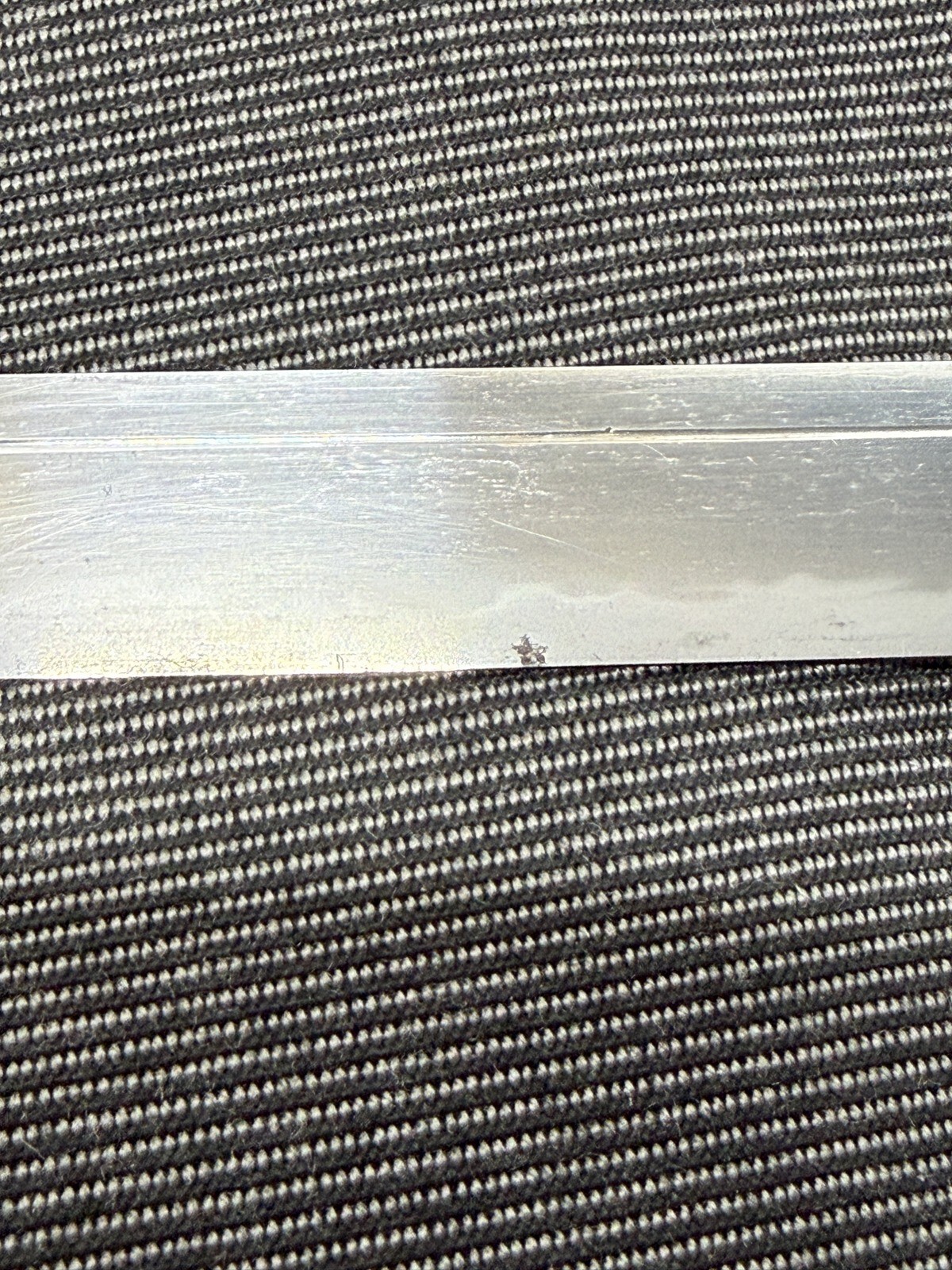
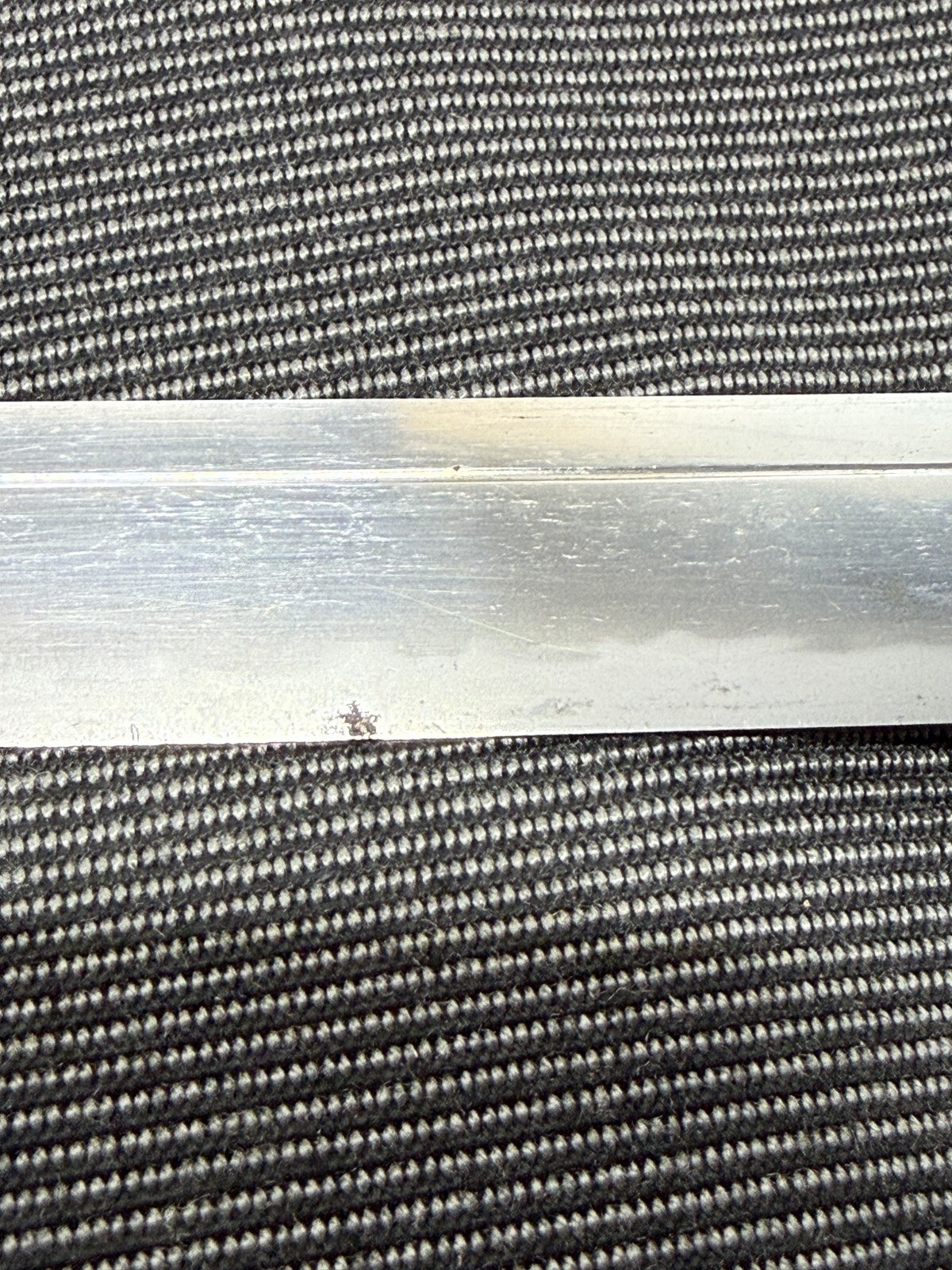
How do the photos compare to what you see in hand? The last photo appears to show mokume swirls. If thats the case then Tosa Yoshimitsu is a strong contender. Overall though the surface oxidation is preventing the viewer from appreciating the activity. So this might be a good candidate for polish. A Tosa Yoshimitsu attribution would date this tanto to the end of the Muromachi. This is one that Ray had for sale in better condition1 point
-
Need to go back and check out the story, but it may have been at night and the sniper was not sure if he had wounded him or not. Quote from our friend Wiki: "Once he entered Mikawa Province in 1573, Shingen besieged Noda Castle, but on May 13, 1573, he died at the age of 51. The exact circumstances surrounding his death are unknown. Some accounts say he succumbed to an old war wound, some say a sniper had wounded him earlier, and others that he died of pneumonia." There is a gun illustrated in Sawada Taira's book Nihon no Furuju which is alleged to be the gun that shot him. https://japanworld.info/takeda-shingen/ "Shingen withdrew toward Kai by way of Mikawa and Shinano through February and March. He stopped at Noda Castle on the Mikawa-Tōtōmi border for a brief siege — this is where the sniper-legend attaches, that a Tokugawa matchlockman shot him through the helmet while he was listening to a flute being played at night from inside the castle walls, and that the wound became the proximate cause of his death. The sniper story is almost certainly a later invention. The Japanese sources closer to the event describe a progressive pulmonary illness, with coughing fits in February and March, bed-rest from late March onward, and a final collapse in early April." Whether it is true or not, the legend still somehow persists today, so most people would have heard the story.. As to the third sheet, I found an illustration the other day, (will try and find it again) but one sheet of mine above is also said to be a missing sheet.1 point
-
Absolutely spot on, i was using a photobox with a fluorescent tube. Maybe those will be better using a powerful LED but to be honest i have exhausted all my capabilities as a photographer

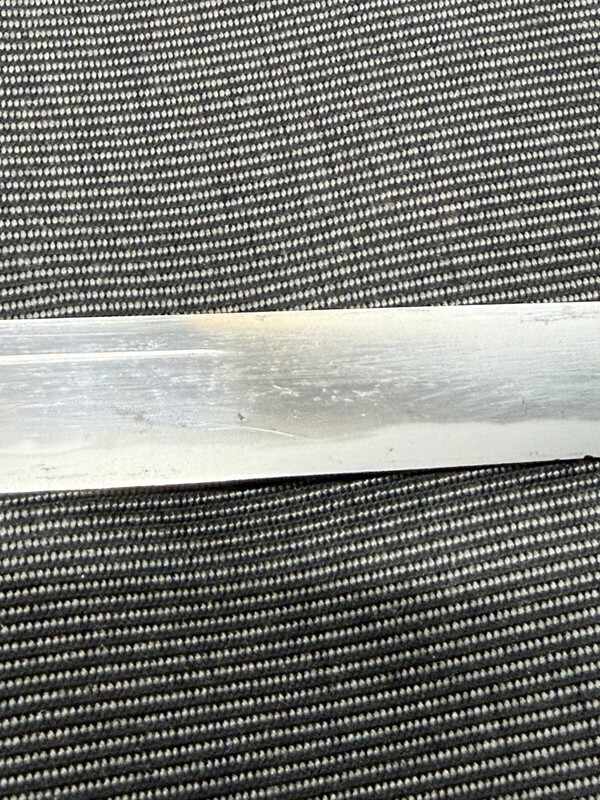
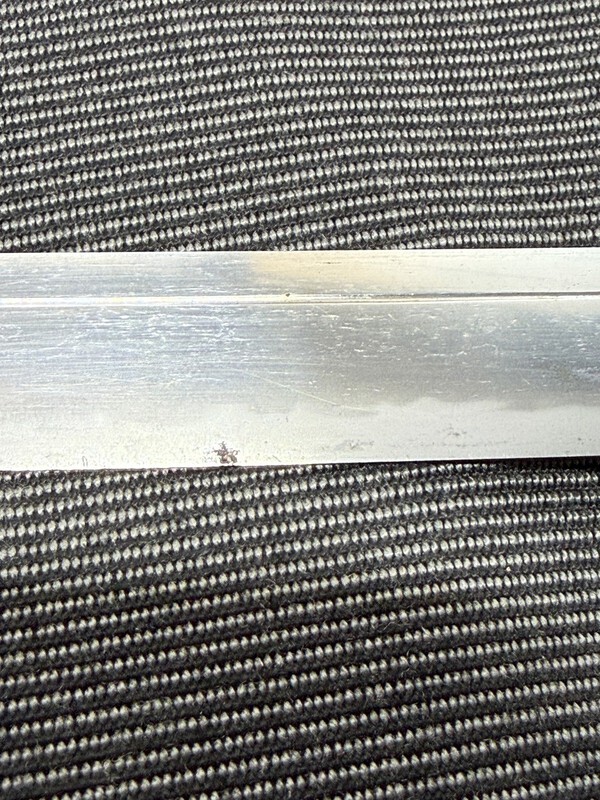
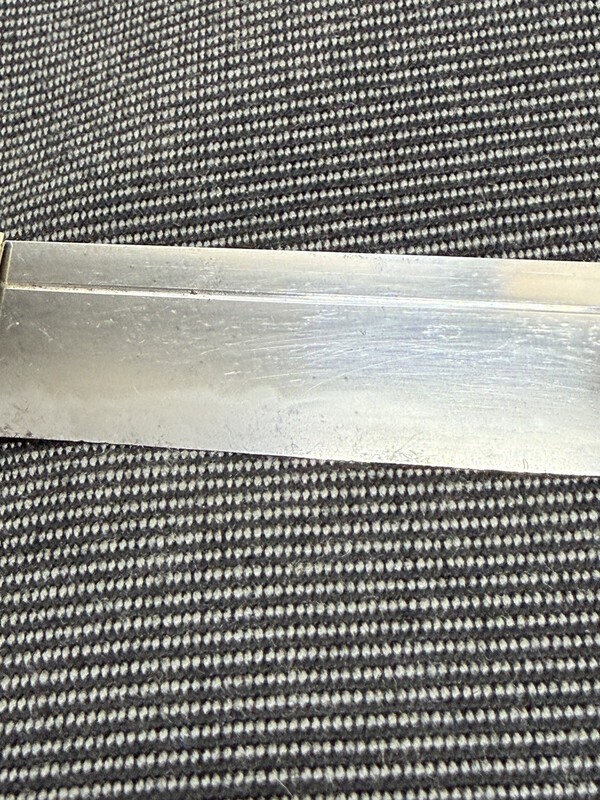 1 point
 -
Offering these as a pair for $10,000. Incredible deal if someone is looking for a beautiful pair of Enju with koshirae. These are with Moses Becerra right now but I will get them sent back to me (and then out to you) if someone wants to do the deal.1 point
-
Nihonto Wordle My new addiction. Great work!1 point
-
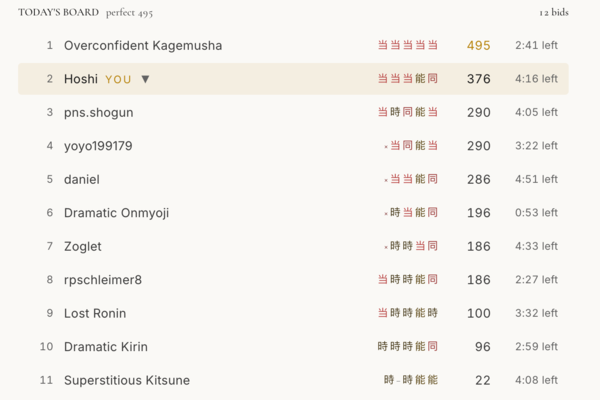
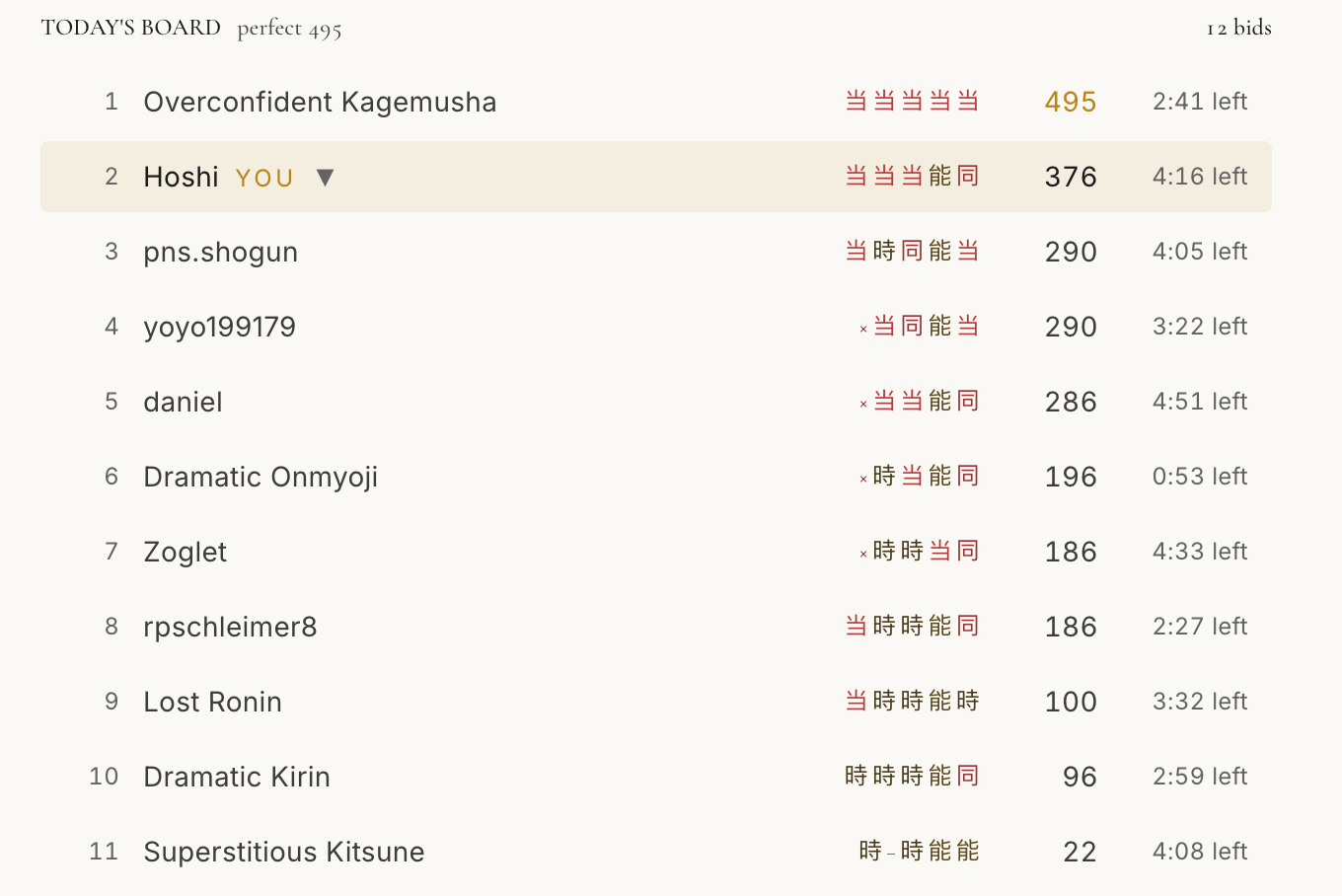
Hi Baby Joe, Yes, I am working on a Japanese version. It's on the roadmap. Yes I think these are great learning conversation to be had, perhaps it's own NMB section in the future, as long as we manage spoilers in a gentlemanly manner. Today's board, so far A mysterious Kagemusha managed to get all five Atari. Welcome to our NMB residents who are making a strong showing for the first game, which I am sure is confusing and requires adjustments to get used to! Welcome to Frugal Tengu, Dramatic Onmyoji, Lost Ronin, and all the other magical animals and folkloric figures. I hope you all enjoy it, please don't hesitate to give me feedback on how I can make it better for you. Best, Hoshi
 1 point
 -
In the current market papers definitely add financial value and provide piece of mind for those that don't yet have the knowledge to make confident judgements for themselves. Items papered as Tokubetsu Hozon and above can significantly impact the value, generally exceeding the initial investment and the submission fee, which is why a lot of dealers buy or get items papered. There are also people who get a thrill out of finding quality items in the wild and having them validated with high ranking papers, a test of knowledge and skill of sorts. I have always appreciated that the NTHK at least gives an estimate on the period.1 point
-
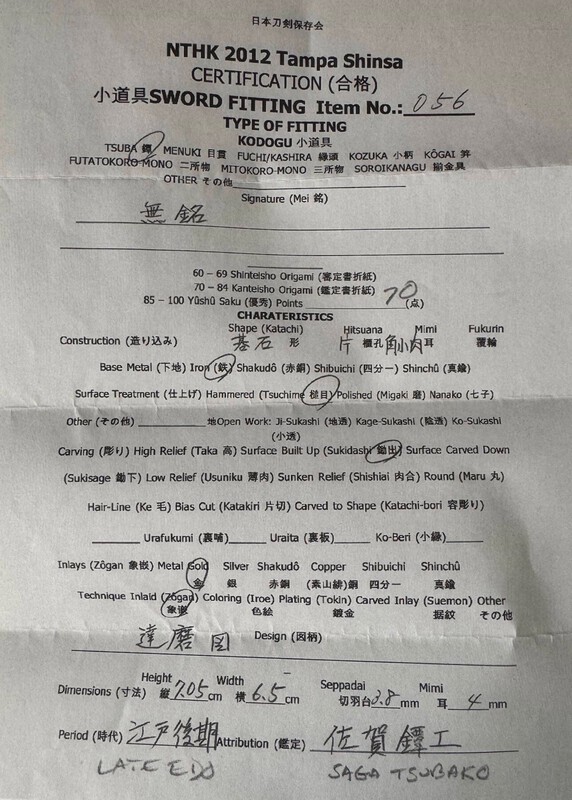
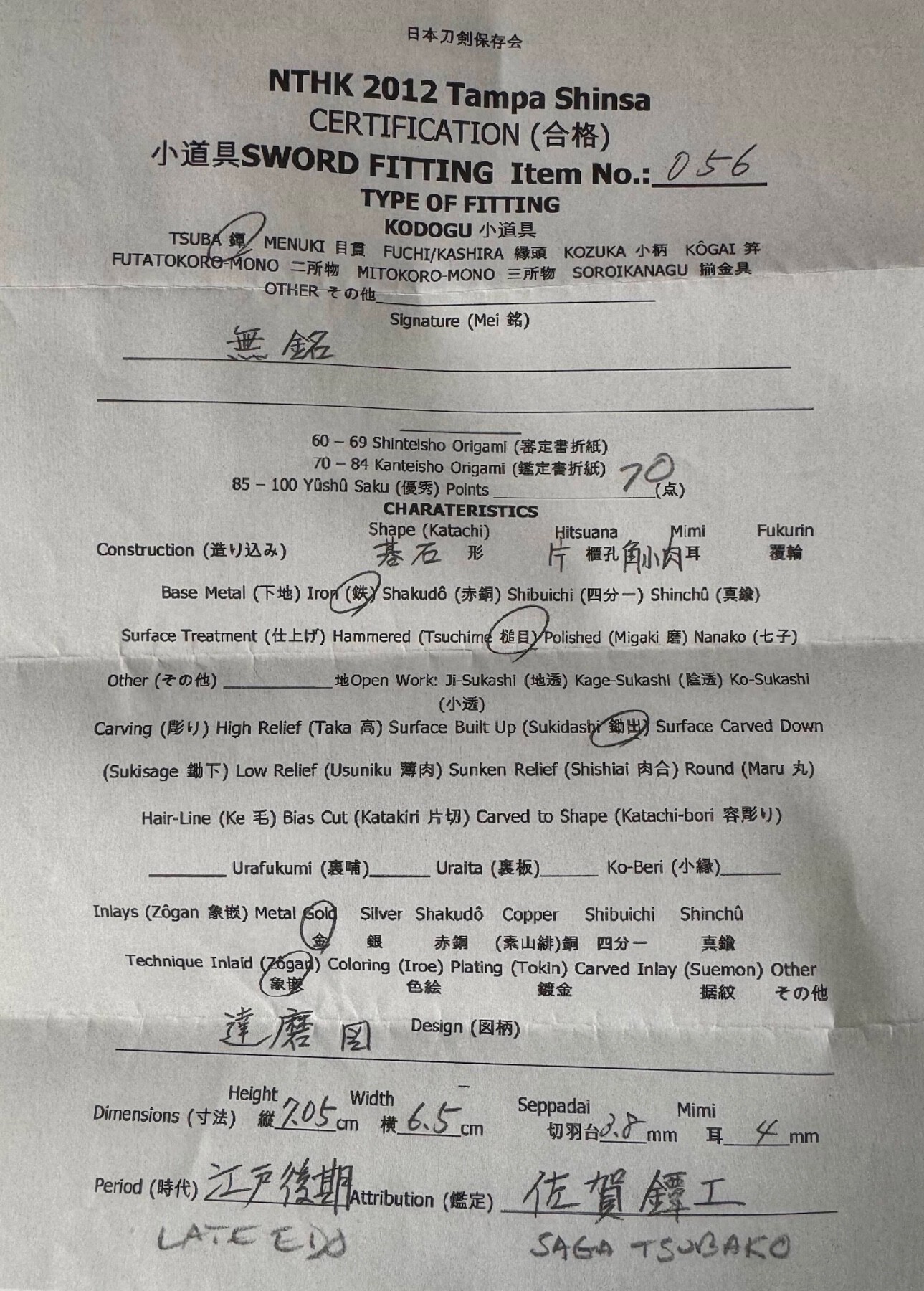
Attached is a worksheet I found from the NTHK judging at Tampa in 2012. A long time ago I know, but it shows the information that was recorded. Thanks everyone for your contribution to this thread. I have found it very interesting. Last question, do you believe papers increase the value of a tsuba? Does this value exceed the price of the shinsa submission/pass fee? I know that you can submit for Hozon and Tokubetsu Hozon at the same time, which makes it more useful from a resale point of view (if you piece receives Tokubetsu Hozon that is). With so many fakes out there, a paper can provide an element of security for a lot of people I guess.
 1 point
 -
Great game! Is there any chance for a Japanese version of the description in the future...? Also, and this is only my wild fantasy, but wouldn't it be awesome if there were a post where people could discuss this Kantei game (the day after, so it's not spoiling anything), like a crowdsourced Kantei comment explaining the thought process!1 point
-
Even if we were to suppose that the successful attribution rate is relatively high, we are still stuck with categories that are often arbitrary in nature and do not necessarily reflect the latest research/scholarship. This is very much understood and discussed privately between collectors, and why a lot of collectors do not really submit items unless it is an outstanding example, they are looking for confirmation on a Mei or if the financial investment makes it worthwhile for sale. Collectors in this category generally have a pretty good idea of a likely attribution before submitting and are unlikely to learn any new information by having an item papered. It is a game, the game has rules, but at the end of the day a lot of the attributions are meaningless outside of the small number of people that understand the game. This is not necessarily an easy problem to solve though, as Steve mentioned there is so much that is unknown and may never be known for certain in this field, but I feel that arbitrary categorisation does stifle legitimate research, that could improve the situation.1 point
-
Thought I would post an update on the observed RJT star-stamped blades & smiths we've charted that are not on any known RJT lists. These lists, as far as I know are from 1942. So I was curious if the un-listed smiths' blades were all after '42, and they are : 1943 Mar '43 Kaneaki/Gifu Oct '43 Yoshikane/Ikeda 1944 '44 Masashige/Tokushima Mar '44 Masashige/Tokushima May '44 Nagatoshi/Toloshima Oct '44 Mitsuoki/Akita 1945 Mar '45 Morimitsu/Fukuoka May '45 Fumitada/Oita May '45Tadatsuna/Shimane May '45 Yohsinori/Oita (maybe) Kasuga Workshop (which was in Nara?) Jun '45 Tadamori/Shimzne Maybe insignificant, or coincidental that some of the prefectures have two smiths producing blades - Tokushima, Oita, and Shimane. Maybe they were free from Allied bombing?1 point
-
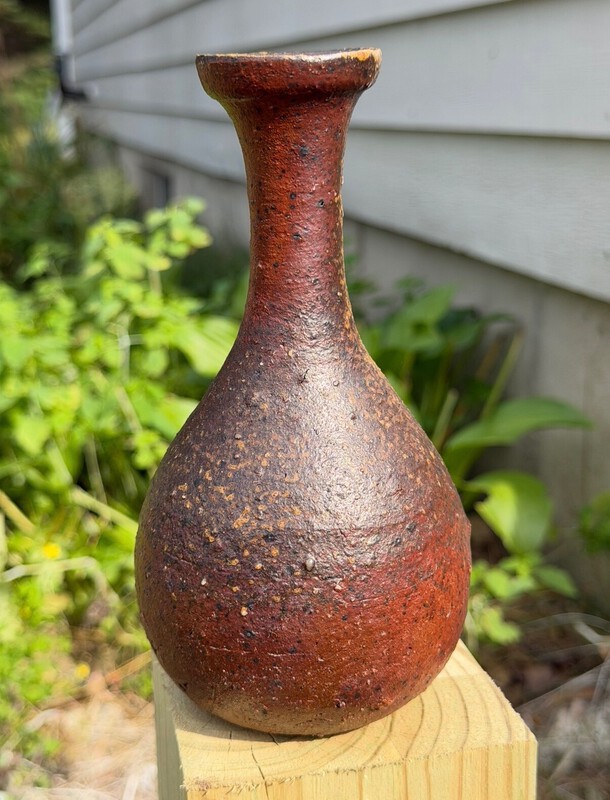
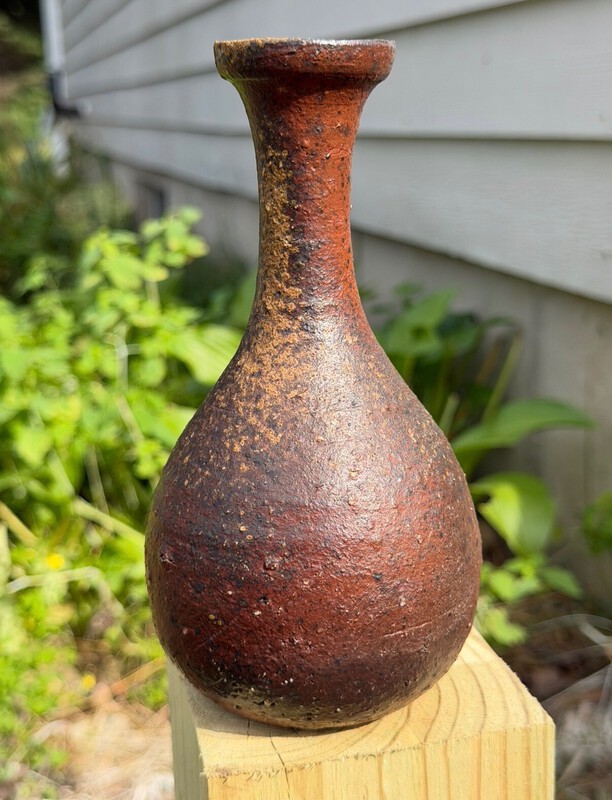
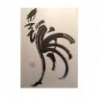
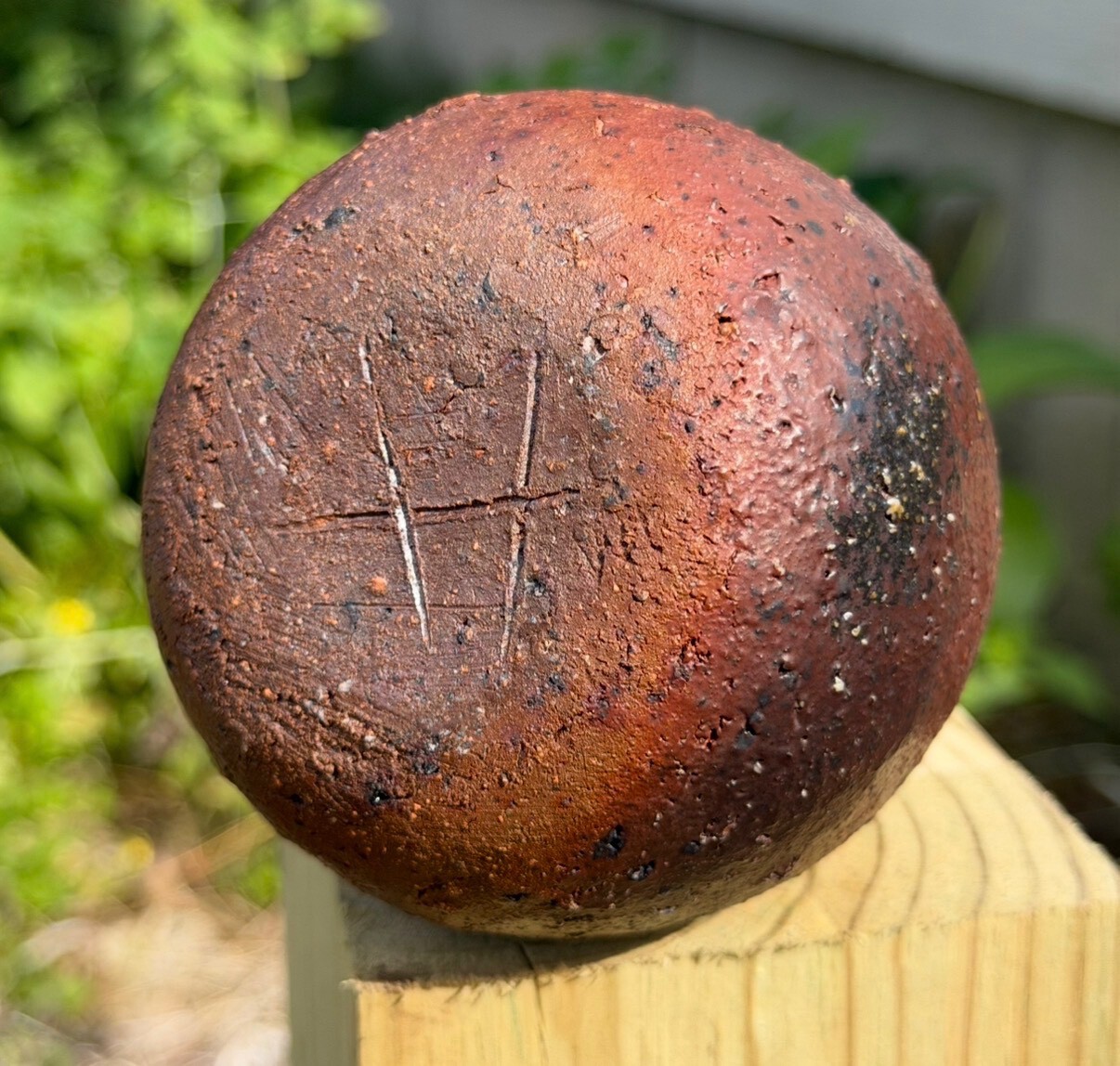
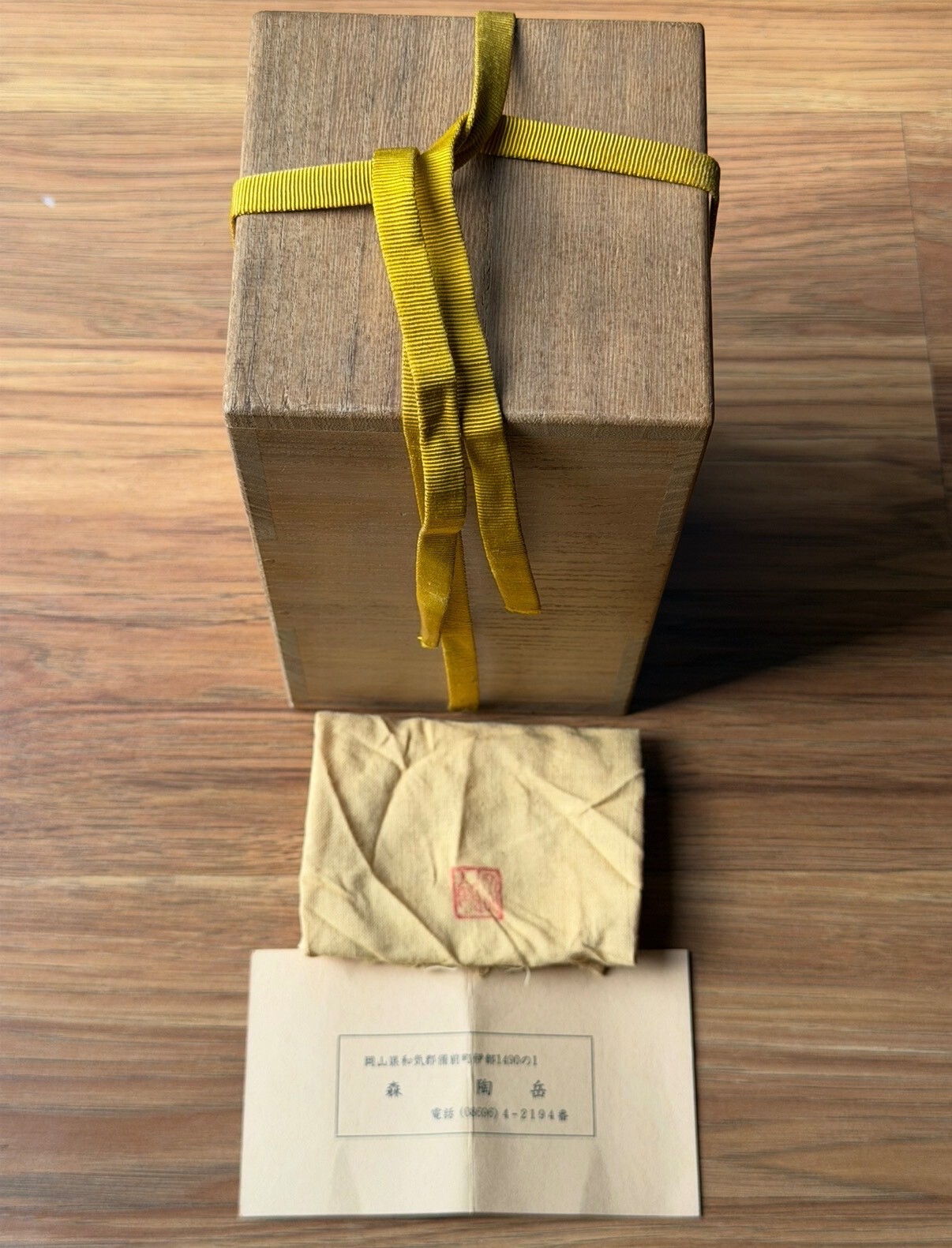
Mori Togaku:

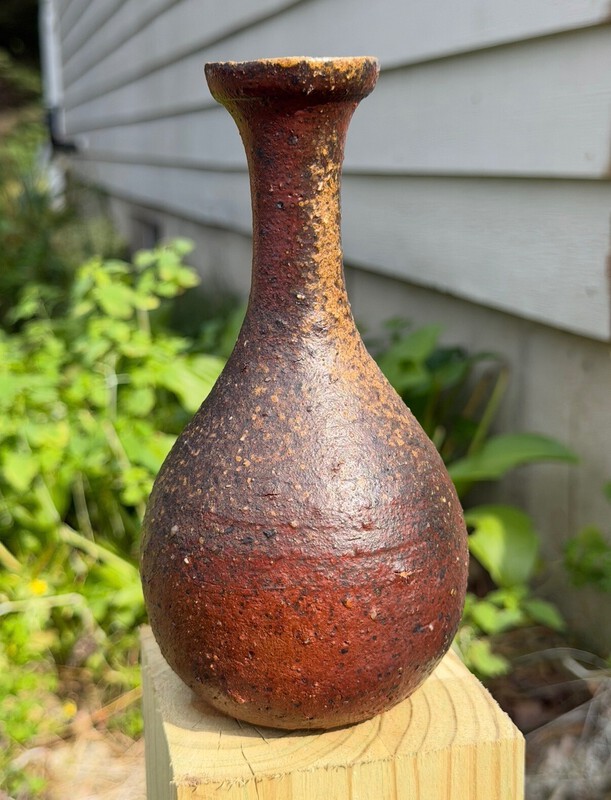
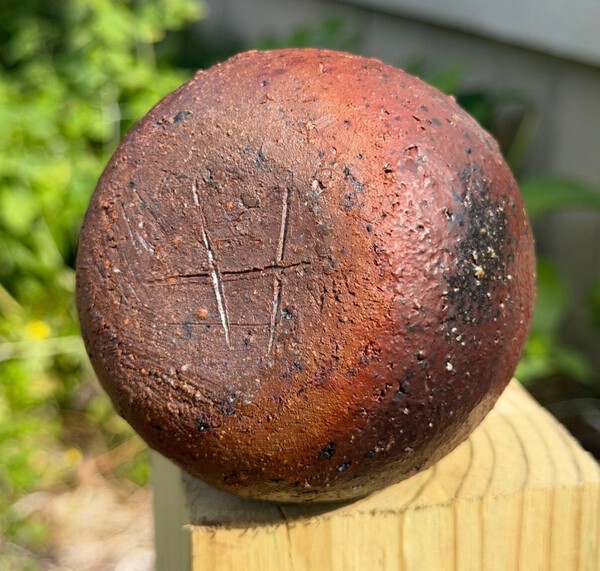
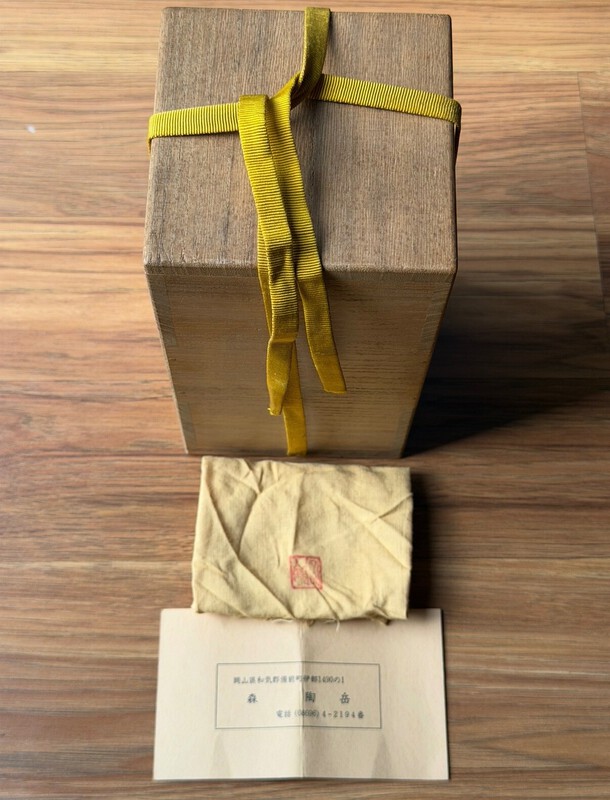 1 point
 -
@Spartancrest should deposit his knowledge base into the LLM and sell it as a service to NBTHK1 point
-
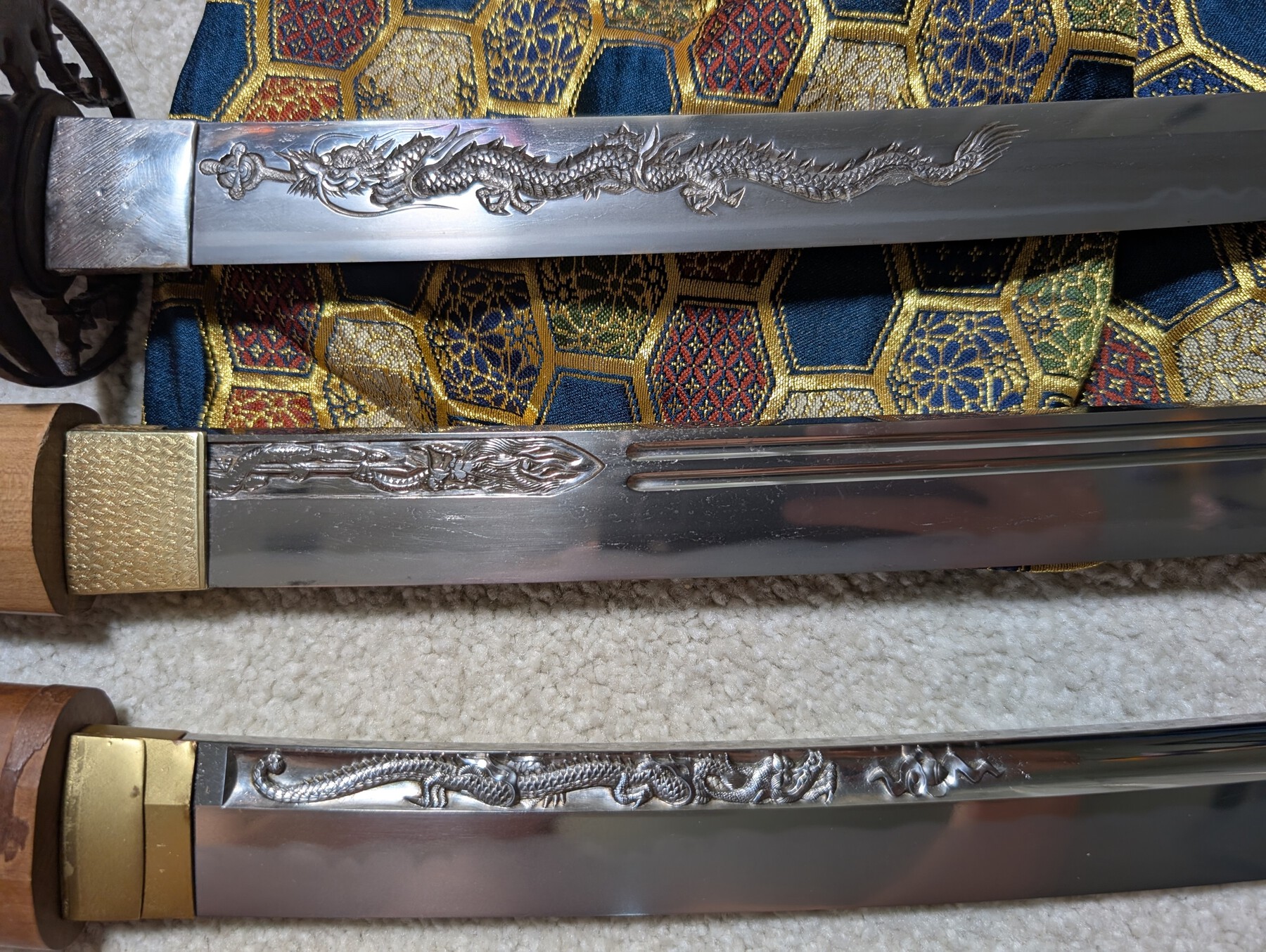
Just happened to have 3 of my swords with dragon horimono out, so I thought I'd share a picture of the 3 different types of dragons, from top to bottom: Jinikubori, Hitsunaibori, and Hinaibori. The bottom dragon was done by Mukansa carver Kokeguchi Senshu. I'm missing a sukashibori one to finish the collection...
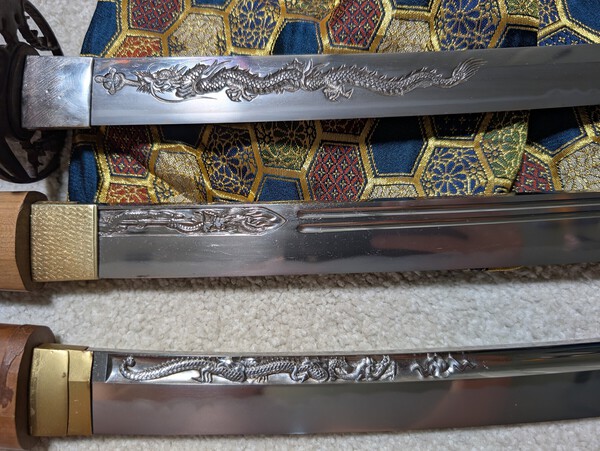 1 point
 -
Thank you very for the link and answer. 😊1 point
-
Holy crap this looks great what a fantastic idea I'm terrible at kantei1 point
-
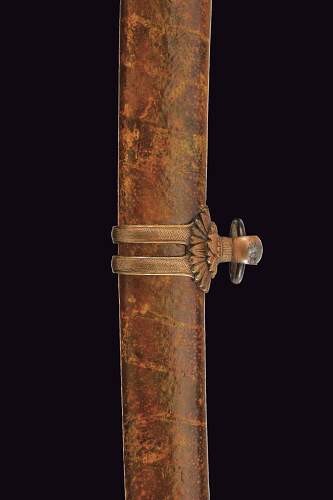
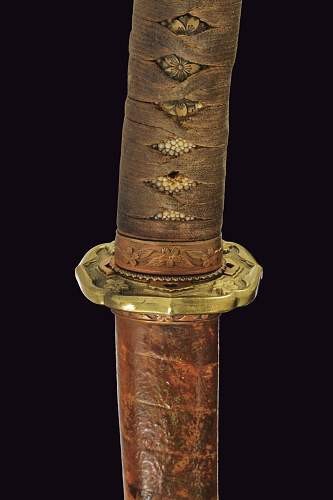
Quite unusual leather covered saya, with the fittings mounted outside the leather. Posted by Zoobar on this Warrelics thread. It looks like it at one time had a cord wrapped around it.

 1 point
 -
Dear both, Many thanks for the translation and the for the link for comparison. Best regards, Tom1 point
-
1 point
-
1 point
-
Noshu Kanetoshi saku kore January, 1941 ( the first month of the year Showa 16)1 point
-
They can’t build an LLM with their own records because there are too many contradictions and errors in their attributions. Anyone building an LLM for tsuba identification would have to start from scratch to train it with any degree of efficacy. The current system of classification has too many inherent problems (such as not enough categories, and some major voids of information, as well as built in misinformation), so it needs some significant overhauling before building an LLM around the NBTHK’s records. Garbage in = Garbage out “We” would need to build a group of contributors who are each specialists in specific areas rather than a bunch of generalists making generalizations. Ideally, a minimum of three specialists for each tsuba “category” (if you can even find that many specialists for each!). Those specialists would need to reach a consensus, and be more able to potentially parse out some “subcategories”, maybe identify previously unidentified smiths based on workmanship, and maybe even outline a timeline of progression within a tsuba category. You need people with depth of knowledge and understanding, not generalists who are indoctrinated and obligated to follow “what has already been said in the past”. i.e. A fresh perspective with an analytical mindset and a vast data set vs Perpetuating and reinforcing a flawed system based on narrow sets of classification criteria. Lofty ideals and goals I know, but doing it with anything less will just build a deficient AI that will only be good at identifying the obvious and horribly inept at identifying anything other than the norm (hmmm…kind of like the NBTHK as it is now)1 point
-
Hmm curious. I am in agreement with Dan, some details seem very soft, the gold wear does not seem to match the metalwork wear. Also lack of the punch marks around the nakago ana. Tagane-oto I think they are called. I recently bought a whole bunch of copies....no idea why, but has helped me learn a lot more than I did. But as above, could be very wrong.1 point







.thumb.png.54593db2789c8a1dcb235543b184ce39.png)

















This leaderboard is set to Johannesburg/GMT+02:00