
Leaderboard



Popular Content
Showing content with the highest reputation on 06/05/2026 in all areas
-
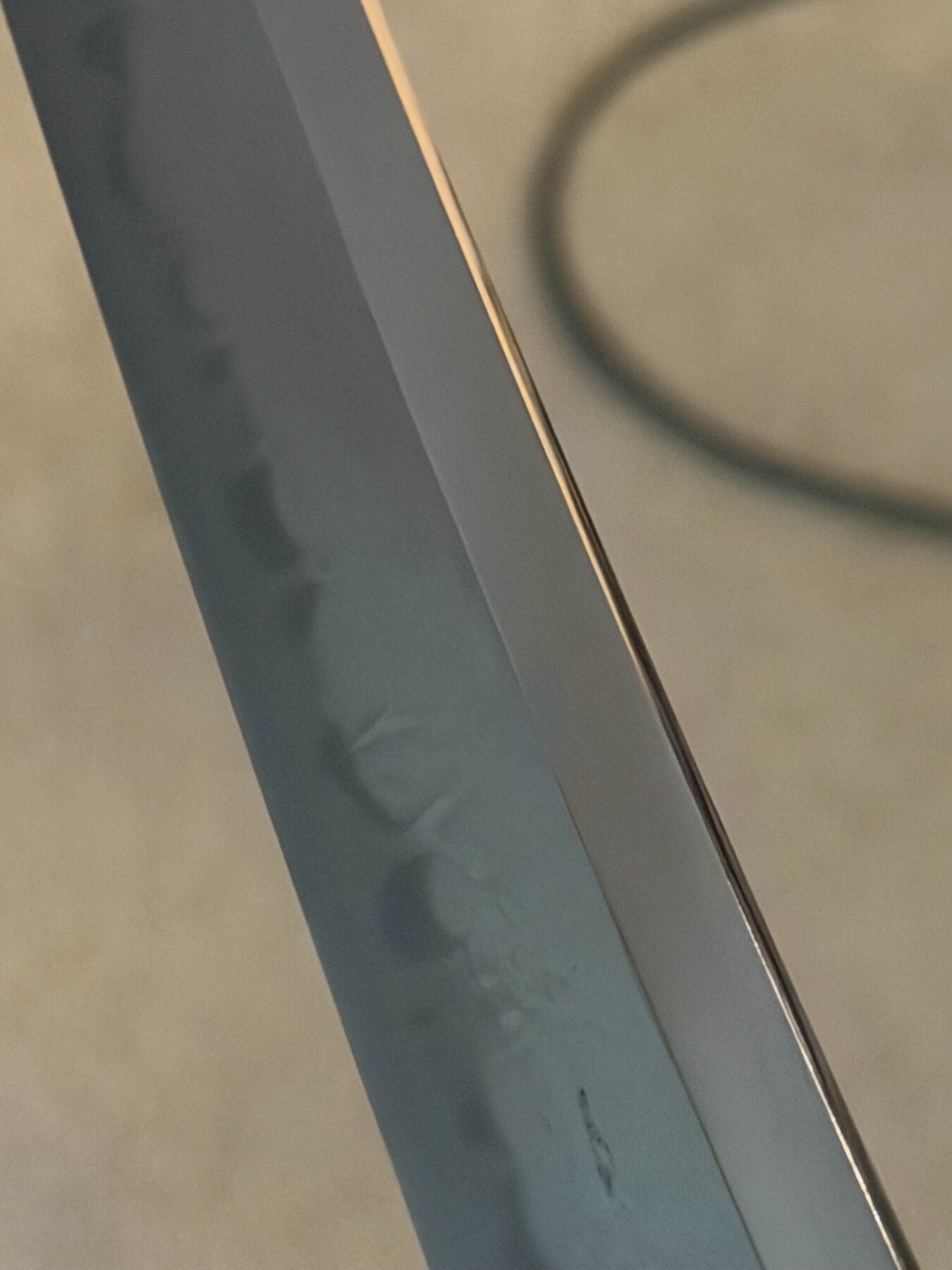
I'm just a newb, but that polish seems solid as it is.4 points
-
Kanenori November, 1943.3 points
-
Dear Tyler, some considerations: - From the photos, it's clear you purchased the blade from a well-known dealer in Japan. Did you actually go there to purchase it? The dealer has a high reputation, and I doubt they sold you an illegible or poorly polished blade without telling you, or even offering a repolishing service at an additional cost. If the blade was already in Japan, it would have been worth checking right away. - I don't know who's seen the blade, but it could very well have potential for Juyo. I'd just like to point out that there's a difference between having potential and obtaining certification. To obtain a Juyo certification, compared to previous ones, you need luck as well as excellent quality workmanship. It's not just a matter of requirements or quality. A high-level polish in Japan comes with significant costs, which, objectively speaking, will be difficult to justify if the blade doesn't pass Juyo. Of course, everyone is free to spend their money however they want... always free to spend on the absolute best polish, knowing that in the event of a resale of the blade, that expense will be considered very marginal. - Personally, from the photos, the blade looks more than legible. Could it be better? Possibly... but for now, if I were you, I'd try to show and hear from as many people as possible before embarking on a long and expensive adventure. All The Best Giordy3 points
-
There are multiple stories of collectors doing just that and being jammed up for hours. The reason some collectors have great success with this method is the prior knowledge and co-ordination with an experienced dealer beforehand, just rocking up to Narita airport with a sword and a prayer is ill-advised.3 points
-
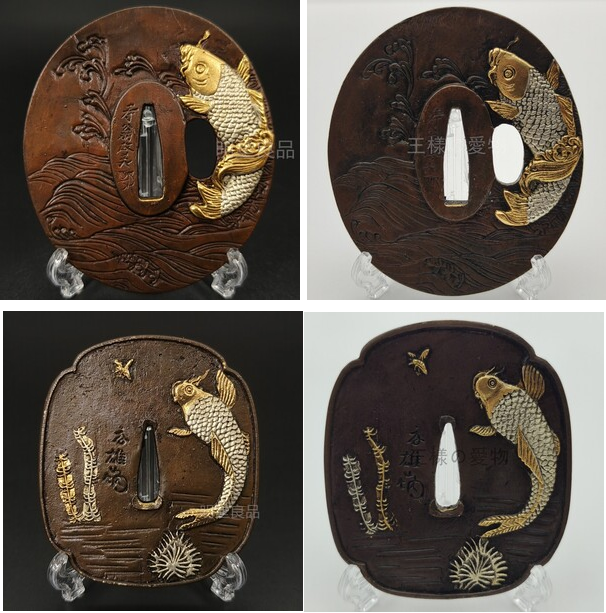
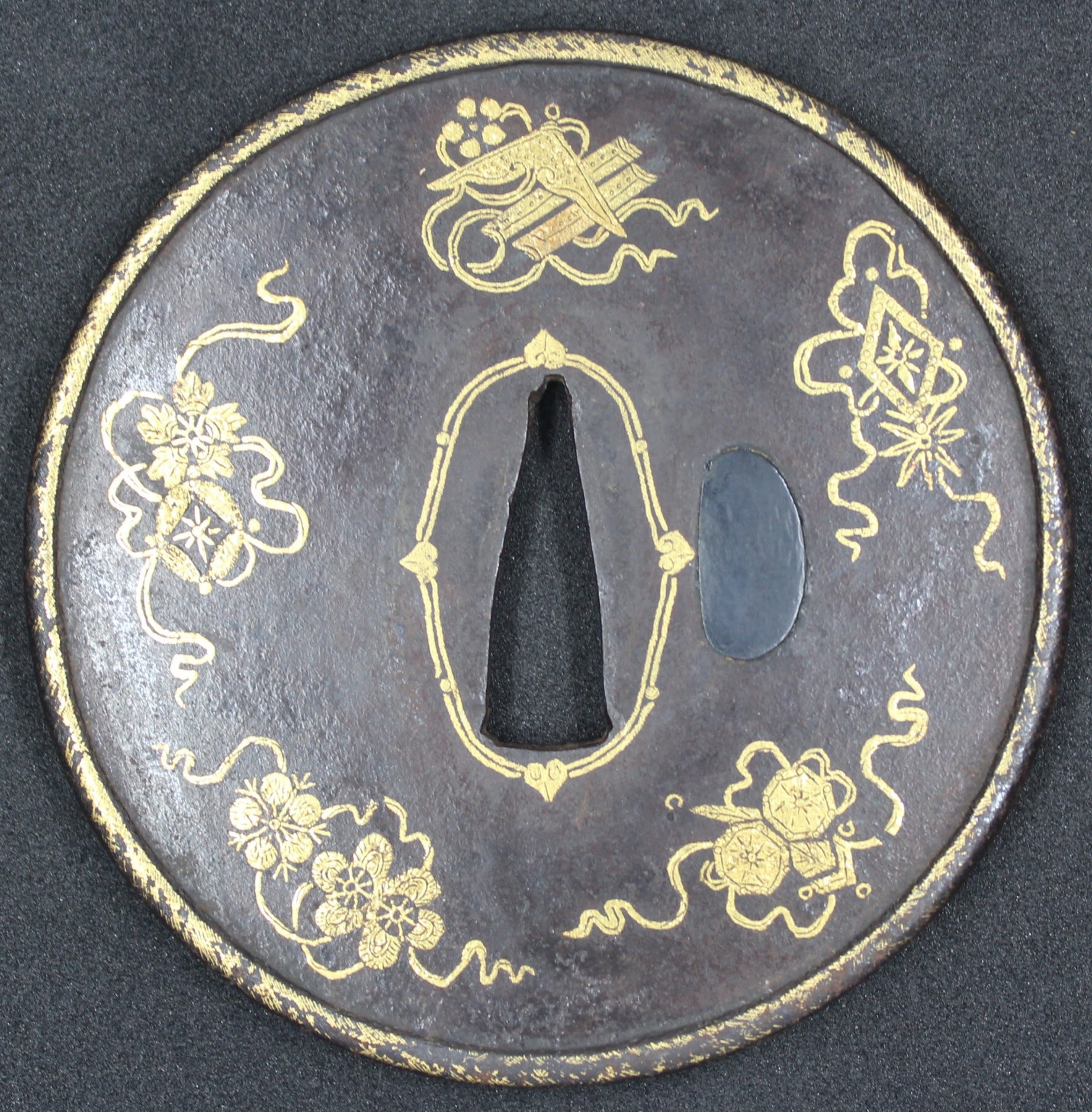
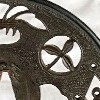
Various types of Ishime-Ji - by their very nature they tend to be "unique" Technique : Ishimeji base, Certificate :NBTHK hozon tosogu paper (Issued 24 December Reiwa 3(2021)) https://nihontocraft.com/Ko_Kinko_Tsuba_G.htm ishime ji. This tsuba dates to early - mid 1500s Tsuba with eagle searching for prey (NBTHK paper) Modern cast examples are not "unique" in that they are numbered in the hundreds if not thousands. It is a matter of finding multiple examples and comparing- I can't find another matching the Carp, but plenty of obvious fakes with a Carp theme.
 3 points
 -
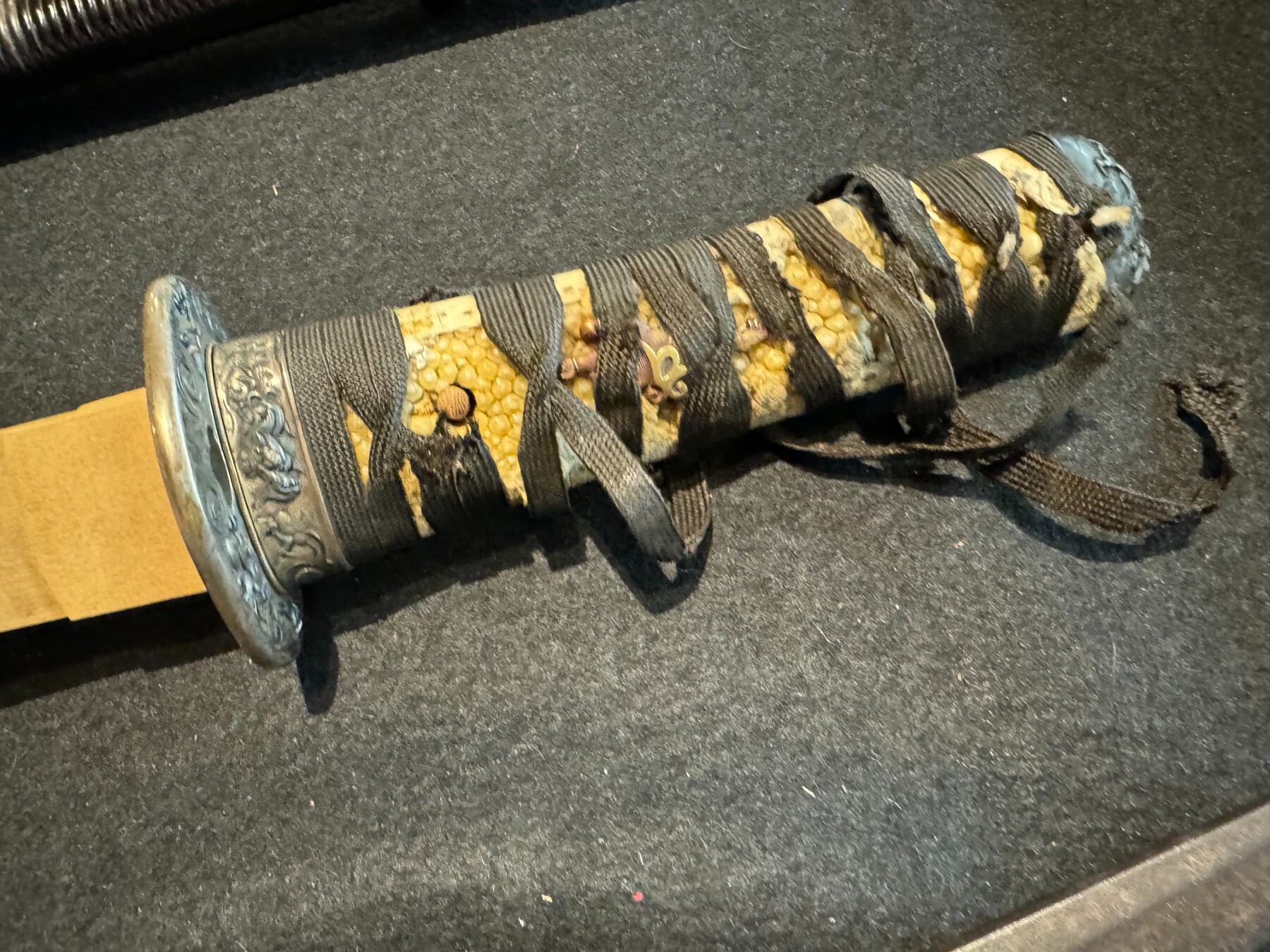
I'd be content to hold a genuine Muramasa demon sword.... just to see if it whispers for the blood of a Tokugawa. My first (and still favorite) nihonto feels like it has a mischievous spirit. Like it was waiting for me.... and it sometimes feels heavier than other times. No papers. No one else in the store even looked at it. Like it was waiting for me, or someone like me, to go home with. The tsuka looked like it had been chewed by a dog, (which perhaps it had....)But I knew they would have it repaired it for me if I commissioned it.... maybe the other shoppers didn't? And so what I think was the best sword in the shop was overlooked entirely on a busy day... Other short swords sold while I was there... but no one else even looked a this one. Waiting for me? All of that is just a feeling, but I did have that feeling... and in the end that turned out to be the case since I bought it and treasure it. The old wrap, (some modern material,) went away and black silk came in. It did give me the chance to find out the menuki are signed! The Hamon (quite difficult to photo to it's full effect...) is like fire, with the lights rising up over a darker background. (Can anyone name this pattern? A choji I suspect, but I admit to ignorance in this, and would like to know if anyone can tell me. Notice on the second photo, the fuchi has been polished smooth by someone's thumb, as that's exactly where your thumb would sit if you were wearing it edge up and rubbing it with your hand wrapped around it... The blossom on the kozuka, which I believe is a plum blossom, is gold. Sadly, the other side has one remaining chopstick, with a single gold flower. I sometimes wonder if I could commission a replacement chopstick from a craftman, and someday I'll investigate the price... and likely reject it... or perhaps not.
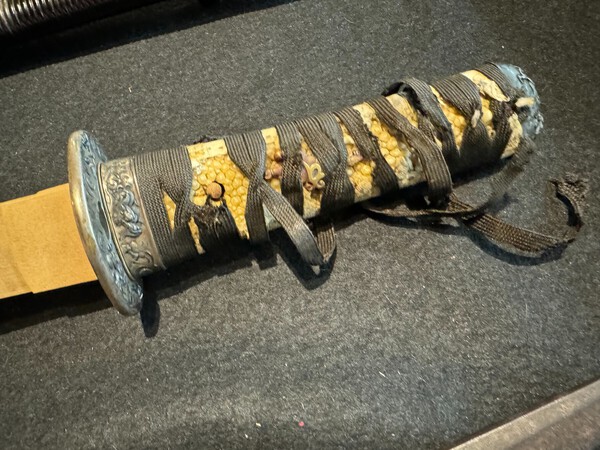
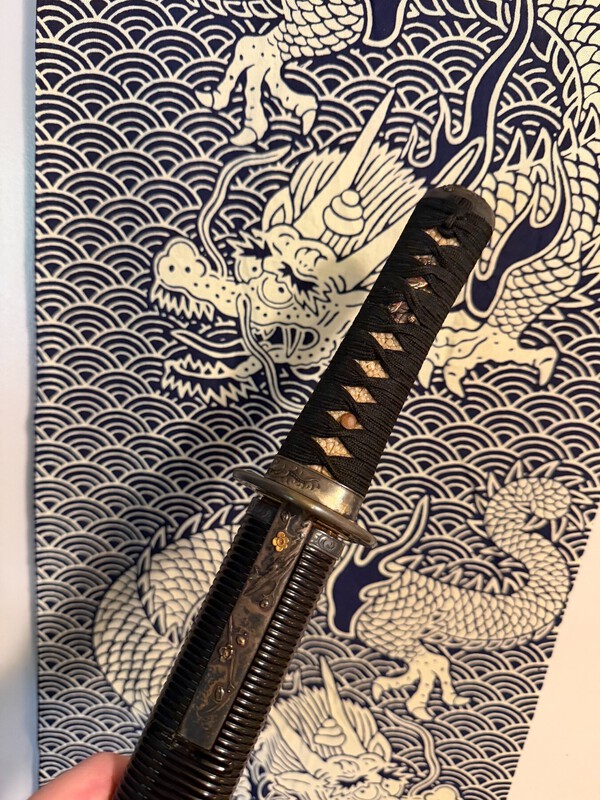
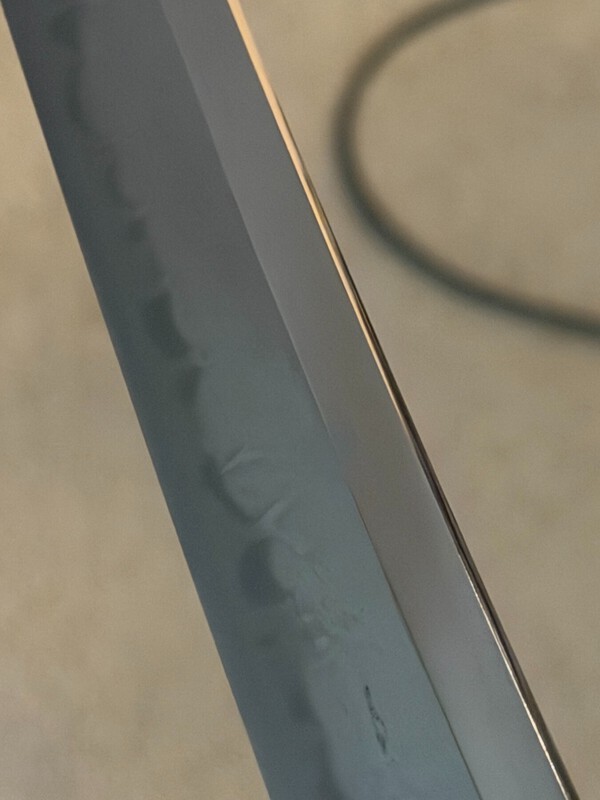 3 points
 -
When a collector dies, his collection hit the open market. It goes to the auction houses first, then to the dealers (if a collector doesn't snag it then,) and then to a collector again.... who will someday die, and the process repeats with the possible speedbump of an heir who loves the collection and keeps it. Some go to museums and leave the market for the foreseeable future, though occasionally these items do leave the museum collection... that is usually rare. Some will be given to museums by the heirs, and this can be an error as museums (big ones) have massive collections and limited display space. Half their purpose is opening the private collection to serious scholars while displaying a general collection to the public. Often it is better for the collection to hit the market so it may enter the hands of those who treasure it instead of a small drawer in a museum's backroom. I have asked a friend to ensure that my collection goes to those who will appreciate it when I die, and I intend to update my will to that effect soon. I fear that countless priceless treasures are in landfills because someone was rich enough not to care and needed to 'clean out the old junk.' But no, I would not assume a piece is automatically bad because it is up for sale. I would assume there has been a death, and remember for whom the bell tolls.3 points
-
You could choose any kanji with a reading close enough to your name. That's what the student helped me with when I joined a calligraphy club, and I had to carve my own signature stamp. For many non-Asians, it can mean quite a few kanji (mine was 4 for the family name, and 3 for the first name).3 points
-
I’m not sure if this is a typical thread for this forum, as I’m new here, but everyone has been much more civil than the Gun Board I joined while trying to learn about my father’s M1941 Johnson rifle. What I hoped would be a discussion about history and identification turned into a major pissing contest. Thank you for providing such a great place to learn. I ordered what I hope is a close reproduction of my officer sword tassel and plan to store my original safely. I also ordered the retaining latch for the sheath, which was supposed to be original. I still need a sarute. There are a few reproductions I wouldn’t mind, but one seller is charging $20 for the item and $99 for shipping, which is a little hard to justify. Does anyone know a good source for an original or a good reproduction?2 points
-
TACHI MEI trying to look like KANEUJI? Questionable positioning and execution in my eyes.2 points
-
Please wait for the more knowledgeable to chime in. I'm still honing my ability to decifer kanji. Could it be?: 兼 Kane 氏 Uji Best, -Sam2 points
-
Yeah, my post was with the assumption that he would be working with Seiyudo for the in-person import. I have gone through the airport both ways and they definitely want to know who you are working with. At least they did for me. Some dealers don't go out of their way to submit for Juyo, even if there is profit potential. There are tradeoffs, and one of those is simply they have to lock up the blade for a long period of time with the real potential of profit loss via fees and time if it does not pass. I also spoke to Seiyudo about this in person and in general they are not huge on submitting things to Juyo unless there is a real reason. One example is a Ryokai blade I viewed in March while visiting their store. It was the only blade in the entire store they said they might submit, and when I asked if the price would change, they shrugged and said "maybe, maybe not". So that makes me think they simply price in Juyo if something is good enough at TokuHo and don't bother with submitting most of the time, unless it's a very clear slam dunk, even if it is a Juyo candidate in their eyes.2 points
-
If you are near Southern California, I would recommend taking it to Mike Yamasaki, who can give you good advice on the blade and the polishing process. What I can tell you today is that the blade comes with an appraisal paper (origami) from Hon'ami Kō'on, dated 1662. Kō'on says the blade comes from the Sa lineage (he doesn't specify the exact smith). The blade was already shortened and had lost its signature by this time. Then, in 1953 (maybe January, can't quite tell), Japanese sword scholar Kashima Tsutomu reaffirmed the sword was of the Sa lineage via his own appraisal. Then, in June of that same year, the NBTHK also appraised the sword as coming from the Sa lineage, and gave it a "Precious" designation (one of the designations that predates the Tokubetsu Hozon designation). The current "Sa Hiroyuki" appraisal comes from the latest NBTHK appraisal, dated 2021, in which it received the Tokubetsu Hozon designation. So, no doubt the sword is of the Sa school, but there may not be absolute consensus among the Japanese sword world as to the Hiroyuki appraisal. This may be one reason the sword currently does not have a Jūyō designation. My gut feeling is that if the sword were a super strong candidate for Jūyō, the sword dealer Seiyūdō would have submitted it themselves in order to take advantage of the potential profit that they could have received by selling it as a Jūyō blade. But I am not an expert, and that "gut feeling" is sort of a lazy person's conclusion.2 points
-
That is my impression, yes (gimei).2 points
-
The mei is Bizen (no) kuni Kiyonori. This mei indicates a smith of the Bizen Yoshii school, however the mei unfortunately does not have an authentic appearance. Regardless, the sword itself is an authentic, antique Japanese katana in shingunto army koshirae mounting for WWII.2 points
-
Dear All. I think defining nanako shi as non artisans is causing a problem here. Quite evidently the work, especially at its finest, requires great skill and there were workers who specialised in it. We know that not all nanako is top flight. All the best.2 points
-
This should be in its own separate topic as it is unrelated to the original poster's sword. That aside, the mei (inscription) reads: 小池貞信作 (Koike Sadanobu saku, "Made by Koike Sadanobu") 文久二年七月日 (Bunkyū ni-nen nana-gatsu hi, "The seventh month of Bunkyū 2 [i.e. July, 1862]") I have only managed to find one other example of a sword by this smith: https://www.nipponto.co.jp/swords6/KY331877.htm (this one was made in February, 1863). The Japanese text in the listing of this sword says that this is an alternative signature of Gassan Unryushi Sadanobu (月山雲龍子貞信), however I do not know enough about the Gassan lineage of smiths to confirm this.2 points
-
Thanks Mauro. One I have that I would class as Awa.

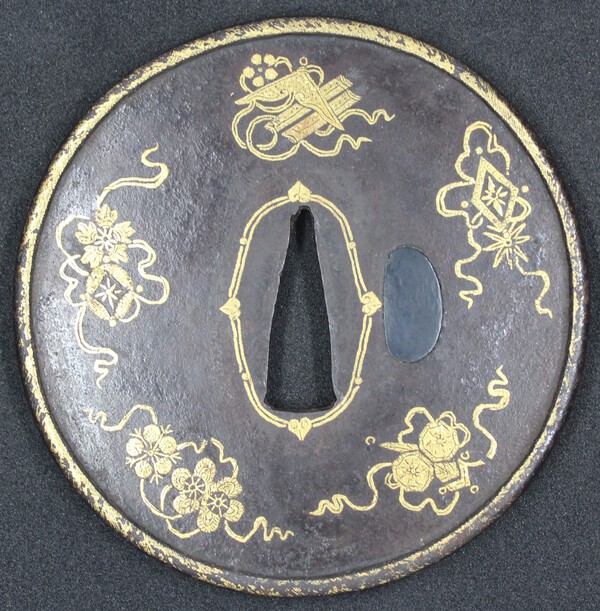 2 points
 -
The tsuba is shown upside down and the signature is probably JAKUSHI. BaZZa.2 points
-
Yeah it does take some time. In my experience it is the best way though as you can keep your blades in your possession and it’s way faster than them sitting in import limbo. But if you’re more comfortable with shipping, using an agent and them sitting in import warehouses, then that works as well.2 points
-
You could have a chat with Paul Martin who used to be well connected in terms of linking westerners with providers of restoration services for swords and fittings in Japan. Looking at his website, he may have moved on from that but it might not hurt to drop him a line. I've used him for shinsa services in the past and have been very happy with the services recieved. https://thejapanesesword.com/2 points
-
Is it that simple? Don’t you have to register the blade to import it which may not be so straightforward for a non Japanese speaker without dealer status?2 points
-
On display in a case I imported from Keisuke at https://en.katana-case-shi.com/shop - you should check him out if you are searching for a nice display. They are not cheap, but have incredible build quality and engineering features, like light absorbing backing, non-reflect glass, museum quality light rails etc.
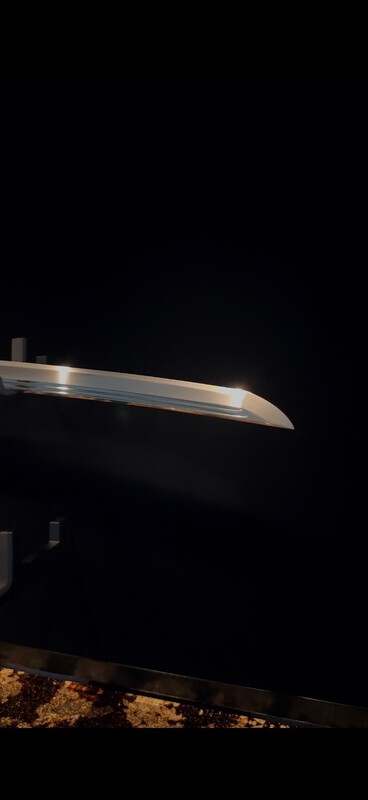 2 points
 -
@RobDam I can share my Gorozaemon with you as well. This is 1537 in the full signature. I am also working on a koshirae for it. Next post is the fittings.

 2 points
 -
This is now fixed, thanks again for the report.2 points
-
Darren: I can't read the cursive, however the dashes on top of each line is the number 1, meaning "item." And the first kanji on the top right is Ko for small. So if I had to guess, I would say a list of parts? I know it isn't helpful. But wanted to get you started. John C.2 points
-
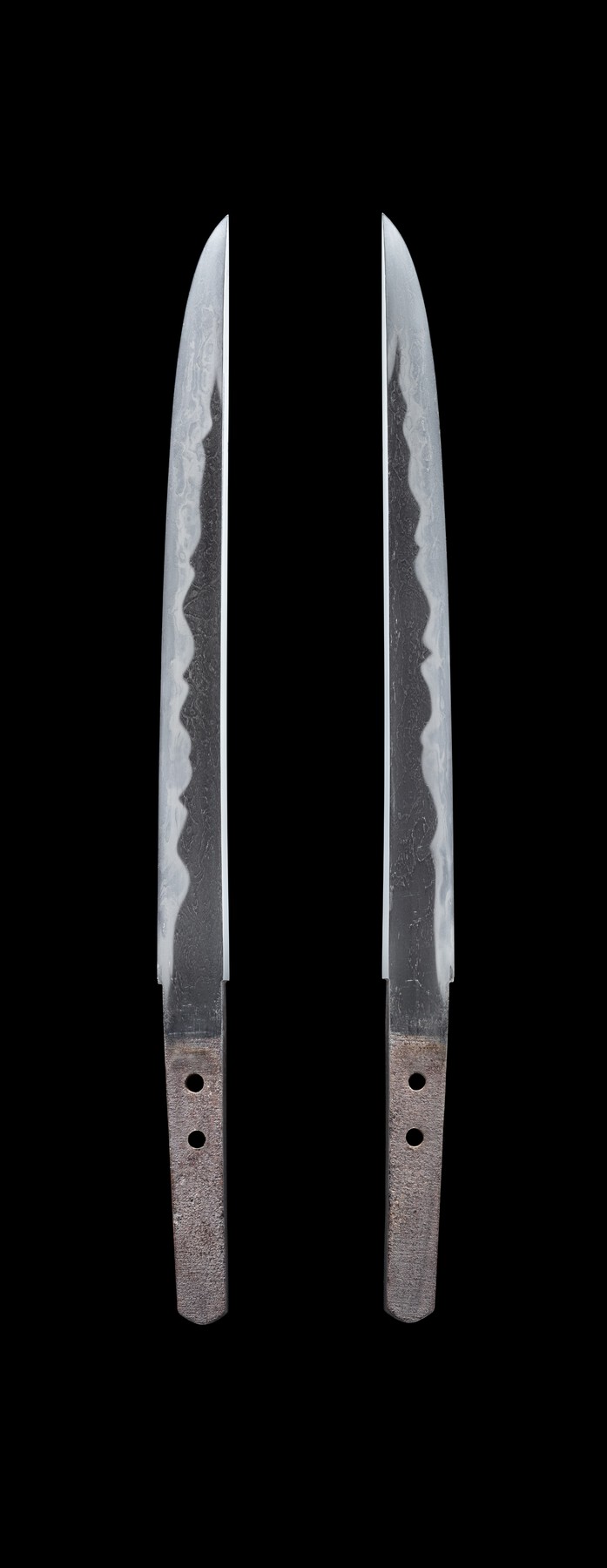
What makes this fascinating little blade so important is its date. It appears at least a full decade earlier than what has traditionally been considered Chōgi's established working period, making it a significant piece for students of Sōden-Bizen and the development of the Chōgi school. Unfortunately, the blade is showing its age. Condition issues including ware in the ha likely explain why it has remained at the Tokubetsu Hozon level despite its rarity and research value. Could it make Jūyō someday? Anything is possible, but I would not consider it likely. That said, it is probably the most reasonably priced zaimei Chōgi to appear on the market in quite some time. The blade was previously offered by Aoi Art roughly four years ago, though I do not know the asking price at the time. @Jussi Ekholm may have that information recorded. I am also curious why the current owner is parting with it after such a relatively short period, something some collectors may understandably view as a cautionary sign. The hitatsura is another point of interest. It is an outlier within Chōgi's body of work, recalling the work of Hiromitsu and, further back, the full-temper explorations seen in some works of Yukimitsu. Yet despite the treatment, Chōgi's hand still comes through clearly. The blade retains the dynamic,Sōshū-influenced Bizen character that makes his work so distinctive. Signed and dated Nanbokuchō-period works by Chōgi and his immediate circle rarely appear on the market. Even mumei examples are encountered infrequently. By comparison, the blade pictured below was offered by Aoi Art last year and received 2025 Tokubetsu Hozon papers to Kenchō—not Den Kenchō, but Kenchō himself, generally regarded as Chōgi's foremost student. Tanobe-sensei, however, attributed the blade to Chōgi in his sayagaki. Both opinions are entirely reasonable. The condition of that blade is exceptional. The zaimei example being offered here, however, provides something the Kenchō attribution debate cannot: a firmly signed and dated reference point from the formative years of the school. For collectors of top Nanbokucho Soshu works, that carries considerable importance. The asking price is not unreasonable for what is being offered, and I would not be surprised to see it rise before the auction closes, much as the zaimei Kanemitsu did last week. If I had an extra $40,000 available in these uncertain times, I would be very tempted. For collectors of Sōshū-influenced work, Sōden-Bizen, Nanbokuchō tantō, or blades exhibiting strong Masamune-style jihada, this is certainly worthy of serious consideration. As for me, I will remain content with my little mumei example.

 2 points
 -
On the English-speaking side, Andrew Ickeringill is a polisher who has won awards in Japan and polished many Juyo and TokuJu-level blades, including some by Go Yoshihiro. You can view examples of his work and find his contact details at his website: https://touken-togishi.com/ Unless you are a purist who only likes one specific polishing style, it's generally best to let the polisher decide, or at least suggest, what kind of polish would suit the blade's style and activities best; sometimes they may leave the decision to you when it could go either way (e.g. if both the jigane and hamon are excellent, you might need to choose between highlighting one or the other, or somewhere in between).2 points
-
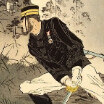
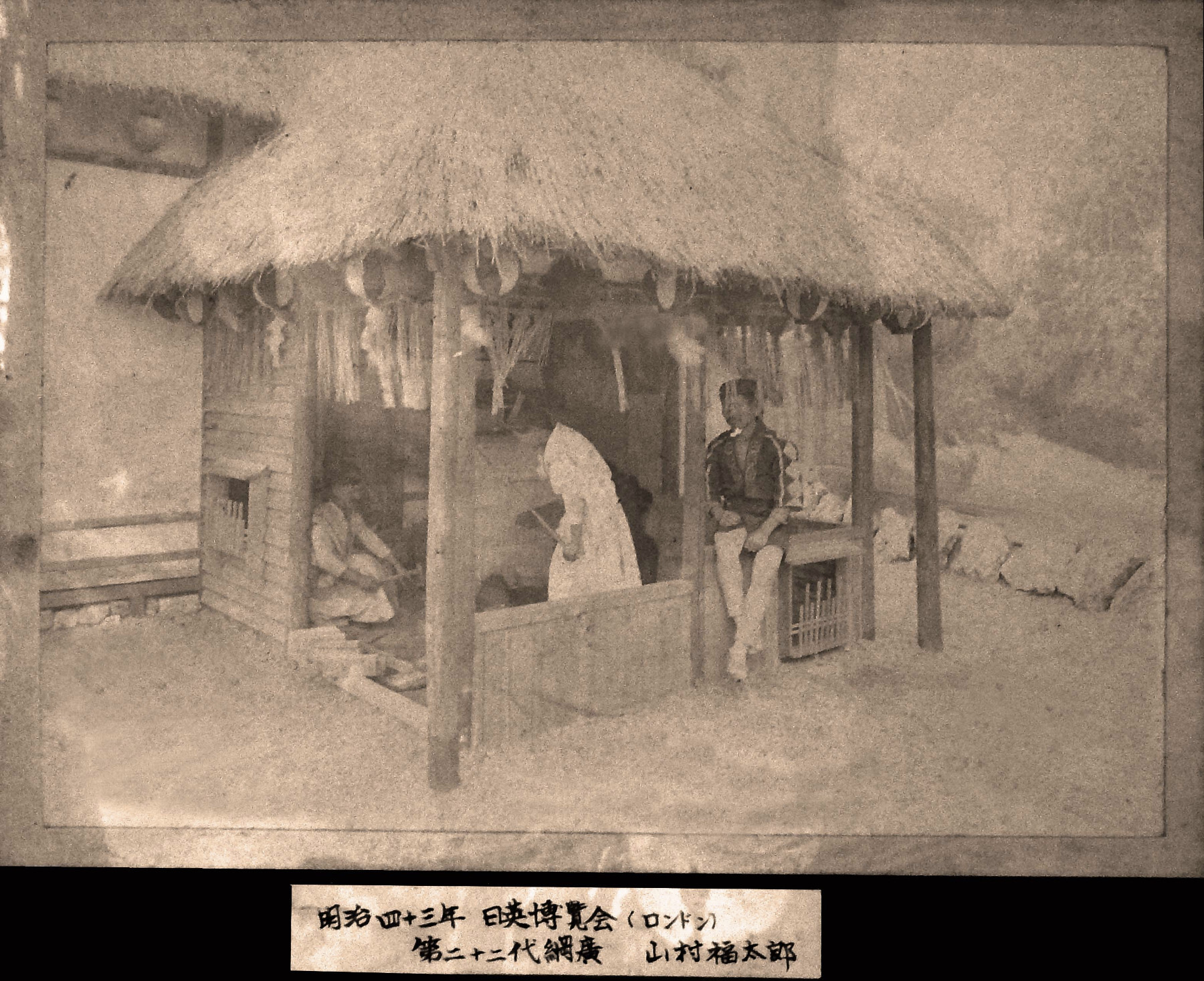
Yes, my grandfather was part of the The Japan-British Exhibition of 1910 held in White City, London. He is also buried with the family at Hongaku-ji Temple. He is seen in the print below with his elder brother, they were demonstrating sword-making at the Japan-British Exhibition.
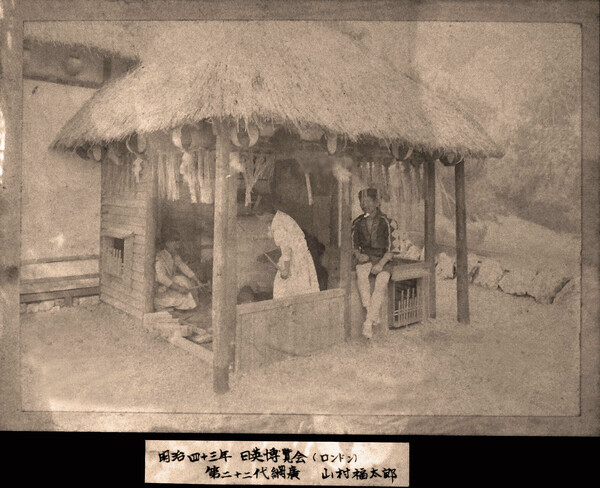 2 points
 -
Hello everyone, Tsuba made in Shibuichi with high-quality Kebori and katakiri-bori work depicting a tiger. Edo period. Dimensions: 70.3 x 66.2 x 4.1 mm 500 € (plus shipping)

.thumb.jpg.dc48be87fa034f4f7b07e4160644ac5a.jpg)
.thumb.jpg.c4a62a0aa8b669d19c0bfe109979b8b2.jpg)
.thumb.jpg.9056f5ab1686108e863439ea163a02b7.jpg) 1 point
1 point -
Hello again ladies and gentlemen, today I am offering up for sale a very nice 29.5" mumei (but extremely likely Soshu Wakasa Fuyuhiro) katana! Type (Tachi, Katana, Wakizashi, Tanto, Naginata, Other) : Katana Ubu, Suriage or O-Suriage : Ubu Mei : (Mumei, Signature) : Mumei Papered or not and by whom? : No Era/Age : Early Edo, circa Genna to Kan'ei (1620-1640ish) Shirasaya, Koshirae or Bare Blade? : Shirasaya Nagasa/Blade Length : 75cm or 29.52" Sori : 4cm or 1.57" Hamon Type : An irregular and beautiful Soshu midare-ba with notare and sudare-ba elements. Ko-maru boshi. Jihada : Long flowing itame with masame. Other Hataraki Visible : Kinsuji, inazuma. This blade has all of their characteristic traits along with some Bizen influence as appropriate for the Soshu Wakasa Fuyuhiro lineage. Flaws : A small stretch (about 3") of shinae in the mune of the blade down low in the habaki area. Evidence of it having been bent and straightened. Some tiny ware as expected of a blade composed primarily of itame/masame hada. Sword Location : Canada to Indiana, USA (will explain below) Will ship to : USA primarily, international contingent on laws of destination country. Payment Methods Accepted : Paypal, Cashapp. Shipping discussed below Price and Currency : $3200USD (Shipping included for USA buyers) Other Info and Full Description : Comes in shirasaya with silver-plated habaki. A very nice and very long ubu, mumei katana that is almost certainly produced by 5th or 6th generation Soshu Wakasa Fuyuhiro. This blade is a long one at 29.52" with a WHOPPING 1.57" sori that gives this blade a tachi-like feel (Shinsa may even bear out and call it as such). The first-generation Wakasa Fuyuhiro (若州住冬廣) was an early Muromachi period smith. He was believed to be the son of the 2nd-generation Sōshū Hirotsugu. During 1st generation's life, he relocated from Sagami to Obama in Wakasa Province around 1460, founding the prestigious Wakasa Fuyuhiro school that lasted for 17 generations. The later Fuyuhiro generations picked up Bizen traits and blended that with their Soshu styling to create a well-regarded hybrid style. I predicate my belief that it is 5th or 6th based on all the aforementioned traits and apparent age; however, Shinsa may even call it a late Koto blade. I feel this is a possibility as I've seen some very well-perserved nakago like this one that ended up being late Koto. One important thing to note is that this blade is ubu which is always a big plus! Given that this blade is rather long and is in shirasaya in good polish, the price at $3200 is quite decent. The other thing to note is that this blade is currently located in Canada with the current owner and I am performing the role of estate liquidator. The cost of the blade includes shipping insurance, and tariff/import fees (as of 6/5/26) but may change as geopolitical situations change. Since I am the estate liquidator, the sword will be shipped to me and then I will ship it direct to you! I am doing this at the request of the owner to protect their privacy. There are a couple videos of this sword also available upon request. If you are interested, please drop a message in this thread, then DM me here on the message board or email me at ChrisW7290@gmail.com First come, first served of course. ~Chris


 1 point
 -
南蛮龍象嵌透 布目1 point
-
I agree. I thought as well that from the photos it seems like it has been polished down quite a bit already and those welds look ripe for opening up with further polish. It will probably be a bit of a risk to polish it further. That being said, I also don't agree that just because it came from a dealer like Seiyudo that it would be in top polish. I had this exact conversation with Seiyudo a few months ago and they do indeed stock and accept blades that - and I quote (from them) - "arrive in a spectrum of acceptable polish grades, and we do not always want to polish a blade since it wears down the blade more". So it is totally plausible that blade is in fact in not a great state of polish. If you want to see an example from this exact dealer, check my Taikei Naotane polishing post. I purchased that blade from them (Seiyudo) and it was in terrible polish. Moses Becerra polished it and it is now absolutely brilliant. Of course the Naotane was already very healthy and could take the polish without any issues.1 point
-
Some very talented artists are 'on record' for hating nanako. Nidai Kanshiro was apprenticed to the Goto for 10 years, largely doing nanako. He didn't manage to finish the 10 years If you study enough of his *few* Nishigaki works with nanako, you can literally see frustration in the placement on menuki. I would say that he liked to 'fudge it' in the extreme corners.1 point
-
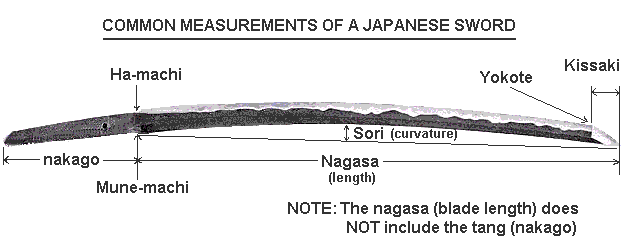
(Ah, Ray responded as I was typing - Thanks Ray!) Hi Mike! Yes, Type 98 officer sword (gunto). The 8 seppa configuration is often associated with an upgraded set of fittings. The blade seems like it's probably earlier that WWII. Hopefully @Ray Singer or @SteveM can give you the smith's name. If you want and ID on that family mon, post a clear shot of it here, or better on the Help Identify our Mon thread. If the blade turns out to be older, and you want an appoximate age, post it on the Nihonto forum with the naked blade, and list these measurements: You might post a couple close-up shots of the hamon (temper pattern) and blade tip.
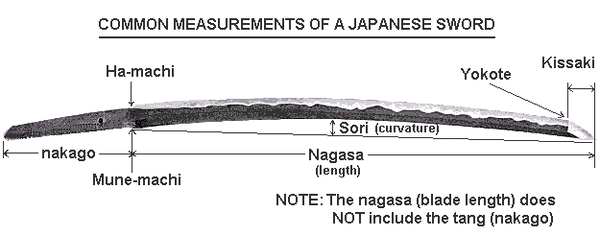 1 point
 -
The usual hedge that its photos, but purposefully pessimistic and direct take - the blade is in full polish and is already rather tired. The polish could be brighter etc., but its rolling a die and there is not a lot on the upside. Yes, the blade does not sparkle, its grey, its ko nie. Some of it basically its age, some of it - it is not A tier Sa work. I've been many times along this road, holding a blade where you see something brilliant if you look there at this angle... and the polish very seldom manages to just accent the right stuff as one envisions and hopes. Crossing into insulting speculations territory and going even further - it has distinguished history, if it was submitted today without it... possible it would get Bungo Tomoyuki, which is sort of similar suguha based with ko nie Yamato-Soshu-Sa activities and roughish hada... Or Sue Sa.1 point
-
Some say that the sword finds the owner, and not the other way around...1 point
-
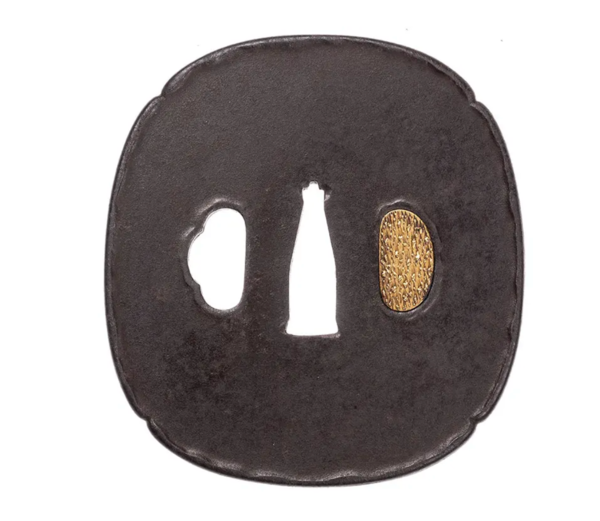
Spongiform encephalitis is the only expression that leaps to mind. Copper, so therefore soft, but those holes do not look like they could be reproduced with a pin or needle…(?) Besides, the elaborate bubbling or stippling stops at the edge of the seppadai, so it’s surely not part of the original overall casting process. Perhaps it’s a unique process known only to the artisan (ideal scenario!) so maybe it has no ‘official’ name, leading us to go generic with ishimeji, etc.1 point
-
Goto tsuba and Nobuyoshi fuchikashira.

 1 point
 -
Thank you for your insights; it's great to hear from someone with more experience of Sōden-Bizen than myself. That mumei blade is also a beauty – very much kenzen, as the Juyo panel likes to say in its writeups. A serious collector would be proud to own either, but as you say: they each offer different things to the connoisseur. As for me, when it comes to Sōden-Bizen my favourite smith remains (Enbun) Kanemitsu and the dream is to own a daitō by him someday, even if the prestige of the smith and my relatively modest means dictate that it's likely to remain just that – a dream.1 point
-
One for the ladies - Obi. https://www.jauce.com/auction/e1217356383 an expensive but attractive Obi!
 1 point
 -
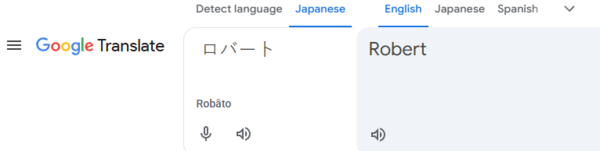
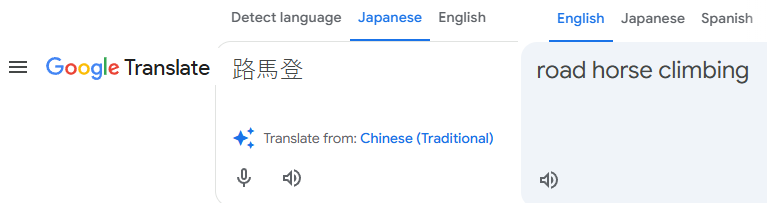
Never trust Google to get it right! what about 名前のない馬 I'd stick with ロバート The kanji strokes are much easier to inscribe as well!

 1 point
 -
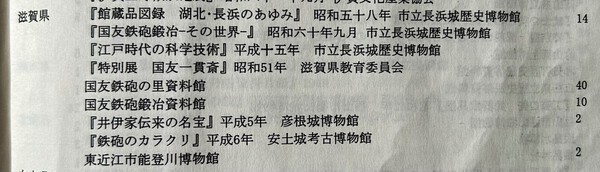
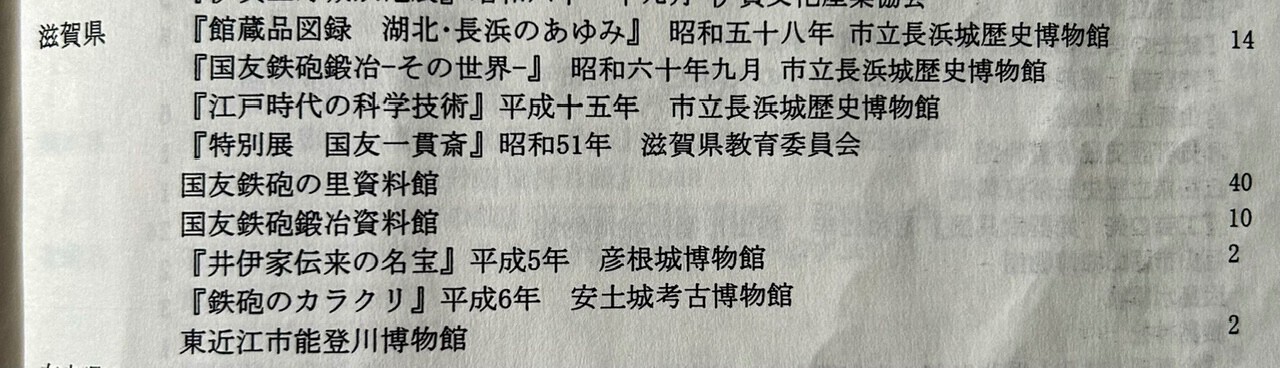
Often I have been surprised to find that these two 左右 look very similar in grass writing, almost indistinguishable to my eye. In this case however, the mouth part does look relatively clearer. The records often confuse the two, (gun registration cards are particularly bad), so I would not be unduly worried if they don’t match up. One suggestion might be to contact the Kunitomo Gun Museum directly for any stockmaker records. The Director there is quite friendly and willing to help. The material I use is a private research paper sold by the author only over the phone, but please see the entries for Kunitomo stock and lock makers. Note the suggested dates shown on the right. He collected municipal gun registration records directly from all over Japan, and lists his sources over several pages at the end. These are his sources for Shiga Prefecture where Kunitomo is located.

 1 point
 -
Traditionally the names are given by the teacher, usually taking one kanji from teacher's name and another new one that carry a specific meaning. But of course if one has no teacher can choose the one he thinks fits,of course must make sense in Japanese. If in doubt you can just use katakana. Also normally one signs with his given name,not his surname, mine is a special case cause it just made more sense to use it.1 point
-
As Jean said I signed with the kanji 古伝 which reads as "Koden" that sounds like my surname and also have a meaning of "old tradition" which fits my style of Muromachi -Early Edo style. For NBTHK contest you're required to have either a signature or a kao to submit1 point
-
Manuel Coden uses real KANJI for a phonetical resemblance of his name. My first name is related to the German name "Johann", so I could use 洋半 YÔ HAN (funnily, the meaning would be like 'half foreigner' which would fit). My family name COLLIN could be 光琳 KORIN, so just a phonetical way to write. For the TOSOGU makers competitions in Japan, I am not sure if a MEI is not even requested. Ask Manuel for that.1 point
-
Perhaps Gustavo Hoefs could answer this? : He has done several works and adopted one set of Kanji [グー ] which is pronounced Gū. This is close to his pseudonym of Goo However he has had feedback from Japanese and others that leaving his pieces unsigned in anyway is ideal - a view I tend to disagree with. If you are proud of your work why hide it? Also an unsigned modern utsushi just muddies the waters and creates future problems of authenticity and provenance. No one would like their work to be lost or worse, thrown in as some sort of Chinese fake. My opinion is "You make it, you take ownership" JMHO1 point
-
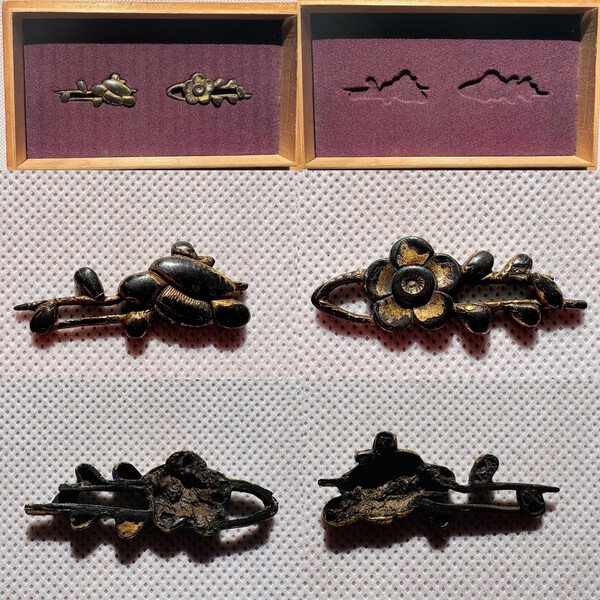
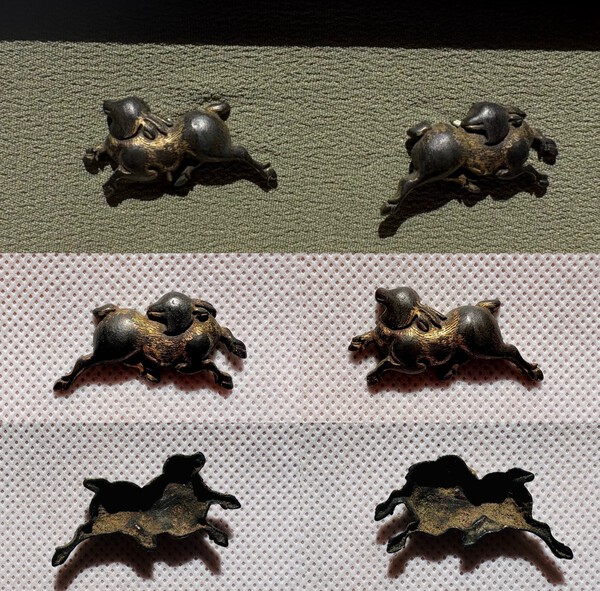
Let us continue 7. Persimmons, gilded In box. $150 plus shipping 8. Plum blossoms, Momoyama Custom box. Yamagane. $350 plus shipping 9. Hotei (?) In box $100 plus shipping 8. Kamoshika (Japanese serow), Momoyama In box. Momoyama Called "spirit of the forest" and "living national treasure of the forest" the Japanese serow is supposed to bring you many years of luck (if you spot it, that is). Utterly charming menuki made from yamagane. $350 plus shipping


 1 point
 -
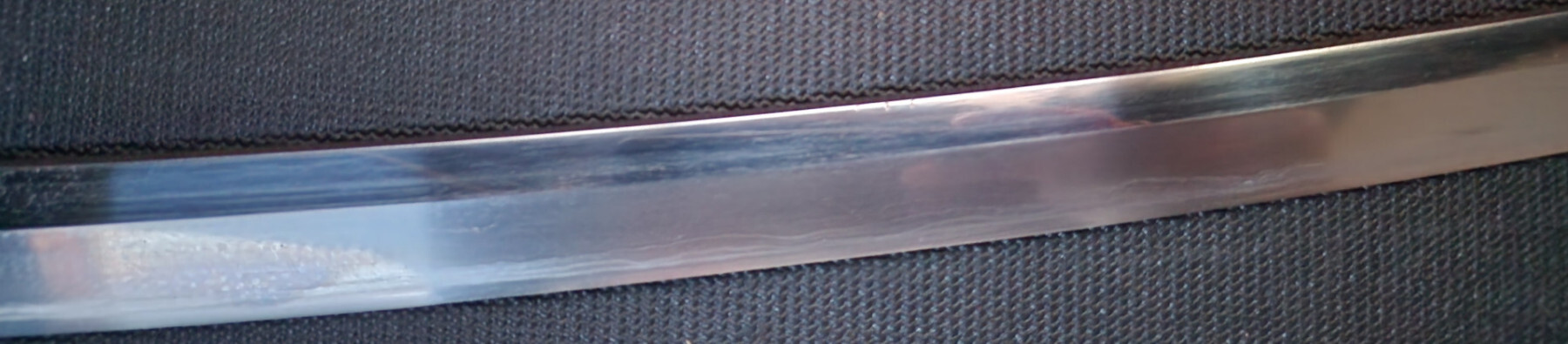
Could appear like that, especially if it happened with masame, where it may open the grain. No expert, but it is something to consider.1 point
-
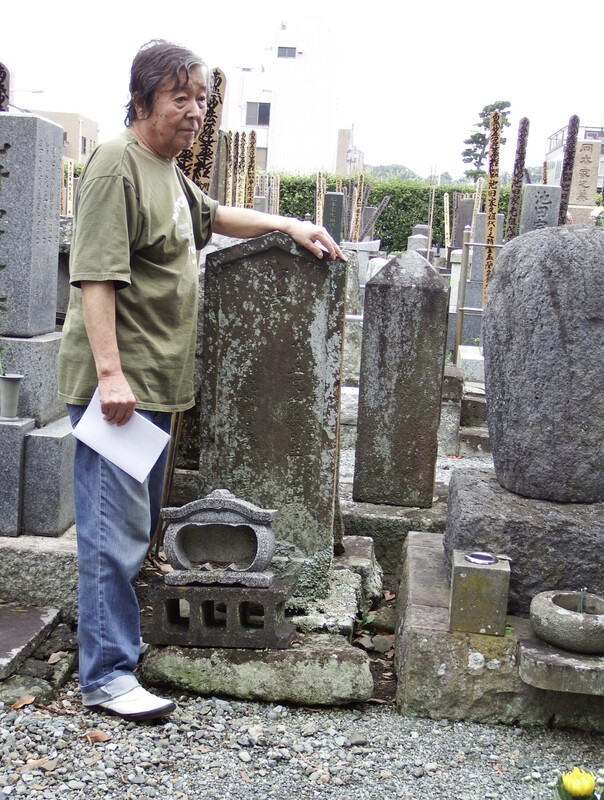
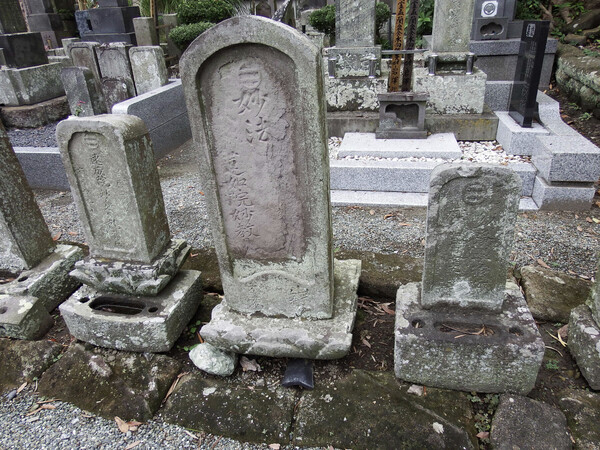
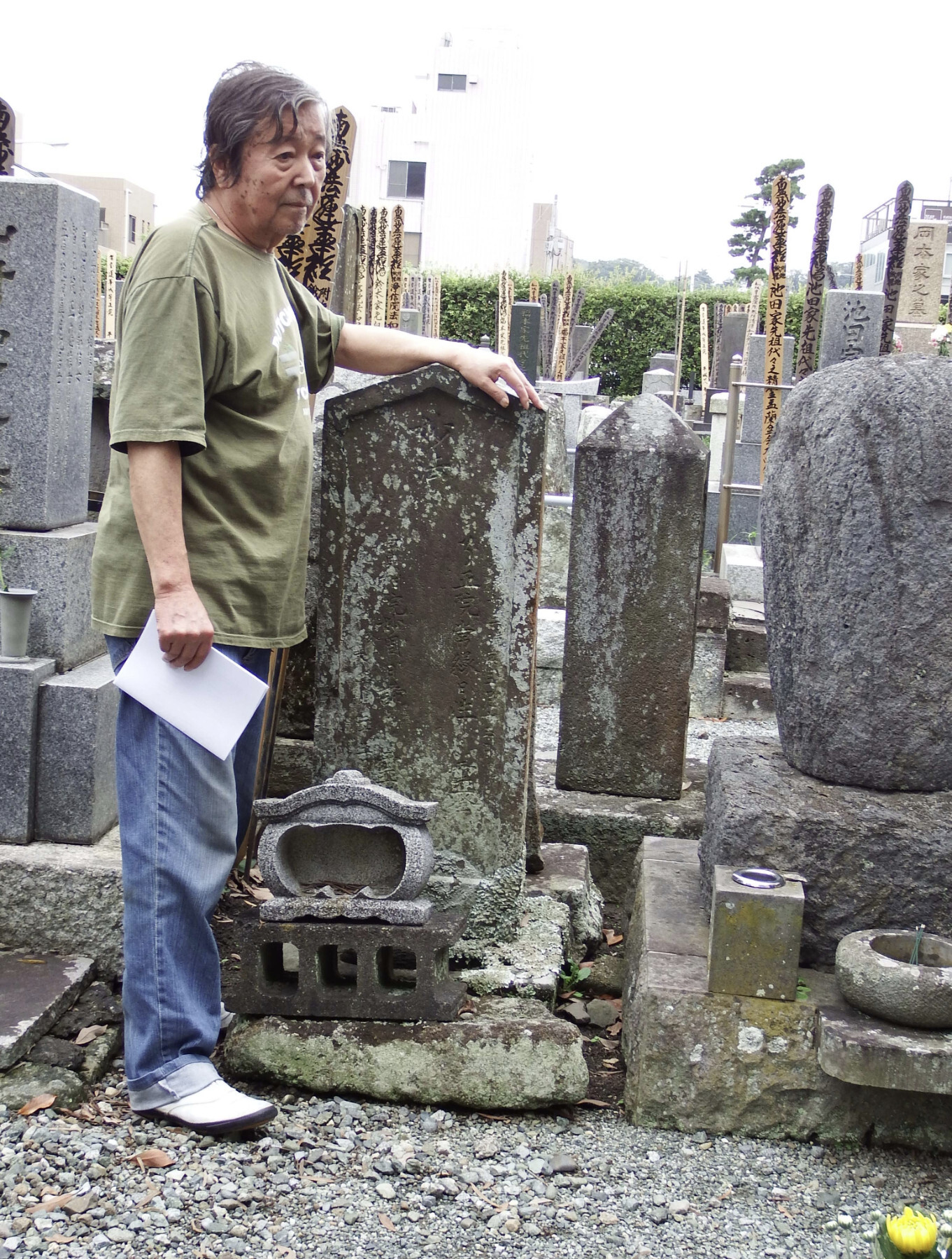
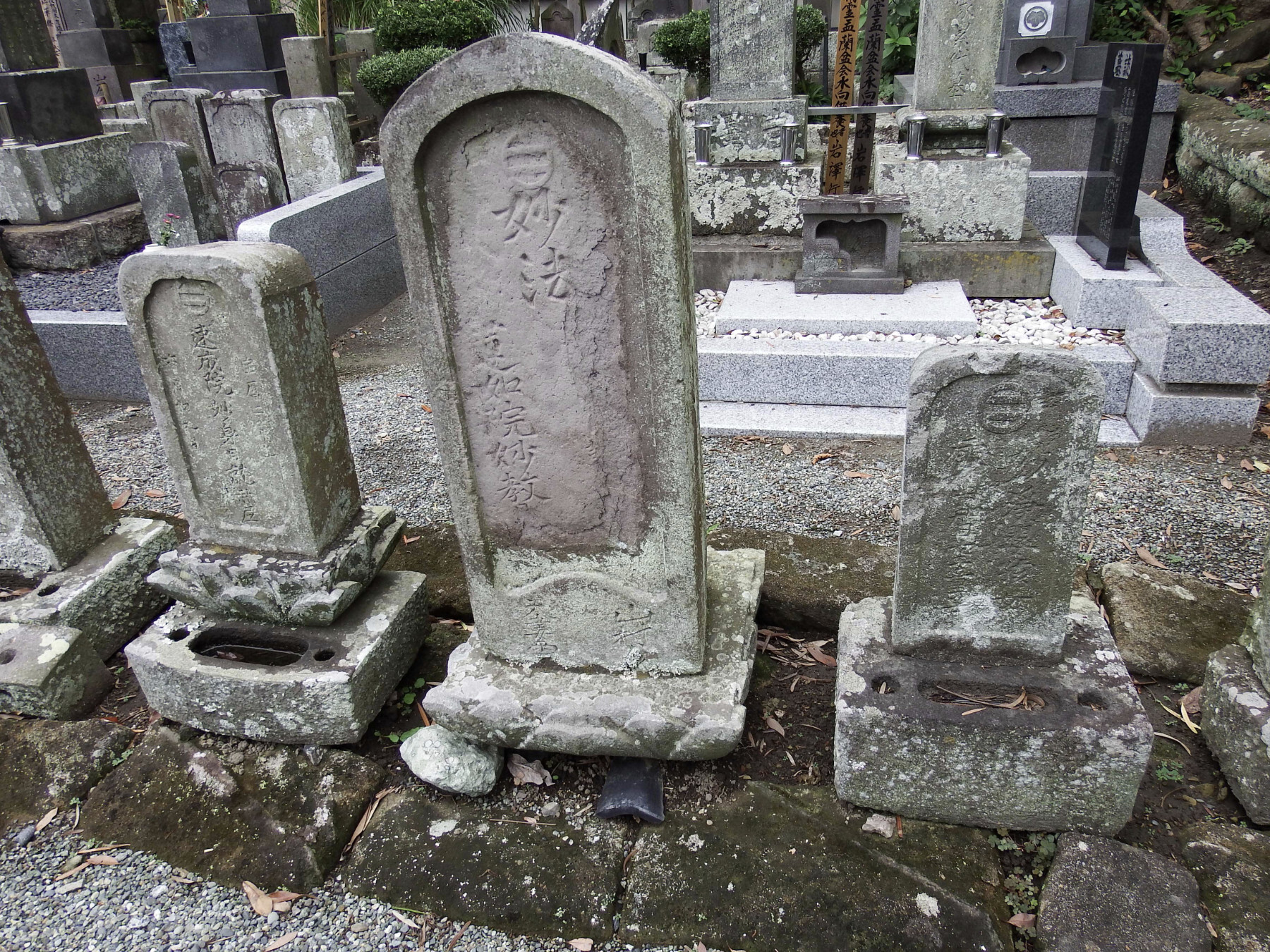
This is, indeed, the family Temple for Masamune and all his lineage since then. This is my family, we have a direct line through the Yamamura family of swordmakers back to Masamune. The photo shows Takeshi Yamamura Swordsmith 24th generation since Masamune. He is the current swordmaker in Kamakura. He showed us all the tombs of the entire family - all marked with the family mon of a round circle with two lines. This depicts the full moon with two strands of cloud. 100% correct information about Masamune at Hongaku-ji Temple, Kamakura.
 1 point



















.jpg.ef83f72cc266f64d7b57c1a0b951803b.jpg)
.jpg.9917324783cd268128ef576ad0531245.jpg)
.jpg.5c295fe2bf9e4490e08ad0f12f88da91.jpg)










This leaderboard is set to Johannesburg/GMT+02:00