GreyVR
-
Posts
18 -
Joined
-
Last visited
Content Type
Profiles
Forums
Events
Store
Downloads
Gallery
Everything posted by GreyVR
-
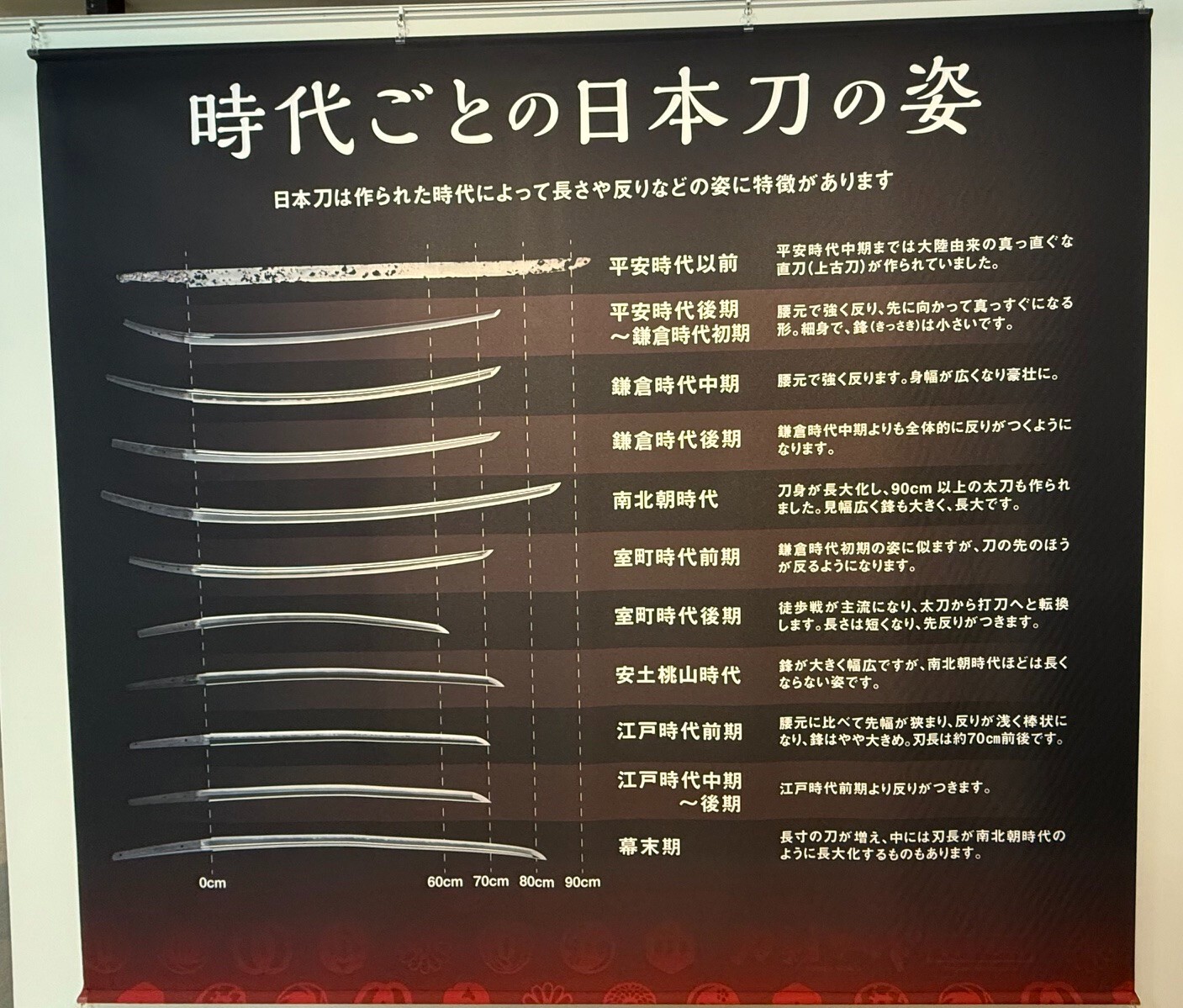
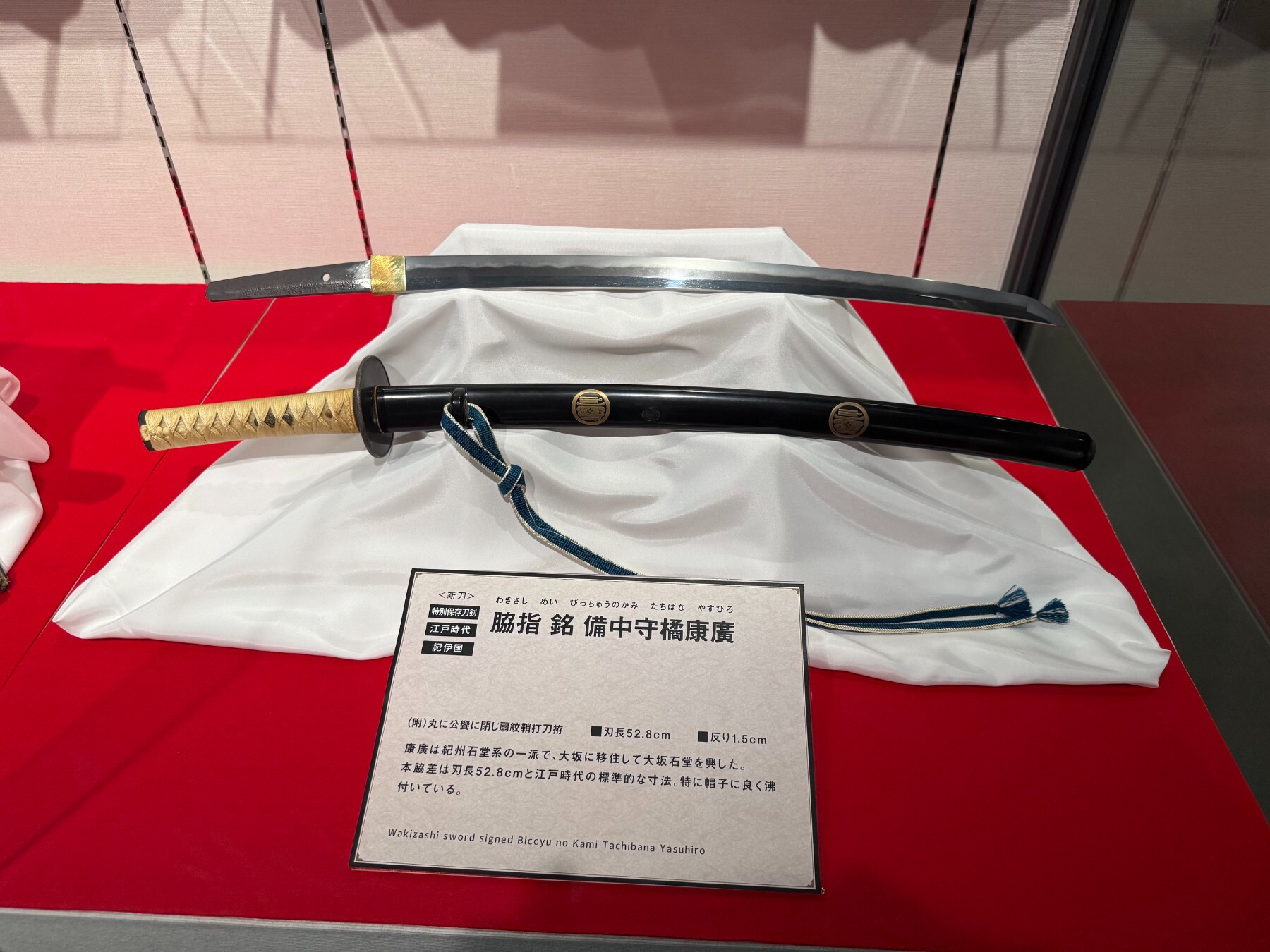
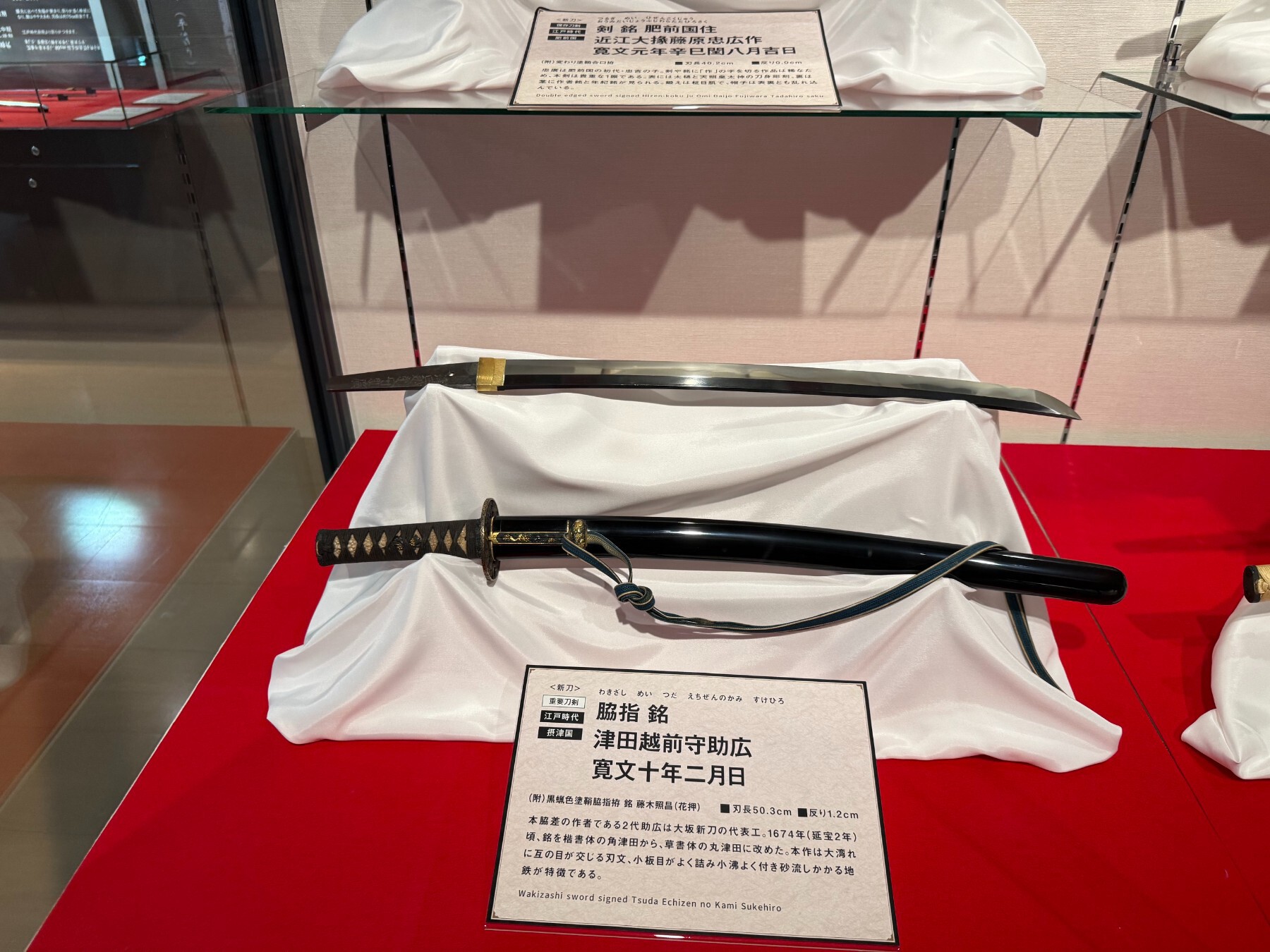
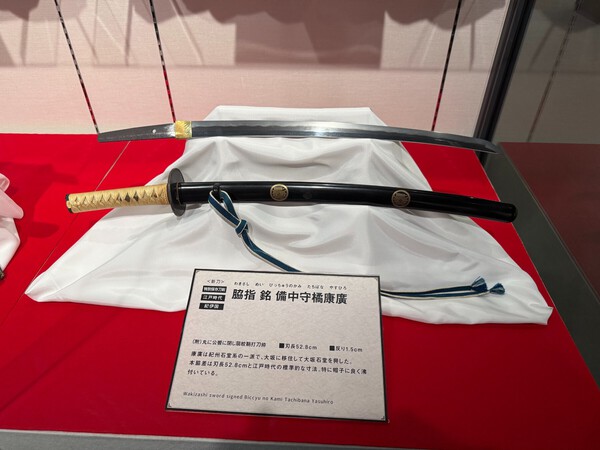
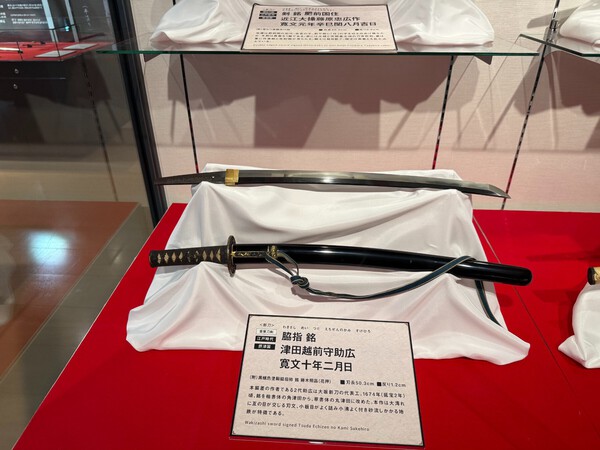
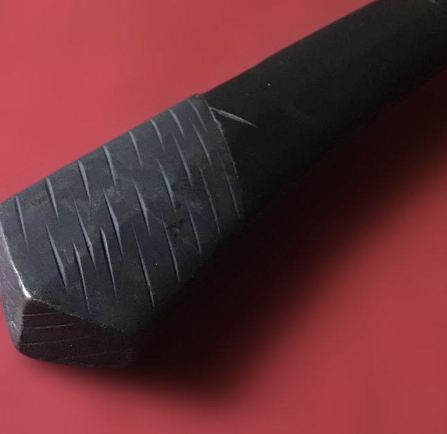
 Ah thank you! That is awesome. And you're quite correct about preservation, but I've seen enough eccentric ones (from what we in the west consider 'default') to see that there's most certainly currents and styles and so on. I don't have tremendous time at this moment, but when I was in Nagoya a bit over a year ago and I saw all the styles of armor they have on display (One of the best displays I've ever seen, not well advertised) they also had a room full of sword styles which demonstrated more differences, even what is close to an Oakeshott typology of Japanese swords. This is mostly a devolopment over time of course, but still fascinating. We might see very small but very important differences between different areas, just as we would expect to see siginficant differences at income levels, with the richer Lords having golden Tsuba and the poor man having plain iron, and red copper in the middle. WE might find that colored saya were extremely trendy in this place, but that place they aren't. That red copper Tsuba (which stay copper) are usually matched to grip color ABC and that color XYZ is rarely used with an iron tsuba, except in dce province. Personally I suspect something like a plain handachi was the most popular of all time, since it gave good protection for least money, but it's still a subject I hope to dive into more deeply now that some of the books have arrived. You also have the weird stuff, like this fish one, or the 'shrimp' koshrae, or the ones that end in a 'BIG" scabbard end cap. Here's two (I really have to run in a sec,) that could be called 'default' in the minddle, but they also have distinct differecnes. Should we class them as seperate styles or branches of a single style? Lastly is one of those end caps I mentioned. Sorry this isn't an ideally formatted post, dentist!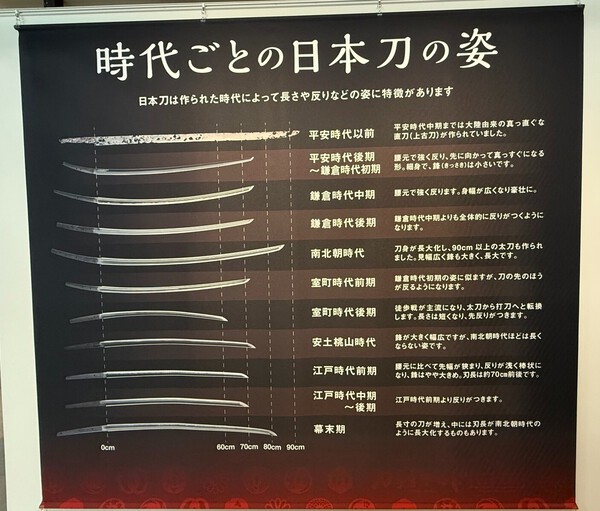

-
I once stumbled (unknowing what I would find) into the Basilique de Saint-Denis in Paris... and found it contained dozens of sarcophagus with the owner, in full armor, carved onto the lid.... Not only in their armor, but with their sword belts and suspension revealed in somewhat exacting detail. (And today I cannot seem to location the hard drive I put the photos on! Argh!!!!!) I will certainly look for that article, thank you!
-
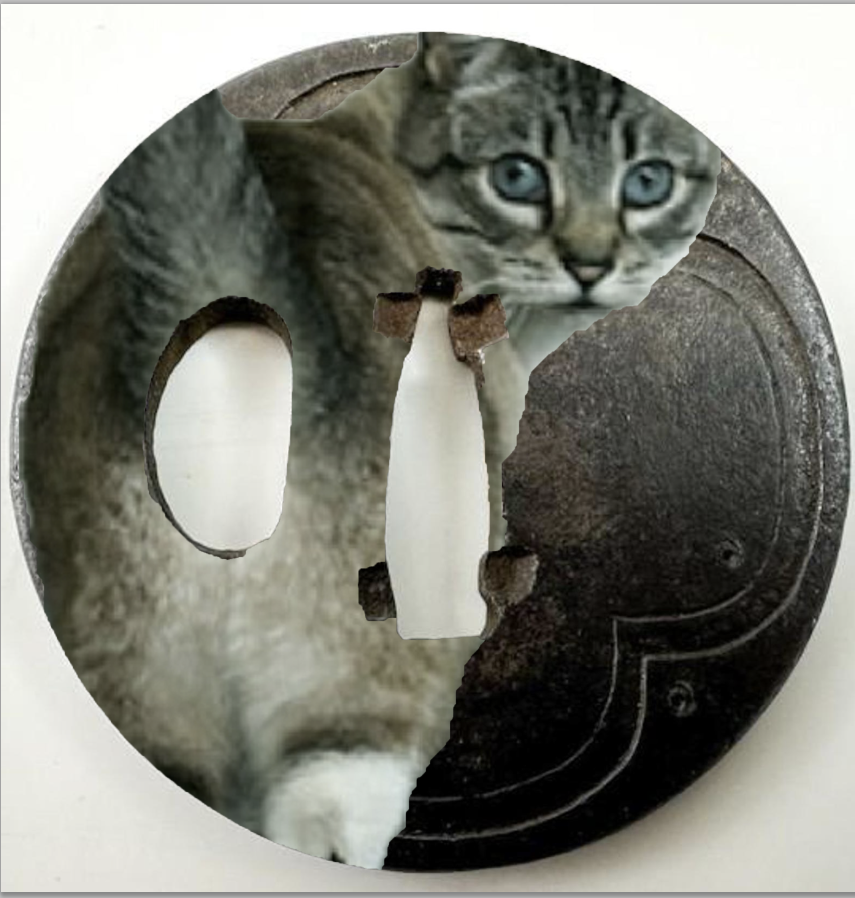
Sorry to necro, but I actually might have an answer for @Okan House cats were (it's reported) considered bad luck around dead people because of a legend about a cat that takes you to hell. The Kasha. You had to keep cats away from dead people or it might turn out to be a Kasha in disguise, who would steal the corpse, or turn it into a monster. https://en.wikipedia.org/wiki/Kasha_(folklore) Kasha the Japanese Cat Demon: History & Myth Explained https://www.catster.com/lifestyle/kasha-Japanese-cat-demon/ The story's development is complex, but basically it's called the Kasha. Originally it seems it was just a flaming chariot, but later it was depicted as being driven by a cat. In Nioh 2, they depicted Kasha as a boss, but also as a curvey and extremely hot cat woman. There's also other cat demons, like the Nekomata, which is where you cat develops into a yokai. https://en.wikipedia.org/wiki/Nekomata There's the Bakeneko, https://en.wikipedia.org/wiki/Bakeneko So, while I can't say for sure this is the real reason there's less housecats on antique sword fittings.... it's very likely that it would be considered bad luck. A very basic human superstition is the idea that 'naming calls' (Say the devil's name and he will appear, as they say.) You wouldn't want to have a cat image on your sword because if you died with it with you (and that's kind of likely if you took it everywhere) it might make the appearance of a Kasha more likely. So I suspect the cat image might have just been considered bad luck.
-
I bought a tsuba in Kyoto recently, it's workmanship spoke to me. It is copper colored with a black rim. Looking at it later I thought to myself "What colors did this go with when it was in use?" And so I identified a hole in my knowledge I want to fill. I'd like to be able to look at things and know a bit more about how they integrated into a full koshirae, and finding resources on this has been somewhat difficult. Styles of koshirae over time and location.... as a unified whole. Study of the koshirae as more then the sum of it's parts. A unified whole. Now, most interested readers will have read at least one article on Japanese sword mountings that goes something like "First, Tachi, because horses... but then "the feeling when no horse....." so handachi koshirae because pedestrian swordsmen. Later less war, so stylized edo period pretty fittings and looking good for a night on the town.' And incidently, if you are having a Koshirae or Iaito made, many places ONLY seem to offer the last, and getting tachi or handachi fittings is a lot of work searching the web.... Often to find nothing all that good. But here I am, at the point where I understand that the tachi to handachi to edo uchigatana is the tip of the iceberg, but I still don't have a good submarine window to see what's underwater, and so that's what I'm asking for help finding. I did find this list of services, which in truth would make a really excellent article. IT lists many styles of Koshirae, but while I am extremely grateful to the author for assisting my education on the topic, I still feel like there must be much more to learn. https://www.toukentakarado.com/koshirae-service I'd especially like to know what Koshirae style was favored in Date Masamune's domain (as I'm a bit of a fan....) It's quite rare I'll see a sword listed with a substyle of koshirae listed, "This sword is in [ABC] style uchigatana koshirae' or '[xyz] style tachi mounts, but it happens enough that I know this information must be out there. There's also been occasions where I was told about a subtype, such as when I looked into the Tachi mounts in Kurosawa's Ran, which were made to look like a specific type of historic mounts. Something about it being named after a hairtool? (It did not remain in my memory...) Ideally I'd also like at least some time spend on polearm mountings styles.... Can anyone help me with a reading list on this topic? I did send off for "The Connoisseur's Book of Japanese Swords" 2017 by Kokan Nagayama And I'm looking at perhaps getting a copy of "Koshirae - Japanese Sword Mountings" 2012 by Markus Sesko (Anyone know if it's good? The other book was recommended to me by one of the sites I visited before posting.) Sadly, I imagine much of the best sources are only in Japanese, and languages is not one of my talents, so I am only searching for English language sources. (I did do a few searches before posting.) Can anyone recommend some good books or articles?
-
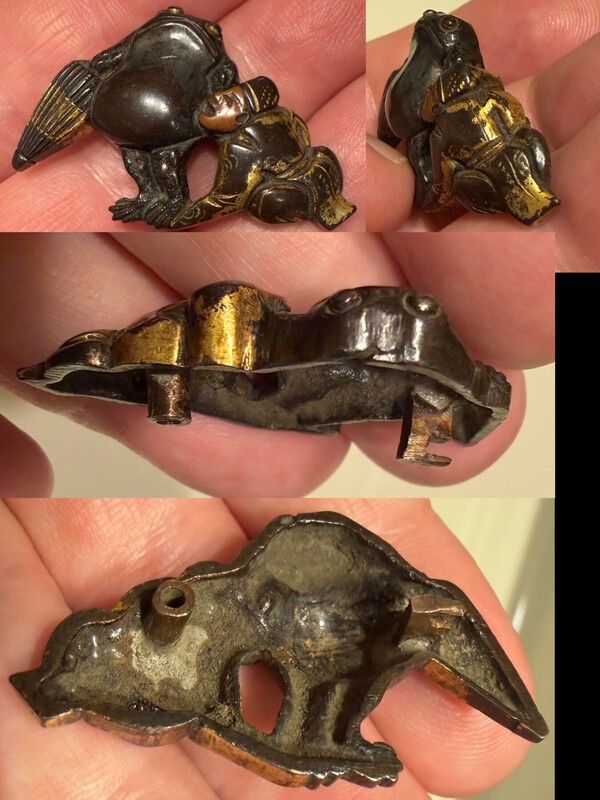
Good advice, and advice I'd take on anything as substantial as say, a blade, but when hunting through little weirdbits (which so many of us have a passion for....) it's the good advice you just can't take. Personally on the weird finds, I keep myself to a few rules. I am not buying old, I am buying art, and judging what I buy on that basis. If it's good art, it might have been made last Thursday and it'll still be worth the price. Assuming the price isn't insane that is... as if it is I won't touch it if I can't see it in person or have a reliable dealer putting their reputation on the line. This frog for example? I'd have bought it online as well, and considered it a steal just because of the charm it has.
-
@Spartancrest, After my last reply, I did a LOT of digging. Now, when I buy a unique item online, I always try to do a reverse image search, because I've seen a lot of people selling items they do not own, then rushing off to buy the item if it sells. I bought a wonderful set of Fuchi & Kashira off ebay, asked the seller to send them to a Japanese company making a koshirae for me... and the guy panicked, acted weird as heck, and canceled the sale. I don't think I was even able to bad review him because he cancelled it. I did a reverse image and found out it was on a Japanese site for half the price. I bought it there out from under the swindler. Lately though Japanese sites are bouncing the reverse image search, and ChatGPT who I occasionally use for assistance (though I do NOT trust LLMs. I use them as search engines now that search engines are mostly bad at the job.) tells me that it is not able to access the images on those websites if I link them, I have to download the screenshots and manually enter them for Chatgpt to look at. This is a big problem, and I think I should make a thread about it, because if I can't reverse image to the Japanese auction sites because they are bouncing the search it's much harder to catch swindlers. Still, I took your photo (which I originally didn't recognize as a link to Yahoo auctions Japan's images) and reversed it, and got those suspicious websites we mentioned. It seems what these websites are doing is scraping the internet to have the entire internet on their site so they can mirror whatever you are searching and can come up for every search. You search "Prehistoric potato chips made by time traveling dragons from mars" and they will somehow always manage to come up and look like they have something for you.... The scraper sites however did have some real images.... and copies of the Japanese kanji text from the original yahoo auction. And using that text I was able to search google for that text exactly, and the original auction (from 2021) came up.... and it's the place I bought the item at. Which was a lot of work to go in a circle. Seems they had the neat little thing 4-5 years before I walked in and was enchanted by it. (IT was also 8K more in person..... but I still love it.) https://auctions.yahoo.co.jp/jp/auction/t1026815632 Still, the ability to reverse image to these sites directly matters to collectors, and I really do want to dig into why the search engines are getting bounced by them. Anyone have anything on that? Below is (some of) what ChatGPT had to say on it. Also, note that where it says "And this is important: your object may not originally have been catalogued as a netsuke at all" is an example of an LLM having a breakdown, as it was never suggested the Frog Overlord was a netsuke, and I always referred to it as a menuki, since it was sold to me as one (though I think the idea above by @ROKUJUROthat it's actually a clasp has a lot of merit.) Which roughly translates to: “Sword fitting, Edo-period original, shakudō-ground frog large fitting, 12g (first item / purchased item)” That is a very strong sign this was copied from a genuine Japanese antique listing. A few important clues: 刀装具 = sword fitting 江戸~ オリジナル = Edo-period original 赤銅地 = shakudō base/ground (the dark copper-gold alloy used in high-end fittings) 蛙 = frog 大金具 = large fitting So the scraper page at least preserved the original Japanese title. And this is important: your object may not originally have been catalogued as a netsuke at all. It may have been sold as: a sword fitting, kozuka ornament, menuki-related object, or detached tosogu component. That actually fits your earlier suspicion that the piece felt “odd” and did not neatly conform to normal netsuke construction. As for safety: The domain does not immediately present as classic malware/phishing from the search result alone. HOWEVER, it still behaves like a scraper/mirror commerce site, and I would not log in, create accounts, enter payment info, or disable browser protections. If you want to inspect it safely: use a browser with scripting limited, or open it in a VM/sandbox, or use a text-only fetch service. But the key takeaway is: you now have real Japanese metadata attached to the piece. That is valuable. And honestly, “赤銅地 蛙 大金具” is probably the most useful lead you’ve gotten so far. {I asked about the scaper sites and it came back with 1) Why those scraper pages exist (and why they look sketchy) They’re not random—they’re SEO parasites. How they work: Bots crawl places like Yahoo Auctions Japan, Rakuten, Mercari They copy: title text (often in Japanese), thumbnail images, sometimes prices/IDs They auto-generate fake “product pages” on cheap domains 2) Why the real Japanese listings don’t show up This is the part that actually matters for your use case. I'm also discussing work arounds with chatgpt, but he's being unrealistic in the way that LLMs sometimes are. Giving academic ideas that actual users will immediately see are bad. Have there been big discussions on here about that? There likely should be. EDIT: Actually do kind of like that frog Tsuba.... if it stays low maybe I will buy it.... I like fitting with animals, especially aquatic animals.
-
BTW, I've decided I love this thing enough it's now my avatar.
-
It looks very like ,but it appears as if that one has gold eyes, but certainly close enough to be of great interest. Can you tell me where and how you found it? I ran your image thought google reverse images, and while it turns up, it's not anywhere my antivirus will let me go. -Edit: Looks like the gold eye thing is a reflection, and the end of the man's garment has identical wear. Might be that's the piece I bought?
-
Last month I was in Kyoto. went into a tourist trap antique shop. It was at the end of a long street that is aimed at the tourist trade, but had genuine antiques for sale. There was a large section of sword fittings, most of them in poor shape. Some were sets connected by small bits of plastic, others individuals. In the individual menuki box, I found this treasure and bought it on the spot. A giant frog holding an umbrella, while a man in court dress bows down and prostrates himself to the frog. (I, For One, Welcome Our New Amphibian Overlords!) Whatever it was paired with has been lost to time. I am therefore posting it here, to ask if anyone else has seen it's like? (Besides the fire breathing toad of Tenjiku Tokubei...)


-
Pardon me, but is there a way to see if the papers are genuine? Like, does NBTHK have a place you type in the number and see if it matches? Was thinking of getting a Jauce account as buyee doesn't seem to be interested in handling even very short blades. I see this thread is a little old, is Jauce still good?
-
Seems like a good question to me. If it was my art it would bother me for the horse's head to be covered.
-
‘Shanghai's tap water comes from the sea. ‘ Kogatana inscription.
GreyVR replied to GreyVR's topic in Translation Assistance
I fear it might not be the photo so much as the blade. Is this any better?
-
Hello all. Last april I bought the most wonderful sword at Tozando in Kyoto. It's a Edo period Wakizashi, my first nihonto, and has a 'lived in' koshirae that I just love. That said, it came with a really beautiful kogatana which has an inscription on the blade. I asked chatgpt to read it, and it tells me that it reads "Shanghai's tapwater comes from the sea." You will all understand I have absolutely no doubt whatsoever of kogatana blade smiths being deeply concerned about water supplies in Chinese cities... ...but even so I thought to ask here.


-
How much can be cut out of a seppa before the whole loses out? I actually bought that rain dragon one above because it enchanted me so, and I have seen seppa with a little bit cut out for the kogatana... (forgive me not putting a lot of time into the shop for this image... But what about....

-
Now I'm going to have to find an artist and commission one like that but with a cat.... O maybe two cats, on on each side.... Do you really think so? Seems like it would be so very close if not on the face of the carp. But I fully grant I'm a beginner....
-
Here's the flip side of the one above with the dragon. As someone who studied art a bit, it seems like the artist would want to consider the 'canvas' to mostly be the space that won't be covered. Seppa are a required bit of equipment, or so I understand, and thus it's a artistic choice that perplexes me. Granted menuki are often magnificent and often almost completely covered.... but even so.

-
Hello all, I'm curious about why it seems that some tsuba I've run across on the internet seem to have art that would almost certainly be covered by seppa. Were these intended for display only, and not use? If this has been asked before, I apologize, as I'm unsure how to search for the question.

-
I started collecting antique Japanese swords not long ago, and this is my first post here. If it is in the wrong place, please let me know. I'm brought to understand that the fit between blade, habaki, and saya needs to be exact, yet I noticed almost at once is that there are many koshirae, complete, for sale with no blade and there are many blades with no koshirae in a holding scabbard. How did they get separated? I'd imagine they can never be reunited due to the exactness of the fit required, but is that wrong? Is there a secret I'm unaware of whereby one can purchase a blade in shirasaya and not have a koshirae made but bought off the rack like a pair of pants? (I imagine that's silly, but I still wanted to ask.) And I ask because some koshirae are absolutely magnificent just by themselves, even the unreplaceable parts. It would feel bad for those really fine ones with unrecoverable art to be broken down for parts to be matched to a blade... but also sad for them never to be matched to a blade again.... which raises the question how so many swords ended up without their koshirae? Surely most of these shirasaya blades at one time had one or many koshirae... and if they are the only ones those fit... were are they? Why weren't they kept together? Tt would seem that a sword should always be sold with every set of Koshirae that has been made for it, yet it is clear this very rarely happens. (That said, I did have the idea of using cat scans or xrays to map the koshirae and 3d scanners to figure out how many might be made to match, but I know how difficult that would be logistically.... even if theoretically possible.) So my questions are "IS there a secret I'm unaware of to buying a koshirae and somehow matching it to a blade beyond just using it for parts?" and "How did so many get separated instead of kept together, especially in a culture so very good as taking care of their antiques?" Thank you all in advance for helping with my ignorance on this matter.