
Leaderboard


Popular Content
Showing content with the highest reputation on 03/16/2026 in all areas
-
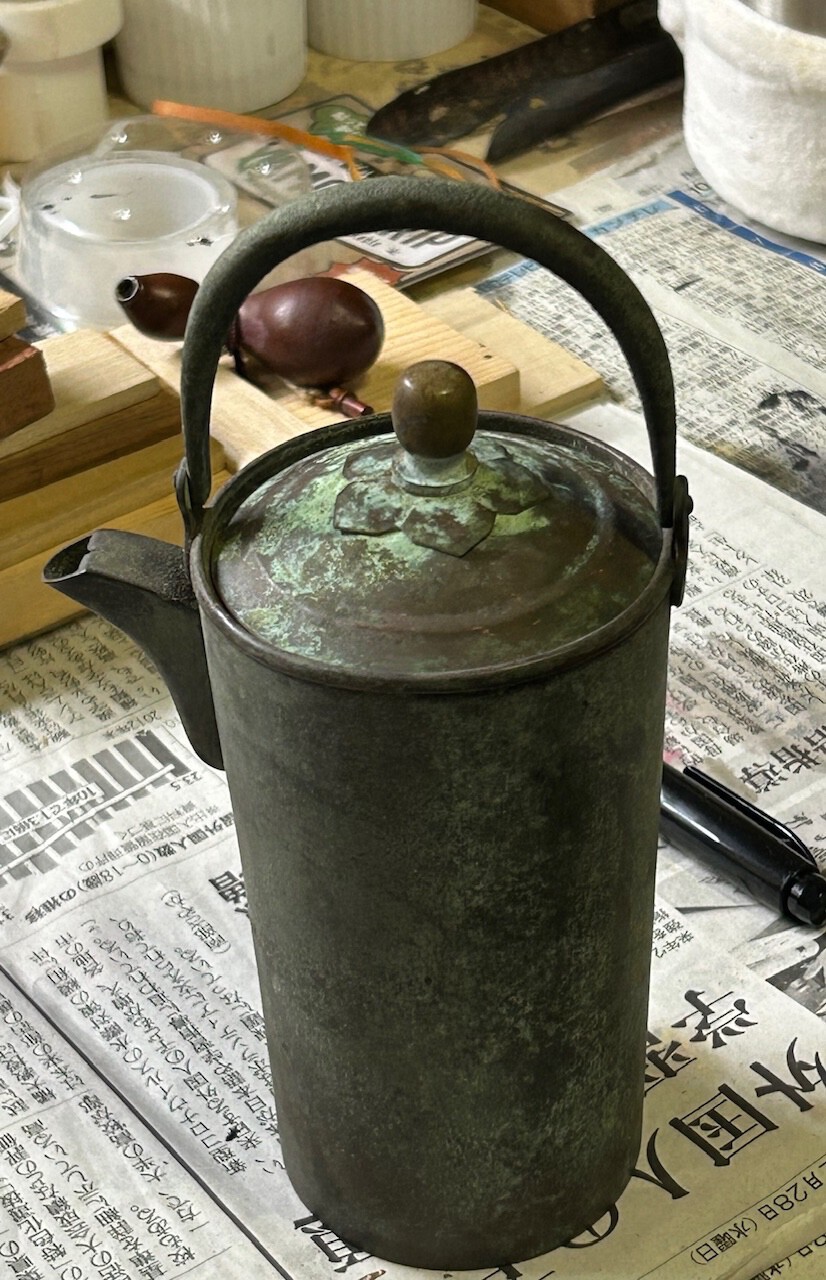
About a year ago I bought a bronze oil pot for an Edo period Japanese andon lamp. A fine-looking thing, but as is often the case, it had lost its lid. Rather slim in silhouette, it needed a small lid. Round and round the antiques fairs I went, rejecting most but buying occasionally, only to be disappointed once more by the lack of a proper material or age match. Months passed. One dealer who has several weathered antique lids on a string handed me a nice one yesterday that he had been saving for me. “Cut this down to the correct size, using an angle grinder.” “Tin snips?” I ventured. “Definitely not. Grind it down to size!” Gulp. Never really been happy working metals. A delicate thing with definite age. What if I ruin the old lid? Still, lonely hearts club, etc., so a potential new life for the pot I reckoned, and got to work shrinking the thing. Hand files and sanding papers though. Getting close to the right size? About 6.7 cm across… Hmmm… .

 3 points
 -
Hello, everyone, I would like to share one more fuchi-kashira depicting an eagle capturing a monkey, attributed to Risshū. I find the composition quite dynamic, especially the interaction between the eagle and the struggling monkey. One small detail that caught my attention is the treatment of the monkey’s head, where the hair seems to be rendered with irregular strokes, giving it a rather wild and lively appearance. I have also read that this motif has sometimes been interpreted as symbolizing authority or dominance, perhaps reflecting ideals associated with the warrior class, though I would be very interested to hear other views on the meaning of the scene. Any thoughts on the workmanship or comparable examples would be greatly appreciated. Liang


 3 points
 -
3 points
-
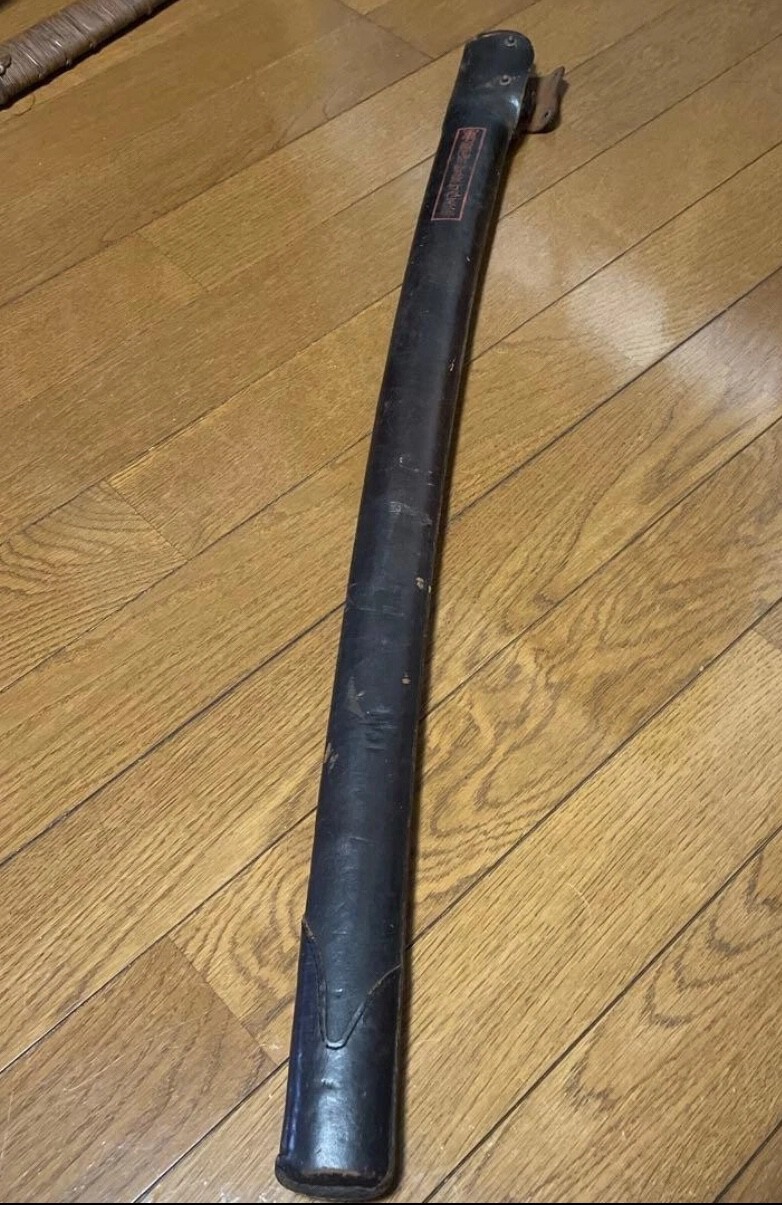
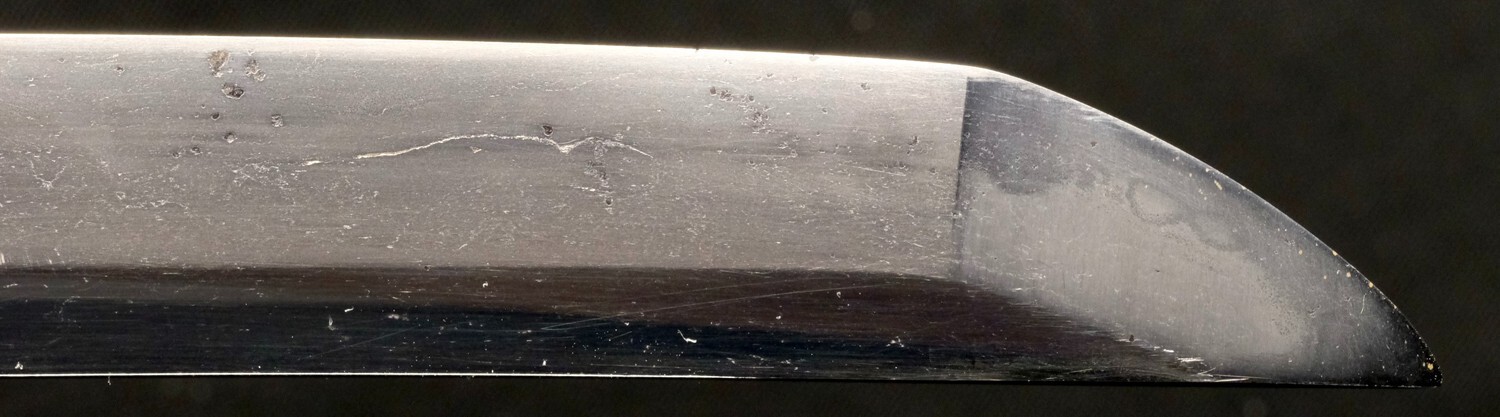
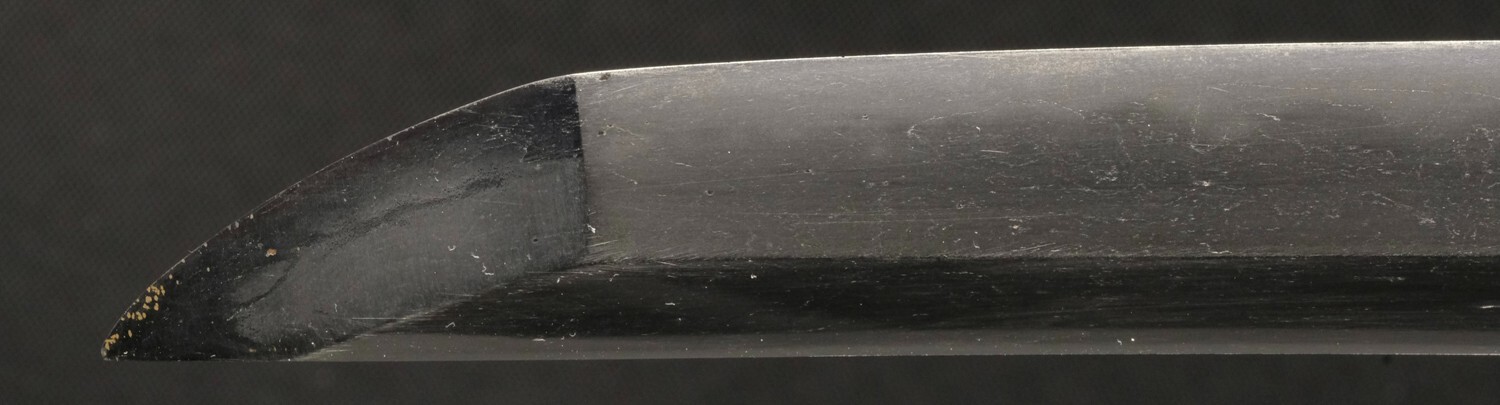
Hi @Ben A Harris, @vajo, @John C and @Bruce Pennington I have relocated this thread to the NIHONTO section. Ben, I did this because it seems that your blade is not machine made. It appears older, and maybe interesting. Sometimes older blades were put into WW2 fittings to be carried during the war. Now that we're in this section, you will be asked to provide more detailed photos (if willing). You will want to remove all the fittings, including habaki, and focus on the blade. Use my photo below for some guidance. Please understand that it's very challenging to get blade details photographed, so it will not be an easy task. I recommend looking around the forum, and getting an idea of what some good photos look like. Looking forward to seeing more of your sword, if you choose to share with us. All the best, -Sam
 3 points
 -
Thanks Bruce and everyone who contributed knowledge to help me learn about this blade.🙏🏻 Nothing but respect.3 points
-
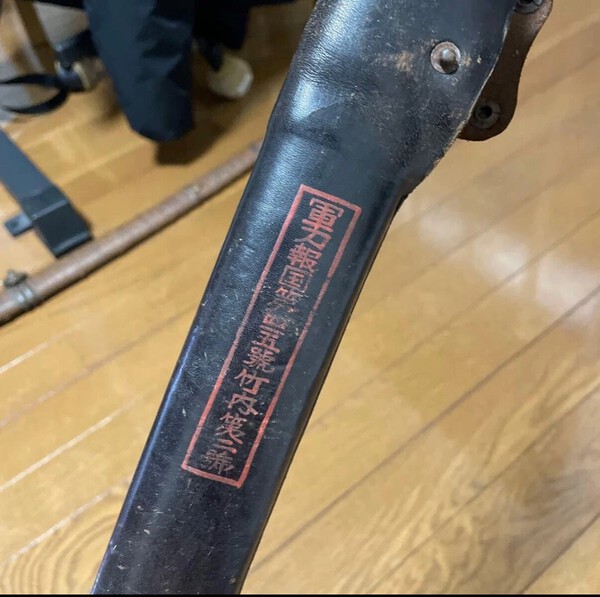
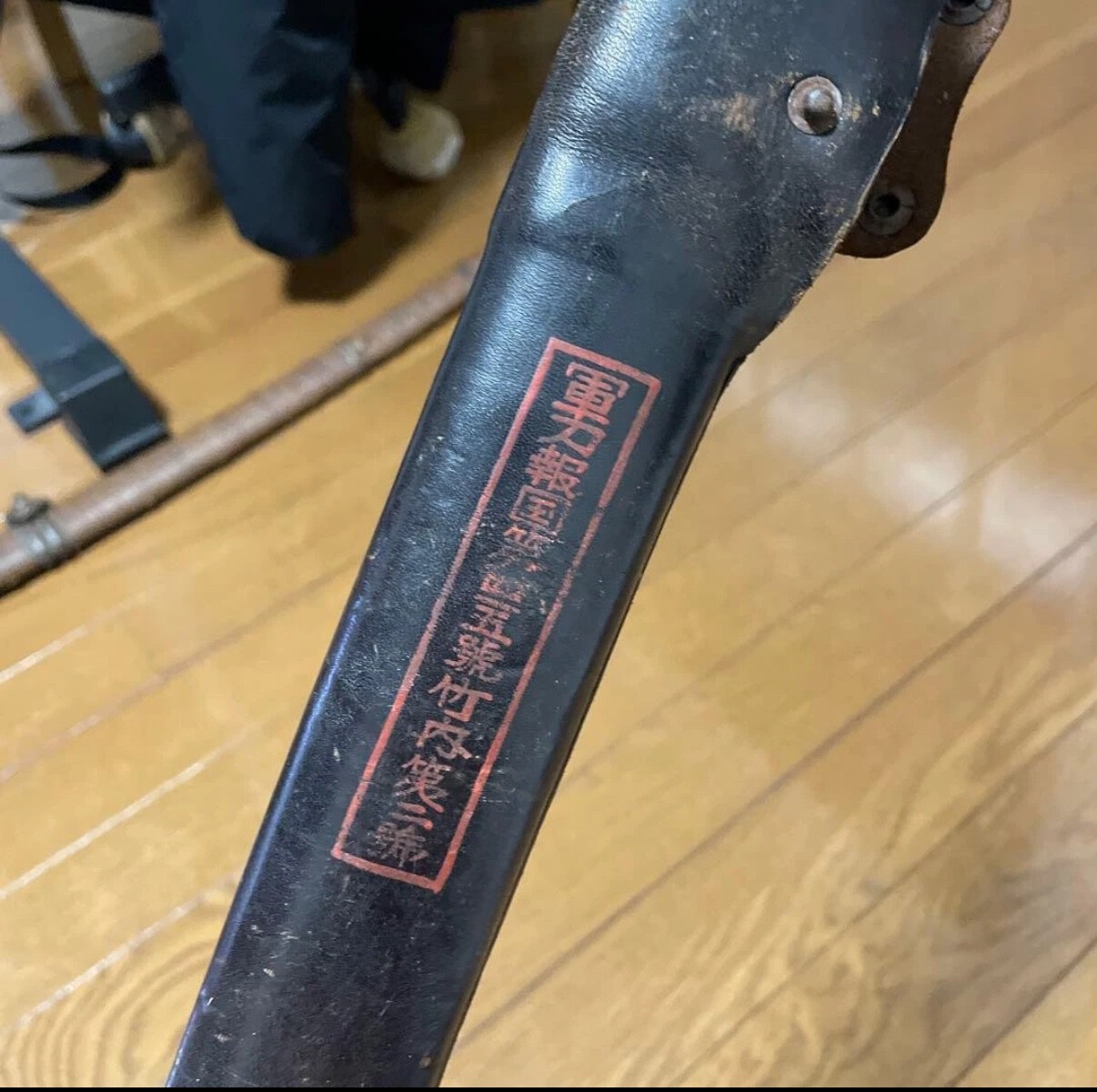
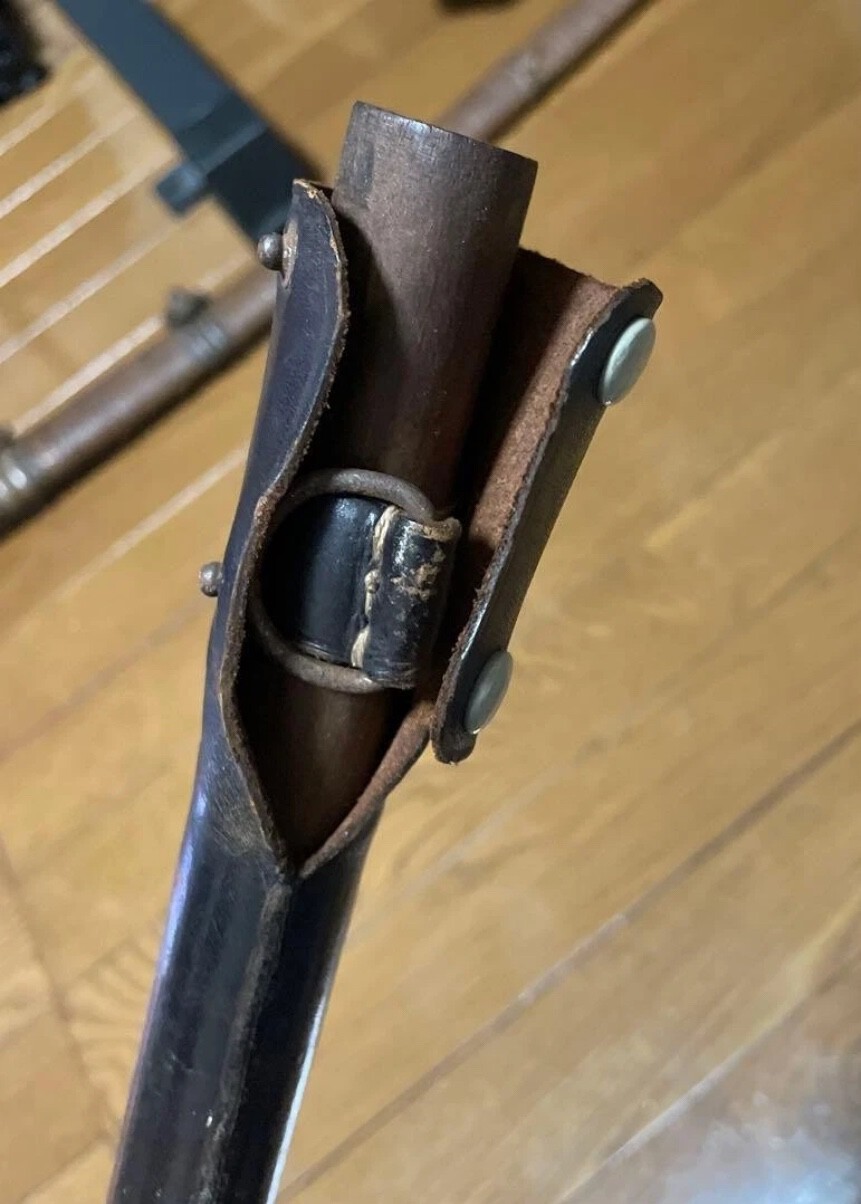
Pretty much as stated in the description "Gunto Hokoku No.45 Takeuchi No.2". (Hōkoku is a patriotic phrase: duty to country/patriotism). I can't find any other reference to this label anywhere else on the net, so it raises a little yellow flag in my mind. It sure looks properly aged though. But, is it a sticker? Is it embossed on the leather? Is it a one-off item, or did this "Takeuchi" company make any more of these kinds of saya? If so, why can't we find other examples? And I actually think its "No. 415" (not 45, as stated on ebay), but I don't know what the significance of that is.3 points
-
I see that this same sword was posted here in 2018 (and the same photos of the nakago, rotated).2 points
-
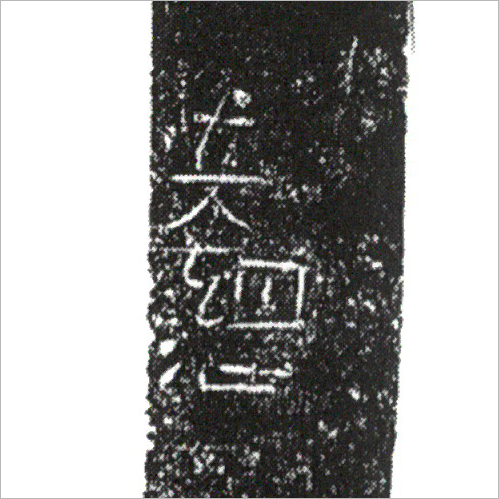
Appears to be a gimei of Yasutsuna with a Tenryaku (天暦) 2 date - a day in the 8th month of the year 948. Best regards, Ray
 2 points
 -
A SUNNOBI TANTO is basically up to a SUN (30,3 mm) longer than a TANTO (303 mm). In former times, measurements were probably less precise in Japan (than in the West), so there might have been variations and different interpretations.2 points
-
平安城住下坂 Heian Jo Jū Shimosaka “Made by a Shimosaka smith living in the Kyoto area” The Shimosaka were well-known makers of Yari.2 points
-
Getting there. I'm about a week or two from finishing a suzuribako tansu. Started with just the door with all the ornate metal work, locking mechanism, hinges, etc. Long process due to making all of the supporting hardware from scratch (sheet copper), unfortunately without a full workshop, and trying to mimic the grain and color of the wood. I'll post pics when finished. John C.
 2 points
 -
Nor me, too damned hard! Looks like a perfect job to me Piers. Patience pays🙂2 points
-
Please see below.
 2 points
 -
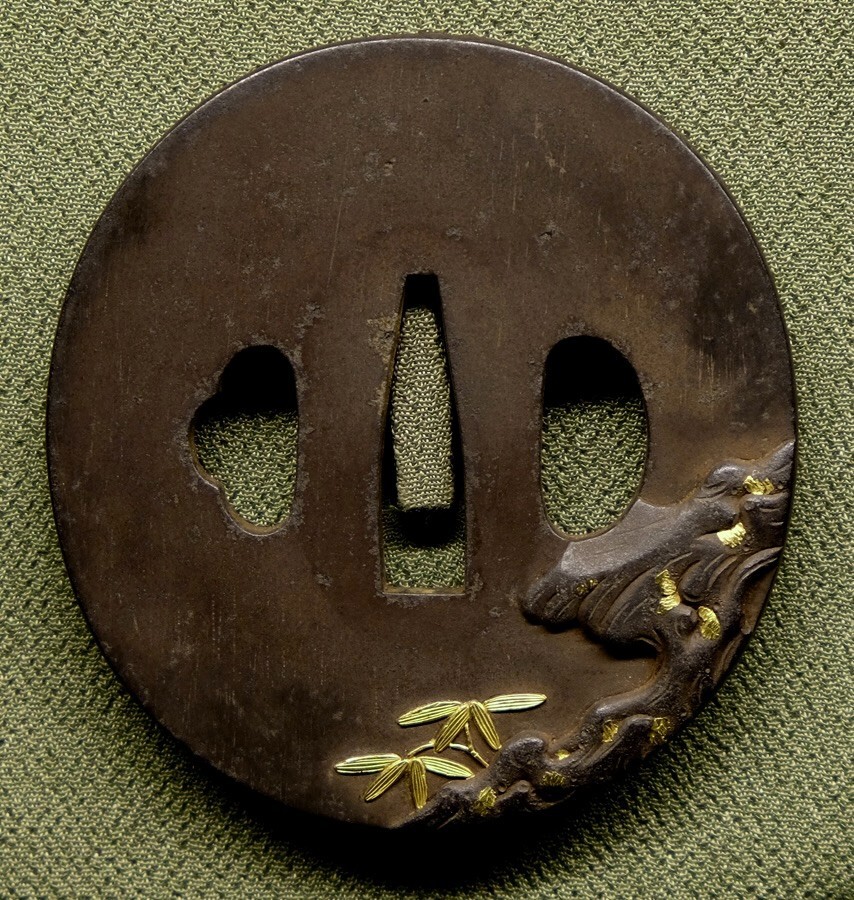
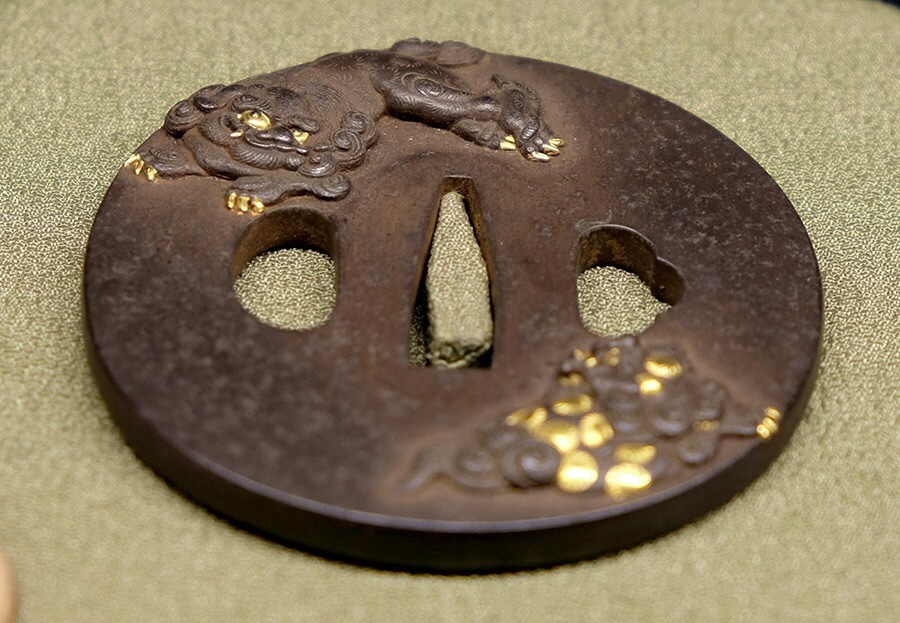
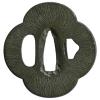
Yes Piers, unusual indeed! YAKITE technique is exclusively applicable to iron TSUBA as far as I know.2 points
-
Spotted on eBay this morning. https://ebay.us/m/6KRoOF
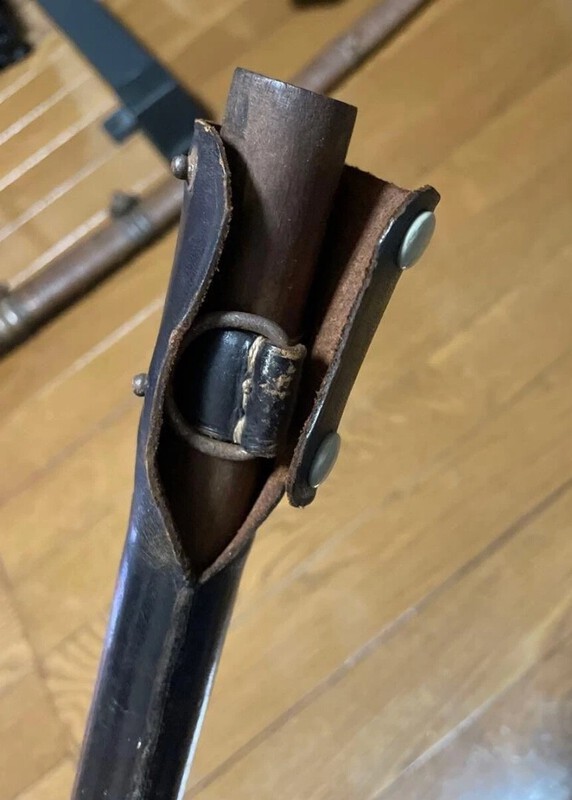
 2 points
 -
Better blade pics are needed.2 points
-
Reading this story reminded me of an anecdote shared by Ted Tenold many years ago on this very board: I remember a story relayed to me about a Japanese swordsmith that was a visiting guest here in the US. He has made a few small tanto while here and was signing them the morning after a long night of libation. As he was inscribing the mei, he made an abrupt stop from his pace. He grunted and shook his head obviously annoyed by his misplaced strike of a single stroke. Looking up at the observers he laughed lightly and said, "In two hundred years, this is gimei!", then went back about his business. https://www.militaria.co.za/nmb/topic/4357-signature-comparisons/#findComment-38825 Useful reminders that for all their artistry and consistency, the great artisans of old were still human and subject to the same pressures as us; a slip of the hand, a bit too much sake the night before, the infirmity of age and sickness.2 points
-
VERY GOOD POST BY COLIN> This is my favorite _half gimei_ Purchased in 2007. Now Tokubetsu Hozon NBTHK. Signed on the front by shodai Norisuke. Signed on the back by nidai Norisuke with his early signature "Norishige". It bounced around Europe for many years as a gimei. I bought it and studied it. Over time and with Tanobe-san help, I came to feel that the 'gimei' mistakes on the front were consistent with the nidai's handwriting. This design was known to be one of the last ones done by the shodai. There is a dated one on record. As the shodai lay ill and dying one winter, it seems the nidai finished the work and partially forged his adoptive dad's signature. Thus, it passed shinsa as a daisaku finished by the nidai. If we didn't have extensive records of the shodai and nidai, this one would have been declared "GIMEI' by the public at large. Judges things by the workmanship. Some people collect signatures, but sometimes you just have to appreciate a finely made piece and ignore the signature. I too like the kozuka of Kansan sweeping. Some of the gold inlay, [on his leggings] is the work of someone very skilled. Nice kozuka. Workmanship is good. --You get sick of it, I will trade you something for it.

 2 points
 -
Hello everyone, I have a strong interest in Japanese sword fittings, especially kozuka. This is my first post here and I would like to share two pieces from my collection. Both kozuka are signed “Joi”, but they do not have papers, so I am not sure whether the signatures are genuine or gimei. The seal on the left kozuka (the Kanzan sweeping scene) is inlaid on a raised silver plaque. I would really appreciate any opinions or comments from more experienced collectors. Thank you. Liang


 1 point
 -
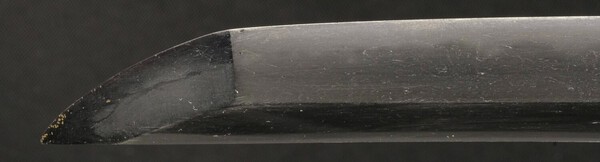
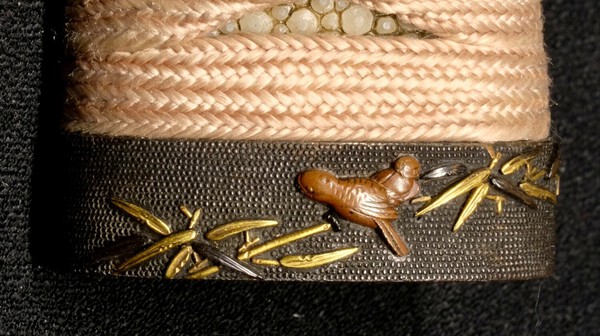
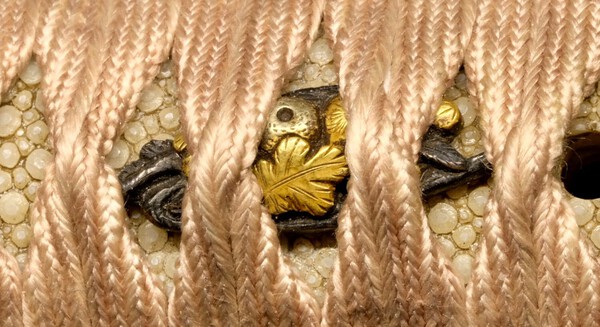
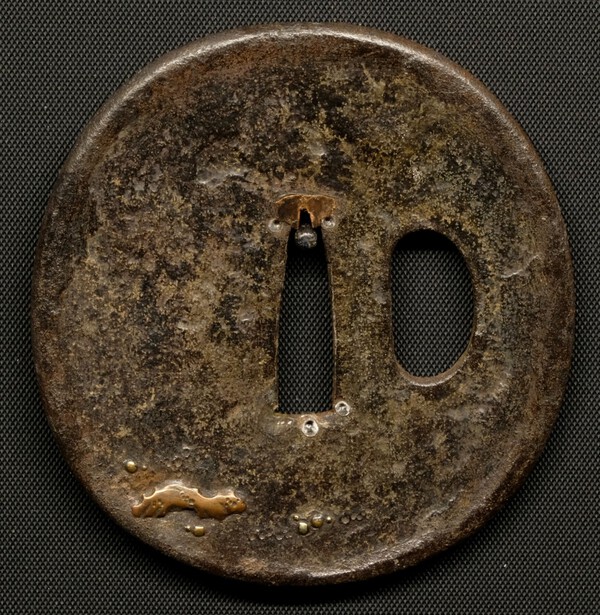
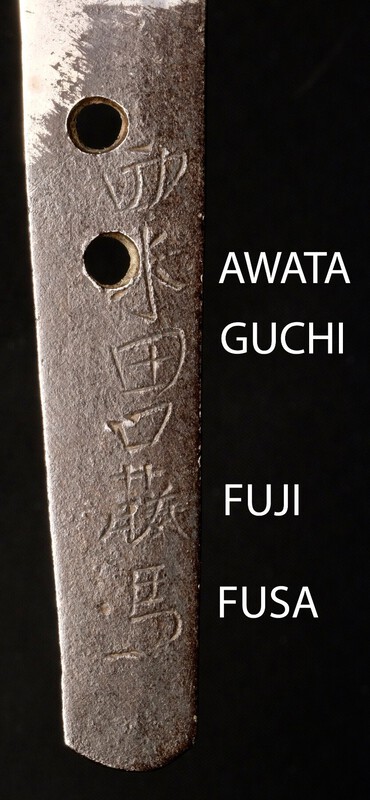
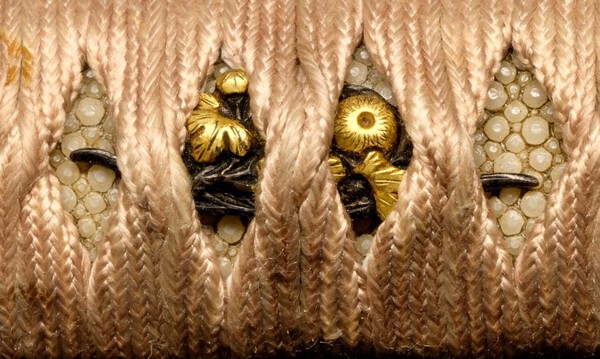
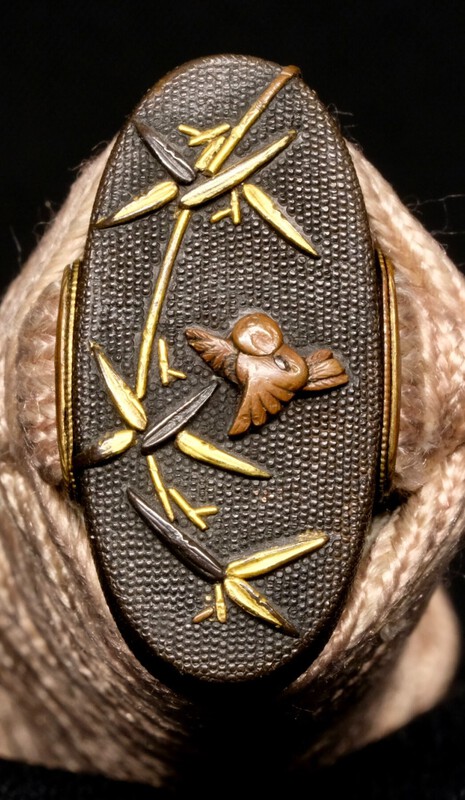
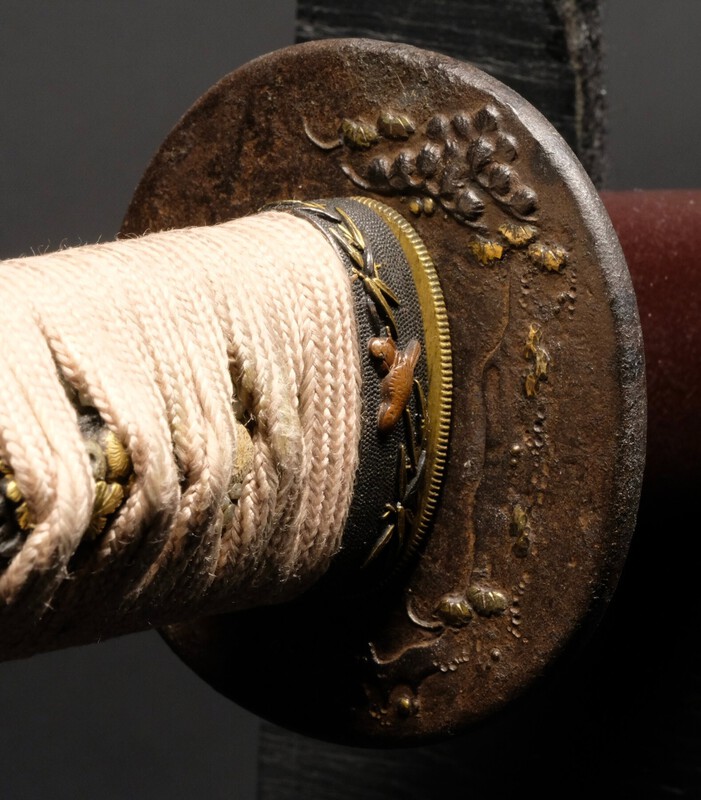
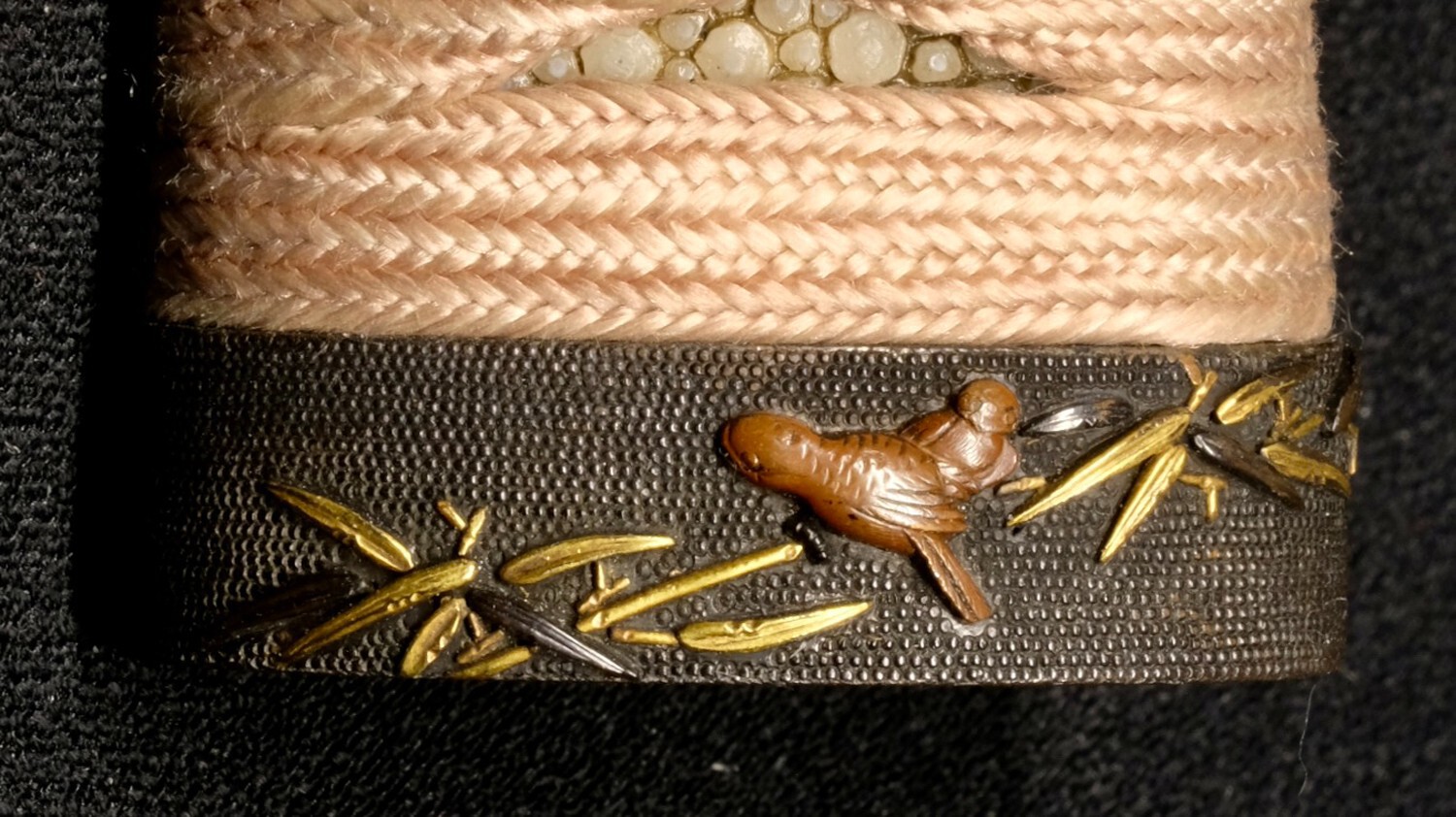
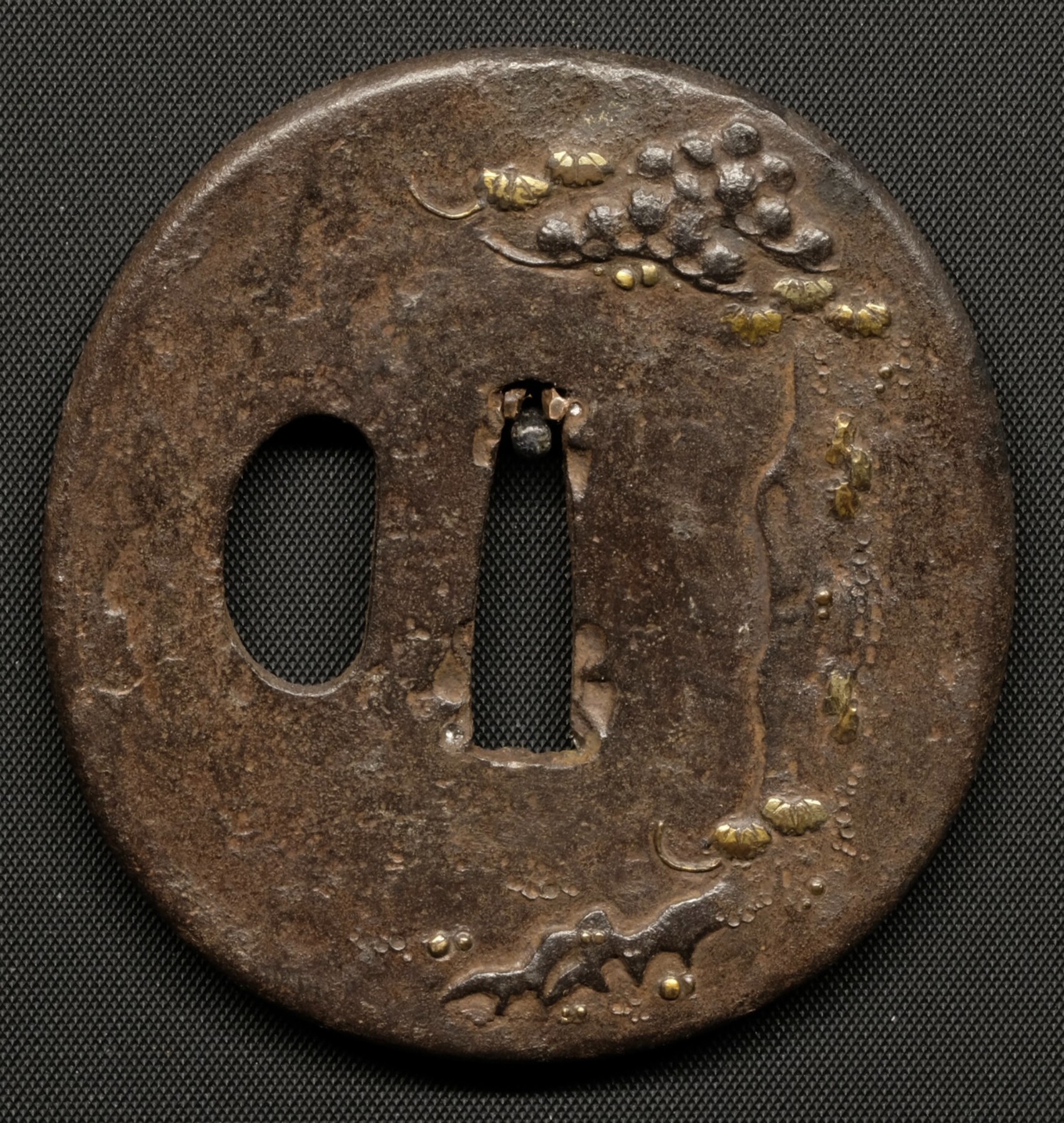
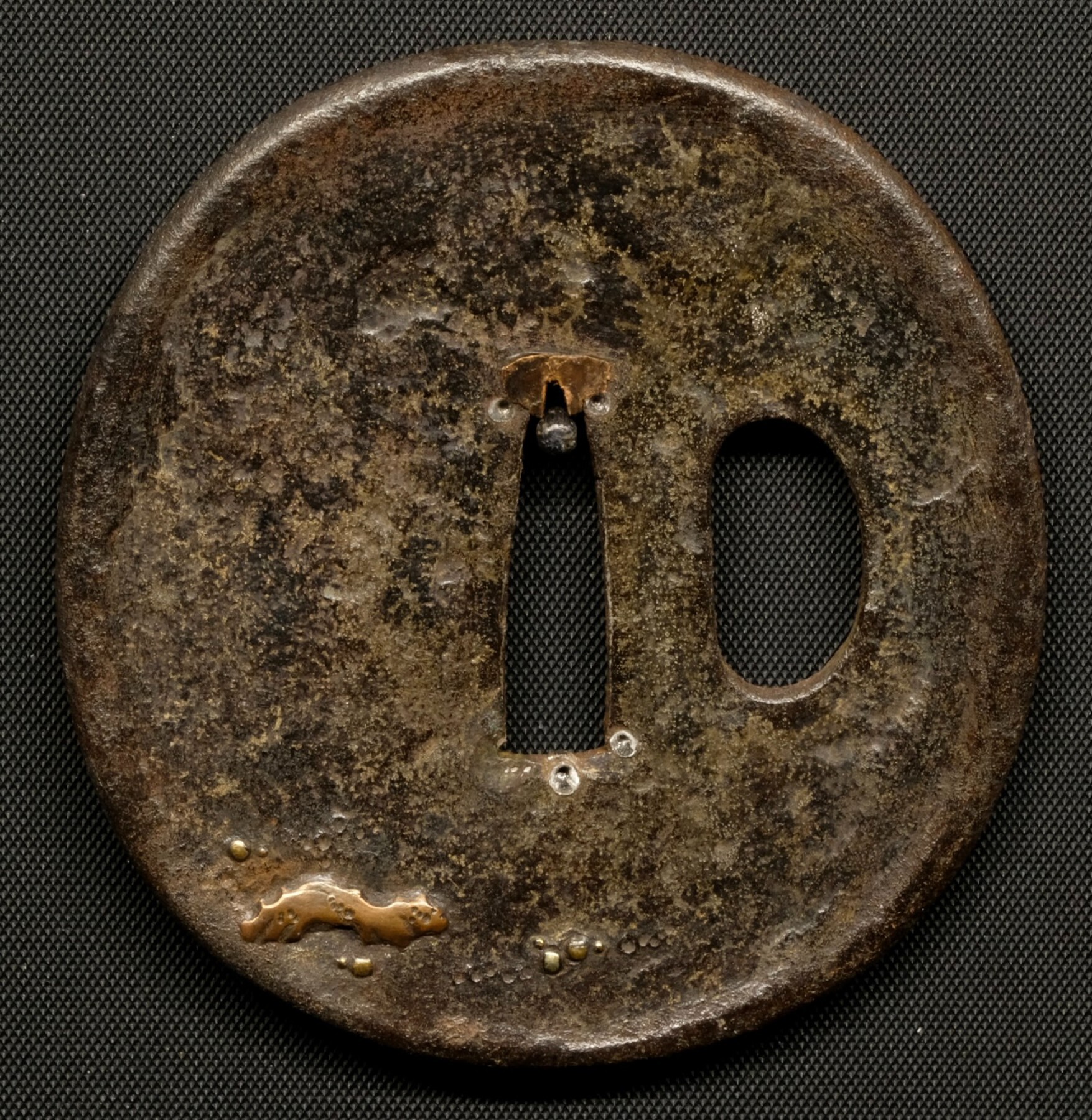
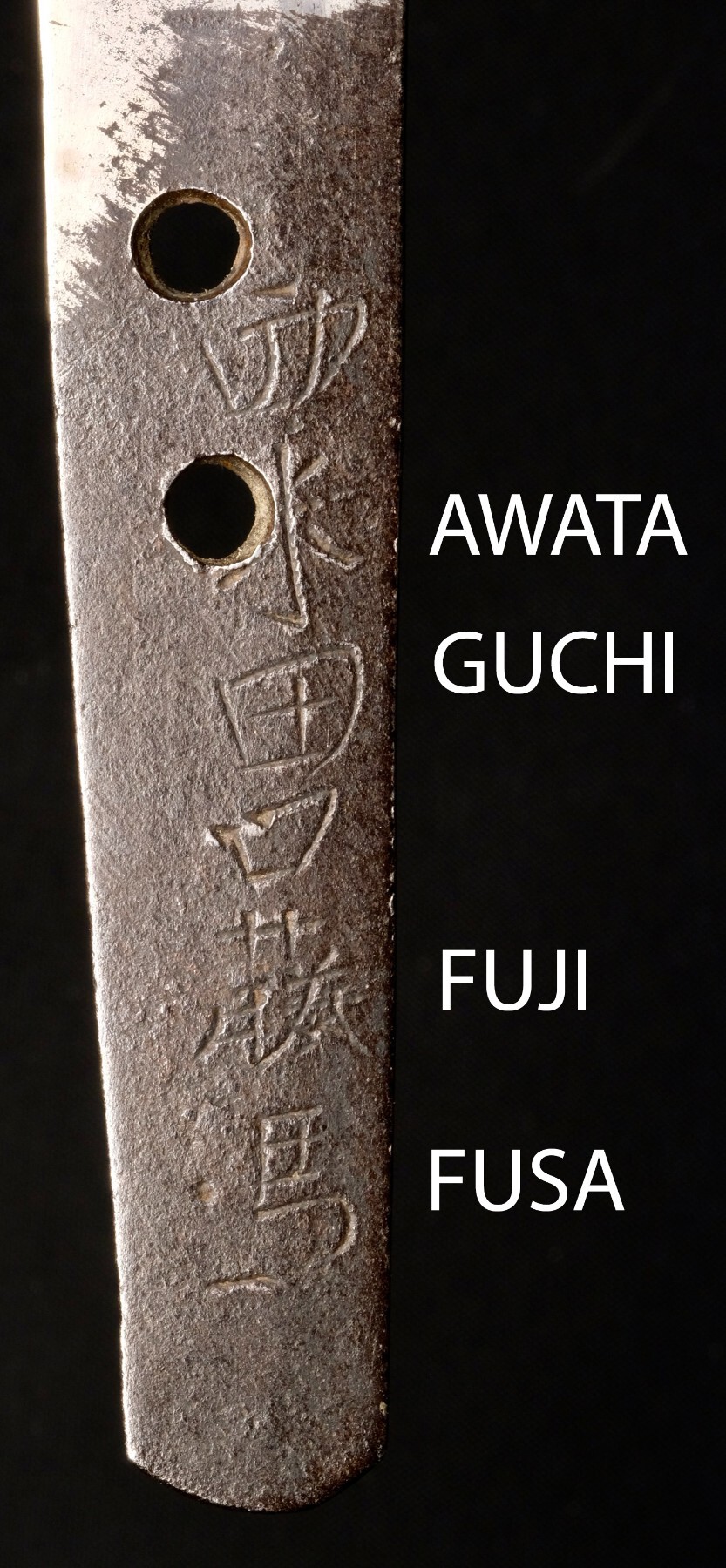
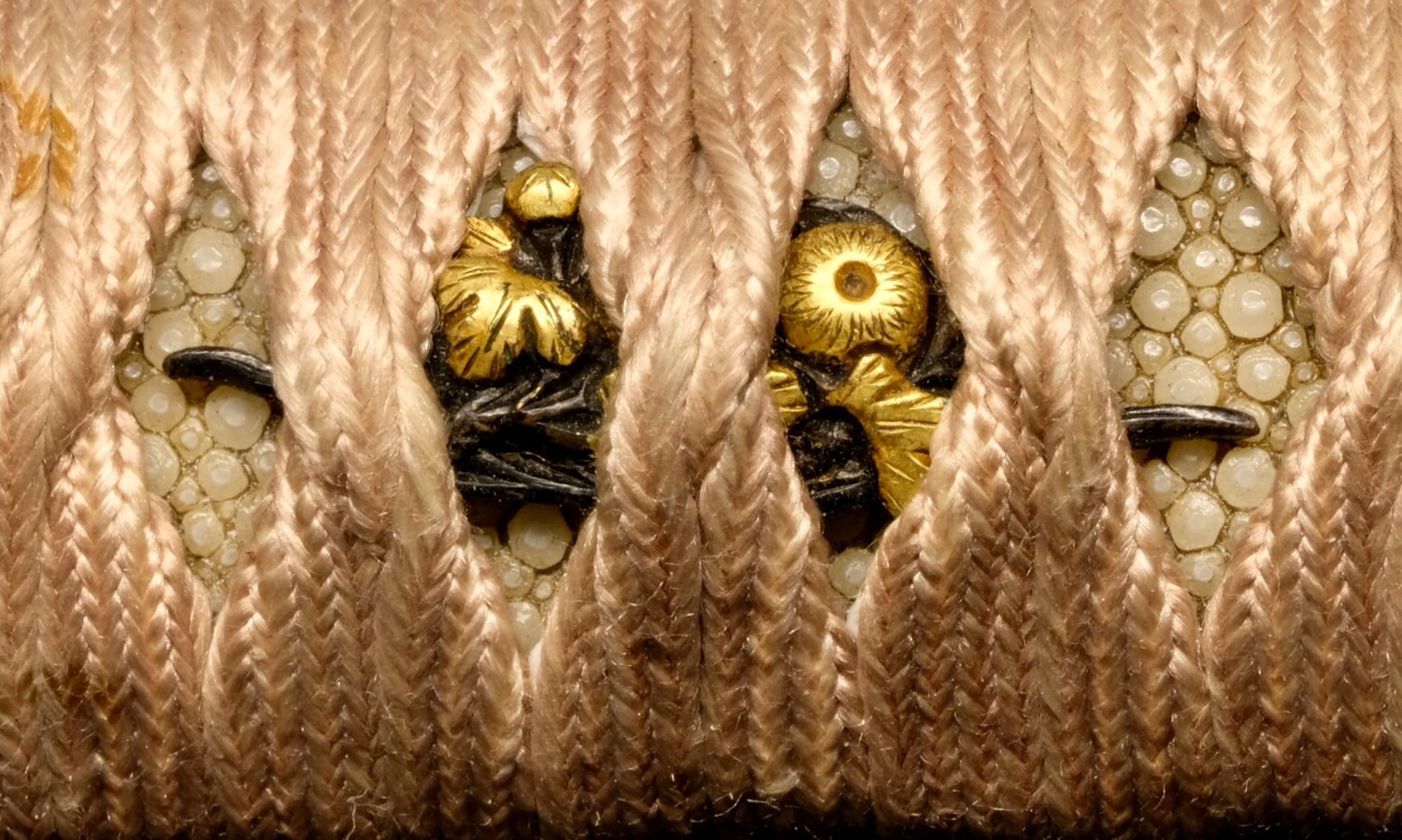
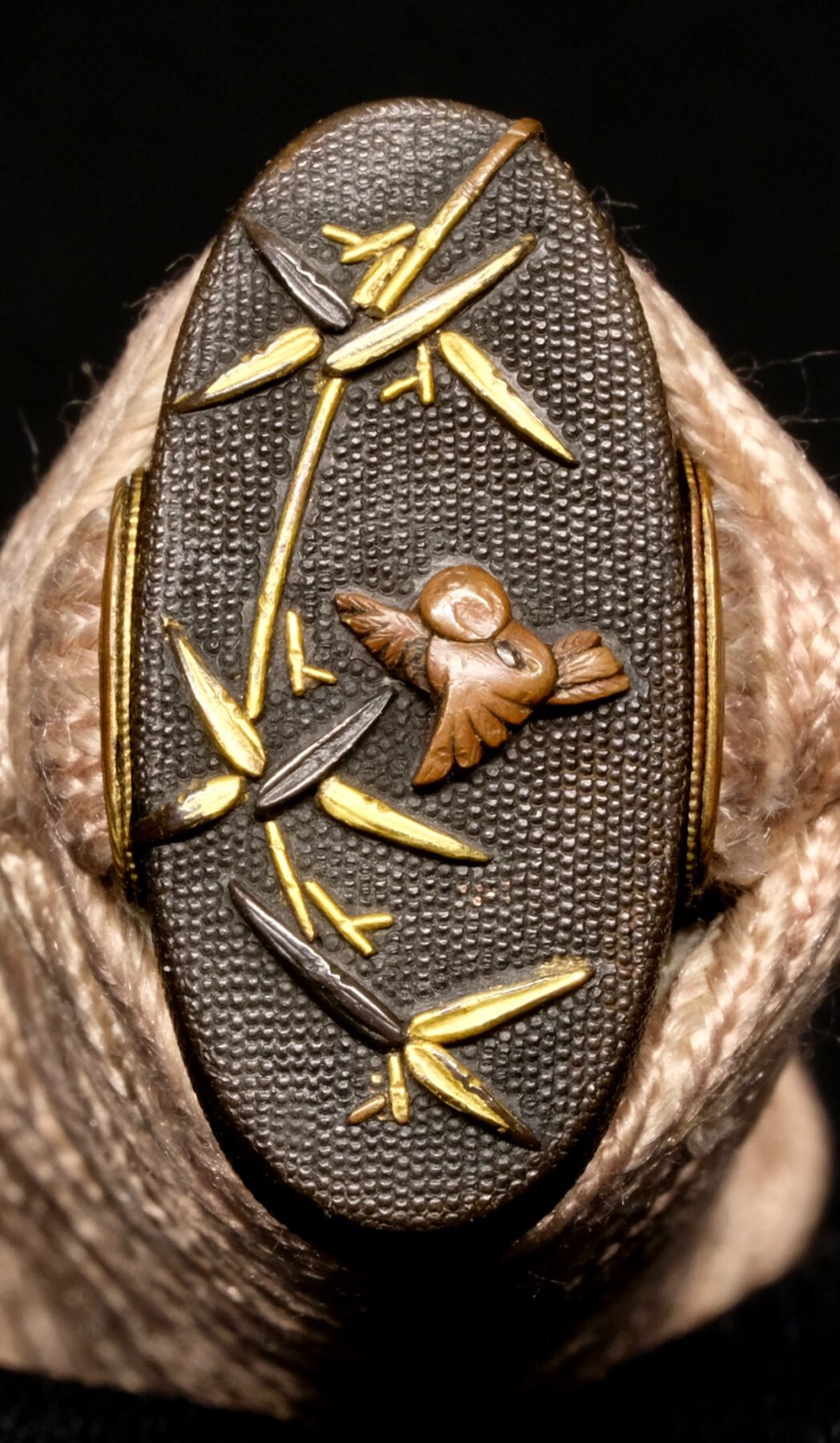
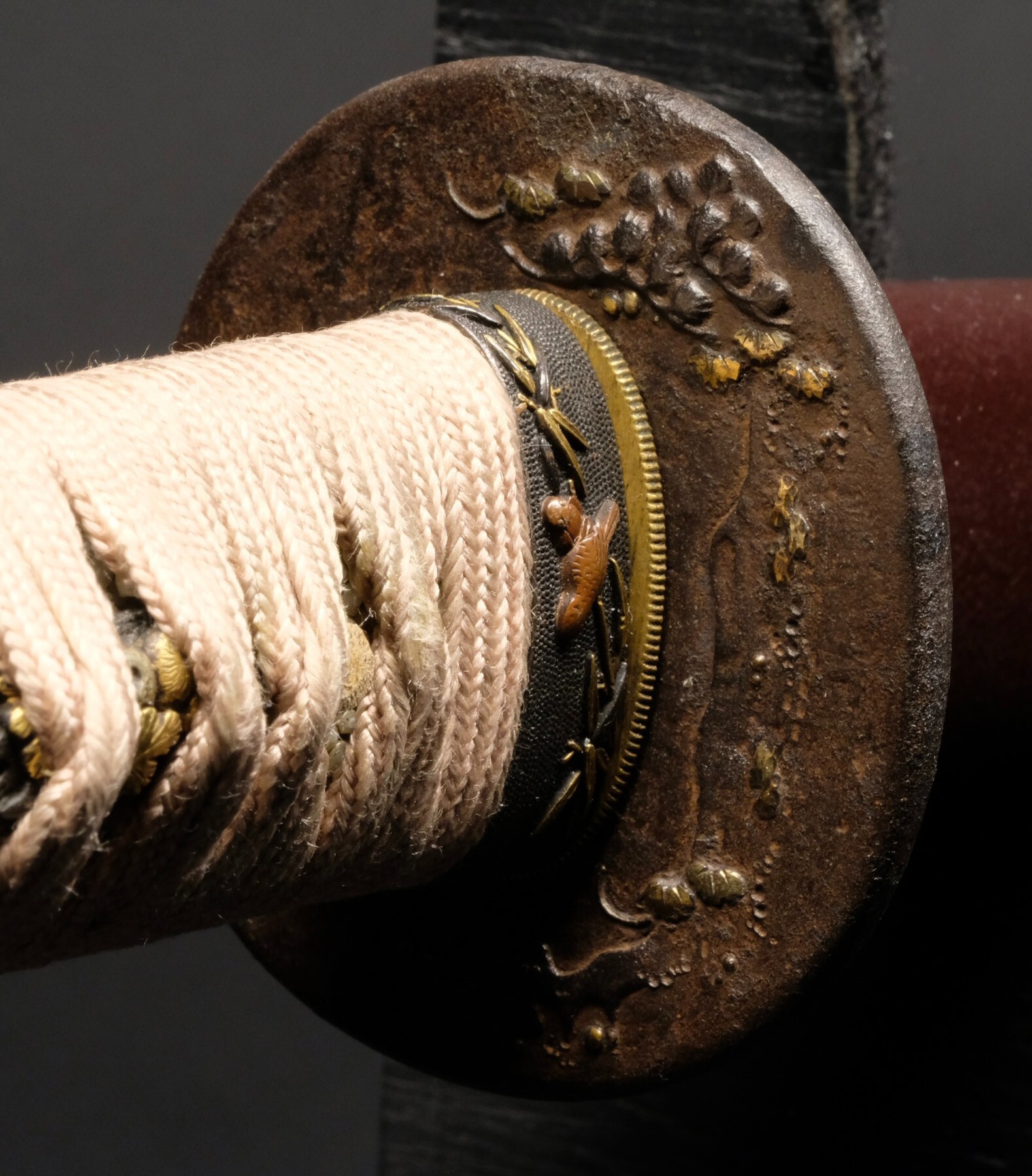
WAKIZASHI AWATAGUCHI FUJIFUSA / KOSHIRAE -SOLD- MEI: AWATAGUCHI FUJIFUSA DATE: 0 c. 1532 MUROMACHI NAGASA: 17.3125" OVERALL: 21.625" MIHABA: 1.01" KASANE: 0.25" SORI: 0.40" NAKAGO: UBU MEKUGI ANA: ONE YASURIME: SUJIKAI MUNE: IORI HADA: KO-ITAME HAMON: GUNOME CHOJI BOSHI: KOMARU HORIMONO OMOTE: NONE HORIMONO URA: NONE HABAKI: 1 PC. COPPER KOSHIRAE Wakizashi in koshirae signed Awataguchi Fujifusa. I could only find one reference for what may be this smith. Hawley’s lists one Fujifusa, a Muromachi smith c. 1532. It could be this smith, the other two options are gimei or an unlisted smith, (see reference and disclaimer below). Nakago is ubu with two mekugi ana. The hada is ko-itame and the hamon is gunome choji. Boshi is ko-maru. The sword is in fair condition but does have numerous small, non-fatal issues such as, surface pitting, kitte-ware, light rust, tarnish and hike-kizu or surface scratches. Comes with a one piece copper habaki. See photos for more detail. Koshirae has some nice fittings. The F/K are shakudo nanako with sparrows and bamboo in gold and copper. The menuki are a floral design of flowers and leaves in shakudo and gold. Saya is a rusty brown with horn koigughi and kurkata. Tsuba is iron with a carved pine with gold highlights. REFERENCES: Hawley’s (FUJ 6), pg. 31 15pt. c.1532 Condition: See Photos. The information I have provided is all I have on this item. Returns: Not accepted unless item is not as described. Ships USPS Priority Mail Insured. Your address and contact information is required to get an accurate shipping quote. Buyer is responsible for knowing your countries import laws and regulations. SOLD *Contact me via email only: Yakiba.com@gmail.com *Disclaimer: Information provided on items offered without kanteisho (papers) or with old shinteisho (papers) is nothing more than an opinion or translation of what is inscribed on the item as is along with any pertinent information of the smith referred to! This opinion/translation and information is provided as a courtesy only and is not an indication, opinion, or guarantee that the item is shoshin. Old shinteisho (white, green, blue, etc.) are no longer recognized by the NBTHK and if re-submitted to shinsa may or may not receive the same attribution. Items which are not accompanied by kanteisho (papers) have a higher probability of being gimei, but that is not always the case. Please do your own research, ask questions prior to committing to purchase and commit only when you are ready to purchase. Please, do not commit to purchase, then attempt to negotiate a lower price.












 1 point
 -
Tsuba = Echizen ju Kinai saku1 point
-
I believe the mei is Yamashiro (no) Suke Moritake (山城介盛武), and the date is 慶應三年八月日 (a day in the 8th month of 1857 - Keiō 3). Best regards, Ray1 point
-
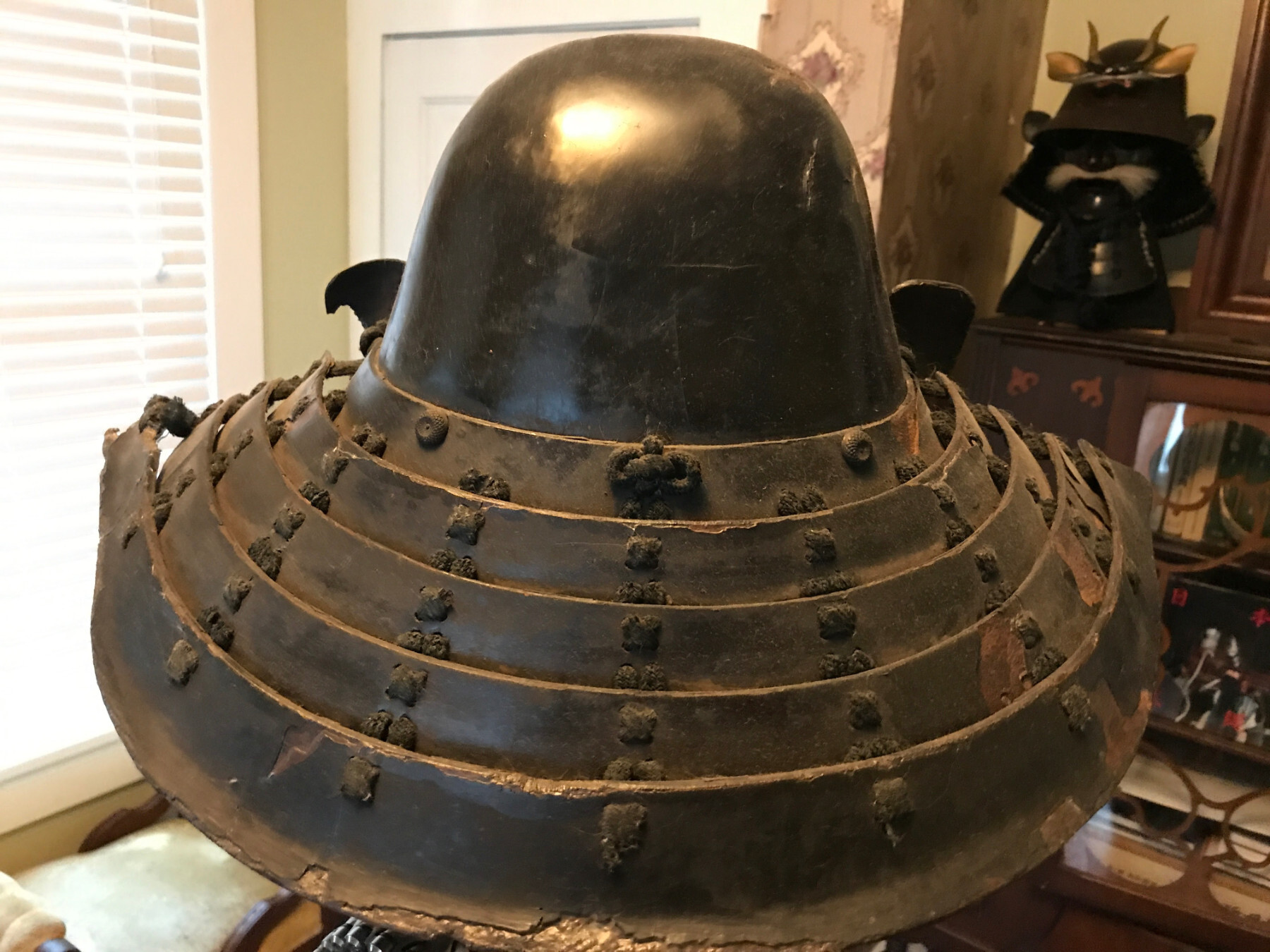
Here is a bullet hole, in a narigawa kabuto

 1 point
 -
This is signed Minamoto Kunihiro. Unclear which Kunihiro this is, there were many. Nakago and mei give the impresson of a Muromachi period sword.1 point
-
Hi Scott, welcome to the NMB! Your sword looks like a civilian blade signed KANETADA, dwelling in partly military mountings. The TSUBA is nothing of any value (cast copy and moreover in bad condition), the FUCHI is not military, I think. A nicely focused photo (on a dark, non-reflective background) of the NAKAGO without HABAKI would help.1 point
-
Perhaps Goto Kanemitsu (後藤兼光). Best regards, Ray1 point
-
Indeed the blade seems to bear a false signature (GI MEI) and added date. There was another (authentic ?) signature before which was erased or made illegible. The signature may be wrong, but it could still be a nice blade. Please sign all posts with at least a first name plus an initial so we could address you politely. It is a rule here.1 point
-
Stephen, welcome to the NMB forum! The MEI is best posted in the TRANSLATION section. What I can see is a SANKAKU YARI in very corroded condition. It is red rust which should be removed by a traditionally trained polisher (TOGISHI). In Australia, you could check with Andrew Ickeringill for possibilities and costs. In the meantime, you could apply oil with low viscosity to slow down the corrosion.1 point
-
As someone fairly new to studying tosogu, I sometimes find it a bit hard to understand why certain pieces in museum collections or catalogues are considered masterpieces. At first glance they don’t always look more elaborate or technically refined than other examples. I guess with more study and comparison the reasons become clearer, but for beginners like me it can still be a little confusing. So discussions like this are actually very helpful.1 point
-
Jacques, everyone is at a different stage of learning, everyone learns differently, and everyone has their own expectations for their goals. After all, you weren't born an expert. Personally, I can only express my opinion from my own perspective. And even that opinion was different 15 years ago and might be different in 15 years – if I'm still alive then. Personally, I currently only buy literature that mentions Oshigata, if at all. The NBTHK publications accompanying museum exhibitions often contain both: excellent photographs and Oshigata. And that's a good thing. The NBTHK's Shijo Kantei, for example, is also interesting. In recent years, blades with different Oshigata designations have appeared there, even with slight differences in the description and sometimes even minimal variations in dimensions. The differences in the description and Oshigata of the same blade are due to the author's perspective. Or, to put it more clearly: Someone who has studied a particular smith or their school over a long period will depict the oshigata of a specific blade differently than someone who has had little to no contact with that smith. The former will emphasize the swordsmith's character more strongly, while the latter will approach the oshigata more technically. I would argue that the situation of a professional oshigata artist is not unlike that of a first-class polisher. They must decide how best to express the essence of a particular swordsmith's work. Some elements can be highlighted and emphasized, while others are better kept subtle. A good oshigata offers the student significant advantages, as it allows them to focus more easily on specific details than when studying an actual blade, where many factors come into play—such as polishing, lighting, and even their own ability to concentrate, which is not always consistent. With an oshigata , a large portion of the information is naturally filtered out—information that, when studying a real blade, more or less consciously floods the viewer. This can quickly overwhelm beginners. Over time, one learns to temporarily block out certain things and retrieve them when needed. This requires a lot of practice and good eye training. Finally, I can't help but chuckle when I read Jussi's comment about viewing blades in a museum. You can immediately tell who's a "regular" and who's a sword-fighting student. And it's not unusual to be surprised to see someone performing the "sword viewing dance" in front of the display case—someone you wouldn't have expected at all.1 point
-
Nice pieces… Markus Sesko has an excellent article on this topic: https://markussesko.com/2014/02/02/tsuba-with-the-bird-of-prey-catching-a-monkey-motif/ It’s really interesting to see how the motif has not only been depicted slightly differently, but also can interpreted differently.1 point
-
貞正 Sadamasa I think we've seen this one before. Pretty recently. Within the last 3-4 months.1 point
-
I agree. The nakago appears to be something older than WWII.1 point
-
1 point
-
No need to put it through shinsa now, I guess. John C.1 point
-
Hmm, this had not yet occurred to me, but it makes perfect sense that it's possible.1 point
-
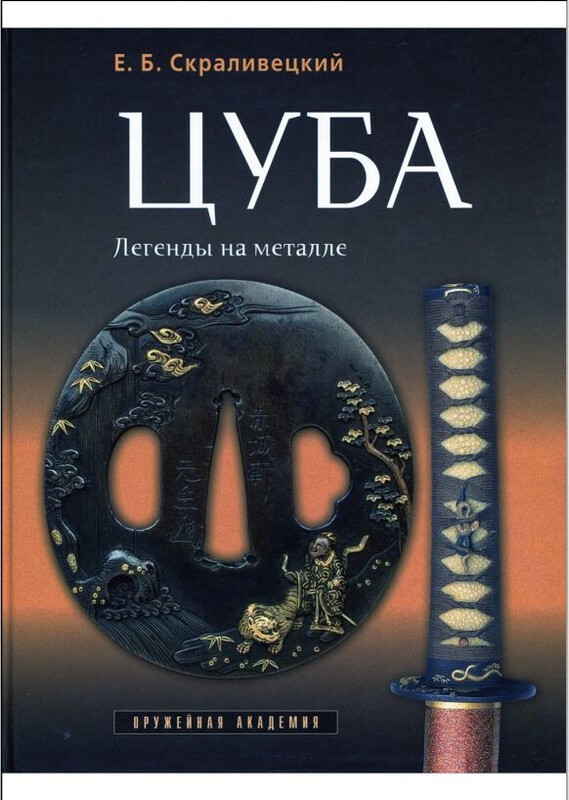
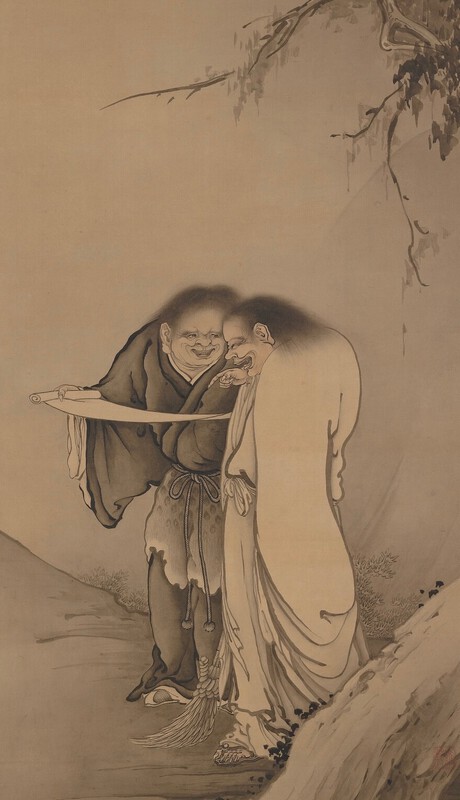
While looking through another reference, I came across a kozuka with a very similar Kanzan and Jittoku composition in a Russian publication on Japanese sword fittings. The treatment there appears somewhat simpler, but the overall arrangement of the figures is quite close. I thought it might be interesting to share it here for comparison.
 1 point
 -
Wow, that's bad. REALLY badly signed by someone who doesn't know Japanese. As mentioned, the shape is a write off and the whole tang looks to have been modified to deceive....even the extra mekugi ana in weird places. This is one to stay far away from. Is this from an online dealer? I'm guessing it's this one? https://aukro.cz/japonsko-rarita-originalni-rucne-kovana-katana-znacena-mistr-kunisuke-7113242336 Ugh...no. I think it may have been a genuine sword, but has been messed with so much that the value is minimal now.1 point
-
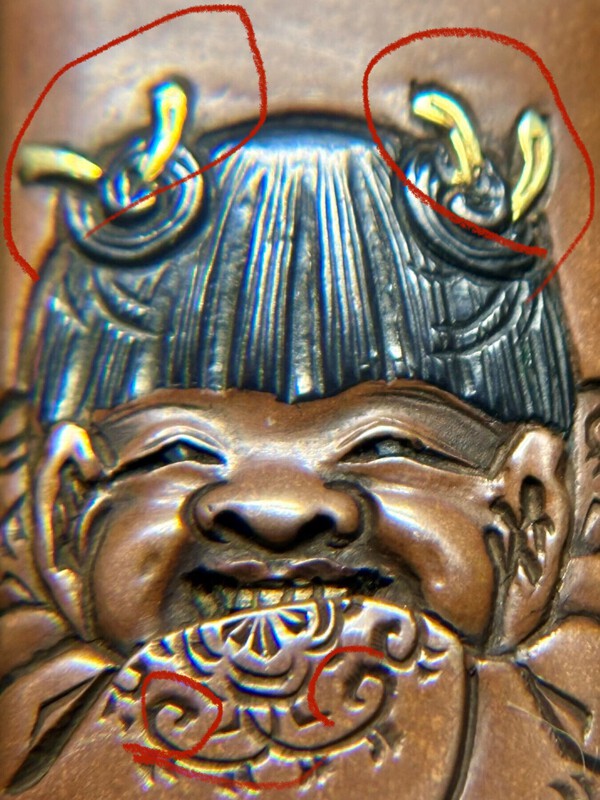
These are indeed good kozuka, however I would like to draw attention to a few points. This is indeed a deer hide on the belt, which is often seen in paintings depicting these characters. The spots do resemble inlay, I agree. However, the quality of the inlay in the hair and the golden bows on the head is not perfect, and the surrounding field is also not ideally finished. This is the first thing I always pay attention to: whether there is a gap between the ground and the inlay itself. After that, it is important to level and polish the ground perfectly using different stones and charcoal so that it becomes flush with the rest of the surface and hides the traces of the inlay. This is quite a labor-intensive process, so truly perfect execution is usually found in high-level works. The carving, in my opinion, is rather ordinary; there are irregularities both in the work itself and in the signature on the seal. This is simply the carving technique - almost all Soten signatures are carved in this manner. The Joi signature, in fact, was very frequently copied, and I am inclined to think that this is gimei, although I do like the overall composition and execution! Best regards!
 1 point
 -
Dear SR. (Can we have a name to address you by please?) The seller may be uninformed or something worse. This was never near the hand of Kawachi no Kami Kunisuke. It seems to be the result of a crude attempt to forge the signature. Genuine signatures are neat and precise for this smith. If the blade were ever a Japanese sword it is now ruined beyond redemption. The shinogi line is gone, the kissaki might have been broken and reshaped but there is nothing here to study or learn from. Don't buiy it, save your money and your sanity. More detail available if you would like. All the best.1 point
-
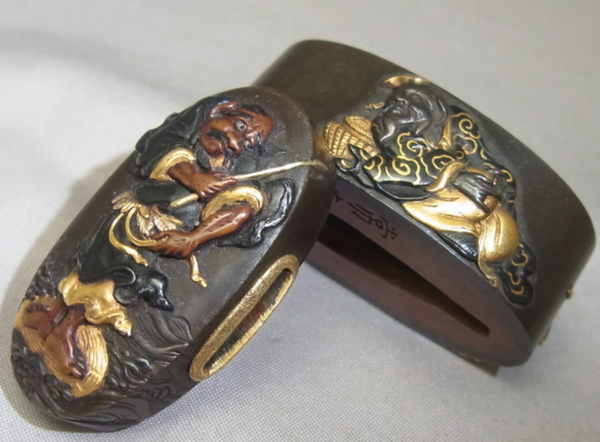
Correct Liang, The kashira depicts Taigong Wang / Taigong Jiang. Those who like video games will appreciate his appearance as a character in TECMO KOEI's Warriors Orochi series... I have not heard this saying before but it is quite fitting! The picture I uploaded last time does not reflect the true quality of this piece... Here's a better one:
 1 point
 -
Thank you Glen @GRC ! Happy to attach the other indexes here too. Volume1_Index.pdf Volume2_Index.pdf Volume3_Index.pdf1 point
-
The second one is definitely Nerigawa.1 point
-
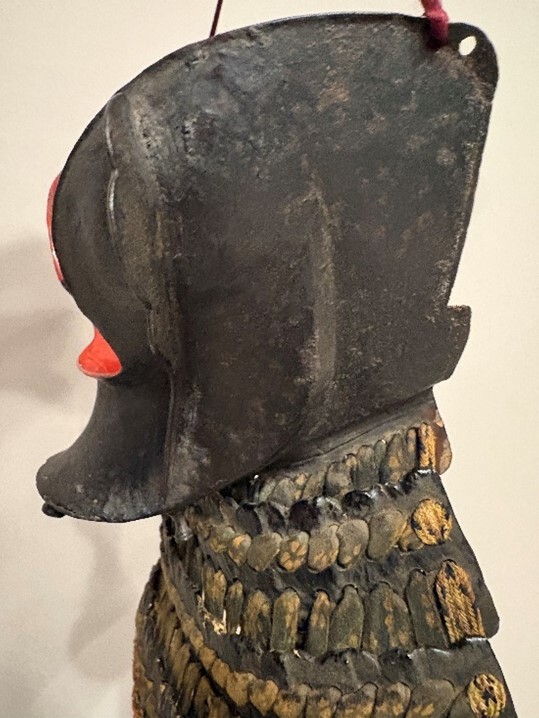
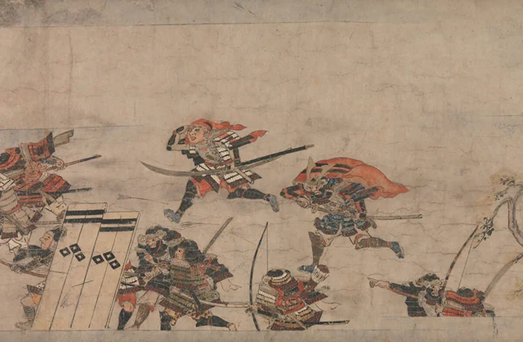
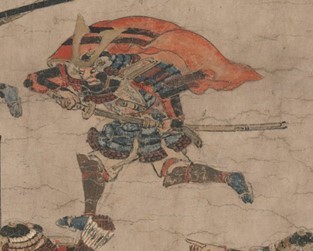
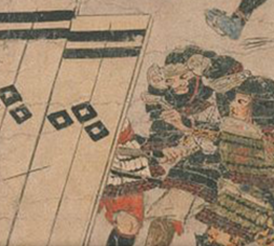
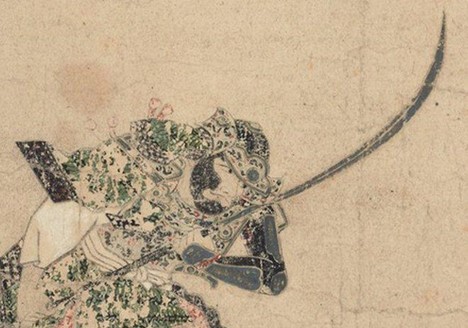
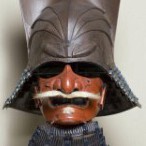
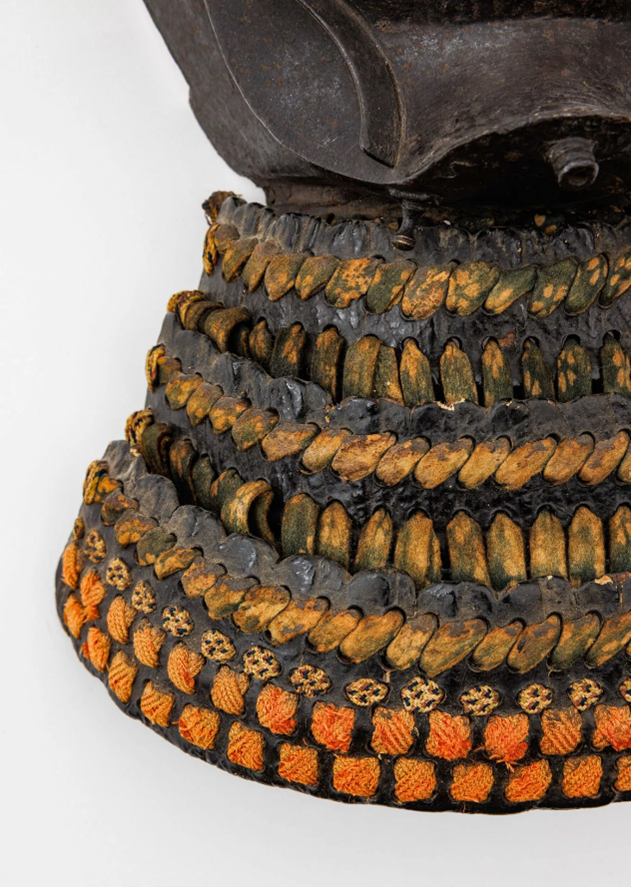
Hello, I share with you an interesting and rare old Hoate (or Hanbô) from the muromachi period (15-16 th). A half-mask made of natural iron, of the "Hanbō" type, covering half the face and excluding the nose. The inner surface is lacquered red. A sweat vent and a channel (ase nagashi) are present on the lower part. Two stamped iron "yadome" straps on each side of the mask guide and protect the helmet cord, while two iron studs (otayori) on the lower part secure the cord. The four-row gorget (yodarekake), very likely contemporary with the mask, is made of superficial iron strips covered with lacquered leather, joined together in a "hon kozane" style and then in a "kebiki odoshi" style with printed suede "egawa" cords and red silk. This half-mask is designed to cover part of the face while also protecting the cord and ensuring the helmet (still quite heavy during the Muromachi period) stays in place and distributing its weight more evenly. Half-masks from this period are extremely rare. The mask's shape, with its iron gorget covered in lacquered leather, immediately suggests a very early date, further confirmed by the black corrosion of the iron, which allows us to date the object to the middle of the Muromachi period (1336-1573). Some examples of hoate wearing during the Muromachi period : Handscroll : A Long Tale for an Autumn Night (Aki no yo nagamonogatari) ca. 1400. Metropolitan Museum of Art New-York, 2002.459.2 https://www.metmuseum.org/art/collection/search/65122 others exemple :





 1 point
 -
On the road from Santa!
 1 point
 -
Hi Vadim, when I said "雁金 karigane is a strange convention to express wild geese", I guess I meant that the two kanji 雁金 are a convention (do you not think *'goose/geese gold' looks strange?) which are used to express the idea of a) wild geese, b) wild geese designs, c) a stylized Kamon? I think it is a strange jump from 雁が音 to 雁金, jumping from the sound of their cries (lovely poetic image) to 金 with no relation to the feathered creature itself. Actually in English there is the story of the goose that lays the golden egg, so maybe there is some connection with gold! Perhaps I should have said: "雁金 karigane is a strange (to me) kanji convention which is used to express wild geese."1 point
-
雁音・雁・雁金(読み)かりがね These can all be read Karigane, and there's a story behind each. Originally it meant "the sound of the crying geese" 雁+が+音. Adding Kane/gane 金 instead of ga+ne was thought to be bright and shiny and auspicious, so it was used when speaking about the Karigane Mon, family crest. Then everyone started using 雁金, and even if you write the first two strokes, i.e. 厂 ....people will know by context what it is alluding to. The easiest thing is just to learn the word karigane as geese (but golden)!1 point
-
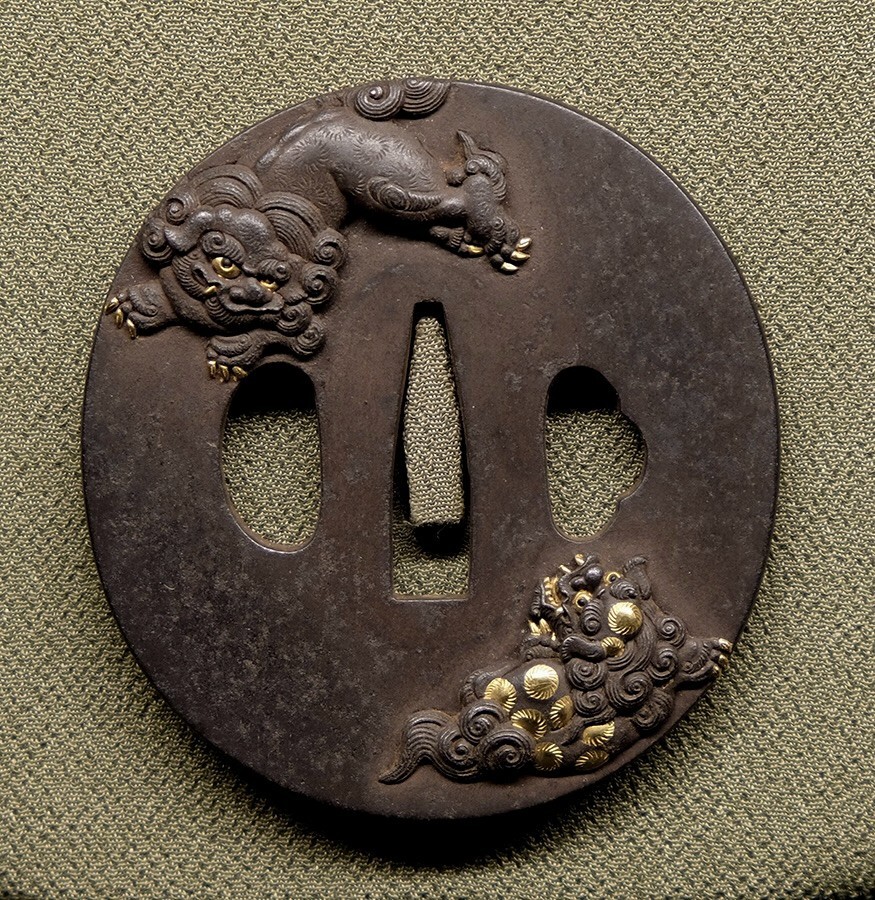
Strange, I thought I replied to all this translation help yesterday, but it didn't go out. Yes, this information was very helpful and beyond my translation abilities. I was confused by the term "Mon chirashi zu tsuba" but now realize it is as it looks, a scattered, random pattern applied by what I heard is a "drip zogan" method, which is how it looks. Replying to Piers D, I'm in St. Louis, Missouri USA. Been into swords and fittings for sixty years and still learning something new, like here. Ron STL1 point
-
紋散 usually reads Mon chirashi (same meaning).1 point
-
Where to start? Two birds with one stone, perhaps? 四方 shiho indicates in four directions. 牡丹 Botan is peony (usually flowers) 雁金 karigane is a strange convention to express wild geese.1 point


























.thumb.png.4c5df79fec171b2dc4a23af38e280a4d.png)






This leaderboard is set to Johannesburg/GMT+02:00