
Leaderboard



Popular Content
Showing content with the highest reputation on 03/10/2026 in all areas
-
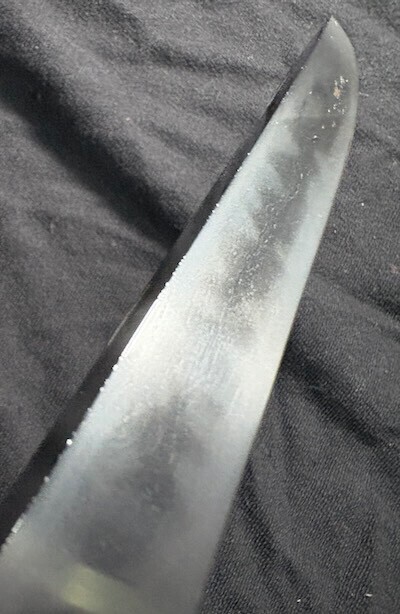
The yoroi-doshi arrived exactly as described. Alex was an absolute pleasure to deal with. Marius thought it was 3rd or 4th gen Fuyuhiro, with the possibility of it being gimei. After doing much research I am leaning towards shoshin. The jitetsu and deki is a good match for late work by the 3rd gen swordsmith in Wakasa, (only he and 2nd gen signed sanmei), so Marius' hunch was spot on. The muneyaki to hitatsura with connected tobiyaki Yaki-ire is a sign the sword was made by an experienced and competent smith. Very proud to be the new owner of this honest, workhorse of a blade. I think this blade will look amazing under a macro lens.8 points
-
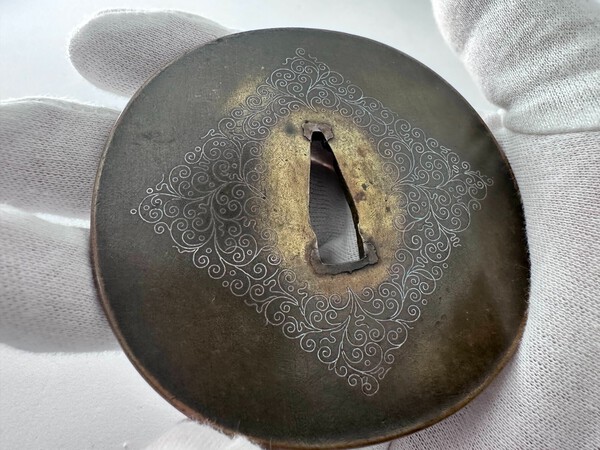
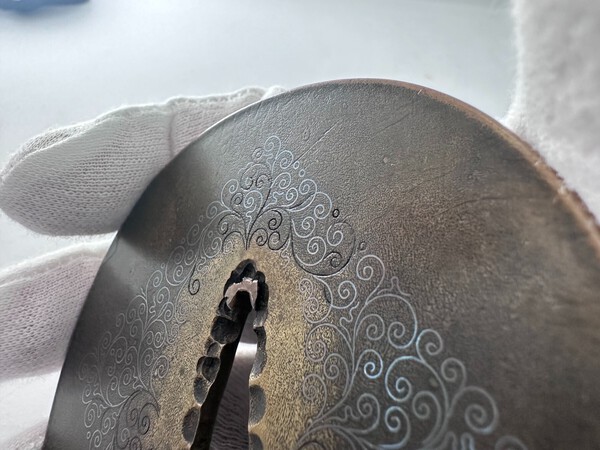
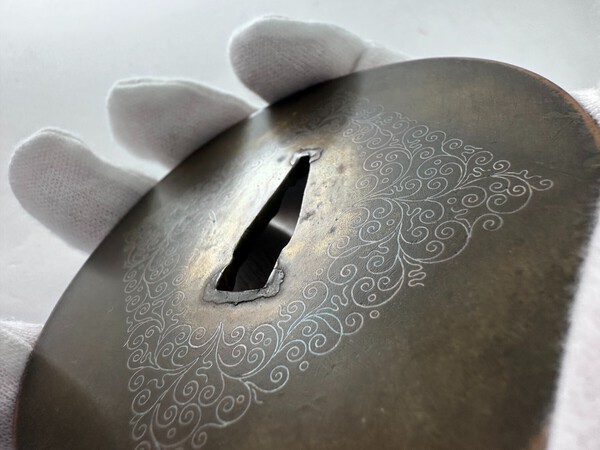
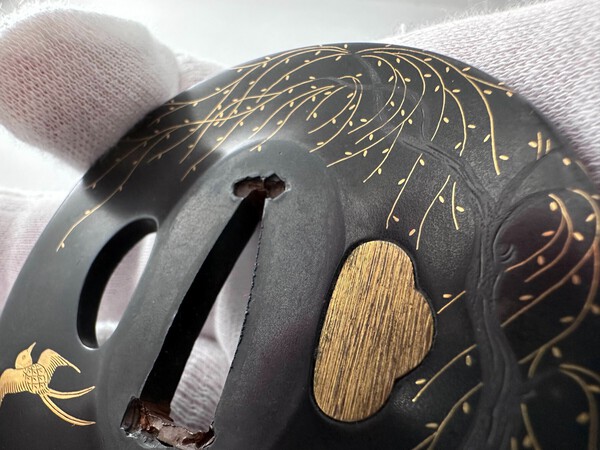
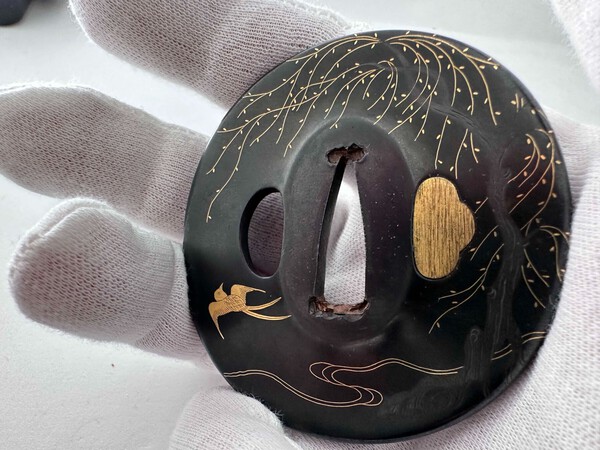
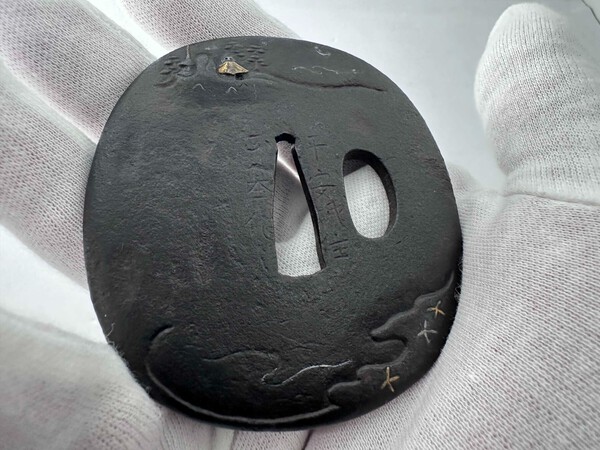
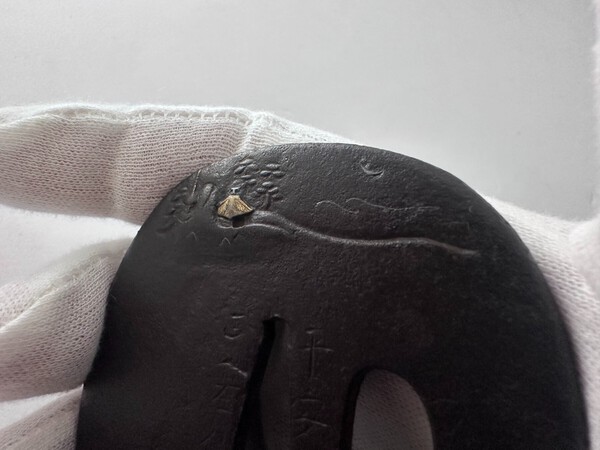
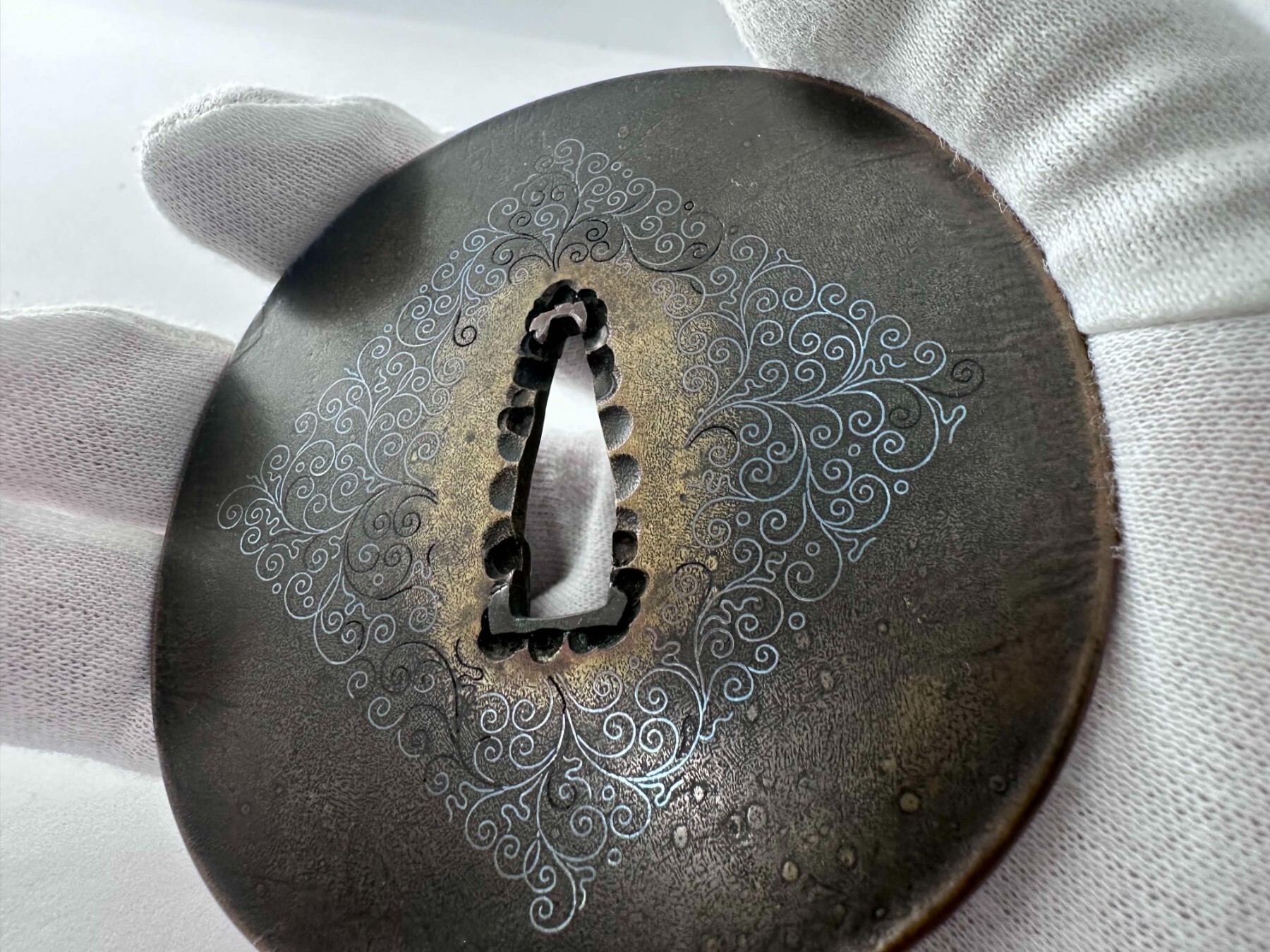
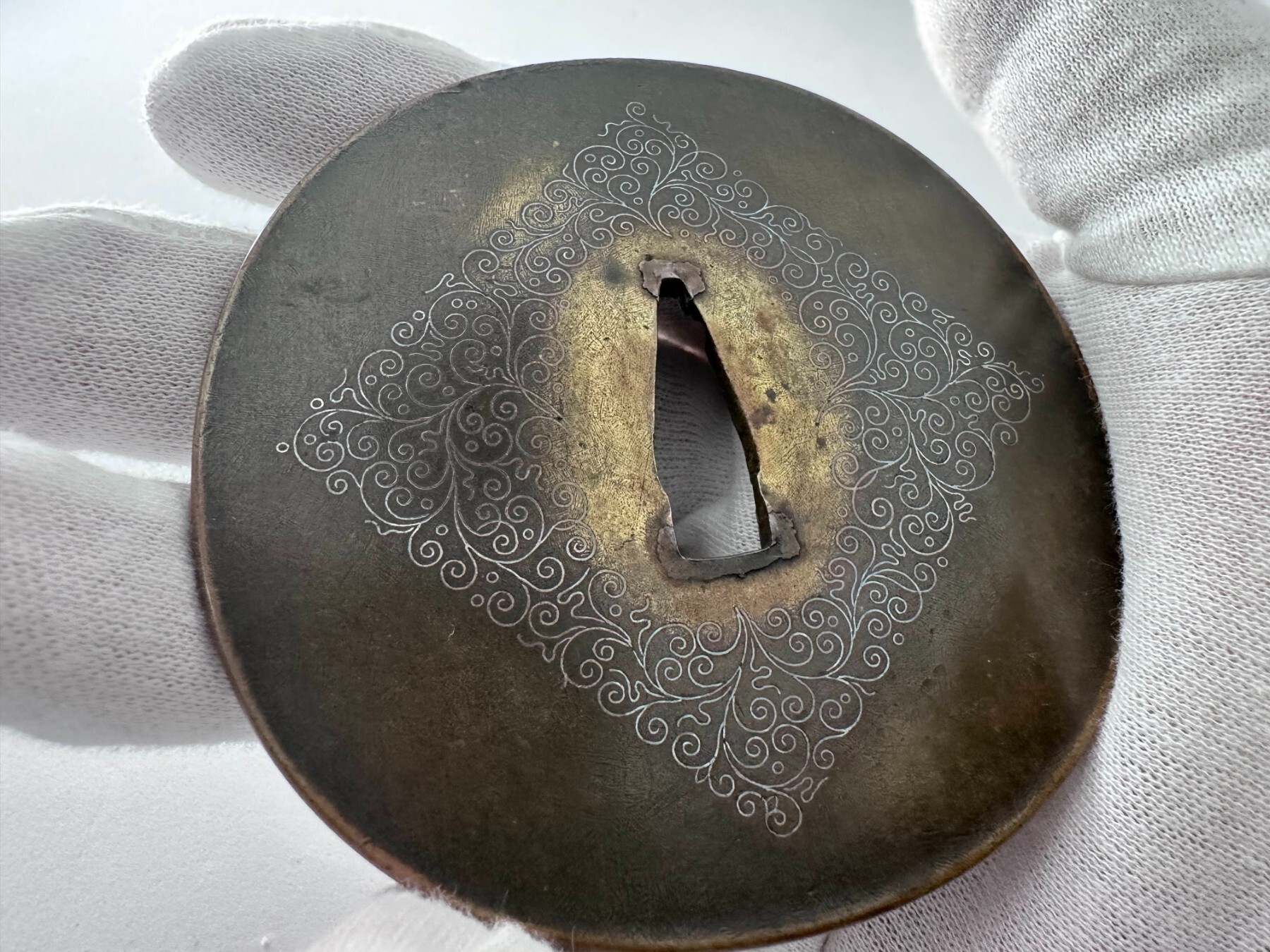
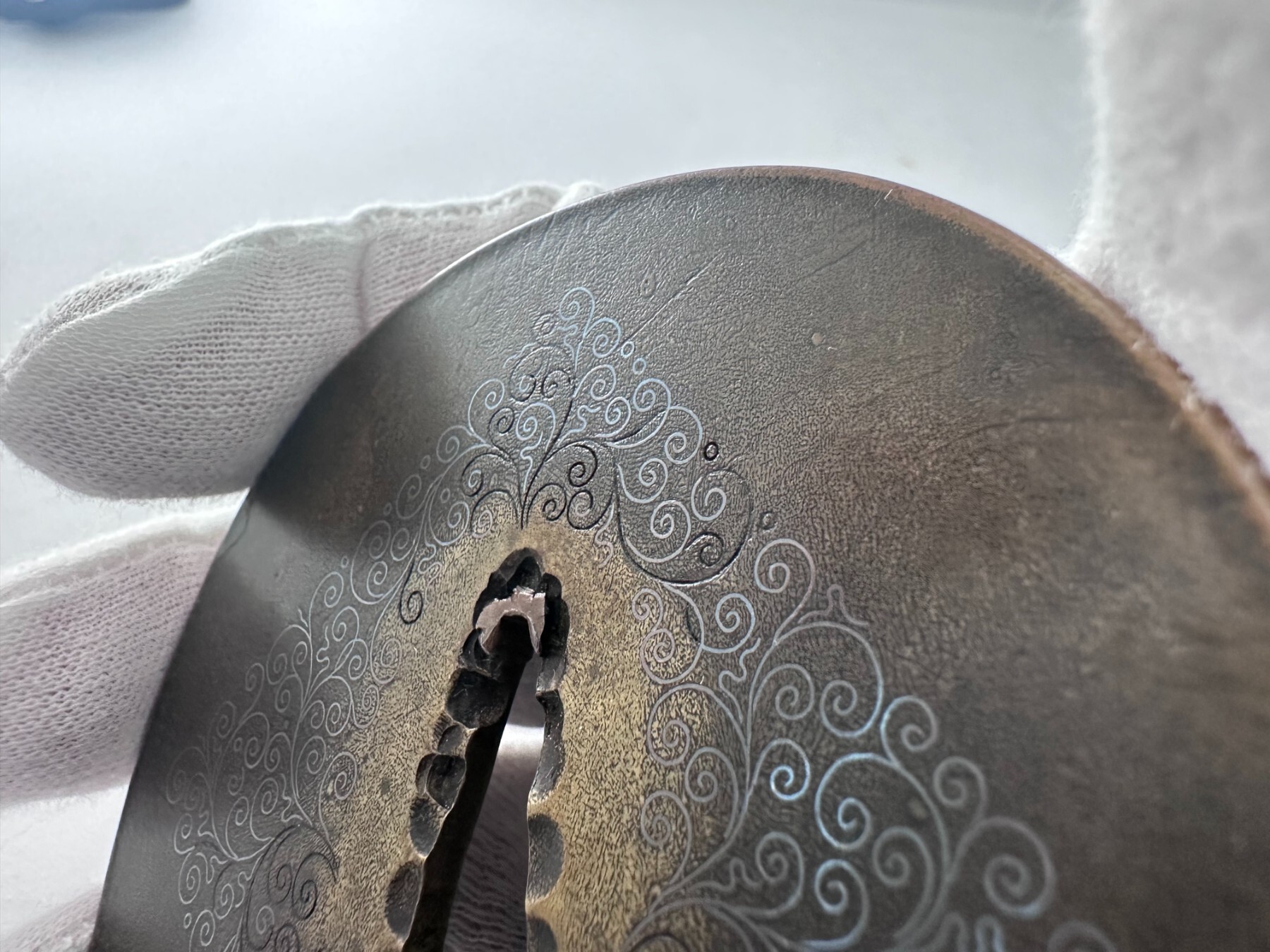
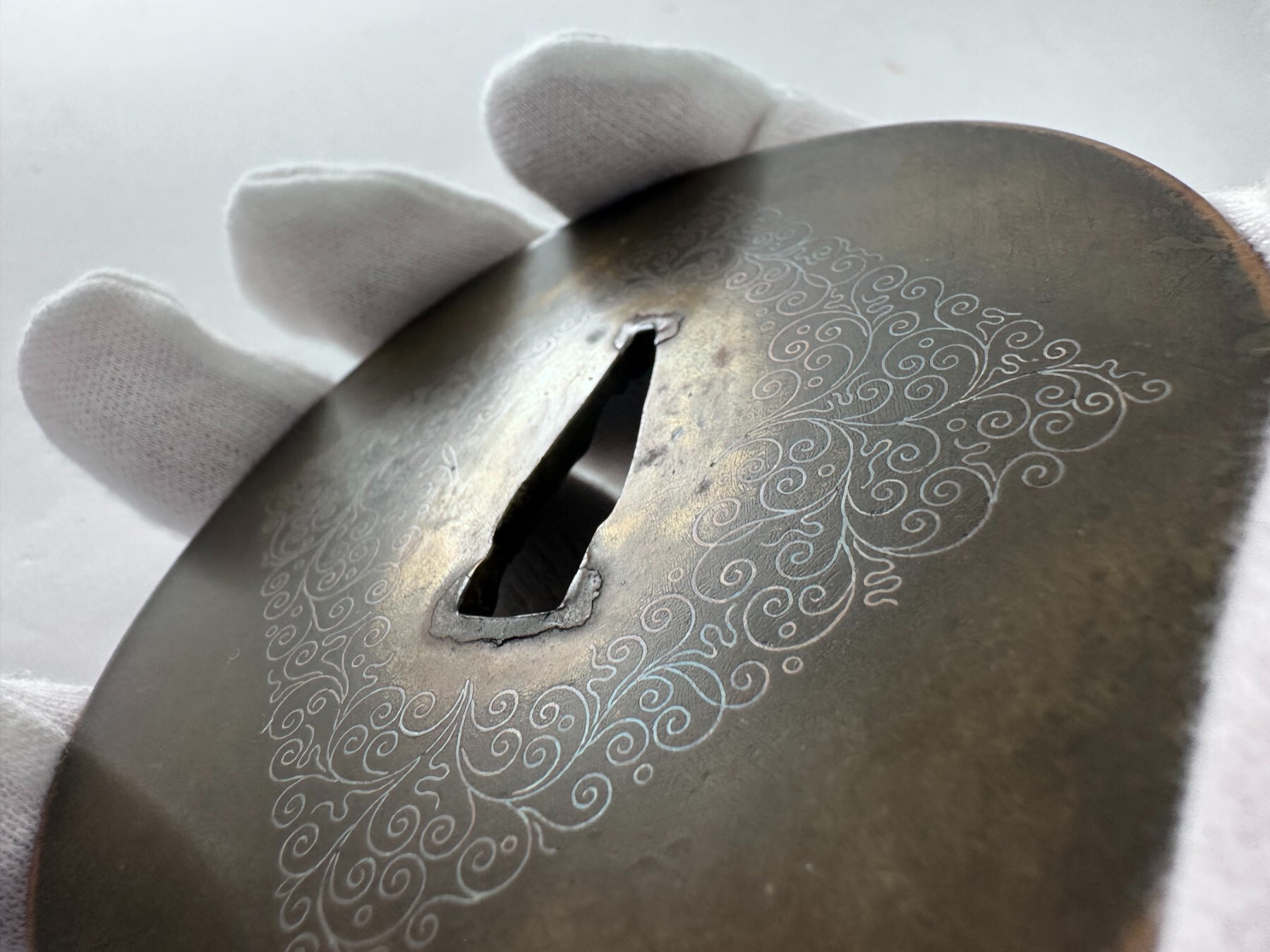
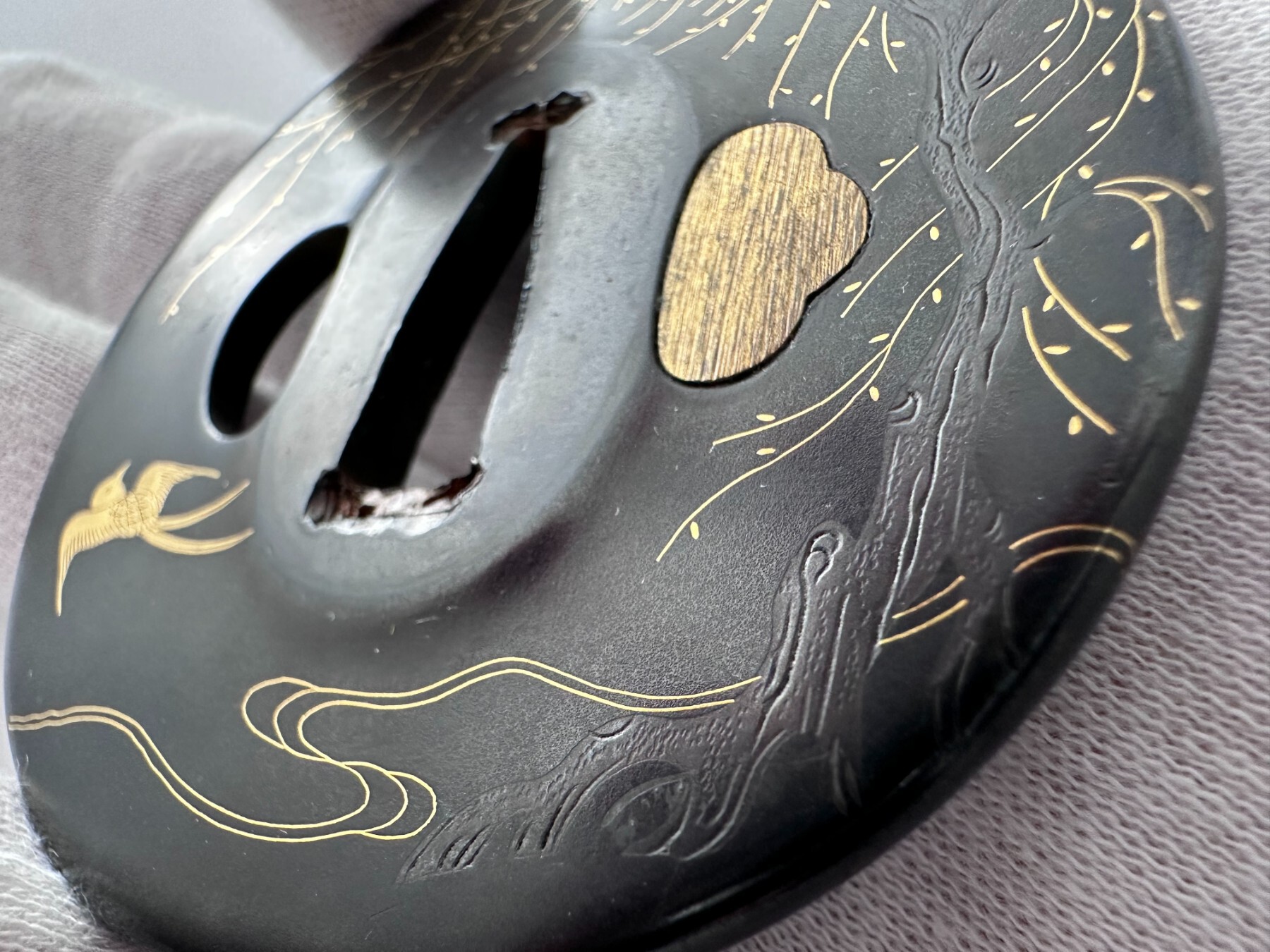
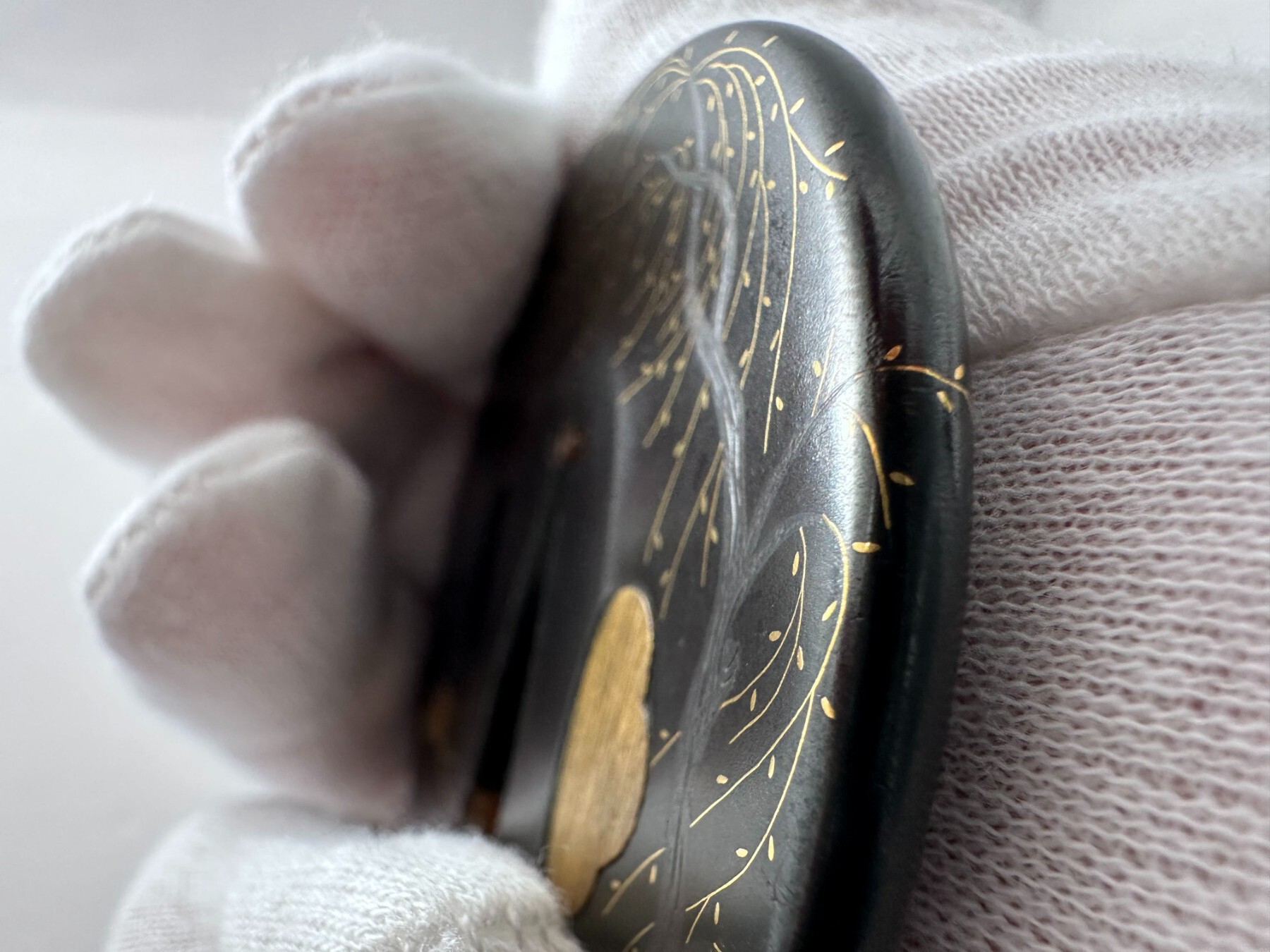
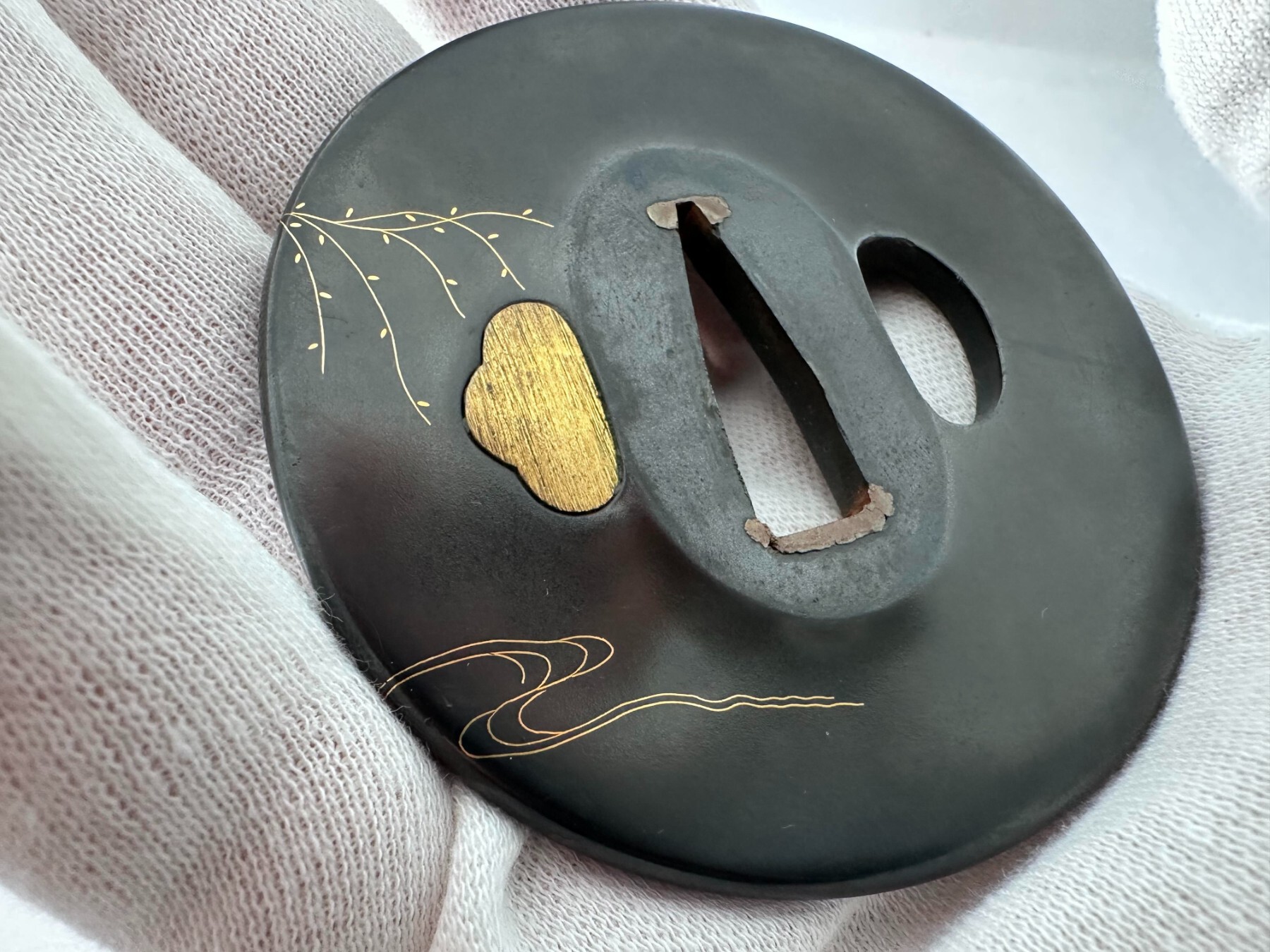
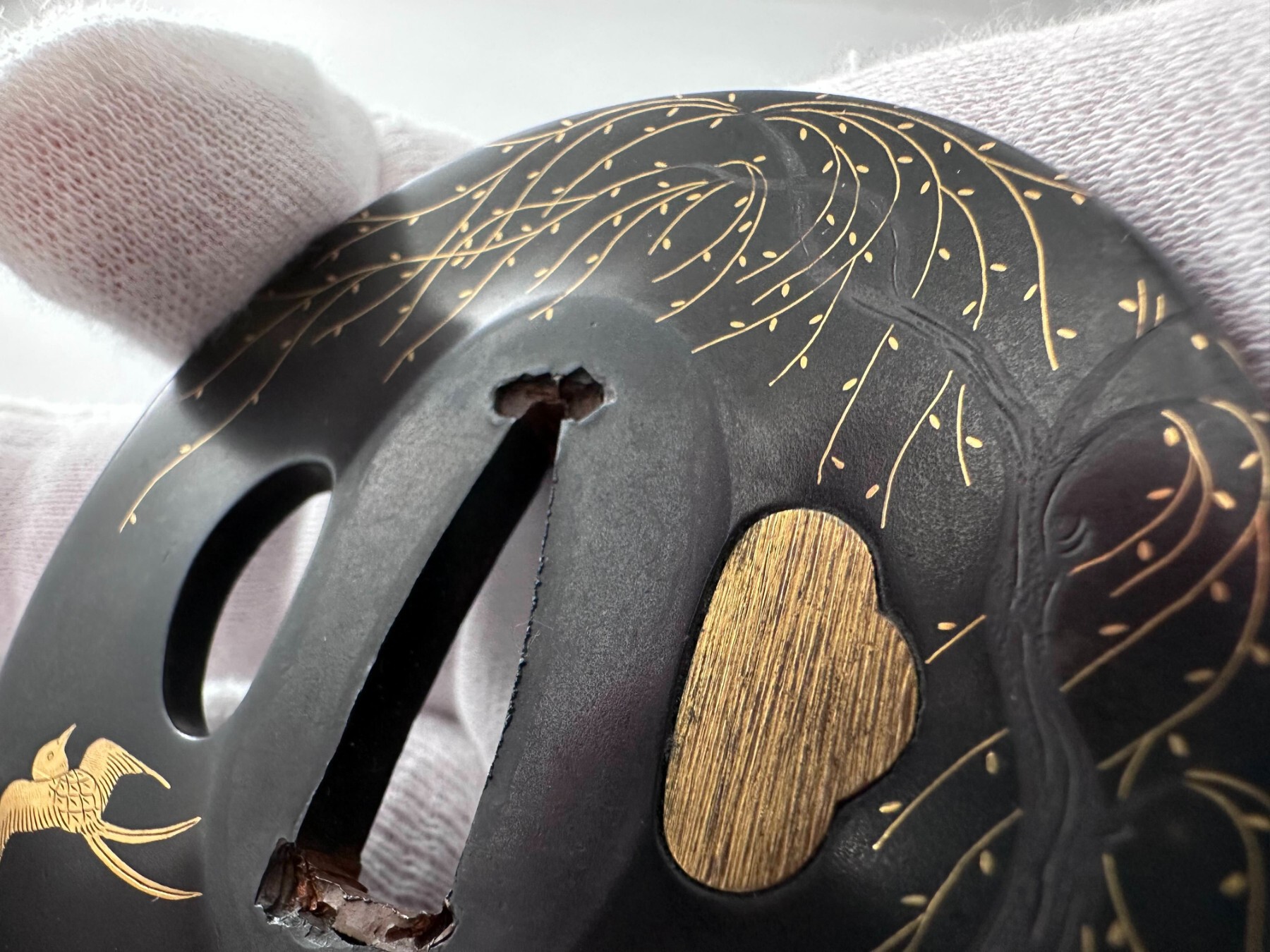
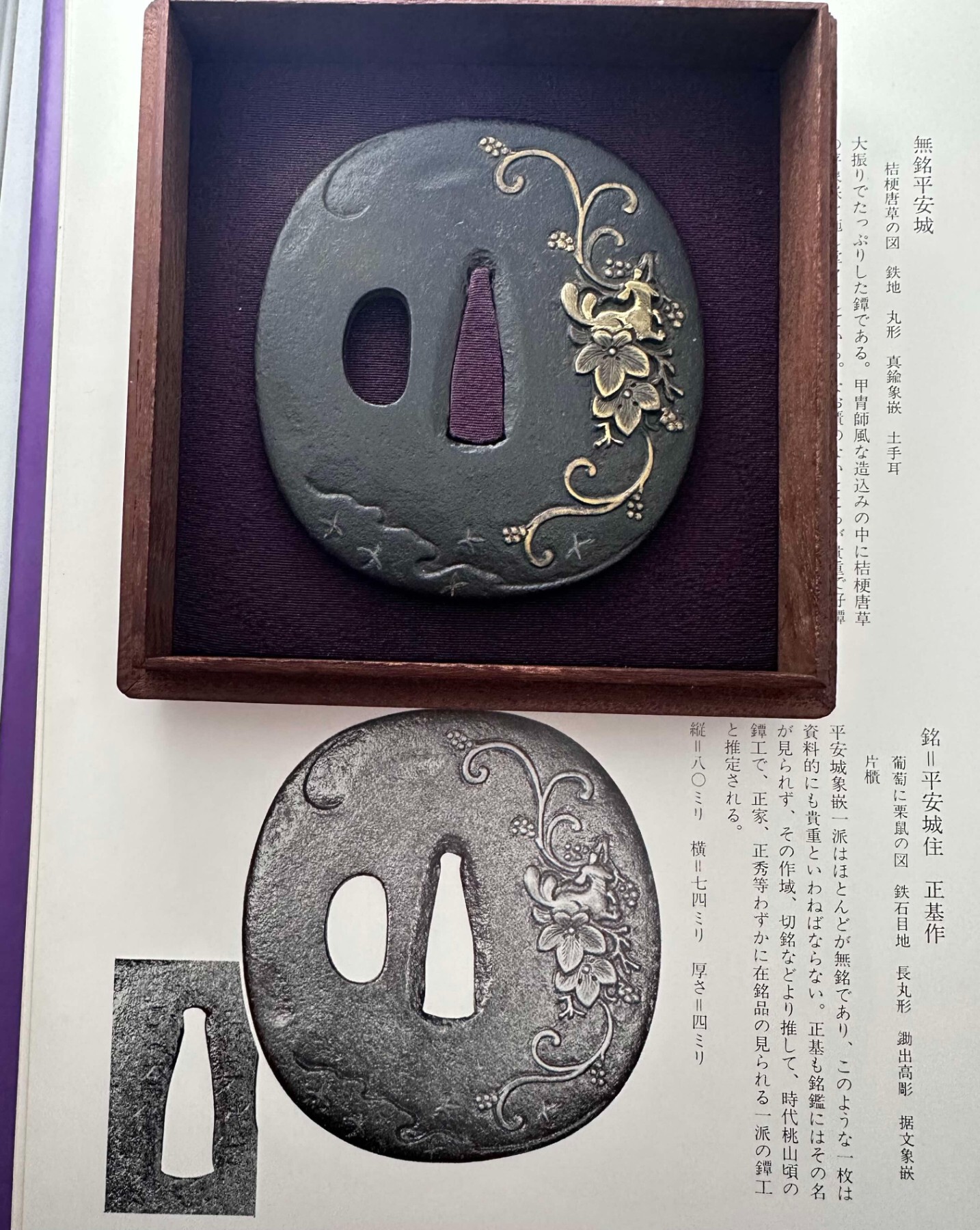
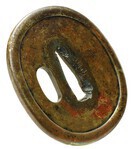
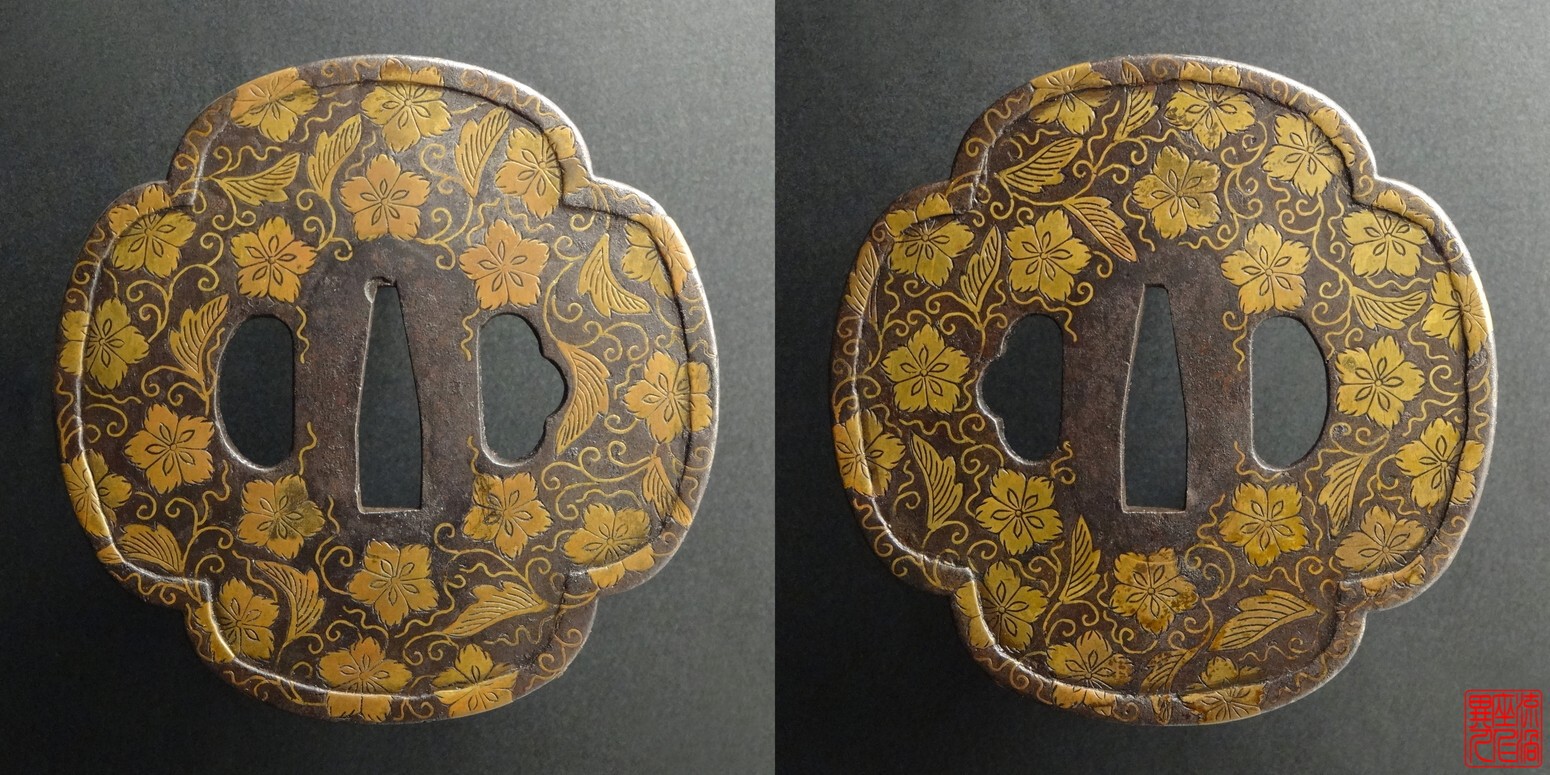
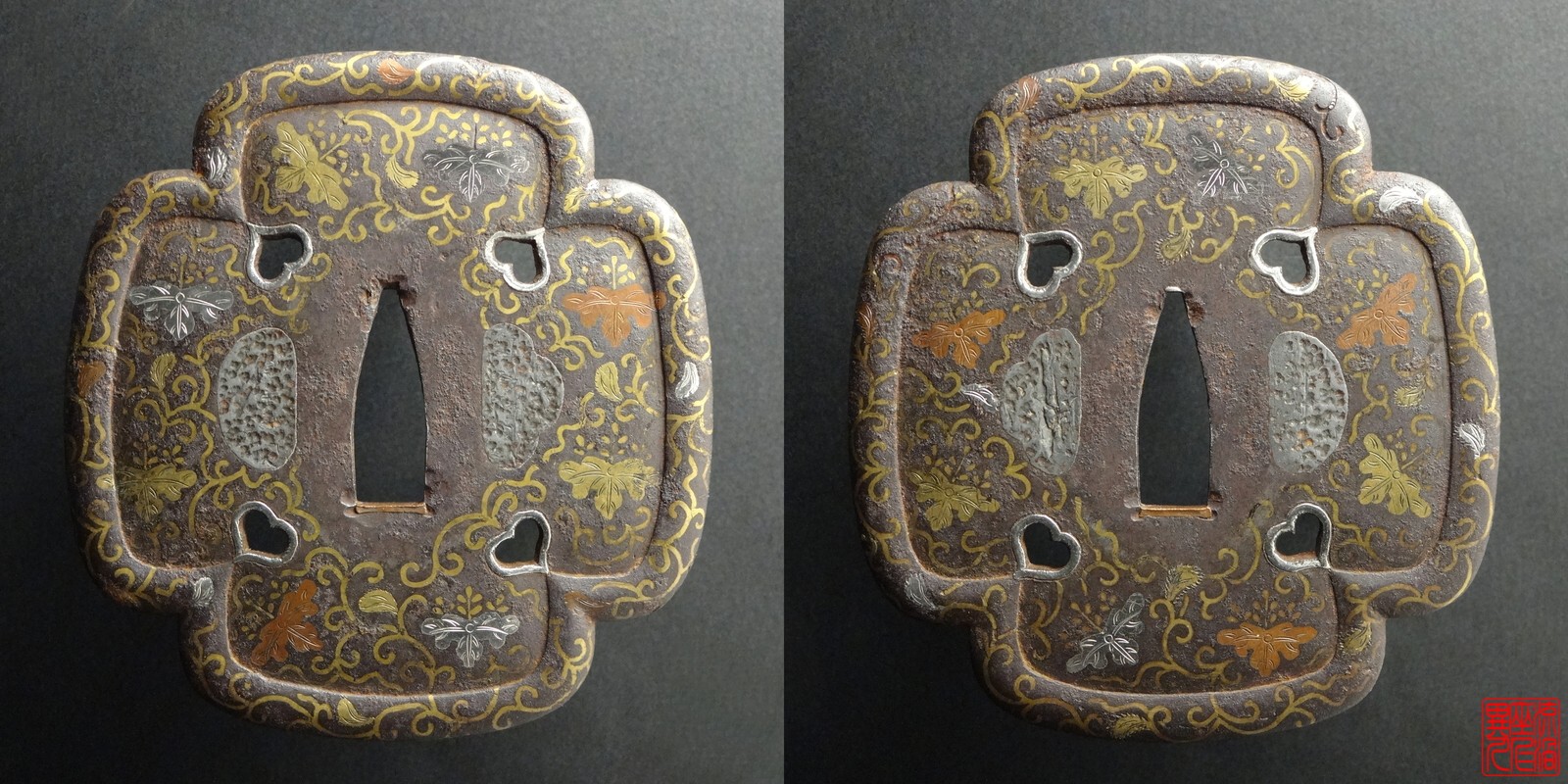
Hi all, I would like to share three tsuba that recently joined my collection: an Umetada tsuba with karakusa design (perhaps Momoyama?), a Kaga piece, and a Momoyama Heianjo. Each has a different taste and gives a slightly different feeling. Any thoughts or observations are very welcome.





 5 points
 -
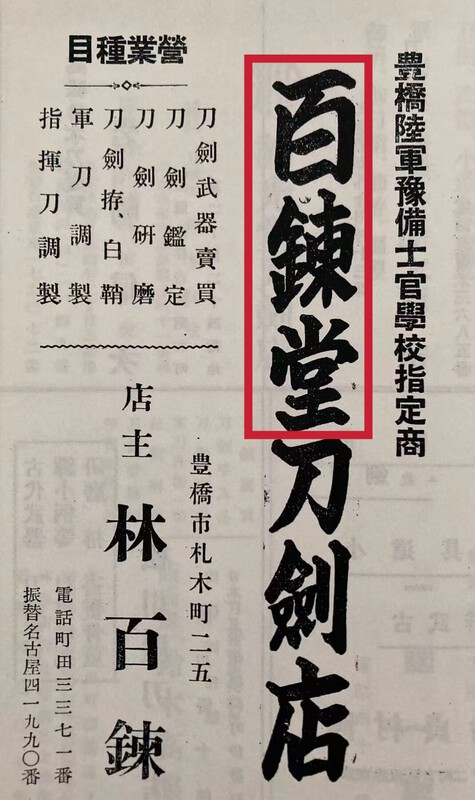
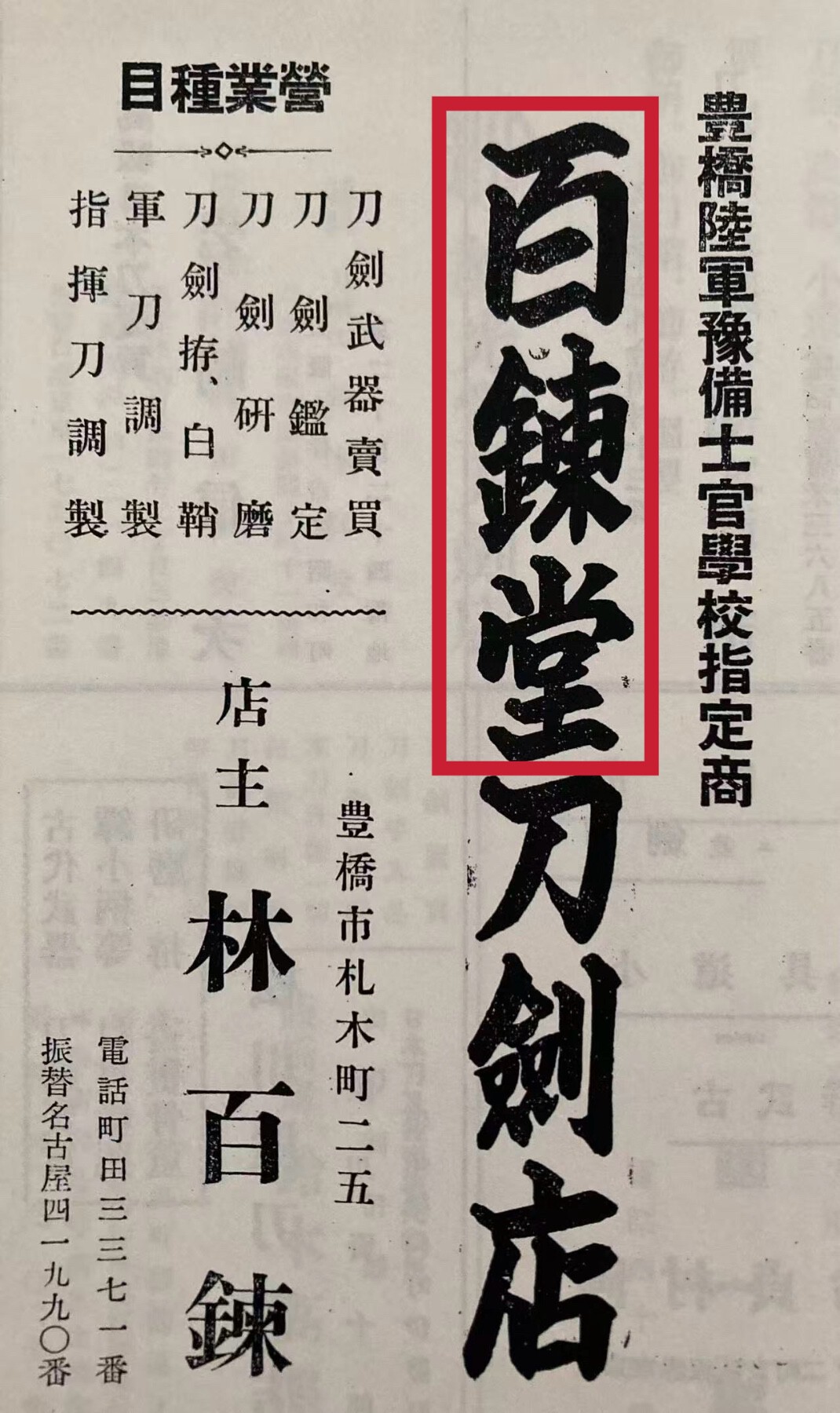
高橋兼行 (Takahashi Kaneyuki ). The hot stamp百鍊(Hyakuren/Hundred-Fold Forged)belonged to 百鍊堂刀劍店 (Hyakuren-dō Tōkenten). This shop was a designated supplier for 豐橋陸軍預備士官學校 ( Toyohashi Army Reserve Officer School).
 4 points
 -
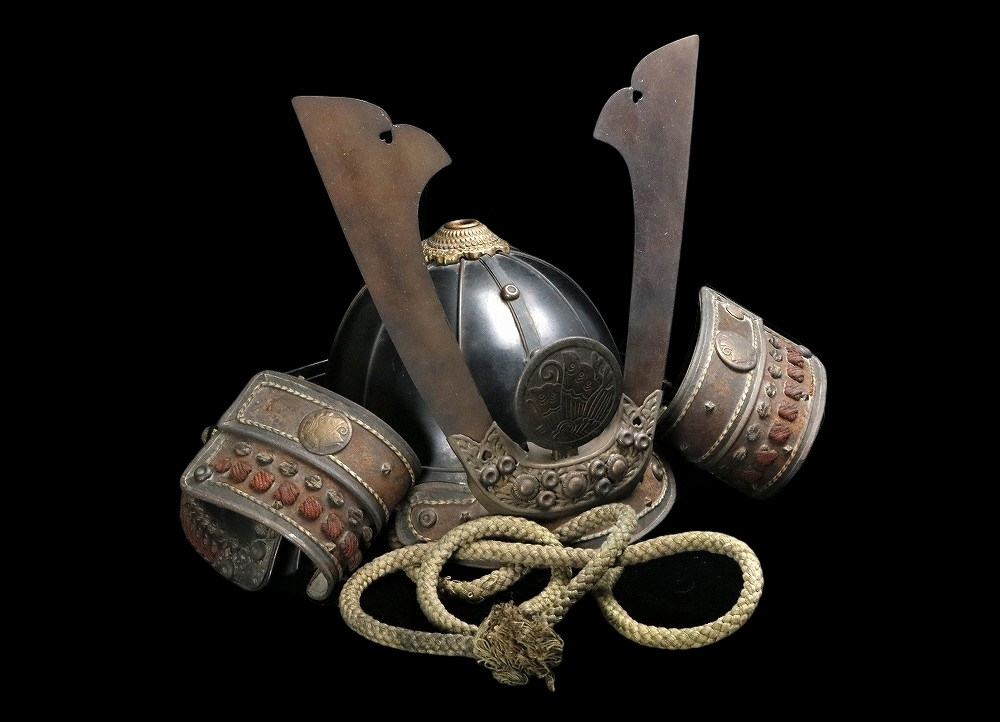
Yes, there was a splendid oyoroi, dated 14 th century. This was an edo high end copy, or less likely a late muromachi armor What we see on this picture is a Joshu koboshi kabuto, made around 1570, not early 1300.4 points
-
Certainly not! A Joshu (or Soshu) koboshi kabuto dates from the late 1500, not the early 1300. This is elementary knowledge.4 points
-
Excellent production values, descriptions and offers a good appreciation of the multitude of steps needed to create these blades. Enjoy4 points
-
The second most expensive sword I have found so far; the Kokuho Bungo Yukihira which was sold at the Nakayama Takamaro Estate Auction in 1919 to Hosokawa Moritatsu (first president of the NBTHK) for 21,000 yen or $8,610 USD in the day. Today that would be the equivalent of $8,610,000.4 points
-
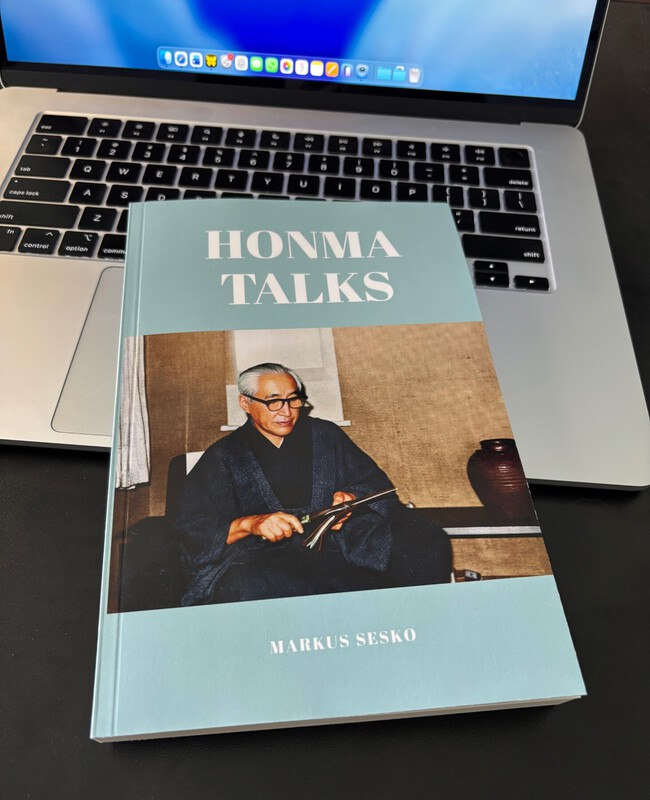
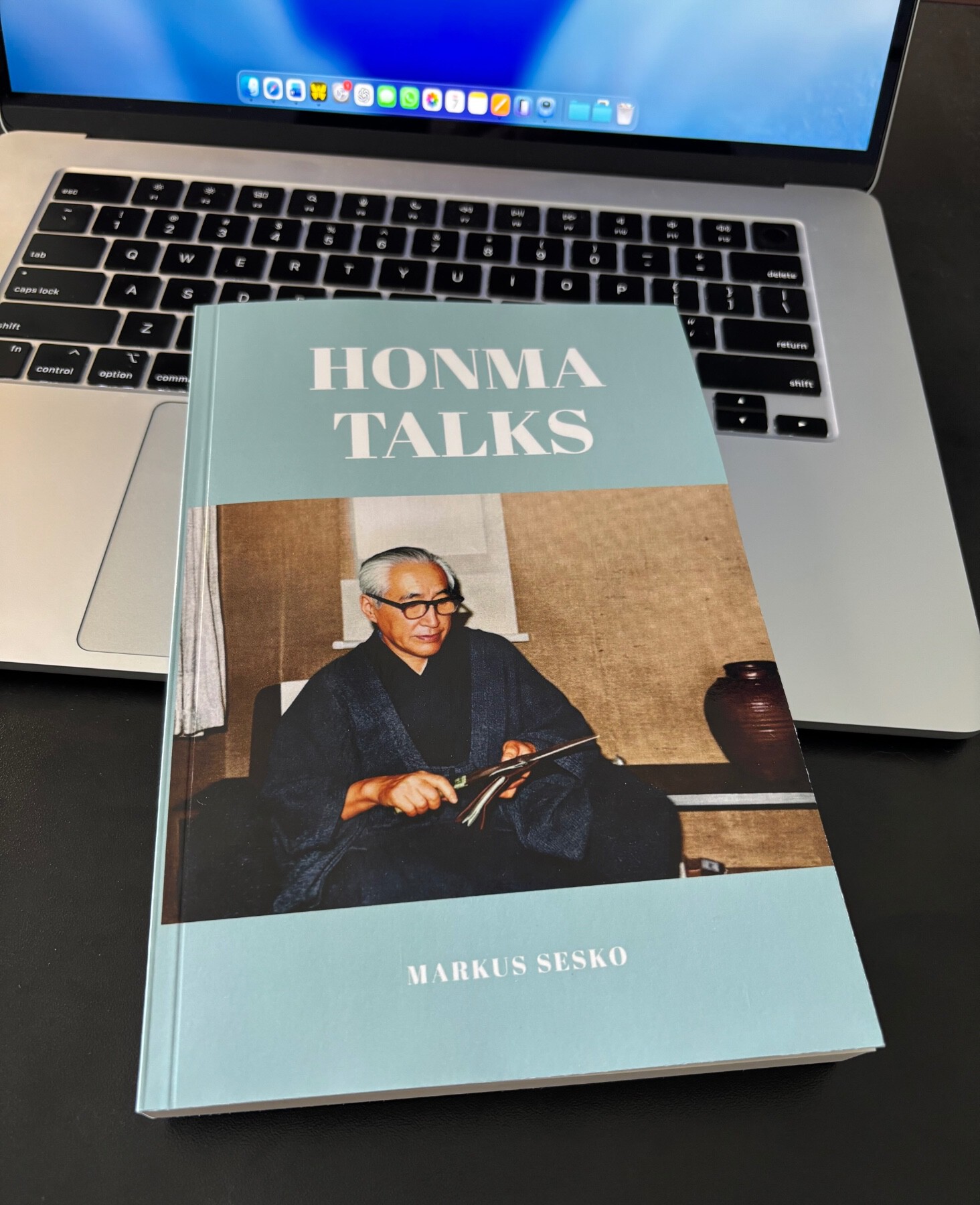
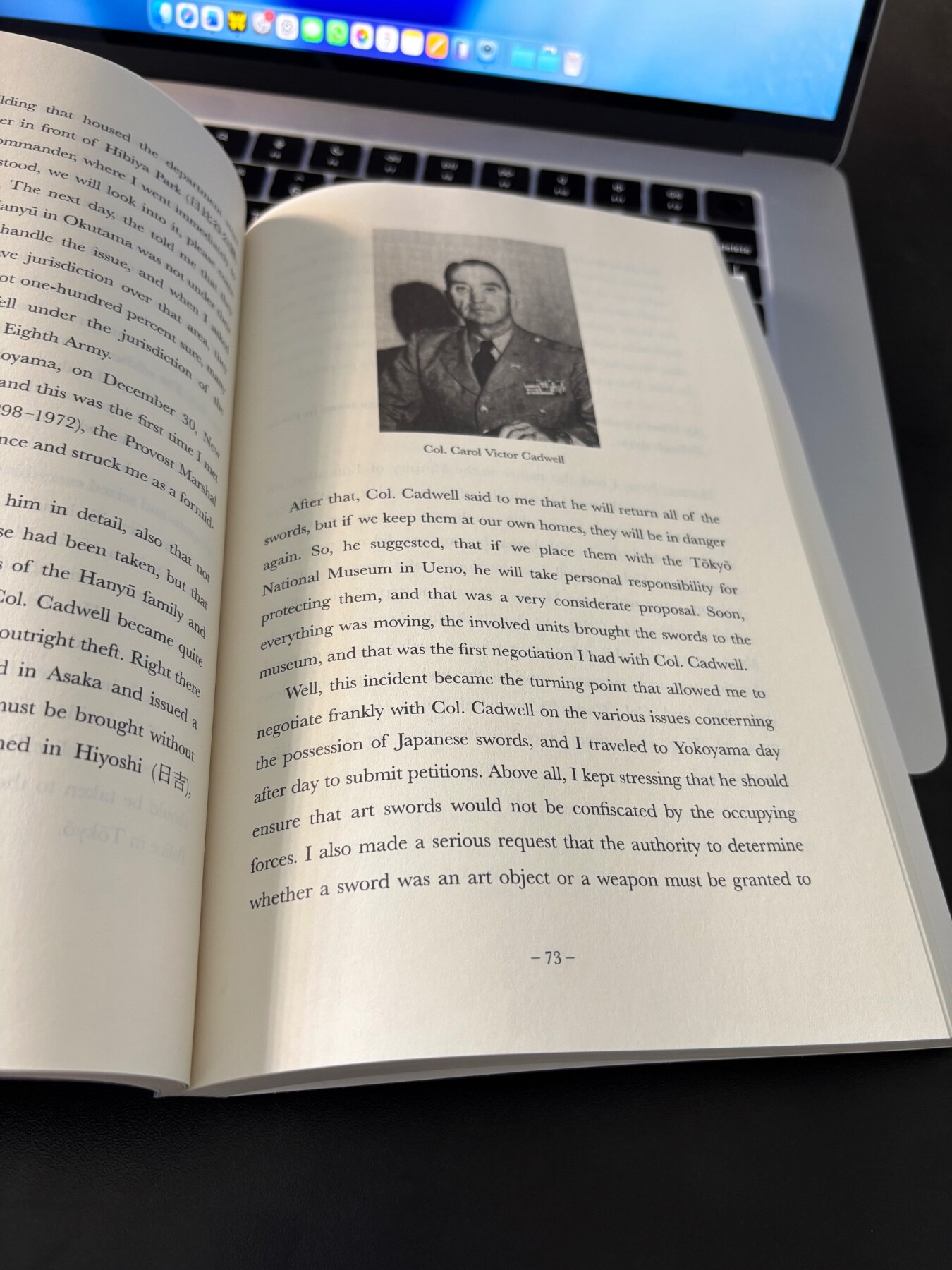
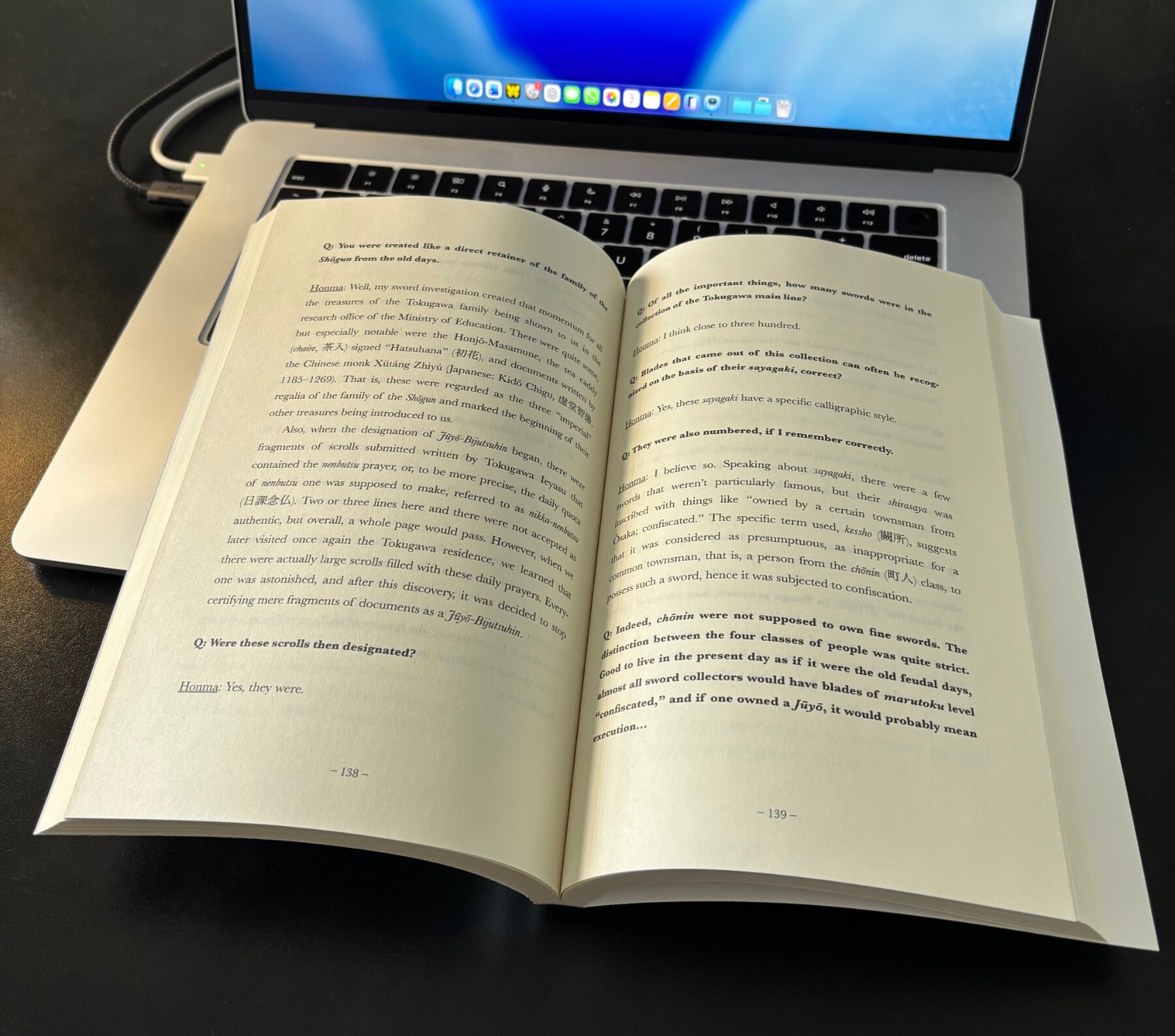
Before we start, I am not sure if this belongs here or to the Online Sellers or Dealer Showcase subs, so mods, please move if necessary. Just wanted to let you all know that whilst Volume 4 of the Tosogu Classroom is being prepared for being published later this week (yes, its done, just final layout and indexing), I have put together a humble read about Honma 'Kunzan' Junji talking about the Japanese sword world of the early 20th century and right after WWII. It is not so much about blades, but gives an interesting insight into what happened "behind the scenes" at that time, often not mentioned in other publications. Please enjoy, and reach out to me via email or DM if you have any question. https://www.lulu.com/shop/markus-sesko/honma-talks/paperback/product-dy85nwq.html?q=honma&page=1&pageSize=4

 3 points
 -
於江府雲州高橋信秀作 - Oite efu Unshu Takahashi Nobuhide Saku 文久三年二月吉日 - Bunkyu sannen nigatsu kichijitsu3 points
-
Hi Milo, Welcome to the forum. 和泉守藤原国貞作 - Izumi (no) kami Fujiwara Kunisada. It's a big name and often faked. You might get some better information if you are able to post some pictures of the blade as people will be able to see the signature in the context of the workmanship. Some more information here: https://www.nihontocraft.com/Izumi_no_Kami_Kunisada_mei.html3 points
-
There are a number of photos of Meito on sho-shin.com that are noted as being gifted to Emperor Meiji, a few of those mentioned above show up if doing a site search. Chogi Haito Sword of Emperor Meiji Chogi Nagasa: 71cm Sori: 2.3cm Standing Itame Hada with JiNie, Chikei and standing Utsuri. Bo-Hi and Sobi run the length. Gunome-Midare ba moves inside a Notare line. There is Ashi and Yo and Kinsuji through the Mid. Yakiba widens in the Monouchi. Boshi is deeply set O-Gunome Midare mound turns to an abrupt Kaeri. Suriage Nakago has two Mekugi-ana and Bo-Hi resolves in Marudome. Signed in the Ji at the bottom: Bizen-no-Kuni Osafune Ju Nagayoshi (Chogi)3 points
-
Signed Izu no Kuni ju Sadayoshi saku kore (no date) but with a very fine carving of a ken attesting to his background in the Gassan tradition...
 3 points
 -
This is wonderful and quite profound, Jan. The phrase is what we call a "capping phrase," which is employed by a master to challenge the student in the coarse of koan training. In the Zen context 學人 (Xueren) means a student or practitioner who seeks enlightenment; it is a common way for monks to refer to themselves when asking a master a question. Similarly, 轉身處 (Zhuanshen Chu) is literally a "place of turning the body," but is a crucial Zen concept referring to the point of spiritual transformation or turning point. It is the metaphorical place where a practitioner "turns around" from delusion to enlightenment, or the pivot point in a koan where one must make a leap in understanding. 會麼 (Hui Me) is a common Ch'an expression meaning "Do you understand?" or "Can you grasp it?" Putting it all together, the master intones: 學人轉身處. 會麼口取 "Here is the point where you must turn from ignorance to enlightenment. Do you understand? Now, express that understanding directly, right now!" Ch'an master Dayi, when asked "What is the student's place of turning?" he replied, "In the streets and alleys" (meaning it is everywhere, in everyday life). Right here. Right now. The master is not asking for a philosophical explanation of what "turning" means. Instead, the master is pointing to the present moment and demanding that the student manifest their enlightenment through a word, an action, or a gesture. The "mouth" (口) can be the instrument for that immediate, living expression of truth. However, the moment of breaking through a koan is an experience that occurs before language is formed. It is in fact ineffable. An idea about enlightenment is not enlightenment. Maybe this capping phrase is intended to specifically instruct on how to approach Joshu's Mu koan (無 no, nothing, not one thing), the famous and notoriously difficult-to-penetrate Case #1 of the Mumonkon (The Gateless Gate) koan collection: A monk once Master Joshu, "Has a dog the Buddha Nature or not?" Joshu said "Mu!" When a student responds, the master will know it is a breakthrough if it embodies a deep, personal, and immediate experience that is ultimately transformative. A teacher may ask if what the student has experienced has changed some other aspects of his life. This is because enlightenment is expressed through action (i.e. it is inacted). Does it enhance your capacity for compassion towards family, friends, co-workers, the dog, or the environment? Is your relationship to the world fundamentally altered?3 points
-
Hi BP. First a forum technical note. If you actually go by "BP", then never mind, but if that's not what you go by, please go to your profile page and add a first name. It's NMB policy and we all like to talk to real people. Thanks! So, for decades the collecting community have held the all-brown tassel to be a late-war army tassel (Navy is all brown, but it's a richer, darker color and of course found on kaigunto). Even the reference books call it that. However, a couple years ago, a respected researcher found the 1943 Uniform Regulation Change that spoke of the brown tassel and said that it was assigned to the Gunzoku. I asked Nick if the wording would have allowed that the tassel was already in use by the army, but was now also assigned to Gunzoku. Nick answered that due to the wording, it would have been specific to just the Gunzoku. That's all I can say. If you would like to read his discussion, see this: The All Brown Army Tassel - Nick Komiya3 points
-
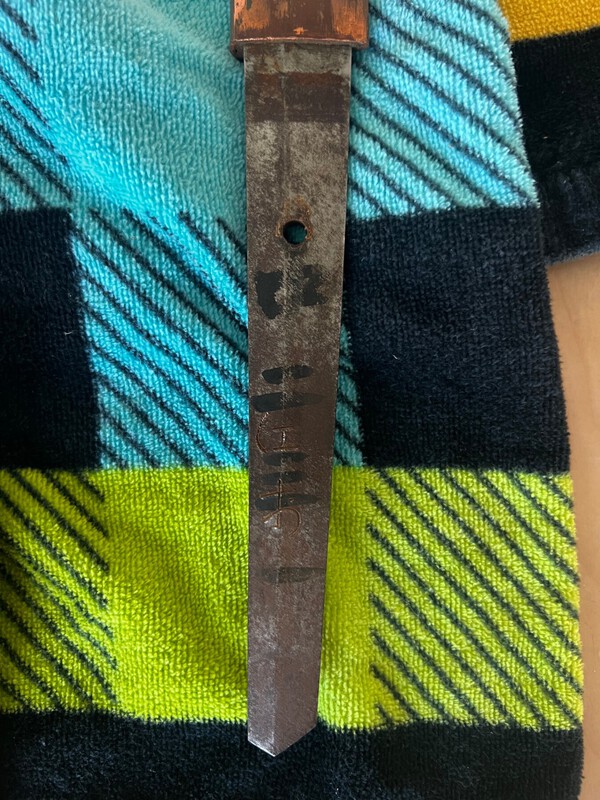
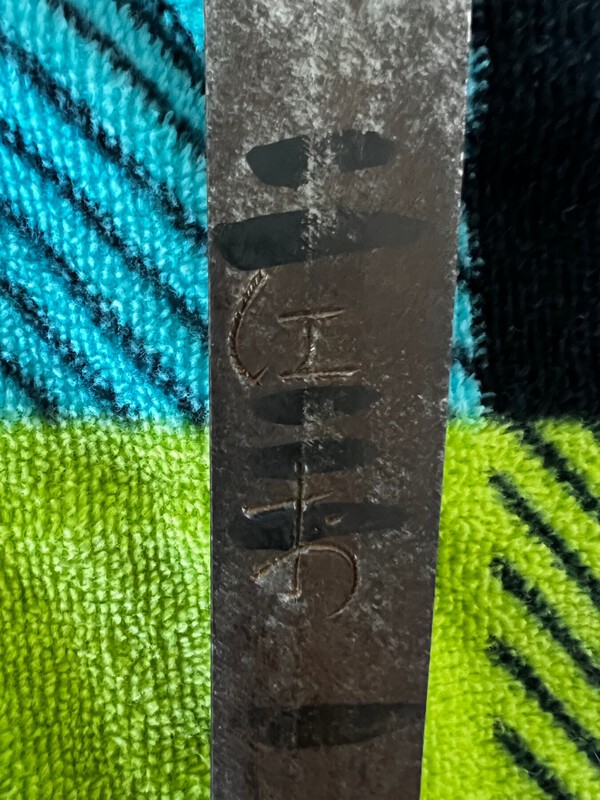
I was looking at a bring back sword in type 98 fittings for a friend today and helped him get it apart and was very pleased to find an Emura signed blade underneath. The books and references I’ve seen posted all have his longer mei references or “Emura Saku” but I haven’t seen many references to just a 2-character mei except for a small handful of posts here. Someone said that blades signed just “Emura” might be made by Emura himself and not one of his prisoner swordsmith apprentices? Any confirmation on that? The blade is in rough polish and the monouchi area has nicks and chips in the ha but it is stout enough that I think the owner might look at a polish for sentimental reasons. I was pleased to still see a pretty bright suguha based hamon with lots of nice small activity throughout even through the old polish. The saya is the most damaged part of the package and is missing a lot of parts and probably needs a restoration or just a new saya to complete the set. The other fittings are all stamped 231 and match the paint marks on the nakago which was good to see.
 2 points
 -
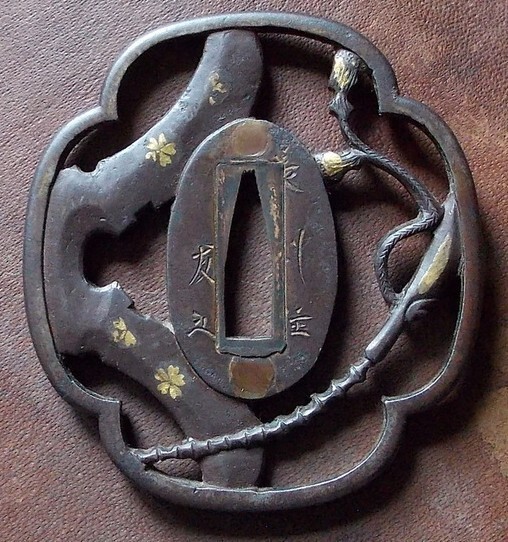
The photo is not well focused, and a dark background would be better, but it looks like CHOSHU no JU TOMOYUKI
 2 points
 -
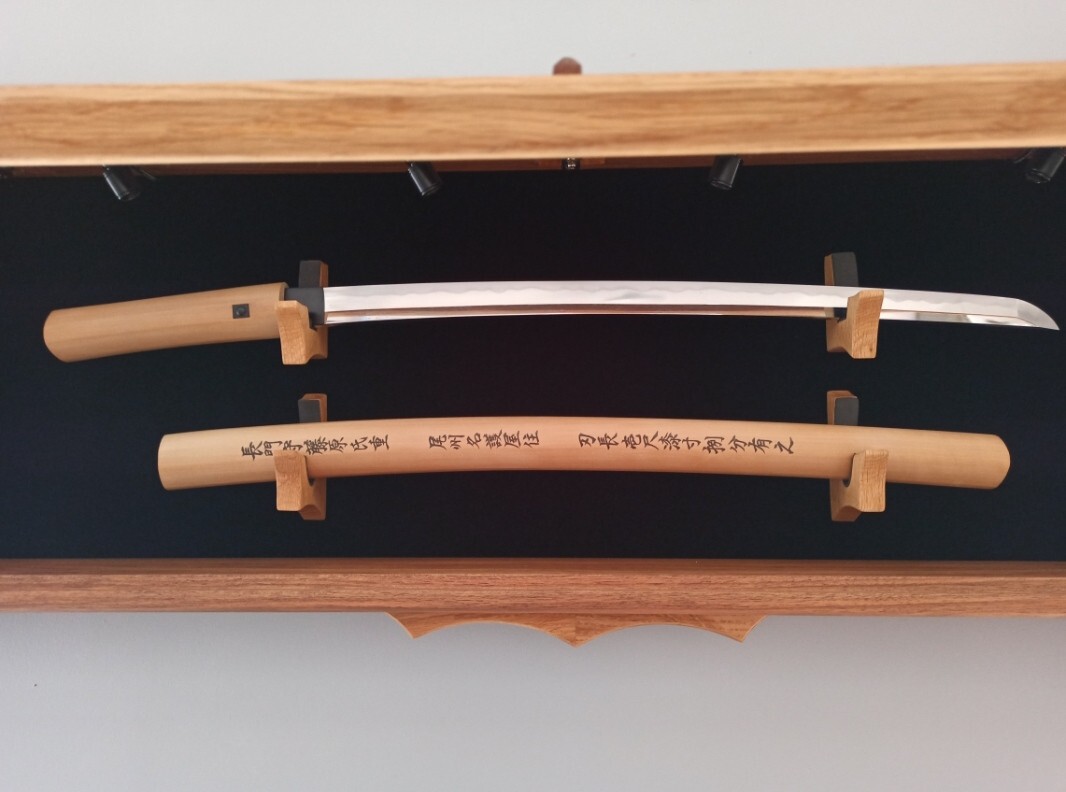
Here is my little display setup. Pretty simple but does the job. I got these display cases for free from my work place, which is pretty nice. I don't really like that white background though, so I need to do something about it at some point.
 2 points
 -
Not bad for a repro! It’s easy with the sode. You only have to make sure that the kōgai kanamono (ornamental plate at the back center) actually pointing backwards. The only problem is that you have ō-sode attached, so you can’t fasten the cord/ cords on the back of the dō because the agemaki no kan is missing (a device on the upper back of the dō).2 points
-
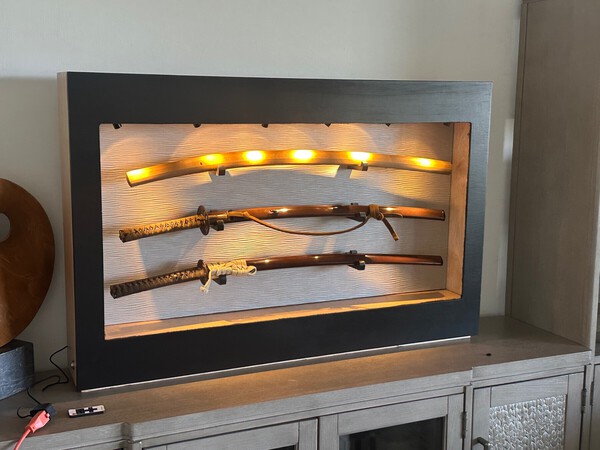
This is my display case, I’m still finishing it and need to hang it on the wall. It is almost hermetic, and has an hygrometer and a silica gel compartment to control humidity.
 2 points
 -
海軍燃料廠 – Navy fuel factory 製油員 – Refinery operator 里村清吉 – Satomura Seikichi 第三蒸溜工場 – The 3rd distillery2 points
-
Looking for a solid iron tessen, i.e. non folding. I know they are pretty obscure and don’t pop up too often, but figured there might me some lurking out there. Only stipulation is that it needs to be in the US since I refuse to participate in this tariff nonsense. Thanks1 point
-
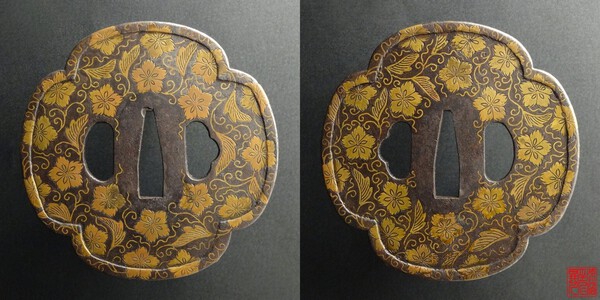
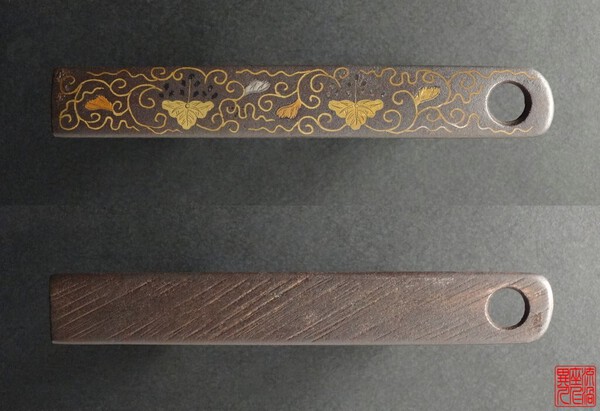
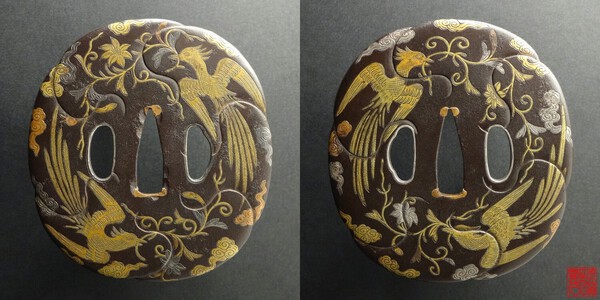
Having a particular fondness for brass-inlaid tsuba, I eventually added several pieces from the Washida school of fittings makers to my collection. This sparked my interest in learning more about the school and its production. Over time I gathered a fair amount of information and eventually decided to compile it into a single document, which you can find in the download section of the board: https://www.militaria.co.za/nmb/files/file/210-the-shōnai-washida-school/ I hope you enjoy reading it as much as I enjoyed putting it together. As I mentioned, given my particular weakness for brass inlay, the document is somewhat biased toward the work of Washida Mitsunaka! Just as an example of the Washida production here are the pieces from this school (or supposed to be from this school) in my collection: NBTHK Hozon to Washida. Dimensions 85.4 mm x 85.3 mm, thickness 3.9 at seppa dai, 4.2 at mimi. NBTHK Hozon to Washida. Dimensions 85.3mm x 79.2 mm, thickness 3.6 at seppa dai, 4.0 at mimi. Identical to tsuba attributed by NBTHK to Washida. Dimensions 87.2 mm x 82.2 mm, thickness 3.7 at seppa dai, 4.0 at mimi. Signed in kinzogan mei Kyozan Mitsunaka with Kao. Dimensions 87.2 mm x 77.6 mm, thickness 2.6 at seppa dai, 4.2 at mimi. Dimensions 83.5 mm x 78.6 mm, thickness 3.0 at seppa dai, 4.1 at mimi. Dimensions: 96.9 mm x 13.9 mm, thickness 4.7 mm. REgards Luca


 1 point
 -
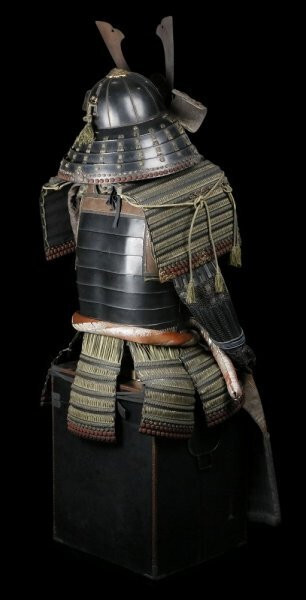
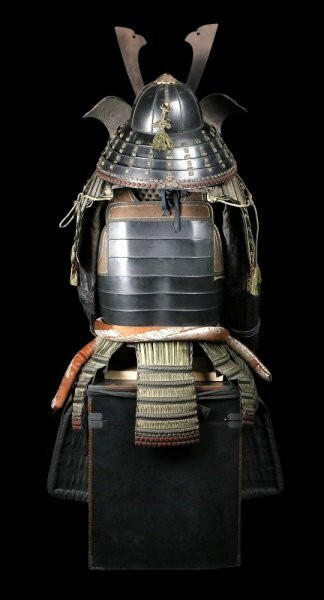
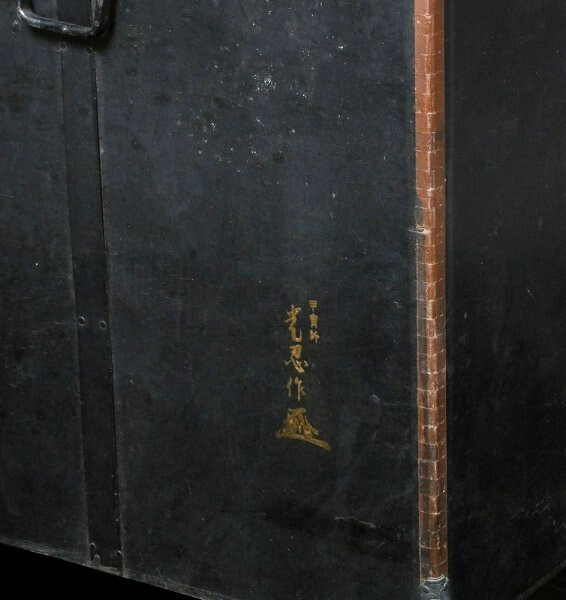
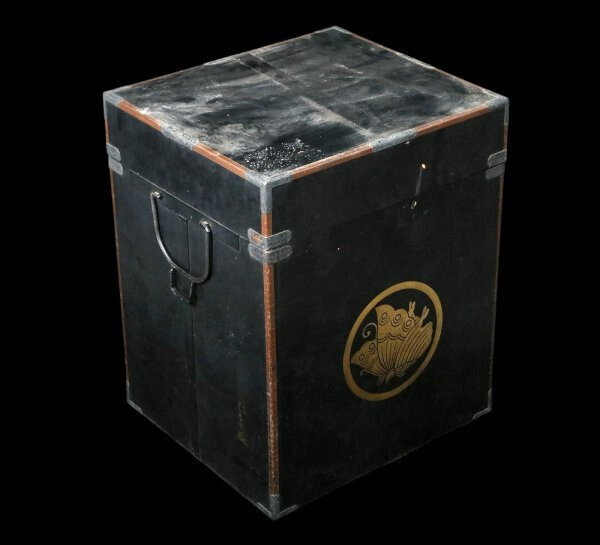
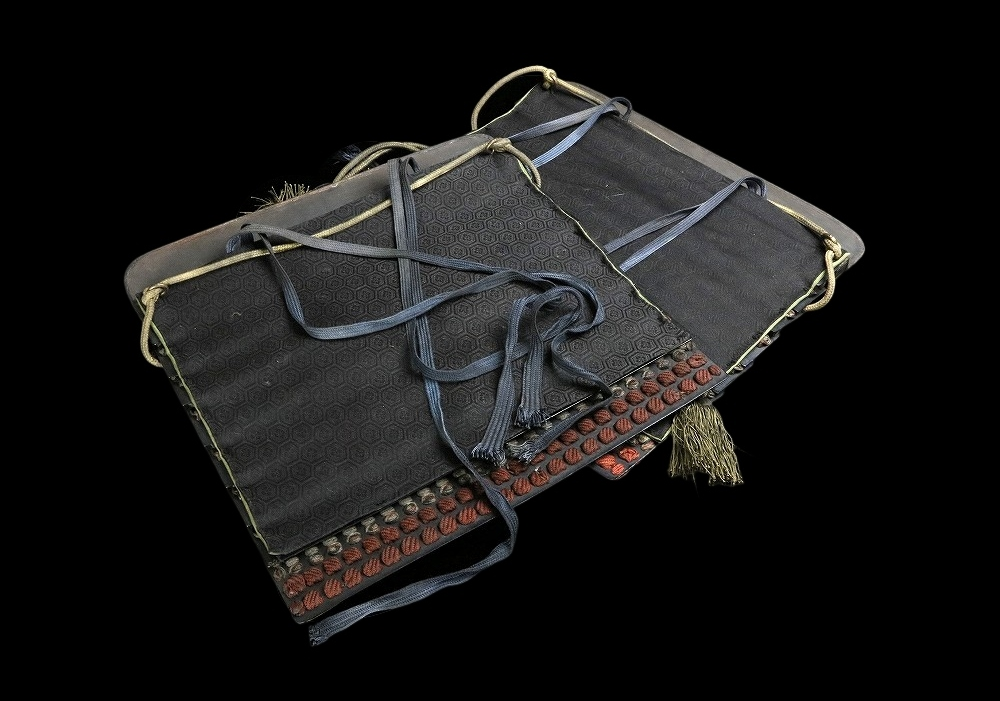
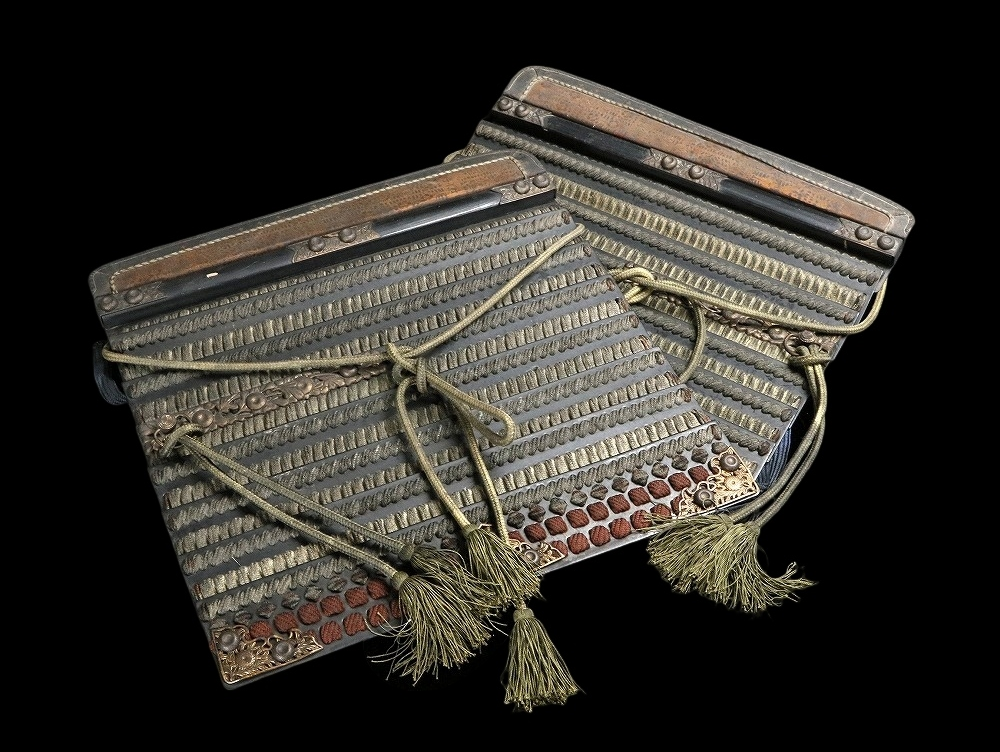
Hopefully it's not taboo to post about repros in this sub, I did see another thread on the main page that was so I figured why not lol. I just bought a full suit of samurai armor that appears to be a modern example of gendai katchū associated with the Marutake / Kōnin workshop tradition. The armor came with documentation describing the workshop history and identifying it as a modern handcrafted suit rather than an antique piece. From what I understand, the Marutake workshop began producing armor in the 1970s under Shinobu Tanoue using the art name Kōnin. This suit seems to fall into that lineage and is likely a relatively recent production, somewhere around 2006/7 I believe. The set appears complete with kabuto, menpō, dō, sode, kote, haidate, suneate, and the yoroi-bitsu storage chest. The chest has a gold inscription and crest on the exterior, which I’m told is typical of modern presentation sets rather than historical armor where signatures were usually hidden. One thing that stood out to me about this workshop, compared to cheaper reproductions, is the materials and construction approach. Marutake armor is generally built using lacquered metal plates, real silk odoshi lacing, and traditional assembly methods rather than the synthetic cords, thin stamped steel, aluminum, or plastic components that are often used in lower-end decorative suits. The fittings and hardware also appear to be properly made rather than cast costume parts, which gives the armor a much more authentic weight and structure. Another interesting aspect of the workshop is that they have produced armor used in Japanese film and television productions. Their work has been used in several historical films and NHK Taiga dramas, including productions such as The Last Samurai and Sekigahara, which I thought was a neat connection between traditional craftsmanship and modern media. Although this example is firmly a collector display piece and not a prop or museum quality recreation. What really drew me to this one was how cohesive the whole suit is, but most especially, the color palette is spot on to my taste. The lacing, lacquer, and fittings all match well and the overall look is very striking when assembled. It has some light handling and storage wear, but overall presents well. I know it won't be everyones taste as the suit is a bit of a mish-mash of periods/armor types for sort of a greatest hits suit of armor. I paid what I think is a good price so I'm happy with it all around. For me, buying a real katchu would divert funds from other collectables, and I'd rather not be the caretaker for fragile textiles that are hundreds of years old. I’ll attach a few photos below showing the armor and some close details (sadly the forum won't let me attach the high-res files). I also purchased an armor display stand. I have the perfect spot in my living room for it right next to my sword display.
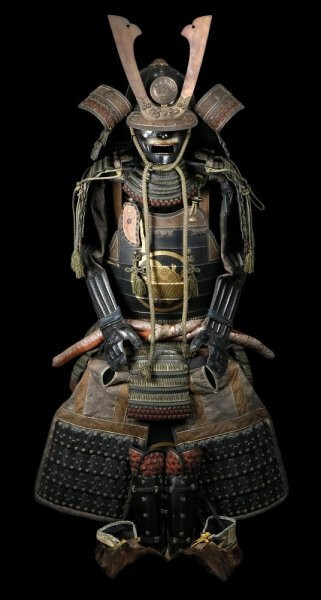
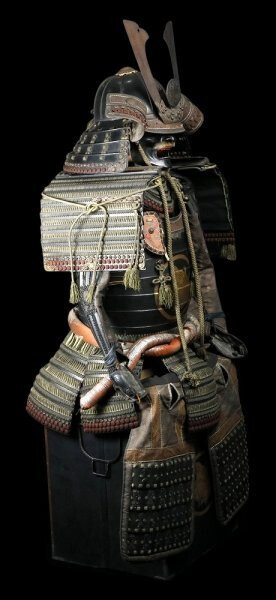
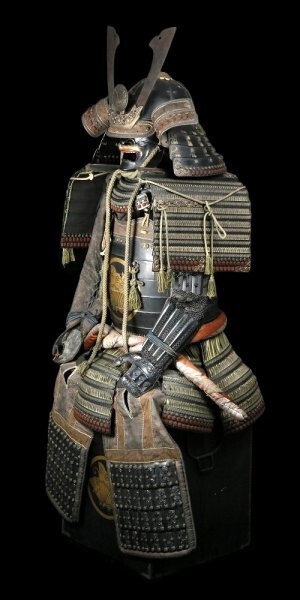

 1 point
 -
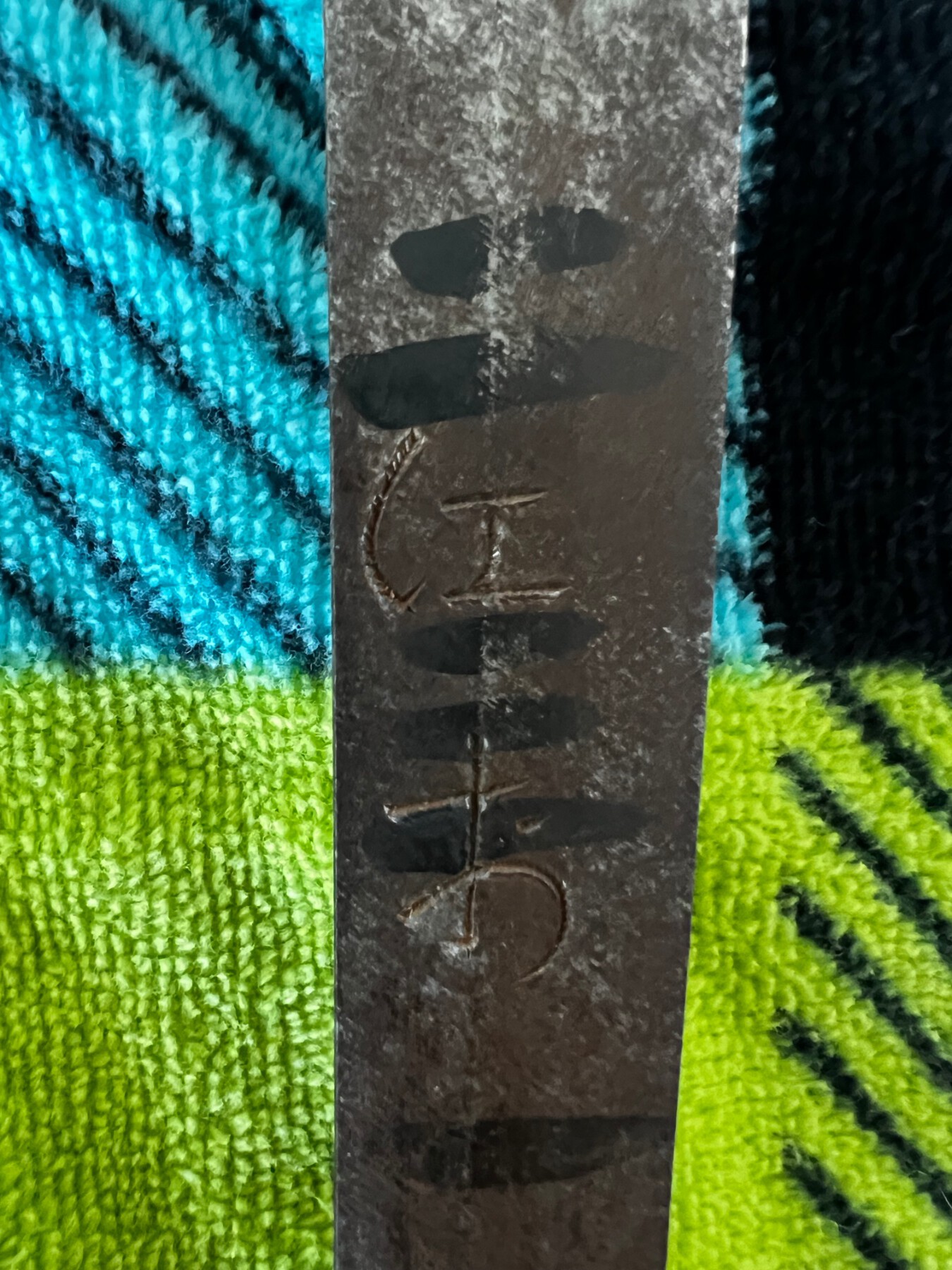
2nd Kanji looks like 聲1 point
-
Steve: The first kanji looks a bit like tsuru, or crane. Are there carved cranes on the piece? John C.1 point
-
the most frustrating part for me was that there were some interesting pieces that must have been signed, but not a word of explanation nor notion of the mei. One helmet, probably a Nobuie, was appartenly dated 152(1?), but no name on the display... about the helmets, there was a momonari kabuto with butterfly maedate that is magnifficent. (Sakura museum)1 point
-
Also note the term 「調製」 in the advertisement, which represents “Adjusting”.
1 point
-
What surprises me is that the organizers had to borrow a kabuto for the exhibition. Wouldn't surprise if the owner told them it was early 14th century and they just printed that info.1 point
-
This work sold for $800 on Yahoo Japan. Kogetsu’s work is highly sought after.1 point
-
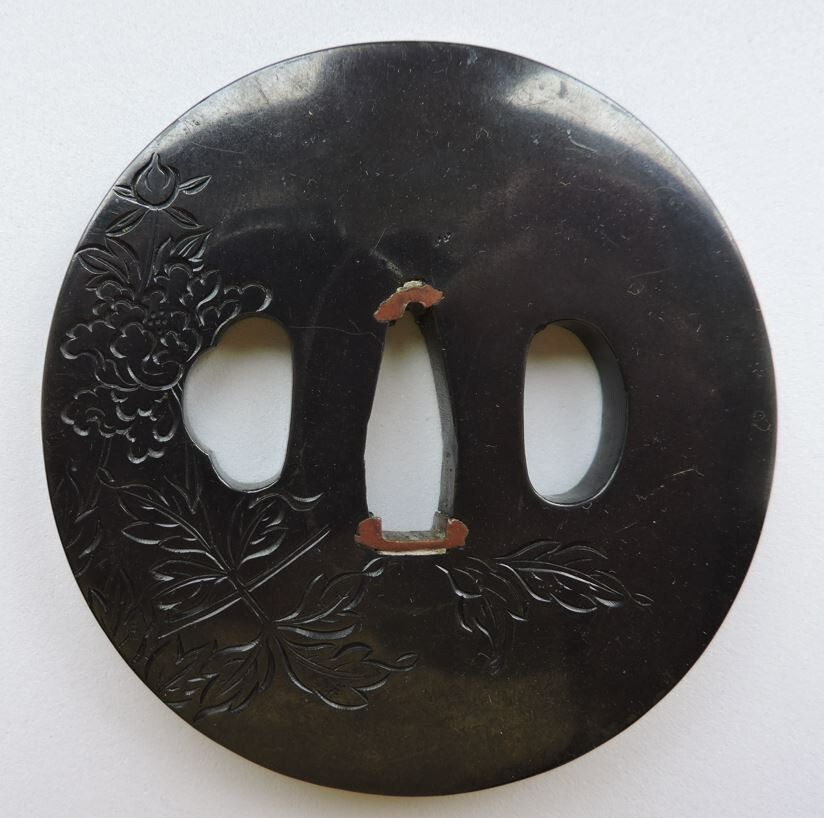
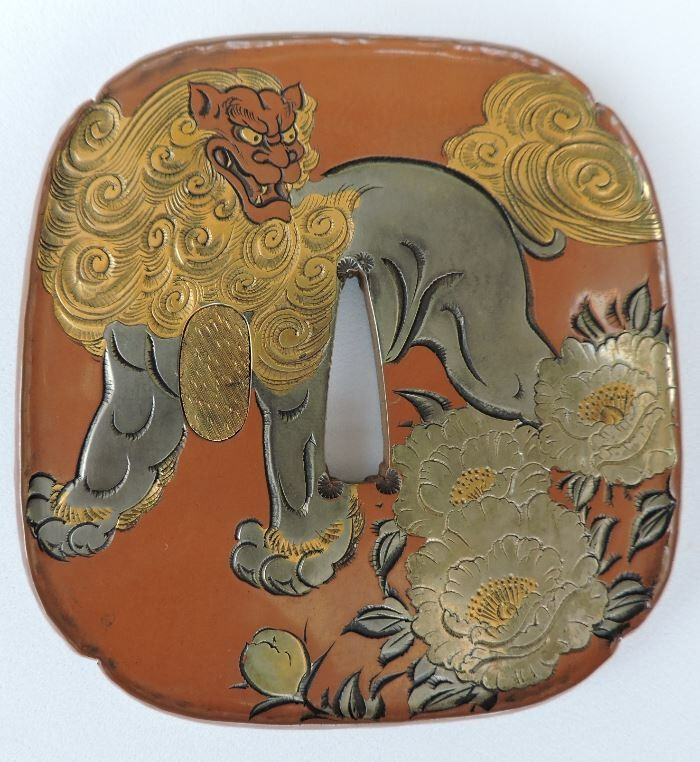
The first shishi tsuba that I have is a Shakudo one signed Masanaga. The tsuba depicts two shishi in shishiaibori and engraved in katakiri on the reverse with a windblown peony. Shishi are mythical guardian lions in both China and Japan and the peony is regarded as the king of flowers and in Japan symbolises bravery, honour and good fortune. The design of shishi and peony is often augmented by the addition of a butterfly. This is because, according to legend, the shish has a weakness in that a bug lives inside it, but if it sleeps under a peony the morning dew is absorbed by the shishi and the bug is eliminated as a larva, which metamorphoses into a butterfly. The tsuba is signed Masanaga, with a kao and was catalogued as Haynes Index no. H 04250, which identifies the artist as Chosuke Masanaga (d. ca 1700), who was a student of Nara Toshinaga (Markus Sesko) or Ito Masatsugu (Haynes). However, there were two generations of Masanaga in the Nara School and both used the same kanji for their signatures. The first generation, Seiroku, was a student of Toshinaga (either the 3rd generation master of the Nara School or a student of the same name). His (adopted?) son was Gihachi Masachika, who signed Masanaga for a while after his father’s death and was from the Kawakatsu family and a nephew of Sugiura Joi. The Nara tsuba artist Gohachi Masachika may have been an alternative name used by either of the other two Masanaga. Consequently, there is some uncertainty as to the identity of the artist who made this tsuba. Height: 7.6 cm. Width: 7.4 cm. Thickness (rim): 0.4 cm. Weight: 216 g Provenance: Edward Wrangham Collection, Part I, 9 November 2010, Lot 37, bought from the Roland Hartman Collection of Japanese Metalwork (Christies, 30 June 1976, Lot 130) The second shishi tsuba is a large copper one made in the 20th century by Yanagawa Morihira (1899-1971) and was made as a work of art, rather than as a practical object to be mounted on a sword. The shape of the tsuba may be best described as sumi-iri-kakagata (lit: notched in square). The front (omote) of the tsuba shows both a shishi and peonies, whereas the reverse (ura) only shows the shishi. Interestingly, the shishi on the omote has a silver body and a golden mane and tail, whereas the combination of silver and gold is reversed on the ura. The faces on both animals are copper. Shishi are often represented as playful creatures, but these two are muscular with a fearsome pose and the silver shishi has a head which looks rather like Hannya, the Japanese female demon. The engraved peonies on the omote are coloured with silver and gold gilding and the petals are in a darker shade of silver. The outlines are defined in katakiribori (half cut carving) and kebori (hair carving) and, particularly the silver, darkened to add extra tonality to the design. The nakago ana has four 32(?)-petalled chrysanthemum punch marks on each side, purely for decoration and the tsuba is signed on the lower right face of the ura Morihira (守平). There is also a single kozuka hitsu ana, filled with a gilt cat scratched plug. Shishi are mythical guardian lions in both China and Japan and it is also the name given to a group of political activists (Ishin Shishi 維新志士) in the late Edo period who opposed the westernisation of Japan. The peony is regarded as the king of flowers and in Japan symbolises bravery, honour and good fortune. I think that it is likely that this tsuba was made in the 1930’s when Japanese militarism was at its peak. I expect that the intention of the artist was to represent the shishi as fearsome creatures prepared to protect Japan in its time of conflict. However, in my view, the artist failed in this respect and they appear rather camp. I purchased this tsuba in memory of my nephew, who died young (52) at about the same time this came up for sale. He was a rather over the top extrovert character and I thought it would be a suitable memorial for him. Height: 8.75 cm. Width: 8.4 cm. Thickness (rim): 0.7 cm; Nakago: 0.4 cm. Weight: 254 g Provenance: Bonhams (Lot 48, 13 May 2021). Best wishes, John
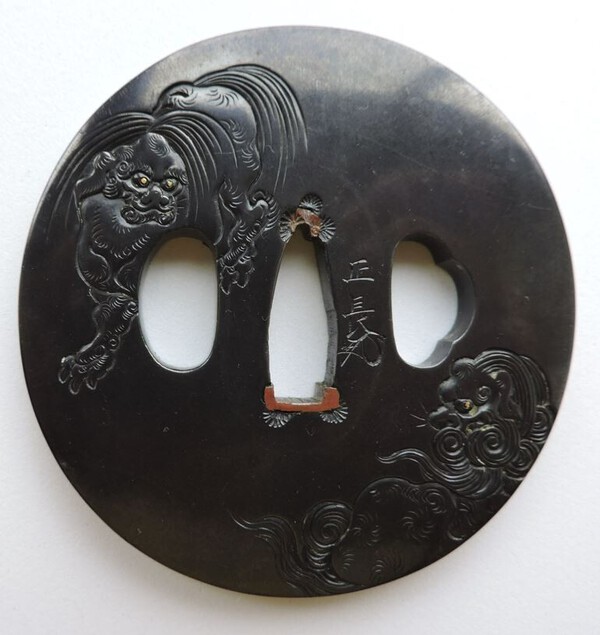

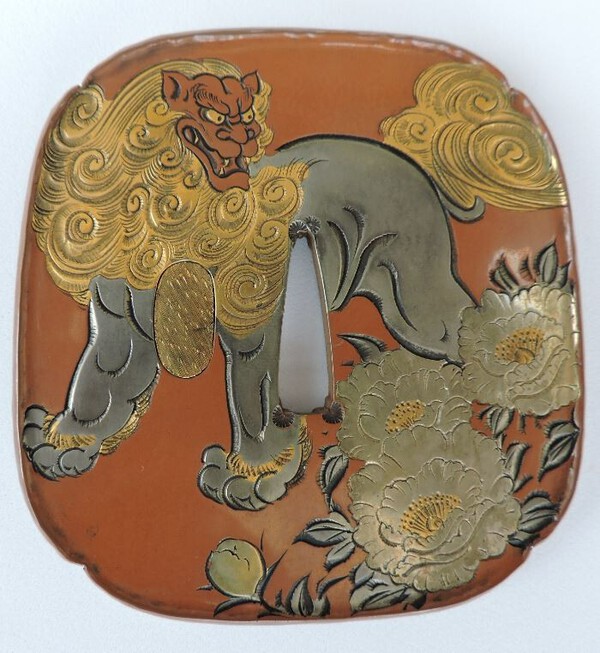
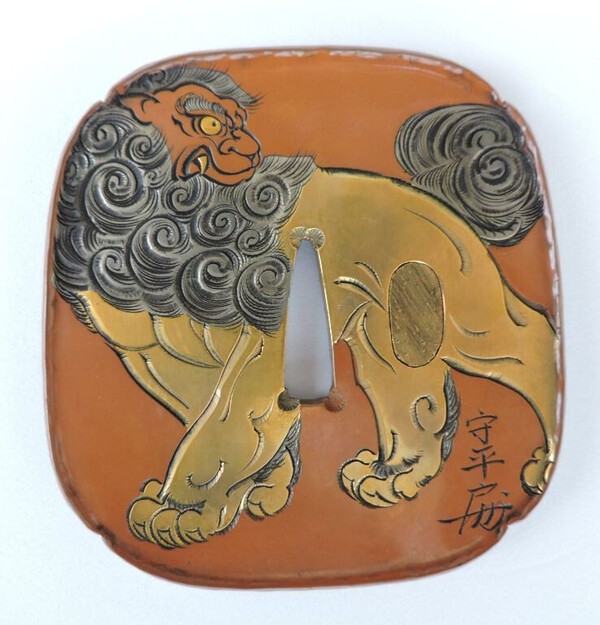 1 point
 -
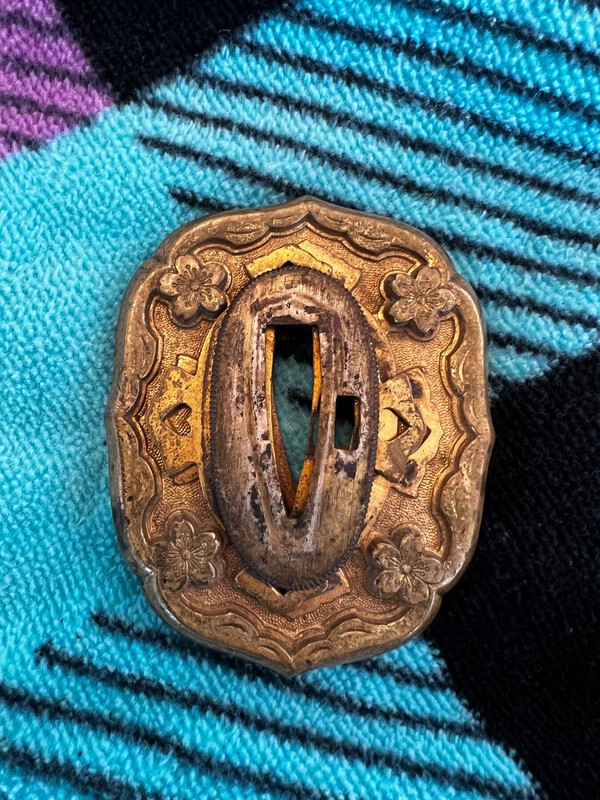
Some fittings:
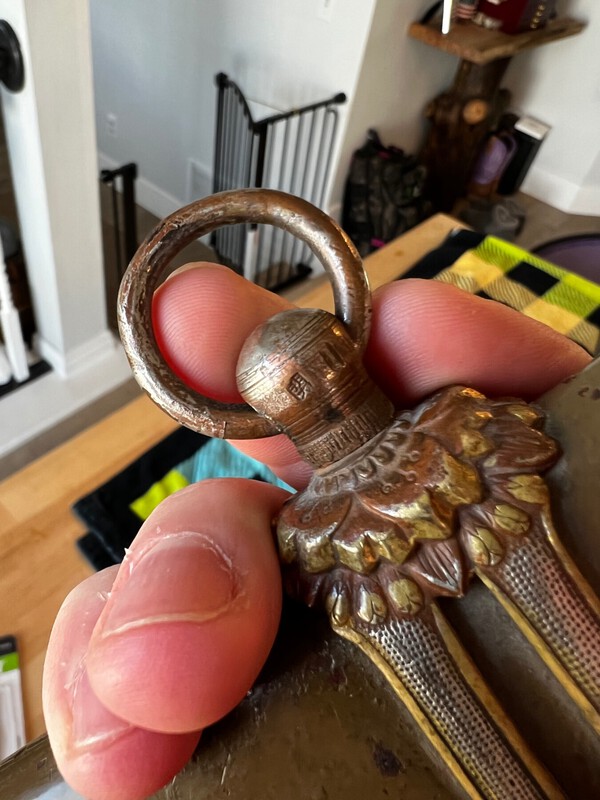
 1 point
 -
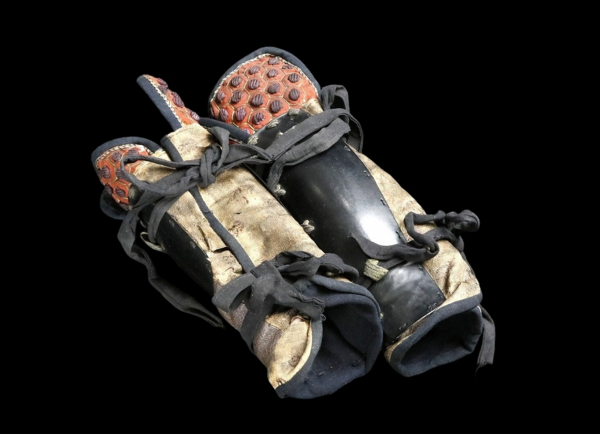
Thanks for pointing that out. I did notice the missing gyoyo, and I emailed Marutake to enquire about purchasing a replacement (or close matching pair). If I can't source a replacement or set, it honestly won't bother me that much. I don't see much on their website about the artificial ageing/patina process that has been done to mine, but I have read that they offer it. Would be a bit ridiculous to have a brand new looking gyoyo. Far as how the sode are attached, something did seem off with how they were tied/held up, but admittedly I don't know the right way to attach them yet, so I'll have to research that for when it arrives. Here are some more images


 1 point
 -
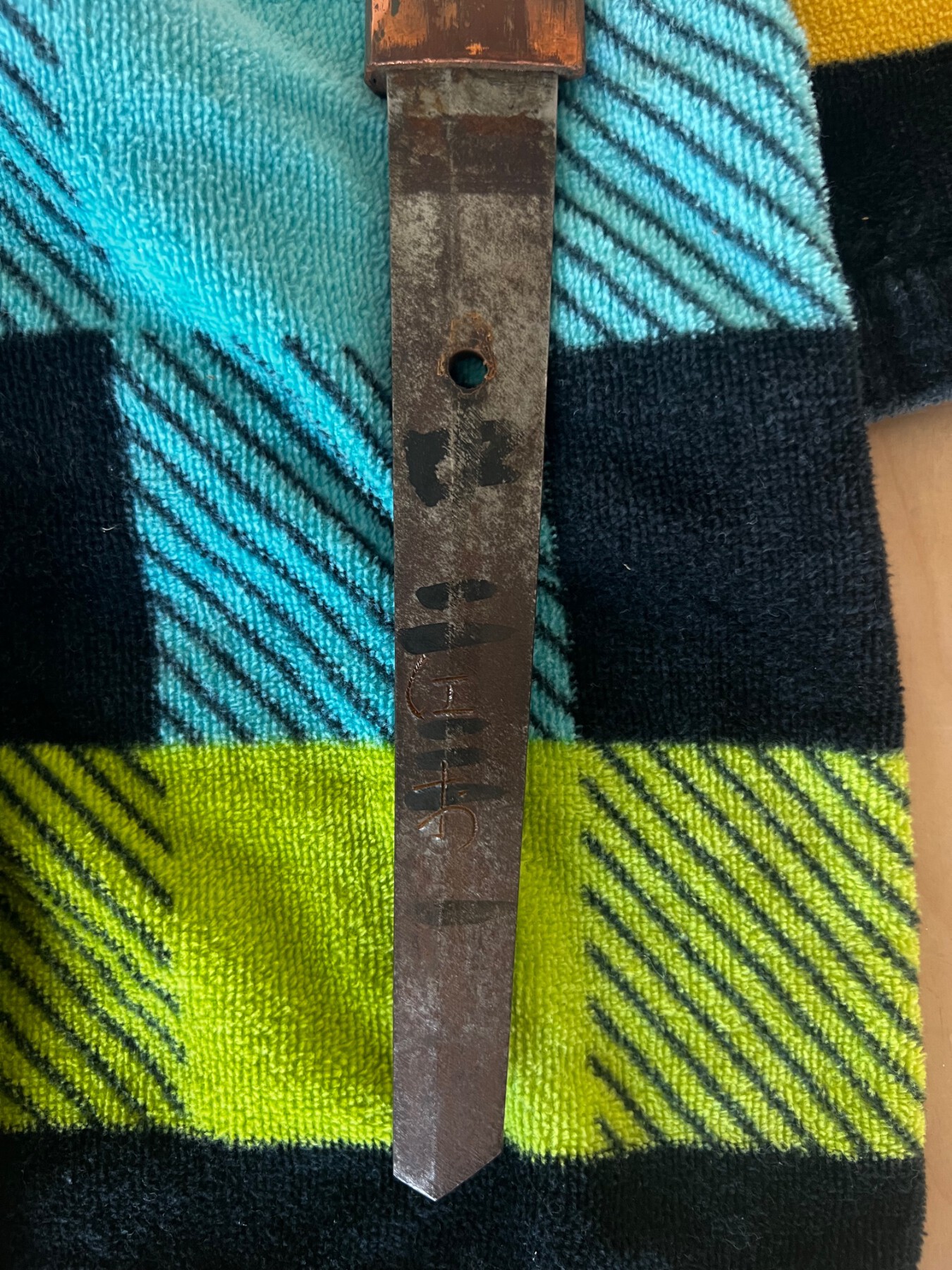
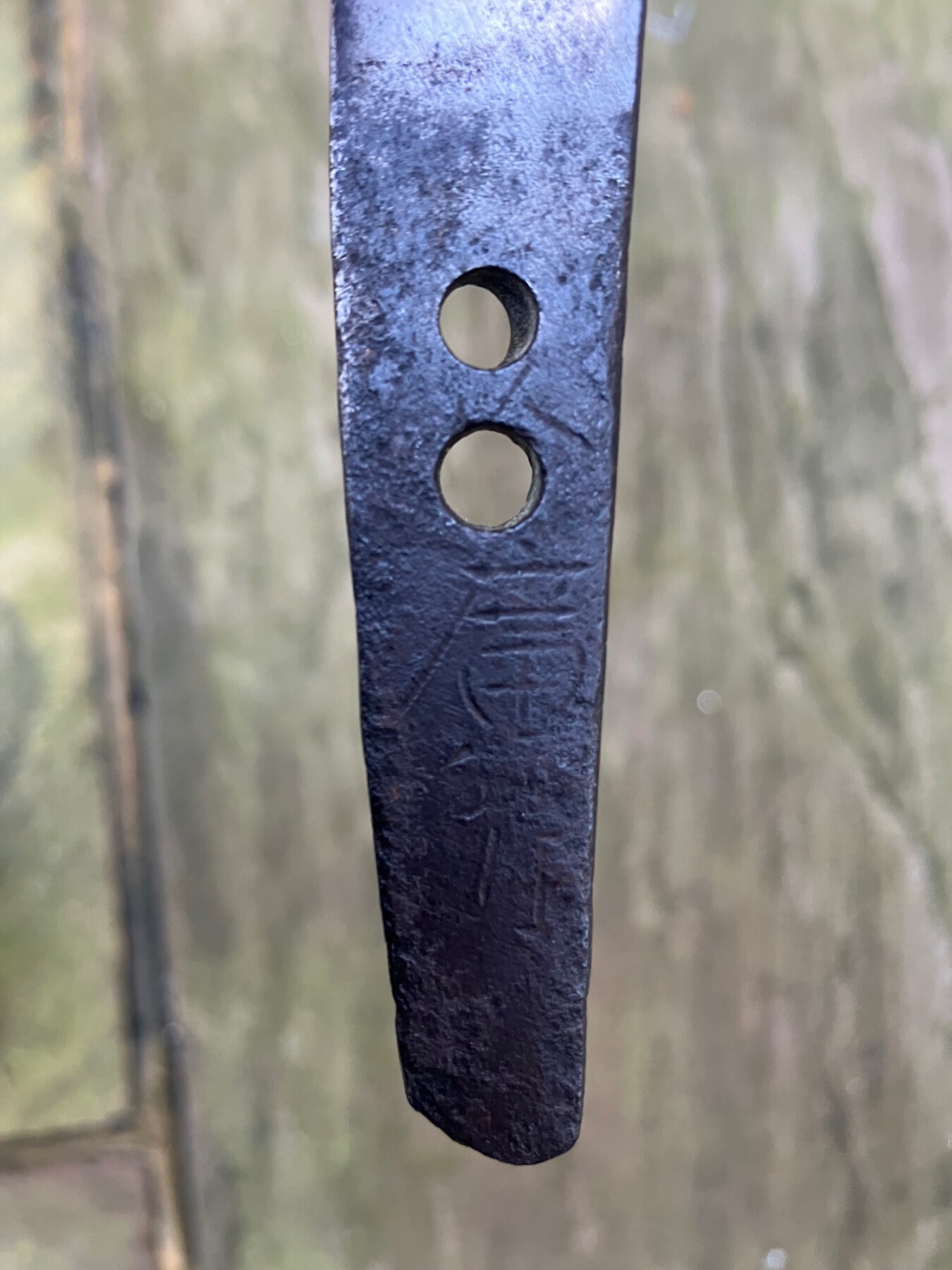
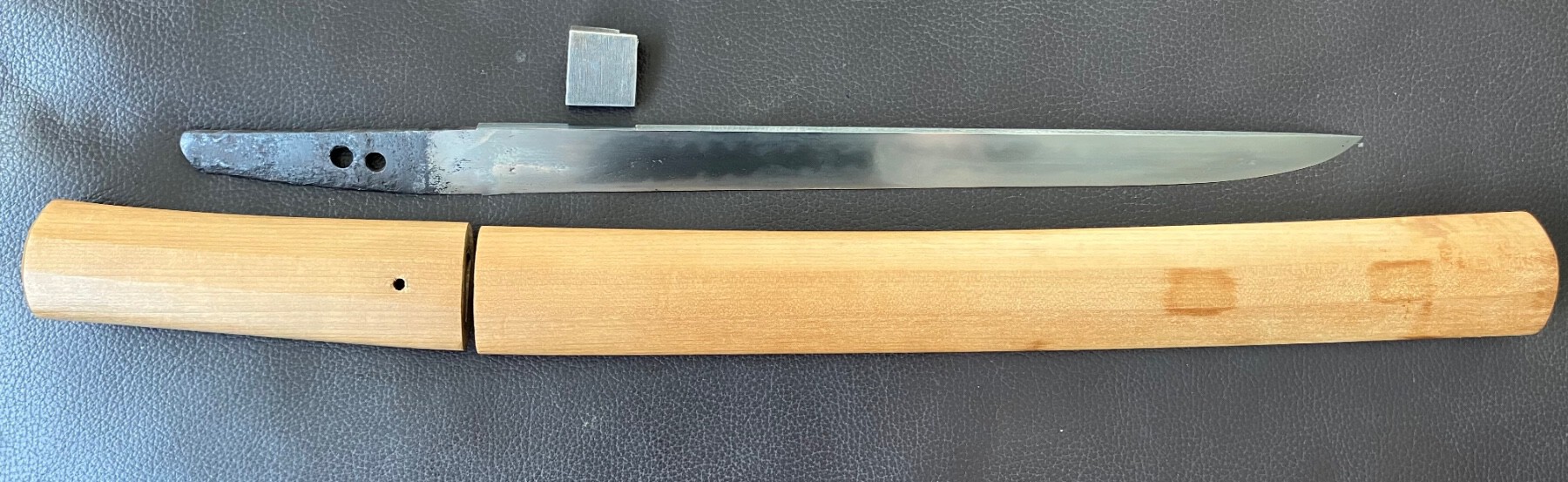
Apologies, Curran and everyone, I did not mean to mislead. It's the same copper tsunagi. I suspect it's a copper alloy because there is none of the usual copper oxidation. The color in the photos is pretty close to the real thing. The previous post was about kanji on the blade portion, and I got some very helpful info from Jan. This now is about the nakago portion, and thanks to SteveM for the translation, which seems to make sense even though it is not in the "standard" form of a mei on a sword. Regrettable that there's no Natsuo, Ikkin, Yasuchika, etc, Ian. I have no idea what the original blade was, or if there was one. The shape of the tsunagi (hira-zukuri with sori) suggests to me not earlier than Nanbokucho. I'll post a photo when I return from travel. Les1 point
-
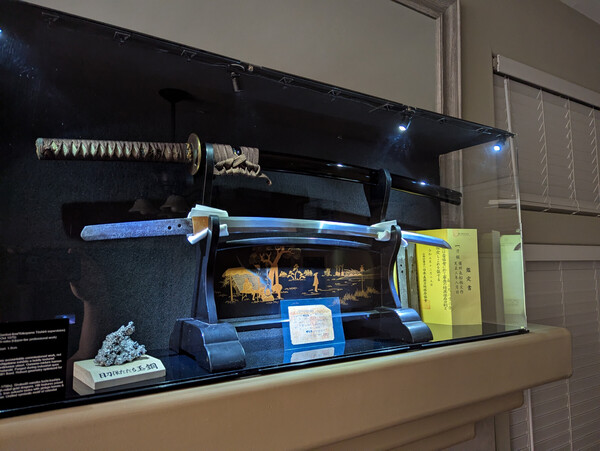
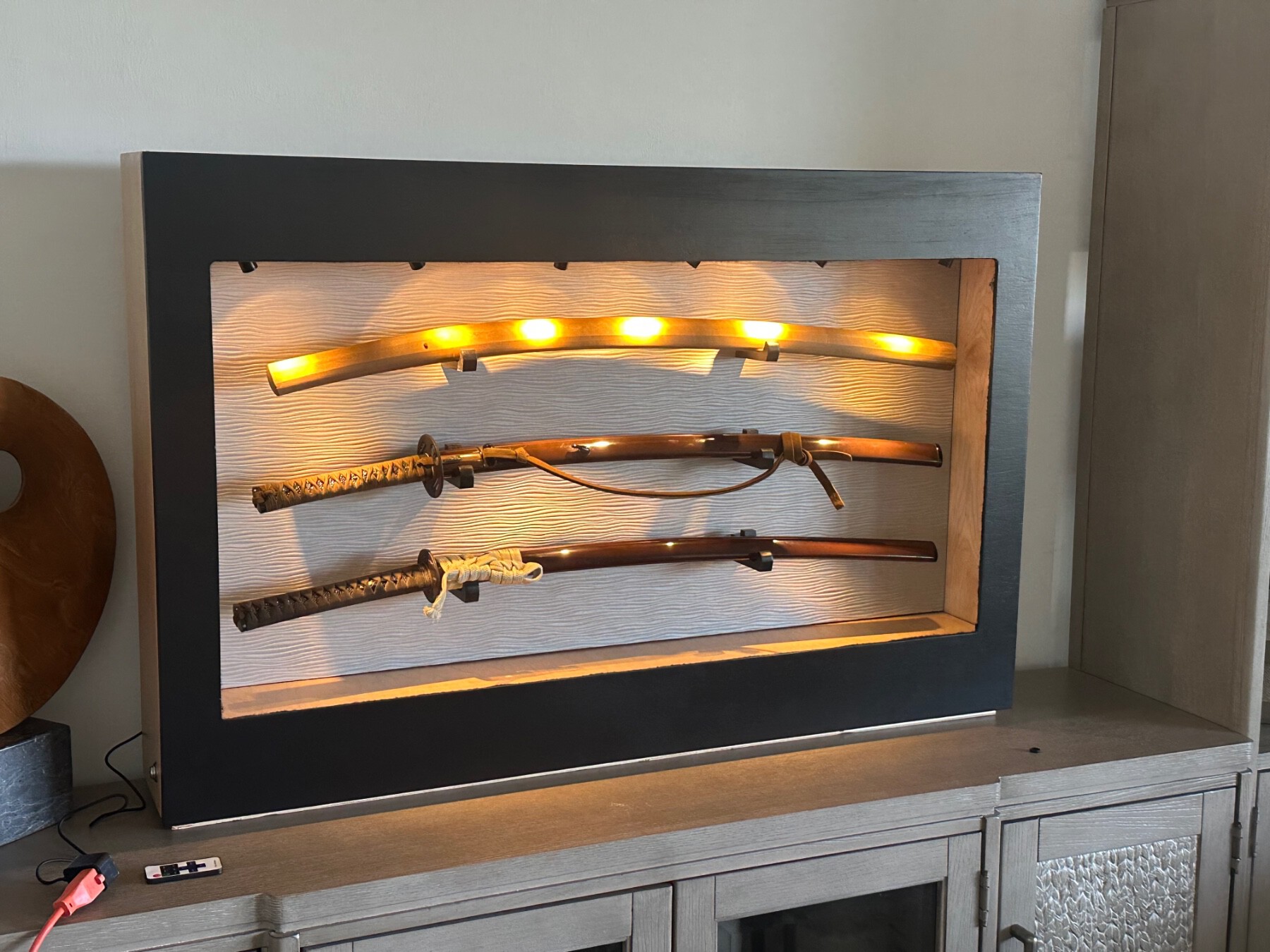
Here is mine. I ordered it online to custom dimensions, then added the black felt and LED lights. My stupid phone started doing this thing months ago, where it adds yellow or blue thick ghost stripes to an image, so forgive the blue tinge everything has - totally not like that IRL. Also weird how my plastic Torokusho sleeve fluoresces. I live in the California desert so humidity is not a problem and it's super easy to raise the left side of the display cover up and remove the blade as needed to oil. It's not a perfect seal so it won't develop its own micro-climate, but it's sealed enough that it should be near dust-free (which my whole house nearly is anyway since I have no pets). Anyway, the LED spotlights do an amazing job making the contrasts and textures of the blade stand out, even from across the room. This is on a mantle above a fireplace I don't use (there is a Ducati SBK parked in front of it), so the display is at eye level and higher, so you can walk right up to the blade and it's perfect height to let the light play off it as you move around.
 1 point
 -
I just found out that after the War the Matsudaira clan sold the Dōjigiri-Yasutsuna (童子切安綱) to Mr. Tamari Sanno-suke through Ishiguro Kuro for 100,000 yen. That would be the equivalent of $440,000 today. In anyone's world this seems rather good value.1 point
-
GOAT book. Absolutely necessary in every library, and I do not say this lightly.1 point
-
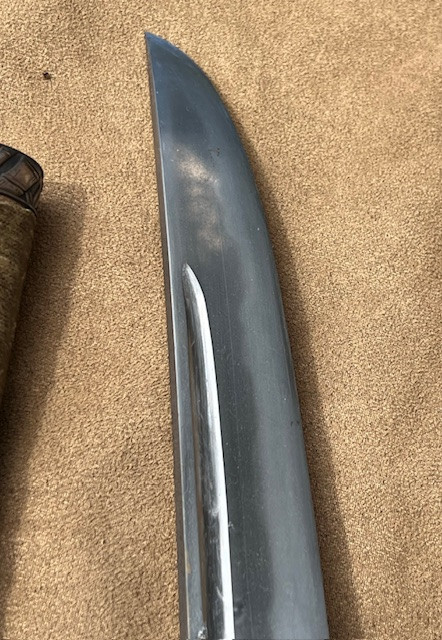
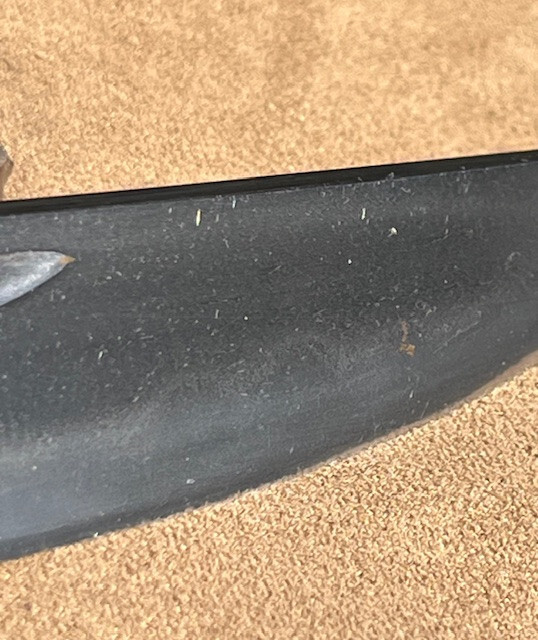
last batch


 1 point
 -
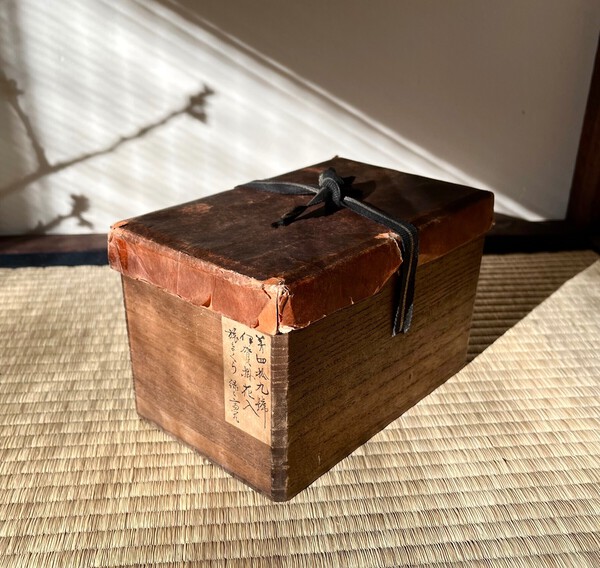
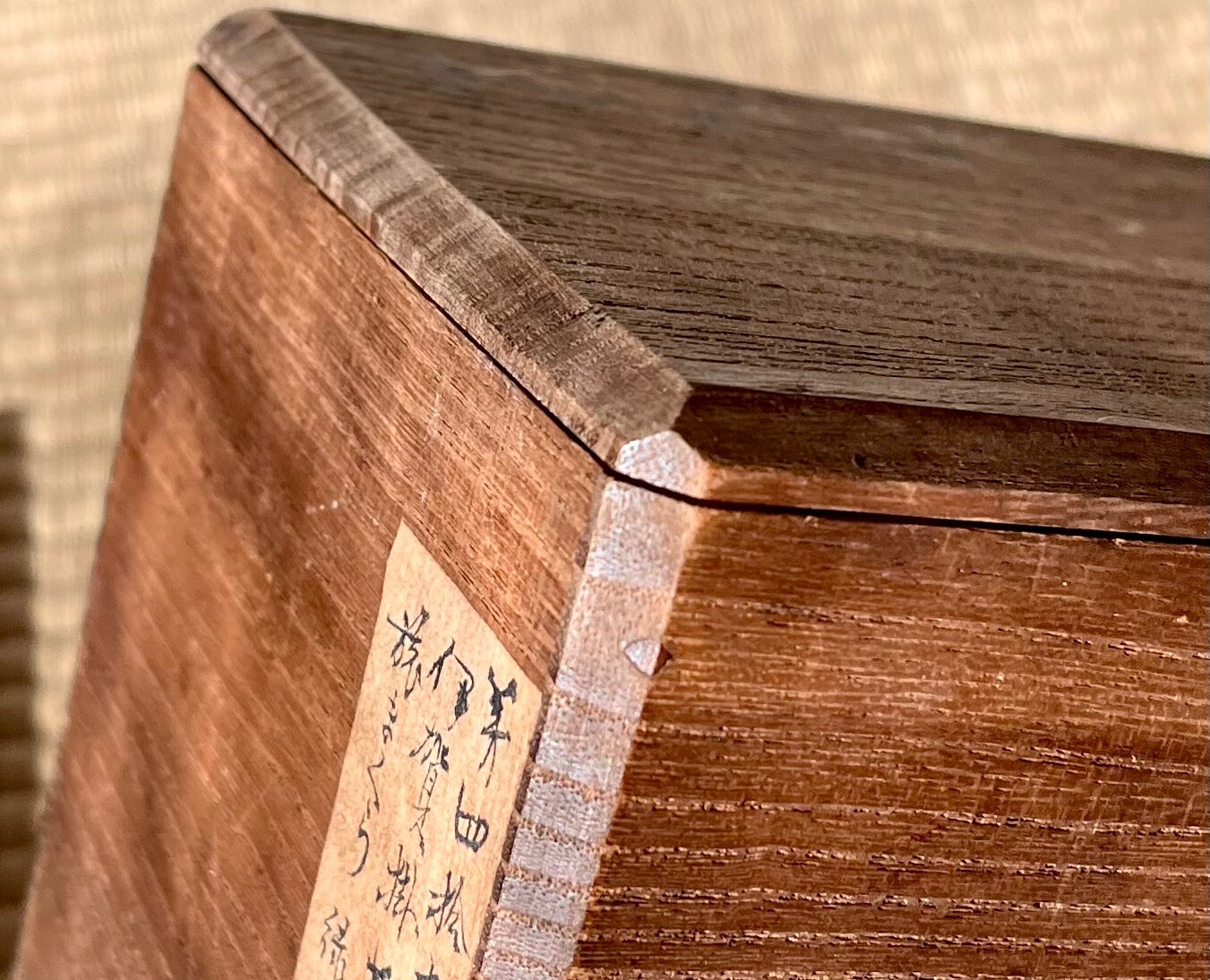
When a tomobako looks like this, you know it holds something good The box itself is a work of art. Just look at the beautifully executed corners of the box as well as the lid. Even the wooden peg is cut to follow the contour of the box. Jan
 1 point
 -
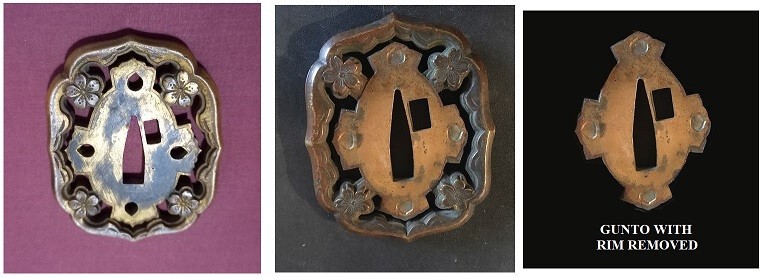
The guard looks very similar to a type of gunto guard with the rim removed - except that the majority of these have a locking hole - the guard in question may have been given a "texture" recently if it was in fact a WWII altered piece but the colour is not what you would expect either. Could you give us some dimensions for this piece?
 1 point
 -
I believe the next shinsa scheduled in the U.S. is San Francisco in 2027.1 point
-
I thought this one was interesting , a naval officer with a Shinto gunto
 1 point
 -
Hi Jean, Only moderators or admin are able to relocate threads. Brian has already commented on the post and could have moved it if he felt it was necessary. Since the topic is about selling the item online, specifically on eBay, it doesn’t seem to be significantly out of place. Also, given the content of the posts, this new member may not be a frequent contributor, and we generally try to allow new members a bit of leeway as they get familiar with navigating the forum. All the best, -Sam1 point
-
1 point
-
Miranda: We don't generally do valuations here, however I can give you some info for your description. I believe the sword is signed Kanesada saku kore (respectfully made by Kanesada). The stamp above the signature is a Seki Cutlery inspection stamp. It also indicates the sword is semi-forged but not traditionally made. Traditionally made swords are made from tamahagane steel and are water quenched. The painted numbers (762) are assembly numbers. In addition, the fittings are not high quality and are missing parts. The tassel is also missing. This makes your sword slightly less valuable on the collector market but still has military/historical value. Folks on ebay tend to list these for crazy prices. I recommend using ebay completed auctions and search for "ww2 Japanese sword". Find similar examples and it will give you an indication as to what these actually sell for. John C.1 point
-
This is my custom made cabinet. I have been displaying my sword like that for over a year and there is absolutely no signs of any rust. I oil it once a month and clean with isopropyl alcohol and oil once every 3 months.


 1 point
 -
I finally put the finishing touches on my display. It serves as both a display and a safe, which is close to air tight; the glass is clamped to the frame via magnets so it is removeable. The inside is lined with Aspen, and the fabric is vintage Japanese silk. I installed the light bar and a hygrometer. I also carved katanakake inserts for storing in shirasaya in the summer months when I'm away.1 point
-
Hi Junichi-san, Good question. I wrote a article for the JSSUS newsletter two years ago about the development of the Tosho tsuba (刀匠鍔). The Ko-Tosho tsuba (古刀匠鍔) are very early, thin, and with small openwork (ko-sukashi 小透). Here is a link to a online verison it: http://www.nihontomessageboard.com/articles/JSSUS_Tosho_Article.pdf. In terms of warfare and the changing use of the sword I am sure it would have affected tsuba development and style of construction. I remember reading that in early periods (Heian and Kamakura Periods) the bow was a more important weapon then the sword. Most of the more common Japanese martial arts (i.e. Karate-do, Judo, Iai-do,Batto-do, and Aikido) date to after the Meiji Restoration. The oldest type of Japanese martial arts referred to in Japanese as Ko-Budo (古武道) or Koryu (古流) generally date from the Edo Period. The style that I practice only dates to about 1690~1700 (i.e. Middle Edo Period). I am sure there are older martial arts still around but how much older I am not really sure. Even if the martial art school is old it has likely changed over time particularly in the Edo Period.1 point





























This leaderboard is set to Johannesburg/GMT+02:00