
Leaderboard


Popular Content
Showing content with the highest reputation on 03/03/2026 in all areas
-
Now that is bit hefty topic line and I do not really have a standing theory ready for it, nor perfectly accurate formula for calculations. However I have done some measuring in old school way from books and done my own reasoning and thinking. A recent post by Arnaud made me remember what I had tried to do a while ago for few smiths. As many forum members might know ōdachi are the most interesting thing for me alongside big naginata and when I go to Japan those are pretty much the things I seek to look at shrines, museums etc. They are however unfortunately very rare. Of course many of them were shortened into regular sized blades later on. However that brings me to the second problem, there are just huge amounts of long ō-suriage mumei katana attributed to some of the top smiths (and to other smiths as well). In overall so many of them that it will leave me scratching my head. Some massive ōdachi and massive naginata/nagamaki were definately used, however I would dare to believe they were not ordinary weapons that were common to encounter. This is not in any way really accurate data, so do not take it as the truth. However it will give some insight on what I personally feel. For some old tachi it is relatively easy to try to figure out the original length, for some it is much more difficult. For this data I needed to have relatively specific data in order to do the calculations, and of course I do have pictures or oshigata of each and every sword. Now of course for best results I would take pictures of every sword, then put the picture collage to computer and scale it counting pixel to match real life size. I have done this type of thing for naginata in past and it takes quite a bit of time. Someone or AI might succeed in it much faster but sometimes doing stuff like that is fun. I only could of course use signed tachi for this data (I counted in partially signed though if they filled the other criteria). Then I must have the nakago length measurement for the item (this is because many pictures are not 100% in scale in books so I needed to calculate the actual measurements I took) I did measure the gap from munemachi to start of the signature for each ubu sword to be a reference point. There were of course few outliers but I believe smiths signed relatively often in similar placement, and the data would also correlate with this. I also tried to look the signature in relation to ana but I must confess it was getting bit too complicated for me, so as I was not looking that deeply into this I did not have time for everything. Then tried to use logical applying on suriage swords to determine the possible original length. While not perfectly accurate I did get very similar results with my personal method than is listed for few swords by Japanese experts. I did select Tomomitsu and Kanemitsu basically as I like them so much. Rai Kunimitsu was just something I was curious about as there are so many swords (signed and mumei) for Rai Kunimitsu. First up is Tomomitsu there are the 2 ubu ōdachi, and I had only 5 suriage tachi that fill the criteria. As can be seen in graph they weren't ōdachi sized originally. Then for Kanemitsu the first entry is the famous ōdachi Ō-Kanemitsu. In my eyes it was originally slightly bigger than it currently is, my estimate was pretty much the same I have seen by experts in books, amazing sword that I hope to see it at TNM some year. The second ubu is the magnificent JūBū tachi at Fukuyama Museum of Art, tiny bit short of being an ōdachi. As I have not yet seen Ō-Kanemitsu this is so far my favorite Kanemitsu. For Kanemitsu there were 17 other suriage swords and only 1 of them came close to being an ōdachi but it didn't really pass as it was tiny bit short. Lots of very large amazing tachi though. For Rai Kunimitsu there was actually one suriage tachi that was still very long, and by my calculations and observations would have been originally c. 95 cm ōdachi. This is the National Treasure that is held in Kyushu National Museum, I was around 1 cm of the expert length estimate so while not perfect it gets rather close. Other than that one, all were just long tachi that of course many of them were really awesome. This doesn't really give any definitive answers and for myself it just maybe raises more and more questions. I hope someone finds this interesting.


 6 points
 -
I have been a member of the Nihonto Message Board since 2006. My love affair with Nihonto spans over 50 years. First time I saw a "Japanese sword" was around 1970 when I saw a couple that a friend’s father brought home from the war. My serious involvement and study of Nihonto began around 1990. The first Nihonto I owned was a gift from a friend. It was nothing special, a suriage Muromachi period blade mounted in a type 98 koshirae. I still have it. In the late 80’s I met Col. Dean Hartley who lived nearby and meeting him became my introduction into the world of Nihonto. Dean was one of the foremost Nihonto scholars outside Japan at the time. Dr. T.C. Ford was another great mentor and student of Nihonto. I spent many weekends at his home studying Nihonto. My website; Yakiba.com has been in operation since the year 2000. Around the time I started the website, I co-owned a small shop in Fukuoka Japan and imported many, many Nihonto. Since the passing of my partner, my focus centers mainly on consignments from clients and friends made over the last 30+ years. *Unfortunately, I have been plagued with website issues over the last year. Currently the site is being rebuilt from the ground up with a new designer and host. Once live I will link to it here. Until then, I will list a few items here on the NMB. If there is something specific you are looking for, feel free to reach out to me as I have many Swords, Fittings and Koshirae. If you have Nihonto or Nihonto related items you wish to sell, contact me and I will be happy to discuss the consignment policy with you. A quick note on consignments: Initial prices are set by the owner, who also have final say on the acceptance of the selling price. It is hard for most consignees to take a loss on items, and as market values change, it can be a difficult reality to accept. With that said, I am always willing to present a reasonable offer on the behalf of the buyer. If you feel a price exceeds your estimated worth, make a reasonable offer. I have seen both sides of this scenario, owners who will not budge and others accept an offer I was sure would be rejected. The point being you never know without asking. *Please limit contact to email only*. Email addresses: yakiba.com@gmail.com or yakiba1@yahoo.com You can find me on Facebook (FB) using the link below. I serve as an administrator for several groups on FB including Nihonto Group, Japanese Tsuba Collectors, International Nihonto Appreciation, and Samurai Sword. Find me on: Facebook: https://www.facebook.com/yakiba.nihonto.9 Instagram: https://www.instagram.com/yakiba.nihonto/ Forms of payment include PayPal, Zelle, Bank wire transfer, and cash. Knowing most of you, you know I have a reputation of honesty and integrity. I look forward to interacting with old friends as well as making new ones. Ed Marshall Yakiba.com4 points
-
筑後柳河住久廣 = Chikugo Yanagawa-jū Hisahiro4 points
-
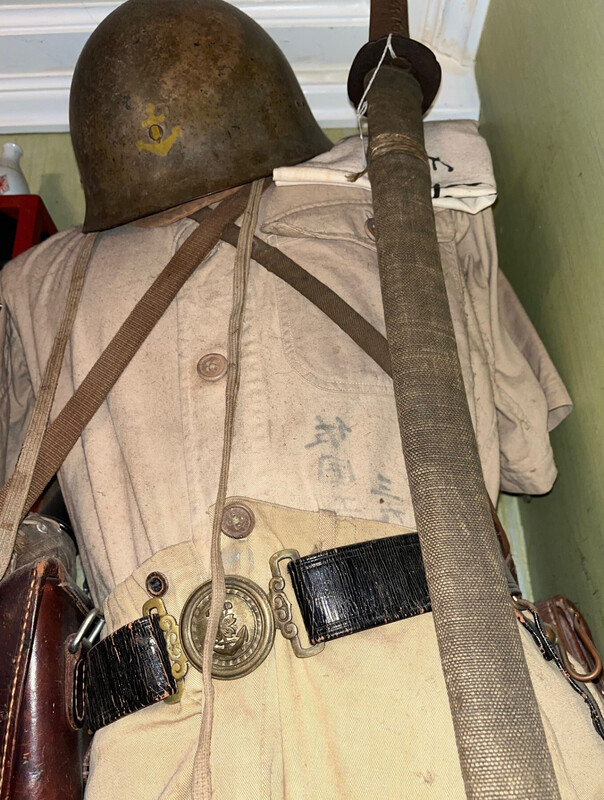
Here's a pic of my tropical cover.
 4 points
 -
I liked that one:3 points
-
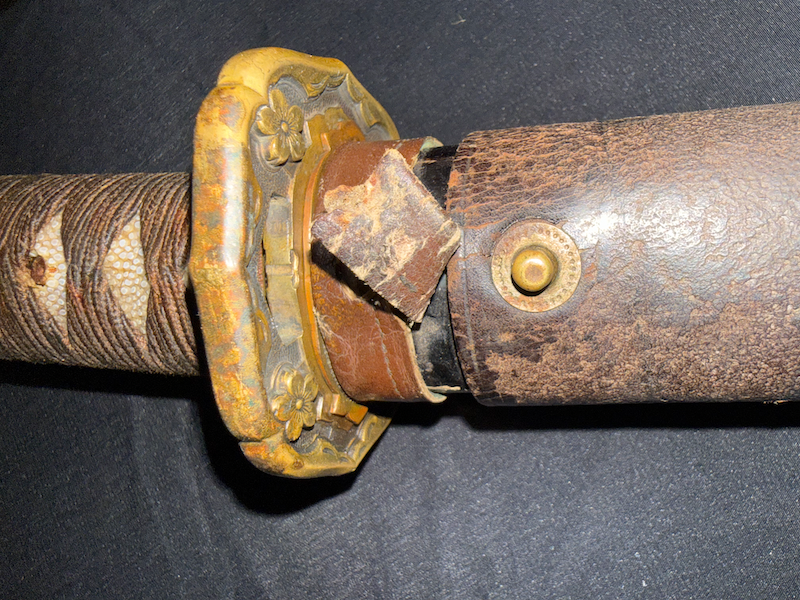
Hi @Ben A Harris, You have what looks like a large and imposing sword in those WW2 military fittings. Are you able to take the handle off, and show us the tang? These swords were designed to be disassembled, so fear not. But still, proceed with care and caution. Skip ahead on this video to the time 6:40, for instructions on disassembling a sword in fittings.3 points
-
Hello all, I have been recently quite miffed at the apparent return of the "Japanese SteEL was Baaaad" cliche on the internet. I've yet to seen anyone back their claim and decided to gather some of the most excellent data that has been published throughout the years. A lot is in Japanese, which means it remains inaccessible to many. At any rate, feel free to take a look at it. I have focused on the metallurgy, i.e. the chemical composition, microstructure, and mechanical properties. Cheers Nihonto-Steel_v2.pdf2 points
-
This was sent to me the other day. Posting here unless someone has a reason for me to take it down. (see below) Good afternoon, Orlando Show friends, I hope you are looking forward to our June show as much as we are. If you have already reserved your table(s) and booked a room for your weekend stay – THANK YOU!!!! If not yet, then please don’t delay. The show is growing over past years, thanks to your continued support and from a few new faces from around the country. We are laying out the sales room now because of this higher interest, so if you are coming you MUST let us know. I am trying to have all tables sold by the end of April so I will be taking payments in Chicago if you are still deciding. A few announcements. 1. The show will close a little earlier on Sunday so that we can depart the hotel for another group. As such, we will not plan for special activities on Sunday and will be promoting Friday and Saturday as the core public days. 2. We will continue with our Friday night welcome hour for table holders and are proud to present this year’s special demos and exhibits as: a. Etiquette in handing a Japanese Sword – Joe Forcine b. Orlando Toyama ryū dojo demo – Sensei Bob Lampp c. Exhibit on swords of the Yamato Tradition – Ray Singer d. Florida Tosa no Kai Hōzōin-ryū spear demonstration e. Shaolin weapons (sword) forms – Sifu Marlon Pillisoph f. Ikebana International Chapter 132 Orlando-Winter Park g. Central Florida Bonsai Club display 3. Everyone coming to our show is important, but I’d like to mention here a few new names who will be joining us for the first time to our show this year – Billy and Debbie DeNoia from Long Island, NY, Roger Robertshaw from Texas, and Jack Frost and Stephen Kunemond from Virginia. We expect a good representation of armors, swords, tsuba, ceramics, bronzes…. and Asian collectibles. 4. Remember to book your hotel rooms stay early directly with the hotel either by calling, thru our website, or the link here. https://www.hilton.com/en/attend-my-event/mcohndt-90k-1ac36892-11d1-4cc4-af3e-b772cd3f518f/ 5. It has been requested that a secure ground floor space can be made available to hold merchandise on Thursday evening instead of leaving it in a car or lug it up to an upstairs room. We will consider it, but only if you let us know you’re interested 6. For you first time attendees the hotel charges us for parking at a very reduced rate ($7.00 for overnight or $5.00 daily). Please note this is a gated lot with physical security and it accesses directly into the convention center. 7. FYI, for those flying in - the hotel shuttle can take you to anywhere within a one mile radius at no cost. We are located centrally and less than a mile from the Orlando International Airport and plenty of restaurants Thank you as always for your support of Florida’s only Japanese sword show and we are looking forward to another great weekend of Budo history2 points
-
The symbol is a family crest, call a kamon or mon. There are guys here who can give you some info on that. They originated way back in the Samurai days, and each clan had it's own symbol. Well before WWII, Japan opened it up to letting anyone have one that wanted one, and by WWII many mon were being used by multiple different families. Some of them can be narrowed down to a shorter list of names, but you won't find a specific family name that can be tied to it. I have one with the old Fujiwara clan symbol, which is cool, but the guy that used it in WWII could have had any name, literally. The fittings are Type 98 Japanese officer sword fittings. You can read up on these on Ohmura's site: Military Swords of Imperial Japan (Gunto). The blade may be something from pre-WWII, which is why the guys are asking you to remove the handle (tsuka). Very easy to do.2 points
-
If you were ever looking to do any real research into famous blades or sword smiths then the absolute first stop needs to be the Dictionary of Famous Fantasy Swords. This website is an absolute treasure trove for the sword ethusiast, collecting information and data from every major source and collating it in one place. History, Provenance, National Treasures, Imperial Treasures, Famous People, Daimyo & Samurai Families, Famous Swords, etc. Just hit translate on your browser (Chrome should do it automatically) and you are away. Become on of my favourite websites. If you have not discovered it already definitely go have a look.2 points
-
It is worth bearing in mind that during Meiji (and into Taisho and even Showa) the demand for Japanese ivory carvings was massively fuelled by the export market. In response very high numbers of poorer quality pieces were produced quickly by workshops whose skills were nowhere near those of the carvers of preMeiji domestic pieces. The artistry is often very wooden and the detail and subtlety largely absent. However the demand was there and the customer base often lacked any real knowledge regarding “quality” and thus items such as Kirill shows us arrived in vast numbers. It is easy to jump to “modern Chinese” but imo many are Japanese…just mass produced quickly by unskilled artists. Without doubt (imo) many of the pieces on this thread could be argued both ways. Some are obviously modern, others…hmmmm. Sadly no treasures though.2 points
-
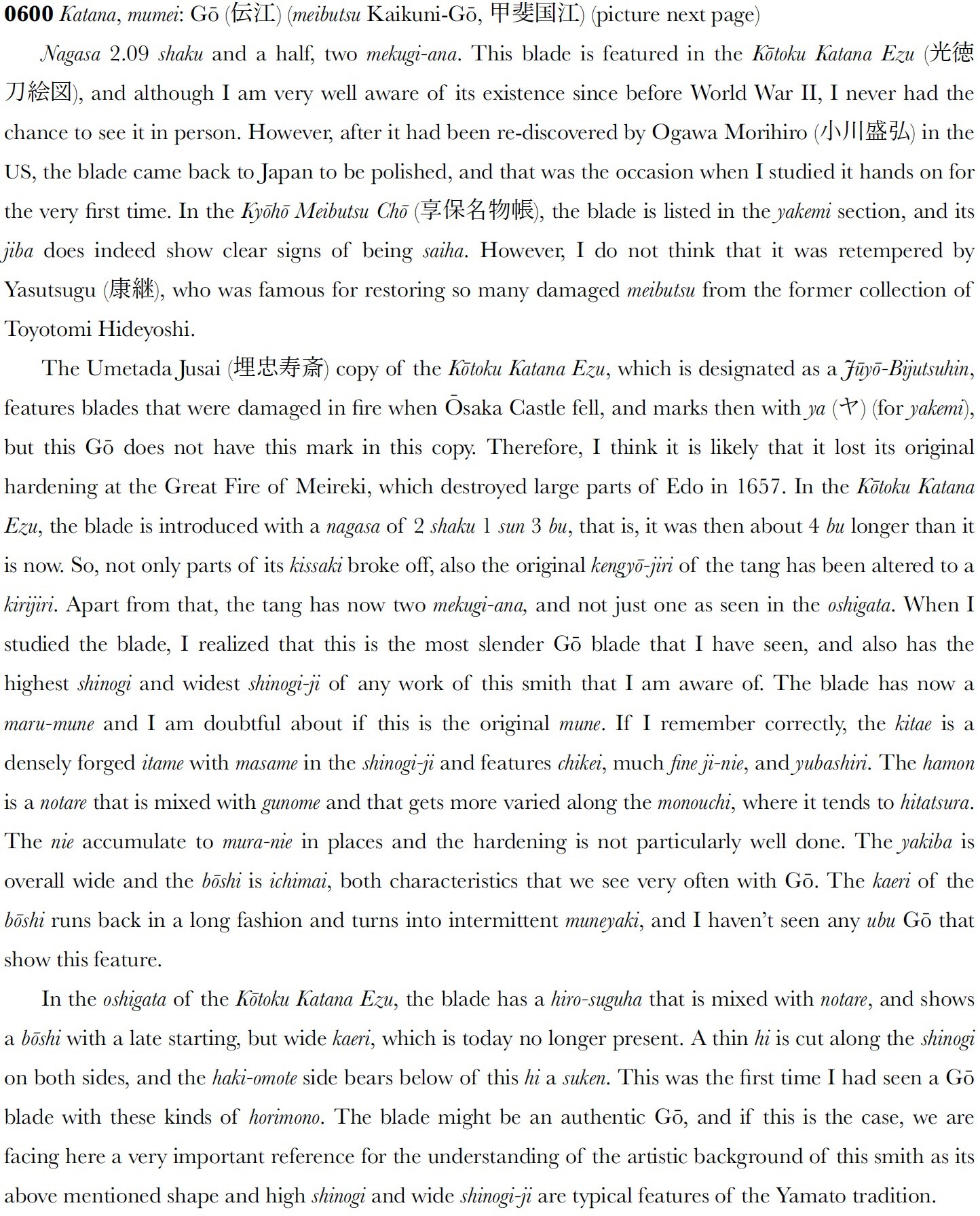
Came across this reference in the Honma KantoHibisho today. An unique example of Go's work with his signature ichimai boshi, but a wide, high shinogi-ji with strong Yamato features in the kitae. Densely forged itame with masame, chikei, copious fine nie and yubashiri with a notare hamon. Dr Honma also says it's the most slender Go blade he had seen. This description sounds very familiar. If anyone has a copy of the Kotoku Katana Ezu could they post the relevant page. Found this oshigata on the Sho-shin page. Motohaba 9 BU (2.7cm) Sakihaba 6 BU (1.8cm) Sori 5 BU (1.5cm)
 2 points
 -
Worth keeping in mind that the first two do not appear to be papered, which will greatly hamper your ability to resell, especially if it's already signed. Add that on top of polishing costs and you're looking at a fair amount of risk for something that will likely end up gimei (since Hozon is fairly trivial for an antique blade in Japan). The Akamatsu Taro smiths are a pretty interesting group (disclaimer: I have a sword that I commissioned from Kanemitsu/Mitsuhiro, the current head of the family). They make their own tamahagane and are known for long, impressive swords for martial arts use, and art swords aimed at reproducing Kiyomaro (and typically succeeding quite well).2 points
-
Correct. It should go over the fuchi. Because it's brittle leather I didn’t want to move it around and just left it how I received it.2 points
-
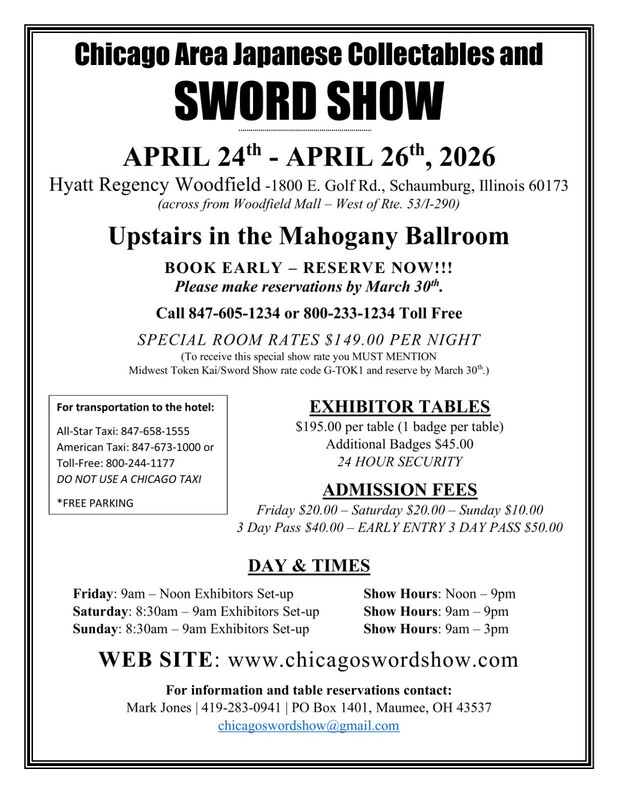
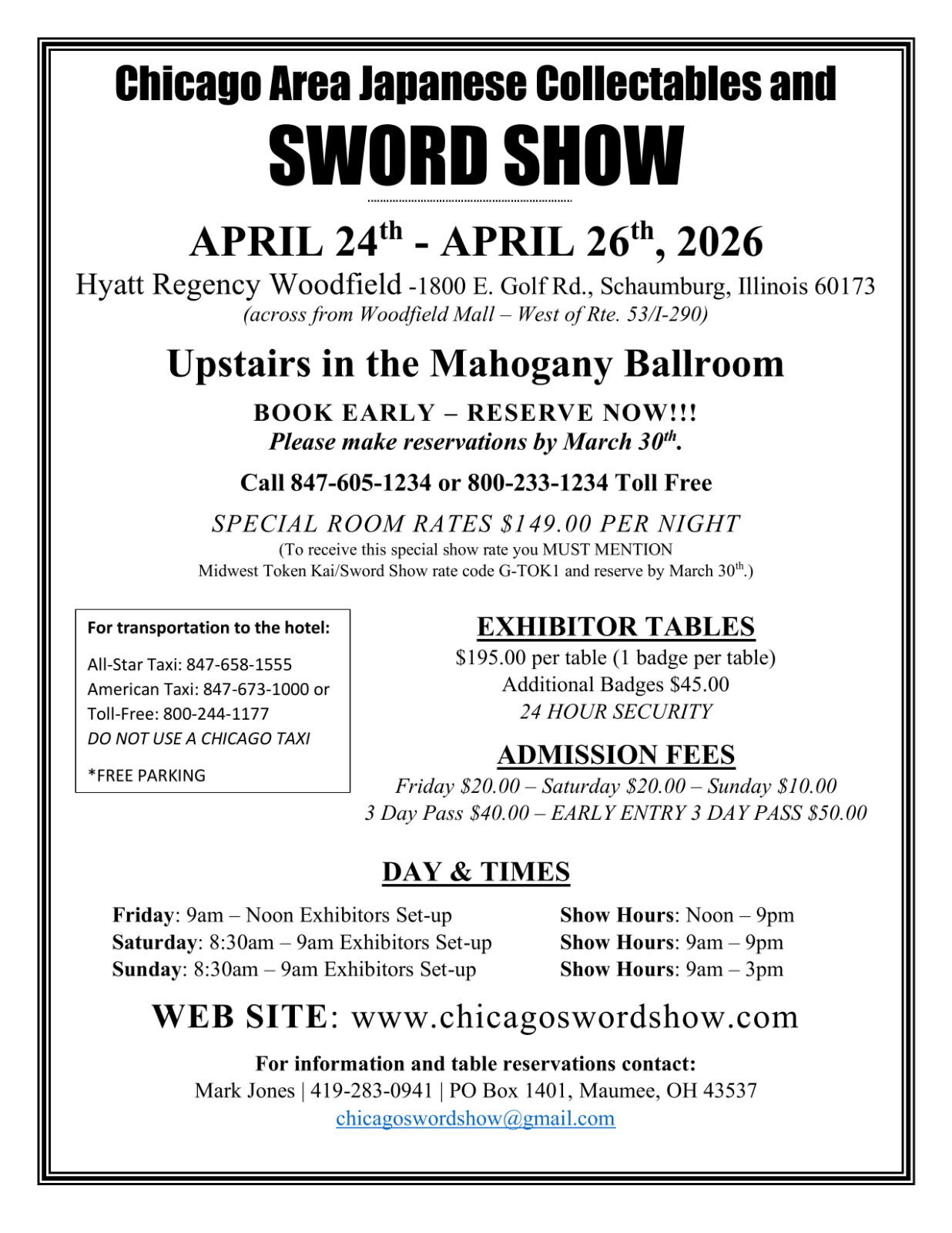
The show is about 2 months away. Perfect time to make plans to attend. More swords, tsuba, kodogu etc in one place than you could see otherwise. Great hand on opportunity to learn. Saturday there will be educational presentations, more details to follow Basic show information here: http://www.chicagoswordshow.com/ If you want to stay at the Hyatt here is a link. Rooms are filling up, if you have trouble booking let me know https://www.hyatt.com/en-US/group-booking/CHIRW/G-TOK1 If you want a table let me know, i usually have a few people who can't make it due to illness/emergency. You can contact me regarding the show at chicagoswordshow@gmail.com Thanks for looking Mark Jones
 1 point
 -
Welcome Ed, and glad to have you here. We wish you success.1 point
-
This is absolutely amazing resource I have used it so much over the years. There is a lot of information on that site I have not easily found anywhere else.1 point
-
Another faux, sorry.1 point
-
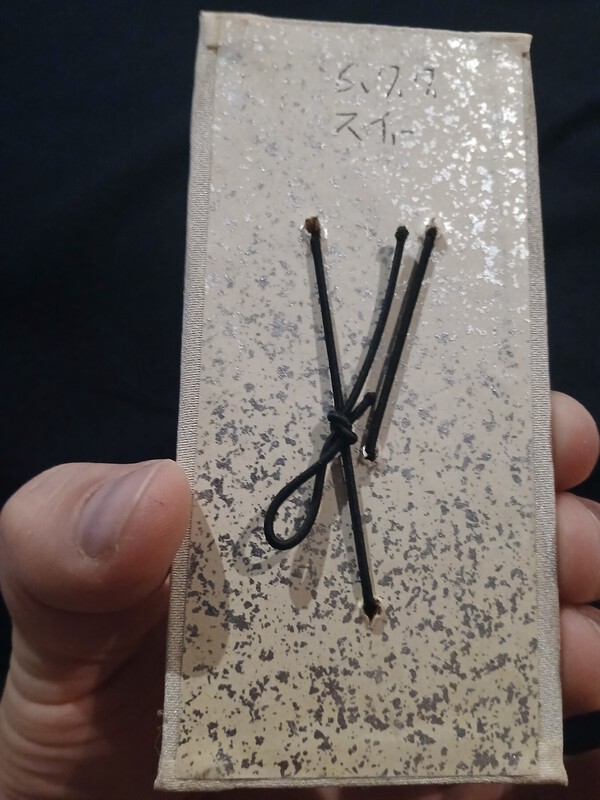
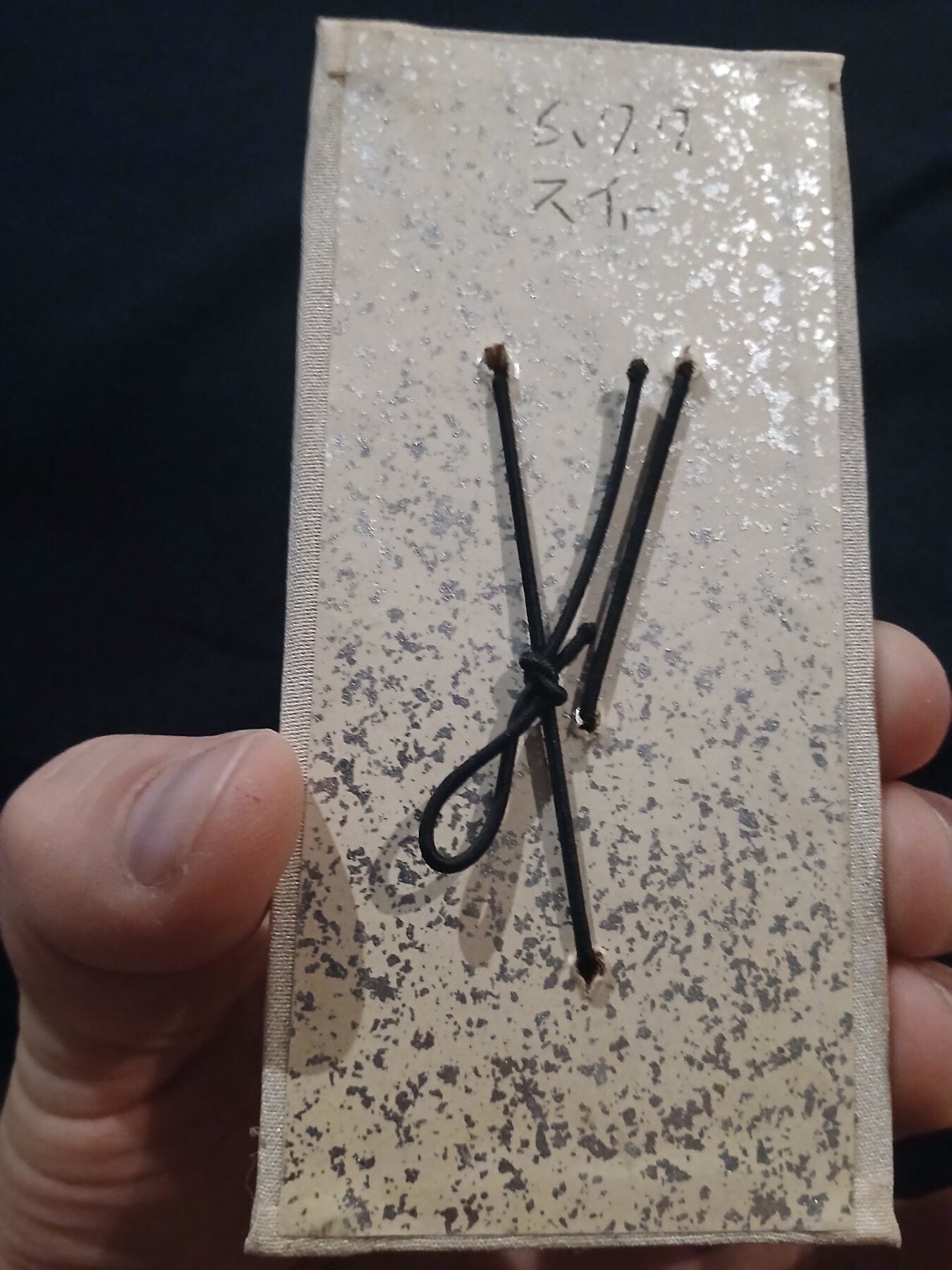
Hey Viktor, Here's an image of the back panel in one of the fuchigashira boxes I recently received from Japan. It does seem fairly similar to yours. Sorry it took so long!
 1 point
 -
Hello again, The search continues 😅 even though chances are someone else might snatch them, i thought i’d share what i found over the weekend. This has an awesome looking hamon under light, it also states the pricing is because of polishing needs. Has no papers, which i’m not sure about. Any experience with the seller? Polishing it would be in budget i guess, any recommendations in Japan? Should i ask the seller? If polished might as well see if it gets any papers 🤷♂️ https://shop.nihontou.jp/products/detail/31634#gallery-1 Or this one, just no good pictures with light.. https://www.token-net.com/token/202509-46.html As you see i’m not looking for names or schools or regions in particular. Also some modern ones, they just lack the history part of things, otherwise are what i’m looking for more or less. https://world-seiyudo.com/product/ka-080325/ and this one, which looks great 👍 https://katanahanbai.com/en/katana/katana-higonokuni-akamatsutaro-kanehiro/ Thanks for opinions! Christopher1 point
-
Hi Mick, what you after? (shameless plug)I am selling a signed katana with Tokubetsu Hozen papers, nice koshirae and shirasaya, for £4k, nicely polished in Japan. I definitely doubt any dealer in the UK will have such a deal. If interested check the sales page below. I am in the NW and your welcome to come see it if your interested. All though obviously, depends what you are looking for?. Also, you need to be very wary when buying in the UK, ask someone with knowledge before you buy. Personally, prefer importing from Japan than buying in UK. I got tired of sifting through swords without papers, overpriced, unpolished or crappy polish, gimei etc. Not saying all are like that, just the vast majority i have come across. There just isn't a broad range to choose from regarding smiths, always comes across as a "take what you can get" market. The best deals you will get from private sellers. Maybe worth putting an advert in the wanted section here or ask The Token society about private sales there. Will say some dont like the hassles that come with importing, which is fair enough. Also, sure others wont be as negative as me. Ps, your not the only guy in the UK to have suffered buyers remorse, your in good company.1 point
-
I think it's been moved and not reinstalled correctly.1 point
-
The Dutch archer is signed YOSHIKAWA I think.1 point
-
Thanks Mariusz, Just been looking over it again, and agree. In hand, has a presence, you know it was meant for business. As Calabrese pointed out and as just noticed under the light, it is better than i described it. I tend to be modest with descriptions, its a nice tanto. May sound ridiculous, but didnt buy it to study it and have not spent much time with it, simply wanted a Yoroi-doshi of its form. Will have stick with the ruler for kasane, 8mm A few random pics from the 75 Mariusz took, all on a file. Thanks
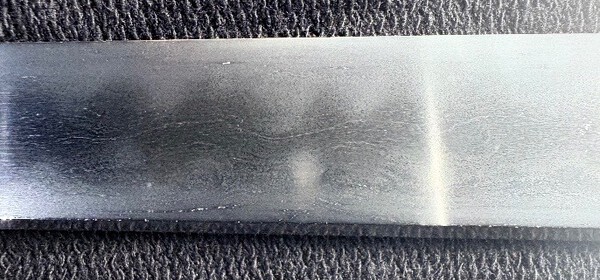


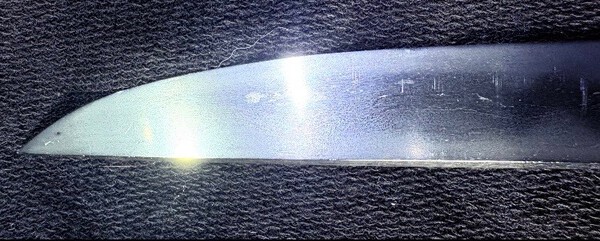
 1 point
 -
If I may chime in - the photos do not do this blade justice. It's a terrific tanto, and for this price... Fantastic deal. Soshu-style tantos are not exactly easy to find.1 point
-
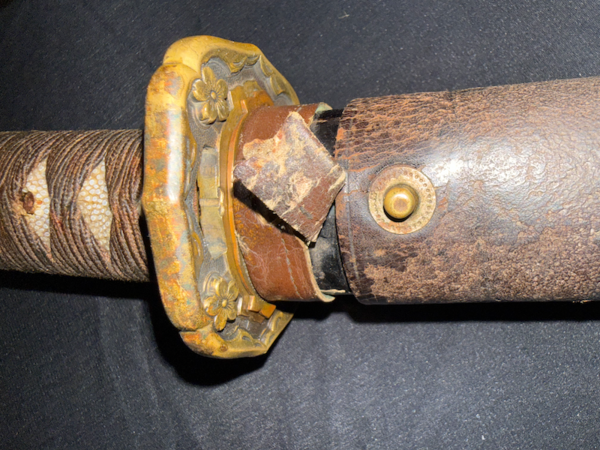
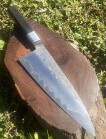
Here’s the sword I picked up. It has a wood saya with a Type 98 haikan.


 1 point
 -
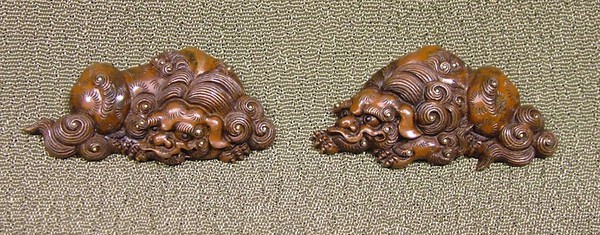
Not for sale. Thanks for the inquiries.
 1 point
 -
This one is signed Yanagawa Naomasa but the mei doesn't match those in Kinko Meikan or Wakayama. Bonham's did sell a very similar pair in 2023 which had Tokubetsu Kicho papers and a Sato Kanzan attribution to Naomasa

 1 point
 -
應羽室廣静需 = responding to Hamuro Hirose's request1 point
-
Hi Dale, thanks for posting these, and for the general backgound information. There are some very small things I would take issue with, but 97% seems fine. You mention something similar posted elsewhere on this NMB site; I am likely the guilty party. My excuse then was that these could have been weapons that Hideyoshi's troops might have encountered during their 1590s invasions of the Korean peninsula. I hoped that would kind of bring them within the remit of this site! My three-barrel iron gun I always thought to be Chinese but Ian Bottomley of the Royal Armouries said more likely to be Korean. My single-barrel bronze gun is dated 1583 and also seems to be Korean. Naturally their general design would immediately trace their roots back to Chinese weapons of earlier times. At the time I acquired the three-barrel pole gun, I was assured in a letter from Sawada Taira (author of Nihon no Furu Ju, Old Guns of Japan) that weapons like these are made in quantity in China today, and dropped into cesspits in order to rust and corrode and gain legitimacy. (One of the barrels on mine was blocked with cement (?), what later turned out to be a mixture of sand, grit and gunpowder. I kept it for the records.) Anyway, with his words of warning still ringing around in my head, I now subsequently approach all of these extra suspiciously! For this reason, my personal philosophy says it will be generally wise to stay positive but to mentally reserve final judgement. Mr Sawada in his letter also finally added that if mine is a genuine gun, (the one he showed me photos of may have been one of such fakes) then I should not write any research paper or publicize it, as the government of China would surely execute any dealer found to have been exporting cultural artifacts. As to value or price, this is a real conundrum. It will surely vary widely by country, market and/or customer, depending on which expert offers what opinion.1 point
-
The one above is called “Migi mitsudomoe” (three right oriented tomoe). The two below are might be “Maru ni karabana” (Chinese flower in a ring)…1 point
-
Provenance (Marius) can't be faulted either, whatever comes through his hands was carefully selected.1 point
-
Update on the Yamanaka Newsletters V4 NL 01-07 - now available. Albert Yamanaka's Nihonto Newsletters Volume 1 Yamanaka V1 NL01 Yamanaka V1 NL02 Yamanaka V1 NL03 Yamanaka V1 NL04 Yamanaka V1 NL05 Yamanaka V1 NL06 Yamanaka V1 NL07 Yamanaka V1 NL08 Yamanaka V1 NL09 Yamanaka V1 NL10 Yamanaka V1 NL11 Yamanaka V1 NL12 Yamanaka V1 NL12 Extras Volume 2 Yamanaka V2 NL01 Yamanaka V2 NL02 Yamanaka V2 NL03 Yamanaka V2 NL04 Yamanaka V2 NL05 Yamanaka V2 NL06 Yamanaka V2 NL07 Yamanaka V2 NL08 Yamanaka V2 NL09 Yamanaka V2 NL10 Yamanaka V2 NL11 Yamanaka V2 NL12 Volume 3 Yamanaka V3 NL01 Yamanaka V3 NL02 Yamanaka V3 NL03 Yamanaka V3 NL04 Yamanaka V3 NL05 Yamanaka V3 NL06 Yamanaka V3 NL07 Yamanaka V3 NL08 Yamanaka V3 NL09 Yamanaka V3 NL10 Yamanaka V3 NL11 & NL12 Volume 4 Yamanaka V4 NL01 Yamanaka V4 NL02 Yamanaka V4 NL03 Yamanaka V4 NL04 Yamanaka V4 NL05 Yamanaka V4 NL06 Yamanaka V4 NL071 point
-
If I'm reading Christopher's original post correctly, he does actually have a tanto and yari already - but this would be his first papered, good-quality purchase. Regardless, at least in the current economy I don't think you'd be able to get a Juyo-quality blade for 1.6M yen unless the seller doesn't know what they have (and if you find one, do let the rest of us know where you got it ).1 point
-
Yes, it is very much a data driven site rather than a image driven site. But as a source of information it is up there.1 point
-
Welcome to NMB, @Harlekin2xs. If you like Soshu blades, I'm not sure that I'd be focused on the two you've identified. The Kaneuji is not the same as Shizu Kaneuji of Soshu den (Eirakudo's description is a bit confusing on that point) and its hamon looks very one-dimensional to me. Good quality Soshu has a three-dimensional hamon with lots of activity inside the hamon. What is your budget? Knowing that might help us point you toward blades that better fit your collecting interest. If you are new to this hobby, many advise to take your time before purchasing a sword. That's because many (myself included) have regretted our first sword purchase as we gained knowledge. Taking time to study swords, especially in person, and increasing your knowledge of swords is invaluable to making smart collecting decisions and finding what truly appeals to you. There are lots of swords out there, so you have plenty of time to find the right first purchase.1 point
-
The Tachibana Museum have done a fantastic job of putting together a small online exhibition of some of the museum's important blades entitled: Japanese Swords in the Collection of the Tachibana Family I rather enjoyed it as they explain via audio some of their special swords. They even have an interesting "signed" Sadamune. They also have another online exhibition entitled:Higo Tsuba Sword Guard again with fantastically large images. It appears they have also gone and put most of the museum's other artefacts online, this includes 56 sword related items, including Koshirae, Tsuba, Tōsōgu, and blades by; Yoshimitsu, Sadamune, Kanemitsu, Nagamitsu Ken, Kunitsugu the Raikiririmaru and one of my favourites was their Gō Yoshihiro that I certainly have not seen before as it appears to not be papered but it does look a lovely example - I am dubbing it the Tachibana-Gō. They also have lovely examples of old Tachibana Family Armour in this exhibition, entitled Treasure of Daimyo Tachibana. One of the big advantages of uploading these images here via Google Arts and Culture is the ability to click on the images and zoom in an out which is a darn side better than most photos available elsewhere online. I certainly hope other museum's follow suit - this is was a real treat!1 point
-
For the torokusho, I think we're only disagreeing on semantics - we've both set out our case, so all is well. 🙂 For the NBTHK certificates, these are rare - I can only recall ever seeing 2 or 3. As you say, the vast majority will be described as wakizashi on the kanteisho (even if the seller describes it as a tanto).1 point
-
I regret this deteriorated into a back and forth over a simple thing. I have 30+ years experience, co-owned a small shop in Fukuoaka, been a member of this board since 2006. My point is that I do not claim to be an expert and I make mistakes. Now we have seen photo of modern papers showing a blade with over 1 shaku nagasa and papered as a tanto, Glad to see an example for my own knowledge. I had not seen one and I wondered if some of the old ones wren't mistakes or typos. ??1 point
-
Well, it surely came across as being a smart ass reply. All you had to do was look at my name and see I am in the US. Oh, I did understand what you said, "The mei will be recorded as written, even if obviously gimei, and the physical measurements are taken too. These are superficial details." This were you are wrong, these are NOT superficial details. The are very important details and must be accurate on the torokusho. Outside Japan, in the US, UK, or wherever is the torokusho as important, no. Firstly, torokusho should not be outside Japan. It is illegal to export swords without going through the export process which includes submitting the torokusho to the government for their records. Does it happen, of course, but it is generally tourists who do not adhere to this rule. If a dealer is caught ignoring this law, they can get in big trouble, possibly lose their dealer license. In Japan, the torokusho must be kept with the sword, in simple terms think of it like a Concealed Carry Permit. If your permit says Joe, and your Drivers license says Bob do you think the police will say oh, that is a superficial detail, let him go. If you get checked by the Japanese police and the torokusho does not match the details of the sword, you are in trouble. Especially if the sword being checked is mumei. The only way to identify it is by the measurements on the torokusho, they must be identical to the sword. The shubetsu, nagasa, sori, ana, all become vitally important in preventing confiscation of the sword and possibly seeing the inside of a Japanese jail. If you wish to consider that superficial, fine. I do not! I clearly stated. "there are Juyo Tanto with nagasa slightly over 1 shaku that were papered some years ago. Honestly, not sure if that is still the case today". I posted an example of one. If you have evidence of modern papers which state "Tanto" with nagasa over 1 shaku, I would like to see them. The example you provided supports my claim that if over 1 shaku it is not papered as a tanto, but as a wakizashi. Still waiting on an an example of a blade over 1 shaku being papered as a tanto. Modern papers are after the NBTHK changed from Nintesho to Kanteisho in 1982 (Showa 57) related to corruption and a government takeover. Papers were never issued by the NBTHK prior to 1948 (Showa 23) therefore old and new terminology is clear. At any rate I am am done arguing, believe what you will. Merry Christmas1 point
-
Well I do love a good debate, and the added views don't hurt either! <3 As stated, I'm simply selling this for a neighbor to help her out, so if this debate helps me to that end, fire on folks!!! BUT lets all learn something and be open minded to another person's ideas, facts, and all contributions. Always assume the person you're arguing with knows something you don't Also with that being said, if I have priced this incorrectly, either too high, or too low, please feel free to PM directly and let me know! I tried to price it based on the perceived value of what I see and the package overall as a whole for the condition its in, but this doesn't take many things into account! Warmly, Sal'1 point
-
I do speak English. Perhaps you struggle with comprehension. You are putting words in my mouth. I never used the word inaccurate. Superficial: appearing to be true or real only until examined more closely. concerned only with the obvious or apparent : not thorough or complete. The measurements must be more than a superficial, they must be accurate as I stated previously.1 point
-
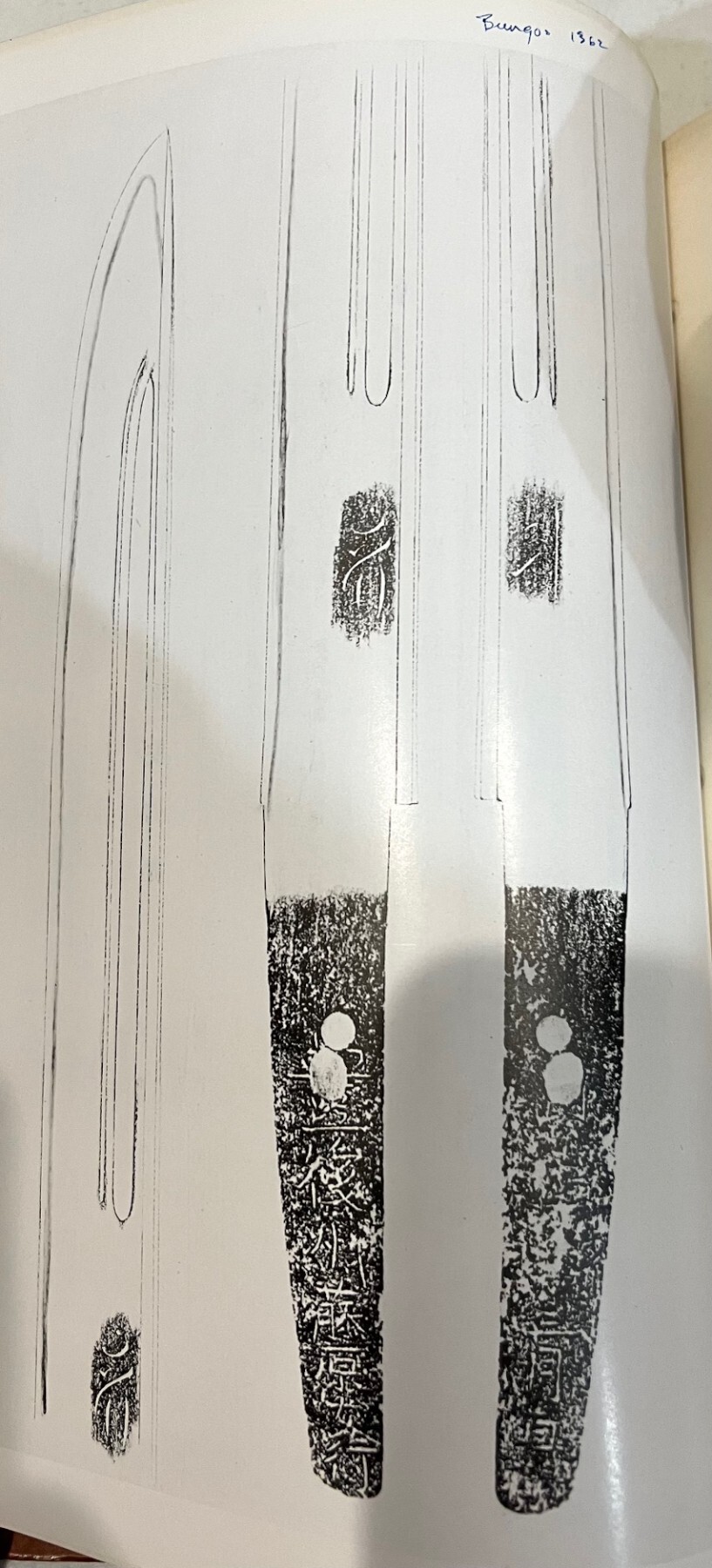
I think the confusion boils down to semantics and/or context. Were there Tanto over 1 shaku? Yes, Sunnobi Tanto were blades with a nagasa greater than 1 shaku and mounted as a tanto. In todays world of Japanese swords, the regulations which govern entities such as the NBTHK have set the criteria at three basic designations, tanto, wakizashi, and katana with some rare exceptions. If you submit a sword today mounted as a tanto, sunnobi or whatever, and the nagasa is over 1 shaku, it will be papered as a wakizashi. Yes and no. They actually call the entry process shinsa. While not in the context we commonly think of as shinsa which is much more detailed, they do have to address topics like measurements and mei for the torokusho. There is no research regarding the authenticity of the mei, but the measurements have to be correct, not superficial by law. It you are checked by the Japanese police and the measurements do not match the torokusho, the trouble you will incur will be far from superficial. As in the case of the torokusho in question, it clearly states "Wakizashi". Yes, there are Juyo Tanto with nagasa slightly over 1 shaku that were papered some years ago. Honestly, not sure if that is still the case today. If you have evidence of modern papers which state "Tanto" with nagasa over 1 shaku, I would like to see them. @Jussi Ekholm would probably know. Here is one example from the Juyo Zufu: Hoshu ju Fujiwara Tomoyuki, Bungo, Joji 1362-1368, Sa school. Tanto, Nagasa: 1.07 shaku 1 sun, 2 bu.
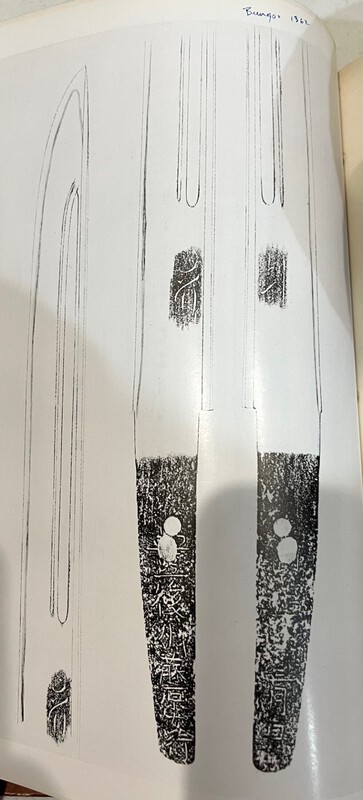
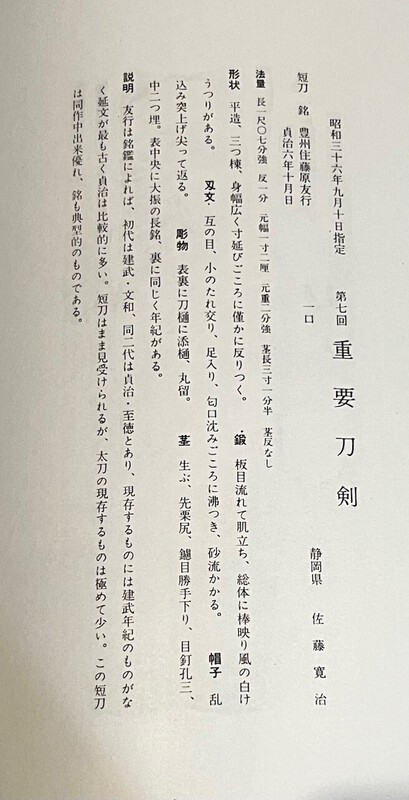 1 point
 -
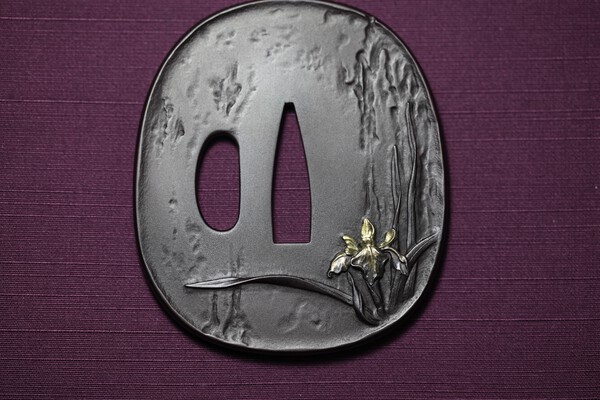
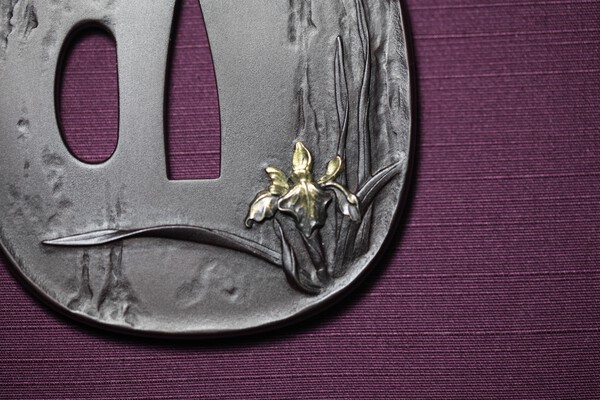
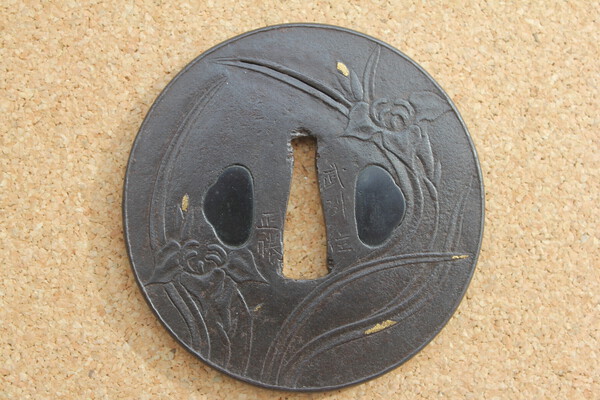
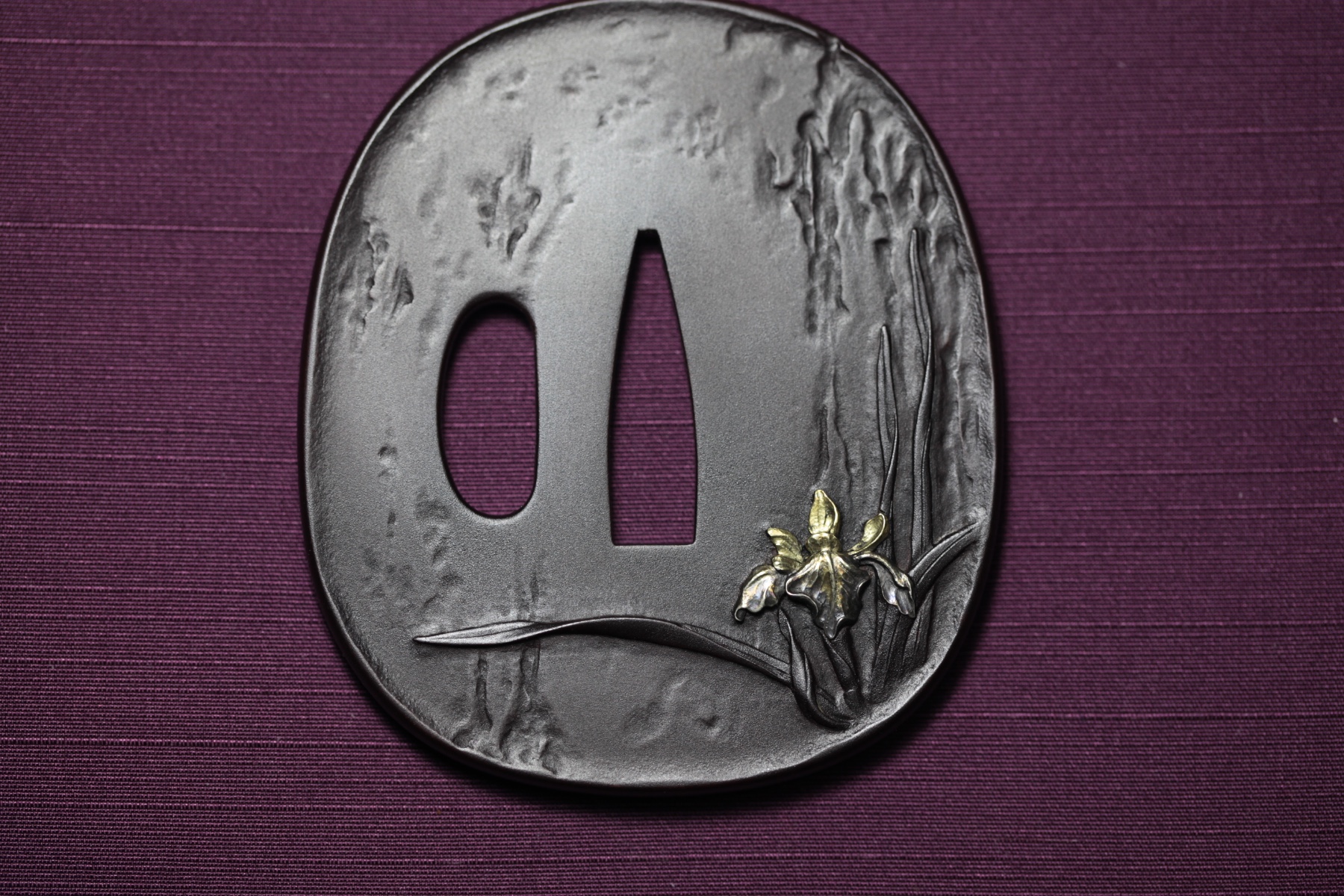
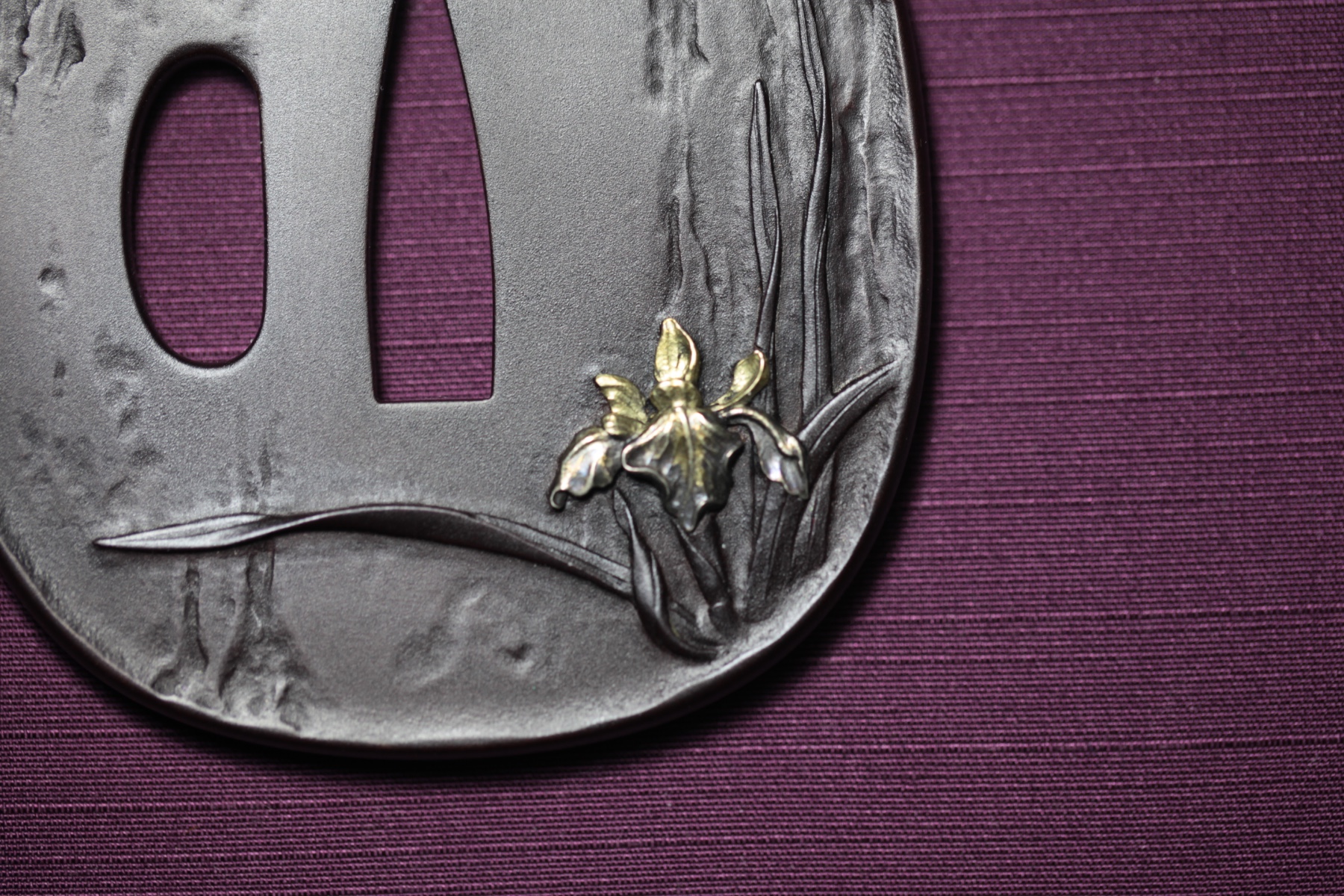
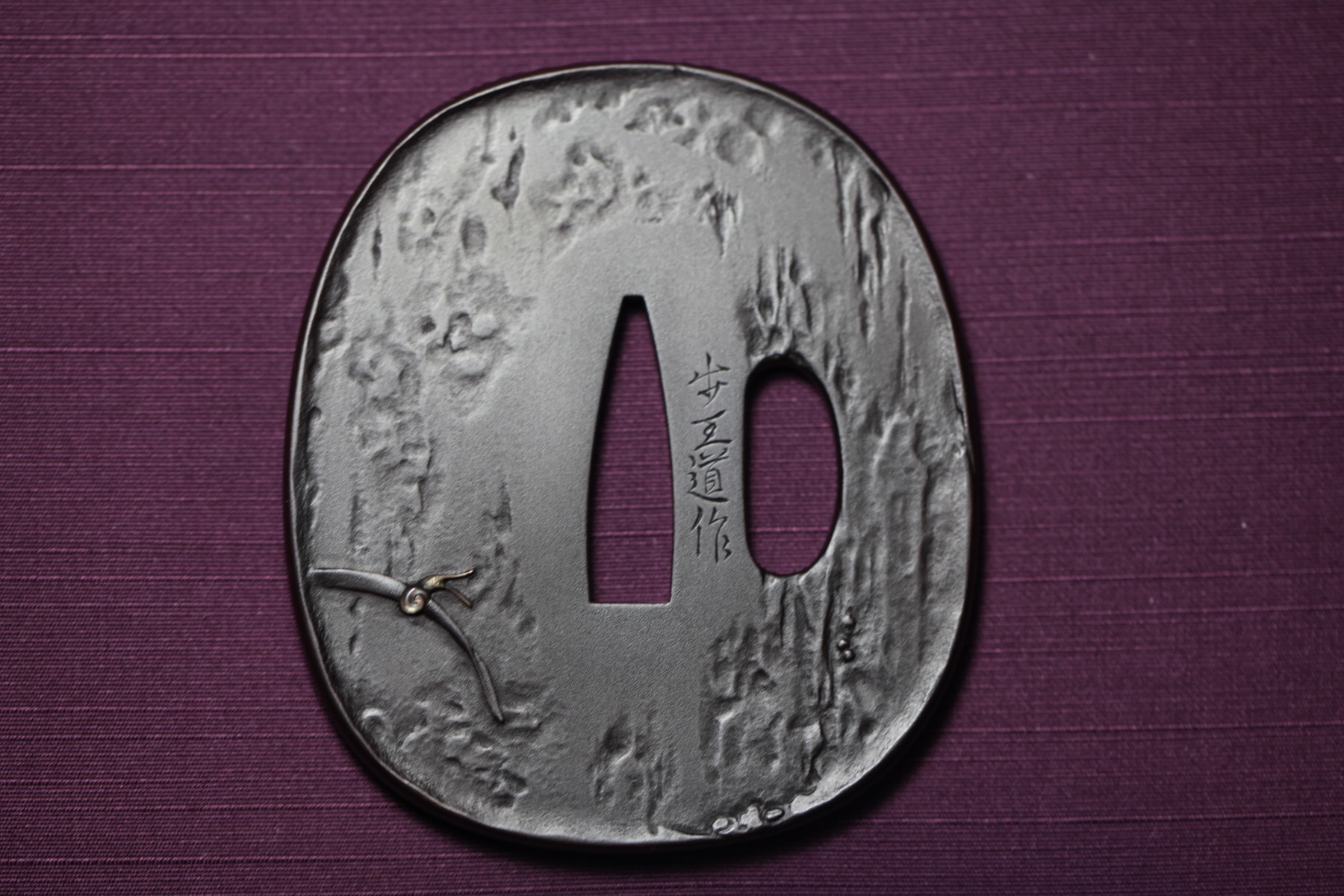
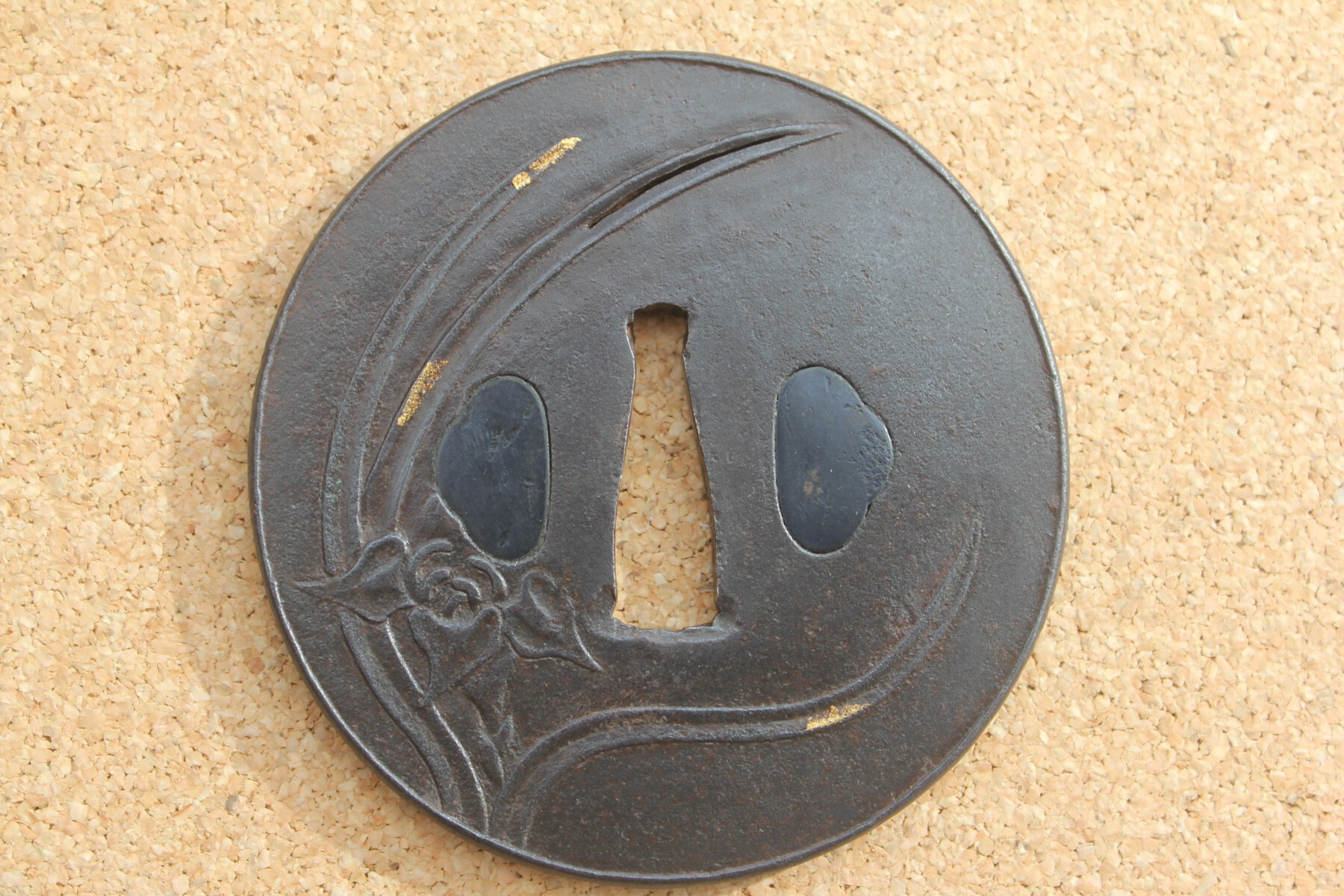
Item No. 287 Iron Tsuba with gold and mother of pearl 7.72 cm x 6.77 cm x 0.40 cm Subject of Irises against a rock face background , a diminutive snail on a leaf to the rear . Made by Ford Hallam around 18 years ago. Taking inspiration from the work of Kano Natsuo , Ford has produced a deceptively simple looking piece , where a great deal of attention has been given over to the ground work and texturing. The overall effect is seen much better in the hand, as photographs flatten out the detail and have insufficient depth of field to allow an overall oblique view .
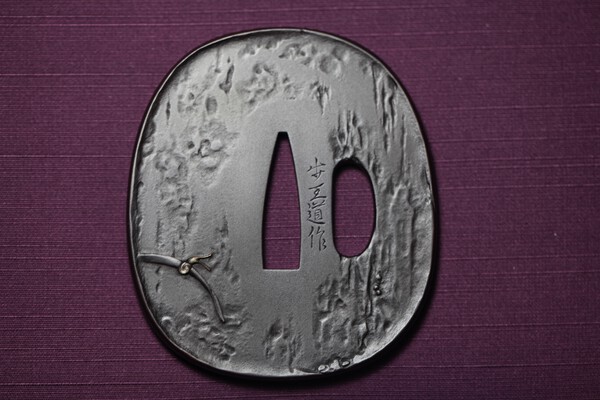
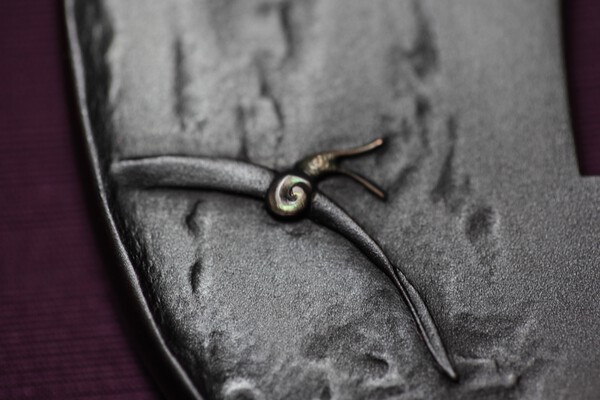 1 point
 -
Re Item No. 227 Clearer views as promised -
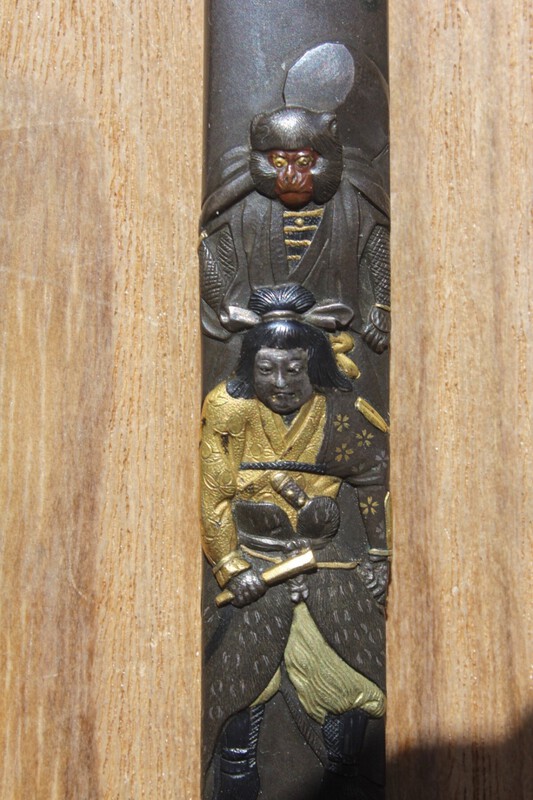
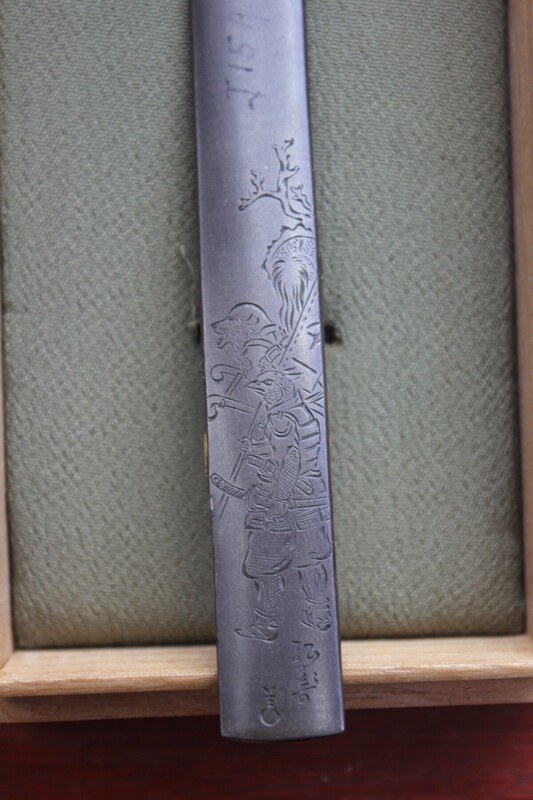
 1 point
 -
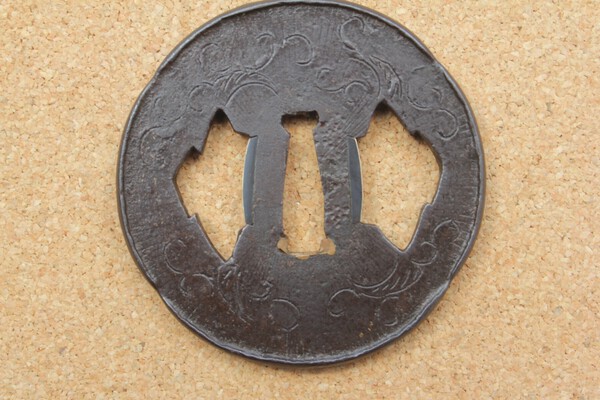
Item No. 211 Iron Tsuba with shakudo , brass and gold 7.93 cm x 7.88 cm x 0.45 cm Described as ' Echizen Nobuie ' Is this another Akasaka Nobuie ? With lots of detail including ' sun burst ' engraving , sprinkled with gold flecks , arabesque carvings ,Hitsu Ana liners in Shakudo and brass , nicely upset split rim and deep ,chocolate brown patina. Someone ' went to town ' on this one - with the amount of decoration , possibly for a merchant rather than a samurai. Item No. 212 Iron Tsuba 7.50 cm x 7.30 cm x 0.50 cm Subject of Chrysanthemum flowers and leaves, thought to be Kyo Shoami mid to late Edo. Very dark grey , almost black patina,


 1 point
 -
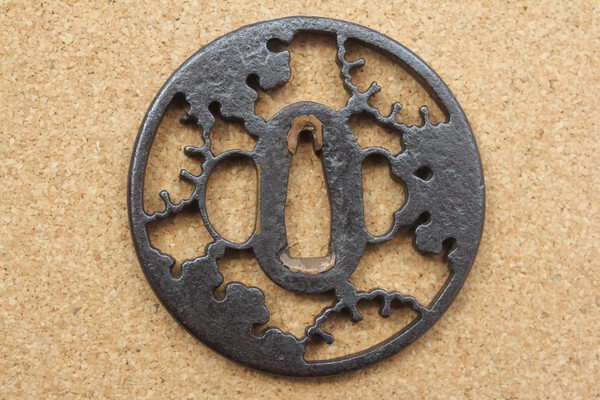
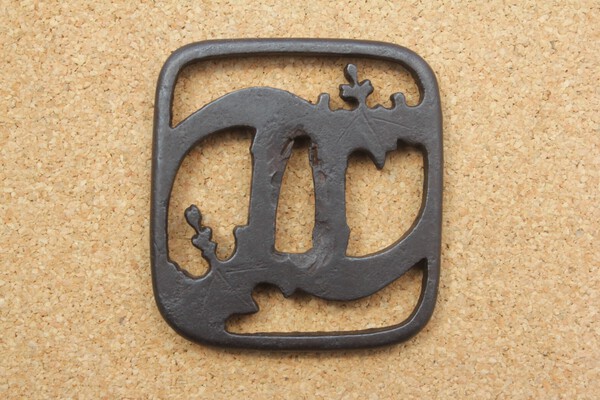
Item No. 190 Iron tsuba 7.94 cm x 7.88 cm x 0.57 cm Subject of snowflakes - Kyo shoami Mid edo Good colour / patina Item No. 191 Iron Tsuba 7.10 cm x 66.2 cm x 0.65 cm Akasaka Kiri & Tomoe - NBTHK papered

 1 point
 -
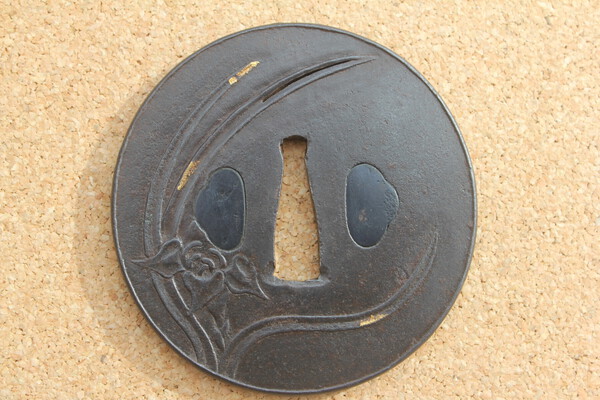
Dear Bob, There are 20 artist entries in Haynes for Masakatsu signing with your kanji. Haynes 04085.0 is one of them, but he is from Karatsu, Sakura and Odawara. Haynes 04087.0 (who also signs with your kanji) is the only one listed from Bushu, so I think he is your guy. He worked in the 1800's, and his style and mei matches your tsuba (and he is probably the one you are looking at in Sesko).
 1 point
 -
No.9 - Iron tsuba with gold highlights Bushu Ito school. 7.7 x 7.5 cm x 4mm . Signed Bushu ju Masakatsu. Purchased over 12 years ago from a senior and esteemed board member... Design of Japanese Irises , a precursor of Art Nouveau , this tsuba dates from the second half 17th century (1600s) and is therefore approx. 350 years old. This information from Haynes #04085.0 ? I do not have the Haynes book . In the Markus Sesko Genealogies book , however , page 112 , shows him as a later generation artist. Can anybody please make some sense of this ? NBTHK papered and published October 2007.
 1 point








.thumb.png.4c5df79fec171b2dc4a23af38e280a4d.png)
















This leaderboard is set to Johannesburg/GMT+02:00