
Leaderboard



Popular Content
Showing content with the highest reputation on 02/14/2026 in all areas
-
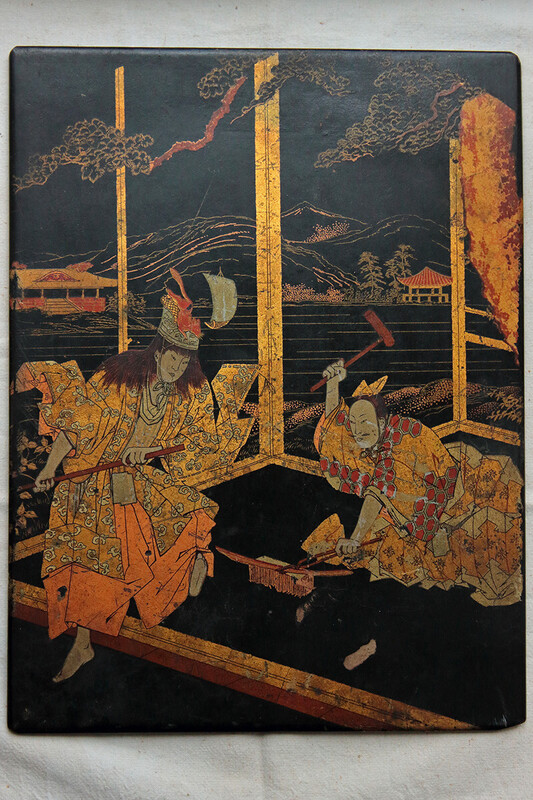
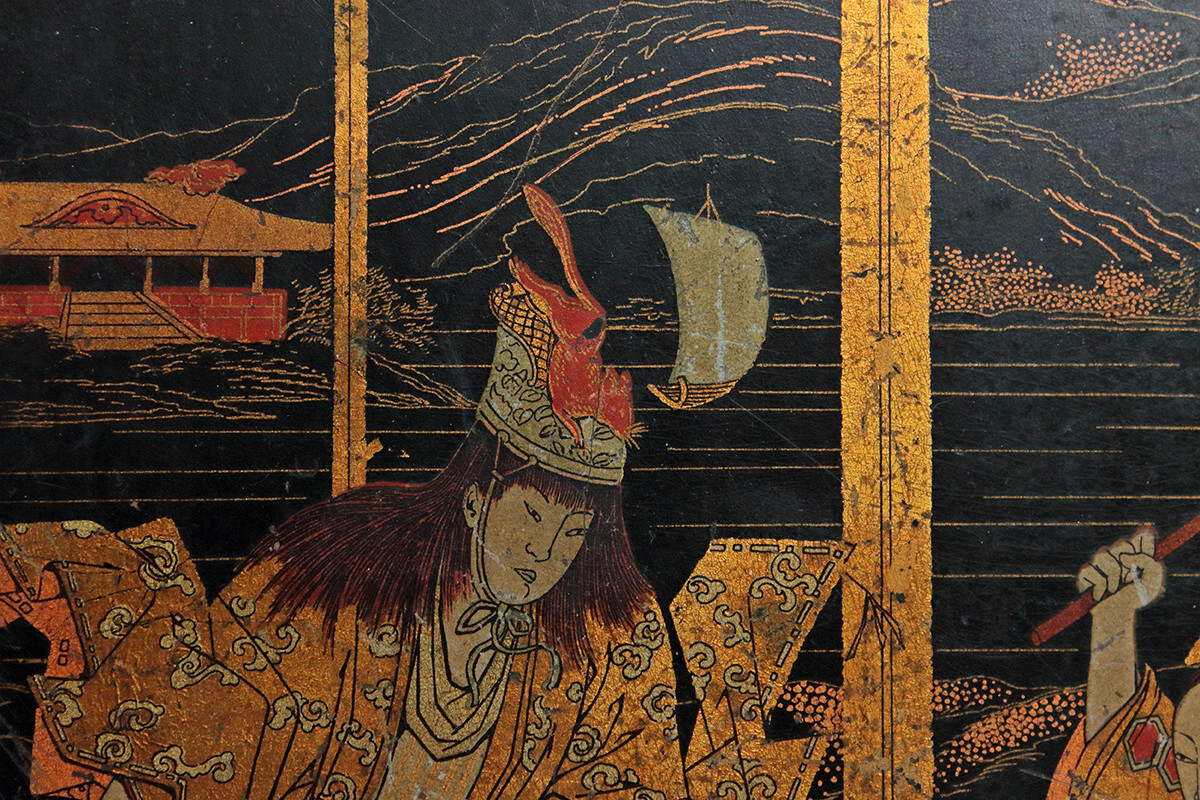
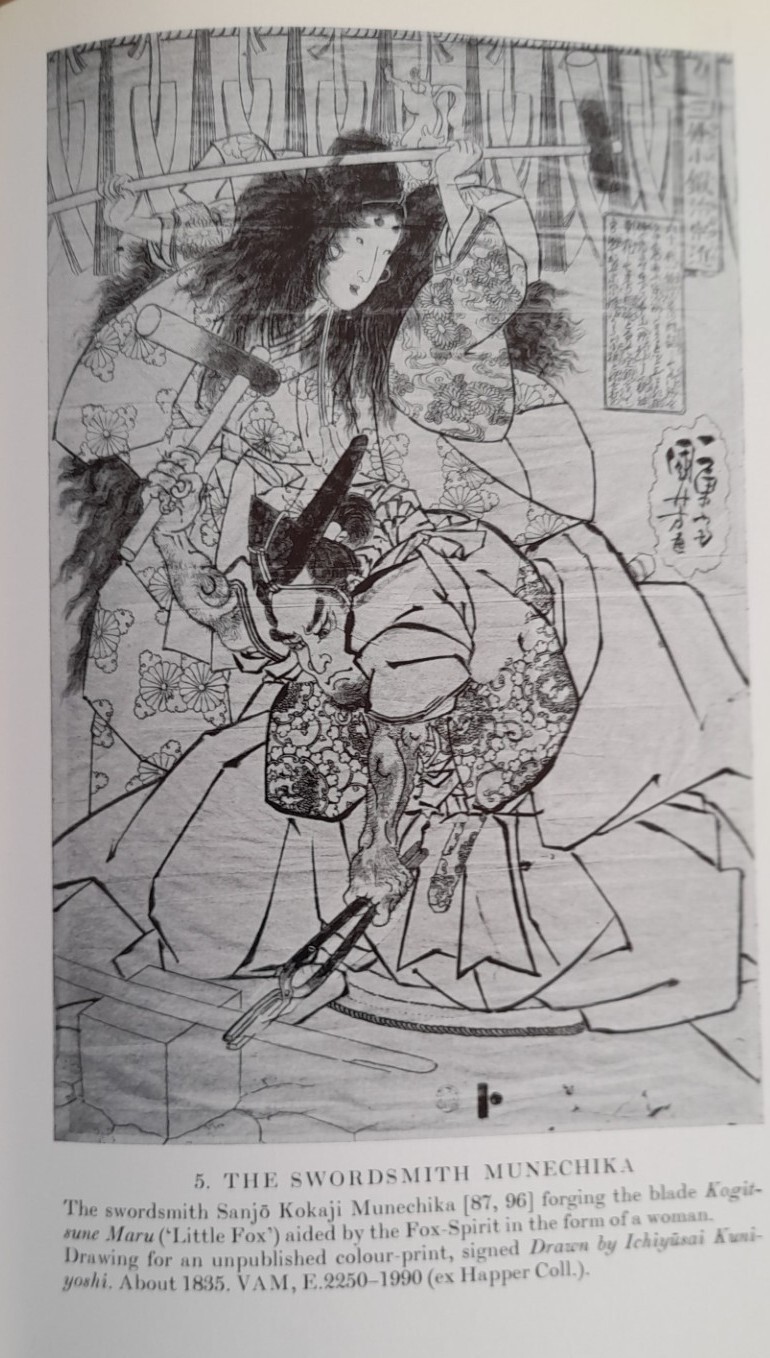
I think this is the swordsmith Munechika forging the blade Kogitsune Maru ( little fox ) aided by the Fox Spirit in the form of a youth . See plate 5 of Robinson's The Arts of the Japanese Sword6 points
-
Great thoughts Brett - I think you should propose this to the NBTHK/AB, I am not sure the Japan office has thought on these, they really should. I will point out that one of your proposals is already a reality. The Northern California Japanese Sword Club and the Metropolitan New York Club both have reciprocal relationships via the NBTHK/AB we pay one fee for membership in both clubs. Also we still get the NBTHK magazines in the mail, it is the NCJSC that went digital and now produces its newsletter only electronically... -t5 points
-
I am excited to announce the release of a document I have been working on: Type 95 Military Sword Variations. It is now available in the download section for anyone who would like to access it. I am pinning this thread in place of the Type 95 Worksheet, of which can be found here: https://www.militaria.co.za/nmb/topic/29722-type-95-gunto-worksheet/#comments My hope is that this monograph helps dispel some of the long standing rumors surrounding these swords and assists collectors in identifying the examples in their own collections. This work is purely educational and is intended to consolidate information from several sources into one comprehensive reference. I would like to acknowledge the late Nick Komiya for the huge amount of documents he shared on the warrelics forum over the years; without his contributions to the study of Japanese Militaria, this document simply could not exist. I'd also like to extend a special thanks to the following Nihonto Message Board members, who either directly, or indirectly through discussions over the years, greatly aided my understanding of this type of Japanese sword. I am forever grateful. @Kiipu @Bruce Pennington @Conway S @John C @drb 1643 Tom Foster, @robinalexander @BANGBANGSAN @Shamsy @Stegel @PNSSHOGUN @rebcannonshooter @Grimmdarkspire @matthewbrice @vajo @Brian . Please see the aknowledgements section in the download, and I hope not to have forgotten anyone... This is Edition #1, and I intend to update the download annually as new revelations arise and as serial number range changes are observed. It is formatted imperfectly, but to the best of my ability with programs at hand (I am an enthusiast and collector, not an experienced writer). Please feel free to let me know if you notice any typos or inconsistencies, and I will address them promptly. Feel free to use this topic to post information or questions about Type 95 Gunto. I hope you find the monograph helpful. Happy Valentine’s Day! -Sam4 points
-
Was going through the listings of a local internet auction when I stumbled upon this lacquer panel. And since it featured two swordsmiths working on a sword, I bought it. It came cheap, less than 50 USD including delivery. It arrived today and I decided to share it here. Is this one of those panels that came in pairs and mainly were for selling them to Gaijin? Also I am very curious about the headgear of the swordsmith to the left. The dimensions of the picture are approximately 307x232mm. I also found a round version of this picture here: https://www.roseberys.co.uk/a0470-lot-494323?el=494323&lo=&pp=96


 4 points
 -
Thank you for posting this Brett, you have made so many interesting threads and it is always fun to open them as I know it will be a good one. I got in bit of a rabbit hole when trying to dig up the blades and ended up finding some great info but mostly left dry. I found out that the Torikai Kunitsugu was donated to Kurokawa Research Institute in 2016. The Kotegiri Gō has been in the collection of Kurokawa Research Institute. Like Brett wrote the Tokuzenin Sadamune is in the collection of Mitsui Memorial Museum, this is absolutely amazing blade in my opinion. I've said few times I am not huge fan of the golden age Sōshū but this Sadamune and few other Sadamune I have seen have been spectacular. From the info that I can gather Maeda Masamune seems to reside in private collection, last mention I have seen about it was 1961 exhibition. As I was trying to dig info about the other swords of major importance mentioned, I found out that the named sword Satō Yukimitsu of Matsudaira family was also sold if I understood correctly in 1934 for 1,798 yen (however another source mentions same person won it for 10,000 yen). It passed Jūyō Bijutsuhin in 1935 and listed owner was the person winning the bid for it. To my understanding it resides in private collection. For the Tsuriganekiri Kuniyuki tachi I was only able to find the person who bought it from that auction and it seems he had some very nice swords. Unfortunately that 1924 mention of the item is the latest info I found about it. Unfortunately for the rest of the items I cannot find anything certain. If I understand correctly the Matsudaira sword list that I have is from 1670, and there most likely has been numerous swords added to the family collection after that time. The Yoshihiro tachi is listed with characters 義弘 so it would be either Gō or Senjuin, however I have not known a single signed tachi by Gō and even for Senjuin Yoshihiro I know of only 1 and that is in Tsurugaoka Hachimangū collection. Also that Kanenaga is really puzzling one to me, also the mumei Norishige compared to other items in the list the prices of these 2 mumei swords seem way out there, so they most likely had super serious provenance.4 points
-
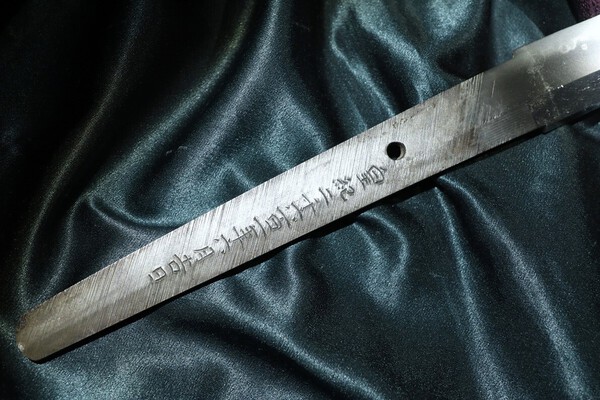
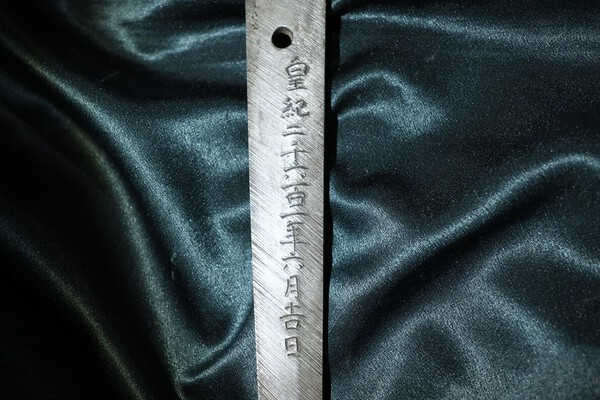
This is extremely complicated signature and I am missing lot of key information, however I think I have a grasp of the general idea about the smiths. 越前国□広□□為三十七歳□内□□□守 / 行年七十有二 同子 高柳加賀守藤原貞広 / 国継相共□正□ other side I would believe starts with 正徳二壬辰□三月上日 and there is a lot lot more to translate. This would be made by Kaga no Kami Sadahiro (signed as Takayanagi Kaga no Kami Fujiwara Sadahiro) at the age of 72 with his son Aritsugu while he was signing with Kunitsugu (国継) and the year would be 1712 as that matches the zodiac. I was able to find a reference piece that can be seen on page 11 here (unfortunately the pic is very blurry): https://www.yamasaki-bunka.org/wp-content/uploads/2024/09/kyodokaiho_063.pdf Both the item in this thread and the one above link, seem to be signed as at age 72 with son Kunitsugu and year is 1712. Markus Seskos swordsmith index and Nihontō Meikan both mention that there is a item signed as at 71 with son Kunitsugu (who was signing 27 year old to that sword) and year is 1711. I think it is extremely interesting item and I hope that you can get correct and proper translation on it, as there is so much that I fail to understand. I would feel the signature would be legitimate as it is such a peculiar one and extremely long.4 points
-
I stumbled across a great little read in the Token Bijutsu Volume 35 about the sale of the Iyo Saijō Clan's Matsudaira Masterpieces. The Iyo Saijō Clan was established with the fief of 30,000 koku as a branch family of Kishū Tokugawa by Matsudaira Sakyō-dayū Yorizumi, who was second son of Tokugawa Yorinobu ruling Kishū. When the new branch came into existence, some of the treasures in the Kishū family collection were transferred as heirlooms. Among the ten transferred swords, three of them were meibutsu, namely, Maeda Masamune, Tokuzen-in Sadamune, and Satō Yukimitsu. Others included two Juyo Bunkazai, a kodachi by Sanenaga and a ken by Mitsutadai. It is said that the magnificence of swords in the Matsudaira collection came next only to the Maeda, Shimazu, and Kishū Tokugawa collections. In the article it, it talks to the sale of a few of these great swords that we have discussed even recently here on this forum. It seems insane that some of these things have actually been sold but there you go. In 1918 or 50 years after the Meiji restoration, two of the Iyo Saijō Clan's Matsudaira meibutso were sold: 1. Torikai Rai Kunitsugu tanto - said by Dr Homma when he saw it in 1950 that he was surprised this was not elevated to a higher status (Juyo Bunkazai or higher) this sold in 1918 to a Mr Sugihara who paid 8,000 yen for it. To put in perspective. 1 yen was equivalent to roughly 51.5c USD back in 1918. So this means the sword roughly cost $4,120. To assess how much this was in the day, an unskilled labour earned you $1/day, whilst skill labour was $1.50/day. As such the salary of an unskilled labourer was $241/year or $361.50/year for a skilled labourer. At the time a larger, well-built, multi-bedroom home in New England cost between $2,500 and $3,500, today this home would cost over $3-4 million. Basically, if you look at the USD prices from back in the day, all you need to do is throw three zeros at the end for an roughly equivalent price today. 2. Kotegiri Gō wakizashi - Initially owned by Inaba Tanba-no-kami Masakatsu it was given official recognition as work of Gō by the origami issued by Hon'ami Koon in Kanbun 2 (1662). The origami also certified that it was worth 100 pieces of gold coins. Later when its ownership went to Hosokawa Etchū-no-kami the price was raised to 130 gold coins. It went back to the Inaba again with the origami certifying its new value was 200 gold coins. Finally it was put into the same auction in 1918 as the Torikai Rai Kunitsugu tanto and was sold for €3,338 or $1,719. In 1924, some 56 years after the Meiji Restoration, the remaining bulk of the Iyo Saijō Clan masterpieces were auctioned off, including their third Matsudaira meitbutso: 3. Tokuzen-in Sadamune tanto - named ofter the owner Maeda Gen-i who had the pseudonym Tokuzen-in. It came to the Kishū Tokugawa by way of the Shōgun Tokugawa, and it eventually went to the Matsudaira in lyo Saijō. It was at the time given the price of 300 gold pieces. It was placed in an auction in 1924 along with an aikuchi-koshirae with a set of mitokoro-mono made by Gotô Kojo. The three metal pieces are of the shishi (lion) design in gold. The tanto and the koshirae sold for 5,200 yen or $2,132 at 41c USD. Which seems a lot but this sword was made a Kokuhō or National Treasure on the 22nd November 1952 and is now held at the Mitsui Memorial Museum. The following is a list of some of the swords of major importance that sold at the 1924 auction: Bizen Kanenaga (unsigned) with shirasaya: 27,800 yen or $11,398 (even though it was not meibutso it became the highest priced sword at the time - we know it is not Kokuhō or Juyo Bunkazai as none of Kanenaga's blades are Kokuhō or Juyo Bunkazai. Would love to know what happened to it, is it one of the Juyo Bijutsu or Tokebetsu Juyo blades?) That would be almost $11.4 million in today's money! Norishige (unsigned) with shirasaya: 12,100 yen or $4,961 (People loving Norishige apparently is not a modern trend... Is this one of the Kokuhō or Juyo Bunkazai blades?) That would be almost $5 million in today's money! Tsuriganekiri Kuniyuki with shirasaya: 3,050 yen or $1250.50 or $1.25 million in today's money! Unreal! Enju Kunitoki tachi in shirasaya: 2,200 yen or $902 Yoshihiro tachi in koshirae: 1,650 yen or $676.50 Awataguchi Yoshimitsu tanto in koshirae: 1, 320 yen or $541 Rai Kunimitsu with shirasaya: 1,250 yen or $512.50 Awataguchi Kuniyoshi tachi in koshirae: 1,250 yen or $512.50 It is also known that more than half of the blades sold at this auction achieved prices above 1,000 yen or $410, that is over $410,000 in equivalent purchasing power today. If we consider the Dr Compton Auction at Christie's held March 30, 1992 as the highlight Japanese sword auction of our generation, then this 1924 auction would simply have been the greatest Japanese sword auction of all time!3 points
-
Sam "Scogg" has just finished a monograph on the major variations of the Type 95 Military Sword. I strongly recommend that everyone looking to purchase a Type 95 Military Sword read and study this monograph before buying. This monograph can be downloaded via the NMB thread below. Type 95 Military Sword Monograph - Download Section Scoggin, Sam. Japanese Type 95 Military Sword Variations, 1936–1945. February 2026. PDF file, 71 pages, letter sized.3 points
-
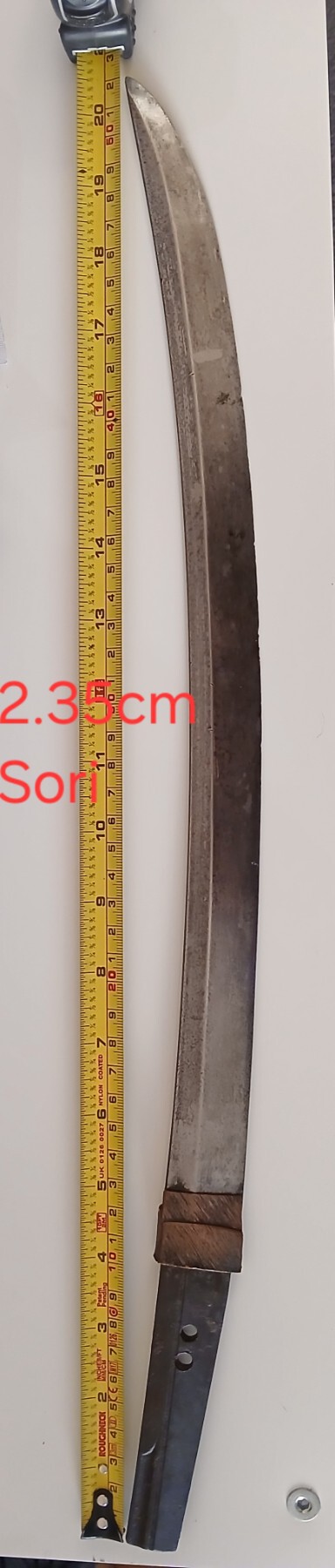
Thank you for the measurements they clear up things to me a bit. I must say I would have thought the curvature was much stronger and blade is thinner at the (current) nakago than I thought it was. To me both of those are good things. I think you have a cool item The hi on just one side is bit peculiar one, likewise as it seems there is not a direct profile shift near the end of hi. This is of course the common type of profile shift that we have in naginata the mune is thick over the hi and radically tapers very soon after the hi. Picture of my Yoshikage naginata. in this the tapering is extreme going from 8,5mm on top of hi end to about 1mm on the blade portion. Now this second type is quite uncommon but as I do have a naginata that has the gradual taper I can post a picture. This Ko-Uda naginata goes from 6mm on top of hi to 4mm on blade portion. I think I have seen some naginata that have just horimono on one side but on top of my head I cannot remember an example that would just have a hi on one side. I like naginata as there is so much variety among them, they are very interesting. To me the majority of Japanese katana and tachi just seem nearly identical with tiny variation and it is kind of boring, then in comparison there is huge variety in polearms with all kinds of interesting forms and oddities.

 3 points
 -
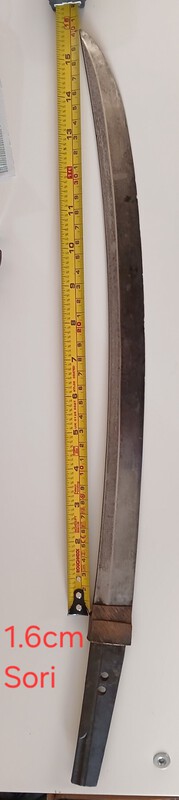
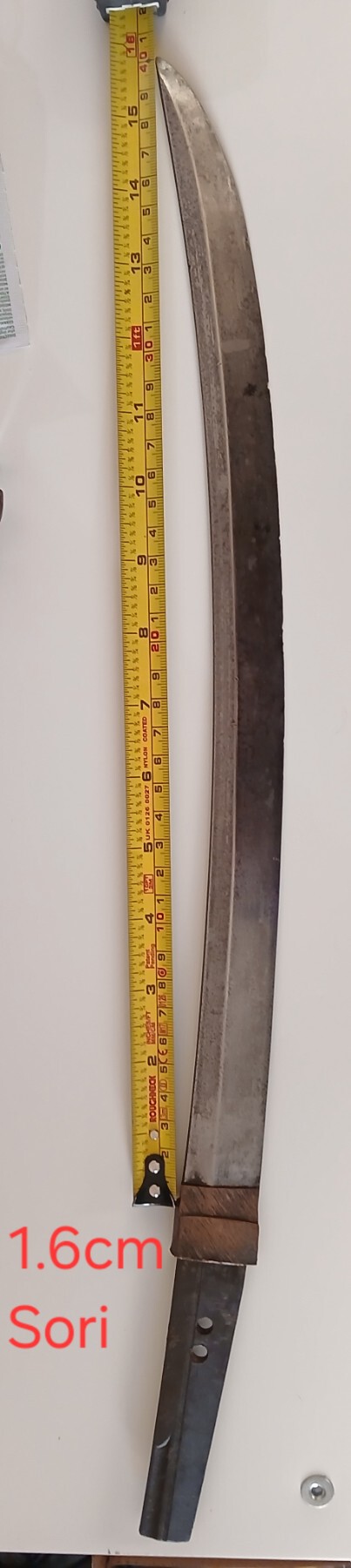
Here you go Jussi, measurements are on the images, hopefully this helps! Do you know why the naginata-hi may have only been on the one side?

 3 points
 -
I'll try go through them point by point over the weekend. But some of them are excellent ideas, and others are limited by what the software can do, and I can't do it all manually. Some of the stuff there can be done in the new software that I am waiting to update to, but we aren't making much progress towards the $500 that the major update requires, so a lot of it is pending along with a ton of other features people will like. As far as hi res image hosting etc, that would likely also add another $100 a month to the hosting bills so I would need to make sure we don't go backwards. We already have a crazy number of attachment files hosted, well in the high hundreds of thousands, and most hosting comments have been "what the hell....you have allowed HOW MANY files uploaded??" Yeah, 18+ years sure does increase the number of attachments, especially when they are fairly unrestricted. The rest, I'll go through later, thanks for the comments.3 points
-
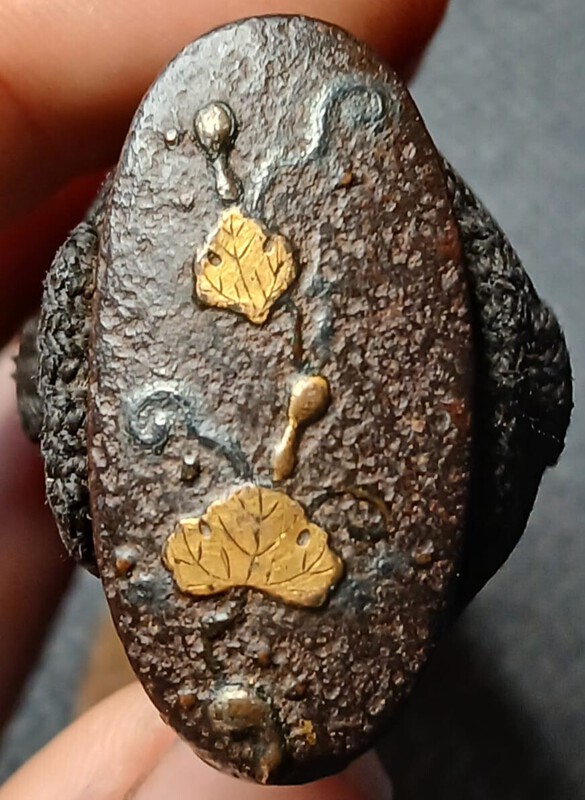
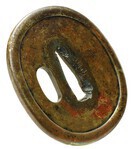
Go on then…my much-loved tsuba - I think it one was originally something else entirely, with the tiniest bit of gold zogan from its former life still visible. I believe the fukurin, shakudo inserts (‘plugs’ as we referred to them on another thread) and kogai-ana are later modifications. A tsuba made out of another tsuba.

 3 points
 -
This one is signed Gotō Hōgen (aka Gotō Ichijo), made at 78 years of age. This would place the date of manufacture around 1868-1869.
 3 points
 -
Communication isn't the NBTHK's strongest suit. Try emailing info@nbthk.touken.or.jp It can take a few days to get a response. They do communicate in English. How long ago did you email them first time? Making payment via bank transfer is also a fun experience.2 points
-
Amazing document Sam! Very comprehensive and informative. Next type for you? Showato at large.2 points
-
Does anyone know if NBTHK have ever suggested they would put their sword directory online? I know I would pay to get an annual membership to that. I suspect majority/ everyone here would. A NBTHK Juyo & Tokubetsu Juyo Shinsa book costs around 20,000 yen each. That is 60,000 yen every two years for two Juyo and one TB books or 30,000 yen a year on average. But I am not sure how many of these books they print or sell annually and therefore do not actually know how much they make from this exercise. Current Japanese NBTHK membership costs 12,000 yen and foreign membership costs 19,200 yen - I believe this use to cost more because they sent mail internationally but I am also advised that all of this is now online since covid? So I am not sure how many members they have - a few I suspect but not as many as are members registered with clubs and forums such as NMB. If they provided the NBTHK sword database to members I suspect they could probably ask 25,000 or 2,500/month (Price of a Netflix subscription) across the board and negate the need for local and international snail mail. As this is a subscription to an educational service subscribers could probably also get a tax deduction for this in most countries. I think this could really take off if they did a deal where sword clubs and forums are allowed to apply for association status, so that the club can get subscriptions to the NBTHK at a discount rate (20% less perhaps) that would allow the club or forum to fund their activities through the difference between the subscription and the discount. It would bring in some much needed revenue for the clubs and forums, that currently struggle, it would bring in more money to NBTHK and the data access would be super helpful for the community. A win, win for everyone really. There is also opportunity for the NBTHK to license their images and sell them if people wanted to use them outside of the NBTHK database. They could also charge the retailers more (like 100,000 a year) to allow them to use the NBTHK data, images & certificates in their sales advertising. It just makes economic and commercial sense. I am not sure they get anything from the retailers who scan in and currently use the NBTHK certificates on their websites? Does anyone know more about this? Surely something like this must have been discussed in the higher circles of the NBTHK in the past? But I am very aware of how reluctant the Japanese are to online usage especially in the Nihonto space where the average age is not exactly young. The Japanese also appear to love paper work, snail mail and red tape - in a way these last 30 years or the "lost" 30 years have seen a lot of Japan left in the 90s. So I am aware this is not a small exercise and would involve a significant amount of work, infrastructure and mental realignment to set this up but I am also sure that I am not the only one who wants this - the Nihonto community is desperate for high resolution images. It would be so good to have a single source for this information - the benefit analysis & growth of this space would be absolutely enormous. If the NBTHK are not willing to do this due to the size or uncertainty of the project then perhaps there is an opportunity for a private institution to exclusively license this data from the NBTHK and on sell it themselves to the community? Of course if there was a really rich benefactor who would be willing to fund this and make this incredible data available for free, then I will also not object. Morning thoughts.2 points
-
I do think all international members still get the physical magazine, to be honest that is pretty much my only reason for my NBTHK membership, as crazy as it sounds. I think I've been a member for 15 years now, and the most important thing for me is the monthly magazine. The book print runs are pretty small amounts, I was very surprised when years ago Darcy told me about the numbers. As I cannot remember the actual number he told me I cannot say exact number but it was very small in my opinion. The Financial report in magazine 8/2025 has membership numbers and lot other information. I am not sure if it would be ethical to share that on open forum as it is in member exclusive magazine. I can just state generally that number is smaller than perhaps most would think. As I have all the magazines it is easy to see the evolution and just to be curious I checked 2005 magazine to see how things were 20 years ago... I would love to have access to view all of the items that have passed Hozon & Tokubetsu Hozon as these are the unknown items that are still under radar. The problem in this is that I believe there are something like 250,000+ items in this range. I have heard that some collectors do not want to send an item to Jūyō as they want to keep it private. I can also understand that view, however for research purchases I think open share of information is extremely important. There are some "hidden" items in Japan, and I always feel excited when I find a new interesting item, however they might still be well known among Japanese circles just flying below radar. As an idea that is superb and I do feel the organization should really look into something like this.2 points
-
It's a fabulous document, Sam. Thank you for doing this. I've already had the need to reference it, in a discussion about a guy's 95 on another forum! It's right in there with my Fuller and Dawson references.2 points
-
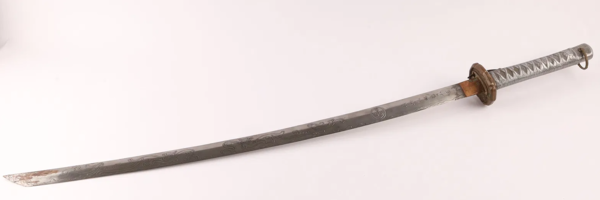
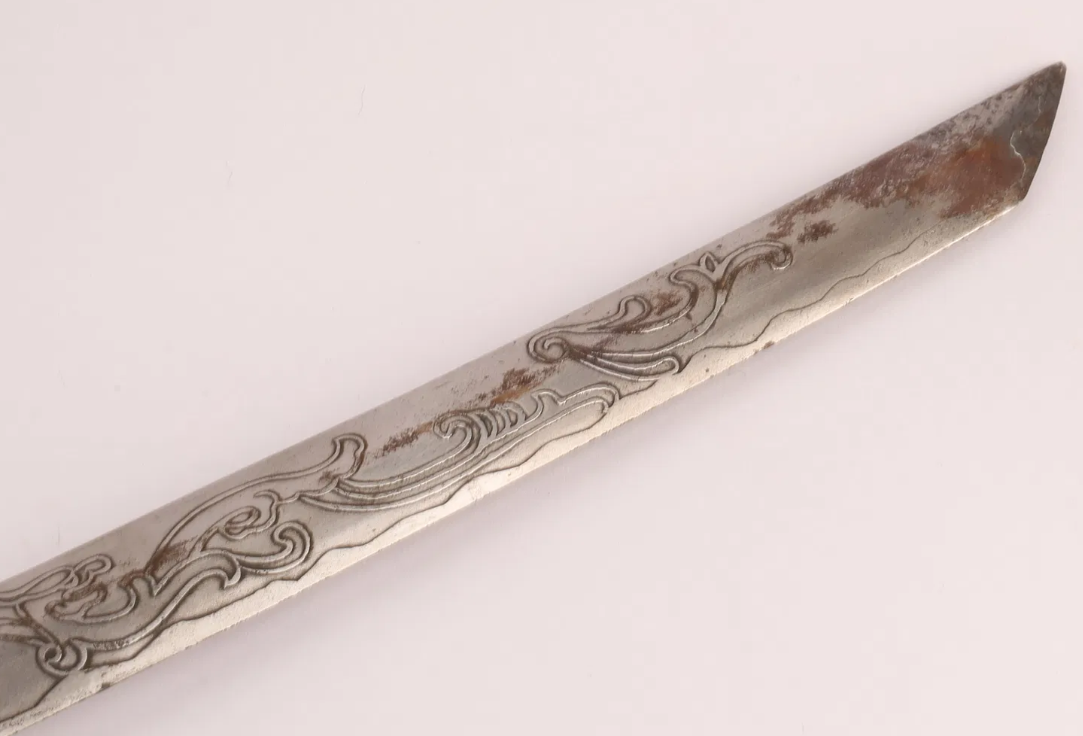
I have written to Kavanagh Auctions of Montreal CA .. hopefully they will do something about their listing so as to avoid grief for all concerned! Wwii Japanese Imperial Naval Katana Presentation Sword Auction Titled .......WWII Japanese Imperial Naval Katana Presentation Sword Description Naval Japanese imperial katana, note the anchor and waves pattern engraved on both sides of the blade, so probably a presentation sword or gift for an officer, aluminum grip which imitates the wooden tsuka with silk-cord wrapping, so a late war production (42-45). The numbers 198631 can be seen on the Habaki. Overall length is 39 inches, with a 30.5 inches blade. Heavy and very tight sword, very nice patina. No saya or scabbard.
 2 points
 -
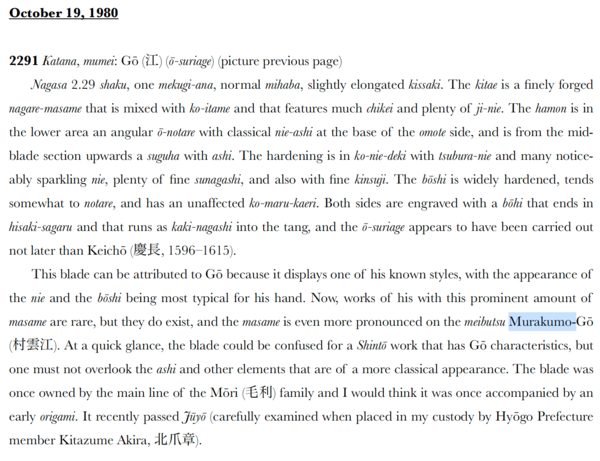
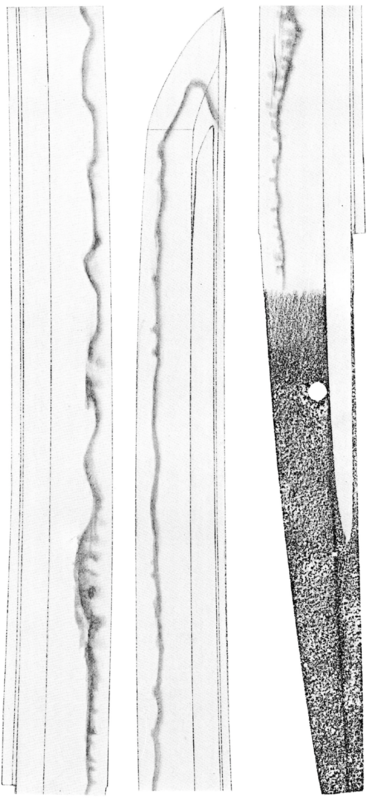
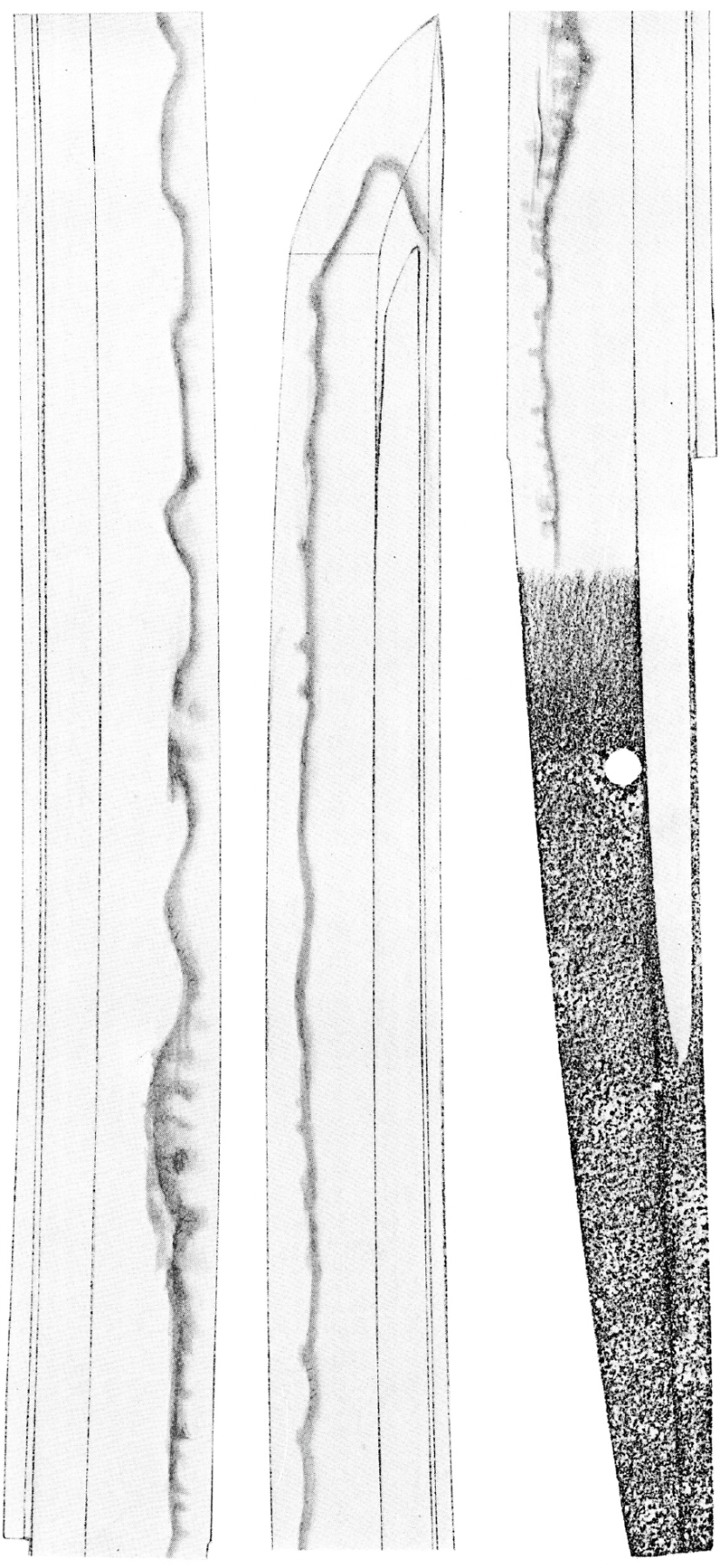
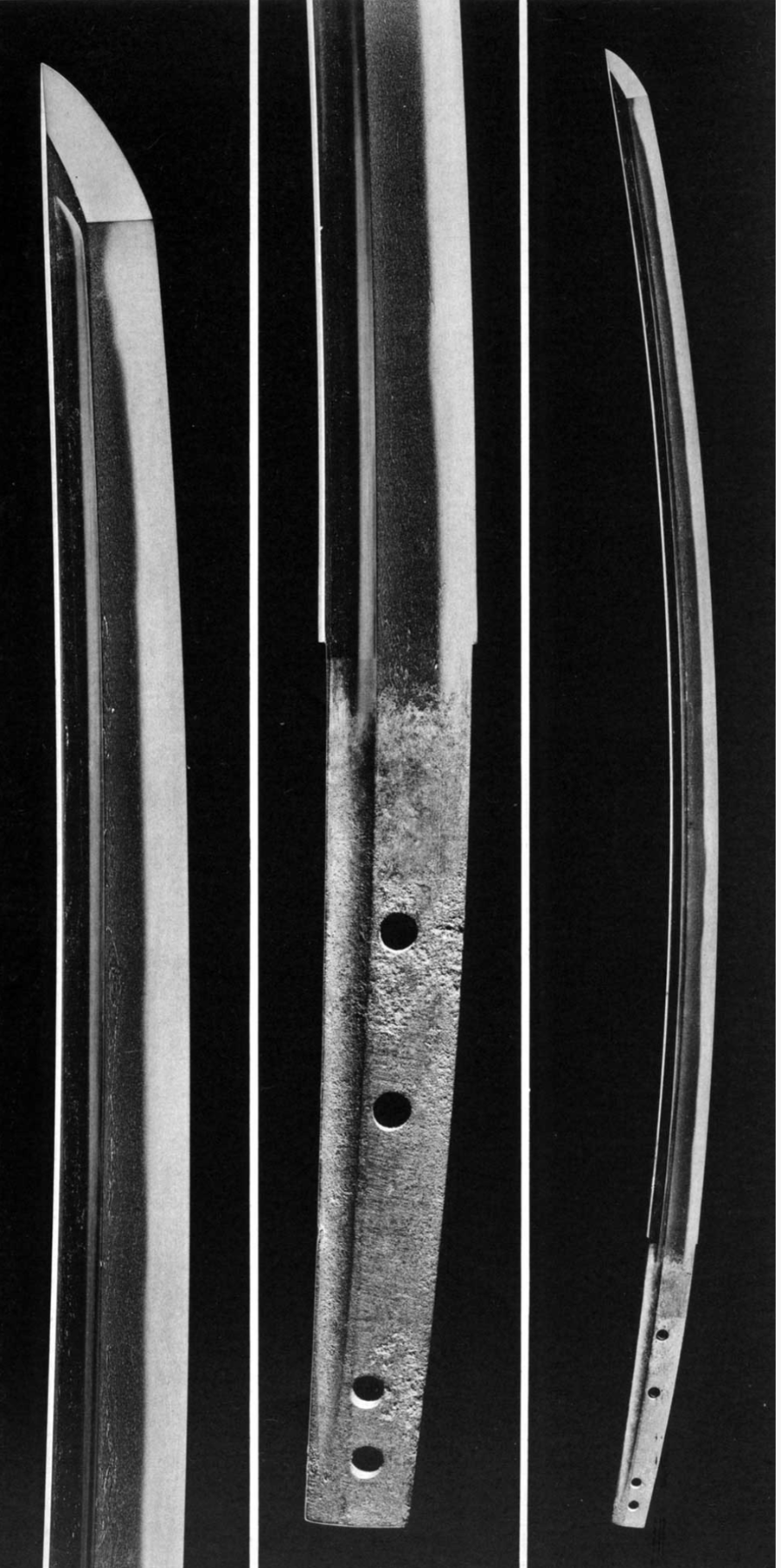
The sword in oshigata and one that was described in the book is actually Mōri Gō 毛利江 it passed Jūyō in session 16. The sword in the picture is Jūyō Bunkasai Murakumo Gō 村雲江.2 points
-
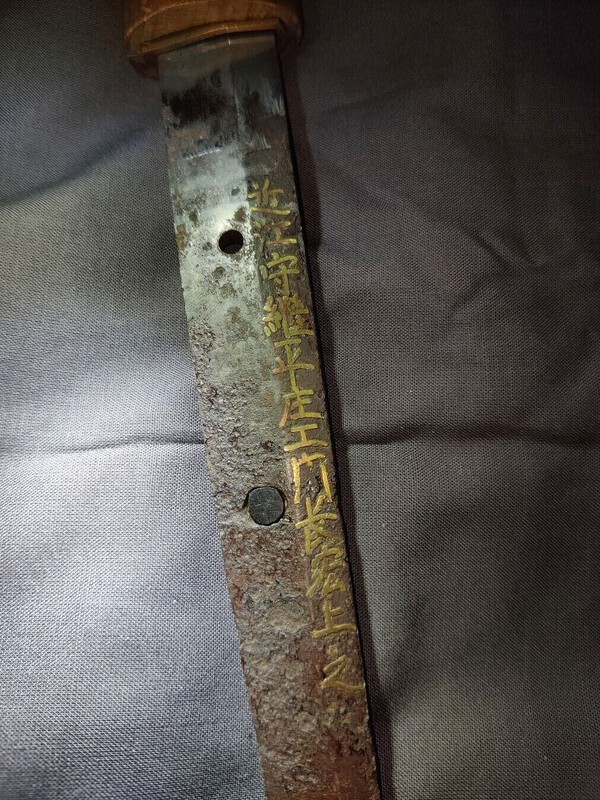
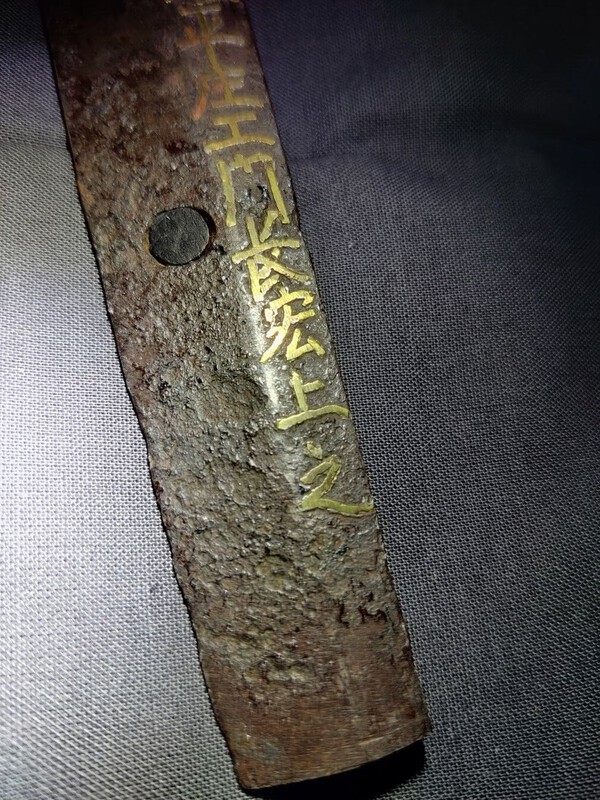
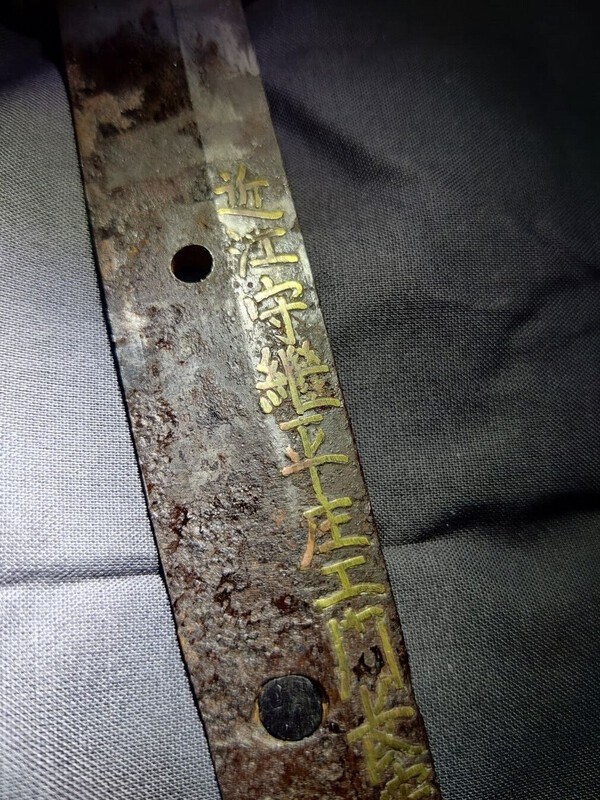
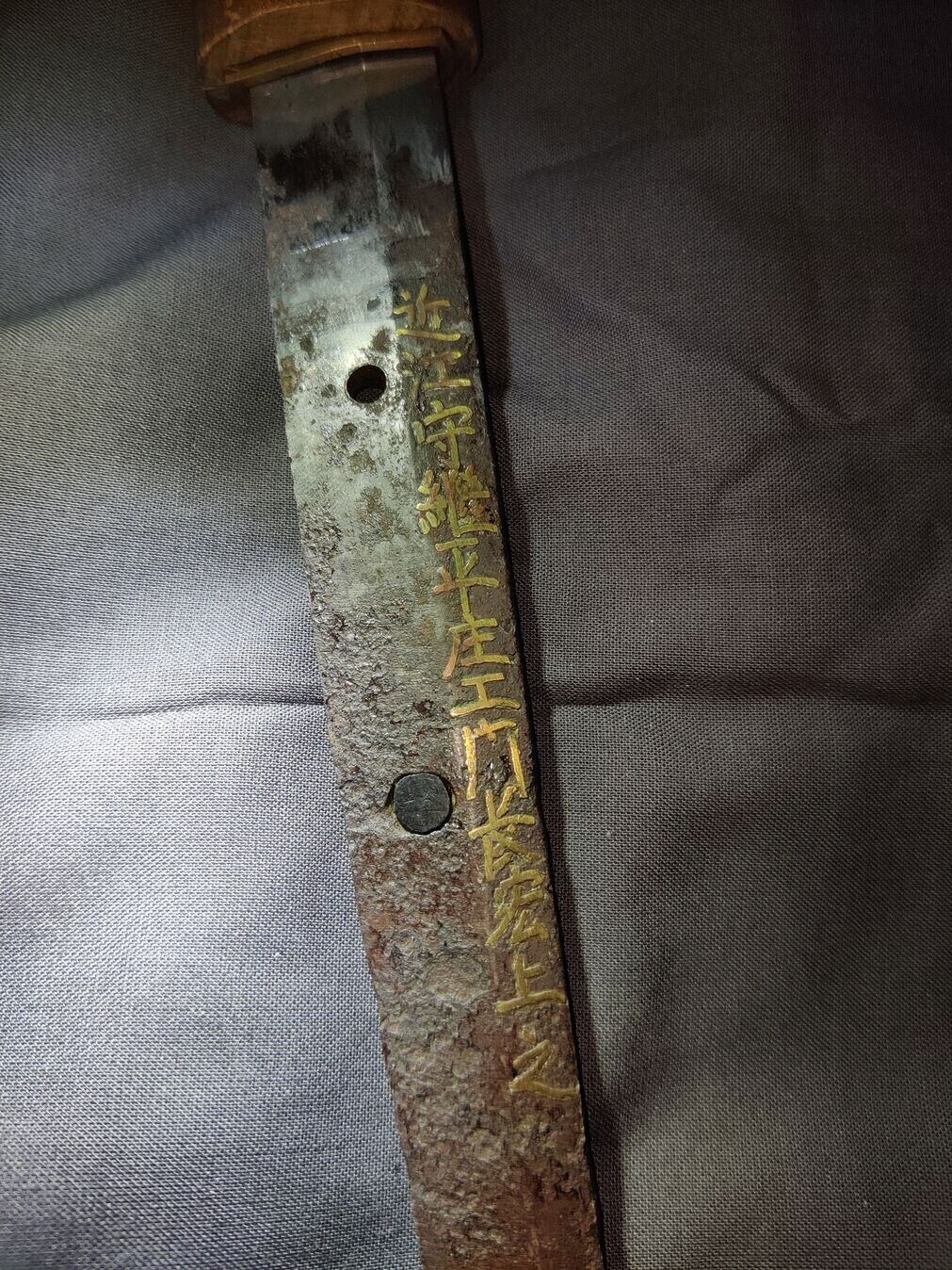
Here are a few more pictures of "kinzogan mei", hope they help. i'm not a very good photographer, sorry about that .

 2 points
 -
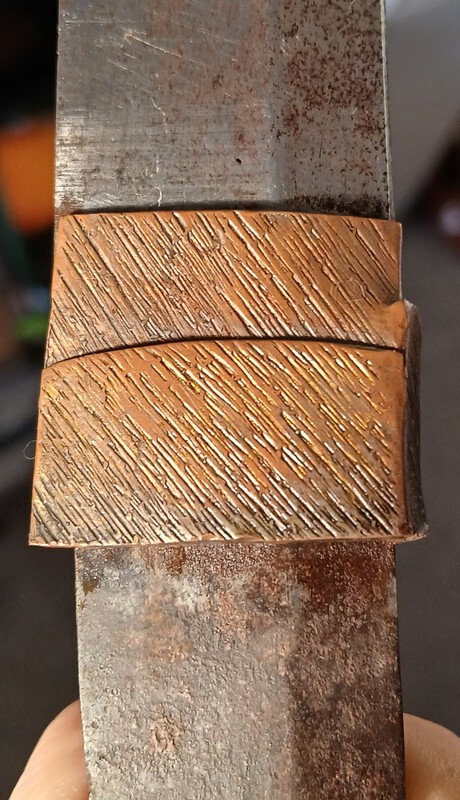
Habaki doesn't fit super well, it's a two part cat scratch copper habaki that looks a bit battered...


 2 points
 -
The Kinzogan is very crudely executed, suspect this is fairly recent and done for nefarious purposes.2 points
-
https://www.metmuseum.org/art/collection/search/26913 All I could afford of Ishiguro Koreyoshi work was this tiny badge. [Ishiguro really liked his pheasants!] One selling now in fact https://auctions.yahoo.co.jp/jp/auction/g1194727171 or https://www.jauce.com/auction/g11947271712 points
-
I find myself struggling a lot trying to understand the item, I just cant get it right in my head. Could you post measurements 1 & 2 for the sugata picture, to get an idea about the sori and 1 & 2 for the thickness?

 2 points
 -
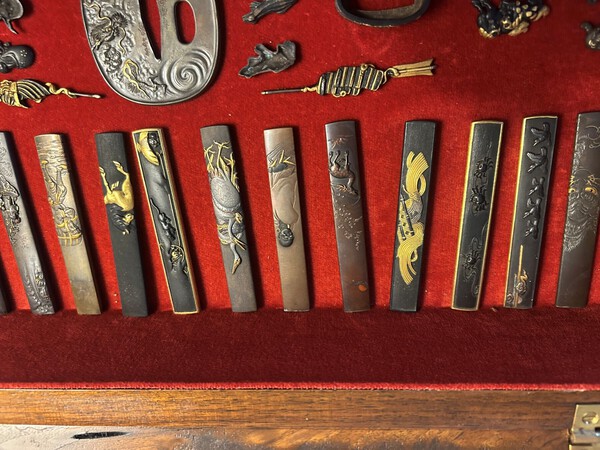
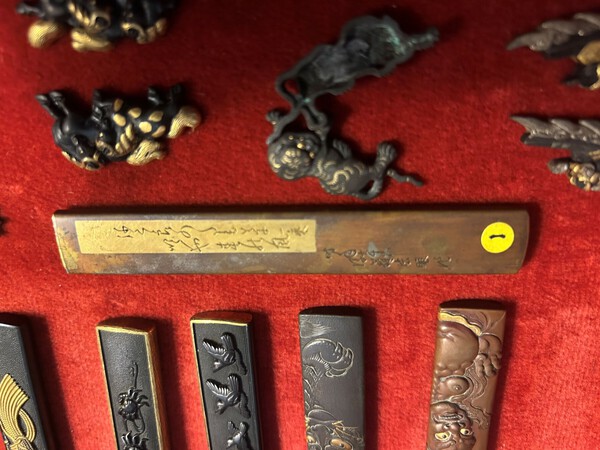
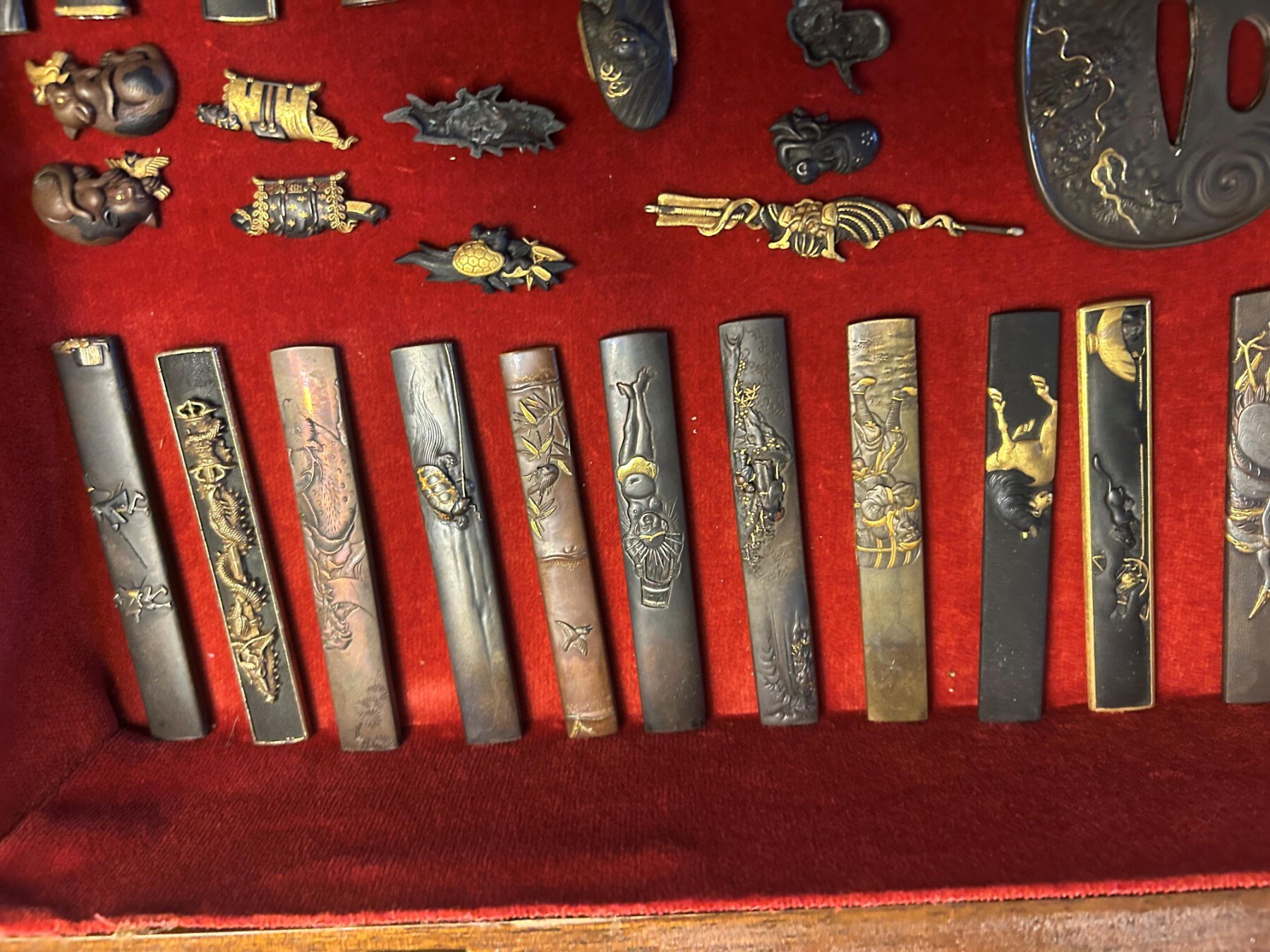
The kozuka with the large tiger on it is in Sekibun's style. It is probably signed on the back with a sloppy looking signature. Ie. Not as neat as the signatures on the back of Hamano kozuka.2 points
-
I agree)
 2 points
 -
Old sources mention Go Yoshihiro and Norishige as natives of Etchu Province, with Go said to have died young. To me, It would seem highly improbable that he was a Yamato Senjuin smith. Name matching doesn't help us as the only signed and dated Yoshihiro blade (YOS143) doesn't match in characters to those of Go in ancient records, and the date (1343) is far off in time, moroever the records make no mention of a resemblance to the work of Go. What about the Yamato influence? The majority of Go's kitae is typically described as itame, often mixed with nagare or mokume. There is only one instance I could find where his kitae is partially blended with masame: the renowned Kabuto-Giri Go. I have also observed that certain works display his ichimai boshi with a subtle hakkikake flavor. Regarding influences, I've had in hand Go's with traits from three different attribution clusters: the Norishige cluster (Mokume/Matsukawa, complex jiba), the Masamune cluster (angular chickei, yubashiri, inazuma), and the Yukimitsu cluster (ko-itame in the Shintogo style). For Go, I have not personally handled an example where Shizu comes to mind, though the Kabuto-Giri Go is noted for this in the NBHTK setsumei record. It is essential to recognize that, while not all blades attributed to Go feature an ichimai boshi, its presence—when combined with the masterful traits typical of other top Soshu smiths—strongly leans toward an attribution to Go. Now where would such Yamato influence come from, if not Senjuin? We can have fun and speculate. We we might imagine the possibility that Shizu and Go, both supposedly active during the Kenmu era, experimented with one another's techniques while working alongside Yukimitsu, Masamune, and Norishige in the Kamakura atelier. However, this idea rests on many unsecured assumptions, including that Shizu apprenticed directly under the Soshu masters and that certain Soshu-den works displaying Yamato influence are accurately attributed to Go. Attribution is uncertain. As seen with signed works by Yukimitsu, his craftsmanship shows considerable variation, making him the prime candidate for pieces where distinguishing traits are less pronounced. His range spans from Shintogo-like hada with a gentle, shallow notare, to a flamboyant midareba incorporating gunome elements, even producing works approaching Hitatsura. This uncertainty is not limited to Yukimitsu. For instance, of the four extant signed tachi by Norishige, two exhibit a shintogo-like fine hada, a far different approach to Matsukawa. Nor was Matsukawa the exclusive domain of Norishige. Hata Chogi, of which we know very little, left us two works indistinguishable on a trait-basis from Norishige's signed tanto. It's wise to think in probabilities. Perhaps the Kabuto-Giri Go, with its distinct Yamato influence and ichimai boshi, was a masterwork of Shizu? We may never know for certain, as the hand behind it is never known for certain. I think that the key to thinking about attribution and influences is to think in probabilities. The best way is to go with the cannon of tradition. After in-hand examination, it could be 60% Go, 40% Shizu. This is certainly the most tractable way, but is the most accurate way? The alternative is going with the historical dark matter. Or in other words, incorporating the lost record. Imagine that it might be 45% Go, 35% Shizu, 4% Yukimitsu on a creative day, 1% the long lost Shintogo student Kuniyasu, and 15% a master whose name has left our records forever. Then replace all these probabilities with distributions encoding uncertainty and you start to reach the limits of useful abstraction. Not much of a means of knowledge advancement since there is no knowledge, only questions. The supreme quality of the Kabuti-Giri Go, however, is beyond doubt. An accepted attribution to a Soshu grandmaster of this caliber signifies the most masterful craftsmanship that reflects the pinnacle of the Soshu tradition, and one amongst the best Nihonto in existence. This brings a bit of nostalgia. Darcy would have enjoyed this thread. As he used to say, we don't have a time machine.2 points
-
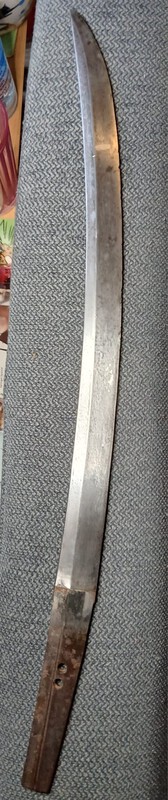
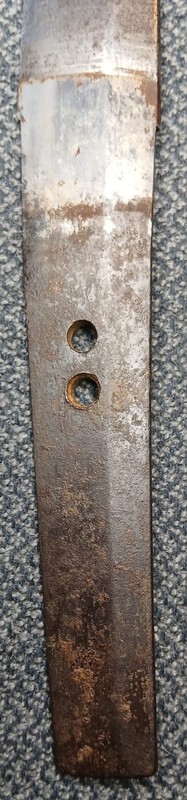
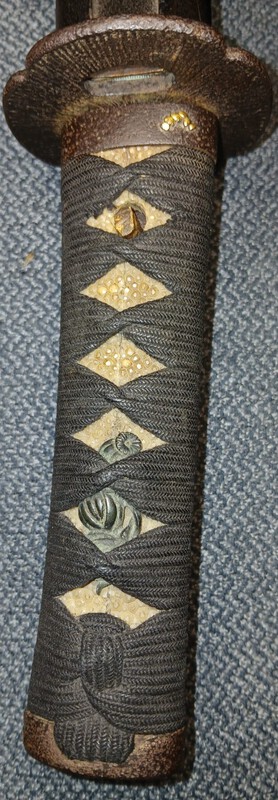
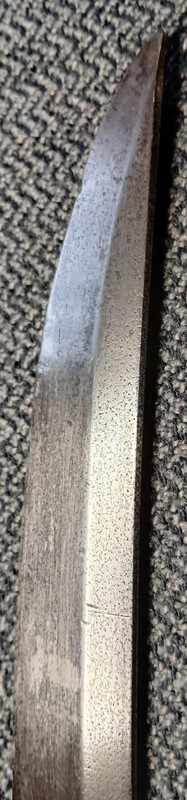
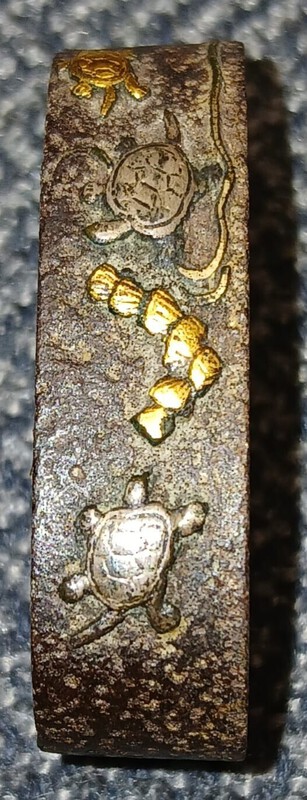
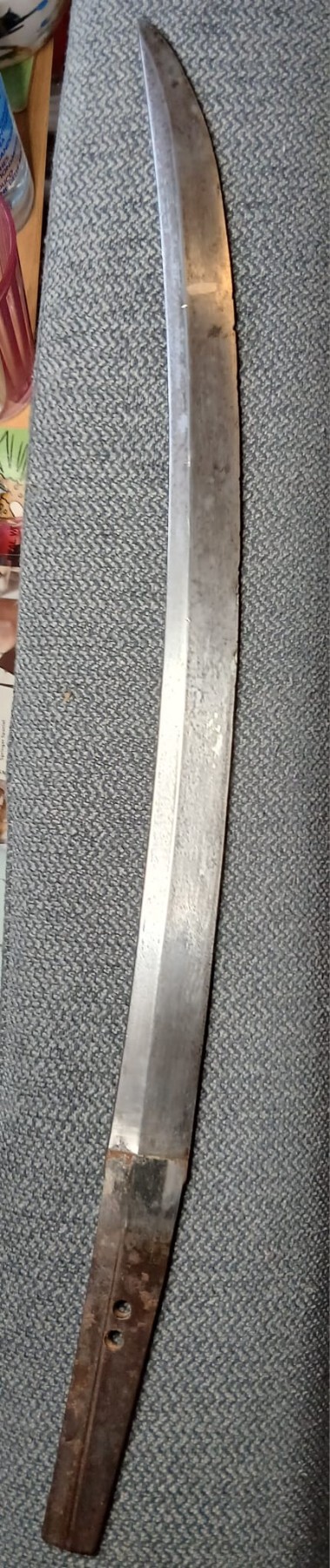
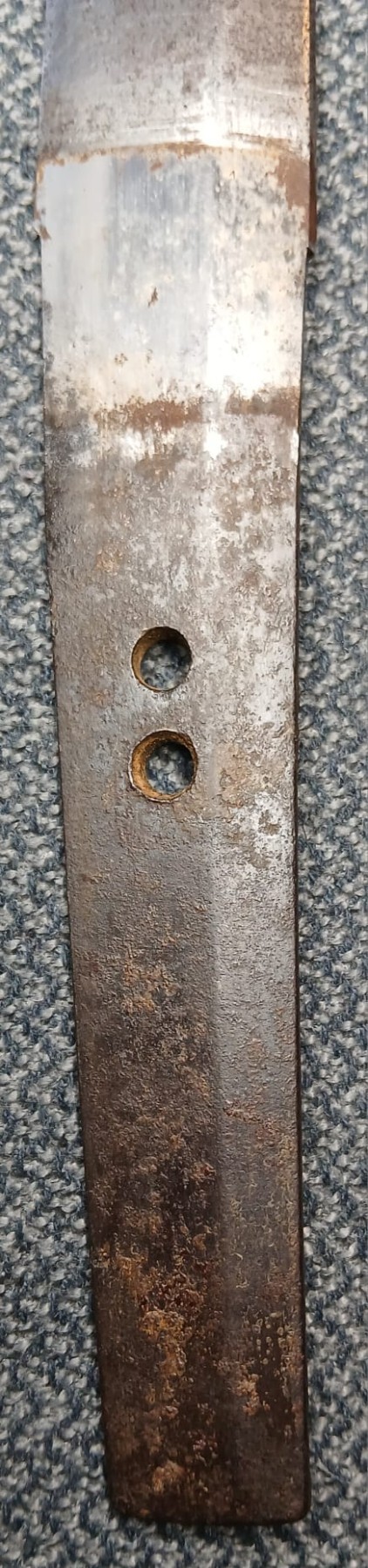
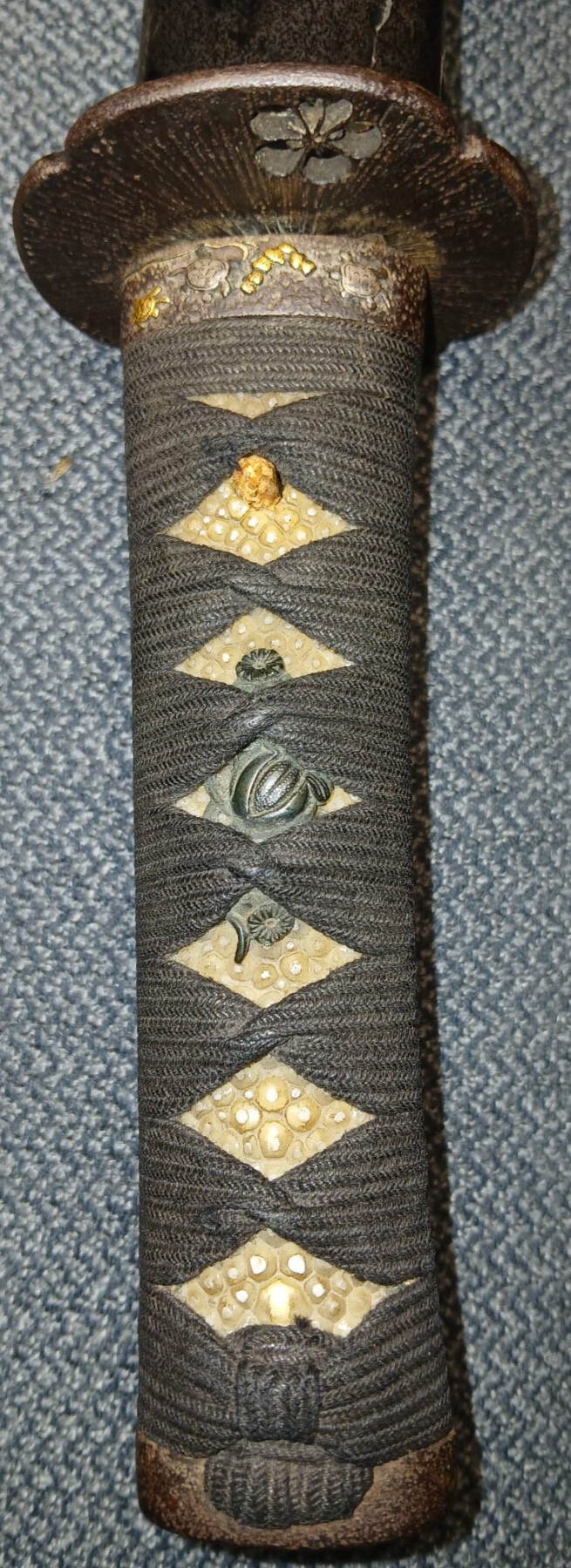
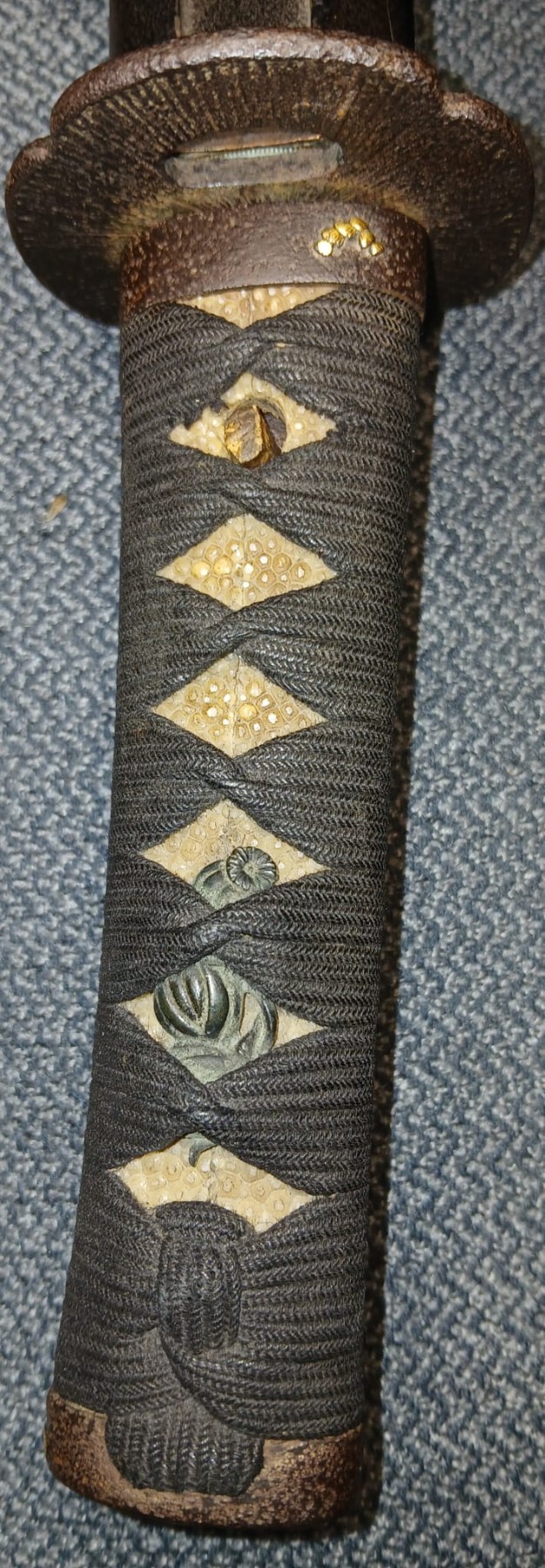
Hi everyone, here is a blade I recently picked up that I think is a naginata naoshi. The nagasa is 40cm or 16" and is 52cm or 20.5" overall. The positioning of the naginata-hi on the nakago relative to ubu naginata leads me to believe that the length we see here is possibly roughly 4"/10cm(?) shorter than when ubu, making the original nagasa possibly ~60-65cm or ~24" long - is this a fair assessment? As grain or hamon sadly can't be deciphered at all in your experience how old do you think this piece may be? Blade profile is shobu-zukuri I believe. Other than the above I think it has some lovely koshirae (although the saya is pretty battered) and the blade has quite a lot of battle scars to it, or so I believe.




 1 point
 -
More pictures:


 1 point
 -
More pictures



 1 point
 -
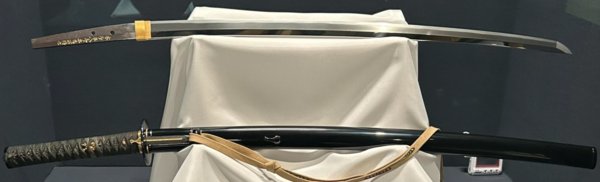
Unless there was more than one mumei Kanenaga in the Matsudaira collection I believe this could be the $11,4 mil sword mentioned above. Nagasa 71.8 and 1.7cm sori. From an exhibit at Touken World Nagoya The kinzogan inscription states it was owned by Honda Heihachiro Tadatame better known as Honda Tadaoki, grandson of famed Tokugawa general, Honda Tadakatsu. Perhaps it was this provenance that pushed the bidding so high, if its the same sword..... Edit: with further research this is a Tegai Kanenaga from the Matsudaira and not the Bizen Kanenaga that was sold in the auction.
 1 point
 -
Apologies for poor picture but I can't use a camera at the moment. This is the picture that Ian refers to. The other is a panel, screen really, that was sold at auction last year, that definitely originated in Japan. I've come across countless panels similar to yours depicting Japanese life, always on paper mache. I've assumed that these were a form of chinoiserie and probably French in origin. However, my knowledge is very limited and I too would like to learn more and will defer to others.

 1 point
 -
Much clearer thanks. To me this appears to be gilded copper inlay and not pure gold as would have be traditionally applied. Could also be brass based on the shade of yellow1 point
-
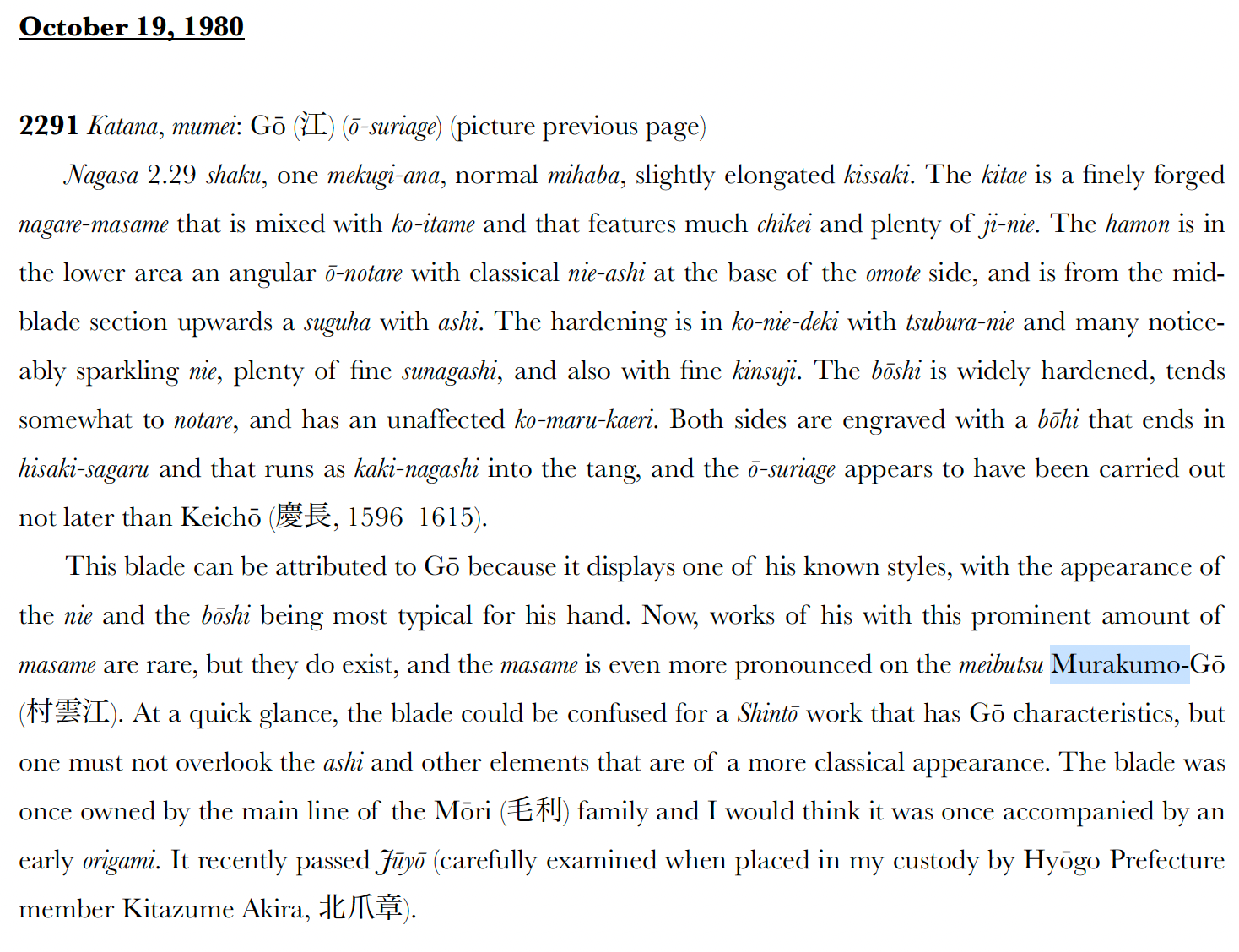
I was recently made aware of the Murakumo-Go that shows strong Yamato influence. It was studied by Dr Honma in 1980 and he gave his opinion of the sword in his diary. Thats now two rare examples of blades with Yamato-influenced masame forging style, with the suggestion these are the earliest exemplars of Go's work. But there is an inconsistency. Both the photos (from a different source) and oshigata are said to be of the Murakumo-Go but clearly they are not the same blade. The photo is from the Encyclopaedia of Japanese Swords, the oshigata from Honma's KantoHibiSho Vol 8.
 1 point
 -
Hasn't been polished down much, we are just seeing the part of the nakago that was once blade, and is heavily tapered.1 point
-
Brian - monetising a site like this is a must - it is just to valuable to be a charity (Unless of course someone rich is willing to sponsor it) - but it needs funding! 1. Advertising via Google adverts is one way to go. Members get to view the site minus the ads. 2. Creating a members only area of high resolution blades as previously suggested would be enormously beneficial but that involves all members contributing and some may not be willing to list what they own so perhaps allow contribution anonymously - that is you get to decide if you put your name against your blade or not when you list it and blades uploaded anonymously do not have any tags back to the uploader. 3. Gold members do not need to pay a fee to list items for sale? Non-members get 5 free adverts but need to pay or become a member after that? 4. Gold members get access to sales items 12 hours before non-members is a great idea - if the seller is willing to do that? 5. Gold Member Dealers always have their posts at the top above non-dealers. 6. Dealers and Sellers regardless of membership should have a review status so that you can see if they are reputable. 7. Membership discounts to Gold Member Dealers so that we support our Gold Member dealers? This also becomes an incentive for getting dealers to become Gold Member Dealers. 8. Membership discounts to NBTHK membership or their publications? Has this ever been discussed with NBTHK? To try encourage more members going gold and get more NBTHK members? 9. Limit access to older posts in searches for non-paying members. That is they have access to 1 month of data but show them that there is data available but it is blurred out? Most recent posts are always free. 10. Free downloads section is only available to Gold members? 11. Deals with Gold member authors who are writing books to get discounts for their latest books for Gold Members? 12. Deals with museums who hold exhibitions to give Gold Members' discount rates? 13. Exclusive events for gold members - such as private viewings or access to swords at various museums, sword shows or private collections that allows gold members to a special event where those who attend are able to pick up some of the top rarely touched swords and view them properly. Now that would be exciting and worth the membership just for opportunities like this. Most of these have been mentioned before. I am not sure about a forum shop selling only merchandise is that valuable in terms of generating revenue unless you have plans to open a proper shop and sell things related to Nihonto - but that is not the business.1 point
-
As a Gen Z, I would be entertained with less visual effects as well I am usually more interested in whats in an exhibition than how it looks visually. After all, I am there to learn something new.1 point
-
Odd as it may seem a similar sword came up a year or two ago, good quality early mounts with a 1990's blade made to fit it. No Shirasaya either.1 point
-
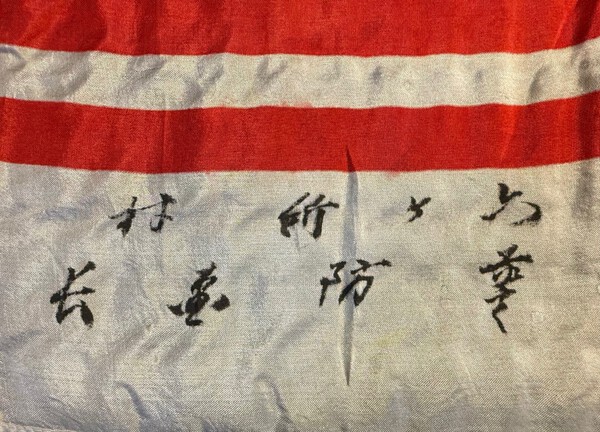
I recently came across this one, and am asking for some feedback here on the forum. It is obviously based on a Navy Model 1883 dirk. The scabbard is actually metal, most likely to allow for the flag to be furled and stored inside. The rest of the fittings seem genuine to me. I know that the reference books have examples of Imperial flags on a sword body, much like what is shown here on the dirk. What little I have found suggests this is a personal flag used by a Naval officer too designate his authority? I have asked some people for help in translating what is written on the flag but so far, no one has felt confident to confirm what is written. I can find nothing in Fuller & Gregory or in Banks. Any comments from the Forum? Any thoughts on a translation of the writing on the flag? Thanks.


 1 point
 -
@JBHIII Relocating your thread to the TOSOGU section. I think you will get more input and opinions over there. Best of luck with your fathers collection, Some cool items there. -Sam1 point
-
Jigane appears to be tight, not very distinctive itame, nioi-guchi is broad, hamon is relatively broad suguha, there is some ko nie foaming and overall forging is kind of crisp. I would vote for Edo period, Hizen or about. Hizen itself we would expect more prominent jigane, but it could be out of polish.... Other schools also have tried their hand in such style, even Yokoyama Bizen.1 point
-
More photos

 1 point
 -
I appreciate the responses. I am trying to attaching more photos. I only took one photo of the back of one, but can take more. thanks for your help. Jim Looks like I will need to send more photos because of size limitations.

 1 point
 -
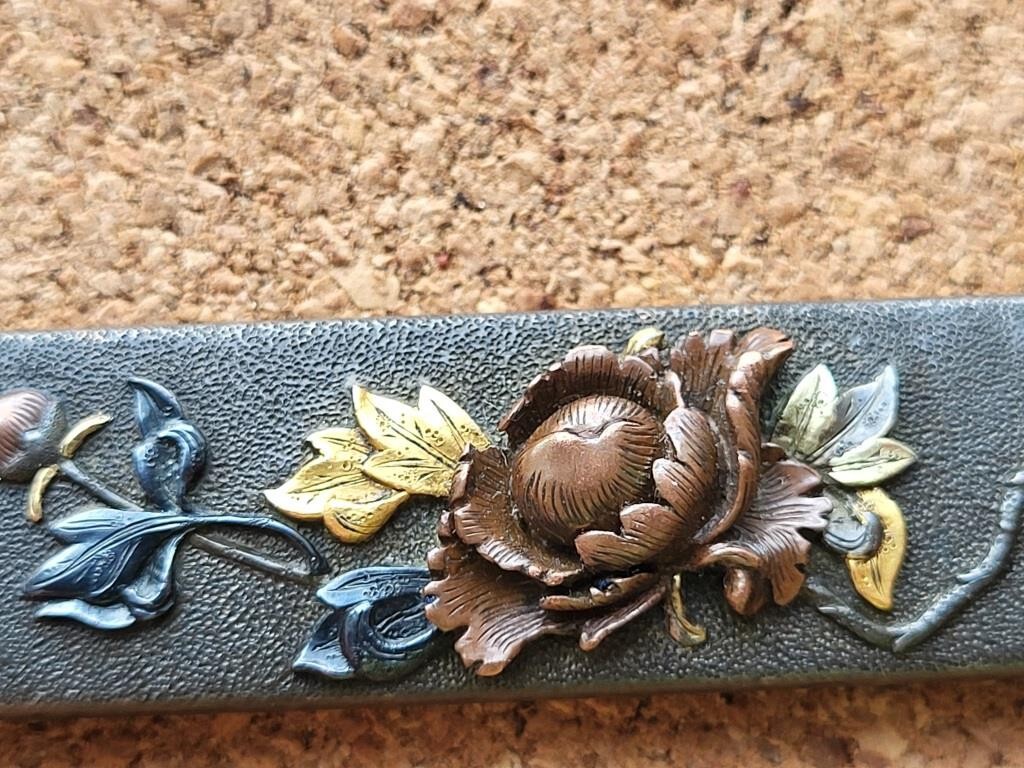
Hello, After some research in the Wakayama I found that most of the Hirata production was in shakudo. However 8th and 9th generation works also in shibuichi and made butterfly among other. So maybe ?! Sharing additionnal photos, just for the pleasure


 1 point
 -
Wow, 13 years ago since I posted this. Even from an old email I don't have anymore. Anywho, here is ya'lls update.1 point
-
I have several examples of tsuba with stacked sekigane in my collection and I always consider this a good thing as these tsuba are of a good enough quality where they have been taken care of and fitted for a blade more than once.
 1 point
 -
You're probably right, Alex. I mean having it refitted for different blades would indicate it was loved and worn.1 point
-
I think the fact that main core Sōshū works lack signed & dated work. from Yukimitsu, Masamune & Sadamune there are extremely few dated items and it makes researching quite difficult. Then For Hiromitsu, Akihiro and onwards you will find lots of signed & dated swords. I feel when making statements like in the link that "there are dated works by Gō Yoshihiro before studying with Masamune" it would be extremely important to give a source of that information or provide a reference item. I have all of these following items featured in my references. Shintōgo Kunimitsu 10 dated works 1294 - 1324 Shintōgo Kunihiro 2 dated works 1318 & 1324 Yukimitsu 1 dated work 1322 Masamune 1 dated work 1328 Sadamune 2 dated works 1335 & 1361 Norishige 6 dated works 1314 - 1328 And for the sake of this discussion 2 Senju'in Yoshihiro smiths that I have data for Yoshihiro (義弘) 2 dated works 1353 & 1358 Yoshihiro (吉広) 1 dated work 1343 One difficult thing when we are discussing lesser known smiths in English, that there can be several Japanese characters that read out same way in English. I checked my sword books for various Senju'in Yoshihiro smiths Yoshihiro (義弘) there are supposedly 2 smiths working c. 1350 , 1400 Yoshihiro (吉広) 1 smith c. 1345 Yoshihiro (吉弘) 1 smith c. 1350 Yoshihiro (義広) 5 smiths working c. 1230 , 1275 , 1335, 1345, 1469 However I believe when NBTHK etc. speak of Senju'in Yoshihiro (義弘) they would refer to c. 1350 working smith. I don't think I have any of the other Senju'in Yoshihiro smiths being referenced anywhere excluding the 1 (1343) dated work from the other smith.1 point
-
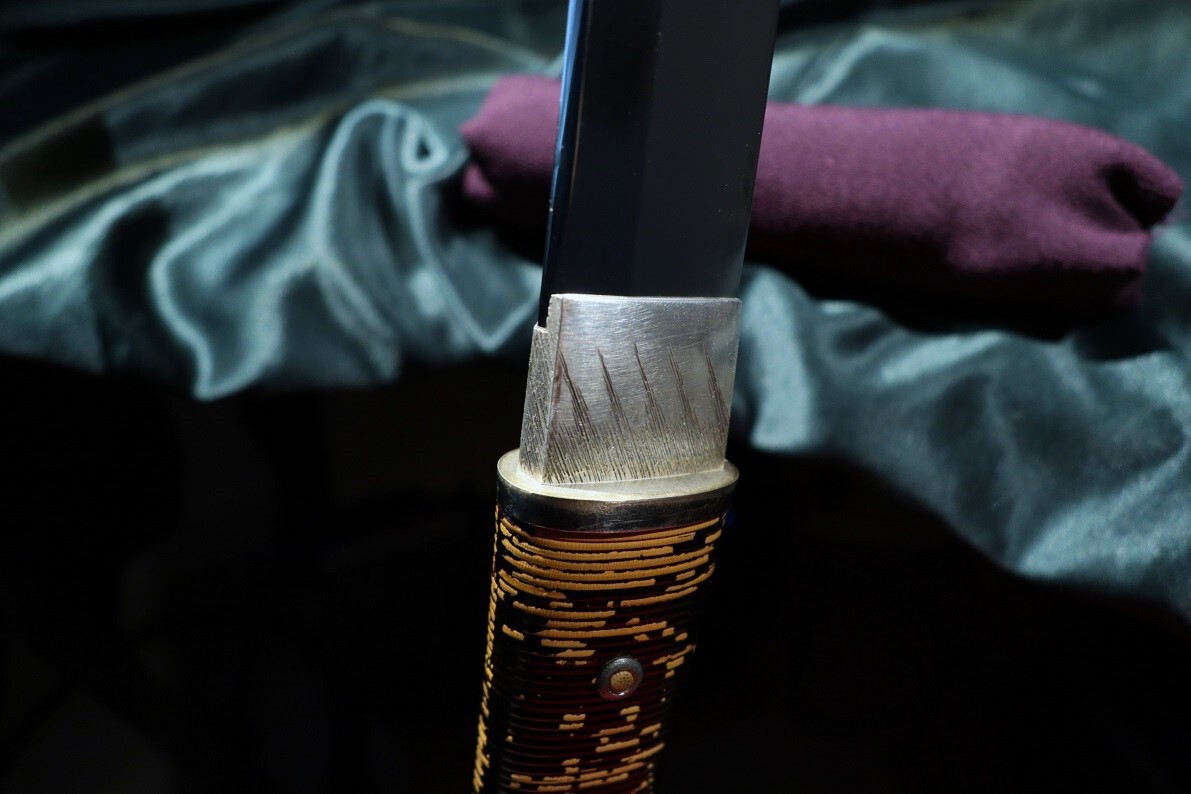
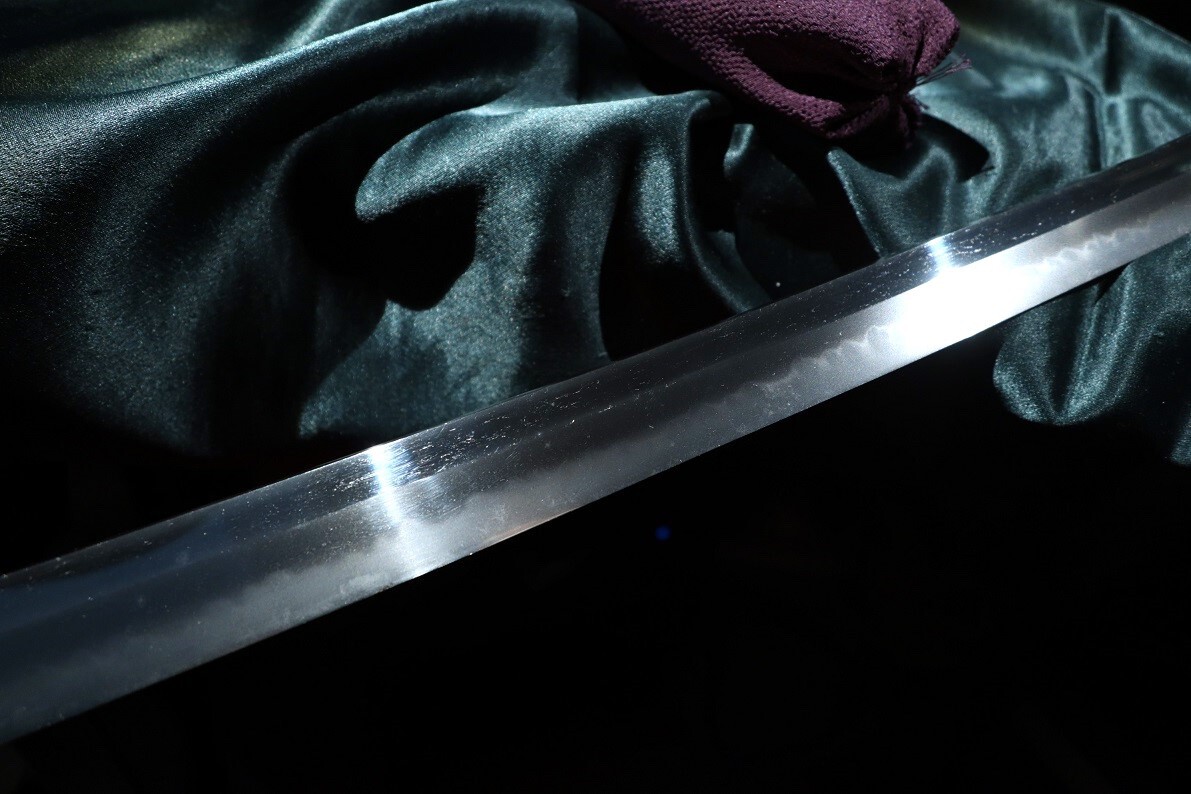
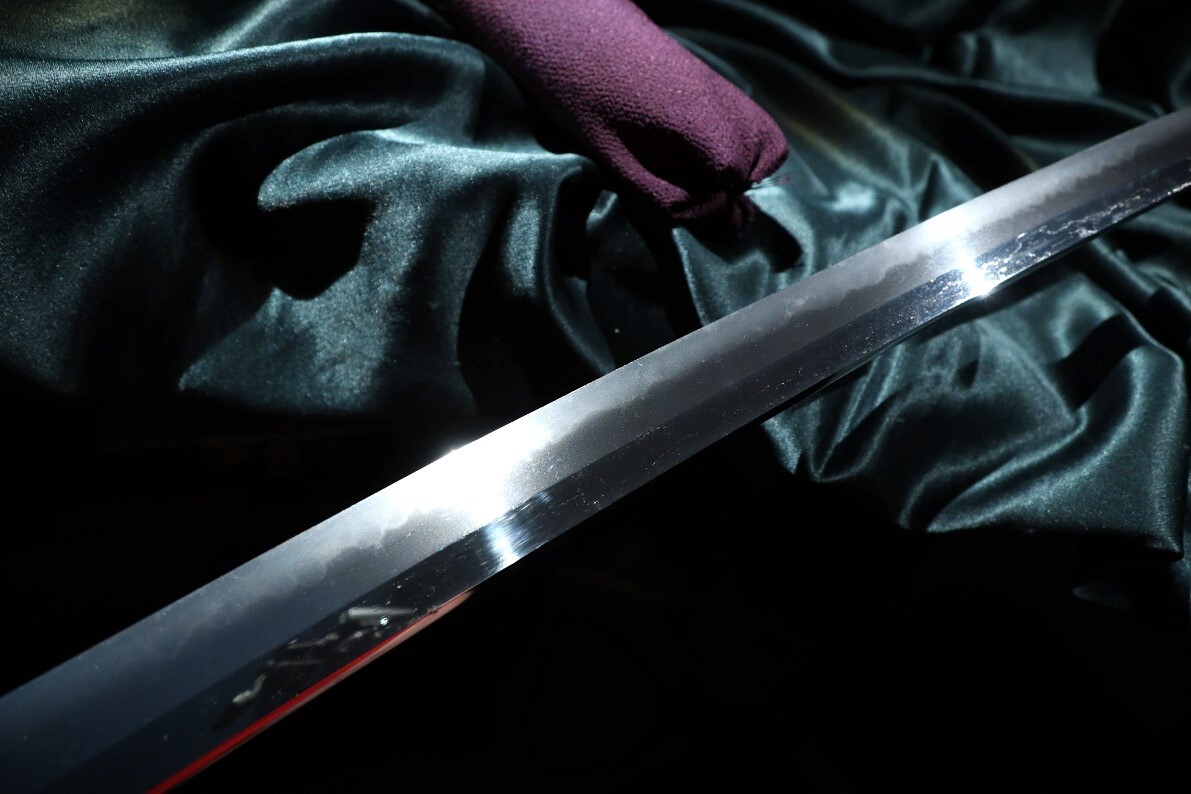
He said: Strong robust & flawless signed & dated Shinshinto Katana, Blade condition : generally very clean old polish very thick & healthy with no hagire/crack, no kizu/flaw, no chip, no bend, no blister, solid & sound beautiful strong thick blade mix with minor light surface scuffs/scratches/stains here & there otherwise there is nothing further, & absolutely nothing major at all ! I didn't realize that flawless, no chip and no bend was open to interpretation. Flawless is pretty similar to perfect wouldn't you say. The mistake was not with me, I presented the facts. This should be a cautionary example for him that people don't like wasting time and money. They can read this thread and take it for what it is. Id let it go if he paid me the return shipping as I would do if I were in his situation. I would be ashamed of my error and fully repair the situation. Not try to get out of even paying for any shipping. I appreciate your opinion but you make it sound like I made a newby mistake by buying from him at all as if I should have known he was a shark. Trent Spencer1 point





































This leaderboard is set to Johannesburg/GMT+02:00