
Leaderboard


Popular Content
Showing content with the highest reputation on 12/15/2025 in all areas
-
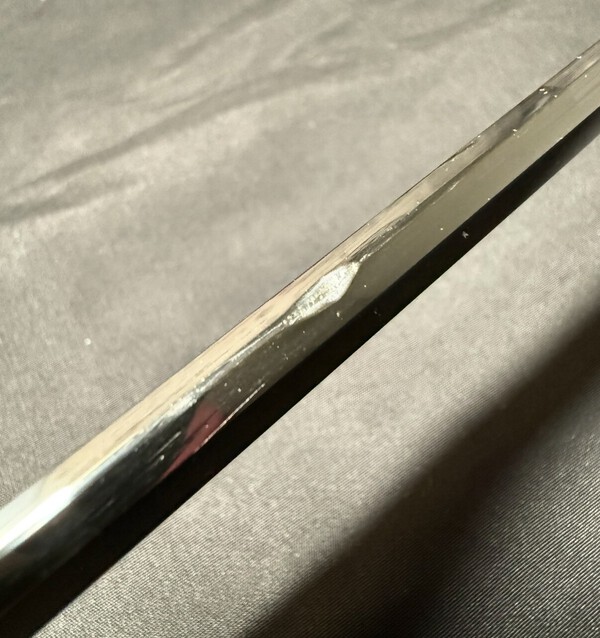
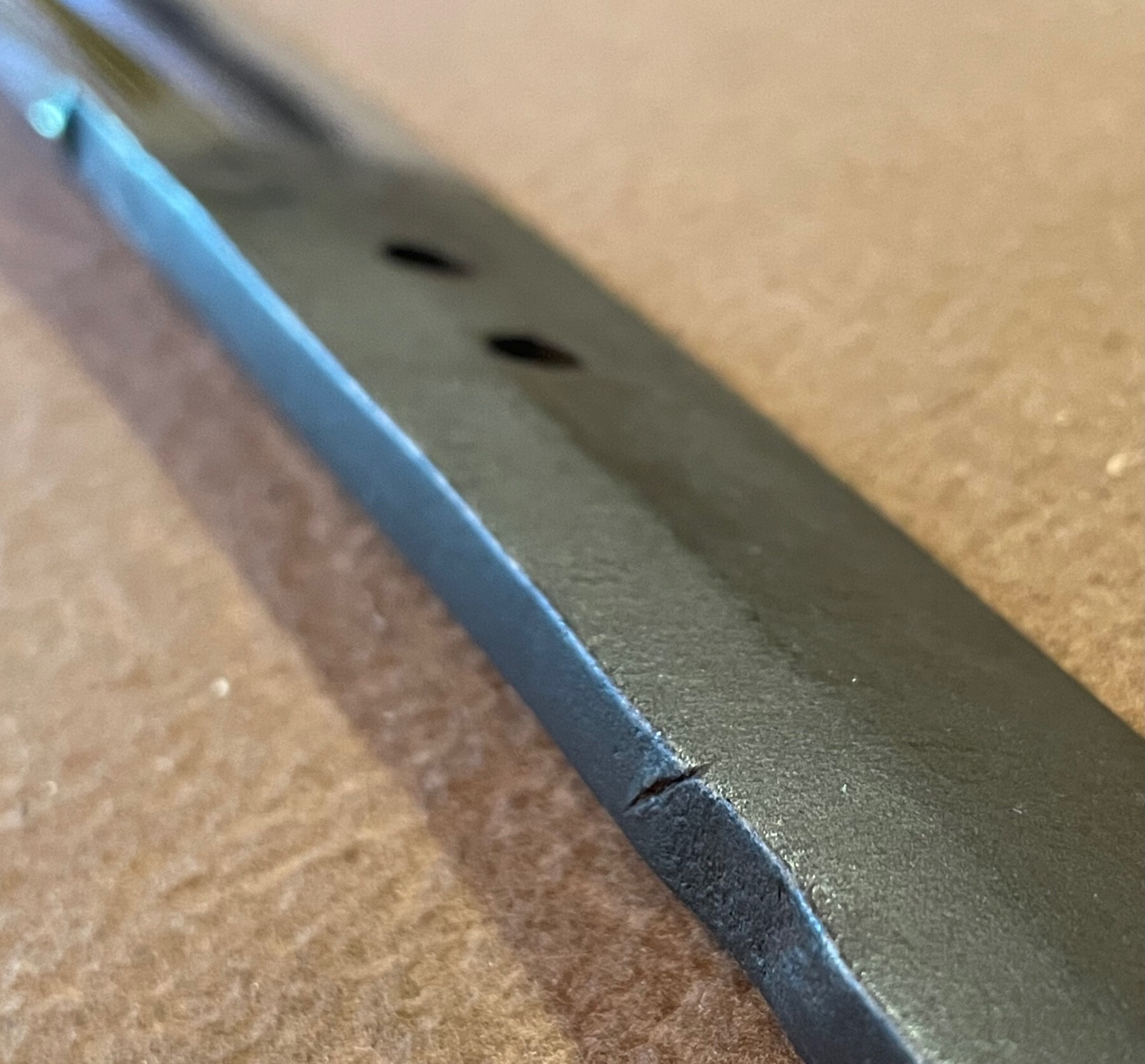
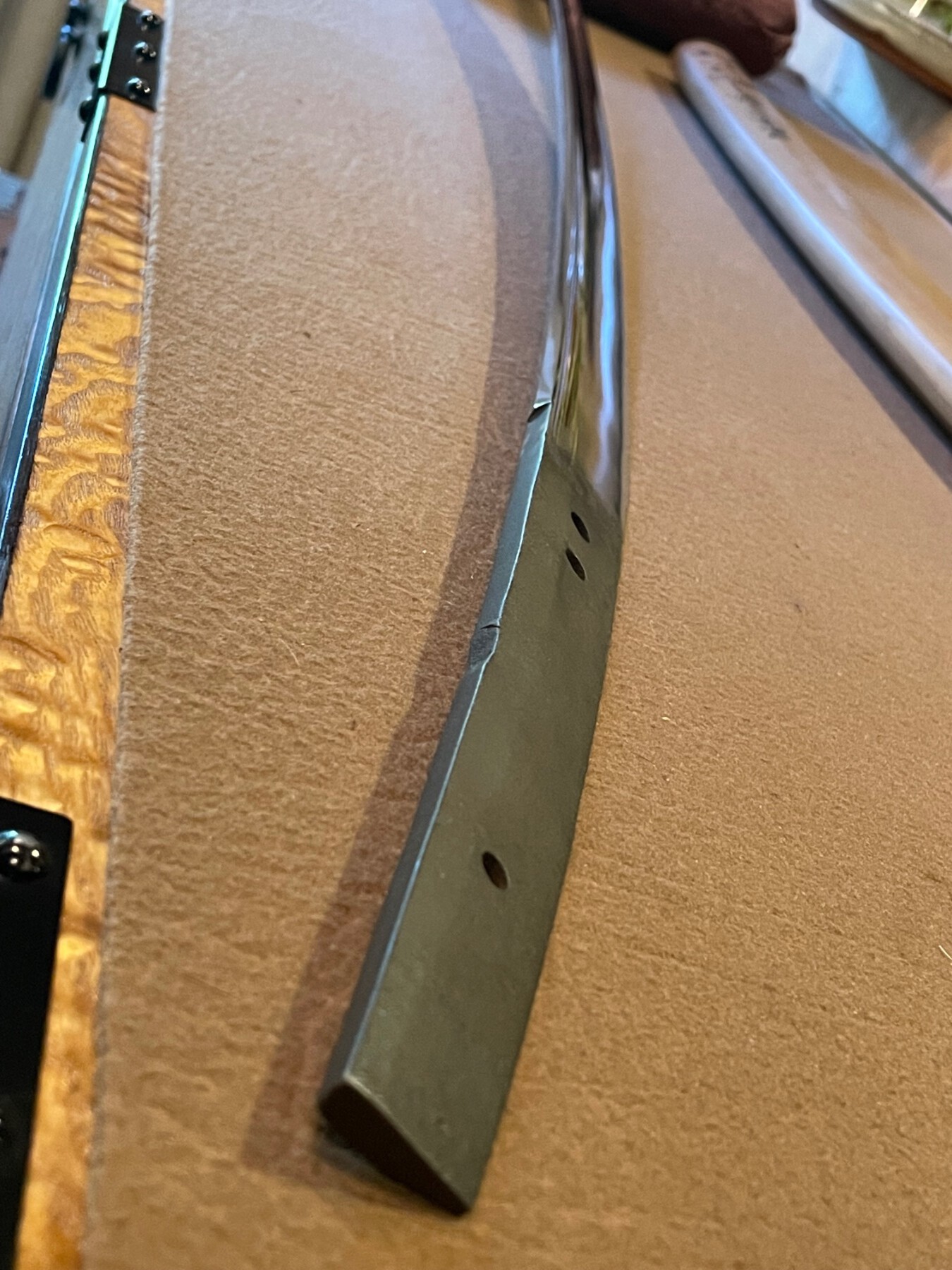
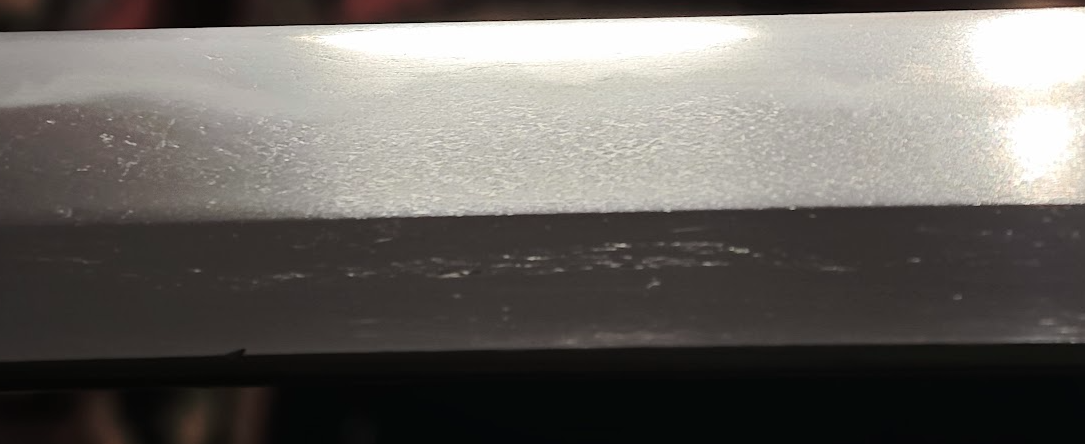
Similar to Sam’s, but the kirikomi(?) is along the nakago-mune of a ko-Fujishima tachi:

 4 points
 -
Really sorry, I know it’s not a sword but I couldn’t resist….I bet that gave him a headache……

 3 points
 -
Hi Brian, If, as you say, you are new to the hobby, you don't want to be searching unknown websites for a bargain; it's a jungle out there. You need to learn a lot more that you currently do before buying and, even then, a trusted seller will be helpful. No need to hurry to a purchase; good Japanese swords will always be available. Grey3 points
-
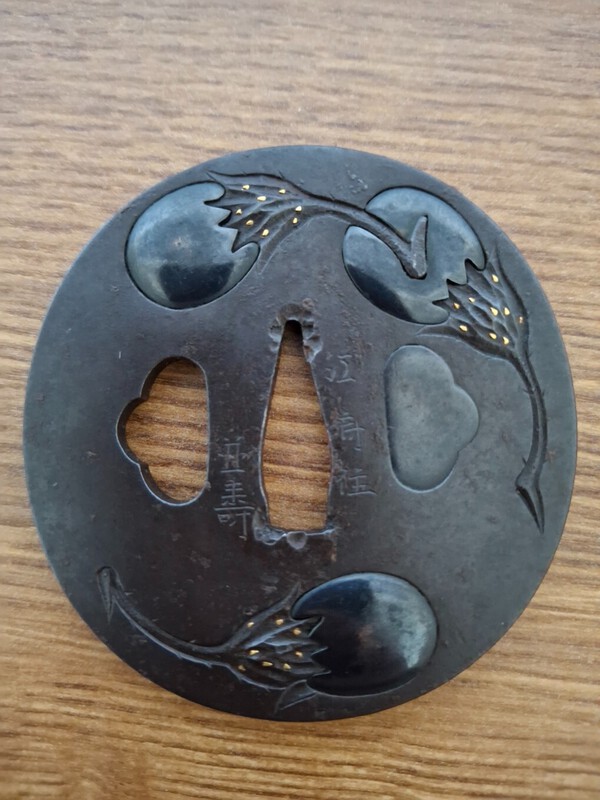
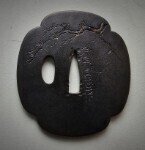
Prolific Namitoshi...... tsuba transformed latter with shakudo plugs
 3 points
 -
3 points
-
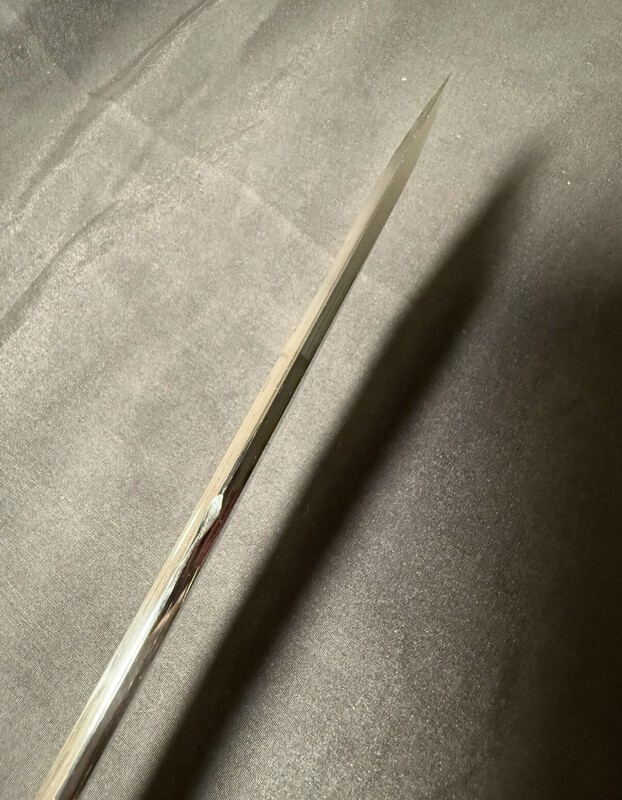
While I don’t have a time machine, and cannot confirm with certainty that these marks are battle damage. I suspect that at least one of them is kirikomi. At the very least, it is fun to think about. O-suriage mumei katana. -Sam


 3 points
 -
Dan, stay tuned! https://www.militaria.co.za/nmb/topic/53919-tsuba-hakogaki-written-by-satō-kanzan/2 points
-
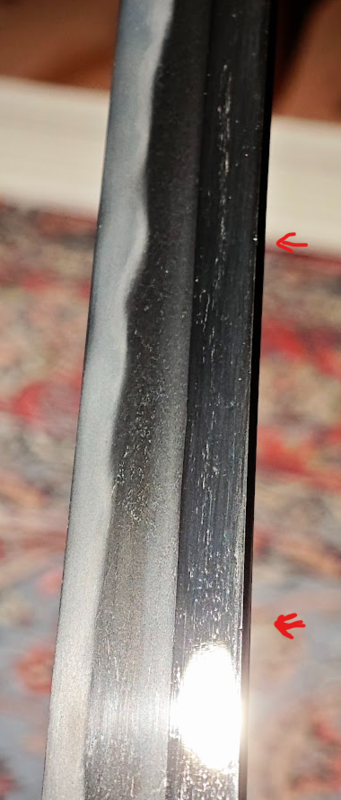
Not as impressive as other blades, but it has at least three battle marks on the mune, a remarkable old warrior, and only if the blade could talk

 2 points
 -
Of course, It was just meant as a humorous remark Thanks everyone for the identification assistance, I appreciate it!2 points
-
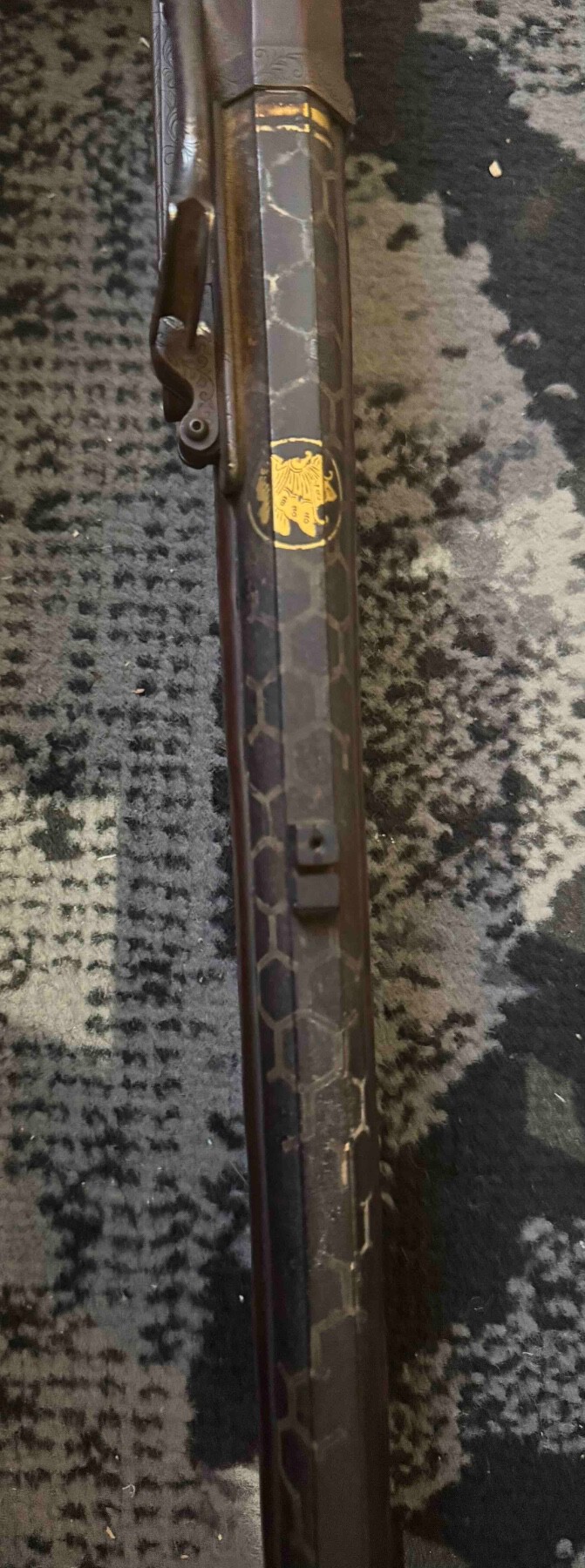
Lars, the standing ‘ageha’ swallowtail butterfly was used most famously by Ikeda Terumasa who built Himeji Castle. His Ikeda offspring also controlled the Tottori Han and the Okayama Han, but at some point in the later 1600s the Okayama Han changed it to an open-wing version, the Bizen Chō. So your Ikeda blackpowder container is probably from Hyogo or Tottori. As to the Mon on the gun, I suspect it was added later at some point. Just a feeling. I cannot yet see a link between Mito and the Ikeda Daimyo family, although I may be missing something.2 points
-
Hi Alan! Couldnt help notice the nice "butterfly" emblema on your barrel. Very similar to the emblema on a box that is supposed for blackpowder. Do you know anything about the meaning of this butterfly?
 2 points
 -
Wow! I hated to hear this. Known Richard for years and have been in fairly close contact for the last year or more as we were both dealing with health issues. He told a little over a month ago that the new treatments for his myloma looked promising and that he was looking forward to start shooting fittings again. He was a phenomenal photographer. RIP my friend.2 points
-
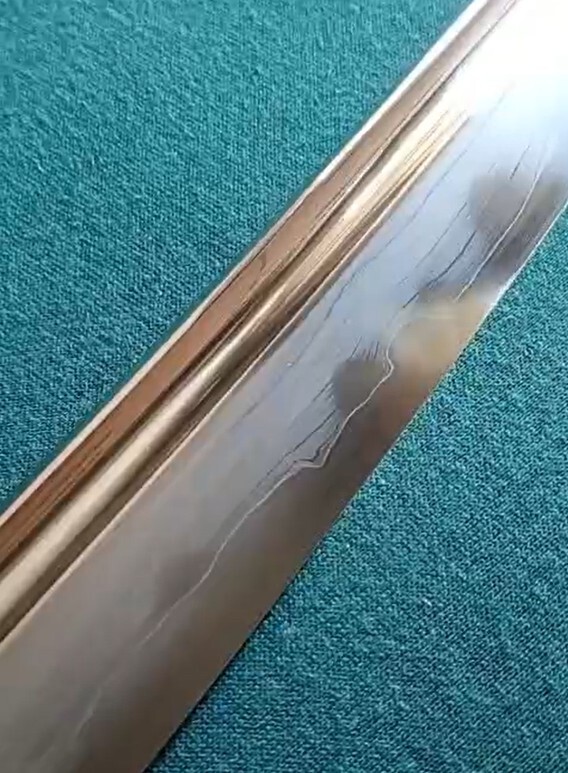
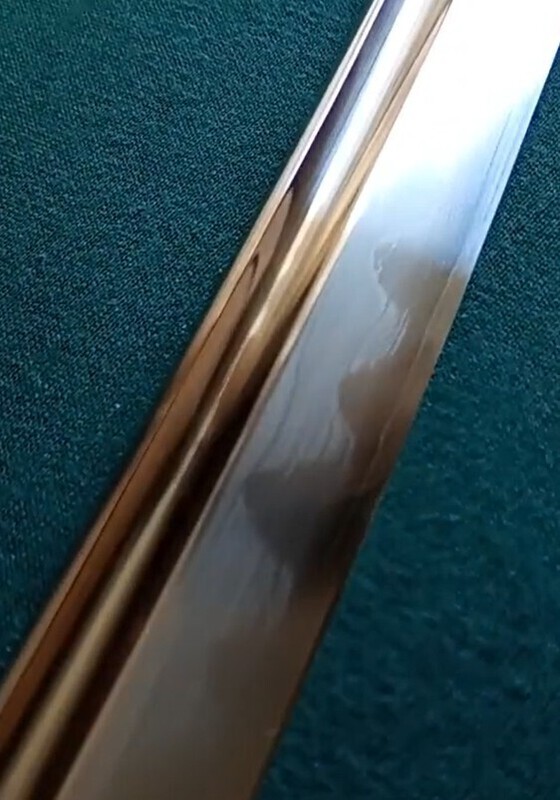
Yes, they are getting better, but still sloppy.


 2 points
 -
Rawa is right. This is the original auction in Japan and the current price converted to USD. https://auctions.yahoo.co.jp/jp/auction/p1208185731

 2 points
 -
Added four more Kiyonobu swords to the list. Number 64 may be of interest as it seems to be marked with a Showa stamp.2 points
-
Despite the elaborate decorations which were added at some point, the gun is of a rather basic generic design. The wood used for the stock is nice quality, and most of the vital parts look to be present. The front sight could be replaced with one of several basic patterns, many illustrated in Sawada Taira or Sugawa Hideo’s books. You could study Kunitomo sights, for example, as the smith was surely proud of his roots, or you could contact Mito and ask for photos of Mito long guns, particularly their Saki-meaté fore sight.2 points
-
As to whether to polish silver, the world is divided between those who want bright and shiny, and those who value old patina, black even. Remember too that silver wears thin quickly so with barrel decoration like that you run the risk of rubbing away precious metal which cannot easily be replaced.2 points
-
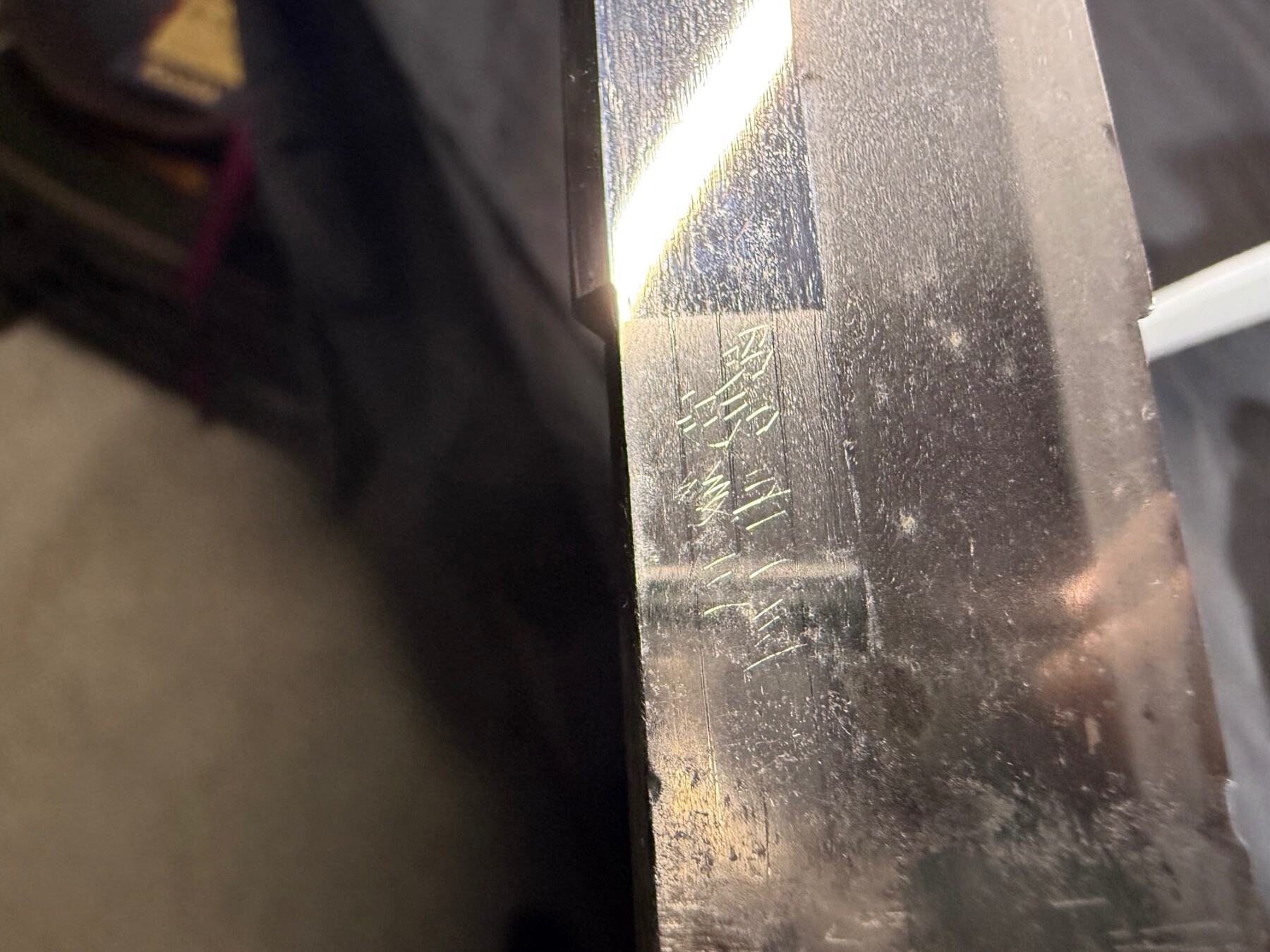
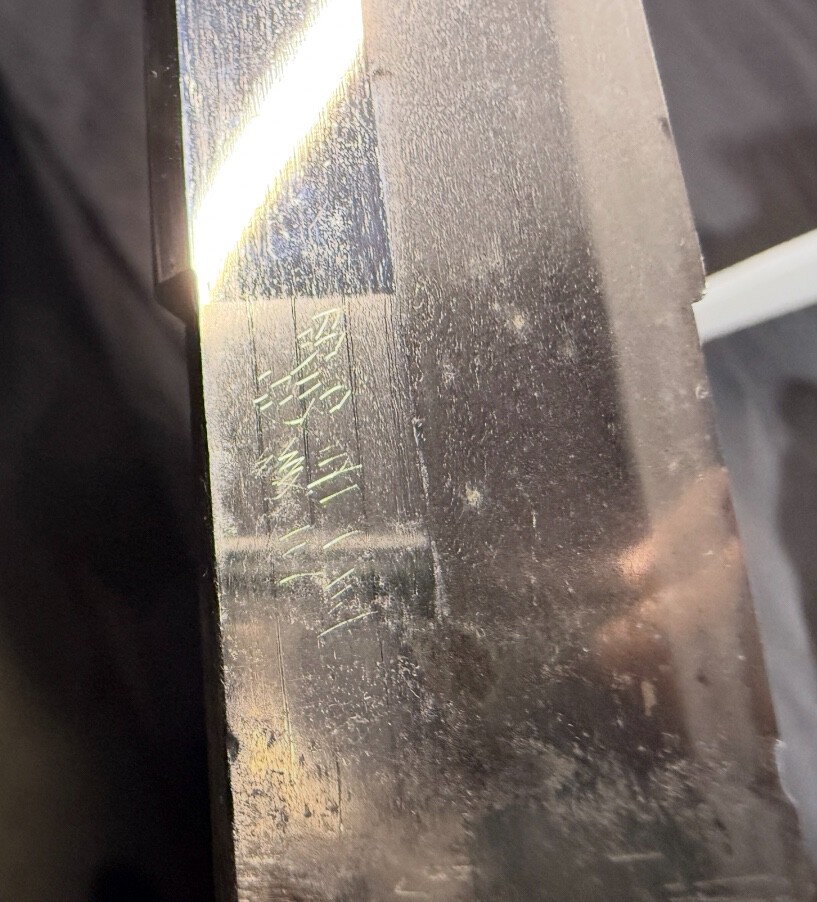
拾三治刃鉄藤巻張 Not sure of the meaning here but it seems to suggest the barrel is made of Nihontō blade steel. Perhaps the proud Bushi of Mito were happier to carry a gun if they thought it was essentially made with sword blades!?!?!?2 points
-
Miyabi is a reseller. Look around you will find this example cheaper. Dunno how he got all those positive comments but not from selling swords.2 points
-
Hi Alan, Only just noticed your post. Apologies. There are many things that can be said in answer to your questions. Much of what you have heard is correct. Your words reminded me of just how proud I was to own my first Tanegashima. To start the ball rolling, the Mei indicates a Kunitomo smith who was probably invited to Mito in Hitachi, Kanto, to make guns, or he followed his father there. Kunitomo smiths, renowned for solid work, were used by the Tokugawa Shogun rulers and had a reputation to keep, so their guns had to be good! 水戸住國友吉兵衛 尚昌 Mito Jū Kunitomo Kichibei Naomasa Although this smith is listed as working for the Mito Han, there are no dated guns of his recorded. I would say around 1800-1830 from the overall look of the gun.2 points
-
Hello Brian, Here is my opinion. It is a decent blade on it's own, with no major flaws and seems honest. It is a genuine antique Japanese sword. Is it worth the asking price? Not really imho, especially when you include the cost of shipping/fees. The paper with Japanese writing that is displayed in the photo is a registration certificate, it is required to possess a weapon in Japan. They are not authentication papers (NBTHK) on their own though. You can find NBTHK papered swords within the $1,500-$2,500USD range, so it would be more worth it to buy a blade for around the same price that comes with papers. For that reason, it's hard for me to recommend this blade at this price for someone new to the hobby. Just to compare: https://rva-katana.com/collections/antique-swords?filter.v.price.gte=&filter.v.price.lte=&sort_by=price-ascending2 points
-
2 points
-
Tyler, John summed it up. A couple of close-up shots of the blade body & tip showing the steel skin and hamon (temper line) could help us show you what we look for in analyzing traditional vs non-traditional. On the academic side, we've done extensive research on these stamps. Your stamp, the larger Seki stamp, was used by the Seki Cutlery Manufacturers Association. They were asked by the sword industry to inspect blades made by the Seki area smiths to weed out poor showato (non-traditionally made blades) that were hurting the industry's reputation. A massive demand for samurai-styled blades happened when the military decided to replace their Western-styled sabers with new swords made in the styles of the old samurai swords. The rush to produce them resulted in some really poor quality blades that threatened the quality reputation of the industry. So, the Cutlery Assoc. inspected blades and put the Showa stamp, and later, the large Seki stamp on blades that passed inspection. Now to the heart of the matter. We only have two documents that discussed the practice. One, a page on the Seki City website, said that "all blades were inspected" implying that both traditional and non-traditional blades were being inspected and stamped. However, our other source, a page on the Ohmura website, cites a chart from back then showing the tally of inspected blades, and a note on the chart stated that the numbers do not include traditionally made blades "as they were not inspected." So, it is our current understanding that blades with these two stamps were not traditionally made. Most of them look pretty darn nice, having attractive hamon. So, it is likely the smiths may have used most of the traditional techniques, but something like another steel than tamahagane was used, and/or the blade was oil quenched rather than water quenched. Hope that's not too much to absorb, but sometimes it's good to hear the whole story.2 points
-
@LightningFox0124 Tyler, your sword would not be made of traditional iron or methods, but be a semi-machine made using a "western" style steel, but likely still well made. Its a bit confusing as there are several wartime Kanetsugu. But yours looks like Maekawa Genichi. The attached paper from NMB Downloads gives the context of his work, with examples and also shows the variations in mei and signature style. Also demonstrates some of the difficulties to determine the smith. As a note, yours has 2 holes in nakago, suggesting a remount. What are the mounts?2 points
-
From Sesko KUNIYOSHI (国吉), Bunmei (文明, 1469-1487), Bingo – “Bishū Kuniyoshi” (備州国吉), Mihara-school, suguha, gunome, wazamono2 points
-
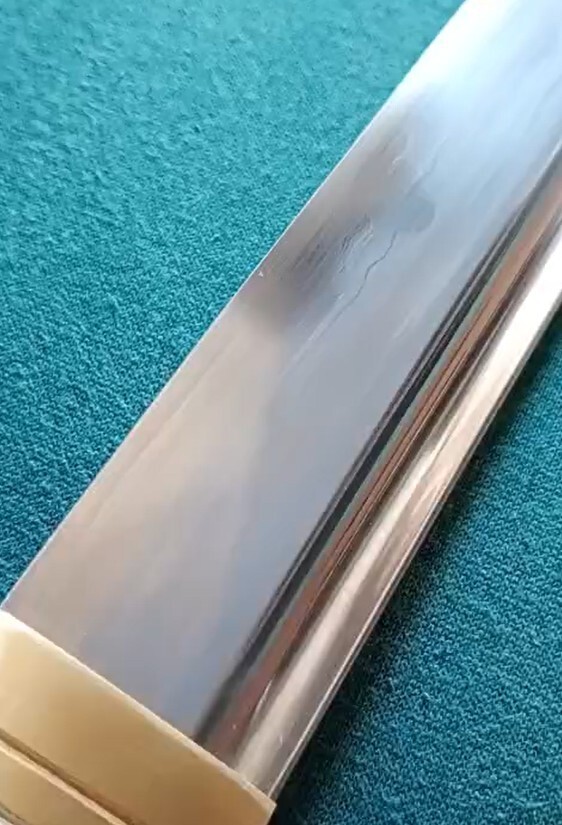
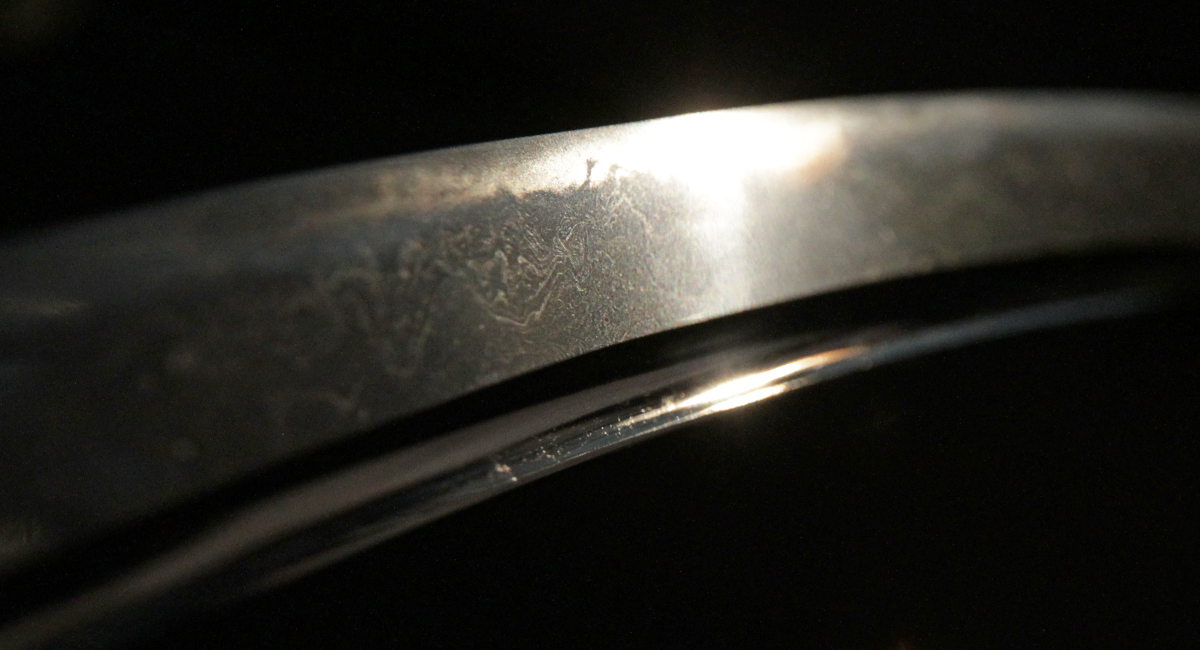
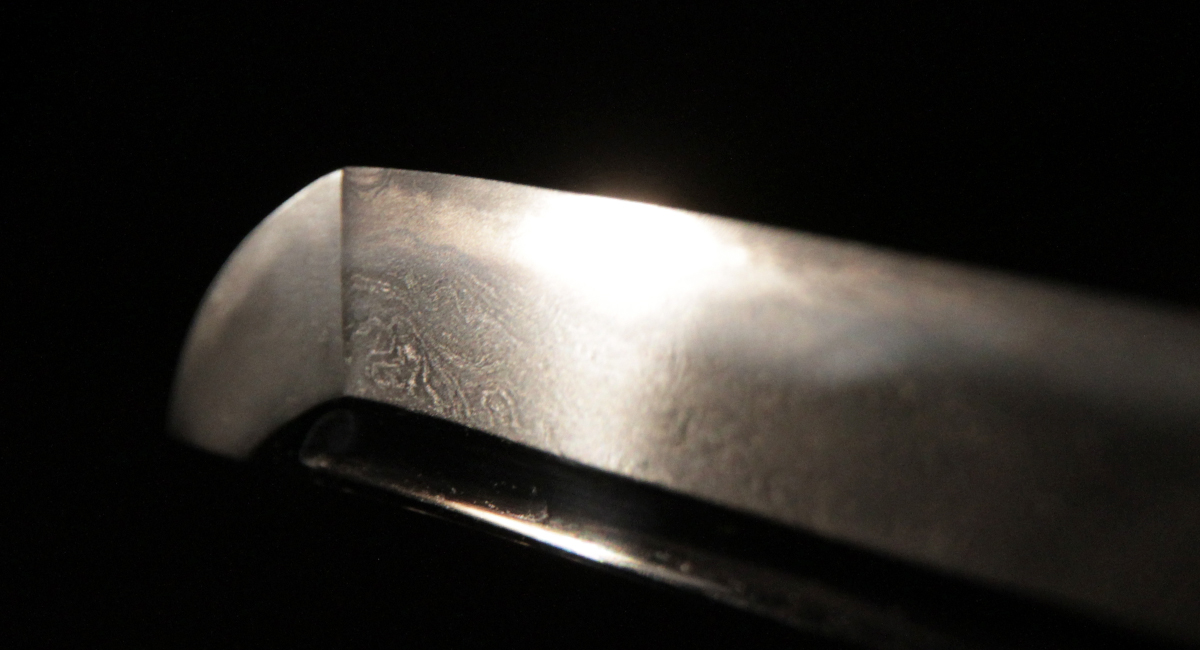
Kongobei - Studio light
 2 points
 -
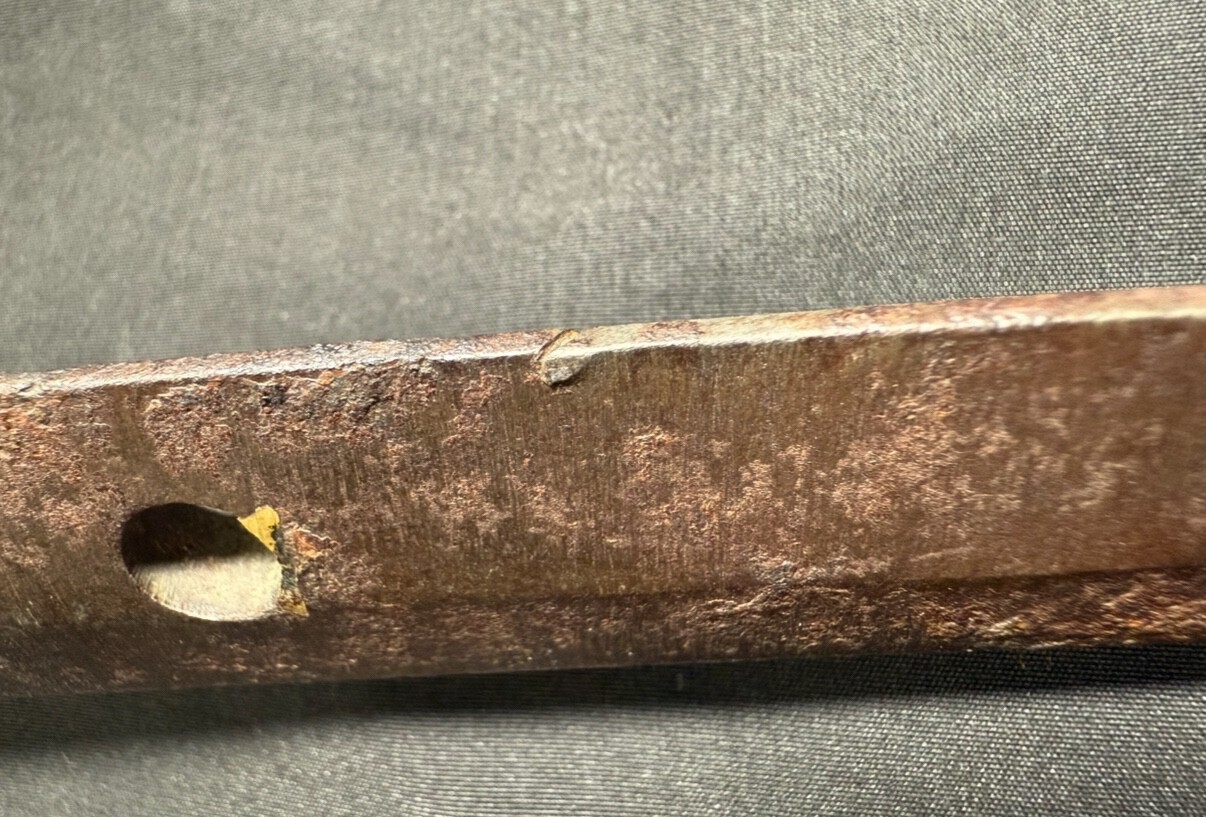
It's on the Ha side of the nakago. Given the angle of the strike it could have been struck while in its saya and being worn. Either way not a good day for its owner.2 points
-
Section 9.3 of Dr Lissenden's paper, on the use of casting in Namban tsuba, matches my recent observations of some Namban work. Many of the tsuba are pretty obviously sand cast, with varying degrees of post casting chasing and detail refinement undertaken. Thus it appears that Namban is not only a style but a technological package.2 points
-
Had a photo session this morning and was able to get some better photos


 2 points
 -
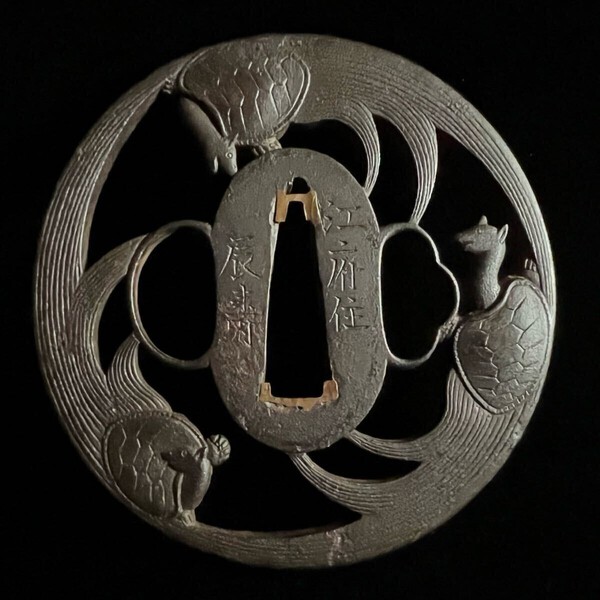
I recently picked up this lovely tsuba signed Tatsutoshi. Three Minogame are carved with beautiful detail, these are turtles from Japanese folklore that are said to live up to 10,000 years old and have long strands of algae growing from their shells, which resembles a straw raincoat—or mino—from which they get their name. Best, Tom
 2 points
 -
In appreciation of John P. Lissenden. Dr. Lissenden (who received his PhD before submitting his master’s thesis on another subject and area of study) was a member of this great forum. Unfortunately for the tsuba world, he passed on several years ago. Dr. Lissenden wrote a master’s thesis on namban type tsuba. In some of my posts on other threads, I have referred members of this forum to his excellent paper. If anyone wishes to gain further knowledge on namban type tsuba, I highly recommend his thesis. It was written in 2002 and (in my opinion) is a masterpiece! Dr. Lissenden’s paper can be found on this website- https://etheses.dur.ac.uk/4129/1/4129_1648.pdf Just something I wanted to pass on to newer members of this forum.1 point
-
Hi all, I have recently acquired a nice Tanegashima . Could you knowledgable folk help me with a few questions about this particular weapon. First I notice it is a small , light and highly decorated. Overall length is 1090mm and barrel out of the stock os 770mm. The bore measures 9mm across . I have been told/ read - it is a small bore hunting weapon , and also read- During the Edo period samurai on horse back would carry these type of weapons - as they were very light, and easy to manage - but also - just showing off there wealth ( Hey I can afford a fine weapon - just look at the decoration!) Also, when I first bought it - I thought the inlay and metal was all brass - upon giving it a little clean it seems to be silver. ( Should I clean to show off the silver or leave it alone? ) The other thing I want to do is get the missing foresight made and replaced - Can anyone point me in the right direction of what shape of foresight and size should I get made - given the rear sight shape and size in pics . Also can anyone tell me what the Mei says please. So many questions I know ! but any help will be appreciated Thanks Alan .


 1 point
 -
Hello Mauro, Thanks for the hakogaki pictures and your statement of “The hakogaki is well written and states some perfectly legitimate assumptions about the tsuba. Unfortunately (or rather, thank God), it is not by the Satō Kanzan. Below are others hakogaki, likely written by the same “pseudo-Kanzan,” concerning modern tsuba.” Unfortunately (as much as I have tried!) I can’t read Japanese. Why is everything written about tsuba in Japan always written in Japanese? Ha, ha, ha, ha, etc! Just having a bit of fun! Anyway, I don’t know enough about computer translation to translate the hakogaki. If someone out there can translate them, I think that would be of interest to many members that read this thread. Thanks!1 point
-
Ah my mistake lewis. I thought for some reason Samonji was the name of the school but it should have been corrected to "Sa"1 point
-
My first "Nihonto" was a fake, I was basing my judgment on few books only and I failed. I learned that hard way by presenting my "Nihonto" to other collector. Much have changed since then, due to more books, looking at real Nihonto in others collection (at hand), buying first few with a help of experienced collector. I think these are a good alternative for Iaido/Tameshigiri. Even for display for people that can't afford Nihonto. I personally use Chinese blade for training (both Iai and cutting), mounted in Japanese Tsuka. Chinese/Thai/other still make that fat oddly looking stake alike Tsuka, not to mention poor wrapping. Why I use Chinese blade? I don't care if it gets chipped, bent, catches rust or whatever. I don't even clean that blade. Still, it took me a while to find a decent replica, in a way of handling etc. And it isn't (although they are good) Hanwei. As for these 'high end replicas', I think they are still cheaper than new (not second hand) Shinsakuto with Japanese Koshirae.1 point
-
Must be something in the water, because here's another https://eirakudo.shop/6486591 point
-
Most of them have the telltale long fold line along the hamon, yes. But at the prestige end you have stuff like these: https://www.swordjp.com/product/crab-koshirae-tamahagene-katana https://www.reddit.com/r/Katanas/comments/1mope74/possibly_the_nicest_chinese_tamahagane_made_katana/ https://www.militaria.co.za/nmb/topic/50084-chinese-katanas/#comment-522004 I'm not saying 95% of the regulars here wouldn't figure it out, but for someone newer to the field who's only ever seen monosteel/tool steel swords before it could definitely be tricky. The only saving grace is that at this point, blades of that quality are still only made on a custom basis, so they end up not being much cheaper than an actual shinsakuto once you take customisation into consideration. They're even starting to get ambitious and copying big name smiths now! Sukehiro: https://www.swordjp.com/product/toranba-tamahagane-katana-sword Inoue Shinkai: https://www.swordjp.com/product/wing-tamahagane-katana And now that I think about it, that crab koshirae one in the first link looks like it might have been an attempt at Gassan ayasugi-hada.1 point
-
Ironically I literally just bought a Mishina school blade with kicho papers to tanba no kami yoshimichi (papers from 1950, so perhaps more reliable than later ones). It's mumei, though, so it can't be gimei, and it's clearly sudareba hamon, so it almost has to be some smith in the Mishina school (I already have a Tango no kami Naomichi (5th? generation)). We'll see what happens at shinsa; it will need a polish for sure, but most of the blade is in viewable polish.1 point
-
I have always thought that Dr. Lissenden’s thesis on namban tsuba was ahead of its time. As most new subjects written by forward thinking academia individuals usually are. It is a great read, and I refer to it often in my own research.1 point
-
Tyler: I believe both of these questions were answered in your other post. Moriyama-san translated the smith as Kanetsugu and Bruce-san mentioned the large seki stamp indicates it is NOT traditionally made. This means the sword is definitely WW2 and that it is probably made using "puddled steel" with power equipment, and oil quenched, though it may be partially hand forged. John C.1 point
-
Agree. From what we can see so far, not genuine but a fake. The signature definitely is, and the nakago is wildly out of shape. Have to see more pics1 point
-
Nope, not me. Compare to a similar subject (unsigned Hamano I think)…..big difference in quality although mine is by no means the finest work….but I like it🙂

 1 point
 -
At first glance not a TACHI and not a Japanese sword.1 point
-
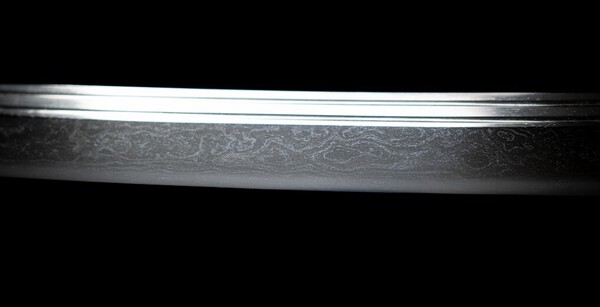
Just like when photographing people, it s very hard to beat a good natural light on and overcast day


 1 point
 -
Actually looking again…..no. How about this one on bay…..it is dated 2001.….same shape nakago ana. Same artist? These are all modern imo

 1 point
 -
Thanks Dan. I have checked some of Lissenden's images and managed to track some down - unfortunately either the Museums he used as references have changed their item identification numbers or Mr Lissenden transcribed them incorrectly. most of the images from the V&A have the wrong code - there is a full stop mark needed after the M which Lissenden has missed in most cases. Plate 6. page 159 says M194-1931 but should in fact be M.194-1916 The example plate 7 page 160, I could not access in the museum mentioned but an almost identical one can be seen in the V&A M.1147-1926 Plate 8 page 161 also has the wrong accession number 684.'30 [It can be found in Greville Cooke's book page 68] 1930M684 Plate 16 page 169 has the wrong accession number [TWCMS J10370] it should be TWCMS J10320 For anyone interested, I have most of the images used in the treatise [enhanced] including the ura views [or the side not illustrated therein] https://collectionssearch.northeastmuseums.org.uk/#view=list&id=7d1f&modules=ecatalogue&keywords=tsuba&ColObjectStatus=Current has access to the tsuba illustrated from the Laing Art Gallery. Unfortunately a great many tsuba in this collection have no images.1 point
-
Anton, 塚原兼次 - Kanetsugu Tsukahara (born 1919) is well documented. Sesko: KANETSUGU (兼次), Shōwa (昭和, 1926-1989), Gifu – “Kanetsugu” (兼次), real name Tsukahara Tarō (塚原太郎), born January 25th 1919, he worked as rikugun-jumei-tōshō and died on July 30th 1978, jōkō no retsu (Akihide), Fourth Seat at the 6th Shinsaku Nihontō Denrankai (新作日本刀展覧会, 1941). Seki registration: registered on Taisho 8 (1939) October 20. Uchiyama (1969): Kojima KANEMICHI forge: (1) Asano KANEZANE (2) Takasaki KANESHIGE (3) Kuriki KANEMASA (4) Tsukahara KANETSUGU (5) Miwa KANETOMO (6) Takeyama YOSHINAO. Dai Nippon Meikan (1942): Seki Kyoshin Sha (Seki) p.127: (Swordsmiths: Kojima Kanemichi, Kojima Kanenori, Takeyama Yoshinao, Miwa Kanetomo, Fujii Kanefuji, Kurimoto Kanemasa, Tsukahara Kanetsugu, Kato Kaneharu, Matsumoto Yoshinori) . Kojima Kanemichi Mon: Kanetsugu Tsukahara is listed (also note there is a Kanetsugu Maegawa born 1904, of same kanji). There is no indication of a mix up with name Tsukahara Noritsugu. As another item, I did find a Seki smith in Sesko who is not listed in Seki registration, and I did not hvae: HIDEYASU (秀安), Shōwa (昭和, 1926-1989), Gifu – “Seki-jū Hideyasu kore o saku” (関住秀安作之), real name Tsukahara Yasuo (塚原安男), born 1929, student of Tanaka Kanehide (田中兼秀)1 point
-
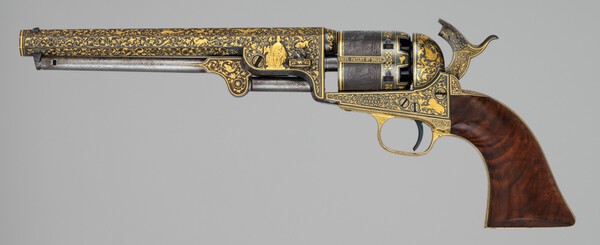
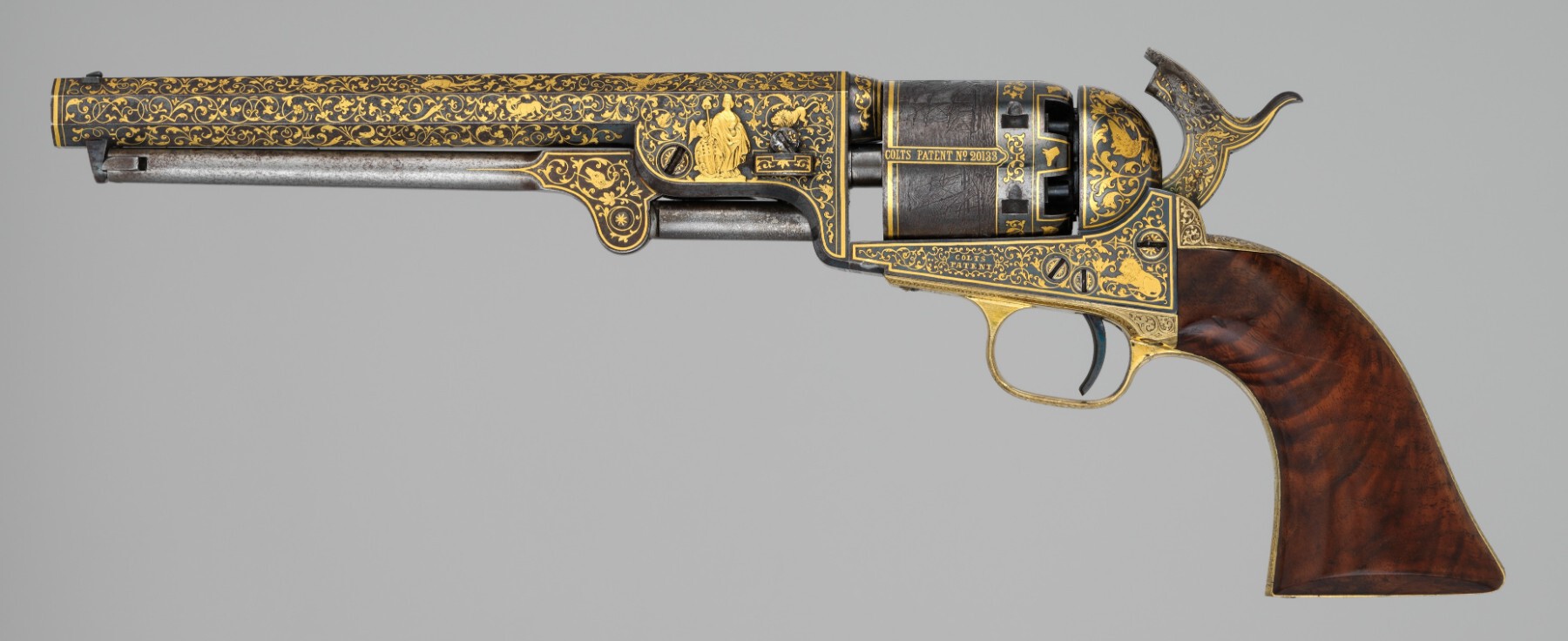
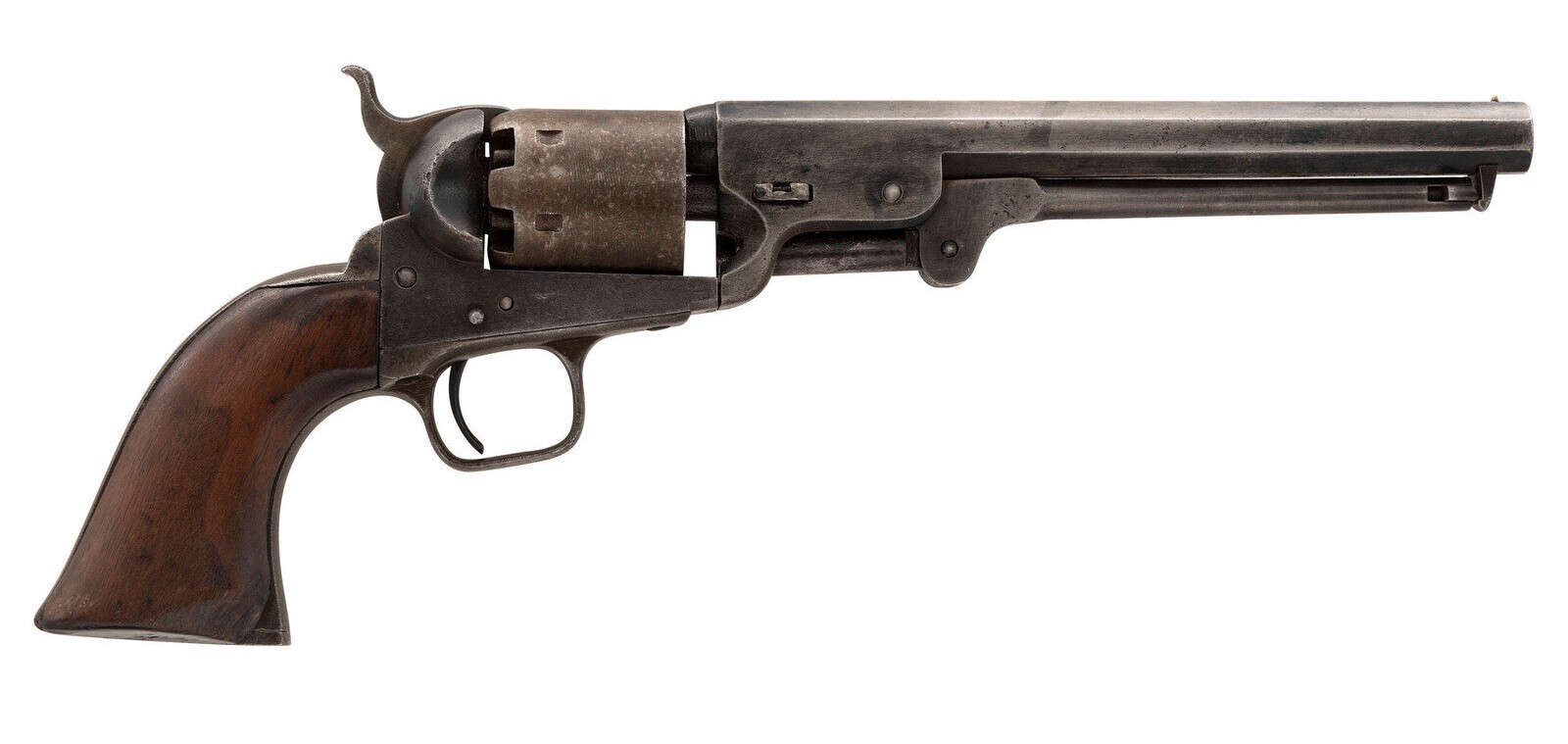
Again, comparing collectible Colt revolvers to collectible tsuba (yes, I really like Colt revolvers!). The amount of craftsmanship on some museum quality tsuba is superb and breathtaking. They are beautiful and a testament to the artistic capabilities of their makers. I love looking at pictures of them. Why? Because I could never afford them! So, I must appreciate them from afar! Just like Colt revolvers! The first picture shown below is of a superbly crafted and artistic model 1851 Colt. The next picture shown is of a model 1851 Colt that I could afford! Although both revolvers perform the same functionality. Just like highly artistic tsuba compared to more plain looking tsuba. I guess if I ever win the lottery, I will upgrade my collection of tsuba!
 1 point
 -
“Museum quality” means absolutely nothing. Knowledge determines the understanding of quality, not what some museum displays show us…..stuff they were left eons ago that they neither understand nor try to understand. Of course, there are some specialist exceptions but mostly I have little time for museums. Fine quality things are safest in collectors hands.1 point
-
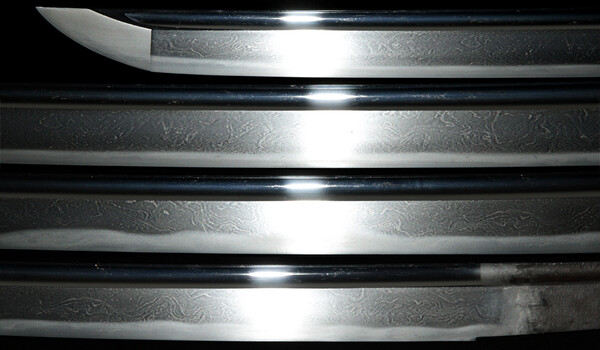
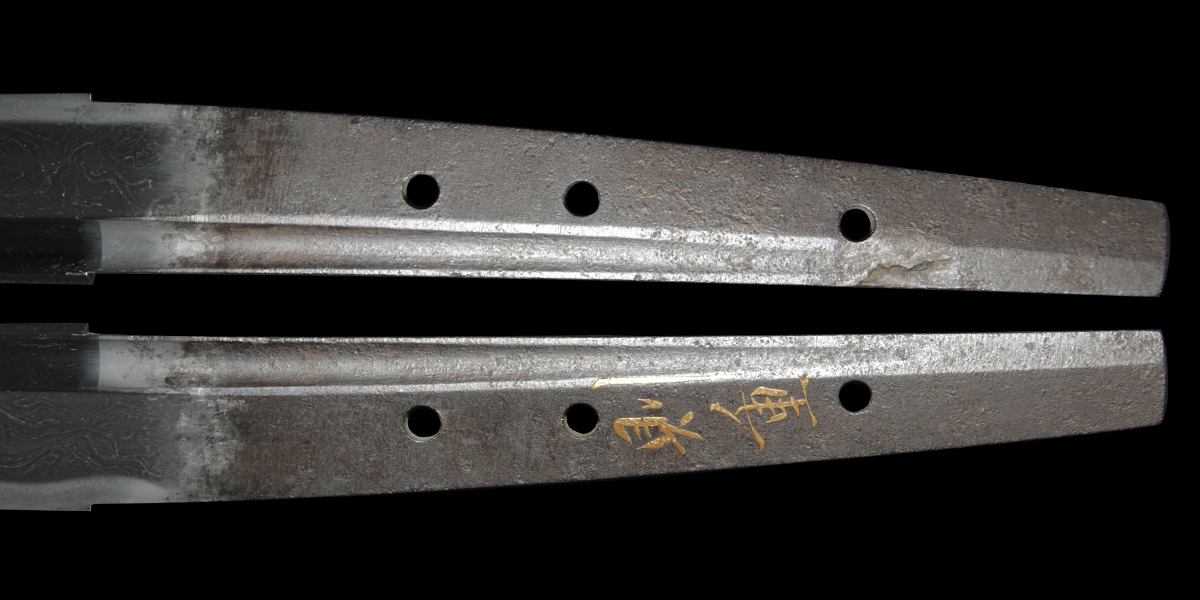
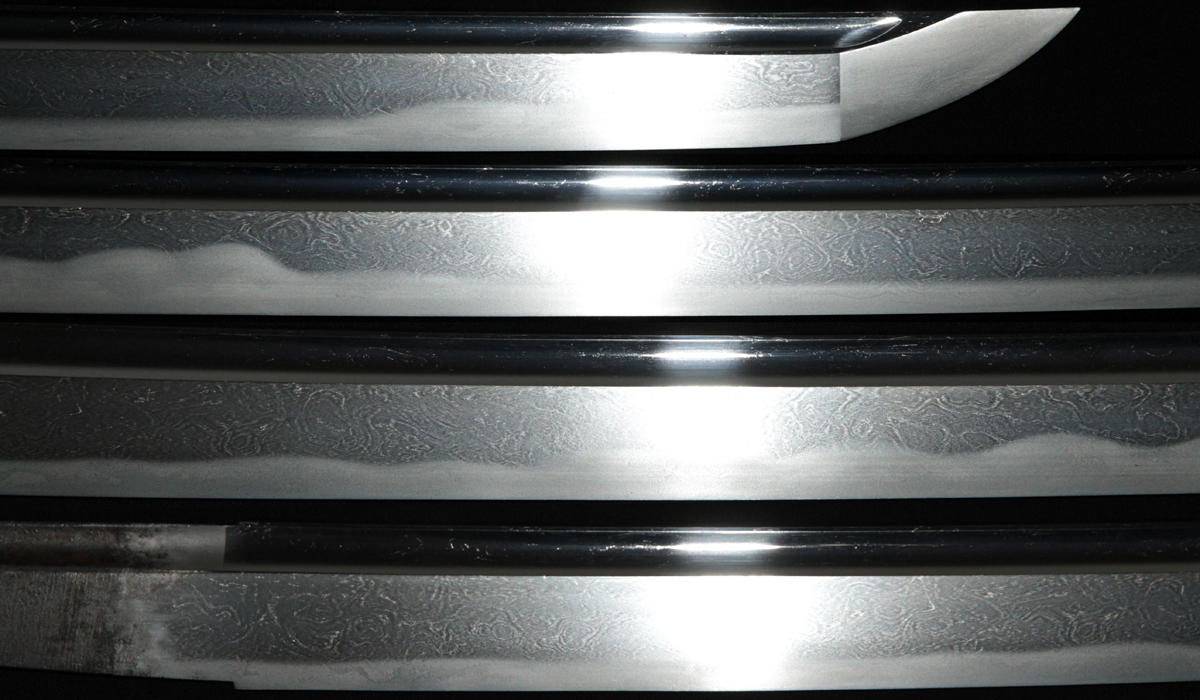
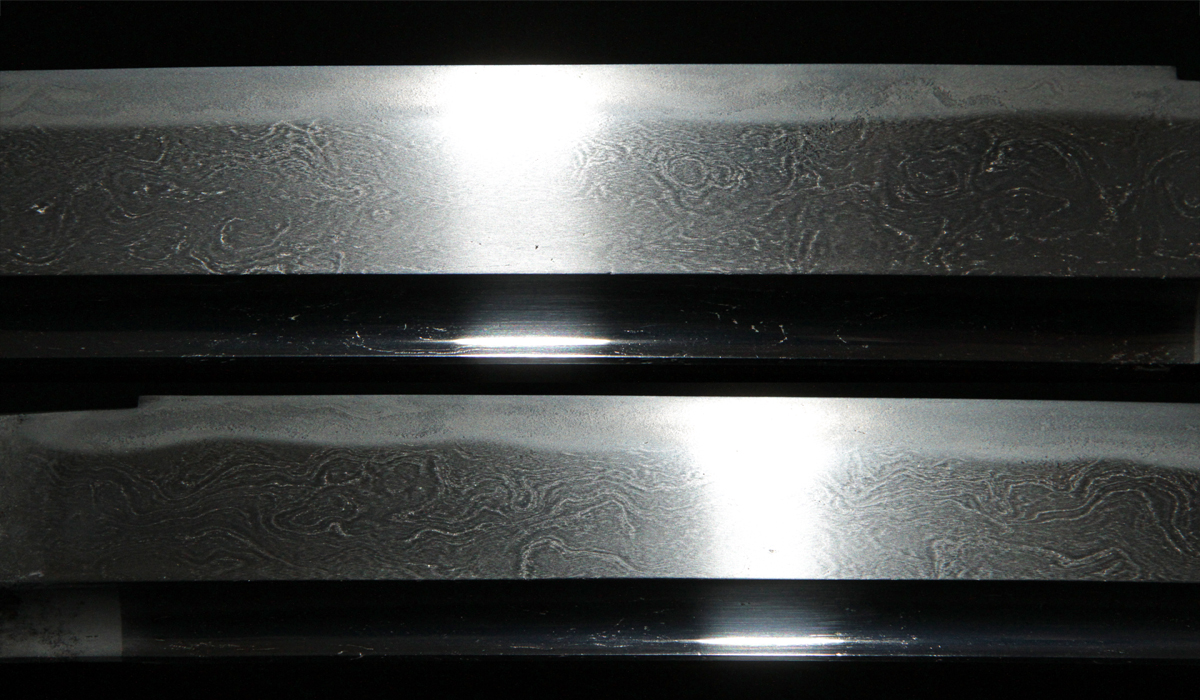
Hi Friends, I've been fortunate to handle a beautiful piece of history even thought it was for a very very short time, it was a tease more than anything. A client of mine was on the hunt for this big name and so with a bit of luck and timing on our side I was able to satisfy his appetite. Norishige who was one of the big Juttetsu and having played such a big role in Soshu-den History I felt that it was unfair for this piece like this to disappear into the dark corner of a private collector and possibly remain unseen for the next couple of decades. A piece like this deserves to be looked at and appreciated, especially for those of us who will never own or touch such an item. And so with the permission of the owner I would like to offer some pictures and leave an open discussion for those who would like to study and comment on this piece, share some knowledge preferably in a constructive way where others can benefit. Attaching other pictures for form of comparison/ study are permitted so I leave this in your hands from this point on. I won't be participating in this discussion as my workload is backlogged. I ask members to keep in mind that the owner may have a peek at this so please don't be too harsh if you have something negative to say. I will ask this thread to be deleted in the future out of respect for the owners wishes so you are welcome to save everything. The nagasa is just over 73cm with a Kinpun Mei most likely done during Edo period. It does have recent Juyo papers for those who are doubtful of its authenticity. Enjoy and thanks to everyone who took a peek!
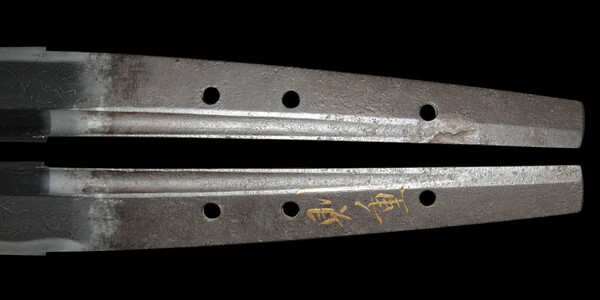

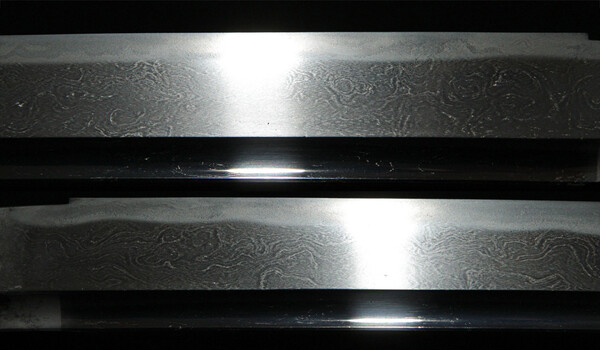


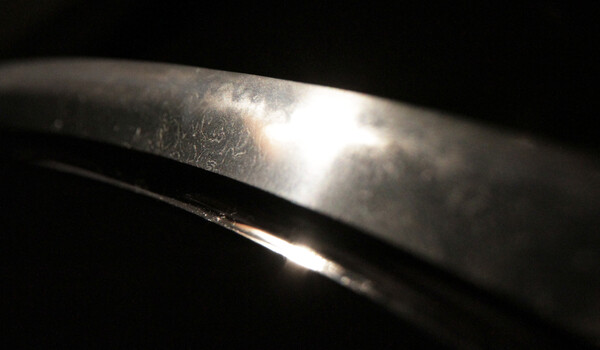 1 point


































This leaderboard is set to Johannesburg/GMT+02:00