
Leaderboard




Popular Content
Showing content with the highest reputation on 12/12/2025 in all areas
-
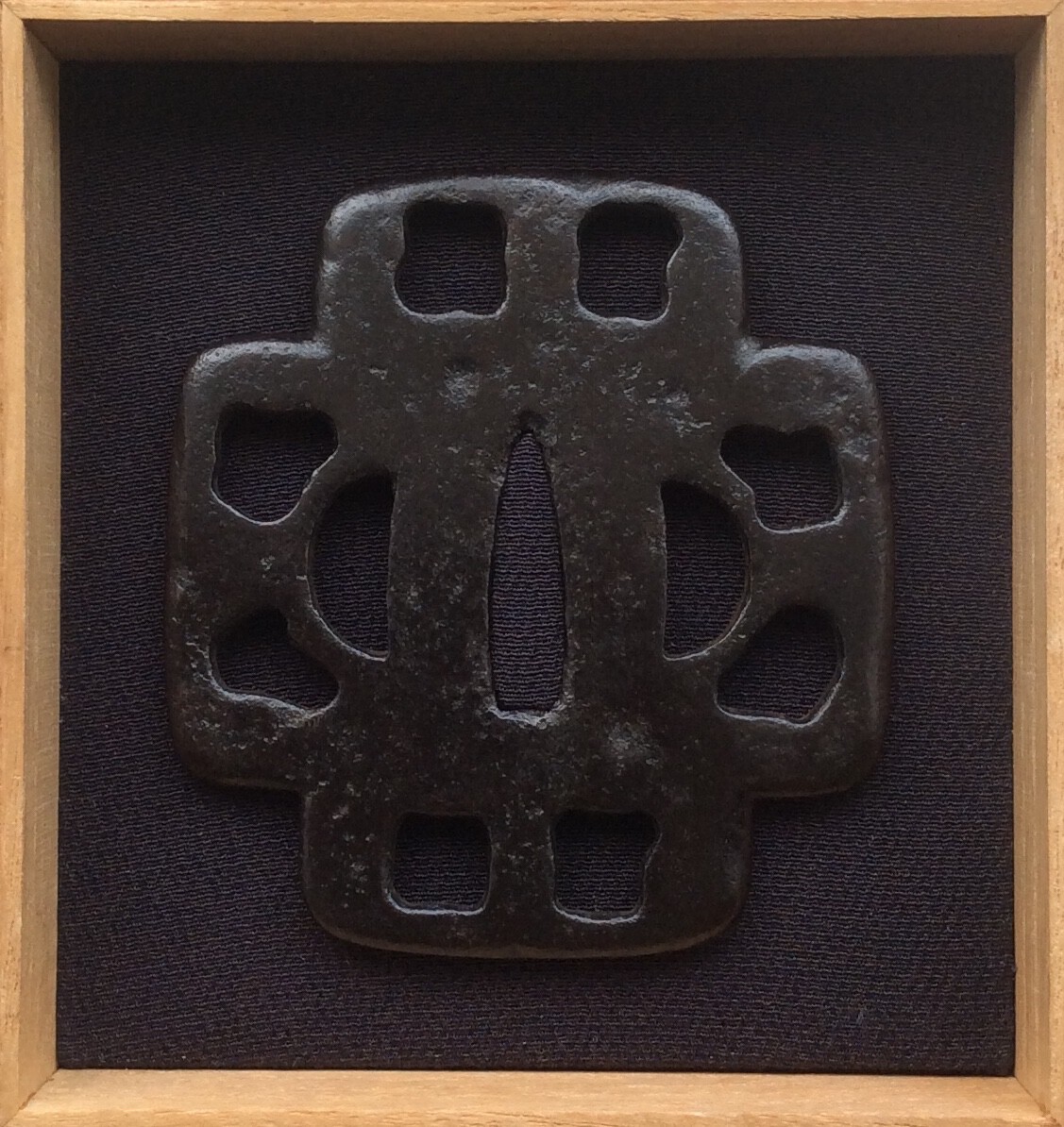
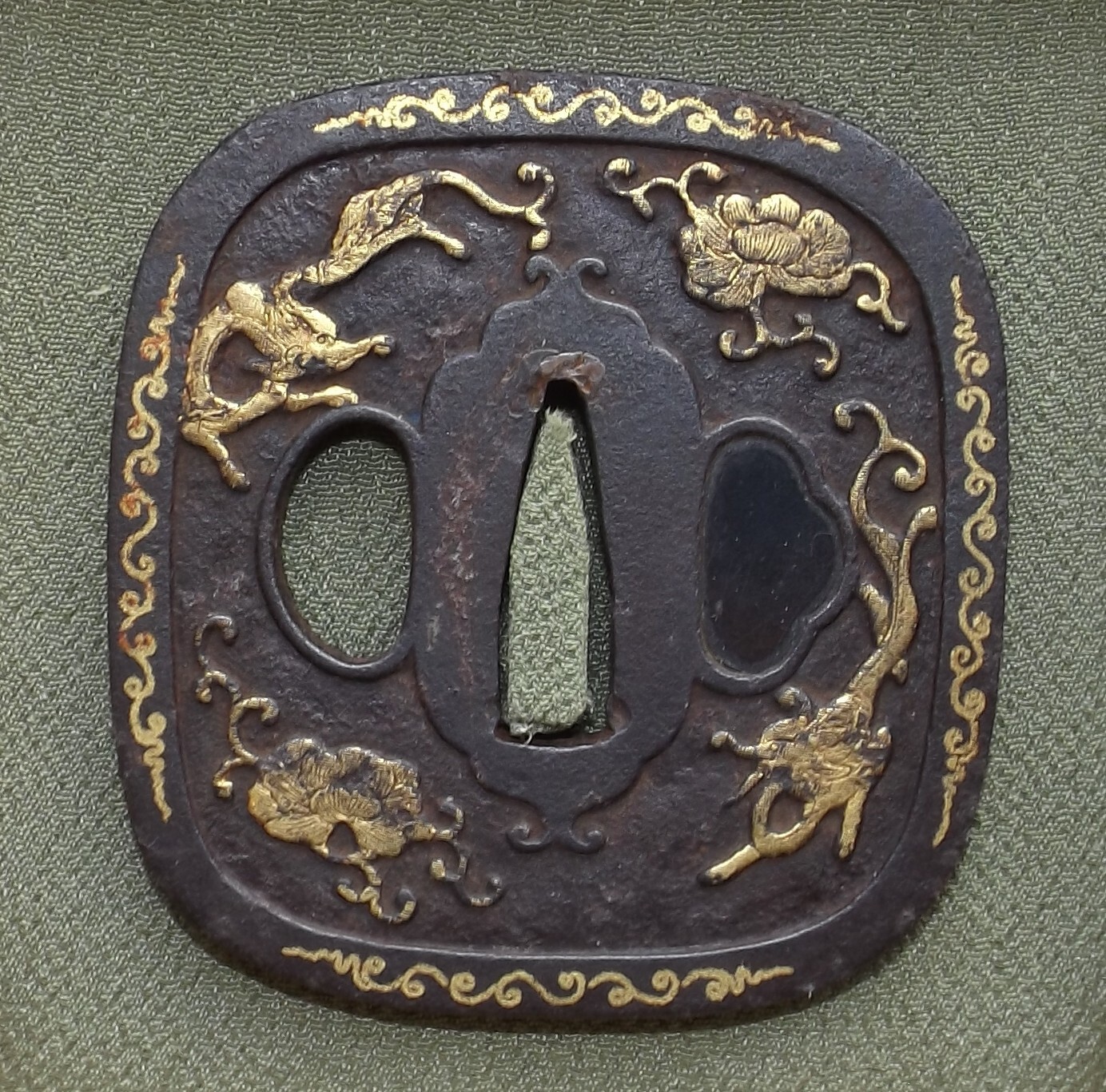
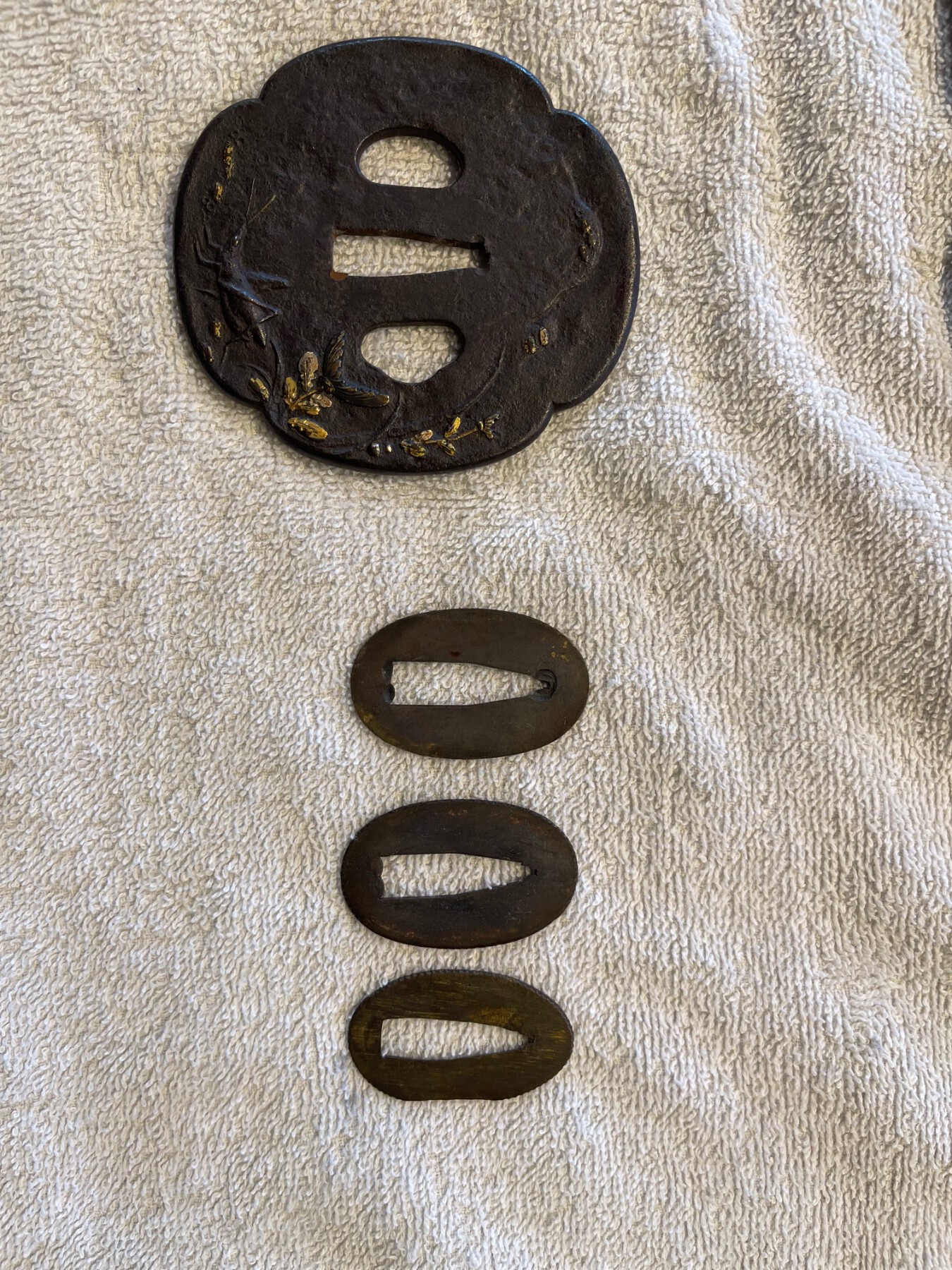
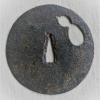
Yes it’s certainly Higo in style. The design represents a stylised version of the Hosakawa family star mon known as Kaku kuyo, and is most often seen within the Hayashi and Kamiyoshi schools. There are also Jingo examples known - see below 1st Jingo example. I agree with above comments, this example is quite amateur looking and I also suspect probably modern example. Sorry probably not good news. kindest regards Michael
 6 points
 -
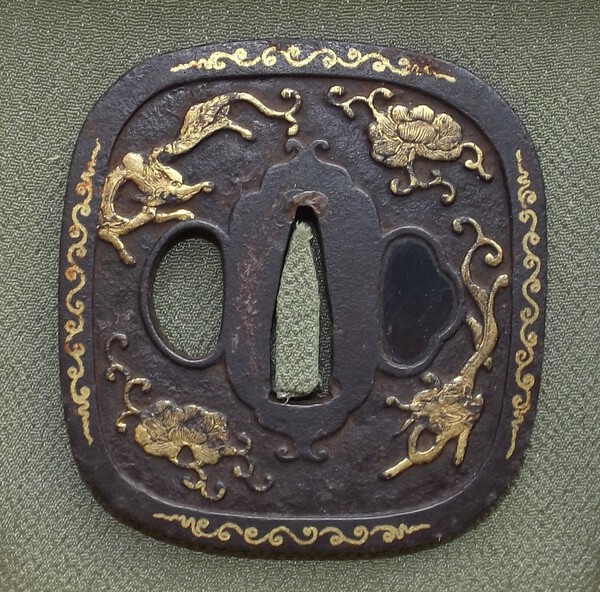
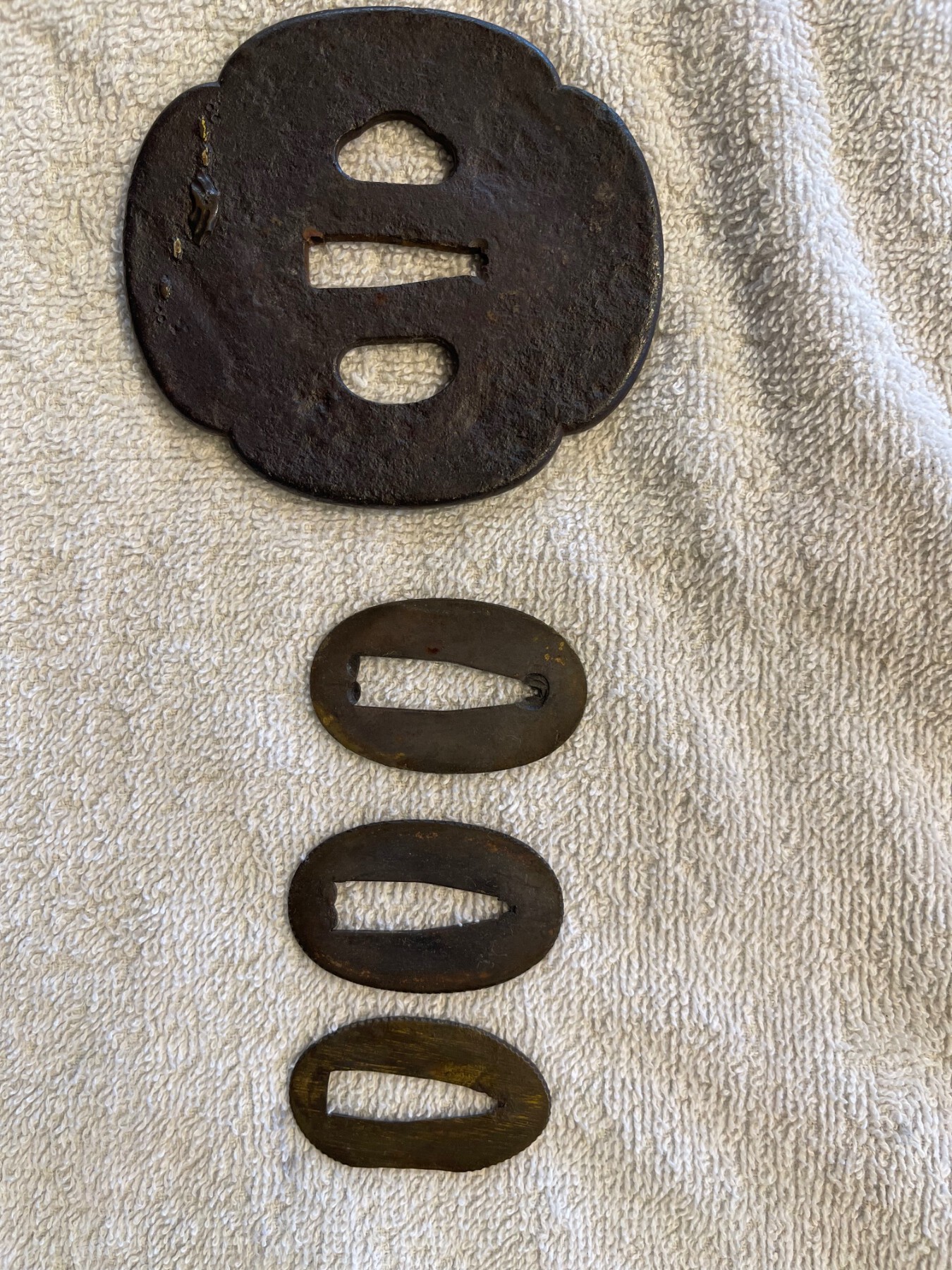
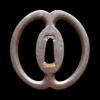
Dear All. I realise that these are not to everyone's taste but I have just picked this one up and thought some might be interested. 69mm by 72mm by 5mm. Small but heavy in the hand, shakudo fill to the kogai hitsu and signs of being mounted a time or two. 90 degree hatching under the nunome. The reverse identical to the face. Enjoy{or not of course}! All the best.
 5 points
 -
Rest in peace, my old friend. Earlier this year, I wrote to Richard after my older brother Michael passed away from an aggressive form of liver cancer. They were close in age, and Richard’s kindness during that time meant a great deal to me. I first came to know him through his photography FAQ for the KTK, which I stumbled upon online. He generously helped me refine my photography skills, and thanks to his guidance I became a far better fine‑art photographer. I still use the techniques he taught me on my website today. Although I never had the chance to meet him in person, I did acquire several fine iron tsuba from him over the years. On the few occasions I attended the San Francisco show, he happened not to be there that year—something I regret even more now. Richard’s influence on my hobby work and his kindness in our conversations will stay with me. He will be missed.5 points
-
The major difference would seem to be that the piercings are squared on older Higo guards - a bit easier to drill round holes? https://www.instagram.com/p/CmODF4Dvb4E/ + https://www.instagram.com/p/DQDgniMCX62/ Kaku-nine-star Openwork Swirl Design [Nine Star? - I count either eight or with the hitsu - Ten ] Tsuba Inscription: Rakuju, Master Rakuju was a metalworker from Higo Province during the Edo period. He is the third generation of the Kamiyoshi school . His grandfather, Juhei, the first , was ordered by the Higo Domain to study the Hayashi family techniques .5 points
-
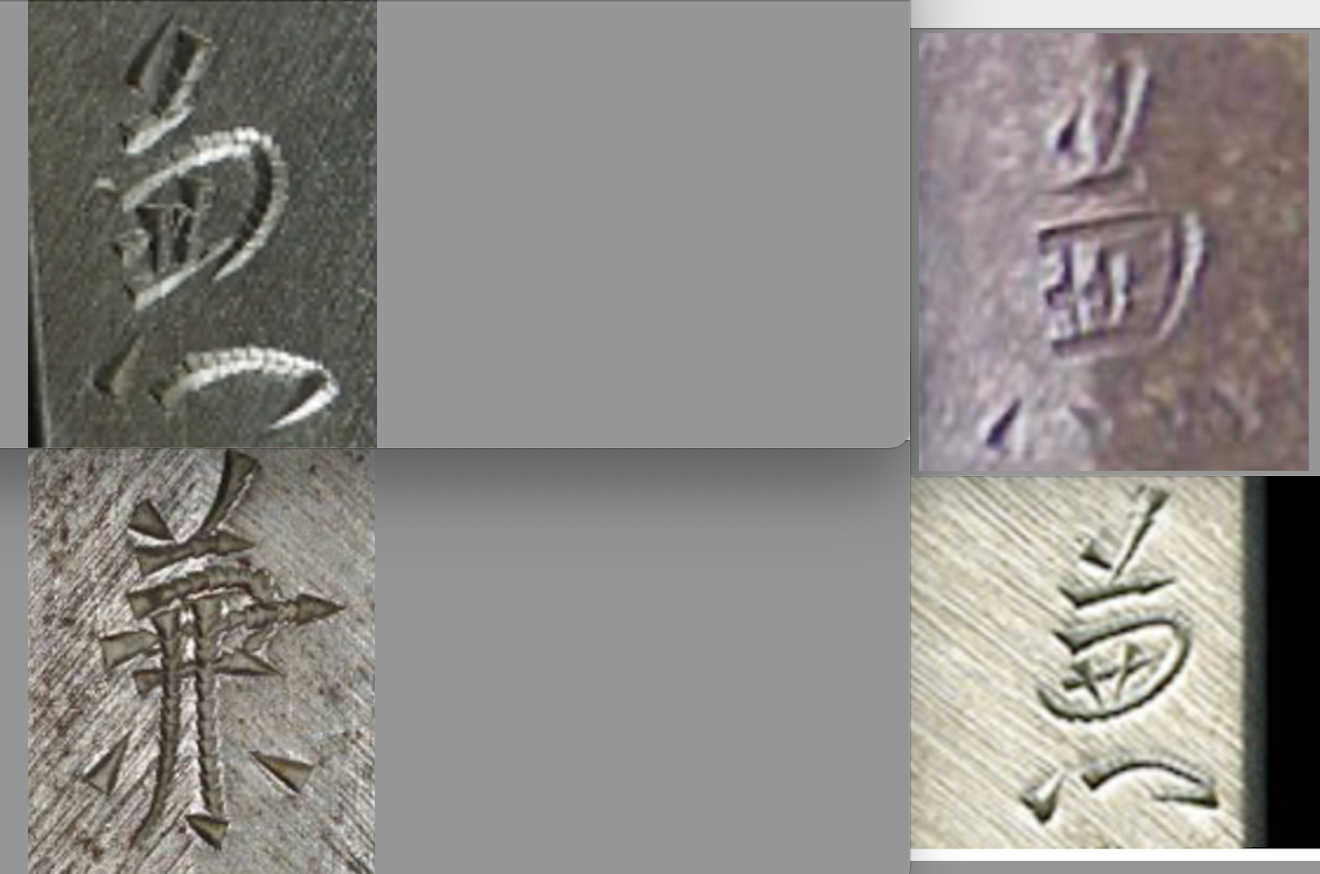
Just a general note. Some smiths changed their style frequently, which makes it hard to compare. For example, the "Kane" in the pic below are all from the same smith: Nakata Kanehide - 1938 (top left), 1944 (bottom left), 1945 (top right), and 1972 (bottom right). They are different from each other, however they all contain the elements of the "proper" kanji. John C.
 4 points
 -
In some cases, swordsmiths changed their mei over time (using one artname and then transitioning to one or more others during their careers). In this case, a smith may be primarily known by one name but actually used others as well. For example, the gendai smith Yoshihara Kuniie was well known under that name but he also signed Akihiro and Nobutake early on his his career. Also, many smiths were simply undocumented. Especially in Seki, it was an active site of arsenal production and I have seen other cases where a Seki-made showato was by a smith who simply does not appear to be listed.3 points
-
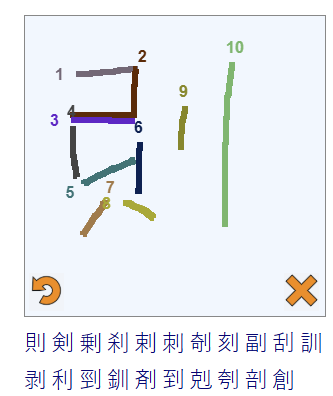
Even drawing the kanji as you describe it (remember that many of these smiths have what we call "Chippy" mei where the strokes don't form perfect representations of the kanji that we see on the digital screen today (don't even get started with Japanese calligraphy...)), here are the results on a very good "Handwritten Kanji" deciphering tool. The top result is still "Nori" and the other matches don't really make sense as they aren't used for names with only some appearing as parts of places or titles. Here is a thread with a mei from Tsukahara Kanetsugu, in this case the Kane is exactly what we'd expect from that Mino style and you'll see it everywhere. Once you recognize it, there is nothing mistakable about it: And another Kanetsugu:
 3 points
 -
My thinking why its not shinshinto: unless you are dealing with Kiyomaro level, shinshinto cannot do matsukawa-hada or any high contrast jigane without completely tanking the hamon. Its barely visible, either pure nioi or some weird nie which never sparkles. Here we see high contrast jigane but hamon comes up as having also about the same level of contrast. There are exceptions and in hands its possible to say, but also the holes are punched very naturally, with the correct profile and everything. Kamakura: unless you believe in Masamune who started to do hitatsura level activities in late Kamakura, this style of Soshu work is no earlier than 1330. At least "Sadamune", but if its pre Muromachi ts probably northern (jigane) and later. I am more inclined to see here Muromachi work. Either Uda, probably earlier, or Shimada and later. In both cases its likely to be quite good. Though unfortunately not greatly valuable financially.3 points
-
The basis of understanding is knowledge - not listening to other people's opinions and recommendations Comparing average things is a bit of nonsense There have been and always will be plenty of average things In anything you can think of In Edo you probably won't have access to the same quality material as in early Kamakura The same problem exists today We have the most modern equipment and technology And yet we are unable to make a sword with the metallurgical quality of the Kamakura swords But first you have to have the ability to study such swords and understand what you are looking at3 points
-
Couple of interesting facts: - What is most curious, the nakago in case #43 features a hot stamp; - There are 11 (may be 12) cases of Seki stamps; - 7 cases of TAN stamps; - There is only one case of tachi mei; - There are only two cases of Kai-gunto; - Only 9 nakago have dates on them, mostly it's 1942 and 1943; - Cases #9, #22, #26, #37 and #51 feature the yasurime that may have been filed by the same hand that filed the nakago of my sword. Case #22 also has the same taka-no-ha yasurime; - Cases #4, #30, #42 and #45 feature the signature that may have been chiseled by the same hand that signed the nakago of my sword; - Case #11 features the name Fujiwara Kiyonobu while the style of signature suggests it may be chiseled by the same person who made signatures in #4, #30, #42, #44 and #45 cases (Same V-shaped strokes in Kiyo). Case #43 with hot stamp: Here is an image of cases 4, 30, 42, 44 and 45 side by side, more or less equalized in size and aligned by Nobu (Nori) Kanji. Case #11:


 3 points
 -
Yesterday I more or less finished storing information on Kiyonobu swords. I have 61 swords on the list, including those three oshigata from Fuller & Gregory book and 1 from Slough. I didn't include case #2 and #8 from the Mal list (couldn't find #8). Also, I didn't double check my list for duplicates. It's hard to estimate the percentage of swords that survived to our days and the percentage of those that made it to the internet. Yet, it seems to me that the amount of his swords indicates that Nagamura Kiyonobu workshop was quite an active sword making facility. It's mostly impossible to put such a large amount of information in easily readable form, so I ended up putting it in Google Sheets, loading all available photos of each sword in a separate folder and indicating each source (if possible). So now it looks like this: https://docs.google.com/spreadsheets/d/1rz-3wH0eyylBhLYyKO0Dk1mpJz79MUGzntLsrlFPilg/edit?usp=sharing I am not sure I got all the signatures correctly, at least I had an issue with Tsukuru and Kitau Kanji. Also, I have some doubts that this information will be of value for many people, actually I wrote it down so I could analyze it. Yet, I hope it may save some trouble for those who will search for info on Kiyonobu. @Bruce Pennington, @mecox, may I ask you to take a look at this spreadsheet of mine? Would such a form of information presentation be useful?3 points
-
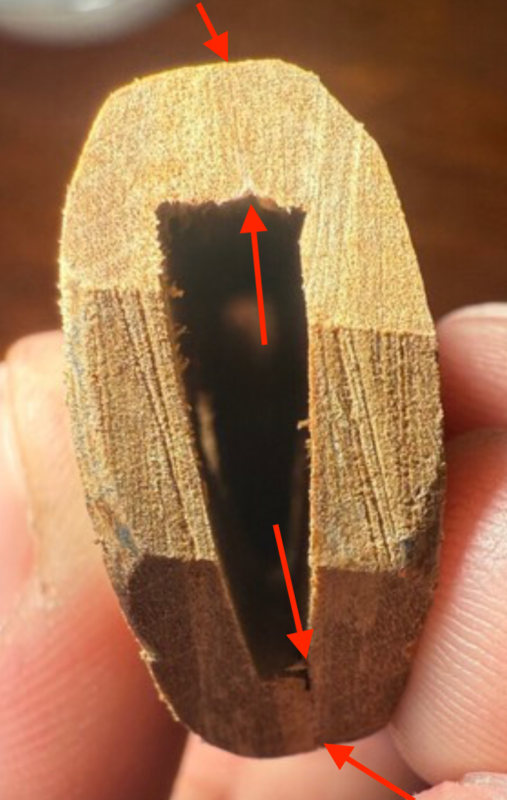
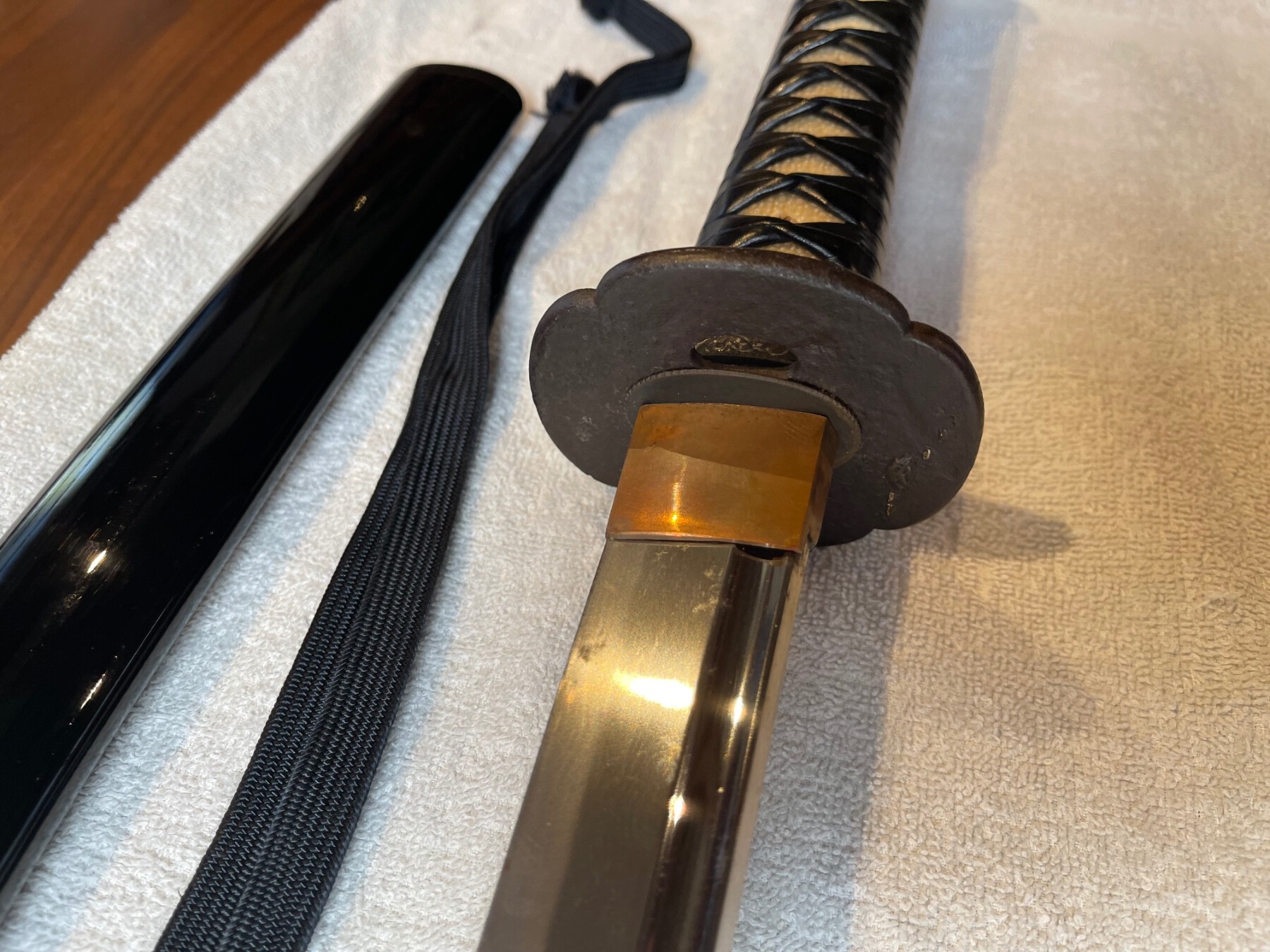
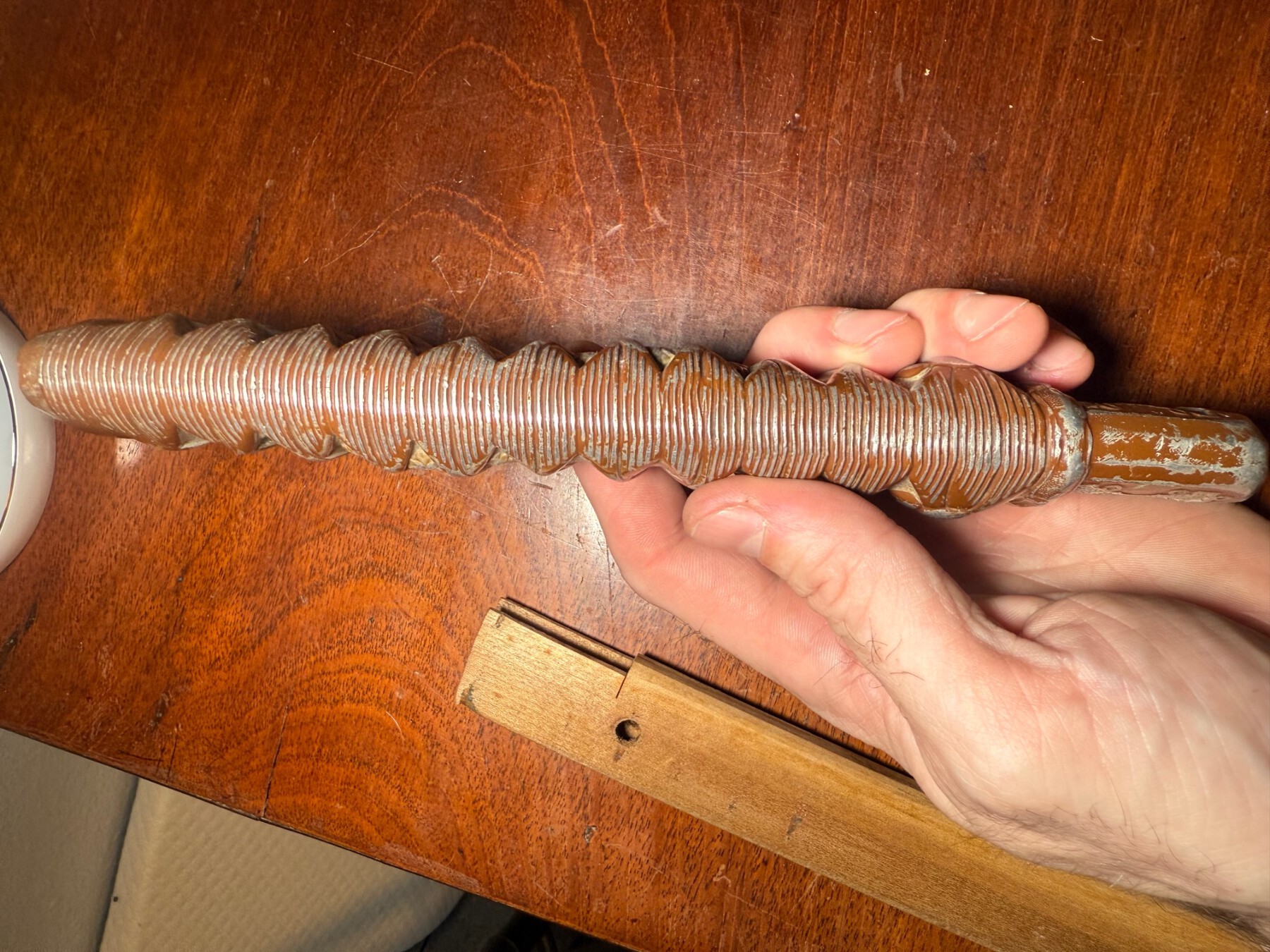
I think the wood insert is definitely a 2 piece construction. It's just a lot easier to make that way. This seems to have seams that are offset, which is what I would expect. John C.
 3 points
 -
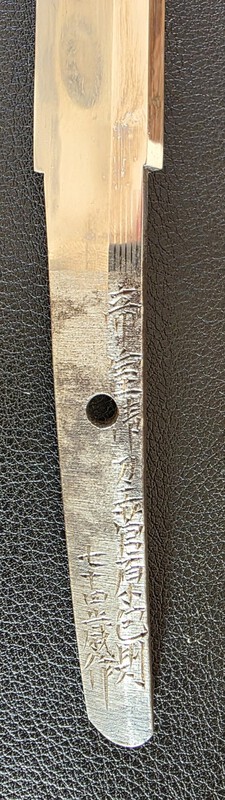
It has been a while I thought I'd share this remarkable tanto with you guys,
.thumb.jpg.d78d8b313bb8cb2a4c38fb8b967a23ef.jpg)

 3 points
 -
As a sue bizen lover , never seen anything like it come up anywhere https://www.aoijapan.com/katana:bizen-kuni-ju-osafune-yosazaemon-no-jo-sukesada-dated-august-1522-daiei-2-juyo-token-63rd-designation/2 points
-
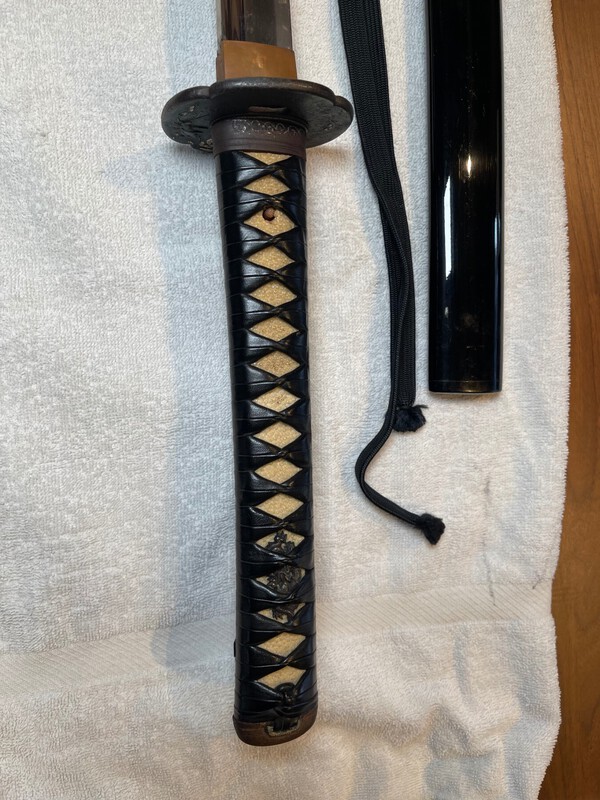
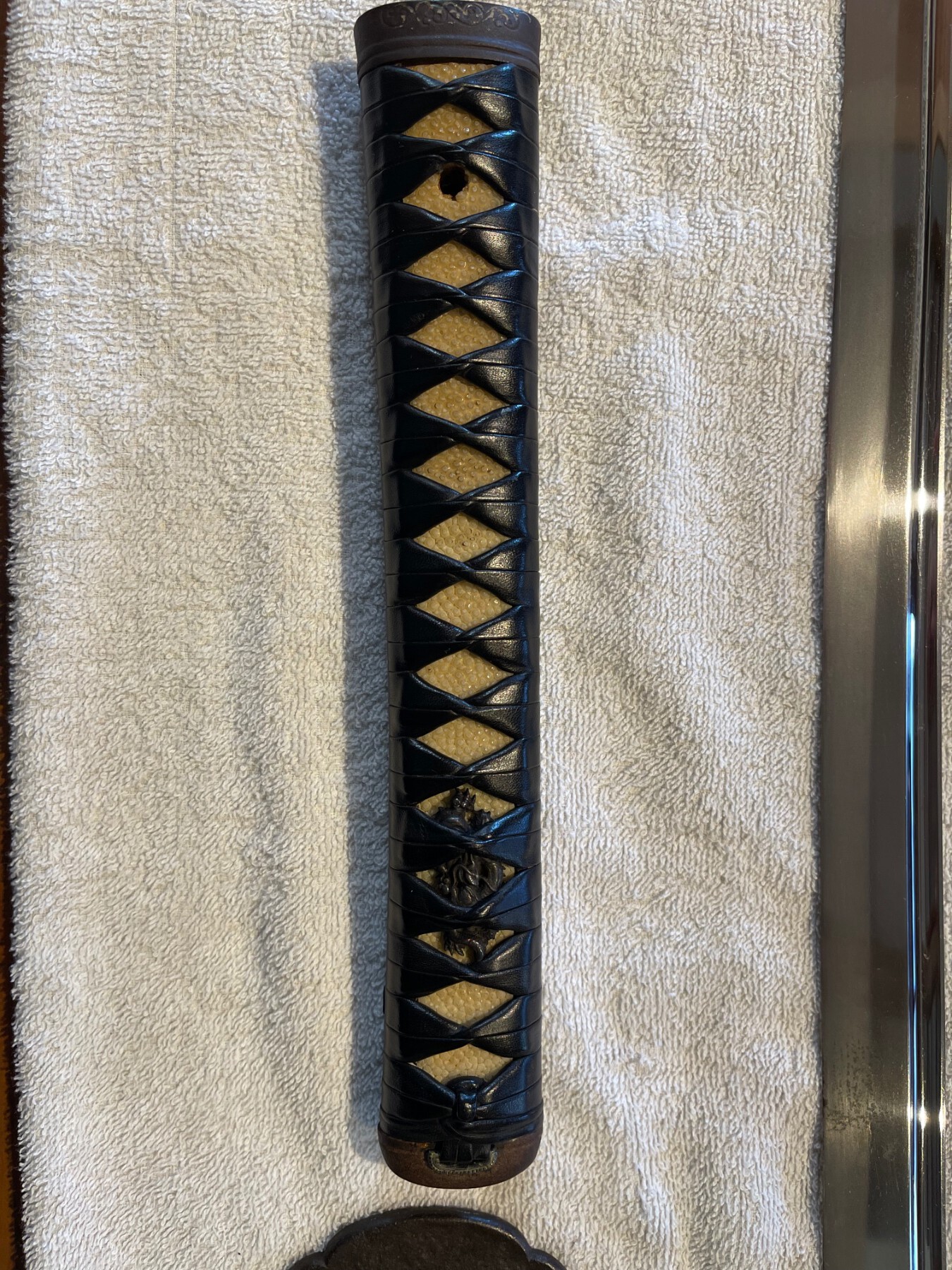
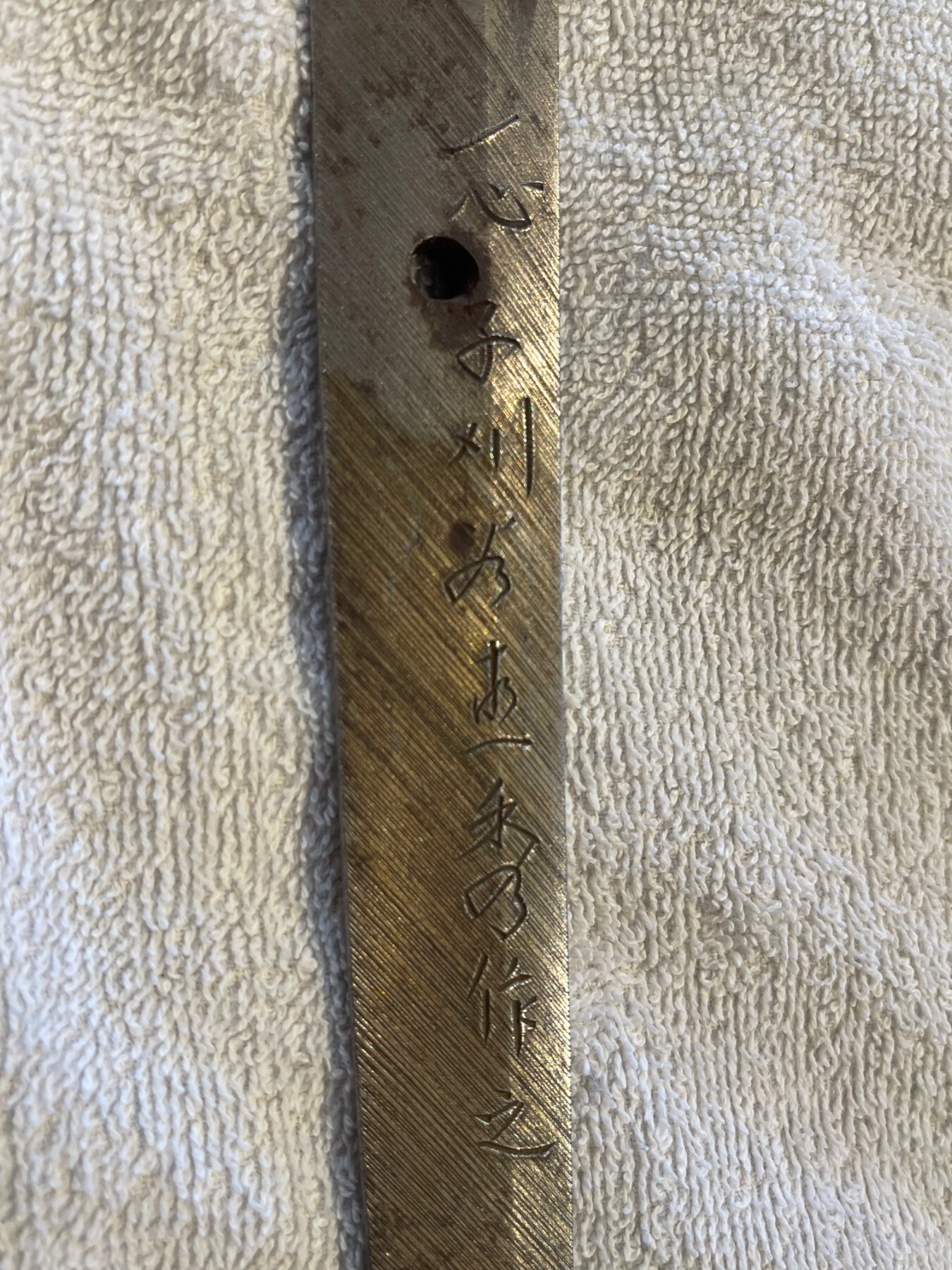
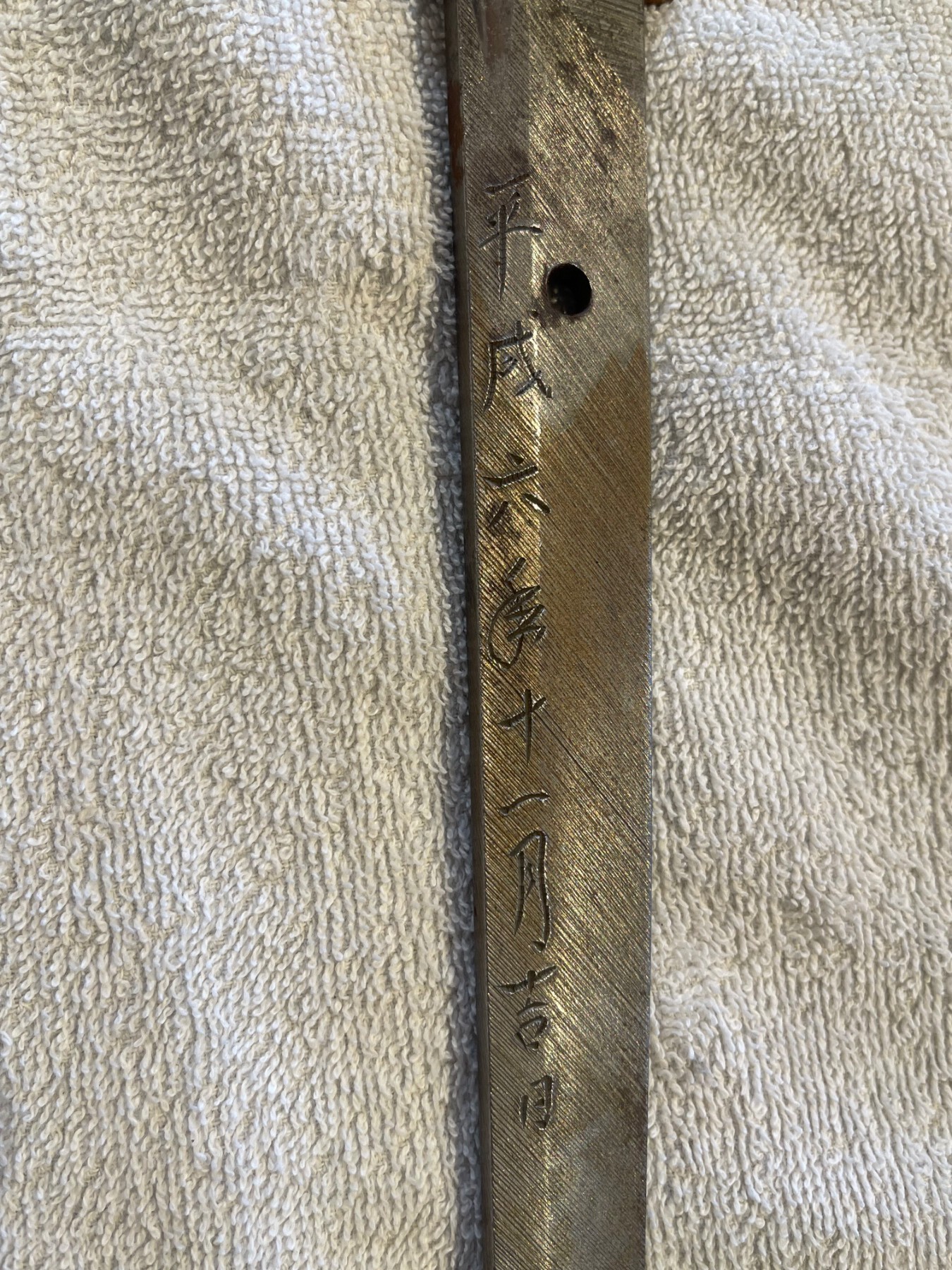
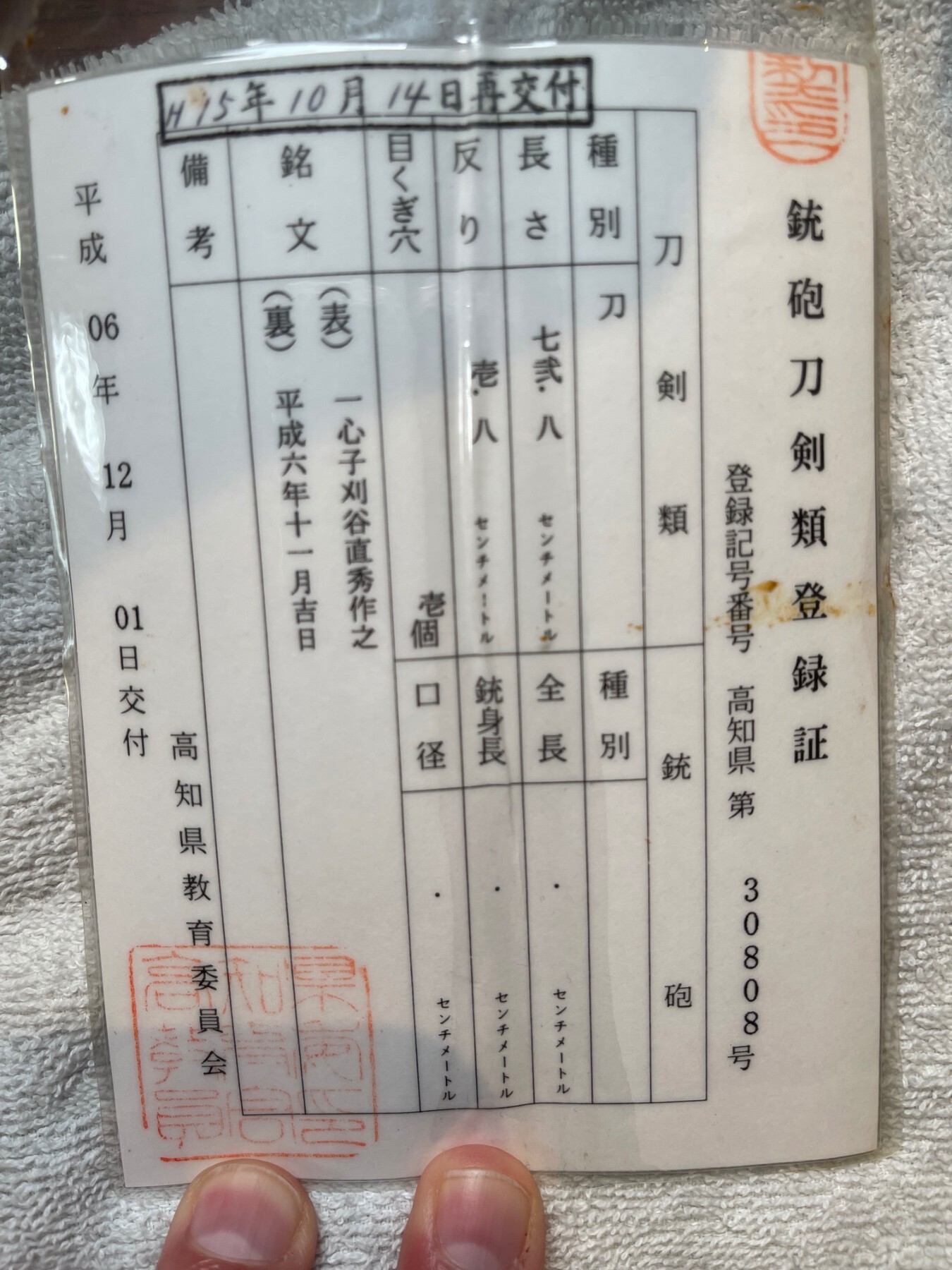
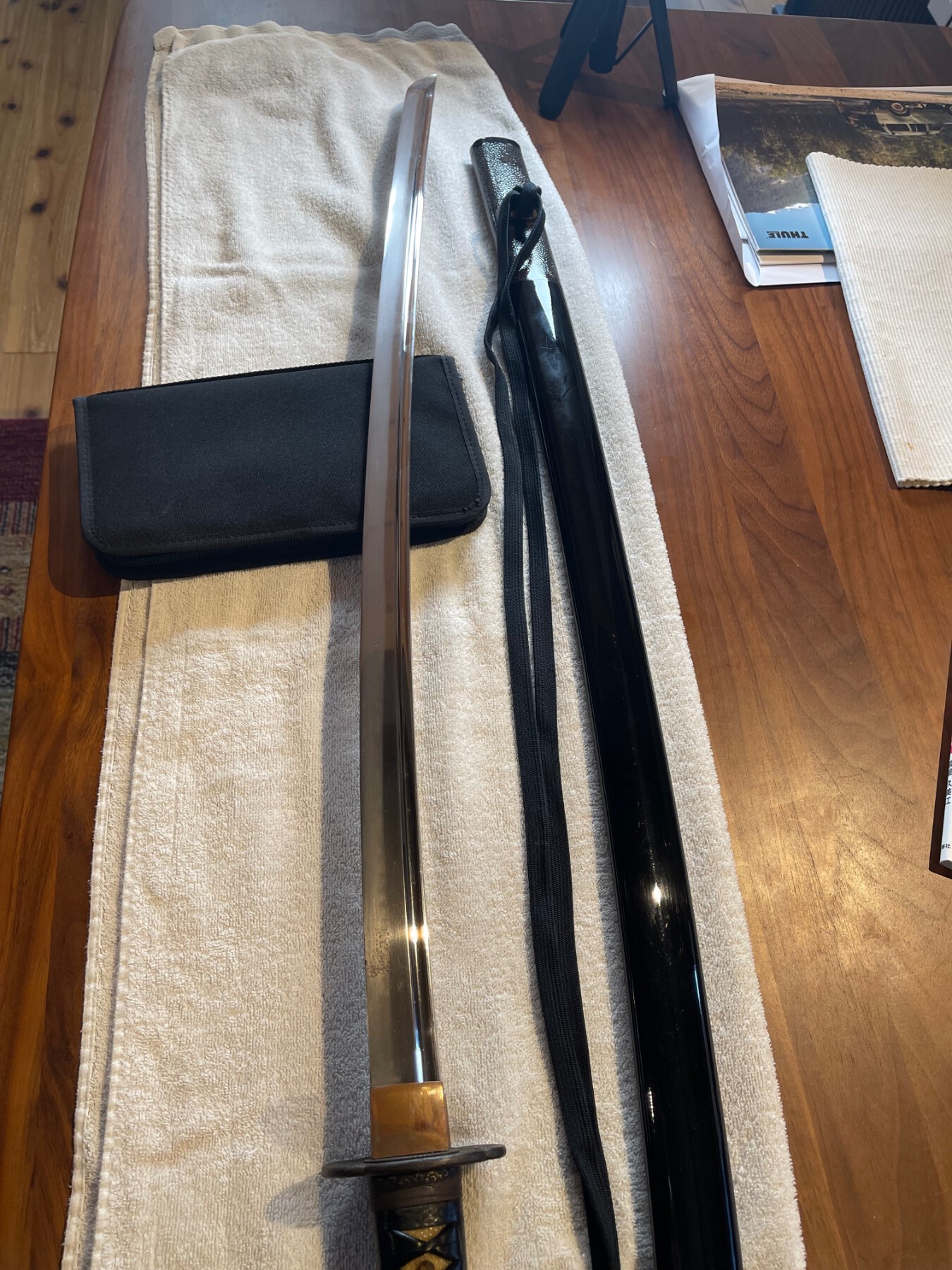
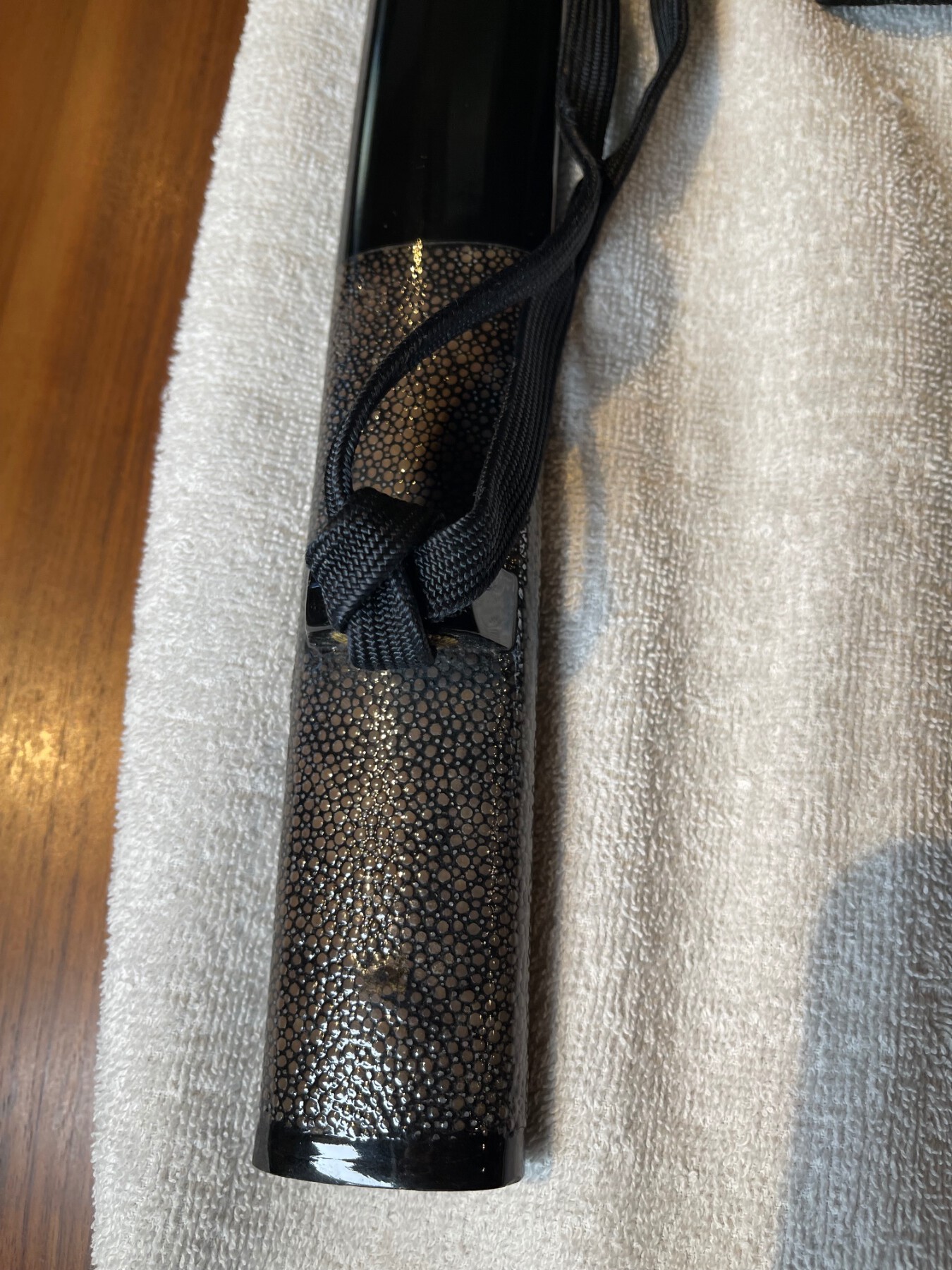
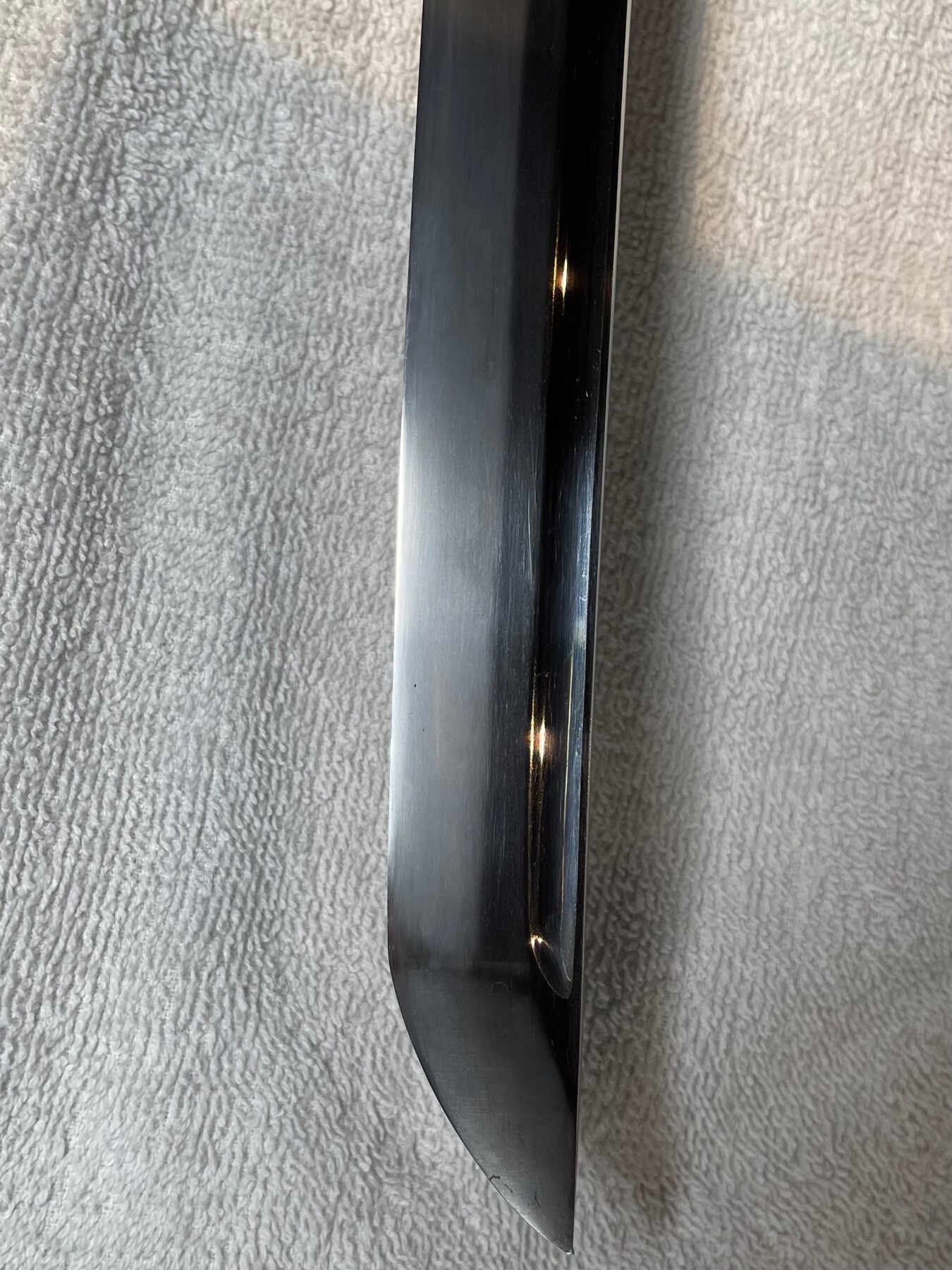
Gendaitō by Isshinshi Kariya Naohide – Information / Opinions Welcome I’m seeking input on a modern Japanese sword by Isshinshi Kariya Naohide (一心子 刈谷直秀). The blade is traditionally forged and signed on the nakago: 一心子 刈谷直秀 作 (Isshinshi Kariya Naohide saku) The tang also carries a date inscription consistent with the smith’s working period (late Shōwa to early Heisei). The sword is legally registered in Japan and includes its Torokusho. Condition: the blade is polished with no chips or apparent fatal flaws. The nakago has natural patina and has not been over-cleaned. Koshirae are present; the tsuka fittings are somewhat loose and would likely benefit from routine adjustment or mekugi replacement. I’ve located comparable examples by the same smith listed with established Japanese dealers (e.g., Nipponto and Tsuruginoya), which suggests this is a legitimate collectible gendaitō rather than a decorative piece. I would appreciate any additional information regarding the smith, workmanship, or market context, and whether members feel this example is consistent with other known works by Kariya Naohide. Photos attached. Thank you in advance for any insight.
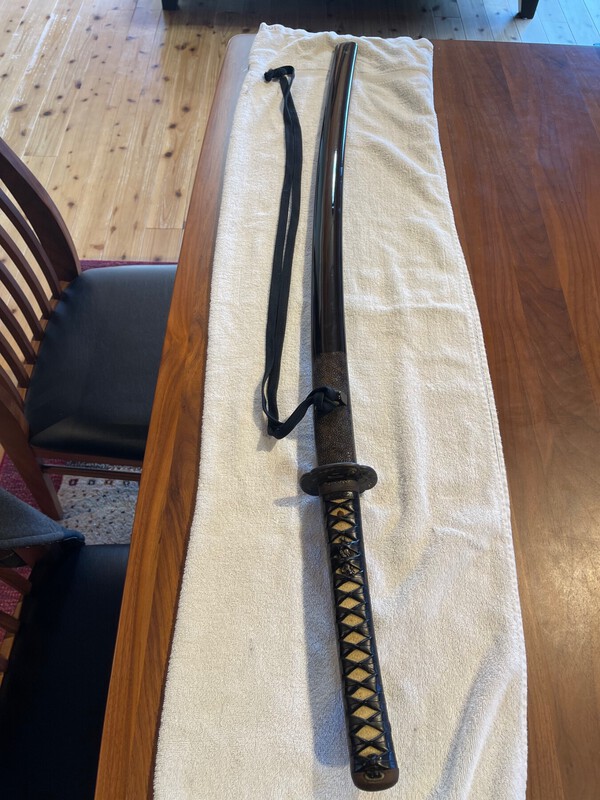

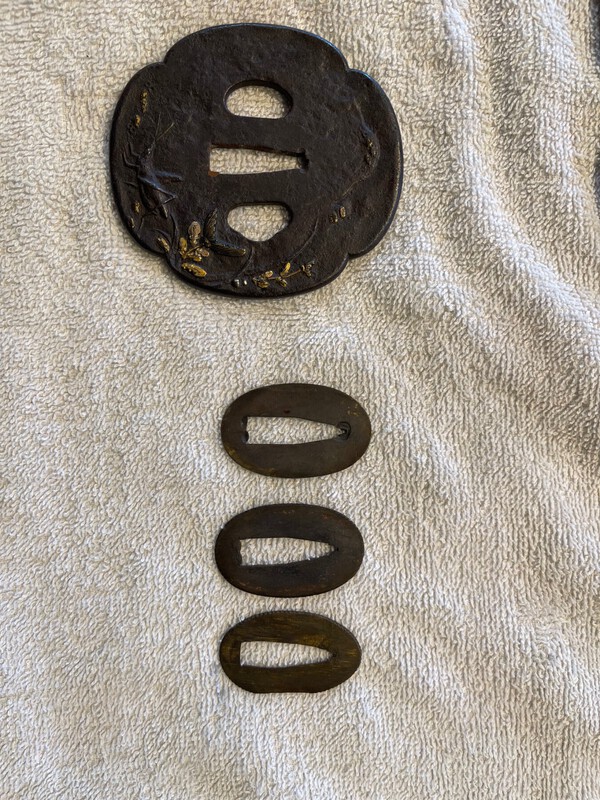
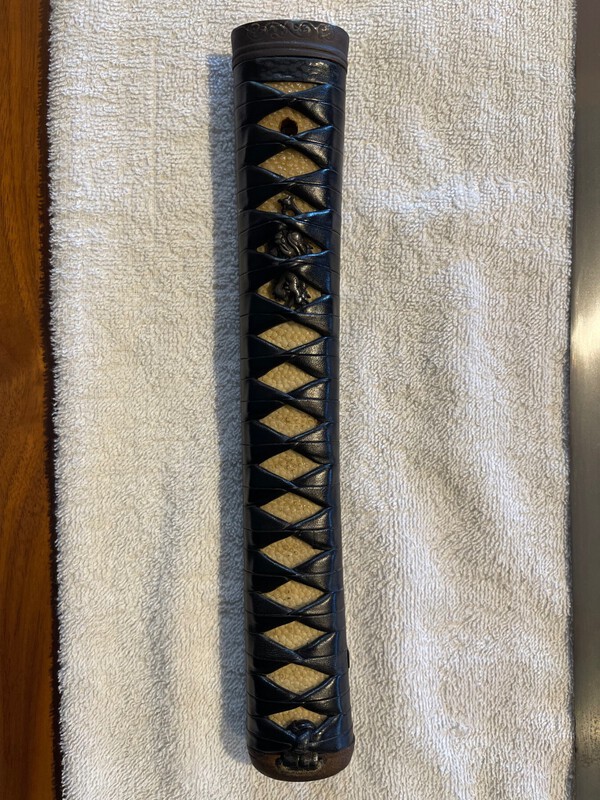
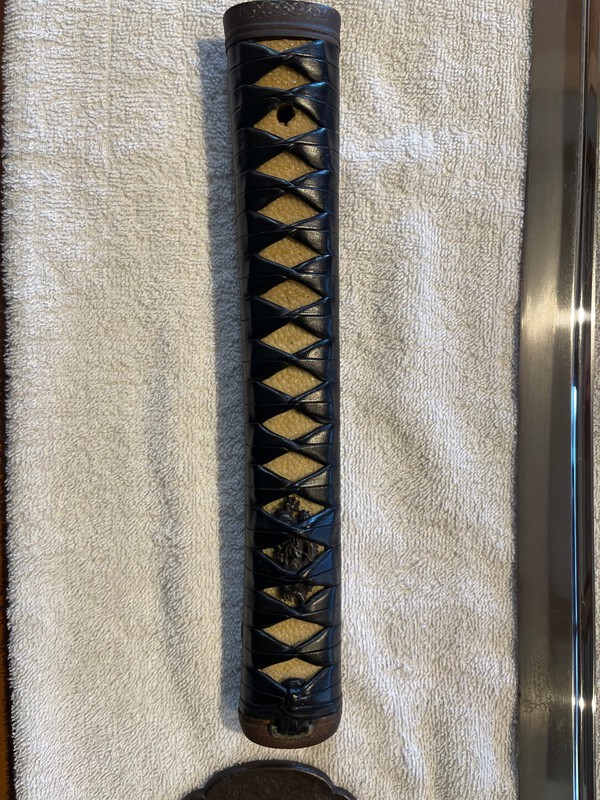


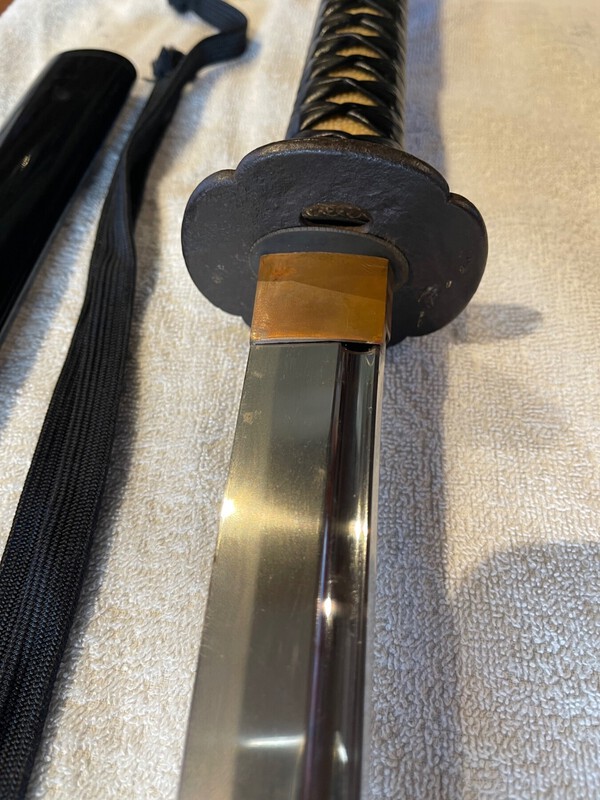

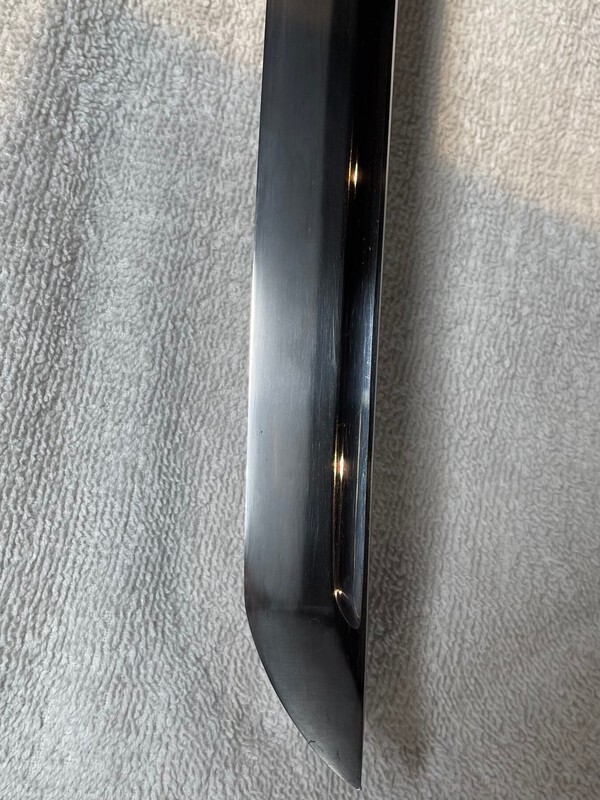
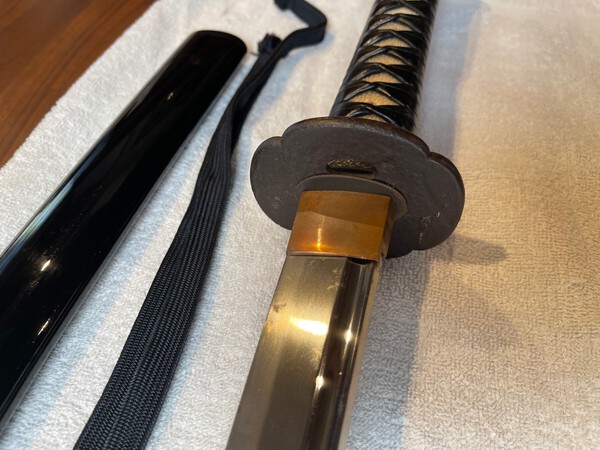
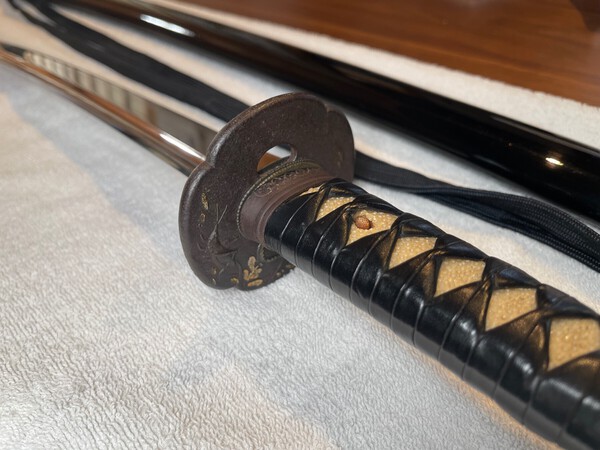


 2 points
 -
Definitely 則次 (Noritsugu), as we discussed previously. Best regards, Ray2 points
-
Okay, here we have a (Soshu) Akihiro. Looks almost familiar. It is (very) late Edo period. And I think it is the same with your tanto depending on the photos.
 2 points
 -
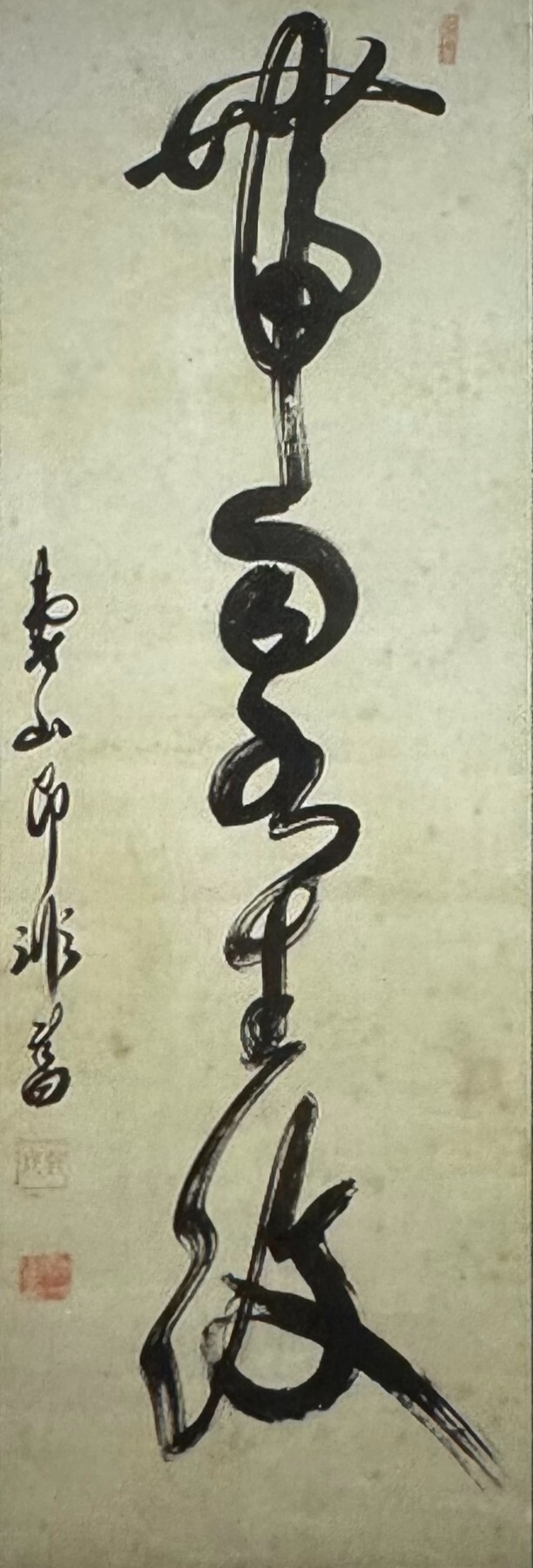
Oki Sogen (大森 曹玄) was the third abbot of Ryōbozen-an, a sub-temple within the Myōshin-ji school of the Rinzai sect of Zen Buddhism. The temple's formal name includes the mountain name Garyūzan. Myōshin-ji, located in Kyoto, Japan, is the head temple for the largest branch of Rinzai Zen Buddhism, with over 3,000 affiliated temples. The inscription is a famous line from an account of the enlightenment experience of Dahui Zonggao (大慧宗杲, 1089–1163) in an encounter with his master Yuanwu Keqin, which also serves as a Zen koan1,2: "Master Yuanwu ascended the high seat in the lecture hall at the request of Madame Chang K'ang-kuo (張康國夫人). He said, "Once a monk asked Yunmen this question, 'Where do all the Buddhas come from?' Yunmen answered. 'The East Mountain walks on the water' (Tung-shan shuei sheng hsing).3 But if I were him, I would have given a different answer. 'Where do all the Buddhas come from (諸佛皆出自何處)? As the fragrant breeze comes from the south, a slight coolness naturally stirs in the palace pavilion (薫風自南来).' When I heard this, all of a sudden there was no more before and after. Time stopped. I ceased to feel any disturbance in my mind, and remained in a state of utter calmness." Yuanwu was quoting the conclusion verse from a poetry contest in which Emperor Wenzong of the Tang dynasty wrote an introduction verse stating, "Others suffer from the scorching heat, but I love the long summer days (別人受酷暑之苦,我愛夏日長日)." The poet Liu Gongquan then composed the conclusion verse, which Yuanwu quotes as his preferred answer to "Where do all te Buddhas come from?." The story highlights the Zen principle that enlightenment is not found through intellectual study or dogmatic answers, but through direct, immediate experience of the self-evident nature of truth. Just as one doesn't need to be told a southern breeze is cool, the reality of the Dharma is something to be directly experienced, not intellectually understood through words or concepts. We live our lives obsessed with gain and loss, caught up in self-interest, biased toward love and hate, and right and wrong, and we are driven back and forth by the dichotomous biases of the discriminating mind. Koan study is intended to induce the "Great Death," which severs us from this duality. 1Chun-Fang Yu, "Ta-hui Tsung-kao and Kung-an Ch'an." Journal of Chinese Philosophy V. 6 (1979) pp. 211-235 2Case 92 in "Entangling Vines: A Classic Collection of Zen Koans" (2013) 3Ibid, Case 49
 2 points
 -
Anton, The smiths often got quite stylish and 'loose' with the kanji. But with practice (and believe me I have a long way to go!), you start to recognize some in spite of their handwriting. From right to left on the "NORI" kanji, you can clearly see the long vertical stroke. Then, you see the short vertical stroke, and finally, on the left is the 3-box stack with 2 'feet' at the bottom.
 2 points
 -
This is a masterpiece that is translated as Water That Comes With Rain Creates Ripples (帶雨水生紋). Jifei Ruhi (即非如一, 1616–1671), known in Japan as Sokuhi Nyoitsu, was a Chinese Obaku sect monk and student of Ingen Ryuki and Mokuan Shoto. Together they were known as the "Three Brushes of Ōbaku" or Obaku no Sanpitsu, although each has a distinct style. Like the literal translation of the inscription, Sokuyi's brushwork glides smoothly like water down the page. This is a masterpiece. The box inscription is by the Taiwanese born Japanese Rinzai master Nakagawa Soen (中川 宋淵 1907-1984). This calligraphy, which Sokuhi brushed more than once (see below), may be a reference to a koan in The Blue Cliff Records, Case 46, called "Jingqing Hears Raindrops."1: “Jingqing asked a monk, 'What is that sound outside the door?' The monk said, 'Raindrops.' Jingqing said, 'Sentient beings are inside out. Obsessed with the self, they chase after external things.' The monk said, 'What about you, Master?' Jingqing said, 'I'm almost not obsessed.' The monk said, 'What do you mean almost not obsessed?’ Jingqing said, “'To cast it all off seems like it could be easy. Actually, the path will be hard.'" There is a waka attributed to Dōgen called the Yukonzan version that beautifully expresses the sense of the unity of consciousness, but this should not be confused with awakening: 耳に見て / 目に聞くならば / うたがは / おのれなりけり / 軒の玉水 mimi ni mite / me ni kiku naraba / utagawaji / onore nari keri / noki no tamamizu seeing with ears and hearing with eyes, there is no doubt that, the jewel-like raindrops dripping from the eaves are myself. The verse "Obsessed with the self, they chase after external things." is based on a teaching of the Surangama Sutra: "From the time without beginning, all beings have mistakenly identified themselves with what they are aware of. Controlled by their experience of perceived objects, they lose track of their fundamental minds." As commented on by Shōhaku Okumura-roshi, "...the fundamental mind (honmyō-meijō-shin,本妙明浄心, the originally pure and wondrous understanding mind) is compared to an innkeeper; the thinking-mind caused by encountering objects, therefore based on dichotomy between subject and object, is compared to the visitors of the inn. Thinking-mind is conditioned, impermanent and ever-changing, but the innkeeper is always there, so it is permanent." 1The Garden of Flowers and Weeds: A New Translation and Commentary on the Blue Cliff Record, Matthew Juksan Sullivan, 2021, pg. 193.


 2 points
 -
Yasukuni Isshinshi Kariya Naohide (靖国一心子 刈谷直秀) was an Army engineer commissioned during World War II and is widely known as the last Yasukuni swordsmith. He is a gendai swordsmith representing Tosa and Kōchi. He has been selected and awarded dozens of times at exhibitions such as the New Masterpiece Sword Exhibition (Shinsaku meitō-ten, 新作名刀展), the New Sword Exhibition (Shinsakutō tenran-kai, 新作刀展覧会) and the Kochi Prefectural Exhibition (Kōchi ken-ten, 高知県展). Naohide was born Kariya Naoharu (刈谷直治) on November 10th 1917 in Kōchi Prefecture. He joined the Japanese Sword Forging Association (Nihontō tanren-kai, 日本刀鍛錬会) in April 1937 under the swordsmith Ikeda Yasumitsu (池田靖光) who was the chief smith at Yasukini Shrine. Naoharu inherited the character "hide" (秀) from Yasumitsu's master Ikeda Kazuhide (池田一秀), becoming Yasukuni Naohide (靖国直秀). On June 17th 1939, he was drafted into the army where he made five guntō using Chinese railway steel. Naohide was discharged on December 11th 1942, and in January 1943 he was approved as an army-appointed swordsmith (Rikugun jumei tōshō, 陸軍受命刀匠) and began forging swords at the Tosa Japanese Sword Forging Association (Tosa nihontō tanren kumiai, 土佐日本刀鍛錬組合). Following the war's conclusion the GHQ banned the production of nihontō, but the ban was lifted by the San Francisco Peace Treaty and Naohide forged a sword to commemorate the occasion. He also made an appearance in the documentary Yasukuni (2007) as the last living Yasukuni swordsmith from the wartime era. Sources: Meirin Sangyo, Tsuruginoya, Tōken Hasegawa Other works by Naohide (yes, the sword is a legitimate gendaitō and consistent with his other work): https://www.touken-hasegawa.jp/item/MKI-44 (listed price unknown) https://www.tsuruginoya.com/items/a00656.html (listed for ¥550,000 in 2024) https://www.nipponto.co.jp/swords9/KT337837.htm (listed price unknown) http://sword-Japanese.seesaa.net/article/430137423.html (listed for ¥158,000 in 2015) More information on Yasukuni (2007): https://en.wikipedia.org/wiki/Yasukuni_(film)2 points
-
All I can say is a huge THANK YOU to everyone who commented! I have learnt so much from your combined comments and observations - which is exactly what I was hoping to do on the NMB. BTW, everyone can breathe a collective sigh of relief; I didn't buy this. My slowly developing sense of what looks right and what doesn't made me think this Tsuba looked 'off'. However, it was you guys who taught me why. Many thanks! Hector C.2 points
-
Good eye John! Thank you. I’ve been sitting here with a flashlight trying to get good photos. The seam is very hard to spot from the outside, but where you note, and on the inside, it is clearly a two piece construction
 2 points
 -
Anton, 塚原兼次 - Kanetsugu Tsukahara (born 1919) is well documented. Sesko: KANETSUGU (兼次), Shōwa (昭和, 1926-1989), Gifu – “Kanetsugu” (兼次), real name Tsukahara Tarō (塚原太郎), born January 25th 1919, he worked as rikugun-jumei-tōshō and died on July 30th 1978, jōkō no retsu (Akihide), Fourth Seat at the 6th Shinsaku Nihontō Denrankai (新作日本刀展覧会, 1941). Seki registration: registered on Taisho 8 (1939) October 20. Uchiyama (1969): Kojima KANEMICHI forge: (1) Asano KANEZANE (2) Takasaki KANESHIGE (3) Kuriki KANEMASA (4) Tsukahara KANETSUGU (5) Miwa KANETOMO (6) Takeyama YOSHINAO. Dai Nippon Meikan (1942): Seki Kyoshin Sha (Seki) p.127: (Swordsmiths: Kojima Kanemichi, Kojima Kanenori, Takeyama Yoshinao, Miwa Kanetomo, Fujii Kanefuji, Kurimoto Kanemasa, Tsukahara Kanetsugu, Kato Kaneharu, Matsumoto Yoshinori) . Kojima Kanemichi Mon: Kanetsugu Tsukahara is listed (also note there is a Kanetsugu Maegawa born 1904, of same kanji). There is no indication of a mix up with name Tsukahara Noritsugu. As another item, I did find a Seki smith in Sesko who is not listed in Seki registration, and I did not hvae: HIDEYASU (秀安), Shōwa (昭和, 1926-1989), Gifu – “Seki-jū Hideyasu kore o saku” (関住秀安作之), real name Tsukahara Yasuo (塚原安男), born 1929, student of Tanaka Kanehide (田中兼秀)2 points
-
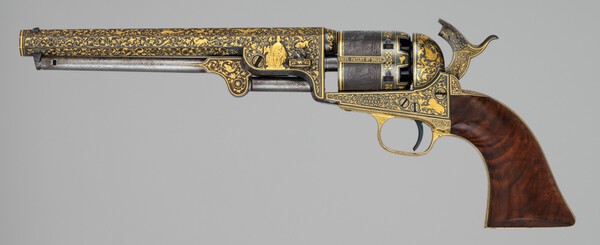
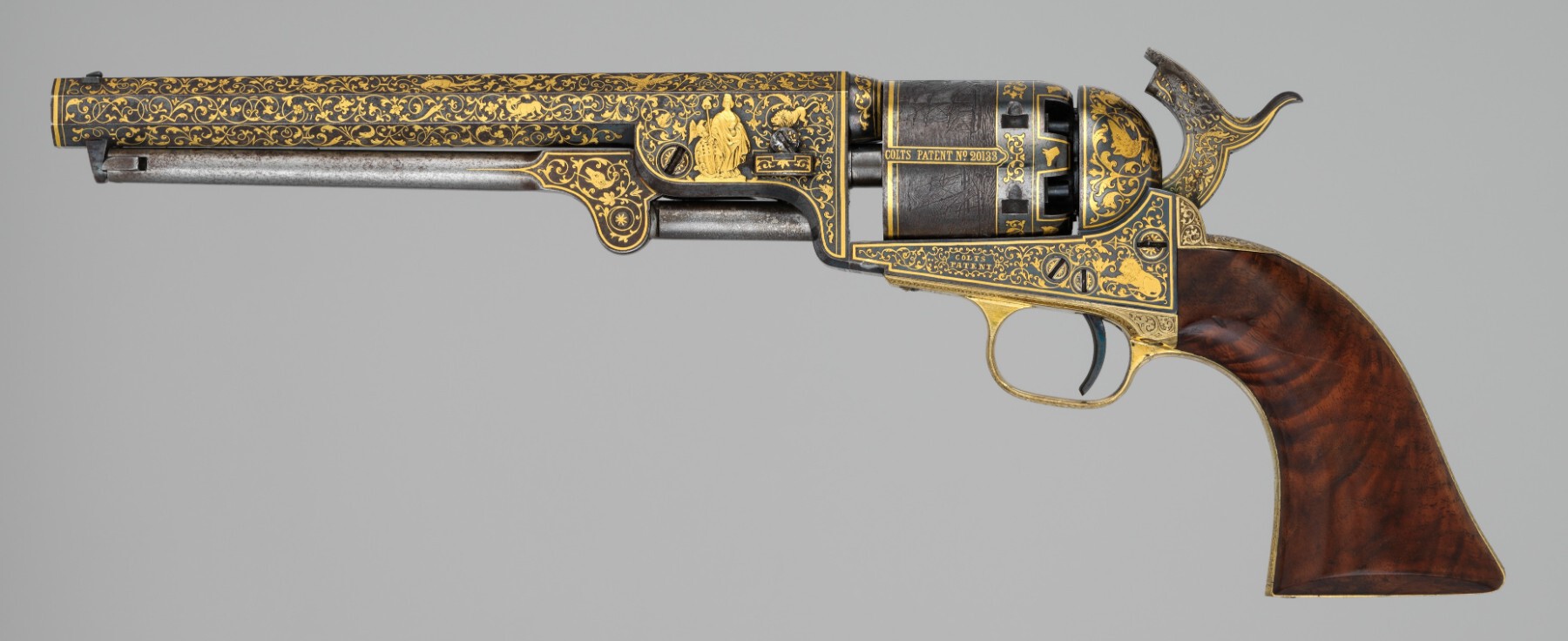
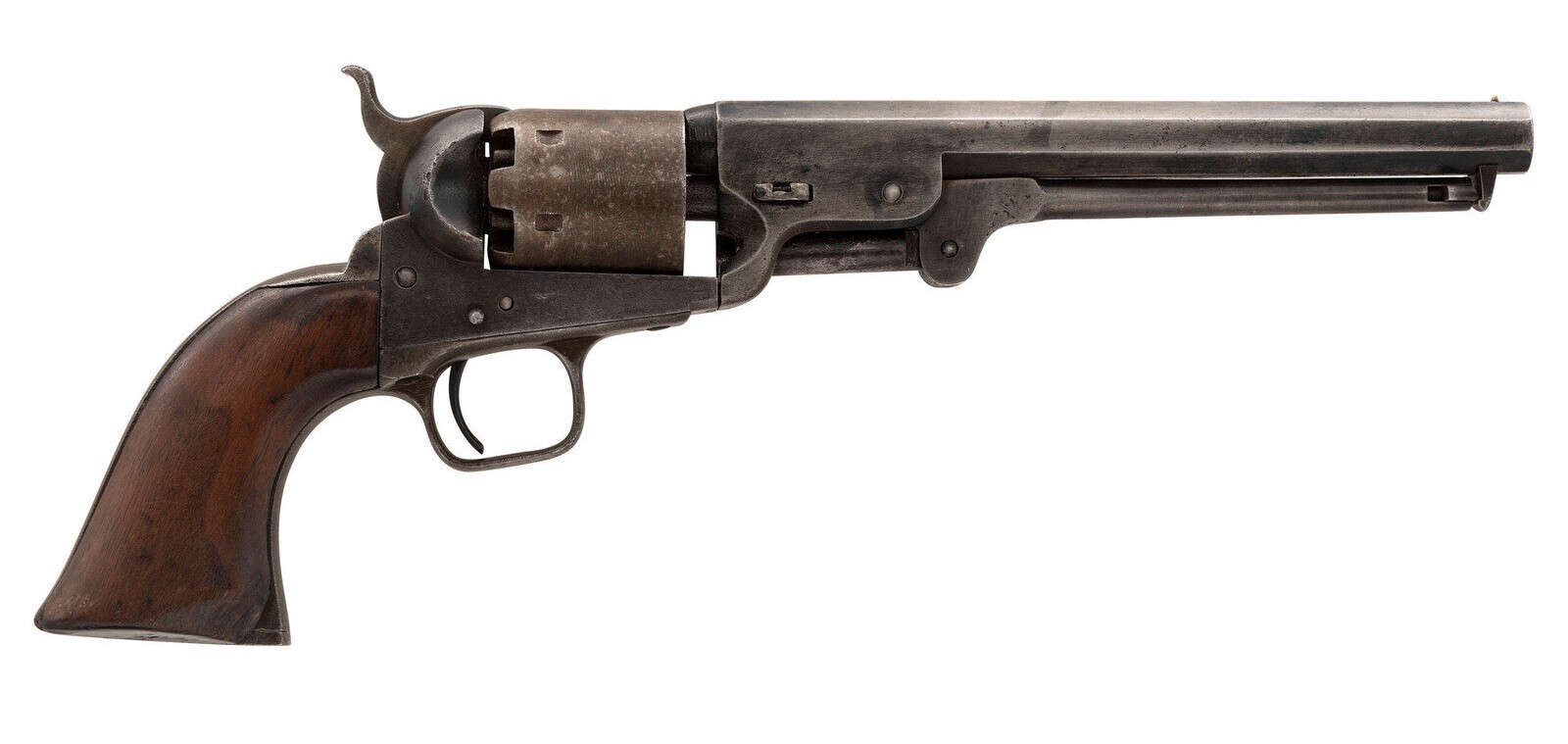
Again, comparing collectible Colt revolvers to collectible tsuba (yes, I really like Colt revolvers!). The amount of craftsmanship on some museum quality tsuba is superb and breathtaking. They are beautiful and a testament to the artistic capabilities of their makers. I love looking at pictures of them. Why? Because I could never afford them! So, I must appreciate them from afar! Just like Colt revolvers! The first picture shown below is of a superbly crafted and artistic model 1851 Colt. The next picture shown is of a model 1851 Colt that I could afford! Although both revolvers perform the same functionality. Just like highly artistic tsuba compared to more plain looking tsuba. I guess if I ever win the lottery, I will upgrade my collection of tsuba!
 2 points
 -
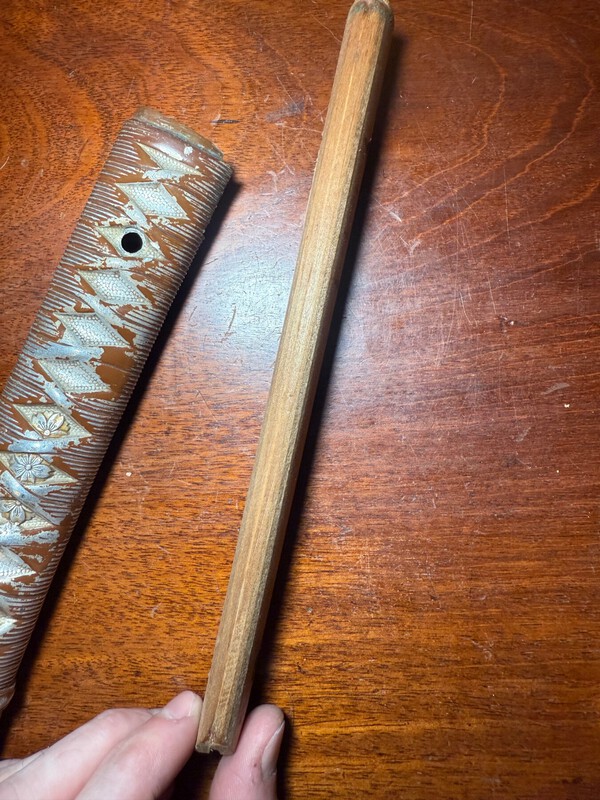
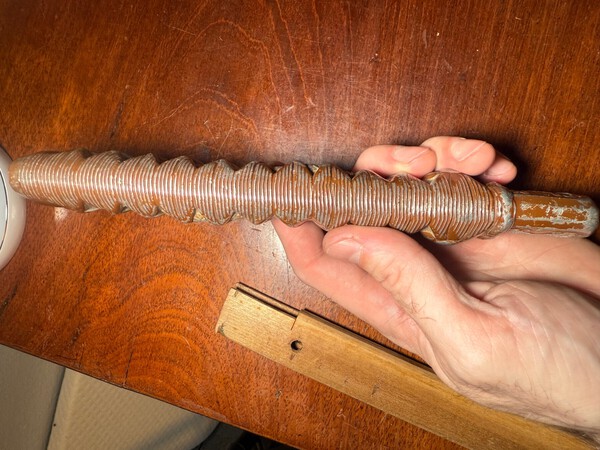
Hi @Kiipu, To my eyes, the wood insert appears to be one solid piece. Although, some splitting and scratching on the mune side gives me pause, and makes me second guess that judgement. The aluminum tsuka also appears to be one solid piece, with the only casting seams visible on the interior. If there is a tell-tale way to determine if it’s been cast as one, or joined, please let me know and I will check. I’d be happy to mail it to you if you’d like to check it out in-hand. -Sam Edit: Wood insert is a two piece construction



 2 points
 -
I am in between Shimada and Uda Kunifusa. Nice piece though.2 points
-
Higo-lite? It resembles the earlier works of this design, but has a crudeness that makes me think later or much later. A member here has one, but I cannot share the photo without his permission. I believe this design is also documented and published in Ito-san's texts. Probably in Shimizu-Jingo volume, though it might be in Hayashi as well.2 points
-
I believe the carving on the plate is supposed to be rain, anyone else have a different thought?
 2 points
 -
Hi everyone, December is all about gifts, and with the holiday season in full swing, it's a good moment to show your loved ones how much they mean to you. Plus, because my son had his birthday a while back, I'm offering a discount that will be available until the end of the year. Please have a look, I am open to offers and messages are always welcome.
 1 point
 -
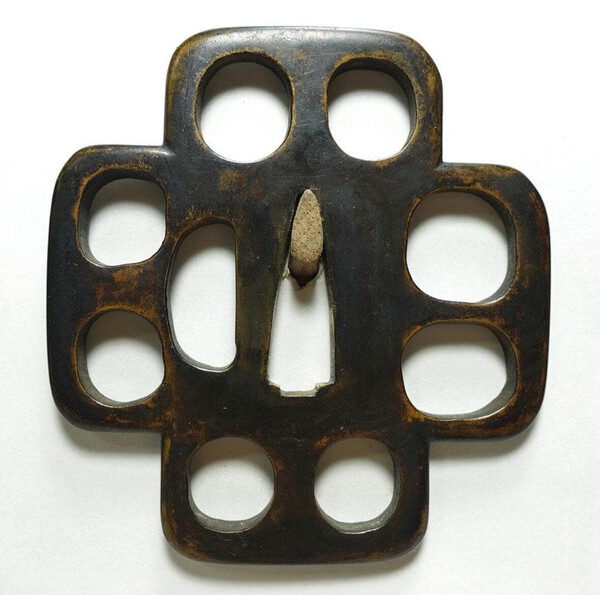
Hi again, With my poor batting average so far I dread to ask - but is this a Higo style Tsuba (as I've been led to believe)? It's katana size, mumei and described as 'copper' which I presume means shakudo as it's so dark. Thanks for any input. Hector C.
 1 point
 -
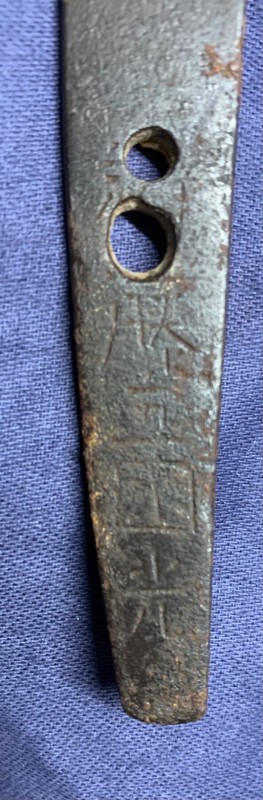
Thank you Rohan, I understand. That is my bad photography with an iPhone. The Mei actually carry the same dark patina as the rest of the nakago with a bit of more recent shirasaya dust etc…..but mostly they are “black”. Images can really confuse things yes? These ones I just snapped in different light and they are a bit more accurate re colour. Thanks Uwe…..yes indeed! Very similar. Even more confusing🙂 Kirill, thanks again. And there was me planning a world cruise! Seriously, I bought it because it was interesting and it did not dent the wallet much! It is still interesting and I thank you for your help and interest. Yep, puzzled me as well……but I have seen it before even with just one original mekugi ana. So we think a fake mei was added when the two ana were already there? That’s a bit of a giveaway. Thanks to all. Anyone wanna buy a strange little tanto🙂🙂
 1 point
 -
Not in that style. Dai-mei or dai-saku, a work either made by Shintogo's pupil or signed by Shintogo would have been in his style (silky Awataguchi jigane with chikei, thin suguha hamon rich with activity). Ask yourself why the inside of the strokes are filled with the same lighter coloured rust as some of the surface staining while the rest of the nakago is covered in black patina. Edit: Uwe provides a good example above. The mei there is much more recent than Shintogo's time, being from the Edo period. Yet it has the same dark patina as the rest of the nakago.1 point
-
I made a tsuka from scratch for a katana out of modern production materials, but of course if you want a period tsuka, that is a different proposition since altering it is not desirable unless one doesn't care about maintaining original condition. Making one requires learning how to use a traditional saya nomi chisel that can be purchased (https://www.waltersorrellsblades.com/product-page/saya-nomi-Japanese-scabbard-chisel).1 point
-
Very helpfull thank you very much !1 point
-
ECHIZEN JYUNIN KANENORI 越前住人兼則 according to the title of the video. The mei of the Yahoo auction link is 越前住人兼中作 (Echizen ju nin Kanenaka saku) so there's at least one other possible maker who signed that way.1 point
-
Apparently the linck is not avoiable for Europe, I'll try with vpn later. The work on the waki of the video is very close. Unfortunably the nakago is not shown. What was the meï ? 越前住人兼則 ? Thank you for your help! Very appreciated ! Best, Eric1 point
-
and https://auctions.yahoo.co.jp/jp/auction/b1081647069 Keep in mind that the part of the mei describing their location can change often and with the times. Less important than the exact kanji is the chiseling (or engraving) style and location and, of course, the blade itself.1 point
-
Type (Tachi, Katana, Wakizashi, Tanto, Naginata, Other) : Katana (possibly former Tachi) Ubu, Suriage or O-Suriage : O-Suriage Mei : (Mumei, Signature) : Kinpun Mei (Koson) - acknowledged (and agreed) on NBTHK papers Papered or not and by whom? : NBTHK Tokubetsu Hozon Era/Age : Late Kamakura to early Nanbokucho Shirasaya, Koshirae or Bare Blade? : Shirasaya + koshirae Nagasa/Blade Length : 69.6 Sori : 1.3 Hamon Type : ko-nie-deki suguha, bright, clear appearance Jihada : finely forged small itame-hada, dense jigane with utsuri Other Hataraki Visible : shirake, profuse fine ji-nie and on the shinogi-ji, there is a mixed texture of itame-hada, mokume-hada, and masame-hada, contributing to its overall activity Flaws : Few very small kitae ware, a few superficial polish scratches, and one area of very fine polish wear near the end of the blade - see images. Sword Location : USA Will ship to : USA Payment Methods Accepted : PayPal, Bank Transfer Price and Currency : $10,000 USD Other Info and Full Description : Really beautiful piece. I would not be letting this go if not for some other pieces coming in that have caused me to reconfigure my collection. Really awesome to be attributed directly to Kunisuke, and this piece has the signature shirake haze across the whole blade, forming a clear utsuri and thanks to the forging prowess off Kunisuke it emits an enormous amount of rainbow sparkle across the hamon and entire ji. Kissaki is super healthy as you can see from the images. Hishu Kunisuke is set with gold lacquer by Hon'ami Kōson (本阿弥光遜) and is set in a shirasaya along with a fairly luxurious koshirae, crafted with intricate fittings. It is an exceptionally well-made piece. Koshirae: Tsuba: Shakudo with a textured surface, depicting plum blossoms on both sides. The front side shows a plum and bush warbler, with the rim wrapped in shakudo. Fuchikashira: Shibuichi base with a design of a monkey and human figure in iro-e (colored metal inlay). Saya (Scabbard): Painted reddish-brown with black line patterns. Menuki: Shakudo base with a bamboo blind design in gold inlay. KUNISUKE (国資), 1st gen., Karyaku (嘉暦, 1326-1329), Higo – “Kunisuke” (国資), Enju school, son of Enju Kunimura (国村), dense ko-itame with much fine ji-nie that reminds of the Rai school, he also forged an itame-nagare mixed with masame and/or shirake, the hamon is a chū-suguha with broad nioiguchi and plenty of ko-nie, the bōshi is sugu with a ko-maru-kaeri ◎1 point
-
The shape looks very Ko Mihara to me as well. Although the hamon looks a bit on the wide side but this is of course just rough eyeballing with much of the detail not visible. Love that Tsuka tho !1 point
-
With many thanks to @SteveM for the translation. (Hosono Sozaemon Masamori) A recent acquisition…..slightly earlier than I first thought…. Katana sized (just about) @ 7.5 cm


 1 point
 -
Hi Piers …..Got to do it while we’re alive haven’t we? This was one that had I left it, it would have nagged at me forever but, alas, I fear the truth will remain elusive. It needs a polish to see and then shinsa if deemed worth it…..and stuck here in the UK, that won’t happen. Shame, but whatever……it is such great fun yes?1 point
-
I read it as 濃州住塚原則次作 – Noshu ju Tsukahara Noritsugu saku.1 point
-
More of his photography can be found on his related Facebook page https://www.facebook.com/share/1DAqLdB2Cn/?mibextid=wwXIfr1 point
-
New video:1 point
-
Very hard news. More hard news on top of so many recent and major losses in the community. I knew Richard, having seen him at San Francisco sword shows several times, and visiting him at his home in Portland, Oregon, where I saw the elaborateness of his photography set-up. Good guy. He will be greatly missed. RIP, Richard.1 point
-
May he rest in peace1 point
-
That is very sad. He was a legend when it came to fittings photography and the KTK, and really knew how to capture the soul of tsuba in images. I knew he was battling with his health. This is a sad loss. RIP and condolences to his friends and family.1 point
-
Forest Ninja, it is required here on NMB to sign all posts at least with a first name plus an initial, so we can address you politely. I think that applies even to NINJA..... Concerning polishing stones, there was always a big demand in the past, and this is actually the same. Many quarries had to be closed because they have been exhausted. We see that in WASHITA and ARKANSAS as well as in Belgium or Germany, and it has become increasingly difficult to get KOMA NAGURA-TO and good UCHIGUMORI as well. On the other hand, synthetic stones are being developed and improved and one can good results with them. I say that as a knife-maker, I do not touch Japanese blades.1 point
-
Brian, if I'm allowed to correct you: This is only partly true. Some oils with special properties* (not low-viscosity sewing-machine oil!) can produce a "closed" layer, keeping oxygen away for a while and thus stopping the corrosion build-up. This works as long a the oil layer is kept thick enough and stable. Dust gathering on an openly displayed blade is not helpful. Wiping the oil off for re-sheathing the blade will lead to a very thin layer of oil which mainly remains in the microscopic crevices of the HADA. This means, a polished blade can be kept clean from rust if looked after regularly. Environmental factors like humidity play an important role. However, rust build-up on a blade is much more difficult to treat as it kind of absorbs part of the oil. In many cases, you will not achieve a "closed" layer of oil. Stopping the corrosion completely will rarely be possible, and the best result will often be just slowing it down. So there is a very good reason to have a blade competently polished and keeping it clean. * A high-viscosity oil will produce a relatively thick layer on the steel and provide good protection, while a low-viscosity oil has better "creeping" properties and will go into the HADA. But the layer thickness will be low, and it may run off the blade easily. So you want the best of both worlds for your sword oil, and often enough, natural oils are not 100% suitable and have to be removed and renewed regularly. Modern protective oils can have better properties, beading and running-off can be eliminated and desirable characteristics exactly as needed. On the other hand, they could be sticky and difficult to remove. Everything has to be tested!1 point






.jpg.57335bf9c5ef7b10e0a6581194ae51fb.jpg)





















This leaderboard is set to Johannesburg/GMT+02:00