
Leaderboard


Popular Content
Showing content with the highest reputation on 11/27/2025 in all areas
-
Hello, These are indeed lovely pics of a magnificent nie-deki. We are lucky to live in a time where high-grade digital cameras can take incredible pictures to immortalize experiences, even behind museum glass. There is a point in life where collecting is not feasible anymore. Inevitably, taste outgrow wallets - and if not - the supply wall inevitably hits. The reality is that after some time, as the mind habituates, one comes to realize that there are only very few swords that truly feel otherworldly, and possess this mysterious grace that makes you question if a human could have made it. This is why collecting experiences is the more sustainable path to growth, and through the skillful use of photography, to preserve them and share them with others is a noble pursuit. Best, Hoshi6 points
-
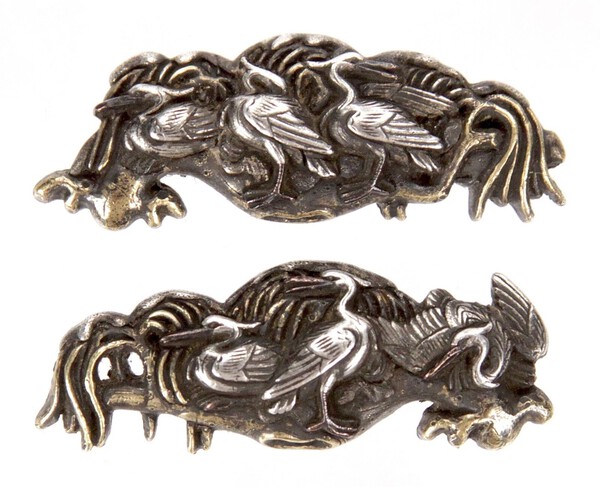
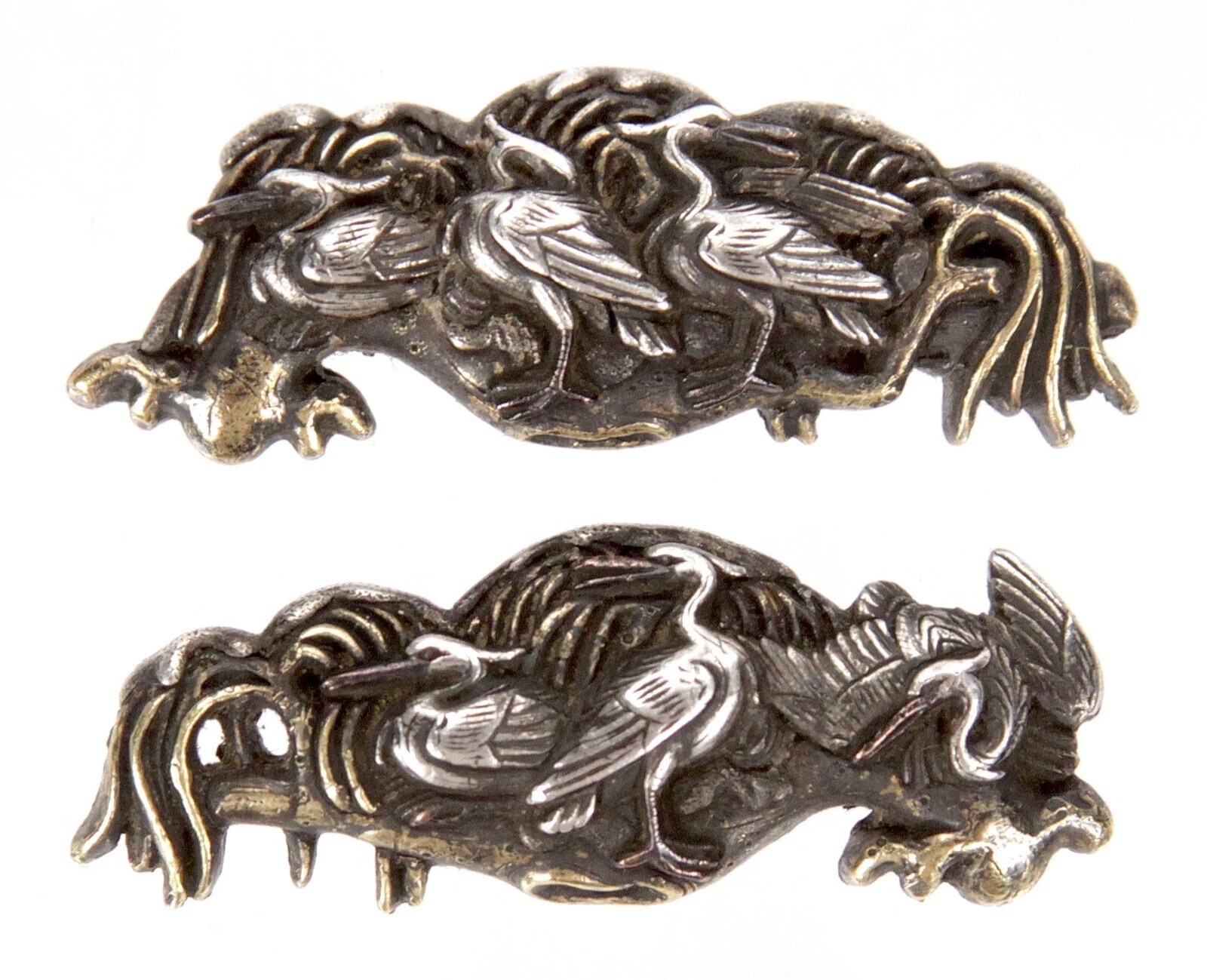
Hi guys, Could anyone find similar examples to the menuki below? It has silver back plate but the willow tree seems to have gold color, may be plated with gold. I tried to search online for similar examples but not seem to have any success. The design with egret and willow tree is very common in Japanese art and I have seem it often on kozukas and Tsubas. Based on the style I would say it is Goto school because I have seen one example from the 10th mainline master on a kozuka where four egret almost of the same design/gesture on a willow tree. However, I have since lost the link so not able to find it again. The closest example to it is the link below: https://collectorsfirearms.com/39515-kinko-menuki-mgj428.html/ but it has lower quality than the one I post. If anyone has something similar or can identify the possible school or maker I would appreciate it very much. My guess is a Goto school artist mid edo. BTW, I also wonder how gold is applied to silver base and why there aren't many silver based menuki around whereas shakudo and gold menuki seem to be more common. Thank you. Jack
.thumb.jpg.a63bf50d4f3dac36da5699fee08f1bcd.jpg)
 5 points
 -
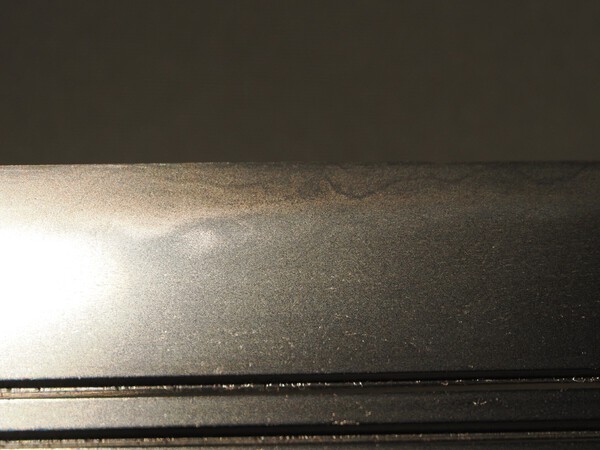
It's blades like this that keep my fascination for Nihonto. This guy takes some amazing images of these superlative blades and all from behind glass. Kudos to the museum for getting the lighting just right. https://www.facebook.com/photo/?fbid=1996901080882456&set=pcb.1996902534215644


 4 points
 -
I agree with this sentiment wholeheatedly. And why membership and attendance at NBTHK-EB or AB meets is so rewarding. Many of the members are exceptionally generous with their collections and occasionally its possible to handle these otherworldly blades and not be restricted to viewing them through a lens.3 points
-
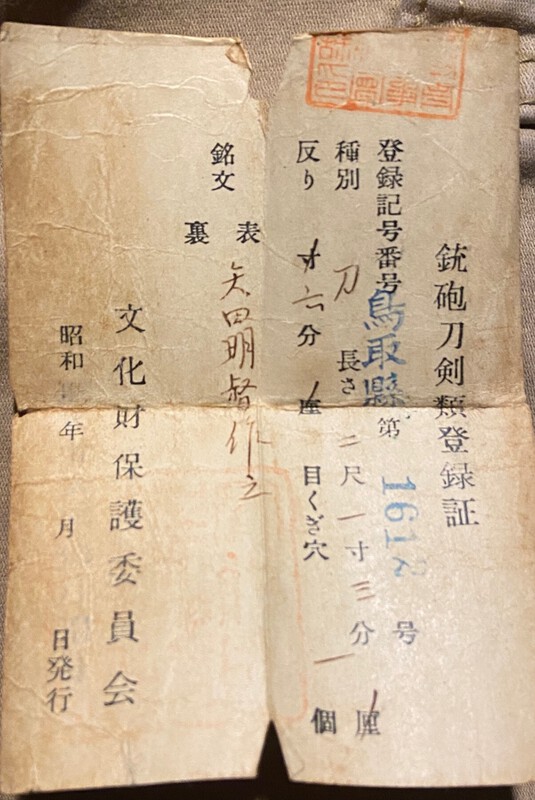
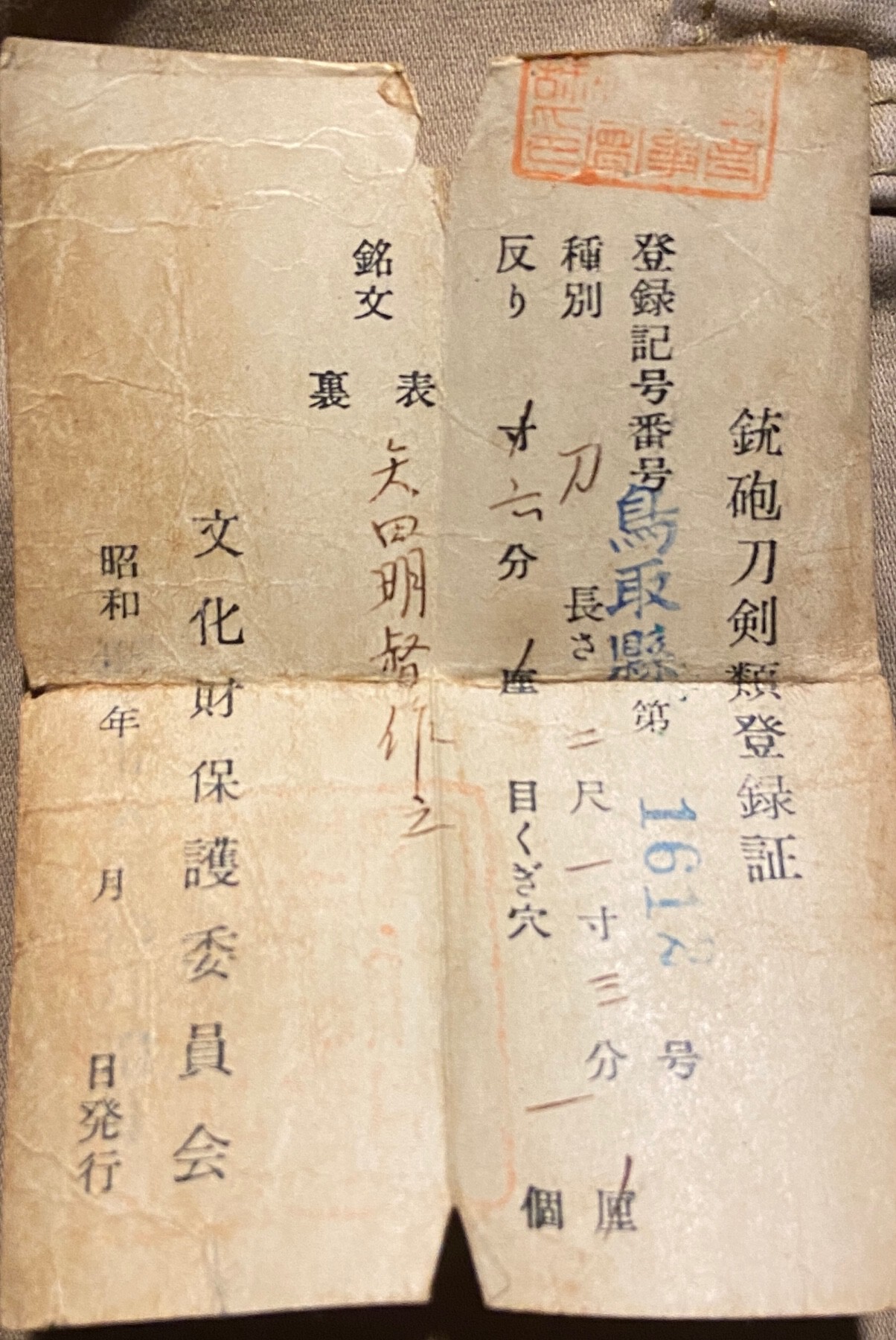
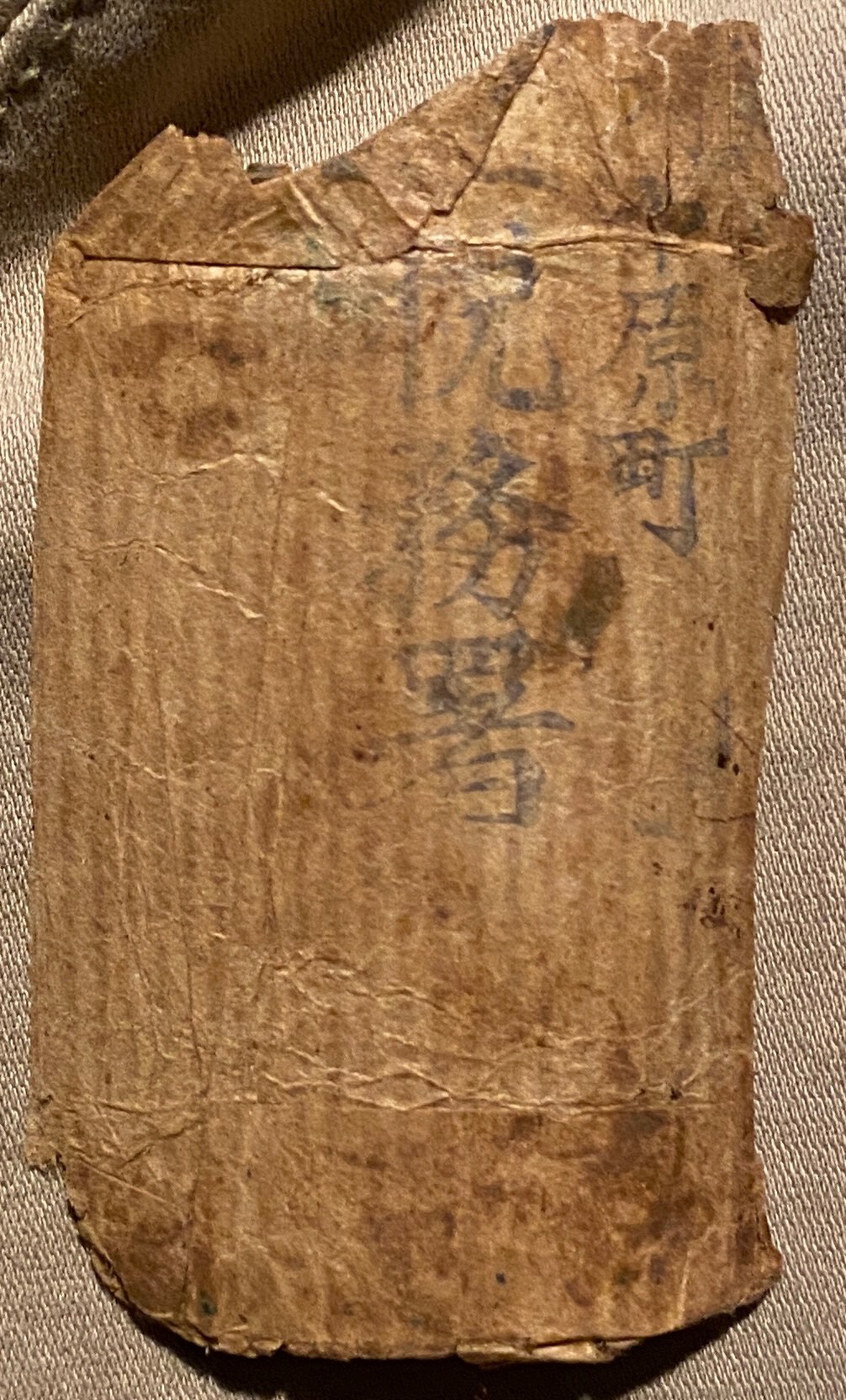
While inspecting the sword further I found the sword registration folded up inside another piece of paper under the snaps of the leather field cover on the saya.
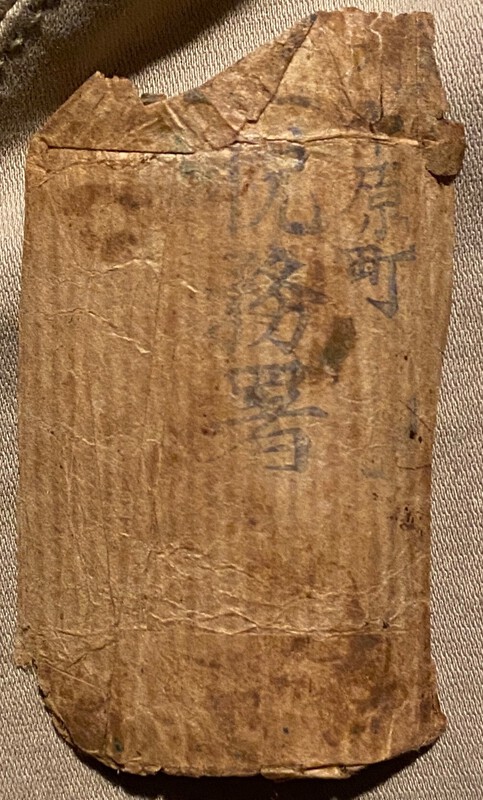 3 points
 -
This was probably made in Japan after the war for sale to tourists (or GIs). Often wrongly called KAMIKAZE TANTO, but had nothing to do with WWII. It is a souvenir, unfortunately not more.3 points
-
2 points
-
I'm going to take responsibility and host it, with the caveat that it will be taken down if there are any objections from anyone connected to the book. It will only be of use to those with the book, and may even lead to people buying the book, so there is no downside to the publisher. Let's see. Will upload later today.2 points
-
Hi Jeffrey, Look here: https://nbthk-ab2.org/sword-characteristics/ for a brochure on care and handling; you should read it. If you'd like answers to a bunch of questions with one phone call, feel free to ring me up. 218-340-1001 in central time. I'm not an authority but I was where you are today 40 years ago and I won't ask you to sell the sword to me. Cheers, Grey2 points
-
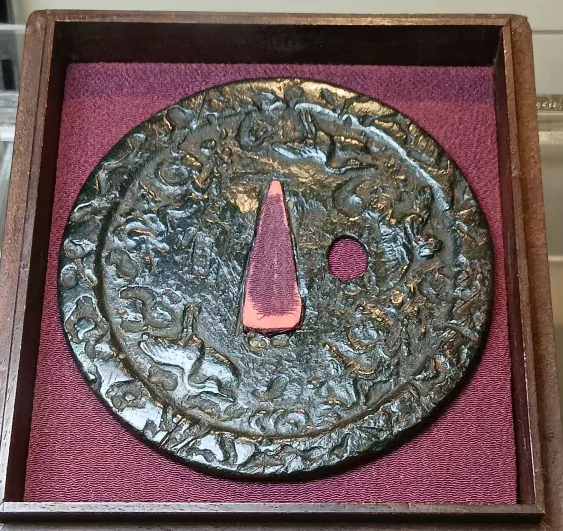
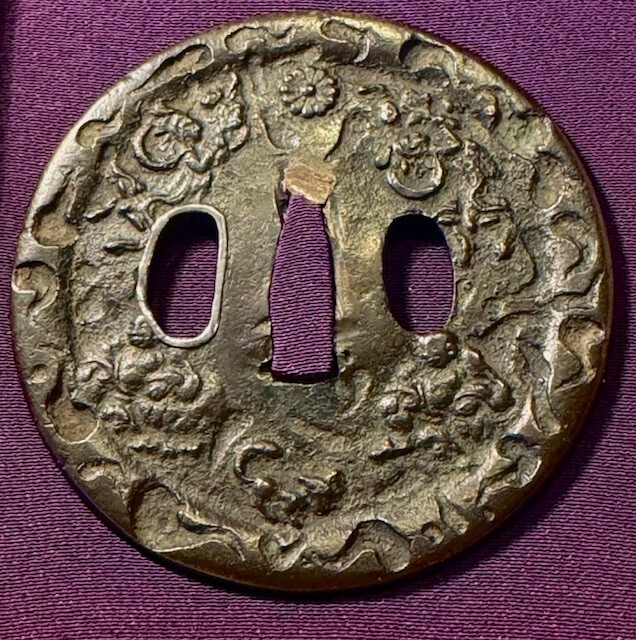
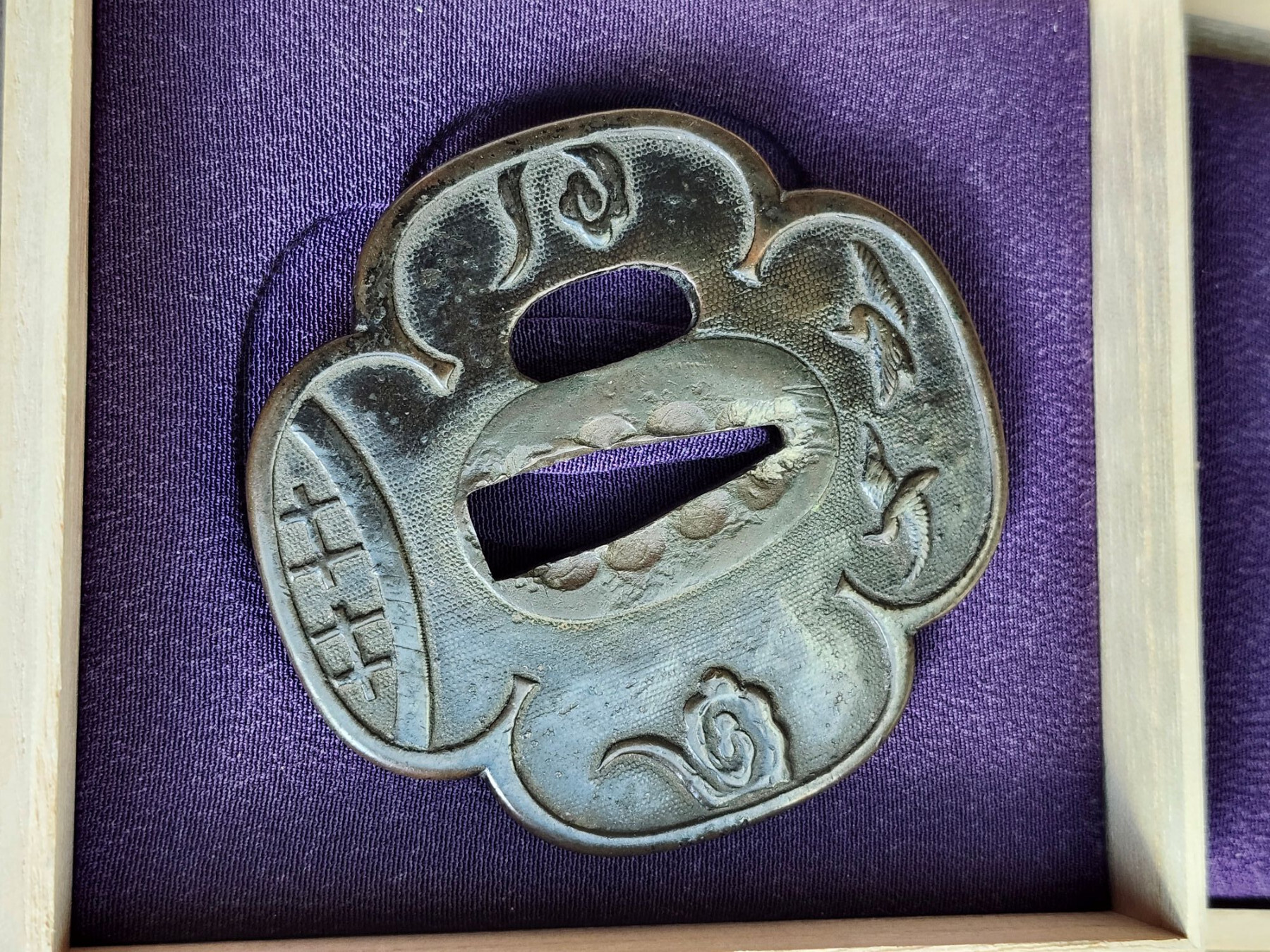
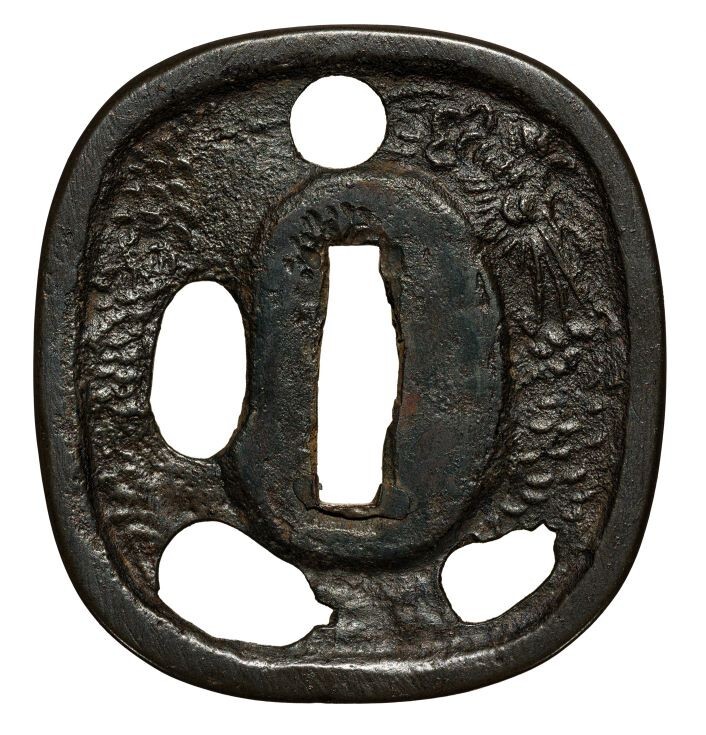
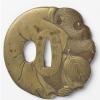
Took another photo of my new addition, brings out the figures more clearly. I can make out seated sages (?) at 5:00 and 8:00, a fox at 6:00, kikumon at the top, perhaps a genie figure in profile at 11:00. I cannot identify the figure at 1:00. These early tsuba are not seen very often, and I've found very little written about them (in English). There was one other at DTI, asking 1M yen. They are bronze castings, and the designs tend to be crude compared to the contemporaneous mirrors, which leads some to argue that they were likely not made by mirror-makers as the name implies. There have been prior discussions on this forum in the 2010-15 time frame, several started by Marius.
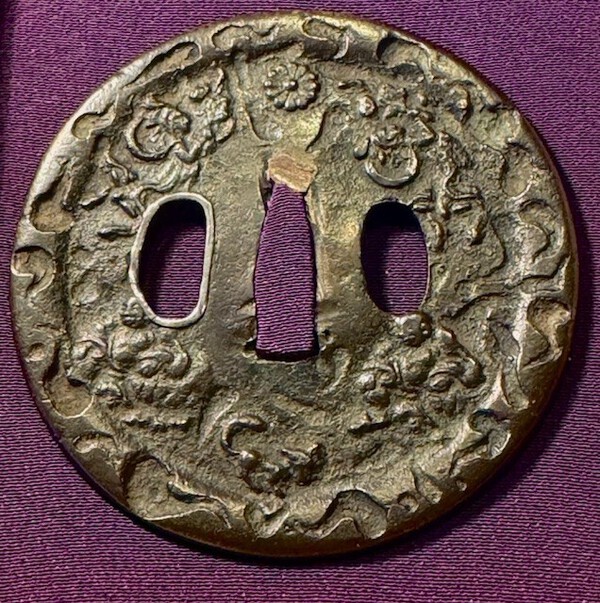 2 points
 -
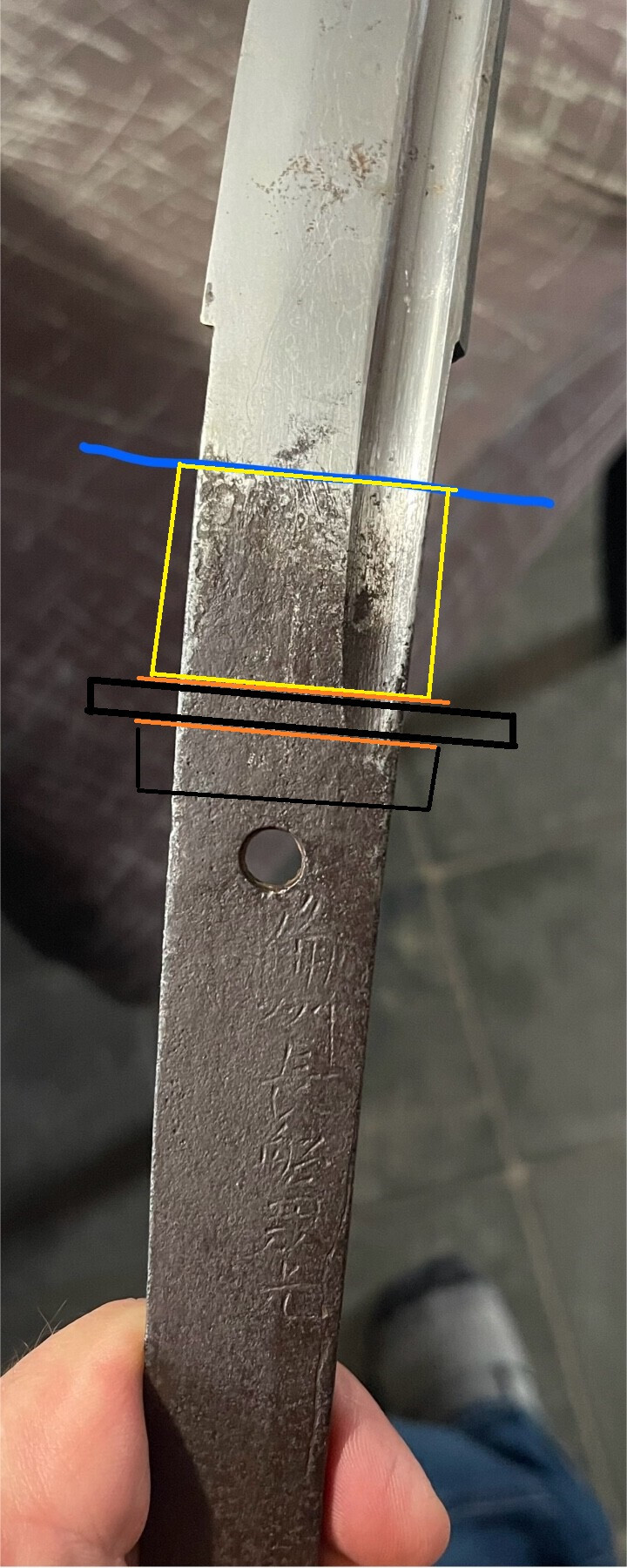
I would agree with the view that Jacques has on this. I would think it would most likely be late Muromachi Bizen sword, wheter actually someone named Kanemitsu that I cannot say. However I would think the sword is in original state. I tried to do quick sketch with paint how I would expect it to look originally in fittings if it would have been machi okuri at your line, of course it is just a rough sketch to give an idea that I have in my mind. To me the hole placement looks perfectly normal now in current state, if it would have been machiokuri then the original hole would have been unusually close to the machi. . I do have some amazing resources on Bizen swords, however I have not been able to find a reference signature of any late Muromachi Kanemitsu. I am extremely grateful for this thread as I tried to search them and ended up discovering absolutely massive Nanbokuchō naginata by Kanemitsu that I was not aware of before. Finding items like that in Japan makes me very happy. One "cursed" thing about smith lineages where there are extremely famous ones is that then many later generations can fall into obscurity.
 2 points
 -
Better images of my one example. Not sure why it rotates like that. I've always enjoyed the Korean influence and nanako on this one. I'd date it to 1600-1615? Naturally, I prefer the pre-1600s ones. The earlier the better. Those like Les' don't seem to appear very often. The last Muromachi one I saw, a few guys ended up in a bidding war at the end of the auction. Though under the radar of a lot of people, they are still very hard to catch.
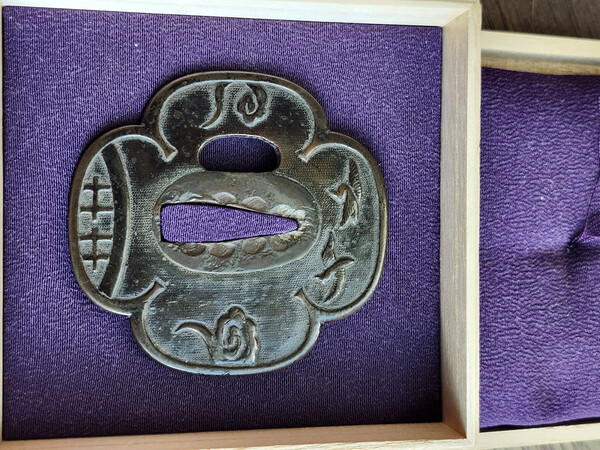
 2 points
 -
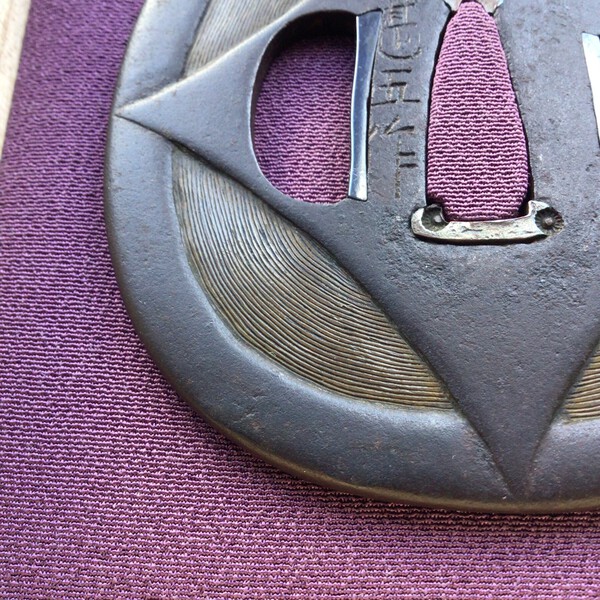
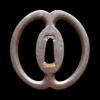
This is an example from my collection made by the third Jingo master Nagatsugu but again in the round shape. Interesting as it uses brass inlay for the cord around the bobbin. hope you manage to find the example you are seeking. kind regards Michael
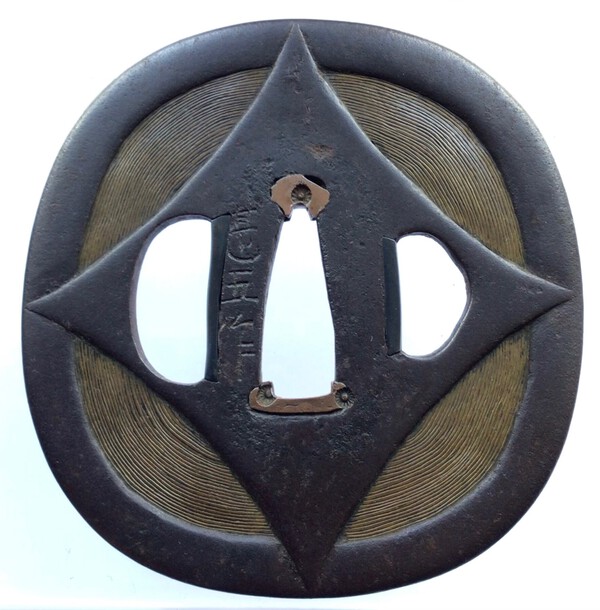
 2 points
 -
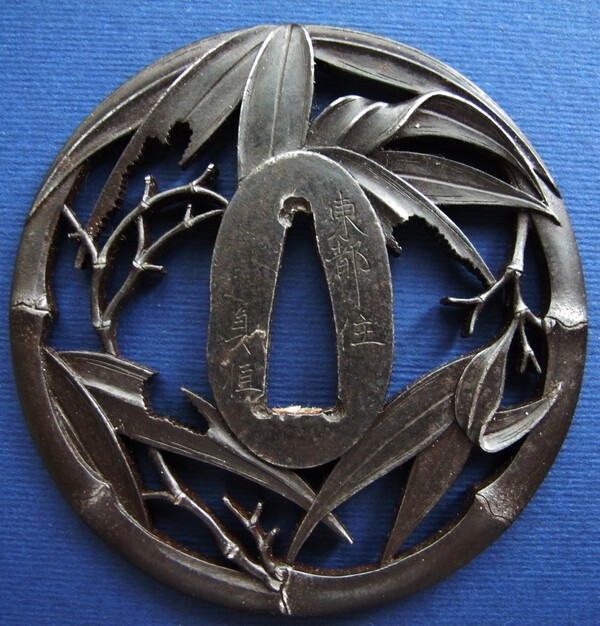
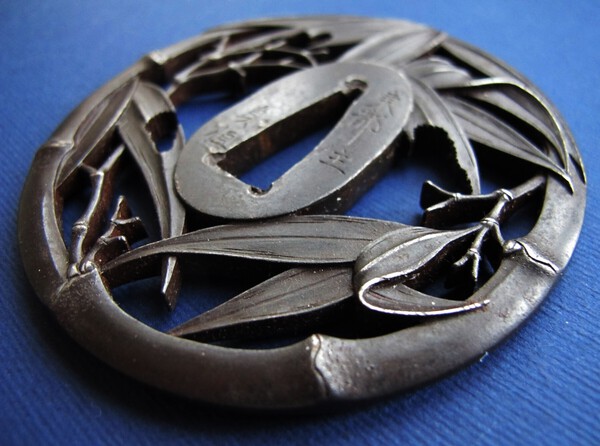
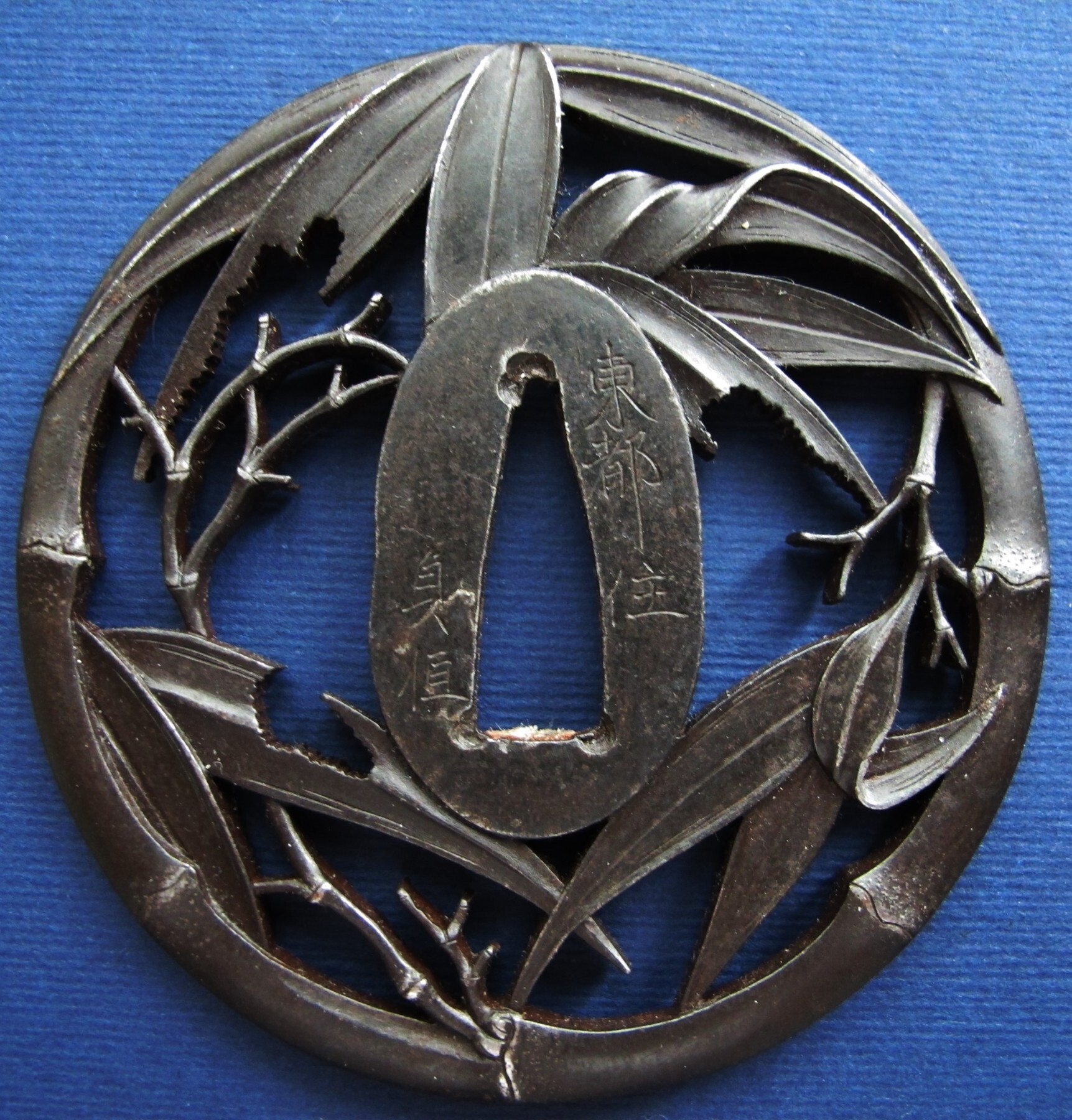
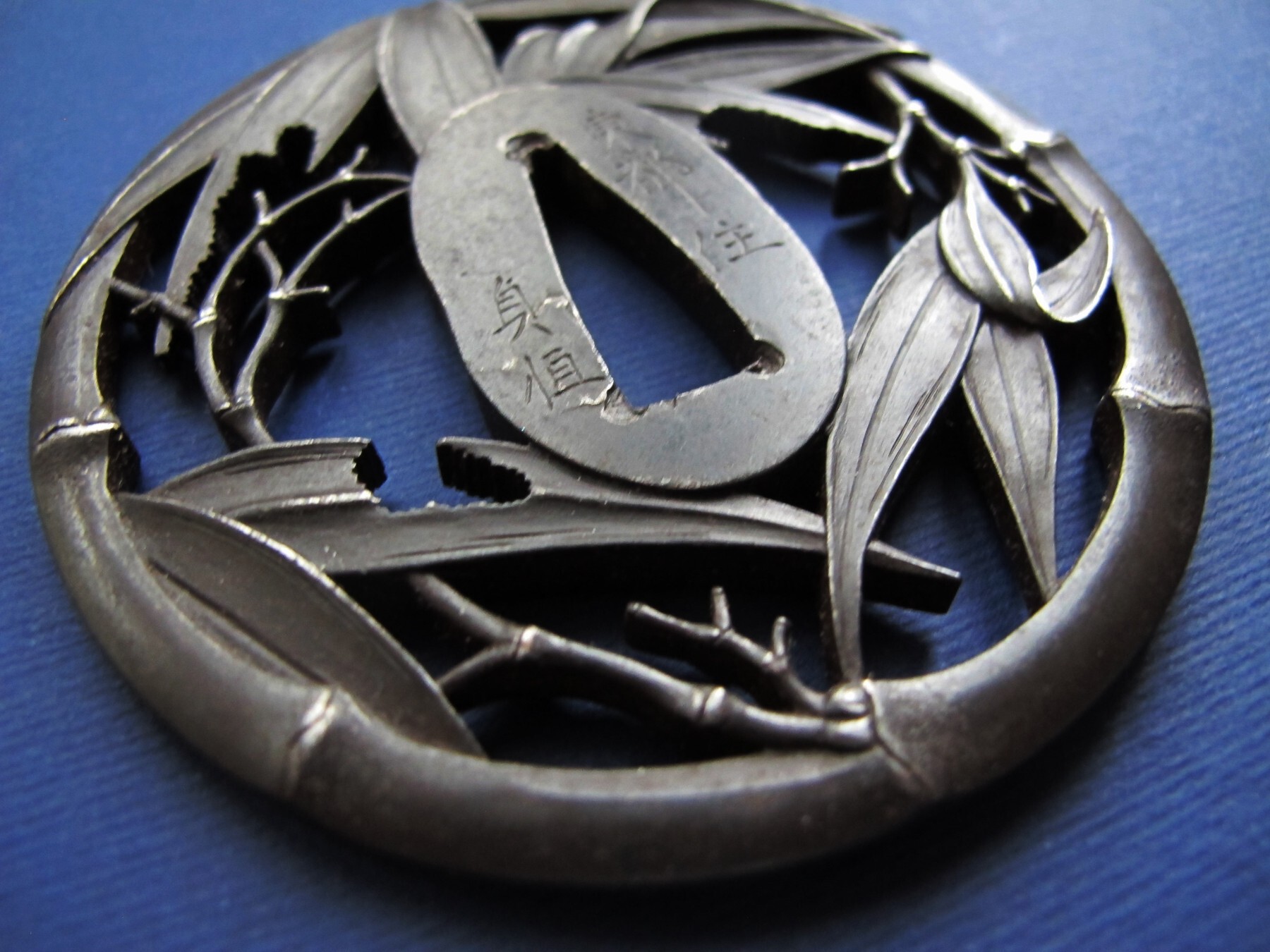
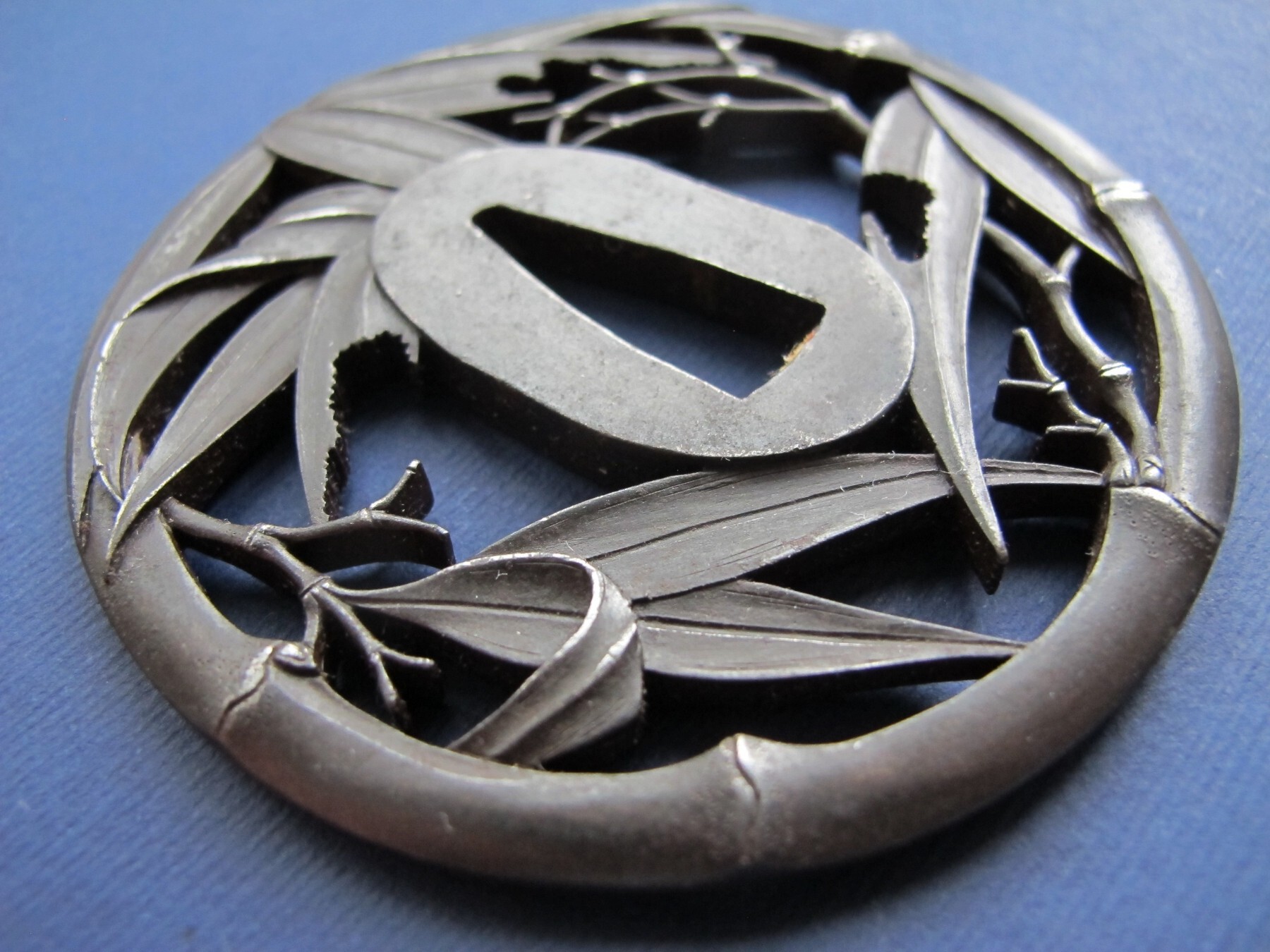
Hello! Tsuba - bamboo tree. 1000 euros. Material is iron Mei/signature: 東都住貞恒 Toto Ju Sadatsune, Period/era: Edo, Certificate: None, Measures: 7.8 cm x 7.3 cm x 0.40 cm. Location: Germany, Berlin. Payment via PayPal or in person in Berlin. Alexander



 1 point
 -
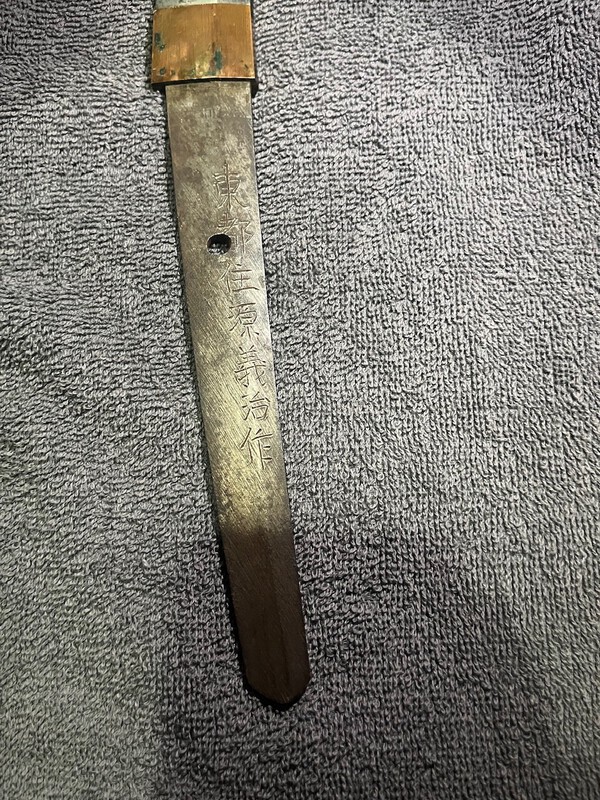
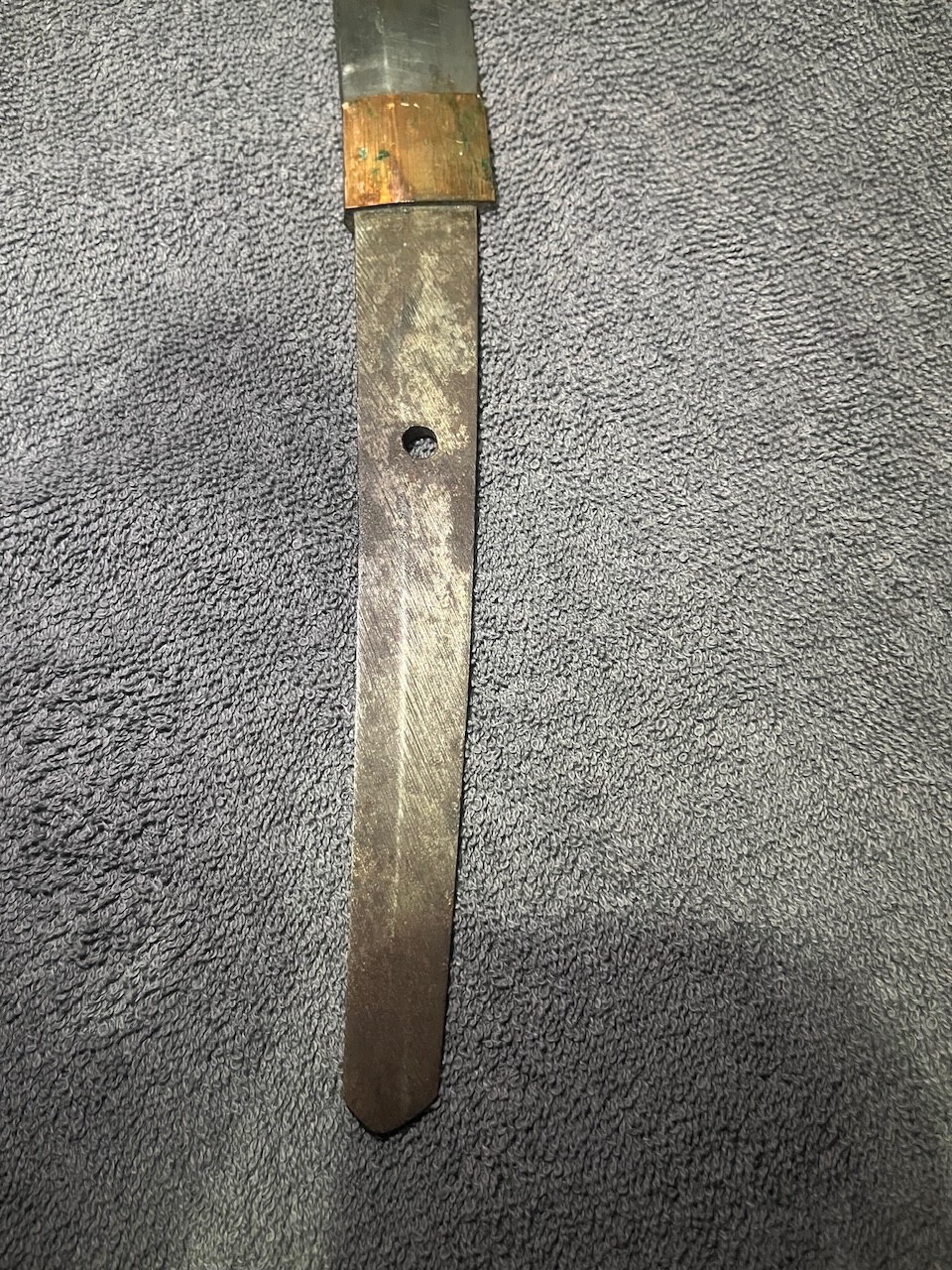
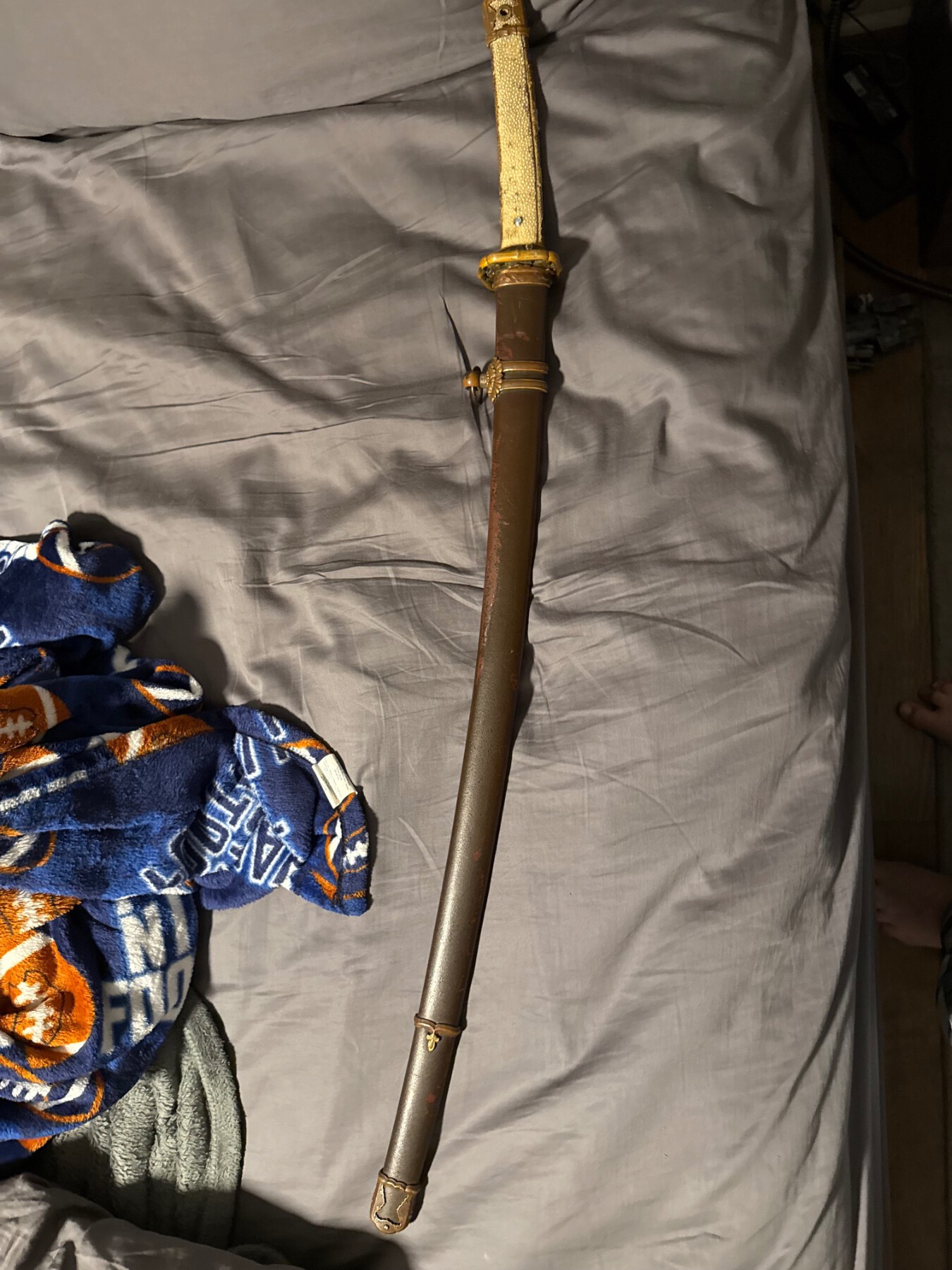
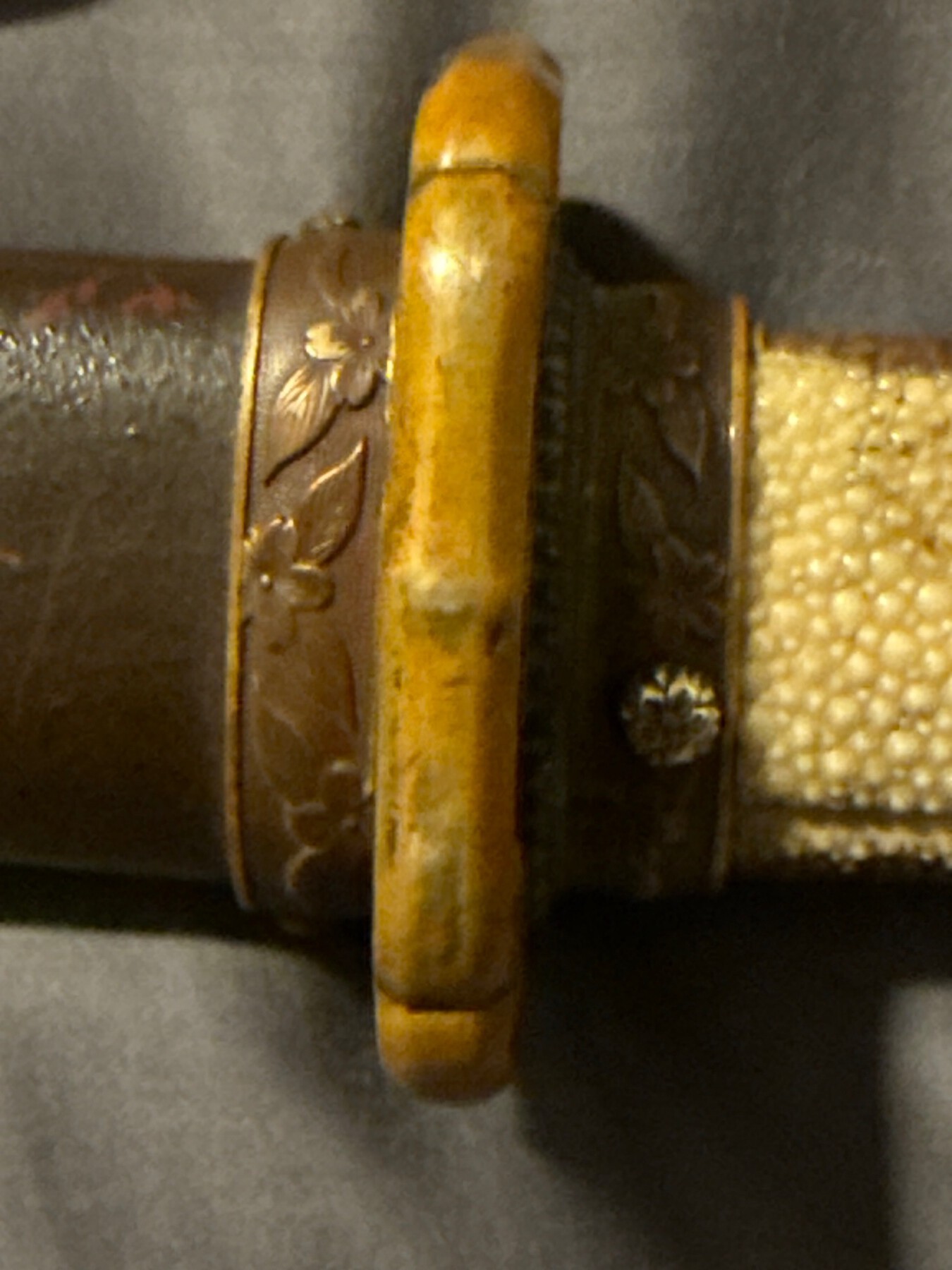
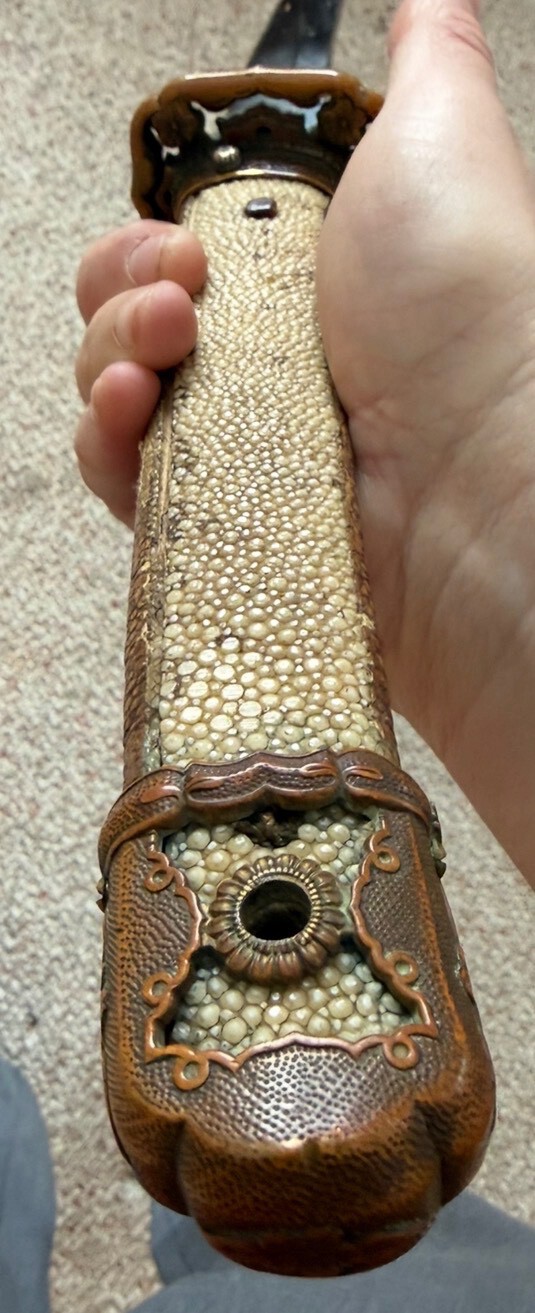
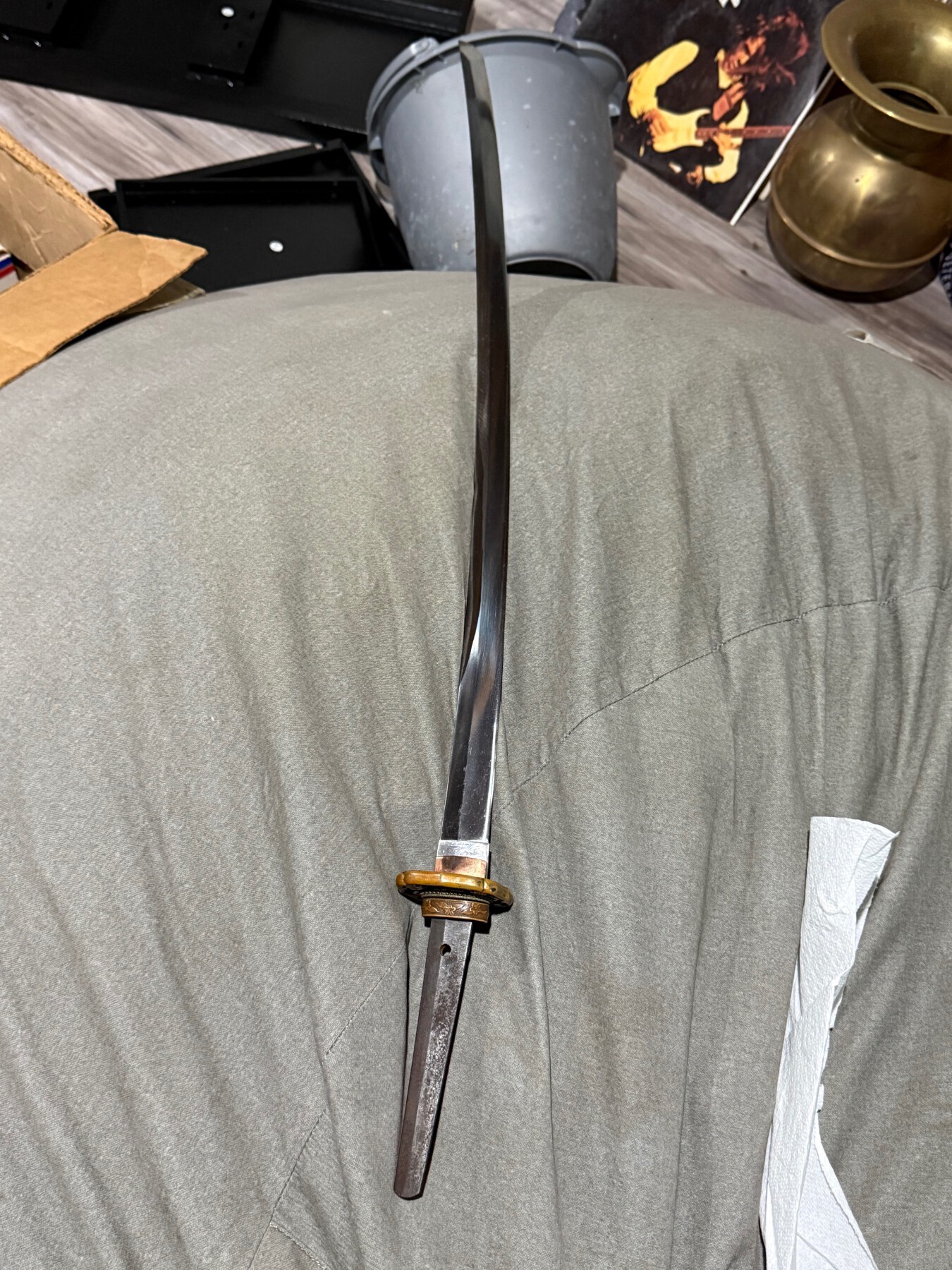
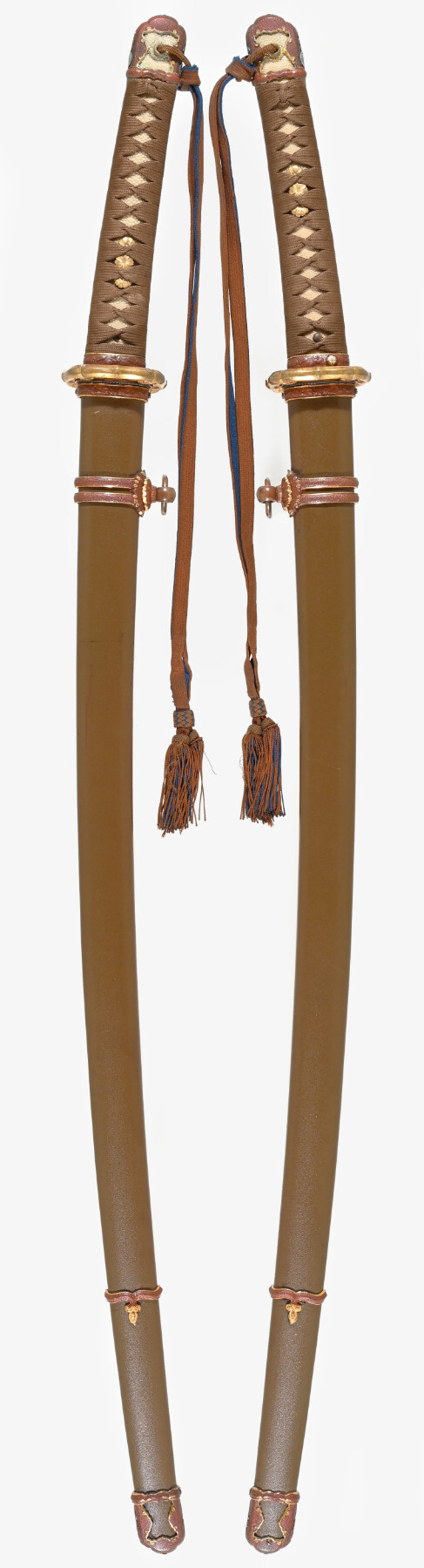
I just bought this shin gunto from an individual. I believe it is traditionally made and there aren’t any stamps on the tang. Can anyone translate the maker? One side is signed, the other is blank
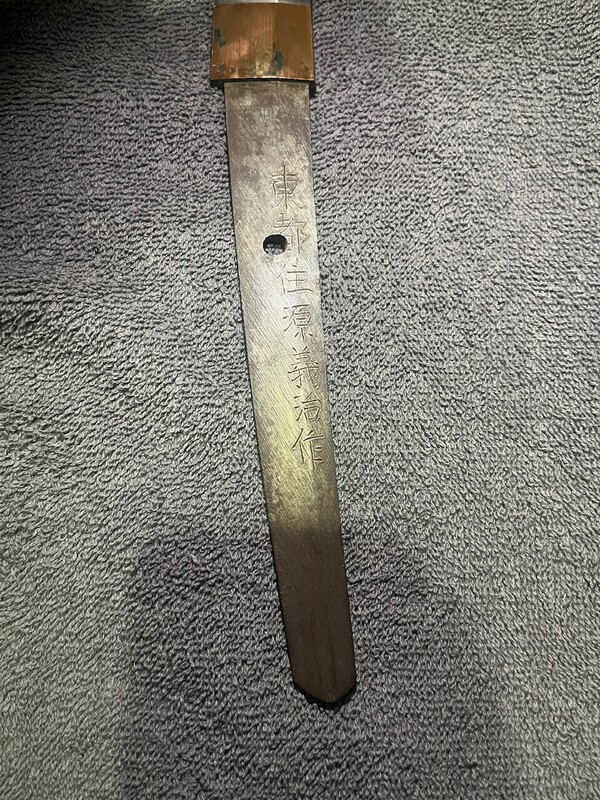
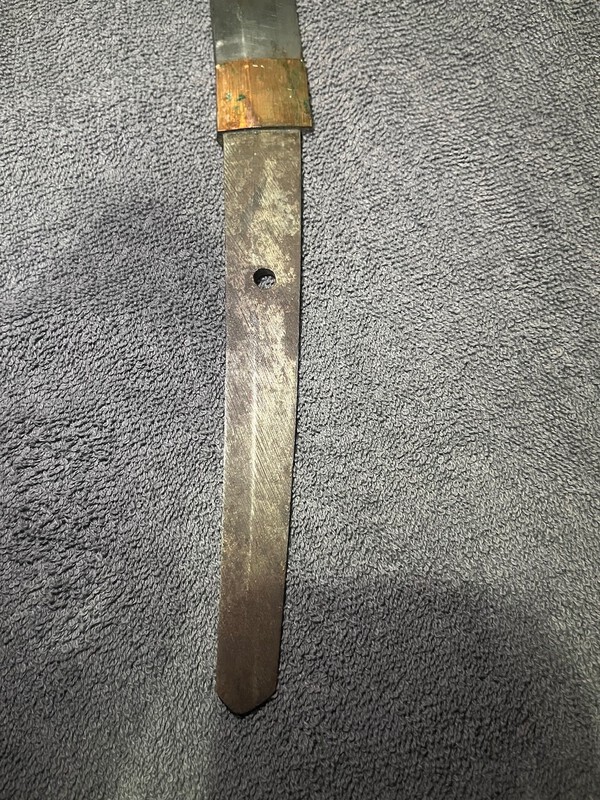 1 point
 -
Hello Everyone So I am absolutely new to any semblance of sword collecting and honestly did not expect to be asking for help, but this hobby is very intense and confusing! I was helping my wife’s uncle clean out his recently passed father’s condo, and found a stash of rifles and a sword in the vent above his furnace. I know just enough to know I wasnt supposed to clean it and as soon as I drew it out of the scabbard, it has an amazingly luxurious feel to it that most stamped weapons just dont have. Ive taken it to 3 shops, two which said it was fake but tried to to buy it, and one that directed me online…so here i am. Anyways, kindly dont beat me up too bad for asking a stupid question, but if anyone could help me id this and tell me if i need to return it to some family or something id appreciate it. Thank you in advance, and ill accommodate any picture requests as best i can. happy turkey day everyone! jeffrey s


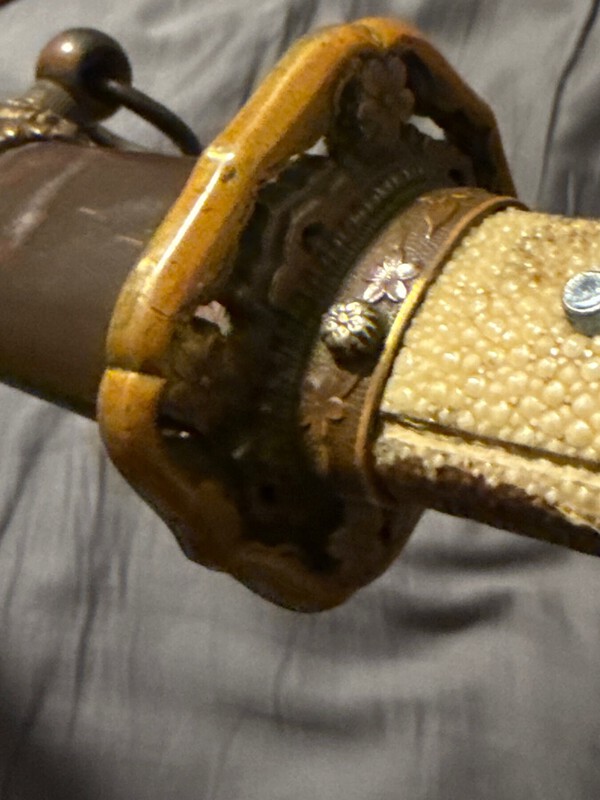

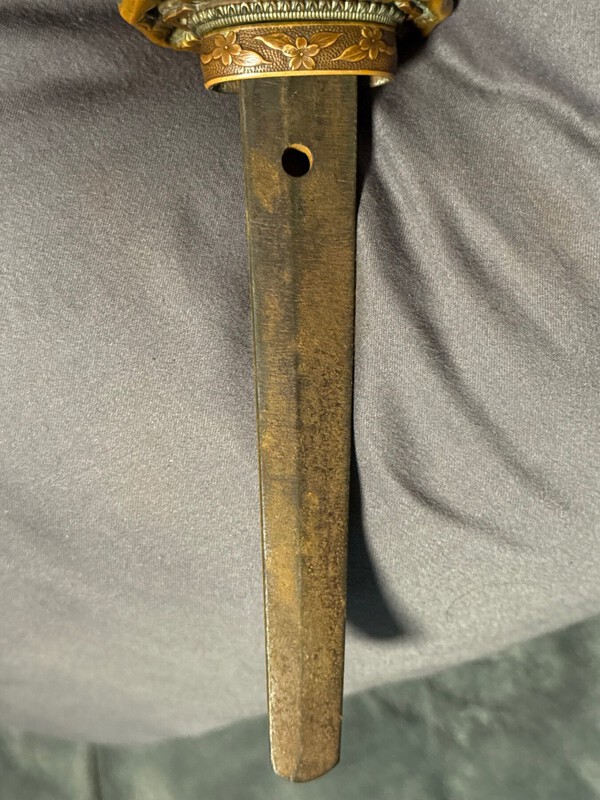


 1 point
 -
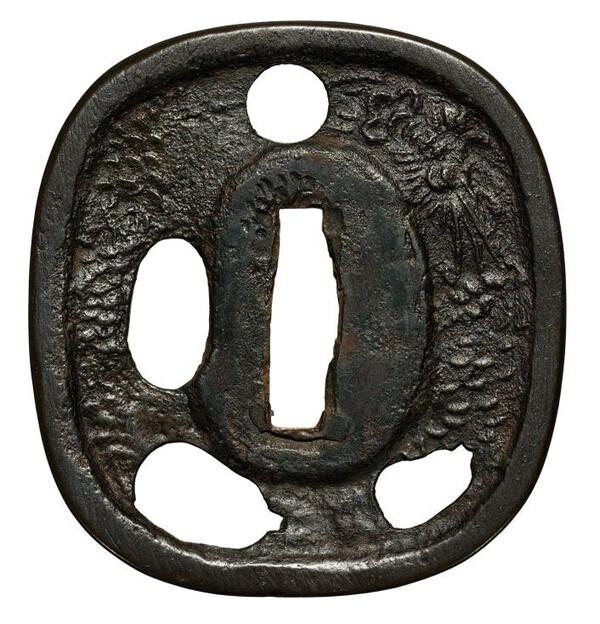
Here is another that is ascending and descending dragons. The plate is only about 1mm thick in spots. I think the two holes at the bottom were casting flaws modified to look like bottles. I see some similarities to #10 in Sasano's book.
 1 point
 -
From my own collection:
 1 point
 -
I agree, Kagami-shi is a misnomer, there is no evidence of a link to mirror makers. I have coined my own terminology to categorise this variety. It is just another NBTHK category that needs to be revised. Here is the other Kagami-shi from the DTI that you mentioned.
 1 point
 -
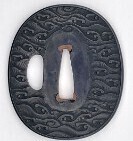
At least a true itomaki-gata tsuba, unfortunately from an auction dead link.1 point
-
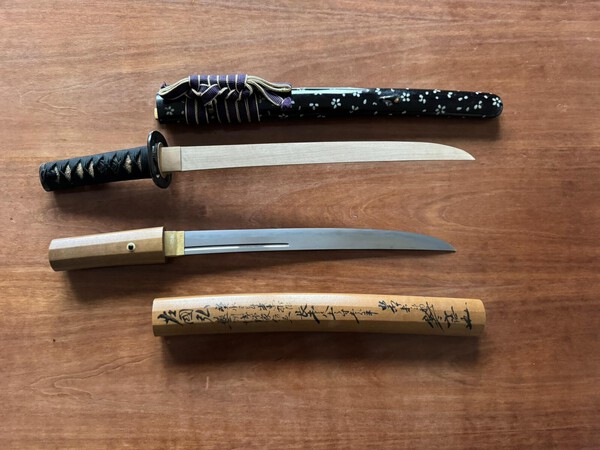
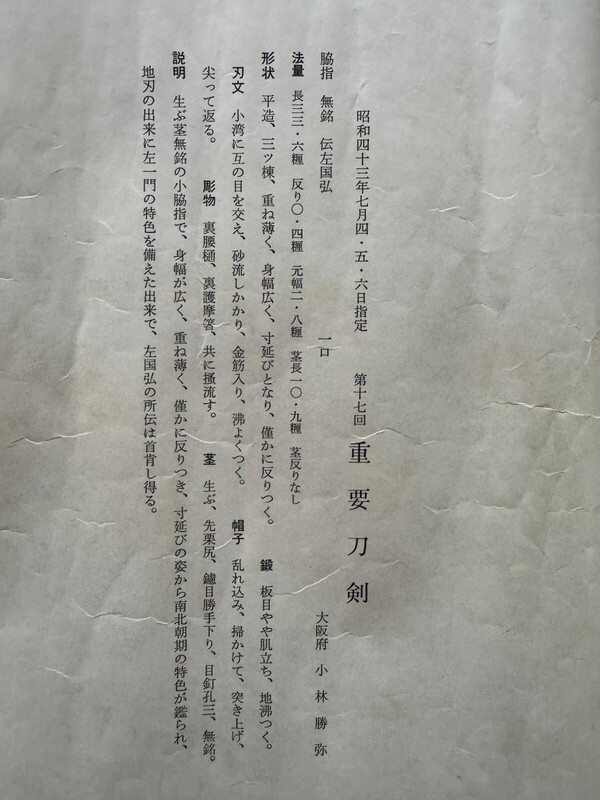
Sure, here are some pictures. 33.6 cm nagasa so sunnobi tanto or wakizashi. best regards John L.


 1 point
 -
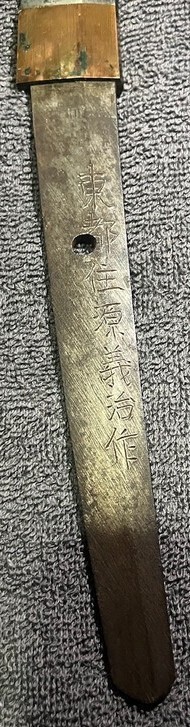
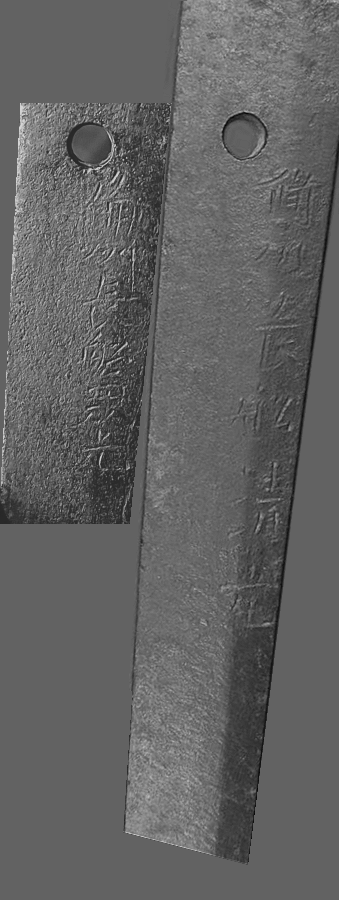
Kyle, mei reads: Touto ju Minamoto Yoshiharu saku. Touto = "Eastern Capiltal" = Tokyo. Minamoto is like a clan name. Signed on katana-mei. There is an example from Stein JSI:
 1 point
 -
@Bugyotsuji I’m guessing that’s what the 1612 number represents.1 point
-
Looks like 義治 - Yoshiharu1 point
-
With the caveat that you shouldn’t take legal advice from a forum post: While copyright law varies across the world it would generally be a breach of copyright to reproduce something and share it, either in translation or not. It doesn’t matter if it is given away free or sold, except possibly in terms of how much you might end up being liable for, if you get sued. If you share it here, then the site might be exempt under the rule that sites are not held liable for posts by their users, but Brian could be asked to take it down, and non-compliance would leave him open to being sued too. In educational settings you are allowed to reproduce up to 10%, or one chapter (whichever is lower), but that is because schools have an exemption for this. Fair use is possible, but you would have to include a commentary on the work, where the work is only reproduced to illustrate your commentary. I can’t tell you whether it is a good idea or not, but that is broadly what the law says (to my admittedly limited knowledge as a lecturer).1 point
-
Just a quick note that Variations 1 through 6 are in the order as they appear in the 1 to 160,000 range while Variations 7 to 9 are as they appear in the 200K & 300K range. So they are not 100% chronological in regards to dates. Variations 7 & 8 probably preceded Variation 6?1 point
-
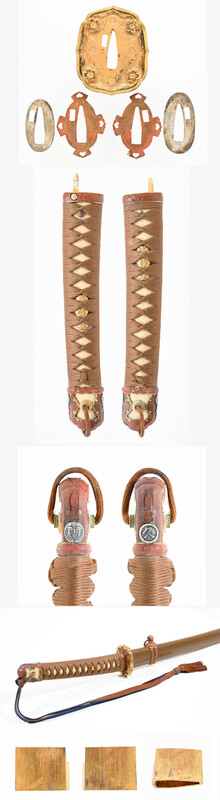
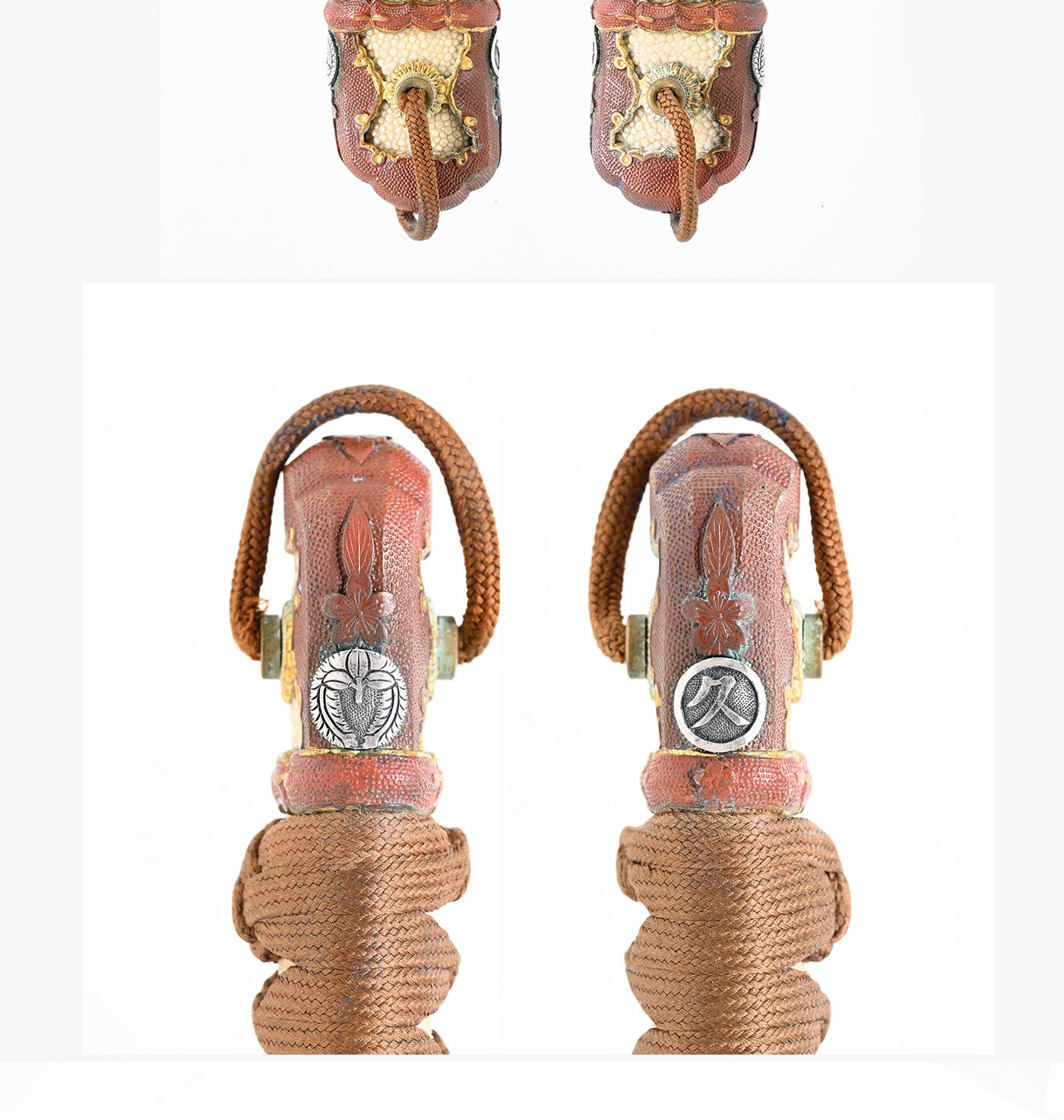
One that appeared recently from Japan, usually the second Mon appears on a Menuki:

 1 point
 -
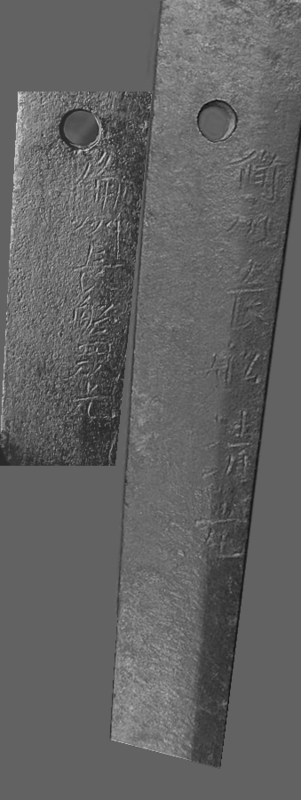
Hello Jeffrey, welcome to the forum and congratulations on the find. That's a rather nice looking Type 98 Shin Gunto, the blade looks to be Nihonto but in this case likely bears a false signature (Gimei) of Hizen Kuni Tadayoshi.1 point
-
The inscription is Hizen (no) kuni Tadayoshi. You can research at the website below. Hizento.com Irrespective of the inscription, it is an authentic antique Japanese sword1 point
-
See the signature as an addition. Its an old warrior sword. Its very old.
 1 point
 -
So he used his family name YATA as well in the MEI:1 point
-
Here you go (from Sesko‘s): AKISUKE (明督), Shōwa (昭和, 1926-1989), Tottori – “Shikon Akisuke” (士魂明督), real name Yata Monji (矢田門二), born August 26th 1899, he was working as a swordsmith from about 1942 onwards, the prefix shikon (士魂) means “Samurai spirit” (see picture right)1 point
-
A guide to spotting fakes, with helpful visual examples: https://www.jssus.org/nkp/fake_japanese_swords.html1 point
-
士魂 矢田明督之作 Shigon Akisuke. Someone else can probably chime in with more info about the smith. Edit: Here is the nihontoclub link to AKI29: https://nihontoclub.com/smiths/AKI291 point
-
This isn't a real Japanese blade sorry1 point
-
@Kiipu, I've digested your notes, and edited my list to more closely reflect yours. In addition, I adopted the wording "asymmetrical/symmetrical" and removed the "2a, 2b, 3a" because I had not realized those terms had been coined in the past for other features (Thank you @Bruce Pennington). I think the "Transition" or maybe "interim" identifier is less intrusive to preexisting pattern list. Let me know your thoughts. -Sam -Copper Tsuka Initial Pattern; plug on end of saya: Pattern 1 = Copper handle - 11mm Brass tsuba - Asymmetrical ito - Cap but no drag on saya. -Aluminum Tsuka Patterns; drag on end of saya: * Transition Pattern 2 (Suya) = Aluminum handle - 9mm Brass tsuba - Asymmetrical ito - punctured ito. ( TO 東 ).* *Transition Pattern 2 (Gifu) = Aluminum handle - 9mm Brass tsuba - Asymmetrical ito - adjusted ito around mekugi. ( NA 名 ).* Pattern 2 = Aluminium handle - 9mm Brass tsuba - Symmetrical ito. Pattern 3 = Aluminium handle - Steel tsuba - With/Without(Kokura) bohi - Symmetrical ito. *Transition pattern 3 (tsuba) = Aluminum handle - Top latch steel tsuba but with side latch cutout - Symmetrical ito.* Pattern 4 = Aluminium handle - Steel tsuba - Side latch - Symmetrical ito - ( NA 名 ) . -Wooden Tsuka Patterns: Pattern 5 = Wooden handle - Steel Tsuba - Side Latch - With/Without Bohi - Metal Saya with drag - (NA名). Pattern 6 = Wooden handle - Steel Tsuba - Side Latch - Without Bohi - Wooden Saya with chape - ( HE ヘ , Jinsen). *Author noted transitional patterns with asterisk*1 point
-
Ok, the machi is in better condition than I thought. however, I don't see why it would be machi-okuri.1 point
-
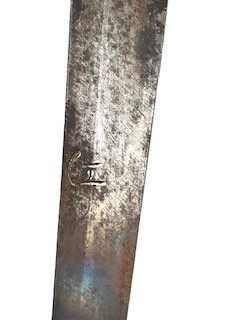
Another blade this smith, signature type C

 1 point
 -
Thanks! Jan and Kat were supposed to be visiting this weekend with their friends Petter and Helena. It was to be my first free weekend in nearly two months, to which I was looking forward, and then suddenly the city had to come and ask me to take part, bang in the middle. Should have refused, maybe. Still, we managed to hang out and do some fun things together!
 1 point
 -
You managed to pull together a nice display for that event. Well done Jan1 point
-
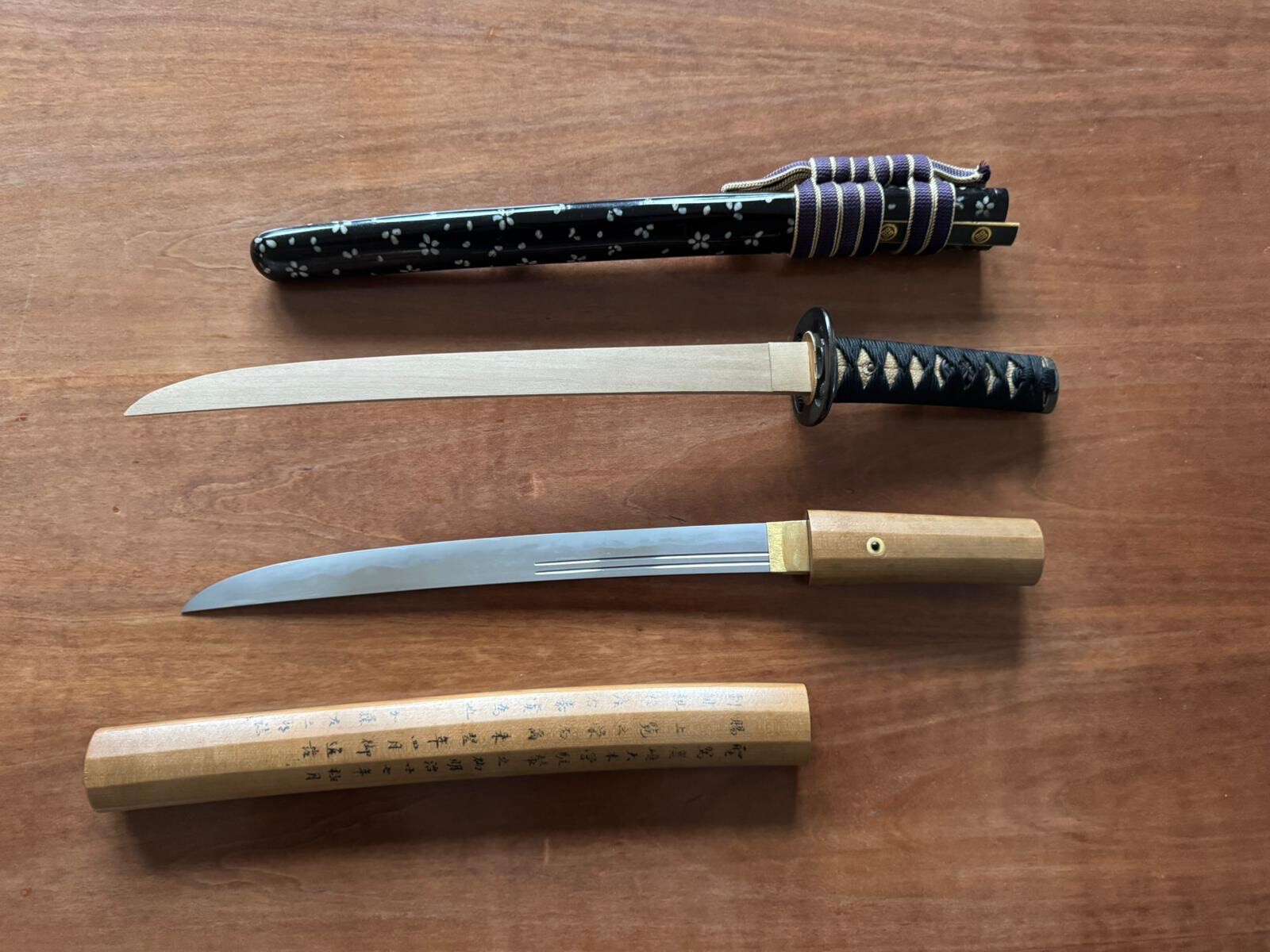
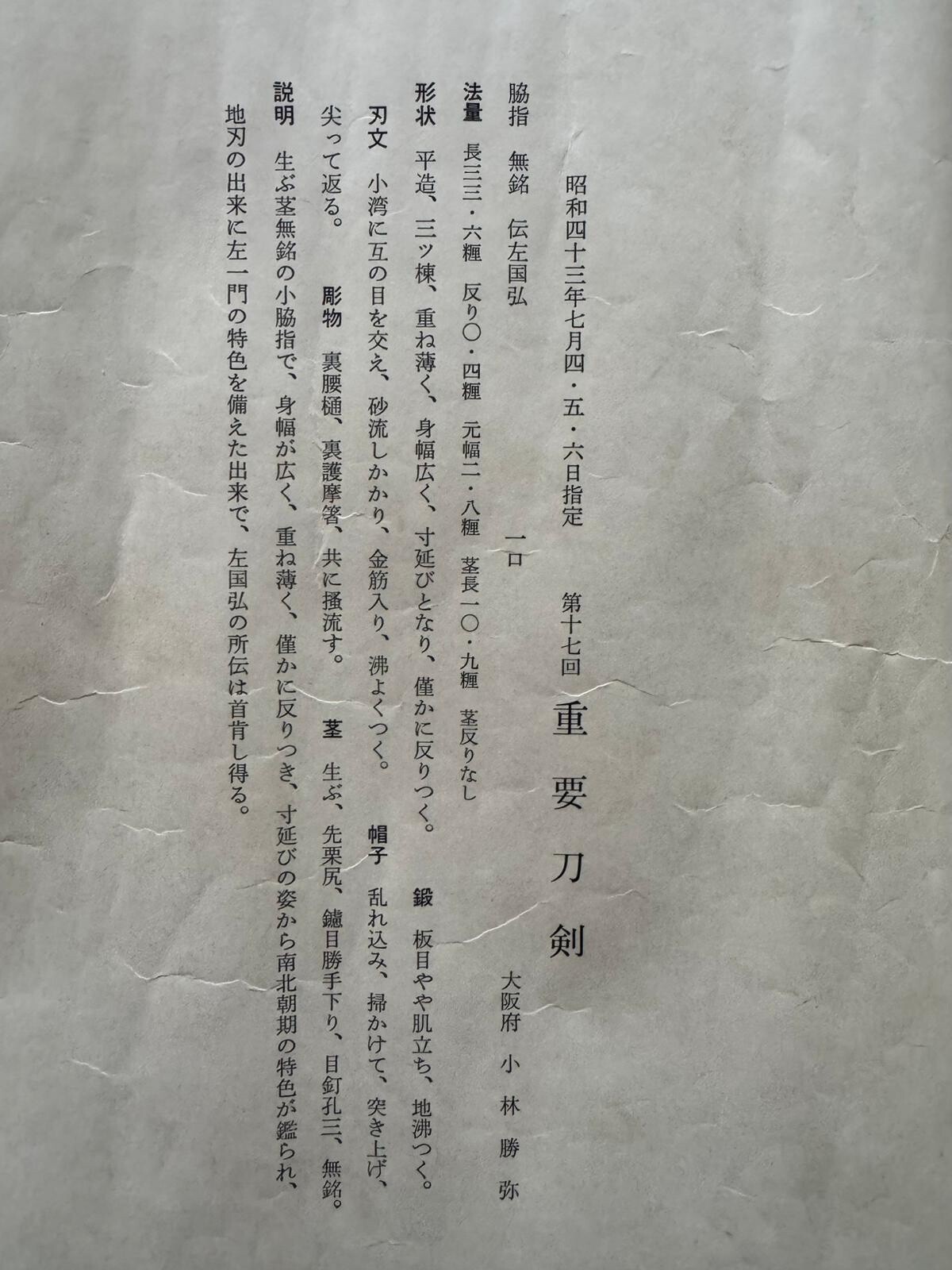
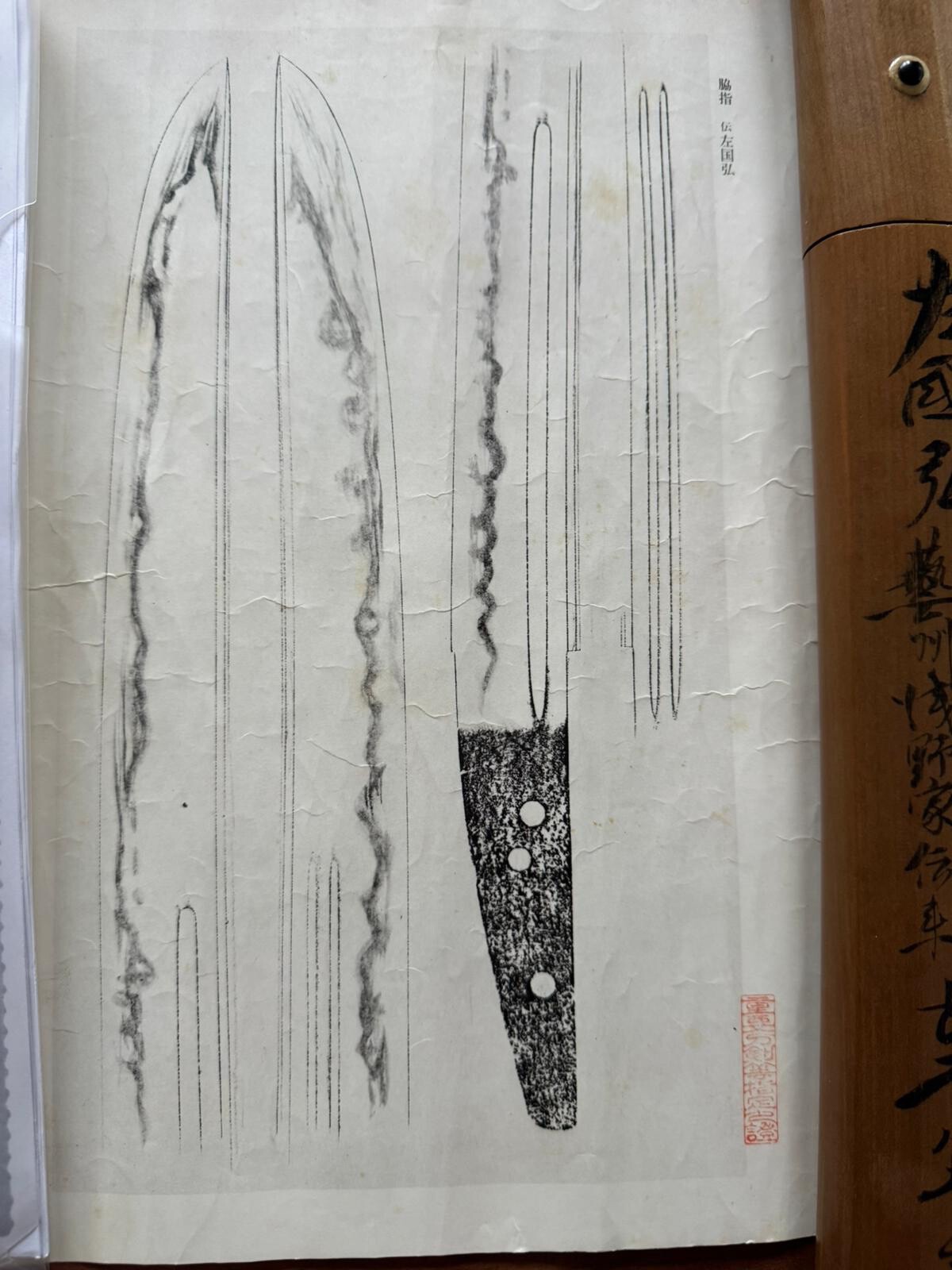
聖駕廣嶋大本営駐輦之砌明治廿七年極月 賜 上覧之栄而爾来翌年四月御通告 制間親□座右嘉賞為也 (unsure) <free translation> Emperor Meiji visited Hiroshima Imperial Headquarters in December 1894. We were honored to be inspected and later received a notification in the April of the next year, ……………………… for the award. 加藤友三郎誌 – Kato Tomosaburo wrote. Ref. Katō Tomosaburō - Wikipedia 左國弘 – Sa Kunihiro 寳永三年光忠折紙 – Hoei 3rd year (1706), Mitsutada origami 藝州浅野家伝来 – Hnded down through Asano family in Geishu 長壹尺壹寸壹分半 – Length, 1-shaku 1-sun 1.5-bu 昭和丁未年初冬 – Showa Hinoto-Hitsuji year (1967), early winter 寒山誌 – Kanzan wrote.1 point
-
Alex, you are extremely close here, they probably bumped into each other getting their morning paper at some point. you're almost on the money and Kunisada is an excellent choice. My smith is slightly less famous and took influence from kunisada and sukehiro but you're in the right school right area and right time. I would probably say my smith is the next wave of osaka den and also considered a master though probably just a little less than kunisada.1 point
-
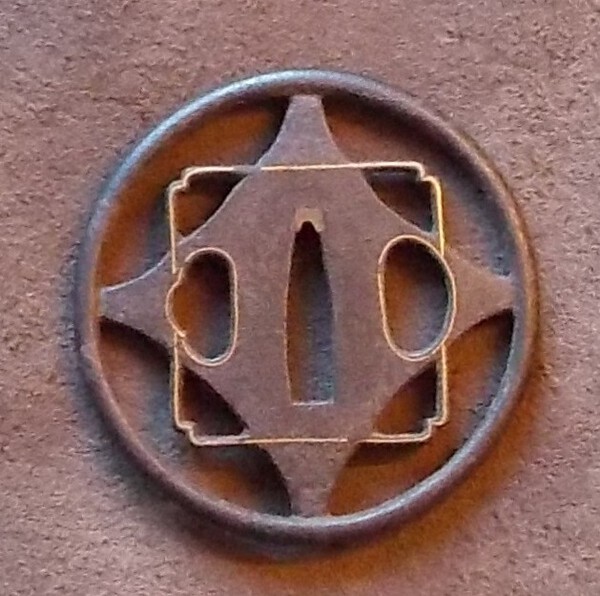
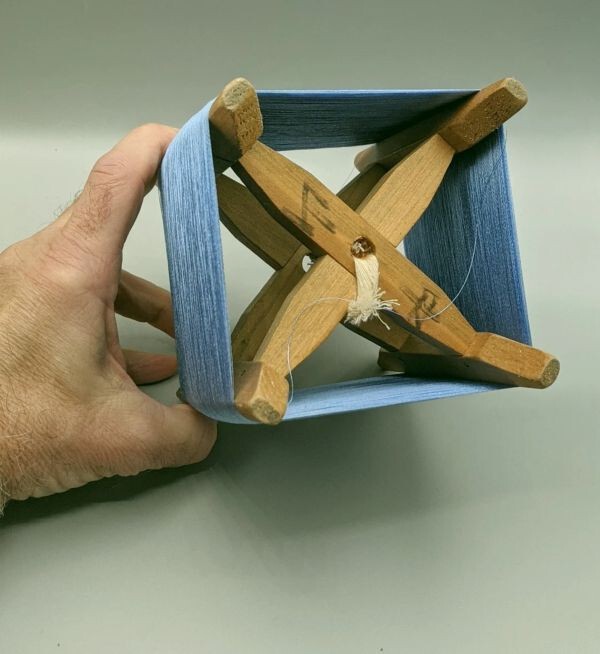
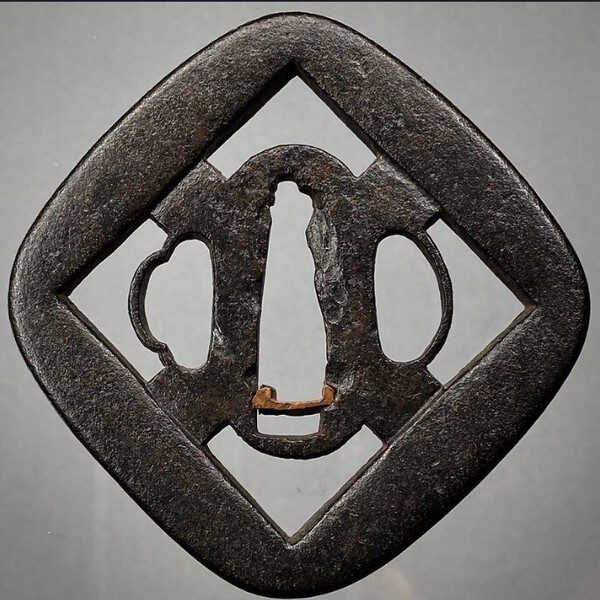
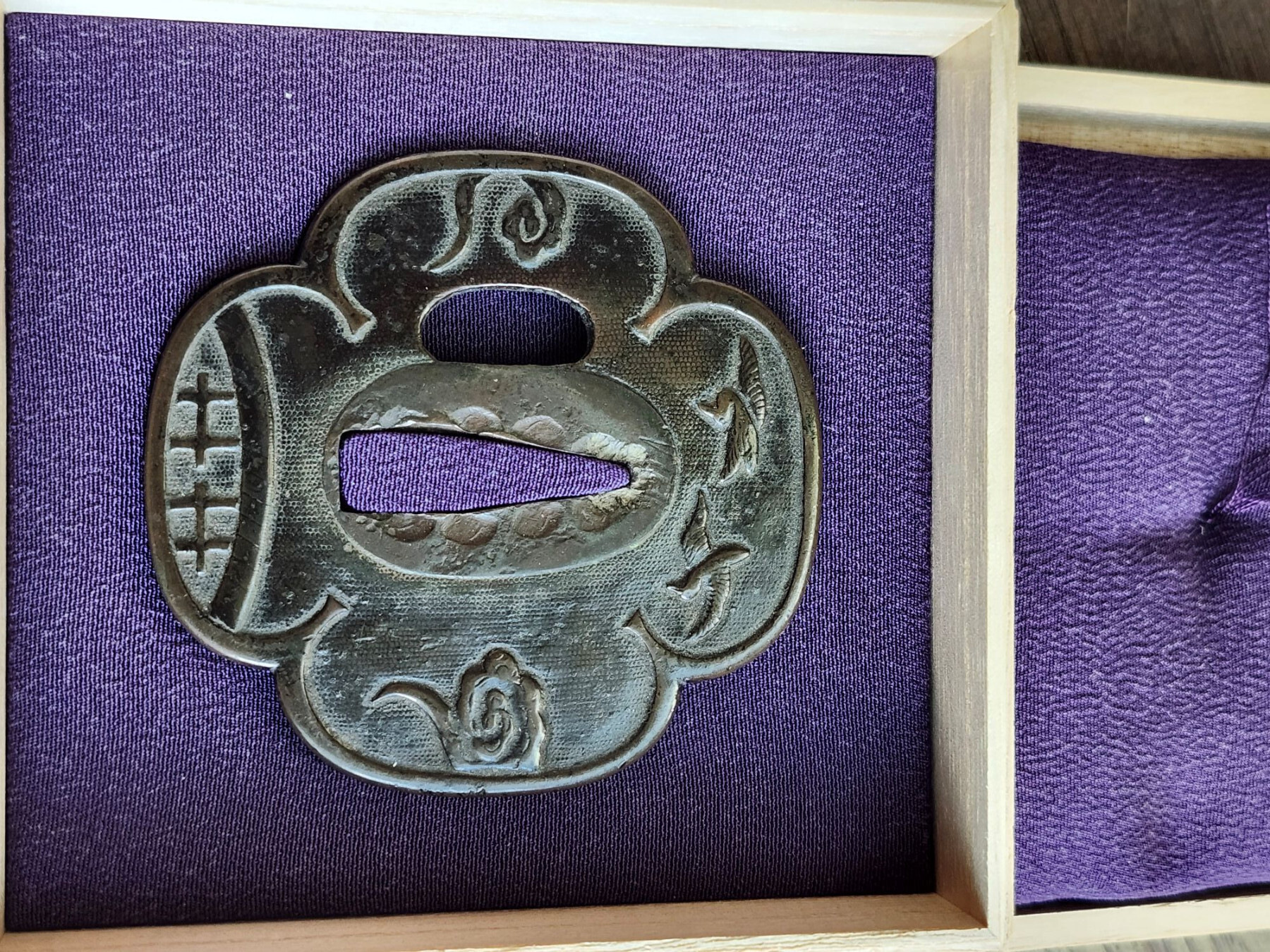
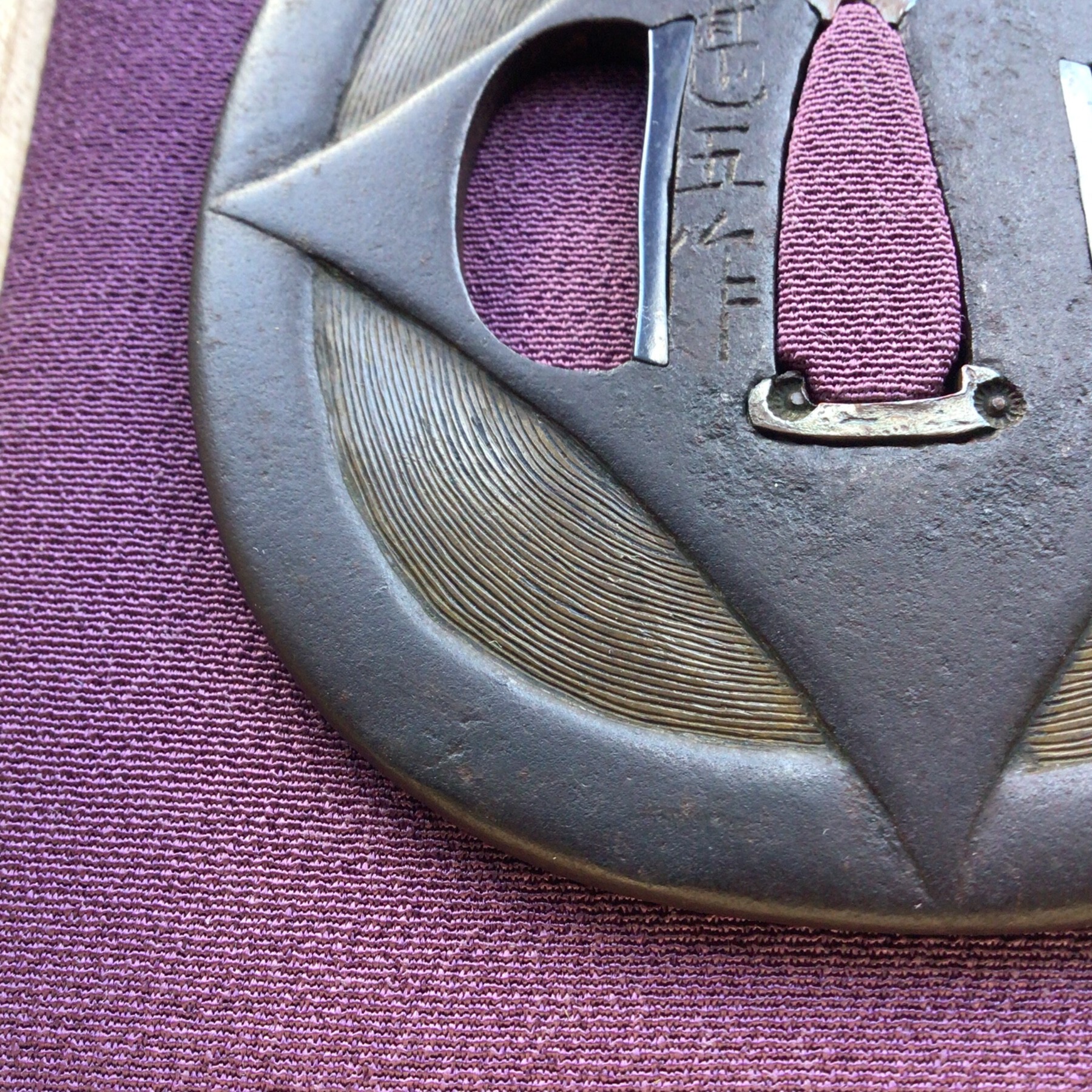
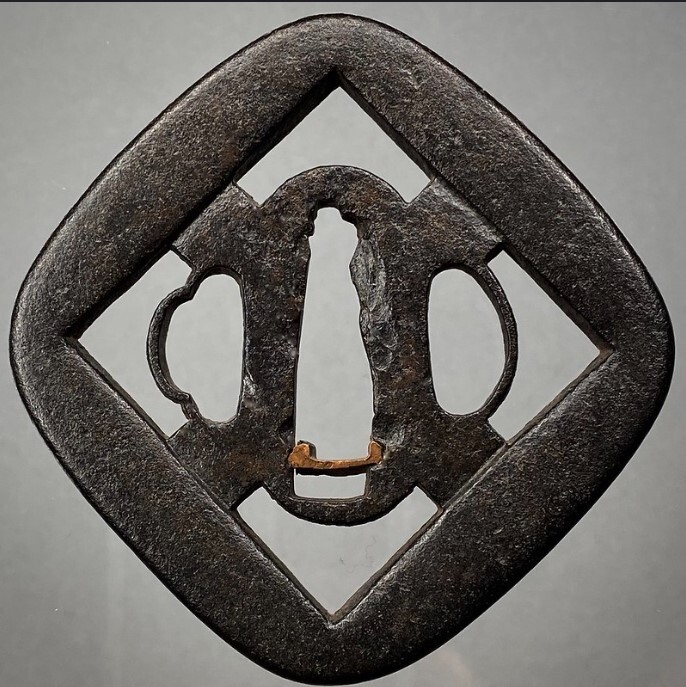
An ono tsuba. But for design reasons, the inner cross was rotated 90 degrees. Otherwise, it's just the motif of a thread spool.
 1 point
 -
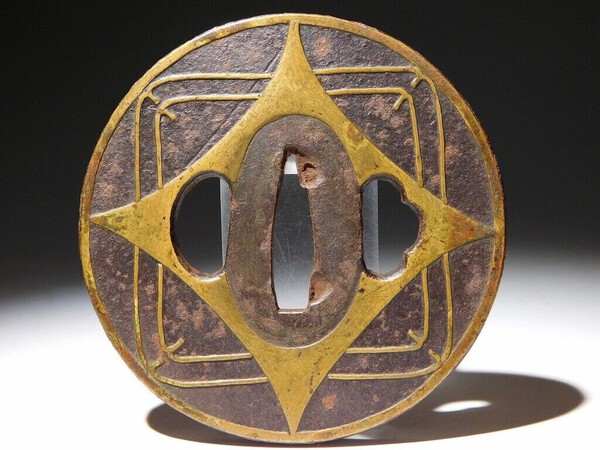
Same design in a maru gata tsuba......
 1 point
 -
Compared to what?0 points
.jpg.28e9fb71b56631cd27f9bc05a6438e9a.jpg)



































This leaderboard is set to Johannesburg/GMT+02:00