
Leaderboard



Popular Content
Showing content with the highest reputation on 11/19/2025 in all areas
-
There are about 40 Jūyō Gō and about half of those are den Gō. Of those, six are old daimyō possessions, two are meitō, two have Hon’ami Kōjō attributions. To this we should add the seven Jubun examples which are all denrai and mostly meibutsu. So as far as the gold standards we are indeed in rarified air here. There are blades that passed Jūyō as Taima (recall that Taima can be very close to Yukimitsu) and Sanekage that were reattributed to Gō at Tokuju. I also wouldn’t say that Gō was a “reproducer” of Masamune’s work. The original Sōshū group working in Shintōgo’s forge in Kamakura were Yukimitsu, Norishige, and Masamune, likely in that order of seniority. It seems like other smiths likely came and went as the school matured, and Gō has often been associated with Norishige as they were both from Etchu province. My mental model is more like a mixing pot of traditions and ideas than a strictly hierarchical structure, at least in the first generation. We do see significant change in working styles in these smiths. Early Yukimitsu looks like Shintōgo, and turns into something more flamboyant. Norishige’s iconic matsukawa-hada develops slowly over his career. So I think perhaps Gō was following his own path, heavily influenced by the senior smiths around him of course. His work often has a little Yamato “seasoning” I think. There are blades that are attributed to Gō that have a distinct feeling of ideas from Yukimitsu, and especially Norishige and Masamune… but overall his work is characterized by being somewhat calmer in the chikei and kinsuji, but the jiba is always bright. The deki has incredible clarity. Despite the ichimai boshi being a kantei point, most Gō works do not have it. Certainly distinguishing between the top rank of Sōshū work can be difficult, but it can be accomplished…. Hope that helps.8 points
-
I believe it is Yasushige, a lucky day in July 1940. https://www.google.com/search?q=Yasushige+site%3Awww.militaria.co.za&oq=Yasushige+site%3Awww.militaria.co.za+&gs_lcrp=EgZjaHJvbWUyBggAEEUYOTIHCAEQIRiPAjIHCAIQIRiPAjIHCAMQIRiPAtIBCDY1NjRqMGo0qAIOsAIB8QW-XY9Q0JG6bQ&client=ms-android-google&sourceid=chrome-mobile&ie=UTF-85 points
-
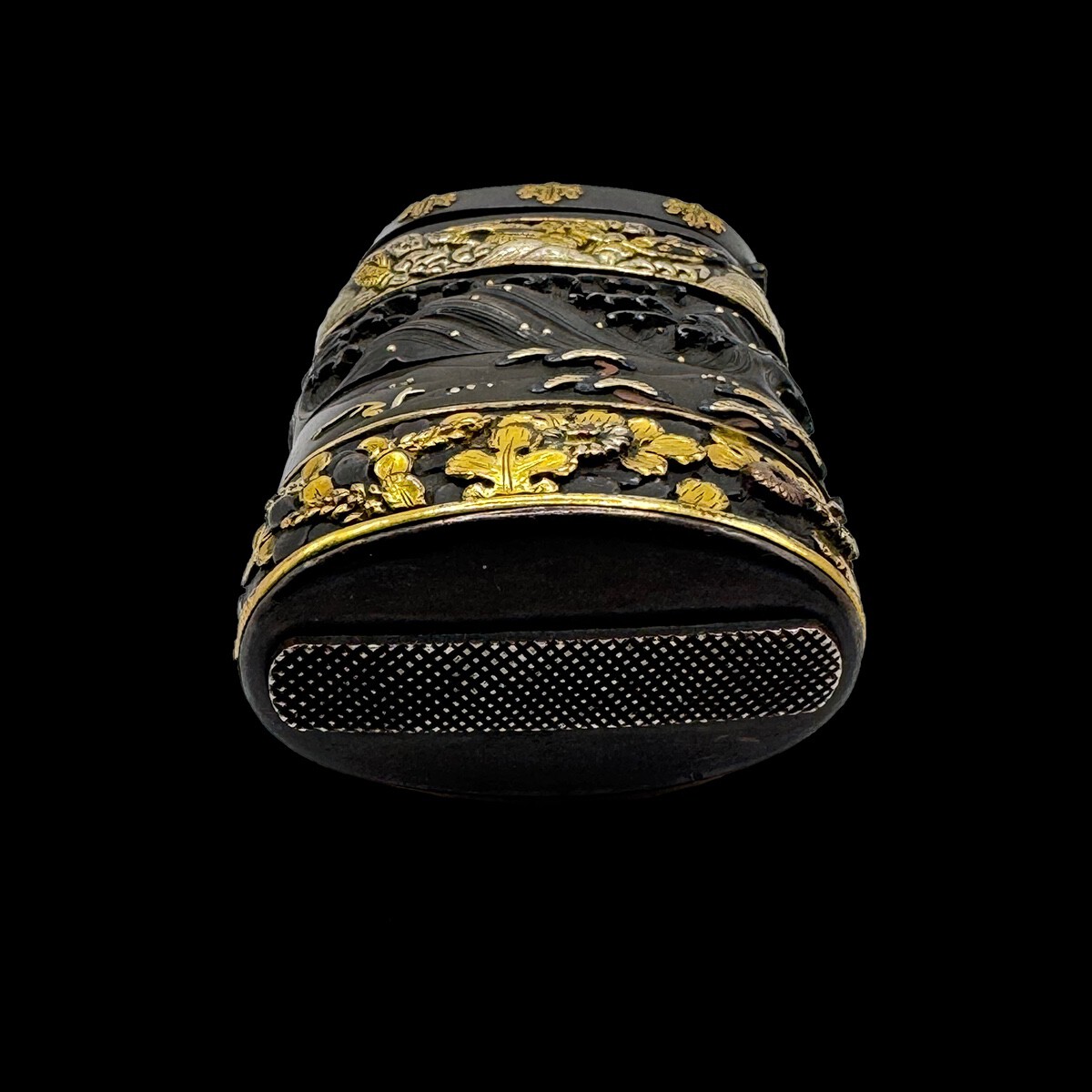
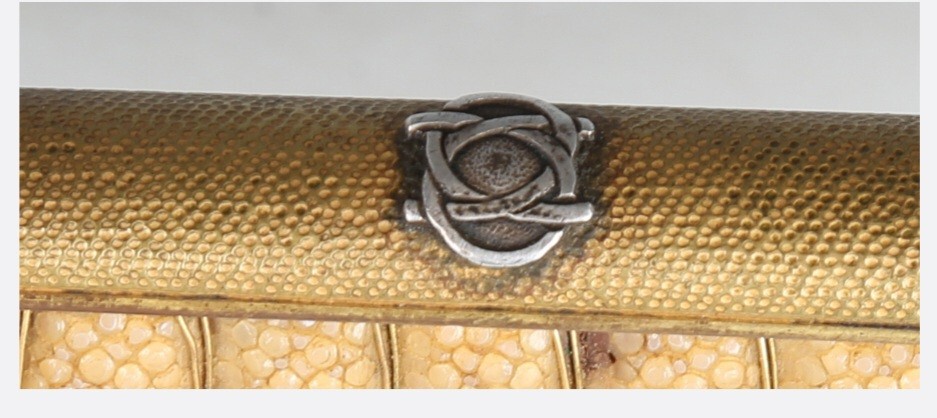
I picked this up because I thought that it was interesting. It is a matchbox made from five fuchi, with the top of a kashira to close it off. It is nicely done, and I am guessing that it is Meji-period, using earlier pieces. If anyone has any thoughts on the origins of any of the individual fuchi, I would be grateful…


 4 points
 -
That's reasonably common. "Classic" Go has not many options except go down to Tametsugu and the upgrade is probably Masamune. For Shizu it does not have togari, there is slight chance to go Sadamune, you can't go Yukimitsu because hamon is too uneven, Hasebe would typically be rather different jigane. I do dislike dealers. They always write as if they've been family friends with most of the smiths, forcing them to keep in mind when Go's birthday is, and what did Masamune give him the last time everyone been drinking together. That rascal. They don't write "the earliest mentioning of Go is in X", "his birthday is first mentioned in Y". Go, Sadamune, Yukimitsu and Norishige do have arch-typical different clusters; as a pure personal guess in terms of width of the hamon, which continuously increases with time in Soshu until hitatsura and Hasebe, Go is beyond Yukimitsu and at least in Sadamune's timeframe, but before Hasebe. His works are unusually compact timewise, but this might be relative because many others are unusually wide - Tametsugu, Yukimitsu, even Norishige. Then again, nobody in Soshu was satisfied doing just the arch-typical, there are also many works that don't stick anywhere in particular and the early texts that everyone cites with respect to Masamune, somehow dismissing the fact they provide many names which disappeared from our mind because there are no signed examples... well, its not like there are many in Soshu overall.3 points
-
If Go was a retainer for Momoi of the Matsukura Castle in Etchu Province, his responsibilities were split. The fact he achieved what he did, in the time he had to do it was nothing short of amazing. Norishige is said to have established a forge in the Neyama Fief, near modern day Nanto City, Toyama Prefecture. Thats about 78km from Matsukura Castle, typically a 2-4 day journey in 14th century Japan. So I imagine close enough that they could have had regular contact and to have influenced eachothers forging styles. Go would have been about 9 years his junior. The current ruin from the 16th century was built on top of the 14th century site, occupied in Go's time. The vantage point from the top of the hill is quite spectacular and you could easily see the strategic advantage it offered.3 points
-
I remember Darcy Brockbank mentioning that there's a few pairings between the Soshu grandmasters and one smith from the generation below them who would often reproduce their style of work. Masamune and Shizu Kaneuji: wild and bright hamon, intense and varied hataraki and ji-nie as far as the eye can see (Shizu is generally considered to be the closest to Masamune in style, even if Go is closer in skill) Yukimitsu and Sadamune: finer, Awataguchi-like jigane, more sedate hamon, in a sense themselves shadowing Shintogo's style but with more experimentation and flair Norishige and Go*: Influenced by their Etchu backgrounds and devoted to replicating ko-Hoki * Go unfortunately died young and so was not around to learn from the later works of Norishige where he had perfected his matsukawa-hada. Nevertheless there are several later Norishige works that show distinctly Go-like traits; it's possible the influence may have gone both ways since they were close enough that, according to tradition, Norishige adopted and taught Go's son Tametsugu after Go's untimely passing. Lewis's comment about Sanekage sometimes being elevated to Go hints at the commonalities between Go and Norishige, since Sanekage is typically used as a "not quite a Norishige" attribution by the NBTHK.3 points
-
I'm not so sure Go was a "faithful reproducer of Masamune's work". Some experts have postulated that he was not a Soshu smith at all and worked in Yamato. He could have been a journeyman swordsmith picking up new techniques that were being developed at that time. As Kirill says there are Yamato features like Masame in some of the blades attributed to him. Another theory says his father was Senjuin Yoshihiro, whose work clearly straddles Yamato and Soshu-den. Go is a bit of an enigma imo. I think the historical attributions by various earlier Hon'ami appraisers, their oshigata in old books and blades with historical provenance are what guide modern day attributions. Has a Go ever been reattributed to Masamune or vice versa? As mentioned there are at least a couple of cases of Sanekage going to Go at higher Shinsa levels. Early Tametusgu when he worked in Etchu also has a lot of the Go flavour in the deki, but just not quite as accomplished as you would expect from Go and the sugata deviates somewhat.3 points
-
The only early Soshu smith I personally would be exceptionally careful with is Masamune. There is a significant body of later 1360+ works which can move one way or another, but for earlier blades there is considerably better certainty, Sadamune, Yukimitsu, Norishige all having very arch-typical core body of work, so while there are "on the fence" examples, its not too great a problem. Go is also a relatively well defined cluster. Great (itame/ko mokume) jigane as most of the early Soshu, or possibly something more Yamato looking with masame; clear bright nioiguchi, wide and widening aperiodic notare filled with nie particles throughout. You would not see such width or widening in Yukimitsu, Sadamune tends to be a bit more periodic, the areas where hamon widens are more wave like. Sadamune jigane is probably superior. There are signatures in oshigata, but its an open question.3 points
-
Hi Kevin, Great question. There is a tradition of attribution that goes back to the 17th century where respected appraisers wrote the name of the maker in gold inlay on the tang of the blade (Kinzogan). Some of the shortening were performed by this group, called the Hon'ami, and as a result they had access to many more signatures than we do today. The attribution "Go Yoshihiro" has a number of canonical traits (e.g., Ichimai boshi, first class nie, shallow sori, habuchi that increases towards the kissaki...) that have been studied since the Momoyama period. There is, of course, a substantial degree of uncertainty with attributed blades. Attributions on mumei works are best understood as "this is the most likely maker given what we know today" - and even more conservatively as a way to state that a sword expresses certain traits and a certain level of quality that is in line with reputation of a certain master smith. In this sense, there is a tradition of attribution that has been honed over generation of competent judges, based on ancient literature and oral transmission. I would advise caution on mumei Soshu blades to big names that are without Ko-Kiwame (old appraisal by the reputable judges) or established provenance from Daimyo collection with a high-level record of gift-giving. Makers during the Shinto era, such as Nanki Shigekuni or Shinkai came very close to Go, and one should always examine the sword critically. Best, Hoshi3 points
-
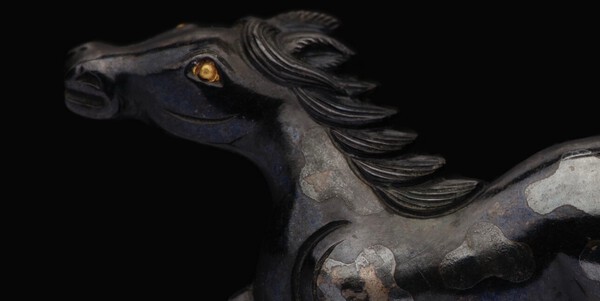
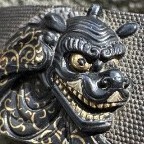
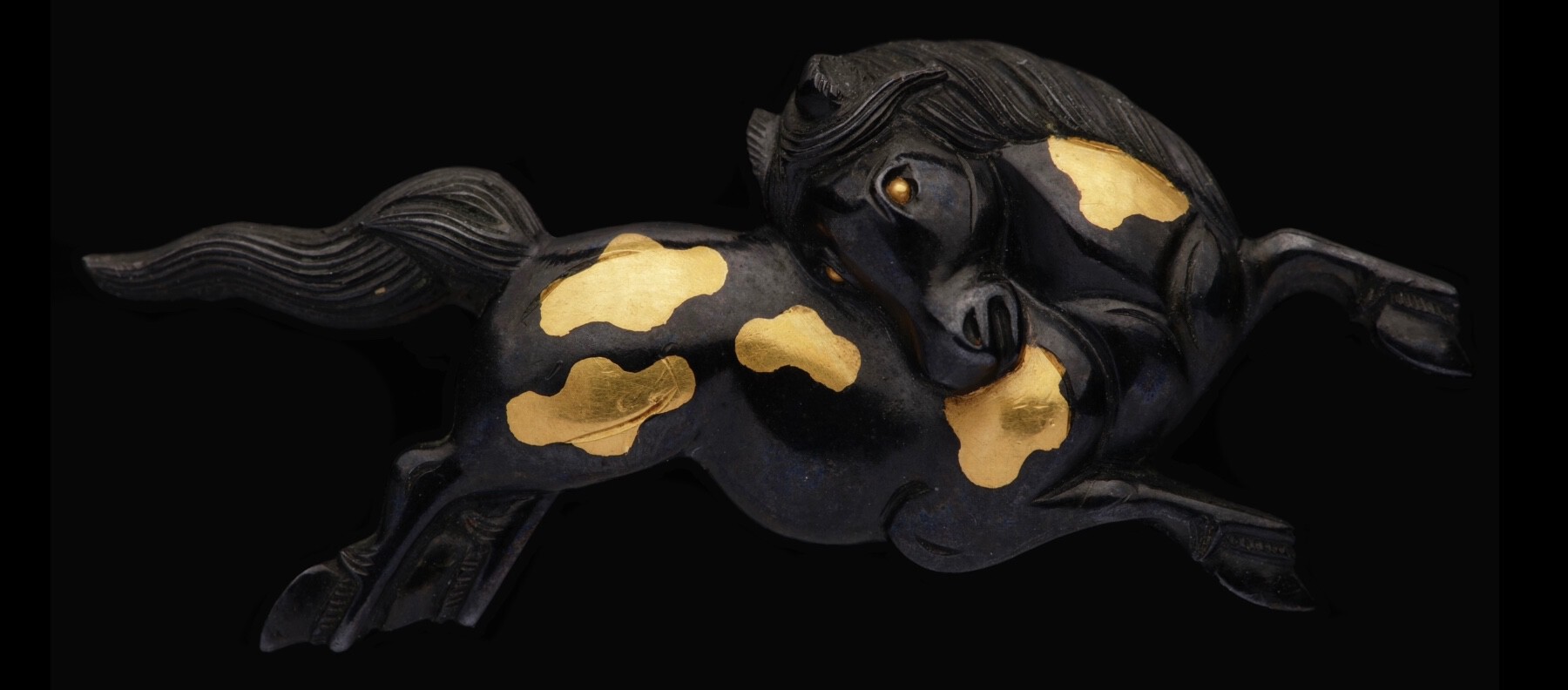
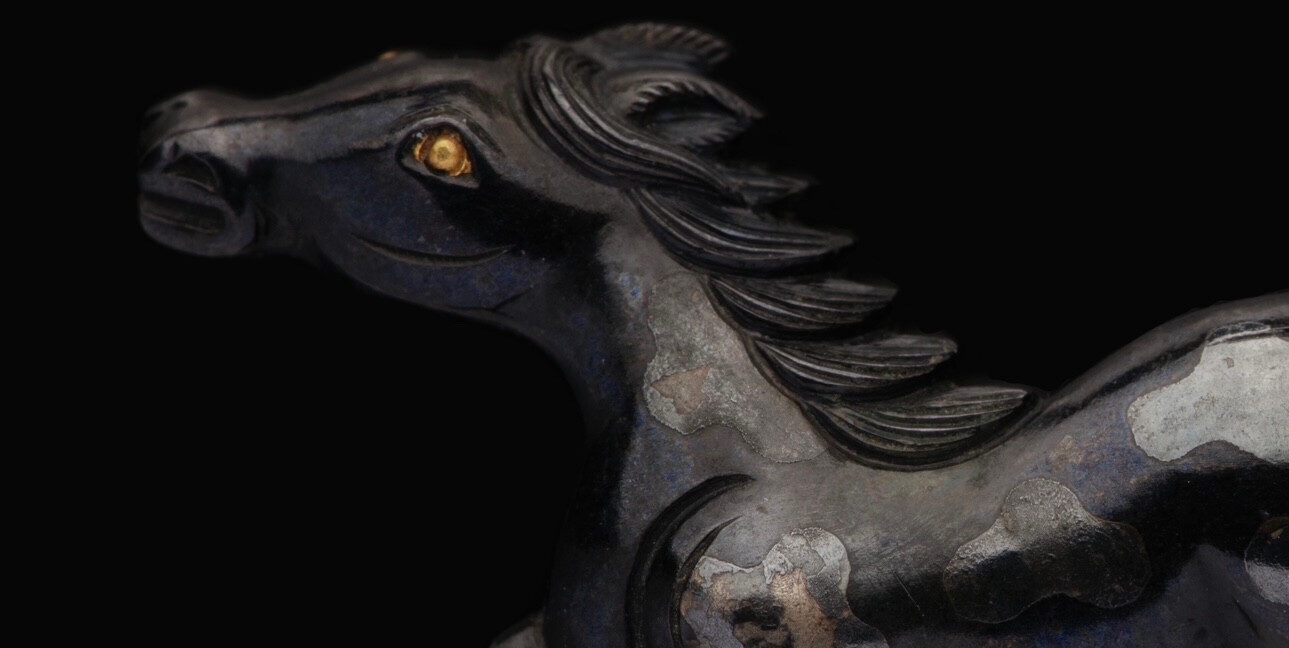
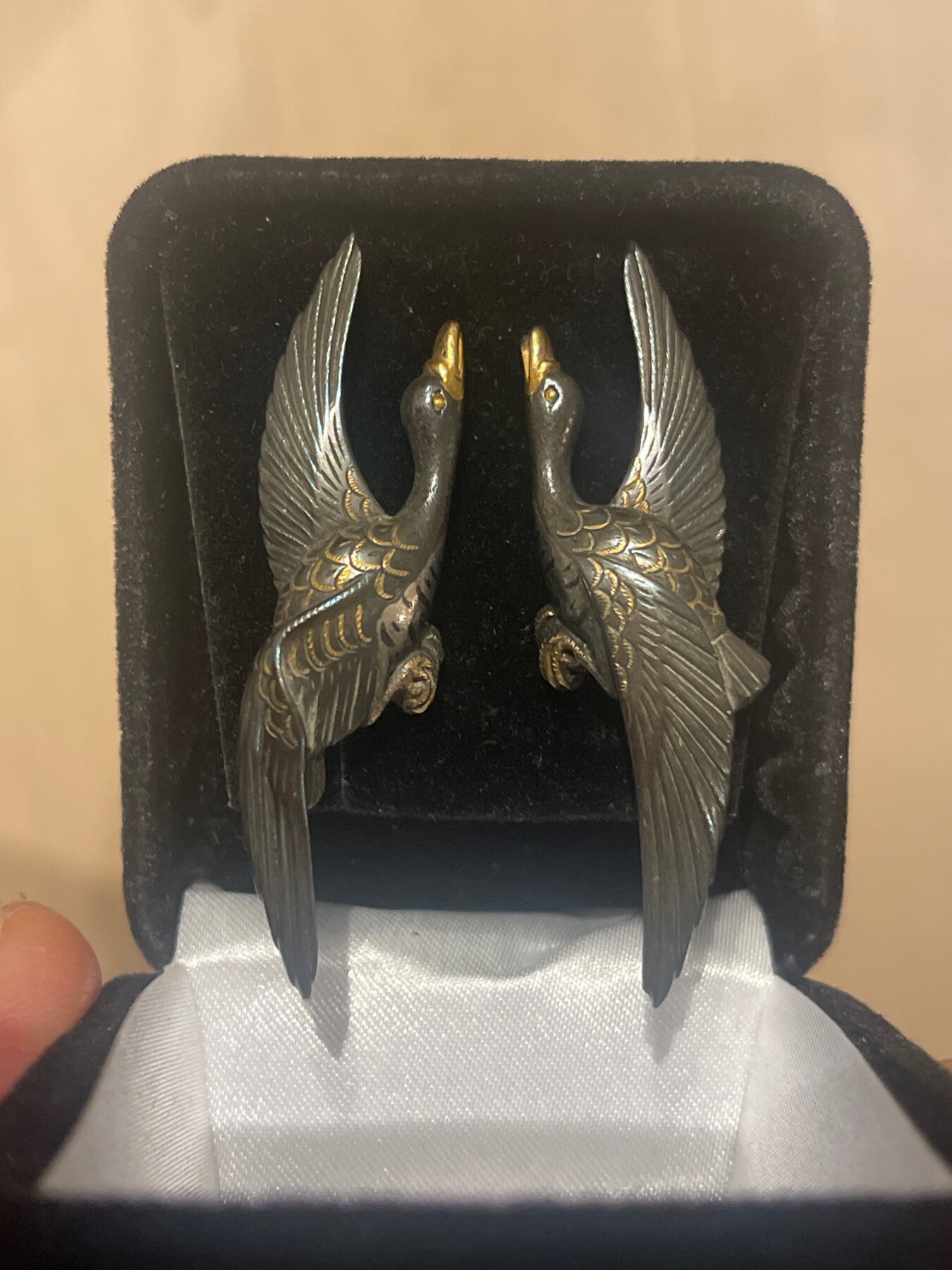
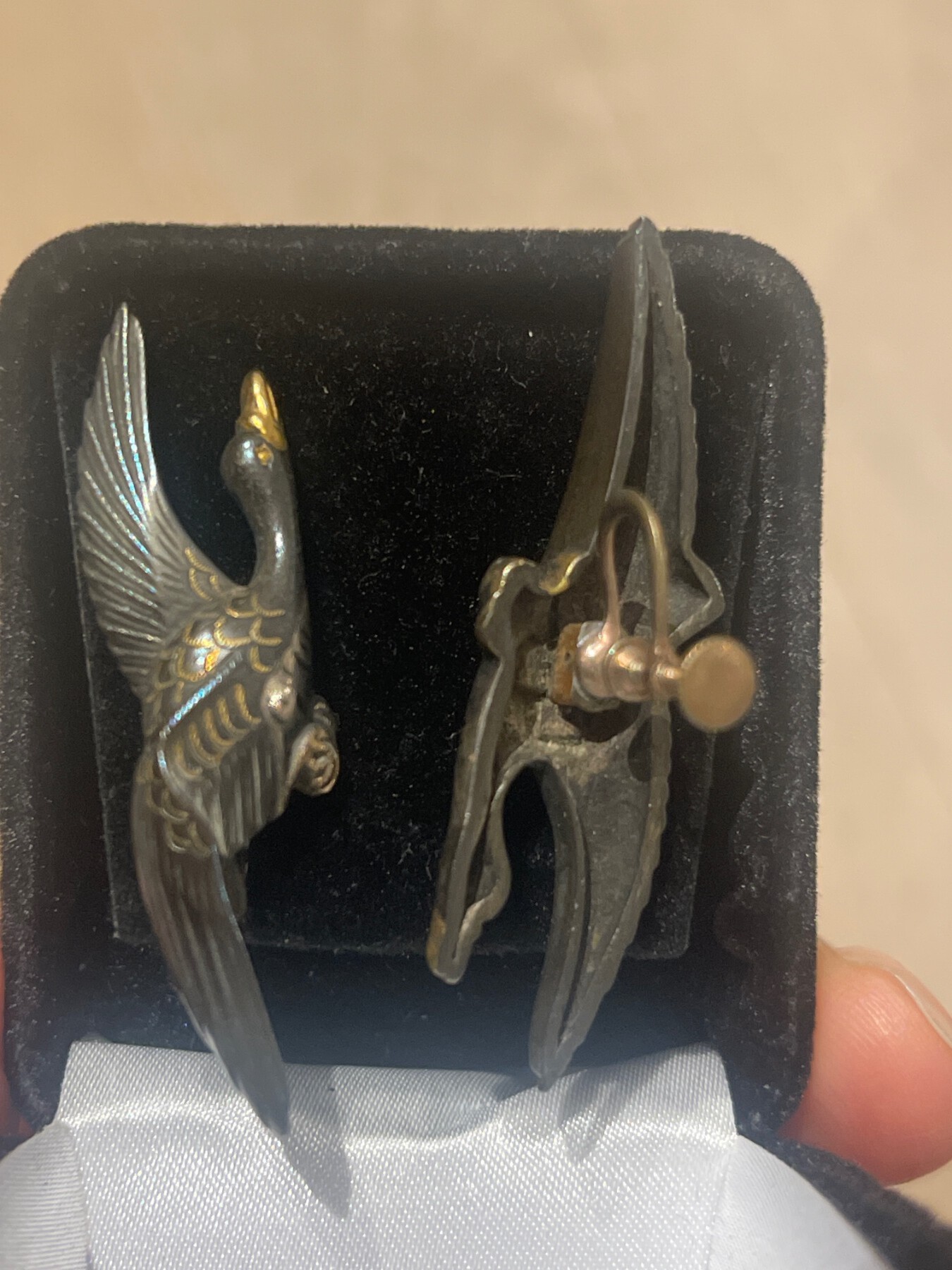
I can only see gilding, not inlay. However, the feathers on the belly look like shakudo inlay. Is it possible to take clearer photos from different angles? Here is a good example of gold inlaying on the spots on the body. At first glance, it seems simple, but it is actually quite elegant. However, I can see that the eyes are covered with gold, especially on the second pair.

 2 points
 -
Vesta! That is so neat! The waves look at a glance like Ōmori work, but there were many imitators.2 points
-
First time post, uploaded photograph incorrectly first time, had to redo. Did not mean any disrespect. I am certainly appreciative of the replies received! Thanks again, Willy2 points
-
You are all good Willy; and no problem at all! These forums can take some getting used to - and our members sometimes forget the early days. It appears you're in my neck-of-the-woods, I'm hosting a Nihonto club meeting on Sunday December 7th, in Tualatin Oregon. If you'd like information about address/time, send me a message . All the best and welcome to the forum! -Sam2 points
-
If the nice fairy tale was true, I wonder why no one of these highly decorated BUDO masters was able to care properly for this sword, so that it ended in such a deplorable state!2 points
-
Hi, I know the translation but does anyone have a input to th generation of the smith Thanks Mark


 1 point
 -
Another one of the 40127 fakes. This one is already up to 151 dollars with 5 days left. Described accurately, however at least two people must think it is real. https://shopgoodwill.com/item/247839701 John C.
 1 point
 -
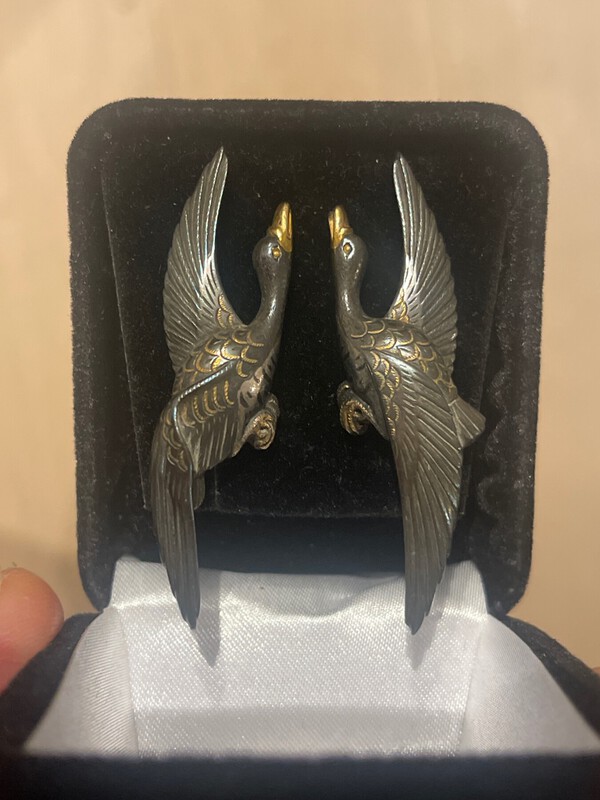
Here are a pair of Menuki of geese design. They were repurposed into earrings in the first half of last century. The workmanship is excellent but I do not know the school or possible maker because there are no signature or Kao. Any comments are welcome.
 1 point
 -
Sorry, the part about paint was just guesswork as I have only pictures to go by. I thought it might be paint because you can see it "spill" at the tail in the picture above and how detailed it is for gilding. But I have no idea about these processes. Please excuse my ignorance.1 point
-
The question is was it made by him or was it made/ changed wartime. The Koshirae is made up of parts. The Seppa are from a Type 3. But we've seen something like this before. Bring your sword to war or assembled after war? I didn't like this part.


 1 point
 -
1 point
-
Dear Max. Several schools of tsuba makers used designs many times. In this case your tsuba appears to be what would be called Nagoya mono or thing made in Nagoya. These are made from an alloy different to shakudo which you will see has a brownish tinge to it. Around the nakago ana there are usually quite distinctive tagane ato or punch marks. The quality varies a great deal, some are quite well done and some are embarrassing. In general the difference between these and a good kinko are the base material and crispness of execution, Nagoya mono are to a greater or lesser extent somewhat blurred and lack precision, see the waves at the top of your tsuba as an example. The quality of nanako also varies but is generally low. Signatures such as these two have are generally to be ignored. Have a look here for more information, Hope that helps. All the best.1 point
-
I don't understand this last post.1 point
-
This is a magic question everyone asks each time they buy/sold a sword For me these swords are no-no, because: - polish is bad - condition unknown, will revel after polish - Koshirae needs renovation, seems not to match (guess based just on photos) same theme for Fuchi/Kashira - For 500-1000$ you could buy something in better out-of-the-box condition from Japan This is just my private opinion as I have a very specific key for swords in my collection. I always like to have "pristine" (or close to it) look of the sword. This means perfect condition, polish, Koshirae. Even for a 300-500 years old swords. However, I know there are collectors that value 'original' condition more. With old polish and Koshirae, even if it is falling apart. Still, IMHO if you buy them for 500$ then you should be able to resell them for same (maybe more?) price. So maybe worth risking.1 point
-
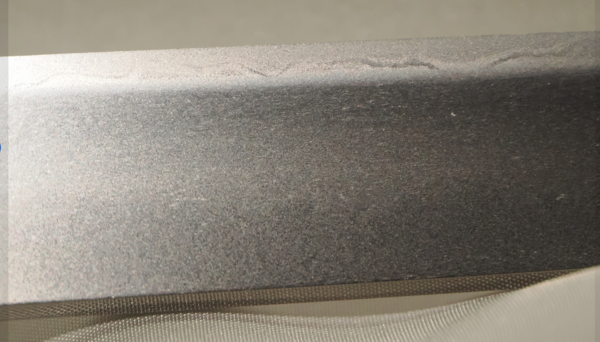
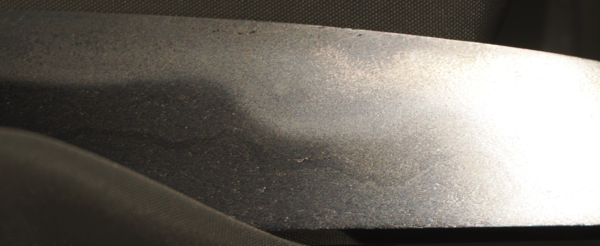
Here are some well executed stills of the same blade taken by a really accomplished photographer given the limitations https://www.facebook.com/foldable.at.its.lirnit/posts/pfbid036qtZgADUbdHoTViotbWY2H8cJXTxpnVijhepvhu3oZVEmf9YJMTCfweqC6Ru6986l For example (better images in the links) And just for giggles, couple more tanto from the early Soshu grandmasters in the same exhibition -the Ashiya Masamune
 1 point
 -
These are to my mind older, from a time when guns were still thought to be ‘Western’, a time of strict imitation, when artisans thought a ‘powder horn’ ought to be made from cow horn. They still retain some Western feeling, but already the artistic sensibility was at work. The ‘frilled’ edges may also pay lip service to Western clothing ruffs which were still somewhat in fashion. Later on, people felt free to create powder flasks in more Japanese iterations. The ruffs often continued however.1 point
-
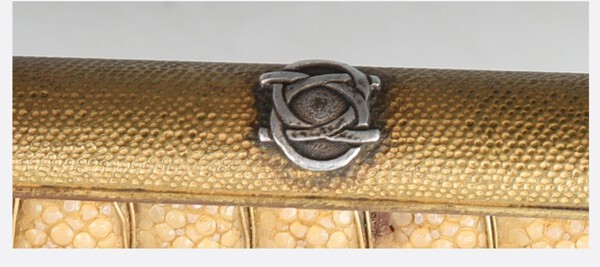
Very nice, never seen that mon before.
 1 point
 -
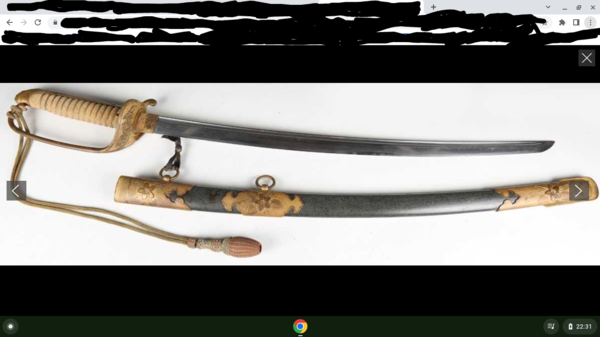
A taster . . . . charles.
 1 point
 -
I don't see a reason for concern. Sa Yasuchika (Chikuzen - Shinshinto) Credit Markus Sesko for the bio below. YASUCHIKA (安近), Genji (元治, 1864-1865), Chikuzen – “Sa Yasuchika” (左安近), “Chikuzen no Kuni-jū Sa Yasuchika saku” (筑前国住左安近作), “Chikushū-jū Sa Yasuchika saku” (筑州住左安近作)1 point
-
A Kicho ninteisho. Every sword should be evaluated individually against its certification, however in my personal experience it is the Tokubetsu Kicho ninteisho that are more problematic.1 point
-
its not leather Bruce its lacquered Paper. I have one. http://www.schmucker-info.net/letzte_stufe_gendaito.html1 point
-
For me it’s more Momoyama/Keichō than Edo period, but it’s just a feeling.1 point
-
Spider web in the rain habaki! Where is the spider?1 point
-
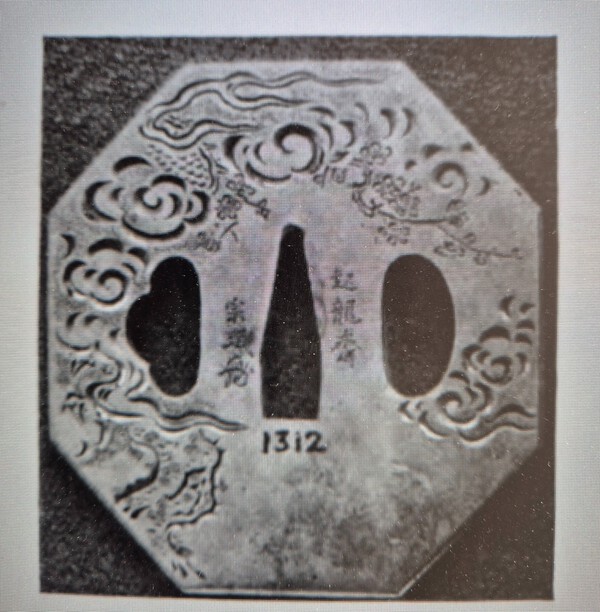
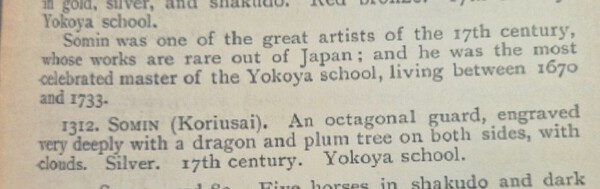
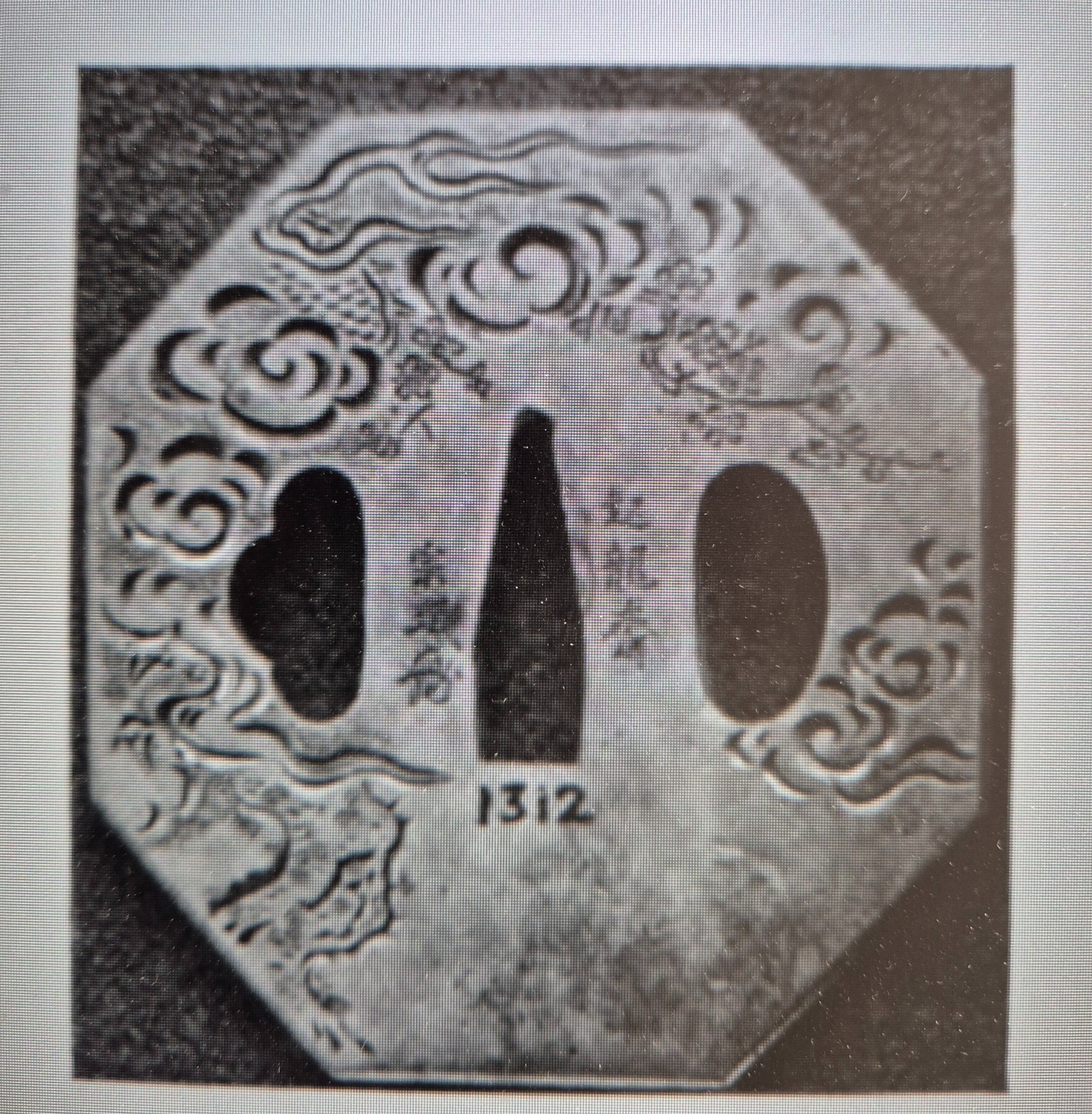
Whilst some of these numbers are no doubt museum numbers I suspect most of them are collectors numbers . For example Edward Gilbertson the pioneering English collector had a massive collection of Japanese art and numbered his pieces . He probably owned over a thousand tsuba. In 1889 he published three catalogues listing a selection of pieces from his " descriptive catalogue " The attached octagonal tsuba is from a paper he delivered to the Japan Society in 1894 and clearly shows the collection number as it is dark paint on a light surface. The tsuba description is from his 1889 publication listing a selection of tsuba from his descriptive catalogue and shows that the number on the tsuba is his catalogue number. C P Peak was another early English collector with a vast collection who numbered his pieces.
 1 point
 -
It seems like an interesting sword. Gassan signatures are usually located around the original hole on the tang. So I would think the lowermost hole is the original one, or it has been very slightly cut completely off. Now as the current length seems to be c. 73,5 cm and to me I would assume the sword has been cut down something in between 10-15 cm or so, so in original form it could have been c. 85 cm blade. The sword seems to have a large kissaki, which is throwing me off a bit, as almost all of the old Gassan tachi and katana in my references have small/smallish kissaki. I think I could only find 1 reference with a large kissaki: https://www.nipponto.co.jp/swords2/KT218912.htm To me the sword is a plausible Muromachi period Gassan sword. The long length and large kissaki are few things that are throwing me off a bit as I cannot find similar reference item.1 point
-
Cosmoline or not, buying swords based solely on photos is always a risk, one that increases significantly when dealing with eBay sellers rather than reputable dealers. It’s also difficult to give meaningful pricing advice without knowing your specific goals. If you’re purchasing this piece for your own collection and enjoyment, that’s one thing. If you’re hoping to resell it for a profit, then only you can judge what margins make sense for your situation. Also, keep in mind, that many swords on eBay have already gone through the process of being bought and resold for more. Sincerely, -Sam1 point
-
The extra long frontal kusazuri were meant to defend the rider against the typical weapons wielded by foot soldiers such as yari and other polearms. Similarly, the construction of the haidate - namely the iron composition and the curved, overlapping plates designed for strength - were meant for defending against ground-based attacks, as were the solid plate suneate.1 point
-
Sam, There are Emura blades 'out there',I know of two in an English antique shop in poor condition and grossly over priced (I think one of Pav's photos is one of them). I think your estimate of 'several thousand' blades is a bit strong considering that the personnel involved were not trained sword smiths having served an apprenticeship but inmates schooled by an amateur sword smith. Although the forge was state sponsored that would not guarantee an endless flow of raw material,the economy was on a war footing so there must have been restrictions on supply,priority (who got first call) and transport. I also read that Emura-san was responsible for all yaki-ire,which I presume means from applying the clay to quenching the blade,all very time consuming and would limit output,the Yasukuni smiths produced just over 8,000 swords from 1933-1945 and while it's wrong to draw a direct comparison it gives at least some idea of sword production. Emura-to were produced with power hammers apparently,which would be quicker than hand forging but still a lengthy process. I am a big Emura fan,I think they show 'character' as opposed to many RJT blades that can look a bit bland and those that I own and have owned have all been good in the hand,well built and designed for combat. Keep the Emura faith! charles.1 point
-
Emura was active well before the RJT program.1 point
-
He was a prolific swordsmith, for sure. I have over 30 of his blades on file, most with the Showa and large Seki stamp. If there are blades of his out there without stamps and possibly gendaito, I do not know as I don't catalog those. Odds are the blade is showato. However, it is my observation that the blades with the large Seki, and Showa for that matter, were quality made showato.1 point
-
@Bruce Pennington since i know he was starting as a smith 1940. His real name is Toki Akinobu. A swordsmith commissioned by the army in Seki, Gifu Prefecture. He belonged to Seki Swords Co., Ltd. and made swords under the names Niwa Kanenobu, Niwa Kanenobu, Kounobu Kanegami, Murayama Kanetoshi and others. He is a master swordsmith who took second place at the New Japanese Swords Exhibition in 1941 and achieved the rank of Sekiwake (high-ranking swordsmith) in the ranking of sacred swordsmiths.1 point
-
Murayama Kanetoshi would be nicer but still a nice enough Seki-To. It is in very rare Type 98 mounts with Samegawa covered Saya.

 1 point
 -
You could buy a horse and ride down Broadway with this drawn blade, shouting "Everything for the Emperor!" It would be quite authentic, and you'd be famous instantly.0 points
-
Not unusual here in the States, probably to keep the kids away from them. I have heard of rifles and swords being found in walls. One such example was a Type 44 Carbine with the folding bayonet cut off. Another common occurrence was to throw them out in the trash. Back in the 1950s, my father saved a Japanese rifle that was sticking out of the trash can. He asked the housewife who answered the door if he could have it and she said go ahead. She told him it was missing the bolt though.0 points
-
What I want to know is how do these swords end up in walls?0 points
-
That Shozui tsuba is spectacular and will no doubt sell for more than my kidneys Dale0 points
-
Jesta's Vesta :-) Sorry...had to say it. (Vesta is the name of these matchbox items, as Piers mentioned)0 points
-
Hint, with a Gold Membership, one will know who they are.0 points
-
List it on EBay on auction you might make a few dollars Some one might believe that fantastic story-1 points























.thumb.png.4c5df79fec171b2dc4a23af38e280a4d.png)

This leaderboard is set to Johannesburg/GMT+02:00