
Leaderboard


Popular Content
Showing content with the highest reputation on 02/22/2026 in all areas
-
SHINAE are superficial cracks in the steel after a bend on the stretched side of a blade, and of course they are not beneficial to the structural integrity of it. What we see in Jeff's blade was correctly described as ripples, and they are something quite different. They can develop when the preliminary work in a BOHI left out a stage or two of fine grinding lengthwise which is tedious work. The final polish with a MIGAKI-BO 'compresses' the surface to a very small extent, and using only a pointed MIGAKI-BO can then produce these ripples. With differently dimensioned tools, these can be avoided as you can see on many good swords. But I will add that some sword construction methods also might provoke the occurrence of these ripples. I would not consider them negative in technical hindsight at all. Looking at this feature with a microscope/high magnification will clear that up easily.4 points
-
This does not exclude you handling it - often! These things were meant to be touched and they often gain more beauty from hand contact. Probably the worst thing to do is just throw them in a drawer. One caveat being if you handle them with dirty/oily hands a wipe with a cotton cloth will stop the dreaded "fingerprint" etching. [After all it is no use having the fingerprint if the owner of it is unknown by the police! ]
 4 points
 -
Just read a fascinating article in the Times... The current head of the Tokugawa family, Miki Yamagishi, has advised that when she dies so will the family line and the title of Duke/Dutchess Tokugawa will cease to be... She has made a decision to pass on the Dutchy and will give the Tokugawa archive to the Tokyo National Museum and so end the family line. So bring to an end to the story of the incredible family that led feudal Japan for 250 years. It is fascinating read. A book is apparently coming out shortly about it. Will be worth a read. https://www.thetimes.com/article/277d6e47-15aa-4585-bce7-c0d0ab37db983 points
-
Many thanks all. My Great Grandfather lived in Edo (Tokyo) at the Ministry of Public Works, he was Surveyor-in-Chief to the Emperor of Japan. He and his wife learned Japanese and had a great respect for the culture. Both were great friends with many influential Japanese officials but in particular Hirobumi Ito, Yoso Yamao, (both members of the Chosu 5 who spoke good English ) also Sano Tsunetami and General Saigo Tsugumi the brother of Saigo Takemori, 'The Last Samurai'. Saigo Tsugumi is in the picture above in military uniform.
 3 points
 -
Hi Jeff, They may be caused by a bent blade having been straightened and are called shinae. https://www.japaneseswordindex.com/kizu.htm3 points
-
Yamaoka Tesshu (山岡 鉄舟) was born in Edo June 10, 1836 and died July 19, 1888. As a master swordsman, lay Zen master, and prolific calligrapher/painter, he embodied the integrated practice of Ken Zen Sho. The inscription is the poignant last verse of a quatrain by Xiong Rudeng (熊儒登), a Tang Dynasty official and poet who served in Western Sichuan, called "Presented to Vice Minister Dou at a Banquet at Quchi." The inscription is the poignant last verse of a quatrain by Xiong Rudeng (熊儒登), a scholar-official and poet, called "Presented to Vice Minister Dou at a Banquet at Quchi." He lived around the time of Emperor Xianzong of Tang's Yuanhe era (806-820). After passing the imperial examination, he became a Jinshi (a successful candidate in the highest imperial examinations). He served as an official in the Western Sichuan provincial government and was a close friend of Bai Juyi and Liu Yuxi, frequently exchanging poems. He was a prolific writer, producing many poems, but only one collection has survived to this day. Many of these poems are exchanges of poems, containing numerous beautiful lines. Some of these lines are sincere and moving, and were widely recited in his time. It is easy to understand why this poem would have appealed to Yamaoka's Zen sensibility: 水自山阿繞坐來, 珊瑚台上木綿開。 欲知舉目無情罰, 一片花流酒一杯。 Water flows around the mountainside, and cotton blossoms bloom on the coral terrace. If you wish to know the merciless punishment before your eyes, see a single flower drift down to a cup of wine.
 2 points
 -
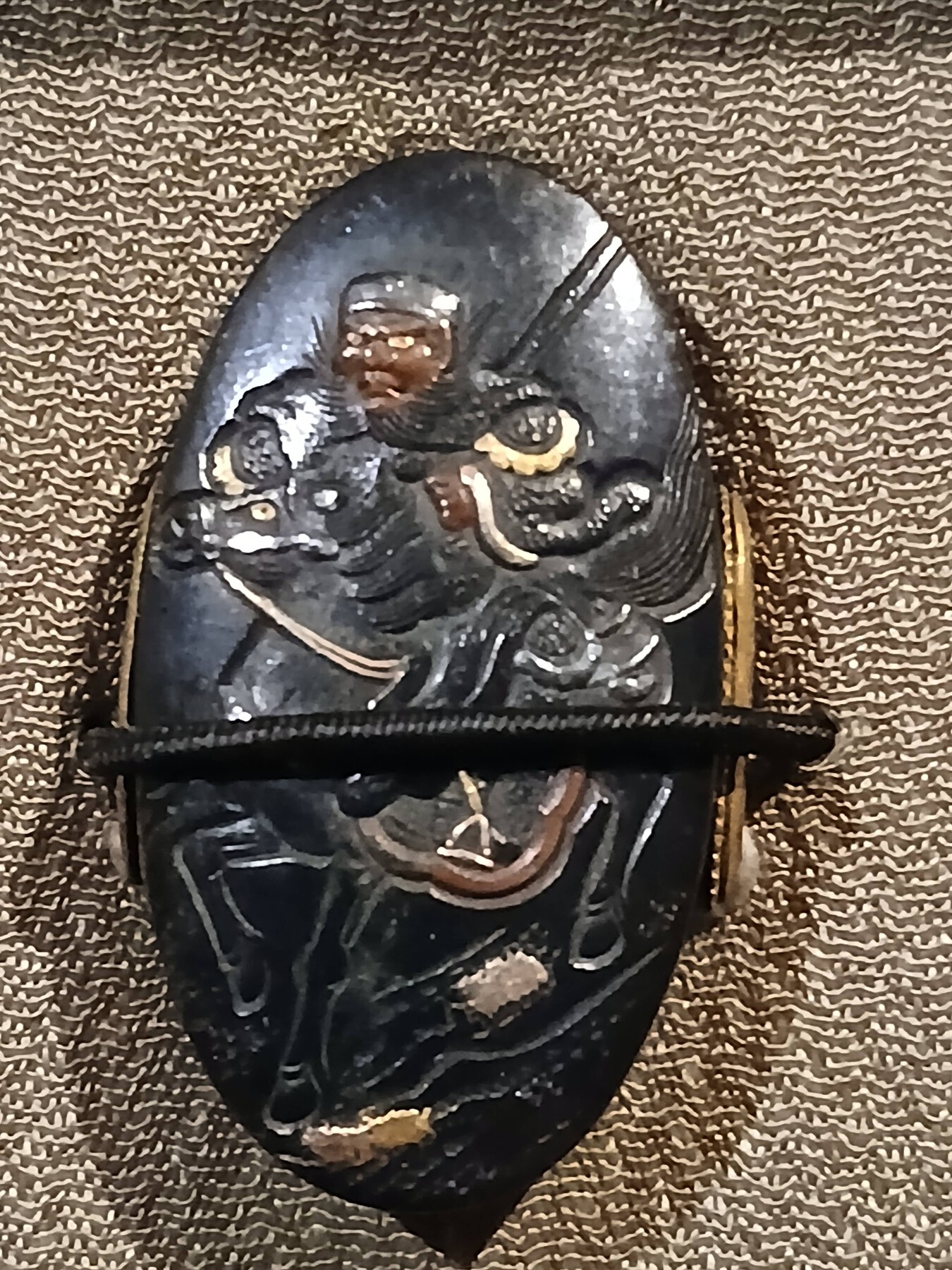
Anthony, OK…..your kozuka is a “shiremono” which is the term used (in the context of Kozuka) to describe a mass produced cheaply made item designed to look like far a more expensive mixed metal inlaid piece. Basically the whole top plate is pressed from a thin piece of copper alloy to create the high relief effect and then multi-patinated and gold plated (as opposed to true mixed metal inlay) to look like shakudo, silver etc. This is then joined to a solid base plate and finished to look like a normal kozuka. Often a thicker than normal base plate is used to create the impression of “weight in the hand”. Some even get signed but that is usually an attempt to mislead. The one you have is a well known variant and I even saw one at last weeks Arms Fair. Sometimes two pressed plates with the same subject matter are joined together and used as cutlery handles and put into sets for export to the west. However sometimes real kozuka, often of considerable quality and value got used in cutlery sets and they are can be very exciting. It is important to be able to tell the difference because….about 30 years ago at a big antiques fair I came across a set of 24 cased knives and forks with silver blades ….all were superb quality genuine kozuka. I asked “how much” he shouted to his partner “how much do you want for those Chinese knives and forks” …the answer was £65. The antique gods smiled on me that day. If you decide to stick with this interest being able to discern quality is vital…..the same applies to tsuba and all other fittings. I apologise if I disappoint you, but these things fool a great many people. Happy hunting. PS….why not come to the Birmingham Arms Fair in June, happy to show you some better pieces (you don’t have to buy anything!!🙂)2 points
-
Just for a better understanding I am showing some of my MIGAKI BO. I think they are made from a highly hardenable carbon steel, probably something like ball-bearing or so.

 2 points
 -
Generally shinae themselves aren't considered a structural integrity problem and are unlikely to develop into a bigger problem on their own - but they do indicate that the blade was abused or faced some serious stress in battle, and thus are a warning sign that internal structural weaknesses may have developed as a result. Think of it as seeing a giant dent in a car's side door; the dent itself likely has no bearing on the roadworthiness of the vehicle, but having received a perpendicular hit like that, you'd want to check that the suspension's not shot.2 points
-
To be honest Jeff, that's a bit technical for me. The logical bit of my brain would say that you would only get shinae on the side of the blade that has been compressed rather than stretched but that might be wrong as this is a flaw that isn't that common and that I've only ever seen in pictures. I don't recall seeing them on both sides of the blade but that isn't conclusive. I understand that, if minor, they can be ground out but it is a flaw so again, using what passes for my reasoning, they would be removed if possible - I've just seen Rohan's post which probably sums it up pretty well. Some more information on flaws in this thread and the third post has a picture from an old book which might interest you.2 points
-
Nice! https://www.jauce.com/auction/u12205013902 points
-
For all the research you do into this space I reckon we could wrangle up a honorary doctorate for you! 😉2 points
-
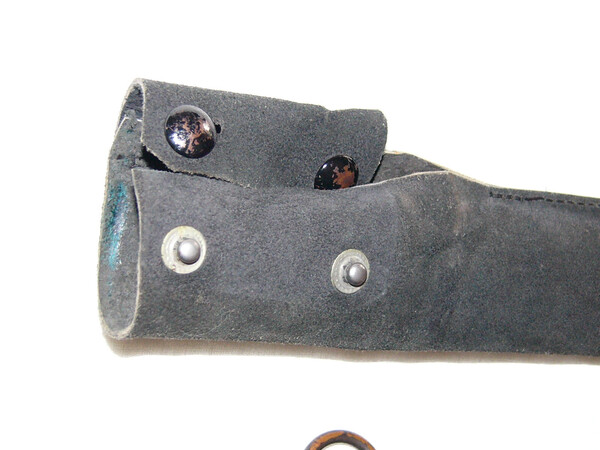
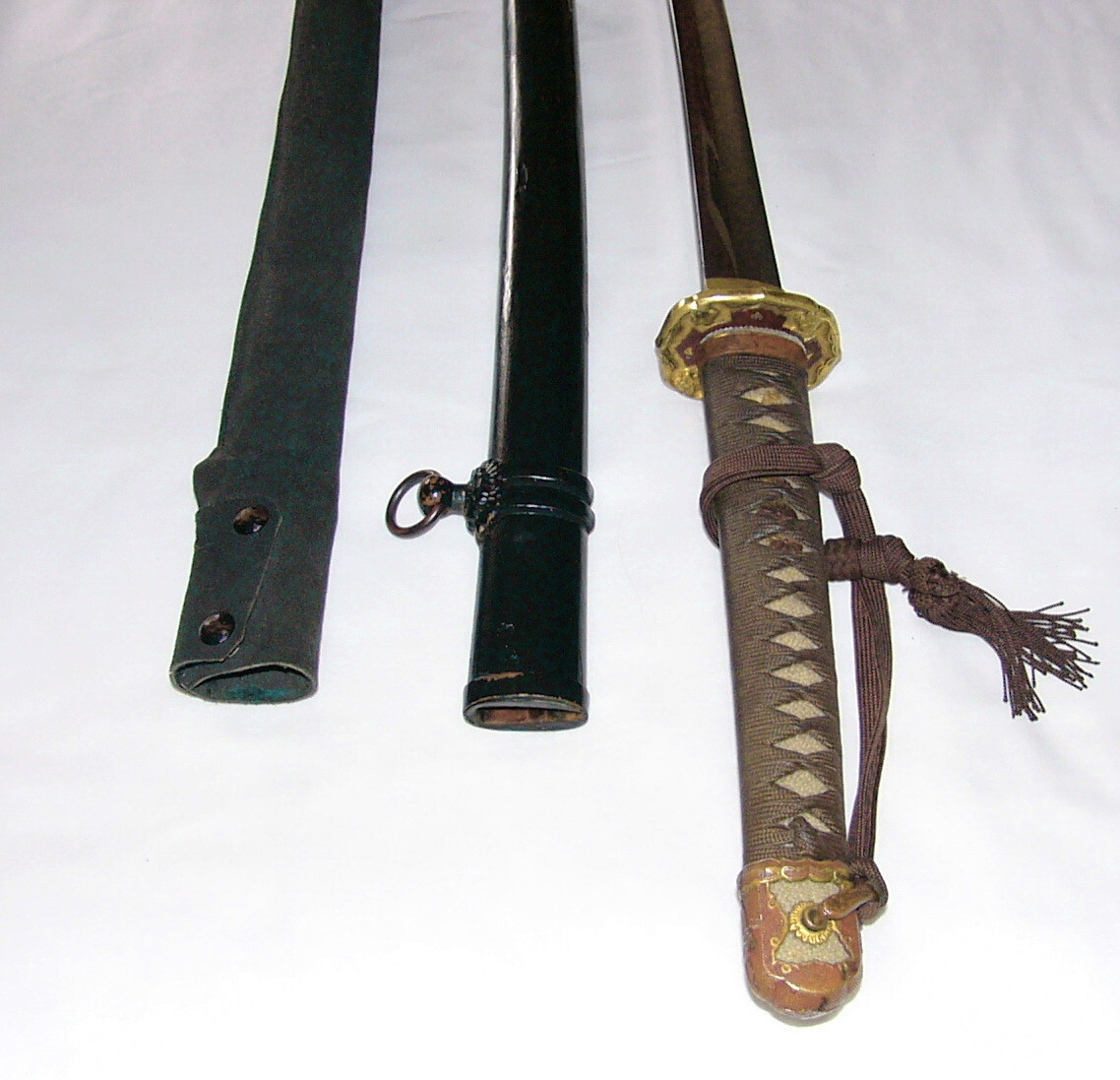
Hi Jose, I have a similar piece, my first ever sword actually. It came with a Sam Browne style belt. Thought i'd share some photo's for your interest.
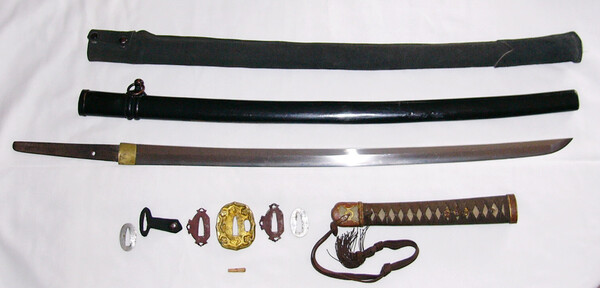

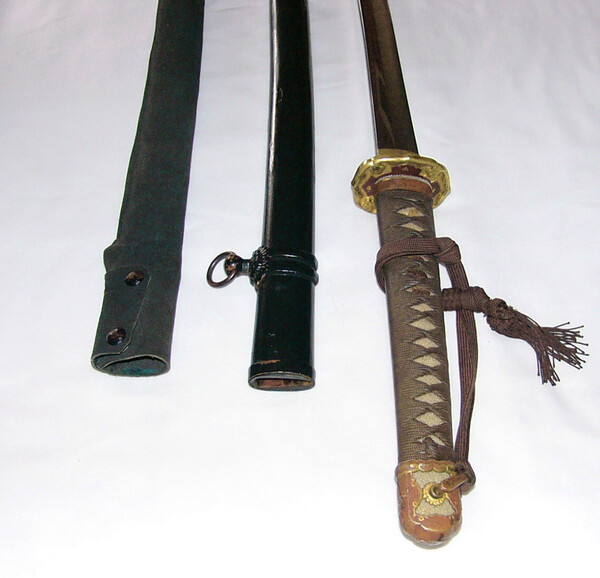

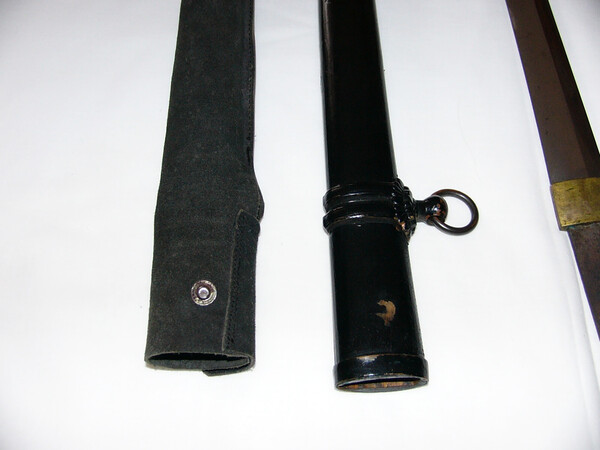
 2 points
 -
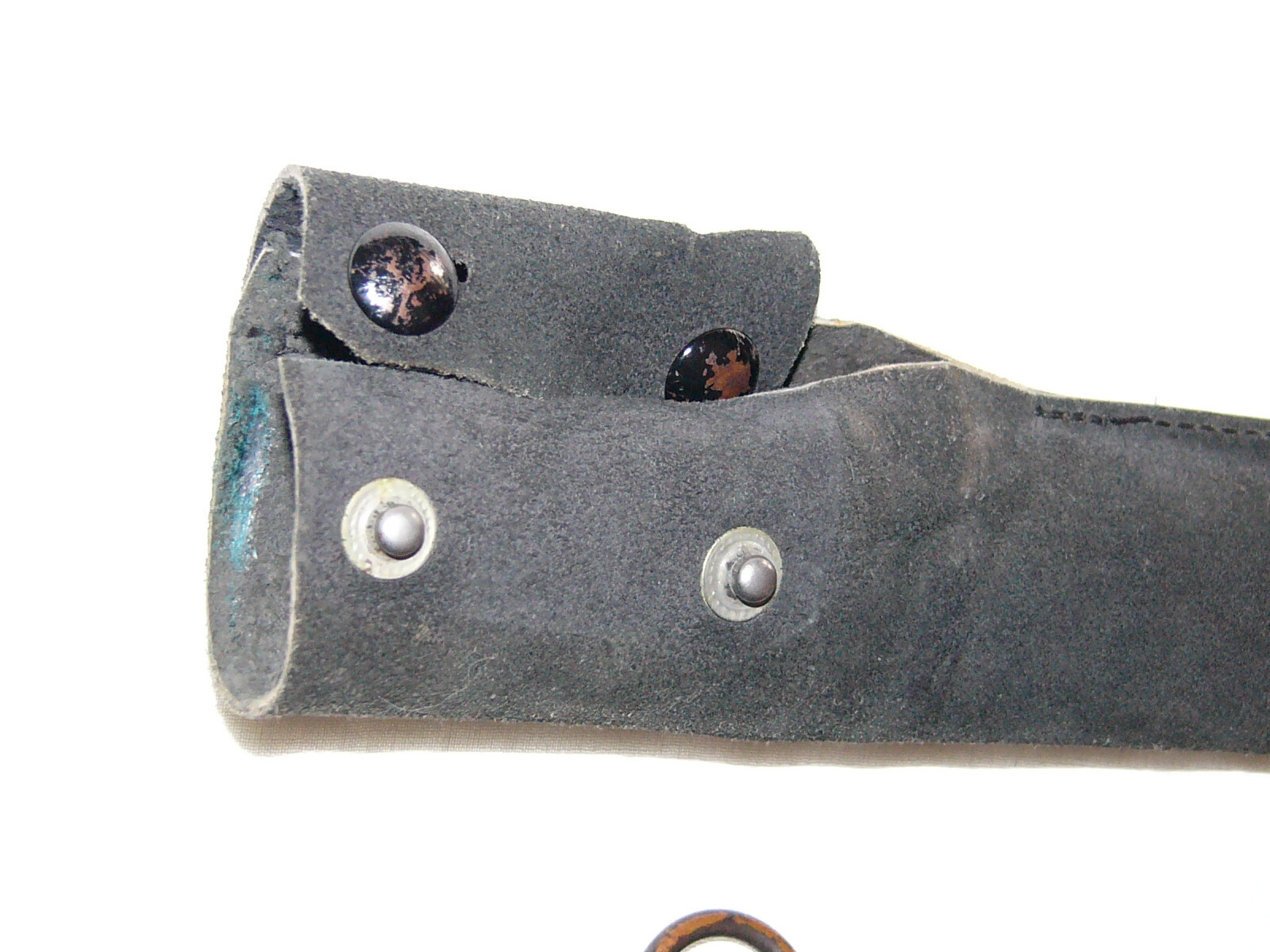
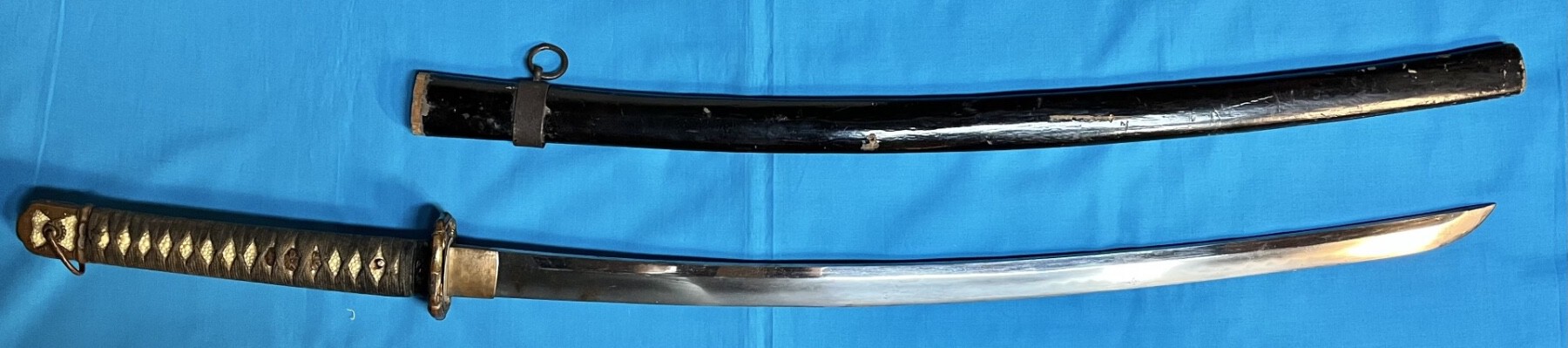
Here is my 98 with black lacquer saya and what remains of the leather saya cover.

 2 points
 -
I’ve had good experience with CloudFlare for hosting simple sites. You get their free tier of WAF as well which is good these days for stopping bots and AI from scraping your site nonstop and taking up bandwidth. Ive also had good experiences with CF for enterprise applications and big deployments for big companies but that’s typically beyond the scope of Nihonto2 points
-
These days, with CNC milling machines becoming less and less expensive, it would be pretty easy to carve a horimono like that dragon entirely automatically, with just some minor post machine clean-up. The hardest part isn't the carving, it's creating the 3D model... and if you have an old one to 3D scan and replicate, there's just some clean-up and translation of the scan to do. CNC machines do for carving what AI does for video - pretty soon you just won't be able to tell the difference without a microscope. But the quality of nihonto has always been in the steel production and forging anyhow, and that, so far, is beyond a computer :-).2 points
-
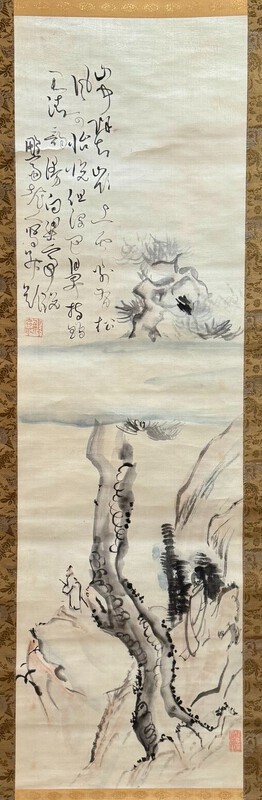
Interestingly, there are two works among the 8 scrolls that are by a father and son pair of Confucian literati scholars, suggesting a purposeful theme in the collecting interest of the previous owner Frank Preiser. Kameda Bōsai (亀田鵬斎; 1752–1826) was a Japanese literati painter (nanga in Japanese). He originally trained as a Confucian scholar, but spent the second half of his life as a literati and artist. The book "Mountains of the Heart" contains many of his most famous paintings. The inscription is in the form of a traditional quatrain of 7 characters per line: "Within the mountains apart from the mountain-top clouds, there is also the pine wind in which to take pleasure; If only I had a tea-whisk to send as a present to you, for elegant rhymes can mislead, as in what was said to the Liang dynasty Emperor" 山中除却嶺上雲, 別有松風可怡悅; 但謂巴鼻特賠君, 清韵讀向梁帝說 The poet T'ao Yuan-Ming (372-427) once wrote to the Liang Emperor Wu: "I have certainly had wide experience, but I am afraid I am not yet skilled..." T'ao then resigned his official post after serving only 83 days in office and spent the rest of his days in creative retirement. Here Bosai paints the pine tree piercing the cloud. The small figure of a scholar stands on the edge of a cliff in this polychrome work. Signature: (Painted and inscribed by old man Bosai) Seals: (Bosai, used 1820-1824), (Kanto dai-ichi futensei, The greatest fool in the Kanto area, used 1818-1823) Kameda Ryorai (亀田綾瀬, 1778-1853) studied under his father Kameda Bōsai, a distinguished Confucian scholar, painter, and calligrapher. The inscription in this large character single line work is an expression of the Confucian Doctrine of the Mean (Zhongyong), which espouses the natural order of things. The "Mean" represents a balanced, optimal approach to life, avoiding extremes through moral cultivation, sincerity, and finding the right path (Tao) in all situations. 鳶飛魚躍活潑潑地 "Kites fly and fish leap, those on the ground are lively"
 2 points
 -
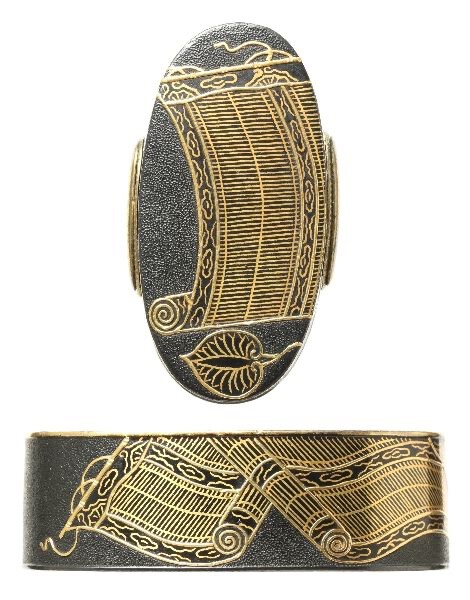
A amazing work by Kusakari Kiyosada, a metal artist from Sendai renowned for finishing shakudo surfaces in a uniform stone-texture ground (ishime-ji), outlining the design with gold wire, and executing delicate linear decoration in flat gold inlay (hira-zogan). Kiyosada trained with the Omori family in Edo and went on to create a new aesthetic distinct from earlier Sendai inlay traditions, characterized by a beautifully composed, planar pictorial space. After returning to his home province, he served the Date family and trained many disciples. The last example is probably daisho

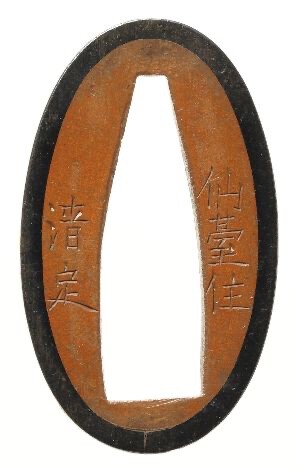

 2 points
 -
2 points
-
You are almost correct. However, Kanbon 7th year is 1667.2 points
-
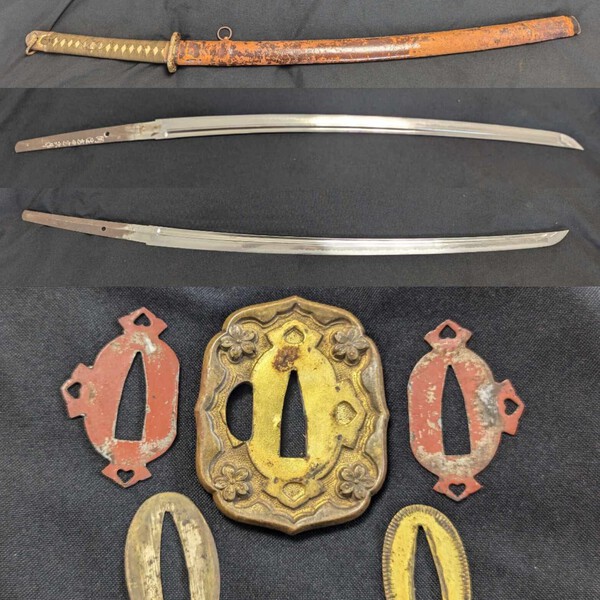
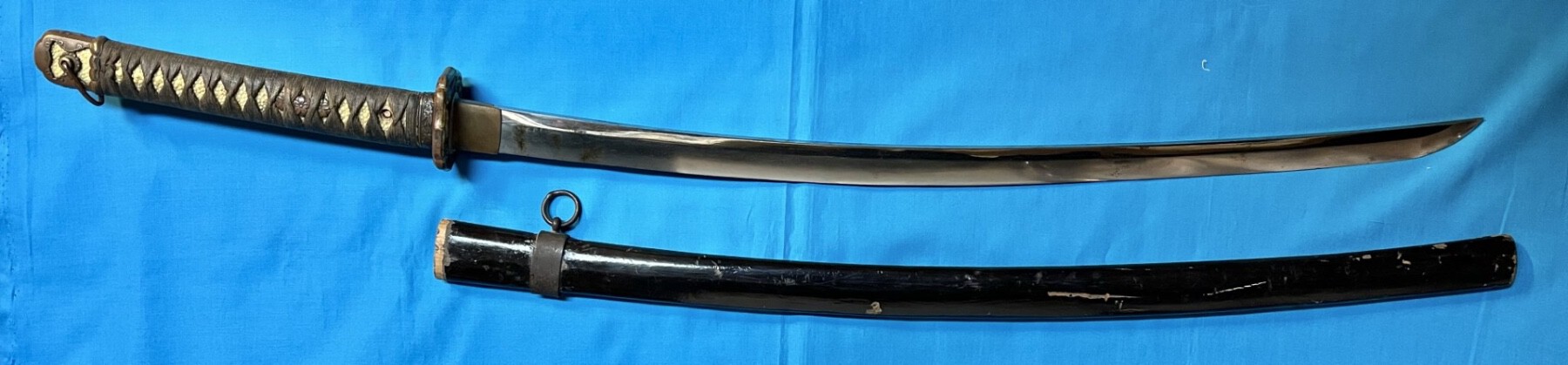
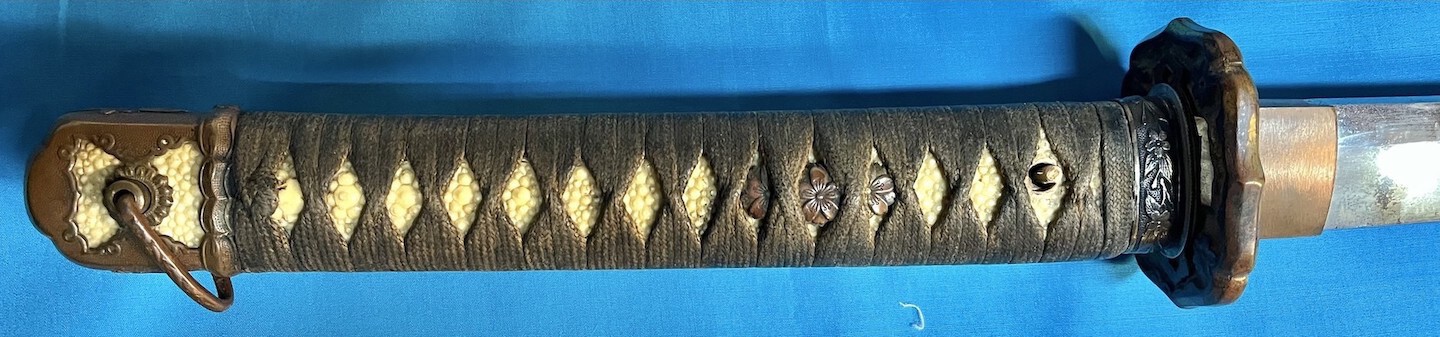
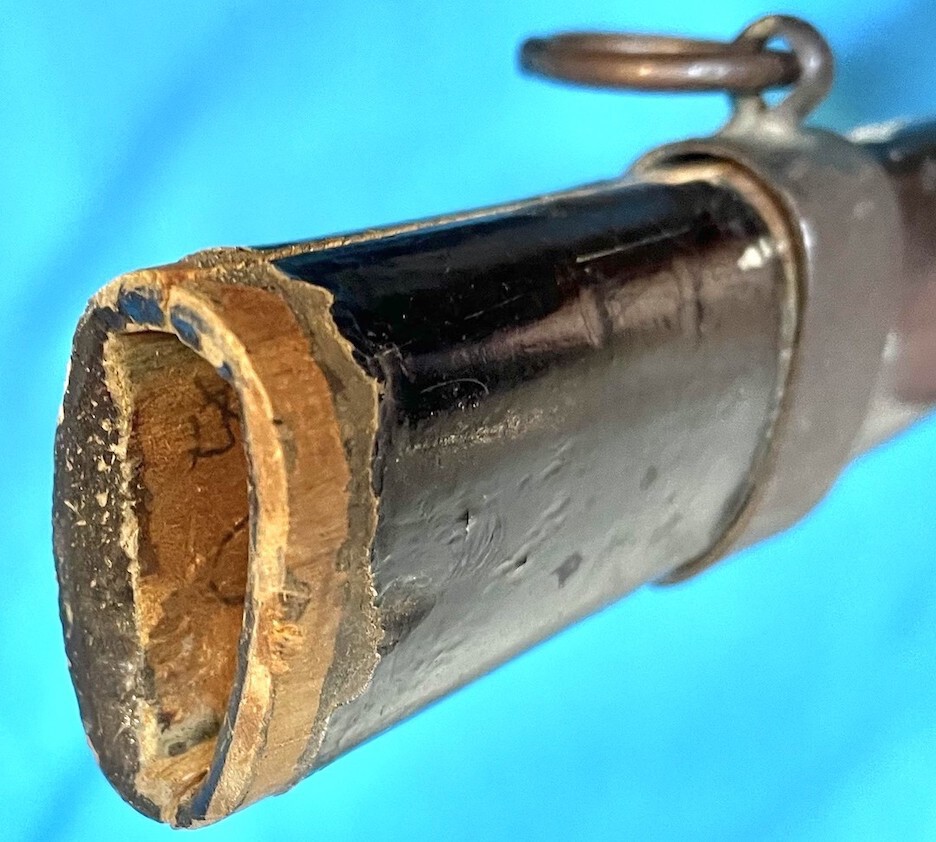
Greetings folks, Been a while since I last posted. I received a shin gunto with an unsigned blade (I'm sure machine made) and with a black lacquered says. One can see the wear at the bottom of the scabbard and it is missing a fuchi gane at a throat. Is this normal? Could this be some sort of marine piece? Any help on this piece would be appreciated. Thank you in advance.
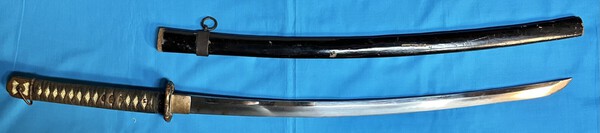


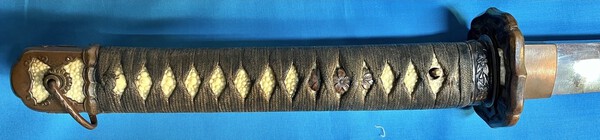
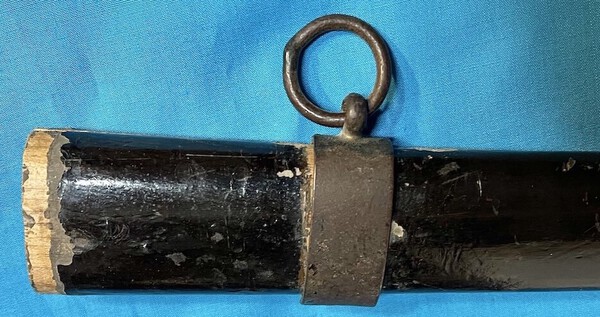

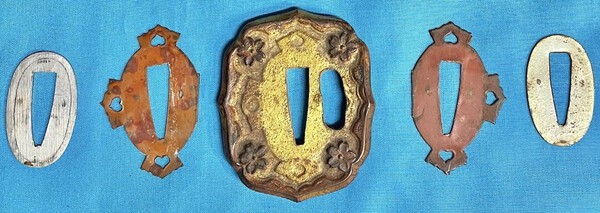 1 point
 -
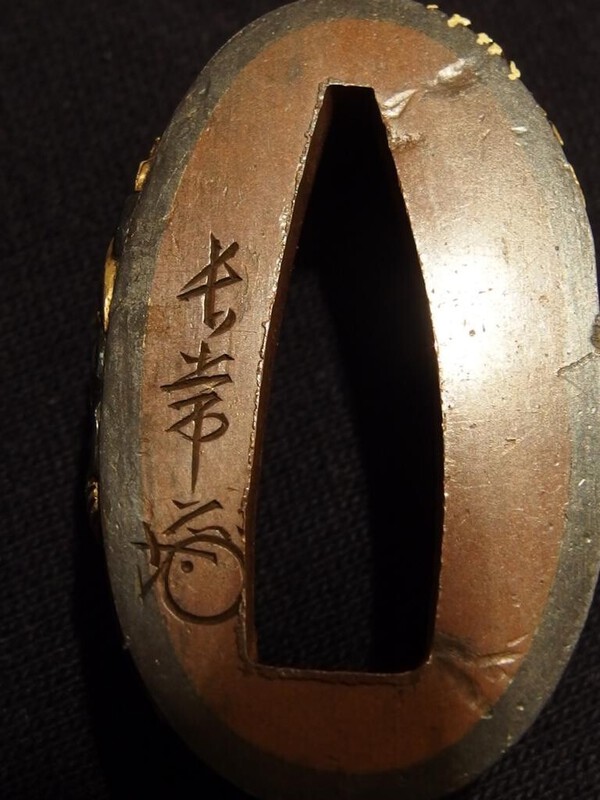
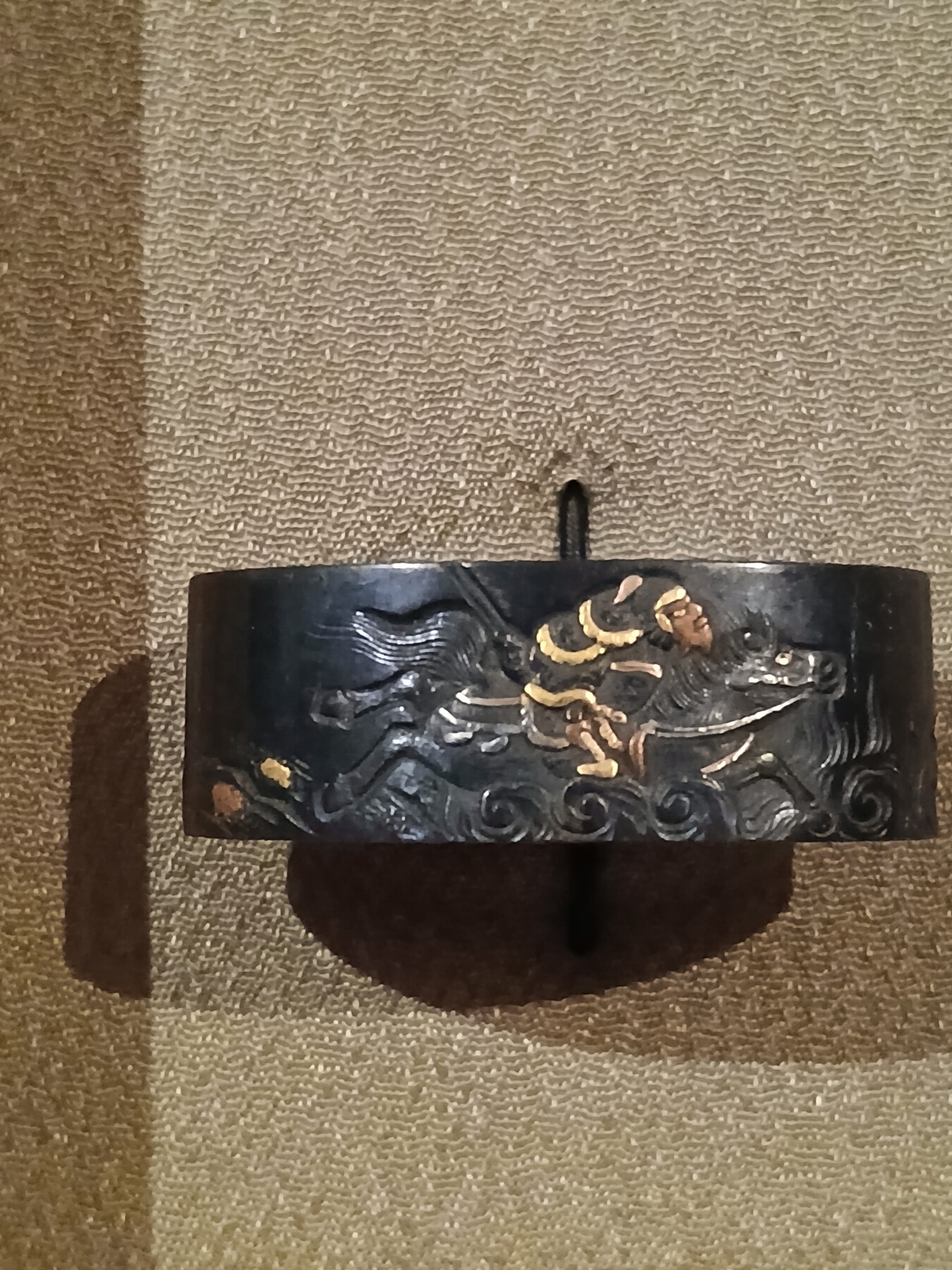
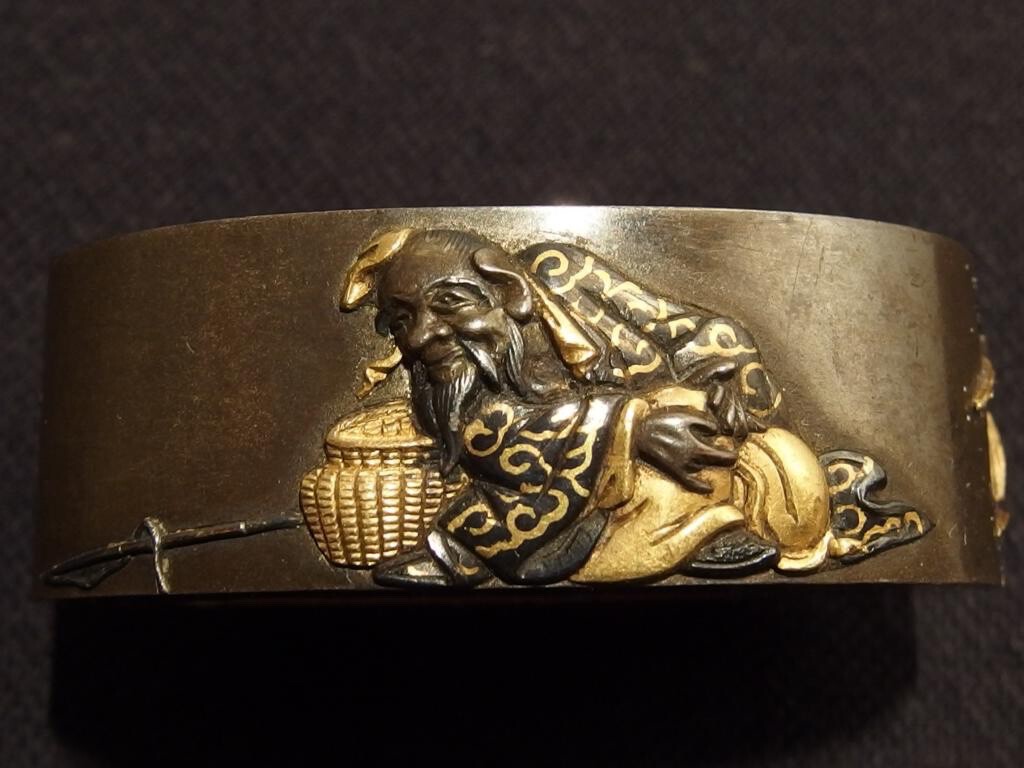
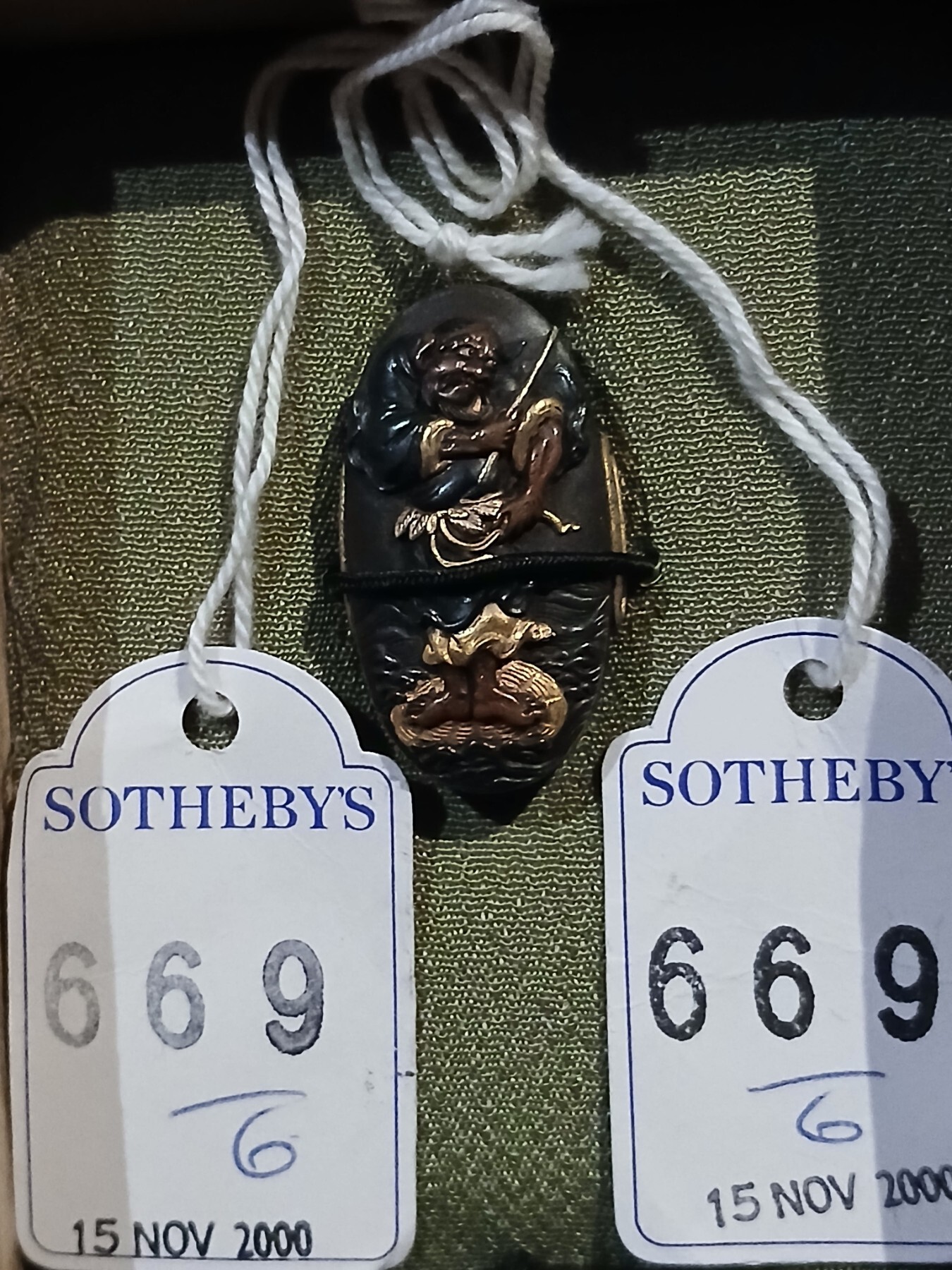
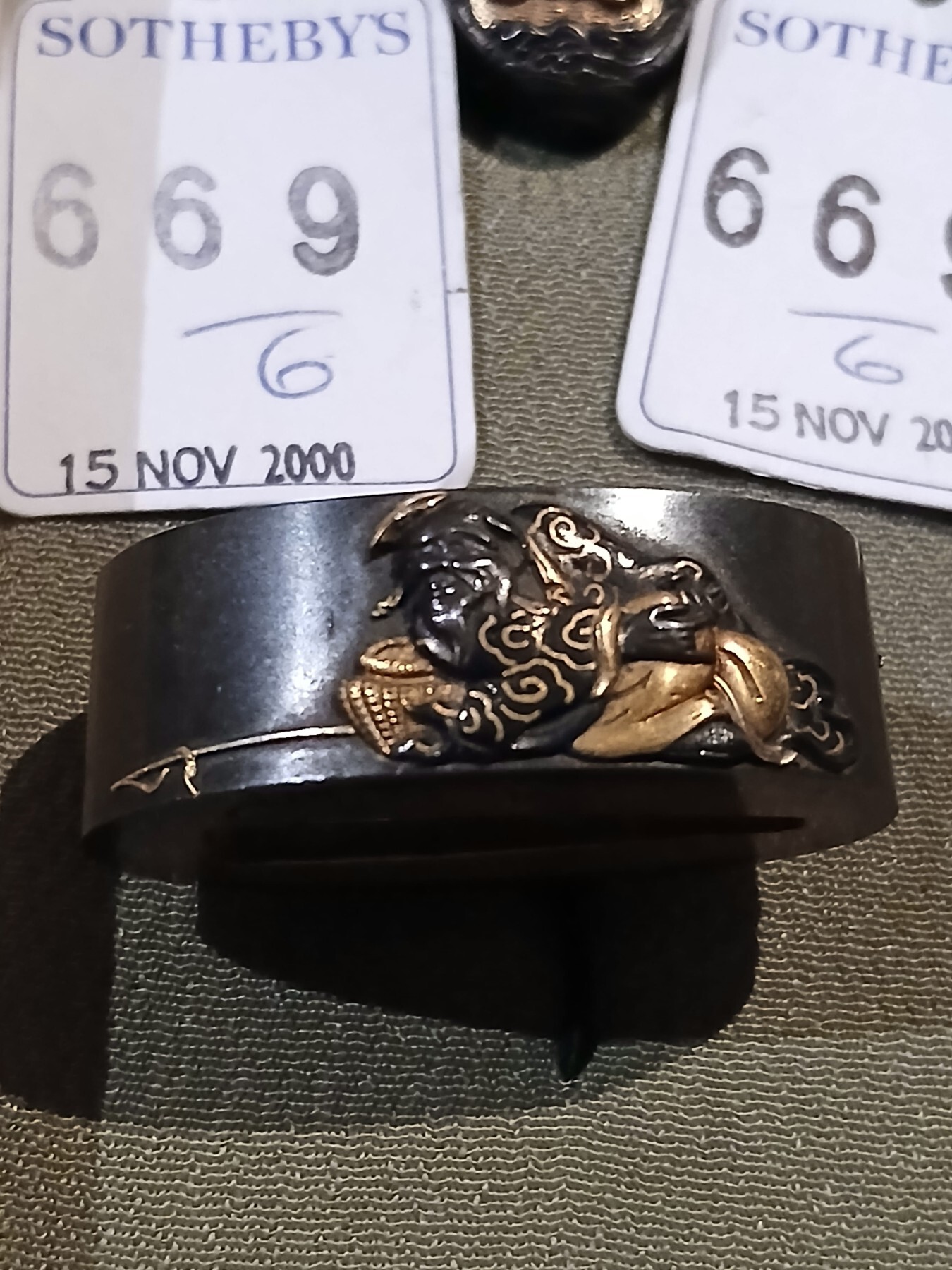
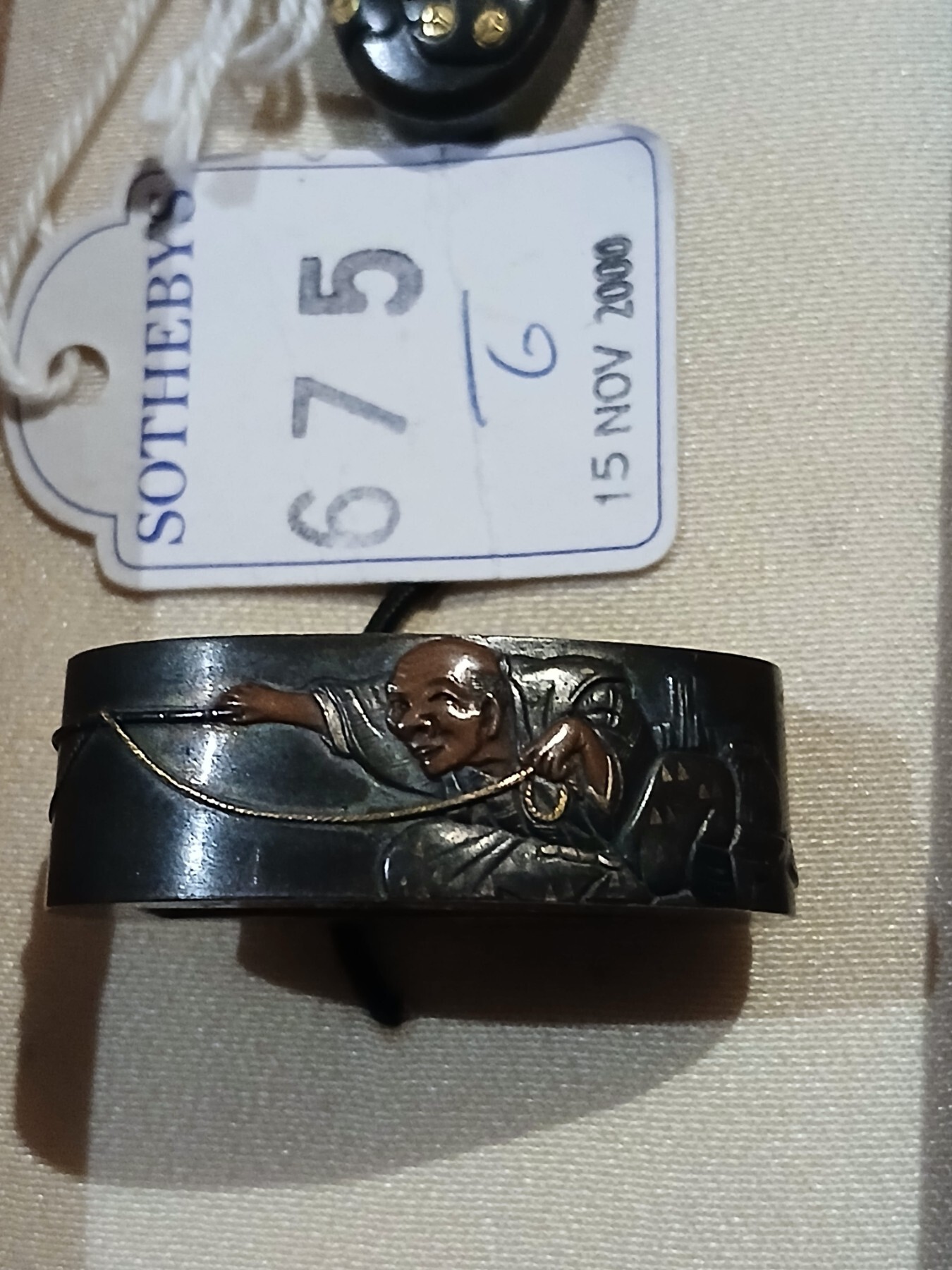
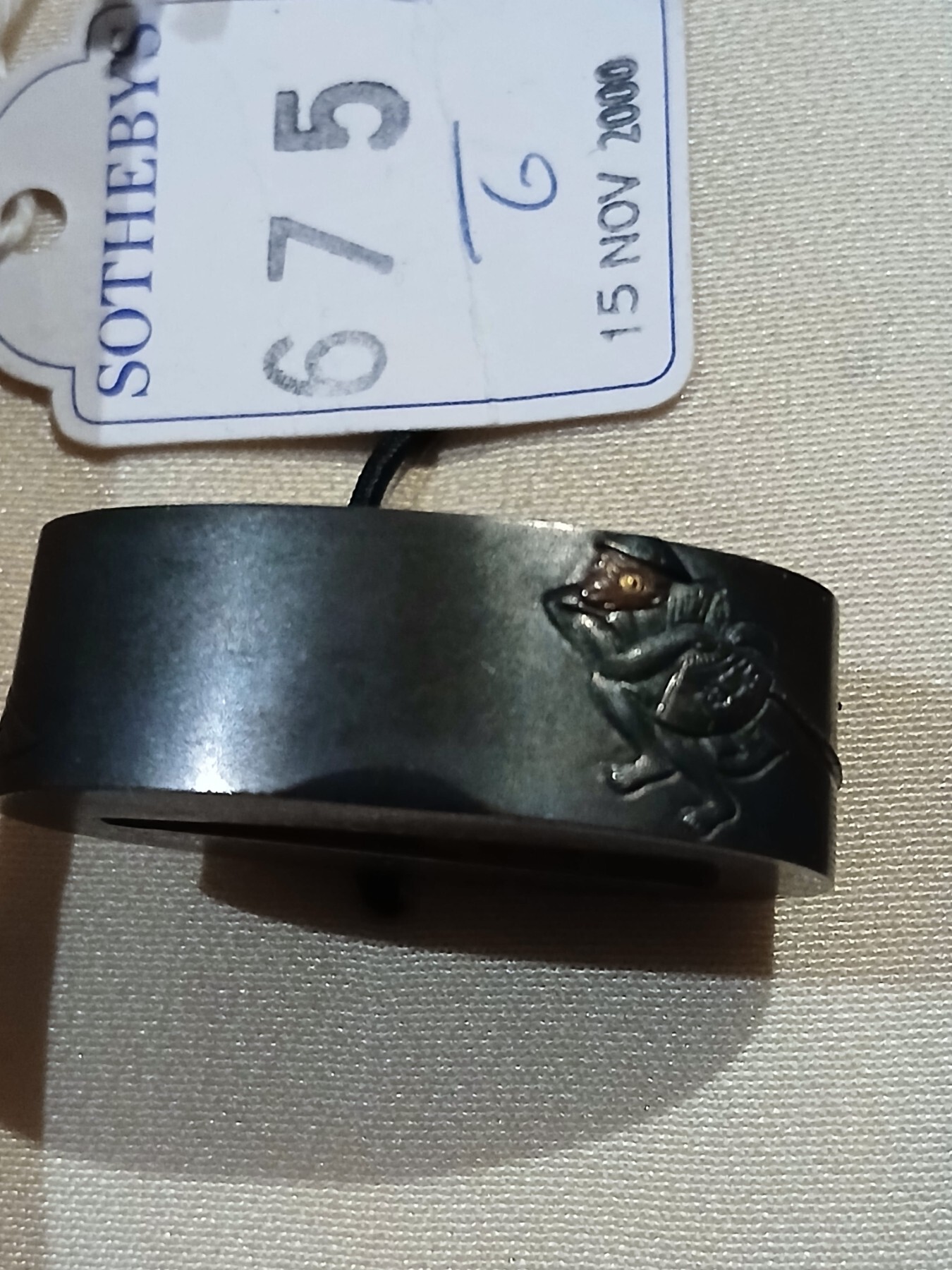
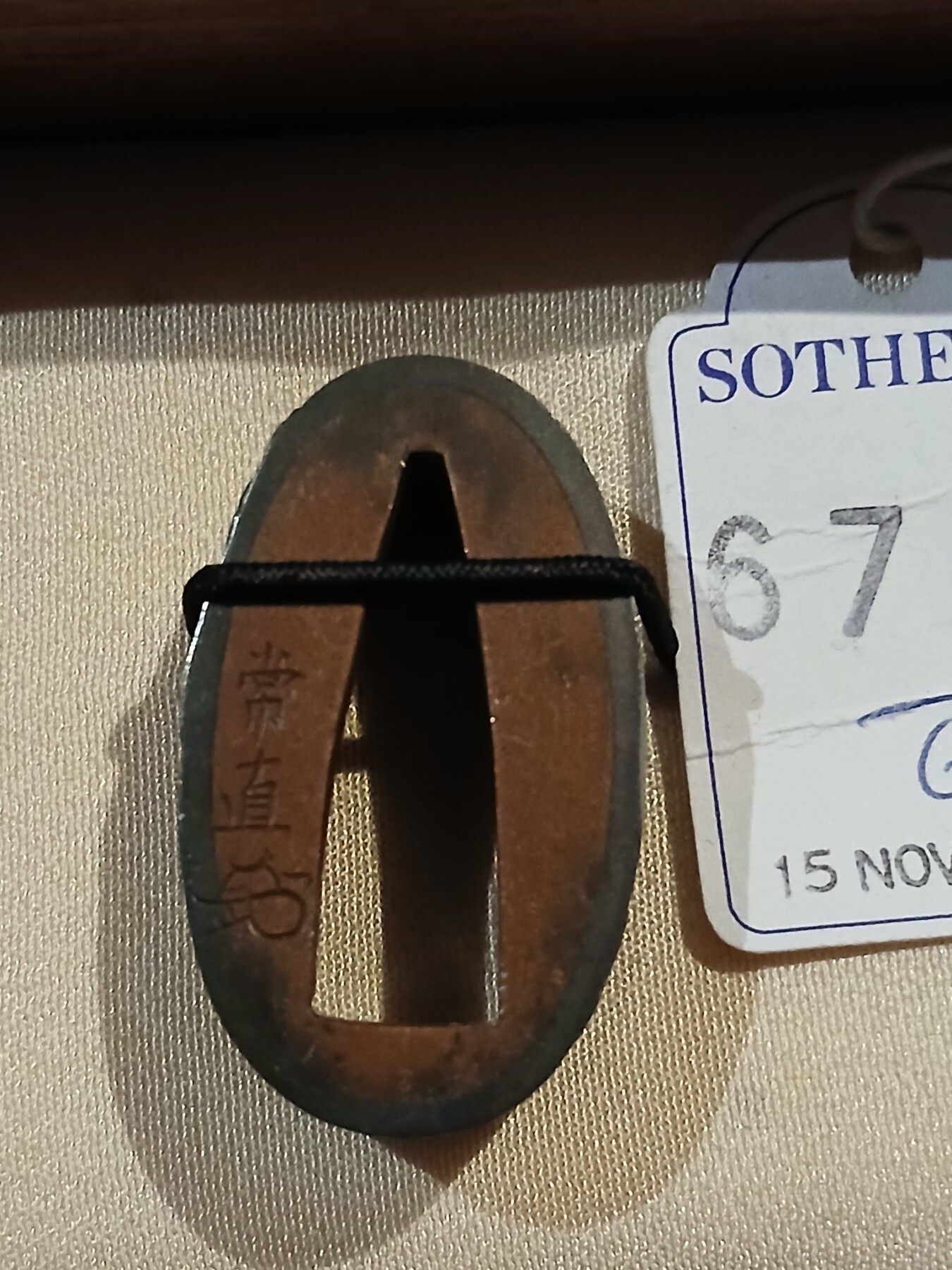
Hi Tosogu enthusiasts, Over the holidays I acquired a number of new fuchigashira that appear to have come from a single collection. The acquisitions include 4 pieces in total, two signed Hamano Naoyuki and two signed (Ichinomiya) Tsunenao. The two Tsunenao pieces still have their original auction tags from a Sotheby's collection dated November 15th 2000. The other two pieces are missing their tags, but all 4 appear to have been from the same collector/owner. (This does not mean they are from the same Sotheby's collection necessarily...) These pieces are pretty high quality with some interesting motifs and I'm hopeful the mei might be authentic. If not however it's no big deal as the quality was well worth the price I paid for these. Photos taken with my less-than-spectacular phone camera and size compressed but I tried my best... Do let me know what you all think! I'll start with the Hamano pieces:
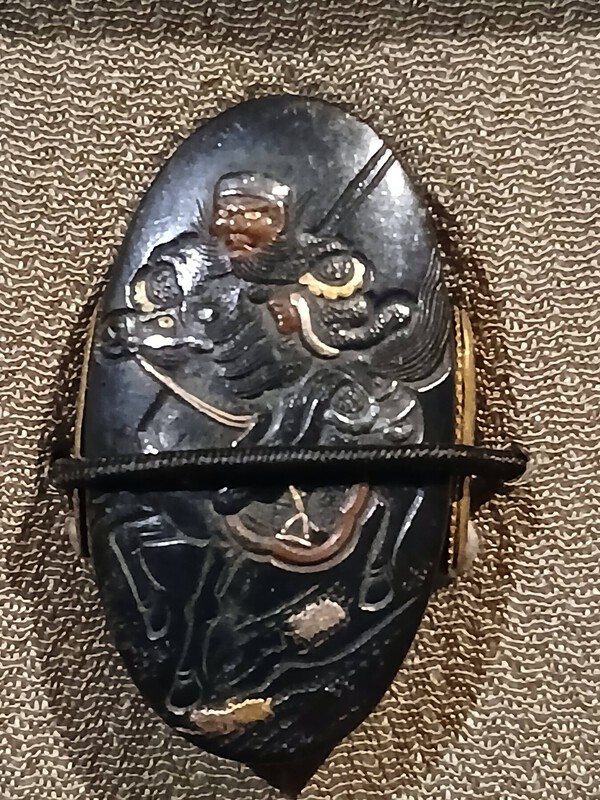

 1 point
 -
I was struggling with the Japanese description of a mounting . Mr Moriyama , who is a huge asset to the Board , assisted by giving me the translation ,being Yosegane ,together with a link to the Mokumekin Museum . The museum describes Yosegane as"like marquetry Yosegane combines metals of different colors to create patterns ". Members might be interested to see an example of what I now know to be Yosegane. This sword , regretably not mine , is one of the finest that I have ever handled. I hope you enjoy looking at it . Ian Brooks
.thumb.jpeg.fc5e542807b8c57224ba7d03e43a6d76.jpeg)
.thumb.jpeg.ff07293e7f2dc9c2699cf4180c2baf53.jpeg)
.thumb.jpeg.cb343a7676ef5e3a655b2e95d43039b7.jpeg)
.thumb.jpeg.18f7f5d3af0cc23dc0b64a9f429a9c05.jpeg)
.thumb.jpeg.024d72891165960bf447b78a64d346a0.jpeg)
.thumb.jpeg.d75ba5b8e446e48d3f5b73bf505c54c3.jpeg)
.thumb.jpeg.735f2788969c9ccc581bbcc09f1454f8.jpeg) 1 point
1 point -
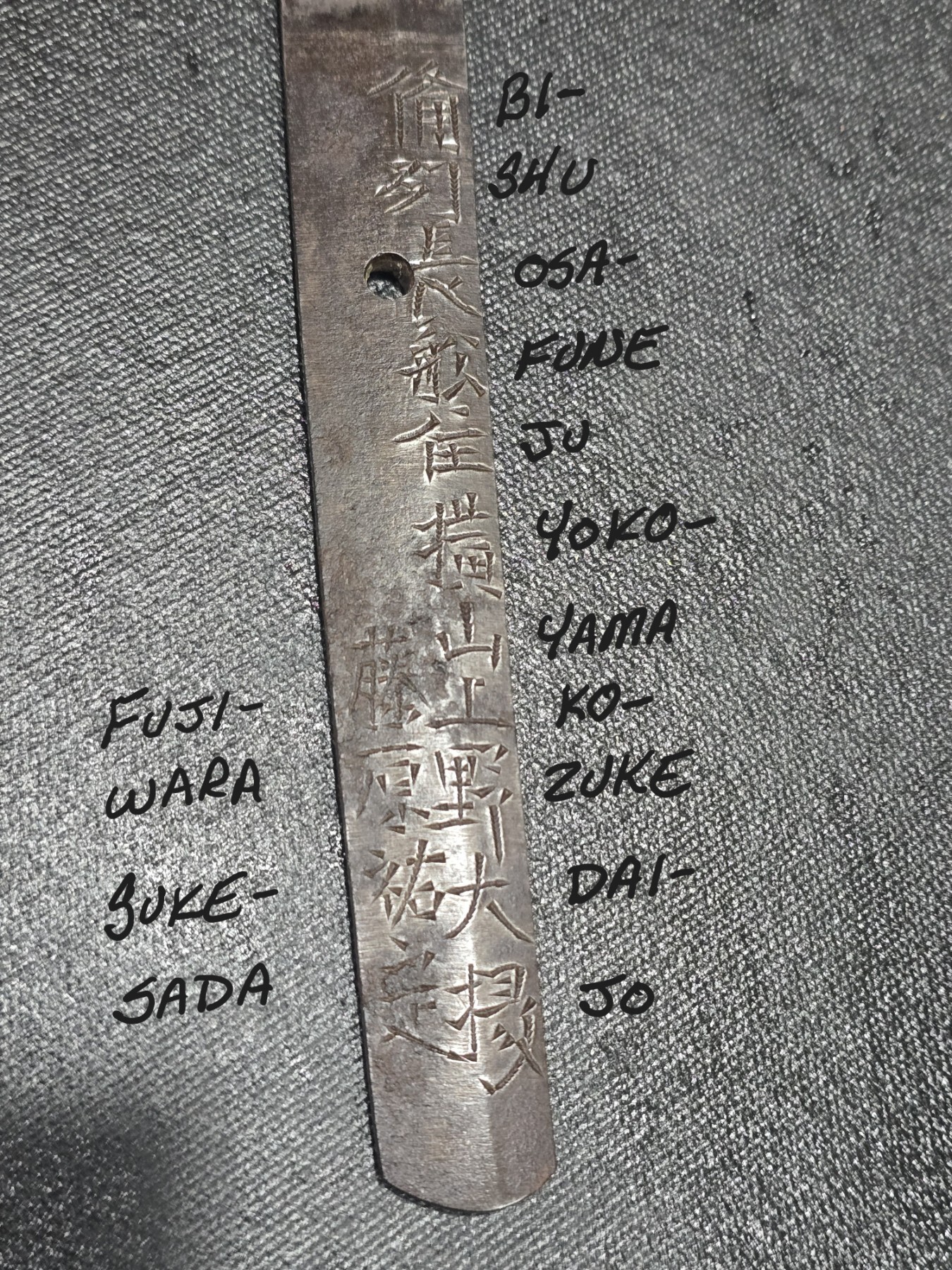
Hello Everyone, Here is another sword that was found in type 98 mounts, and it appears that the blade was made in February 1668. Have I translated this Mei correctly? Does this Mei appear Gimei? i
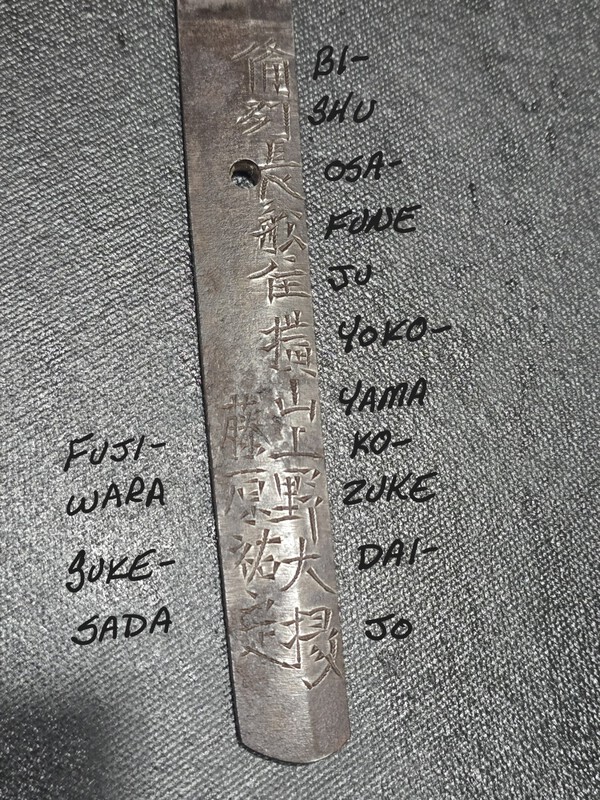
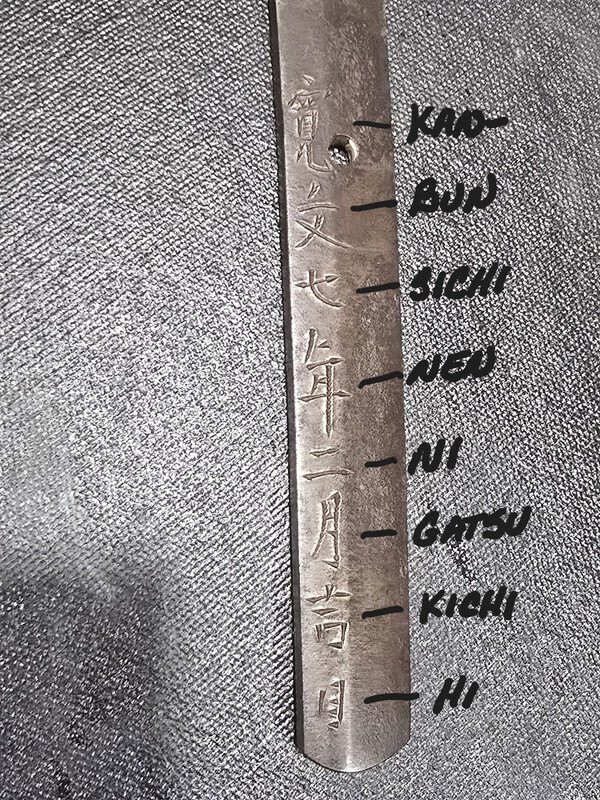
 1 point
 -
Hello, Jake! Congratulations on adding to the collection! The third set is definitely the best in terms of quality. Moreover, this theme is quite common, found in different artists. Here is an example(not my) of Nagatsune, I'm not sure if it's gimei or not, but the quality is decent: Hamano set, I think it's gimei. The quality and technique of carving are characteristic of this school, but far from perfect. I have a mumei set F/K Hamano school with the theme "The Three Kingdoms", the quality is similar, the technique and carving of the face and other parts are also similar.


 1 point
 -
No, the leather that remains seems to be holding it on. The leather wraps over it very tightly. Seems this style of cover was never intended to removed , so maybe the lack of screw was by design.1 point
-
Dear All. To clarify and not to contradict. Shinae are fine cracks in the blades surface, often appearing together. However mukade shinae, or giant centipede shinae, are indeed cause by straightening a bent blade, they appear generally at right angles or thereabouts, to the blade edge and sometimes resemble crackled ice. Rather like a fukure burnishing will not remove these, they are miniature delaminations. According to this link, http://www.ksky.ne.jp/~sumie99/flaws.html they can sometimes be removed by polishing. You will have to scroll down a little to find this specific fault. As is so often the case applying logic to the terminology used is a waste of effort, just because shinae refers to actual cracks in one case it seems that it does not neccesarily mean cracks in the other. I cannott see well enough in the pictures of the original blade to be sure but I do suspect that they illustrate mukade shinae. All the best.1 point
-
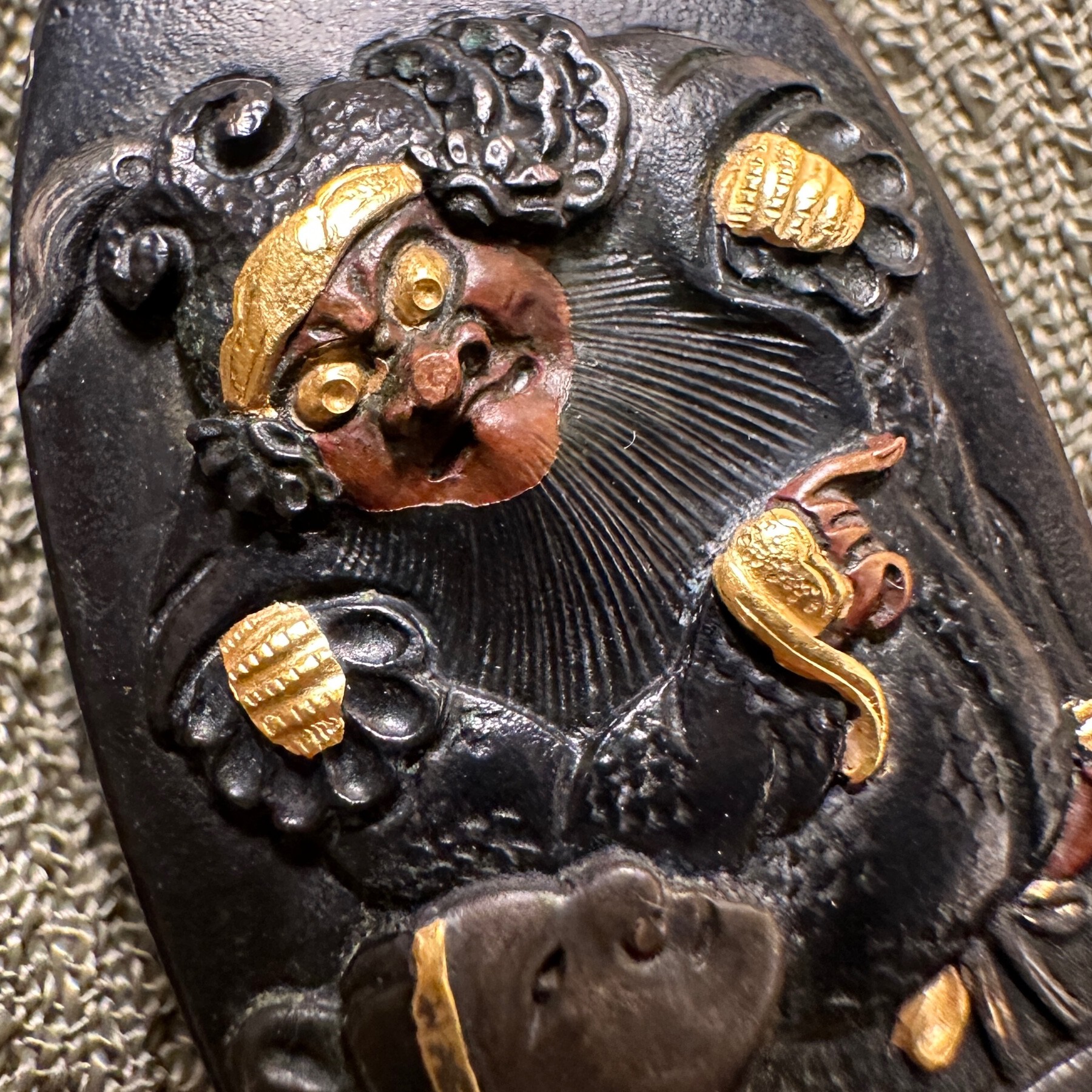
The flat head shape (possibly suggesting a depression containing water) made me think of a Kappa, but the face, hands and feet are not typical. Maybe the Kappa king??? Dunno. One for @Bugyotsuji perhaps.1 point
-
Last but not least, when it comes to my favourite from this set it's between the first Hamano piece I posted and this Taigong Wang design and I can't decide which I like most...
 1 point
 -
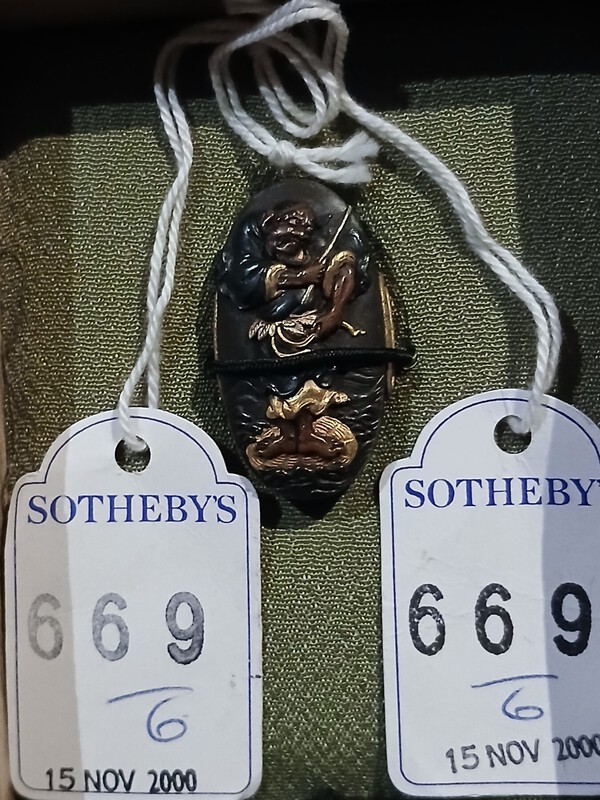
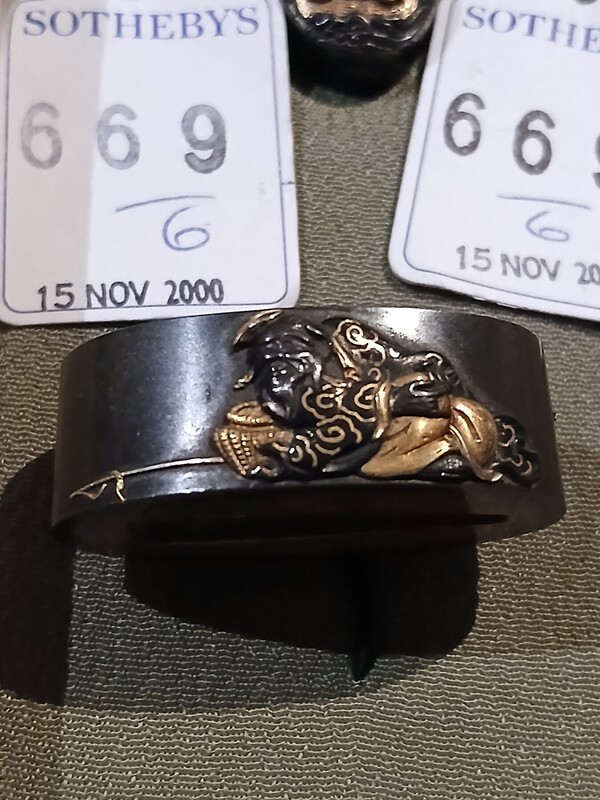
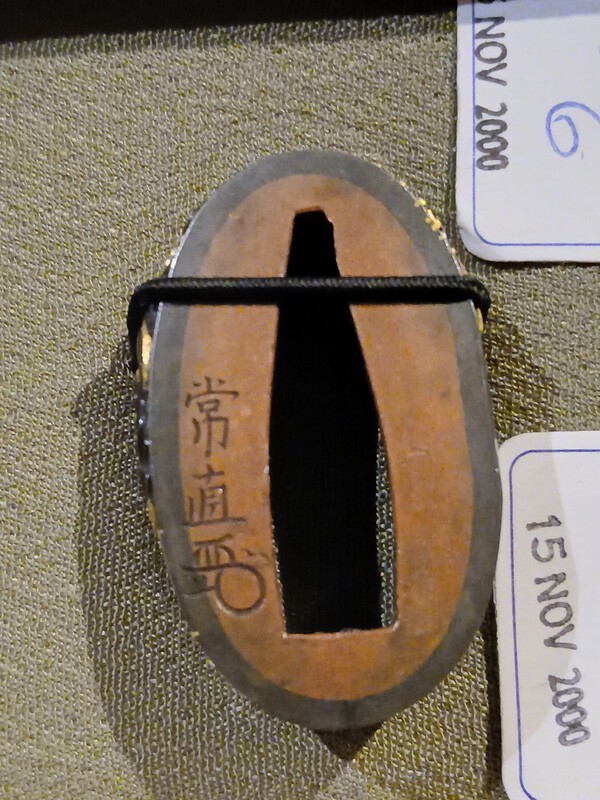
Now the Tsunenao pieces with their original Sotheby's tags...
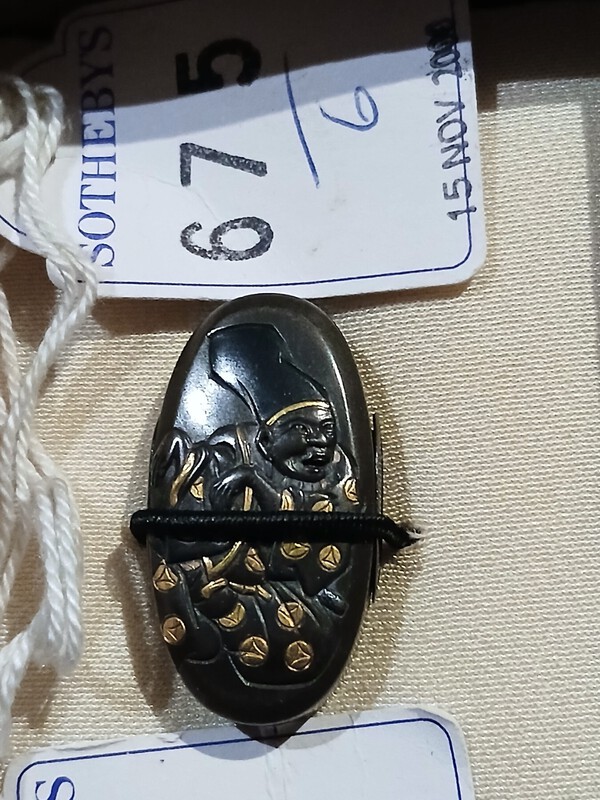
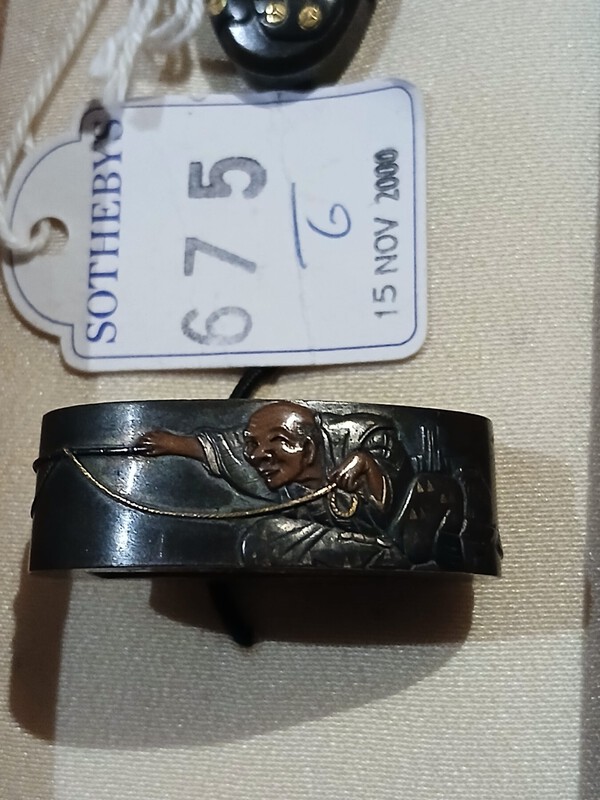
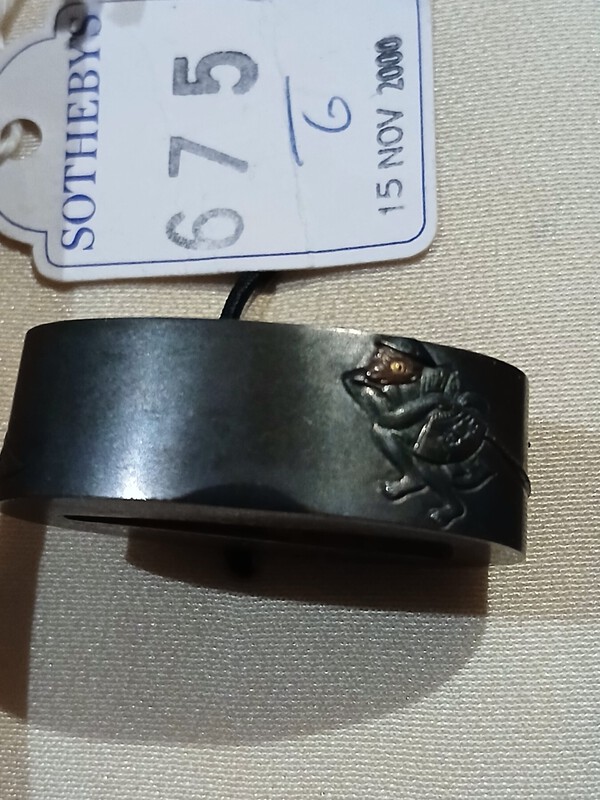
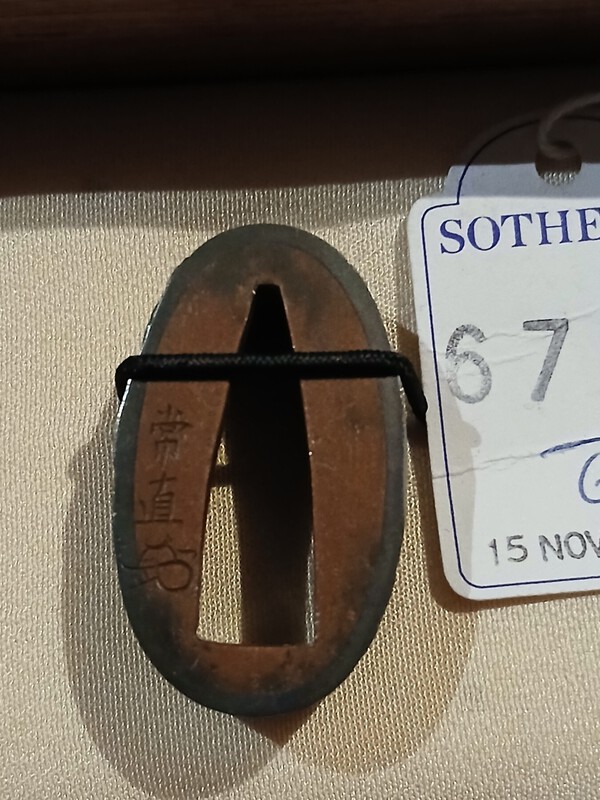 1 point
 -
This is probably a really dumb question, but curiosity hasn’t killed me yet lol … if a shinae developed during forging, and the pattern of the minuscule creasing all ran mostly perpendicular to the cutting edge and curvature of the blade, what structural instability would that cause during a strike? i.e. how does that flaw progress into failure of the blade?1 point
-
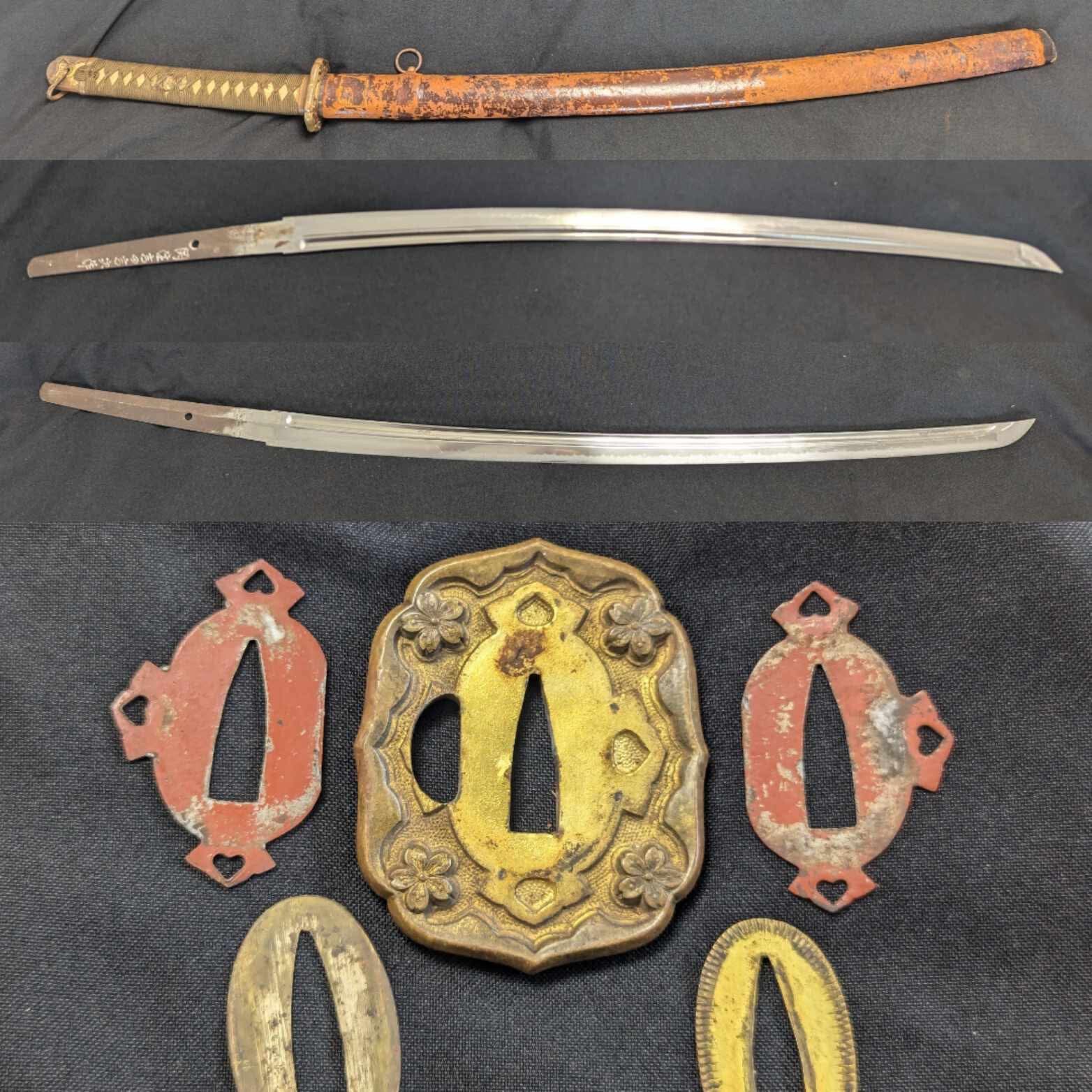
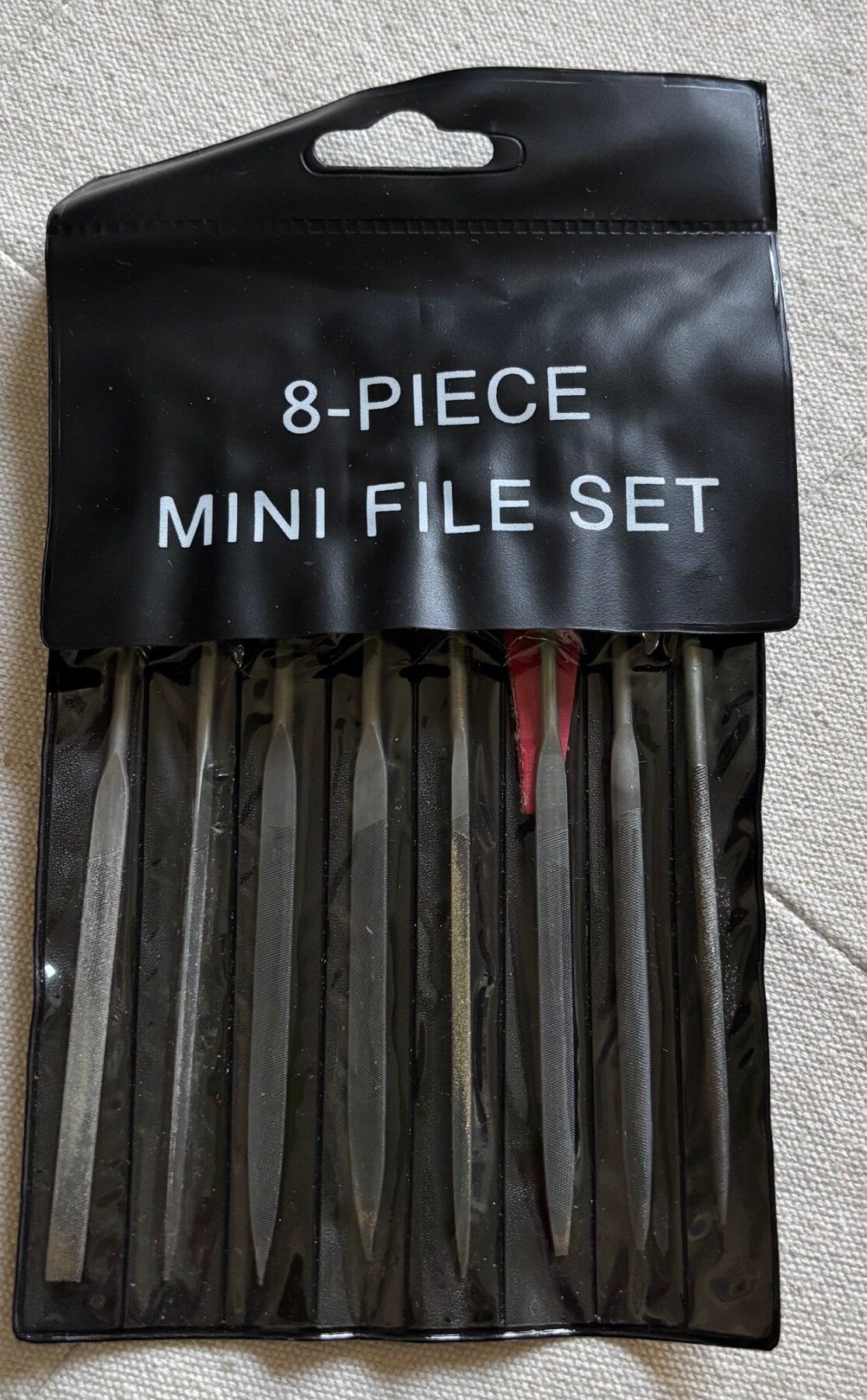
I have a file kit I ordered from EBay 2 seppas that were too small I filed the inside diameter to make it fit I got rid of the insulation now It fits better just a little wiggle but much better If I had a piece of leather it wouldn’t probably tighten it more here’s a picture
 1 point
 -
Hello Jose! I noticed you're in Kentucky. Its a bit of a drive, but if you ever want to attend an Indiana Token Kai (sword club) meeting, we meet in a very central part of the state which is right off of I-69. Message me and I'll get you more details if you like. We meed the third Saturday of each month. As for your blade, the black lacquer paint, while not common, is something you see from time to time. Originally, this blade would have likely had a leather combat cover to protect the wooden saya better and to help keep the hanger in place. ~Chris1 point
-
See also Suya 111536 with two 東 stamps. Fake Type 95 Nco Swords1 point
-
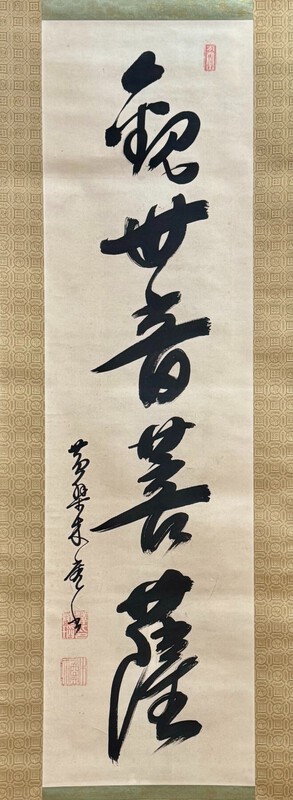
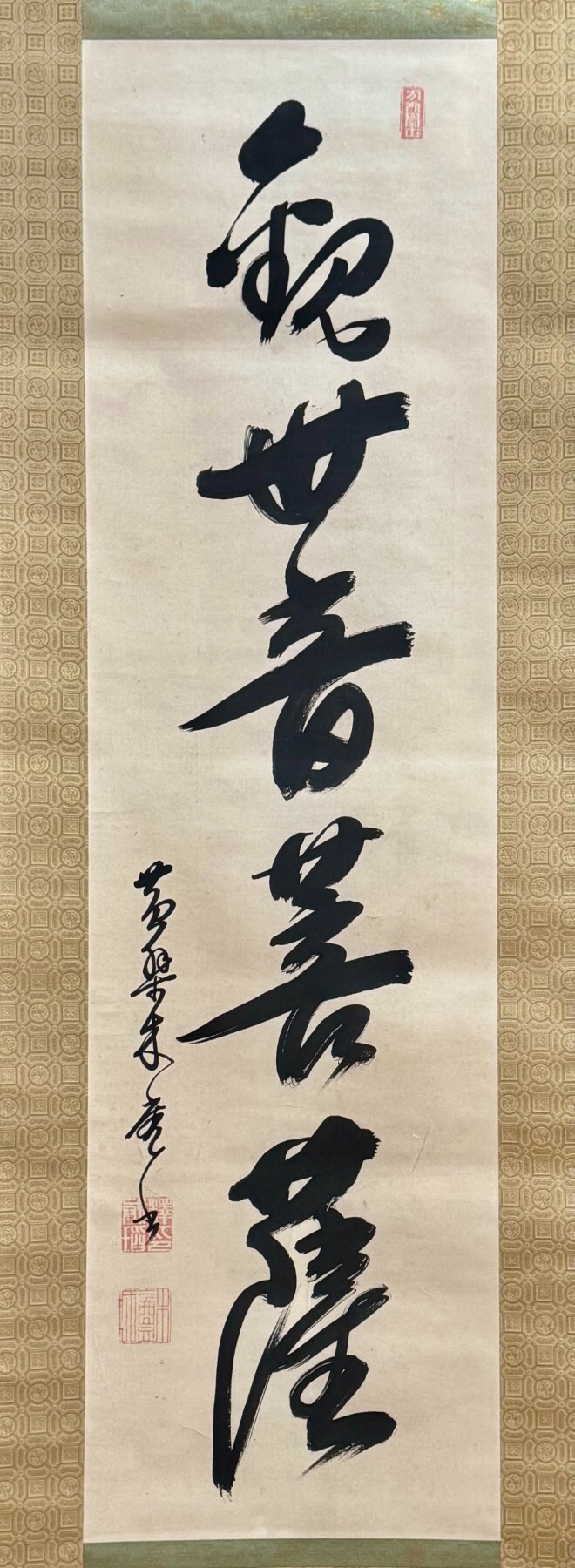
This is the story of my "great find," which in this case is a masterpiece. Mu'an Xintao (木庵性瑫, 1611-1684), known in Japan as Mokuan Shōtō, underwent Zen training in China at Wanfusi with three of the greatest Ch'an masters of the early 17th century: Miyun Yanwu (1566-1642), Feiyin Tongrong (1593-1661), and finally Obaku monk Yinyuan Longqi (Ingen Ryuki, 1592-1673), who bestowed on him dharma transmission in 1650. He followed Yinyuan and an entourage of a dozen other monks from southern China to Nagasaki to help with the founding of Manpukuji, which Mu'an took over as its second abbott when Yinyuan retired in 1664. Over a period of 17 years he oversaw the expansion of Manpukuji and the founding of numerous other Obaku temples throughout Japan, including Zuishoji, the principle Obaku temple in Edo. Like Yinyuan, Mu'an was one of the most talented and prolific calligraphers of the Obaku lineage, whose work was much in demand by followers. Together with Yinyuan Longqi (Ingen Ryuki) and Jifei Ruyi (Sokuhi Nyoitsu), he is known as one of the "Three Brushes of Ōbaku" or Obaku no Sanpitsu. His work is characterized by precise brush control, sophisticated character composition, and a grasp of the styles found in the works of late Ming literati calligraphers. This powerful example of Mokuan's large character vertical brushwork, which displays the conventions of bold, cursive Ming styles with an insistent upward tilt, was purchased for $200 (Andrew Jones Auctions, Los Angeles) as part of a set of 8 scrolls, along with one by Nakahara Nantenbo. Both have been carefully and beautifully mounted at great expense. Both come in boxes that are labeled with the artist's name, yet in auction no details were provided. No one else noticed; no one else bid. Clearly these were under appreciated since Mokuan works of this quality routinely sell for over $3,000. The provenance is documented by a handwritten translation from the shop Oriental Art Sekisen where it was purchased by a prior owner. I'm still researching the other 6 works. These works appear to have come to auction from a single collector, as his name appears on tags in each box. Signature: Obaku Mokuan sho (黃檗木庵書, Inscribed by Obaku Mokuan). Seals: Hogai gakushi (方外学士, prefatory seal); Shakushi Kaito (釋氏戒瑫); Mokuan shi (木盦氏). The inscription is of the formal Chinese name of the bodhisattva of infinite compassion, the one who hears and sees all suffering. Kanzeon bosatsu (觀世音菩薩, Chinese Guānshìyīn púsà), originally a male depiction, is known as Kannon in Japan. Chapter 25 of the Lotus Sutra explains how Kannon will rescue those who seek his help in times of peril, specifically addressing the dangerous encounters at sea. In this representation, Kannon is most closely associated with Dogen Zenji (1200-1253), the Zen master who introduced the Soto sect to Japan. The story goes that upon returning from his studies in China, Dogen encountered tumultuous waves and strong winds at sea. He chanted the Lotus Sutra, and then he saw Kannon riding on a lotus petal, calming the waves to ensure his safe return to Japan. For Obaku monks who undertook perilous sea journeys from China to Japan, this image served multiple roles. It functioned as a metaphorical guide in their spiritual quest for enlightenment while also symbolizing the protective grace of Kannon during their maritime expeditions. The tragic fate of Yelan Xingui (a top pupil of Yinyuan Longqi), who perished at sea en route to Japan, underscores the real danger these monks faced, making the image a testament to their courage, faith, and vulnerability. This is another Mokuan of the same inscription (although small in scale if you compare to the size of the seals) offered on Jauce for $850, which is far less refined and has a more frenetic energy to it.


 1 point
 -
That’s true — some Japanese spoke only Dutch…1 point
-
Here is the Nakahara Nantenbo that was part of this set of 8 hanging scrolls. Nakahara Nantenbo (1839-1925), whose Buddhist name was Toju Zenchu (Complete Devotion), was in the last 17 years of his life the Exalted Master of the main temple of Moyoshin-ji of the Rinzai sect. A contemporary of the great lay Zen master, swordsman, calligrapher/artist, and statesman Yamaoka Tesshu, whom he met while teaching at the training hall at Sokei-ji in Tokyo and had daily private meetings with, he was a tireless reformer of Zen monastic training and activity, emphasizing strict practice and koan study. This brushwork was done when Nantenbo was 80 years old. A similar one offered by Gallery Friedrich Muller is listed for $1,700. The kanji inscription is the first verse from a famous Chinese couplet often used as a blessing for good fortune: 福如东海长流水, 寿比南山不老松 Fú rú dōnghǎi cháng liúshuǐ, shòu bǐ nánshān bù lǎosōng May good fortune be as boundless and enduring as the flowing waters of the East China Sea, and longevity stand firm like the ageless pines of South Mountain
 1 point
 -
A bit of cash needed for this as well! just over $3,000 USD https://www.1stdibs.com/furniture/asian-art-furniture/metalwork/antique-Japanese-meiji-period-tsuba-decorated-box-dish-fujii-yoshitoyo/id-f_45586682/ Or if you shop around https://jacksonsantique.co.uk/product/Japanese-komai-style-box-dish-fujii-yoshitoyo/ £1,400.00 which is $1886.92 USD - - It pays to look around!!1 point
-
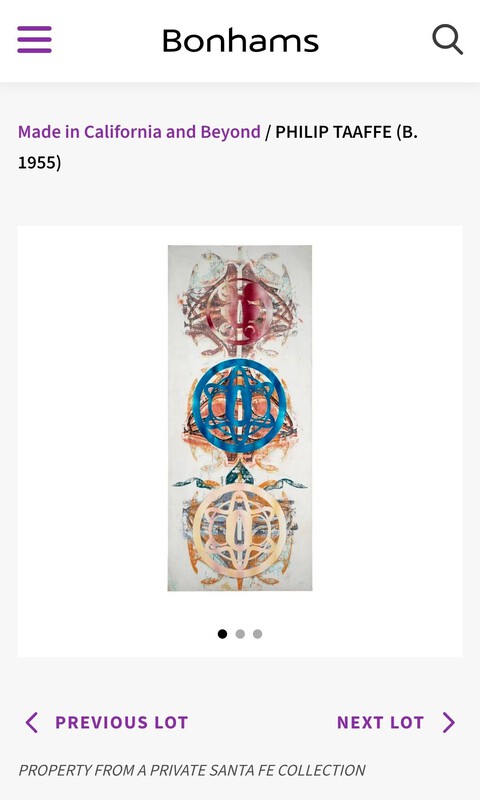
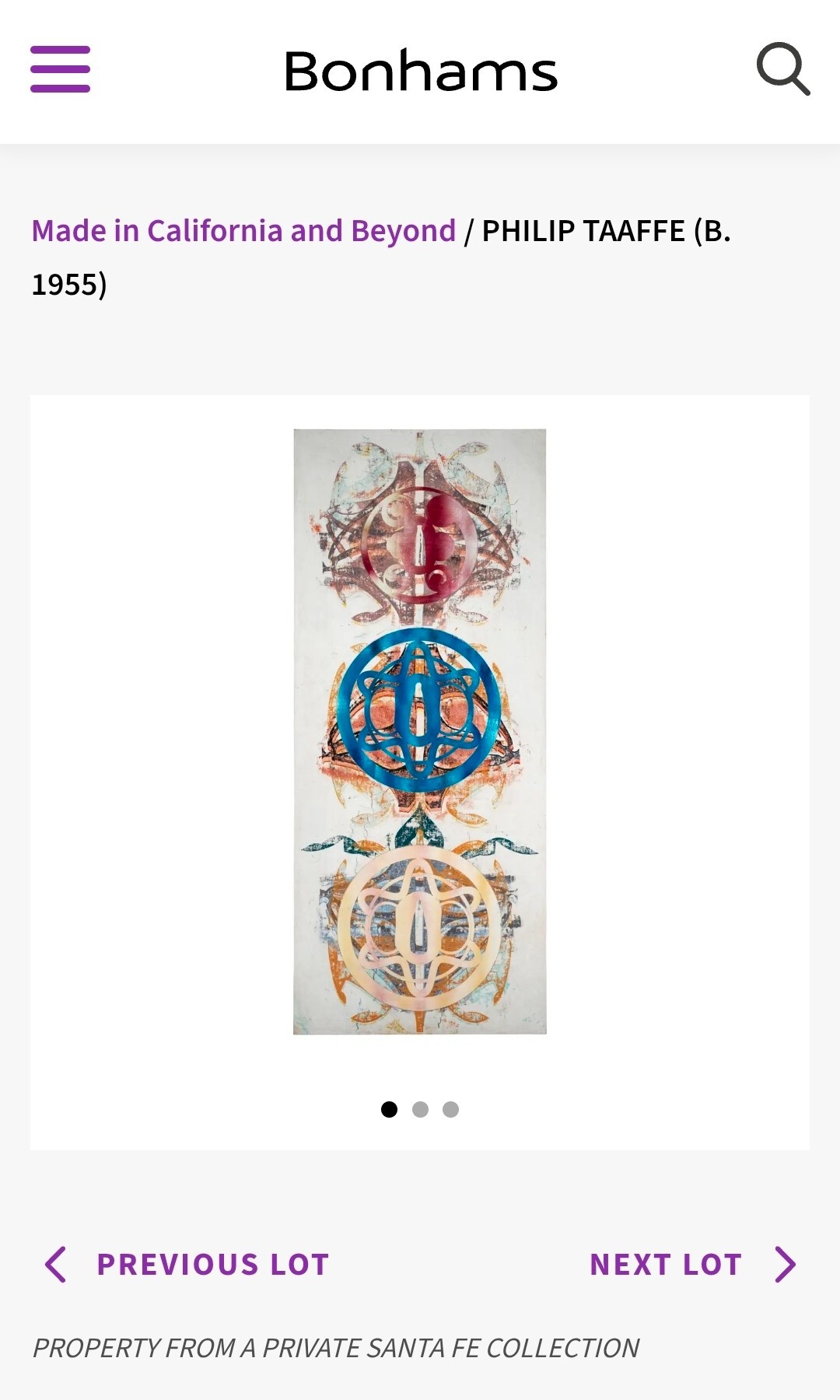
Anyone have an extra 12k-15k to drop on a tsuba art print? 😆 https://www.bonhams.com/auction/31839/lot/2/philip-taaffe-b-1955-tsuba-figure-1995-96/
 1 point
 -
And maybe just a little more on the cleaning issue. Part of making a tsuba for the artist is how they patinate it - it's a bit of an art in its own right - and the patina is part of the total piece. Yet at the same time tsuba can deteriorate over time from corrosion, crud, etc. If a tsuba has serious issues, it takes a real expert to remove (or at least reduce) the problems while preserving/matching the original patina as much as possible. Do you have any pictures of the tsuba before polishing? That might help to understand the era and school of the maker, as well as help guide what restoration might look like. As Geraint says, over time a patina will come back.1 point
-
Colin, thank you for your kind words! Your grandfather was in Japan as one of the earliest Europeans and just at an important threshold of Japanese history! He would have seen medieval Japan trying to become a modern nation in a very short period of time! How fascinating that must have been, and how difficult with no internet to ask question, no English speaking Japanese, and no Westerners knowing manners nor language! That would be a topic for a nice film!1 point
-
Hi Colin not sure where in the UK you are , but you may want to consider becoming a member of the UK Token Society , they have regional meetings all over the UK . PS. and at most meetings there are some nice swords etc. for sale by the members .1 point
-
https://www.tsukamaki.net/PDF/gary_montgomery01.pdf An amusing story of early tsuba collecting - and why cleaning is not something to undertake without research.1 point
-
Hi Colin, welcome to the NMB forum! Your WAKIZASHI (not Wakazashi) seems to be signed HIDA no KAMI FUJIWARA UJIFUSA. https://www.nihontocraft.com/Hida_no_Kami_Ujifusa.htm I will add that a signature alone is not always enough to assign a blade to a swordsmith. The features of a blade have to be confirmed by the characteristics of the swordsmith's certified works. If you showed us the whole blade (tip-uwards, plain dark background, dark room, light from the side, naked blade/no HABAKI), the sword experts here may give you a more competent comment on it.1 point
-
Dear Mark. One of the things that cleaning it up will do is remove the patina from an alloy known as shakudo. This is a distinctive Japanese alloy of copper with a small percentage of gold which, when treated correctly, acquires a deep lustrous black colour which is still evident on the eyes and the inlayed sections at the back of the wing. Some of these retain their colour while some are now looking like copper where the patina has been removed. All being well, and further cleaning eschewed, these inlays will recover their patina over a considerable time. I appreciate that you are not interested in the monetary value but the best way of approaching this item is as a work of art and yourself as its temporary custodian. That art will communicate down the years if cared for. Enjoy this and keep up the research. In terms of age I note that no one has hazarded an assessment yet, it is an unusual tsuba. My guess would be late 18th to 19th century, just to get the ball rolling, but I look forward to others informed opinions. All the best.1 point
-
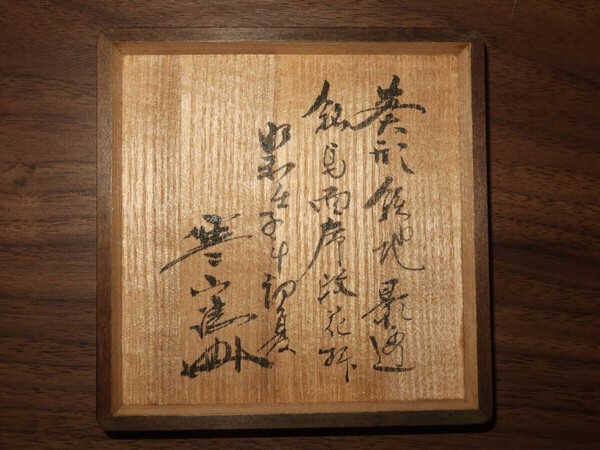
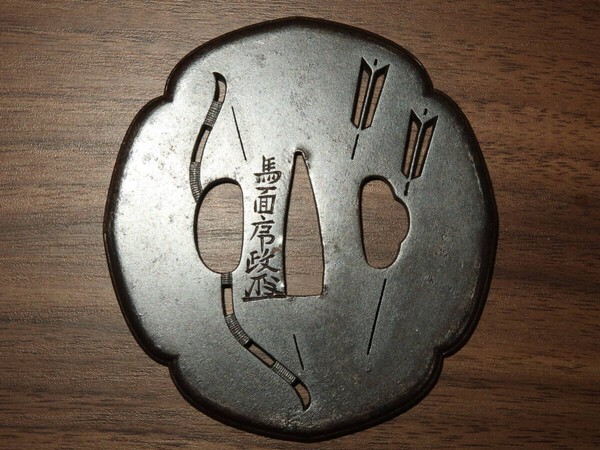
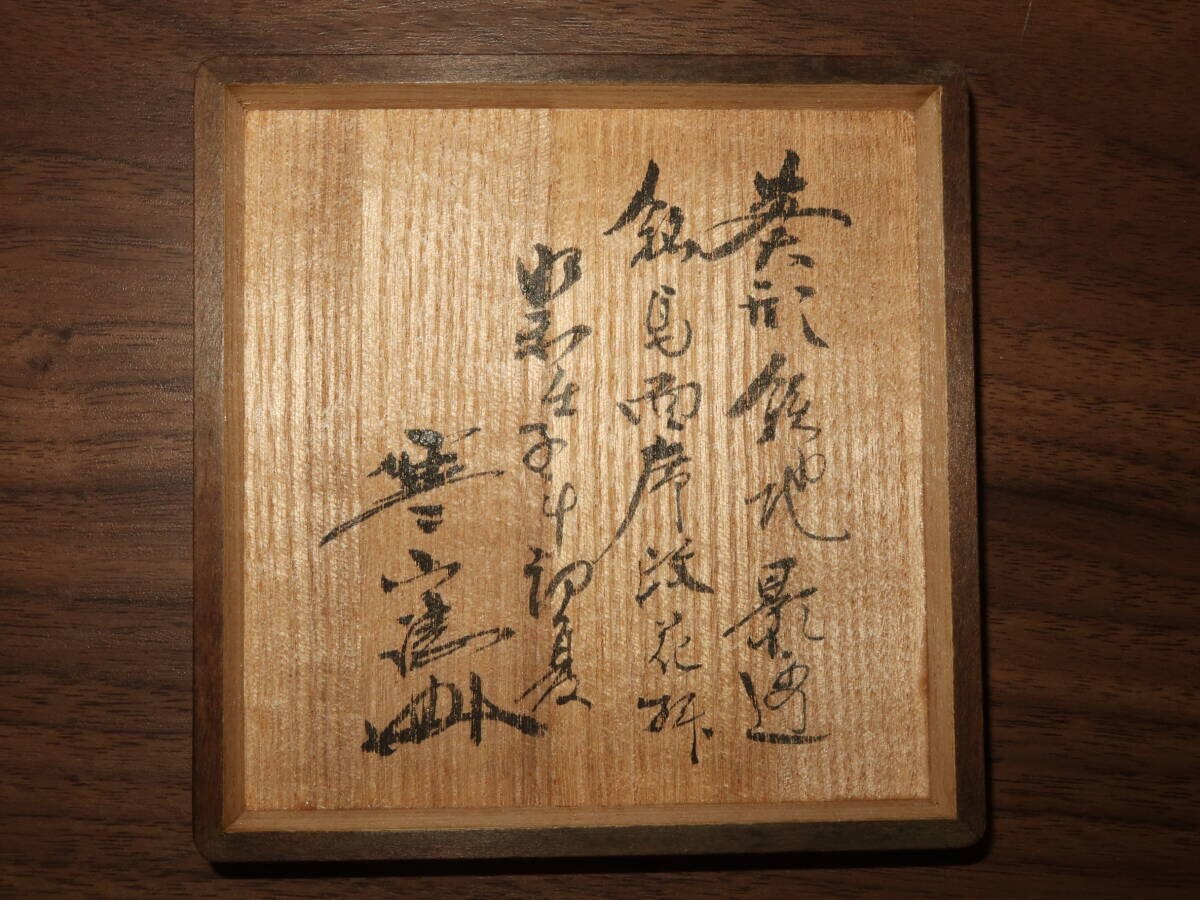
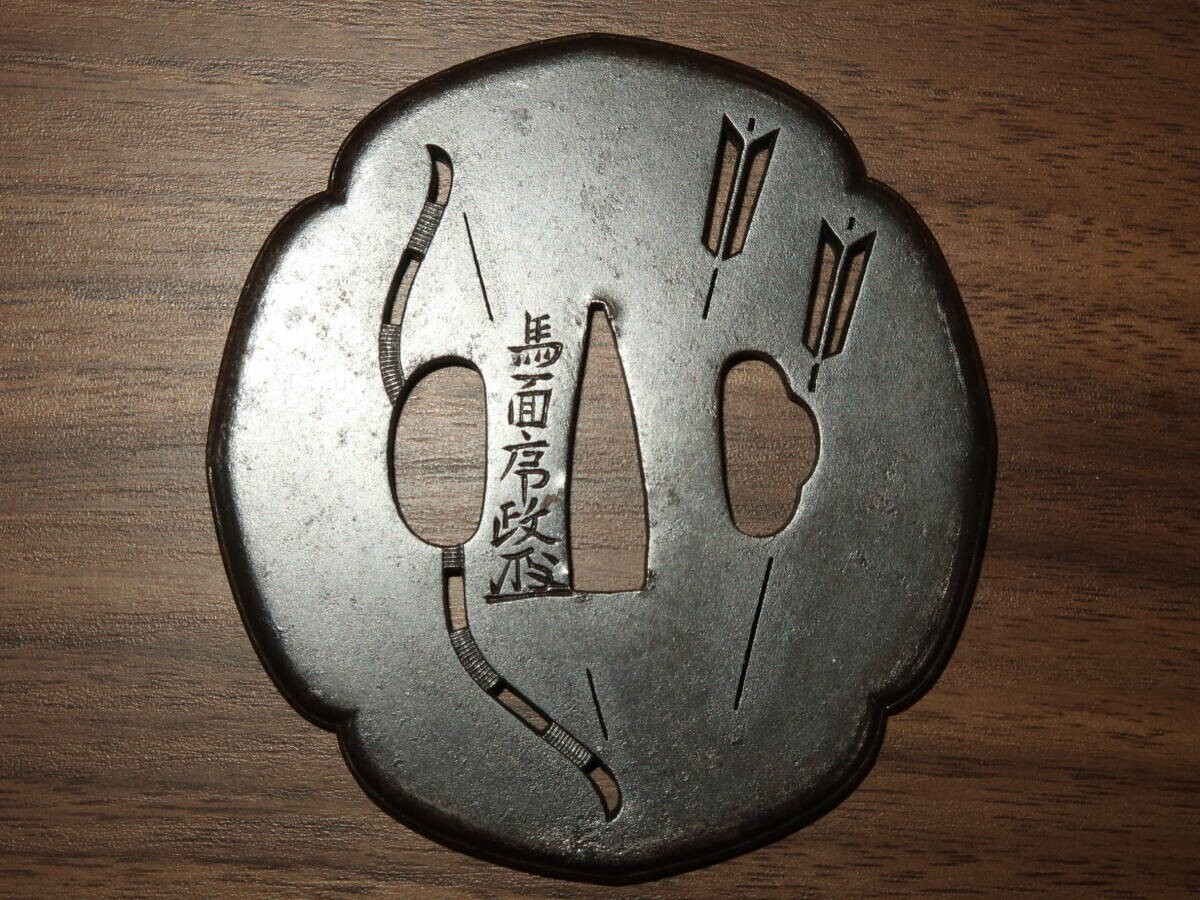
Dear all, I would be most grateful if someone could help translate the mei on this tsuba and the calligraphy on the box lid. Regards, Tom
 1 point
 -
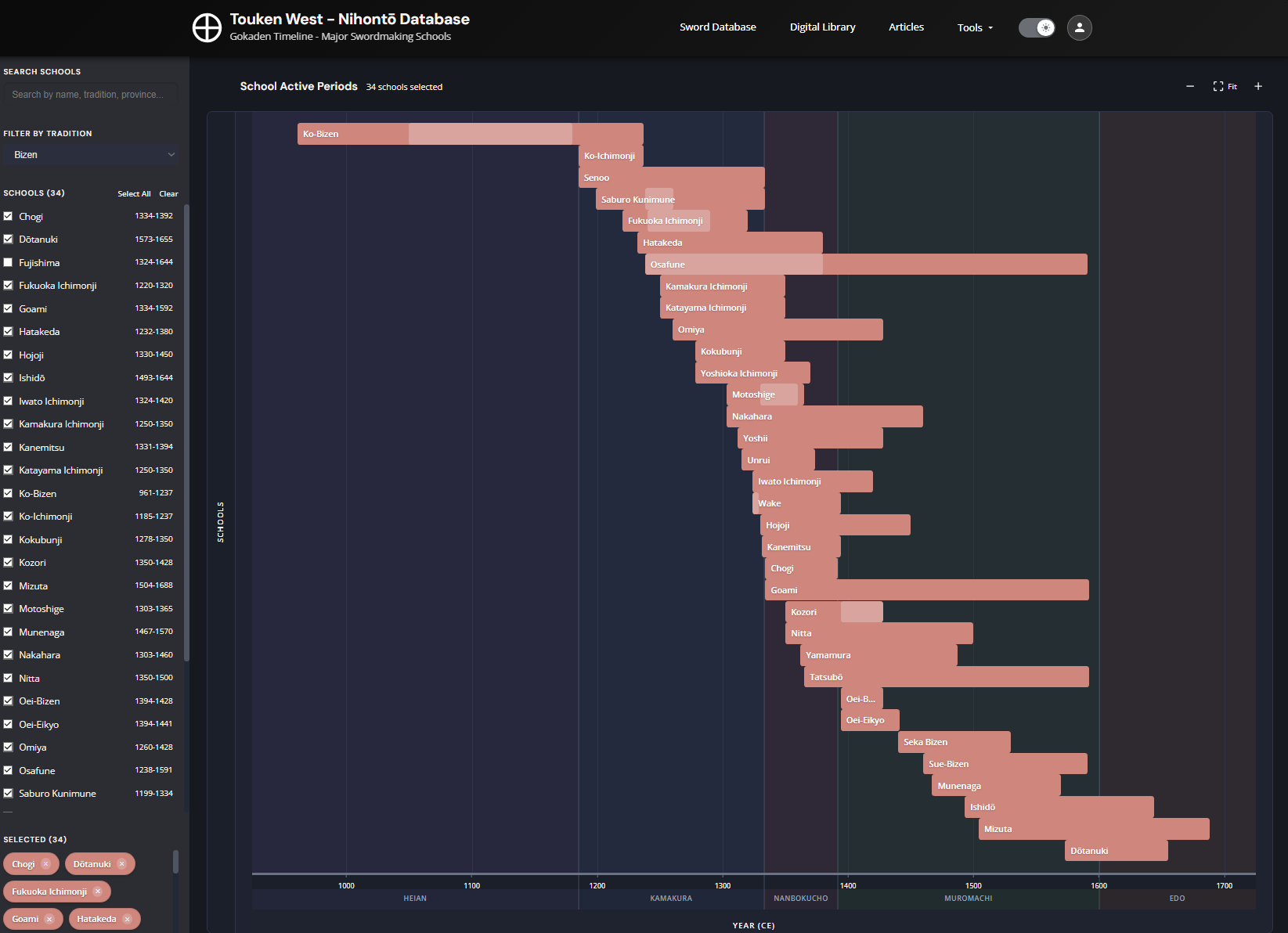
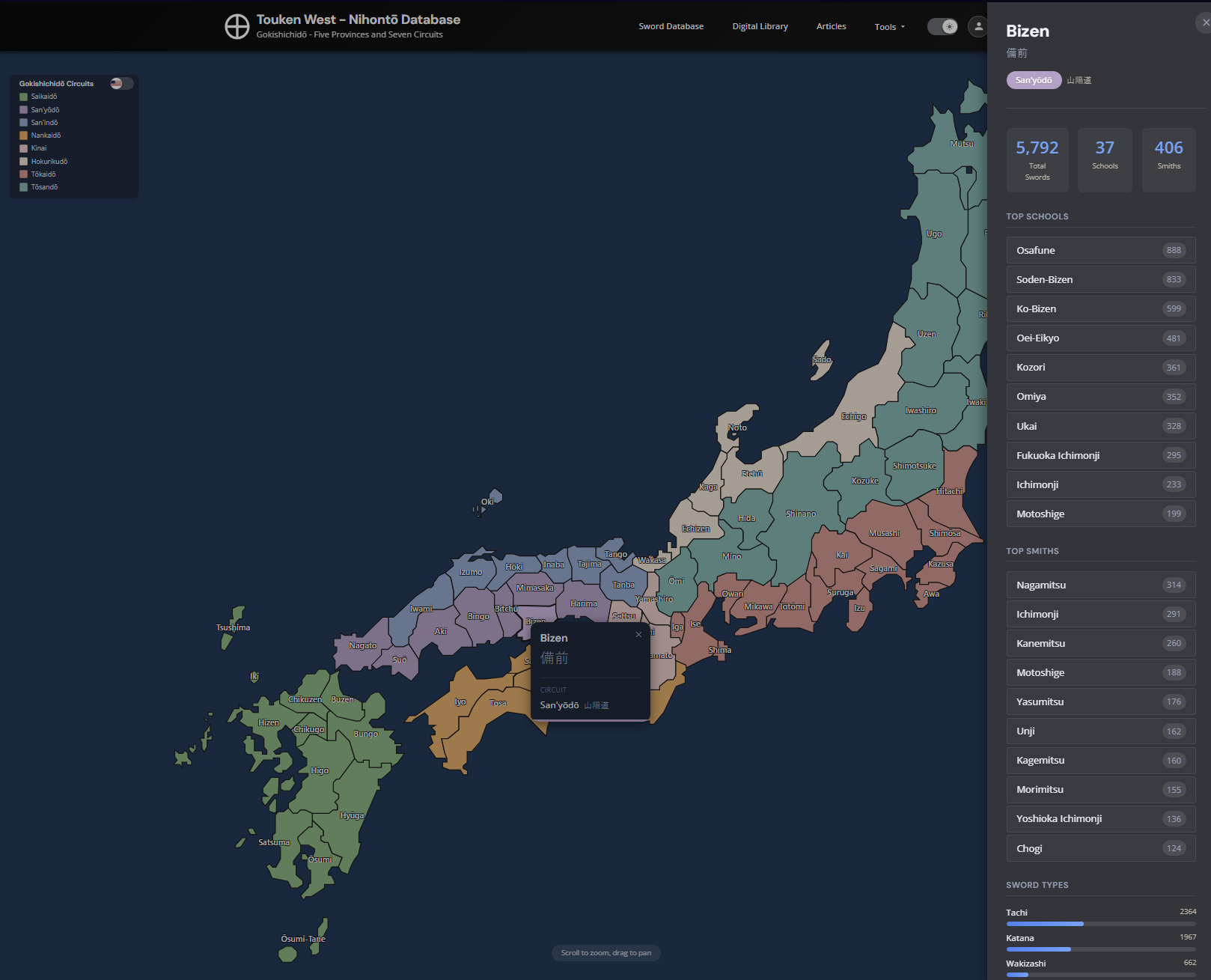
Hey everyone, I feel like its finally time to share a project that I've been working on for a while now. Not because it is finished but because my first child was just born a few days ago and development on this project will likely slow down for a bit as I navigate the new phase of life that is fatherhood! Anyways, I've been building a website https://nihonto-db.com for some time now and wanted to present it here. At the core, it is an interactive and searchable version of @Jussi Ekholm's Koto sword index he's so graciously shared with the NMB. I can't begin to state how incredibly powerful Jussi's research has been and without his tireless efforts and collaboration, this wouldn't have been possible. So at the core, the "Sword Database" portion is a simple searchable database that allows you to search from over 16,000 swords. There are filters and advanced filters available to allow you to search, filter, and compare works by many smiths with as narrow or broad of a search breath as you wish. Additionally, I've created a few other tools that I find useful. Namely an interactive Province Map of Japan showing the old swordmaking provinces which allows you to click on each province and see associated schools, swordsmiths, and other details of the schools and smiths of that province. Clicking on any province will pull up all of the swords in the database for that school and scrolling down you can view additional stats such as Kokuho, JuBun, JuBi, counts, counts of documented swords by type (Yari, naginata, katana, tachi, tanto, etc.) and other stats for each sword making region. There is also a Japanese/English toggle available which will show the circuits and provinces in Japanese rather than English which can be helpful when researching Japanese resources and sites. Thirdly, there is Gokaden Timeline which is built upon a Google Sheet collaboration that some of the members here helped with a few weeks ago. It is as the name suggests, a simple plotting tool that allows you to plot and view the various swordmaking schools broken down by their tradition, and the timeframe in which those schools spanned. Currently this is limited to mostly mainline and some obscure Koto schools. Shinto and Shinshinto aren't appropriately represented at this point and will be a future addition. Finally, there is an articles section where I have been posting various articles, photos, and zufu translations for the main Gokaden schools. Currently Soshu mainline and Yamashiro mainline are finished and Yamato and Bizen are in the works. The current selection of articles come from the Nihonto Taikan lectures from Honma Junji, Hiroi Yuichi, Numata Kenji, and other Japanese sword scholars and contain detailed genealogies, kantei points for grandmaster smiths, and the evolution of traditions, schools, and lineages of swordsmiths of the koto era. Each article goes into great detail and I've provided images when available of all of the swords (or an appropriate substitute) mentioned by the authors as well as translations of the various zufu used (when available). They are quite lengthy articles which provide a great deep dive into the prolific schools for each of the gokaden. I have many more plans for this site to hopefully become another helpful resource in the world of nihonto study and also be a place where swords can be researched in detail with photos, descriptions, and other additional information. I also would like to expand this into including many more shinto and shinshinto blades but as I'm a 1 man operation and now have a 1 week old baby, slow and steady is the key! There is a registration and sign-up option available, currently free users (there are no paid for options at this time) will also gain access to the Digital Library, an online encyclopedia of Japanese swords including some selected zufu, images of famous shrine swords, and translations when available. The current free digital library has ~2500 images of just over 500 swords. Feel free to make a free account and sign up with Google, Facebook, or register an email and password and take a look! I hope this site serves as a resource for all and if anybody has any comments or things the community would like to see, feel free to let me know and I will do my best to work on them as time allows. Thanks again to the NMB community and everyone here who has given their knowledge, time, and previous resources to make this all possible.
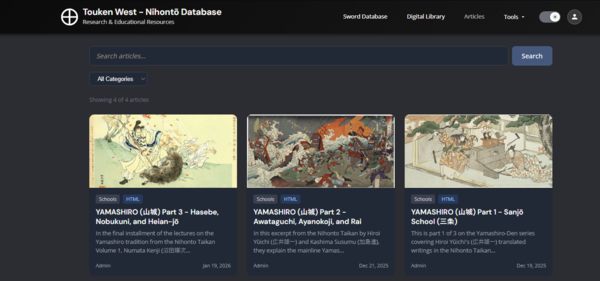


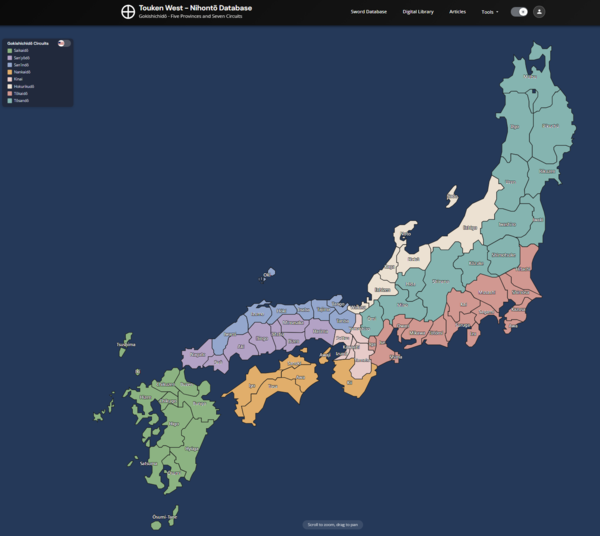
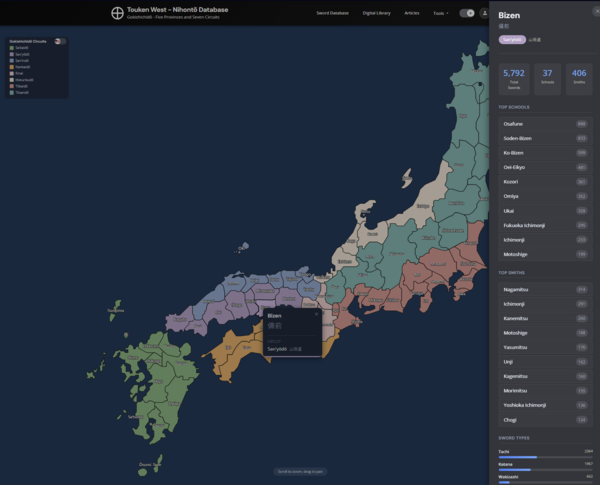
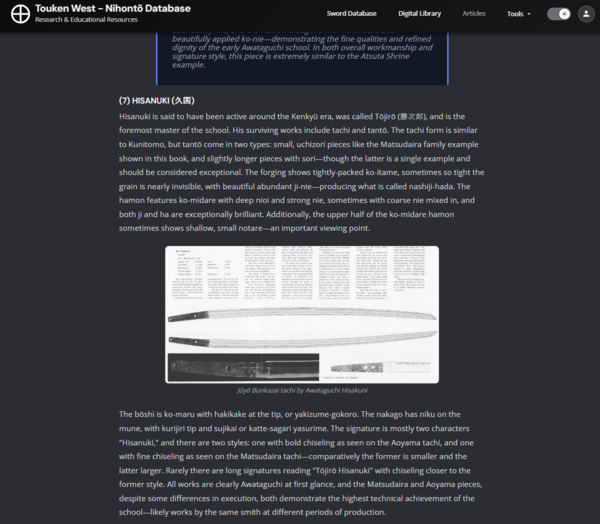 1 point
 -
I am super happy that guys with technical knowledge are putting things together and making amazing stuff happen. It is wonderful to see how just simple rows of text can be changed to a really cool and fine resource. As others said above, the map might be my favorite thing. Starting from it, it's great to advance in few clicks to various smiths and items. Congratulations on the baby Chandler1 point
-
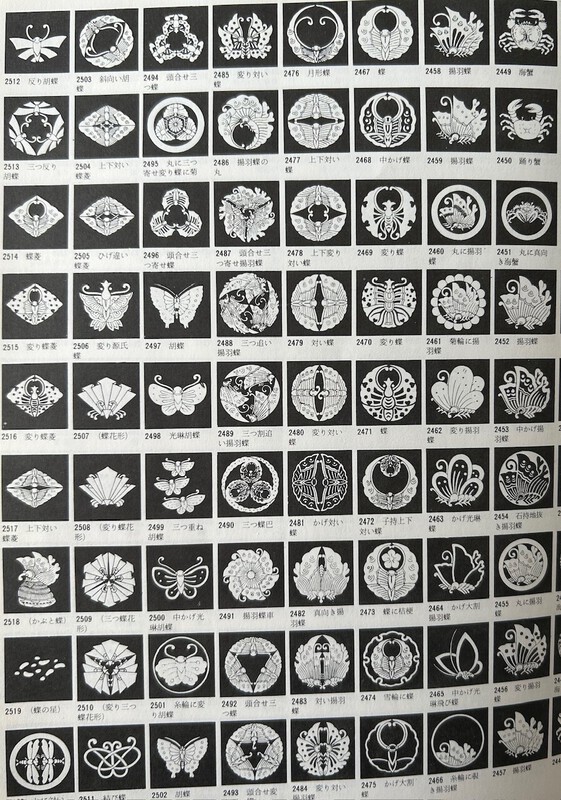
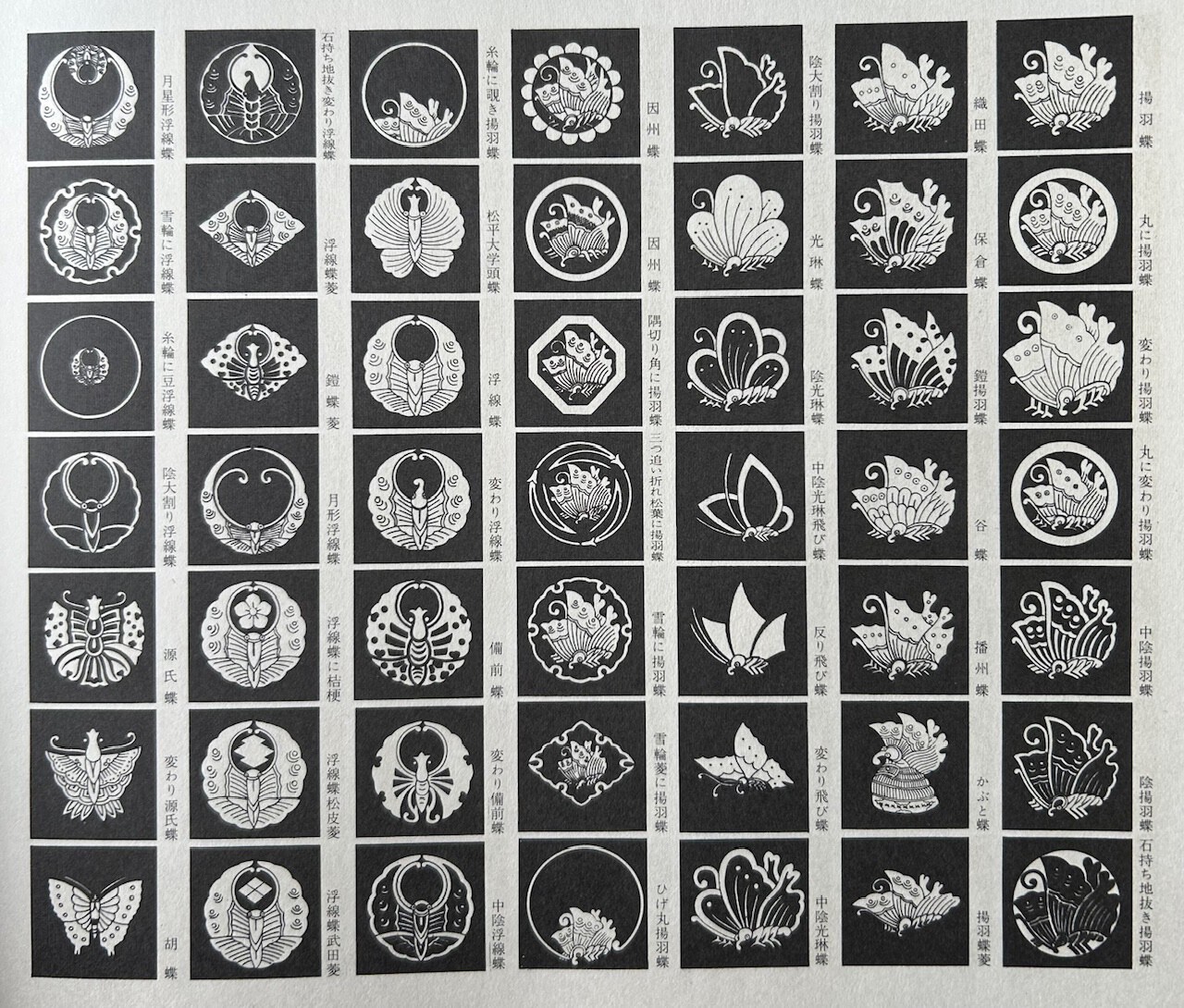
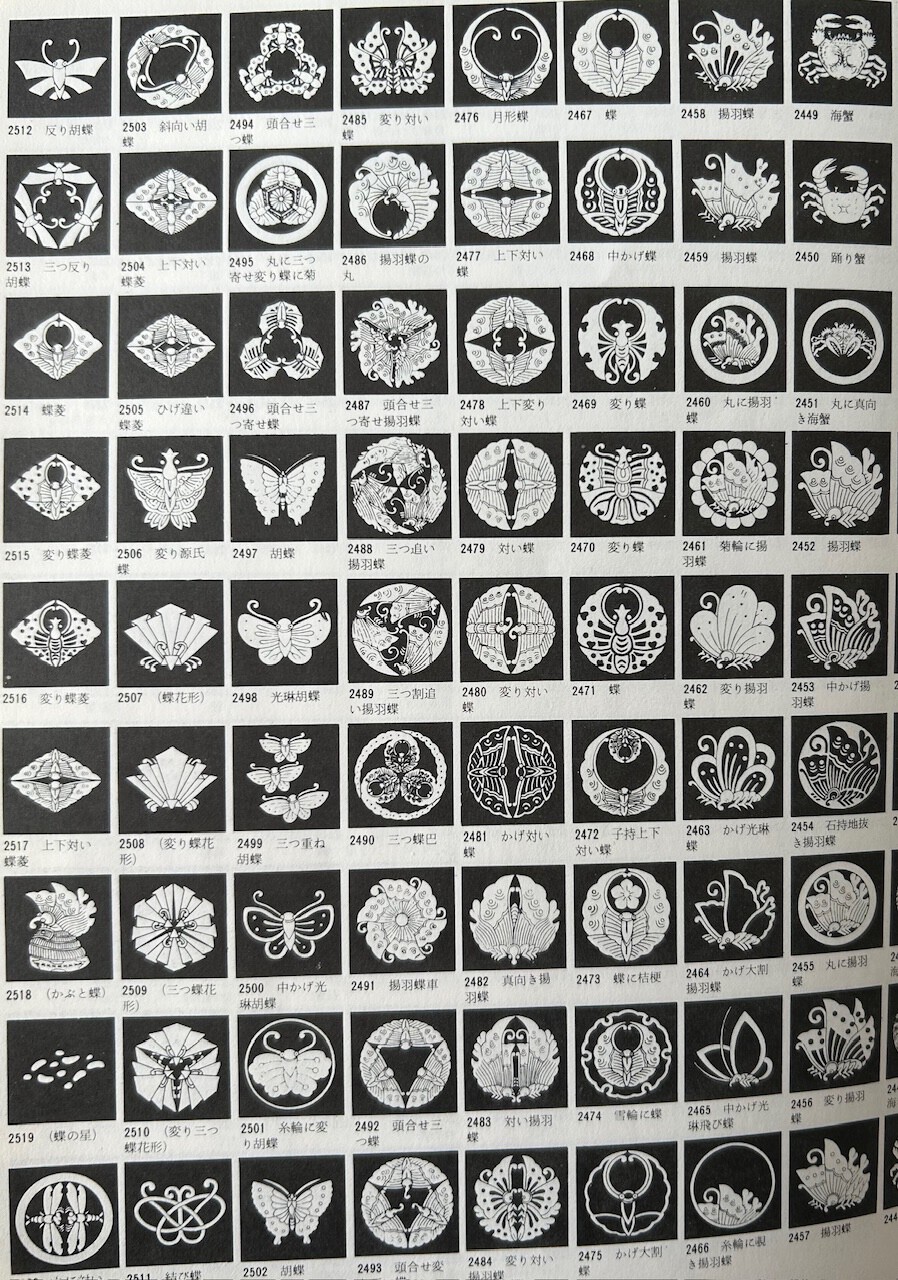
Here are two collections of butterfly kamon. You can see how much variety there was, allegedly up to 150 families using versions of butterfly Kamon. A B

 1 point
 -
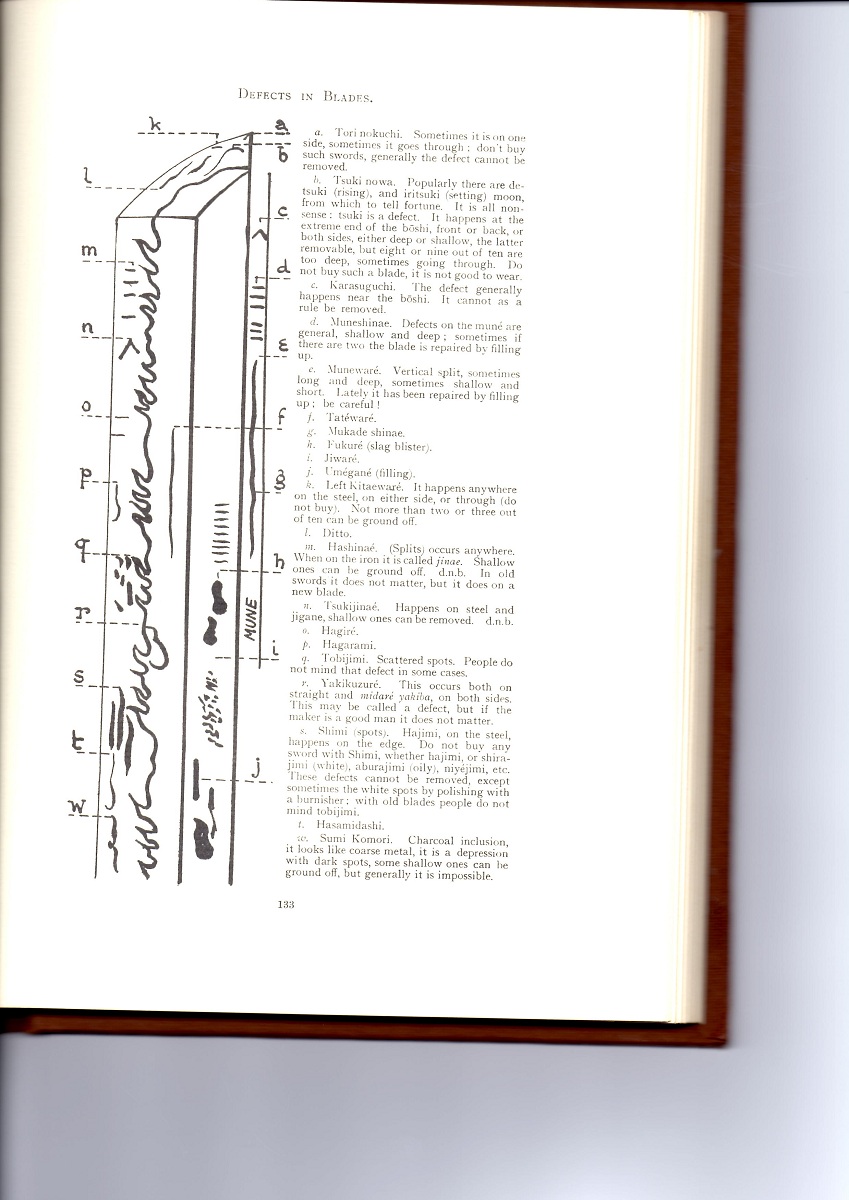
I thought it may be helpful if a central reference point were provided. The attached page is from the Sword and Same' book by Joly and Hogitaro. I can find a no more comprehensive standard reference. I hope this is of some help. :D
 1 point



















.thumb.png.4c5df79fec171b2dc4a23af38e280a4d.png)


.jpeg.dcc02bc43c6d3cf944ebda9c0565ab87.jpeg)
.jpeg.547e0d31c275398aefed3dccc5814f5b.jpeg)
.jpeg.4d9c54ef43427fefadb279ed31f60156.jpeg)
.jpeg.96bfe51e7aa82a10342497fad29b9404.jpeg)
.jpeg.4773d892d208a86794c6a837d0a941d4.jpeg)
.jpeg.890d6d984176190b7ad2969a972a0e6d.jpeg)
.jpeg.c6f0b8dd8b44ba988064fa8aafd5315f.jpeg)
























This leaderboard is set to Johannesburg/GMT+02:00