
Leaderboard



Popular Content
Showing content with the highest reputation on 02/06/2026 in all areas
-
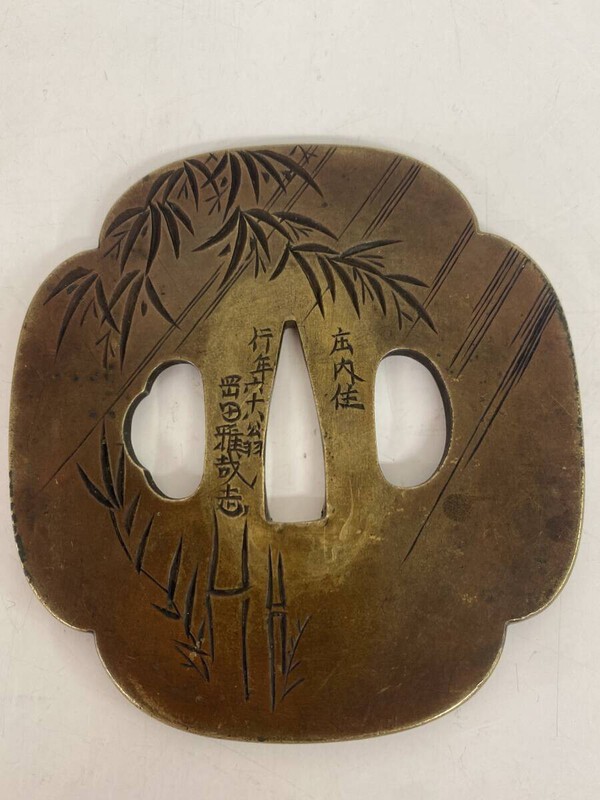
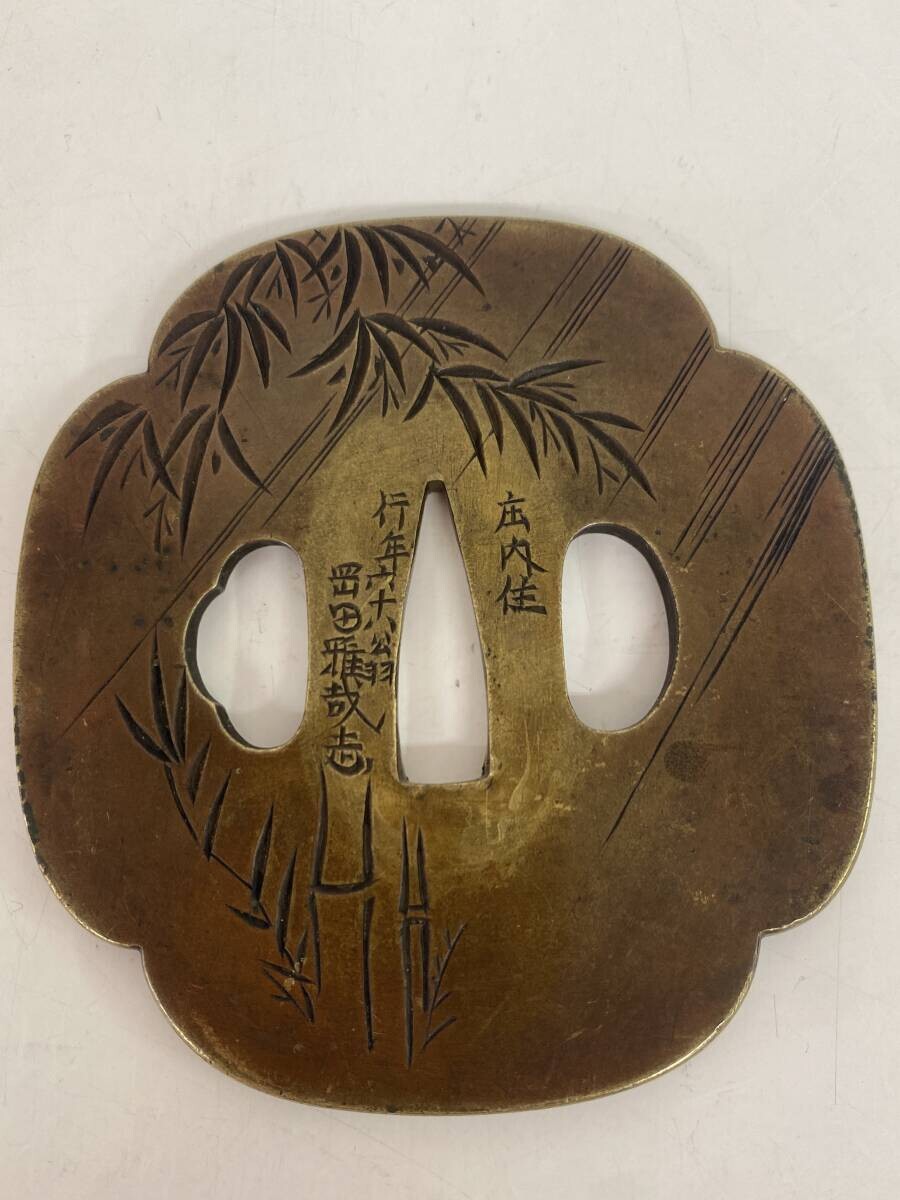
庒内住 = resident of Shōnai 行年六十八翁 = old man of 68 years 岡田雅哉 (花押) = Okada Masaya (kaō)4 points
-
Hi Robert, I couldn't agree more. My earlier comment was not criticism of the focus. The factual errors that we have vehemently denounced are the product of a particular paradigm of historical analysis that focuses on power dynamics, deconstructionism, and post-modern revisionism. In this paradigm, convergence towards historical accuracy is subordinated to the greater goal of pushing novel narratives to enact society change. It is this inversion of teleology that I take as responsible for the fall of Western scholarship in our field. Or, simply put: when the purpose of scholarship shifts from "finding out what was true" to "changing what people believe," accuracy becomes optional and errors become inevitable. Hope this helps to clarify my position, Hoshi4 points
-
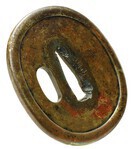
Here’s what I believe is an Akasaka tsuba, from my collection with this feature. Thanks for creating this thread, I’ve always been curious about it. -Sam
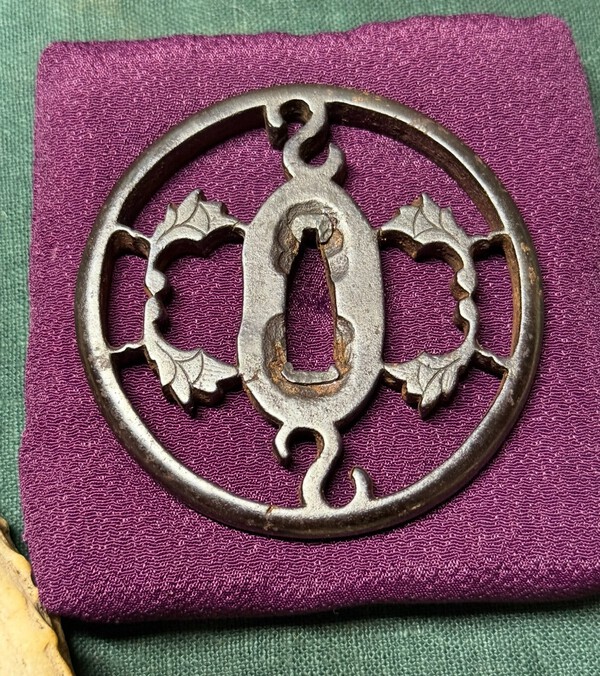
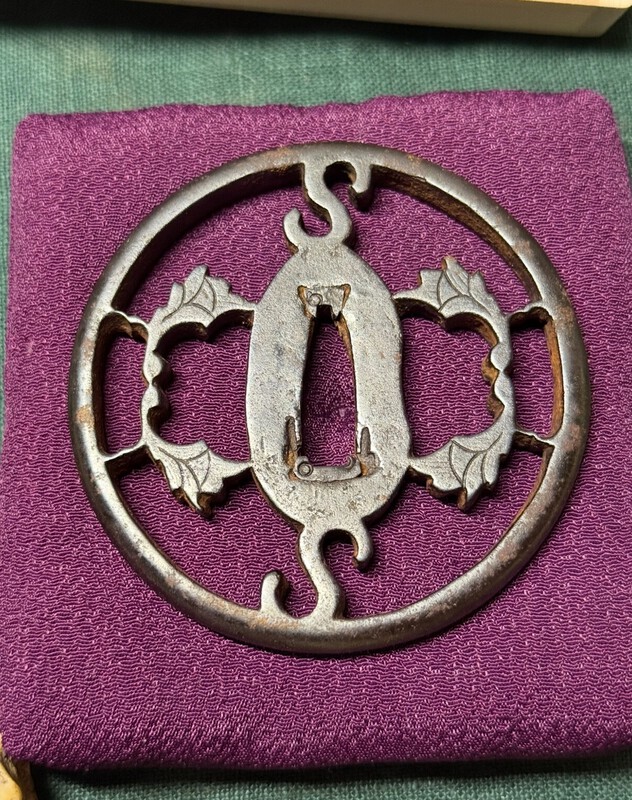
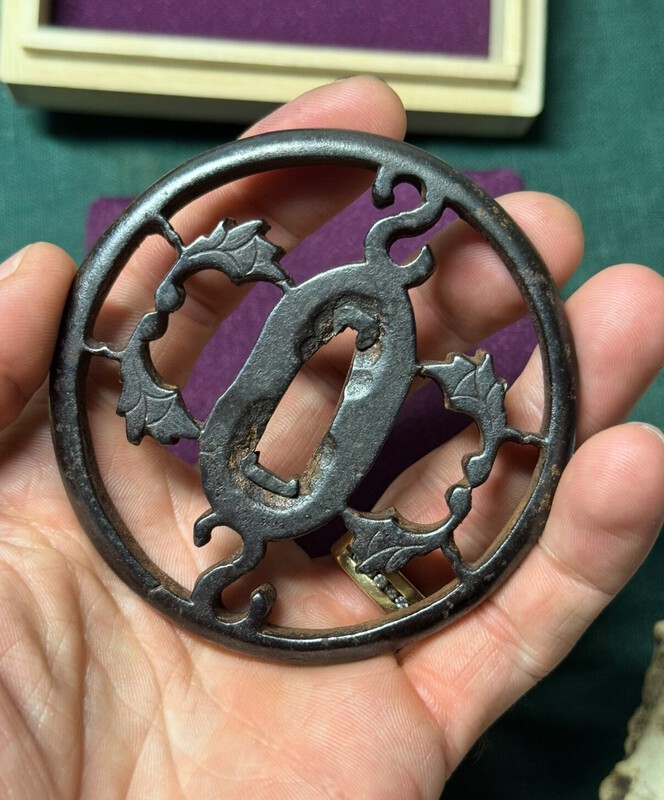
 4 points
 -
This is a great resource—thanks to all involved! For those who prefer a book, the Northern California Japanese Sword Club has volume 1 in a reorganized edition: Book on Lulu3 points
-
I like them both — each set has its own character. And yes, according to the origami, it’s a joint work made at the same time. Sokujo and Teijo were cousins. Sokujo lived a very short life and passed away at the age of 31. His son Renjo was four at the time, so although he was the intended successor, uncle Teijo stepped in to take over the mainline, raising and training Renjo until he came of age. Renjo, assumed the position at 25, becoming the 11th-generation head.
 3 points
 -
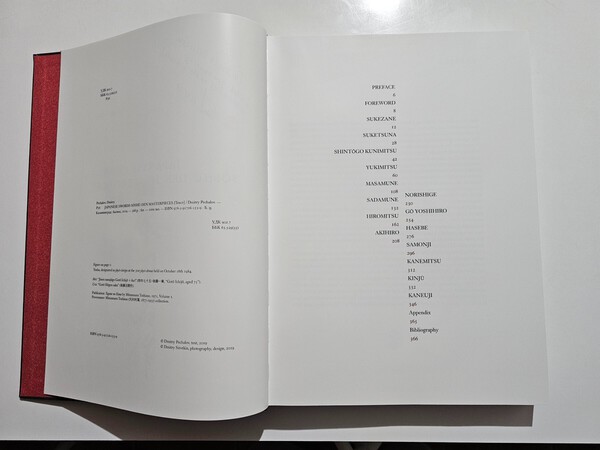
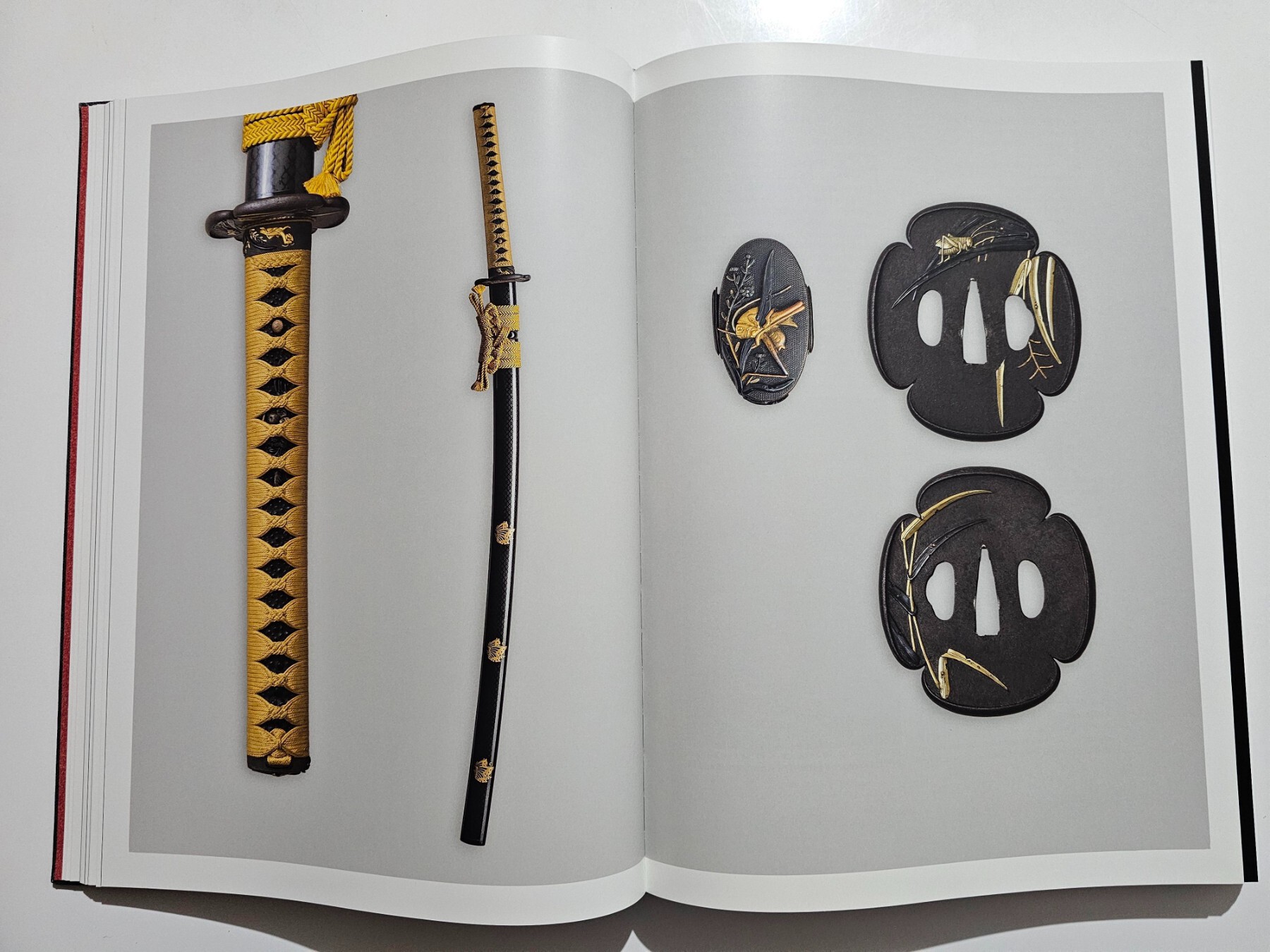
So a couple of weeks ago I purchased the book "Japanese Swords Sōshū Masterpieces" by Dmitry Pechalov from the Soshu-Den Museum. It has been around for a little while (since 2019) so I guess this is a post-post-post release review of the book. Let me just start off by saying... WOW!!! This is how a Sword book should be presented! The book is NOT small - in fact at 40.5cm x 30cm (16"x11.8") it is actually rather big, but let me be the first to say it - when it comes to Nihonto photography... BIG IS BEAUTIFUL! And whilst the pictures are exactly what you want in a sword photo; Massive Hasselblad super high definition images in all their glory, this is not a coffee table book. This book is serious, showing years of research and dedication to the cause, I promise you will learn a lot more than you already know and it will probably answer a lot of your questions or concerns that you had. Everyone in the Nihonto space knows, the Soshu-Den is the cream of the crop, their swords are beautiful, they are rare and generally very, very expensive - especially for the unfathomable heights of Tokubetsu Juyo and above. As such these blades are super hard to get a proper look at in person and in fact in most cases you never will. This book however gives you an insider's view of some of the best of Soshu-Den blades ever made. Every Master and sword has a significant write up that gives me massive Darcy Brockbank'esq vibes in it's detail; from the story of the Master, to the story of the blade and it's associated provenance (Not surprising really as Darcy helped and worked with Dmitry on the book for over 5 years - he even wrote the forward. Mark Sesko was also engaged for his expertise - so this book was put together by a stellar cast of Nihonto specialists.) Before I continue, let's be very clear, whilst this book is a book about the Soshu-Den, the stars of the show are the 20 swords that come from one very special private collection - and for this all I can say is... thank you. This is like being invited to a very detailed, all access private tour of an exclusive private sword club - the kind you did not know existed but when you do, you become desperate to somehow get in. To be able to see Soshu Master Blades including several at Tokubetsu Juyo in all their Massive High Definition Glory (yes these words are all capitalised) is just special. No, I will say this book is extra-ordinary. I am a massive advocate for the creation of Catalogue Raisonné for each Great Nihonto Master. But let's be clear - if/when this happens then this book is the benchmark that these catalogues will need to meet. This is how the photos will need to be presented, this is how the stories will need to be told. For the art form that is Nihonto and it's associated crafts there is just no other way around it, if we are to truly appreciate what has been created by these Great Smiths. Because let's be honest for us mere mortals this will be the closest we will ever get to one of these Japanese Treasures. So we might as well be allowed to indulge vicariously through the photographs of these beautiful slithers of steel. So I am going to say it - this is a book that you absolutely have to own as a sword collector. It is not cheap but it is so, so worth every penny you spend on it. It should also be noted that after six year this book is not available second hand and this in itself speaks volumes about this book. Once you own it you don't want to give it away or sell it. It will almost immediately become a treasure that takes pride of place in your collection. Mark my words here - a standard has been set here and this is the standard we will judge all future Nihonto books by. As such it is a very important book for Nihonto and therefore in my opinion it is an instant classic. I will read it often and cherish it but I may have to get some white gloves as I genuinely want to look after and preserve this copy of the book as best as I can. Due to it being a watershed book, and that it was so beautifully put together, I suspect it will soon enough become a collectors item as soon as it sells out. I believe @Brian said the same thing about it in his review 6/7 years ago (that one was for the Gen Zs.) In all honesty I am not sure how many Dmitry has left and I do not know if he will ever reprint this book, so... If you don't already own one - grab a copy today before you miss out - I promise you will not be sorry. I purchased mine through @Grey Doffin at Japanese Swords, Books and Tsuba but please note that the books are all shipped by Dmitry who is based in Europe and as such there will be an extra shipping fee. You can find out more about the book here: https://www.nihonto-museum.com/book Please Note: I am not paid by Dmitry or Grey and I have no affiliation with Dmitry or Grey other than I just bought the book through/ from them. Neither of them were aware of this review before I published it (I do not even know Dmitry's profile name on this site.) As such this is my own opinion and I do not benefit from this opinion other than the hope I can help get some good stuff get into hands of the real enthusiasts. As such I hope this review helps. Cheers.
 2 points
 -
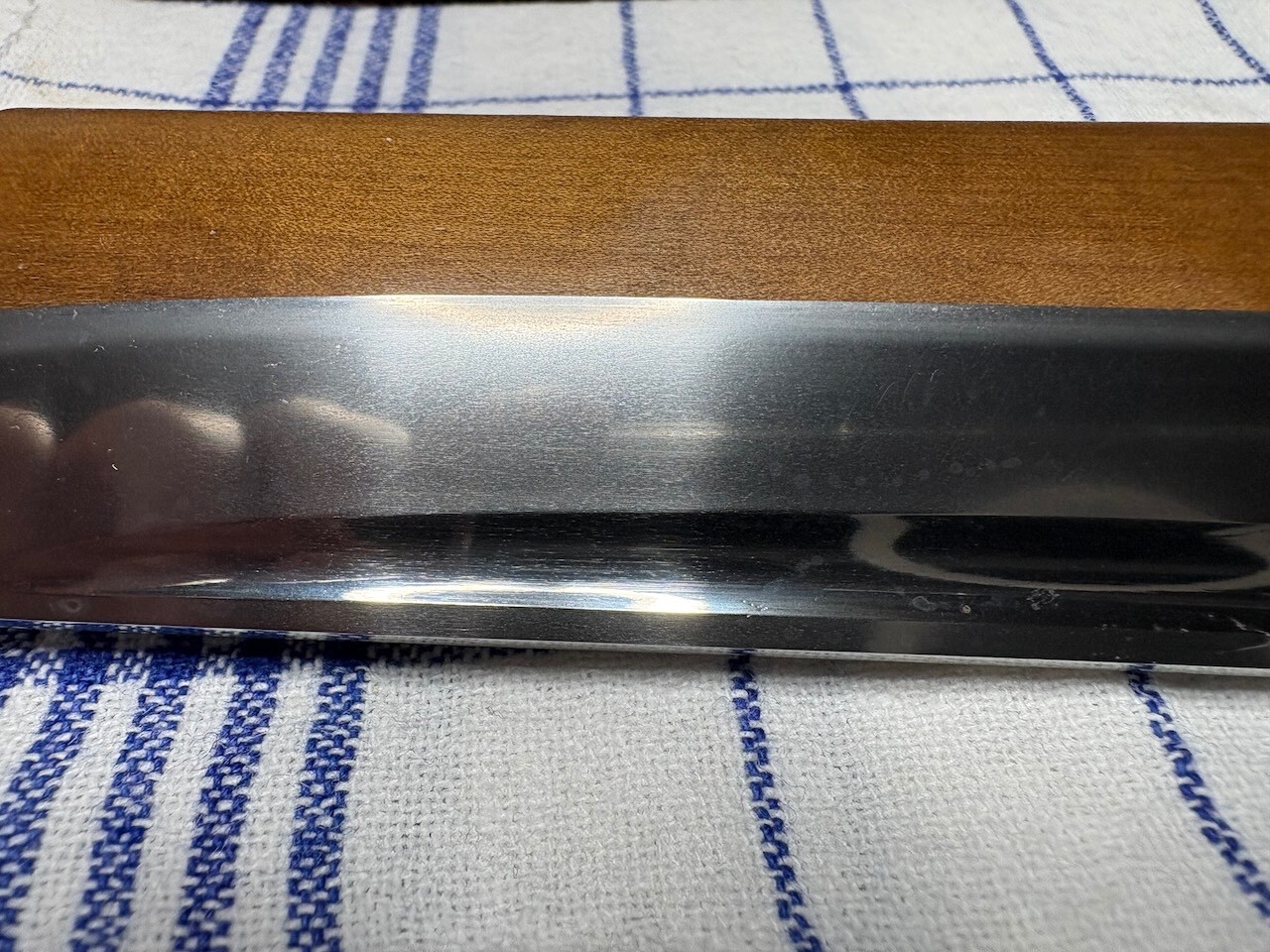
Hi Chris, The blade has 関 stamp which is for SEKI = 名古屋陸軍造兵廠関監督班 = Seki Supervisory Unit of Nagoya Army Arsenal. Your sword was likely made around June/July of 1944. No doubt in my mind that it's 100% genuine. Great looking example of the Pattern#5 (or Variation#8) Type 95 Gunto. -Sam (Also, that's a great book )2 points
-
Dear Volker. I believe the paper specifies nidai, the two kanji in parenthesis after the signature line on the origami. All the best.2 points
-
Dear all, I would be most grateful for some assistance in translating the mei on this tsuba. Best regards, Tom
 2 points
 -
Wakizashi attributed to the second generation Omi no kami Fujiwara Tsuguhira.2 points
-
We stayed in the Karel V hotel at last year's JAF, not cheap but top class, rooms, breakfast & catering all very good and of course very convenient to be on the spot. Pierre2 points
-
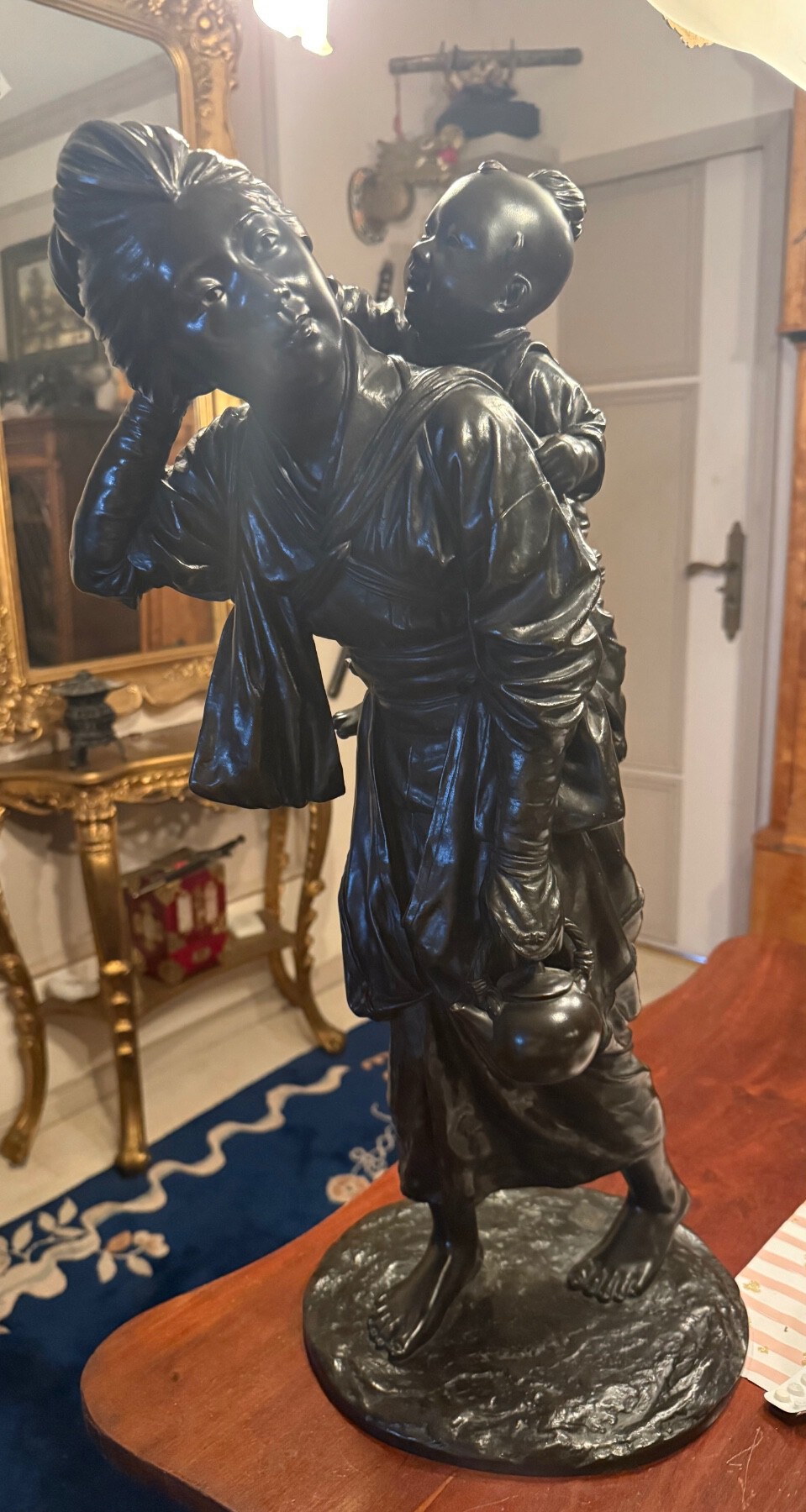
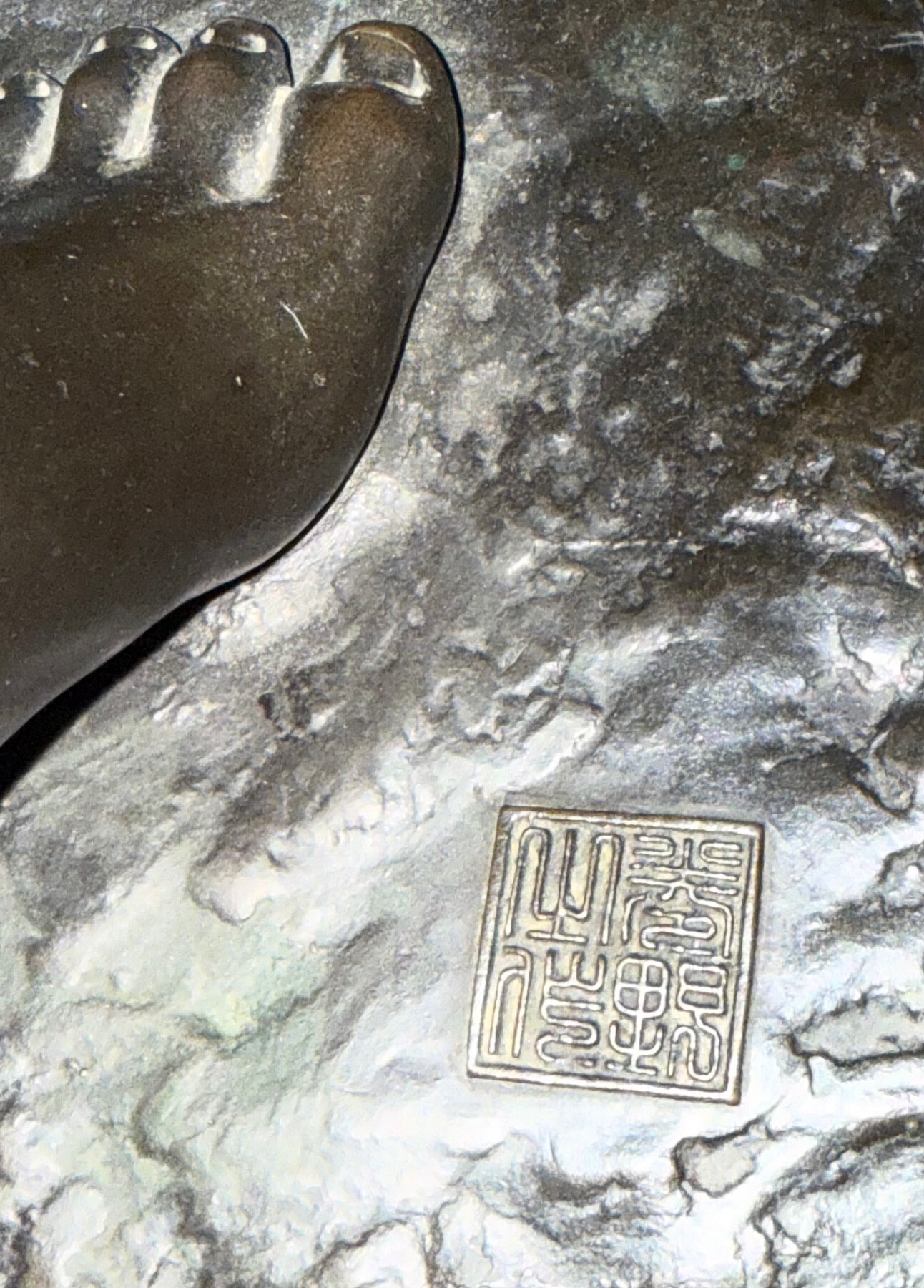
Beautiful high quality Meiji bronze. Probably by Genryusai Seiya. One the greatest Meiji studios. They made these in various sizes but this is one of the largest I’ve seen. Do you own it or thinking of buying it?2 points
-
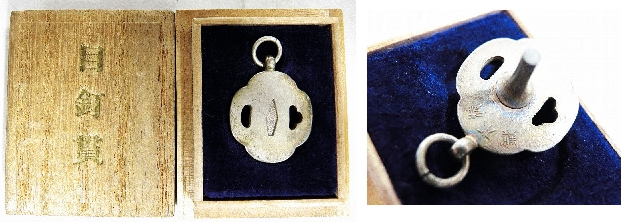
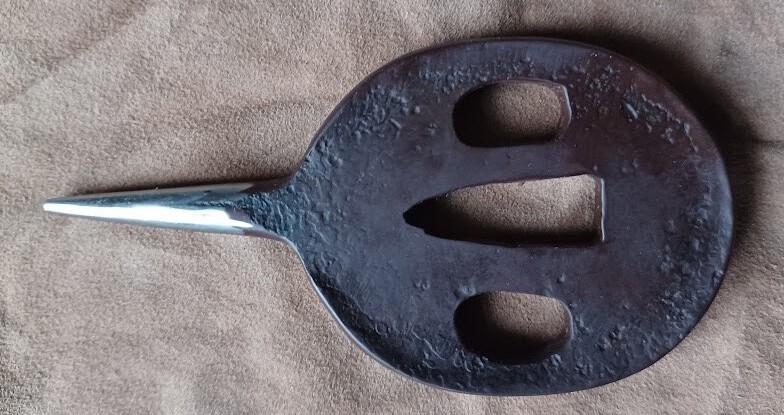
Back in 2020 https://www.militaria.co.za/nmb/topic/33920-mekugi-nuki-ii/ but not in this thread. Miniature tsuba mekugi-nuki it cost me ¥3,000 and here is a "folding" version
 2 points
 -
I've had a WTB listing up forever and only received one offer. It was so close to retail I balked. Looks like I'll have to stump up for a new copy. The more I see the quality of the images the more I think its worth the investment. Also looking for Dr. Honma's Soshu-den Meisaku Shu These will be last big reference purchases I think I want in my little library ....... at least for Soshuden As Hoshi said we should be investing more in experiences and less in collecting. These books are the perfect example of the former.2 points
-
Did I show my MEKUGI-NUKI in TSUBA shape? Forged from old (= 1880) wrought iron.

 2 points
 -
late reply - this shows some "extreme" tagane-ato https://www.slam.org/collection/objects/8666/ The tang of the blade would be very thin unless it represented fullers?
 2 points
 -
It's not Chinese. The document looks really weird. With a few exceptions (like the title 鑑定書), the "characters" are either completely unreadable or sort of resemble real Hanzi/Kanji, but not getting them quite right. I suspect it's AI-generated slop.2 points
-
To confuse the matter, even when the tagane-ato have been punched and spread the metal into the nakago-ana in order to fit a particular blade, it is also possible that the metal could be filed back in order to fit a THICKER blade. This will result in heavy tagane-ato marks but little to no metal spread into the hole. Fitting a tsuba to a new blade therefore works both ways.2 points
-
1 point
-
1 point
-
Thank you Erik. Some measurements: Nagasa : 212mm Sori : 0mm Total length : 345mm Motohaba : 22.8mm Sakihaba : 15.1mm Motokasane : 3.9mm Sakikasane : 3.5mm and i made some new pictures, hope they are better, Thanks Oli


 1 point
 -
Oliver, Sorry for my lack of knowledge, so still working this out - His real name is Hosokawa Sennosuke. So isn't that the source of his stamp, not a school? The WWII Masayohsi was also named Hosokawa: "MASAYOSHI (正義), Shōwa (昭和, 1926-1989), Tochigi – “Yashū-jū Hosokawa Masayoshi” (埜州住細川正義), real name Hosokawa Shigeo (細川重雄), he studied under his father Hosokawa Masamitsu (細川正光), he was the 7th gen. after the 1st gen. Hosokawa Ryōsuke Masayoshi (細川良助正義) who was active around Kyōwa (享和, 1801-1804) (see picture right)" Also, I see the 1800s Masayoshi used different kanji for Hosokawa - 細川 - yet used the same kanji in the kao as Masayoshi did - 埜州. Complete mystery to me.1 point
-
What do you think of this beautiful bronze Meiji figure? It's about 70cm tall and weighs almost 20kg, and is fantastically crafted. The figure is also signed. Regards, Gerry
 1 point
 -
I bought this figure a year ago. The quality is simply incredible.1 point
-
No, I'm sending my collector half instead1 point
-
I’ll be there as well.1 point
-
I will be there for the second time and eagerly looking forward to it.1 point
-
1 point
-
Yes I did! I don't even have access to that old email anymore. I chose David Hofhine. According to some I may have made the wrong choice there. I think I remember years ago when I was trying to choose who to send it to I just got sick of going over all the details on who was more certified and chose someone that, from what I could see in the images, produced the most attractive results.1 point
-
AI - still needs some learning !! AI Overview This is a vintage Chinese cash coin amulet or charm. It features a unique, decorative shape with multiple openings and Chinese characters inscribed on its surface. Type: Amulet or charm, designed in the style of a cash coin. Material: Likely a brass or bronze alloy, showing signs of age and patina. Design: Features a central opening and two side openings, with a loop at the top for suspension. Inscriptions: The characters suggest it might be a commemorative or a general good luck piece.1 point
-
I've shown this before It was one of the reasons I bought this tsuba
.thumb.JPG.1df16dafe489337bacc11b6f7804d73b.JPG) 1 point
1 point -
The Variation #2 introduced the offset machi along with an internal change to the habaki. Per a private conversation with Bruce, the lower inside of the habaki was built up to make contact with the machi. aquired/inherited type 95- questions1 point
-
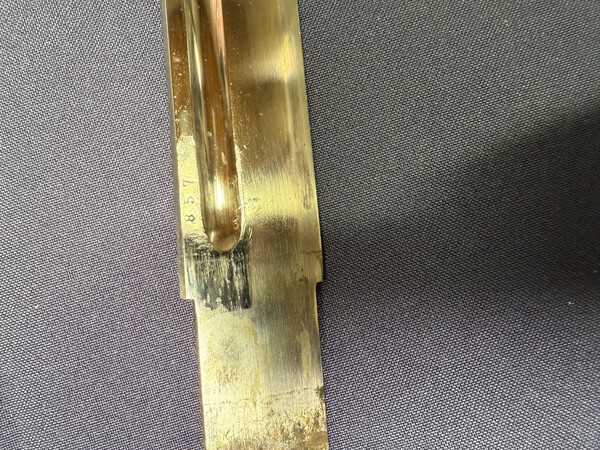
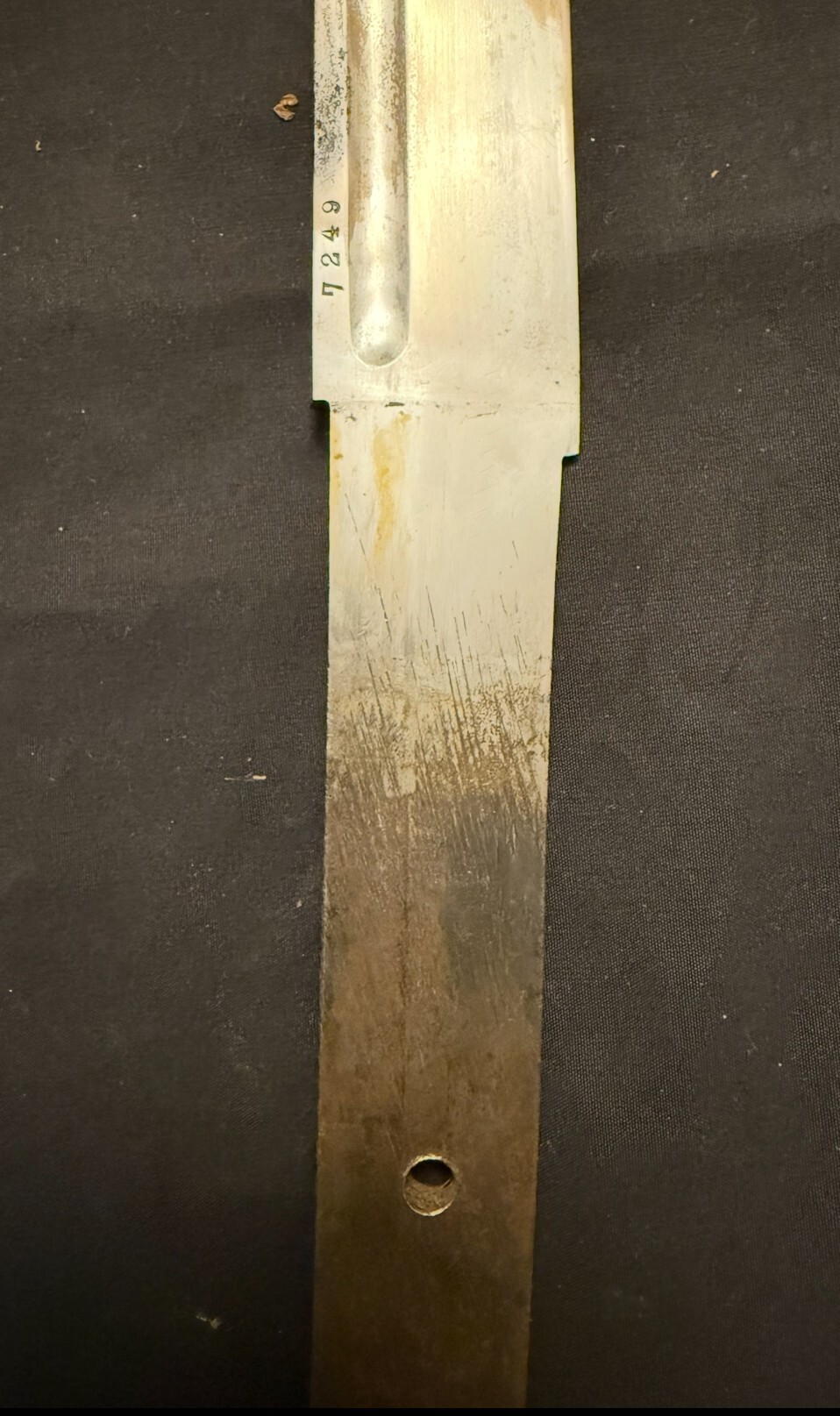
As far as I am aware, amongst the metal hilt Type 95 Gunto, only the copper variant had aligned machi. All aluminum variants of which that I have seen the nakago; have misaligned machi. I do not know about the wooden variants, but I suspect that they are also misaligned. Even my early aluminum transitional pattern has misaligned machi. So it appears, according to my interpretation, that the introduction of misaligned machi occured at the transition from copper to aluminum hilt in 1938. Photos below serial number #857 Copper, and #7249 Aluminum. To those reading along... I do not recommend disassembling your Type 95 swords. Bruce and I have a lot of experience with these; and are doing this with extreme care and for educational purposes. There's very little information to gain from taking them apart. All the best, -Sam
 1 point
 -
$350 plus shipping1 point
-
Bruce the kokuin reads ホソ川 or Hosokawa used by Masayoshi and his students…1 point
-
I display the book as a part of my collection. Even people who don't care about swords are able to appreciate it for the level of quality.1 point
-
Very beautiful! I like this set better in terms of quality. Very interesting point. So it turns out this was a joint work done at the same time?1 point
-
hi, No wonder I could not do anything with it. The NBSK paper is used indeed as described and since this is made by Yoshihara Yoshindo who is still alive no NBTHK paper is possible. best regards John L.1 point
-
Just to balance the discourse a bit. Interesting how many inaccuracies can be presented even here on this single thread webpage and discussion about the 2004 BM exhibition which Victor curated, about what the BM owns and the condition of the swords etc etc. I shall leave it to someone with more time and energy to debunk these notions. And the person in the video …. Well, the curator is different. Just for information to all those who have been moaning and complaining…. The BM is actually one of the more accommodating state-owned museums where a person can request to study in hand their blades. I have personally done it 3-4 times and know of fellow members who do it regularly. As I have studied their top 15 or so blades several times, the urge is lesser, but they have fairly good Shinto/Shinshinto stuff too. There is a procedure to follow but it works and they are open-minded about it and facilitate personal study. So, with a bit of pre-planning and foresight, all of you could have submitted a request, planned your trip/visit accordingly and studied some of the treasures in hand. Go try that in the Tokyo National or other museums.1 point
-
Alas, This video is very difficult to watch. Beyond the factual errors, it is representative of the lack of museum budgets for qualified curators and European decline in museum scholarship on Arms & Armor. This is not to blame the presenter. His effort is earnest, and I am sympathetic to his predicament in the society he is embedded in, it is a survival strategy. He is but a symptom of a deeper societal issue. This is a general trend, museums follow the elite taste and ideology of their donors and subsidizing government bodies. Sadly, the BM has been marred in a battle against the Woke Mind Virus and its denunciation of colonial history that renders everything it owns, hires, and does, suspect. The presenter is a product of this tension. It is an unfortunate situation, but this too will come to pass in the broader arc of history when necessity calls back for common sense. Best, Hoshi1 point
-
Ohh, so I'm not too weird and am in good company!! 🤪 Btw, was Sasano-sensei's routine published somewhere or was he quite vocal about that? I'm just curious how one would find that information out.1 point
-
Reminds me of a German sculptor Jean Arp-I researched at Art School- a millenium ago- he had his sculptures on his staircase and he massaged them on his way up and down the stairs - getting them to an acceptable patina before exhibiting them. Yes handle tsuba, it helps the patina and gives them natural protection. Mike1 point
-
赤尾清夫 Normally Akao Kiyoo but that personal name (second two Kanji) could be read several ways. One of the Akao school. Seio, Seifu, etc. …(?)1 point
-
Thank you to all, really; it is much more than I had hoped for.1 point
-
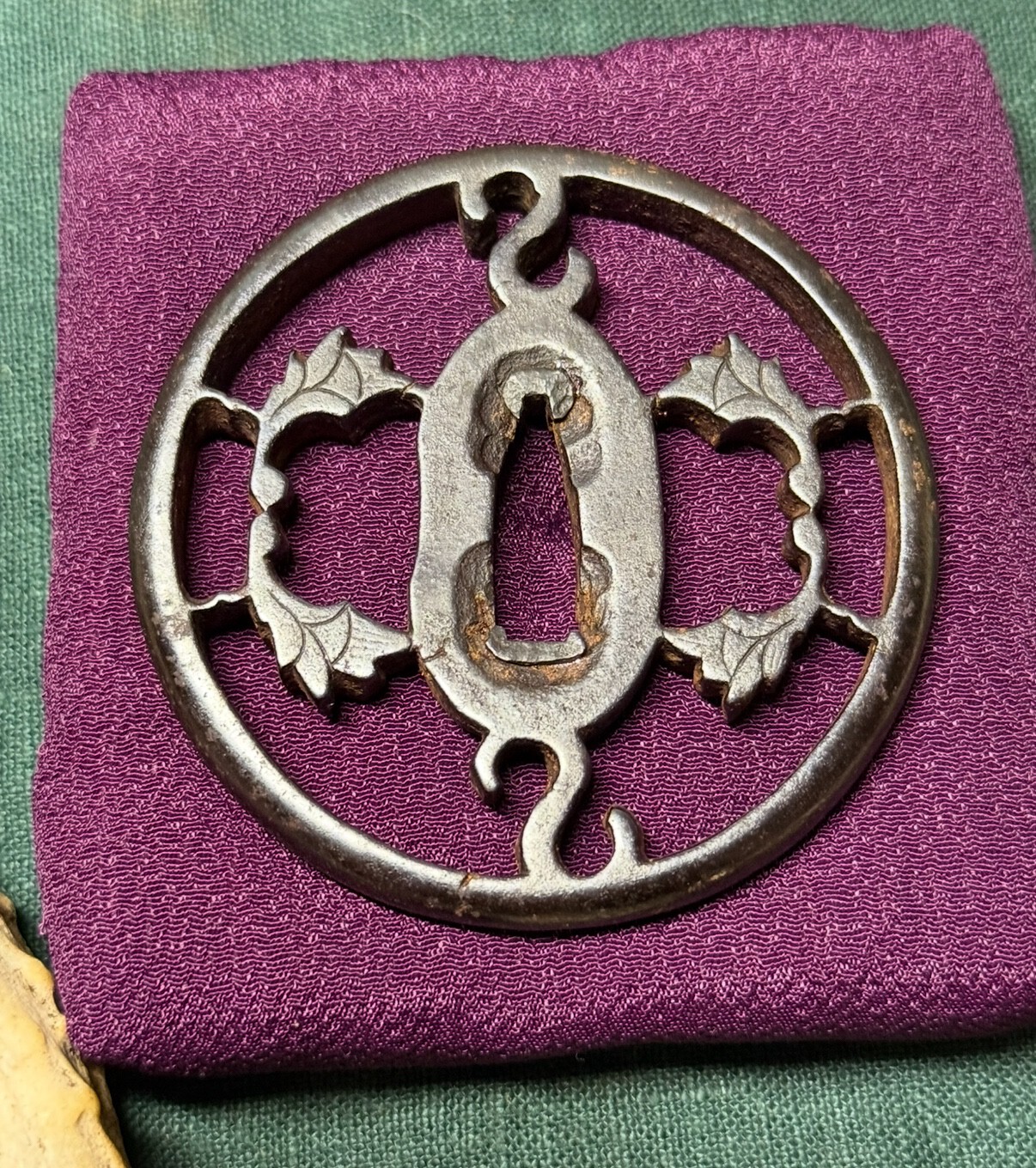
these CUT OUTS are in fact areas of the tsuba that have been punched in to fit the blade. over repeated mountings occuring the more the depressions grow might be called tagane in akasaka tsuba maybe. if there was a soft metal insert they would be called sekigane and they would be modified to fit the blade rather then the body of the tsuba1 point
-
Stephen King sent me this link to a nice Kozuka https://www.ebay.com.au/itm/1575201490901 point
-
If you want to see any item from Yahoo auctions, go to jauce copy the end of the link, here : "n1202118356" and paste it after this jauce one https://www.jauce.com/auction/n1202118356 and you will be able to see every yahoo auction ad1 point
-
This guard from a post back in March 7, 2024 just relisted https://www.jauce.com/auction/o11920984561 point
-
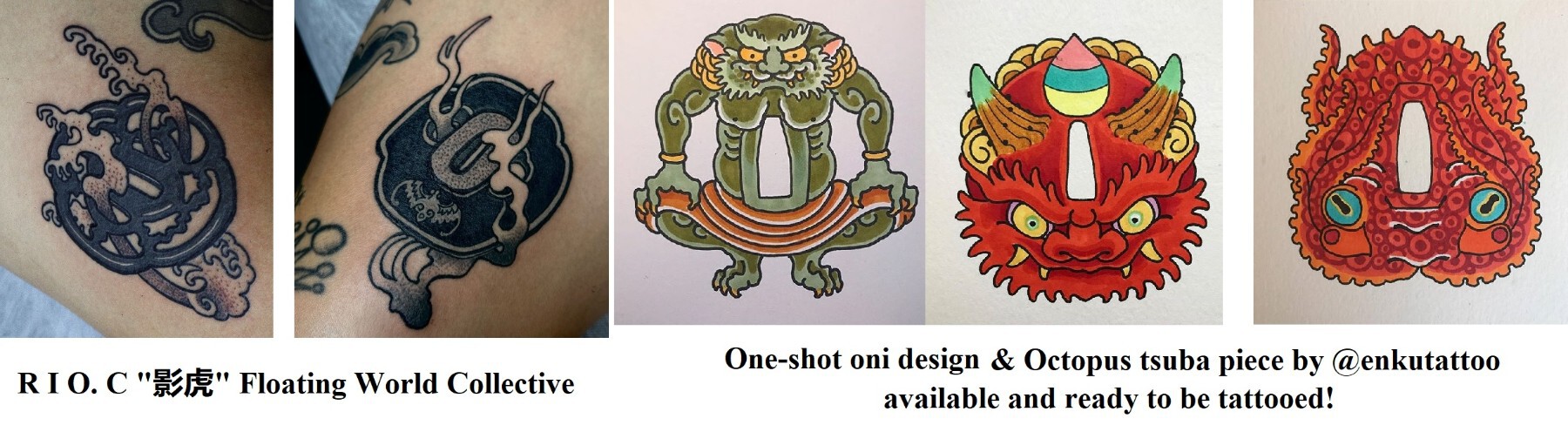
Tats! Get inked!
 1 point
 -
Two nice looking inro in a lot of three with tsuba/tosogu motif in Bonham's. https://www.bonhams....1912-19th-century-3/ Damon
 1 point














.JPG.b40df64ce4d79b044a3903d89bf8f174.JPG)










This leaderboard is set to Johannesburg/GMT+02:00