
Leaderboard


Popular Content
Showing content with the highest reputation on 01/08/2026 in all areas
-
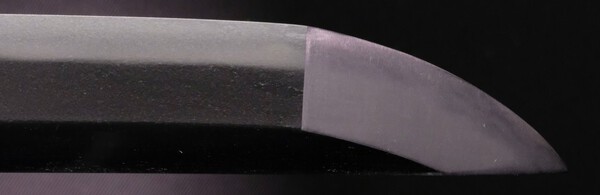
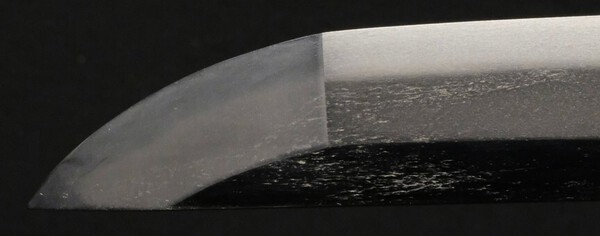
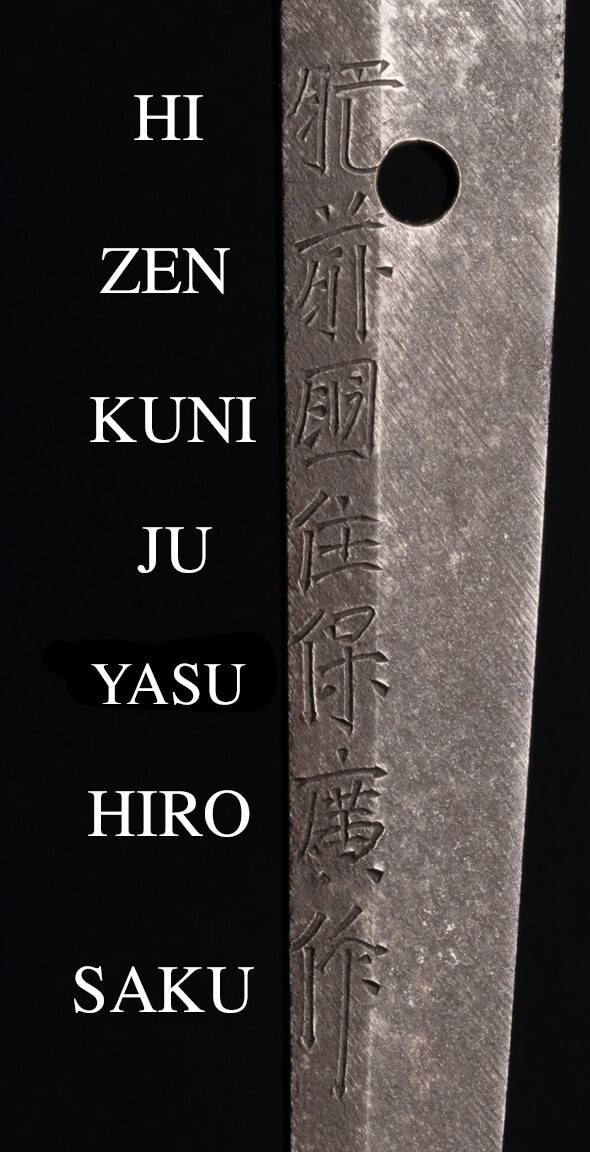
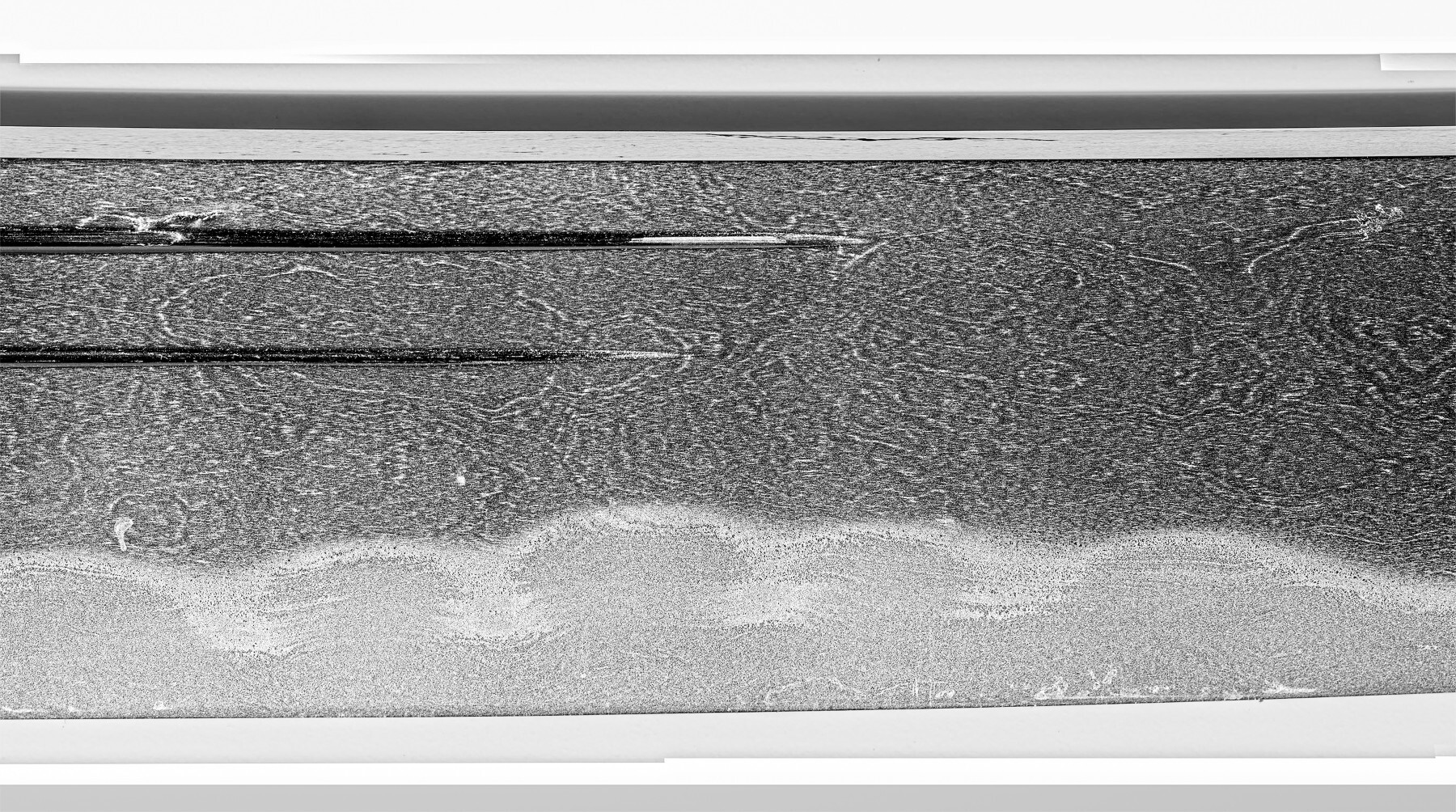
YASUHIRO, HIZEN GENDAITO SUGATA: SZ MEI: HIZEN NO KUNI JU YASUHIRO SAKU (TACHI MEI) DATE: NONE c. 1930’S NAGASA: (26.125") OVERALL: (34.125") MIHABA: (1.1875") KASANE: (0.25") SORI: 0.5 NAKAGO: UBU MEKUGI ANA: ONE YASURIME: SUJIKAI MUNE: IORI HADA: MIXED HAMON: NOTARE IN NIE DEKI BOSHI: KOMARU HORIMONO OMOTE: NONE HORIMONO URA: NONE HABAKI: 1 PC. SOLID SILVER SHIRASAYA Flawless Gendaito by the sword smith Hizen Yasuhiro. Yasuhiro was born in 1910, he worked under Akihide as a Rikugun Jumei Tosho and won 2nd seat in 1941 (see details below). His lineage can be traced back to the 8th generation Hizen Tadayoshi and was the brother of Motomura Kanemoto. His work was first exhibited in 1936 from which point he won many awards until 1944. Post war he submitted blades to the Shinsakuto-Ten. Yasuhiro worked in the Hizen style with a prominent hada showing the Hizen konuka mixed with ko-itame and masame. Hamon begins as a gentle Notare transistioning to suguha. Within the hamon are clouds of Ara-Nie. The nakago is ubu with one mekugi ana. It is signed tachi-mei in the Hizen style. This sword comes in Shirasaya with a solid silver Shonai Habaki References: Hawley’s Pg 926 (YAS 680) Gendaito Meikan Pg 173 Hizen Handbook Pg 283 Sesko’s, Swordsmiths A-Z pg 1264 Courtesy of Sesko’s, Swordsmiths A-Z: YASUHIRO (保広), Shōwa (昭和, 1926-1989), Saga –“Hizen no Kuni-jū Yasuhiro” (肥前国住保広), “Yasuhiro” (保広), real name Motomura Tamotsu (元村保), born 1910, he studied under Hisahiro (久広) and worked as rikugun-jumei-tōshō, jōkō no retsu (Akihide), Second Seat at the 6th Shinsaku Nihontō Denrankai (新作日本刀展覧会, 1941)




 5 points
 -
If I had to take a slightly wild but slightly educated guess, I would say it's an official order to a retainer/ally, notifying that ally of his new posting. The first letter is 就 which indicates its an order. The far left is the addressee, and I'm not sure but I think its 大嶋囗囗どのへ (To the Honorable Mr. Oshima), and if I jump to conclusions I can imagine it is a letter to Oshima Mitsuyoshi, a longstanding ally of Tokugawa, who was a really, really old man by the time Tokugawa was Shogun, and Tokugawa I think awarded Oshima some cushy posting where he could live out his days in comfort.5 points
-
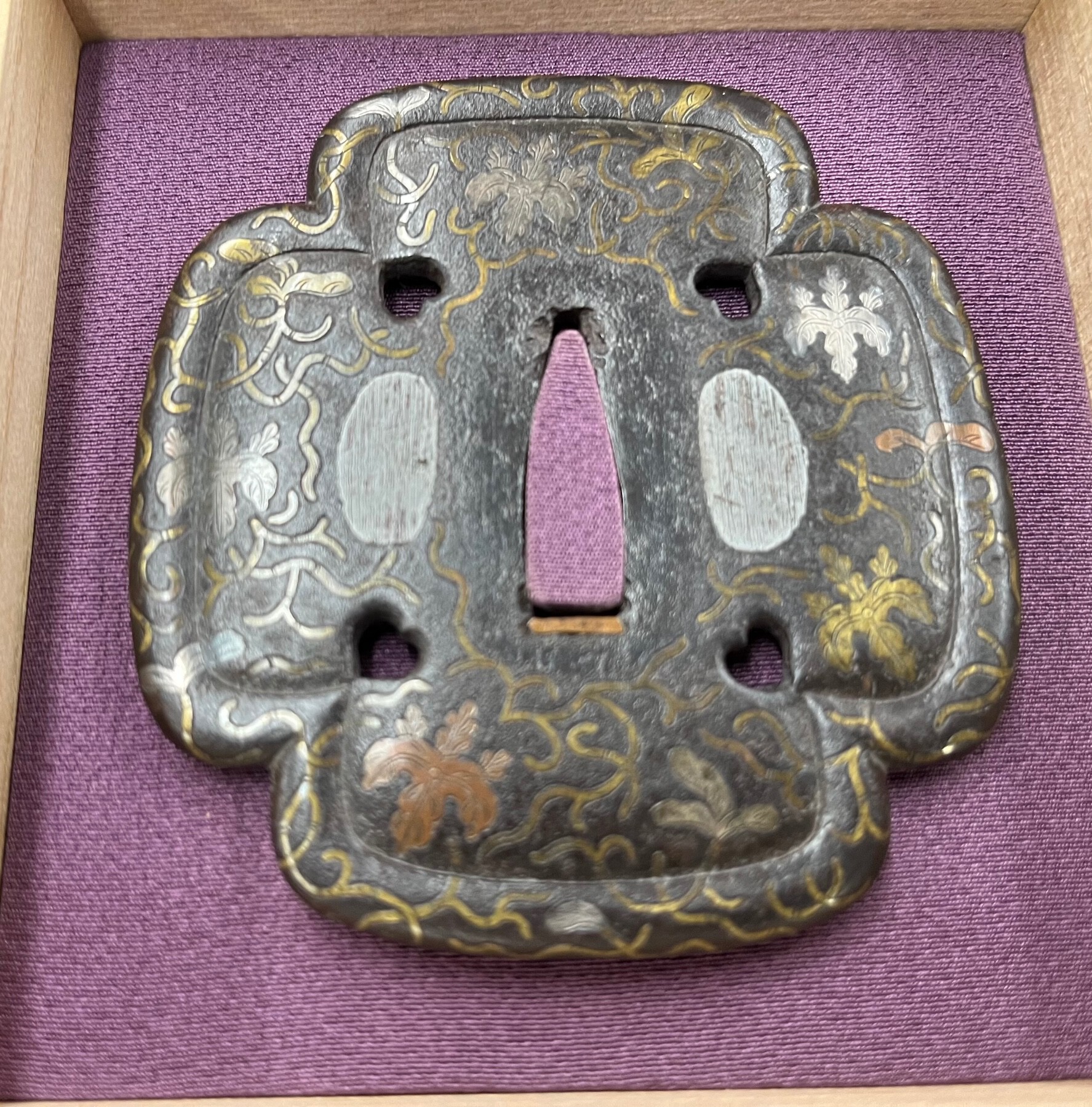
Revisiting this thread as I just discovered Washida may be the source of my Tsuba.
 4 points
 -
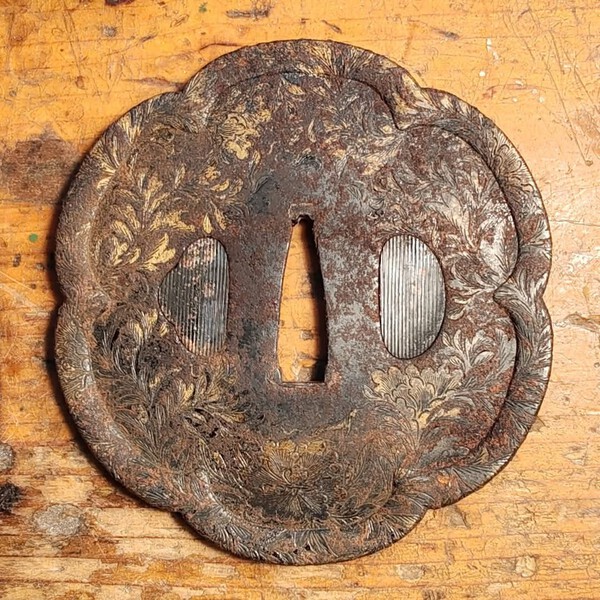
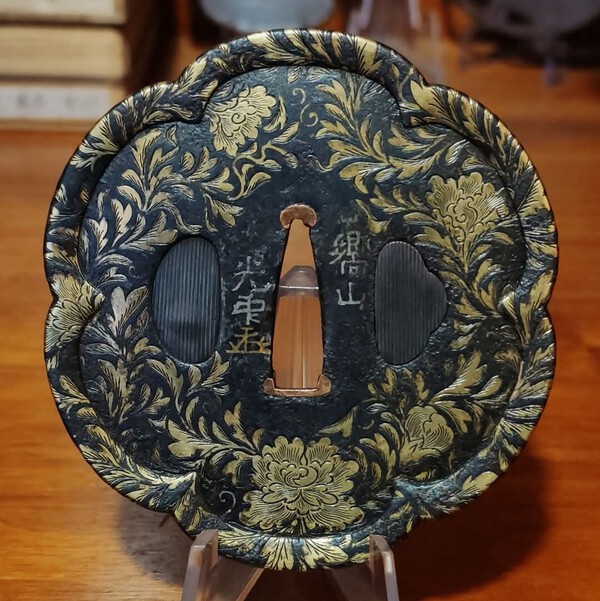
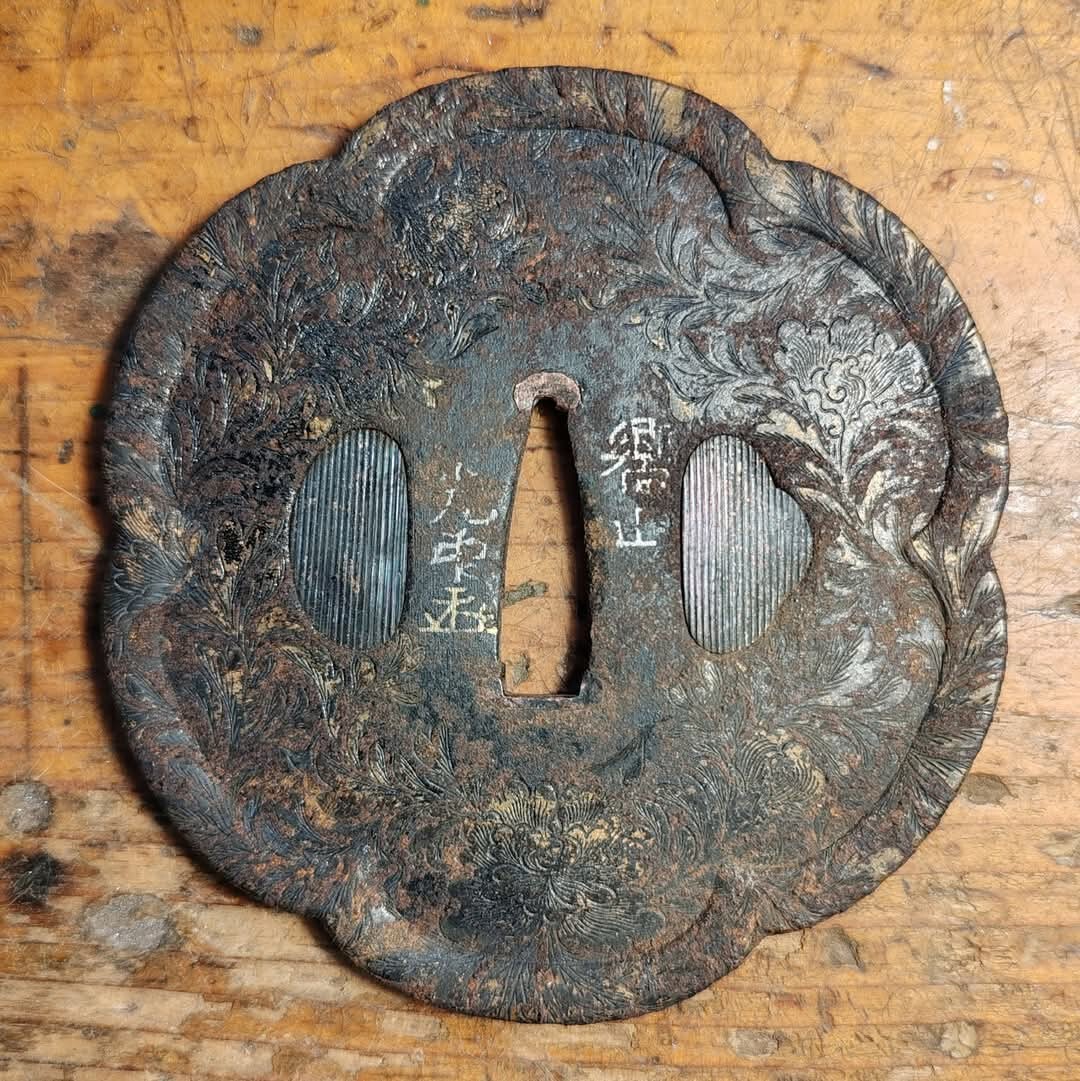
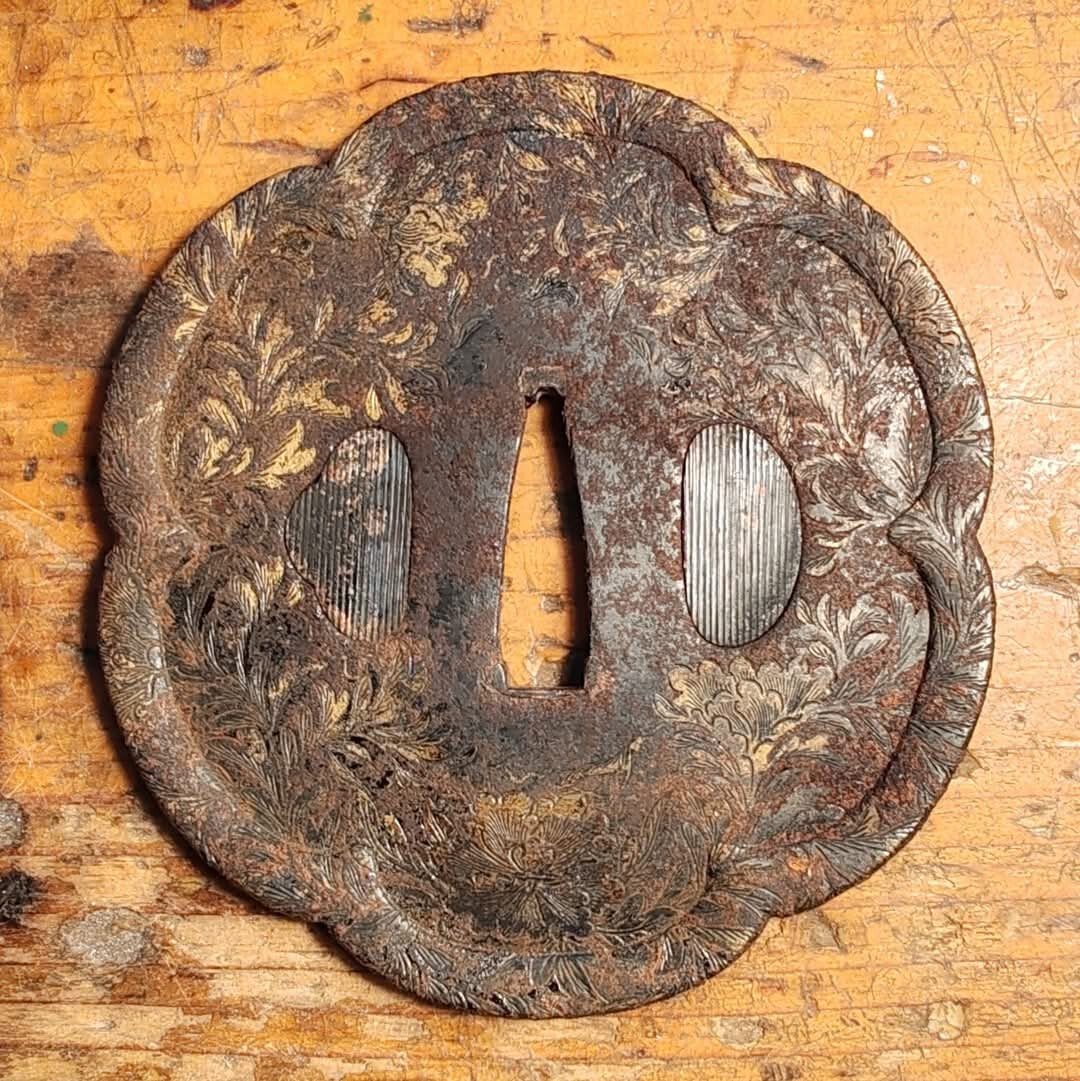
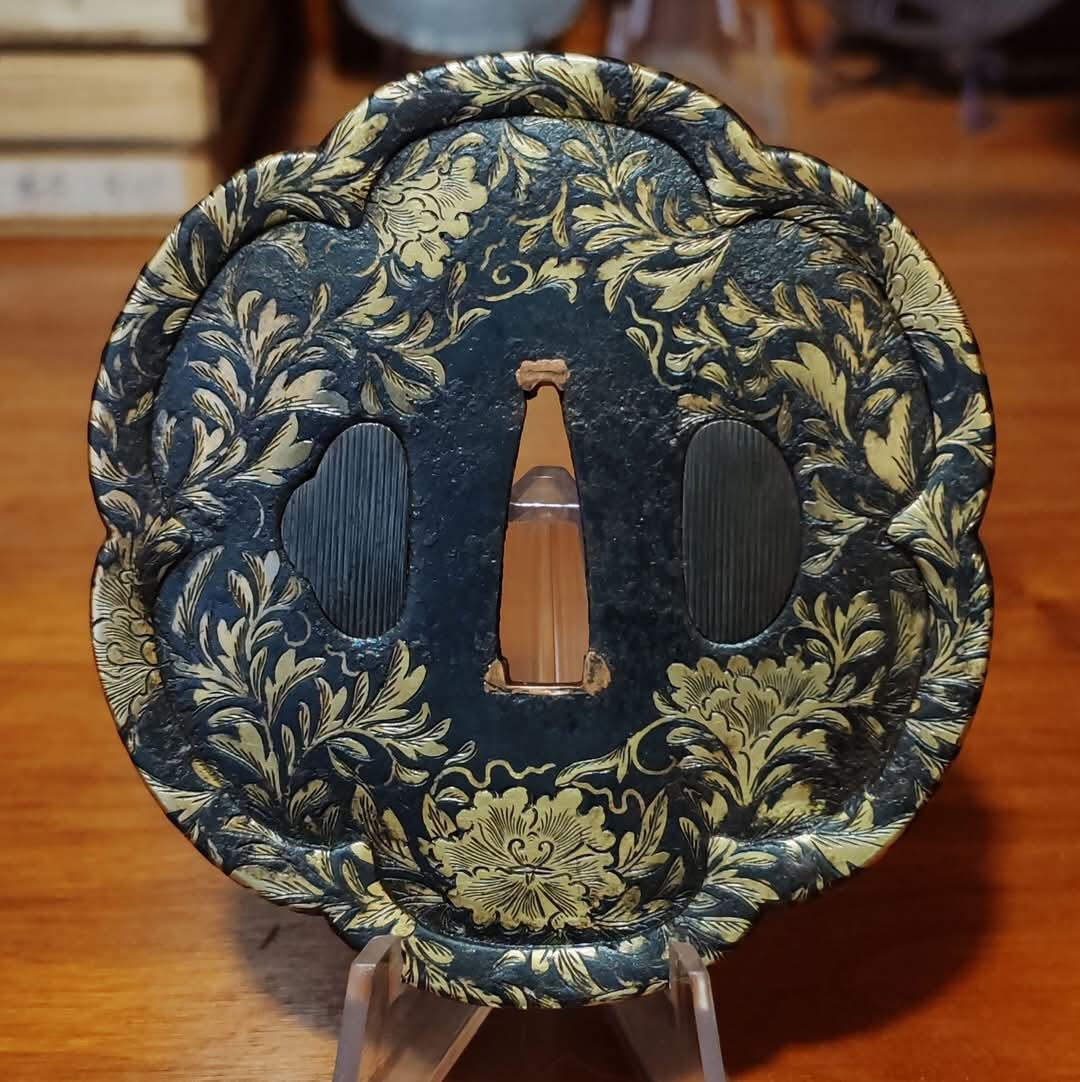
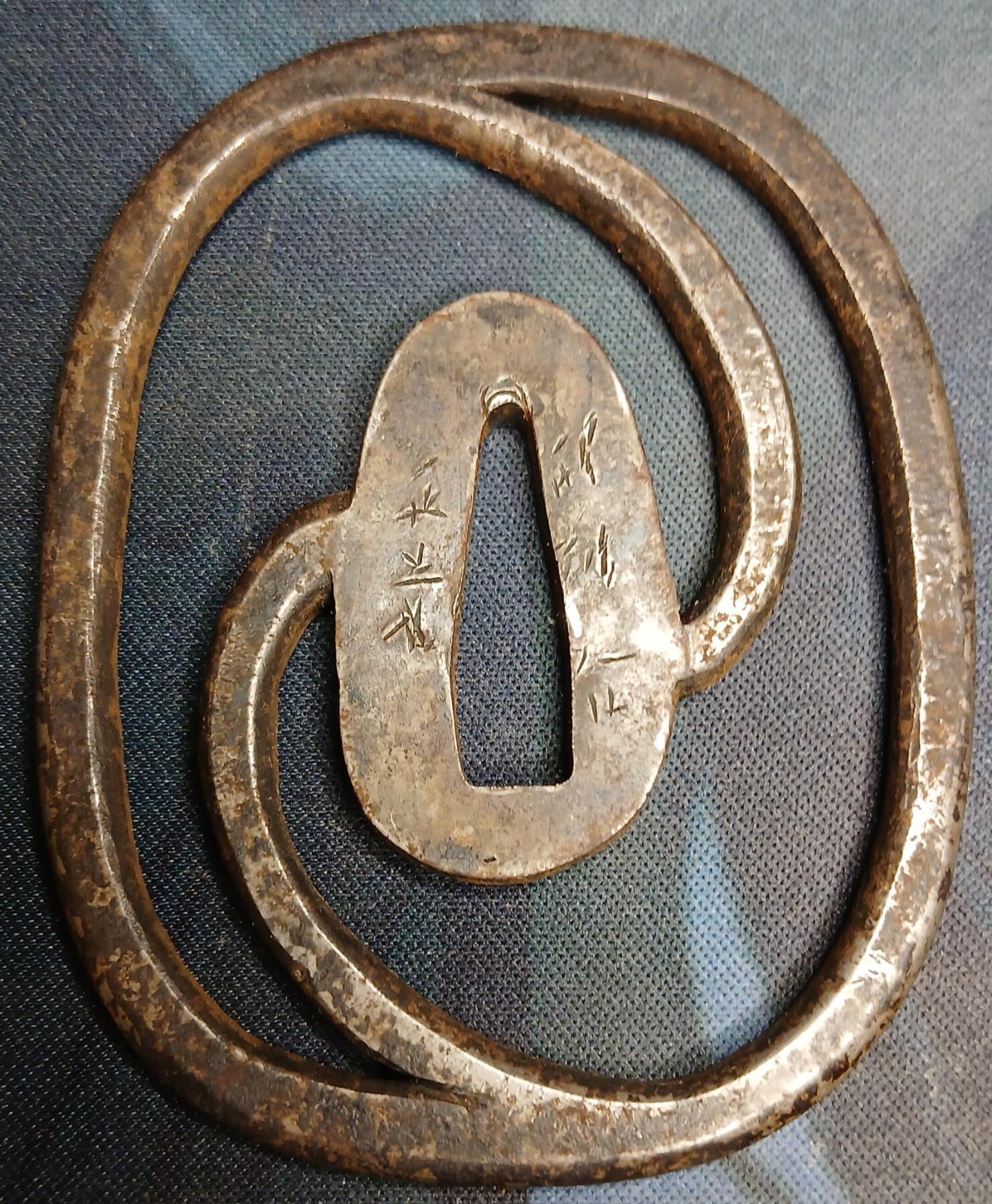
Greetings to All, Recently, I acquired a rather rusty tsuba as part of a deal for a Washida tsuba with another collector. This piece was thrown into the arrangement by the seller to meet the requested price range. Despite its condition, it showed some promise. The tsuba is signed Kyozan Mitsunaka + (Kao) ({嚮山 光中(花押)}) in kin-zogan. Based on the pictures, it appeared to feature brass hira-zogan of peonies and arabesques. Despite the rust, none of the inlays seemed to be missing - testament to the craftsmanship. The subject and execution also align well with works by Washida Mitsunaka or the Washida school. Seeing its potential, I decided to accept the deal, and both tsuba landed on my desk. Believing the piece was worth restoring, I sent it to Manuel @C0D for restoration, and I wasn't disappointed. Manuel did an outstanding job removing the rust and re-patinating the brass. If Manuel would like to elaborate on the restoration process, I would welcome it. The gamble paid off, as the final result is quite pleasing. As you can see, the tsuba has been brought back to life: I hope you enjoy it as much as I do. Regards, Luca P.S. I have to thank Manuel for allowing me to use the pictures he made.

 3 points
 -
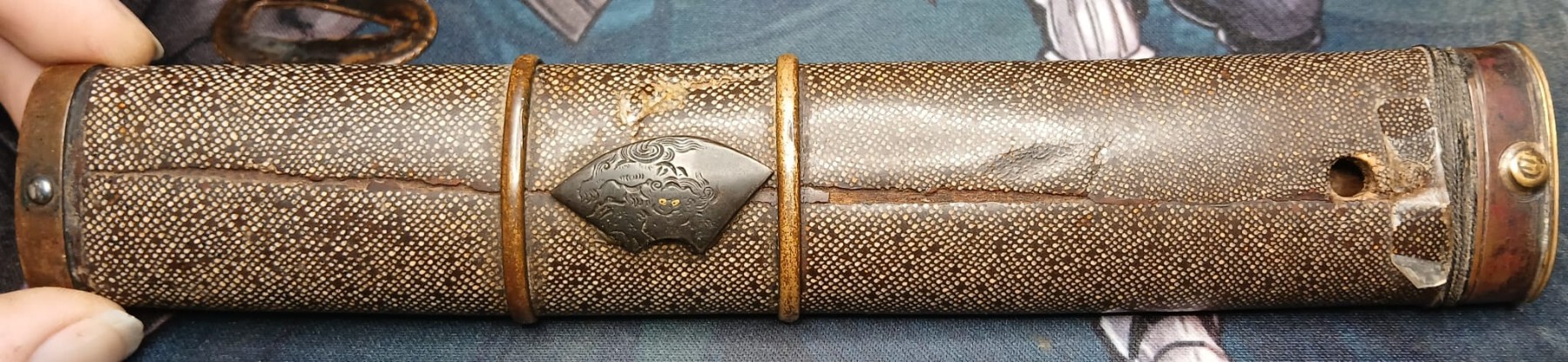
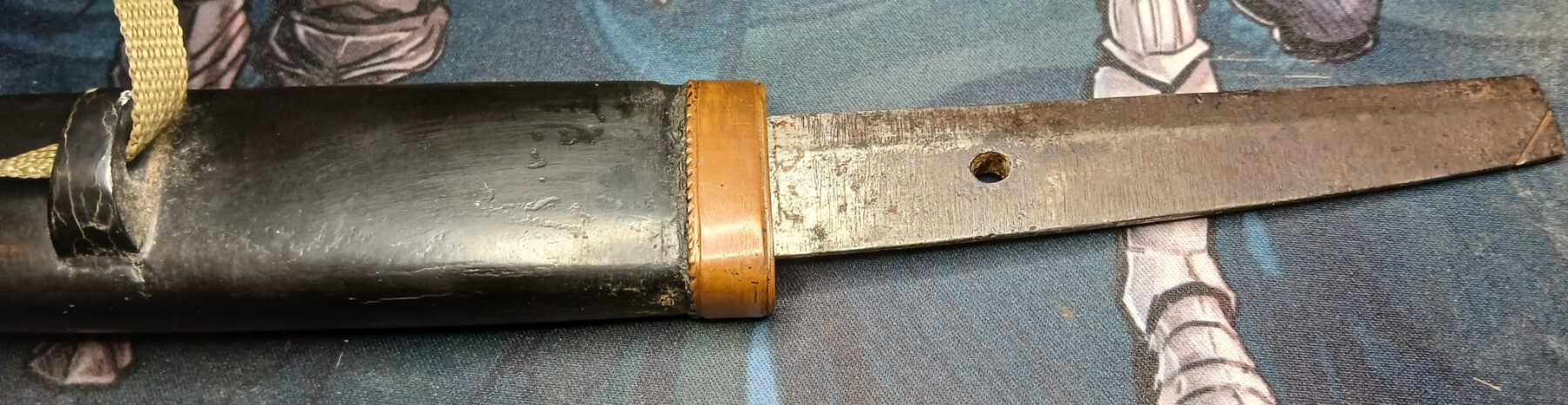
Hi all, I recently purchased this sword from an auction because the tsuka intrigued me. I've never come across anything like it before so I was hoping someone here could tell me something about it. Also why is the mei on the tsuba so... bad? Was it perhaps the owner of the sword who did that at some point in the past and that's why it's scratchy? The blade inside is genuine so I don't have any doubt for it's authenticity. Many thanks!

.thumb.jpeg.de335ac473438e83ac149a00af6d9214.jpeg)
.thumb.jpeg.b063615638b2270317b2c5e6ecf442d4.jpeg)
.thumb.jpeg.084b27a4d10673472d5b3bd87ab9d874.jpeg)
.thumb.jpeg.071ff0cc46759dff75fd242d91a930a6.jpeg)
.thumb.jpeg.28bf8b5e5f847dd19b1a05d51f9c62ec.jpeg)
.thumb.jpeg.221152c79d8aa968763c85494065e5df.jpeg)
 3 points
 -
After seeing the new photos and the other's opinions, I have to agree. While these examples approximate the appearance of Japanese swords, they are not Japanese made. There's too many finer details that don't quite add up as Sam pointed out. I also agree again with Sam though: appreciate them for what they are and the bond they represent with someone you care about! Treasure them and treat them gently. Such memories are precious.3 points
-
@NotANinja Time periods specifically for nihonto can be a little confusing at first since they often dont match the historical time periods. The koto/shinto division is one of them but I ve always stuck with 1600. Historicaly , the nanbokucho perio 1336 - 1392 viewed as a period WITHIN the Muromachi period. ( 1392 - 1573 ) This is very important to avoid mixing up bc the Nanbokucho period is a very specific and separate era in terms of Nihonto. In Nihonto , the Muromachi spans from 1392 - 1600 but this is in direct conflict with historical timelines since the Muromachi period techinically ended in 1573 with Nobunaga dissolving the Ashikaga shogunate and doesnt include the Azuchi Momoyama period. It s very easy to be confused at first with all the discrepancies so I would just strictly stick with the established Nihonto timelines.3 points
-
Ōshima Mitsuyoshi https://ja.wikipedia.org/wiki/大島光義 Only in Japanese, but Google can probably do a decent job of translating it. I don't know if the letter is actually addressed to Oshima Mitsuyoshi, but as often happens when translating, once a thought enters your mind you kind of fall into a confirmation bias loop from which it is hard to escape. So, that's the long way of saying I could be wrong. In this person's case, 大嶋 = 大島. Both are Ōshima.3 points
-
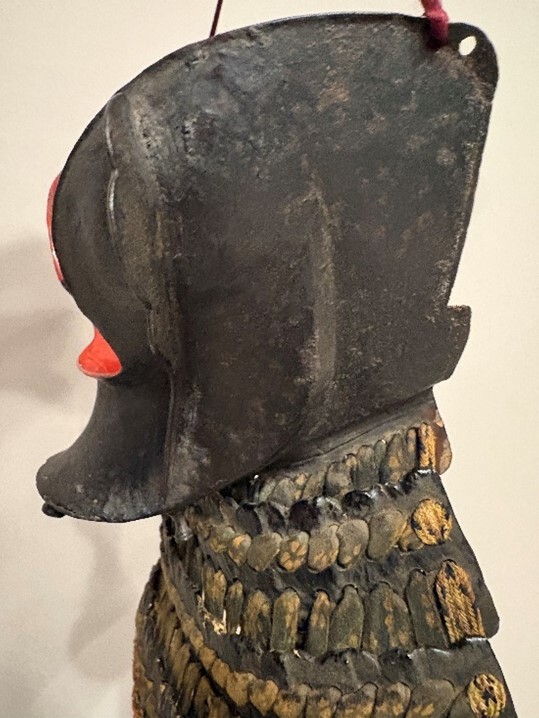
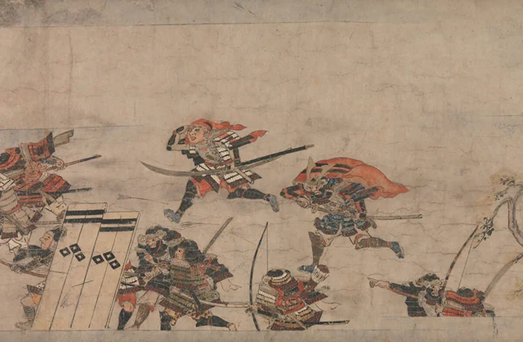
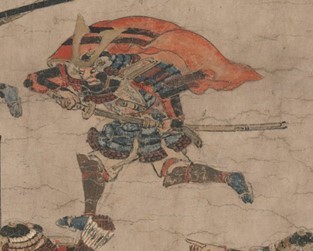
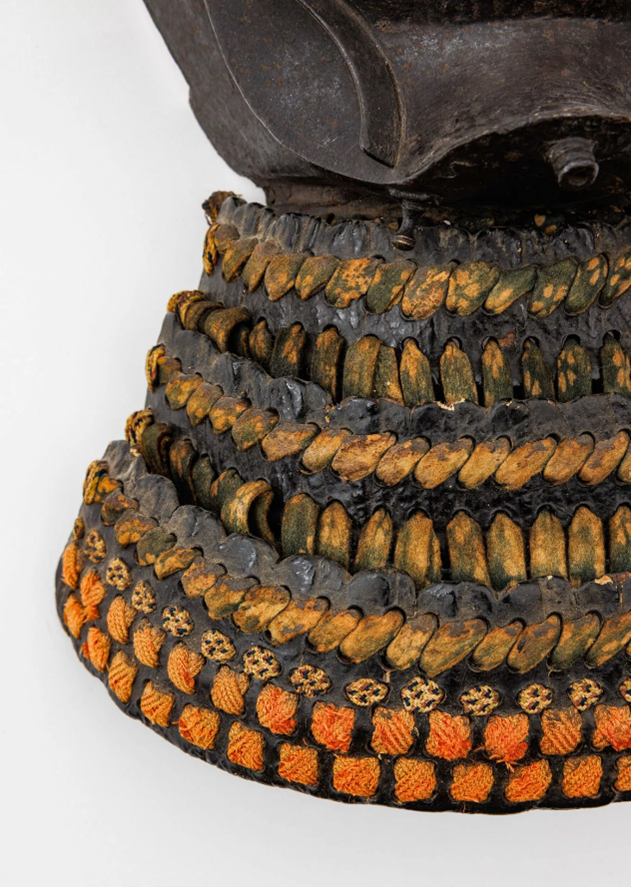
Hello, I share with you an interesting and rare old Hoate (or Hanbô) from the muromachi period (15-16 th). A half-mask made of natural iron, of the "Hanbō" type, covering half the face and excluding the nose. The inner surface is lacquered red. A sweat vent and a channel (ase nagashi) are present on the lower part. Two stamped iron "yadome" straps on each side of the mask guide and protect the helmet cord, while two iron studs (otayori) on the lower part secure the cord. The four-row gorget (yodarekake), very likely contemporary with the mask, is made of superficial iron strips covered with lacquered leather, joined together in a "hon kozane" style and then in a "kebiki odoshi" style with printed suede "egawa" cords and red silk. This half-mask is designed to cover part of the face while also protecting the cord and ensuring the helmet (still quite heavy during the Muromachi period) stays in place and distributing its weight more evenly. Half-masks from this period are extremely rare. The mask's shape, with its iron gorget covered in lacquered leather, immediately suggests a very early date, further confirmed by the black corrosion of the iron, which allows us to date the object to the middle of the Muromachi period (1336-1573). Some examples of hoate wearing during the Muromachi period : Handscroll : A Long Tale for an Autumn Night (Aki no yo nagamonogatari) ca. 1400. Metropolitan Museum of Art New-York, 2002.459.2 https://www.metmuseum.org/art/collection/search/65122 others exemple :



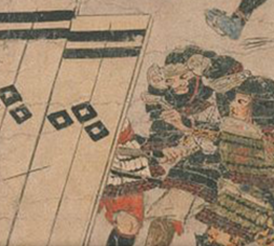

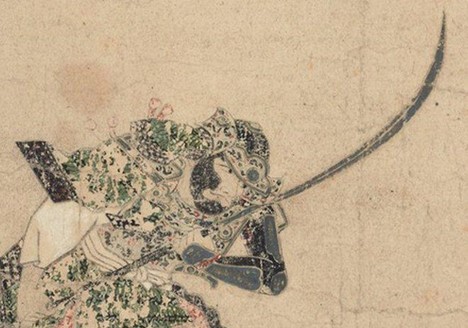

 2 points
 -
The TSUKA cover looks like Iguana or lizard skin, or maybe a special shark skin type. I am with Piers on the TSUBA; it is probably amateur work, the SEPPA as well.2 points
-
https://ebay.us/m/uZtBn0 a cute little one
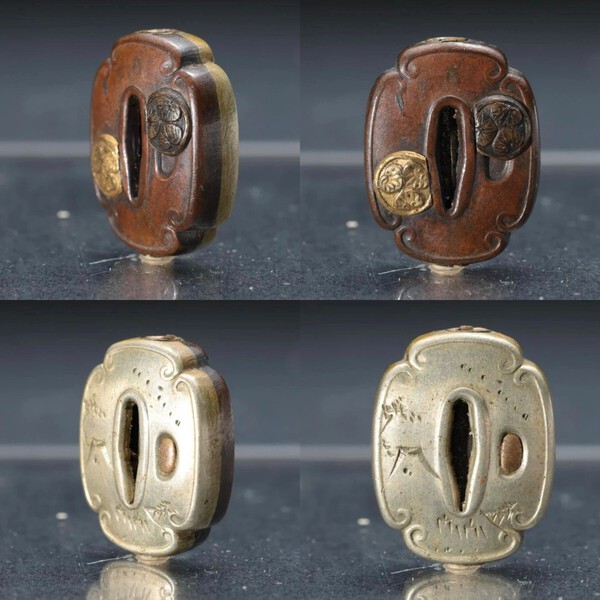 2 points
 -
@blueblue Darcy, looks to be a well made WW2 oil tempered blade, from a well trained smith. The mei reads: Noshu Seki ju nin Kojima Kanenori kin saku 濃州関住人小島兼則謹作 Respectfully made by Kojima Kanenori a resident of Seki. Family name Kojima, smith name Kanenori. He worked in Seki City in Gifu. It has a Seki stamp showing made around 1942-43. See NMB Downloads se
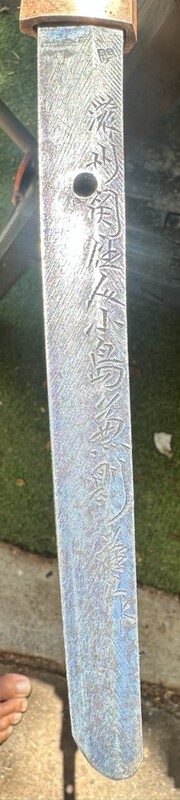 2 points
 -
Strangely the mekugi looks to be laquered bone? I don't think it's wood either way

.thumb.jpeg.02ad6fea648e32b15216066ef83f48c9.jpeg) 2 points
2 points -
Yes...Gold membership articles are definitely a useful and likely outcome. Although people will likely share them anyways, it would be a very helpful thing. We just need some that would be enough of an incentive for people to take up the membership. Sam, I'm pretty sure your document is going to be awesome. Currently we are saving up for the $500+ needed to pay for the major update to the software. But I think that is going to be an amazing experience for everyone once done.2 points
-
I found this shorter one https://m.olx.pl/d/oferta/miecz-wakizashi-katana-z-okresu-ii-wojny-swiatowej-CID4042-ID17lRNQ.html more photos https://www.catawiki.com/pl/l/97934141-katana-japonia2 points
-
I don't really kantei shinto well, so all is basically a guess why it could be shinto. Its a bit heavy for its nagasa, which might be a hint to shinto, but it does look like a heavy type of blade. We've seen substantially more Owari NBTHK judgements recently for anything that includes a wide suguha. Famous story TJ Go who've been Owari for a long time until it got TH Go and then it was a smooth sailing forward. Roundish-well-defined gunome can also be seen as Owari-shinto trait. There is a tendency to go shinto if jigane is zanguri with mokume elements, which one sometimes sees in Owari though not as often as in Kunihiro-Kunimichi.
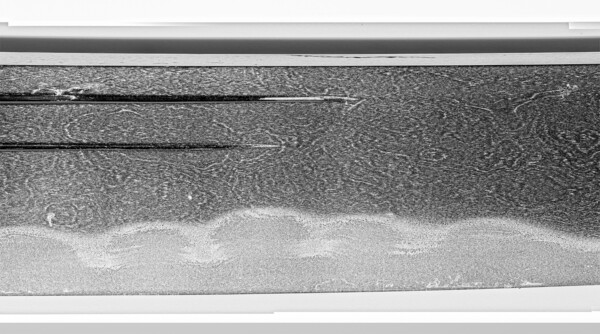 2 points
 -
I would guess its a type of hamon popularized I guess by Tatara Nagayuki around Kambun. Quite likely from the same period or slightly later.2 points
-
It appears the post is now too old to edit! I shall hang my head in shame accordingly and compose a Haiku... Fleeting fingers type Credibility absent Posting with regret (lol)2 points
-
Thank you for entrusting me with this restoration, at first it looked quite serious but after removing the oxidation I found that the original patina underneath was pretty much untouched by corrosion, also the zogan was rock solid in position, a testament to the quality of the work from this tsubashi. So I just had to make a new patina on the brass and stabilize the iron patina. It was a pleasure bringing back to life this excellent work.2 points
-
There is also a series of videos by Markus Sesko. https://m.youtube.com/@newyorktokenkai608/videos1 point
-
Every established collecting community with items at high level has either individual or collective appraisals. With top tier paintings there are institutes dedicated to specific artists or schools and you are expected to submit a painting for their consideration, unless its already well known and published. Sometimes there is an alternative when there is an individual who publishes catalogue raisonne than you send the painting to him and he writes back description and whether it will be included in the next edition. Until 1960s museums in general offered opinions to anyone inquiring, now its considered unethical to do so because museums are trying to separate themselves from the unclean world of money and also avoid any controversies. There are countries like Russia, to lesser extent China, and many others in Asia where there is a government certified expertise in regards to any "weapon" that might have cultural or historic value. Overall estimation and valuation is approached with far lesser hesitation in Asia compared to Europe. There is no concept of "equality" but rather you are always facing your grades, class standing, achievements being publicly catalogued and displayed. People are very forward about perceiving themselves as X seat in their profession. If someone says "I am 45th grandmaster in chess" he is from Asia. Other people sometimes say "I am top three" or "top five", but everything below is vague and flexible. In Asia assigning levels to any work, including artwork, is very natural by comparison, and constantly submitting pieces for appraisal is a norm. If you a "writer" it means you got 1st prize in at least two of first or second tier competitions. Otherwise you are just a person who writes as a hobby.1 point
-
Polish to English Translation OPIS OSTRZA [BLADE DESCRIPTION]: Sygnatura [Signature]: Koa Isshin Mantetsu saku kore 興亜一心 鍛錬作之 Data [Date]: Showa koshin Aki 1940r. Jesień [1940, Autumn] 昭和庚辰秋 Nagasa: 54,5 cm [21.45 inches] Motohaba: 28 mm [1.10”] Kasane: 7 mm [0.27”] Hamon: Suguha Hada: Nashiji Nakago: ubu, 1 mekugiana Sori: 8 mm [0.31”] Ostrze: konstrukcja Shinogi zukura, grzbiet iori mune. Chu kissaki. Blade: Shinogi zukuri construction, iori mune spine. Chu kissaki tip. Typ miecza: Wakizashi w oprawie katany Sword type: Wakizashi in a katana mounting. Czas powstania: 1940 wiosna. Świetnie zachowane ostrze z okresu drugiej wojny światowej. Klinga doskonale odkuta I zahartowana, posiada doskonale proporcje. Klasyczne ostrze w typie miecza wojskowego gunto wykonane w fabryce kolejowej w Mandżurii w Chinach ze stali mandżurskiej (mantetsu). Z tych powodów wymyka się terminowi “nihonto” mimo, że jest wykonana zgodnie ze sztuka. Sygnatura Koa Isshin nie wskazuje na konkretnego kowala, ponieważ wszystkie ostrza z tej wytwórni byly tak sygnowane. Datowana metoda zodiakalną, tu Koshin (lub Kanoe) tatsu – rok smoka, wskazuje na rok 1940. Aki – wiosna. Na mune nakago widnieje sygnatura montażowa Sai 166 [オ一六六] Made in 1940, spring. A well-preserved blade from the Second World War. The blade is perfectly forged and tempered, and has excellent proportions. This classic gunto-style military sword blade was crafted at a railway factory in Manchuria, China, from Manchurian steel (mantetsu). For these reasons, it defies the term "nihonto," even though it is crafted in accordance with the art. The Koa Isshin signature does not indicate a specific smith, as all blades from this factory were marked in this manner. Dating using the zodiac method, here Koshin (or Kanoe) tatsu – the year of the dragon, indicates 1940. Aki – Spring [Autumn]. The mune nakago bears the assembly mark Sai 166 [オ一六六]*. * It is actually the katakana character オ O and not the kanji character 才 Sai.1 point
-
This one started out as a katana and was later shortened to a wakizashi 脇差.1 point
-
Agree 100% with what Sam said, also been following his stuff for a while now.1 point
-
Humm... NBTHK is not a government organization. https://www.touken.or.jp/english/aboutus.html1 point
-
Sounds like quite the book Maybe it could be published, and some percentage of the proceed could benefit the NMB. (just thinking out loud) Lots of work though... My 95 document alone is over 70 pages. I'd buy it -Sam1 point
-
I've seen "gyaku" used before as opposed to "saka" and here is what Sesko says: gyaku (逆) – Lit. “inverted, reverse” or “slanted, slanting.” Also read as saka. The Japanese reading (kun-yomi) “gyaku” is applied when elements appear in a reversed manner, e.g. gyaku-sujikai and gyaku-takanoha compared to sujikai and takanoha respectively. The Sino-Japanese on-yomi “saka” is applied when referring to slanting but not necessarily reversed elements, e.g. slanting ashi are referred to as saka-ashi and not gyaku-ashi. Here are a few examples: Juyo Bunkazai Niji Kunitoshi Tokubetsu Juyo tachi signed Kane___ (Den Gojo)1 point
-
That would be an awesome book, Marcin! I'm just trying to imagine - All of Mal's articles on WWII smiths; the Mantetsu article; the Souvenir Article; Sam's Type 95 article; hopefully a Type 25 article from John. I'd have to check with Akira Komiya, and Nick's wife, but it would be great to include Nick's sword articles. Don't know if the Stamps doc would be too big to add. Hmmm .....1 point
-
The exact same nakago in fact! That was the post I made to get some info before ultimately deciding to buy it1 point
-
Hi @blueblue, Darcy, Thank you for the photos of the tang. You have an interesting WW2 non traditionally made blade. I would read into care and maintenance on this website to help preserve your item for future generations. https://www.militaria.co.za/nmb/faq/1-care-and-maintenance/ Now that we know it's all WW2 era, both fittings and blade, I'm going to relocate this thread to the "military swords of Japan" section, and delete that other one. Very nice sword, and thank you for sharing with us. All the best, -Sam1 point
-
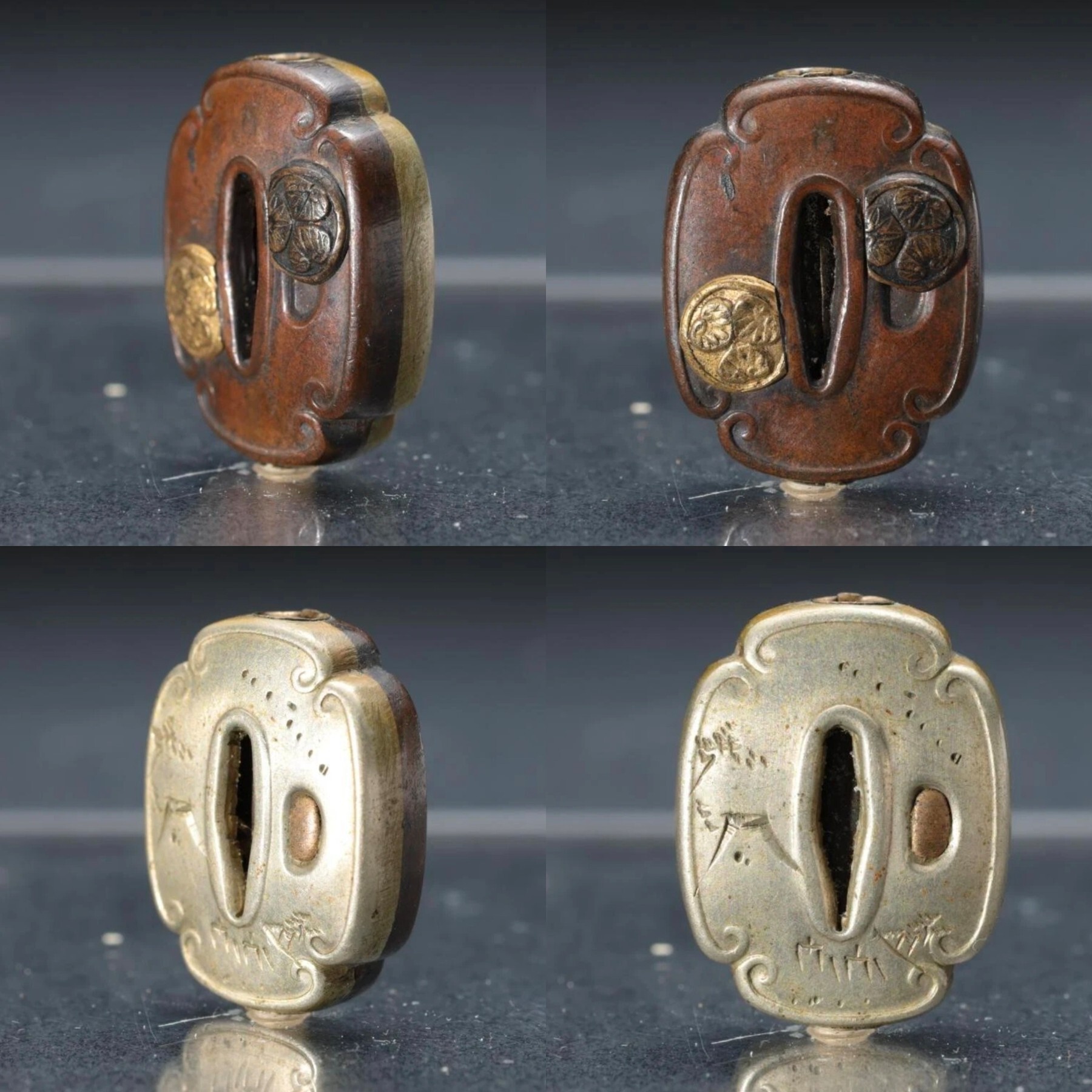
Unless I’m missing something, those Menuki are not just legit, they are really very nice.1 point
-
Rather unique, at a guess something thrown together for field service during the Meiji period.1 point
-
https://ibb.co/KjxpTByZ https://ibb.co/q3YDj9bf https://ibb.co/7J2qcs1J https://ibb.co/yFxS2wRz1 point
-
Here you go

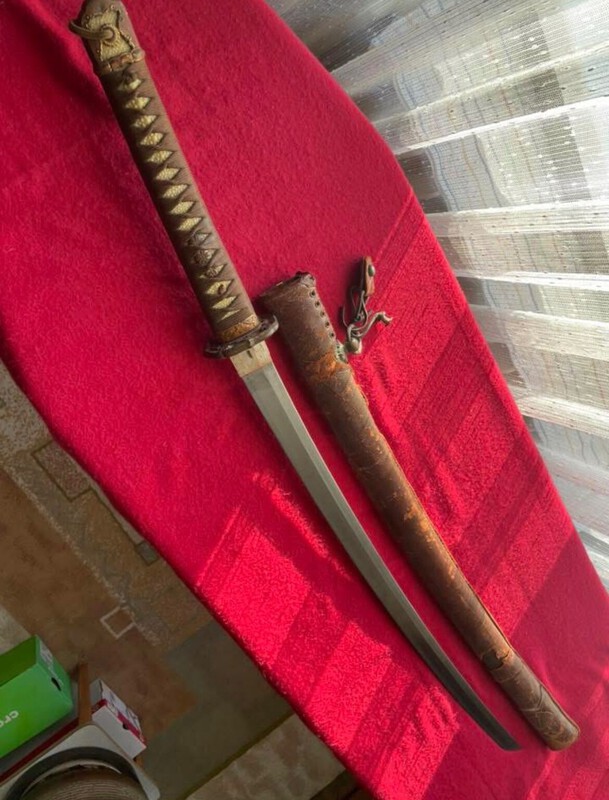

 1 point
 -
Marcin, That would be something more in line with Mal's - @mecox - expertise.1 point
-
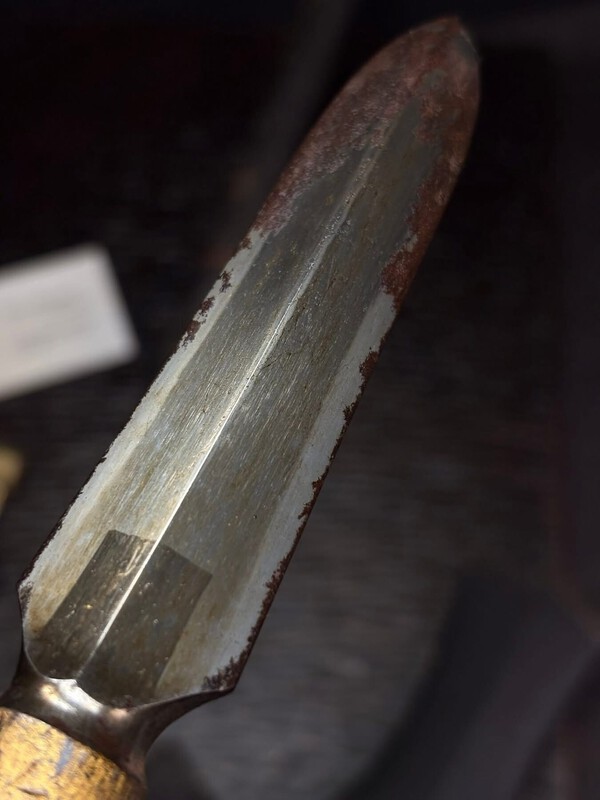
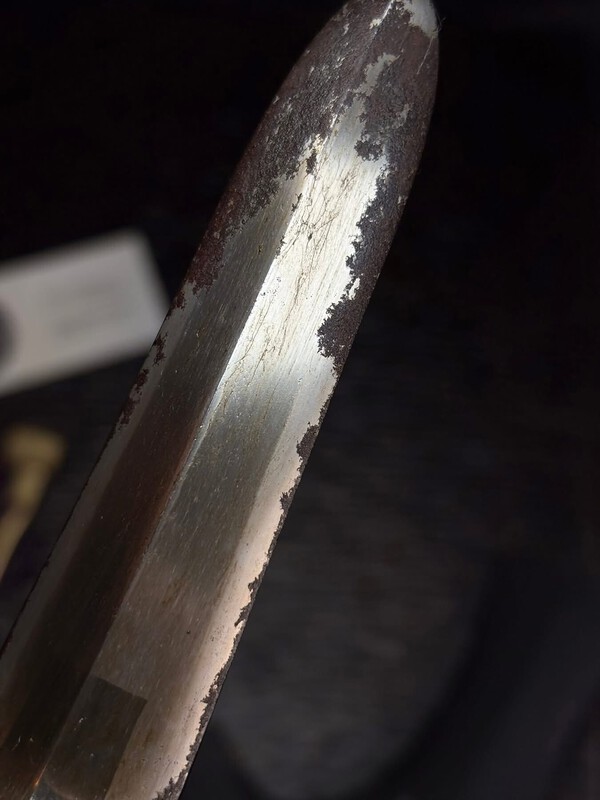
Purchased a wonderful Fukuro Yari from Raymond Yan (highly recommend - also photo credit of most of the photos here, since he does a way better job than I), which included Koshirae. (side note, the shaft has a name applied to it, and is such a neat example of a probably period-appropriate mounting and name of possible owner affixed to the shaft, “Hirao” 平尾) The Mei shows a signature of: 於南紀 Oite Nanki 重国造之 Shigekuni Kore-wo-Tsukuru Based on the blade construction, it seems to match quite closely with Shigekuni’s other works in my amateur observations, though admittedly I cannot find any Yari examples of him, only Wakizashi (mostly suriage) and Katana. Do you think this is the same Nanki Shigekuni (https://nihonto.com/nanki-shigekuni-南紀重国/) that was retained by Tokugawa Ieyasu and later Yorinobu; a later generation or student of his; or possibly a gimei? Whatever the reality, I love this piece so much, and can’t wait to receive the Koshirae (the shaft had to be sent separately because it was quite long, ha) Thank you very much If more pictures are needed, please let me know! PS: The blade unfortunately has some old tarnish - am I ok to apply Tsubaki oil as I do my other Nihontō to those areas as well? Or should I treat the tarnished areas of the blade differently? Thank you!
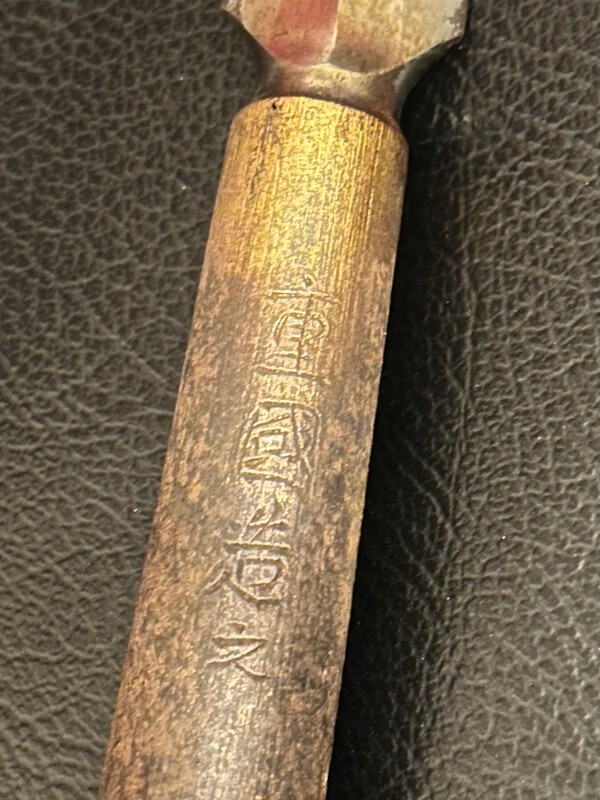
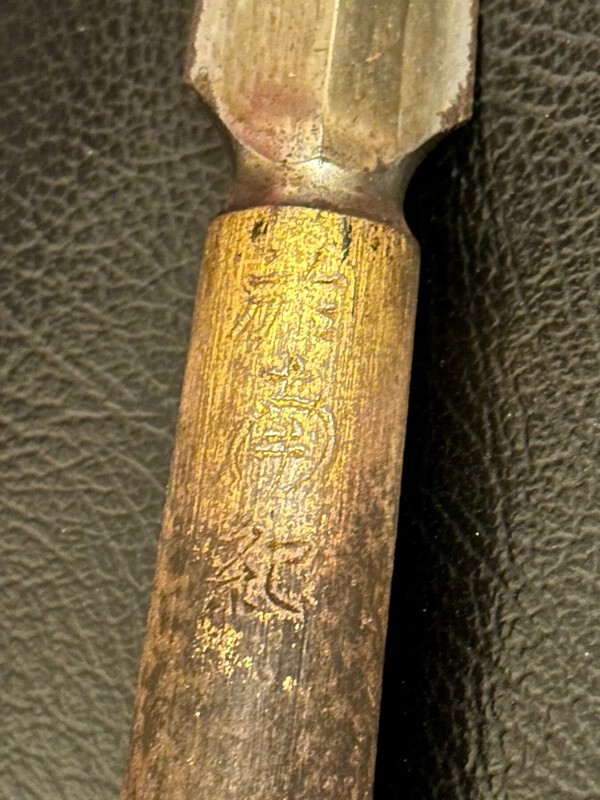
 1 point
 -
Thanks @Jussi Ekholm I've added these and will start churning through them to try and get some dates that are hopefully close to accurate. The more obscure schools might be more broad (Late Kamakura- mid Muromachi meaning roughly 1300 to 1500) but I'll see what I can find. I've fixed the file permissions so anybody with the link can edit the file and not just view it. I should've double checked that before my first post...1 point
-
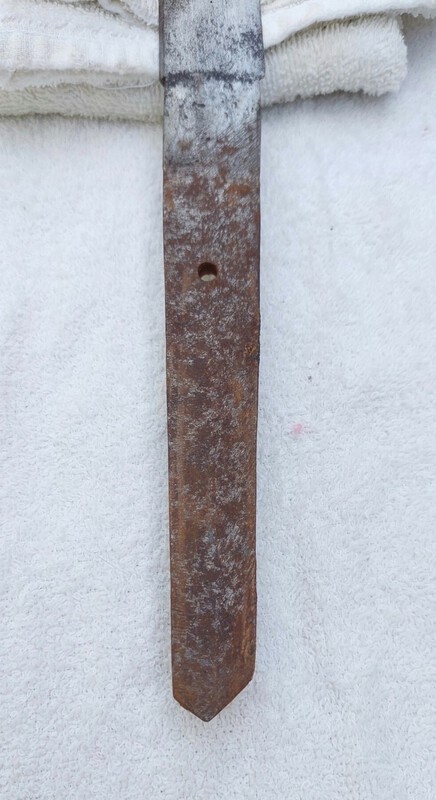
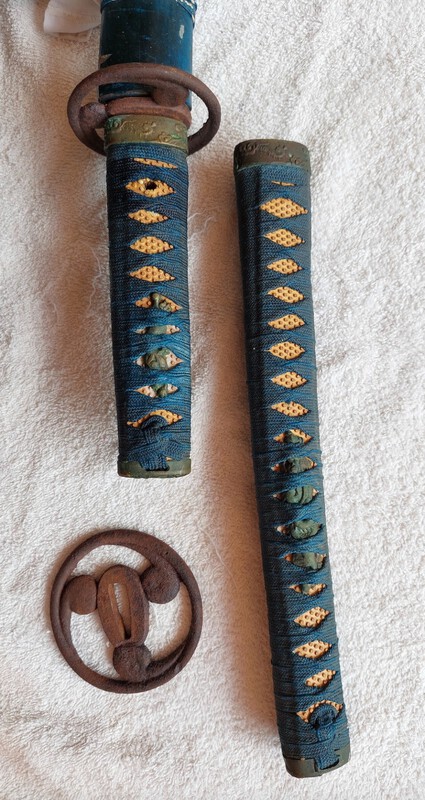
Hi Eliaz, Your new photos confirm my suspicions. I believe these are not genuine Japanese swords. I've attached a couple of your photos to my post for others to see and for reference. It's good to hear that it's their memory that counts. Sentimentality like that is where many of us began in this hobby. Some of us even began with fake swords, but the journey to learn inspired us to get real examples. Here's some features that point toward them not being genuine: - The fittings are very low quality, lack seppa, and the samegawa (ray skin under the handle wrap) appears to be wood, plastic, or otherwise a material i've never seen on a genuine example. - The way the blade bulges larger than the habaki on the small sword. - The lack of refinement of the tang (nakago) on the long sword, from the shape of the end (nakagojiri) to the yasurime (file marks) to the overall form; all of which do not represent the fine craftsmenship seen on genuine Japanese Sword tangs (nakago). Overall, they both show a lack of refinement, precision, and quality seen on even lower quality genuine Japanese swords. All these factors lead me to believe them to be made outside of Japan - probably as a matching set to be sold as display items or practice swords (I cannot determine if they are hardened blades or not). Others might have more to add; but these were the big red flags that I personally see. All in my opinion... -Sam This link is helpful for spotting fakes in the wild: https://www.jssus.org/nkp/fake_japanese_swords.html

 1 point
 -
You have a better shot of the seal? Ieyasu's name should be in the middle of the black seal. It looks like his handwriting. Dated August 26th, but no year indicated.1 point
-
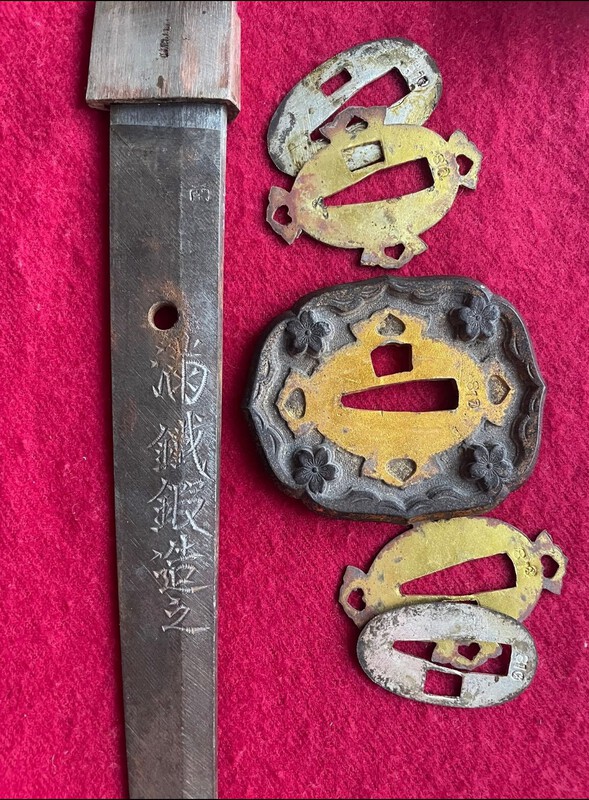
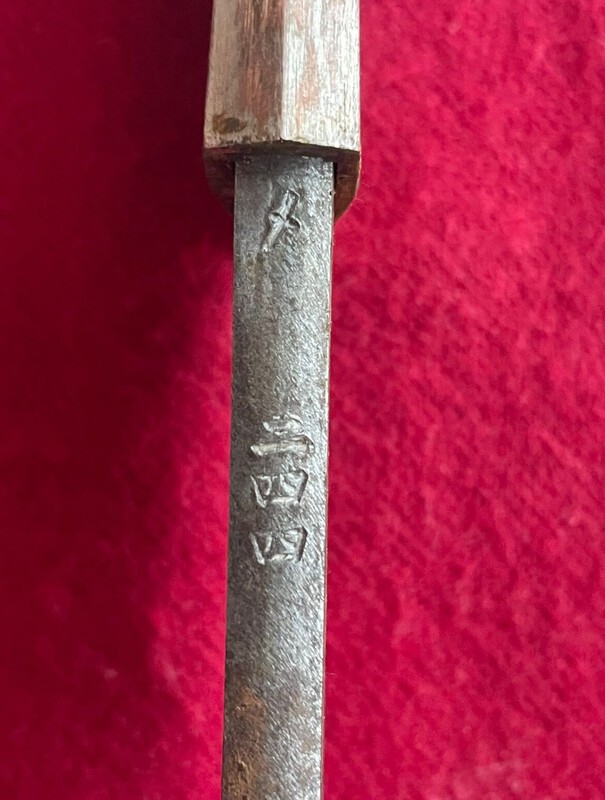
You had this one? @Bruce Pennington https://www.facebook.com/share/p/1G1xE8DzW6/?
 1 point
 -
Nice potential! PS ‘Rust’ is a better word than ‘tarnish’. You would need to consult a trained Japanese blade polisher ‘Togishi’.1 point
-
Yes, typo on my part. Thanks Uwe for catching that. The mei reads "Bifu Ju Nin Norisuke Saku".1 point
-
I'm considering updating the forum to the latest version, which is a complete revamp of the current software, and has been in development for a number of years. I'm currently trying to raise the $600+ that would be needed to get someone to assist, as it is a huge update with lots of new features and benefits. Frankly, we'll have to do it eventually anyways, as this version 4 won't be supported forever, and it will allow us to improve a lot of things. That aside, I don't have a date yet when we will do it. But there is one thing that I need to warn all members about. Most forums nowadays, across most platforms, are moving away from logging in using your username. This is because usernames are visible to everyone, and it is a security risk when hackers etc use various methods to run common passwords etc. The modern convention is to have everyone log in with their registered email address, and their usual password. This is because emails are not visible and are far more secure. So I am putting this out there now, so that people can start transitioning from logging in using their username, to logging in with their email address. YES...I know how many people can't remember their emails they used, or have changed it by now. Hence why I'm giving everyone plenty of warning to see what your email is here, so you can use to to login. Or update it if you like. Your forum email address is in your profile. You can find it here: https://www.militaria.co.za/nmb/settings/ Make sure you know what it is, and probably best to make sure you know what your password is, or reset it if you don't. For now, you can log in with your username OR your email address. But eventually that username won't be a login method. Your username will display as it does currently, no changes there So please start transitioning over, and post here if you have any questions.1 point
-
To me, they look like somewhat distorted interpretations of SEN no RIKYU's famous bamboo HANAIRE (one of them being called "ONJÔJI")1 point
-
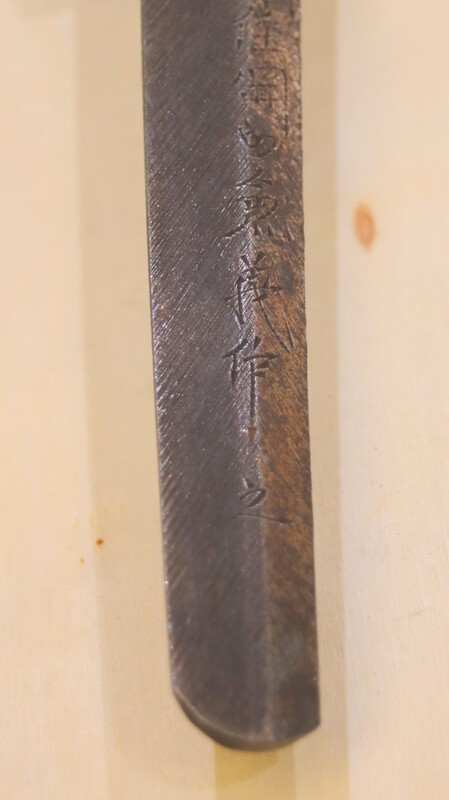
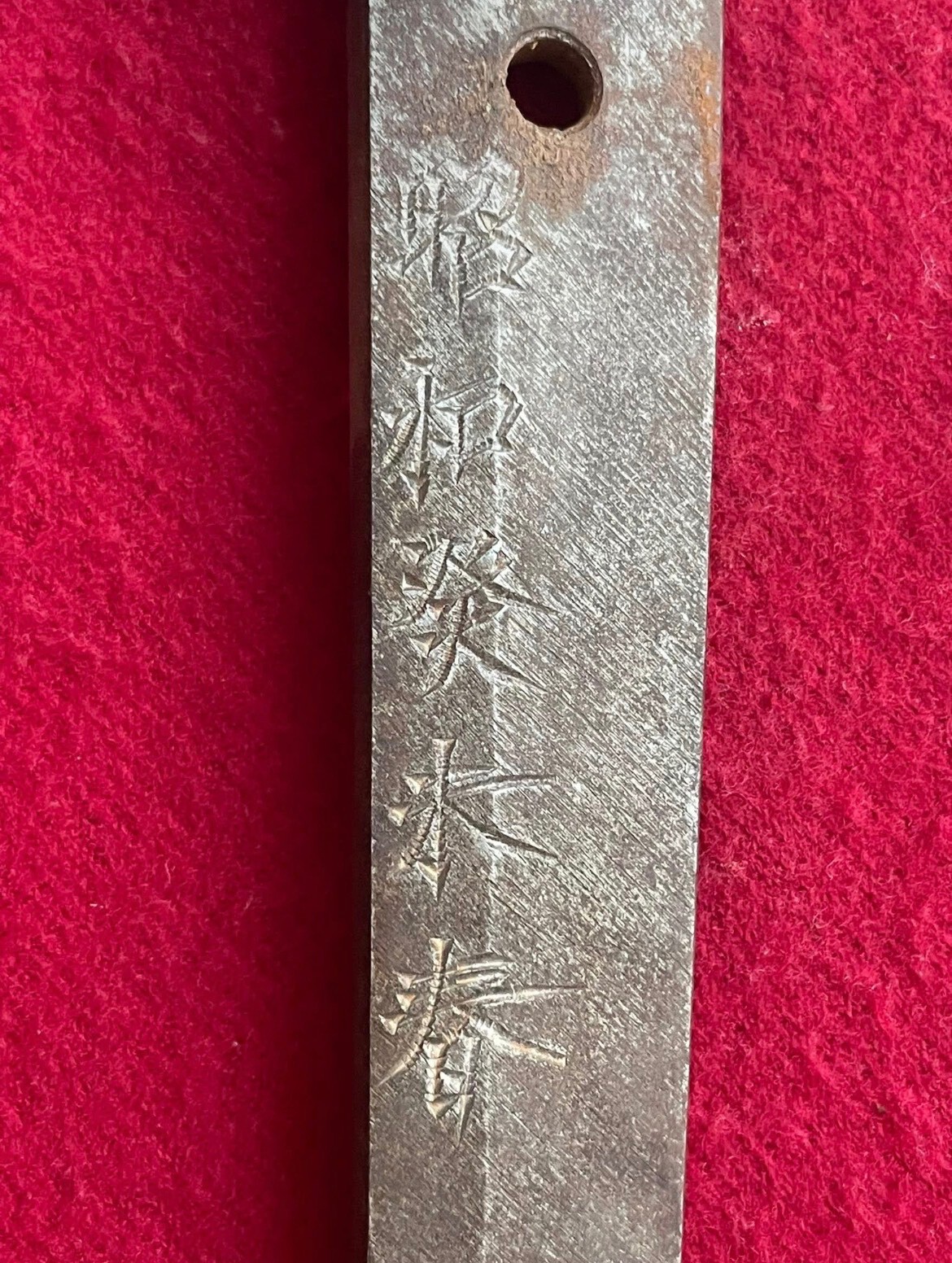
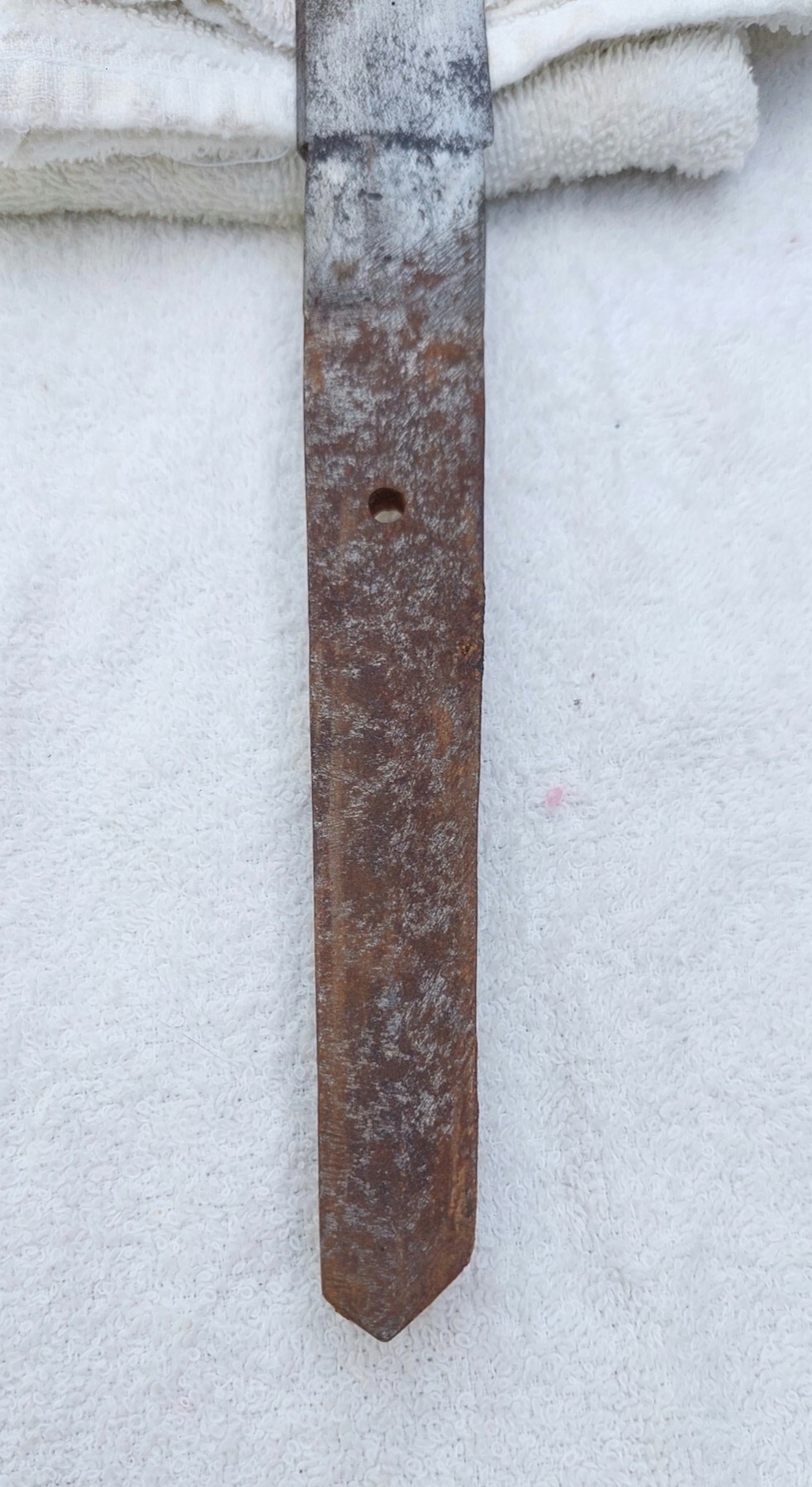
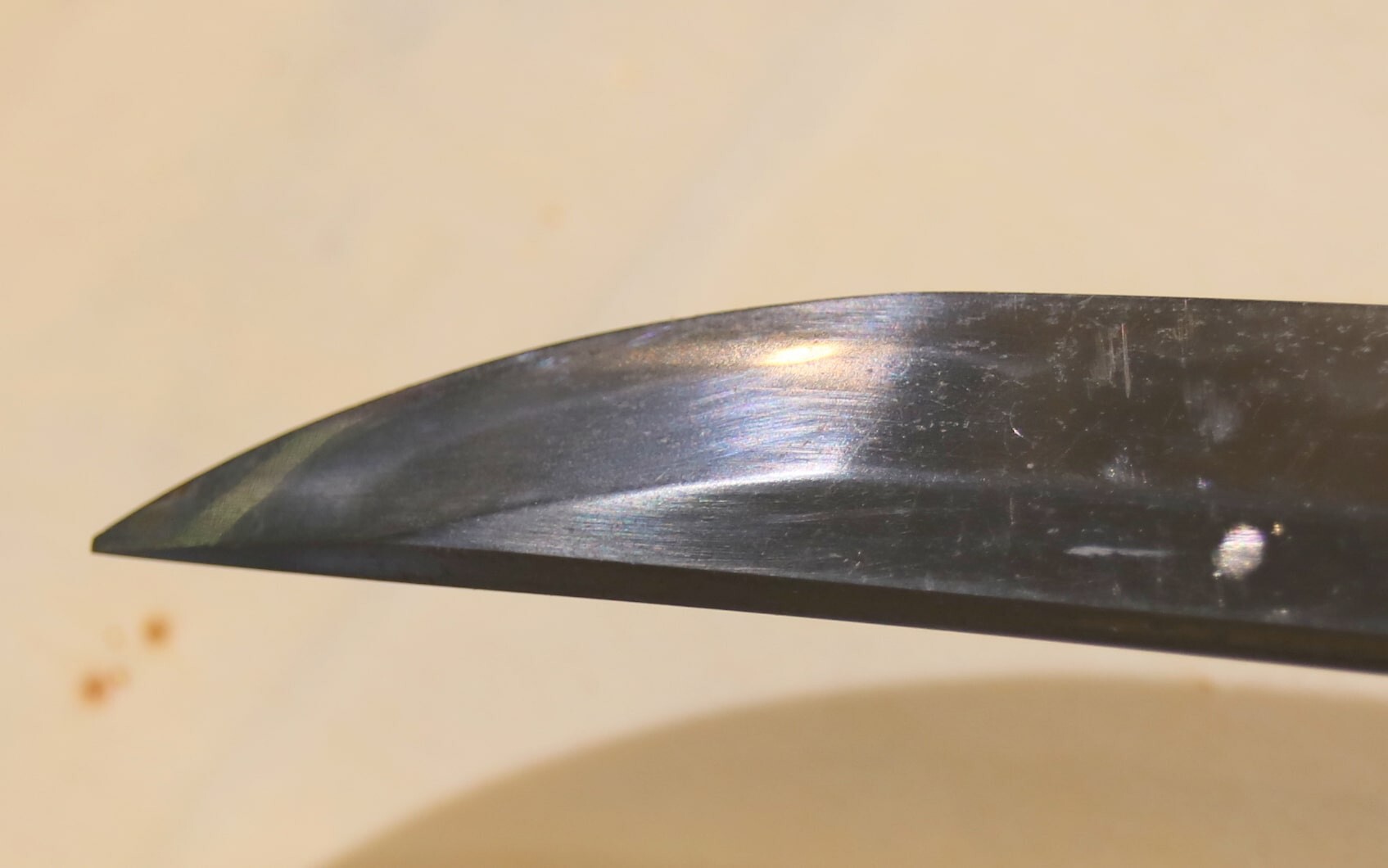
Hello all, I have posted here a couple times and am always excited to share things I find through my store - this time I have a customer who has an appraisal request (mainly I want to get him the information, era, location etc so he can properly decide what to do with it) of a sword he inherited when a house was passed on to him. It appears to be military (from my extremely limited experience) with a copper saya. I did my best picturing the boshi, but it is difficult to show the nearly invisible line in the light I had available. He is going to bring it back to have a more thorough look later in the day, but I pictured the signature, and the boshi as if I recall, that is the first thing to photograph to check here. That said, I would appreciate any information you can help with, and may need to post more of the pictures in replies to this thread. If you want to request more pictures to get a more detailed look, please let me know. The length from tip to tip is approximately 39 inches, if this helps. Thank you all in advance!



 1 point
 -
G'day Lance, It is a nice type 94 koshirae with the rare pinned kabutogane. If you search the site you will find a thread on "pinned kabutogane". Cheers, Bryce1 point
-
@Patinamax Lance as noted by Ray it is Okada Kaneyoshi. He was well experienced and a good. smith. This is an early war sword and looks to be a well made Showato. The long kissaki is interesting. This could be a custom work. Please show koshirae as John requested. There were quite a few Kaneyoshi in Seki, but his details are listed in NMB Download:1 point
-
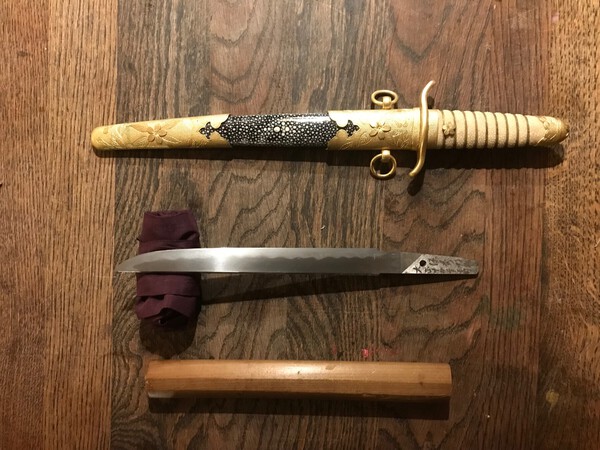
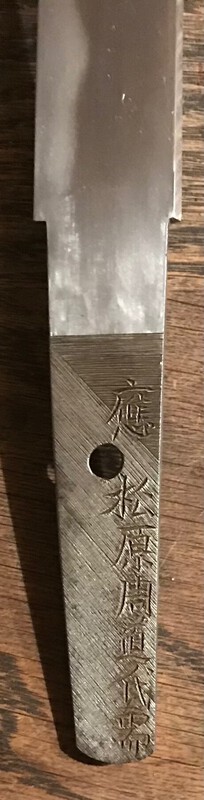
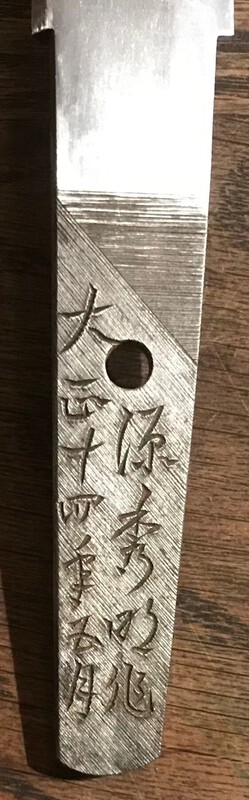
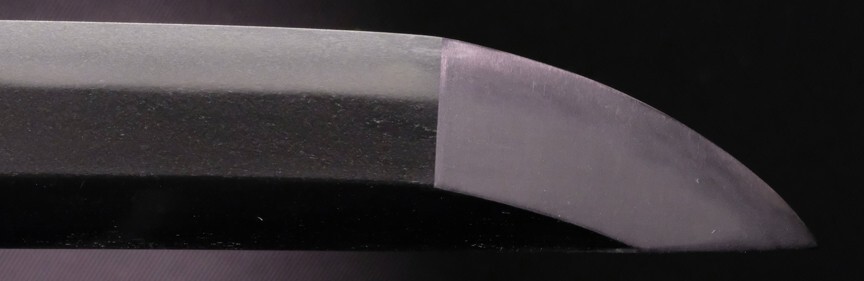
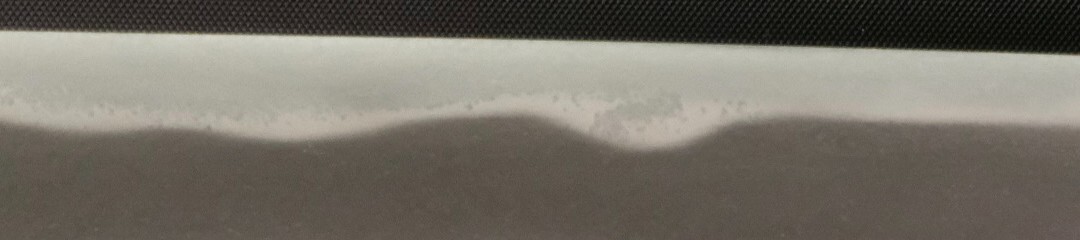
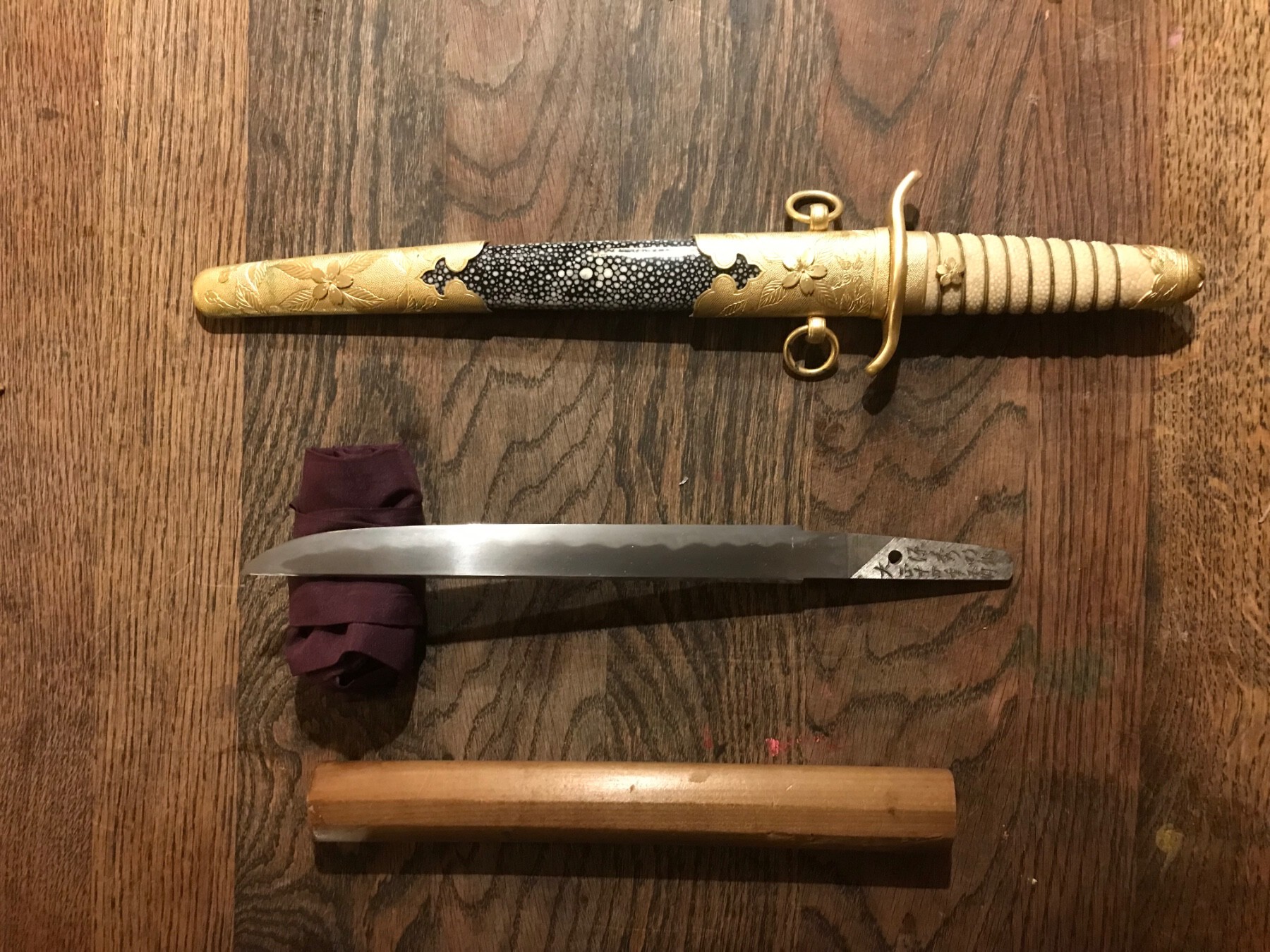
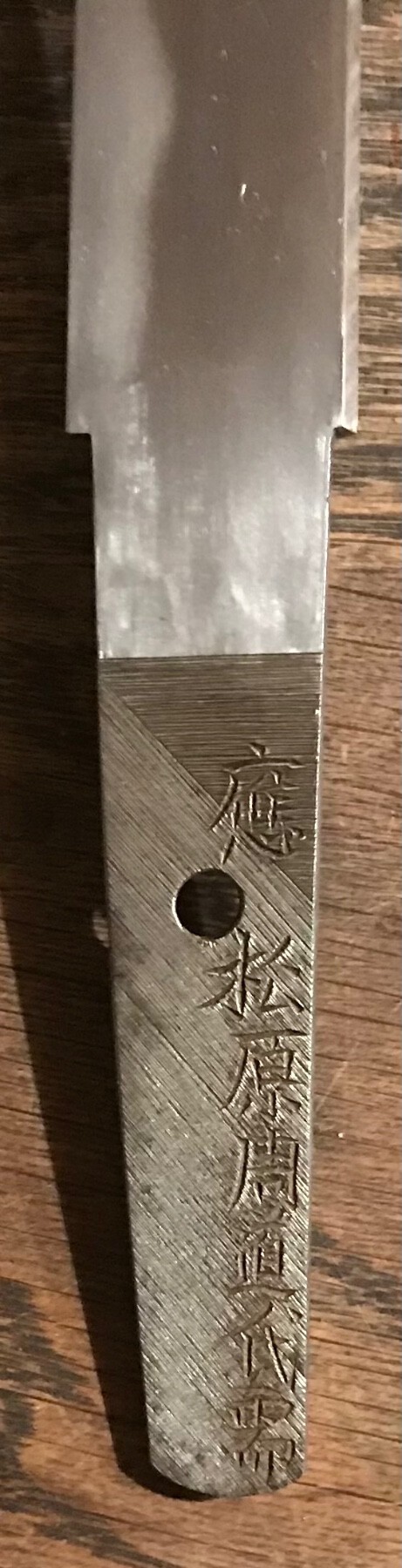
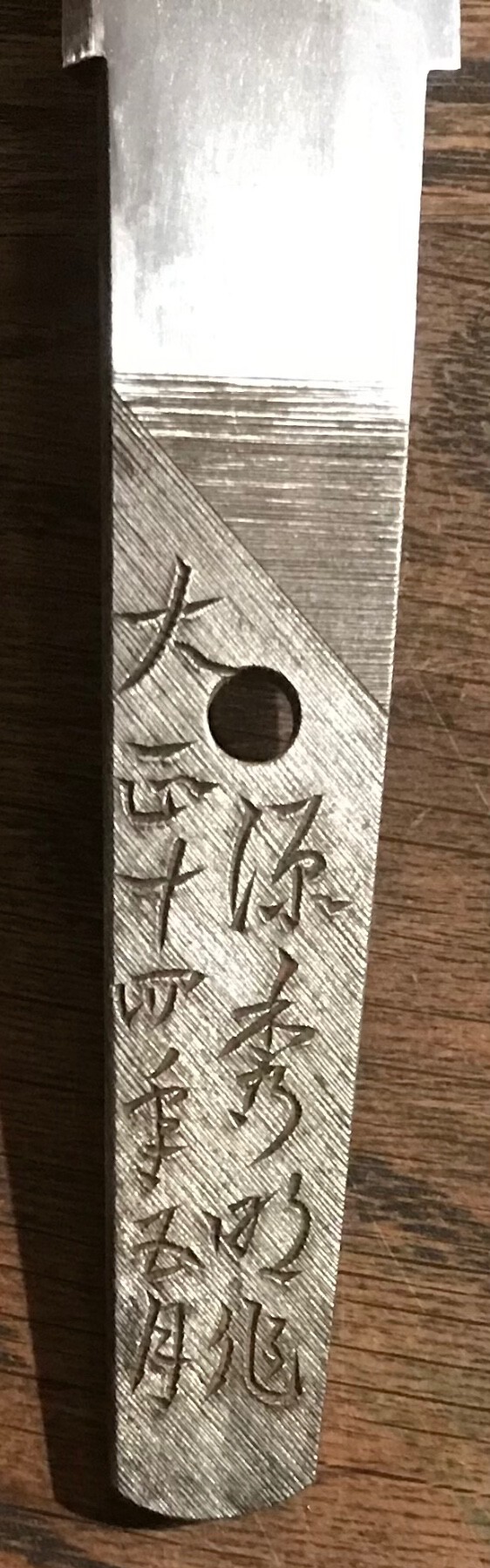
I thought I’d show my recent acquisition. A special order tanto by Horii Hideaki
 1 point









.jpeg.9abeb33b6884bf59f3884261d11ed949.jpeg)
.jpeg.ef563778a537fa16e70e2ff1c41c8a97.jpeg)
.jpeg.783419447a471caeef8928d7f506d8d3.jpeg)
.jpeg.d5a796a9bf807515095c31c6ceb295c0.jpeg)
.jpeg.8d927044b30e6779d00df123d170e696.jpeg)
.jpeg.86dc329b0ae4c25ef3df2b9941e32fb4.jpeg)




.jpeg.5f3dbd77762c9e49b6d925c8e0e8cc9f.jpeg)













This leaderboard is set to Johannesburg/GMT+02:00