
Leaderboard


Popular Content
Showing content with the highest reputation on 12/19/2025 in all areas
-
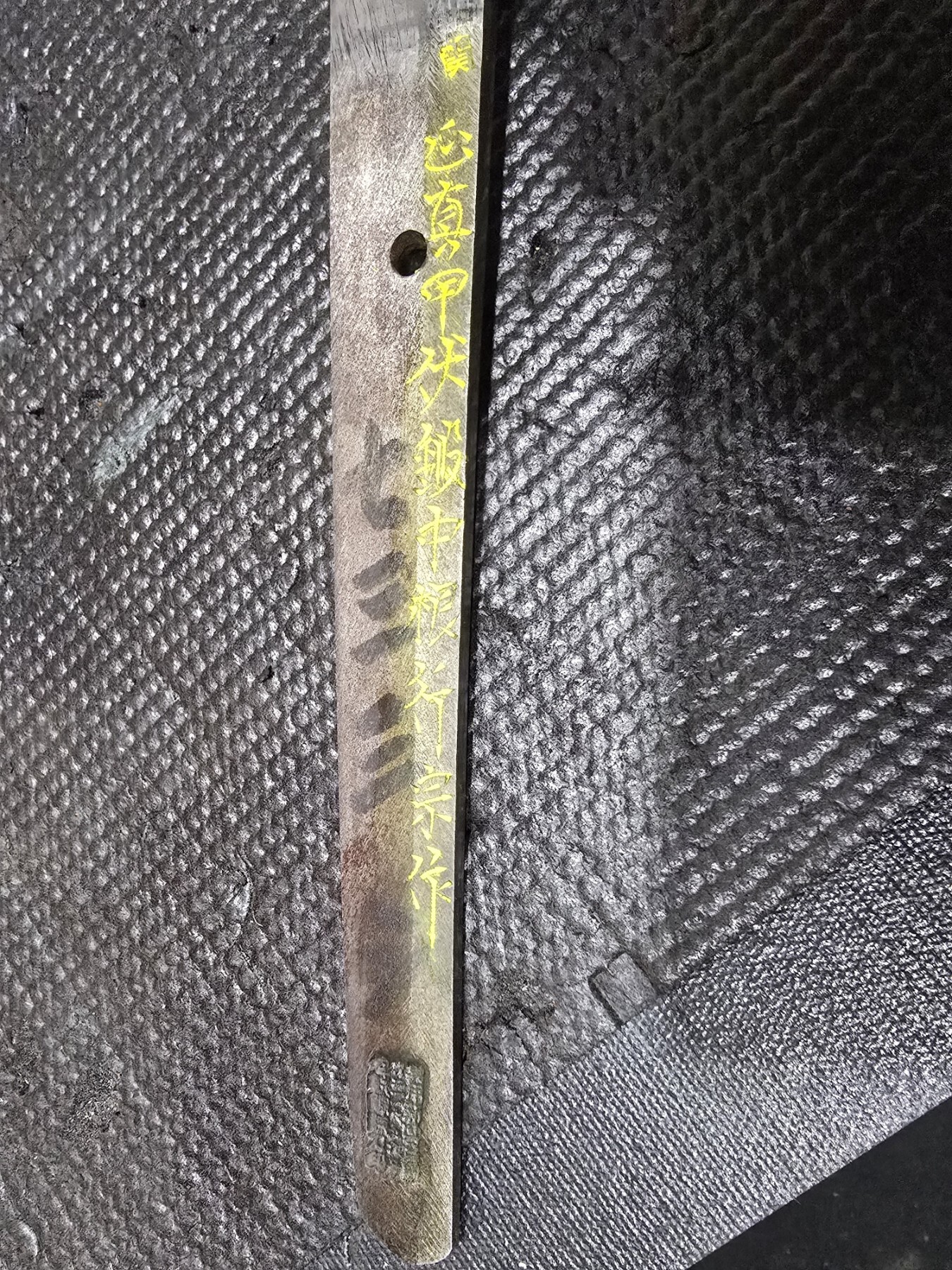
@Gerry Position 12529. Nice piece. Longest ubu amongst katana with this atribution.4 points
-
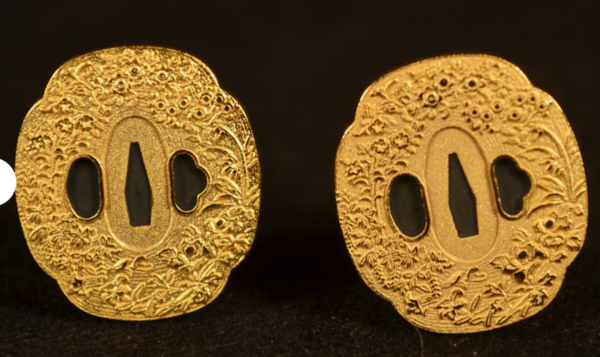
Another pair of gold-plated cufflinks. https://www.ebay.com/itm/205728882692? John C.
 3 points
 -
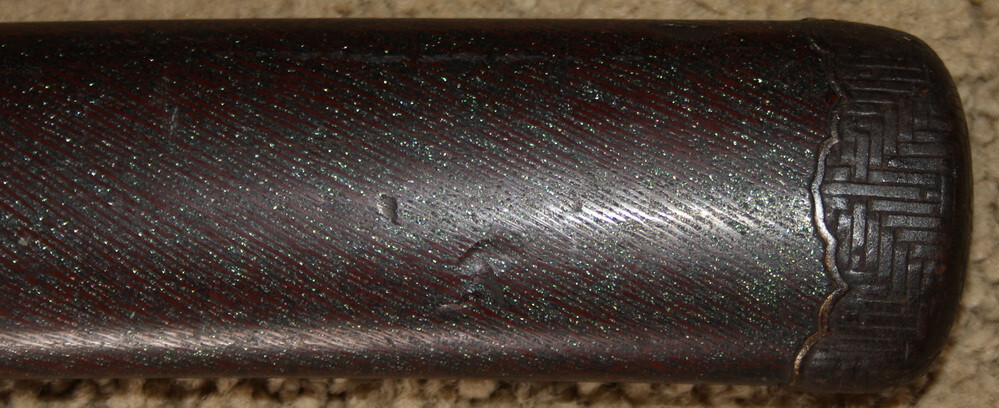
From the Urushi Kogei Jiten - Tagaysan Nuri ~ a type of kawari-nuri that brings out the wood grain with a finished look like Ironwood. Mokume-nuri - common in the middle-ages, red lacquer on top of black lacquer creating a woodgrain pattern. Mokume Arai dash-nuri - a type of sabi-nuri where the lacquer is manipulated by fingers, awls and spatula to create the wood grain. Sabi-nuri - urushi mixed with paper powder (Kami no ko) is then manipulated to build up patterns like Matsu-kawa and sakura-gawa...3 points
-
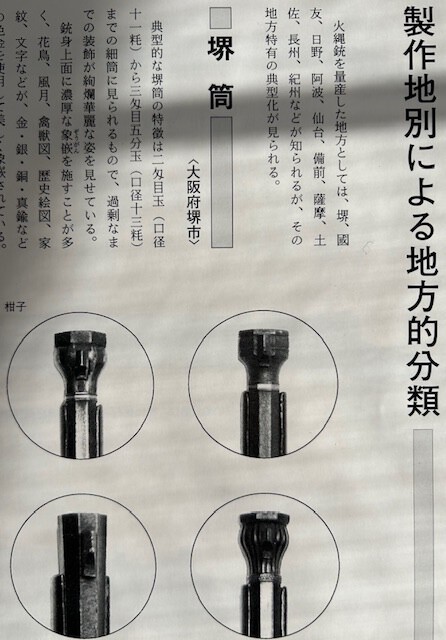
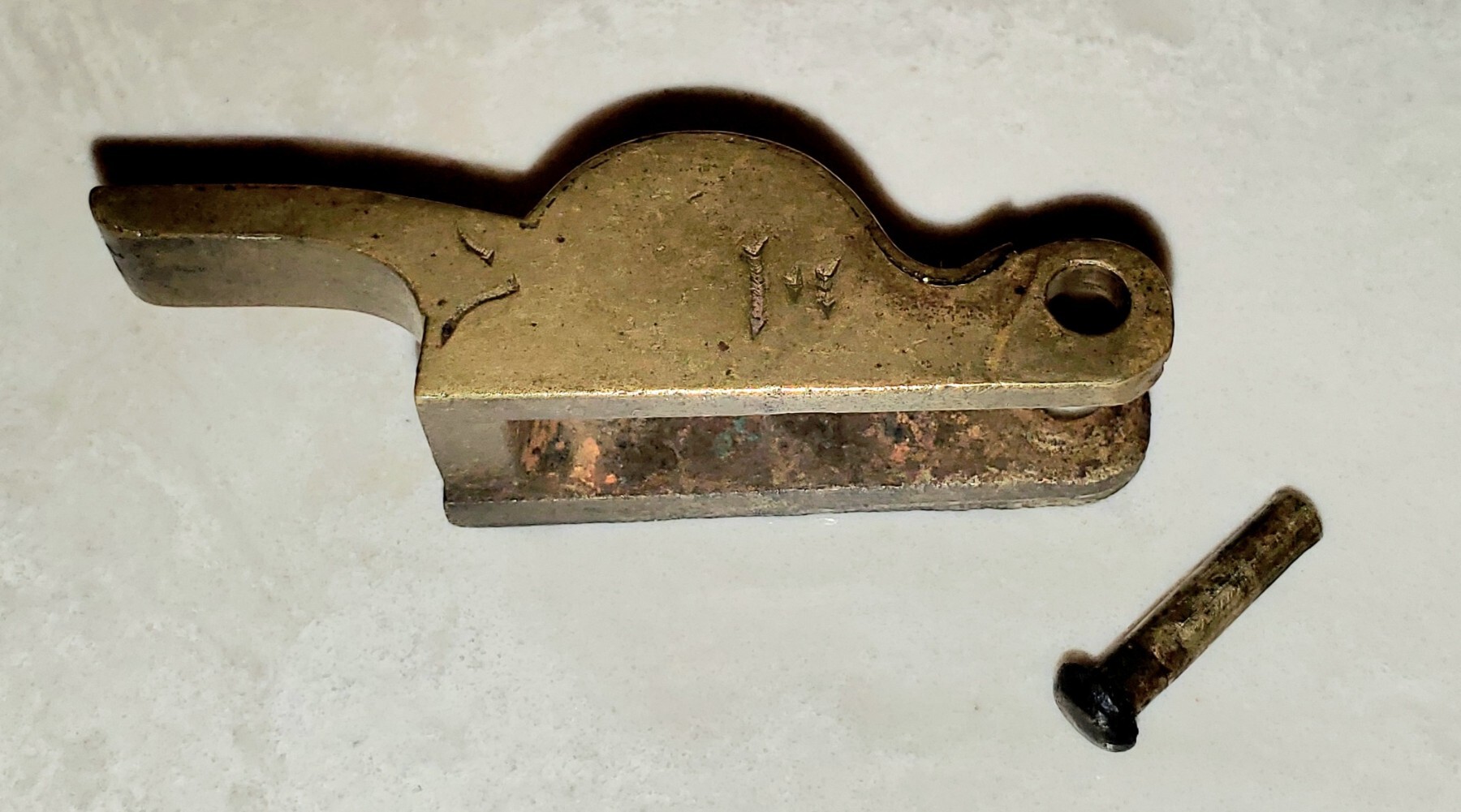
Yes, that is a very nice example of a Sakai muzzle surround with silver zogan inlay. See this photo of four examples from the region. The pan lid has 38 beautifully incised on it, suggesting that this may have been on a gun as part of a multiple order. The number is often repeated on other parts, so if you do not see it elsewhere this strengthens the possibility that it was drafted in as a replacement cover. The pin may also be a replacement as they were usually a hollow cylinder for insertion of a particular wire to support a small protective rain box. 三 八 (三八 Sanju hachi, thirty eight) From the Sakai (Osaka) section of Sawada Taira’s ‘Nihon no Furujū’ (Old guns of Japan)
 3 points
 -
You can't. And you shouldn't.2 points
-
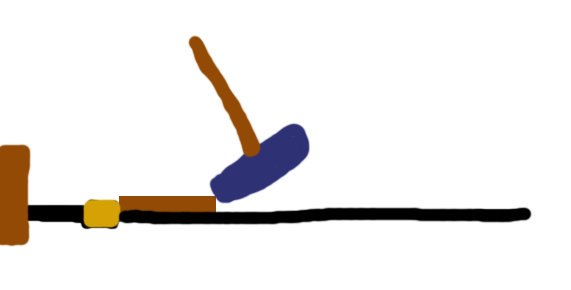
Take a piece of weak wood and a rubber hammer. And do it very gently. You handle with a sharp blade. Keep in mind that is dangerous.
 2 points
 -
Dear Craig. Just to add to Brian's assessment the very slender and poorly formed 'habaki' are someone's half hearted attempt at DIY. Both blades are Japanese but I think both have been cobbled together with assorted fittings to run them into complete swords. Your photographs don't allow a detailed response but the shape of the tsuka and the wrap on the second look suspect. However if my sons had done this for me I would be very happy so don't let anything spoil that. All the best.2 points
-
No, they are real. Just in poor condition. I believe the one is fitted with half a double habaki and you'll want to get that sorted sometime.2 points
-
Hi Gerry, the registration number is on the NBTHK hozon papers2 points
-
Bruce, Here are some photos for your records.



 2 points
 -
Just throwing this Namban tsuba in this thread - Namban not Hizen, you can plainly see the hitsu have been cut in after the guard was made. Someone has not looked after the poor thing! Lissenden would not be pleased. Interesting to see the indented/recessed "seppa-dai" on the ura. https://www.jauce.com/auction/v12128758872 points
-
Thanks Michael, delighted to see this. Gives me a chance to show my latest find, a TERUKADO wakizashi (50.0 cm) in Edo period koshirae. It is said he signed TERUKANE in the earlier part of his career and TERUKADO after he was given TAMBA no KAMI in 1659, dying in 1584 (?). A google search finds much more information including on this Board. Regards, BaZZa. aka Barry Thomas.
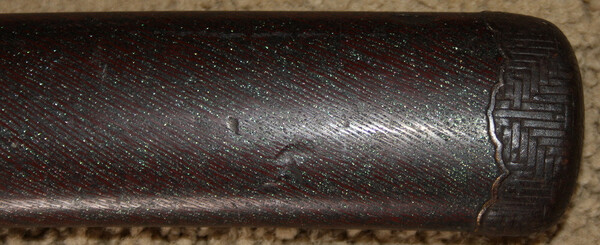


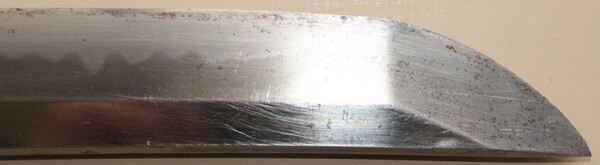
 2 points
 -
I've added some new pictures, there seem to be some characters on the bottom of the pan cover and noting that the pin is solid. Also a detailed shot of the poppy at the barrel muzzle. This is all very interesting and great background for my new Teppo. Thanks, Jay
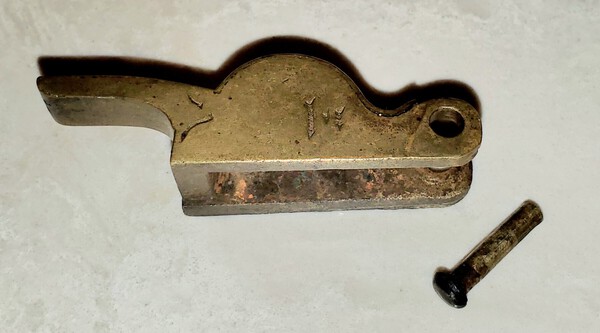
 2 points
 -
Once again a big thank you! I dived into this collectors field with absolutely no knowledge. Guess that the collector this items came from during a period also lacked knowledge. That reflects the diversity in quality among my five first items. Really had a lot of fun with my little "picnic box" transformed to a 17th century powder flask!! When examined by me now so obvious!!!! This last item, when explained by you, is 100 % made out of......plastic!!!!!! But not recently. Guess 1960-70 plastic. A true souvenier item. Not as the more "falsification" produced powder box from the picnic water thing. Very much appreciate your gentle way to lead me forward. Remember when I bought a few netsuke from a local auction (of course chinese newly made tourist object) and asked about them on an esteemed internet forum. My mistake. ........ Next time similar items will emerge I am gonna be MUCH more prepared. Have some Japanese matchlock weapons to present. Hopefully real deal....but you never know.....2 points
-
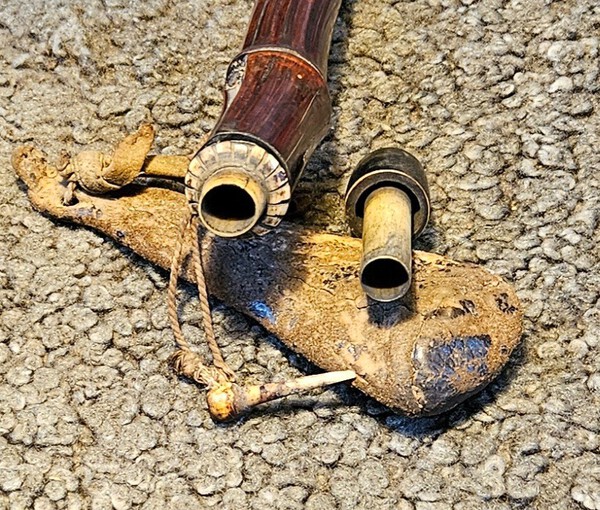
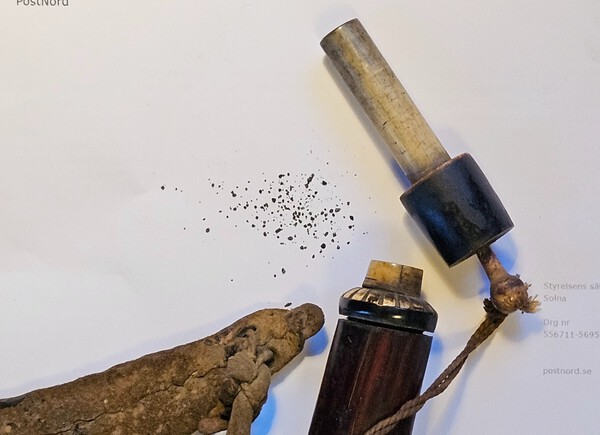
Next is this bamboo container wirh a leather pouch attached. Still some blackpowder left inside. The plug also works to measure right amount for loading. Bamboo powderflask 34 cm long. Any info on this item welcomed!
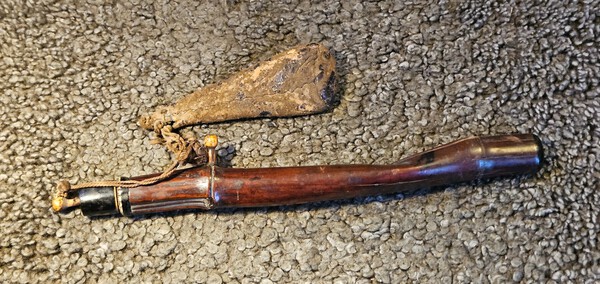
 2 points
 -
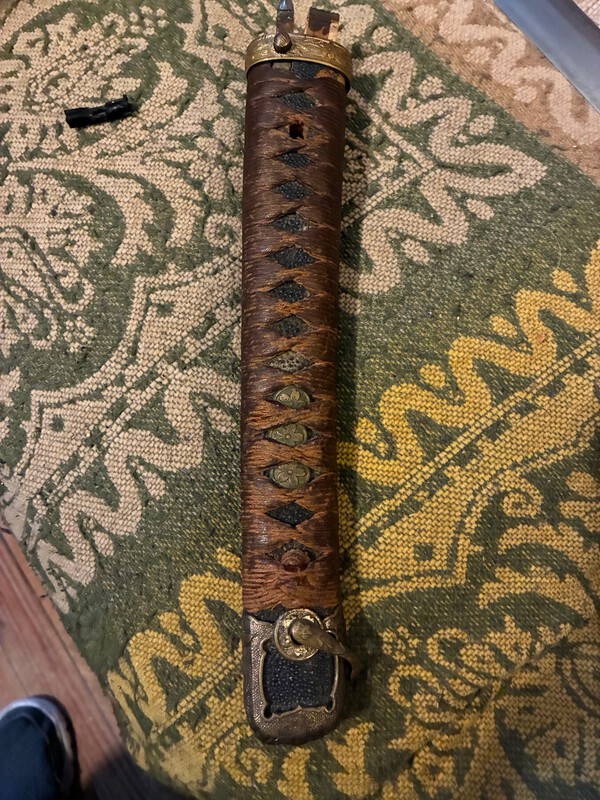
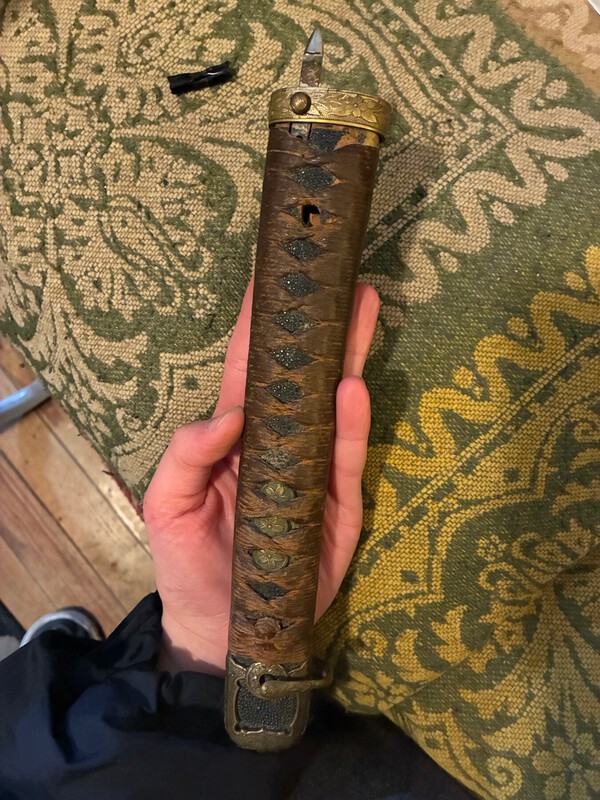
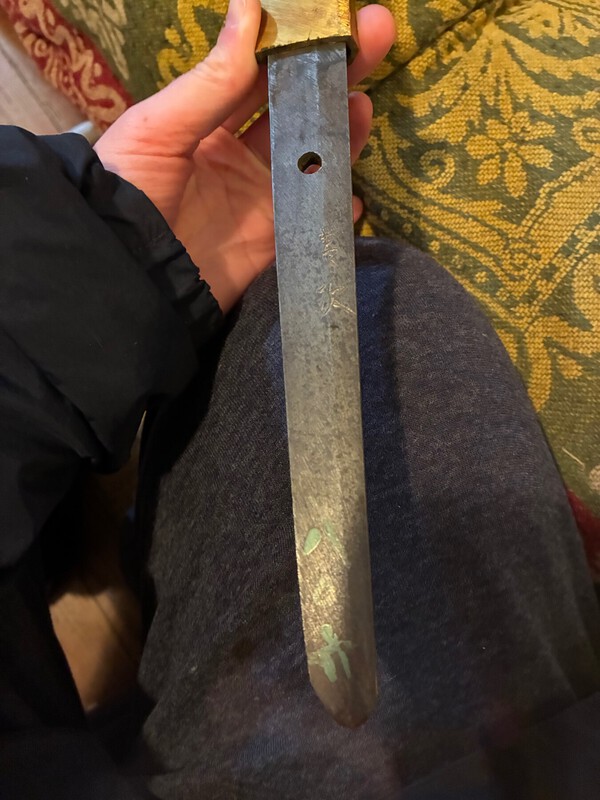
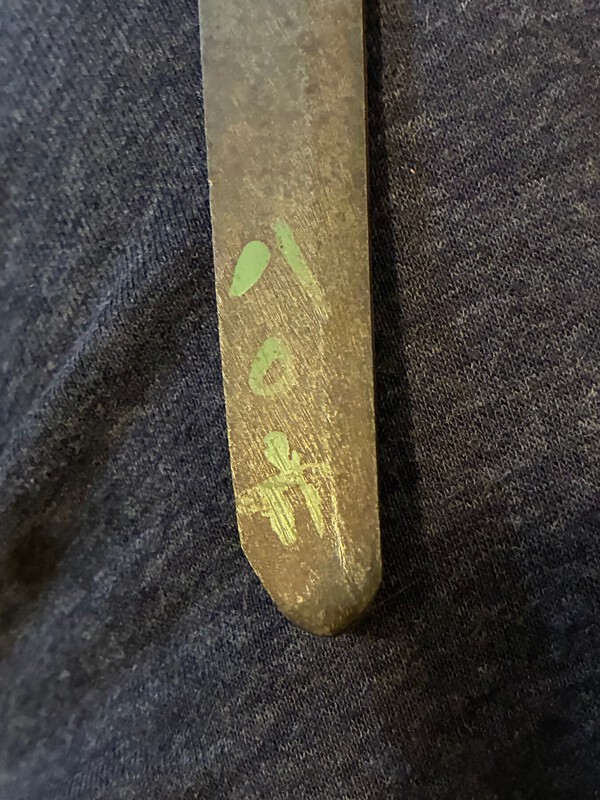
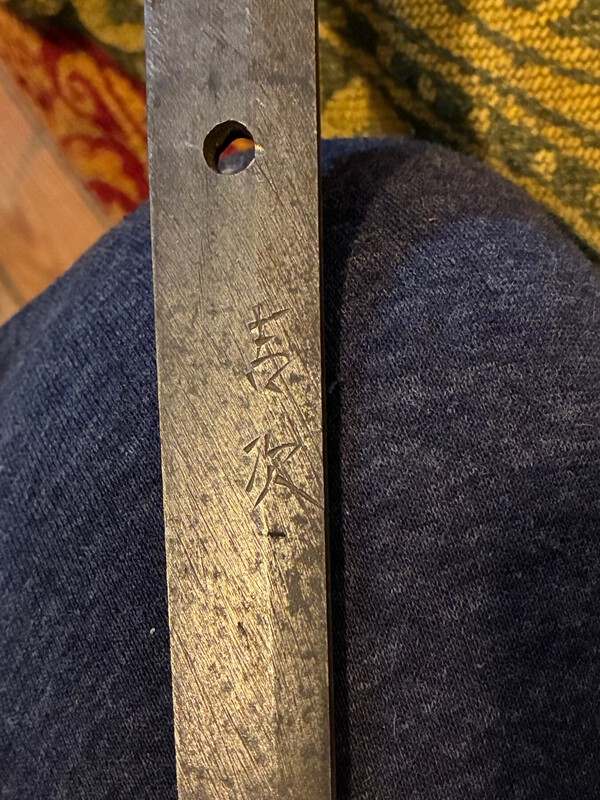
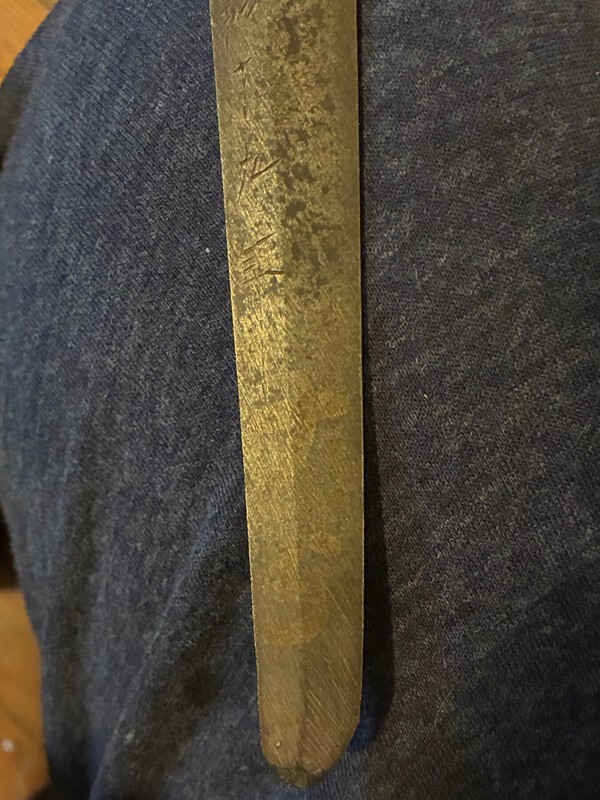
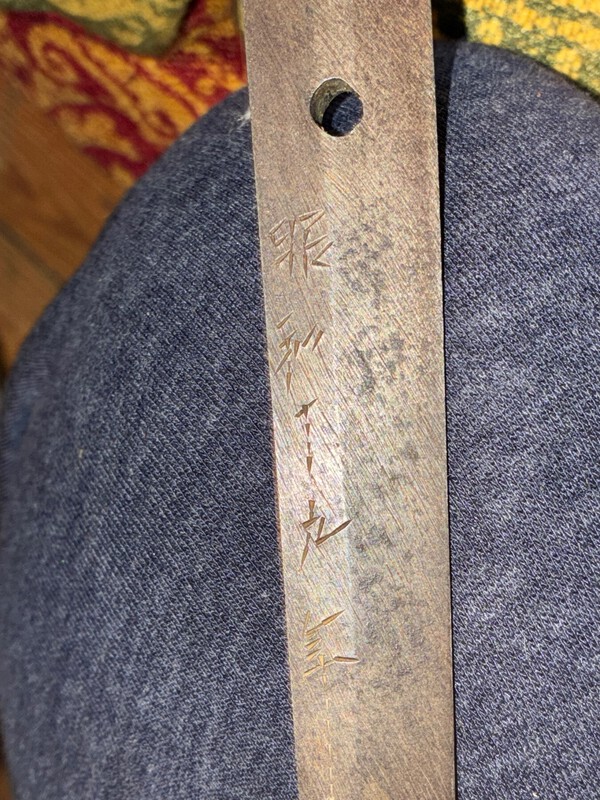
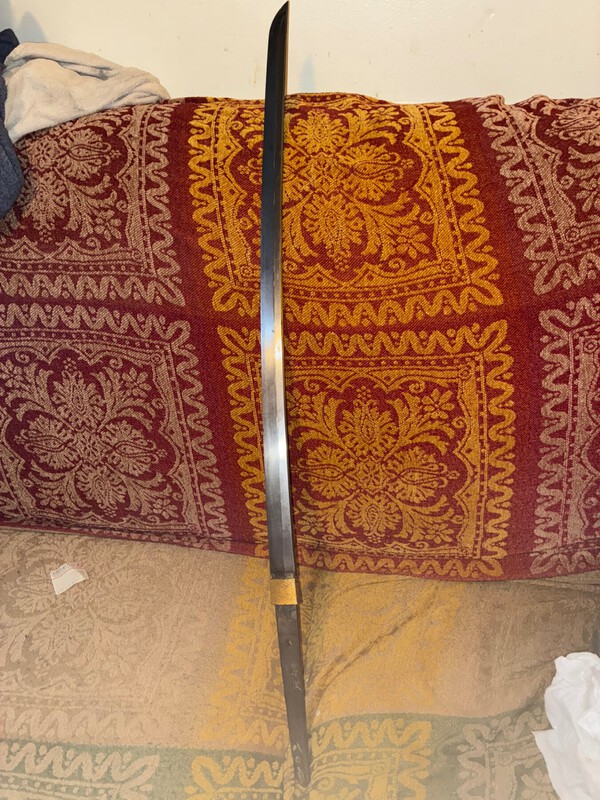
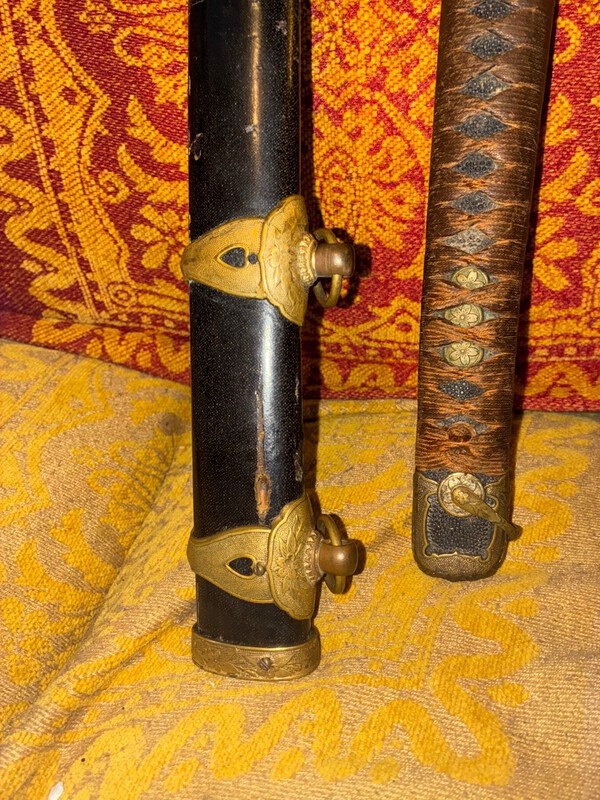
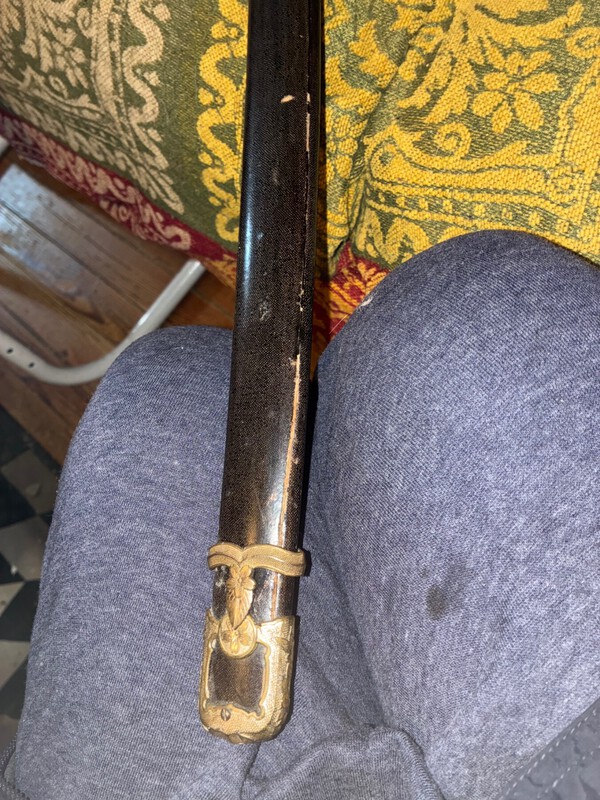
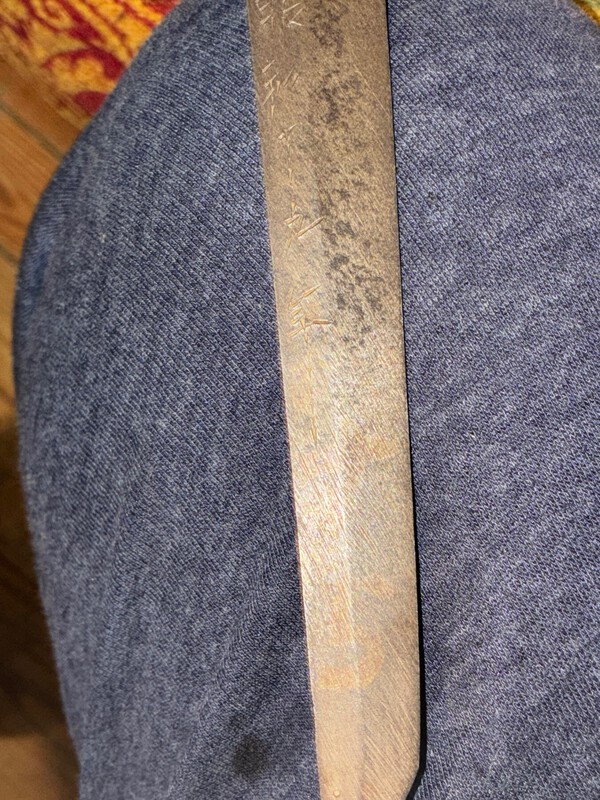
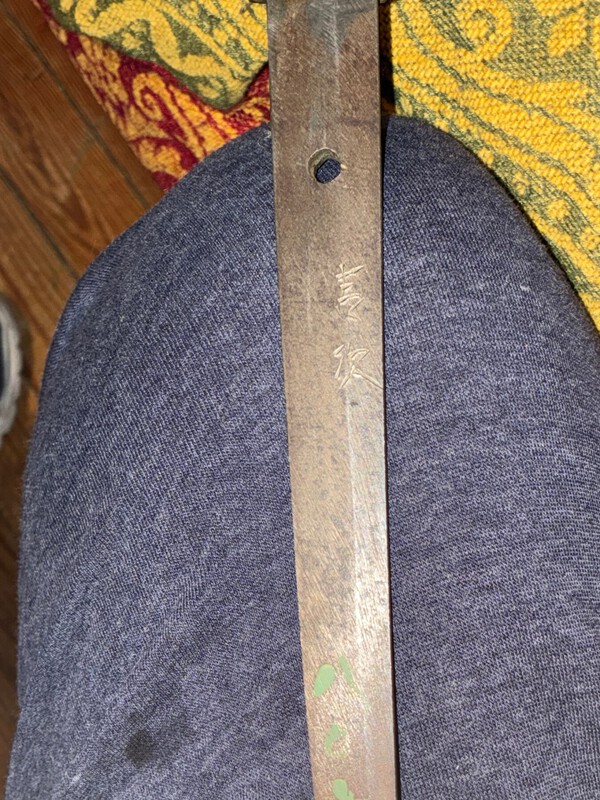
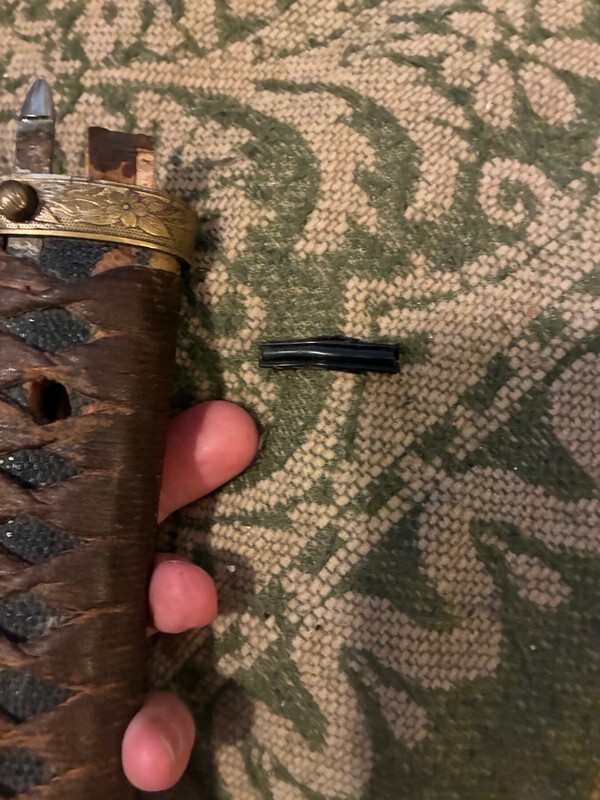
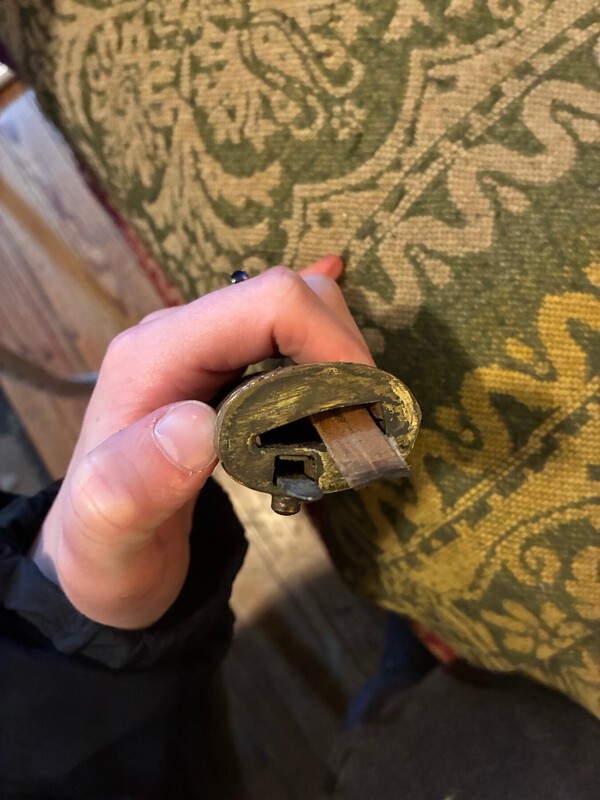
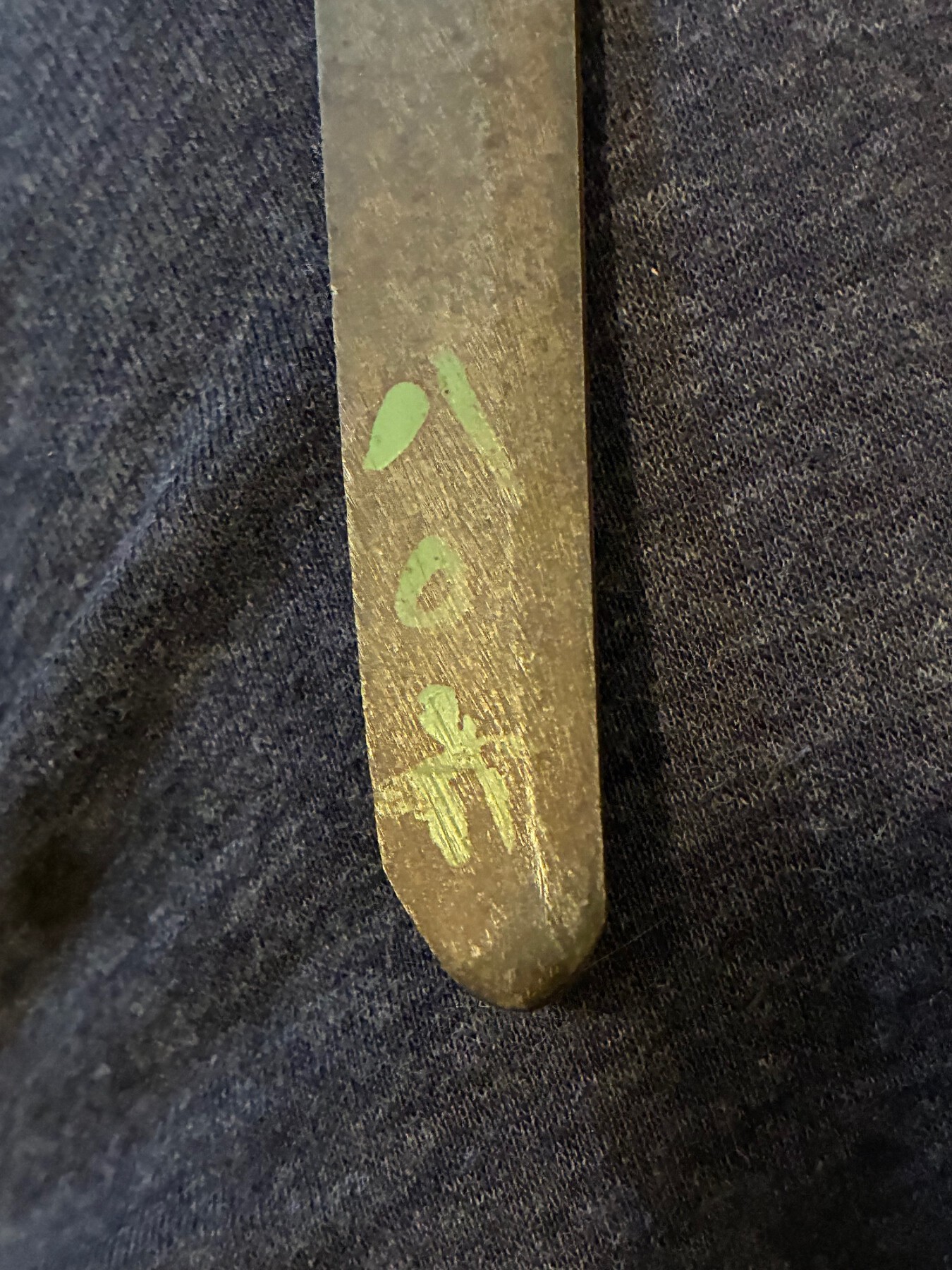
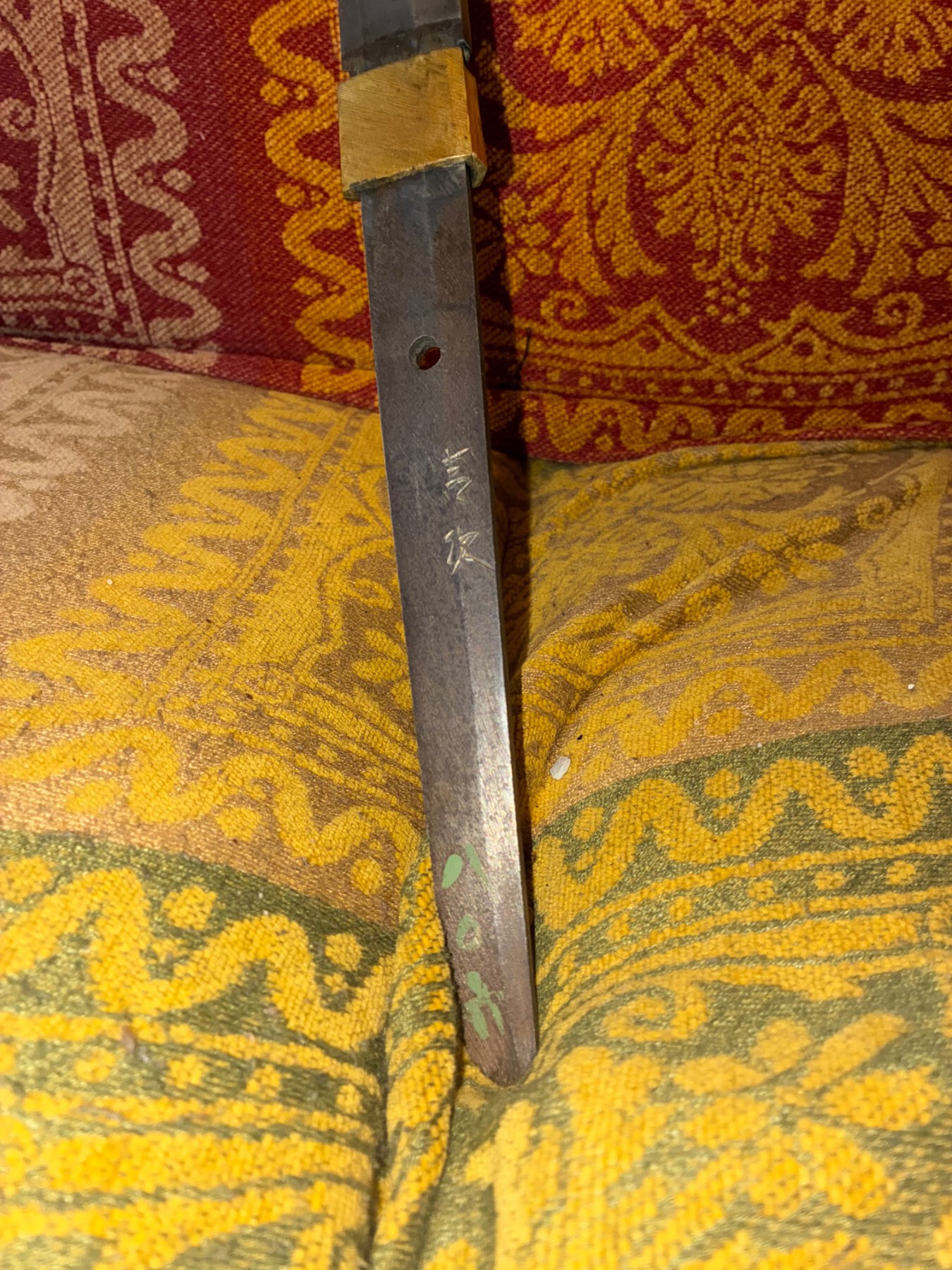
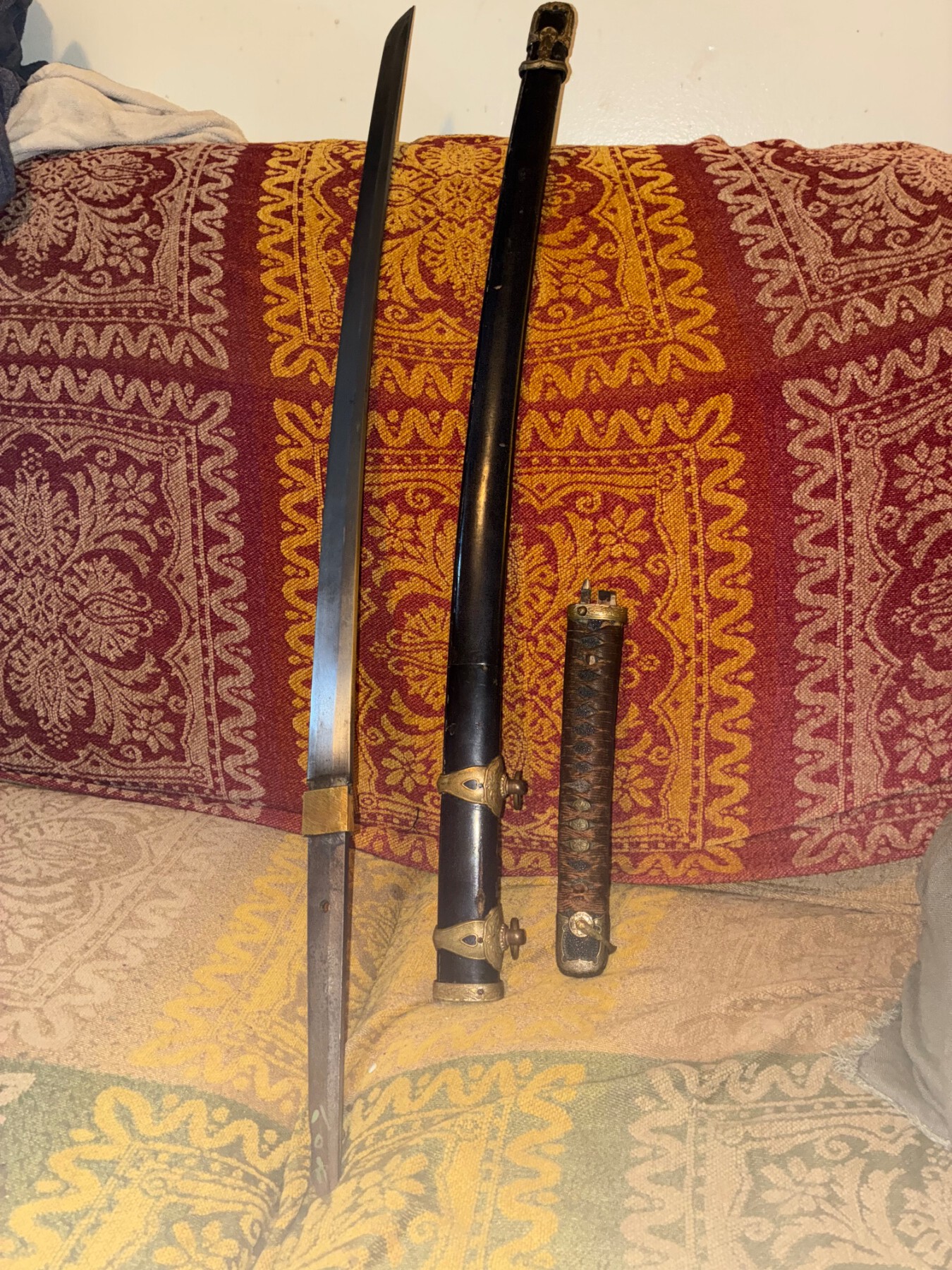
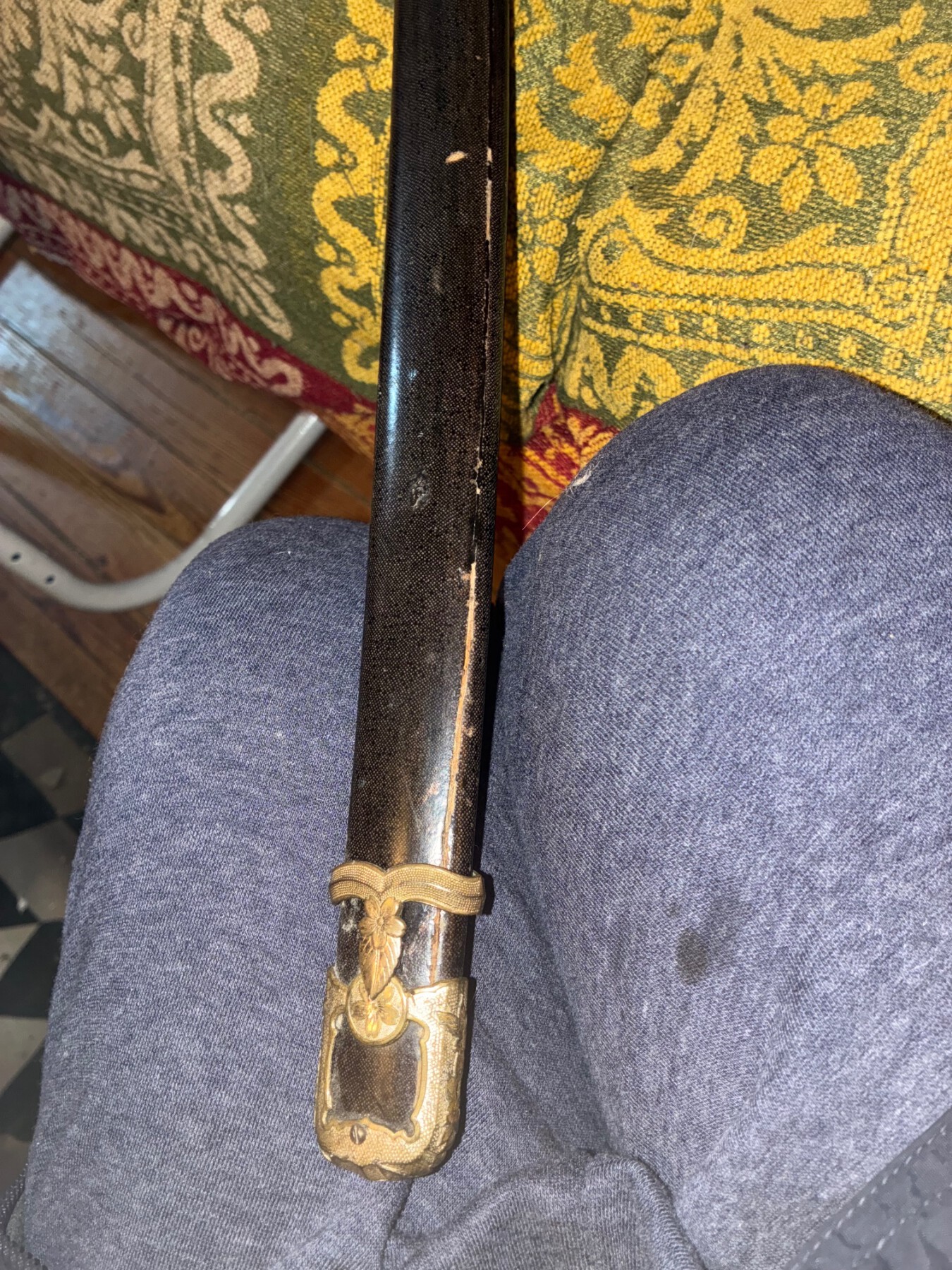
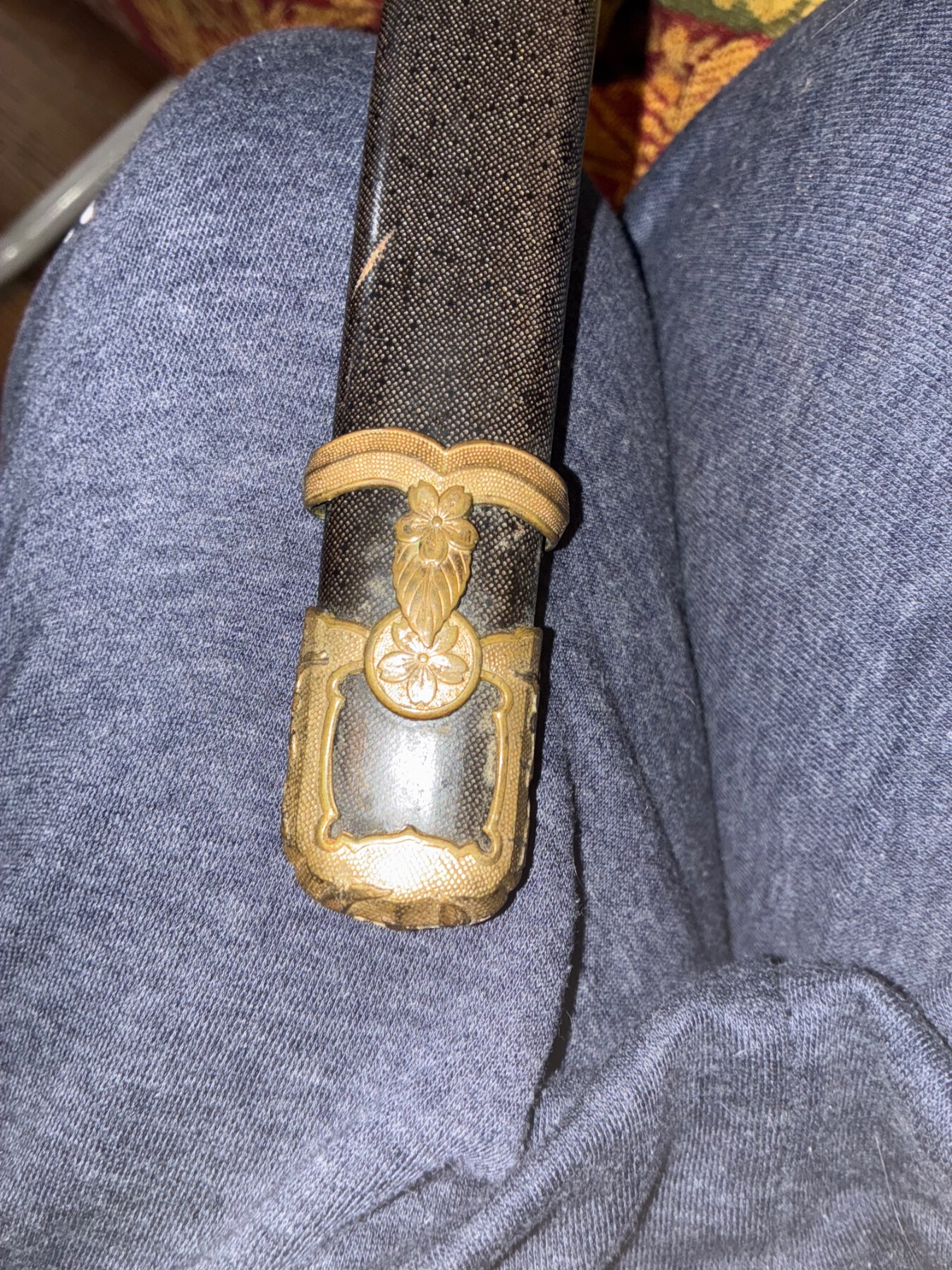
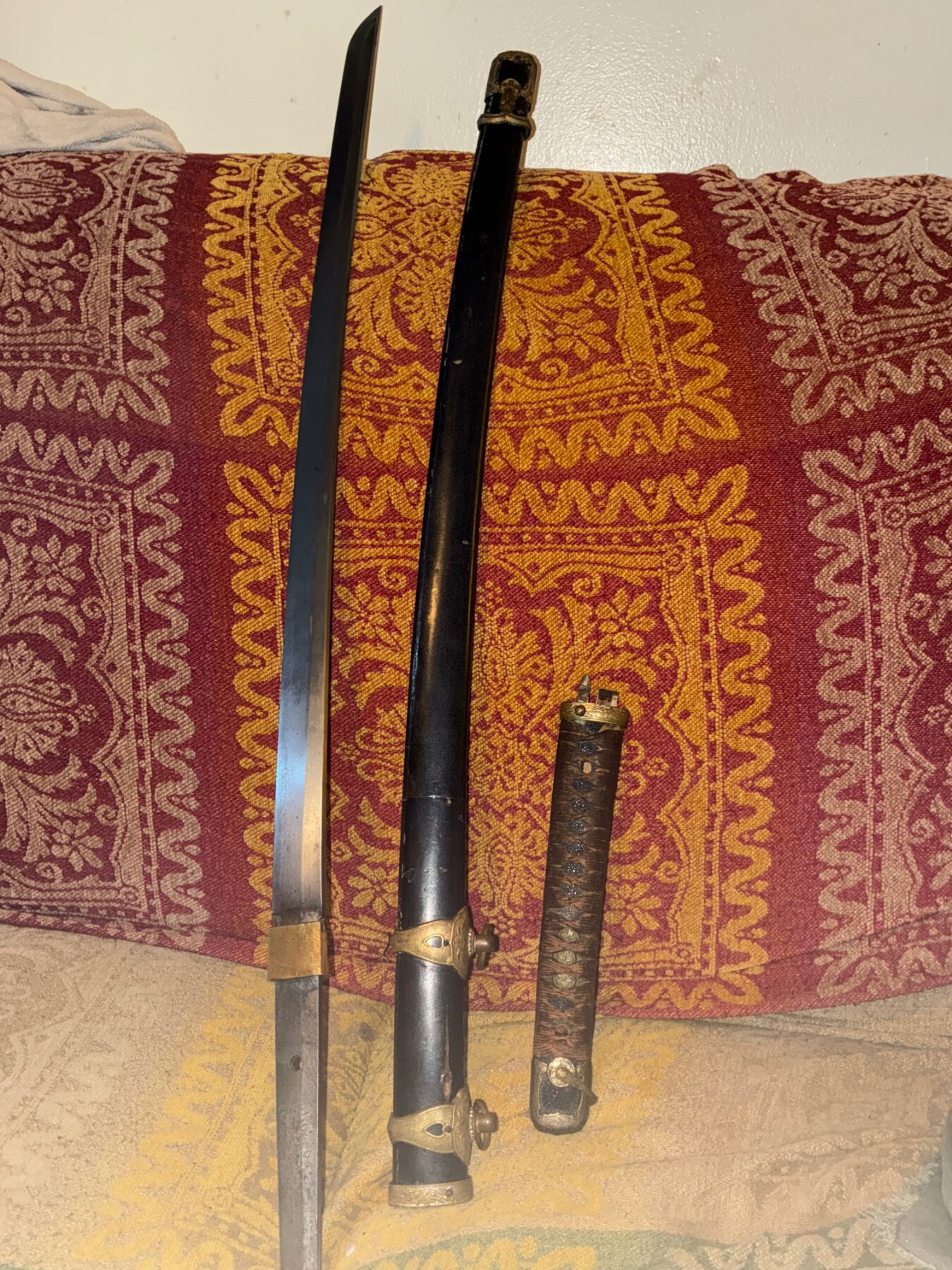
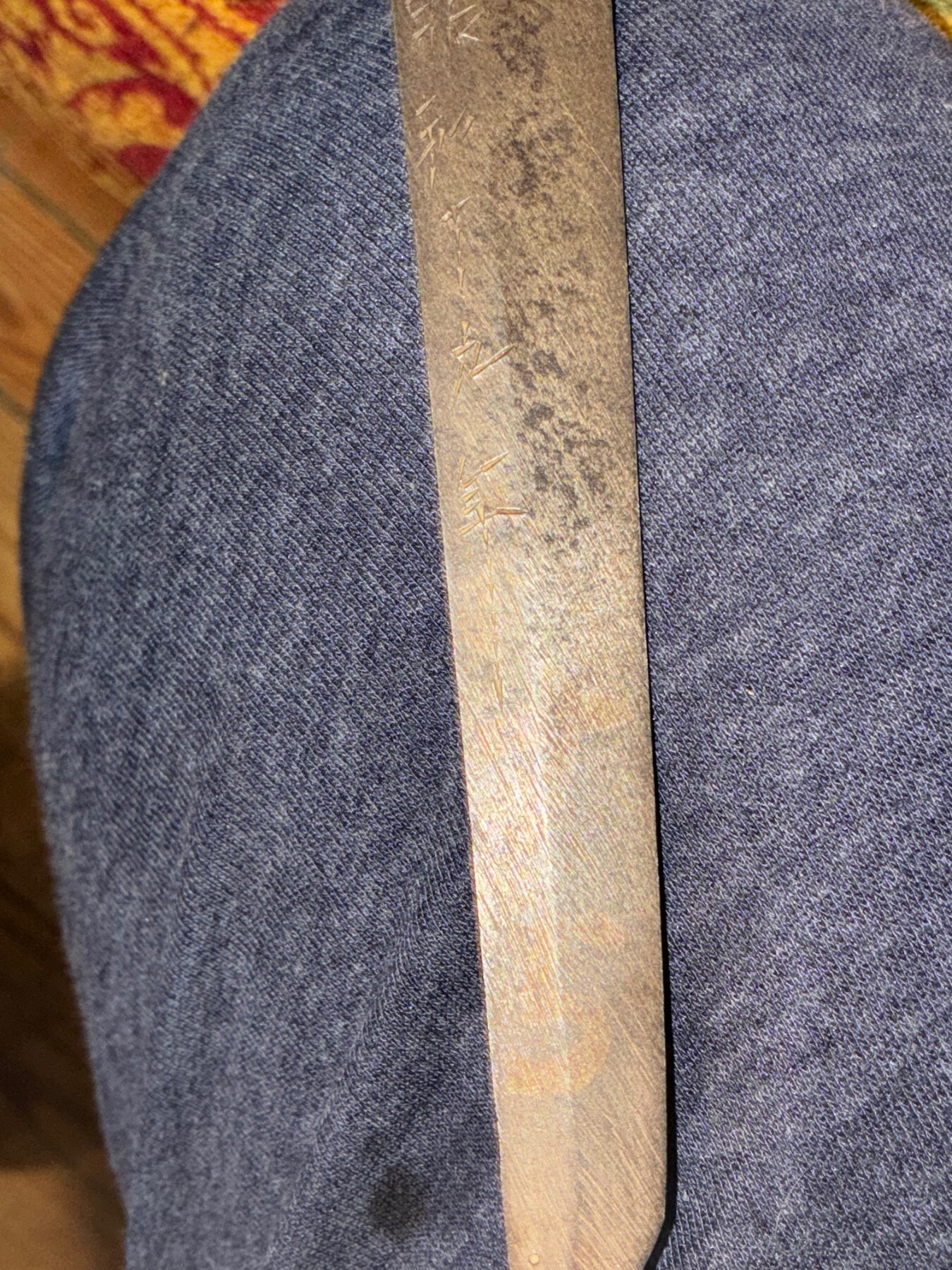
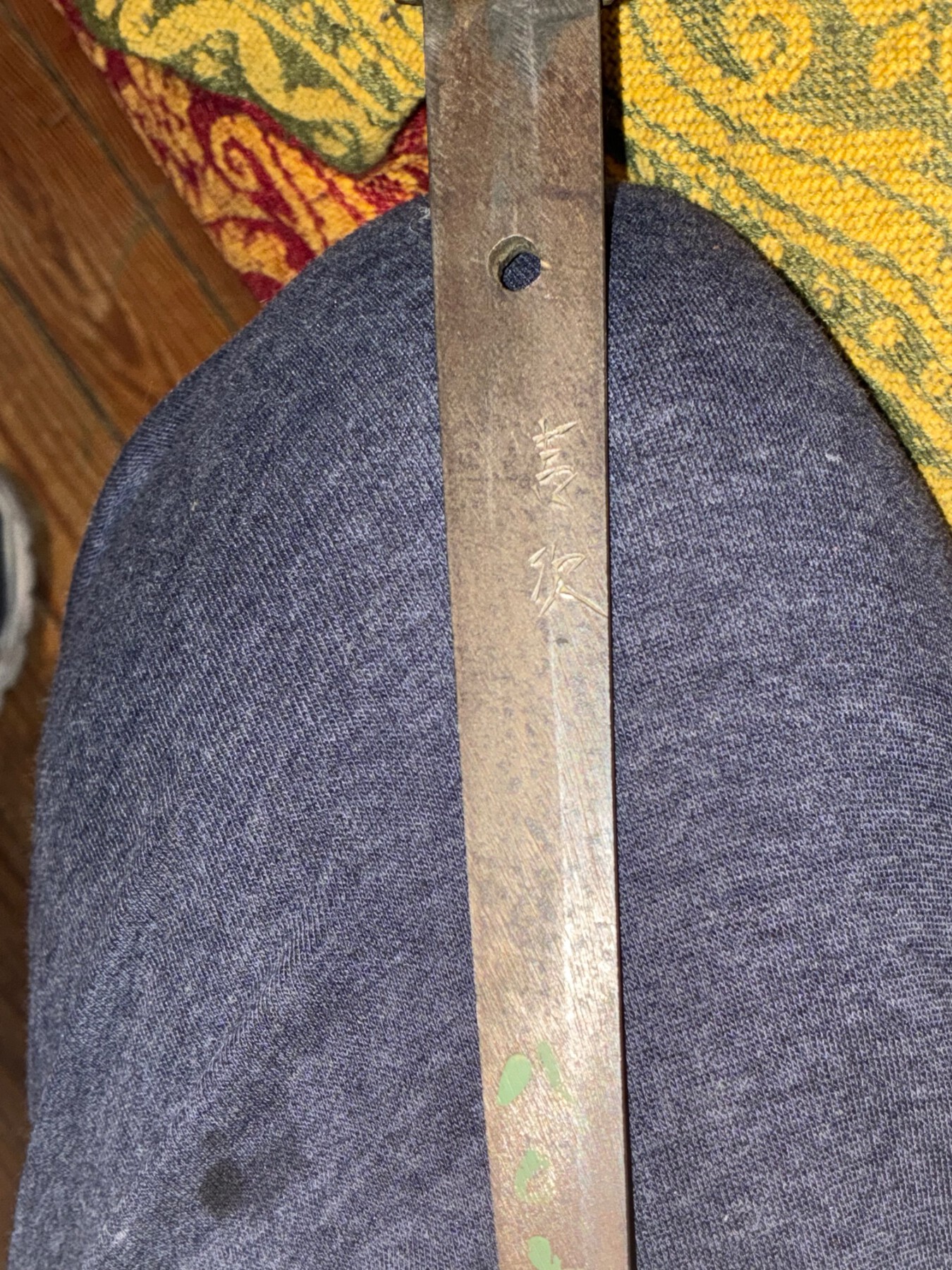
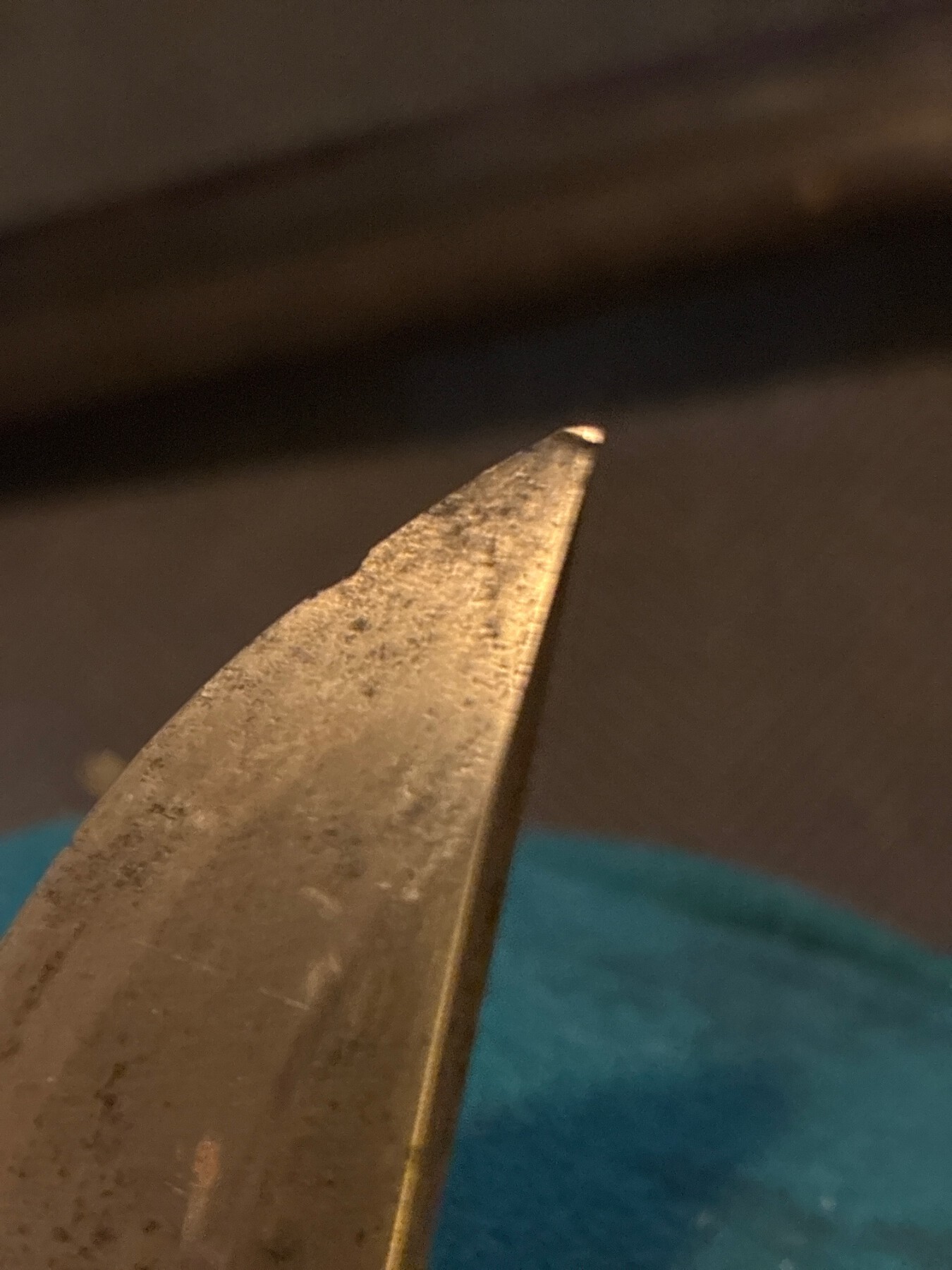
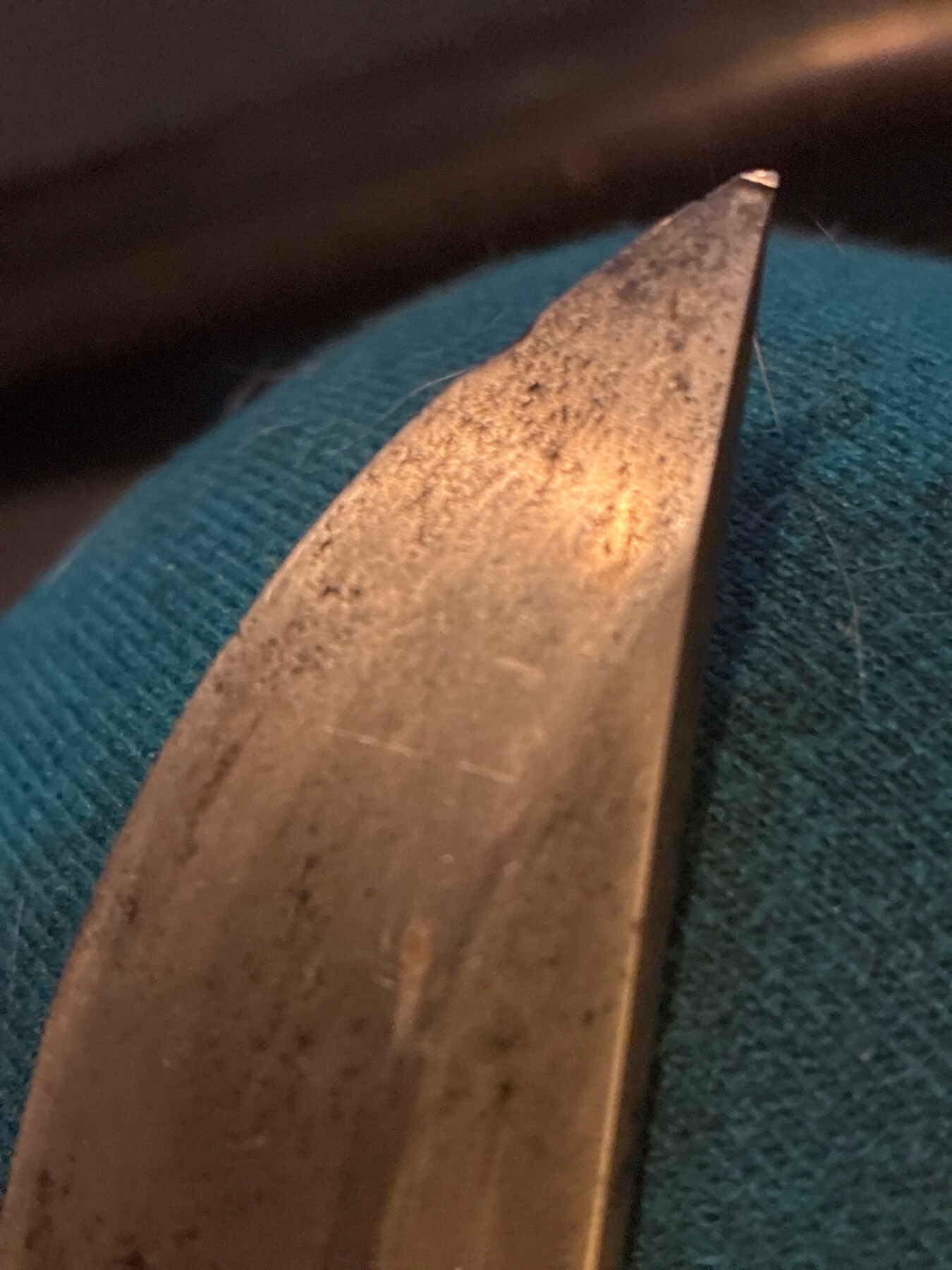
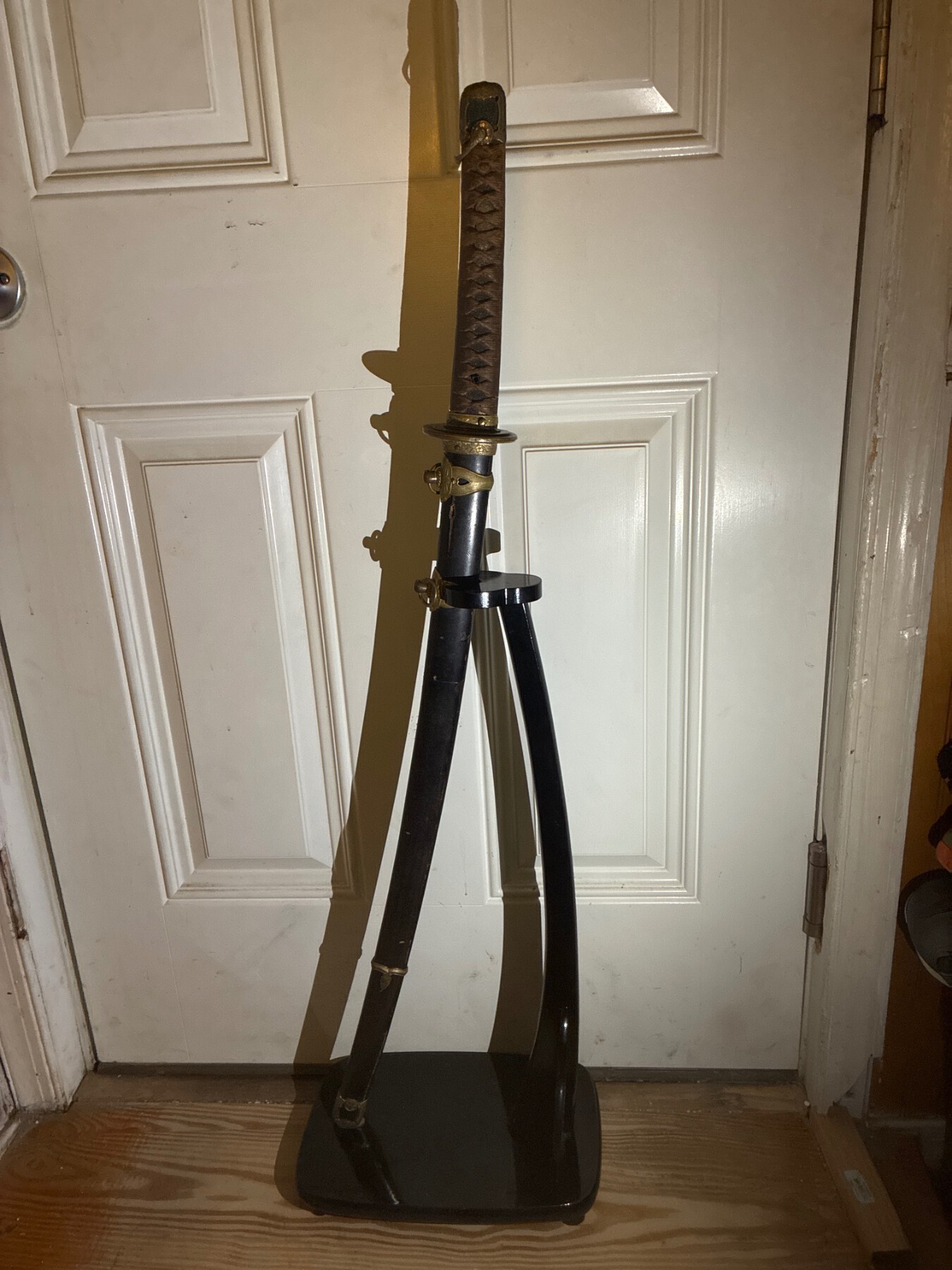
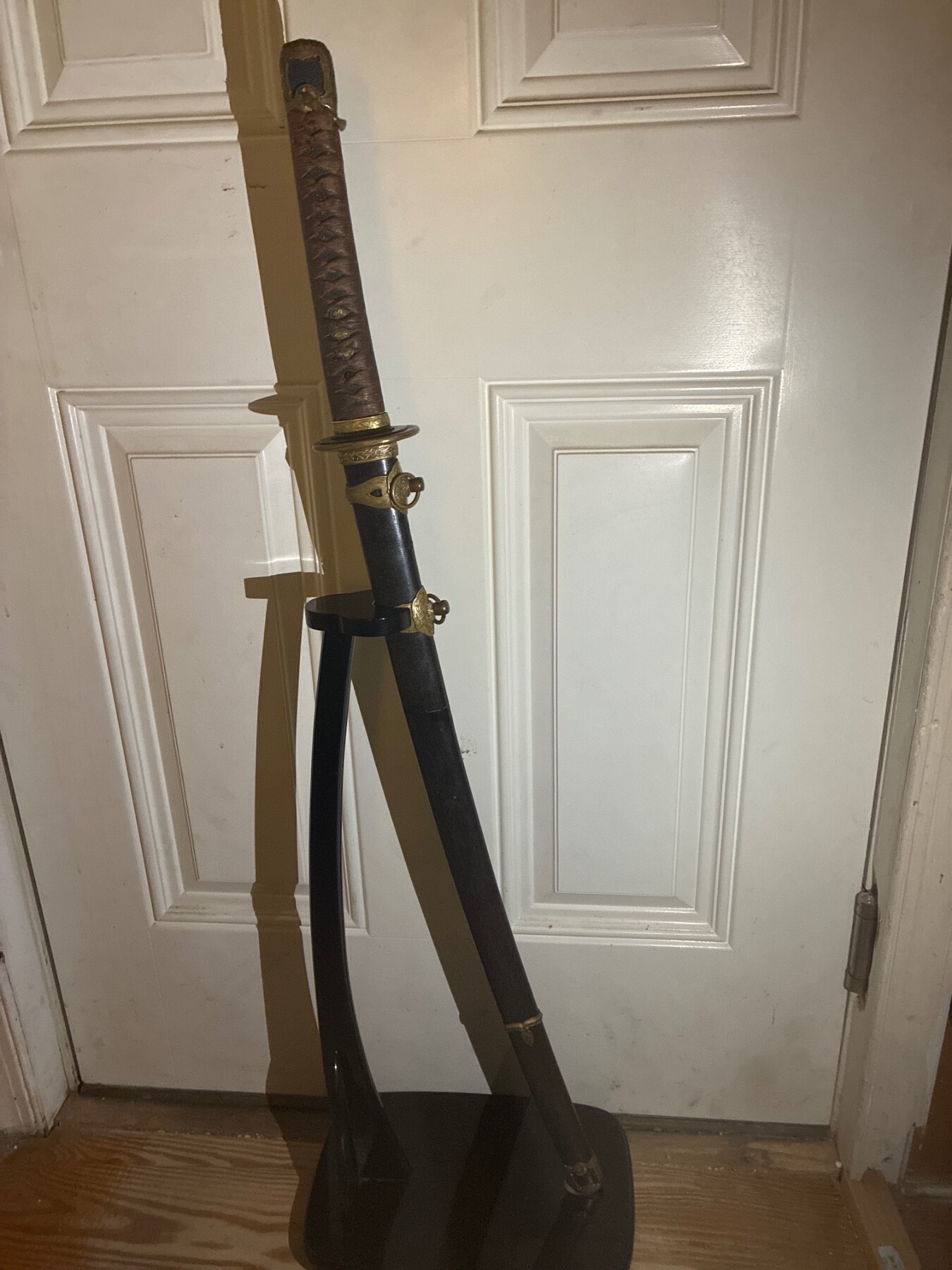
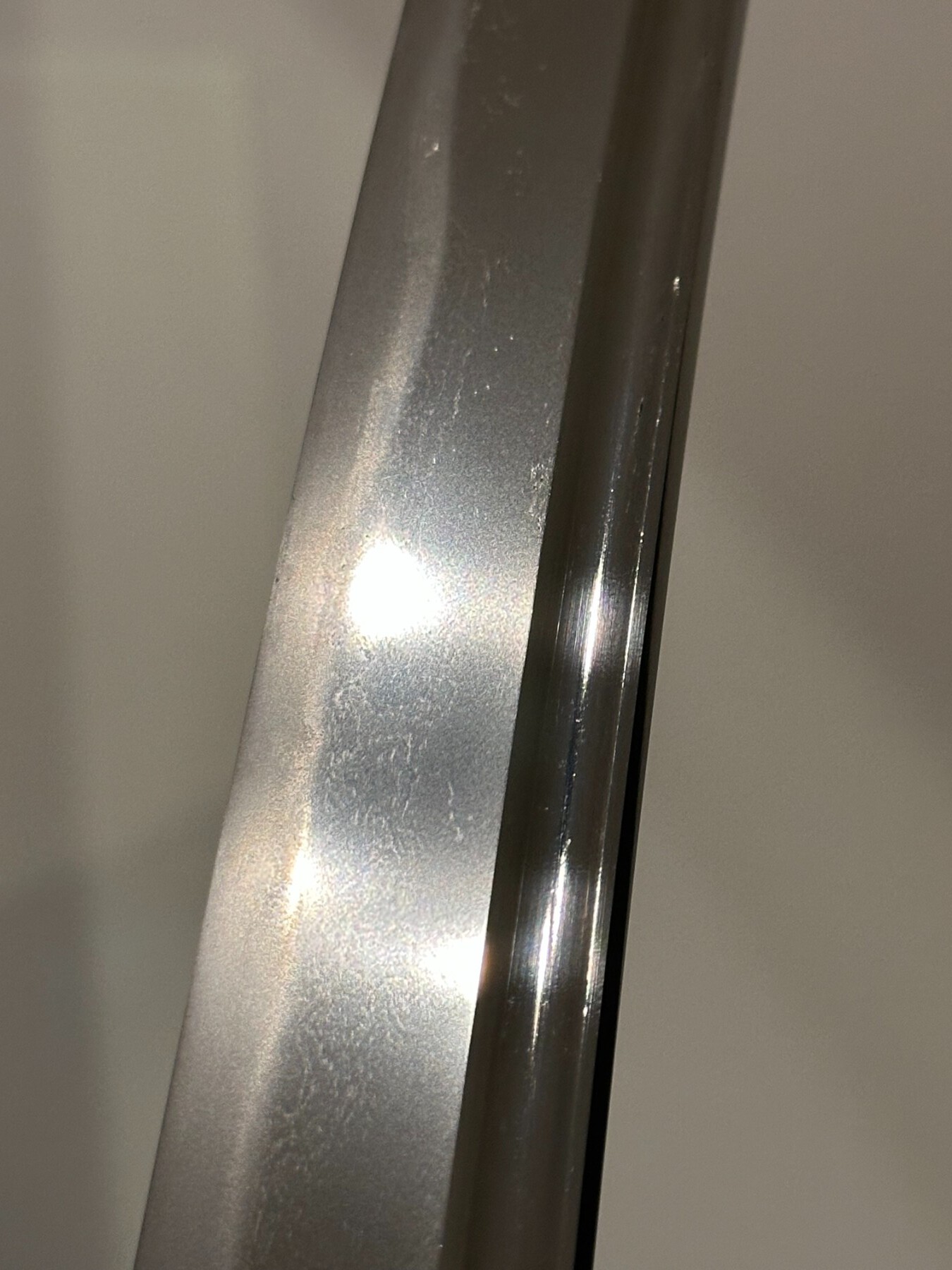
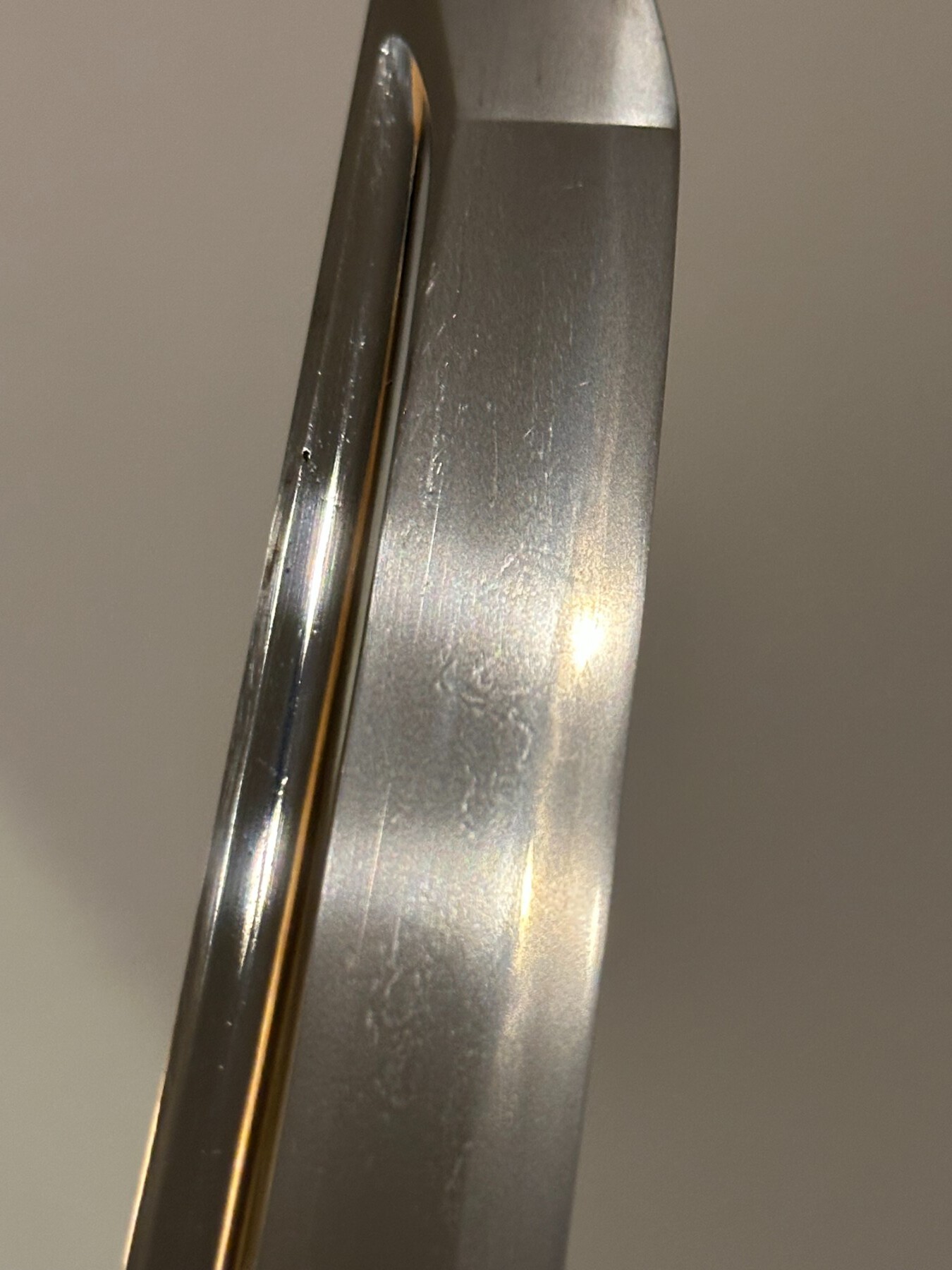
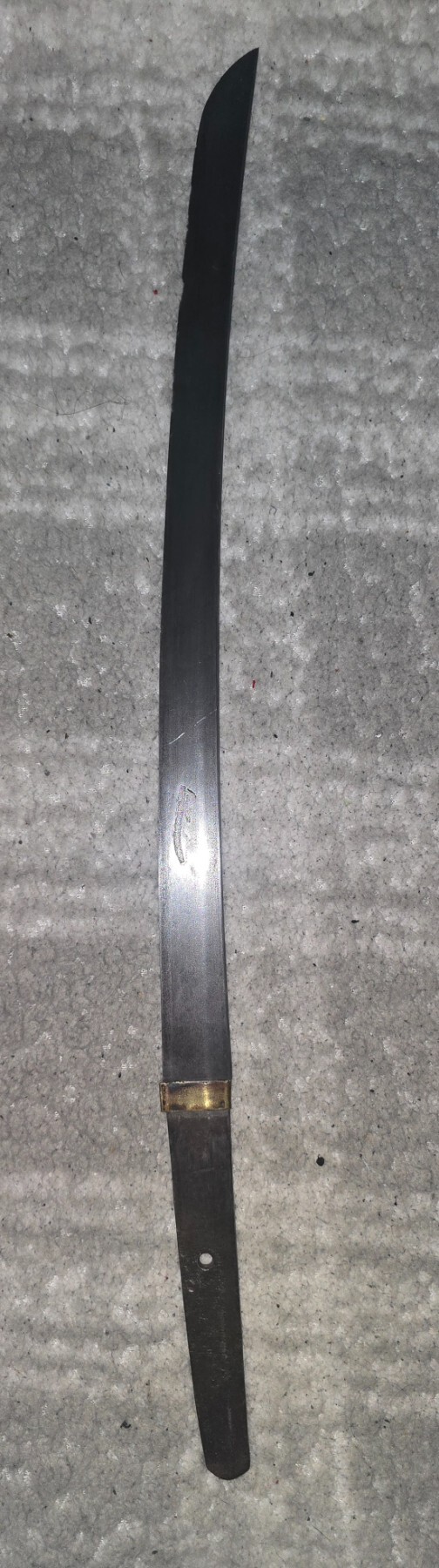
78772095288__07880BB4-5C68-49B4-A255-1A44E49FAFE7.MOV Blade for sale. This blade was made by Seki Yoshitsugu, a WWII era smith who produced mass manufactured oil quenched showato arsenal blades such as this one. It includes the original tsuka, tsuba, and saya. Does have two incredibly small divots recently noticed upon closer inspection, and the very tip has a tiny bend. Comes with display stand asking price is 1200 or best offer. Willing to negotiate.







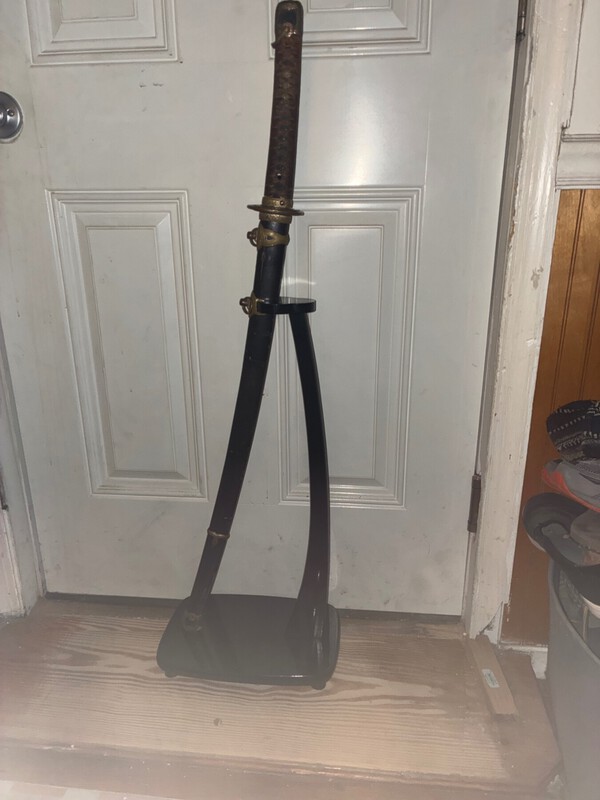

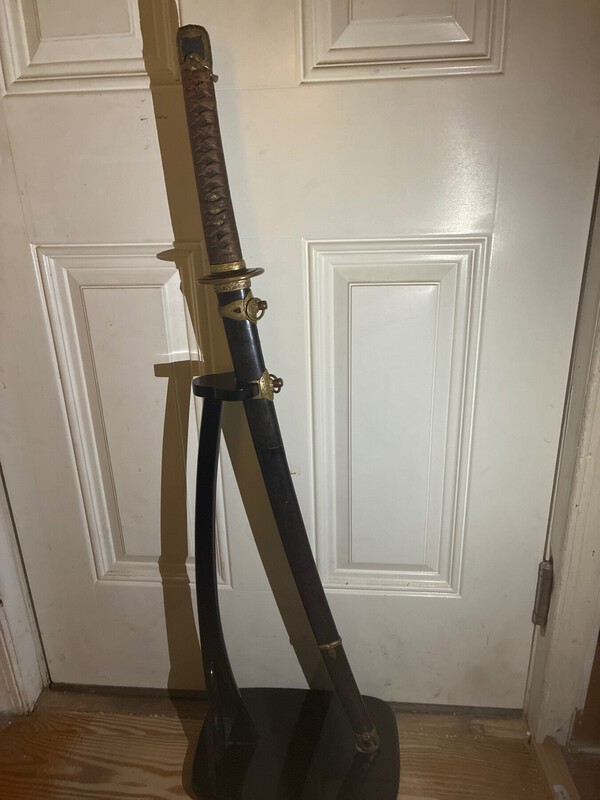 1 point
 -
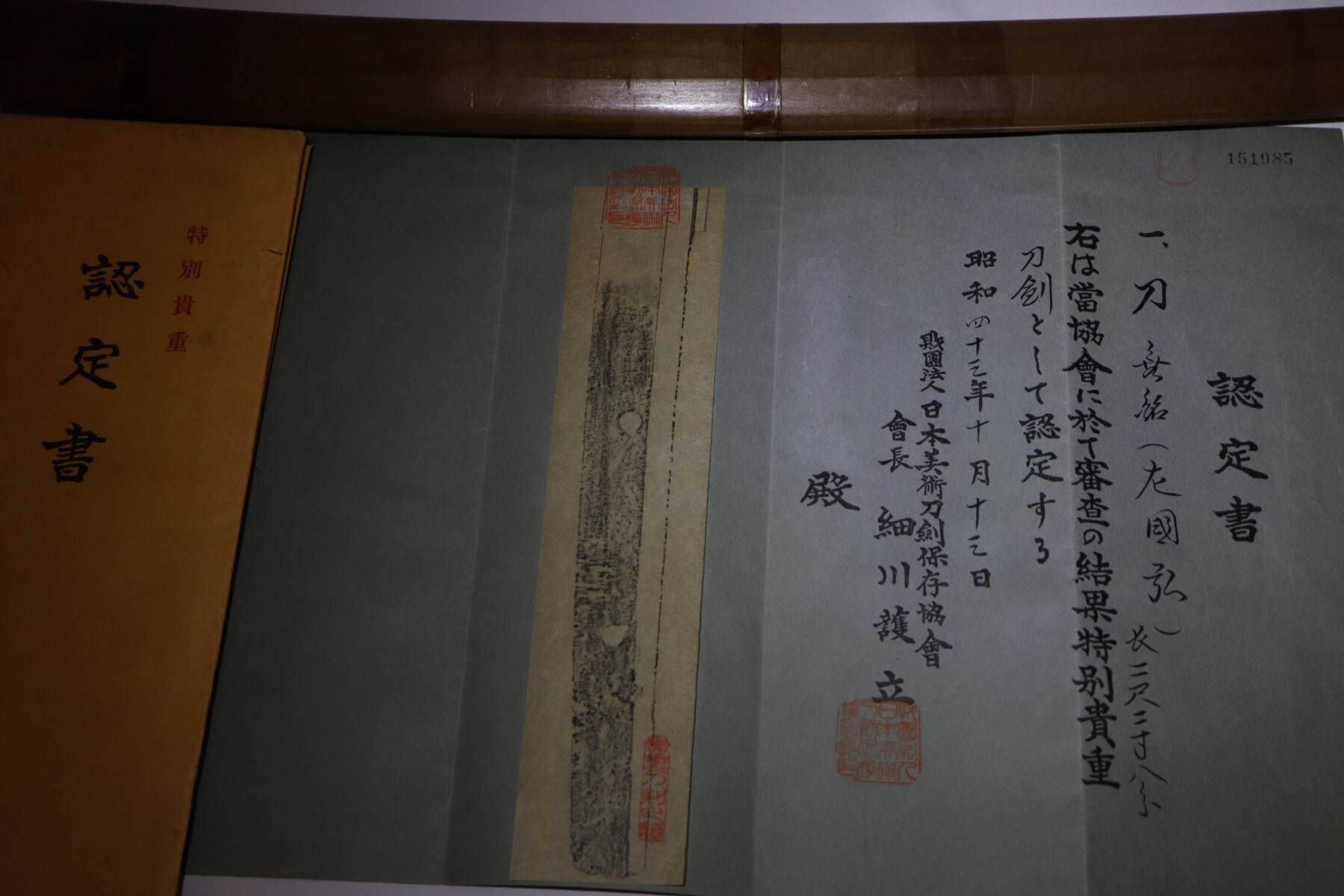
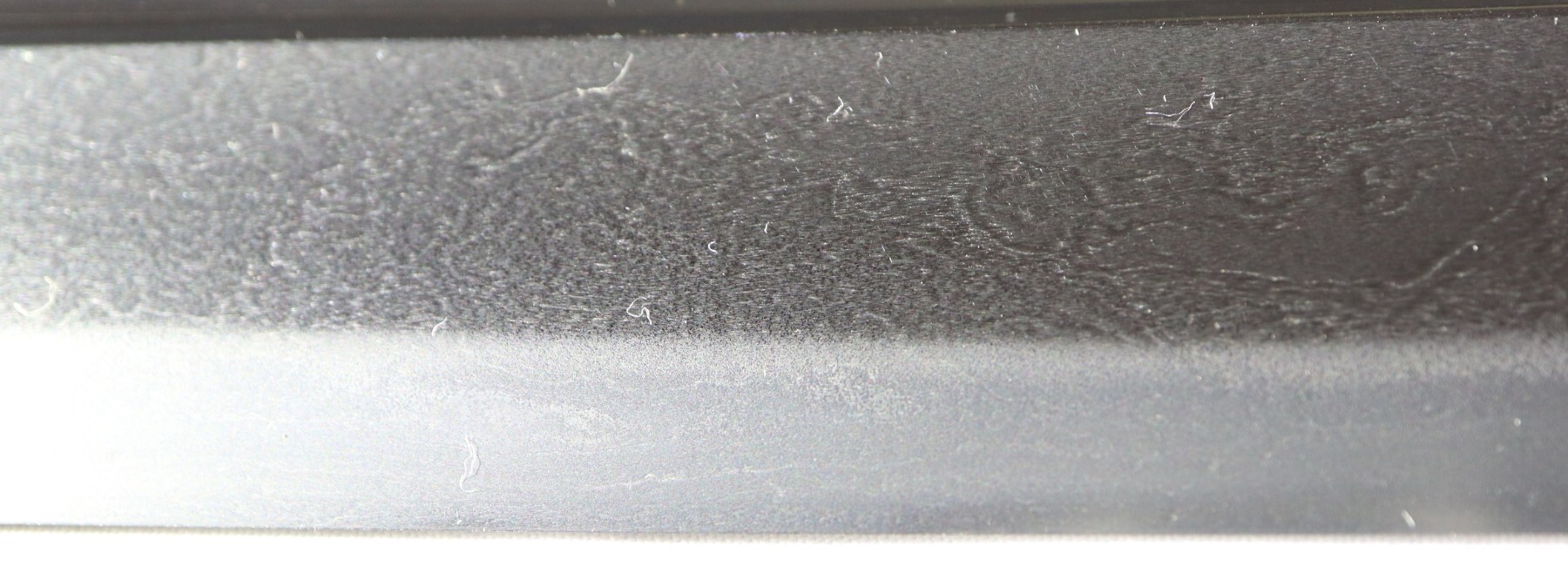
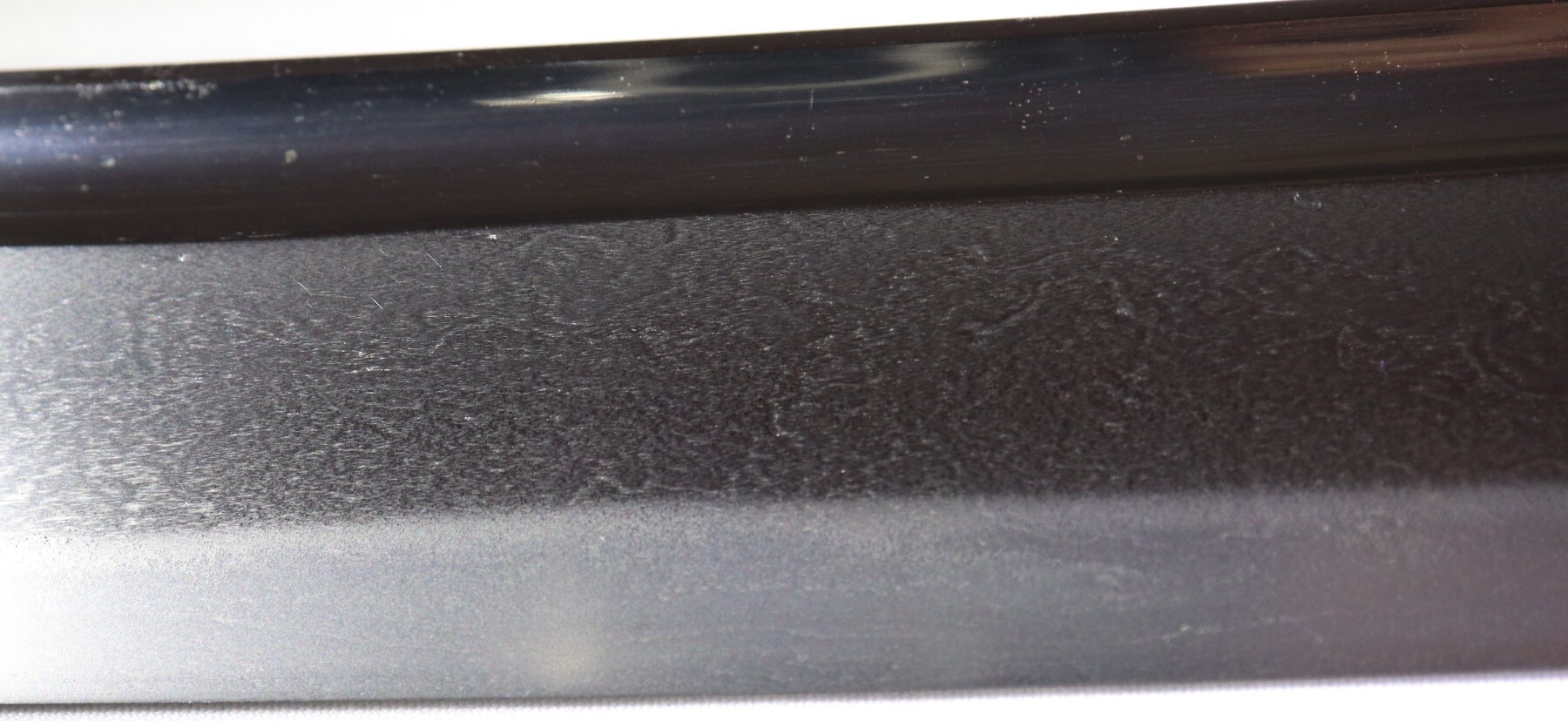
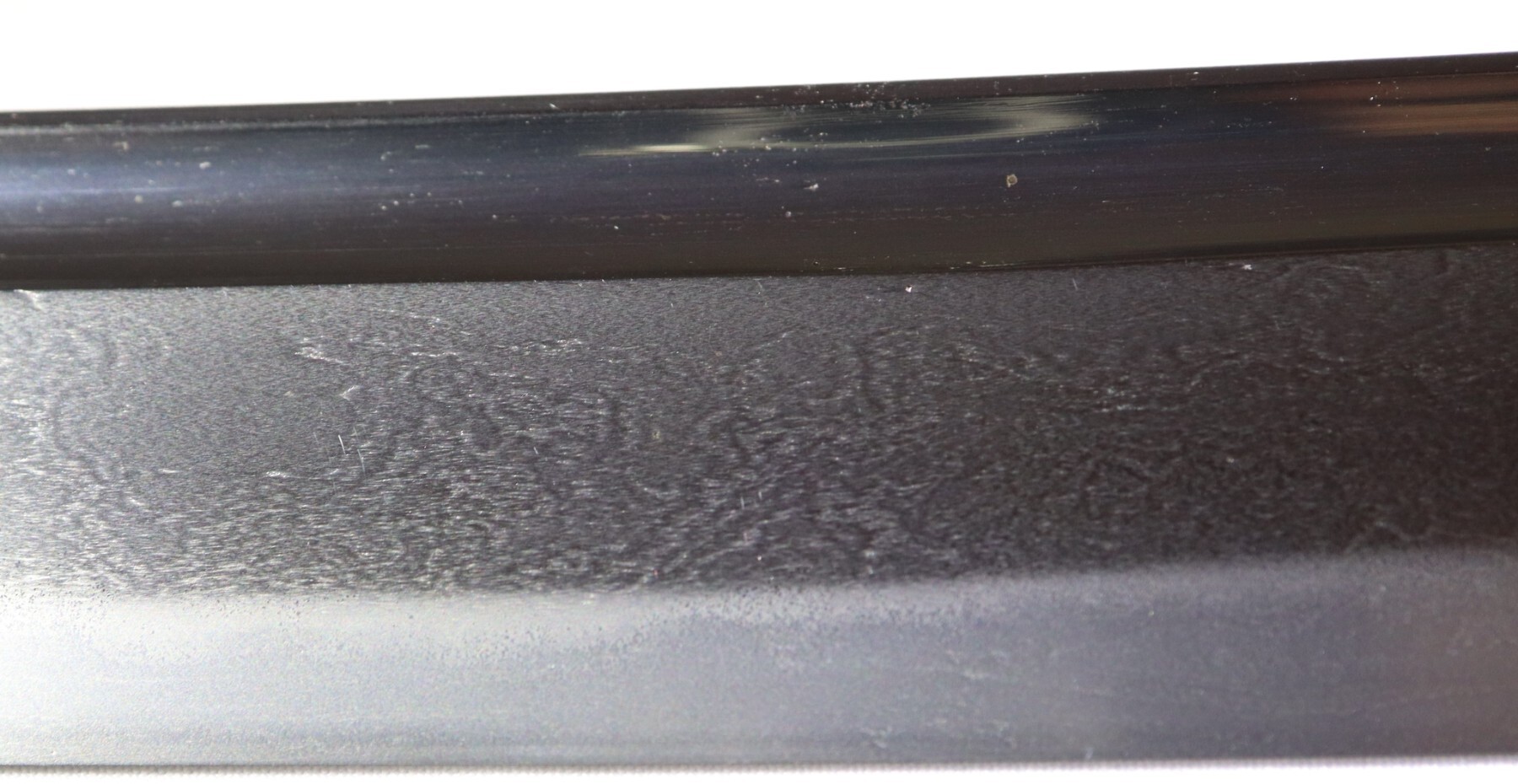
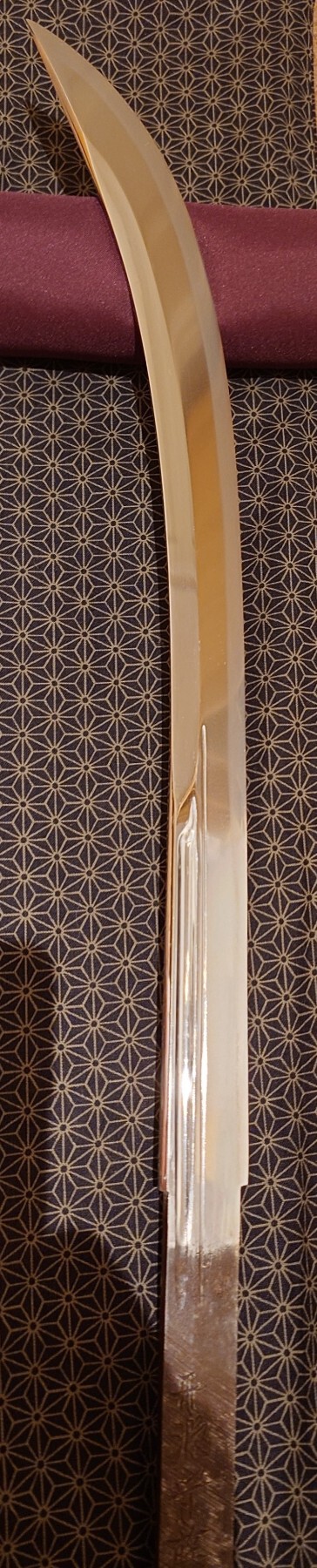
I am hereby offering this Echizen Rai katana. Specifications: Blade Length (Nagasa): 69.2 cm Curvature (Sori): 2.1 cm Mekugi-ana: 2 Nakago: Ō-suriage, mumei Dimensions: Motohaba: ~31.3 mm Motokasane: ~6.8 mm Sakihaba: ~24.3 mm Sakikasane: ~5.3 mm Bare Blade Weight: approx. 737.6 g Type: Shinogi-zukuri Blade Description: A stunning Nanbokucho period katana attributed to the Echizen Rai (越前来) school with recent NBTHK Tokubetsu Hozon papers, and previously attributed to Sa Kunihiro (左国弘) by Tokubetsu Kichō papers. Both attributions place this sword solidly in the Nanbokucho period. Although this sword clearly is not the work of Sa Kunihiro, the old paper was still preserved. I find it interesting to see how older NBTHK papers can differ from new papers. The blade exhibits classic Nanbokucho characteristics, including a wide Motohaba and longer kissaki. The jigane tight itame in certain areas, which can be well observed in some of my images. There is also Mokume, and overall Jigane that reflects previous older Rai works. There are sections where the hada stands out more prominently. Ji-nie is present throughout, giving the steel surface a rich, textured appearance. The hamon is a suguha-notare temper with activity visible, a lot of nie can be observed. See my Hamon images for a proper idea of the hataraki. The bōshi is Omaru, and is still very visible. The nakago is ō-suriage, typical for early Nanbokuchō swords, with two mekugi-ana. The sword is fitted with a habaki and comes in shirasaya (with reinforcing tape applied). Condition Some scratches can be observed, with one longer scratch visible on the images; all flaws have been photographed and are visible on the images. The scratches are shallow and do not distract from the blade itself. There are no significant ware of imperfections on the blade. It is a very clean Nanbokucho Echizen Rai blade that is ready to be appreciated. Image disclaimer The overview images of the entire blade had their background removed. Please do not use these images as a reference for the condition of the blade, as they have been altered. All other images are unaltered. Sometimes my camera can be seen in the reflection of the blade in the bohi. These are not imperfections. Price: €3700 Free shipping inside EU Shipping outside EU available for a small additional cost (€20–40) Shipped with UPS Express, fully insured to full value Located in the Netherlands – pickup possible Please feel free to message me if you have any questions.




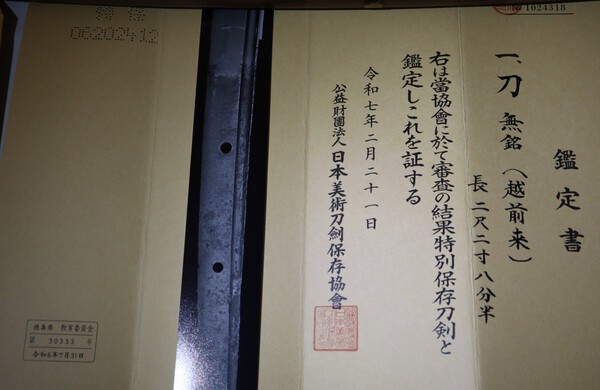
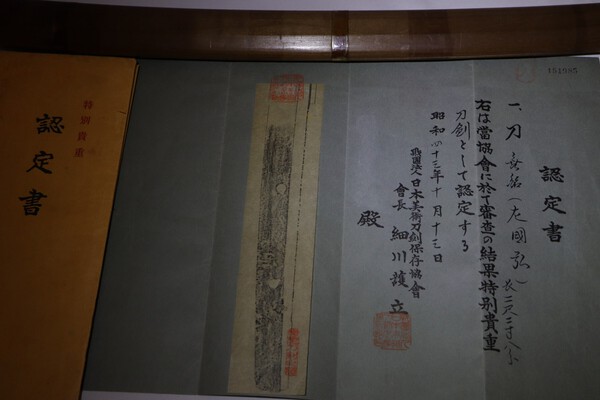

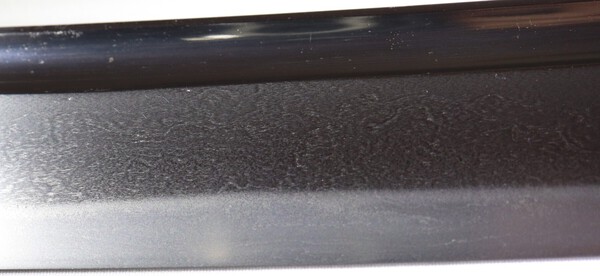


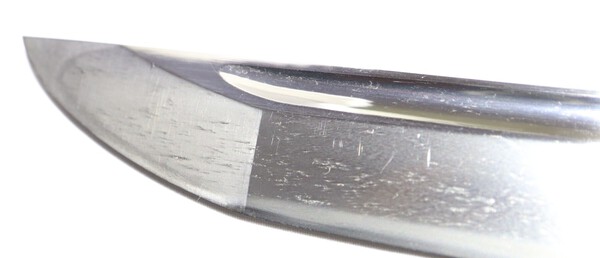
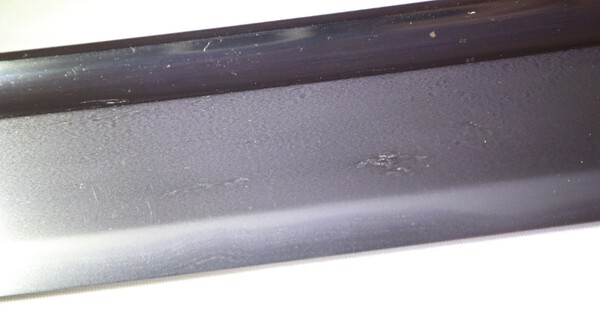
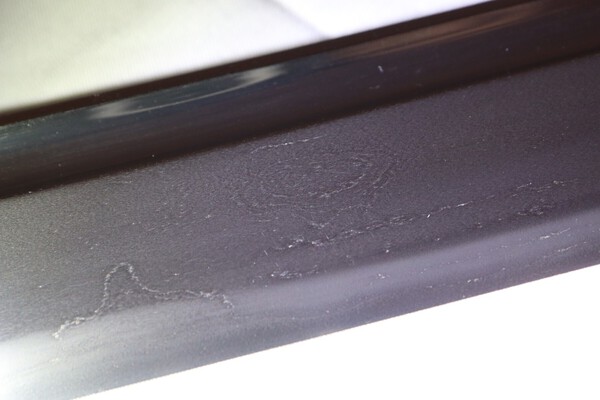


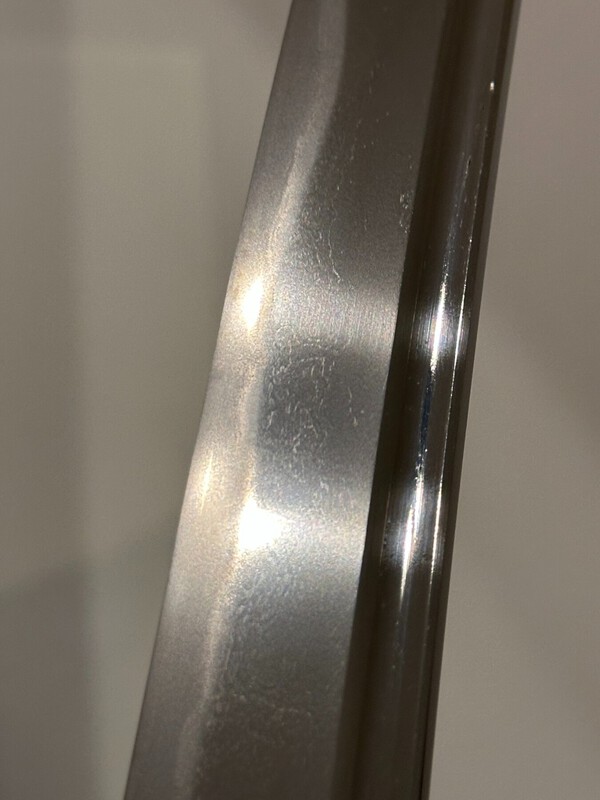
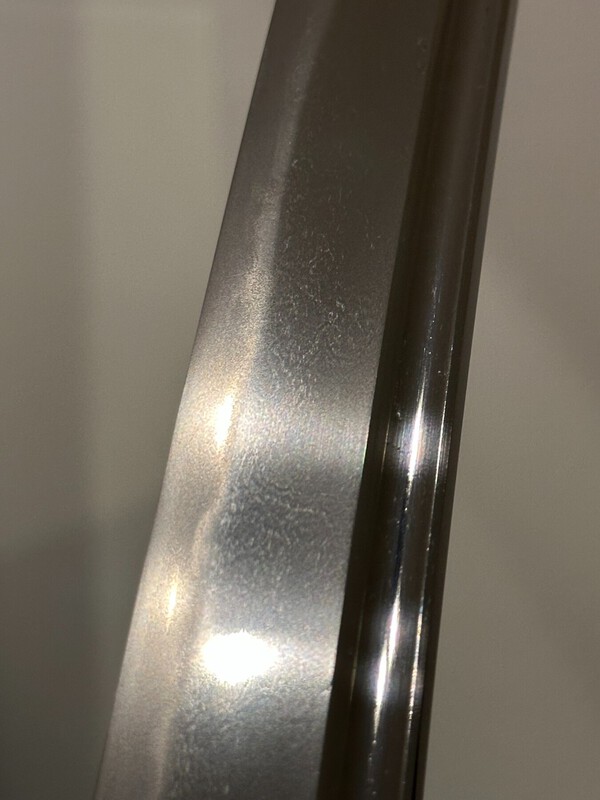
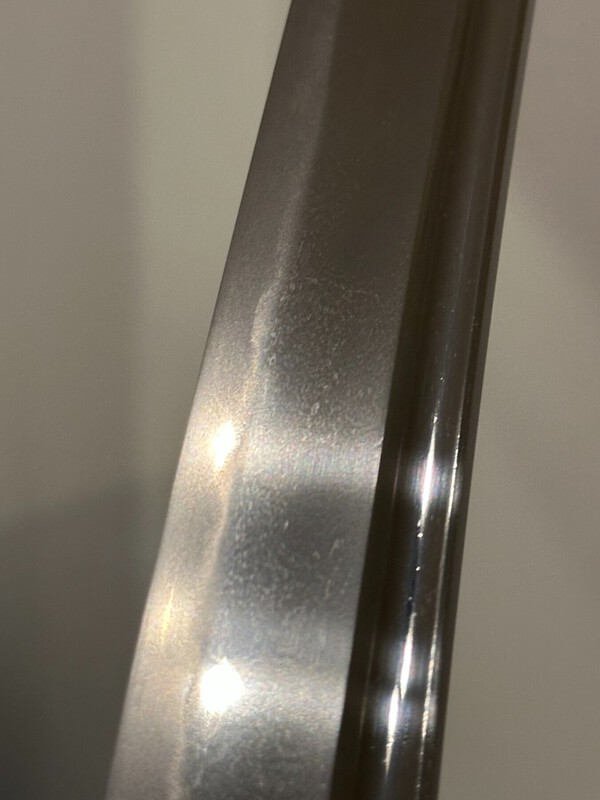


 1 point
 -
Just wanted to share my latest purchase. This is another Tanba no Kami Terukado blade. I bought this one at auction, and had it sent to shinsha - slightly worried as the mei had some corrosion, so I was only 80% confident. Anyways, it passed Tokubetsu Hozon, and I'd say the hamon is actually finer than some of the long sword examples I have. So very happy. Looking for a good ko-wakizashi or tanto next. 💪


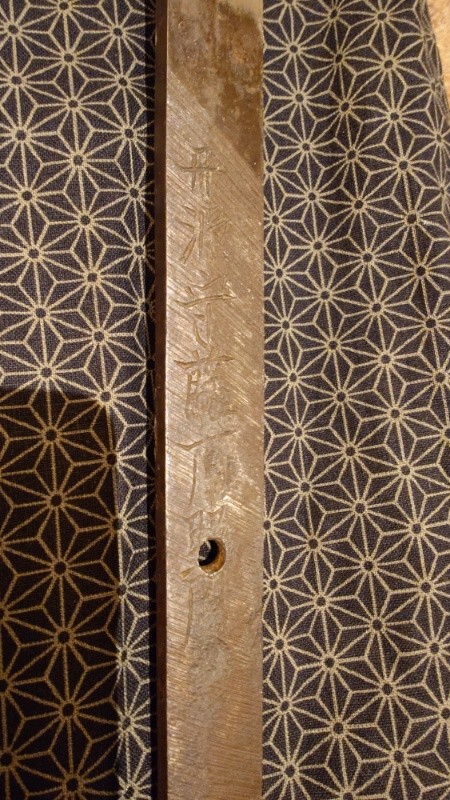 1 point
 -
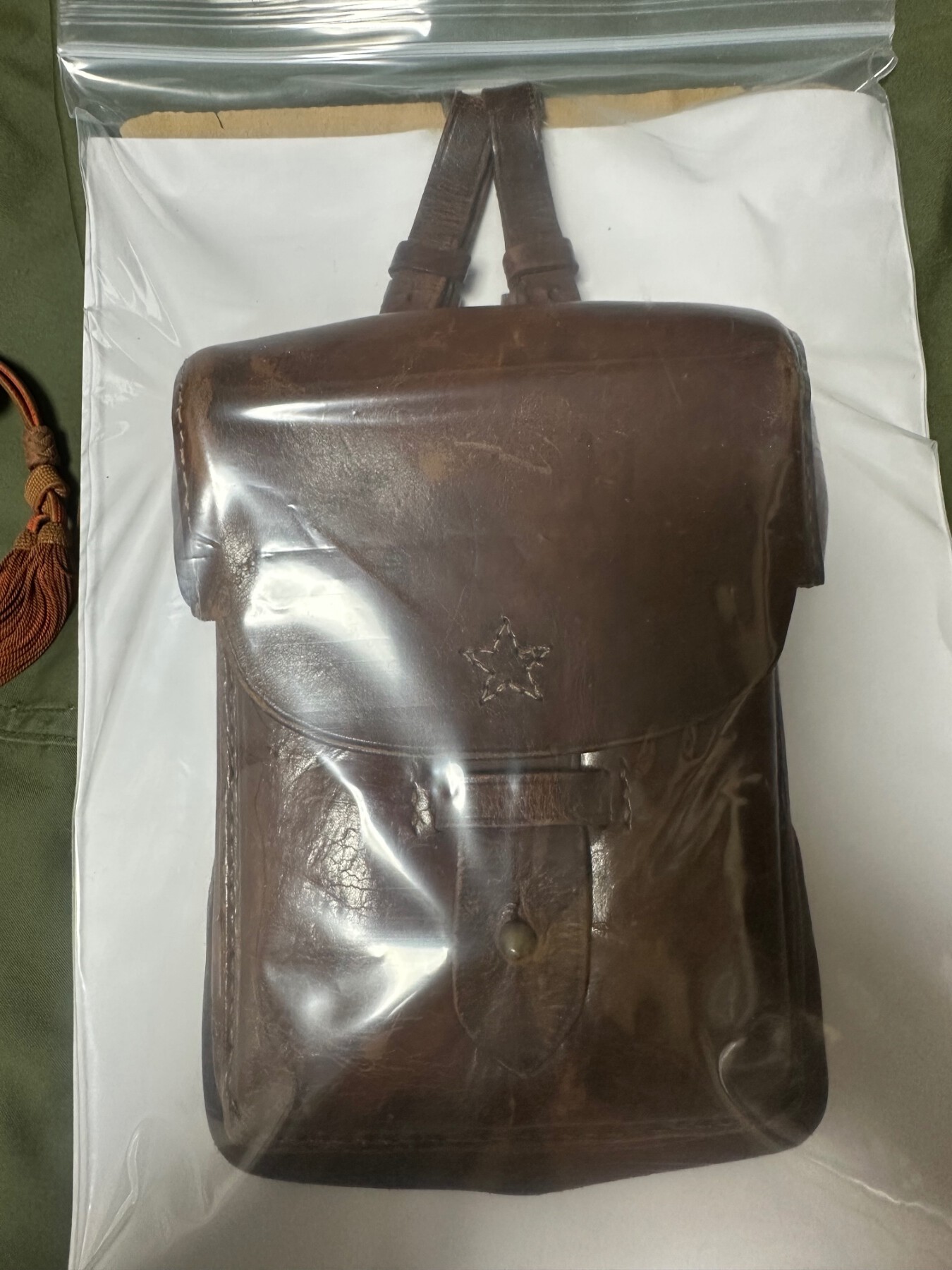
I often pop into little, old antique shops to see if they have anything sword related (such as tsuba). One of these is not far from where I live so I've previously let the owner know what I'm interested in - and it seems to have paid off today. 😃 I still haven't found a sword I like (and can afford) but he let me have all these WWII items today for a very cheap price. So, maybe I should start looking for a gunto? 🤔


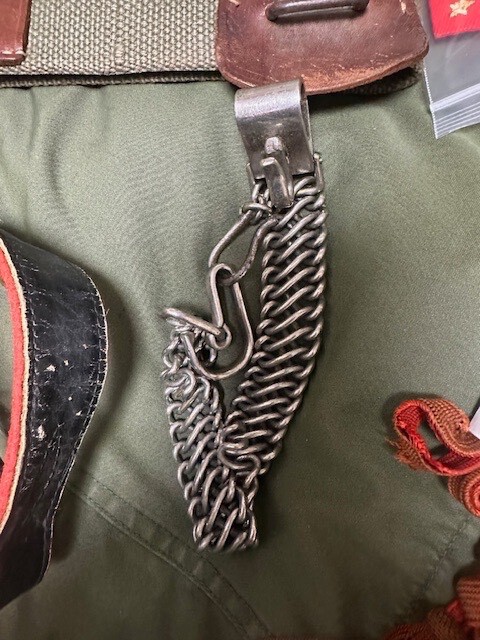
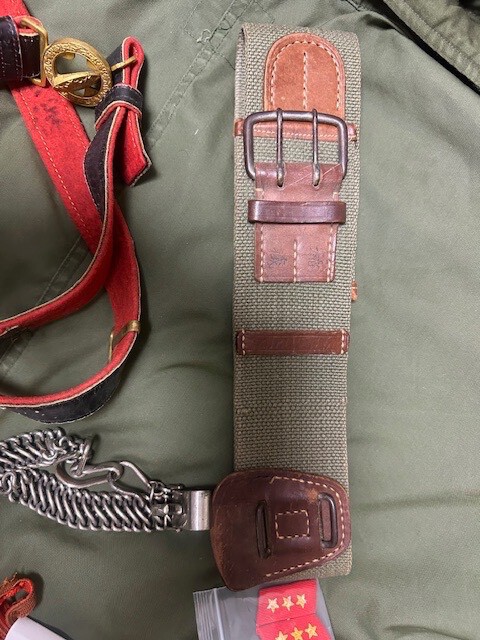
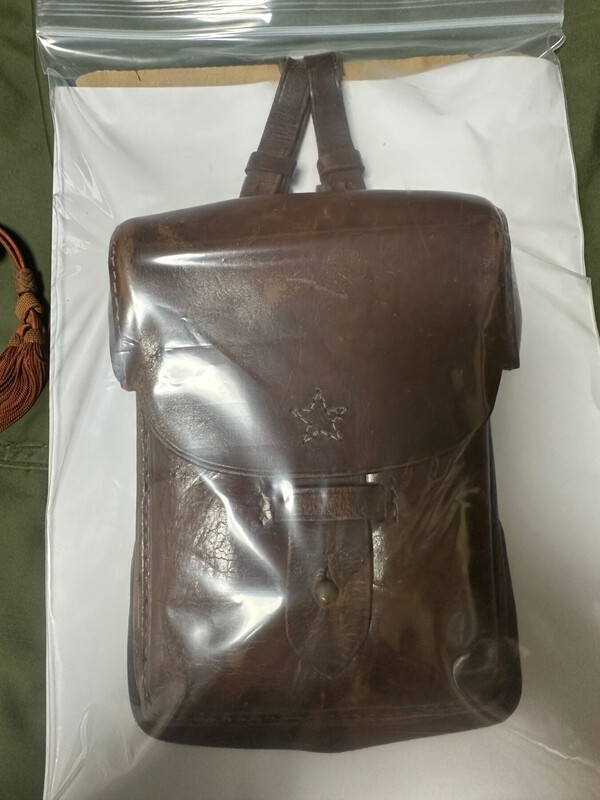 1 point
 -
Hi all , new here I've recently purchased these two wakizashi one is signed apparently from the sue-koto period tang has been over cleaned in the past has a couple of flaws , the other isnt signed don't know any thing about it , i purchased these as a Christmas gift for my father and I just want to see if any one could tell me any more information on them before I give them to him , please see the pictures and any information would be greatly appreciated. Thanks


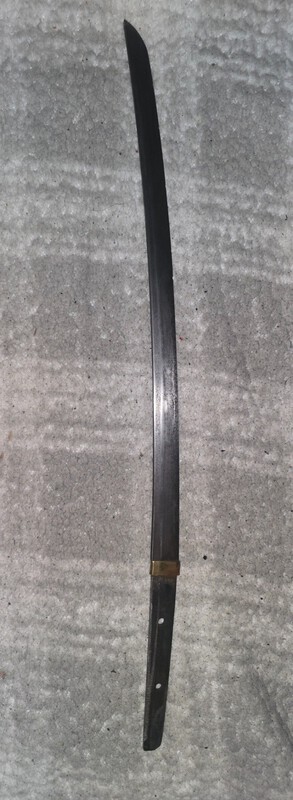


 1 point
 -
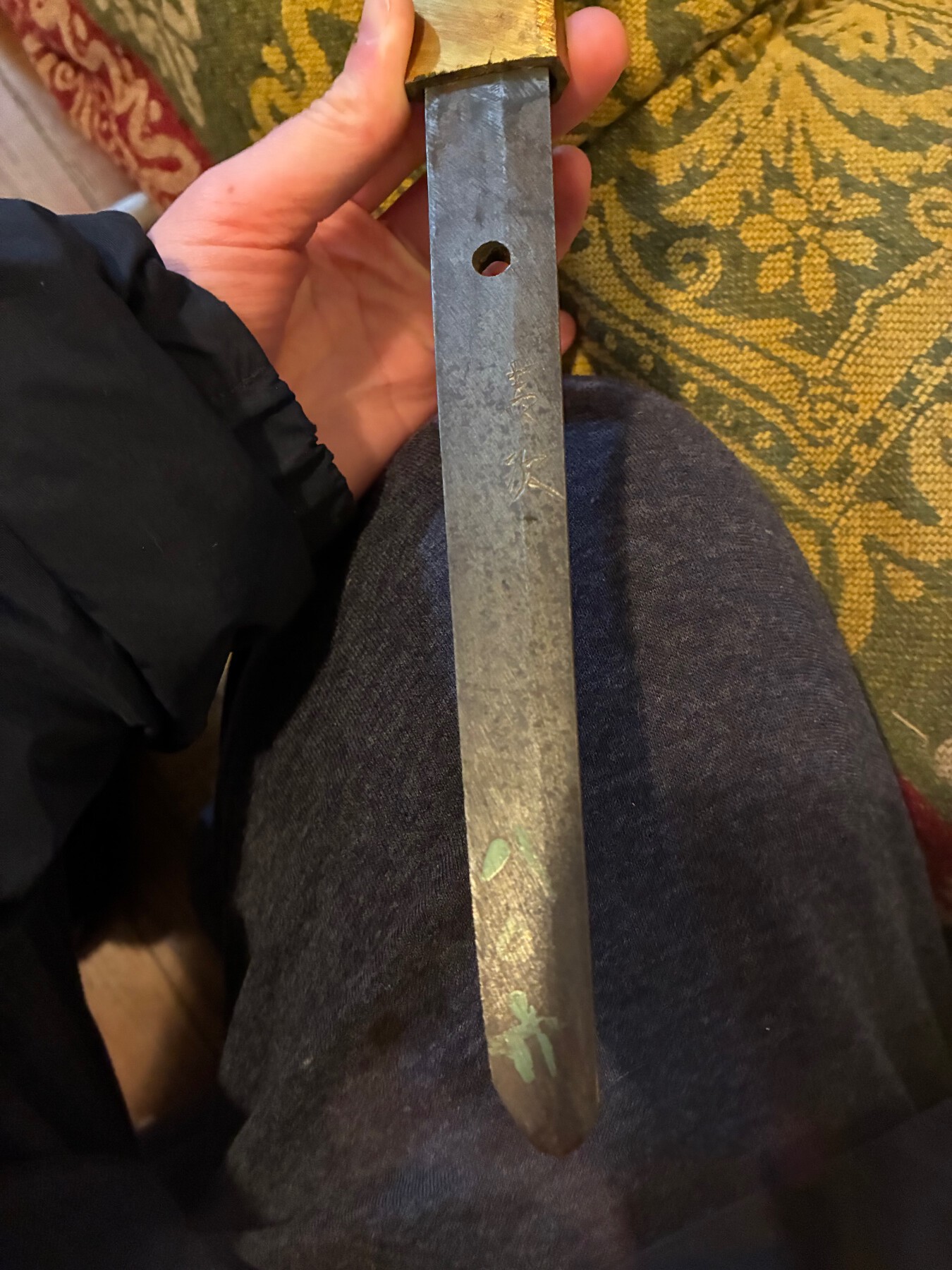
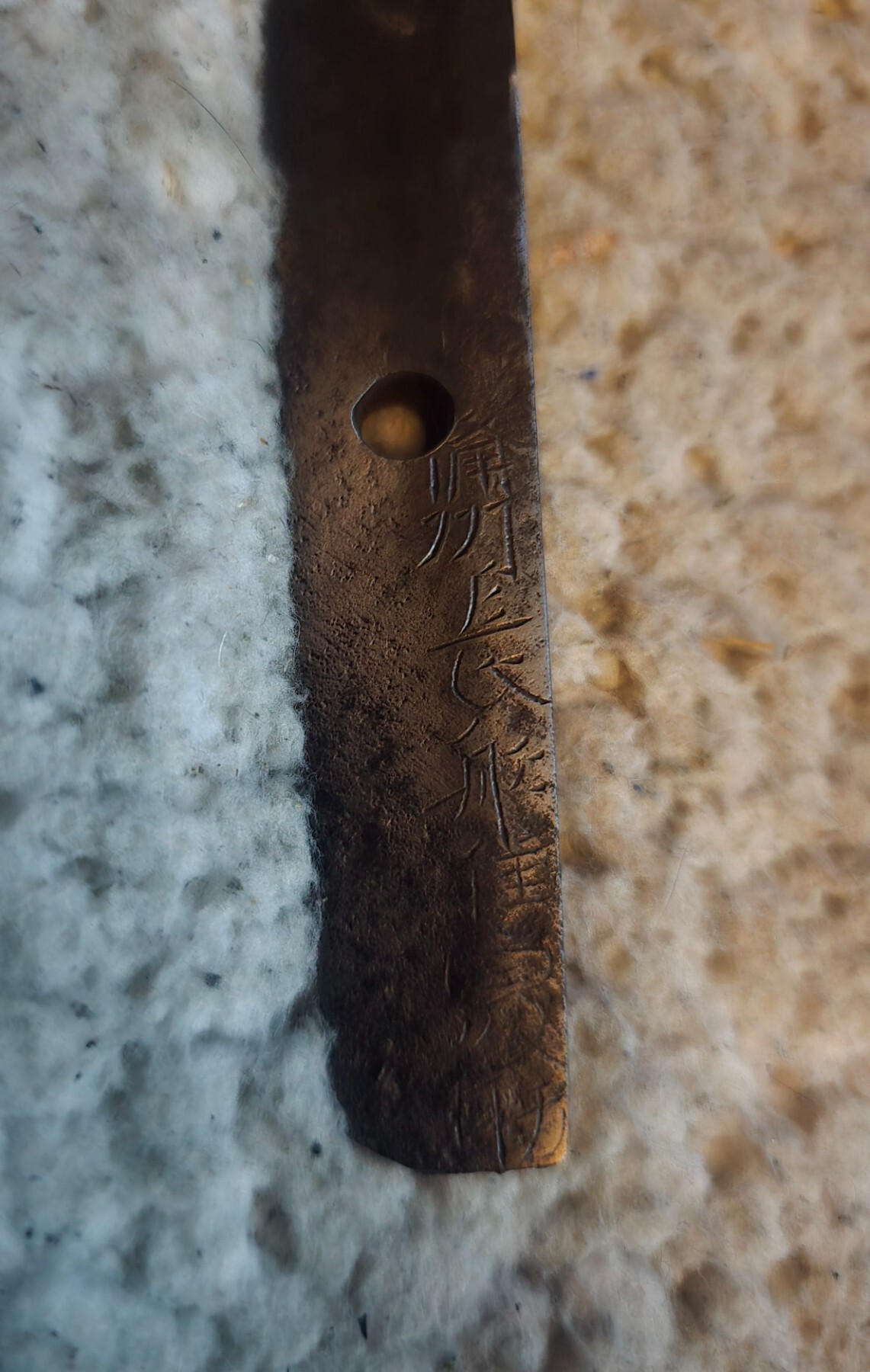
I cannot speak to the legitimacy of the signature, but it reads Sagami no Kuni Tsunahiro. There are many generations of Sōshū Tsunahiro smiths.1 point
-
Obligatory disclaimer: Only a highly qualified togishi should be tasked with polishing genuine Japanese swords. Any attempt to polish yourself at home, will likely cause more harm than good. It's better to leave them in poor condition, then it is to attempt any unqualified polishing. I agree with Chris (Vajo), that tsuba looks promising. -Sam1 point
-
Many thanks for the fast response and feedback; it was very interesting. The blade you show is almost as erratic in its hamon as the one on Yahoo! Here is a closeup of the signature - I can't read it myself. Best, Hector
 1 point
 -
Either a smith doing some experimentation in hitatsura style, or an overzealous amateur polisher highlighting stray bits of yubashiri with hadori instead of sticking to the overall hamon pattern. I will say that generally smiths wouldn't sign a blade they're not happy with, so either what you're seeing is the intent or someone added it after the blade was forged. That said, it's not unheard of for blades to have isolated sections where the hamon flares up and then settles down again, for example: (from this listing)1 point
-
A just and well deserved find,of all places ! Congratulations and enjoy. John1 point
-
Thank you for the responses so far, I did suspect they had been put together to make full swords , thia can be rectified over time , and yes condition is not the greatest and I am debating on polishing both blades , picture wise if you need better detailed pictures then let me know .1 point
-
Thanks again Piers, It's a little like peeling back the layers of an onion. I want to add that the holes for the mekugi pins seemed to line up pretty good. I made some tapered pins from brass rod to put it all together. I didn't have luck removing the bison, just didn't want to damage anything. I'll add pictures as I move along. Jay1 point
-
@Kristin also to help with your sale he is: YOSHITSUGU 吉次: real name Yoshida Jinrō (吉田任郎). Born Meiji 43 (1910) December 16. Reg. Showa 16 (1941) May 6 (age 30). (“Yoshitsugu” “1944”), (“Yoshida Yoshitsugu”), (“Noshi Seki ju Yoshida Yoshitsugu saku”). see Slough p.202 also see Naval Swords Part 2, in the NMB Downloads (at top of page), other examples.1 point
-
1 point
-
1 point
-
The lack of patina around the middle was the first thing I noticed. Good, honest wear and handling. John C.1 point
-
John, a rather interesting observation I must say. Many thanks for sharing.1 point
-
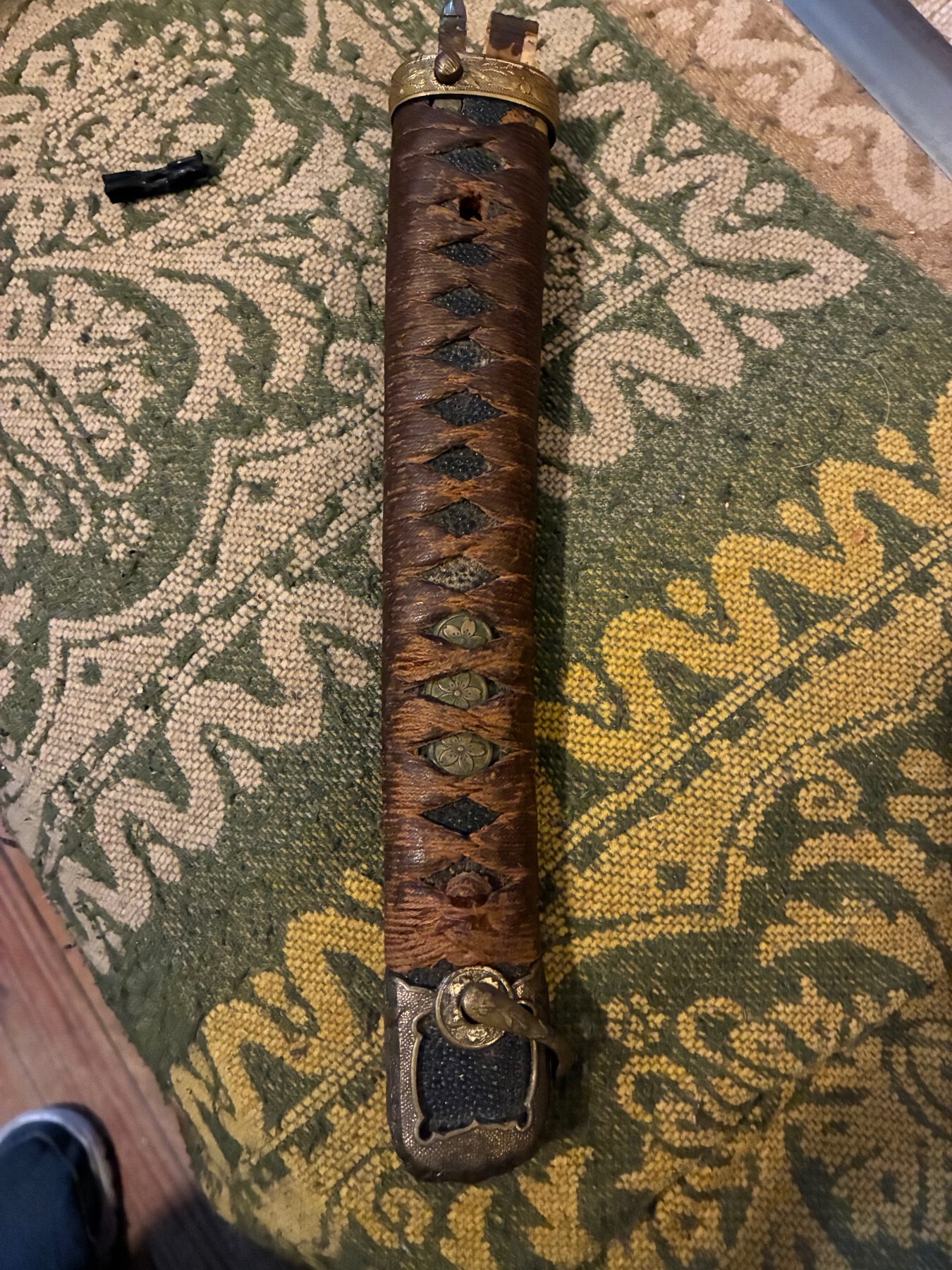
Hello K, You might want to update your title to include "kaigunto" as this is a Navy officer sword. There are people who are looking for kaigunto, and the added word would help yours show up in online searches. They are worth more than Army gunto, in general. Yours also has the upgraded shark skin on the saya, which looks nice. Good luck with the sale!1 point
-
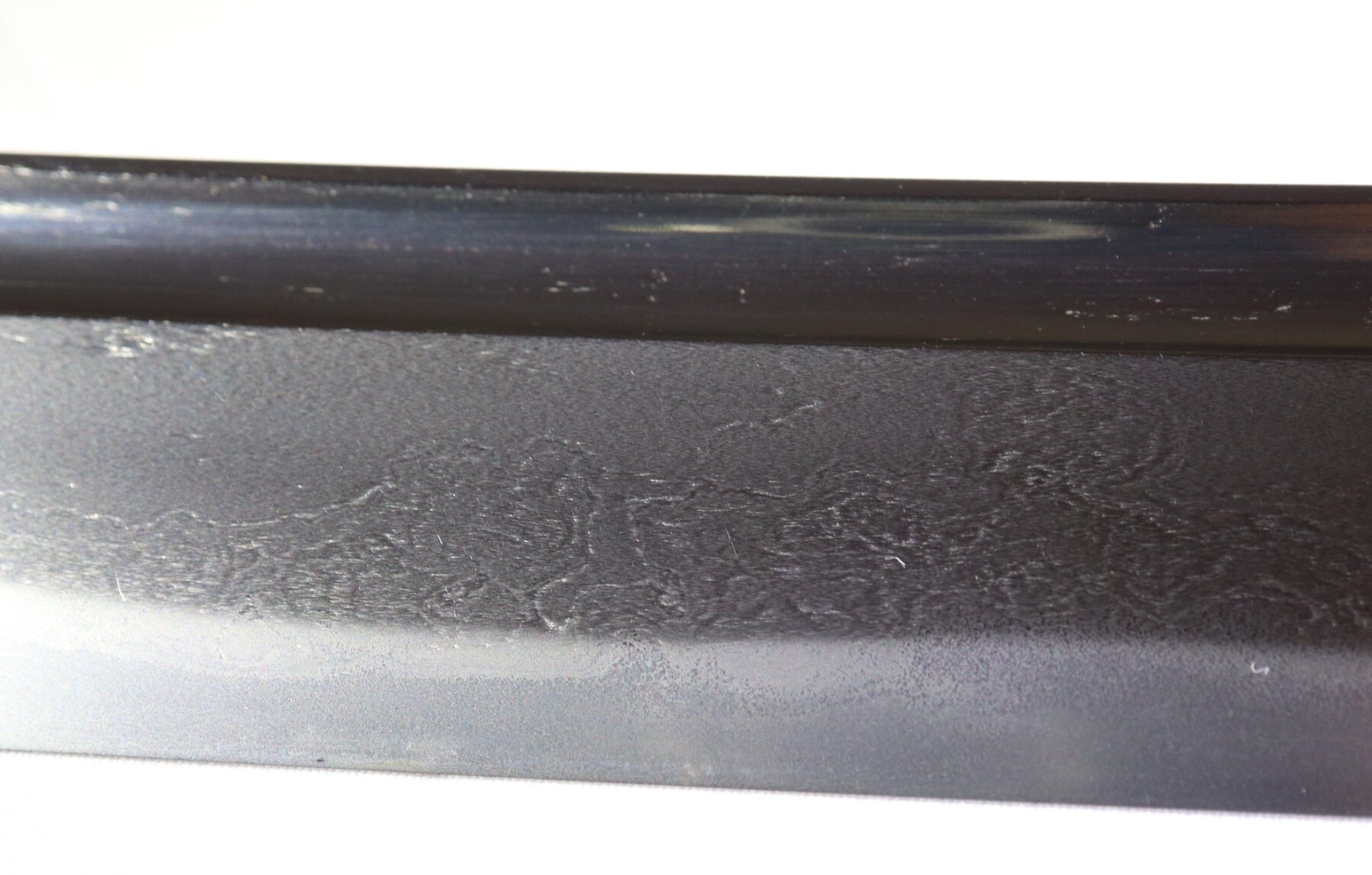
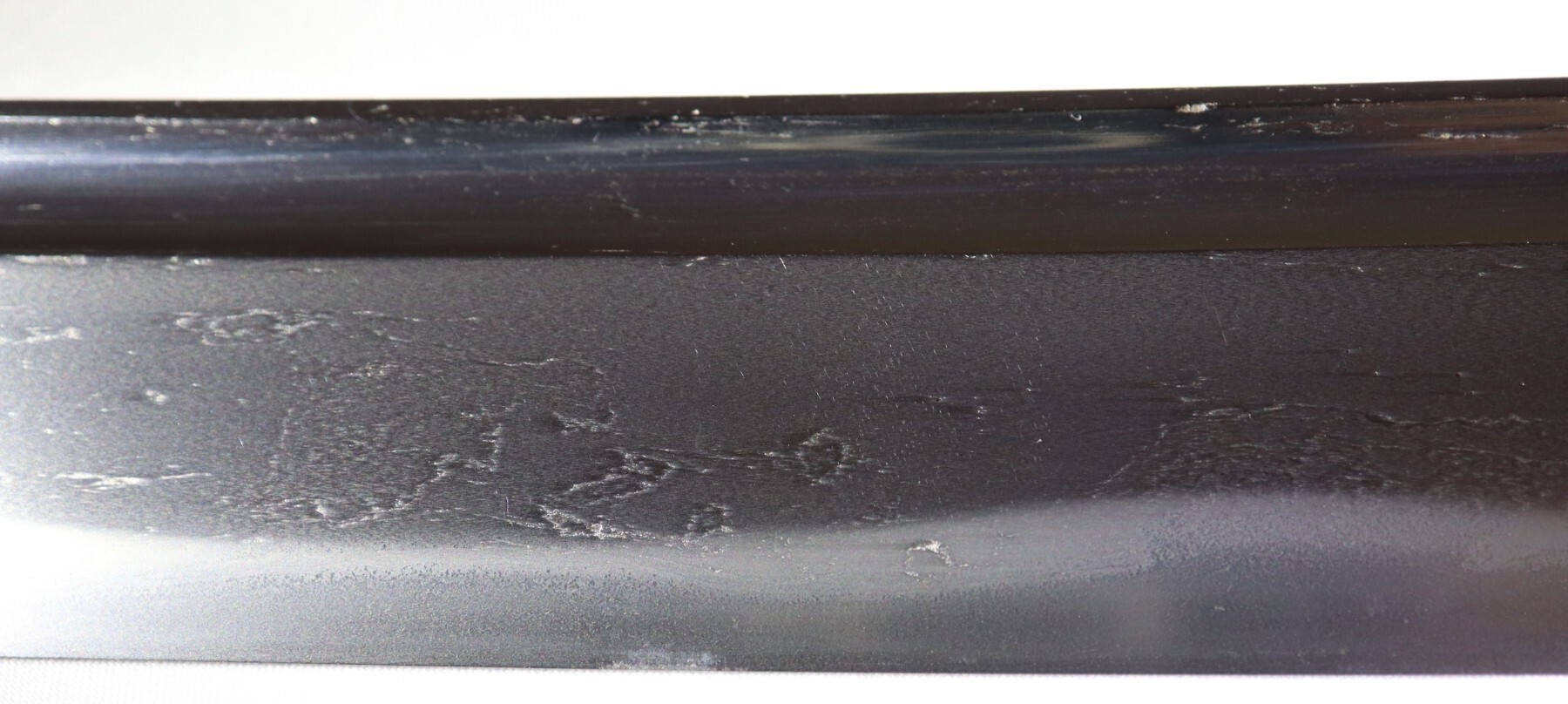
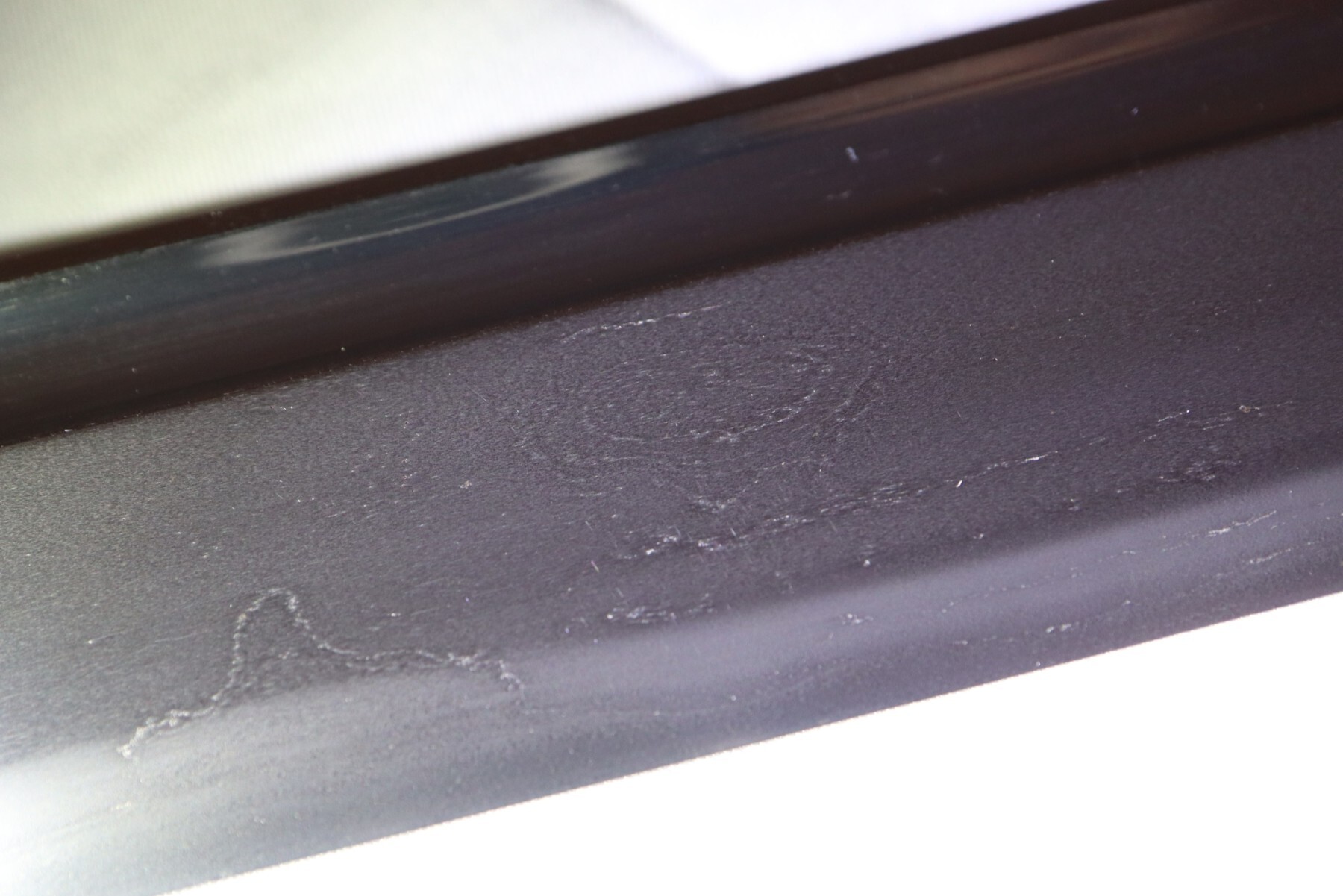
It's described here as "lacquerwork" which implies the lacquer is either carved or applied to give it that texture. https://www.mandarinmansion.com/item/aikuchi-snakes-and-centipedes You can see other types of texture/patterns created with lacquer, some of them quite striking, in this thread:1 point
-
That's good to know. The reason I asked is that the pan cover/lid is of an enclosed type which is usually associated with the Tazuke, Sakai and Tabuse schools of gunnery. There are no other Ryu-ha indications on your gun to these schools, so it seems likely that the cover has been changed at some point. This led me to wonder if the barrel and the stock might be a later match, but if everything lines up then possibly it's just a question of a replaced pan lid, i.e. no big deal! (Sometimes old barrels were refurbished with new stocks, and your stock and butt look in very good condition for such an old barrel.)1 point
-
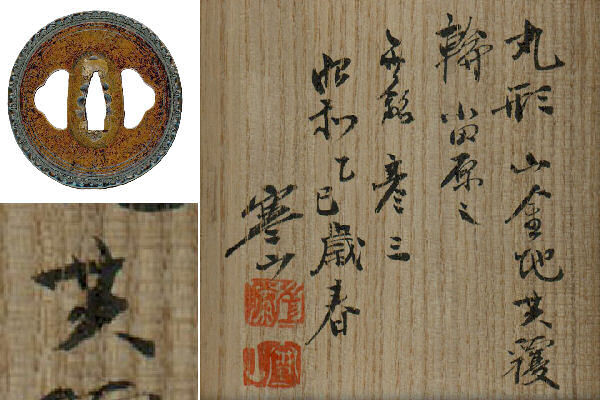
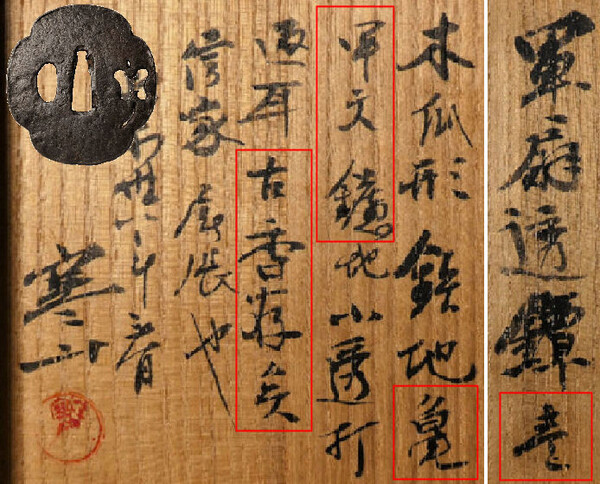
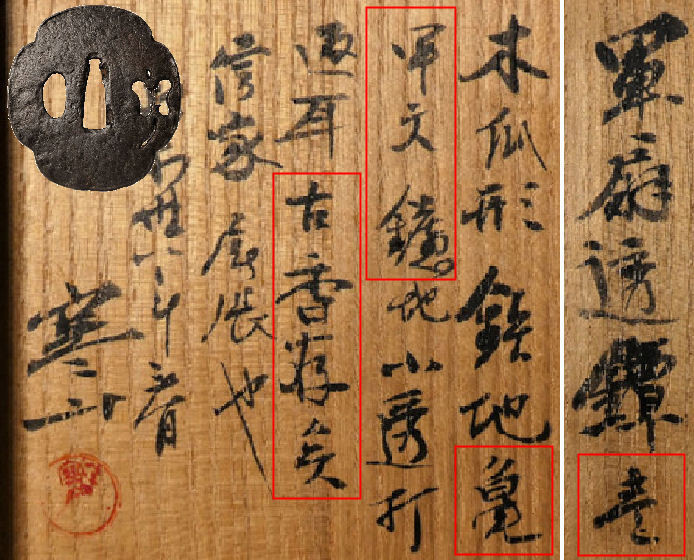
The project to compile a short collection of transcriptions of hakogaki by Satō Kanzan has grown larger than I originally intended. It now comprises 86 hakogaki (although at least three are likely forgeries, but I digress…). There are still missing kanji and transcriptions that need to be confirmed, so I kindly ask for your help. Thank you in advance. HGK04 Only one kanji is missing (but I am unable to identify it). 葵形 鉄地 * aoi-gata tetsu-ji ★鐔 透 * ??? sukashi 馬面序政(花押) * Bamen Tsunemasa (kaō) 珍也 * chin nari 昭和卅六年春 * Shōwa 36-nen haru [1961, spring 寒山 * Kanzan HGK05 There are quite a few gaps here: 軍扇透鐔★ * gunsen sukashi tsuba ??? 木瓜形 鉄地★ * mokkō-gata tetsu-ji ??? ★★ ★地 小透 打 * ??? ko-sukashi uchi 返耳 ★★★★ * kaeshi-mimi ??? 信家 尾張也 * Nobuie Owari nari 昭和卅六年春 * Shōwa 36-nen haru [1961, spring] 寒山 * Kanzan HGK13 One kanji is missing (could be 芝, but what does il mean?). 丸形 山金地 ★覆 * maru-gata yamagane-ji ??? fuku- 輪 小田原之 * rin Odawara no kore 無銘 彦三 * mumei Hikozō 昭和乙巳歳春 * Shōwa kinoto-mi no toshi haru [1965, spring] 寒山 * Kanzan

 1 point
 -
Rob: The term stands for Post Exchange. Army posts all have a store, which varies in size depending on the size of the post (or fort if it's larger; depot if it's smaller), that sells everything from basic necessitites in smaller posts up to full-on big box stores in some of the larger forts. John C.1 point
-
I read that blog while trying to find another Taketoku. Apparently, the guy who wrote it actually met Yasutoku's nephew, Yasunori! 😃 Kotani Yasunori of the Yasukuni Shrine1 point
-
Thanks a lot for wonderful info! Well, I rarely wear my obi outside kyudo practice but I like the shape of the gunpowder flask regards. Unfortunately no ball in the bag....
 1 point
 -
Addition, HGK05 亀甲文 - Kikko-mon 右香存矣 – This item has good taste. (Unsure)1 point
-
@NotANinja Rob, PX is a store/retail outlet/supplier for US troops near their bases. They had them for occupation troops in Japan. Immediate post war, 1946, the PX stores were seliing "souvenir" swords that were made of arsenal parts left over. The blades were mostly naval arsenal with anchor stamps or anchor/circle, the tsuba mosly black plain iron ovals shape, and the tsuka bound but often with canvas underlay. The Fuchi/kashira were often mixed army/navy. Bruce has been compiling info on this....its confusing.1 point
-
HGK04 板鐔 – Itatsuba HGK05 鑢地 – Yasuri-ji HGK13 共覆輪 – Tomo-hukurin1 point
-
Hi Lars, thanks for posting your nice collection. Western powder flasks usually had a better measuring system incorporated into their necks or spouts! We have a thread running on accessories for the Tanegashima, but I will post some typical Japanese powder flasks here if you like. (If you can find a copy of 'The Ogawa Collection', it will show you a large variety of them. He donated his collection to the Meirin Gakusha Museum in Hagi, Yamaguchi Prefecture.) https://www.city.hagi.lg.jp/site/meiringakusha/ The black leather covered copper box above looks increasingly like a water canteen from a Nobento travelling picnic set. The hole at the corner is an indication, and the central hole would be to allow air in as you pour out the water. The bone/antler plugs are a later creation. Dealers will often sell these as 'powder flasks'. See for example: https://auctions.afimg.jp/m415446915/ya/image/m415446915.3.jpg1 point
-
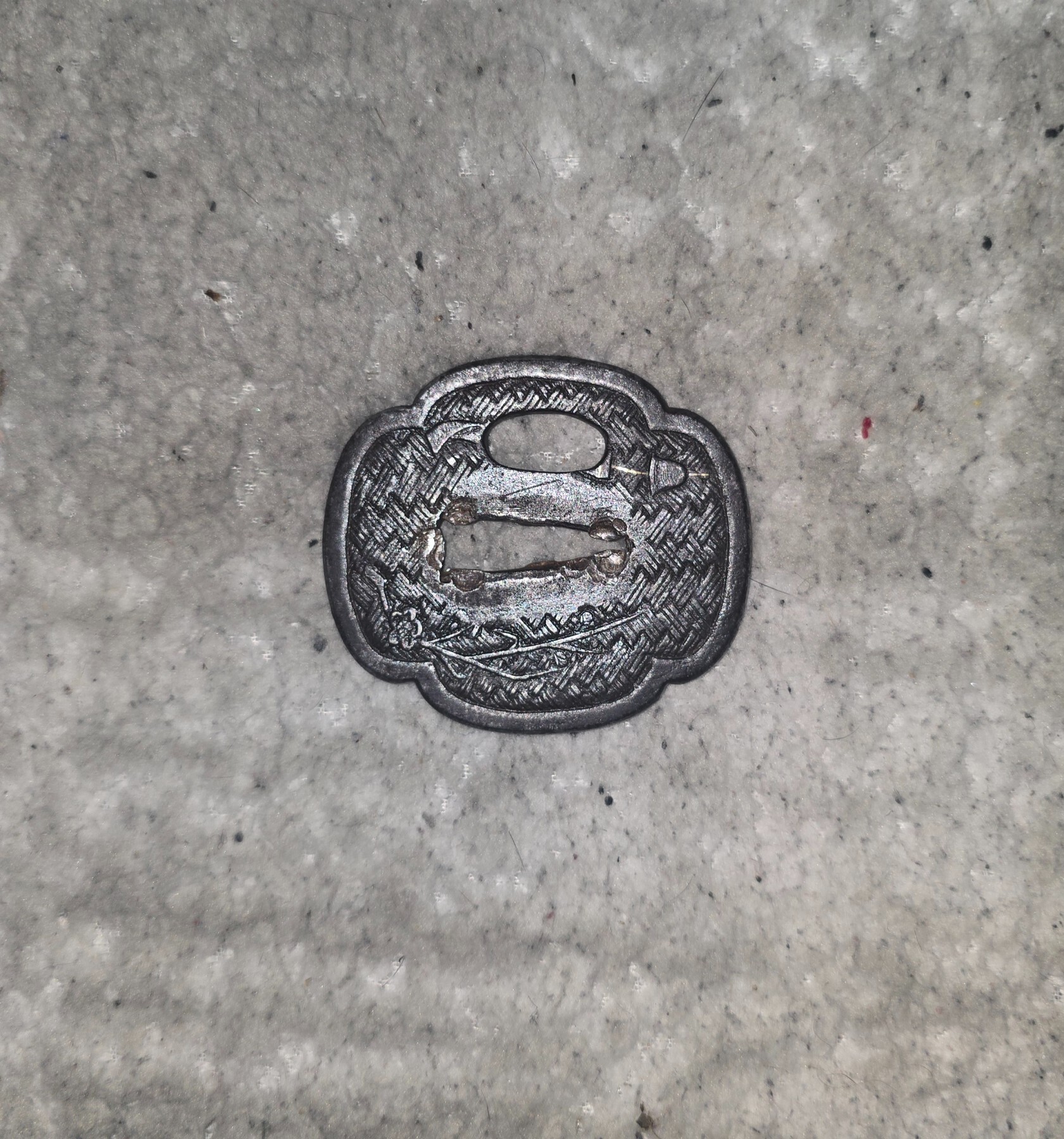
Thank you very much for your comments. I appreciate it. The tsuba was cheap and I take it home 😀1 point
-
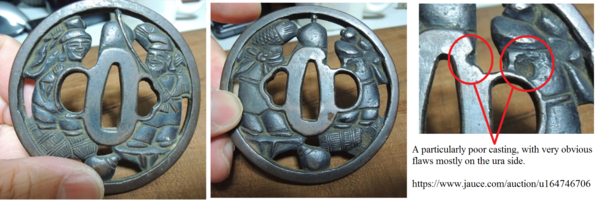
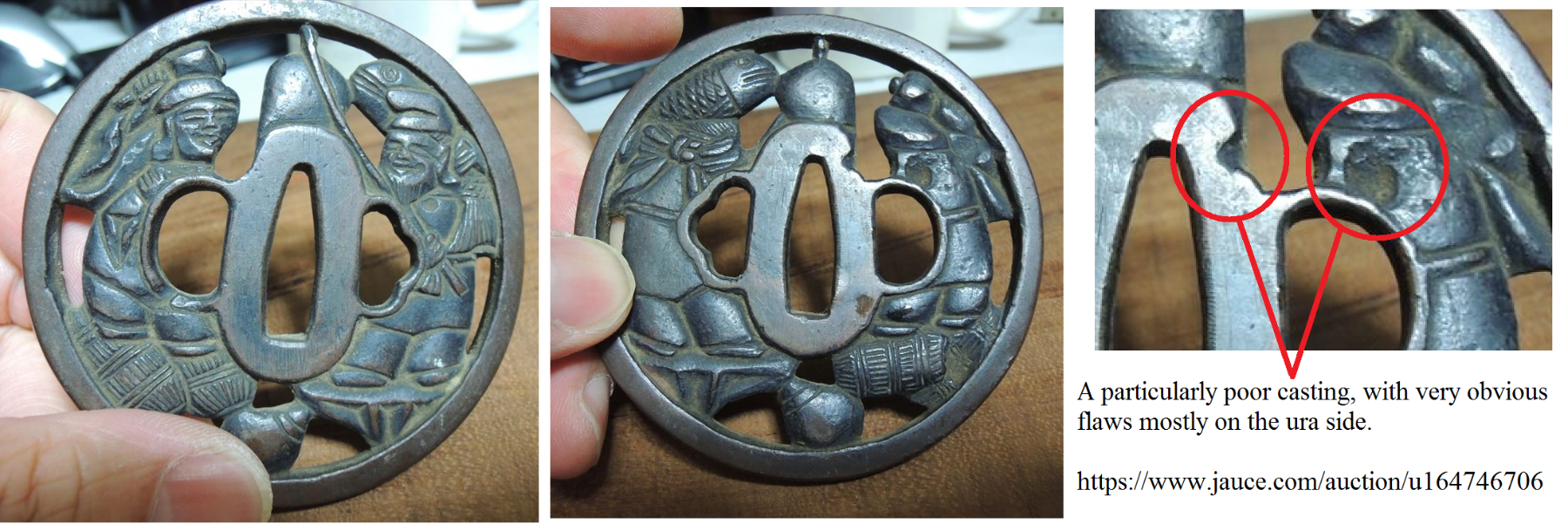
I realise the attraction has worn off on this design but another example has turned up that should keep people on their toes to avoid. https://www.jauce.com/auction/u164746706 PS. Vitaly the auction - https://www.jauce.com/auction/o1083741877 was likely 'pulled" at the last second by the seller as it shows it has ended but had no bids [obviously it did have bids as it had a starting price much lower than the one it ended with] - sellers on some sites can stop their auctions from continuing if they don't think they are getting the right amount they want - it will likely be relisted at a later date or on another site - we can only guess what starting price the seller will set next time. [Makes getting a bargain just that much more difficult!]
 1 point
 -
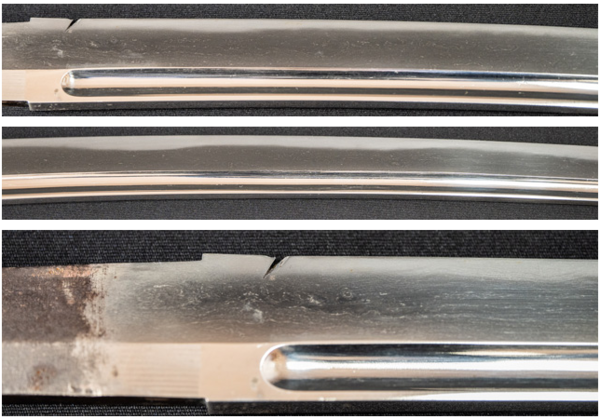
How's this for a Kirikomi: https://www.toukenhataya.jp/goods/sword/sword_s2128.html
 1 point
 -
Vitaly, why not try before you buy! https://archive.org/details/legendinjapanese00jolyuoft/page/n3/mode/2up Free PDF and a little quicker to find subjects. Daikoku and Ebisu / Yebisu two of the Seven "Gods of Luck."1 point
-
Hey Vitaly, Well stated! Purchase what interests you. I just bought a tsuba today that “called out to me”! It was a little over $100.00 U.S. Others may not like it but it is going to be a great part of my collection. And you talked about studying Japanese legends shown on tsuba. Figuring that stuff out is super interesting. A book that I find of great use is “Legends in Japanese Art by Joly, Henri L.” If you look around on the internet you can probably get a reproduction paperback (as I have) of the book for about $50.00 U.S. Has great information in it! Keep collecting, keep studying, and most importantly “have fun”! With respect, Dan1 point



















































This leaderboard is set to Johannesburg/GMT+02:00