
Leaderboard


Popular Content
Showing content with the highest reputation on 11/14/2025 in all areas
-
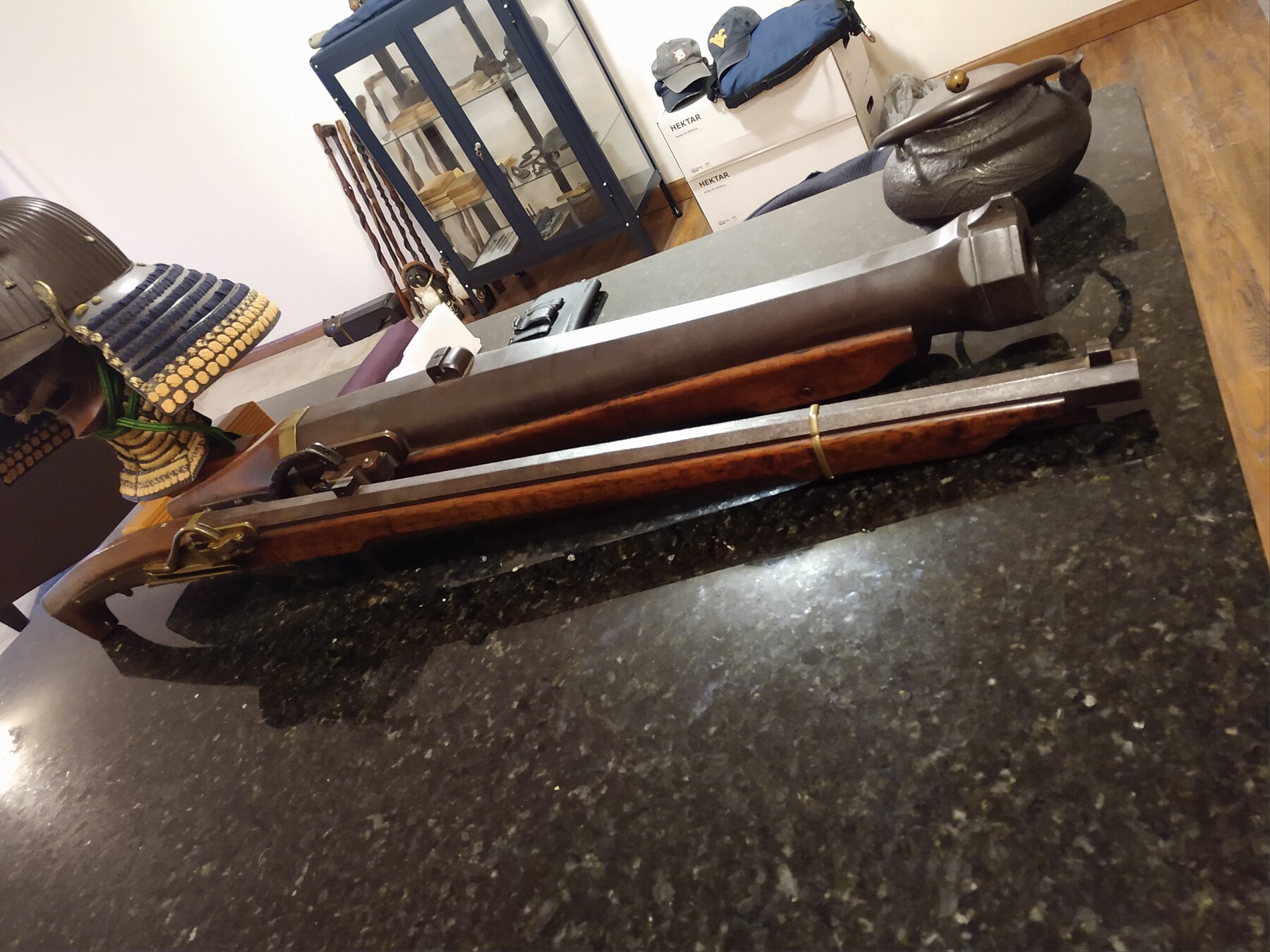
What a trip down memory lane! Since then I fired that gun at blackpowder displays about eighty times over ten years, even taking it to celebrate Japan Week in Portugal later on in 2010. It had to be de-registered to leave Japan. Sadly on return the Tokyo Board of Education re-measured the bore at 2.1 cm, dropping it from a 20-Monme Ōzutsu to a 15-Monme Ōzutsu. But then it got married and had a family. •Ōzutsu •Gunyōzutsu •Bajōzutsu (Kagozutsu)
 4 points
 -
Thank you @Tohagi I really enjoy this sword. It shows the typical Kongo Hyoe characteristics with a mixture of mokume, Itame and masame near the HA. Always liked the wild feeling of their hada


 2 points
 -
It's a Chinese fake, sorry. Inscription has no purpose. This is a bad one. Next one will be better2 points
-
This reminds me of a time when I went with a friend to look at a private used mercedes for sale. Everything on the outside looked perfect and the owner was quick to present the "clean carfax", which of course showed that everything was in order. I then asked the owner if he would allow us to drive it to the dealership for a pre-purchase inspection, his reply was, "for what? Here is the clean carfax." Begrudgingly, he agreed and when the inspection was completed, it was found to have unreported rear end damage and a few aftermarket parts, all of which were never mentioned. The point is that NBTHK papers, like a carfax, are not a conclusion, but a tool. They are more valuable for those less informed on specific schools and styles, but a tool nonetheless. If someone chooses to regard papers as a conclusion, that is certainly their prerogative, but the consequence is they may be paying quite a premium to a dealer who may have priced it with that type of customer in mind.2 points
-
Hi @Tohagi The certificate only mentions the mei and not the generation unfortunately. I have read that the Moritaka line all have very similar features and workmanship other than the variation in sugata depending on the era. It is my favorite school by far and Toku Ho for muromachi works seem to be quite rare for this school as well. Would definitely love to narrow down the time period The sword is wide/thick, very heavy and has a very grand feel to it. It must have been magnificent as a 75cm-ish katana in it s original form
 2 points
 -
Hello, If the sword is TH Kongobeï Moritaka saku, you should have the generation on the paper ? This will give you a time scale. My feeling is that it is 3 fingers maki okuri (originaly 4 fingers over the 2nd makugi ana). You can see a deep change in patina color betwen the two mekugi ana. Best, Eric2 points
-
Basing it off the Mei is more reasonable as Horimono may be Atobori, and many original Horimono didn't stop above the Habaki. Your best bet would be to find an Ubu example of this same smith and compare the Mei placement.2 points
-
At least it is confirmation that sword is Nihonto, I think we can agree on that.2 points
-
Hi Spartan Quest, (Dale), sorry for the delay, (l mentioned l was going to post my 2 tsuba from the Poncetton collection in April). This one with the gourds was marked by the auction as Kaga. This was a single lot. The second Sukashi was in a lot of 5 along with the single tsuba from the Marquis de Tresson collection. Relevant to your post Dale, l only found the relationship to the earlier collections by researching a single auction number online. I am wondering whether the other 3 sukashi tsuba in the group of 5 were also from earlier European collections but so far l haven't been able to ascertain whether they were. Neil B

 2 points
 -
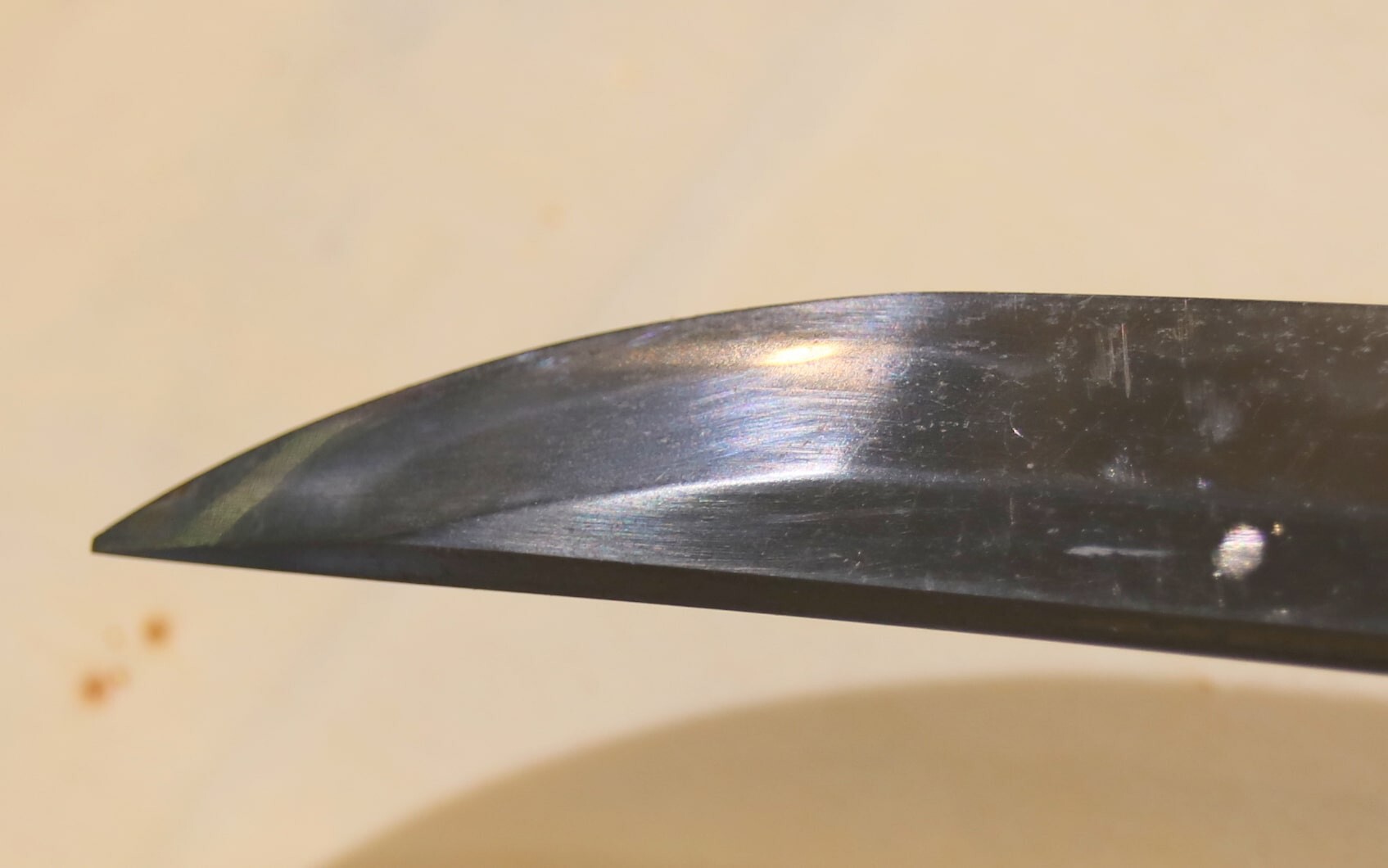
Good Afternoon Just got a new blade I ve been looking for and was curious if there s a reasonable way to tell how much machiokuri was done based on the Hi placement ( Futasuji - bi in this case ) and mei placement. Tokubetsu Hozon Katana Mei : Kongohyoe Moritaka Saku Blade length: 69.7 cm. Sori: 2.0 cm. Motohaba: 3.2 cm. Motokasane: 0.75 cm. Sakihaba: 2.32 cm. Sakikasane: 0.55 cm. Additionaly , any suggestion and discussion as to what time period it may be would be greatly appreciated. My inital thought based on the katana mei was muromachi but the nagago and mei looks older Thank you Kevin L

 1 point
 -
Lovely sword ! Kongobeï is quite rare with long meï. Hope to see close picture of the hada... Best, Eric1 point
-
Thanks for sharing this, Jan. Both the blade and the fittings are quite beautiful. Those fittings were an upgrade, and for us Military sword collectors, quite desirable. A small clarification - "Kyu gunto" were the early, Western-styled sabers. This is a navy "kaigunto" (Kai - navy; gunto - literally army sword, but it was used more commonly as "military sword").1 point
-
Juyo or TJ yes, not sure about TH or Hozon.1 point
-
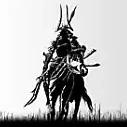
The extra long frontal kusazuri were meant to defend the rider against the typical weapons wielded by foot soldiers such as yari and other polearms. Similarly, the construction of the haidate - namely the iron composition and the curved, overlapping plates designed for strength - were meant for defending against ground-based attacks, as were the solid plate suneate.1 point
-
Because it's not a wartime blade, it's earlier and remounted, and guys are treasure hunting/hoping.1 point
-
Even upside down it looks like gimei characters. A Chinese fake?1 point
-
Since then I retired it, using a much lighter but again genuine 20-Monme Ōzutsu from Ki-Shū, Wakayama, and subsequently, more recently, a 50-Monme from Sendai. For static displays, however, it’s great to have three Tazuke school matchlocks.1 point
-
Hey Scogg, Thanks for the info and article links, they're extremely interesting, a great read! Best regards Ken1 point
-
Just posting the close up photos I received from the auctioneer before it was sold off. Thought some would find them as eye pleasing as I did. Jan

 1 point
 -
Koto bizen swords are known for their utsuri. Some of the most stunning utsuri I’ve seen has been on Aoe blades. I can’t quite see anything in your images unfortunately. Even in swords that are in good polish, utsuri takes a careful eye, and knowing what to look for to see. It’s even harder to capture in photos. Here's some really good articles about utsuri that might help: https://markussesko.com/2013/08/22/some-thoughts-on-utsuri/ https://markussesko.com/2015/05/14/kantei-2-jigane-jihada-3/1 point
-
Are you able to spot darker parts on this nakago? Usually mekugi ana had some time „in service” so darker patina would point you into direction. Here you have 3.1 point
-
Oh crap. Do you think he gives refunds? Just kidding... What caught my eye first, though, was how the low point looks old and weathered but the high point looks pristine. John C.
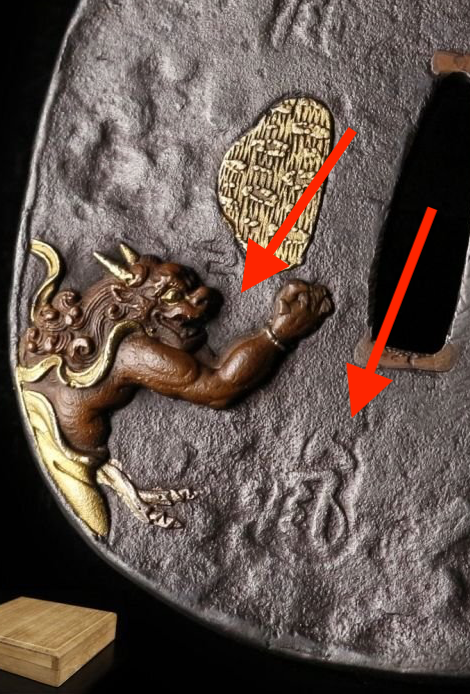 1 point
 -
Not much could be said, but I like the signature, the blade is most likely circa 1540, but the sugata is very general and it could be substantially earlier - in theory, but usually less so in practice. Probably under 2 inches suriage.1 point
-
Sorry, impossible to see of there is utsuri in the actual polish of that blade... Best, Eric1 point
-
Thank you to members who bid on this tsuba. It’s new home will be a fellow UK based NMB member and the 10% contribution has been sent Brian towards the excellent work he does in support of our hobby. kindest regards Michael Ps Brian please delete this post after a day or so or move to the appropriate area.1 point
-
More on the subject of sword prices during the Shin Shinto era: https://markussesko.com/2019/09/06/breakdown-of-price-for-sword-blade/1 point
-
Hello, While the primary function of Hon'ami valuation was indeed for gift-giving purposes, there are extant records of masterworks trading for large amounts. This also surprised me, as I used to believe that these valuations were symbolic. It is an interesting topic and does confirm that beyond land and estates, swords were the most highly valued objects of their time. This is, of course, the tip of the iceberg. We can assume that vast majority of transactions went unrecorded for obvious reasons. The table below compiles from reliable sources recorded transfers of properties. # Meibutsu (English) Type / smith Approx. date of transaction (Edo) Buyer / recipient Seller / previous holder Nature of transaction Stated price Brief note on the deal Primary Japanese online source 1 Shinmi Rai Kunimitsu (新身来国光) Tantō, Rai Kunimitsu Mid-17th c. (Aizu Hoshina Masayuki’s time) Aizu lord Hoshina Masayuki (Hosokawa Masayuki / 保科正之) Unspecified (sword already famous) Purchase, later献上 to shogun 3,000 kan (purchase); later 200 mai as shogunal valuation Aizu lord buys the oversized Rai Kunimitsu tantō for 3,000 kan (“三千貫にて…お求め”) and later presents it to the Tokugawa shogun; the shogunal house then attaches a 200-mai valuation. meitou.info 名刀幻想辞典「新身来国光」 2 Ikeda Masamune (池田正宗) – purchase 1 Katana, Masamune attribution Late Momoyama / very early Edo (Toyotomi–early Tokugawa) Date Masamune (伊達政宗) Earlier, unspecified owner Purchase 1,000 kan Meibutsuchō excerpt: “伊達政宗卿千貫にて御求め” – Date Masamune buys the blade outright for 1,000 kan. meitou.info 名刀幻想辞典「池田正宗」 3 Ikeda Masamune – purchase 2 Same sword Same generation as above Ikeda Bitchū-no-kami (池田備中守輝政) Date Masamune Purchase (re-sale) Implied 1,000 kan (“同代にて御払ひ…御求め”) The text records that Date disposes of the sword in the same generation and Ikeda Bitchū-no-kami “御求め” (buys it), at what is clearly understood as the same 1,000-kan level. meitou.info 同上 4 Ikeda Masamune – shogunal acquisition Same sword Early Edo (2nd shōgun Hidetada) Tokugawa Hidetada, later Owari Tokugawa Ikeda Bitchū-no-kami Confiscation / purchase with price noted, then gift to Owari 1,000 kan “秀忠公また千貫に召上られ尾張殿拝領” – Hidetada “summons up” the sword at 1,000 kan and then grants it to the Owari house. Financially a shogunal buy-back followed by a gift. meitou.info+1 同上 5 Asai Ichimonji (浅井一文字) Tachi, Fukuoka/Ko-Ichimonji school c. late 17th–early 18th c. (after princess Matsu’s marriage, Hōei era) Matsudaira Mino-no-kami (Yanagisawa family) “Saishō-dono” (Maeda / courtier acting as sender from Kaga house) Paid transfer (“被遣”) 1,000 kan for that transfer (later 1,500 kan valuation in Yanagisawa hands) Meibutsuchō text: after Matsuhime’s marriage, “right blade was sent to Matsudaira Mino-no-kami at 1,000 kan” (“右刀千貫にて松平美濃守殿へ宰相殿より被遣”). Later in Yanagisawa ownership it rises to 1,500 kan. meitou.info 名刀幻想辞典「浅井一文字」 6 Kanze Masamune (観世正宗) – Ietsuna confiscation Wakizashi, Masamune attribution Kanbun era – Kansei 3–4 (1663–64) and later Shōgun Tokugawa Ietsuna (as acquirer) Echigo lord Sakai Mitsunaga line, via Honda Nakatsukasa-no-kami Forced re-acquisition with compensation 400 koban (“黄金四百枚拝領”) Long transmission note records multiple re-valuations (1,000, then 3,000 kan etc.). Eventually, in Kanbun/Kan’ei years, the shogunate seizes it back and the holder receives 400 koban in gold as compensation – a de facto compulsory purchase. meitou.info 名刀幻想辞典「観世正宗」 7 Nara-ya Sadamune (奈良屋貞宗) – merchant sale Tantō, Sadamune Bunroku era (1592–96, Toyotomi rule; technically very early Edo contextually) Toyotomi Hidenaga (“Kōmon Hidetoshi-kyō”) Merchant Naraya Sōetsu of Sakai (堺・奈良屋宗悦) Purchase, then献上 to Hideyoshi 500 kan Meibutsuchō citation: Sakai merchant Naraya owns the blade; in the Bunroku years “右貞宗を五百貫に黄門秀俊卿求め秀吉公へ上る” – Hidenaga buys it for 500 kan, then presents it to Hideyoshi; it later passes Hideyori → Hidetada → Owari, with documentary evidence of the original price still attached in Keian 3. meitou.info 名刀幻想辞典「奈良屋貞宗」 8 Togawa Shizu (戸川志津) – Maeda purchase Tantō, Shizu (志津兼氏) Early Edo (Keichō–Kan’ei; Maeda Toshinaga’s time) Maeda Toshinaga (利長卿) of Kaga Togawa Higo-no-kami (戸川肥後守) Purchase “Gold 130 coins or 1,000 ryō” (two alternative figures) The entry explains that Togawa Higo-no-kami once owned the piece; Maeda Toshinaga later “求む” (buys it) at “黄金百三十枚歟小判千両歟両様の中にて” – either 130 gold pieces or ca. 1,000 ryō. It is subsequently presented to Hidetada and re-valued at 100 mai, then moves via Kii Tokugawa and back to Owari. meitou.info+1 名刀幻想辞典「戸川志津」 9 Sayo Samonji (Sayo no Sayo-monji) (小夜左文字) – famine sale Tantō, Samonji (左文字) Kan’ei 4 (1627), Kokura famine Unspecified external purchasers (via intermediaries such as Doi Toshikatsu, according to later traditions) Hosokawa Tadatoshi (忠利), 2nd Kokura / later Kumamoto lord Emergency sale to raise famine relief funds Price not explicitly recorded in Meitou Gensō Jiten The meitou article notes that in Kan’ei 4, during the great famine in Kokura, Hosokawa Tadatoshi, to relieve his starving subjects, sold off the celebrated tantō “Sayo Samonji” together with the daimyō-grade tea caddy “Ariake / Ankokuji Katatsuki”. This is one of the clearest cases of a great meibutsu sword being liquidated in early Edo. meitou.info+1 名刀幻想辞典「小夜左文字」 10 Sayo Samonji – Yamauchi acquisition Same sword Late Azuchi–Momoyama / very early Edo Yamauchi Kazutoyo, lord of Kakegawa A local polisher (togishi) who had received/kept the blade Purchase (“買い上げて所有”) Price not given Before the Edo-period daimyō circulation, the same article relates that Yamauchi Kazutoyo bought the tantō from the sword-polisher in Kakegawa who had used it in the famous revenge episode; this is described explicitly as “研師から山内一豊が買い上げて所有”. meitou.info 同上 11 Ikoma Samonji (生駒左文字) – exchange & resale Katana, Samonji attribution Mid-17th c. (after transfer to Ogasawara) Honami house, then various daimyō Ogasawara clan finds it ill-omened Exchange (道具替え) and later resale (売買) No explicit price for the exchange; later 1,000 kan valuation in Honami origami The Ikoma Samonji is eventually considered unlucky; the Ogasawara family has Honami take it in exchange for another sword (“本阿弥家に渡し別の刀と交換した”), and the Honami house later sells it onward (“その後本阿弥家から他家に売買され”). This is a documented secondary-market transaction, even though the exact sum is not recorded. meitou.info 名刀幻想辞典「生駒左文字」 12 Kodama Masamune (小玉正宗) – transfer with prior purchase Tantō, Masamune attribution Early Edo (Keian era) Owari Tokugawa (Yoshinao), later Takasu-Matsudaira branch Naruse Hayato-no-shō family, earlier holder Gift / transfer “received from Naruse” with earlier 1,000-kan purchase on record 1,000 kan (折紙), earlier price 130 mai Entry gives “小玉正宗 無銘長八寸三分半 代千貫 尾張殿… 是ハ右兵衛督様御拝領 成瀬隼人正より請取”. The sword is in Owari hands with a 1,000-kan origami; it is explicitly said that Yoshinao received it from Naruse Hayato-no-shō. The earlier price of 130 mai is preserved in documents, making this a well-documented transfer, though the act from Naruse to Yoshinao is framed as “拝領” rather than a straight commercial sale. meitou.info+1 名刀幻想辞典「小玉正宗」1 point
-
Hello all, I have posted here a couple times and am always excited to share things I find through my store - this time I have a customer who has an appraisal request (mainly I want to get him the information, era, location etc so he can properly decide what to do with it) of a sword he inherited when a house was passed on to him. It appears to be military (from my extremely limited experience) with a copper saya. I did my best picturing the boshi, but it is difficult to show the nearly invisible line in the light I had available. He is going to bring it back to have a more thorough look later in the day, but I pictured the signature, and the boshi as if I recall, that is the first thing to photograph to check here. That said, I would appreciate any information you can help with, and may need to post more of the pictures in replies to this thread. If you want to request more pictures to get a more detailed look, please let me know. The length from tip to tip is approximately 39 inches, if this helps. Thank you all in advance!

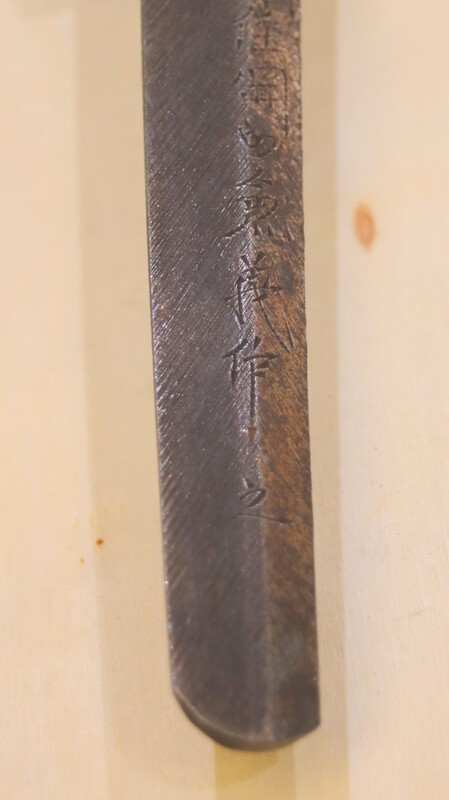


 1 point
 -
This might be relevant to this discussion. This exhibit was at one of the geisha house exhibits in Kanazawa.
 1 point
 -
Its difficult to make such analysis, because coins were devalued, prices fluctuated, 1710-1790 no one was buying any swords, koku stipends experienced both inflation and deflation, but I don't think two ryo stipend is something that was actually meant in the text. Generally a very good stipend was 150 koku. Top administrator for a top clan could make 500. The least stipend was often in 25-40 koku range, and in clans like Uesugi you were expected to have a side trade at this level. Hatamoto were more or less equivalent to a lesser clan serving a major Daimyo, so they are not one to one comparable to samurai. The main question was how much spare cash existed after expenditures, especially since the system typically aimed for "zero" as the answer. The system was also "Pareto" designed, with sharp boundaries between the classes without "in between" steps like 120 or 225 koku. Honami valuations are more or less fantastic rather than market based. Very few clans which could more or less consistently acquire swords at high level. Probably most exchanges involving such swords were not purchases, but gifts. In which case Honami valuation suggests the gift's value... Very good modern sword would more often than not be under 10 Ryo, quite affordable for the upper administration. Then again the real market prices (i.e. pawn shops) constantly fluctuated and what would be taken as collateral at 100 Ryo in 1700 and in 1740 would be very-very different amount of material.1 point
-
Early Edo, around 1660-1680, Sesko quotes a basic income for low ranking retainers of 3 Ryo annually. 1 Ryo was approximately the cost of 1 koku of rice. If eating is going to take up one-third of your income, I'd be very surprised if they ended up with much left. Sake, sandals, clothing, accommodation etc. I read somewhere else that just a Samurais everyday (street) clothing would have been around 1 Ryo too. Spending 1 Ryo on a sword would probably have taken a decade (at that level). Sesko goes on to say: A hatamoto might earn more (100 Ryo upwards - two thirds earning less than 400), but around a third of that would have been spent on staff. Around that time, Jo Saku / Toko 3m Yen-level smiths would costs around 5 Ryo or more. So, after expenses, we're talking maybe 10% of a lower end hatamoto's salary to buy such a sword. Probably doable, but that's a big purchase.1 point
-
Here’s another one that has me stumped. I believe the first name is Kane but I cannot figure out the second. Any help with this translation would be greatly appreciated. Thanks very much, Tom

 1 point
 -
Piers, it was just a well-intentioned criticism on my part. All detailed explanations about blades were exclusively in Japanese. Usually, the name of the blacksmith was written in Latin letters, often along with the era and school. But the next sign could be 100% in Japanese again. This inconsistency annoyed me. I wouldn't write it if it weren't the case. I was very sad that I could hardly study the museum's signed Kinju. The Japanese description rightly pointed out the extreme rarity of signed works by Kinju. But the Tanto/Ko Waki was so poorly positioned and so high up that even with my height of 1.85 m, I could see very little of the blade's characteristics. Of course, the large number of blades on display is impressive. But it is also too large to fight your way through the collection with full concentration and discipline. It is quite exhausting. Less would be more, and then it would be 100% well presented. In return, there could be more temporary exhibitions. But I am also aware that a lot of work, effort, time, and money goes into it. These are just my thoughts.1 point
-
The single hanger suggests type 98. In that condition (see the reproduction brass seppa?) I would not go anywhere near 3000 AUD for a non-traditional blade. You can get a star-stamped gendaito for that kind of money. John C.1 point
-
Hi Kenny, welcome to the forum. To begin this is a Type 98 made circa 1943, the small stamp indicates it's non-traditional.1 point
-
What these details do suggest is that the suit of armour was certainly custom and not off-the-shelf, which usually means that the samurai who commissioned it had some means. The length of the frontal kusazuri, the construction of the haidate plates (can you confirm if they are iron?) and the tsutsu suneate point towards an armour meant to be worn on horseback - again suggesting a higher-ranking samurai.1 point
-
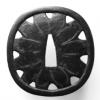
Jack, Kirill, thank you for the comments! I think it's a gimei because the quality of the artwork could be better, and the signature is particularly crooked and unexpressive. Otherwise, it seems to be a popular theme among artists, and maybe someone has more examples?

 1 point
 -
Although, considering that this is a ko-kinko, you must be right! https://www.bonhams.com/auction/22248/lot/1207/a-ko-kinko-tsuba-edo-period-18th-century/ In any case, it was interesting to compare!

 1 point
 -
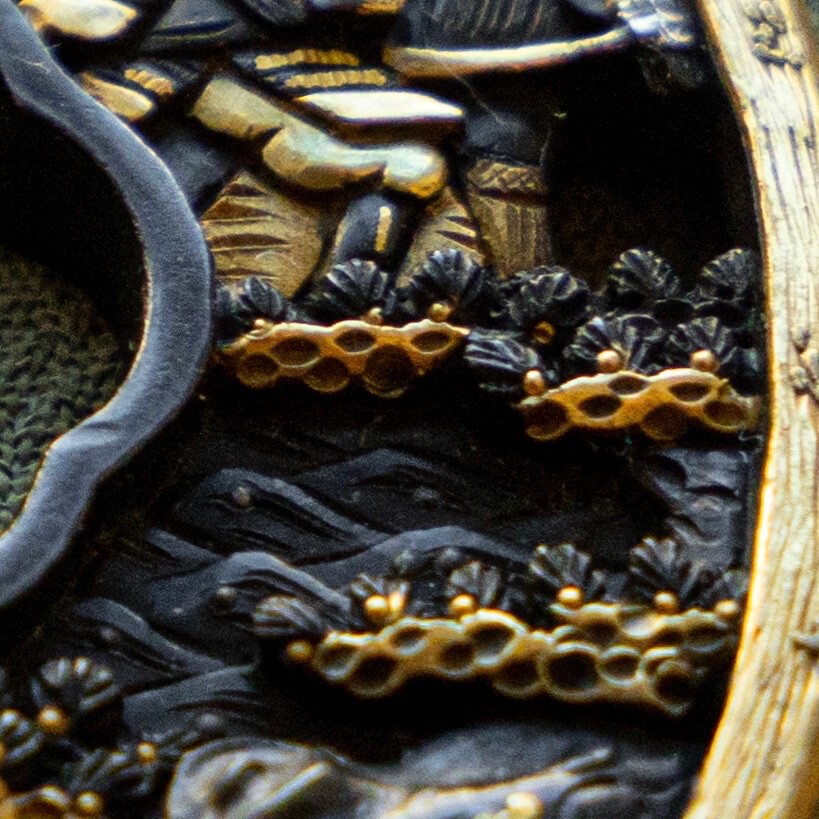
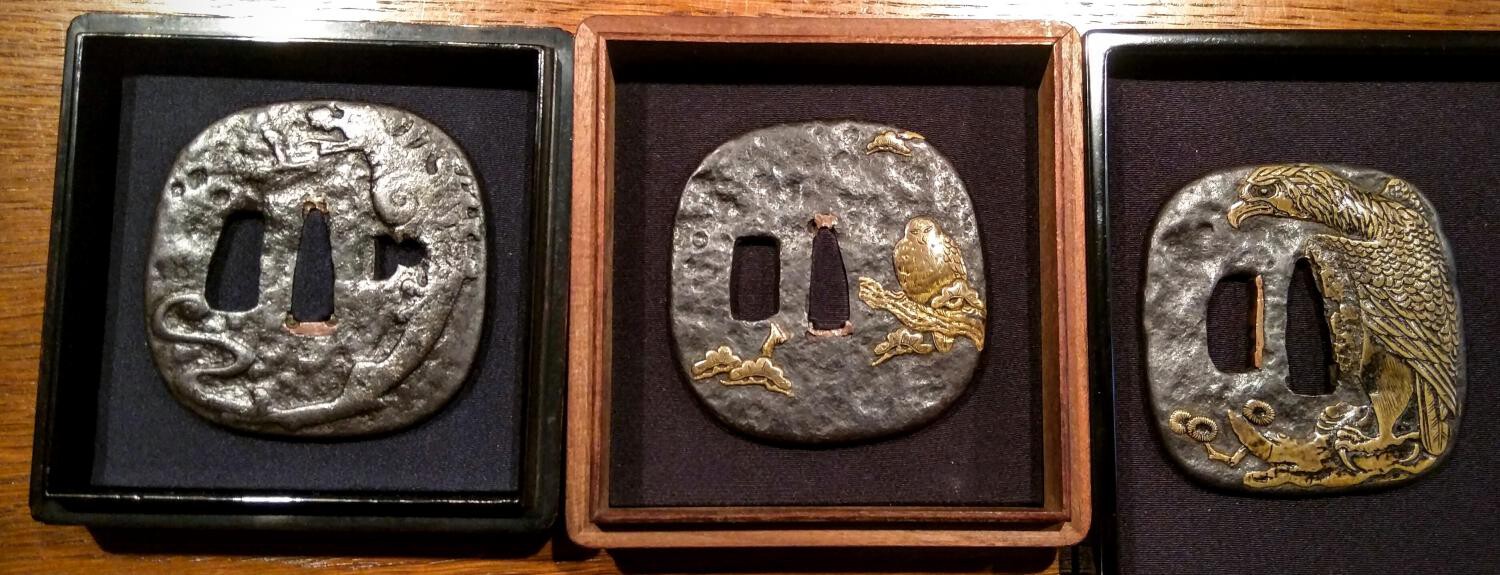
Hello! I've also done some research on my Soten tsuba set. I'm inclined to believe that your tsuba was made by a follower of Soten with their own unique style. There are noticeable differences in the way the pine tree is drawn, with its more elongated needles(with an Italian accent)) joke), which is not as common in the Soten school. Additionally, the tops of the waves have a concave point, whereas Soten often uses a round point, and the overall style of the waves is different. A similar plot, I suppose) The precise depictions of the clans are also not typical of Soten, and I really appreciate this detail on your tsuba! I also found a potential pair that is slightly smaller in size, both in appearance and in terms of the additional seki gane insert. Best regards Viktor


 1 point
 -
The reliability of the old green papers has been discussed quite a bit here over the years. Might be worth searching the forum for old threads that discuss the topic. Lots of opinions and discussions. Here’s an older article by the late Darcy Brockbank that covers the topic in detail; you’ll need to scroll down a bit, but it’s well worth the read: https://web.archive.org/web/20210123052725/https://blog.yuhindo.com/green-papers-no-papers/ Sincerely, -Sam1 point
-
It's well recognized, including by the NBTHK, that there was a period when "market forces"... possibly including organized crime... let us say "influenced" the award of their papers - the infamous NBTHK green papers. In order to attack this problem whey re-organized their whole system. Does this mean there is no possibility of such influence today? Probably not, but so far the system appears to be producing results which, while not unquestionable, are at least honest.1 point
-
It depends, for resale (with confidence), especially to newer collectors, an NBTHK certificate is invaluable. However, the attributions (especially mumei) can change - it's not a perfect science. However, you are getting what's considered to be the most recognised/valued expert opinion. It's difficult for newer collectors to "buy the blade, not the paper" but being aware of the quality and condition, will help ensure you don't overpay. If you're looking to purchase a big name, I'd recommend one of the prominent, trusted dealers (some are on here). It's well worth the price of their expertise.1 point
-
Shame there's no date on the other side. But 3/4 of the blades with the Showa stamp are undated. Thanks Dee! Lance, this is a WWII Japanese officer sword, either a Type 94 or 98. Fittings shot might help tell the difference. If in Type 94 fittings, the blade could have been made between 1935 and 1938, as that is when this model came out. Most blades with the stamp, that have dates, were made in 1940-41.1 point
-
@Patinamax Lance as noted by Ray it is Okada Kaneyoshi. He was well experienced and a good. smith. This is an early war sword and looks to be a well made Showato. The long kissaki is interesting. This could be a custom work. Please show koshirae as John requested. There were quite a few Kaneyoshi in Seki, but his details are listed in NMB Download:1 point
-
One of the best thread of the NMB. Keep 'em coming. I'll revive it with this image, which I found on the old archives of the forum. The most epic Higo lineup ever to have graced a table in Europe since Alfred Baur.
 1 point
 -
Signed Ujita Shigetsugu Dated 1857 All parts numbered 14 107 cm long 1.3 cm bore 4.5 kilos Tokugawa Mon and dragon inlayed in silver on barrel
 1 point
 -
1 point
-
Piers, As always a revelation for which you deserve our heartiest thanks. Isn't it sad how all of the minor accessories have either just been discarded or ignored? Once you move a couple of generations away from their period of use, they then become objects of mystery. I was once given a short woolen cloth tube that fits around the saya of a sword and the kurigata. It is obviously to stop your daito scratching the saya of the shoto - probably almost universal when swords were worn but I suspect quite rare nowadays. Same with guns and gunnery - vital odds and ends that gunners carried to make shooting easier are now all but forgotten. Some years ago a guy turned up at work with some musket balls found on a Civil War battle site. All had a flattened region around the equator, so to speak, that looked as if it had been done by hammering or cutting with a knife. They were obviously made by gunners to cope with the situation when fouling of the barrel would have prevented the loading of a regular ball. You can't stop to de-coke in the middle of a battle so you carried a few 'specials' in your pocket that would go down the barrel if positioned correctly at the muzzle. They would have been disastrous for accuracy, but at least they would keep you shooting that bit longer. Ian Bottomley1 point
-
Hi, I do not understand both meaning. It is a sign or something..name of Stock-maker???1 point
-
Greeeeaat!! :D
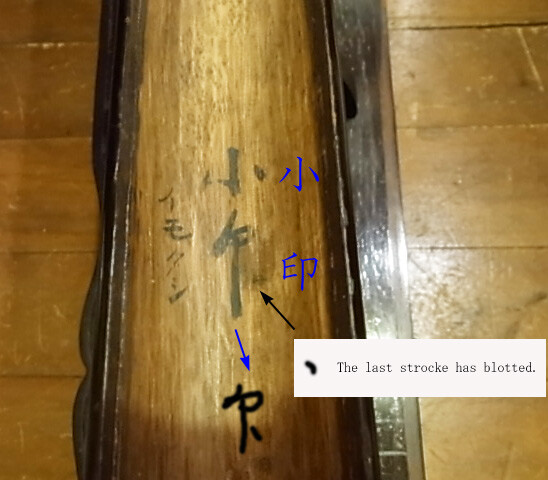 1 point






















This leaderboard is set to Johannesburg/GMT+02:00