
Leaderboard



Popular Content
Showing content with the highest reputation on 10/06/2025 in all areas
-
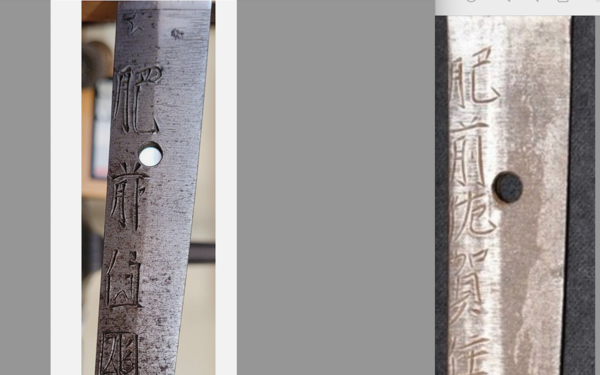
You see the elongated mei format from the Hizen smiths, both from the original Tadayoshi school and in the later Hizen (no) kuni gendai group.5 points
-
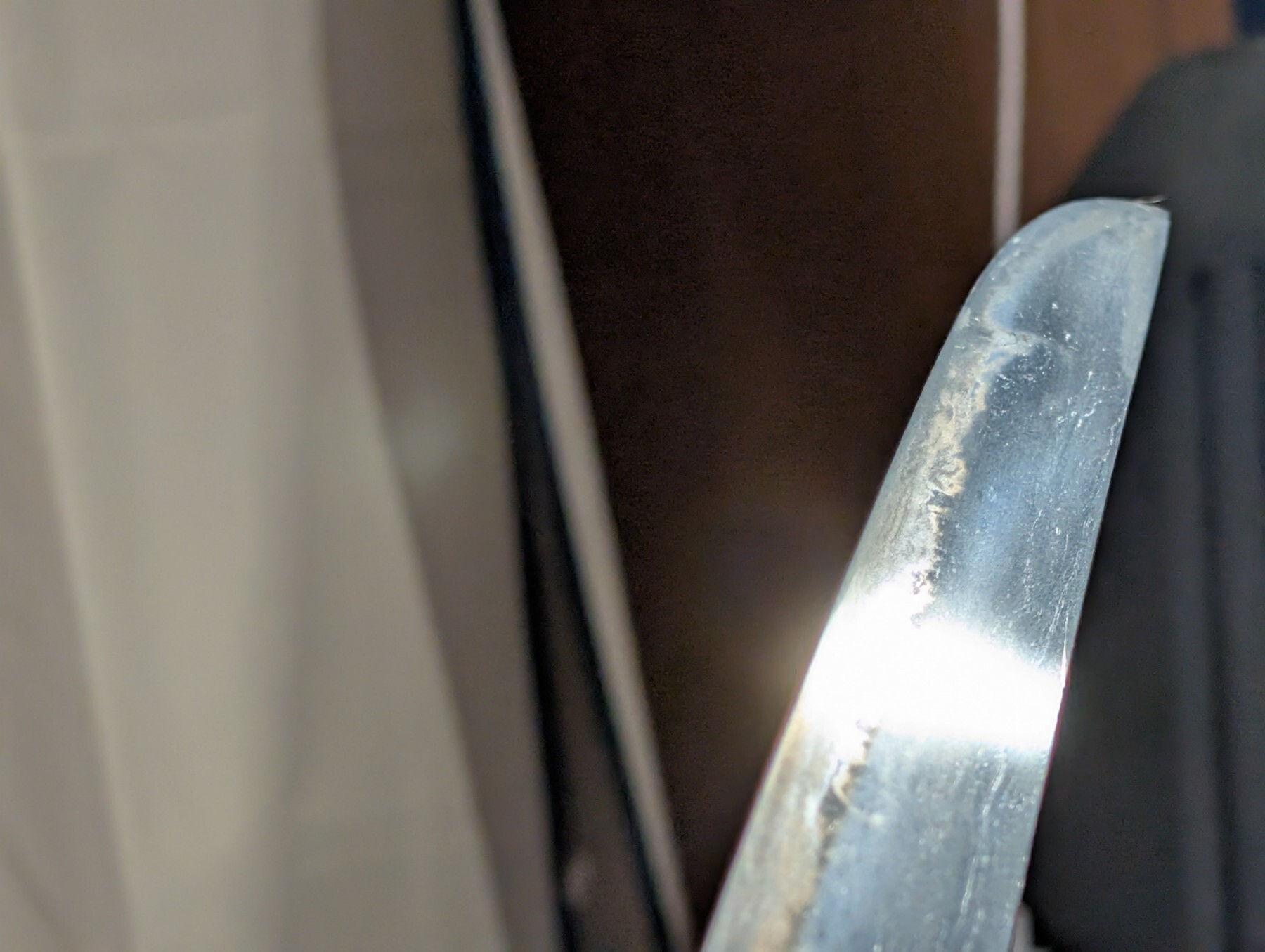
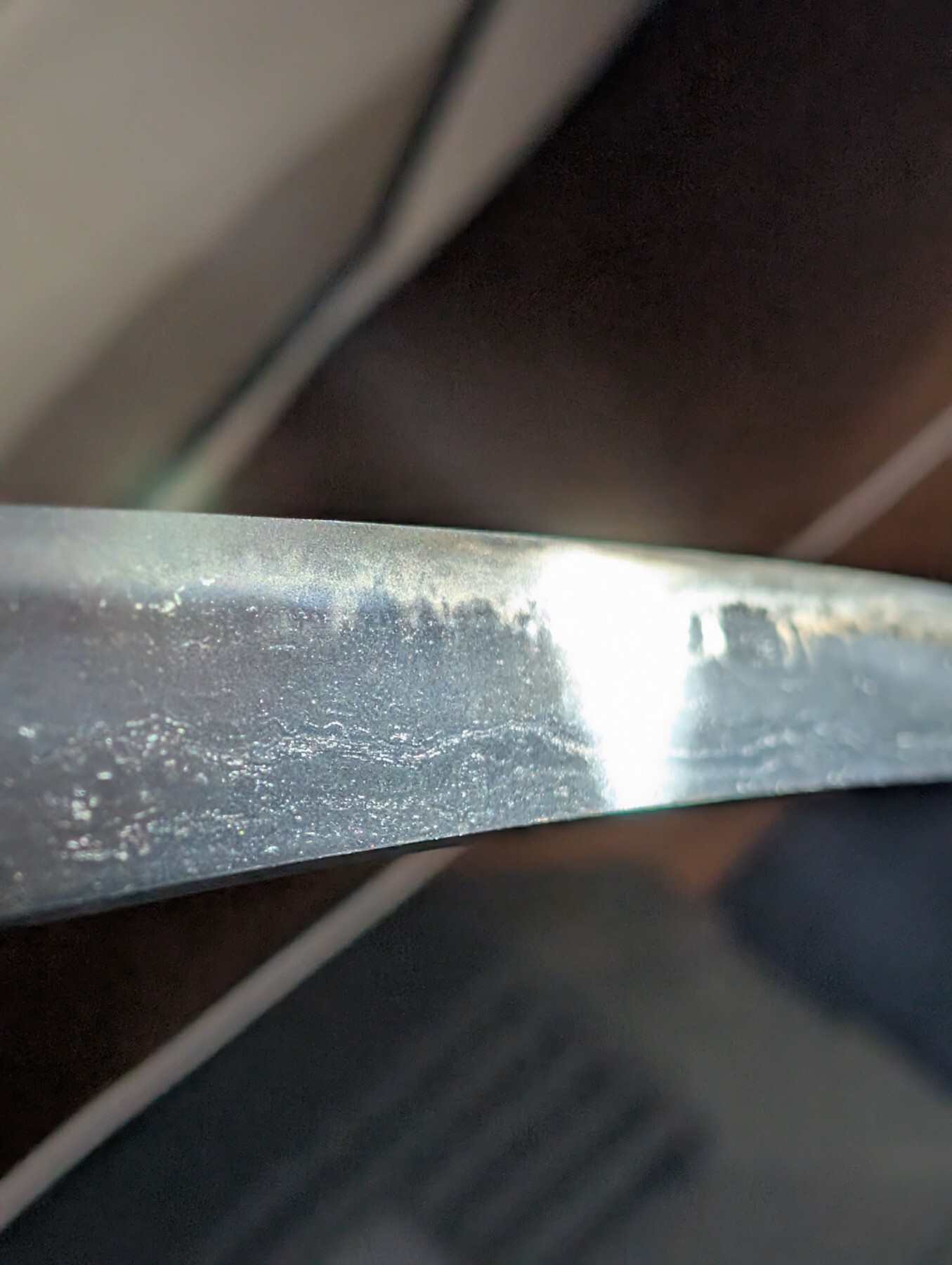
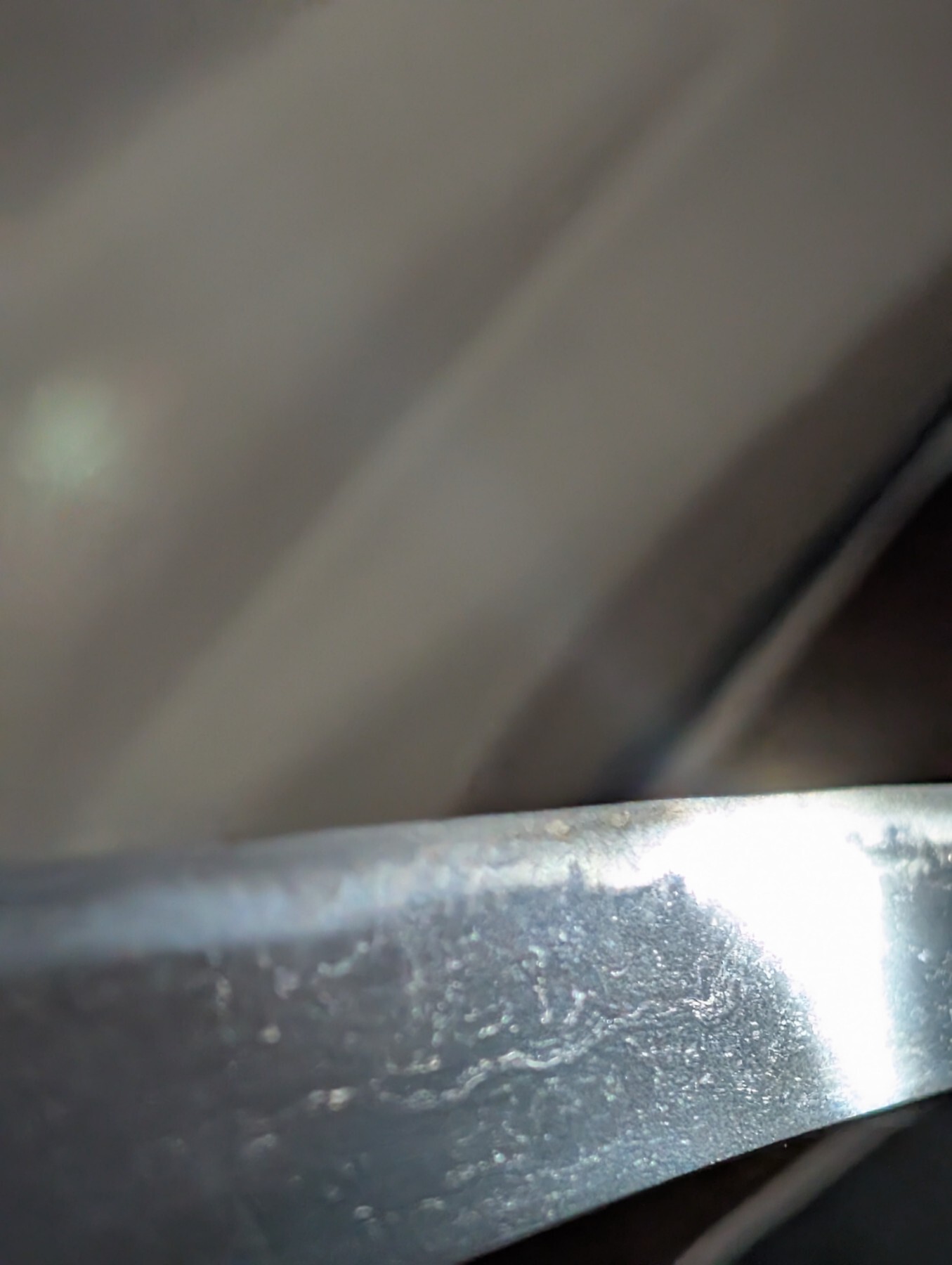
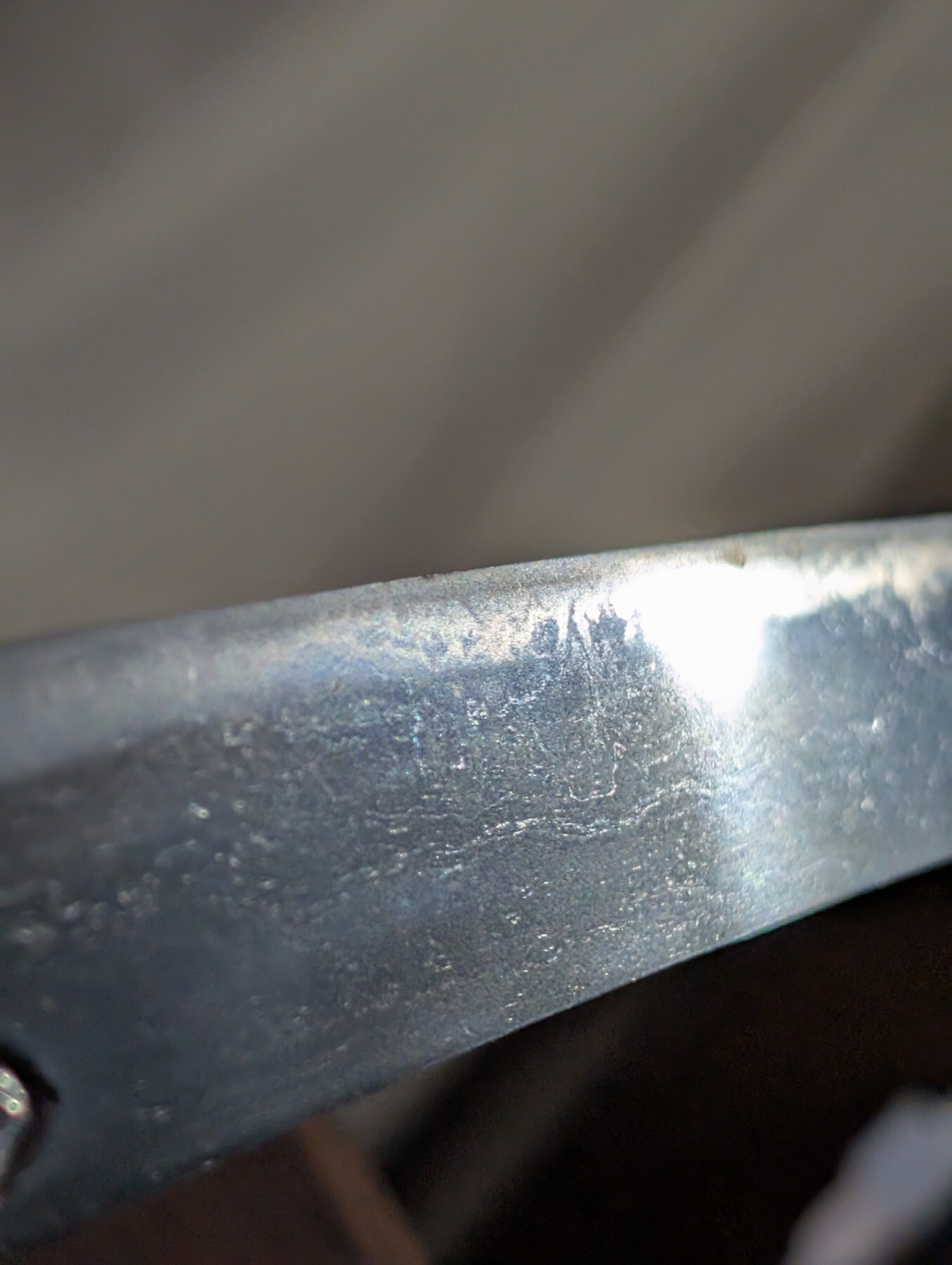
In order to give you a visual idea what separates a masterpiece from the better-than-average work, I'd like to show you a comparison. One blade is a masterpiece by Osafune Mitsutada made around middle of Kamakura-period. It airs a supreme yet relaxed mastery of forging and tempering in all aspects; dignity as well, if you want. The other blade is a work of Edo Ishido Tsunemitsu from Kambun-era. It is a very well made blade with brightly shining nioi-guchi, utsuri and all traits of a good choji-midare hamon. (The images were made by master-polisher Fujishiro Okisato and show the real nioi-guchi without hadori-finish) One blade I call a masterpiece; the other a very well made blade. Hope this is is helpful. reinhard
 4 points
 -
Steven, I’m sure you’ve been told this a million times before, but there is a Military Swords of Japan section on this forum. So why do you keep posting here? I’m tired of seeing your posts in ALL CAPS! You are buying and selling swords(for years...)...Instead of constantly depending on others with zero contribution to this forum, why not try learning on your own first and come to your own conclusions?4 points
-
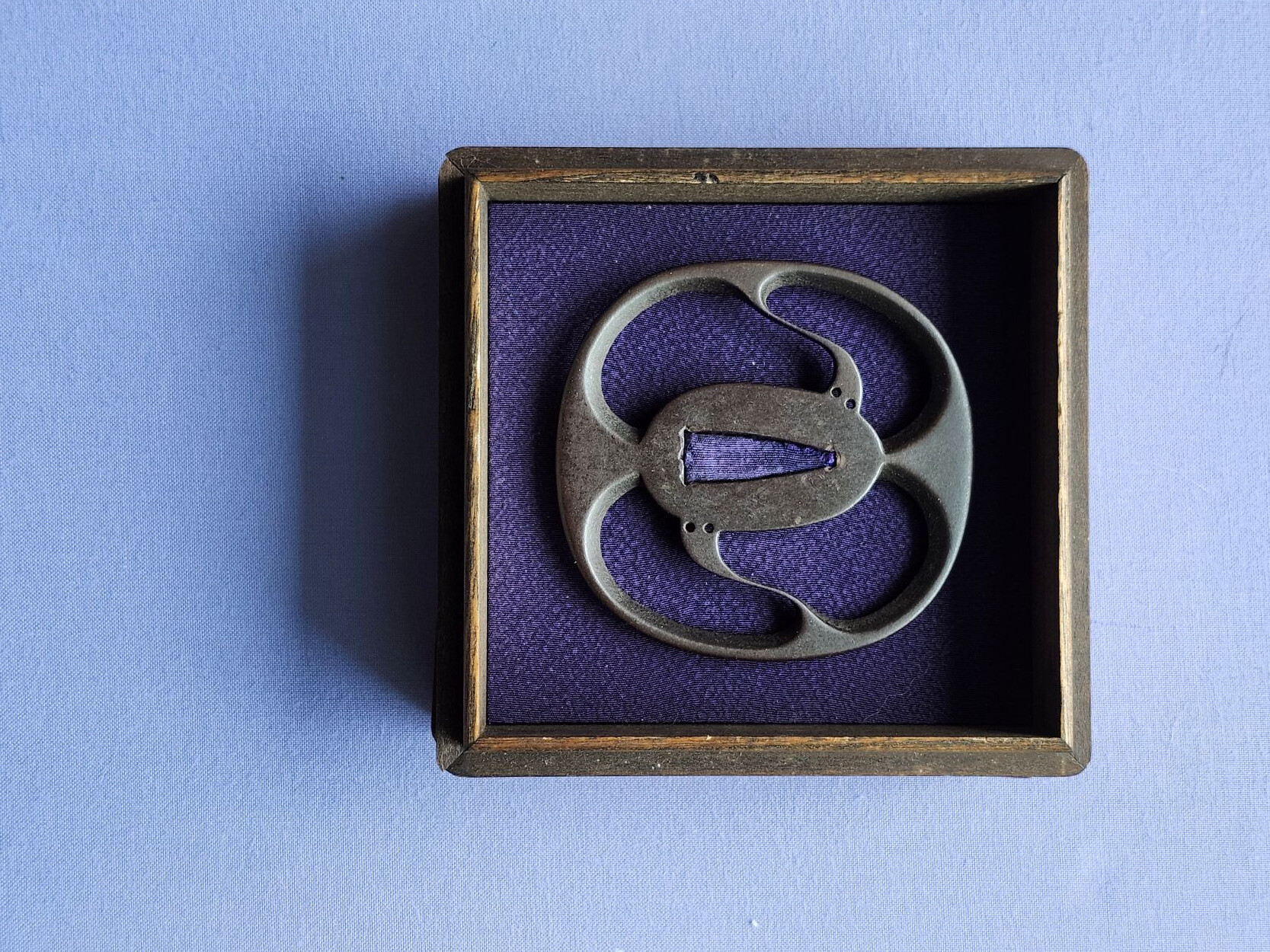
Okay- teasing you a bit: you want a simple grand formula, then go with E=mc^2 More serious: with each school and each maker, there are _SOFT_ rules about size, shape, finish, and %_percentage of seppa dai vs total volume displacement of the tsuba. The seppa dai size is partially constrained by the surface area displacement of the saya and the tsuka. A tsuba with a seppa dai so much larger than the saya and tsuka face displacement = looks weird and unaesthetic. At least amongst the Higo schools, certain schools and certain generation had specific rules. Thus the seppa dai is a very important kantei point amongst Higo schools. This is also true of Akasaka tsuba. This tsuba has a seppa dai and hitsu ana % that is greater than almost anything seen from 1500 to 1910. It has ratios only seen in tanto tsuba, but it is definitely not a tanto tsuba. The far most likely reason you might end at this sort of ratio is if you are creating a tsuba for display that is not meant to be mounted, free of mounted aesthetics, .....----or is for a massively thick non-Momoyama/Edo saya and tsuka. Therefore: either it is a very eccentric late Edo or Meiji era tsuba, or it is a 20th century work. Those are my thoughts.4 points
-
For starter's you can get Ito-san's books and the translations available. At times, groups have hired translators to do various Japanese texts. I have some of those translations, but not the rights to publicly share them. And I am in no rush to give up competitive advantage to AI. A simple example that many people know is the koban shape of the Hayashi tsuba seppa dai, especially nidai and sandai. Some like the Nishigaki and Hayashi had no problem intruding the design onto the seppa dai (hidden by seppa or tsuka). Pics attached. These are some of the largest seppa dai you will see in Higo, and the Kamiyoshi followed their Hayashi forebearers with some large seppa dai in late edo. Saya had gotten thicker n thicker by then. A Kamiyoshi pic attached, though it seems to have been spun 90 degrees. Kamiyoshi mostly lost the koban shape of the Hayashi, though sometimes did a darn good utsushi. Others like shodai Akasaka Tadamasa had rather pointy egg shaped seppa dai. I don't own or have an example of that.
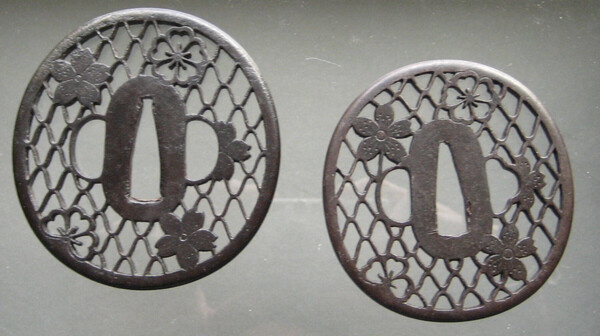
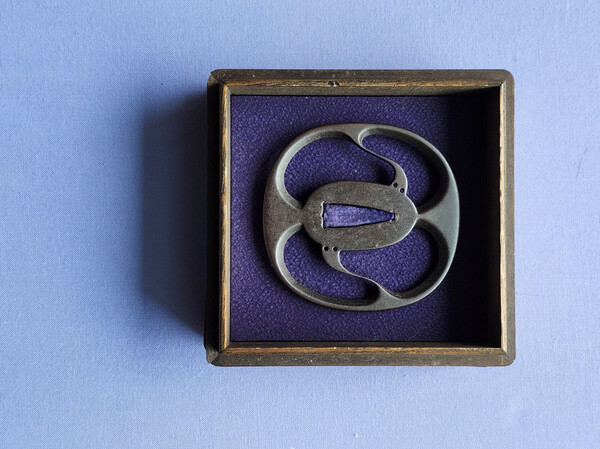 3 points
 -
相州住正家 - Soshu ju Masaie, or 正宗 (Masamune)?3 points
-
"I often wonder, how much control the smiths had - and, how much is happy accident." When it comes to swords, mastery is defined by control. It is different with tea-cups, for example. Accidental results beyond control during the burning process can enhance the value of a tea-cup. This is not the case with swords. reinhard3 points
-
I have not seen this before, however the sword itself looks legit. https://www.ebay.com/itm/167833814915? John C.
 2 points
 -
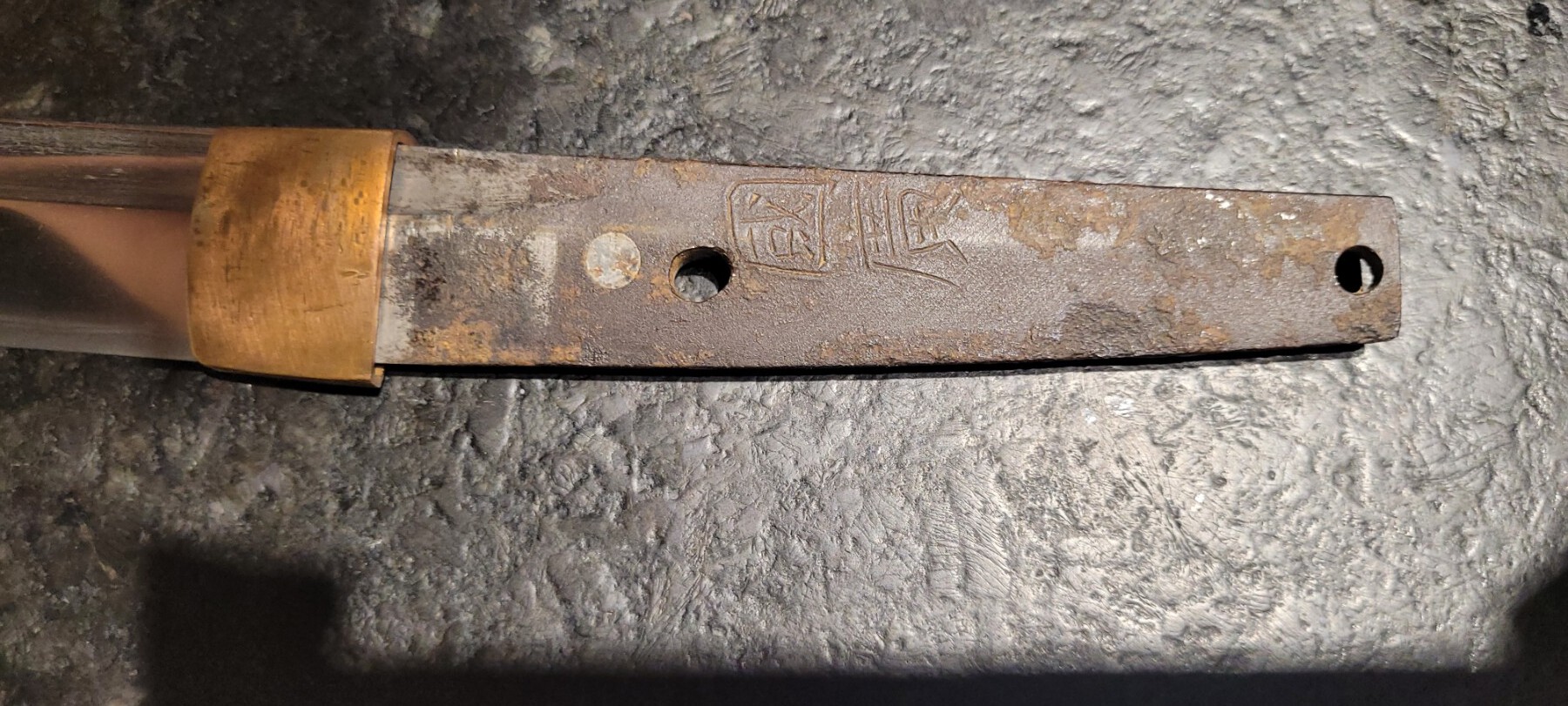
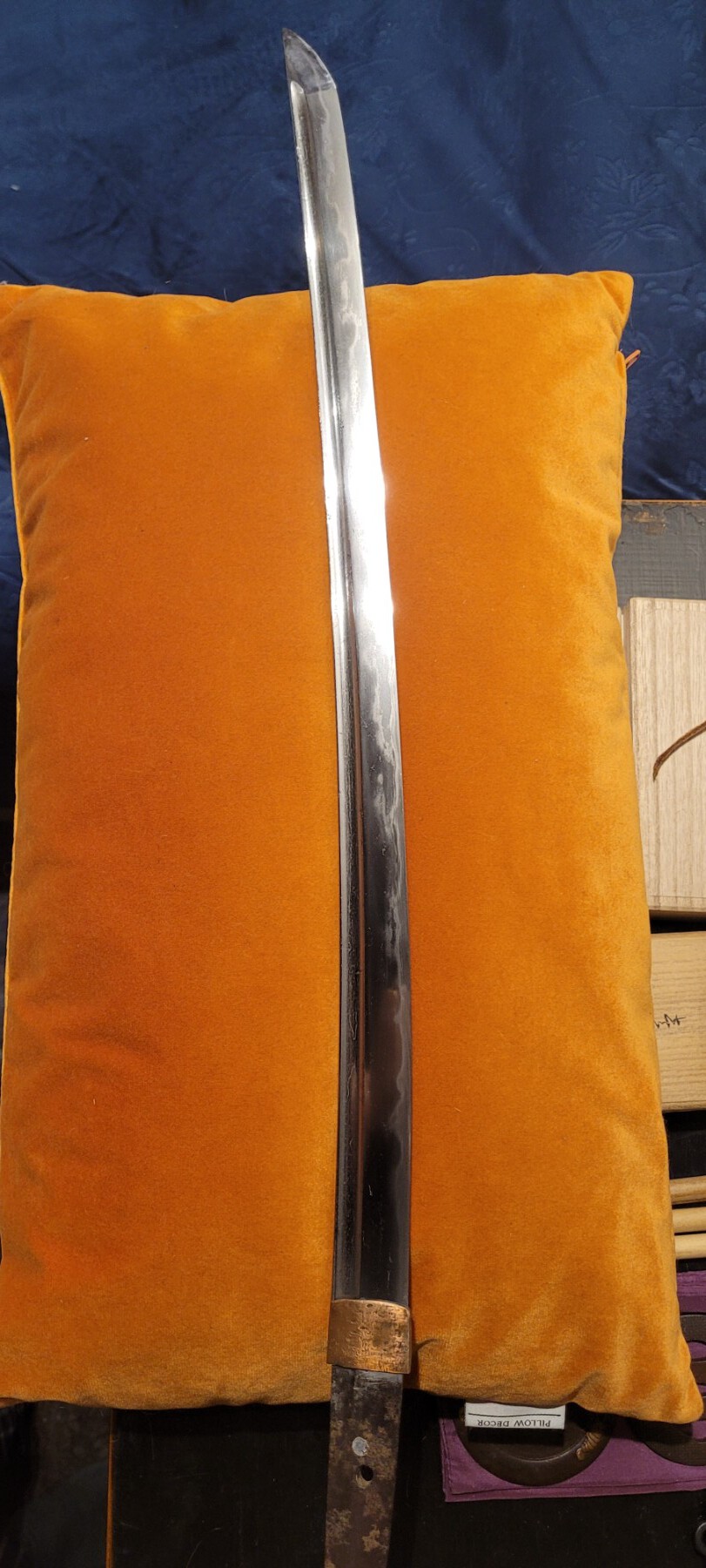
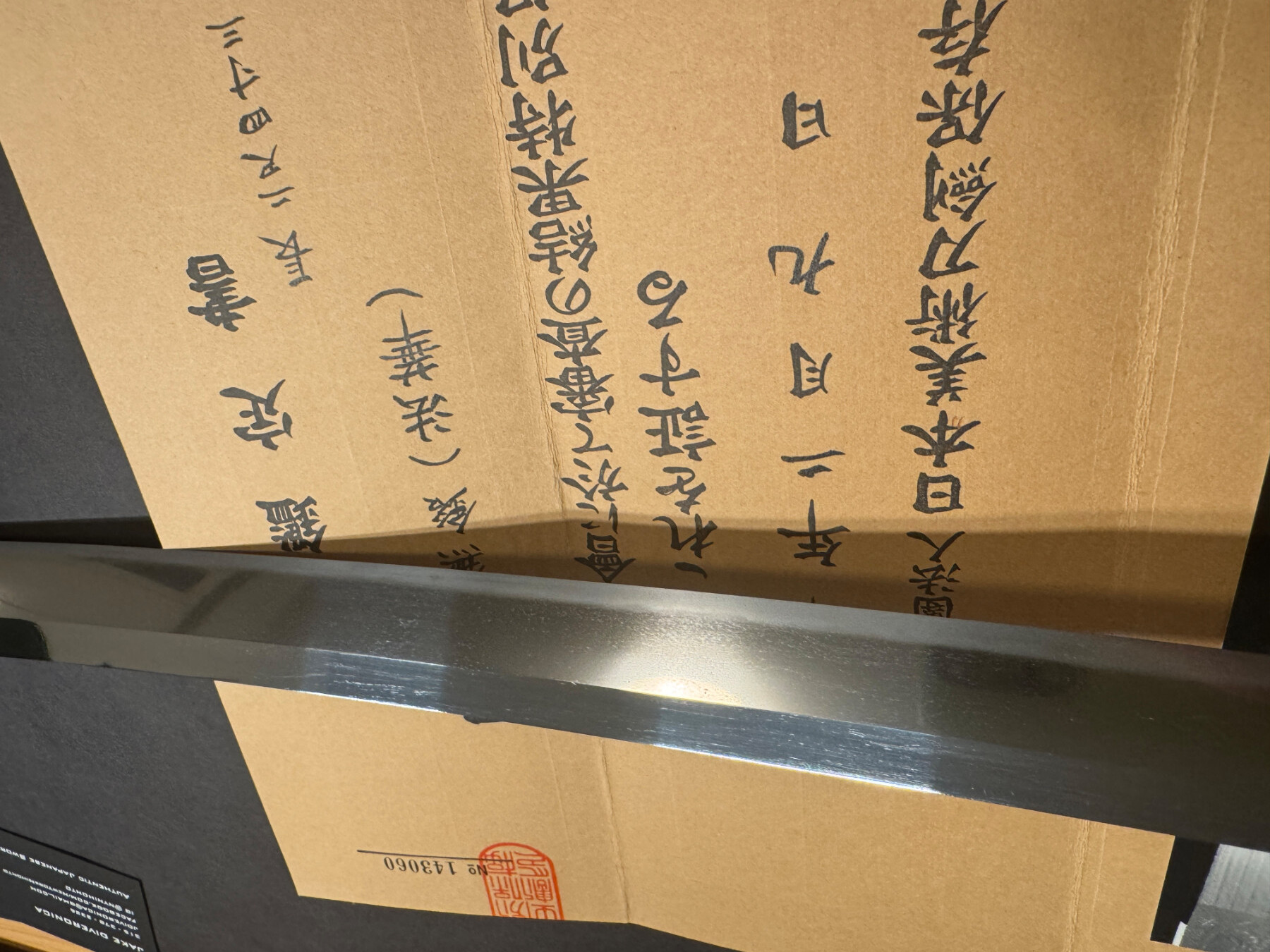
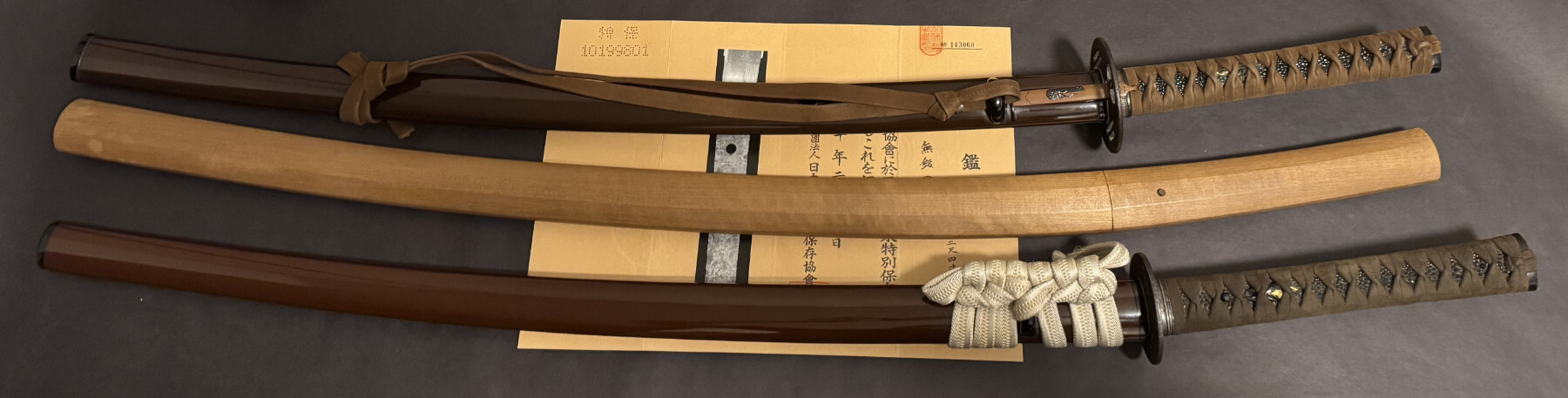
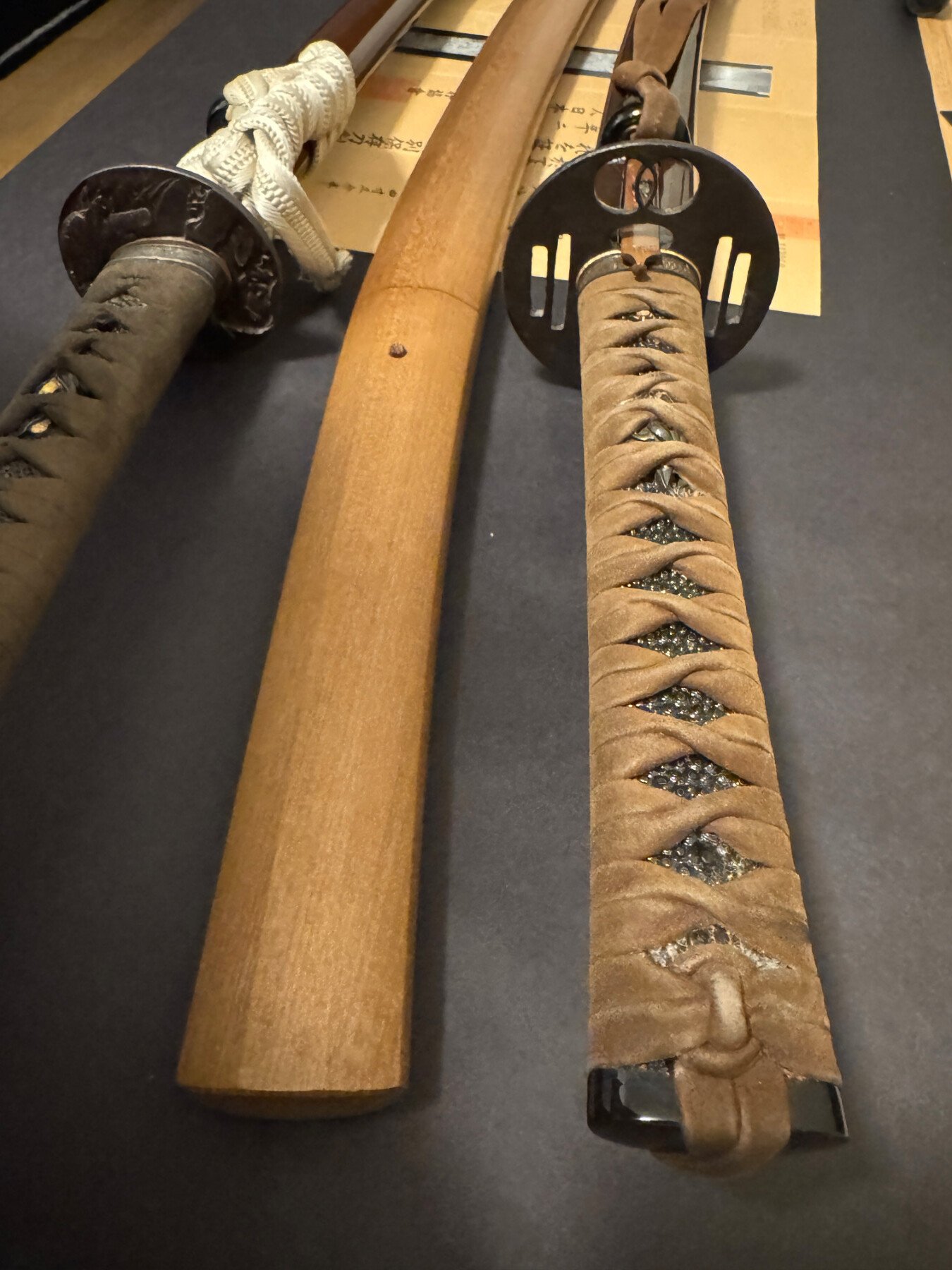
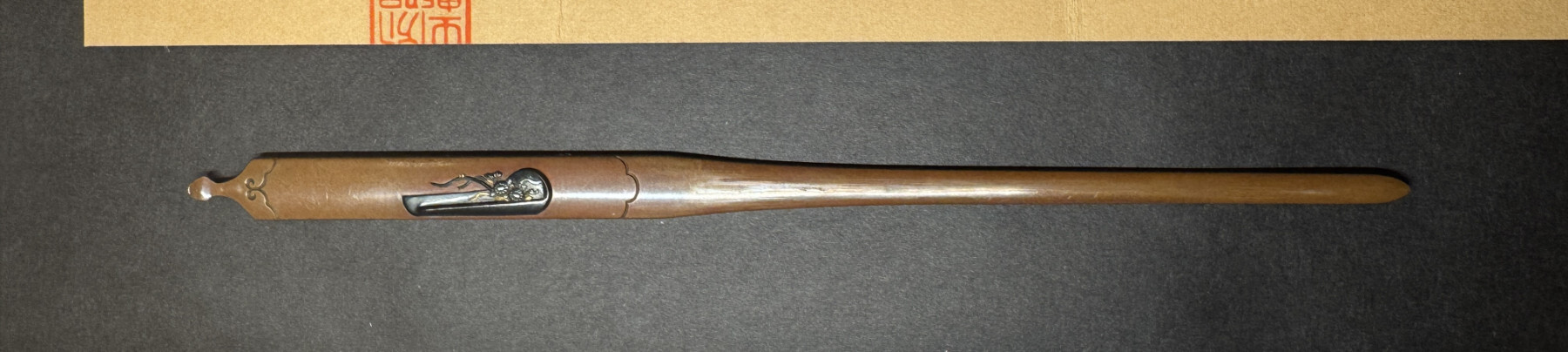
So I got a package a while ago from my dear friend Kazuhiro Hayashi, who as many of you know had recently passed. In the package, a bare blade, no fittings. . He did this from time to time, sending me unusual pieces that he thought I would be Interested in. I like the odd sort of things. Its a Wakizashi with just shy of a 22 inch Nagasa and a deep bohi running the lengh of the blade into the nakago. The sori is about 1/3 inch measured from the Mune machi. It has a very very slight bend but I think that could be sorted by someone who knows how. The polish is not great, but some of the details are visible. Of note, the Hamon is all over the place, which is why I think he sent it to me to begin with. No clear pattern. There is a lot of activity. Big Nie crystals. Lots of sunegashi all up and down the blade. I cant really see much of the hada. It is signed. KUNIHIRO. old style kanji. The nakago does still have some yasuri mei, and there are 3 mekugi ana. one was plugged, one towards the bottom looks recent, and the main looks to be hand punched. I'll post up some pictures and we can all have a discussion about it and what I should do with it next. I'm considering full restoration considering the personal meaning it has.
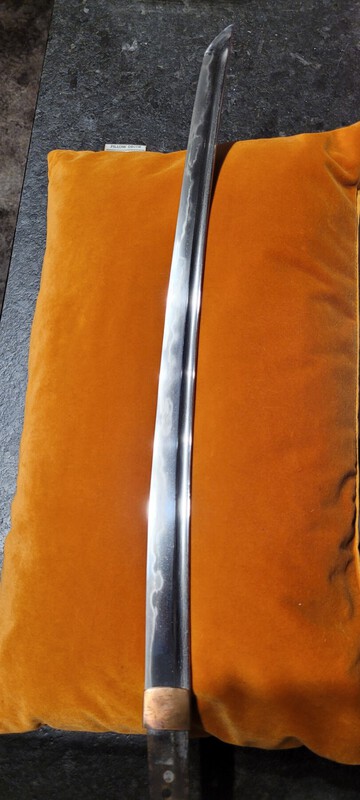

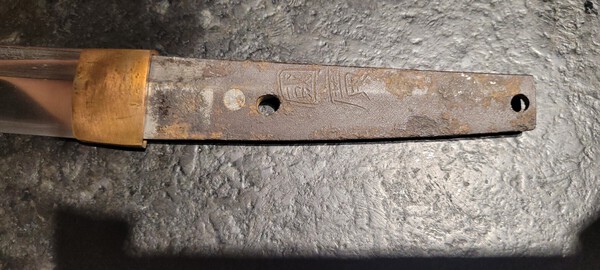

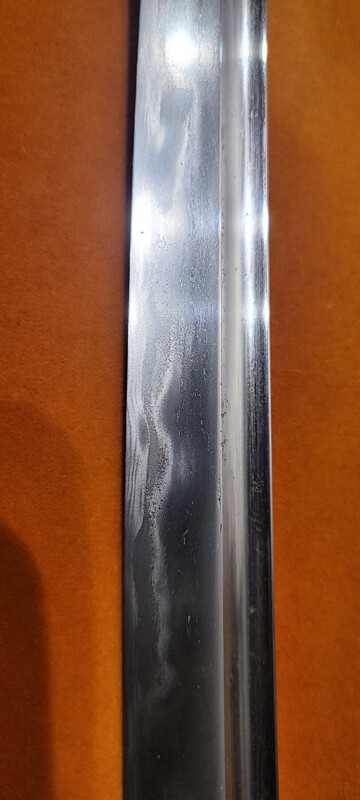 2 points
 -
2 points
-
Hosts say it has been renewed, and any errors, try refreshing your browser. (Ctrl + F5) Checked and certificate is valid.2 points
-
Hi Jean, took me a while to track down the original Japanese text, seeing I had this on file and I probably used Google Translate or something. Here's a new translation using AI, which I think make more sense: Japanese: 1975年(昭和50年)頃 砂鉄を吹いて鐔の地鉄を作ろうと考え始める。それ以前は洋鉄使ってみたり、江戸時代の古鉄を集め刀匠に依頼して板状に伸ばした鉄を使用し鐔製作を行っていた。 Romaji: 1975-nen (Shōwa gojū-nen) goro, satetsu o fuite tsuba no jitetsu o tsukurou to kangae hajimeru. Sore izen wa yōtetsu tsukatte mitari, Edo jidai no kokutetsu o atsumete tōshō ni irai shite itajō ni nobashita tetsu o shiyō shi, tsuba seisaku o okonatte ita. English translation: Around 1975 (Shōwa 50), he began thinking about smelting iron sand to produce the base iron for tsuba (sword guards). Before that, he had experimented with using Western iron, or gathered old iron from the Edo period and asked swordsmiths to forge it into plates for use in making tsuba.2 points
-
Another on a very nice old blade with a sword guy in Melbourne.
 2 points
 -
Hi Steven @Swords you certainly bring a lot of swords 'to the table' and that is always interesting thanks. However seeing were a little off topic anyway ... have you ever considered becoming a GOLD member? ... that would help the Forum in a tangible way.2 points
-
Paul, I agree that it’s a police sword. Normally these would have a police badge insignia on the backstrap of the handle. This particular one does not. There are many variations of these found, some with mounted traditionally made Japanese blades. More frequently, these have mass-produced Meiji-Showa period non-traditionally made blades. Based on the pictures in your eBay listing, the blade is in rough shape. I think you should look at sold prices online on eBay and elsewhere. In my opinion, your current listing price is too much. Con1 point
-
Looks right to me.1 point
-
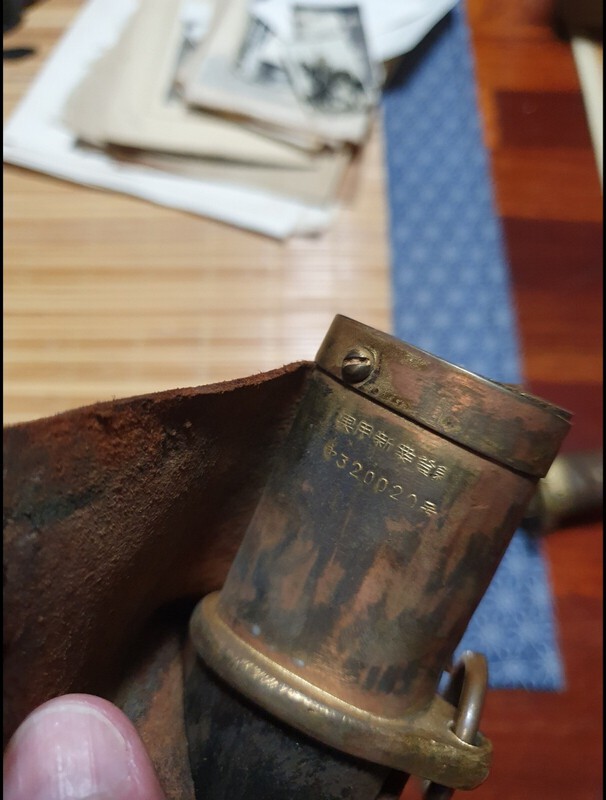
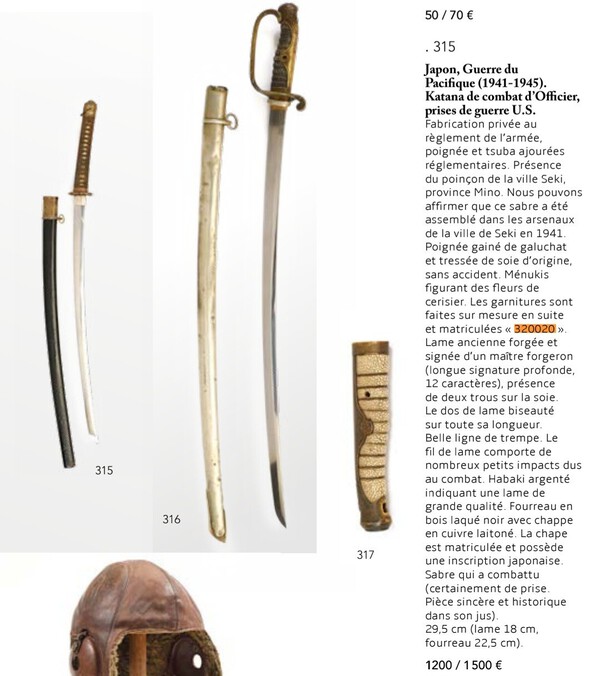
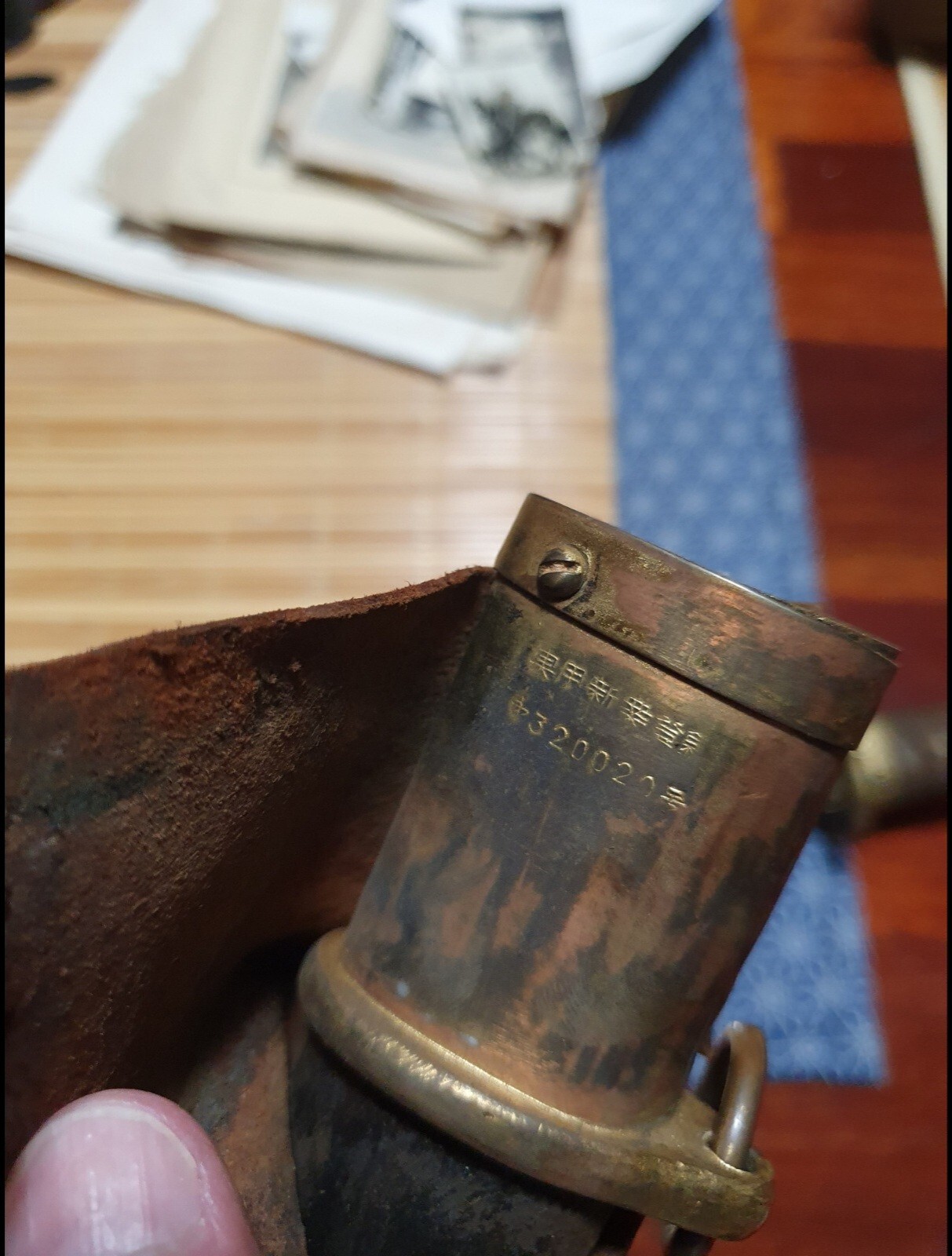
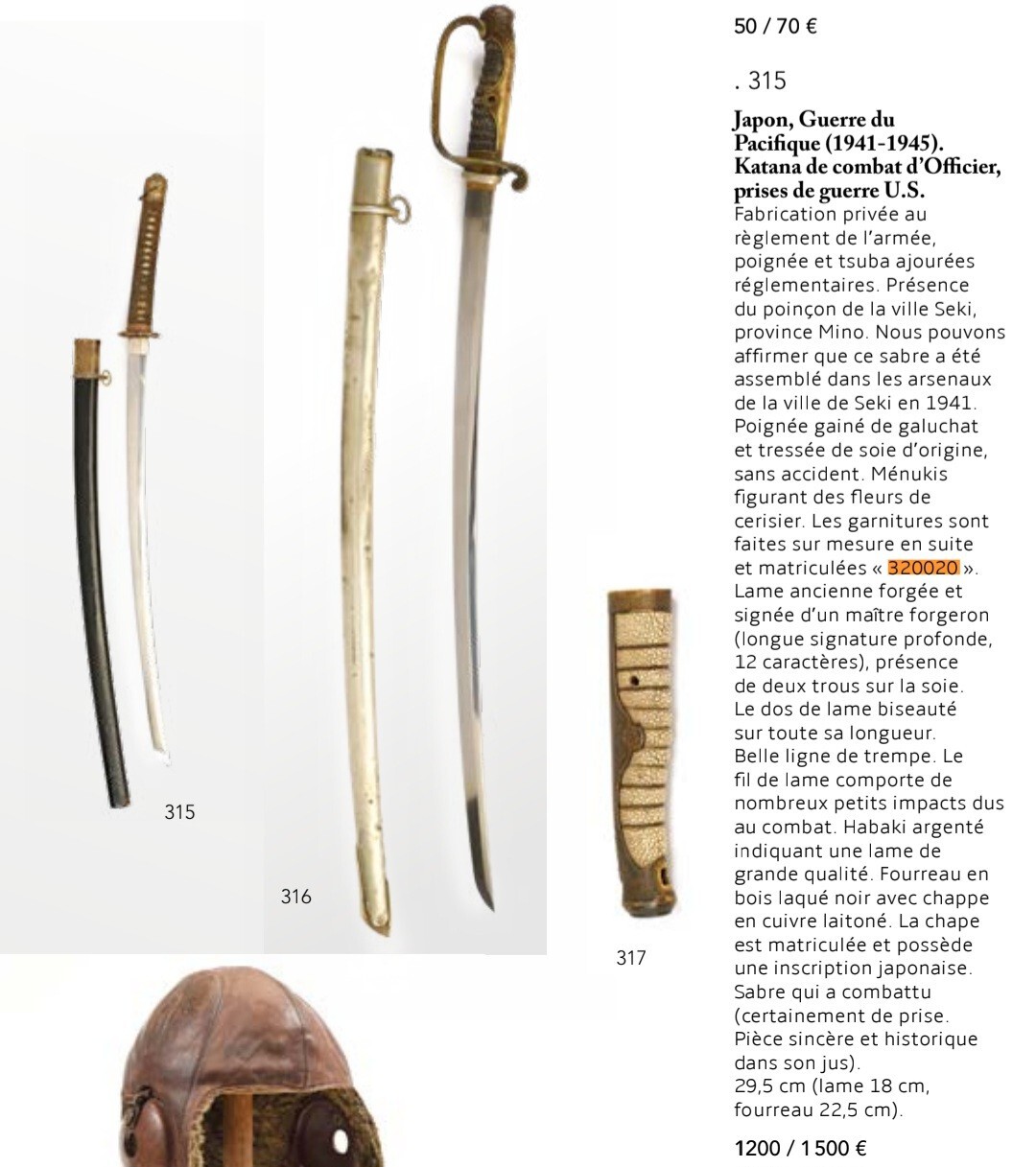
I think the characters are a bit stylized and the last one is hard to see. I do think that what you have is correct though. 第320020号 = No. 320020. Maybe a second opinion is in order. @SteveM1 point
-
Actually, kōgyō 工業 translates as industry. However, the Seki guild blue labels with English text have it as manufacturers'. The question then boils down to what translation do you want to use, the Seki blue label or the kanji dictionary translation. Whatever translation you decide to use is fine by me. 関刃物工業組合 Seki Hamono Kōgyō Kumiai See also Seki Inspection Tag On Combat Saya.1 point
-
By the way a very good example: https://www.facebook.com/permalink.php?story_fbid=pfbid0DuWnGr4pt2ChaYLf78neA1GxvTSRSijfmk8X9AxF8ZvWstPJS5DRM6k3U4em7Cipl&id=100064812335888 Classic late groupings, but top mainline Sukesada work predictably shows much stronger nie. Midare utsuri though very seldom encountered past 1500. It still feels in regards to the mumei blade shown the very well defined, uniform groupings might be suggestive of later than Oei attribution. I don't think its as late as Sukesada or Kiyomitsu, but it might be post Oei generation.1 point
-
I have closer photos, although I'd like to keep the owner anonymous, he's not protested me showing the blade. I'll send photos once I'm back home. All the best, Nich1 point
-
Looks like the cert of the website expired, causing issues for most browsers seeing they enforce HTTPS. Common Name (CN) militaria.co.za Organization (O) <Not Part Of Certificate> Organizational Unit (OU) <Not Part Of Certificate> Common Name (CN) R11 Organization (O) Let's Encrypt Organizational Unit (OU) <Not Part Of Certificate> Issued On Tuesday, July 8, 2025 at 12:34:23 PM Expires On Monday, October 6, 2025 at 12:34:22 PM1 point
-
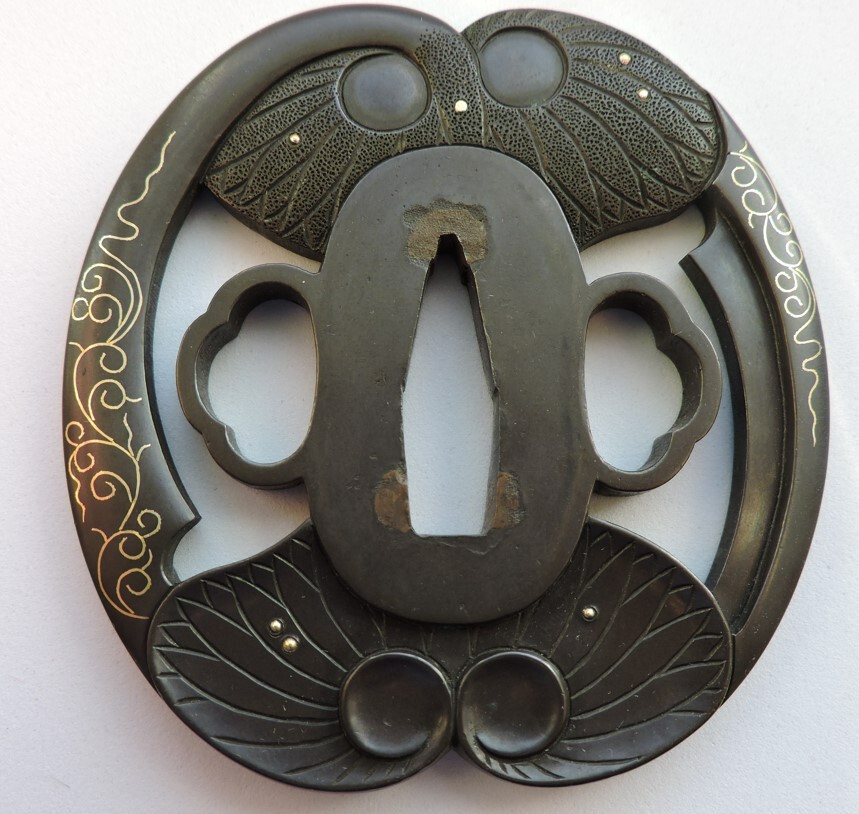
A quick look at the first two pictures of this tsuba and I expect many of you will jumping up and down shouting ‘Easy! Echizen Kinai tsuba of aoi leaves.’ Just like the one I’ve included for comparison signed Echizen ju Kinai saku. Problem with my tsuba is the it is probably shibuichi and mumei (Kinai were never shy about adding signatures). The tsuba is 7.2 cm x 6.9 cm x 0.4 cm, Weight: 132 g and is essentially a standard Echizen aoi design. The tsuba is almost totally symmetrical about the vertical axis, having two kogai hitsu ana and matching tagane around the nakago ana, making assignment to the omote or ura impossible. The inlay karakusa scrolls are the same, but the raindrops on the leaves differ. So who made it? I have never seen a shibuichi Kinai tsuba, but this does not mean they did not make any. The quality looks above their standard output, so why not sign it? Best explanations I have are that maybe it was made for a high-ranking samurai, by another workshop, who liked to wear a bit of bling on formal occasions but still wear the tsuba design that lesser ranks used, or it was made by a kinko artist as a copy of an iron Kinai tsuba to make a more saleable product for the Western market. Either explanation would explain the lack of wear. Look forward to your comments. John Just a guy making observations, asking questions and trying to learn


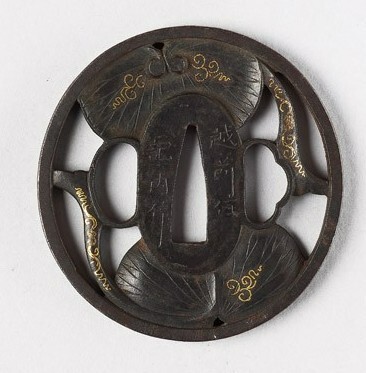 1 point
 -
I am aware of a 78.4 cm hotondo-ubu and machi-okuri hira-zukuri tachi by the Ko-Uda School. It's very likely this sword was originally an odachi when it was forged. (sword is in a private collection) Best Regards, Nich
.thumb.jpg.ae406874bbe06d54295f0e9913d833c3.jpg)
.thumb.jpg.47aecf522deff6df9d24cad5cf472e6d.jpg) 1 point
1 point -
Books and time. It will come along. Books won't help much with stamping, though. If you don't have it already, download Stamps of the Japanese Sword, for the latest info.1 point
-
But his have leather cover so could be complete. Edit. I found 4th example. https://docs.prod-indb.io/2019/11/14/115915_670647078_1c797384ff244e1a6d564edc798667ce.pdf
 1 point
 -
Hate to say it, but when it comes to those with a lot of questions and few answers (nothing wrong with that btw, we welcome everyone) but I do wish more would consider helping with the logistics of this place. We are down several hundred $'s lately, seems fewer and fewer feel that a free sales section or instant and accurate translations is worth it. Oh well.1 point
-
Signatures of this level ChatGPT translates with 90% accuracy. Bishu Osafune ju Sukesada. Its a lower grade signature which is somewhat roughly executed, but can be real and the blade sort of looks like late Muromachi. P.S. Chatgpt more often than not does good job on papers, sayagaki and books as well.1 point
-
Definitely patent. Here you go another one. You can pick tsukamaki color It's patent for saya only? -no metal parts [leather cover?] -both examples have mumei blades https://www.liveauctioneers.com/item/215034172_japanese-katana-sword-w-saya-willoughby-oh
 1 point
 -
Is it: 実用新案登録 I'm not sure about the fourth and last characters?1 point
-
One thing I struggle to appraise, is the more irregular end of the midare-hamon spectrum. To me, one aspect of a masterpiece is the realisation of the creator's vision. Whether it's Michaelangelo's David, or the Mona Lisa - the the desired end result is more obvious. I often wonder, how much control the smiths had - and, how much is happy accident.1 point
-
This sword has provenance, gold inlayed nijimei "Mitsutada", has been published in at least one book; probably more, but there was only one I could find right away by searching for "Osafune Mitsutada". Its polishing has been sponsored by Japanese government, the whole process has been covered in the journal of Nara Museum of Buddhist Art. Meito? Masterpiece?
 1 point
 -
Hello friends, I have found a high resolution image of the 1928 Oshigata of Honjō Masamune published in Tsuguhira Oshigata. Per Mr. Guido Schiller, it seems that this is the least detailed Oshigata, but it seems to be the one most commonly used for demonstration. Here is the file uploaded to Wikimedia Commons: File:Oshigata of Honjo Masamune (1928).jpg. I have also attached it to this post.


.thumb.jpg.173aca8db590e289f9aaf8c65559f97d.jpg) 1 point
1 point -
Hello: Was this style of mei specific to this prefecture or a particular arsenal? The smiths are different but the style is similar. Thank you, John C.
 1 point
 -
Don't know about which smiths made those swords but it was common to have same mei engraver.1 point
-
Yup, super fake - and I echo Charles's thoughts on the UK auctions being full of them! Technically, I believe these fake swords are actually illegal under UK law now to possess and sell too - but it's probably not worth pointing this out to the auctions themselves because they likely already know this, and in my mind it's better than them actually stopping selling any curved blades which I think would be the alternative, because there isn't really a way for an auction house to formally know/guarantee whether one is real or not. If the auctions begin requiring written proof/certificates for genuine nihonto to be sold UK collectors really will be toast...1 point
-
The problem ares the differences in the tail-like form. Some show a widening at one end, others an even opening. Some have those lines beside, others not. I can’t even decide if it is a positive or negative sukashi. In the last Tsuba the design is part of a bizarre landscape and thus clearly positive opening. I think, in repeated copying of this detail the original idea got lost - or changed. Some of the examples above reminded me to deterioration like worm eaten wood.
 1 point
 -
https://www.jauce.com/auction/v1202758143 Dark images but they show a raindragon on the ura and a village scene on the omote.1 point
-
Possibly made for one of the tsuba competitions in Japan?1 point
-
Oooff. I had similar thoughts, but the geometry seems younger. Beginning to think it is Meiji or newer. Very well made, so I hesitate at saying post WWII. Size ratio of the seppa dai and the hitsu-ana do open up to me the idea of whether it possible it was made by a talented Japanese artists somewhere in the 1960s or so? But there is a lot of good workmanship in there. I find this one challenging.1 point
-
For those of you who haven't noticed - Ito Mitsuru (well-known Japanese collector which you know for writing the 3 Higo books, Nobuie articles, book on Katanakake,...) has started a blog. This looks like it will be well worth the read. Blog1 point
-
Dear John. Thoughts not answers but..... Matched hitsu in the form for kogai is not a feature of Kinai work generally. The scrolls are stylistically a little removed from typical Kinai work and seem to be honzogan rather than nunome zogan. The seppa dai is rather koban shaped for Kinai work. Oh, and the fact that Kinai examples usually have the design firmly contained within a mimi. There is this one,https://japaneseswordbooksandtsuba.com/store/tsuba-kodogu/t227-amazing-echizen-kinai-tsuba-5th-generation/ Although the design takes us straight to Kinai I would guess that this is one of those cases where design does not equal school. By the way I love it! All the best.1 point
-
It might be blasphemy but that guard looks too good to be Kinai !1 point
-
Hi everyone, I'm an absolute beginner in collecting tsubas. I recently won a piece off an auction on eBay and I went a little over the budget of my first piece. I'm pretty certain (as certain as a novice can be) that it's genuine edo forged iron but I guess my concern is whether I paid more than I should have. Asking for my learning, I don't necessarily regret the purchase either way, I enjoy budhist iconography which is mainly why I chose the piece. My initial impression is mid 18th century to early 19th century shaomi school? I admit I could be very wrong. Cheers!

 1 point
 -
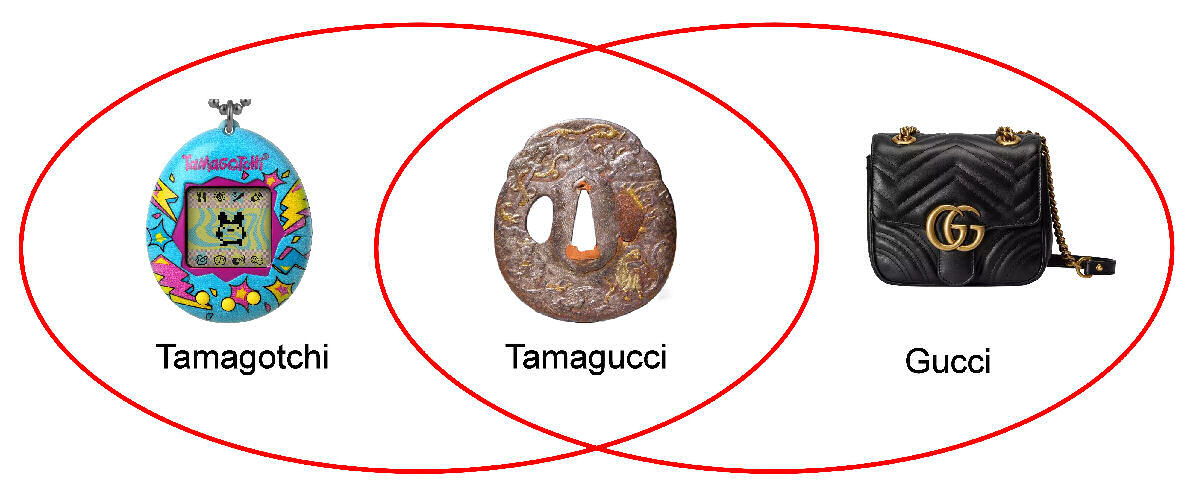
I have another hypothesis (explained with Venn diagrams)...
 1 point
 -
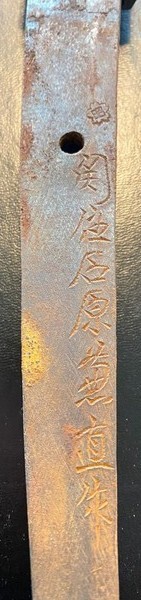
Not sure about the mounts but the blade is Ishihara Kanenao KANENAO ( “Kanenao” (兼直), real name Ishihara Kanenao (石原金直), uses old kanji "Nao" , born 1908/May registered as Seki smith !939 October 27. Showa stamp so early war.
 1 point
 -
Welcome to the forum Kai. Unfortunately, you don't get much buyer's remorse for $130 these days.1 point
-
Well, call me surprised! Never seen patent numbers on saya before!0 points
-
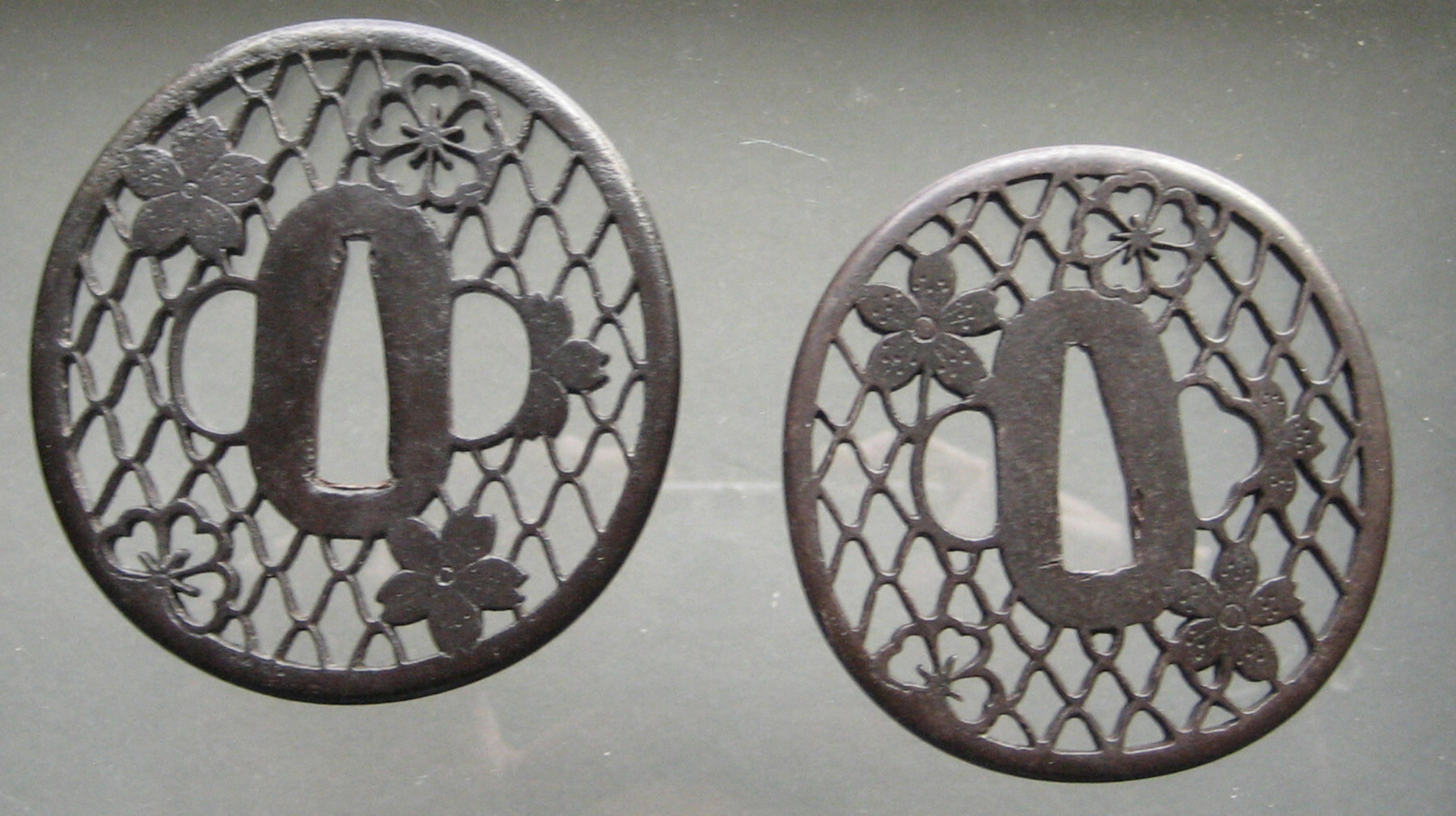
This is a piece I probably wouldn't go for but $130 for an authentic Edo Period tsuba is an acceptable price and I concur with everybody else in the thread. The tsuba is mixed metal and has clearly been mounted once or twice. Not bad for one of your first purchases. You'll be hooked on the hobby, overspending and getting crushed by import taxes in no time Kai. (In a good way? Lol)0 points















.jpg.950d683a5669912ca326386a39d1ebb8.jpg)
.jpg.ddba71f24d0727028cbf72c6976e0f9b.jpg)




.jpg.d174d88e82b1e58ece12e5800a7c6ca7.jpg)





.thumb.png.4c5df79fec171b2dc4a23af38e280a4d.png)
This leaderboard is set to Johannesburg/GMT+02:00