
Leaderboard



Popular Content
Showing content with the highest reputation on 09/17/2025 in all areas
-
Because of the size that cellphones are now taking pics, (we really don't need 24 meg pics) and the number of people trying to post straight from their phones, we constantly get people asking how they can resize their pics. There are far better ways than screenshoting your pics. So I have added an extra menu item at the top, next to donations. There you will find a number of websites that either do it online for free, or some free apps (iOs and Android) that you can download to resize and edit a bit. You can go through them and see which you like. Please refer people to them if they ask, and I can add more if there are suggestions. Brian4 points
-
While surfing a firearms auction - my main interest - I noticed that starting with lot 165 until lot 177 there are a little bit more than 20 blades in this auction. Maybe of interest to some that otherwise would not search there. I can't tell much about the auction company since I have not dealt with them in the past, nor do I know anyone there (for being from the other side of the world). https://auctions.militarylane.com.au/#!/auctions/d7c99452-dfd4-4454-a76a-8ea06e1f9ebf?ic=90&page=23 points
-
I am going to add a crane to the mix. Nice larger tsuba roughly 8.2cm in diameter. I believe Nick from Nihonto art sold a very similar piece earlier this year from what appears to be the same school.
 3 points
 -
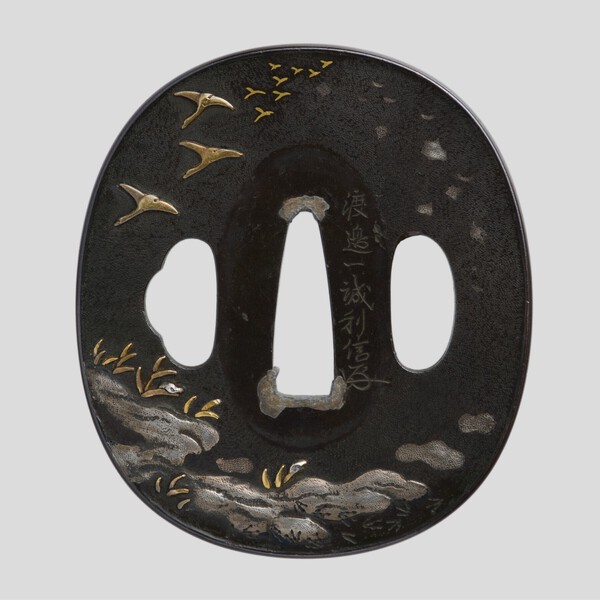
Here is the favourite bird-themed tosogu from my collection: a tsuba by Watanaba Issei. It depicts the southward migration of geese in the autumn months and their return to Japan in the eighth lunar month known as “Kanaraigetsu”. As the geese migrate south from their summer visit to Siberia they inspire thoughts of the coming winter, but also give a strong feeling towards the Japanese spirit. I fully appreciate how especially during times of change and uncertainly that this yearly event brings a sense of unity and national pride. The importance of geese in Japanese art was further secured by stories of several military heroes who had achieved victory in battle when a sudden breaking of ranks by flying geese signaled an ambush. This protective role of the birds led to their frequent use in decorating tosogu. I particularly like the detailed carving of the geese on the omote and the snow on the reeds; you can see them buckle under the weight. On the ura the imprints of the geese's feet in the snow are very charming, as well as the sekigane which is made to look like snowfall, a lovely touch.

 3 points
 -
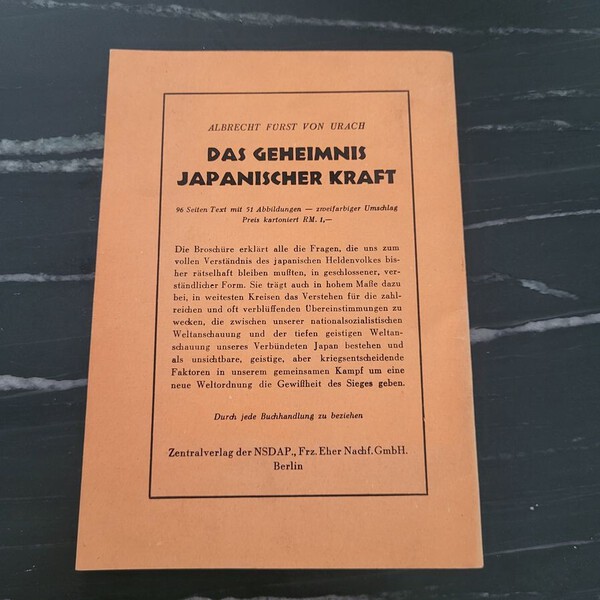
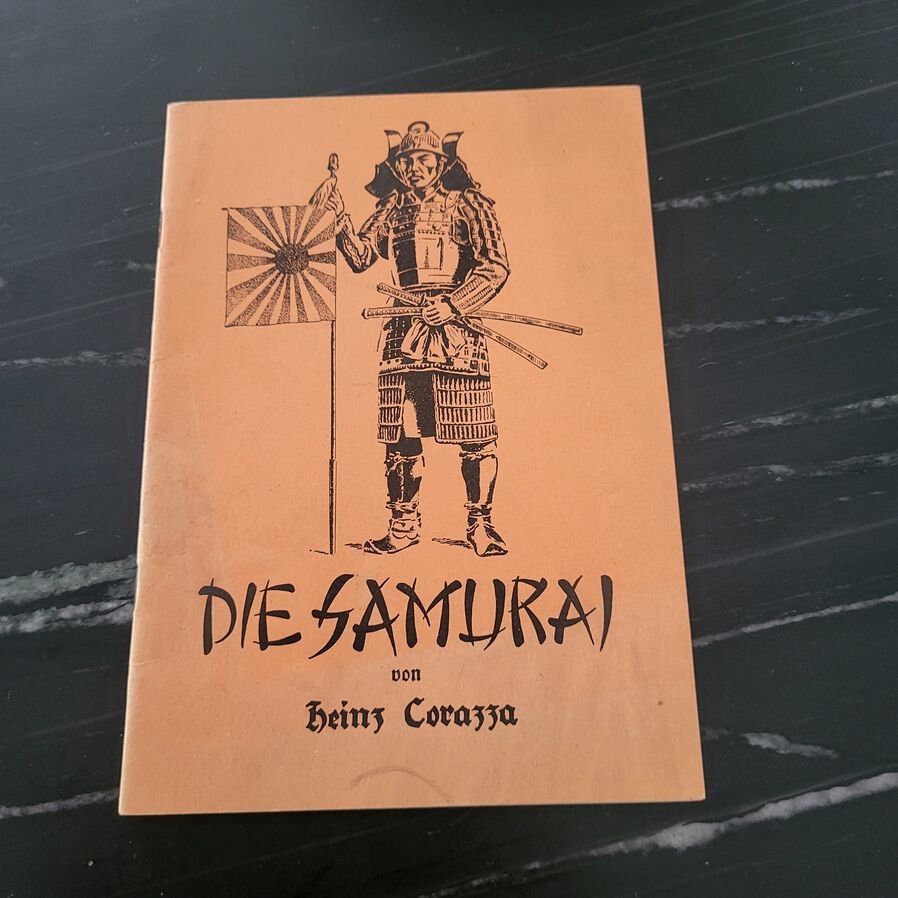
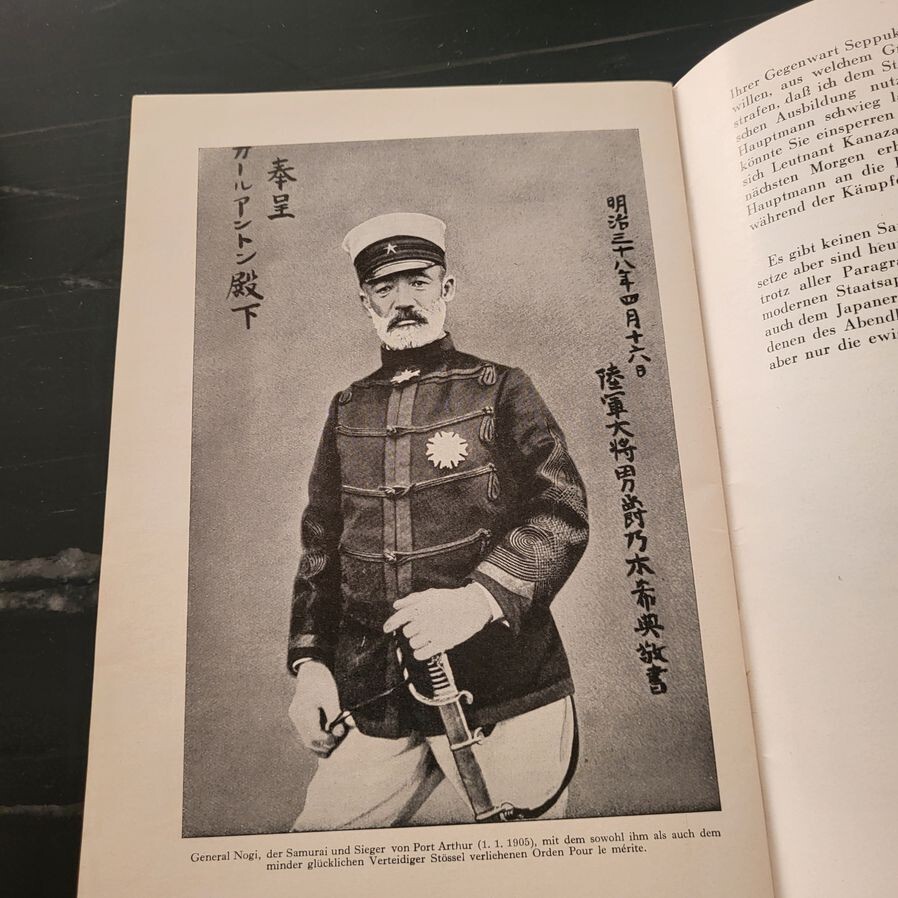
Book overview" Ritter des Reiches in Ehre und Treue "knight of the Empire in honor and loyality" with foreword by Heinrich Himmler relation between Germany and Japan during WWII German Nazi dictatorship Perhaps somebody here knows about this rare booklet?


 2 points
 -
Hi Leonidas! I'm a little late to the discussion. You can read about the use of the Showa and large Seki stamps by the Seki Cutlery Manufacturers Association in the beginning pages of my http://Stamps of the Japanese Sword article. I don't have the direct links to the only two pieces of actual documentation that we have, but when time is available, I'll try to provide them for you. One comes from the Seki City website, which states that the association was inspecting and stamping "all swords" made in the area, but doesn't state which stamp was used. The "all swords" makes it sound as if both showato and gendaito blades were stamped. However, Ohmura has a page depicting a tally of inspected blades by the association, and a side note to the chart states that the total does not include gendaito as "they were not inspected." So, I suspect the statement in the Seki City website is a generalization and not precise. We also have an article from 1940, found by Nick Komiya at Warrelics, that clearly states the stamp being used by the Cutlery association was the Showa stamp. Observational evidence in my ongoing stamp survey confirms the Showa stamp was the first to be used, starting in 1935. Ohmura's statement about the Seki stamp is partially true, in that the association, for an unknown reason, changed over from the Showa stamp to the Seki stamp starting in 1940. There was an overlap - Showa stamp use: 1935-1942; Seki stamp use: 1940-1945. The association drastically tapered off the Seki stamp in '43 after the Nagoya arsenal started using the small Seki stamp. Lots of information, but I appreciate your inclination to dig deep and research things. It's is what I enjoy doing, as well.2 points
-
19 year old on this forum. Started last year, but learned a lot since then!2 points
-
Leonidas, Trust me, in the 19 years that we have existed, there has been a ton of research, including original production instructions and procedures etc etc. on what exactly those stamps mean. If you search the forum you'll find hundreds of pages about it. The fact is, over the past few years, it is widely accepted everywhere that the sho and Seki stamp are on blades not fully Gendaito. And by Gendaito we of course mean the collector-assigned meaning, and not the true meaning which is just an era. To collectors worldwide, a Sho stamp means it is not fully traditionally made. That doesn't mean it can't be a high level forged and folded blade, but something about it isn't fully traditional. Doesn't really matter how the NTHK or NBTHK regard them, they only really became interested in wartime swords the past few years, and we have already demonstrated that with the right contacts or circumstances, full Showato will sometimes slip through the cracks and get papers. Doesn't change the facts. This is a nice one though. But I wouldn't call it a Gendaito.2 points
-
Just blame the English, it is too complicated for us poor convicts in OZ2 points
-
The Sho stamp indicates some part of the manufacture was not traditional, I would hesitate at calling this Gendaito and would think more along the lines of higher quality Showato.2 points
-
Jason, It's very easy. If you want to quote an entire post, just click the Quote at the bottom of their post, and it will auto fill that in at the reply area at the bottom in a block. You just type your response underneath that. If you want to just quote a certain section of someone's post (or even do multiple quotes from their post, or even from different people in a thread, just highlight the area you want to quote using the mouse or select feature on your cell. That will pop up a small block saying 'Quote Selection'. Hit that, and that section is added below to your post. Then hit enter for a line break between them (so you can come back and enter your reply) and go up the thread and do the same for other parts you want to quote. Highlight/select the text,hit quote that pops up. And so on...2 points
-
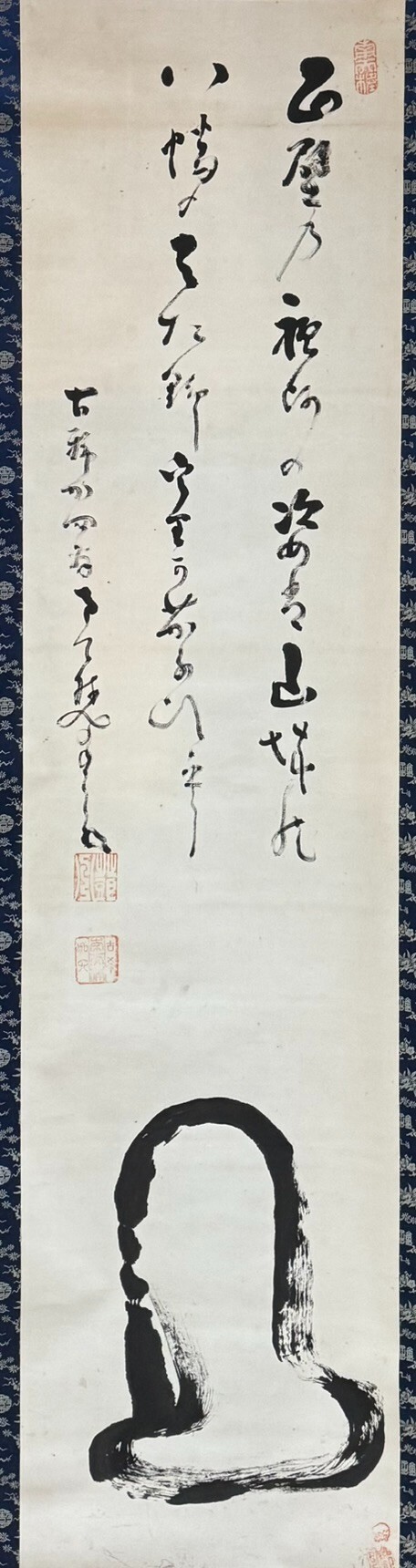
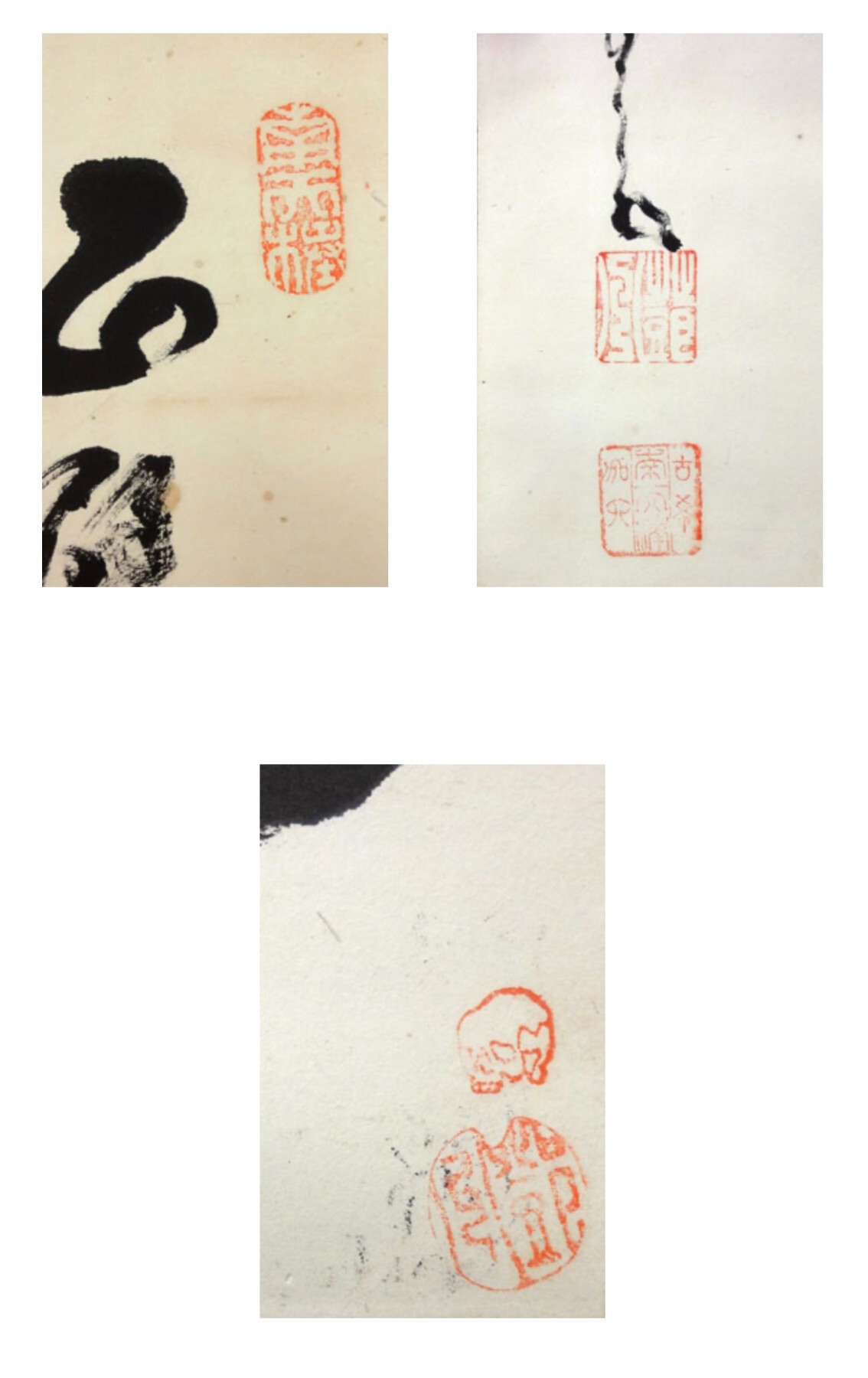
Nakahara Nantenbo (1839-1925), Buddhist name Toju Zenchu (Complete Devotion), was in the last 17 years of his life the Exalted Master of the main temple of Moyoshin-ji of the Rinzai sect. A painting theme brushed extensively by Nantenbo is the "wall-facing Daruma" or "menpeki Daruma 面壁達磨," referring to the ancient First Patriarch's nine years of meditation facing a wall. As early as the fourteenth century in Japan, Zen artists playfully depicted the sage's silhouette by means of a sing, meandering outline in a technique known as ippitsuga (one-stroke painting). Nantenbo's conception of the menpeki theme is even more abbreviated than those of his predecessor's. By eliminating the distinction between the head and shoulders, he further distilled the silhouette of the First Patriarch. A simple inverted U-shape is used to connote Daruma's body, and a horizontal ellipse is meant to imply his knees beneath monkish robes. The abstract nature of the figure only accentuates the quality of the ink, applied in a single sweeping stroke of great energy. The calligraphy exhibits Nantenbo's legendary Zen humor. 面壁乃祖師の姿者 山城能八幡野 者たの宇里可 茄子比釆 The shape of Daruma facing the wall, is it like a melon or an eggplant from the fields of Hachiman in Yamashiro? Was Nantenbō simply inept at pictorial representation, or was he a visionary who pushed Zen painting further into a realm of dynamic epigraphs and emblems? The inscription on his menpeki painting offers a playful acknowledgment of the image's ambiguous nature. It is likely, in fact, that Nantenbō intentionally challenges people's rigid preconceptions about the nature of Daruma. In his autobiography he notes that while he receives many requests for paintings of Daruma, his images are often criticized for looking like owls or octopi. "Very interesting," the old priest observes. "People talk as if they have seen Daruma, but who has seen the original Daruma?" Provenance: Nagaragawa Gallery (Tokyo). Personal collection.

 2 points
 -
Hello, I_Kendo_It / E.N, Interesting sword! Just a quick reminder, as part of our forum guidelines, we ask that all members sign their posts with at least a first name. It helps keep the community friendly and personal. https://www.militaria.co.za/nmb/topic/27534-welcome-to-the-forum-please-read-here-first-before-posting/#comment-277750 Welcome to the forum, and thanks for sharing your sword with us! All the best, -Sam2 points
-
The subject of traditionally made and guild stamps can get confusing at times. Sunagashi2 points
-
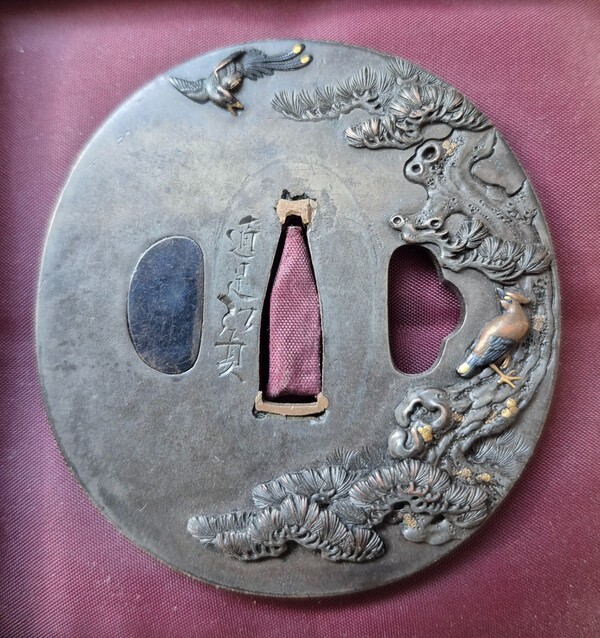
Late Edo kinko.
 2 points
 -
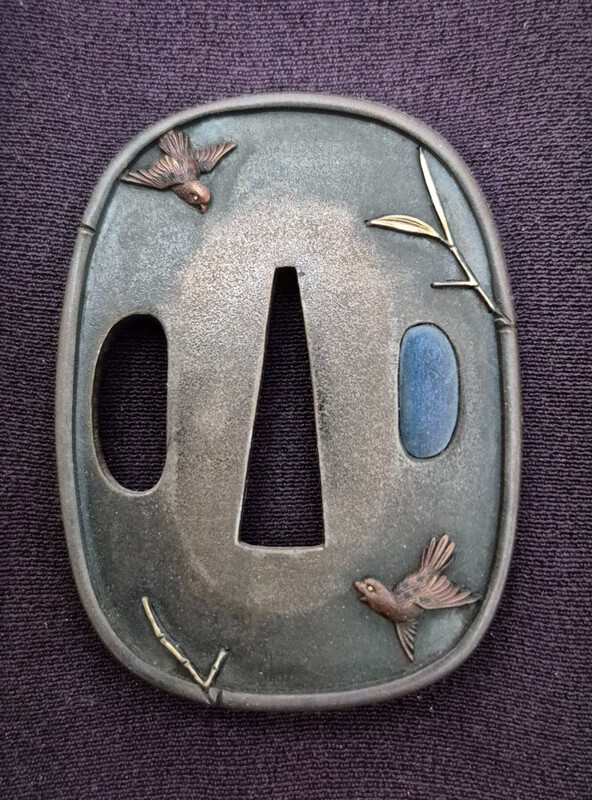
Small Tanto Tsuba.
 2 points
 -
25, started 2 years ago but interested in nihonto close to a decade1 point
-
Yeah, that is what i thought, mainly because of how the material was worked, filed down, etc..., I can see that but was not sure if this is modern modern or something from last century. You learn something new every day Thanks But i assume that this is probably something better than averge cast replicas of today.1 point
-
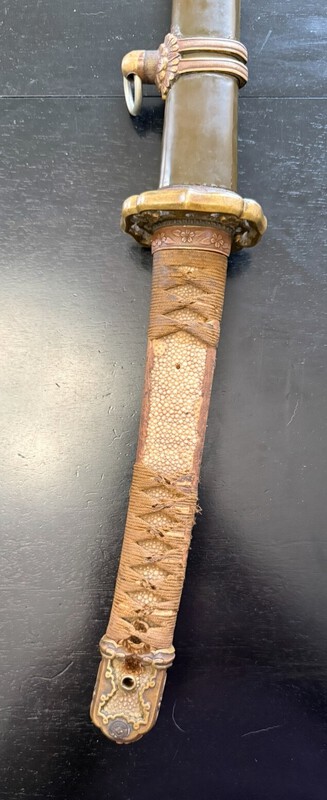
I recently picked up a sword, that similarly has what appears to be an intentionally/selectively removed menuki. I suspect Bruce is correct, especially if the missing menuki had the family mon on it (in my case, a possibility). Which would increase its perceived value. Just a theory about missing menuki. -Sam
 1 point
 -
造兵廠 zōheishō How much should I spend?1 point
-
I'm betting that is pretty modern.1 point
-
See? Just like this. I only highlighted a part of your post, and hit quote. Now let's do one from another post... Just like this. Yip...there are a LOT of features we aren't even using yet :-)1 point
-
To summarize: 1) it’s definitely Ono no Komachi in old age rather than a Shojo. 2) The characters appear to be the ones identified by Piers, but the signature is not included in any list of netsuke carvers. 3) the top-down hole is not what you would expect in a netsuke, but the item seems too large for an ojime (i.e., the bead that is positioned on the cord between the netsuke and the object that hangs from it). So this piece remains a bit of an enigma to me. Based on these pictures I would generically place it in the 19th century, but I can’t say exactly what it is or whether it has been tampered with at a later stage.1 point
-
I have made some changes to those titles, especially the higher tiers. I may adjust them as I learn what the caste system involved. Just a bit of fun.\ Unfortunately Gold member takeup is still very slow and although I am looking at other things, I have to give more incentive to upgrade. Private message storage limit for regular members is now down from 150 to 100 conversations. Gold members are allowed 500. I think 100 conversations is more than enough for most people, and if people clean up their inbox they should be fine. But if anyone needs more, Gold membership is a vast increase. I am going to fine tune a few other things. Upload limit/size is already much higher for Gold members. So the 3 meg per post limit is easily increased if people need it by taking Gold.1 point
-
Jeff: The family crest (mon) is a 3-5-3 kiri and one used by many families who could claim association with that particular clan so an exact family name is probably not possible. John C.1 point
-
Hi Luca, It seems your experience is similar to John's, i.e. give time and space and good things can happen. Thanks for sharing. Best, Alexi1 point
-
I bought two swords from him in the past: a nanbokucho Tegai Kanetoshi tachi which was a hozon but had him submit for TH, and a hozon zaimei Takada which was to have koshirae made. From there, it was mishap after mishap and a periods of ghosting via email. I had to call a couple of times to get any update. In all, it took nearly two and a half years from purchase to delivery. That said, the descriptions on his website didn't do the swords justice, they were both in amazing condition.1 point
-
I see koshirae alone sells on ebay in 400-500$ range. But yeah paying ~1500$ for it or more is too much. Can anyne provide Fuller and Gregory 'Swordsmiths of Japan 1926-1945' oshigata 366? It is about this RJT I think. Dunno about this being oil tempered there are't any darker spots indicating oil.
 1 point
 -
You’re right thanks steve1 point
-
https://www.jauce.com/auction/h12004114551 point
-
Ran across the second book at a bookstore this month. Seemed interesting so I thought I would pass it along. I did a NMB search and did not find any mention of either book. https://www.amazon.com/dp/B07MSFQNCR?binding=hardcover&searchxofy=true&qid=1757980878&sr=8-31 point
-
Not that unusual, but it is a particularly nice example.1 point
-
I have a tachi style guars that fits into this category. The main base is iron and the two plates are sterling.
 1 point
 -
The paperwork describes the surface of yours as Tsuchimé-ji, so would that not indicate that it is the original treatment? This one may be later (?) but offered just for comparison. And the reverse

 1 point
 -
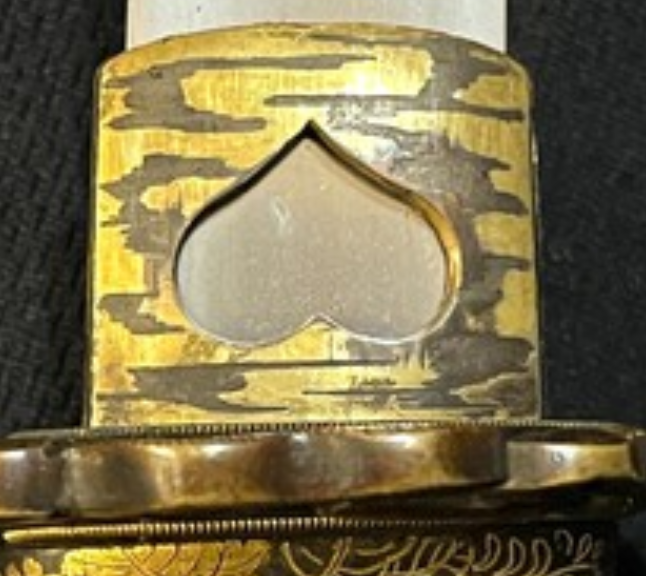
A boar's eye habaki worth posting. On a sword for sale by @matthewbrice, posted HERE. It's larger that most I've seen, and I like the coloration design:
 1 point
 -
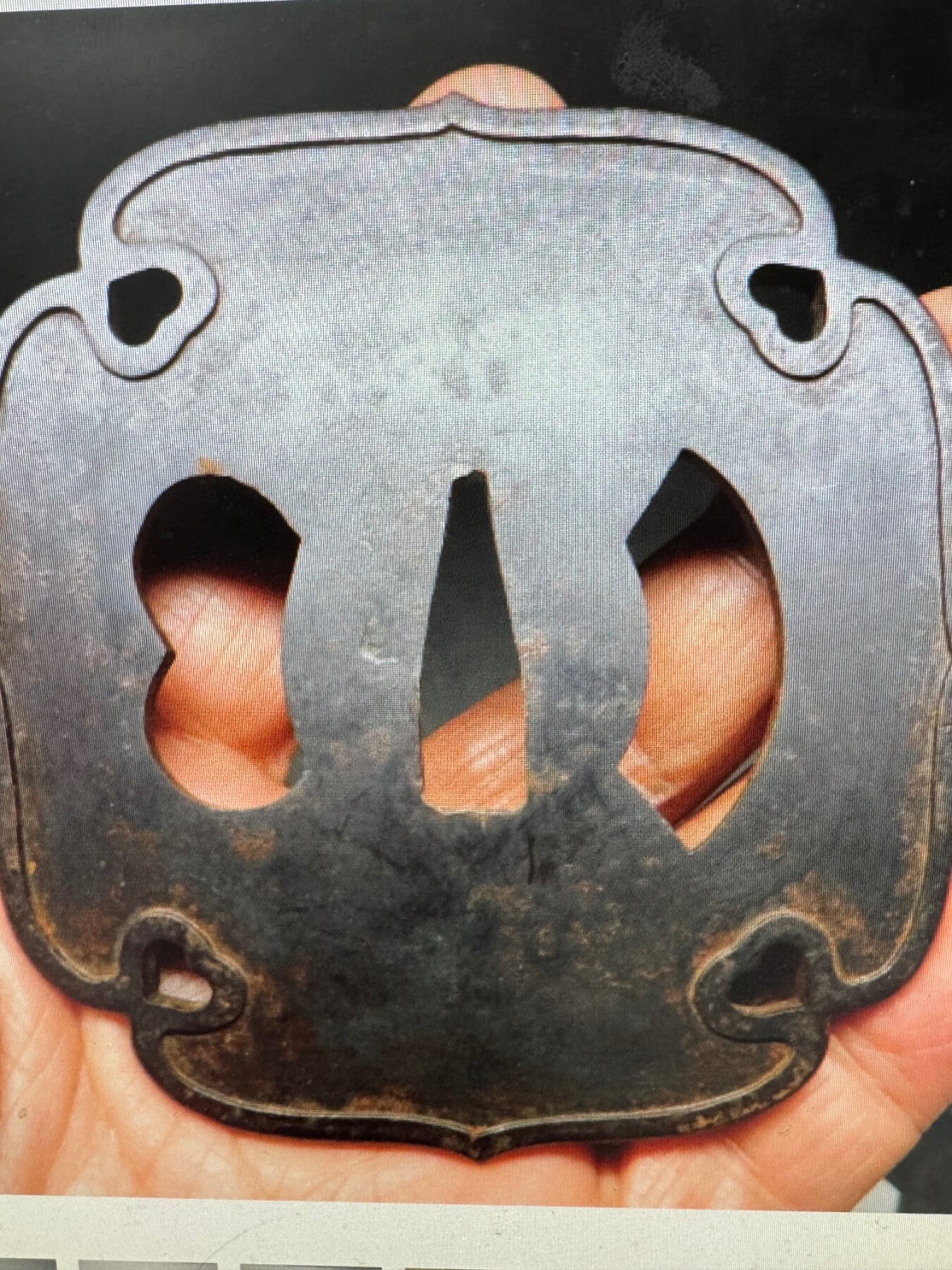
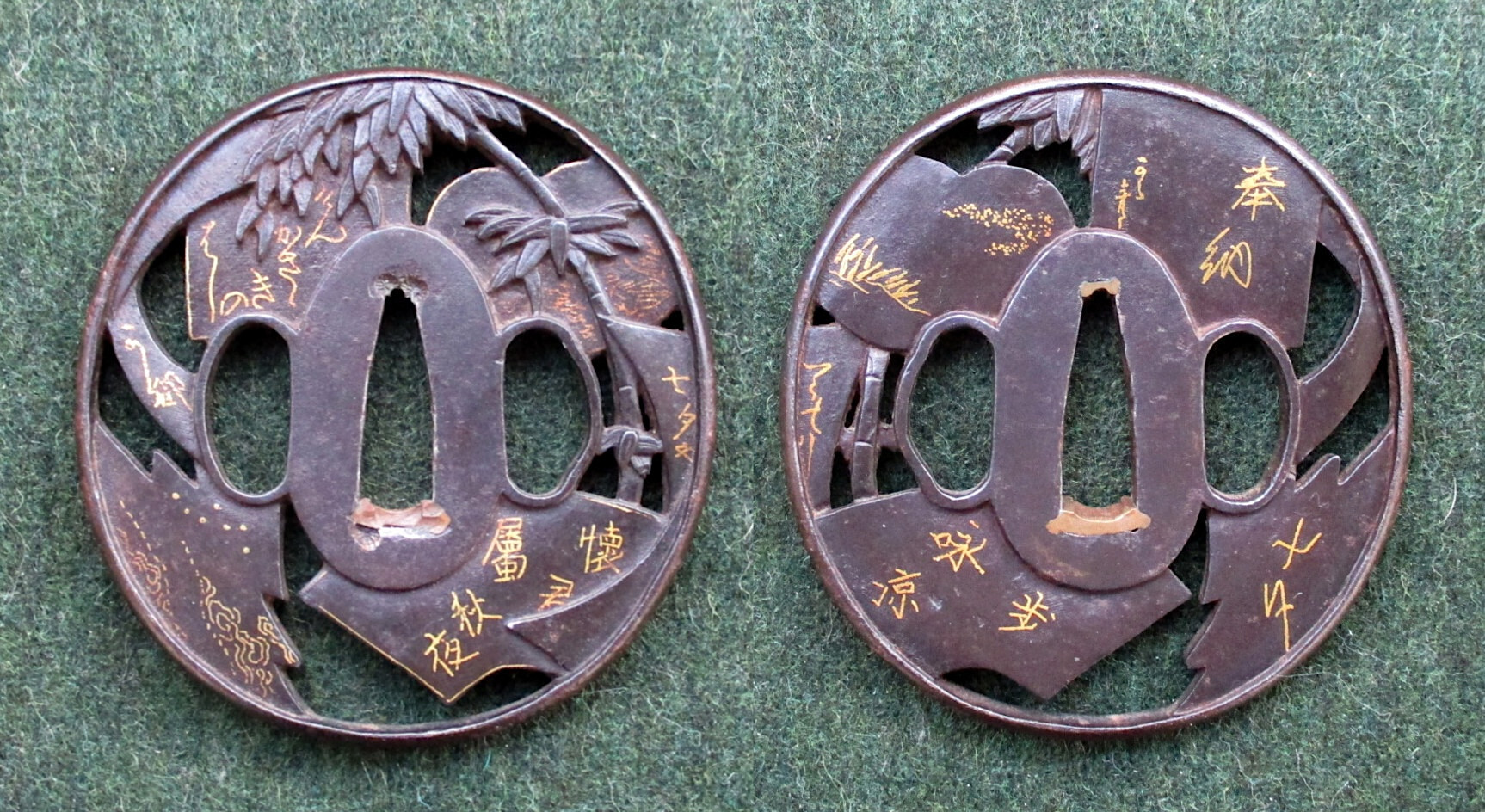
Florian could be on to something here. There is a similar tsuba in the Metropolitan Museum https://www.metmuseum.org/art/collection/search/32182 With fat heart shaped "fans"? This from another tsuba found on-line - not sure if it is a fan or some sort of commemoration plaque? Then there is this where the whole tsuba is that shape. https://www.mokumeganeya.com/e/mokumeganetour/2019/08/28/find-mokume-gane-chapter-20/

 1 point
 -
I own a modest Tsuba with Tanabata festival motif. It depicts several papers with inscriptions hung in bamboo trees. Note the shape of the one upper right (upper left on the ura). I wonder if such paper (used for what? Uchiwa fans?) is the origin of the sukashi in question.
 1 point
 -
I just thought the large hitsu/riohitsu are a major design feature, exactly what they may represent can be difficult to work out. I found this one in one of my Japanese books "TSUBA KANSHOKI" - page 96 - the design says "Bag", sukashi. Koshoami .
 1 point
 -
Himmler draws parallels in his foreword to the samurai of the past and his black corps and recommens that the men of his SS read this booklet Dee1 point
-
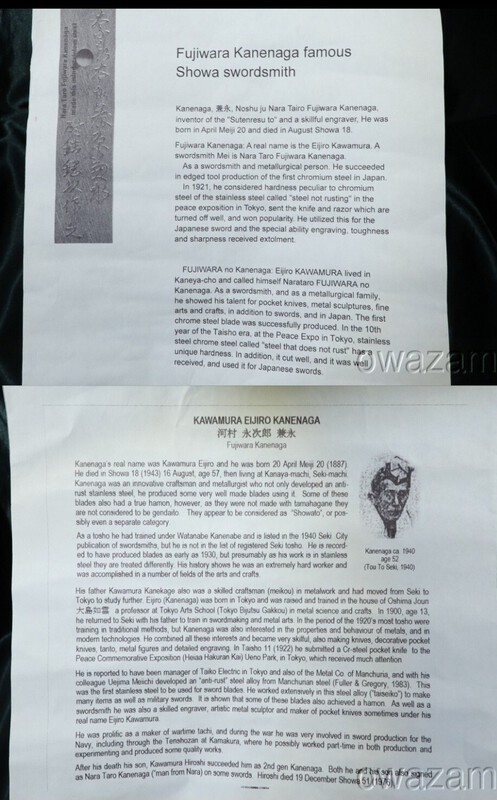
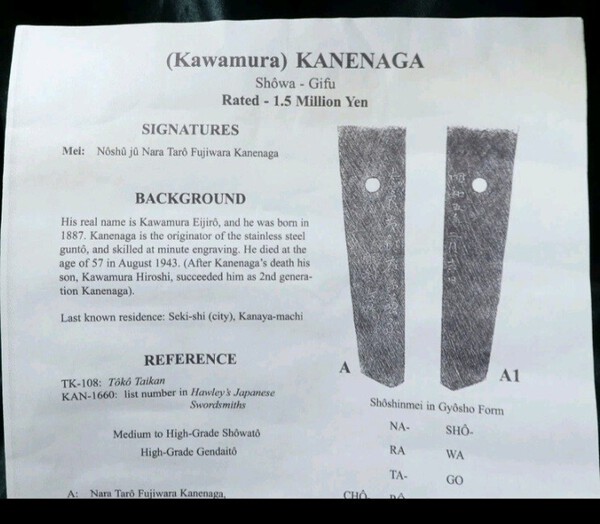
For future reference. https://ebay.us/m/u3vG48
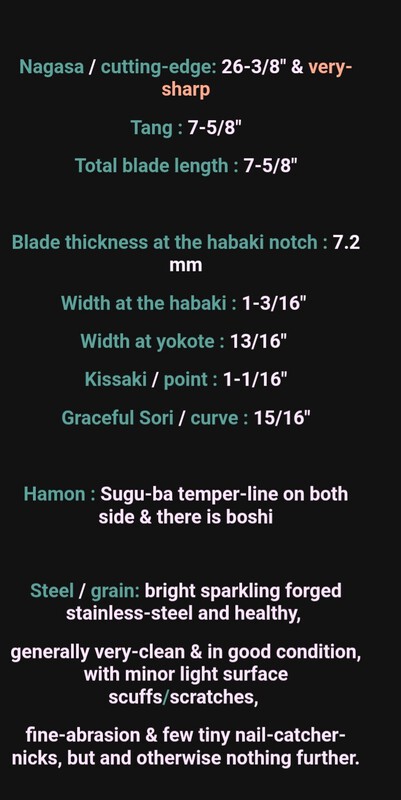
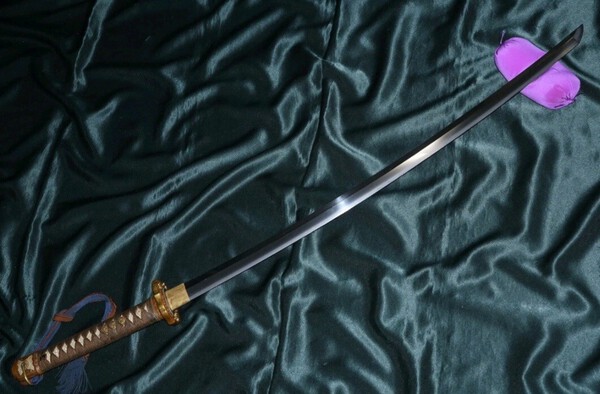
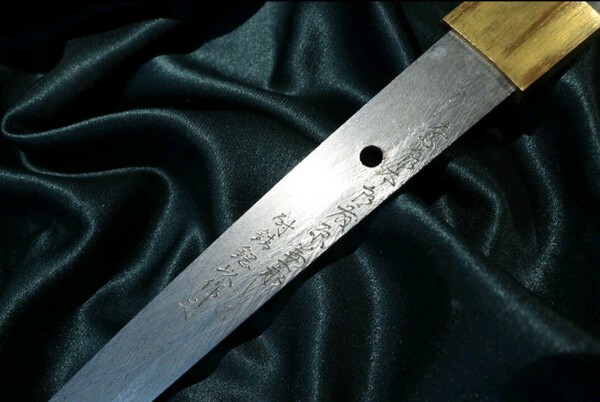
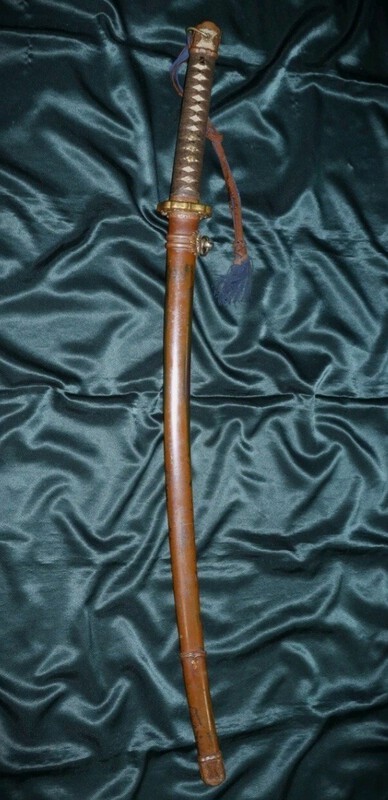 1 point
 -
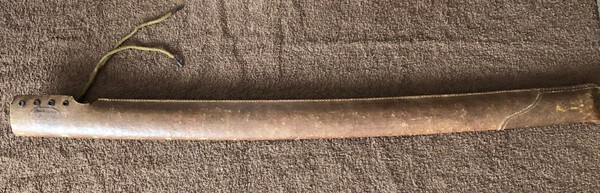
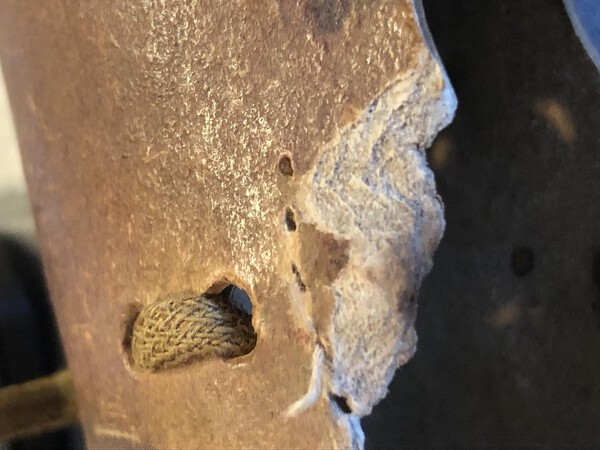
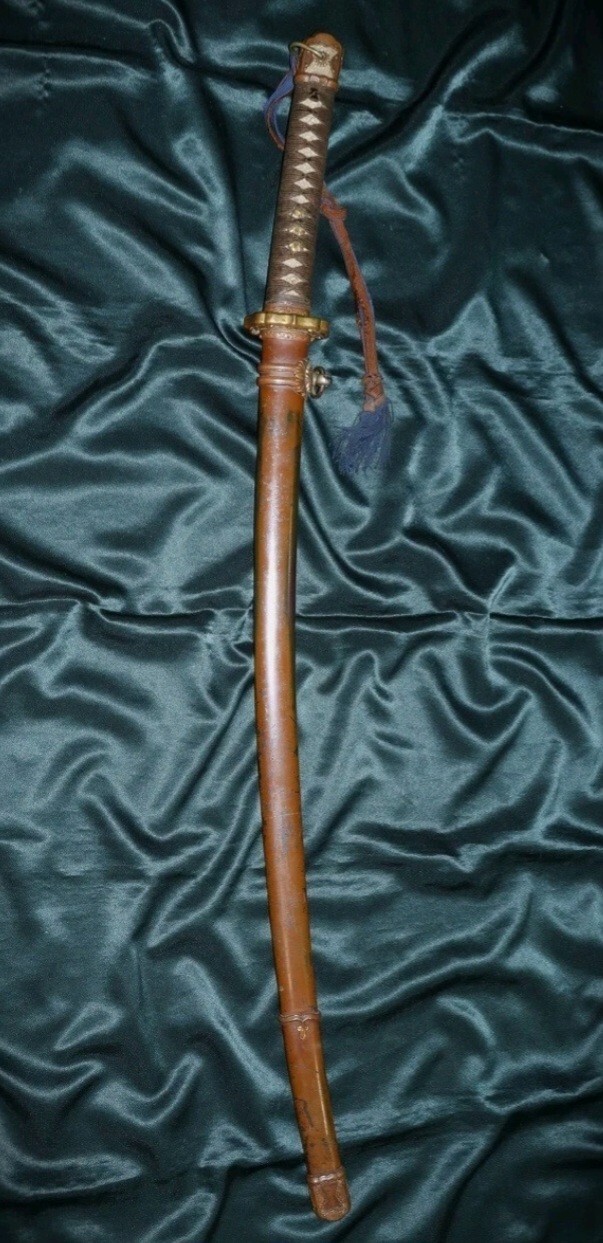
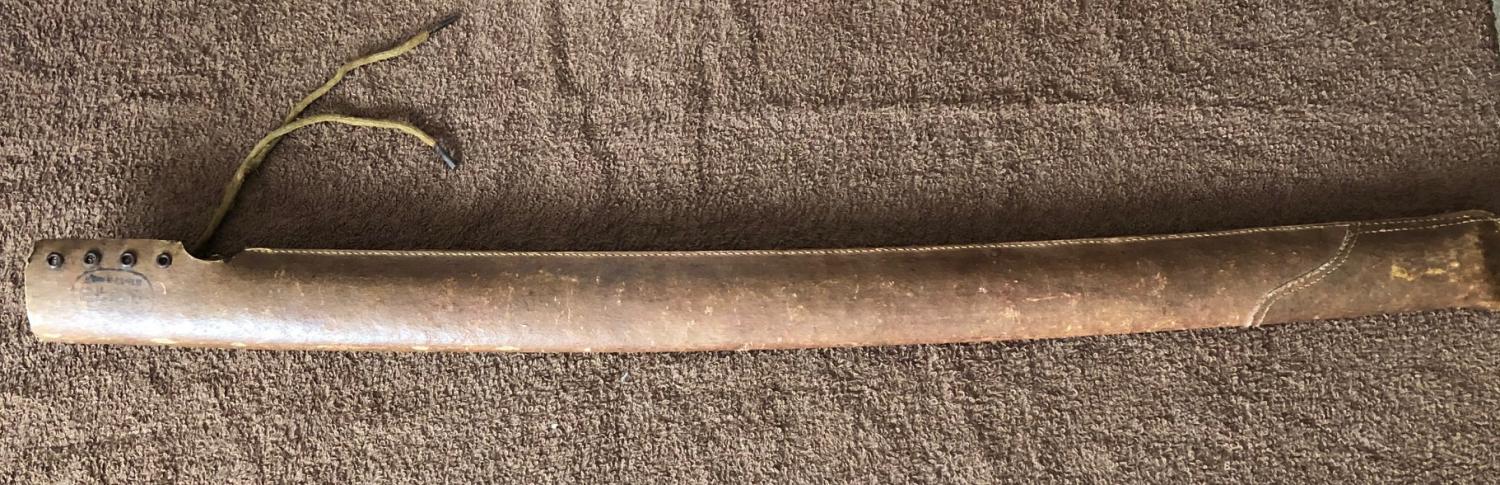
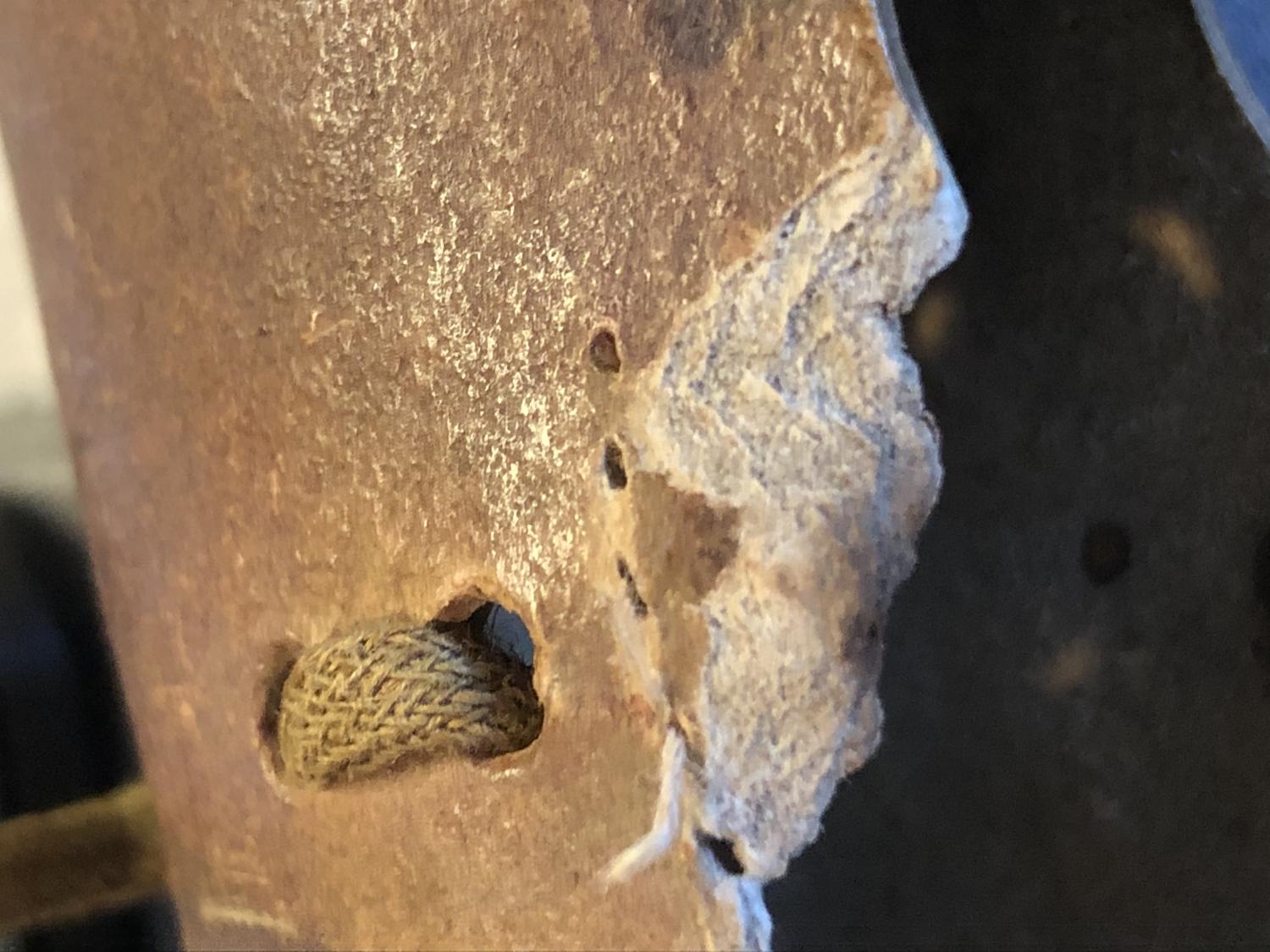
A sword in the collection came with ersatz leather over a plain wood Saya, unfortunately it disintegrated during shipping with only the end cap remaining in one piece.1 point
-
Thanks for the menpo ‘Hideshige’ Mei example, Uwe. Here is the map. I have a final printed version of this, but not here at the moment. See 1. the whole of Japan, then 2. the Kanto section and finally 3. the block of names attached to Tokyo/Musashi/ Bushū. Your smith is between the points of the caliper. PS 函人 ‘Kanjin’ is an old word for an armourer. Notice this unusual Kanji is used in the description 武陽函師 Buyo Kanshi master armourer, under the bell photo above. 1630 seems reasonable to me. 1. 2. 3.


 1 point
 -
Wow, Alex, I had completely forgotten about this issue and the fact that I have an ersatz saya cover of compressed paper! In the discussion, below, Shamsy posted one that is of some sort of imitation leather, too: A couple of photos from the thread: My compressed paper saya cover Steve's ersatz leather:
 1 point
 -
Dom, I've never seen a DYI polish that looked good. Buffers leave an artificial looking mirror sheen, and sanding leaves streaks that, regardless how fine, are always visible. If you ever plan to sell, guys that care about that stuff won't like it. It's an heirloom, and a war trophy, if you have the cash, do it some real service and have it polished. That's my 2 cents worth.1 point
-
This sword is currently on display at the NBTHK as part of their Sword Crafts Exhibition. Unlike the other mumei blades in the polishing category, it does not have any attribution. It was my favorite off all the awards, and I'm curious if anyone has come across it before or knows what its probable attribution is/might be? Photographing was tough; it was busy and I was doing this hand held but still nice to look at.1 point
-
We do see these kind of tanto periodically. Without actual provenance, we are just making educated guesses as to it's origins. There is photo of a Japanese soldier holding broken sword. We know there were repair teams in the field fixing broken swords. So, we know it is possible that this blade came from a broken sword, and someone possibly used the end to craft a tanto.1 point
-
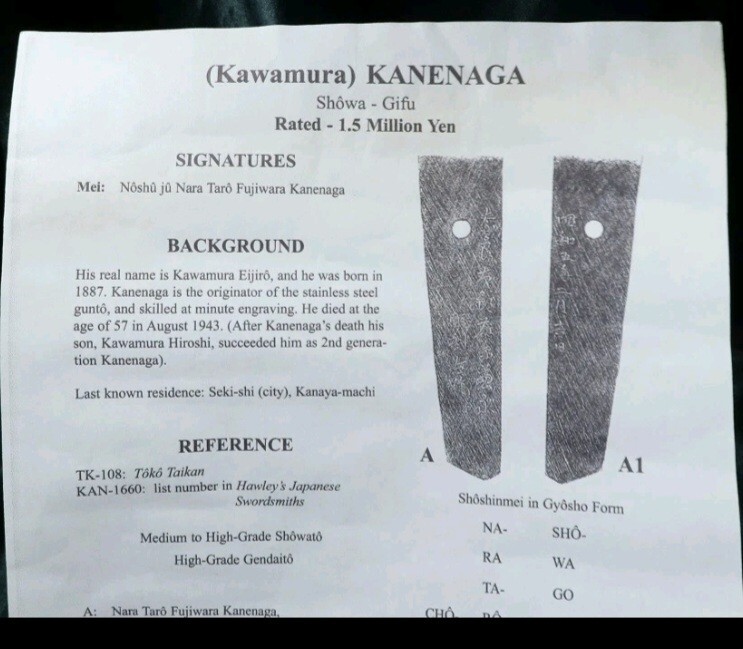
Hi Sam! You've done some good research already. Shimada was his first name, not a location: "YOSHISUKE (義助), Shōwa (昭和, 1926-1989), Gifu – “Yoshisuke” (義助), real name Shimada Ruisuke (島田類助), he was a Seki-based guntō smith" The larger Seki stamp, like yours, was a civilian inspection/acceptance stamp of the Seki Cutlery Manufacturers Association. It was used from 1940 to 1944, with most dated blades made in 1942. So that is your date range. I've personally found that blades with the stamp were very well made, with attractive hamon (temper pattern), but not traditionally made. Marcin's estimated value is probably pretty close to the current market pricing.1 point
-
To me this looks like a broken blade (business end of a katana) repurposed for sale to souvenir seeking tourist or occupation GI after the end of the war. No idea what the 3 mekugiana are about but this is the most logical explanation for the blade. Grey1 point
-
Sarute from Minatogawa Tachi I remember very well a so called very "nice collector"(here in Germany) who forced me to buy a Kai Gunto from the Minatogawa shrine (the earliest known date August 1941) claiming I owed him something!! The first thing, he removed with scissor's was the original textile sarute!! I was very sure,the sword had now fallen into the right hands. However, it was more important to him, to resell it quickly for a lagre profit, even though he promised, he would never do that! Its a shame that there were enough idiot's back then who thought they had knowledgeand, out of ignorance destroy irreplaceable original's without coercion. Here's another original, that thank Godness didn't fall into the hands of such idiot's
 1 point














.thumb.png.85f3fd036d09507865860724219753c4.png)










This leaderboard is set to Johannesburg/GMT+02:00