
Leaderboard



Popular Content
Showing content with the highest reputation on 08/16/2025 in all areas
-
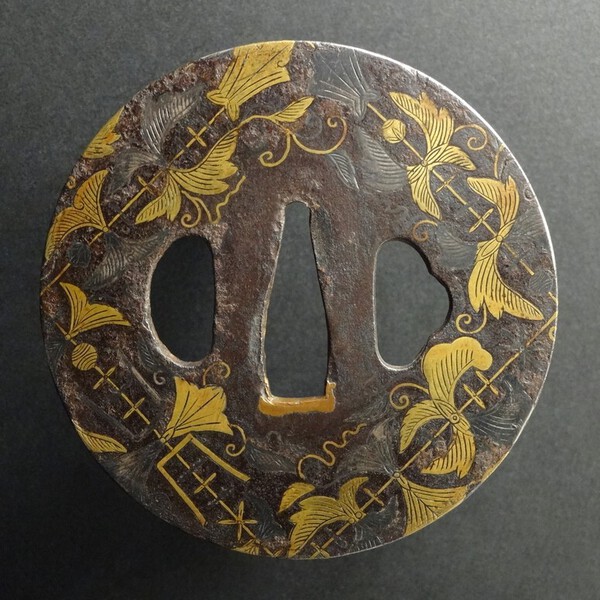
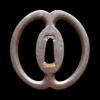
Dear all. I have recently acquire a nice Heianjo Zogan tsuba. It is not a masterpiece but it is a nice one ansyway. The design is not the usual karakusa with trellis that. There are those bell shaped pieces that are somehow reminiscent of the koto string bridges. Any help in the identification of the theme is welcome. Best Regards Luca
 6 points
 -
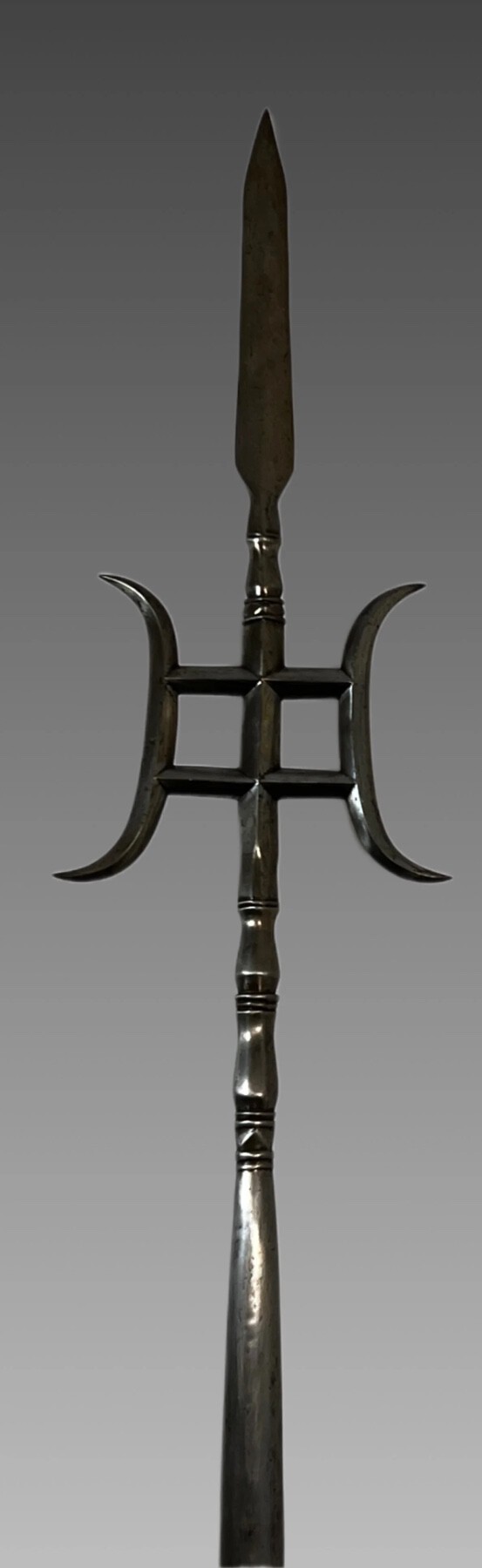
Almost looks like a very stylized arrangement of traditional Chinese polearms to me...

 6 points
 -
I disagree - looks like a very rare beautiful piece. No real idea what the theme is, but it reminds me of the privacy screens set up around Samurai commanders "Jinmaku" The small symbols could represent mon also seen on these screens - Just a wild theory.
 5 points
 -
i understand your comment, and it only comes from your level of collecting and experance. when you understand that comment you will understand mine. if you get enjoyment out of studying the average sword, you have gained joy, when you study high end art swords then you gain understanding to WHY they are called art swords. its not a easy thing either. thats why its a life long lesson4 points
-
I asked the All-Japan Swordsmith Association whether swords (didn't specify length) were required to be dated, and they told me it was managed on a prefecture-by-prefecture basis, and that there was no nationwide requirement to date swords.4 points
-
Hello Tobi , I have the catalogue and if you let me know which lot number you are interested in I will send you a copy . Ian3 points
-
I hate to be the bearer of bad news, but this is a fake gunto. See similar example in the link below https://www.jssus.org/nkp/fake_japanese_swords.html Sincerely, -Sam3 points
-
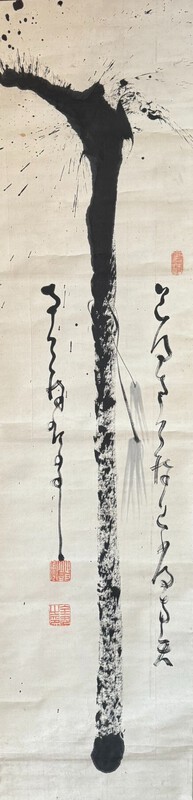
Nakahara Nantenbo (1839-1925), Buddhist name Toju Zenchu (Complete Devotion), was in the last 17 years of his life, the Exalted Master of the main temple of Moyoshin-ji of the Rinzai sect. A contemporary of the great lay Zen master, swordsman, calligrapher/artist, and statesman Yamaoka Tesshu, whom he met while teaching at the training hall at Sokei-ji in Tokyo and had daily private meetings with, he was a tireless reformer of Zen monastic training and activity, emphasizing strict practice and koan study. During his travels in Kyushu in 1873, he discovered a large ancient nandina bush growing beside a cow shed. He obtained permission from the farmer who owned the bush, cut the thick trunk, and addressed the remaining stump: "I cannot ive unless I make the most of your death, you who have lived for two thousand years." When he finally joined he waiting travel companions with stick in hand, they chided the zealous priest, playfully dubbing him "Nantenbo" (nandina staff). Inspired by his prized stick, he challenged resident priests to dharma battles, beating them with his stick and chasing them from their temples if they lacked true understanding. He often painted the Zen training stick of nandina, by striking the paper with a heavily loaded brush and then dragging it downward to indicated the length of the stick to suggest a dragon. The initial explosion of ink, with spatters in all directions suggesting a dragon's skin, is vivid evidence of the physicality of his approach. To this single stroke Nantenbo roughly rendered the cord and tassels attached to the stick in contrastingly pale ink tonalities. The overall result is an image that vibrates with enerby, conveying the vigor of Nantembo's technique rather than pictographic description. The potent ferocity of Nantenbo's images of training sticks is echoed by his inscription: "If you speak, Nantenbo; If you don't speak, Nanten[bo]." In other words, you will receive a blow from the nandina stick (and also Nantenbo himself) whether or not you are able to respond to his koan. This inscription echoes a terse statement attributed to the Chinese priest Te-shan: "If you speak, thirty blows; if you don't speak, thirty blows." Nantenbo is telling us that the essence of Zen transcends speaking and nonspeaking; clever words, glib philosophizing, or pretentious silence will earn one a sharp crack on the head. Indeed, it serves as a koan that aims to cut through dualistic thinking by forcing the ego to relinquish a dependence on logic. This seemingly harsh message from master to disciple also exemplifies a pivotal concept in Zen training: after experiencing an initial awakening, a Zen practitioner must not become complacent. This is why it is said that someone who has reached enlightenment never clings to it but moves on. In the same manner, a responsible Master continues to prod his disciples onward, using every means available, including sharp blows with a stick. In this example the calligraphy on either side of the painting form little staffs and, seen less often in this rendering of the nandina staff, the end of the cipher also has a long vertical stroke (reading Toju), echoing the staff itself. It is signed "Seventy-plus-eight-year-old fellow Nantenbo Toju.
 2 points
 -
The inverted silver and brass inlays (plus crossbar) look like one of the 本 Kamon, e.g. for Honda. I have a couple of examples: And

 2 points
 -
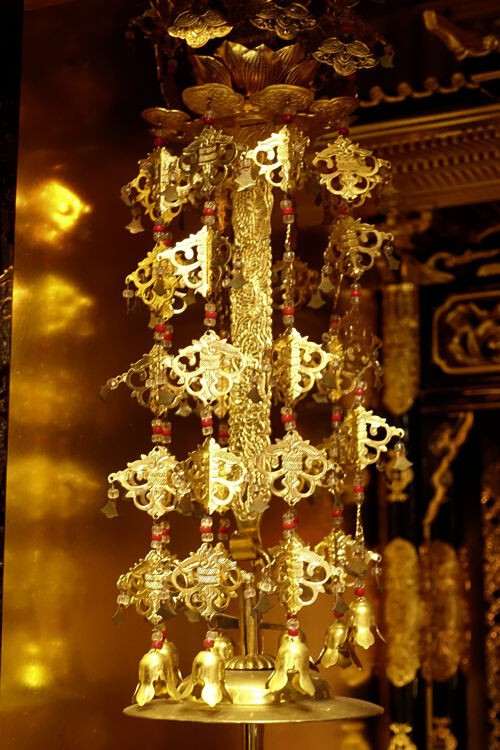
Another shot in the dark, 瓔珞 (yoraku) – Buddhist art element Ref. Yingluo (ornament) - Wikipedia
 2 points
 -
The key is when you used the phrase “high regard”. Nihonto held in high regard is mostly on an artistic level. Yes there are those valued for their function as well if are wazamono, but in general, its art. You seem to have less interest in nihonto as an art and more for function, which is fine, but that isnt where value is attributed because the overwhelming majority of people who own nihonto do not “use” them. Personally there is a lot of art in the world like paintings and sculptures that I find terrible or ridiculous, take for example a painting of a Campbells soup can……ridiculous, and yet one sold for 11 million dollars.2 points
-
Not just fake..VERY fake. Not even remotely close to the real thing, sorry.2 points
-
Respectfully Piers San Echizen Kanenori & Miyamoto Kanenori are different smiths @ different times to my knowledge The Taisho period smith you mention with "kuyomon" is the great shin shinto/gendaito smith Miyamoto Kanenori Imperial swordsmith awarded alongside the Great Gassan Sadakazu in 1906 -Teishitsu Geigeiin (not sure if i spelt that title correctly) Later at around age 90 Miyamoto Kanenori was given a direct Imperial Court Ranking " Shoshichii" - 7th Rank of Direct Imperial Court No other swordsmith to my knowledge was awarded this ranking My small collection consists of 3 blades made by Shoshichii Miyamoto Kanenori at ages of 92/93(Taisho 10/11) signed & certified by shinsa - they all display kuyomon It is said , that he only used the kuyomon on his most later blades I also have an earlier made mumei 33 inch nagasa with bohi nbthk certified to Miyamoto Kanenori blade which is f****in awesome For further information on Miyamoto Kanenori you could contact Markus Sesko or John @PNSSHOGUN Cheers , AlanK2 points
-
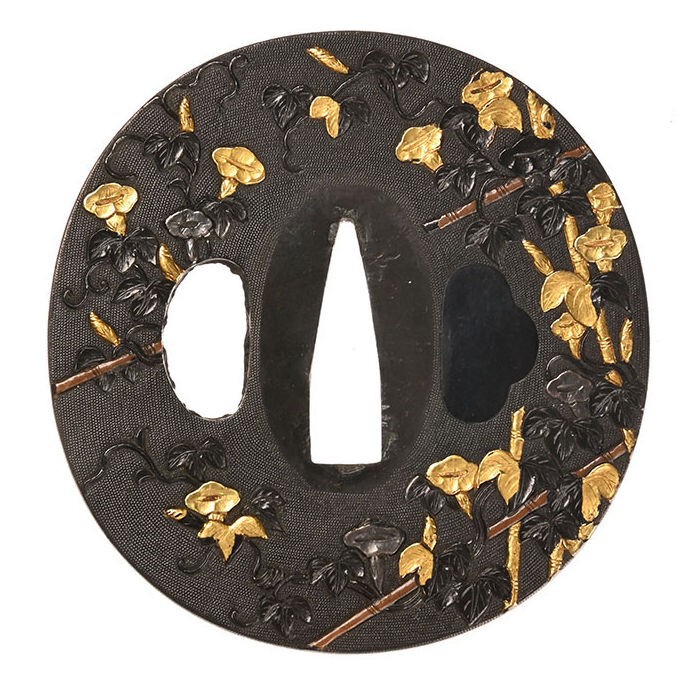
Morning glory??? Kokinko Takegaki Asagao-zu Tsuba Tokubetsuhozon Tousougu
 2 points
 -
The (female, not male) maedate will need a suitably-sized slot for insertion of the tsunomoto. People often go for big fancy flashy maedate, but there is a school of thought that this can detract from the kabuto, so small and economical could be the way to go. BTW, it’s not just linseed oil, but the much harder to source boiled linseed oil.2 points
-
Hi Uwe, Hi Piers, thank you for your replies and the insights! Okay, happy to hear that I was not too far off with my initial assessment. I will reattach the shikoro as you suggested. I would imagine, that getting it relaced will require some more extensive restoration first. The degraded odoshi is all that keeps the urushi in place an glancing at it a bit seriously is enough to make it pop off at this point. And yes, I will have to get rid of the bad rust. Indeed I read the post about linseed oil/white spirit mixture here in the forum some time ago, thank you for reminding me. Do you have an idea, what kind of maedate would fit this kabuto? Saad2 points
-
I thought I would share the story of how my first Nihonto delivery process went in case it might be helpful to someone. I went to Japan with my family for the first time in the middle of June this year. One of my goals for the trip was to select my first Nihonto while there. You can read more about that in the Nihonto forum under the thread “Question about Aoi listing”. I did select and purchase a sword from Aoi Art. Paid: 6/15 Export permit received: 7/19 Shipped via EMS: 7/20 Arrived in Chicago customs: 7/23 Letter from US customs with arrival notice dated: 7/28 I received that letter from customs on 8/5 The letter from customs said that since my package was valued over $2500 that it would need Formal Entry. I believe all packages will require similar processing in the future with Trump ending the de minimus exemption. The letter said that I could send the forms myself but that many choose to hire a customs broker due to the complexity of the process. I thought I would do it myself, but was quickly underwhelmed by the lack of helpful info on the internet. I thought I would take a couple of hours off of work to find a broker on that Wednesday (8/6), the day after receiving the letter. It ended up being an all day affair. I started on the CBP website with the list of approved brokers they have. Most of them seemed to cater to large companies but I made some calls that went nowhere and filled out some online forms for a couple that looked promising. One responded fairly quickly. I sent some info and asked some questions, including how much it would cost. They would answer my questions except for the ones about price so I stopped working with them after multiple attempts were ignored. I was getting frustrated trying to find someone to work with me so I consulted the internet. That lead me to some posts on Reddit that suggested eezyimports, which is a kind of DIY customs portal. I registered there and uploaded my info. I felt like I was making good progress but had a question. I worked with their online chat to resolve my issue and they eventually informed me they don’t work with postal packages. I next engaged with Clearit, a similar service where you upload your docs and an agent helps you through the process. I uploaded my forms and an agent contacted me a couple of hours later. Long story short, I spent 2 days going back and forth with the agent and had to abandon Clearit when they insisted I provide a USPS form that made no sense for my situation and was literally (in the original sense, kids) impossible for me to fill out. The agent was somewhere overseas and seemed to be following a template, but it didn’t apply to my situation. I was back to the point of cold calling customs brokers found via a Google search. By this time it was Friday and I was concerned with how long it was taking to get this process moving. Many fruitless calls later I finally had a broker answer that said this wasn’t something he normally handled but that he was willing to help. What a relief. He was very quick to get started once he received my paperwork. During this process is when I learned that I was going to get hit with tariffs. He said that it would be duty free because it was an antique but that the tariffs should apply. Since I had seen other people on NMB say they weren’t tariffed, I wanted to make sure he was correct, so I emailed US CBP at the address listed on the letter. They were quick to respond to multiple inquiries that we had and confirmed that the tariff would apply. From April to 8/7, the 10% tariff was supposed to apply. I think that they weren’t very strict about applying it because the whole thing was a confusing mess for a while. I read of several here who got through customs without tariffs, including one who posted in my other thread that he bought his more expensive sword from Aoi after me but got his export permit sooner, so it got to customs sooner. I was told by my broker that they got alerts about increased scrutiny starting the day my package processed. Lucky me. HTSCodes, if helpful to someone. 9706.10.0060 Antique over 250 years old 9706.90.0060. Antique over 100 years old 9903.01.25 IEEPA Reciprocal tariff 10%. The reciprocal 10% tariff was replaced by a 15% tariff as of 8/7. https://hts.usitc.gov/search?query=9706.10.00.60 There was one last hiccup that occupied us for a couple of days as we waited for an answer from Japan Post/Japan Airlines/USPS but it turned out to be a wild goose chase. As I mentioned, the broker did not normally handle this type of case so he was unfamiliar with processing items going through postal services (EMS/USPS). His software would not process the file without a Master Airway Bill(MAWB) associated with the delivery to customs. We went round and round trying to get it from Japan Post/EMS/USPS/ Japan Airlines/Aoi Art but to no avail. We finally emailed customs and they just said to use the tracking number (also known as the House Airway Bill (HAWB) for both HAWB and MAWB entries on the form and to leave out trailing characters on the MAWB if it was too long. With that info, the paperwork went through. After the fact, we learned that the MAWB is a commercial freight forwarding (UPS/FedEx) concept that doesn’t apply to postal service deliveries. I submitted my payment and fees/tariffs (almost$1k) to the broker and he forwarded the paperwork to Customs shortly thereafter on 8/12. The next day customs turned it over to the USPS at noon and I get home today on 8/14 to find that they had attempted delivery. I’ll go pick it up tomorrow and hope that all is well with the package. I’m not without concern, as one heartless poster on another thread put the idea of sticky fingers in the USPS in my head. Aoi Art was very responsive in my inquiries to them and participated in the wild goose chase without complaint, which I was thankful for. My broker said that he learned some things throughout this process that would make the process much smoother next time. I am very thankful to him for working with me. He was professional, extremely responsive and seemed of very high character in all of my interactions with him and would definitely recommend him if someone here needs this service. He works out of Texas, but can work with any port. He said that I could post his info here. I have no affiliation or monetary interest in doing so, I just want to help someone here. If you aren’t using him for a sword, tell him you heard about him on this sword forum so he knows the business is coming from his willingness to help me. James Shalda Licensed Customs Broker JAMES CB TX LLC https://jamescb.com Good luck to any of you going through this process. Jeff1 point
-
Forgive the stupid question, but why don't dealers have a section selling low end blades? Seems every week there is someone on the forum asking to buy nihonto at the $2k and under mark and buying from a trusted name would seem to insure sales.1 point
-
Hi folks, A while ago someone asked me to let him know if I got in a sword by the Ishido School smiths. I have nno idea who that was. Any case - in case he hangs out here and is paying attention - I just listed a sweet wakizashi by Tsushima no Kami Ippo: https://japaneseswordbooksandtsuba.com/store/swords/q886-signed-papered-wakizashi-edo-ishido-tsushima-kami-ippo/ This follows a recently listed jumonji yari and there are more to come in the near future. Cheers, Grey1 point
-
I think this topic has been canvased fairly well but I think we should make a distinction between reasonably-priced, quality blades ( and I am really thinking here of the kinds of swords that Sieyudo.com puts into it's "S-Line" category) and what are being called "low-end" swords. To me, "low-end" is exactly what it emotes: commercial crap; a small step up from junk. Whereas, I think "reasonably priced" blades are a cut above commercial grade swords: decent quality Muromachi, Shinto and Shin-Shinto blades, for not huge dollars. They are in polish, they have few ware and kizu if any. They are not by top names but are often zaimei by decent smiths and papered. They range in price from an average of about $2400 to $6000. This is where a new collector or bargain-hunting collector would ideally want to be, IMHO. It is at this stage where much of the wisdom from the other thread about saving for a sword works best. It's a one-and-done purchase: no need for a polisher, or a new shirasaya, or a new tsuka-maki. It can be enjoyed from the minute it is unboxed. Moreover these are the kinds of pieces that are much easier to trade or sell for that next level acquisition. Buying in the $2,000 range may seem thrifty and wise, but often you are buying something not too far removed from "bottom-end" pieces that you will outgrow quickly and own for a long time unless you find another collector without knowledge or patience to do better. If you can't see into a blade, if you can't enjoy its crisp lines and clarity, then why buy it? It may be a cliche now but it is an incredibly important rule that should guide your mindset in this hobby: buy the best sword in your budget. So try to build up the best budget you can afford and don't be afraid to be patient. Better to buy one really decent sword for $3500 to $4500 than three pieces of junk for the same amount of money. At this price range, time is actually on your side more than it is at the deep end where collectors may have lots of money, but the pieces they are looking for are just not available. Happy hunting y'all!1 point
-
I think the top one is 名月や留主の人にも丸ながら Meigetsu ya Rusu no hito ni mo Maru nagara The autumn moon, Even for those who are not near to us, Is still full1 point
-
100% it is this. I have low-end pieces, but I don't even usually put them out at the show unless someone asks for them. I don't want to waste valuable table space on something that isn't worth haggling over. I'll use them as bargaining chips sometimes though.1 point
-
No longer looking - a great person from this forum (I can share who he is if he so decides) helped me with the purchase of a wonderful gunto. Thanks and good luck to everyone!1 point
-
I bought one of these as my first sword too, thinking it was legitimate. Hurts at first, but if you can bear to keep going there's a whole world of knowledge out there - this forum and it's old threads being one of the best places to learn. After more research, if still want a genuine wartime or older Japanese sword, they do exist under £1k, and you'll feel so much better when you do get one that you know exactly what it is (Nihonto/Type 95/Type 97/Type 98, etc). Please don't be too disheartened1 point
-
I’m not a dealer, so please understand the following is speculation from a buyer/collector perspective. With lower end items inherently comes more flaws and issues, and things in poorer state of polish. These things cause more questions, and therefore more time spent during the attempted sale. With that, comes less satisfaction as the buyer learns more, becomes more experienced, and/or develops an eye for higher quality. All these things contribute to a sellers long term reputation, of which, I can only imagine, they value and want to maintain. So maybe the simple answer is, that the juice is not worth the squeeze. That being said, there’s no shortage of lower end items out there in the market, and even a few dealers out there who sell things at lower price points. Sincerely, -Sam1 point
-
Encountered similar fake on our local auction too: https://violity.com/ua/120509033-yaponskij-vijskovij-kortik-do-1945r?utm_source=follow&utm_medium=yaponskij-vijskovij-kortik-do-1945r&utm_campaign=17 999uah1 point
-
Here is the other side: It could be Moriyama san. Your guess is a good one. However the presence of those inverted U shape elements, the small spheres and the small cross-pieces make me wonder. The inverted U shape can be the trellis supports, and the small sphere buds? Any guess is welcome Regards Luca

 1 point
 -
Akira followed up, after I posted this, and also felt the kana's meaning on the blade might be different. Your idea sounds more logical, with it being on a star stamped blade. Mystery continues.1 point
-
Bruce Thanks for the link. It is possible that the “特” mark without a circle on the sword does not signify “failure to pass the ordinary inspection but was nonetheless accepted for special reasons.” In the case of RJT swords, a blade that failed inspection would not have received the star stamp. It should also be noted that this type of gunto was not government-issued to officers, unlike the Type 95 and certain other weapons; rather, officers were required to purchase them at their own expense. Could the “特” mark indicate“特别訂單” (special order), perhaps connected with the 陸軍偕行社(Rikugun Kaikosha)/Army officer club or a similar institution?1 point
-
I own a Hira Zukuri from Edo so I think they are made throughout different periods.
 1 point
 -
Unfortunately I do not know Emilio. Chris (the Minneapolis show runner connected with Motoshige) runs the discussion group below on Facebook. You may want to ask him directly there. https://www.facebook.com/groups/1728933930663768/?ref=share&mibextid=NSMWBT1 point
-
Oguri Motoshige attended a show here in the US. I remember studying and enjoying examples of his work at the event.1 point
-
Maybe it's just me but I find this line of thinking rather ridiculous. The point of 90% of nihonto throughout history is for them to see usage. Plenty of these blades hyper optimized for use are usually on the cheaper end. Examples? Bungo takada, higo doutanuki, non zenjo mino, most hizen smiths, etc. Does the lower valuation of these blades equate them to "pictures from pre school kids", despite their extensive usage and words of appreciation from swordsmen that actually used them? I actually use nihonto for kenjutsu, and personally the most interesting blades I've swung around are the budget blades you consider "preschool level". To add to this, some of my favorites I've ever handled are oei bizen works, specifically a kiyomitsu and morimitsu daito. Of course oei bizen stuff is held in very high regard, but it shows that the apparent visual quality of a blade does not equal a good sword. For example, I've handled a few swords from smiths that people hold in very high regard but the shitty kaga kiyomitsu I got for 1000 dollars somehow handles better despite near identical dimensions on paper.1 point
-
The dominant feature of this tsuba is its weight. I do not have a scale handy, but it is among the heaviest tsuba I have ever held. I believe this is owing to its base material, which judging by this weight and the color, is a reasonably high-grade shakudo. A fukurin of silver(?), done in a roped design, and featuring fine, hairline embellishment, offers a wonderful contrast to the shakudo plate. The motif is kebori waves with scattered indaid family crests. I cannot determine with certainty the metal used to form the crests, but it would seem to be copper. The very deep tagane around the nakago-ana is reminiscent of the tagane seen on the sword guards of Hirata Hikozo. Is this guard Higo, then? It isn't really my area of focus and research. Those with more experience in the area of Higo tsuba may have a better read on this piece than I do. Once again, I must emphasize the rather stunning weight of this piece. At 7.8cm x 6mm, the sheer amount of metal here is impressive. This guard is far from my own personal area of focus (Owari Province tsubako), but I find it very appealing. $675.00, plus shipping.
.thumb.jpg.557ae1439f8c839d5efaf2e39988a3a3.jpg)
.thumb.jpg.93185774ac0a7221bfe38b50d742307f.jpg)
.thumb.jpg.4798285c255c11ef54375ddb75ae8e6f.jpg) 1 point
1 point -
Sorry don’t have the length of the nakago I’ll have to wait till it comes in to measure it but from what I have seen it seems that many Rinji Seishiki (type 3) gunto have longer nakago and usually have 2 Mekugi Ana.1 point
-
Hello Chansen, From what I can tell, Nobumitsu (信光) seems to be accurate. It is also signed "Showa 20", or 1945. First month (January).1 point
-
I've collected firearms most of my life. I thought that was an expensive hobby. That hobby is cheap compared to the Nihonto world.1 point
-
I'd like to announce and thank our members who are going to be assisting us with moderating certain sections. I think it will benefit us all to have more eyes on the forum, and these people have graciously offered to assist with this task. I'll still be looking for one or 2 people to assist with the Izakaya, but finding impartial and fair people who won't take a side is understandably difficult. It's also not something I wish on anyone, but we do need one or 2 people there. Jean will continue to moderate over all sections as before, being the main moderator. The following sections will be assisted with moderation by the following members: General Nihonto Related Discussion: @Scogg (Sam) Translation Assistance: @Ray Singer and @Bugyotsuji (Piers) Auctions and Online Sales: @Scogg Nihonto: @Scogg Tosogu: @Curran Katchu: @uwe Military Swords: @Bruce Pennington and @Scogg Tanegashima: @Bugyotsuji Other Japanese Arts: @Bugyotsuji Sword Shows and Community News: @Mark For Sale/WTB: @Scogg Izakaya: TBA Thanks to these members, please grant them respect, thanks and best wishes.1 point
-
Yes, that's right. He is the swordsmith. There are two main databases for swordsmiths available in English. One is called Index of Japanese Swordsmiths, by Markus Sesko, (researcher, author, and sometimes contributor to this site). The other is an out of print English translation of Fujishiro's Index of swordsmiths (I think its called Nihon Toko Jiten) and consists of two volumes: Koto and Shinto. I think Markus Sesko's set would be more complete, accurate, and user-friendly. But, as I say, there may not be a great deal of information concerning this particular smith, as he apparently didn't leave a great body of work. The name Daiminkyō may also be read as Daiminkin. It's just one of the quirks of the Japanese language - kanji have multiple readings, and occasionally you come across names that have multiple valid readings. Presumably the smith himself had a preferred reading/pronunciation of his name, but there is no record of it as far as I know. So, some sources spell it as Daiminkyō, and other spell it as Daiminkin. He worked circa 1661.1 point
-
"What is a great blade" and "does it match the valuation" is yet another big question, and I would be in the camp "often it does not". I've seen a few Awataguchi Kuniyasu which were as rough as many Muromachi blades. Kanemitsu in MFA is one of the most boring blades I've ever seen. Many zaimei Rai Kunitoshi which have neither the famously consistent tight jigane, nor is nioiguchi particularly stable, nor are frankly very impressive overall. There are quite a few shinto smiths who produced very impressive work, but shinto valuation is very black and white, like 10 people being the top and bottom is the "rest". There were people in 1710s who never had a chance to make a lot of blades because of the economics, I look at their blades and its absolutely top tier - but there are literally a handful of blades to their name and a single line in meikan. Zaimei inferior work by Naotane, which we can justify on the basis that he needed a lot of experimentation, and a lot of it was... experimentation quality, will not come even close. But shinto blade will be 4k and Naotane 30k. There is a dozen of Muromachi smiths whom I would value significantly but their names and blade valuations remain semi-obscured. I had to check the records now myself, but Bungo Munekage produced some impressive stuff. Heianjo smiths, of whom Yoshihiro's hitatsura probably the only thing which will have decent level valuation. By comparison there are tons of Juyo which are Juyo because other similar blades have been Juyo before. Aoe is a great school, but late Kamakura Aoe Juyo with rough chirimen, not particularly accented hamon can look rather humble next to TH Oei Bizen. Subjectively to me 90% of TJ are great blades, and it goes down to probably 30% at Juyo, but if it comes down to artistry there are very poor valued schools which are impressive. Usually people just don't discern quality when they say this, so it is not a respected statement, but there are quite a few smiths who made relatively few blades, are very obscure, but are high level.1 point
-
Tokyo-nihonto often deals in that price range. Nice website and photography and is a forum member.1 point
-
When someone looks for a Hozon papered katana at around 2K then the supply is simply on the low end. You will certainly encounter dealers in Japan selling swords for this price, often with some defects. Many of these blades will be sold between dealers or without ever going on any website. I think dealers in Europe and the US will be less tempted to deal in lower end blades because they won’t have a high profit margin. I think this particular market is extremely underrepresented by dealers, there is a lot of demand for blades in the 2-3K region sold within the EU or US. There is just a lot more to gain when you sell higher end blades, even if you wouldn’t sell them as quickly as a lower end blade. The lower end market is currently mostly populated by EBay sellers or sellers like @PNSSHOGUN listed. They offer blades for a low price, but often without papers or with defects.1 point
-
Some dealers do try to do something like this. If you look at Seiyudo, a high end dealer in the Ginza district of Tokyo, they offer a category of quality, lower priced swords called the “S-Line.” To quote their own marketing line: “The S-line is our new brand to offer swords which are relatively inexpensive but have a high artistic value.” Pretty accurate if you ask me. At the same time, Ginza Choshuya has “Fine Swords” which boasts nice swords at a nice price. By and large, these dealers do offer decent quality blades in good condition at decent prices. Other sites have a mix of goods and many of their lower priced swords are usually of questionable quality, unlike what Seiyudo and Choshuya are trying to offer bargain-minded collectors.1 point
-
Different dealers for different things I'd imagine. There are some dealers with more economical options. Touken Komachi has a lot of entry level options, along with the higher end: https://www.toukenkomachi.com/index_ja_tachi&katana.html Seiyudo has their S-Line offerings: https://world-seiyudo.com/product-category/s-line/ Nippontou has their Reasonable Japanese Sword section: https://www.nipponto.co.jp/swordlist0.htm At the end of the day, lots to be had, but it all depends on what a person's expectations are. Papered katana in good polish under $2000 US? Probably not. But a shorter blade, and/or some tolerance for wear and tear, and there are options out there it seems. (Note: of the three I only have experience with Touken Komachi, who have been phenomenal to deal with.)1 point
-
It doesn't work that way Jamie. The end product relies on the initial raw material. In the process of refining, the billet is re-heated. Every cycle results in a small loss of carbon. @Ruben; muji hada is often called that because of older terminology carried forward to contemporary nomenclature. The polishing process in the Shinshinto period didn't refine the surface in a way that allowed what we otherwise can see today due to advances in the process. However, it is still very very fine and a result of more folding of the steel billet. Simply stated, it's part tradition, and part necessity. Making the hada so fine allows the smith to create hamon with denser or more concentrated habuchi, smaller and/or more vibrant defined patterns such as chojiba or juka chogi, and promote a more consistant propogation of nie and nioi based activities throughout the blade. Courser hada would result in the same patterns following larger strata of the hada, and diffusion of the habuchi. But it's a balancing act because if the steel is overworked, the hardenability is compromised and the creation of martensite becomes difficult. The smith must choose material that will work down in carbon to the acceptable concentration needed to promote the desired yakiba.1 point
-
A 10,000 dollar tanto "used for harakiri." https://www.ebay.com/itm/185365356596? 8,000 dollar tanto from the same seller https://www.ebay.com/itm/185365363553? John C.0 points
-
"used for harakiri." Of course its legit, if it wasn't, it would have read Harry Karry. In the UK it would have read Harry Ramsden. I'll get my coat.........0 points
-
The same reason you dont see art deallers selling pictures from pre school kids0 points
























.jpg.916282a5412eaf448f3e2a49a81c0317.jpg)
.jpg.6966e6f5695d45bec9aff66591d1adac.jpg)
.jpg.1e0a162ee31a637f52ae7fe39daeab5f.jpg)








This leaderboard is set to Johannesburg/GMT+02:00