LastSamurai
-
Posts
71 -
Joined
-
Last visited
1 Follower
LastSamurai's Achievements






-
Well Adam, IMHO, you did a wonderful job of restoring the sword to a working condition! It surely looks very nice now and given the fact pre-1953 gendaito were made for war, thus were very sturdy, it should be a well-suited choice for all kinds of tameshigiri. I would suggest adding mihaba and kasane info, also omosa (weight of the bare blade). I think that might help the sale. Also, few close-ups of ura and omote boshi (yet to see it), also some close-ups of the hamon and ji. Thanks in advance and good luck!
-
Dealing with seller djcollection
LastSamurai replied to 2devnul's topic in Auctions and Online Sales or Sellers
Without myself having any bias into this, I would say that @2devnul has some serious evidence supporting his claim, while @djcollection has AI-generated descriptions and responses. That alone should mean something. What's realistic and what's not for a given price should depend on seller's description, not buyer's guessing. I do not agree about selling something and later saying: "you should've not expected much for this price", if every flaw was not deliberately disclosed in advance in the listing and/or in private messages. Just my 2 cents, nothing against @djcollection or anyone else here, for that matter. That said, I had a sword by Amatsu Masakiyo before (I am still a bit sorry for letting it go) and it was a beast. The pictures in the other listing more or less summarize what Masakiyo stands for and it looks really nice, preserved and in good polish, even for a gendaito. If it was inside EU, I would've considered it, although I genuinely prefer gendaito in koshirae. -
I really hate when people do this kind of thing! It happens on nihonto as well - recently one relatively known re-seller in the USA had stripped a sukashi ryu tsuba from authentic ryu koshirae built around, it just to sell it somewhere else... for a bit of a side profit. I understand that modern world revolves around money and samurai values are long gone, but still I believe we can agree that some things have to be appreciated the way they are. I don't mean my post as an insult to anybody, just stating the obvious.
-
Hi Brian, Such wonderful swords! As far as I understand, the Kinmichi was not made (entirely) from tamahagane, right? If the owner is up to it, I would love to see some measurements of both swords, even if just for educational purposes. They are very interesting pieces, especially to me as a relative newbie in this hobby.
-
Looking for a papered nihonto katana inside EU, gendaito or older
LastSamurai replied to LastSamurai's topic in Wanted to Buy
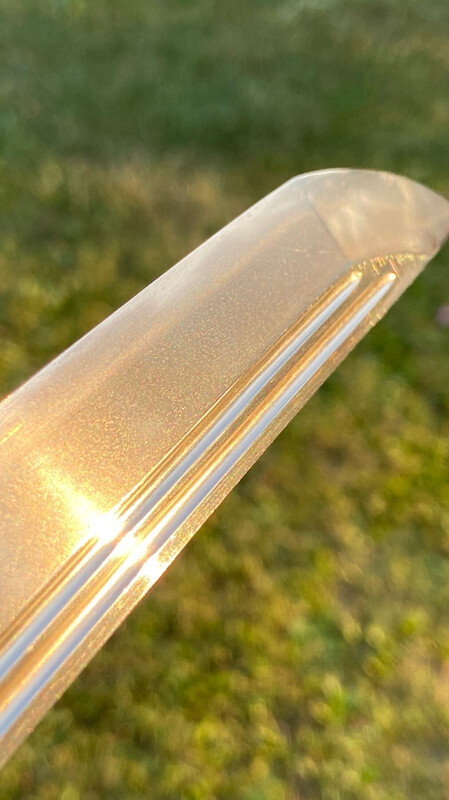
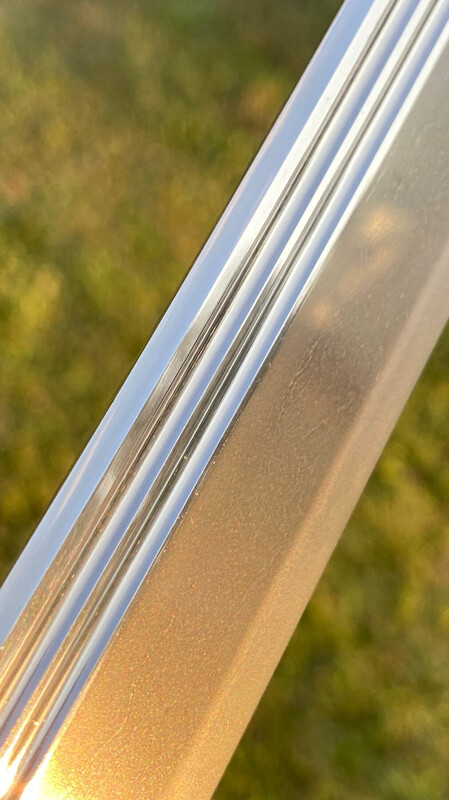
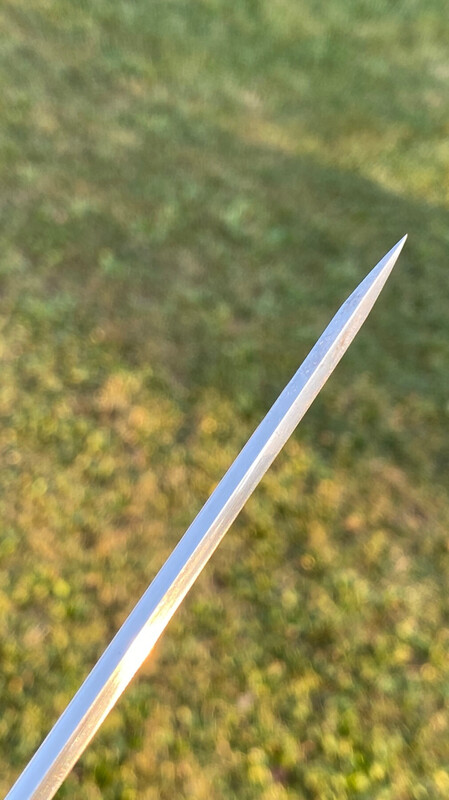
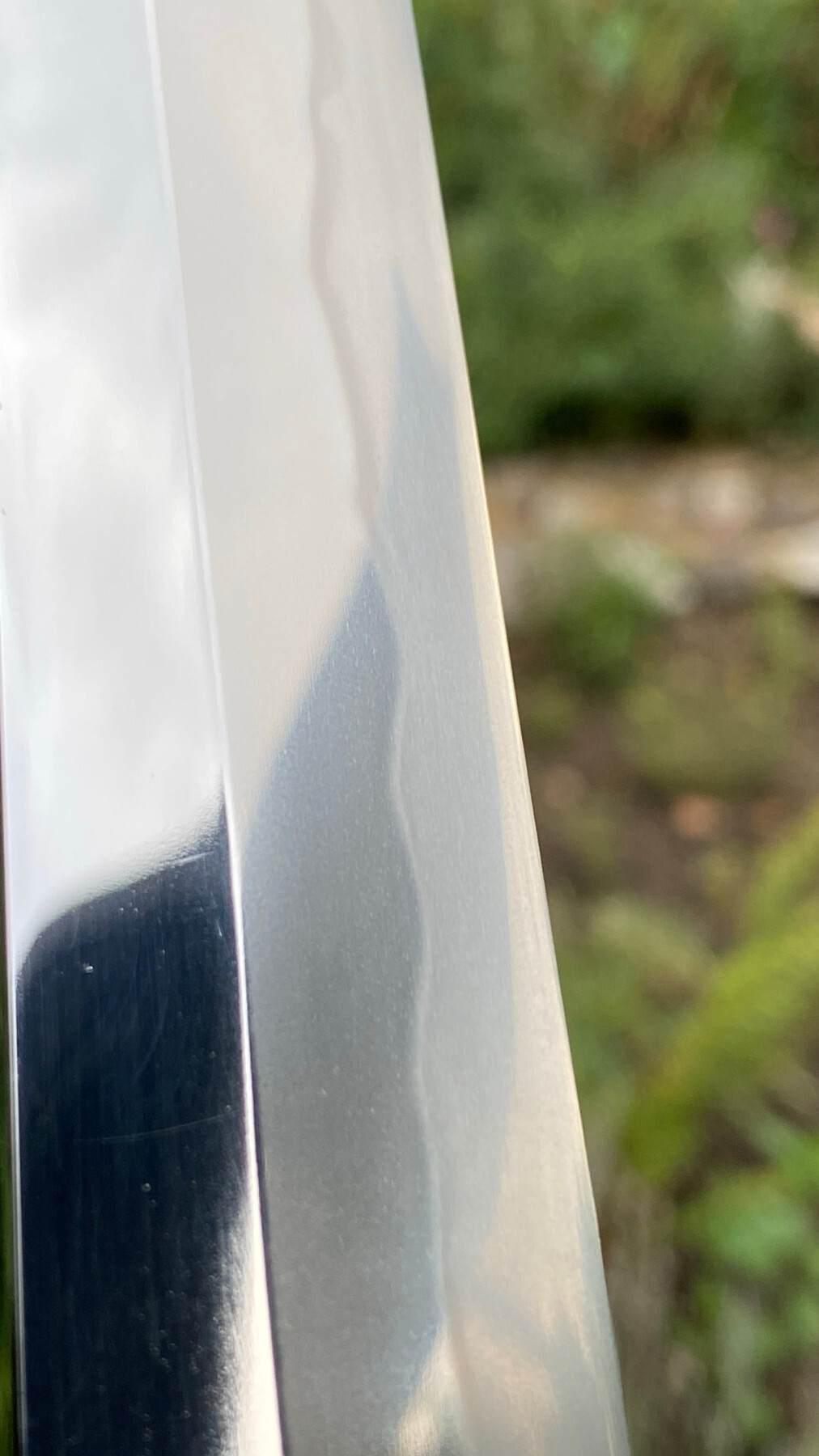
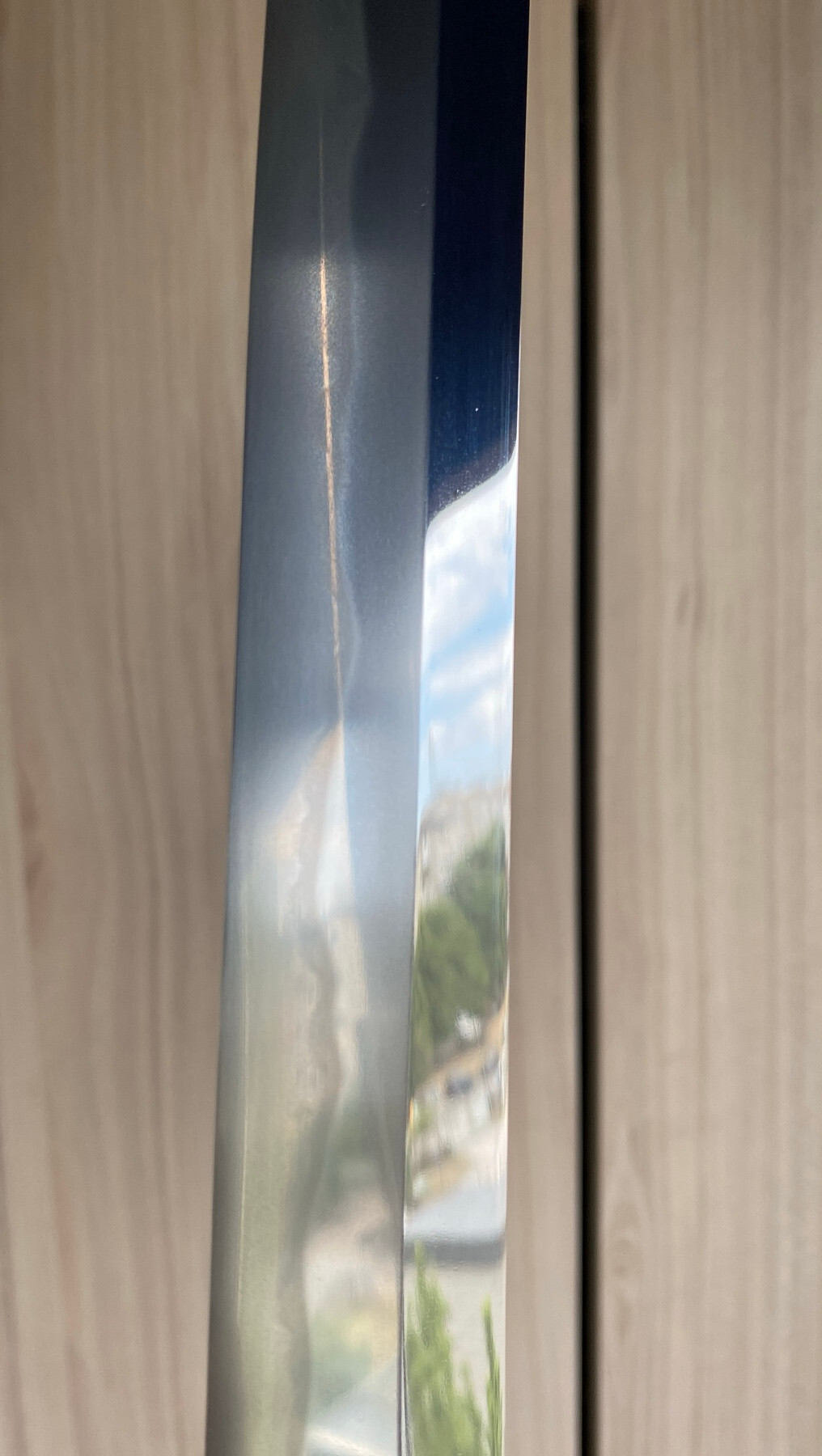
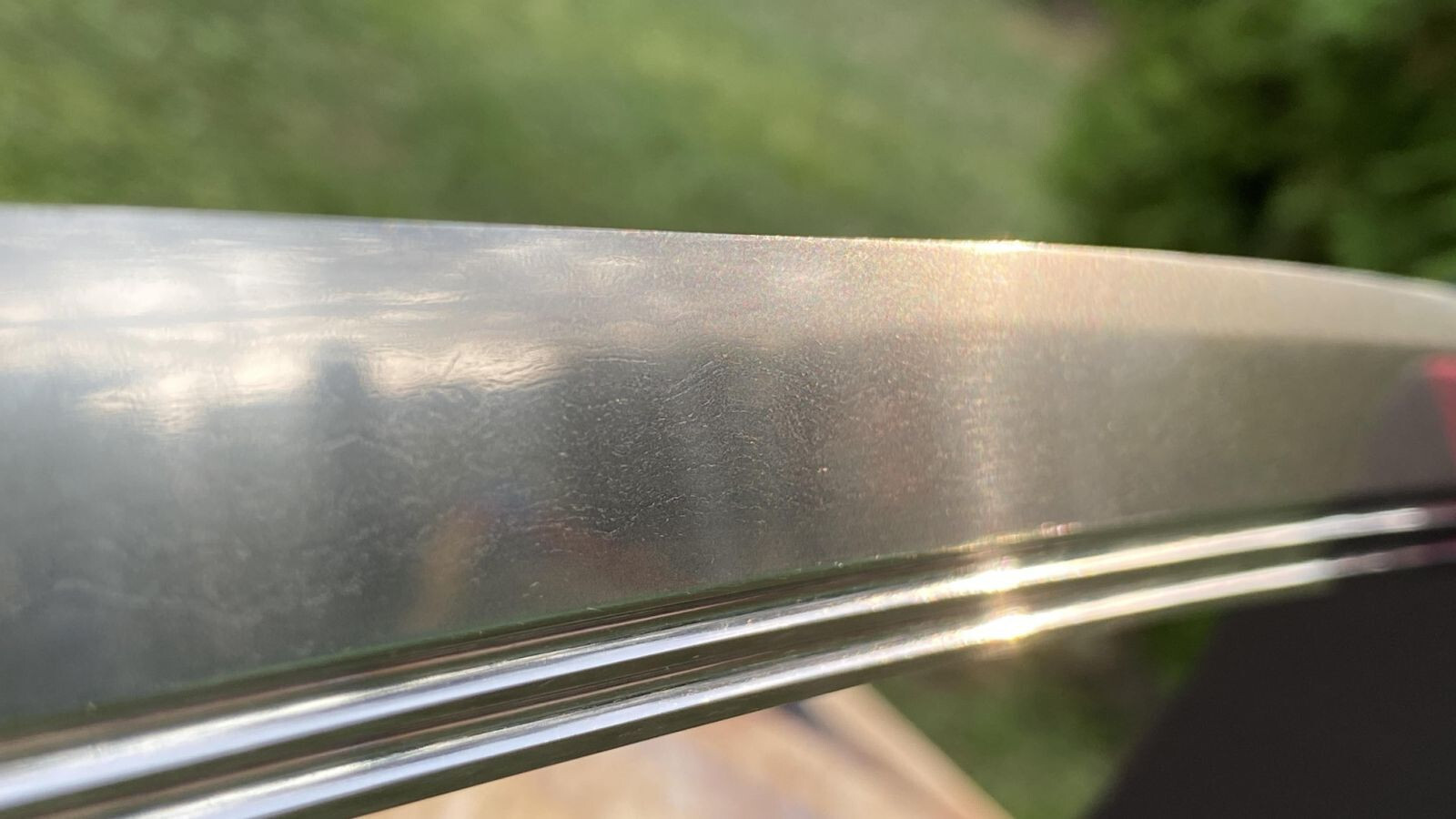
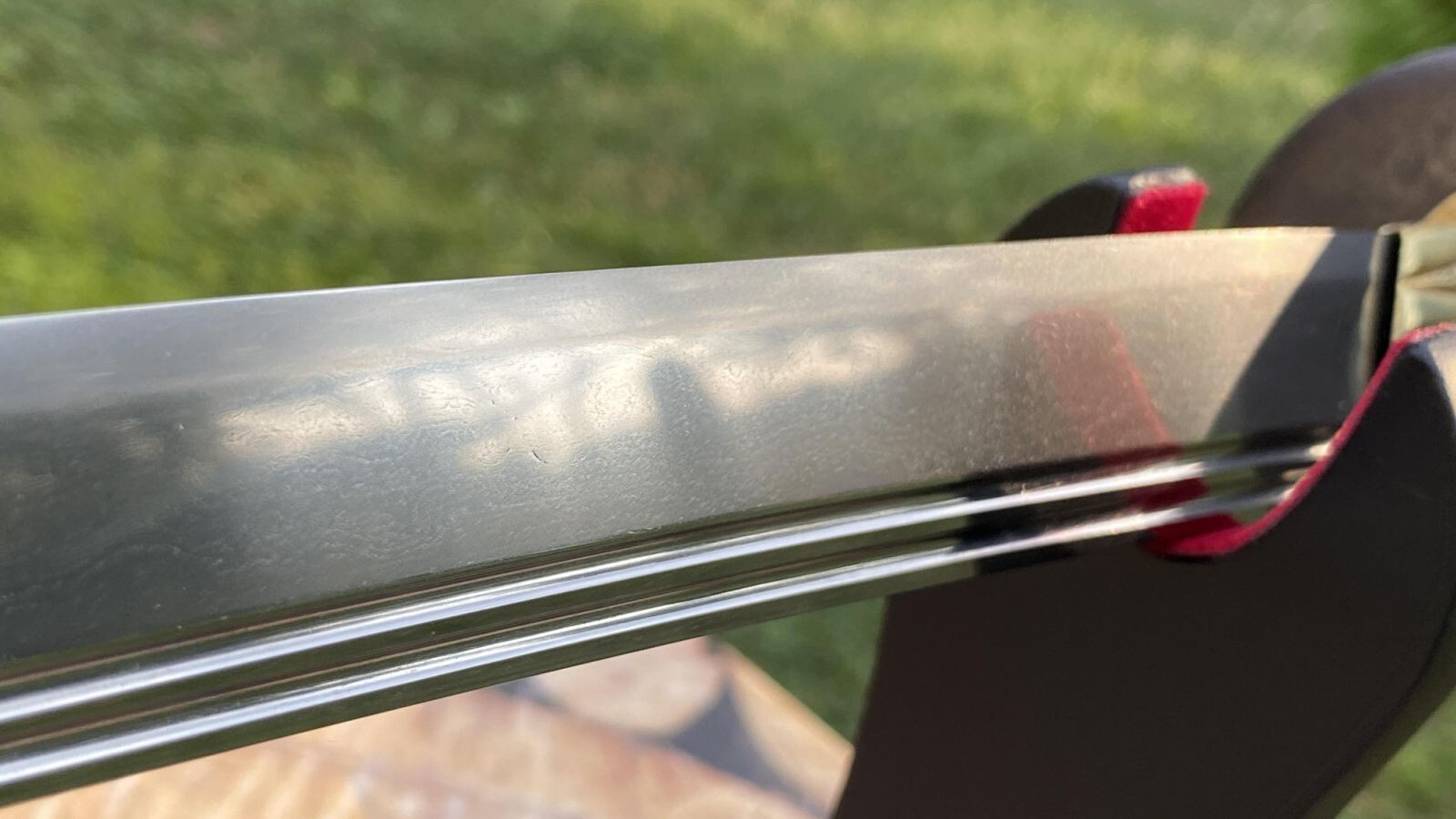
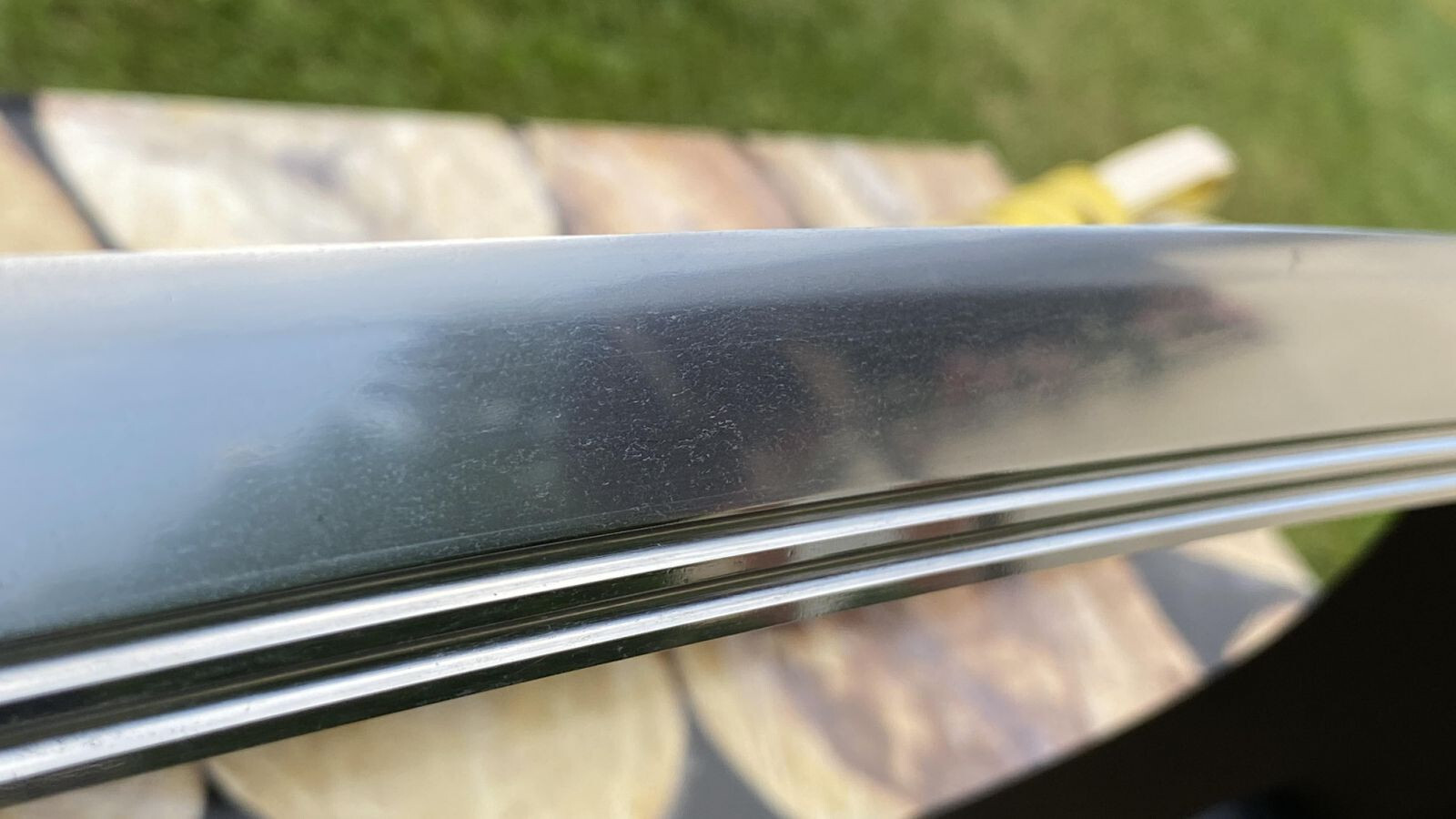
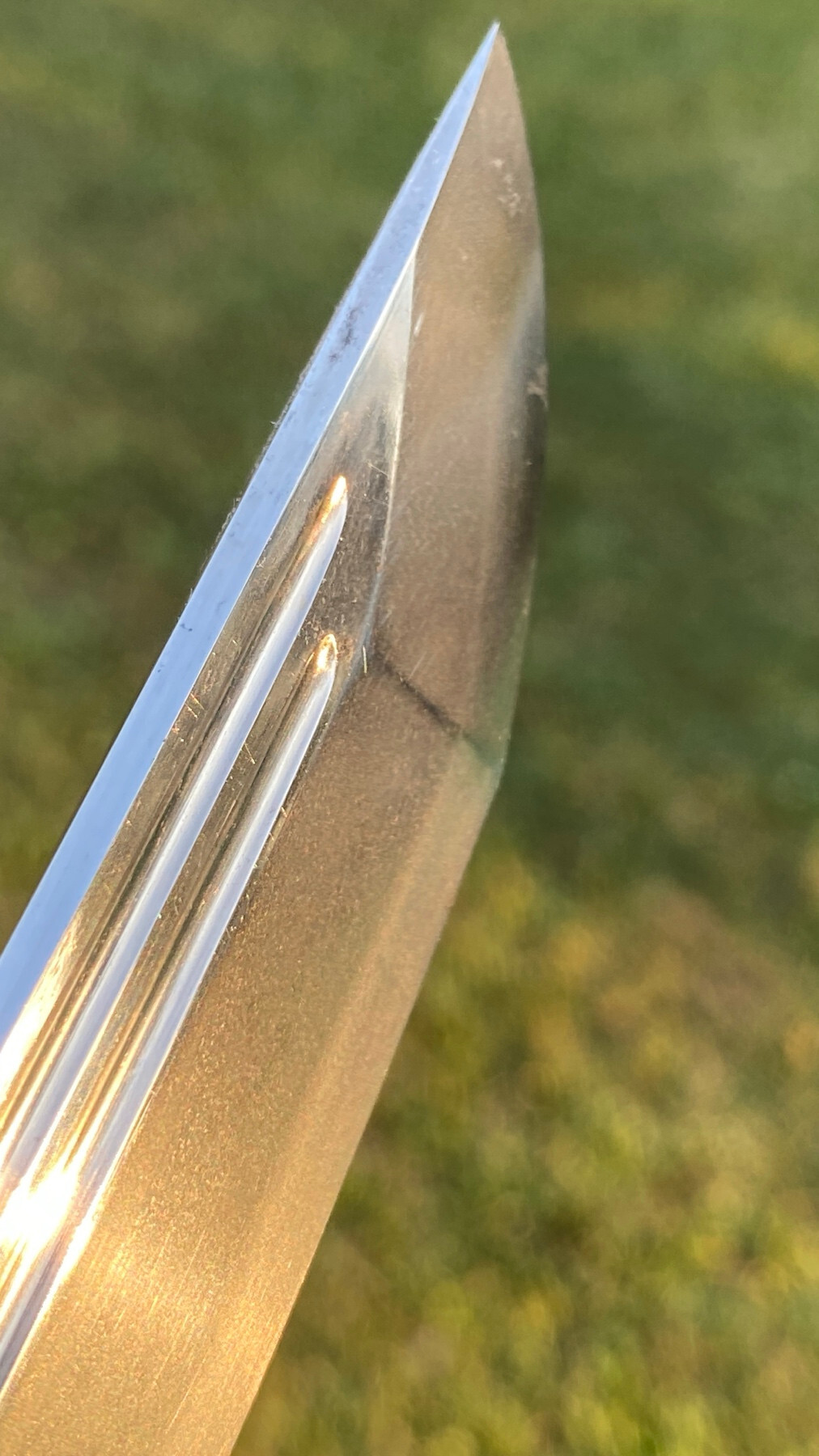
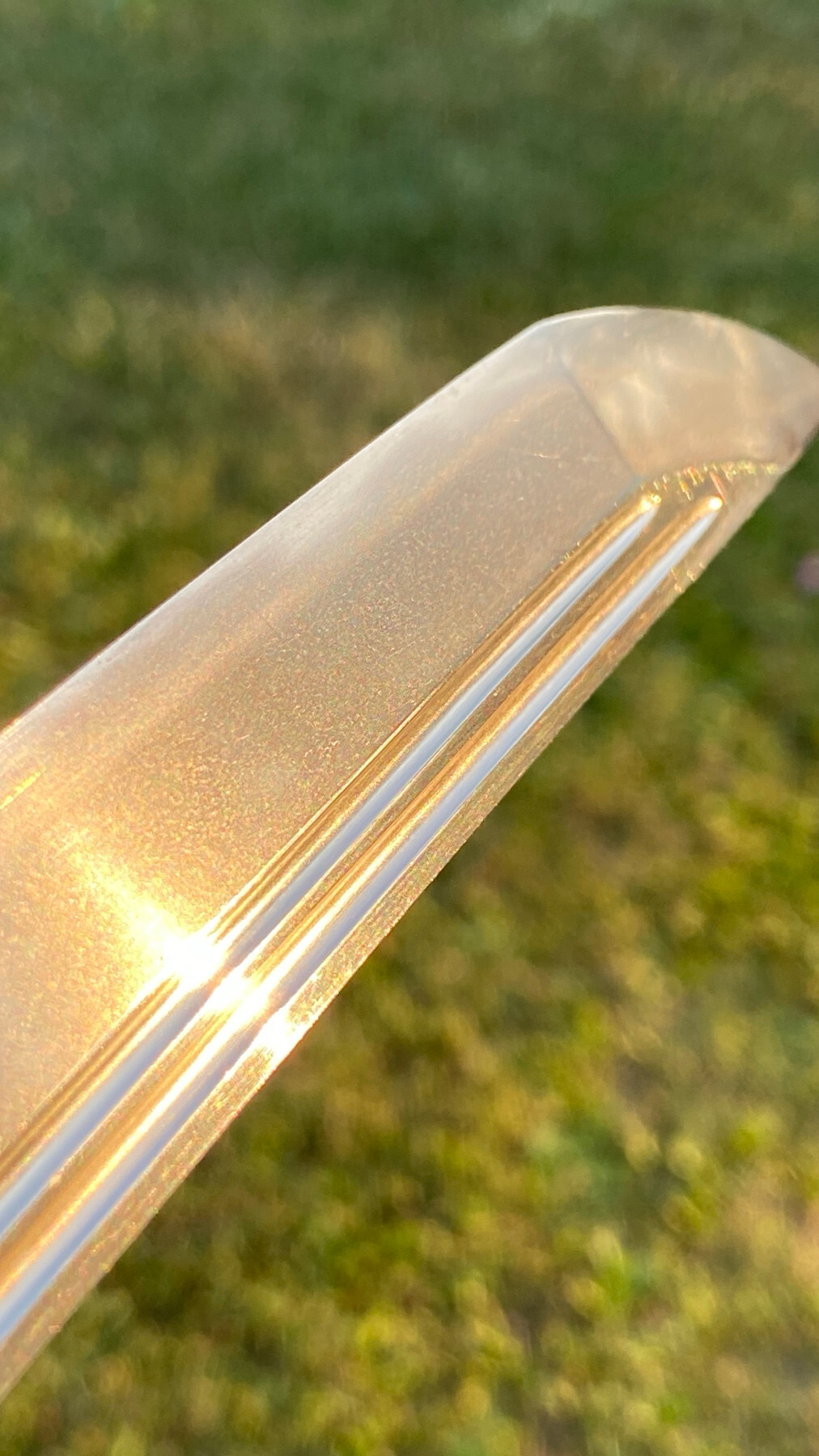
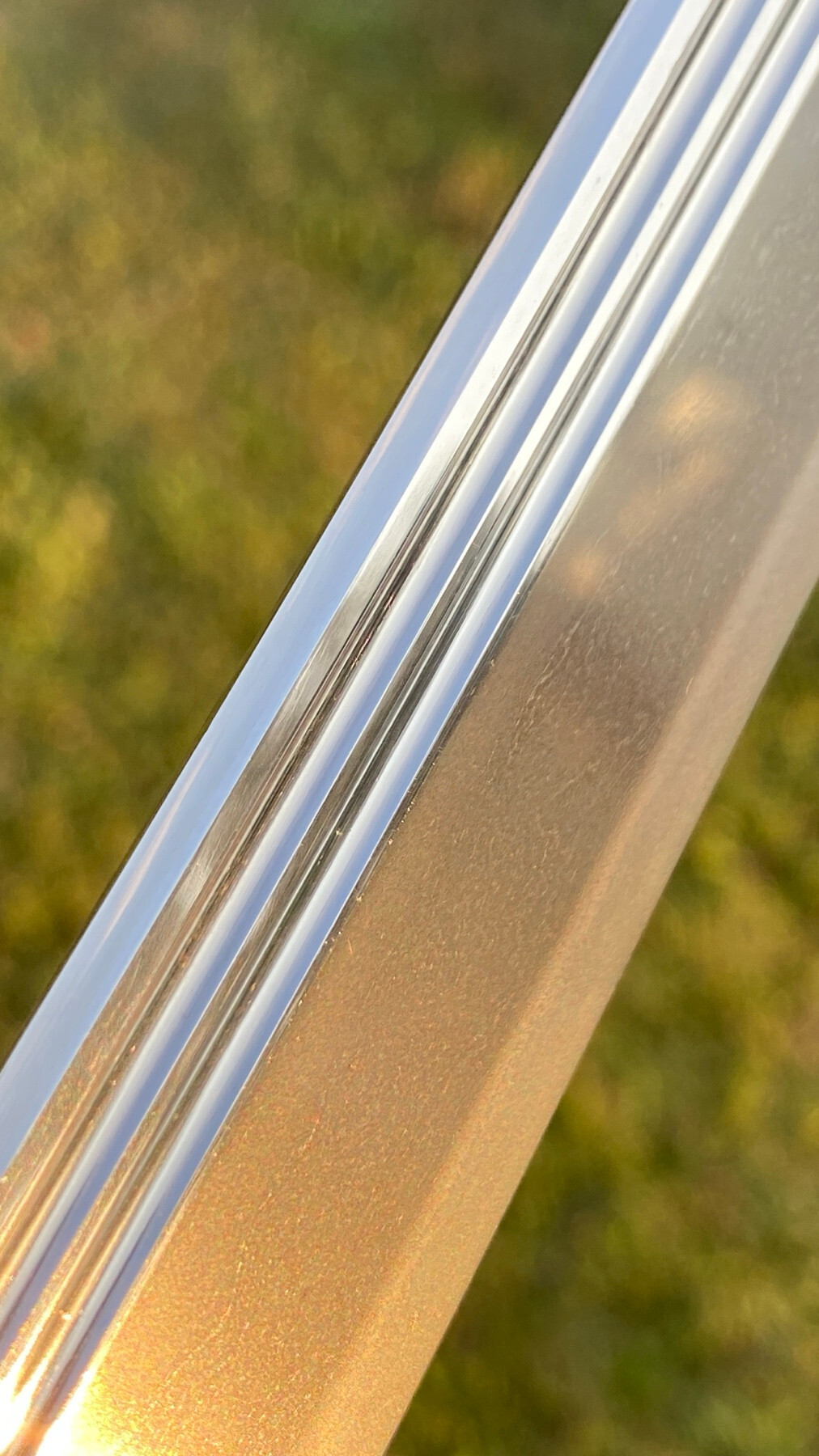
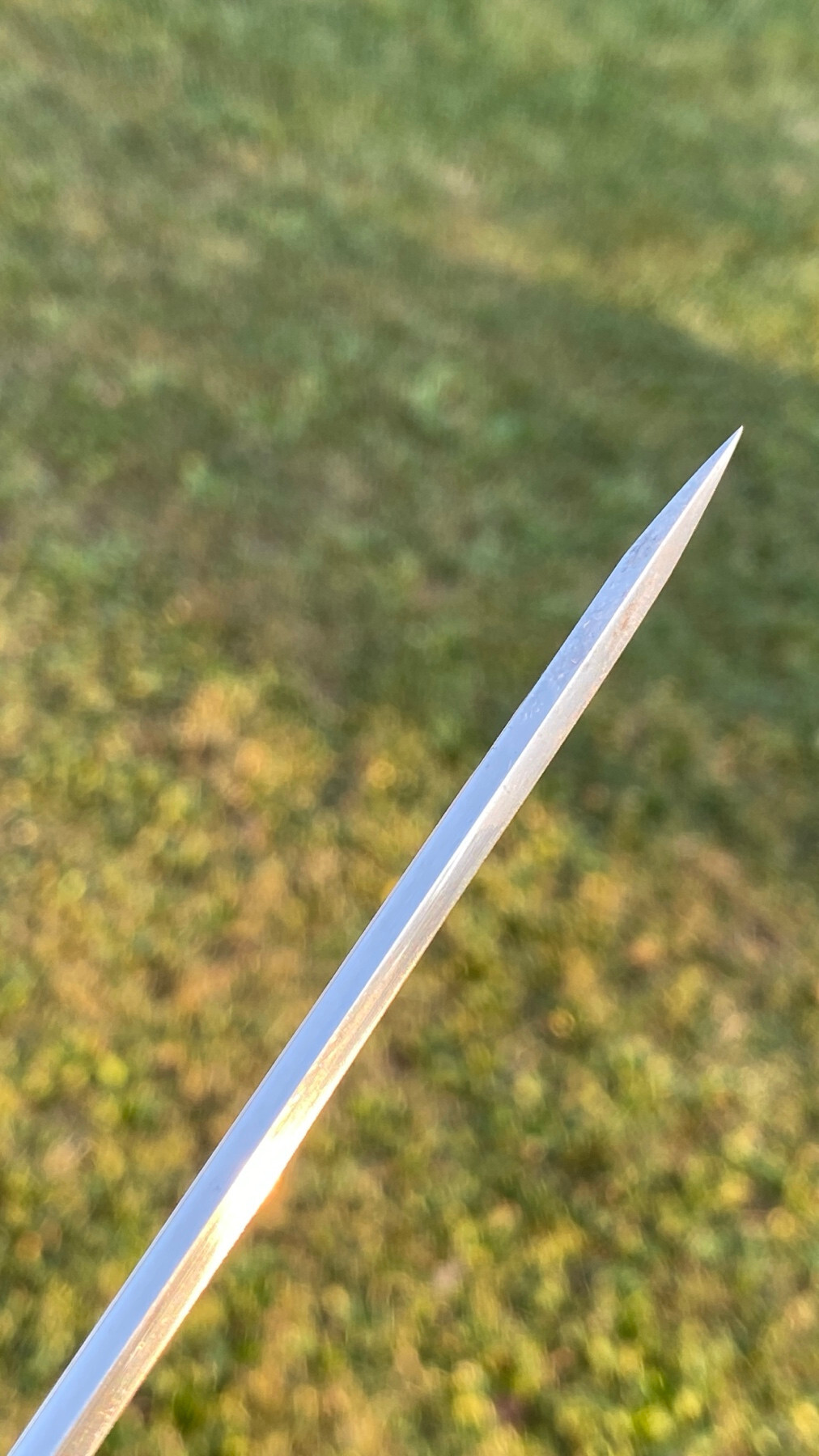
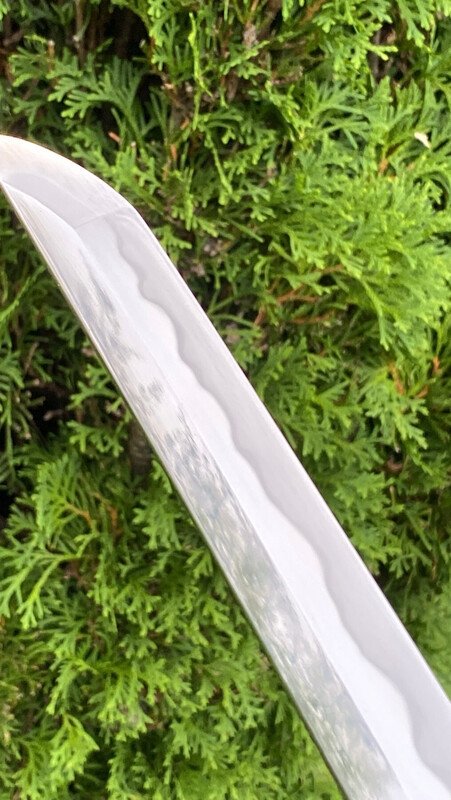
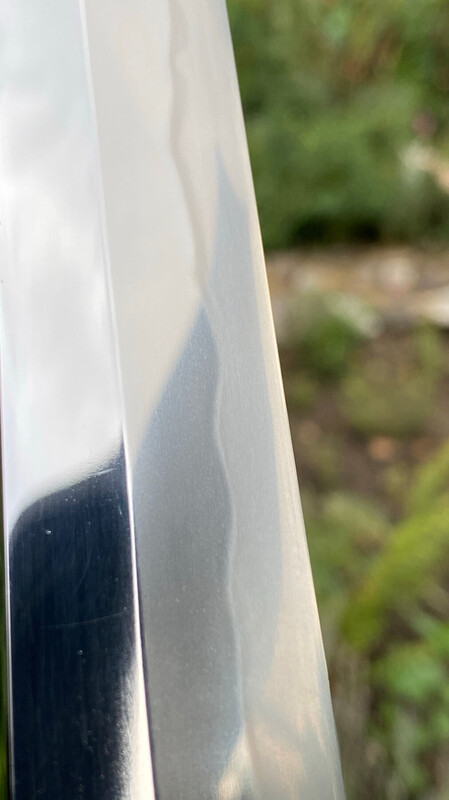
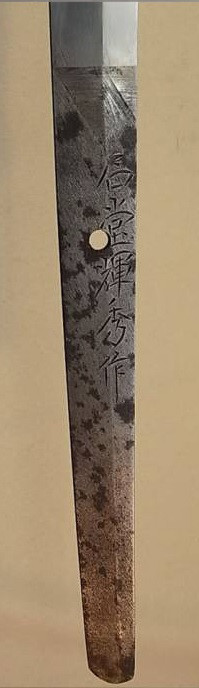
Thanks, Marcin! I will definitely check that source. In the meantime, some more pictures of that Ishido Teruhide. It was cloudy and I was unable to catch direct sunlight, which helps a bit in these situations. I was also not prepared to make a proper photo session, so I did not take a katana-kake with me. It also rained a lot, thus for now I am not able to share pictures of the koshirae and of the whole nihonto. But will do eventually. To me, nagasa looks even better in person, and the koshirae is very tight and well-made, pristine I would think. For the glory of Japan, as they say. Blade is signed "Ishido Teruhide saku", which according to this article: https://japaneseswordindex.com/teruhide.htm is the mei Ishido Teruhide used when creating blades of tamahagane in the traditional way.


-
Looking for a papered nihonto katana inside EU, gendaito or older
LastSamurai replied to LastSamurai's topic in Wanted to Buy
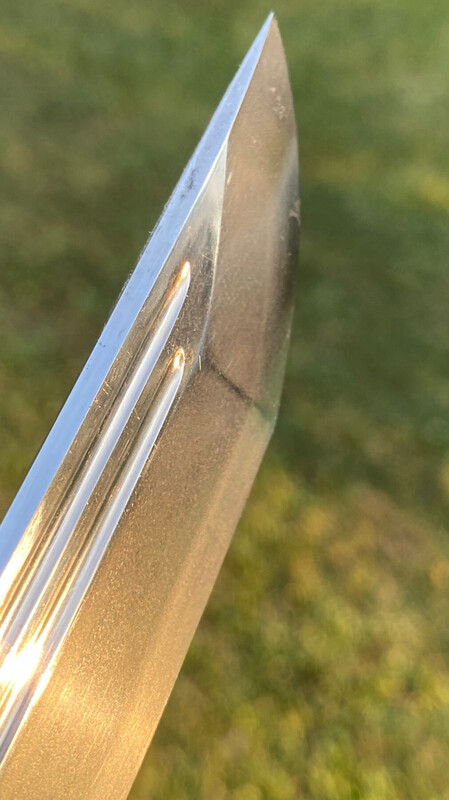
What I got is an Ishido Teruhide blade, made in 1940, sitting in a fresh Japanese polish. Has an original gunto koshirae with junior officer's tassel. Everything is in pristine condition, in fact I have rarely seen, let alone held such a preserved gunto. Huge thanks to the person who made the purchase possible! I have yet to take some proper photos, in order to provide the admiration this nihonto requires. But I will now share two quick close-up pictures which try to capture the beauty of the blade in polish. I believe it has a very tight ko-itame hada, at least in person it looks like ko-itame to me (in the proper light). What do you guys think? I will definitely share more photos once I find the time to take them, probably in a week or so. But I am a very, very happy person right now.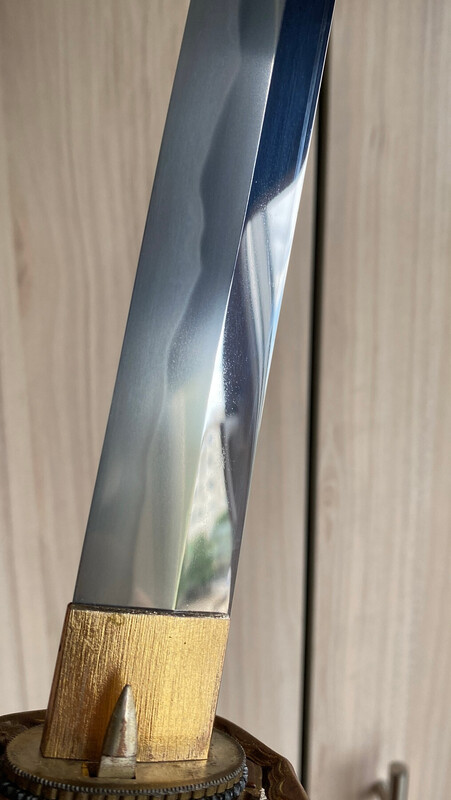

-
Looking for a papered nihonto katana inside EU, gendaito or older
LastSamurai replied to LastSamurai's topic in Wanted to Buy
Once I receive and inspect it, I would definitely drop in some pictures here for you. Thanks everyone for the interest! -
Looking for a papered nihonto katana inside EU, gendaito or older
LastSamurai replied to LastSamurai's topic in Wanted to Buy
No longer looking - a great person from this forum (I can share who he is if he so decides) helped me with the purchase of a wonderful gunto. Thanks and good luck to everyone! -
Translation help with a mei and Hozon
LastSamurai replied to LastSamurai's topic in Translation Assistance
Thanks for the support! Yes, with everything I've learned so far, I do believe it is the work of the first Kanetomo and the blade was made in the early 16th century, maybe around year 1510. It is a wonderful blade IMO, to my untrained eyes. I wish to thank everyone who helped me and shared their opinion and knowledge on the matter! You guys are great! -
Translation help with a mei and Hozon
LastSamurai replied to LastSamurai's topic in Translation Assistance
Maybe a bit, yes. As I don't have formal training in Japanese martial arts and I'm relatively more used to European swords, most nihonto feel light to me, especially bare blade wakizashi. But yes, it seems thick and a bit tip heavy, as it wants to cut deep into something when in motion. By the way, this is one of the sharpest antique swords I've had the opportunity to hold and admire. Very sharp. -
Translation help with a mei and Hozon
LastSamurai replied to LastSamurai's topic in Translation Assistance
Of course. I have digital calipers, so the measurements should be rather precise. Motogasane: 0.655 cm Sakigasane: 0.415 cm Motohaba: 2.85 cm Sakihaba: 2.05 cm Omosa: 547 grams -
Translation help with a mei and Hozon
LastSamurai replied to LastSamurai's topic in Translation Assistance
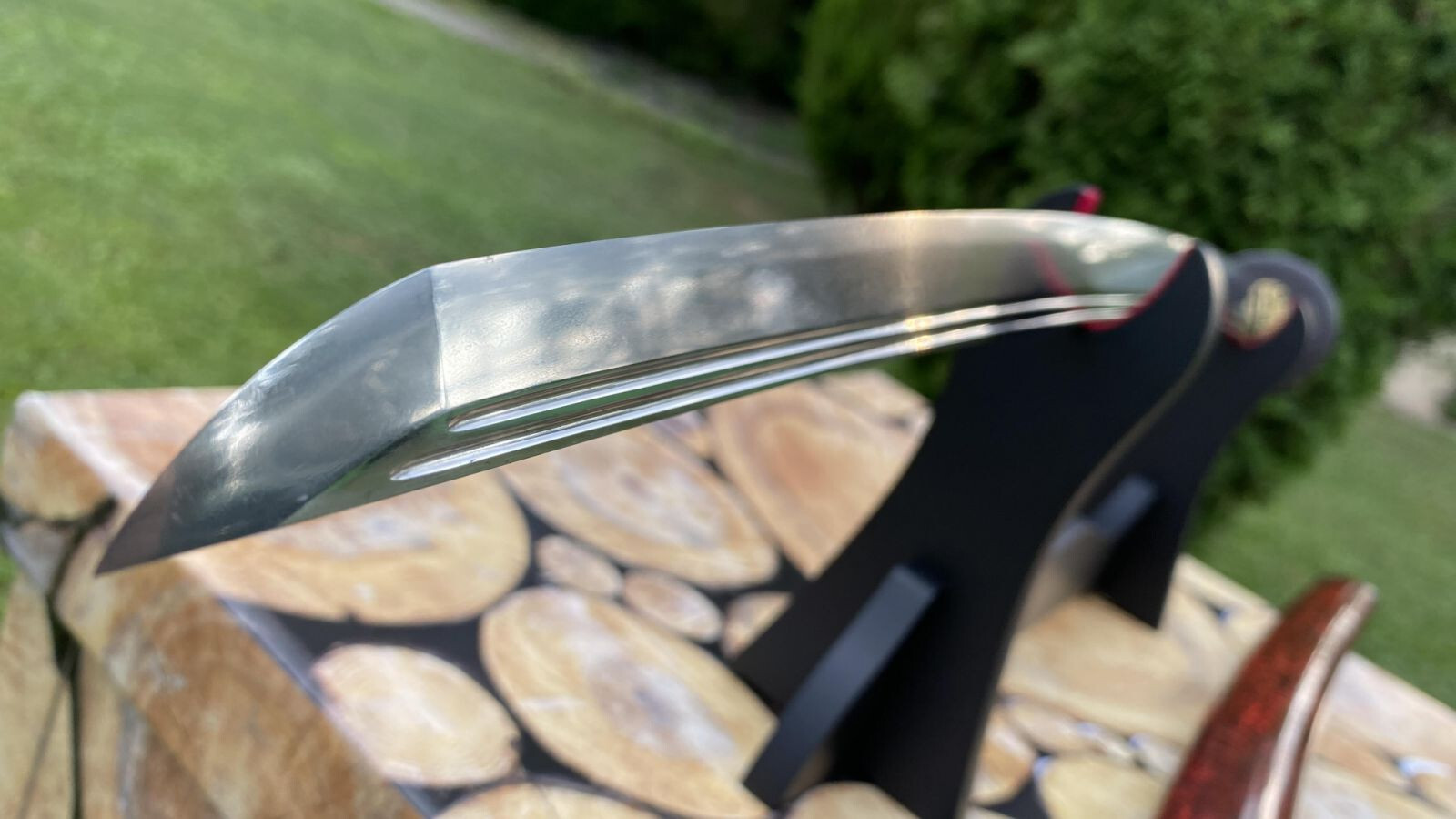
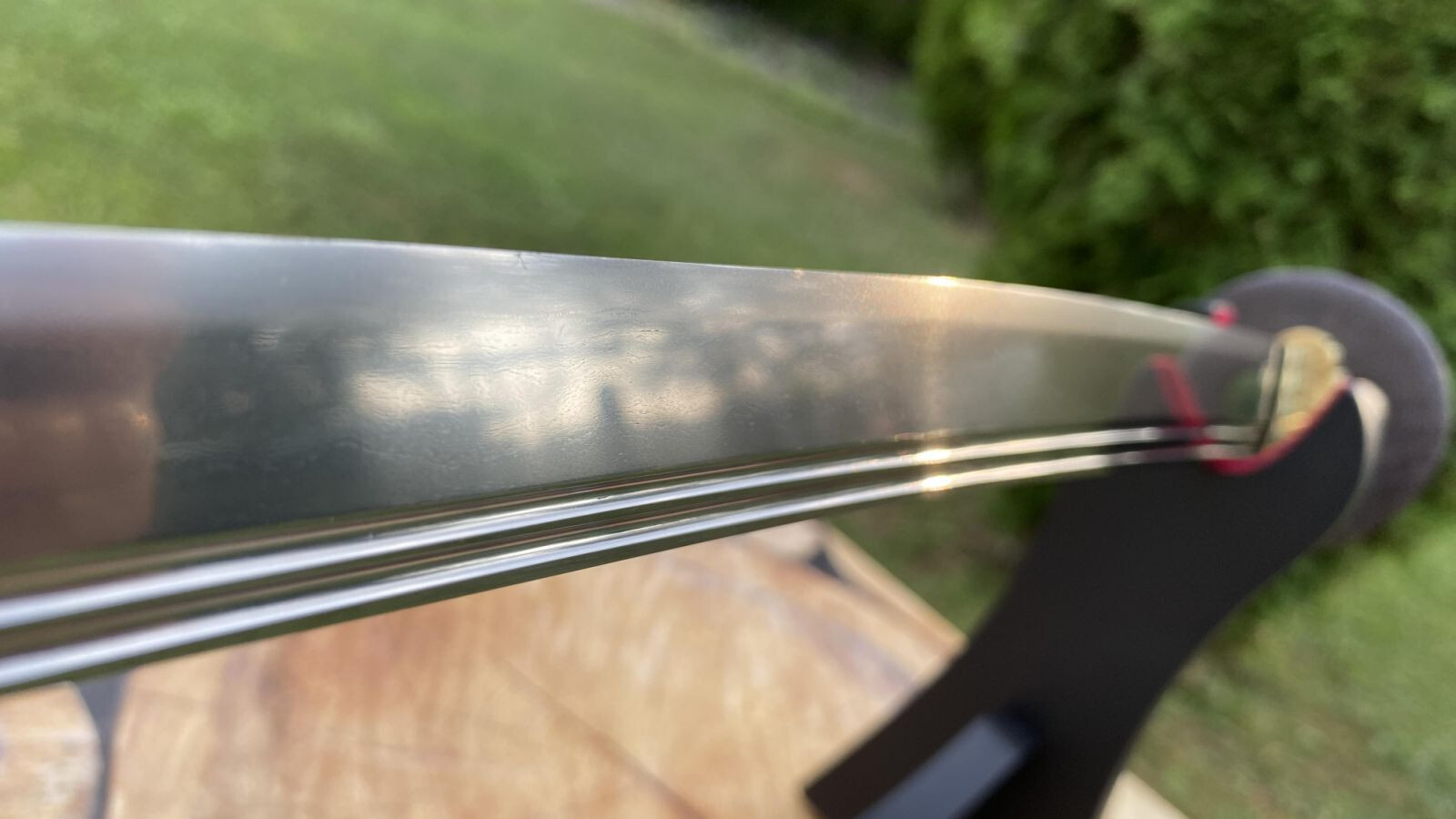
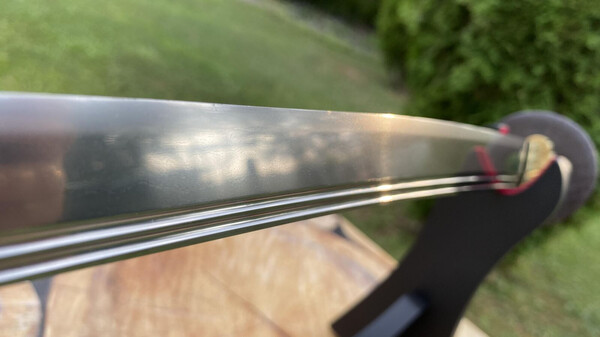
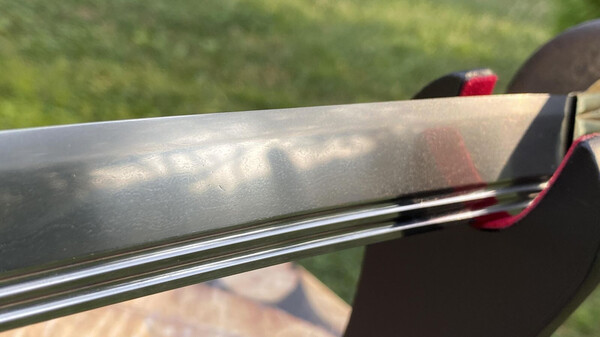
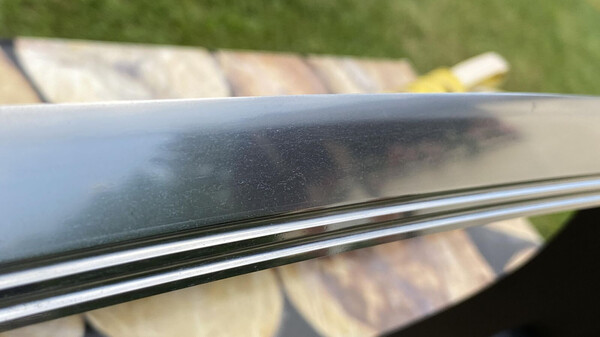
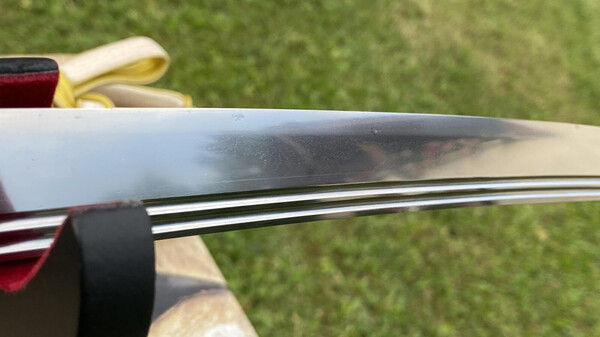
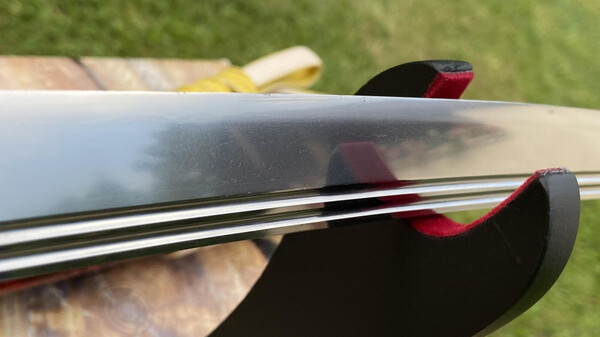
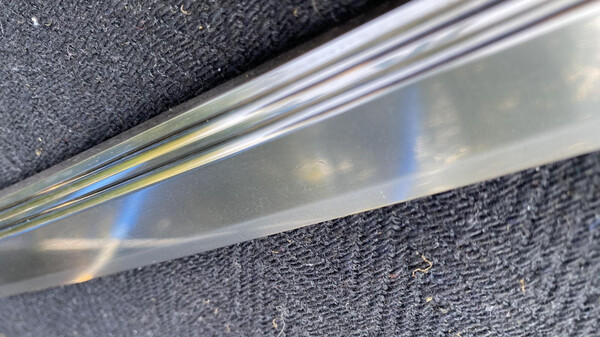
Marcin, such an interesting thing you mentioned! I was of the impression that this is just mokume hada, as I've read in the sources provided above by the other contributors that such appearance is somewhat typical of Kanetomo's work. And even to my limited knowledge, as far as I can tell, in person it looks like mokume, but it very well might be shintetsu. Very curious to hear other opinions. Worth mentioning is that the whole nagasa has practically no visible (to me) kizu, at least as delamination is concerned. I once did own a Koto era nihonto in pristine Japanese polish that exhibited a lot of kizu, obviously its lamination did not stand the test of time. -
Translation help with a mei and Hozon
LastSamurai replied to LastSamurai's topic in Translation Assistance
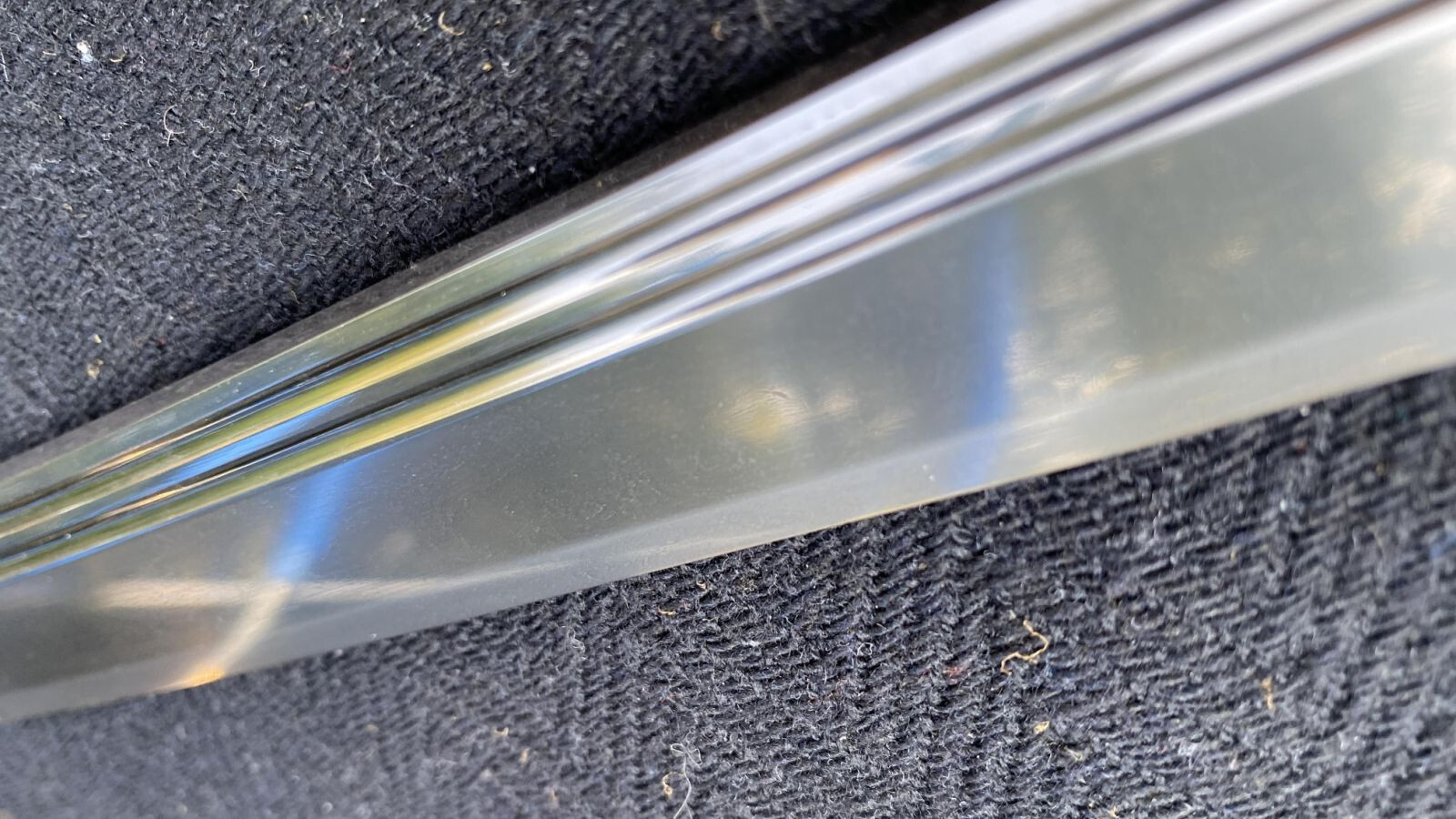
Here you go, Marcin! This is as close as my phone allows me to shoot.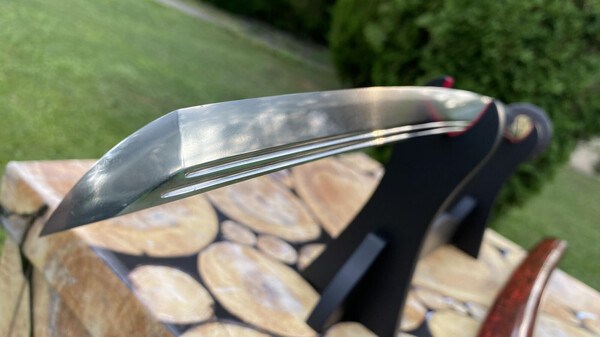

-
Translation help with a mei and Hozon
LastSamurai replied to LastSamurai's topic in Translation Assistance
Thanks, Piers D! If it were for you to guess, would you consider the said blade to be Koto or Edo era? Others loosely suggested Koto, but I have a bit of doubt and would appreciate more opinions. -
Translation help with a mei and Hozon
LastSamurai replied to LastSamurai's topic in Translation Assistance
I wish to cincerely thank everyone who helped with the mei and Hozon translation thus far! If, by chance, someone has the will to translate the whole Hozon, I would greatly appreciate the service! This will probably help me with my research about Noshu Seki ju Kanetomo saku and possibly to define the exact place and era the blade was made. As I wrote above, it is hard for me to trust ChatGPT, cause it already seriously mislead me once about the topic. P.S. I do have pictures of sugata and up-close of the nagasa and boshi that I uploaded, if this could help with defining the age or give more information about which specific Kanetomo it is attributed to. Sorry if this is not the place for this, I am rather new to NMB, not been very active here, thus please forgive me in advance if I should ask elsewhere.