
Leaderboard


Popular Content
Showing content with the highest reputation on 08/09/2025 in all areas
-
I'm 77 next month, and started collecting in 1973. I stopped in 1981 and sold my collection as I had joined the West Australian Museum and did not feel I should collect. I started collecting again in 2008 when I left the museum - but this time only gendaito 1876 - 1945. I first became interested in Japan / Japanese swords as one uncle had spent 4 years 1945-1949 in the Occupation of Japan (in Hiroshima) and another uncle had brought back a sword from a surrender his Australian Army unit took in New Guinea (it is a gendaito of good quality but mumei - Type 98 mounts).. i was therefore always interested in Japan and studied Japanese history and language at Uni...and here I am, on a Japan oriented site - love it.8 points
-
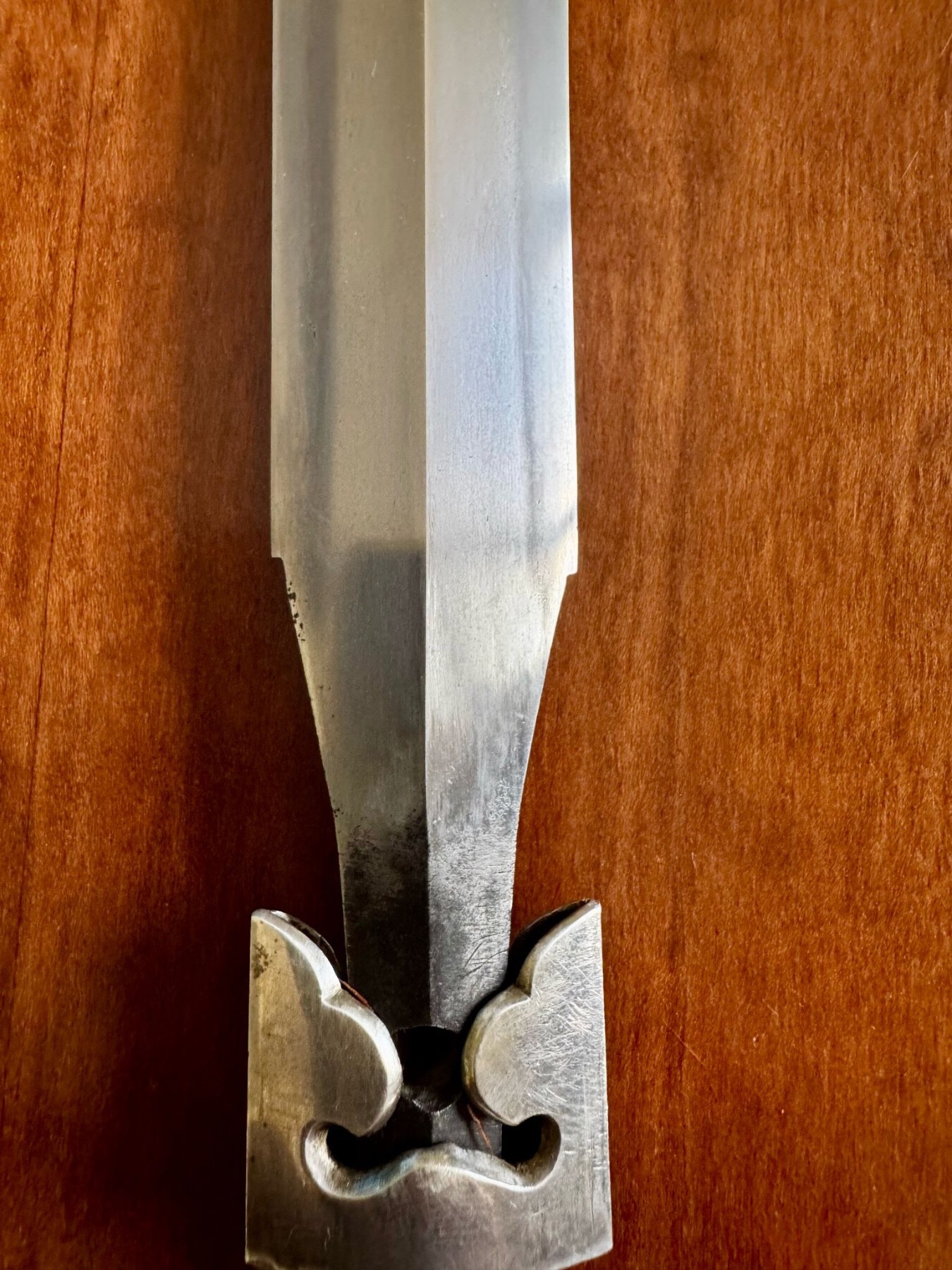
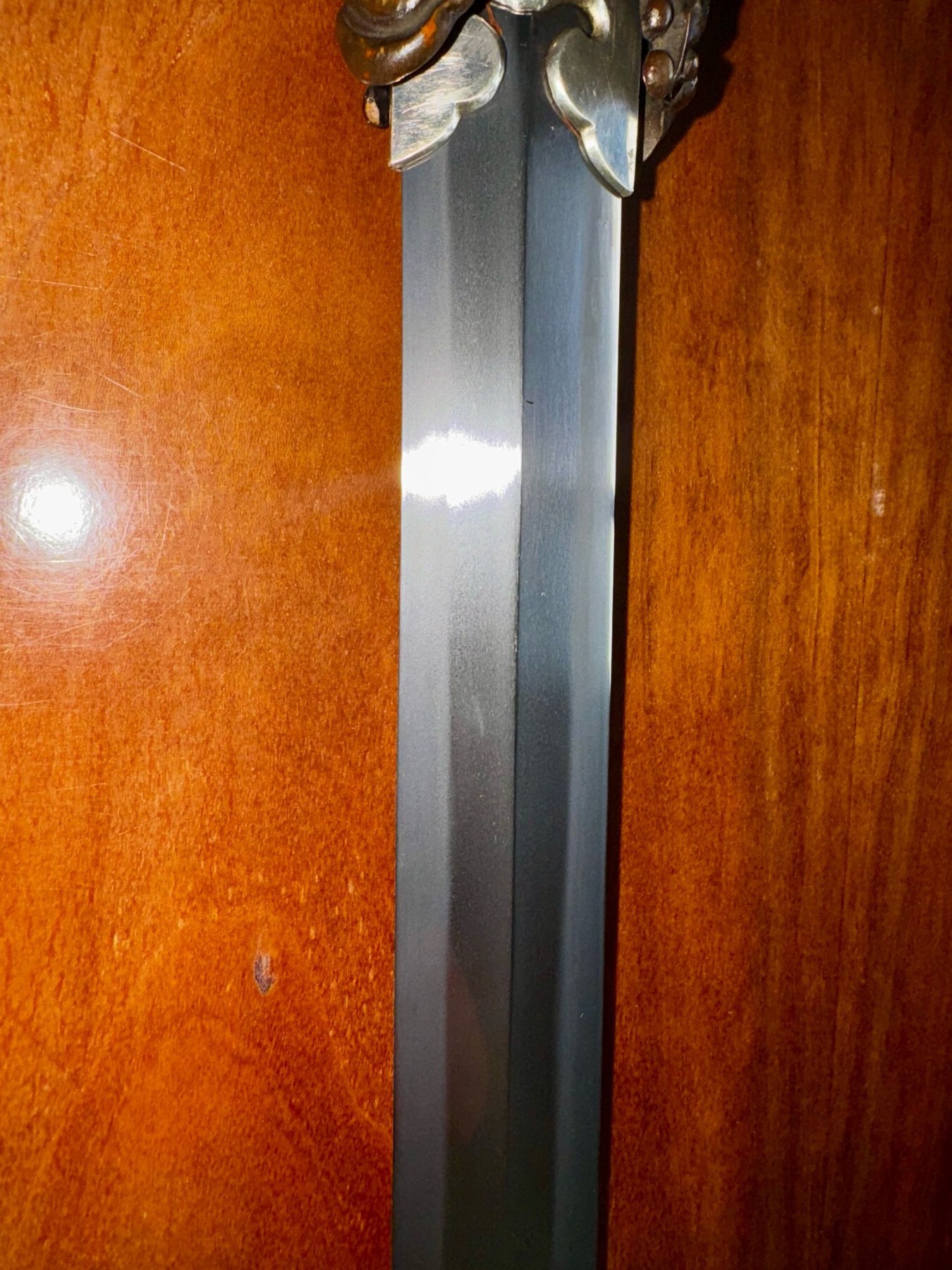
Not Omori level waves, but still, a pretty handsome package:


 8 points
 -
Sold a fairly average civilian mounted Gendaito that I adored because it had some really interesting activity. 10 Years later when my friend retired and sold his collection of knives, I bought it back. It's here with me again.6 points
-
Jake, if you watch Ford's video carefully, you will understand how iron TSUBA were made. There is no "mold" involved, and no stamping or casting at all. When the TSUBA blank has been forged, the shape is cut out, and the design is carefully chiseled and filed.6 points
-
Blade is a long-signature Sukesada with nengo and gold-foiled two-piece habaki, in hitatsura, with TH:


 6 points
 -
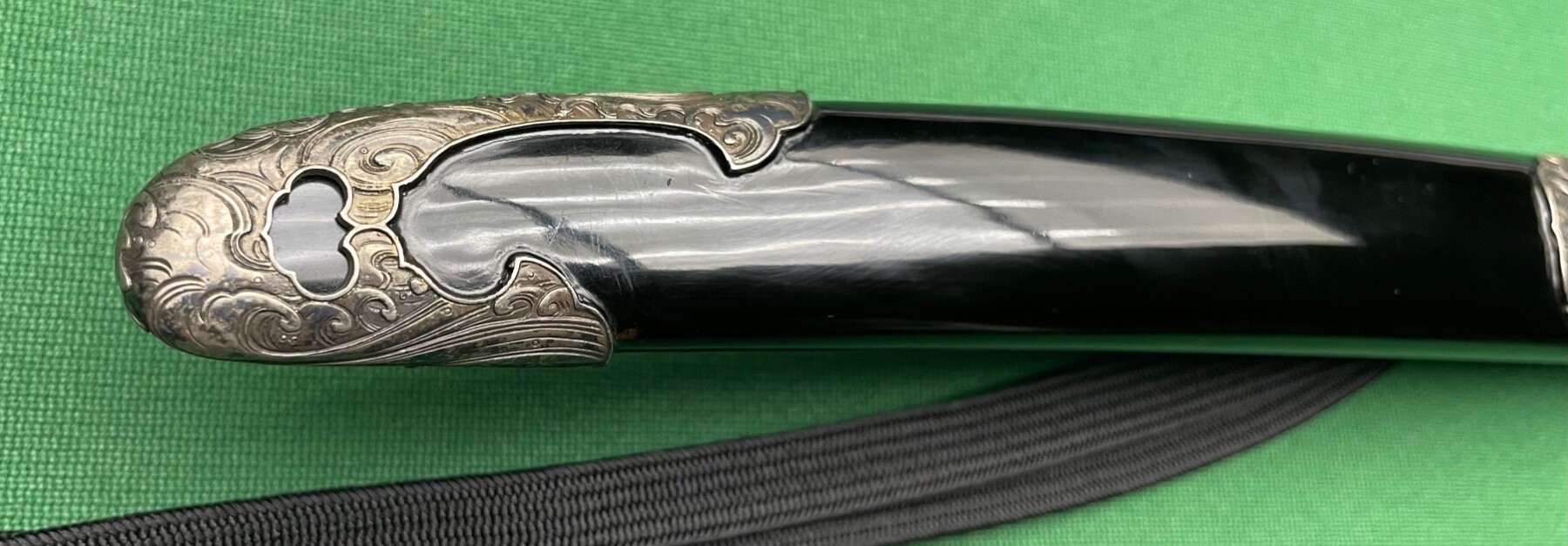
I have owned this sumptuous wakizashi twice and each time got tempted by bigger and bigger offers when I really didn’t need to. Last seen going through Sothebys I think. Truly beautiful and extremely high quality koshirae on a mint Kanefusa hirazukuri blade. By far the most luxuriously mounted sword I’ve ever owned. In perfect condition. I still kick myself. Anyone know where it is?

 5 points
 -
A friend picked this up for me from Itoh-san at the San Fransisco Show. I originally saw it in Chicago in April and have been lusting after it ever since. I've previously purchased a piece by the 5th Master Shigenaga, but this is the first piece by an earlier Jingo smith that I have ever owned. Love the plate and the treatment of the iron. Was included in the 2013 NBTHK Kurogane no Hana exhibition, and has variously been attributed to the 2nd and 3rd Master. (Second by NBTHK and 3rd by Itoh-san.) Love the whole package and hope you all do as well. Hope you enjoy and thanks for looking!


 4 points
 -
Normally I do not think about blades that are gone, but now that you bring up the subject, there are several. Not actually sure now why I sold them. One was a papered Sue So-Shu tanto in red koshirae with matching shinchu fittings. Every yellow-green part, including the kozuka and wari-kogai was original to the piece, and each part bore the same Mon. I sold it at auction more out of curiosity to see what it would fetch, but it went for almost exactly what I bought it for, and I think it must have then gone over to China. All I gained from the liaison was the sweet memory. Would I ever find something similar again? Now you've got me wishing again that I still had it!
 4 points
 -
For the shinken that I use for iaido I use susudake, cut and filed to fit the tsuka and the mekugi-ana. Susudake is smoked bamboo, thst is strong and flexible, far stronger that chopsticks bamboo. I would not trust chopsticks bamboo for my iaido practice. On the other hand if you do not intend to actually use it normal bamboo will do. I usually purchase mine here https://www.namikawa-ltd.com/product/131. Regards Luca4 points
-
So, I think I found another bargain on eBay that I purchased. Price was $85 U.S. ($100 including shipping and taxes). Just saying if you search for bargains on eBay, you can sometimes find them! Pictures attached.


 4 points
 -
I think one important thing is to scale the time frame to financial means of the person. People will have varying opportunities and it would be of course important to make most out of them. When someone gets into sword collecting I don't think we should expect that he/she will wait 5 years before purchasing a sword. I think that is just unreasonable time frame, if it is that difficult to get into the hobby most people will just find another hobby. For the first purchase I think few months would seem like reasonable wait time. Of course the level of purchase will totally depend on the amount a person will be able to commit. I know some people in this forum (and outside forum too) have actually started at extremely high level, and that is an amazing feat. As a small time collector I have only 1 sword in my collection that I have actually wanted, I got it 3,5 years ago. The few others I have I have just purchased because they were very cheap and I liked them. Most likely when I approach my next purchase that I actually want in my focus I will sell something. For me saving up to items that I actually want will probably take somewhere around 5 to 10 years. It is just fun to spend 5 months of sword saving budget into a cheap item and then sell it bit later on for approximately same amount, that just keeps me being a collector. If I would only buy an item once every 10 years, honestly I think I would not care about the collecting side of this hobby at all.3 points
-
髙田房守 Takada Fusamori ... is what it looks like.3 points
-
3 points
-
Hi Carlo, This is confusing I know. Back in the days, when I drew my first Oshigata, I drew the hadori outline of the sword... From this angle, what you see being at the yellow line is the outline of the hadori, the whitening finish that the polisher applies on a traditional kesho polish. What you see in red is the boundary of the true hamon. This is a rather intense hadori job that has been done quickly, and the hadori line doesn't follow the hamon accurately. It is emphasized here to create an undulating impression (the default for hadori, which is created by small circular motions of the thumb following the hamon with a piece of shaped whetstone underneath), whereas the hamon of your sword is composed of angular gunome with deposits of nie. It's a common occurrence to find rather quick and intense hadori works for swords where it is financially irrational to invest thousands of dollars (3K-4K$) and wait for a year to have an appropriate, character elevating hadori finish. This is why western collectors drum sashikomi as the only right finish, with hadori often painted as being untruthful 'make-up' to mask things. Top tier hadori is wonderful however, and appropriate for many types of nie-dominant blades interpreted in a shape that the finger can realistically follow. When looking at the sword under an angle at the light, the hadori will visually vanish (Going from light to dark) and you will see the light reflecting at the nie (Going from dark to light), forming the real border (nioiguchi) of your sword's hamon. Hope this helps, Best, Hoshi
 3 points
 -
Also remember that not everyone is a blade collector. Many are sword collectors ie the whole package together with untouched koshirae. Not everyone is an elitist blade hunter. If that is your “thing” - fine but don’t assume others even want to follow the same path. The sword collector most likely has a whole different set of objectives and tolerances which could easily mean accepting an unimportant blade or one in poor condition in return for some nice fittings. It has already been said above I’m sure but judging what others enjoy collecting based on your own views is irrelevant3 points
-
I always figure if the only meaningful collecting was sai-jo saku master smith's pieces, we'd only have books on that. But we don't. If it was just koto and shinto blades, we wouldn't have books on shinshinto. If it was just traditionally made blades, we wouldn't have militaria books on war-time swords and fittings but we do. There is enough depth in this field to really get deep into any one of many many sub-genres of Japanese swords. Masterwork collectors aren't better or more pure than gendaito collectors. Its all about one's preference and collecting goals.2 points
-
Never regretted a sale as it helped pay for something better down the line.2 points
-
nice to have a reunion story. Unfortunately I'm the opposite, I pick swords up and never let them go even if i should.2 points
-
Recently I have been sorting through netsuke and making lists of what I have, what I would like to keep, what I should let go of if pressed, what I should keep in one place, and what I might need to split up or move, e.g. take back for a public talk I am giving in Japan in November. While doing this, I thought I should go through the ivory box anyway. A couple of them I showed to someone for input, setting off a debate. The end result is that two of what I thought were ivory have turned out to be stag antler, the material hidden under the carving and staining. There are a couple more that are proving difficult to judge, but just to be on the safe side, those have been popped back in the box. Here are the two clearest examples, which have just been reclassified to stag antler. The first is a basket of sumi charcoal briquettes for the tea ceremony. 3.14 cm wide. Photos of top, side and bottom. Can you see any giveaway signs? And underneath
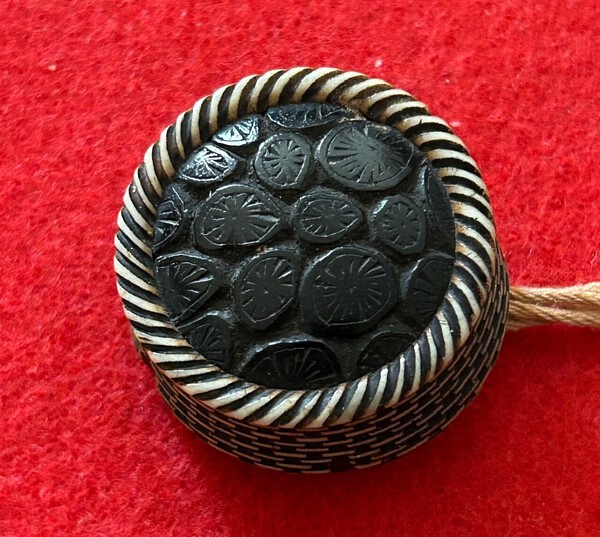

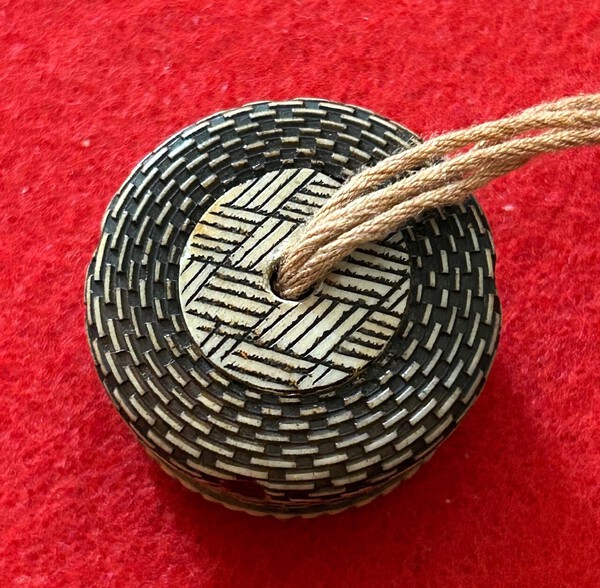 2 points
 -
Hi Bruce, I actually answered this one earlier for the owner on Reddit. Yoshida-ke (Yoshida family)2 points
-
駿州住俊長 – Sunshu (Suruga no kuni) ju Toshinaga 昭和五十三年八月日 – Showa 53rd year, 8th month (August 1978) The smith’s real name is Maeda Hiroshi (前田博志). He was born in 1942.2 points
-
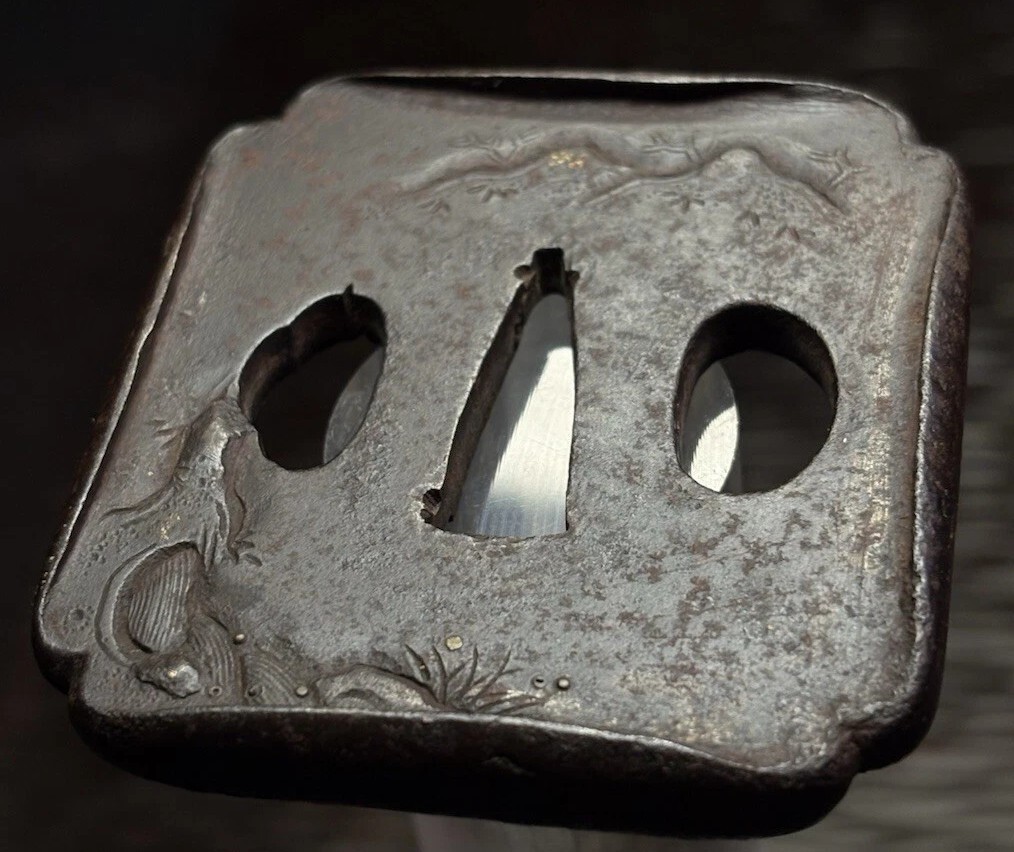
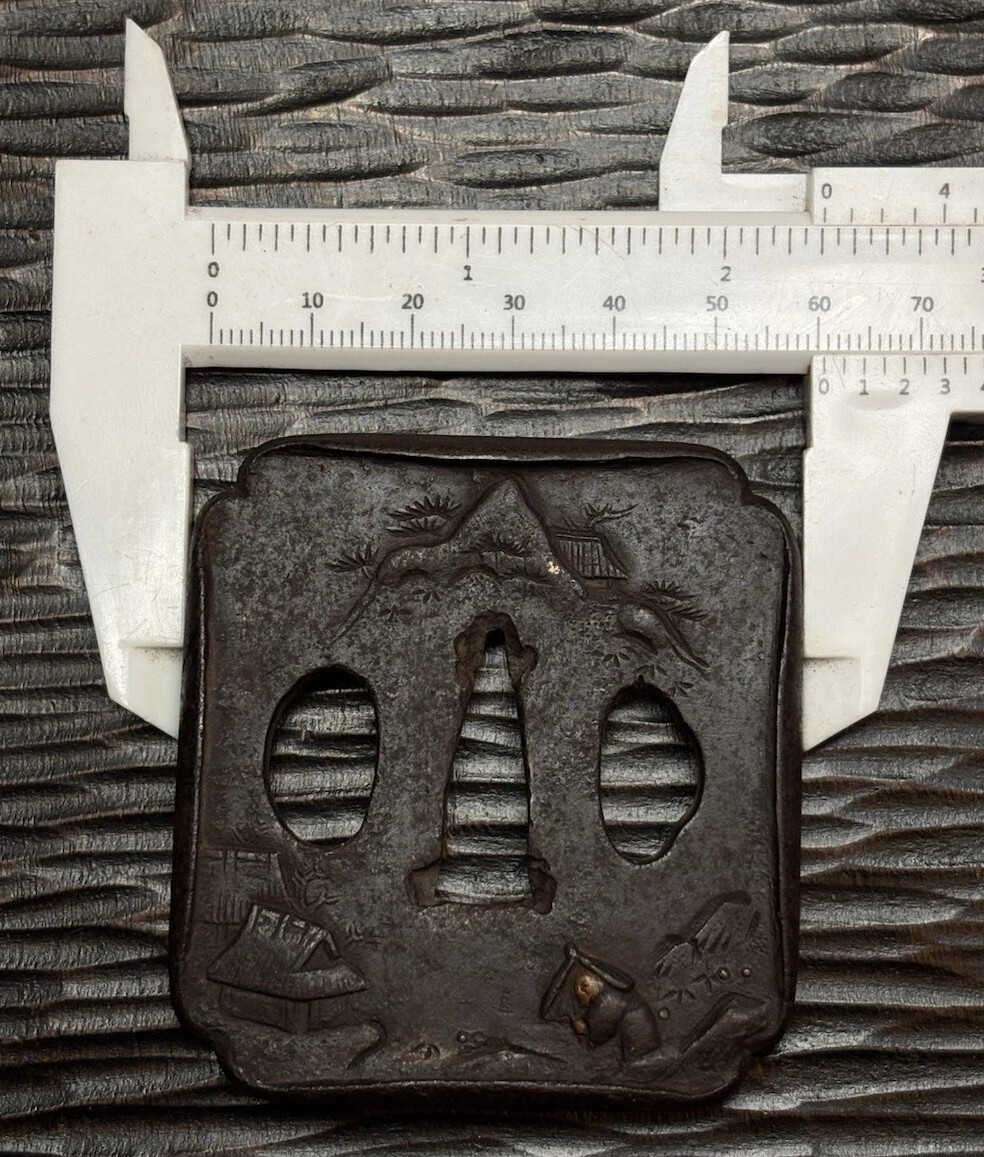
The tagane-ato punches would suggest it isn't cast Iron - looks like some ten-zogan on a couple of the fan faces, seven lobes seems like a rare design lots of eight and six lobes - I wonder why seven seems uncommon?2 points
-
I'm probably going to pull this for now. Had a few inquiries and a few very lowball offers. Fortunately the need to sell financially is a bit lessened for me right now.2 points
-
2 points
-
2 points
-
2 points
-
The banner image of that 100 million dollar wall hanger inspires complete confidence.2 points
-
See how traditional iron TSUBA of the SAMURAI era were actually made:2 points
-
Thank you Piers.1 point
-
It describes the life of Fukushima Sensei, to whom the stand was presented.1 point
-
Thanks for the information it is a big help I was reading Taka as two separate characters. I saw the Ta / Da character as being written twice with one being bigger than the other. Every day is a school day for me with these characters. Thanks again Mike1 point
-
Yes it’s tricky especially as bone was often carved and stained to look like antler! Fiendishly confusing! I guess bone was cheaper and more readily available.1 point
-
I think that’s the logo for something called “marto” Ive seen them shared on social media over the years. Kind of a mall-sword / display replica as far as I understand1 point
-
Colin, it was the remaining brown channels from the outside of the frilled antler base. The slight discolouration on the central plug underneath could be either from bone or antler, though. See them in this one too: (sadly no longer mine though)
 1 point
 -
Hi Piers Without handling them I’d have gone for antler on the Kikusui and Bone on the Charcoal but it’s often very difficult to tell. What swung it on the charcoal?1 point
-
PS Be aware that two kanji are used in names for Taka-, the standard 高, and the non-standard 髙.1 point
-
Susudake is funny stuff, and like toast, comes in various shades of burnt. It used to be very expensive some years ago. Perhaps as old farmhouses are getting knocked down there is now more on the market? If you do find examples at antiques fairs, etc., and wish to make your own, make sure to get bamboo with thick enough walls and joints from which to fashion suitably sturdy pegs.1 point
-
The second is a Manju sukashi Netsuke, (sukashi is often called 'Ryusa' in the Netsuke collecting world), hollow and perforated in all directions, openwork. The theme seems to be Kikusui, chrysanthemums and river water, the legend of the Kiku-jido, the boy rejected by his lord, but who was forever faithful. Heavily stained, but under a magnifying glass the material is flecked, not an attribute of the purity of ivory, but more of antler and bone. Made from an antler seat or base. Relatively small in the hand, width 3.99 cm x height 1.48 cm. From top: Underside:

 1 point
 -
The small chain around the guard looks to me to be a watch chain, personal belongings of the officer1 point
-
How tall are you? 74 for laido? I got this picture to estimate what length is best.
 1 point
 -
In an earlier post I mentioned that I was about 22 when I first started collecting Nihonto. In fact, I was younger than that , about 20, though I started collecting edged weapons when I was six, so have been collecting some sixty years now.1 point
-
55, started at the young age of 14.1 point
-
Libby, This oriental gunpowder tester sounds like a precious memento of your grandfather. My feeling is that it is from the late 1800s. If it is not in your way, I would suggest keeping it, and when holding it in your hand experiencing a connection with both him and perhaps a gunsmith or powder quality tester of Eastern Asia. As to whether it is Japanese or Chinese, even if I were to take it in hand I still might not be sure. As a rule of thumb, more decorative objects tend not to be Japanese. I will continue to look for any similar examples... Thank you for sharing it!1 point
-
I have a 33 inch blade going for polish atm and last time i opened my wallet there was an echo1 point
-
On the other hand, if it really is the aesthetics of the blade that captivate you, it may be a $1500 blade that is "just right", even if you could afford $50K. It's not going to be "that name" with "that history"... but that's not always important. It may be something else entirely that is the goal of the purchase. My last blade was a sad little overpolished and belt sanded wakizashi for $150... and it's a wreck, but I'm learning lots from it, and will have fun making koshirae for it.1 point
-
Here some more pictures. best regards John


 1 point
 -
Funny, selling my collection of Star Wars Legends Comics is what allowed me to purchase my first gunto May the force be with you, -Sam1 point
-
Absolutely, but it's not the money. Its what we see, the 2000 is crap, the 5000 is ok, then you see 10k, 15k,25k etc and you see, really see and then you're all alone on an island again1 point
-
Saving for something is a good thing. Too many people live paycheck to paycheck.1 point
-
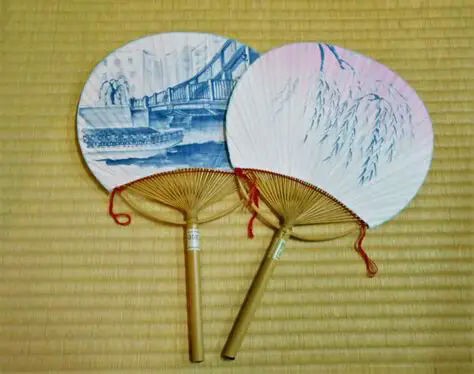
I think that they are only seven fans.
 1 point

























This leaderboard is set to Johannesburg/GMT+02:00