
Leaderboard


Popular Content
Showing content with the highest reputation on 07/03/2025 in all areas
-
Hello all Well I believe in this case i can interject and put a few of the nonsensical commentaries on this expert (i cannot call him a dealer) to rest. This was my sword (bought from Darcy). I let go of it to Peter only because I felt he truly deserved to have the sword and no other interested party did nearly as much research on the blade before asking me to buy it (i have had offers on this blade people wouldn't believe) . He literally travelled to my location, took his initiative to see the sword in hand, he didn't make a commitment on the spot but after seeing the sword, thought many weeks about it before making the purchase. He came prepared with evidence and research from multiple sources and the amount of work that went into that would earn even the respect of people like @Rivkin and @Jacques who i think wouldn't have known where to start, indeed i was completely taken back by his dedication. And no, i dont need the money, i needed it to go to the right person. The sword itself, it's beauty cannot be appreciated except in hand. The hataraki will keep the owner amazed for years with new discoveries constantly. The sugata is powerful and has a presence that could easily make this a one sword collection. There are less than 10 Yukimitsu with Kinzogan and only one with Kinzogan to the swords owner, that is this one. I believe this sword has all the elements you want in early Soshu, the jigane is a mix of Shintogo and Yukimitsu experimental flare done with pure elegance and the Hamon is like what we see Masamune doing in cases. Everyone going on here about someone they've never met or dealt with needs to appreciate that this gentleman had the right eye when he requested me to relinquish the sword to him and that was in a room with about another 30 juyo and TJuyo, he went for this and that says everything. He's an excellent student, teacher and researcher so I suggest you stick to what he is selling not how or why.4 points
-
If you do not believe what you have been told then contact the NBTHK in Japan. The leading authority on Japanese Sword authentication. Send them some images…..they will enjoy a good laugh. This is utter nonsense and an elaborate fake.4 points
-
Don't understand why some people comparing different time epoch and argue which is the best. Personally i think in every time epoch, there are made wonderful blades.4 points
-
I suggest you research Heian swords. You will see there is not a single remote resemblance to this thing. You don't even have to ask us, just look at how they were made, what they looked like. What the fittings looked like...consistently. We don't need to tell you any of this. You can see it for yourself. You won't find a single sword in the evolution of Nihonto even close to this. Not one thing. You have some of the world's experts here on the forum. Which you seem to be ignoring. You have people here involved in the society you are talking about. You have authors here, museum curators, very high end collections. People who visit Japan multiple times a year to study Japanese swords. Not a single one will give even one tiny vouch for this. Or even contact you privately to find out anything. The NBTHK won't respond. This will be a joke to them.3 points
-
Just my opinion, but I suspect this entire inquiry was based on ulterior motives, its just too peculiar. Time will tell of course, but I would hazard a guess this item will be seen listed for sale at some point sooner than later.3 points
-
Afraid there is not one single thing here that bears any relation to a Japanese sword even remotely. It is so far out of real as to be comical. Nothing intended as criticism, but they are insane if they came to that conclusion and I would question their testing methods or even their basic knowledge. It does not have even the slightest chance of being anything real. I don't even see anything Chinese archaic there.3 points
-
I admit that Japanese experts have incredible skill in determing authencity and details. However I must say that sometimes I prefer neutrality against extremely specific while still theoretical opinions. I know foremost experts put non dated items (sometimes even mumei items) to a specific point in smiths career based on some tiny details on worksmanship or tiny variations in mei etc. I tend to favor more neutral uncertainity. Of course that is not nearly as exciting. Sōshū is not really my thing. I start to like them only from Sadamune attributed items onwards and I think Hiromitsu might be my favorite Sōshū smith. This year in Japan I saw Aizu Shintōgo (National Treasure), TJ Kunimitsu tantō, and a Jūyō Kunimitsu tantō. Granted these were all in museums through the glass but all I remember is the very fine worksmanship, as these items do not interest me that much. However one thing I have come to realize when travelling in various places in Japan is that memory is a fickle thing. And to be honest I have always thought I have decent memory especially when it comes to swords. This brings me to another point, how long has passed between the evaluation of the swords by the expert. I am not trying to put down experts in any case, they do have incredible knowledge and pretty much all our current information is based on several generations of Japanese experts. Still I think even the Japanese experts will rarely get to study the most important items side by side as they are owned by various, Museums, Shrines, Individuals etc. I saw some absolutely incredible stuff in various places in Japan this summer but I realized it is way too difficult for me to accurately judge swords against each other if I saw them in different museums on different days, not even considering about comparing to items I saw last year for example. Even if an item would be bit out of norm, if after polish it would exhibit very fine worksmanhip after the polish, then I would think there is a great chance it would be seen as a legitimate item. As I am at home in a fever, I did this just for fun. Here are the Kunimitsu kanji for 11 dated Shintōgo Kunimitsu tantō. And I did scramble the mei so they are not in any ascending or descending dates.
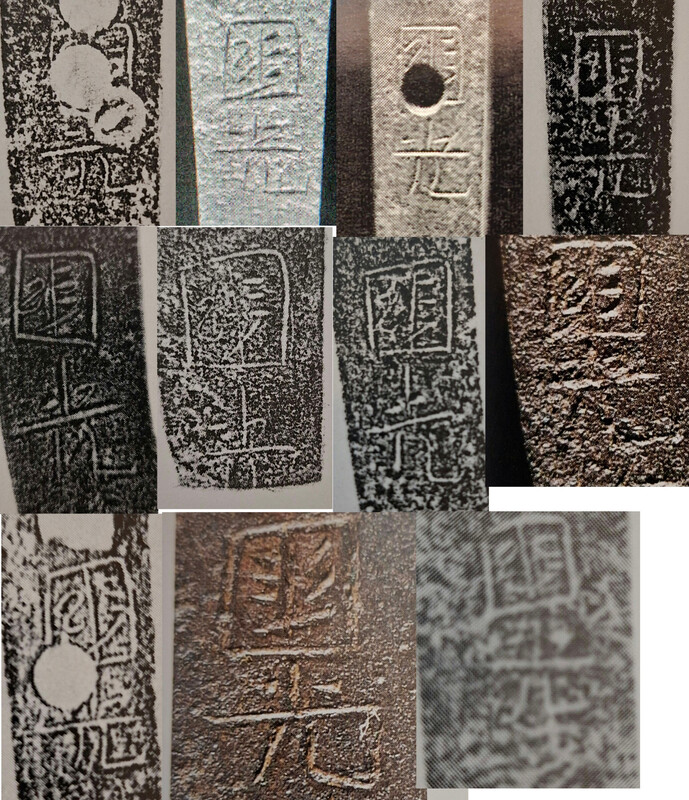 3 points
 -
Sorry RR, but John is absolutely correct. The spelling mistakes and assertions on the "Certificate" are laughable.3 points
-
Anyone with a passing knowledge of real Japanese swords could tell you this is a very poor fake in a matter of seconds.3 points
-
Unfortunately this is an absolutely appalling fake, the certificates are complete nonsense and worthless. Seek an immediate refund. https://www.jssus.org/nkp/fake_japanese_swords.html3 points
-
Hello all, This is my first nihonto, which I got from one of the recommended dealers here on NMB. I chose this one because it was one within my small budget and was in good enough polish to be able to see some of the activity in the blade. I am quite happy with it. I've been studying it trying to learn as much about it as I can; age, school and province, etc, but feel like I have kind of hit a wall due to the limited number of swords I've been able to handle. So I wanted to put it out here as a kantei exercise for anyone who wants to take a look at it. Most of what Ive learned about this is from Nakayama's book. Here are the specifications of the blade as best I could figure them out. If it's possible to tell from the photos if I got these right. I was a little stumped on differentiating activities in the blade (ie nie v. nioi) so these are my best guess. nagasa 66.2 cm sori 1 cm kasana 0.7 cm mihaba 2.8 cm kissaki 3.2 cm shinogi-zukuri chu-kissaki, or maybe ko-kissaki iori-mune low shinogi standard nakago (ubu) ha agari kurijiri kiri yasurime o-mokune hada nioi-deki hamon- hiro suguha boshi- komaru Mumei To me it looks to have the typical shallow kanbun shinto sugata, and I think the condition of the nakago points to a similar age. It’s been polished a few times, the hamachi is all but gone. i think it had an interisting life, there is one decent kirikomi on the mune. The seller said that it might be from the shitahara school, and as far as I can tell that seems possible, but I have a hard time differentiating from some other schools that seem to have similar characteristics. I am looking forward to seeing what you all make of it. Edward

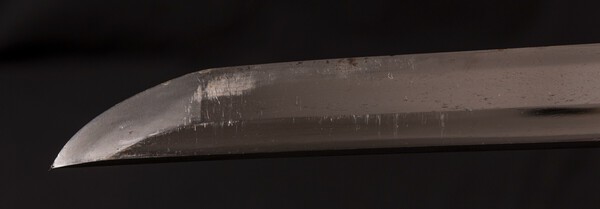

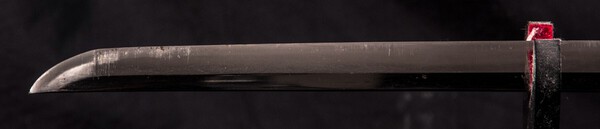
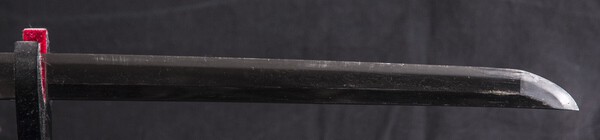




 2 points
 -
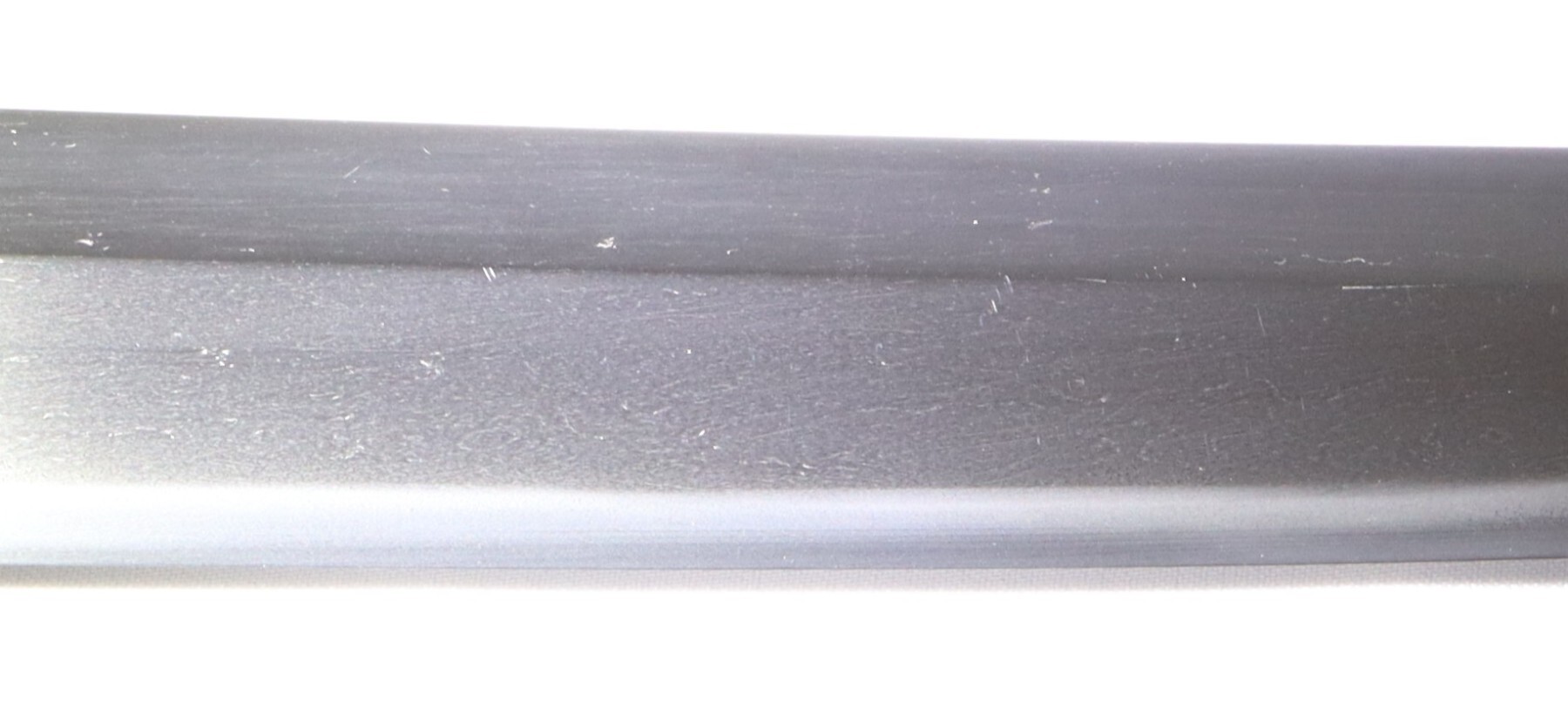
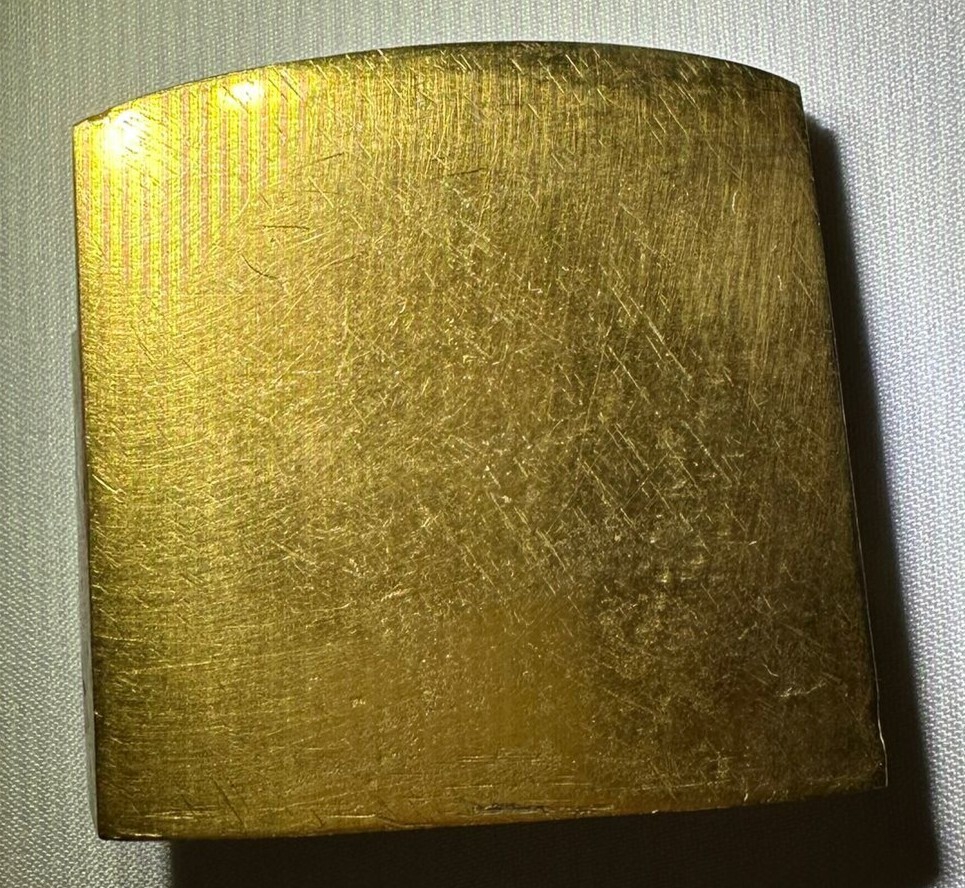
Type: Katana Ubu, Suriage or O-Suriage : O-suriage Mei : (Mumei, Signature) : Mumei Papered or not and by whom? : NBTHK Tokubetsu Hozon Era/Age : Late Nanbokucho Shirasaya, Koshirae or Bare Blade? : Shirasaya with Kanzan sayagaki, two piece gold plated habaki Nagasa/Blade Length : 66.6 cm Sori : 1.3 cm Hamon Type : Notare midare Jihada : Itame and masame Other Hataraki Visible : Ashi, inazuma, and tobiyaki. Flaws : None Sword Location : USA Will ship to : I am open to options but shipping will need to be covered. Payment Methods Accepted : PP, venmo, wire transfer. Price and Currency : SOLD Other Info and Full Description : Hello, I am offering an early Mino katana with NBTHK Tokubetsu Hozon (TH) papers that attributed it to Kanenobu. Here are two possibilities listed in Marcus Sesko’s Swordsmith Index: KANENOBU (兼延), Ōan (応安, 1368-1375), Mino –“Kanenobu” (兼延), Naoe-Shizu school, student of Kaneuji(兼氏), according to tradition the younger brother of Kanetoshi (兼俊) KANENOBU (兼延), Meitoku (明徳, 1390-1394), Mino –“Kanenobu” (兼延), Naoe-Shizu school The sword has an old well preserved shirasaya with a Kanzan sayagaki attributing the work to the Naoe Shizu school but not a particular smith. The blade is o-suriage mumie. The sugata is powerful with a tori-sori given the wide base (motohaba) of 3.3 cm balanced by a narrow spine (kasane) of 0.6 cm that slightly tapers up to a 2.18 cm sakihaba and an elegant chu-kissaki. The ji has a bright appearance with itame and masame jigane and some mokume. Cheki and ji-nei are plentiful with sections of rolling black nei sake. The hamon is a rugged notare midare pattern that is shallow in sections, characteristic of older Mino swords, with deep nioibuchi. Hataraki include ashi and inazuma with boiling nei sections. Long thin stretches of tobiyaki run near the first 5-6 inches of the blade’s ura side. The boshi is a bright, shallow, ko-maru with a small gunome accent near the yokote on both sides. https://photos.app.goo.gl/tNDeSYJmyzmxGK9N7
 2 points
 -
It gets better and better. I haven’t smiled so much for this long in a while. PLEASE do tell us what the NBTHK say….we are holding our breath!2 points
-
here we go again2 points
-
The certificate is Chinese.2 points
-
I suspect both certificates are completely fake, and had nothing to do with either organization. In fact, neither template exists for either of these organizations, and the wording is just bizarre. Plus all the Japanese fonts mixed in with English. High level fakery here.2 points
-
2 points
-
Hi all, for your enjoyment, this was the first of my recent gunto aquisitions. Nice set of all numbered seppa and tsuba, some great big nobbly same. Lovely choji hamon. Great condition iron saya. Mei is Hoshu Takada Taira Sadamori with a buddhist bonji above.



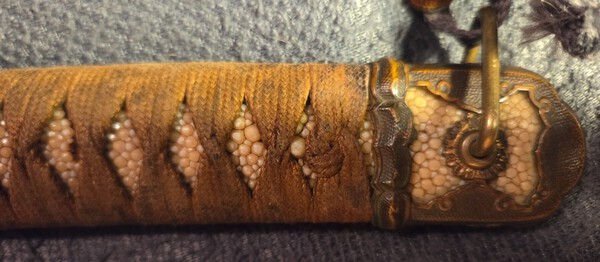
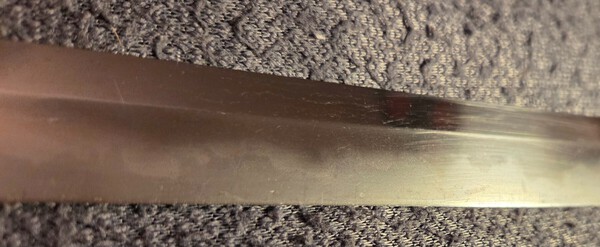 2 points
 -
https://www.touken.or.jp or european branch https://nbthk.eu2 points
-
Thus the chart now has "RA" in '41, but with a footnote: (note: Pasting the chart on the NMB site causes spacing distortion) 1941 WA ワ KA カ YO ヨ TA タ RE レ SO ソ TSU ツ NE ネ NA ナ WA 6 -S WA 134S WA 158S WA 175S WA 231S WA 238S WA 638S KA 89-S KA 228-S KA 232-S KA 236-S KA 238-S KA 275-S KA 353-S KA 405-S KA 458-S YO 11 YO 57-S YO 122-S YO 150-S YO 162-S YO 234 YO 320-S YO 349-S YO 350-S YO 352-S TA 24-S TA 68-S TA 127-S TA 181-S TA 287-S TA 298-S TA 277-S TA 305-S TA 313-S TA 336-S RE 6-S RE 71-S RE 153-S RE 193-S RE 347-S RE 413-S RE 409-S RE 476-S RE 524-S SO 25-S SO 66-S SO 185-S SO 216-S SO 219-S SO 231-S SO 257-S SO 308-S SO 453-S SO 482-S SO 564-S SO 574-S SO 620-S SO 630-S SO 718-S Tsu 29-S Tsu 95-S Tsu556-S Tsu 198S Tsu 254S Tsu 438S Tsu 573S Tsu 575S Tso 601S Tsu 651S NE 2-S NE 26-S NE 144-S NE 347-S NE 384-S NE 396-S NE 401-S NE 414-S NA 5-S NA 124-S NA 106-S NA 184-S NA 232-S NA 354-S NA 377-S NA 379-S Na 383-S NA 484-S NA 573-S NA 574-S NA 716-S RA 222-S# ? 218 ? 283 ?xxx Filed off.Bohi 1942 RAラ MUム U ウ WIヰ NOノ O オ* KUク YAヤ MAマ RA 7(?)-S RA 100-S RA 341-S RA 495-S RA 768-S RA 820-S RA 823-S RA 858-S RA 934-S RA 984-S RA1027S RA1030S RA1071S RA1162S RA1196S RA1232S RA1256S RA1333S RA1356S Mu 87-S Mu 89-S Mu213-S Mu528-S Mu555-S Mu595-S Mu637-S Mu705-S U 20-S U 70-S U 99-S U 255-S U 357-S U 414-S U 481-S U 592-S U 703-S U 704-S U 1593-S NO 34-S NO 273-S NO 302-S NO 430-S NO 474-S NO 493-S NO 533-S NO 730-A Ku 33-A Ku 101-A Ku 327-A Ku 452-A Ku 466-A Ku 471-A Ku 560-A Ku 878-A Ku 897-A Ku 947-A Ku1020A Ku1087A Ku1200A Ku1226A Ku1327A YA 72-A YA 79-A YA 201-A YA 246-W YA 350-A YA 353-A YA 417-A YA 475-A YA 505-A YA 608-A YA 622-A YA 623-A YA 677-A YA 702-A YA 710-A YA 736-A YA 957-A YA1048-A Ma 77-A Ma 78-A ? 26-S ? 345-S ? 483-S ? 529-S ? 744-S ノ???-A2 points
-
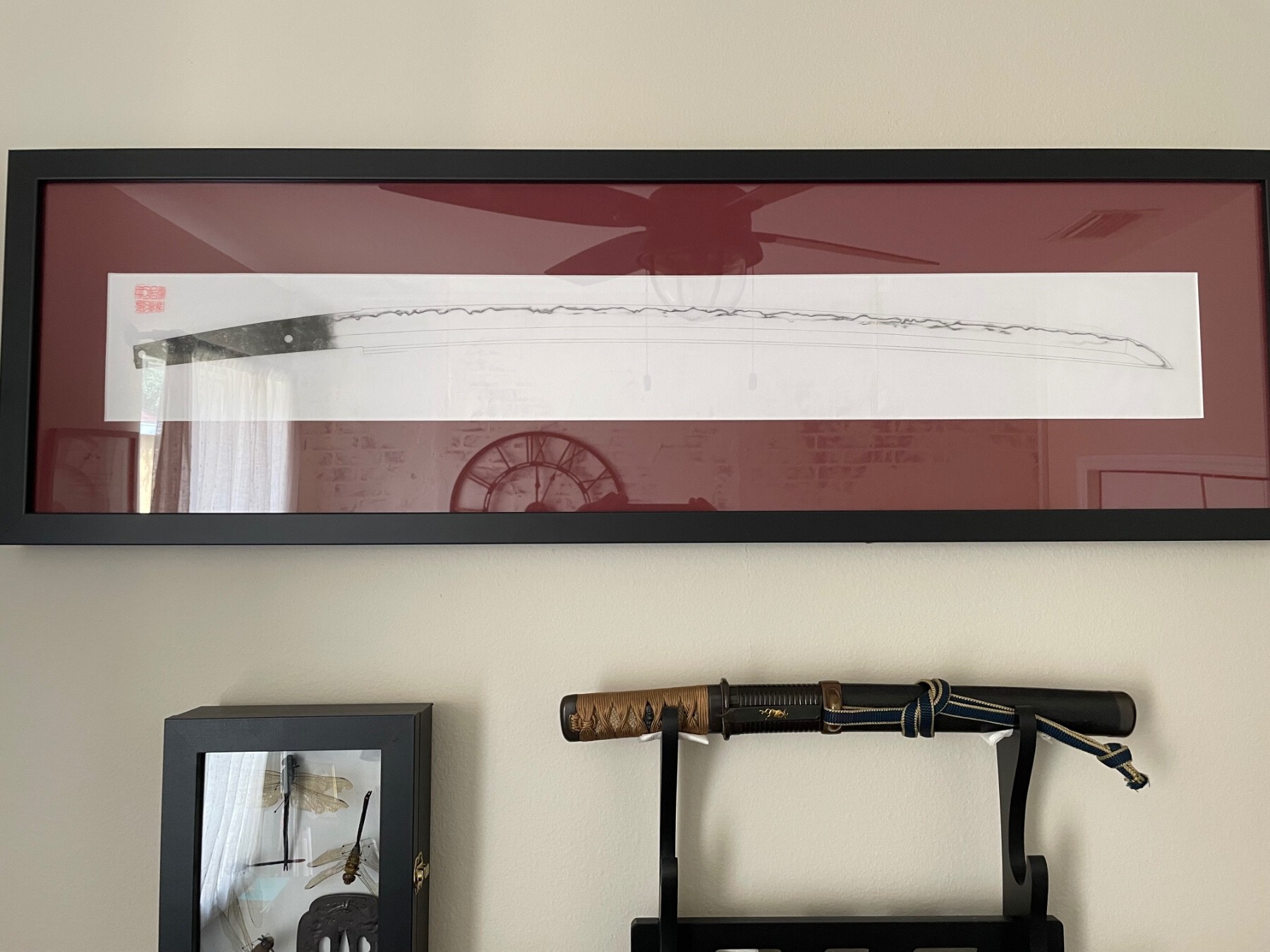
I had it framed. I'd like to keep the oshigata.
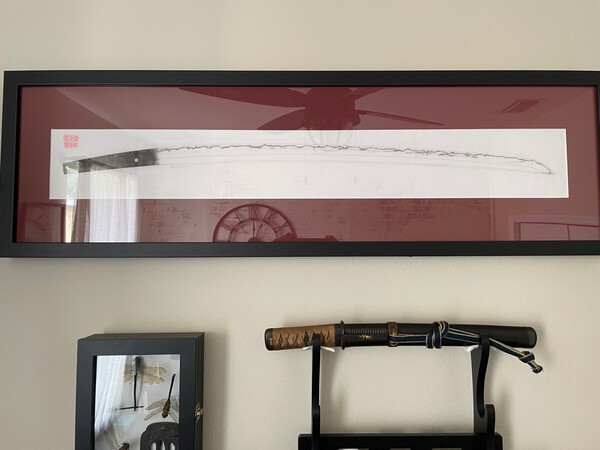 2 points
 -
The Spencer Museum of Art in the University of Kansas has a nice modest collection of tsuba - around 250 https://spencerartap...#/search/works/tsuba But I don't know who is describing the collection or how much they know about the more common schools of artists. Kinai School Description: Tsuba, radish and leaves pierce work. [ Not even close!] https://spencerartap...-search#/object/4756 https://spencerartap...-search#/object/4888 A cast copy [very common] see https://www.ebay.com.au/itm/226138221756 https://spencerartap...-search#/object/4836 Description: Tsuba, two leaves (blood stain corrosion) [clearly Kinai school design, "Blood stain corrosion" - how do they make that conclusion?] https://spencerartap...-search#/object/4818 Description: Tsuba, shibuichi nanako - kiri and passion flowers and leaves. Then they go on to say made of Iron - obviously Sanmai construction. Wrong descriptions are not restricted to just this museum of course - you need to be vigilant and keep your eyes open though.1 point
-
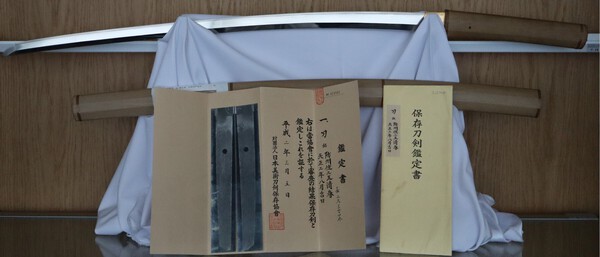
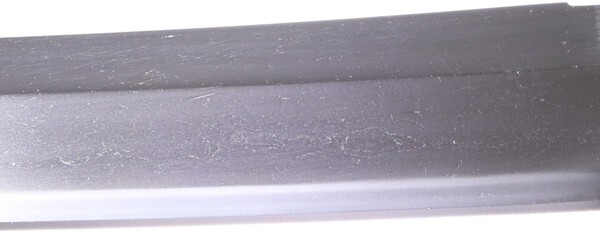
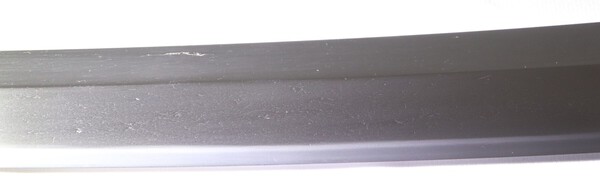
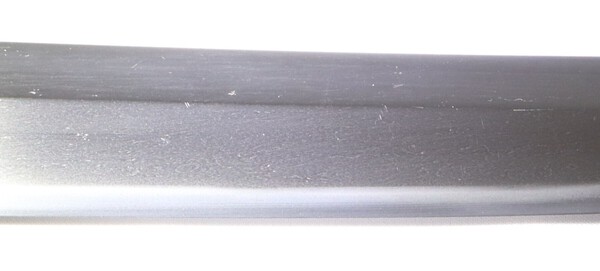
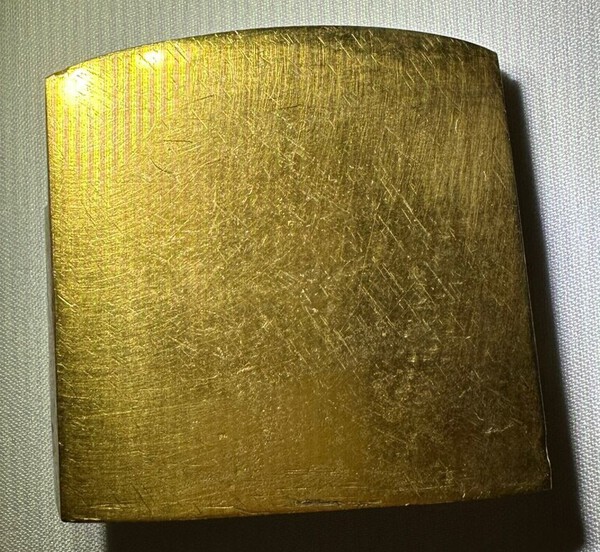
Dear NMB, I am offering this Nio Kiyoharu katana for sale with NBTHK papers. Katana Nio Kiyoharu, Dated August, 2nd Year of Tenshō (1574) Blade Length: 71.5 cm (approx. 2 shaku 3 sun 6 bu minus) Curvature (Sori): 1.8 cm Width at Base (Moto-haba): 3.20 cm Width at Tip (Saki-haba): 1.90 cm Thickness at Base (Moto-kasane): 0.75 cm Thickness at Tip (Saki-kasane): 0.48 cm Mekugi-ana (peg holes): 1 Description: Shinogi-zukuri, with a high shinogi and low iori-mune. It has a medium-length kissaki. The kitae is nicely formed ko-itame mixed with itame and some masame hada, with strong flowing patterns in places and a clearly visible jigane. The hamon (temper line) is suguha-chō, with small nie and some nice hataraki. The boshi has a slight notare style and is covered with nie. The nakago is ubu. It comes with a large copper habaki plated with gold. Has a shirasaya and a sword bag. SOLD Free shipping inside EU Shipping outside EU available for a small additional cost (€20–40) Shipped with UPS Express (or different courier), fully insured to full value Located in the Netherlands – pickup possible Any questions are always welcome! There will be a donation made to NMB if the blade is sold through NMB.












.thumb.jpeg.90938891b2288b96404c71e5d546f878.jpeg)
.thumb.jpeg.b678d76dcead34247c5045e9e1fcc36f.jpeg)
.thumb.jpeg.7fabdd4eba8ea35ee5703d0d1ae3d019.jpeg)
 1 point
 -
Ken katabami, Ukita. The large Ukita contingent (who lost as part of the western forces at the Battle of Sekigahara in 1600) would surely have lost credibility post battle and become homeless ronin.1 point
-
Oh, my face hurts from prolonged smiling. This wasn't an April Fools Day joke, was it? We've had a few, like the Cajun and his National Treasure Beaver Cleaver of a tachi.1 point
-
And OP is very much a troll.1 point
-
I think we have a troll….. It takes a few seconds to look at Oxford Archaeology and realise they are archaeologists ie they dig holes in the ground and research/appraise historic sites and buildings. They don’t issue these appraisal certificates. It’s as fake as the “sword”.1 point
-
I seem to remember waaaaay back...maybe 10+ years when something like this came up here...possibly the same item. Was being valued in the East Bloc for millions and was a clear fake. There was a group/syndicate behind it....some elaborate company using auction house to legitimize it. It was a total fake item. Wonder if it was the same. You can say what you like and argue as much as you want, and insult as much as you want, there is not ONE person on this entire forum or in Japan who will even give this 1 minute of their time. It is so far from reality that it is just absurd. Have to go find that other thread from way back, almost the exact same story and fake "certificates" on something that doesn't resemble any Japanese sword that ever existed. It's not even like there is plausible doubt here. It is so obvious as to be absurd.1 point
-
It's very clearly a fake Japanese sword, and there's absolutely no doubt in my mind. The fact that it's been disputed for ~10 years would imply that someone is not trying very hard. Here is a helpful link to spot fakes in the future: https://www.jssus.org/nkp/fake_japanese_swords.html I am in no way trying to be rude, although I can see how it might seem that way. The fact is, it does not require an expert to tell a pigeon from a falcon. -Sam1 point
-
Dear members, it is already July, so I would like to remind you of my TSUBA Forging Workshop. At this moment, I have still 2 workplaces left so in case you are interested, please sign up. This workshop is for NMB members only, so it might be a good opportunity to get into contact with others of our board. TSUBA forging workshop 2025.pdf1 point
-
It's shameful if any respected Asian studies departments delivered these results, sincerely hope you receive your money back.1 point
-
A museum collection of 474 tsuba - but only useful if you are blind! https://data.fitzmuseum.cam.ac.uk/search/results?query=tsuba After all, why have a collection where only two have images?1 point
-
Hi Bob, Sorry havent checked back for awhile. Ive changed my opinion after a second look and I was mistaken on one seppa having an edging added. It appears its the pressure put on the seppa by the tsuka that makes it appear as an add on. Ill draw up from your specs- transfer inches to mm and send you sketch. Will need more specs later! Cheers Mike.1 point
-
Delete what i said if comes across as disrespectful, no probs Something Brano said touched a nerve, there are dealers willing to rip folks off on a daily basis, just wanted make that clear. Its not a rarity. Again, it had nothing do with the firm mentioned at the start. Jacques is right, blades ideally should be seen in hand, but that's not always possible, for many reasons.1 point
-
My mantra again, Never buy a sword even tokubetsu juyo without having had it in hands1 point
-
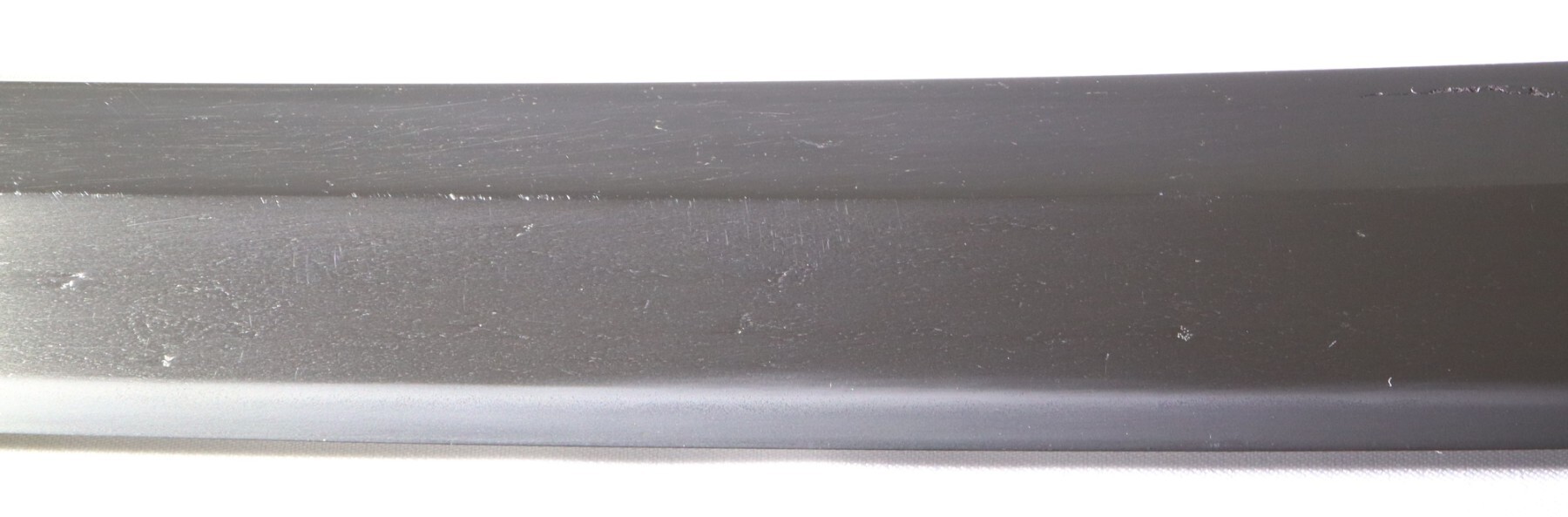
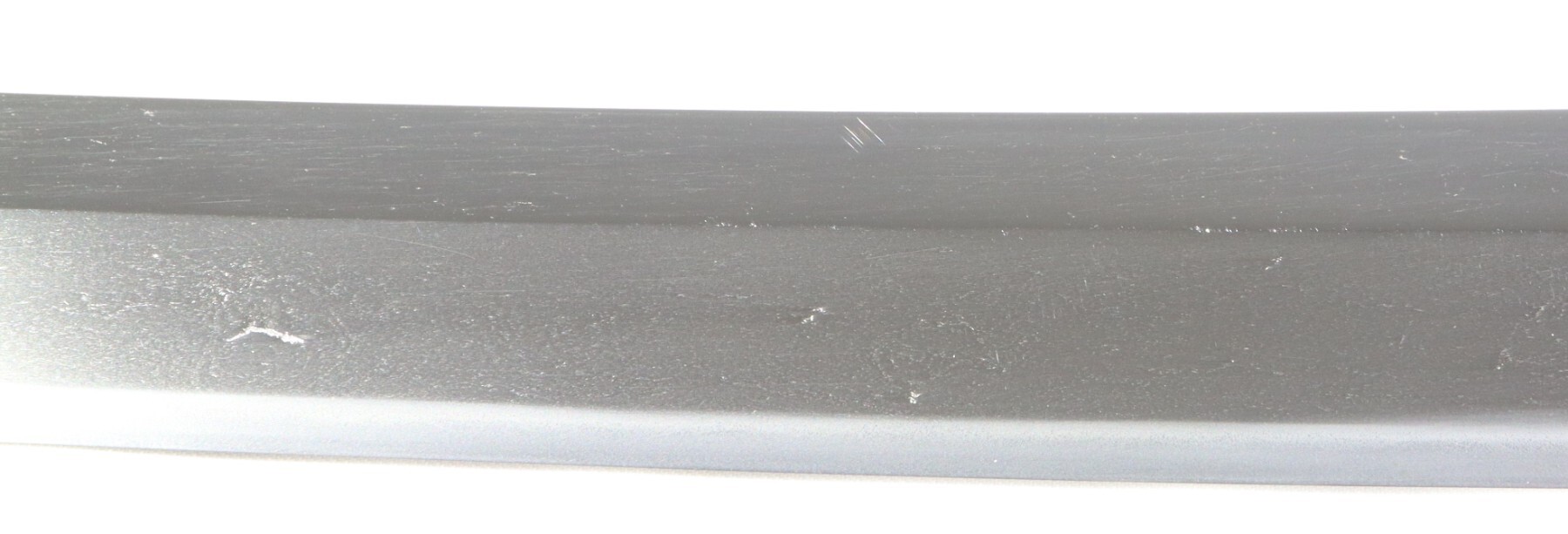
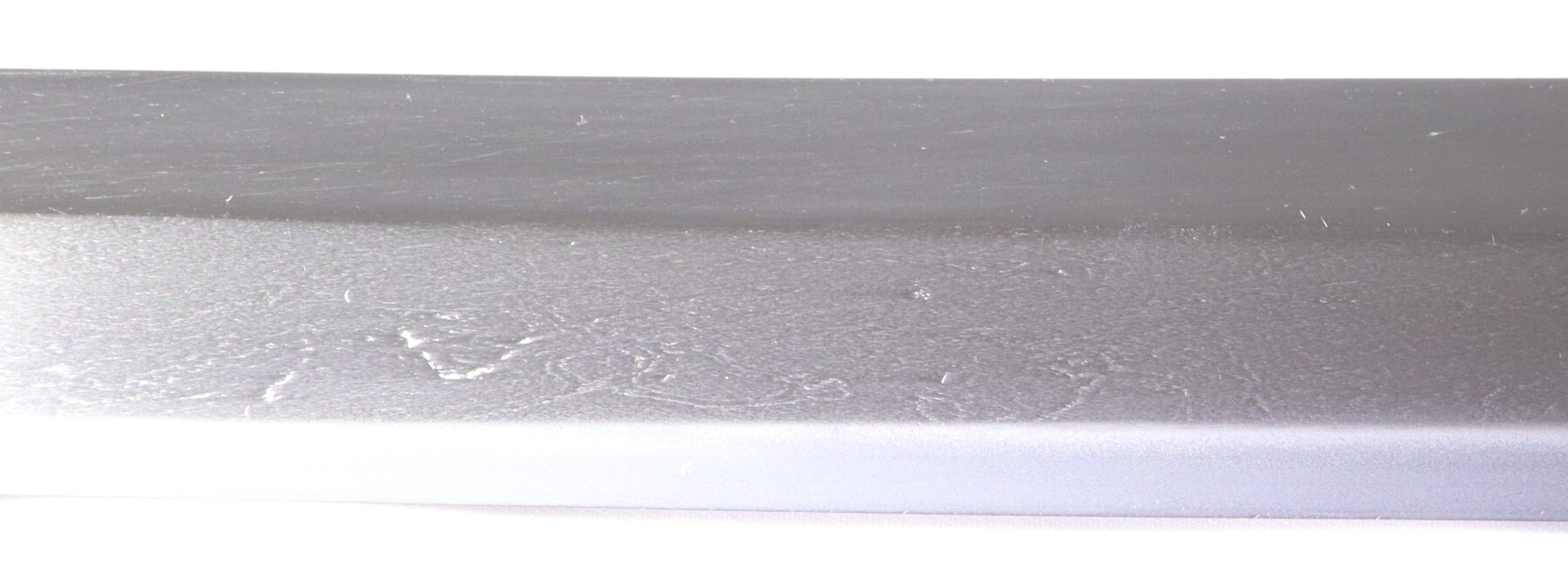
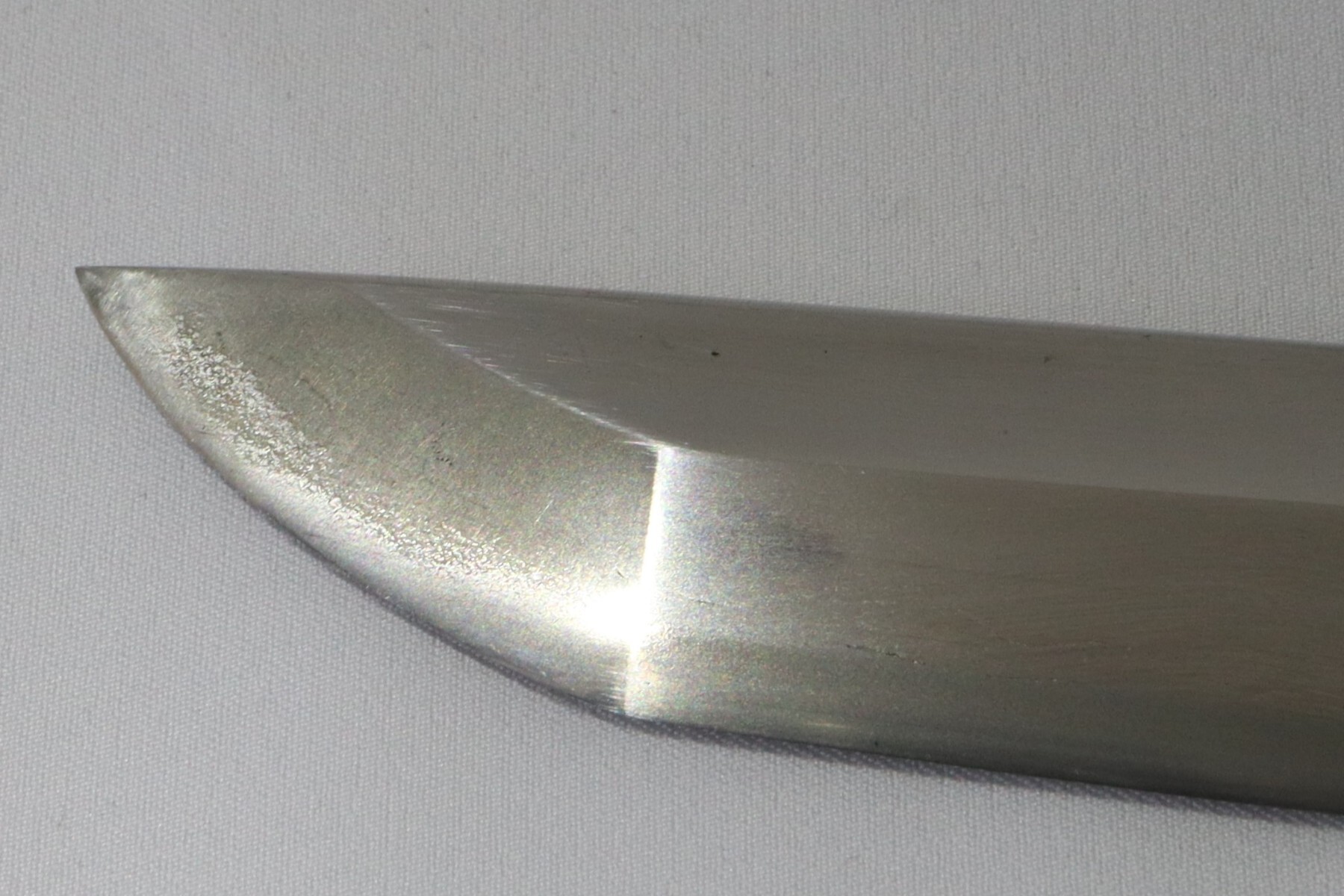
A great opportunity for those who can accept the simple fact that old swords sometimes just have coarse grain, because they were made as weapons. Consider: Kotō (Muromachi) Ubu, signed and dated Long Healthy (look at the wide motohaba and thick kasane!) Reputable school NBTHK paper Also, the pictures aren’t that good (sorry Lex) and I am certain there is loads to be enjoyed in this sword. All in all, at this price it’s a bargain. Someone take advantage!1 point
-
Kaga, late Edo. Is the dou tetsu or nerigawa?1 point
-
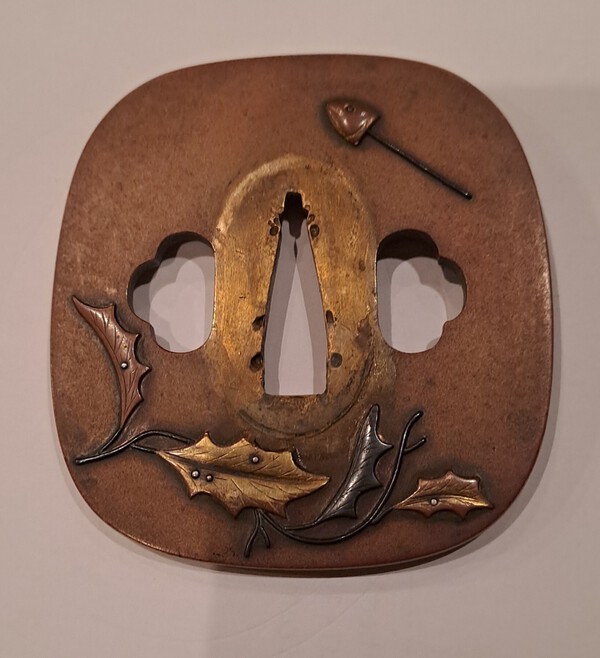
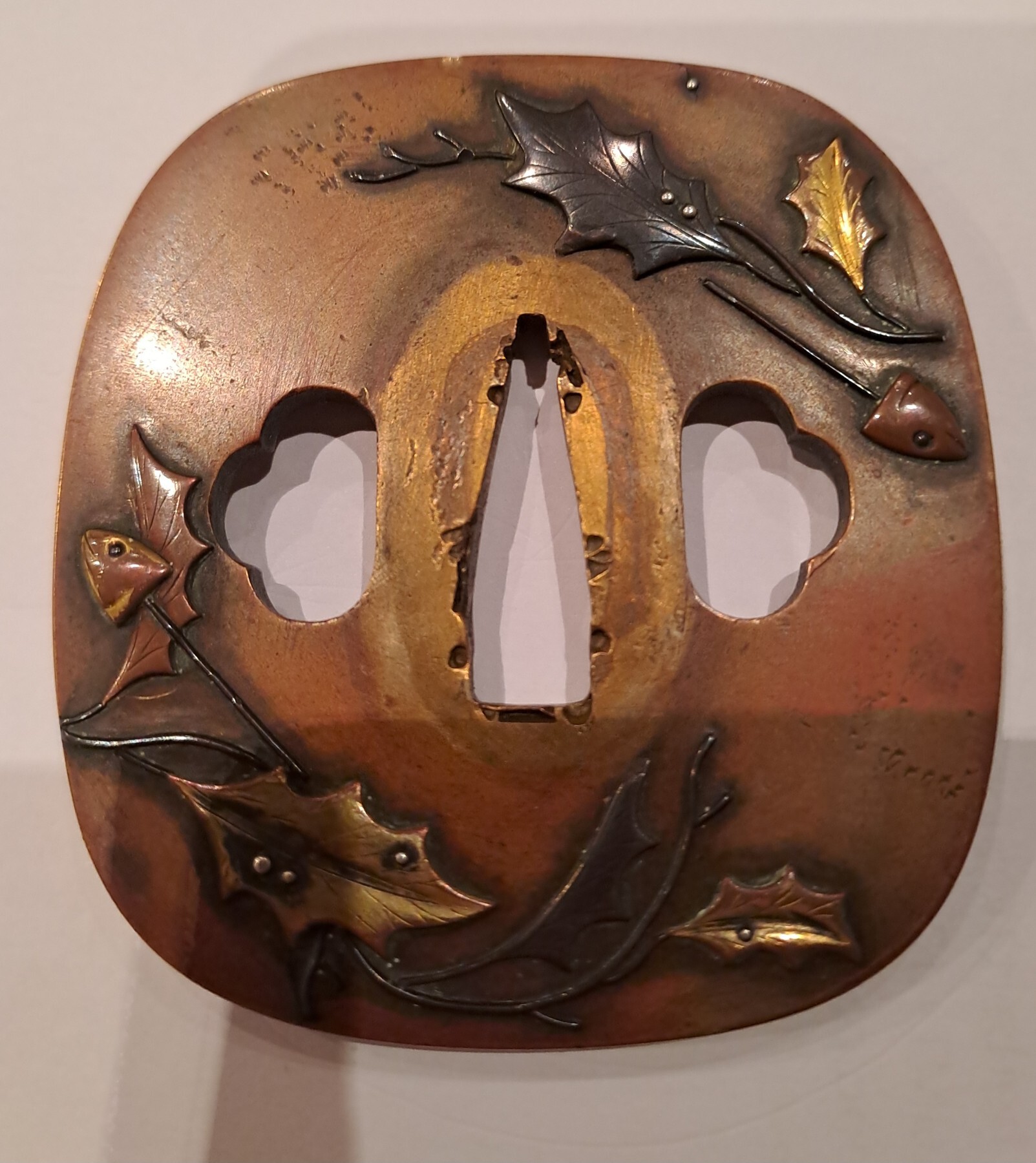
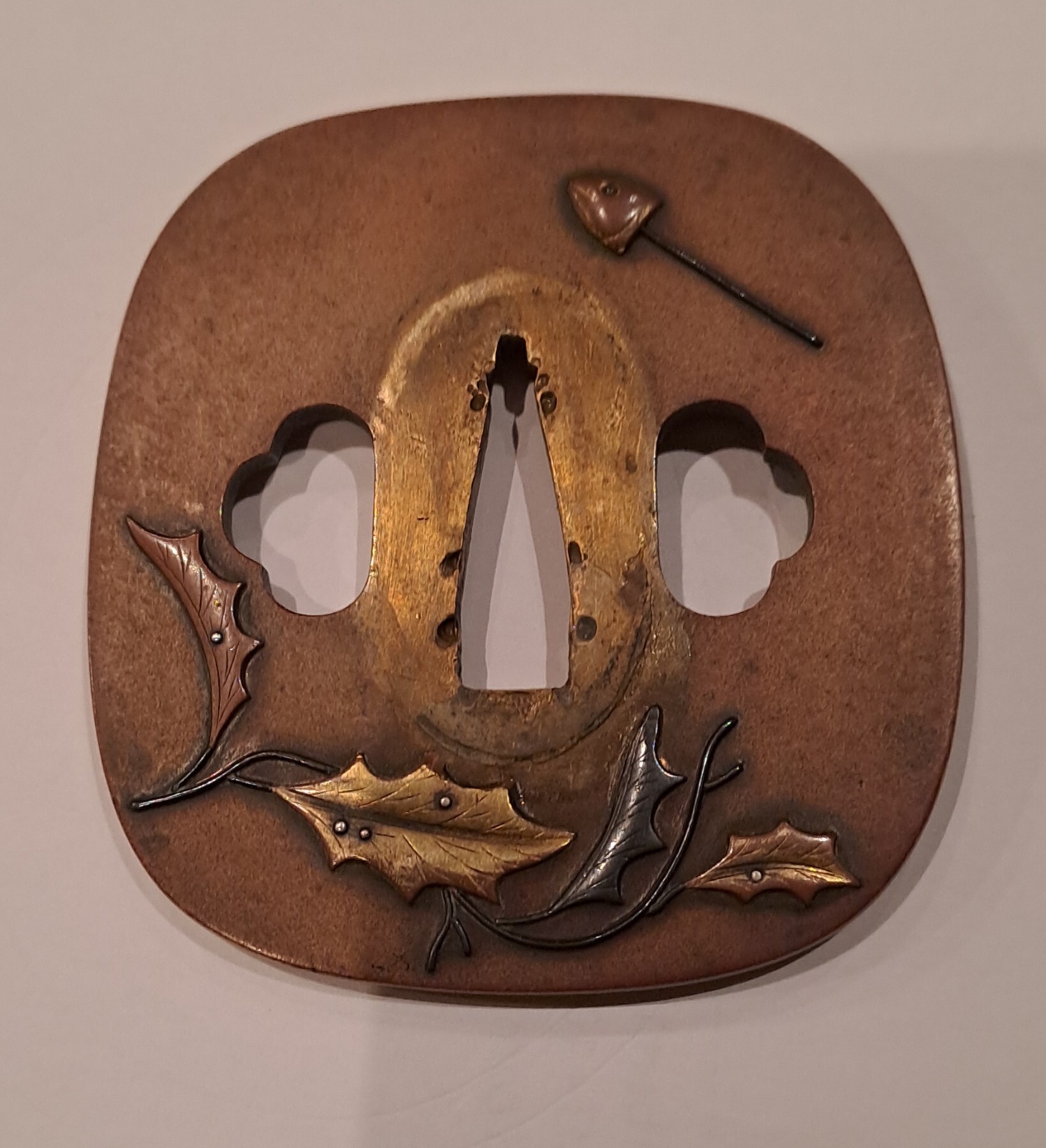
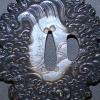
Hi all, hoping more knowledgable folk can cast light on the concept behind the design/ motif on this tsuba? Seems like fish- were gold guilded/ mercury maybe- and gilded/ overlay of ivy? Not sure what to make of it? Seems good work but! Cheers Mike

 1 point
 -
Here is a signature from the DTI catalogue a few years back. Tokuju Shintogo, although most likely a daimei work with the Kuni and Mitsu characters being those of students, probably Kunihiro. Of note, there are only a small handful of Shintogo Tanto in the NBHTK’s records where daimei can be ruled out, if you take the latest opinion on the master’s authentic signature. Approving a new Shintogo is a big decision. The NBHTK will not validate it unless the workmanship is up to par, and this means it must be in a decent level of polish beforehand. As you can see with the image I posted, the mei is rather close. Note the radical stroke direction on the Mitsu, and the shape of the various elements on the Kuni. Keep in mind that the inclined mid-line on your Kuni is the biggest question mark element, although there is some very rare precedent for it but only in the old Kozan Oshigata (and the mei therein are approximations...) as you can see in the attachment. If the quality and features are aligned with Kunihiro, and with this type of mei material as supporting evidence, you have decent-good odds of it being accepted. However, if the quality and the features of work, once revealed by the polish, are not up to par or leave areas for doubt, it is unlikely that they will expand the canon on acceptable signature variation. As next step, I recommend to take a pen and replicate the mei while marking the stroke direction on every character, then compare with a corpus of Shintogo mei that you assemble in the course of your research. Good luck on your quest.

 1 point
 -
The red kanji on the report says "There is room for research in the inscription". In other words come back when you can convince us in a way that makes sense why the Mei is atypical. I think I am progressing in the right direction. Is it possible no one thought daimai-daisaku was a plausible explanation, especially given the date? This is why I was looking at old threads for 2018/19 Shinsa results to see if the panel were particularly cautious those years. I believe I'm correct in saying that when Tanobe sensei left, the NBTHK lost a bit of its mojo. I'm pretty sure a Horyu result can have a variety of different recommendations.1 point
-
For posterity here are the very rarely seen Horyu papers issued by the NBTHK
 1 point
 -
It's good that certain egregious activities are being discussed. Removing Mei just to pass Shinsa is a crime against history. https://markussesko.com/2016/06/26/the-pitfalls-of-removing-signatures/1 point
-
新藤五国光 (Shintōgo Kunimitsu) was, in effect, the founder of the Sōshū tradition; three celebrated smiths—Yukimitsu, Masamune, and Norishige—trained under him. At first glance his workmanship recalls the Yamashiro Awataguchi school, yet the prominent chikei (dark steel lines) and kinsuji (bright “golden” lines) that appear in the steel surface are hallmarks of his blades. Kunimitsu favored straight hamon (suguha) of varying widths and, as a master of tantō, is considered a peer of Fujishirō Yoshimitsu. This tantō is forged from well-refined steel showing delicate chikei and is tempered in a neat, narrow suguhahamon. With a slight inward curve (uchizori), the harmonious balance of its steel texture and hamon gives the piece an appearance of dignity and refinement.
 1 point
 -
Posting for discussion's sake. I've been imagining this style pattern as representing a stone wall, but this one makes me wonder. strange for a wall shape, unless the artist just ran with the idea and modified it to enhance beauty. Posted by @Nazar HERE.
 1 point
 -
Interesting site, shame i see "price on request", a real off put, sadly.1 point
-
@Peter D is one of our members, and also has dealer status here and his own dealer section. Being approachable like that, and the fact that dealers don't get listed here or last long if they are not reputable, tells you a lot. Good to check on any dealer you are considering purchasing from. A listing here is always a good sign.1 point
-
I get it, Though if folks pay god knows how many thousands for swords, then £300 is peanuts on top (insured with dealer) Low value swords, then definitely no. Though that's just my point of view.1 point
-
Possibly Kanbun Shinto. Grey1 point
-
While there is no record on why the umegane were removed, I was able to narrow down the time frame between 1907 (when the fotos WITH them were taken for the Bulletin) and a record shot taken in 1922 where there were already gone. The museum had several Japanese consultants coming over once in a while around that time period, so I can guess it was maybe done on their recommendation. But, its a mystery...1 point
-
All, I have always been fascinating by kamon and have a good selection of books on the subject, the majority of which do not attribute them to families for the simple reason that, unlike European heraldry which was regulated by the heralds, there was no official regulation of them. The only book I have managed to acquire is Seishi Kamon no Jiten which lists modern family names and the kamon they use. Ian Bottomley1 point



















.jpeg.dbdb9df131919b491db0720bfdec746c.jpeg)
.jpeg.67ed57299e65eb753354c3c9d8840957.jpeg)
.jpeg.309ded71d46d39ae06973267ac815e1a.jpeg)












This leaderboard is set to Johannesburg/GMT+02:00