
Leaderboard


Popular Content
Showing content with the highest reputation on 06/19/2025 in all areas
-
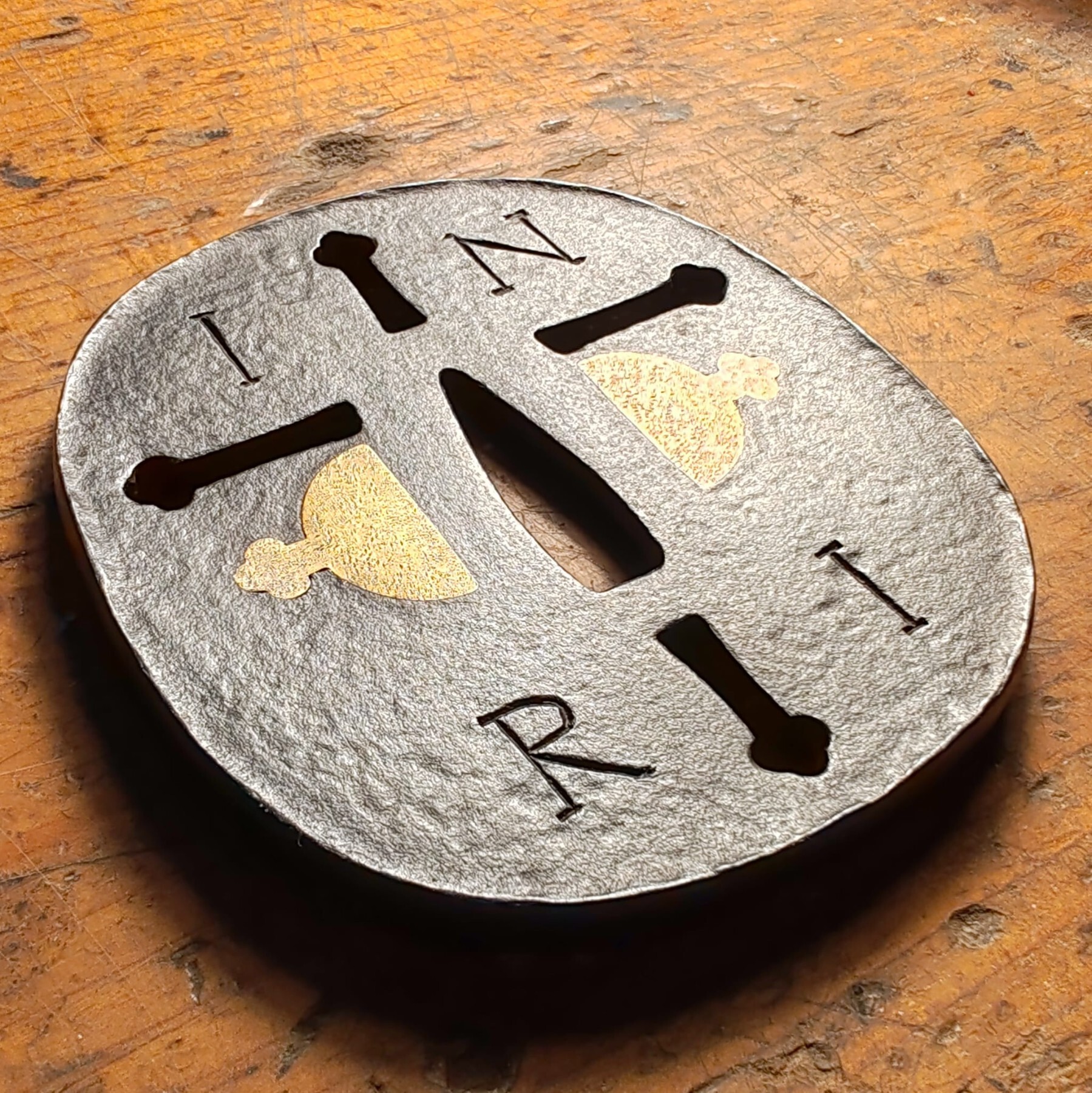
I'm proud to announce that my Kirishitan tsuba got awarded the 4th Effort Award in this year's NBTHK contest! This is an incredible reward for my hard work on improving my skills. To my knowledge i'm the only foreigner to win an award in this category for NBTHK competitions ( Ford Hallam only achieved Nyusen before moving to NBSK). My work will be featured in the catalogue and the exhibition, so please take a look if you have the chance. Following there are the pictures and a link to a video that shows the special feature of the mimi Link to the video https://drive.google.com/file/d/15HyBoEufhpyEx98n4Y9BETWOtrMtt5o6/view?usp=drive_link


 8 points
 -
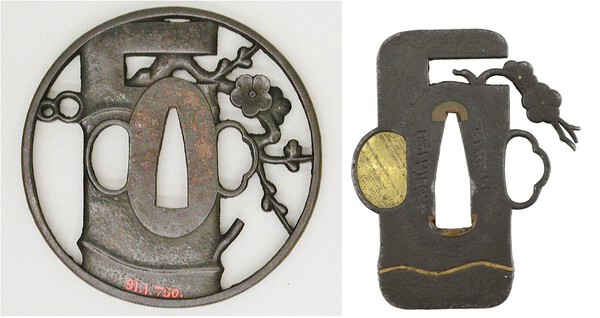
Hi Laurent - like Mauro said . . Welcome! I think the first representation shows a tall handled bucket/vase like this one. Used to display flowers in "ikebana" a squat modern version. Ikebana also features on tsuba.
 7 points
 -
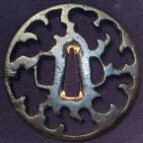
鉄地龍地透し長丸型 – Tetsu-ji, Dragon open work, oval shape 銘 江府住正栄 – Mei, Kofu/Gofu ju Masataka 江戸時代 – Edo period6 points
-
* Provençal locution meaning “what is that?” My first message on this board, a kind of presentation, of myself and of two kozukas. I got a lot of information reading this forum so I thought I could contribute at my level with a post from the point of view of a new beginner, what has been my understanding when you’re completely fresh and don’t know anything. I deliberately commented some Japanese terms to verify what they mean but don’t hesitate to correct me if needed! It all started with these diminutive knife handles my eyes got attracted by at a local auction. Initially the theme on one knife reminded me of some artwork I just appreciated, from a Chinese painter, Qi Baishi (I’m by no means expert in any oriental art, just sometimes attracted by the style). The auctioneer was informed enough to indicate I was looking at some “kozukas” so I ended up quite rapidly on this forum. After an overwhelming phase where the terms shakudo, nanako, shishi, mei, etc. just mixed up in an exotic milkshake, I came to understand these small artifacts were representative of an impressive craftsmanship (at least at their level, itself correlated to my budget…), an expression of a dedication and patience I admire. As it appears nobody else was interested in bidding, I won them… And now I’m curious! I got two : the first one (on the left) is in the best condition, the second is really worn out and sadly has a crack where the blade should have been inserted (I knew it when buying). Both look like to be made of shakudo (an alloy of mainly copper and some gold that can take nice patina). I apologize for the poor pictures under, but I just have a mobile phone and some magnifying glass. It should nevertheless be enough to discern the motifs and understand what I used to base my analyse (I believed initially the silvery powder around the motifs was a kind of artistic effect but understood later it was… dust ). It seems the left one is depicting a flower arrangement (ikebana?) of some plum (ume) or cherry (sakura) twigs but I cannot identify the golden artifact. Does anyone know what it could be? Some kind of vase or container? Or maybe a quiver? The right one shows what I think is chrysanthemum (kiku) flowers in its plena form, with buds and leaves. I don’t know if there’s more to say to it… I understood there’s more than often a hidden message or legend back these representations so if you think there’s something here, just let me know! Now for the back side. The first one has a mei (signature) but I couldn’t decipher any kanji from the linked list on the forum. The second looked like “mumei” (without signature) but after closer inspection it had one at one point but I can only see remnants of a last kanji. I understood it’s probably nothing to extract from these, being often “gimei” (a kind of homage at best, fakery at worst?) but it would be nevertheless nice to know what’s written there. Apparently, the previous owner got them when working at the Japanese ambassade in Oslo. Regarding the quality, these are the first and only ones examples I’ve seen until now in my region, so I can just guess. Ironically, it seems a good indicator (at least for the newbie I’m) for evaluating the quality is the background (the nanako). Ironical but again representative of the attention given to small details. The fact that someone punches these minute dots one by one for hours justify nearly the buy (at least for me). Sadly again these are quite worn out but I would say there are decent, dense but showing some fluctuations on the horizontal lines and imperfections in vertical/diagonal alignment. I couldn’t identify any other kind of alignment pattern. Below some pictures under magnification, respectively for the plums and the chrysanthemums. For the rest, I think the ikebana theme is simple but well executed, with nice details in the branch. Difficult to say about the chrysanthemum as some details (on the leaves by example) have disappeared. After that, I’ve to admit I don’t know what to look after… I tried to brushed out the dust with a (dry) toothbrush, without success. What would be the next approved step for a more thorough cleaning? Just water with some soap? I would appreciate if some experts could eventually help on some of the interrogation above and of course correct me if I’ve written anything wrong. As said it’s my first introduction to the tosogu world so be indulgent. But don’t hesitate to say the truth neither, I can cope with that. At the end, I guess the main message to a new beginner like me will be “don’t buy junk, get informed before taking out the wallet” :).5 points
-
Since last week, I have started to post the updated version of the "Study of Japanese Swords" one chapter at a time every Thursday. These updates will include slight revisions, refinements, and a couple of photo changes. Also, I will be hosting a live Zoom session each Tuesday (10:00 am, California time) to discuss the chapter of the week. Below is last week's Facebook notice. Please open my Facebook for a weekly new post.
 5 points
 -
Thank you everyone! The writing on the mimi wasn't actually engraved, but it was written in lacquer by a friend of mine, she's a calligrapher specialized in medieval writing, then etched. All the tsuba elements were studied to carry a meaning and to be plausible to find on a Momoyama period tsuba, so also the style of calligraphy is the one used in late 16th century.4 points
-
some more pics

 4 points
 -
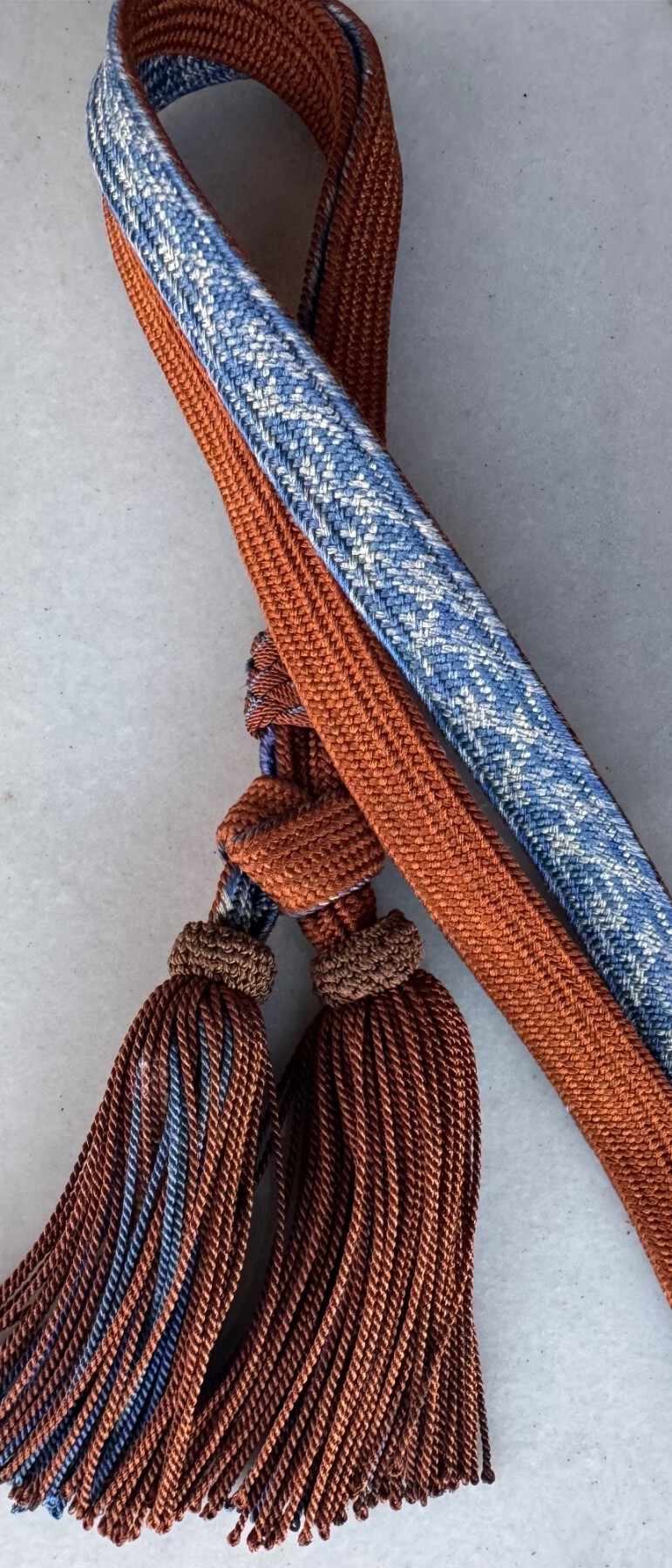
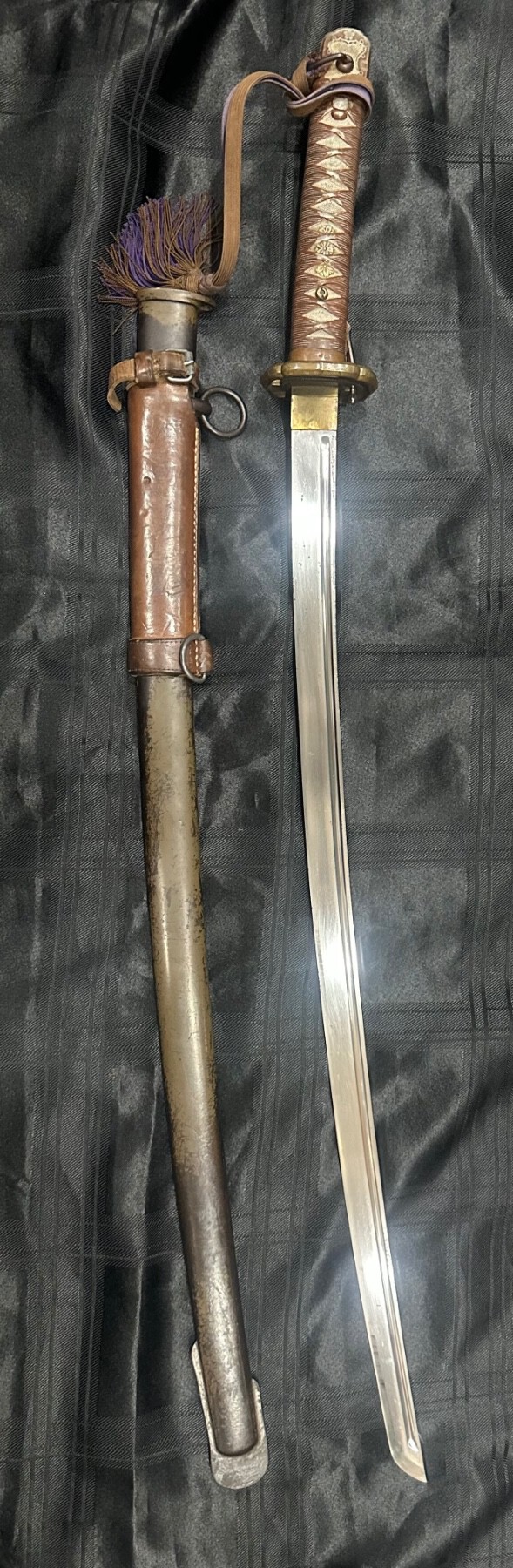
Comparison with standard General grade tassel.
 3 points
 -
Another example of this tassel:


.thumb.jpg.b30f7b18579a6a8c9f73357997c15f04.jpg) 3 points
3 points -
Hi Laurent, welcome at NMB. The first kozuka show an unusual subject. I really don't know if the object depicted is a quiver, but if a quiver it surely recall a representation called ebira-no-ume (箙の梅) or Ikuta-no-mori (生田の森). It's a story of Genpei War: before going to the battle of Ikuda forest, Kajiwara Kagesue took a branch of a flowering plum and stuck it in his arrow quiver. The signature is compatible with 後藤光佐 - Gotō Mitsusuke + kaō (but I'm unsure if gimei or not...).3 points
-
I used once a PVC tube, checked it in as extra size luggage, it arrived broken. PVC is fragile if hit too hard will broke. I switched to pipes used for underground electric lines. These kind of pipes are made of black plastic and are resistant to hits. This kind of pipes are able to even resist hits from a digger. You can find them in stores selling construction stuff. I have fitted it with a handle, hooks for a shoulder strap and a set of removable wheels to drag it around. Regards Luca2 points
-
Mild hand soap and a soft toothbrush is the most I would do.2 points
-
In case you missed the comments helping you to date it, here is what Ray said: “o-suriage mumei katana (Shinto or earlier”… What does that tell you? = Possibly earlier than c1600~1775(?) (My question is what kind of katana has such a long Nakago?)2 points
-
丹波守藤原照門 – Tanba no kami Fujiwara Terukado 於桑名善定作之 – At Kuwana, Zenjo made this.2 points
-
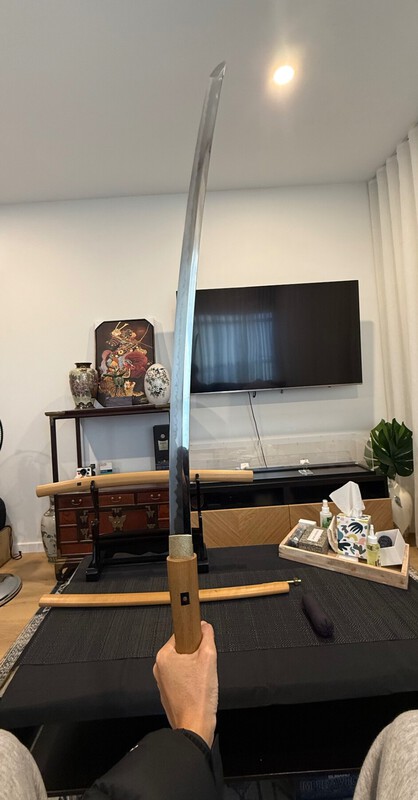
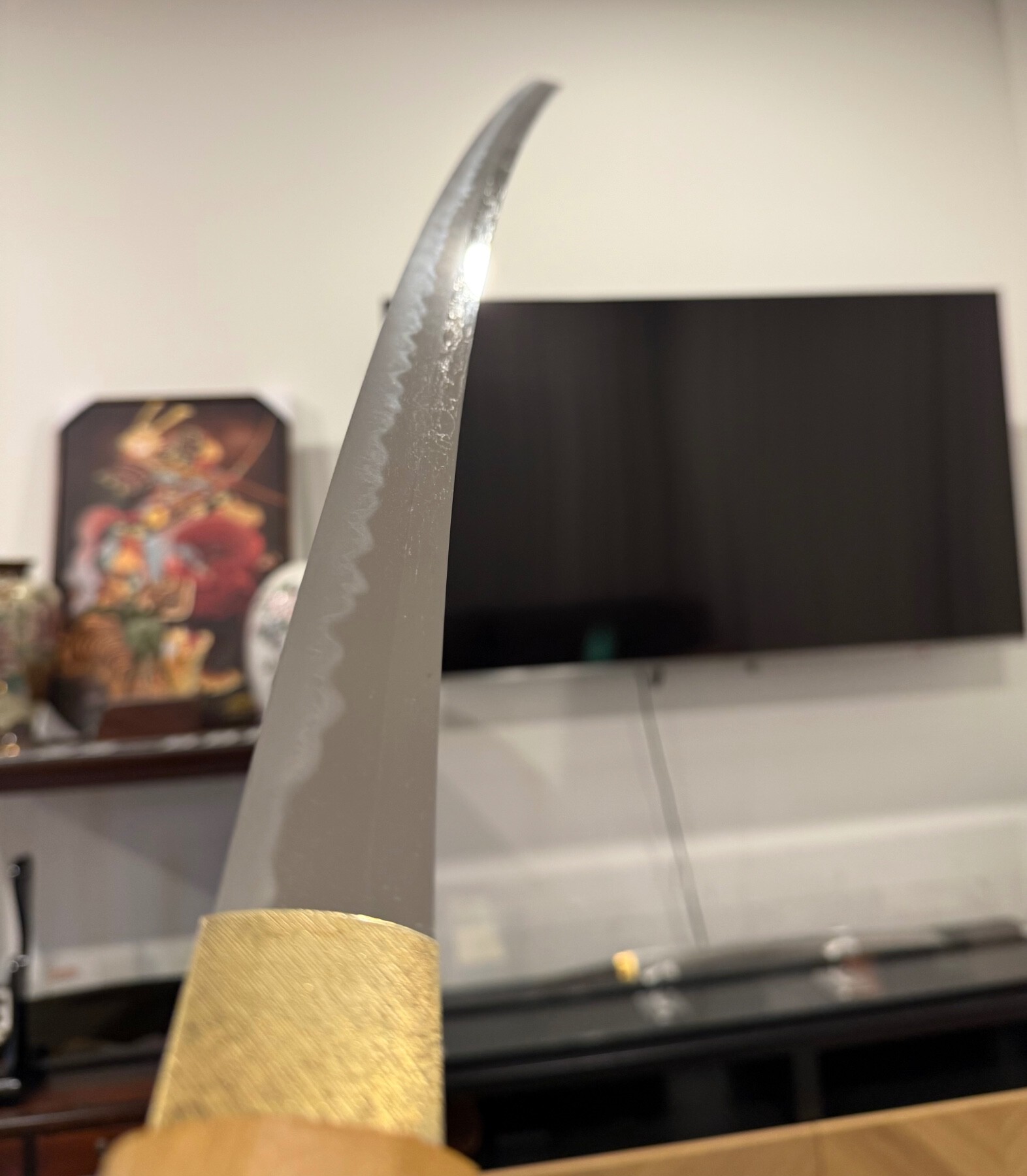
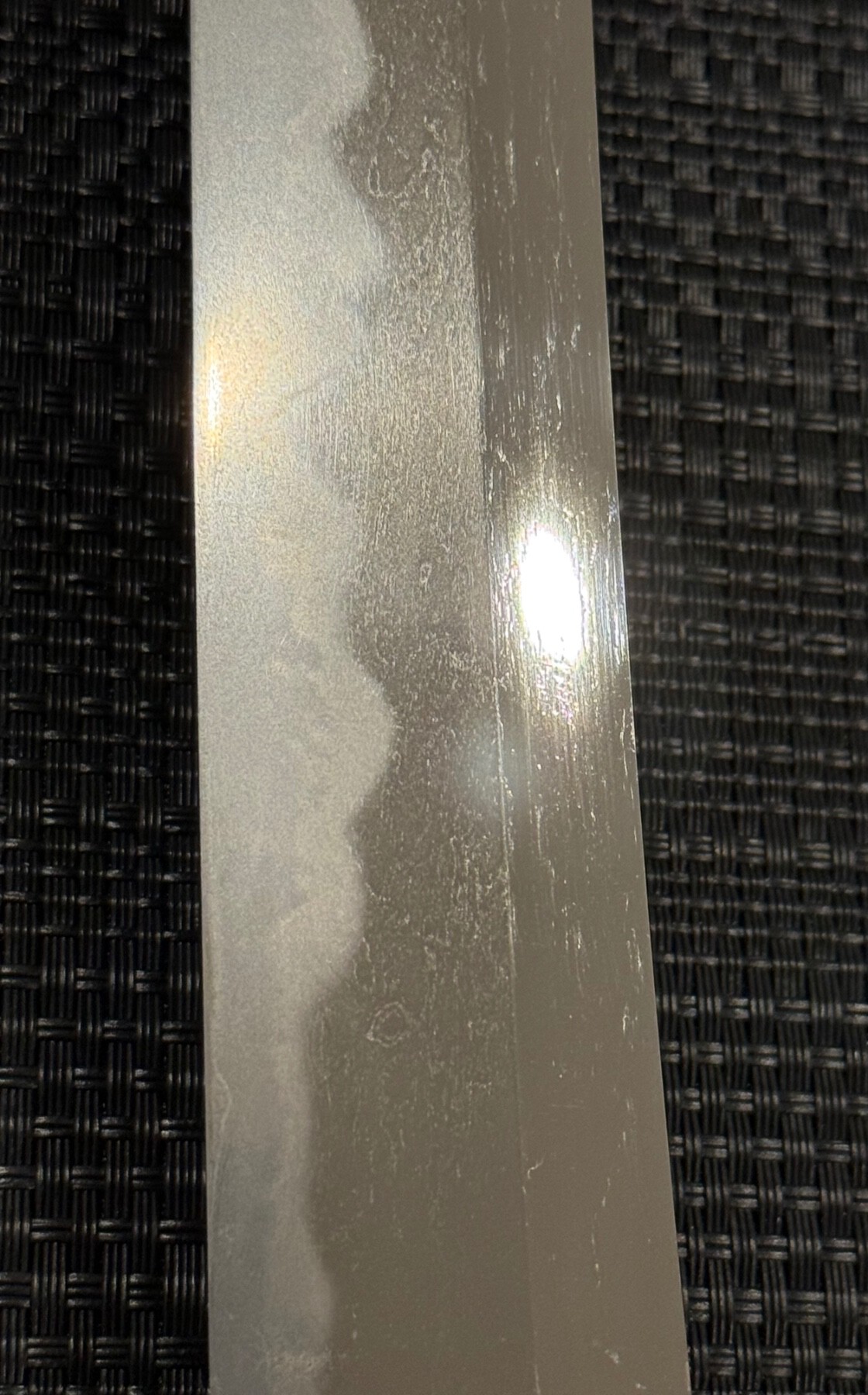
Finally received my sword. I tried to take some photo but still an amateur in this game. So far im still trying to learn the name for hamon and the hada. I think it would take sometime before I can identify them correctly. Nagasa : 71.7cm Sori : 2.2cm


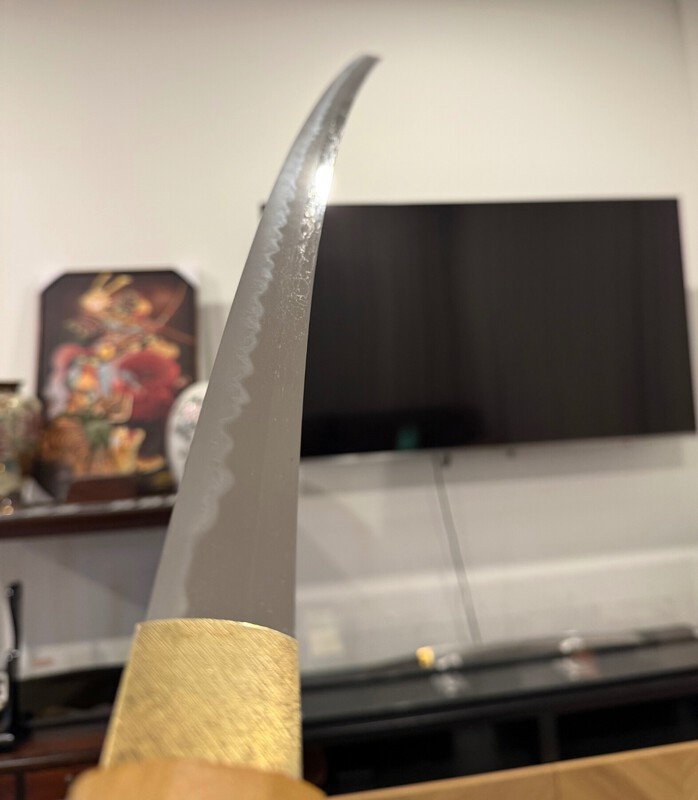
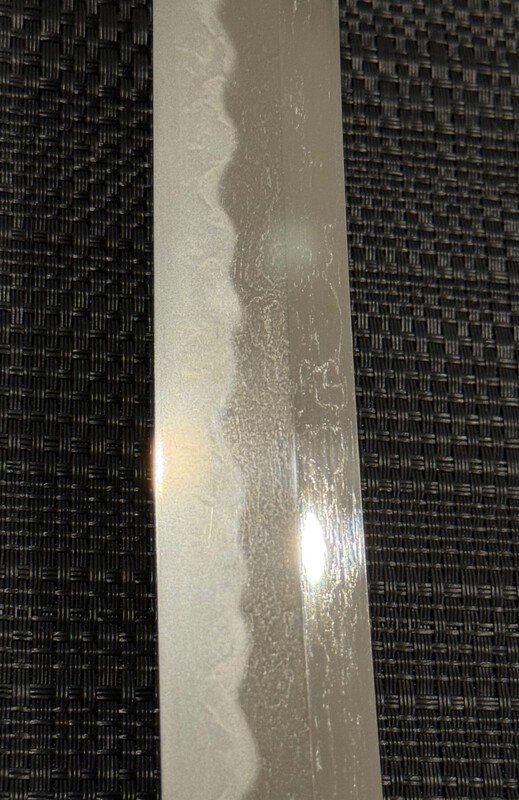
 1 point
 -
Recently, a seller based in Rancho Cucamonga, California, has appeared on eBay. Most of the swords listed by this seller feature genuine fittings but blades with Ge mei. I suspect that more swords like these will appear in the future. Below are some photos for your reference.
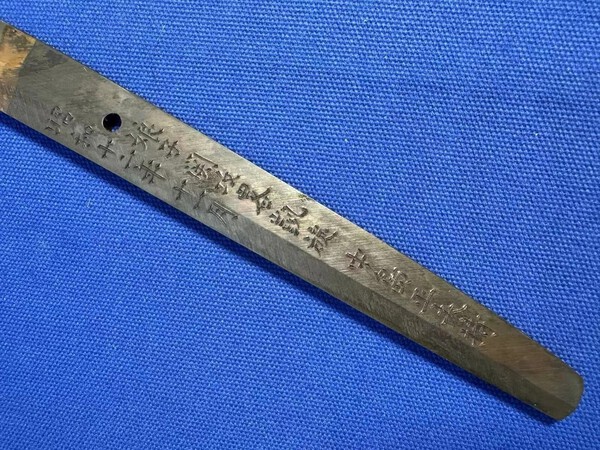

 1 point
 -
That could change soon...1 point
-
Yes indeed Jean, I had the same idea, it was badly "cleaned" by the former owner but I do like the carving.1 point
-
Representing an Abalone sea-snail. I am not sure without seeing it in hand. It might also be a regular TSUBA that was heavily corroded at one time, and in an attempt to "clean" it, it got badly mistreated!1 point
-
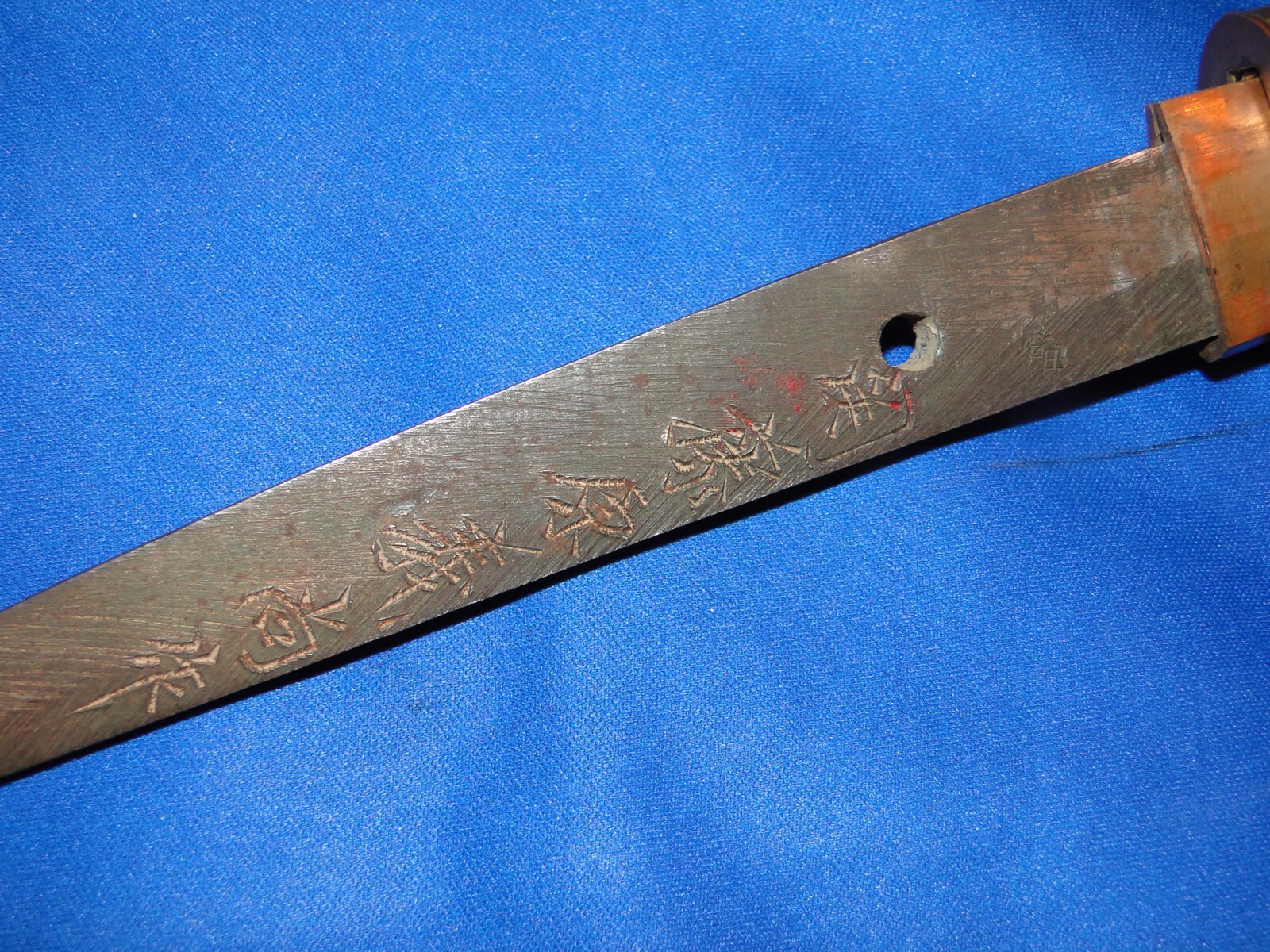
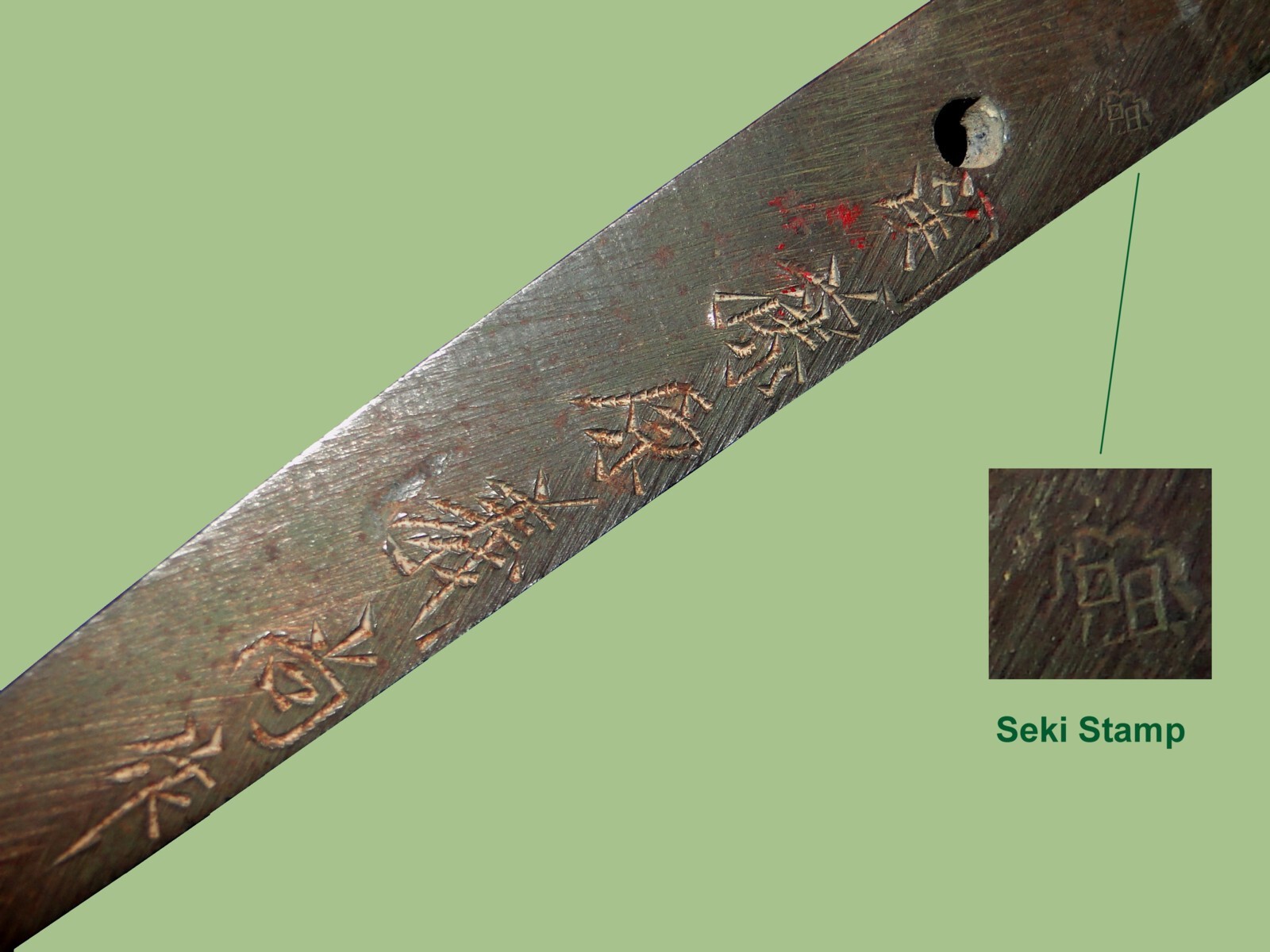
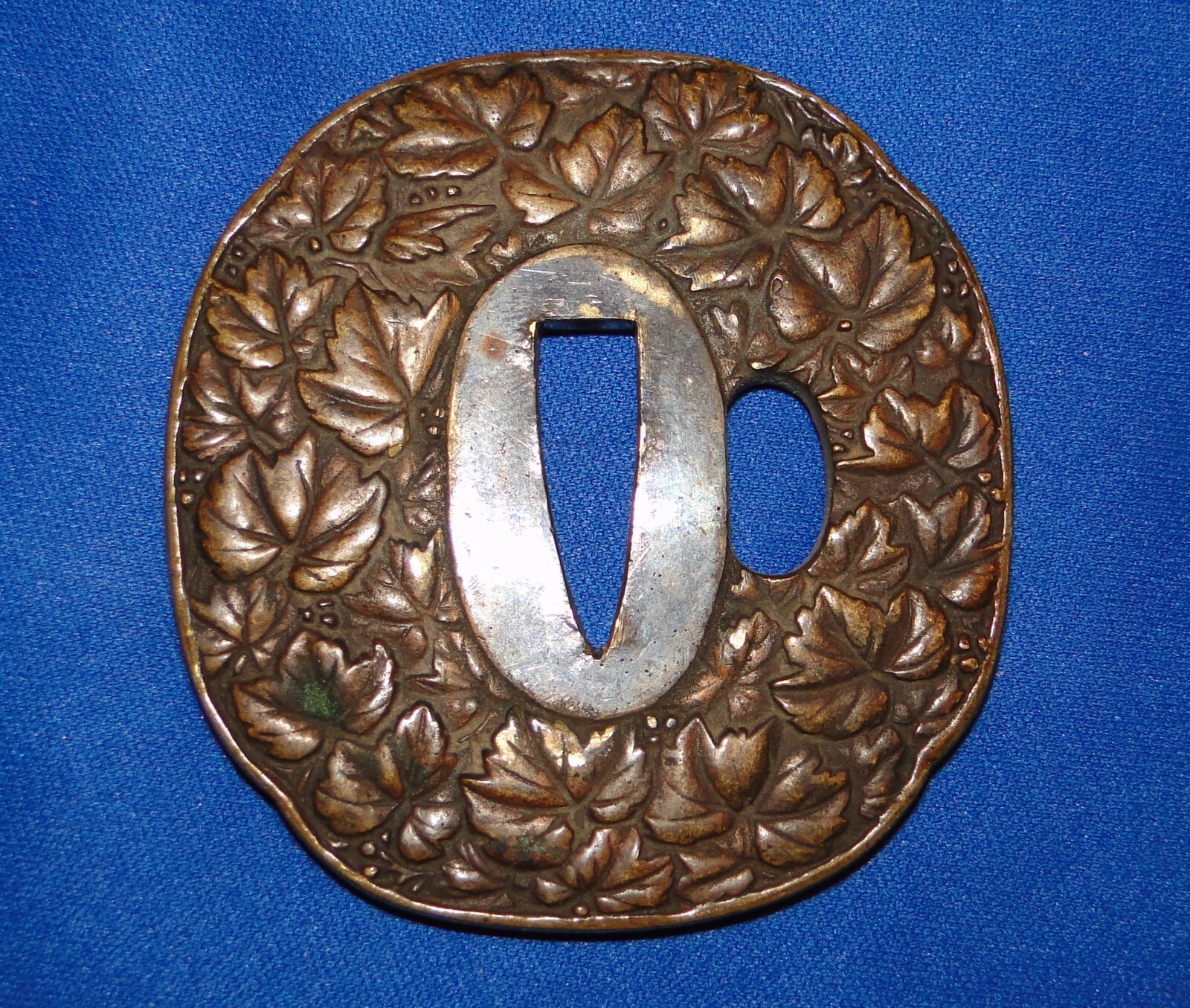
Here's one, that to me, supports the idea that the Budo, or grape, tsuba is Gunzoku rather than just a mass-produced civilian tsuba. It's on a kaigunto that is completely standard, yes an upgraded saya coating. The blade is a showa-stamped Yoshinao. So, the Occum's Razor approach would be to say - Gunzoku - rather than - Maybe it was in civil fittings, then switched over to kaigunto - or Maybe the Naval officer just wanted a civil tsuba (which we have sometimes seen, admittedly). Not a conclusive piece of evidence, but one that I offer in consideration of the question. Found at this Militaryitems.com page. Mislabled by the owner. Showa, not Seki.

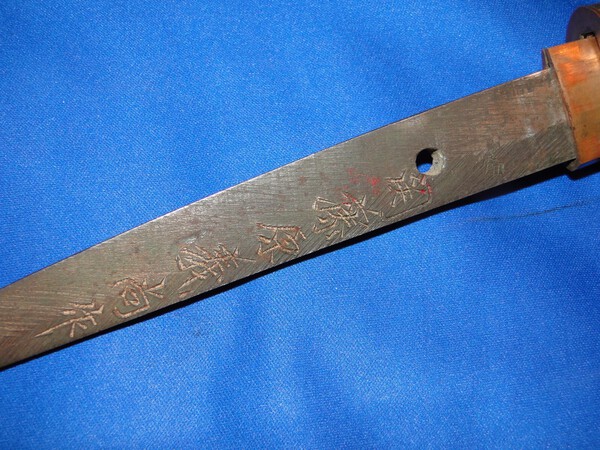

 1 point
 -
No worries. The point here of recommending a professional like Brian is that these pieces show significant age and quality. As such, repairs and restoration work as well should be undetectable. Some work (such as cleaning) can be accomplished at home, especially by someone with knowledge and experience.1 point
-
江州住信之 but that last kanji (?)造(?)1 point
-
I will be very clear, it's impossible to determine the age of a sword without having it in hands. To my eyes it's a fake...1 point
-
Thanks all for your thorough answers! Part of the pleasure for me is finding informations about the objects in question so you made me happy here . It looks like the theme questions are answered, the golden artifact being probably the handled bucket shown over by Spartancrest. I thought initially the small base would make it quite unbalanced for a vase but it could also be part of the game when doing ikebana… or it could just have been used for collecting the flowers. The quivers I’ve seen don’t have that tall base, it would make it probably impractical. Regarding the chrysanthemums, it seems it has so many significations through history in Japan that is probably difficult to pinpoint any precisely. Regarding the mei, I have to admit I can only recognise the 3rd and 4th kanjis (meaning Mitsusuke?) shown by Mauro… I guess the digital modern kanji will differ from an old engraved one but at that point?! The kao (the last sign?) looks like it has a slightly different style to me. Is it a kind of personal symbol? Gimei or not, that “Goto Mitsusuke”indication could maybe help to determine how old are these? I was a bit surprised when Curran wrote 1500…1600, I was more expecting around 1800…1900. It would change my perspective (I’m definitely not going to use them now ) about proper care. I see Brian is suggested for cleaning/restoration but I would like to do it myself (no offence here, it’s just a part of the hobby I like as well). I’m not totally ignorant about cleaning (I’m restoring fountain pens, watches, knives, etc. without being any expert here neither, I don’t dare to touch yet on the dial on a watch for example) but the material and the patina are completely different here and it suggests me I’ve to be more than careful. As said by Bugyotsuji, they could witness for the (us)age these handles have been trough and I don’t want to mess anything here. The nanako nearly worn out where the thumb was probably pressing on the handle is a nice testimony. So I would just clean the old encrusted dust here and I guess a mild soap could do the trick here, couldn’t it? It may be better there is a crack there, making it unsafe to fit a blade. I know if I start to look after Japanese blades I’ll probably dive in the topic for many years… But… maybe just one, for the ikebana one... I just have to build up a small collection to find one that fits you said? Crack on the mouth on the chrysanthemum kozuka.1 point
-
Not saying it's Nara, but Nara also did the mei panel like that. I'd have said it is a Tanaka that has lived a very hard life at one point, if the plate background was anything to go by. The kuchi-beni have been highly deformed by multiple nakago fitments, and the extra sekigane added1 point
-
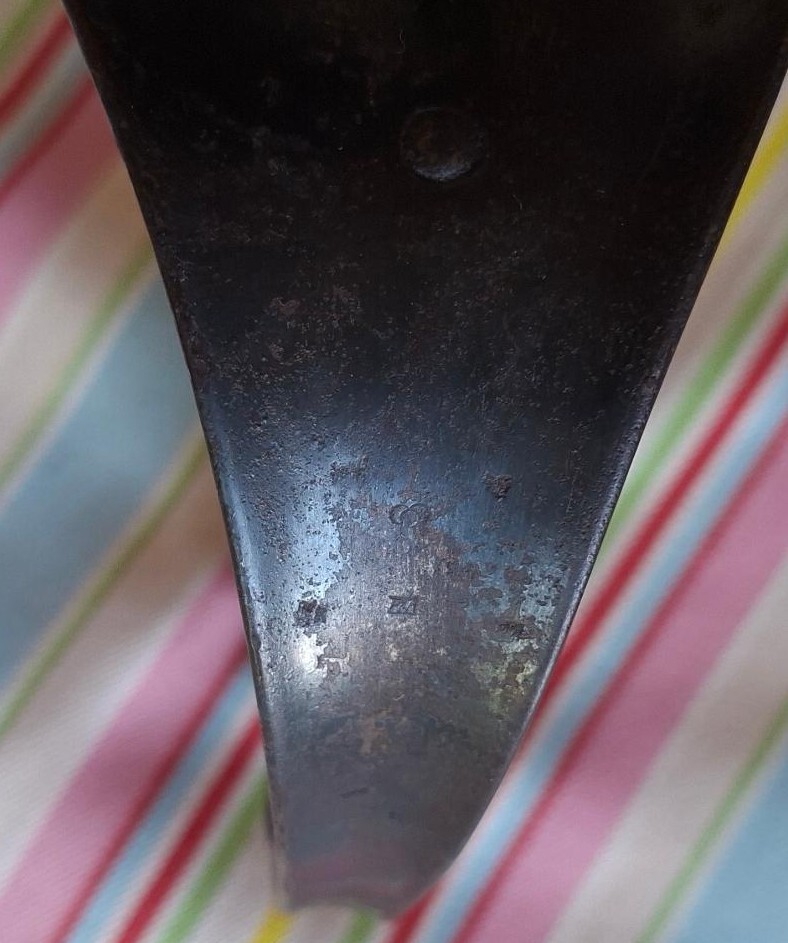
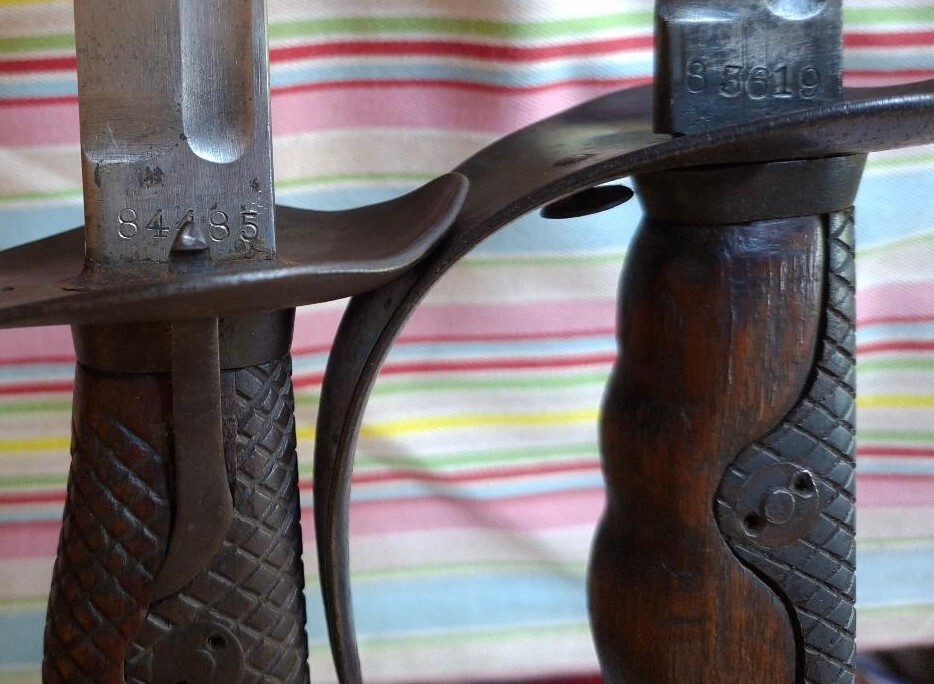
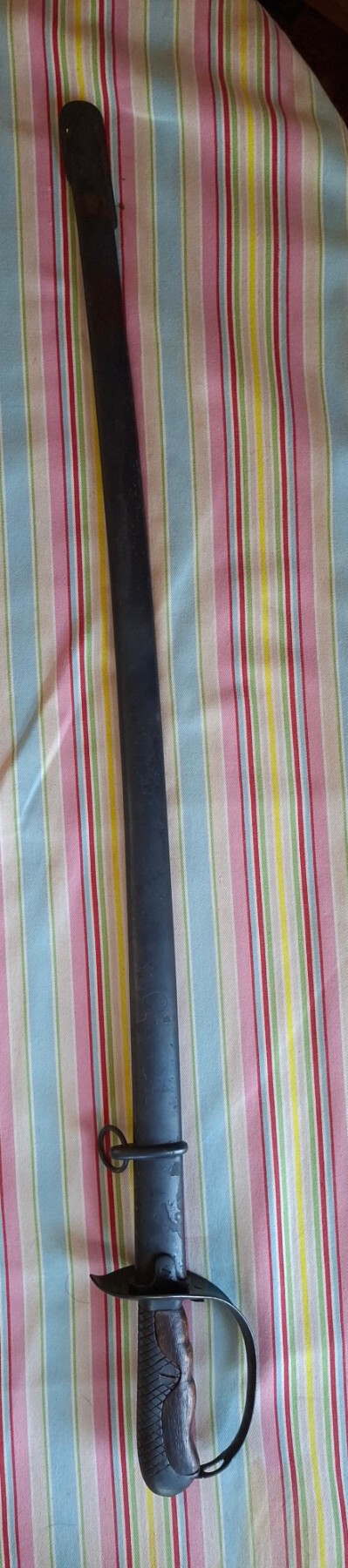
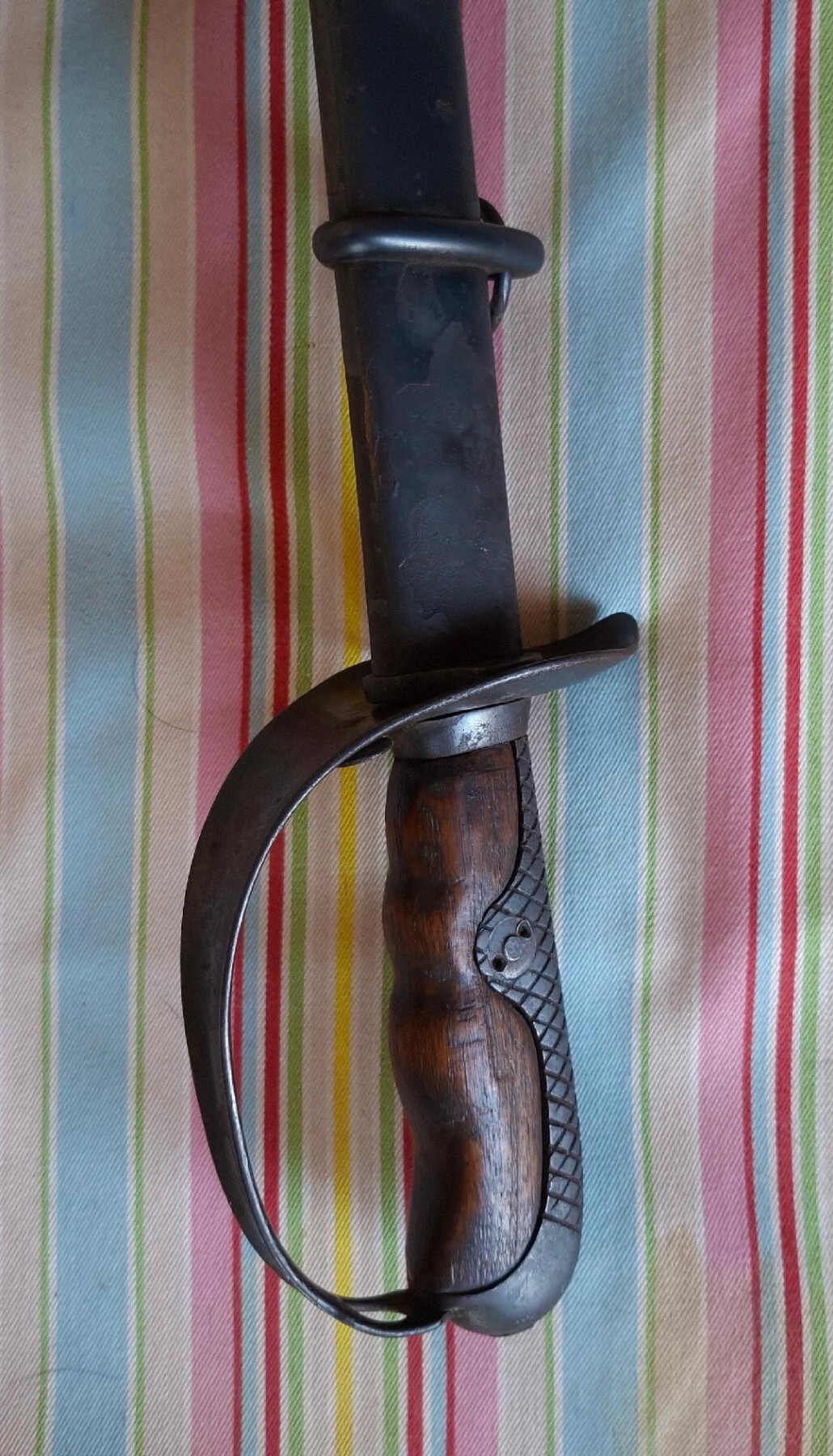
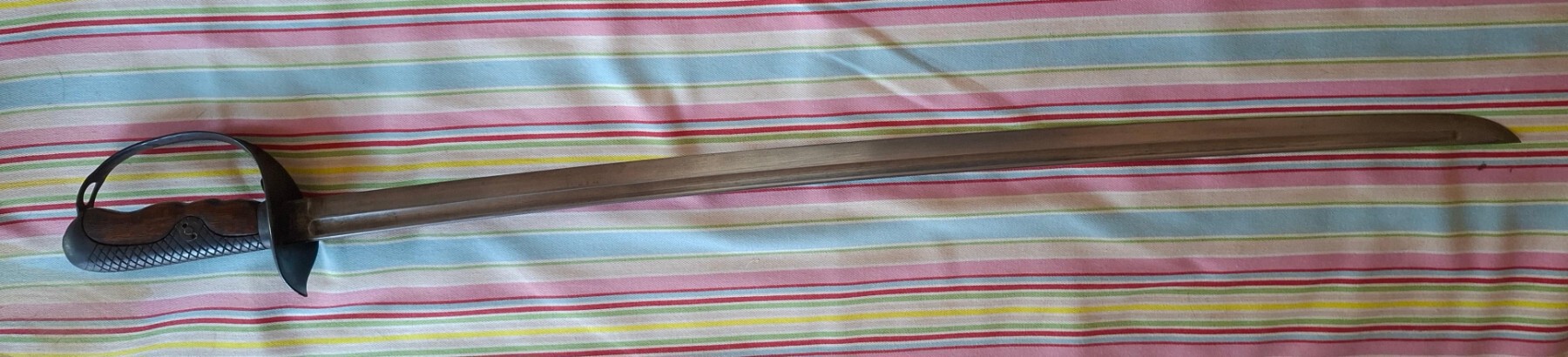
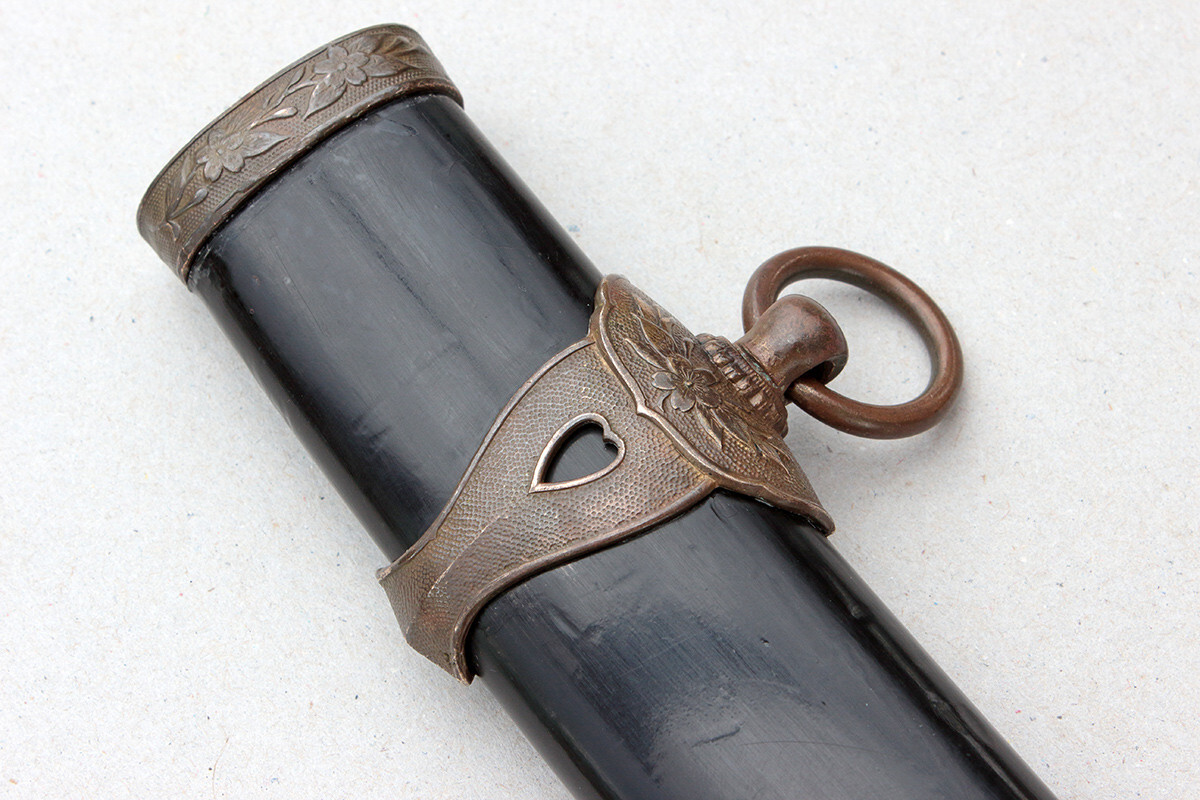
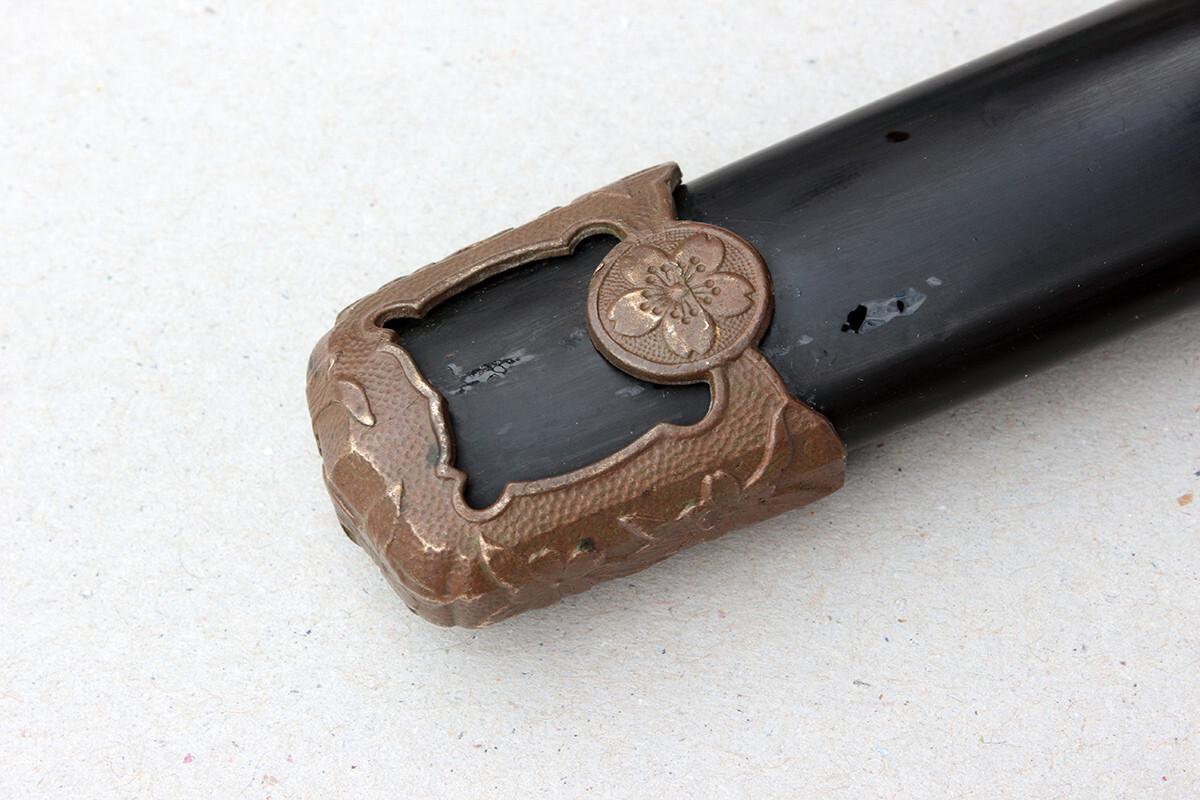
Hello I am new here. I have a pair of the typ32 , sword and sabre. I have no idea as how clean/polished these should be regarding the collecting mindset, opinions? Coming from the same arsenal but with a few differences. The blades are in very good condition. The infantry version scabbard, the chrome plating has turned black and has being flaking off over time. It has had the wood grip replaced very roughly as if done in the field. In the replacement the spring clip has been left out also the two pins that are on the piece between the grip and guard are missing but still has the leather finger button. The drag is the altered 32mm. The guard has four marking which I cannot read except the so called canon ball mark. The sabre only has two marks which quite clear to see. No leather finger button but the hole has not been filled. Any advice on cleaning and the marking would be nice. I got these to go with my Soviet Shashka. My next plan is to find the Italian 1871 sabre which if I am right was used in the last cavalry charge.
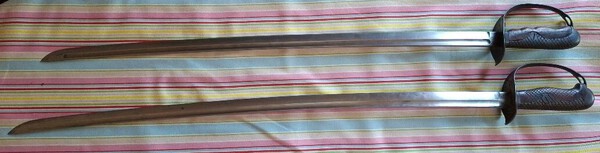
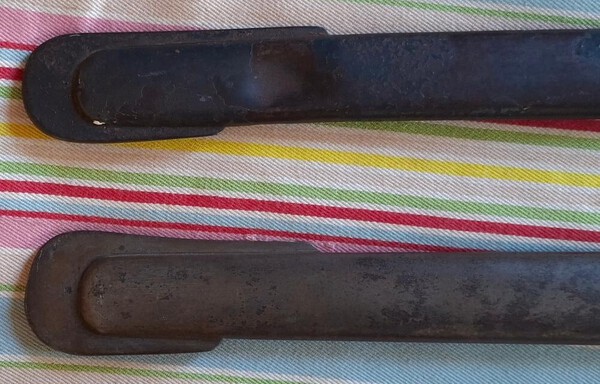
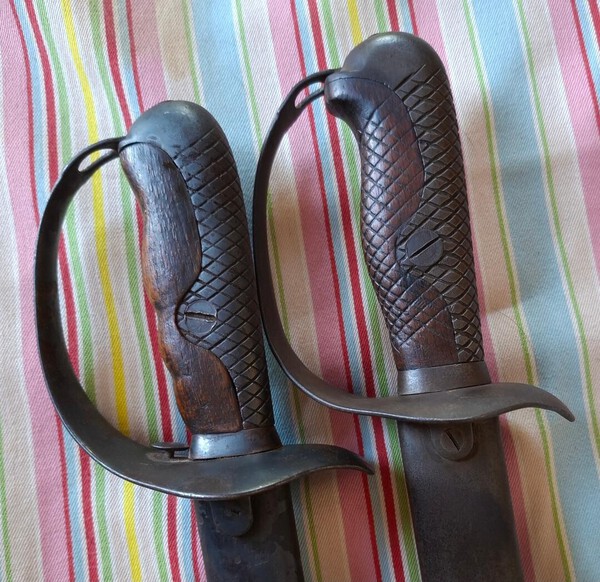


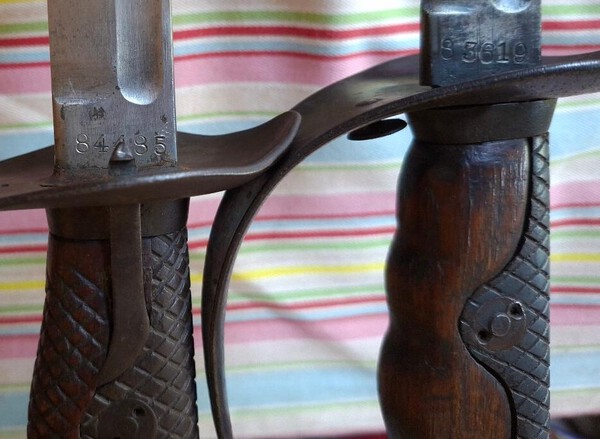
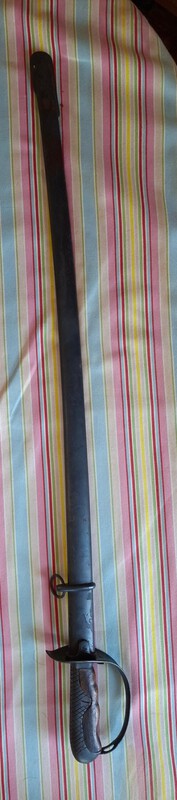
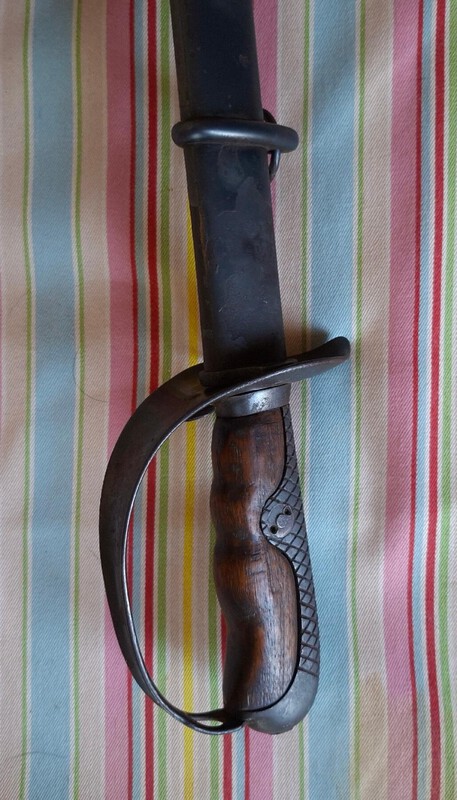
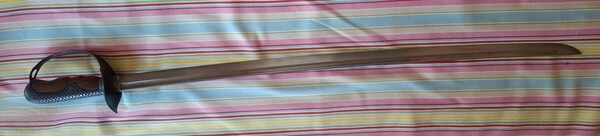 1 point
 -
I've seen people use a large segment of PVC pipe as well (you can get endcaps used for sealing the pipes to use as covers for both ends)1 point
-
Dear All. If anyone here was the successful bidder on the tsuba at the Hannams sale on Wednesday 18th I have a tidbit of information about lot 71 that you may not know. All the best.1 point
-
Definite improvement. Someone put a lot of effort into cobbling those parts together. Seems there is no end to the trickery used by sellers. But at least they are genuine parts, and maybe you can eventually put it back into the correct ones.1 point
-
Rōgan Ookami Maru 狼丸? Or 狼九? The second kanji deliberately mixes 丸and 九. (?) There’s a message here that I’m missing Maybe a play on 鬼丸国綱?1 point
-
Nice work Nazar.1 point
-
Mei is Tanba no Kami Fujiwara Terukado1 point
-
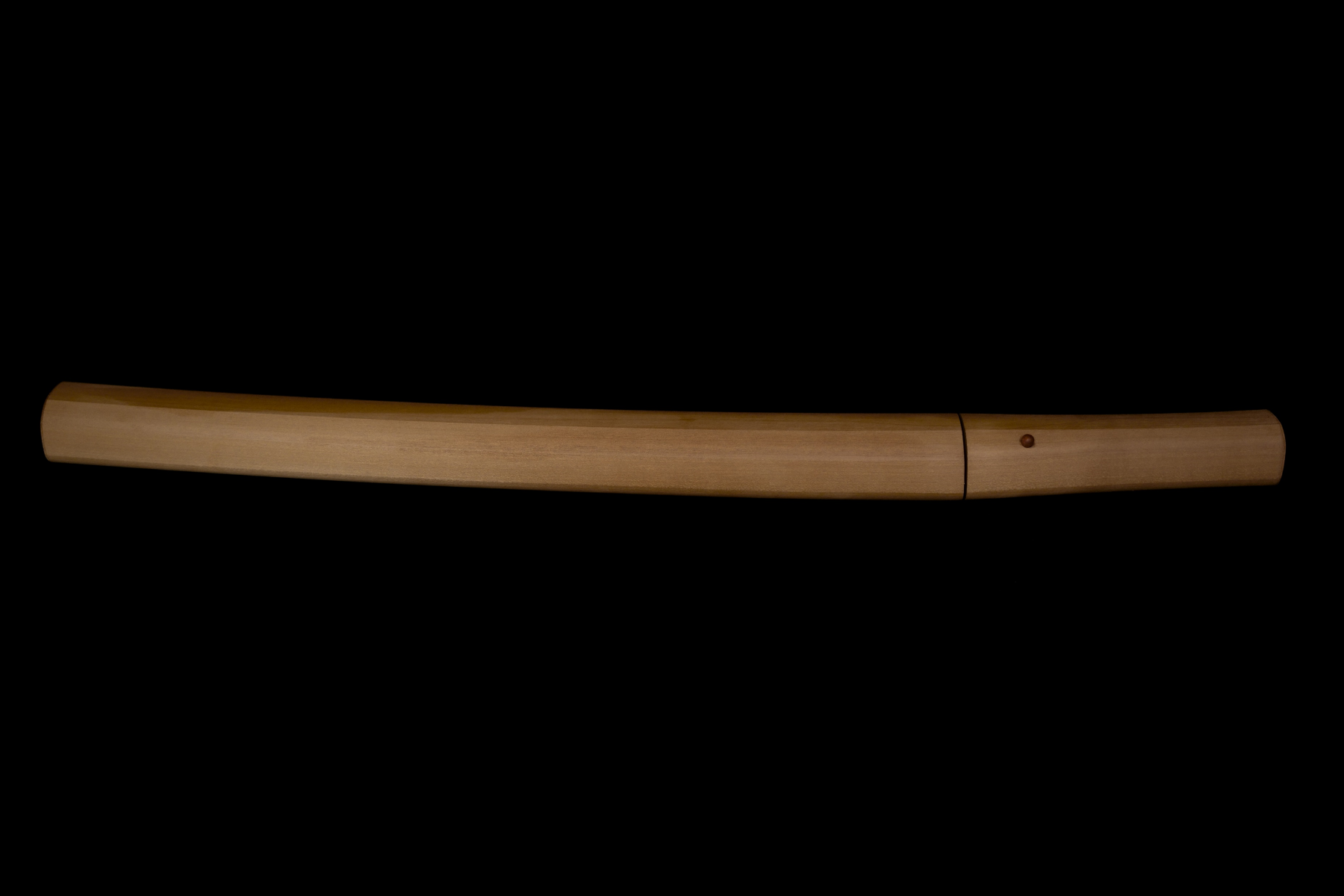
You will need to have a proper case for the koshirae in your checked luggage. I use a hard plastic long weapons case with foam padding to protect the swords I transport out of Japan. You will need to take the measurements of the case into account for the airline's checked baggage rules. The case will likely be classified as oversized luggage as it is too long for the normal conveyor belt they use for luggage. You will need to bring it as oversized luggage when you check it in. This can be more expensive depending on the airline. I suggest either arranging to buy such a case in Japan or bringing it with you on your way to Japan, as they can be quite affordable. Greetings, Lex van der Jagt1 point
-
The glue left me no choice. It was everywhere: on surfaces and in crevices. This annoyed me greatly. I had to clean it. I made some wooden scrapers to remove glue. I used all kinds of soft brushes to work on brass parts. I used small brushes from the set for paint gun cleaning to clean dust from inside of saya. It looked similar to this "special tool" I made to clean the insides of tsuke, but I used some piece of wire instead of a wooden stick. I couldn't say that I was satisfied with the results of cleaning, but I believe it had to be done.


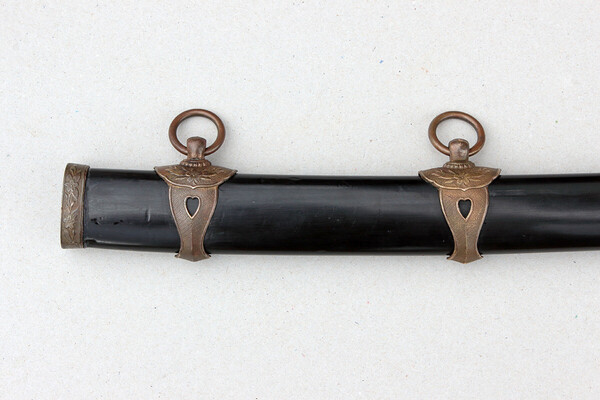

 1 point
 -
Merci bien.ce n'est pas la valeur qui m'importe c'est juste l'age de ce katana,,je ne veux ni le vendre ou faire du profit dessus..je sais qu'il est pas au mieux de ca forme .......1 point
-
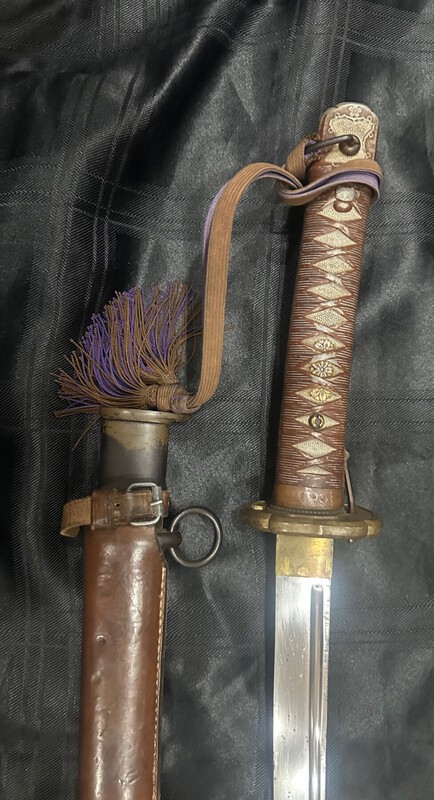
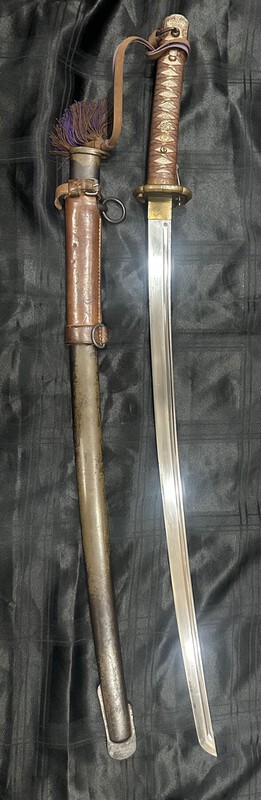
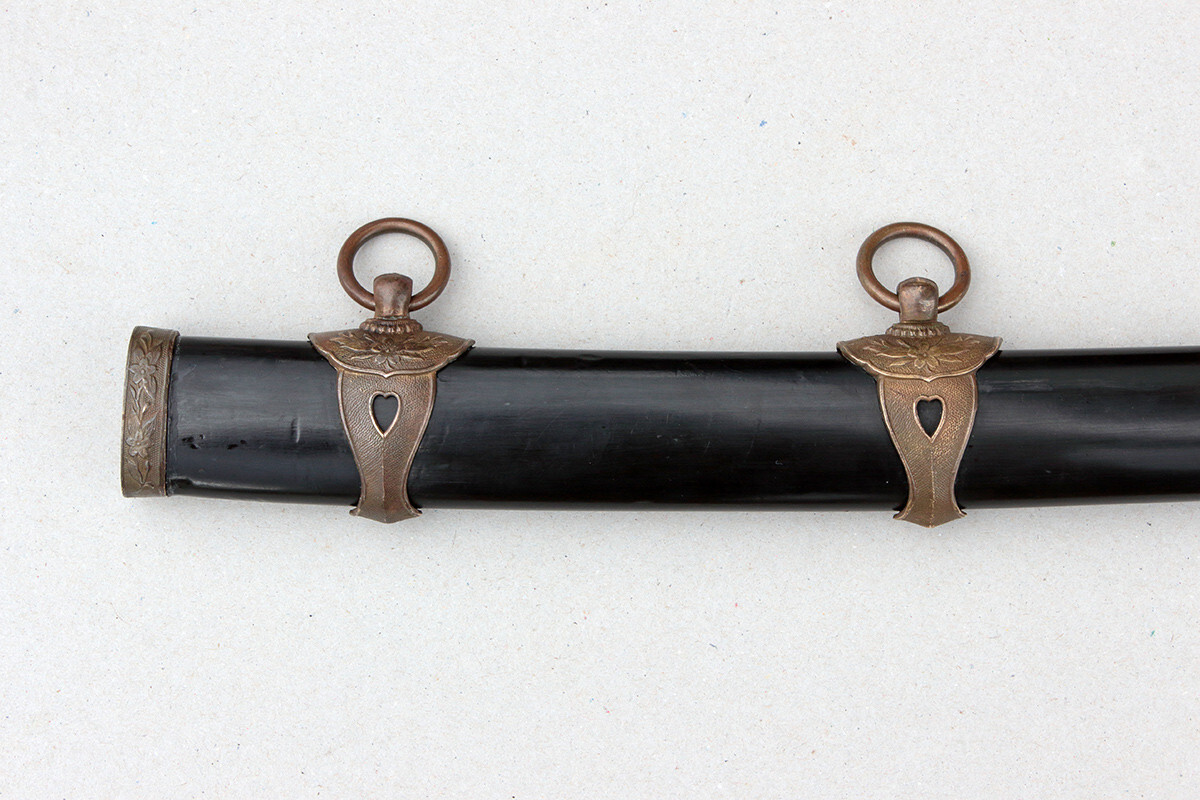
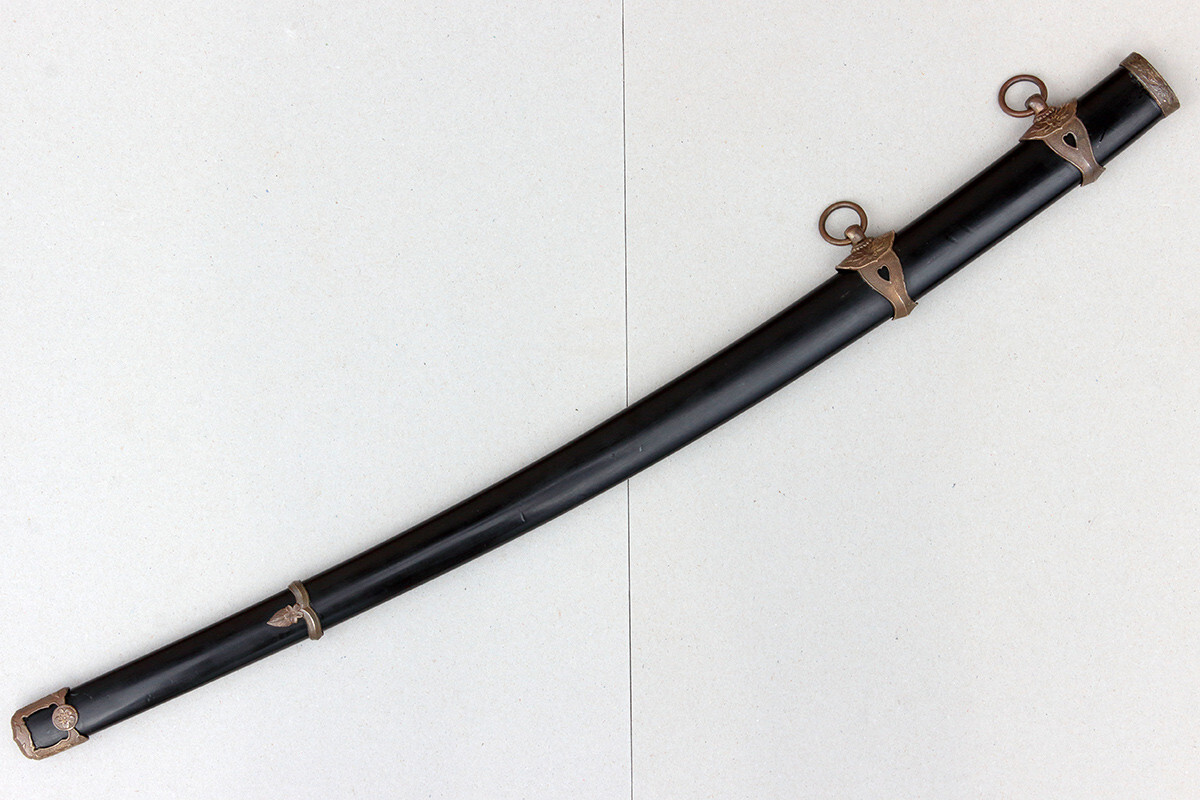
Thought I’d bring this one back to life picked up this sword from a local antique shop , don’t normally bother with no swords but the leather hanger intrigues me , there is some writing that I assume is a name can any translate it for me please mark

 1 point
 -
There is a gofundme set up for the repatriation of his ashes - please consider a donation https://gofund.me/ae445a371 point
-
I have certain, not very pleasant, but rich in experiences, memories related to experts and auction houses. never again1 point
-
Not sure where or when it was started but people have a very twisted view when it comes to Bizen Koku / Bishu mei and Kazuuchi. There were a lot of Sukesada smiths ( 30+ ) producing a lot of blades of varying quality in the 1500s ( esp starting in the Tenbun era coinciding with larger sengoku armies ). At some point people decided to associate mei with quality and I think this is wrong. Based on availability , I do believe a lot more swords were signed Bishu instead of Bizen Koku so naturally there are a lot of lower quality swords bearing the Bishu mei and this warped peoples preception of the mei. I have seen many TokuHo Sukesada with Bishu and low quality blades with Bizen Koku. To make things more confusing , many Bizen smiths also strictly used the Bishu mei in the 1400s and early 1500s adding to the confusion People are also quick to label them Kazuuchi which I believe are a whole separate thing ( mumei/nijimei with rough masame hada ). Ironically these true Kazuuchi would be unlikely to be found 500 years later since it would mean someone took care of them through the muromachi, through the entire edo period , the sword ban , and then somehow be recovered and deemed worthy to preserve after WWII. I may be biased because of my love of sue bizen but I wish more research and literature was readily available to clear up the many misconceptions around1 point
-
Thank you both, I too took this for granted. My wife has a way of asking such killer questions, friends of our who were police officers reckon that she missed her vocation and would have been great at interrogation! All the best.1 point
-
Proving that some incredible swords can carry just the Bishu Osafune Sukesada signature. Here is mine in the same signature + date 1567 - some incredible utsuri in sashikomi polish Length: 71.5cm Curve: 2.5cm Width moto-haba: 3.22cm Thickness moto-kasane: 0.77cm Width saki-haba: 2.55cm Thickness saki-kasane: 0.60cm


 1 point
 -
Here's what you tend to do Dan. You throw out some vague theory on a random tsuba, you make some unwarranted claim. Then when people dispute it and don't agree, you go "Well, prove I'm wrong. Unless we send it for testing, I guess we'll never know" and claim the "mystery" is unsolved. Except there is no mystery, aside from your throwing out a theory on that particular tsuba. No-one sees a cast tsuba there. But because you make a claim, it's up to us to prove it wrong? Simple fact...anything that can be done, will have been done at some point by someone. That's why you find swords with bizarre shapes and styles sometimes. There are always smiths who want to play with something new. No doubt there is someone or some small group out there that wanted to see if they could cast tsuba way back. However, using that as proof that cast tsuba were routinely done way back hundreds of years, and that the Japanese just mysteriously forgot to document it in their thousands of books is naive at best. We have books and manuscripts and documents from hundreds of years ago. You think they all got together to invent a conspiracy and hide the info? But you've gone beyond simply trying to find proof of cast tsuba. Now you just take random items posted by people, see what you want, and start a discussion around how that proves your theory. Forgetting that the item itself hasn't been determined to be cast, you act like it has been, and then proceed to use it as proof of your theory. The West isn't going to make some brand new discovery around Nihonto that the Japanese themselves haven't already investigated decades ago. But I think you're determined to somehow "leave your mark" and make some revelation that no-one else thought of. Throwing out theories about posted pics isn't going to do that. And it confuses the heck out of newcomers who come here to learn established facts.1 point
-
I don't think this is a case of confusion, just that people place too much emphasis on the koto / Shinto grouping (labels). It's not like sword making changed over night - it's more of a 50-150 year range before the groups become more distinct, but even then...1 point
-
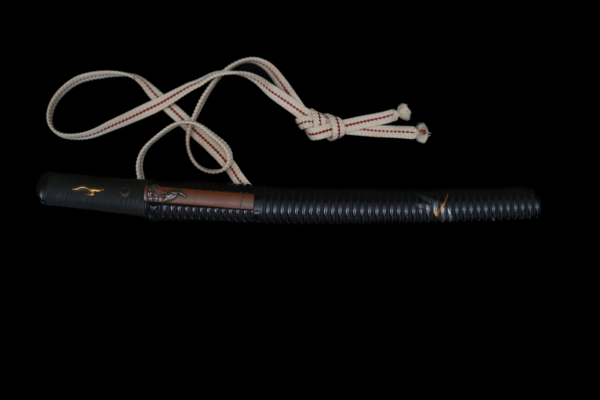
And here are some pictures of the Koshirae & Shirasaya
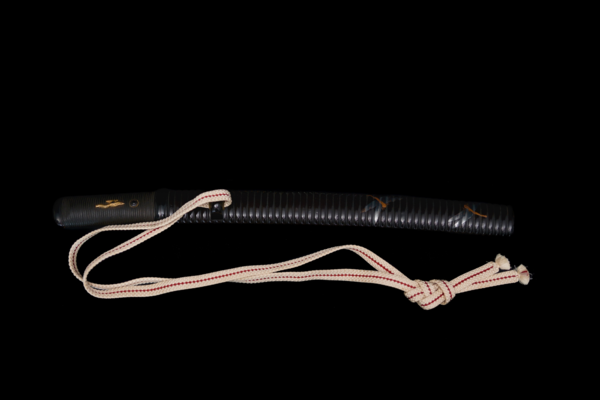
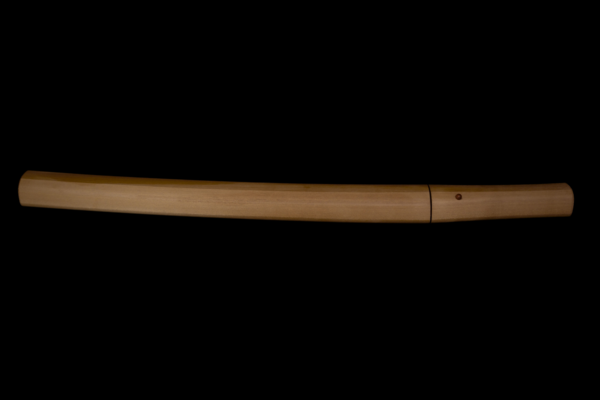 1 point
 -
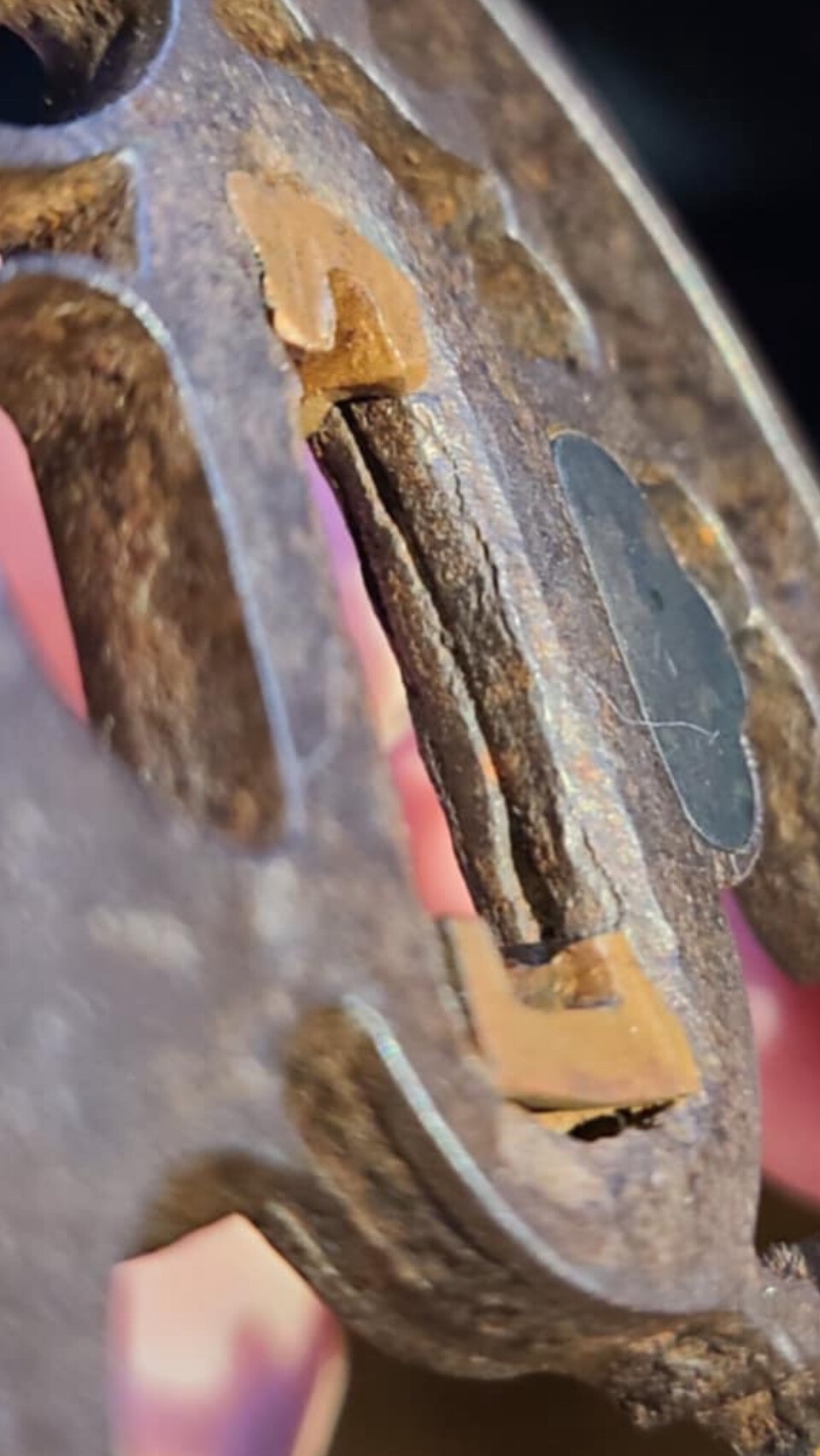
Here’s a nice example of a ko-akasaka seppa-dai that shows the four layers on the outside edge of the sepa-dai. It even has a split along the middle layers like the tsuba that started this thread… but nowhere near the same level of separation. Regardless, the whole notion of a “three layered construction” needs to be tossed aside. i’m still leaning toward a few freeze thaw cycles affecting the “tokkei” one, but who knows.
 1 point
 -
Brian, you're a very naughty man It seems my friend Jean has made a good job of holding up the practical side of the discussion, and I've previously written a shed load on the subject here too but some dead horses apparently won't stay dead For me the matter is relatively straightforward. I try to consider such possibilities as cast iron tsuba in as scientific way as possible. By which I mean I will examine the evidence. I'm not interested in possibilities, possible is not probable. As I taught my sons, It's possible there's an elephant in the backyard right now....but it's highly unlikely. Is there any compelling evidence that elephants even recently visited the yard? It seems to me that the the problem starts with 'tsuba' that are clearly produced by casting. Multiples even, which suggest a method of economical reproduction. These cast pieces are, almost without exception, pretty poor examples of the tsuba makers art. To be blunt I can't see why anyone would want one other than as a coaster or paperweight....my desk would not be so besmirched though . Here I'm in mind of our dearly missed friend Guido, he'd be appalled. So these things were cheap in a market of much finer wares, even the most simple handmade pieces. So who would buy them in a culture that valued craftsmanship and where one's status and culture was on show in what you wore and displayed... a world were tosugu were a fine art? Only the culturally ignorant (of Japanese artistic culture) , uneducated in Japanese value systems, beguiled by superficial trinkets and with money to spare would give these products more than a cursors glance, imo. So we have, as exhibit one, poorly cast copies of tsuba. But with no context, no certain way to establish when or where they were made. I've been studying tosogu for about 45 years now, and have a hefty library of the earlier tsuba collectors catalogues. These cast pieces seem to be conspicuous by their absence. It seems to me their appearance is relatively recent. Or old school collectors and scholars simply rejected them as the dross they are, regardless of age. Those who would argue for the possibility of Edo period manufacture have a mammoth task. Whether they were cast in the Edo period or not is not a simple yes or no, equal probability equation. In the absence of convincing or compelling evidence any theory is merely empty speculation. All the theorising in the world does not in any way advance the truth of an idea without some 'real world' verification. A line of text, a cast tsuba on a sword registered in a temple somewhere...a paragraph in the soken kisho or the Ci Yuan. Endless discussions on aspects of metalwork, Japanese iron casting blended with partial and irrelevant notions of modern lost wax casting and mould making, by theorists with no practical or relevant experience with which to even evaluate or critique their own imaginary technological histories reminds me of the old 'reductio ad absurdum'; "how many angles can dance on the head of a pin" . Dr Lissenden's explanation of a possible Edo casting procedure is unconvincing and far too simplistic so as a defence of the notion that is was possible it remains a fanciful idea at best. If we are to entertain this sort of speculative thinking we might just as convincingly 'demonstrate' that telephones could have been made in Edo period Japan too. I'll end by sharing this, sent to me by Greg Irvine, recently retired Senior curator at the V&A, so a serious scholar, The Samurai, as a class, were dissolved in 1867 The 'printing telegraph', the first fax, was invented in 1843 Abraham Lincoln was assassinated in 1865 so There was a 20 year window in which a Samurai could have faxed Abraham Lincoln.1 point


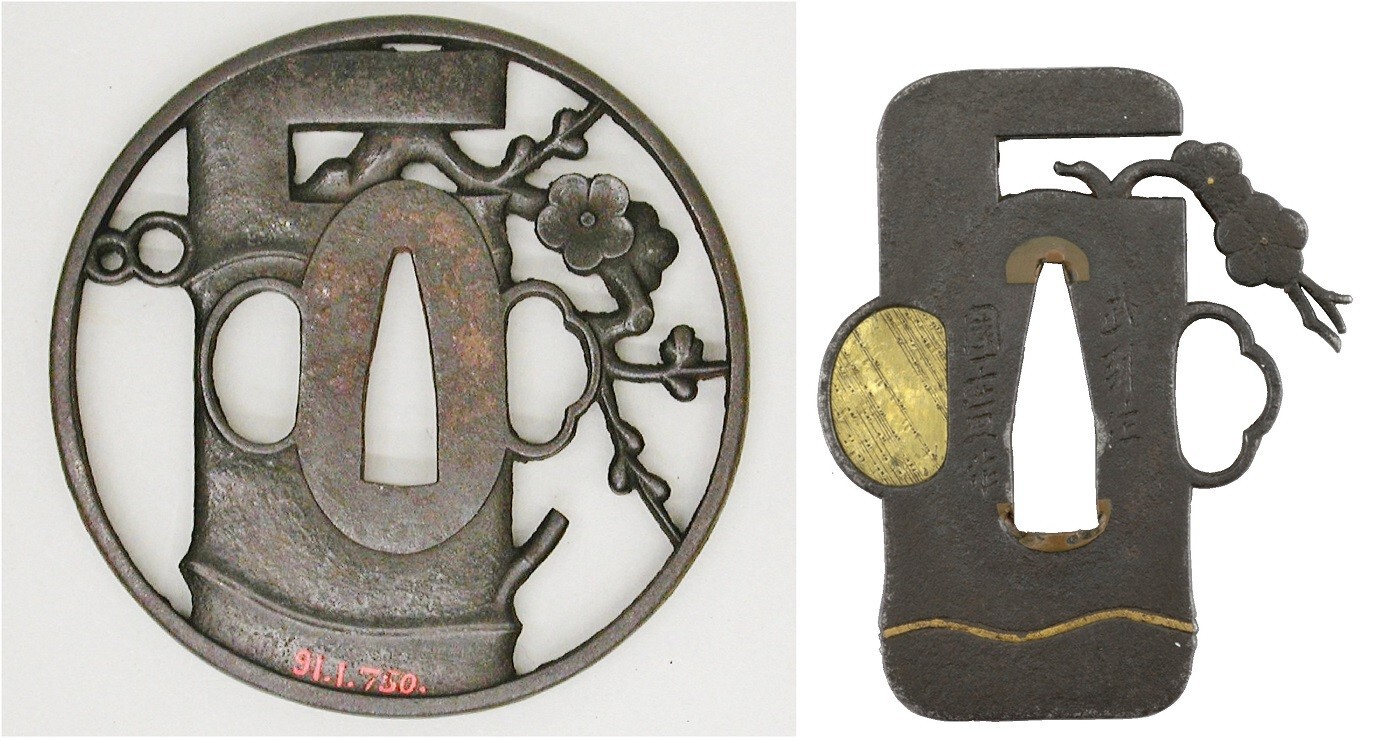







.jpg.f238530445d1da6ece07d8b0ec1ce2da.jpg)





























This leaderboard is set to Johannesburg/GMT+02:00