
Leaderboard

Popular Content
Showing content with the highest reputation on 08/06/2024 in all areas
-
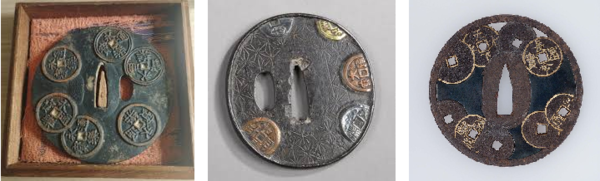
I think the two holes are where two Yoshiro 'Mon' may have fallen out - even melted out if indeed the tsuba was in a fire but then the ategane would have been gone too? The size is consistent - these examples are Outer diameter 1.7cm Thickness 0.4cm but could vary slightly. The design on the guard looks to be a string of old coins not 'mon' [I believe we have seen another tsuba very much like Paris' example but I can't put my hands on it yet.] It could have looked like this [I think very attractive?] Check this Marcus Sesko thread https://markussesko....invincibility-tsuba/
 5 points
 -
I know we all like the romantic idea that swords were all owned by samurai, but the truth is that the vast majority were likely owned by merchants and others, unrelated to the samurai. Doesn't change the desirability of these swords in my books.3 points
-
Dealer is saying if the bohi was Atobori it would not get Juyo. Personally I don't think this is correct if the blade is from a master smith and in otherwise excellent health. This particlar blade is papered to Norishige. All the evidence suggests it was a later carving possibly when it was shortened for aestheric or balance reasons. I cannot understand any instance whereby the bohi would end so cleanly at the hamachi if it was original. The literature also says horimono was rare for Norishige.3 points
-
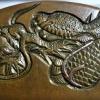
Here is a Showa era example on a katana from the smith Nagamitsu. It was likely a very special order. It is signed Bi zen (no) kuni ju nin ichi hara Naga Mitsu Kore tsukuru . It is undated. There are dragons on both sides set in lozenges as well as bohi. One dragon chases a fireball while the other clutches a sacred jewel. This item was brought back by my Uncle Ed from Japan. He was part of a team confiscating weapons after WW2. These are his pictures taken outside on his porch in 1996. Cheers, William G.

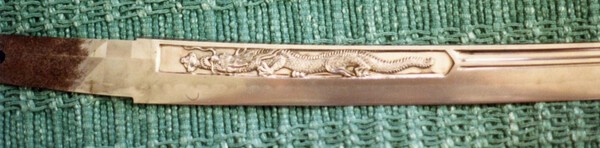 3 points
 -
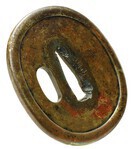
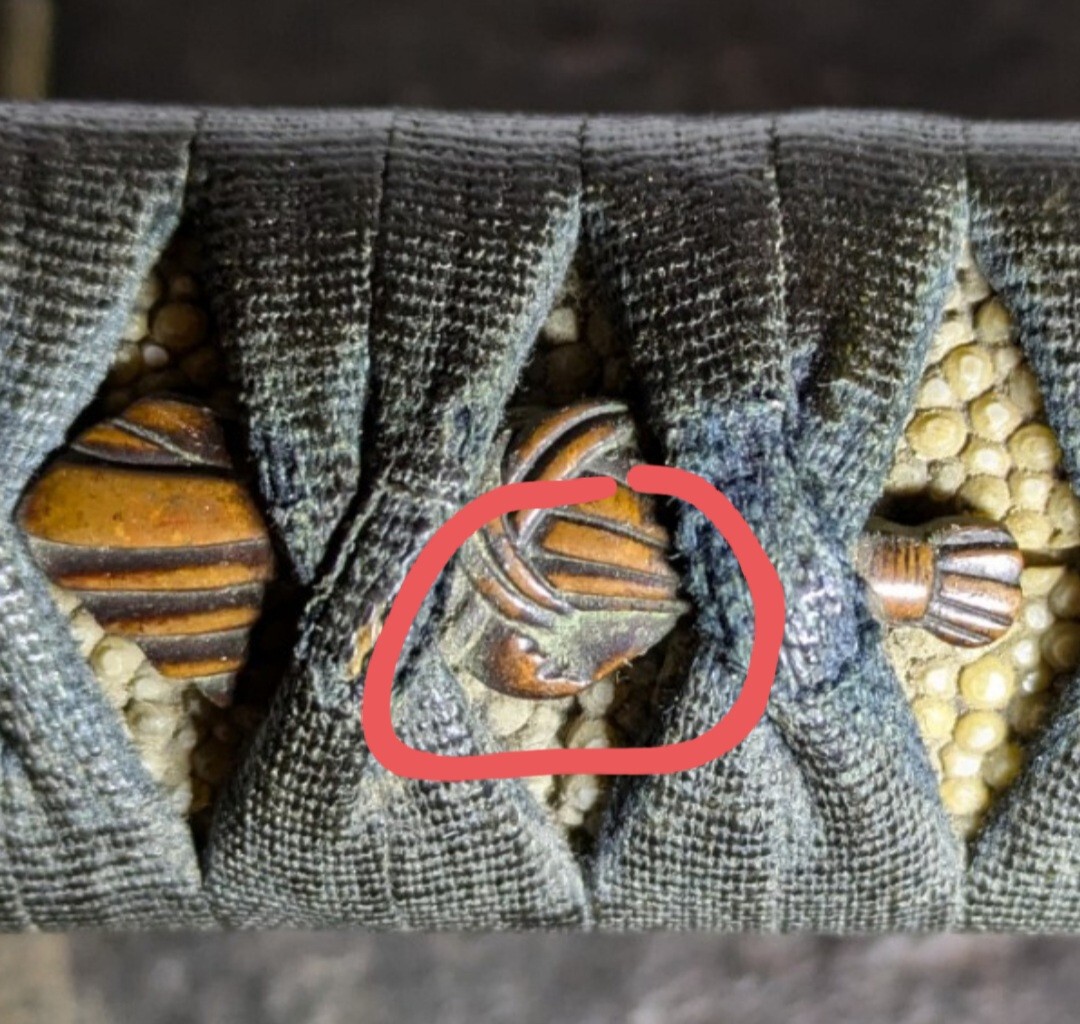
Looks copper to me with some verdigris forming?
 3 points
 -
Wooden? Are you certain? Sure don't look wooden in the image. Regards3 points
-
Dear Paris. You may have somewhat missed the point. Finding tsuba labelled as tachi tsuba is not hard but for various reasons these descriptions are not always accurate. Example 1 Clearly the design works the way it is displayed, ie for a katana, so more properly described as tachi shaped. Example 2 Never described as a tachi tsuba, and for good reason. The hitsu ana are clearly original to the design so this would be for a handachi koshirae. Example 3 A recent tsuba of tachi form, most likely for handachi koshirae. Once again more properly described as tachi shaped, Example 4 The most interesting because it is made by tachikanagushi and the question is was it made as it is now or were the ryo hitsu added at a later date. (This site is worth visiting often if you want to learn about tsuba.) Worth noting that tachikanagushi is a group of makers most of whose output comes from the Muromachi period. You may find this thread interesting. All the best.2 points
-
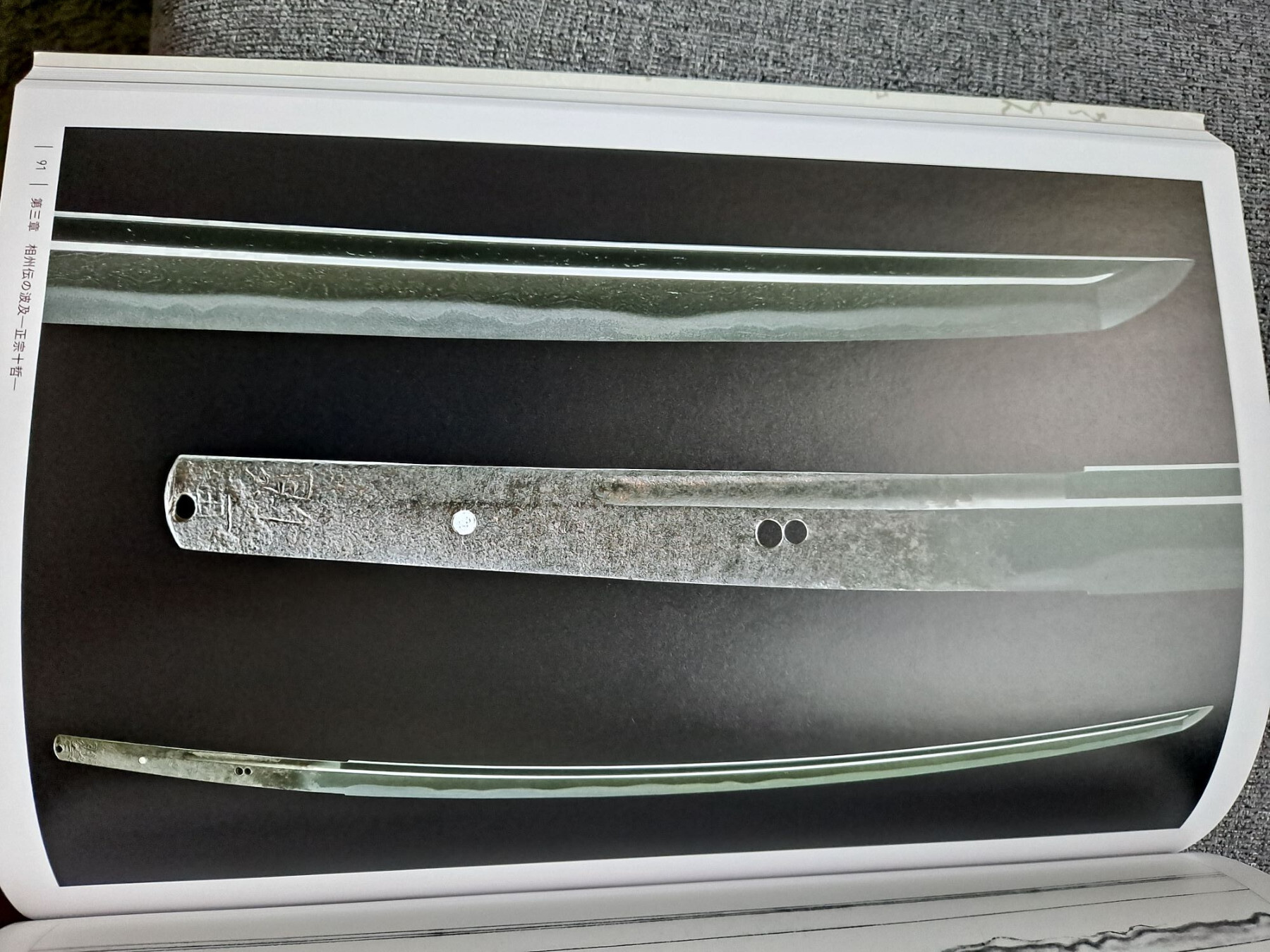
So far I have found 6 tachi by Norishige and only 1 of them has hi. This is Jūyō Bunkazai that is owned by Agency for Cultural Affairs. Then for comparison so far I have documented 74 suriage katana that are attributed to Norishige and 43 of them have hi. Unfortunately I cannot dig deep into the reasons why it is like this as it is beyond my expertise. However data on items would suggest that hi on Norishige tachi is quite rare thing, while it is actually quite common on suriage katana attributed towards Norishige.
 2 points
 -
Hey Ghoul (George), I finally found pictures of those tsuba that are attached to my daisho (man, I didn't even know I had those on my computer!) Anyway, just some interesting stuff I thought I would add here since I couldn't edit my previous post and add the pictures.
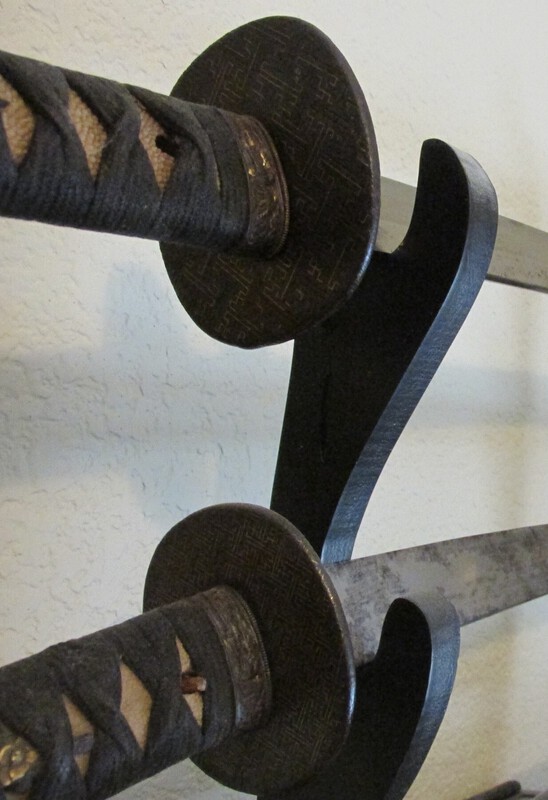
 2 points
 -
35, feels crazy that after being in the hobby for ages I am still in "youngish" group.2 points
-
Definitely Yoshiaki.
 2 points
 -
Because TACHI are carried edge downwards.2 points
-
Hello George i think it’s worth remembering that a great many Samurai were “poor”. Being a Samurai did not equate to immediate wealth….often quite the opposite. The fine koshirae and armours that we see in films/exhibitions/books etc were in reality owned and worn by the very small minority of those that enjoyed a high rank and/or considerable wealth. It follows therefore that many koshirae, in fact the vast majority, appear to be of modest quality sometimes assembled from a variety of mis-matched pieces. Also even a nice set of fittings (especially iron) can look pretty ordinary if neglected in a shed for more than 100 years. ….and these menuki are metal, most likely copper-as others have already said.2 points
-
There is also a sword club in Southern California that meets once a month in Gardena. Mike Yamasaki is usually the lecturer. The sword club's information is on Facebook: Nanka Token Kai. https://www.facebook...m/NankaTokenKaiSoCal2 points
-
One of my HEIANJO TSUBA:
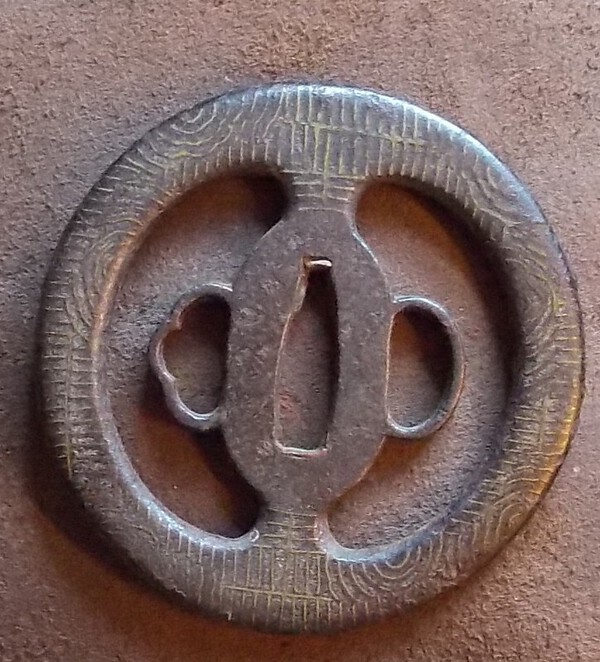 2 points
 -
Not HIGO, but HEIANJO style.2 points
-
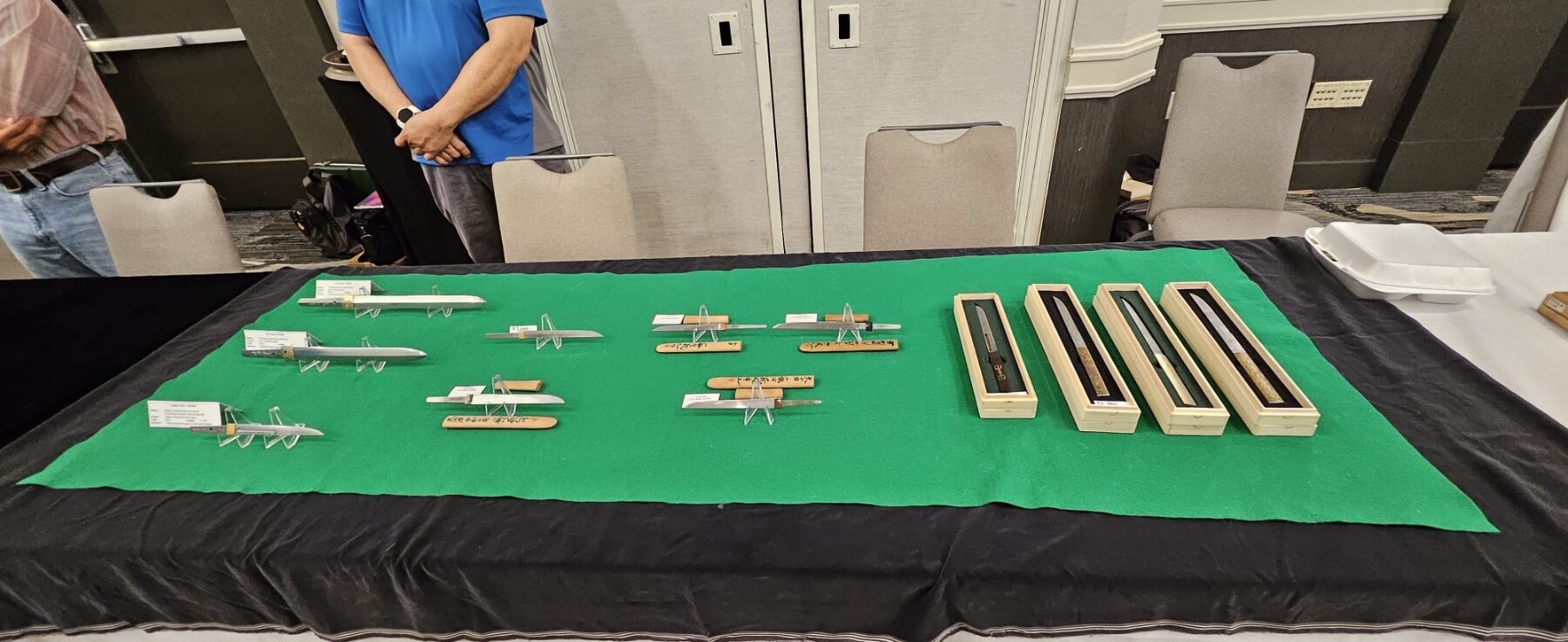
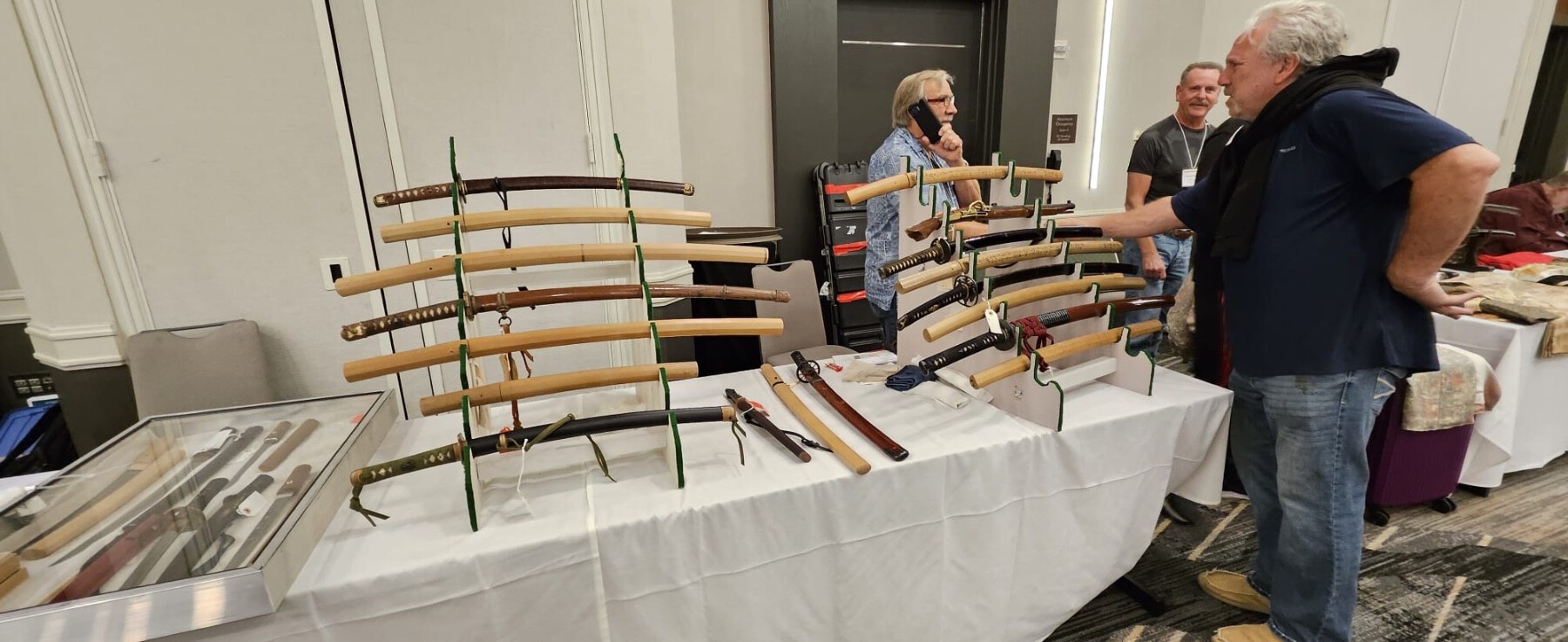
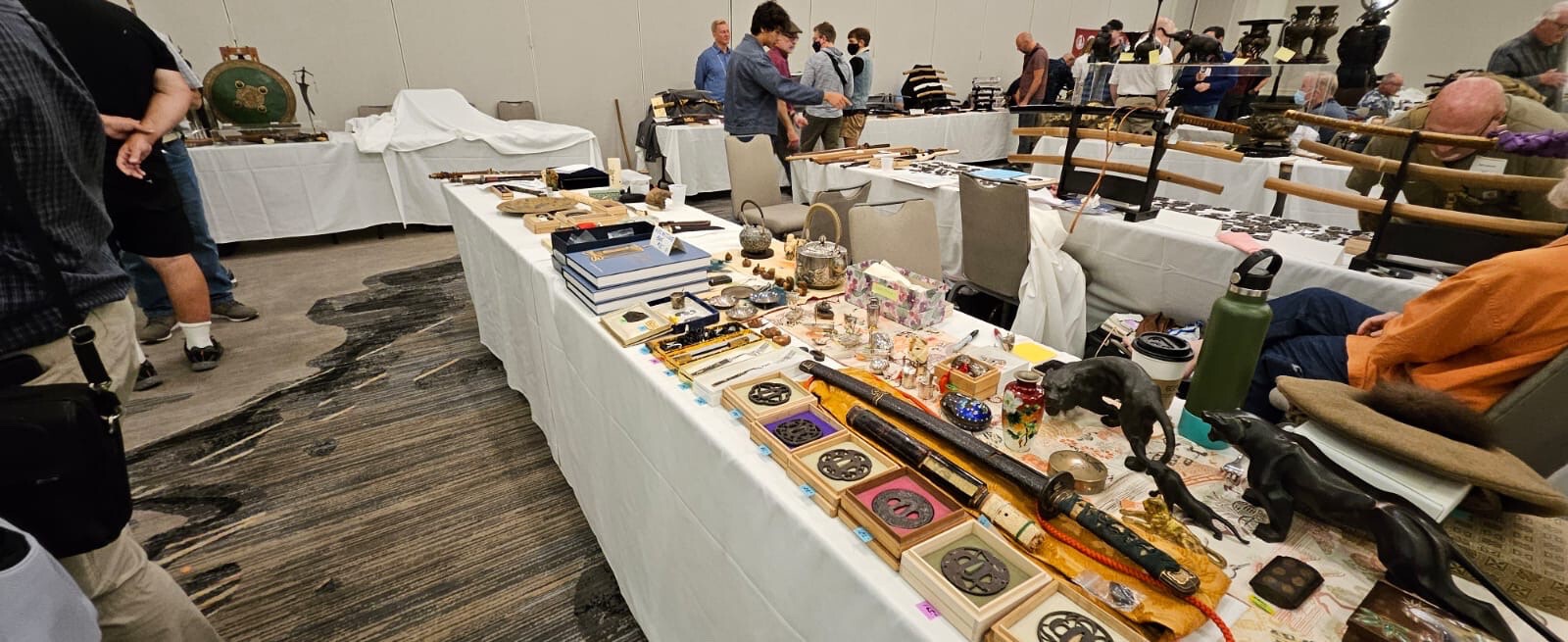
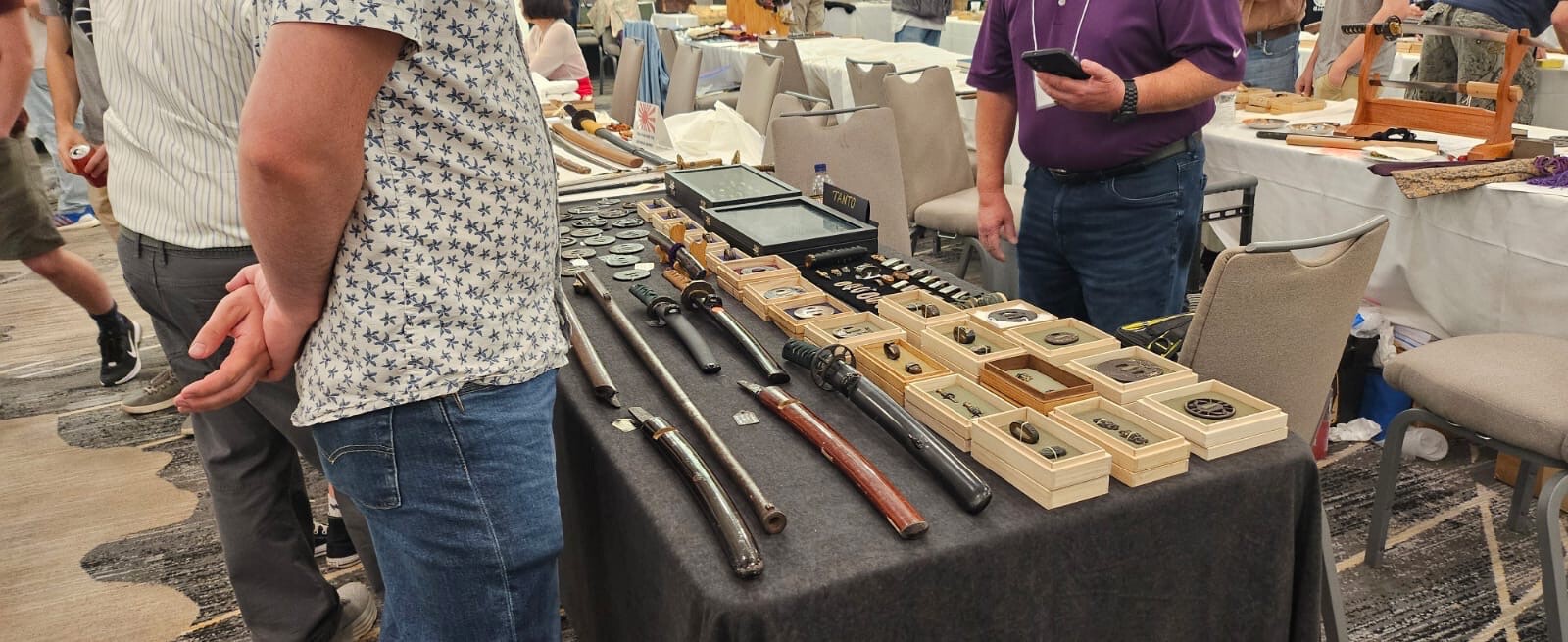
Great show! Highlights for me were the Nanbokucho bizen presentation by the NBTHK. 2 TokuJu and 10 Juyo blades available for study. Other highlights included being able to study a Shintogo Kunimitsu tanto, various ichimonji blades, and an incredibly healthy Nakajima Rai. It was great to see fellow NMB members as well and put faces to names and grab lunch and dinner with a few of you.2 points
-
I was optimistic about young collectors but now that's gone out the Window. I'm only talking UK here but sure more and more countries around the globe will zoom in on the subject. With what's going on in the UK at the moment and government shouting loud about knives and stop and search etc etc, its doomed. EMS now return blades back to sender in Japan that are on route to UK Anyways, don't want turn this into another Brit debate but its how i feel about younger collectors prospects of being involved and actually owning swords. Us older ones will hang on to what we have, then send to auction or pass stuff on to our kids should they want it. Understandably, they might decline.2 points
-
Sunday bargain day today! Tsubas with boxes for $25 - great price for my sons collection. This weekend I was able to pickup a kabuto with menpo and box/stand for a song. Also a nice sculpted antique drawer box. The one i came back for today was a Kinmichi wakizashi - hozon papered with a Sunday discount. The show was awesome for Hizen collectors. Gordon Robson, Roger Robertshaw and Mike Yamasaki were literally within arms reach. Lots of papered Nidai Tadahiro at bargain prices.2 points
-
Yes, I agree many Koto blades are atobori. Here is my example of a late Koto blade that was not atobori. This sword of mine is o-suriage but the bo-hi I think were original to the sword before it was shortened.
 2 points
 -
Even if a blade is ubu, it is no guarantee that the Hi was added later. Ato = after, later, Hori = carving. What is more important is the overall concept: is the swordsmith/school known for horimono? If so, are the Horimono/Hi similar in concept and execution with different blades from the smith/school? Then you can have some certainty. With certain swordsmiths I would be rather suspicious if the blade has a Hi, especially in the Shinto period. Many koto blades have hi that are atobori. I wouldn't pay too much attention to that.2 points
-
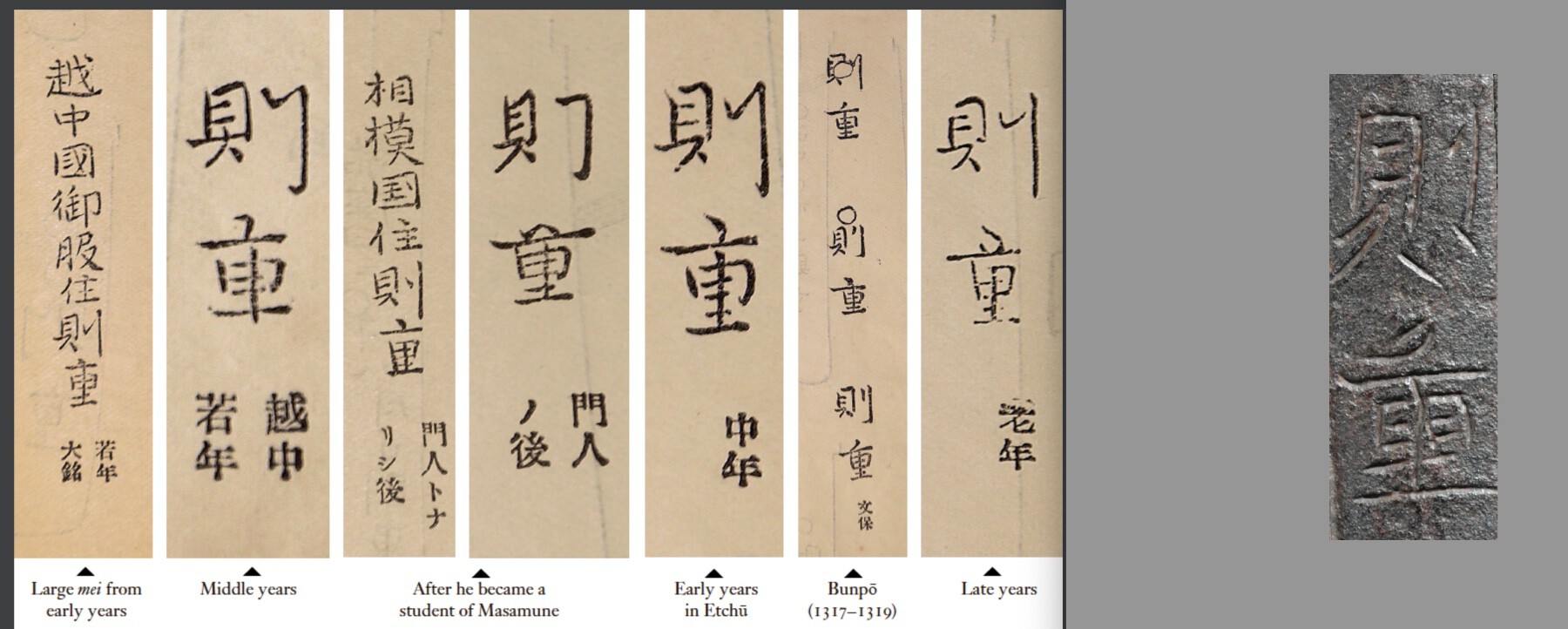
If you haven't noticed I have a massive soft spot for Norishige. My goal is to eventually own one of his blades so in the meantime I'm doing as much study as possible. Part of that is studying the development of the smith through what was a long career. His style changed depending on the influences, location and stylistic preferences predominating at the time. Ko Hoki influences, a phase where his style was similar to his contemporary Masamune and early influences of Shintogo Kunimitsu, with whom he probably had a teacher/student relationship. His Mei changed too throughout the late Kamakura and Nanbokucho eras when Norishige was active. I'm trying to place the style of the Mei on the right. To my uneducated eye it looks most like the large Mei from early years on the far left with one caveat, the oblique chisel mark on the upper kanji, at the end of the righthand vertical element. The crescent mark at the top of the shige kanji, as well as the large horizontal lines seem to be the most indicative.
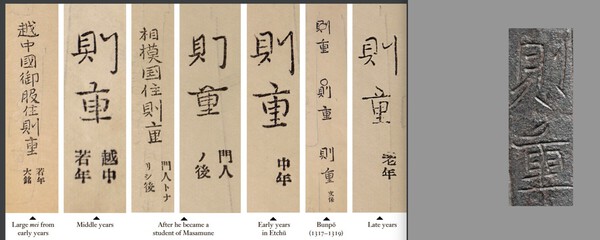 1 point
 -
My wife tells me I'm 40 but I don't believe in age.1 point
-
Hey again Dan, I really do like those tsuba! Thanks for sharing1 point
-
Aha a fake?

 1 point
 -
I tried the whetting seam method to close up a shirasaya split but didn't work in my case, but glad to hear it worked for you. I would make sure the saya is completely dry before you store the blade in it. Any condensation could cause corrosion to start.1 point
-
I do not know their correct readings. Top center; 長彦 – Takehiko/Nagahiko (reading?) Bottom right; 幽明子 – Yumeishi/Yumyoshi (reading?) 大地宗顕製 – Taichi/Daichi/Ohchi(reading?) Muneaki made1 point
-
Well, Brian is not entirely wrong, even when it comes to long blades. It may be that the vast majority of merchants were not allowed to carry long swords. But they did own them. Some important merchants were sword enthusiasts and owned extensive collections of first-class swords.1 point
-
Hi guys, I woke up this morning and immediately knew how I could settle this - I have a pinpointer for metal detecting downstairs... Turns out I was wrong! The menuki are indeed metal, and I have learnt something yet again 😄 Thanks for helping correct my assumption and broadening my understanding of the materials they can be made of. Does anyone else have examples of humble koshirae they can show me so I can compare with my own?1 point
-
These are so obviously metal and NOT wood1 point
-
Wow, thanks Dale, much appreciated! Kind regards.1 point
-
here is a link to info on the Vegas show. There will be several knowledgeable people in attendance https://www.vegasswordshow.com/ you can contact me if you have questions nixe@bright.net1 point
-
Yes my friend! Imagine the things that daisho has seen! Too cool! Unfortunately, my daisho is in Arizona. Right now I am in Wyoming! Maybe one day I will take a picture of the other side of the daisho katana showing the wood shavings placed in the ito when I get back to Arizona. But hell, I probably will never remember to do that! Anyway, some interesting stuff. The "vibes" I get from a few of my tsuba (and this daisho) is just something I attribute to the messages from the Universe! I know, too weird!! Onward!1 point
-
Thanks, David. I suspect that the cover has the attribution written on it. I'm going to pass on this one, as a spectacular and powerful Ohno (my first) that was just offered to me is now in the process of being purchased from Choshuyo. It is a Karuma motif identical to the one on your website, but a bit earlier and easily mistaken for a thickish Kanayama. Probably late Momoyama based on features including abundant tekkotsu and a very rustic appearance. The Karuma itself is sunken by 3 mm from the 7 mm rim, which is quite dramatic. Ohno are massive in that way in their appearance.1 point
-
Date is Showa 16 (1943). Mei is Yoshi__ (maybe Yoshiaki?)1 point
-
I started collecting them when I was about 22. In those days, good Shin- Gunto katana were about £175+ exceptional ones perhaps £250 !Those were the days .1 point
-
1 point
-
Was thinking this looking at the San Francisco pic earlier. Id say about 55, Young uns dont have the spare cash to waste1 point
-
Just got home from the SF sword show, and I saw a few people, probably around 18, showing some real interest. An encouraging sign!1 point
-
A very bad Chinese copy I am afraid. It is a pity that someone didn't do some homework before buying a sword. There are numerous articals on this forum about these swords and what to look for.1 point
-
Just there to learn for me, and to handle more swords. I was open to buying, but unprepared to fly anything home with me. My favorite sword of the show (aside from the bizen display and other 50k+ items): Was a Yamato Hosho katana with Tanobe Sayagaki. It had really stunning masame, hakikake, and some itame/mokume that I understand is a bit uncharacteristic of the school. I really enjoyed admiring it. Right now I’m liking Yamato swords quite a bit. Cheers, -Sam1 point
-
It is such a great show. Lots of fantastic blades. The highlight has been meeting NMB members (apologies if I am missing anyone): @nulldevice @Kyoto-13 @GeorgeLuucas @Rivkin @yurie @Toryu2020 @Mark @Grey Doffin1 point
-
Hello, Very sharp Topic! In my very poor opinion, a bohi added later change the structure of the sword, the jigane is usualy different from the core soft steel. It could be made to take out a flaw like a fukure... sometimes horimono are used in that way. Good maru bohi are difficult to carve, generaly you can spot from the general position and shape if it's a later work... For me it is not suitable unless it is a very fine work... Best regards, Éric VD1 point
-
Probably a cast TSUBA. Photos should have been oriented cutting edge upwards.1 point
-
For anyone just starting out my motto would be "Low and Learn" - I have to agree with Dan. Start off by not spending big money on something that as a beginner, you really don't know much about. Personally I don't know anyone who is born knowing a "good" tsuba from a "bad" one, it is something you need to learn. Something else to consider is that there are many sellers who also don't know what they are selling - this is a double edged sword [not nihonto obviously ] You can get real bargains at times simply because the person selling does not know what he has. Equally you can find sellers who have an inflated view of what something is worth. What we really need is to learn what something is worth not what it costs - I can show hundreds of tsuba valued by the sellers at hundreds or thousands of dollars but those same pieces may not have the value of the metal they are made from. So buying a $600 tsuba does not assure you it is worth that. Worth is also something of a personal viewpoint, it is not what someone else says it is, as much as what you 'feel'.1 point
-
Very nice piece John, I wonder if it was originally made for Kyu gunto mounts given the time period.1 point

























This leaderboard is set to Johannesburg/GMT+02:00