
Leaderboard


Popular Content
Showing content with the highest reputation on 07/15/2024 in all areas
-
Here is footage of this sword being presented to the town.8 points
-
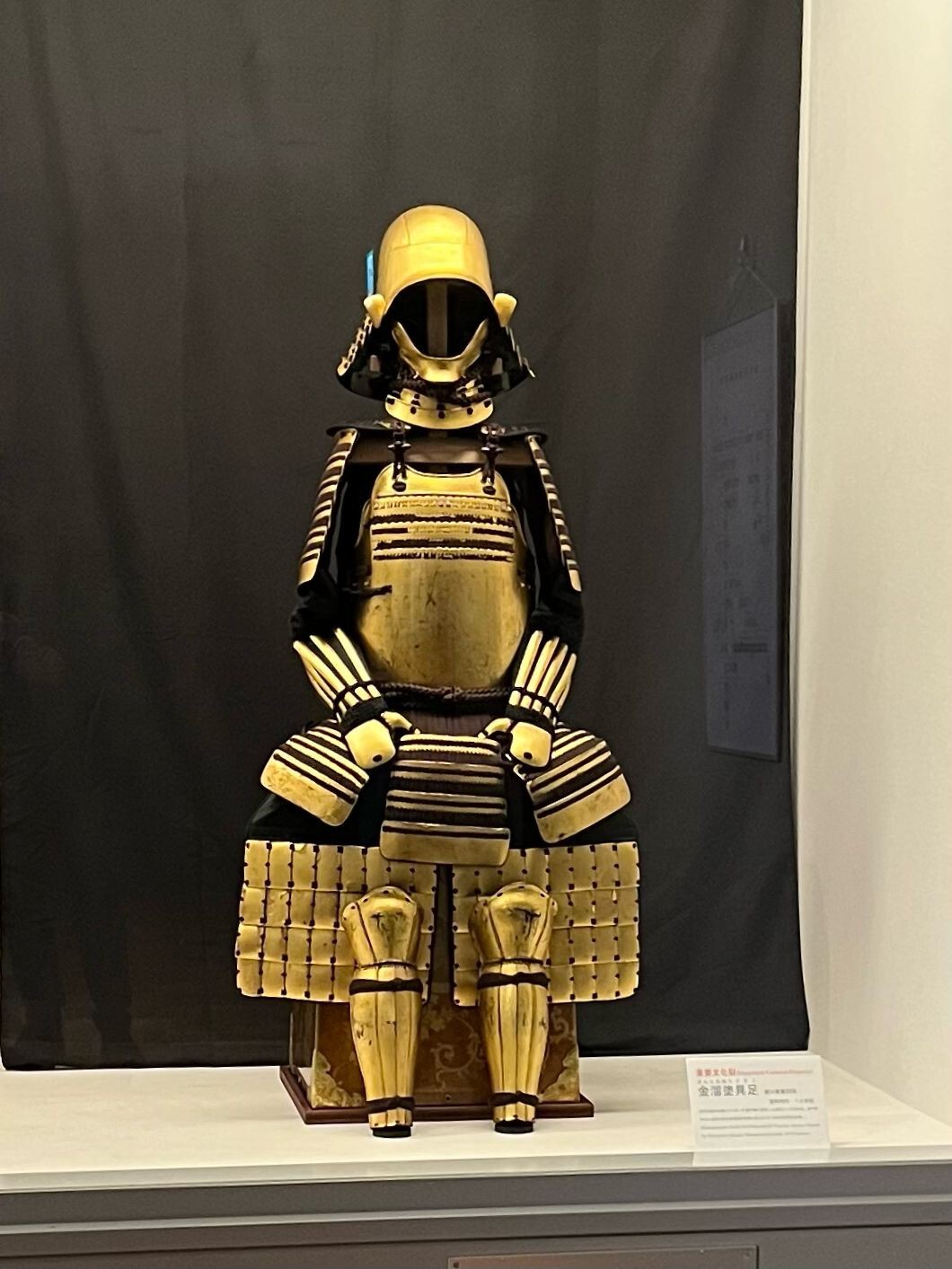
Indeed, John. Ieyasu had 2 armours with zunari kabuto, albeit his were in gold.
 5 points
 -
Samurai and lower-ranked warriors who could not afford armour were loaned it. In the case of Hatamoto samurai, armour might also have been loaned to reflect their rank and ensure uniform appearance. These okashi could range from the highest level of craftsmanship to the most basic. During the Warring States period, and especially from the late Muromachi to the Edo period, armour was designed for practical use. It was constructed to be identifiable from a distance. However, after the Tokugawa unified Japan and war became rare, armour became more decorative, with details meant to be appreciated up close. Armour continued to be used for ceremonial purposes until the late Edo period, when concerns about an American invasion again led to the production of battle-ready armour. During the Warring States period and up to the siege of Osaka, armour needed to be maintained and produced quickly. Consequently, the urushi layers were often thinner. This type of lacquering was sufficient when maintained properly. However, after the samurai class was abolished, there was no longer a need to own armour or pay for its high maintenance costs. Armour was stored away, often repurposed, merged with other pieces, turned into tourist items, or exported. The term ubu is often misused to describe badly damaged items. While an item's condition might be "as found," it does not reflect its original state. The main issue with the lower layers of urushi is that they are not waterproof. As a result, moisture enters through the odoshi-no-ana (the holes for lacing), the joints between plates on the inside, and from chips. This moisture spreads, causing rust, which eventually delaminates the upper urushi layers. Cracks appear, and pieces fall off. The silk also degrades and turns to dust after 80-100 years. So, the bad condition is caused by poor storage and handling and lack of maintenance.4 points
-
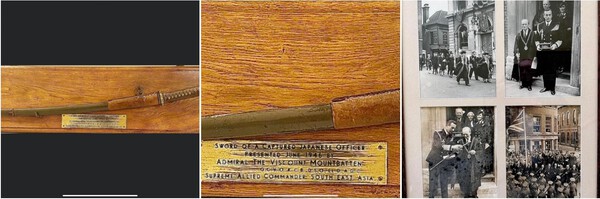
Great history, wonderful newsreel. The late Basil Robinson gave a talk to the To Ken many years ago and detailed how he was tasked together with a Japanese Officer to sort through and grade surrendered swords. Mountbatten returned to the UK with a very large number of these and made many presentations. I have some more details somewhere and will try and find my notes.4 points
-
Always good to see you Joe, and hope things are well. I can 110% vouch for Joe, as can most older members here. One of the best regarded members we've had. Deal confidently. Best of luck with the sales.4 points
-
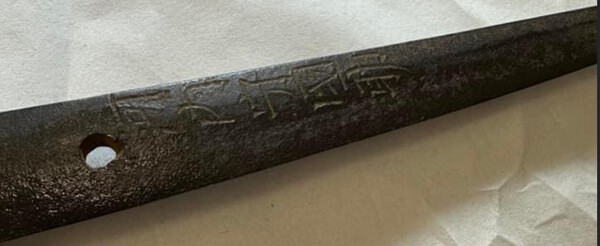
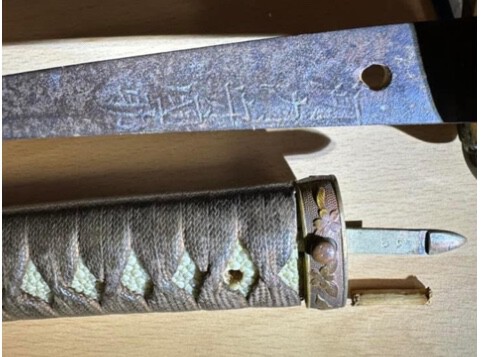
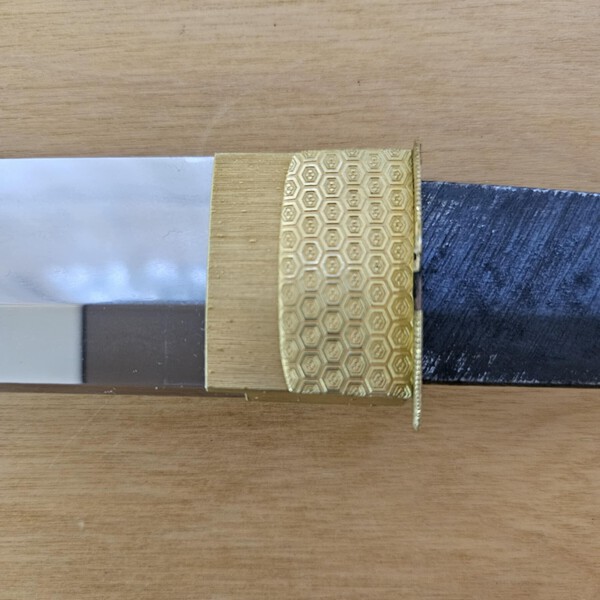
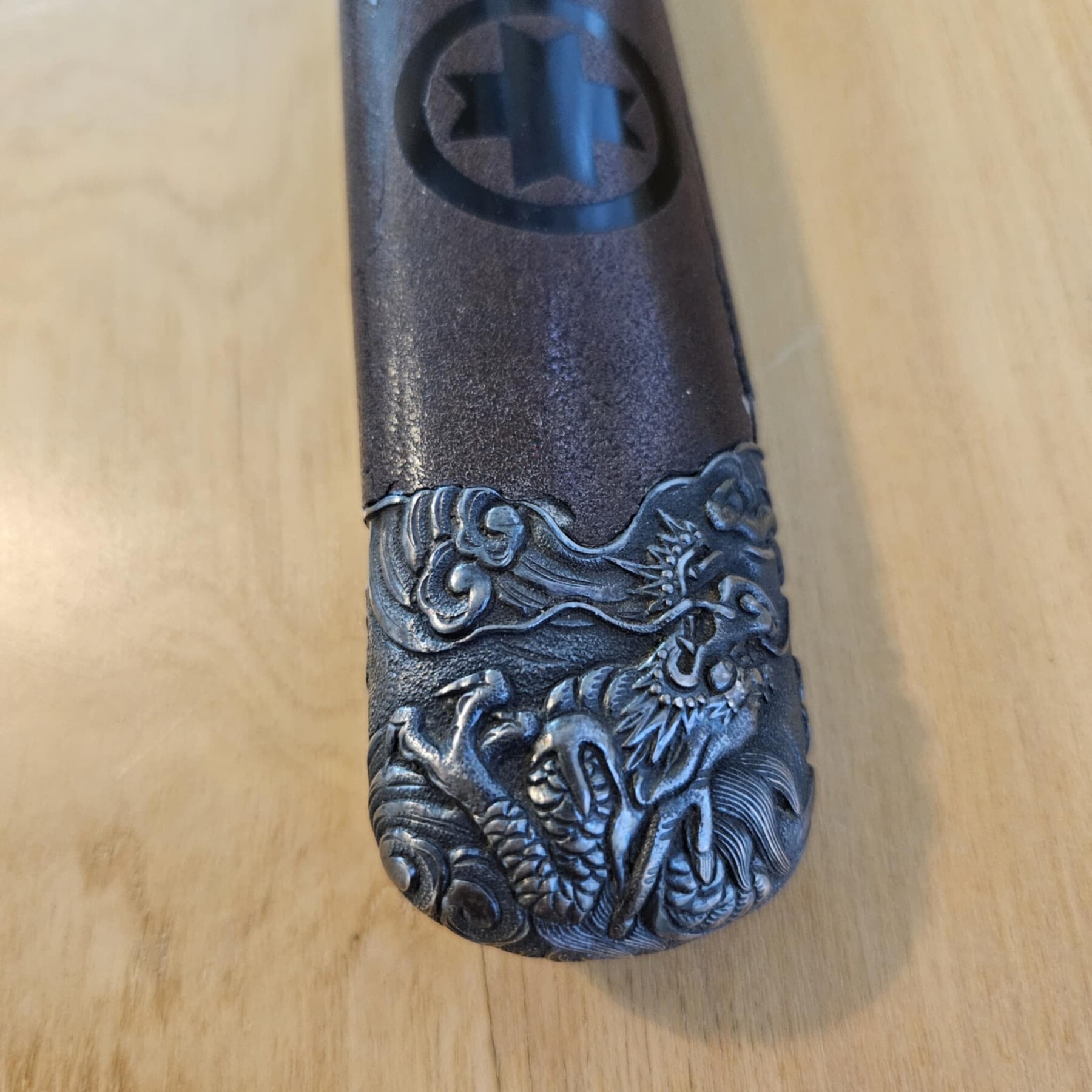
Hi I've been asked if I can find out about the origins of this sword. The sword itself was presented to the town of Romsey in the South of England by Lord Mountbatten. Hopefully the photos are OK as they are all that been provided to me. I think this is most likely the first time the handle has been off since it was presented to the town. Thanks for your assistance as always.
 3 points
 -
Something for formal attire - https://www.ebay.com/itm/305038903971 The description says Chinese but I think they are modified menuki and therefore Japanese. Do people still wear cufflinks?3 points
-
Great history, perhaps you could put them in touch with the Token Society of Great Britain for an extra source of authority on care: https://to-ken.uk/2 points
-
It is also likely that large quantities of very light and thin-plate armors (which looked the part but offered little protection) simply rusted away in castle armouries, and the back corners of garden kura storehouse of many houses over the centuries.2 points
-
Now that I am back from my trip to Japan and somewhat recovered from jet lag, I wanted to share what I saw at The Japanese Sword Museum. The permanent exhibit is pretty small and limited about the sword making process. It is informative at a basic level, although it has nice examples of each stage of the process. The temporary exhibit for this month was swords and fittings that had been newly designated Tokubetsu Juyo Token, along with a handful of swords from the museum’s collection. The list of items exhibited can be downloaded below, and you can get more information on each one by scanning the QR code at the top right of the page. As a fan of Koto swords, I was thrilled to see this exhibit. It was so cool to see so many top level swords by top smiths in one place and easily compare them. My wife even enjoyed it, asking me to show her the differences between jihada. Unfortunately, they did not allow pictures in the exhibit area. The museum building is really nice, and they’ve made it fairly easy to see the swords despite them being behind glass—much easier than at the Tokyo National Museum. I really enjoyed the visit. Scan Jul 14, 2024.pdf2 points
-
It may be an apocryphal story but I remember reading that Tokugawa Ieyasu favoured a basic 5 piece kabuto (it has a name but I’ve forgotten). It did the job for him. Obviously his may have been a better example than that of Joe Samurai…2 points
-
Hi Mike, Here is a link to care and handling for Japanese swords; please pass it along. https://nbthk-ab2.or...ord-characteristics/ Grey2 points
-
乙柳軒味墨 otsuryuken miboku2 points
-
Hello everyone! If the admins will permit it, I am helping a dear friend sell a very interesting sword. Some of you may know Kazuhiro-sama of the NY nihonto collectors society. He has come into possession of the blade listed below, but he now finds himself in poor health, so I am assisting where I can. Offered for sale is a Oku Yamatonokami Tairano Ason Motohira Category: Katana Era: Edo Kanse (1790 February) Produce place: Satuma (Kagoshima prefecture) NBTHK Ceritificate: Juyo Token Length 71.2 cm Hamon Notare with gunome Jigane Koitame Sayagaki done by Tanobe Yukihiro Sensei. The asking price is $48,000 USD. To help save his energy, I will act as intermediary for the beginning of any interactions, questions, or negotiations. If someone wishes to make a purchase, I will put you directly in touch with my friend so that any final sale arrangements can be made. Please note that I do not have this blade in my possession, but if more pictures are requested, I will do my best to get them for you. Please know It may take some time.




 1 point
 -
https://www.aoijapan.com/tusba-mumei https://www.touken-m...uct/shousai/TSU-27921 point
-
After spending the better part of the last year learning and studying, (and getting a ton of help, advice and insight from members here) I finally figured out what I wanted and acquired my first blade. I had it narrowed down to two schools, with Naoe Shizu being the winner. For my budget, this one stood out in particular for its Soe-hi (I think that's the term) and jigane. It is certainly not flawless, but the polish is decent and what really drew me to it was the period, and sheer physicality of it. TH Naoe Shizu Nagasa 70.3 cm Motohaba 3.1 cm Kasane 6.5-5.6 cm Shinogi .87 cm Weight 785g Despite the typical 70.3 cm and slightly wide 3.1cm motohaba, it feels absolutely massive in hand; like I could split a vehicle in half. That might be a poor thing to judge a blade on, but it sure feels good. I don't have a macro lens so had to do the best I could with a wide angle. Some day I will pick up a Sigma 105 and do this justice. PS: that's not a hagire in the boshi; just struggled with even lighting and didn't notice until I took my setup down Hopefully it is a worthy first acquisition!1 point
-
I have indeed read it I guess I just meant compared to some of the other big Soshu names it seemed like they fly under the radar, relatively speaking. I thought the Naoe Shizu chapter in the Soshu Den Masterpieces book was excellent.1 point
-
Makes sense and that's not something I have seen in a recent kanteisho. Today, I think, the attribution on an NBTHK kanteisho for a koto blade which does not pinpoint a specific Kanemoto would be something like: Kanemoto (kodai) All that aside, being a sword sold at auction with only deprecated papers and suspicious appearance to the nakago, the mei should be looked at with caution.1 point
-
Paul, The handle is aluminum on this one. @Kiipu I believe Suya in this range should have the brass pierced tsuba. Perhaps the whole sword was reworked in addition to swapping the saya. Conway1 point
-
These were discussed at length here: While there are fakers out there making these, I have seen plenty, like this one, with lots of wear and tear. No one knows their true origin or use, so Richard Fuller's opinion is as authoritative as we can get. I have seen some that look quite worn on tsuka that look pristine, so my assumption is that some of them are added post-war, even if the sarute itself is wartime legit.1 point
-
Thank you for the information. I will add to the photos when it arrives.1 point
-
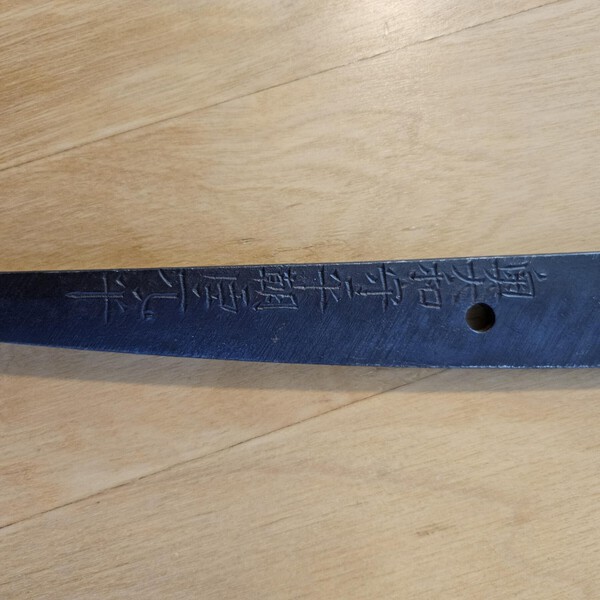
Izumi no kami Kunisada was Inoue Shinkai's father . There are numerous daimei. That said this sword is gimei without any doubt Izumi is normally engraved like this :和泉 on your blade it is engraved the wrong way.1 point
-
Compare to examples below:1 point
-
Thank you Mike, an interesting story. It seems that Mountbatten brought back several swords, at least one is screwed to the wall in Britannia Royal Naval College in Dartmouth, a kaigunto in that case. It would be interesting to track down all his presentations. All the best.1 point
-
So close except for the sekigane - the slight difference in size would make a good daisho. Great spotting Peter!1 point
-
Agree with Leen &Brain, it's not a Japanese sword. It looks like from a southeast Asia country.1 point
-
Unfortunately I think you will find that this is not an authentic inscription for Izumi (no) kami Kunisada.1 point
-
You will benefit by providing the group with more, and clearer, detail photos for evaluation. Most especially a clear vertical image of the inscription1 point
-
Dale Thats fascinating I never knew that detail before, thanks Ian1 point
-
1 point
-
Hi Mike, What Piers said, maybe a light oiling of the blade but DO NOT clean the tang. Sorry for the over emphasis but the patina on the tang witnesses the blade’s age and should be left as is. Yes, it’s not a military issue blade from the signature. It’s could either be passed down within a family or re-issued after a donation to the war effort. I’m not a military sword guy so others can chip in but appeals went out for blades to be donated to the cause. Sorry, just saw your post of the presentation: fantastic!!1 point
-
No absolute rule as there were poor Bushi too, but look for quality vs basics, Alex. What could they afford? Rule of thumb. Quality vs quantity. Is your Lord rich enough to kit out the Ashigara (light foot soldiers) with quality kashi-gusoku (lend-out armour)? Or will he provide only quantities of simple dō with a very plain unadorned kabuto?1 point
-
The serial number is 49810 and falls within the range used by Suya. I agree with "John C" that the scabbard is a replacement, either lost or damaged beyond repair. The scabbard inspection marks are as follows. 東 社 (This stamp is either struck at an angle or broken.)1 point
-
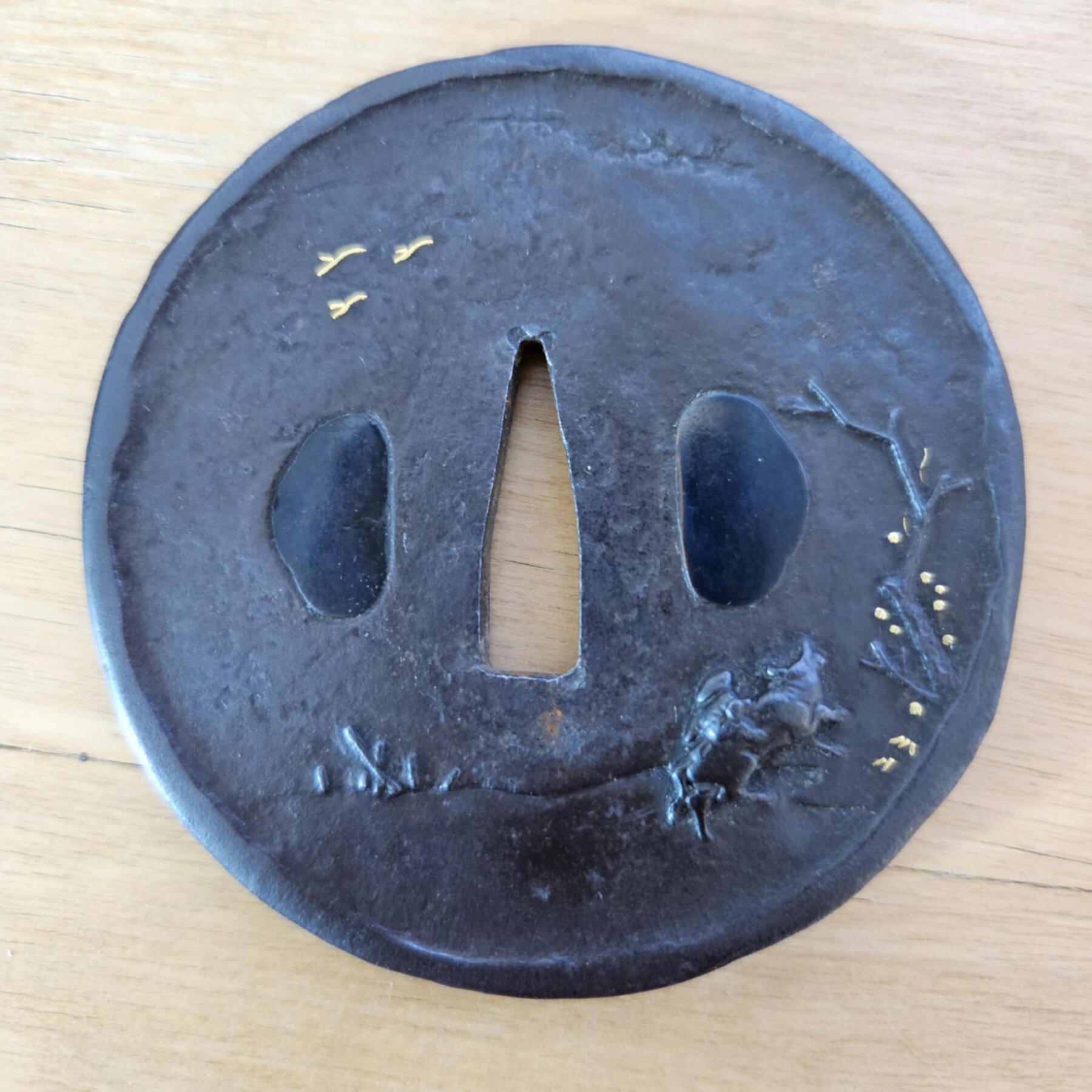
The iron tsuba was made by Kanenobu. 長州萩金信 Chōshū Hagi Kanenobu. Translation courtesy of "mywei". Help translating a Tsuba1 point
-
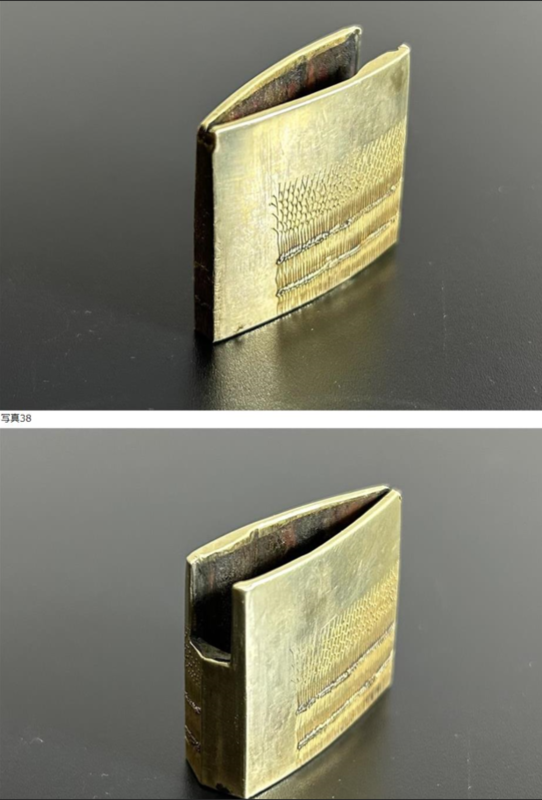
We've seen one of these already, but a nice example of the bamboo wall, found on this Buyee/Yahoo Auction
 1 point
 -
Grev Hope these help. Ian

 1 point
 -
Uwe, I know the piece you refer to here and I love it. In fact "art", like beauty is in the eye of the beholder. With pieces such as this, I think context is important. It was made in the time of battles, when they had to churn these things out to meet demand, so they didn't have the time and resources to devote to making them. Yet, they still achieved a very serviceable helmet, that even today, looks streamlined and beautiful and because of it's shape and lightness was effective for its time. I know that I'm preaching to the converted here, but I write this for others who might not fully appreciate these old items.1 point
-
Hello, If it is gendaito in military mounts, you could find something, it were standard... But Colin's seems the Best solution. Best regards Éric VD1 point
-
Some years ago we had the annual national meeting of the NKBKHK Japan Society for the Study and Preservation of Armours and Weapons in our local city. The prefectural museum had a grand display of armours ranging all the way from very early, to late Edo gorgeous. I saw a board member that I knew and approached him with a polite: "Which piece do you like best here?" He took me over to a small and poorly-lit cabinet. "This one", he said, pointing to a single rusty Momonari bowl with large holes in it. He waved his hand dismissively at the other room, full of splendid displays from the Edo period. That was one man's opinion, but it left an impression on me.1 point
-
Hi Mark It’s a tricky job! Each tsuka is precisely made to fit the nakago of each individual blade and then to mate with the saya with the correct geometry. Not sure if you have the required craftsmen in Oz to do that for you. Then of course you have to have the samegawa fitted, then the tsuka ito and the fuchi, locking catches etc etc. I’m sure some of your fellow countrymen can point you in the right direction if the skills exist. However if you are handy with intricate woodwork you could have a look at the seller swordmaster19 on eBay. He sells blank tsuka, samegawa etc and you might find something that could be adapted. I have bought from him and found him to be reliable and trustworthy. Good luck! Best. Colin1 point
-
Cox, Malcolm E. Showa Period Swordsmiths of Fukuoka Prefecture, Kyushu, and the Kokura Arsenal. 2024. A4 size, 149 pages, B&W & color illustrations. Besides gendai Fukuoka swordsmiths, this study also covers the arsenal markings used on RJT blades made under the supervision of Kokura Army Arsenal. For this reason, it covers some of the surrounding prefectures under the jurisdiction of Kokura Army Arsenal. This is the first serious English language study of this aspect of wartime blade production.1 point
-
Another nice and proper kabuto, Colin - one doesn't usually see fukurin and the fancy knots on this type of kabuto as Piers and Uwe have mentioned. I think eboshi are very under-appreciated (and thus undervalued). My only criticism would be the polishing and waxing...only because I like things as ubu as possible.1 point
-
Hojoji Echizen (no) Kami Tachibana Masateru I'm not experienced with this school but the signature looks fairly well done See reference http://www.seikeido....swords/masateru.html1 point
-
Howard, you might have noticed that your topic inspired me to get the camera out and post my Eboshi Kabuto for comment so thank you. I will therefore expect a similar emoji because mine is a bit tatty as well. Who cares?…..the important thing is that we enjoy and learn thanks to the more generous natured members on here. Knowledge and pleasure does not depend upon £expenditure.1 point
-
Item has been sold. Thank you very much.1 point
-
If we only knew "who" was on 2nd base.1 point
-
I see it now - a bit like the magic eye pictures0 points
-
Do not mix that up: TSUBAKI oil is CAMELLIA oil. Camilla is the English queen.0 points






















This leaderboard is set to Johannesburg/GMT+02:00