
Leaderboard



Popular Content
Showing content with the highest reputation on 11/22/2023 in all areas
-
Hi gang, Not wanting to hijack another thread, I'm opening this to suggest that we all take a break from encouraging rank beginners at Nihonto to have their swords polished. These are well meaning new collectors who know almost nothing about their swords (nothing terrible about that; we were all there once) yet time after time they are told they need to spend $2,000 to $4,000 for a restoration they again know almost nothing about. Polish is serious business with many variables that need to be taken into account before a decision is made. Even with 40 years of learning under my belt, I go slow with having something polished. There is no way a beginner should rush into this. Polish isn't preservation; a light coat of machine oil takes care of that. No reason the sword can't wait for its owner to study and then make an informed decision. Grey17 points
-
I was there on Saturday. it was good to be back after 3 years. you meet so many friends that it is impossible to speak to everyone. this community has a lot of interesting people, and everyone knows nmb. Thanks Brian!5 points
-
I think it would be more correct to say unregistered swords are prohibited to be carried (or sold) in Japan. And the definition of what swords may be registered has a fair amount of room for interpretation, which is why we occasionally see wartime blades being registered. The law doesn't mention the word "guntō". The law doesn't mention tamahagane, either. However, I can see that some individual prefectures post conflicting information regarding what swords can be registered. Anyway, the ambiguity in the law has allowed more and more "wartime era" blades to be registered, as I suspect is what happened with the Nishihara Kanemasa swords being sold above. The reference to Go Yoshihiro looks like a feedback loop of marketing hyperbola. The descriptor "copy of Go Yoshihiro" attracts many more views than the swordsmith's name, so anyone looking for information on Nishihara Kanemasa is going to enter into an echo chamber of marketing fluff. I'll look around a bit more today, but I think this thread here has probably the most information on Nishihara Kanemasa that exists on the internet.4 points
-
"I need help with this sword" is perfectly capable of a search online for restoration service in his neighborhood, but then what? Will he know which polisher has proper training? Can he trust the polisher to tell him if his sword doesn't warrant the expense? Will he know how to care for a new polish so it doesn't get scratched and stained in short order after he gets the sword back? And what the heck is wrong with his taking some time to learn a bit before he starts throwing money at his sword? Grey3 points
-
Daniel, I hope you have a great time in Japan! FYI, for people (like me) that use the dark setting for this website, your text is black on black. If you copy and paste your text, try pasting it as "plain text" when given the option. Cheers.3 points
-
One of Gary Murtha's Goami pieces https://www.worthpoi...goami-mon-1782814008

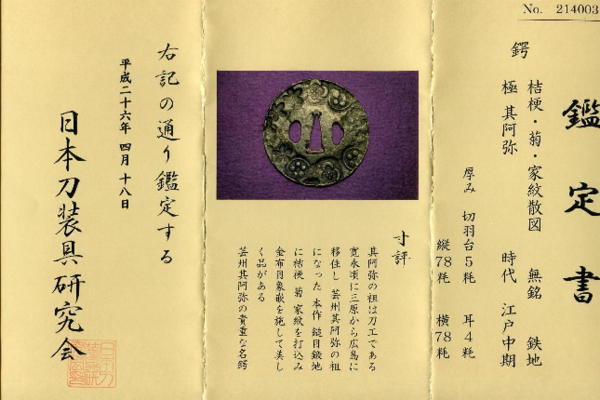 3 points
 -
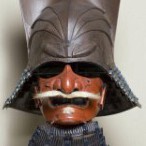
Hello all, Last month or so I wrote an article about Japanese Arms in Dutch paintings. Edited version is published in one of my favourite magazines with more information but less pictures. https://www.tokyowee...-armor-european-art/ Also attaching the pictures of the armors incase you don't want to google them You can find their story in the article. Thanks
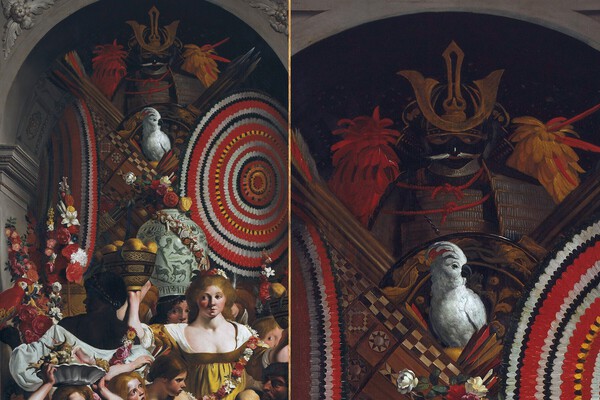

 3 points
 -
@Tsuba gardener Neil Bolden Yes, wide variety of designs and techniques used by this school (ryuha 流派) it was as varied as any of the regional (Shōami-ryuha 正阿弥流派) ex. (Kyōto-Shōami 京都正阿弥).2 points
-
The gap could mean a missing seppa. So seven instead of eight. Could be that dark seppa on the bottom right is missing from the other side.2 points
-
That is true, if you worked outside Seki. There is a huge amount of blades that went through the Tokyo first Arsenal, and they did not stamp their blades at all. Plus you have Smiths that worked for both arsenals, but if they sold the blade on the private market, it did not get stamped.2 points
-
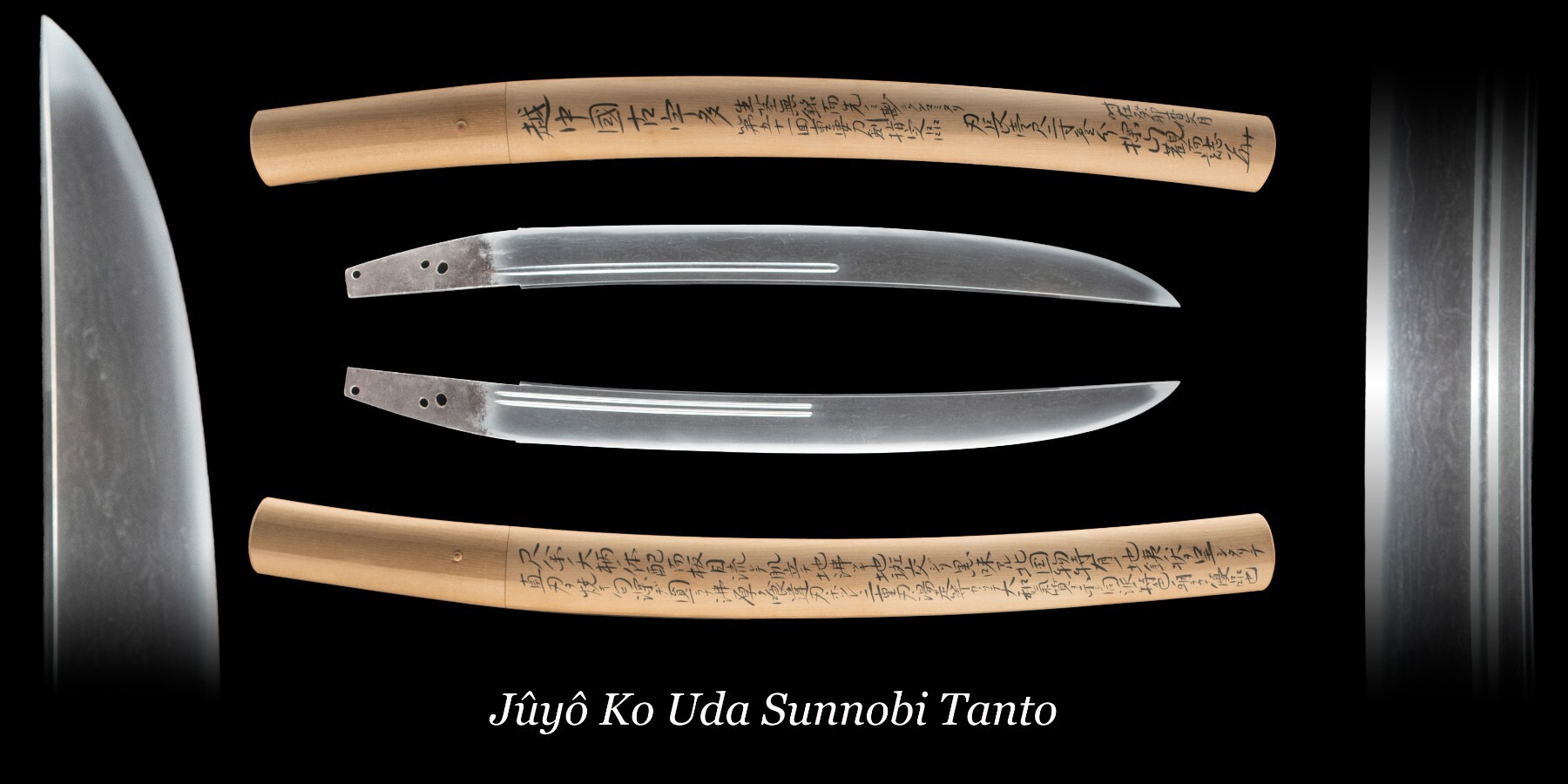
A tanto is interesting to shoot, and much easier than a katana or a tachi. The smaller size makes the camera placement and lighting more forgiving. A koshiare for this beautiful piece is currently under construction and should arrive sometime early in 2024. I'm looking forward to getting pictures of everything together!
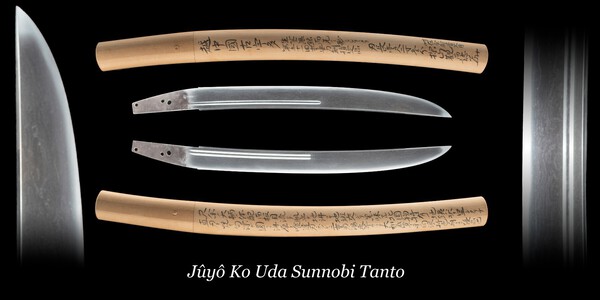 2 points
 -
There are enough differences to make me a bit pessimistic about the chances of these getting papered. 1. The published examples all have a kaō under the signature. 2. The published examples all use the standard version of 浅, whereas the one on yours uses the old version of 淺 3. The 井 in yours is concaved on the left side, whereas the published ones are all pretty straight. These variances could be explained by the evolution of the artist, and natural evolution of the signature as he became more confident. Once he becomes established, his signature is more bold, and he adds the kaō to his name. So maybe in his earliest works there is no kaō, and his inscription looks a bit more tentative. Unfortunately there aren't many works signed with Ryō'un, so there aren't a lot of resources to refer to. If I owned this set and I were in Japan, I wouldn't hesitate to send these off to shinsa as the cost/risk would be pretty negligible. Sending off to the NBTHK shinsa from the US is a bit more risky. If you have an opportunity to submit these for shinsa in the US, you should do that and see what they say.2 points
-
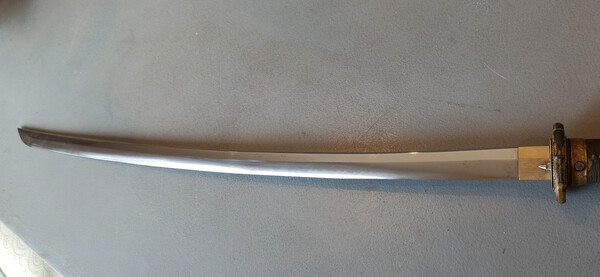
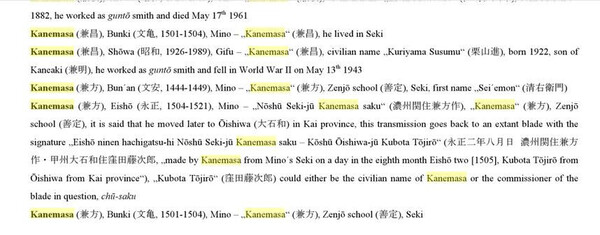
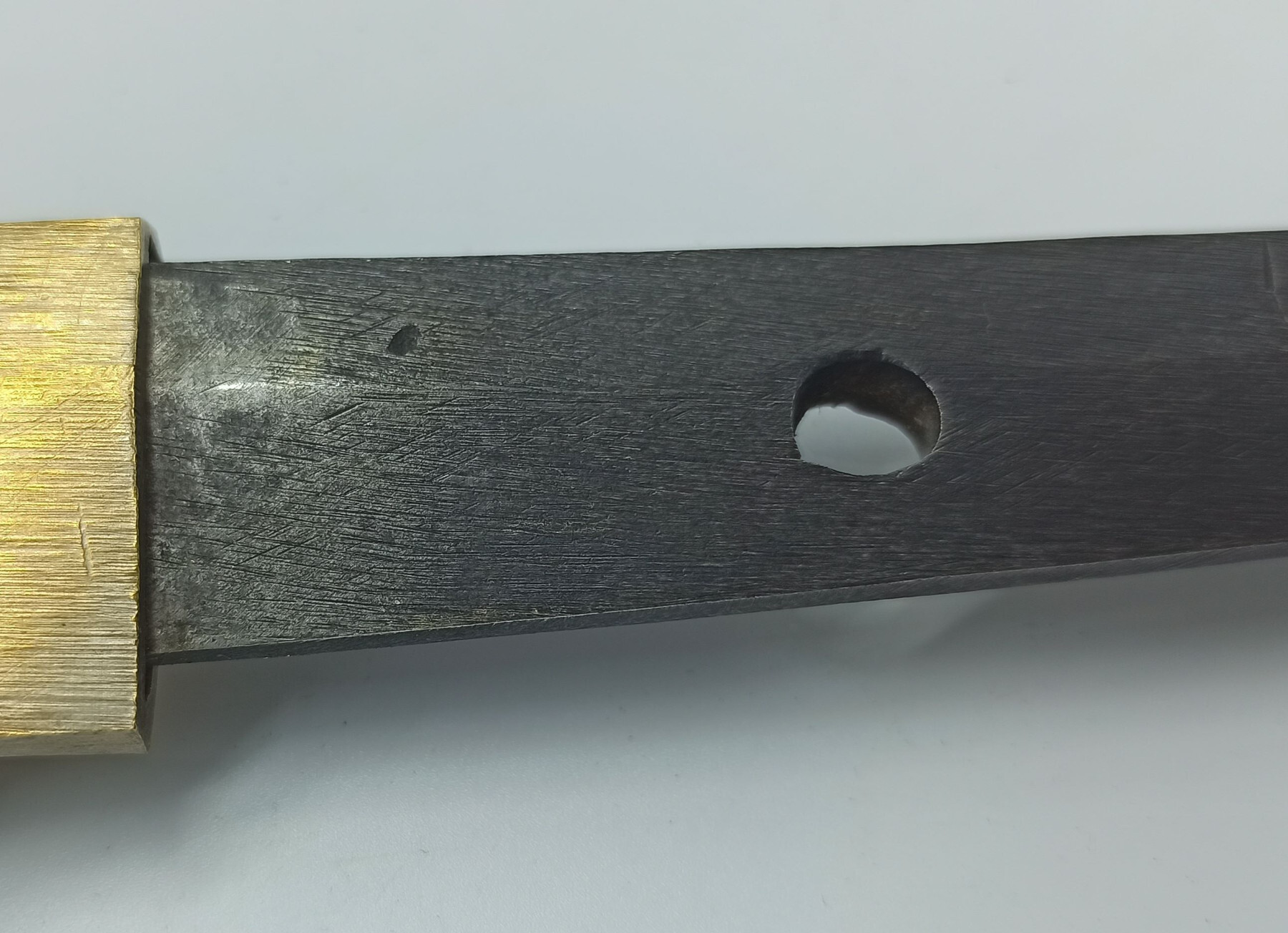
I have sent a message to Ohmura-san this morning to enquire about Nishihara Kanemasa. Maybe he will know more about him. This is the Nishihara Kanemasa sword I am ordering: I have no great expectations of it, but it looks like an honest showa-to to me.
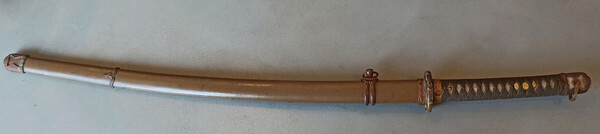
 2 points
 -
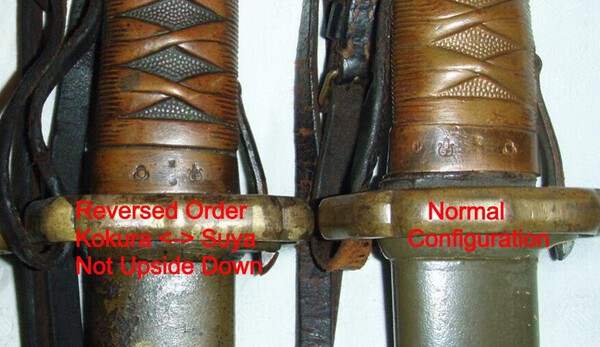
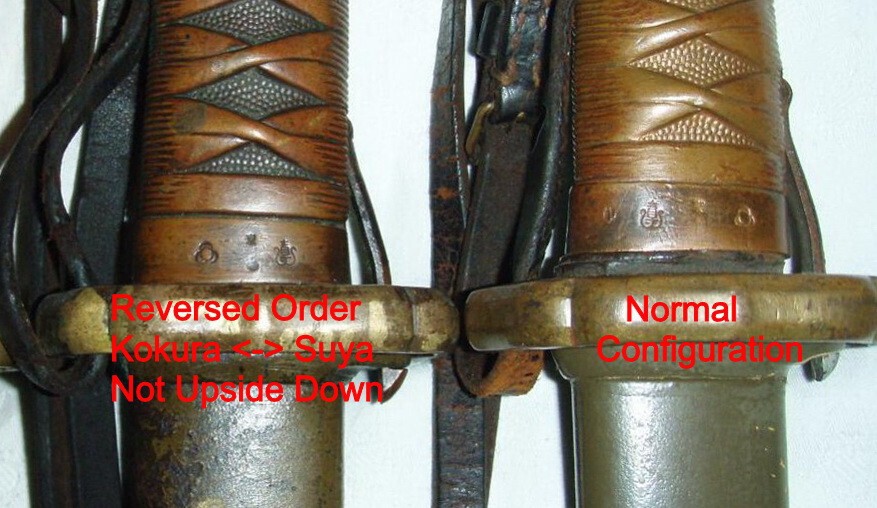
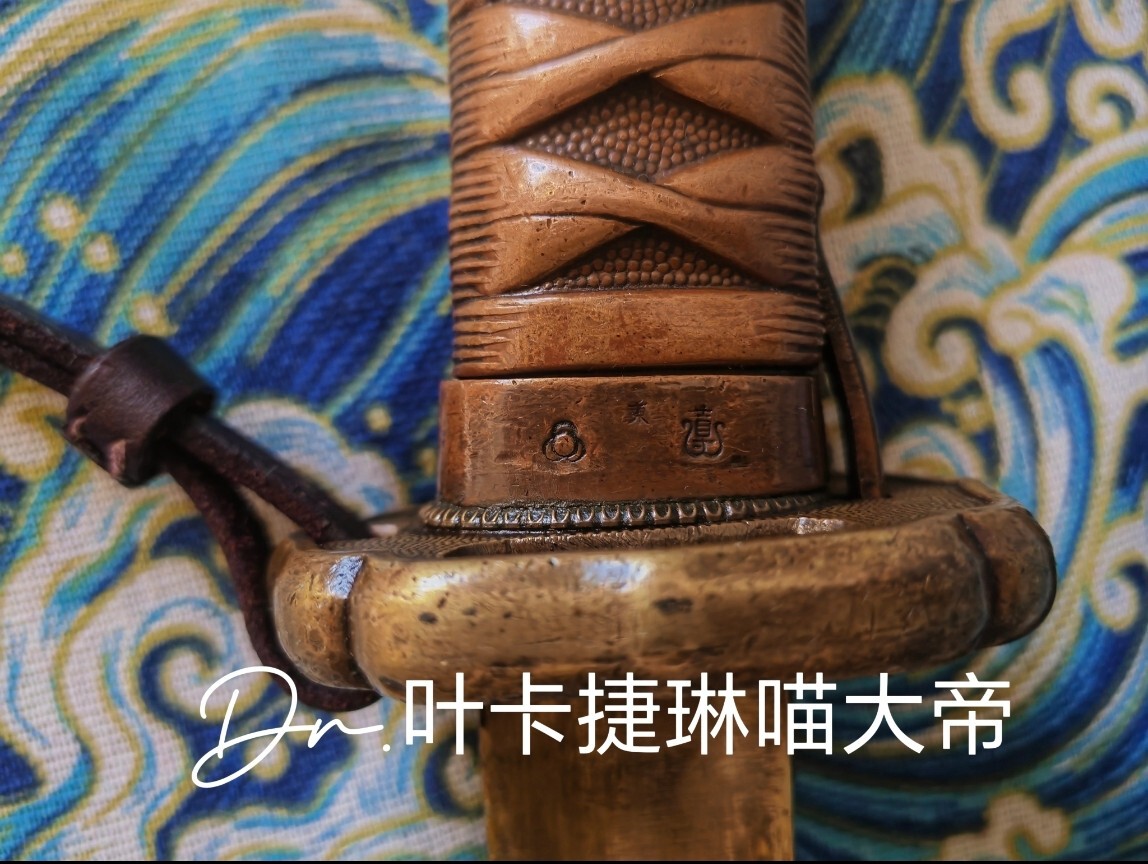
There are several instances of the reverse '東' and '壽' marks, primarily found on the copper handle, as pointed out by Thomas in the data, including your #3068. The reason behind this phenomenon remains unclear. I believe it might simply be an error by a factory worker. Additionally, keep in mind that there are occurrences of upside-down, sideways, incorrect, or overlapping stamps on Type 95, which are not uncommon.
 2 points
 -
Hi Dirk thanks for the link and your tsuba. It appears that there is a wide variety of design with in the school.2 points
-
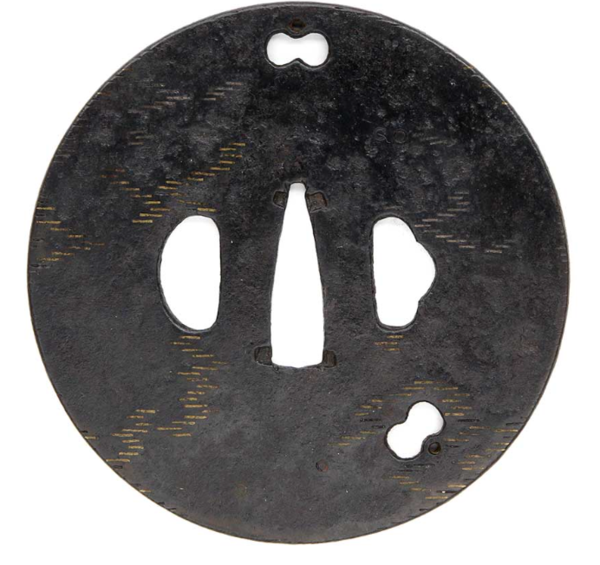
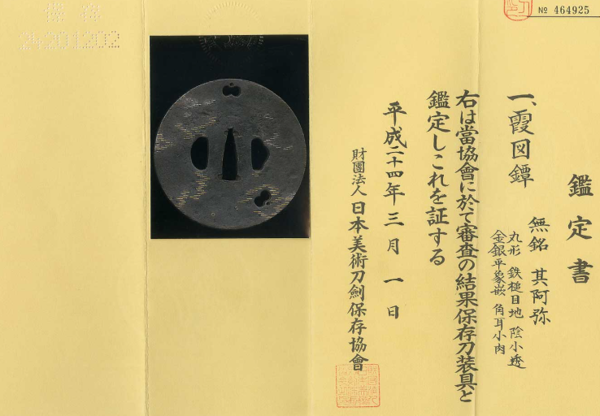
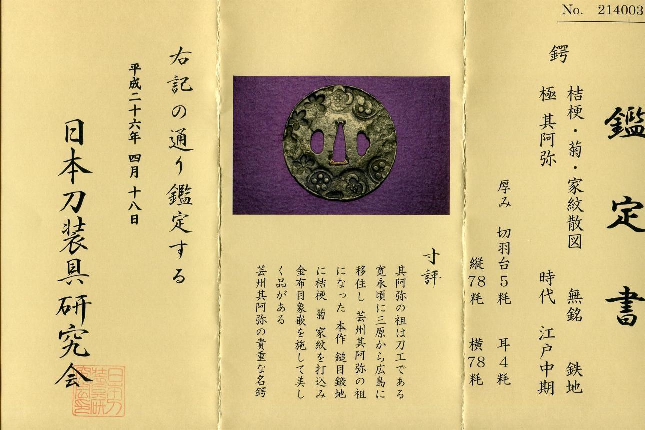
I have this one on file - hope it helps! Additionally - there seems to be some nice info here (easy enough to translate with Google translate) https://www.librirar...6%E9%98%BF%E5%BC%A5/
 2 points
 -
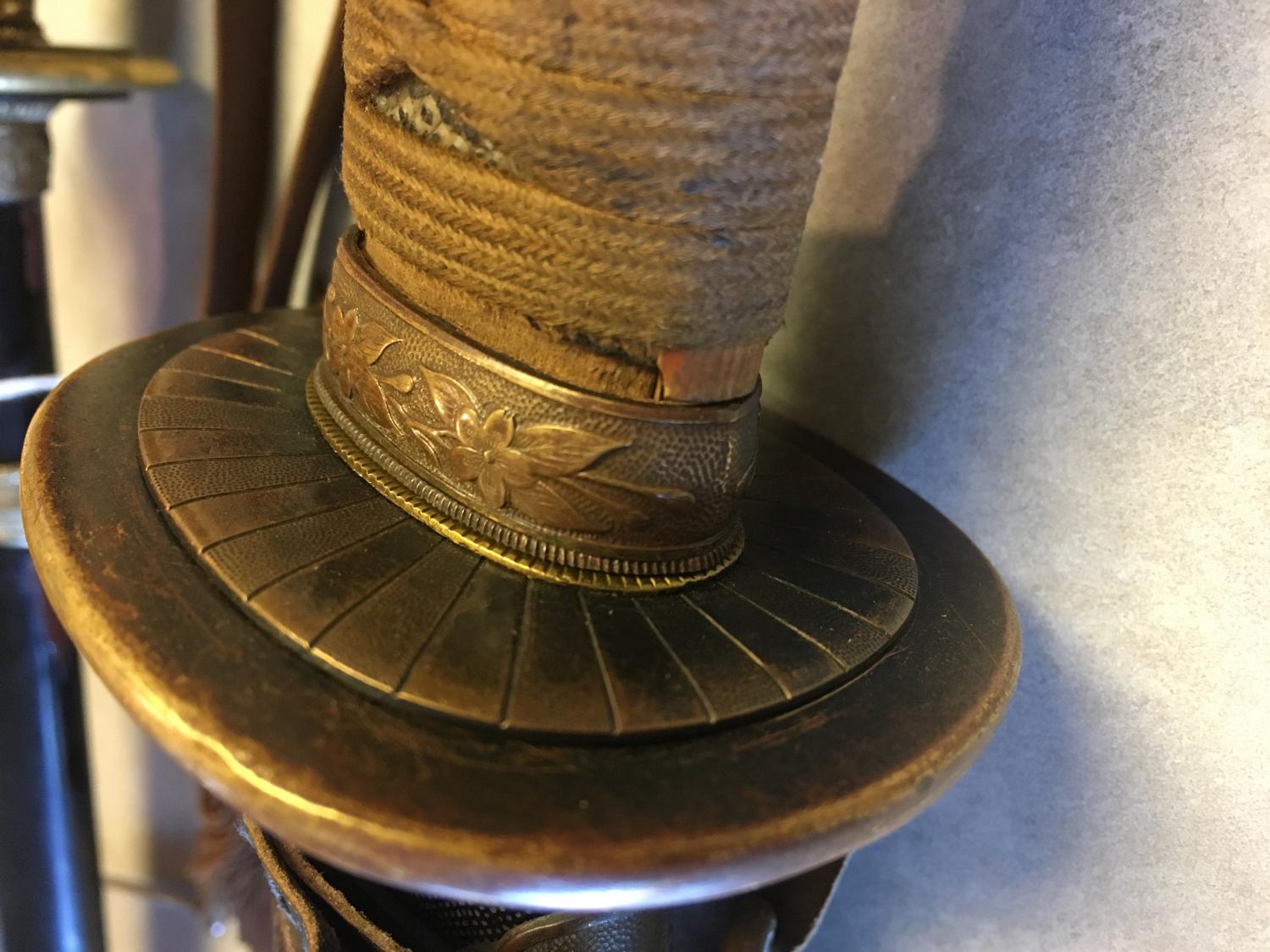
I think guntō collectors will enjoy browsing through this thread over at Axis History Forum (AHF). The thread was started in 2009 by an Australian and is still ongoing. Basically, it is a thread of photographs depicting the Japanese military. There is a sword picture on just about every page and hence my recommendation. Something different... As an example, take a look at this leather covered hilt. Something different..., Post #126 Enjoy the search and if you find something of interest, feel free to post a link.1 point
-
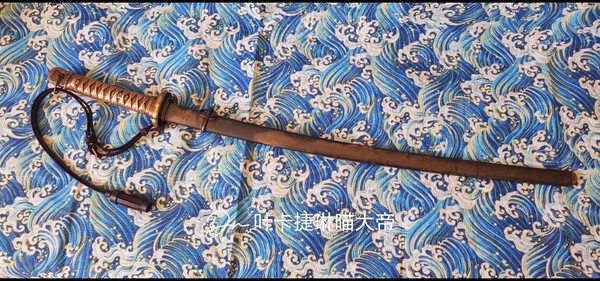
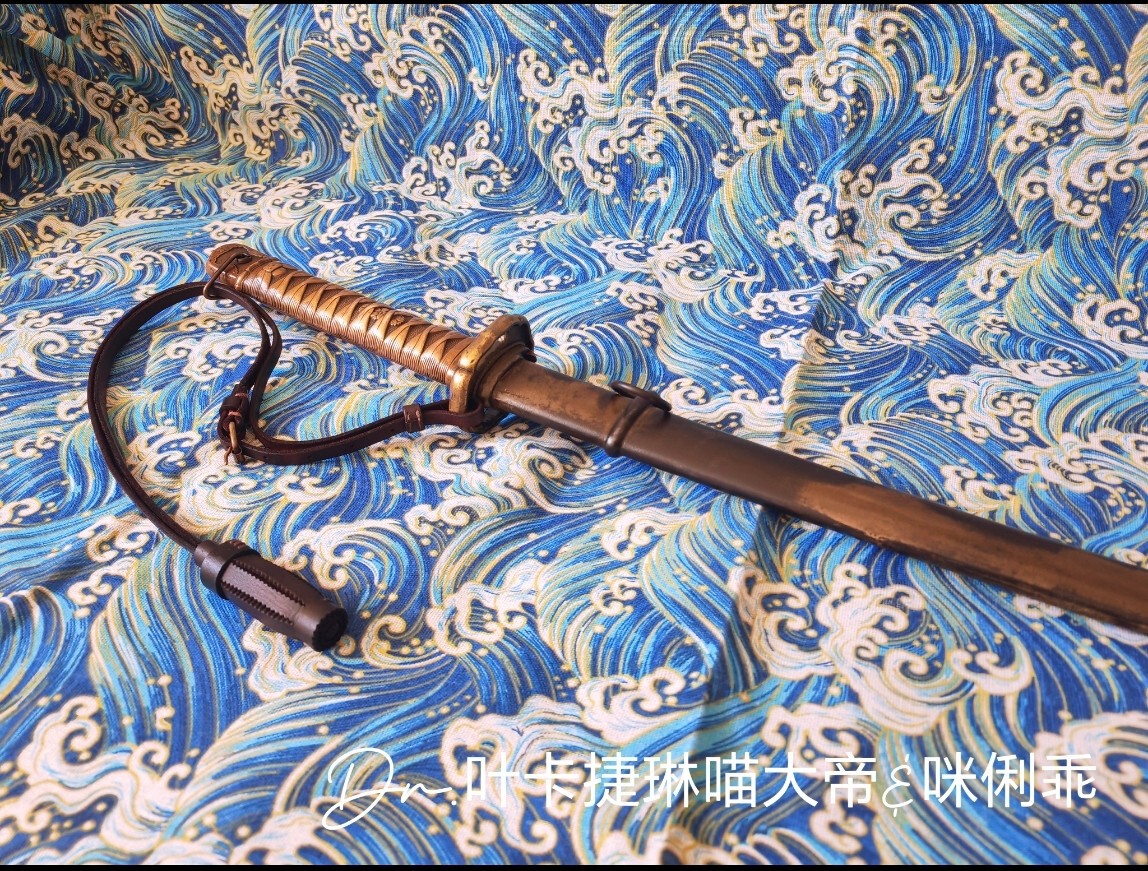
copper handle type95 NCO with 東炮壽屋 stamp.


 1 point
 -
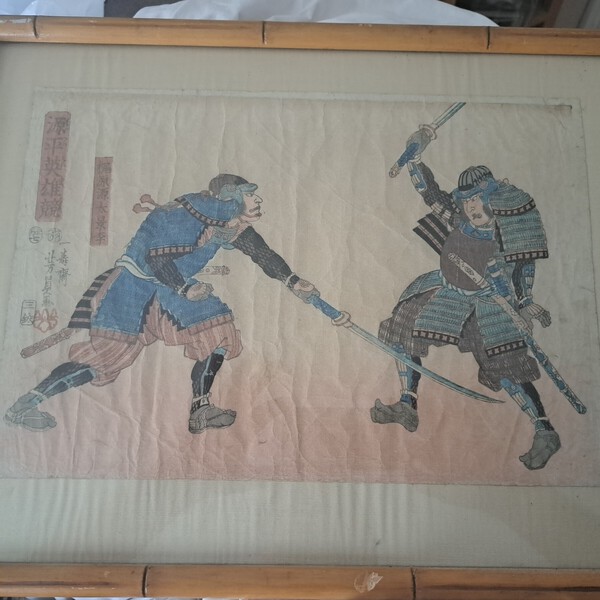
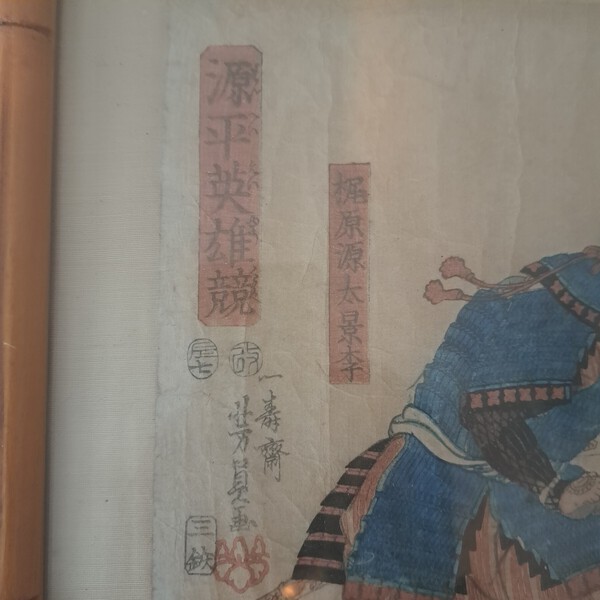
Found this today at a garage sale. Can someone help translate?
 1 point
 -
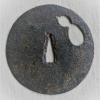
A bit late, but David Stiles in 2012 stated he was looking for references to Goami/Kiami tsuba. I too am researching this school , frustrating because there are few correctly referenced examples. What's intriguing me is the sukashi which appears uncharacteristic. To me it appears to represent a pagoda roof or another form of roofing. But it also indicates movement. I am also researching the possibility that kanji is represented in within the design (possibly magari kawa or river). I also wonder whether the sukashi was added later.
.thumb.jpg.7cc285cada796b06571edde47b771598.jpg) 1 point
1 point -
Hello members I would like to obtain NBTHK papers for at least 2 blades from my collection and some kodogu also. I hope I will be able to go to Japan end next year ….probably my last long trip as I am already 79 If not I will send these ….directly to Japan or via Bob Benson in Hawai? So could anyone give me a reliable contact in Japan (that I can contact and meet next year (that will keep the items and bring these to the Shinsa) and of course I will pay for the service. I intend to spend 8 days at least and I have another demand could you recommend me 1 or 2 museums where I could see koto Soshu blades (sunnobi tanto)…if possible Hiromitsu or Akihiro or Masahiro shodai…I thank you in advance for any help. PS the 2 blades are in good polish conditions , in shirasaya, one is a shinto mumei so just Hozon expected - the second is a koto partly signed good candidate for higher papers.1 point
-
Hello all! So, like I stated “I am out of here” on that “Tsuba casting molds” thread. But I still look at it and there has been an interesting question raised (before and recently) on that thread (I refer to pages 7 and 13 of that thread). That question has to do with tsuba Yanigata. The resin or pitch type casts made of tsuba (and other objects). Pitch is a type of plastic. It is a “viscoelastic polymer”. Maybe these tsuba Yanigata were used by the Japanese craftsman as a sort of visual 3-dimensional aid and example to use when they were carving the same design on another piece? They probably would not make another metal tsuba to keep as an example of their work. Why would they do that when they could sell their duplicate piece? A website dealing with Yanigata can be found here (although nothing is stated about using them as visual aids or examples to use when making a tsuba or other objects)- https://tsubakansho....2020/06/26/yanigata/ I have also included some pictures of these “plastic type” Yanigata (previously shown on that “Tsuba casting molds?” thread). Just another interesting question! With respect, Dan

 1 point
 -
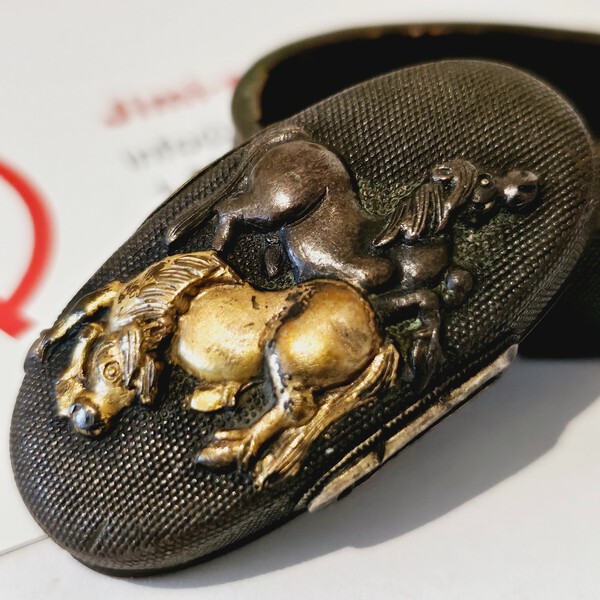
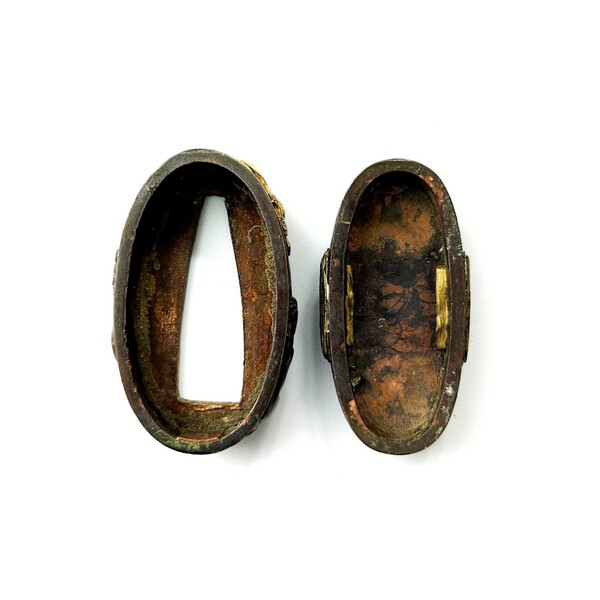
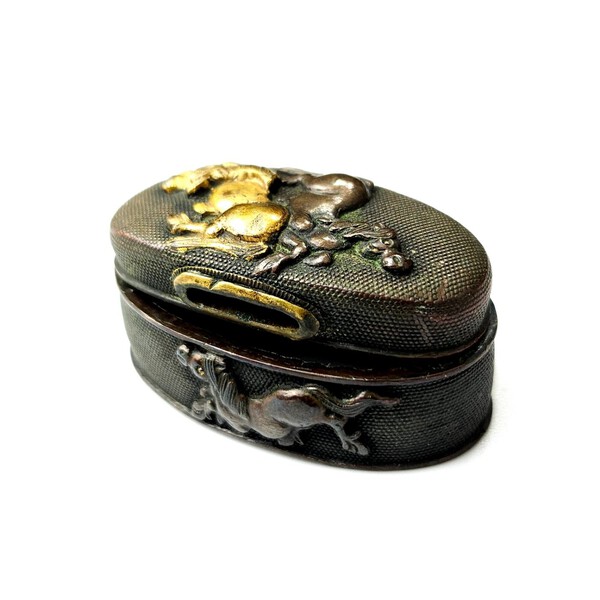
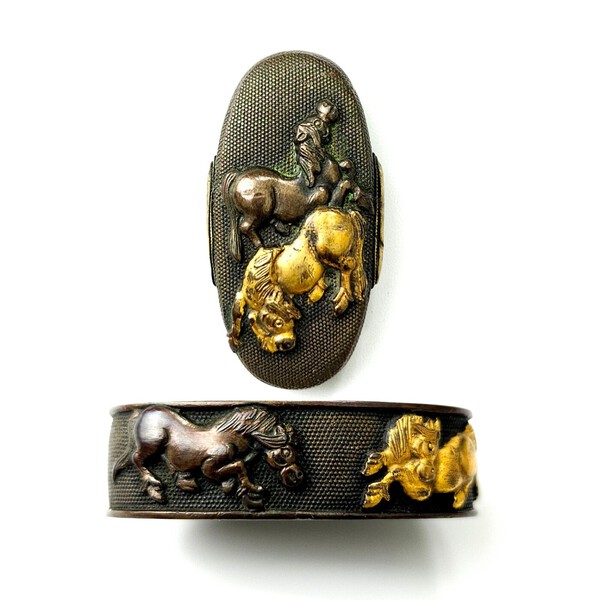
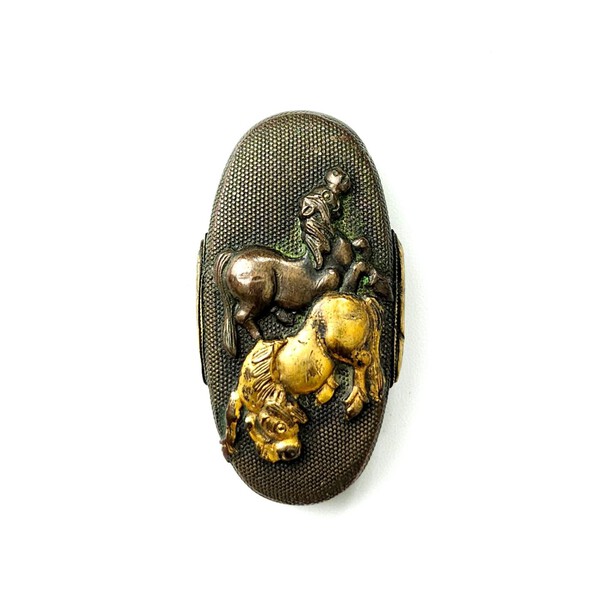
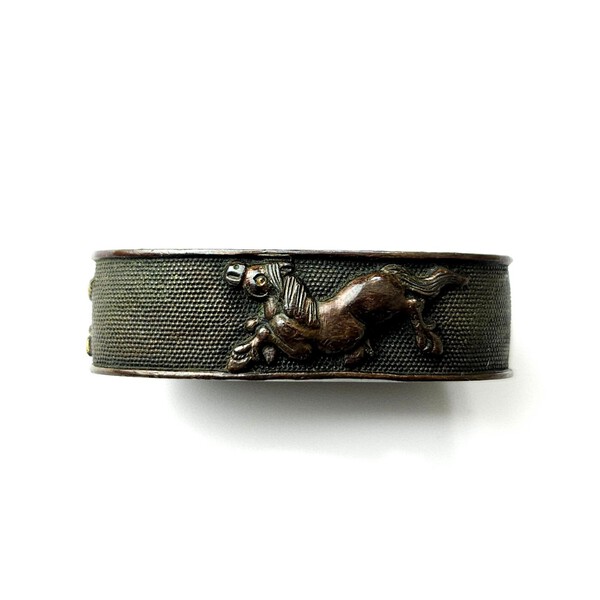
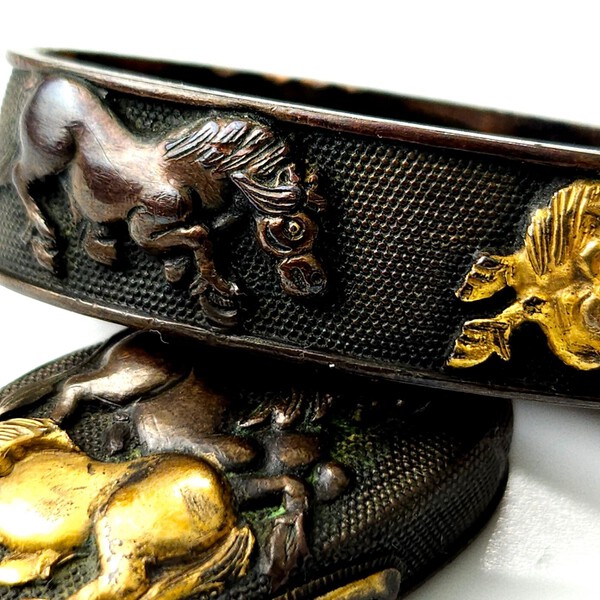
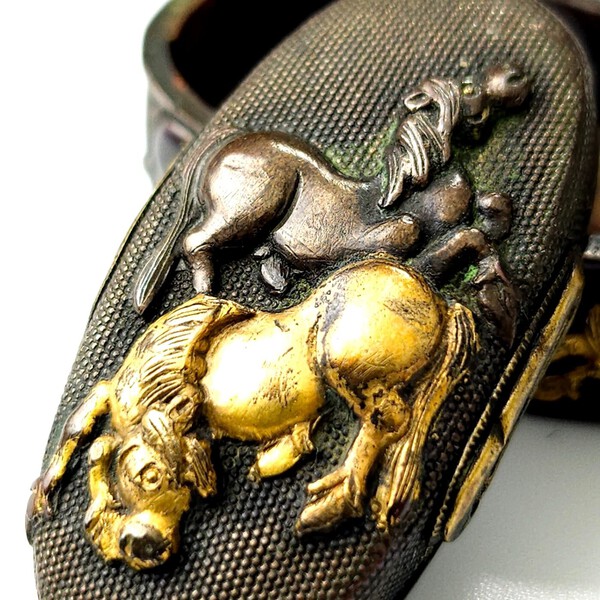
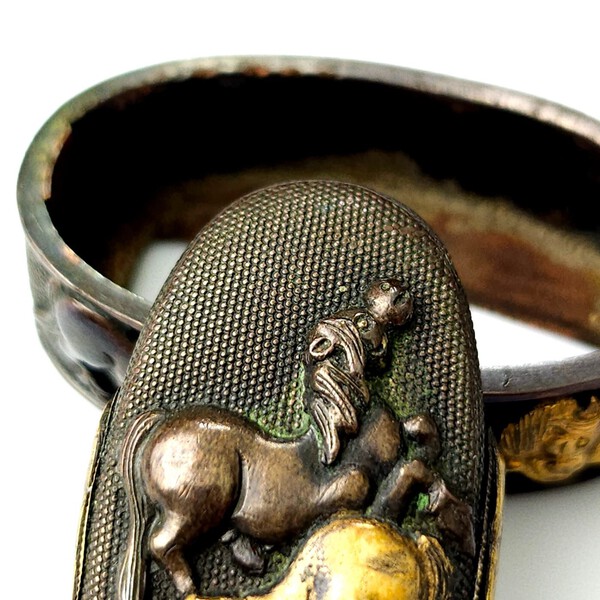
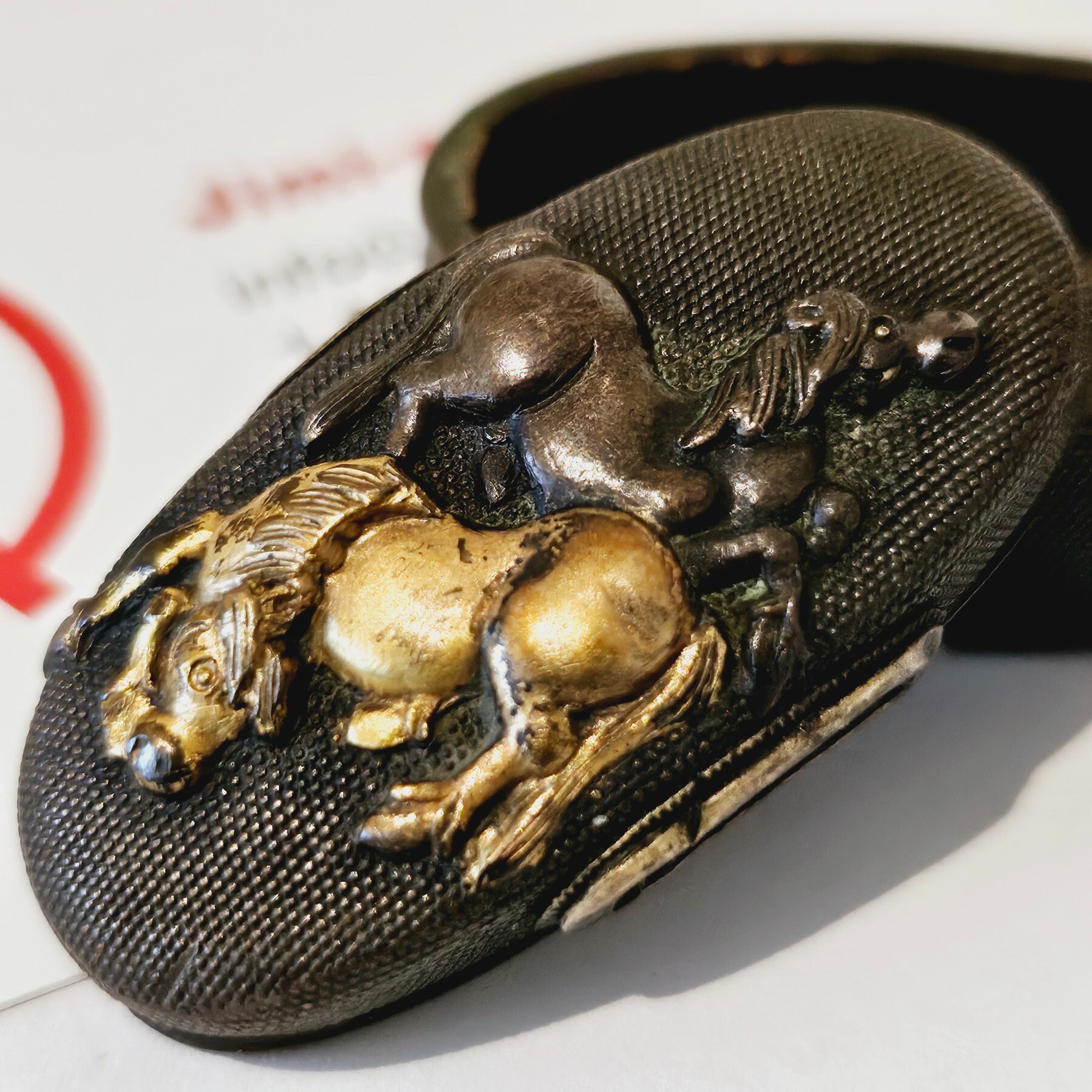
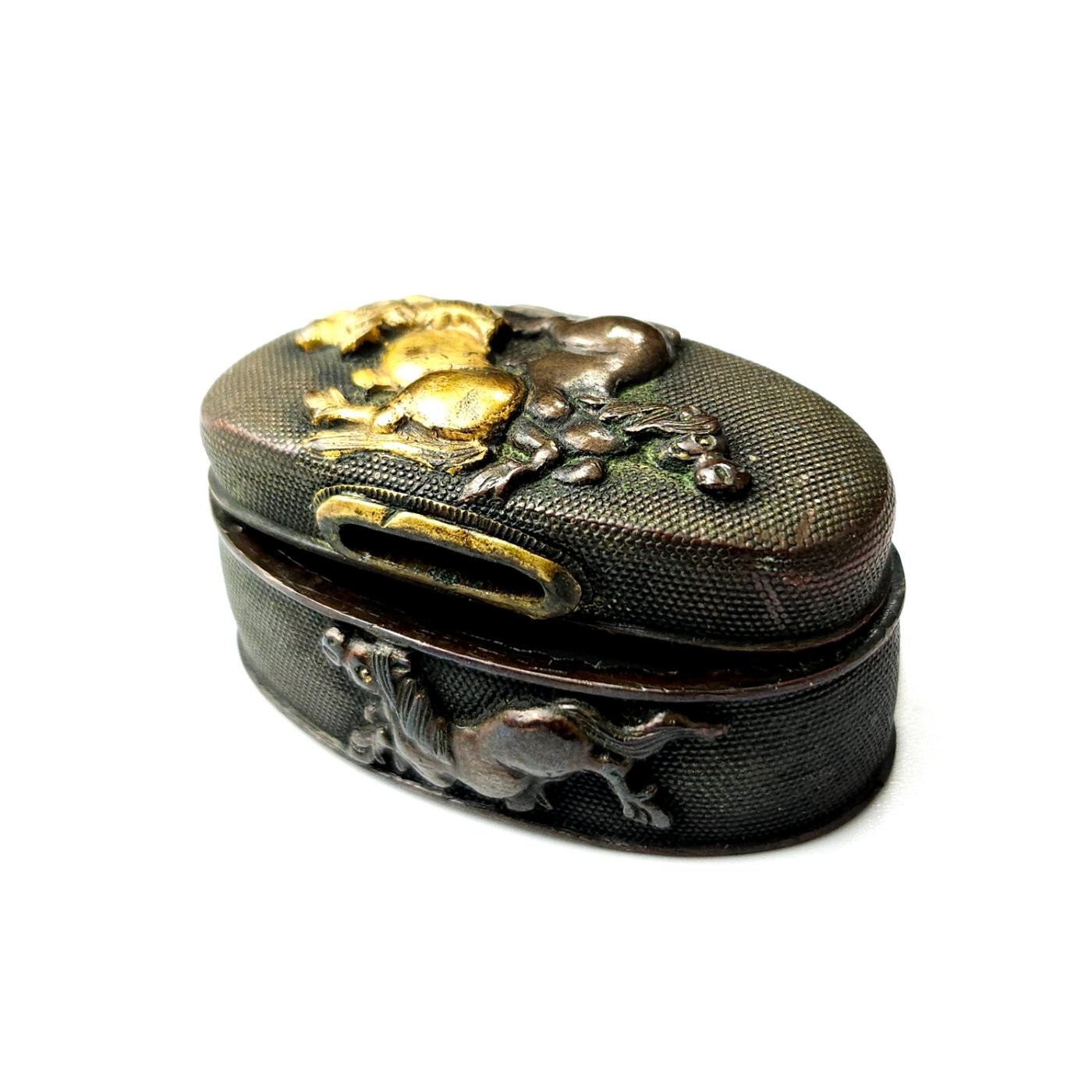
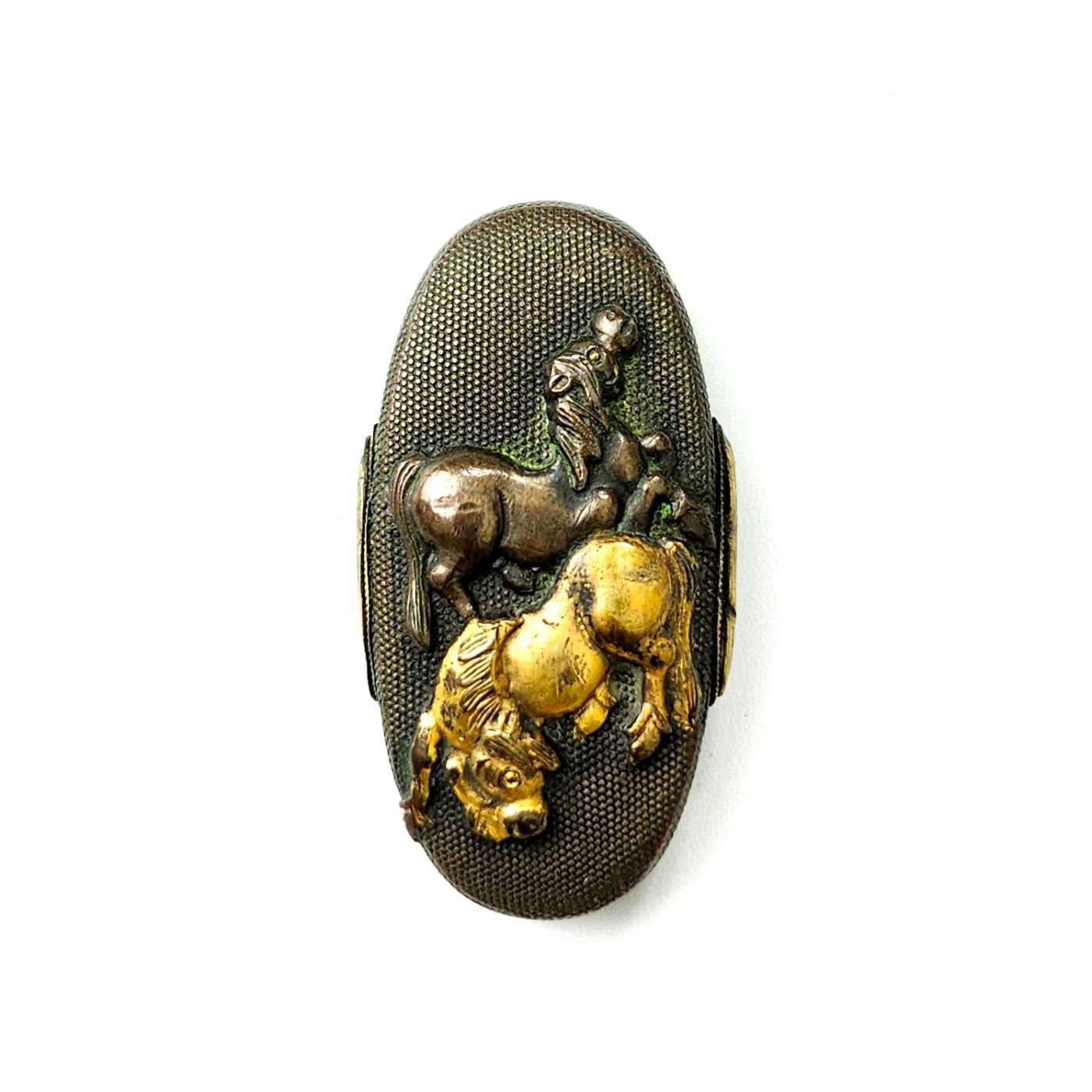
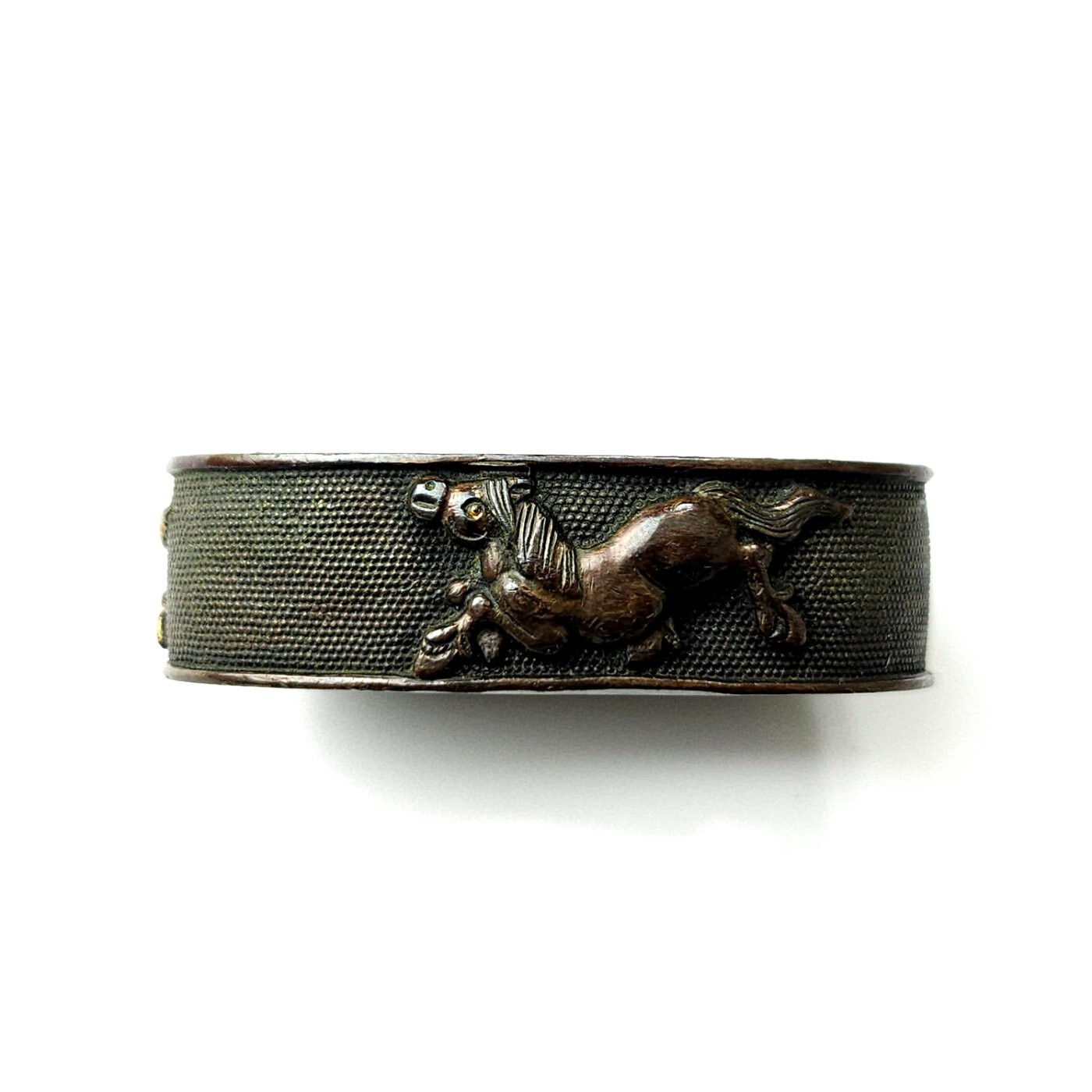
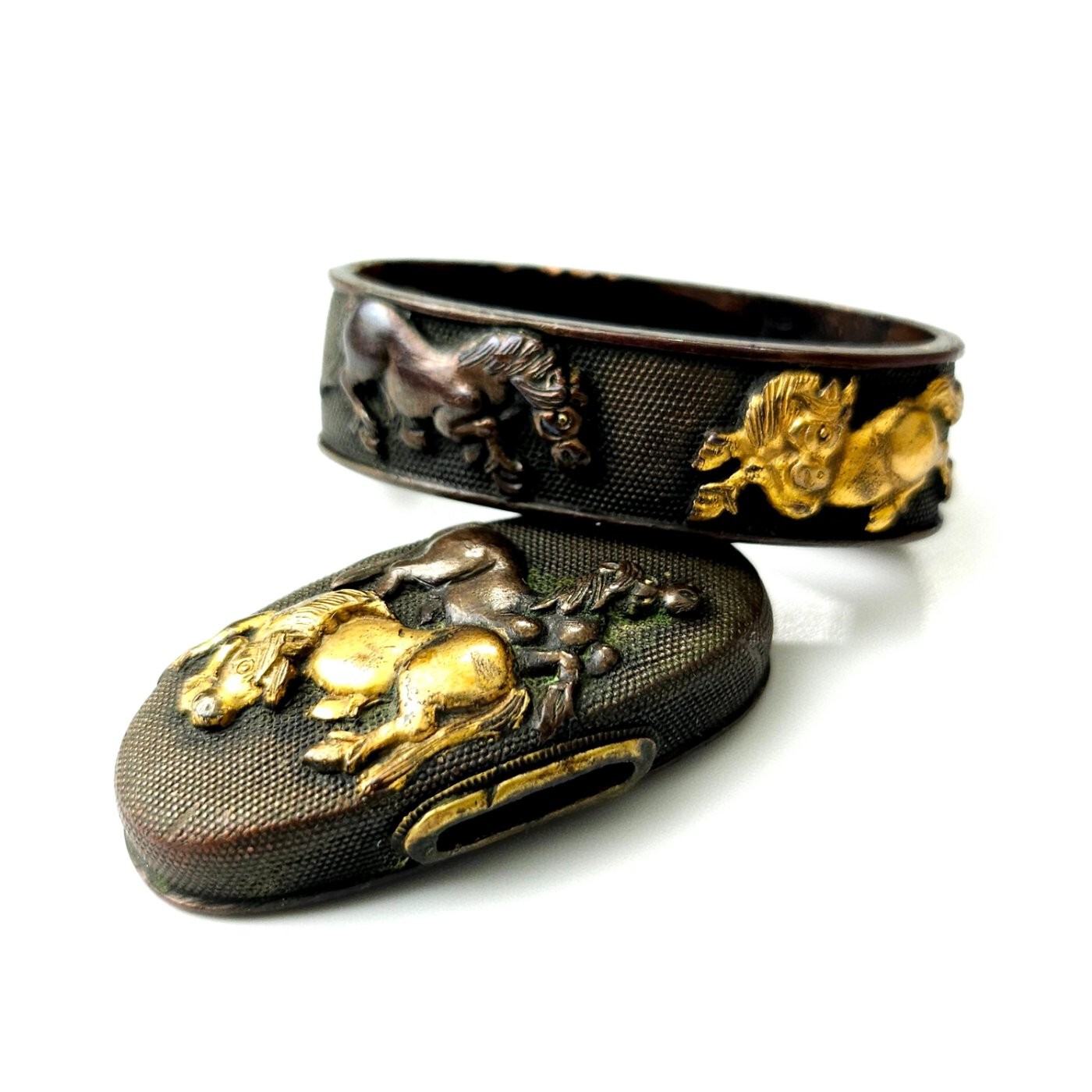
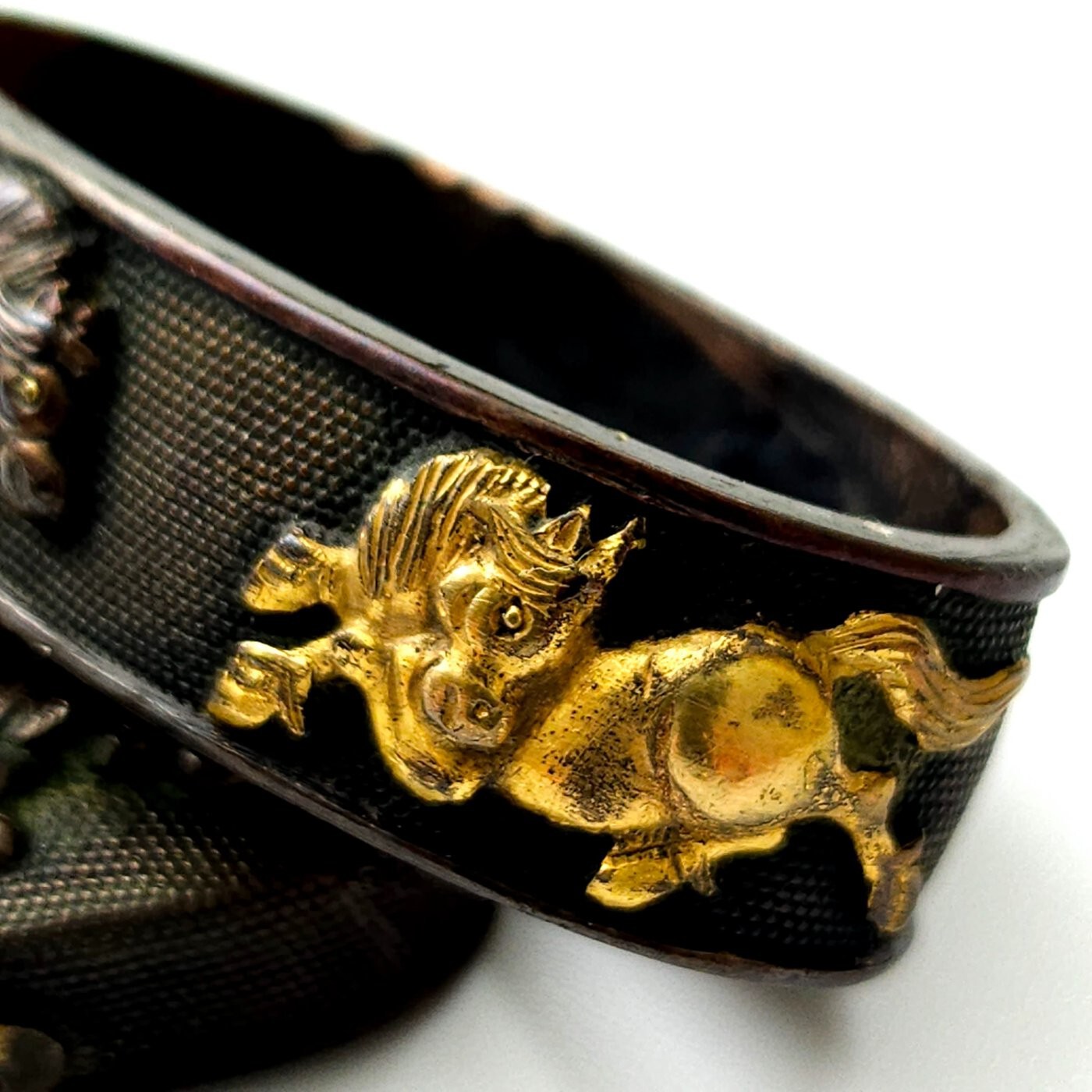
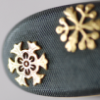
Horse fuchi-kashira set w/ nanako A very nice Edo period fuchi-kashira set, showing brown shakudo and gold horses on fine nanako. $475 Full description and measures here: https://tsubashi.com...ashira-set-w-nanako/ Remember: BLACK FRIDAY 20 % DISCOUNT + FREE SHIPPING From friday 17th november to 30th november you will get 20% discount + free shipping for all tsuba and fittings. Simply enter "BLACKFRIDAY" in the coupon code field on checkout and discount + free shipping will automatically apply to be selected.








 1 point
 -
The shinsa operate on a schedule which may or may not align with the dates of your trip. Either way you will need to go through the import process to get the blades in the country (and then export to get them back home), which is best handled by an agent who specializes in these matters. The truth is your best bet is to probably plan on shipping the blades and enjoy your trip free of this complication. Other members on the board will be able to recommend agents who can help you. Best of luck and enjoy your trip!1 point
-
That's exactly what I have gone ahead and done. One hard tubing with the bare blade bolted onto a hard wood backing through the mekugi Ana and bubble wrapped, and and the rest of the koshirae and saya in another box. It'll go through Australia post. Fingers crossed it gets to Florida in good shape !1 point
-
This last one would not inspire me to put the sword back into the SAYA! A whole little story in a very confined space! Gorgeous!1 point
-
I love that design curled up doggy design.1 point
-
I had requested the seller to look for the tell-tale Seki stamp, but he couldn't find any. That does not mean per se that this is anything more than your usual showa-to, but I suppose the fact that Nishihara Kanemasa did not work at Seki is reason enough for the Seki stamp to be absent. The closest thing to a stamp I have seen on the blade so far is this punch-like hole, but it might as well result from an accident.
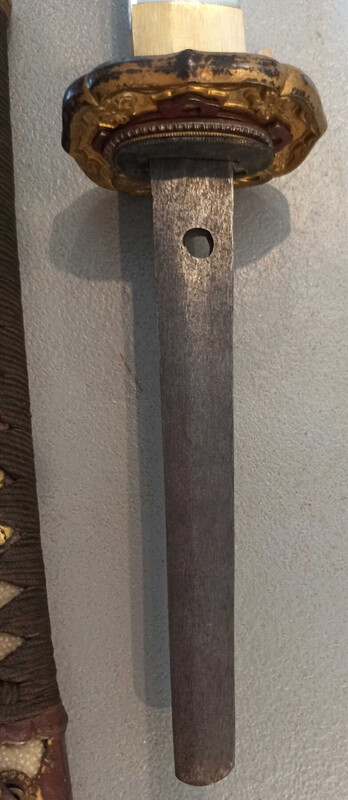
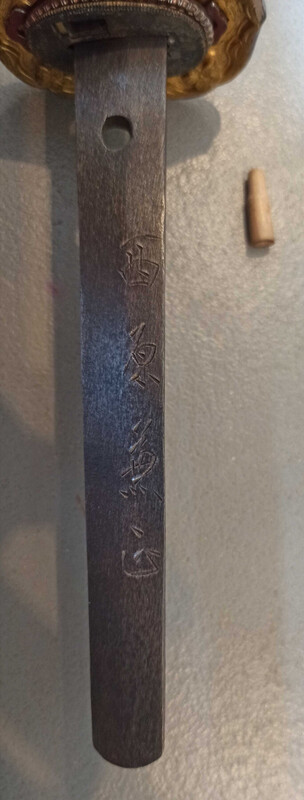
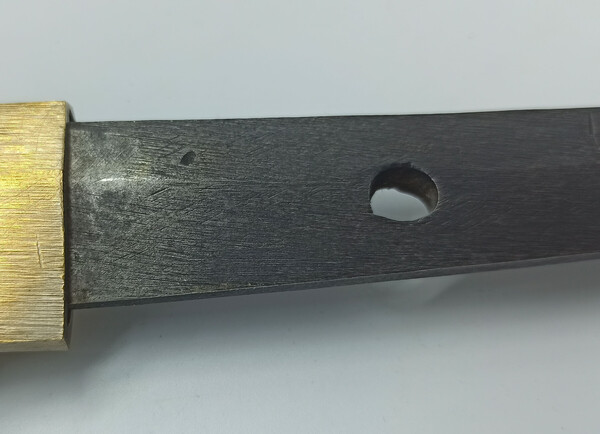 1 point
 -
Thanks all. It adheres to my desire to restore and preserve. Cheers, Bob1 point
-
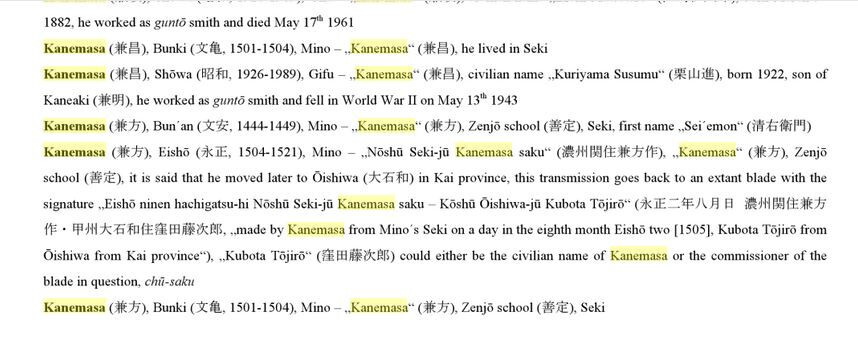
There were apparently no less than 8 Kanemasa swordsmiths during Showa, but I could not find any Nishihara...
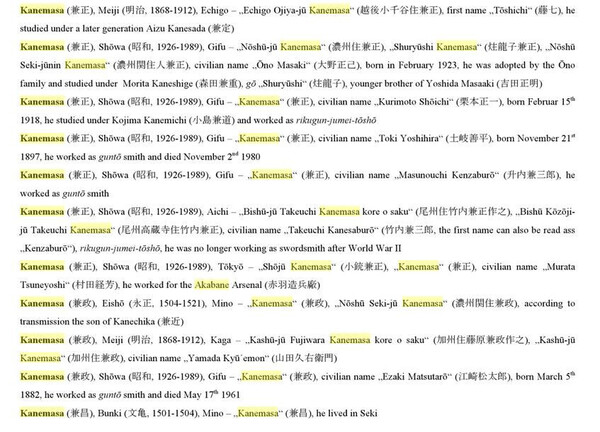
 1 point
 -
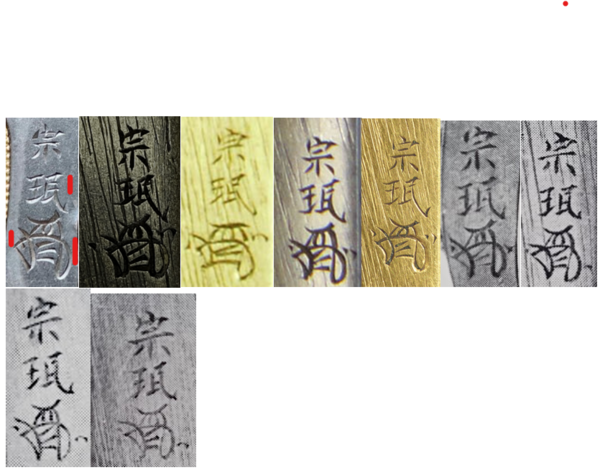
I've seen the Yahoo! Auction where this pair of tsuba sold. A few things: - the seller has a good reputation, regularly also sells papered items - seeing YJP is one of the biggest Japanese auction sites for this kind of thing, chances are zero this would pass by unnoticed by big Japanese and international collectors. Sometimes you see bidwars going well into the 10,000's USD. - unpapered items will require you to do your homework. Big names even more so. The bigger the name the greater the risk. The signature should confirm the work. Now the work has been discussed at length here, so let's focus on the signature. In your mei you'll see some oddities I couldn't confirm on any of the papered reference mei I have (or published in Wakayama): - at the 2nd kanji on the right you have 2 parallel lines, however in all other mei the top-stroke is right of the one below it and far more stylised. - the kao itself is missing strokes to the left and to the right, again present on all reference mei. Probably there are more differences that I haven't picked up on yet. The differences in mei cast serious doubt. The fact that a papered Somin kozuka will sell for 7 times the price than this pair of tsuba went for is another red flag. Why wouldn't the seller try for papers, knowing that a papered tsuba would fetch him probably 10x more than what it did now? It doesn't add up. I hope you can still appreciate it for what it is - being a very nice tsuba.
 1 point
 -
sorry. the year of 1180-11851 point
-
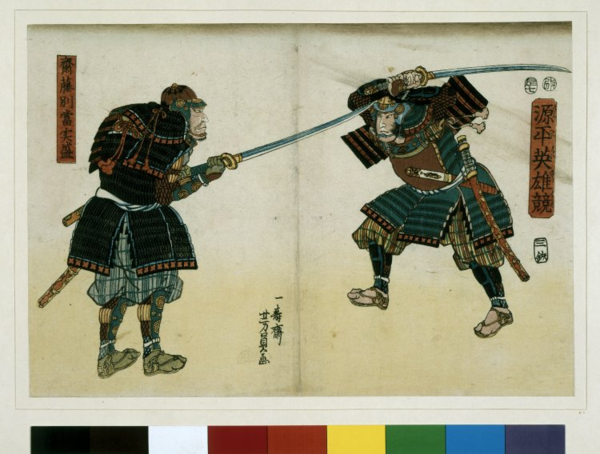
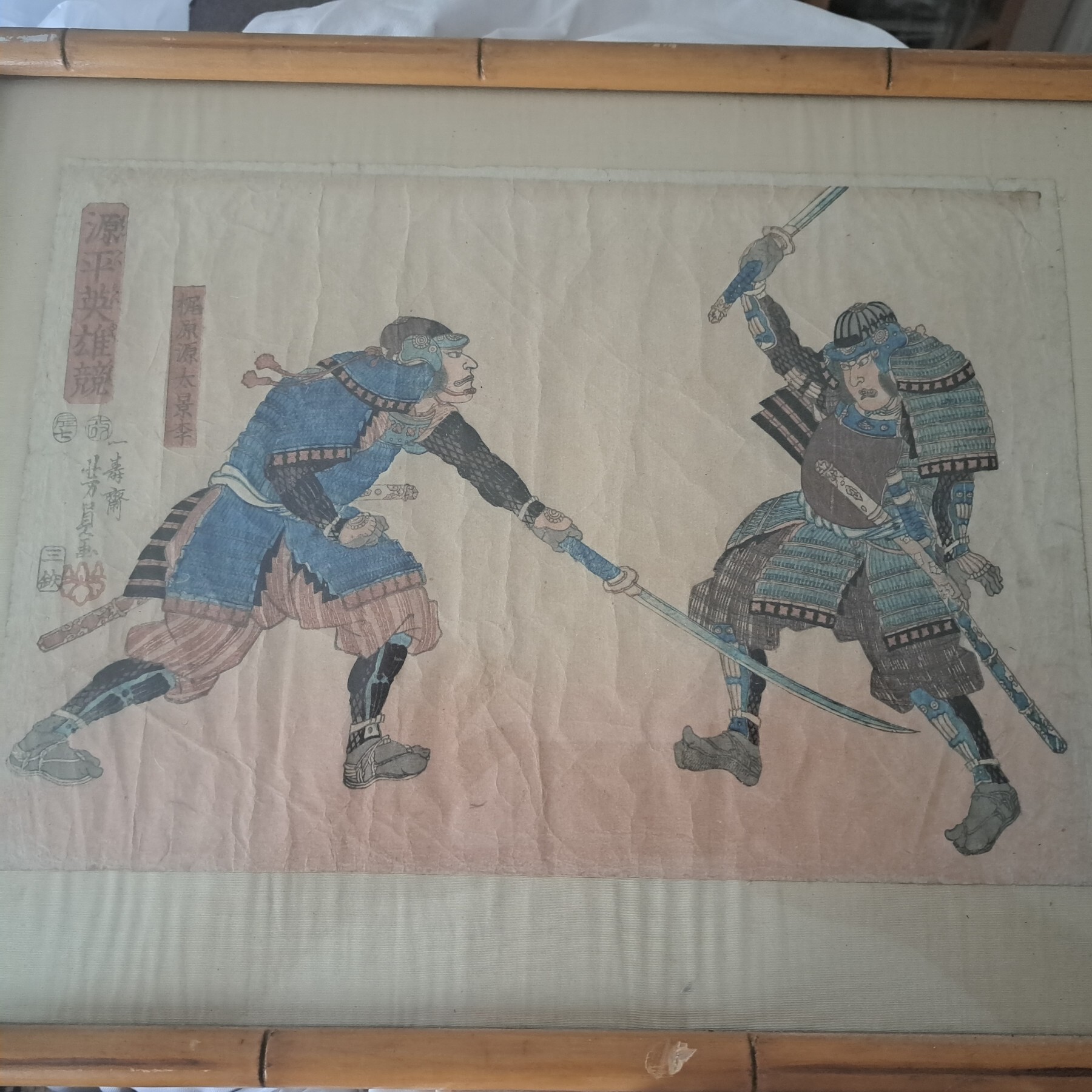
源平英雄競 源平 means “源平合戰”, which is a war between two Japanese nobility families “源氏”(genji)and “平氏”(peji)in the year of BC 1880-1885. “競” simply means battle or deul. So "源平英雄競" means a deul between two heros during the war. 尾原源太景李 should be the name of the left samurai. 画 means painted by. 一壽齋业万員,should be the painter's name. Here confused me a bit, becoz he used both tradional and simplified chinese characters in the signiture, dont know why.1 point
-
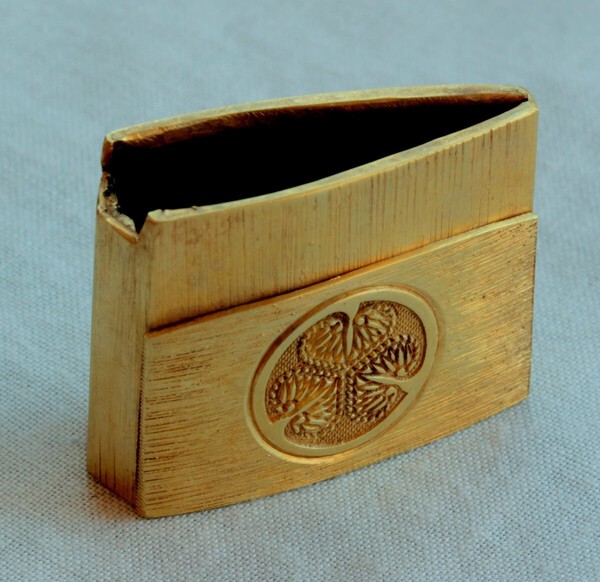
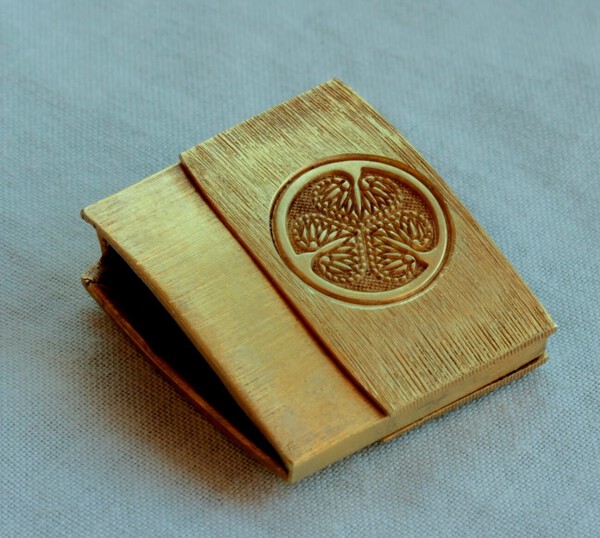
Gold foiled wrapped ni-ju habaki I once worked on. Curiously enough the mon, when examined under a microscope was revealed to have been cnc machined. The three segments of the mon design are each identical even with a couple of minute 'errors'.
 1 point
 -
Here's another in the series. It really looks like the artist had observed practical swordsmanship tenouchi rather than fancy Kabuki style.
 1 point
 -
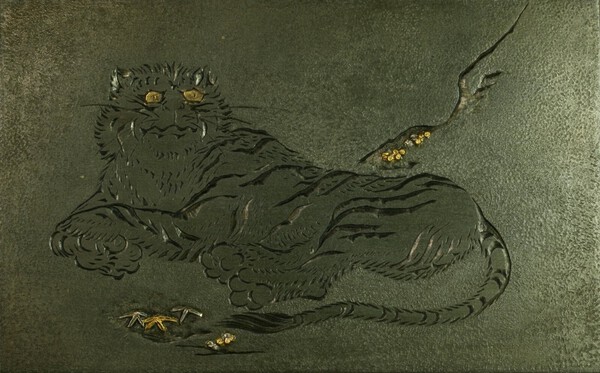
I would have thought my implication was obvious. Here we have two tsuba purporting to from the hands of the father of the machi-bori and his son. A pretty big deal. Yet they have no papers and have evidently been completely repatinated, or the patina is relatively fresh, hence the very clear nashiji. This ought to give cause for hesitation. This is a beautiful illustration of very clear nashiji. The appearance of a fine silver network surrounding the copper matrix. And while, yes, I do on occasion have to resort to a complete repolish and repatination it's really important to try and achieve a suitably aged and mellow appearance in the final result so that while the work is 'restored' it never the less retains a sense of its age. As for trying to understand the qualities of kata-kiri perhaps that's only truly possible if one practices it oneself. This is a little utsushi I did about 30 years ago, it's the same size as the original version, ie; much smaller than this image. The composition may be familiar to some, a bit ambitious for a first attempt perhaps. 😜 But in any case, I was asked for my opinion. I took the time to offer some very carefully considered observations. Do with it what you will. I honestly have no interest in what anyone choses to believe in these matters. After all, as the saying goes; "beauty is in the eye of the beholder". 😎
 1 point
 -
The British Museum has done most of the hard work Title of the print is "Genpei Eiyu Kurabe" (written down the far left side of the print). It means "Comparison of the Heroes of the Genpei War". It's a series of prints feature legendary heroes. Next to that is "Kajiwara Genta Kagesue", which is the name of the hero in this picture - the one on the left. The other bits are explained on the page below https://www.britishm...t/A_1906-1220-0-13521 point
-
That is not true Jean. You could say the same about every Japanese sword. The less samurai die by sword. The most by arrowes and yari, later from bullets. WW2 was a sword war. The sword was mostly the last thing a Japanese nco or officer had in hand. And when you search for a samurai spirit search in the hand granades, kamikaze planes, manned torpedoes, lost ships and on wide battlefields where Japanese soldiers storm in front with there sword in hand.1 point
-
I've hesitated to comment as I'm feeling a bit uneasy about these two pieces. There's a great deal to say that can be argued indefinitely but what I will say at this stage and that I feel is objectively correct is ; Given the apparent age of the works, referencing the lives of the alleged makers, the shibuichi is perfectly clean, with not even a trace of aged patina or other dirt, grime old oxidised wax etc. The 'nashiji' grain appears as clear as though it was patinated yesterday. There's a lighter halo around the seppa-dai. What this tells me is those lighter patches had suffered heavier oxidation/corrosion than the rest of the plate. The whole plate was then subsequently completely re-polished to redo the patina. Any area that had suffered excessive oxidation etc. and had not been adequately prepared will now patinate lighter because the alloy on the surface at those areas is now silver rich and copper depleted. It's always the less 'noble' metal that is sacrificed in these sort of corrosion effects. So in my opinion this is a new patina and the whole tsuba have been lightly re-surfaced/polished. It is possible that they have merely been a little heavy handidly over-cleaned but I see a few other blemishes that all point towards more towards a, less than expert, refinish rather then over-clean. I'm a little bothered by the excessive encroachment of the chiselling onto the seppa-dai areas. On the whole the designs are all fairly convincing and essentially straight out of the Yokoya design book, so to speak. You can easily find identical examples in the existing documented works. Looking closely at the actual cutting though I can't silence a niggling hesitation in my mind. Kata-kiri work is by it's very nature meant to be bold and expressive. A strained attention to super accuracy is not to be expected nor probably desired. But what we would expect is a degree of fluency and compositional integrity. It's a bit like a fine drawing by a noted artist compared to a careful traced copy of the same. Like a good drawing good kata-kiri ought to exhibit a sensitive and dynamic relationship and interplay between every single cut or mark. And in that vein each and every cut ought to be alive and expressive in terms of its shape. How does it being there add to the work? There's so much to say and discuss but it's late here so I'll leave it at that for now. It1 point
-
Look at the hamon closely when you get it. Do you see dark peaks? If there are none of those, that means it is at least not oil-quenched. Dark peaks are typically a sign of oil-quenching. However, that still does not preclude machine working nor the use of bar stock. Not all showato were marked, so when you see a blade without marks, that doesn't automatically make it gendaito. I believe a lot of people get an incorrect impression because a certain person on Pawn Stars said all showato have stamps. I actually have a showato that has no stamps nor markings but it has the characteristic dark peaks in the hamon. To judge if it is gendaito, look for metal activities and forging flaws: hada, nie/nioe (or metal particles of any kind), ware, loose grain, completeness of the hamon. Those are all signs that would point to it being more likely to be gendaito. But even showato can have some of these, but having all of those plus a lack of dark peaks speaks to the highest probability of gendaito. GIven what you know about Sukenori, it is probable that he made a few gendaito (a lot of Showato smiths did). But judge the blade on its merits of course. I would say: take it to a show or meeting if you're still not sure, get the in-hand opinion of someone knowledgeable.1 point
-
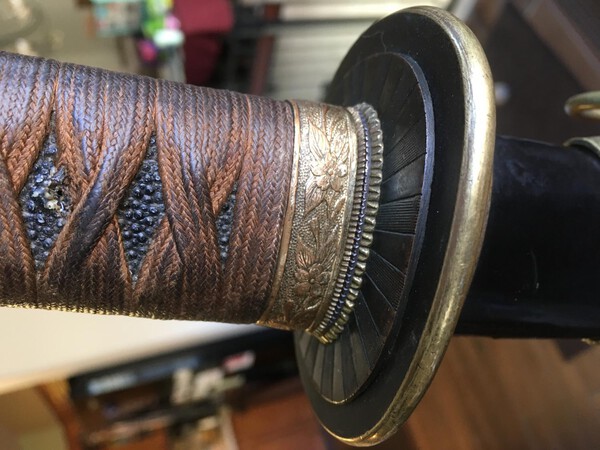
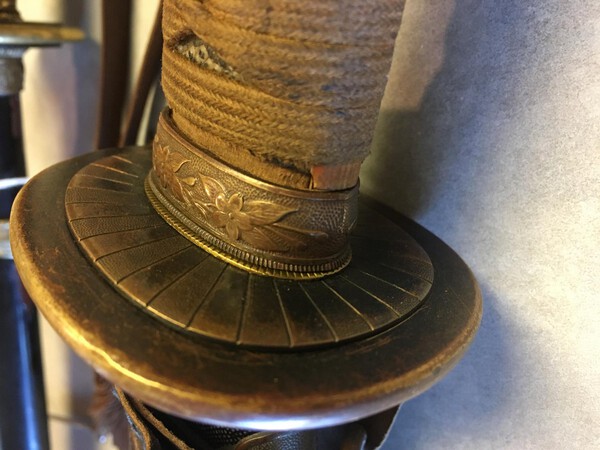
I didn't see the need to start a new thread, so I found one on the same topic: I've got 2 kaigunto with really loose seppa, so I ordered some from Crimson Mist. The '43 Sukekuni, seki-stamped blade, would only take 1 seppa. I know it's non-standard but it snugged them up nicely. I like it much better than the really loose feel it had. The other is a koto era blade retrofitted for a kaigunto. The fitters must have been in a rush becuase the wood liner of the tsuka isn't wide enough to let the tsuka slide all the way down to the seppa, leaving a gap. They actually put the mekugi in at a steep angle rather than take the time to fit the liner properly! I tried filing the inside of the liner, but I cant' get it opened up enough to improve the fit, and I'm not going to try unwrapping the tsuka to do the job. SO, I fit a seppa in and snugged it up. Again, non-standard, but the look and feel came out nice. On a sidenote, the inexact fitting of this Tsuka, makes me think it was grabbed by a fitter from a pile of pre-made tsukas rather than custom built for this blade, which could indicate this was one of many blades collected from the public campaign to gather family blades, rather than a guy that showed up with his owm blade to get it refitted. I think a custom job would have fit better.
 1 point
 -
Do you really believe "I need help with this sword" isn't smart enough to do a search??? "samurai sword restoration near me" If anything they are receiving a education in "sword restoration".0 points

















.jpg.eec30f0d8e67857d096038fbe4ef3c34.jpg)




















This leaderboard is set to Johannesburg/GMT+02:00