
Leaderboard




Popular Content
Showing content with the highest reputation on 09/20/2022 in all areas
-
Agreed, very likely the case, but the least we can do is see the nakago and provide a definitive conclusion. Seen too many swords incorrectly dismissed to jump to 'fake' without being thorough.4 points
-
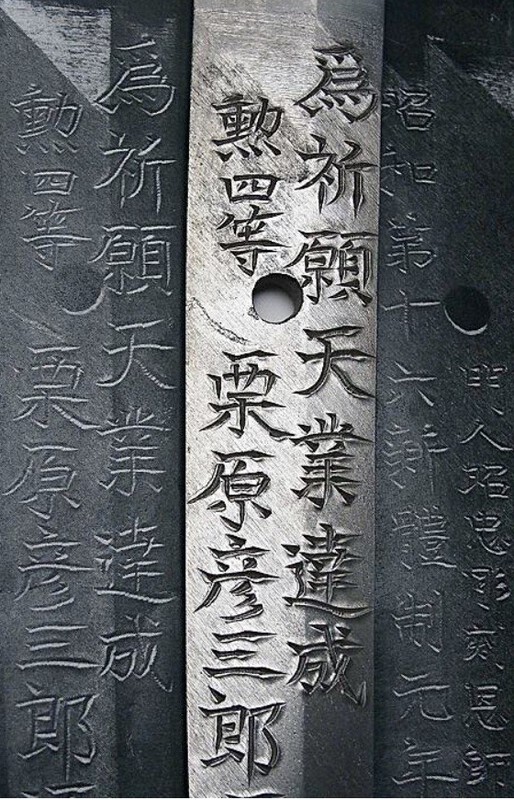
Yes, there are many differences in the horimono both in terms of style and quality which raise suspicion… actually, a huge gap in quality! As well as many differences in the deki of the sword, which wouldn’t be so if it were a shadow sword made at the same time as the original by Akihide. But to me, the big giveaway is with the nakago. The original has some minor openings in the nakago just to the left of the mekugi-ana which appear as a sort of scarring, the faker has attempted to reproduce this scarred effect in their sword, but the angles are incorrect, it goes off in a different direction. Which logically points to the 2nd sword being an attempt at a direct fake, rather than a shadow sword by Akihide. (Original to the left, fake in the middle) Once this is clear, and you start to really analyse the tagane and yasurime, the differences start to jump out at you. No sword should be assumed shoshin simply because of the supposed period or maker, wherever there’s money to be made, there are fakes to be made.
 4 points
 -
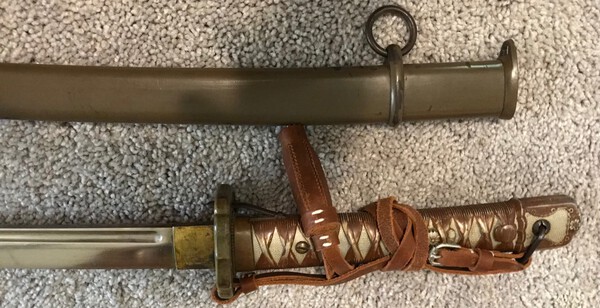
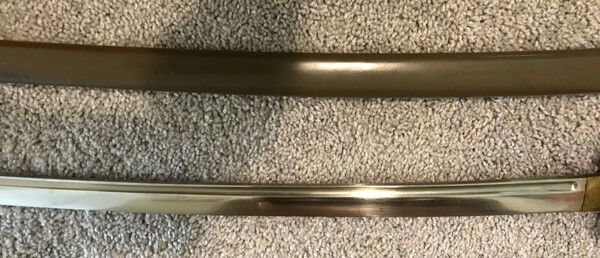
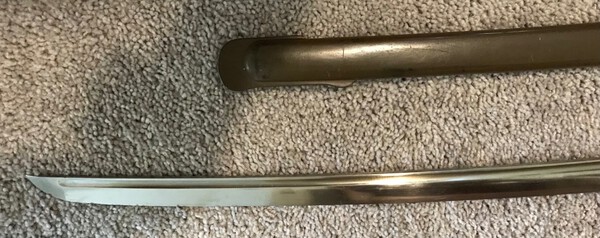
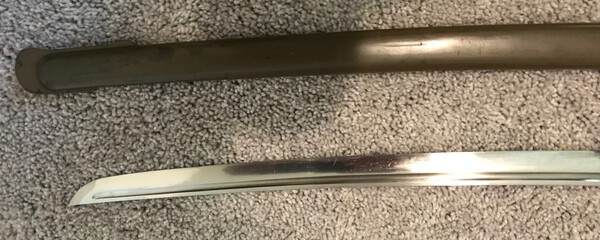
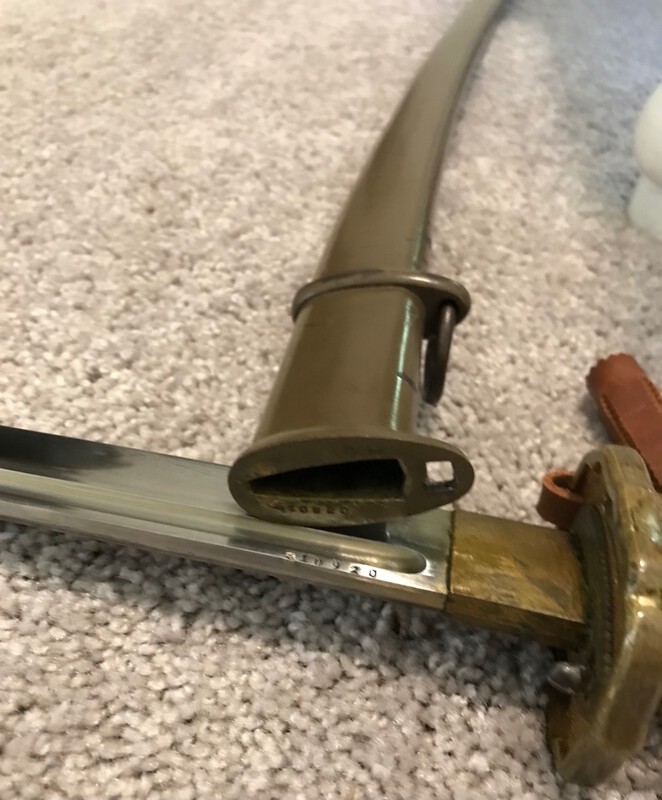
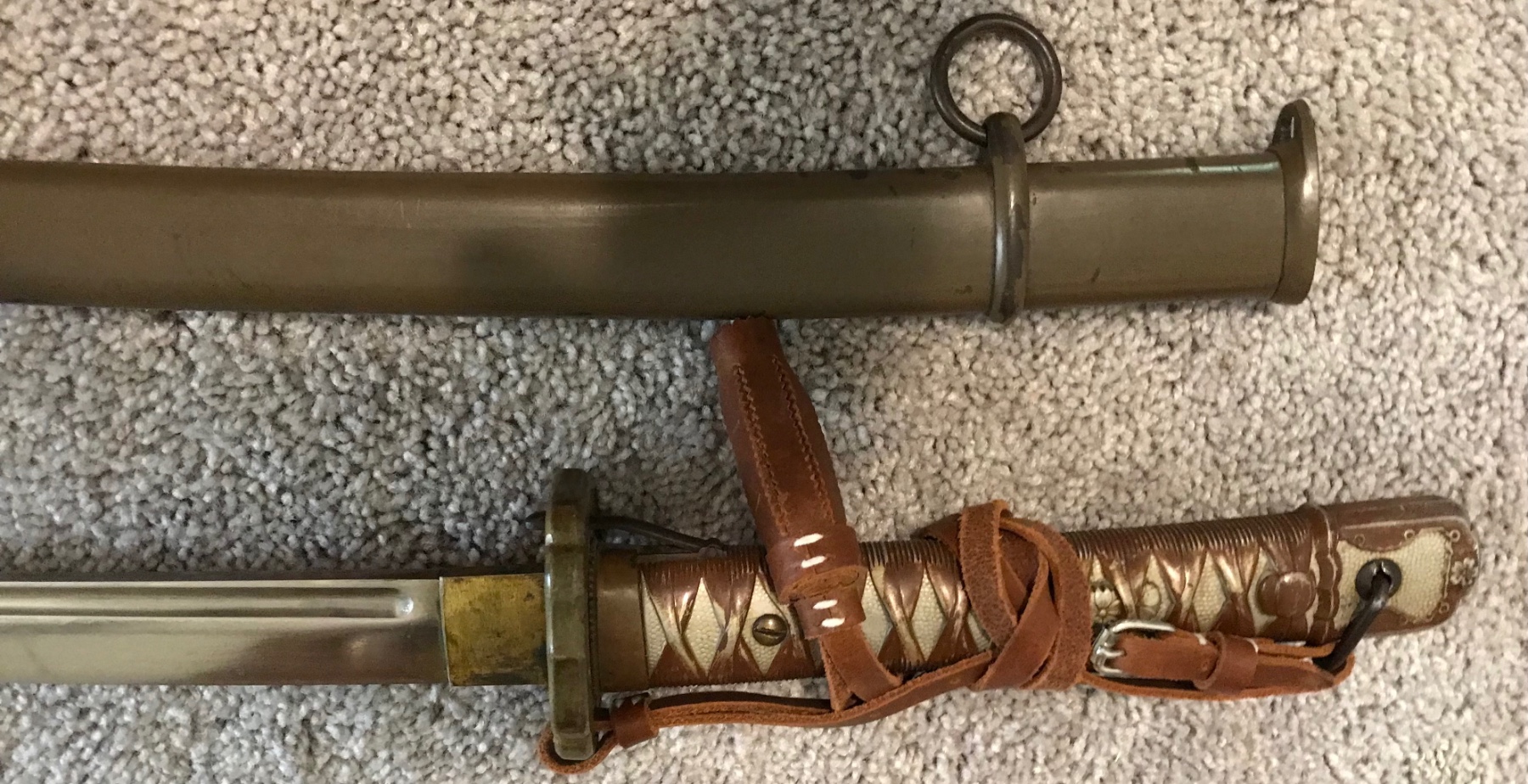
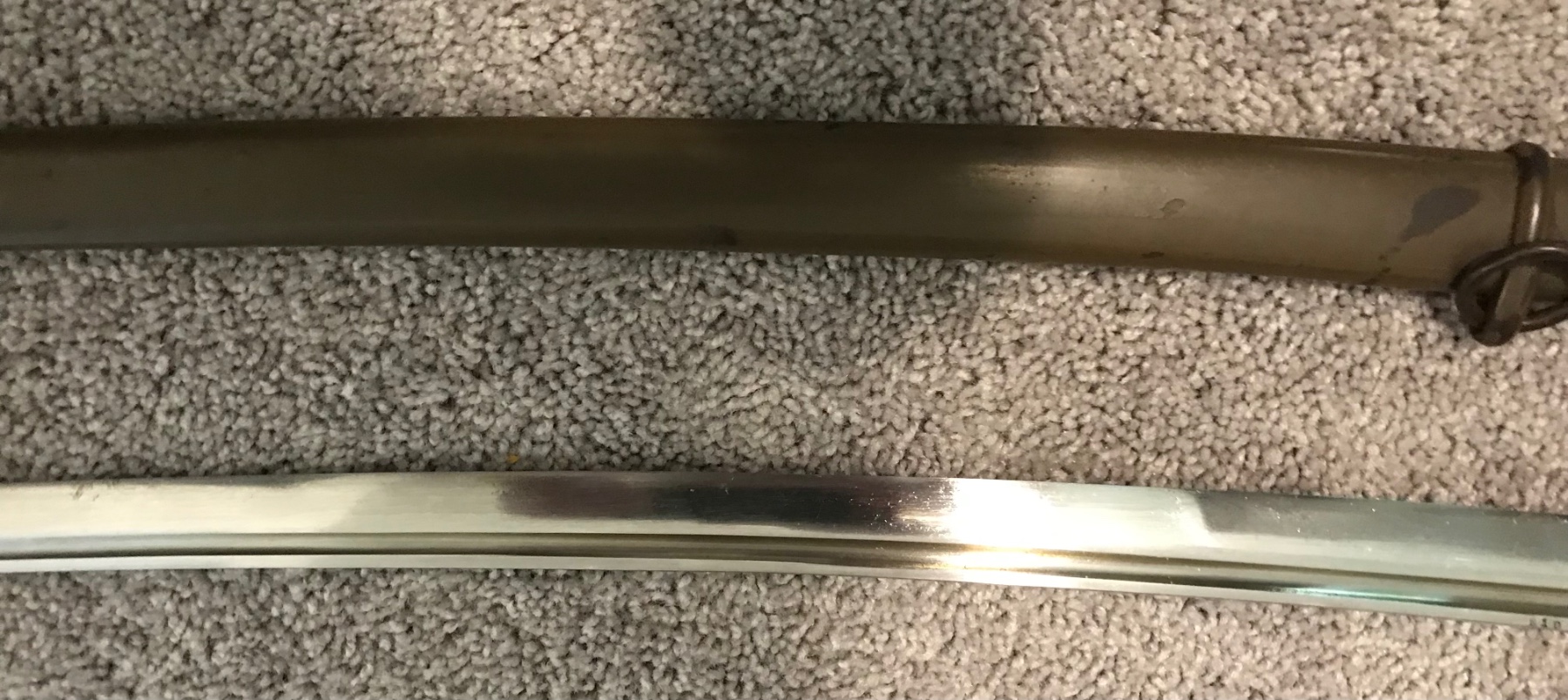
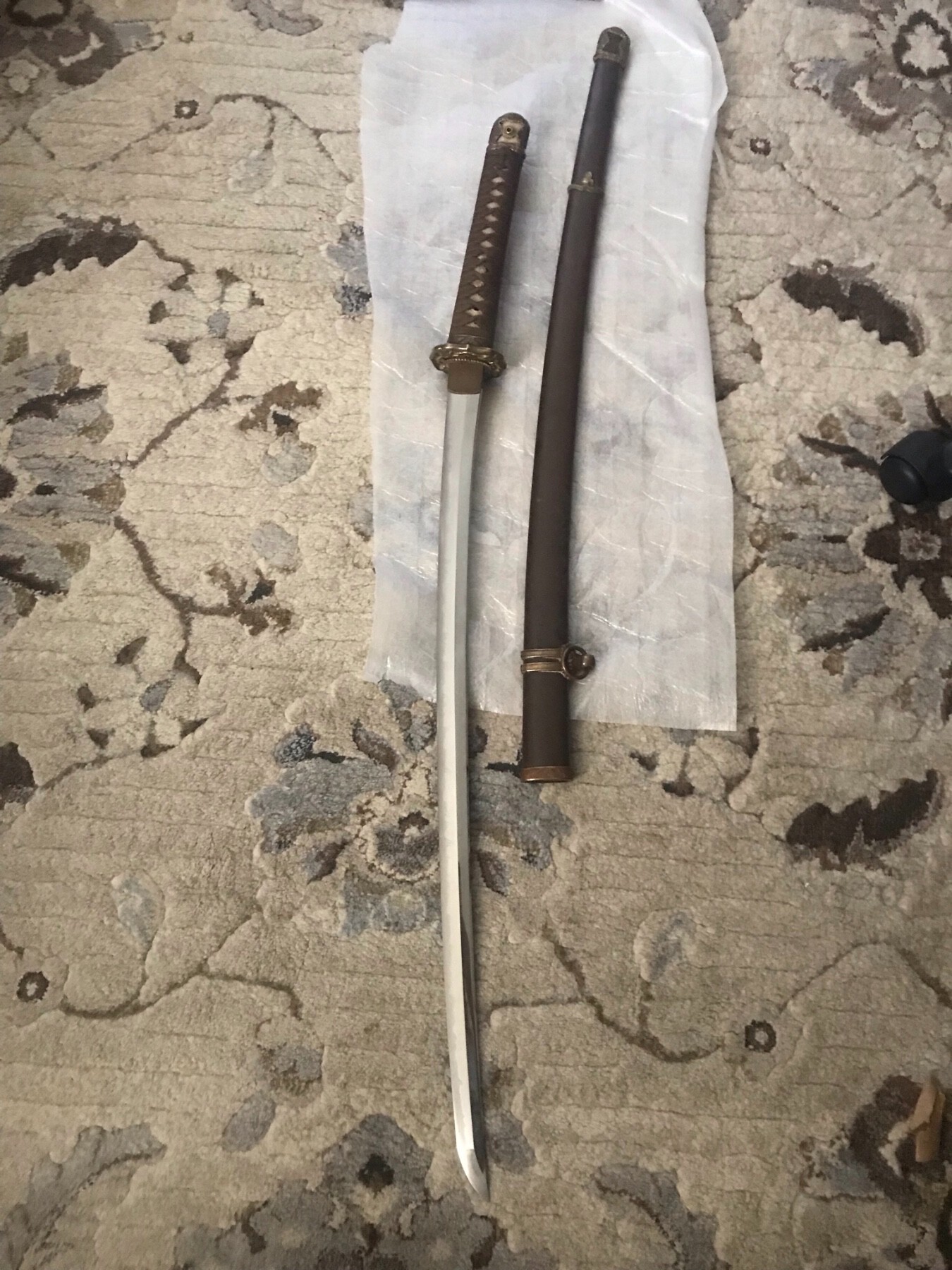
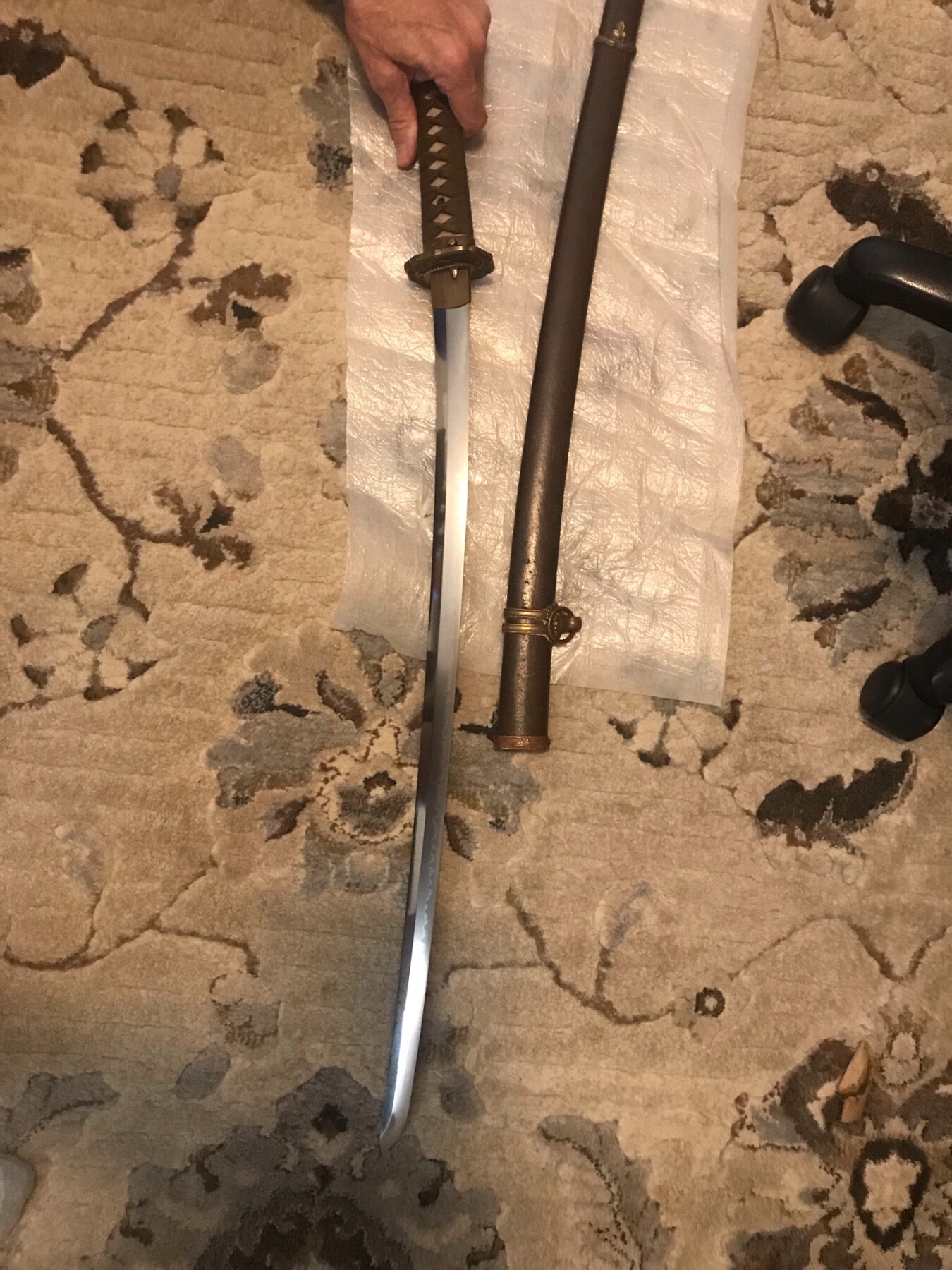
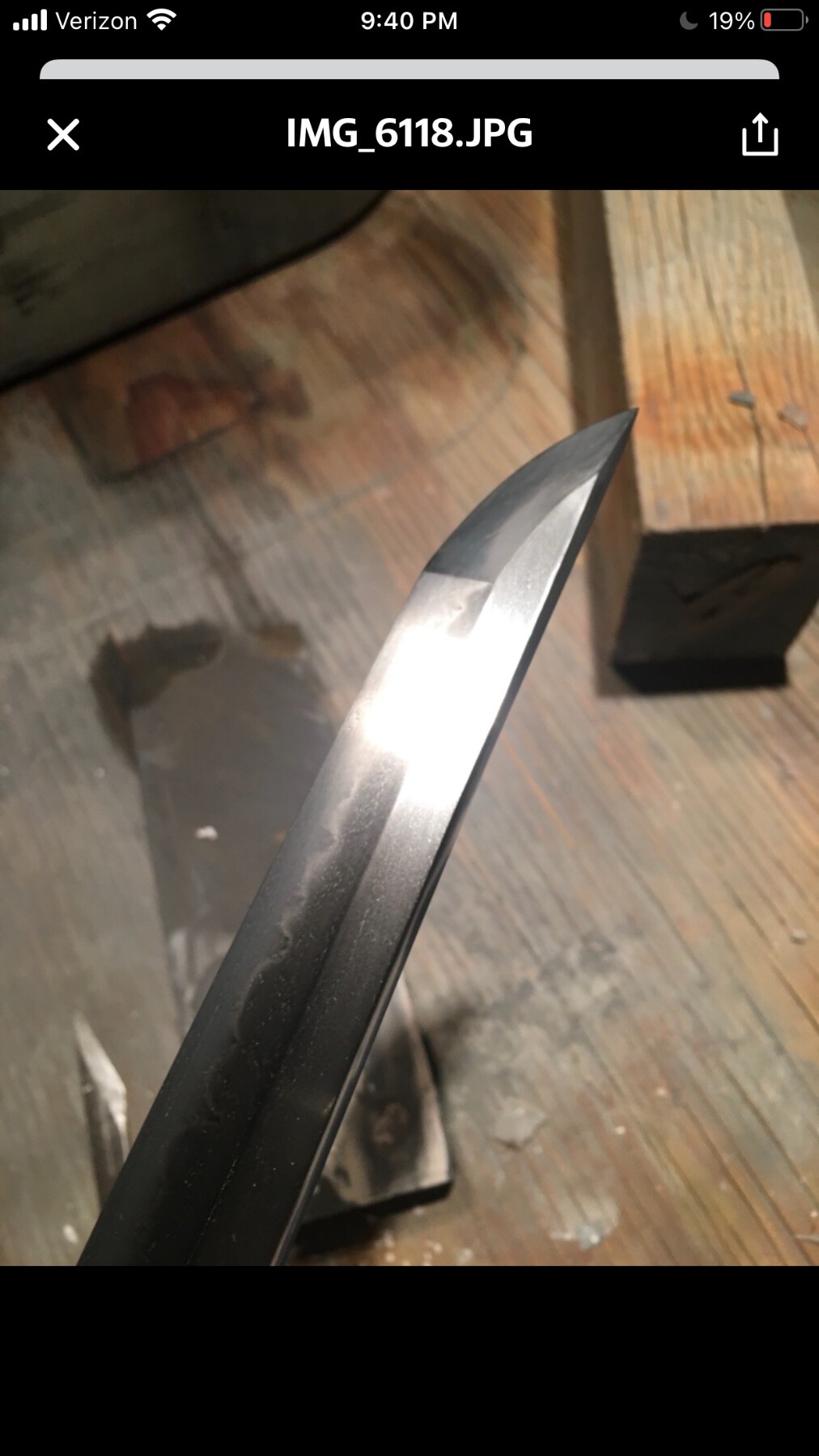
Hi guys I decided to use mineral spirits as requested to get the cosmoline off Turned out amazing wow like brand new! Im spoiled now


 4 points
 -
I got a bad one in a bunch of 4 bought at auction, a while back. in the pics, it looked good, late-war, but in hand it was too light and the leather was very thin, cracking all over. Crappy wood underneath. Crappy, thin blade, bad nakago. Sold it off in parts, with full disclosure. Later came to find out the ugly stamp on the nakago put it in the camp of likely island-made swords! Wish I hadn't rushed to judgement on it now.3 points
-
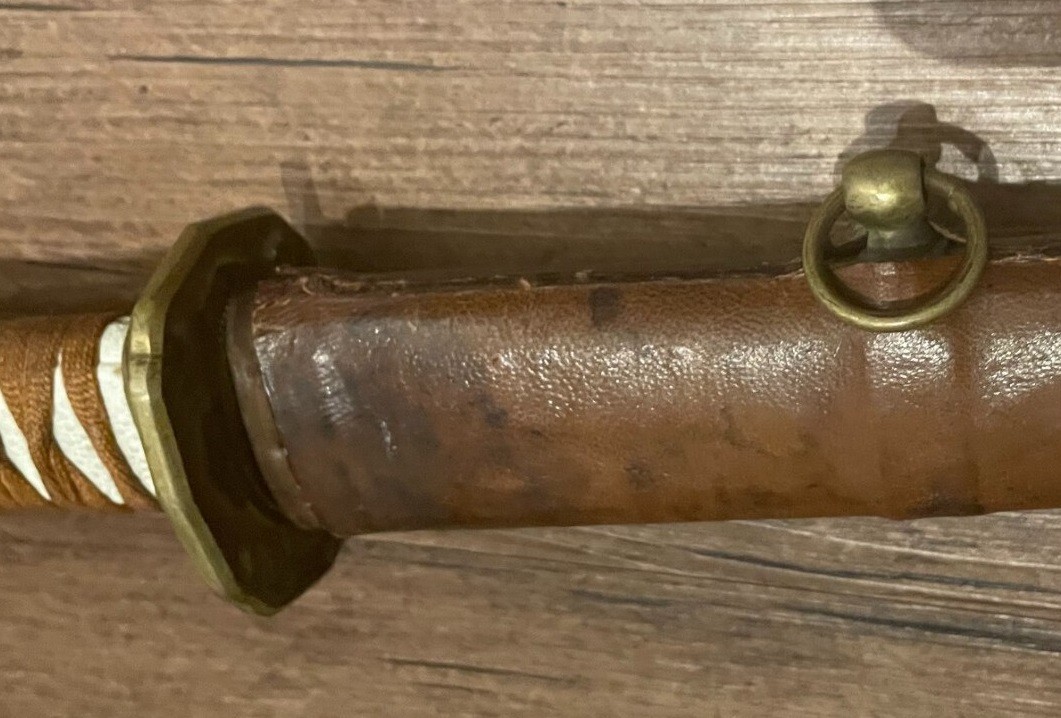
G'day Rob, I agree that from the photos the leather cover on the saya looks not too bad, but it has no clips or laces at the throat and if you look closely you can see the hanger has the same colour and lumpy appearance as that truly offensive tsuba and seppa, so all the koshirae were made together as a set. That makes it very unlikely that the blade will be authentic. Cheers, Bryce
 2 points
 -
I have no problem helping you out as long as I bear no responsibility for import fees/insurance claims. John2 points
-
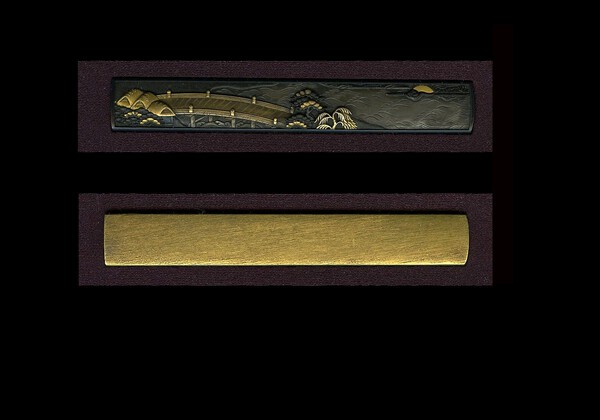
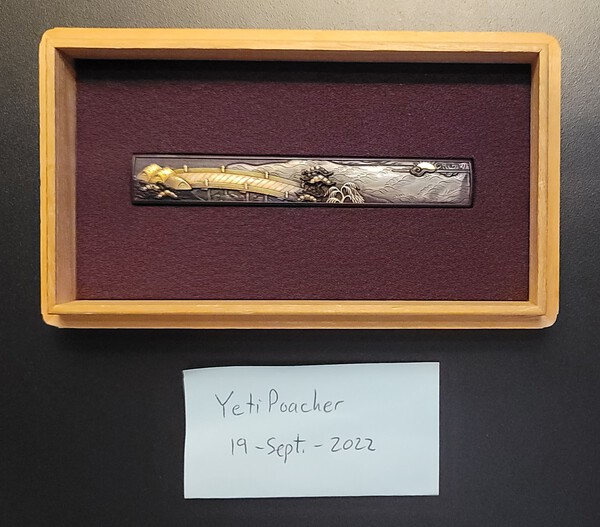
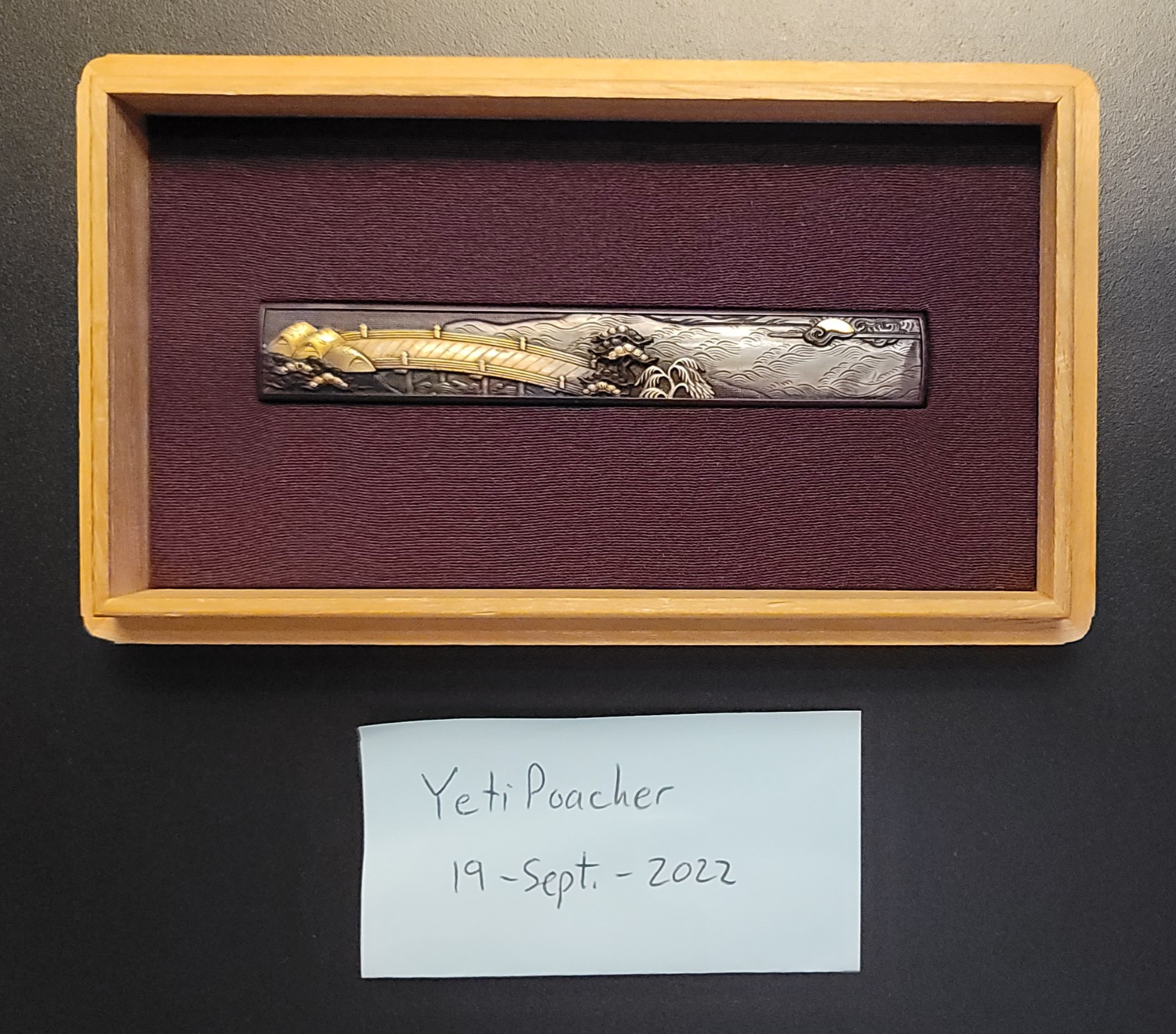
Hello everyone, I am a new member looking to sell a very nice kozuka that has been attributed to the Kaga Goto school. It is a superb example of workmanship containing extremely fine shakudo nanako work blended with golden thatched huts, a golden bridge spanning a fast-flowing river done in silver. There are trees done in gold, shakudo, and silver together with a golden sun peeking out from behind some clouds. This is an excellent example of the work of the Goto school who served the famous Maeda family in Kanazawa during the Edo period. It comes in a fitted wooden box together with NBTHK Hozon papers attesting to the attribution and the quality of the piece. I acquired this piece from Fred via nihonto.com last year. For me, this was an introductory piece to this world of collecting. Unfortunately, I recently tapped into my emergency fund and it needs replenishment. I am asking what I paid which is 2,650.00 USD. I am more than happy to video chat to show the piece. I have included the pictures from Fred's original listing as well as my own with my written username. For those interested, I can forward the email exchange between myself and Fred detailing the purchase. Please feel free to reach out with any further questions. Thank you! Carl

 1 point
 -
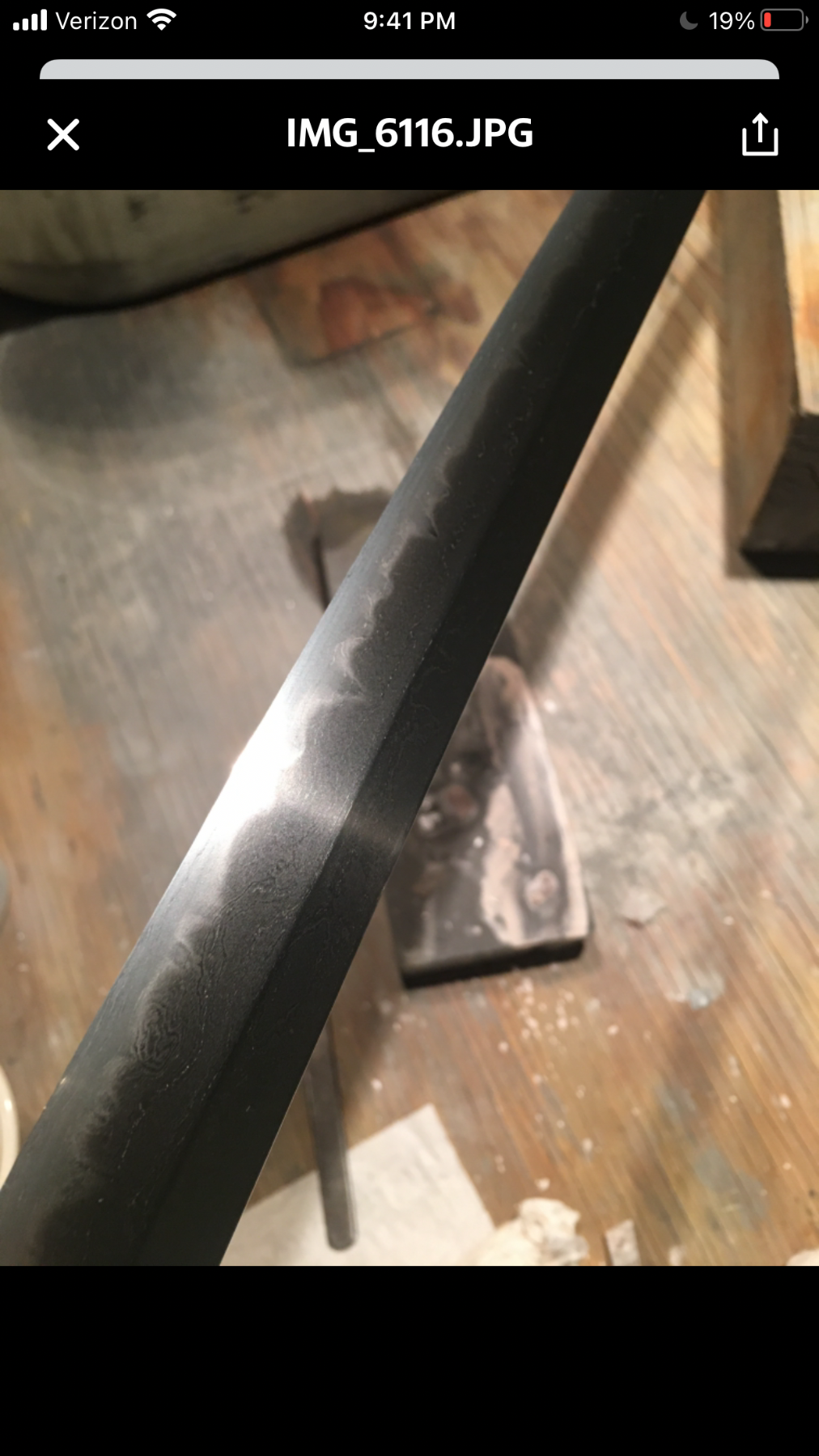
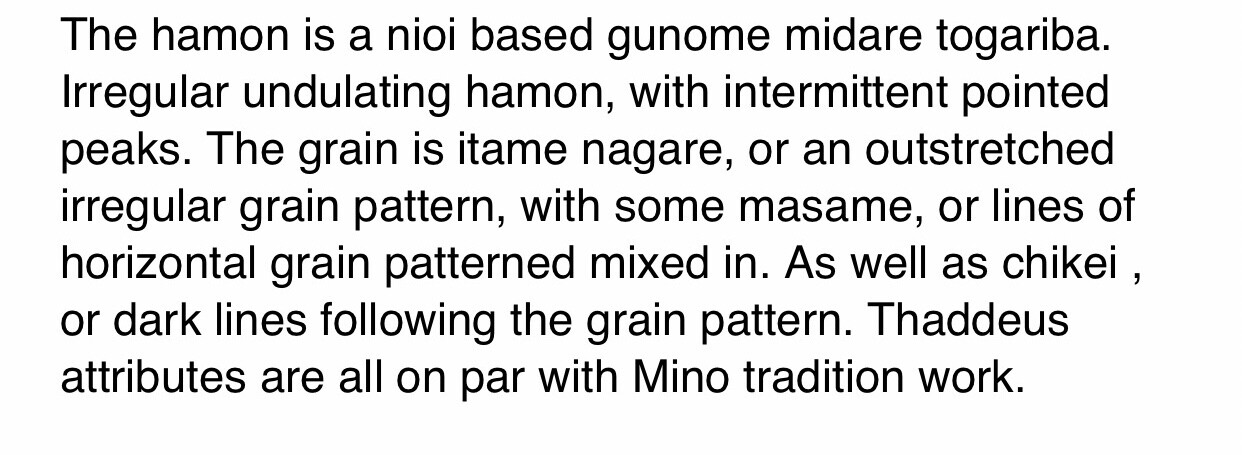
Hi everyone i wanted to start a new thread about this sword I had post d previously Of this sword It had scuffs scratches and a Nick! It is listed 5th seat at the sixth exhibit held in 1941 Because I have been told a sword should be judged by its own merit I thought it was good enough to get be polished by Woody Hall He said it was quite a nice sword so I told to him to have it polished !! I’m glad I did now! I know I won’t get what I put into it but I believed it to be a nice traditional sword now with a good polish that really brought out the hamon!! Woodys comments below Im happy to get feed back!
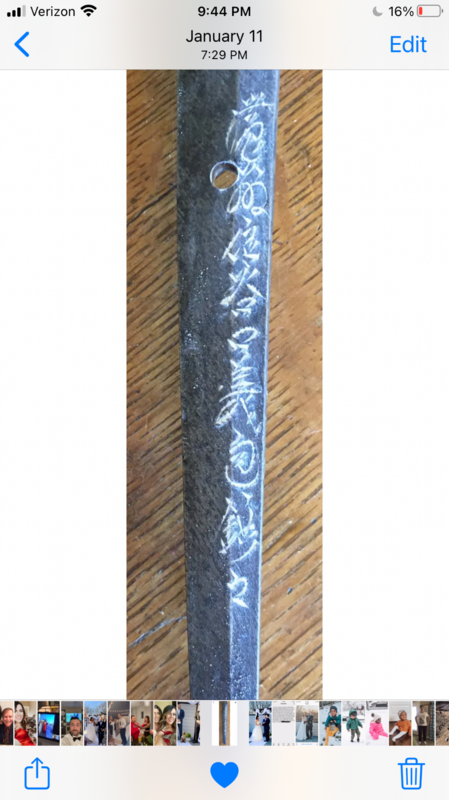

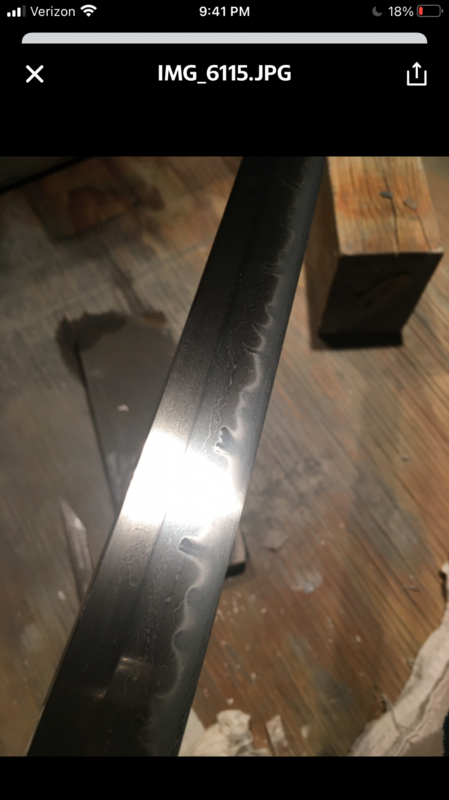

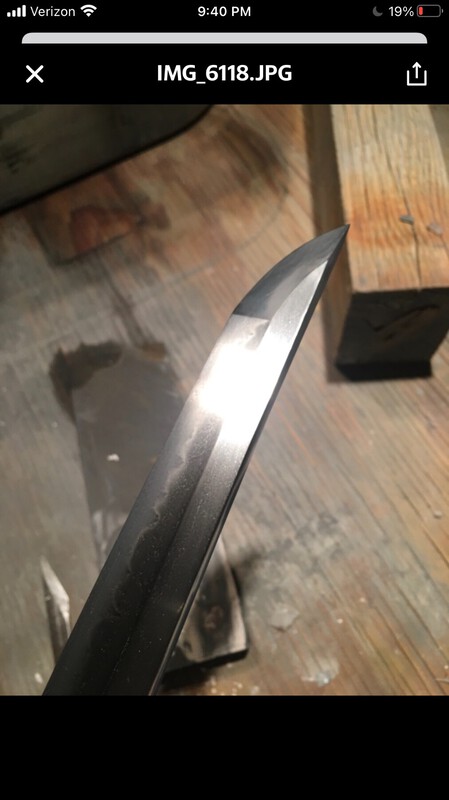


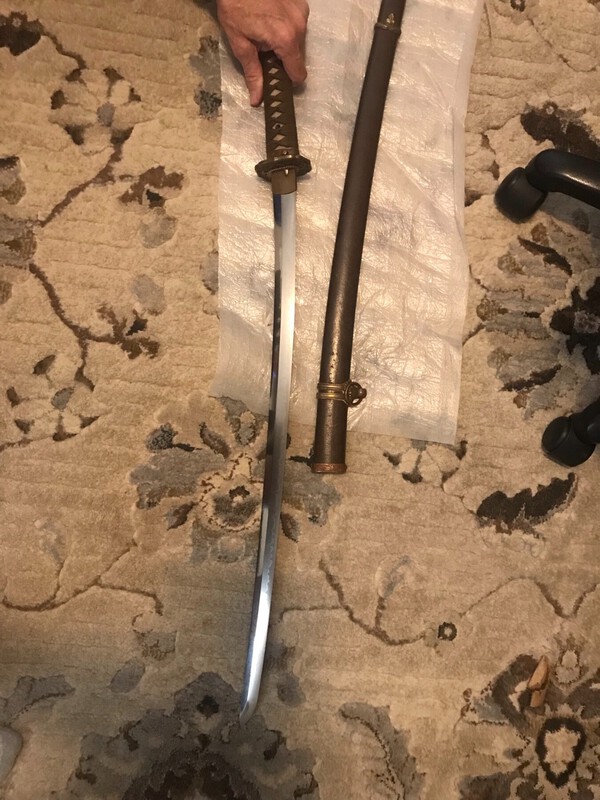 1 point
 -
I remember seeing that one, it's a beautiful blade. Congrats1 point
-
Yes it is!😀1 point
-
I had an appointment with a retina specialist today and he is relatively positive about my AMD. It is of the dry type, and isn't very advanced. I don't have many of the risk factors for it, except a diet rich in saturated fats, (which I've changed) so he thinks I have a good chance of either having the slowly developing kind, and possibly never developing significant vision loss. I am currently taking an AREDS 2 supplement and have a follow up appointment scheduled in six months. Also have an Amsler Grid installed on the refrigerator. So I am going to go forward with my plans regardless of my vision, for now. Thanks for all the advice!1 point
-
As always, too slow… 😂1 point
-
Is this some form of handachi koshirae?1 point
-
Samurai katana (??length??) in Han-dachi mounts which are similar to Tachi mounts but worn as a katana (or wakizashi)1 point
-
Nope. Antique civilian1 point
-
He didn't do a full apprenticeship, only partial. The only fully trained togishi in the US is Mr. Hayashi. That being said, I would have no problems sending a blade to Mr. Becerra1 point
-
He apprenticed under traditionally trained, and I take his word on that.1 point
-
1 point
-
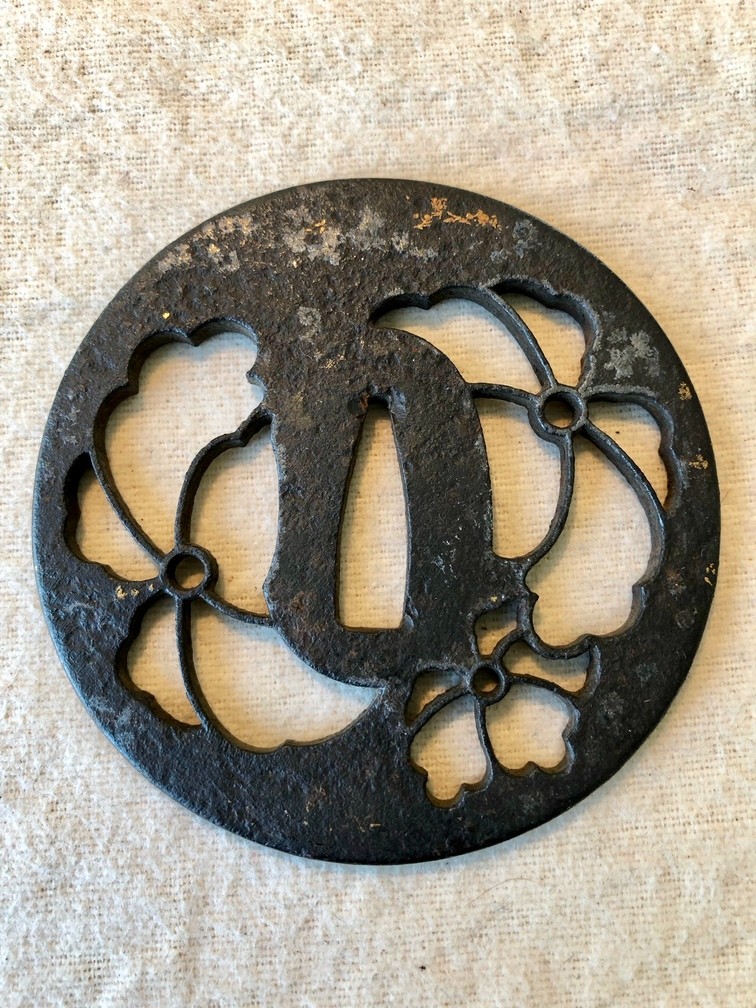
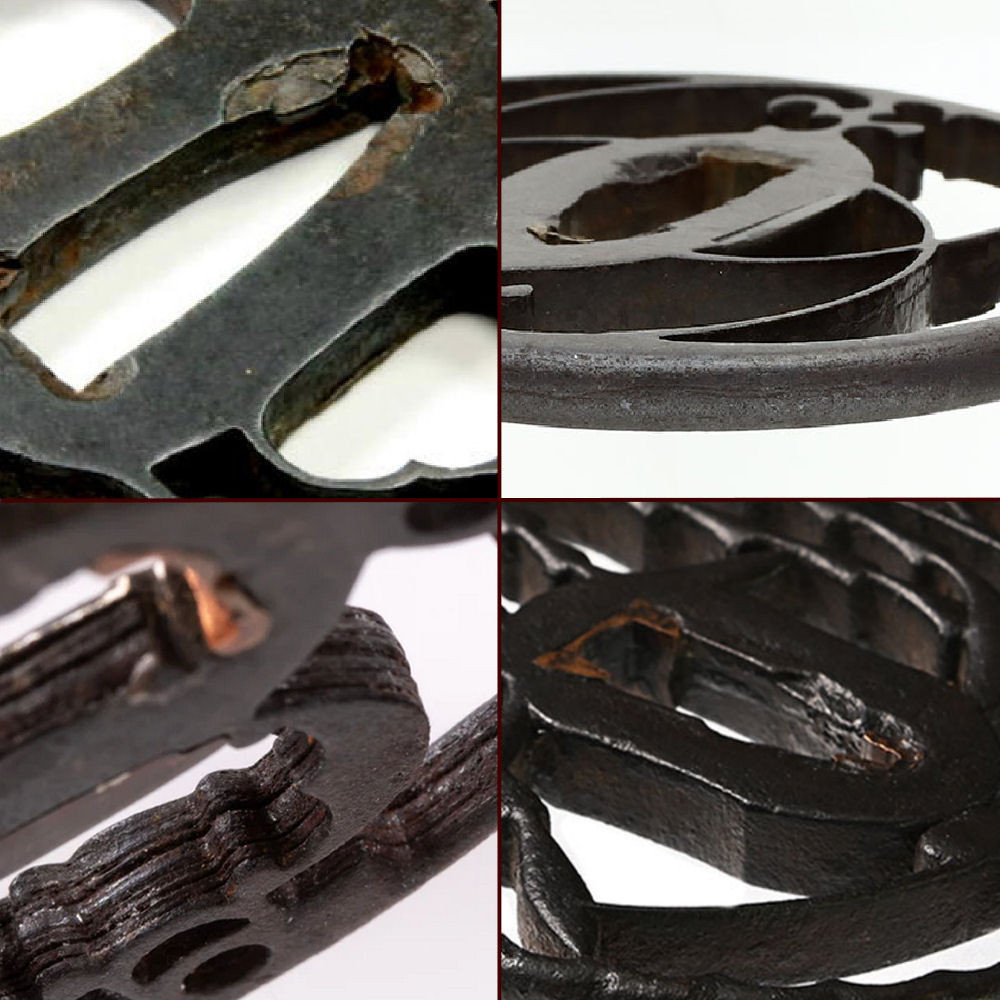
I just saw this thread. The seppa-dai is typical of Akasaka, the tagane are typical of Akasaka, the hitsu-ana fit the earlier rather than the later pieces. Cracks or small imperfections are actually quite common due to the construction. Tsuruta-san has just a Ko Akasaka with TH a lot of money, which is also missing a small spot on the inner ring of the decoration. No drama at all with such pieces.1 point
-
It's Moses Becerra, he isn't traditionally trained but is known to do some quality work. Guess it depends what you are wanting to polish. I doubt anybody has anything negative to say about him other than his wait list.1 point
-
So not a rugger ball or a logo? Looking at the replies and a previous post: kanji for rain bottom left: 雨 stylised version of the kanji for sun: 日 kaze for wind 風 It's looking like the weather so possibly the moon is there and one other symbol missing/untranslated1 point
-
I'm guessing this one, https://nihontoantiques.com/ Yes? All the best.1 point
-
1 point
-
Hi. I messaged you the page you wanted. I hope it helps. Bob Gilmore1 point
-
Two things to take note of: 1) MANY gimei (fake signatures) of this smith 2) Katana almost always (in nihonto, never say always… but usually always) are signed tachi mei by this smith. Yours is signed katana mei.1 point
-
Ed, white gloves won't give the collector any real information on key features like hada & hamon, & even the sugata would be hard to determine if vision loss is severe. My father's AMD got so severe, that I set him up with a scanner, & a wide-screen TV, that he used for reading, & studying his knife collection. It was still quite a hassle, but the best I could do 25 years ago. Today there are treatments, but I have no experience with how they will affect Nihonto collection & appreciation. The Amsler grid is an excellent idea, & I have them posted all over the house. If you see ANY distortion, or "holes," get back to your Retinologist immediately! This is one time when hours may count, if your retina or macula is tearing loose.1 point
-
You rock John, love to see the willingness to help. Nihonto community is legendary because of actions like this. Sincerely Edward1 point
-
@dschumann so sorry to hear of your condition. On a positive note, I do believe Nihonto have a lot to offer in the touch department. With the white inspection gloves one could get satisfaction just from the feel of a Nihonto in hand.1 point
-
Hizen no Kuni no Ju Omi Daijo Fujiwara Tadahiro. Grey1 point
-
I am sorry guys, none of that is real including the saya. Pull out any one of your own gunto and compare the small details. Cheers, Bryce1 point
-
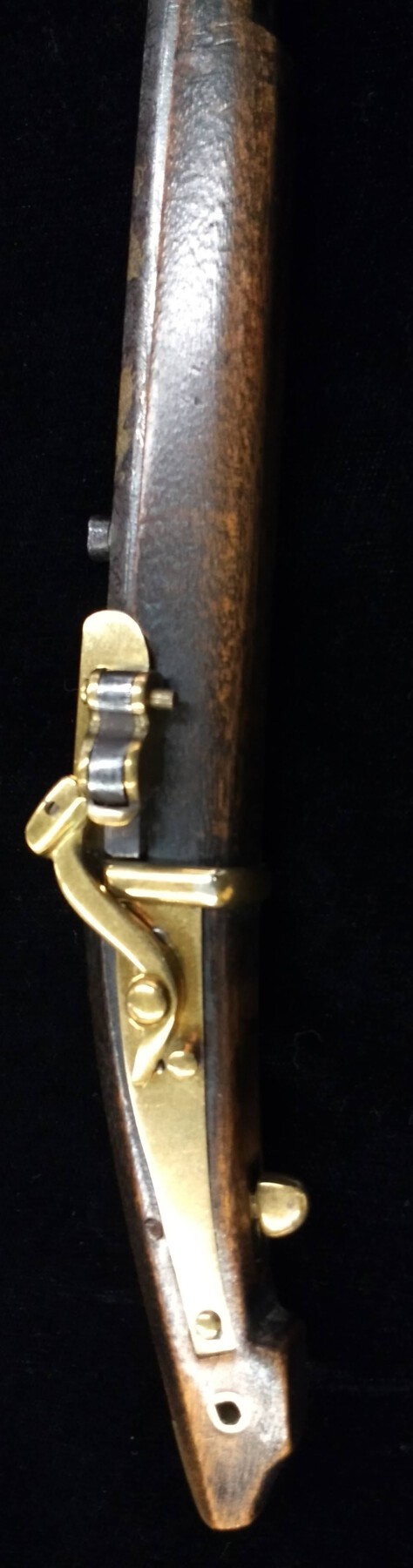
How about some miniature tanegashima?

 1 point
 -
Tsuba #19: 7.8 cm x 7.7 cm x 3.5mm. $90. Tsuba #20: 8 cm x 7.8 cm x 3.5mm. $100. *Note that this tsuba has had an impact at about 10:00 - 11:00 on the omote. See the metal that has been distorted here. Tsuba #21: 7.3 cm x 6.7 cm x 3.5mm. Kiri-mon motif. $100. Tsuba #22: 7.5 cm x 7 cm x 3mm. Yamakichibei-esque design and treatment. $100. All four for $300 plus shipping.


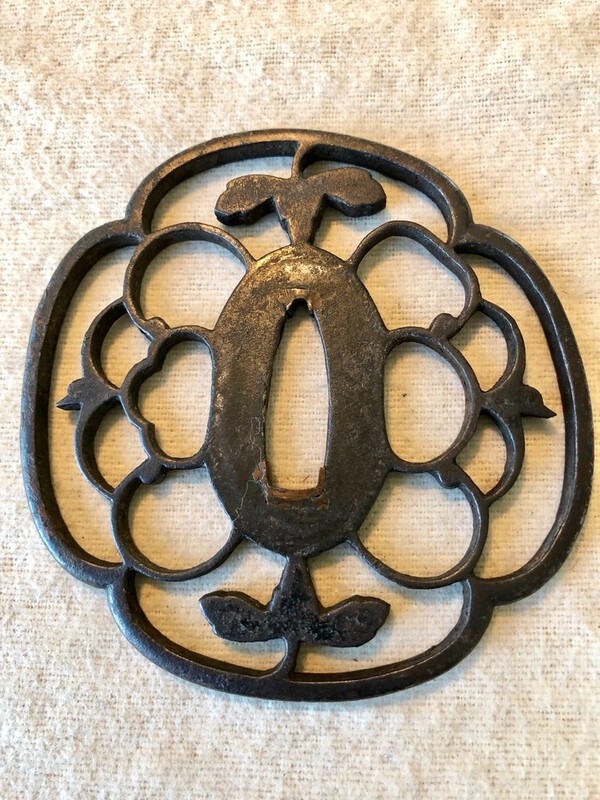

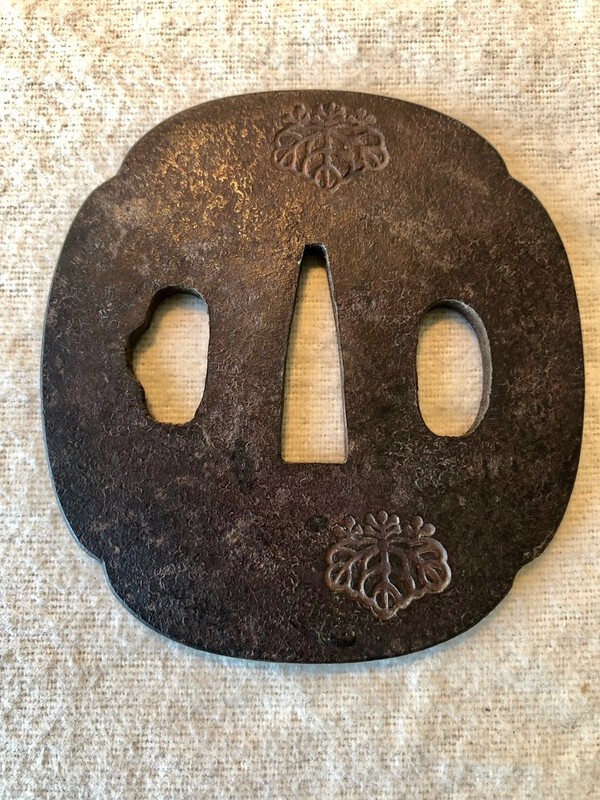

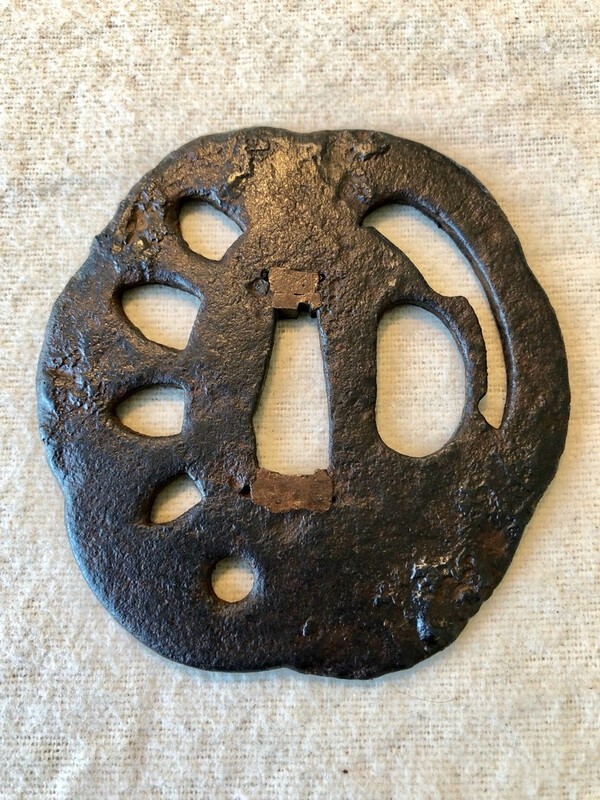 1 point
 -
Ian most of the elements are the same as most of the others [not the window versions], just missing the ladle/dipper. It is amazing how the basic design is maintained with the kettle on the left. Nice uncomplicated piece.1 point
-
@mecox covers this swordsmith in his latest monograph. Showa Period Swordsmiths of Ehime Prefecture1 point
-
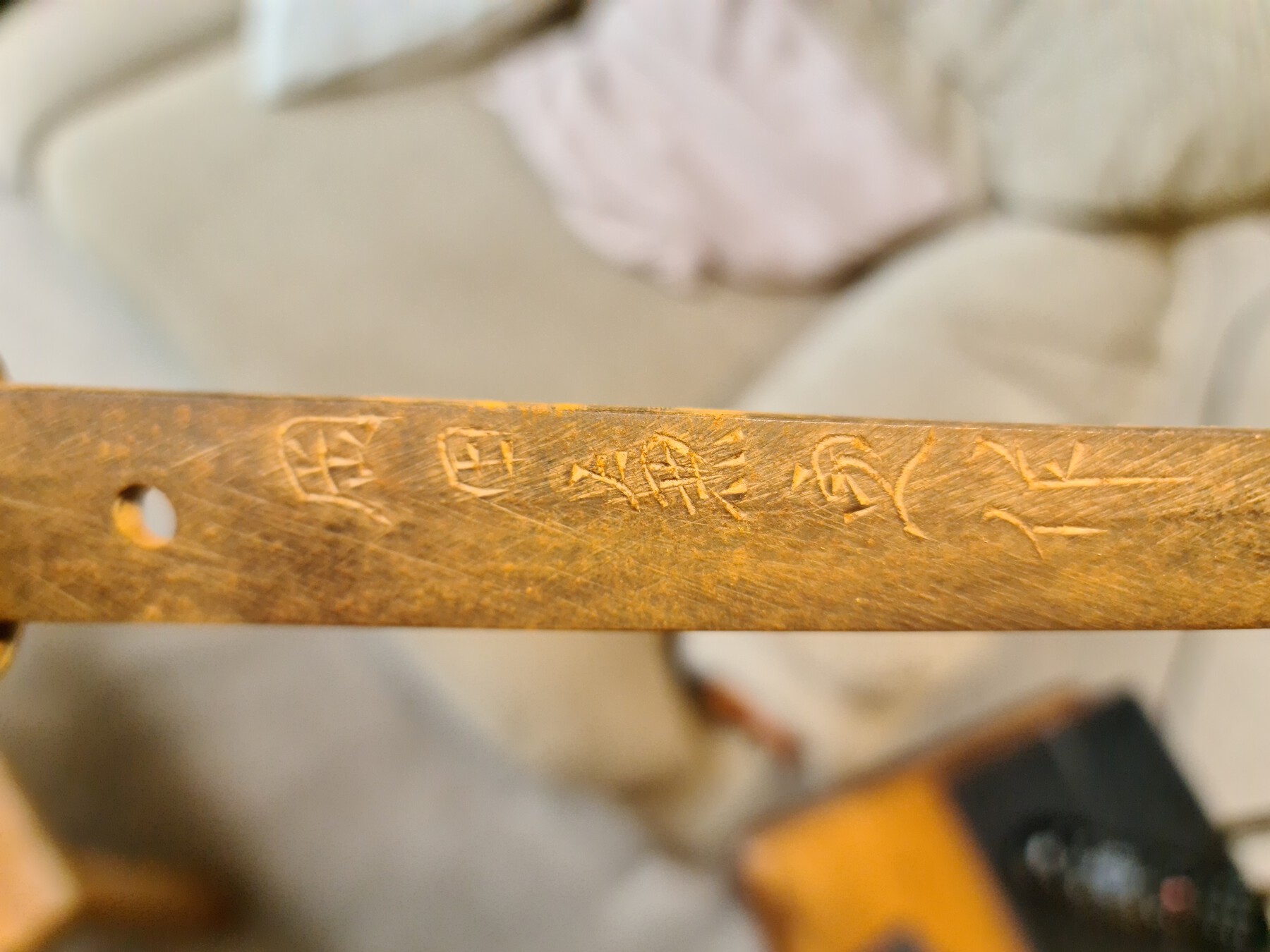
Yes, you have most of it right. 三郎太夫作之 Saburō Dayū saku kore 備前岡山住袴や - Bizen Okayama-jū Hakamaya Mid-Edo metalworker. Looks like the yū (夫) of Saburō Dayū is completely gone.1 point
-
Some more examples from four Akasaka tsuba (all with NBTHK paper). In some pieces the separation between layers is even much more evident than in the tsuba wich originated this thread.
 1 point
 -
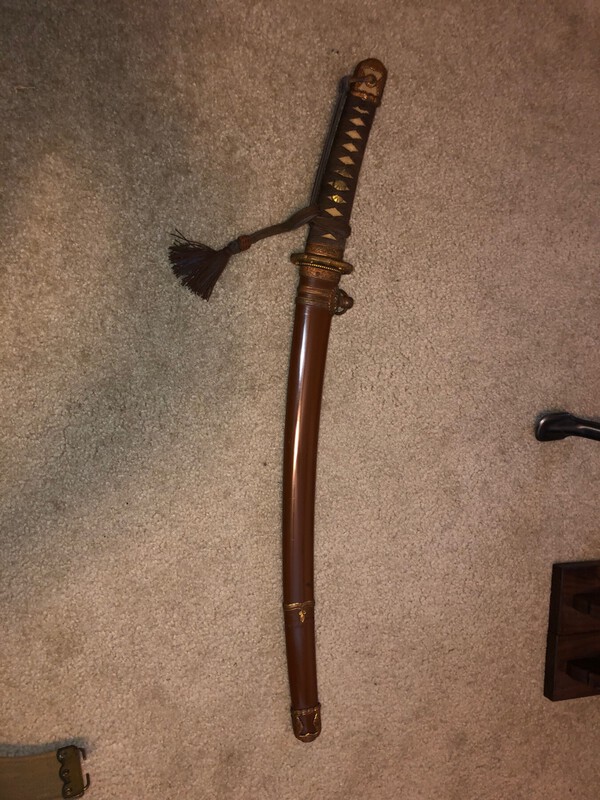
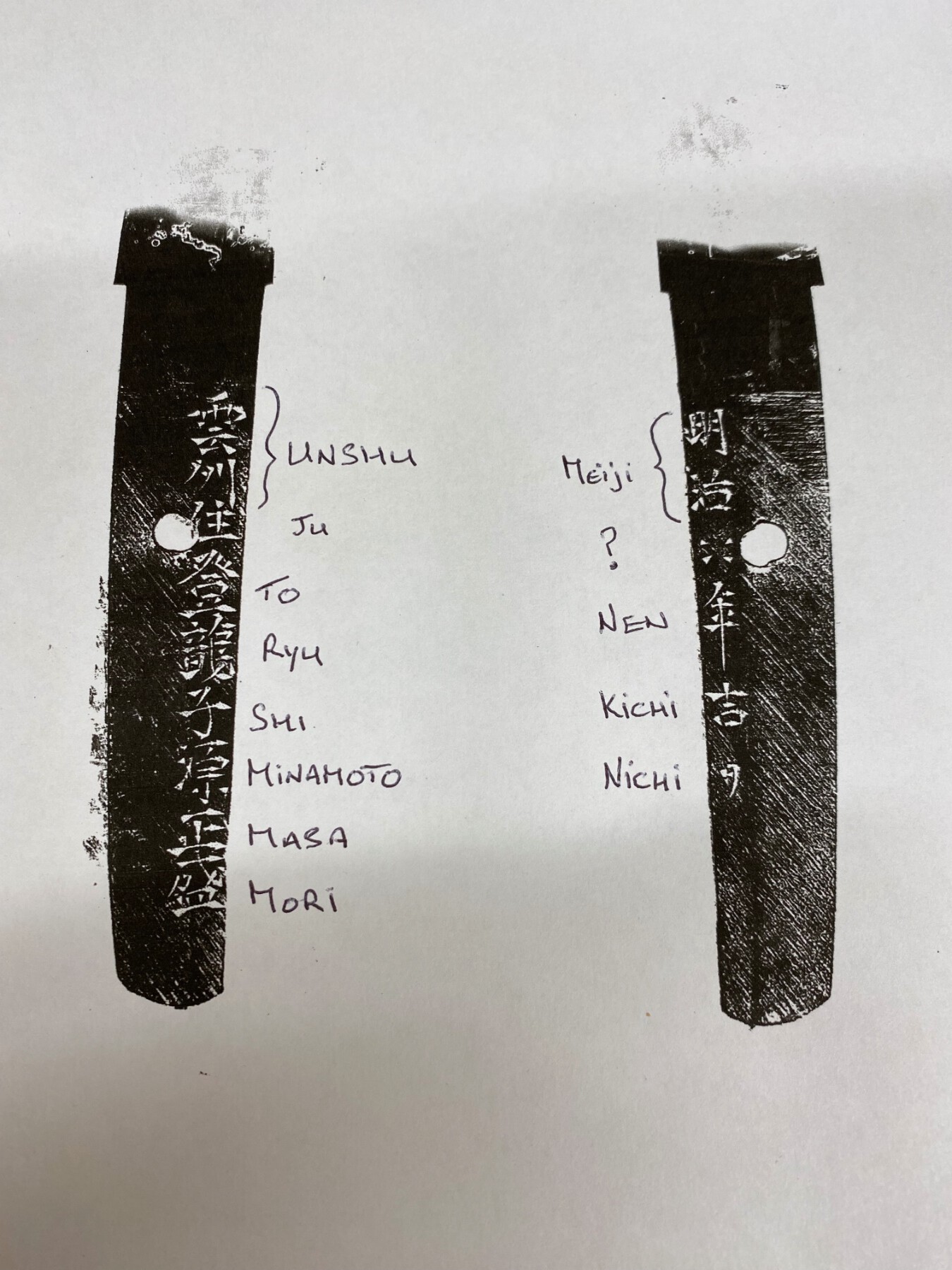
Gentlemen and Ladies I’m stuck on one stupid character I just cannot find, I have (Meiji ? Nen Kichi Nichi) I have been unable to find any reference to this character and so I am unable to complete the date. also I have not been able to find any information on this smith, can anyone help please 👍 Many thanks Ian


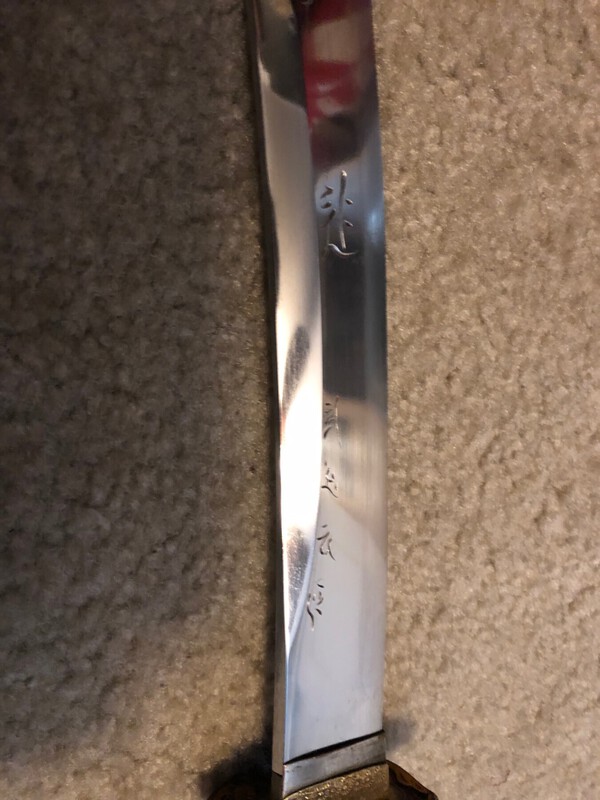

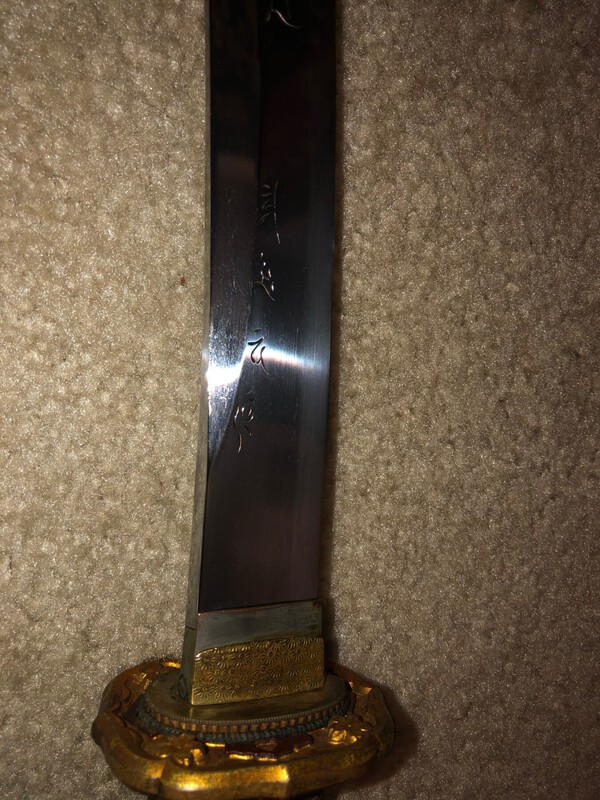


 1 point
 -
2nd article here https://markussesko.com/2020/09/1 point
-
I think it is a 4, as in 18711 point
-
Hi Bruno, I think this design is getting close to the third most common one ever encountered. They are everywhere - mostly in iron - I like the one in kinko you posted. There are 21 examples here from my utsushi book.
 1 point
 -
Colin, the only 'dumb' question is, one that is never asked. - [Quote from Confucius or me? ] There has been a long running thread on cast guards and within it there is some information on how the Japanese were able to 'soften' their cast iron works by a process of annealing. This allowed fast production of metal work [including tsuba] and allowed fine details to be carved into the softened metal as a secondary treatment. It also allowed the tightening of the guard to the blade by means of Tagane-ato [punch marks] around the nakago-ana. [personally I would still be nervous doing this] The spacers you mentioned are 'sekigane'. Glen and Dan De Rooy and others have amassed a great deal of evidence based information in this thread.1 point
-
Dear Paz. As regards shinsa standards this might help. http://nihontocraft.com/2015_NBTHK_Nionto_Tosogu_Shinsa_Standards.html Also if you have not already found it or bought the book this might be useful, https://studyingjapaneseswords.com/ The author is a member here. Of course in the 80 odd years of the Shinshinto period there would have been opportunity for someone to have suriage done on a sword from the same period but there are many reasons why you might find them. Some years ago there was an exhibition in London with a catalogue called, "The Beauty of Shinsakuto", while not specifically your period of interest there were several swords which were utsushi mono, copies of earlier msterpieces. Some of these were copied complete with suriage nakago and multiple mekugi ana. These were not meant to deceive of course, but in the Shinshinto period the same is possible. Add to that the possibility of passing off a Shinshinto sword as something older and more valuable by removing the nakago with the mei... I'm sure there are many other reasons as well. All the best.1 point
-
Sometimes the best sellers of nihonto can be found right here on NMB. A big thanks to Marco (user mareo1912) for the transaction for a new to me tsuba. Easy process, great communication and item shipped perfectly safe. Always check the For Sales page!1 point
-
Dale…..many thanks indeed. I learn something new every day. Trouble is I can’t remember what it was🙂. Many moons ago I had a collection of Namban tsuba….mostly intricate dragon designs….and was amazed at what detail was achieved. Back then in the UK they were regarded as one step up from rubbish but I liked them. Thanks again. All the best. Colin.0 points












































This leaderboard is set to Johannesburg/GMT+02:00