
Leaderboard



Popular Content
Showing content with the highest reputation on 07/01/2026 in all areas
-
5 points
-
I agree with Barry. In fact, I'll go a step further.. Shinshinto "Sonno Joi" Loyalist sword. The over-the-top hamon, the nagasa, the long nakago, and the lack of sori are a dead giveaway. The strong yasurime and lack of deep dark regular patina all point to this being a young blade.5 points
-
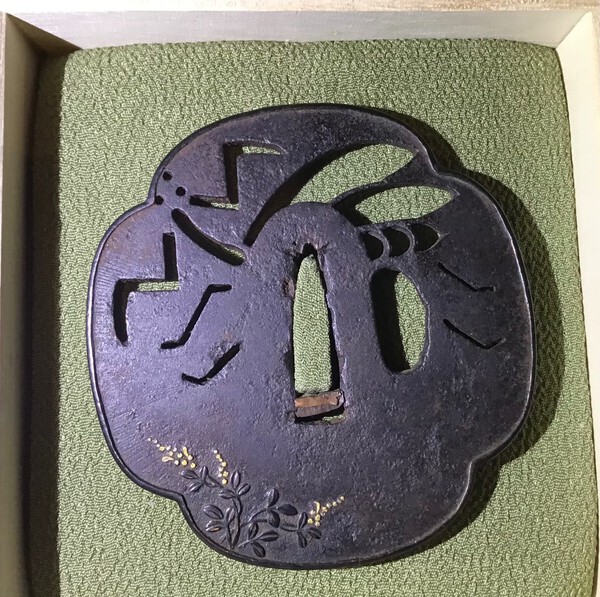
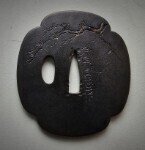
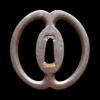
This is the last one from a small batch of iron tsuba that tempted me. It’s largeish at 7.9cm and has a beautifully fitted shakudo rim and with inlay in shakudo and gold of bush clover. It was the striking sukashi Mantis that caught my attention but closer inspection of the reverse appears to reveal the remains of Amida rays especially down the left side. Any ideas…..could this be reworked older plate that once just had Amida rays? Did that happen? Thanks for looking. All the best

 4 points
 -
4 points
-
Missing too much of the tag to say with any certainty. Usually the tags contain an address and name (in that order, read from right to left). Looks like 安角 (Azumi) possibly Azumi district of Sekikawa village in Niigata prefecture. 本間宇 Honma (surname) and then part of a given name with multiple possible readings. The signature on the tang is 摂州住長綱 Sesshū-jū Nagatsuna (made by Nagatsuna of Sesshū province. Sesshū is present-day Ōsaka). Looks like a nice antique sword, that well predates WW2.4 points
-
Hello everyone, I am very pleased to announce that I now finally have my own dedicated website! I made the website myself, so there could still be some small mistakes or bugs, but I am very happy to have it. The logo was made by me in Illustrator. I made the mon of the Hōjō clan the centrepiece simply because I always really liked it since it reminded me of the Zelda games I used to play when I was young. The website will still be in development. I will be adding more text and general information in the coming weeks. New stock will be uploaded on the website first before becoming available on NMB. Be sure to enter the newsletter as well so you won't miss out on any shop updates! Please have a look and let me know what you think! I am open to advice or suggestions. https://tokenoranda.com/ Greetings, Lex3 points
-
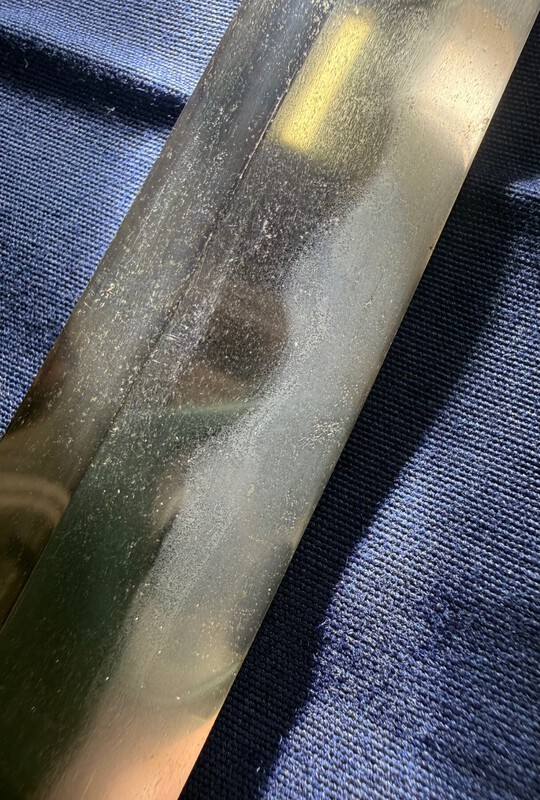
Thank you, and I agree. In my opinion it has a distinctly shinto sugata. For a sword that's been untouched since the war, it was in good condition, and the workmanship impressed me. Like mentioned above, I could not translate or offer input on the mei, so I was left with admiring the steel and workmanship by itself. To me, it looks like a very nice shinto wakizashi. More enjoyable than most Shinto wakizashi that I have I encountered “in the wild”. Also, thank you very much for ruling out that possibility, SteveM. I don't want to speculate in the wrong direction; and you've saved me from that. Thank you Bruce, yes I explained her swords wartime connection, and that it would have had the leather cover + button clip that looped around the fuchi and through the tsuba. Some speculation here: but the saya looks almost like the end of a shirasaya, with a wartime ashi put onto it. It has no kurigata, koiguchi, or kojiri; and it's thicker wood of what looks like the correct type. I hope to write Becca a small write-up of my observations and revelations shared here on the forum; including a link to this thread. It will be tailored with western vocabulary so her family can easily understand generally what the sword is, and its history. Thanks everyone! As always, the help here is invaluable and much appreciated. Ya'll are the best! -Sam Some more of my quickly taken photos + boshi observation:


 3 points
 -
Becca, Sam probably explained this while with you in person, but just in case - The handle (tsuka) and other fittings are that of a Type 98 Army officer. Many older, family blades were fitted out for WWII, both army and navy. The scabbard (saya) would originally have had a leather cover. They often go missing over the decades. You can see examples of the in pristine condition on Ohmura's site: Military Swords of Imperial Japan - Informality Fittings See this page for care and cleaning: NBTHK Sword Care Guide3 points
-
With a blade that seems to be off "normal" by so much, I can accept any speculation. With a KASANE of 12,7 mm (really?) and a likely hand-painted HAMON, it can be anything.3 points
-
Well Adam, IMHO, you did a wonderful job of restoring the sword to a working condition! It surely looks very nice now and given the fact pre-1953 gendaito were made for war, thus were very sturdy, it should be a well-suited choice for all kinds of tameshigiri. I would suggest adding mihaba and kasane info, also omosa (weight of the bare blade). I think that might help the sale. Also, few close-ups of ura and omote boshi (yet to see it), also some close-ups of the hamon and ji. Thanks in advance and good luck!3 points
-
Love the work, feels shinto, don't know whom the signature refers to.3 points
-
Brian, that would be called 'learning', and that is not good as it is different from what people are used to? So a sword with a TACHI MEI, worn as TACHI, is a TACHI, but a military sword with TACHI MEI, worn as TACHI, may be called KATANA because many militaria collectors are not familiar with the terminology? The opportunity to learn new things is one of the main characteristics of this forum, at least for me. It is a "cloud" of competence, of specialized knowledge and information. Should we really exempt or spare people from learning? And how do we transfer facts and knowledge then? Just a few thoughts that came up....3 points
-
It’s a fake https://www.jssus.org/nkp/fake_japanese_swords.html All the best, -Sam2 points
-
Dear Anthony. Please see the coments on the tsuba in the other thread but please heed the advice about not cleaning anything. Stone is not your friend, please only rest on cloth or wood to avoid damage. From what we can see so far your sword appears to have been shortened as the nakago/tang is not the original shape and has threee mekugi ana/holes in it. To tell you more we could do with seeing overall photographs of the bare blade rather like the example here, https://www.aoijapan.com/katana:-mumei-unsigned-harima-daijo-shigetakanbthk-hozon-token/ The menuki/hilt ornaments are of bows and quivers, the fuchi kashira/hilt fittings seem to be of bats, are they iron? To confirm that it is a katana measure from the kissaki/tip to the mune machi/ notch on the back of the blade. Look ofrwaerd to seeing more photographs and for now just keep the blade, not the nakago/tang lightly oiled unti we can point you in the direction of more help. All the best.2 points
-
Also - since many Japanese booksellers do not ship overseas, Buyee often offers to purchase through them and then ship anywhere in the world2 points
-
Top tsuba looks like it is depicting a scene from Genji Monogatari. My guess is that the tsuba itself would be late Edo. I like it. It's not a museum piece, but nothing wrong with a that. The motif of the bottom tsuba is "jūyō" (ten worlds). It's a slight variation on the more common "kuyō" (nine worlds) theme. Its used as a family crest, and is commonly seen on tsuba, or clothes, armor, or on architectural flourishes (roof tiles, etc.). It's an abstract representation of 10 stars. The top photo of this tsuba makes it look like the center dot is mother-of-pearl or something, but it could just be a trick of photography. As to the three holes on the opposing side, I don't know if those are another design motif, or are just holes in the tsuba through which a strap is threaded, used to secure the sword to the wrist (udenuki-ana, in Japanese). Usually there are only two holes for the arm strap. The wood-grain textured surface is nicely done. Again, another nice antique. Probably also mid-to-late Edo. Here is a similar one (without the crest). This one was done my the Myōchin school (armorers who also made sword furnishings). Yours could also be Myōchin, or someone trying to aspire to the Myōchin style. https://www.e-sword.jp/sale/2011/1110_6054syousai.htm2 points
-
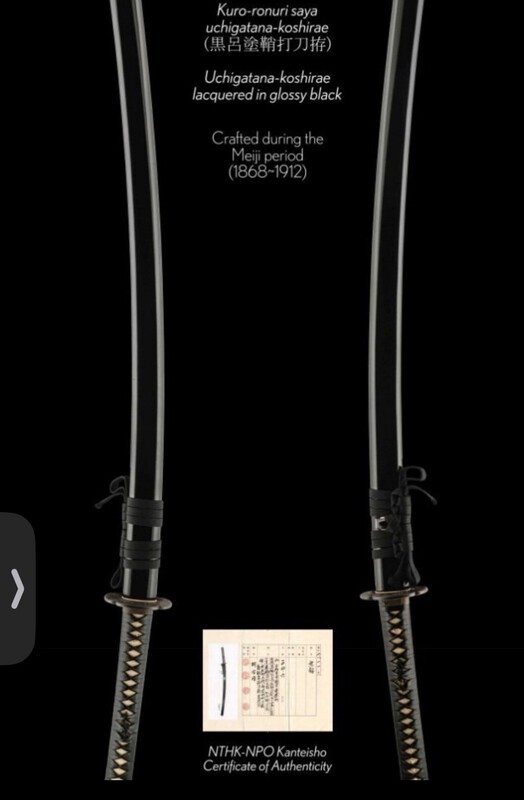
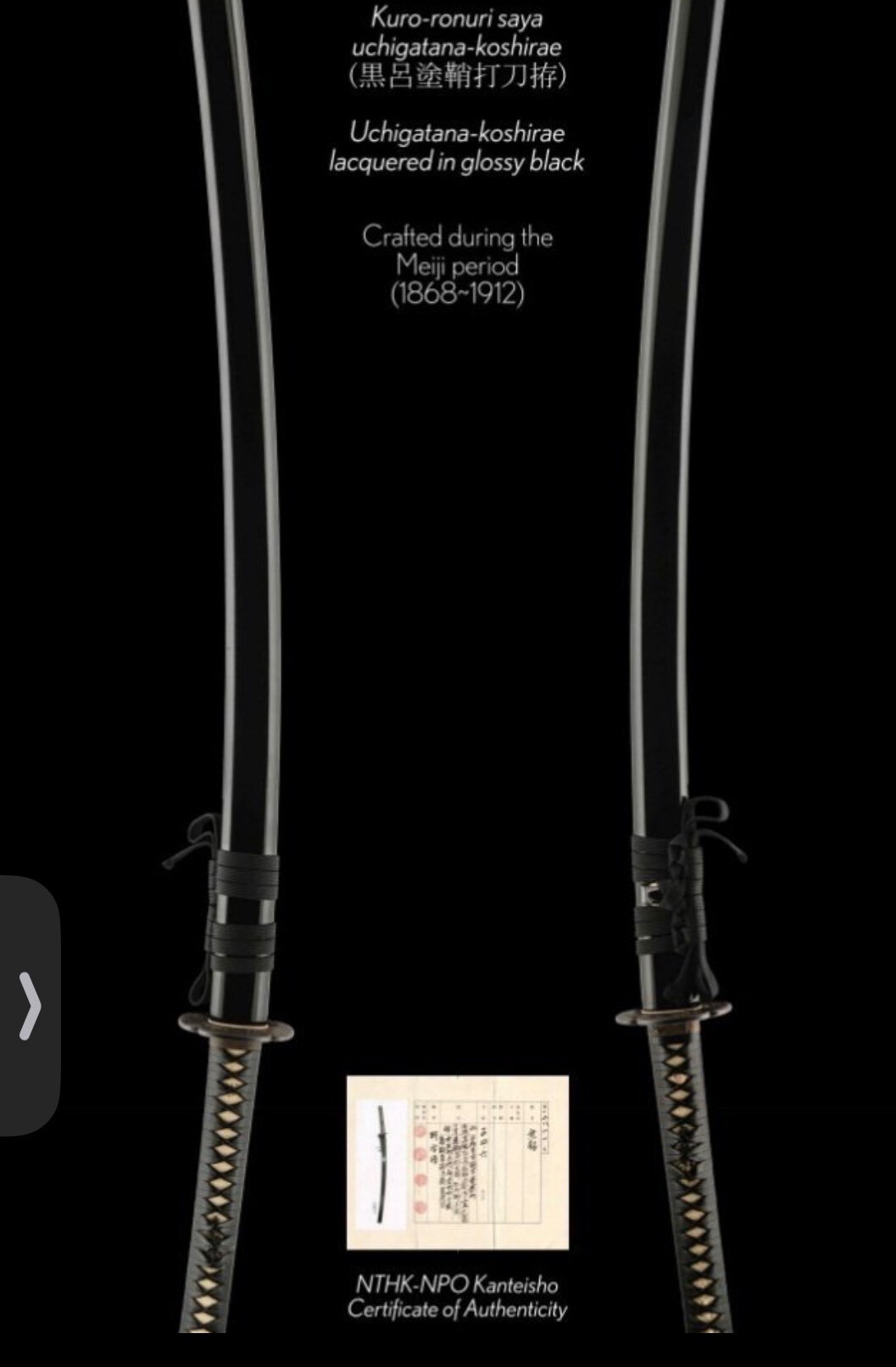
@jdawg221 it’s an auction of ex Pablo Kuntz blade. Koshirae looks like and is described by Pablo as crafted in the Meiji era. Go at unique Japan web page and run through old catalogues? His items usually have full paperwork. All with sufficient certificates. Cata link link Cheers
 2 points
 -
The mounts are exactly what you would expect from something made in the 1860s and not from something made in the 1940s. Let's not drift off into fantasy land though with talk about executioners swords2 points
-
Better, but still requires clicking on the item, waiting for the next page to load, clicking "Visit seller website" and then going back to the search page to look at other items. Previously we were able to open the listing without navigating away from the search results by right clicking on a found sword and "Open link in new tab" - now the only part of a result tile that allows this is the information about the smith/school. Having this option would probably reduce traffic/hosting costs on your end, as we now have to reload the search results every time we want to look at a result in detail.2 points
-
Hi, Much appreciated report, this is an oversight in a major update that made it through, half-baked. "Contact seller" is now replaced with "Visit dealer site" Question for feedback: What is missing on the NW page that is present on the dealer page, which adds to the study process? What more would you like to see? And thank you for the swift report, Hoshi
 2 points
 -
Some feedback on the recent UI changes; it's now somewhat challenging to view/open multiple listings as you can't right click a tile listing in a new tab with view item button removed. Additionally, the link to the item page and sellers site is tucked away below the contact dealer and watch item options. Would you consider moving the item and dealer links to a more prominent position, or changing the properties of the tiles to allow opening in a new window?

 2 points
 -
Now this is one nice woodcutter!

.thumb.jpeg.64dde2f0a95b09936eac656401a98db0.jpeg)
.thumb.jpeg.a57ae02052f318e3c2b32c2fae96029e.jpeg)
.thumb.jpeg.bd83fd6840d31fa7d433e7c0f14759cc.jpeg)
.thumb.jpeg.69bd4376e2034d0e3606b84d8d699a81.jpeg)
.thumb.jpeg.61b622de491e246522345fb04985a258.jpeg)

 2 points
 -
The knot looks authentic and in good condition. Wouldn't pay much attention to anything AI says about this sort of thing.2 points
-
Thank you, everyone, for your input. I suppose I'll have to find a way to live with the uncertainties of "paleographic" interpretation by adding a note and choosing the least speculative reading of the text. BTW, I greatly appreciate the willingness to acknowledge uncertainty that even the great Satō Kanzan sometimes showed in his appraisals. If only today's shinsa panels would follow his example...2 points
-
If it was a showa era piece it wouldn't be that shape nor would it be 75cm long . Barry's opinion is correct .2 points
-
It was slightly more complicated with the saya metal shell. I already worked out a technique that allows me to work on dents of metal scabbards. I wrote about it in my other topic. The princip is simple and based on application of 3D printed inserts (let's call them chasers) from inside of saya. And as scabbard usually is narrower to the end of the blade it means that a series of chasers has to be designed to chase out all dents. The cross section of the chaser has to correspond to the cross section of the scabbard. Here is an example of a chasers I used for my Type 95 saya. As you may see from the picture, the chaser is to be put on a 6mm threaded rod and fixed with a counter nut. The rod allows both to hammer a chaser into the saya and to remove it using some washers and a nut. One may notice a round dimple on the end of the chaser. In this way I marked its narrower end which has to go into saya first. Yet, in this case chasers weren't enough. They do straighten the shell to some extent, but some amount of force has to be applied from outside. And this force has to be controllable and predictable. So again, I designed 3D printed jaws for vises. In case of saya their profile corresponds to the outer profile of saya. The curvature of the jaws allows it to apply some bending force to the saya in places where it is necessary. I considered it crucial to use these jawas only in combination with chaser. With chaser inside and aligned at the point where saya has to be unbend, there is a little (if none) chance to damage saya. To not damage the remnants of paint I put some fabric between those plastic jaws and saya shell.

 2 points
 -
Now let's return to the issue of blade and saya straightening. The main issue with blade was that someone already attempted to straighten it (along with saya I believe). So in fact it was like one bent that consisted of smaller ones. To address this issue I designed and 3D printed the jaws for vises. It's simpler to show the photos, than explain their concept in words. As you may see from the photo, the working profile is similar to that of the blade itself. Being 3D printed with 100% filling, these jaws are sufficiently robust to bend the blade at the point where it is necessary, but they couldn't make any damage to the steel surface. And, as you may see from the photo, during the work plastic just got more compacted around the fuller and did the job as it was designed.

 2 points
 -
2 points
-
The asymmetry is possibly due to a parallax distortion effect in the photo, but my impression was also that it isn't Hayashi.2 points
-
That's just about all the "discussion" I will allow on this sale post. A warning to all, and I am not kidding. Stop the debates in other people's sale listings, or take a break. I have more important things to do that babysit people who are argumentative.2 points
-
Sword upgraded in order to meet safety for training purpose etc... New Edo period Mokko Gata Tsuba. Mekugi-ana corrected and Mekugi replaced. Proper (not paper!) copper Seppa + 'mini Tsuba' to eliminate all looseness. Saya looseness at Koiguchi fixed. It looks and handles way better now.

.thumb.jpeg.9722138490765bf654e076fd1f802326.jpeg)
.thumb.jpeg.47a764826f2d514eec88e7f78bbefe9b.jpeg) 2 points
2 points -
I don't really see the value of a hakogaki unless it was written by the master himself or one of his direct successors. The object itself should always come first. Even Kanzan said that his signature was often forged, so I wouldn't pay much attention to it - it's just calligraphy) https://markussesko.com/2025/04/09/fake-sato-kanzan-sayagaki/2 points
-
70000 JPY is not exactly a bargain, especially since you also have to add a 20% intermediation fee. Moreover, the hakogaki by Satō Kanzan was likely written for a different tsuba, as it describes a kawari-gata (unusual-shaped) guard.2 points
-
i know i said it a couple of times but the habaki was extra heavy, i mean really heavy, i didn't weigh it but as with the sword itself it surprised me. I know that doesn't mean anything but it was clearly a choice to make it that heavy
 1 point
 -
We would like to help Tony with a convincing assessment, but in this case, I am reminded of Plato's Allegory of the Cave. With these images, we are just discussing shadows on the wall.1 point
-
My first impression, and current feeling, is a monster of a shinshinto sword. I personally don't like speculating very hard on Nakago corrosion/condition when it's so dependent on storage and whether or not it's been unadulterated since original forging. Especially after koto. I'm inclined to agree with Ian. -Sam1 point
-
Lex, just a suggestion….I only discovered your “about me” by scrolling to the bottom of the swords for sale. I think it is worth considering moving it up a level, maybe next to your homepage “button”. One of the first questions visitors will mentally ask is “who is this guy?”1 point
-
Kudos, Dale, on the tidying up! Excellent work. You definitely didn't overspend. I believe this would be Echizen Nobuie. Nicely done.1 point
-
Nazar: How difficult would it be to make a habaki using 3D printing for a bare blade? When I make shirasaya, I use the old school method of casting habaki (sand mold and pewter) which works well because the pewter is easy to work, however it's still a bit of drilling, file work and adjusting. I'm looking for an easier method to make a temporary habaki for fitting shirasaya. John C.1 point
-
Ian, there are so many oddball swords out there that don't fit in boxes. Not convinced that sword is 19th century.1 point
-
I think that'a a bit of an exaggeration. What about five times?1 point
-
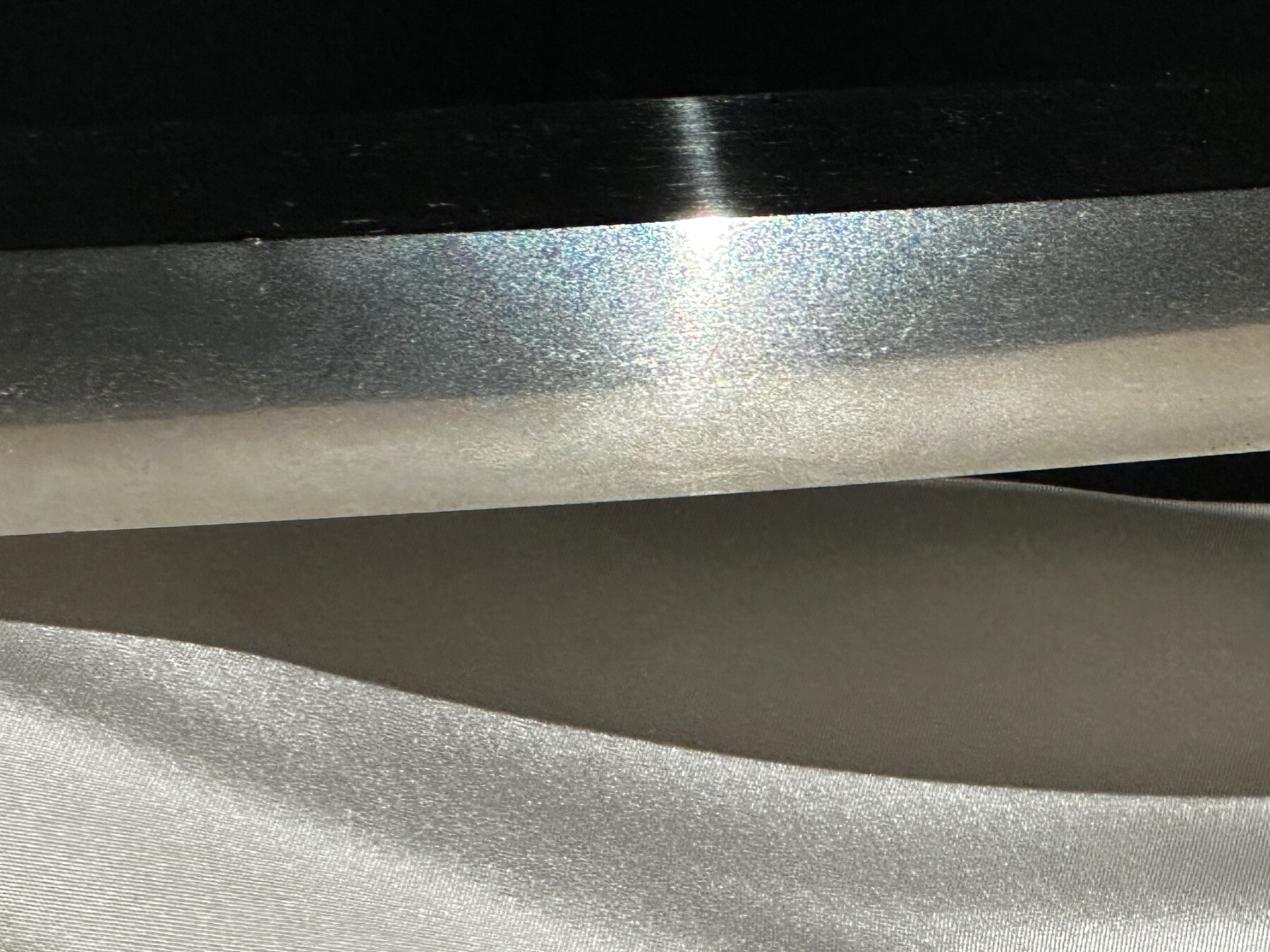
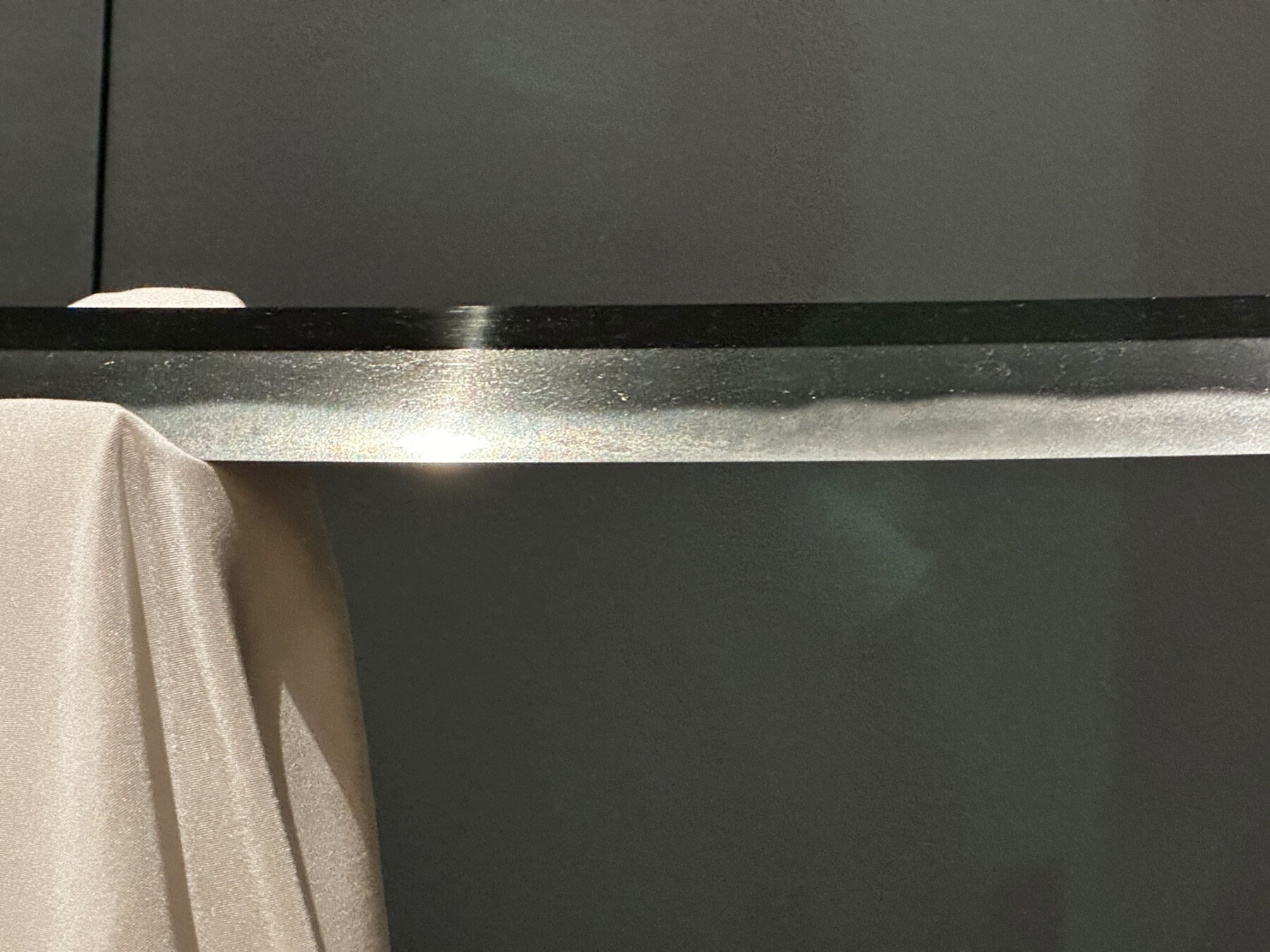
Hi, Go is first and foremost a kiwame given to particular group of traits, chief amongst them the clarity of the work. As I explained previously, deviations from these canonical traits will lead to different judgements (e.g., violently turning Kaeri will bring the work to O-Sa, etc), a more stormy character will lead to Masamune, and so on and so forth. Go is simply the pinnacle of Soshu clarity, with ichimai, some masame, etc as reinforcing concordant traits. Whether the historical person called Go made the sword is not an answerable question. However this is besides the point, the NBHTK states in its attribution that according to tradition and study of the canonical traits present in the blade, then amongst all historical person, it is most likely this specific historical person who made it. Now everyone can assign a percentage to this. There is a Juyo Sanakage that went Tokuju to Go. This is normal, judgement can shift upon further study and as new evidence emerges. It was sold on Christies shortly after. That some blades are in between, for instance - 50% Go / 50% Masamune is also possibility. This is the case with the extraordinary video of the Go shown above. This blade, in the eyes of Tanobe sensei, would have gone to Masamune was it not for the widely hardened near ichimai boshi. Kojo says Go, and hence there is no "Den" attached. The old judges are respected and on masters with no signed works, their opinions is the basis of the system for modern attribution. This is not a problem at all. One must simply accept that such Kiwame are simply the best possible opinions given the current state of knowledge. The sword in itself is magnificent, and the monouchi is simply out of this world. I call it affectionately the "8 centimeters of God" Go, and all who have seen it agree with this statement. The stormy character of the activity, with plentiful inazuma dancing in and out of the ha, are however more distinctively Masamune than Go, specifically the hatsuboku-sansui manner for which he is revered. The way the ha widens gently towards the monouchi, and the near ichimai qualities of the boshi are canonically Go traits. https://nihontowatch.com/artists/go-yoshihiro-YOS1434 One can adopt various beliefs in the matter: 1. Hon'ami Conspiracist: Go is a fabrication by the early Hon'ami masters serving Hideyoshi. No signed works exist, and the Muromachi period text as not hard evidence. They took a guy without any works left and made him famous for some occult purposes. (Imamura Chogi famously held this theory for Masamune, which nobody serious really accepts today...) 2. Uncertainty embracers: Go most probably existed, along with other famed masters without signed work lefts, but one cannot deny the existence of a certain high-class cluster of Soshu works with co-occurring traits that represent the Apex of Soshu-den. It is perfectly reasonable that Go, the historical person, produced such works. 3. Authority literalist: Attribution on top class mumei works pinpoint the historical figure with perfect accuracy. When there is a congruence between the best experts and bodies - Honma Junji, the old Hon'ami, Tanobe Sensei, and the NBHTK - then there can be no other possibility and it represents not simply the best theory, but absolute truth. And there is a vast continuum in between. One can be midway between 1 and 2, or between 2 and 3. Currently, I would rate myself at 2.3. This does not diminish the material value of the items themselves unless one collects because one insists on the "Authority literalist" stance in order to accept value. A masterpiece is a masterpiece, regardless of who made it. One must learn to separate the 'brand' from the 'work' from the 'historical person' - and while these are tightly interlinked and highly predictive of each other, the goal of study is to appreciate swords as Art Objects. I, for one, am completely comfortable when discussing my collection to state "Maybe Norishige, Maybe Go" - it's part of the beauty and mystery of the field. On collaboration And finally, a point that is often overlooked in the field, is that these smiths worked with each other. Most if not all top-grade Soshu works are collaborations. This is true for every school. Nagamitsu worked with Mitsutada and Sanenaga, they made blades together. In every prime and late period Mitsutada, there is some Nagamitsu, and probably some Sanenaga. Just as a late Nagamitsu has some Kagemitsu in them, and Kagemitsu has some Kagemasa. Awataguchi Kunoyoshi contains some Awataguchi Yoshimitsu. Masamune, Norishige and Yukimitsu made swords together, alongside Go and Sadamune, albeit later. Sword making was a collaborative enterprise. There are phases in a collector's life. Remember that the position you hold today may change in the future. Hope this helps, Best, Hoshi1 point
-
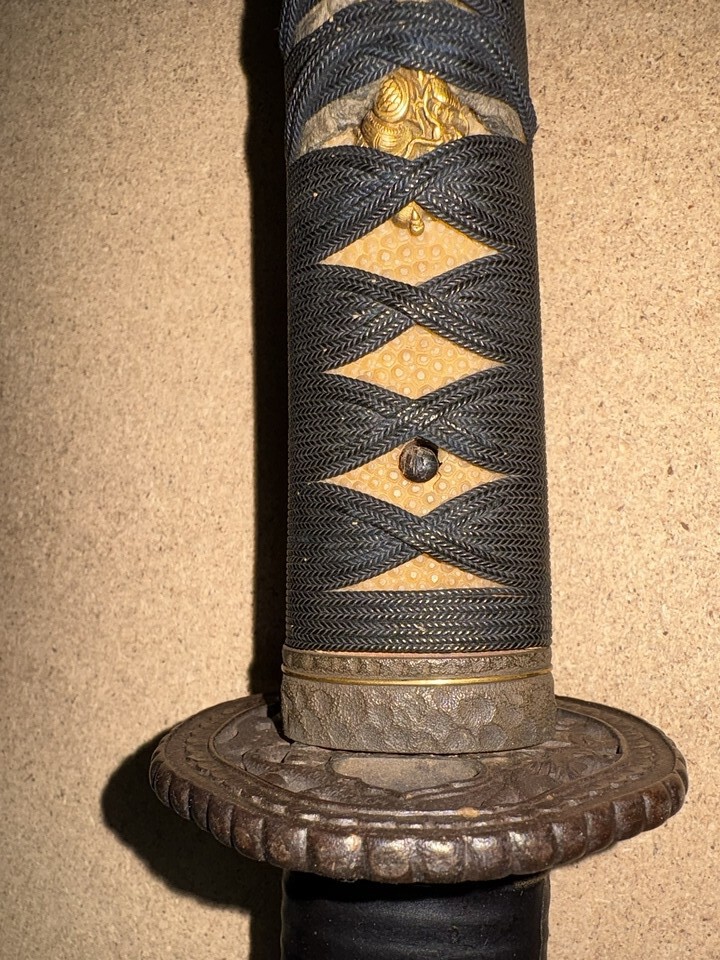
Hi Nazar, nice sword, congrats! So I am encountering some outdated information within my monograph; that I hope to remedy here very soon with my second edition (or sooner with an updated edition). Some of this information is carryover from previous publications, that I have since discovered through cataloging are not entirely accurate. Part of the reason I began this project, is because I encounter similar inaccuracies across almost all sources. I need to do better on my own material, and make sure it is accurate. Thank you for bringing this to my attention. An April 23, 1941 document revises the brass tsuba design by removing the sword knot slot. Although, no confirmed production examples of this revised unslotted brass tsuba have ever been observed. So I need to make an edit to my document in the Variation#3 chapter. I make mention of this in the Variation#4 section; so this is an oversight on my part. My sincere apologies for letting that slip. I would date your sword to between April 1941 and March 1942. Let me explain the asymmetrical ito versus symmetrical ito. I suspect we're encountering a little language barrier here, (nothing wrong with that). I've attached a photo that better highlights this change (please click on the image to make it larger for viewing). I do not mean literally a mirror image of both sides of the tsuka, but rather that the ITO wrap pattern was made to be the same on both sides; in respect to the ito knots and open diamonds. You will see this difference most clearly where the ito meets ferrule (fuchi). If you continue to count the diamonds starting with my arrows, you will also notice the difference. Hope that helps, and apologies for my errors. Some of these differences are very challenging to articulate clearly, and I am still trying to find the best verbiage for describing them. I will work on these edits ASAP, and get it into the download section. Best, -Sam
 1 point
 -
The person, who stamped the ferrule of this sword, deserved a salary raise. It might not be the perfect example of a Type 95 sword, but I like it immensely. I like how tsuka is worn to bare aluminum, I like those scabbards with remnants of paint and bare metal that blackened with time. I even like the blade with all that spots. The patina on brass and copper parts (except for habaki) is great too. Dunno how to express this feeling I have about this sword: it looks like a complete picture to me. Yet, there are some things in this sword that I would like to address so it would be my project for some time.


 1 point
 -
鉄元堂- Tetsugendo 尚房 - Naofusa1 point
-
It is a fab book. Managed to pick mine up through amazon.jp who included delivery which was lucky. These two are currently for sale at: Kosho.1 point
-
Here is the book on my site: https://japaneseswordbooksandtsuba.com/store/book/sword-books/b663-soshu-den-meisaku-shu-by-dr-homma/ to give you an idea what to expect. Such a pity that all books haven't been digitalized, but then, no one would bother to write books. Why go to all the toil and trouble if your work will be stolen? Grey1 point
-
1 point
-
1 point
-
1 point
















.jpeg.897063e6080ee2367ab978c914af9eea.jpeg)
.jpeg.b61c8fb5dc666d16d2631bc969fa230d.jpeg)
.jpeg.b03abe266743f53fa0e9aa9c035bf9ac.jpeg)
.jpeg.69e4eb7683a2f38ca07970d7afda3df3.jpeg)
.jpeg.da14882a18e8ba594f90fe44aa1ab029.jpeg)





(1).png.f5c690ad40b1bf22b1832341b18e1aa2.png)
(1).png.5e93ac8bf3e015f4579b230838f2651a.png)
(1).png.517ae4a73ed77d8b56aa5e5d2211c385.png)
(1).png.101f46f7a5e2e64285c44fe74a9a372a.png)
(1).png.758fa67ea52d1815a477c133335d4503.png)
.png.96e97fb7da58d2998da37265a26884b1.png)

.jpeg.4183f2df98282cc771b64cabcfa74c14.jpeg)
.jpeg.99d37423135ade51e6165ba4cc7d0da7.jpeg)









This leaderboard is set to Johannesburg/GMT+02:00