
Leaderboard


.thumb.png.54593db2789c8a1dcb235543b184ce39.png)
Popular Content
Showing content with the highest reputation on 05/03/2026 in all areas
-
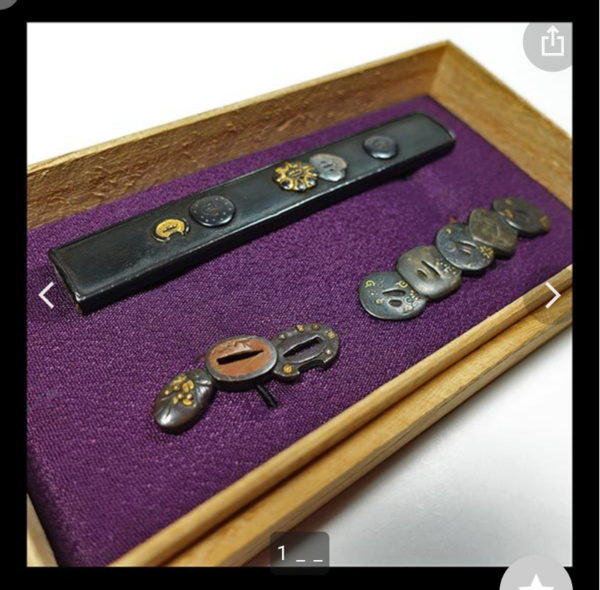
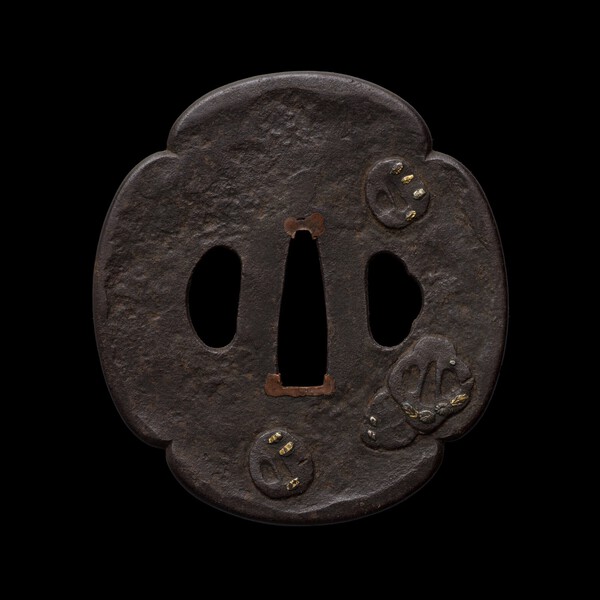
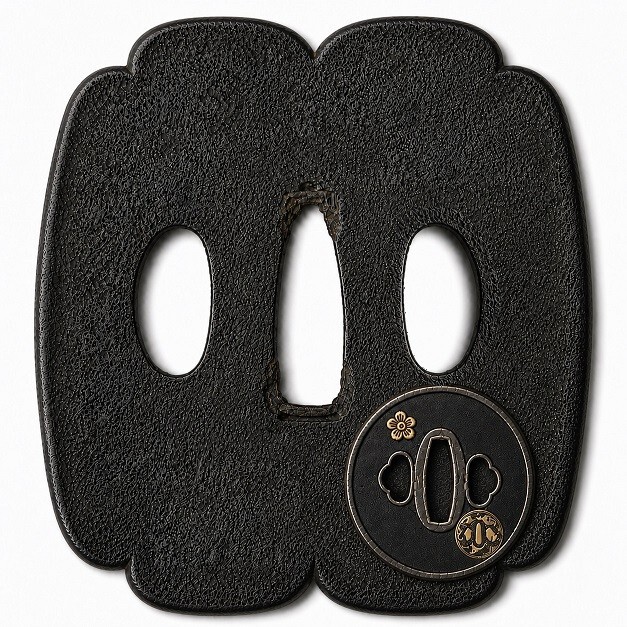
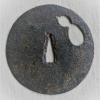
Long time between examples - https://www.jauce.com/auction/q1228610297 Anyone seen a tsuba on a tsuba on a tsuba?

 7 points
 -
Hi, Mr. Erik, thank you for your warning. In fact I just recently (last week I think?) helped a friend I met online a few years back, to identify a tampered NTBNK paper with a swapped photo. It's even got a stamp on, so a little more sophisticated than the ones shown here, understandable since that sword cost him more than 10 grand. A phone call to NTBHK's 台帳照会 line ( https://www.touken.or.jp/shinsa/syousyo.html, the one we use to confirm the authenticity of paper) confirmed my suspicion, and on the phone, the NTBHK staff and I talked about the Yasurime, the position of Mekugi-Ana, Mei itself, and many other things, all mismatching from their records. Although it's not very secure just talking over the phone to say the photo is swapped, so the staff suggested a mail address to me. I sent an email to them with photos of Nakago and paper, they replied in two hours to confirm that "it's very likely a paper with swapped photo", since the safest way is to physically mail them that paper, or bring them the sword with it, not very practical here in PRC. Anyway, he has to deal with that person sold him this counterfeit sword now, and hopefully he can get his money back. Buying straight from reputable Japanese stores could save one from these troubles, but apparently here in PRC shady scamy independent semi-illegal dealers trading over WeChat (and scamy "official" large-scale local stores I might add) are all the rage now, so all bets are off. Hard to sue someone scamed you if you are buying somewhat illegal? stuff from them, naturally.6 points
-
Latest Yamanaka Newsletter has dropped: Yamanaka V4 NL 11 & 125 points
-
Resurrecting this necro-post as this is my first kai-gunto. Kanenami blade (water quenched, I think, due to the presence of ara-nie martensite), standard polished black lacquer wood saya, no chuso, gold washed fittings, and dark blue or black ito. The interesting thing about this one is that all of the pieces have matching numbers - just like it came from the factory, I imagine. No tassel, though. John C.
 4 points
 -
Just to be noted those are my personal take on things and the correctness of it is up to debate. Just that lot of sources have slightly varying information. I have been wondering about the Mihara smiths too, as it is very rare to encounter one that would have been attributed to late Kamakura by authorities. Of course dealers will tout Ko-Mihara attributed blades as late Kamakura items, and I admit for many mumei swords I have personally late Kamakura - Nanbokuchō as the range. The different generations might be bit varying from book to book. For example for Ko-Mihara Masaie there are 7 different one in Nihontō Meikan and 5 in Sesko Index. For Ko-Mihara Masahiro there are 3 different ones in Nihontō Meikan and 2 in Seskos. Here the notable difference is that Meikan has 1st Masahiro working roughly 1320s to 1330s while in Seskos the first gen is listed c 1360's. There are actually few items that are attributed to late Kamakura Mihara Masahiro by authorities. However all dated items I have found by Ko-Mihara smiths so far are from Nanbokuchō to Ōei. Range is 1353 to 1415 among 15 dated blades. Then you have Kokubunji Sukekuni at late Kamakura, for him there are few dated blades ranging 1323 to 1329. Then for Hokke Chikatsugu has 1352 dated blade Kaneyasu has several blades 1369 and 1370 There are 5 other dated Hokke blades by various smiths ranging 1367 to 1390 For Ichijō I have only found 1411 dated blade And one 1459 dated ōdachi by 2 Hokke smiths Then there is Tatsubō school in Bingo province And for them I have 4 dated blades ranging 1365 to 1373 Here is one problem that I am not sure about, I am not sure if the attribution Hokke Ichijō (法華一乗) is referring to one smith/lineage or a larger group among Hokke smiths. And of course attributions are attributions they need to throw out some fitting classification bracket.3 points
-
Sadayuki. I would look at one of the Muromachi period smiths who used the name Sadayuki and were working in Bungo province.3 points
-
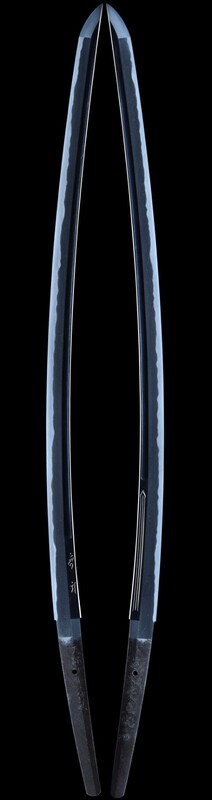
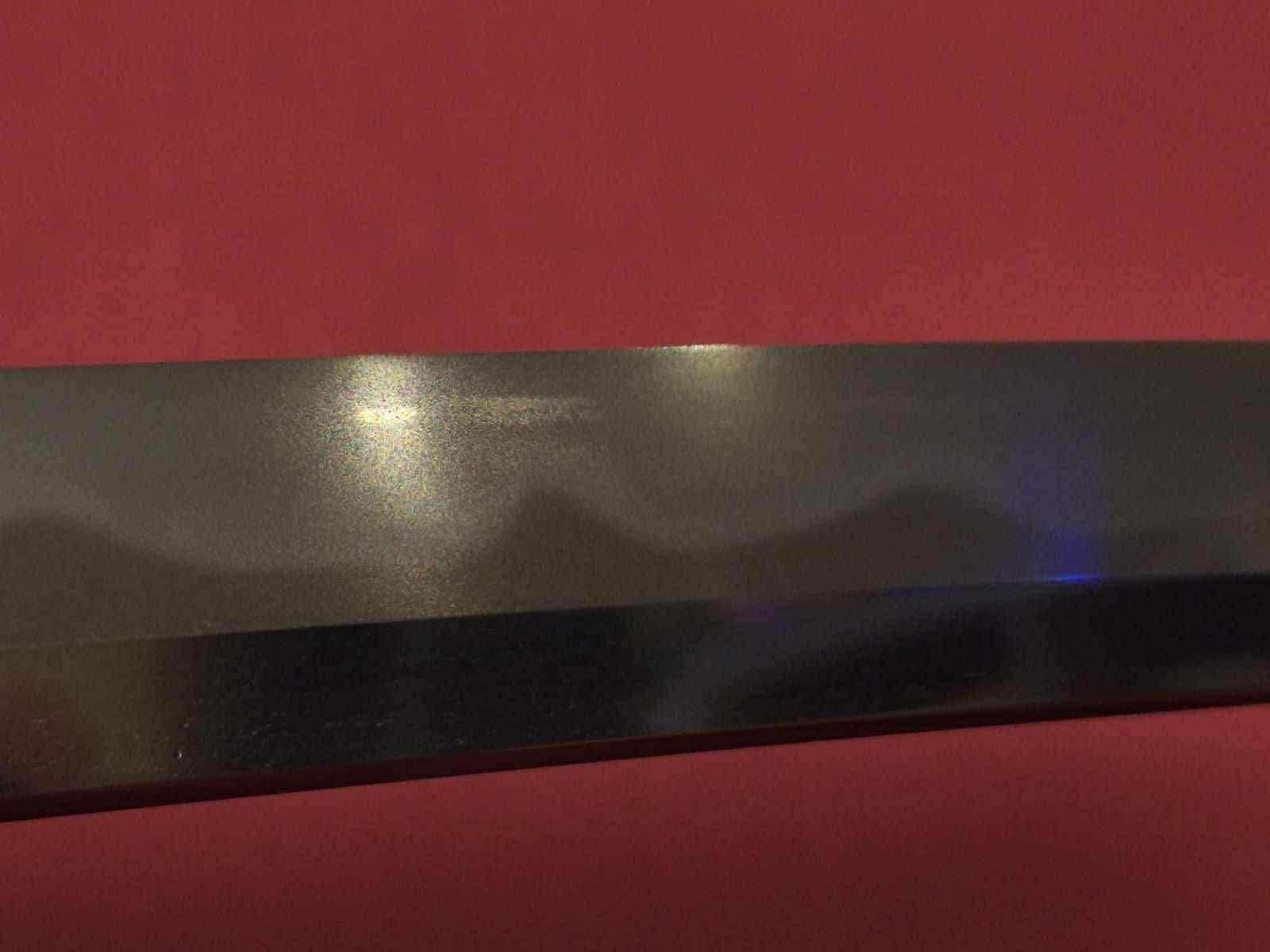
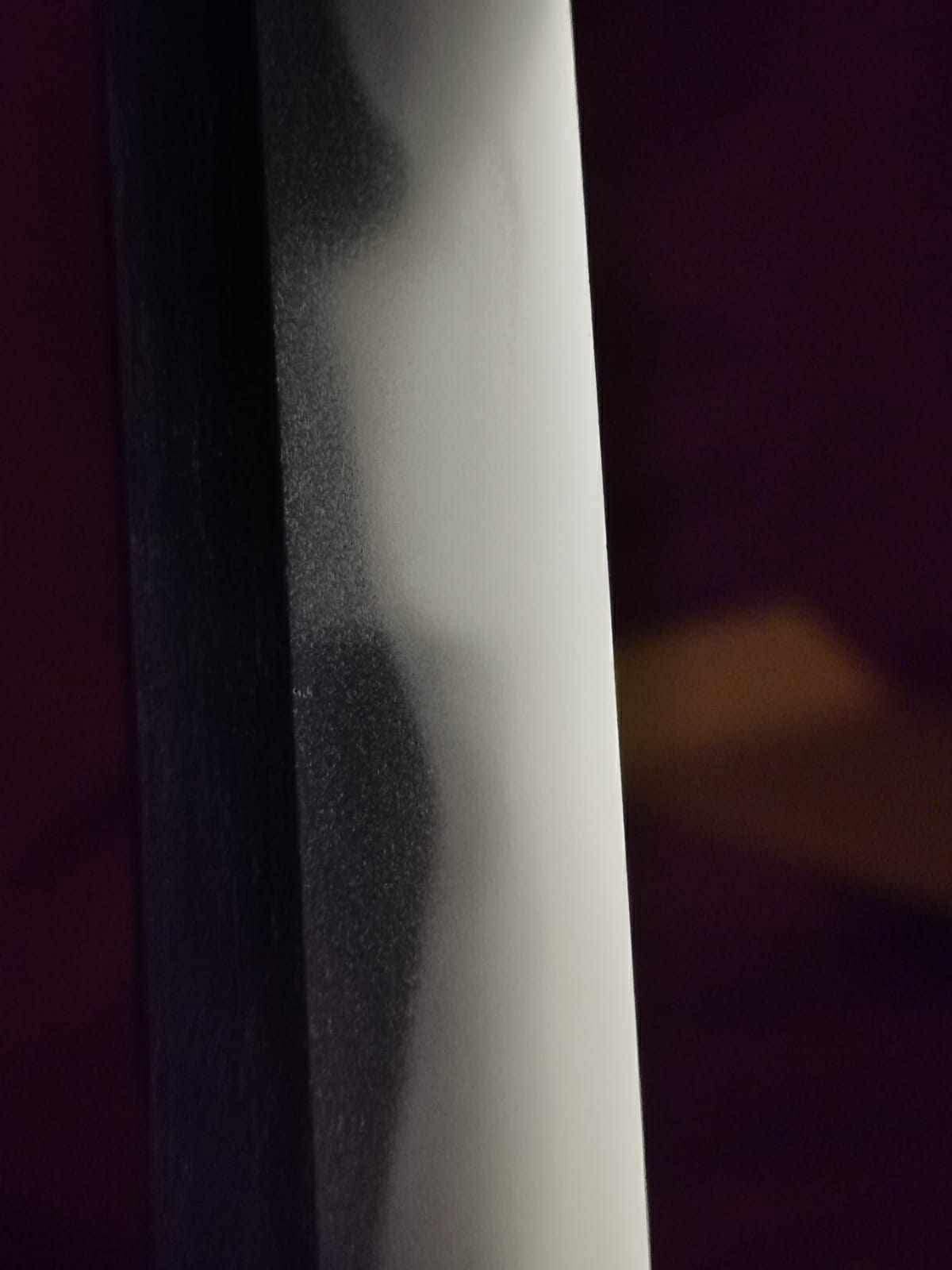
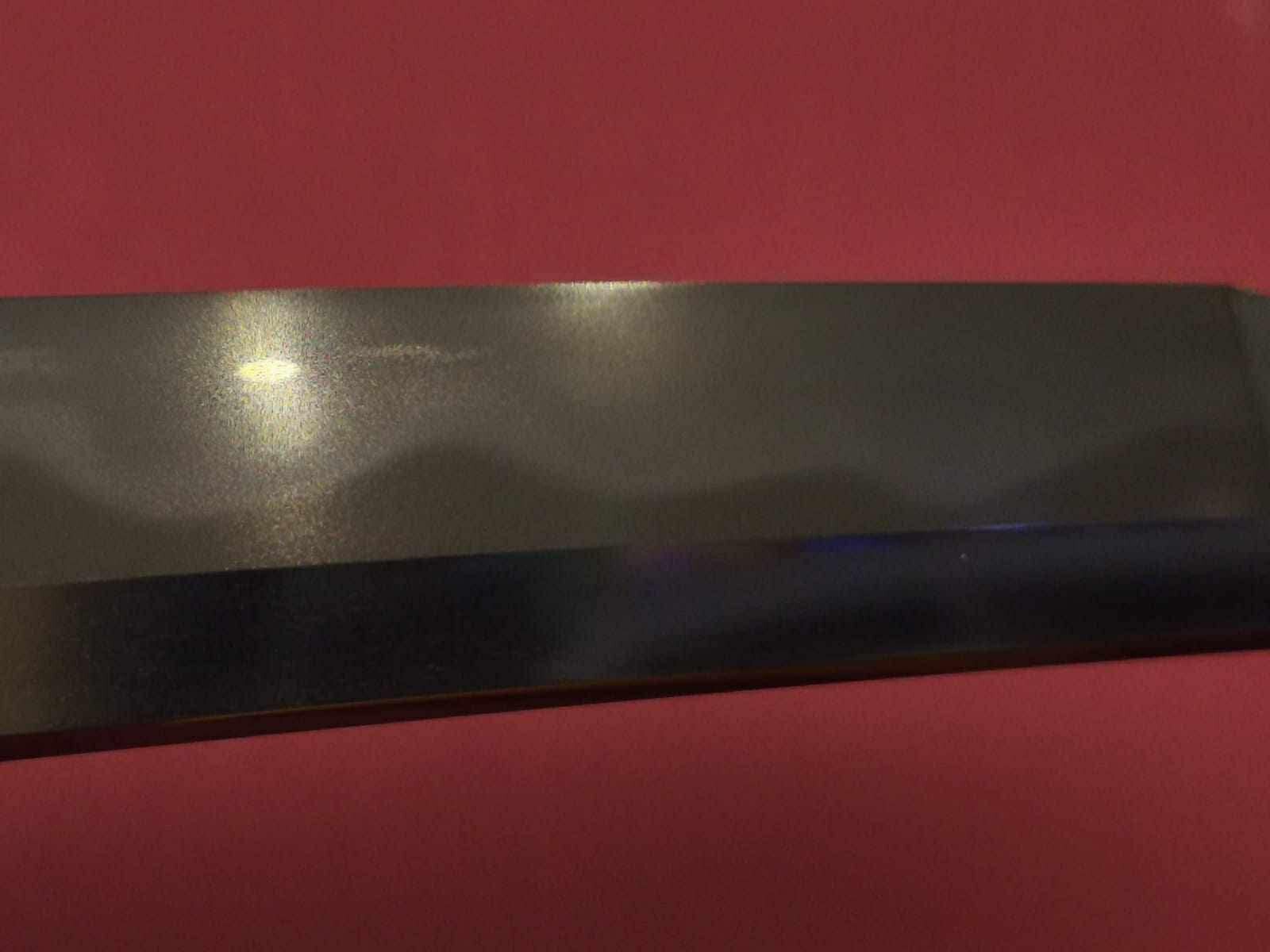
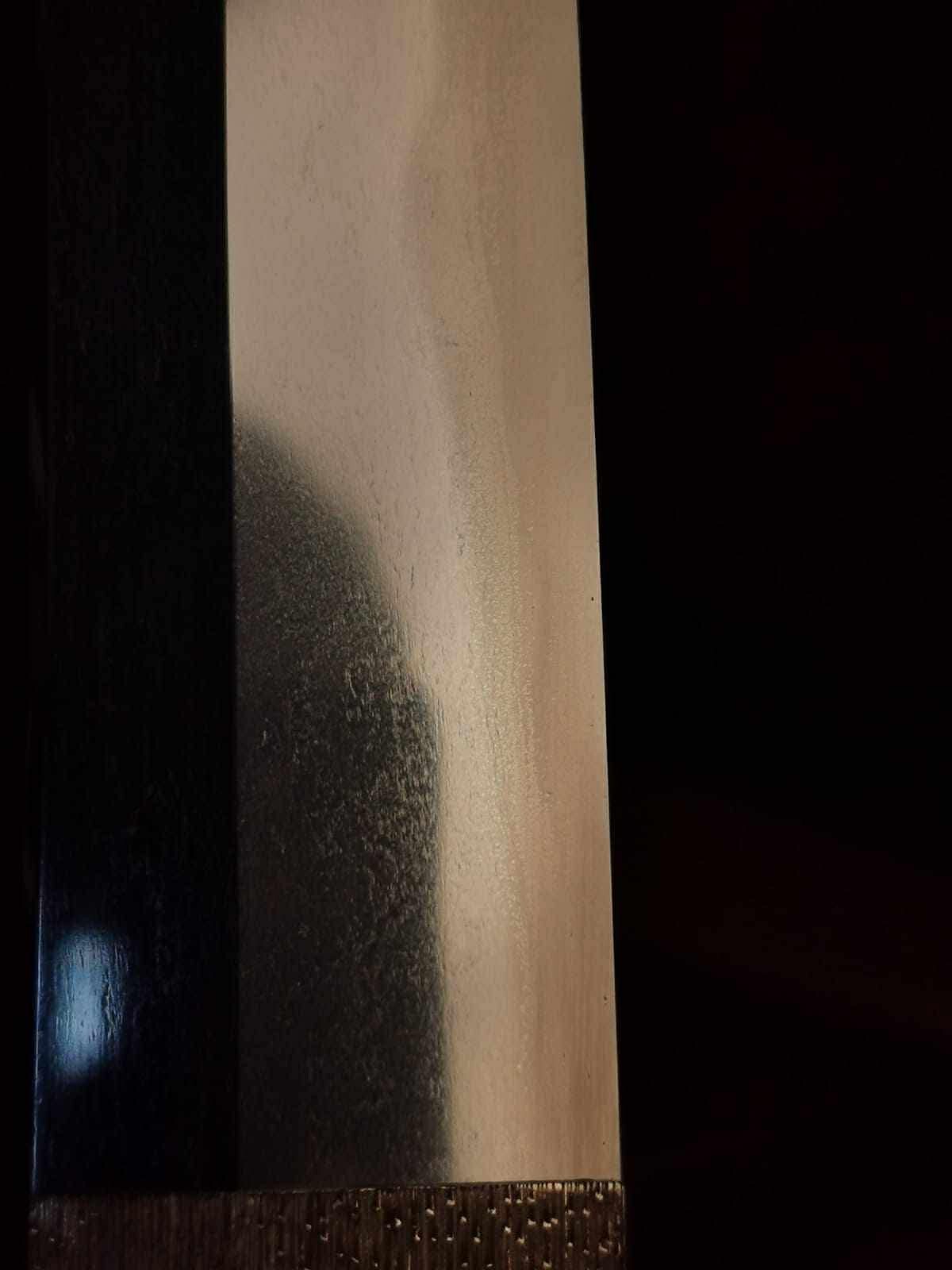
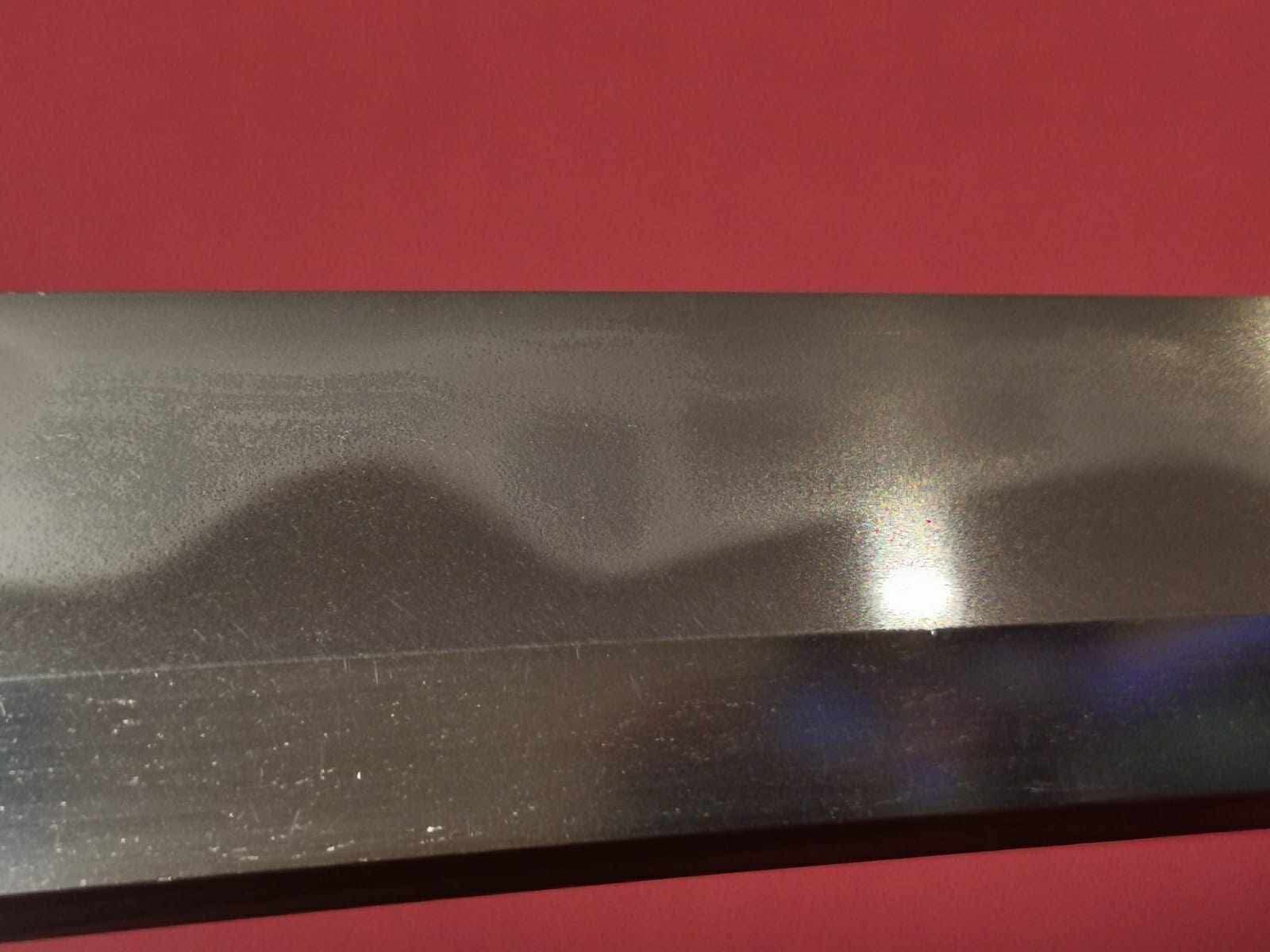
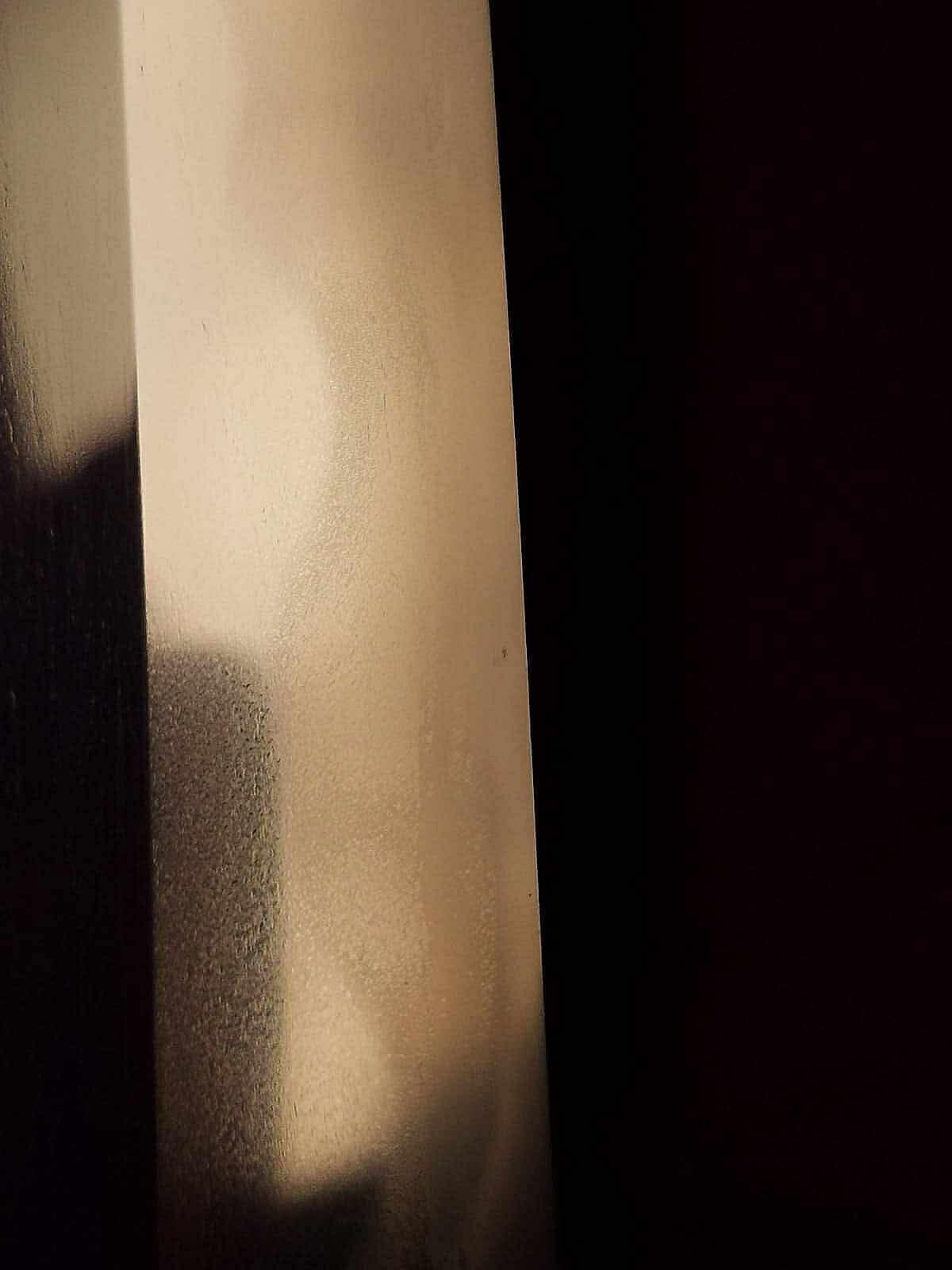
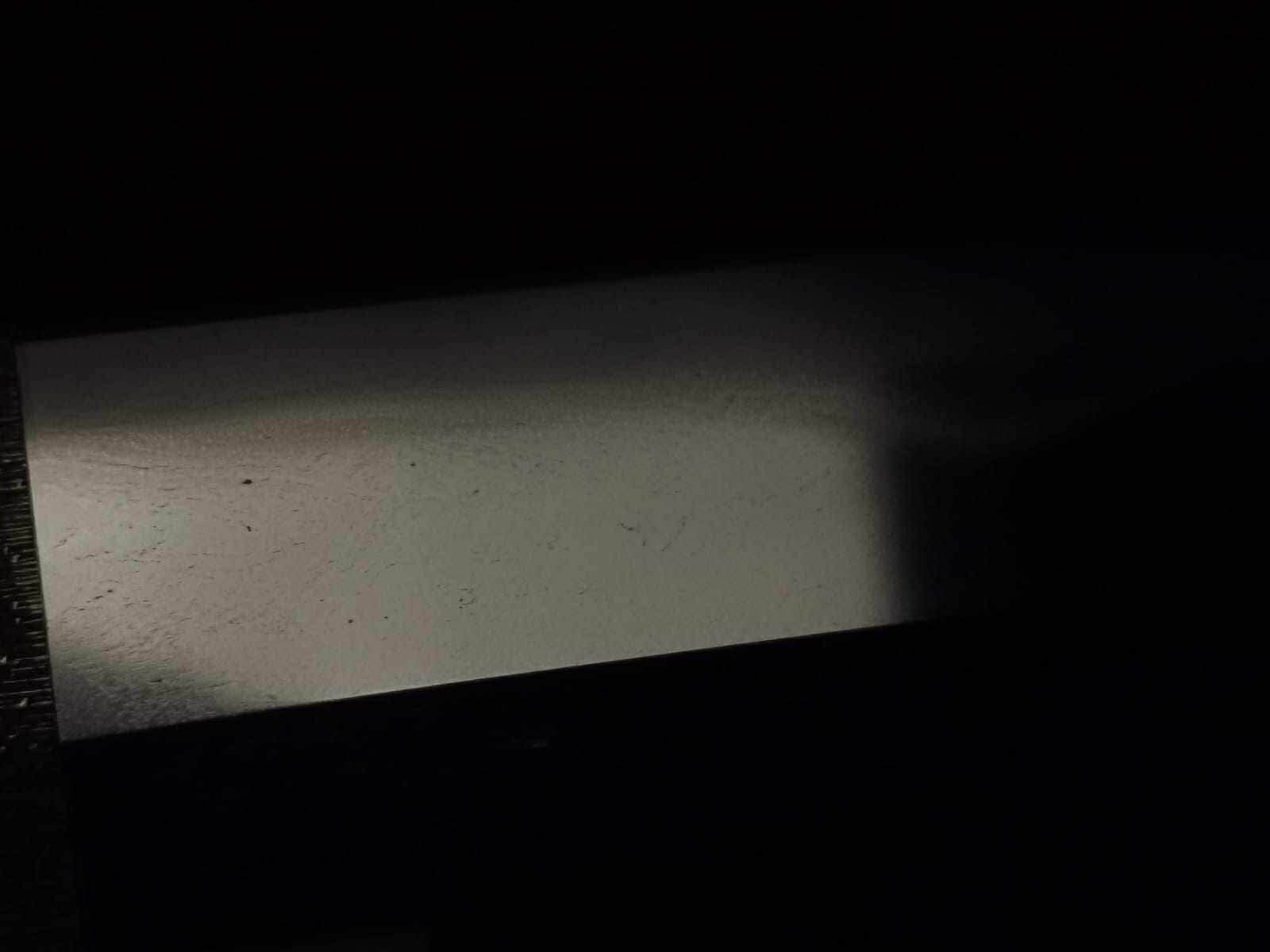
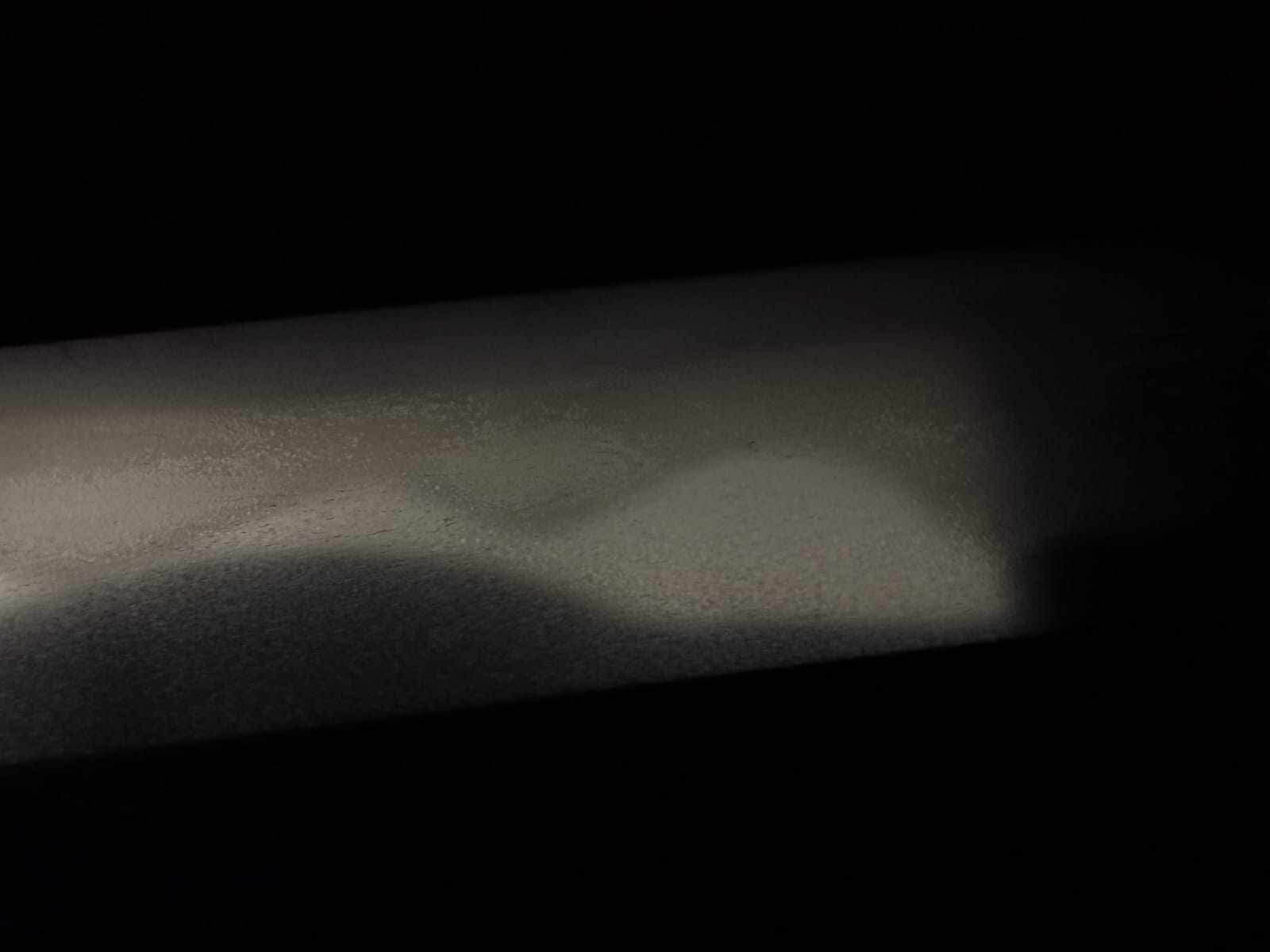
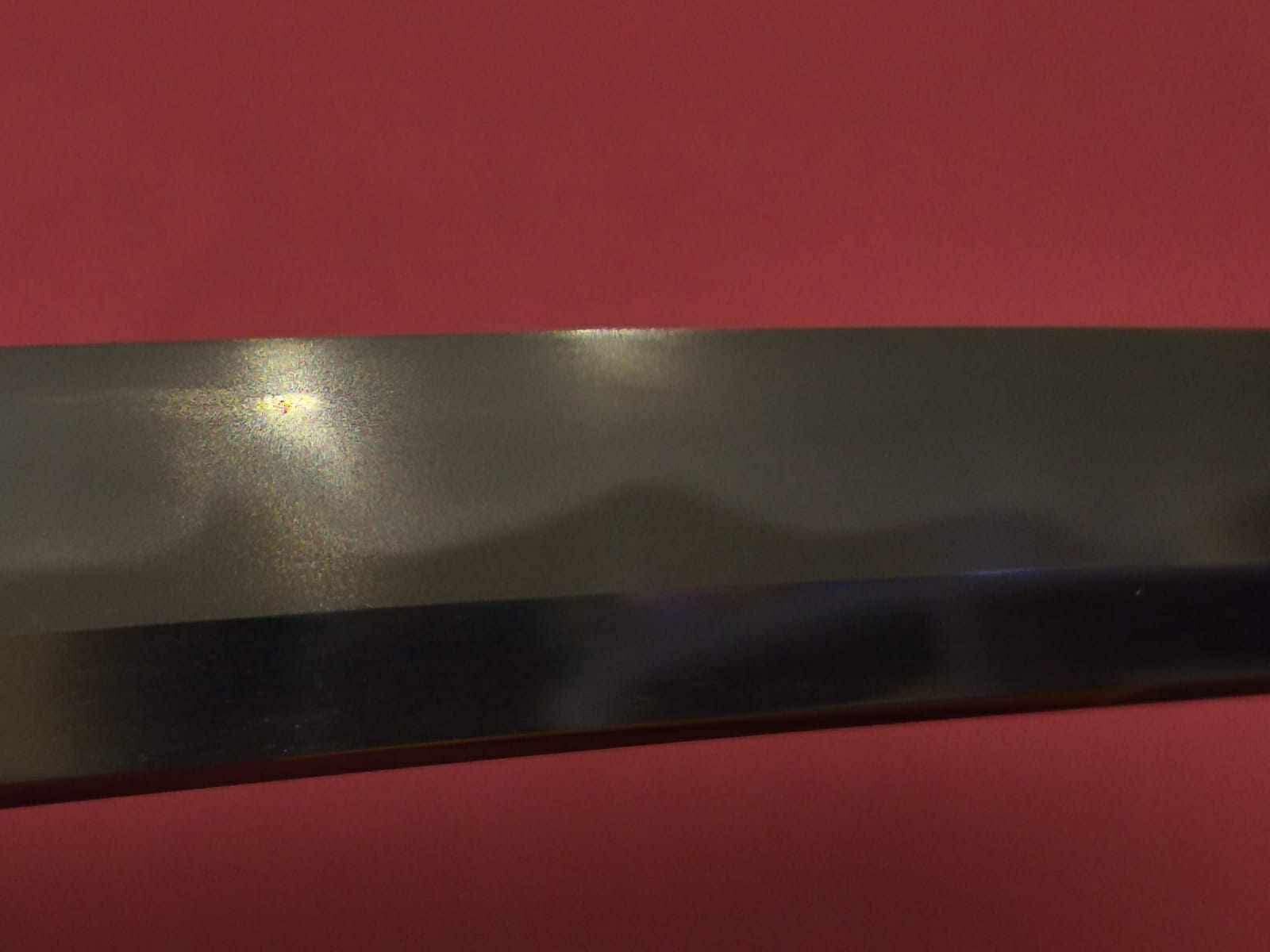
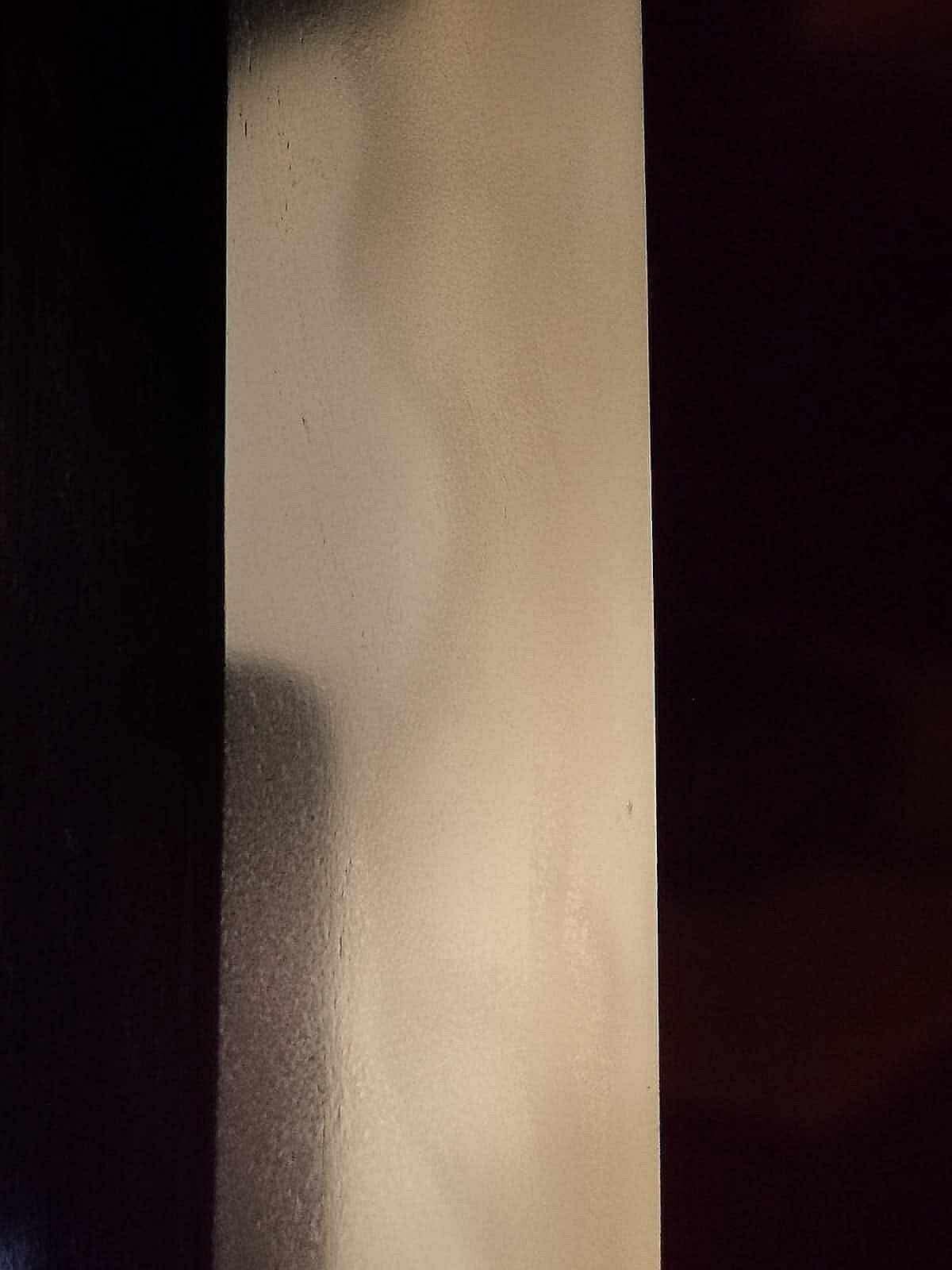
Just wanted to share this for anyone looking at Moses for polish - I recently received back a Taikei Naotane that was originally polished by a very elderly togisihi in Japan that had many problems. Finger stone marks left, hazy ji, a very scratchy surface etc. Now it looks incredible to say the least. The pictures do not do it justice, but I would highly recommend Moses. These pictures are very much a blue tone as his camera white balance must have been on the cooler side, but to the naked eye in real life, the hamon has a beautiful shade of light blue to it.
 2 points
 -
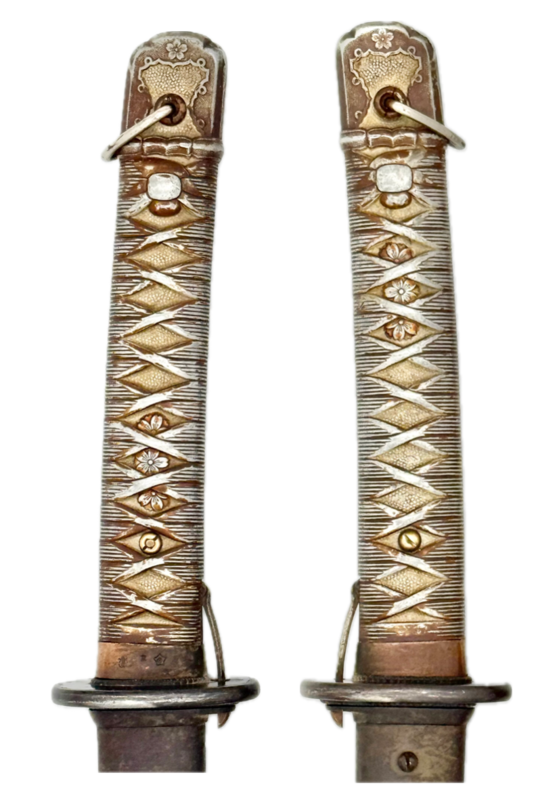
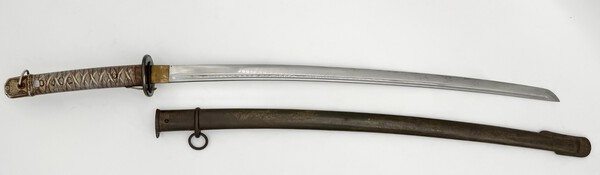
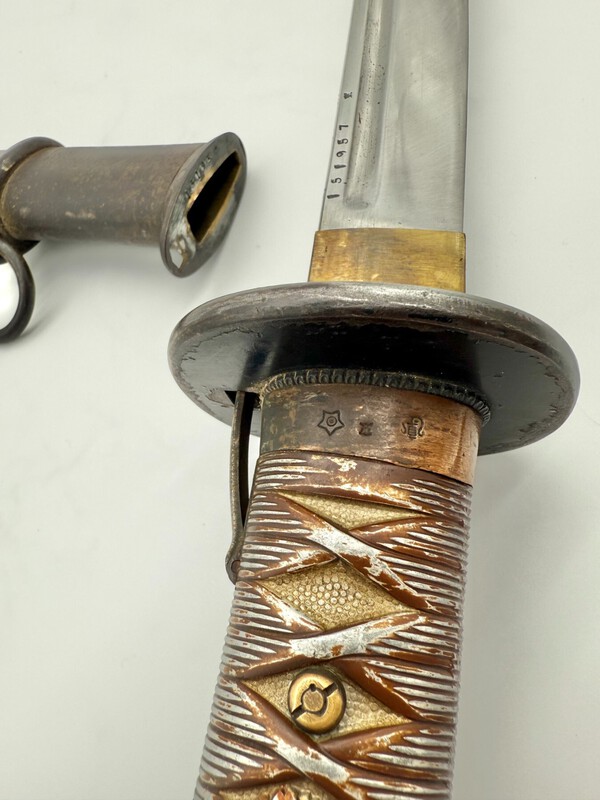
I am offering for sale one of my Type 95 swords. These are machine-made blades, entirely NOT traditionally made. Produced during World War Two. This example was made later war in 1944/1945. It is in particularly excellent condition with matching scabbard number. No chips or bends in the blade, and no rattle in the fittings. The blade may have been polished at some point, but is original and in great shape. I believe the paint is also original, but fading away. Variation #4 Type 95 Military Sword with Aluminum Hilt, copper ferrule, and Steel Tsuba made by Suya Shōten with Tokyo first army arsenal (TŌ / 東) inspector stamps and SHA stamp on the drag of the scabbard. Type (Tachi, Katana, Wakizashi, Tanto, Naginata, Other) : Machine made military sword of Japan / Katana Ubu, Suriage or O-Suriage : Ubu Mei : (Mumei, Signature) : None Era/Age : Later World War Two / 1944-1945. Shirasaya, Koshirae or Bare Blade? : Full original koshirae. Nagasa/Blade Length : 26.4 inches. Hamon Type : No hamon, non-traditional, machine made. Jihada : No hada, non-traditional, machine made. Flaws : Some light rust in the fuller/bohi, and paint faded over time. Sword Location : Oregon, USA. Will ship to : USA only. Payment Methods Accepted : Paypal Friends and Family, preffered. Price and Currency : SOLD, Free Shipping in USA If sold here, I will donate $50 to the board. Suya 株式會社壽屋商店, Harp Logo = KK Suya Shōten = Suya Shop Co., Ltd. 東 TŌ 東京第一陸軍造兵廠監督課, Tōkyō 1st Army Arsenal Supervisory Section. Tokyo 1st Star 東京第一陸軍造兵廠標識 , Tōkyō First Army Arsenal trademark. Stamp on drag of scabbard = 社 = SHA = 各民間工場 , Each civilian/private factory.



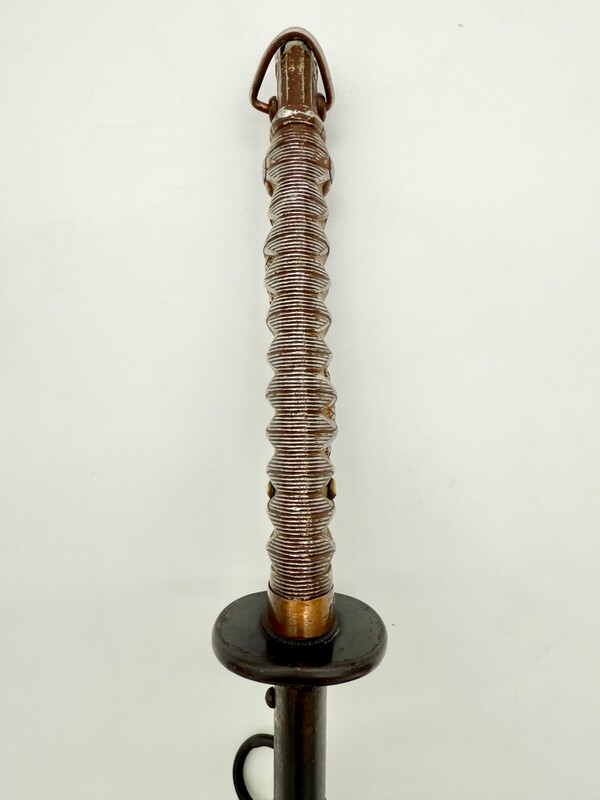

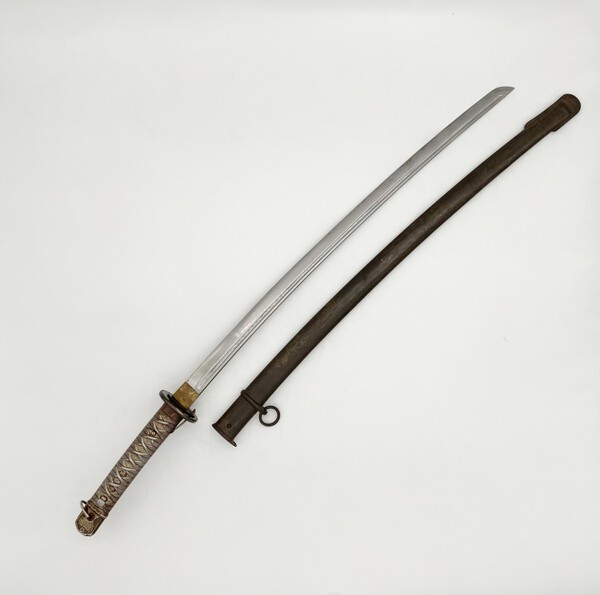


 2 points
 -
Good Day everyone, I think we all are well aware of the scandal regarding NTBHK Origami in the 1970s and it´s consequences. Today, I stumbled upon a tweet on X ( https://x.com/tukimaru1967/status/2050541246490533952) warning others to be careful with Nihonto being sold at an auction. In the tweet, they point out some suspicious activity with the papers of some of the swords which could be hints at a forgery . From what I understand the "easiest" Method to forge such a certificate is to simply swap the Picture/Oshigata on the Origami with one of the Nihonto you want to sell them with. However, it got me thinking. How common are forgeries these days, and probably even more important, what is the chance of encountering one? Is this a real risk, or a niche issue? In any way, if someone with more insight wants to share their thoughts,I would be super grateful All the best Erik2 points
-
Thank you both for your information and my apologies for my tardy response. It has been about 15 years since I last participated here and had forgotten how to properly navigate. I am a senior with limited computer skills and had not set up any notification preferences. I really appreciate your help.2 points
-
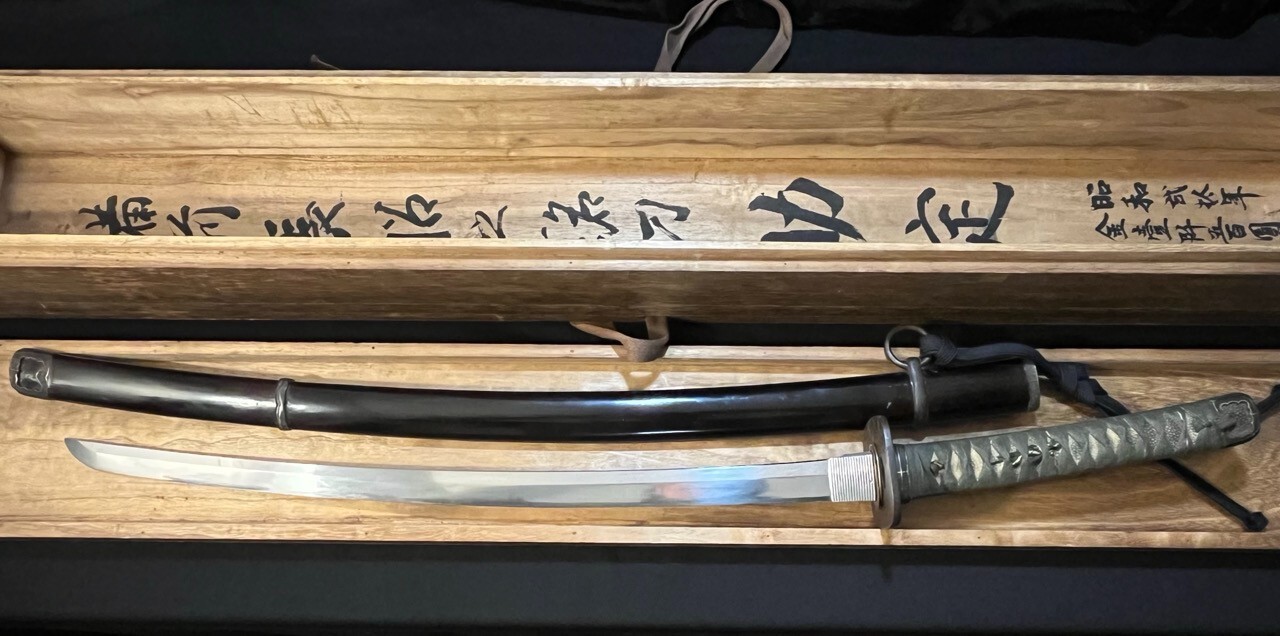
An unusual antique Japanese Samurai sword with katanabako and hakogaki (box writing) recording who purchased this sword, his Naval rank, the swordsmith name, how much the Officer paid for the sword, etc. What an interesting piece! What follows is most of the translation of the hakogaki: (Sword) is signed Bizen Osafune Sukesada Received 1500 yen, 1945 (year) Supplied on August 15, 1945 Nidaishitsu Shiro ni Jinan (second son) Eki ni Kaigun Shoi Shiyo (used by Navy Ensign) (another reading of this fourth passage is ‘The second son of the second-generation head of the Shiro family (of Seima Village) joined the Navy’) A Japanese sword in a katanabako (wooden box for storing a Japanese sword, usually made of paulownia wood) is difficult to find. It is usually a sign of a revered sword–one especially important to the owner. The sword by Sukesada is mounted in handachi koshirae. The tsuba has a horse motif. The blade nagasa is 21″ (53.3 cm). CONDITION: The katanabako box is in beautiful condition! The kanji written on the inside and underside of the box is in perfect condition. The sword is in fair polish. The hamon is visible. $3500 plus shipping --Matthew Brice https://stcroixblades.com/product/antique-Japanese-samurai-sword-box-hakogaki-to-navy-officer/
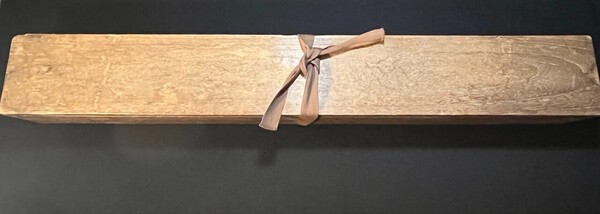
 2 points
 -
Nick, notice your original thread was still alive with more information.2 points
-
With great research assistance from Hiro. Jitsuden Docho (実傳道釣) is known to have been a disciple of Mokuan Shoto (木庵性瑫 1611-1684) through a lineage database maintained by the Dharma Drum Institute of Liberal Arts and from among a list of 250 Ōbaku-related ink works donated to Komazawa University by Mr. Mochizuk (i望月氏). There is scant additional biographical information. The inscription of the current work reads: 繙經參月心 (fān jīng, cān yuè xīn) Translating/reading the scriptures, contemplating the moon-like mind (literal meaning) Turning the pages of the sutras, I contemplate the mind that is like the moon (poetic meaning) What is intriguing about the current work is that the painting is nearly identical to a treasure in the collection of The Metropolitan Museum of Art by Sokuhi Nyoitsu (another student of Mokuan) called "Reading a Sutra by Moonlight." The inscription in the latter suggests that enlightenment is not to be found in scripture such sutra (e.g. "words and letters"). This rejection of reliance on scripture is one of the principles of Zen Buddhism and attributed directly to the semi-lengendary Bodhidharma himself. Although not quite as crisp and precise as the version in The MET, it seems possible that the accompanying painting, which appears to be cut off at the bottom, is also by Sokuhi Nyoitsu, and that the signature and seals have simply been lost. Jitsuden and Sukohi were contemporaries in a small community of early Obaku monks who would have had many opportunities to meet and to interact or collaborate regularly. However, it may be that Jitsuden is suggesting that study of scripture can be a tool for achieving direct insight and awakening, much like koan study is used in Rinzai Zen practice for this purpose. If true, it would be a departure from traditional Zen belief and understanding. Would Sukohi have contributed the painting if this were the case? Perhaps this work is a deeper exploration of the role of study in facilitating the direct experience of kensho or satori. Exegesis of the two phrases of the inscription supports this hypothesis: 繙經 (fān jīng) — Engaging with sacred texts (specifically Sanskrit), but not merely intellectual study; "turning over" implies intimate, repeated handling, suggesting devotion or deep familiarity. 參月心 (cān yuè xīn) — In Ch'an/Zen Buddhism, "contemplating the moon" often refers to looking beyond words to direct insight. The famous metaphor says: the finger pointing at the moon is not the moon itself — teachings (sutras) are the finger; the enlightened mind is the moon. Here, cān yuè xīn suggests using scripture to investigate one's own original, luminous, and still nature — "mind-as-moon." The inspiration for the theme of "Reading a Sutra by Moonlight" may come from works such as this one with inscription by Yuxi Simin 玉谿思珉 (d. 1337). The painter is unknown. Prior to acquiring the present work, I have never seen another depiction of this theme except for a clear fake: In this one volume of sutra, The words have no clear meaning. The sun rises, the moon sets, When will I finish reading it? Inscribed by Simin of the Baofu [Temple]. [Seal]: Yuxi 只這一卷經,字字無分曉。 日出月又落,幾時看得了。 保福思珉讚。 [印]:玉谿


 2 points
 -
Quite the scam. They purchase your book from the distributor (for which you get your measly royalty), send it to a book binder (rare biblio, in this case), then mark up the snot out of it. The silver lining? They at least market the heck out of it: "This title holds the distinction of being a Bestseller, highly praised by readers across the GLOBE. We are thrilled to present this literary gem exclusively to our elite readers, meticulously encased in our one-of-a-kind Premium Leather Binding." John C.2 points
-
Marcin: I was focusing on the distinct chisel marks and the very sharp points on the strokes. More likely a chisel made these marks. John C.
 2 points
 -
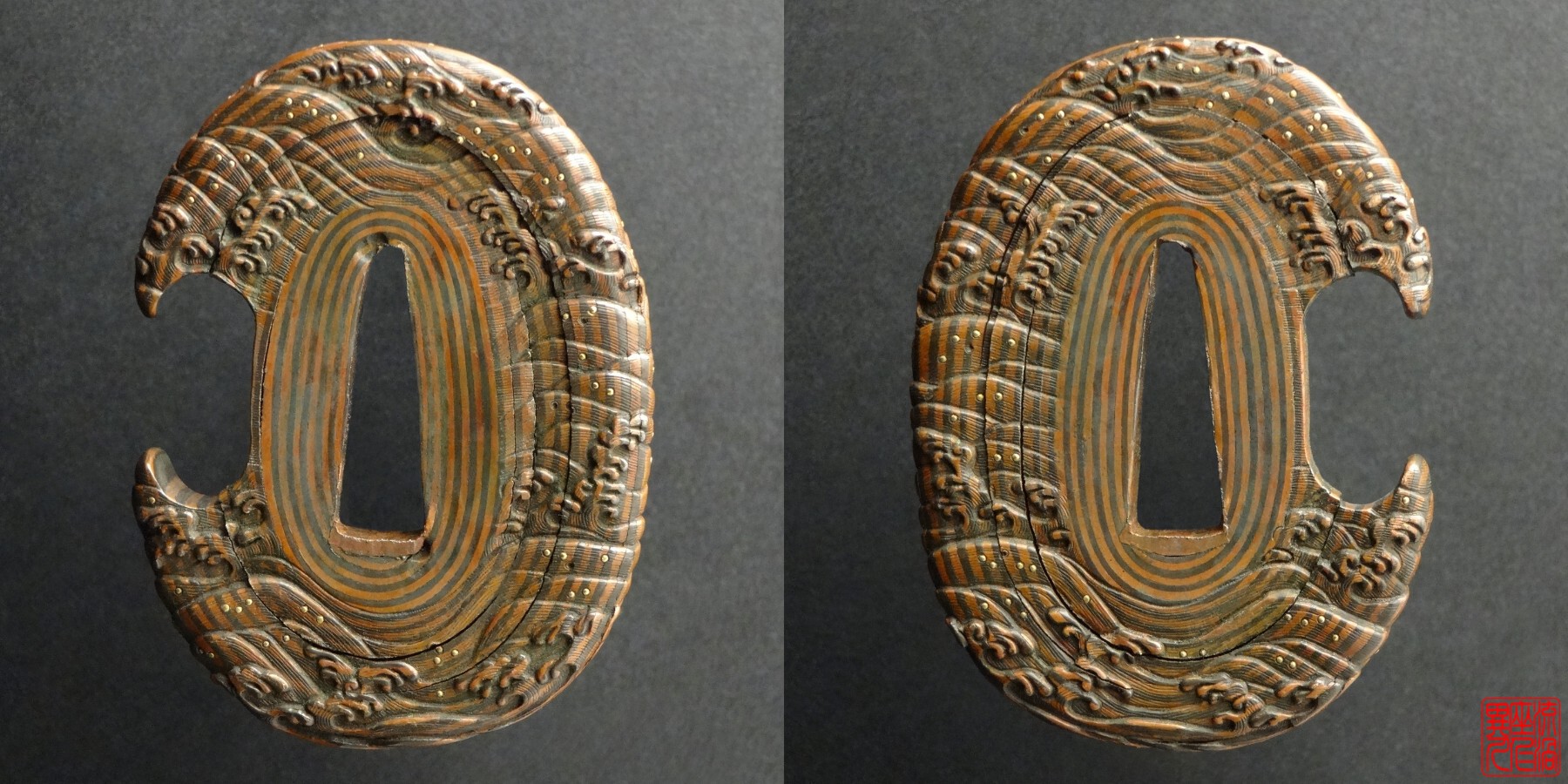
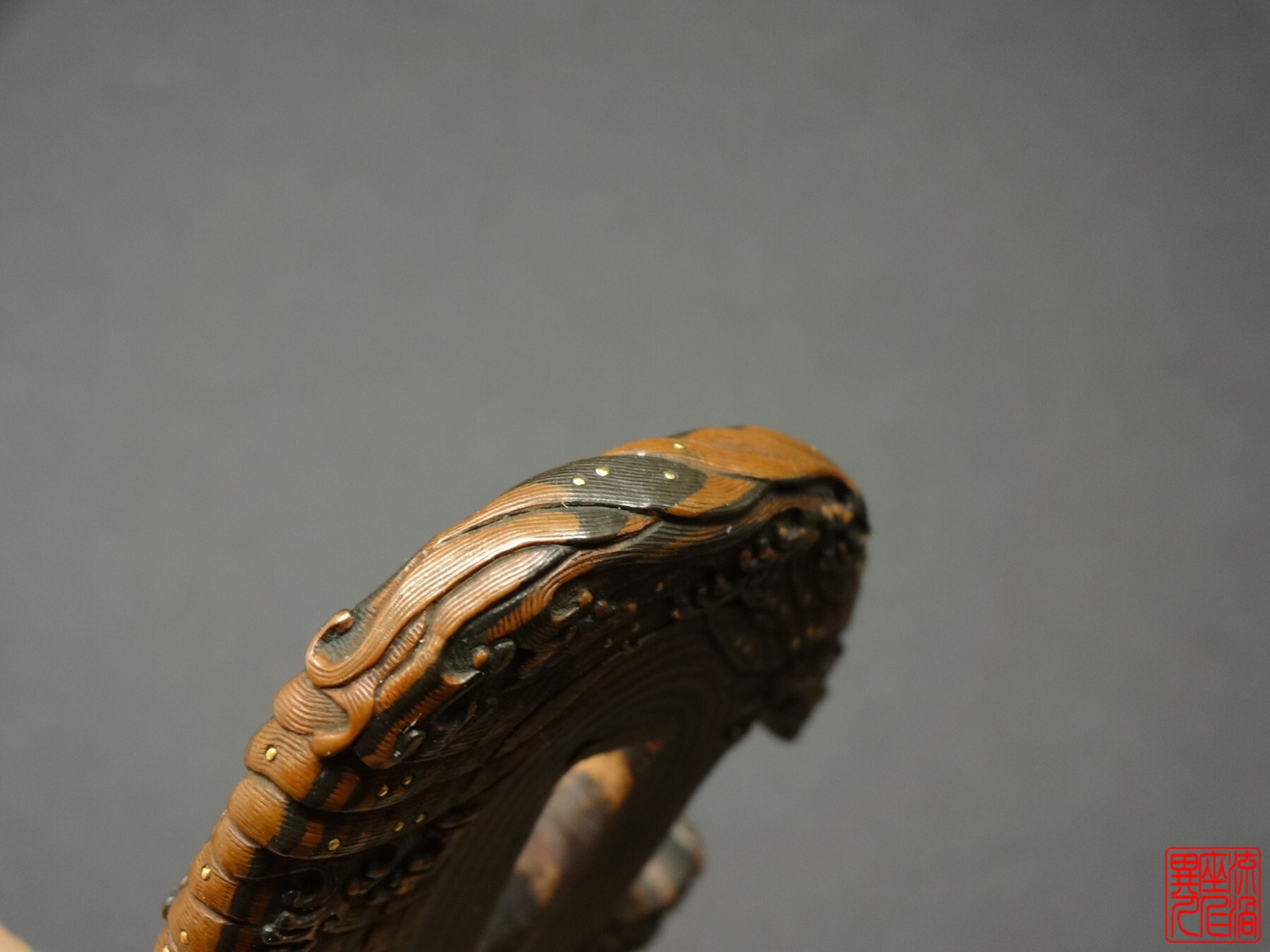
Dear all This little hamidashi tsuba just landed on my desk as an aside in a deal with a fellow collector. Dimensions 55.9 mm x 41.4 mm, thickness at seppa-dai 4.5 mm, at mimi 6.1 mm. It is made of concentric layer of copper and shakudo. Unfortunately there is significant delamination between the layers and the center of it is a little loose. It is decorated with a design of waves with very small gold drops, the ten zogan is very well executed. Without this defect it would have been a very nice piece. I have as few questions: The it can be classified as mokume-gane even though it just a made of concentric stripes of alternating metals? A tsuba with a similar layer arrangement in the collection of the Ashmolean collection is classified as mokumegane (https://jameelcentre.ashmolean.org/object/EAX.11192). Based on the design, workmanship and the use of mokumegane to which school it can be attributed? From a cursory research mokumegane was used by the Akita Shoami artist Shoami Dembei or by the Takahashi school (高橋派) a branch of the Edo Akao School. Any information is welcome, thank you in advance. Best Regards Luca


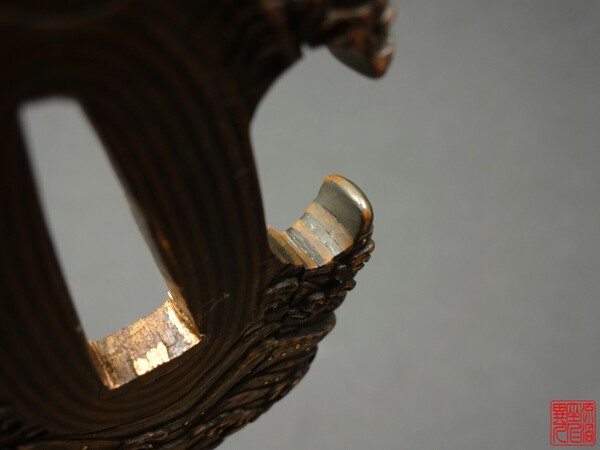
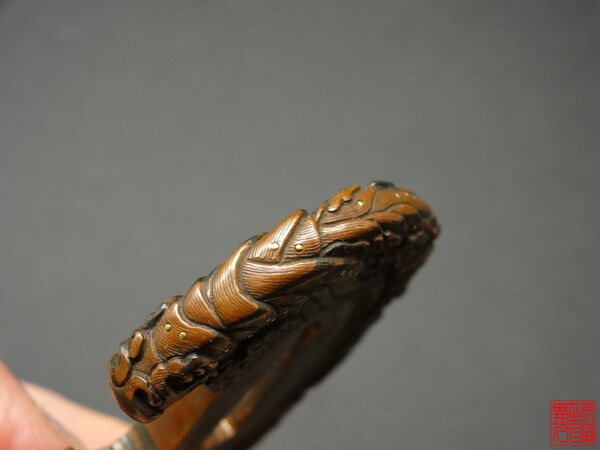


 2 points
 -
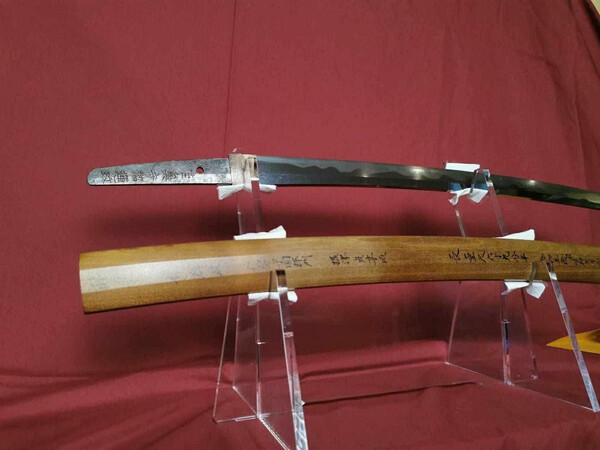
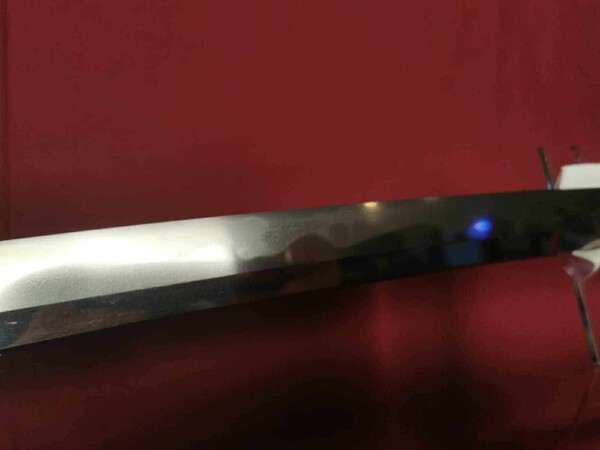
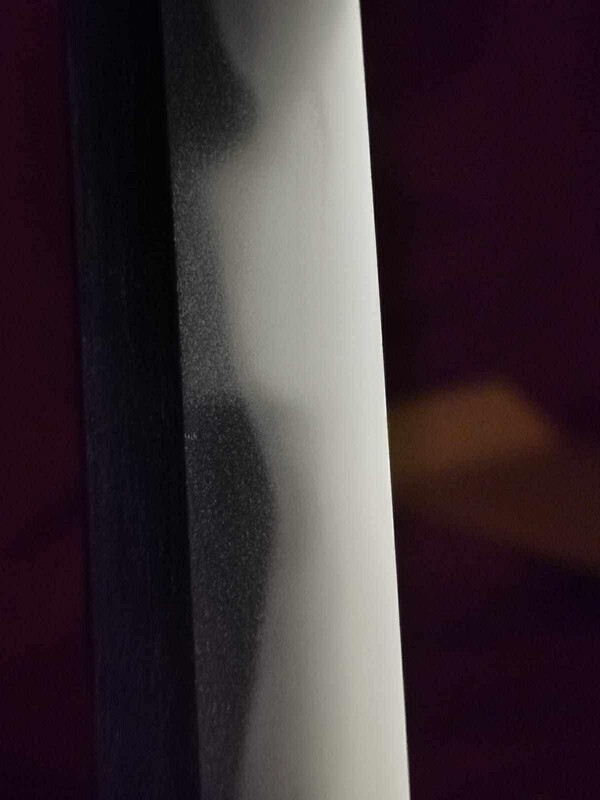
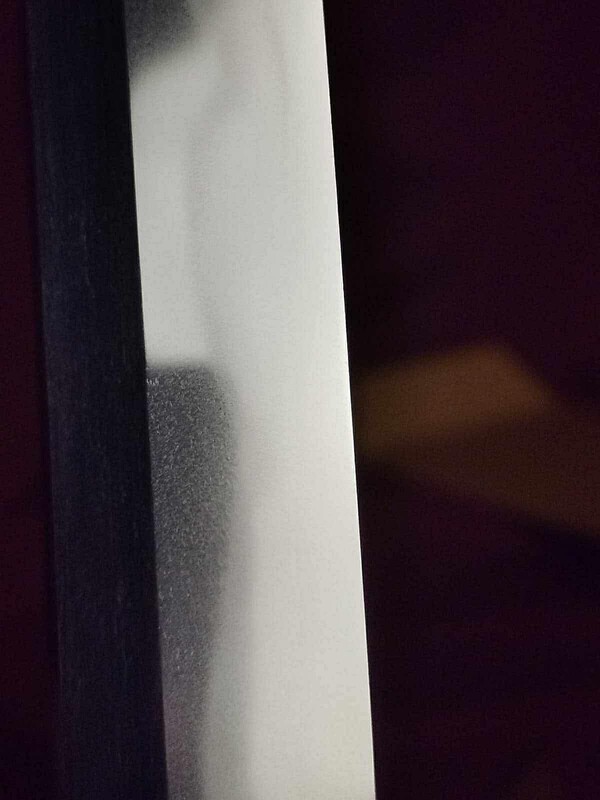
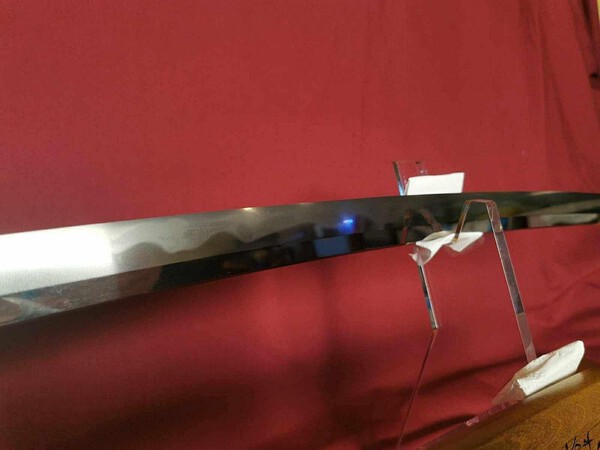
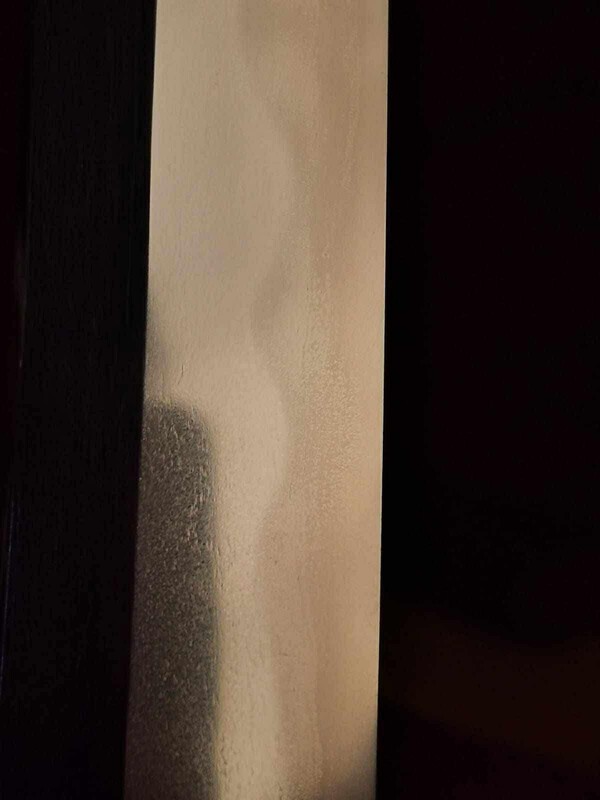
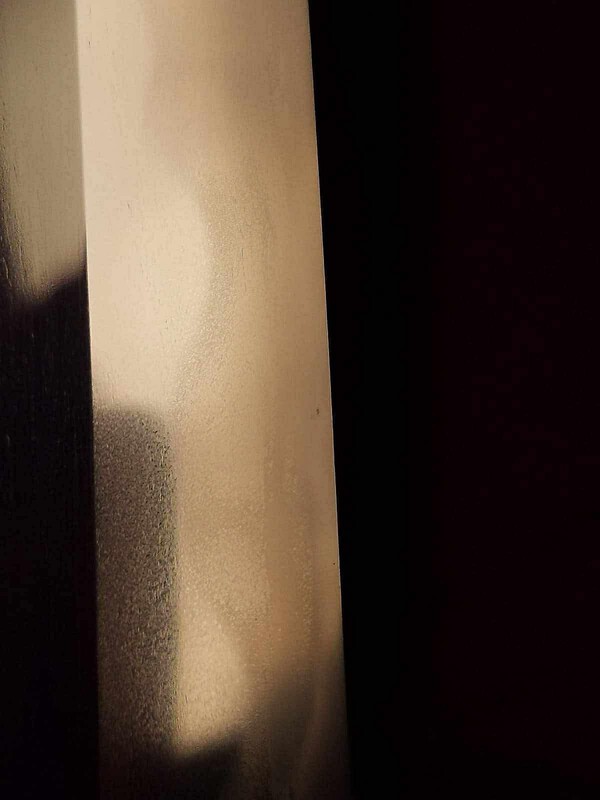
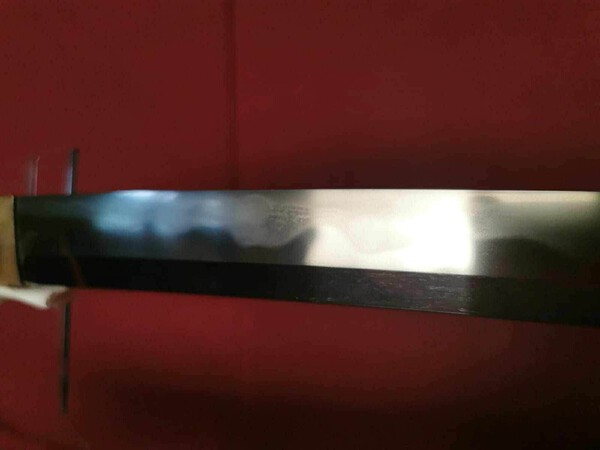
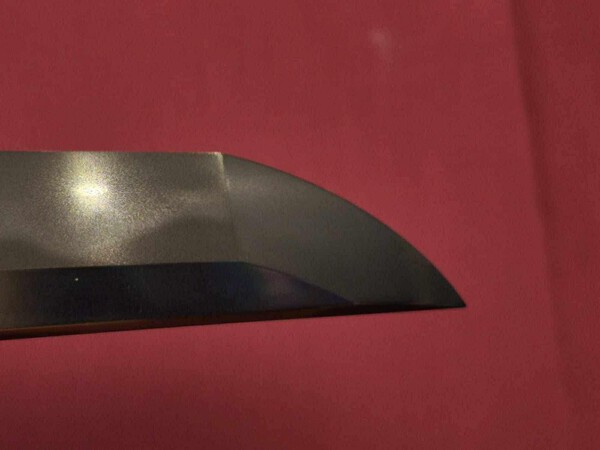
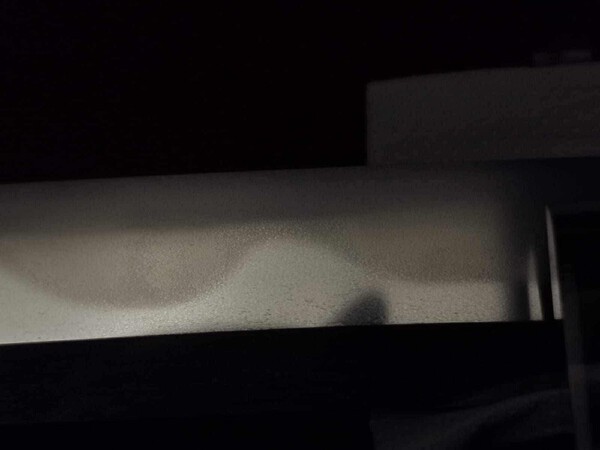
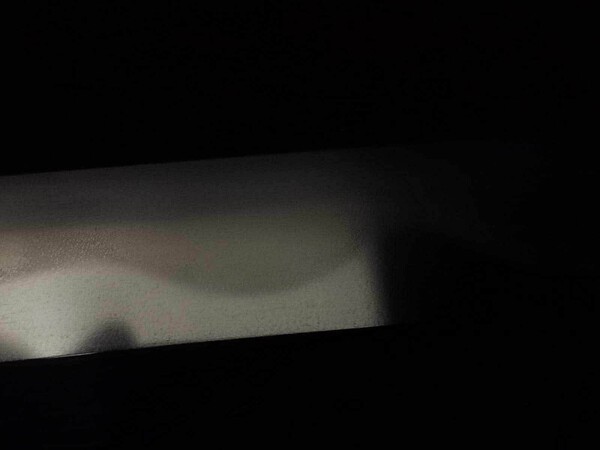
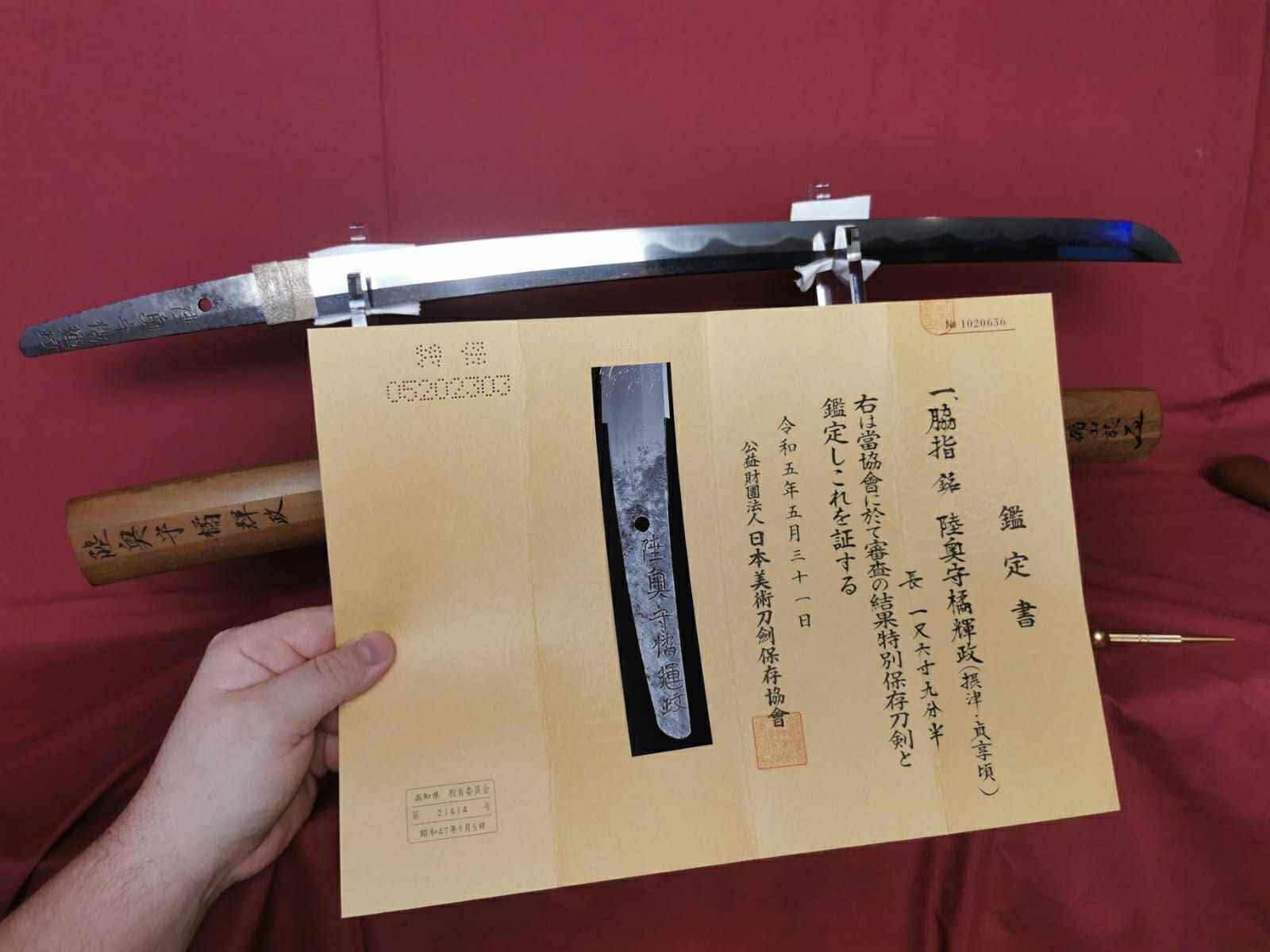
This is a Wakizashi from a rarely seen smith of the Osaka Shinto school, "Terumasa". He signed "Mutsu-no-kami Tachibana Terumasa" and was the adopted son of the first-generation Kobayashi Ise-no-kami KUNITERU in Osaka. His actual name being: Kobayashi Goro-Uemon. He became the head of family succeeding KUNITERU around Genroku (1688) era and his name changed to the title of Izumi-no-kami. He then moved from Osaka to Matsuyama city, Iyo province (Modern day Ehime pref. on Shikoku) to serve for Uwajima feudal domain. This Wakizashi was made in his younger years while he resided in Settsu, Osaka during Jyokyo era (1684-87). The whole Hamon consists of "Touranba-Midare" that was founded by Tsuda-Echizen-No-Kami Sukehiro and flourished not only among Terumasa or Oumi-no-kami Sukenao which were both in the same school, but also spread out to the other schools in Osaka such as Ikkan-shi Tadatsuna and Echigo-No-Kami Kanesada. Also this innovative "Touranba-Midare" had a strong influence to the future generations such as Suishinshi Masahide, Chounsai Tsunatoshi and Kato Tsunatoshi. Shape: Shinogi-zukuri, Iori-mune with nice thick Kasane. This magnificent wakizashi shows the typical shape and style of the time which flourished during Joukyo to Houei (1684-1710) era. Activity: Fine Itame with some indication of partial Mokume when examined closely. beautiful "Nie" combined with "Ji-Nie" and precise lines of "Chikei". Hamon: Hamon is Touranba-Midare starts with uphill Osaka-style Yakidashi, flamboyant O-midare which is made of large/tall Gunome and box-shape to generates the billows of "Touranba-midare". Thick sparkling Nie granules accumulate on boundary between Hamon and Hada. The interior of temper is filled with mist-like crystalline areas and thick Nie runs into the cutting edge. You will also spot lines and patches of Nie which make up "Sunagashi" which stand out nicely including what looks like Niju or Yo up near the Kissake. Boshi: Temper of Boshi forms straight of "Suguha" and medium circle turns back deeply. Nakago: The Nakago is UBU with original single Mekugi Ana. Horizontal Kesho file marks. The large, deep and freely chiselled inscription on Shinogi-ji ridge starts with the title of Mutsu-no-kami 陸奥守, name of clan Tachibana 橘 and smith name TERUMASA 輝政. Certificate: NBTHK Tokubetsu Hozon. Overall an extremely nice healthy example of his work in the classic Osaka Shinto style with beautiful steel, silky smooth finish and some very interesting an unusual activity to be shown, especially in the Hamon. This wakizashi is sold in Shirasaya and in good polish with Tokubetsu Hozon Papers.















 1 point
 -
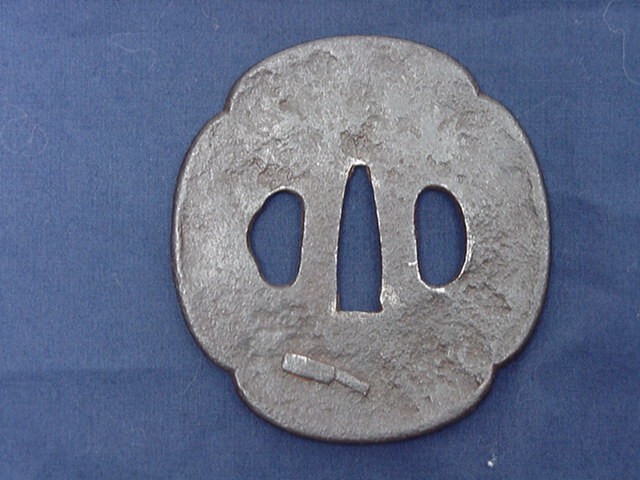
Hi, do you have similar tsuba wit a tsuba design on them ? I guess mine is shoami but what are your views? Thanks
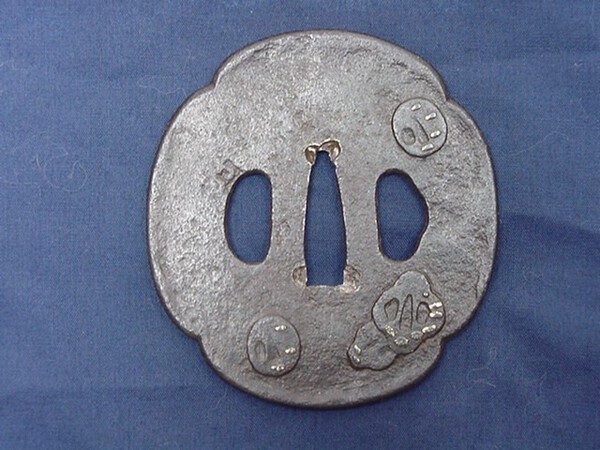
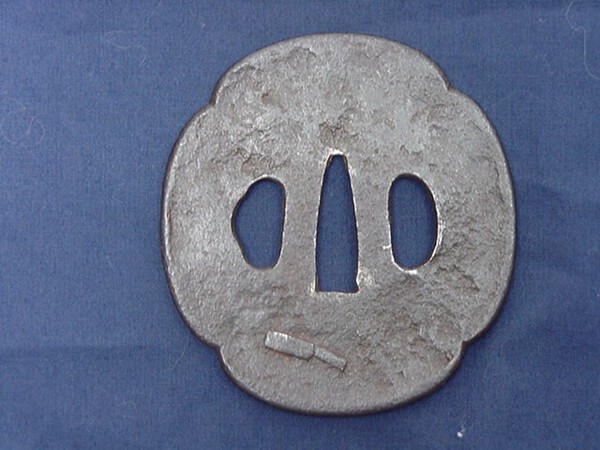 1 point
 -
Just for fun, I took some measurements of my collection using two different Geiger counters. I noticed that the old *tsuba* actually registered slightly elevated radiation levels. One Tsuba from the Muromachi period, featuring gold inlay, really started clicking away. Everything is still well within the safe range — but where does it come from?1 point
-
This is the exact analysis from the Bensons:1 point
-
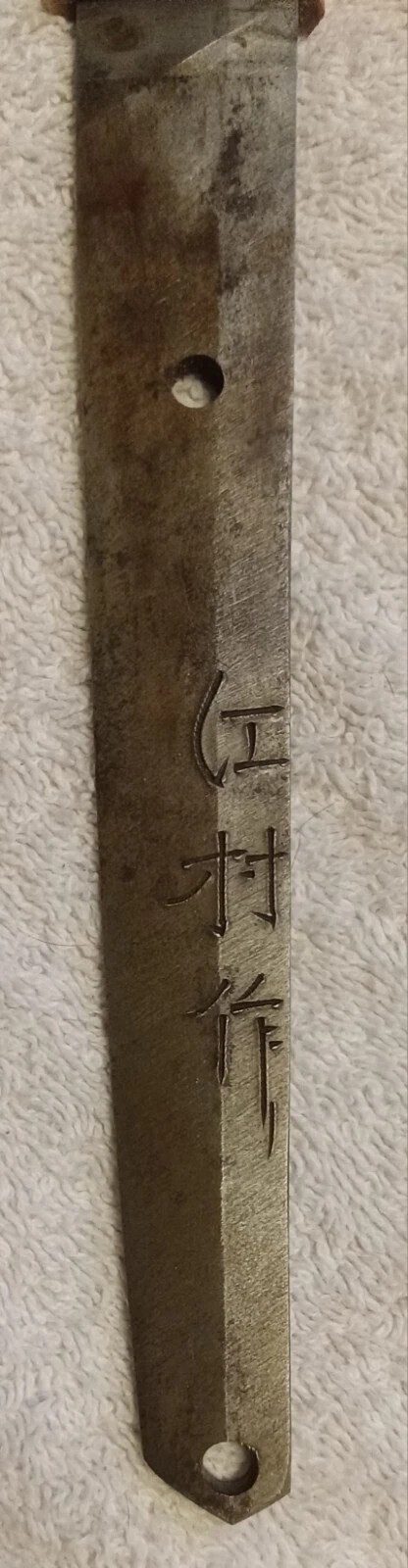
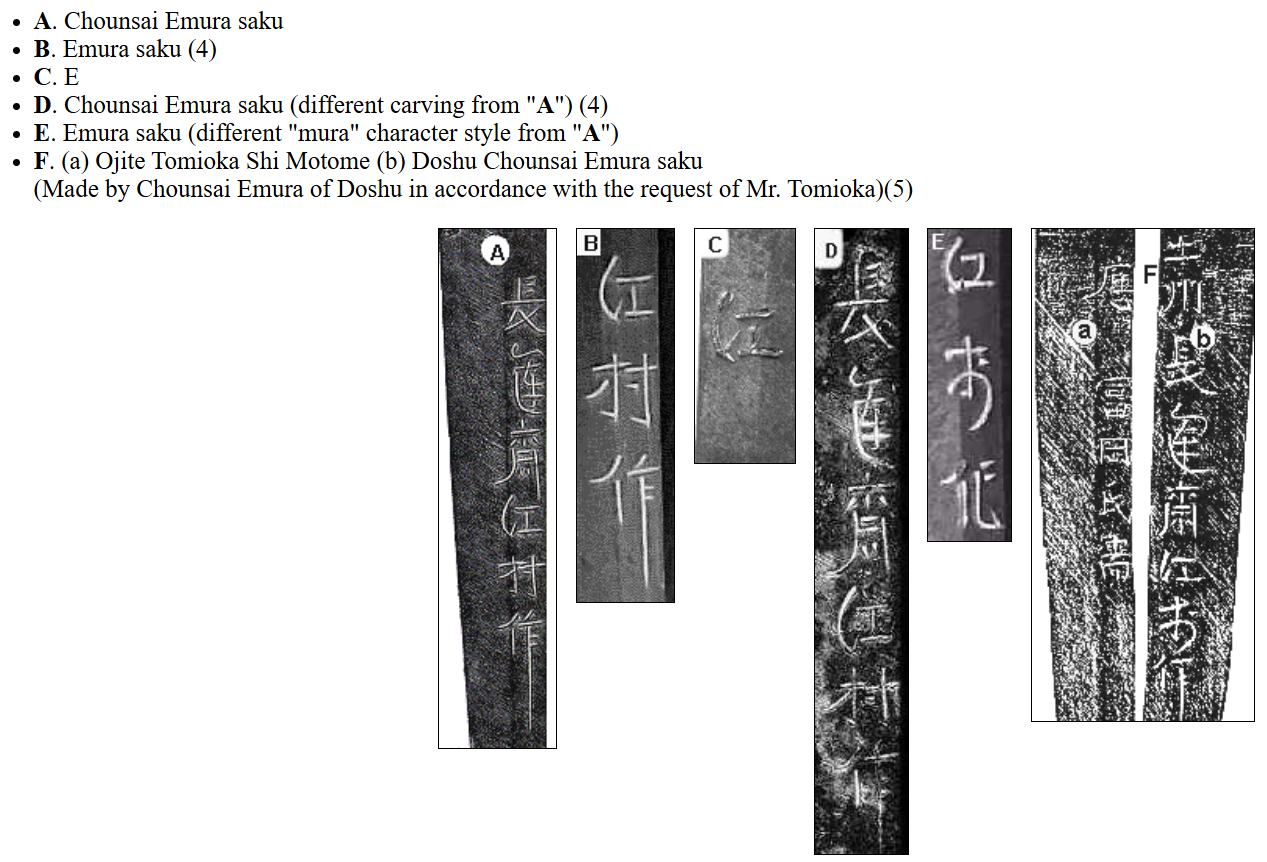
@SwordGuyJoe talking about Chounsai Emura We would have to divide blades with mei „Emura” in three groups. First group- pre Okayama (from Tokushima, his birth place to Takanatsu prison in Shikoku; Second group- Okayama prison factory Third group- Doshu, post 1942/1943 when he was exhibiting his blades probably as full-time swordsmith. How many latter blades You saw? With Soshin mei as Slough’s example „F” https://japaneseswordindex.com/emura.htm with both- „sai” and „mura”. I don’t want to be tenacious but please wait couple years for me to dig this topic with real examples. For now I can assure You that „Emura-to”, are well balanced even as bare blades and were worthy to be used by highest rank military officers. But yeah definitely there is too much of these and it can be misleading.1 point
-
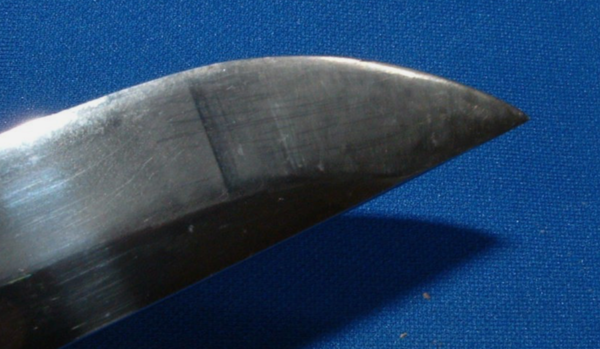
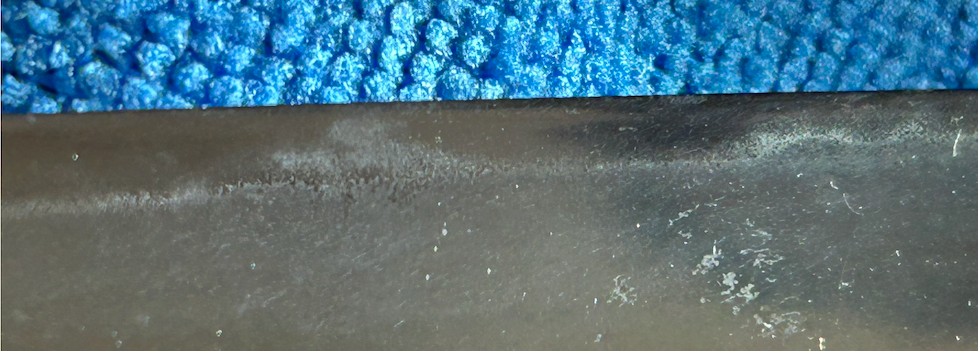
Nah. Just a combination of poor old polish and carpet. The kissaki and what I believe to be ara-nie behind the spider rust. John C.
 1 point
 -
https://youtube.com/shorts/rdZSOMWJOuo?feature=share HD video above - Thanks, Jake1 point
-
same here but without gold inlay1 point
-
Two Geiger counters? Also, did any of the tsuba develop super powers? All kidding aside, could be from natural uranium found in many types of rocks and minerals, even those used to make tsuba. Or, the tsuba could have been exposed to high levels of radon gas for a period of time. John C.1 point
-
Other than the above possibilty, any mercury used in the various treatments and decoration when the tsuba was decorated may perhaps be very slightly radioactive.1 point
-
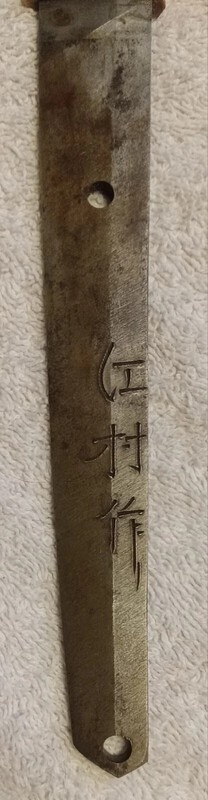
Your opinion on this example please. Could this be done by machine? Saku is chiseled like in 2 attempts and these horizontal strikes feels like divided. https://www.ebay.com/itm/286431426499?_skw=emura+sword&itmmeta=01KQJSZVZFB208962YJWR42QG8&hash=item42b0a4b7c3:g:NEwAAOSwhrtn4AIV&itmprp=enc%3AAQALAAAA8GfYFPkwiKCW4ZNSs2u11xAJT7GSl7Y%2FWQycmbJMLcoGoiJlfSmcoBCICIr%2Fk2x%2F2WoneoocjlsjHZo%2BEp104qwPvaYtoVC3GkYhqeJpORYxj4zZIe0aWPcxtJFCeWbfOhD18N1LpiT%2B2T%2BWheBGzZk1DMNr%2BvH3KzSntWVhtoV5jku1rgSIceKjh%2Fs1cscqwqBSf631bAL7el2MW2rKSoiAv7hOB0SRFfu0MpUCf%2FqUB0rf7zuo%2BYRg9T1gbEXnrJKWCGYa2tB2zQ%2F6jAOHBsIYofeZ3mvtzm7ufb6qSauoUpMb2F1zlXs3G5FhUvdB5w%3D%3D|tkp%3ABk9SR_S__9m8Zw

 1 point
 -
Just to make it clear - @kissakai bought the tanto size shishi Number 1 shishi are still available.1 point
-
Well what is a best seller? Would 150 copies make the list? Maybe the GLOBE they refer to is a small neighbourhood 15 km from Adelaide in South Australia? Who is the guy that bought a copy in Globe? I want a Mink cover for such a "Highly prized, Bestseller"
 1 point
 -
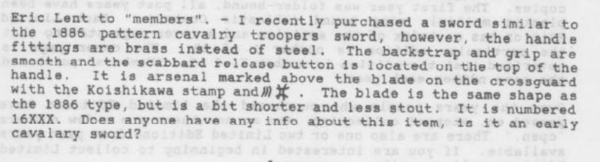
FYI, Eric's sword is serial number 16416. Extract of his postmarked letter of 1999-0202 is below. Hope this helps in your research.1 point
-
To my knowledge, this never happened with the Meiji 25. Instead, they added those features to the new Type 32 as a replacement. I have a snippet of an article that describes the release button still being at the top of the backstrap as late as serial number "16xxx." John C.
 1 point
 -
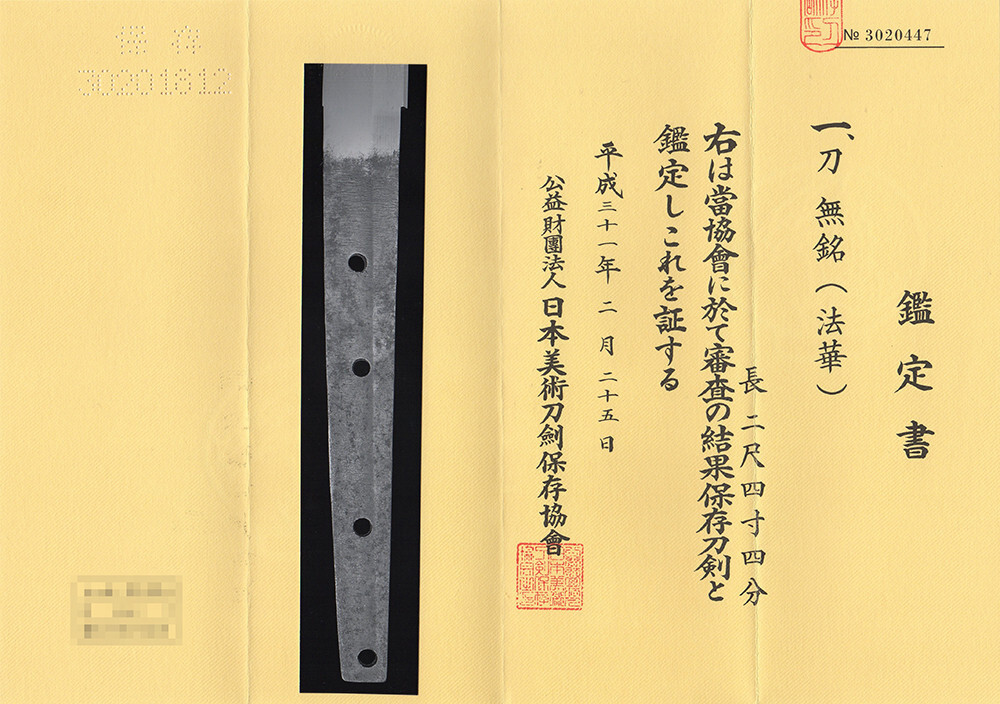
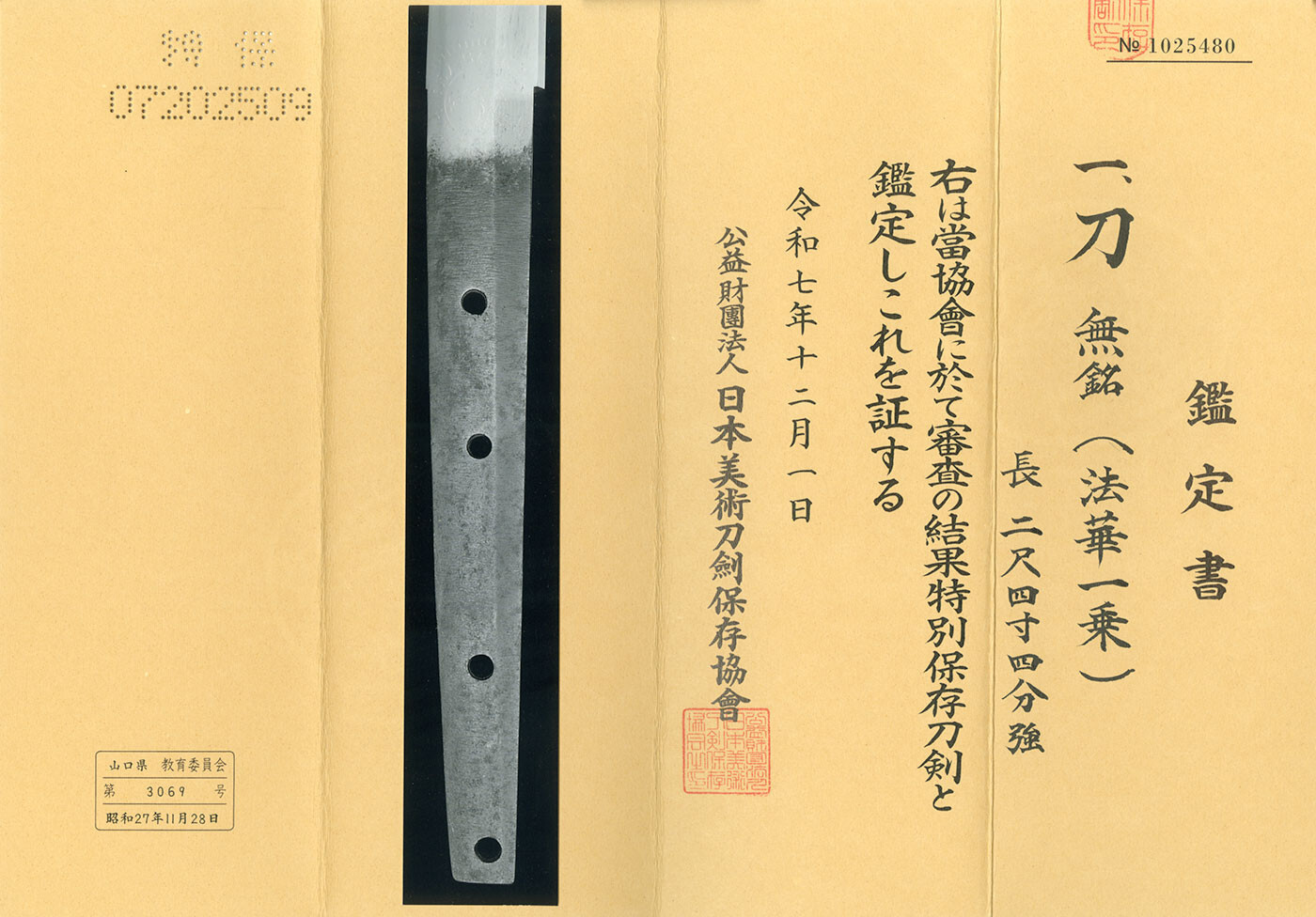
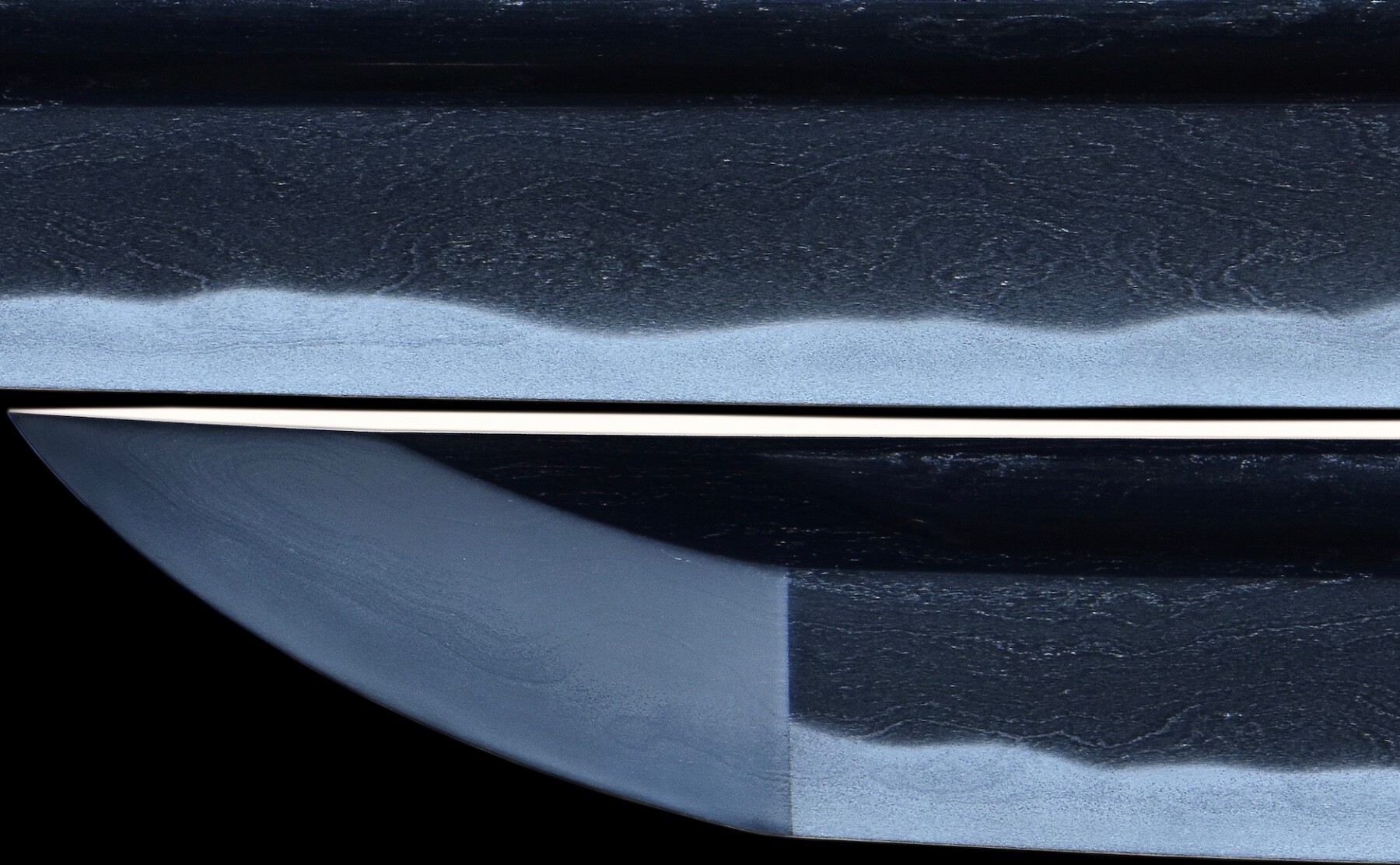
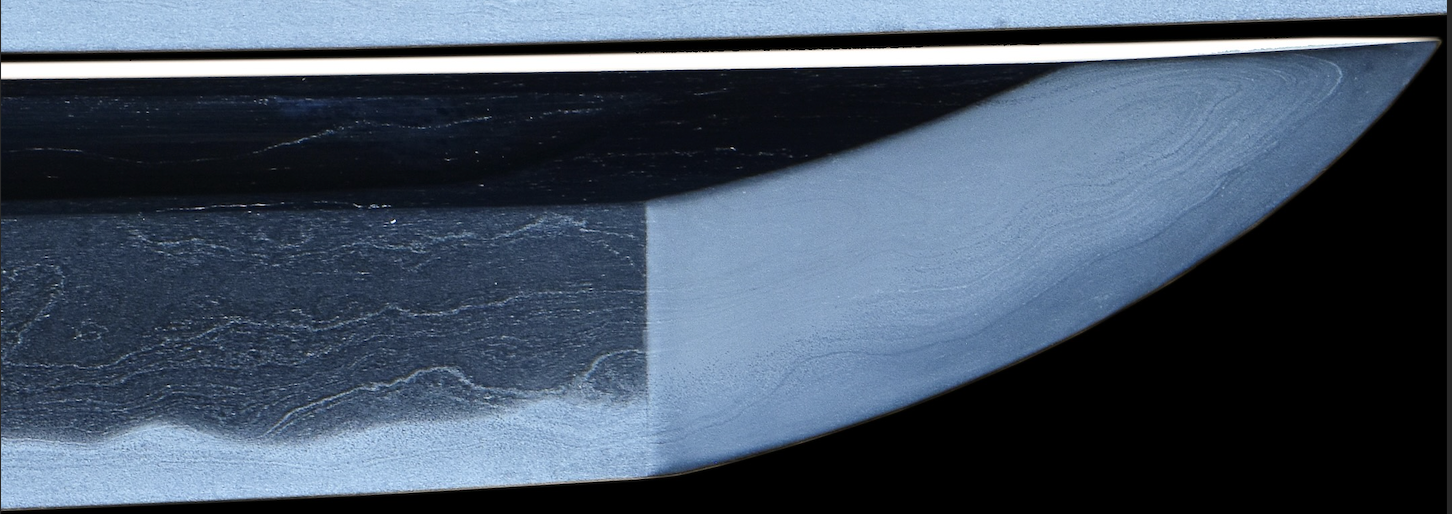
Here you can see them side by side so it is the same sword. Attributions can change when NBTHK evaluates the item again. There has been actually quite large shifts in attributions few times when the item has been sent in for re-evaluation. I feel in general mumei attribution Hokke Ichijō by NBTHK would usually indicate the sword is late Nanbokuchō to early Muromachi. That is how I see things personally. As a general rule NBTHK does not award Tokubetsu Hozon to mumei swords made after early Muromachi (yes I have seen few exceptions but I believe that is their norm). There might be different views on Ichijō generations I checked Meikan and there 1st Ichijō is listed around Ōan (1368-1375). However so far I have only managed to find 3 signed Ichijō short swords and so far I haven't been able to find a single signed tachi remaining by specifically attributed to Ichijō as the Ichi signed tachi and katana have general Hokke attributions.

 1 point
 -
Thank you so much! A) for sharing that great tsuba, l love the color of the iron and also the motive is exquisite! B) for that correction, because I was actually not sure in the first place. What also kind of confused me, is that there was a french philosophy professor, also in the 1800s by the same name.1 point
-
Just a heads up with buying tosogu books from eBay and Amazon - the proxy "mark up" is a crime! One from Stephen King. https://www.amazon.com.au/Collecting-Tsuba-S-J-KING/dp/1006317686 $303.00 Someone is making a lot of money from his older book. And it isn't Stephen! Also one of my books https://www.ebay.co.uk/itm/287105470242 - It was never legally published in a leather cover and the "mark up" is just plain theft! Anyone know a good lawyer? Oh great another one! https://www.ebay.co.uk/itm/2871119679281 point
-
IMPORTANT INFORMATION ABOUT SHIPPING Dear buyers, Thank you for your purchase. I am travelling now and will be shipping the books on 11th and 12th May. I will be back with tracking numbers. Have a nice day1 point
-
Here was the original before polish
 1 point
 -
If you look for GURI BORI, you will find the same technique that is used for MOKUME GANE. It is a very nice little TSUBA! Perhaps a goldsmith who is familiar with TOSOGU can solder the fissures without it being too obvious? MIssing Ford and his competence here again.....1 point
-
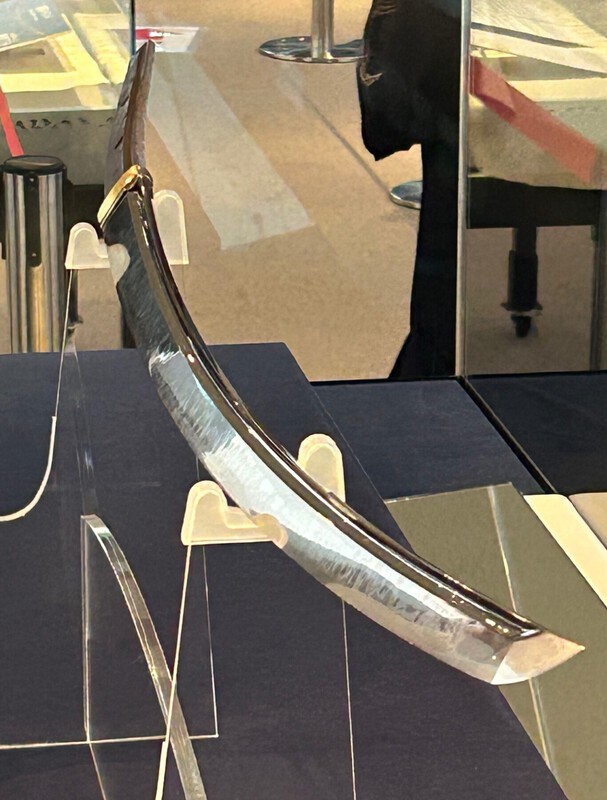
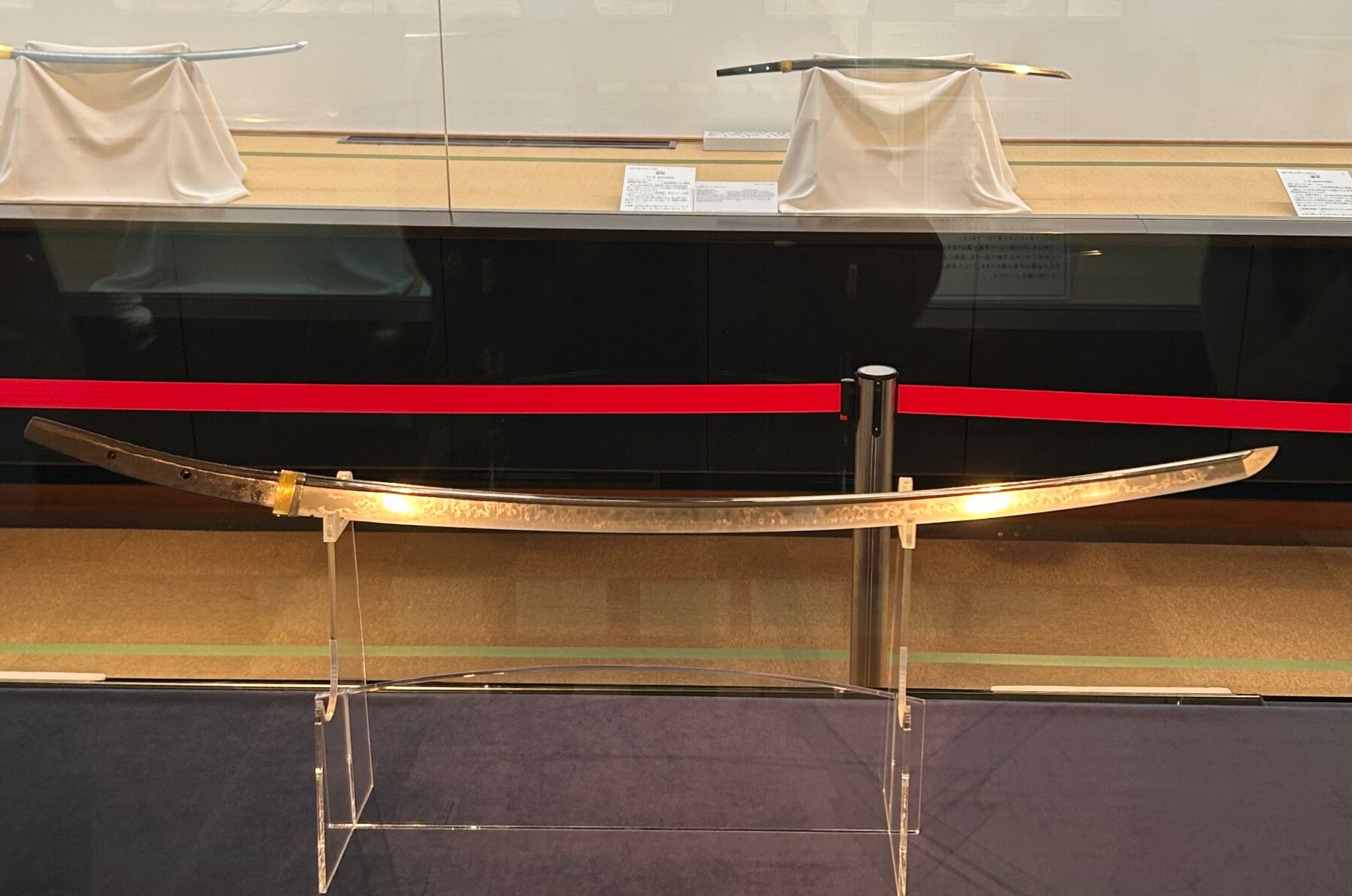
Today I had a chance to see it again, luckily at a time when there were fewer visitors, so I tried some different shots. A B
 1 point
 -
I had no idea katanas flexed like a whip on downward strikes like that. If you slow it down it really bends and snaps back right before contact.1 point
-
Dear Alexander, I finally had the opportunity to review your project: very interesting and exceptionally well done. It offers a historical perspective that is not often appreciated by modern collectors. I especially valued the inclusion of relevant bibliography for each chapter. Thank you for your effort.1 point
-
Since we are showing off our early documented tsuba, here is one from the Mosle' collection. This one is described as number 804. TSUBA, thin iron, with two circular perforations, shigure-yasuri-me. Unsigned work of Prince Hosokawa Tadaoki (Sansai-Ko). 32. Higo province. Plates LX-LXIV Background on the Mosle Collection “Alexander Mosle’ (1862-1946) during several stays in Japan from 1884 to 1907 representing Gruson Werke, a subsidiary of Krupp, put together the core of his collection through Amiya with the advice and teachings of Akiyama Kyusaku. Back in Europe, he exhibits his collection in Berlin in 1909 (he will continue to buy until 1920). His collection was made of about 1600 pieces among which a unique group of some 300 Goto works, a number of which had the origami issued by Goto masters in works attributed to their ancestors before they were in the habit of signing. “(from 100 Selected Tsuba from European Public Collections, by Robert Haynes and Robert Burawoy)” Mentors of Mosle’ as listed in his 1914 catalog include: Paul Vautier (put together the Oeder collection) Wada Tsunahiro (put together the Furukawa collection) Akiyama Kyusaku Ogura Soemon (Amiya) “Mosle’ was one of the few devotees who actually lived in Japan (1884 -1907) during this historic period and had through his position as armament representative to Japan from the Gruson/Krupp company and as acting consul of Belgium to Japan access to experts in his fields of interest of the highest order. He counted as personal friends the likes of Tokugawa Iesato and General Nogi and mingled with the aristocracy of Japan. From this he was able to access information rarely accorded anyone, not to mention non-Japanese, and with his scholastic mind was able to document much research in these fields. (historic information has been taken from the catalog, ‘Japanese Sword Fittings from the Alexander G. Mosle’ Collection, Mosle’ and His Collection’, Sebastian Izzard LLC, 2004).
 1 point
 -
There's also the matter of scarcity. Who knows exactly how well a Masamune cuts compared to a Kotetsu? Not even a Shogun would waste a Masamune on the testing required to prove that; meanwhile Kotetsu was alive and well and producing blades regularly. All we have are anecdotes about such-and-such cutting through a lantern stand, or so-and-so chopping a helmet in half. Worth noting that a handful of old masters did have their blades tested; in particular Shizu Saburo Kaneuji was ranked as ryo-wazamono and later upgraded to o-wazamono, and the first-gen Bizen Kanemitsu was considered peerless in cutting ability, even outranking his saijo o-wazamono peers like Magoroku Kanemoto and Kotetsu. Who knows how some of those other Kamakura/Nanbokucho luminaries might have fared if their blades weren't generally regarded as too precious to put to the test? Then again, perhaps their blades being too precious to put to the test was all the proof of their ability that the Edo-period connoisseurs needed.1 point
-
Thanks for the additions. Please take a moment and have a look at my page. You will already finde some essays: would love to hear your feedback Behrens: https://tosogu.eu/w-l-behrens-the-taste-for-the-archaic/ Church: https://tosogu.eu/sir-arthur-herbert-church-the-chemists-eye/ Joly: https://tosogu.eu/henri-l-joly-the-man-behind-the-catalogues/ Baur: https://tosogu.eu/alfred-baur-the-collection-that-became-a-museum/ Vever: https://tosogu.eu/henri-vever-the-art-of-seeing-twice/ Krohn: https://tosogu.eu/pietro-krohn-the-Japanese-argument-for-danish-design/ Halberstadt: https://tosogu.eu/hugo-halberstadt-the-collection-he-could-not-keep/ And the German collectors of course: Oeder, Jacoby, Brinkmann, Fahrenhorst, Tikotin...1 point
-
I have done a three book set on the subject, along with five others centering on specific collections from the 19th century and early years of the 20th. Plus a few related design references - the books mentioned concentrate only on tsuba other objects from those collections are not included. Total pages 934 1924 100 pages 1894 > 1902 88 pages 1916 98 pages 1911 68 pages 1884 and 1898 82 pages I did the Wrangham collection along with the Hartman collection for my own study source. A thick book of 415 pages [I guess it is a "pirate book" as it is the only one in the world ] The Georg Oeder collection was translated from German to English - the original German is here: https://archive.org/details/japanischestichb00vaut/mode/2up Willkommen bei NMB, Alexander!
 1 point
 -
Specialised throwing spikes do exist in many Ryuha, but are of Iron as Brian says. In fact the Late Ōtake Risuke (1926 - 2021), Shihan of Tenshin Shōden Katori Shintō-ryū used a set made for him by the Swordsmith Yoshindo Yoshihara.1 point
-
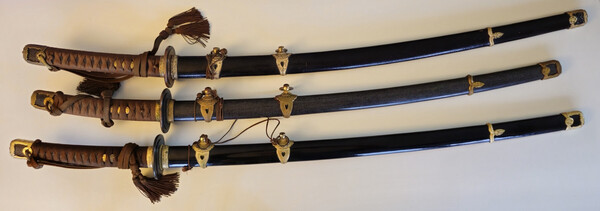
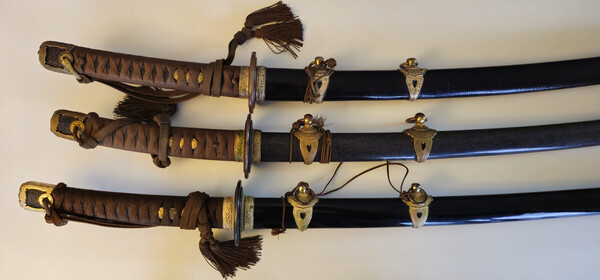
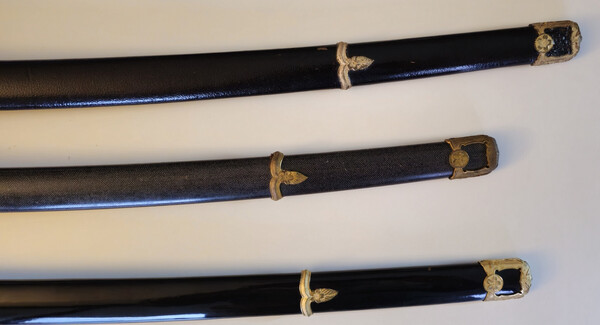
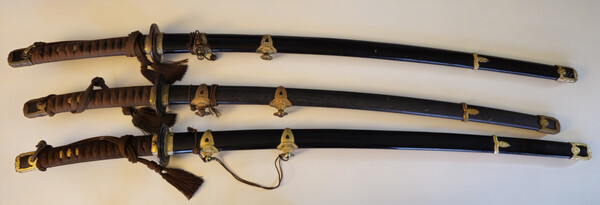
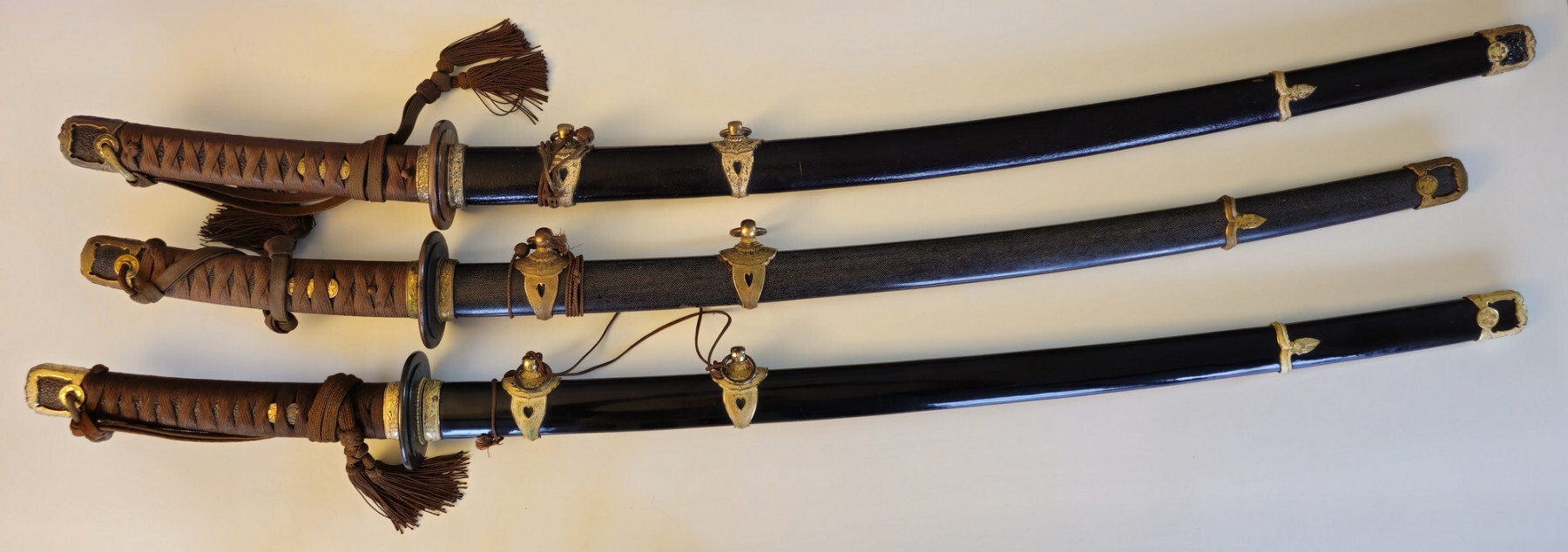
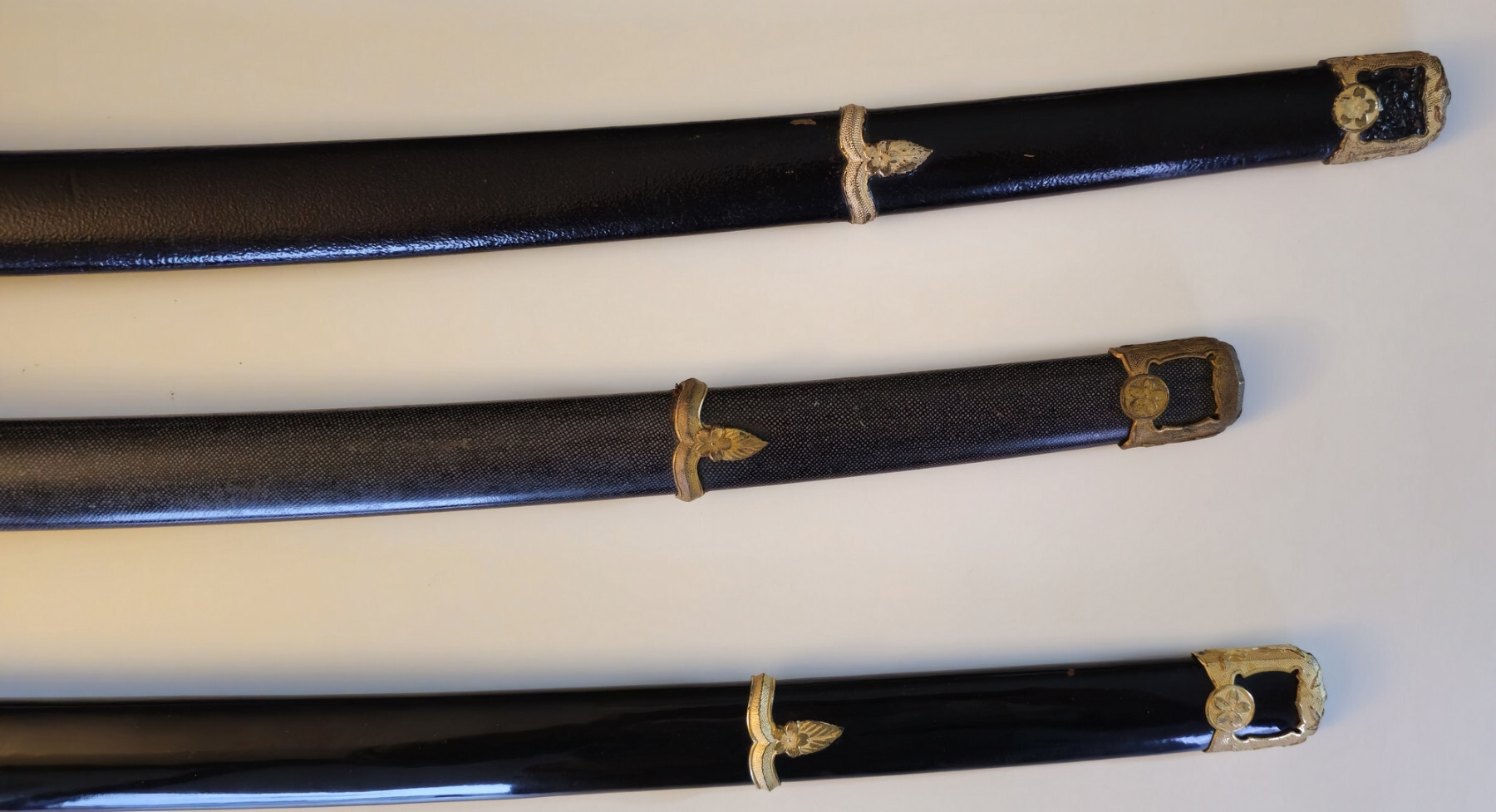
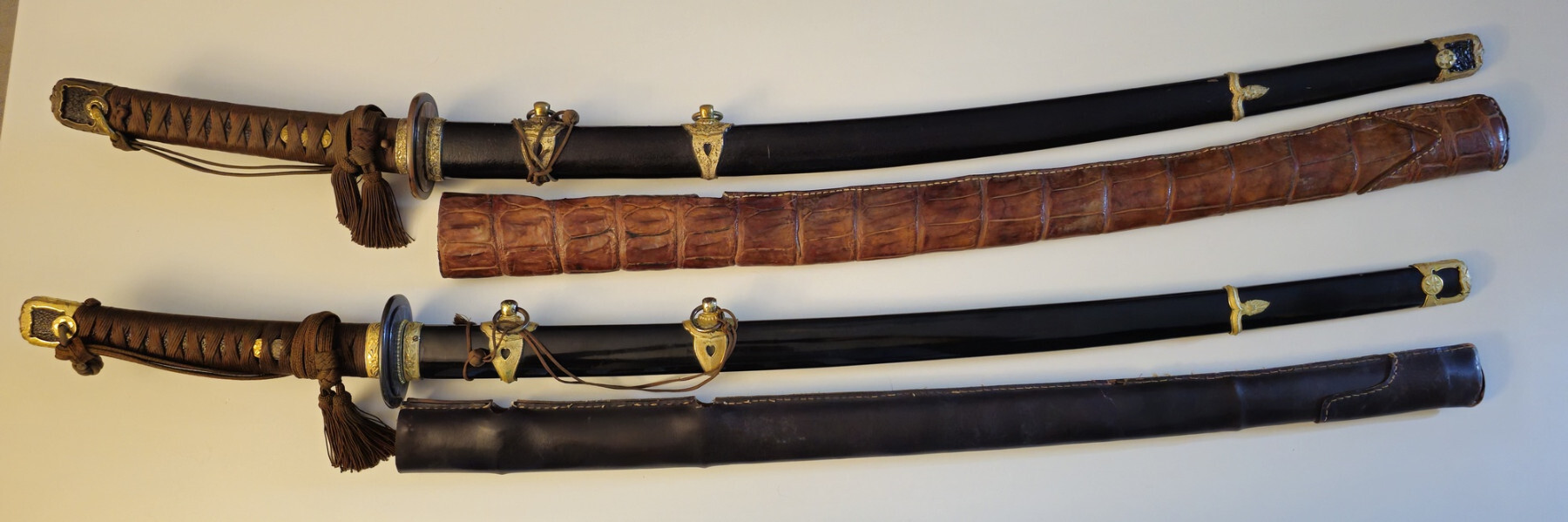
Two different lacquer types, and sharkskin. The early gloss lacquer Kai Gunto came with a leather cover with split seam, which is why the condition has remained quite good. The textured lacquer saya sword came with a unique theater made cover from saltwater crocodile skin on Balikpapan.

 1 point
 -
How about tsuba on a kozuka-menuki set. Pretty cool. https://page.auction.../auction/x1097863234 Damon
 1 point
 -
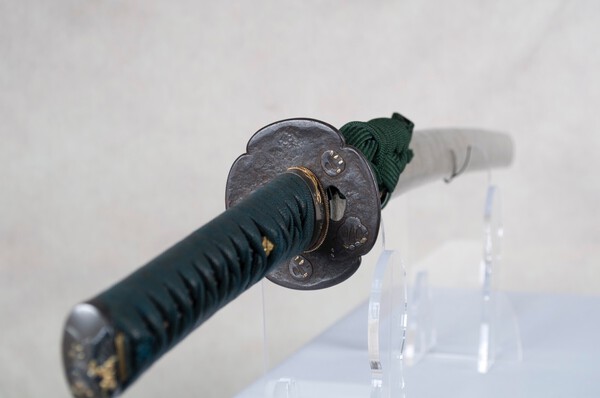
Gentlemen, Just to add to the collection. Have just received an identical iron tsuba with a truly beautiful color patina. Shown mounted on a sword made by 1st generation Hirotaka around 1655 and together with an equally nice quality Koshira. Pictures taken by seller. /Soren
 1 point











































This leaderboard is set to Johannesburg/GMT+02:00