
Leaderboard



Popular Content
Showing content with the highest reputation on 04/08/2026 in all areas
-
Glen, my upset settled down while I understand Your motivation. I read Your posts not twice but thrice to absorb it. Thank You for the input! Gut feeling and doubts also also based on particulars which are worth to be discussed. We all know (or should know) that there is no system at all to refer to. Akiyama’s cautious suppositions became facts by the thankful descendants. And today the same: It’s easy to follow these "facts". Give me a paper and I can cling to it. The NBTHK folks are the experts so who am I to doubt it? But Your mentioned „money making machine“: I can’t believe they do it solely for the sake of money – there must be higher ideals. BTW proofs: Maybe tax lists (if available) could be significant? When I read „The Culture of Civil War in Kyoto“ by M. E. Berry there have been tax lists mentioned. Although the reference was given I was not able to get insight in these. I don’t expect details but it would be interesting at least to get the number of workshops at those times (not so many I presume).4 points
-
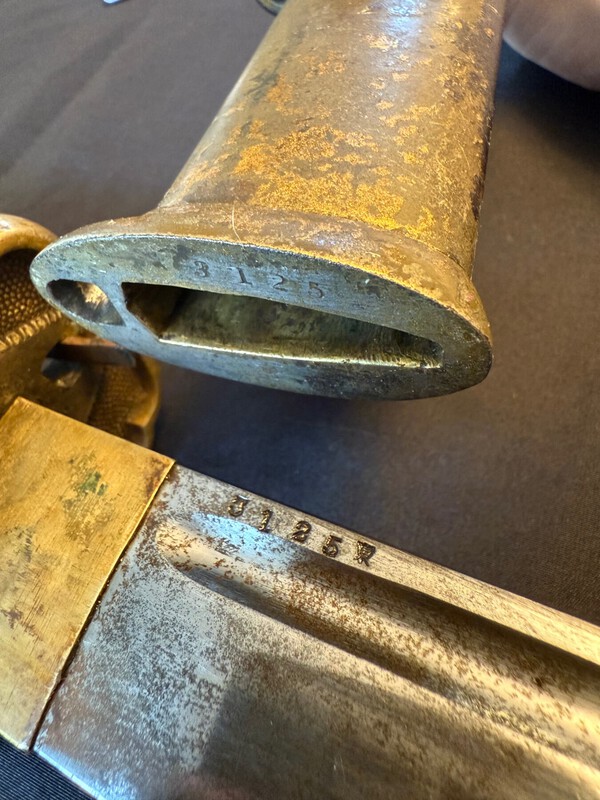
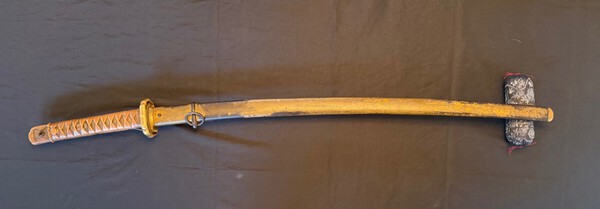
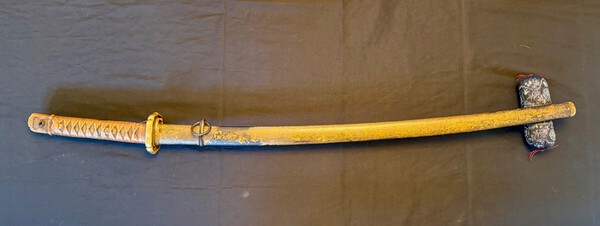
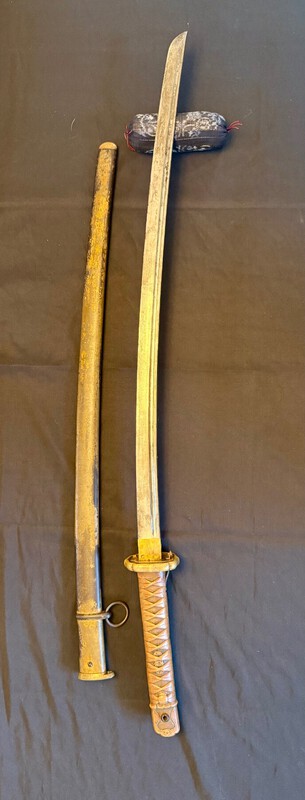
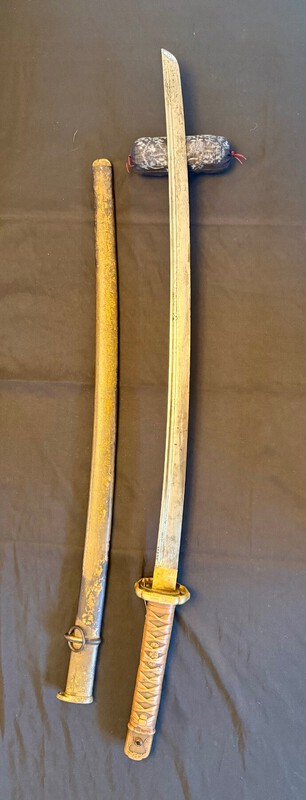
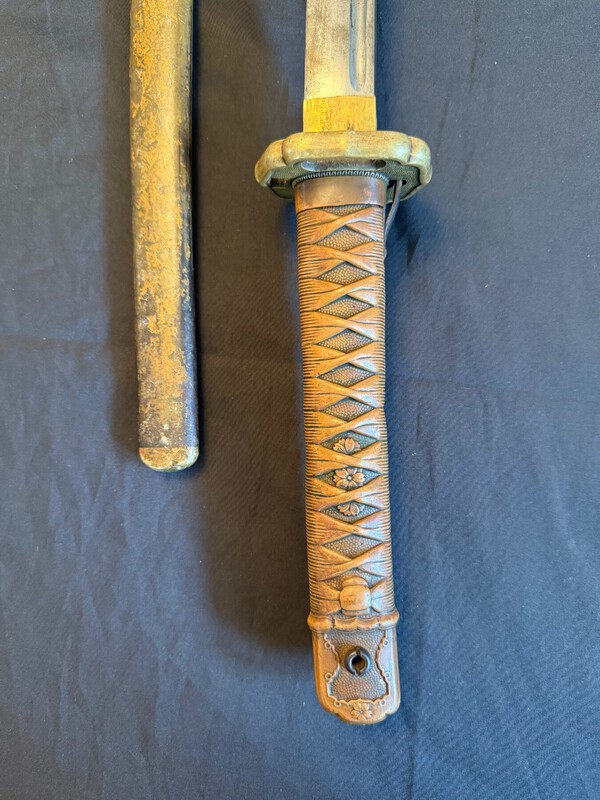
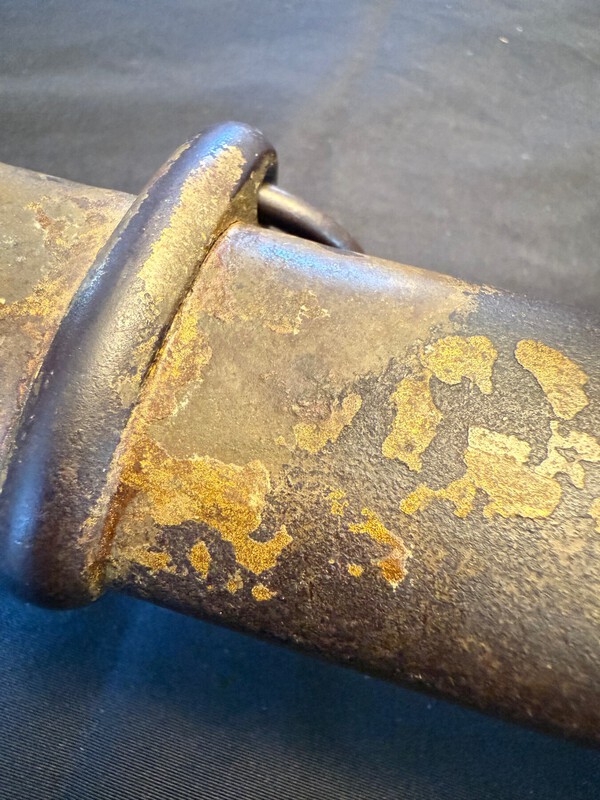
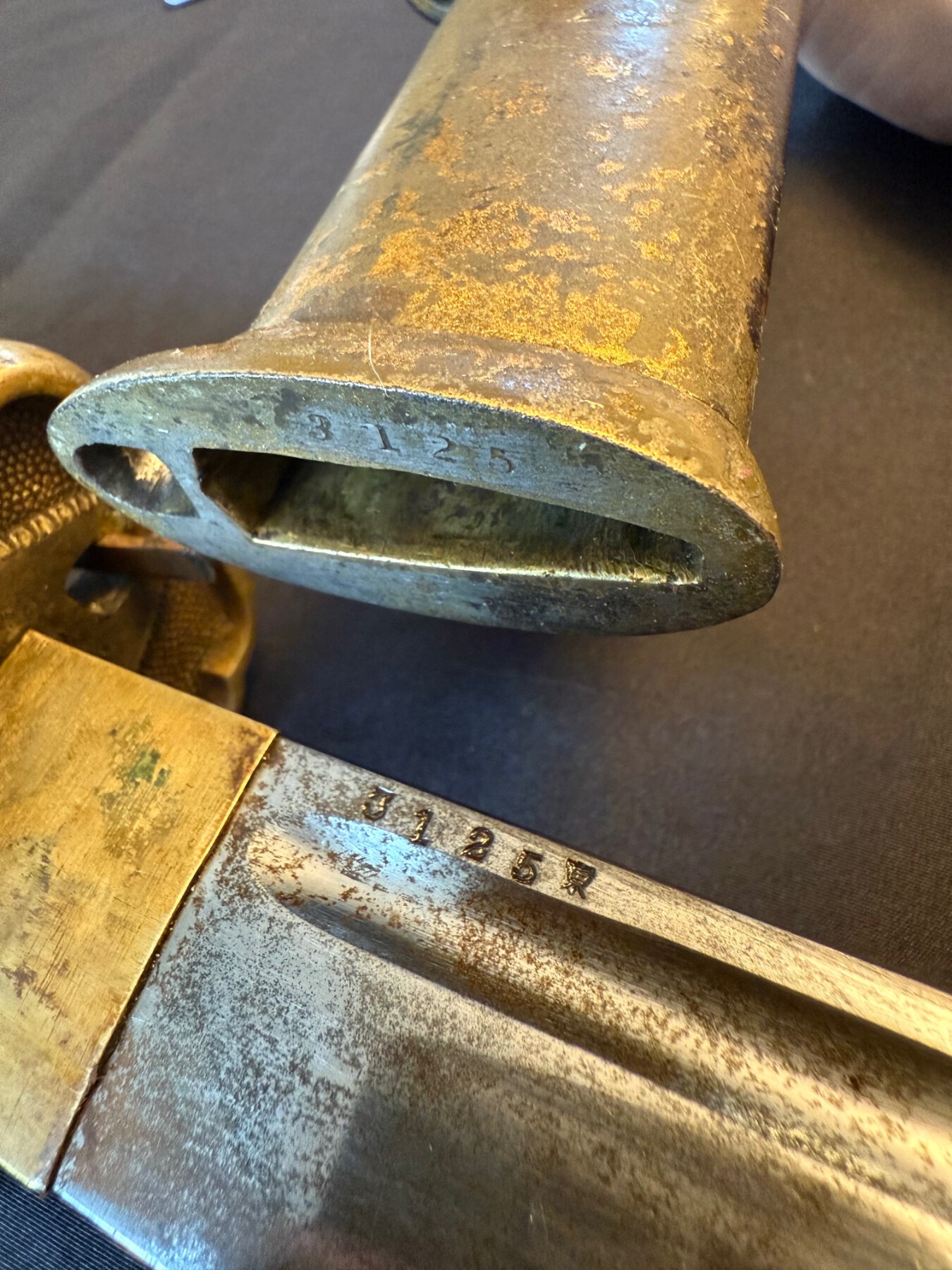
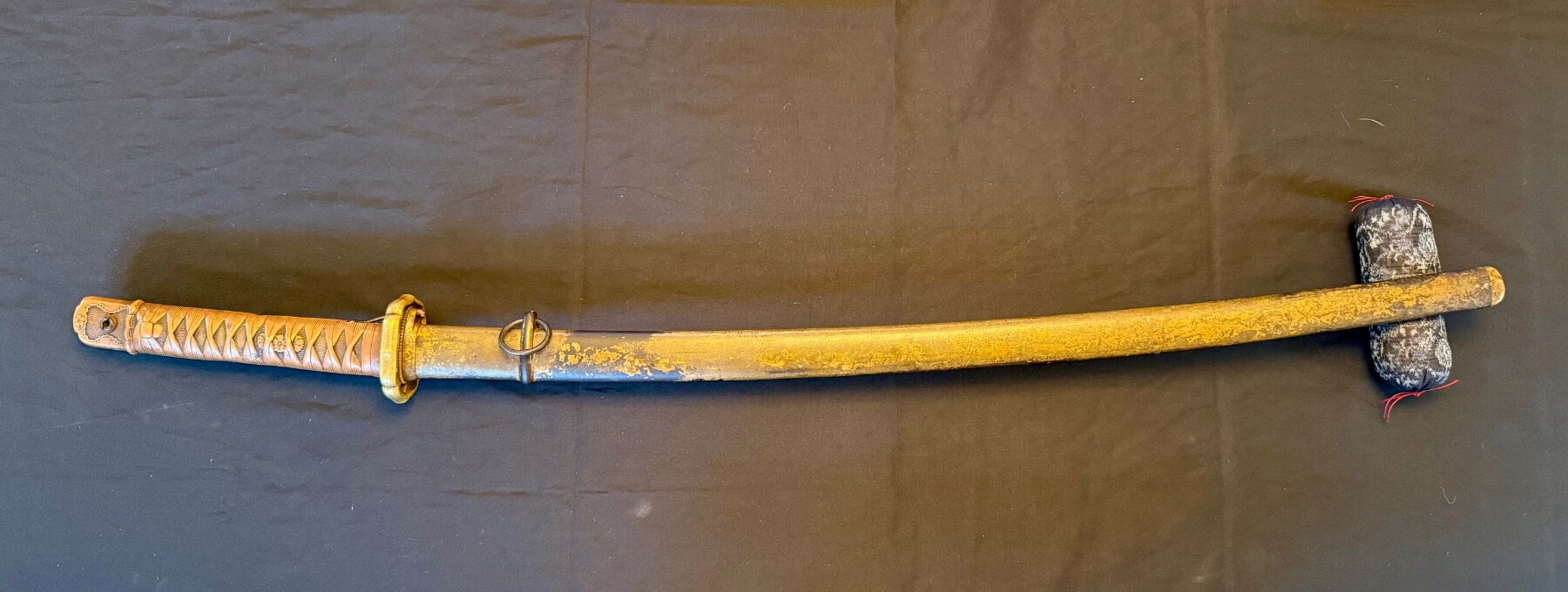
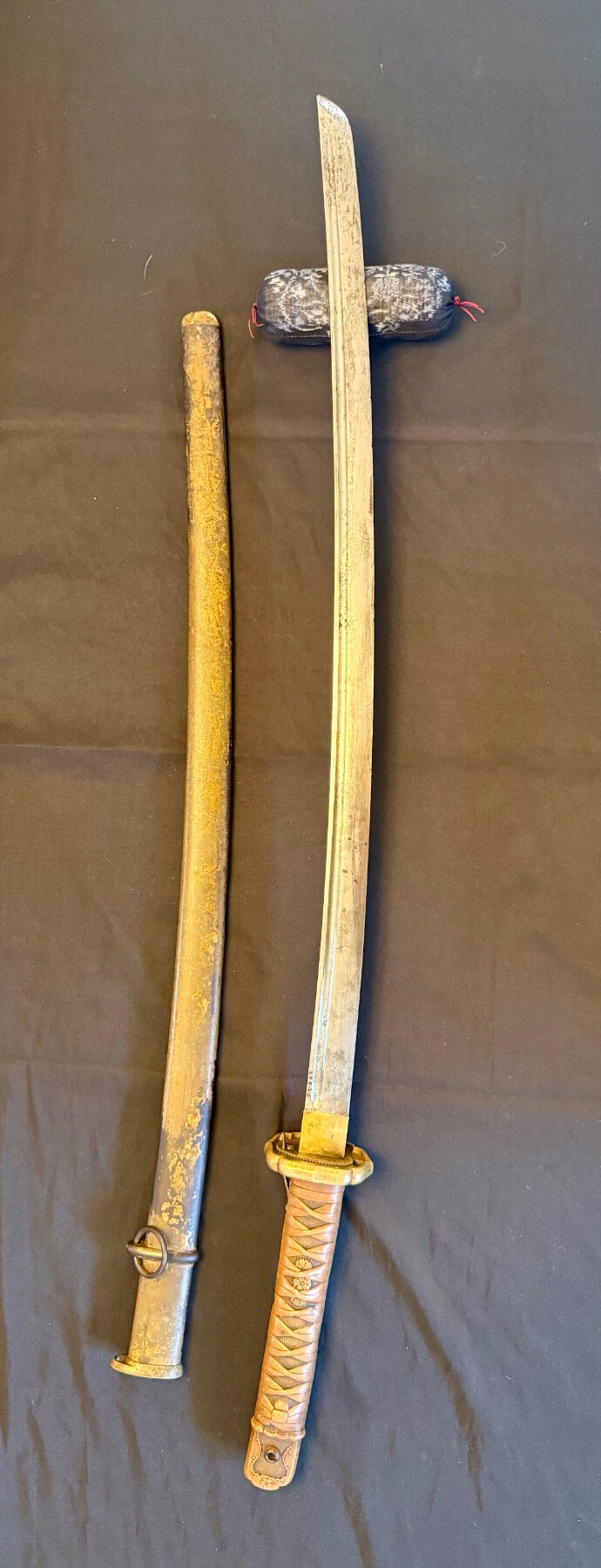
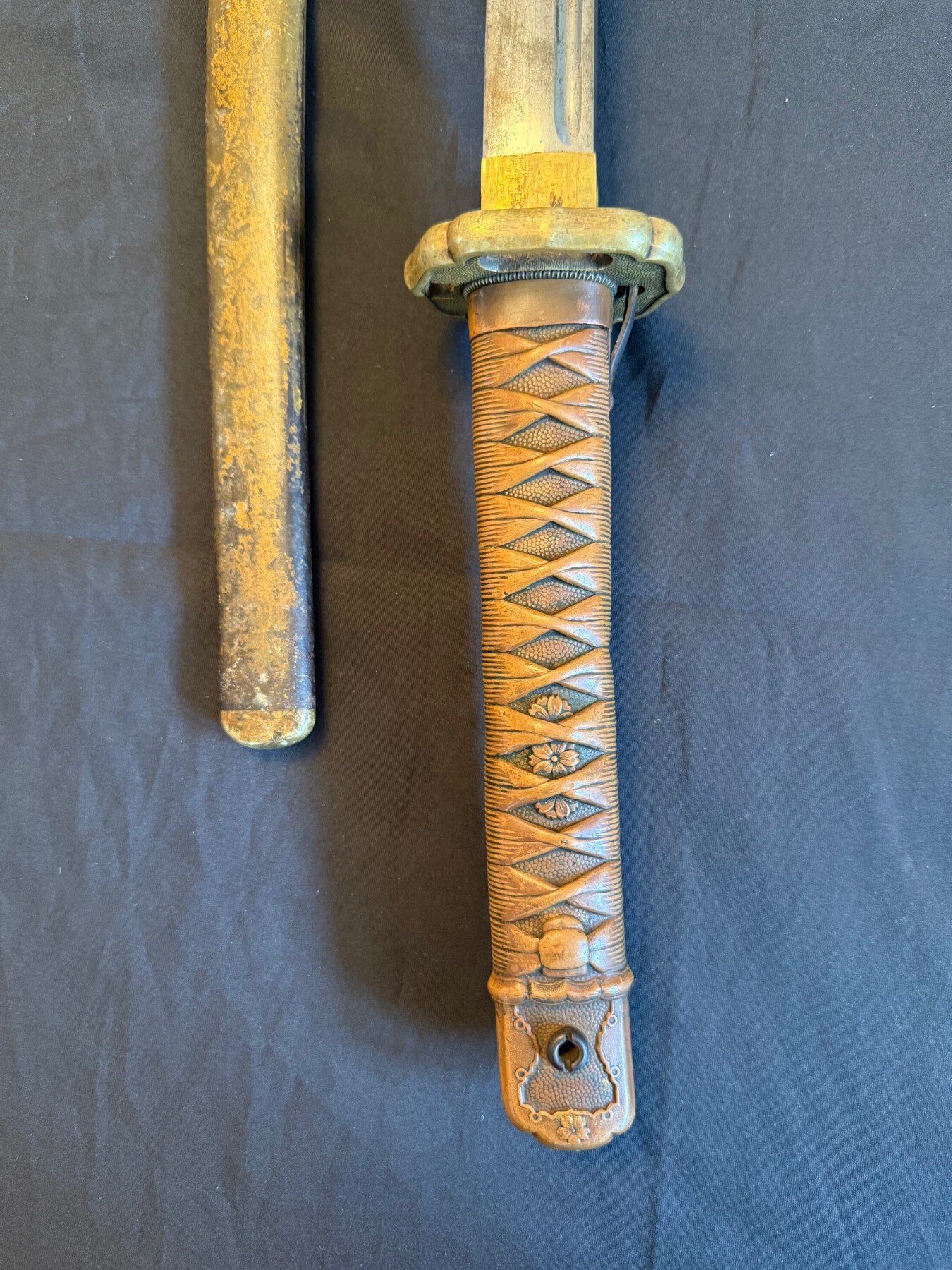
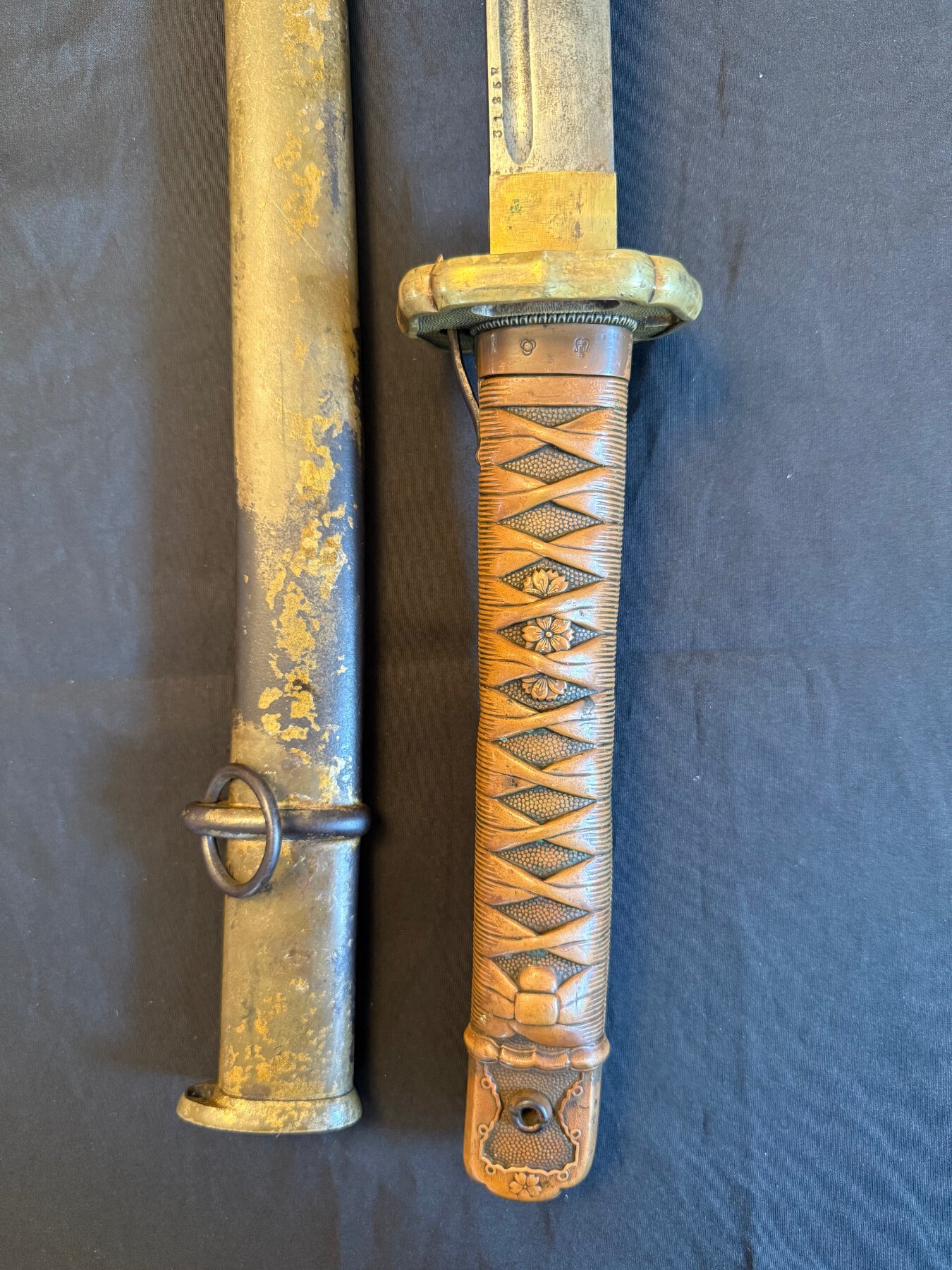
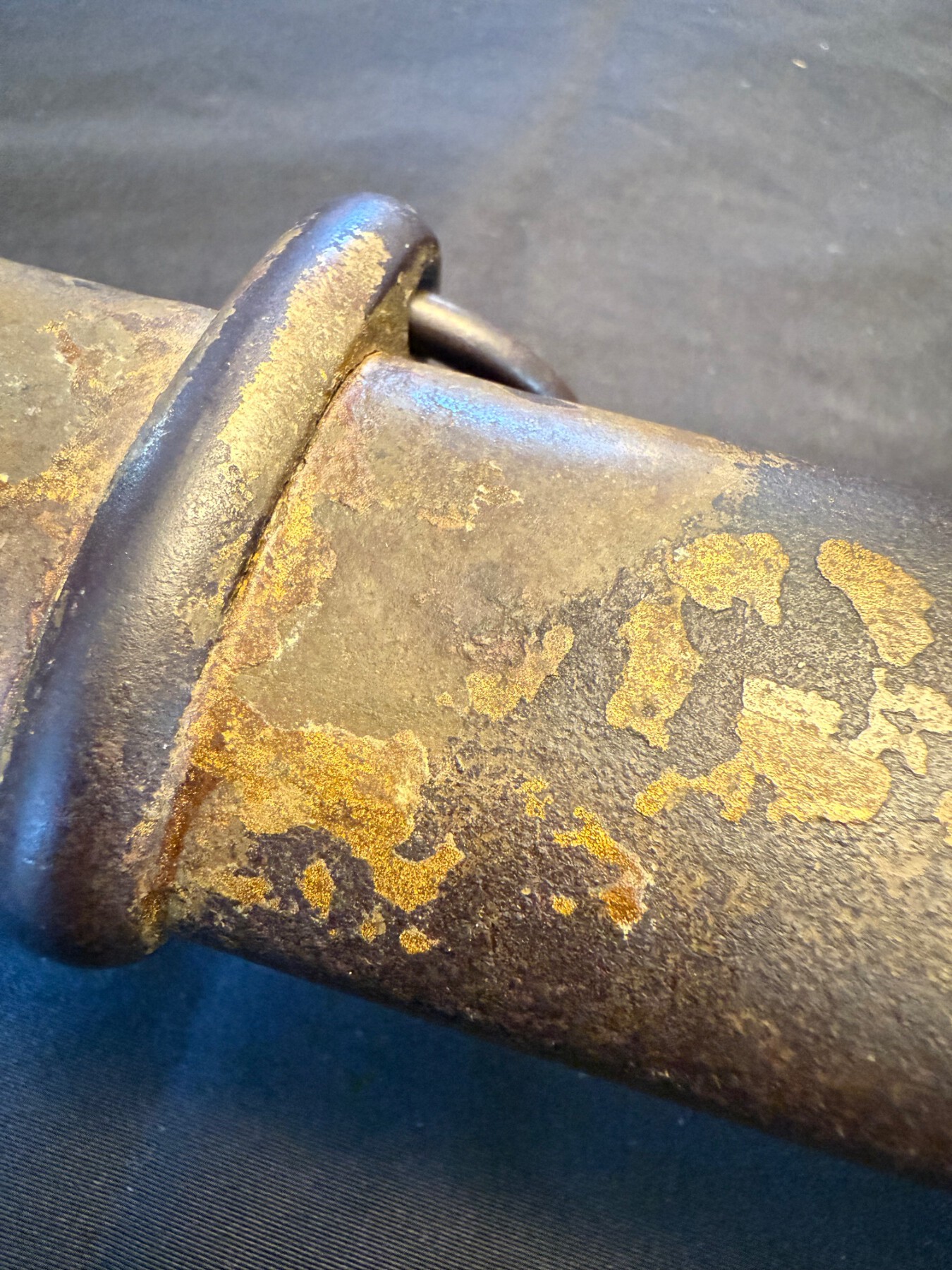
Very excited to have acquired my first Variation#1 Type 95. Serial number 3125 with matching scabbard number. @Bruce Pennington with remnants of thick gold paint on the scabbard. Im surprised to have found one of these so quickly. Fun stuff -Sam

 4 points
 -
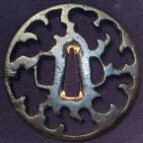
About “advancement of knowledge” in the field: People like Mitsuru Ito and Eckhard Kremers who have published books on specific collections of tsuba from particular smiths in a more analytical manner rather than just producing a picture book of accumulated tsuba from a particular school with no real analysis included. Markus Sesko of course needs to be mentioned because of his relentless efforts in translating Japanese texts, and the many years of him posting his blogs that frequently revolved around comparative analysis of small groups of similarly themed tsuba, sometimes by the same smith, and sometimes by different smiths. I always learned something whenever I read his posts. And then there's Steve Waszak with his years of dedication to Yamakichibei and Hoan tsuba... with a definitive book on the subject sure to come sometime in the future, which I hope to play some part in as I have also been diving deep into Yamakichibei, and separating out types of acid etched tsuba that often get mislabeled as Hoan. I have also been diving deep into all things “Owari-related”, trying to sort out the mess that is Kanayama, Ohno, Owari, and Ko-Akasaka (since they clearly had Owari roots), and trying to associate these with approximate time periods, trying to tie it all to cultural and artistic trends at various points in time. I apologize if I have left out any other publishers and bloggers from the list (like the “Zenzai blog” by Keisuke Nakamura, now that I think about it… he does this too, and I’m a big fan of what he puts together) Then there’s also some thoughtful insights and sharing of information on sites like this of course! At least this forum allows for the potential for some kind of proper, positive discussion. And just as an example, I realized I had two tsuba of clear Owari lineage, but that were also obviously divergent from the typical Owari tsuba. In comparing them, I realized they were made by the same smith who has yet to be described or named in some way. After posting the pair and pointing it out online, it tuned out that Eckhard Kremers had realized the same thing about this smith when looking at specific tsuba published by Sasano. Then he and I spurred each other on to do a deep dive into other publications and accumulated image banks, and we found a bunch more by the same smith. He has produced some extraordinary, unique designs that show a lot more "movement" compared to other Owari tsuba. His tsuba have gotten a variety of attributions from different sources, but as soon as you line them up, they are clearly all done by one smith. It's the "gut feeling" mislabeling under the current system that I think (hope?) can and should be course corrected over time, by doing comparative analysis in exactly this way…. I have also identified several other groupings of tsuba that I think point to the work of individuals smiths, rather than a broad label like "Owari" or one of the other Owari-linked groupings I mentioned above. Owari was after all, a significantly large geographic area with so many smiths with different styles over the course of the 1500s and 1600s. Anyway, It’s doable, but more people need to have these thoughts in mind when they are looking at examples and gathering up images of tsuba that allow for comparison (hopefully including some oblique and side views, and not just straight on black and white images!) Blah blah blah… when will this guy shut up… sheesh? I apologize for blathering, I will stop now Oh and no, I am not just presuming to throw my name in with all those that I mentioned above, out of some sort of inflated self-worth. But I'm putting in the effort to gather evidence, and trying to make sense of it all with an open mind and a critical view... which is what I share in common with all those I mentioned above. I hope to put together some kind of publication one day, but for now, I'm still gathering information and examples, and enjoying the obsession.4 points
-
As a disclaimer I must say I am not a martial artist even though I dabbled few years in Japanese sword arts when I was teenager. As a ōdachi fan I will vouch many of them were indeed used in battles. So far I have seen 30 historical ōdachi in various places in Japan and I am hoping to still see many more in the future. There are however some limitations by size and by age that are my own personal feelings, I will expand more on them later on the post. Most of the ōdachi I have seen are preserved in various shrines in Japan and photography in shrine treasure rooms is forbidden. So I don't have pictures taken at the shrines apart from few where the museum staff wanted me to take a picture of the item. However in books I do have lots and lots of pictures and information. I don't know my martial arts history that well but I know in Japan there are some arts that are seen as koryū (古流) and they have strong historical standing. I believe the martial art shown in above video is Enshin-ryū (円心流), which is to my understanding classified as koryū, old historical martial art. To my limited understanding the meaning and specifics of kata in koryū is not really given outside the school. So even if you see that ōdachi is drawn from the hip in videos it could possibly be just a form of training. I believe I have seen other videos of this same person using the same sword over the years. I believe it is ōdachi with a blade length of 三尺六寸 3 shaku 6 sun which in centimeters is 109 cm. He does have impressive drawing and sheating technique and I believe he would be very seasoned martial artist. This brings me to the koshirae and how they were worn. I have recorded currently 151 ōdachi in Japan. Extremely few of them are in katana koshirae, as wearing them thrusted through the belt was not really that good option in my personal opinion, and as they were intended for battlefield use I don't see wearing them thrusted through the belt, they were already out when going to live battle or in many cases high ranking samurai had sword bearers who carried the ōdachi and allowed their master to draw it. There are however few very large Edo period swords that I classify as an ōdachi that are in katana koshirae, I can remember few from memory. - Itsukushima Jinja has 99,8 cm blade dated 1867, it was commissioned by a sumo wrestler at that time. (I have seen this sword at the shrine) - Matsubara Hachimangu had 101,3 cm blade (if I understand correctly it is dated 1644 and dedicated to the shrine when made). - Unfortunately there is only small picture but I believe the Takaoka Jinja sword 106,1 cm and 1641 dated blade that was in previous Okayama Branch restoration project might have katana koshirae, the pic I have seen is very small. However mostly the old historical ōdachi had various types of ōdachi koshirae. Many of the Edo period ōdachi that still have koshirae have an ōdachi koshirae too. Also the dating on the blades for Edo period can show how it will fit historically into timeline of Japan, as battles ceased after the early 1600's. I watched some Japanese youtube videos and in one of them it was mentioned that actually commissioning an ōdachi cost several times the normal amount of money, which is easy to understand, as the project of making a giant sword is lot more complicated than a normal sized one. This usually would mean that the person commissioning the sword must be wealthy and/or possibly a high ranking samurai. Finally comes the size of the ōdachi. These are just my personal opinions after seeing many of them live at shrines and lots and lots in books. Of course unfortunately currently handling experience is limited to modern swords. I am talking about blade lengths here, I see the length range of 3 to 4 shaku (90-120 cm) as perfectly reasonable range, there shouldn't be any issues with these. blade lengths of 4 to 5 shaku (120-150 cm) is where I see the upper end of actually usable ōdachi. When you go to blade lengths of over 5 shaku (150+ cm) I just don't see them all that reasonable for usability. As you have to calculate the tsuka in, these weapons are over 200 cm in total length and the majority of it is in blade. For usability I would rather exchange some of that blade length to handle/shaft length, arriving towards large bladed nagamaki and naginata. I think the longest ōdachi that I know has historical record of it being used in battle is the gigantic Tarōtachi (太郎太刀) of Atsuta Jingū it has blade length of 221,5 cm. There is a historical legend and provenance to back that up and there is a story for it. In my understanding the short version would be that two relatives wielding two giant ōdachi Tarōtachi and Jirōtachi, were stalling the enemy troops while wielding these on horseback. The enemy finally killed both of them but they gave time for others to get to safety. I believe they were dedicated to Atsuta Jingū in 1576. Atsuta Jingū has three ōdachi in similar koshirae Tarōtachi, Jirōtachi and Kanetake ōdachi made in 1620. As there is historical story and provenance I cannot discard the fact that the giant sword could indeed have been used in battle. In my brain I just can't figure out what would be the benefit in having these extremely long blades compared to very long blade with slightly longer handle. The post came quite a bit longer than I originally intended and had to do some fact checking as I hate making errors.3 points
-
( I asked because it is a bit long.) Right(meaning) 「The Kagura of our shrine has been performed since ancient times, and it is even mentioned in an old poetry anthology, 拾遺和歌集the Shūi Wakashū. The waka poem composed by藤原忠房 Fujiwara noTadafusa when 宇多上皇Emperor Uda (during his time as a retired emperor)visited Kasuga Taisha in Nara. (In 920. 延喜engi20年)」 Left(Only the first half of the waka poem is written.) (meaning) 「Today, Yaotome (shrine maidens who perform Kagura) at Kasuga Taisha are so wonderfully rare and beautiful that even the gods themselves cannot help but rejoice and praise them.」 「めつらしき けふの春日の やをとめを かみもうれしと しのはさらめや」 me tu ra si ki ke fu no ka su ga no ya wo to me wo ka mi mo u re shi to shi no ha sa ra me ya (珍しき 今日の春日の 八乙女を 神も嬉しと 忍ばざらめや ) (mezurasiki kyou no kasuga no yawotome wo kami mo ureshi to sinoba zarameya) The photo shows the text up to “yawotome wo.” (Emperor Uda is famous for having written in his diary that “my black cat is so cute.”) Hiro3 points
-
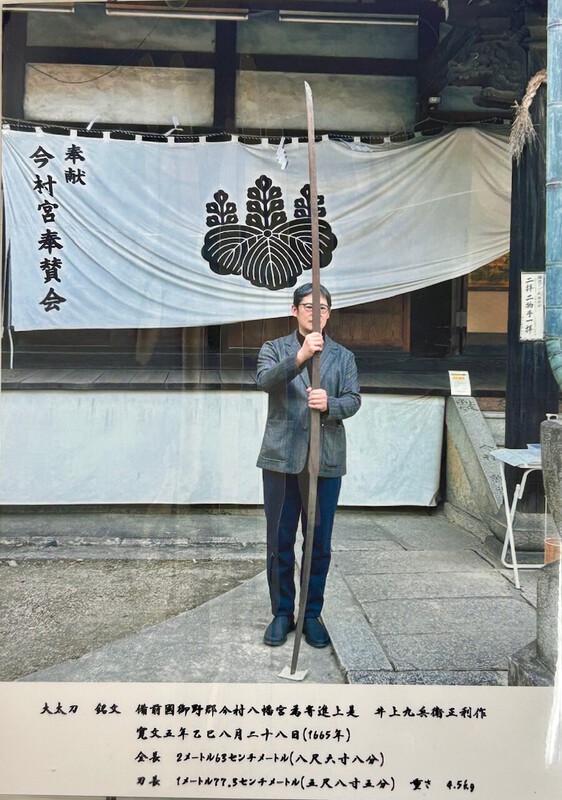
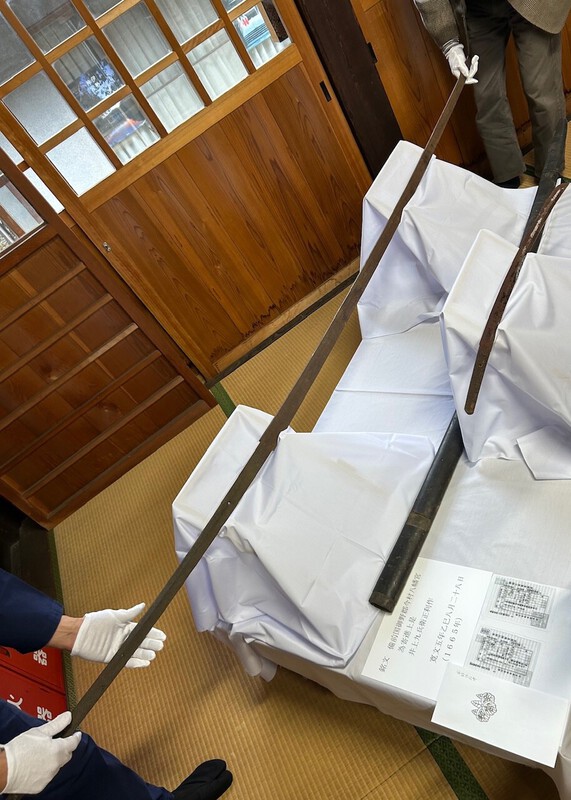
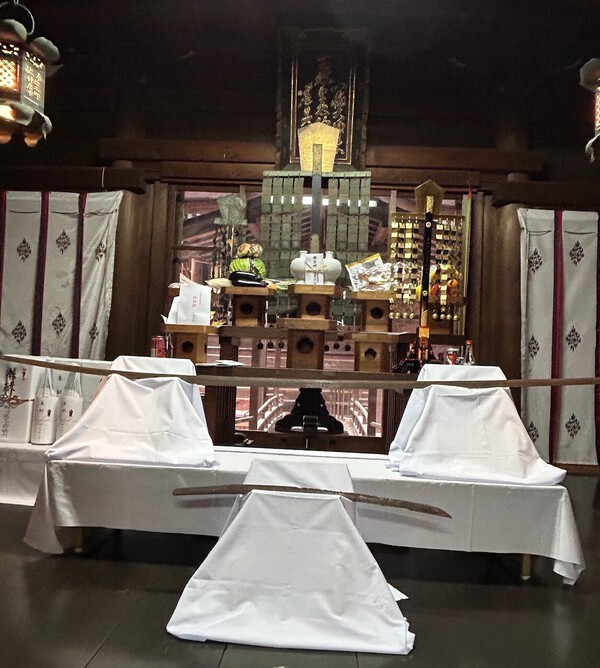
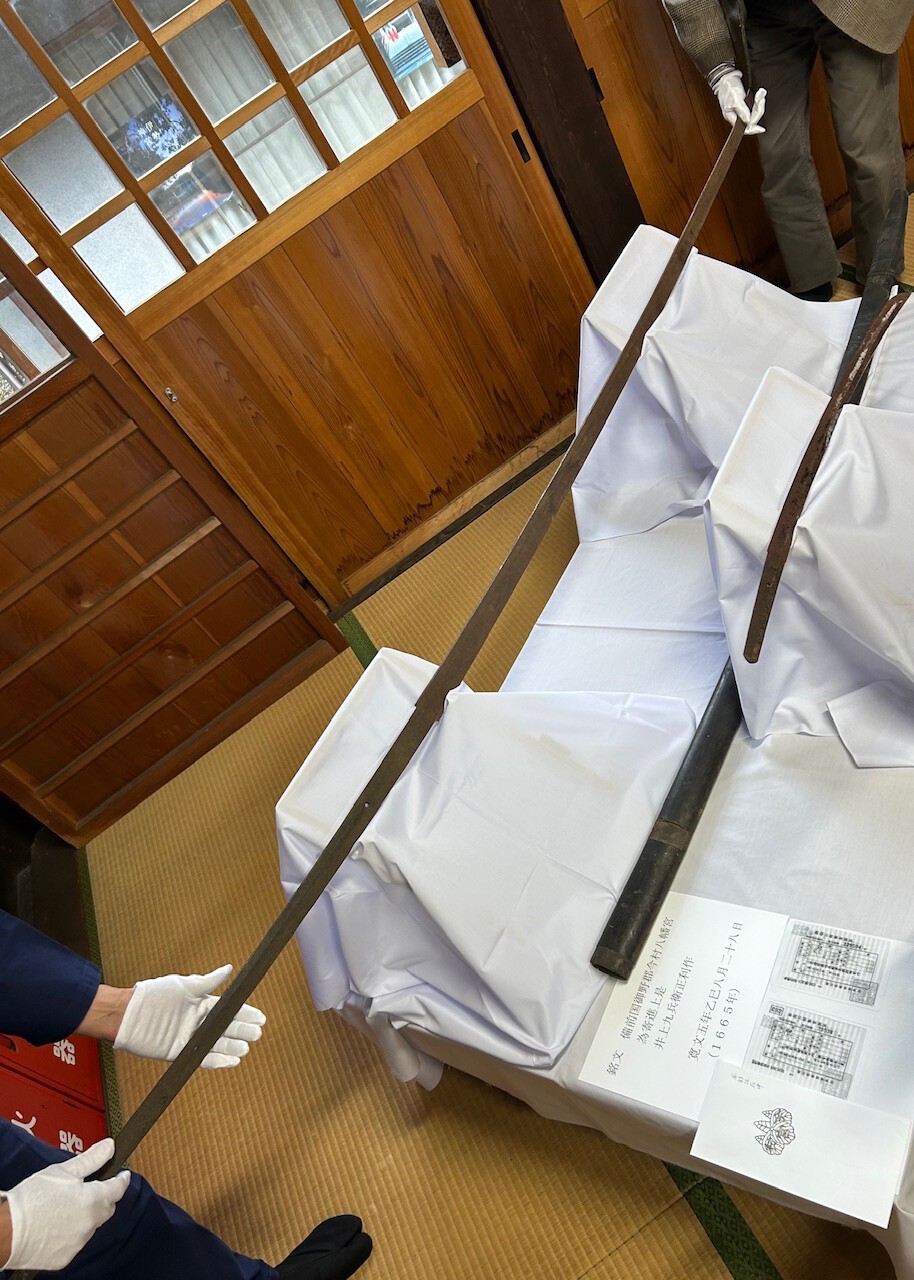
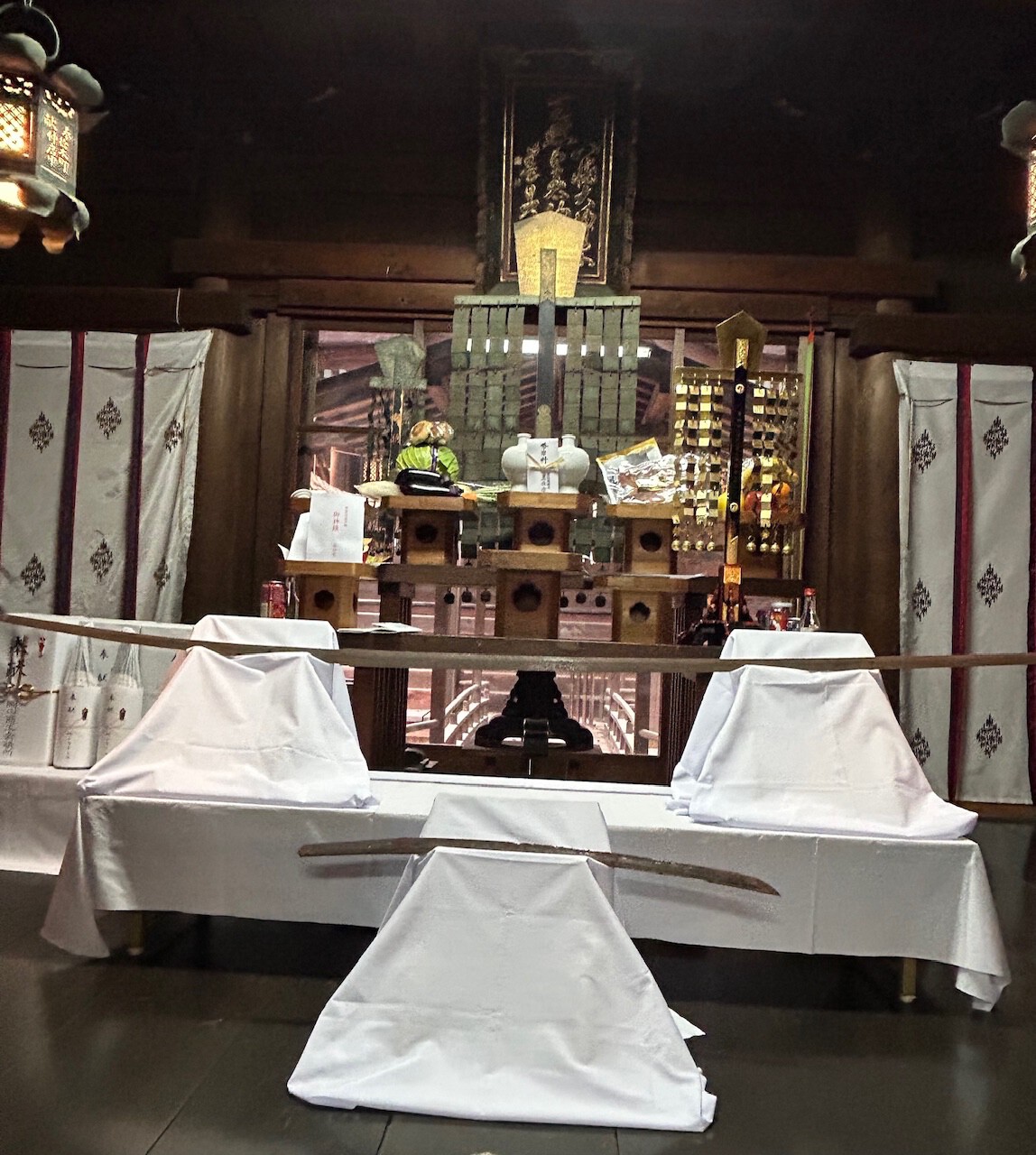
With the falling population, and villages and shrines suffering, many formerly dedicated swords are rusting away for lack of attention. So far the local chapter has negotiated with many shrine authorities and been able to restore nine swords to their former glory, most of them now housed in Okayama Prefectural Museum. Some of these have even achieved official cultural designations. Each time though,we have had to come up with novel ways to fund these restorations, and it is not a cheap venture. Two swords were housed in the Imamura Hachiman Gu, but the previous priests were unwilling to get involved in any project. The new priest however has been more cooperative, and in our third grand project, two swords are now set for polishing, preservation and display. Osafune Sword Museum has agreed to house them and care for them. There will be an official opening ceremony for the project at the shrine on the 4th of April, 2026. The swords will be funded by various means, lectures, etc., and the target is JPY 3 million. The first is a long Odachi by a relatively unknown smith named Inoue Kyubei Masatoshi, dated 1665. 2 m 63 cm overall, the blade length is 1 m 77.3 cm, and it weighs 4.5 kg. The Inoue Kyubei line of smiths lived under the walls of Okayama Castle, Masashige, Masatoshi, Masakiyo, but very few of their works survive, making this a rare artefact. The total estimate for restoration, including a magnolia wood box for example, is 2.5 million. The second is a 1574 katana by Genbei no Jo Sukesada, with a blade length of 68.2 cm, dedicated by a retainer of the Ikeda Daimyo family to the shrine in 1738. This will add a further 500,000 to the bill making a total of 3 million yen. With this latest project they are not planning to ask for donations from overseas. Both blades will be on and off display over the coming year, and from the April 2027 shrine presentation ceremony onwards, they will be housed at Osafune Sword Museum.
 2 points
 -
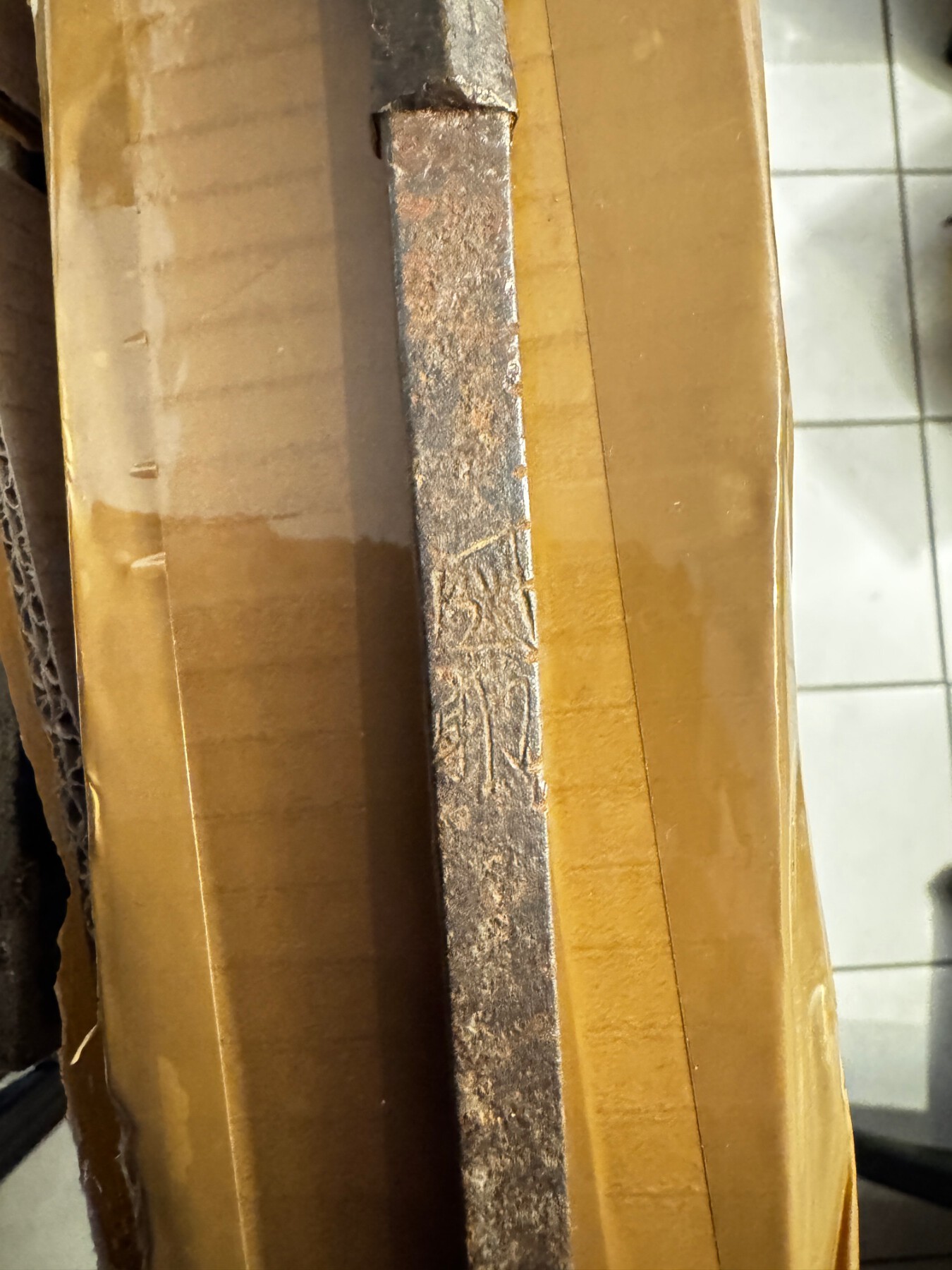
為” (traditional Chinese) and “为” (simplified Chinese) are two forms of the same character. You are right,the inscrib one the tang should be traditional Chinese "靖國為和平“。2 points
-
Hanwei(汉威) Yasukuni guntō replica by Paul Chen (陈朝波). The tang is inscribed with “靖国为和平” (“Yasukuni for peace”). https://en.wikipedia.org/wiki/Dalian_Hanwei_Metal Here is one of sword with his mei
 2 points
 -
I am fortunate to have a copy of this beautiful book. It has pride of place in my library. It has to! It doesn't fit on any of my shelves, so it sits on a book stand in a corner where I can stand and read it.
 2 points
 -
I would think they are from Hanwei https://www.samurai-katana-shop.nl/en/katana-samurai-sword/buying-sword-paul-chen/forged-katana-sword/yasukuni-colonels-gunto https://www.samurai-katana-shop.nl/en/katana-samurai-sword/buying-sword-paul-chen/forged-katana-sword/yasukuni-captain-s-gunto2 points
-
Vit, the blade is signed Tadayoshi as is indeed an authentic Edo period sword. However there were many blades with gimei (fake inscriptions) from the Hizen Tadayoshi school and I could suggest holding for something with papers (kanteisho) which this does not have. The attached document is simply a torokusho sword license and does not authenticate the inscription or give any type of attribution for the sword.2 points
-
Hi Dave, Here is your guy: "ICHINONJI (一文字), Shōwa (昭和, 1926-1989), Gifu – “Ichimonji” (一文字), real name Endō Masayuki (遠藤公之), born October 23rd 1890, he worked as a guntō smith." The stamp is the Showa stamp, used by the civilian Seki Cutlery Manufacturers Association between 1935 and 1942. Most dated blades with the stamp were made in 1940-41.2 points
-
Tsuba Kanshô Jiten 鐔鑑賞事典 - 上巻 (jôkan)・下巻 (gekan) Wakayama Takeshi 若山猛 Yûzankaku 雄山閣 1977 Owari.pdf2 points
-
Hi, This might be a metaphor for the games of love?(two-timing in love?) I might be cautioned by experts if I write something speculative about the content. (↓This is a very rough interpretation—just my own image. the first poem→"A horse that has run free will not accept the stirrup again." the later poem→"It was good the first time I rode it. A young horse, once in the stirrup, cannot step back.") ( Please let me know if anything is incorrect.) 三都之内 江戸武蔵鐙 Santo no uchi Edo musashi abumi (三都=Edo,Kyoto,Osaka) 武蔵野に かけて遊へと 名にしおふ あふみをはまた 掛ぬ春こま 佐倉壽美麿 musashino ni kakete asoheto nanishiohu afumi(鐙)wohamata kakenu harukoma (春駒) (NAME:Sakura Sumimaro) 大江戸に のり初よしや 武蔵あふみ かけては跡へ 引かぬ若駒 宝館福住 ooedo ni norihatsu yoshiya musashi afumi(鐙) kaketeha atohe hikanu wakagoma (NAME:Houkan Fukuju?) The sign on the right 北渓(Totoya Hokkei 魚屋北渓 1780–1850) The mark on the left 芝山堂 Shibayama dou(publisher) (I’m an amateur, so I stay quiet when the text is difficult…!) Hiro2 points
-
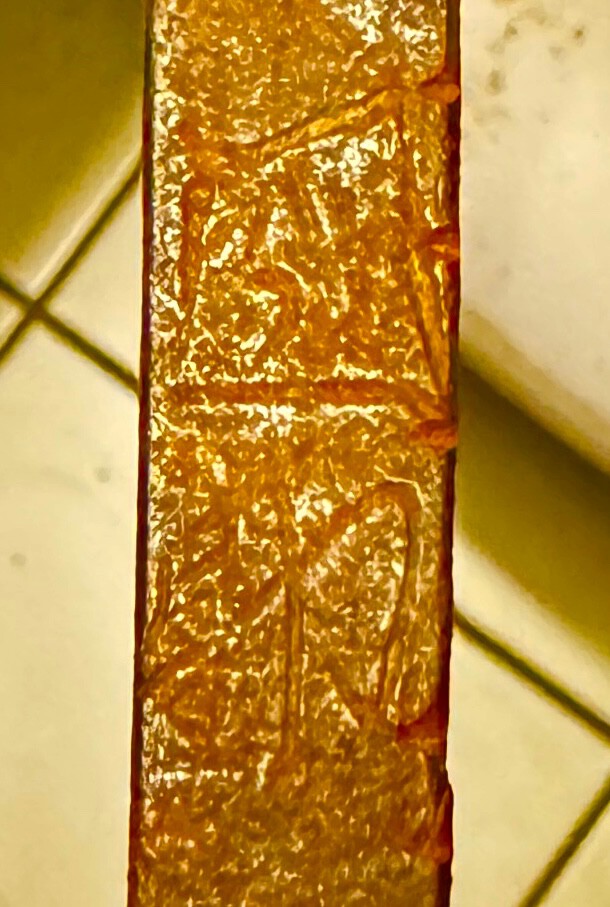
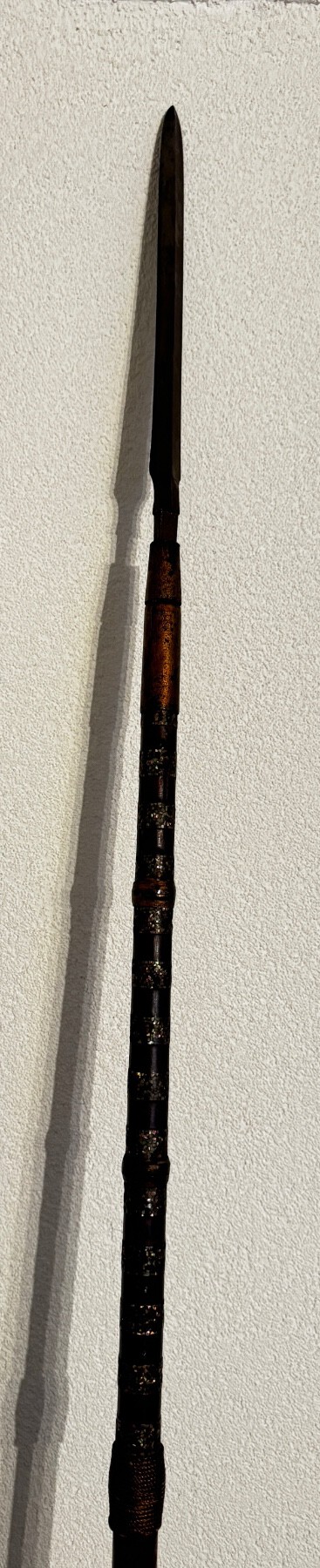
…I realize this may not be to everyone’s taste. The yari is a fukuro yari signed Chikuzen Shimosaka (Shimosaka of the Chikuzen school).This project is a culmination of four different stylized decorative techniques giving homage to the original pole and yari, though not copying it. The goal of the project was to infuse a variety of decorative techniques using modern methods and materials. A more stylized blend, if you will, rather than an exact replication. The project includes the following stylized decorative techniques: Mokume (木目) – wood grain pattern in an otherwise flat surface. This was to honor the old saya that had a wavy grain pattern to it (see pic 3). Tsugaru-nuri (津軽塗) – sanding through the top black layer to expose the red layer underneath. The yari had this same effect, though not intentionally. At some point, someone sanded off the urushi to expose the name (see pic 4). Kin-mushikui-nuri (金虫喰塗り) – the golden worm eaten effect. My take on it included a more rustic interpretation with brushed golden worm trails (also pic 4). Maki-e (蒔絵) – powdered gold sprinkled onto or mixed into urushi. In this case, I really liked to stick with the red on black theme. So my interpretation was a very light dusting of copper mica powder. It has a very subtle effect visible only under certain lighting (also pic 4). In addition to the above, the saya is in a standing or display form, as often seen in Japan. The base layers are 5 coats of black Japan paint followed by 3 layers of red and an additional 3 layers of black. Each layer was applied then NOT sanded smooth, but rather sanded lightly to highlight the brush strokes. Each layer built on the last to create the mokume effect. The layers also allowed for the depth of the nuri. Nuri were sanded in, exposing the red layer in the middle. Three layers of shellac to seal were next then gold gilder’s paste was thinned and brushed on. This was followed by 3 layers of gloss lacquer (no urushi for me. Really allergic to sumac). The mica powder was lightly brushed on followed by 3 more layers of lacquer. Not quite as time consuming as traditional Japanese techniques. But tedious enough. Every layer had to dry for 24 hours before the next was applied. I hope you like it; and more importantly, I hope you all are inspired to create your own saya and artistic interpretations. John C.


 2 points
 -
Wow, thanks a lot! I might have photographed this one... The archive is getting messy I am afriad.
 2 points
 -
The sides each have different information and are not read sequentially. Hizen (no) kuni junin Yoshitada saku kore The other side converts to a date of May, 1942 (the fifth month of the 2,602nd year of the founding of the empire)2 points
-
My first guess would be 国助 Kunisuke.2 points
-
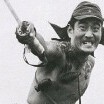
Odachi are indeed a fascinating subject. I was just doing my daily trawl of all things interesting when unexpectedly this Facebook reel popped into my orbit: https://www.facebook.com/reel/1526780725833444 @Jussi Ekholm may have a thing or two to say about this practitioner of the art of drawing an Odachi?? Regards, BaZZa.2 points
-
About “mass production” and crossover between schools: I'm going to start most recent and head back in time... From my personal research over the years, true mass production of the generic rote kind, really seems to have kicked into gear around 1700, mid-Edo period. There were lots of sociological, economic and technological shifts around that time that facilitated that. More rampant crossover between schools and smiths seems to have kicked in around the mid-1600s (after the establishment of Edo as a new capital city and the "sankin-kotai" which was the forced pilgrimage and residency of daimyo and their entourage of 100s-1000s of attendants including craftsman, every other year. That all started in 1635 but was expanded to include more daimyo as of 1642. So that's when many craftsmen from different schools were all in the same place at the same time, for extended periods of time and sharing ideas and techniques with one another. From my personal comparative analysis of tsuba from the same maker (of known smiths, with a known mei), from the Momoyama to early Edo period, there seems to have been more of an "exploration of a theme" in the creation of multiple variations by one smith, but they did not seem to make rote copies of any specific design (maybe some did once in a while, but I don’t have any examples of that yet). Successors in a school lineage do revisit certain themes from their predecessor/s but they seem to put their own little twist on the design, perhaps to distinguish their work from others and put their personal "stamp" on it.2 points
-
About these specific tsuba: I posted these three tsuba in particular in the hopes of gleaning some input from some other eyes besides mine and the papers and/ore attributions they have (which I generally do not trust, especially when “alarm bells” start going off in my head when I see what they are labeled as). I didn’t post these thinking I know the answer, not at all. This was “crowdsourcing” with the hopes of generating discussion. These are not common tsuba at all… sure there are plenty of cloud and geese tsuba out there, but this is a pretty specific variation on the overall theme. At first these tsuba all jumped out at me as being Higo tsuba because of the hitsu-ana shape, which is quite particular to them and is often a key point to identifying one of their tsuba. I was taken aback with the ko-Akasaka papers on the second one, but there is a distinct shift in the size of the hitsu-ana and the fineness of the chiseled karigane, and the relative proportions of the sukashi thicknesses… so I could see it as being something other than Higo. Until this point, I was unaware of Akasaka smiths doing Higo style hitsu-ana, I thought they typically stuck to their own shapes. Higo did have a strong influence on Akasaka afterall… something I sometimes see some people viewing the other way around… but I have always viewed it as Higo being the influence on Akasaka. I’d like to dig into the tegane-ato around the nakago-ana to see if I can dig up some similarities with other Akasaka smiths and Higo smiths… more evidence to gather to help build a more specific case for each or maybe keep the door open... time will tell.2 points
-
Most attributions are based on a gut feeling... most papers are not judged by jury but by a single member, then the paper gets signed off at the end. Most of these judgements seem to be done in minutes, without any sort of diligence or consultation to databases of any kind (which is why the NBTHK frequently contradicts itself when the same tsuba gets re-submitted for shinsa) Proofs?! There are hardly any at all for anything that is unsigned from the pre-Edo and early Edo periods. Old books, and papers are just a loose guideline... and because of the author's own lack of certainty, they deliver plenty of opportunity to muddy the waters for current collectors who want to "know what they have". Some of these attributions have done more harm than good over time. It's exactly what @FlorianB proceeded to do, that we need more of... That's precisely the the type of thing we all need to be doing (and posting ) if "we" as a collective hope to get to something "better" than the vapid system we have now. ...or we can just keep flouting the papers people buy rather than the tsuba themselves. Not that I'm saying you are doing that Florian, but there are a ton of people who do... it is a money making machine after all, if you are lucky enough to get the "more valuable" school attribution in the lottery that is the current papering system).2 points
-
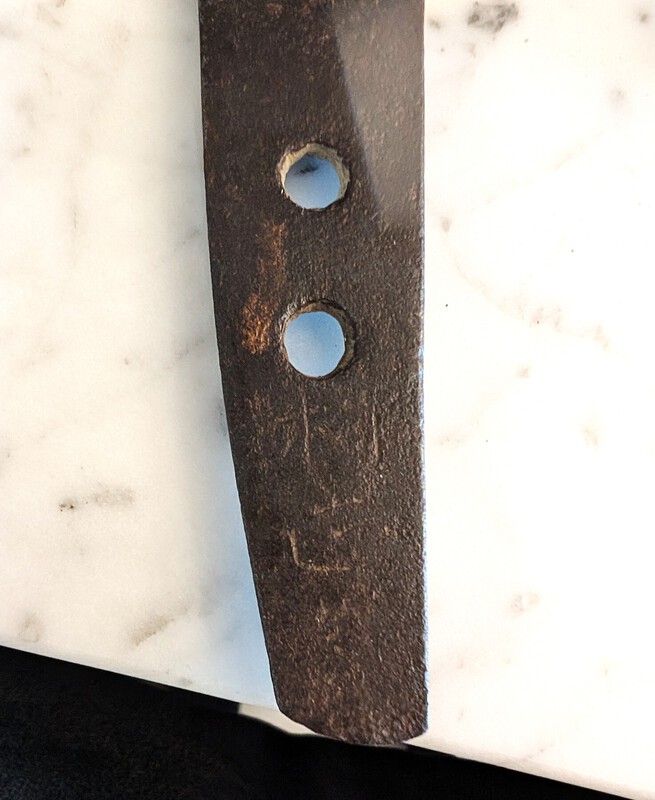
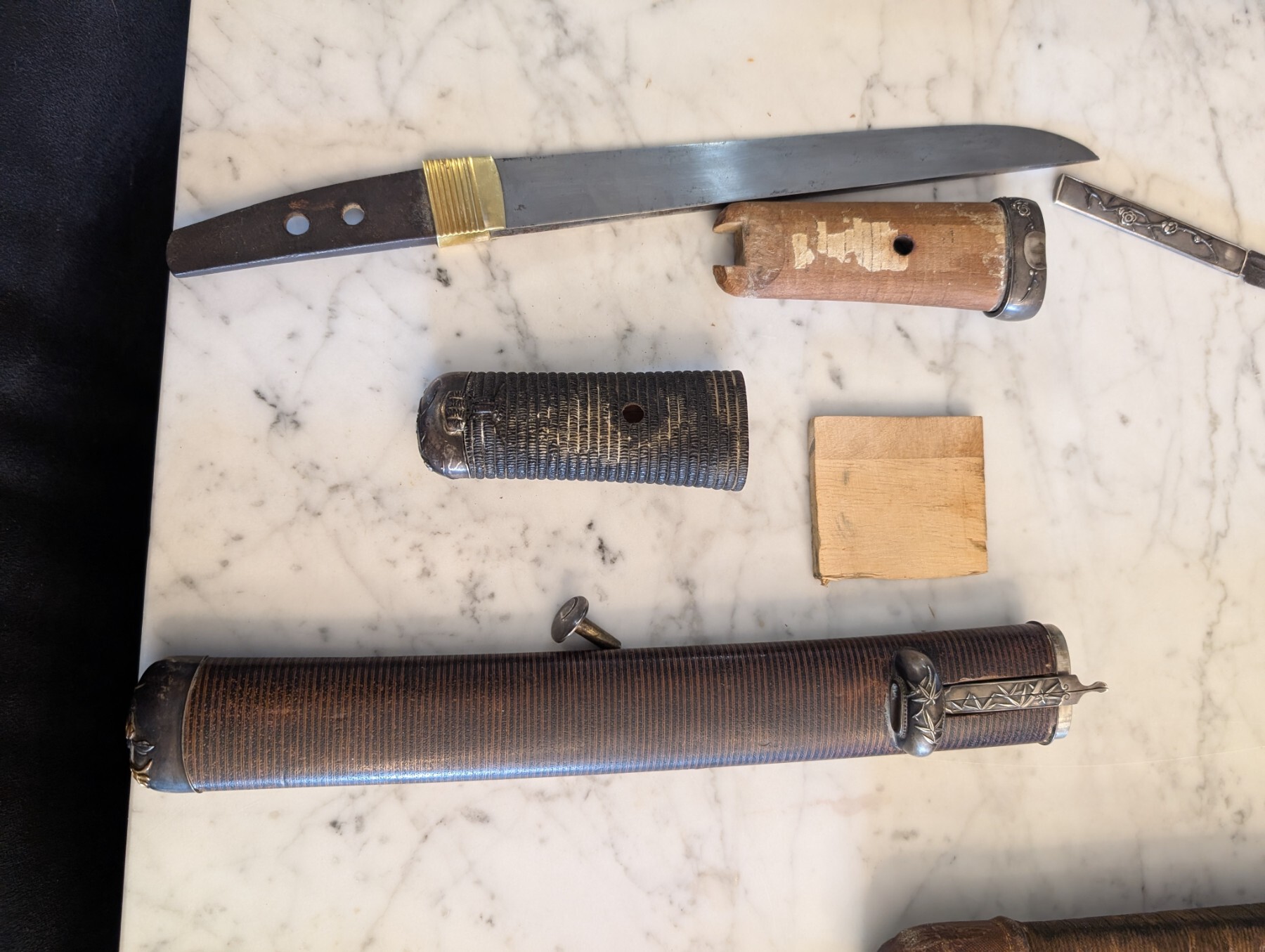
Hello everyone, A friend recently showed me this tanto for which I cannot quite make out the signature. I'm working very hard to convince myself that it is not Muramasa though, as the characters certainly look very similar. XD The blade comes with a very high end koshirae. Almost every single feature that can be silver is made of that metal, even down to the koiguchi, over which the fuchi slides to almost hermetically enclose the blade in the saya. The only exception is the habaki... which is wrapped in gold foil. Also, I am curious if there is a name for this type of tsukamaki. It appears to be a sheath of wood over which someone created a mock tsuka ito using urushi. Thanks in advance for anyone willing to help!
 1 point
 -
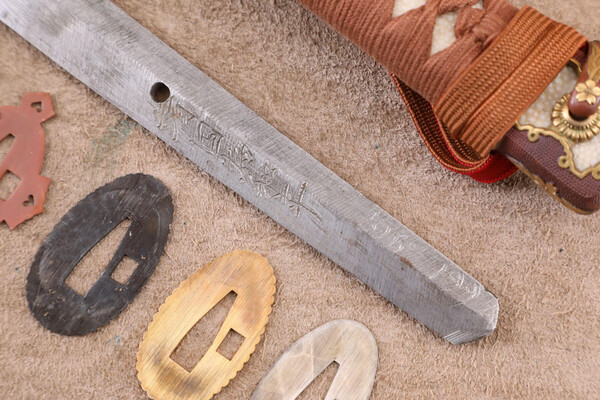
Anyone know about this reproduction maker? Fortunately, it's being sold as a reproduction on this Auction. I tried looking them up, but not finding anything. Just a few of the many photos


 1 point
 -
I think the characters on both swords are Yasukuni 靖国. The third character on one looks like 為. Both swords also seem to have numbers etched at the bottom of the tang.1 point
-
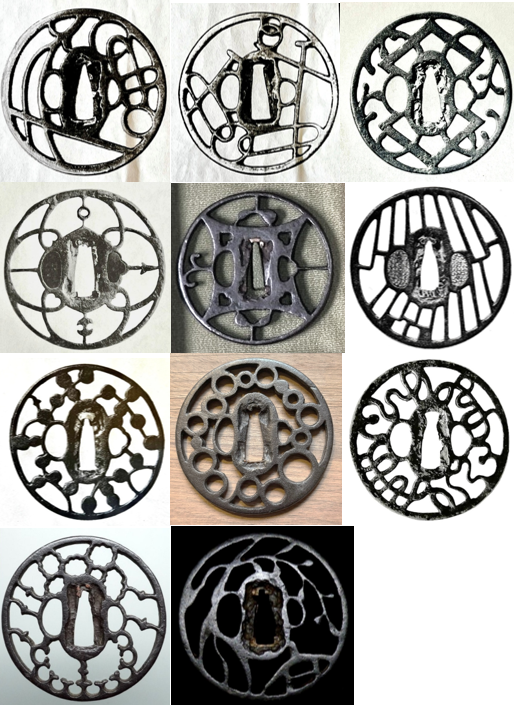
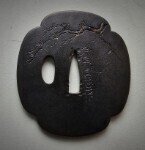
That now makes 11 examples from this one Owari "Mystery master"... These clearly represent a point in time when there was an aesthetic shift away from the typically more symmetrical geometric patterns of traditional Owari and Kyo-sukashi, exploring a much looser and expressive design theory.
 1 point
 -
Looking forward to seeing what you bring to Utrecht in June. Apart from my uchiko You have one of the most interesting tables at the Show1 point
-
Signed Muramasa.1 point
-
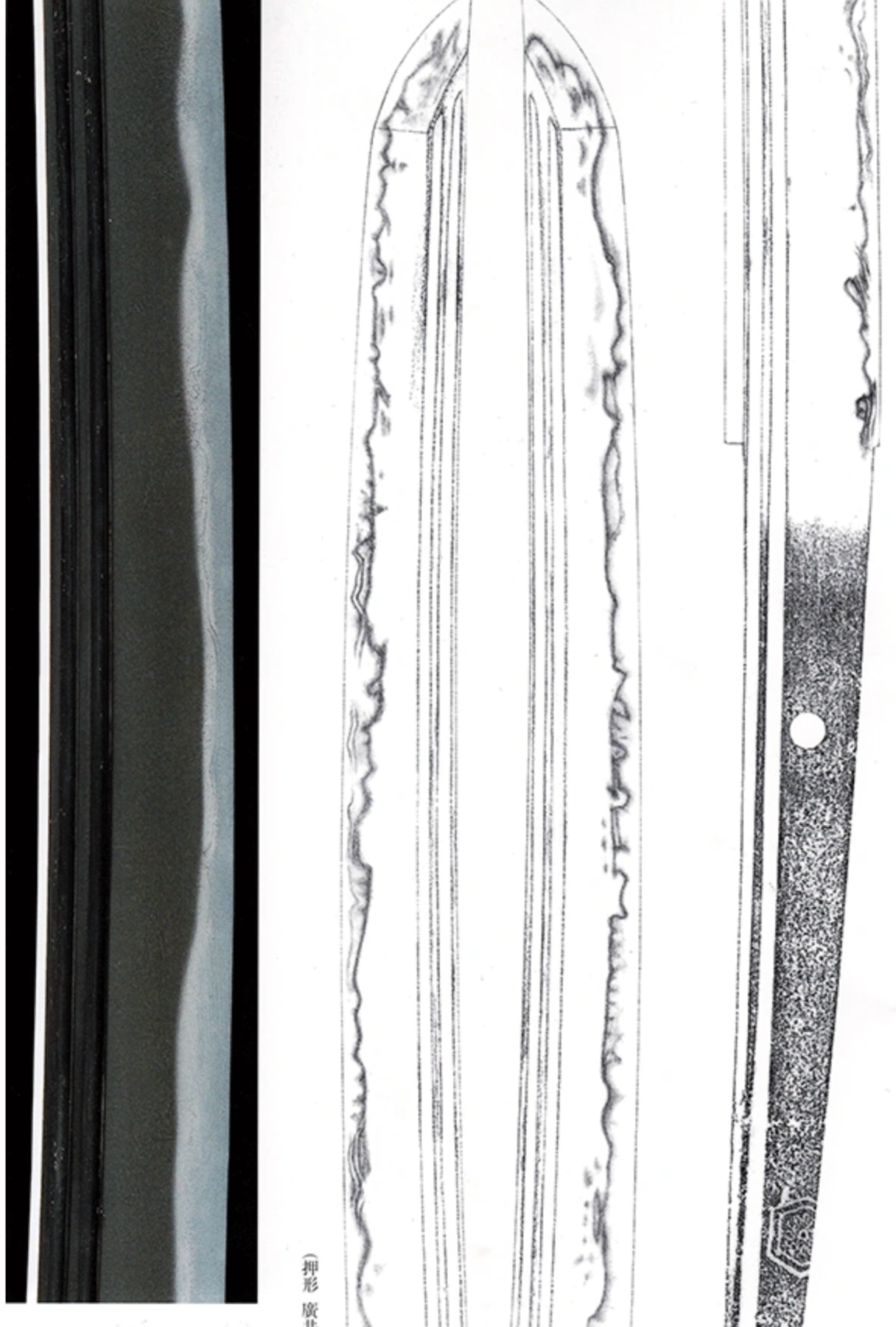
A few more images and an oshigata.
 1 point
 -
Certainly not worthless since it is still an authentic nihonto. And depending on the blade condition/size 260,000 yen is quite resonable esp for a long blade. I wouldnt mind paying that if I loved a blade that I knew was gimei.1 point
-
Can you slide the habaki (brass collar) off to see if there is a star stamp underneath? Yoshitada was an RJT qualified smith. Some of his blades had a star, some had other stamps.1 point
-
Either a giant has got a sukashi tsuba for sale or that tsuba came off a tiny sword! https://www.ebay.com.au/itm/4068395307291 point
-
Are those nie crystals in the Hi or an artifact of the scanning. If the former thats impressive. Peak Soshu?1 point
-
Hi, I confirm a happy 'customer' here, with successful delivery to USA (even with all the BAN from Mr. Trump). Please browse catalog, these Tsuba are really nice and prices are also fair. Cheers!1 point
-
Some info and swords at site needs to be updated. Please wait with offers until owner get in touch himself.1 point
-
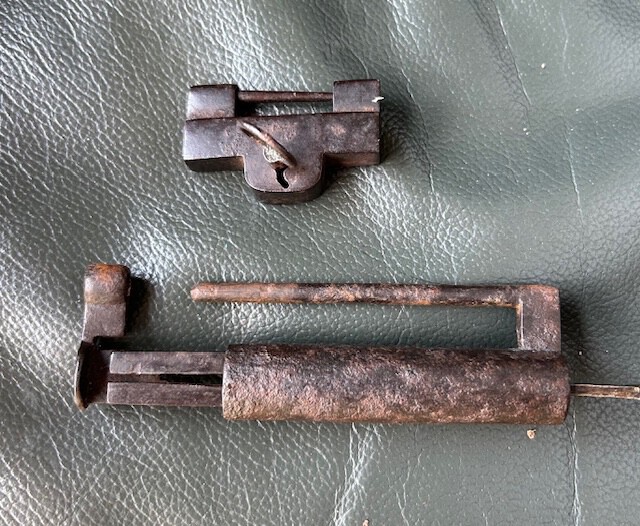
Needed a vertical pin. Notice the ‘Western’ style key in the above padlock. The one below had just the right vertical pin length.
 1 point
 -
Another type 95, a copper,owned by Sam, @Scogg, and posted here:
 1 point
 -
It's hard to tell from photos, but this could be a good sword in somewhat rough condition. Best to take good care of it until it can be evaluated in hand by a Japanese-trained polisher or someone comparable.1 point
-
If it is an engraving, then the patina in the mon engraving looks similar to the surrounding area In addition, I would assume that the original location was in the habaki area
 1 point
 -
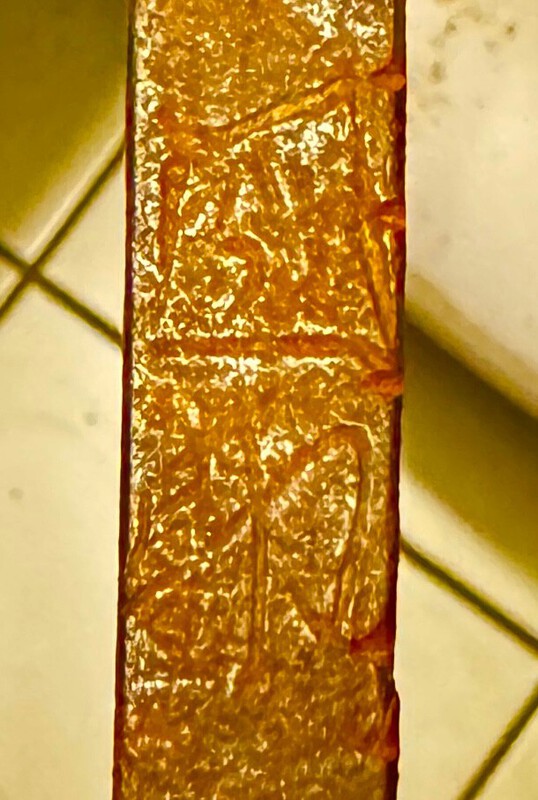
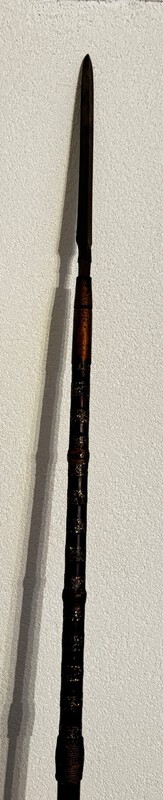
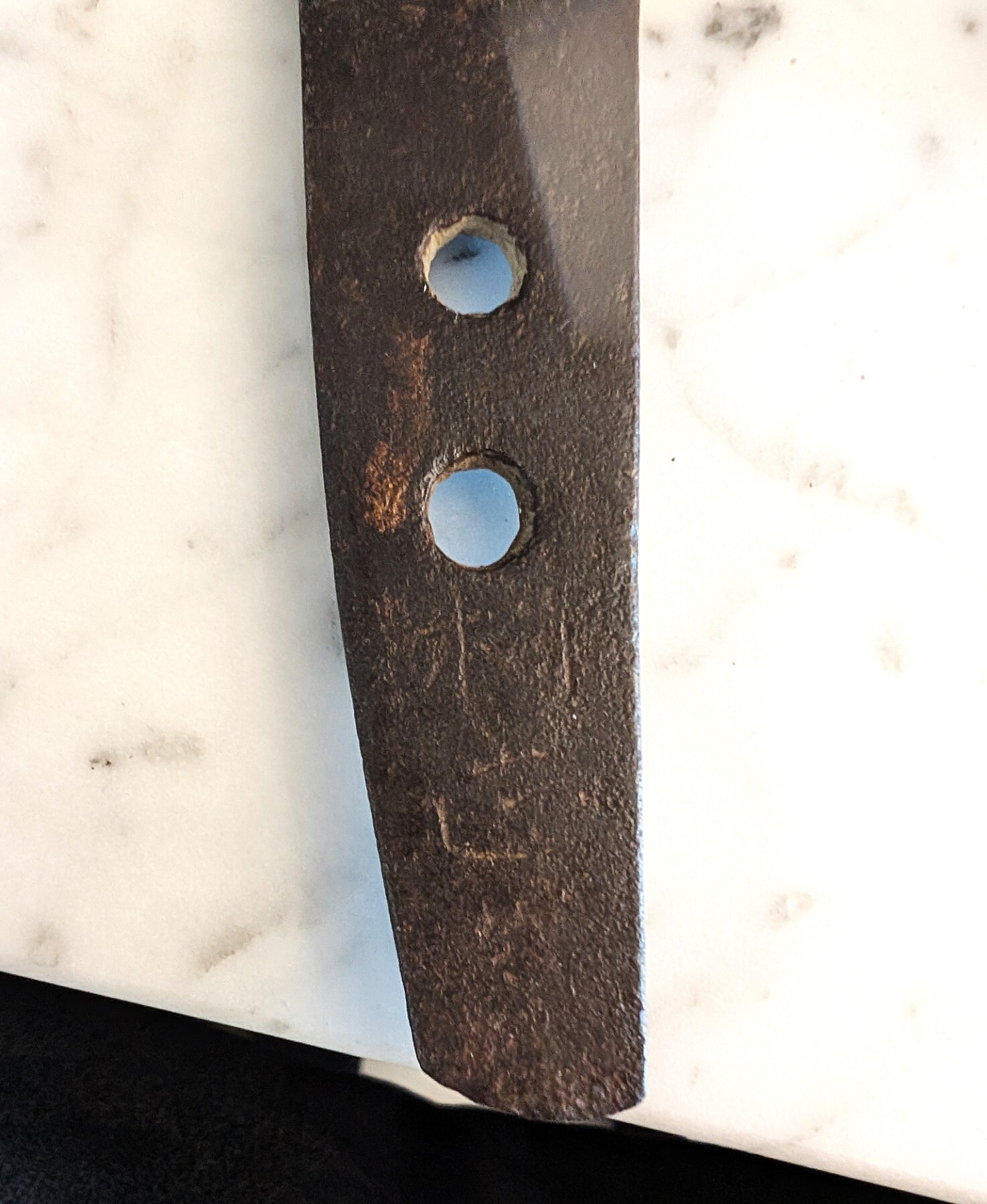
Hi there, I bought a yari with with original koshirae in an auction, without further description. The menuki pin was missing but the tang was badly stuck in the wood. After many attempts I managed to get the blade out without damaging the wood. The blade is about one shaku. And I think it might be before 1600. Unfortunately the mei is not easy to read. Maybe someone has an idea. I am happy and thankful for any assistance. Greetings Marc

 1 point
 -
Have to wonder though. If the kissaki takes damage, and you lose the boshi, it's considered a fatal flaw. The sword cannot perform as designed, right? But Katana and tachi are cutting weapons. How often where they used to stab? Surely most of the work is done in the monouchi area? Which may well be completely intact. 98% of what the sword would required to do, can still be done. Even if a katana is shortened from the front to wakizashi size, you wouldn't use the kissaki in most cases. Cutting edge remains. I think this is more about the art aspect and completeness than actual functionality.1 point
-
Not sure about the China angle John, but I think most of the old locks with a sprung prong key that we find were common throughout Asia. As to my made-up word ‘drum’, perhaps ‘cylindrical’ padlock might have been a better expression.(?) Such external locks and keys are of course another collecting field about which I know close to nothing. The funa-dansu safe was missing all four of the keys including the internal ones so I was happy when a locksmith agreed to make me a set. You have done a really neat job on your suzuribako, John, something to be proud of.1 point
-
Suriage and osuriage has never really bothered me. I'm sure my collecting budget has something to do with that. Of course, I wish all swords were ubu. I also wish that I was taller I think it's interesting for what it is. That said, I'm not sure I would ever shop for, or buy something like this. -Sam1 point
-
Personally, I think shortening a broken blade to allow its continued use as a weapon is both warranted and necessary. Aesthetically, I like the shape for its new intended purpose - slashing or stabbing. Within the context of battle, needs must. John C.1 point
-
I still would go for civilian sword repurposed for military service. Leather cover over normal wooden saya and typical hanger added. Identical as example at ohmura.1 point
-
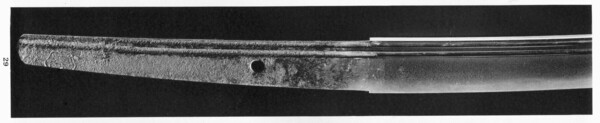
My choice would be the original condition without a second thought Here are better photos from 1961

 1 point
 -
Many visitors and members of NMB have questions but are not aware of the substantial amount of information provided by members in the DOWNLOADS (link is in bar at top of main page). To assist awareness here is a list of papers I have submitted. MEC sword papers NMB.pdf1 point
-
Yesterday the blades (and the assembled guests) were blessed at Imamura Gu shrine by the Priestess, before they started their new journey to the Osafuné Sword Museum where they are on temporary display. The TV crew were there to cover it. And
 1 point
 -
Thanks for the replies. I bought the Katana from Alex, fortunately we live fairly near to each other and he agreed to bring it over so I could have a look . Very knowledgeable and helpful and the sword was well described and lived up to my expectations so no buyers remorse ha ha. The saya has some old repairs (that I knew about in advance) which I think could be improved, so I will post about that at a later date to get opinions on the best way forward cheers1 point
-
One rule for me with Japan auctions if it’s not papered and it’s in Japan its probably not getting papered1 point




















This leaderboard is set to Johannesburg/GMT+02:00