
Leaderboard


Popular Content
Showing content with the highest reputation on 03/30/2026 in all areas
-
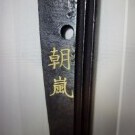
Guess it is “安親作” (Yasuchika saku)…5 points
-
Date on the sword is Kansei 10, August. Bear in mind, in the shintō period the dates inscribed are almost always either August or February (well, strictly speaking its "Eighth Month" and "Second Month" - there is a discrepancy between the traditional Japanese months and those of the Gregorian calendar). These two months are used regardless (almost) of when the sword was actually forged. So best not to take that date too literally. I wouldn't place too much significance on the title, or the privileges it conferred, or the deference paid to the swordsmith upon receiving the title. It's not representative of admission into the nobility. "Lord" or "Governor", "Protector", etc. are just honorific titles, so the smith isn't in any kind of professional limbo until he receives the paperwork. The title just allows him to inscribe his swords with that title, and of course it is an honor for him to do so, but otherwise his life and status doesn't change. Maybe it allows him to increase the prices of his swords slightly. Also the granting of titles was, to some extent, a revenue-generating scheme for the bakufu. So the standards for granting of titles may fluctuate depending on the finances of the bakufu and/or those of the officers in charge of granting titles.4 points
-
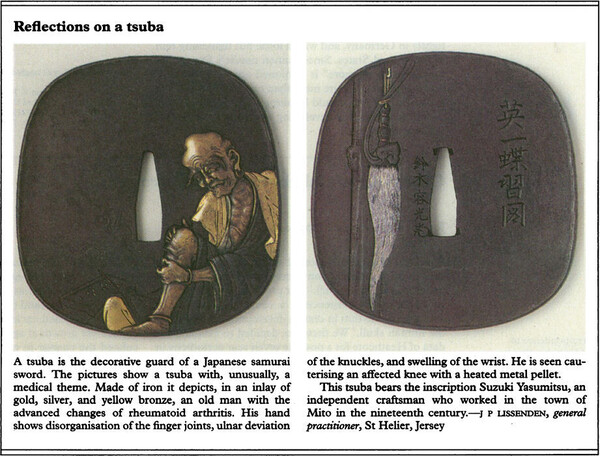
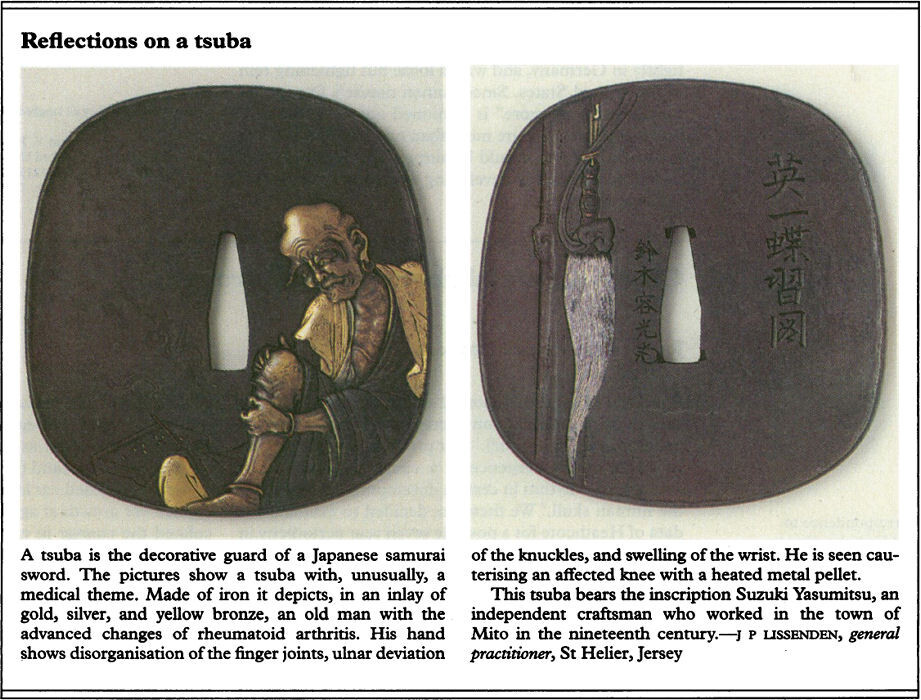
I came across a short article in the British Medical Journal by the late Dr. Lissenden. An opportunity to remember a respected member of the NMB ten years after his passing. from: https://pmc.ncbi.nlm.nih.gov/articles/PMC2359109/pdf/bmj00573-0034.pdf
 4 points
 -
Uwe is correct. Yasuchika saku.3 points
-
I thought this was an exceptionally rare early koshirae and fittings that the NMB might like to see. Posted by Keisuke san of the katana_case_shi shop. The blade is a Heian period Ko-Naminohira tachi. https://www.instagram.com/p/DWfMwIpGO3G/?img_index=13 points
-
We REQUIRE at least a first name. No-one wants to address you as either Mr Ninja, or just Forest. If you wish to ignore that rule, then my advice is run Forest, run.3 points
-
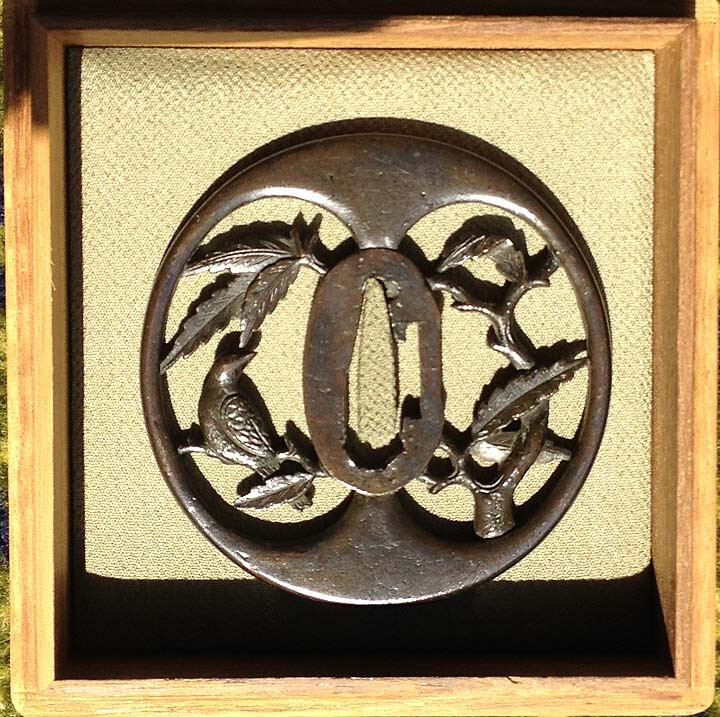
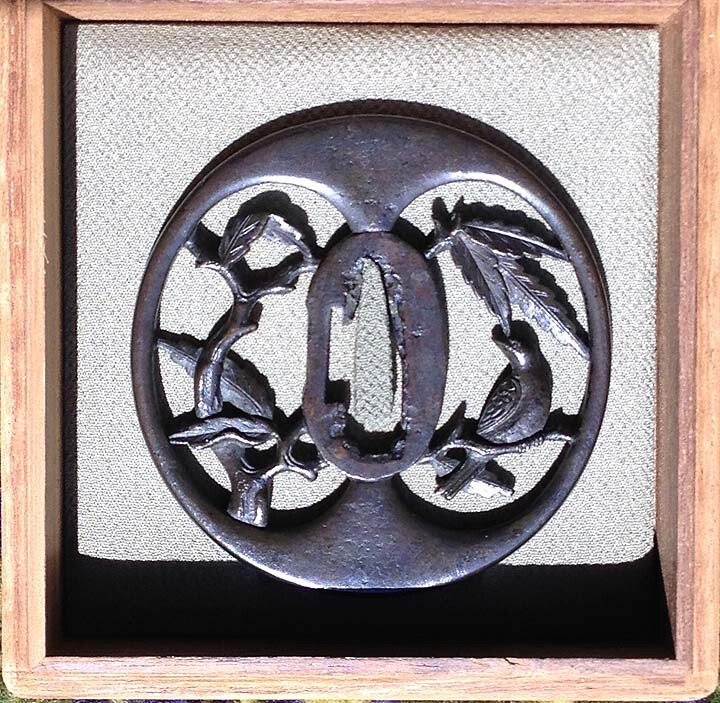
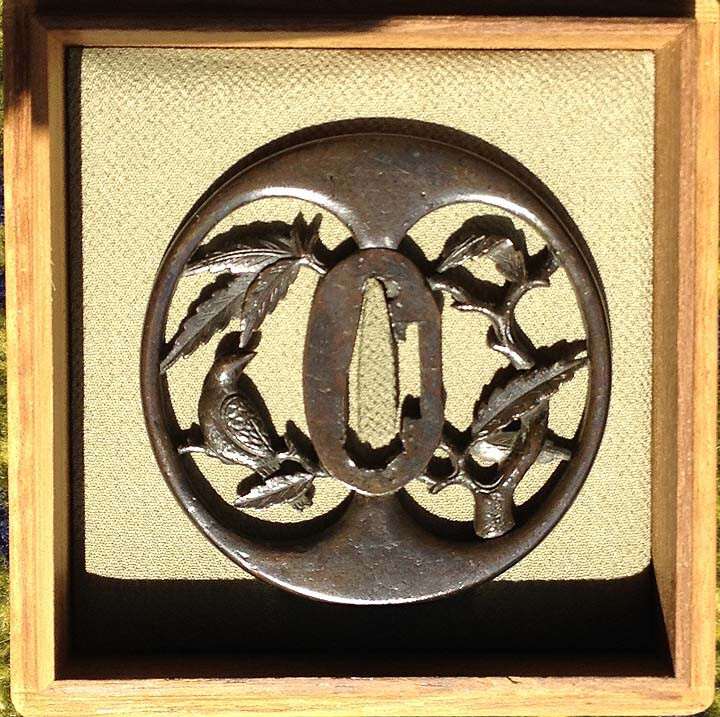
My Tsuba looks very similar to yours, but mine is an alloy like copper or something like that and yours looks like iron. What book is your Tsuba pictured in? I thought I saw my Tsuba in a book, but maybe it was your Tsuba in a book? I showed my Tsuba to Robert Haynes and he said he thought it was Northern Shoami... It came to me via Goran Glucina, who told me it was once in the collection of his Shotokan Karate instructor, Abe Shien. The first image is the truest representation of the color of the Tsuba, as it was taken in sunlight. Dealers at the San Francisco Token Kai told me to take it in the sunlight and I could see the truest representation of the color, and they weren't wrong.

 3 points
 -
Forest NINJA (please sign all posts with at least a first name plus an initial. It is a rule here so we can address each other in a polite manner. You can add your name to your profile), I have explained this several times here on NMB, but again: TAMAHAGANE is a very basic form of metallic iron. It can have differnt amounts of impurities (= NOT ALLOY METALS !). The low temperature of its production process (around 1250 - 1300°C) is not high enough to reduce other alloying element oxides that may be present in the iron ore (there are always other elements like manganese, chromium, silica, copper, titanium, a.s.o.). You cannot "mix in" other metals into the process unless you throw modern alloyed steel in the TATARA. Another method would be the OROSHIGANE process where iron can be carbonized but also modern alloyed steel could be introduced. Traditionally, this is of course not done. Steel alloys can only be made in hot liquified state - roughly 1.600°C or more. The TATARA process does not produce melted (= cast) iron, at least not in considerable amounts but more as an unwanted by-product. Nevertheless, even these small amounts of cast iron are sold and used by some swordsmiths to increase the carbon content of their steel. The TATARA method (comparable to the early European bloomery furnace) produces a very pure iron as far as alloy metals are concerned, but it is not "clean" in hindsight to impurities like silica and metals that are attached to it like titanium. So even in the 'best' TAMAHAGANE, you will find very small amounts of impurities. The traditional swordsmith does not care for them; he is solely interested in the carbon content. Carbon is introduced into the iron by the charcoal used in the process, but is is not automatically distributed homogeneously. There are spots with higher heat in the TATARA furnace where the iron takes on more carbon than in "cooler" places. This is why repeated forging (= stretching out, folding and fire-welding) is required later for refining. From a metallurgical view of the subject, differences in the appearance of sword-steel and its properties are mainly due to the work of the swordsmith. How he treated the metal in the long process has probably much more influence than tiny amounts of a few impurities. However, it is known that some elements like titanium can have an effect even in very small amounts in an alloy. Since there are no actual comparative scientific tests on authentic Japanese sword blades, we will probably not know much about this subject. However, ASANO TARO, a swordsmith in GIFU, has executed final fracture tests on a blade (on YouTube under asanokajiya).3 points
-
Robert, analyses of TAMAHAGANE show that it is very pure, regarding alloy metals, but I have no data of KOTO and SHINTO era steel for comparison. What I think is important is that there is a very narrow temperature margin in the bloomery/TATARA process. Unlike many other metals, iron has a slightly wider temperature span between 'solid' and 'liquid'. This feature is making the direct reduction process possible. But you cannot leave this temperature area by much without metallurgical changes taking place. Usually, the intent is to have a good degree of efficiency in the process which rises with the temperature. Celtic and early medieval bloomery furnaces were around 30% (= 30 kg iron from 100 kg of iron ore) and were run at about 1.250 to 1.300°C. The temperature in a TATARA can be even a bit higher which means that near the vents, the iron wil be closer to melting temperature. The problem is that with rising temperature, the iron 'absorbs' more carbon. The malleability of iron ends with a carbon content of 2,02%; this is the limit where cast iron/pig iron starts to be formed. Crystallization can only take place from a liquid state, so if TAMAHAGANE was made at very high temperatures (= above 1.350°C), there is a high risk that it would not be workable on the anvil. Cast iron (roughly 2 - 5% C) will shatter like a cookie under the hammer. As far as I know, historical Japanese iron technology is not known for decarburizing processes (with the exception of OROSHIGANE, but this worked in another way) as we had them in the Middle Ages in Europe. So, the Japanese were forced to stay with the TATARA method. We should not forget that in medieval Japan, ALL iron was produced solely in TATARA, and most of the products coming out of the forge were made from (low carbon) iron, not steel! This was the same in Europe, by the way. Coming back to a potential technological leap after the KOTO era, a slightly higher carbon content in the steel might indeed make a difference in working it and in the properties, but we can exclude 'secret' alloy metals mixed in the TAMAHAGANE - or missing in EDO times. There are still more factors which can influence steel properties and the performance data of steel blades, but that would lead a bit far. BUT we should consider the fact that - starting with EDO JIDAI - many swordsmiths no longer made their own steel, and as you know, there is a big difference between potatoes that you grow in your own garden, and those you can buy in the supermarket!2 points
-
To be honest I've never heard that smiths had to submit samples of their work to the bakufu or to the court in order to receive the title. I think they had to make a formal application, or have one made on their behalf by someone of status (the actual daimyo of the fief, for example). But I am not a deep scholar in this area. I have read Markus Sesko's article here, which I think you will find very interesting if you haven't already read it. It provided the basis of what I know. https://markussesko.com/2013/02/19/how-honorary-titles-were-conferred/ Whether this particular sword is one of his best examples or not; I think there are too many variables. The biggest one is condition. It could well have been one of his best examples, but you'd need a deeper inspection and you'd need to compare against his other known works to make that call. And I don't think one can even make a sweeping generalization about swords produced before/after receiving the title. For some smiths it may be true that their best work was toward the end of their productive life. For other smiths they may have become lazy, lost their vitality, lost access to good quality tamahagane, or some may have allowed their apprentices/students to produce under the smith's name, and so there may be some variance in quality. Other smiths may be "average" smiths, yet had the funds to acquire the title, so...too many variables to generalize.2 points
-
Yes you do. And if I find out people are giving fake first names, I'll suspend them or take action. There is nothing wrong with a forum requiring at least a first name. Either in your username, or your signature, or signing your posts. We don't even require a surname or even an initial. So if that's too much for people to bear, then this isn't the place for them. Even a nickname based on your first name is tolerated, such as Hamish with his "Hamfish" That is at least making an effort. But some anonymous name and refusing to give a name we can call you by? Sorry...then this is the wrong sandpit for you. No, we don't delete accounts. This isn't an airport, no need to announce your departure. Just don't log in.2 points
-
Dear Steve and UWE, many thanks for this translation...Soshu script is not easy...i have also asked AI (chat gpt and gemini) one answer Munemasa and the other MitsuShaku....i think the second and third kanji is most probably Chika Saku....as far as the first one is concerned....Yasu seems a good guess....let us see if we receive other answers again many thanks for your help Daniel2 points
-
The seller appears to have a vast amount of spare fittings and bare blades listed, wouldn't hold high hopes of anything being correct.2 points
-
I think we have something in Europe that may be comparable: a Purveyor to the Royal Court, otherwise called Royal Warrant Holder. The titles don't tell much about the quality of the products.2 points
-
Hello Uwe, Thank you for your feedback. Yes, very nice armor. Probably belong to a high ranking bakufu official or a super super wealthy Samurai. From the picture, I cannot see any family crest. The nice color variation reminds me of the Munechika armor in the Leiden museum. Will try to ask the Edo museum if they have more informations about the history of this armor. (Provenance, etc.) There is probably also a more precise date mentioned inside the Kabuto. Comment of the picture only mention the year. Interesting search. Will see where it will lead. Many thanks2 points
-
Hey Dale! Thanks for your swift reply and information! Mauro's Tsuba looks like a copy of my Tsuba, but his looks like it's made of iron, and mine is some type of alloy. I was told what it was before, but I forgot, but maybe Yamagane or Copper Alloy. That would be an incredible coincidence if his Tsuba was the one I saw at the SF Token Kai about five years ago and some how at ended up with Mauro after it was for sale at the show I saw it at! I wish I had taken a photo of the book I saw the Tsuba that looks like Mauro's and mine, to see if either of them was the Tsuba in the book or not! Interesting that this Tsuba design was replicated, and I wonder which came first, mine or his, and if it was from the same maker or if one was a copy of the other from two different Tsuba makers at two different periods?2 points
-
I think you are giving the whole title thing too much status. They weren't a real title, and came with no privileges. Often a smith was "lord" of an area he didn't even live in. There was no qualification required and I don't think he submitted any sword for evaluation. They are not seen as any real form of status or quality. Just look at home many were given out https://www.sho-shin.com/titles.htm I don't think a title is ever really considered by a collector when looking at the quality of a sword2 points
-
Both Shioda and Shiota are common readings of this family name 塩田. I have a friend who says ‘Shiota’.2 points
-
塩田 (Shioda) is a valid Japanese last name. https://myoji-yurai.net/searchResult.htm?myojiKanji=塩田2 points
-
My next project in this field will be the restoration of woodworking tools (NOMI). It will probably take a short while....
 2 points
 -
This is in my collection. Papered Umetada (埋忠) by NBTHK. Dimensions 77.3 mm x 72.5 mm, thickness 2.8 mm at the seppa-dai, 7.5 mm at the mimi. All the best. Luca
 2 points
 -
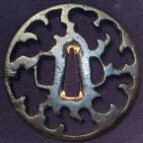
Not sure of book but this is an utsushi from Mauro's post https://www.militaria.co.za/nmb/topic/42631-tsuba-identification-help/#comment-4370502 points
-
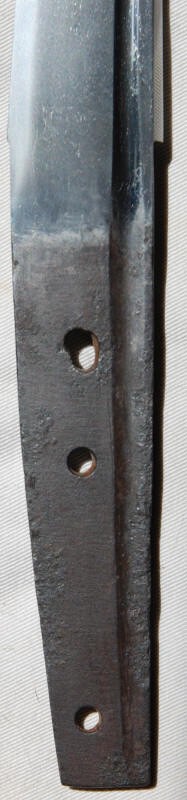
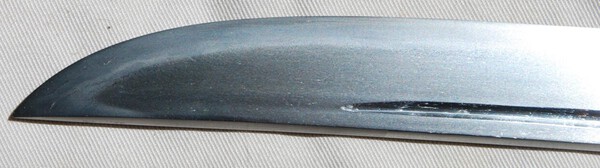
Hello all, I would like to share with you my most recent purchase from Andy Quirt over at Nihonto.us . It’s a hirazukuri O wakizashi is shirasaya in good polish and from what I was told by Andy he sent it over to Tanobe sensei for a verbal attribution and based on what Tanobe saw he gave him a verbal attribution of Uda. Andy did tell me that he was hoping for an earlier attribution so he must of thought it shared characteristics of a Ko-Uda blade but nevertheless Tanobe sensei dated it to Muromachi period. It’s undergone Osuriage and also has a bohi. It has a 46.3cm nagasa, 3.3mm motohaba, and 6mm kasane. The hamon is chu suguba in konie deki and has itame hada. Given then lenght of it now after it has undergone suriage I think it possibly coulda been a katateuchi. Best Regards, Chance


 2 points
 -
Ok I posted this somewhere else, but the membership in both locations is probably different even though there will be some obvious overlap. We'll see... it's my first time trying it. Up for a challenge? Does anyone want to hazard a guess as to the attributions for each of these three tsuba? They each got a specific attribution from different sources (and one of the members here is the source for one of them), but I'm curious to see what you might suggest for each. This isn't an attempt to pass judgement on anyone's "knowledge", it's an attempt to open a discussion and have some fun with it. Feel free to hazard a guess on any or all of them #1,2,3.
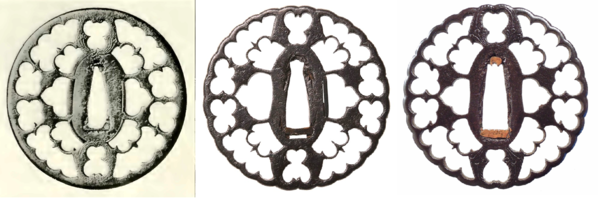 1 point
 -
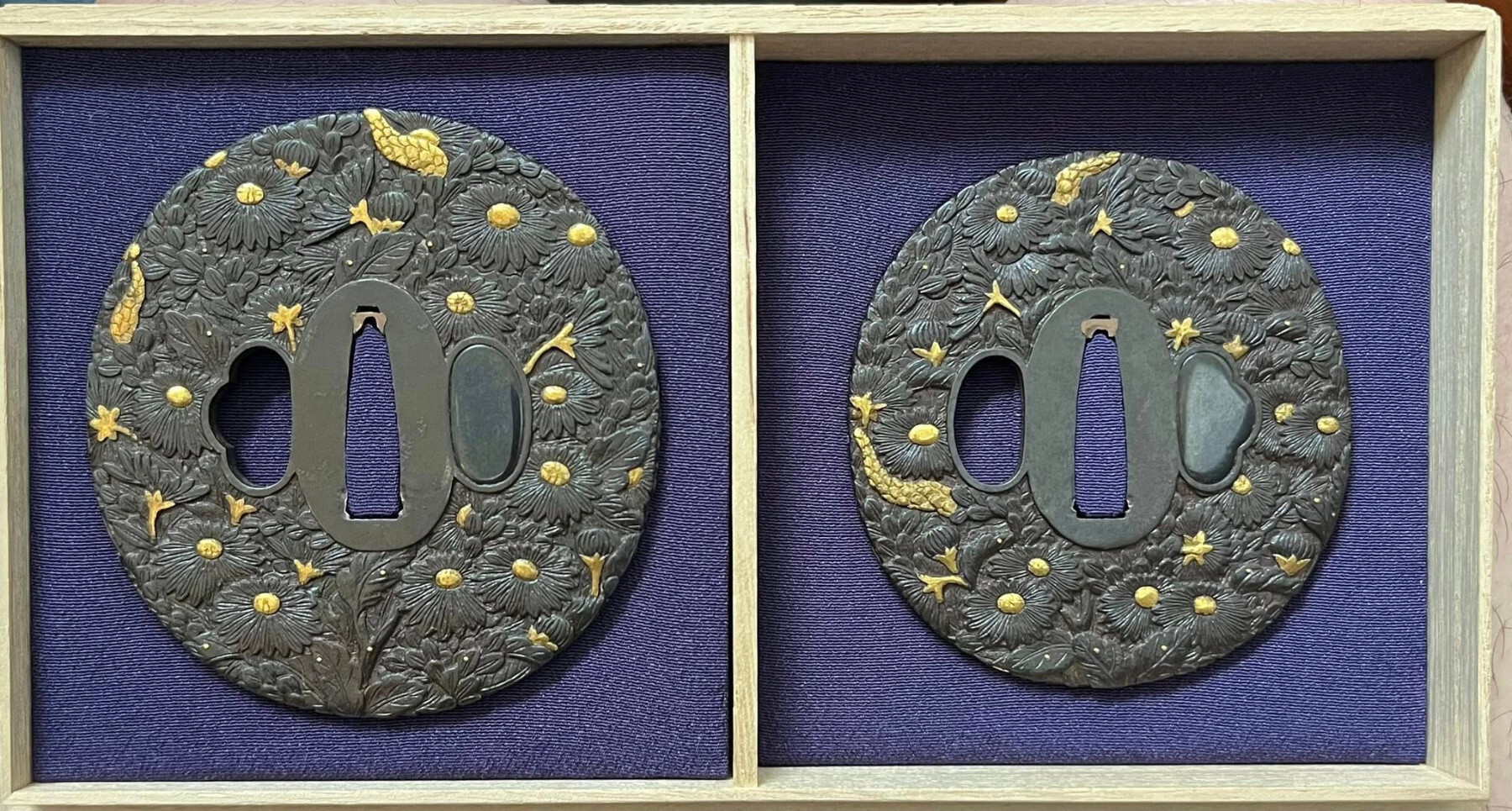
Hi All! I got this Tsuba in a trade with Goran Glucina about 10 years ago at the San Francisco Token Kai, and I was thinking about selling it then. I've since decided to keep it. A year or two after getting this Tsuba I was looking through books on Tsuba at another San Francisco Token Kai, and found what I believe was the same Tsuba pictured in a book, but because I was thinking about selling the Tsuba I decided not to buy the book. I think the book was over $100.00 USD. At the same show I saw a copy of my Tsuba, but it wasn't as well carved as mine. I should have taken photos of both the book and copy of my Tsuba! Anyway, I've bought almost a dozen Tsuba books in the hopes of find my Tsuba pictured in one of them to no avail, so it was suggested I post a picture of the Tsuba, and ask members if they could please check their books to see if my Tsuba is pictured in it? As a guide my Tsuba is NOT in the following books, TSUBA-TAIKAN Japanese Sword Guards Sword 1935, Tsuba Kanshoki by Torigoe Ichitaro 1975, Japanese Sword Guard Cultural History of Tsuba Book 1969 Jiichiro Hattori, Early Japanese Sword Guards Sukashi Tsuba by Sasano, Japanese Sword Guards Masterpieces from the Sasano Collection, Tsuba Kanshoki by Torigoye, 1975, Tsubas in Southern California Hardcover, Hawley, 1973, Nihon to Koza Vol. VI Kodogu Part 1 by Harry Afu and Tsuba by Kokubo Kenichi and Monichiro Kamiya 1963. Your help would be greatly appreciated! Thanks!!! PS. I showed my Tsuba to Robert Haynes, and he told me he thinks it's from the Northern Shoami school.
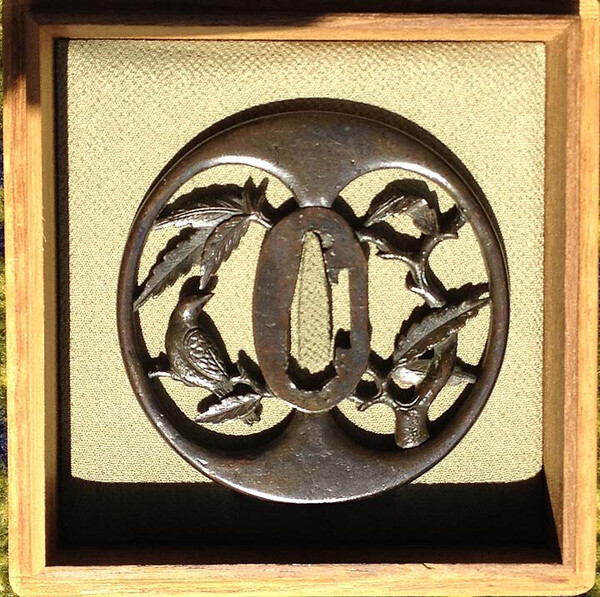
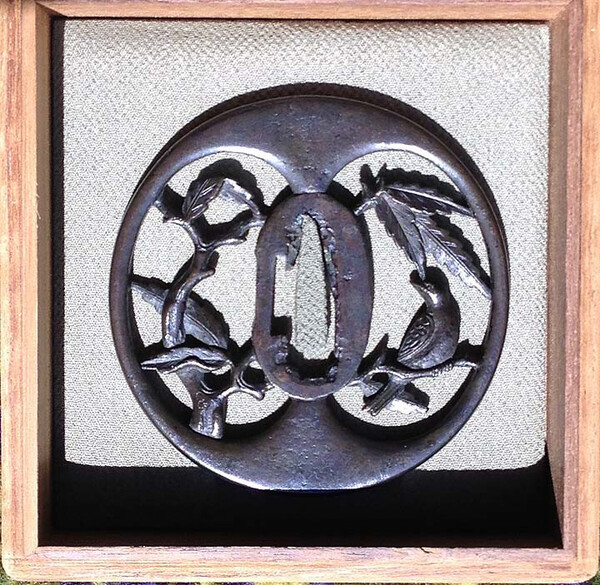 1 point
 -
Dear All, I just found out this morning an article about the reopening of the Tokyo Edo museum after 4 years of renovation. Big surprise as a unknown Myochin Munechika armor was on the press article. https://artexhibition.jp/topics/news/20260325-AEJ2867109/ I have been collecting and doing research on Munechika for almost 30 years, and that's the first time I see this one.... Is anyone aware or seen this armor made in Ansei 3 nen (the one on the right)? The museum is schedule to open on March 25th. Can't wait for the reopening and learn more about this armor....! Let me know your thoughts. Many thanks in advance Marc1 point
-
Marcin: I have both and now only use the more expensive civil swords and dirks version. They have much of the same info on military swords, however the more expensive book adds gunzoku and dirk information. So I guess it depends on what you are researching. But the if you are only going to buy one, I would buy the civil swords and dirks version for the extra info. John C.1 point
-
Personally, I do not wonder. I keep my crudely cast parts separate from my collection; because I have always believed them to be fake or modern-cast repros. At least until proven otherwise. -Sam1 point
-
I think currently the highest ranked Ozaki Suketaka swords are the 4(5 as one is daishō) that have passed NBTHK Jūyō evaluation. They are dated 1794, 1802, 1802, 1803. Shinshintō in general are outside my knowledge range but I think he was a good smith and produced good quality swords before and after receiving the title.1 point
-
I for one am extremely glad that this group insists on real names. Keeps the discussion real. Back to the topic, I found the discussion in the Kitamura et.al paper (Control of Slag and Inclusions...) that Brian linked extremely interesting. I had always assumed, due to the temperatures involved, that tamahagane accumulated by a sintering process. However, that paper indicates that that was probably only true prior to the 17th century. From the 17th century onwards, the paper posits that much or most of the tamahagane was created by crystalization from molten pig iron. This would imply that there ,may have been a meaningful change in the nature of the steel, broadly associated with the Shinto period. It also raises the question of inclusions versus alloying that Jean raised earlier.1 point
-
And Chris, we should not forget that these are mostly still handmade! Probably not by renowned Japanese masters, and not old, and often made in series, but still individually made by skilled carvers. It is a good idea to learn from these objects about design, material, artistic expression, and execution.1 point
-
Fuller & Gregory page 66. It’s hard to remember all pictures.
 1 point
 -
Sadly you are correct. Unlikely to be Japanese, more likely Chinese. Not a true netsuke.1 point
-
Sam, I know and understood well. But if someone (Laters) comes to this wonderful forum to learn, the terminology is the first thing to adapt to. This may appear strange and difficullt to some newcomers, but it is the way we all had to go if we wanted to dive into that theme. The funny thing is that even most native Japanese have to learn the terms and the correct reading of names.1 point
-
This is scratched in a commemorative paperweight. I'm pretty confident of the second kanji as 田 "ta", which is clearer in person, however the first kanji is only a guess 塩 (salt; sodium cloride). Seems odd for a name. Any guesses would be much appreciated. John C.
 1 point
 -
My guess is 安秋作 (Made by Yasuaki). But I can find no such metalworker in the Wakayama index.1 point
-
Thank you, Jan. I forgot the alternate pronunciation of ta as da. Much appreciated Chandler and Jan - and Sam for moving the thread. John C.1 point
-
嶋田 - Shimada? Its an alternate spelling of Shimada but IDK if that's it.1 point
-
This a great topic As Lewis stated above, Tamahagane production/distribution became more and more centralized as time went on. This was also a gradual process throughout the koto periods but really became mainstream in shinto ( edo ) periods. While it could be argued that steel quality became more consistant , it inevitably lost all the regional characteristics of steel that once appeared in the old works. There is ( and will always be ) much great debates trying to pin down the cause for the great artistic ( not functional ) decline in swords over time and the loss of regional characteristics of steel likely has a big part in it1 point
-
Gentlemen. While Marcin declares in his originalpost that this is legit until proven otherwise I would start the other way around. So far we have crude cast fittings with odd menuki, I would add that the leather cover is not showing signs of age but has strange markings. The habaki while closer than some is not right in its proportions and although the blade looks quite good overall there are features that cast doubt, not the least the odd mei. None of the blade photographs are in focus so that we can't see details. I would call this a fake/reproduction. I certainly would not be risking this at auction without in hand checks. As always I stand to be corrected, All the best.1 point
-
This one is also odd - found in the Ashmolean museum - 75 mm x 72 mm Notice the "niku" [raised trimmings] around the whole of the opening - the hole was made that way
 1 point
 -
I think 2 for me. Size katana and wakizashi.


 1 point
 -
Last year in Japan I had the opportunity to see this Ko Mino Daisho Akikusa. They are papered NBTHK Hozon. As one can see they are fairly thin with carvings continued from one side to the other on the edges.


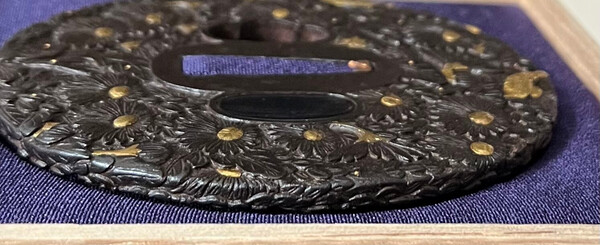 1 point
 -
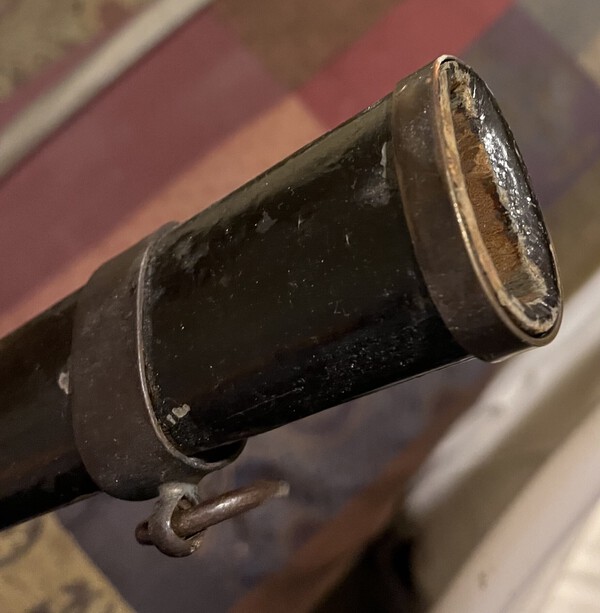
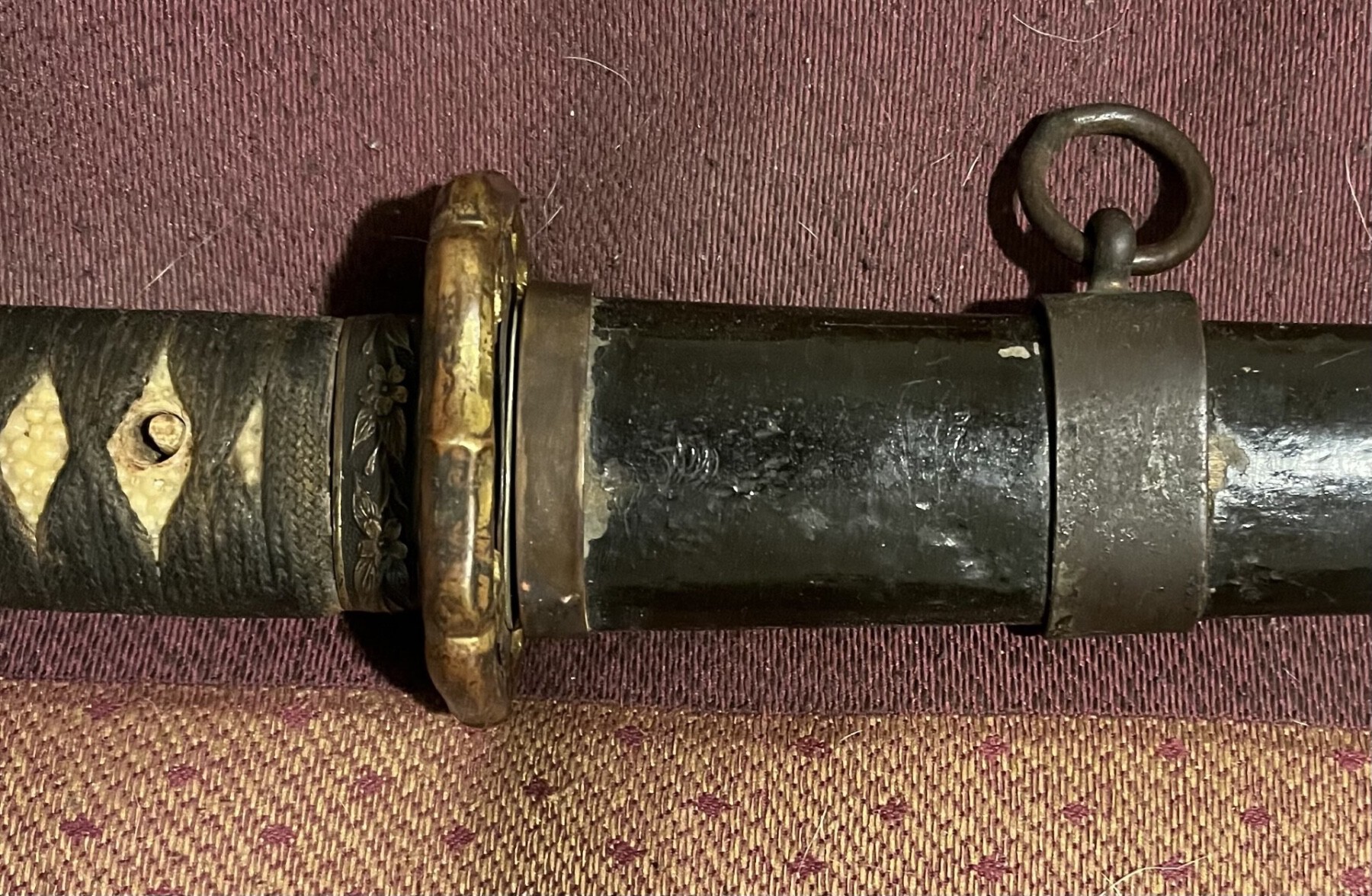
Well I made a simple brass band and put a simple patina on it. I did this to stabilize the scabbard. The scabbard no longer comes apart. See pics. I also realized that the blade is a nihonto mumei! Too bad it has sections of rust.

 1 point
 -
John, I am asking basics to help assess the blade. A signature does not tell all that might be necessary, and if you want competent comments, we need good photos in the first place. As we strongly object any DIY polishing attempts, the actual condition of a blade is of interest and importance. The little that I can see on the less than ideal photos (maybe due to my old eyes) lead me to suspect that the blade was not traditionally polished. Usually, this leads to severe damage and loss of value. So please excuse my critical questions, but I think they were justified to come to useful answers to your inquiry.1 point
-
after sale a donation will be made to this Forum.1 point
-
Surprisingly, any Bizen and Soshu name was seen worthy of gimei.1 point
-
I am not an expert but I believe the notion that: a long signature with a date being ‘typical’, is not accurate. ETA: Referring to the date.1 point
-
Bronze was definitely used to make Tsuba, they were cast using molds, like the examples found in the Nara site mentioned by Steve above. Every Kagami-shi Tsuba I have had tested is Bronze in composition. Yamagane/copper was not used to cast Tsuba, the properties mean that it would not flow sufficiently into a mold, however Yamagane/copper was used to cast blanks for making Tsuba, by dropping molten Yamagane/copper into water, as demonstrated by Ford and documented on Youtube.1 point























This leaderboard is set to Johannesburg/GMT+02:00