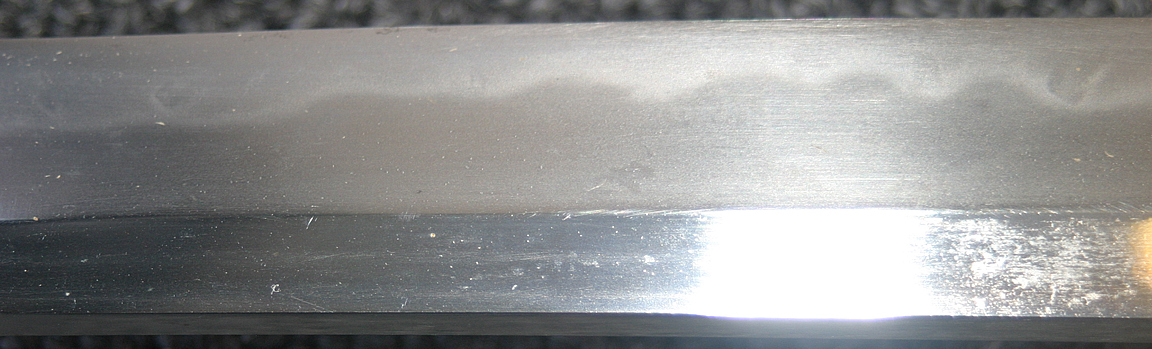
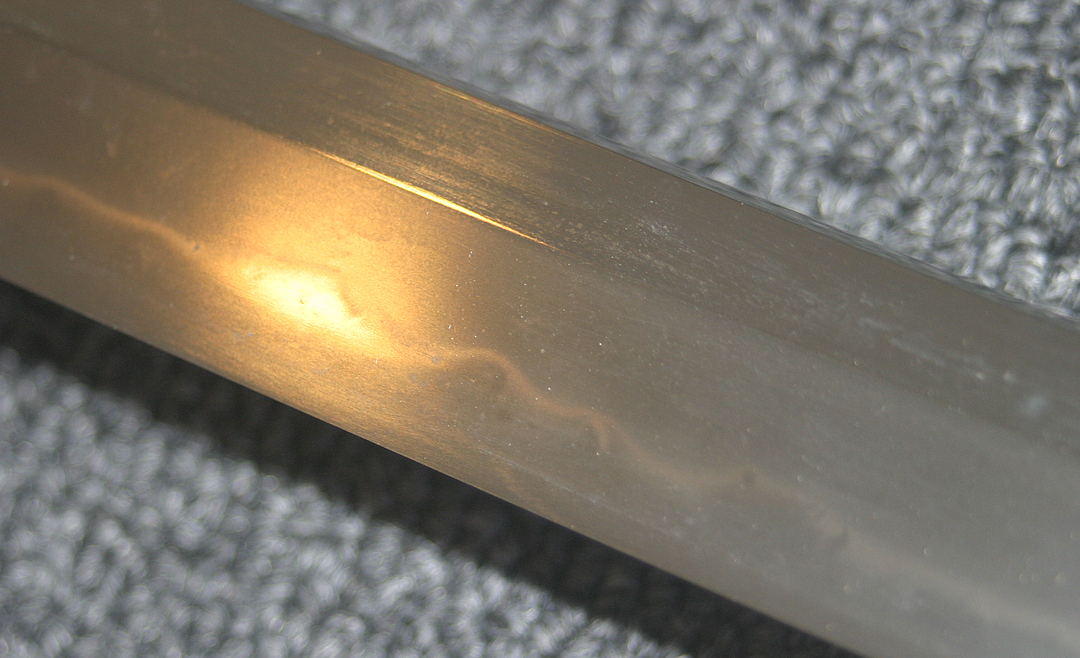
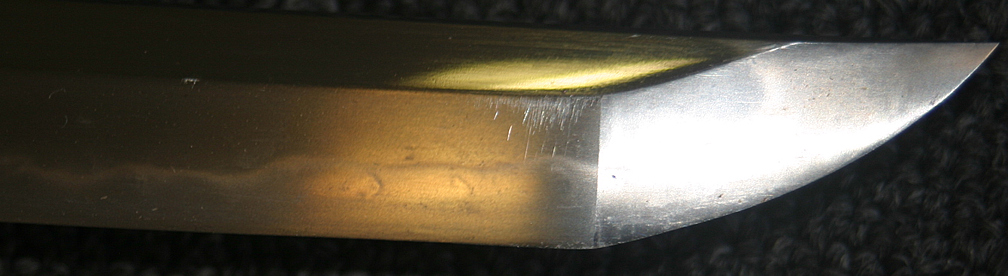
bond_fan
-
Posts
32 -
Joined
-
Last visited
Content Type
Profiles
Forums
Events
Store
Downloads
Gallery
Everything posted by bond_fan
-
Thanks for the explanation!
-
Hey Grev, Thanks for the color photo! Did it look like the whole Tsuba was covered in Gold or just certain areas? It would be interesting to see if all the Samurai from one army all had the same Tsubas when they went to battle, since many styles were replicated...
-
Good to know!
-
Wow!!!
-
Wow Dale, you're amazing!!! Thanks for looking in all those book for me and finding this image! No, the image you sent me isn't the one I saw in the book, because I remember the Tsuba being complete without any loss on the bird and the Tsuba photo being a black and white picture. In your opinion is the Tsuba in your book appear to be iron with loss of Gold Leaf? Interesting how in your book the Tsuba is listed as being Bizen school, but Robert Haynes and Mauro said they believe this Tsuba to be Shoami... Also, interesting is we have found at least three if not four Tsuba bearing the exact same design!
-
Hey Dale! Thanks for your swift reply and information! Mauro's Tsuba looks like a copy of my Tsuba, but his looks like it's made of iron, and mine is some type of alloy. I was told what it was before, but I forgot, but maybe Yamagane or Copper Alloy. That would be an incredible coincidence if his Tsuba was the one I saw at the SF Token Kai about five years ago and some how at ended up with Mauro after it was for sale at the show I saw it at! I wish I had taken a photo of the book I saw the Tsuba that looks like Mauro's and mine, to see if either of them was the Tsuba in the book or not! Interesting that this Tsuba design was replicated, and I wonder which came first, mine or his, and if it was from the same maker or if one was a copy of the other from two different Tsuba makers at two different periods?
-
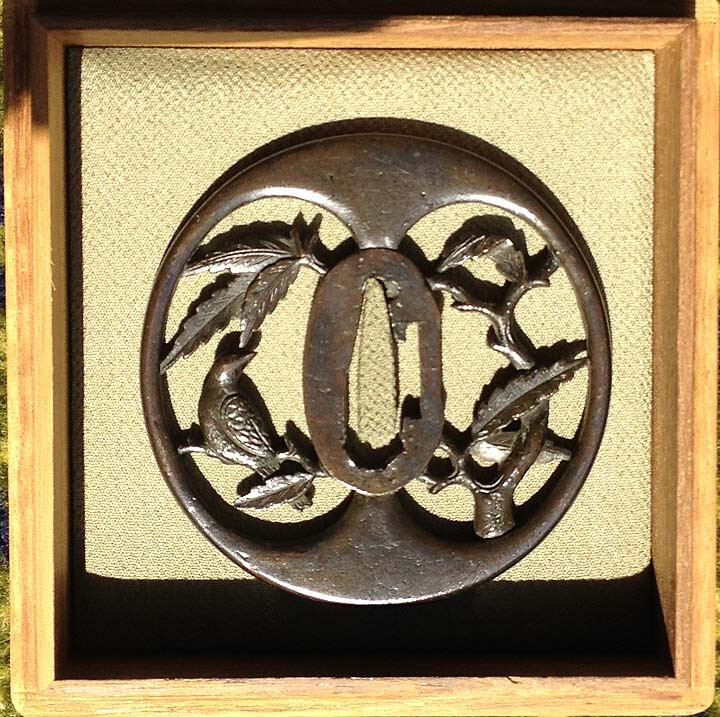
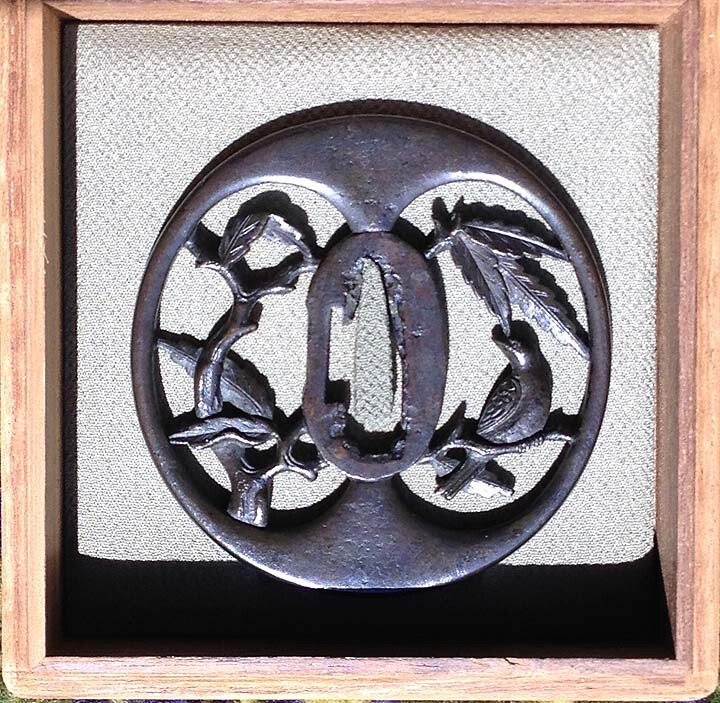
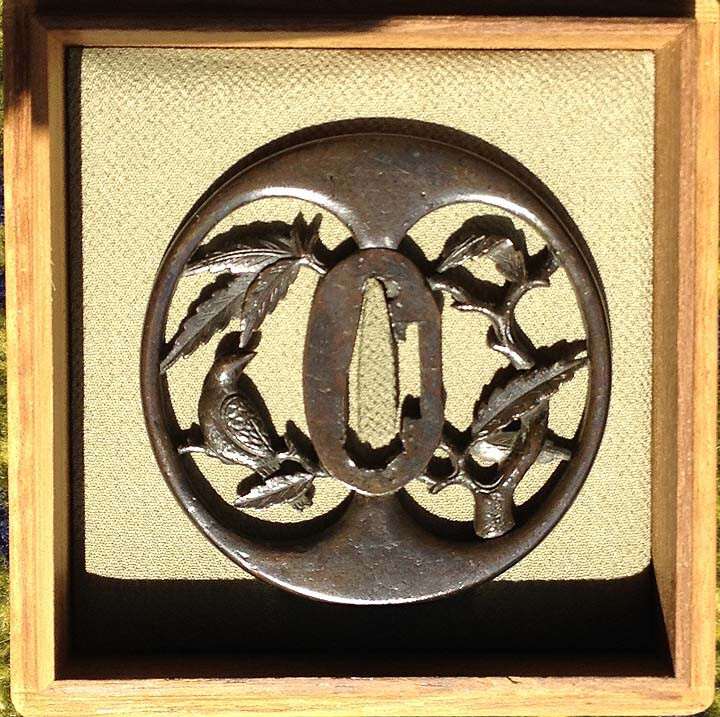
My Tsuba looks very similar to yours, but mine is an alloy like copper or something like that and yours looks like iron. What book is your Tsuba pictured in? I thought I saw my Tsuba in a book, but maybe it was your Tsuba in a book? I showed my Tsuba to Robert Haynes and he said he thought it was Northern Shoami... It came to me via Goran Glucina, who told me it was once in the collection of his Shotokan Karate instructor, Abe Shien. The first image is the truest representation of the color of the Tsuba, as it was taken in sunlight. Dealers at the San Francisco Token Kai told me to take it in the sunlight and I could see the truest representation of the color, and they weren't wrong.


-
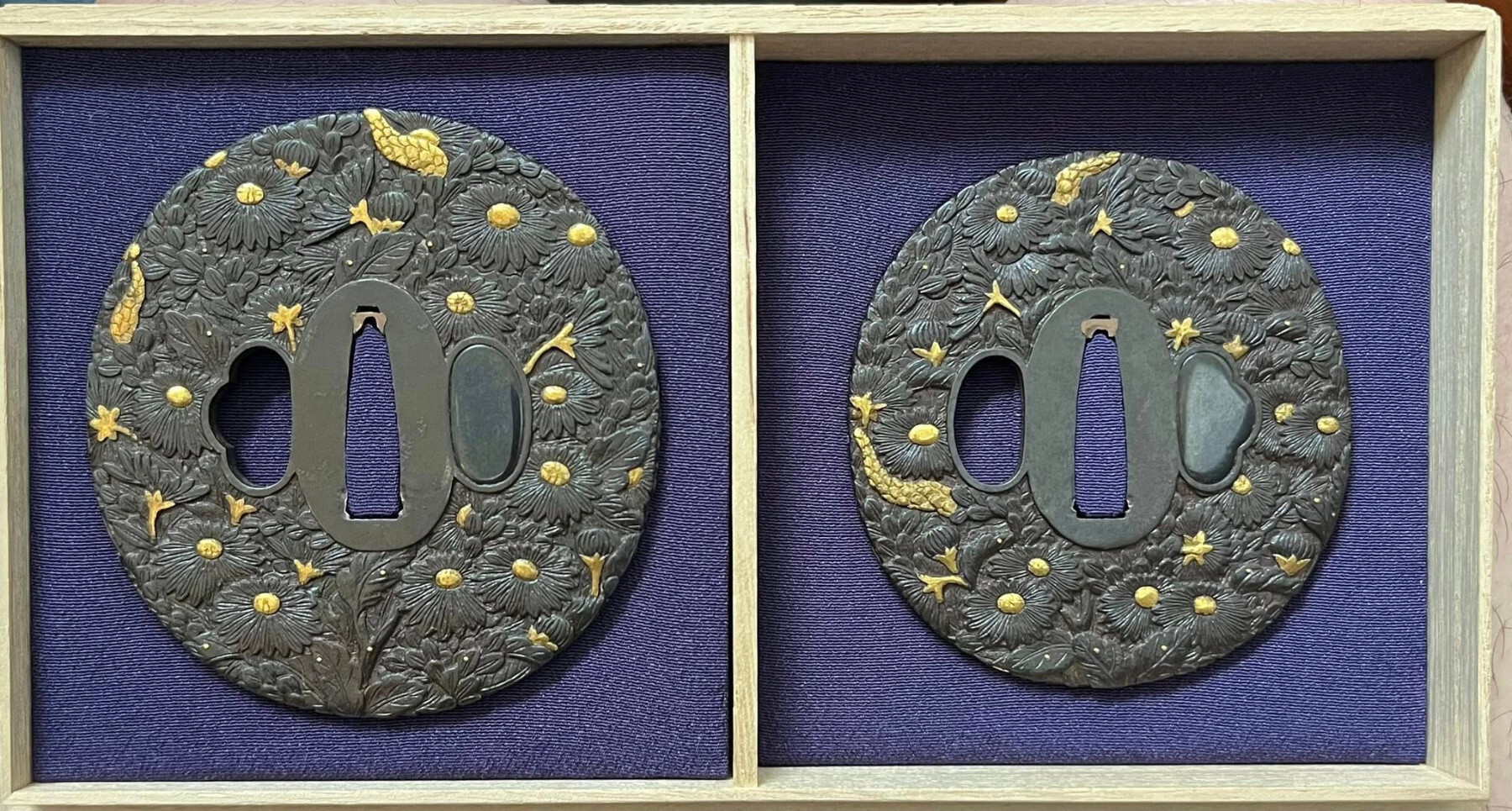
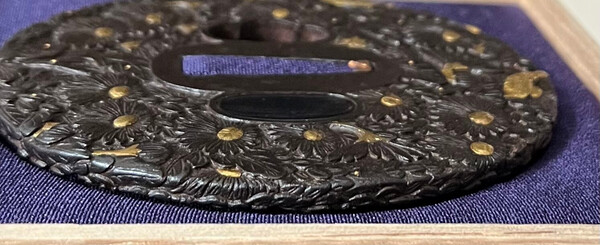
Last year in Japan I had the opportunity to see this Ko Mino Daisho Akikusa. They are papered NBTHK Hozon. As one can see they are fairly thin with carvings continued from one side to the other on the edges.


-
Hi All! I got this Tsuba in a trade with Goran Glucina about 10 years ago at the San Francisco Token Kai, and I was thinking about selling it then. I've since decided to keep it. A year or two after getting this Tsuba I was looking through books on Tsuba at another San Francisco Token Kai, and found what I believe was the same Tsuba pictured in a book, but because I was thinking about selling the Tsuba I decided not to buy the book. I think the book was over $100.00 USD. At the same show I saw a copy of my Tsuba, but it wasn't as well carved as mine. I should have taken photos of both the book and copy of my Tsuba! Anyway, I've bought almost a dozen Tsuba books in the hopes of find my Tsuba pictured in one of them to no avail, so it was suggested I post a picture of the Tsuba, and ask members if they could please check their books to see if my Tsuba is pictured in it? As a guide my Tsuba is NOT in the following books, TSUBA-TAIKAN Japanese Sword Guards Sword 1935, Tsuba Kanshoki by Torigoe Ichitaro 1975, Japanese Sword Guard Cultural History of Tsuba Book 1969 Jiichiro Hattori, Early Japanese Sword Guards Sukashi Tsuba by Sasano, Japanese Sword Guards Masterpieces from the Sasano Collection, Tsuba Kanshoki by Torigoye, 1975, Tsubas in Southern California Hardcover, Hawley, 1973, Nihon to Koza Vol. VI Kodogu Part 1 by Harry Afu and Tsuba by Kokubo Kenichi and Monichiro Kamiya 1963. Your help would be greatly appreciated! Thanks!!! PS. I showed my Tsuba to Robert Haynes, and he told me he thinks it's from the Northern Shoami school.
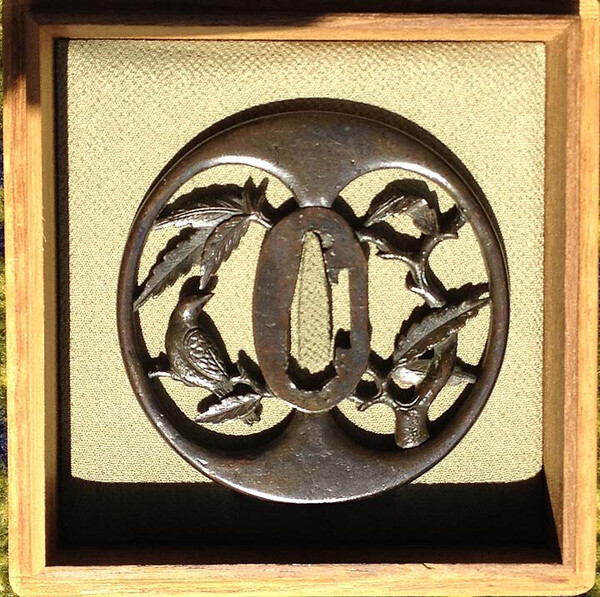
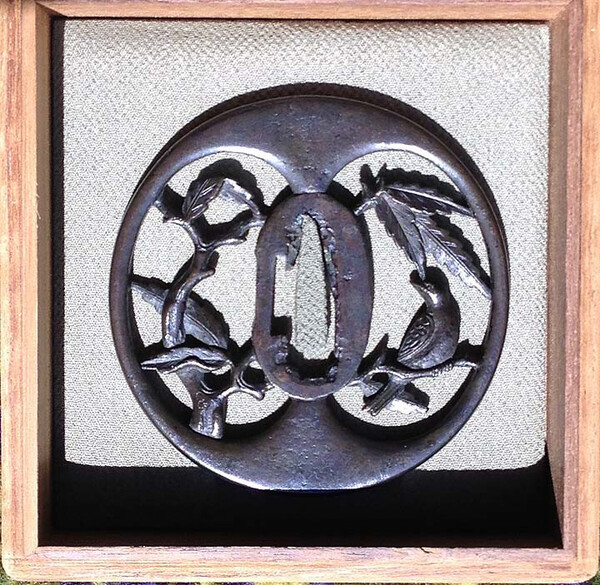
-
Translation Assitance Needed For Wakizashi
bond_fan replied to bond_fan's topic in Translation Assistance
Dear Nobody, You are amazing to be able to discover the meaning of the blade translation so quickly! I wonder how you were able to do it and do you know what the chant means? Thanks so much Tim -
Hi Forum I was wondering if someone could please help me with the translation of the inscriptions on both sides of the blade and the tang? Thanks! Tim
-
Need Help With Translation of Another Surimono
bond_fan replied to bond_fan's topic in Translation Assistance
Steve, Thanks for trying! Interesting enough print though. -
Hi Nihonto Forum! I found an even better surimono I was thinking about getting. This one has a cool looking katana and raven on it. I was wondering if someone could please tell what what the surimono says, who the the artist is and what the symbols of the raven and katana might mean? Thanks! Tim California, USA PS. I am sorry about the poor quality of one of the images. http://i596.photobucket.com/albums/tt41 ... /suri1.jpg
-
Need Help With Translation of PoeM & Artist's Name
bond_fan replied to bond_fan's topic in Translation Assistance
Hey guys, Thanks for all the additional information! I don't know how you guys find out this information, but you are all very good! Hey, supposedly they have a similar artwork with a katana being the main focus. I hope to get an image of that soon. Best regards! Tim -
Need Help With Translation of PoeM & Artist's Name
bond_fan replied to bond_fan's topic in Translation Assistance
Kenkaku & Steve, Thanks for your further insight! Tim -
Need Help With Translation of PoeM & Artist's Name
bond_fan replied to bond_fan's topic in Translation Assistance
Steve, Thanks for the assistance! I find sometimes in both Chinese and Japanese it is very tough getting translations on stuff, because the grammatical structure of both languages doesn't follow the same format as English. It sounds like it's pretty tough to know exactly what is meant based upon your thorough search. I really appreciate your help! Any idea what this maybe worth? Thanks! Tim -
Need Help With Translation of PoeM & Artist's Name
bond_fan replied to bond_fan's topic in Translation Assistance
Hi All! This print is from the early to mid 19th century and I was told it is a Surimono, which was specially produced by poets and artists to be given at New Year's to friends. Here's another fuller photo. If someone can translate the Japanese characters that would be helpful! Thanks! Tim http://i596.photobucket.com/albums/tt41/bond_fan/print.jpg -
Need Help With Translation of PoeM & Artist's Name
bond_fan replied to bond_fan's topic in Translation Assistance
Thanks for your help! I'd have to go back to the store and shoot more photos, so maybe this Tues. or Wed. when they are open? -
Need Help With Translation of PoeM & Artist's Name
bond_fan posted a topic in Translation Assistance
Hi Nihonto Forum! I was interested in buying this beautiful Japanese artwork, but the seller couldn't tell me the name of the artist or what the writing says. I believe it is a poem and was wondering if someone could please tell what what the poem says and who the the artist is? Thanks! Tim California, USA PS. I am sorry about the poor quality of one of the images. http://i596.photobucket.com/albums/tt41/bond_fan/5579.jpg http://i596.photobucket.com/albums/tt41/bond_fan/5582.jpg -
Hi forum! Thanks for your responses! Sorry the photos were not good enough to make a determination on the tang age. I hope that my friend will be able to send me better ones and I can post those? I wonder if forum members would agree that Japanese sword tangs show less deterioration due to the ability to remove the tsuka and polish and oil the tang or not more than the quality of the steel or say the climate of Japan? I've seen purported photos of Japanese Katana from 16th & 17th century with file marks still visible on the tang and on a Chinese sword the file marks are likely to have been eaten away after 100 years. It is interesting to note my friend said that Tibetan sword tangs didn't show a lot of deterioration for their age from what he thinks is due to the dry climate in that country. Best regards! Tim
-
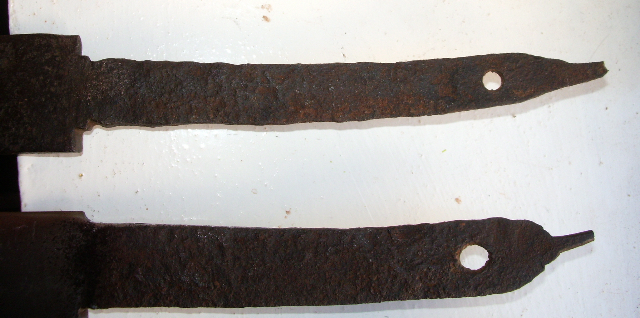
Hi Forum, A friend of mine suggested I ask an opinion on how Japanese appraisers determine the age of Japanese swords based upon the age of the tang He explained to me how an estimate of the age of Chinese swords is made based upon the patina of the tang. He said for their age Japanese sword tangs are nearly not as corroded as Chinese sword tangs. This is probably, because it is so much easier to remove the tsuka from the blade and the complete blade and tang can be cleaned and oiled preserving the condition of the tang, while it is hard to remove the grip from Chinese blades, so the tang tends to exhibit greater deterioration with Chinese swords than their Japanese counter-parts. So pictured are four Chinese dao (Saber) tangs. I am curious to see what forum members think the age of these swords are? dao_tangs1 - Are close-ups of the two on the right of the first photo containing four tangs. dao_tangs4 - Are close-ups of the two on the left. I am also curious to know how Japanese appraisers determine the age of Japanese swords? Thanks! Tim

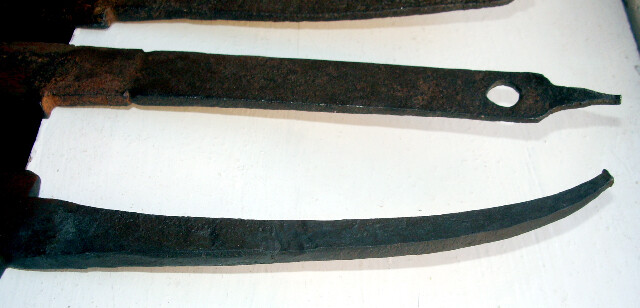

-
If what Peter said is true I wonder how then the judges make a determination on a sword then? To me this is almost contrary to what would be needed to determine traditional methods or not, but I don't know, because I'm not a judge. Thanks for the new additional post. Getting more confused... Tim
-
Billman said, If oil quenched this would not be a gendaito sword then and less valuable than if it was done with the tradition clay method then? Thanks! Tim
-
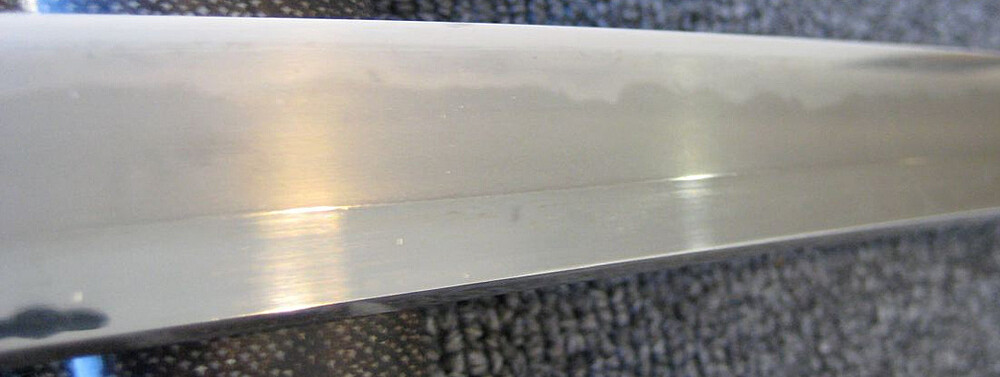
Do these images show nie or hataraki consistent with traditional construction methods?


-
Brian said, I tried to see if I can see nie/hataraki but it is very hard. I think I can see a little, but for the most part is not as easily seen as most people's swords I have seen on various website. Maybe if it was polished better? Maybe it's just not that visible on this sword? The hada appears to be either masame or muji, but maybe based upon the photos I took someone can see better? I find it hard to get the close-ups I need with my camera lens and even through a 10x jeweler's lope it is hard to see the hataraki. The hataraki looks more like ko-nie or jie nie, though on the bottom small bits look like chikei. According to the seller he bought this katana by someone who had two swords. The other was authenticated by a Japanese Sword society member to be a very early sword made by a famous maker. The seller bought this sword and I don't believe the parts were mixed up. The sword fits very tightly into the saya, but will go all the way. My picture was taken with a bit of the sword showing, because I didn't want to push the blade all the way in as it is hard to remove. Like many are saying the saya probably got mixed up, because it takes more than the left hand thumb to pull the sword from the saya. I'm just wondering if I bought this and had to sell it later if having a WWII saya with a civilian blade, even if high quality will be a hard sell? Thanks for all your help! Tim