
Leaderboard



Popular Content
Showing content with the highest reputation on 01/16/2026 in Posts
-
Hi all, Just like to share my recent acquisition, a unique Mitokoro-mono by the 5th generation mainline head of the Goto school, Tokujo. He was the eldest son of Kujo, born in 1549 and passed away in 1631. After serving Oda Nobunaga, he became the court chisel master for Toyotomi Hideyoshi. Exhibited at the Tokyo National Museum. Enjoy!

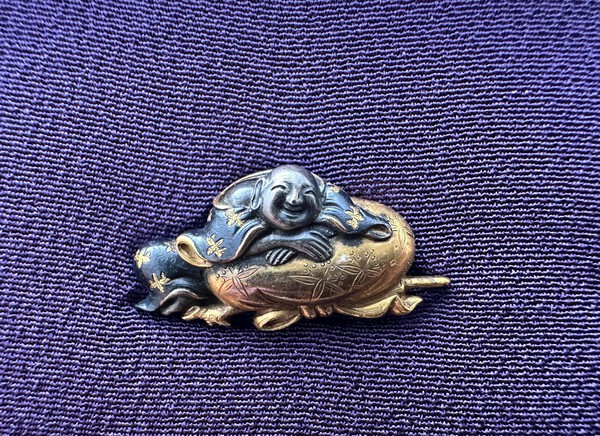
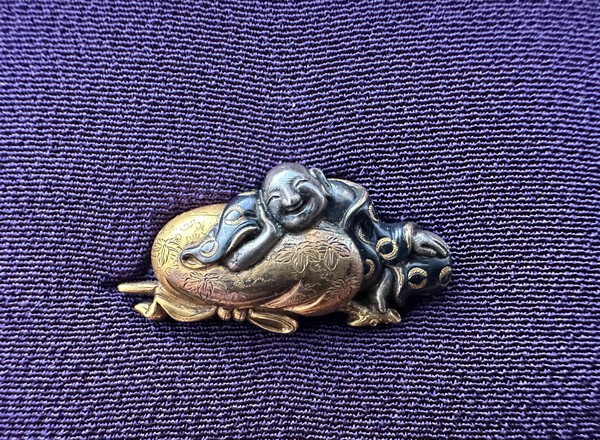

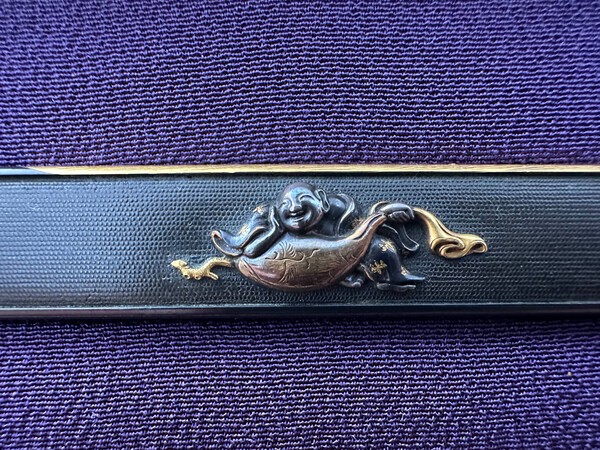
 11 points
 -
I had a very positive experience purchasing this Nihonto from Jake. Communication was clear and professional throughout, the sword was exactly as described, and shipping and packaging were excellent and done with care. I would not hesitate to recommend Jake to fellow collectors looking to buy a Nihonto.5 points
-
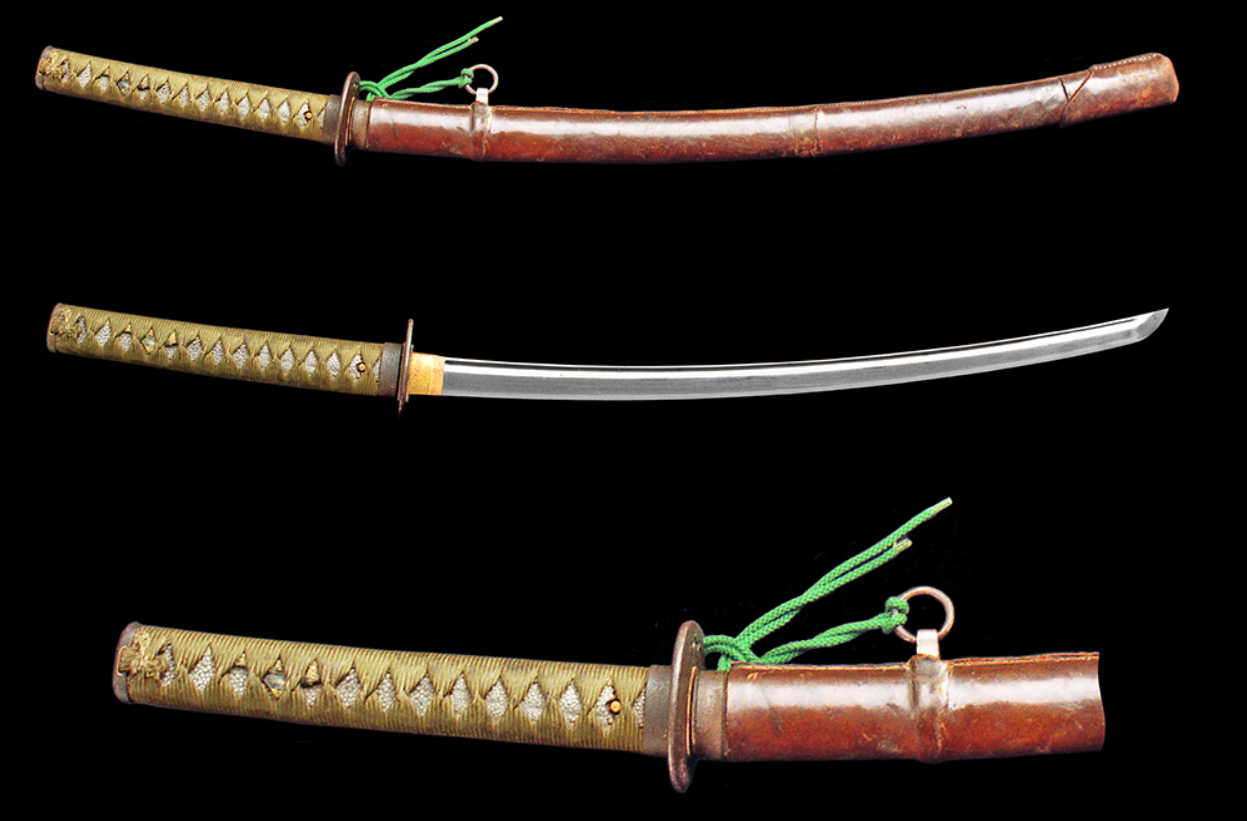
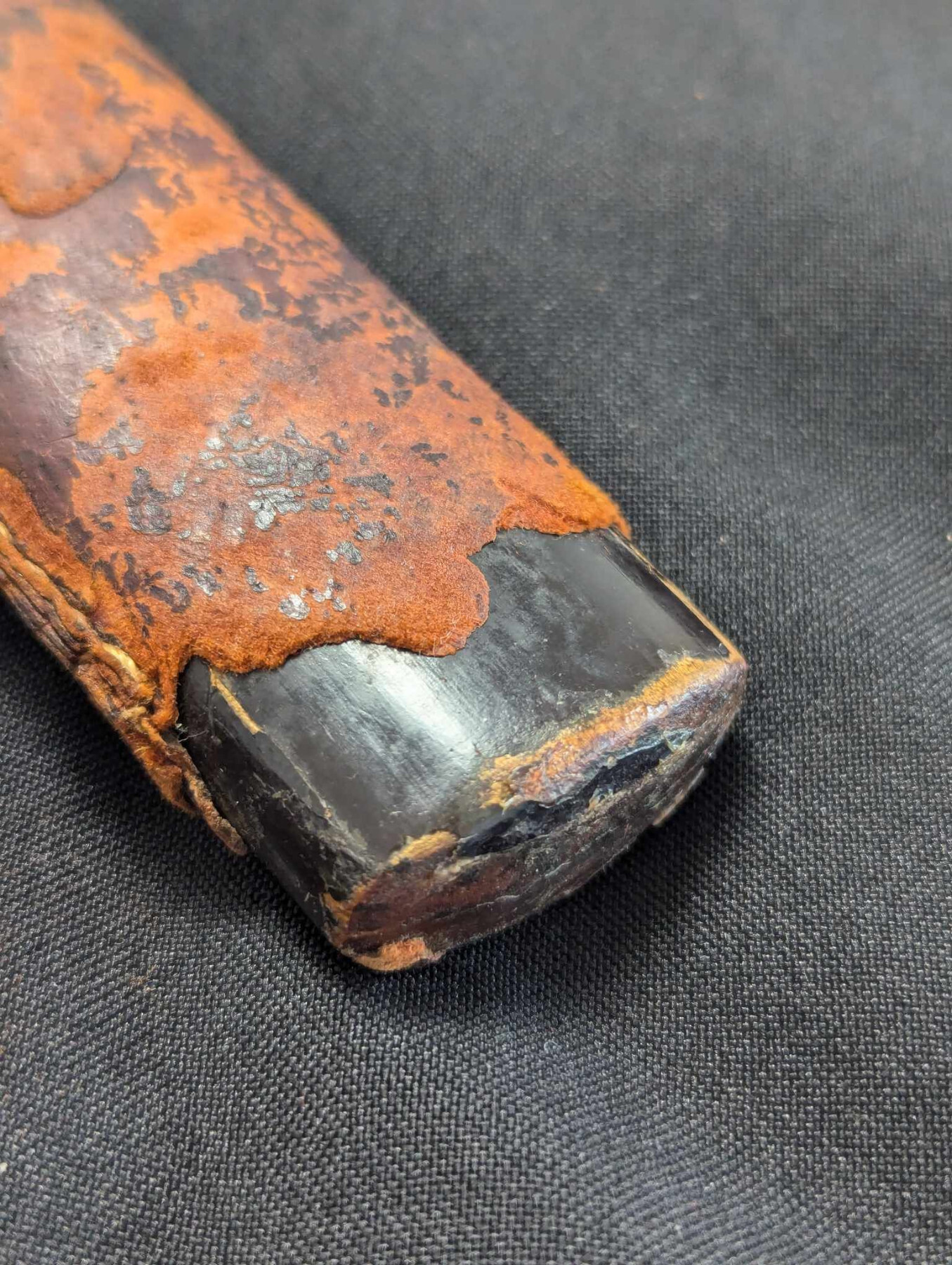
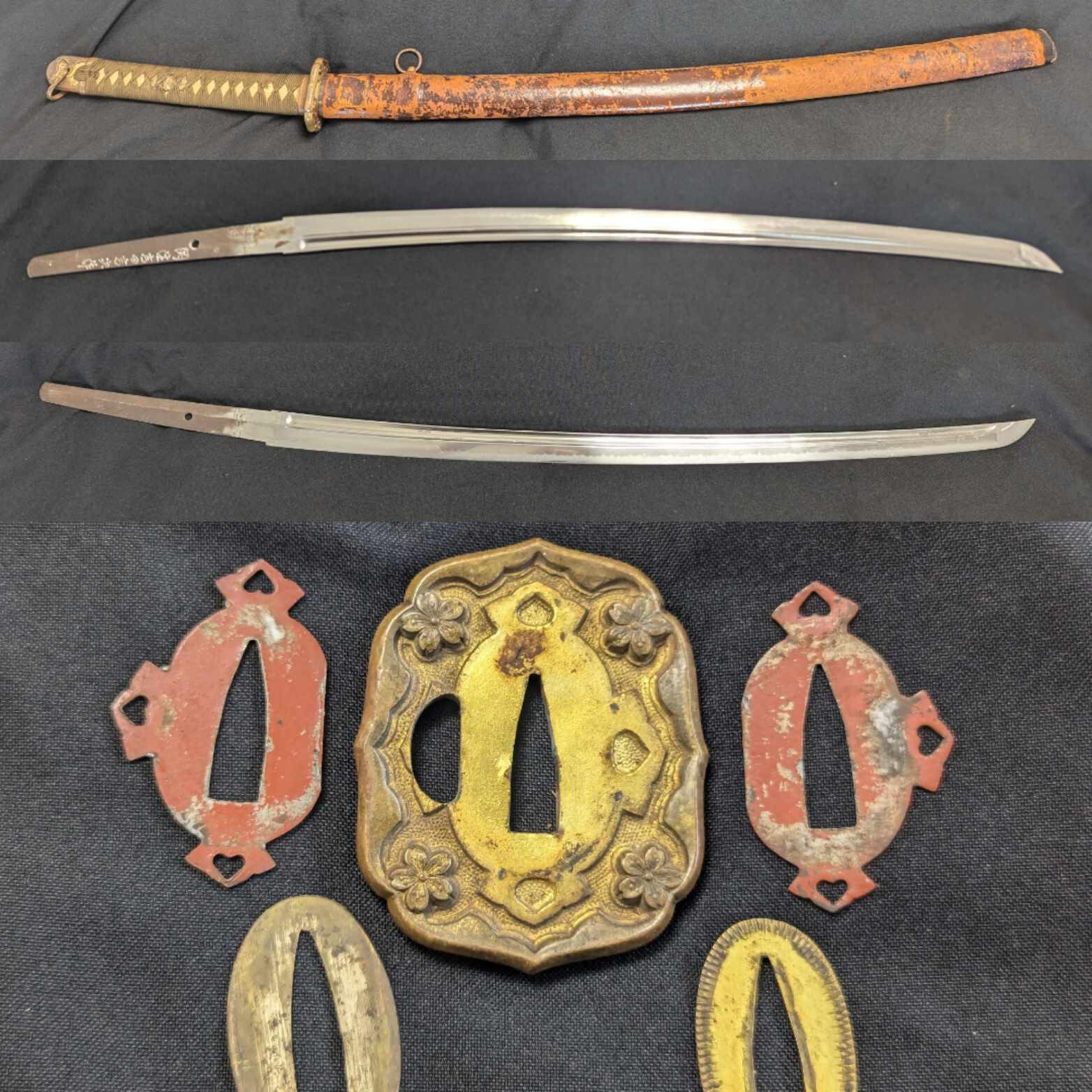
Connor, Don't be bothered by the fact that the signature is gimei. It was a well known practice as long as they were making swords. Samurai, as well as Shoguns, have been known to treasure a sword while knowing it was gimei. As for your fittings. This sword could have been brought to the war by it's owner, refitted with the wooden saya (scabbard) for the field. It would have been covered by a leather cover. They are often lost over the years. Many were donated, or bought up by the military in drives to meet demands of the war effort, then refitted in varying degrees and sold to new officers. Yours looks to have kept the civilian tsuka (handle). Cannot tell if the tsuba (hand guard) was kept or a military one put in its place. You can see an example of how it might have looked: They were also refitted fully with military hardware: There are ways to restore your sword and make it look nice, or you can keep it as is. Either way, please read up on how to take care of it: Japanese Sword Care - Japaneseswordindex.com

 4 points
 -
There are quite a few familiar faces in this excellent NHK World feature in which @Keichodo has a starring role. View it here.4 points
-
錆銅製 – Made of bronze 釣鐘竜巻香爐 – A dragon wrapped around a temple bell incense burner3 points
-
Pay peanuts and get monkeys! Some time ago this example came along. Too badly damaged to be repaired, missing a hand, but plenty here to enjoy!
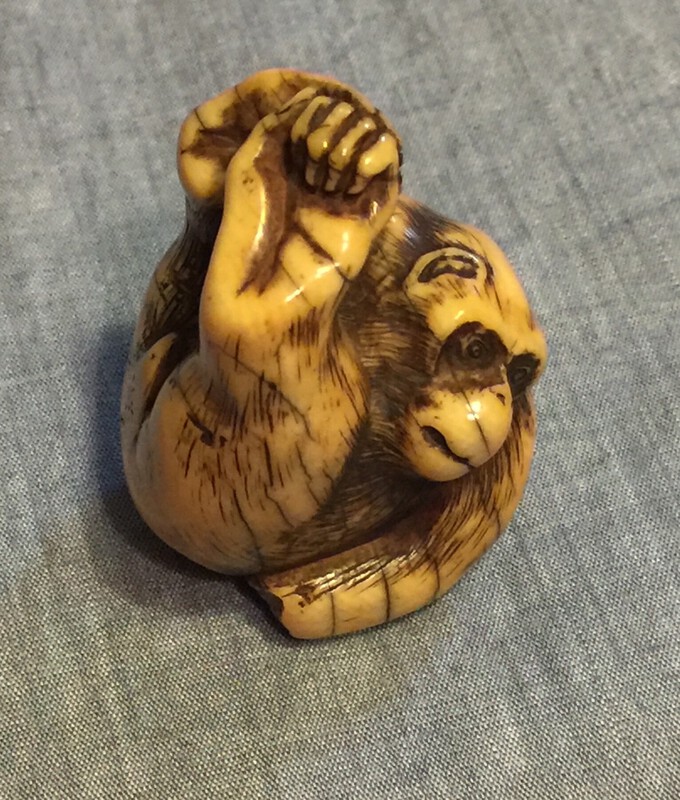
 3 points
 -
As much as I'd love to see it- don't do it. I did it with my first love: the other o-tanto I own. It took maybe 8 years and is almost certainly a money sink. There are some in Japan that can do it much more economically than outside of Japan, but it is a difficult road.2 points
-
Kanemune.2 points
-
Goto Tokujo = my favorite mainline Goto dude. His son Kenjo is my #2 pick. Tokujo lead quite a life clashing with the Tokugawa, ending up ronin for a while, AND he did it with daughters En Tout. Elements of the Lone Wolf n Cub story from his life, and he was a top notch artist on top of it all. I saw this recently with someone who I thought was based in Japan. If you picked it up from him, well done. Scoring a complete set of Goto Tokujo work is.... very hard. I haven't been able to do it. I've been searching for one of his rare tsuba for several years and had one or two near misses.2 points
-
These are often described as "Abalone" design most are not signed and as you already speculate, a signature by Nobuie is likely gimei. The tsuba is featured in the movie "Ichi" - blind swordswoman 2008, image is poor resolution [how is that for trivia ] https://www.ebay.com/itm/296923445362
 2 points
 -
Late 1500s is full of rabbit holes and some "Who was that guy" wonders. I only own 2 swords and 2 o-tanto. One of the o-tanto is a 2 character signature exceptional blade by a little known guy from around the same time as your blade. Exceptional Owari blade. Call it very early Owari-shinto? Tanobe-san wrote a nice long sayagaki for it. But who was that guy.... supposedly he was the son, or brother, or cousin of a famous smith??? Sometimes just enjoy the blade. edit ps. One look at your blade and I would have thought Shimada? Looks like that wasn't a bad guess https://www.sho-shin.com/soshu.html @Jussi Ekholm probably has the right of it. I'm more on the fittings side of collecting.2 points
-
In case this helps


 2 points
 -
To my eye signature seems to be 和泉守兼定作 Izumi no Kami Kanesada saku. I would dare to say it is not "the" Mino Kanesada. However there seem to be 4 other Kanesada (兼定) smiths who had the title Izumi no Kami. Unfortunately I am on my phone and away from my references for the weekend so I cannot check if I have a signature example for any of the lesser known ones.1 point
-
Thank you, Curran! I knew he didn’t get along with Ieyasu, but I wasn’t aware of the connection to Lone Wolf. I picked it up in Japan from someone well known, along with a Sokujo shishi set, just last week.1 point
-
It's not the ww2 smith, if that's what you are asking. I believe this blade is older. John C.1 point
-
Adding to this super thread!! one is by Nobuhide and the other is Kuniyasu. the top is unknown. I will add additional photos.
 1 point
 -
Thank you for the replies. I don’t see any turn back. See attached newer pictures

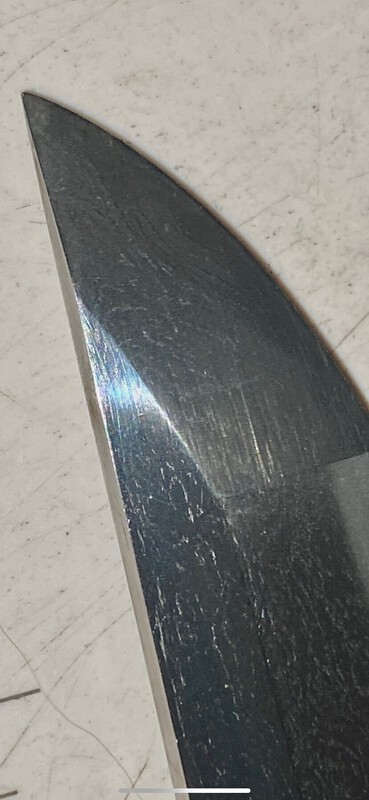 1 point
 -
@Nobody Moriyama san, many thanks for your time and sharing your knowledge.1 point
-
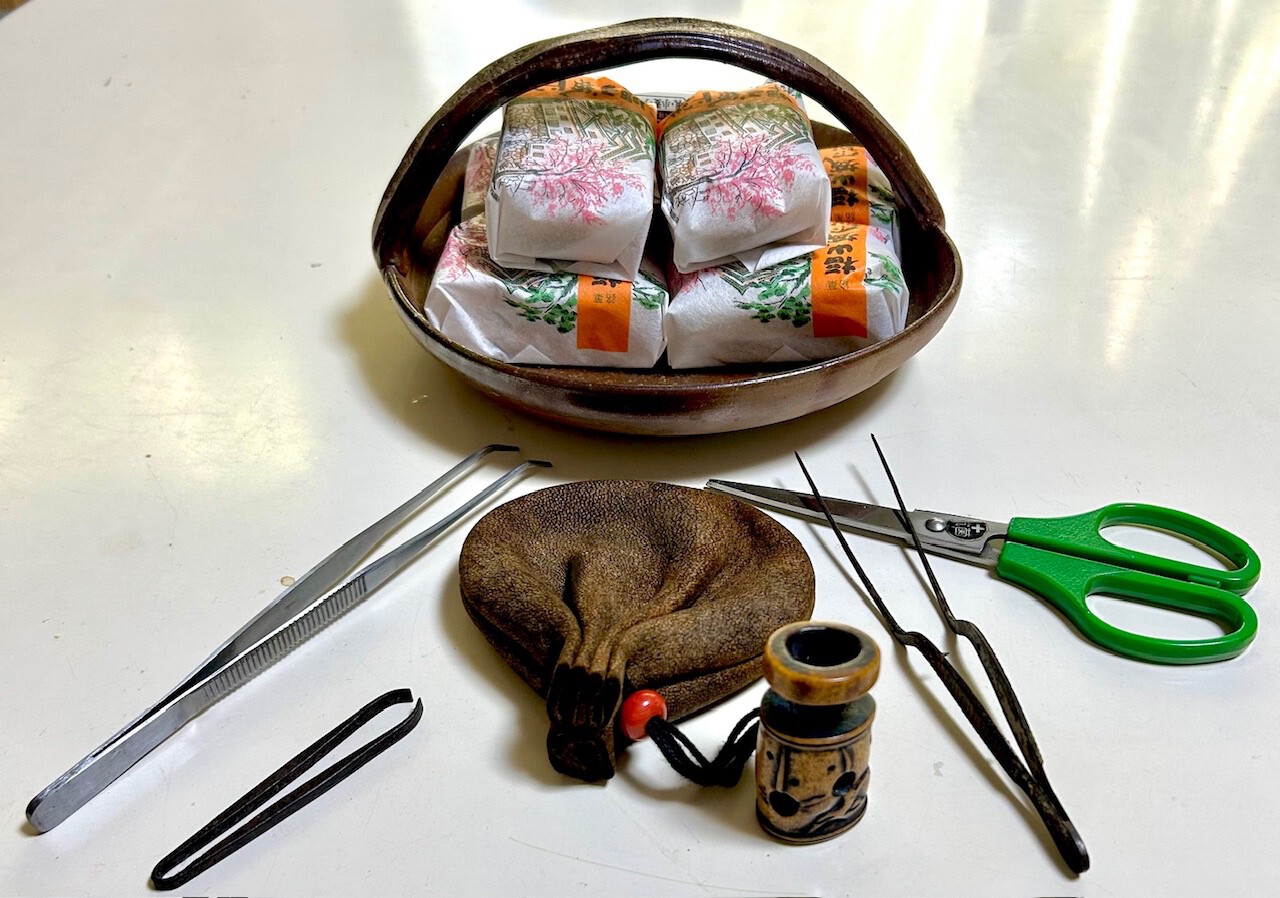
4. Thread your doubled cord through about 20 eyelets in the leather. This is a fiddly job requiring all kinds of useful tools, and plenty of free time and patience. 5. Somehow get the loop and the two loose ends to all go through the ojime. (Note that many beads will look like ojime, but the central channel of a typical ojime is usually larger than most ordinary beads.) 6. Final result with new black cord. Jabara concertina mouth pulled shut with tightly fitting ojime.

 1 point
 -
On dating I would trust Ueda, who had access to documents such as temple registers, more than Meinertzhagen who relied on stylistic considerations. So I would take the 1907 death at face value. Either for some reason Kohosai stopped working for the last 30 years of his life, or Meinertzhagen places him a bit too early (note that Davey says late 19C).1 point
-
As in the two pages above too, the MCI seems to have more detail.
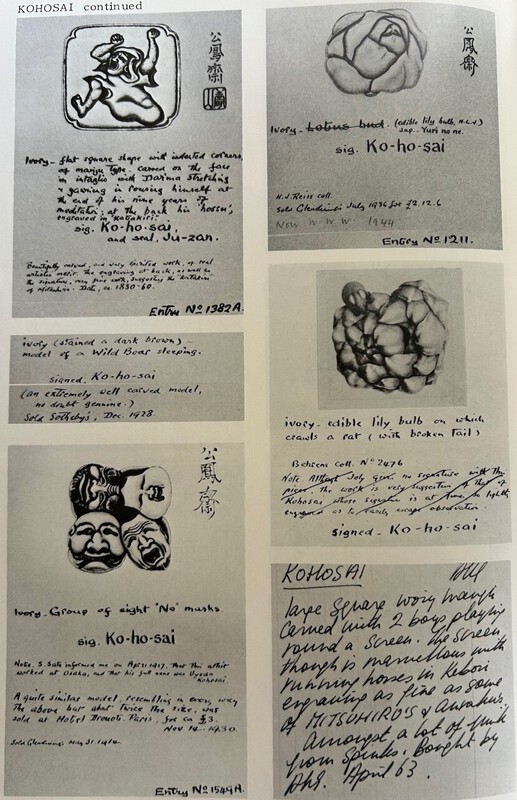 1 point
 -
Though gimei, it may still be a sword meriting restoration. I would inquire with a traditionally trained togishi (Japanese sword polisher) and get their opinion on it.1 point
-
公鳳齋
 1 point
 -
Not really, no John, but they would have had drills at hand for making Netsuke and himotoshi holes, so it would be an easy way to add decoration, and lose some of the unnecessary weight of stag antler. There is actually a third large hole on the one above, (see to the left side). Tsuba holes. We have a thread running here on the NMB concerning holes in tsuba. Sometimes they are said to be udenuki no ana, for lashing a sword to your wrist when on horseback, and when they are a large and small pair, sometimes they are said to symbolize the sun and the moon, 日月 jitsugetsu.1 point
-
Hi Connor @CarstairsCowboy, I will relocate your thread to the Nihonto section for more input on the signature. More photos never hurts, preferably on a dark non reflective background. Close ups of the tip, full blade profile centered from above, both sides of the tang. It’s best if pictures are oriented so tip is north and tang south. Welcome to the forum, and thanks for sharing your sword and family story with us. My journey into Nihonto started similarly; with a small nugget of a story and an inherited sword. Best of luck, -Sam1 point
-
It is genuine in that it is a real Japanese sword . The question as John says is the blade really made by Yasuyo . The Japanese produced a lot of blades and put the names of famous makers on them to make them more saleable . This is like coming across a painting signed by say Picasso . It is a real painting but was Picasso the actual artist or did someone sign it with his name to make it more saleable1 point
-
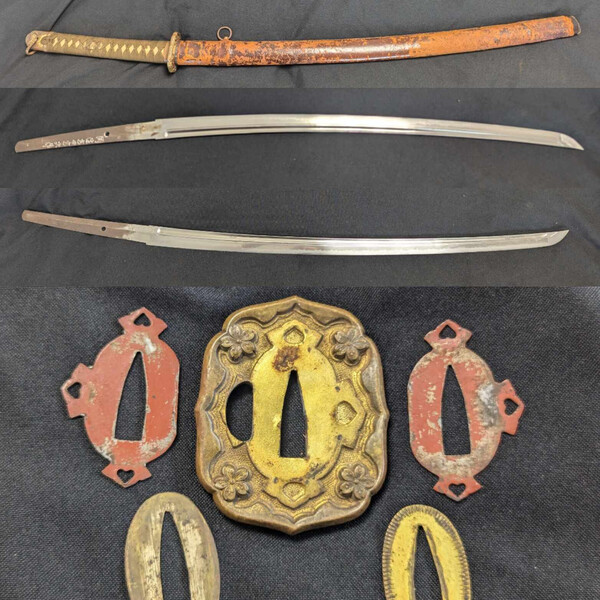
I have a Yoshida Yoshitsugu type 98, and it has the leather cover over a black wooden saya. The blade is signed, but not dated, so wondering if anyone can place this sword on the timeline based on the cosmetic attributes? Thanks Justin
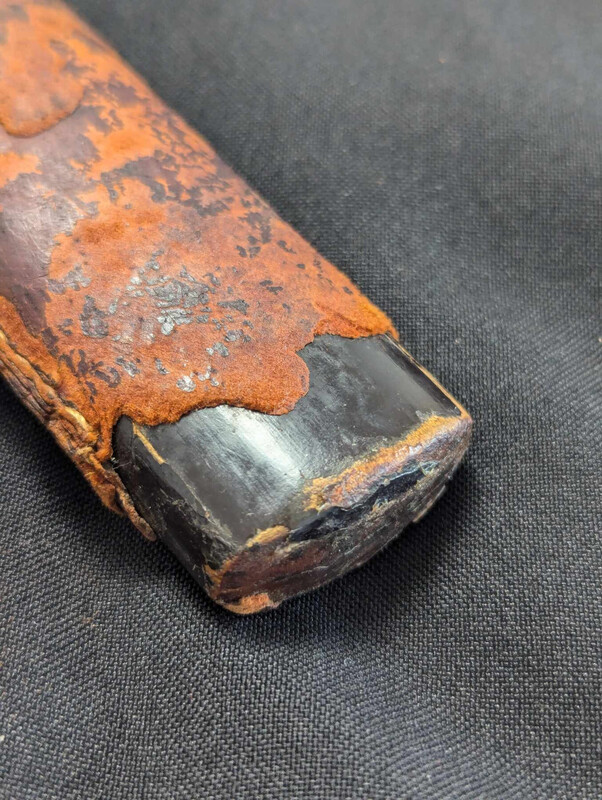
 1 point
 -
Justin, your mei looks to read as : Seki ju Yoshida Yoshitsugu saku 関住吉田吉次作 with SEKI stamp. As noted by Bruce likely to be around 1942. He looks to be average wartime smith. This sword has "budget" army koshirae, but of note has bohi, which would cost a bit more. YOSHITSUGU 吉次: real name Yoshida Jinrō (吉田任郎). Born Meiji 43 (1910) December 16. Registered as Seki smith on Showa 16 (1941) May 6 (age 30). Common mei: (“Yoshitsugu” “1944”), (“Yoshida Yoshitsugu”), (“Noshi Seki ju Yoshida Yoshitsugu saku”). see: [Slough p.202] see NMB post below which has a naval kaigunto dated 1944.1 point
-
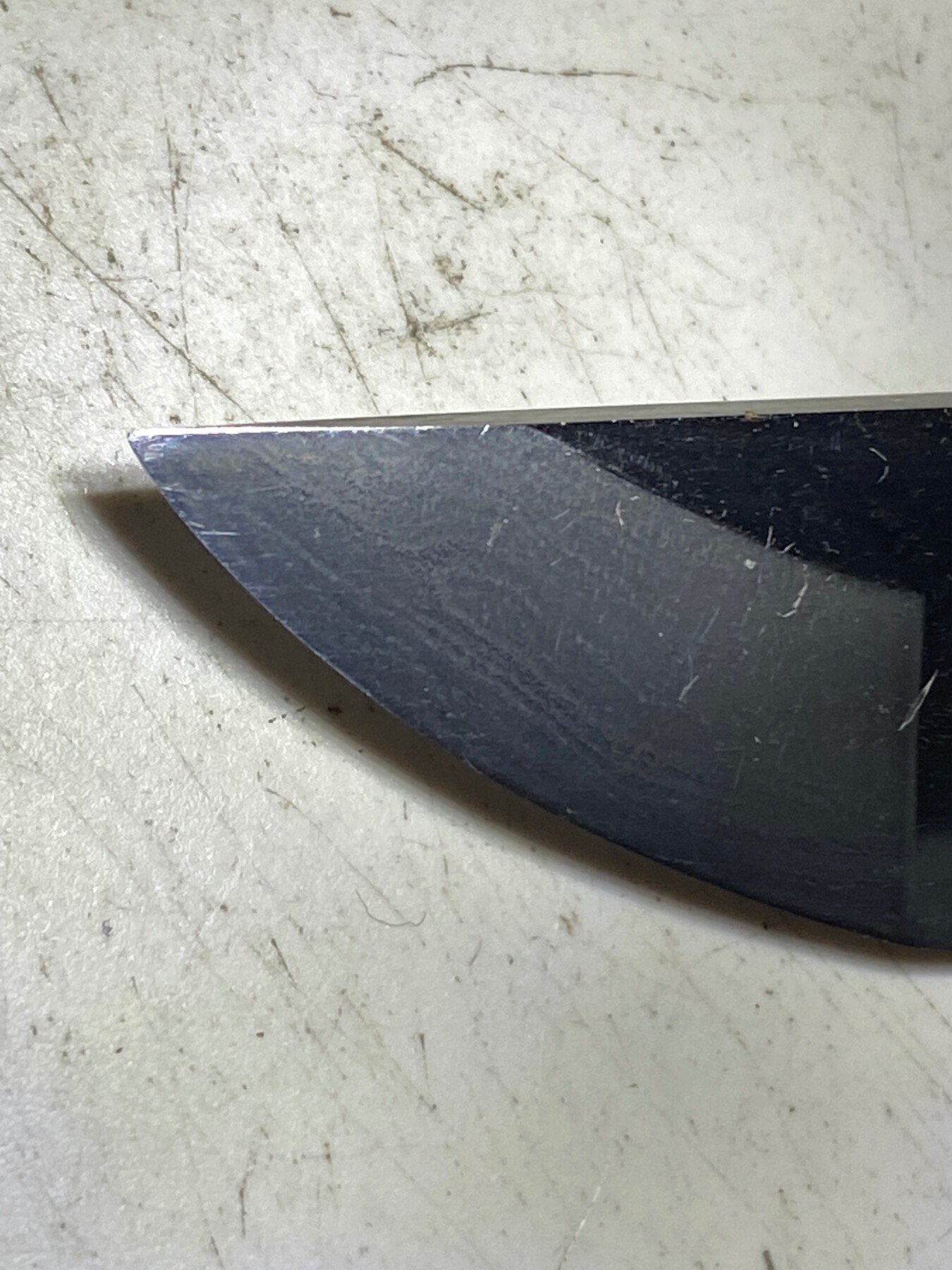
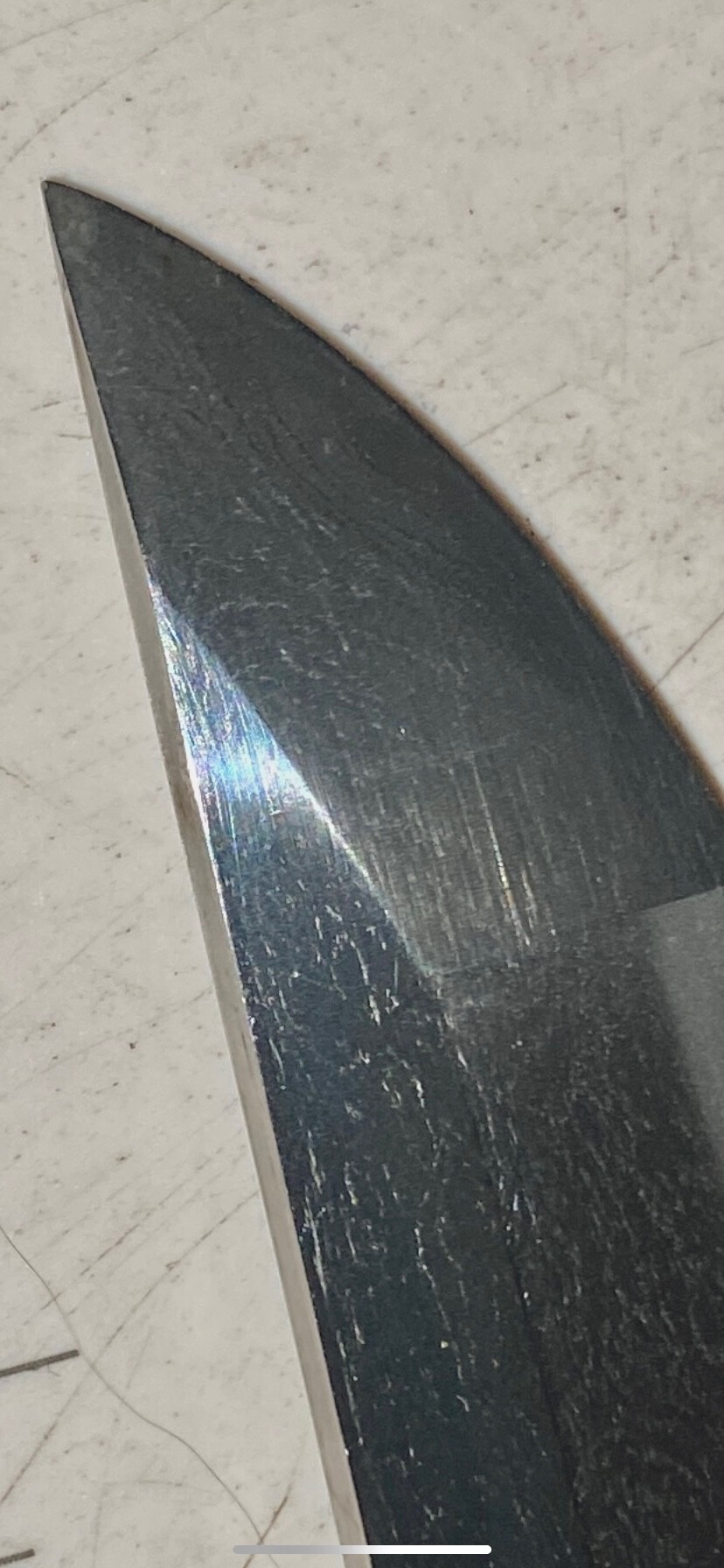
Yes it is a shame, because it's got a very interesting hamon in my opinion. The sad bit is I don't think there's a boshi, and one on side the hamon is about a cm wide, but on the other it's down to possibly a millimeter at most in places. I don't have any sentimental attachment to the blade personally as I bought it because I liked it's koshirae, but I will probably take it along to a meet-up here in England at some point and see what people think!1 point
-
Happened to me years back, sword blade way out of polish [may have had one more polish left in it and some minor chips] but the tsuba was very fine nanako in iron with lined udenuki-ana. Stripped the tsuba off and sold the blade for the overall price I had paid. $800 from memory - I still love the tsuba. I guess my point is the same as Curren's - sometimes the fittings are superior to the blade and may never have been part of the "original" Koshirae.1 point
-
And I have just listed another large group of books. B209. The Sword Mountings of Higo Province. $70. https://japaneseswordbooksandtsuba.com/store/book/fittings-books/b209-the-sword-mountings-of-higo-province/ B475. The Art of the Samurai. $70. https://japaneseswordbooksandtsuba.com/store/book/sword-books/b475-art-of-the-samurai-metropolitan-museum/ B521. 3 great, beautiful books on Higo fittings bu Mr. Ito, with translations. $1,675. https://japaneseswordbooksandtsuba.com/store/book/fittings-books/b521-kanshiro-nishigaki-hirata-shimizu-hayashi-kamiyoshi-3-books-by-ito/ B699. All 10 Haynes Auction Catalogs. $325. https://japaneseswordbooksandtsuba.com/store/book/fittings-books/b699-all-10-robert-haynes-auction-catalogs/ B661. Japanese Armor Makers for the Samurai. $195. https://japaneseswordbooksandtsuba.com/store/book/armor-books/b661-Japanese-armor-makers-for-the-samurai-by-chappelear/ B935. Tsuba. $95. https://japaneseswordbooksandtsuba.com/store/book/fittings-books/b935-tsuba/ B539. Echizen Kinai Tsuba. $165. https://japaneseswordbooksandtsuba.com/store/book/fittings-books/b539-echizen-kinai-tsuba-by-tsuruoka/ B759. Chic Sukashi: Akasaka Tsuba. $85. https://japaneseswordbooksandtsuba.com/store/book/fittings-books/b759-chic-sukashi-akasaka-tsuba-by-sano-museum/ B214. Nihonto Koza Translation by Watson, Volume VI Kodogu Part 1. $195. https://japaneseswordbooksandtsuba.com/store/book/fittings-books/b214-nihonto-koza-volume-vi-kodogu-part-1/ B513. Bushi no Issho: Sukashi Tsuba. $60. https://japaneseswordbooksandtsuba.com/store/book/fittings-books/b214-nihonto-koza-volume-vi-kodogu-part-1/ B973. Akasaka Tsuba by Sasano. $85. https://japaneseswordbooksandtsuba.com/store/book/fittings-books/b973-akasaka-tsuba-by-sasano/ B289. Meito in North America & Yagyu Tsuba. $35. https://japaneseswordbooksandtsuba.com/store/book/sword-books/b289-meito-in-north-america-yagyu-tsuba/ B707. Gai So Shi by Haynes. $150. https://japaneseswordbooksandtsuba.com/store/book/fittings-books/b707-gai-so-shi-外装史-by-robert-haynes/ And 9 or 10 catalogs from Kokusai Tosogu Kai, various prices. Find these at the top of my tsuba and kodogu list on my site. As before, if you are interested please contact me through my website. And more fine books are coming soon. Thanks, Grey1 point
-
Howdy y'all! I just found this board and signed up recently. Name's Connor and I am based out of Calgary, Alberta, and I have always loved swords and history. A bit ago I started digging more into the history of Japanese swords and swordsmithing when I inherited a katana from my father, who inherited it from my grandfather. I would love to find out more about it, since a few people I trust have told me it is a gimei. I would love to find out more about it and see if I can get it properly restored and refitted one day! In the meantime, I do my best to keep it in tact and clean, and do the digging I can.1 point
-
The stamp was used by the civilian Seki Cutlery Manufacturers Association between 1940 and 1945. The massive majority of dated blades with the stamp were made ‘42.1 point
-
Here you go.
 1 point
 -
@Curran I'm down in pittsburgh haha. so neighbors. the sword is actually with my dad up near scranton. when we first tried getting them looked at I think we met with someone from the NY group, but outside of their regular meetings. it was 2 guys we met at I think a community college in new york. but they were mostly looking at the swords themselves. unfortunately weren't able to learn much outside of "yeah you'll need to spend a few grand to get them polished before anyone can say anything." Thank you so much for that detailed answer, though! I forgot how much fun it was to dig in to this stuff. And I swear every person I talk has something new and awesome to tell me. It's wild to think that just a PIECE of a sword can have more story baked in to it than almost anything us westerners are used to dealing with. I'll try to get better photos next time I'm back in that area.1 point
-
@ryanvango East or West PA? My family is from the Cranberry-New Castle- Slippery Rock triangle. If you are in Eastern PA, there are some knowledgeable people in NJ and there is the NY Metro Area Nihonto Club. Daytrip to NYC for one of their meetings, and you will get some insight. I miss Northern Jersey-NYC. Pizza down here just isn't the same.1 point
-
Congratulations on getting a very nice looking sword. I do like the horimono a lot, even though it is worn down. I do have huge respect for NBTHK and NTHK shinsa, however there are always limitations in play when they are processing hundreds of swords at fast pace in a shinsa session. I think most important thing is that they would see this as late Muromachi Sōshū Masahiro. Japanese way of giving extremely specific attributions is something I don't personally like all that much. They most likely cannot spend hours on researching a single normal sword so they shoot out a reasonable attribution they can agree on. Granted late Muromachi Sōshū is out of my comfort zone and I don't track them in my books, however I don't think I can easily find a reference sword by this smith from the huge amount of references I have at home, that is how rare this smith is. This is pretty obscure smith and very specific attribution, my guess would be that NBTHK would give out a lot more broad and general attribution. I think this entry from Nihontō Meikan is the only info I can dig up about this particular smith.
 1 point
 -
Your papers state 8th generation.1 point
-
If memory serves me right these were purposefully cut at that angle to allow a slight tension to avoid falling out. It would also allow easier removal as the handles sit further away from the Fuchi. You will find this detail on many good quality Koshirae with Kozuka.1 point
-
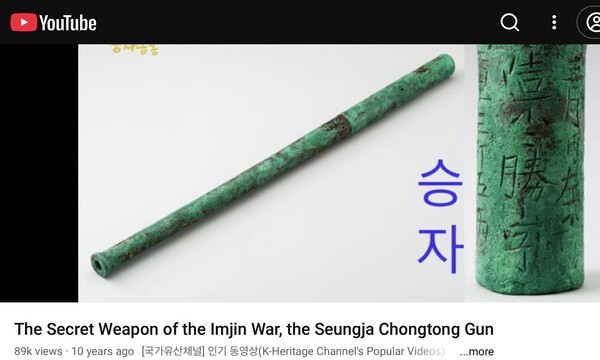
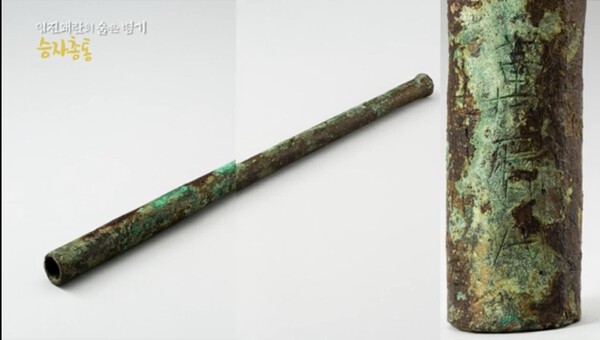
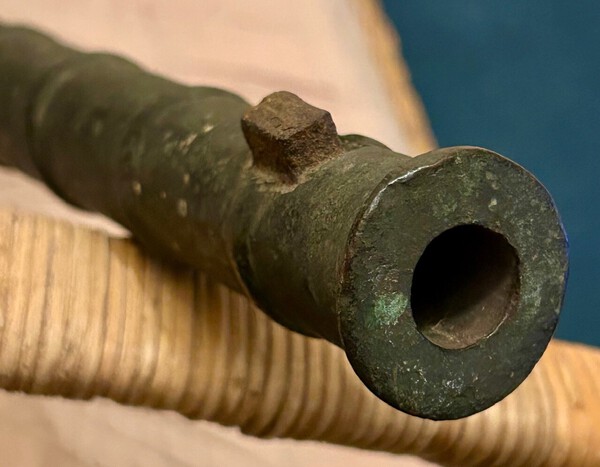
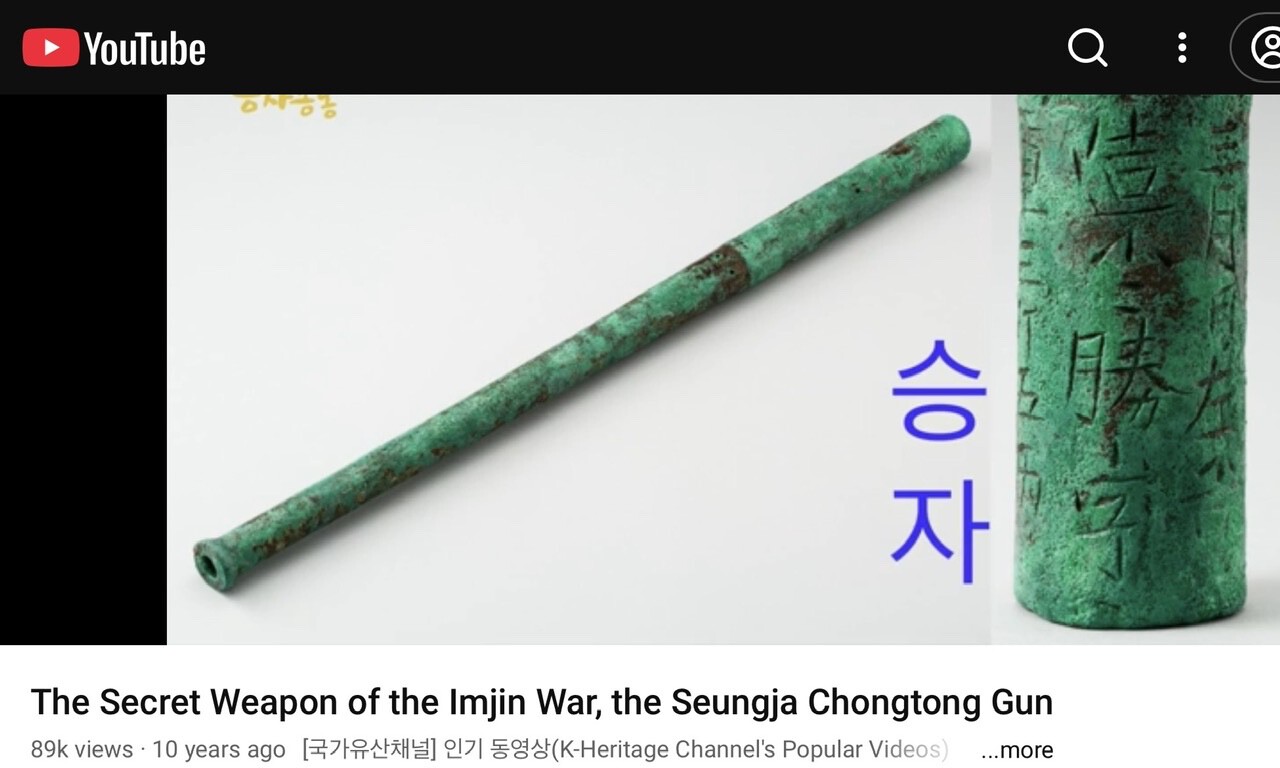
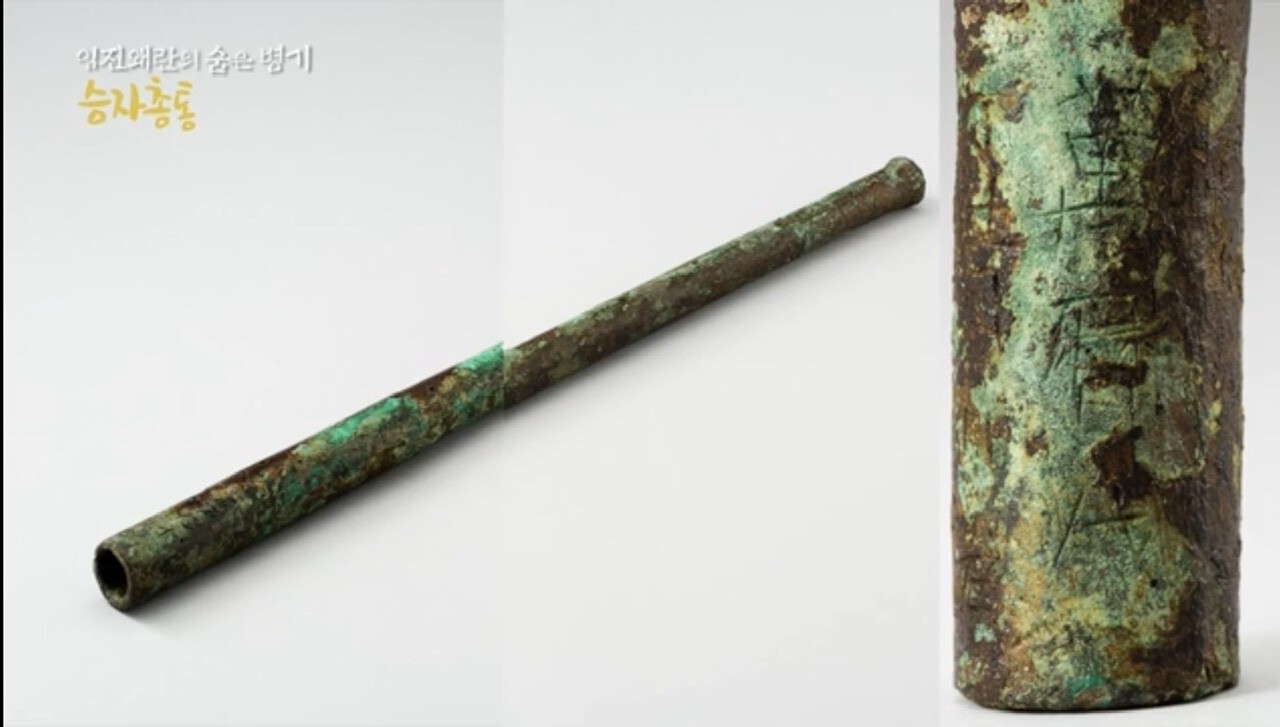
We have a thread running titled ‘Chinese Cannon’, but no dedicated thread for old Korean guns. The other thread can be found below for those that have missed it so far. Any further Korean updates can hopefully be found here in this new thread. In the meantime that thread is still open for Chinese cannon or gun candidates. Korean cannon were supplemented by smaller pole weapons for infantry, single or triple-barrel guns set off by a lighted fuze/fuse. (What we think of as matchlocks probably first started to replace these older weapons as the Koreans defended the peninsula against Hideyoshi’s armies in the 1590s. There is a Korean matchlock example in the Gun Museum on beautiful Tanegashima Island, just south of Kyūshū.) Today I started work on making a disposable haft for the bronze long gun, and the video gave me some hints. (It’s in Korean but sufficiently visual to follow to the end.) The bronze socket is 20mm in diameter internally so I sourced a suitable pole, whittled it down and stained it. There are two holes in the socket so I drilled a hole in the whittled end of the pole to receive some kind of mekugi or locking pin. Length of pole? The records talk about overall length including socketed barrel of 110~200 cm, but if you think about it, loading needs to be done with the muzzle upright. The pole cannot be too long for the average gunner. I made it short enough to load easily when standing in a ditch or behind a rampart. Counter-weight? Some records suggest these guns had a blade on the other end of the shaft, so the weapon could still be used as a club or a spear if you were to be caught while trying to reload. The barrel is really quite heavy, so I would be happy with any extra weight added to the other end of the haft, anything, even an iron ishi-tsuki from a spear for a start. (A blade could be dangerous for friends passing behind you.) Ballistics Although the video shows insertion of pachinko balls and patch material, the records mention it was mainly arrows that were used, either in bunches, or as single bolts with rounded feathers and flat enforced ends.1 point
-
PS Just found a great video, with unearthed examples of Korean long guns of this type, with very similar inscriptions.
 1 point
 -
After a little further reflection, it makes more sense for my collection to have a couple of opposing weapons of the type that the Japanese would have faced in Hideyoshi's (mis?)(ad?)ventures over the Tsushima Strait.1 point
-
He joined in 20131 point
-
I asked a Chinese collector to take a look. He found nothing wrong with Trystan's character identification. However, he cautioned that Chinese inscriptions were molded in and not inscribed. He also pointed out that these hand cannons are referred to by the number of barrel rings, in your case 7.1 point
-
Due to the great age of the engraving, many of the characters are no longer very clear. I can only make out some of the Kanji, and even those may not be entirely accurate. 勝字八 萬曆癸未八月日 1583年8月 勝字小(藤)?五(斤/近)士 匠山守 (藤)?五錢 丸五 About 石火矢 Ishibiya According to 武用辨略 Buyō Benryaku, in 1551 (or 1576 according to 豐薩軍記 Hōsa Gunki), 南蠻人 Nanban foreigners presented ishibiya to the 大友家 Ōtomo clan, and 大友宗麟 Ōtomo Sōrin named them 國崩 Kunikuzushi. Regarding this event, 武用辨略 Buyō Benryaku gives the following account: In 天文Tenbun 20 (1551), a Portuguese ship anchored in Bungo fired ceremonial salutes toward a church. The tremendous explosions could be heard at Funai Castle. Alarmed, Sōrin and his retainers went to investigate. Thus, eight years after small firearms had been introduced in天文Tenbun 12, cannon arrived in the 大友 Ōtomo domain. Overjoyed, 宗麟 Sōrinnamed them 國崩 Kunikuzushi. Because these guns fired stone projectiles, they were also called 石火矢 Ishibiya, a term that continued to be used into the Edo period. In Sengoku-period records, the term ishibiya is almost always used. For example, descriptions of the ironclad ships built by 織田信長 Oda Nobunaga mention 石火矢三挺 “three ishibiya.” Judging from surviving materials concerning 國崩 Kunikuzushi, the石火矢 Ishibiya introduced by the 大友家 Ōtomo clan were in fact a type of frankish gun, also called 仏狼機砲 futsurōki-hō in Japanese. This has already been explained in detail in my article “Ancient Japanese Long-Range Weapons” and will not be repeated here. As for the 石火矢 Ishibiya imported by the 織田家 Oda clan, historical sources do not clearly record their country of origin. However, during the 安土桃山時期 Azuchi–Momoyama period, Portugal was Japan’s principal trading partner, and 織田信長 Oda Nobunaga himself maintained close relations with Portuguese missionaries such as Luís Fróis. It is therefore likely that most of these weapons were imported from Portugal.
 1 point
 -
A couple more fire lance angles. (Some measurements to follow.) Iron block underneath, on opposite side to touch hole. For insertion of pole, receiving end.
 1 point
 -
Can't say I've ever sold anything on Yahoo Auctions but as a buyer I agree 100%, it can be very annoying. I recently thought I had won a nice tsuba with hozon papers but it was relisted at the last second for more than double what would have been my winning bid price... Not all sellers do it but when it happens to you on an item you really want, it can be very frustrating indeed.1 point
-
Hi Brett, I appreciate the effort you've put into this. Let me offer some insights. First, it's important to understand the structural difference of the markets you are comparing. Western collectible markets strive to minimize knowledge asymmetries and maximize price transparency, which in turns increases market activity, liquidity, and trust. You see this with numismatic, comics, Tolkien and Harry Potter, fine watches, Baseball cards, etc. These objects are commodities: aside from an objectively-gradable condition, they do not differ for a specific item type. A black lotus is a black lotus, minus the crooked corner. Furthermore, they are extensively catalogued, and their their rarity is a matter of common-knowledge for market participants. This legibility combined with immediate liquidity provides reassurance to buyers. When COVID hit, and enthusiasts in their 40's with disposable income are suddenly carried by nostalgia, the collectible market's inherent transparency gives an easy way to park money in confidence. In other words, collectibles are commodities, and commodities due to their transparency are friendly to new market participants. Nihonto, on the other hand, are not commodities, and they follow the opposite market structure. Knowledge asymmetry is sky high and price transparency is almost non-existent. The items themselves are not legible. You simply do not know what you get, and it is exceedingly difficult to situate it within the broader spectrum of rarity or desirability. This lack of transparency increases transaction costs and risks for new market participants. You can't go wrong buying a graded Black Lotus, but at a similar price point, you can be very, very wrong buying a Juyo mumei Rai Kunimitsu if you use Aoi's past prices alone as your guiding function. If you go into Nihonto with a comic book collecting mindset, you will commit costly mistakes. What does the Compton Collection have in common with the magnificent Kanemitsu tachi that sold for over 200 million yen? What would the top items sold during the legendary "Museum of Sword Fittings" auction sell for today? Now, we are talking about comparable. I will leave it to you as an intellectual exercise to disentangle the structural difference from the items you've been following that have cycled through other auction houses which form the foundation of your analysis on price decline. Add to this a cultural layer that differs from our own in terms of values (Japan vs the West) - as well as different tax policies that create their own class of structural incentives, and you will begin to understand that the foundational data you use to support your analysis only translates to a specific class of items. As others have wisely pointed out, the vast majority of Nihonto transactions that would matter for such an analysis simply go unrecorded, and are carried out between trusted parties in total secrecy. There, million $+ exchanges are not uncommon. The more precious and rare the item, the greater the shroud of secrecy. So, you are left with the tip of the iceberg, and doesn't translate to the vast mass hidden under the sea. Would greater transparency increase the Nihonto market's liquidity, prices, and reduce transaction costs? Absolutely. Are current market participants motivated to do so? Not at all, knowledge is jealously guarded in this field, because it is hard earned. If you know that an item is the best Tokubetsu Juyo piece from a given master, would you be keen on others knowing it? Only if you are on the sell-side. And how hard is it to obtain this knowledge? Well, it is remarkably difficult and requires building a library worth ten's of thousands of dollars of rare and out of print books, hours of study, translation work, and in-hand experience sampling across a wide range of comparable. You're looking at a decade of serious study. What does this information asymmetry mean in the end? It leads to a much slower rate of maturation in the market, the "bid/ask spread" is noisy, and adjusts slowly. From the lowest grade to the highest grade of Nihonto, the price differential is about 100x-500x, which is a complete anomaly when compared to other Art or collectible markets. There are ~2.5 million registered Nihonto with Torokusho, ~1'100 Tokubetsu Juyo, and ~110 Uber Tokuju. If you apply the price-to-rarity mapping of the collectibles or Art market, you will quickly realize that something is completely off. There are economic forces keeping it this way, enabled by the lack of transparency, which benefit, in fine, high-end buyers who spent decades in gathering knowledge, and reputable dealers who have nurtured their reputation and relationships over generations. Markets are markets, in the end, and even the most obfuscating of market practices cannot stop all top items from finding their price. The Kanemitsu really ruffled some feathers. Finally, let us pause for a moment and remember that we have 700 years of collecting praxis in this field. Unlike nostalgia items, which fade in and out of consciousness through a single generation, the Nihonto is a foundational cultural artifact that resonates deeply with the soul an entire civilization. For these reasons, I invite you to be optimistic. But also realistic. It is not an easy field. Best, Hoshi1 point
-
Hello, new collectors! So, in my last post I displayed what I thought was a “good purchase” using the markers and tells I discussed in my previous posts. It appears that I received a “sad” emoji (personally, I think the whole “emoji” thing should be eliminated!!). So, is that member “sad” that I purchased what I consider a good purchase and they missed out on it?? Anyway, for whatever reason, some members on the forum seem to avoid me like the plague (or Covid 19)!! Don’t let that deter you from trying to make your own “bargain purchase” of tsuba by using some of the markers and tells that I have described in my previous posts! Remember, you can always ask for assistance from members of this forum. I am certain that they would be glad to help! And I consider this forum to be the world's best place to ask for assistance on tsuba . But hey, that is just my opinion!! So, you new collectors, go out there on those purchase sites and have some fun (within your spending budgets!). When in doubt, ask for help on this forum! With respect, Dan1 point
-
$22 from Amazon is a bargain, jump on it asap1 point


















.thumb.png.4c5df79fec171b2dc4a23af38e280a4d.png)


This leaderboard is set to Johannesburg/GMT+02:00