
Leaderboard




Popular Content
Showing content with the highest reputation on 01/04/2026 in all areas
-
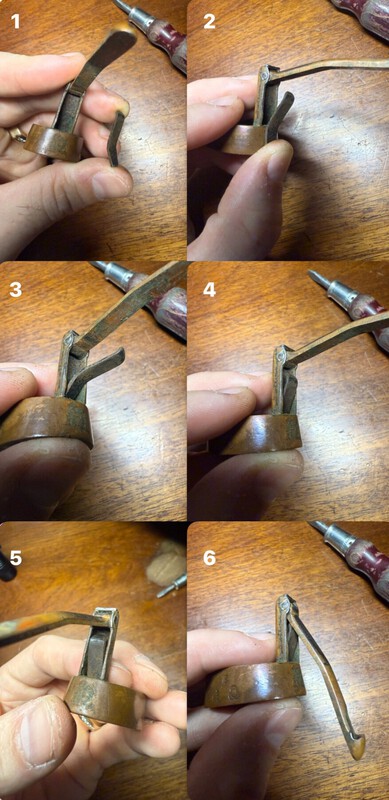
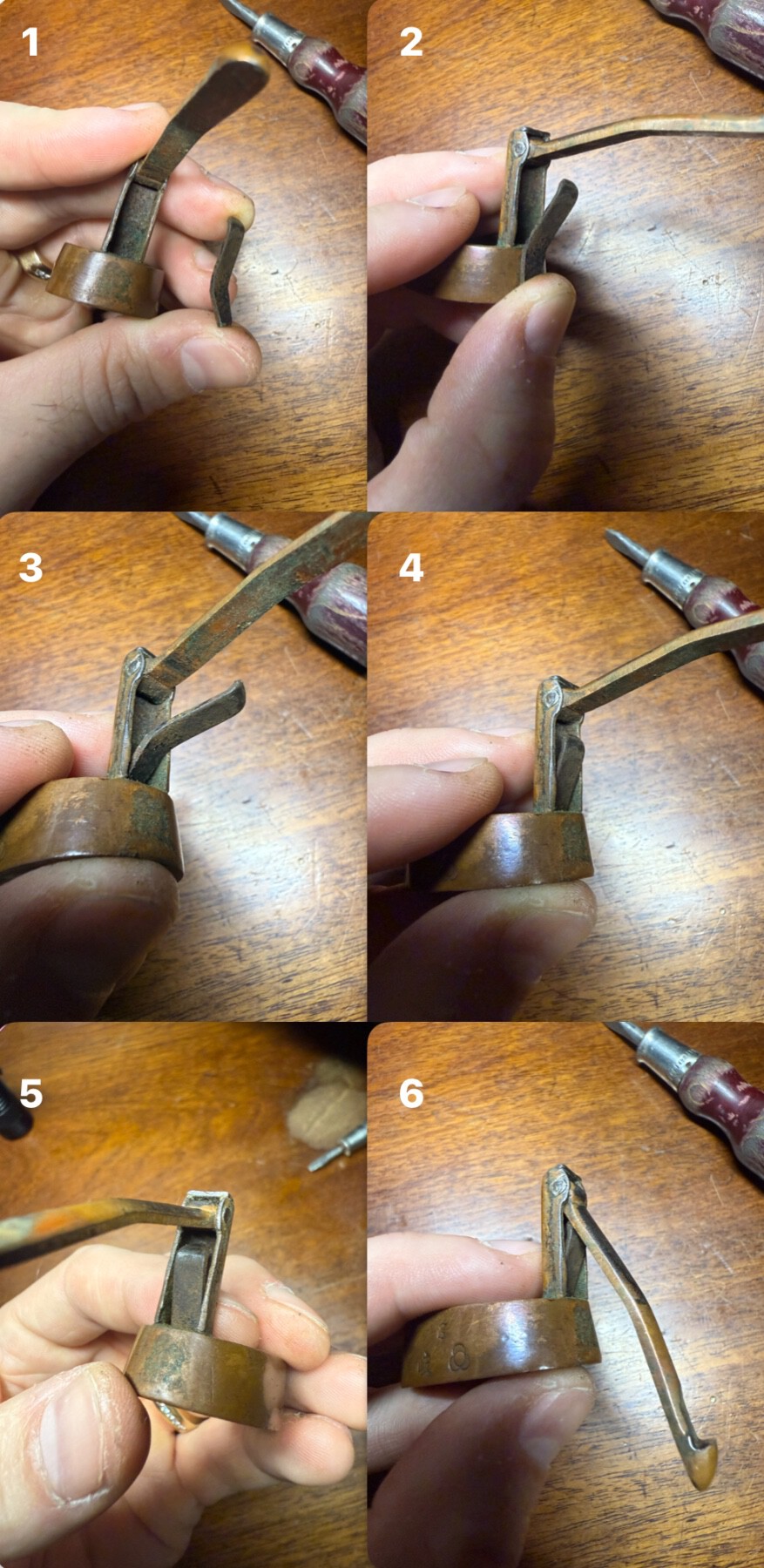
Maybe old news to some of you, but I found it fascinating how the tension spring for this latch was engineered. I put together an infographic to show how it works. The “spring” is a small, hardened piece of metal. There’s no solder, glue, or fastener involved. Instead, it’s precisely sized and held in place by tension and geometry; and can only be removed when the fuchi is separated from the other fittings. It’s no surprise that this piece often goes missing on some examples. Another good reason not to disassemble the Type 95 Gunto. (This is from a loose tsuka and fuchi that came to me without a blade). -Sam
 4 points
 -
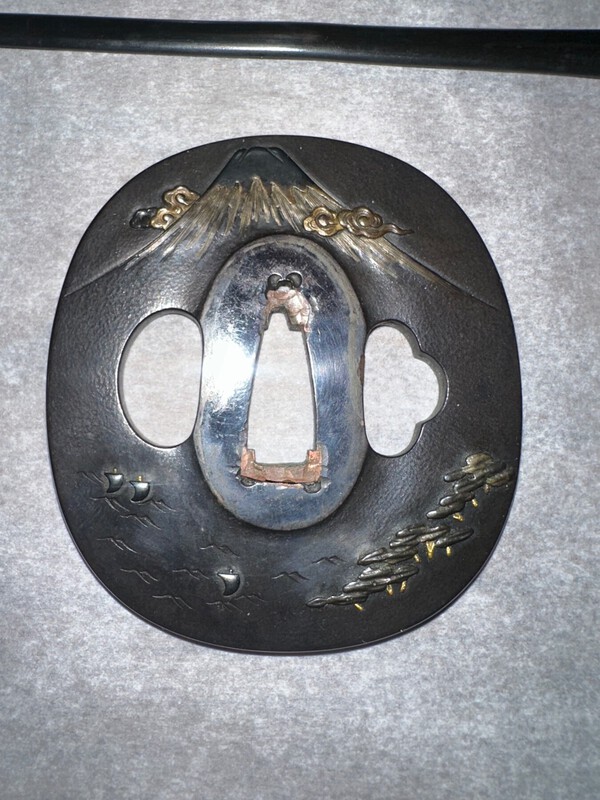
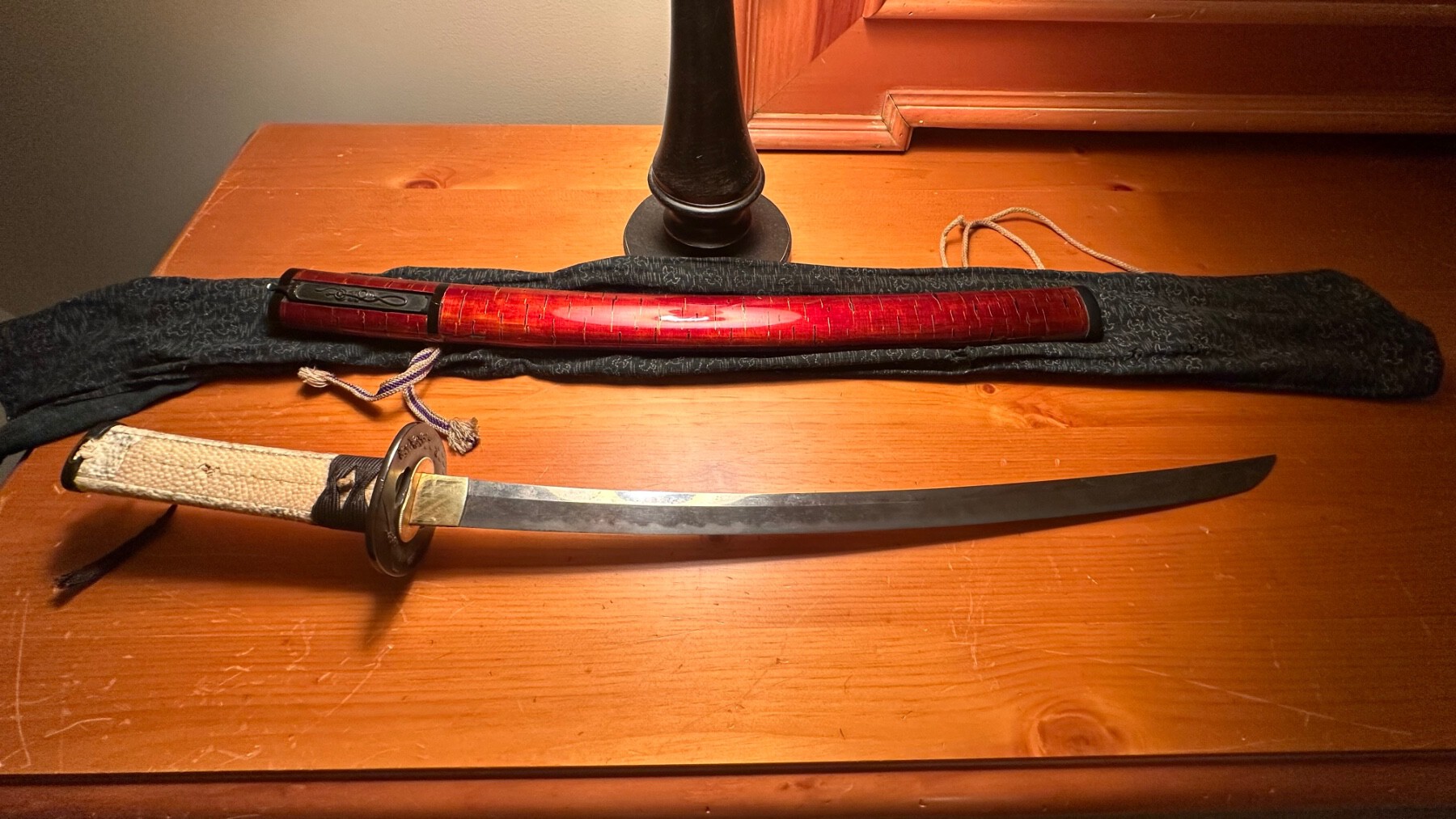
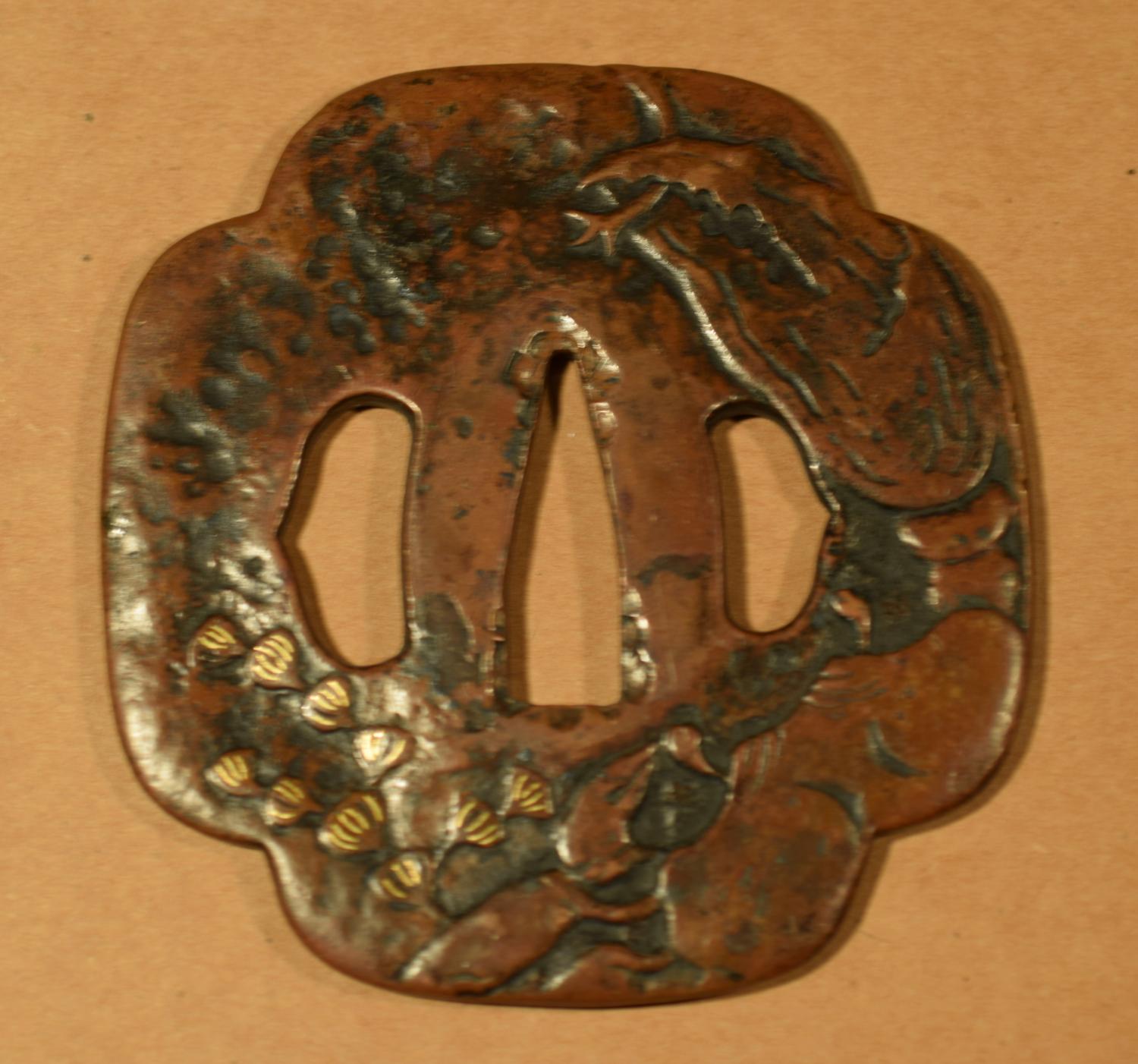
Sadly no signature on the tsuba, but it’s very pretty. Doesn’t seem to be a matching set with the fuchi/kashira but that’s ok. From the story I was told the whole set was as is from the pile pop grabbed it from. He actually sliced his hand by accident as it slipped from the saya and he instinctually grabbed it and caught the blade. Had a scar on his palm from it till the day he died at 92. I used to make the joke that it was the swords revenge from being kidnapped
 4 points
 -
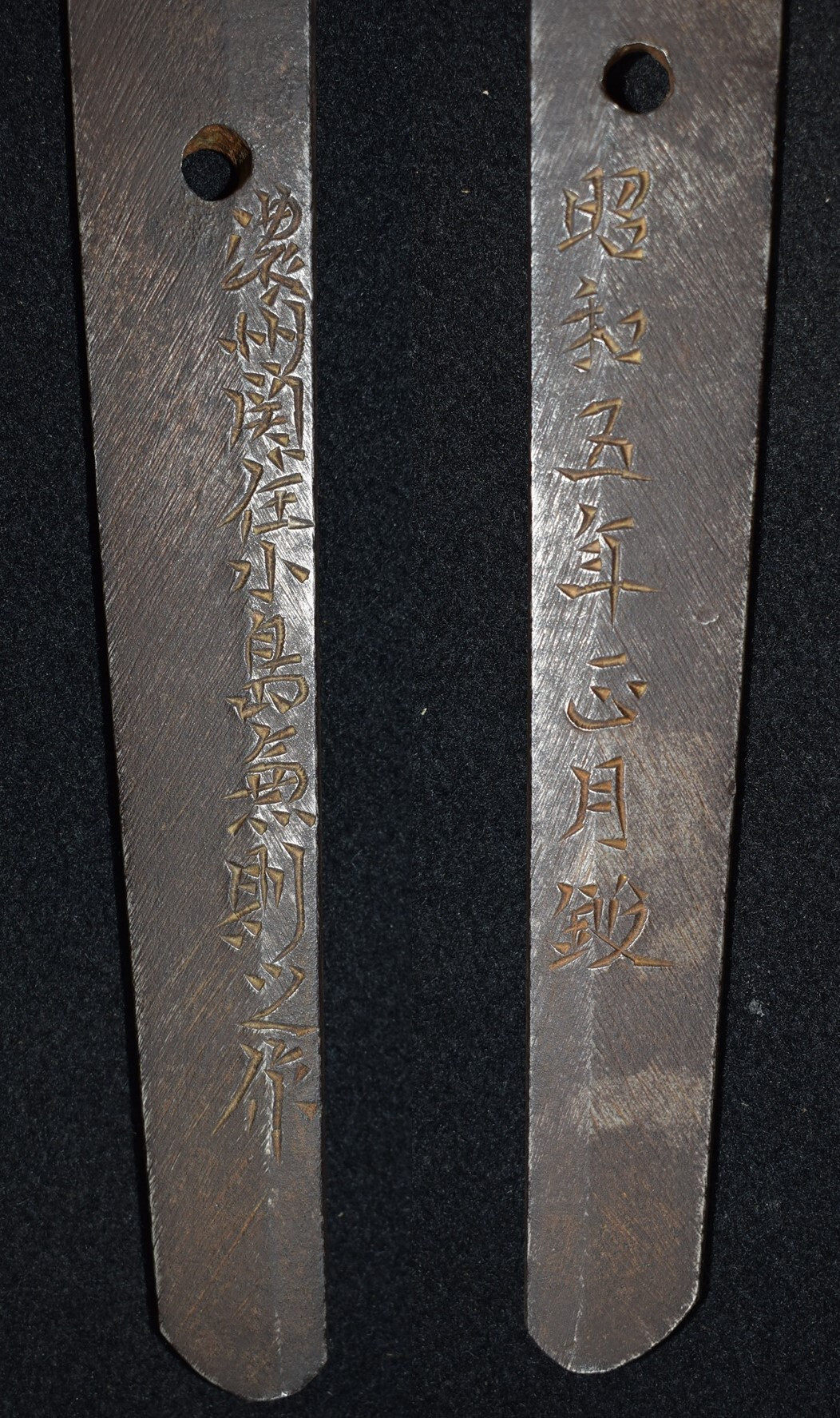
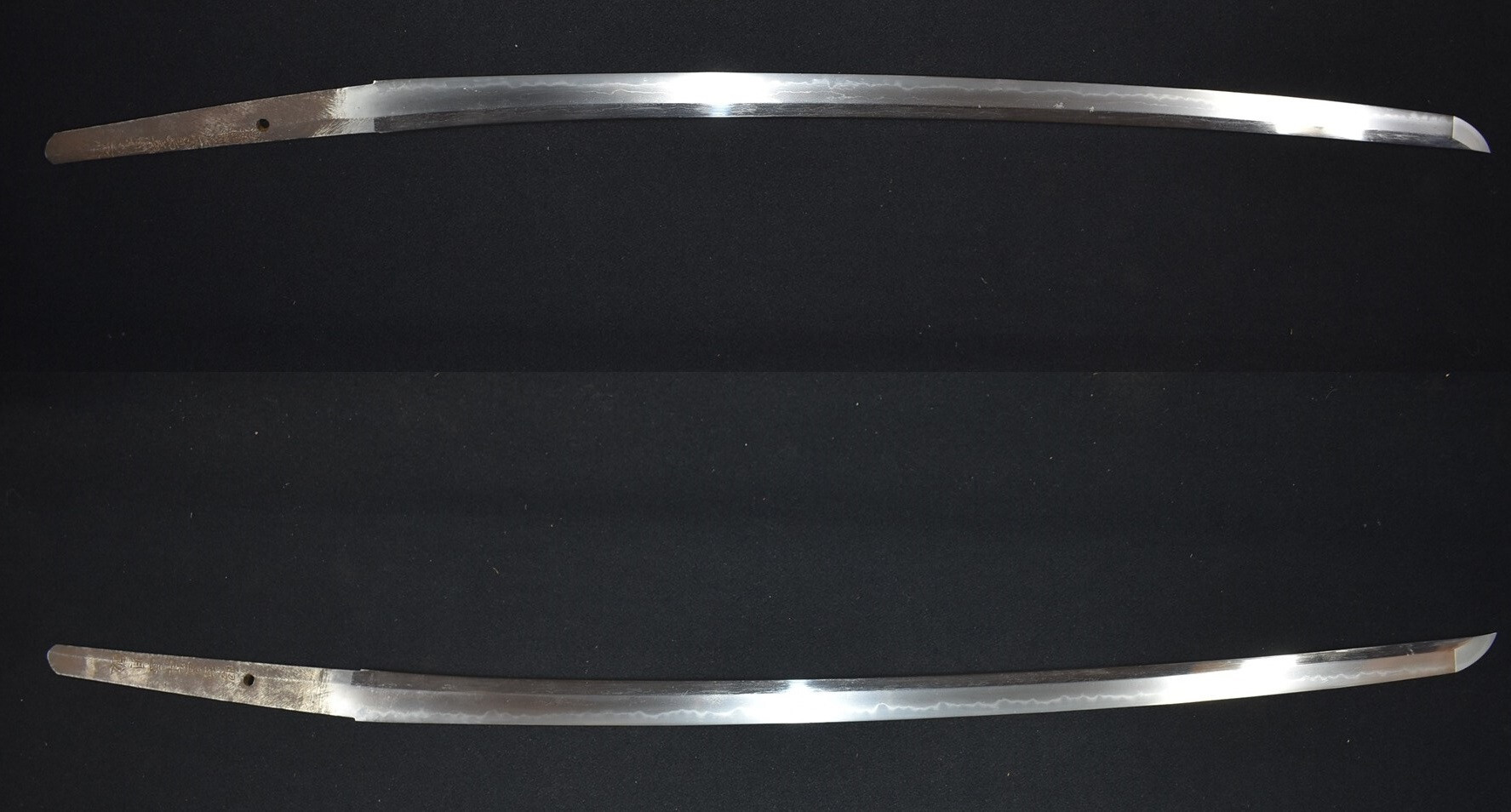
Seki ju Ishihara Kanenao saku KANENAO (兼直), real name Ishihara Kanenao (石原金直), born May 25th 1908, he studied under Amachi Suzuichi (天地鈴市) and worked as a guntō smith. Registered as a Seki tosho 27 October, 1939 (Showa 14) age 31. Early in the war made some stainless steel Takayama-to. Examples and background in Japanese Naval Swords, Part 1, in NMB Downloads (top of page).3 points
-
Yup. Part of the process of brute forcing a password is figuring out the username that each password unlocks. If you can't log in with your username (which is visible to everyone) that effectively gives you two passwords that they need to crack to get in. Which is why you shouldn't ever share the email address you use to log into the NMB in here; if you must put an email address for people to contact you, use a business or personal one that isn't linked to your NMB account.2 points
-
No, there is no reason to think it's a fake at all, it is what is presented. Btw...correction to above...not Chamomile oil... it's Cammelia seed oil that is used, basically light mineral oil. Don't need to get too complicated. A decent light oil such as sewing machine oil will do. Also, not very valuable is relative. Even a basic military sword can be $500 to $1000...not exactly zero value. Enjoy it, and learning more about it.2 points
-
Thank you Thomas. Yes, not much of a change, but apparently the software developers consider it a vital change, as hackers are getting more and more advanced and using AI etc. So I'm just getting this part started well in advance, to minimize the number of people that will inevitably be confused.2 points
-
You can see an extended discussion below which deals with the evaluation of a tanto mei, and range of variation across the smith's atelier (the students working together in his shop, assisting and sometimes signing on behalf of the master).2 points
-
TOS = Terms of Service.2 points
-
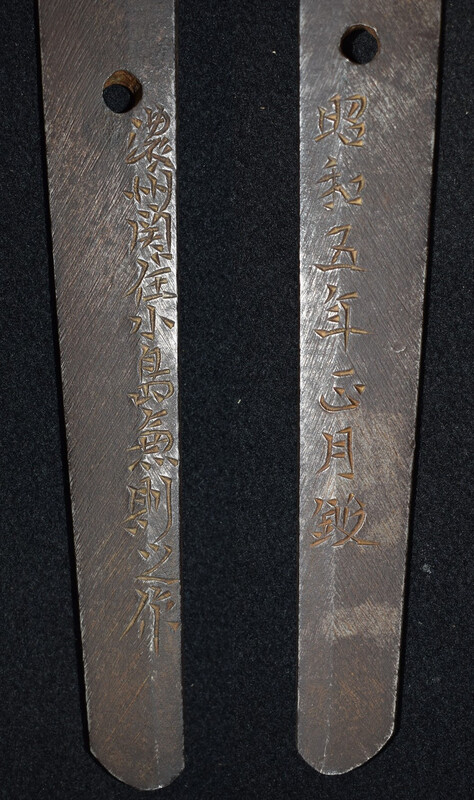
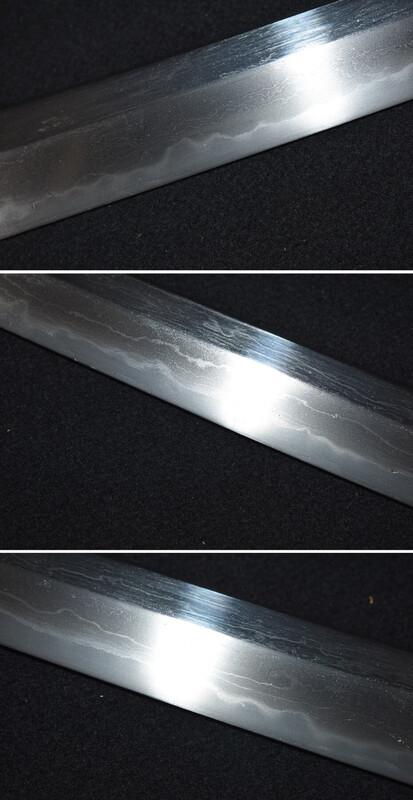
Just in time for the New Year, a sword by Kojima (Taro) Kanenori from January 1930. In four years, it will be antique :-). He was the younger brother of Kojima Kanemichi and was born in 1907. That means he was just 23 years old when he forged this sword. He became an independent swordsmith in 1931. I hope you like it. All the best for 2026!


 2 points
 -
Hi Nick, What Ray said, and here you will find care & cleaning, which you should read twice. https://nbthk-ab2.org/sword-characteristics/ Grey And if you have a bunch of questions and would appreciate talking with someone who is not an authority but has been at this for 40 years and won't try to get you to sell the sword to me, feel free to call sometime. Grey 218-340-1001 US central time2 points
-
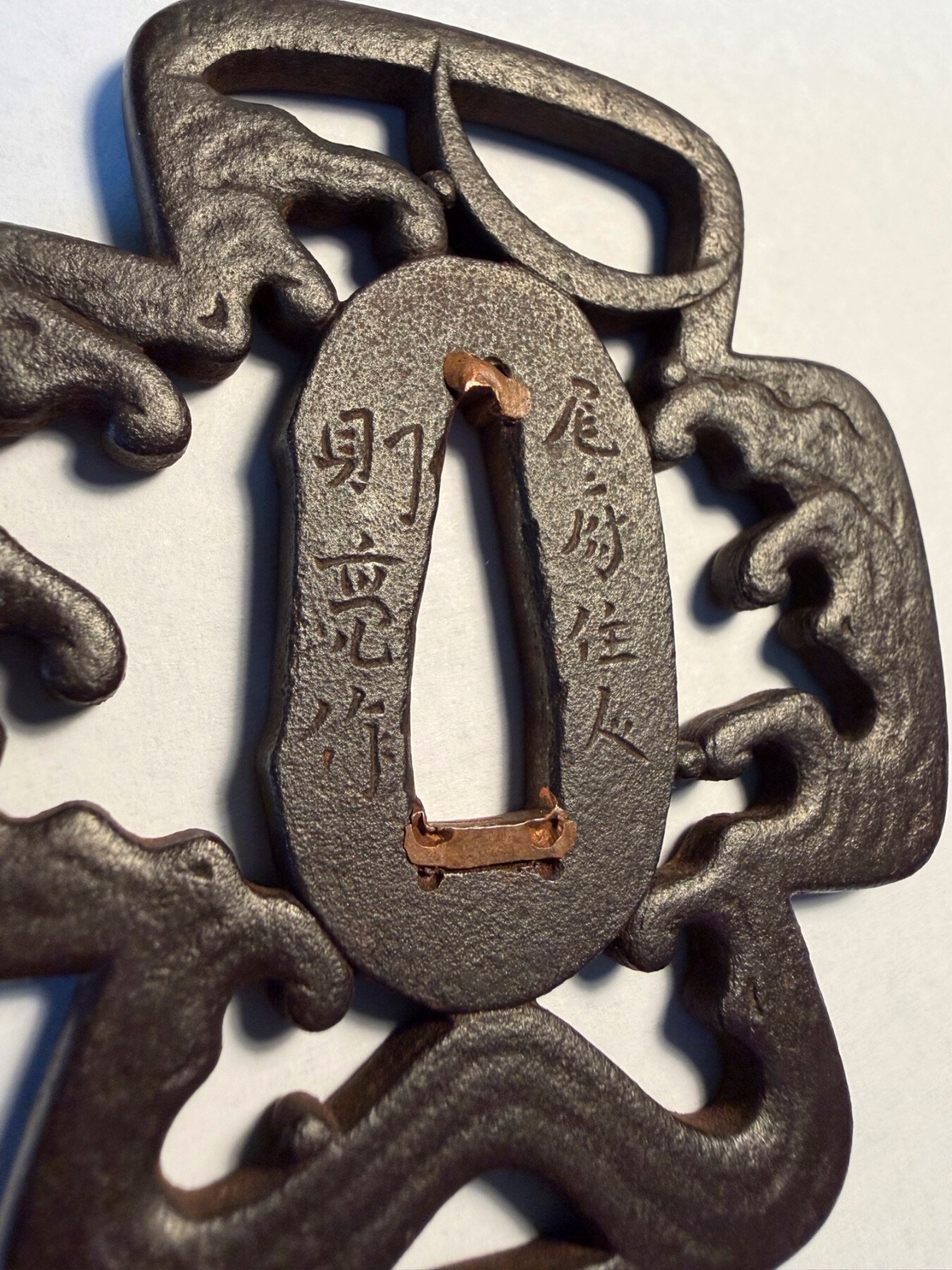
I'm hoping for some assistance with the Mei on this iron tsuba, as well as any insight into the maker/style. Thank you in advance...
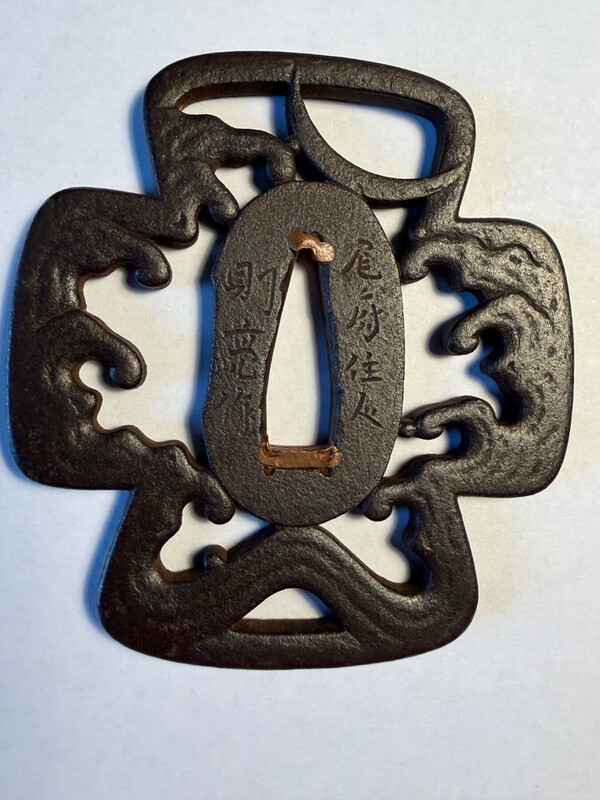

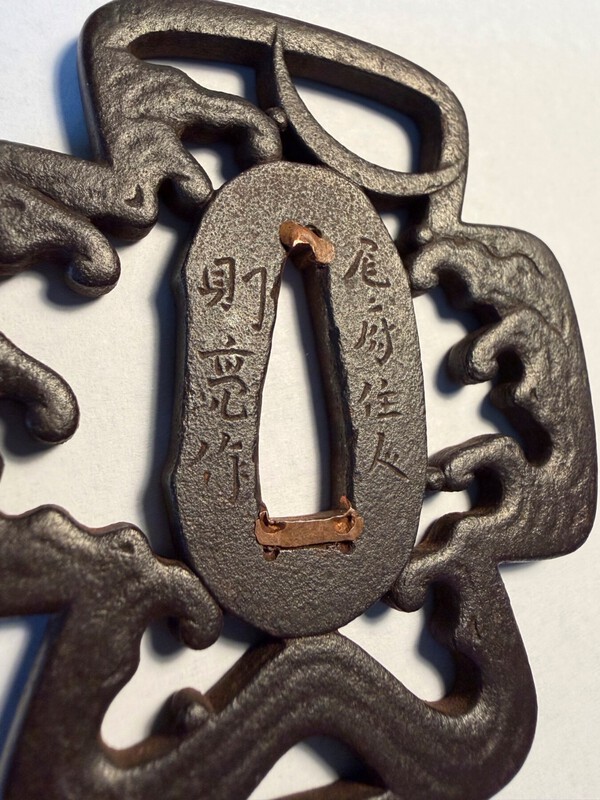 1 point
 -
Im not good at analyzing small details but that hamon definitely doesnt seem kamakura Senjuin at all1 point
-
TSUBA looks to have tea ceremony utensils as theme, NAKAGO looks o.k. in these not so good photos. MENUKI look like the handle shape of early KENUKI GATA TACHI. Please show the blade as well (tip-upwards, without HABAKI)1 point
-
I sometimes write in English what I am reading in Japanese. Makes for some rather interesting sentence structures. Like Scogg, I frequently edit my posts later. Some are just better at English while others are better at math.1 point
-
Yeah, shipping on long items can be ridiculous. That said, if you're having modern koshirae made I believe they can be made divisible/separable to get around this problem. My next blade acquisition is either going to be a shinto katana (currently only have a shin-shinto blade) or a naginata of some kind. If the opportunity comes around, a shin-shinto naginata would be the best of both worlds. I am mainly a fittings collector but am slowly expanding my collection and my interests.1 point
-
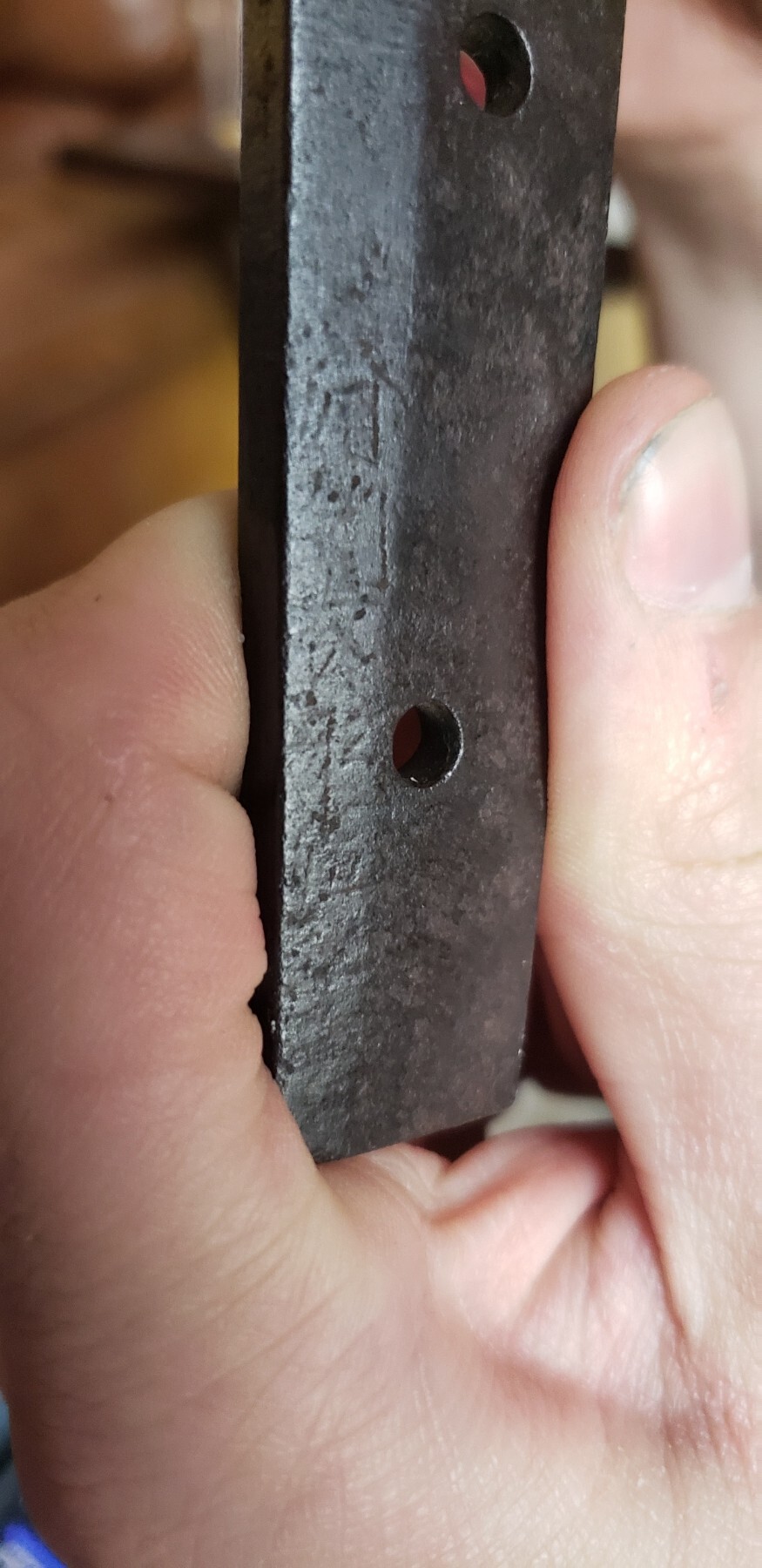
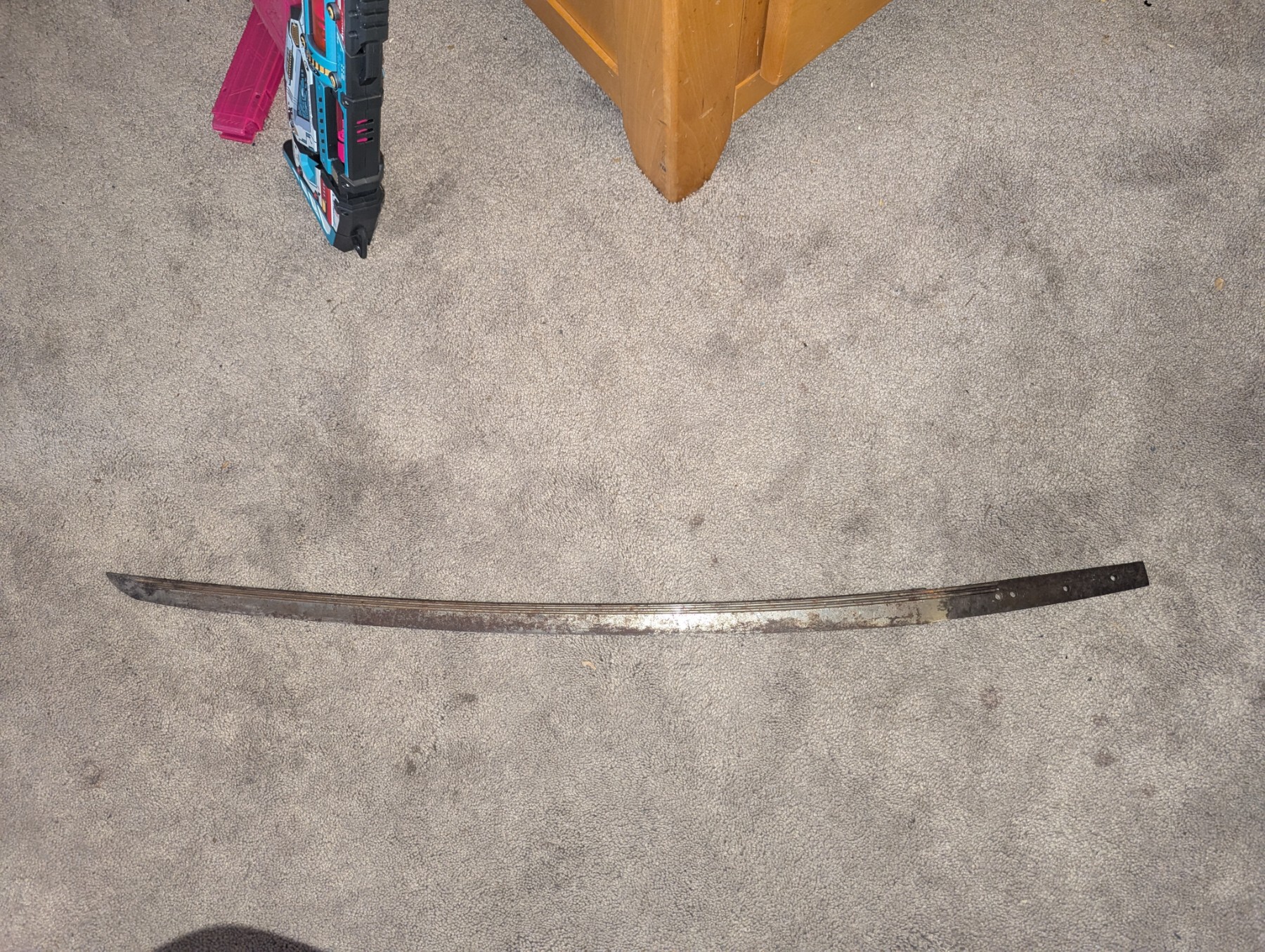
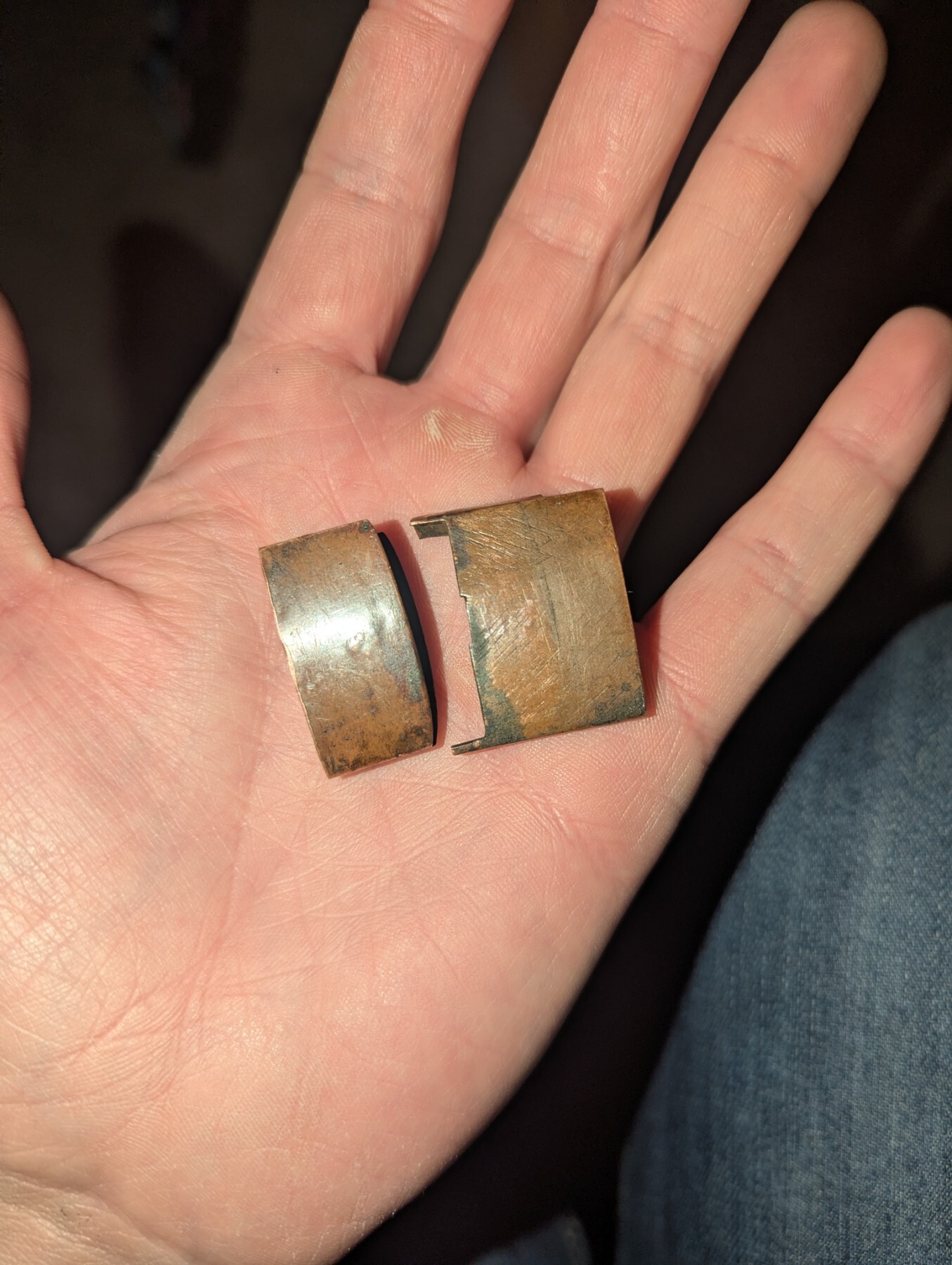
I was referred to this message board by some people on r/katanas. I honestly still don't know for sure if it's authentic (being weary of what people say on reddit) but quite a few people telling to not touch it. I need help identifying it and how to care for it.
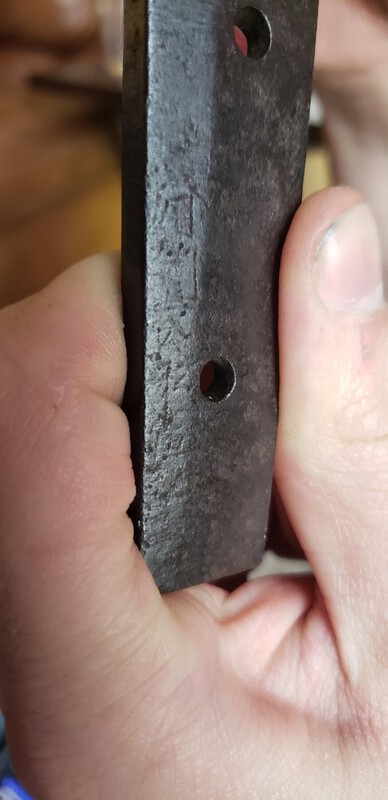
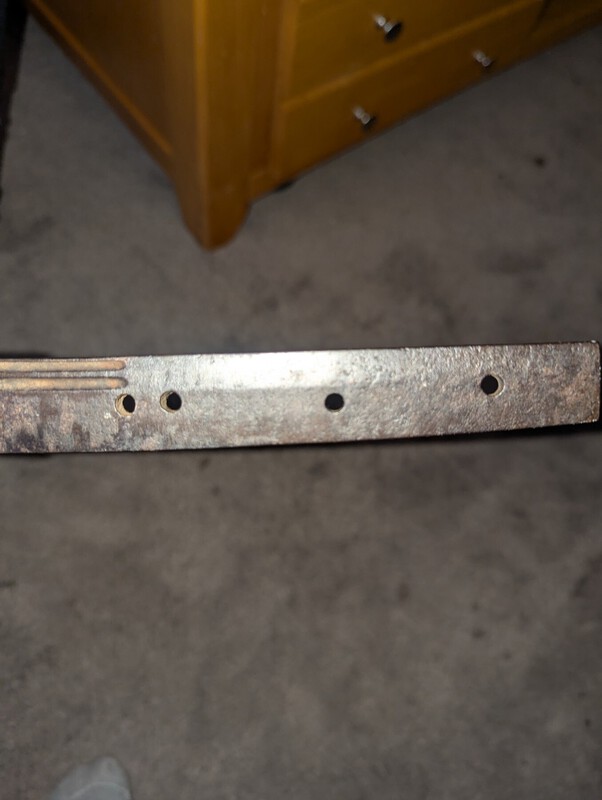
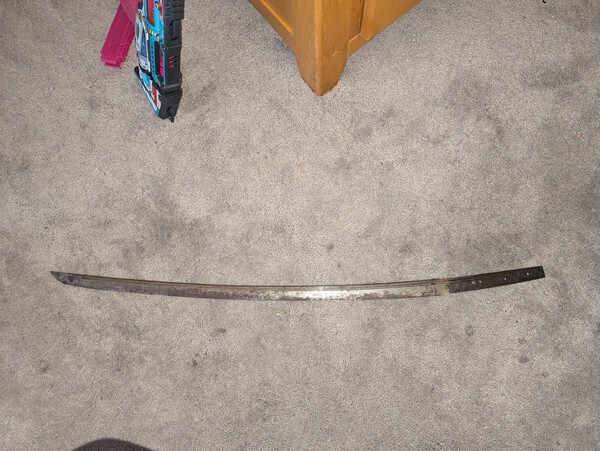
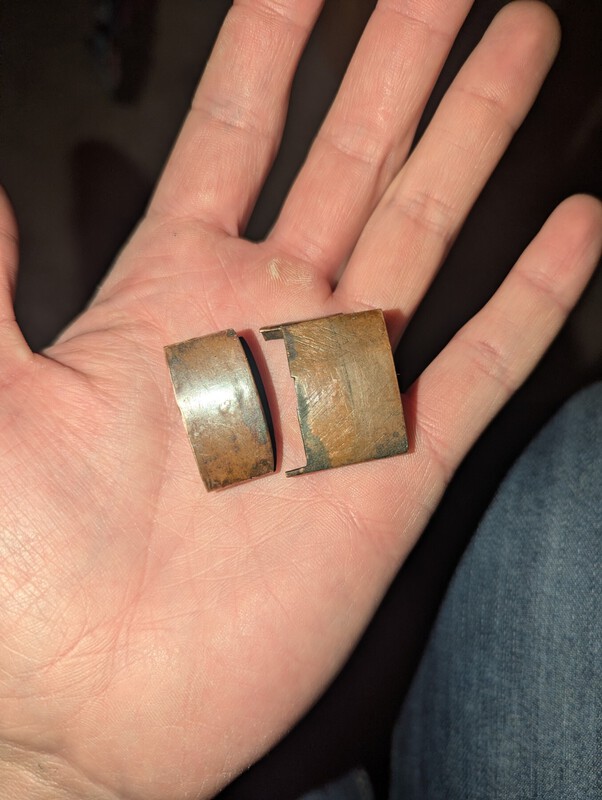


 1 point
 -
Regarding a possible restoration, keep in mind that a thickening file has not yet been invented and that polishing can permanently ruin this blade which already seems quite worn to me..1 point
-
I'm considering updating the forum to the latest version, which is a complete revamp of the current software, and has been in development for a number of years. I'm currently trying to raise the $600+ that would be needed to get someone to assist, as it is a huge update with lots of new features and benefits. Frankly, we'll have to do it eventually anyways, as this version 4 won't be supported forever, and it will allow us to improve a lot of things. That aside, I don't have a date yet when we will do it. But there is one thing that I need to warn all members about. Most forums nowadays, across most platforms, are moving away from logging in using your username. This is because usernames are visible to everyone, and it is a security risk when hackers etc use various methods to run common passwords etc. The modern convention is to have everyone log in with their registered email address, and their usual password. This is because emails are not visible and are far more secure. So I am putting this out there now, so that people can start transitioning from logging in using their username, to logging in with their email address. YES...I know how many people can't remember their emails they used, or have changed it by now. Hence why I'm giving everyone plenty of warning to see what your email is here, so you can use to to login. Or update it if you like. Your forum email address is in your profile. You can find it here: https://www.militaria.co.za/nmb/settings/ Make sure you know what it is, and probably best to make sure you know what your password is, or reset it if you don't. For now, you can log in with your username OR your email address. But eventually that username won't be a login method. Your username will display as it does currently, no changes there So please start transitioning over, and post here if you have any questions.1 point
-
Dear community. Would anyone have a copy, or know where I can obtain the juyo zufu relevant to the naginata koshirae I am sharing with you? I am attaching to original Japanese text and a google translated version. Fingers crossed. Thanks, Mark

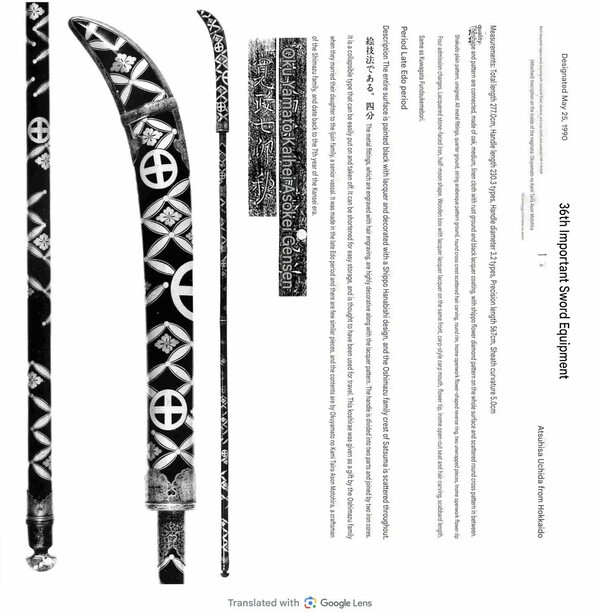 1 point
 -
Thanks. If no luck here I'll try to source one from Japan. Mark1 point
-
I have a general question about obi-hasami netsuke. The ones that I have all contain obi slots around the same length. But not exactly. There is a range. Question: were these made to order or were they made enmasse because obi were a standard width (kind of like men's ties - the same width, depending on the fad at the time)? Follow-up question: ( I get two, right?) Were there changes in obi width throughout certain time periods, from which we could ascertain the time period for a corresponding netsuke? John C.1 point
-
Could be 親光 (Chikamitsu)?1 point
-
Yes, swordsmith mei did vary from one sword to another and there is an acceptable range of variation within authentic examples. Some swordsmiths are known for this, for example shodai Tadayoshi. And also yes, evaluating the workmanship is a part of the shinsa process, in addition to judging the mei (inscription). However, you would not expect to see a legitimate Naotane mei so radically different from the juyo example above with an identical date. And there is a crudeness in the execution of the mei that raises doubts compared with legitimate examples from Naotane and his students.1 point
-
Same with the original cloth wrap. I was watching a "War in the Pacific" documentary and a second of video footage showed a G.I taking a sword from a surrendering soldier that had the cloth wrap still applied (one assumes to keep it clean). John C.1 point
-
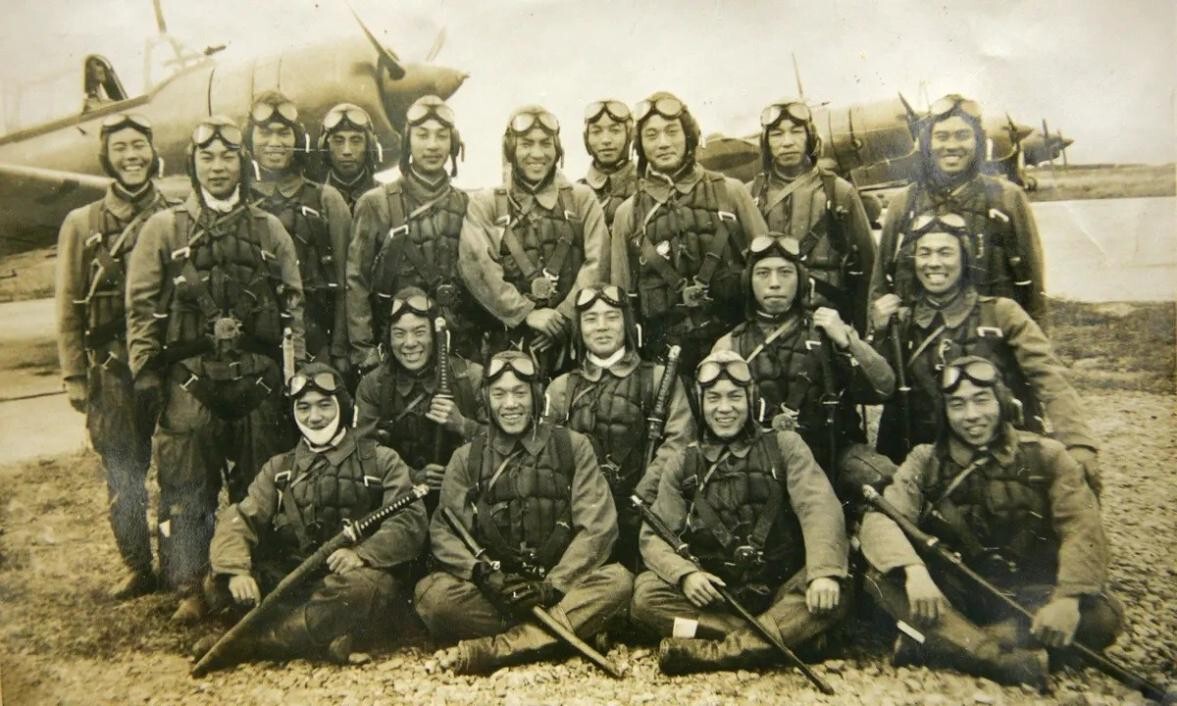
We've all seen the swords tightly covered in leather, head to toe, but spotted this one in the hands of a pilot in this photo. Interesting to see one "out in the wild" so to speak:
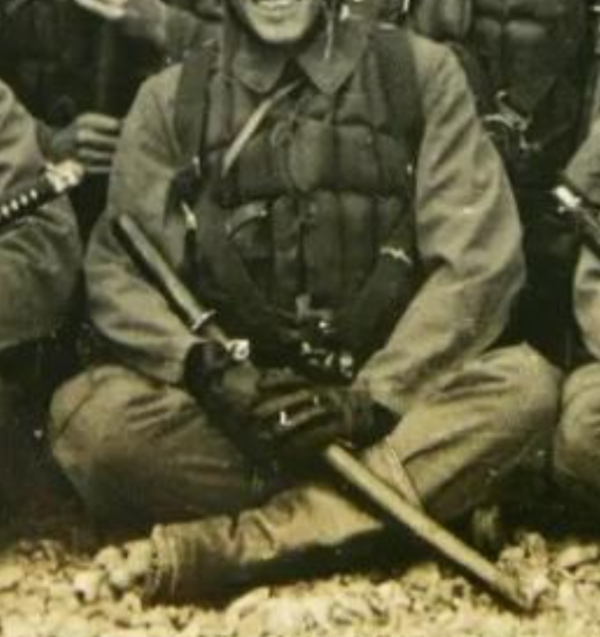
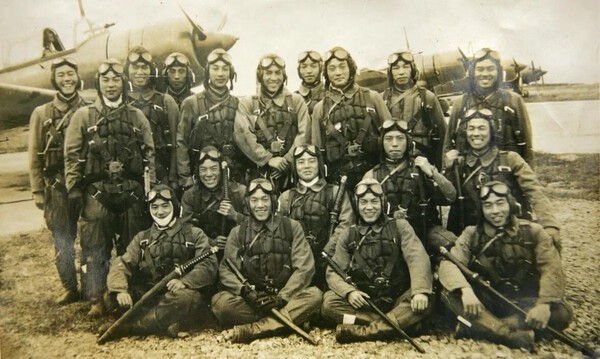 1 point
 -
Logged out and tried the email address instead of a user name. No problems encountered at all. One is just substituting an email address instead of a user name and then entering the same password as usual. Strongly recommend everyone give it a try now versus later. I would also suggest having another member's email address at hand in case of a problem. They can contact one of the moderators on your behalf if there is a glitch.1 point
-
Curran, Awesome! I love networking. My grandpa’s old wakizashi just gave me the bug after I found out some more about it. Already browsing for something else to display with it! If you have any advice as to where to get the handle fixed up let me know! -Cole
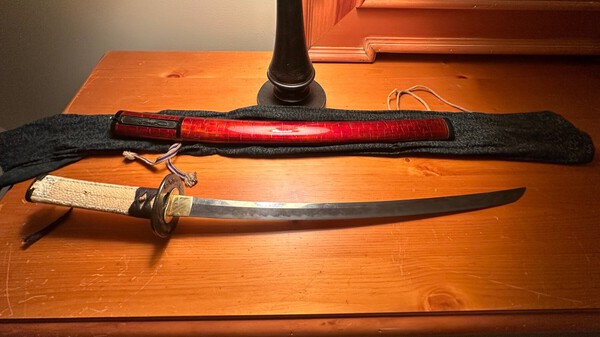 1 point
 -
Similar features, Mei placement, futasuji-bi to this rare Bizen Ugan school Sumimoriji sword. https://www.touken-sato.com/event/katana/2014/03/TC-moritsugu-01.html I would get this blade in front of a top US based togishi. Could be well worth the investment to restore it. Nick, I'm sure I speak for many here, but we would love to hear the story of the blade and how comes to be in your possession.1 point
-
Very interesting sword that definitely needs to be examined in hand. But what Ray, Kiril and Grey said. This should end up with someone eventually that will consider having it professionally restored. Don't try any restoration yourself, and be wary of the inevitable offers to purchase that you may get privately until you know more about it.1 point
-
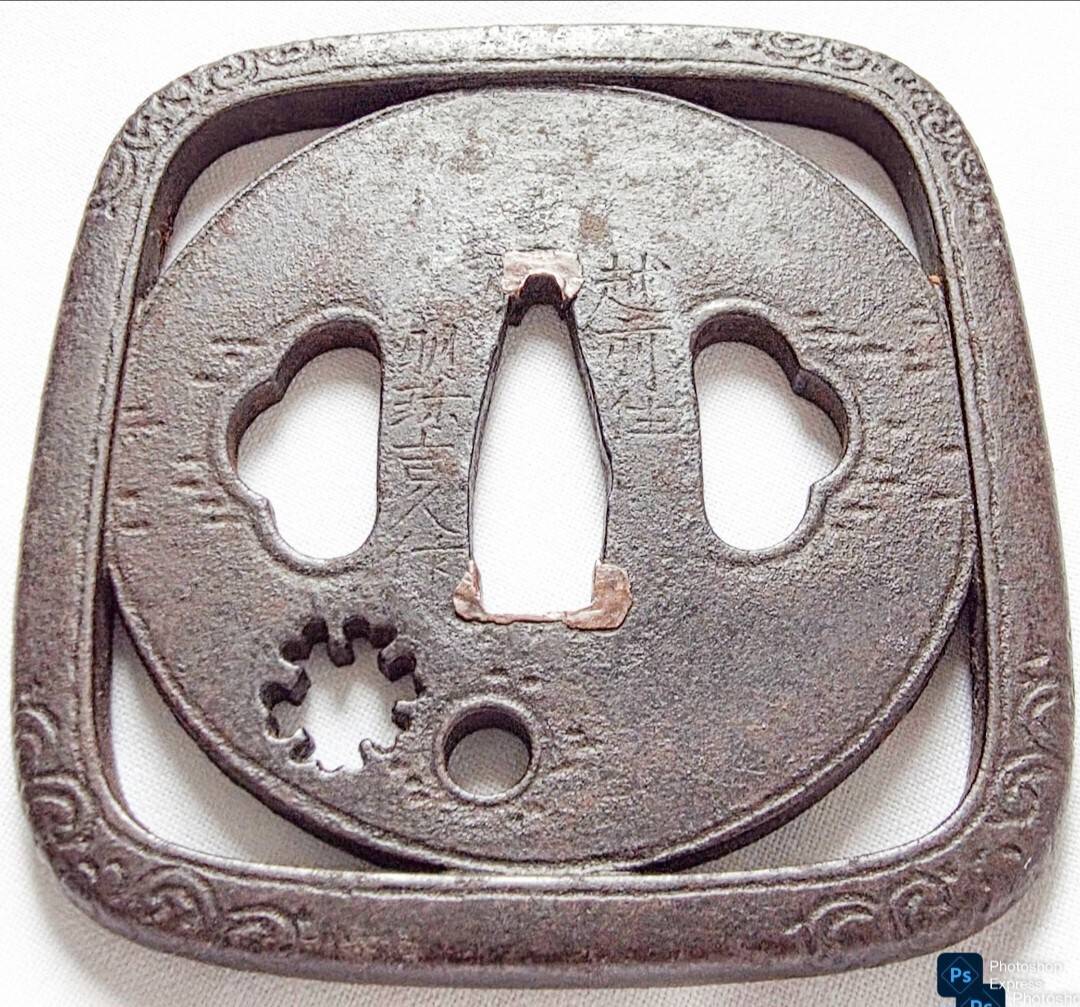
Happy new year!! After getting some help in the translation section, I'm here to ask your opinions on a peculiar piece. I picked up this Echizen Myochin Yoshihisa tsuba which is also signed on the other side: "水戸士 Mito shi (Retainer of the Mito clan)" and "高山千□造 Takayama...zo". Although the characters are not easy to read and not definitive, it seems to allude to a samurai from the Mito clan having/making/reworking it. The question is why the second signature? I'm not sure I've seen a piece signed this way before, so I'm wondering if this indicates: - a collaboration piece - a case of signing to show ownership - gimei signature(s) - something else If both signatures are legitimate, then this seems (to me) like a special piece given the rarity to find similarly double-signed pieces. I'm really curious and interested to hear from those with much more experience than me. Appreciate any input you have. Damon

 1 point
 -
It is possible the next kanji is Tsune. Bishu Osafune Tsune__. Several smiths used this kanji including Tsunehiro and Tsunenao. https://nihontoclub.com/view/smiths/meisearch?type=All&mei_op=contains&mei=備前長船恒1 point
-
I replied to you on reddit. My comment there is repeated below. Wonderful find. This appears to be a Nanbokucho period or earlier tachi, signed Bishu Osafune __ (the remainder of the inscription is not readable in the photos, however please do not do anything at all to try to improve the visibility of the inscription). There may have been a date on the other side of the nakago, not presently readable. Do not try to remove rust on the nakago (tang), or to clean or polish the blade in any way. It has every indication of being a valuable sword. Best regards, Ray1 point
-
Sort of feels like authentic Bizen[???] Osafune signature which is almost gone. The blade can be early-mid Muromachi.1 point
-
Cheers for 2026 Year of the Horse 午 Uma
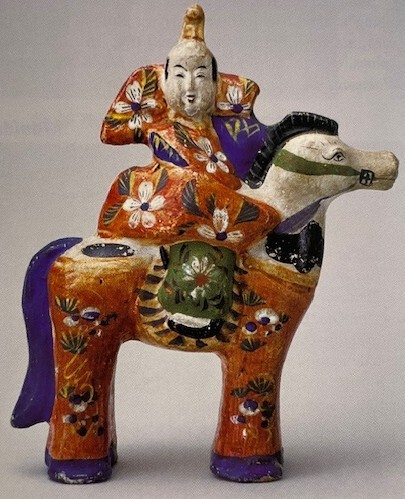 1 point
 -
Ball molds Tama-Igata of various sizes. Lead ball, range up to 100 Monmé. Lead ladle 玉鋳鍋 Tama-inabé (Various chunks of lead for melting)
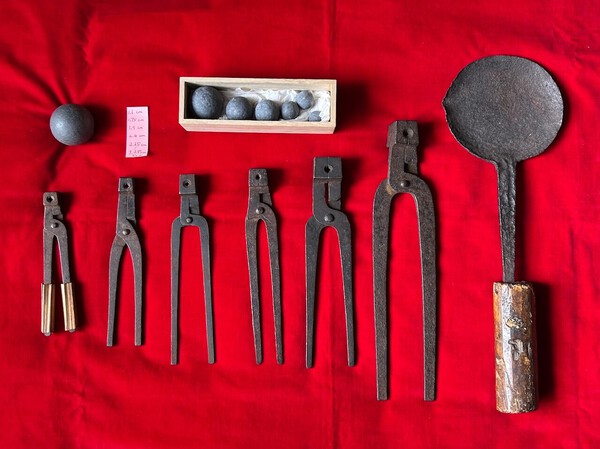 1 point
 -
Being a diagnosed dyslexic myself, makes this stuff pretty challenging. Even keeping word order and spelling straight in English can be rough. I usually reread my posts 5-10 times before I finally catch mistakes that other people notice almost immediately. Sometimes I don't even see those mistakes until I leave and come back with a fresh perspective. It gets even harder when kanji are involved, especially counting strokes. A lot of that comes from just not being familiar with another language, but it still takes a fair amount of effort. I've done it before, but I don’t really like using dyslexia as an excuse, because it’s just part of my everyday life. It’s very common, and most people who have it don’t even know, and those who do, often don't lean on it like an ailment. I literally don't even know what it's like to NOT have dyslexia . As I understand it, there's varying levels severity with dyslexia, so I must have the more common mild version... So it may be the cause for mistakes in spelling here and there, but it's typically no biggie. It makes me a slower and more careful learner, and I think that's a good thing. I even read slowly, which is how I was flagged to then be diagnosed while I was in school. I still have to google MENUKI and MEKUGI half the time, so I don't mix them up -Sam1 point
-
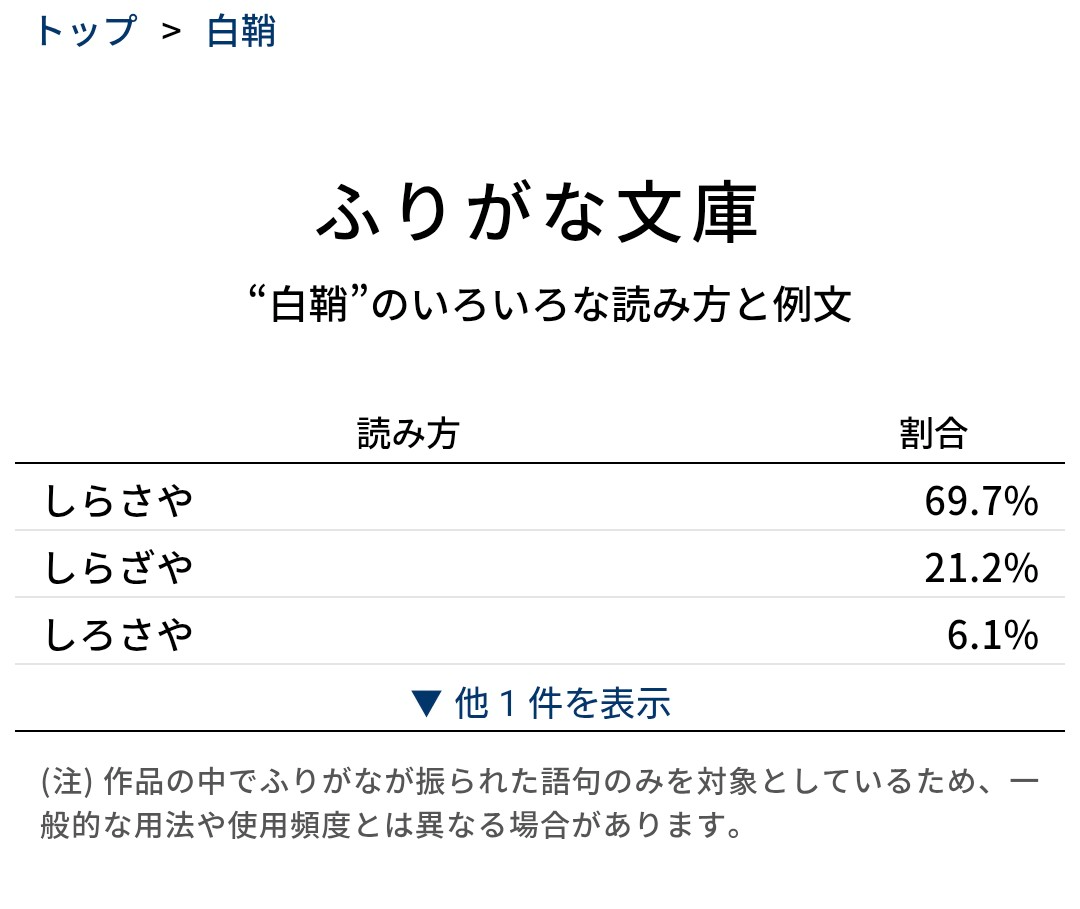
Not a voting system, just different available pronunciations. For example, 日本 can be transliterated as both Nihon and Nippon, and whilst one is more common than the other, neither is incorrect.1 point
-
Whilst I'm ever the pendant, is it accurate to say "shirosaya" is an _incorrect_ transliteration? I don't dispute it's the most common pronunciation, but both shirazaya and shirosaya appear frequently in Japanese literature on the topic.
 1 point
 -
1 point
-
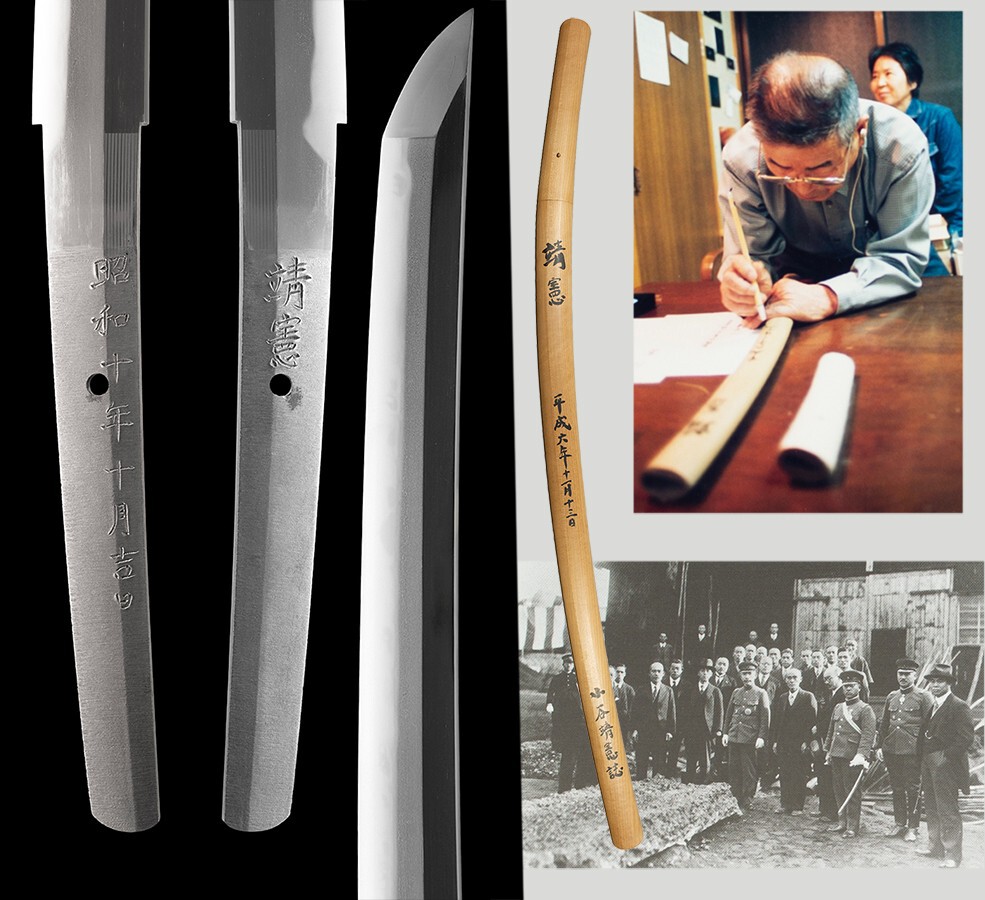
I think I found what I was looking for. This katana by Kotani Yasunori, in October 1935 is recorded as his third blade he made at the Yasukuni Shrine— according Kotani's daughter the first went to the Shōwa Emperor, the second to the Imperial Household. It was owned by Kudo Haruto, chairman of the Yasuki Steel Company and one of the founders of the Nihontō Tanren Kai. In the 1990s, it was polished by Okisato Fujishiro, and Yasunori himself added a saya-gaki to the blade. It was later exhibited at the 60th anniversary Yasukuni exhibition and comes with extensive documentation and a 1997 NTHK paper. The seller has all the papers including all exchanged letters from Kotani San and the togishi. Nice story! Link : https://www.nihontocraft.com/Kotani_Yasunori_Tachi.html?
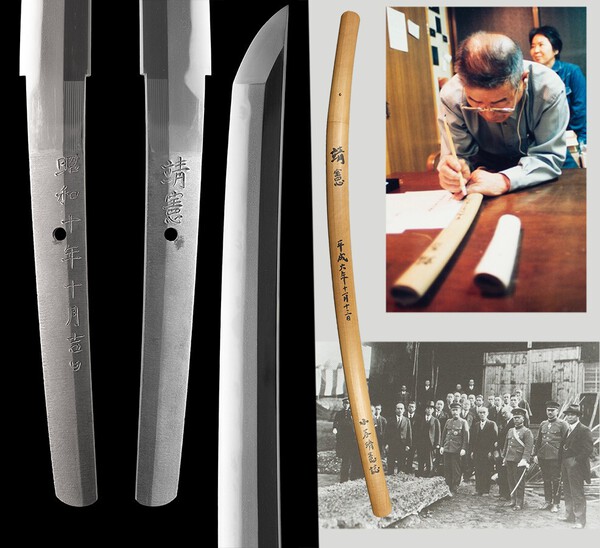 1 point
 -
Leather Cord wrapped around the Saya, is old and probably of the era. blade inside is Kozori Hidekage, the kabutogane also has a silver decoration

 1 point
 -
Shimizu Jingo take on the crab theme.
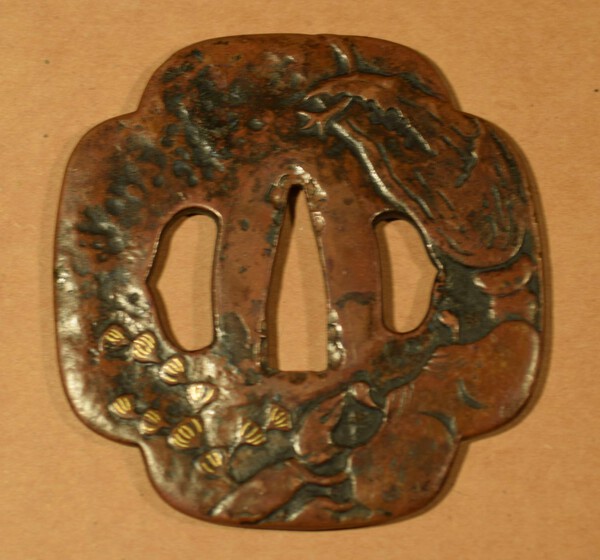 1 point
 -
Thanks! Be so kind and give this collector helpfull hand I don’t want post link to nmb there as it’s their tos violation.0 points











.thumb.png.4c5df79fec171b2dc4a23af38e280a4d.png)


















This leaderboard is set to Johannesburg/GMT+02:00