
Leaderboard


Popular Content
Showing content with the highest reputation on 12/25/2025 in all areas
-
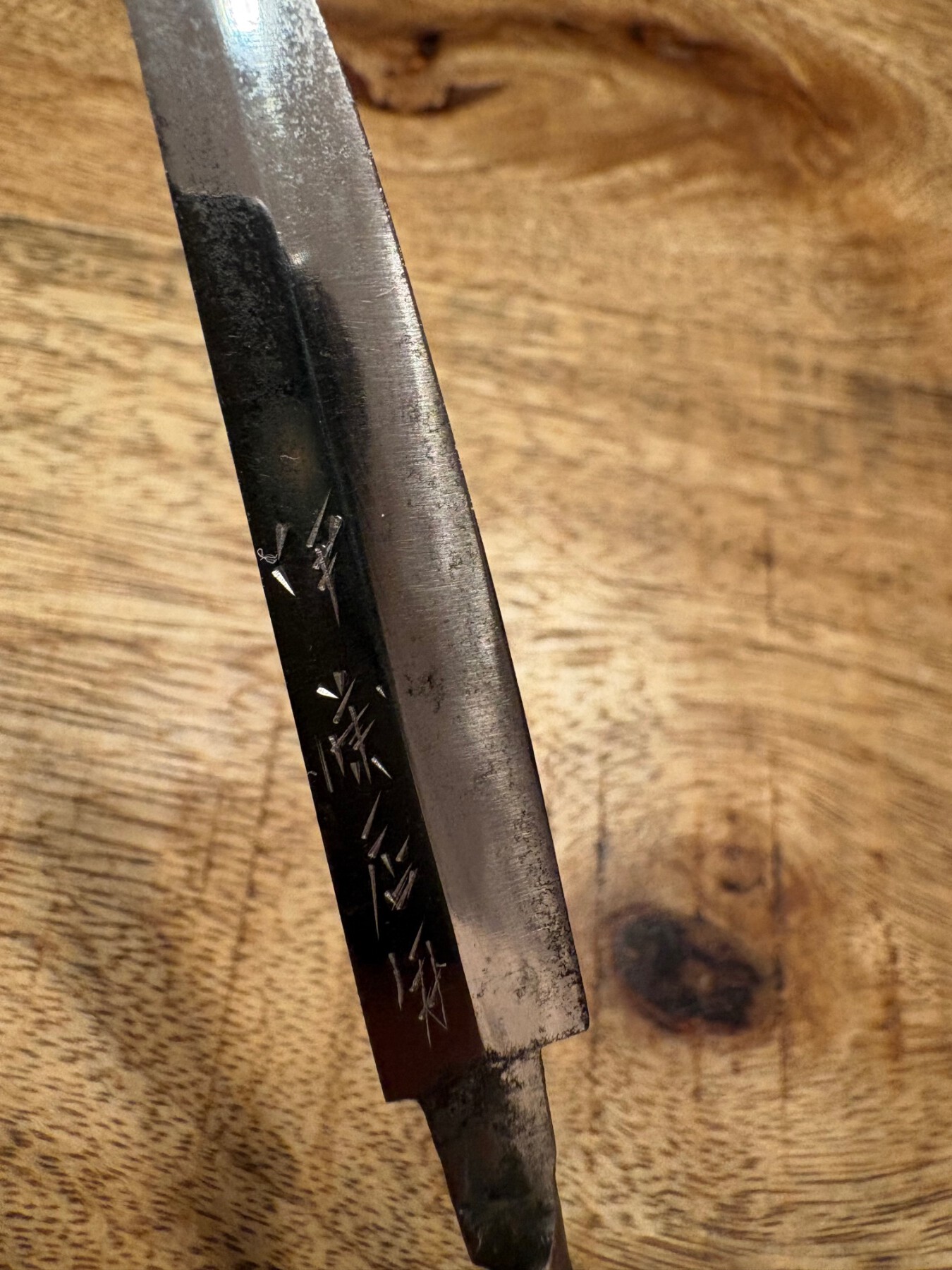
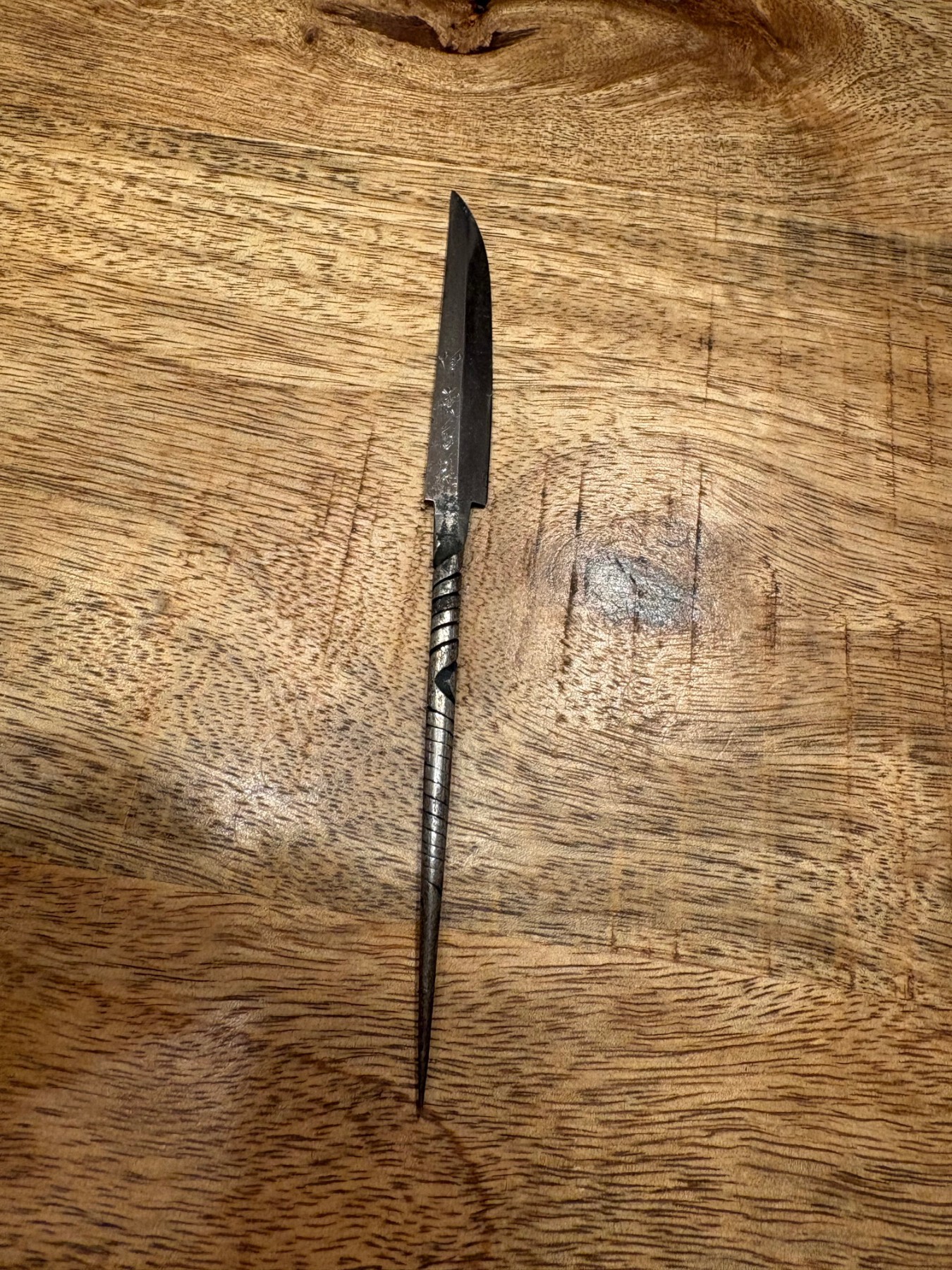
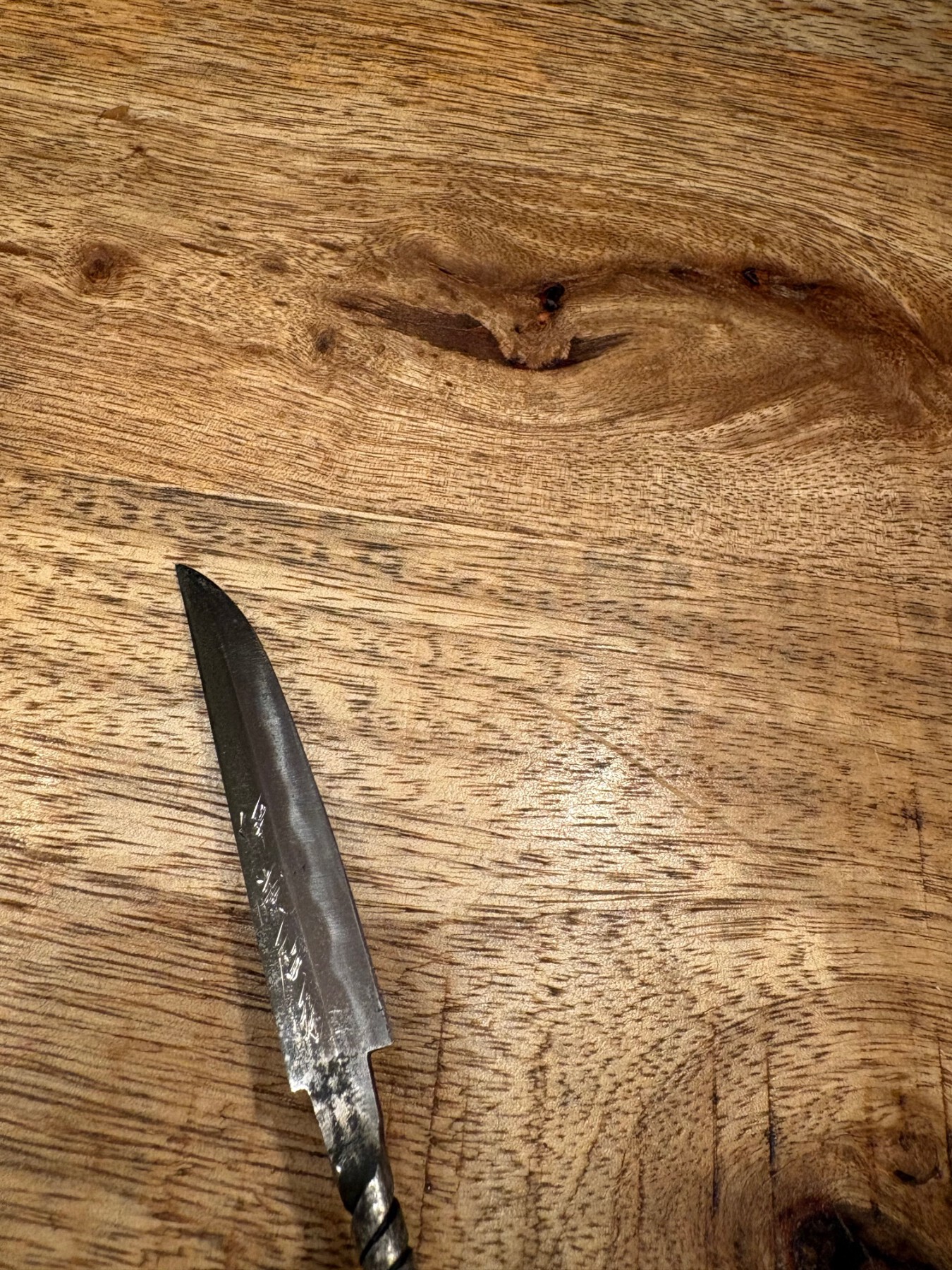
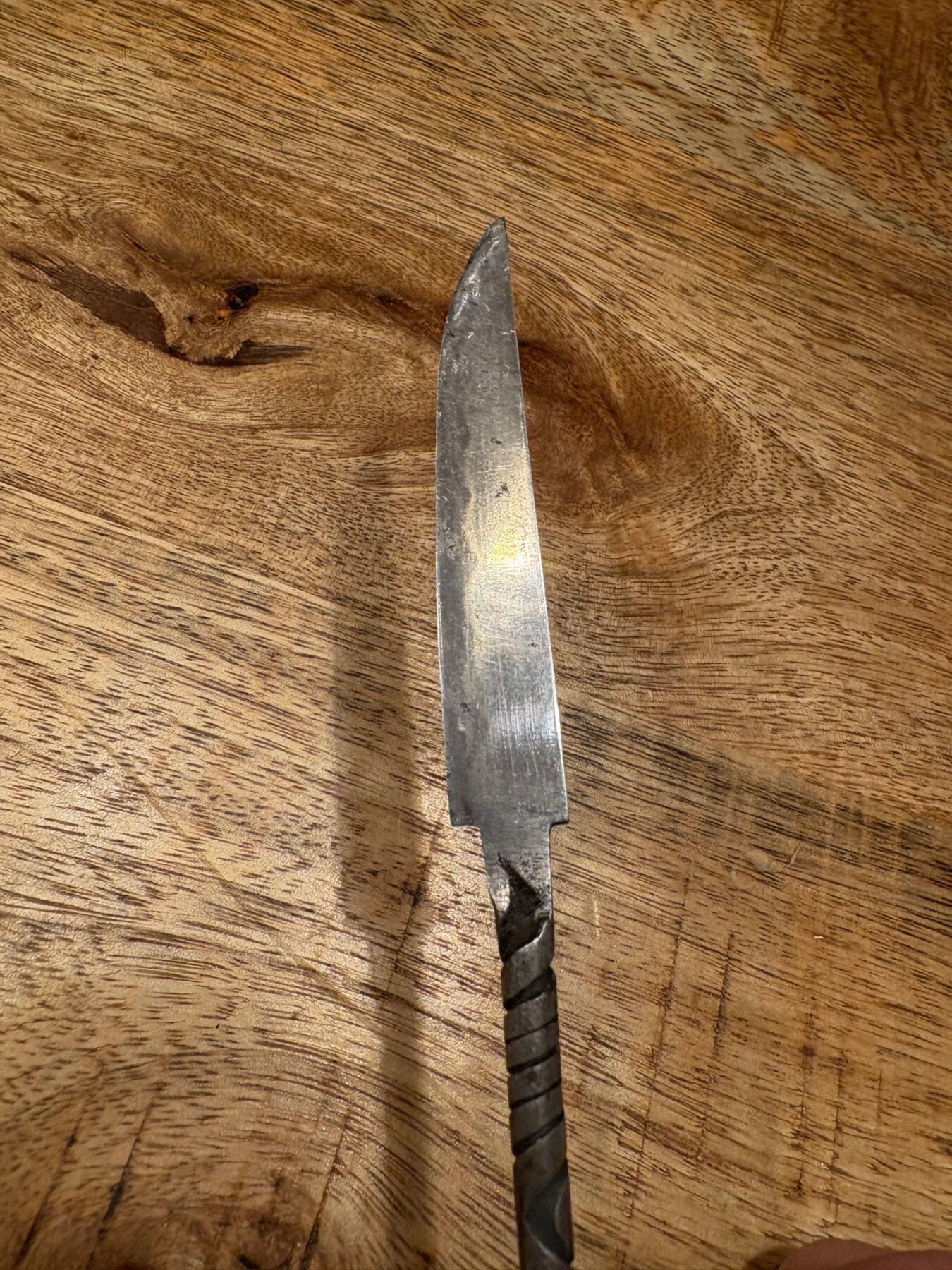
Here are some promised photos, and and

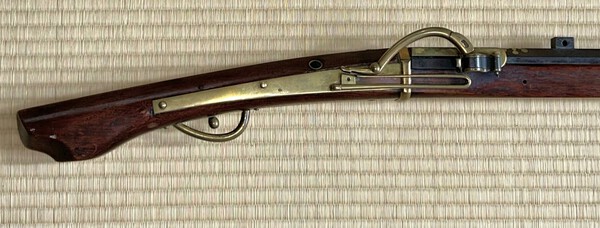
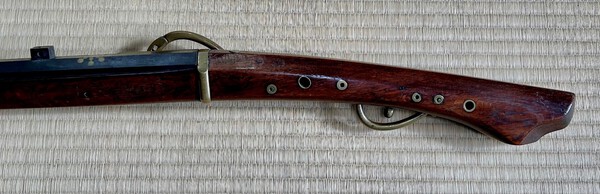 6 points
 -
Yes, Sasa no Tsuyu 笹露 maybe ‘drops of dew on the bamboo leaves’. Popular as a sword name, implies your enemy’s head will be instantaneously cut off and fall like drops of dew.5 points
-
Kane…(?) 兼5 points
-
The mei is 義重 not 嘉重. AI search is not a good tool for researching Japanese swordsmiths. These tools will hallucinate and give you the information that they think you want (correct or not). I would recommend Markus Sesko's swordsmith compendium for researching swordsmith bios. https://www.lulu.com/shop/markus-sesko/e-swordsmiths-of-Japan/ebook/product-1zk9mrzq.html?page=1&pageSize=44 points
-
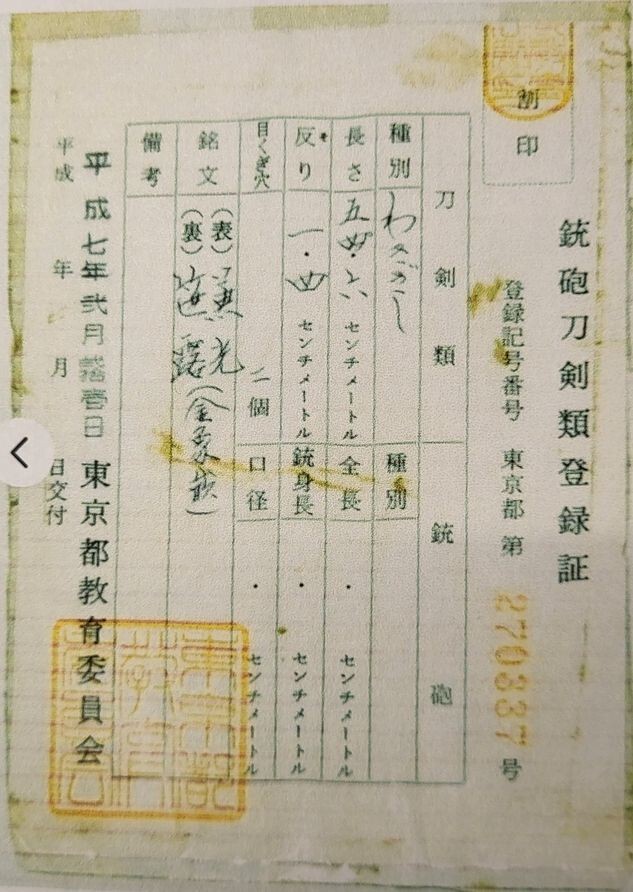
Somehow I have lost the registration card for a precious wakizashi. In order to get a new one issued there are some hoops through which one has to jump. 1. Contact the education board of the prefecture where the original was issued. Tokyo in my case. Pray you have a copy of the original. Pray you originally registered yourself as the new owner within 20 days of purchase as the law stipulates. They send you the forms to fill out, which you send back to them. 2. In theory they then contact the education board where you live and request a sai-hakkō be issued at the next sitting of their committee, whenever, wherever. 3. You bring the blade at the agreed place and time for inspection, which usually takes a full morning, pay your money for a new card. ¥6,000(?). In order to get past step 1 above, however, they have requested that I go to Police Headquarters and file an official ‘lost’ notice and collect a number code. So I went to the Police station and was advised over the phone by the authorities that if there is a possibility that it’s at home and I’ve misplaced it, in a sword bag or down the side of a drawer, then they cannot issue such paperwork. They would need to know that it got lost out and about, going to the Togishi for example, and I would have to state when I last saw it. I do not want to involve the Togishi in this as ultimately it’s my responsibility and not his. He told me does not have it and I believe him. Feeling stuck between two branches of government, I took the bull by the horns and went to Police HQ with all my paperwork and the forms from Tokyo, and begged them to help me out. Finally they have agreed to issue the vital number for me! Happy Christmas! This has taken a month so far since I first phoned the Tokyo Board of Education. Now I fill in all the paperwork and send it off to Tokyo for a new attempt at Step One above!4 points
-
伊藤店用 - For Ito-shop's use4 points
-
I have the full translation now. It appears as a poem attributed to Deshao (891–972) in Case #445 of Treasury of the Eye of True Teaching, which is a collection of classic Ch'an (Zen) stories, discourses, and poems used for teaching by the famous Ch'an Master Dahui (1089-1163): 通玄峰頂 (Tōng xuán fēng dǐng) 不是人間 (Bùshì rénjiān) 心外無法 (Xīn wài wúfǎ) 滿目青山 (Mǎnmù qīngshān) A monk asked Fayan, "What is one drop of water from the wellspring of Chan?" Fayan said, "It is one drop of water from the wellspring of Chan." When National Teacher Yuan heard this, he had insight at these words. Later, when he dwelt on Lotus Peak, he composed a verse saying, The peak of penetrating mystery Is not in the human world; Outside mind there are no things. Filling the eyes, green mountains. When Fayan heard this verse, he said, "It just takes this one verse to naturally continue our school." [Commentary): Dahui said, "The extinction of Fayan's school was just caused by this one verse." This poem refers to the central Ch'an teaching that we are created with the Buddha-nature or "true mind/original nature" within us. We are by nature enlightened. It is the delusion that the external world only exists as a projection of the mind that has us seeking enlightenment outside of ourselves through rational striving. 無 (Absence) is the original generative source of 有 (Presence) or the 10,000 things (called the myriad of things that comprises all of creation). 無 is "The peak of penetrating mystery"--The Tao itself. 有 are the things "in the human world." The awakened mind is not oblivious to the world. Rather, the ability to occupy that silent emptiness of 無 as home-ground through meditation practice allows us to experience the world more intensely and directly as it is ("Filling the eyes, green mountains"), without the distortions of deluded views. Indeed, we are one among the myriad of things. 無 unfurls its generative potential to create 有, which dies back into 無 in an endless cycle of creation. Rather than a separate sect of Buddhism, Zen is in fact a nativist expression of Taoist mysticism (already in existence for centuries) occasioned by the introduction of Buddhist thought from India, according to the Chan scholar and translator/poet David Hinton. Translation by Thomas Cleary, "Treasury of the Eye of True Teaching: Classic Stories, Discourses, and Poems of the Chan Tradition," (2022) Shambala Publications, Inc., pg. 2874 points
-
One single photo would have been largely sufficient to identify this as non-Japanese, and certainly not 80 years old. Sorry.3 points
-
小島吉道 Kojima Yoshimichi3 points
-
Whole post just disappeared again. Grrr… And I smiled at the dealer. Those grapes were probably sour anyway. Besides, I had found some other neat stuff, and there is No Way I would pay that for an obi-hasami! Here’s my modest contribution to this thread, the best one I have. (One of mine has virtually no decoration at all.) The front the reverse
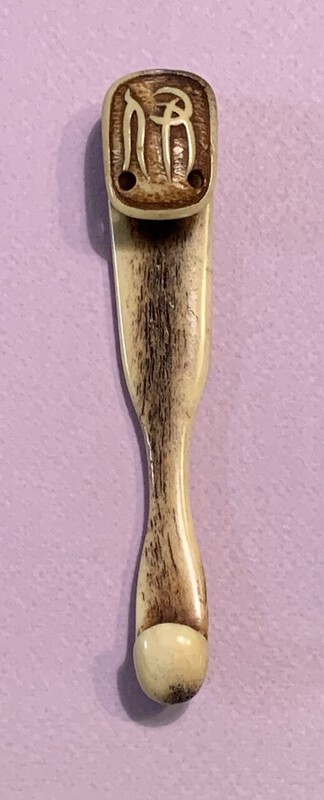
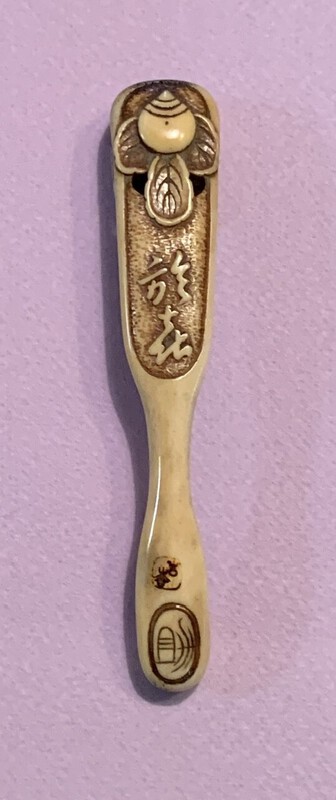 2 points
 -
fake-to2 points
-
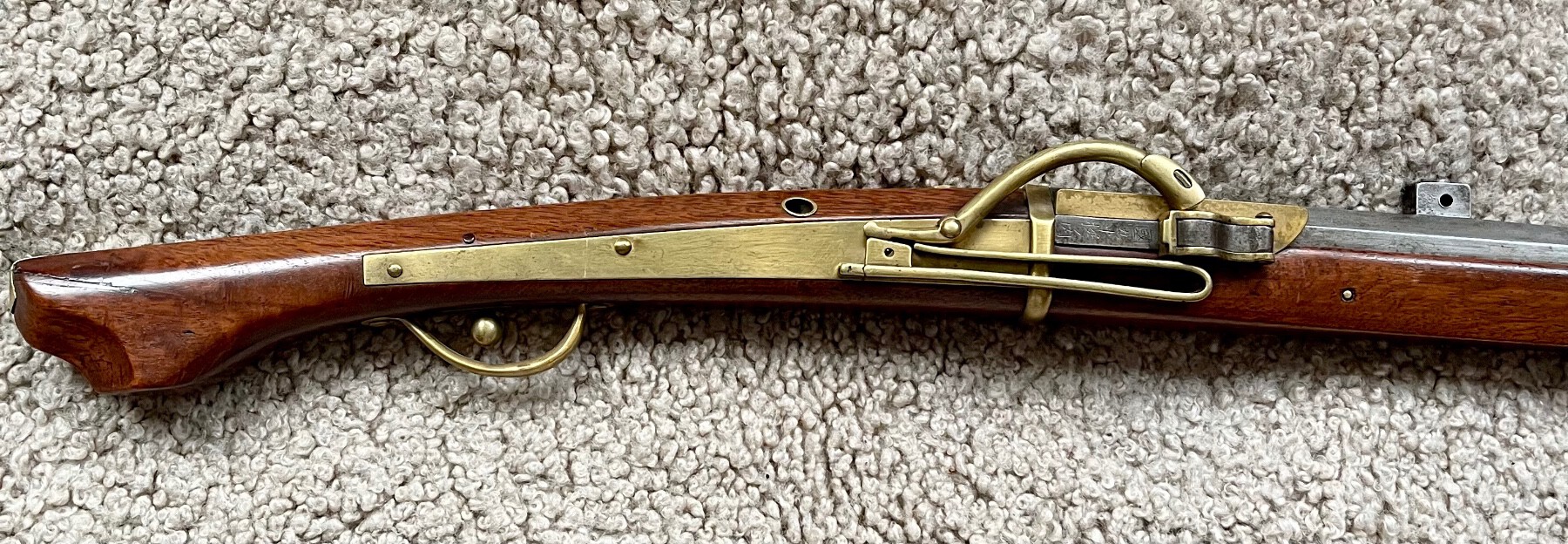
Now that’s an Inatomi ryu if I ever seen one. It’s actually rather easy to spot a Inatomi-ryu matchlock. Not only because of the overall ”flat” design but there are tons of small details that screams Inatomi-ryu. Compare the pictures you just posted with this one. As always; it’s in the details Congrats to an amazing gun that also holds a lot of historical importance. Jan
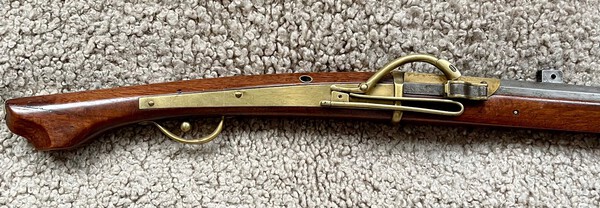 2 points
 -
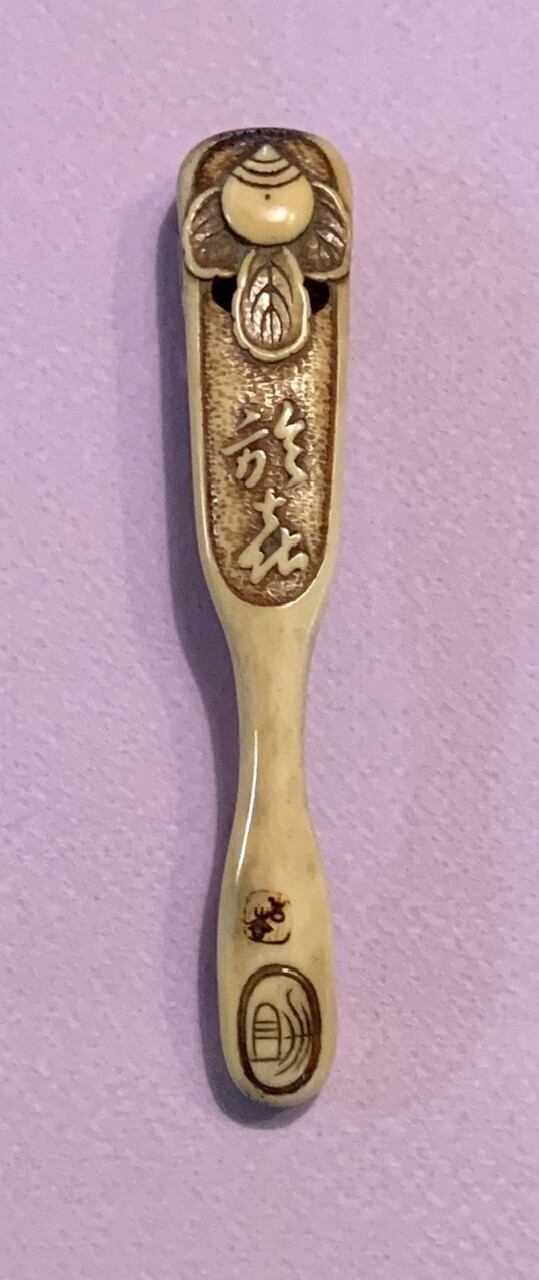
Reminds me of this ‘bamboo’ netsuke (made of ivory) with the Fushi joint in the design of Mt Fuji. I think this is a wordplay on Fushi and Fuji, talismanic, Fuji (不死 Fushi) meaning ‘eternal life’.
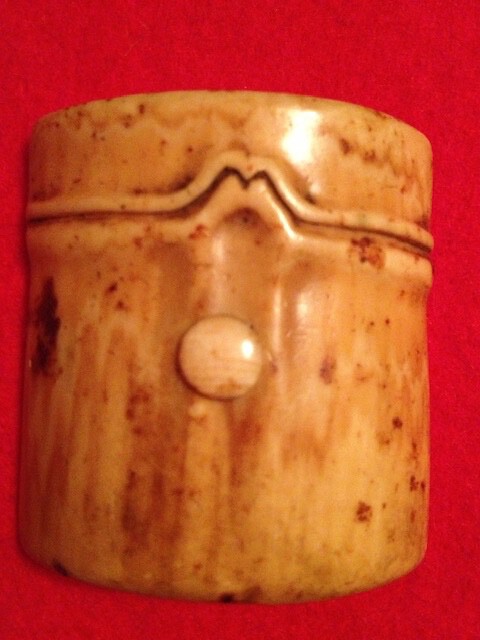 2 points
 -
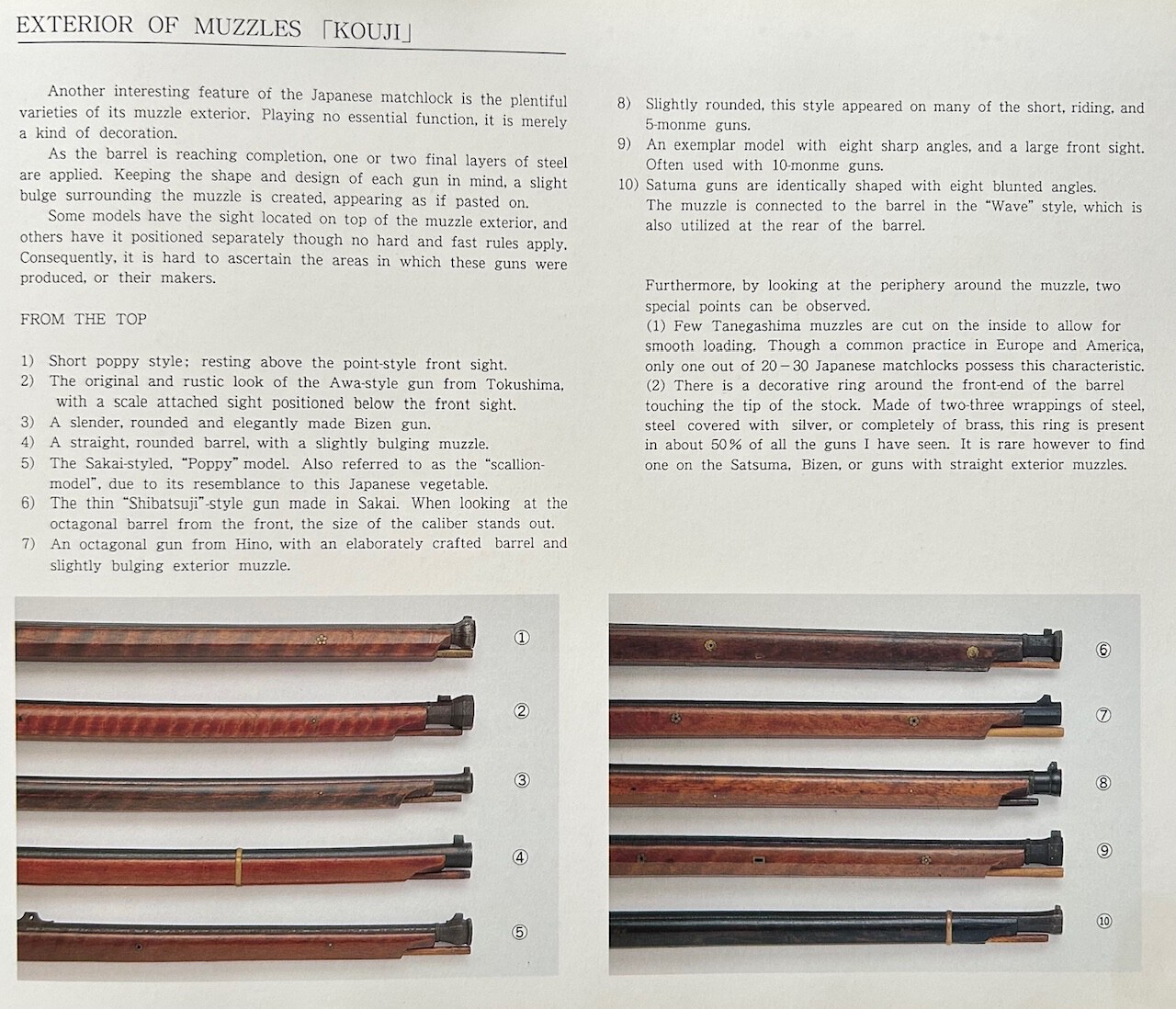
Jay, this page from Sugawa San’s book shows some muzzle and foresight styles.
 2 points
 -
As Dan has said this one is a cast copy. There are many getting about. The cast in "tagane-ato" punch marks around the nakago-ana are a giveaway in this design. Two sizes, the smaller has different punch marks The second one [which is upside down] is snow flakes on Wagasa [umbrellas] This one only has the one umbrella The three plain guards may be standard types that were often sent out to be embellished by other craftsmen like this one: Signature: 国廣 (Kunihiro) Is there a signature on the squarish middle one - other side?
 2 points
 -
I thought of something like this:2 points
-
Sorry to be blunt on Xmas day but here goes I am afraid . It doesn't look at all Hizen like and the mei is way , way off . If the signature was cut by a student then it would have some passing resemblance to that of the person he was cutting it for but this is just gimei and a bad one at that .2 points
-
Nice work, Thomas! Interesting read. You are the Master Researcher -2 points
-
A hotlink to a 37-page monograph by Paul Martin. See page 21 for the 700th Anniversary. Emperor Gotoba: A Swordsmith Emperor in Medieval Japan And finally, I found the answer in an old NMB thread. 700th Anniversary inscription2 points
-
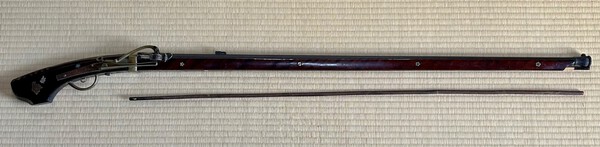
At an auction one guy was trying to sell a pair of ragged old bamboo cleaning rods for a teppō. There were no bidders, so he was trying to give them away. Still no takers. As I walked out of the door he shoved them into my hand, smiling. I left them in the hall at home and my wife moved them round to the trash corner. Today, a month later, I took a closer look and realized that the one with an old scrap of cleaning cloth stuck in the end is actually a very old bamboo karuka ramrod. So, that has now joined the viable replacement ramrod candidate pile; many guns that turn up either lack a ramrod, or have something unsuitable fitted. It’s quite long; here you can see it against my longest gun, from Sakai. Notice the hole for a cleaning rag. I wonder what kind of gun it originally came from.
 2 points
 -
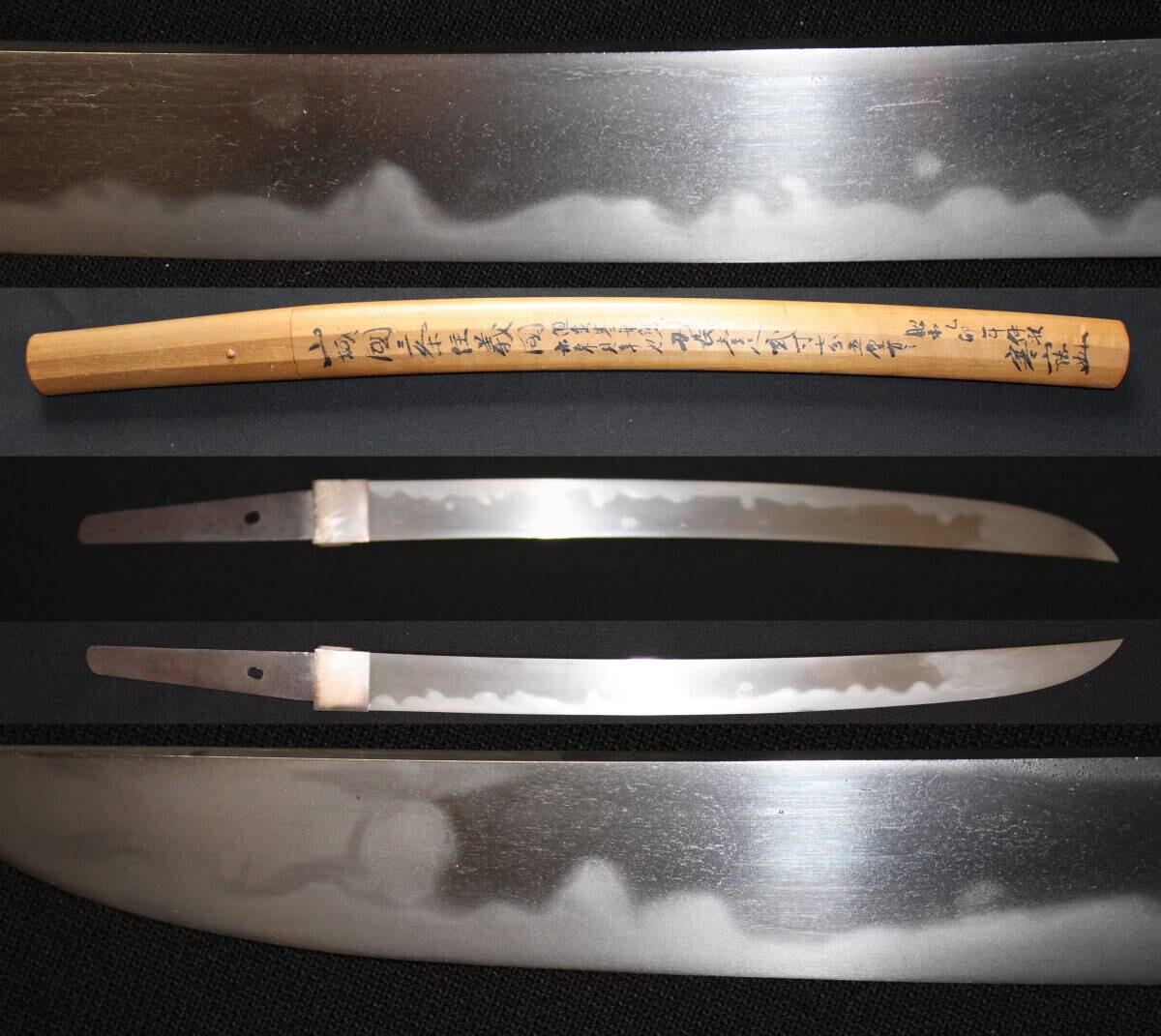
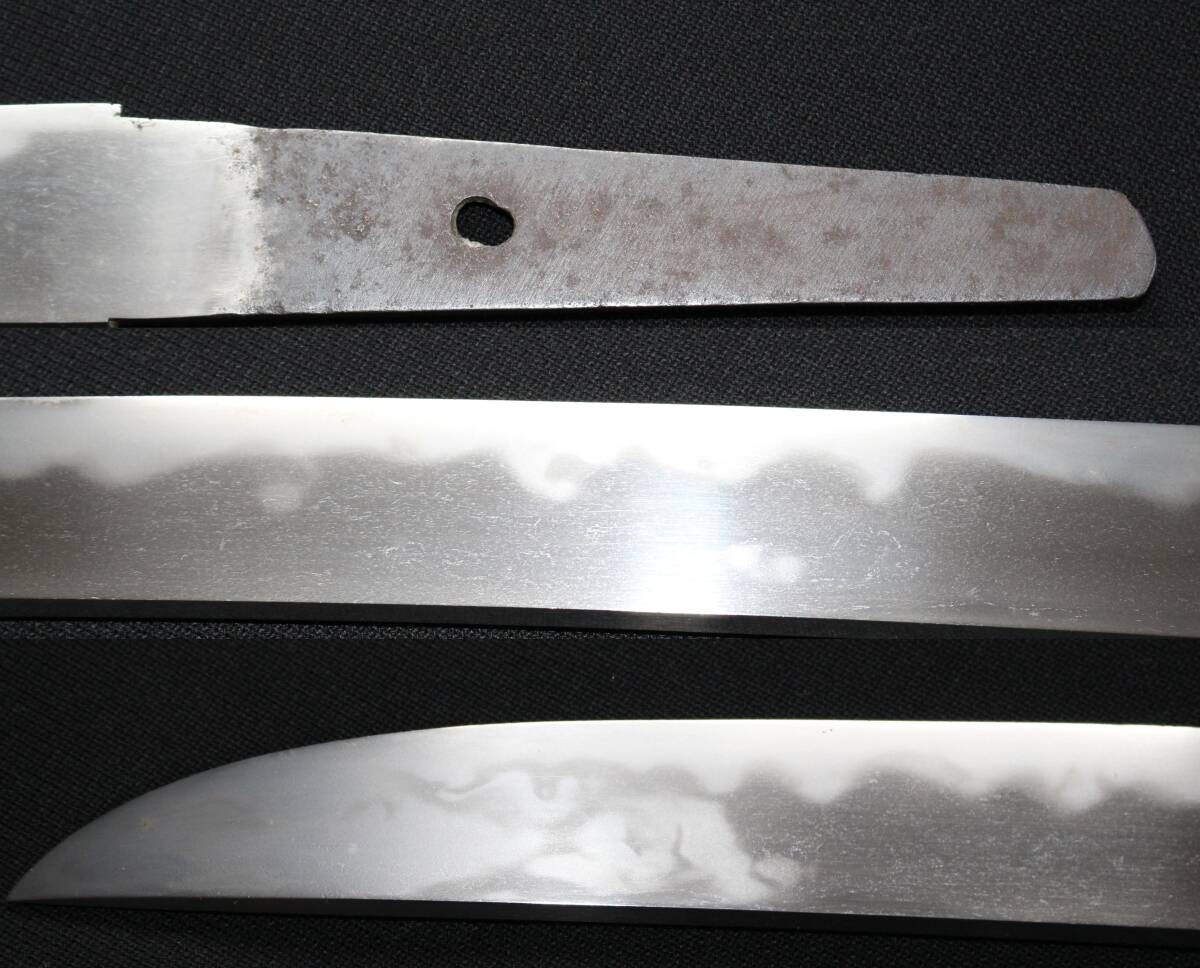
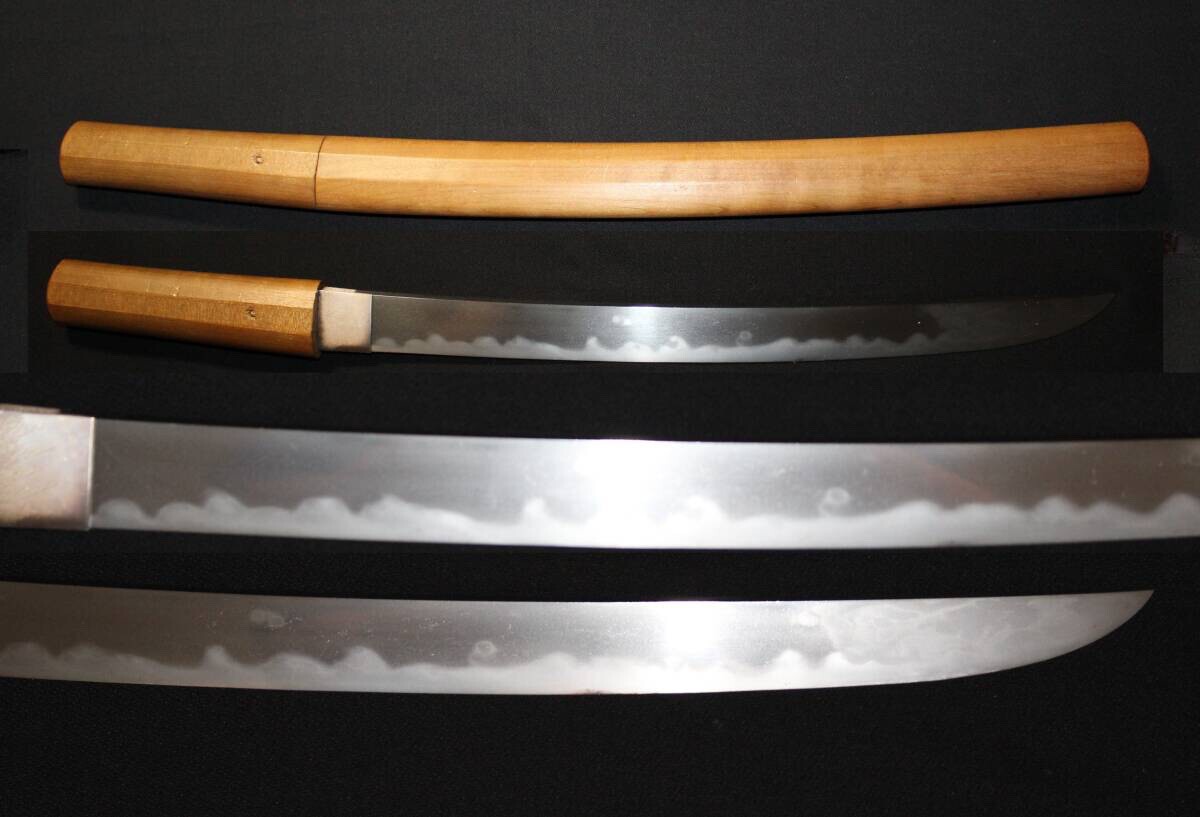
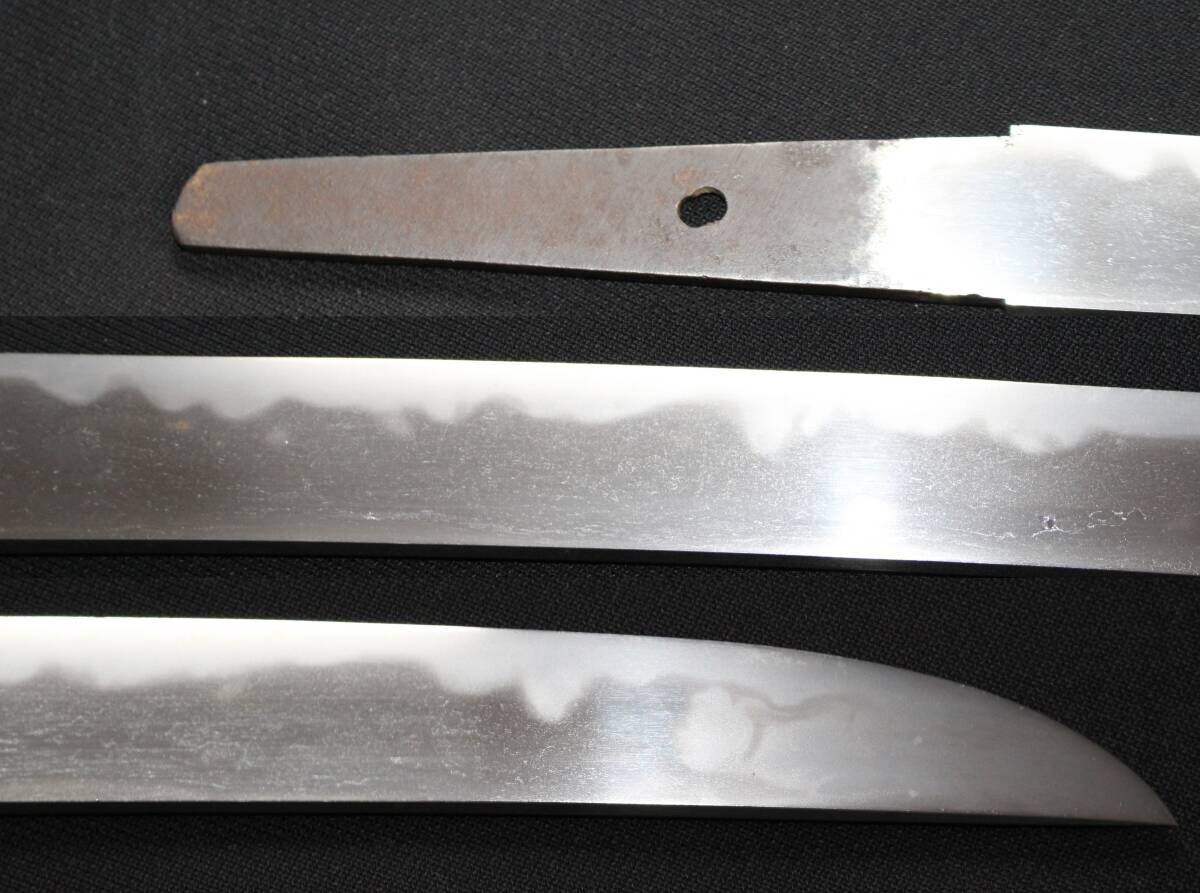
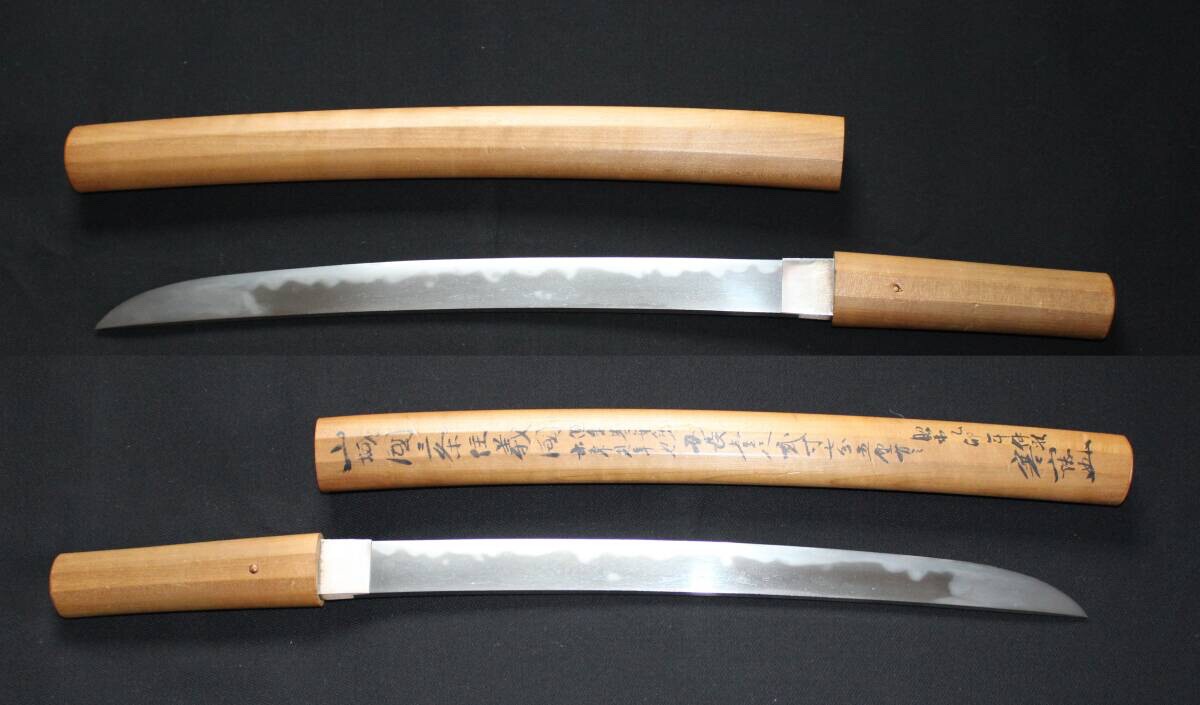
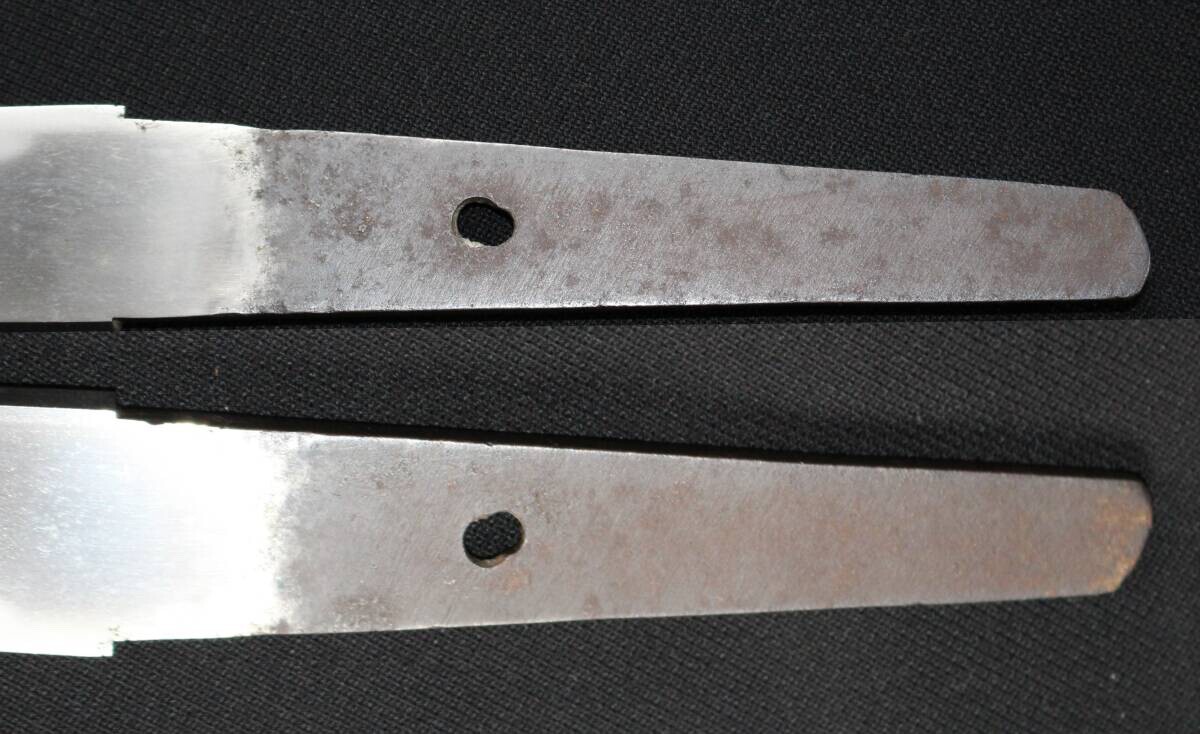
As some here know, I've been looking for a sword and I'm one of the overly optimistic (as in 'dumb') fools who trawl Yahoo auctions. As I learned more by asking lots of questions, I decided to look for a blade I really liked the look of aesthetically and could afford to take a hit on financially if I messed up. I did as much research as I could based on the seller's images and dubious sales spiel, took my chances and ended up winning an auction about an hour ago. (Two members here kindly helped me to translate a difficult phrase which gave me the final nudge.) It's a mumei wakizashi - the worst choice possible if you ever want to sell, Iknow. It supposedly has a sayagaki by Kanzan Sato but I accept that is probably fake. This reads "Yamashiro Province, Sanjō Resident Yoshikuni Hitatsura Wakizashi One Shaku Two Sun Seven Bu Five Rin" - the latter part of which accurately duplicates what is on the torokusho at least. Talking of the torokusho, I was pretty confused when I couldn't see any prefecture name on it because I know I will have to re-register it. However, after doing some more online research, it's apparently because it's dated Showa 26 or 1951 and early licenses didn't give the prefecture name. As to Yoshikuni (if it even is his work), this was all I could find out about this smith. Yoshikuni 義国, 1624, Yamashiro. Mei: Sanjo Horikawa ju Fujiwara Yoshikuni 三条堀川住藤原義国, Yamashiro Sanjo Horikawa Yoshikuni 山城三条堀川義国, Horikawa ju Yoshikuni 堀河住義国, Bungo (no) Kami Tachibana Yoshikuni 豊後守橘義国. Student of Mishina Kinmichi and Horikawa Dewa Daijo Kunimichi. Why did I risk it? The hamon, pure and simple. As long as that is not a drunken polisher's ode to hadori I'll be happy. I really don't care about the sayagaki's authenticity or who actually made it - I lucked out on the price (suspicious in itself) and just hope it looks half as decent in hand as in the auction photos (attached). Wish me luck. Best, Hector
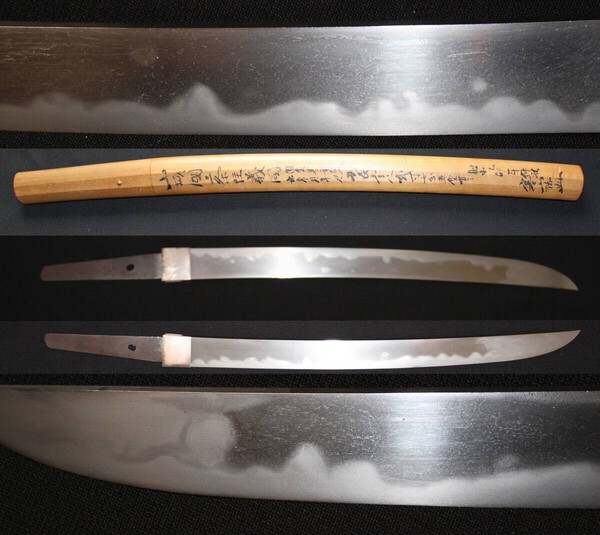
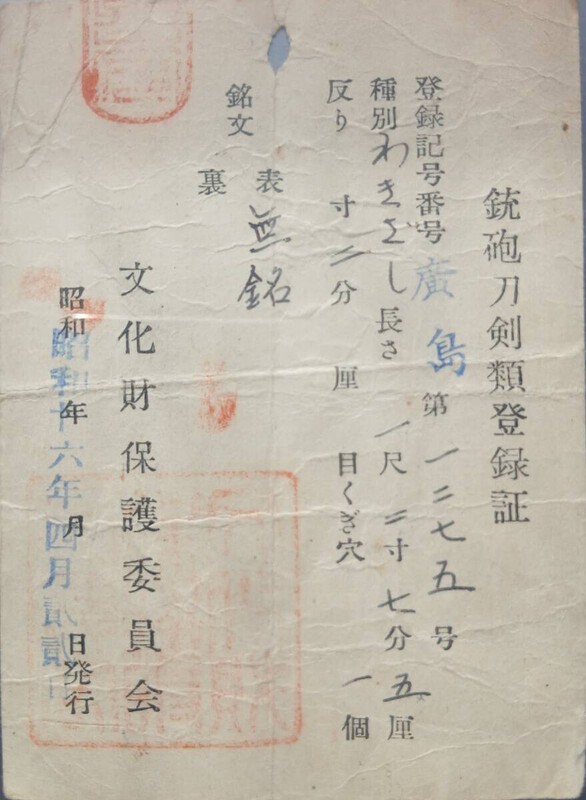
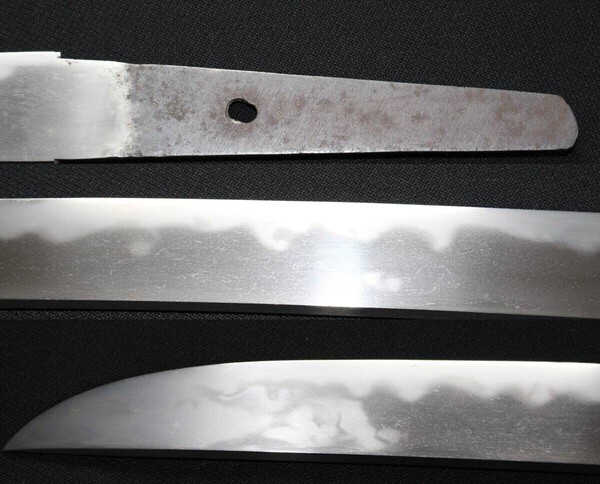

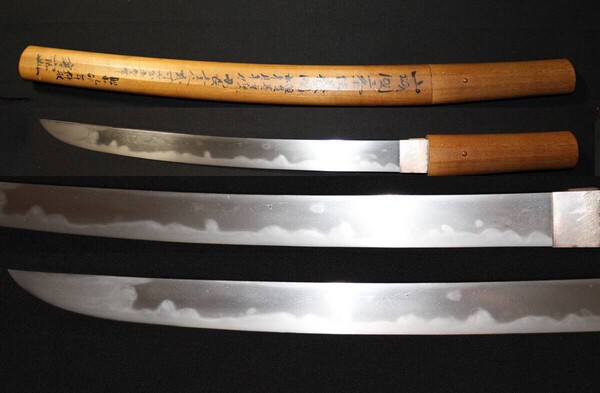
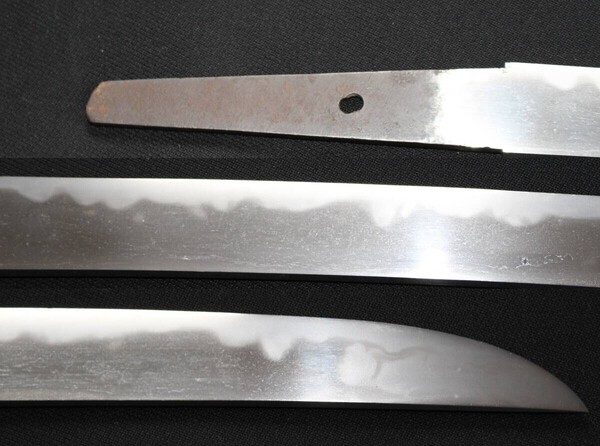


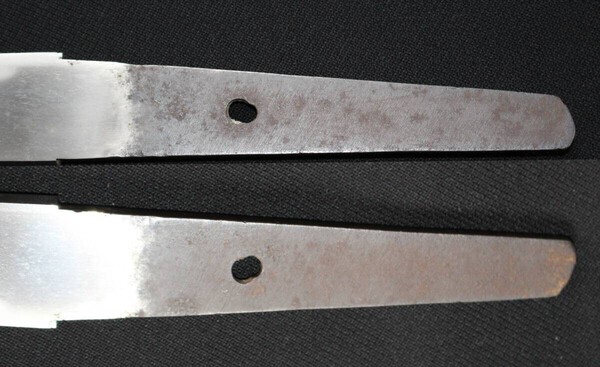 1 point
 -
I recently bought this piece. Can someone perhaps help me with the translation? And can tell me exactly what this is? thank you so much in advance
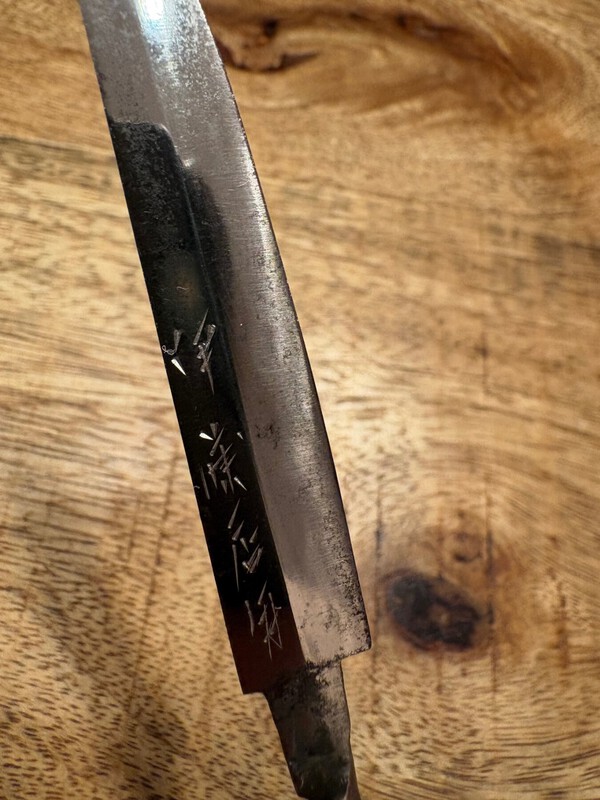

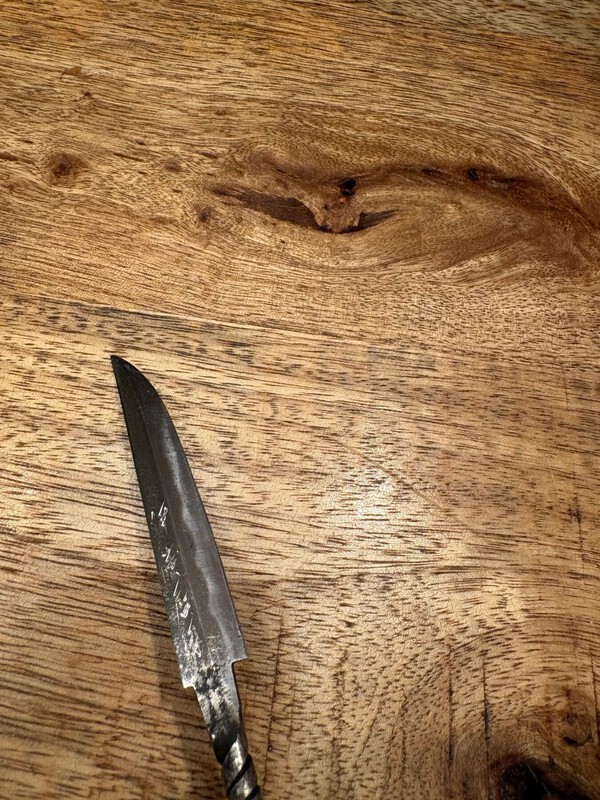
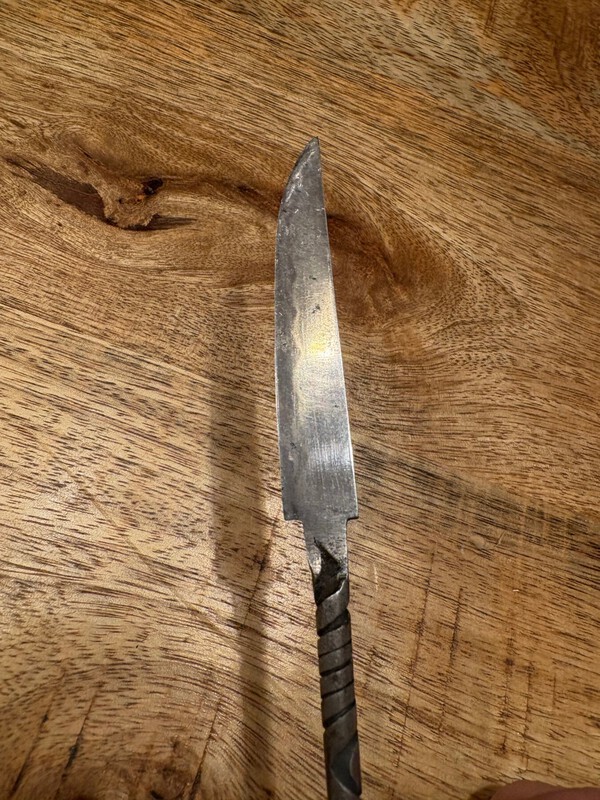 1 point
 -
Hi, I bought this multiple tsuba a few years ago and the sellers claim they are about the Edo era (early to late). I would like to know more about them, Era, School, Who create it (if possible). I toke some pictures, if you need more pictures, just let me know what exactly do you need me to picture and I will. Thank you


.thumb.jpg.558381c7d98dc4a40c24308c1a1c4db1.jpg)
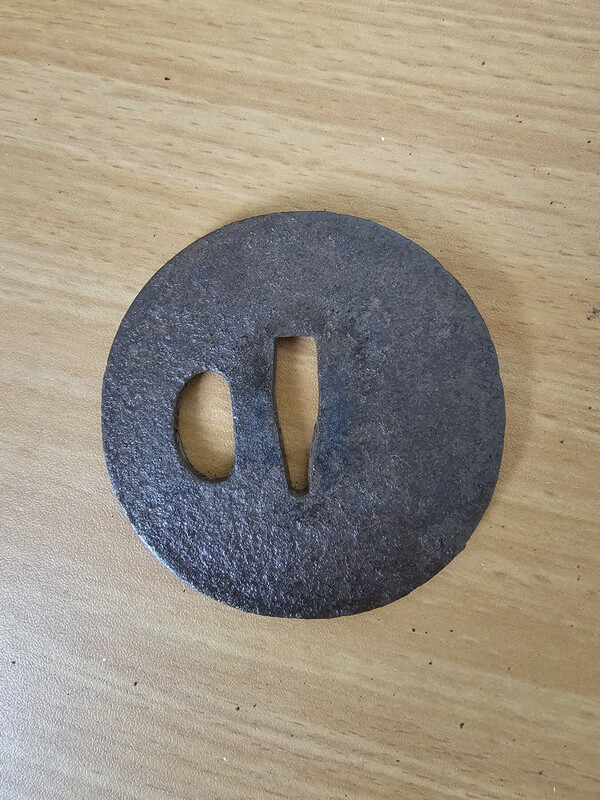


 1 point
 -
I think it's a 16, Ed. John C.1 point
-
Left side is inspection mark for Army uniform depot in Osaka, middle is the date Showa 16 (1941), the right is size medium. I recommend saving a screen shot of these for future translation as they are all very similar. John C.1 point
-
Title: Yotsu Fuji Description An Iron Tsuba mountain shape four corners with Kozuka & Kougai holes This kind of four corner shape is called “Yotsu Fuji” in Japanese.1 point
-
Merry Christmas to all here on the Board !! If anyone can help me with a translation it would be wonderful I can read Kanemitsu but I'm unable to read the other signature on the other side of the swords nakago Perhaps a Nickname??

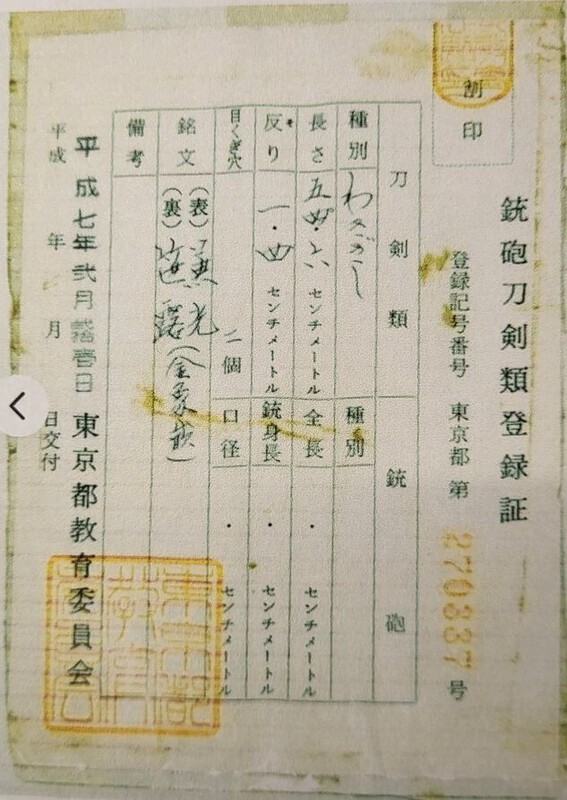 1 point
 -
hello Piers thank's a lot for quick response amazing!1 point
-
Like two peas in a pod, Jan! Very nice. *Unlike yours with the Mei, there is a small circular impression on the plate behind the pan, but I haven’t figured it out yet.
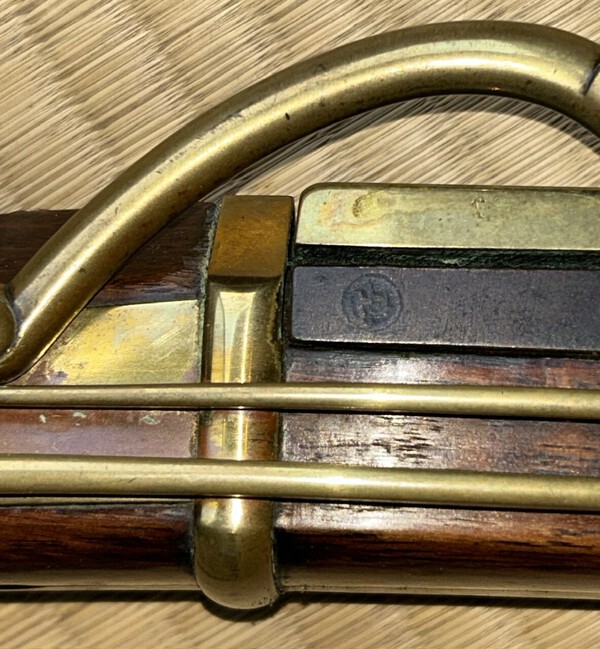 1 point
 -
Both look very nice to me, hard pressed to choose. Good job there.1 point
-
Variant A is not that bad. Variant B, however, seems to be a better match…at least for my untrained eye1 point
-
Don’t have time to look at everything in detail but the inscription does not inspire confidence. 木元武夫 Kimoto Takeo is wrong for a swordsmith name. 元和 七年 is read Genna 7, toward the beginning of the Edo Period.1 point
-
I have two questions about obi-hasami netsuke. Firstly, I was wondering how these were actually worn. I assume the himo would go through the two holes often found at the top, however did the sagemono just hang from these holes? It seems like it would swing too much. Were the hooked ends worn toward the body or away from the body? Secondly, many I have seen are made from bone. Is there some significance to using bone or was it just a tough material? John C.
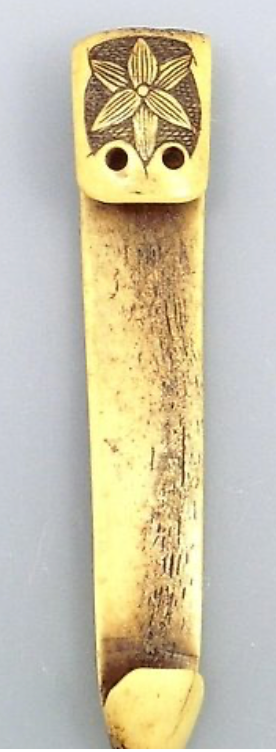 1 point
 -
If you're after an original WWII sword then getting a return would be a good idea. There is a huge amount to learn about Japanese swords and original Gunto fittings, as you're likely well aware now.1 point
-
I appreciate the vote of confidence, but I see the same - there are some issues, though shintetsu like this is probably not a great problem here - it does look like a typical sue Bizen in suguha.1 point
-
Chris, have you ever seen a DREMEL tool? It is a small rotational tool like a tiny grinder or a dentist's drill. These KANJI are clearly cut with a sharp chisel, not beautifully I have to admit.1 point
-
Hi Roy, If you can take pictures on a black background we will be able to see better what you have. If you can crop and add item numbers to the photos it will be even better. Grey1 point
-
Did you buy it off ebay? Who it was from may be a good indicator of what all was pieced together. It appears to be a jumble of parts.1 point
-
Blade was once polished with care [9 nagashi lines under habaki]. But I see shintetsu here so it is old tired tamahagane. I can’t estimate value but it’s wakizashi so You should wait some years with selling this. Dr @Rivkin maybe would correct me about quality of this piece1 point
-
Only saya matches as to be kai gunto koshirae. Tsuba imo not carved but casted. Ko kinko’ish but nagoya mono - „casted for shelf”/tourist piece. Made from yamagane. https://kevinpage.co.uk/stock/ajapanese-meiji-period-iron-tsuba-with-multimetal-fo-dog-design/#panel1d1 point
-
Thank you Rohan, appreciate it!1 point
-
Barrett, I wonder if the above TSUBA shape would really be called ITOMAKI-GATA. In my imagination, it is more like "4 FUJI SAN" or "4 mountains", but I don't know. Looking forward to hearing the opinions of more knowledgeable members!1 point
-
Yoshishige.1 point
-
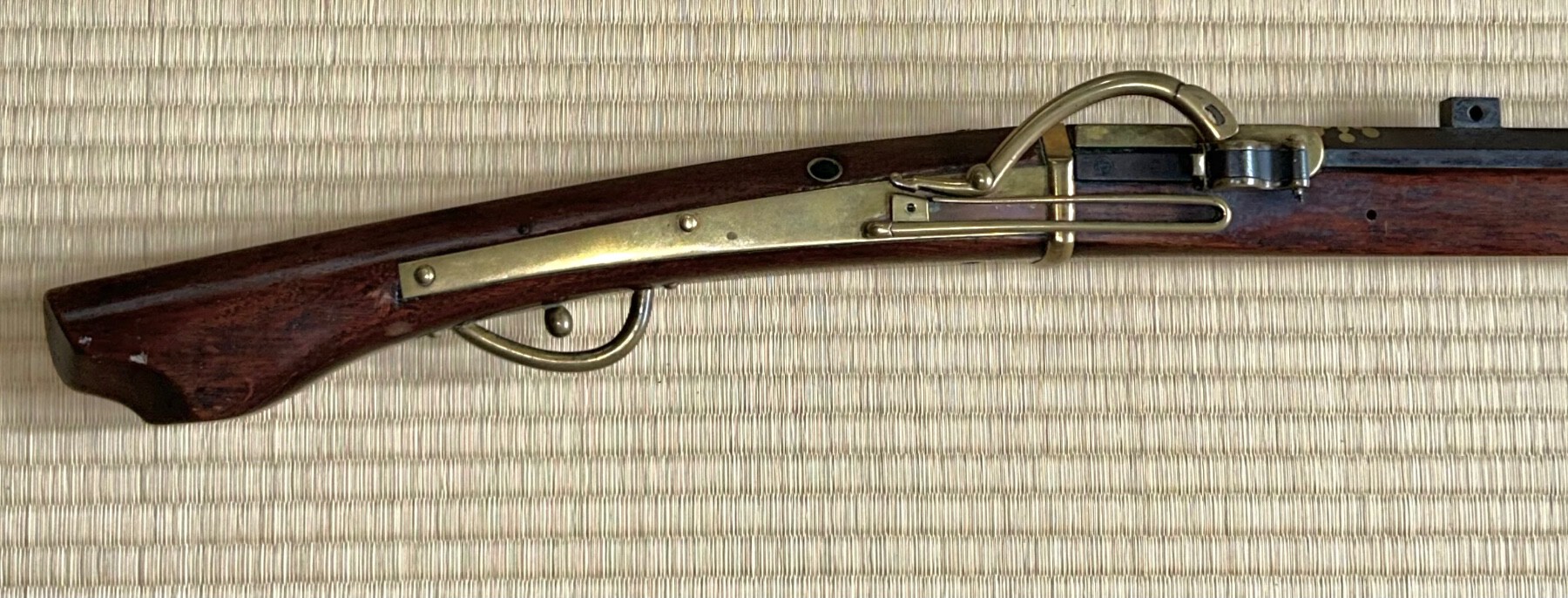
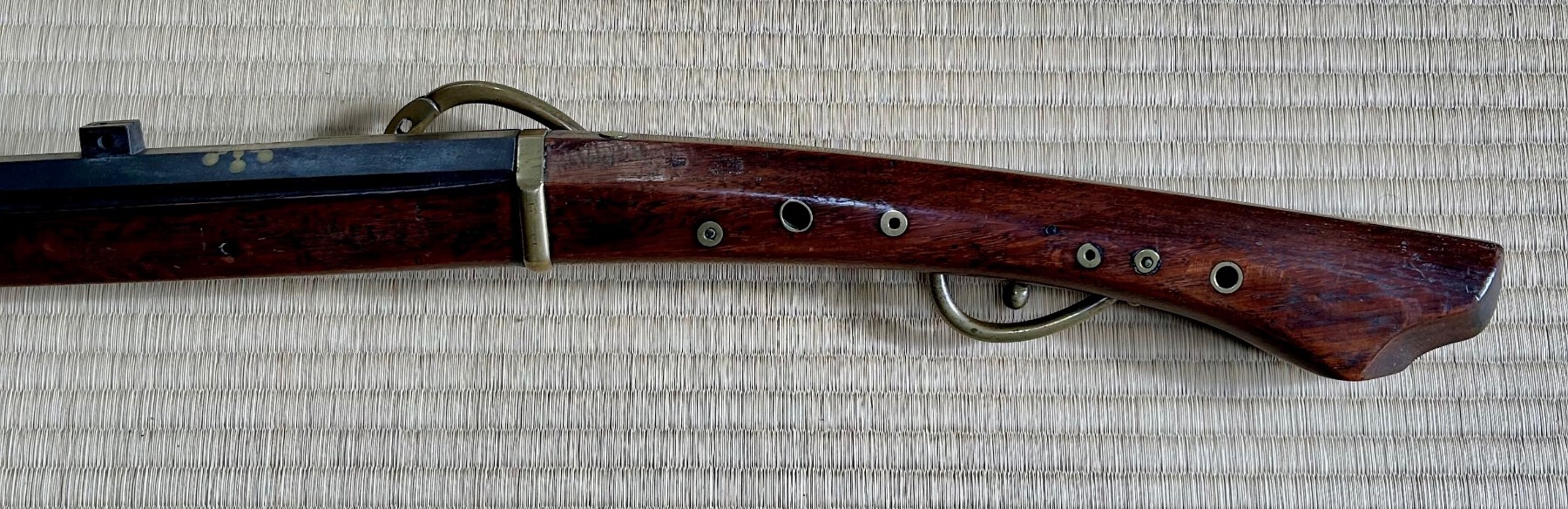
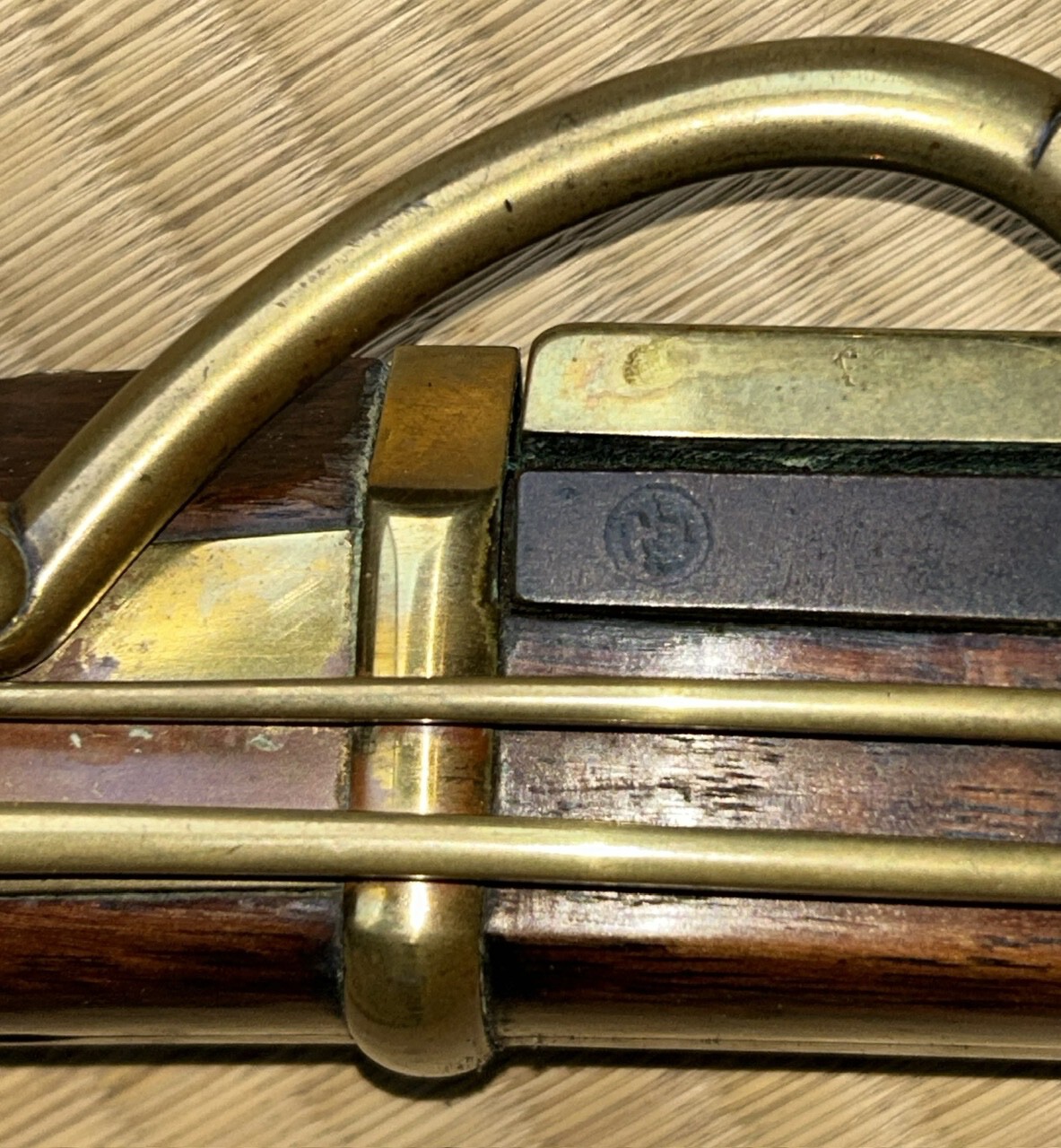
Looking back at the posts of mid-April this year (page 40 of this thread) where I was 'forced' to hand over an Inatomi-Ryu matchlock just acquired at auction. Slippery as eels, they are. Yesterday an almost identical situation arose, with an even better example, but this time I think I got the human relations angle right, and for the time being I am now the proud owner of an Inatomi school gun. Not only is the overall condition surprisingly good, but the Kamon on the barrel is beautifully done. Good for static displays, but could be fired anytime if necessary. Will need to give it a thorough check, and a new ramrod first. Back in November someone offered me payment for services rendered in the form of a matchlock, in lieu of cash. It's a good solid gun, but not in great condition. Subsequent TLC has improved it a little. That matchlock could now go into auction to help subsidize this latest Inatomi purchase. Photo of kamon
 1 point
 -
Last year, I was honored to receive a sword forged by Yasunori. This made me extremely interested in this swordsmith. At the same time, I also wanted to know if there were any differences in his forging style compared to the other three chief-level swordsmiths (Yasuhiro, Yasutoku, and Yasumitsu).I would like to know more stories about him. Thank you very much! Here is an interview record about Yasunori.
 1 point
 -
And the bad news is that a friend told me that once they get your name on the register they will ask you again the following year, and it will be hard to refuse. This means that from now on it is likely that I will have to do the above display or something equivalent every year, unless I can come up with a good excuse. Hmmm…1 point
-
John, are you sure that rays are depicted on your JINGASA? I believe it could also be symbolized KEN blades. SUHAMA MON on TSUBA:

 1 point
 -
Nice, John! The Mon are called Suhama. Not so common in my experience, but it probably depends where you are in Japan. Yours is of much higher rank than ashigaru.1 point
-
For the kids, I prepared a flint and striker and challenged them to strike sparks, as part of the old way of lighting a fire or matchcord. Naturally there were other examples of tinder, tinder holders, netsuke ashtray, iron strikers, etc. There were also various instruments for creating noises, which they could try out, a triton (conch), a mokugyo, a shakujo, some hyoshigi clackers, etc. Many objects bore Mon/Kamon, challenging them to see if they could name some famous Daimyo families.1 point
-
Thanks! Jan and Kat were supposed to be visiting this weekend with their friends Petter and Helena. It was to be my first free weekend in nearly two months, to which I was looking forward, and then suddenly the city had to come and ask me to take part, bang in the middle. Should have refused, maybe. Still, we managed to hang out and do some fun things together!
 1 point

















.jpg.d21eb6265cef4d12757a21d0862a0a63.jpg)







This leaderboard is set to Johannesburg/GMT+02:00