
Leaderboard



Popular Content
Showing content with the highest reputation on 11/15/2025 in all areas
-
Hi, I can chime in. Swords from the Golden Age are indeed much more likely to pass Juyo/TJ. There can indeed be some back and forth between Enju and Awataguchi, but it is exceedingly rare. This has happened only twice on 220+ Juyo Enju blades. In this day and age, Awataguchi Yoshimasa is not a rational attribution, there is no extant tradition of attributing blades to this smith, and he is absent from the record. As such, the attribution needs to be taken into a allegorical Japanese context of someone marketing the blade is "almost as good as Awataguchi". The Kiwame that can shift the NBHTK's opinion are restricted to old judges (Hon'ami Kuchu, Kojo, up to Koyu to some degree), and of course Honma and Tanobe. The kitae of your sword, while beautiful and full of chickei, is not commensurate with Awataguchi. The policy on Juyo today has a very high bar, with pass rates of 7-8%, and everyone sending their best pieces. Ask yourself if this particular sword sits into the elite ranks of Enju. I cannot tell from the picture, but there are factors that help which you can ascertain for yourself: wide motohaba (2.9cm+), good size (70cm+). Factors that are harder to appreciate without experience is the Niku (e.g., try to feel if the yokote is slightly curvilinear), Bright and clear habuchi (for this you need to see maybe a hundred swords with textbook bright and clear habuchi to get a feel for it), and a healthy boshi (this is harder than it seems as polisher needlework can be difficult to differentiate from a genuine boshi). In the 70's it was much easier to pass Juyo, and your sword is probably superior to certain Juyo blades attributed to Enju during these liberal times. Take solace in this. Today the situation is different as Juyo is so much harder to achieve. My appraisal is that for an Enju blade to pass in this day and age, it would need to be in great health, and probably signed or sufficiently differentiated to be attributed to a specific master of the school - I would not go to through the trouble myself otherwise. There are of course freak occurrences and head-scratcher, but It doesn't make for rational bets. Today, the competition for the promising TH blades is very high, and they are unlikely to be acquired by westerners shopping online. In the rare occasions when these blades are presented online because a dealer needs cashflow and his retinue of preferred clients chatting on LINE are not taking the bait, they will be priced at 2/3+ of the way to Juyo and hence discarded as "too expensive for TH" compared to the ones at 1/3 the price with the same attribution from another dealer. The later has, of course, no chance of Juyo and above, and big problems. But to the collectors who have little to no exposure to great blades, the price-to-paper ratio is most often the deciding factor. The day one sends a batch of "good deal TH" to Juyo will be the day of a brutal reality check. Ignorance is bliss, in a way. At the end of the day, Juyo or not Juyo, the blade is the same. Remember that one can build a very sensible and enjoyable collection that tells an interesting story without a single Juyo blade. Hope this helps, Hoshi6 points
-
Hi Kevin, Great question. There is a tradition of attribution that goes back to the 17th century where respected appraisers wrote the name of the maker in gold inlay on the tang of the blade (Kinzogan). Some of the shortening were performed by this group, called the Hon'ami, and as a result they had access to many more signatures than we do today. The attribution "Go Yoshihiro" has a number of canonical traits (e.g., Ichimai boshi, first class nie, shallow sori, habuchi that increases towards the kissaki...) that have been studied since the Momoyama period. There is, of course, a substantial degree of uncertainty with attributed blades. Attributions on mumei works are best understood as "this is the most likely maker given what we know today" - and even more conservatively as a way to state that a sword expresses certain traits and a certain level of quality that is in line with reputation of a certain master smith. In this sense, there is a tradition of attribution that has been honed over generation of competent judges, based on ancient literature and oral transmission. I would advise caution on mumei Soshu blades to big names that are without Ko-Kiwame (old appraisal by the reputable judges) or established provenance from Daimyo collection with a high-level record of gift-giving. Makers during the Shinto era, such as Nanki Shigekuni or Shinkai came very close to Go, and one should always examine the sword critically. Best, Hoshi5 points
-
It seems like an interesting sword. Gassan signatures are usually located around the original hole on the tang. So I would think the lowermost hole is the original one, or it has been very slightly cut completely off. Now as the current length seems to be c. 73,5 cm and to me I would assume the sword has been cut down something in between 10-15 cm or so, so in original form it could have been c. 85 cm blade. The sword seems to have a large kissaki, which is throwing me off a bit, as almost all of the old Gassan tachi and katana in my references have small/smallish kissaki. I think I could only find 1 reference with a large kissaki: https://www.nipponto.co.jp/swords2/KT218912.htm To me the sword is a plausible Muromachi period Gassan sword. The long length and large kissaki are few things that are throwing me off a bit as I cannot find similar reference item.4 points
-
This sold for $7360 in case anyone didn't see it on ebay. https://ebay.us/m/l1Vamv Eric4 points
-
Not a tachi. Katana-mei: 月山.
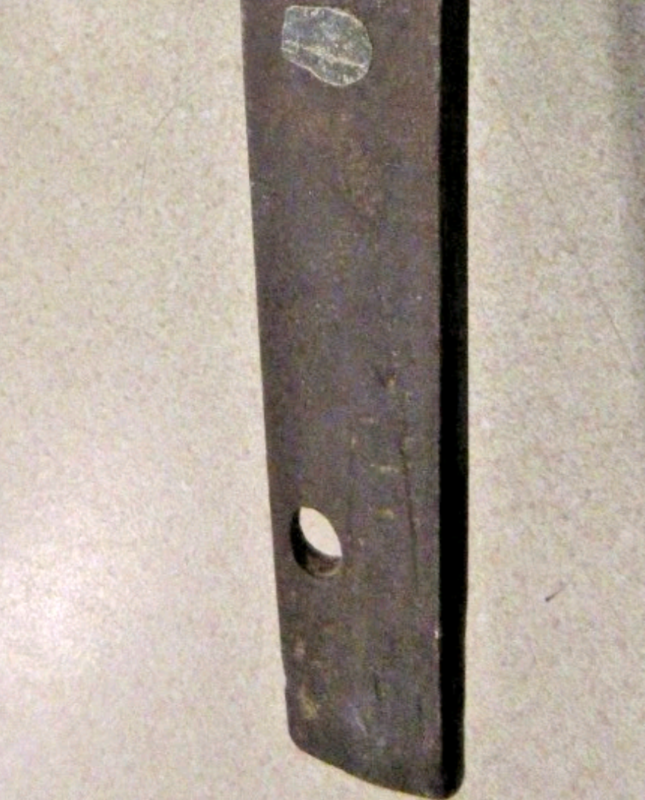 4 points
 -
平安城住下坂利永作 – Heianjo ju Shimosaka Toshinaga saku4 points
-
I am glad that you have seen the Kongohyoe book. I have written a very different and more comprehensive book about the school which I hope to publish in the new year. In my opinion the kissaki is just fine; it was originally an extended-ko and still has its shape. If you push the ko-shinogi back, it may not look proper. It is typical to find the hakikake in the boshi nearing the tip on some Moritaka blades. Because all Kongohyoe blades were made with compound sori, this enables one to figure out where the original machi and habaki were located. There is around 2 inches of koshi-sori at the base, which is not exposed in most samples, from suriage. If you can locate in the nakago this curvature, which is usually still there, originally it began abruptly, coming forward out of the habaki. If you can locate this spot you know which ana is original and where the machi was. The picture you have posted is not clear enough to be sure. Perhaps you can place a ruler beside the mune side to make it more obvious. Also, you might include some measurements to aid in kantei of period, like moto-haba, saki-haba, moto-kasane, and come to think of it, a top down photo of the kasane might be handy. Lloyd3 points
-
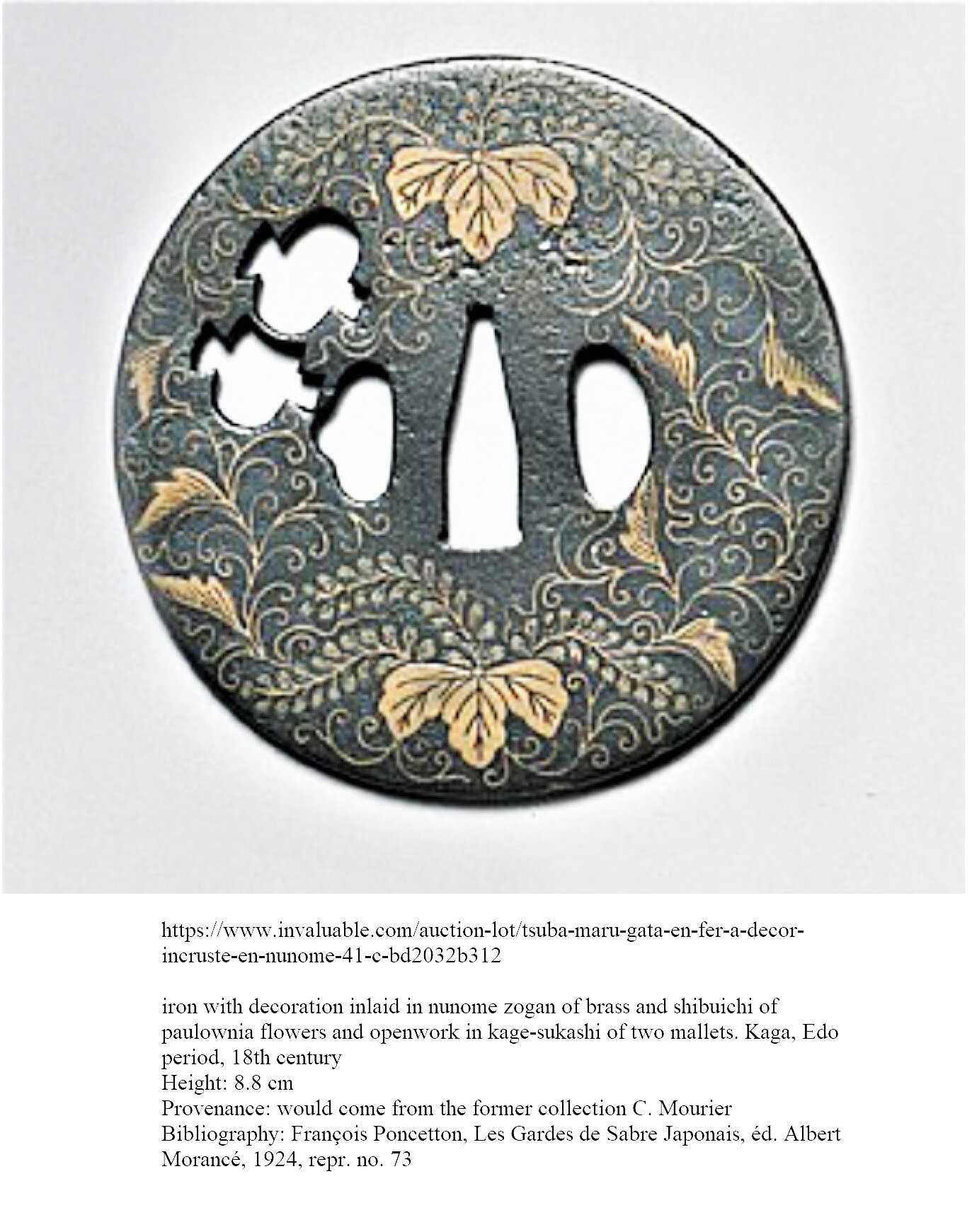
I have drawn a blank on the other guards - the rabbit is very distinctive and I am sure I have never seen it before. The Yatsuhashi design is more common but the examples I found have one squared hitsu: https://www.giuseppepiva.com/it/opere/tsuba-kyo-sukashi-con-motivo-yatsuhashi/ https://www.militaria.co.za/nmb/topic/22685-iron-tsuba-of-lord-viewing-fuji/ "from a Princely Collection." Is a little vague as a reference to do a search.
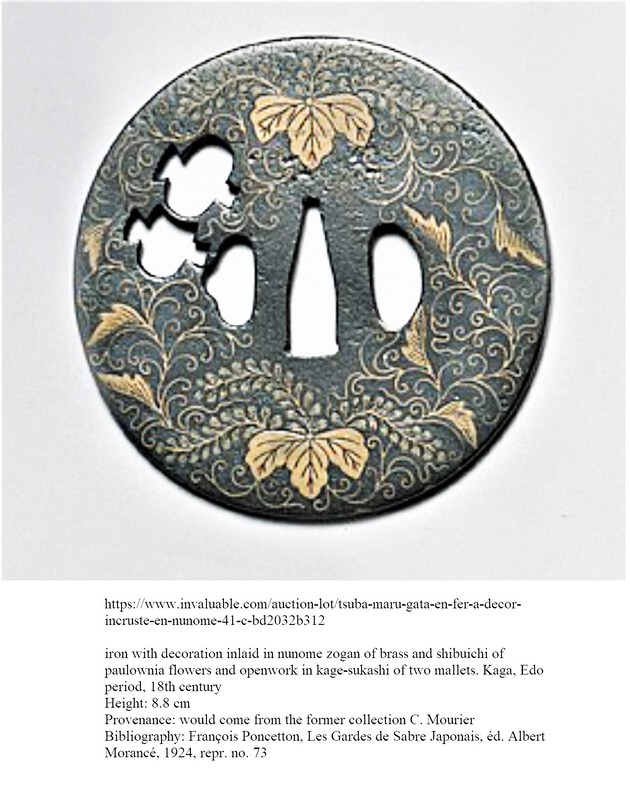 3 points
 -
Thank you @Tohagi I really enjoy this sword. It shows the typical Kongo Hyoe characteristics with a mixture of mokume, Itame and masame near the HA. Always liked the wild feeling of their hada


 3 points
 -
Very well articulated. A couple of brief thoughts on the actual blade. Admittedly I can see very little of the actual hamon and habuchi (might be just my eyesight) but it has tight enough itame/ko-itame jihada to be a fairly good sword. For Awataguchi, again caveated on the limitations above, you need a somewhat different hamon to what little I can see in the one small photo - one with some more konie based activity (eg some small ashi or other niesuji, slightly deeper and richer nioiguchi). Also, look at the boshi (Eg omaru? komaru? yakitsume or not, etc) and finally the activities immediately above the hamon. Awataguchi is a tall order of quality attribution… Having said that, your question was which one to submit. Probably the Enju will have higher chances all else being equal, relatively speaking, and not in absolute terms of certainty.2 points
-
Matt, now that MORIYAMA-san has done the hard work.... little more info (AI generated).....
 2 points
 -
Jan is referring to a different sword in another auction ; charles.
 2 points
 -
Since then I retired it, using a much lighter but again genuine 20-Monme Ōzutsu from Ki-Shū, Wakayama, and subsequently, more recently, a 50-Monme from Sendai. For static displays, however, it’s great to have three Tazuke school matchlocks.2 points
-
What a trip down memory lane! Since then I fired that gun at blackpowder displays about eighty times over ten years, even taking it to celebrate Japan Week in Portugal later on in 2010. It had to be de-registered to leave Japan. Sadly on return the Tokyo Board of Education re-measured the bore at 2.1 cm, dropping it from a 20-Monme Ōzutsu to a 15-Monme Ōzutsu. But then it got married and had a family. •Ōzutsu •Gunyōzutsu •Bajōzutsu (Kagozutsu)
 2 points
 -
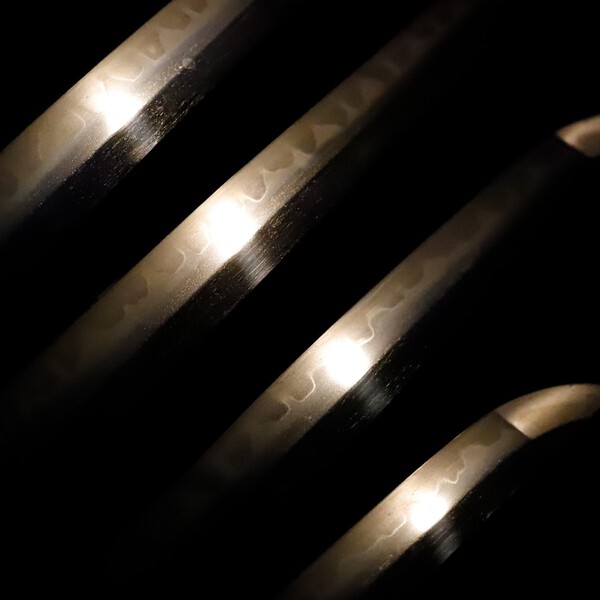
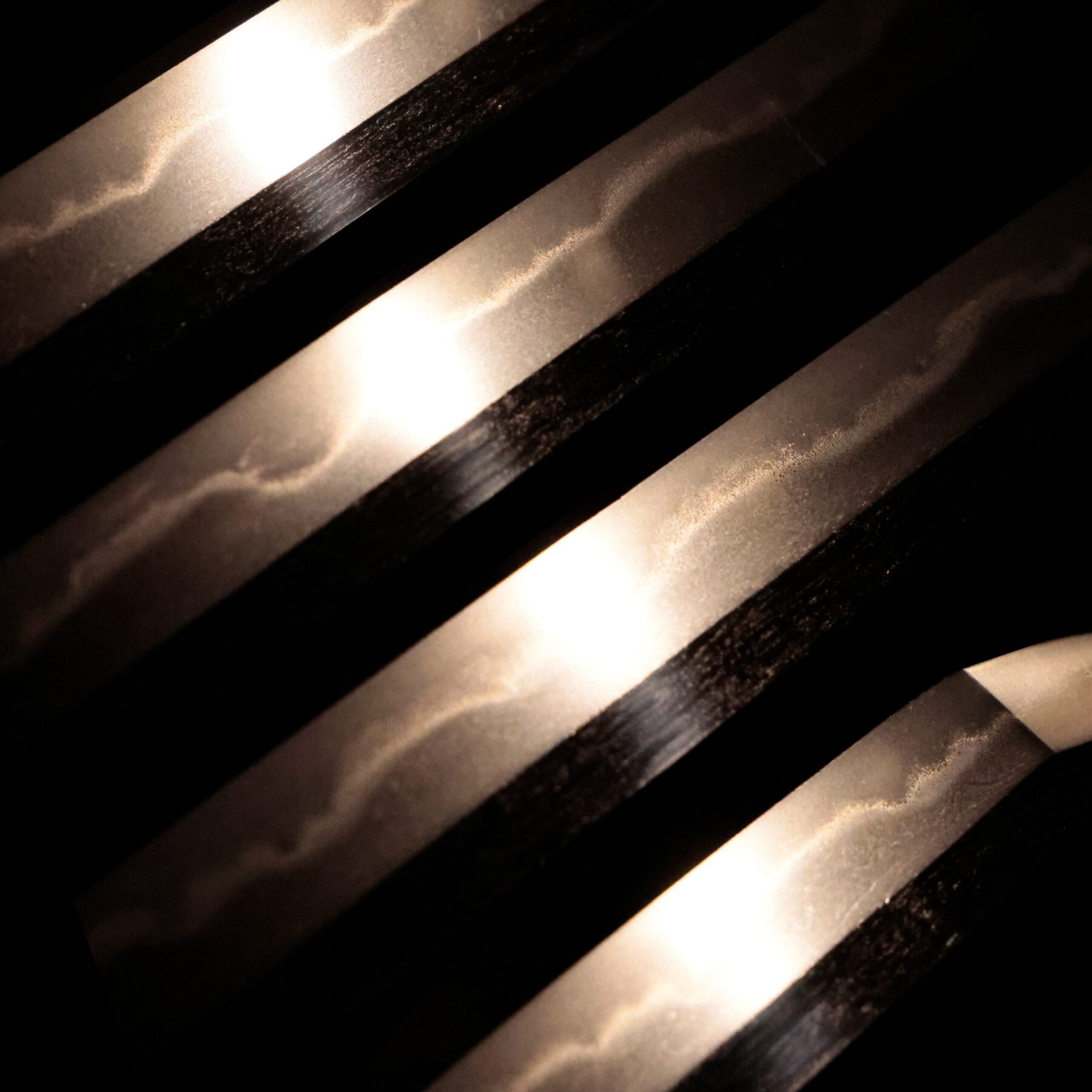
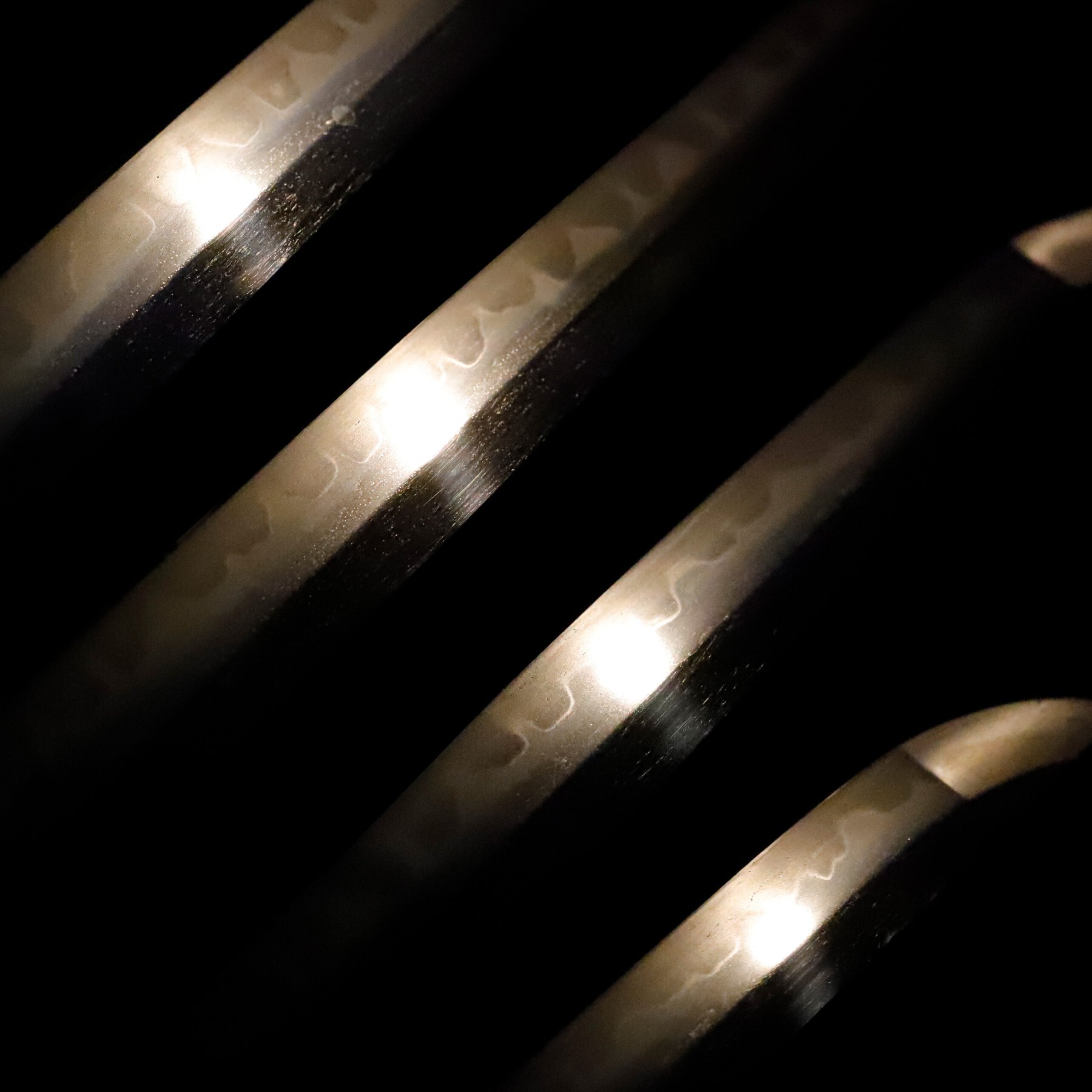
Just for a bit of fun, here's three swords, can you guess the certificate? One is Juyo, one TH, and one Hozon, selling for approximately £20k, £8k and £4k respectively (so no tricks - there isn't a Kotetsu with just Hozon). Basic images, but all the same res. Bonus points if you can identify which gokaden: Option 1: Option 2: Option 3:


 1 point
 -
https://www.dropbox.com/scl/fi/gkfcfqc6gs14invoeg6hn/KanzanHakogaki.pdf?rlkey=5i89f80fkbbf60x67f1lloa2k&st=zfh4ao27&dl=0 I'm not sure where it would be more appropriate to post this — in the Translation Assistance section or in Tosogu (please, Brian, place it wherever you find most suitable). I’ve compiled a short collection of transcriptions (kanji + romanization) of some tsuba hakogaki from Satō Kanzan. Although the examples I’m presenting are among the best-documented ones I could find online, I’m far from confident that the transcriptions provided are reliable. All the text shown in black should be reasonably accurate; the text in red is, at best, an educated guess; and I’ve marked with red stars the characters whose transcription I’ve no idea about. Some inconsistencies are evident and may perhaps be attributed to likely forgeries of the hakogaki. For each hakogaki, I’ve included the website link from which I took the images, which I believe should serve as proper credit to the original owners. Of course I’m ready to remove any material upon request from the rightful holders. In any case, this is entirely non-profit, and I am not a professional in this field. I would be very happy if forum members wished to contribute with comments, corrections, additions, or perhaps even further examples of hakogaki by sharing images from their own collections. I intend to release a final, corrected version here on the NMB forum within about a month or so. Thank you for reading.1 point
-
Dear NMB members, first of all, thank you for your interest in this project. All the missing or unclear writings have been brilliantly resolved by Steve M, to whom I extend my warmest thanks for his kindness and expertise. I would also like to thank Jean (AKA Rokujuro), Manuel (AKA C0D) and Matt (AKA M Ubertini) for the interesting correspondence on the topic. I have just released the 2nd draft of "Tsuba hakogaki written by Satō Kanzan". The file is available for download from the same link (https://www.dropbox.com/scl/fi/gkfcfqc6gs14invoeg6hn/KanzanHakogaki.pdf?rlkey=5i89f80fkbbf60x67f1lloa2k&st=zfh4ao27&dl=0). Several new hakogaki have been added, so the file is now even larger. Since the focus is on the hakogaki rather than on the tsuba, I decided to include hakogaki that are highly suspicious forgeries, as well as others that clearly refer to tsuba different from those stored in their respective kiribako (sadly it seems quite common for tsuba to be randomly swapped from one box to another). Annotations have been added at the end of the document to point out inconsistencies and to provide rough translations of Japanese expressions beyond simple tsuba descriptions. The new additions, of course, contain missing kanji and transcriptions that still need to be confirmed (which is why this remains a draft rather than the final release). I look forward to receiving further feedback from all of you. Thank you.1 point
-
Yes, but a lot of people delude themselves that they have a top piece. In fact the majority. It requires a lot of knowledge (absolute and comparative), honesty, sobriety and self-criticism to admit that one might be wrong and deluded oneself that the piece is a top one. So, while one might think theirs is the best or among the best, a few attempts at shinsa (in my view one is not enough) could actually prove or disprove that. A top piece eventually gets promoted, even if not at first attempt. Also resubmitting at the same level has a few complications and hurdles one needs to overcome…..1 point
-
Thanks for the replies so far (and double points for the hidden answers 🙏). I'll let it run for a while longer to give others a chance to answer, but I must say I'm impressed by the level of knowledge displayed! It's actually really useful for me to see the perspective and descriptions from the limited data (small, single picture available), it's helping my limited understanding and is very appreciated.1 point
-
Having read Hoshi's excellent answer, I thought I might expand a bit more on my thought processes too:1 point
-
Hello, A good question and a chance at learning. Remember that there is a component of intra-smith competition at Juyo, this means that in addition to appreciating the overall quality, one must assess the relative quality. That said, it is possible to design such an exercise without traps (e.g., not taking a chu-saku JINO or mumei shinshinto in koto style). Moreover, ideally, we would have more picture than this: unfortunately our eyes are prone to errors in appraising the nioiguchi from these photos, due to hadori, poor polish, or other visual artifact. It's a game of statistics and it relies on picking archetypes and not outliers for this exercise to be meaningful. All of this to say that the heuristics I'm about to produce only work if there are no traps: Hope this helps, Hoshi1 point
-
I'll bite...1 point
-
While maybe not as sexy as Jūyō submission I would re-try the Tokubetsu Hozon first even if intending to send the sword in for Jūyō. Mumei swords can always get different attributions depending on the shinsa, so I would think that is always worth a try. I know if I would be living in Japan I would definately try to buy and resend some mumei swords in hopes of scoring big attribution. Unfortunately for us outside Japan it is way more complicated to send the sword in. Of course there is always the human bias mixed in, as I probably wouldn't re-send a very good mumei attribution because the new one might be a lot worse.1 point
-
Let's discuss the structure of the hilt, or tsuka, in Japanese. The cloth wrap (tsuka-ito) is silk, and after 70 or so years it is probably going to be dried out and easily frayed. There are paper pads underneath the tsuka-ito. Underneath that is a layer of same', which is the hide of a type of ray fish. The same' can also be dried out and loose, inspect for cracks and losses. It can be held on to the tsuka with glue which should be assumed to be water soluble. The core is made of wood, usually hinoki. There may be some cracks in the wood, but usually those are best left alone. Old tsuka can be cleaned, the best approach is least intrusive method first. So first step is to inspect and decide how intact it is, anything loose or falling off? If not, then as John recommends a slightly damp rag with mildly soapy water is probably the first step and proceed slowly. Not recommended is to soak it thoroughly or to use a brush, which will fray the tsuka ito1 point
-
Because I'm researching these issues, I got a copy of a book that Markus Sesko mentioned "A Study of Samurai Income and Entrepeneurship" by Kozo Yamamura. (As an aside, a copy of the book popped up in small town bookstore in British Columbia! I'd love to know why :-) ) A good example of the data in the book is a table on the distribution of incomes in Okayama han in 1673, 1700, and 1840 to 44. For 1700: In the year 1700 stipend in koku Number of retainers Total cost 10000+ 6 60,000 5-10,000 3 22,500 1 - 5,000 25 75,000 500 - 1,000 36 27,000 400 - 500 22 9,900 300 - 400 81 28,350 200 - 300 159 39,750 150 - 200 101 17,675 100 - 150 54 6,750 50 - 100 217 16,275 30 - 50 427 17,080 20 - 30 1126 28,150 10 - 20 270 4,050 < 10 93 837 Total 2620 353,317 Median income, koku 20 - 30 Mean income 135 This table includes both retainers paid in koku, and in hyo. The book gives some context about this data: Many of the lower level retainers were in fact paid by higher level retainers, not the han. Thus this han (with a value of 350,000 koku) was not spending its entire nominal income on wages, as it would appear. Many of the retainers at the bottom of the income scale may have been "part time samurai"- foot soldiers who farmed as well. Their stipend thus did not include their income from farming. This table is before any obligatory "loans" back to the han, so actual available income will have been less. At the end of the day, most samurai remained eternally broke.1 point
-
It's not a "red herring", not at all. I said "kanteisho are only representative of the time they were made", which is true. I made an arbitrary date example, which should have been obvious to be not exhaustive. Whether 12 months, 2 years, or 20 years the statement holds. However, with greater passage of time, the likelihood of any items condition degrading increases. Yes, there are examples from 60 years later still in fantastic condition - there are many. But do you imagine that there are more, or fewer such examples when compared to 6 days after shinsha, 6 months or 6 years?1 point
-
That is a bit of a red herring. Someone could have got a TJ certificate for a balde only two years ago and let the blade rust or have damaged it. I followed one TJ blade which went somewhere in a pristine condition and 12 months later it needed a repair …. It all boils down to how a sword is cared for. I have a Juyo sword which was last graded and polished 60 years ago and it is still almost perfectly preserved (save for some uchiko hike by an overzealous custodian in Japan).1 point
-
Cosmoline or not, buying swords based solely on photos is always a risk, one that increases significantly when dealing with eBay sellers rather than reputable dealers. It’s also difficult to give meaningful pricing advice without knowing your specific goals. If you’re purchasing this piece for your own collection and enjoyment, that’s one thing. If you’re hoping to resell it for a profit, then only you can judge what margins make sense for your situation. Also, keep in mind, that many swords on eBay have already gone through the process of being bought and resold for more. Sincerely, -Sam1 point
-
I did it, sent it to the shinsa and got a tokuho for the sword and one for the koshirae, and sold it (and that's not the only time).1 point
-
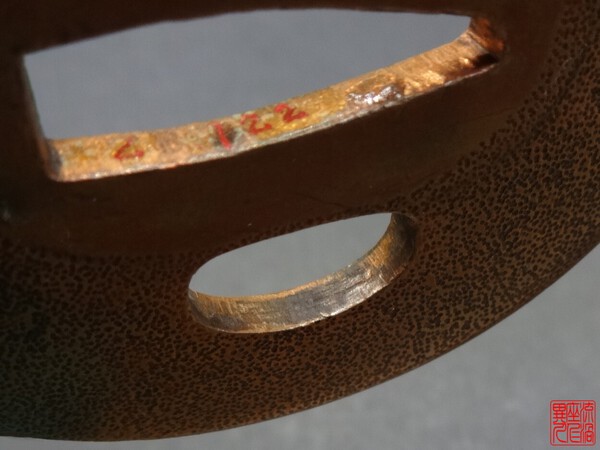
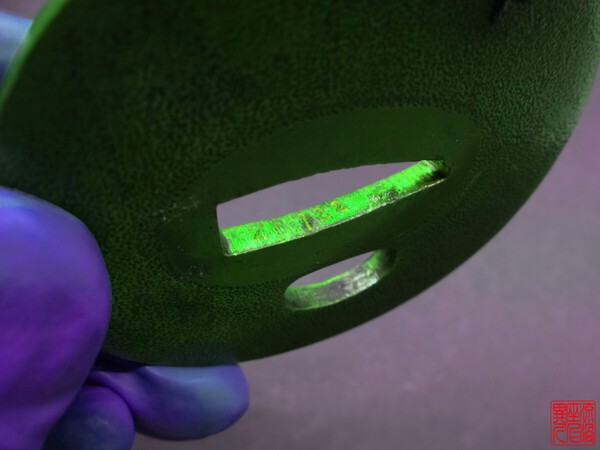
I have this Hamano ({浜野}) school tsuba signed Nobuyuki ({鋪隨}) in my collection that have a red lacquered number painted inside the nakago-ana. By enhancing some images the number seems to be composed by five digits and reads like ``28722'' or ``28.722''. I have tried to find the provenance from the number but without success. If any information about it is available or you can find out more I will appreciate it! Dimensions are 65.1 mm x 59.0 mm thickness 4.2 mm. Regards Luca

 1 point
 -
Beautiful sword.1 point
-
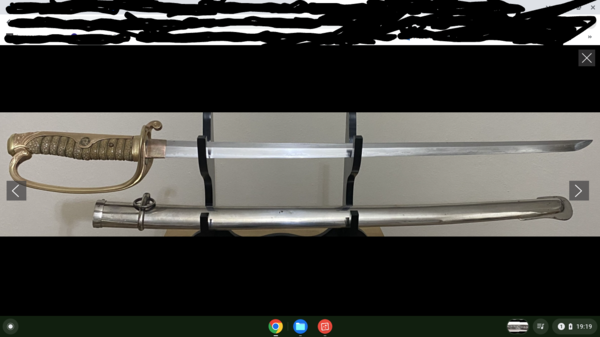
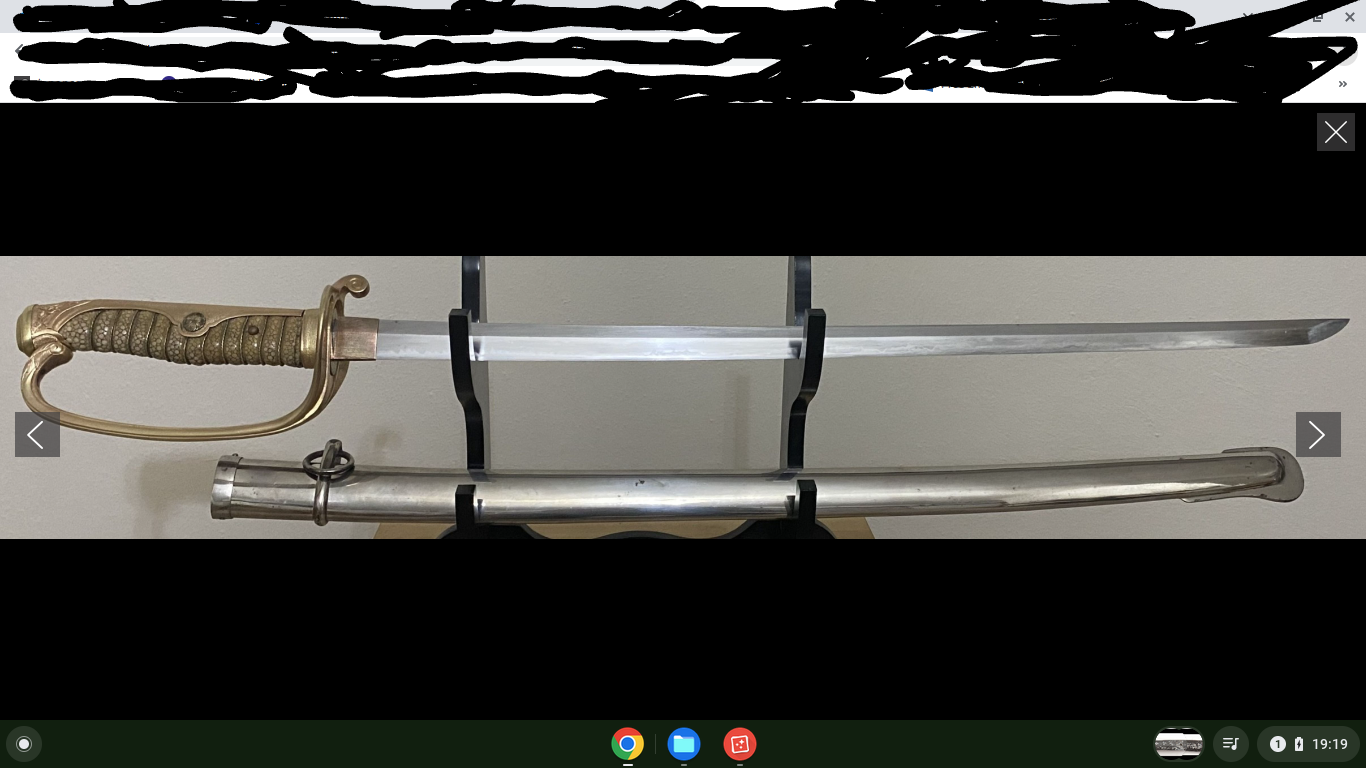
Thanks for sharing this, Jan. Both the blade and the fittings are quite beautiful. Those fittings were an upgrade, and for us Military sword collectors, quite desirable. A small clarification - "Kyu gunto" were the early, Western-styled sabers. This is a navy "kaigunto" (Kai - navy; gunto - literally army sword, but it was used more commonly as "military sword").1 point
-
This reminds me of a time when I went with a friend to look at a private used mercedes for sale. Everything on the outside looked perfect and the owner was quick to present the "clean carfax", which of course showed that everything was in order. I then asked the owner if he would allow us to drive it to the dealership for a pre-purchase inspection, his reply was, "for what? Here is the clean carfax." Begrudgingly, he agreed and when the inspection was completed, it was found to have unreported rear end damage and a few aftermarket parts, all of which were never mentioned. The point is that NBTHK papers, like a carfax, are not a conclusion, but a tool. They are more valuable for those less informed on specific schools and styles, but a tool nonetheless. If someone chooses to regard papers as a conclusion, that is certainly their prerogative, but the consequence is they may be paying quite a premium to a dealer who may have priced it with that type of customer in mind.1 point
-
Koto bizen swords are known for their utsuri. Some of the most stunning utsuri I’ve seen has been on Aoe blades. I can’t quite see anything in your images unfortunately. Even in swords that are in good polish, utsuri takes a careful eye, and knowing what to look for to see. It’s even harder to capture in photos. Here's some really good articles about utsuri that might help: https://markussesko.com/2013/08/22/some-thoughts-on-utsuri/ https://markussesko.com/2015/05/14/kantei-2-jigane-jihada-3/1 point
-
Basing it off the Mei is more reasonable as Horimono may be Atobori, and many original Horimono didn't stop above the Habaki. Your best bet would be to find an Ubu example of this same smith and compare the Mei placement.1 point
-
I actually agree with you on all of this. I am also a fan of Tsukada-san and Touken Komachi. Wish I could have bought this one from them: https://www.toukenkomachi.com/index_en_tachi&katana_A030817.html Only reason I say Seiyudo is that I think given all the tradeoffs, their sets of images let me comprehend the overall qualities of swords the fastest. They really need to add angles and at least one alternative lighting set though. That being said, having 3 swords from them I can tell you that if you hold your sword up to their photos, they are pretty much identical, in color etc. At least from that angle. I think I just trust them the most at this point because every sword I have seen in person at their shop or bought, has been flawless or nearly flawless, never have to worry about quality there because they have a really high bar for their swords. They also tell you, proactively if there is anything going on, even a little polish scratch without having to ask. Aoi Art on the other hand will sell you anything without a peep about any existing problems . You really have to pull it out of them. Pablo's site I always forget about as I have never bought from there. I think the format of his transaction has always been a bit tedious and embellished to me, but his photos are truly top notch.1 point
-
Consider that the mei is a brand, so the thinking is that signed on the front means a tsuba made as shop stock for sale to the public. Signed on the back is thought to mean this was a custom order, and would be presumptuous or tacky to obviously stick the brand on the front. There are also tsuba by known masters that are unsigned, which can mean the tsuba smith was a retainer to a Daimyo and produced tsuba or other fittings only for the Daimyo family, and were not ever for sale, so no need to brand them. This situation does not apply to the thousands of unsigned low end tsuba.1 point
-
I am skeptical on these other tsuba as well. The open carving is very crude and the plates do not look well made. Color is often misleading in pics, but these all look similar and it looks off to me. Here is an example of one from my collection. Let me know if you can see any differences as to what I have mentioned. This theme I believe is a cherry blossom with snow on top. Your pieces also look very flat where many seem to be slightly concave. Jason

 1 point
 -
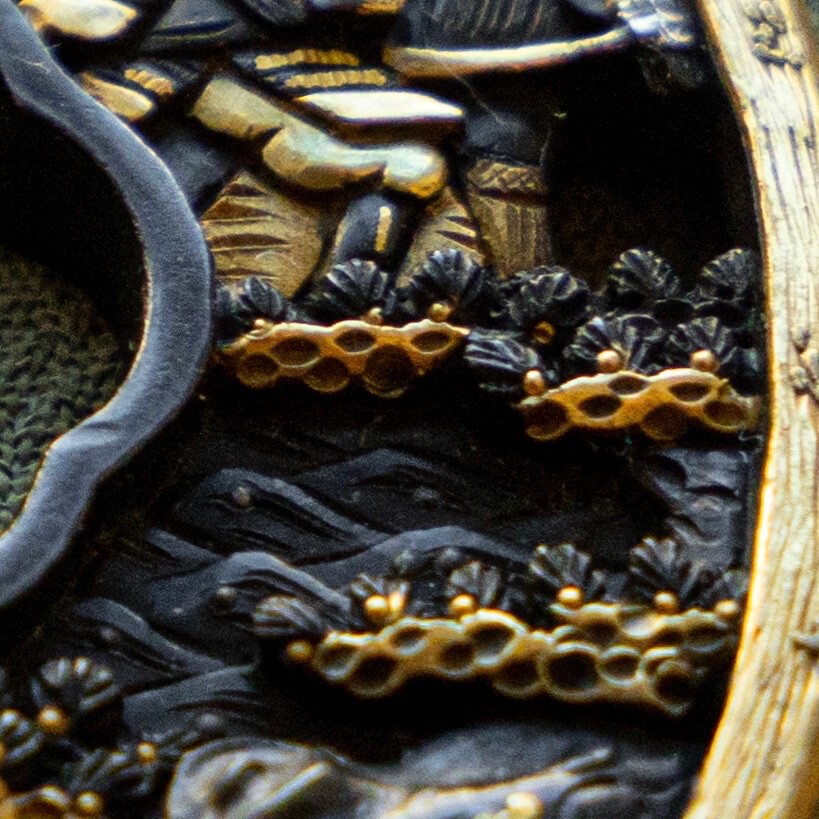
Hello! I've also done some research on my Soten tsuba set. I'm inclined to believe that your tsuba was made by a follower of Soten with their own unique style. There are noticeable differences in the way the pine tree is drawn, with its more elongated needles(with an Italian accent)) joke), which is not as common in the Soten school. Additionally, the tops of the waves have a concave point, whereas Soten often uses a round point, and the overall style of the waves is different. A similar plot, I suppose) The precise depictions of the clans are also not typical of Soten, and I really appreciate this detail on your tsuba! I also found a potential pair that is slightly smaller in size, both in appearance and in terms of the additional seki gane insert. Best regards Viktor


 1 point
 -
Something new..

 1 point
 -
Kashira not a habaki - but still rather cool!1 point
-
Here is a picture I took of the sugata of the blade. Judge for yourself. I had a composite photo of the other side and put the two sides together so that you could see the matching hamon on both sides of the blade.

 1 point
 -
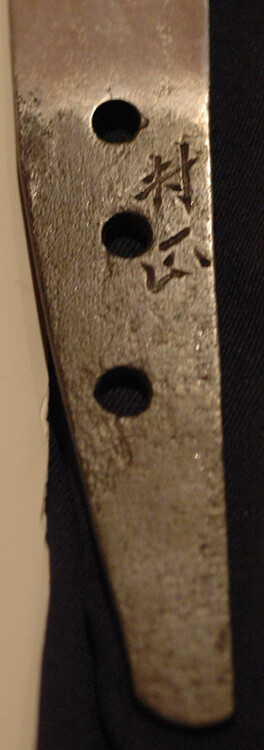
Hello: Here is a photo of my nidai Muramasa for comparison.
 1 point
 -
Auction title: Sword Auction description: Sword Pictures: 3 - all the same shot. https://www.ebay.com/itm/357714728503? John C.0 points





























This leaderboard is set to Johannesburg/GMT+02:00