
Leaderboard


Popular Content
Showing content with the highest reputation on 10/05/2025 in all areas
-
東海道清水住人、盛重作 – A resident of Tokaido Shimizu, Morishige made. 応好 柳雅堂氏 – Responding to the order from Mr. Yanagi Gado 家運長久 – Good future for the family 昭和六十乙丑年八月日 – Showa 60 Kinoto-Ushi year (1985), 8th month5 points
-
"Japanese aesthetics though are more tricky to understand and are not just "in the eye of the beholder", which is a silly Western concept" I'm curious about this. Could you elaborate? (Jeff) A question to write a book about, but I will try: Japanese swords were not made in a vacuum. The sense for their appreciation and beauty is embedded in a culture long gone and hard to understand even for (modern) Japanese people. Even more so for us Westerners. Usually we tend to enjoy and acclaim features we can easily recognize and understand within the perimeters of our cultural background. An example for this attitude on a very high level: Etchu NORISHIGE is considered a top-swordsmith within Soshu-style of sword-making for good reasons. Western collectors are crazy about his works, for their contrast in jihada and their obvious hataraki are so spectacular. But old Japanese connaisseurs considered his work clearly inferior to MASAMUNE's and SADAMUNE's. Why? Because of its lack of dignity! "What does that suppose to mean: dignity? In 2025 we are living in a world stripped of pride and dignity! Let's make ourselves shine by all means possible." Well, samurai's aesthetics didn't work that way. My advice: Learn the difference between "aki ni sae" and just brightly shining nioi on a hamon. Furthermore study Japan's history and craftsmanship, especially paintings, sculpture, calligraphy and even everyday objects. It is a long way to go, but it is very helpful to understand appreciation of Nihon-To. reinhard5 points
-
4 points
-
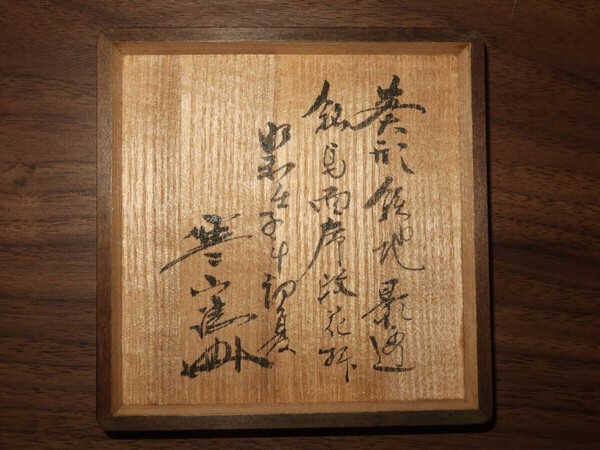
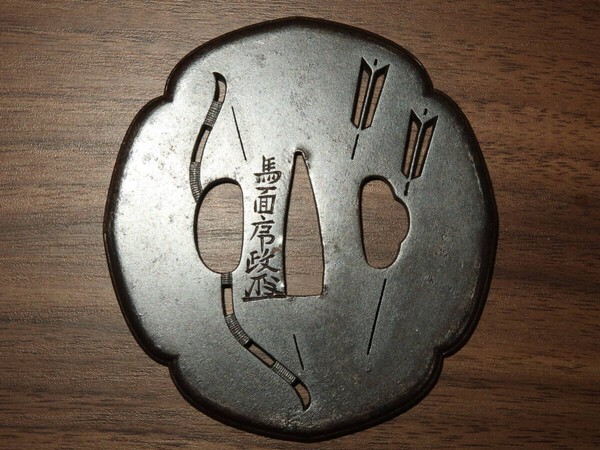
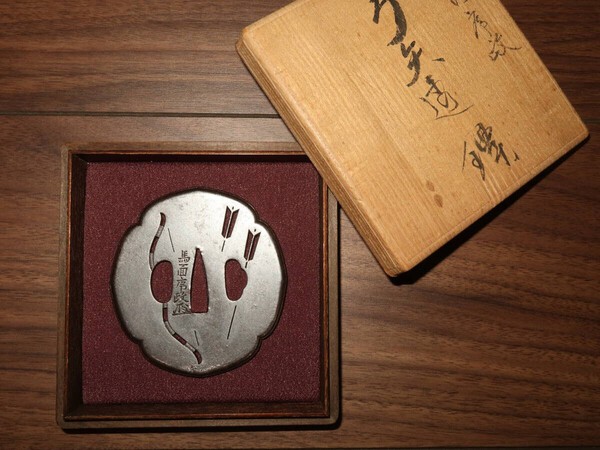
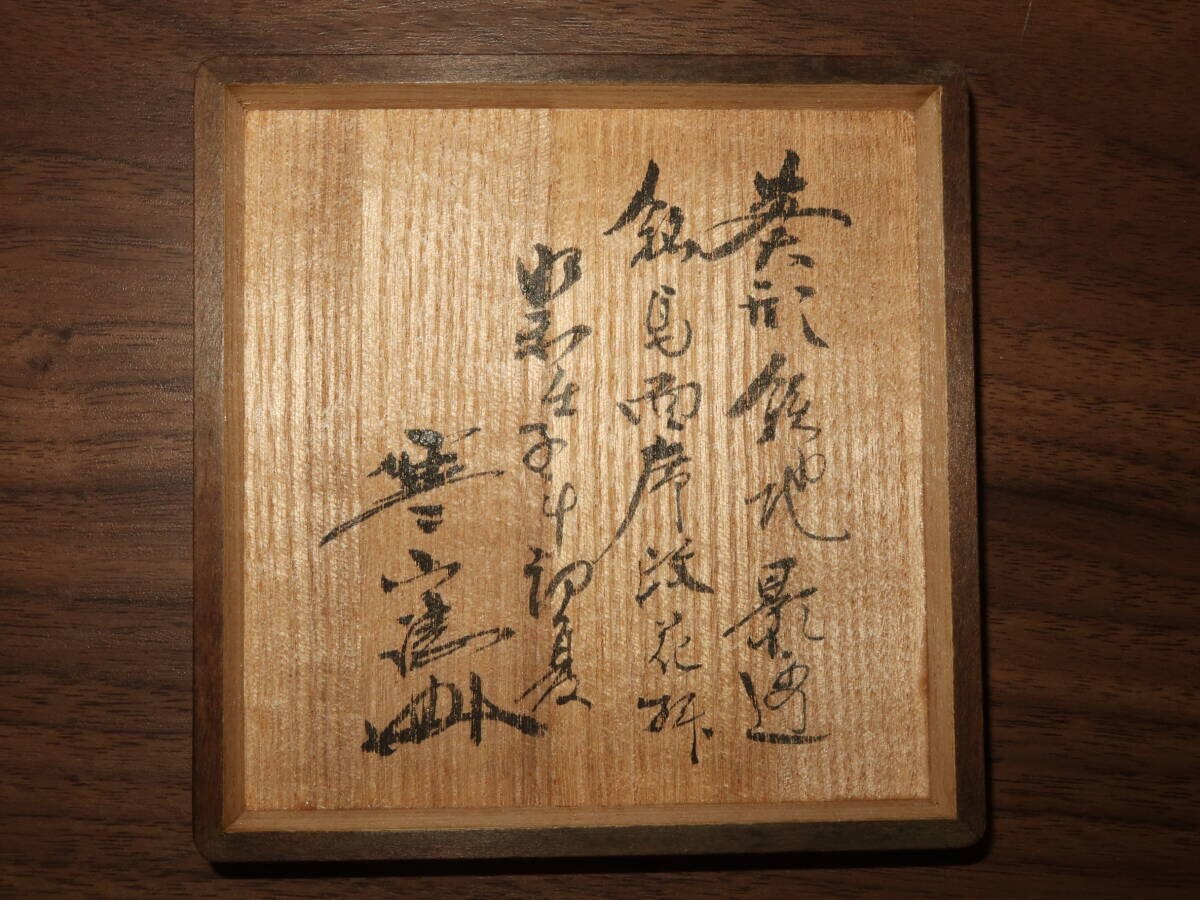
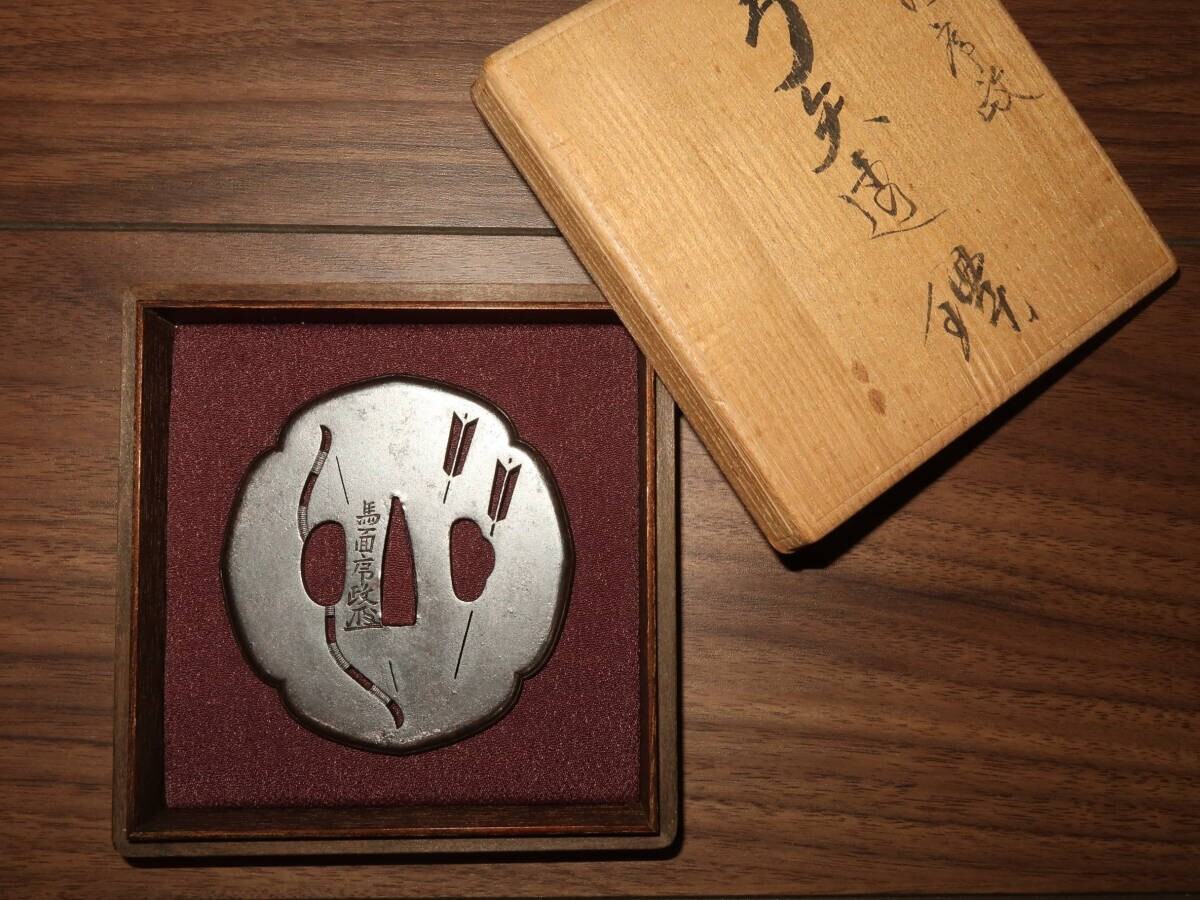
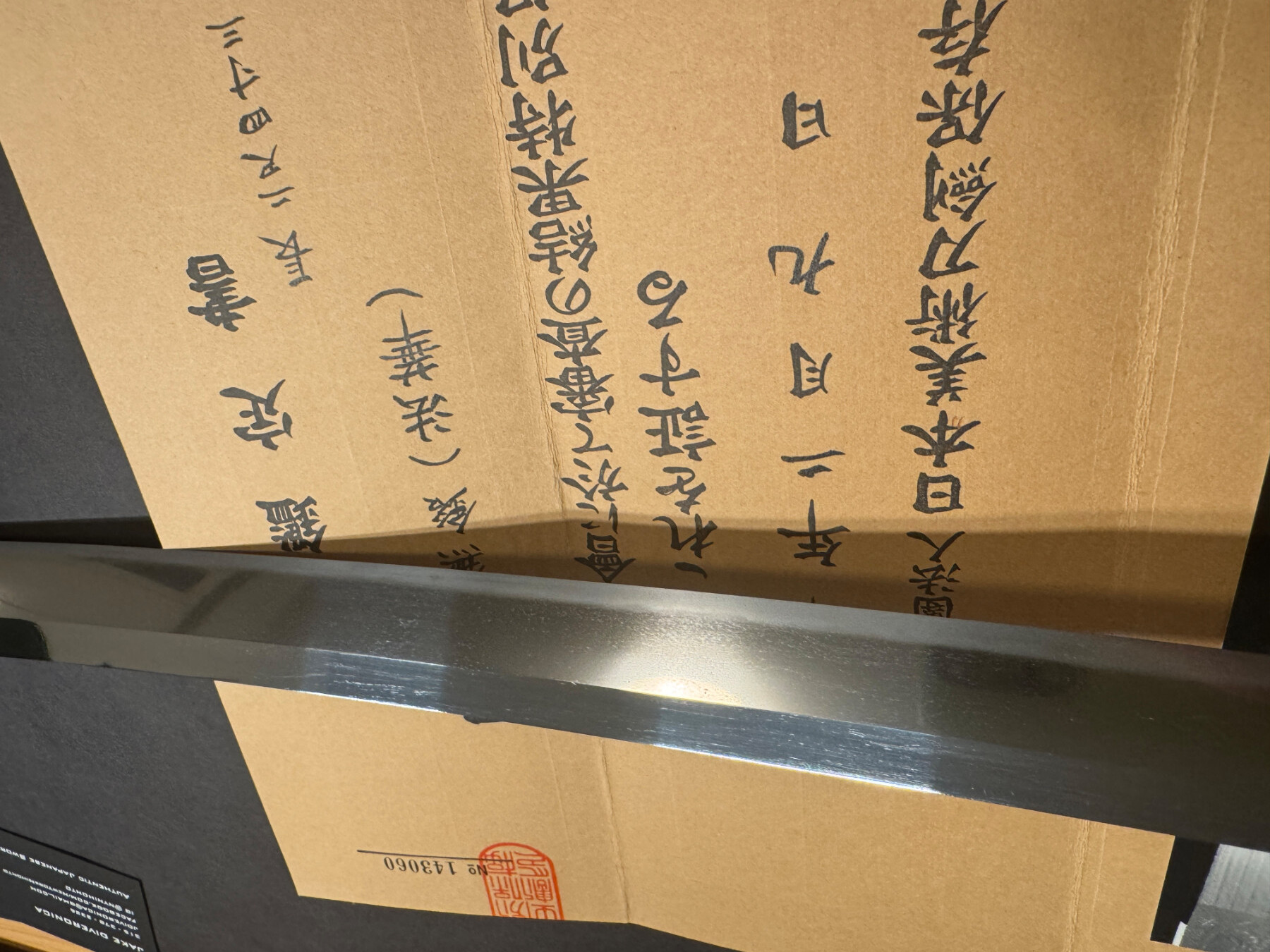
Dear all, I would be most grateful if someone could help translate the mei on this tsuba and the calligraphy on the box lid. Regards, Tom
 3 points
 -
I'm going to post here any fresh "Emura" I find. Type "E" Sanji mei Emura saku [blade was cleaned with sand belt, nakago jiri consistent with Slough] https://ebay.us/m/Ga05Wv
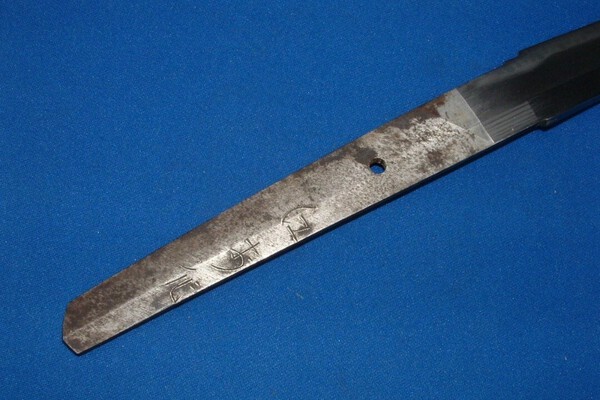

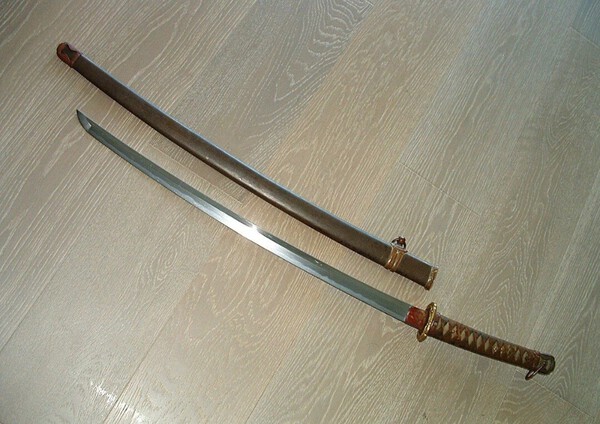
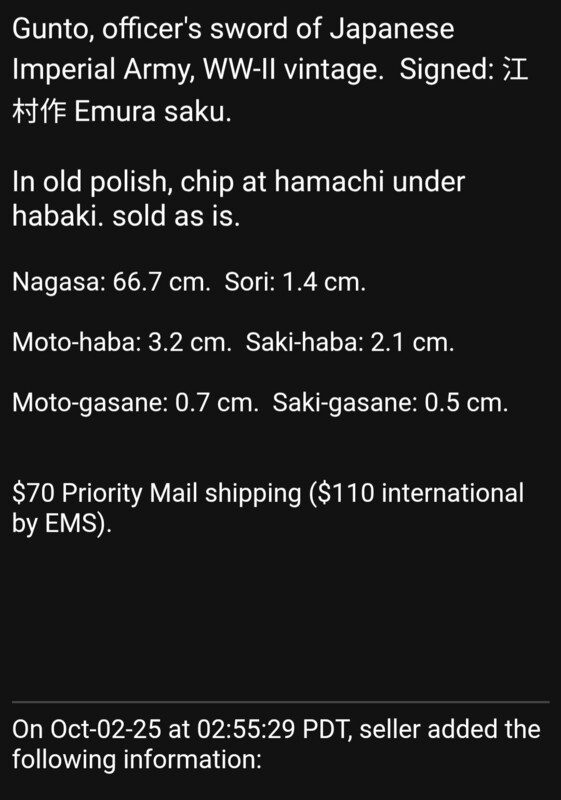
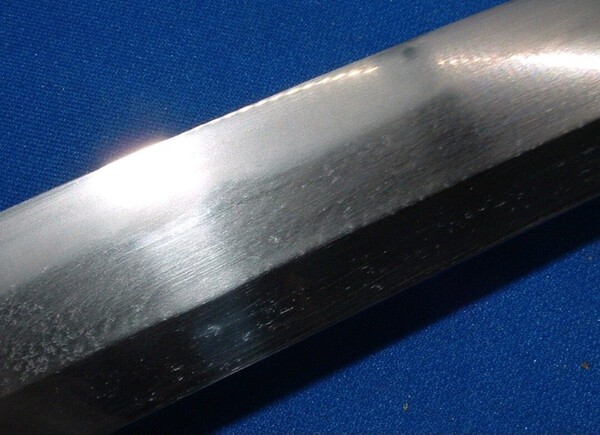 3 points
 -
The initial Type 100s, those made traditionally, were not sold by the arsenals directly but merely inspected. See the quote below by the late Nick Komiya. Deflating another Myth3 points
-
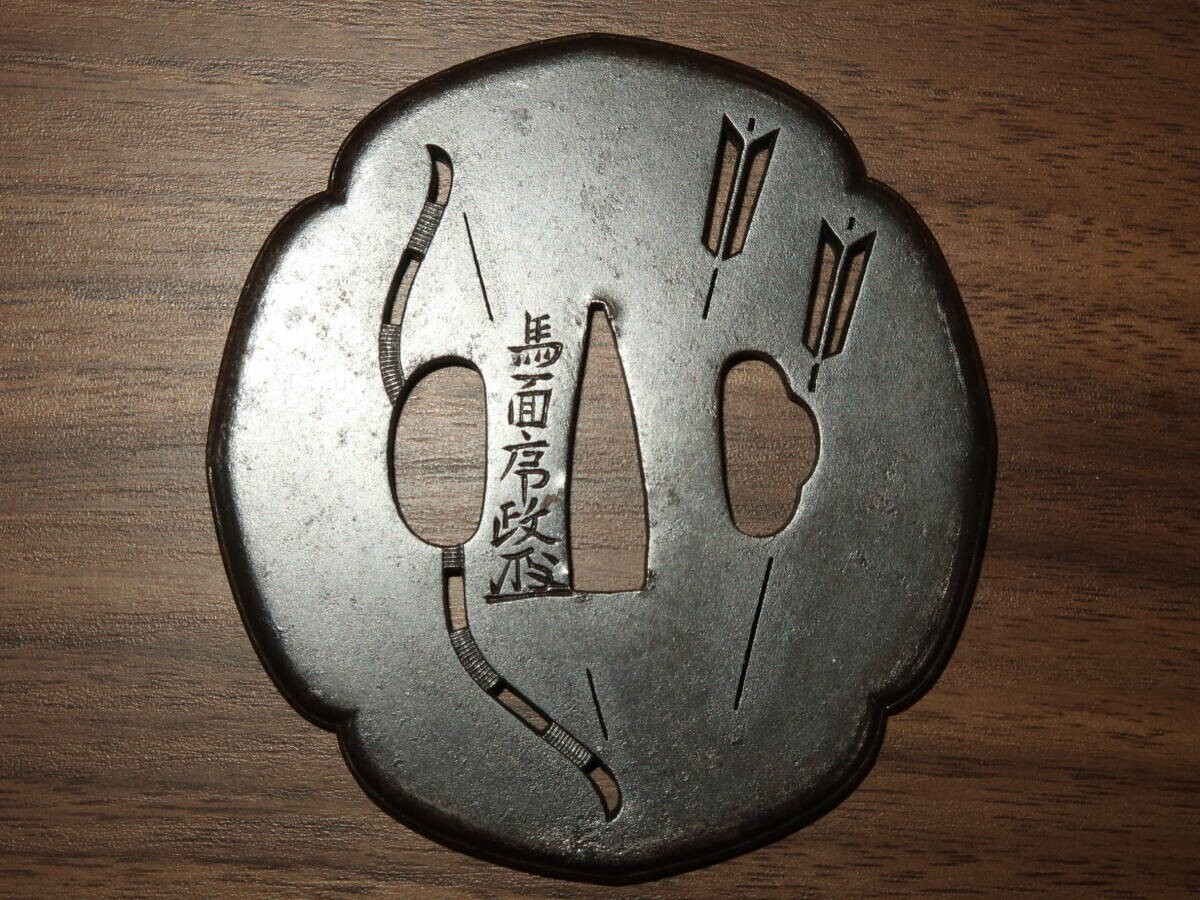
Here the hakogaki (I'm not shure about the date): 葵形鉄地影透 * aoi-gata tetsu-ji kage-sukashi 銘馬面序政花押 * mei Bamen Tsunemasa kaō 昭和壬子年弥生 * Shōwa mizunoe-ne-nen yayoi [March 1972] 寒山誌 * Kanzan shirusu (+kaō) Would you mind to post an image of both sides of the hakogaki? (I'm collecting images from hakogaki by Satō Kanzan)3 points
-
Steven, I’m sure you’ve been told this a million times before, but there is a Military Swords of Japan section on this forum. So why do you keep posting here? I’m tired of seeing your posts in ALL CAPS! You are buying and selling swords(for years...)...Instead of constantly depending on others with zero contribution to this forum, why not try learning on your own first and come to your own conclusions?2 points
-
Yup, super fake - and I echo Charles's thoughts on the UK auctions being full of them! Technically, I believe these fake swords are actually illegal under UK law now to possess and sell too - but it's probably not worth pointing this out to the auctions themselves because they likely already know this, and in my mind it's better than them actually stopping selling any curved blades which I think would be the alternative, because there isn't really a way for an auction house to formally know/guarantee whether one is real or not. If the auctions begin requiring written proof/certificates for genuine nihonto to be sold UK collectors really will be toast...2 points
-
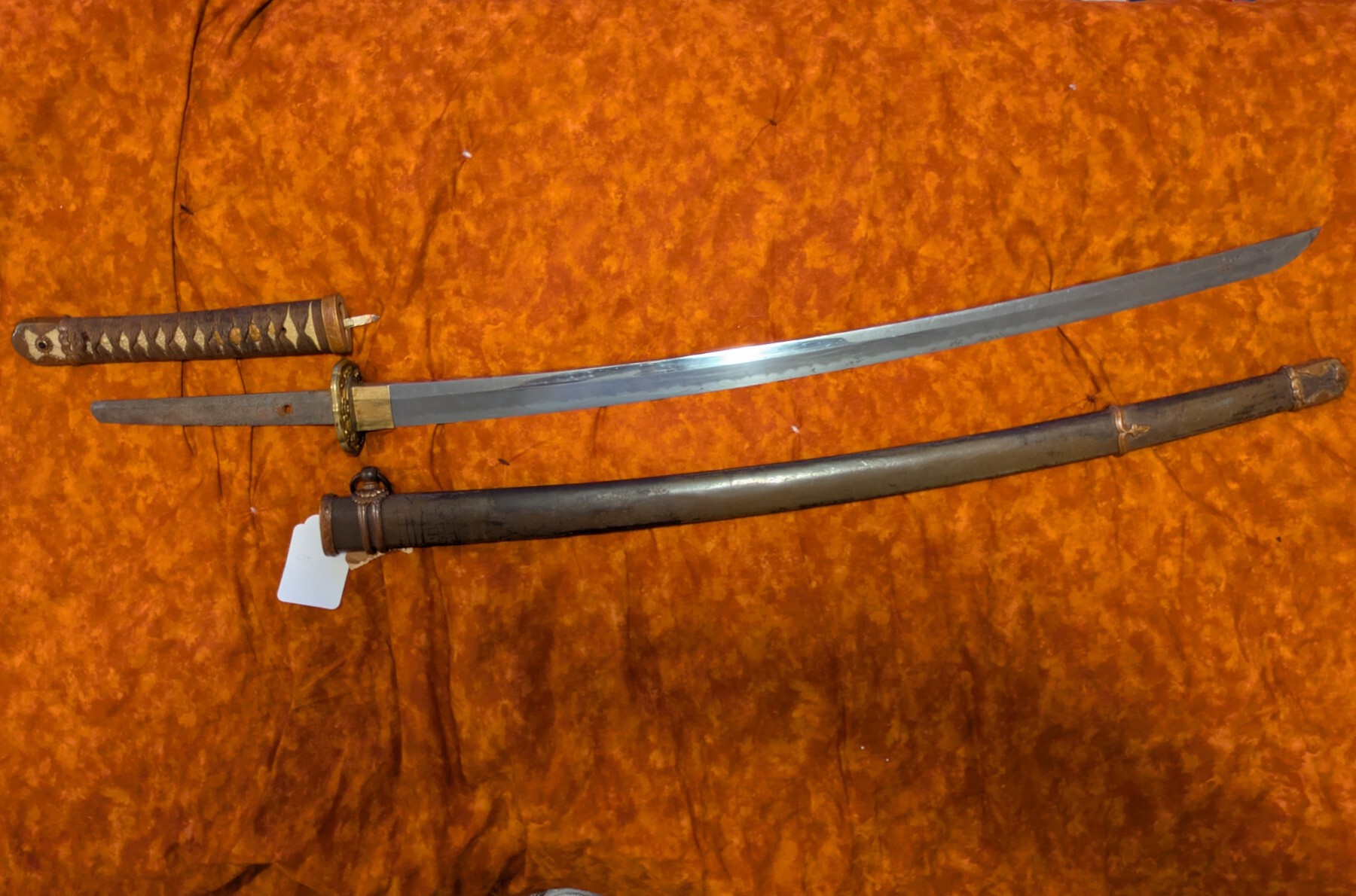
Nice sword, and of course the RJT star stamp confirms it is handmade and a Gendaito. Get a little oil on that blade and maybe a drop or 2 on your fingertips and then wipe the nakago, don't want to see active red rust there.2 points
-
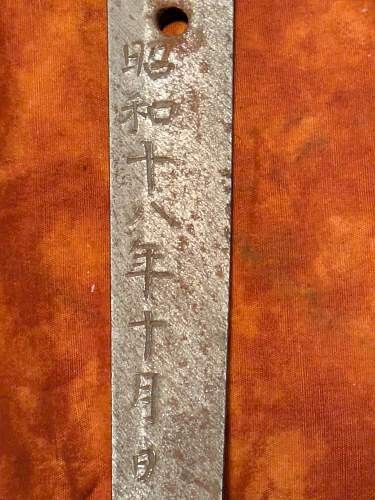
Tom: Here is the reference from Markus Sesko for the information you have: YOSHIKANE (吉包), Shōwa (昭和, 1926-1989), Yamagata – “Ugo Sakata-jū Ikeda Yoshikane saku” (羽後酒田住 池田吉包作), real name Ikeda Kaneyoshi (池田金吉) The sword is dated October 1943. Malcolm Cox has a little info in his Aichi Prefecture document, page 13 (if it is the same person). John C.2 points
-
mmm... nice! Bamen Tsunemasa + Kao2 points
-
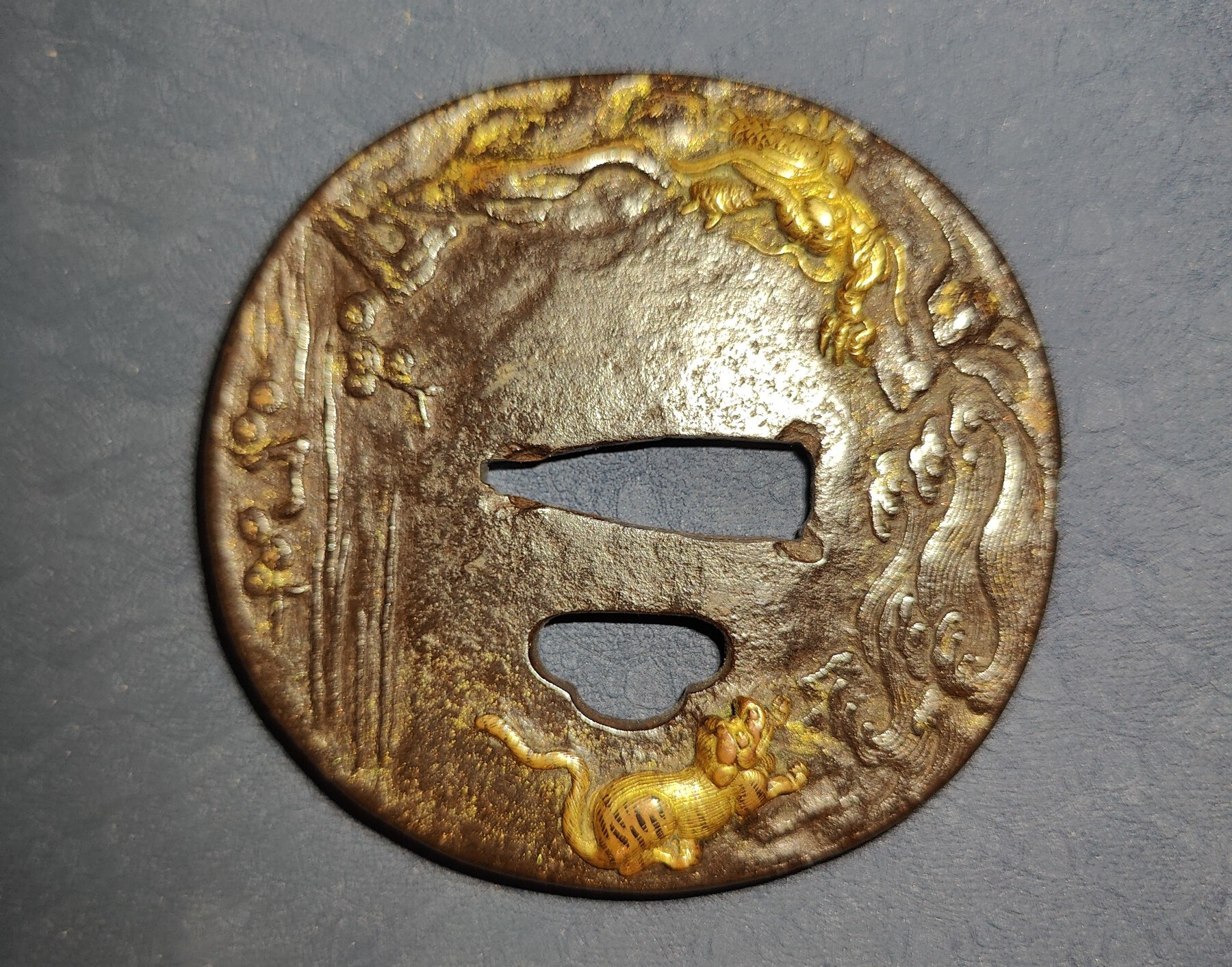
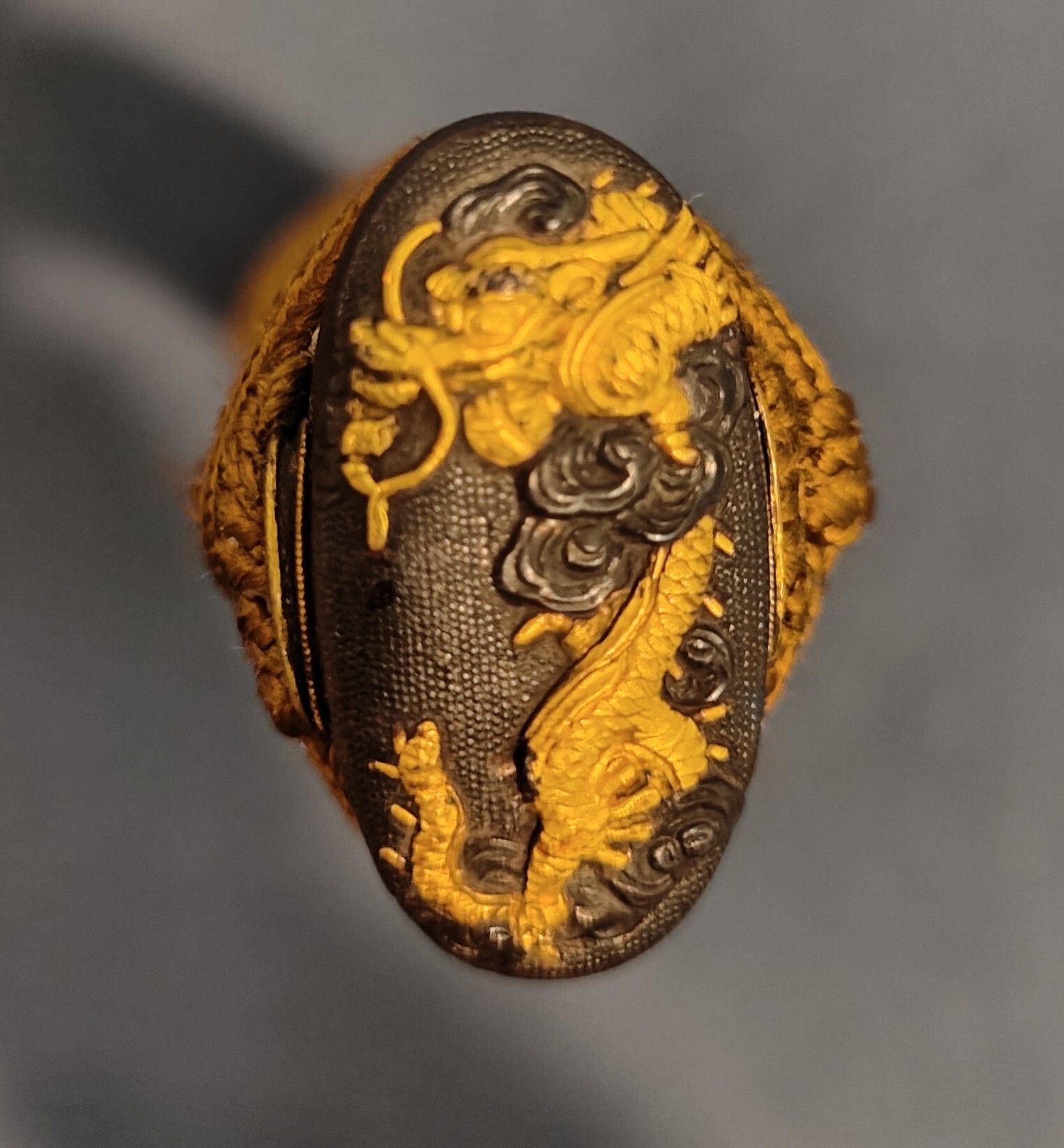
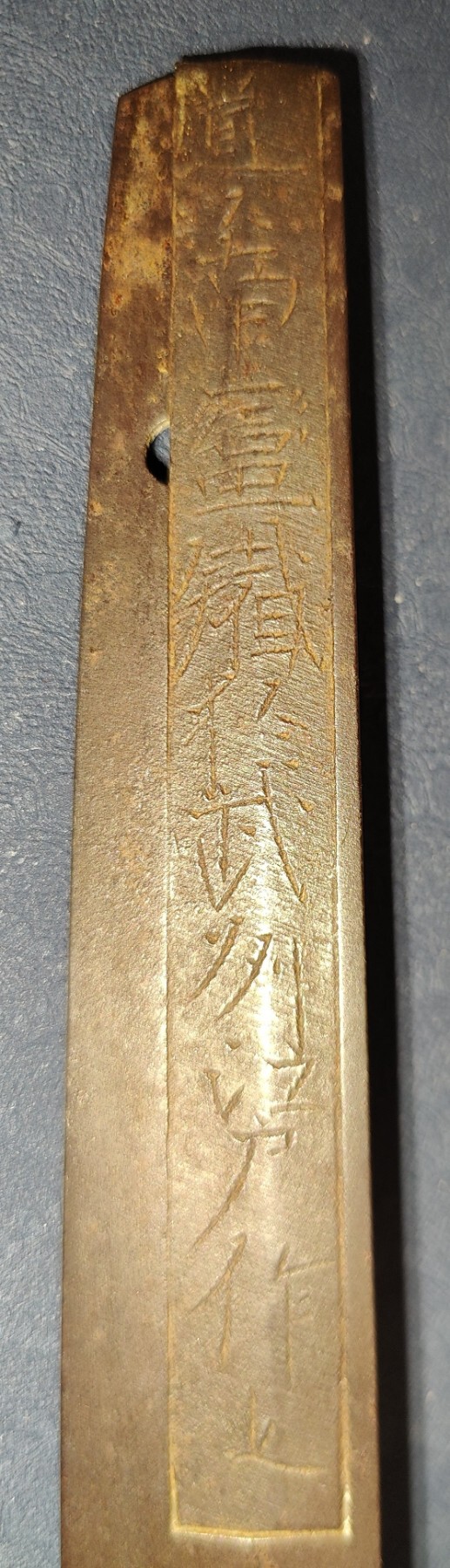
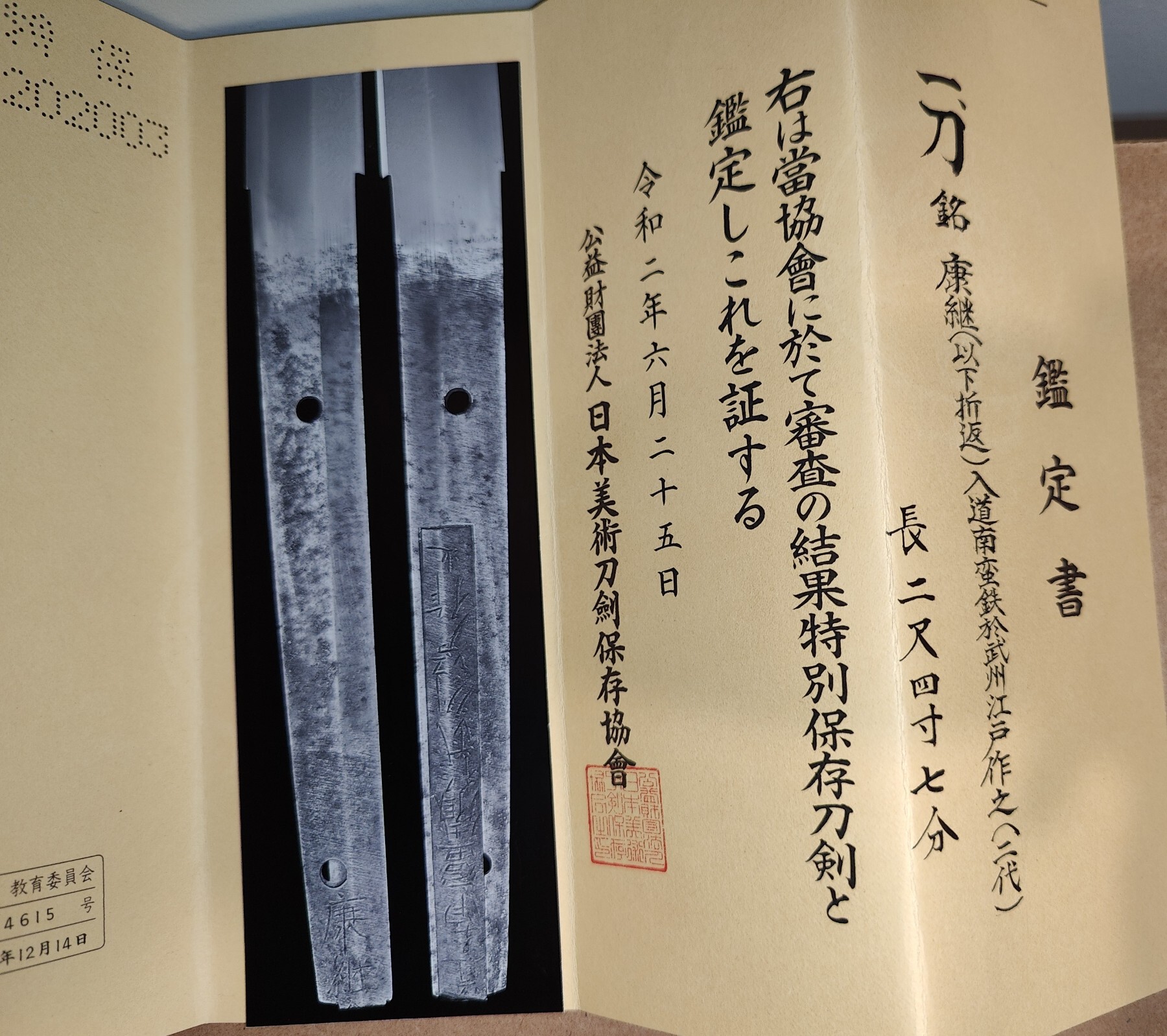
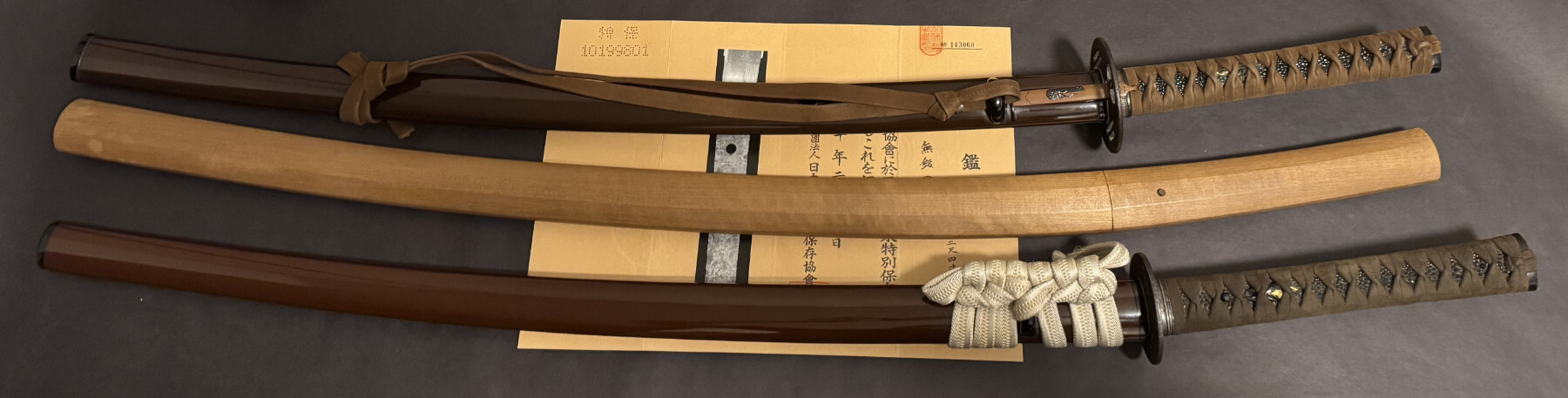
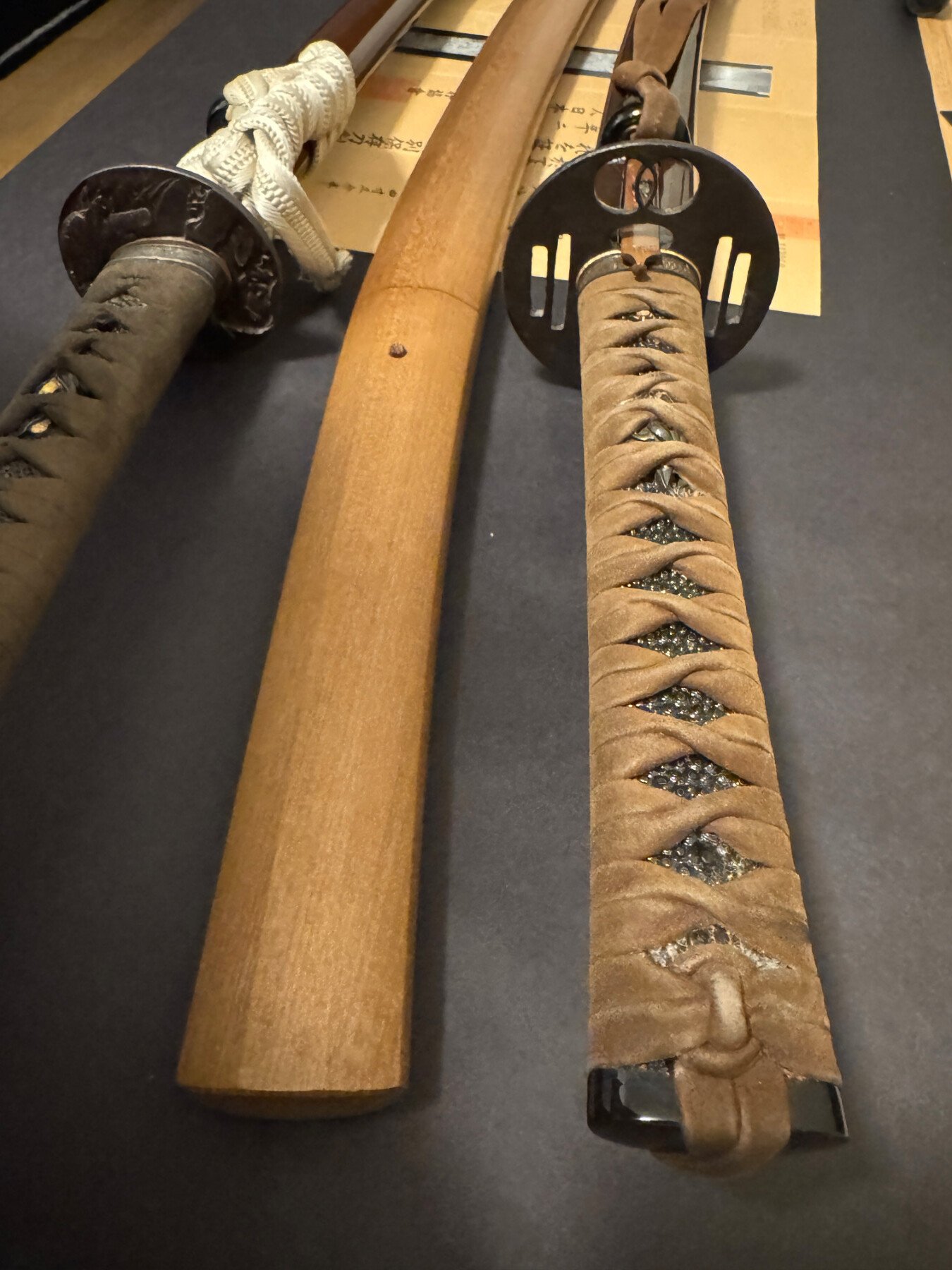
For sale is a Tokubetsu Hozon 2nd gen Yasutsugu katana with orikaeshi mei in fine koshirae. Looking at the length of the blade and orikaeshi mei, I thought this could very well be an odachi originally. Tsuba is iron while the other fittings are sakudo, with dragon and tiger motifs in gold. Double layer gold foil habaki. All without damages or losses. Dimensions: Nagasa: 74.9 cm / 29.49 in / 2 shaku 4 sun 7 bu Sori: 2.0 cm / 0.79 in Motohaba: 3.16 cm / 1.24 in Moto-kasane: 0.7 cm / 0.28 in Sakihaba: 2.26 cm / 0.89 in Saki-kasane: 0.47 cm / 0.19 in Blade Weight: 822 g / 1.81 lb Asking Price: $12,500 USD. CONUS shipping included. For shipping to other places please message me. Payment Methods: PayPal, Venmo, Zelle, Bank Transfer. 5% of this sale will be donated to NMB. I'll post a proof of that donation in this thread once the sale is complete. More Photos: https://drive.google.com/drive/folders/1bdlnZ5dEXnb7CBzatBx238LA_73TA0sJ?usp=sharing Thanks for looking!
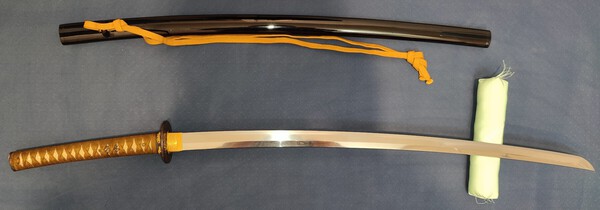

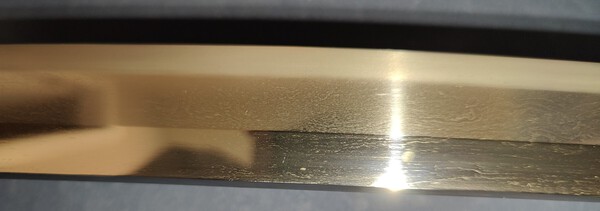


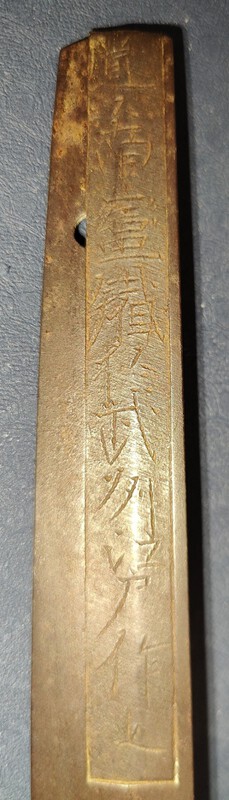
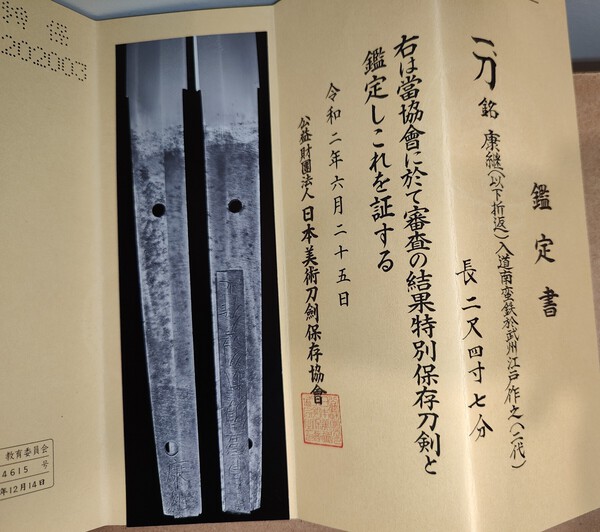 1 point
 -
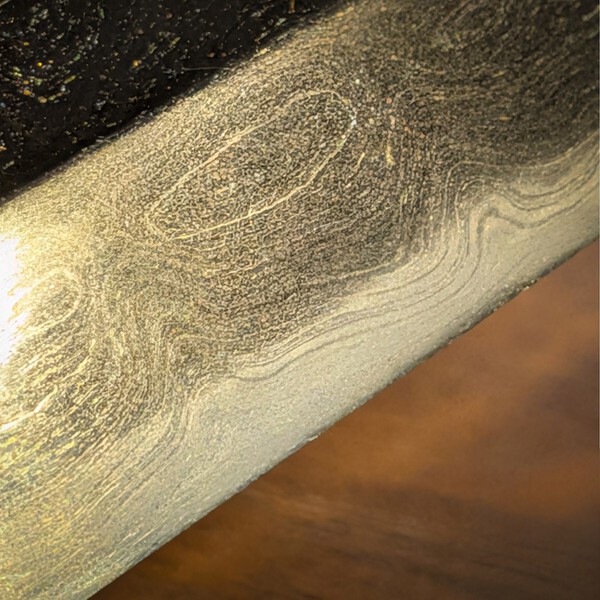
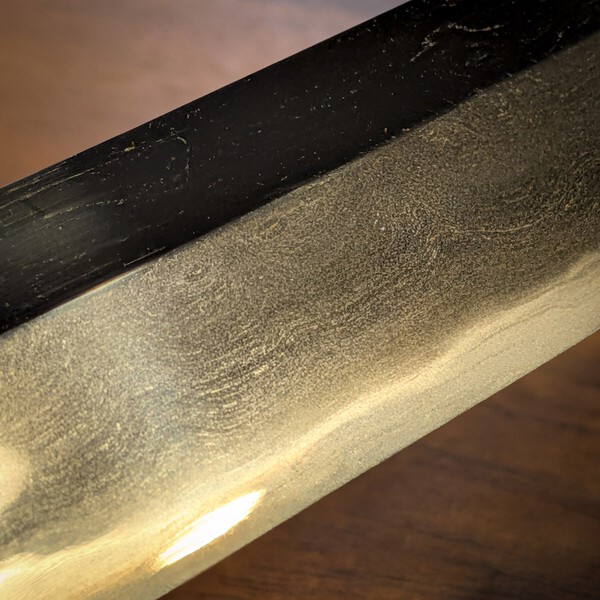
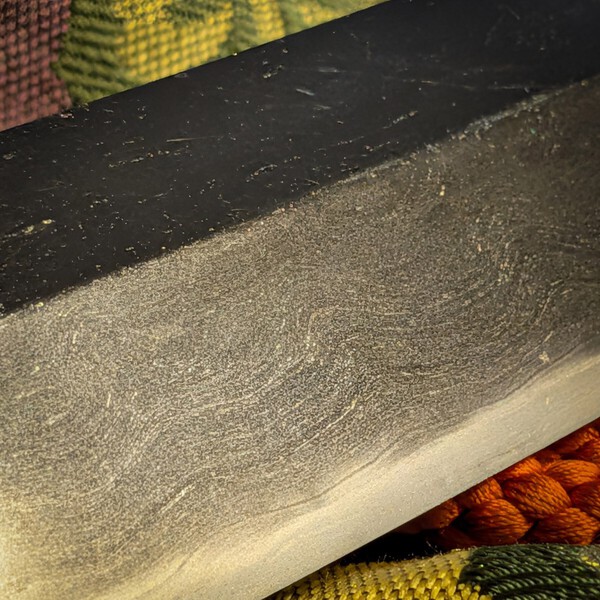
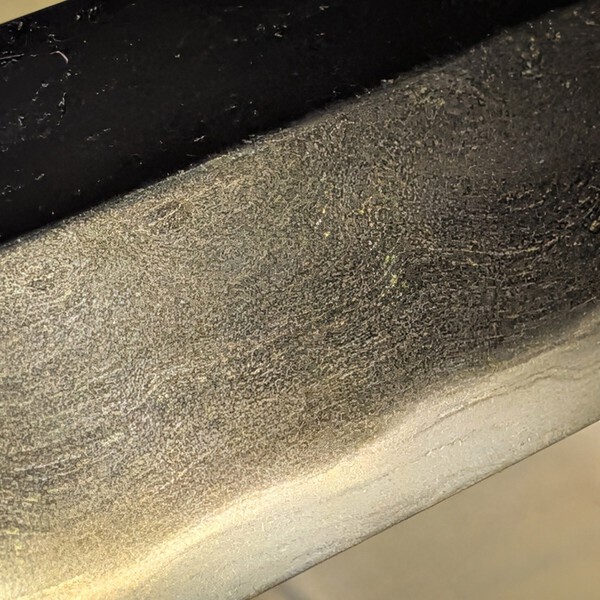
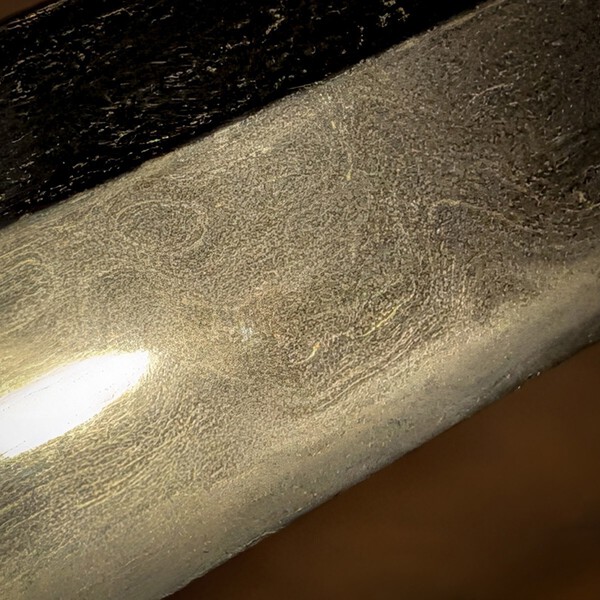
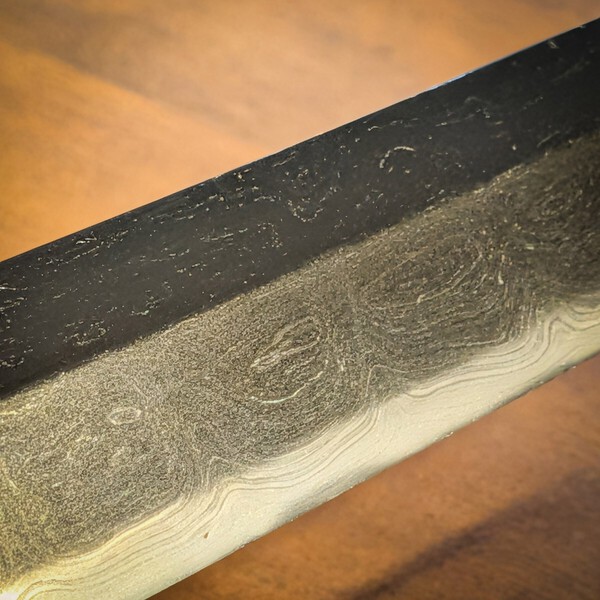
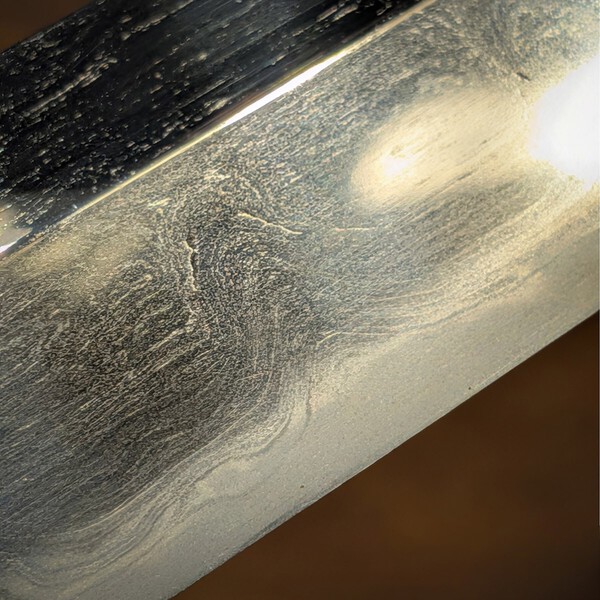
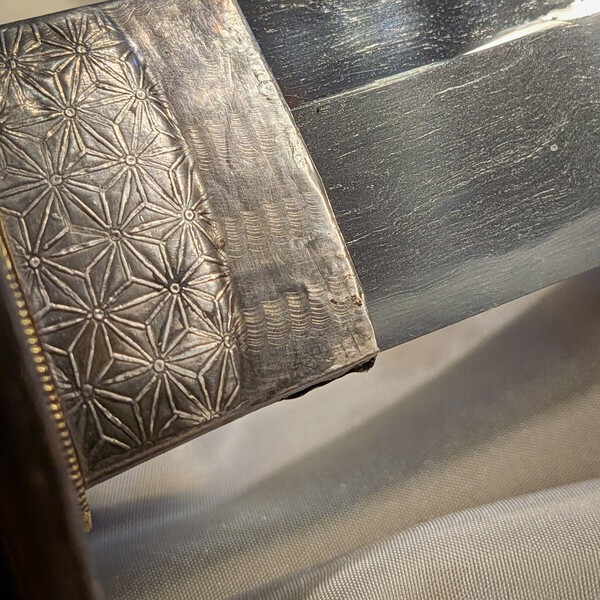
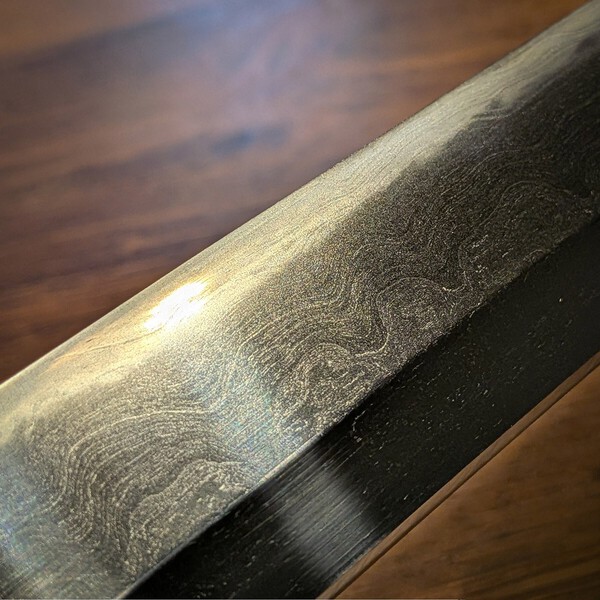
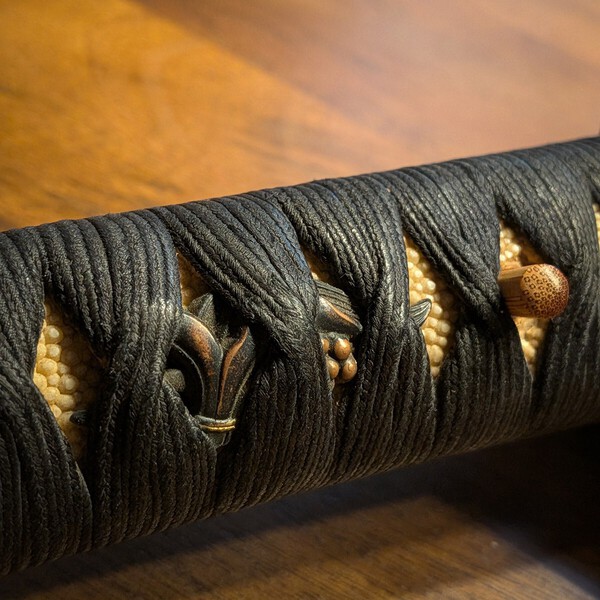
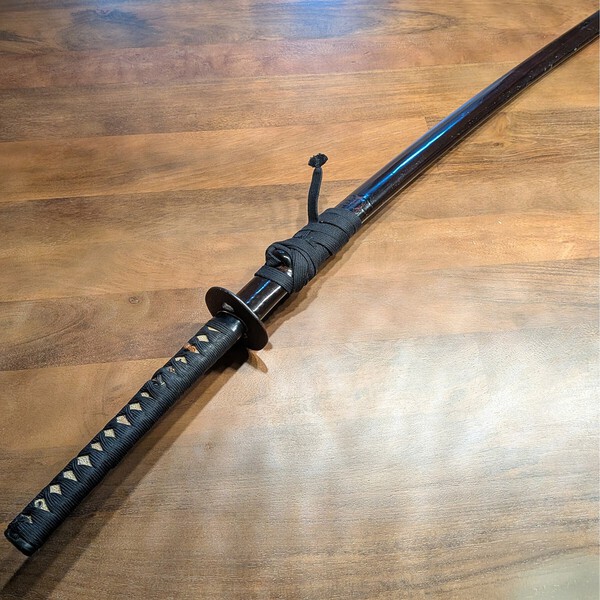
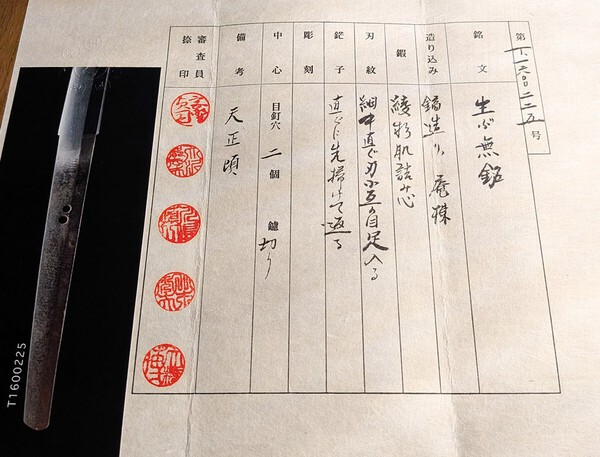
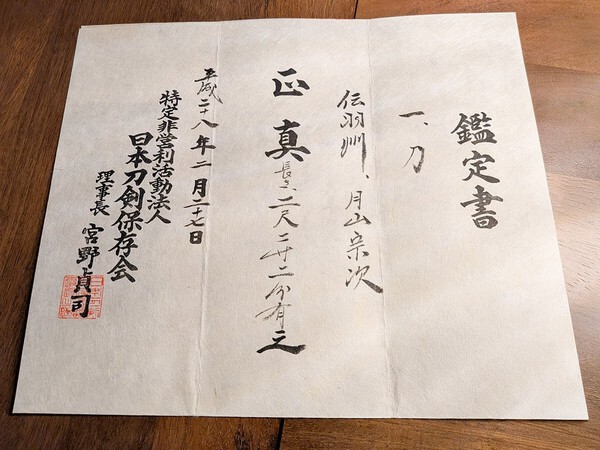
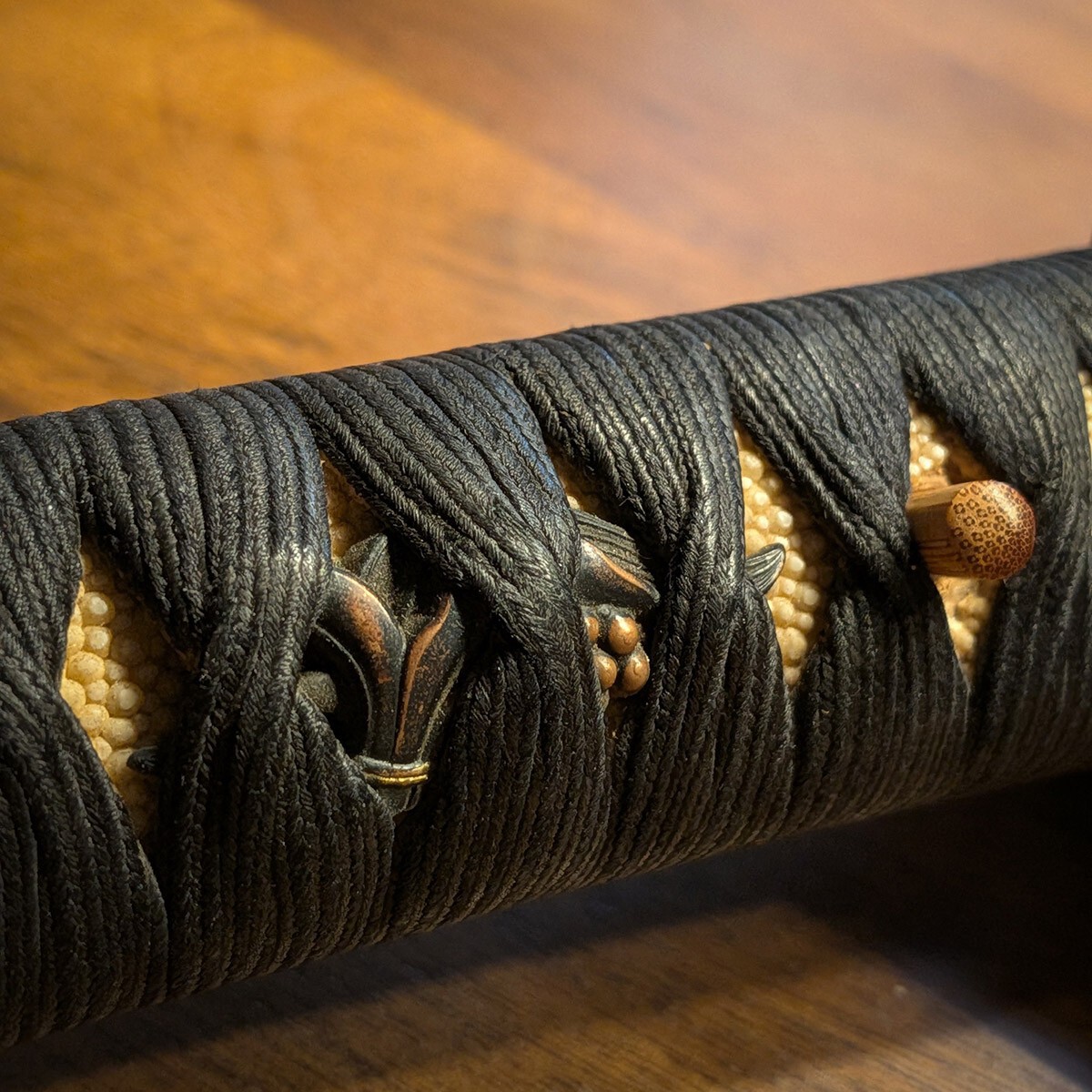
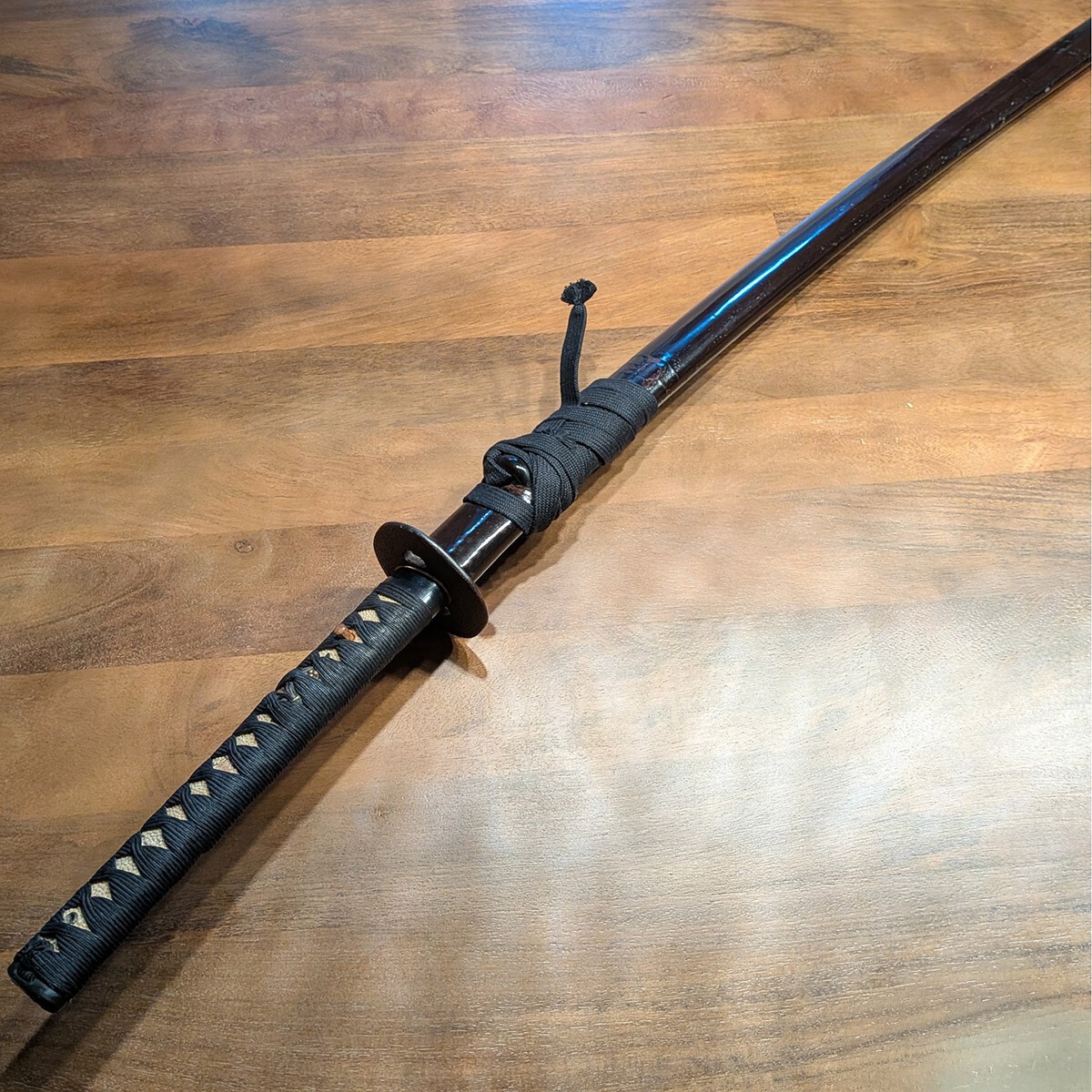
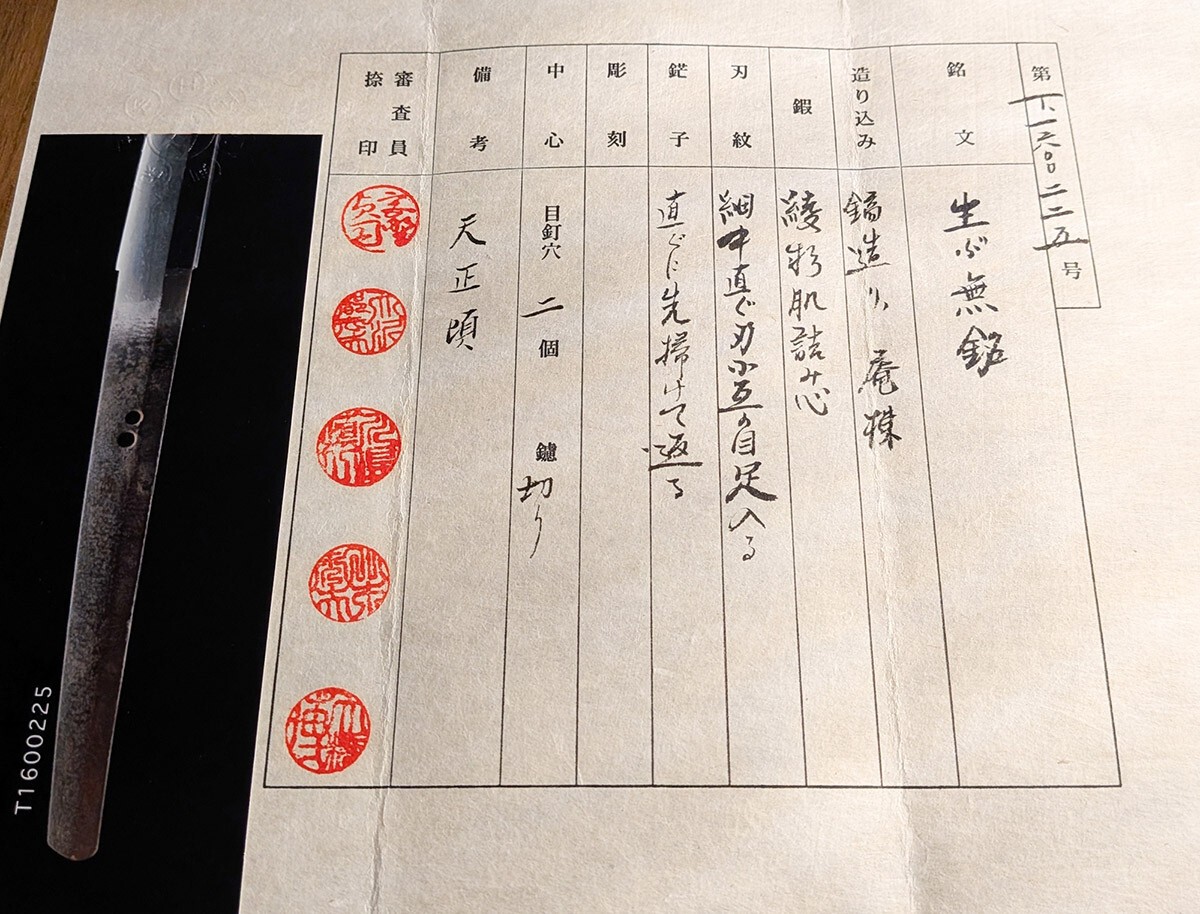
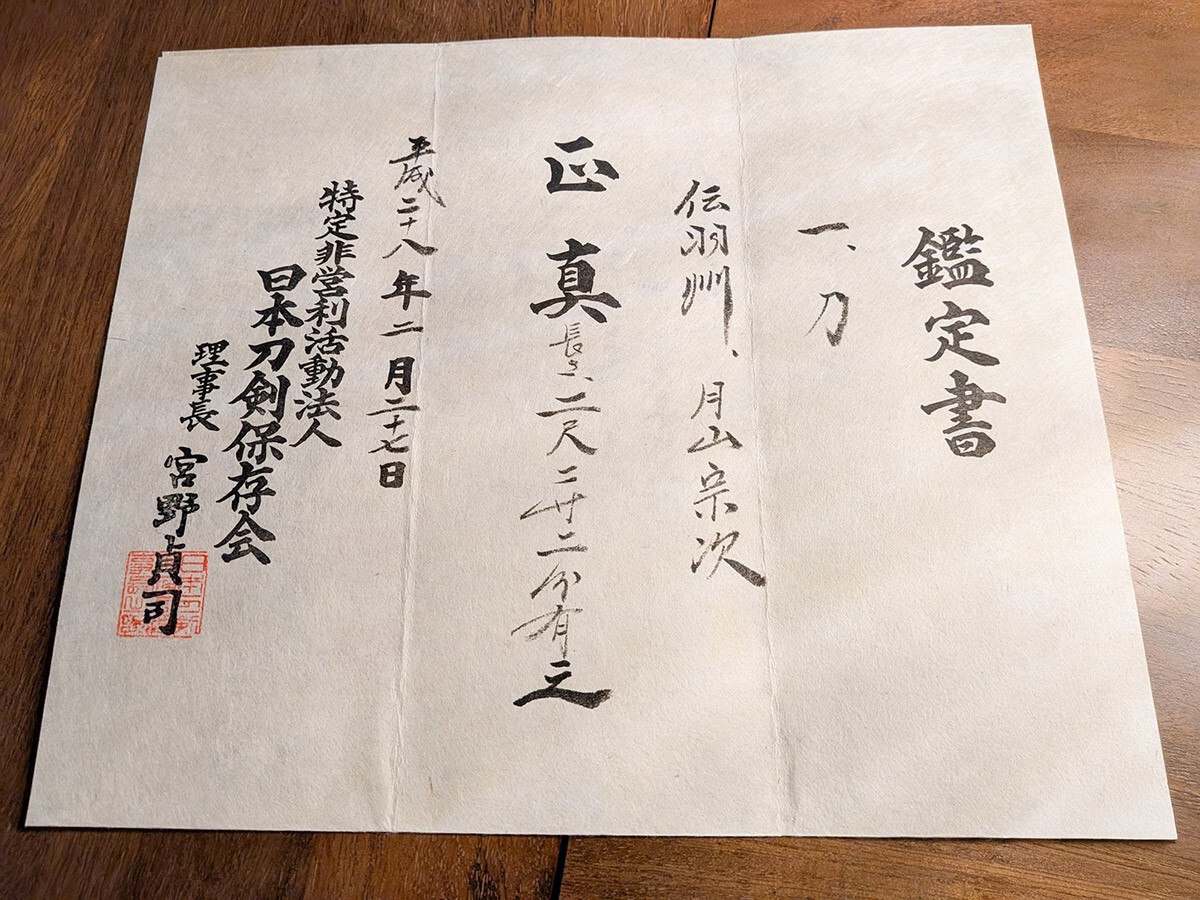
Offering an ubu Muromachi period katana in koshirae with current NTHK kanteisho to the Dewa Ko-Gassan swordsmith Munetsugu. The jihada is a beautiful ayasugi-hada, typical of what you would see from the Ko-Gassan school. The blade has a suguha-based hamon activities which flow with the jihada. The blade is in late Edo period buke-zukuri koshirae, with shakudo fuchigashira and menuki, and an Edo period iron tsuba. The saya does need repairs (a replacement kojiri and to be reglued). While the NTHK kanteisho noted the blade as being Tensho (late Muromachi), the only Ko-Gassan Munetsugu I see documented is from the early Muromachi period, circa Oei. His bio is below, courtesy of Markus Sesko. SOLD + shipping MUNETSUGU (宗次), Ōei (応永, 1394-1428), Dewa – “Gassan Munetsugu” (月山宗次), Gassan school

.thumb.jpg.e858a1e8ab6bcb8e83f46707a3dd4de6.jpg)
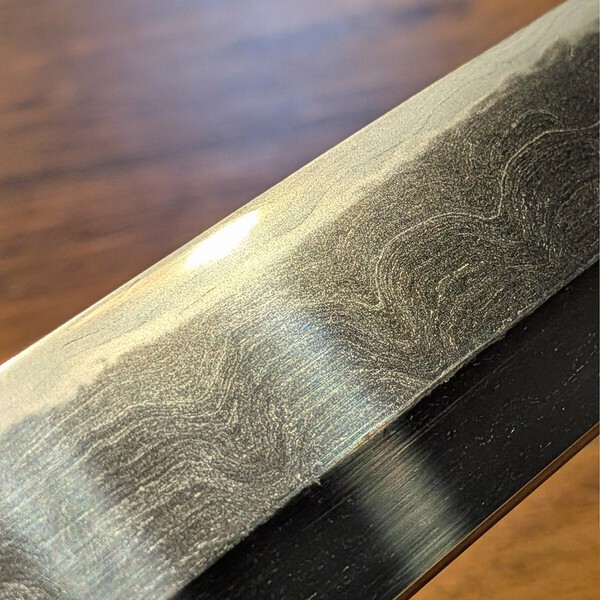
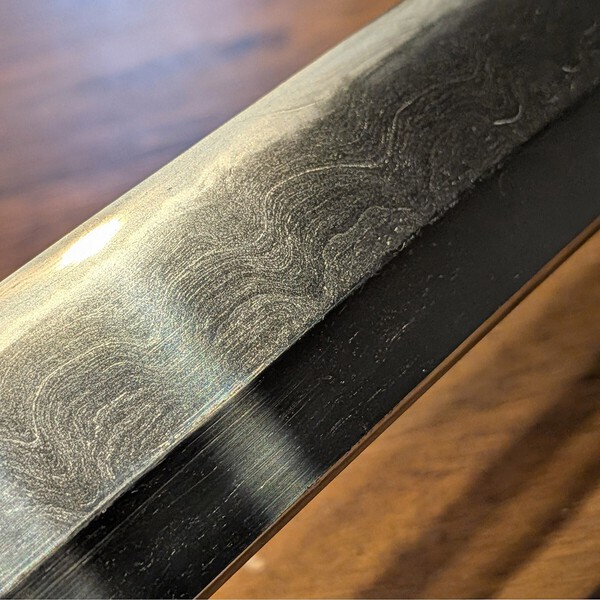
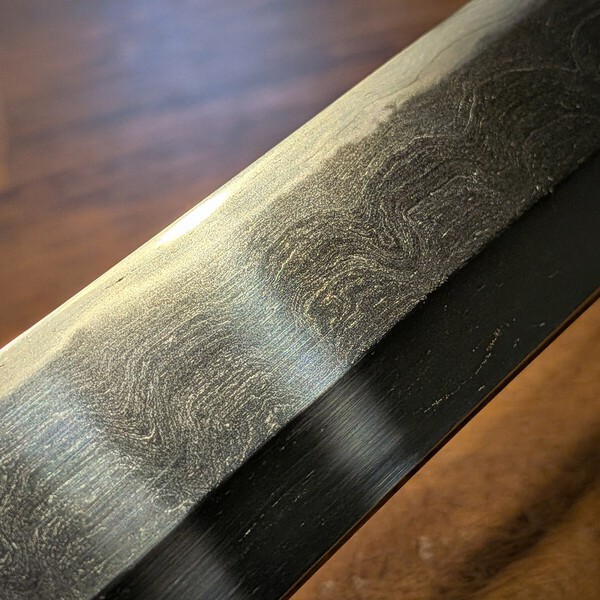
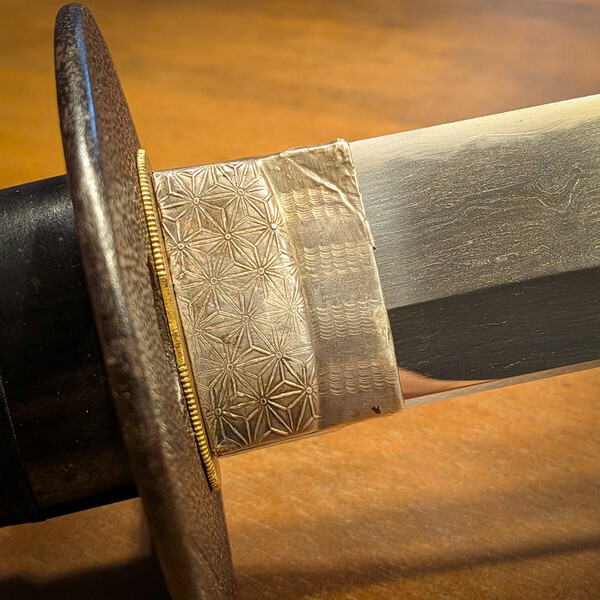
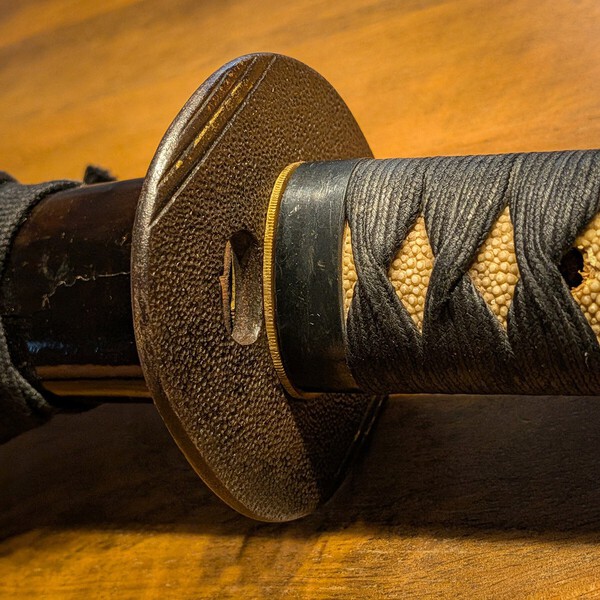
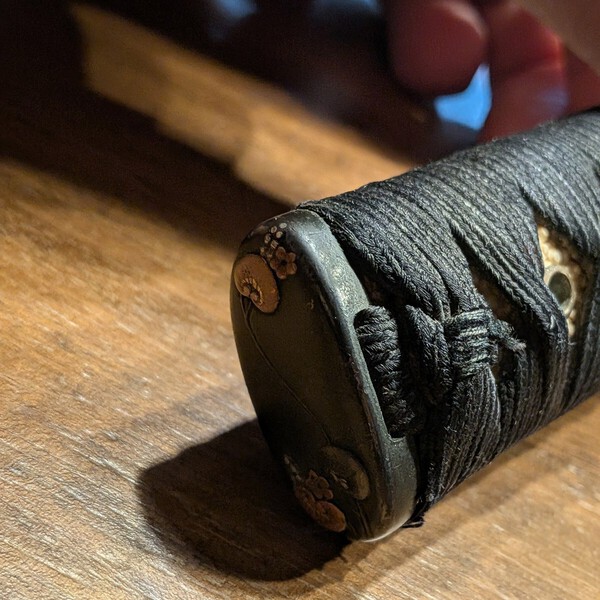
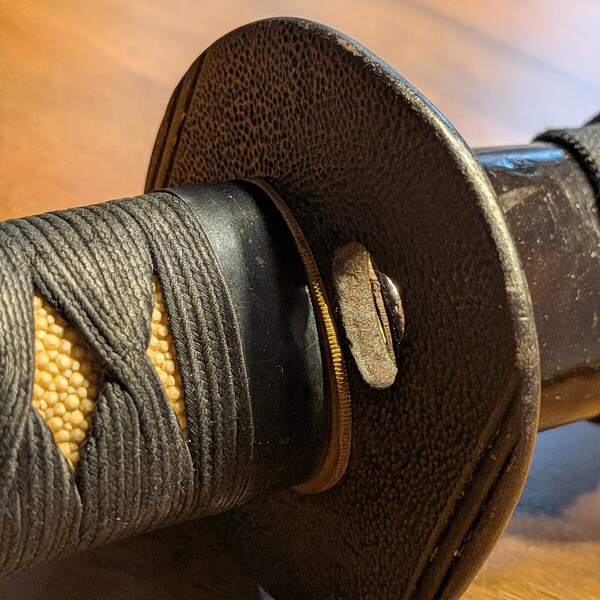
 1 point
 -
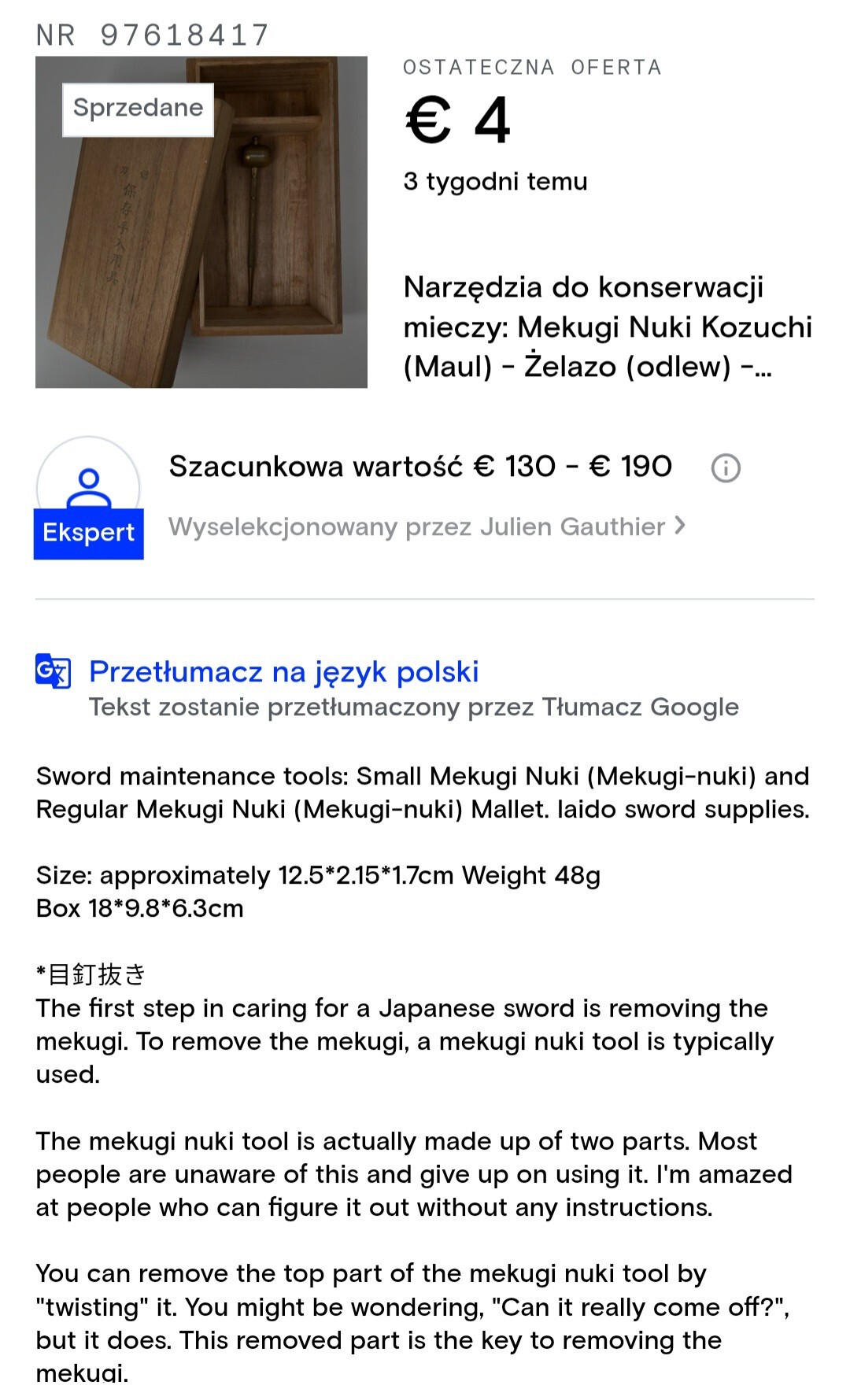
130-190€ for mekugi nuki in a box? https://www.catawiki.com/pl/l/97618417-narzedzia-do-konserwacji-mieczy-mekugi-nuki-kozuchi-maul-zelazo-odlew-japonia-showa-period-1926-1989 What I am missing here?
 1 point
 -
Okay- teasing you a bit: you want a simple grand formula, then go with E=mc^2 More serious: with each school and each maker, there are _SOFT_ rules about size, shape, finish, and %_percentage of seppa dai vs total volume displacement of the tsuba. The seppa dai size is partially constrained by the surface area displacement of the saya and the tsuka. A tsuba with a seppa dai so much larger than the saya and tsuka face displacement = looks weird and unaesthetic. At least amongst the Higo schools, certain schools and certain generation had specific rules. Thus the seppa dai is a very important kantei point amongst Higo schools. This is also true of Akasaka tsuba. This tsuba has a seppa dai and hitsu ana % that is greater than almost anything seen from 1500 to 1910. It has ratios only seen in tanto tsuba, but it is definitely not a tanto tsuba. The far most likely reason you might end at this sort of ratio is if you are creating a tsuba for display that is not meant to be mounted, free of mounted aesthetics, .....----or is for a massively thick non-Momoyama/Edo saya and tsuka. Therefore: either it is a very eccentric late Edo or Meiji era tsuba, or it is a 20th century work. Those are my thoughts.1 point
-
Bruce you found something new. Cool. I think the smith could be added als RJT smith.1 point
-
The problem ares the differences in the tail-like form. Some show a widening at one end, others an even opening. Some have those lines beside, others not. I can’t even decide if it is a positive or negative sukashi. In the last Tsuba the design is part of a bizarre landscape and thus clearly positive opening. I think, in repeated copying of this detail the original idea got lost - or changed. Some of the examples above reminded me to deterioration like worm eaten wood.
 1 point
 -
Pic 6 and 7. Thanks!
 1 point
 -
Thank you gentlemen, I appreciate your help. Mauro, here's the only picture of the other side of the hakogaki I currently have. I will post a better one when I have the piece in hand. Best, Tom
 1 point
 -
@Pav adding video with Emura niji mei [2signs] example. Posting here as the other thread was for fittings after all.1 point
-
Not common on either army or navy steel crossguards but have seen one or two? Below is a link to a possible marker's mark on a Type 97. Kai Gunto Naval Sword A little more common are guild or arsenal inspection marks. Below is an example of a guild marking on a Type 100 crossguard. Type 44 Katana + Information request The most common markings on steel crossguards are subassembly numbers.1 point
-
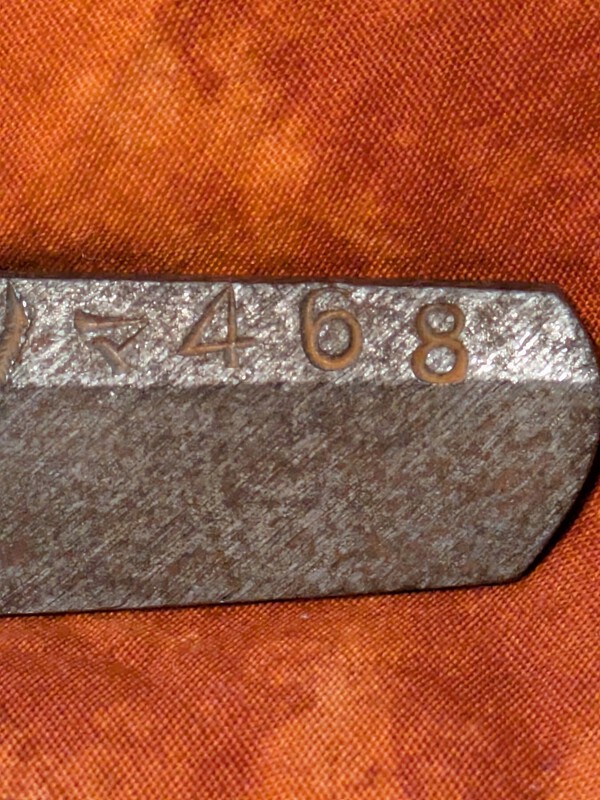
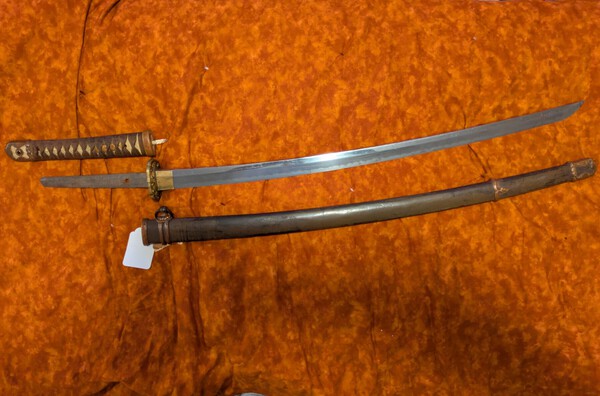
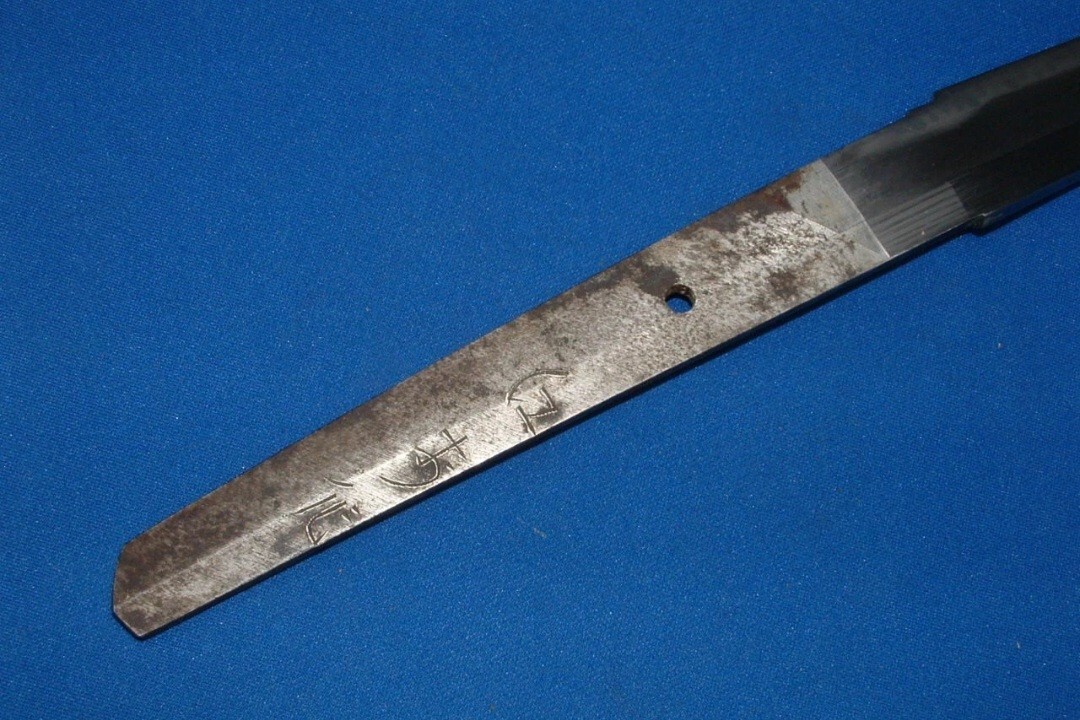
@vajo @Kiipu @BANGBANGSAN Got a first-time blade of Yoshikane 吉包 on this Warrelics Post, number マ 468. He's not listed in the JSI RJT list. Sesko has him, but doesn't mention his RJT qual. "YOSHIKANE (吉包), Shōwa (昭和, 1926-1989), Yamagata – “Ugo Sakata-jū Ikeda Yoshikane saku” (羽後酒田住 池田吉包作), real name Ikeda Kaneyoshi (池田金吉)"
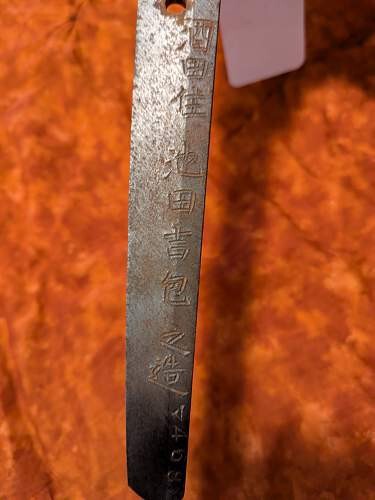

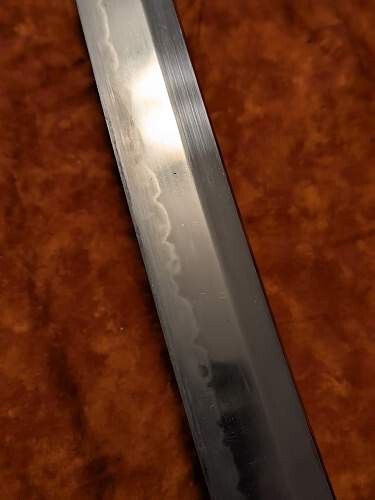
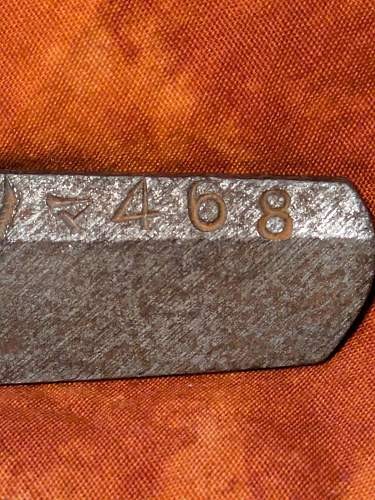
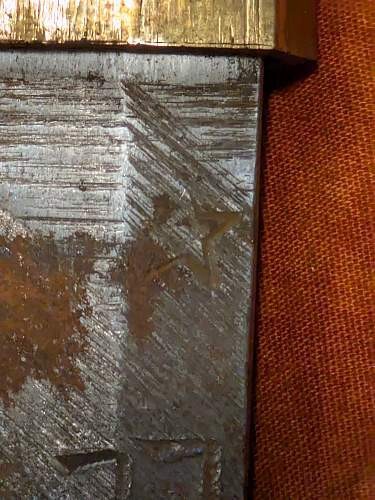 1 point
 -
Well, it's not helped by the homonyms in Japanese: 名刀 famed sword. 銘刀 signed sword. Both "meito" ("meitou" using Hepburn romanization). I hope this 名答 is helpful 🤣1 point
-
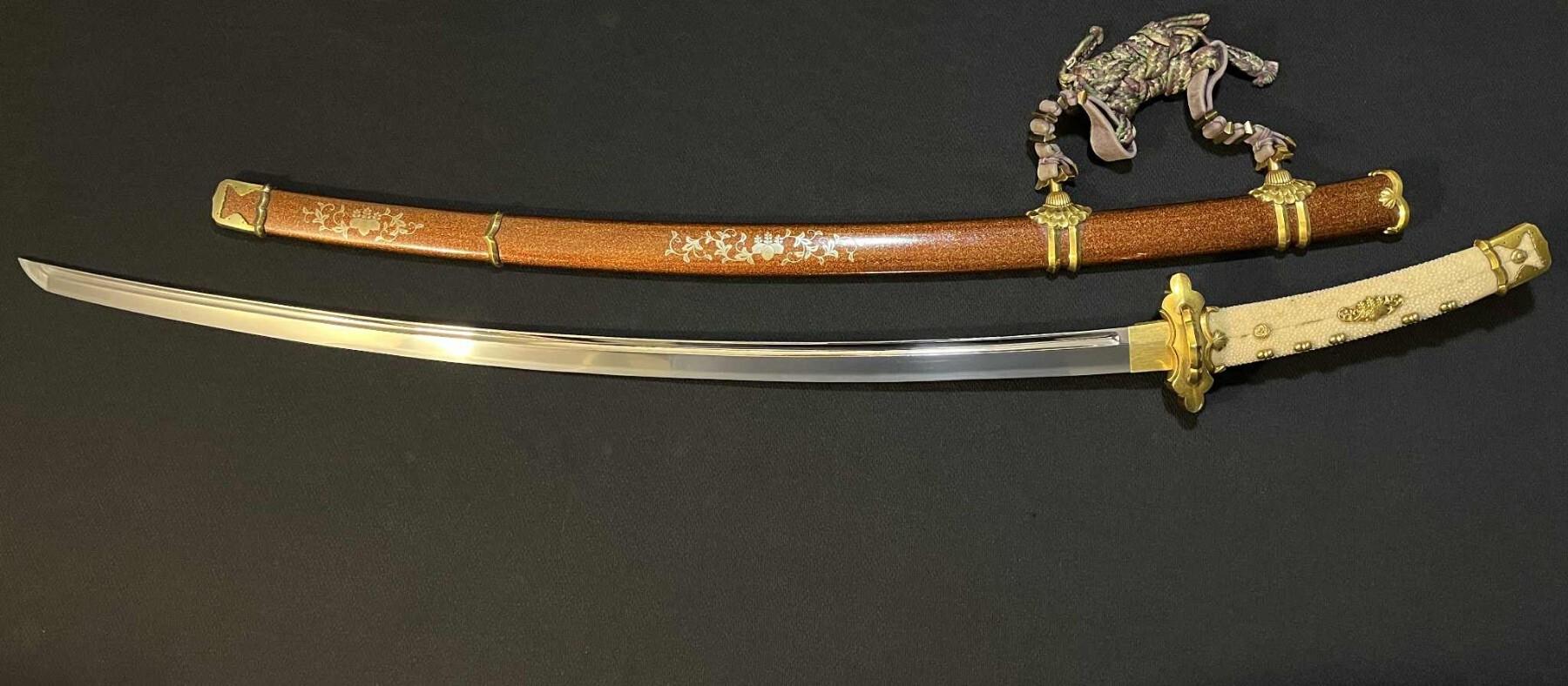
An important and exceedingly rare Japanese efu tachi made by Imperial Household Artisan Kanenori to commemorate the Ascension to the Throne of Emperor Taisho. This sword is dated August, 1912. Emperior Meiji passed away on July 29, 1912. Yoshihito, his son, ascended to the throne in August 1912. Emperor Yoshihito was later awarded the name Emperor Taisho, 123rd Emperor of Japan. Efu Coronation court tachi were made in very limited numbers–often just 12 were made. Another such example was returned by Russian President Vladimir Putin to Japan in 2016. It was presented to Japanese Prime Minister Shinzo Abe. That sword was made for the ascension to the throne of Emperor Hirohito (Showa). A quick google search will bring up an article about that sword. This sword is signed ‘Teishitsugigeiin Sugawara Kanenori’ (Imperial Court/Household Artisan). The reverse is dated ‘An auspicious day in August, First Year of Taisho Era’ (1912). The nakago is also marked ’83 Okinasaku’–which refers to Kanenori’s age of 83 at the time he made this sword. The koshirae is adorned with the Go-shichi no Kiri (5-7-5) Paulownia crest. The blade nagasa is 63.8 cm. This fine Coronation tachi comes with shirasaya as well. Each piece (tachi and shirasaya) comes in a silk sword bag. CONDITION: This important and exceedingly rare Coronation tachi is in quite perfect condition. This sword was well cared for. SOLD --Matthew Brice StCroixBlades.com


 1 point
 -
Wakizashi Attributed to Sōshū Masahiro, Ōei Era (NBTHK Hozon) Price: $4,500 + shipping This mumei wakizashi has been attributed by the NBTHK to Sōshū Masahiro and is accompanied by a current NBTHK Hozon kanteisho. The blade is from the Ōei period, a time during which the activity of the second and third generations of Masahiro overlapped. While both generations produced work under the same name, the characteristics of this blade align more closely with the nidai. The presence of a vibrant hitatsura with bright nie, ara-nie, tobiyaki, and muneyaki, along with an active jihada, suggests the hand of the second generation more so than the sandai, whose work tends to exhibit a quieter and less nie-laden surface. The blade measures 1 shaku 5 sun 8 bu and is in an older but intact polish, with a few minor stains. The hitatsura is highly expressive, featuring rich nie activity across the ha and ji. Ara-nie forms strong kinsuji and sunagashi in areas, with tobiyaki scattered across the monouchi and muneyaki continuing along the back. The boshi is deeply tempered with nie-kuzure. The jihada is itame with some small ware, and the blade shows possible evidence of historical use, including several kirikomi along the monouchi. The sugata is elegant and in the style of a kodachi. The form of the habaki suggests it was once fitted in a koshirae in the efu-tachi style. Masahiro is considered a direct descendant of Hiromitsu, who in turn transmitted the most technically advanced aspects of the Sōshū tradition after Masamune. Hiromitsu is credited with the perfection of hitatsura. Masahiro’s early work clearly reflects the techniques and aesthetic principles developed under Hiromitsu’s hand. An example of shodai Soshu Masahiro is listed below. https://nihonart.com/portfolio/shodai-soshu-masahiro-ko-wakizashi/ The nidai Masahiro worked through the Meitoku and into the early Ōei period. He is distinguished from the sandai by his liberal use of nie and a more active chōji-midare and gunome-midare structure. In contrast, the sandai’s blades are quieter, occasionally verging toward suguha-based interpretations with reduced nie. This blade, with its dynamic hataraki and exuberant use of nie-deki, is more consistent with the nidai’s approach. The overall construction and shaping of the nakago also supports an earlier attribution within the lineage. MASAHIRO (正広), 1st gen., Jōji (貞治, 1362-1368), Sagami – “Sōshū-jū Masahiro” (相州住正広), “Masahiro” (正広), “Sōshū-jū Masahiro saku” (相州住正広作), first name Kurōjirō (九郎二郎), student of the 1st gen. Sōshū Hiromitsu (広光), he worked in the style of his master whereas his hamon is somewhat smaller dimensioned as that of Hiromitsu, he also adds some togari elements, there are tachi, ko-wakizashi and tantō extant, chūjō-saku MASAHIRO (正広), 2nd gen., Meitoku (明徳, 1390-1394), Sagami – “Sōshū-jū Masahiro” (相州住正広), “Masahiro” (正広), suguha-chō mixed with slightly undulating notare, gunome, ashi, yō, sunagashi and small tobiyaki in nie-deki, higher gunome elements towards the bōshi area can be connected to the kaeri and muneyaki MASAHIRO (正広), 3rd gen., Ōei (応永, 1394-1428), Sagami – “Sagami no Kuni-jūnin Masahiro” (相模国住人 正広), “Sōshū-jū Masahiro” (相州住正広),, “Sōshū-jūnin Masahiro” (相州住人正広), only few blades are extant by him, the jiba is no longer noticeably nie-laden with his generation
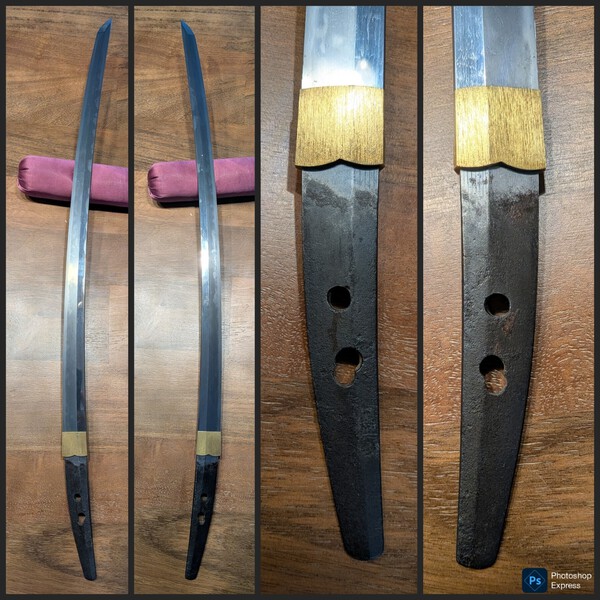

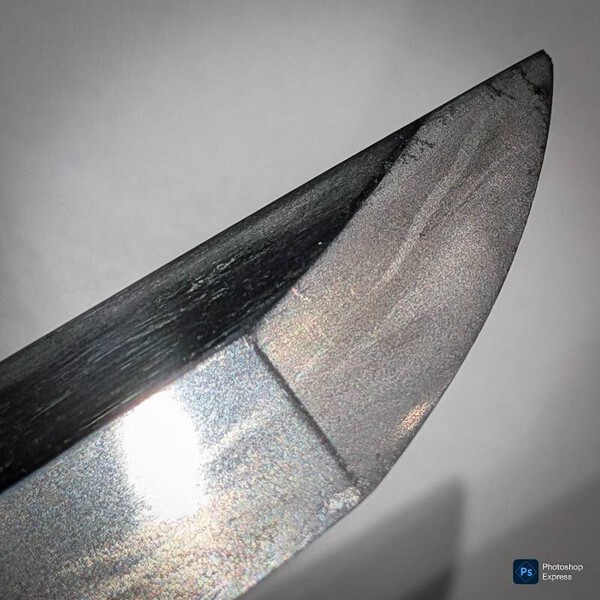


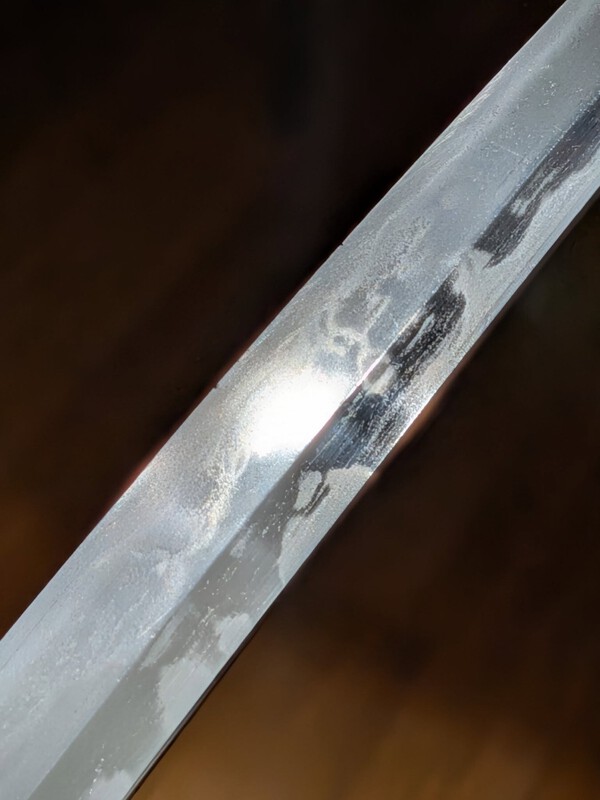


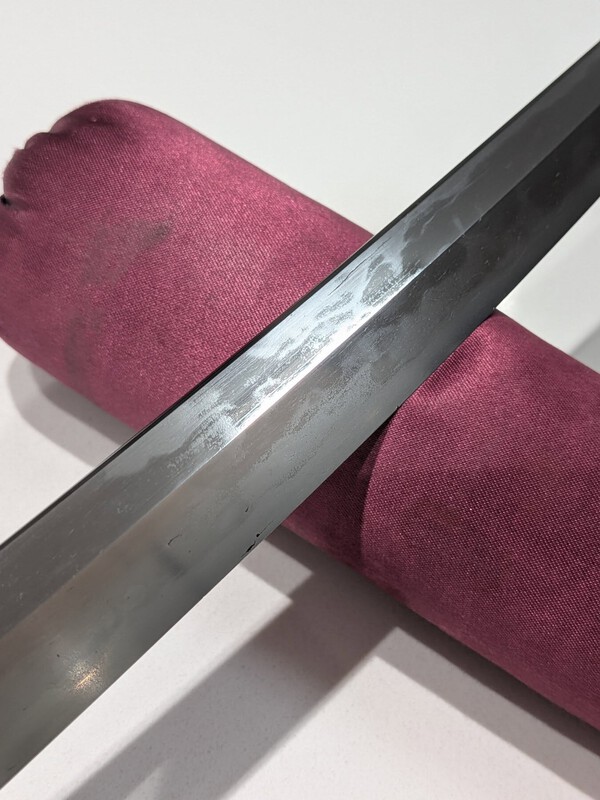
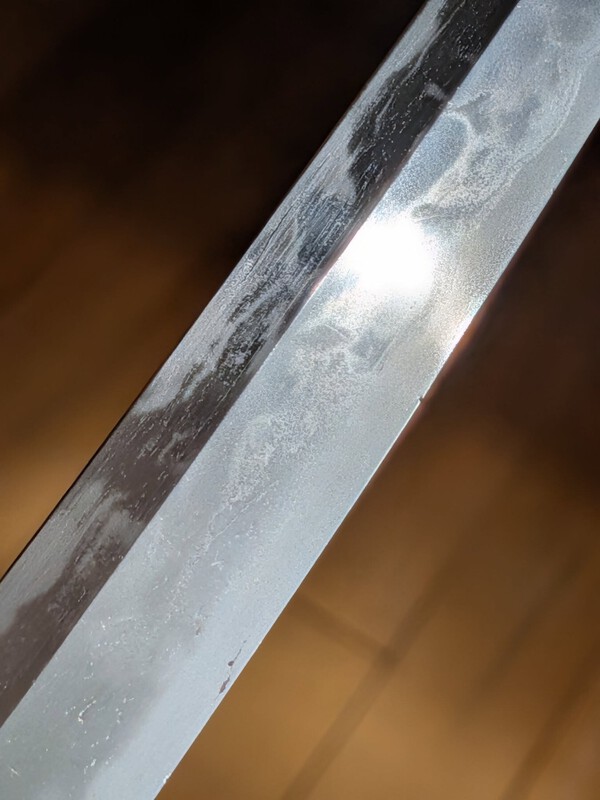


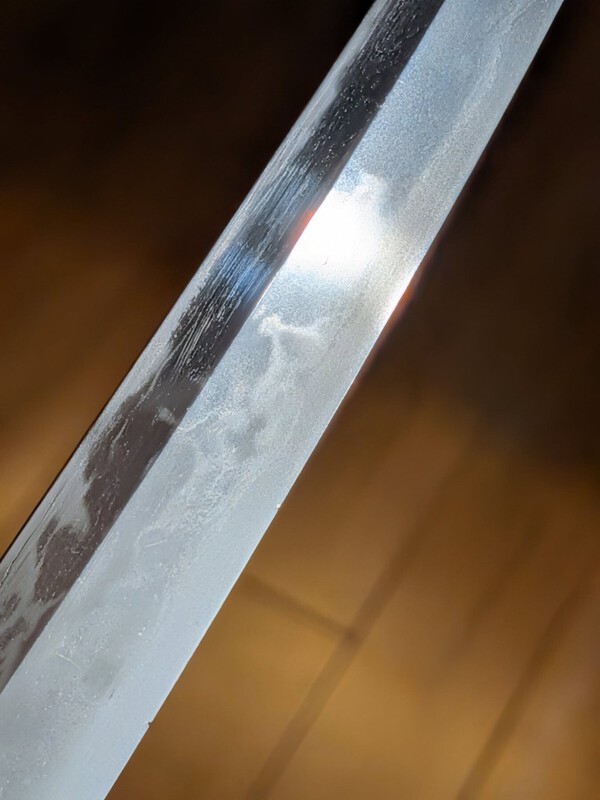


 1 point
 -
美乗 – Yoshinori/Mijo (reading?)1 point
-
The best one can hope is that treasured items go to those who appreciate them.1 point
-
To me, it resembles one of the well known horimono done during wartime, sometimes seen on Gendaito and wartime civilian swords taken to war1 point
-
Yes, this is a showa era blade by the 23rd generation Seki Kanefusa. https://www.google.com/search?q=Seki+23rd+kanefusa+site%3Awww.militaria.co.za&client=ms-android-google&sca_esv=a919800cb6345d20&sxsrf=AE3TifPU7yf-CDYn22HMLRmOtiL6qHEU7Q%3A1748896200549&ei=yAk-aIiVIciqwbkP09OJ0QM&oq=Seki+23rd+kanefusa+site%3Awww.militaria.co.za&gs_lp=EhNtb2JpbGUtZ3dzLXdpei1zZXJwIitTZWtpIDIzcmQga2FuZWZ1c2Egc2l0ZTp3d3cubWlsaXRhcmlhLmNvLnphSOM0UKAPWPUncAB4AJABAJgBmAGgAacHqgEDMy41uAEDyAEA-AEBmAIAoAIAmAMAiAYBkgcAoAfoArIHALgHAMIHAMgHAA&sclient=mobile-gws-wiz-serp1 point
-
Chris's, more on Kanefusa and background:1 point
-
From Japanese Sword Index: "The Kanefusa lineage of swordsmiths of Mino Province dates back to the Muromachi era in the 1400's. The 23rd generation Kanefusa worked during the WW II era and was a direct descendant of this famous line of swordsmiths. This lineage continues today with the 25th generation Kanefusa. The 23rd generation Kanefusa's name was Kato Koichi. He was born in 1900. During the Showa period he studied under Kato Jumyo and worked in Seki (Mino / modern Gifu prefecture). During the war years he made many blades for the military, both army and navy, and for civil officials. He won numerous awards in sword exhibitions and contests during this period. He was ranked 1st Seat (National Swordsmith) in the 6th Exhibition of Swords held in 1941 (Slough). He was ranked Kibin no Retsu in 1942 by Kurihara Hikosaburo at the Tosho Banzuke (J.Kim). Many of his blades are signed as being prize winning blades. Blades by the 23rd generation Kanefusa have received origami from the NBTHK or NTHK. This school of swordsmiths is noted for making a special style of hamon known as "Kanefusa midare". There are several blades known made by Noshu Seki 23rd Generation Kanefusa which have the kiku-sui crest carved as a horimono on the blade (not on the nakago). These blades were not made at the Minatogawa Jinja Tanrensho and have no known connection with it. These swords probably were a special order from a group of naval officers or a naval officer's club associated with the Minatogawa battleship. This same style Minatogawa crest is occasionally found on blades by Asano Kanesane. These are also thought to be special order blades and not associated with the Minatogawa Jinja. Among signatures on the 23rd Generation Kanefusa blades are: Kanefusa Fujiwara Kanefusa Noshu Seki ju Fujiwara Kanefusa Seki ju Ni ju San Dai Kanefusa Noshu Seki ju Ni Ju San Dai Fujiwara Kanefusa saku kore (oshigata shown left) Some blades bear inscriptions about awards or being prize winning blades. Sho or Seki tang stamps may appear on the nakago. Some of his blades were signed nakirishi mei. He forged both traditionally made gendaito and non-traditionally made showato using mill steel, thus each blade must be judged on its own merits. Kanefusa blades are found mounted in shin-gunto (army) or kai-gunto (navy) koshirae and shirasaya. The 23rd generation Kanefusa is listed in the Toko Taikan, in Hawley's Japanese Swordsmiths, and the Nihonto Meikan. " Kanefusa produced medium to high-grade showato and medium to high-grade gendaito. As for which your sword is? It would have to be judged in-hand to have a proper opinion rendered. But if there is a noted lack of Seki or Sho stamps, then it speaks more towards the possibility of gendai but it is not conclusive on its own. The present of nie/nioi, hada, and other particle activities would be conclusive. Also, I recognize that you're new to this, so some terminology: Showato = mass produced, machine assisted swords made in a non-traditional manner. They are worth less than gendaito and are usually made considerably less well. Gendaito = hand made, traditionally made swords made of tamehagane. Made during the last few years of the 1800s and up to the end of 1945. They have all the characteristics of older-made Japanese swords and are worth considerably more than showato. I THINK I can see particle activities, but that call should only be made in-hand. You can directly message me if you need more assistance. ~Chris1 point
-
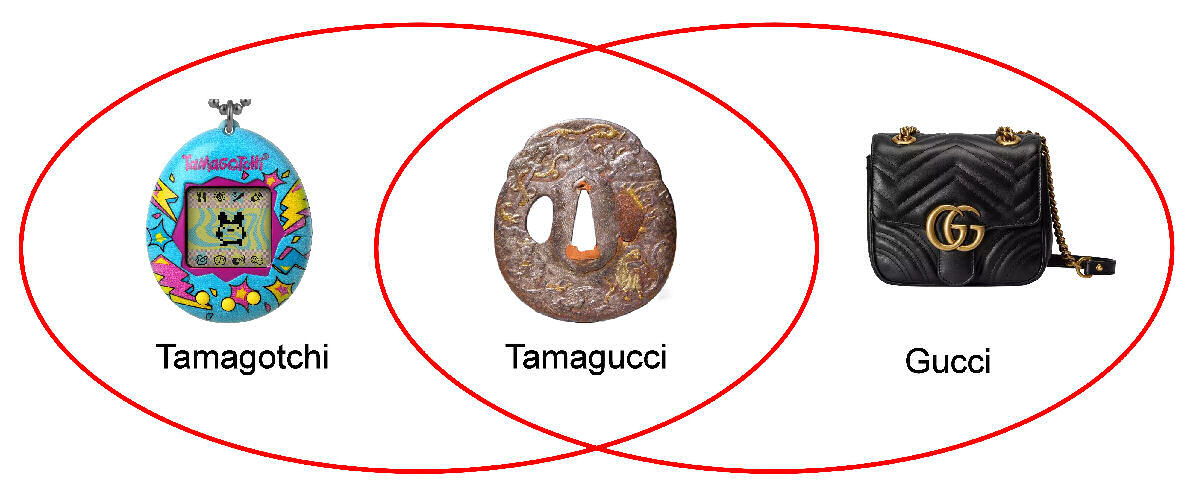
I have another hypothesis (explained with Venn diagrams)...
 0 points
 -
Yasuhiro in T94 @Volker62 I would like to hear your opinion Nakago with yasurime looks genuine. Mei is shoshin or dai? and koshirae [saya is from T32?] -fat early tsuba -crest It's already at 3k$ [I checked highest bid] so I wonder price range for him. https://www.liveauctioneers.com/item/215859689_japanese-wwii-officer-sword-signed-nakajo-at-both-sides-austin-tx


 -1 points
 -
Men it's not for me only. And asking You directly imo is a sign of respect.-2 points












.jpg.a2ab9935f5a25afd7955aabcc8ba903b.jpg)

























This leaderboard is set to Johannesburg/GMT+02:00