
Leaderboard



Popular Content
Showing content with the highest reputation on 09/06/2025 in all areas
-
Couple of my favs


 4 points
 -
One that I fell in love with early on: This one is a bit more whimsical:


 4 points
 -
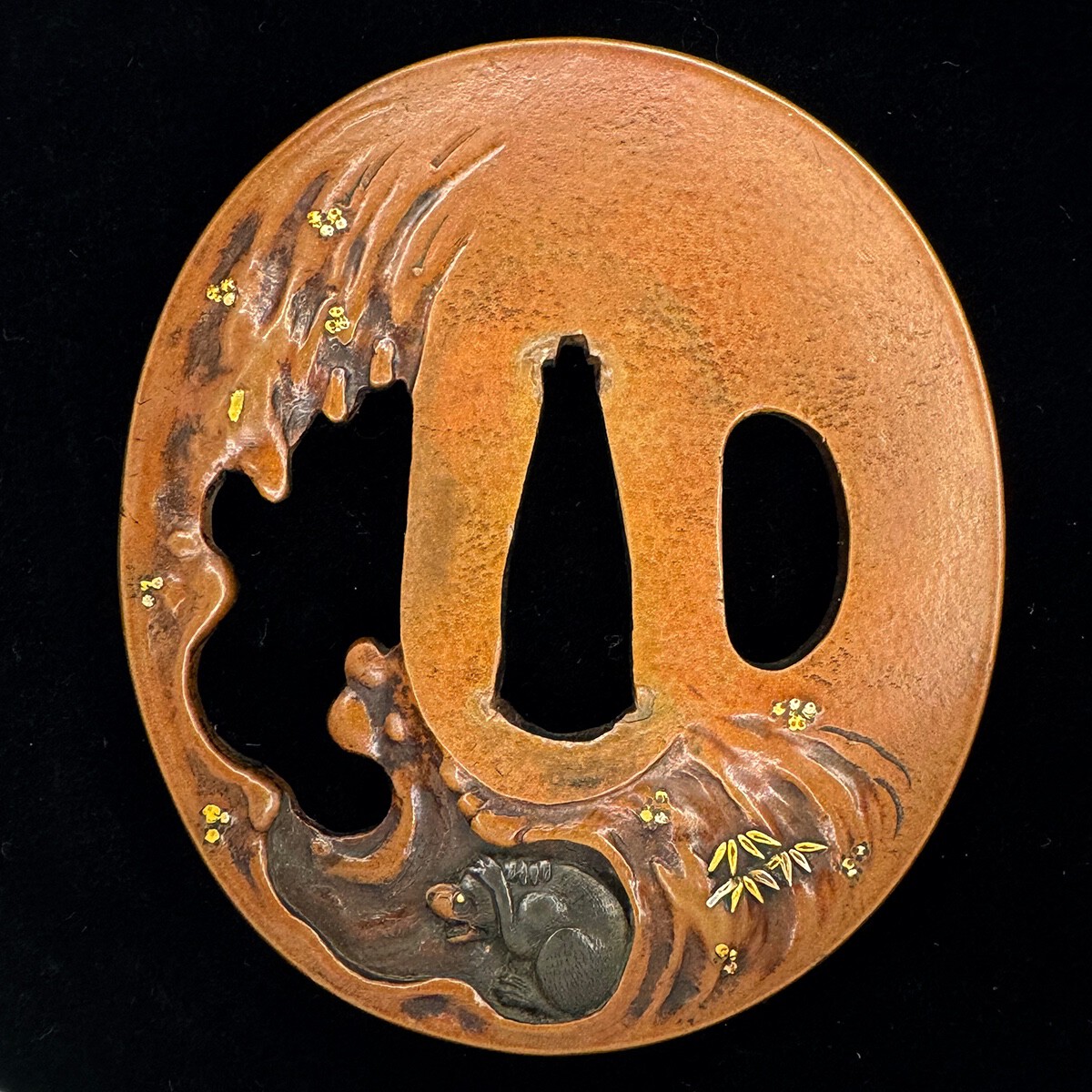
Hey fellow Tosogu fanatics! I've been away from the board for a little while due to work taking up much of my attention recently but that doesn't mean I've stopped collecting these past few months! I have a couple new acquisitions I have been waiting to share with the board so this post is well overdue! As the title suggests, two of my latest acquisitions include birds in the mise-en-scene! Hoping for any knowledge the board might have about the artists Toryusai Kiyohisa or Marukawa Hiroyoshi (Mito school). Also, post your favourite birds from your own collections!

 3 points
 -
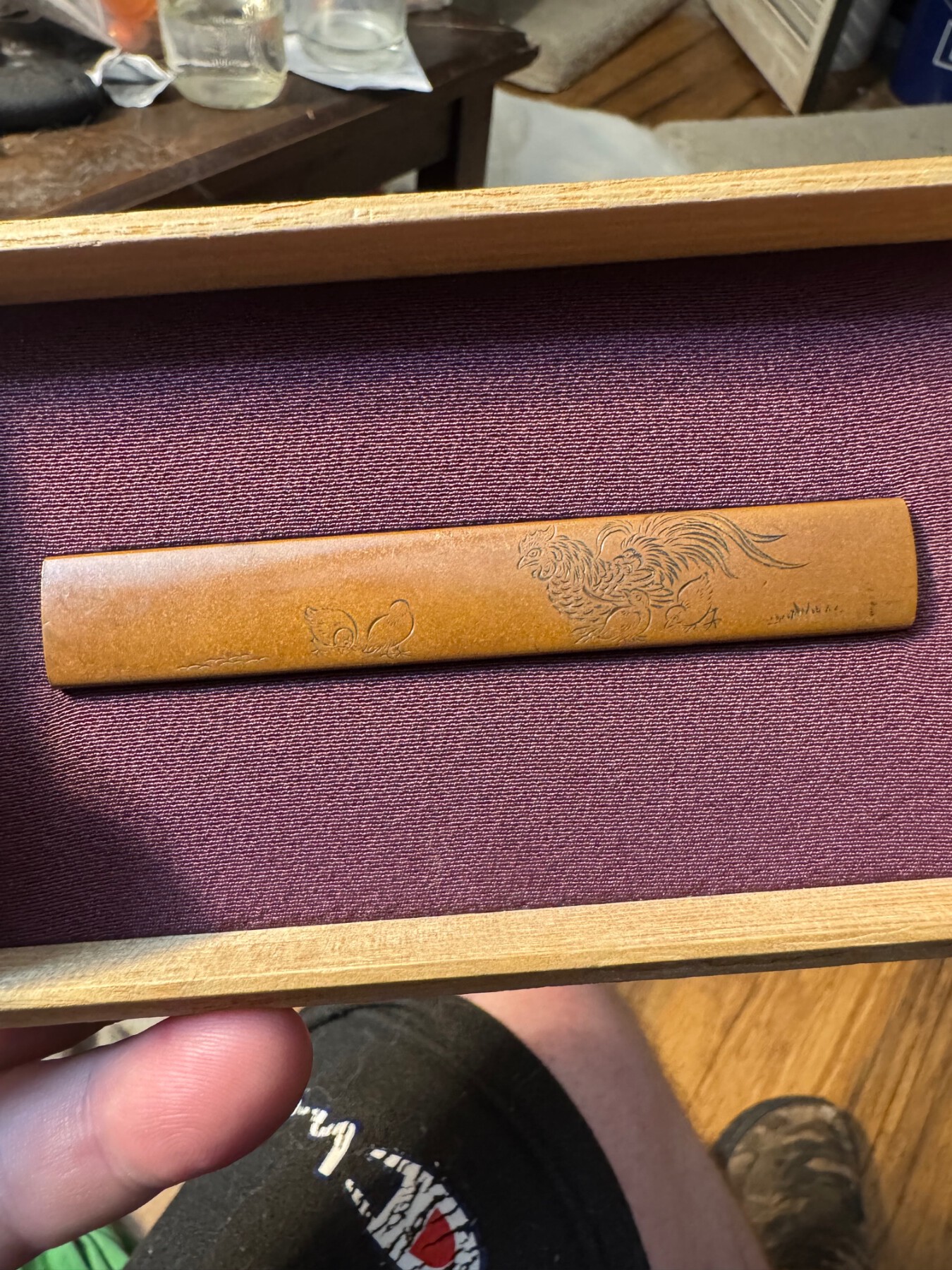
Let’s add a kozuka to the mix.
 3 points
 -
Appears to be a showato arsenal blade by Fukumoto Kanemune. WWII era blade, not fully traditionally made.3 points
-
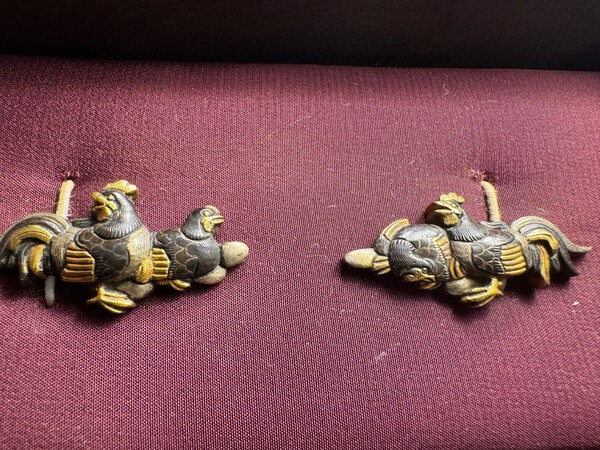
Marukawa Hiroyoshi was a student of Uchikoshi Hirotoshi (fl. 1810), and he worked at Mito in Hitachi Province. There are dated examples of his work for the years 1841 and 1842. Something simple from my collection - Two Roosters on one side become only one rooster on the other.
 3 points
 -
Mike, to me, this TSUBA looks cast with the SEKI-GANE being probably the same material as the TSUBA itself. If I am correct, you may brush the TSUBA clean with a steel-wire brush and oil it, before you sell it on.2 points
-
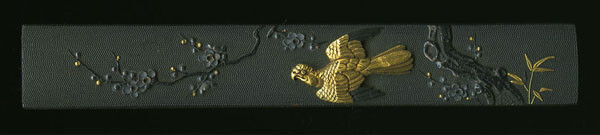
Kozuka in the Ishiguro style...
 2 points
 -
Ps, just a rough guide with regarding what i meant with hamon and tobiyaki regarding Ishido. One example of various Ishido, not saying yours is the same maker or even Ishido. Just for something for you to look into. ISHIDO DEN (fss-812) - Nihonto Antiques Trying to work out what swords are from images is fun, but not precise.2 points
-
A top Soshuden togishi has seen the blade and thinks without the Mei it can get Mumei Shintogo at Shinsa. The hada is typical Shintogo. The nioiguchi from bottom to middle has been worn away but he says he can polish it in a manner that balances the appearance. But don't worry the Mei is not going anywhere.2 points
-
“岩船郡八幡村大字八□□ – Iwafune-gun, Yawata-mura, Oaza …” is an old address, and the details are unknown. The address is now included in the following area. Ref. Sanpoku, Niigata - Wikipedia Tohashi – family name Hisajiro - first name I am sure he is no longer living. I do not think that sending it back to Japan is a good idea, unless the blade is national treasure level.2 points
-
紙和鋼安来以吉久作之 – From 紙和鋼 of Yasuki/Yasugi, Yoshihisa made this. I am not sure about the correct reading of 紙和鋼. “和鋼 (wako)” might be another general name of Tamahagane. Ref. 和鋼 - Wikipedia2 points
-
Sam Some of the very first version of Aluminium handle also has 11mm Brass tsuba. Also,there are some Pattern 5 with Bohi.2 points
-
2 points
-
I believe this is a Nara piece, my favorite part of this one is the t moon in the clouds.
 2 points
 -
It's a soden bizen blade with a nice jigane that wasn't evident from the photos on their website. It's pity that they don't entertain visits to their store to view their blades in person, but the owner is a stand-up guy to work with.

 2 points
 -
I’ll have a couple at the Birmingham Arms fair later this month, the last 2 tanto from my collection. Both will be greatly reduced at just over £1000 (not $) One shinsakuto in high quality Japanese polish and s/s by a multi prize winning smith, signed, dated etc The other a large healthy signed Shinto Mino smith in full koshirae and decent polish. Welcome to come have a look. Always best to handle before buying.2 points
-
https://jp.mercari.com/item/m49776336419 One with a handle - Trivet2 points
-
Now you need the others in the set! Horses: & Daimyo procession: 280 mm x 252 mm 275mm x 245mm x 7mm Weight 1884g There is another type but it is constructed differently and may be from another company.


 2 points
 -
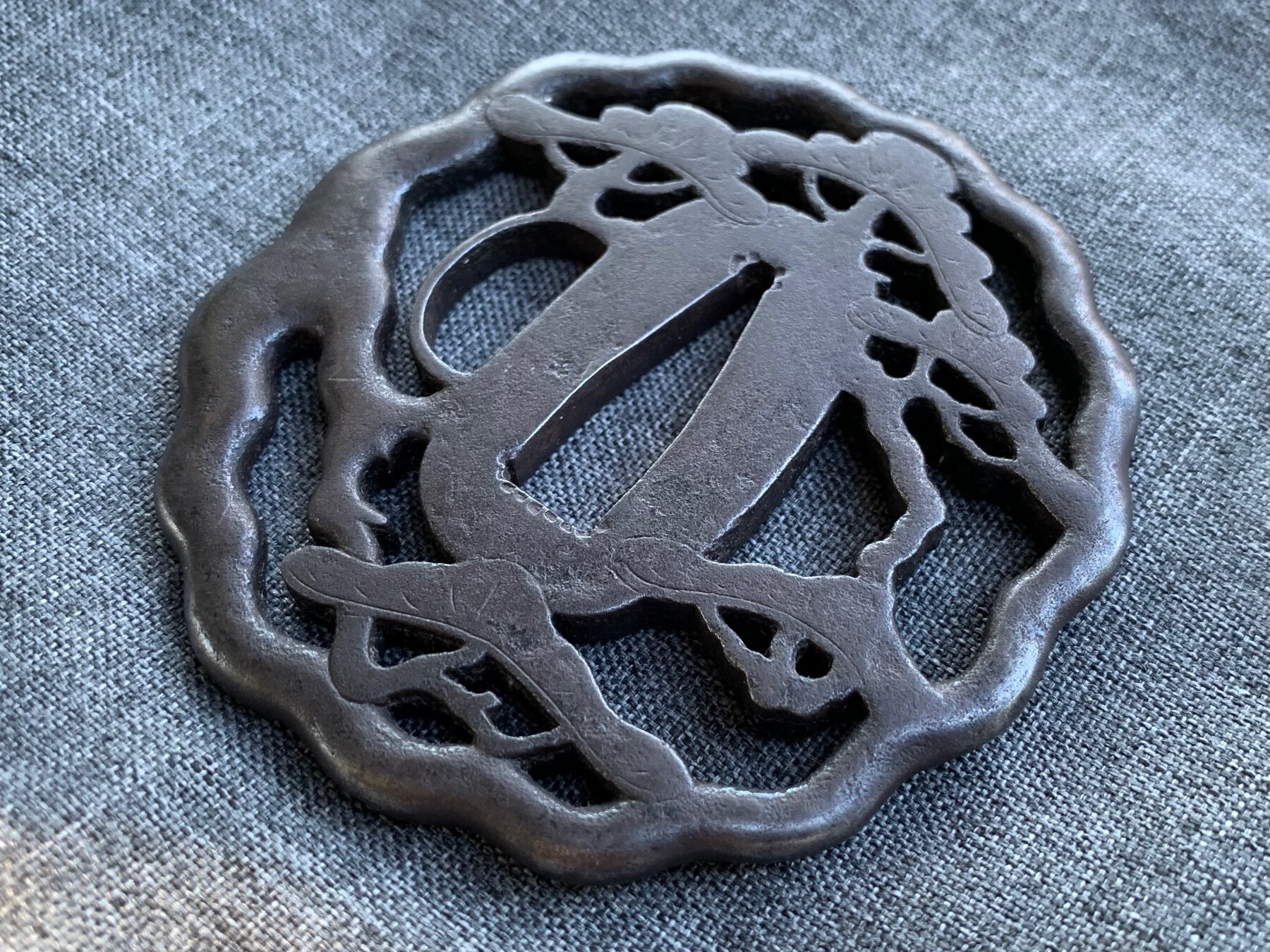
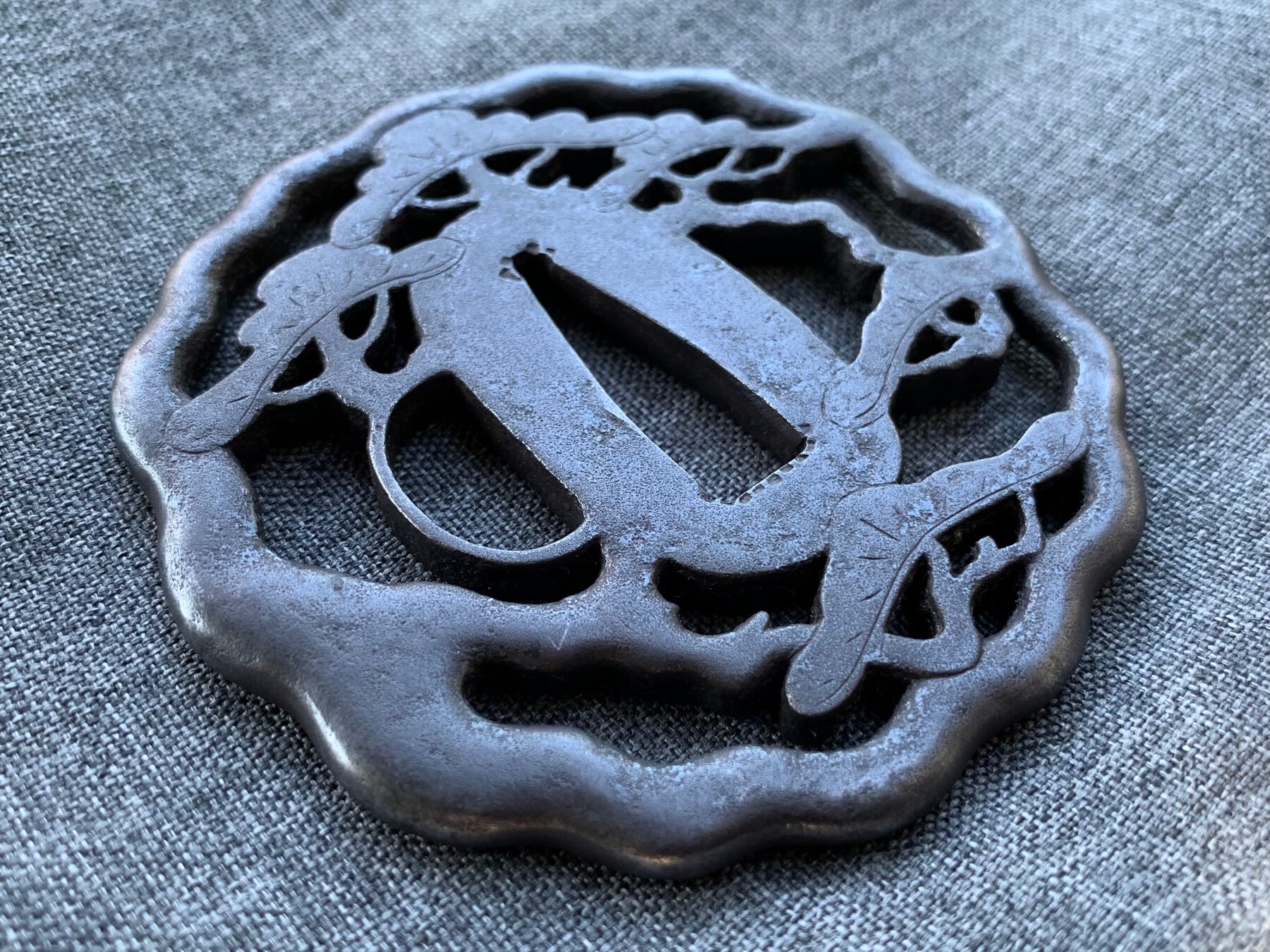
Dear all I am parting with a nicely made Edo period pine sukashi tsuba. Dimensions: 7.88 cm x 7.64 cm Height: 0.52 cm Seppa-dai (max): 2.99 cm x 0.85 cm Asking price: EUR 300.00 plus shipping Best Chris


 1 point
 -
Afraid I agree with @ROKUJURO and @Dan tsuba on this one. I'm cautious to call a tsuba as cast, but that one is not at the same level as the one you shared to start this thread. I remember owning a partially burned tsuba in my second year collecting tsuba. I wasted a lot of time trying to improve that partially burned tsuba. Some things are just 'dead' and you should let them go as soon as possible.1 point
-
Many cotton swabs and red rags later...done. I prefer to work on iron without oil to lift the red rust without darkening it. I work with bone, ivory, and rags soaked in distilled water. When the red rust doesn't show up as much anymore, I apply a thin layer of oil and rub with a cotton cloth. Thanks so much for the warning. I should definitely do this with some others.


 1 point
 -
Danke, Uwe. I'll look him up. John C.1 point
-
I traded that one to Ernie, Stegel, some time ago. But I know it was fatter than standard. You could email him for the measurement.1 point
-
For Bruno
 1 point
 -
Thanks Alex, paid 520 euro.1 point
-
Im not convinced your sword is Sue Seki. The hamon is wild and appears to rise high up the blade, with tobiyaki, reminds me of Edo ishido. Masame in Shinogi-ji also = edo Hard to see jigane, but appears finer than Sue-seki. That's as about the best i can do You need to buy books, research further online and even better, show it to someone in hand.1 point
-
Correct. In polish along with a dossier of supporting evidence for a daimei-daisaku attribution by an apprentice (with Norishige being the clear favourite). The 2018 Horyu papers recommended more research and so far none of the experts have dismissed the Mei as gimei. I hope the documentation from extant blades and oshigata will sway the panel. Whatever the outcome, its academic. Having the blade assessed as Shintogo, in hand, by a leading expert is all I really needed to hear. Anything above and beyond that is gravy.1 point
-
It was always going to come down the forging style of the hada and structure of the hamon/boshi that would make or break the attribution. I'm very happy to hear someone with that much experience has confirmed what I thought I was seeing in the photos. Together with Tanobe-sensei's appraisal I feel pretty confident it is what it purports to be. I look forward to seeing how it looks after polish. The icing on the cake will be if it has masa-gokoro forging style that has been observed for some blades from the Kagen (1303) and Tokuji (interesting tidbit, this era started on my birthday in 1307) eras in which 1308 falls.1 point
-
That's brilliant news Lewis, the mei was at the back of the queue for me.1 point
-
I have no defense Somehow that whole sentence got scrambled. I have edited and fixed it.1 point
-
I tend to think “…大矢友信” (Ōya Tomonobu)!1 point
-
岩船郡八幡村大字八□□ – Iwafune-gun, Yawata-mura, Oaza … 富樫久治郎 – Togashi Hisajiro1 point
-
Thank you @Ray Singer!1 point
-
Soshu ju Hiromitsu This is not an authentic example by the famous early Soshu smith who used that mei.1 point
-
Thanks for the info Dale. The Hiroyoshi tsuba turned out to be even nicer than I expected when I saw it in hand! You can't easily see it from the pictures but the base metal has a nice strong hue and it's a lot lighter in colour than I had expected. The flower and the bird both have a bit of gold in them but they are two different shades (presumably two different levels of purity) which make them noticeably different! As for the Toryusai fuchigashira, I couldn't quite figure out whether it's authentic or gimei when I went through different reference materials but either way, the quality is there! Lots of chickens so far, but surprisingly no cranes in the thread yet!1 point
-
@Scogg Here is a pattern 5 with bohi:1 point
-
As far as the pattern 5 with bohi, I have also never observed one myself. But it stands to reason that they exist. My catalog pattern list is still a work in progress and evolves as I see new features. I would love to add a Pattern 5a if/when I encounter any. Edit: I see that I do have some early pattern 5s with a fuller denoted. Thank you! Will add that to my pattern list Patterns in order Pattern 1 = Copper Tsuka - 11mm Brass tsuba - Offset ito at fuchi. *transitional Pattern 2 = Aluminum handle - 9mm Brass tsuba - Offset ito - punctured ito. SUYA, 東 .* *transitional pattern 2 = Aluminum handle - 9mm Brass tsuba - Offset ito - adjusted ito around mekugi. GIFU, 名. * Pattern 2 = Aluminium Tsuka - 9mm Brass tsuba - Mirrored ito. Pattern 3 = Aluminium Tsuka - Steel tsuba - Mirrored ito. * transitional Pattern 3 = Aluminum handle - steel tsuba - mirrored ito - no bohi. * transitional Pattern 3 = Aluminum handle - Top latch but with side latch cutout - mirrored ito. Pattern 4 = Aluminium Tsuka - Steel tsuba - Side latch - Mirrored ito. *transitional Pattern 5 = Wooden handle - Steel Tsuba - Side Latch - Has Bohi - Steel Saya. Pattern 5 = Wooden Tsuka - Steel Tsuba - Side Latch - No Bohi - Steel saya. Pattern 6 = Wooden Tsuka - Steel Tsuba - Side Latch - No Bohi - Wooden saya. Pattern 7 = Wooden ring Tsuka - Steel Tsuba - No Bohi - Side Latch. Pattern 8 = Ito wrapped Tsuka - Steel Tsuba - Side Latch.1 point
-
And since we do not have any menuki yet, I will add one last pic.
 1 point
 -
It's signed Kanemune. He made both traditional and non traditional swords. This one is non traditional (Showato).1 point
-
John: If you are interested in reading a bit about the other side of Rabaul, The Eternal Zero by Hyakuta has some interesting stories about their time there. John C.1 point
-
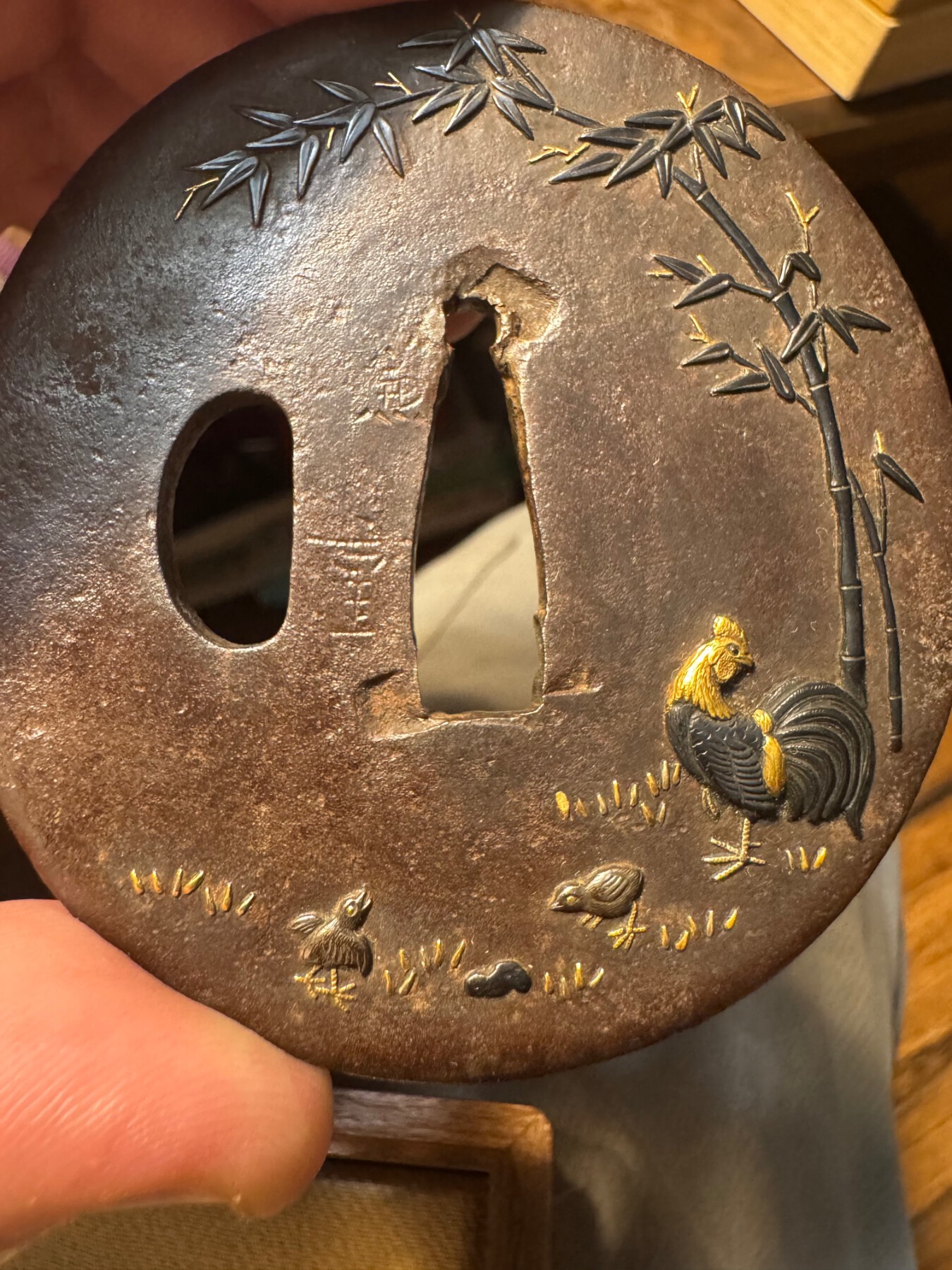
Animal and plant tosogu are my favorite themes. I will pick a couple of my favorites and share, starting with this iron base tsuba featuring a rooster, chicks, and bamboo. Jason

 1 point
 -
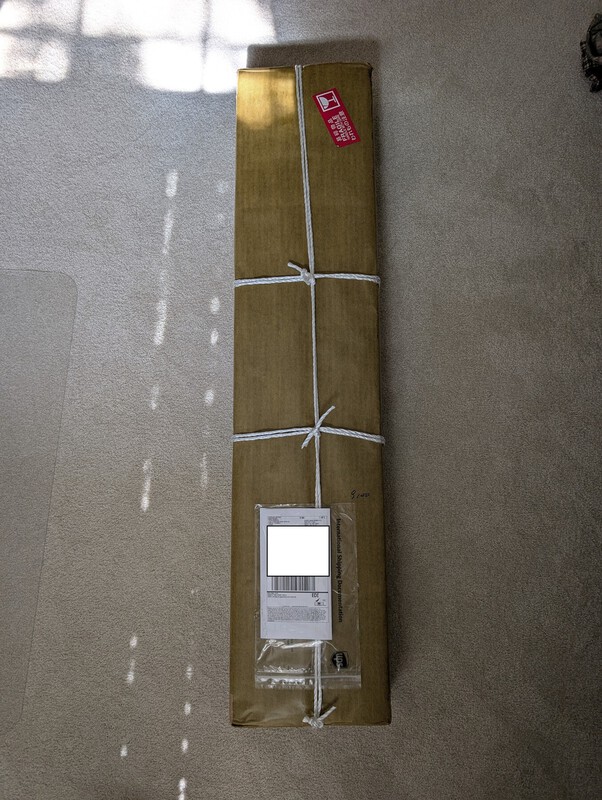
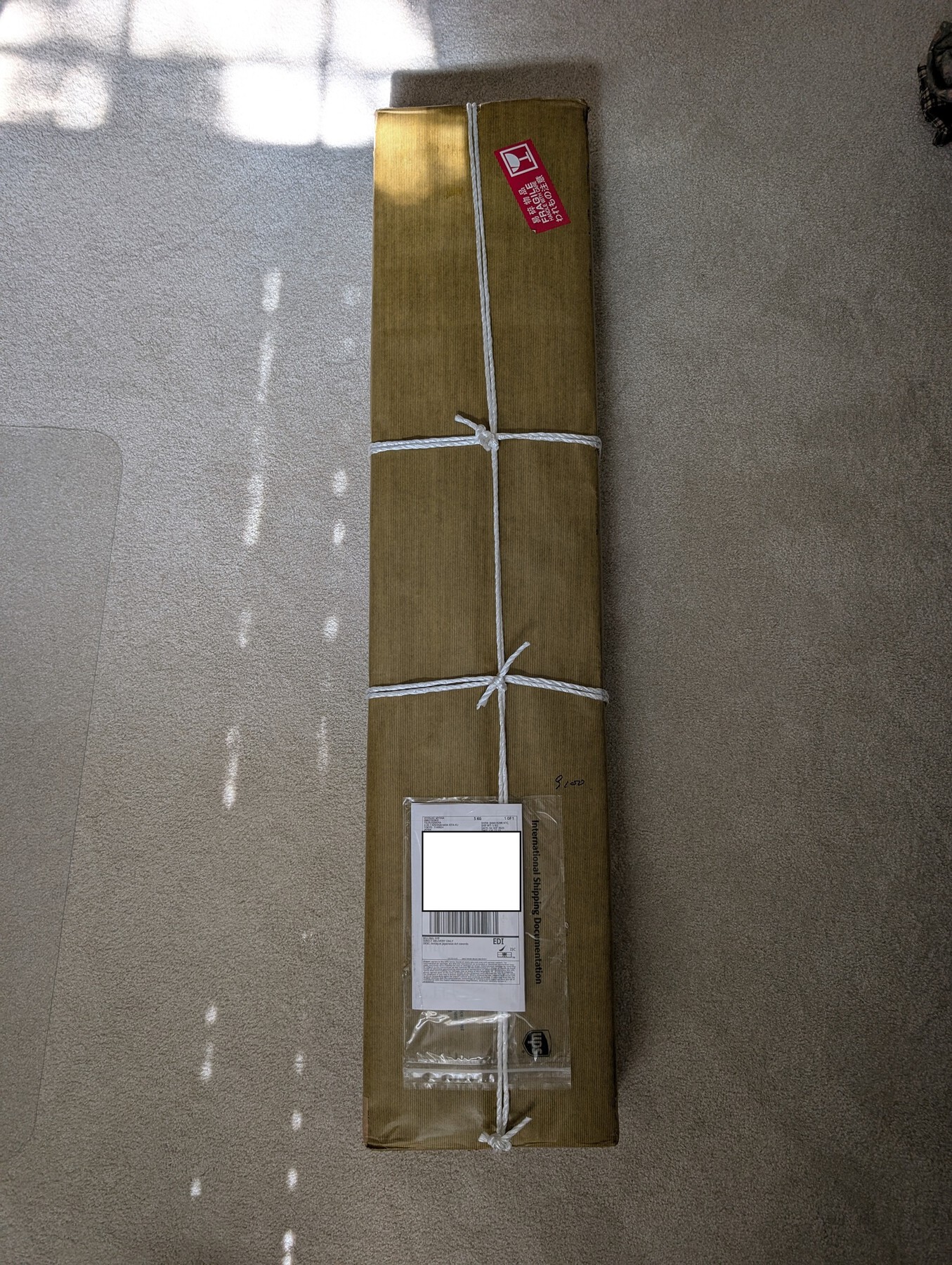
Though I must say that Tsuruginoya has by far the best packaging of all the sword dealers I've worked with in Japan. The sword arrived via UPS from Japan to the US in only 1 day. EMS would have taken a week.
 1 point
 -
Thanks Sam. This is all about personal value, and has nothing to do with monetary value. The tassles were not round like a bag tassle. Nothing like them. They were flat, tightly woven with that silver fleck, brown and bright yellow. The only thing is I can't recall the red backing. But hey, it's 60 years ago when I was a 10 year old that I'm trying to remember. I'm very pleased that I now know what the sword is, and, where and approximately when it was made. That's a huge pleasure for me. It is a shame that a little kid in rural NSW, and really also my dad, didn't know the significance of those tassles. My dad had no interest In the war. He did his bit. It happened. Two of my uncles didn't come back. One on the Burma railway and the other died in a plane crash in the North Pacific and is buried on Vancouver Island, Canada. My dad was not interested in glorifying the war. That sword, the invasion money, and a Japanese pilot's watch (long lost) were just souvenirs that were in a box in the garage. They were never displayed. I just found them and played with them. Dad had zero interest. So thanks for the information. It is great. John1 point
-
I would like to add 2 more NCO typology as this thread is becoming leading one. I know that first is covered by another but description give more value.

 1 point
 -
Of course there are TOSOGU artisans in Japan who make beautiful SEPPA on demand. And there are NAMIKAWA HEIBEI for those who want cheap ones. But you won't get nice ones for the price of those press-molded ones, obviously. It is a very small market, so no way to produce them in numbers unless you have to equip an army! Those leather shims are not authentic, they are just a short-term measure to prevent rattling.1 point
-
I have a Tantō that would fit your preferences and budget. But it is located in the EU and slightly more expensive than 1K USD. https://www.militaria.co.za/nmb/topic/51710-nbthk-hozon-tanto-signed-nio-kiyosada-late-muromachi-period/#comment-5582541 point
-
The sword is signed SHIMADA YOSHISUKE SAKU or "Made by Shimada Yoshisuke" a well known smith who did not work during the war rather this signature is an homage so the soldier can carry a famous name into battle. The stamp is a SEKI stamp and means the blade was not traditionally made. Even so there will be interest for a sword like this in this condition... -t1 point
-
Dear Lewis, This is a research study by Nobuo Ogasawara, conducted for and published in the Tokyo National Museum magazine in 1981. Although I made some small corrections, the translation(AI assisted) still contains some errors, but it should give you the general idea. "" The inscriptions of Shintōgo Kunimitsu, as can be seen from the rubbings presented here, each display individual differences. Broadly speaking, example 1 can be regarded as a representative inscription of the hidari-ji hokan style. Examples 2, 3, and 4 are similar to this, with example 4 bearing the latest date of Gen’ō, and is sometimes regarded as the work of a second generation. What is common among these four pieces is that the forging exhibits a well-developed ko-itame grain pattern, the ji-nie is present, and the blade shows clear ji-kage, resulting in a bright and lively jitetsu. The hamon is a straight temper line (suguha) with well-developed ko-nie, and it features pronounced kin-suji, demonstrating lively activity and excellent workmanship. In contrast, examples 5 and 6, dated to the Kagen and Tokuchi eras, show inscriptions that are finer and weaker in appearance. Despite being early in date, they convey the impression of late-period inscriptions. In terms of inscription style, they are clearly different from examples 1 through 4. Furthermore, the forging shows a pronounced masa-gokoro (straight-grain tendency), and compared to the previous four blades, the nioi-guchi of the hamon is tighter, there is less activity within the ha, and the fukura (blade curvature near the edge) tends to sink. Stylistically, examples 12 and 13 are similar, though their engraving chisels (tagane) are finer and the inscription style differs slightly. Examples 7 and 8, as well as those bearing the Buddhist posthumous name Kōshin, do not use the hidari-ji style, and example 7 also lacks the hokan (north-crown) character. These are considered a different type from examples 1 through 6, though stylistically they resemble 5 and 6. Examples 9 and 10 have overall solid inscriptions, with the third stroke of the ko in Mitsu rendered as a plain “tsu” rather than the variant “フ”. Example 9 features a midareba (irregular hamon) with pronounced kin-suji, and the forging shows a raised texture. Example 10 has an ordinary straight suguha. Example 11 differs greatly in inscription style; although it uses the hidari-ji hokan style, it shows unique characteristics not shared with the others. If anything, opinions have shifted toward a broader view that the pieces in question may date from after the inscription bearing the Buddhist posthumous name Kōshin in Shōwa 4. In that case, the works of Bunpō, Gen’ō, and Genkō would be considered second-generation. However, when it comes to pieces with only the two-character inscription, such as the famous Aizu Shintōgo Kunimitsu, it becomes difficult to determine whether they belong to the first or second generation. A detailed examination of Shintō Gokunikimitsu inscriptions shows that each character varies slightly, making it virtually impossible to estimate the production date based solely on a two-character inscription. Nonetheless, in addition to the common inscription style featuring the “left-character” with a north-crown (hidari-ji hokkan), there are several distinct variants: 1. Those executed with a fine chisel (hoso-zan), where the inscription appears somewhat larger (though in reality almost the same). Examples include works dated to Kagen 4 and Tokuchi 3 (Important Cultural Properties), and, although tachi, the famous Mutsu Shintōgo is included in this group. 2. Those not using the left-character north-crown, such as pieces in the Tokyo National Museum or those bearing the Buddhist posthumous name Kōshin. 3. Those where the “kuni” character is a left-character but the “mitsu” character does not have a north-crown, or where the third stroke of “mitsu” is unusually firm, as seen in the famous Ran Shintōgo. 4. Those with large inscriptions and a firm, rigid style, such as the famous Kojiri Gokunimitsu and the tachi passed down from the Tokugawa family. The four types described above differ from the typical left-character north-crown (hidari-ji hokkan) inscriptions. Based on these differences, it can reasonably be concluded that the inscriptions were not cut by a single hand. Rather than strictly distinguishing first and second generations, it is more plausible to view the head smith Kunimitsu as a single master while Shintō Kunimitsu operated as a collective workshop consisting of multiple smiths. Naturally, certain stages of sword-making required a lead smith, and there may have been several lead smiths working simultaneously, making the finished products the result of collaborative effort. On a larger scale, tasks such as forging, finishing, hardening, and polishing were likely divided among specialists. Although it is difficult to determine the precise scale of the Shintogo Kunimitsu workshop in Kamakura, it is reasonable to assume that multiple smiths inscribed the Kunimitsu signature during the lifetime of the head master. ""
 1 point
 -
兼綱 Kanetsuna1 point





.thumb.png.4c5df79fec171b2dc4a23af38e280a4d.png)


















This leaderboard is set to Johannesburg/GMT+02:00