
Leaderboard



Popular Content
Showing content with the highest reputation on 09/21/2023 in Posts
-
Yves, to me it looks like a (closed) folding fan with a butterfly sitting on it.5 points
-
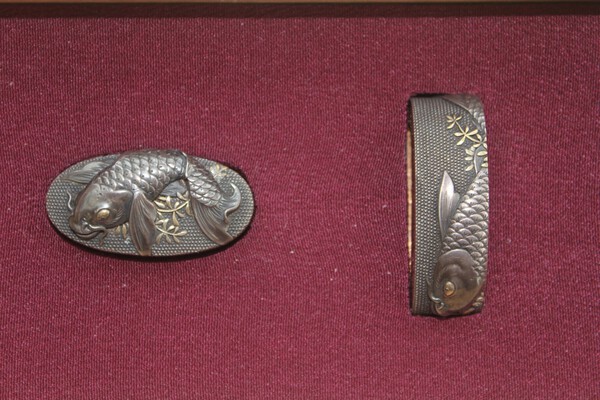
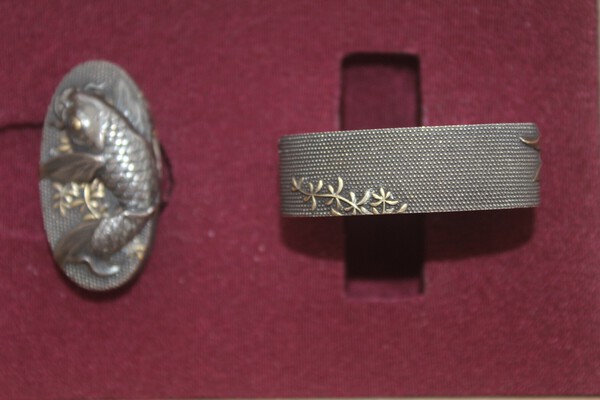
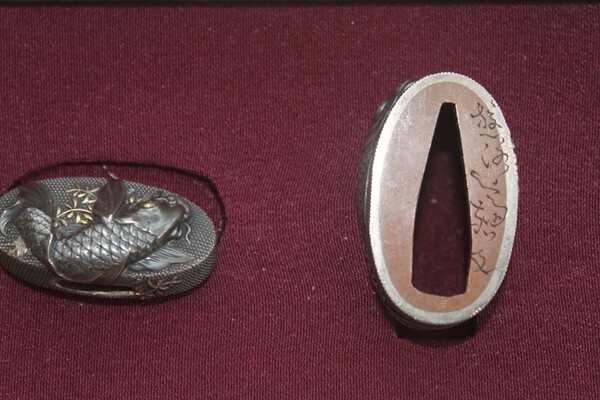
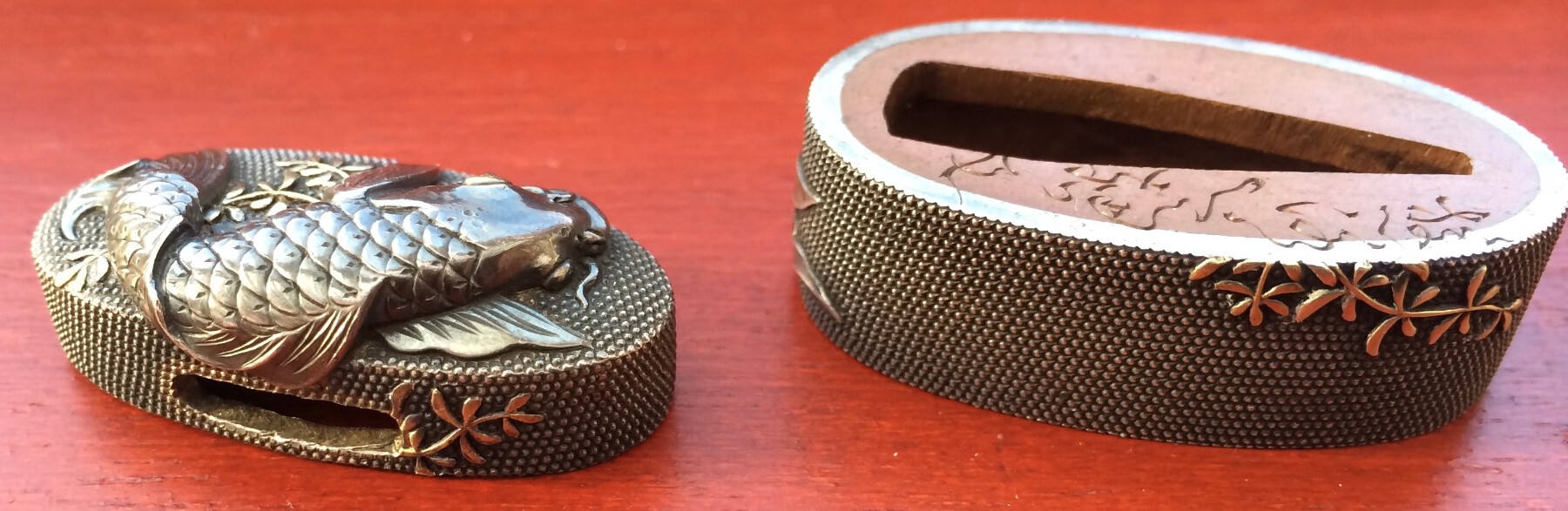
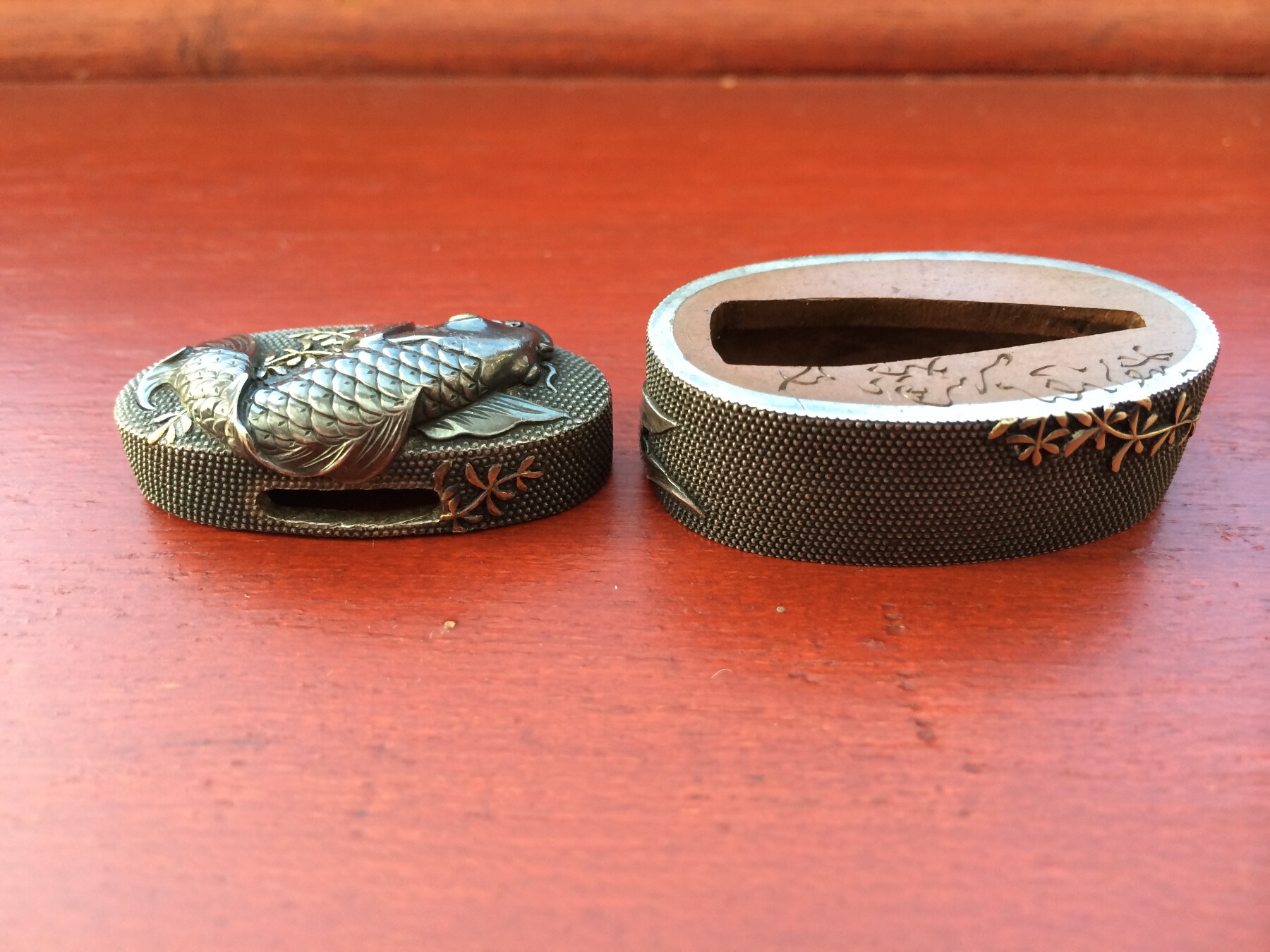
Dear Bob - That Carp Sekibun fuchigashira is really outstanding! As you may know, there were 4 generations of Sekibun (part of the Katsurano School), but only the 1st and 2nd signed with "Yurakusai". The 1st Sekibun (1790-1875) went to Edo early in life but left to refine his craft in Kyoto (studying with the Hamano School). By the way, “Yurakusai” basically means something like going to Kyoto to “study” but it can also mean “mess around” (sounds a little like when some of us went off to school…) Later he was hired by the Sakai family in Dewa Shonai. Haynes says that the quality of the first two generations are about the same, but they have small differences in their mei. Based on the quality alone, I’m sure yours is shoshin, and based on the mei, I’m thinking that yours is the 2nd Master (1838-1912). The 1st Sekibun studied with the famous calligrapher Kameda Bosai to learn how to do his very distinctive sosho mei (one of the most recognizable don’t you think?). In his later years, he often included his age on his work up to age 86 when he passed away! I hope I can still hold (much less use) a chisel when I am that age… The 3rd Sekibun studied under the 2nd Sekibun and then studied with the great Kano Natsuo. His work is often confused with Natsuo’s which shows just how good this school is. While the Sekibun school is most famous for its tigers, your Carp is certainly a masterpiece. I think that the artist intends to celebrate the Carp itself instead of using it as a symbol of perseverance like most carps we see on tosogu jumping the waterfalls to become dragons. In addition to perseverance, the Carp also symbolizes good fortune, longevity, success and prosperity. I love how this artist can convey so much meaning and energy on such a small “canvas” (and even though much of the two Carp are “out of frame”).4 points
-
You can find a scanned PDF here https://archive.org/...paneseswordmou00joly https://www.the-sale...db-a1be-b06f0120988c
 4 points
 -
The video is famous. I would think more than 750,000 views, because I remember seeing it on a flight to Japan. These last few tsuba and the Sekibun f/k stir a lot of old memories.3 points
-
Item No. 312 Fuchi Kashira in silver with gold and shakudo. Subject of carp swimming amongst water weeds signed Yurakusai Sekibun, Edo period, 19th cent. Carp, probably Koi, with water weeds on an almost perfect nanako ground. The fish are depicted as graceful movers and stand out from the fittings in a prominent 3D. Realism and interpretation superbly combined.
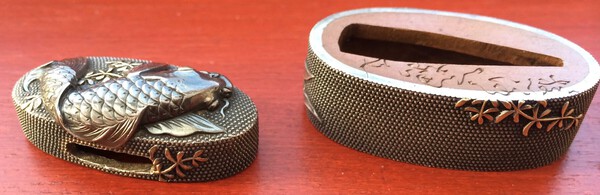
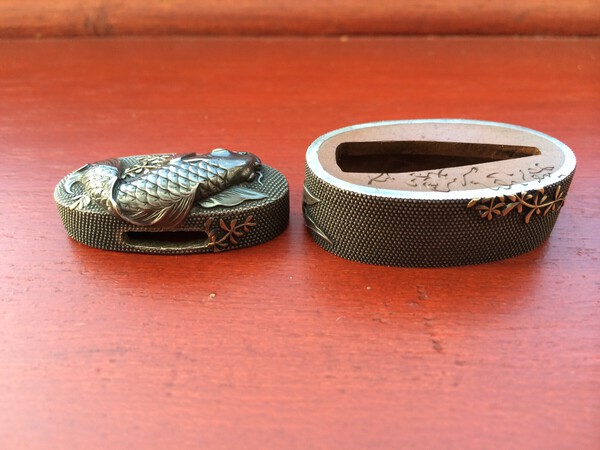 3 points
 -
Attached the fuchi kashira with the same design.
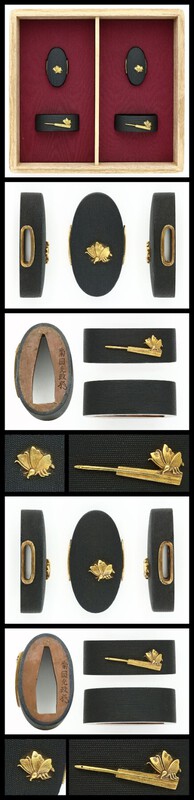 2 points
 -
A very nice 'Obidome' - tsuba/F/K theme [usually seen on some menuki] https://www.jauce.com/auction/v10649534302 points
-
I received an email from him a couple of days ago and already provided the translation and information below. Tōto ni oite Chōjusai Tsunatoshi Bunkyu gannen hachi gatsu hi (dated a day in August 1861 - a day in the 8th month of the first year of the Bunkyu era). TSUNATOSHI (綱俊), 1st gen., Tenpō (天保, 1830-1844), Musashi – “Katō Hachirō Tsunatoshi kore o tsukuru” (加藤八郎綱俊造之), “Katō Tsunatoshi tsukuru” (加藤綱俊造), “Tōto ni oite Katō Hachirō Tsunatoshi kore o tsukuru” (於東都加藤八郎綱俊造之, “made by Katō Hachirō Tsunatoshi in the eastern capital [= Edo]”), “Ushū Yonezawa-jū Katō Chōunsai Tsunatoshi” (羽州米沢住加藤長運斎綱俊), “Chōunsai Tsunatoshi” (長運斎綱俊), “Chōunsai Tsunatoshi tsukuru” (長運斎綱俊造), “Efu ni oite Katō Chōunsai Tsunatoshi” (於江府 加藤長運斎綱俊, “made by Katō Chōunsai Tsunatoshi in Edo”), real name Katō Hachirō (加藤八郎), he came originally from Dewa´s Yonezawa (米沢) and was like his father Katō Kunihide (国秀) a student of Suishinshi Masahide (水心子正秀), he moved to Edo during the Bunsei era (文政, 1818-1830) where he worked in the residence of the Uesugi family (上杉), the daimyō of Yonezawa, around the first year of Ansei (安政, 1854) he left his gō Chōunsai to his son Koretoshi (是俊) and changed his pseudonym to Chōjusai (長寿斎), he died on the fifth day of the twelfth month Bunkyū three (文久, 1863) in the Uesugi Edo residence at the age of 66, like his brother Tsunahide (綱英) he too hardened a tōran-midare but his best works are in the Bizen tradition, the jigane is a dense ko-itame with ji-nie which tends to muji, the hamon is a ko-chōji-midare or ko-midare in nioi-deki with tight nioiguchi, the bōshi is a smaller midare-komi, the jihada can also be a dense mokume which tends to muji but which also show mixed-in ō-hada, blades are generally rather long, have a deep sori, and a thick kasane, jō-saku Best regards, Ray2 points
-
This makes me smile with what some people try to get away with - https://www.ebay.com.au/itm/166341278956 "Sword Guard for Katana or Wakizashi Edo Iron Tsuba Original" It certainly could go in the "cut down" thread!2 points
-
I think guntō collectors will enjoy browsing through this thread over at Axis History Forum (AHF). The thread was started in 2009 by an Australian and is still ongoing. Basically, it is a thread of photographs depicting the Japanese military. There is a sword picture on just about every page and hence my recommendation. Something different... As an example, take a look at this leather covered hilt. Something different..., Post #126 Enjoy the search and if you find something of interest, feel free to post a link.1 point
-
Hi, Does anyone know where this emblem on fittings comes from? Looks like part of a mon or something, but unsure.
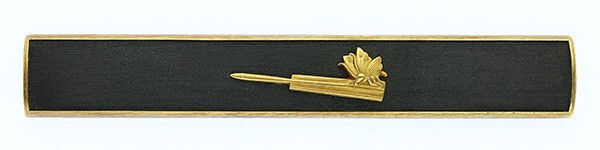 1 point
 -
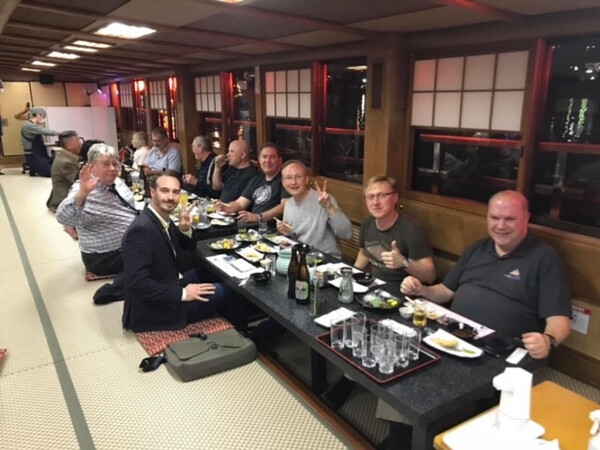
Greetings sword friends, As James Lawson previously pointed out, the Dai Token Ichi for 2023 will be held on two days only: Saturday, November 18th, and Sunday November 19th! There were several factors in this decision, but most significant were the decreasing number of visitors and the rising cost of the venue. Anyway, it is what it is.... two days should be sufficient to locate your treasure. The third day basically just added to sword fatigue, especially for the dealers. As in the past, I would like to invite overseas visitors to participate in two additional events that have become traditions for many overseas visitors! Tokyo DTI Additional Events On Thursday, Nov. 16th, there will be a sword study and dinner party again in Ginza at the Italian Restaurant Cinq (same venue as previous years). Location is quite convenient. Sword study is yen 5,000 (for the venue) and the dinner party will be sponsored by Mr. Hisashi Saito of Seikodo. Once again, the date will be Thursday Nov. 16th. Arrival time will be from 5:30 p.m. for the sword study. Discussion of swords at 6:30 and the dinner party will follow the sword study at around 7:00 ... Attendance by advance reservation only. Please notify Robert Hughes (keichodo@yahoo.com) as soon as possible if you would like attend! Saturday, Nov. 18th Yakatabune Tokyo Bay Cruise..... Arrangements: This event is tentatively scheduled for Saturday, November 18th, but final determination to proceed will depend on the number of interested participants. As in the past, participants would leave from in front of DTI (Tokyo Bijitsu Club) at 6:30 p.m. Cruise to start from 7:00 p.m. Participation by advance reservation only. Notification to attend is also a commitment to pay if event is held...Cost yen 11,000 per participant (tax included). Please notify Robert Hughes (keichodo@yahoo.com) as soon as possible! Organizer reserves the right to cancel the event if the number of willing participants does not reach 20.... Looking forward to seeing old acquaintances and meeting first time participants! Best Robert
 1 point
 -
Don’t know whether to laugh, cry or phone the fraud squad. Don’t trample one another in the rush.

 1 point
 -
Actually there is a tail but pointing downward and not very well visible.1 point
-
The ageha signifies transformation, rebirth. A fan is the symbol of multiple paths leading away from the beginning. So it could indeed be a combination. I've purchased a whole set of fuchi kashira for daisho and kozuka with this design and it will be used on a set of swords I've ordered in Japan. I intend to use it in a kamon that will go on the habaki.1 point
-
I'd say general soldier's tanto. Basically a knife to take to war. Some of the cruder ones are said to be shrine trinkets and curios bought at shrines. Ones like yours I'd suggest are Showato tanto, private purchase. If it is in fact oil quenched and not a Shinshinto.1 point
-
The butterfly appears to be an AGEHA-CHO mon of the TAIRA clan. I've seen several slight variations of this mon, but I don't know the significance of it landing on a fan. Tom1 point
-
Also true on Live Auctioneers and other online auctions. If you pay top dollar and then have to figure in the buyer's premium, taxes, and shipping, it becomes a slippery slope. Gone are the days when you could go the auction in person and try to get a good deal because there might be no one else bidding on the item. Conway1 point
-
I believe Jan is correct with the translation. Now as the last two are bit obscured I cannot say anything for sure but my gut feeling is it would be a false signature of Sagami no Kami Fujiwara Masatsune 相模守藤原政常 I would guess the second last character would be 政 and I will link 3 authenticated examples of signatures to show how 政 looks on them. https://sword-auction.com/ja/product/5698/as21061-薙刀相模守藤原政常/ https://www.touken-world.jp/search/78076/ https://sword-auction.com/ja/product/5766/as17261-脇差相模守政常初代/ To me it seems the sword itself would be possibly late Muromachi Bizen sword. As it has that style of nakago, wide and non-tapering nakago were not too common outside late Muromachi Bizen (and few others). Of course all that I wrote in this post is just speculative based on few not too clear pictures.1 point
-
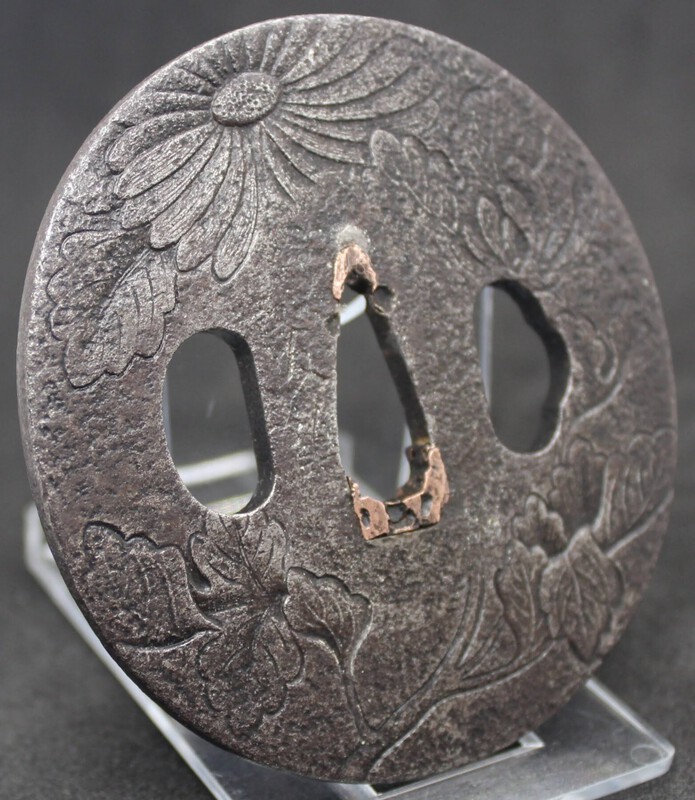
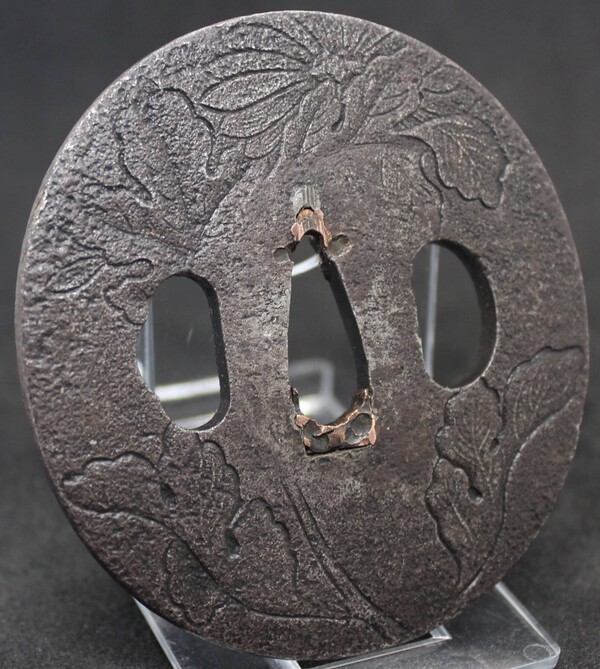
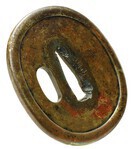
Hi Dale, That's useful, thanks. The reason I ask is because I picked up the tsuba below from a recent auction. The signature is faint and I wanted to compare, but not a well known documented artist.
 1 point
 -
As Yves said, the mon with the two bars is associated with Asikaga, but Hatakeyama also used this mon. There are something like 20,000 different mon, so someone with more knowledge than me would have to help identify the other one.1 point
-
I believe one is from Ashikaga1 point
-
https://www.jauce.com/auction/j1106303589 or https://buyee.jp/ite.../auction/j1106303589 nice colour - but still a copy. https://www.jauce.com/auction/f1041785451 or https://buyee.jp/ite.../auction/f1041785451 your basic black. https://www.jauce.com/auction/e1107091428 or https://buyee.jp/ite.../auction/e1107091428 more of the same https://www.jauce.com/auction/k1103157484 or https://buyee.jp/ite.../auction/k1103157484 https://www.jauce.com/auction/d1040311220 or https://buyee.jp/ite.../auction/d1040311220 Apparently this one is ☆★Antique heaven☆★luxury! Well who would have guessed! rematron [ Jeremy ] That is five in a week spread over the usual auction sites plus those that spill over onto ebay and others that go on other auction sites and probably Facebook etc. You start to wonder just how many there really are. I still have one image where one dealer was selling five in one go - buy in bulk and save!1 point
-
I have read that there were 4,6,8,10 and 12 mm Authorized stamp sizes. Ihave also read that many forges had their own resident inspectors,such as Tenshozan Tanrenjo in Zushi,and Zenhiro Hattori's forge in Mishima city.I believe that Takayama forge had one as wellthe reason being is that Ihave noticed a pattern that Masahiro,Masanao,and Toyosuke have the same 4mm fishhook barbed circled anchor stamp in common with few exceptions....not to mention other commonalities.1 point
-
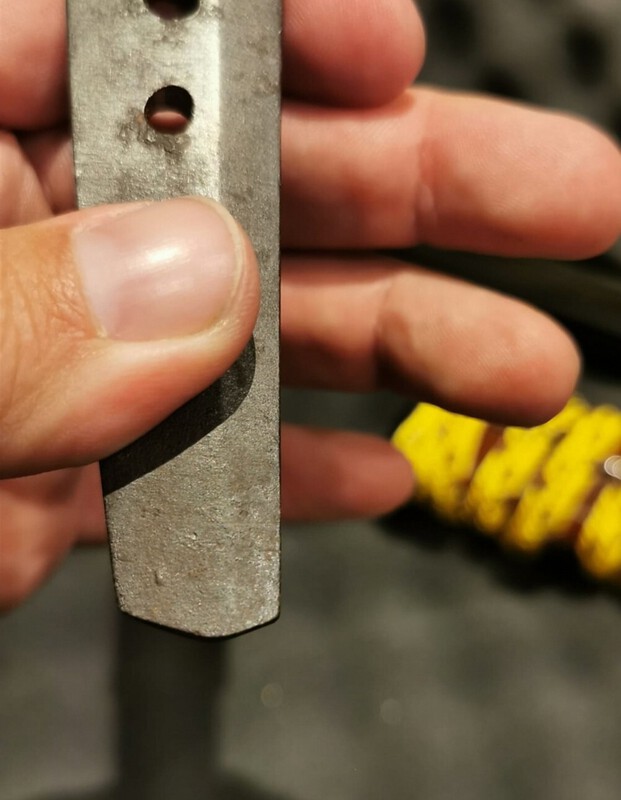
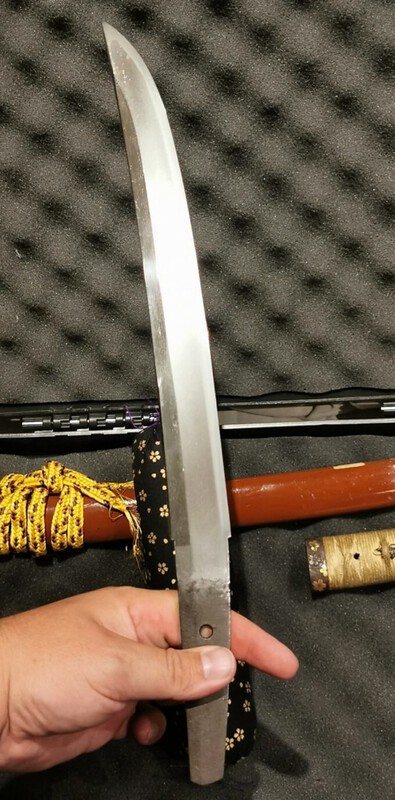
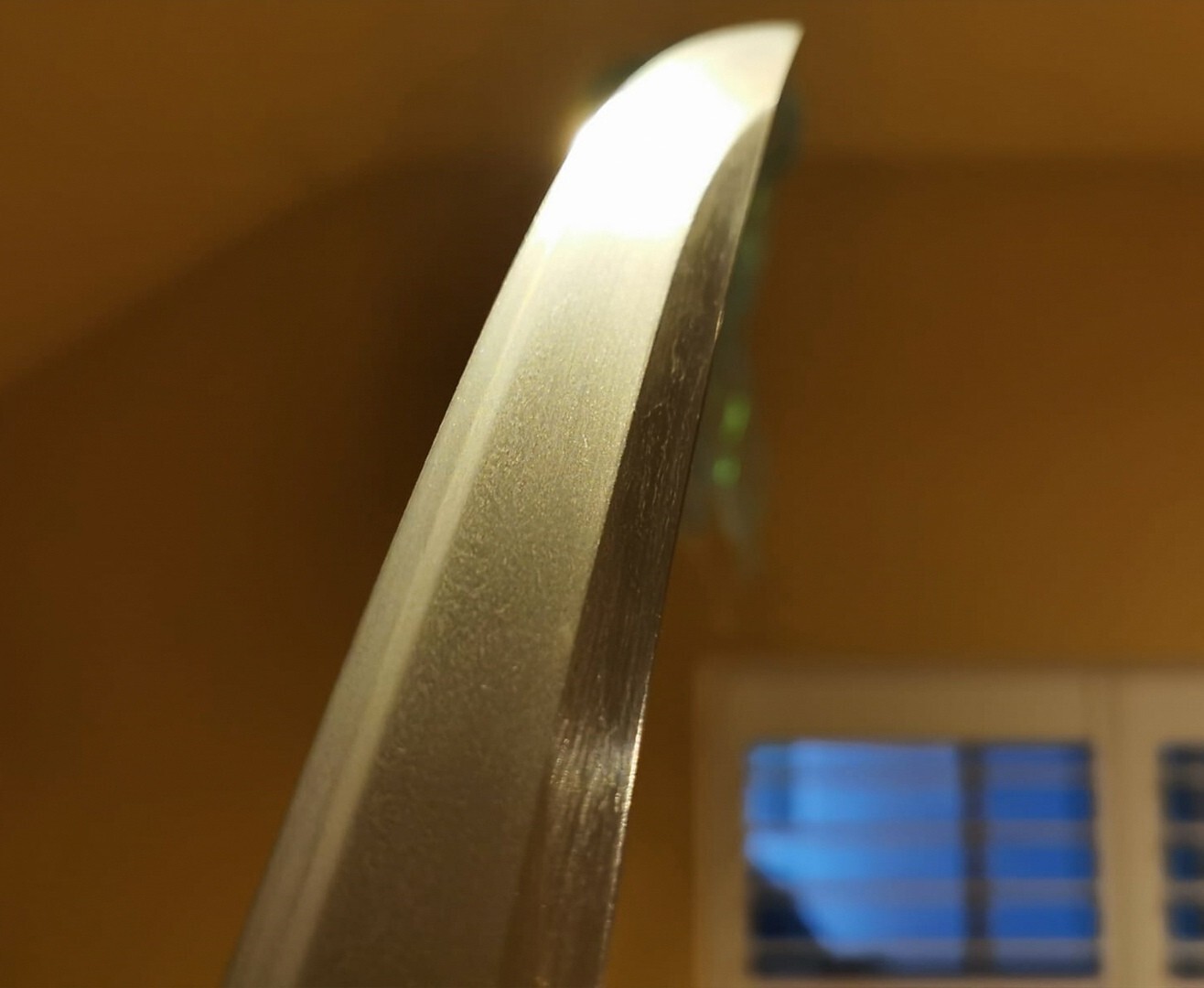
Good afternoon, So I did a stall at the Birmingham arms fair this weekend just gone and upon begrudgingly selling a lovely wakizashi I've had since I started collecting. I took a px on it with a quite nice looking tanto.. I have no idea what it is as of yet as I've just starting looking to kantei it however there's a few kantei points which are putting me in a couple of directions so thought it would be fun to put it on here and see what people's thoughts are. Mitsu-mune is one of the things which was noticed. The hada on this is fantastic in hand and very hard to capture on camera but I've tried and have uploaded a couple of pictures. It's very even and well distributed along the blade. Suguha hamon, with very nice clear and even Nioi. Nakago I think looks shinto, and has feint kiri (horizontal) yasurime marks. Unokubi zukuri shape Nagasa 28.2cm Shinogi-ji near munemachi 9mm Would be great to hear peoples opinions on this one. Thank you🙂 Kind regards, Chuck.




 1 point
 -
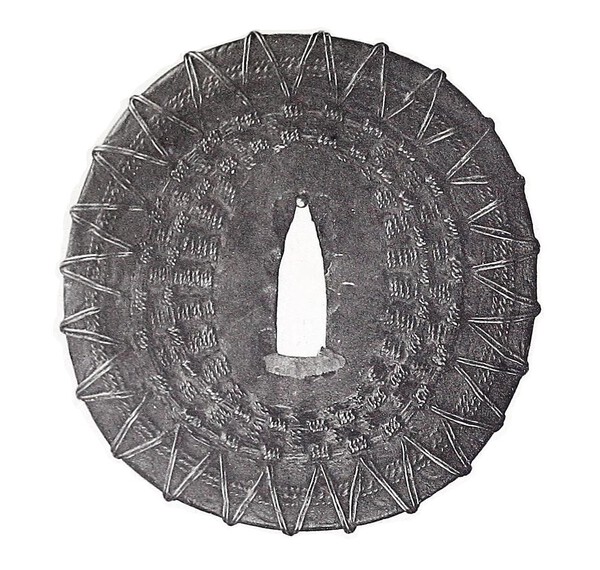
Just some trivia. You have a "Shingen" tsuba Figure 1.36: (a) Compton collection number 91 - "It has twenty-four spokes which are now wrapped in brass wire on the rim and with copper wire over the spokes.." It turns out this tsuba originally came from the collection of J.C. Hawkshaw and was published by Henri Joly in 1910. Japanese sword-mounts : a descriptive catalogue of the collection of J.C. Hawkshaw, Esq., M.A., of Hollycombe, Liphook by Joly, Henri L Pages 28 [image] and 29. "The Shingen. These tsuba are usually of iron, covered with copper or brass wire ; they are of several kinds ; the Mukade proper (centipede) has one or two circles or portions of circles of iron wire crossed by numerous short pieces reminiscent of a centipede’s body and legs ; the others are either covered with copper wire braided and plaited, or with brass and copper wire woven on a perforated iron guard ; or woven like mats in copper, iron and brass wire. The name Shingen is that of the general Takeda Shingen, who is said to have greatly favoured this style of tsuba. Huge Shingen tsuba were made, I have seen some weighing about one pound (say 450 grammes). 294. — Shingen tsuba, the groundwork of iron with 25 radiating spokes, the rim engraved with a pattern of spirals, overlaid with copper and brass wire stranded and held in place by brass wire, the spokes overlaid with copper. Late 17th century." The statement "I have seen some weighing about one pound (say 450 grams)" would seem to put some doubt on the claim that "Shingen" tsuba were prized for their 'lightness'? You might notice the descriptions [highlighted] say twenty-four and twenty-five spokes - which one of the owners can't count?
 1 point
 -
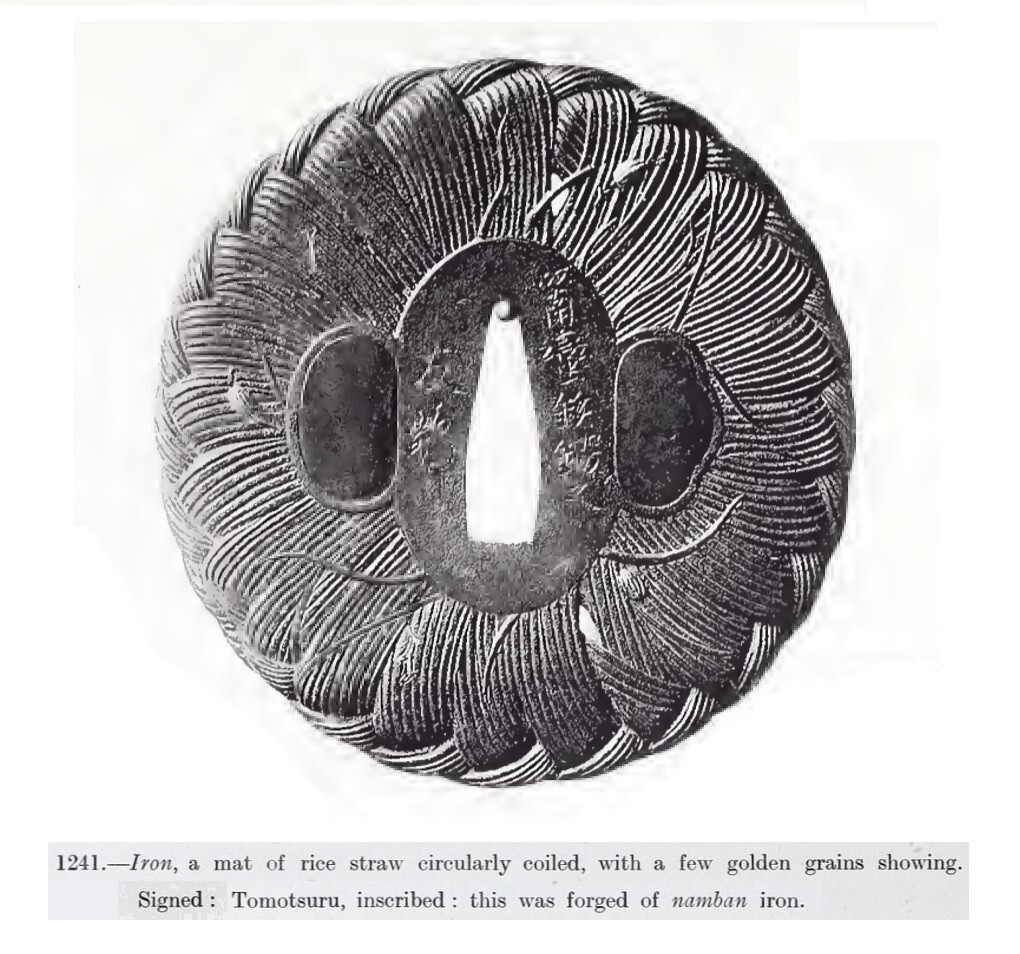
I don't know if this information from Markus Sesko might help. https://books.google.com.au/books?id=ik-E8G6FMQsC&pg=PA257&lpg=PA257&dq="Tomotsuru"++tsuba&source=bl&ots=erDwQ0B5wT&sig=ACfU3U3as6jGBsyQdfeHS52zPVAVwsWeEQ&hl=en&sa=X&ved=2ahUKEwjopK7i_LqBAxXShVYBHaRtCtYQ6AF6BAgIEAM#v=onepage&q="Tomotsuru" tsuba&f=false
 1 point
 -
Thanks Dale, I was rather hoping you may have something.1 point
-
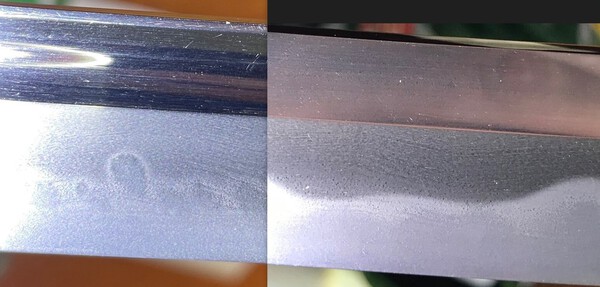
G'day Thomas, I can see what you are getting at with the example you posted. I am not sure this applies to all of the examples listed. Perhaps the masame is so fine that you can only differentiate the layers when you look really closely? Here is a photo of two examples by Gassan Sadakatsu. From a distance they both appear to be koitame. When you zoom in you can see the masame. Cheers, Bryce
 1 point
 -
For a moment, I thought Trystan had given up on guntos and taken up Nambus instead. Something different..., Post #2335 No doubt about it, fakes! Something different..., Post #25631 point
-
Nice blade, late Muromachi, but otherwise it starts to get weird. Could be Bizen, but mitsumune and nakago are uncommon for the school. Looks very much like Mihara, but again mitsumune is not common. On the other hand, tensho period's Odawara did work in suguha a lot, can be a good match.1 point
-
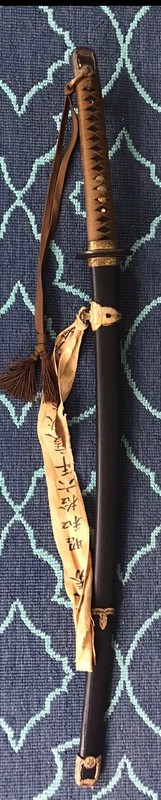
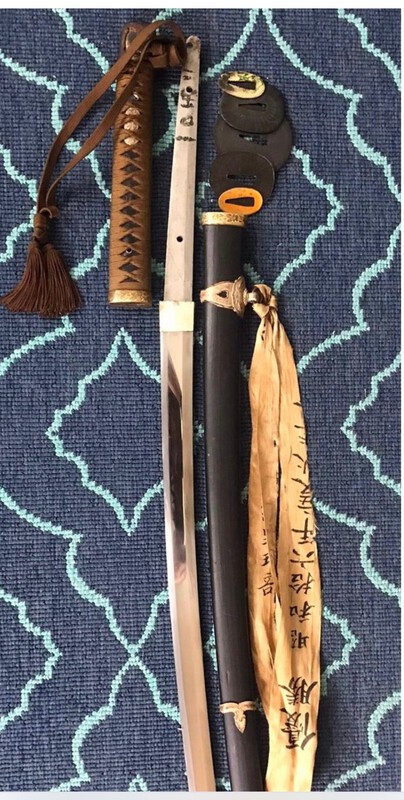
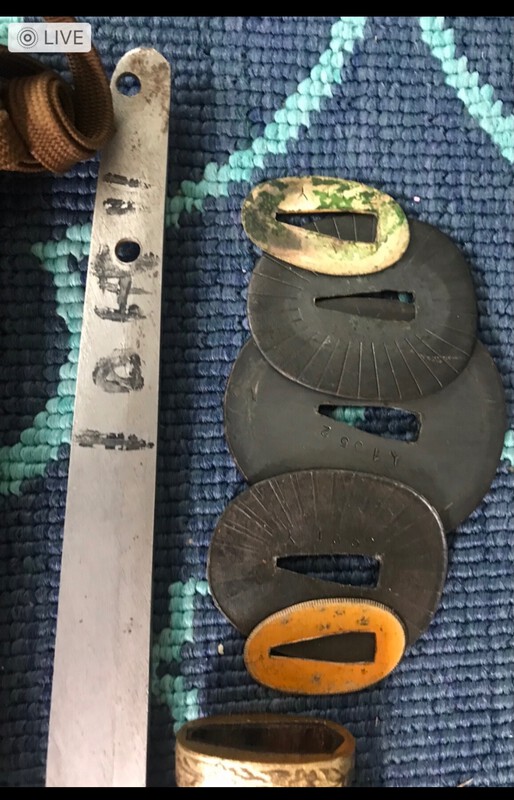
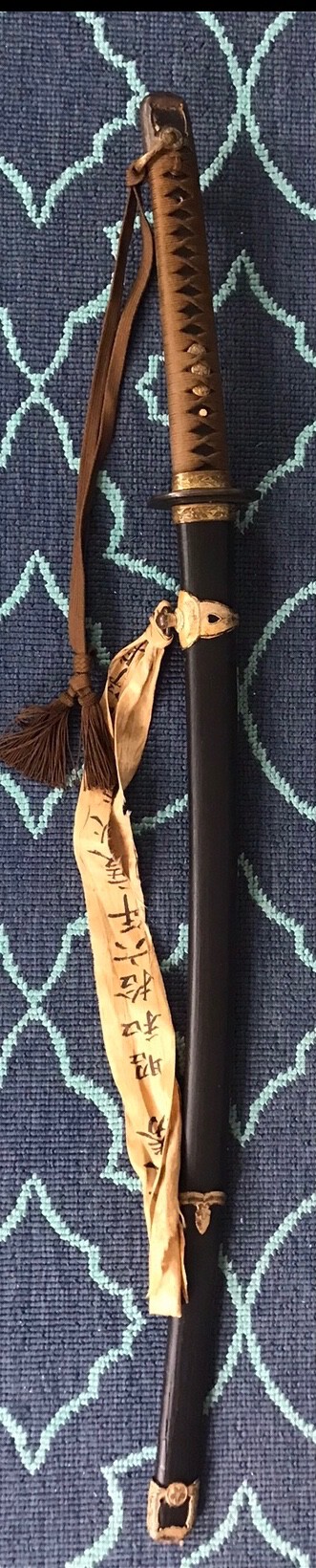
Steve: Did you have the surrender tag translated? Part of it looks like a date to me but I would be interested to know who the owner may have been. John C.1 point
-
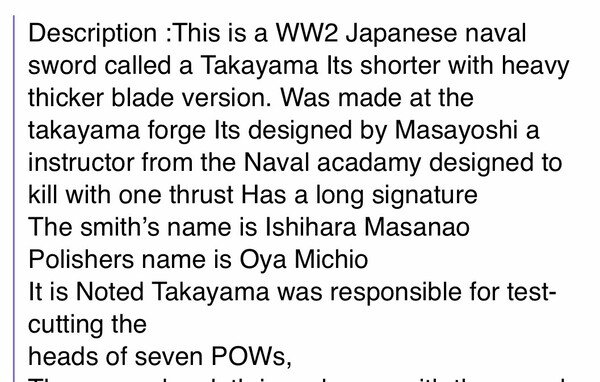
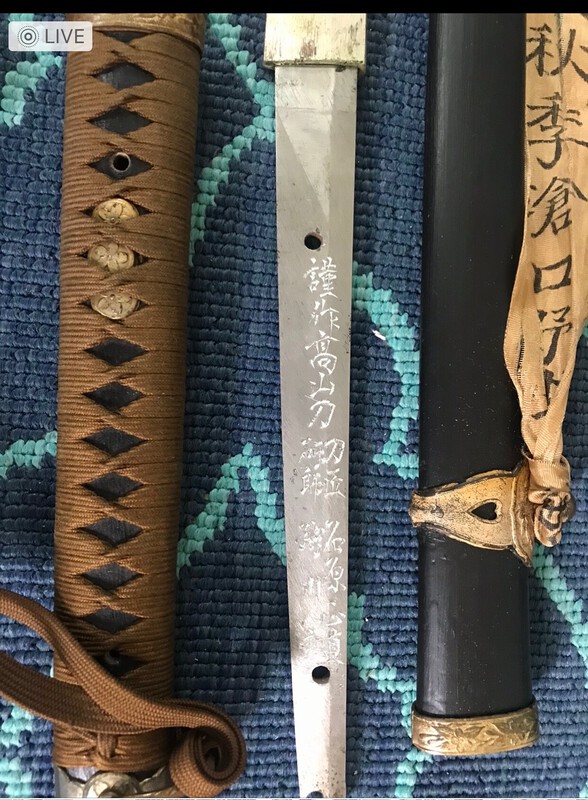
George To each his own Trying to find a nice takayama sword for me was hard And in this condition I’ll give you a little history about this since you may not have it
 1 point
 -
Instead of kanji they used hiragana - it says Wa Ki Za Shi -t1 point
-
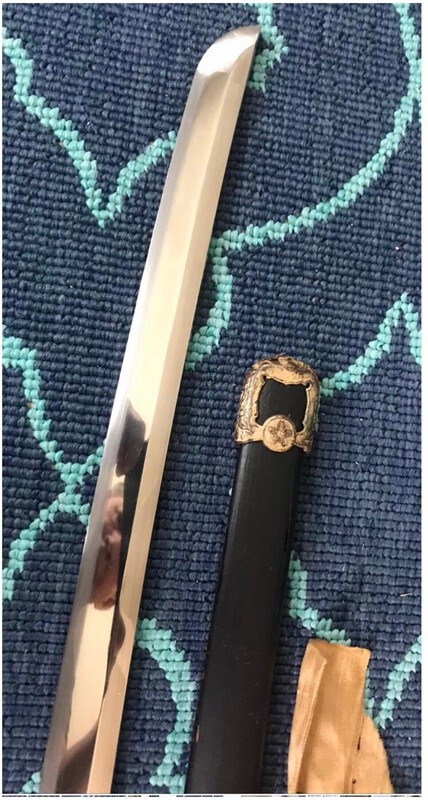
Moving on I wanted to show my takayama sword I bought from this seller for 1000 I believe these swords are rare since I never see another Its in mint condition except for a split on the scabbard but it’s sound and don’t really notice it I tried cutting a piece of paper and cut through it I was surprised it’s so sharp considering the age I removed The cloth since it pretty much fell apart liked paper machete steve
 1 point
 -
Mentions here Akamatsu Taro, ten generations (Kimura family), I'm all ears if anyone has further info regarding the lineage ? https://www.Japanese...ru.com/akamatsu-taro The name "Akamatsu Taro" is used by a swordsmith family since ten generations living in Higo country (Kumamoto Prefecture current). "Akamatsu Taro" was named by Mountain pass(Akamatsu-touge) of his hometown. Akamatsu Taro swordsmith family, who has served for generations as a swordsmith patronized of the Sagara Daimyo(Hitoyoshi-han in HIGO country1 point
-
Damn, us horrible pedantic folk for trying to edumacate people1 point
-
There's at least one of these on yahoo basically every time I browse there.1 point
-
Other box.. https://www.chairish...box-with-tsuba-motif1 point
-
So-called Sendai men (or Kanto men) are found on the famous armours of the Date clan and identifying them is a little bit tricky because they're not quite Haruta/Nara nor are they strictly Myochin in terms of design and construction. They can be ryubu or ressei and with or without yadome. The vast majority have bristled moustaches but there are a few without. They're also not terribly common, certainly not as common as typical Nara or Myochin mengu.1 point
-
As a person who is only 2 years into his Nihonto collecting my suggestion would be study the books and then buy a nice blade in Polish at a lower price point..using this as a study piece then moving along. You can get a very nice papered blade in Polish for 3-5000 …better to have a number of blades to learn from and rotate in and out your collection than one trophy piece that your knowledge is so far behind that you cannot really appreciate what your the custodian of. My first blade cost me £2000 and it’s loved and cherished…i have a total of 5 blades in polish with papers at present..2 I plan to keep the others will be moved on when I’ve fully studied them….on the other hand if I had spent the cost of a mustang or Jaguar on my first sword I’m not sure I would have the same attachment. One day I will buy that perfect sword as the centre of my collection …but not for a good number of years until I can fully appreciate it and know what my perfect sword is. as for investing…. From what I have seen you’re not going to be making money from that level of sword you have purchased from a higher end dealer…the market is not really an investment market. Once you know what to look for maybe getting lucking in an auction maybe…..but any antique or collectible is alway a gamble if your investing ( I’m a coin collector and dealer and even with years of knowledge, sometimes I have to a accept a loss of money on a piece…..I’f no one wants the piece you’ve got to hold onto it or loss money…and collectible/antiques/arts a funny market….)1 point
-
Hi Jonas, as mentioned above, unfortunately I’m not aware of such type or style. It might be a generic term, like for example Kaga-bō, Etchū-bō or Nara-bō, but I’ve never heard of that (as far as I can remember)…1 point
-
As John said above, it’s a decent menpō which seemingly dates back to the (later) Edo period. I admit that I can’t comment about the “Sendai characteristics”, since I actually don’t know “Sendai-masks” as such. The lacing, uhm….frankly spoken, the lacing is not well made, and not just in terms of color!1 point
-
Hi Jonas, I think it's a decent menpo, but I have the following concerns: there might have once been ears, which would mean they are now missing (although in the last pic there seems to be a raised ridge running along the edge which would mean that perhaps there were no ears originally). Do you have a close-up of this part of the menpo? the odoshi (lacing) has indeed been replaced and in my opinion it's much too bright (I don't think I've ever seen this shade of blue on armour before).1 point
-
At the end of the case studies for this section, it might be a good idea to open this thread up to some discussion and include those in it! There are also the Shii-nomi/Toppai often associated with the Chosokabe that would be worth discussing in that context I think. Shikoku seems to have a very old armoring tradition judging by the development of Iyo-zane, and I don't think nearly enough study or attention has been put into it all.1 point
-
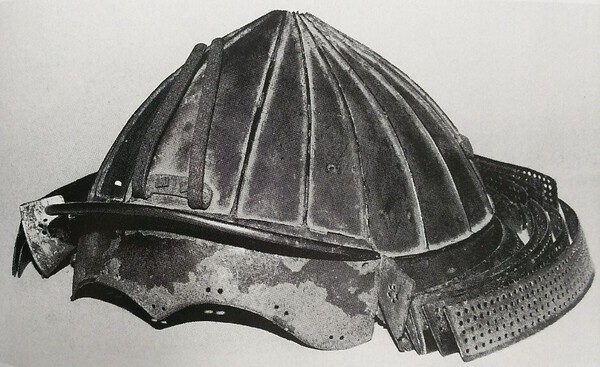
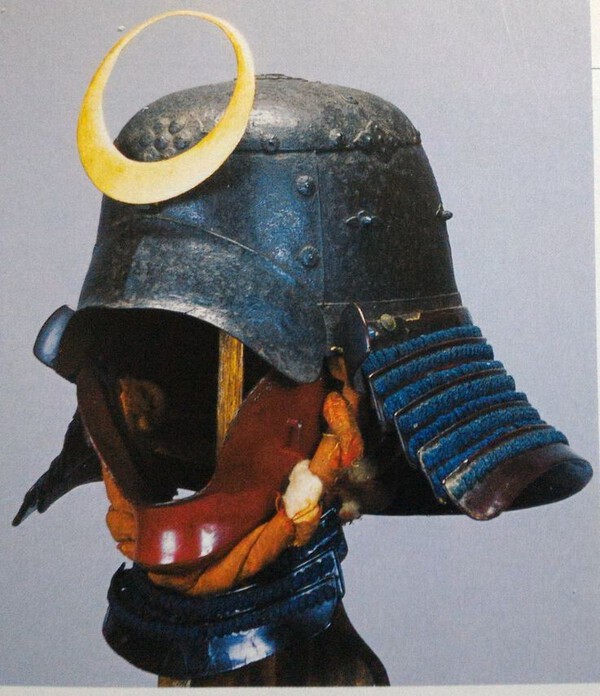
Cont. The next leap from this is further simplifying it all and rounding the whole thing out, following the trend of making the shape gentler. I believe the earliest example of this we see is the 18-ken Shii-nomi-nari at Tanzan-jinja, signed Haruta Mitsunobu. Note that it is also paired with a tsuki-mabizashi. I would comfortably place this helmet somewhere in the late 1560's personally, but that is open to debate. The circular oroshi-mabizashi evolves in two directions. We this same form made of a rectangular plate on things such as shii-nomi-nari kabuto, however almost always with uchidashi implemented in the later examples. The Go-Mai kabuto takes this in a very interesting direction however. Instead of having a front plate with a separate mabizashi plate rivetted on, it takes a cue from the okitenugui and combines them both into one, with the rounded shape that the Haruta likely are responsible for. The next stage is a combination of the oroshi-mabizashi and the tsuki-mabizashi. Whoever the smith was that innovated this was absolutely brilliant. This final form is seen implemented on a number of kabuto from the 1580's and 1590's, such as eboshi and momonari. It would finally end up on the go-mai kabuto as well, spawning what people would refer to in the modern era as the "Hineno Zunari". Usually these are lacquered over so heavily that it's impossible to tell what is going on underneath, but these two photos should help better understand the construction. This is Kadoya Kouji's work: Unfortunately, I do not have a solid set of terminology to apply to these developments. All of these are simply referred to as oroshi-mabizashi. I have seen some attempts at defining them loosely, such as the "semi-circular" type. Rather than contaminate the field with my own terms, I'll simply present these as they are above. There is a lot that can be told about a helmet from the mabizashi, and it is something that should not be overlooked, especially in regards to the Ko-tousei era. I will next attempt to analyze the Tosa examples, and provide some possibilities for their development and influences. The changes in mabizashi shape I think are crucial in understanding them, which is why I decided to briefly include this section first.
.thumb.jpg.039d47f94ae42d2d27428bfa53e6a72c.jpg)

 1 point
 -
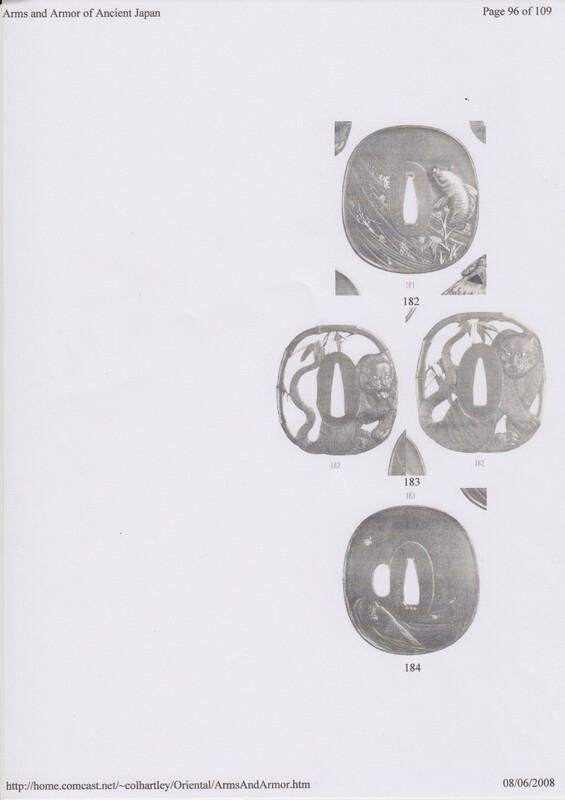
Ref. Items 306 & 307 - Katsuhira Tigers A bit of background - I bought a number of swords from Darcy Brockbank around 2005/6 . He had also been selling a few fittings , but decided that he was going to concentrate on blades. I bought the last three tsuba that he had, one of which was the tiger licking its paw . Having assumed that this was a 'stand alone' piece, I was very surprised to see an illustration of it with its larger brother in an old exhibition catalogue from 1964. This was the Arms and Armor Exhibition which ran from February 19th to March 22nd 1964 and was Chaired by Dean S. Hartley with Fred Martin and Bob Haynes as Co-Chairmen. After speaking to Darcy , it became obvious that the pair had been split up with no way of tracking the whereabouts of the larger piece. Having been impressed by and purchasing some of Ford Hallam's work , I broached the subject of making a replica of the missing piece using the very fuzzy black and white image from the catalogue and also the smaller tsuba as a guide. At that time, Ford was living and working in Cape Town, so I flew down to meet up with him and discuss the idea. Ford told me about his background and love of Japanese art and particularly sword fittings, against the situation of almost complete loss of the art metalworking tradition within Japan. The making of swords etc. although much diminished, is still widely practised but fittings making, on a professional basis, is practically extinct. We were keen therefore to document the making of the Utsushi so that some record should remain of the processes and skills involved. At first we thought about photographs taken at various stages together with a written explanation , but we soon realised something more was needed . We tried setting up a video camera to record ' live action ' but it was too awkward to change settings , positions etc. and impossible for one person ( Ford ) to both operate the camera and work at the same time. Through a friend of his , Ford got in contact with Brad Schaffer, a full time film maker. He agreed to meet and discuss the idea, then becoming enamoured with the project. Brad was able to get involved from day one of the making of the piece with the result being a unique video documentary now viewed in all its parts nearly 750,000 times. More to follow....
 1 point
 -
That video is legendary, and I think brought a lot of people into this hobby. It is an incredible work...the video and the item. And I think changed a lot within the tosogu world. Especially for people who hadn't considered modern work before. But I guess we are really getting ahead of ourselves here, let's wait for the item itself :-)1 point
-
Thank you ,Thomas!1 point






















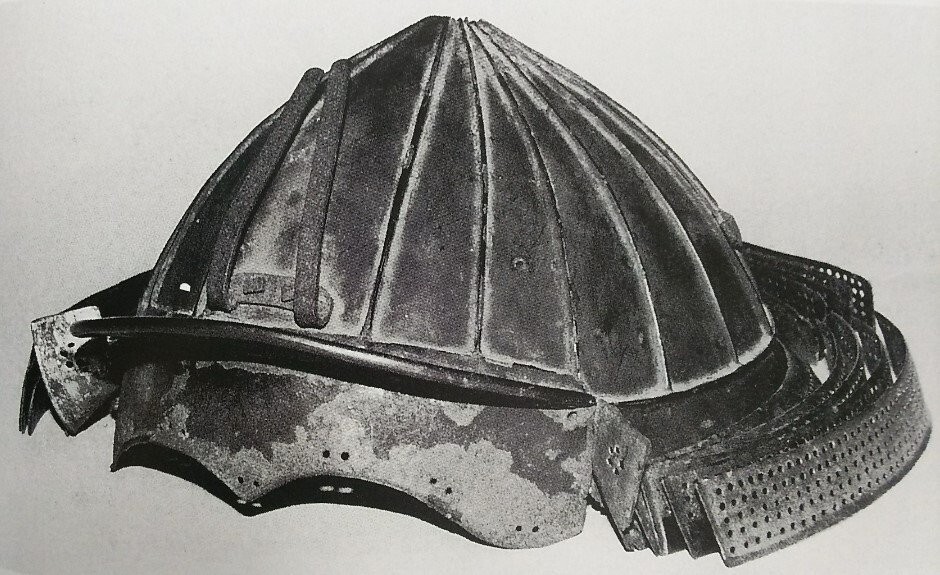
.jpg.d69d9a5bd0a3d302ec468014888f218f.jpg)
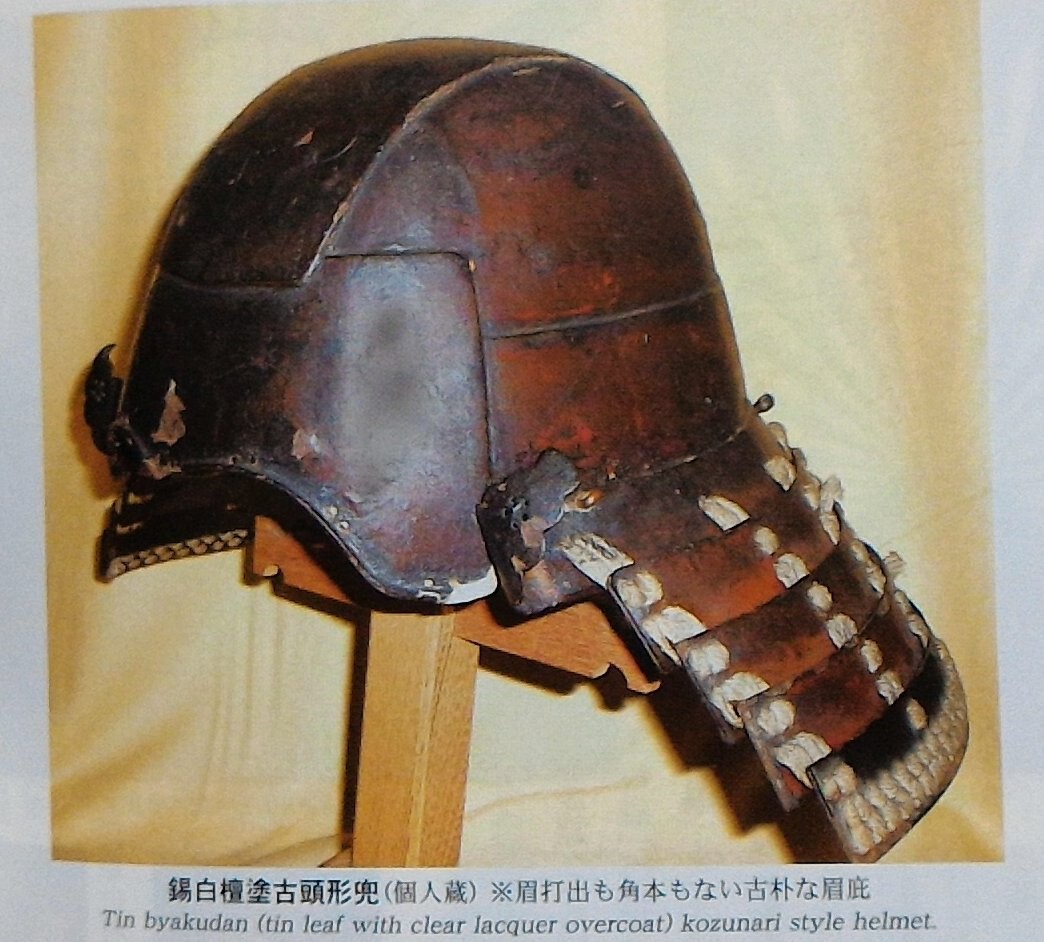


This leaderboard is set to Johannesburg/GMT+02:00