MauroP
-
Posts
892 -
Joined
-
Last visited
-
Days Won
5
Content Type
Profiles
Forums
Events
Store
Downloads
Gallery
Everything posted by MauroP
-
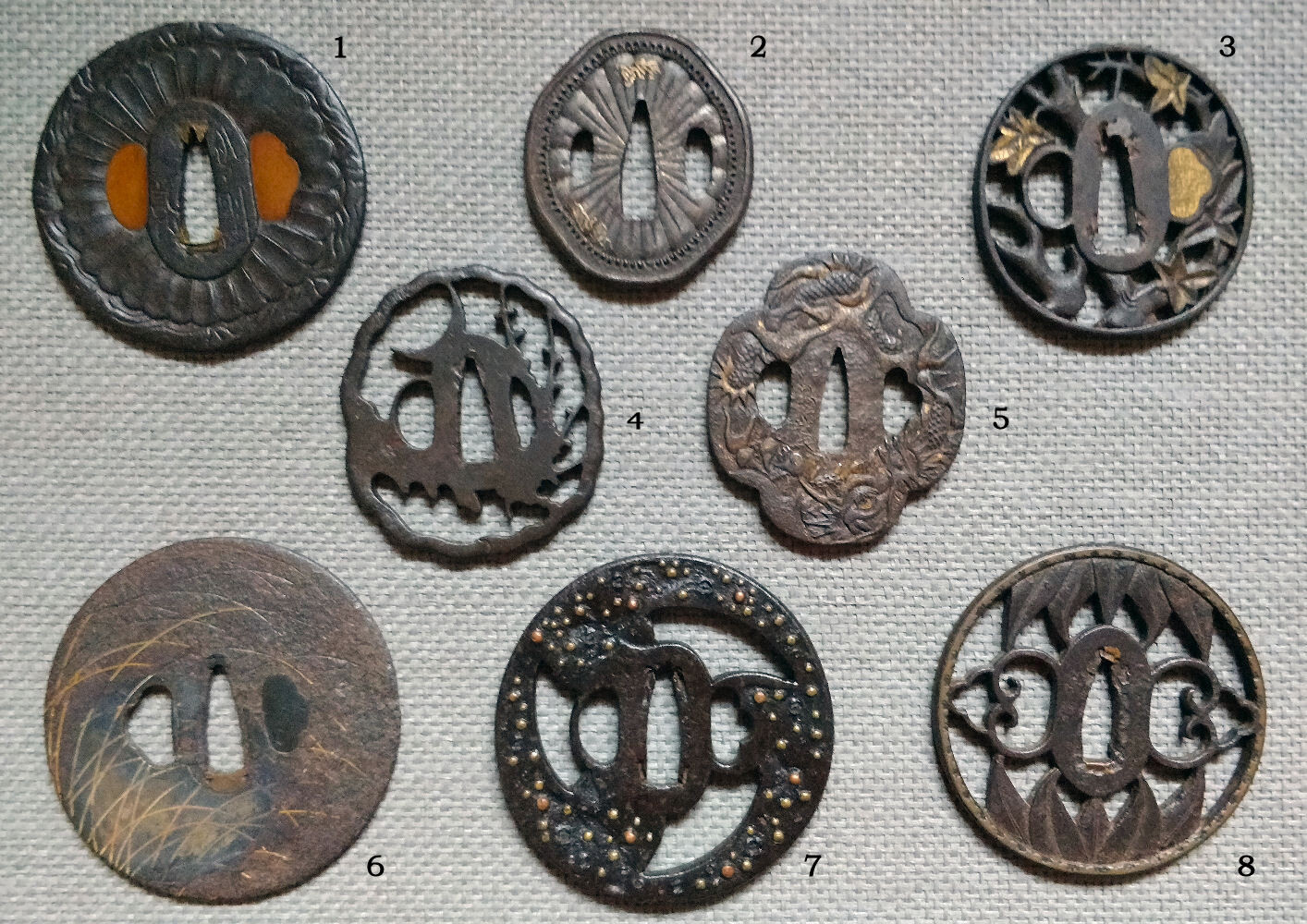
I should be a wiser man... I know that making up a coherent collection needs making choices. But actually I'm not rational in collecting. In that strange year of lock-down, social distancing and hard work I had to wait months to receive in hands, almost at the same time, all my acquisitions. Definitely I'm not a "serious" collector, but after all I'm quite happy about my new pieces. No masterpiece here but some interesting opportunity for study. 1 signed Echizen jū Kinai (越前住 記内), possibly Yondai Ishikawa (circa 1640). 2 otafuku-mokkō-gata tsuba with an unusual tetsu-fukurin, possibly Edo Higo (thanks to Mark from NMB). 3 maple and deer antler tsuba, possibly Shōami. 4 plum blossoms in moonlight, possibly kodai Higo (thanks to Thomas AKA Leporello). 5 signed Jakushi (若芝), quite typical of the school, and the only tsuba I purposely searched for buying. 6 Musashino theme tsuba; the still good zōgan remakably contrast with the weared iron surface, and make me think it could be an old tōshō tsuba (just 3,5 mm thick) repurposed and decorated in late Edo. 7 mitsudomoe, inlaid dew drops (or toad skin?); signature unreadable. 8 bamboo and snow tsuba, possibly Kyō-Shōami.

-
Ciao Luca, "gan no nami" sounds like a genitive case. I suppose that simply gan nami or gan ni nami (雁に波) should be the correct form (but let a true expert in Japanese chime in). See: https://artsandculture.google.com/asset/雁に波文皿 肥前焼・-柿右衛門様式-plate-with-geese-and-waves/-AH96HQsuwb9nQ Love your Heianjō findings.
-
I thought it was... ... instead it's

-
Hizen (肥前)?
-
Possibly Shōnai (庄内) school.

-
The signature should read Sano Naoyoshi, but one kanji of family name is different in reported examples, so possibly gimei.
-
Hi Reid, why you want a kanteisho for it? It will cost you quite a lot, with a comparatively little increase in market value of your tsuba. Of course if you want to enjoy the experience, go for it... Regards, Mauro
-
Agree with Geraint, it's a sanmai awase tsuba, i.e. a mass-produced one, BUT it's an old one (pre-Edo, possibly) and should deserve a ko-kinko certification. BTW, the core layer should be copper, so non-magnetic (try it).
-
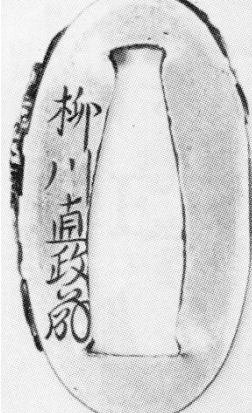
柳川直政 - Yanagawa Naomasa + kaō First Yanagawa generation (1692-1757)
-
Another nice example from "Tanoshi Shinchū Zōgan Tsuba: 100 Tsuba":

-
Mon of Taira clan
-
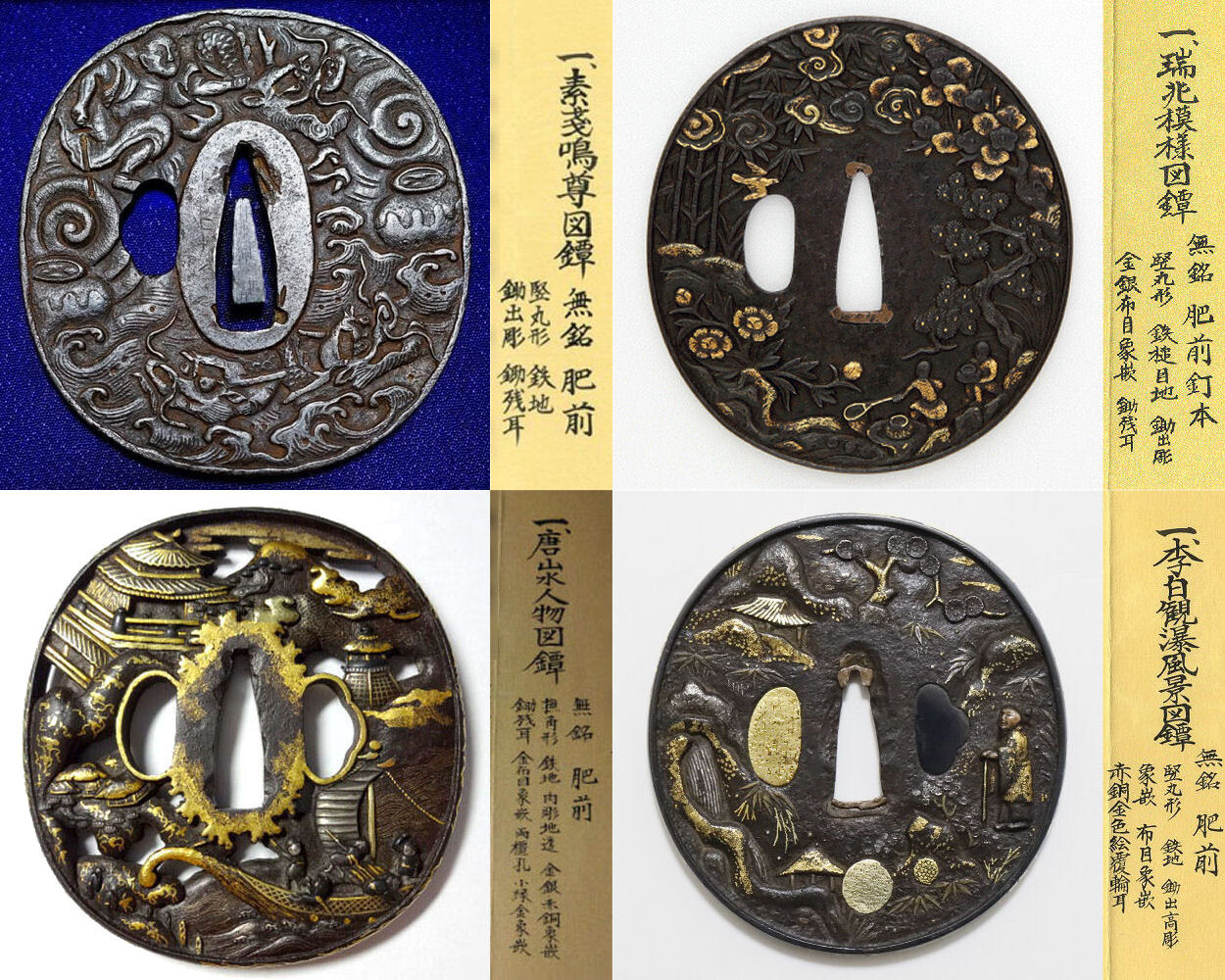
Hi Mark, I'd rather suggest a Hizen attribution for your tsuba. Edo Higo could also be a less likely call. The "weared" appearance of nunome-zōgan usually seen in Jakushi tsuba is also present in some Hizen and Edo Higo works. Moreover Jakushi tsuba are usually signed (only one in six Jakushi tsuba is mumei in my database of NBTHK papers). Here below some Hizen examples:

-
Hi Grev, I'd suggest a descriptive definition like: 四方菱形透鐔 - shi-hō hishigata sukashi tsuba - diamond shapes in four directions openwork tsuba. Sometimes even NBTHK shinsa panel can't do better.
-
Hi Georg, I think you have three honest tsuba (Japanese words doesn't have plural forms), possibly from middle-late Edo time. Since they all are supposed to be used on katana/wakizashi, your pics are upside down. Little to say about the first one. The smaller one could be Shōami or Nara, the third one (with dragon and clouds) looks like Higo style.
-
Ciao Luca, the shinchū-zōgan decoration of your tsuba is usually referred as 桔梗唐草文 - kikyō karakusa-mon, so more a stylized pattern than a naturalistic representation. See: http://www.aisf.or.jp/~jaanus/deta/k/karakusamon.htm
-
Sometimes its hard to recognize a subject in artistic representation. Here a traditional representation of a plover (千鳥 - chidori), surely quite different from the true animal in nature.

-
Hi Grev, indeed it looks like a Noh or Kyogen mask (小猿 - Kozaru - Child Monkey) rather a true monkey. https://nohmask.jp/mask/k_kozaru.html
-
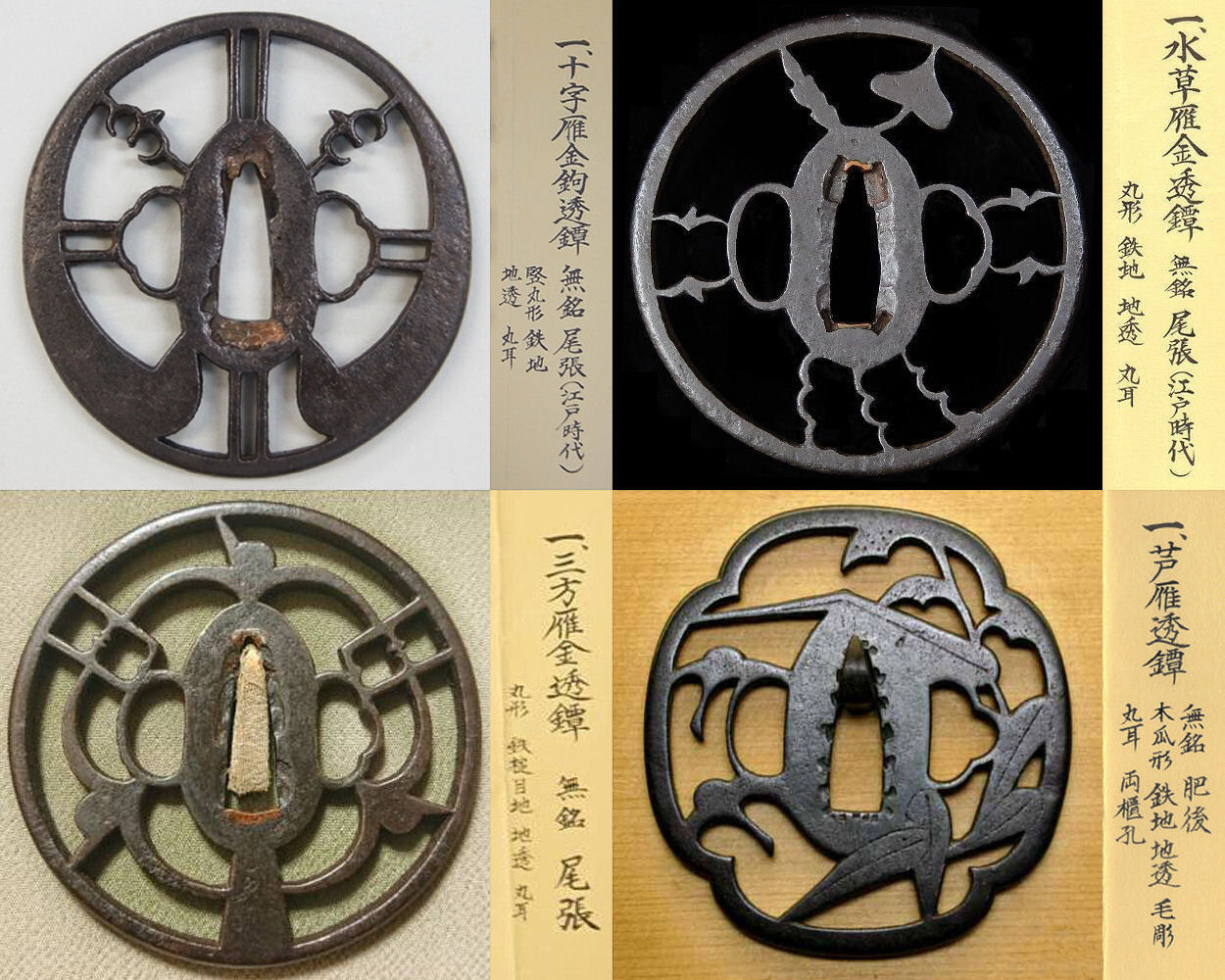
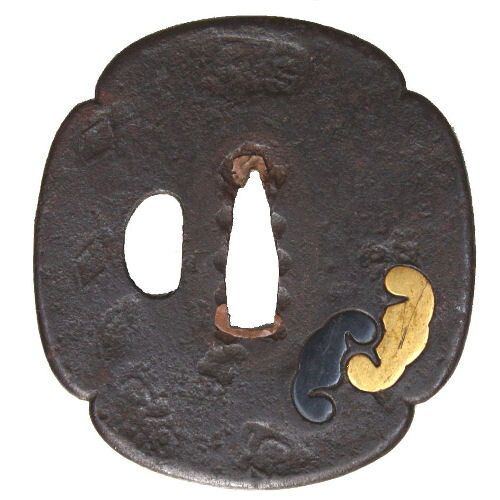
Karigane (wild geese) have many different representations. Here below some examples: Anyway, I think I have in my collection a piece with stylized bats (kōmori zu - 蝙蝠図):

-
Hi, I think Tomohisa (智久) and Kōfu-jū Toshimasa (江府住 利政)
-
雲龍図鐔 無銘 水戸 竪丸形 真鍮石目地 鋤出彫 象嵌色絵 両櫃孔 (笄櫃埋 ) 打返耳
-
Nice tsuba, but in my opinion not as good as average Mino works. More probably Kyō-kanagushi.
-
Bruno, Japanese tsuba artisans surely mastered their skills at an unbelievable level, so no surprise they were able to reproduce in small series wonderful pieces. So I've paid attention to make confrontation just between yose-tagane and sekigane that are supposed to be adaptations to a specific sword tang. My conclusions are that the tsuba reproduced in the booklet and the one in the Naunton collection catalog are the very same tsuba. Well, alternative explanation is far less favourable...